


Abstract
This study explores how teachers interpret the Sustainable Development Goals (SDGs), particularly SDG 4 (Quality Education) and SDG 13 (Climate Action), as pedagogical frameworks and how they translate these goals into pedagogical practice through the design of digital comics. Adopting a qualitative case study design, the research was conducted within the scope of a professional development project entitled Comics of Values and the Environment. The participants consisted of 36 in-service teachers who took part in expert-led training focusing on sustainability education and digital comics design. Data were collected through semi-structured interviews with 12 teachers, teachers’ self-produced digital comics, and researcher observations of the design process. All qualitative data were analyzed using inductive content analysis. The findings indicate that prior to the training, teachers’ understanding of the SDGs was largely superficial and remained at the level of general awareness. Following the sustainability-oriented training and design-based activities, teachers developed more concrete and pedagogically grounded interpretations of SDG 4 and SDG 13. Quality education was increasingly conceptualized as a holistic process extending beyond academic achievement to include critical thinking, creativity, multimodal literacy, and lifelong learning. Climate action was interpreted not merely as raising awareness but as improving responsibility, agency, and action-oriented learning. Teachers perceived digital comics as effective pedagogical tools for making abstract environmental issues more concrete, enhancing student engagement, and supporting inquiry-based learning. Despite challenges related to technical infrastructure, curriculum constraints, and the need to simplify complex sustainability concepts, the digital comic design process functioned as a form of professional learning. It supported teachers’ reflective thinking, creative problem-solving, and pedagogical agency. The study demonstrates that sustainability-oriented digital comics design can support the translation of global sustainability goals into meaningful classroom practices and highlights the importance of design-based professional development in education for sustainable development.
1. Introduction
The United Nations Sustainable Development Goals (SDGs) have become a central reference point in global education policies and curriculum frameworks. Despite their growing visibility, research consistently shows that teachers’ engagement with the SDGs often remains at the level of general awareness, with limited guidance on how these goals can be translated into concrete pedagogical practices [1,2,3]. This gap highlights the need to examine not only teachers’ knowledge of the SDGs but also how they interpret and enact them within classroom contexts. Within the SDG framework, SDG 4 (Quality Education) positions education as a key driver of sustainable development by emphasizing competencies such as critical thinking, creativity, and global citizenship. SDG 13 (Climate Action), in turn, foregrounds the educational importance of understanding and responding to climate-related challenges [4]. Together, these goals require pedagogical approaches that move beyond awareness-raising toward meaningful, action-oriented learning experiences. Despite this emphasis, teachers are rarely provided with systematic training that enables them to interpret SDG 4 as a pedagogical framework or to design learning materials aligned with its objectives. Studies in teacher education indicate that without targeted professional development, sustainability-related goals tend to remain abstract policy statements rather than actionable pedagogical guidelines [5,6]. In this sense, SDG 4 integrates sustainability into quality education. This lack of pedagogical clarity becomes even more apparent in relation to SDG 13. Climate change and environmental issues are complex, multidimensional, and often challenging to teach through traditional pedagogical materials. While teachers are expected to raise awareness about environmental problems, many report difficulties in selecting or producing materials that meaningfully engage learners and connect environmental content to sustainability-oriented learning outcomes [7,8,9]. Consequently, environmental education risks remaining fragmented rather than being grounded in sustainability goals. These challenges have prompted a search for pedagogical approaches that provide meaningful, context-rich sustainability learning.
In recent years, digital and visual pedagogical materials have been increasingly promoted as effective tools in education [10,11,12,13], but their pedagogical use for addressing complex topics such as sustainability and climate change remains limited. Digital storytelling and comics offer multimodal narrative and visual approaches that enhance comprehension and engagement [14,15,16], particularly in representing environmental issues. Teachers may be aware of digital tools and platforms, yet lack the training required to design their own sustainability-oriented materials in a pedagogically meaningful way. Previous research on education for sustainable development has mainly focused on teachers’ awareness of the Sustainable Development Goals and their general attitudes toward sustainability education [17,18,19,20,21]. Less attention has been paid to how teachers translate these goals into pedagogical design practices. Addressing this gap, the present study focuses on teacher-generated digital comics to examine teachers’ roles as designers of sustainability-oriented materials. By foregrounding teachers’ design decisions related to content, narrative, and pedagogical alignment, the study offers insight into teacher agency and professional learning in the enactment of SDG 4 and SDG 13, responding to calls for research that emphasizes teachers’ active role in education for sustainable development [22,23,24].
From a pedagogical perspective, digital comics design enables teachers to transform global sustainability goals into teachable representations. Rather than functioning as passive implementers of predefined content, teachers act as pedagogical designers who actively negotiate learning goals, narrative structure, visual representation, and learner engagement. This design process positions teachers as mediators between abstract sustainability frameworks (e.g., SDG 4 and SDG 13) and classroom practice, highlighting the interpretive and meaning-making dimensions of pedagogical work. The pedagogical potential of digital storytelling and comics depends not only on their multimodal affordances but also on teachers’ professional capacity to design, adapt, and align these materials with sustainability goals.
Without structured support, such tools risk remaining peripheral rather than transformative components of sustainability-oriented instruction. This situation highlights a critical gap in the literature. The limited attention given to teachers’ professional learning experiences related to SDG-oriented material design. While sustainability and digital tools are widely discussed [25,26,27,28], there is insufficient empirical research examining how teachers can be supported through structured training to both understand the SDGs as educational frameworks and translate them into self-produced pedagogical materials. In particular, there is a need for qualitative research that foregrounds teachers’ voices, design experiences, and meaning-making processes in relation to sustainability-oriented material production, rather than focusing solely on policy discourse or learner outcomes. Addressing this gap, the present qualitative study focuses on teachers’ experiences of designing sustainability-oriented digital comics following expert-led training. Grounded in SDG 4 and thematically aligned with SDG 13, the study explores how teachers interpret the SDGs, how they translate these goals into pedagogical design practices, and how they evaluate the educational value of self-produced digital comics. By foregrounding teachers’ voices and design decisions, the study contributes to research on education for sustainable development by highlighting the role of teacher agency and material design in moving the SDGs from policy discourse into classroom practice.
2. Literature Review
2.1. Education for Sustainable Development and the SDGs
Education for Sustainable Development (ESD) is commonly described as an educational approach that aims to help learners understand environmental, social, and economic challenges and their interconnections. Rather than focusing only on environmental knowledge, ESD emphasizes how learners make sense of sustainability related issues and how these issues are addressed through education [4]. From an educational perspective, ESD emphasizes learning processes that promote reflection, responsibility, and informed decision making on real-world environmental challenges [29,30]. Importantly, ESD emphasizes meaning-making and action-oriented engagement with sustainability.
SDGs provide an important reference framework for ESD in educational contexts. Adopted within the 2030 Agenda, the SDGs outline shared global priorities related to sustainability and development. Among these goals, SDG 4 explicitly highlights the role of education in supporting sustainable development. In educational research, SDG 4 is therefore often discussed in relation to teaching practices that encourage learners to engage with sustainability topics in meaningful and relevant ways. From a pedagogical standpoint, SDG 4 positions sustainability education as an integral component of quality teaching rather than an additional or optional content area [31,32,33]. This perspective emphasizes the role of pedagogical design and materials in shaping experiences of sustainability learning.
Since the second half of the twentieth century, environmental problems such as biodiversity loss and climate change have increasingly shaped the global agenda [4,34,35,36,37]. In recent decades, these challenges have intensified, as reflected in the sharp decline of wildlife populations, record-breaking global temperatures, and the rising frequency of forest fires [38,39,40]. Climate change has also accelerated the degradation of wetlands and freshwater resources, contributing to widespread water insecurity worldwide [41,42]. At the same time, unsustainable production and consumption patterns particularly food waste and plastic production have reached unprecedented levels despite persistent global hunger and food insecurity [43,44].
Taken together, these trends highlight a deepening ecological crisis and underscore the necessity of sustainability-oriented education to improve environmentally responsible behaviors. SDG 13 is closely related to educational practice because it stresses the importance of awareness, understanding, and learning in addressing climate related challenges. Climate change is widely recognized as a complex issue that cannot be fully addressed through factual knowledge alone. Educational engagement with SDG 13 therefore involves helping learners understand environmental problems, their causes, and their consequences, as well as encouraging reflection on human responsibility and action [45,46,47]. In educational contexts, climate action is increasingly framed as a learning process that requires learners to engage with uncertainty, ethical considerations, and the interconnected nature of environmental issues [48,49,50]. From this perspective, SDG 13 supports the educational aims of SDG 4 by reinforcing the importance of sustainability related learning within formal education.
Although the SDGs are increasingly visible in educational discussions, previous research suggests that teachers often struggle to integrate these goals into classroom practice [51,52,53,54,55,56]. Research in teacher education also indicates that sustainability is often addressed in fragmented ways [57,58]. Environmental and climate related topics may be included as separate themes or occasional activities, rather than being systematically integrated into teaching practices [59,60,61]. As a result, sustainability learning remains fragmented and weakly connected to classroom practice, in part due to limited professional development in sustainability pedagogy. Without structured support, teachers may recognize the importance of the SDGs but lack practical guidance on how to translate them into pedagogical design and material development. That situation highlights the importance of focusing on teachers’ pedagogical experiences when examining education for sustainable development. Supporting teachers in understanding the SDGs as educational reference points, rather than abstract global goals, is essential for meaningful classroom implementation. Such support involves engaging teachers in reflective learning processes and providing opportunities to design and use sustainability-oriented teaching materials. Teacher involvement in material design can play a key role in bridging the gap between sustainability frameworks and classroom practice, as it allows educators to actively interpret sustainability concepts and represent them in pedagogically meaningful ways. This perspective is consistent with the core principles of ESD, which emphasize learning through practice and the role of teachers in shaping how sustainability is addressed in educational settings.
2.2. Teachers’ SDG Awareness and Pedagogical Challenges
Research indicates a clear gap between teachers’ general awareness of the SDGs and their classroom implementation [58,62,63,64]. Many teachers are familiar with the SDGs as a global agenda and tend to associate them with broad concepts such as sustainability, environmental protection, equity, or global responsibility [65,66,67]. However, this familiarity often remains superficial and does not extend to a detailed understanding of individual goals, targets, or indicators, particularly those related to education SDG 4 and SDG 13. As a result, SDGs are frequently perceived as abstract policy frameworks or value-oriented declarations rather than as pedagogically actionable tools that can meaningfully inform curriculum planning, pedagogical design, and assessment.
From an educational perspective, this limitation is closely related to the nature of education for sustainable development (ESD), which requires a shift from content transmission to process oriented and transformative learning approaches. ESD emphasizes competencies such as systems thinking, critical and reflective thinking, ethical reasoning, and the ability to engage with complex, real-world problems [68,69]. Although aligned with SDG 4, these competencies are rarely integrated into subject specific teaching. In practice, sustainability related issues are often treated as isolated activities instead of being systematically embedded in teaching [70,71,72]. At the curricular level, teachers report constraints such as overloaded curricula, limited time, and high stakes assessments [52,73]. Even in contexts where SDGs or sustainability are explicitly referenced in national curricula or policy documents, these references often lack concrete guidance on pedagogical implementation [74,75,76]. As a result, teachers are mainly responsible for turning sustainability goals into classroom practice, which leads to differences and uncertainty in how the SDGs are taught. At the pedagogical level, teachers encounter difficulties in designing learning activities that align with SDG principles while remaining appropriate to their disciplinary context and learners’ needs [5,77]. Teacher education and professional development constitute a further critical dimension of this challenge. While teachers often express positive attitudes toward sustainability education, they frequently report limited pedagogical confidence, practical examples, and assessment strategies for SDG-oriented teaching [71,78,79]. Addressing this gap requires providing teachers with targeted professional development opportunities, training programs, and practice-oriented projects that support the meaningful integration of SDGs into teaching, learning, and assessment.
2.3. Digital Storytelling and Comics in Sustainability Education
Edutainment is commonly discussed in the literature as an approach that combines educational objectives with entertainment oriented elements in order to increase learner engagement and motivation [80,81,82]. In fields such as media, communication, and leisure studies, edutainment has been conceptualized as a pedagogical and communicative approach that integrates educational content with engaging narrative and multimodal forms to enhance user engagement [83,84,85,86]. Importantly, previous research suggests that edutainment oriented approaches do not necessarily trivialize educational content or reduce the seriousness of formal instruction, provided that pedagogical goals remain explicit and well-articulated [87,88,89]. In this context, comics, stories, and graphic narratives can be considered effective edutainment oriented pedagogical tools, as they combine visual storytelling with educational content in ways that support engagement while maintaining pedagogical depth and learning objectives.
Digital comics are increasingly used in education as visual and narrative tools that combine images, text, and sequential structure to support learner understanding and engagement [90,91,92,93,94]. Through visual storytelling, digital comics enable learners to follow ideas, recognize key messages, and make sense of complex topics more easily [95,96,97]. Digital storytelling builds on a similar narrative based approach to learning but places greater emphasis on personal voice, meaning-making, and the integration of multiple modes, such as visuals, text, and, in some cases, audio [98,99,100]. Together, digital comics and digital storytelling share a common pedagogical foundation, viewing learning as an active process of constructing meaning through narrative and multimodal representation.
Sustainability education engages learners with complex and interdisciplinary issues, including climate change and environmental responsibility. These issues involve abstract processes, long-term consequences, and ethical concerns that can hinder comprehension and engagement in traditional text-based instruction. Accordingly, digital storytelling and comics help make sustainability concepts more concrete through narrative and multimodal learning. Digital storytelling and digital comics are grounded in shared theoretical assumptions about learning as a process of meaning-making through narrative and multimodality [101,102,103,104]. Both approaches assume that learners understand content more effectively when visual, verbal, and symbolic elements are used together, rather than when information is presented only through linear text. In sustainability education, multimodal approaches can support engagement with environmental and social issues in line with SDG 4 and SDG 13. Digital storytelling involves the creation of short narratives that combine visual, auditory, and written modes. Digital comics use narrative and multimodal elements while emphasizing visual sequencing and spatial layout as key meaning-making resources. Research shows that combining images and text can reduce cognitive load, support comprehension, and increase engagement with complex concepts [105,106,107]. In sustainability education, digital comics can enable learners to visualize abstract environmental processes, represent cause–effect relationships, and explore human–environment interactions through character driven scenarios. Rather than representing opposing pedagogical approaches, digital storytelling and digital comics are increasingly understood as complementary narrative practices within multimodal learning environments [16,100]. Both rely on storytelling as a means of structuring knowledge, encouraging perspective taking, and engaging learners. Digital storytelling tends to emphasize narrative coherence and reflection, while digital comics foreground visualization and symbolic representation; however, both can contribute to learners’ ability to interpret sustainability issues critically and holistically. From this perspective, their combined use supports sustainability education by addressing both cognitive and emotional learning needs.
The relevance of these approaches is further underscored by sustainability-oriented educational frameworks that emphasize participatory, learner centered, and competence- based learning. These competencies support the goals of SDG 4 and promote responsible engagement with climate and sustainability challenges in SDG 13. Building on this theoretical background, the present study incorporates digital storytelling and digital comics as pedagogical practices through which participants engaged with sustainability related themes. By creating narrative-based digital texts and visual stories, participants were encouraged to interpret environmental and social issues, express their views, and reflect on sustainability challenges through multimodal narratives. In this way, the study situates digital storytelling and digital comics within a coherent pedagogical framework that supports meaningful, reflective, and context sensitive sustainability learning.
Grounded in SDG 4 and thematically aligned with SDG 13, this study addresses the following research questions:
- RQ1. How do teachers interpret the SDGs, particularly SDG 4 and SDG 13, after sustainability-oriented training?
- RQ2. How do teachers perceive the design of digital comics on environmental issues?
- RQ3. What challenges and opportunities do teachers encounter in creating sustainability-oriented digital comics?
- RQ4. How do teachers evaluate the pedagogical value of self-produced digital comics for environmental education?
3. Research Methodology
3.1. Research Design
This study adopts a qualitative case study design, which is appropriate for exploring complex educational phenomena within their real-life contexts. Case study research enables an in-depth examination of participants’ experiences, interpretations, and practices within a bounded system, particularly when the boundaries between the phenomenon and its context are not clearly evident [108,109]. The study aims to address a gap in the literature concerning how teachers interpret SDG 4 and SDG 13 and translate these goals into pedagogical practice through material design. Data were collected from teachers who participated in an expert-led sustainability-oriented training project and subsequently designed digital comics on environmental issues using the Pixton Web 2.0 tool. Multiple qualitative data sources were used, including semi-structured interviews, teachers’ self-produced digital comics, and researcher observations of the material design process.
3.2. Participants
The participants of this study consisted of 36 in-service teachers who took part in the TÜBİTAK 4005 project entitled “Comics of Values and the Environment” (Project No: 122B244). The project was supported under the TÜBİTAK 4005 Innovative Education Practices Program and implemented through a combination of online and face-to-face training activities. All participants were actively employed as teachers at the time of the study and voluntarily participated in both the training program and the research process. Participant selection followed a nationwide open call, announced through provincial directorates of the Ministry of National Education, the project’s official website, and social media platforms. A total of 148 applications were received from teachers across Türkiye. Based on predefined criteria—including professional readiness, prior interest in digital tools and comics, willingness to fully participate in the seven-day program, and regional diversity—36 teachers were selected to take part in the project. Of these, 20 participants were from İstanbul and 16 were from different regions of Türkiye, ensuring geographical diversity. The participant group demonstrated notable institutional and regional diversity, representing 36 different schools across six geographical regions of Türkiye. In terms of gender distribution, the group consisted of 25 female and 11 male teachers. While the project primarily targeted Social Studies teachers, a small number of teachers from other subject areas were also included when they met the project criteria and expressed strong interest in comics-based educational material design. Social Studies teachers were prioritized because environmental and sustainability related topics are primarily addressed within this discipline in the national curriculum, and they were more accessible within the scope of the project. Teachers from other subject areas were also included to ensure disciplinary diversity. These participants worked collaboratively with Social Studies teachers during the material production process, in alignment with the project’s interdisciplinary approach. All participants completed a structured professional development program that focused on values education, environmental education, sustainability awareness, and digital comic design using the Pixton Web 2.0 tool. Following the training, all teachers produced at least one digital comic addressing environmental and sustainability related issues, which constituted a primary data source for the study. Ethical considerations were strictly followed throughout the research process. Participation was based on informed consent, and anonymity was ensured by assigning codes to participants (e.g., P1, P2, P3) in all data analysis and reporting stages. The official participant list is documented in the project records.
3.3. Intervention
The intervention of the present study was implemented within the scope of the TÜBİTAK 4005 project “Comics of Values and the Environment” and was designed as a structured professional development program focusing on sustainability-oriented education and digital material design. The intervention consisted of an initial online preparatory phase followed by an intensive seven-day face-to-face training program. The online phase included two evening sessions (approximately 5 h in total) and focused on project orientation, sustainability and values education, and an introduction to comics as pedagogical tools. This phase was designed to establish a shared conceptual foundation rather than to impose a heavy workload. Participation in the program was voluntary, and teachers were informed in advance about the overall time commitment. Upon completion, participants received an official certificate of participation issued within the scope of the TÜBİTAK 4005 Innovative Education Practices Program. This stage focused on developing participants’ theoretical awareness of sustainability related concepts and their alignment with educational goals, particularly within the framework of SDG 4 and SDG 13. The second phase consisted of a seven-day face-to-face training program conducted at a university education faculty. This phase emphasized hands-on, practice-oriented learning and was organized progressively from guided exploration to independent material production. Participants engaged in workshops on using comics as educational materials, developing narratives and scenarios grounded in values and environmental themes, and translating abstract sustainability concepts into concrete pedagogical content. Throughout this phase, participants worked both individually and collaboratively to design digital comics, enabling peer interaction, reflection, and iterative refinement of their materials.
A central component of the intervention was the use of the Pixton Web 2.0 digital comic creation tool, through which participants learned to construct characters, settings, dialogues, and visual narratives. The design process encouraged teachers to integrate environmental issues, quality education, and curriculum relevant learning outcomes into their comics, thereby linking sustainability content with pedagogical practice. The intervention concluded with the production and presentation of digital comics, followed by collective reflection and evaluation. The intervention also adopted a learning by doing approach, aligning with constructivist and experiential learning principles. Rather than positioning teachers as passive recipients of knowledge, the program emphasized active engagement, creative production, and professional reflection. This design allowed participants to move beyond surface level awareness of sustainability and toward the development of self-produced, sustainability-oriented pedagogical materials, which formed a key data source for the present qualitative case study.
3.4. Data Instruments
Multiple qualitative data instruments were employed to gain an in-depth understanding of teachers’ experiences with sustainability-oriented education and material design. The primary data collection tool consisted of semi-structured interviews, which were designed to explore teachers’ understandings of the Sustainable Development Goals, particularly SDG 4 and SDG 13, as well as their perceptions of integrating these goals into pedagogical practice. The interview questions focused on teachers’ conceptualizations of sustainability education, their experiences during the expert-led training, and their views on the pedagogical role of digital comics in environmental education. Semi-structured interviews were conducted with 12 teachers; the semi-structured interviews were conducted online via Zoom following the completion of the training program and the digital comic design process. Each interview lasted approximately 20 min and focused on teachers’ reflections on sustainability education, digital comics design, and pedagogical use. Some participants had implemented their self-produced digital comics in their classrooms prior to the interviews. All interviews were audio-recorded with participants’ consent, transcribed verbatim, and anonymized to ensure confidentiality. In qualitative case study research, it is methodologically appropriate to conduct in-depth interviews with a purposeful sub-sample of the overall participant group, particularly when the aim is to generate rich, context-specific insights rather than statistical generalization [110,111]. In the present study, semi-structured interviews were conducted with 12 teachers, representing one-third of the total participant group (36 teachers). This proportion is considered methodologically adequate in qualitative research, as smaller, information rich samples are commonly used to capture variation in perspectives within a bounded case [108,112].
Although each interview lasted approximately 20 min, the semi-structured format and focused scope enabled participants to provide concentrated and relevant responses directly aligned with the research questions. Data collection proceeded until thematic saturation was achieved, as indicated by recurring patterns and consistency across interview data. Furthermore, the interview findings were triangulated with teachers’ self- produced digital comics and researcher observations, which strengthened the credibility, depth, and methodological adequacy of the qualitative data.
In addition to interviews, teachers’ self-produced digital comics created using the Pixton Web 2.0 tool constituted a second data source. These artifacts were examined as pedagogical representations of teachers’ interpretations of environmental issues and sustainability goals. The analysis focused on how environmental themes, sustainability concepts, and climate related messages were visually and narratively constructed within the comics, as well as the extent to which the materials aligned with the objectives of SDG 4 and SDG 13.
The third data source comprised researcher observations of the material design process conducted throughout the training and production phases. These observations aimed to capture teachers’ engagement with the design tasks, their decision making processes, and the challenges encountered while translating sustainability concepts into digital pedagogical materials. Observation notes provided contextual insights that complemented the interview data and supported a more comprehensive understanding of teachers’ professional learning experiences. By triangulating interview data, pedagogical artifacts, and researcher observations, the study sought to enhance the credibility and depth of the findings and to provide a holistic account of teachers’ sustainability-oriented material design practices.
3.5. Data Analysis
The data were analyzed using qualitative content analysis following an inductive approach, which is widely used to identify patterns and meanings emerging directly from participants’ interview responses [113,114]. The primary data source consisted of semi-structured interview transcripts collected from 12 participants (P1–P12). All interviews were transcribed verbatim and read repeatedly to ensure immersion in the data. During the first cycle of coding, meaningful units related to the research questions were identified and assigned descriptive, low inference codes that closely reflected participants’ own expressions. These initial codes focused on issues such as teachers’ understanding of the SDGs, perceptions of digital comic design, experienced challenges and opportunities, and evaluations of pedagogical value.
In the second cycle of analysis, related codes were grouped into sub-themes and then organized under broader themes based on conceptual similarity and relevance to the research questions. This process followed a constant comparative logic, allowing similarities and differences across participants to be systematically examined. As a result, four main thematic structures were developed in alignment with RQ1–RQ4, ensuring analytic coherence across the findings. To enhance the trustworthiness and consistency of the analysis, the coding process was conducted by three researchers independently. Each researcher coded the same set of interview transcripts in separate analytic sessions. Following independent coding, the researchers met to compare code lists, discuss discrepancies, and reach consensus through deliberation. This process helped minimize individual bias and strengthened the credibility of the thematic structure [110]. Inter-coder reliability was calculated using the formula proposed based on the comparison of independently coded data, the inter-coder reliability coefficient was calculated as 0.90, which exceeds the commonly accepted threshold of 0.80 for qualitative research and indicates a high level of agreement among coders [115].
To ensure transparency, the findings were presented in analytical tables including themes, sub-themes, codes, and participant distributions. Verbatim quotations were not included in the tables but were used in the narrative explanations to support the findings and improve clarity. In addition to interview data, teachers’ self-produced digital comics and researcher observation notes were used as supplementary sources to support interpretation. These data sources were used to contextualize interview findings and to corroborate teachers’ reported experiences related to design processes and pedagogical use. Such data triangulation contributed to the overall credibility of the analysis [111]. Throughout the analysis, a clear distinction was maintained between findings and interpretation. The Results section focuses on reporting teachers’ perspectives and experiences. This analytic procedure ensured methodological rigor and alignment with qualitative research standards.
4. Research Results
This section presents the findings of the study based on the qualitative analysis of interview data, supported by teachers’ self-produced digital comics and researcher observations. The results are organized in line with the research questions (RQ1–RQ4) and are presented through analytical tables and brief narrative explanations. The findings focus on teachers’ interpretations of the SDGs, their perceptions of designing digital comics on environmental issues, the challenges and opportunities encountered during the design process, and their evaluations of the pedagogical value of self-produced digital comics for environmental education.
4.1. Interview Data Results
In Tables below, the ‘Participants’ column indicates which of the 12 interviewed teachers contributed statements that collectively formed each theme and sub-theme. Accordingly, the number of participants varies across sub-themes depending on the distribution of responses. All 12 teachers responded to all interview questions; however, their statements were analyzed and grouped under specific codes and themes based on shared and recurring meanings.
The findings indicate that teachers developed a clearer and more pedagogically grounded understanding of the Sustainable Development Goals following the sustainability-oriented training. As shown in Table 1, prior to the project several participants perceived the SDGs as abstract or theoretical concepts that were difficult to relate to classroom practice.
Table 1.
Teachers’ interpretations of SDG 4 and SDG 13 after sustainability-oriented training.
After engaging in the training and the digital comics design process, teachers increasingly described the SDGs as educational frameworks that could be meaningfully integrated into teaching. As one participant explained, “Before the project, the SDGs felt like very theoretical headings, and I did not know how to integrate them into teaching. Through this project, I was able to build that bridge in my own mind and understand how these goals can be translated into educational practice” (P8).
With specific reference to SDG 4, teachers’ interpretations extended beyond a narrow focus on academic achievement and examinations. Several teachers reported that the training helped them reconceptualize quality education as a holistic and skills oriented process. One teacher noted that “quality education is not only about exams or academic success; it also includes critical thinking, digital literacy, creativity, and lifelong learning” (P4).
Teachers’ interpretations of SDG 13 also shifted during the training process. Participants moved away from viewing climate education merely as awareness raising and highlighted the importance of responsibility and action-oriented approaches. Some teachers explicitly questioned fear-based climate narratives and argued that such approaches may be ineffective. One participant stated, “Continuously talking about melting glaciers only creates fear. Instead, presenting climate issues through stories and characters helps children develop a sense of responsibility and action” (P8). Teachers perceived digital comics as supportive pedagogical tools for translating abstract sustainability concepts into more concrete and accessible forms. The findings suggest that the sustainability-oriented training and design-based activities enabled teachers to reinterpret SDG 4 and SDG 13 not as distant policy goals but as pedagogical reference points that can inform pedagogical planning and material design.
As shown in Table 2, teachers perceived the design of digital comics on environmental issues as an effective and meaningful pedagogical experience. Their reflections focused on the use of digital comic design as a teaching tool, the experience of the design process, learning through design, and the educational value of the materials produced.
Table 2.
Teachers’ perceptions of designing digital comics on environmental issues.
Within the theme of design as a teaching tool, teachers emphasized that digital comics allow environmental issues to be represented in more concrete and visually accessible ways. Their reflections indicate that visual elements support the comprehension of environmental change and abstract processes. One participant explained that visual representation facilitates understanding by stating that “when there are visuals, children can say ‘this is how change happened” (P1). Another teacher similarly emphasized that environmental issues often remain abstract unless they are supported by visual narratives, noting that digital comics help “make environmental problems more concrete and understandable” (P6). Teachers also emphasized the importance of storytelling and character-based narration in the design of digital comics. Participants highlighted that narrative elements contribute to emotional engagement and meaning-making. For example, one teacher described the design of digital comics as “a lesson coming to life” (P8). These reflections illustrate teachers’ perceptions of narrative and imaginative elements as meaningful pedagogical resources in presenting environmental issues.
Regarding the experience of the design process, teachers described digital comic design as both enjoyable and challenging. While some participants characterized the process as engaging and motivating, others emphasized the cognitive demands involved in translating ideas into visual narratives. One teacher referred to the process as “a pleasant experience” (P6), whereas others pointed to difficulties in reflecting values and abstract concepts through comics design, noting challenges related to “how to transfer ideas and emotions into a comic format” (P2, P7). These reflections suggest that the design process required both creative engagement and careful pedagogical decision making.
Under the theme of learning by designing, teachers emphasized that the process enabled them to learn the stages of comic creation step by step and to develop new skills related to digital comics production. Participants highlighted gaining experience in planning, sequencing, and visual storytelling. One teacher emphasized becoming familiar with the entire production process, explaining that they learned “how to plan a scenario, develop characters, and create a complete product” (P11). This indicates that learning occurred not only through content engagement but also through hands-on design practice.
Finally, with regard to educational value, teachers perceived self-produced digital comics as effective pedagogical materials for environmental education. Participants emphasized their usefulness in fostering environmental awareness and supporting meaningful learning experiences. One participant underlined that digital comics contribute to “creating environmental awareness” (P10), while others emphasized their potential to be reused and adapted in different classroom contexts. These findings reflect teachers’ positive evaluations of the pedagogical potential of digital comics in addressing environmental issues.
As presented in Table 3, teachers reported a range of challenges and opportunities related to the creation of sustainability-oriented digital comics, drawing on their professional experiences during the design process. The reported challenges clustered around technical and structural conditions, pedagogical considerations, and design-related demands.
Table 3.
Challenges and opportunities in creating sustainability-oriented digital comics.
Regarding technical and structural challenges, teachers frequently referred to limited school infrastructure, access issues, and technical difficulties associated with digital tools. P1 pointed to the lack of technological infrastructure in schools, emphasizing that insufficient devices and weak technological support constrained the use of digital comics. As P1 explained, “in schools, there are serious technological limitations; many students do not even have access to computers or tablets” (P1).
Similarly, P10 noted that the absence of computer laboratories limited broader implementation, while other participants highlighted access restrictions and the cost of certain digital platforms, stating that “because schools do not have computer labs, it becomes very difficult to spread this practice to all students” (P10).
Teachers also identified several pedagogical challenges, particularly in relation to simplifying complex sustainability concepts and transferring values and emotions through visual narratives. P8 reflected that “reducing complex scientific data to a level children can understand is sometimes more difficult than using the digital tools themselves” (P8), illustrating teachers’ perceptions of the cognitive and pedagogical demands involved in the design process. Similarly, participants noted that curriculum constraints and time pressure posed additional challenges when integrating digital comic production into existing pedagogical structures. One teacher emphasized that “the curriculum is not always flexible enough to include such activities, especially when time is limited” (P9).
In terms of the design process, teachers described challenges related to finding original ideas and reducing content to fit the visual format of comics. Participants noted that choosing suitable topics and presenting information visually required careful pedagogical and creative effort. One participant noted that “shortening and simplifying content was one of the most challenging parts, because comics require you to say a lot with very little text” (P6).
Alongside these challenges, teachers identified several opportunities for learning and teaching associated with sustainability-oriented digital comics design. Participants emphasized that the process supported creativity and professional development by enabling them to acquire new skills and experiment with alternative pedagogical approaches. P5 stated that the experience allowed them to “learn something new and later use it in their own teaching” (P5), highlighting the professional learning dimension of the design process.
Teachers further perceived digital comics as pedagogically useful tools for representing abstract environmental issues in more concrete ways through visualization and storytelling. P2 noted that comics enabled messages to be conveyed “not only directly but also implicitly, carrying deeper meanings beyond written text” (P2), reflecting teachers’ views on the communicative and representational affordances of the medium.
These findings suggest that, despite technical and pedagogical challenges, teachers evaluated sustainability-oriented digital comics as offering meaningful opportunities for teaching and professional learning.
As shown in Table 4, teachers evaluated the pedagogical value of self-produced digital comics positively in relation to learning and environmental education.
Table 4.
Teachers’ evaluations of the pedagogical value of self-produced digital comics.
In terms of environmental education, teachers emphasized that self-produced comics support the development of environmental awareness and responsibility. P2 stated that combining text and visuals helped convey environmental messages more effectively, noting that “the interaction between written text and visuals makes environmental messages much stronger and more memorable” (P2). Similarly, P4 associated digital comics with the development of responsibility and active participation, explaining that such materials encourage students to “take responsibility and become more active in learning about environmental issues” (P4). These views indicate that teachers perceived comics as suitable tools for addressing both environmental awareness and values education.
Teachers further underlined the pedagogical affordances of digital comics, particularly their capacity to make abstract concepts more concrete. P8 emphasized that learning becomes more permanent by “feel and see, rather than only listen,” suggesting that multimodal representation supports deeper understanding and retention. This perception reflects teachers’ emphasis on experiential and multisensory learning in environmental education.
Finally, teachers noted that self-produced digital comics are flexible and adaptable for different age groups and learning contexts. P12 highlighted that comics can be adjusted in terms of characters, content, and complexity, which “enriches the teacher’s pedagogical options” (P12). Some participants also reported that the experience influenced their broader views on teaching, with one teacher stating that “digital education represents the future of learning” (P9).
4.2. Observations
Throughout the intervention process, observations were conducted during the training sessions and the digital comics production activities to document teachers’ engagement, interaction patterns, and professional learning behaviors. The observations primarily focused on how teachers approached environmental issues, how they represented these issues through digital comics, and how their perspectives on environmental education developed during the project.
One of the key observations was teachers’ initial uncertainty about using comics to address environmental topics. At the beginning of the face-to-face sessions, some teachers perceived comics mainly as entertaining materials and were unsure about their suitability for conveying complex environmental problems such as pollution, climate change, and environmental responsibility. As the training progressed, this perception gradually changed. Teachers became more confident in using visual narratives to explain environmental issues in a clearer and more engaging way.
During the hands-on digital comics design sessions, teachers showed high levels of active participation. They frequently worked in pairs, discussing how environmental problems could be transformed into age-appropriate stories. Observations indicated that teachers paid particular attention to selecting environmental themes relevant to students’ daily lives, such as waste management, environmental pollution, and human–nature interaction. Peer collaboration supported the refinement of ideas and helped teachers overcome both technical and conceptual challenges.
Another important observation concerned teachers’ growing ability to present environmental issues in a structured and meaningful manner. Early comics drafts often included general or surface-level environmental messages. Over time, teachers began to develop clearer narratives that explained causes, consequences, and possible solutions to environmental problems. This progression suggested an increased awareness of environmental education as a process that goes beyond raising awareness and supports understanding and responsibility. Several challenges were also observed throughout the intervention. Teachers occasionally experienced difficulties related to time management, the technical features of digital comics tools, and simplifying complex environmental concepts for classroom use. However, these challenges did not reduce engagement. Instead, teachers actively sought solutions through discussion, experimentation, and peer support, which contributed to their professional learning process. Finally, observations revealed a noticeable increase in teachers’ motivation and confidence in using digital comics for environmental education. The completion and presentation of digital comics during the final exhibition session created a sense of achievement. The exhibition session was organized as a structured sharing and reflection activity aimed at making the project outputs visible and tangible. During this session, participants presented their self-produced digital comics to one another, allowing teachers to view, discuss, and reflect on their peers’ work. The exhibition created a collaborative environment in which participants exchanged ideas about narrative choices, visual representations, and pedagogical intentions related to sustainability themes. Researcher observations during the exhibition focused on teachers’ engagement, peer interaction, and reflective discussions. The exhibition session contributed to a shared reflective space that supported professional dialogue and mutual learning among participants.
Many teachers expressed intentions to adapt or reuse their self-produced comics in their own classrooms, indicating that the intervention supported sustainable pedagogical practices focused on environmental education.
4.3. Teacher-Generated Digital Comics as Illustrative Materials
This section briefly presents teachers’ comics as pedagogical materials related to sustainability themes aligned with SDG 4 and SDG 13. Designed for use in primary and secondary classrooms, these graphic narratives integrate environmental issues such as pollution, deforestation, forest fires, and ecological responsibility into age-appropriate, story-based formats. Through character-driven narratives, classroom dialogues, and community-centered scenarios, the comics aim to foster environmental awareness, critical thinking, and civic responsibility among learners. Although teachers’ self-produced digital comics constituted an important component of the project, they were not subjected to a separate systematic content analysis. The comics were produced within a broad thematic framework related to environmental and sustainability issues, while teachers were intentionally given flexibility regarding narrative structure, visual style, and pedagogical emphasis. In the present study, the comics were used as contextual and illustrative artifacts to support the interpretation of interview data and to exemplify how teachers translated sustainability themes into pedagogical materials. The primary analytic focus therefore remained on teachers’ interview accounts, which were analyzed through inductive content analysis. The presentations focus on how teachers employ multimodal storytelling to translate abstract sustainability concepts into concrete, meaningful learning experiences.
Figure 1 presents introductory and concluding panels from the graphic narrative Eco-Hero Honest Deniz. The first panel introduces the eco-hero character, while the final panel includes an open-ended classroom prompt designed to encourage children’s reflection on environmental issues. The graphic narrative Eco-Hero Honest Deniz tells the story of an eco-hero who intervenes in a case of environmental pollution caused by industrial waste discharged into a local water source. Throughout the narrative, children witness the consequences of environmental negligence, including harm to animals and public health, and follow the protagonist’s actions to identify the source of pollution, confront those responsible, and seek justice through legal and civic processes. The story concludes with a classroom-based reflective prompt that invites children to think critically about future environmental challenges and their own roles in addressing them.
Figure 1.
Selected panels from the digital comics Eco-Hero Honest Deniz.
Translations: 1. Panel: Eco-Hero Honest Deniz. 2. Panel: Children, which environmental issue do you think Eco-Hero Honest Deniz will tackle in her next adventure?
The second digital comics narrative in Figure 2 focuses on the environmental and social consequences of forest fires. The story follows two young characters who witness changes in a forest ecosystem before, during, and after a large-scale wildfire. Through a sequence of visual scenes, the narrative depicts the impact of fire on wildlife, forest landscapes, and human life, highlighting themes such as environmental loss, fear, responsibility, and recovery. Emergency response efforts and community reactions are also portrayed, emphasizing the role of public institutions and collective action in addressing environmental disasters. The narrative concludes with a reflective perspective on environmental awareness, questioning human responsibility in preventing such disasters and encouraging readers to consider long-term ecological consequences. Figure 2 presents selected panels from the graphic narrative that illustrate the progression of a forest fire and its effects on wildlife, natural landscapes, and human communities. The visual sequence emphasizes emotional responses, ecological damage, and the role of emergency intervention, supporting reflection on environmental responsibility and disaster awareness.
Figure 2.
Selected panels from the digital comics addressing forest fires and environmental problems.
Translated Text of Figure 2
Panel 1: Please follow the finger movements carefully.
Panel 2: The next day…
Panel 3: (Deer and fire visual)
Panel 4: (Burning trees visual)
Panel 5: (Charred forest visual)
Panel 6: (New green plants visual)
Panel 7: Two days later…
Panel 8: Doctor: The discharge procedures are about to be completed. Patient: Thank you.
Panel 9: Has the cause of the fire become clear?
Panel 10: (Deer in the forest visual)
Panel 11: Yes, it has been determined.
Panel 12: This is not just about loving the homeland; it is also about loving animals, plants, and life!
The digital comic Forest Hero in Figure 3, presents a school-based story designed to foster environmental awareness and civic responsibility among children. The narrative follows students as they learn about environmental organizations, discuss sustainability-related issues, and participate in community-oriented activities aimed at protecting natural ecosystems. Through classroom dialogue and experiential learning, the story addresses themes such as deforestation, soil conservation, and collective environmental action. Figure 3 illustrates a selected segment from this narrative, depicting a classroom interaction in which students reflect on environmental responsibility and youth participation in sustainability initiatives.
Figure 3.
Selected panels from the graphic narrative Forest Hero.
Translated Text of Figure 3
Panel 1: FOREST HERO
Panel 2: A school day…
Panel 3: Dear children, in today’s lesson, we learned about non-governmental organizations and their activities.
Panel 4: Would anyone like to share their experiences regarding this topic with us?
Panel 5: Teacher, I am a member of Junior TEMA.
Panel 6: HAHAHAHAHA. “Junior”… PUHAHAHAHA.
Panel 7: Thanks to TEMA, every part of our country is becoming lush green. As a Junior TEMA member, I also contribute to these efforts.
Panel 8: (Bell rings)
Panel 9: What’s up, Toprak? Why don’t you tell us a bit more about the work TEMA does?
Beyond their thematic content, the teacher-generated digital comics can be understood as pedagogical artifacts that shape how sustainability issues are represented and learned. The narrative and visual choices made by teachers influence how environmental problems, responsibility, and action are framed for learners. In many of the comics, environmental issues are presented through cause–effect relationships that link human actions to environmental consequences, supporting learners’ understanding of causality. Agency is often attributed to characters who actively identify problems, take responsibility, and seek solutions, thereby positioning learners as potential agents of change rather than passive observers. Through these representational and narrative strategies, digital comics function not only as illustrative materials but also as mediational tools that support meaning-making, reflection, and sustainability-oriented learning.
5. Discussion
This study explored teachers’ interpretations of the SDGs, their experiences with designing sustainability-oriented digital comics, and their evaluations of the pedagogical value of self-produced materials. In this sense, material design functions not only as a pedagogical activity but also as a form of professional learning. While designing digital comics, teachers reflect on their pedagogical choices, rethink their understanding of sustainability education, and explore ways to connect content, pedagogy, and multimodal elements. Through this process, professional learning comes from practice, not from external instruction. By focusing on teachers’ voices and design practices, the study responds to calls for more practice-oriented research in ESD that moves beyond policy-level analysis. The findings offer important insights into how sustainability frameworks can be translated into pedagogical practice through material design and creative production. Through digital comics design, teachers were required to decide how environmental problems, human actors, institutions, and solutions would be visually and narratively represented. These representational choices are pedagogically significant, as they shape how learners conceptualize responsibility, agency, and causality in relation to environmental issues. By positioning characters as active problem solvers rather than passive victims, teachers implicitly framed sustainability as a domain of human action and decision making. This representational dimension highlights how pedagogical materials do not merely convey content but actively construct particular understandings of sustainability and climate action. Prior research has consistently shown that teachers often recognize the SDGs at a general level but experience difficulty integrating them into teaching practices in meaningful ways [52,54,116]. The findings of the present study confirm this gap but also show that hands-on design processes can function as a mediating mechanism that helps teachers reinterpret SDG 4 and SDG 13 as pedagogical frameworks rather than abstract global targets. Engaging in the production of digital comics enabled teachers to operationalize sustainability goals through concrete pedagogical decisions related to content selection, narrative structure, and learner engagement.
In relation to SDG 4, teachers’ interpretations extended beyond academic achievement to include skills such as critical thinking, creativity, multimodal literacy, and lifelong learning. This aligns with international discussions that frame quality education as a holistic process encompassing cognitive, social, and affective dimensions of learning [117,118]. The findings suggest that digital comics design offers teachers a practical context. Through narrative construction and visual representation, teachers were able to integrate subject knowledge with learner-centered approaches, thereby supporting more inclusive and competence-based understandings of quality education.
Teachers’ interpretations of SDG 13 further highlight the pedagogical value of narrative and multimodal approaches. Participants consistently emphasized the limitations of fear-based and information-heavy climate education and instead favored approaches that promote agency, responsibility, and emotional engagement. This finding resonates with research arguing that climate education should improve hope, empowerment, and action rather than anxiety and disengagement [119,120]. By embedding climate issues within character-driven stories, digital comics allowed teachers to present environmental problems as lived experiences, making abstract and large-scale issues more relatable for learners.
The findings related to RQ2 and RQ3 reveal that the design of sustainability-oriented digital comics involves both challenges and opportunities that contribute to teacher learning. Teachers reported difficulties related to technical infrastructure, access to digital tools, curriculum constraints, and the need to simplify complex sustainability concepts. Similar challenges have been documented in studies examining teachers’ use of digital and sustainability-oriented pedagogies [28,58,121]. However, the present study shows that these challenges also functioned as productive tensions that encouraged reflection, collaboration, and pedagogical problem-solving. In this sense, the design process itself became a form of professional learning, supporting teachers’ confidence and creative capacity. Another underexplored contribution of the study lies in how digital comics design influenced teachers’ epistemic positioning. Rather than relying on authoritative or textbook-based knowledge, teachers engaged in interpretive work that required them to negotiate uncertainty, simplification, and pedagogical relevance. This process reflects a shift from delivering knowledge to constructing it, with teachers shaping how sustainability content is organized and made meaningful for learners. Such a shift is particularly relevant in sustainability education, where issues are complex, contested, and constantly evolving.
The study also shows a balance between curriculum limits and teachers’ creative practices. Although teachers often mentioned limited time and curriculum pressure, these factors did not fully prevent innovation. Instead, they shaped how teachers simplified content, focused on key ideas, and highlighted essential sustainability concepts in their comics. This finding suggests that sustainability-oriented pedagogy does not necessarily require extensive curricular reform; rather, it can emerge through strategic pedagogical choices within existing curricular structures. Understanding how teachers navigate these constraints provides valuable insight into the realistic conditions under which ESD can be implemented in formal schooling contexts. Digital comics design supported teachers’ professional development and pedagogical innovation. It helped teachers engage with narrative and visual elements and consider students’ perspectives, thereby broadening their teaching practices. This finding aligns with research showing that design-based and creative practices promote deeper professional learning by positioning teachers as active contributors rather than passive users of curriculum materials [122,123,124,125]. The study thus reinforces the argument that teacher education for sustainability should include opportunities for material production and experimentation. Teachers emphasized that comics support active learning, inquiry, and long-term retention by engaging multiple sensory channels. These findings are consistent with studies demonstrating that multimodal and visual-narrative texts can reduce cognitive load and enhance comprehension of complex topics [126,127,128].
Education for sustainable development focuses on competencies such as agency, action competence, systems thinking, and reflection [129,130]. Viewed from this perspective, the findings show that teacher-generated digital comics mainly support teacher agency, as teachers acted as active designers rather than users of ready-made materials. Throughout the study, teachers described making pedagogical decisions about how sustainability themes, values, and environmental issues should be presented through narrative and visual elements, reflecting their professional judgment.
Teachers also emphasized responsibility and action-oriented approaches, particularly in relation to climate change, which aligns with action competence by framing sustainability as a pedagogical responsibility rather than only an awareness issue. In addition, the design process encouraged reflective teacher learning, as participants reconsidered the meaning of the SDGs and their own teaching practices while creating the comics. The findings suggest that teacher-generated digital comics offer a practical context for supporting key ESD competencies and teachers’ professional learning. These findings also align with earlier evidence indicating that the use of educational comics in teaching topics related to environmental issues can positively support learning processes, particularly when complex and abstract concepts are presented through integrated visual and narrative elements [131].
Despite these positive outcomes, it is important to acknowledge several limitations and tensions related to sustainability-oriented digital comic design. Teachers’ narratives indicate that curriculum pressure, limited instructional time, and assessment oriented school structures may constrain the systematic integration of such design-based practices into everyday teaching. Although identifying suitable environmental themes was not a primary aim of the study, teachers’ design experiences highlight an important pedagogical issue. Themes related to everyday experiences (e.g., waste management, pollution, human–nature interaction) were easier to represent through comics because they allow familiar contexts, relatable characters, and clear cause–effect relations. In contrast, more abstract themes involving long-term or complex processes were harder to translate into visual narratives, suggesting a need for additional pedagogical planning and scaffolding rather than avoidance. For educators without prior experience in comics-based design, beginning with concrete and experience-based environmental themes may therefore provide a more accessible entry point. Also, teachers generally evaluated digital comics as pedagogically valuable, a small number of participants expressed more critical perspectives related to implementation. These teachers emphasized limitations stemming from insufficient technical infrastructure in schools, such as restricted access to digital devices and internet connectivity. These views support the educational value of digital comics but note contextual limits to their classroom use.
In environmental education contexts, where abstract processes and long-term consequences are difficult to grasp, such affordances are particularly valuable. Importantly, teachers highlighted that self-produced digital comics are adaptable and flexible pedagogical tools that can be tailored to different age groups, learning needs, and classroom contexts. By producing their own materials, teachers gained greater control over content and pedagogy, increasing the likelihood that sustainability-oriented instruction would be sustained beyond the scope of the training program. The findings suggest that sustainability-oriented digital comics design functions not only as a pedagogical strategy but also as a professional learning process that supports teachers’ pedagogical understanding, creativity, and agency. By foregrounding teachers’ experiences and design practices, this study contributes empirical evidence to the literature on ESD and digital pedagogy, highlighting the importance of moving from policy awareness to practice-based engagement with sustainability goals.
6. Conclusions
This study explored teachers’ interpretations of the Sustainable Development Goals and their experiences with designing sustainability-oriented digital comics. The findings show that sustainability focused training project supported teachers in developing more pedagogical and practice-oriented understandings of SDG 4 and SDG 13. Rather than remaining abstract, sustainability goals were translated into concrete pedagogical practices through the design of digital comics. The findings suggest that teachers’ design practices should be viewed not merely as technical production but as pedagogical work involving mediation, interpretation, and professional judgment. By designing digital comics, teachers engaged in a reflective process that supported their professional learning and agency, enabling them to operationalize sustainability goals in pedagogically meaningful ways. This perspective strengthens the study’s conceptual contribution by positioning design as a core mechanism of learning and professional development.
Focusing on teacher-generated digital comics provides insight into teacher agency and professional learning in SDGs oriented education. This design-based approach examines how teachers make pedagogical decisions during the process of material creation, including decisions related to content, narrative structure, and visual representation. These decisions reflect teachers’ capacity to interpret and adapt sustainability goals within curricular and contextual constraints. The findings suggest that designing digital comics supports teachers’ professional learning by engaging them in reflective and creative pedagogical work. In this way, the study contributes to the literature on education for sustainable development by showing how material design practices can strengthen teacher agency and support the practical enactment of sustainability-oriented instruction.
The design process itself functioned as a form of professional learning, encouraging reflection, creativity, and problem solving. Although challenges related to technical infrastructure, curricular constraints, and concept simplification were reported, these were generally viewed as manageable within educational settings. Future research could focus on students’ active involvement in the creation of digital comics within ESD contexts. Investigating how such participatory design processes influence students’ engagement, critical thinking, and sustainability awareness would further extend the pedagogical implications of this study.
7. Implications
Several implications can be drawn from these findings. First, teacher education and professional development programs should move beyond awareness-based approaches to sustainability and provide opportunities for hands-on pedagogical material design. Allowing teachers to actively produce sustainability-oriented materials may strengthen their pedagogical understanding and increase the likelihood of classroom implementation.
Second, digital storytelling and comics design can be integrated into teacher education curricula as pedagogical tools rather than optional or supplementary activities. Such practices can support learner-centered instruction, multimodal literacy, and quality education, particularly in the context of environmental and sustainability education.
Third, the findings suggest the importance of institutional and technical support. Access to digital tools, adequate infrastructure, and time for design-based activities may reduce barriers and support the sustained use of sustainability-oriented practices in schools. Without such support, teachers’ motivation and creative efforts may remain limited to short-term projects. Fourth, encouraging teachers to adapt and reuse self-produced materials may contribute to sustainable pedagogical practices. Digital comics created by teachers can be tailored to different age groups, learning contexts, and curricular needs, increasing their long-term pedagogical value. Finally, the study highlights the role of teacher agency in translating sustainability goals into classroom practice. Supporting teachers as designers and decision-makers, rather than passive implementers, may strengthen the integration of sustainability and environmental education across disciplines.
8. Limitations
This study has several limitations that should be considered when interpreting the findings. First, the qualitative design and context-specific nature of the study limit the transferability of the results to other educational settings. The findings reflect the experiences of in-service teachers who voluntarily participated in a sustainability-oriented digital design process and may not represent broader teacher populations. Second, although the project involved a larger group of participants, the findings are primarily based on interview data collected from a subset of teachers, which may limit the breadth of perspectives captured. Third, as the study relies on self-reported data, there is a possibility of positivity bias, as participants may have emphasized favorable aspects of their experiences. Although the quality of final products matters for pedagogical effectiveness, this study did not aim to assess teachers’ artistic skills. Instead, it focused on supporting teachers’ engagement in pedagogical design, such as developing scenarios, creating educational materials, and translating sustainability goals into visual narratives. Accordingly, teachers were viewed as pedagogical designers rather than professional illustrators. Despite these limitations, this study provides in-depth insights into teachers’ meaning-making, agency, and professional learning processes in relation to SDG-oriented digital comics design, offering a valuable foundation for future research.
Author Contributions
Conceptualization, G.O.İ. and E.T.; methodology, G.O.İ. and F.Ö.; project administration, G.O.İ.; data collection, G.O.İ., E.T. and F.Ö.; formal analysis, G.O.İ. and E.T. writing—original draft preparation, E.T.; writing—review, editing, and revision, G.O.İ. and E.T. All authors have read and agreed to the published version of the manuscript.
Funding
This research was conducted within the scope of the TÜBİTAK 4005 project entitled “Değerlerin ve Çevrenin Çizgi Romanı (Comics of Values and the Environment)” (Project No: 122B244). The project was supported by the Scientific and Technological Research Council of Türkiye (TÜBİTAK) under the Science and Society Programs.
Institutional Review Board Statement
The study was conducted in accordance with the Declaration of Helsinki, and approved by the Institutional Review Board of Social and Human Sciences Research Ethics Committee of Yıldız Technical University, Meeting No: 2025.02 (protocol code 20250204341) on 9 February 2025.
Informed Consent Statement
Informed consent was obtained from all participants involved in the study.
Data Availability Statement
The data supporting the findings of this study are available from the corresponding author upon reasonable request. Due to ethical considerations and privacy restrictions, the data are not publicly available. In addition, full versions of the digital comics included in the study can also be obtained from the corresponding author upon reasonable request.
Acknowledgments
This research was conducted within the scope of the TÜBİTAK 4005 project entitled “Değerlerin ve Çevrenin Çizgi Romanı (Comics of Values and the Environment)” (Project No: 122B244), supported by the Scientific and Technological Research Council of Türkiye (TÜBİTAK). The authors acknowledge TÜBİTAK for its support. The authors would also like to thank all participating teachers for their voluntary involvement and valuable contributions to the training and research process.
Conflicts of Interest
The authors declare no conflicts of interest. The funders had no role in the design of the study; in the collection, analysis, or interpretation of data; in the writing of the manuscript; or in the decision to publish the results.
Abbreviations
The following abbreviations are used in this manuscript:
| SDGs | Sustainable Development Goals |
| SDG 4 | Quality Education |
| SDG 13 | Climate Action |
| ESD | Education for Sustainable Development |
References
- García-González, E.; Jiménez-Fontana, R.; Azcárate, P. Education for Sustainability and the Sustainable Development Goals: Pre-Service Teachers’ Perceptions and Knowledge. Sustainability 2020, 12, 7741. [Google Scholar] [CrossRef] [Scilit]
- Gómez-Gómez, M.; García-Lázaro, D. Awareness and Knowledge of the Sustainable Development Goals in Teacher Training. Profr. Rev. Currículum Form. Profr. 2023, 27, 243–264. [Google Scholar] [CrossRef] [Scilit]
- Smaniotto, C.; Brunelli, L.; Miotto, E.; Del Pin, M.; Ruscio, E.; Parpinel, M. Sustainable Development Goals and 2030 Agenda—Survey on Awareness, Knowledge and Attitudes of Italian Teachers of Public Mandatory Schools. Sustainability 2022, 14, 7469. [Google Scholar] [CrossRef] [Scilit]
- United Nations. Transforming Our World: The 2030 Agenda for Sustainable Development; United Nations General Assembly Resolution A/RES/70/1; United Nations: New York, NY, USA, 2015. [Google Scholar]
- Almazroa, H.; Alotaibi, W.; Alrwaythi, E. Sustainable Development Goals and Future-Oriented Teacher Education Programs. IEEE Trans. Eng. Manag. 2022, 71, 13517–13530. [Google Scholar] [CrossRef] [Scilit]
- Huffling, L.D.; Scott, H.C.; Rushing, S. Incorporating Education for Sustainable Development into Teachers’ Continuous Professional Development through Critical Environmental Agency. In Educational Response, Inclusion and Empowerment for SDGs in Emerging Economies; Öztürk, M., Ed.; Springer: Cham, Switzerland, 2022. [Google Scholar] [CrossRef] [Scilit]
- Mercer, S.; Correia Ibrahim, N.; Bilsborough, K.; Jones, C.; Potzinger, C. Teacher Perspectives on Addressing Environmental Issues in ELT. ELT J. 2023, 77, 393–406. [Google Scholar] [CrossRef] [Scilit]
- Munasi, K.R. Evaluating the Integration of Education for Sustainable Development in the Life Sciences Curriculum: A Case Study of Grade 11 Teachers in Vhembe East District. Sustainability 2024, 16, 10918. [Google Scholar] [CrossRef] [Scilit]
- Wei, C.A.; Deaton, M.L.; Shume, T.J.; Berardo, R.; Burnside, W.R. A Framework for Teaching Socio-environmental Problem-solving. J. Environ. Stud. Sci. 2020, 10, 467–477. [Google Scholar] [CrossRef] [Scilit]
- Liu, S.F.; Li, J.; Zhang, H.Q.; Li, Z.; Cheng, M. Development and Implementation of Digital Pedagogical Support Systems in the Context of Educational Equity. Humanit. Soc. Sci. Commun. 2024, 11, 1084. [Google Scholar] [CrossRef] [Scilit]
- Martin, F.; Betrus, A.K. Digital Media for Learning; Springer: Cham, Switzerland, 2019. [Google Scholar] [CrossRef] [Scilit]
- Mei, X.Y.; Aas, E.; Medgard, M. Teachers’ Use of Digital Learning Tool for Teaching in Higher Education: Exploring Teaching Practice and Sharing Culture. J. Appl. Res. High. Educ. 2019, 11, 522–537. [Google Scholar] [CrossRef] [Scilit]
- Newhouse, C.; Lane, J.; Brown, C. Reflecting on Teaching Practices Using Digital Video Representation in Teacher Education. Aust. J. Teach. Educ. 2007, 32, 51–62. [Google Scholar] [CrossRef] [Scilit]
- Kır, D.B.; Aytan, T. Dinleme Eğitimine Yönelik Web Tabanlı Uygulamalar. Int. J. Lang. Acad. 2023, 11, 214–234. [Google Scholar] [CrossRef] [Scilit]
- Matuk, C.; Hurwich, T.; Spiegel, A.; Diamond, J. How do Teachers Use Comics to Promote Engagement, Equity, and Diversity in Science Classrooms? Res. Sci. Educ. 2021, 51, 685–732. [Google Scholar] [CrossRef] [Scilit] [PubMed]
- Rutta, C.B.; Schiavo, G.; Zancanaro, M.; Rubegni, E. Comic-based Digital Storytelling for Content and Language Integrated Learning. Educ. Media Int. 2021, 58, 21–36. [Google Scholar] [CrossRef] [Scilit]
- Calero, M.; Pina, T.; Mayoral, O.; Cantó, J.; Ull, M.Á.; Vilches, A. A Study About Pre-service Teachers’ Knowledge of the Sustainable Development Goals. Int. J. Sustain. High. Educ. 2025, 26, 352–371. [Google Scholar] [CrossRef] [Scilit]
- Crespo-Martín, J.; Corbacho-Cuello, I.; Muñoz-Losa, A. Teacher Education as an Agent for Sustainability: Validation of an SDGs-focused Knowledge, Attitude, and Behavior Questionnaire for Pre-service Primary Teachers. Sustain. Dev. 2025, 33, 8057–8071. [Google Scholar] [CrossRef]
- Murphy, C.; Mallon, B.; Smith, G.; Kelly, O.; Pitsia, V.; Martinez Sainz, G. The Influence of a Teachers’ Professional Development Programme on Primary School Pupils’ Understanding of and Attitudes towards Sustainability. Environ. Educ. Res. 2021, 27, 1011–1036. [Google Scholar] [CrossRef] [Scilit]
- Nousheen, A.; Zai, S.A.Y.; Waseem, M.; Khan, S.A. Education for Sustainable Development (ESD): Effects of Sustainability Education on Pre-service Teachers’ Attitude towards Sustainable Development (SD). J. Clean. Prod. 2020, 250, 119537. [Google Scholar] [CrossRef] [Scilit]
- Smaniotto, C.; Battistella, C.; Brunelli, L.; Ruscio, E.; Agodi, A.; Auxilia, F.; Sisi, S. Sustainable Development Goals and 2030 Agenda: Awareness, Knowledge and Attitudes in Nine Italian Universities, 2019. Int. J. Environ. Res. Public Health 2020, 17, 8968. [Google Scholar] [CrossRef] [Scilit]
- Ferguson, T.; Roofe, C.; Cook, L.D. Teachers’ Perspectives on Sustainable Development: The Implications for Education for Sustainable Development. Environ. Educ. Res. 2021, 27, 1343–1359. [Google Scholar] [CrossRef] [Scilit]
- Sund, P.; Wickman, P.O. Teachers’ Objects of Responsibility: Something to Care about in Education for Sustainable Development? Environ. Educ. Res. 2008, 14, 145–163. [Google Scholar] [CrossRef] [Scilit]
- Timm, J.M.; Barth, M. Making Education for Sustainable Development Happen in Elementary Schools: The Role of Teachers. Environ. Educ. Res. 2021, 27, 50–66. [Google Scholar] [CrossRef] [Scilit]
- Hajj-Hassan, M.; Chaker, R.; Cederqvist, A.M. Environmental Education: A Systematic Review on the Use of Digital Tools for Fostering Sustainability Awareness. Sustainability 2024, 16, 3733. [Google Scholar] [CrossRef] [Scilit]
- Napal, M.; Mendióroz-Lacambra, A.M.; Peñalva, A. Sustainability Teaching Tools in the Digital Age. Sustainability 2020, 12, 3366. [Google Scholar] [CrossRef] [Scilit]
- Sayaf, A.M.; Alamri, M.M.; Alqahtani, M.A.; Al-Rahmi, W.M. Information and Communications Technology Used in Higher Education: An Empirical Study on Digital Learning as Sustainability. Sustainability 2021, 13, 7074. [Google Scholar] [CrossRef] [Scilit]
- Svetsky, S.; Moravcik, O. Some Barriers Regarding the Sustainability of Digital Technology for Long-Term Teaching. In Proceedings of the Future Technologies Conference (FTC) 2018; Arai, K., Bhatia, R., Kapoor, S., Eds.; Springer: Cham, Switzerland, 2019; Volume 880, pp. 950–961. [Google Scholar] [CrossRef] [Scilit]
- Kopnina, H. Education for Sustainable Development (ESD): The Turn Away from ‘Environment’ in Environmental Education? Environ. Educ. Res. 2012, 18, 699–717. [Google Scholar] [CrossRef] [Scilit]
- Mochizuki, Y.; Fadeeva, Z. Competences for Sustainable Development and Sustainability: Significance and Challenges for ESD. Int. J. Sustain. High. Educ. 2010, 11, 391–403. [Google Scholar] [CrossRef] [Scilit]
- Boeren, E. Understanding Sustainable Development Goal (SDG) 4 on “Quality Education” from Micro, Meso and Macro Perspectives. Int. Rev. Educ. 2019, 65, 277–294. [Google Scholar] [CrossRef] [Scilit]
- Silo, N.; Ketlhoilwe, M.J. Environmental Sustainability Education: Driving towards Achieving SDG 4 through Teacher Education. In Sustainability in Developing Countries: Case Studies from Botswana’s Journey Towards 2030 Agenda; Springer International Publishing: Cham, Switzerland, 2020; pp. 207–223. [Google Scholar]
- Webb, S.; Holford, J.; Hodge, S.; Milana, M.; Waller, R. Lifelong Learning for Quality Education: Exploring the Neglected Aspect of Sustainable Development Goal 4. Int. J. Lifelong Educ. 2017, 36, 509–511. [Google Scholar] [CrossRef] [Scilit]
- Carson, R. Silent Spring. In Thinking About the Environment; Routledge: London, UK, 2015; pp. 150–155. [Google Scholar]
- United Nations. Declaration of the United Nations Conference on the Human Environment (Stockholm Declaration); United Nations: New York, NY, USA, 1972. [Google Scholar]
- United Nations. Report of the United Nations Conference on Environment and Development (Rio Earth Summit); United Nations: New York, NY, USA, 1992. [Google Scholar]
- World Commission on Environment and Development. Our Common Future: Report of the World Commission on Environment and Development; United Nations: New York, NY, USA, 1987; Available online: https://digitallibrary.un.org/record/133790?ln=en&v=pdf (accessed on 7 December 2025).
- Goldman, E.; Carter, S.; Sims, M. Fires Drove Record-Breaking Tropical Forest Loss in 2024. Global Forest Review 2025. Available online: https://gfr.wri.org/latest-analysis-deforestation-trends (accessed on 2 December 2025).
- World Meteorological Organization. State of the Global Climate 2024; WMO: Geneva, Switzerland, 2025; Available online: https://public.wmo.int/publication-series/state-of-global-climate-2024 (accessed on 2 January 2026).
- World Wide Fund for Nature. Living Planet Report 2024: A System in Peril; WWF: Gland, Switzerland, 2024; Available online: https://www.worldwildlife.org/publications/2024-living-planet-report (accessed on 2 January 2026).
- Convention on Wetlands. Global Wetland Outlook 2025: Valuing, Conserving, Restoring and Financing Wetlands; Secretariat of the Convention on Wetlands: Gland, Switzerland, 2025. [Google Scholar] [CrossRef] [Scilit]
- United Nations World Water Assessment Programme. The United Nations World Water Development Report 2024: Water for Prosperity and Peace; UNESCO: Paris, France, 2024; Available online: https://unesdoc.unesco.org/ark:/48223/pf0000388948 (accessed on 7 December 2025).
- Organisation for Economic Cooperation and Development. Global Plastics Outlook: Economic Drivers, Environmental Impacts and Policy Options; OECD Publishing: Paris, France, 2022. [Google Scholar] [CrossRef] [Scilit]
- United Nations Environment Programme. Food Waste Index Report 2024; United Nations Environment Programme: Nairobi, Kenya, 2024; Available online: https://www.unep.org/resources/publication/food-waste-index-report-2024 (accessed on 7 December 2025).
- Aldawsari, N.D.; Nemt-allah, M.A.; Abdellatif, M.S. Environmental Education Awareness in Light of Sustainable Development Goals and Its Relationship with Environmental Responsibility Among University Students. Sustainability 2025, 17, 9393. [Google Scholar] [CrossRef] [Scilit]
- Franco, I.B.; Tapia, R.; Tracey, J. SDG 13 Climate Action: Climate Education: Identifying Challenges to Climate Action. In Actioning the Global Goals for Local Impact: Towards Sustainability Science, Policy, Education and Practice; Springer: Singapore, 2019; pp. 219–228. [Google Scholar]
- Priatna, D.; Khan, S.M. The Importance of Education and Role of Educational Institutions in Climate Change Mitigation and Achieving UN SDG 13 “Climate Action”. Indones. J. Appl. Environ. Stud. 2024, 5, 1–5. [Google Scholar] [CrossRef] [Scilit]
- Lehtonen, A.; Salonen, A.O.; Cantell, H. Climate Change Education: A New Approach for a World of Wicked Problems. In Sustainability, Human Well-Being, and the Future of Education; Springer International Publishing: Cham, Switzerland, 2018; pp. 339–374. [Google Scholar]
- Okada, A.; Gray, P. A Climate Change and Sustainability Education Movement: Networks, Open Schooling, and the ‘CARE-KNOW-DO’ Framework. Sustainability 2023, 15, 2356. [Google Scholar] [CrossRef] [Scilit]
- Reid, A. Climate Change Education and Research: Possibilities and Potentials versus Problems and Perils? Environ. Educ. Res. 2019, 25, 767–790. [Google Scholar] [CrossRef] [Scilit]
- Cordova, M. Integrating Sustainable Development Goals in English Language and Literature Teaching. Front. Educ. 2024, 9, 1330034. [Google Scholar] [CrossRef] [Scilit]
- Do, N.T.; Thinh, M.P. Integrating Sustainable Development Goals into High School Curricula: Teachers’ Perceptions and Challenges in the Mekong Delta, Vietnam. Int. Res. Geogr. Environ. Educ. 2025, 1–17. [Google Scholar] [CrossRef] [Scilit]
- Guo, C.; Huang, Y.; Chen, X. Research on Integration of the Sustainable Development Goals and Teaching Practices in a Future Teacher Science Education Course. Sustainability 2024, 16, 4982. [Google Scholar] [CrossRef] [Scilit]
- Kwee, C.T.T. I Want to Teach Sustainable Development in My English Classroom: A Case Study of Incorporating Sustainable Development Goals in English Teaching. Sustainability 2021, 13, 4195. [Google Scholar] [CrossRef] [Scilit]
- Naz, B.; Ali, S.; Haider, Z.; Khan, F.; Abbas, S.Z. Curriculum for a Sustainable Future: Integrating SDGs into Teaching and Learning. Crit. Rev. Soc. Sci. Stud. 2025, 3, 629–647. [Google Scholar] [CrossRef] [Scilit]
- Summers, M.; Childs, A.; Corney, G. Education for Sustainable Development in Initial Teacher Training: Issues for Interdisciplinary Collaboration. Environ. Educ. Res. 2005, 11, 623–647. [Google Scholar] [CrossRef] [Scilit]
- Fischer, D.; King, J.; Rieckmann, M.; Barth, M.; Büssing, A.; Hemmer, I.; Lindau-Bank, D. Teacher Education for Sustainable Development: A Review of an Emerging Research Field. J. Teach. Educ. 2022, 73, 509–524. [Google Scholar] [CrossRef] [Scilit]
- Parry, S.; Metzger, E. Barriers to Learning for Sustainability: A Teacher Perspective. Sustain. Earth Rev. 2023, 6, 2. [Google Scholar] [CrossRef] [Scilit]
- Stevenson, R.B. Schooling and Environmental/Sustainability Education: From Discourses of Policy and Practice to Discourses of Professional Learning. Environ. Educ. Res. 2007, 13, 265–285. [Google Scholar] [CrossRef] [Scilit]
- Stevenson, R.B.; Lasen, M.; Ferreira, J.A.; Davis, J. Approaches to Embedding Sustainability in Teacher Education: A Synthesis of the Literature. Teach. Teach. Educ. 2017, 63, 405–417. [Google Scholar] [CrossRef] [Scilit]
- Walker, R.; Clary, R.M.; Wissehr, C. Embedding Sustainability Instruction across Content Areas: Best Classroom Practices from Informal Environmental Education. J. Geosci. Educ. 2017, 65, 185–193. [Google Scholar] [CrossRef] [Scilit]
- Agirreazkuenaga, L. Embedding Sustainable Development Goals in Education. Teachers’ Perspective about Education for Sustainability in the Basque Autonomous Community. Sustainability 2019, 11, 1496. [Google Scholar] [CrossRef] [Scilit]
- Hamwy, N.; Bruder, J.; Sellami, A.; Romanowski, M.H. Challenges to Teachers Implementing Sustainable Development Goals Frameworks in Qatar. Sustainability 2023, 15, 11479. [Google Scholar] [CrossRef] [Scilit]
- Waltner, E.-M.; Scharenberg, K.; Hörsch, C.; Rieß, W. What Teachers Think and Know about Education for Sustainable Development and How They Implement it in Class. Sustainability 2020, 12, 1690. [Google Scholar] [CrossRef] [Scilit]
- Agbedahin, A.V. Sustainable Development, Education for Sustainable Development, and the 2030 Agenda for Sustainable Development: Emergence, Efficacy, Eminence, and Future. Sustain. Dev. 2019, 27, 669–680. [Google Scholar] [CrossRef] [Scilit]
- Annan-Diab, F.; Molinari, C. Interdisciplinarity: Practical Approach to Advancing Education for Sustainability and for the Sustainable Development Goals. Int. J. Manag. Educ. 2017, 15, 73–83. [Google Scholar] [CrossRef] [Scilit]
- Ruiz-Garzón, F.; Olmos-Gómez, M.D.C.; Estrada-Vidal, L.I. Perceptions of Teachers in Training on Water Issues and Their Relationship to the SDGs. Sustainability 2021, 13, 5043. [Google Scholar] [CrossRef] [Scilit]
- Demssie, Y.N.; Biemans, H.J.A.; Wesselink, R.; Mulder, M. Fostering Students’ Systems Thinking Competence for Sustainability by Using Multiple Real-World Learning Approaches. Environ. Educ. Res. 2023, 29, 261–286. [Google Scholar] [CrossRef] [Scilit]
- Molderez, I.; Fonseca, E. The Efficacy of Real-World Experiences and Service Learning for Fostering Competences for Sustainable Development in Higher Education. J. Clean. Prod. 2018, 172, 4397–4410. [Google Scholar] [CrossRef] [Scilit]
- Gamage, K.A.; Ekanayake, S.Y.; Dehideniya, S.C. Embedding Sustainability in Learning and Teaching: Lessons Learned and Moving Forward—Approaches in STEM Higher Education Programmes. Educ. Sci. 2022, 12, 225. [Google Scholar] [CrossRef] [Scilit]
- Tomas, L.; Girgenti, S.; Jackson, C. Pre-Service Teachers’ Attitudes toward Education for Sustainability and Its Relevance to Their Learning: Implications for Pedagogical Practice. Environ. Educ. Res. 2017, 23, 324–347. [Google Scholar] [CrossRef] [Scilit]
- Weiss, M.; Barth, M.; von Wehrden, H. The Patterns of Curriculum Change Processes That Embed Sustainability in Higher Education Institutions. Sustain. Sci. 2021, 16, 1579–1593. [Google Scholar] [CrossRef] [Scilit]
- Farrell, R.; Sugrue, C. Sustainable Teaching in an Uncertain World: Pedagogical Continuities, Unprecedented Challenges. In Teacher Education in the 21st Century—Emerging Skills for a Changing World; IntechOpen: London, UK, 2021. [Google Scholar]
- Chou, P.I.; Wang, Y.T. The Representation of Sustainable Development Goals in a National Curriculum: A Content Analysis of Taiwan’s 12-Year Basic Education Curriculum Guidelines. Environ. Educ. Res. 2024, 30, 591–608. [Google Scholar] [CrossRef] [Scilit]
- Franco, I.; Saito, O.; Vaughter, P.; Whereat, J.; Kanie, N.; Takemoto, K. Higher Education for Sustainable Development: Actioning the Global Goals in Policy, Curriculum and Practice. Sustain. Sci. 2019, 14, 1621–1642. [Google Scholar] [CrossRef] [Scilit]
- Lei, C.U.; Chan, W.; Wang, Y. Evaluation of UN SDG-Related Formal Learning Activities in a University Common Core Curriculum. Int. J. Sustain. High. Educ. 2024, 25, 821–837. [Google Scholar] [CrossRef] [Scilit]
- Jaffar, R.; Mohd Zain, F.A.; Mustafa, N.H.; Jusop, M. Simulation-Based Learning in Accounting Education: Bridging the Theory–Practice Gap for SDG-Aligned Professional Readiness. Int. J. Sustain. High. Educ. 2025, ahead-of-print, 1–20. [Google Scholar] [CrossRef] [Scilit]
- Coştu, F.; Karakuş, N. Sustainability in Education: Exploring Teachers’ Confidence in Establishing an Out-of-School Learning Environment. Sustainability 2025, 17, 9160. [Google Scholar] [CrossRef] [Scilit]
- Redman, E.; Wiek, A.; Redman, A. Continuing Professional Development in Sustainability Education for K–12 Teachers: Principles, Programme, Applications, Outlook. J. Educ. Sustain. Dev. 2018, 12, 59–80. [Google Scholar] [CrossRef] [Scilit]
- Ahmed, R.K.A.; Alamro, L.; Khlaponin, Y.; Izmailova, O.; Abdulrazzaq, A.Z. Edutainment as a Concept of Education and Entertainment. In Proceedings of the 2024 35th Conference of Open Innovations Association (FRUCT); IEEE: Helsinki, Finland, 2024; pp. 42–50. [Google Scholar]
- Feiyue, Z. Edutainment Methods in the Learning Process: Quickly, Fun and Satisfying. Int. J. Environ. Eng. Educ. 2022, 4, 19–26. [Google Scholar] [CrossRef] [Scilit]
- Kachhwaha, N.; Magomedov, I.; Aun, D. Innovative Educational Techniques: Exploring the Potential of Edutainment and Gamification. ITM Web Conf. 2025, 72, 05002. [Google Scholar] [CrossRef] [Scilit]
- Hao, X.; Valayakkad Manikandan, S.; Demir, E.; Eyers, D. Visual Narratives and Audience Engagement: Edutainment Interactive Strategies with Computer Vision and Natural Language Processing. J. Res. Interact. Mark. 2025; ahead of print. [CrossRef] [Scilit]
- Nkosinkulu, Z. Visualizing Education: Infographics and Pop-Up Edutainment Exhibitions. J. Vis. Lit. 2024, 43, 250–265. [Google Scholar] [CrossRef] [Scilit]
- Palioura, M.; Dimoulas, C. Digital Storytelling in Education: A Transmedia Integration Approach for the Non-Developers. Educ. Sci. 2022, 12, 559. [Google Scholar] [CrossRef] [Scilit]
- Sobaih, M.M.; Brahimi, T. Transforming Educational Theory into Edutainment Platforms. In Proceedings of the 2024 21st Learning and Technology Conference (L&T); IEEE: New York, NY, USA, 2024; pp. 133–138. [Google Scholar]
- Moe, R. OER as Online Edutainment Resources: A Critical Look at Open Content, Branded Content, and How Both Affect the OER Movement. Learn. Media Technol. 2015, 40, 350–364. [Google Scholar] [CrossRef] [Scilit]
- Okan, Z. Edutainment: Is Learning at Risk? Br. J. Educ. Technol. 2003, 34, 255–264. [Google Scholar] [CrossRef] [Scilit]
- Zorica, M.B. Edutainment at Higher Education as an Element for Learning Success. In Proceedings of the EDULEARN14 Proceedings; IATED: Valencia, Spain, 2014; pp. 4089–4097. [Google Scholar]
- Damopolii, I.; Lumembang, T.; İlhan, G.O. Digital Comics in Online Learning during COVID-19: Its Effect on Student Cognitive Learning Outcomes. Int. J. Interact. Mob. Technol. 2021, 15, 33. [Google Scholar] [CrossRef] [Scilit]
- İlhan, G.O.; Sin, M. Reflections of “Use of Comics in Social Studies Education” Course: The Opinion and Experiences of Teachers. SANE J. Seq. Art Narrat. Educ. 2024, 2, 2. [Google Scholar]
- Kır, D.B. Yabancı Dil Olarak Türkçe Öğrenen Öğrencilerin Yazma Becerilerini Geliştirmeye Yönelik Bir Web Aracı: Pixton. Int. J. Field Educ. 2024, 10, 60–74. [Google Scholar] [CrossRef] [Scilit]
- Linardatos, G.; Apostolou, D. Investigating High School Students’ Perception about Digital Comics Creation in the Classroom. Educ. Inf. Technol. 2023, 28, 10079–10101. [Google Scholar] [CrossRef] [Scilit]
- Tekin, E.; İlhan, G.O. The Use of Digital Comics in Foreign Language Teaching: Experiences of Erasmus Students. Eur. J. Educ. 2025, 60, e70090. [Google Scholar] [CrossRef] [Scilit]
- Kaba, G.; Şin, M.; İlhan, G.O. Eğitimde Dijital Çizgi Roman Tasarımı: Etkin Vatandaş Bilge. J. Acad. Soc. Sci. Stud. 2020, 13, 107–123. [Google Scholar]
- Kirchoff, J. Using Digital Comics to Develop Digital Literacy: Fostering Functionally, Critically, and Rhetorically Literate Students. Tex. J. Lit. Educ. 2017, 5, 117–129. [Google Scholar]
- Sagri, M.; Sofos, F.; Mouzaki, D. Digital Storytelling, Comics and New Technologies in Education: Review, Research and Perspectives. Int. Educ. J. Comp. Perspect. 2018, 17, 97–112. [Google Scholar]
- Kim, D.; Park, H.R.; Vorobel, O. Enriching Middle School Students’ Learning through Digital Storytelling: A Multimodal Analytical Framework. ECNU Rev. Educ. 2024, 7, 357–383. [Google Scholar] [CrossRef] [Scilit]
- Ruiz-Pérez, S. Multimodal Student Voice Representation through an Online Digital Storytelling Project. CALICO J. 2023, 40, 335–356. [Google Scholar] [CrossRef] [Scilit]
- Yang, Y.F.D. Multimodal Composing in Digital Storytelling. Comput. Compos. 2012, 29, 221–238. [Google Scholar] [CrossRef] [Scilit]
- Axelrod, D.; Kahn, J. “Then You Go to Snap”: Multimodal Making of Digital Comics in a Language Arts High School Classroom. Educ. Technol. Res. Dev. 2024, 72, 41–57. [Google Scholar] [CrossRef] [Scilit]
- Connors, S.P. Designing Meaning: A Multimodal Perspective on Comics Reading. In Teaching Comics Through Multiple Lenses; Routledge: Oxfordshire, UK, 2016; pp. 13–29. [Google Scholar]
- Meier, S. Digital Storytelling: A Didactic Approach to Multimodal Coherence. Front. Commun. 2022, 7, 906268. [Google Scholar] [CrossRef] [Scilit]
- Pantaleo, S. The Meaning-Making Affordances of Composing Print and Digital Graphic Narratives. Education 3–13 2019, 47, 437–449. [Google Scholar] [CrossRef] [Scilit]
- Chen, C.M.; Lin, Y.J. Effects of Different Text Display Types on Reading Comprehension, Sustained Attention and Cognitive Load in Mobile Reading Contexts. Interact. Learn. Environ. 2016, 24, 553–571. [Google Scholar] [CrossRef] [Scilit]
- Leutner, D.; Leopold, C.; Sumfleth, E. Cognitive Load and Science Text Comprehension: Effects of Drawing and Mentally Imagining Text Content. Comput. Hum. Behav. 2009, 25, 284–289. [Google Scholar] [CrossRef] [Scilit]
- Liu, D. The Effects of Segmentation on Cognitive Load, Vocabulary Learning and Retention, and Reading Comprehension in a Multimedia Learning Environment. BMC Psychol. 2024, 12, 4. [Google Scholar] [CrossRef] [Scilit]
- Tisdell, E.J.; Merriam, S.B.; Stuckey-Peyrot, H.L. Qualitative Research: A Guide to Design and Implementation; John Wiley & Sons: Hoboken, NJ, USA, 2025. [Google Scholar]
- Yin, R.K. Case Study Research and Applications: Design and Methods, 6th ed.; SAGE Publications: Thousand Oaks, CA, USA, 2018. [Google Scholar]
- Creswell, J.W.; Poth, C.N. Qualitative Inquiry and Research Design: Choosing Among Five Approaches; SAGE Publications: Thousand Oaks, CA, USA, 2016. [Google Scholar]
- Patton, M.Q. Qualitative Research & Evaluation Methods: Integrating Theory and Practice; SAGE Publications: Thousand Oaks, CA, USA, 2014. [Google Scholar]
- Guest, G.; Bunce, A.; Johnson, L. How Many Interviews Are Enough? An Experiment with Data Saturation and Variability. Field Methods 2006, 18, 59–82. [Google Scholar] [CrossRef] [Scilit]
- Elo, S.; Kyngäs, H. The Qualitative Content Analysis Process. J. Adv. Nurs. 2008, 62, 107–115. [Google Scholar] [CrossRef] [Scilit]
- Hsieh, H.F.; Shannon, S.E. Three Approaches to Qualitative Content Analysis. Qual. Health Res. 2005, 15, 1277–1288. [Google Scholar] [CrossRef] [Scilit]
- Miles, M.B.; Huberman, A.M. Drawing Valid Meaning from Qualitative Data: Toward a Shared Craft. Educ. Res. 1984, 13, 20–30. [Google Scholar] [CrossRef]
- Mandrikas, A. Teaching SDGs Using Concept Maps in Primary Teacher Training. J. Educ. Sustain. Dev. 2020, 14, 205–234. [Google Scholar] [CrossRef] [Scilit]
- Nedungadi, P.; Menon, R.; Gutjahr, G.; Raman, R. Evaluating Holistic Education and Digital Learning Model for Advancing SDG4: A Longitudinal Mixed-Effects Modeling Approach. Cogent Soc. Sci. 2024, 10, 2299134. [Google Scholar] [CrossRef] [Scilit]
- Yanuarto, W.N.; Wahyuni, S.; Suanto, E.; Hapsari, I. Education That Matters: Investigating the Quality of Secondary Schooling in Support of Sustainable Development Goal 4. Educ. Process Int. J. 2025, 18, e2025465. [Google Scholar] [CrossRef] [Scilit]
- Buchanan, J.; Pressick-Kilborn, K.; Fergusson, J. Naturally Enough?: Children, Climate Anxiety and the Importance of Hope. Soc. Educ. 2021, 39, 17–31. [Google Scholar]
- Ojala, M. Facing Anxiety in Climate Change Education: From Therapeutic Practice to Hopeful Transgressive Learning. Can. J. Environ. Educ. (CJEE) 2016, 21, 41–56. [Google Scholar]
- Vlachopoulos, D.; Thorkelsdóttir, R.B.; Schina, D.; Jónsdóttir, J.G. Teachers’ Experience and Perceptions of Sustainable Digitalization in School Education: An Existential Phenomenological Study of Teachers in Romania, Greece, Cyprus, Iceland, and The Netherlands. Sustainability 2023, 15, 13353. [Google Scholar] [CrossRef] [Scilit]
- Fowler, S.; Leonard, S.N. Using Design Based Research to Shift Perspectives: A Model for Sustainable Professional Development for the Innovative Use of Digital Tools. Prof. Dev. Educ. 2024, 50, 192–204. [Google Scholar] [CrossRef] [Scilit]
- Friesen, S.; Brown, B. Teacher Leaders: Developing Collective Responsibility through Design-Based Professional Learning. Teach. Educ. 2022, 33, 254–271. [Google Scholar] [CrossRef] [Scilit]
- Geitz, G.; de Geus, J. Design-Based Education, Sustainable Teaching, and Learning. Cogent Educ. 2019, 6, 1647919. [Google Scholar] [CrossRef] [Scilit]
- O’Hara, S.; Pritchard, R.; Huang, C.; Pella, S. Learning to Integrate New Technologies into Teaching and Learning through a Design-Based Model of Professional Development. J. Technol. Teach. Educ. 2013, 21, 203–223. [Google Scholar]
- Apostolou, D.; Linardatos, G. Cognitive Load Approach to Digital Comics Creation: A Student-Centered Learning Case. Appl. Sci. 2023, 13, 7896. [Google Scholar] [CrossRef] [Scilit]
- Gong, Z.H.; Zhao, Y.; Kee, K. Can Visuals Facilitate or Detract Attention to Text? Examining the Effects of the Amount and Type of Visuals on Attention to Digital Longforms. Digit. J. 2025, 1–20. [Google Scholar] [CrossRef] [Scilit]
- Yum, Y.N.; Cohn, N.; Lau, W.K.W. Effects of Picture–Word Integration on Reading Visual Narratives in L1 and L2. Learn. Instr. 2021, 71, 101397. [Google Scholar] [CrossRef] [Scilit]
- Rieckmann, M. Learning to Transform the World: Key Competencies in Education for Sustainable Development. Issues Trends Educ. Sustain. Dev. 2018, 39, 39–59. [Google Scholar]
- Sterling, S. A Commentary on Education and Sustainable Development Goals. J. Educ. Sustain. Dev. 2016, 10, 208–213. [Google Scholar] [CrossRef] [Scilit]
- Ünal, O.; Demirkaya, H. Eğitici Çizgi Romanın Sosyal Bilgiler Dersinde Kullanılmasına Yönelik Yarı Deneysel Bir Çalışma. Int. J. Geogr. Geogr. Educ. 2019, 40, 92–108. [Google Scholar] [CrossRef] [Scilit]
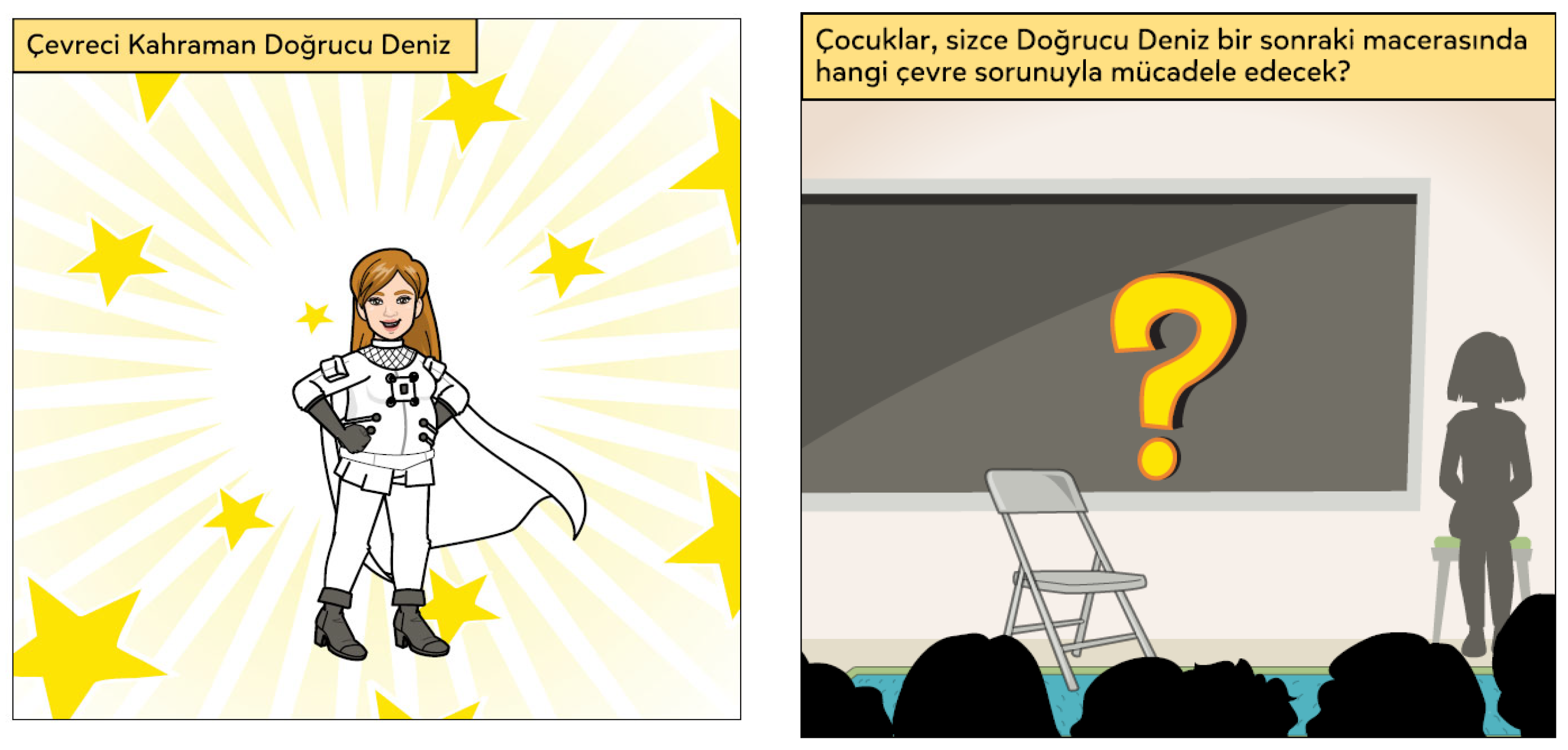
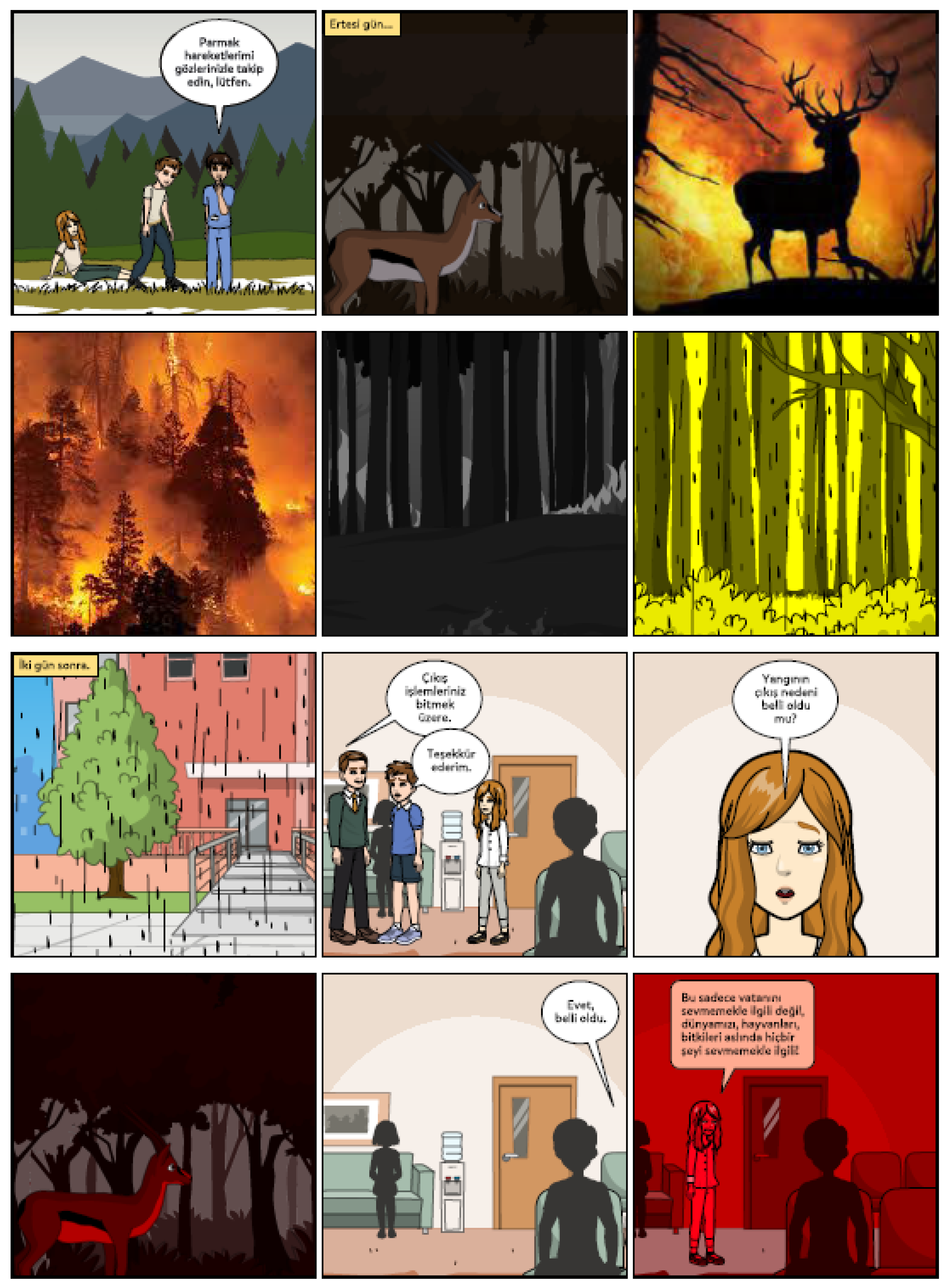
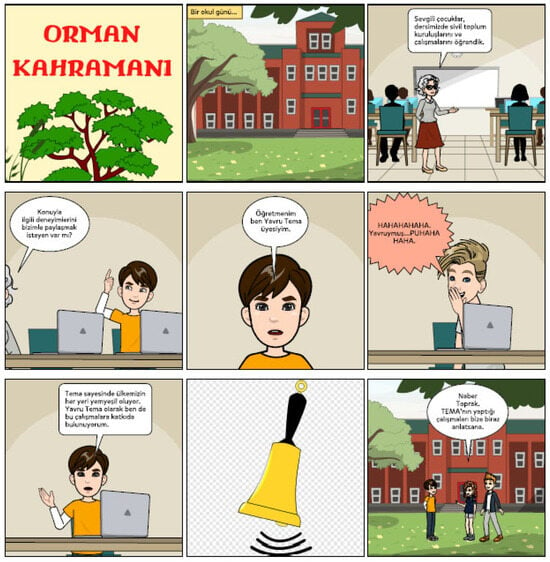
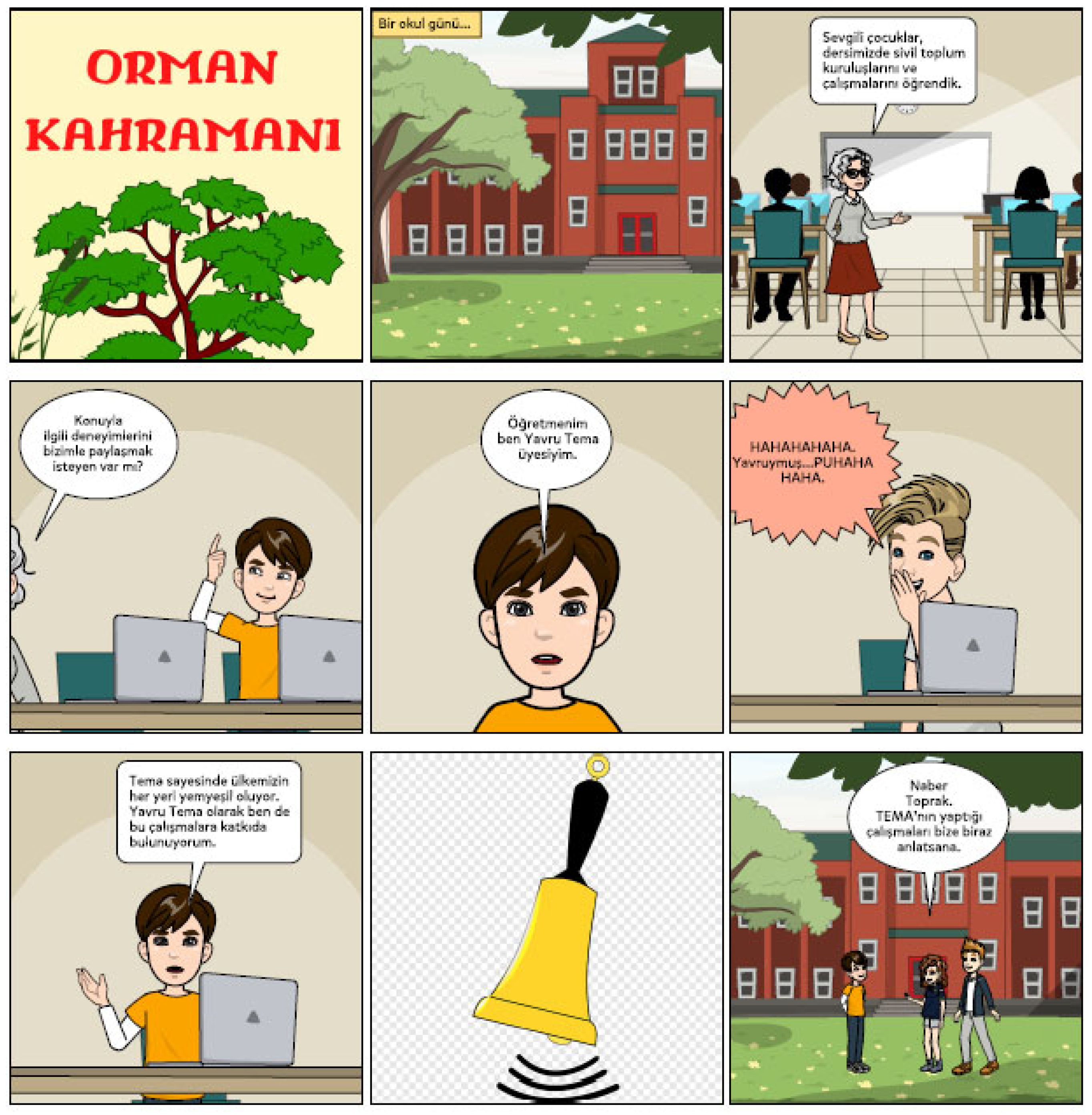

Disclaimer/Publisher’s Note: The statements, opinions and data contained in all publications are solely those of the individual author(s) and contributor(s) and not of MDPI and/or the editor(s). MDPI and/or the editor(s) disclaim responsibility for any injury to people or property resulting from any ideas, methods, instructions or products referred to in the content. |
© 2026 by the authors. Licensee MDPI, Basel, Switzerland. This article is an open access article distributed under the terms and conditions of the Creative Commons Attribution (CC BY) license.