


Abstract
This study addresses the critical problem of barriers hindering Green Supply Chain Management (GSCM) adoption in Egypt’s petrochemical sector, a major economic driver that produces approximately 4.5 million tons annually but generates significant GHG emissions and hazardous waste. The objective is to identify, rank, and analyze the hierarchical relationships among internal and external barriers using a mixed-methods approach. This study focuses on the full petrochemical supply chain in Egypt, encompassing upstream (raw material sourcing), midstream (manufacturing/refining processes), and downstream (distribution, waste management, reverse logistics), with an emphasis on emission/waste reduction practices. Data were collected via a structured questionnaire from 400 employees in Egyptian petrochemical firms and analyzed using Interpretive Structural Modeling (ISM). The findings showed that internal impediments, such as a lack of corporate leadership and support (IB1), a critical shortage of resources (IB6), and the absence of green initiatives (IB5), serve as driving forces that exert a cascading influence over the external barriers, which include insufficient government support (EB1), a lack of markets for recycled materials (EB5), and human resources or expertise shortages (EB7). The study contributes to the existing literature on GSCM by incorporating international trends and specifically addressing Egyptian issues, including weak policies, difficult supply chains, high energy-intensive operations, and costly operations. The study suggests that sending clear messages from the top and providing financial incentives can help push the obstacles aside and guide the industry down the path of environmentally responsible operations.
1. Introduction
When considering the exploration of barriers to GSCM, the petrochemical sector in Egypt is an important area of focus. This industry is crucial to the country’s economy, contributing to exports and employment, but it poses serious environmental risks. However, the literature presents an evolving landscape in the discourse on GSCM and the adoption of various GSCM practices across different years.
Internationally, GSCM is critical for reducing environmental impacts across supply chains, such as lowering GHG emissions, minimizing waste, and complying with regulations like the EU’s Carbon Border Adjustment Mechanism (CBAM), while enhancing competitiveness and resource efficiency [1,2].
Egypt was selected due to its rapidly growing petrochemical sector, with annual production of approximately 4.5 million tons, significant GHG emissions and hazardous waste from refining processes, alignment with national goals, and the scarcity of empirical GSCM barrier studies in African energy-intensive industries [3]. Egypt’s Vision 2030 emphasizes sustainable industrial development, while the National Climate Change Strategy 2050 targets 70% green public investments by 2030 and promotes low-emission growth in energy-intensive sectors such as petrochemicals, making GSCM adoption essential to meet these national commitments [4]. GSCM is a management approach that integrates environmental concerns into every aspect of the supply chain management process. GSCM integrates the procurement plan in an enterprise with green processes to enhance environmental aspects for suppliers and customers.
Building on this, GSCM incorporates green ideas in the design phase, use, reuse, dismantling, and recycling, while also meeting green standards in warehousing, transportation, and suppliers’ development phases [5]. GSCM is a necessary approach for businesses to address their environmental problems [6]. A wide range of GSCM methods have been outlined, including green purchasing and supply chain integration, and it has been stressed that cooperation between manufacturers, suppliers, and consumers is key to their success. Building on this, the barriers that stop companies from implementing their green plans have been described [7].
The study sorted these barriers into six categories: multiple Ms (Man, Machine, Material, Method, Money, Management, Measurement and Market/Marketing), Supply chain procedures, Stakeholders, Sustainability areas, Corporate hierarchies and Others (psychological, technological, knowledge/awareness deficits and strategical). Using the DEMATEL technique, Md Said et al. [7] untangled how these barriers interact and affect one another, identifying the biggest hurdles that need to be addressed. In terms of GSCM, there is no one-size-fits-all approach, and it is not easy to implement, especially in emerging markets such as Egypt’s petrochemical industry. Key global issues in GSCM include hazards associated with waste management, carbon emissions from refining processes, and international regulations to reduce them.
Although there has been growing concern about adopting GSCM practices to achieve strategic sustainability, their realization in Egypt’s petrochemical sector has been minimal and unbalanced. Despite its recognized effectiveness in balancing these challenges and environmental concerns, its adoption in developing economies such as Egypt poses significant challenges. The lack of understanding of how these barriers interact and reinforce one another has contributed to the absence of effective strategies to enable GSCM adoption. Therefore, there exists a major need for empirical research to systematically structure these barriers in the Egyptian petrochemical industry to facilitate the transition to a sustainable business environment.
Moreover, despite the sector’s economic importance, GSCM adoption remains low due to interconnected internal and external challenges, with few empirical hierarchical studies conducted in the country. While several studies in various contexts have pinpointed obstacles to GSCM, there is limited empirical data on the problem in Egypt’s petrochemical sector. Egypt’s growing economy, unique socio-political landscape, rapidly increasing consumer demand for eco-friendly products, and industrial issues make the Egyptian petrochemical market distinct, rendering the evaluation of GSCM problems unique.
This research seeks to fill this knowledge gap by examining the full array of barriers that impede the widespread adoption of GSCM in Egypt’s petrochemical sector. As it sheds light on internal and external hurdles, such as culture, lack of knowledge, policy barriers, government regulations, and underdeveloped infrastructure, this study is expected to illustrate the obstacles and complexities, providing a starting point for management and policymakers to implement sustainable supply chains in Egypt’s petrochemical industry.
This research addresses the entire petrochemical supply chain in Egypt, ranging from upstream (raw material sourcing) to midstream (manufacturing/refining) to downstream (distribution, waste management, reverse logistics), with a focus on emission and waste reduction practices. Therefore, the research questions are as follows:
- Q1: What are the most critical internal and external barriers to GSCM adoption in Egypt’s petrochemical sector?
- Q2: How do these barriers interact hierarchically according to ISM analysis?
- Q3: Which root-cause barriers (driving forces) should be prioritized for intervention?
- Q4: What practical implications arise for managers and policymakers?
2. Literature Review
There exists a wide spectrum of challenges and regional issues that differ across industries. This applies to Egypt’s petrochemical industry when discussing the literature on barriers to adopting GSCM. The aims and results of research studies differ and can be categorized based on commonalities regarding difficulties in implementing sustainable practices in supply chain management in high-energy-consuming industries such as petrochemicals.
2.1. Financial and Economic Barriers
Regarding GSCM in developing countries, financial, regulatory, and awareness issues are especially severe in countries like Egypt. A study in Bangladesh’s textile industry found that financial constraints, low demand for products, and a lack of government incentives are the biggest hurdles [7]. The study emphasized that awareness and government backing are key drivers of eco-friendly initiatives in emerging markets, advising that financial incentives and supportive policies are urgently needed to promote sustainable practices in the textile sector parallels that also exist in Egypt’s petrochemical industry. In 2016, a study [8] used a mixed-methods approach with a fuzzy-based VIKOR framework to investigate obstacles to GSCM in Bangladesh’s plastic industry. The study found financial limitations, outdated technology, and organizational resistance to be the main problems and presented a detailed hierarchy of barriers and plans to tackle them. It stresses that a multi-faceted strategy and stronger policies are necessary to implement GSCM in this industry.
A study on the drivers and deterrents of GSCM execution identified high costs, a lack of top-level commitment, and unenlightened customers as the main hurdles [9]. Returning to the Egyptian context, recent studies have elaborated on these ideas using the analytic network process to identify major hurdles in the Egyptian petrochemical sector, finding financial constraints and regulatory shortcomings to be the most damaging [10]. A survey employed questionnaires and pairwise comparisons to rank sixteen problems in the Egyptian petrochemical industry, pinpointing internal obstacles such as management commitment and external problems like government support and again stressing the magnitude of financial and regulatory issues in emerging markets [11,12].
2.2. Regulatory and Policy Barriers
Regulatory challenges are major obstacles to GSCM implementation in developing countries. Studies in Bangladesh described the lack of government incentives for GSCM implementation [7]. They pointed out that government support is one of the factors driving environmentally supportive activities in developing countries. Research on issues in GSCM implementation in the petrochemical industry proposes that more effective policies are required to initiate GSCM [8]. Factors for and against GSCM implementation act as catalysts or inhibitors [10]. In Egypt, the lack of strong regulations is considered among the most harmful barriers. External difficulties, such as lack of government support, are serious hindrances [11,13]. In developed countries, a study in New Zealand considered weak regulations as serious barriers, emphasizing the need to achieve economic and sustainability objectives [14]. A study [15] examined roadblocks in Green Supplier Development Programs (GSDPs) in the manufacturing industry using a hybrid Grey-DEMATEL and ISM analysis. They focused on a lack of strategic environmental goals, poor communication, and weak regulatory backing as the major obstacles. They stressed that top management commitment and regulatory regimes can make or break GSCM, calling for a comprehensive eco-friendly plan and adherence to rules to enhance sustainable supplier development. These are challenges that the Egyptian petrochemical industry is all too familiar with.
2.3. Organizational and Management Barriers
In a systematic review of GSCM practices in developing countries, the researchers employed the PRISMA model to sift through 70 research papers and found that the biggest barriers were inadequate technology, insufficient know-how, and limited financial resources. Regarding general challenges of GSCM in the petrochemical industry, a study [9] highlighted that top management support and supplier engagement are key to overcoming them. They proposed that increased training and adoption of the latest technology would significantly advance GSCM practices, something petrochemical companies in Egypt should consider. They also emphasized the dual role of regulatory factors, stating that they can either promote or hinder GSCM implementation. According to them, a supportive regulatory framework and greater customer engagement are necessary for overcoming these obstacles.
Research from developed regions highlights different barriers to GSCM, namely technological, market-related, and strategic. A study [11] investigated barriers to GSCM among Canadian manufacturing firms, particularly in the electronics sector, grouping them into three main categories: knowledge-related, commitment-related, and product-design-related. The research identified a lack of environmental awareness, weak corporate social responsibility, and complications in reusing and recycling products, stressing that overcoming these barriers requires better understanding, stakeholder commitment, and resolution of product design issues. Egypt’s experience in petrochemicals, where knowledge and understanding are primary obstacles to GSCM, is similar. In New Zealand, a study [8] analyzed drivers and obstacles to sustainable supply chain management through interviews with senior managers, finding economic considerations, strategic impediments, and weak regulations to be significant barriers, underlining the delicate balance between economic aspirations and sustainable goals. The authors proposed that further governmental help and internal alignment within companies are required to promote eco-friendly supply chain strategies, similar to issues seen in Egypt.
Numerous studies have investigated barriers and challenges associated with GSCM adoption in countries including India and Egypt. In the Indian automobile industry [14], the utility of interpretive structural modeling to analyze barriers was demonstrated. They categorized them into dependent, driver, and linkage types, concluding that monetary issues, lack of upper management backing, and insufficient ecological metrics are the main hurdles stopping GSCM adoption. The study stressed the need for a well-thought-out plan, pointing out that resistance to change and demand issues play a considerable part in hindering GSCM adoption. These findings are particularly relevant to Egypt’s petrochemical sector, which is plagued by financial and commitment issues.
2.4. Technological and Knowledge Barriers
The state of knowledge on GSCM has evolved from merely outlining barriers to systematically identifying those related to practices and performance, as well as aligning GSCM with newer technologies. Landmark reviews [16] have provided a thorough catalog of GSCM research over the past decade, characterizing thematic clusters in financial performance measures of GSCM adoption, as well as its application in the automotive, textile, and electrical sectors, laying the groundwork for future studies on sustainable supply chains worldwide. More recent reviews illustrate the frequent integration of Industry 4.0 technologies, such as blockchain, the Internet of Things (IoT), big data analytics, and artificial intelligence, in GSCM activities, making GSCM more resilient in tracing, more effective in stakeholder coordination, and more environmentally sustainable. Research on the nexus of GSCM and renewable energy, as well as industry digitalization, has found that critical GSCM activities, such as green purchasing, reverse logistics, and ecologically informed designs, drive sustainability performance. Additionally, they stress the need to integrate these technologies more cohesively with the organization’s objectives to improve efficiency and sustainability performance [17].
Moreover, ref. [18] delved into enterprise-sized companies and discovered that expensive technology, insufficient green technology, and unenthusiastic suppliers were the main hurdles. The study prioritized sustainable procurement and called for a cultural shift within companies to emphasize environmentally friendly practices. They believed that strong supplier relationships and investments in green technology are key to overcoming these obstacles, challenges of which the Egyptian petrochemical industry is well aware. Studies [12,19] in the Egyptian petroleum sector ranked green practices and identified hindrances like outdated technology and knowledge gaps that hinder sustainability targets. In 2022, an ISM-based study in the context of Industry 4.0 highlighted sustainable supply chain problems, including technological and regulatory barriers related to petrochemical industry digitalization.
New insights are being developed concerning the complexity of the role played by advanced technology and sustainability strategies in creating barriers in energy-intensive sectors. For example, a 2025 study in Nonlinear Dynamics found that blockchain application in the remanufacturing supply chain can positively affect transparency and carbon emission reduction, but it can also lead to market instability and risks, forming operational barriers because certain technical governance solutions are largely unattainable [20]. Concurrently, new insights are emerging concerning disparities in perceptions of ESG risks in evaluations. New research finds that ESG risk disparities increase information asymmetry regarding operational risks, significantly influencing supply chain financing capabilities and creating perception risks in new markets, similar to financial and operational risks in emerging markets like Egypt [21].
2.5. Market and Stakeholder Barriers
Internal and external challenges to GSCM adoption can be studied using a comprehensive framework. Studies on GSCM adoption in different industries identify major hurdles, such as lack of green buying practices, financial costs, and poor government regulations [22]. They pointed out that customer demand and intense competition make it harder for companies to adopt eco-friendly measures, an issue also present in Egypt’s petrochemical sector, which is concerned about expenses. In 2024, a literature review provided a clear outline of GSCM principles for sustainable development, assessed existing frameworks, and clarified differences between sustainable and regular sourcing. A study [22] has boosted understanding of GSCM in industrial sectors, including petrochemicals.
Empirical studies [13,19] on solar energy companies offer new insights applicable to Egypt’s petrochemical market. Several common obstacles emerge, differing across regions and industries when analyzing GSCM barriers [18]. Financial and regulatory issues, lack of top management commitment, and limited customer awareness form the top hurdles worldwide. Methodologies such as ISM, DEMATEL, and VIKOR offer systematic ways to tackle these obstacles, yet empirical verification is lacking, particularly in area-specific studies in emerging economies like Egypt’s petrochemical industry [13]. From another perspective, obstacles vary greatly by region and sector. Financial and regulatory hurdles are the main concerns in developing countries, while technical and market-related challenges predominate in developed countries. Internal barriers such as organizational culture and leadership commitment are widespread across areas and sectors and can be addressed through a holistic strategy including strategic leadership, regulatory improvements, and customer education.
In Egypt’s petrochemical sector, it is crucial for top management to support the movement, for regulatory bodies to adopt a holistic view, and to invest in promoting eco-friendly practices to customers [12]. Empirical research shortcomings in this field can be addressed through deeper, sector-based, and comparative studies, allowing better understanding of specific problems in different industries and helping develop finely tuned GSCM strategies for Egypt’s petrochemical sector. Recent calls for research in Egypt’s oil and gas sector investigate roadblocks to adopting eco-friendly practices and link them to operational success and sustainability.
2.6. Research Gap
Despite increasing research efforts in recent years emphasizing GSCM barriers in developing and developed countries, certain research gaps have emerged. Previous studies have mainly attempted to address, rank, or classify barriers using descriptive methods and multi-criteria decision-making methods such as VIKOR, DEMATEL, and ANP in sectors like textiles, plastics, automobiles, and electronics [7,8,10,11,14,15]. Although previous research has provided useful information on monetary, statutory, technological, and organizational aspects, most treated barriers as separate variables rather than an interrelated system. Even in research adopting structural approaches using ISM and hybrid methods, empirical work was mainly in Asian and developed countries, with little emphasis on Africa and energy-intensive sectors like petrochemicals [14,16]. In addition, research in Egypt mainly ranked and emphasized priority barriers without sufficiently discussing hierarchical and causal connections between internal and external barriers [12,19,20].
Similarly, despite recognizing the petrochemical industry’s significance as an environmental pollutant and CO2 emitter, there is little research on GSCM barriers in Egypt’s petrochemical industry that offers managerial insights to structure sustainability challenges. For instance, Egyptian studies point to financial factors, lack of effective governance structures, dominance of outdated technologies, and lack of genuine management commitment to sustainability as significant factors thwarting GSCM implementation in the petrochemical industry [12,19,20]. In view of these contexts, this research aims to introduce an innovative structure using the ISM method to identify sustainability barriers to GSCM implementation in Africa’s petrochemical industry, particularly in Egypt.
Empirical evidence from developing countries indicates that GSCM obstacles are sector-specific and dependent on local institutional and economic contexts. In India, ISM studies on the automotive sector highlight monetary constraints, weak top management commitment, and lack of environmental performance metrics as driving forces, with monetary constraints affecting most organization-wide and operation-specific factors [18]. In Bangladesh, research on textile and plastic industries pinpointed financial constraints, technological backwardness, weak government incentives, and low market demand for green products as key obstacles [9,23]. More contemporary research highlights trends in removing barriers to achieve positive green practices and alignment. Evidence from Pakistan shows a positive impact of GSCM implementation in manufacturing firms on sustainable practices despite rising economic and financial barriers [24]. The Indian garments industry has made headway through leadership and supplier commitment, along with sustainability integration into mainstream strategies [25]. In Bangladesh, approaches remain incremental even in constrained environments.
This indicates the need for contextual, empirically based research on organizational and technological constraints to GSCM implementation in Egypt’s energy- and capital-intensive petrochemical industry.
3. Research Methodology
This study aims to evaluate barriers to implementing GSCM, focusing on a comprehensive set of internal and external factors impacting the adoption of sustainable practices in Egypt’s petrochemical sector. Specifically, the research investigates internal and external barriers within this industry, known for its environmental footprint. The barriers were identified through a systematic review of existing literature on GSCM practices in both developing and developed nations. Peer-reviewed journal literature on green supply chain adoption in sectors including petrochemicals, manufacturing, textiles, plastics, and automobiles was reviewed to identify frequently mentioned internal and external barriers. This ensured that the barriers were theoretically established based on well-developed constructs such as cost factors, governmental inadequacies, technological factors, organizational factors, and market factors, thus ensuring high content validity. This study focuses on barriers to GSCM adoption rather than directly measuring GSCM implementation or performance, as the primary aim is the hierarchical analysis of obstacles. Future research could link barriers to GSCM practices or performance outcomes. Barriers were selected based on their perceived impact on adopting GSCM practices such as green purchasing, eco-design, and reverse logistics.
To ensure relevance, the barriers were modified for the Egyptian petrochemical industry context. Five sector experts, including top supply chain executives, sustainability personnel from major corporations, and academics familiar with energy and petrochemical sectors, were consulted to determine barrier relevance, clarity, and scope. Feedback was used to refine and rephrase barriers, making them more applicable to sector-specific challenges. Additionally, the instrument was pilot tested for cultural relevance, term familiarity, and understanding. This ensured the instrument’s relevance and applicability in measuring intended constructs in the Egyptian petrochemical context.
The research design is descriptive and exploratory, utilizing a mixed-methods approach to gain a holistic understanding of GSCM barriers. The quantitative component involves a structured questionnaire for data collection, while the qualitative component employs Interpretive Structural Modeling (ISM) to analyze barrier relationships and their influence on GSCM implementation. This dual approach allows robust examination of barriers and provides a comprehensive framework for understanding their impact on the supply chain in Egypt’s petrochemical sector. This research is exploratory and does not test formal hypotheses. Instead, it employs ISM to derive hierarchical relationships empirically from expert-informed data.
Regarding data collection, primary data were obtained using a structured questionnaire administered to 600 employees in Egypt’s petrochemical industry organizations who are either applying or contemplating GSCM. Of these, 400 questionnaires were acceptable, reflecting a 66.7% response rate. In industry-based survey studies, response rates generally vary between 20% and 73%. These rates are deemed acceptable for empirical tests. The survey targeted employees with work experience in supply chains or related areas. Respondents were from major Egyptian petrochemical companies, including public sector firms like Egyptian General Petroleum Corporation affiliates, as well as private and public companies. Roughly 60% of the corporations surveyed were large-scale with more than 500 workers, given the capital-intensive nature of petrochemicals. By role, 45% were middle management, 15% senior managerial, and 40% operational or supervisory in supply chain management, sustainability, and related areas.
A detailed demographic profile of the respondents is presented in Appendix A. The questionnaire, shown in Table 1, captured respondents’ perceptions of barrier significance using a Likert scale from 1 (strongly disagree) to 5 (strongly agree). The survey was conducted online and in person, ensuring broad representation from the petrochemical industry.
Table 1.
Barriers to Green Supply Chain Management.
3.1. Measurement of Barriers
The questionnaire includes items measuring various dimensions of GSCM barriers. Internal barriers assess organizational culture, leadership commitment, and resistance to change. External barriers focus on regulatory support, market conditions, and societal pressures.
3.2. Data Analysis
The data was analyzed using descriptive statistics to identify the most significant barriers based on respondents’ ratings. To further examine interrelationships among barriers, Interpretive Structural Modeling (ISM) was employed. The ISM method is a qualitative technique used to develop a structured model depicting barrier relationships and hierarchical order. Using ISM, the study identifies driving barriers (those significantly influencing others) and dependent barriers (those influenced by others). This approach helps understand complex barrier interactions and provides clear visualization of their relative importance and impact on GSCM adoption.
ISM analysis involves several key steps: first, listing barriers identified through the literature review and questionnaire responses. Next, constructing a Structural Self-Interaction Matrix (SSIM) to establish barrier relationships. Then, converting this matrix into a reachability matrix to develop the hierarchical structure. The final model depicts barrier interactions, providing insights into root causes and potential solutions.
3.3. Validity and Reliability
To ensure questionnaire validity and reliability, a pilot study was conducted with 30 respondents from Egyptian petrochemical companies before the main data collection. The pilot test revealed lack of clarity in item wording, particularly for internal barriers (IB6 and IB7), potentially generating conflicting responses. Item wording was changed to improve clarity and conceptual accuracy. For example, item IB6 was revised from “lack of adaptation to technology advancement/manufacturers’ resistance to change” to “resistance to adopting new green technology” to better capture GSCM barriers. Following changes, Cronbach’s alpha improved from 0.78 to 0.85.
3.4. Ethical Considerations and Bias Mitigation
Participants provided informed consent, and anonymity was ensured. To reduce common method bias [27], the questionnaire used clear instructions, varied question formats, and assured confidentiality. Harman’s single-factor test showed no dominant factor (>40% variance). The next section applies this ISM procedure to the full list of internal and external barriers to GSCM in Egypt’s petrochemical industry, as listed in Table 1. The reachability matrix, level partition, and final digraph offer an empirically developed hierarchy of barriers in the Egyptian petrochemical industry.
4. Finding and Results
4.1. Descriptive Statistics of Responses
Surveying 400 employees in Egypt’s petrochemical sector revealed several barriers to GSCM adoption. Table 2 summarizes mean scores on a 5-point Likert scale (1 = strongly disagree, 5 = strongly agree) and standard deviations for Internal Barriers (IBs) and External barriers (EBs). With mean scores of 3.0 or higher, all these barriers need to be seriously considered, and since internal barriers have been ranked higher on average, they are viewed as more immediate and in-house problems.
Table 2.
Descriptive Statistics for the GSCM Barriers.
A lack of high-level management support (IB1) was agreed upon as a significant problem by 78% of respondents (mean = 4.2, SD = 0.8), and resistance to technological innovation (IB7) was a concern for 65% (mean = 3.9, SD = 0.9). Resource shortages (IB6) and absence of green initiatives (IB5) garnered agreement from 72% and 70% of respondents, respectively, with means of 4.1 (SD = 0.7) and 4.0 (SD = 0.8), underscoring internal organizational challenges as root causes. Other internal sub-barriers, such as knowledge gaps (IB4) and perception of low returns (IB9), showed agreement rates of 68% (mean = 3.8, SD = 0.9) and 63% (mean = 3.7, SD = 1.0), respectively. For external barriers, 62% agreed there is a problem with government policy enforcement (EB1; mean = 3.7, SD = 0.9). This sentiment was shared for lack of markets for recycled materials (EB5; 58%, mean = 3.6, SD = 1.0) and expertise shortages (EB7; 60%, mean = 3.8, SD = 0.8). Additional external barriers were regulatory hurdles (EB2; 55%, mean = 3.5, SD = 1.1) and weak supplier commitment (EB3; 59%, mean = 3.6, SD = 0.9). Notably, 82% thought internal barriers had a more significant impact on sustainable practices success, with combined averages of 3.95 for internal and 3.65 for external barriers. This indicates a hierarchical relationship, consistent with ISM analysis. In demographic analysis, mid-level managers (45% of sample) scored internal barriers higher (average 4.1) than entry-level workers (3.7). Senior executives (15%) strongly emphasized government policy issues.
The high response rate and mixed occupational distribution make the findings reliable, laying a foundation for ISM understanding of barrier interactions.
The top three internal barriers were lack of high-level management support (IB1, mean = 4.2), resource shortages (IB6, mean = 4.1), and absence of green initiatives (IB5, mean = 4.0). External barriers ranked lower overall (mean = 3.65 vs. 3.95 for internal). All main barriers related to GSCM include two categories: internal and external, each with sub-barriers that lead or contribute to others. The main barriers are Internal Barriers (IBs) and External Barriers (EBs). Each includes sub-barriers related to GSCM. First, the ISM and ranking of main barriers are developed.
4.2. Development of SSIM for Main GSCM Barriers
The structural self-interaction matrix (SSIM) was constructed based on responses from 400 employees to inspect relationships among basic GSCM barriers (internal and external). The SSIM was built by defining relationship directions according to the following criteria:
- A forward relationship (V) exists if factor i precedes factor j, indicating influence from i to j.
- Conversely, if j influences i, it is a backward relationship (A).
- If i and j interact mutually, it is denoted as X.
- If no association, it is O.
- The SSIM is designed based on contextual links.
It is important to discuss SSIM with experts to establish consensus. The SSIM is finalized considering their responses and insights. Table 3 illustrates SSIM construction for GSCM barriers; it shows that IBs are significant barriers affecting EBs.
Table 3.
Structural Self-Interaction Matrix (SSIM) for Assessment of Main GSCM Barriers.
4.3. Development of the Initial Reachability Matrix for Assessment of Main GSCM Barriers
The SSIM is converted into an initial binary reachability matrix (IRij) by converting symbols as follows. The initial reachability matrix is shown in Table 4, based on the following rules:
- If SSIM (i, j) is V, set reachability (i, j) to 1 and (j, i) to 0.
- If A, set (i, j) to 0 and (j, i) to 1.
- If X, set both (i, j) and (j, i) to 1. If O, set both to 0.
Table 4.
Initial Reachability Matrix for Assessment of Main GSCM Barriers.
4.4. Development of the Final Reachability Matrix for Assessment of Main GSCM Barriers
In this stage, the initial reachability matrix (IRij) is transformed into the final reachability matrix by applying the transitivity rule. This means if variable 1 influences variable 2, and variable 2 influences variable 3, then variable 1 influences variable 3. The final reachability matrix is shown in Table 5. In the final reachability matrix, driving and dependence powers are measured as the sum of row and column values, respectively. Some barriers have high driving power relative to dependence power. This is the case with GSCM’s internal barriers, found to be more significant in this context. Internal Barriers (IBs) have significant driving power, reflecting their dominant role in influencing the shift toward Industry 4.0 adoption.
Table 5.
Final Reachability Matrix for Assessment of Main GSCM Barriers.
4.5. Level Partition for Assessment of Main GSCM Barriers
The level partition, incorporating reachability and antecedent sets for each element, is formed from the final reachability matrix (Table 6). The reachability set includes the element and others it influences. The antecedent set includes the element and others influencing it. The goal is to identify these sets and their intersection. For a factor to be at the top level in ISM, its reachability and intersection sets must match. High-level factors are identified and removed iteratively. This iterative process continues until levels are assigned. Note that Internal Barriers (IBs) consistently influence External Barriers (EBs).
Table 6.
The definitive reachability matrix.
4.6. Development of the Digraph and ISM for Assessment of Main GSCM Barriers
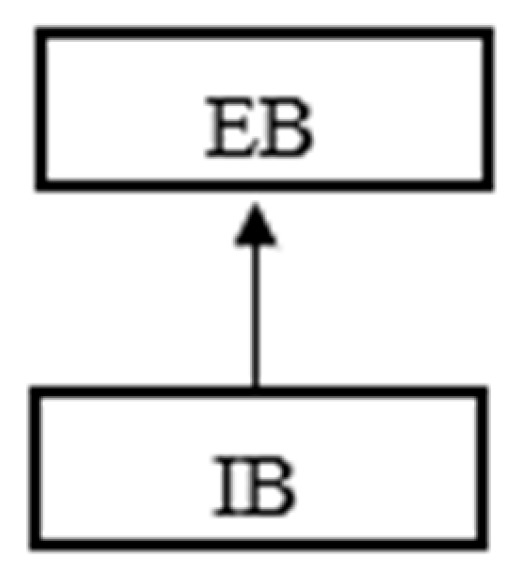
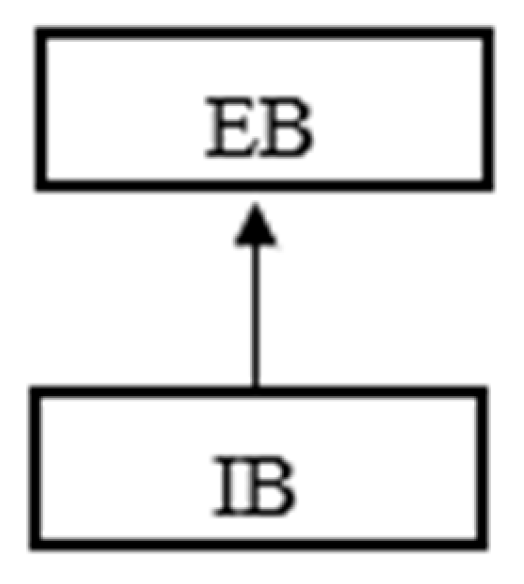
A directed graph (digraph) is built based on factor relationships from the investigation. After removing transitive arcs, the reduced digraph is shown in Figure 1. This digraph extracts the hierarchy. Level 1 factors are placed at the top, level 2 below, and so on.
Figure 1.
Digraph for Main GSCM Barriers.
4.7. The Sub-Barriers of Internal GSCM Barriers
4.7.1. Development of Sub-Barriers of Internal Barriers of GSCM
This barrier includes nine sub-barriers (IB1 to IB9), with relationships shown in Table 7.
Table 7.
Structural Self-Interaction Matrix (SSIM) for Sub-Barriers of Internal Barriers of GSCM.
4.7.2. Development of the Initial Reachability Matrix for Sub-Barriers of Internal Barriers of GSCM
In this stage, the SSIM is converted to the initial reachability matrix using 0s and 1s. Table 8 shows the initial reachability matrix, converted as follows:
Table 8.
Initial Reachability Matrix for Sub-Barriers of Internal Barriers of GSCM.
4.7.3. Development of the Final Reachability Matrix for Sub-Barriers of Internal Barriers of GSCM
In this step, the transitivity rule transforms the initial reachability matrix (IRij) into the final one (FRij). Table 9 shows the final reachability matrix with driving and dependence powers for internal sub-barriers. The findings show that lack of management support (IB1) is the primary driver because top-down decisions dominate in Egypt’s hierarchical organizational culture. Without executive buy-in, resource allocation (IB6) and green initiatives (IB5) stall, amplifying external issues like weak policy enforcement (EB1).
Table 9.
Final Reachability Matrix for Sub-Barriers of Internal Barriers of GSCM.
4.7.4. Level Partition for Sub-Barriers of Internal Barriers of GSCM
The final reachability matrix defines reachability and antecedent sets for constructing the level partition (Table 10). Conversely, IB2 and IB7 are dependent on others (IB3, IB8, IB4, IB9, IB1, IB5, IB6).
Table 10.
Final reachability matrix.
4.7.5. Development of the Digraph and ISM for Sub-Barriers of Internal Barriers of GSCM
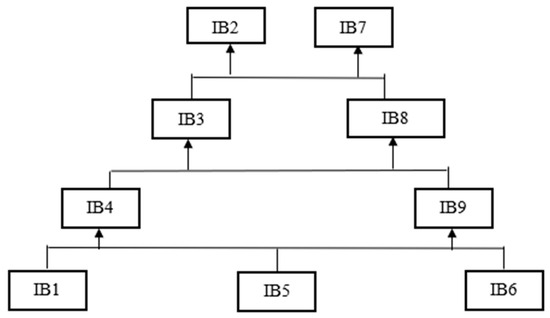
Figure 2 shows the digraph for internal sub-barriers of GSCM. In addition, Table 11 shows ranks and influence degrees for internal sub-barriers.
Figure 2.
Digraph for Sub-Barriers of Internal Barriers of GSCM.
Table 11.
Ranks of Sub-Barriers of Internal Barriers of GSCM.
The highest priority (Rank 1) factors are IB1 (lack of high-level management support), IB5 (absence of green initiatives), and IB6 (resource shortages and resistance to technological adaptation). Secondary importance (Rank 2): IB4 and IB9; Rank 3: IB3 and IB8. Rank 4: IB2 and IB7.
4.8. The Sub-Barriers of External Barriers of GSCM
4.8.1. Development of Sub-Barriers of External Barriers of GSCM
This barrier includes nine sub-barriers (EB1 to EB9), with relationships in Table 12.
Table 12.
Structural Self-Interaction Matrix (SSIM) for Sub-Barriers of External Barriers of GSCM.
4.8.2. Development of the Initial Reachability Matrix for Sub-Barriers of External Barriers of GSCM
In this stage, the SSIM will be converted to the initial reachability matrix using zeros and ones. Table 13 shows the initial reachability matrix obtained, which was converted as follows:
Table 13.
Initial Reachability Matrix for Sub-Barriers of External Barriers of GSCM.
4.8.3. Development of the Final Reachability Matrix for Sub-Barriers of External Barriers of GSCM
In this step, the transitivity rule is used to transform the initial reachability matrix (IRij) into the final reachability matrix (FRij). The final reachability matrix is shown in Table 14 together with each sub-barrier of the external barriers of GSCM driving and dependence powers. The final reachability matrix shows that EB1 (lack of government support), EB5 (poor supplier commitment), and EB7 (lack of ethical standards/CSR) are the key driving external barriers since they drive most of the other factors, whereas EB8 (lack of IT) and EB9 (low CSR awareness) are highly dependent, meaning their causality lies with the upstream barriers. This illustrates the point that strong regulatory support, supplier involvement, and ethical practices will help to reduce dependent external challenges while adopting GSCM.
Table 14.
Final Reachability Matrix for Sub-Barriers of External Barriers of GSCM.
4.8.4. Level Partition for Sub-Barriers of External Barriers of GSCM
The final reachability matrix, which defines the reachability and antecedent sets for each sub-barrier, is used to construct the level partition. Table 15 shows that EB1, EB5, and EB7 are always considered as influencing sub-barriers on all other sub-barriers. On the other hand, the sub-barriers EB8 and EB9 are always dependent on other sub-barriers, EB3, EB6, EB2, EB4, EB1, EB5, and EB7.
Table 15.
Level Partitioning of Sub-Barriers of External Barriers of GSCM.
4.8.5. Development of the Digraph and ISM for Sub-Barriers of External Barriers of GSCM
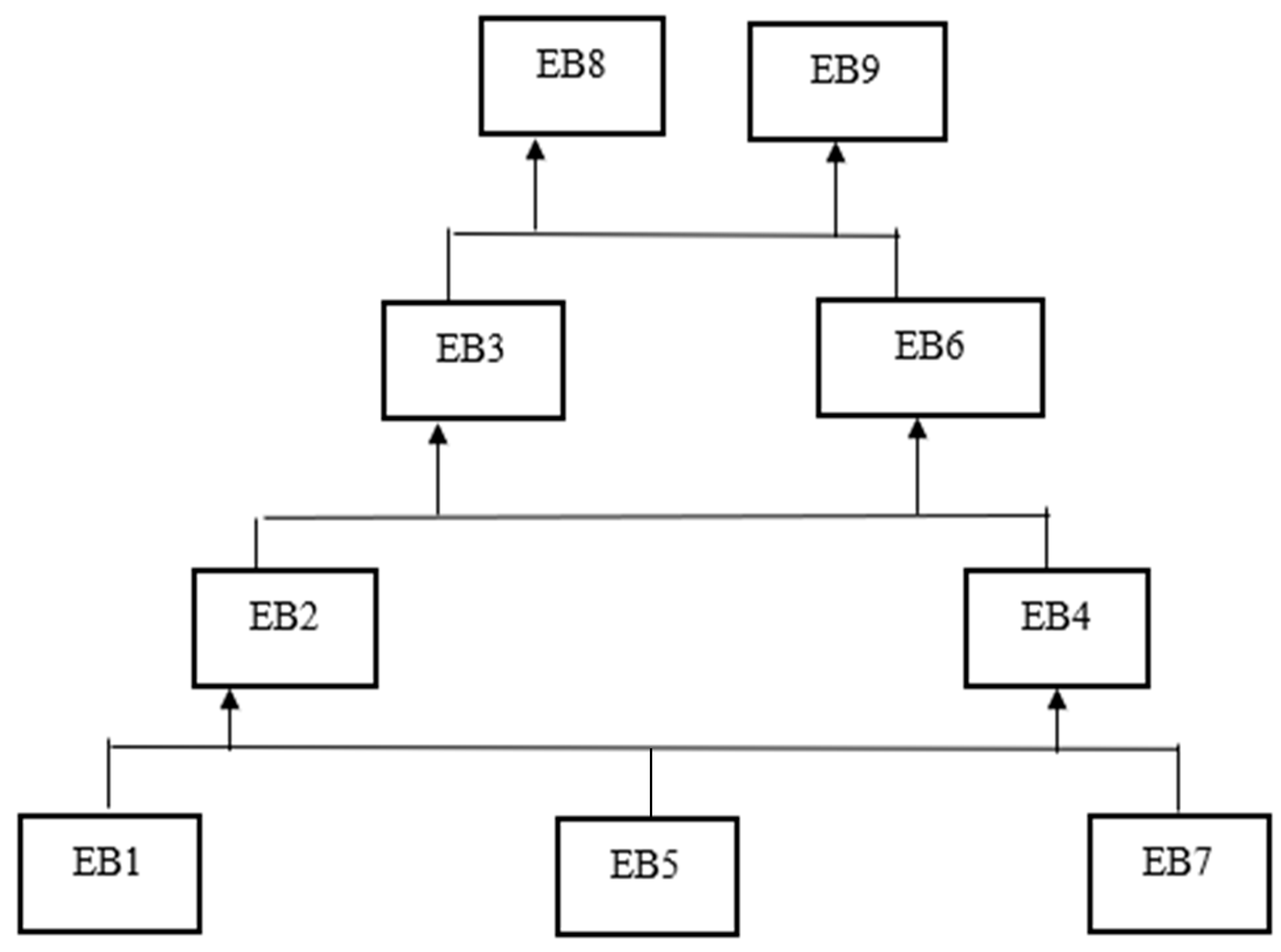
In this stage, a directed graph (digraph) is developed as shown in Figure 3, which illustrates the diagraph for the sub-barriers of external barriers of GSCM.
Figure 3.
Digraph for Sub-Barriers of External Barriers of GSCM.
From the above results, Table 16 shows the ranks and the degree of influence of each sub-barrier for each external barrier of GSCM. The most critical external barriers are EB1 (lack of government support), EB5 (poor supplier commitment), and EB7 (lack of ethical standards/CSR). This indicates the most intense driving force for GSCM implementation. On the other hand, the most dependent external barriers are EB8 (lack of IT infrastructure) and EB9 (low CSR awareness).
Table 16.
Ranks of Sub-Barriers of External Barriers of GSCM.
4.9. The Sub-Barriers of the Main Barriers of GSCM
4.9.1. Development of Sub-Barriers of the Main Barriers of GSCM
This barrier includes eighteen sub-barriers, IB1, IB2, IB3, IB4, IB5, IB6, IB7, IB8, IB9, EB1, EB2, EB3, EB4, EB5, EB6, EB7, EB8, and EB9, which need to be joined together to show the relationships between them, and these directions will be expressed in Table 17 as follows:
Table 17.
SSIM for Sub-Barriers of The Main Barriers of GSCM.
4.9.2. Development of the Initial Reachability Matrix for Sub-Barriers of All the Main Barriers of GSCM
In this stage, the SSIM will be converted to the initial reachability matrix using zeros and ones. Table 18 shows the initial reachability matrix obtained, which was converted as follows:
Table 18.
Initial Reachability Matrix for Sub-Barriers of All Main Barriers of GSCM (derived from Table 17).
4.9.3. Development of the Final Reachability Matrix for Sub-Barriers of All the Main Barriers of GSCM
In this step, the transitivity rule is used to transform the initial reachability matrix (IRij) into the final reachability matrix (FRij). The final reachability matrix is shown in Table 19 together with each sub-barrier of all the main barriers of GSCM driving and dependence powers. The most influential driving barriers, as identified through the ISM analysis, are IB8 (complexity of implementation), IB1 (lack of high-level management support), EB7 (shortage of skilled expertise), and EB9 (low CSR awareness), since they control many other internal and external sub-barriers. In contrast, EB5 (lack of markets for recycled materials) and EB6 (low technological adoption) are highly dependent, reflecting their being at the mercy of upstream influences. This structure implies that an enabling internal leadership and organizational preparedness will offset a trickling effect that may be caused by externally driven barriers in Egypt’s GSCM context.
Table 19.
Final Reachability Matrix for Sub-Barriers of All Main Barriers of GSCM.
4.9.4. Level Partition for Sub-Barriers of All the Main Barriers of GSCM
The final reachability matrix, which defines the reachability and antecedent sets for each sub-barrier, is used to construct the level partition. Table 20 shows that IB8, IB1, EB7, and EB9 are always considered as influencing sub-barriers on all other sub-barriers. On the other hand, the sub-barriers EB5 and EB6 are always dependent on other sub-barriers, IB8, IB1, EB7, EB9, IB9, EB4, IB4, IB5, IB6, EB3, IB2, IB3, IB7, EB1, EB2, and EB8.
Table 20.
Level Partitioning of All Sub-Barriers (Internal + External) of GSCM.
4.9.5. Development of the Digraph and ISM for Sub-Barriers of All the Main Barriers of GSCM
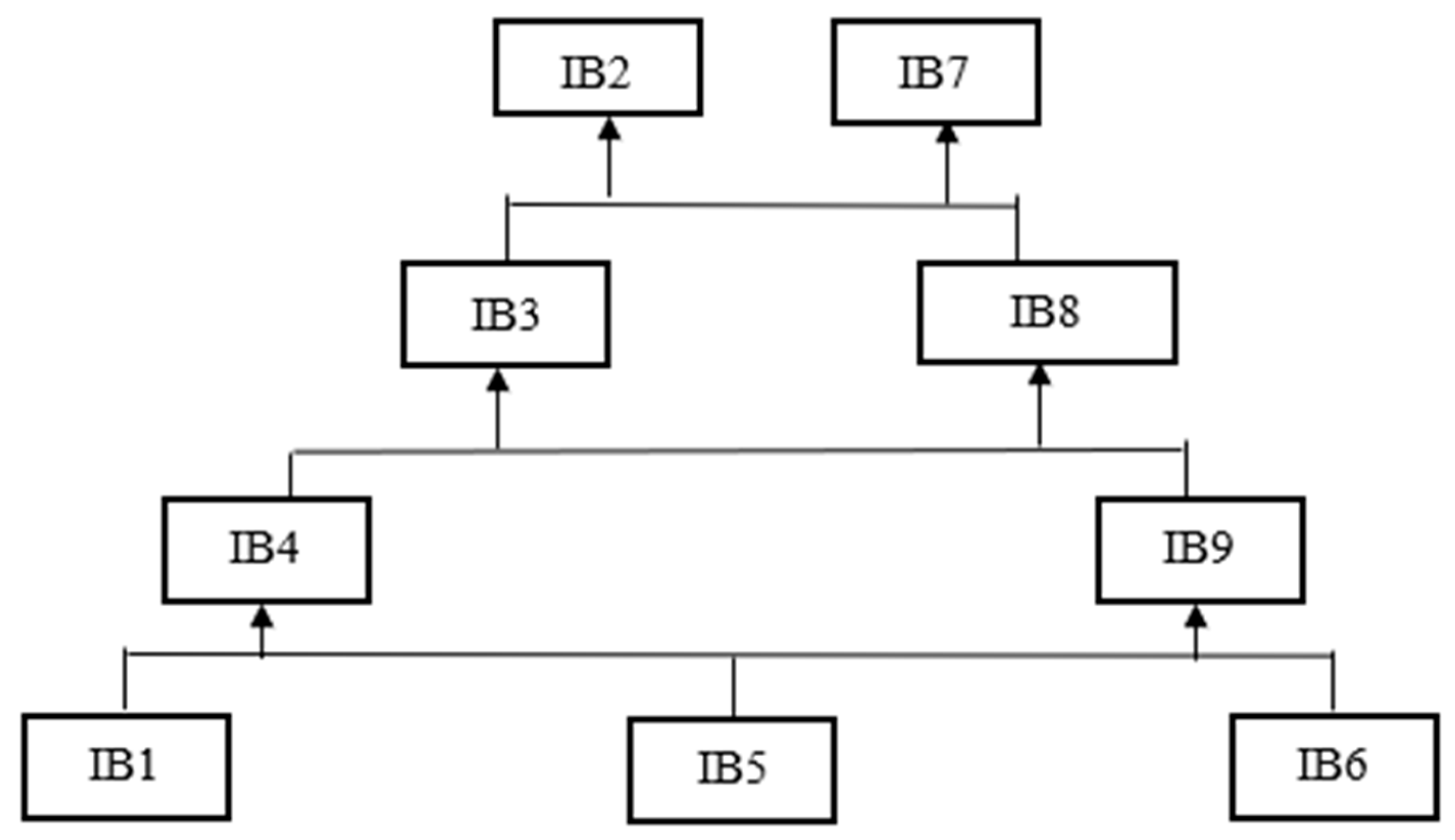
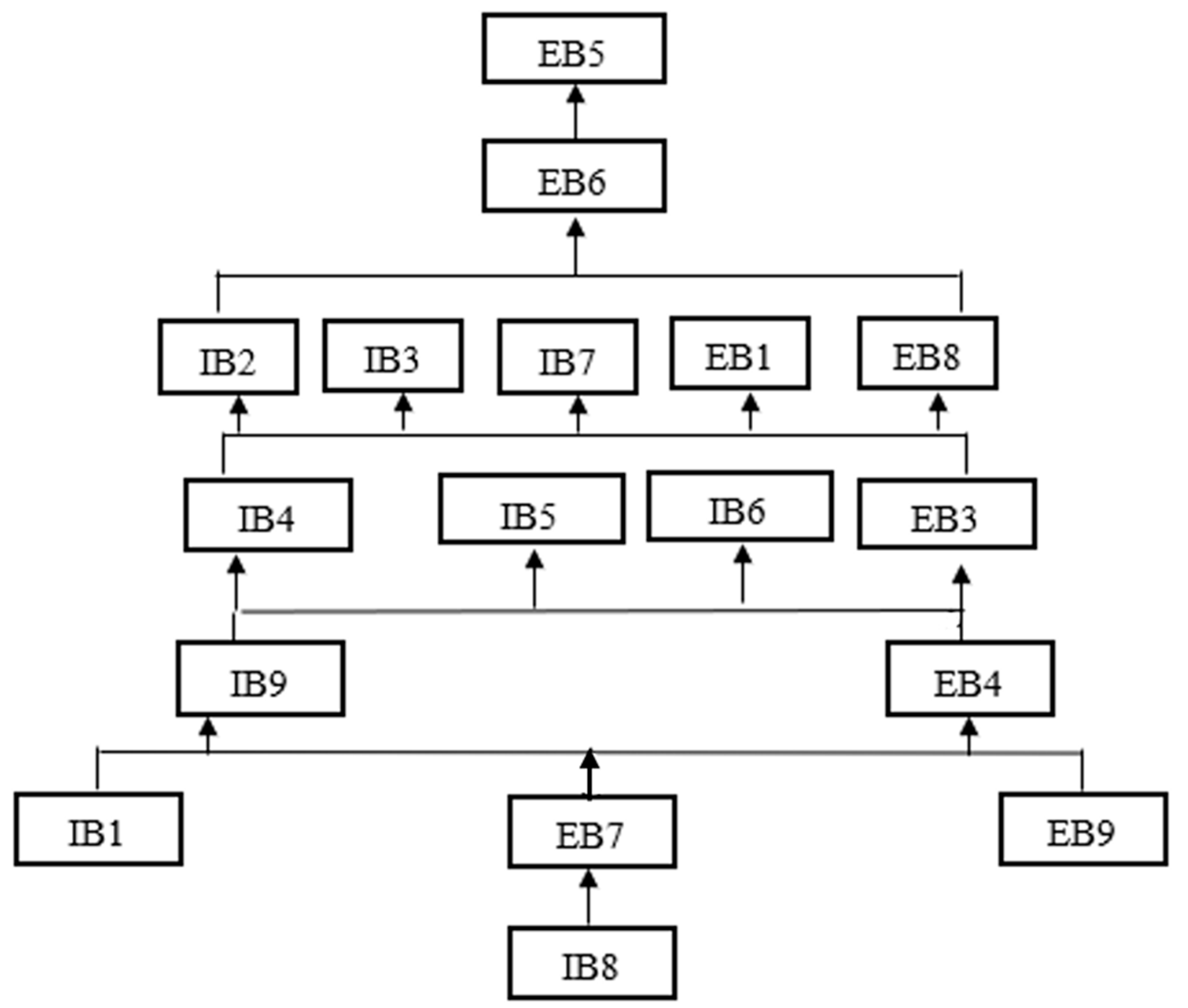
In this stage, a directed graph (digraph) is developed as shown in Figure 4, which illustrates the digraph for the sub-barriers of external barriers of GSCM.
Figure 4.
Digraph for Sub-Barriers of All the Main Barriers of GSCM.
From the above results, Table 21 shows the ranks and the degree of influence of each sub-barrier for each barrier of GSCM. The result of the ISM analysis of all the sub-barriers of GSCM illustrates the dominance of internal and external variables in the overall supply chain context. IB8 (complexity of implementing green practices) is revealed to be the most significant sub-barrier in this context, where the main issue is the willingness of the organization in recognizing the operational and procedural complexity in the adoption of GSCM. This is followed closely by IB1 (lack of high-level management support) and EB7 (shortage of skilled human resources), where the dominance of management support and capable human resources is recognized.
Table 21.
Ranks of Sub-Barriers of All the Main Barriers of GSCM.
These top-ranked barriers serve as key levers, driving not only the performance but also the feasibility of other internal barriers like resource shortages (IB6) and an absence of green initiatives (IB5), and external ones too, like insufficient government support (EB1) and weak markets for recycled materials (EB5). On the contrary, EB5—lack of markets for recycled materials—and EB6—low diffusion rate of enabling technologies—emerge as two of the most dependent sub-barriers, meaning they are those which have a high effect from upstream drivers and have slim possibilities for improvements without the mitigations of higher-level internal constraints.
In the next step of the synthesis of the ISM results, the significance of the hierarchical position and the driving/impact functions of the barriers to GSCM practices that emerged as important to the Egyptian petrochemical industry’s management will now be explained. In Table 22, the results of the final ISM solutions with discrimination between the drivers and the dependents are presented:
Table 22.
Summary of Key ISM-Based Barriers to GSCM Adoption in Egypt’s Petrochemical Sector.
5. Discussion
This empirical study highlights the complex interplay of GSCM hurdles in Egypt’s petrochemical sector.
5.1. Interpretation of Hierarchical Findings
ISM analysis shows internal impediments like lack of corporate leadership (IB1), resource shortage (IB6), and absence of green initiatives (IB5) as driving forces exerting cascading influence over external barriers, including insufficient government support (EB1), lack of markets for recycled materials (EB5), and expertise shortages (EB7). In Egypt’s growing petrochemical market, with annual production of approximately 4.5 million tons by mid-2025, findings show internal barriers exacerbate challenges like high energy consumption, hazardous waste management, and resistance to low-carbon technologies. Resistance to new technology (IB7), an internal driver, maintains outdated procedures and increases reliance on external factors like bureaucratic lags failing to motivate recycling [26]. This is evident in polymer and fertilizer production, resulting in persistent emission problems.
5.2. Comparison with Existing Literature
Using ISM analysis, this study shows that prominent internal driving barriers in Egypt’s petrochemical GSCM implementation are lack of top management support (IB1), critical resource shortages (IB6), and lack of green initiatives (IB5). These have a trickle-down effect on external barriers like lack of government support (EB1), recycled product market limitations (EB5), and qualified human resource shortages (EB7). These results align with earlier studies in developing countries, highlighting leadership, finance, and governance as key GSCM drivers in energy- and resource-intensive industries [7,8,11,12]. These internal barriers accentuate challenges like high energy usage, hazardous chemical waste disposal, and resistance to low-carbon technology in Egypt’s petrochemical sector, with annual production of 4.5 million tons by mid-2025. Resistance to new technology increases dependence on outdated processes and external factors like underdeveloped recycling markets, accentuating challenges [18]. This is accentuated by Egyptian petrochemical organizations’ culture, which requires internal alignment before successful external changes.
The literature validates that these dynamics are not exclusive to Egypt. Studies in Bangladesh, India, and other developing countries establish the importance of interactions between financial limitations and lack of top management commitment in preventing GSCM [7,14,15]. However, Egypt’s petrochemical industry faces additional challenges from economic downturns, hazardous waste treatment, and global regulations like the EU Carbon Border Adjustment Mechanism [19,20]. Collaboration between Egypt’s Nuclear Materials Authority and EGPC converts petroleum waste into low-carbon value-added materials [21,22]. Projects like the Alamein Petrochemicals Complex and Anchor Benitoite in the Suez Canal Economic Zone adopt sustainable technology to optimize resources and maximize low-carbon material production like bioethanol and green ammonia for export [23,27].
5.3. Egypt-Specific Explanations
The results are amplified in Egypt’s socio-economic and legal landscape, where the 2022 economic downturn reinforced internal barriers [28]. In the hierarchical structure of Egypt’s petrochemical sector, unless internal issues are addressed, external efforts like recycled petrochemical market development are compromised. Thus, Egypt’s alignment with the EU’s Carbon Border Adjustment Mechanism is uncertain [29]. However, sector momentum toward sustainability offers optimism, as seen in the December 2025 protocol between the Nuclear Materials Authority and EGPC turning hazardous petroleum waste into value-added, carbon-free products [30]. Projects like the Alamein Petrochemicals Complex, targeting 3.9 million tons annual production using sustainable technologies by 2030, and Anchor Benitoite in the Suez Canal Economic Zone, focusing on decarbonization and over USD 1 billion in exports, demonstrate GSCM’s role in resource optimization and industrial growth [31,32]. Addressing root causes of waste and emissions will enable Egypt’s petrochemical sector to compete globally. This aligns with the National Climate Change Strategy 2050, aiming for 70% green public investments by 2030, and Vision 2030 [33]. GSCM growth will markedly cut the industry’s substantial carbon footprint and add value to Egyptian exports through eco-friendly products like green ammonia and bioethanol [34,35,36].
5.4. Theoretical Contributions
This study advances GSCM theory in three ways:
- It provides one of the first empirical hierarchical ISM analyses demonstrating internal organizational barriers (especially top management commitment and resource allocation) as driving forces over external barriers in a capital- and energy-intensive industry in an emerging African economy, extending findings from Asian manufacturing contexts.
- It contributes to literature on GSCM barrier contextual contingency by showing that in high-emission, state-influenced sectors like petrochemicals, internal leadership and resource commitment are necessary preconditions for translating external pressures (government support, market demand for recycled materials).
- The study enriches the debate on barrier hierarchy vs. independence, providing evidence that, contrary to some DEMATEL-based studies treating barriers equally, a small number of internal root-cause variables exert cascading effects across the barrier system in this context.
6. Research Recommendations, Limitations, and Future Research
6.1. Research Recommendations
Based on ISM findings aligned with Egypt’s national strategies for the petrochemical sector, the following recommendations are proposed.
Phase 1: Target Drivers: Focus on top-ranked sub-barriers (e.g., IB1 and EB1) by leveraging initiatives like the 2025 waste transformation protocol and the Sustainable Green Industries Program, which allocated EUR 271 million for emissions reduction [13]. It taps into global petrochemical trends, tailored to sector requirements, providing clear and measurable results. Address financial hurdles by introducing rewards for green technology [37]. Focus on neutralizing significant investment costs and perceptions of low returns (IB9, Rank 5 in internal barriers), enabling transitions like the Alamein Complex to sustainable production. This results in 15–20% operational cost reductions seen in global benchmarks, boosting sector competitiveness [38].
Phase 2: Address Resource Shortages and Internal Constraints: Promote Public–Private Partnerships (PPPs) by teaming up government entities like EGPC with private companies to fund ventures like recycling plants [39]. Building on the December 2025 waste protocol, turn waste into valuable resources, halting dumping costs [40]. Establish dedicated green investment funds integrating ESG metrics to support sustainable projects like green ammonia facilities, alleviating resource shortages (IB6) and aligning with the 2025 circular economy vision. This leads to mass adoption of low-carbon processes, cutting emissions by up to 30% in high-impact operations [41,42,43]. To implement GSCM and reduce workforce resistance, initiate routine coaching and training. Launch large awareness programs to boost customer and public recognition of petrochemical eco-friendly advantages [44].
Addressing unawareness issues (EB4, EB9), these campaigns aim to boost demand for sustainable products.
Phase 3: Tackle Dependent Barriers: Tighten regulatory frameworks by mandating the environmental management systems and industry-specific certifications for emissions and waste management [45,46]. This tackles regulatory blind spots (EB2, Rank 9, external) and weak supplier commitments (EB3), applied to projects like Anchor Benitoite [47,48]. For Egypt’s gas-to-sustainable-chemicals market growth, implement supportive policies with tax benefits to encourage CO2 utilization in chemical feedstocks (EB1) [49]. Also prioritize transparency [19]. Combined with AI, enable real-time emissions reporting in refining, leading to higher stakeholder trust and lower market volatility (EB8) [13]. Foster GSCM growth by incentivizing supplier collaboration through joint programs rewarding green practices. This overcomes weak supplier commitment (EB3, Rank 4, external) and is effective in Egypt’s industry [45,50,51]. Build resilient supply chains by partnering with global suppliers for biofeedstocks in polymer production [52,53,54]. Provide training initiatives to ensure workforce skills, tackling knowledge gaps (IB4, Rank 8, internal) and expertise shortages (EB7), realizing the 2025 chemical recycling vision. Target investments in upgrading recycling and logistics systems to align with technological frontiers (IB7, Rank 7, internal). Plan plant upgrades, e.g., installing IoT sensors (EB6). The Egyptian petrochemical sector is developing products with reduced environmental impact using AI and blockchain. Digital twins have been applied for process modeling, achieving 15% savings per international standards [55].
6.2. Limitations and Suggestions for Future Researchers
Being from one country, findings may not apply to other regions with different economies, cultures, and rules. Comparative research on GSCM in emerging and developed economies could reveal common obstacles and regional differences. Future research should incorporate longitudinal data and multi-stakeholder perspectives [19]. Although the research covered a broad range of industries, it did not drill down into sector-specific problems. Future research should examine sector-specific challenges in manufacturing, retail, and healthcare [12]. The study used a relatively small sample of 400 employees, which may not represent all company levels. Including wider stakeholder input (suppliers, customers, policymakers, NGOs) would provide a complete understanding of GSCM barriers in Egypt and beyond [13]. ISM effectively prioritized barriers but did not fully capture interaction complexities and relies on expert opinions. Techniques like Structural Equation Modeling (SEM) or system dynamics could complement ISM to untangle barrier relationships. Studies could also examine GSCM drivers like leadership styles, company cultures, and new technologies [56,57].
7. Conclusions
This research indicates that GSCM implementation in Egypt’s petrochemical industry faces significant challenges due to the interplay of internal and external factors, with internal drivers like lack of top management commitment (IB1), insufficient resources (IB6), and lack of green initiatives (IB5) compounding external factors such as lack of government support (EB1), markets for recycled materials (EB5), and skills (EB7). Overcoming these hurdles requires a stepwise approach: building optimal executive management and sustainability focused on corporate culture, addressing resource constraints through public–private partnerships and green funds, and handling dependent external hurdles via policy engagement, regulatory compliance, and market development. Projects like the 2025 Waste Transform Protocol, Alamein Petrochemicals Complex, and Anchor Benitoite implement these recommendations, demonstrating efficiency in reduced operational expenses, improved recycling processes, and increased low-carbon adoption rates.
Emphasis on adopting technologies like IoT, AI, blockchain, and digital twins builds efficiency, transparency, and trust through timely training and supplier co-development to overcome skill deficiencies. This work adds to GSCM theoretical literature by empirically illustrating hierarchical and causal relationships between internal and external barriers in Egypt’s petrochemical industry. Using ISM, top management commitment (IB1), resource capabilities (IB6), and green initiatives (IB5) are found as fundamental drivers influencing dependent barriers like lack of government support (EB1), lack of markets for recycled goods (EB5), and human resource shortages (EB7). It validates that management and organizational factors are fundamental for effective GSCM in emerging countries. This work advances GSCM theory in energy-intensive sectors by analyzing barrier hierarchies.
This work contextualizes barriers in Egypt’s petrochemical environment, where hazardous waste management, high energy demand, resistance to advanced technology, and emission reduction interact through organizational, regulatory, technological, and market variables. To drive stakeholder collaboration, the Egyptian petrochemical sector has set up eco-friendly supply networks partnering with government, academics, and industry. This addresses competition issues (EB8) through joint R&D on cleaner ammonia to standardize best practices. Industry associations drive collective action and policy advocacy for sustainability.
Thus, adopting these evidence-backed, sector-specific strategies allows the Egyptian petrochemical industry to counter internal and external hurdles, align with global sustainability trends, minimize impacts, and increase competitiveness in green chemistry.
Author Contributions
Conceptualization, S.E. and N.G.; methodology, I.E.-N.; software, N.G.; validation, S.E., N.G., and I.E.-N.; writing—original draft preparation, I.E.-N. All authors have read and agreed to the published version of the manuscript.
Funding
This research received no external funding.
Institutional Review Board Statement
Ethical review and approval were waived for this study by Institution Committee due to Legal Regulations (Handbook of Research Ethics and Scientific Integrity at the Arab Academy for Science, Technology and Maritime Transport).
Informed Consent Statement
Informed consent was obtained from all subjects involved in the study.
Data Availability Statement
The raw data supporting the conclusions of this article will be made available by the authors on request.
Conflicts of Interest
The authors declare no conflicts of interest.
Appendix A
Table A1.
A detailed demographic profile of the respondents.
References
- Sarkis, J. A boundaries and flows perspective of green supply chain management. Supply Chain Manag. Int. J. 2012, 17, 202–216. [Google Scholar] [CrossRef] [Scilit]
- Zhu, Q.; Sarkis, J.; Lai, K.H. Institutional-based antecedents and performance outcomes of internal and external green supply chain management practices. J. Purch. Supply Manag. 2013, 19, 106–117. [Google Scholar] [CrossRef] [Scilit]
- Ministry of Petroleum and Mineral Resources of Egypt. Egyptian Petroleum Sector Energy Efficiency Strategy 2022–2035. 2022. Available online: https://www.petroleum.gov.eg/ar-eg/energy-efficiency/PublishingImages/Pages/default/Petroleum%20Sector%20EE%20Strategy%202022%20-%202035.pdf (accessed on 22 December 2025).
- Egyptian Environmental Affairs Agency. Egypt National Climate Change Strategy 2050. 2022. Available online: https://www.eeaa.gov.eg/Uploads/Topics/Files/20221206130720583.pdf (accessed on 22 December 2025).
- Li, J.; Zhu, C. Can Green Supply Chain Management Improve Supply Chain Resilience? A Quasi-Natural Experiment from China. Sustainability 2025, 17, 7481. [Google Scholar] [CrossRef] [Scilit]
- Yan, L.; Li, W.; Tan, S.; Liu, X. The Impact of Artificial Intelligence on Green Innovation Resilience: Evidence from China. Sustainability 2026, 18, 167. [Google Scholar] [CrossRef] [Scilit]
- Md Said, M.H.; Abdullah, R. Green Supply Chain Management towards Sustainable Performance. In Proceedings of the Symposium Pengurusan Teknologi, Langkawi, Malaysia, 28–30 November 2012. [Google Scholar]
- Kaur, J. Investigating Barriers in Green Supply Chain Management. Doctoral Dissertation, Concordia University, Montreal, QC, Canada, 2016. [Google Scholar]
- Tumpa, T.J.; Ali, S.M.; Rahman, M.H.; Paul, S.K.; Chowdhury, P.; Khan, S.A.R. Barriers to Green Supply Chain Management: An Emerging Economy Context. J. Clean. Prod. 2019, 236, 117617. [Google Scholar] [CrossRef] [Scilit]
- Nekmahmud, M.D.; Rahman, S.; Sobhani, F.A.; Olejniczak-Szuster, K.; Fekete-Farkas, M. A Systematic Literature Review on Development of Green Supply Chain Management. Pol. J. Manag. Stud. 2020, 22, 351–370. [Google Scholar] [CrossRef] [Scilit]
- Hebaz, A.; Oulfarsi, S. The Drivers and Barriers of Green Supply Chain Management Implementation: A Review. Int. Sci. J. About Logist. 2021, 8, 123–132. [Google Scholar] [CrossRef] [Scilit]
- Sultan, A.F. The Impact of Green Supply Chain Management Practices on Company Performance in Egypt’s Petroleum Sector. Alex. J. Adm. Sci. 2019, 56, 1–41. [Google Scholar] [CrossRef] [Scilit]
- Rahaman, M.M.; Chowdhury, A.R.B.; Belal, H.M.; Tarin, S.A. Challenges in Green Supply Chain Management Implementation in SMEs: An empirical analysis through ecological modernisation and transaction cost economics. Benchmarking Int. J. 2025, 33, 1–25. [Google Scholar] [CrossRef] [Scilit]
- Sajjad, A.; Eweje, G.; Tappin, D. Managerial Perspectives on Drivers for and Barriers to Sustainable Supply Chain Management Implementation: Evidence from New Zealand. Bus. Strategy Environ. 2020, 29, 592–604. [Google Scholar] [CrossRef] [Scilit]
- Ashraf, S.; Ahmed, T.; Saleem, S.; Aslam, Z. Diverging Mysterious in Green Supply Chain Management. Orient. J. Comput. Sci. Technol. 2020, 13, 22–28. [Google Scholar] [CrossRef] [Scilit]
- de Oliveira, U.R.; Espindola, L.S.; da Silva, I.R.; da Silva, I.N.; Rocha, H.M. A systematic literature review on green supply chain management: Research implications and future perspectives. J. Clean. Prod. 2018, 187, 537–561. [Google Scholar] [CrossRef] [Scilit]
- Labaran, M.J.; Masood, T. Industry 4.0 driven green supply chain management in renewable energy sector: A critical systematic literature review. Energies 2023, 16, 6977. [Google Scholar] [CrossRef] [Scilit]
- Balon, V.; Sharma, A.K.; Barua, M.K. Assessment of Barriers in Green Supply Chain Management Using ISM: A Case Study of the Automobile Industry in India. Glob. Bus. Rev. 2016, 17, 116–135. [Google Scholar] [CrossRef] [Scilit]
- Rezazadeh Salteh, Z.; Fazayeli, S.; Ghoushchi, S.J. Evaluation and prioritization of barriers to the implementation of the eco-regenerative supply chains using fuzzy ZE-numbers framework in group decision-making. AIMS Environ. Sci. 2024, 11, 516–550. [Google Scholar] [CrossRef] [Scilit]
- Wu, R.; Li, M. The impact of blockchain on carbon reduction in remanufacturing supply chains within the carbon trading market: A chaos and bifurcation analysis. Nonlinear Dyn. 2025, 113, 20329–20362. [Google Scholar] [CrossRef] [Scilit]
- Sun, G.; Hu, X.; Chen, X.; Xiao, J. Sustainability Uncertainty and Supply Chain Financing: A Perspective Based on Divergent ESG Evaluations in China. Systems 2025, 13, 850. [Google Scholar] [CrossRef] [Scilit]
- Bai, C.; Satir, A. Barriers for Green Supplier Development Programs in Manufacturing Industry. Resour. Conserv. Recycl. 2020, 158, 104756. [Google Scholar] [CrossRef] [Scilit]
- Rahman, T.; Ali, S.M.; Moktadir, M.A.; Kusi-Sarpong, S. Evaluating Barriers to Implementing Green Supply Chain Management: An Example from an Emerging Economy. Prod. Plan. Control 2020, 31, 673–698. [Google Scholar] [CrossRef] [Scilit]
- Mahar, A.S.; Zhang, Y.; Sadiq, B.; Gul, R.F. Sustainability transformation through green supply chain management practices and green innovations in Pakistan’s manufacturing and service industries. Sustainability 2025, 17, 2204. [Google Scholar] [CrossRef] [Scilit]
- Debnath, B.; Chowdhury, R.R.; Acharya, C.; Guha, A. Sustainability Aspects of E-waste Supply Chain Network Role of New and Emerging Technologies. In Technological Advancement in E-Waste Management; CRC Press: Boca Raton, FL, USA, 2023; pp. 63–79. [Google Scholar] [CrossRef] [Scilit]
- Dhull, S.; Narwal, M. Drivers and Barriers in Green Supply Chain Management Adaptation: A State-of-Art Review. Uncertain Supply Chain Manag. 2016, 4, 61–76. [Google Scholar] [CrossRef] [Scilit]
- Podsakoff, P.M.; MacKenzie, S.B.; Lee, J.Y.; Podsakoff, N.P. Common method biases in behavioral research: A critical review of the literature and recommended remedies. J. Appl. Psychol. 2003, 88, 879. [Google Scholar] [CrossRef] [Scilit] [PubMed]
- Amade, B.; Adeyomo, A.A.; Ogbonna, A.C.; Okore, O.L.; Okwara, I.D. Barriers to Green Supply Chain Management (GSCM) Adoption on Construction Projects. Eur. Proj. Manag. J. 2020, 10, 41–50. [Google Scholar] [CrossRef] [Scilit]
- Banihashemi, S.A.; Khalilzadeh, M.; Antucheviciene, J.; Edalatpanah, S.A. Identifying and Prioritizing the Challenges and Obstacles of the Green Supply Chain Management in the Construction Industry Using the Fuzzy BWM Method. Buildings 2023, 13, 38. [Google Scholar] [CrossRef] [Scilit]
- Gonçalves, H.; Magalhães, V.S.; Ferreira, L.M.; Arantes, A. Overcoming Barriers to Sustainable Supply Chain Management in Small and Medium-Sized Enterprises: A Multi-Criteria Decision-Making Approach. Sustainability 2024, 16, 506. [Google Scholar] [CrossRef] [Scilit]
- Gu, Z.; Malik, H.A.; Chupradit, S.; Albasher, G.; Borisov, V.; Murtaza, N. Green Supply Chain Management with Sustainable Economic Growth by CS-ARDL Technique: Perspective to Blockchain Technology. Front. Public Health 2022, 9, 818614. [Google Scholar] [CrossRef] [Scilit]
- Kamra, J.; Mani, A.P.; Sharma, M.; Joshi, S. The Nexus between Green Supply Chain Management and Sustainability Performance in the Past Decade. Sustainability 2024, 16, 7474. [Google Scholar] [CrossRef] [Scilit]
- Karimi, H.; Jamshidi, M.; Bakhsham, M. Identifying Components and Driving Indicators in Green Supply Chain Management Based on Internet of Things. Ind. Manag. Stud. 2023, 21, 129–160. [Google Scholar] [CrossRef]
- Kouhizadeh, M.; Saberi, S.; Sarkis, J. Blockchain Technology and the Sustainable Supply Chain: Theoretically Exploring Adoption Barriers. Int. J. Prod. Econ. 2021, 231, 107831. [Google Scholar] [CrossRef] [Scilit]
- Luthra, S.; Garg, D.; Haleem, A. Green Supply Chain Management: Implementation and Performance–A Literature Review and Some Issues. J. Adv. Manag. Res. 2014, 11, 20–46. [Google Scholar] [CrossRef] [Scilit]
- Pathak, D.K.; Verma, A.; Kumar, V. GSCM Barriers to Sustainable Development in Indian Manufacturing Organisations: A Mixed-Method Approach. Int. J. Logist. Syst. Manag. 2024, 47, 388–410. [Google Scholar] [CrossRef] [Scilit]
- Reshad, A.I.; Biswas, T.; Agarwal, R.; Paul, S.K.; Azeem, A. Evaluating Barriers and Strategies to Sustainable Supply Chain Risk Management in the Context of an Emerging Economy. Bus. Strategy Environ. 2023, 32, 4315–4334. [Google Scholar] [CrossRef] [Scilit]
- Sulistio, J.; Rini, T.A. A Structural Literature Review on Models and Methods Analysis of Green Supply Chain Management. Procedia Manuf. 2015, 4, 291–299. [Google Scholar] [CrossRef] [Scilit]
- Gong, L.; Hou, R. Divergent Paths to Sustainability: A Comparative Evaluation of Multidimensional Value and Spatial Evolution in China’s State-Owned and Non-State-Owned Enterprises. Sustainability 2026, 18, 168. [Google Scholar] [CrossRef] [Scilit]
- Teixeira, A.A.; Jabbour, C.J.C.; de Sousa Jabbour, A.B.L.; Latan, H.; De Oliveira, J.H.C. Green Training and Green Supply Chain Management: Evidence from Brazilian Firms. J. Clean. Prod. 2016, 116, 170–176. [Google Scholar] [CrossRef] [Scilit]
- Yassin, A.M.M.; Hassan, M.A.; Elmesmary, H.M. Key Elements of Green Supply Chain Management Drivers and Barriers Empirical Study of Solar Energy Companies in South Egypt. Int. J. Energy Sect. Manag. 2022, 16, 564–584. [Google Scholar] [CrossRef] [Scilit]
- Mehrabi, J.; Gharakhani, D.; Jalalifar, S.; Rahmati, H. Barriers to Green Supply Chain Management in the Petrochemical Sector. Life Sci. J. 2012, 9, 3438–3442. Available online: https://www.researchgate.net/publication/286516322_Barriers_to_Green_Supply_Chain_Management_in_the_Petrochemical_Sector (accessed on 22 December 2025).
- Hariyani, D.; Hariyani, P.; Mishra, S.; Sharma, M. A Literature Review on Green Supply Chain Management for Sustainable Sourcing and Distribution. Waste Manag. Bull. 2024, 2, 231–248. [Google Scholar] [CrossRef] [Scilit]
- El-Kholy, R. Egypt’s Petrochemical Shift: Green Fuels Shape Energy Diplomacy. Egypt Oil & Gas Magazine, 22 September 2025. Available online: https://egyptoil-gas.com/features/egypts-petrochemical-shift-green-fuels-shape-energy-diplomacy/ (accessed on 22 December 2025).
- Abd El-Hafiz, S.H.G. Green Supply Chain Management (GSCM) and Its Impact on Improving Quality Services for Egyptian Pharmaceutical Companies. Arab J. Adm. 2024, 44, 147–180. [Google Scholar] [CrossRef] [Scilit]
- Al Ramada, M.A.; Vardarlier, P.; Mujtaba, B.G. Linking Green Supply Chains to Operational Performance in the Qatari Energy Industry. Organ. Dev. J. 2025, 43, 149–167. Available online: https://odjournal.org/wp-content/uploads/ODJ-2025-1-11.pdf (accessed on 22 December 2025).
- Khodair, A.; Reaidy, P. Key Constraint Factors for Designing Sustainable Supply Chains in Industry 4.0-Evidence from Egypt. Bus. Process Manag. J. 2025, 32, 1–21. [Google Scholar] [CrossRef] [Scilit]
- Anchor Investments. Green Supply Chain Practices for Petrochemicals in Egypt. Anchor Investments Blog. Available online: https://anchinv.com/practices-for-petrochemicals-in-egypt/ (accessed on 22 December 2025).
- Hamza, M.A.A.; Rego, N. Sustainable Supply Chain Practices of Local versus International Hotels. Sci. Rep. 2025, 15, 32542. [Google Scholar] [CrossRef] [Scilit] [PubMed]
- Said, Y. The Effect of Green Supply Chain Practices on Operational Performance: Bench-marking between Shell and Co-operation Petroleum Company in Egypt. Int. J. Supply Oper. Manag. 2019, 6, 51–56. [Google Scholar] [CrossRef]
- Wan Ahmad, W.N.K.W.; Rezaei, J.; Sadaghiani, S.; Tavasszy, L.A. Evaluation of the External Forces Affecting the Sustainability of Oil and Gas Supply Chain Using Best Worst Method. J. Clean. Prod. 2017, 153, 242–252. [Google Scholar] [CrossRef] [Scilit]
- Zayed, E.O.; Yaseen, E.A. Barriers to Sustainable Supply Chain Management Implementation in Egyptian Industries: An Interpretive Structural Modeling (ISM) Approach. Manag. Environ. Qual. Int. J. 2021, 32, 1192–1209. [Google Scholar] [CrossRef] [Scilit]
- Hafez, L.; Elgazar, S.; Abd-Elwahab, M. Risk Factors in a Sustainable Supply Chain: An Empirical Study of the Egyptian Petrochemical Sector. In Proceedings of the 5th European International Conference on Industrial Engineering and Operations Management, Rome, Italy, 26–28 July 2022; IEOM Society International: Southfield, MI, USA, 2022; pp. 1305–1313. [Google Scholar]
- Gebril, W.A.E. Supply Chain Resilience Strategies for Oil Industry under Uncertainty: Case Study on the Egyptian Refining Industry. J. Commer. Environ. Stud. 2024, 15, 302–352. Available online: https://journals.ekb.eg/article_354121_7f1289952599ad30ee201e024ad84d6a.pdf (accessed on 22 December 2025).
- Ekram, A. Developing a Framework to Achieve Resilience in Oil and Gas Supply Chain During Logistics Disruptions: An Empirical Study. Master’s Thesis, Arab Academy for Science, Technology & Maritime Transport, Alexandria, Egypt, 2022. Available online: https://aast.edu/pheed/staffadminview/pdf_retreive.php?url=66175_153_2_Thesis%20Amr%20Ekram%20final%20Numbered.pdf&stafftype=staffpdf (accessed on 22 December 2025).
- Demirel, H.; Karadağ, M.; Başhan, V.; Mutlu, Y.T.; Kaya, C.; Gul, M.; Akyuz, E. Hybrid Neutrosophic Fuzzy Multi-Criteria Assessment of Energy Efficiency Enhancement Systems: Sustainable Ship Energy Management and Environmental Aspect. Sustainability 2026, 18, 166. [Google Scholar] [CrossRef] [Scilit]
- Ddu Vall, M.; Majorek, M. The Polish (Un)Sustainability Paradox: A Critical Analysis of High SDG Rankings and Low Administrative Effectiveness. Sustainability 2026, 18, 165. [Google Scholar] [CrossRef] [Scilit]

Disclaimer/Publisher’s Note: The statements, opinions and data contained in all publications are solely those of the individual author(s) and contributor(s) and not of MDPI and/or the editor(s). MDPI and/or the editor(s) disclaim responsibility for any injury to people or property resulting from any ideas, methods, instructions or products referred to in the content. |
© 2026 by the authors. Licensee MDPI, Basel, Switzerland. This article is an open access article distributed under the terms and conditions of the Creative Commons Attribution (CC BY) license.