


Abstract
Gender equality is a fundamental human right and an essential foundation for a peaceful and sustainable world. Although significant progress has been made in recent years, gender inequality remains at alarming levels. The importance of this issue is highlighted by the fact that Sustainable Development Goal 5 (SDG5) is strongly linked to other SDGs. It follows that the areas where changes in gender equality are needed on a global scale are very broad. The aim of our research is to compare EU-27 countries in terms of the level and dynamics of selected aspects of SDG5 implementation between 2015 and 2024, with particular focus on the positions of Croatia and Poland. We analysed indicators covering employment, earnings, representation, and education. We determined the level of achievement of SDG5 using the dynamic approach of the TOPSIS method. The dynamics of the level of achievement of SDG was compared by using the hierarchical clustering and dynamic time warping (DTW) method. The EU-27 countries with the highest level of achievement of SDG5 included Western and Northern European ones, with France, Spain, and Sweden being the leading ones (in 2024). The lowest level of achievement was in some Southern European and post-communist countries, with Cyprus, Greece, and Hungary being in the worst situation (in 2024). Croatia and Poland were in the cluster of countries with low values of the composite measure.
1. Introduction
“Transforming Our World: The 2030 Agenda for Sustainable Development” [1] contains 17 Sustainable Development Goals (SDGs) and 169 related targets. All 193 UN Member States signed this document in 2015 in New York through a General Assembly Resolution. The Sustainable Development Goals (SDGs) address many challenges, such as poverty, hunger, education, climate change, health, gender equality, peace, social justice, and sustainable development. One of the main assumptions of this document is that these goals are to be achieved by 2030. The General Assembly Resolution of 6 July 2017 [2] adopted indicators for the continuous monitoring of the level of the goals and target implementation [3]. The European Union, in cooperation with its Member States, is fully devoted to the 2030 Agenda and its implementation through its internal and external actions.
Gender equality (including women’s rights) has been given its own Sustainable Development Goal: SDG5. The achievement of Sustainable Development Goal 5 is to achieve gender equality and empower all women and girls (in short: gender equality). Zhang et al. [4] included SDG5 in the group of goals that refer to the demands for a spiritual dimension based on the satisfaction of necessary subsistence. Taking action to achieve this goal is crucial not only for the goal itself but also helps to achieve other sustainable development goals. Many gender-related issues are also explicitly included in “non-gender-related” goals [5]. If the SDG5 goals are achieved, then they will affect the other SDGs. The word “gender” is not a direct substitute for the word “sex”. Sex refers to the biological distinction between women and men, while gender refers to the social status assigned to women and men [6]. Gender roles can change according to ethnicity, religion, environment, and age [7]. Women and children are more vulnerable to adverse conditions caused by climate change, natural disasters, and migration [8].
A bibliometric analysis conducted by Trane et al. [9] indicates that researchers’ interest is mainly focused on environmental issues (particularly those related to SDG13, SDG7, SDG6, SDG12, and SDG15). However, social issues (SDG4, SDG5, and SDG10) still require further research. The low coverage of SDGs 5, 14, 16, and 17 in research means that these areas deserve more attention in future studies. Research conducted by Shang et al. [10] indicates that articles related to SDG5 represent a small percentage of all articles on SDGs. The percentage of such articles did not increase significantly in the first five years after the introduction of the SDGs. Interestingly, gender differences also apply to the research process related to the implementation of SDG5. Women are often the first authors of scientific articles related to SDG5 only in countries with medium, high, and very high levels of human development (HDI). In countries with low HDI, there are relatively more men who are first authors. Yamaguchi et al. [11] point to an imbalance between the various Sustainable Development Goals in academic research and, in particular, to existing research gaps in the literature review on SDG10, SDG5, SDG14, and SDG16. The Sustainable Development Goals are not a consolidated area of research, as they leave many issues unexplored. Due to its methodological approach, as well as the geographical and temporal scope of the study, this article is an attempt to fill the existing research gap.
Gender equality is crucial for the future of the European Union [12]. Women make up about half of the population, and therefore, the EU cannot afford to waste this enormous potential. SDG5 aims to strengthen the economic and financial position of women. Creating economic opportunities and facilities for women leads to sustainable industrial development [13]. According to a report published by the European Institute for Gender Equality, Europe has failed to make noticeable progress in achieving SDG5 [14]. In 2022, the worst-affected countries were those in sub-Saharan Africa and South Asia. Progress towards this goal has not been faster because of the COVID-19 pandemic [15]. The link between SDG1, SDG3, SDG4, SDG5, SDG10, and SDG16 sets the framework for the analysis of well-being, considered the most important factor for the future sustainable development of society [16,17,18].
Unfortunately, as Zavřelová and Pelikánová [19] indicated, the term “sustainable development” appears quite often in connection with various issues and is used in a specific context in current EU policies. This makes the term ephemeral, often with ambiguous and contradictory meanings.
In their research, Leonavičienė et al. [20] analysed the influence of a cultural factor on the achievement of the SDGs. They indicated that for the EU-27 countries, there is a weak positive (statistically insignificant) correlation between the composite cultural index and SDG5. Culture influences the resources available to the poor, women, and the vulnerable. As Zheng et al. [21] emphasise, in many cultures, women are valued less than men or are associated with being passive, caring, and submissive. In such countries, women’s opportunities to obtain education, leadership roles, and economic and technical resources may be severely limited. European countries often have a wide range of pro-poor and gender-sensitive practices (e.g., social security, wealth redistribution, anti-discrimination laws, and maternity benefits).
The aim of our research is to compare EU-27 countries in terms of the level and dynamics of selected aspects of SDG5 implementation between 2015 and 2024, with particular focus on the positions of Croatia and Poland. We analysed indicators covering employment, earnings, representation, and education. We assessed the level of achievement of SDG5 using the dynamic approach of the TOPSIS method. We compared the degree and dynamics of its implementation using hierarchical clustering and the dynamic time warping (DTW) method.
Although the TOPSIS and DTW methods have previously been used by the authors to assess the progress toward achieving SDG7 and SDG8, their application to the analysis of SDG5 presents distinct methodological challenges stemming from the specific nature of indicators used to describe gender equality. Unlike economic or energy-related indicators, some of the variables employed to monitor SDG5 are the nominants (i.e., they have an optimal target value), which makes it necessary to apply appropriate transformation and normalisation before a multidimensional comparative assessment can be conducted. This study extends the applicability of the approach based on TOPSIS and DTW to the social domain of gender equality and introduces a procedure for handling the nominant variables within a dynamic analysis. The methodological contribution of this work lies in the adaptation and verification of a procedure based on TOPSIS and DTW for the set of SDG5 indicators, while the empirical contribution consists of a comprehensive assessment of the level and dynamics of progress toward SDG5 in European Union countries over the analysed period. Furthermore, this study helps to address a research gap concerning SDG5, which remains one of less frequently analysed Sustainable Development Goals.
Poland and Croatia are post-communist states, yet their historical experiences were not identical. Poland operated under a centralised economic and political model characteristic of the Eastern Bloc, whilst Croatia was part of Yugoslavia, which was more decentralised and relatively independent of the USSR. The differing course of political transition, including the war that accompanied Croatia’s struggle for independence, may have contributed to the divergence in contemporary social and institutional conditions affecting the achievement of SDG5. Poland and Croatia, despite their differing historical experiences, currently operate within a similar institutional framework defined by their membership of the European Union. This means that the pursuit of SDG5 is shaped by common EU regulations and strategies on gender equality. Both countries perceive EU membership as a key element in modernising their economies and strengthening security and are beneficiaries of EU funds. In both countries, public support for EU membership is relatively high. Poland joined the EU in 2004, whilst Croatia did not join until 2013. Croatia adopted the euro (2023) and is part of the Schengen Area, whilst Poland is also part of the Schengen Area but has retained its own currency. Poland is one of the largest EU Member States and has a greater influence on EU policy than Croatia.
The determination of a synthetic measure enabled the creation of rankings of countries and examination of the dynamics of the level of achievement of SDG5. The same rank of an object (in this case country) in subsequent years does not usually indicate the same value of the synthetic measure. This is because countries may improve or worsen their progress towards SDG5 throughout the period without changing their position in the ranking.
We put forward the following research questions:
Q1: Were there big differences in the rankings of EU-27 countries in terms of SDG5 implementation between 2015 and 2024?
Q2: Were there any similarities between EU-27 countries in terms of SDG5 implementation between 2015 and 2024?
Q3: What were the similarities between Poland and Croatia regarding SDG5 implementation?
The manuscript consists of six sections. The first one is the Introduction. In Section 2 (Literature Review), we presented current research in SDG5 implementation. Data and Methods (Section 3) contains a description of the data and research methodology: the TOPSIS method and the DTW method. We presented the results of our research in Section 4 (Results). In Section 5 (Discussion), we compared our results with other studies in the area of SDG5 implementation. In the Section 6 (Conclusions), we present the findings and present directions for future research. In Appendix A, we include a detailed analysis of the indicators used in the study.
2. Literature Review
There are many works in the scientific literature describing the level of achievement of the Sustainable Development Goals, either dedicated to a single SDG or covering multiple goals. As we mentioned in the Introduction section, there seems to be relatively little work dedicated solely to SDG5. It sometimes appears in the context of comparisons with other goals. There is a lack of analyses on gender equality over a longer time horizon and covering many countries. This is due to the interdisciplinarity of the problem, its determinants, and the lack of data. Many observations have only been conducted since 2015. However, these data are not collected regularly. It also happens that the frequency of their release is longer than one year.
Despite some progress in achieving SDG5, discriminatory gender norms and laws still hinder gender equality [22]. Women continue to be under-represented in decision making and leadership positions and lack autonomy over their reproductive and sexual health, access to technology, and land rights. The disproportionate share of unpaid care and domestic work performed by women continues to limit their access to career opportunities, education, and political engagement. Detrimental practices such as female genital mutilation and child marriage continue to be practised around the world. Between 2019 and 2024, 99 positive legal reforms were implemented to remove discriminatory laws and establish a framework for gender equality. Most of the reforms were related to employment and economic benefits. Despite this progress, data from 131 countries in 2024 indicate that no country has made satisfactory progress in achieving SDG5.
The Sachs et al. [23] report indicates that it is highly unlikely that any of the Sustainable Development Goals will be achieved by 2030. SDGs 2, 11, 14, 15, and 16 are especially far from being achieved. In most cases, progress in achieving the SDGs was driven by improvements in SDG socio-economic indicators. In the case of SDG5, this was the participation of women in parliament. On the other hand, there are still several gaps in data and indicators at the international level. For SDG5, there is a lack of reliable data on violence against women. Due to changes in indicators and improvements in methodology, rankings and results cannot be compared with those from previous years. This is a major inconvenience for researchers.
The limitation of the study in this regard is the lack of reliable data. Promising overall progress in data quality can be observed between 2019 and 2025 [24]. This progress is particularly evident in the implementation of Goal 6 (Clean Water and Sanitation), Goal 3 (Good Health and Well-being), and Goal 7 (Affordable and Clean Energy). However, gaps remain in key areas. Goal 5 (Gender Equality), 13 (Climate Action), 14 (Life Below Water), and 16 (Peace, Justice, and Strong Institutions) continue to lag behind, achieving less than 40 per cent of trend data coverage. Without access to data, it is impossible to identify problems, conduct a comprehensive analysis, and properly monitor progress. In 2022, the World Bank, the Inter-American Development Bank, and the United States of America provided financial support for data and statistics [24]. The introduction of new methodologies and data is also a limitation in research. Data included in different reports for different years may not be comparable with each other.
Carlsen et al. [25] identified the key determining factors of structural differences in gender equality in EU countries, using six indicators related to SDG5. The analysis covered the years 2006, 2010, and 2017. The pay gap indicator was identified as the most significant source of differences between European countries in each of the three years considered. However, taking into account the selected countries, it turned out that different indicators play a major role in different countries. In Denmark and Germany, women’s political representation was important, while in the Czech Republic, it was care for children, persons with disabilities, and older persons.
There are interactions between Sustainable Development Goals that lead to the opposite conclusions. A significant negative correlation between a pair of SDG indicators is considered as trade-off, while a significant positive correlation is considered as synergy. Understanding these interactions (trade-offs and synergies) between SDGs can contribute to greater policy coherence across different sectors [4]. The research by Pradhan et al. [26] points to the existence of negative and strong correlations between SDG5 and SDG12, SDG15, and the existence of positive and strong correlations between SDG5 and SDG1, SDG3, SDG4, SDG6, and SDG10. Ralph and Arora [27] conclude that persistent gender disparities hinder economic development and point to a positive relationship between SDG5 and SDG8 (Decent Work and Economic Growth). Structural inequalities in labour markets perpetuate wage gaps and limit women’s access to management positions, necessitating reforms to ensure equal employment [28]. To a lesser extent, SDG5 is linked to SDG7. However, as demonstrated by Fuso Nerini et al. [29], four targets (5.1, 5.2, 5.4, and 5.5) are positively correlated with SDG7. Discrimination against women and girls in energy systems, e.g., in employment and education, must be eliminated. The supply of electricity for public lighting and the provision of modern cooking fuels reduces the risk of sexual harassment and violence against women and girls collecting firewood. Women’s participation in household decision making can influence the implementation of modern energy technologies at the household level. Warchold et al. [30] indicated that SDG1, SDG5, and SDG6 are linked by linear synergies. These synergies are connected with the fact that progress in one indicator is proportional to progress in another indicator within the same goal. Kuc-Czarnecka et al. [31] analysed the level of achievement of Sustainable Development Goals in EU-27 countries. They also examined the interactions between the goals. They showed that SDG5 is correlated (positive relationships) with the following SDGs (according to the relationship strength): 4, 9, 6, 17, 2, 13, 8, 16, and 12 (according to data for 2020). It follows that better achievement of the goals listed above also strengthens the achievement of SDG5.
Leal Filho et al. [32] demonstrated that gender inequality is a significant factor that can hinder the achievement of SDGs 1, 4, 11, 12, 14, and 16. One of the factors hindering the achievement of SDG5 may be the gender gap in standardisation. Philipp Heß [33] showed that women are significantly under-represented in the development of German standards and also international standards with German contribution. This under-representation is particularly expressed in mechanical engineering, metal production, construction, and electrical engineering, in smaller organisations and in the western states. Traditional gender roles represent a significant obstacle in ensuring gender equality and are one of the important factors preserving the gender gap [34].
Since the beginning, the United Nations has believed that taking into account the interconnections and integrated nature of the SDGs is a prerequisite for achieving these goals. Cling et al. [35], based on the 2018 EU dashboard indicators, measured the proximity between EU-28 countries. They obtained two clusters of countries. One of them consisted of the Western (Austria, Belgium, Denmark, France, Germany, Ireland, Luxembourg, the Netherlands, and the United Kingdom) and Northern European countries (Finland and Sweden). The second one consisted of the Southern (Cyprus, Greece, Italy, Malta, Portugal, and Spain) and Eastern European countries (Bulgaria, Croatia, Czech Republic, Estonia, Hungary, Latvia, Lithuania, Poland, Romania, Slovakia, and Slovenia). This division was directly related to the level of economic development.
In many respects, the role of women in Poland and Croatia is similar, but there are also significant differences. Both countries have a Catholic tradition and a relatively strong commitment to the family. They have experienced socialism, which promoted women’s participation in the workforce. They are characterised by high levels of education amongst women and combine the model of women’s dual roles: professional and family. There is an unequal division of domestic responsibilities, which more often fall on women.
However, there are certain differences between the two countries. In Croatia, the proportion of women in the labour market is slightly higher than in Poland, and maternity-related breaks are less likely to lead to long-term economic inactivity. Women in politics in Croatia generally achieve better results in terms of female representation in political and leadership positions. Croatia had a female president (Kolinda Grabar-Kitarović from 2015 to 2020). In Poland, after 1989, there was a relatively strong return to the traditional family model, supported by the influence of the Catholic Church. In Croatia, the influence of religion is also significant, but it appears to be somewhat weaker in shaping policies on gender roles. The Yugoslav social model was more open to women’s participation in public life than the model prevailing in the countries of the Soviet bloc. This may have left more enduring patterns of equality.
Interdependence between SDGs cause them to have an impact on various areas of human activity. Therefore, they require an interdisciplinary approach. Ensuring gender equality influences not only economic growth [36] but also sports achievements [37], innovativeness [38], agriculture [39], and education [40].
3. Data and Methods
3.1. Data
The study was conducted for data from 2015 to 2024 sourced from the Eurostat database and available at https://ec.europa.eu/eurostat/web/main/data/database [41] (accessed on 10 July 2026).
The degree of SDG implementation is continuously monitored using 234 indicators. This process is constantly being modified and improved. In 2016, the available statistical data allowed only one-third of the indicators to be determined. For 39% of them, methodologies have not been internationally agreed [42]. In 2025, nearly 70% of indicators had good data coverage, and 234 indicators had well-established methodologies. However, there are still differences in the monitoring of individual SDGs. Between 2019 and 2025, significant progress was made in collecting data on SDGs 3, 6, and 7. Access to information on SDGs 5, 13, 14, and 16 still lags behind [43].
SDG5 has nine targets that are to be achieved by 2030. Measuring progress in their achievement is conducted using fourteen indicators (Table 1). Six of the nine targets are outcome targets (5.1–5.6), and the remaining three targets are the means of achievement targets (5.A, 5.B, and 5.C). These targets are described by 14 indicators [24].
Table 1.
Sustainable Development Goal 5: targets [24].
In order to represent these targets, we used the following variables (the Eurostat codes are provided in square brackets]:
x1—Gender pay gap in unadjusted form (%) [sdg_05_20]—a nominant with a nominal value 0 (target 5.1);
x2—Gender employment gap (percentage point) [sdg_05_30]—a nominant with a nominal value 0 (target 5.1);
x3—Seats held by women in national parliaments (percentage of women) (%) [sdg_05_50]—a nominant with a nominal value 50% (target 5.5);
x4—Seats held by women in national governments (percentage of women) (%) [sdg_05_50]—a nominant with a nominal value 50% (target 5.5);
x5—Positions held by women in senior management (%) [sdg_05_61]—a nominant with a nominal value 50% (target 5.5);
x6—Early leavers from education and training by sex [sdg_04_10]—a nominant with a nominal value 1 (% of women/% of men) (target 5.1);
x7—Persons aged 25–34 with tertiary educational attainment level by sex [sdg_04_20]—a nominant with a nominal value 1 (% of women/% of men) (target 5.1).
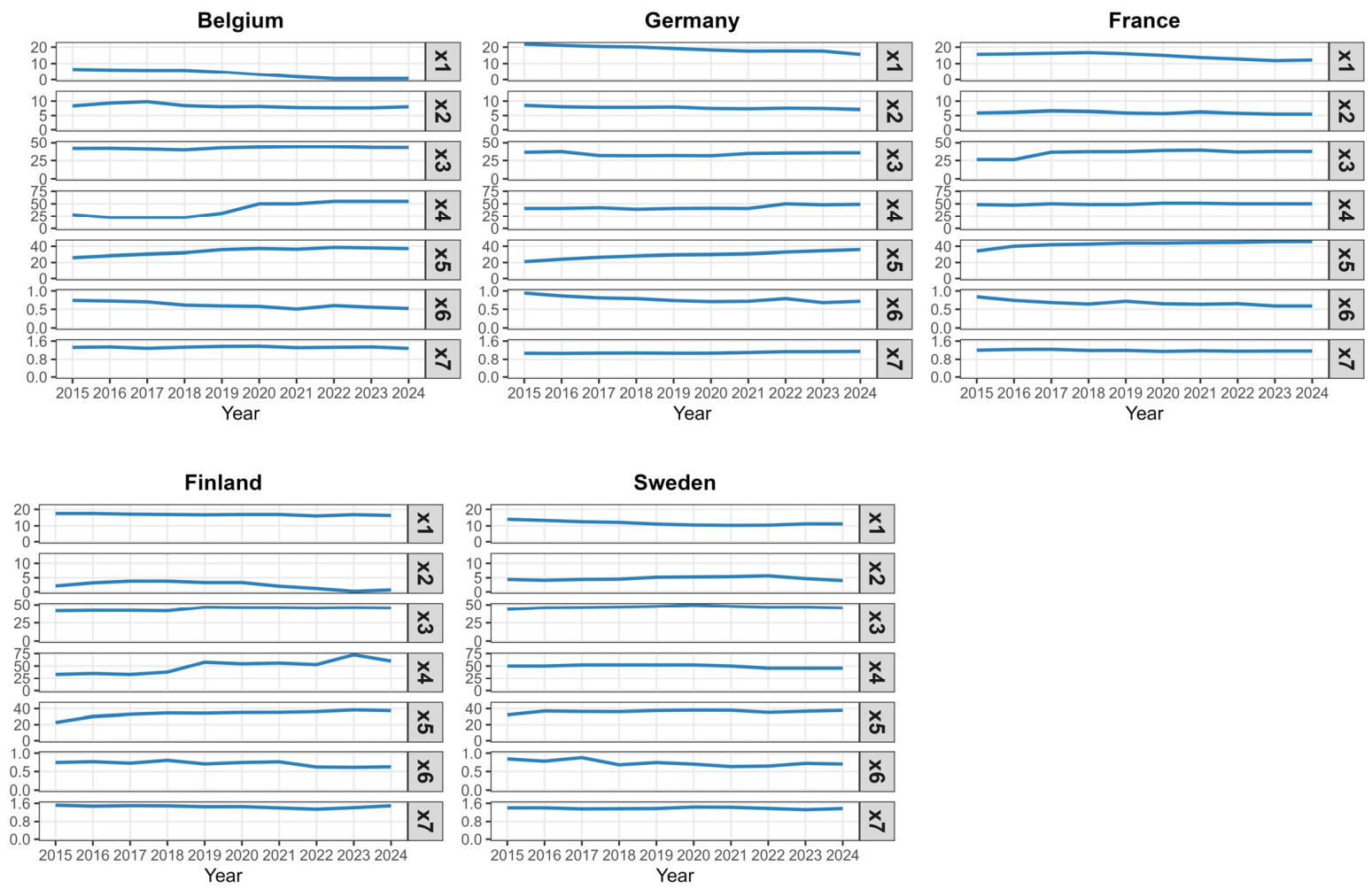
All variables used in the study are indicators obtained directly from the Eurostat database or are derived from these indicators. The method for calculating these indicators is strictly defined by Eurostat. Detailed information regarding each indicator can be found in [44]. As these are the ratio measures, the population sizes of the individual countries are irrelevant. There were no missing data or gaps in the time series. All variables are nominants. Variables x6 and x7 were obtained by dividing the values of these variables for women by the values of these variables for men. It should be emphasised that some of the indicators are common to different SDGs. This is also the case for SDG5. In the case of the presented study, x6 and x7 are indicators used to assess SDG4 (Quality Education). The inclusion of these indicators makes it possible to determine whether gender-based disparities exist in access to education, whenever such access is available. This can be considered a contribution toward achieving the target of eliminating discrimination (target 5.1). Appendix A contains graphs of all variables for each country in the EU-27 group (Figure A2, Figure A3 and Figure A4). Although the main analysis will focus on the synthetic variable, the analysis of individual component variables may help to clarify certain facts.
Access to data determined the choice of variables and the research period. The EUROSTAT database contains more indicators. However, some of them are only available for selected years. Examples include physical and sexual violence against women (18–74 years) (data only for 2021) and persons outside the labour force due to caring responsibilities by sex (data only for women). The start of the research period was determined by access to the indicator positions held by women in senior management (data from 2015), and the end of the research period is determined by access to the indicator gender pay gap in unadjusted form (data only until 2024).
Due to limited data availability, the proposed index covers selected dimensions of gender equality rather than the full scope of SDG5. The analysis primarily reflects inequalities between women and men in the areas of employment, income, education, and representation in decision-making positions. Other dimensions of SDG5, including violence against women, unpaid care work, and reproductive rights, fall outside the index.
3.2. Method
The data used in the study were been obtained from the Eurostat database on Development Goals. The study covers the period from 2015 to 2024. The study was conducted in three stages. The first stage involved determining the TOPSIS synthetic measure in the dynamic approach. On this basis, the EU-27 countries were ranked in terms of their degree of SDG5 implementation. In the second stage, the TOPSIS measure values obtained were used to compare the situation and changes in the achievement of SDG5. The similarity of the time series was examined using the DTW method. In the third stage of the study, we assessed the similarities between Poland and Croatia in terms of the implementation of SDG5.
We conducted all calculations connected with application of the TOPSIS method in Microsoft Excel. We applied the DTW method, cluster analysis, and graphical presentation of results by using the R environment (version 4. 6.2) [45] with the use of the following libraries: dtw (version 1.23-3) [46], factoextra (version 2.2.0) [47], tidyverse (version 2.0.0) [48], sf (version 1.1-3) [49], giscoR (version 1.3.1) [50], and ggh4x (version 0.3.1) [51].
3.2.1. Linear Ordering of Objects
The TOPSIS (The Technique for Order of Preference by Similarity to Ideal Solution) linear ordering method [52] is a pattern method in which two reference points are set: pattern and anti-pattern. It must be noted that the pattern and anti-pattern values are possible to obtain for monotonically increasing or decreasing variables. Therefore, before further analysis, all variables, which are nominants, must be transformed into stimulants, i.e., those with the highest values desirable. In the set of our variables, the first two (gender pay and employment gaps) are measured on the interval scale. The remaining five variables are measured on the strongest ratio scale. Therefore, we use the following formula to transform the nominal variable measured on the interval scale into the stimulant one [53]:
where is the value of the j-th nominal variable for the i-th object in t-th year, nomj is the nominal value of the j-th variable (in the case of variables x1 and x2, it is 0), and xijt is the value of the j-th variable for i-th object in t-th year after transformation. After transformation, the maximal possible value of variable equals 0.
For the nominal variables measured on the ratio scale, the transformation is achieved by means of the following formula [53]:
where notions are the same as for Equation (1). Nominal values for variables used in the research are 50% (for variables x3, x4, and x5) or 1 (for variables x6 and x7). After transformation, the variable can take values from the interval [0, 1].
Having all variables being transformed into monotonically increasing or decreasing (in our case, the former applies), we can use the TOPSIS method. It has the following stages:
- Normalisation of variables (standard score):
- Determination of pattern co-ordinates:
- Determination of anti-pattern co-ordinates:
- Calculation of Euclidean distances of objects from pattern in the t-th year:
- Calculation of Euclidean distances of objects from anti-pattern in the t-th year:
- Final calculation of composite variable in every year:
The TOPSIS method is one of the most convenient and well-established methods of solving the multi-criteria problems. Such problems can be encountered in many areas of life, particularly in widely understood economic and financial planning, as well as in analysis of socio-economic phenomena [54,55,56]. It can be used to create rankings of objects on the basis of the analysed variables. The objects are ranked with accordance to descending values of the composite measure.
3.2.2. Clustering Objects
The TOPSIS measure is the starting point for the next stage of the analysis: comparing the dynamics of achievement of SDG5 in the EU-27 countries. We conducted this stage using the dynamic time warping method (DTW). It was proposed in 1959 by Bellman and Kalaba [57]. At the beginning, it was used in speech recognition [58]. This algorithm was used to assess the similarity between time series. This method involves determining the optimal match between two time series. Let these series have the form X = (x1, x2,…, xN) and Y = (y1, y2,…, yM). In this case, we apply the DTW method according to the following steps:
- Let xi ∈ X and yj ∈ Y. The local cost measure c(xi,yj) is defined by:
- Next, for every pair xi and yj, a local cost matrix LCM ϵ RN×M is defined. The match between series X and Y that has the minimum total cost is called the optimal match.
- The point-to-point match between both time series X and Y is represented by the time warping path p, i.e., the sequence [59,60]:
- Next, the total cost cp(X,Y) of a warping path p is determined:
- The final stage involves determining the optimal match between X and Y:
The optimal path p is obtained by using the dynamic programming. The distance between time series X and Y is measured by the value DTW(X,Y).
By using the above methods, we determined the DTW distances between the EU-27 countries. Subsequently, we clustered these countries with respect to similarity in the dynamics of achieving SDG5. For that purpose, we constructed the dendrogram by using the average linkage method.
The DTW method is used to identify similarities between time series. It is applied in many disciplines of technical sciences [61]. It can also be used in comparing time series describing social and economic phenomena [62,63,64], including research on the level of SDG implementation [65,66,67,68].
4. Results
Due to three research questions, the analysis was conducted in three stages. In the first stage (research question Q1), we ranked countries according to their degree of SDG5 achievement. For this purpose, we used the dynamic approach of the TOPSIS measure. Based on the rankings presented in Table 2, it is possible to indicate the EU-27 countries that have achieved this goal to the greatest or least degree. In the whole analysed period, the EU-27 countries with the highest values of composite measure values take the top three places. These are Sweden (2015–2020, 2023–2024), France (2015–2024), Belgium (2015, 2017, 2019–2022), Germany (2016), Finland (2018), the Netherlands (2023), Spain (2024), and Luxembourg (2021–2022). The last three places in the rankings for 2015–2024 were taken by Malta (2015–2017, 2020–2021), Czechia (2017–2018, 2021–2023), Greece (2017–2020, 2022, 2024), Estonia (2015–2016, 2018–2020), Cyprus (2015–2016, 2024), Hungary (2019, 2021–2024), and Poland (2023). There were also the EU-27 member states, from which the biggest changes in ranking position could be observed. The biggest increase in ranking position was recorded by Ireland (from 18th in 2015 to 8th in 2020–2021, followed by a decline in 2022–2023 and increase in 2024), Malta (from 27th in 2015 to 17th in 2022), and Spain (from 12th in 2016 to 2nd in 2024). The largest decline can be observed for Denmark (from 6th in 2016 to 15th in 2019), Cyprus (from 18th in 2017 to 27th in 2024), and Finland (from 3rd in 2018 to 12th in 2023).
Table 2.
Rankings of EU-27 countries in terms of SDG5 implementation in the years 2015–2024.
We used the Spearman’s rank correlation coefficients to examine the consistency of the rankings (Table 3). All calculated values were positive and larger than 0.800. This indicates a high level of similarity between the rankings in all analysed years. In most cases, the greater the time interval between the analysed years, the lower the consistency.
Table 3.
Correlations between rankings.
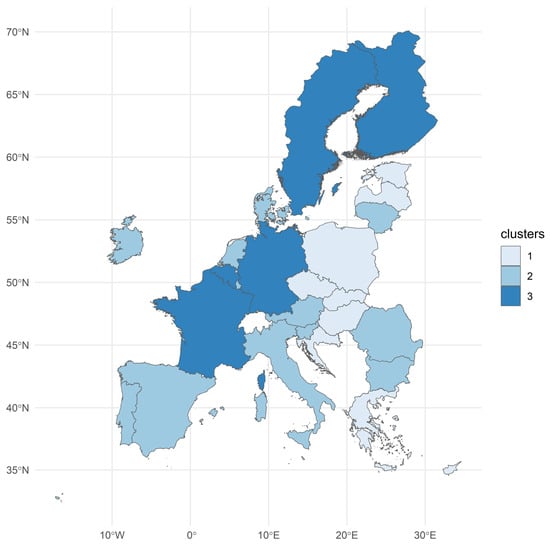
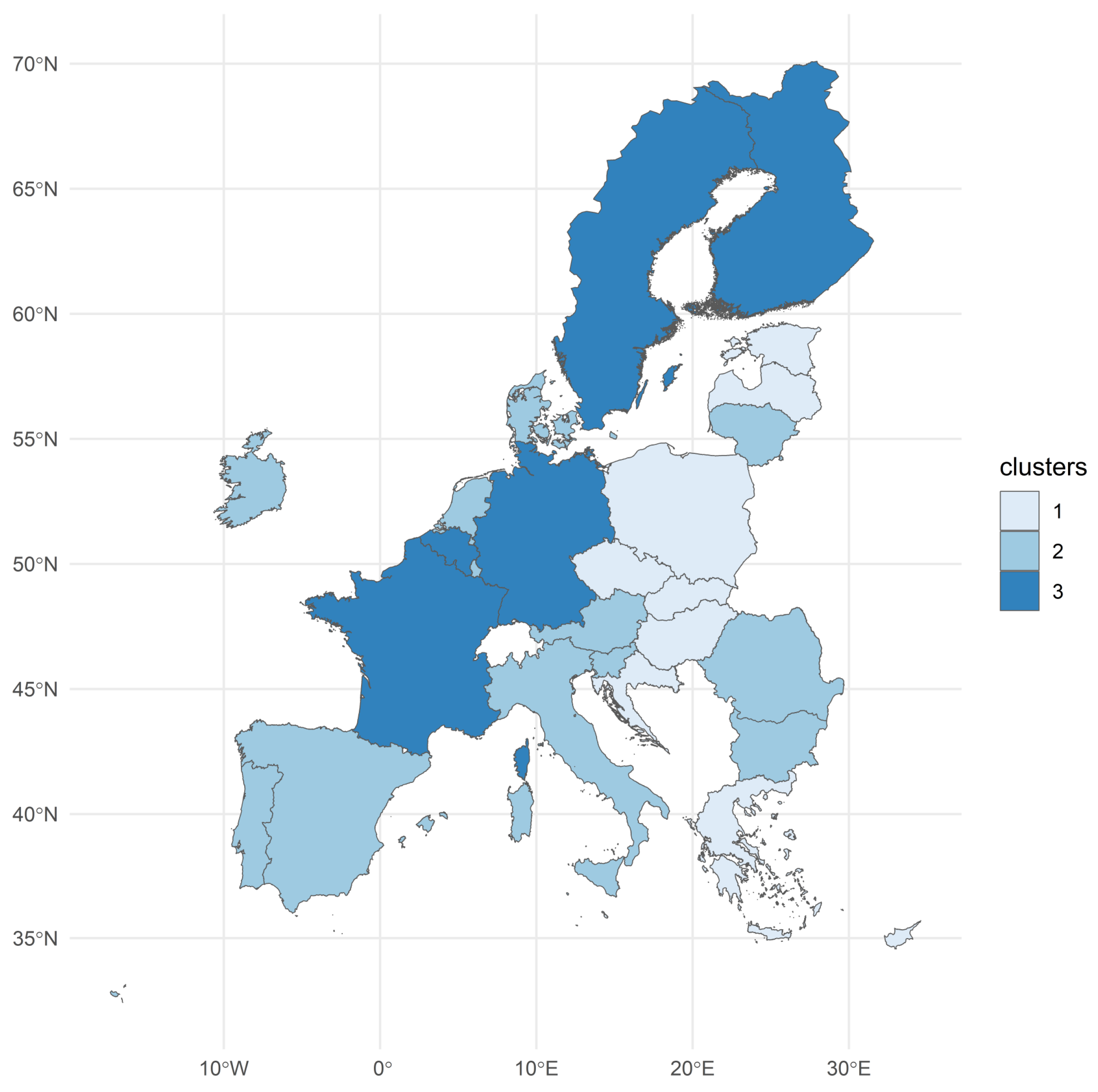
The high values of correlation coefficients indicate persistence in relative rankings. However, a high similarity of rankings between various years does not rule out large changes in positions for single countries. In order to assess the changes in the level of SDG5 implementation more accurately, the second stage of the study (research question Q2) was conducted, in which the value of the composite measure was evaluated. The DTW method was used in the analysis. If the time series are normalised, then we focus only on comparing the trajectories (directions of change). However, if we do not normalise the time series, the differences in levels are also important. In our research, the time series of the composite measure were not normalised; thus, we clustered the countries with accordance to both the levels of the composite measure describing the degree of SDG5 implementation and its trajectory. Three homogeneous clusters of EU-27 countries with similar directions of change and similar levels of SDG5 implementation were identified (Figure 1). The number of clusters was obtained from the analysis of the dendrogram (Figure A1 in the Appendix A). The composition of clusters was as follows:
Figure 1.
Clusters of EU-27 countries by level of several aspects of SDG5 implementation and its dynamics in 2015–2024.
- Cluster 1 (light blue): Croatia, Cyprus, Czechia, Estonia, Greece, Latvia, Malta, Poland, Slovakia, and Hungary; composite measure values were low in the years 2015–2024.
- Cluster 2 (blue): Austria, Bulgaria, Denmark, Ireland, Lithuania, Luxembourg, the Netherlands, Portugal, Romania, Slovenia, Italy, and Spain; composite measure values were at an average level in the years 2015–2024.
- Cluster 3 (dark blue): Belgium, Finland, France, Germany, and Sweden; composite measure values are high in the years 2015–2024.
Table 4 presents values of the composite measure for the EU-27 countries in 2015–2024. Figure A2, Figure A3 and Figure A4 allow for an assessment, which variable influenced the composite measure to the largest extent. Among the analysed EU-27 countries, the highest value of synthetic measure in 2024 was recorded in France (unfavourable values only for variables x1 and x6), Spain (unfavourable value only for variable x2), Sweden (unfavourable value only for variable x1), Belgium (unfavourable value only for variable x6), and Ireland (unfavourable values only for variables x3 and x4). The lowest value of the indicator was obtained for Cyprus (with unfavourable values of all variables), Hungary (with unfavourable values of variables x1, x3, x4, x5, and x7, while x4 = 0), and Greece (unfavourable values of all variables). The largest percentage increase in the indicator in 2024 compared to 2015 was in Malta (by 48%, favourable changes in values of variables x1, x2, x3, and x5) and Ireland (by 57%, favourable changes in value of variables x1, x5, and x6). In contrast, the only country with a decline in the same period was Hungary (by 0.2%, unfavourable changes in values of variables x1, x4, and x5).
Table 4.
Values of the composite measure for the level of achievement of several aspects of SDG5 for the EU-27 countries in 2015–2024.
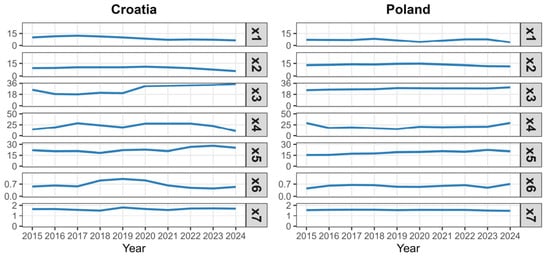
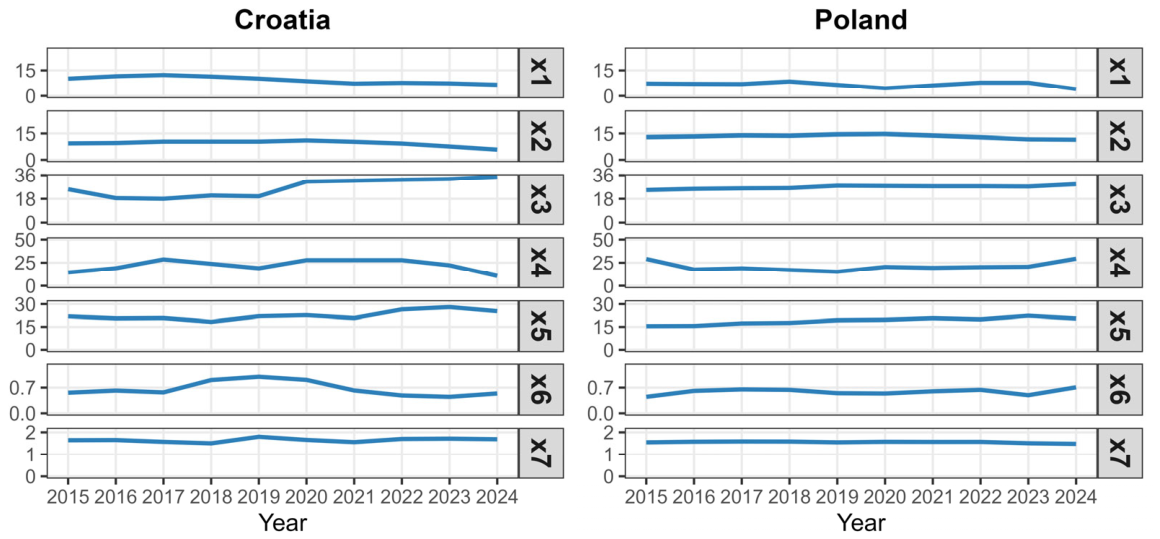
In the third stage of the study, we assessed the similarities between Poland and Croatia in terms of the implementation of Sustainable Development Goal 5. This stage was designed to answer research question Q3. To compare changes in the values of individual variables, we plotted the charts for Croatia and Poland in Figure 2, whilst the detailed values for the years 2023 and 2024 are presented in Table 5. The increase in the position of Poland in the ranking from position 25 (2023) to 16 (2024) was influenced by a favourable change in the value of variables: x1 (gender pay gap in unadjusted form), x4 (seats held by women in national governments), and x6 (early leavers from education and training by sex). A change in the value of variable x4 was caused by changes in the parliament and government after the October 2023 parliamentary elections. Croatia did not change its position and in the years 2023–2024 occupied the 21st position in the ranking. There was an improvement in the values of variables x1 (gender pay gap in unadjusted form), x2 (gender employment gap), x3 (seats held by women in national parliaments), and x6 (early leavers from education and training by sex). However, the unfavourable change (big decline) occurred for the value of variable x4 (seats held by women in national governments). This change was caused by changes in the Croatian government since 2024.
Figure 2.
Charts of the values of analysed variables for Croatia and Poland.
Table 5.
Values of variables for Croatia and Poland in the years 2023 and 2024.
5. Discussion
Various methods are used and different variables taken into account when assessing the extent to which the SDGs have been achieved. This results in different country rankings. These rankings may differ from one another due to the different methodologies adopted. In the case of SDG5, one important study is the annual report by the European Institute for Gender Equality (EIGE), based on the Gender Equality Index. The rankings of Croatia and Poland, according to [69,70] (based on data from 2024), are similar to those obtained in the present study. The following conclusions can be drawn from a comparison of the two rankings:
- Croatia scores 57.1/100 and Poland 57.8/100 in the EIGE Gender Equality Index 2025, ranking 21st and 19th, respectively, in the EU, closely matching this study’s TOPSIS-based ranking (21st and 16th in 2024, respectively).
- Croatia’s lowest-ranked domain is power (23rd in the EU), consistent with the decline in variable x4 (women in national government) identified in this study. Poland’s position (24th) resulted from worse values of variable x3 (women in national parliaments).
- Croatia’s persistent weakness in the “power” domain (political/economic decision-making) is the main structural driver keeping it in Cluster 1, despite gains in pay gap and education indicators. A similar situation is determined for the Polish case.
The results of the research on the level of SDG5 implementation should be compared with the results obtained by other researchers. The studies differ in terms of the set of variables or the research period, but some countries are leading or lagging behind regardless of the assumptions adopted in the studies. Carlsen and Bruggemann [71] ranked the EU-28 countries in terms of SDG5 implementation in 2006, 2010, and 2017. Sweden, Denmark, Croatia, and Slovenia topped the ranking, while Czechia and Greece were at the bottom. Our study confirms that in 2017, Sweden was at the top of the ranking, Greece was at the bottom, and Czechia was third from the bottom. Denmark took a high sixth place in the ranking. However, our study did not confirm the high positions of Croatia and Slovenia, which were in the second half of our ranking.
The complex systemic interactions between SDGs mean that efforts to solve one problem may support or even hinder progress towards other goals. Each SDG and its corresponding targets can be a lever or an obstacle to achieving other SDGs and targets [72]. SDG5 is the third most influential goal, but its target 5.5 (women’s participation in leadership and decision making) has the second-largest increase in influence in the entire SDG system. In the study, three variables (x3, x4, and x5) concerned the presence of women in various bodies or committees. The best positions in this regard were occupied by countries such as Finland, Belgium, France, Sweden, the Netherlands, and Spain. Hungary, Cyprus, Czechia, Slovakia, and Malta had the worst values for these three variables. Research by Shaheen et al. [73] on the boards of Pakistani companies indicates that the presence of more women on boards improves social and environmental sustainability, while a greater number of women on boards makes the company’s finances less sustainable. There is a positive feedback effect between gender equality in employment and economic and social well-being. Pakkan et al. [74] showed that SDG5 is positively correlated with SDG1 (No Poverty). The inclusion of women’s representation (under SDG5) on boards of directors is beneficial for long-term corporate value creation and sustainable development.
In our study, two variables (x1 and x2) relate to gender equality in the labour market. Analysing both variables together, the labour market in Belgium and Luxembourg performed best in 2024, while Czechia, Greece, Hungary, and Italy performed worst. The gender pay gap in unadjusted form (x1) was most favourable in Belgium and Luxembourg (in favour of women) and least favourable in Estonia, Czechia, Austria, Hungary, and Finland. The gender employment gap (x2) was smallest in Finland, Lithuania, and Estonia and largest in Italy, Romania, and Greece. Matuszewska-Janica and Fernández-Avilés [75] analysed the spatial determinants of the gender employment gap in the EU-27 regions between 2002 and 2021. They highlight a fairly significant decline in this indicator, which points to convergence in the employment levels of women and men. They showed that the employment gap in EU regions is characterised by a moderate level of variability. The largest employment gaps were observed in Central and Eastern Europe and Southern Europe. The worst situation was in the regions covering southern Italy, Greece, and Romania. This was also confirmed by our research. The employment gap was small in Western and Northern European countries. In our research, Finland and the Baltic states were in this position. These are regions in countries with flexible labour markets. This form of work allows for greater participation of women. Research by Košíková and Vašaničová [76] indicates that digitalisation can improve women’s economic participation. Structural barriers in the labour market can be reduced through access to flexible forms of work, inclusive service platforms, and digital entrepreneurship. However, Jančovič [77] pointed out in his analysis that in 2020, Lithuania, Latvia, Estonia, Croatia, and Portugal had the best gender employment gap indicators. Poland, Czechia, Slovakia, Hungary, Greece, Spain, Italy, Cyprus, Malta, and Ireland had the worst indicators.
Ortiz et al. [78] determined the Employment Quality Global Index (male–female) for the years 2000–2017. The quality of employment for women was highest in Sweden, Denmark, Finland, and Slovenia. In Luxembourg, Ireland, Hungary, and Lithuania, the quality of employment for women and men was similar. However, in Hungary and Lithuania, the level of employment quality was significantly lower than the average for all European countries. In the other countries, the differences between the quality of employment for women and men remained significant. In the Netherlands, the quality of employment was high but higher for men. In Czechia, Italy, Spain, and Greece, the quality of employment was low but also higher for men.
An analysis of composite variables for the EU-27 countries shows that they remain at a similar level between 2015 and 2024. The study by Ionescu et al. [18] included forecasts of changes in the main indicators describing SDG5 in the EU by 2030 compared to 2015. It showed that, in general, all indicators for the EU as a whole will follow favourable trends. However, there are countries where the situation will not be favourable. In the case of the gender pay gap, the authors predicted unfavourable upward trends in countries such as Bulgaria, Italy, Latvia, Malta, Portugal, and Slovenia. Our study (as of 2024) confirmed Slovenia’s unfavourable position. The estimated gender employment gap showed an upward trend (also unfavourable) in Bulgaria, Estonia, Hungary, Ireland, Spain, and Romania (the highest value of this gap). Our study only confirms Romania’s poor position in 2024. In the case of the indicator describing the positions held by women in national parliaments and governments, a downward trend may occur in Denmark, Croatia, and the Netherlands. The value of the indicator—positions held by women in senior management—predicts an unfavourable downward trend in Czechia, Estonia, Lithuania, and Romania. Our research has shown that in 2024, Cyprus, Hungary, Estonia, Bulgaria, and Malta are in a weak position in terms of the x5 indicator. Unfavourable changes in the early leavers from education and training indicator are predicted in Czechia, Hungary, Slovakia, and Romania. A decline in the percentage of people with higher education or failure to achieve the target is forecast in Finland, Bulgaria, the Czech Republic, Germany, Italy, and Romania. The latter two variables refer to our variables x6 and x7. However, it is difficult to compare them in this form. In our study, both variables were created as the percentage of women in relation to the percentage of men in order to determine the differences between the sexes. With this approach, in 2024, variable x6 reached unfavourable values for Cyprus, Croatia, Belgium, Slovenia, and Italy. In these cases, the number of women who leave education early is much lower than the number of men. In contrast, the values of variable x7 were most unfavourable for Latvia, Estonia, and Slovenia. In these countries, the proportion of young men with a university degree is low compared with that of women. It should be emphasised here that statistical data indicate that men complete their education faster in Europe, while women predominate among young people with higher education. Differences in forecasts [18] may be due to the fact that two crises occurred between 2020 and 2025: COVID-19 and the outbreak of the Russian–Ukrainian war. These events had a major impact on the European labour market and may have contributed to a slowdown in the implementation of the SDGs [79,80].
6. Conclusions
SDG5, or Gender Equality, is an extremely important goal. Due to its strong links with other SDGs, any slowdown in its implementation impairs sustainable development as a whole. At the same time, it is a difficult goal to fully achieve. Gender equality is influenced by religious beliefs, tradition, and the level of education of the population. It is very difficult to change beliefs that have existed in a given society for many generations. Changes imposed from the outside are difficult to accept and may provoke opposition from the local population. That is why education is so important in this entire process. Inequalities are not only related to gender. Inequalities based on religion, age, race, and disability also exist in societies. We must strive for equality between people in the broadest sense.
In the article, the EU-27 countries were analysed with respect to the level of achievement of selected aspects of SDG5, and a comparison of its dynamics in the years 2015–2024 was conducted. We analysed indicators covering employment, earnings, representation, and education. Due to the use of available database (Eurostat), other dimensions of SDG5, such as violence against women, unpaid care work, or reproductive rights, are outside the scope of this research. The analysis was conducted to find answers to three research questions. The answer to the first question (Q1) results from the first stage of the study. The created rankings were static in nature. Spearman’s rank correlation coefficients indicate an apparent lack of big differences in the level of achievement of SDG5 in the EU-27 countries. Only a dynamic approach to the issue, i.e., the use of a synthetic measure, enabled a proper overall assessment of the problem. The values of the TOPSIS composite measure indicate that all countries experienced changes in the value of this measure during the analysed period: increases or decreases. However, these changes were not large. This shows that European countries represent a fairly stable level of SDG5 implementation.
The answer to question Q2 was related to the implementation of the second stage of the study. Time series were created from the composite measure. They were compared using the DTW measure. The similarities between countries were analysed both in terms of the extent of similarity and the direction of changes in the level of SDG5 implementation. We obtained three clusters of EU-27 countries. This is not a large number, which indicates a certain homogeneity of change in this area. It seems that the common European policy of achieving the SDGs in the EU-27 countries and mutual commitments contribute to a high and stable degree of SDG5 implementation.
In the analysed period, Croatia and Poland were in the cluster of countries with low values of the composite measure. An analysis of the responses to question 3 highlights similarities and differences in the level of SDG implementation in both countries. Poland has a longer tradition of women’s political rights, as full suffrage was granted to women as early as 1918. In Croatia, women gained these rights after the Second World War as part of socialist Yugoslavia [81]. At the same time, the Yugoslav social model placed greater emphasis on women’s active participation in working and public life. It may be assumed that the lower level of progress in implementing SDG 5 in Poland and Croatia—compared to many Western European countries—is linked to the influence of traditional social norms, the experience of political and economic transition, and persistent inequalities in the division of caregiving responsibilities. Despite their shared membership of the European Union and similar legal frameworks, cultural and historical factors continue to influence the pace at which gender equality is achieved. Croatia often performs slightly better than Poland, which can be explained by a stronger legacy of the Yugoslav model of women’s labour force participation and a weaker influence of traditional norms on gender role policies than in Poland [82,83,84].
In summary, between 2015 and 2024, the group of countries with the highest level of SDG5 implementation included Western and Northern European countries, with France, Spain, and Sweden leading the way in this regard. The lowest level of achievement was observed in some Southern European and post-communist countries, with Cyprus, Greece, and Hungary being in the worst situation throughout the entire analysed period. In the analysed period, Croatia and Poland were in the cluster of countries with low values of the composite measure. Changes in values of the composite measure were similar between the clusters, as was the level of absolute variability. For most countries (except for Hungary), the level of SDG5 implementation increased. Therefore, it might be concluded that the relative gap in the level of SDG5 implementation in the EU-27 countries decreased (as the average level increased).
Access to complete and reliable data should be noted as a limitation of the study. Eurostat is a reliable source of data, but it does not cover all years. For almost all variables in the SDG5 area, the time series began in 2005. However, for one variable, the time series began in 2015, and for another, it ended in 2024, which narrowed the study to the period 2015–2024. As indicated by Bąk and Cheba [85], the results of analyses depend on the methodological approach and, above all, on the selection of features, the adoption of a specific normalisation formula, and the considered variants of reference points. Our results concerning the countries that are best and worst at achieving SDG5 are largely consistent with the results obtained by other researchers. This confirms the extreme positions of these countries.
One significant limitation is the assignment of equal weights to all indicators. There are no widely accepted theoretical or empirical grounds for prioritising one dimension of SDG5 over the others. An approach based on equal weighting is commonly used in the construction of composite indicators, as it helps to minimise the influence of the researcher’s subjective judgments and ensures the transparency of the research procedure. Alternative weighting schemes could lead to different country rankings and, therefore, represent a promising direction for future research.
Future studies should cover a broader group of countries. It would also be interesting to include an expanded list of variables. A global context, rather than just a European one, would certainly provide a better picture of the level of SDG5 implementation. This is particularly true given that European countries are among the leaders in this area. Effective sustainable development policy requires constant monitoring of the level of achievement of the SDGs. In countries with strong patriarchal traditions and weak social change, the implementation of SDG5 is difficult. This is often linked to the generally weak economic development of these countries. However, even in countries with well-functioning economies, religious or cultural beliefs hinder progress towards the goal of gender equality.
Author Contributions
Conceptualisation, B.B.-S., K.D. and I.J.O.; methodology, B.B.-S. and K.D.; software, B.B.-S. and K.D.; validation, B.B.-S., K.D. and I.J.O.; formal analysis, K.D.; investigation, B.B.-S.; resources, B.B.-S., K.D. and I.J.O.; data curation, B.B.-S. and K.D.; writing—original draft preparation, B.B.-S., K.D. and I.J.O.; writing—review and editing, B.B.-S., K.D. and I.J.O.; visualisation, B.B.-S. and K.D.; supervision, B.B.-S. All authors have read and agreed to the published version of the manuscript.
Funding
This research received no external funding.
Institutional Review Board Statement
Not applicable.
Informed Consent Statement
Not applicable.
Data Availability Statement
The data presented in this study are available in Eurostat at https://ec.europa.eu/eurostat/web/main/data/database (accessed on 10 July 2026).
Conflicts of Interest
The authors declared no conflicts of interest.
Abbreviations
The following abbreviations are used in this manuscript:
| SDG1 | No poverty |
| SDG2 | Zero hunger |
| SDG3 | Good health and well-being |
| SDG4 | Quality education |
| SDG5 | Gender equality |
| SDG6 | Clean water and sanitation |
| SDG7 | Affordable and clean energy |
| SDG8 | Decent work and economic growth |
| SDG9 | Industry, innovation, and infrastructure |
| SDG10 | Reduced inequalities |
| SDG11 | Sustainable cities and communities |
| SDG12 | Responsible consumption and production |
| SDG13 | Climate action |
| SDG14 | Life below water |
| SDG15 | Life on land |
| SDG16 | Peace, justice, and strong institutions |
| SDG17 | Partnership for the goals |
Appendix A
Figure A1.
Cluster dendrogram of EU-27 countries with respect to the level of several aspects of SDG5 implementation and its dynamics in 2015–2024 (red—cluster 1, blue—cluster 2, green—cluster 3).
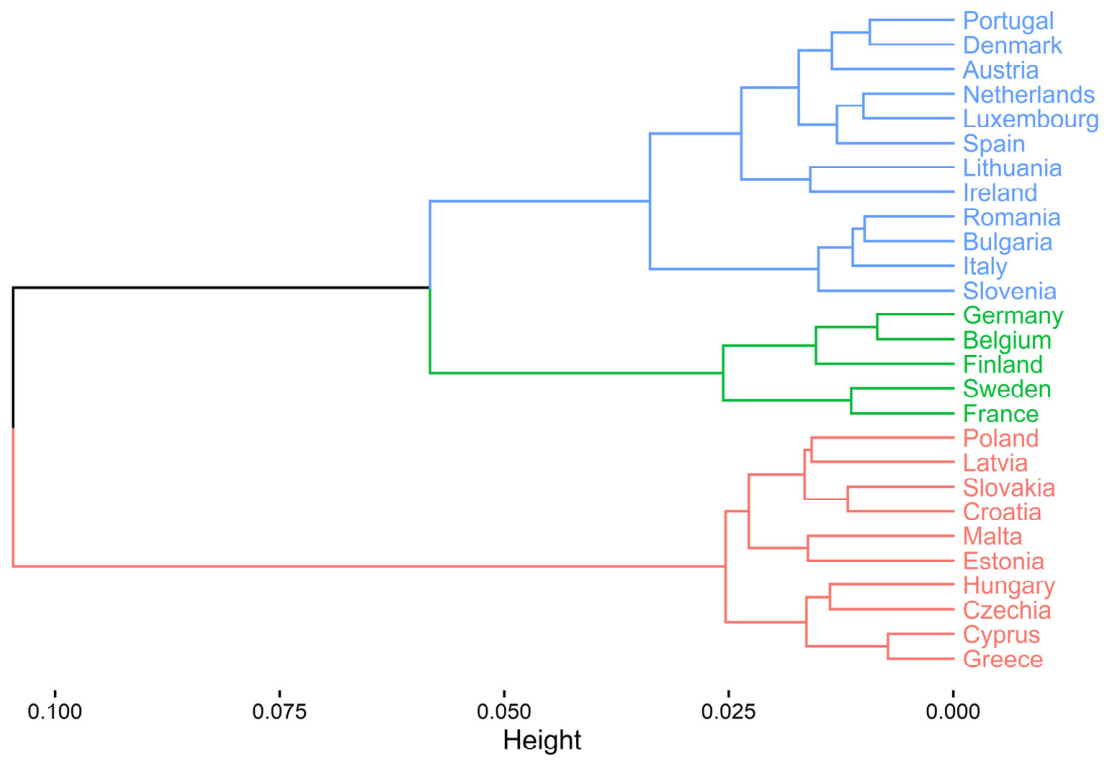
Figure A2.
Charts of the values of analysed variables for countries forming Cluster 1.
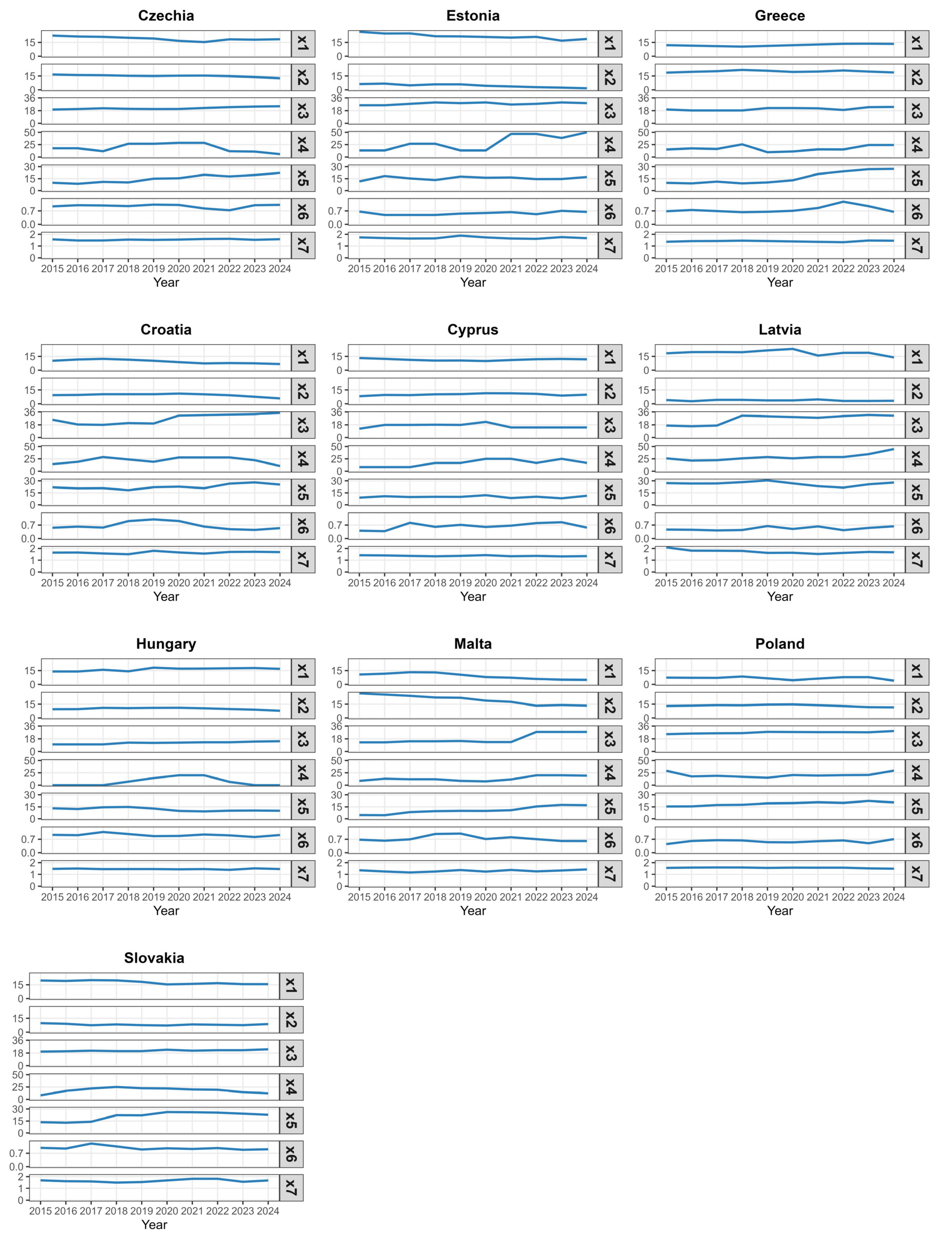
Figure A3.
Charts of the values of analysed variables for countries forming Cluster 2.
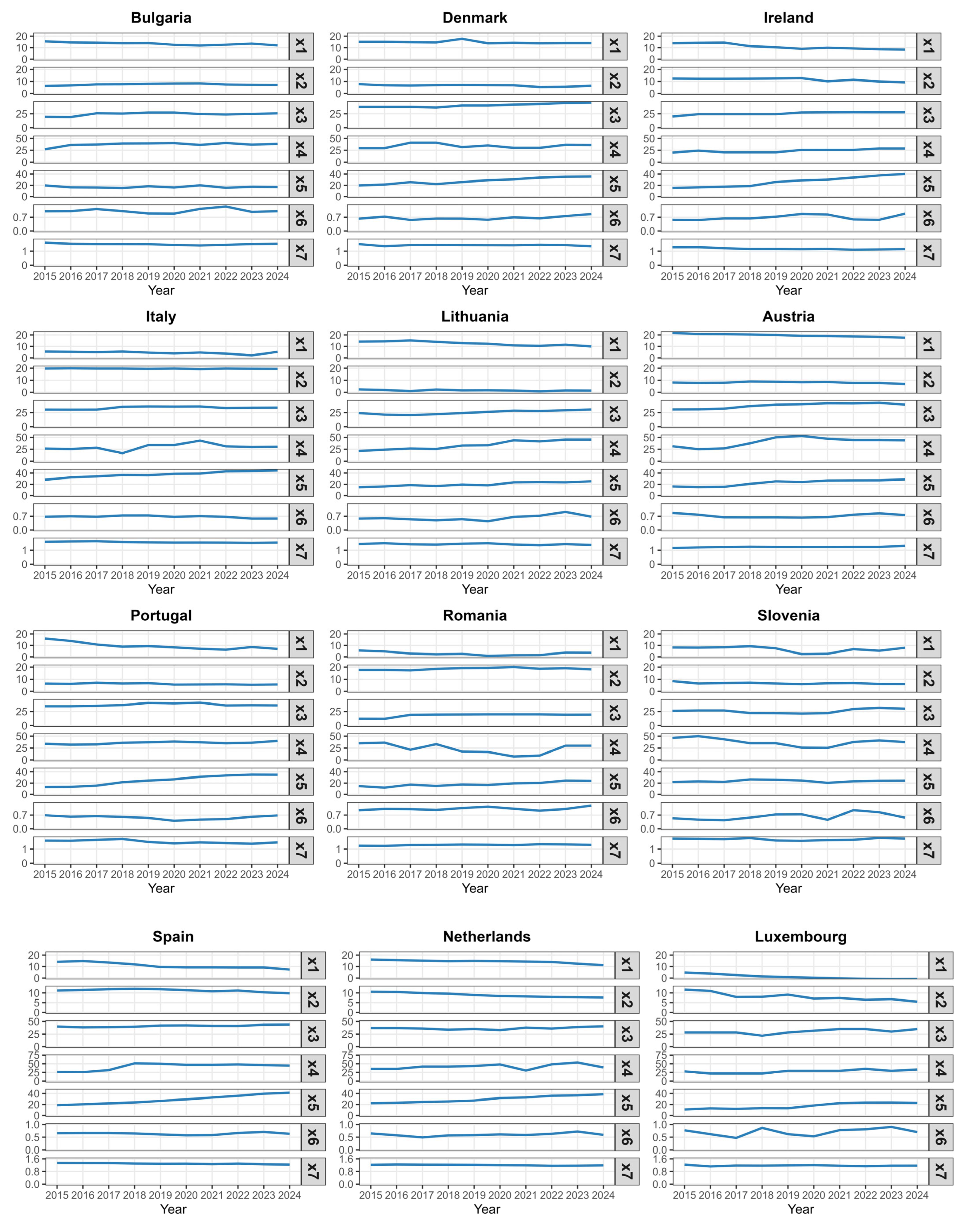
Figure A4.
Charts of the values of analysed variables for countries forming Cluster 3.
References
- Transforming Our World: The 2030 Agenda for Sustainable Development. Available online: https://docs.un.org/en/A/RES/70/1 (accessed on 30 July 2025).
- United Nations. Resolution Adopted by the General Assembly on 6 July 2017. Available online: https://docs.un.org/en/A/RES/71/313 (accessed on 30 July 2025).
- United Nations Statistics Division. SDG Indicators. Available online: https://unstats.un.org/sdgs/indicators/indicators-list/ (accessed on 24 July 2025).
- Zhang, J.; Wang, S.; Pradhan, P.; Zhao, W.; Fu, B. Untangling the interactions among the Sustainable Development Goals in China. Sci. Bull. 2022, 67, 977–984. [Google Scholar] [CrossRef] [Scilit] [PubMed]
- Esquivel, V.; Sweetman, C. Gender and the Sustainable Development Goals. Gend. Dev. 2016, 24, 1–8. [Google Scholar] [CrossRef] [Scilit]
- Küfeoğlu, S. SDG-5 gender equality. In Emerging Technologies: Value Creation for Sustainable Development; Springer International Publishing: Cham, Switzerland, 2022; pp. 277–288. [Google Scholar]
- Kumar Pathania, S. Sustainable development goal: Gender equality for women’s empowerment and human rights. Int. J. Res. Granthaalayah 2017, 5, 72–82. [Google Scholar] [CrossRef] [Scilit]
- United Nations Development Programme. Goal 5: Gender Equality. (UNDP, 2021). Available online: https://www.undp.org/sustainable-development-goals/gender-equality (accessed on 14 September 2025).
- Trane, M.; Marelli, L.; Siragusa, A.; Pollo, R.; Lombardi, P. Progress by Research to Achieve the Sustainable Development Goals in the EU: A Systematic Literature Review. Sustainability 2023, 15, 7055. [Google Scholar] [CrossRef] [Scilit]
- Shang, Y.; Sivertsen, G.; Cao, Z.; Zhang, L. Gender differences among first authors in research focused on the Sustainable Development Goal of Gender Equality. Scientometrics 2022, 127, 4769–4796. [Google Scholar] [CrossRef] [Scilit]
- Yamaguchi, N.U.; Bernardino, E.G.; Ferreira, M.E.C.; De Lima, B.P.; Pascotini, M.R.; Yamaguchi, M.U. Sustainable development goals: A bibliometric analysis of literature reviews. Environ. Sci. Pollut. Res. 2023, 30, 5502–5515. [Google Scholar] [CrossRef] [Scilit] [PubMed]
- Kalaitzi, S. Navigating Barriers to Gender Equality in the European Union Context: The Case of Healthcare Sector. Ph.D. Thesis, Maastricht University, Maastricht, The Netherlands, 2019. [Google Scholar] [CrossRef] [Scilit]
- UN Women. Turning Promises into Action: Gender Equality in the 2030 Agenda for Sustainable Development; UN Women: New York, NY, USA, 2018. [Google Scholar]
- Barbieri, D.; Caisl, J.; Karu, M.; Lanfredi, G.; Mollard, B.; Peciukonis, V.; La Horz, M.B.P.; Reingardé, J.; Salanauskaité, L. Gender Equality Index 2020—Digitalisation and the Future of Work; Publications Office of the European Union: Luxembourg, 2020. [Google Scholar]
- United Nations: Economic and Social Council. Progress Towards the Sustainable Development Goals. Report of the Secretary-General. 2022. Available online: https://digitallibrary.un.org/record/3977147?v=pdf (accessed on 14 September 2025).
- United Nations. Report of the Open Working Group of the General Assembly on Sustainable Development Goals. 2014. Available online: https://www.iom.int/sites/default/files/UN_Documents/69th_Session/A_68_970.pdf (accessed on 10 October 2025).
- Waage, J.; Yap, C. Thinking Beyond Sectors for Sustainable Development; Ubiquity Press: London, UK, 2015. [Google Scholar]
- Ionescu, G.H.; Firoiu, D.; Tănasie, A.; Sorin, T.; Pîrvu, R.; Manta, A. Assessing the Achievement of the SDG Targets for Health and Well-Being at EU Level by 2030. Sustainability 2020, 12, 5829. [Google Scholar] [CrossRef] [Scilit]
- Zavřelová, V.; Pelikánová, R.M. The Ephemeral Term “Sustainable Development” in Current EU Policies. Folia Oecon. Stetin. 2024, 24, 389–418. [Google Scholar] [CrossRef] [Scilit]
- Leonavičienė, E.; Burinskienė, A.; Peleckis, K. The Role of National Culture as an Indicator of Evidence of Sustainable Development. Folia Oecon. Stetin. 2022, 22, 146–167. [Google Scholar] [CrossRef] [Scilit]
- Zheng, X.; Wang, R.; Hoekstra, A.Y.; Krol, M.S.; Zhang, Y.; Guo, K.; Sanwal, M.; Sun, Z.; Zhu, J.; Zhang, J.; et al. Consideration of culture is vital if we are to achieve the Sustainable Development Goals. One Earth 2021, 4, 307–319. [Google Scholar] [CrossRef] [Scilit]
- United Nations Department of Economic and Social Affairs. The Sustainable Development Goals Report 2025. New York. Available online: https://unstats.un.org/sdgs/report/2025/The-Sustainable-Development-Goals-Report-2025.pdf (accessed on 10 September 2025).
- Sachs, J.D.; Lafortune, G.; Fuller, G.; Iablonovski, G. Financing Sustainable Development to 2030 and Mid-Century, Sustainable Development Report 2025; Dublin University Press: Dublin, Ireland, 2025. [Google Scholar] [CrossRef] [PubMed]
- United Nations Statistics Division. Funding Data and Statistics: The Essential Infrastructure for Development. Available online: https://unstats.un.org/sdgs/report/2025/funding-data-and-statistics/ (accessed on 30 September 2025).
- Carlsen, L.; Bruggemann, R.; Fattore, M. Factors determining the degree of gender equality within the European Union. Qual. Quant. 2023, 57, 1483–1499. [Google Scholar] [CrossRef] [Scilit]
- Pradhan, P.; Costa, L.; Rybski, D.; Lucht, W.; Kropp, J.P. A Systematic Study of Sustainable Development Goal (SDG) interactions. Earth’s Future 2017, 5, 1169–1179. [Google Scholar] [CrossRef] [Scilit]
- Ralph, A.; Arora, A. Mapping the literature on decent work: A bibliometric analysis of sustainable development goal 8. Sustain. Dev. 2024, 32, 3937–3952. [Google Scholar] [CrossRef] [Scilit]
- Raman, R.; Gunasekar, S.; Ray, S.; Behera, D.K.; Nedungadi, P.; Dénes, D.L. A holistic approach to Sustainable Development Goal 8: Integrating economic growth, employment, and sustainability. Equilib. Q. J. Econ. Econ. Policy 2025, 20, 147–202. [Google Scholar] [CrossRef] [Scilit]
- Fuso Nerini, F.; Tomei, J.; To, L.S.; Bisaga, I.; Parikh, P.; Black, M.; Borrion, A.; Spataru, C.; Castan-Broto, V.; Anandarajah, G.; et al. Mapping synergies and trade-offs between energy and the Sustainable Development Goals. Nat. Energy 2018, 3, 10–15. [Google Scholar] [CrossRef] [Scilit]
- Warchold, A.; Pradhan, P.; Kropp, J.P. Variations in sustainable development goal interactions: Population, regional, and income disaggregation. Sustain. Dev. 2021, 29, 285–299. [Google Scholar] [CrossRef] [Scilit]
- Kuc-Czarnecka, M.; Markowicz, I.; Sompolska-Rzechuła, A. SDGs implementation, their synergies, and trade-offs in EU countries–Sensitivity analysis-based approach. Ecol. Indic. 2023, 146, 109888. [Google Scholar] [CrossRef] [Scilit]
- Leal Filho, W.; Kovaleva, M.; Tsani, S.; Țîrcă, D.M.; Shiel, C.; Dinis, M.A.P.; Nicolau, M.; Sima, M.; Fritzen, B.; Lange Salvia, A.; et al. Promoting gender equality across the sustainable development goals. Environ. Dev. Sustain. 2023, 25, 14177–14198. [Google Scholar] [CrossRef] [Scilit] [PubMed]
- Heß, P. SDG 5 and the Gender Gap in Standardization: Empirical Evidence from Germany. Sustainability 2020, 12, 8699. [Google Scholar] [CrossRef] [Scilit]
- Saenz, C.; Wu, S.-W.; Uddaraju, V.; Nafei, A.; Liu, Y.-L. Advancing Gender Equality in Executive Leadership: The Role of Cultural Norms and Organizational Practices in Sustainable Development—A Case Study of Taiwan and Guatemala. Sustainability 2025, 17, 3183. [Google Scholar] [CrossRef] [Scilit]
- Cling, J.P.; Eghbal-Teherani, S.; Orzoni, M.; Plateau, C. The interlinkages between the SDG indicators and the differentiation between EU countries: It is (mainly) the economy! Stat. J. IAOS 2020, 36, 455–470. [Google Scholar] [CrossRef] [Scilit]
- Miralam, M.S.; Qazi, S.; Ali, I.S.; Arafat, M.Y. Exploring the Factors Influencing Women Entrepreneurship in Saudi Arabia: A Strategic Plan for Sustainable Entrepreneurial Growth. Sustainability 2025, 17, 1221. [Google Scholar] [CrossRef] [Scilit]
- de Lange, D.; Leal Filho, W. Examining How Sustainability Addresses Gender Inequality Using FIFA Women’s World Cup Soccer Outcomes. Sustainability 2025, 17, 8133. [Google Scholar] [CrossRef] [Scilit]
- Lee, S.-T.; Jung, S.-M. From Equality to Excellence: Exploring the Relationship between Gender Equality HR Policies and R&D Intensity. Sustainability 2024, 16, 6394. [Google Scholar] [CrossRef] [Scilit]
- Boudalia, S.; Dawit Teweldebirhan, M.; Ariom, T.O.; Diouf, N.S.; Nambeye, E.; Mwatitha Gondwe, T.; Mbo’o-Tchouawou, M.; Okoth, S.A.; Huyer, S. Gendered Gaps in the Adoption of Climate-Smart Agriculture in Africa and How to Overcome Them. Sustainability 2024, 16, 5539. [Google Scholar] [CrossRef] [Scilit]
- Bustamante-Mora, A.; Diéguez-Rebolledo, M.; Hormazábal, Y.; Valdés, Y.; Vidal, E. Policies, Projects, and Initiatives for Sustainable Higher Education with Gender Equity: Literature Review and Case Study—Universidad de La Frontera. Sustainability 2024, 16, 5038. [Google Scholar] [CrossRef] [Scilit]
- Eurostat. Data. Available online: https://ec.europa.eu/eurostat/web/main/data/database (accessed on 10 July 2026).
- United Nations. Sustainable Development Goals. Available online: https://unstats.un.org/sdgs/iaeg-sdgs/task-team-lessons-learned/ (accessed on 9 October 2025).
- United Nations. Sustainable Development Goals. Available online: https://unstats.un.org/sdgs/indicators/Global%20Indicator%20Framework%20after%202022%20refinement_Eng.pdf (accessed on 9 September 2025).
- Eurostat. Index Metadata Files in English. Available online: https://ec.europa.eu/eurostat/cache/metadata/en/ (accessed on 10 July 2026).
- R Core Team. R: A Language and Environment for Statistical Computing; R Foundation for Statistical Computing: Vienna, Austria, 2026. [Google Scholar] [CrossRef] [Scilit]
- Tormene, P.; Giorgino, T.; Quaglini, S.; Stefanelli, M. Matching Incomplete Time Series with Dynamic Time Warping: An Algorithm and an Application to Post-Stroke Rehabilitation. Artif. Intell. Med. 2008, 45, 11–34. [Google Scholar] [CrossRef] [Scilit] [PubMed]
- Kassambara, A.; Mundt, F. factoextra: Extract and Visualize the Results of Multivariate Data Analyses; Comprehensive R Archive Network (CRAN): Vienna, Austria, 2020. [Google Scholar]
- Wickham, H.; Averick, M.; Bryan, J.; Chang, W.; McGowan, L.D.; François, R.; Grolemund, G.; Hayes, A.; Henry, L.; Hester, J.; et al. Welcome to the tidyverse. J. Open Source Softw. 2019, 4, 1686. [Google Scholar] [CrossRef] [Scilit]
- Pebesma, E. Simple Features for R: Standardized Support for Spatial Vector Data. R J. 2018, 10, 439–446. [Google Scholar] [CrossRef] [Scilit]
- Hernangómez, D. giscoR: Download Eurostat GISCO Spatial Data; Comprehensive R Archive Network (CRAN): Vienna, Austria, 2026. [Google Scholar] [CrossRef] [Scilit]
- van den Brand, T. ggh4x: Hacks for ‘ggplot2’; Comprehensive R Archive Network (CRAN): Vienna, Austria, 2025. [Google Scholar] [CrossRef] [Scilit]
- Hwang, C.L.; Yoon, K. Multiple Attribute Decision Making: Methods and Applications; Springer: Berlin/Heidelberg, Germany, 1981. [Google Scholar]
- Walesiak, M. Uogólniona Miara Odległości GDM w Statystycznej Analizie Wielowymiarowej z Wykorzystaniem Programu R; Wydawnictwo Uniwersytetu Ekonomicznego we Wrocławiu: Wrocław, Poland, 2016. [Google Scholar]
- Dmytrów, K.; Bieszk-Stolorz, B. Comparison of Changes in the Labour Markets of Post-Communist Countries with Other EU Member States. Equilib. Q. J. Econ. Econ. Policy 2021, 16, 741–764. [Google Scholar] [CrossRef] [Scilit]
- Vavrek, R.; Kovářová, E. Assessment of the social exclusion at the regional level using multi-criteria approach: Evidence from the Czech Republic. Equilib. Q. J. Econ. Econ. Policy 2021, 16, 75–102. [Google Scholar] [CrossRef] [Scilit]
- Brodny, J.; Tutak, M. The level of implementing sustainable development goal “Industry, innovation and infrastructure” of Agenda 2030 in the European Union countries: Application of MCDM methods. Oecon. Copernic. 2023, 14, 47–102. [Google Scholar] [CrossRef] [Scilit]
- Bellman, R.; Kalaba, R. On adaptive control processes. IEEE Trans. Autom. Contr. 1959, 4, 1–9. [Google Scholar] [CrossRef] [Scilit]
- Rabiner, L.; Rosenberg, A.; Levinson, S. Considerations in dynamic time warping algorithms for discrete word recognition. IEEE Trans. Acoust. Speech Signal Process. 1978, 26, 575–582. [Google Scholar] [CrossRef] [Scilit]
- Landmesser, J. Analysis of COVID-19 Dynamics in EU Countries Using the Dynamic Time Warping Method and ARIMA Models. In Data Analysis and Classification. SKAD 2020. Studies in Classification, Data Analysis, and Knowledge Organization; Jajuga, K., Najman, K., Walesiak, M., Eds.; Springer International Publishing: Cham, Switzerland, 2021; pp. 337–352. [Google Scholar] [CrossRef] [Scilit]
- Bieszk-Stolorz, B.; Dmytrów, K. Assessment of the Similarity of the Situation in the EU Labour Markets and Their Changes in the Face of the COVID-19 Pandemic. Sustainability 2022, 14, 3646. [Google Scholar] [CrossRef] [Scilit]
- Senin, P. Dynamic Time Warping Algorithm Review; Information and Computer Science Department University of Hawaii at Manoa: Honolulu, HI, USA, 2008; pp. 1–23. [Google Scholar]
- Dmytrów, K.; Bieszk-Stolorz, B. Mutual relationships between the unemployment rate and the unemployment duration in the Visegrad Group countries in years 2001–2017. Equilib. Q. J. Econ. Econ. Policy 2019, 14, 129–148. [Google Scholar] [CrossRef] [Scilit]
- Landmesser, J. The use of the dynamic time warping (DTW) method to describe the COVID-19 dynamics in Poland. Oecon. Copernic. 2021, 12, 539–556. [Google Scholar] [CrossRef] [Scilit]
- Denkowska, A.; Wanat, S. Dynamic Time Warping Algorithm in Modeling Systemic Risk in the European Insurance Sector. Entropy 2021, 23, 1022. [Google Scholar] [CrossRef] [Scilit] [PubMed]
- Dmytrów, K.; Landmesser, J.; Bieszk-Stolorz, B. The Connections between COVID-19 and the Energy Commodities Prices: Evidence through the Dynamic Time Warping Method. Energies 2021, 14, 4024. [Google Scholar] [CrossRef] [Scilit]
- Dmytrów, K.; Bieszk-Stolorz, B.; Landmesser-Rusek, J. Sustainable Energy in European Countries: Analysis of Sustainable Development Goal 7 Using the Dynamic Time Warping Method. Energies 2022, 15, 7756. [Google Scholar] [CrossRef] [Scilit]
- Bieszk-Stolorz, B.; Dmytrów, K. Decent Work and Economic Growth in EU Countries—Static and Dynamic Analyses of Sustainable Development Goal 8. Sustainability 2023, 15, 13327. [Google Scholar] [CrossRef] [Scilit]
- Bieszk-Stolorz, B.; Landmesser-Rusek, J. Progress Towards Affordable and Clean Energy: A Comparative Analysis of SDG7 Implementation. Energies 2025, 18, 5078. [Google Scholar] [CrossRef] [Scilit]
- European Institute for Gender Equality (EIGE). Gender Equality Index. Croatia in 2025 Edition. Available online: https://eige.europa.eu/gender-equality-index/2025/country/HR (accessed on 1 September 2026).
- European Institute for Gender Equality (EIGE). Gender Equality Index. Poland in 2025 Edition. Available online: https://eige.europa.eu/gender-equality-index/2025/country/PL (accessed on 1 September 2026).
- Carlsen, L.; Bruggemann, R. Gender equality in Europe: The development of the sustainable development goal No. 5 illustrated by exemplary cases. Soc. Indic. Res. 2021, 158, 1127–1151. [Google Scholar] [CrossRef] [Scilit]
- Anderson, C.C.; Denich, M.; Warchold, A.; Kropp, J.P.; Pradhan, P. A systems model of SDG target influence on the 2030 Agenda for Sustainable Development. Sustain. Sci. 2022, 17, 1459–1472. [Google Scholar] [CrossRef] [Scilit] [PubMed]
- Shaheen, S.; Ghaffar, J.A.; Durrani, H. Nexus among SDG 5 and sustainability performance. Found. Univ. J. Bus. Econ. 2024, 9, 334–350. [Google Scholar] [CrossRef] [Scilit]
- Pakkan, S.; Sudhakar, C.; Tripathi, S.; Rao, M. A correlation study of sustainable development goal (SDG) interactions. Qual. Quant. 2023, 57, 1937–1956. [Google Scholar] [CrossRef] [Scilit]
- Matuszewska-Janica, A.; Fernández-Avilés, G. Towards sustainable labour market: Spatial analysis of the differences in the employment of women and men across the EU regions. Equilib. Q. J. Econ. Econ. Policy 2025, 20, 509–548. [Google Scholar] [CrossRef] [Scilit]
- Košíková, M.; Vašaničová, P. Exploring the Link Between Digital Readiness and Sustainable Development: A Cluster Analysis of EU Countries. Sustainability 2025, 17, 5080. [Google Scholar] [CrossRef] [Scilit]
- Jančovič, P. Cluster analysis of European Union member states performance in terms of SDG indicators. In Proceedings of the 23rd International Scientific Conference, International Relations 2022: Current Issues of World Economy and Politics, Bratislava, Slovakia, 1–2 December 2022; Available online: https://www.researchgate.net/publication/367499096_Cluster_Analysis_of_European_Union_Member_States_Performance_in_Terms_of_SDG_Indicators (accessed on 14 October 2025).
- Ortiz, L.P.; Angeles, S.D.; Ana, V.A. Employment quality and gender equality. An Analysis for the European Union. Reg. Sect. Econ. Stud. 2020, 20, 5–18. [Google Scholar]
- Foo, J.; Witkowska, D. The 2020 COVID-19 Financial Crisis Impact on the European Stock Markets and Economies. A Preliminary Analysis. Folia Oecon. Stetin. 2024, 24, 22–40. [Google Scholar] [CrossRef] [Scilit]
- Rybchak, V.; Verniuk, N.; Novak, I.; Fernos, Y. Study of the Impact of War Migration of the Population on the Ukrainian and European Labour Market. Folia Oecon. Stetin. 2024, 24, 163–181. [Google Scholar] [CrossRef] [Scilit]
- Brittanica. Women’s Suffrage. Available online: https://www.britannica.com/topic/woman-suffrage (accessed on 11 November 2026).
- Massino, J.; Penn, S. (Eds.) Gender Politics and Everyday Life in State Socialist Eastern and Central Europe; Palgrave Macmillan: New York, NY, USA, 2009. [Google Scholar]
- Ramet, S.P. (Ed.) Gender Politics in the Western Balkans: Women and Society in Yugoslavia and the Yugoslav Successor States; The Pennsylvania State University Press: University Park, PA, USA, 2010. [Google Scholar]
- Funk, N.; Mueller, M. (Eds.) Gender Politics and Post-Communism: Reflections from Eastern Europe and the Former Soviet Union; Routledge: Oxfordshire, UK, 2018. [Google Scholar]
- Bąk, I.; Cheba, K. An Analysis of Dynamic Changes in Selected Areas of Sustainable Development of the European Union Countries. Folia Oecon. Stetin. 2018, 18, 93–107. [Google Scholar] [CrossRef] [Scilit]

Disclaimer/Publisher’s Note: The statements, opinions and data contained in all publications are solely those of the individual author(s) and contributor(s) and not of MDPI and/or the editor(s). MDPI and/or the editor(s) disclaim responsibility for any injury to people or property resulting from any ideas, methods, instructions or products referred to in the content. |
© 2026 by the authors. Licensee MDPI, Basel, Switzerland. This article is an open access article distributed under the terms and conditions of the Creative Commons Attribution (CC BY) license.