


Abstract
Cultural identity and associated traditional knowledge systems are central to sustaining agricultural systems and conserving biodiversity. For decades, vineyards outside of Chile’s Central Valley have been undervalued because they produce traditional, natural wines over export-oriented varieties. Following UNESCO’s recognition of these vineyards as cultural landscapes, rainfed vineyards in the Maule, Itata, and Biobío Valleys have regained attention for their heritage and latent economic potential. This study analyzes the revalorization potential and territorial identity of Chasselas, an early-ripening table grape, in the Itata Valley. It combined semi-structured surveys or interviews with stakeholders and farmers with nutritional and sensory characterization of the grapes, integrating qualitative and quantitative approaches. Farmers have strong historical, cultural, and emotional connections with Chasselas, as it facilitates the harvest of other varieties. Its production meets heritage-vineyard criteria, including dry farming, head training, and non-French origin. Sensory analysis describes Itata’s Chasselas as juicy, firm, and sweet. Although Chasselas has limited commercial value, its local embeddedness, cultural significance, and distinctive fruit quality highlight its potential for biocultural conservation, agricultural diversification, and the preservation of locally adapted grapevine genetic resources. These findings demonstrate how underutilized traditional cultivars contribute to resilient agricultural landscapes while reinforcing biocultural links.
1. Introduction
In the 19th century, Chilean estates began to modernize vine cultivation, emphasizing wine production with French varieties from Bordeaux and Burgundy regions [1,2,3]. Concurrently, wine production shifted from traditional or artisanal methods to an industrial process oriented toward international markets [2]. This modernization primarily occurred in Chile’s Central Valley, with the Maule Valley marking its southern boundary [4,5]. However, south of the Maule Valley, characterized by rainfed vineyards [6], viticulture continued to follow traditional practices, relying on non-Bordeaux- and non-Burgundy-origin varieties [4].
Recently, vineyards in the Maule, Itata, and Biobío Valleys have gained attention due to the valorization of traditional practices in grape production, their contribution to cultural identity, and their potential for Geographical Indication (GI) or Denomination of Origin [2,5]. According to Rojas [4], Chilean vineyards in those valleys meet the criteria for recognition as “cultural heritage”. The characteristics that qualify Chilean vineyards as heritage include exceptional edaphic and climatic conditions, unique genetic material due to the absence of phylloxera in the national territory, and favorable phytosanitary conditions that enable highly organic production [4].
Heritage vineyards in Chile are defined by: a rainfed system, head-trained or goblet vine formation, and cultivation of Hispanic-Criolla varieties, such as Torontel, País, and Muscat of Alexandria (locally referred to as Italia) [6]. However, other varieties may be considered part of the Chilean heritage vineyard [4,7]. Currently, approximately 15,000 hectares of heritage vineyards are cultivated in the Maule, Itata, and Biobío Valleys [4,8], while a century ago these vineyards covered nearly 60,000 hectares [8,9]. Although the rate of decline has slowed, heritage vineyards remain at risk of disappearance [7]. Their value lies in their close association with terroir [4]. The major varieties currently grown in these valleys are País (10,200 ha), Italia (4300 ha), and Torontel (650 ha) [6].
The Itata Valley is a traditional wine-producing area regarded as the cradle of Chilean vitiviniculture [10]. Vineyards are mainly located on the eastern slopes of the Coastal Mountain, where grape production depends on winter rainfall and soil water availability. Soil physical properties, water retention, and topography influence vine water status and grape development. Soils are highly heterogeneous, derived from granitic, metamorphic, and sedimentary materials, and often exhibit low natural fertility and variable drainage conditions [3,11].
Viticulture in the Itata Valley began during the colonial period, primarily with the País and Italia varieties, derived from Listán Prieto and Muscat of Alexandria, respectively [12,13]. Currently, the valley has approximately 11,100 ha of vineyards, of which around 9300 ha are planted with non-Bordeaux and Burgundy varieties [14]. The viticultural landscape has long been dominated by smallholders, with average vineyard sizes of approximately 2.2 ha. Farmers often describe their vineyards in terms of the number of plants rather than land area [3]. According to Serra et al. [3], viticulture in the Itata Valley is characterized by: “(1) the head training system, (2) dry farming, (3) manual harvesting, (4) low use of agrochemicals, (5) the use of indigenous yeasts for fermentation, and (6) traditional weed control by digging the soil under the vines,” meeting the criteria for classification as heritage [6].
In the Itata Valley, 47 grapevine varieties are cultivated for wine production. Among these, Italia, País, and Cinsault occupy the largest areas [14]. Chasselas ranks fourth in surface area, and its cultivation is almost exclusively concentrated in this valley (99%) [14]. Chasselas has been historically cultivated in wine-producing countries, with a particularly strong cultural and viticultural association with Switzerland [15]. However, Chasselas is also cultivated as a table grape [16]. Despite its presence in the Itata Valley Chasselas remains undervalued, and its potential uses have yet to be fully explored.
The valorization, recognition, and recovery of non-traditional varieties are relatively recent phenomena in Chile [13,17,18]. For example, Grosse Mérille, an old French variety locally known as “Verdot” or “Chilean Verdot,” was rediscovered in vineyards in the Maule Region [13]. Similarly, Folle Blanche Faux was recently identified in a Carmenère vineyard in the O’Higgins Region [17], and Carignan, one of the most studied and valorized traditional varieties in Chile [19], demonstrating the potential of grape varieties outside the Bordeaux and Burgundy varieties to produce high-value wines.
Thus, the objectives of this study are: (1) to contribute to the valorization of the Chasselas variety in the Itata Valley by documenting its territorial identity through oral histories and traditional uses reported by local farmers; and (2) to conduct a preliminary characterization of its production attributes to assess its potential for territorial valorization and inform future efforts toward obtaining a GI.
2. Materials and Methods
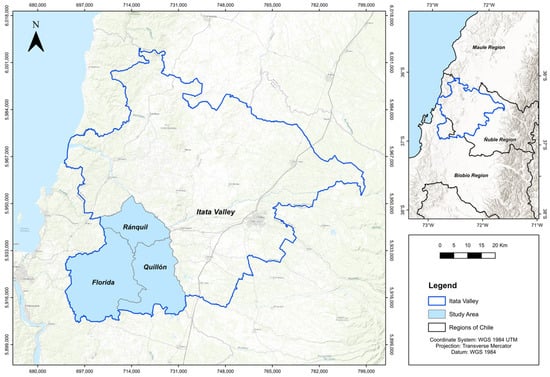
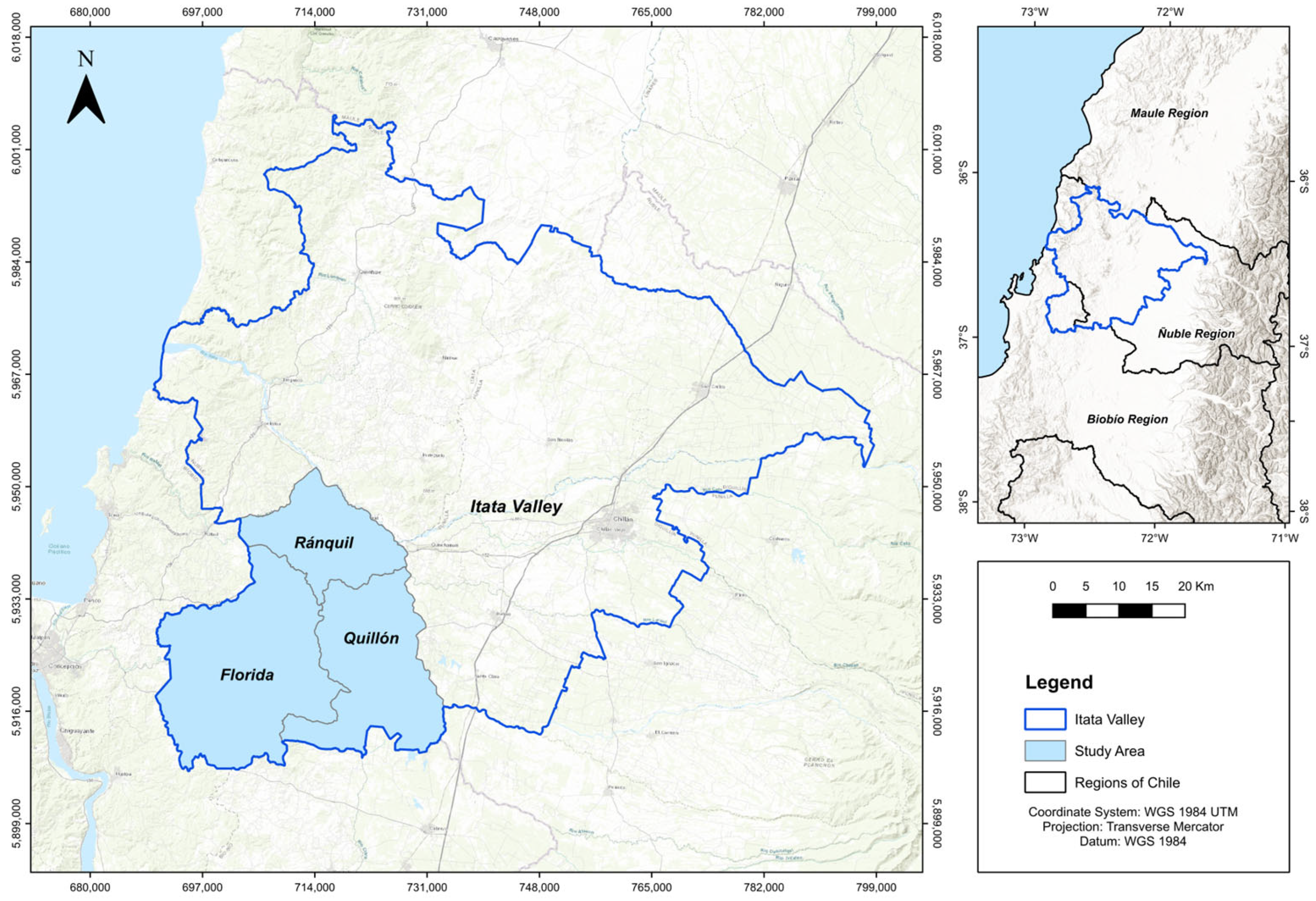
A combination of qualitative and quantitative methods was employed to assess the historical, heritage, and productive value of the Chasselas vineyards in the Itata Valley. The study focused on the municipalities of Quillón, Ránquil, and Florida (Figure 1), which together account for 91.7% of the national Chasselas surface area [16]. The map in Figure 1 was prepared using QGIS version 3.44.7.
Figure 1.
Location of the municipalities of Quillón, Ránquil, and Florida in the Itata Valley, Chile (authors’ own elaboration).
2.1. Study Area
The Itata Valley, located in south-central Chile (36°04′–36°58′ S; 72°53′–71°31′ W), spans the Ñuble and Biobío regions and covers approximately 377,000 ha, representing one of the country’s oldest and most extensive viticultural territories [20]. The valley exhibits a temperate Mediterranean climate with marked seasonality. It has an average annual temperature of around 15 °C [21], and winter rainfall between 1000 and 1500 mm year−1, followed by a four-month dry period [22,23]. Summers are dry, with maximum temperatures of 28–30 °C and high diurnal amplitude, whereas winters are cold and humid, with minimum temperatures close to 2 °C [21,24]. Soils predominantly have shallow, acidic granitic types of moderate fertility, with loam to sandy-loam textures [25]. The interaction between the coastal range, intermediate depression, plains, and Andean foothills creates strong thermal and rainfall gradients [26,27], generating a heterogeneous agroclimatic mosaic that sustains Itata’s traditional viticulture.
Within this broader landscape, Quillón, Ránquil, and Florida represent distinct production environments. Quillón, located in the interior drylands, presents a warm-temperate Mediterranean climate, with mean annual temperatures of ~13.3–15.6 °C and wide thermal amplitude (>22 °C), under marine influence from the coastal range [28]. Ránquil forms a transitional zone between the interior drylands and the foothills, where the temperate Mediterranean climate shows greater thermal variability and precipitation of 1000–1500 mm year−1 [22]. Florida, situated in the inland coastal drylands of Biobío, exhibits a humid temperate Mediterranean climate with strong seasonality, annual rainfall near 1200 mm year−1, and lower thermal amplitude due to oceanic influence [29,30] (Figure 1).
2.2. Data Collection on Chasselas
The methodological approach emphasized local knowledge and the oral, intergenerational transmission of traditional practices. It allowed for the characterization of traditional production systems in the Itata Valley, particularly those centered on the Chasselas variety, given the scarcity of written historical records.
2.2.1. Historical Data
Primary and secondary bibliographic sources were reviewed to trace the history of the Chasselas variety in the Itata Valley, other regions of Chile, and international production areas. Additionally, semi-structured interviews were conducted with 15 stakeholders involved in Chasselas production in the Itata Valley (Supplementary Material S1). All interviews were recorded and transcribed for analysis.
2.2.2. Past and Current Production Systems
Semi-structured surveys were conducted with 29 Chasselas farmers (Supplementary Material S2), representing approximately 51% of the registered producers in Quillón, Ránquil, and Florida, as identified through a preliminary stakeholder survey. The survey protocol was designed to assess the current situation of Chasselas production and farmers’ socioeconomic characteristics, and to document traditional viticultural practices in their vineyards. Responses to each survey were coded for both open and closed questions, identifying patterns and trends in Chasselas production across the Itata Valley.
2.3. Characterization of Chasselas from the Itata Valley
A quantitative characterization of Chasselas grapes complemented the historical and traditional data. Approximately 2 kg of mature grape clusters were collected from different positions within the Chasselas canopy [31] from vineyards located in the study area (Table 1). Harvesting was carried out according to the ripening period reported by farmers (between January and February 2025). These grape samples were used for nutritional and sensory analyses conducted at an external laboratory (QLF LABS SPA, Santiago, Chile). Additionally, 2 kg of composite soil samples were collected from the top 30 cm of soil in each vineyard [32] for chemical characterization at AGQ Labs (Santiago, Chile).
Table 1.
Sampling sites of vineyards with the Chasselas variety in the Itata Valley (authors’ own elaboration).
2.3.1. Sensory Characterization
The sensory analysis of Chasselas grapes was conducted at an external laboratory (QLF LABS SPA, Santiago, Chile), using the quantitative descriptive analysis method established by the International Organization for Standardization (ISO 13299:2016) [33]. The evaluated attributes included skin color, glossiness, visible defects, firmness, skin adherence, juiciness, aroma intensity, sweetness, and acidity. Nine trained judges, selected among professional sensory evaluators, graduates and students in scientific disciplines with training in sensory evaluation of fruits, were recruited according to the National Institute of Standardization for sensory analysis of food (NCh-ISO 8586:2016) [34], and conducted discriminative and descriptive evaluations. Each judge independently evaluated all six grape samples, assigning independent scores on a 0–10 scale for each attribute (Table 2). Evaluations were performed at 21.5 °C in individual sensory booths. The scores assigned by the nine judges were used to calculate the mean value for each attribute and sample. Differences among samples were assessed using Tukey’s honestly significant difference (HSD) test at a significance level of α = 0.05.
Table 2.
Sensory attributes, scale limits, and characteristic examples used in the quantitative descriptive analysis of Chasselas grapes from the Itata Valley (authors’ own elaboration).
2.3.2. Nutritional Analysis
The nutritional analysis was conducted according to the Association of Official Analytical Chemists [35] for carbohydrates, ISO 5983-2:2009 [36] for nitrogen and proteins, and the National Institute of Standardization for acidity (NCh 95:1981), fat (NCh 1370/3:1977), and humidity (NCh 841:2018) [37,38,39]. Total carbohydrate content was determined according to AOAC 906.03 (Munson-Walker General Method), and individual sugars (fructose, glucose, galactose, lactose, maltose, and sucrose) were quantified according to AOAC 984.22, using high-performance liquid chromatographywith a refractive index detector. Total nitrogen and protein contents were determined using the Kjeldahl Method.
2.3.3. Soil Chemical Characterization
Soil chemical characterization followed ISO and International Electrotechnical Commission (IEC; ISO/IEC 17025:2017) [40]. Macronutrients (total nitrogen, magnesium, potassium, calcium, phosphorus, and sodium), micronutrients (boron, iron, copper, zinc, and manganese), organic matter content, carbon-to-nitrogen (C/N) ratio, and electrical conductivity were determined using the Saturated Paste Extract method.
3. Results
3.1. History of Chasselas
3.1.1. Chasselas, a European Variety
The Chasselas variety (VIVC 2473) [41] most likely originated in the region spanning France, Switzerland, and Italy, particularly around Lake Geneva in the canton of Vaud, Switzerland [42]. Chasselas has more than 400 synonyms depending on the production area, such as Fendant, Chasselas de Fontainebleau, Thomery, Lausannois, Gutedel, Pinzutella, Sweetwater, and Chasselas doré [41,42]. Globally, approximately 38,000 ha are planted with Chasselas, with France, Switzerland, Germany, Romania, Hungary, and Russia representing the principal production countries [43]. This variety is grown both for table grape consumption and wine production [15,44].
In Switzerland, Chasselas, locally known as Fendant, is the most important and widely cultivated white grape variety and is considered a symbol of the country’s viticultural identity [45]. Because most Swiss wine is produced for domestic consumption, exports are virtually nonexistent, even to neighboring countries such as France [46]. Switzerland has the largest area of Chasselas vineyards dedicated to winemaking worldwide (3672 ha). In the canton of Vaud, the variety covers 2000 ha [15], accounting for approximately 60% of the total vineyard area [45]. There, along the shores of Lake Léman, the Lavaux Vineyard Terraces, where Chasselas is the predominant grape, are recognized as a UNESCO World Heritage site [47]. In Germany, where it is referred to as Gutedel, Chasselas is primarily cultivated in the Baden region to produce light, delicate white wines; however, it is occasionally consumed fresh as well [45].
In France, Chasselas holds a Protected Designation of Origin status as Chasselas de Moissac, recognized as a traditional table grape [16]. In Eastern Europe, it has historically been cultivated as a table grape, particularly in Romania, where it has been one of the most widely grown varieties for fresh consumption [48]. Moreover, Chasselas has strong territorial and symbolic significance in Switzerland, France, and Germany [15,41] due to its varietal adaptation, deep-rooted local traditions, and diverse uses [41]. Its dual purpose—as a table grape and for wine production [15]—is key to understanding its introduction and adaptation to other viticultural regions, such as Chile.
3.1.2. Chasselas in Chile and the Itata Valley
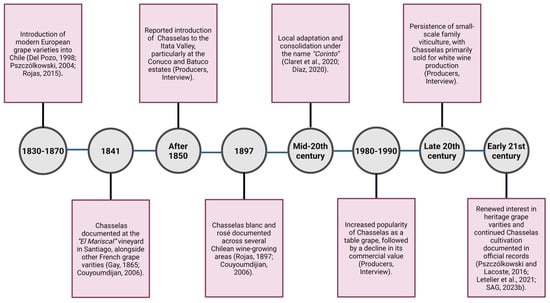
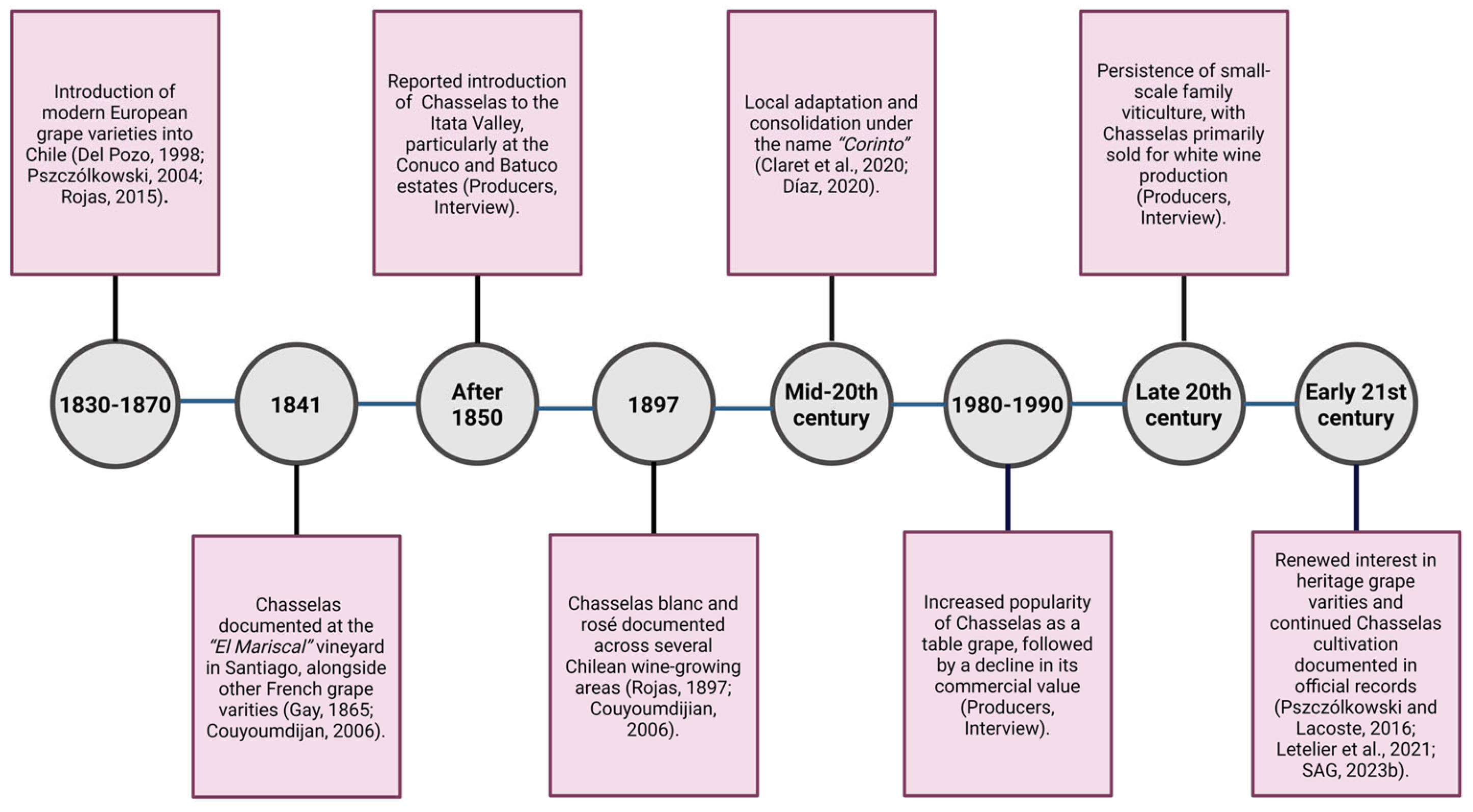
In 1841, Claudio Gay documented the presence of Chasselas, including de Fontainebleau and a rosé variant known as “colorada,” in Chile, alongside other French varieties cultivated at the Mariscal field of the Tocornal vineyard [49]. Rojas reported that Chasselas (both blanc and rosé) was extensively grown throughout the country, primarily for fresh consumption as a table grape [50]. Recently, Meneses et al. [7] identified the Chilean material as Chasselas Cioutat, using simple sequence repeat markers. Nonetheless, limited information is available about Chasselas in Chile, because it has only recently received renewed recognition (Figure 2).
Figure 2.
Timeline of the Chasselas variety in Chile and the Itata Valley [2,14,20,49,50,51,52,53,54,55].
According to stakeholders, Chasselas, locally known as Corinto, Tempranera, or Primera, is an old grape in the Itata Valley. It is believed to have been introduced around 1850 at the Fundo Conuco and Fundo Batuco estates in the Biobío Region by Catholic missionaries (Figure 2). The vineyards in this region are predominantly family-run and inherited across generations. Therefore, most farmers associate Chasselas with family memory and local heritage, often asserting that “it has always been here.” This perception, observed across the Itata Valley, illustrates how empirical knowledge and inherited practices contributed to the naturalization of a European grape variety, endowing it with a distinctive meaning deeply rooted in the rural life of the Itata Valley.
The Chasselas variety adapted well to the rainfed conditions of the Itata Valley and became part of the local production systems [20]. South of the Biobío River, remnant plantings of Chasselas introduced by European settlers show promise for dry and sparkling wine production, though their presence remains much more limited than in the Itata Valley [55]. Despite this adaptability, Chasselas and other Hispanic-Criolla varieties were gradually displaced in favor of Bordeaux and Burgundy varieties [3,8]. Recently, traditional varieties, including Chasselas, have been revalued due to their heritage potential and association with GI [2,5]. However, farmers in the Itata Valley continue cultivating them primarily out of family tradition rather than for profit.
Historically, Itata Valley farmers incorporated Chasselas into their production systems as a commercial advantage, selling their harvest as table grapes in local markets, such as Chillán and Concepción, where Chasselas was in high demand due to its early ripening. The income from Chasselas sales allowed farmers to finance the harvest and processing of grapes intended for winemaking. Hence, Chasselas played a key role in smallholder farming, where its harvest and commercialization supported the viability of other varieties. Later, the direct sale of Chasselas in local markets was prohibited, and consumer preferences shifted toward seedless varieties, which significantly impacted the rural economy.
At present, the commercial value of Chasselas is marginal. Farmers often delay its harvest until March to increase the sales volume of other white varieties, such as Italia or Semillón. Consequently, interest in Chasselas has declined [20], despite its heritage importance and potential as a table grape. Furthermore, the oenological characteristics of Chasselas make it difficult to use for wine production [23,50].
One of the primary challenges for Itata Valley farmers is the lack of generational renewal in vineyard management. Younger generations have little interest in continuing grape production due to low profitability and the difficulty of producing only Chasselas. These dynamics are consistent with the ongoing land abandonment and depopulation trends observed throughout Chile’s rural areas [56,57]. Most current farmers describe their production as driven more by emotional than economic motives, as it preserves family memory through vineyards passed down by inheritance, and maintains their connection to the land. While such attachment and belonging foster youth retention in rural communities, viable economic opportunities remain equally vital [58]. Recent research in Chile demonstrates that initiatives to revive heritage vines, Chasselas among them, can contribute not only to preserving cultural and historical identity, but also to strengthening the economic diversification and resilience of small-scale viticulture [59]. It is therefore essential that cultural preservation and economic viability go hand in hand to attract younger generations to this production and ensure its long-term sustainability.
3.2. Production System of Chasselas
Chasselas is a distinctive grape produced almost entirely in the Itata Valley (99.3%), particularly in the municipality of Quillón (87.8%) [14]. This valley lies within the area recognized for its heritage vineyards [4,8]. Hence, farmers from Quillón, Ránquil, and Florida, representing 91.7% of the Chasselas cultivation area, were interviewed to characterize the current production system.
The age of Chasselas vines in the three municipalities ranges from 20 to 140 years, with an average of 63 years. Centenarian vineyards coexist with more recent plantings (20–30 years old). In many cases, vines have been inherited, reinforcing the heritage and multigenerational nature of Chasselas production in the Itata Valley. Moreover, the vineyards are located on the same property as the farmers’ residences, highlighting the close integration between domestic and productive spaces, a characteristic of small-family farming [60].
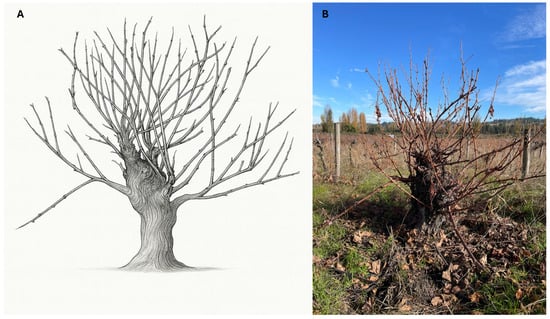
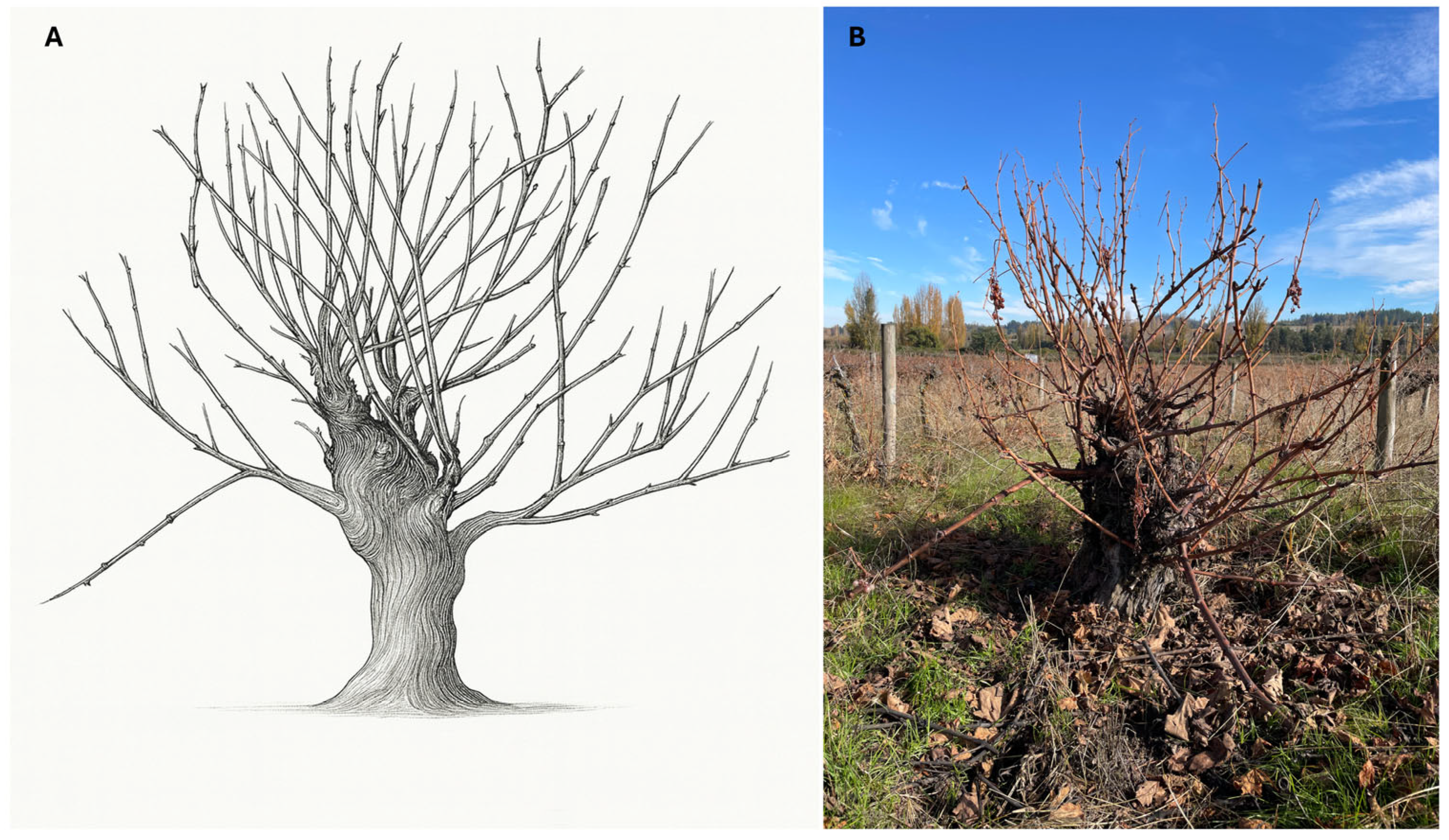
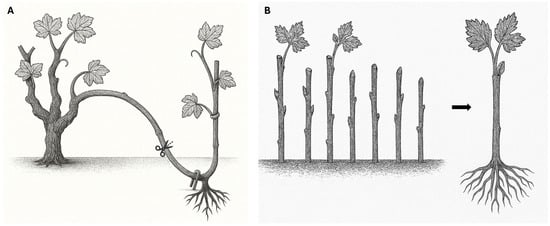
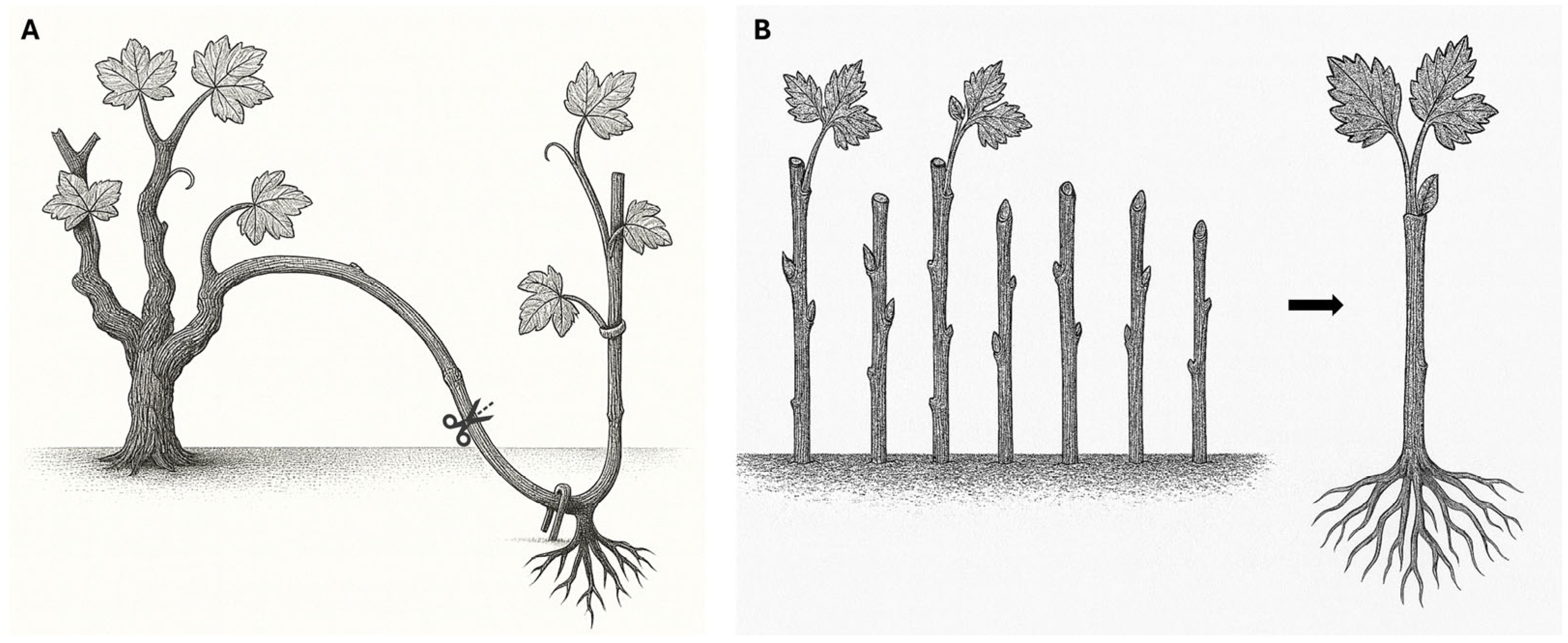
The vineyard area managed by individual Chasselas farmers is small, ranging from 0.02 to 5.0 ha, or approximately 100 to 30,000 plants. Notably, farmers know the number of plants more precisely than the surface area, as Chasselas and other white varieties are often intercropped. Vineyards in these municipalities are managed using traditional methods. The head-trained or goblet system (Figure 3) is the predominant training system, which uses manual pruning and propagation by simple layering or bare-root grapevines (barbados) (Figure 4). These production systems yield between 2.0 and 3.8 kg per plant, depending on the agro-climatic conditions and cultural practices. Chasselas yields in the Itata Valley are comparable to those in Bosnia and Herzegovina (3.12 kg plant−1) for table grapes [61] and in Switzerland (2.67 kg plant−1) for wine production [62]. Thus, the yields are within normal ranges despite several vineyards being old/ historically established.
Figure 3.
Head-trained (goblet) systems. (A) Schematic illustration of a typical head-trained system viña, characterized by low stature and an open canopy structure. (B) Chasselas vine growing under a head-trained system in the municipality of Quillón, Ñuble Region (authors’ own elaboration).
Figure 4.
Schematic illustration of vegetative propagation techniques employed in the Chasselas vineyards of the Itata Valley. (A) simple layering. (B) bare-root grapevines (authors’ own elaboration).
Planting density of Chasselas ranges from 1.0 × 1.0 m to 1.5 × 1.5 m, which is typically associated with the head-trained system [63]. In general, soil preparation is low intensity, relying on manual tools and minimal use of agrochemicals. Some farmers maintain vegetative cover to improve soil structure and humidity or practice minimal soil intervention. Pruning is performed manually during winter dormancy to promote balanced sprouting, plant structure, and regulated fruit load [64]. Additionally, propagation by simple layering and/or bare-root grapevines conserves the original genotype. Notably, bare-root grapevines are the most common propagation method in Chilean vineyards [65].
The specific timing of the phenological phases for Chasselas was determined from farmers through interviews and/or surveys (Table 3).
Table 3.
Estimated dates of the main phenological phases of the Chasselas variety in the Itata Valley, obtained from farmers’ survey.
Farmers indicated that grape harvesting is performed entirely by hand. The harvest timing is based on local knowledge and experience rather than formal measurements. The golden color of the grapes, along with their texture and sweetness, is the main indicator of optimal ripeness. Some farmers complement these sensory cues with measurements of Brix and acidity. As one farmer explained, “You know when it’s ready just by looking at it; the bunch tells you.”
3.3. Heritage Potential of Chasselas in the Itata Valley
Heritage vineyards in Chile remain distinct and sustainable because of their long-standing/traditional cultivation systems and can age up to 140 years according to local accounts [4,6].
3.3.1. Rainfed Systems
Chasselas vineyards are characterized by the absence of irrigation, relying solely on rainfall as the water resource. This condition represents a traditional practice transmitted across generations, shaping the productive and cultural identity of the valley [10]. Moreover, variations exist according to production site: vineyards are located both in the valley (bajo) and on slopes (alto) in the Itata Valley, demonstrating adaptation to the local geography and microclimates.
Rainfed farming represents a historical adaptation to the Mediterranean climate of the Itata Valley, where rainfall is concentrated in winter and summers are long and dry. Farmers interpret local hydrological cycles and adjust their practices to the climatic rhythms, maintaining the resilience of the production system despite rainfall variability [2,66]. Over time, Chasselas vines have acclimatized to these conditions, developing deep roots and remarkable resilience, which explains the continued productivity of century-old vineyards.
Hence, dry-farming management is a productive strategy and an agronomic and cultural heritage. It represents a method of engaging with the landscape and managing water resources, where local knowledge is embedded in the territory as collective wisdom. Therefore, Chasselas viticulture under rainfed conditions embodies a climate adaptation strategy and a symbol of regional identity—a living expression of the heritage and family-based viticulture that has shaped the rural landscape of the Itata Valley [67].
3.3.2. Head-Trained or Goblet System in Chasselas
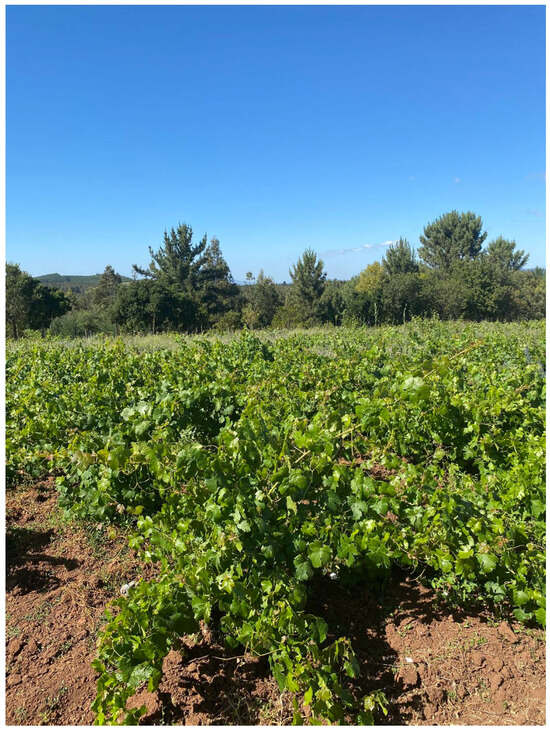
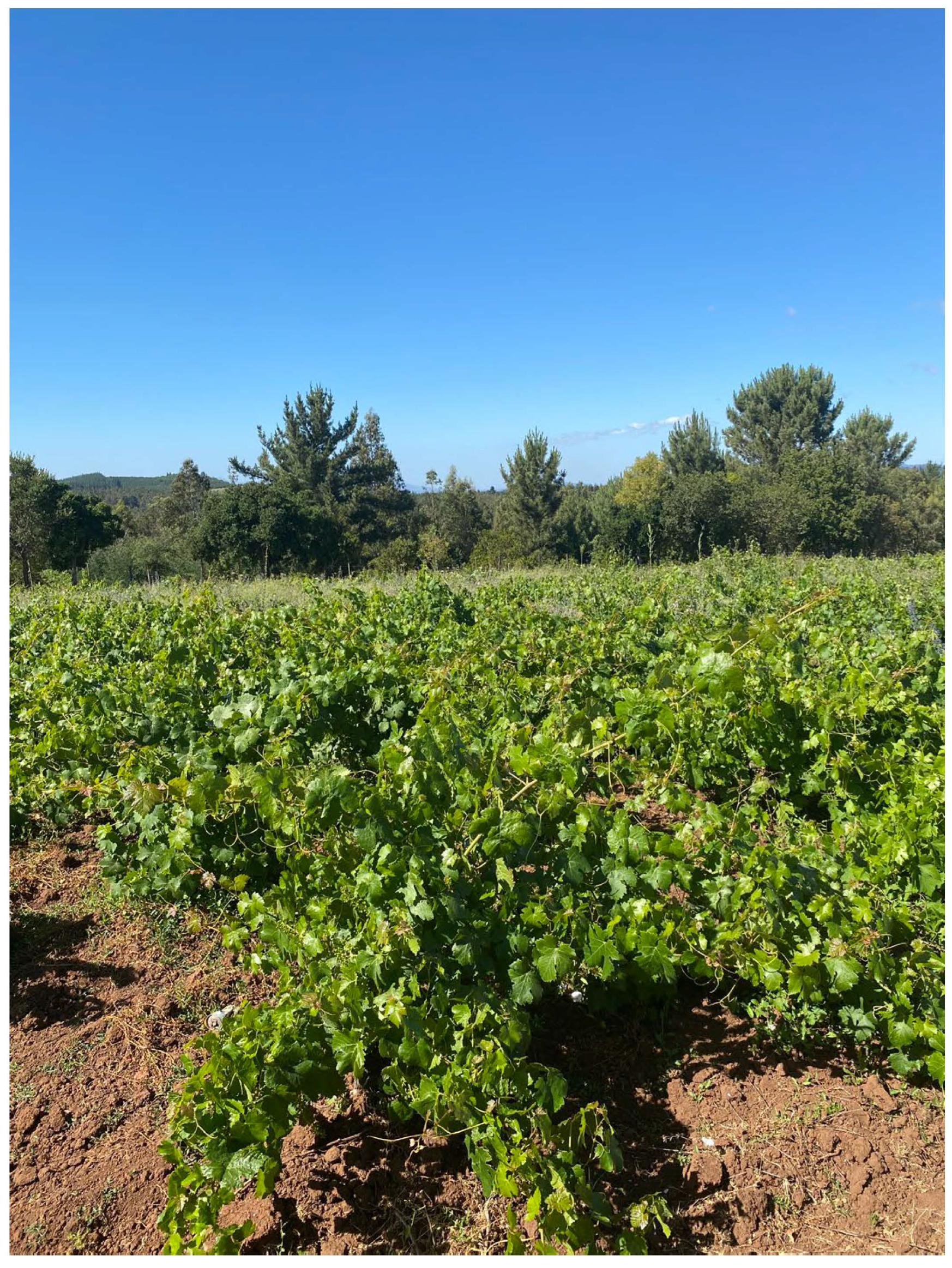
The head-trained system is the predominant vine training method for Chasselas in the Itata Valley. It is used exclusively in rainfed vineyards and represents the oldest training method in Chile, introduced by the Spanish during the colonial period [63]. The viticultural landscape in Quillón, Ránquil, and Florida is dominated by these small, free-structured plants (Figure 5).
Figure 5.
The viticultural landscape in a Chasselas vineyard in the Ránquil municipality (authors’ own elaboration).
Chasselas plants grown under this system are typically more than 50 years old, with some centenarian systems still productive. Hence, they demonstrate the resilience of the plant material and its adaptation to the valley’s water regime and topography. This traditional system promotes annual shoot renewal and provides natural protection to the canopy against wind and solar radiation.
3.4. Characterization of Chasselas from the Itata Valley
3.4.1. Sensory Characterization
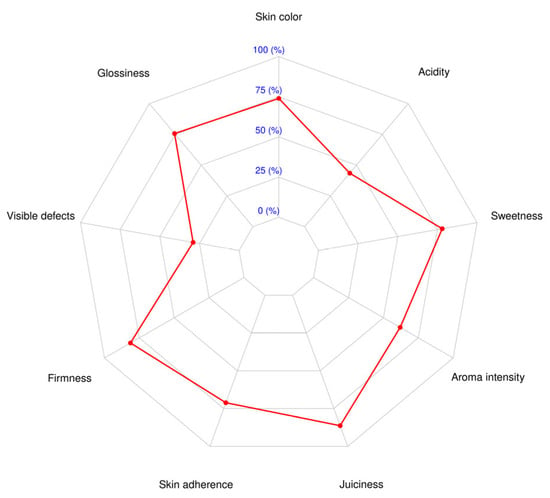
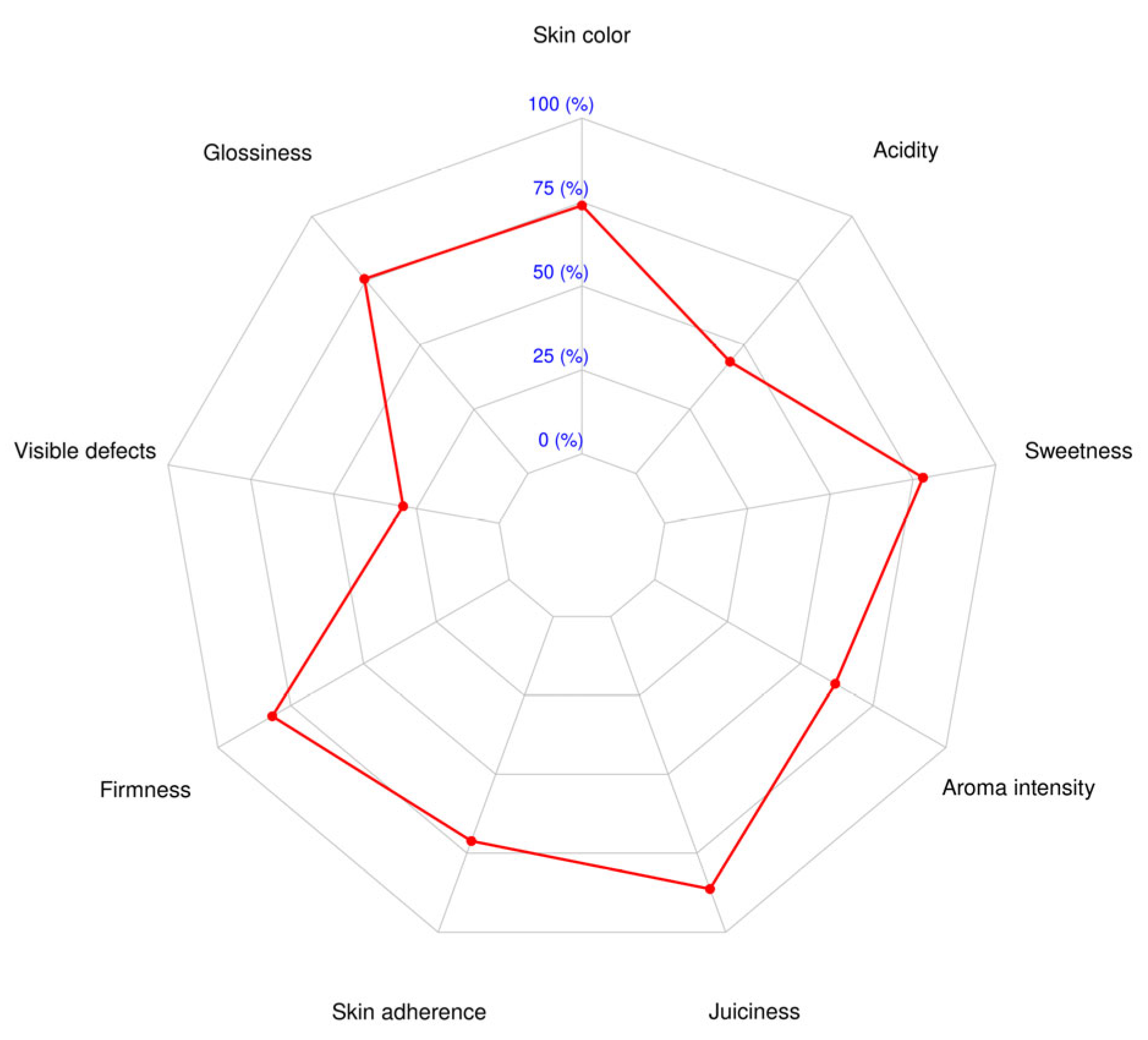
Chasselas grapes collected from six vineyards of the Itata Valley exhibited a favorable sensory profile: intense skin color (7.9) and glossiness (7.6), low visible defects (2.9), high firmness (8.1) and skin adherence (7.1), high juiciness (8.6), medium aroma intensity (6.2), high sweetness (7.8), and low acidity (4.4) (Figure 6).
Figure 6.
Sensory attributes of Chasselas grapes collected in the Itata Valley (laboratory analyses).
The sensory characterization indicates that Chasselas, as a table grape, could meet consumer expectations [68]. Furthermore, certain attributes, such as juiciness, firmness, and aroma intensity, were superior compared with those of French Chasselas [44]. Notably, the firmness of Chasselas from the Itata Valley (8.1) was much higher than that of French Chasselas (2.7), which was the least firm among the six table grape varieties. Firmness is highly desirable for consumers because it is associated with a crunchy texture [69]. However, the acidity of Itata Chasselas (4.4) was slightly higher than that of French Chasselas (3.4) [44], though within a medium range. According to Jayasena and Cameron [70], consumer acceptability generally peaks at lower acidity levels. Although quality ratings can correlate with measured physiochemical attributes in fresh produce [71], sensory assessment remains subjective [72]. Comparisons with other cultivars do not allow definitive differentiation; however, they do establish the key characteristics of Itata Chasselas grapes.
3.4.2. Nutritional Analysis
The nutritional profile of Chasselas grapes collected in the six vineyards of the Itata Valley was similar to that of French Chasselas [44], other Chilean commercial table grapes [72], and other table grape cultivars [73] (Table 4). Glucose and fructose were the primary carbohydrates, as in other table grapes [44,72,73]. Sucrose was not detected in Itata Chasselas, whereas French Chasselas contained a small amount [44], and some Chilean table grapes contained a significant amount [72]. Overall, Itata Chasselas had lower total sugar content than other table grape varieties.
Table 4.
Nutritional parameters of Chasselas grapes from the Itata Valley (laboratory analyses).
3.4.3. Soil Chemical Characterization
Soils in the Itata Valley exhibited medium organic matter content (2.85%), typical of Chilean vineyard soils, supporting favorable soil structure and nutrient availability [74,75]. Total nitrogen (1307 mg kg−1) and the C/N ratio (12.6) indicated a well-balanced relationship between mineralization and nutrient supply. Available phosphorus (57 mg kg−1) was higher than that reported for vineyards of winemaking varieties, enhancing metabolic processes linked to sugar accumulation and aroma development [76,77,78].
Base cation analysis revealed 5.08 meq/100 g of calcium and 1.58 meq/100 g of magnesium, reflecting a balanced soil with a slight calcium predominance, a feature of Mediterranean vineyard soils [79] (Table 5). In comparison, soils in Chile’s Central Valley and the Copiapó and Huasco municipalities demonstrate higher potassium content and lower acidity [80,81]. Although the Itata Valley soils present certain limitations, these conditions are compatible with the rusticity of Chasselas.
Table 5.
Soil chemical parameters of vineyards where Chasselas grapes from the Itata Valley were collected (laboratory analyses).
Overall, these findings support the hypothesis that the Itata Valley properties, characterized by acidic soils of moderate fertility and medium organic matter, may contribute to a distinctive Chasselas profile, consistent with patterns observed in dryland vineyards, where such conditions enhance sensory and quality differentiation [82].
4. General Discussion
Chasselas occupies a central role in the viticultural heritage of the Itata Valley. Its cultivation is closely intertwined with the traditional and cultural practices of local farmers, reflecting decades of adaptation to the environment of the Itata Valley. The conservation and use of locally adapted germplasm prepare the vines to face climate change by providing plant material adapted to abiotic stress, such as reduced precipitation at higher temperatures [7]. According to van Leeuwen et al. [83], the characteristics of Chasselas vineyards—goblet training system, low planting density, and deep-rooting system—are management strategies that can enhance resilience to water stress. Furthermore, old vineyards (>17 years) have a greater relative abundance of arbuscular mycorrhiza than younger vineyards, which may improve nutrient acquisition and plant performance, and reduce their susceptibility to certain soil-borne pathogens [84].
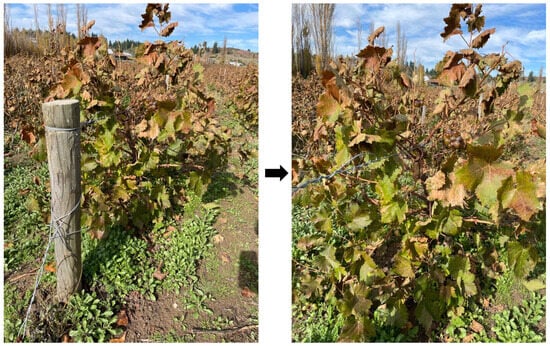
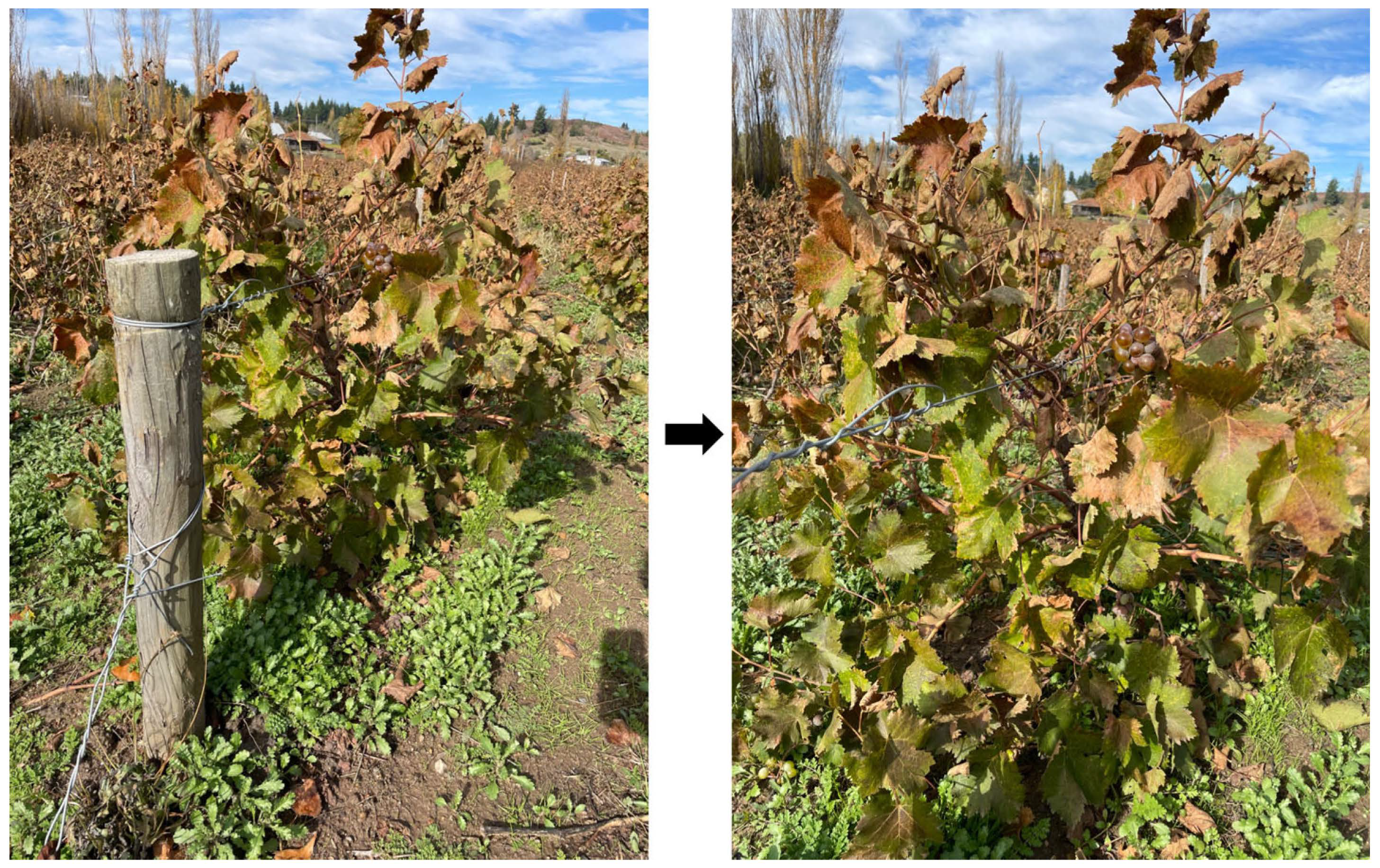
Chasselas production meets the criteria for heritage vineyards. Hence, it functions as both an agricultural product and a cultural emblem, highlighting the interplay between local knowledge, terroir, and varietal identity. Nonetheless, there is a generational disaffection among young people toward grape production in the Itata Valley, mainly due to the low valorization of traditional varieties. Chasselas is particularly affected, as it is not used directly but rather to increase the sales volume of other white varieties, primarily Italia. Consequently, some farmers in Quillón, Ránquil, and Florida have modified traditional practices, such as training plants on vertical wire trellis systems (Figure 7), to increase yields and facilitate fieldwork. Both training systems coexist in some vineyards, giving rise to hybrid forms that combine tradition and innovation, reflecting the flexibility and adaptability of farmers in the Itata Valley. Additionally, productive transformation to other fruits or abandonment of vineyards was observed, especially on slopes where yields were lower. A similar trend was reported in Switzerland, where traditional hillside vineyards have been abandoned [85]. However, the Swiss experience also demonstrates how the agricultural landscape and cultural value associated with Chasselas can drive tourism, fostering broader economic diversification [47].
Figure 7.
Example of transformation of Chasselas vineyards from head-trained to wire-trained in the Itata Valley. The black arrow points to a closer view of the vine and its support wire (authors’ own elaboration).
4.1. Chasselas Valorization Potential
An opportunity to revalorize Chasselas in the Itata Valley exists. Its potential as a table grape, due to its early-ripening characteristics and favorable sensory and nutritional properties, could provide an alternative pathway to prevent its loss. The global table grape market is dominated by varieties such as Thompson Seedless, Red Globe, and Flame Seedless; however, other cultivars, including Barlinka in South Africa, Muscat Hamburg in Australia, and Kyoho in China, are also prominent in specific regional markets [85,86]. Kyoho, a hybrid between V. vinifera and V. labrusca, is one of the most important table grapes in China. However, its characteristics differ from prevailing consumer preferences, as Kyoho grapes have seeded berries, soft flesh, and moderate skin adherence to the pulp [87,88]. Similarly, Chasselas in the Itata Valley is also a seeded variety; however, some of its sensory characteristics (Figure 6) could meet consumer expectations [68], although this is subjective and depends on preferences [89].
Chasselas could establish itself as a strategic crop within viticultural diversification and territorial valorization programs, promoting a sustainable production model that emphasizes local identity, rural livelihoods and healthy nutrition [90,91]. Consequently, Chasselas could be further integrated into Chilean heritage vine revitalization initiatives, which over the past fifteen years have primarily focused on varieties such as País and Moscatel de Alejandría [59]. A similar process has occurred with Carignan, one of the most recently studied and valorized traditional varieties in Chile, with 688 ha in the Maule Valley [14]. Its production from old, rainfed vineyards has been commercialized at prices higher than the national average for grapes [19].
However, capitalizing on these opportunities sustainably requires strengthening collective action among small-scale growers. In this context, the potential implementation of a GI could provide a framework for collective product differentiation, strengthen the link between Chasselas and the territorial identity of the Itata Valley, and support its long-term valorization. Given that previous research in the southern Maule Region, adjacent to the Itata Valley, highlights widespread knowledge gaps and a resulting resistance to producer associations, establishing foundational conditions and building trust will likely be a key priority [92].
The concentration of Chasselas in Quillón, Ránquil, and Florida (91.7%), particularly in Quillón (87.8%), presents an exceptional opportunity to produce high-value, single-variety products with strong territorial links [20], particularly given their commercial potential at the local scale. Gocci et al. [93] determined that Vlaams-Brabantse tafeldruif, a table grape produced locally in Belgium with designation of origin, is primarily sold in the local market, although its consumers come from across the country. The concentration of Chasselas could enhance its potential to obtain GI recognition as a table grape.
4.2. Limitations of the Study and Future Research
This study relied primarily on information provided by stakeholders involved in Chasselas production in the Itata Valley. The selection of farmers to be surveyed was based on information obtained from these stakeholders, which may have limited the number and diversity of participants included. Furthermore, the sensory, chemical, and soil characterizations were conducted using samples from a limited number of farms (6) and were intended to provide a preliminary, descriptive assessment of the grapes and their growing environment, rather than an exhaustive characterization of the variety or its terroir.
According to Vandecandelaere et al. [94], establishing a GI begins with the precise identification of the product and the local resources associated with its production [95]. This study contributes to this initial step by documenting the historical, cultural, and productive characteristics of Chasselas in the Itata Valley and identifying its potential for territorial valorization. However, further research is needed to assess consumer preferences, market perceptions, and the perspectives of a broader range of local stakeholders. These aspects would help inform future initiatives toward a potential GI and evaluate the opportunities and challenges associated with its implementation.
5. Conclusions
Chasselas maintains a strong emotional and territorial connection with local farmers in the municipalities of Quillón, Ránquil, and Florida in the Itata Valley. This connection has been transmitted across generations, with farmers traditionally cultivating Chasselas as a family heritage crop rather than for commercial purposes, due to its current limited market value. Nevertheless, Chasselas offers opportunities for revalorization within Chilean viticulture. Its potential use as a table grape could provide an alternative pathway for diversifying its uses and helping to reduce the risk of cultural erosion. These findings highlight the relevance of Chasselas in promoting viticultural diversification and territorial valorization, linking local identity and agricultural heritage with opportunities for new forms of production and consumption.
The concentration of Chasselas cultivation within the Quillón, Ránquil, and Florida municipalities (91.7%), together with its historical and cultural significance, provides a basis for exploring the potential development of a GI. However, further research is needed to investigate the influence of the terroir on Chasselas characteristics by increasing the number of samples and examining in greater depth the relationship between environmental conditions and grape characteristics. In parallel, efforts should be made to strengthen the farmer organization at the local level. Furthermore, its potential classification as a heritage vineyard could strengthen revalorization efforts. However, this heritage status is currently at risk, as some farmers have either abandoned Chasselas cultivation or converted traditional head-trained systems to wire-trained systems to increase yields.
This study constitutes the first step toward understanding the cultural and productive significance of Chasselas in the Itata Valley. Further research is required to assess consumer preferences regarding Chasselas as a table grape, examine variation in production characteristics across seasons and growing conditions, and investigate the potential development of regional or national markets. Such studies could support local farmers in strengthening the economic and cultural value of this distinctive variety.
Supplementary Materials
The following supporting information can be downloaded at: https://www.mdpi.com/article/10.3390/su182312042/s1, Supplementary Material S1: Semi-Structured Interview Guide (Stakeholders). Supplementary Material S2: Chasselas Grape Producers Survey (CORINTO/A).
Author Contributions
Conceptualization, C.R.-F., J.S. and M.P.; data curation K.C.-Z., F.P., C.R. and S.L.; formal analysis, C.R.-F., K.C.-Z., S.B. and F.P.; funding acquisition M.P.; investigation, C.R.-F., K.C.-Z., F.P., C.R., S.L. and J.S.; methodology, C.R.-F., K.C.-Z., F.P. and M.P.; project administration, M.P.; resources, M.P.; supervision, C.R.-F., and M.P.; visualization, C.R.-F., K.C.-Z. and F.P.; writing—original draft, C.R.-F., K.C.-Z. and F.P.; writing—review and editing, C.R.-F., S.B. and M.P. All authors have read and agreed to the published version of the manuscript.
Funding
This research was funded by GORE Ñuble FIC BIP, grant number 40035912-0 and CORFO, grant number 25CH2-304691.
Institutional Review Board Statement
Ethical review and approval were waived for this study by the institutional committee, as this type of social and territorial research does not require approval by a Scientific Ethics Committee under the Chilean regulatory framework. The study did not involve biomedical research, clinical interventions, experimental procedures involving human subjects, the collection of biological samples, the processing of health-related data, or any other activities falling within the scope of Chilean Law No. 20.120 regulating scientific research involving human beings and their genome. The research consisted exclusively of voluntary interviews and surveys aimed at documenting agricultural practices, local knowledge, and territorial heritage, posing no more than minimal risk to participants. The study was conducted in accordance with generally accepted ethical principles for social research, including voluntary participation, informed consent, confidentiality, anonymity, and the protection of personal information, in compliance with Law No. 19.628 on the Protection of Privacy and Personal Data.
Informed Consent Statement
Informed consent was obtained from all subjects involved in the study.
Data Availability Statement
The data underlying this study are available on request from the corresponding author.
Acknowledgments
The authors are grateful to all interviewees for their time and valuable insights, including Cooperativa Agrícola y Vitivinícola Cerro Negro (COOVICEN), Centinelas del Itata and Agrupación de Viñateros de Rahuil Alto. During the preparation of this study, the authors utilized ChatGPT AI to generate Figure 3a and Figure 4a,b. The authors have reviewed and edited the output and take full responsibility for the content of this publication.
Conflicts of Interest
Author Francisca Peña is employed by Agroenergía Ingeniería Genética S.A. Inc. The remaining authors declare no conflicts of interest. The company had no role in the design of the study; in the collection, analyses, or interpretation of data; in the writing of the manuscript; or in the decision to publish the results. The funders had no role in the design of the study; in the collection, analyses, or interpretation of data; in the writing of the manuscript; or in the decision to publish the results.
Abbreviations
The following abbreviations are used in this manuscript:
| AOAC | Association of Official Analytical Chemists |
| C/N | Carbon to Nitrogen ratio |
| GI | Geographical Indication |
References
- Lemaire, D.; Kasserman, D. Bordeaux and Burgundy: A comparison of two French wine regions in transition. In The Geography of Wine: Regions, Terroir and Techniques; Dougherty, P.H., Ed.; Springer: Dordrecht, Netherlands, 2011; pp. 61–80. [Google Scholar] [CrossRef] [Scilit]
- Letelier, E.; Aguayo, B.C.; Saravia, P.; Carroza, N.; Vanhulst, J. Territoriality, environment and hybrid governance tensions in alternative food networks: Cases of small-scale viticulture in Chile. Environ. Policy Gov. 2021, 31, 186–198. [Google Scholar] [CrossRef] [Scilit]
- Serra, I.; Calderón-Orellana, A.; Hidalgo, M. Heroic viticulture in Itata Valley, Chile: Characteristics and challenges for the development of unique wines in southern Chilean vineyards. In Latin American Viticulture Adaptation to Climate Change; Gutiérrez, G., Fourment, M., Eds.; Springer: Cham, Switzerland, 2024; pp. 215–228. [Google Scholar] [CrossRef] [Scilit]
- Rojas, G. Viñas chilenas como Patrimonio de la Humanidad. RIVAR 2021, 8, 198–205. [Google Scholar] [CrossRef] [Scilit]
- Ruiz, C.; Reyes, M.; Díaz, I. Impulsando el desarrollo de la vitivinicultura patrimonial de Chile. In Impulsando el Desarrollo de la Vitivinicultura Patrimonial de Chile; Tierra Adentro; Instituto de Investigaciones Agropecuarias: Santiago, Chile, 2021; Volume 5, pp. 47–50. Available online: https://biblioteca.inia.cl/handle/20.500.14001/69562 (accessed on 29 July 2026).
- Pszczólkowski, P.; Rojas, G.; Lacoste, P. Viñas patrimoniales en Chile: La corriente principal. OS. Opificio Stor. 2021, 2, 44–61. [Google Scholar] [CrossRef] [Scilit]
- Meneses, M.; Castro, M.H.; Hinrichsen, P. Genetic characterization of criolla and European grapevines recently found in Chile: A key step for their rescue and conservation. Aust. J. Grape Wine Res. 2024, 2024, 4817877. [Google Scholar] [CrossRef] [Scilit]
- Jerković, M.; Skewe, J.C.; Duhart, F.; Mujica, F.; Lacoste, P. Chilean heritage vineyards and natural wines: The mestizo gothic-Mapuche legacy. Rev. Austral Cienc. Soc. 2022, 42, 349–371. [Google Scholar] [CrossRef] [Scilit]
- Lacoste, P.; Rojas, G. Viñas y vinos patrimoniales de Chile a través de la Revista satírica Topaze, 1931–1970. Rev. Estud. Hemisféricos Polares. 2021, 12, 35–57. [Google Scholar]
- Cid-Aguayo, B.; Rebolledo, P.; Allende, P. Pequeña vitivinicultura en el Valle del Itata: Construcción de comunes, tragedia, despojo y reemergencias territoriales. Agroalimentaria 2022, 28, 83–100. [Google Scholar] [CrossRef] [Scilit]
- Mena-Acevedo, G.; Estay, K.; Gil-i-Cortiella, M.; Ubeda, C.; Miranda-Avendaño, P.; Jara-Campos, C.; Peña-Neira, A. Chemical and sensory characterization of dry-farmed Vitis vinifera L. cv. País wines from the Maule and Itata Valleys: Evidence from a single vintage. Horticulturae 2026, 12, 558. [Google Scholar] [CrossRef] [Scilit]
- Gutiérrez-Gamboa, G.; Liu, S.-Y.; Pszczólkowski, P. Resurgence of minority and autochthonous grapevine varieties in South America: A review of their oenological potential. J. Sci. Food Agric. 2020, 100, 465–482. [Google Scholar] [CrossRef] [Scilit]
- Pszczólkowski, P.; Boursiquot, J.-M.; Roques, M.; Laucou, V.; Lacombe, T. Verdot (Grosse mérille). Una antigua y rara variedad francesa, patrimonio de la viticultura chilena. RIVAR 2018, 5, 149–161. [Google Scholar]
- Servicio Agrícola y Ganadero (SAG). Catastro Vitícola Nacional 2025. Available online: https://www.odepa.gob.cl/rubro/vinos/catastro-viticola-nacional (accessed on 26 October 2026).
- Spring, J.-L.; Zufferey, V.; Verdenal, T.; Duruz, P.; Lorenzini, F.; Bourdin, G.; Reynard, J.-S.; Carlen, C.; Murisier, F.; Viret, O.; et al. Les Mille et un Visages du Chasselas; Agroscope, AMTRA: Bern, Switzerland, 2020; p. 30. [Google Scholar]
- EUR-Lex. Publication of an amendment application pursuant to article 50(2)(a) of Regulation (EU) No 1151/2012—Chasselas de Moissac (PDO). Off. J. Eur. Union. 2017, C143, 13. [Google Scholar]
- Gonzalez, A.S.; Massera, F.; Moscoso, D.; Hinrichsen, P.; Montenegro, G.; Laucou, V.; Lacombe, T.; Boursiquot, J.M.; Pszczólkowski, P. Identification and characterization of an original grapevine cultivar (Vitis vinifera) found in Chile. Cienc. Investig. Agrar. 2016, 43, 337–345. [Google Scholar] [CrossRef] [Scilit]
- Gutiérrez-Gamboa, G.; Moreno-Simunovic, Y. Terroir and typicity of Carignan from Maule Valley (Chile): The resurgence of a minority variety. OENO One 2019, 53, 75–93. [Google Scholar] [CrossRef] [Scilit]
- Bravo Ávila, D.; Gutiérrez Gamboa, G.; Moreno Simunovic, Y. Caracterización vitícola de la variedad Carignan (Vitis vinifera L.) ubicada en la zona de secano del Valle del Maule, Chile. RIVAR 2021, 8, 18–35. [Google Scholar] [CrossRef] [Scilit]
- Claret, M.; Reyes, M.; Ruiz, C. Condiciones Edafoclimáticas y Productos Enológicos en el Valle del Itata; Boletín Nº 433; Instituto de Investigaciones Agropecuarias (INIA): Chillán, Chile, 2020; p. 213. [Google Scholar]
- Barriga, C.; Canales, P. Wine production in the commune of Quillón, period 2000–2010, Ñuble, Chile. Tiempo Espac. 2020, 45, 4–22. Available online: https://revistas.ubiobio.cl/index.php/TYE/article/view/4768/3965 (accessed on 29 July 2026).
- Biblioteca del Congreso Nacional de Chile (BCN). Clima y Vegetación Región de Ñuble: Chile Nuestro País. Available online: https://www.bcn.cl/siit/nuestropais/region16/clima.htm (accessed on 19 November 2025).
- Penrose, Z.; Arriagada, F.; Serra, I. Chile se Hace Vino en el Itata: La Enología Ancestral de un Valle Único; Editorial Kushe: Chillán, Chile, 2020; p. 278. [Google Scholar]
- Cortez, D.; Herrera, S.; Araya-Osses, D.; Caroca, C.; Padilla, R.; Uribe, J.M.; Paneque, M. Topoclimatic zoning of continental Chile. J. Maps. 2021, 17, 114–124. [Google Scholar] [CrossRef] [Scilit]
- Hirzel, J. Suelos de la Región de Ñuble: Caracterización General; Colección Libros INIA, Nº 39; Instituto de Investigaciones Agropecuarias (INIA): Chillán, Chile, 2020; Available online: https://hdl.handle.net/20.500.14001/3626 (accessed on 29 July 2026).
- Hermosilla, B.; Acuña, A.; Fawaz, A.; Cofré, R.; Villagra, J.; Romo, M. Caracterización de la Provincia de Ñuble y una Propuesta Estratégica para el Desarrollo del Territorio; Ediciones Universidad del Bío-Bío: Concepción, Chile, 2015; Available online: https://repositorio.ubiobio.cl/handle/123456789/7944 (accessed on 29 July 2026).
- Orrego, R.; Campos, C.; Fuentes, M. Climate of the Ñuble Region: A key factor for agricultural progress. In Agriculture of the New Ñuble Region: A Sectoral Characterization; González, J., Ed.; Agricultural Research Institute (INIA): Chillán, Chile, 2020; pp. 81–99. [Google Scholar]
- Municipality of Quillón. Municipal Development Plan of Quillón 2021–2027. 2021. Available online: https://www.quillon.cl/transparencia_municipal/municipalidad/archivos_pladeco/Pladeco%202021%20-%202027/PLADECO%20QUILLON%202021-2027.pdf (accessed on 29 July 2026).
- Freedman Pacheco, M.F. Estudio Del Potencial Geológico y Económico Para Desarrollo Productivo de Pequeña Minería Del Prospecto Poñén, Región Del BioBío. Bachelor’s Thesis, Universidad de Concepción, Concepción, Chile, 2018. Available online: https://repositorio.udec.cl/handle/11594/3137 (accessed on 12 September 2026).
- Municipality of Florida. Updated Development Plan of the Municipality of Florida. 2020. Available online: https://muniflorida.cl/wp-content/uploads/2024/08/PLADECO-ACTUALIZADO-2021-2025-2.pdf (accessed on 29 July 2026).
- Hernández-Montes, E.; Zhang, Y.; Chang, B.-M.; Shcherbatyuk, N.; Keller, M. Soft, sweet, and colorful: Stratified sampling reveals sequence of events at the onset of grape ripening. Am. J. Enol. Vitic. 2021, 72, 137–151. [Google Scholar] [CrossRef] [Scilit]
- Rocco, C.; Duro, I.; Di Rosa, S.; Fagnano, M.; Fiorentino, N.; Vetromile, A.; Adamo, P. Composite vs. discrete soil sampling in assessing soil pollution of agricultural sites affected by solid waste disposal. J. Geochem. Explor. 2016, 170, 30–38. [Google Scholar] [CrossRef] [Scilit]
- ISO 13299:2016; Sensory Analysis—Methodology—General Guidance for Establishing a Sensory Profile. International Organization for Standardization (ISO): Geneva, Switzerland, 2016.
- NCh-ISO 8586:2016; Análisis Sensorial—Guía General Para la Selección, Entrenamiento y Supervisión de Evaluadores Seleccionados y Evaluadores Sensoriales Expertos. Norma Chilena Oficial (NCh): Santiago, Chile, 2016.
- Association of Official Analytical Chemists (AOAC). Official Methods of Analysis; AOAC International: Rockville, MD, USA, 2022. [Google Scholar]
- ISO 5983-2:2009; Animal Feeding Stuffs—Determination of Nitrogen Content and Calculation of Crude Protein Content—Part 2: Block Digestion and Steam Distillation Method. International Organization for Standardization (ISO): Geneva, Switzerland, 2009.
- NCh0095 1981; Cuerpos Grasos de Origen Animal y Vegetal—Método para Determinar la Acidez Libre, Índice de Acidez y Acidez Mineral. Norma Chilena Oficial (NCh): Santiago, Chile, 1981.
- NCh 1370/3; Carne y Productos Cárneos—Métodos de Ensayo—Parte 3: Determinación del Contenido de Grasa Total. Norma Chilena Oficial (NCh): Santiago, Chile, 1977.
- NCh 841; Alimentos—Determinación de Humedad. Norma Chilena Oficial (NCh): Santiago, Chile, 2018.
- ISO/IEC 17025:2017; General Requirements for the Competence of Testing and Calibration Laboratories. International Organization for Standardization (ISO): Geneva, Switzerland, 2017.
- Röckel, F.; Maul, E.; Töpfer, R. Vitis International Variety Catalogue (VIVC), Section “Cultivar name”; Julius Kühn-Institut: Quedlinburg Germany, 2026; Available online: https://www.vivc.de (accessed on 30 July 2026).
- Vouillamoz, J.F.; Arnold, C. Étude historique-génétique de l’origine du “Chasselas”. Rev. Suisse Vitic. Arboric. Hortic. 2009, 41, 299–307. [Google Scholar]
- Arora, S. CMB 2019: Chasselas Forever King of Swiss white Grapes. Mondial du Chasselas. Available online: https://www.mondialduchasselas.com/chasselas_grapes_king (accessed on 30 July 2026).
- Aubert, C.; Chalot, G. Chemical composition, bioactive compounds, and volatiles of six table grape varieties (Vitis vinifera L.). Food Chem. 2018, 240, 524–533. [Google Scholar] [CrossRef] [Scilit]
- Maigre, D. Agronomic and analytic clonal variability of the grapevine cultivar Chasselas. Acta Hortic. 2003, 603, 115–120. [Google Scholar] [CrossRef] [Scilit]
- Dubois, M.; Pinede, A.; Chauvin, N.D. Pourquoi vous ne trouverez pas de vin suisse chez le caviste. The Conversation 2024. [Google Scholar] [CrossRef] [Scilit]
- Reynard, E. Agricultural landscapes—Tangible and intangible values of cultural landscapes. In The Overarching Issues of the European Area, Moving Towards Efficient Societies and Sustainable Ecosystems; Pina, H., Martins, M.F., Vargas, K., Eds.; Faculdade de Letras da Universidade do Porto: Porto, Portugal, 2023; pp. 89–103. [Google Scholar]
- Cichi, D.D.; Stoica, F.; Muntean, C.; Cichi, M.; Cîmpeanu, C. Table grapes production sector in Romania: Evaluation, the current state and perspectives. Sci. Pap. Ser. B Hortic. 2019, 63, 217–226. [Google Scholar]
- Couyoumdjian, J.R. Vinos en Chile desde la Independencia hasta el fin de la Belle Époque. Historia 2006, 39, 23–64. [Google Scholar] [CrossRef] [Scilit]
- Rojas, M. Tratado de Viticultura i Vinificación, 2nd ed.; Imprenta y Encuadernación Barcelona: Santiago, Chile, 1897; p. 752. Available online: https://www.bibliotecadominica.gob.cl/publicaciones/tratado-de-viticultura-i-vinificacion (accessed on 30 July 2026).
- Del Pozo, J. Historia del Vino Chileno; Editorial Universitaria: Santiago, Chile, 1998. [Google Scholar]
- Pszczółkowski, P. La invención del cv. Carménère (Vitis vinifera L.) en Chile, desde la mirada de uno de sus actores. Universum 2004, 19, 150–165. [Google Scholar] [CrossRef] [Scilit]
- Rojas, G. Patrimonio e identidad vitivinícola: Reflexiones sobre la evolución de los significados culturales del vino en Chile. RIVAR 2015, 2, 88–105. [Google Scholar]
- Gay, C. Entre la Ausencia y el Acoso: Apuntes Bibliográficos Sobre Jóvenes Pobladores, Vida Cotidiana y Estado en Chile Hoy; Agricultura II; Historia física y política de Chile: Paris, France, 1865; p. 451. Available online: https://www.memoriachilena.gob.cl/602/w3-article-9591.html (accessed on 30 July 2026).
- Pszczółkowski, P.; Lacoste, P. Native varieties, an opportunity for Chilean pisco. Rev. Fac. Cienc. Agrar. Univ. Nac. Cuyo 2016, 48, 239–251. [Google Scholar]
- Uribe-Sierra, S.E.; Mansilla-Quiñones, P. Estudios del despoblamiento rural en Chile: Aproximaciones hacia un marco analítico desde la ecología política latinoamericana. Rev. Bras. Estud. Popul. 2022, 39, e0208. [Google Scholar] [CrossRef] [Scilit]
- Uribe-Sierra, S.E.; Mansilla-Quiñones, P. Rural shrinkage: Depopulation and land grabbing in Chilean Patagonia. Land 2024, 13, 11. [Google Scholar] [CrossRef] [Scilit]
- Rodríguez-Diaz, P.; Almuna, R.; Marchant, C.; Heinz, S.; Lebuy, R.; Celis-Diez, J.; Díaz-Siefer, P. The future of rurality: Place attachment among young inhabitants of two rural communities of Mediterranean Central Chile. Sustainability 2022, 14, 546. [Google Scholar] [CrossRef] [Scilit]
- Pszczólkowski, P.; Cañón Amengual, P.; Gutiérrez-Gamboa, G. Valorización de vides patrimoniales y criollas en la industria vitivinícola de Chile. RIVAR 2026, 13, 54–71. [Google Scholar] [CrossRef]
- Verdugo, G.; Cuadrado, G.; Castillo, Y. Family farming as a contribution to food sovereignty, case Guarainag parish. Agriculture 2023, 13, 1827. [Google Scholar] [CrossRef] [Scilit]
- Jovanović-Cvetković, T.; Mijatović, D.; Vujanović, M.; Grbić, R. Fertility as a parameter of value of table cultivars Ester and Palatina in the Kozaracko wine-growing area. In Book of Abstracts of the IX International Symposium on Agricultural Sciences “AgroReS 2020”; Vaško, Z., Ed.; University of Banja Luka: Banja Luka, Bosnia and Herzegovina, 2020; p. 95. [Google Scholar]
- Zufferey, V.; Verdenal, T.; Dienes, A.; Belcher, S.; Lorenzini, F.; Koestel, C.; Gindro, K.; Spangenberg, J.E.; Viret, O.; Spring, J.L. The impact of plant water status on the gas exchange, berry composition and wine quality of Chasselas grapes in Switzerland. OENO One 2018, 52, 347–361. [Google Scholar] [CrossRef] [Scilit]
- Pszczólkowski, P. El Medio natural de Chile como factor de adaptación de la vid. In Proceedings of the 1st International Terroir Congress (IVES Conference Series), Angers, France, 17–18 July 1996; p. 20. [Google Scholar]
- Ghiglieno, I.; Facciano, L.; Valenti, L.; Amari, F.; Cola, G. Evaluation of the impact of vine pruning periods on grape production and composition: An integrated approach considering different years and cultivars. OENO One 2025, 59, 8239. [Google Scholar] [CrossRef] [Scilit]
- Aguirre, A.; Lobato, A.; Muñoz, I.; Valenzuela, J. Propagación de la Vid; Boletín Nº 56; Instituto de Investigaciones Agropecuarias (INIA): Santiago, Chile, 2001; p. 26. [Google Scholar]
- Torres, R.; Azócar, G.; Rojas, J.; Montecinos, A.; Paredes, P. Vulnerability and resistance to neoliberal environmental changes: An assessment of agriculture and forestry in the Biobio region of Chile (1974–2014). Geoforum 2015, 60, 107–122. [Google Scholar] [CrossRef] [Scilit]
- Jerez, B.; Cid, B.E.; Henríquez, A.; Oliveros, V.; Bastías-Mercado, F.; Letelier, E.; Vanhulst, J. Pluriverso (neo)campesino: Saberes y cuidados de la viñatería en escenarios de vulnerabilidad climática en Chile. RIVAR 2024, 11, 40–56. [Google Scholar] [CrossRef] [Scilit]
- Qi, Y.; Wang, M.; Wan, N.; Yin, D.; Wei, M.; Sun, X.; Fang, Y.; Ma, T. Sensory characteristics of “Shine Muscat” grapes based on consumer reviews and human and intelligent sensory evaluation. LWT-Food Sci. Technol. 2024, 195, 115810. [Google Scholar] [CrossRef] [Scilit]
- Ejsmentewicz, T.; Balic, I.; Sanhueza, D.; Barria, R.; Meneses, C.; Orellana, A.; Prieto, H.; Defilippi, B.G.; Campos-Vargas, R. Comparative study of two table grape varieties with contrasting texture during cold storage. Molecules 2015, 20, 3667–3680. [Google Scholar] [CrossRef] [Scilit]
- Jayasena, V.; Cameron, I. °BRIX/ACID ratio as a predictor of consumer acceptability of crimson seedless table grapes. J. Food Qual. 2008, 31, 736–750. [Google Scholar] [CrossRef] [Scilit]
- Nunes, M.C.N. Correlations between subjective quality and physicochemical attributes of fresh fruits and vegetables. Postharvest Biol. Technol. 2015, 107, 43–54. [Google Scholar] [CrossRef] [Scilit]
- Muñoz-Robredo, P.; Robledo, P.; Manríquez, D.; Molina, R.; Defilippi, B.G. Characterization of sugars and organic acids in commercial varieties of table grapes. Chil. J. Agric. Res. 2011, 71, 452–458. [Google Scholar] [CrossRef] [Scilit]
- Kunter, B.; Unal, O.B.; Keskin, S.; Hatterman-Valenti, H.; Kaya, O. Comparison of the sugar and organic acid components of seventeen table grape varieties produced in Ankara (Turkiye): A study over two consecutive seasons. Front. Plant Sci. 2024, 15, 1321210. [Google Scholar] [CrossRef] [Scilit]
- Aguilar-Paredes, A.; Turrini, A.; Avio, L.; Stuardo, C.; Velásquez, A.; Becerra, J.; Giovannetti, M.; Seeger, M. Agricultural managements influence the diversity of arbuscular mycorrhizal fungi in vineyards from Chilean Mediterranean climate ecosystems. J. Soil. Sci. Plant Nutr. 2024, 24, 6099–6112. [Google Scholar] [CrossRef] [Scilit]
- Visconti, F.; López, R.; Olego, M.Á. The health of vineyard soils: Towards a sustainable viticulture. Horticulturae 2024, 10, 154. [Google Scholar] [CrossRef] [Scilit]
- Pascual, G.A.; Serra, I.; Calderón-Orellana, A.; Laurie, V.F.; Lopéz, M.D. Changes in concentration of volatile compounds in response to defoliation of Muscat of Alexandria grapevines grown under a traditional farming system. Chil. J. Agric. Res. 2017, 77, 373–381. [Google Scholar] [CrossRef] [Scilit]
- Tassinari, A.; Stefanello, L.; Moura-Bueno, J.M.; Siqueira, G.N.; Peripolli, G.Z.; Dias, B.G.; Grando, D.L.; Natale, W.; Ceretta, C.A.; Brunetto, G. Strategies to increase the phosphorus content in the soil profile of vineyards grown in subtropical climates. Plants 2024, 13, 2434. [Google Scholar] [CrossRef] [Scilit]
- Úbeda, X.; Francos, M.; Eguzkiza, P.; Stefanuto, E.B. Soil and grapevine leaf quality in organic vineyards of different ages in DO Rioja-Alavesa, northern Spain. Span. J. Soil Sci. 2021, 1, 6–21. [Google Scholar] [CrossRef] [Scilit]
- Palma-López, J.; Sánchez-Rodríguez, A.R.; del Campillo, M.C.; León-Gutiérrez, J.M.; Ramírez-Pérez, P. Influence of soil properties on grape and must quality in the Montilla—Moriles protected designation of origin (southern Spain). Catena 2024, 241, 108041. [Google Scholar] [CrossRef] [Scilit]
- Castillo, P.; Serra, I.; Townley, B.; Aburto, F.; López, S.; Tapia, J.; Contreras, M. Biogeochemistry of plant essential mineral nutrients across rock, soil, water and fruits in vineyards of Central Chile. Catena 2021, 196, 104905. [Google Scholar] [CrossRef] [Scilit]
- Milla-Tapia, A.; Gómez, S.; Moncada, X.; León, P.; Ibacache, A.; Rosas, M.; Carrasco, B.; Hinrichsen, P.; Zurita-Silva, A. Naturalised grapevines collected from arid regions in Northern Chile exhibit a high level of genetic diversity. Aust. J. Grape Wine Res. 2013, 19, 299–310. [Google Scholar] [CrossRef] [Scilit]
- van Leeuwen, C. Terroir: The effect of the physical environment on vine growth, grape ripening, and wine sensory attributes. In Managing Wine Quality; Reynolds, A.G., Ed.; Elsevier: Cambridge, UK, 2022; pp. 341–393. [Google Scholar] [CrossRef] [Scilit]
- van Leeuwen, C.; Sgubin, G.; Bois, B.; Ollat, N.; Swingedouw, D.; Zito, S.; Gambetta, G.A. Climate change impacts and adaptations of wine production. Nat. Rev. Earth Environ. 2024, 5, 158–275. [Google Scholar] [CrossRef] [Scilit]
- Marín, C.; Dittrich, F.; Vasar, M.; Gaínza-Cortés, F.; Silva-Flores, P.; Aguilera, P. Vineyard maturity increases arbuscular mycorrhizal and decreases plant pathogen fungal relative abundance in bulk soil across a 1000 km Chilean gradient. Plants People Planet. 2025, 7, 987–997. [Google Scholar] [CrossRef] [Scilit]
- Wyler, L.; Conedera, M.; Tanadini, M.; Krebs, P. Relating the management difficulty to the abandonment rate of traditional mountain vineyards. J. Rural Stud. 2023, 102, 103072. [Google Scholar] [CrossRef] [Scilit]
- Zhang, C.; Wang, Q.; He, H.; Wu, Y.; Shan, W.; Liu, H. Postharvest preservation strategies for table grapes: A comprehensive review from practical methods to future developments. Plants 2025, 14, 2462. [Google Scholar] [CrossRef] [Scilit]
- Mei, H.; Nie, J.; Pan, M.; Rogers, K.M.; Guo, Z.; Li, C.; Shao, S.; Zhang, Y.; Yuan, Y. Geographical origin identification of Pujiang Kyoho grapes in China using stable isotope and elemental profiles. Food Control 2024, 162, 110454. [Google Scholar] [CrossRef] [Scilit]
- Yamada, M.; Sato, A. Advances in table grape breeding in Japan. Breed. Sci. 2016, 66, 34–45. [Google Scholar] [CrossRef] [Scilit]
- Crisosto, C.H.; Crisosto, G.M. Understanding American and Chinese consumer acceptance of ‘Redglobe’ table grapes. Postharvest Biol. Technol. 2002, 24, 155–162. [Google Scholar] [CrossRef] [Scilit]
- Bhutani, M.; Gaur, S.S.; Shams, R.; Dash, K.K.; Shaikh, A.M.; Béla, K. Valorization of grape by-products: Insights into sustainable industrial and nutraceutical applications. Future Foods 2025, 12, 100710. [Google Scholar] [CrossRef] [Scilit]
- Kalili, A.; El Ouafi, R.; Aboukhalaf, A.; Naciri, K.; Tbatou, M.; Moujabbir, S.; Belahyan, A.; Belahsen, R. Nutritional composition and bioactive compounds of a local variety of Vitis vinifera L. cultivated in Morocco. Rocz. Panstw. Zakl. Hig. 2023, 74, 41–48. [Google Scholar] [CrossRef] [Scilit]
- Boza, S.; Zambrano, V.; Jerez, C.; Rengifo, A.; Núñez-Mejía, A. Small-scale farmers’ attitudes and perceptions toward associations: An exploratory analysis at the central zone of Chile. Cienc. Rural 2024, 54, e20220575. [Google Scholar] [CrossRef] [Scilit]
- Gocci, A.; Luetge, C.; Vakoufaris, H. Between tradition and sustainable innovation: Empirical evidence for the role of Geographical Indications. Int. Bus. Res. 2020, 13, 101–112. [Google Scholar] [CrossRef] [Scilit]
- Vandecandelaere, E.; Arfini, F.; Belletti, G.; Marescotti, A. A Guide for Promoting Quality Linked to Geographical Origin and Sustainable Geographical Indications; Food and Agriculture Organization of the United Nations (FAO): Rome, Italy, 2010; p. 193. [Google Scholar]
- Vecchio, Y.; Iddrisu, A.-L.; Adinolfi, F.; De Rosa, M. Geographical Indication to build up resilient rural economies: A case study from Ghana. Sustainability 2020, 12, 2052. [Google Scholar] [CrossRef] [Scilit]

Disclaimer/Publisher’s Note: The statements, opinions and data contained in all publications are solely those of the individual author(s) and contributor(s) and not of MDPI and/or the editor(s). MDPI and/or the editor(s) disclaim responsibility for any injury to people or property resulting from any ideas, methods, instructions or products referred to in the content. |
© 2026 by the authors. Licensee MDPI, Basel, Switzerland. This article is an open access article distributed under the terms and conditions of the Creative Commons Attribution (CC BY) license.