


Abstract
To foster organizational sustainability, organizations secure various competitive advantages and employ core strategies. Departing from existing research, this study aims to provide and validate a framework for organizational sustainability that offers a distinct perspective. Drawing on signaling theory and social exchange theory, this study examines the mediating role of perceived ESG performance between GHRM and PEB and the moderating role of green leadership. Data were collected through a questionnaire survey and analyzed using SPSS version 26.0 and the PROCESS Macro. Hypotheses were tested using hierarchical regression analysis and bootstrapping procedures with 5000 resamples. The sample consisted of 416 employees from the manufacturing, service, finance, and information technology industries in China. The results indicate that GHRM positively affects perceived ESG and employees’ PEB. Perceived ESG positively influences PEB and partially mediates the relationship between GHRM and PEB. Furthermore, green leadership strengthens the positive effects of GHRM on both perceived ESG and PEB, making these relationships stronger when green leadership is high. The moderated mediation analysis further reveals that the indirect effect of GHRM on PEB through perceived ESG is stronger at higher levels of green leadership. This study extends the GHRM literature by identifying perceived ESG as an important cognitive mechanism linking GHRM to PEB. It also highlights the critical role of green leadership in enhancing the effectiveness of GHRM and strengthening both the direct and indirect pathways through which GHRM promotes employees’ environmental behavior. The findings provide practical implications for organizations seeking to improve organizational sustainability by integrating green HR practices with effective green leadership.
1. Introduction
Rapid industrial expansion has intensified environmental degradation and accelerated ecological challenges, placing increasing pressure on natural ecosystems [1]. Concurrently, concerns over resource depletion and its associated environmental and public health consequences have heightened stakeholders’ expectations for environmental responsibility and sustainable development [2]. Sustainability is a multidimensional concept that encompasses environmental, social, and economic considerations rather than environmental outcomes alone [3]. Recent conceptual work has called for a broader understanding of ESG materiality that incorporates governance institutions and their implications for sustainability, supply chain resilience, and long term corporate value [4]. Aligning human resource practices with environmental management has become an important mechanism for facilitating organizational transitions toward green strategies [5]. To respond effectively to escalating ecological challenges, organizations increasingly need to design and implement green initiatives that contribute to sustainable development [6]. Against this backdrop, firms have increasingly integrated environmental, social, and governance (ESG) initiatives into their organizational strategies to demonstrate a commitment to sustainable development and strengthen stakeholder trust.
Green human resource management (GHRM) has emerged as an increasingly important concept in recent years and is widely regarded as a key strategic approach for advancing organizational sustainability and green transformation [7]. To achieve these objectives, GHRM integrates environmental concerns into organizational HR practices—including recruitment, training, performance management, rewards, and employee involvement—to align employee behavior with organizational environmental goals [8]. Given its importance for organizational sustainability, prior studies have emphasized the need to strengthen GHRM to improve environmental sustainability in organizations [9,10]. Prior studies have demonstrated that GHRM contributes to organizational sustainability and environmental performance by fostering employee green behavior [11,12,13,14].
Wang et al. [15] argue that sustainability has become an increasingly important priority in the contemporary business environment, with ESG factors emerging as critical determinants of firms’ long-term viability. In 2020, ESG focused assets reached $35.3 trillion worldwide, representing 36% of professionally managed assets and underscoring the accelerating financial reorientation toward sustainability [16]. Empirical research suggests that employees’ ESG perceptions influence their attitudes and workplace behaviors, highlighting employees as both recipients and active contributors to ESG implementation and underscoring the importance of their perceptions and behaviors for long-term organizational sustainability [5,17,18,19].
Pro-environmental behavior (PEB) can play a crucial role in alleviating environmental degradation, including climate-related challenges, particularly when such behaviors are collectively adopted across both private and workplace domains [20]. Evidence from prior research indicates that green competencies are positively associated with environmental performance across industries such as construction and manufacturing, underscoring the importance of fostering widespread employee green behavior to effectively reduce organizational carbon emissions [21]. Previous studies have examined the relationship between GHRM and employee green behavior by considering a range of contextual and psychological mechanisms, including green psychological climate [22,23] and environmental knowledge [24]. Although prior studies have examined the antecedents of PEB, empirical findings remain fragmented. Although prior studies have enriched understanding of the contextual factors underlying employee PEB, findings such as those of Ojo, Tan, et al. [25], who reported that green recruitment and selection together with reward and compensation practices did not significantly influence pro-environmental behavior, suggest that existing research has yet to fully explain how employees interpret organizational GHRM practices and translate such perceptions into PEB.
Green leadership (GL) has attracted increasing attention in sustainability research because leaders play an important role in translating organizational environmental objectives into workplace practices. Previous studies have examined environmental leadership from a transformational leadership perspective, emphasizing leaders’ efforts to inspire employees to pursue environmental goals and engage in proactive pro-environmental behaviors [26,27,28]. Specifically, Chen and Chang [26] conceptualize green transformational leadership as leadership behaviors that inspire employees to pursue environmental goals and exceed expected environmental performance. Such leaders articulate an inspiring environmental vision and guide employees in implementing environmental initiatives. Extending this line of research, Su et al. [29] adopt a broader behavioral perspective and conceptualize environmental leadership as a set of leadership behaviors through which leaders motivate subordinates to engage in green practices and contribute to organizational sustainability. Following this perspective, the present study conceptualizes GL as leadership behaviors that encourage employees to engage in workplace green practices and support organizational sustainability, rather than limiting the construct to transformational leadership dimensions. Building on this conceptualization, the present study examines GL as a contextual moderator of the relationship between GHRM and PESG.
Despite growing research on GHRM and employee PEB, several research gaps remain. First, although prior studies have examined the relationships between GHRM and employee behavioral outcomes [30,31], the psychological mechanisms underlying these relationships remain insufficiently understood. For example, Zheng et al. [32] identified a positive relationship between transformational leadership and employee PEB, while Maqsoom et al. [33] found that responsible leadership encourages environmentally responsible employee behavior. Existing ESG research predominantly adopts an organizational perspective, focusing on firm level outcomes and implications for external stakeholders [34]. However, less attention has been given to how employees’ perceptions of organizational ESG performance are associated with their responses to GHRM. This study addresses this gap by examining the mediating role of PESG in the relationship between GHRM and PEB.
Second, the theoretical explanations for how organizational sustainability practices relate to employee PEB warrant further integration. Although SET has been applied to explain the relationships between GHRM and employee outcomes [5], signaling theory offers a complementary perspective on how employees interpret organizational practices as signals of sustainability commitments. Although GHRM primarily emphasizes the environmental dimension of sustainability, employees interpret these practices within their broader evaluations of organizational sustainability. From a signaling perspective, organizational practices convey information to employees regarding organizational priorities and commitments [35]. GHRM can thus act as a signal of the organization’s environmental commitment and its overarching sustainability orientation. Nevertheless, employees’ perceived ESG performance represents their subjective assessment of organizational performance across environmental, social, and governance dimensions, rather than a direct measure of environmental practices only. Accordingly, this study treats perceived ESG performance as a broader employee perception that may be associated with environmental HR practices. Integrating these theories may provide a more comprehensive account of how employees form PESG in response to GHRM and how these perceptions are associated with reciprocal PEB. This integrated perspective helps clarify the psychological and relational mechanisms connecting organizational practices with employee behavior.
Third, although previous studies have established the relevance of leadership to employee PEB, limited research has examined how GL interacts with GHRM to shape employees’ perceptions of ESG and employees’ PEB. Prior findings on transformational and responsible leadership primarily highlight their relationships with employee green behavior [32,33], leaving open the question of whether GL reinforces the relationship between GHRM and PESG. This question is important because employees may interpret formal HR practices within the broader leadership context, and leadership behavior may influence whether organizational sustainability commitments are perceived as credible. Accordingly, this study examines the moderating role of GL in the relationship between GHRM and PESG and investigates its implications for the indirect relationship between GHRM and PEB through PESG.
Fourth, the relationships among GHRM, PESG, and PEB require further examination in different organizational and economic contexts. Compared with larger organizations, SMEs may face greater resource constraints in developing and implementing formal environmental management systems, making employees’ participation and leadership support particularly relevant to organizational sustainability efforts [36]. Fawehinmi et al. [37] highlighted the need to consider factors such as leadership styles and organizational culture when examining employee green behavior. China’s SMEs provide a relevant setting for examining these relationships because they contribute substantially to employment and economic development, while their ESG practices and sustainability performance have received increasing research attention [38,39]. In China, SMEs operate within an evolving institutional environment that increasingly emphasizes environmental sustainability and regulatory compliance. The Guidance Catalogue for Green and Low-Carbon Transition Industries (2024 Edition) identifies priority areas for green and low-carbon development, including energy conservation, environmental protection, and resource recycling, providing policy guidance for industrial sustainability transitions [40]. Furthermore, the 2025 Guiding Opinions on Promoting Compliance Awareness and Strengthening Compliance Management among SMEs emphasize the importance of strengthening compliance management and mitigating operational risks [41]. Against this institutional background, understanding how these organizational practices and leadership behaviors relate to employees’ environmental perceptions and behaviors is particularly important because employees’ everyday environmental behaviors, including reducing resource consumption and waste, are relevant to organizational environmental performance [20,42].
To address the aforementioned research gaps, this study pursues three objectives. First, integrating signaling theory and social exchange theory (SET), this study examines the mediating role of PESG in the relationship between GHRM and PEB. Specifically, signaling theory explains how employees interpret GHRM practices as signals of organizational sustainability commitments and form perceptions of organizational ESG performance, while SET helps explain how these perceptions may be associated with reciprocal PEB. This objective is particularly relevant because employees’ environmentally responsible actions contribute to reducing organizational environmental impacts through daily resource consumption, waste reduction, and other sustainable workplace practices [20,42].
Second, this study investigates the moderating role of GL in the relationship between GHRM and PESG and examines whether the indirect relationship between GHRM and PEB through PESG varies across different levels of GL. Specifically, it examines whether GL strengthens the relationship between GHRM and employees’ perceptions of organizational ESG performance and whether this moderating role helps explain the conditions under which GHRM is more strongly associated with PEB through PESG.
Third, this study examines the relationships among GHRM, PESG, GL, and PEB among employees in Chinese small and medium sized enterprises (SMEs). GHRM practices can enhance employees’ organizational commitment, problem solving capabilities, and cooperation, with potential implications for service quality and customer satisfaction [43]. GHRM also serves as an organizational mechanism for encouraging green practices and citizenship behaviors [44], while environmentally oriented HR practices can develop employees’ environmental knowledge and skills and facilitate their participation in sustainability initiatives [45]. By examining these relationships in Chinese SMEs, this study considers how organizational green practices and leadership context are associated with employee environmental behavior in a setting where resource constraints may make employee participation particularly important for achieving sustainability objectives.
2. Theoretical Background
2.1. Green HRM and PEB
GHRM encompasses human resource activities designed to support organizational environmental sustainability and improve environmental outcomes [46]. By integrating environmental considerations into HR practices, organizations encourage environmentally responsible resource use while strengthening employees’ environmental awareness and commitment to sustainability [8]. Through practices such as green recruitment, training, performance management, rewards, and employee involvement, GHRM fosters employees’ green competencies and creates opportunities for participation in organizational sustainability initiatives. SMEs represent an important context for examining organizational environmental management because their business activities contribute to environmental impacts, yet they have received comparatively less attention than larger firms in parts of the sustainability literature [47]. Research on Chinese SMEs has demonstrated that internal and external environmental orientations are positively associated with green supply chain management practices, which, in turn, are positively associated with firm performance [48].
These practices are particularly relevant to SMEs, whose environmental management efforts may be constrained by limited organizational resources and capabilities [49]. A systematic review by Dasanayaka et al. [50] identifies resource shortages as a major internal barrier to the adoption of environmental management practices among SMEs. In China, research has also examined the relationship between GHRM and employees’ green behavior, highlighting the relevance of organizational practices in shaping employees’ responses to environmental initiatives [51]. Against this background, examining GHRM in Chinese SMEs provides an opportunity to investigate how formal HR practices are associated with employees’ environmental behavior in a context where organizational resources for environmental management may be limited.
Employees’ PEB refers to actions intended to minimize environmental harm and improve environmental quality [52,53]. In organizational contexts, employees engage in PEB not only to advance collective environmental goals but also to protect personal well being and broader ecological interests [54]. Accordingly, organizational practices that reinforce environmental responsibility may strengthen employees’ willingness to participate in environmentally responsible actions.
Drawing on SET, employees tend to reciprocate favorable organizational treatment with behaviors that benefit the organization. Through the implementation of GHRM practices, organizations promote environmental sustainability by enhancing employees’ environmental knowledge and translating it into sustainable organizational practices [55]. From a SET perspective, employees who perceive such organizational support are more likely to reciprocate through PEB [56]. In addition, GHRM helps cultivate an environmentally responsible organizational climate, which reinforces employees’ sense of obligation to respond positively to organizational environmental initiatives and strengthens reciprocal exchange relationships within the workplace [57].
Empirical evidence further supports the positive role of GHRM in promoting employees’ green behavior. Prior studies indicate that GHRM enhances employees’ environmental awareness, thereby encouraging PEB [58]. Similarly, when employees receive organizational support, green training, and rewards through GHRM practices, they become more willing to voluntarily participate in environmental initiatives that benefit the organization [59]. Therefore, this study proposes the following hypothesis:
H1.
GHRM positively affects PEB.
2.2. The Mediating Role of Perceived ESG
GHRM integrates a set of human resource practices—including recruitment, selection, training, performance management, rewards, and employee involvement—to promote environmental sustainability [8]. According to Tirno et al. [60], GHRM includes green employee involvement, green compensation and rewards, green performance management, green training and development, and green recruitment and selection. By embedding environmental management principles into human resource systems, GHRM encourages employees to engage in environmentally responsible behaviors and ultimately enhances organizational environmental performance [37]. Moreover, the growing prominence of ESG practices reflects a broader transition from discretionary corporate initiatives to essential strategic priorities that foster competitive advantage and support long-term value creation [61].
Signaling theory explains how employees interpret organizational practices as information about organizational priorities and commitments, particularly when these characteristics cannot be directly observed [35]. Thus, employees may perceive GHRM practices as signals that the organization values environmental responsibility and sustainable development and accordingly form their PESG. Therefore, perceived ESG reflects employees’ subjective assessments of organizational sustainability efforts rather than the organization’s objective ESG performance. Building on this signaling process, SET explains why employees’ perceptions of organizational ESG performance may be associated with their pro-environmental behavior. SET posits that when employees perceive respect, support, or favorable treatment from their organization, they may feel obligated to reciprocate through positive attitudes and constructive behaviors, thereby fostering reciprocal exchange relationships [62]. Such exchange processes also help explain the relationship between human resource management practices and employee outcomes [63]. When employees perceive organizational sustainability efforts as credible and meaningful, they may interpret these efforts as evidence of organizational support for environmental values. This interpretation may strengthen their willingness to reciprocate through environmentally responsible workplace behavior [18]. When employees perceive their organization as demonstrating a commitment to sustainability, they may reciprocate through behaviors consistent with its environmental objectives, including PEB, and in this context, GHRM practices communicate the organization’s commitment to environmental sustainability, whereas formal ESG policies, performance indicators, and reporting frameworks provide additional information about its sustainability priorities [64], so employees interpret these organizational practices and disclosures to form perceptions of the organization’s ESG performance. Employees who perceive stronger organizational ESG engagement may consequently experience a greater sense of reciprocal obligation to engage in PEB [57,65].
Employees do not respond to organizational practices solely based on formal systems; rather, they develop perceptions regarding whether organizations genuinely prioritize sustainability and responsible governance [66]. When employees perceive a strong commitment to ESG principles, they are more likely to interpret organizational sustainability efforts as authentic and meaningful, which encourages them to reciprocate through environmentally responsible behaviors [67]. Prior research further suggests that employees’ perceptions of corporate sustainability practices are associated with workplace attitudes and green engagement [68], while corporate social responsibility has been positively associated with employees’ PEB [69]. Chen and Fang [5] also demonstrate a relationship between GHRM, employees’ ESG perceptions, and PEB, providing a relevant empirical foundation for the proposed mediation mechanism. Related research indicates that employees who receive economic and socioemotional resources from their organizations may respond with stronger commitment and constructive behaviors [70]. Integrating signaling theory with SET, the present study proposes that GHRM practices provide information about organizational sustainability commitments, which employees interpret when evaluating organizational ESG performance.
Therefore, the following hypothesis is proposed:
H2.
Perceived ESG positively mediates the relationship between GHRM and PEB.
2.3. The Moderating Role of GL
Grounded in Signaling Theory, GHRM practices serve as organizational signals of a firm’s commitment to environmental sustainability through green recruitment, training, rewards, and performance management systems [71,72]. Employees interpret these practices as indicators of the extent to which the organization values environmental responsibility and expects employees to contribute to sustainability goals [73]. Such interpretations inform PESG, which reflects their subjective evaluations of the organization’s sustainability efforts. However, the extent to which employees recognize and interpret these signals may depend on the leadership context in which GHRM practices are implemented. Leadership behaviors shape employees’ understanding of and responses to organizational initiatives [74,75]. GL, conceptualized in this study as leadership behaviors that motivate employees to engage in green practices and support organizational sustainability, may reinforce the environmental significance of GHRM practices. By actively supporting environmental initiatives, providing guidance, and encouraging environmentally responsible actions, green leaders make organizational sustainability priorities more salient to employees [76]. Research on environmentally specific transformational leadership further highlights the role of leaders in encouraging employees to pursue environmental goals and engage in proactive environmental behaviors [28]. Robertson [77] explains that such leadership can help align employees’ environmental values with organizational values, encouraging them to internalize environmental objectives as personal responsibilities. Similarly, environmentally specific transformational leadership has been associated with employees’ willingness to exceed environmental performance expectations and more positive environmental attitudes, affect, and cognitions [78]. Related studies also highlight its relevance to employee green behavior [79,80,81], while Arici and Uysal [82] identify associations between green transformational leadership, green mindfulness, self-efficacy, and organizational performance. These findings suggest that leadership can provide a salient context for interpreting organizational environmental initiatives. Moreover, employees may observe and imitate influential role models in their work environment [83]. Accordingly, when leaders consistently reinforce the environmental priorities conveyed through GHRM, employees may be more likely to interpret these practices as credible indicators of the organization’s sustainability commitment, strengthening the relationship between GHRM and PESG.
When GL is high, leaders consistently communicate environmental priorities, demonstrate environmental commitment through their own behaviors, and actively support sustainability initiatives. These behaviors may reinforce the credibility and salience of GHRM practices, making employees more likely to interpret them as genuine organizational commitments to environmental sustainability rather than merely symbolic policies. Consequently, the positive relationship between GHRM and PESG is expected to be stronger. Conversely, when GL is low, limited leadership support may create inconsistencies between formal GHRM practices and the environmental priorities demonstrated in daily management. Such inconsistencies may undermine the credibility of organizational sustainability signals, making employees less likely to perceive GHRM practices as evidence of the organization’s genuine environmental commitment. Accordingly, the positive relationship between GHRM and PESG is expected to be weaker when GL is low.
Therefore, we propose the following hypothesis:
H3.
GL moderates the relationship between GHRM and PESG.
Leadership is particularly relevant to environmental challenges associated with energy consumption, waste generation, and hazardous material use [84]. Related discussions also highlight the role of leadership in connecting organizational values, employee motivation, and sustainability objectives [85,86]. Research on environmental management underscores the importance of leadership in addressing the environmental consequences of energy consumption, waste generation, and hazardous material use [84]. Discussions of Mousa and Othman [85] and Bass [86] also provide a broader conceptual background for understanding leadership behaviors in relation to organizational values, employee motivation, and sustainability objectives. When GL is strong, leaders actively communicate environmental values, provide environmental guidance, and demonstrate behavioral consistency with organizational sustainability goals. Under such conditions, employees are more likely to perceive GHRM practices as credible and authentic organizational commitments, thereby strengthening employees’ perceived ESG [7]. Accordingly, GL may strengthen the relationship between GHRM and employees’ PESG by reinforcing the credibility of organizational sustainability signals.
SET posits that employees who perceive organizational support and favorable treatment may feel an obligation to reciprocate through constructive attitudes and behaviors [62]. This perspective has also been applied to explain the relationships between human resource management practices and employee outcomes [63]. In the context of organizational sustainability, when employees perceive the organization’s ESG engagement as credible and meaningful, they may interpret it as evidence that the organization values environmental responsibility and may reciprocate by engaging in environmentally responsible workplace behaviors. Consistent with this reasoning, employees who perceive stronger organizational ESG engagement may experience a greater sense of reciprocal obligation to engage in PEB [57,65], particularly when organizational sustainability efforts are perceived as meaningful [18].
Integrating Signaling Theory and SET, the indirect relationship between GHRM and PEB through PESG is expected to vary according to the level of GL. When GL is high, leaders consistently reinforce environmental priorities and demonstrate behaviors aligned with organizational sustainability goals. Employees may therefore interpret GHRM practices as more credible indicators of organizational environmental commitment, strengthening the relationship between GHRM and PESG. In turn, stronger PESG may be associated with a greater sense of reciprocal obligation to engage in PEB, resulting in a stronger indirect relationship between GHRM and PEB through PESG. In contrast, when GL is low, insufficient leadership reinforcement may weaken the credibility of GHRM signals and their association with PESG. This weaker relationship may, in turn, correspond to a weaker indirect relationship between GHRM and PEB through PESG.
Therefore, we propose the following hypothesis:
H4.
The mediating effect of employee perceived ESG is positively moderated by GL.
GL plays a critical role in shaping employees’ environmental attitudes and behaviors by reinforcing organizational sustainability priorities. Beyond engaging in environmentally responsible behaviors themselves, green leaders establish environmental expectations, provide guidance, and use incentives to encourage employees to adopt similar behaviors [87]. Prior research suggests that GL positively influences employees’ environmental engagement by motivating them to value environmental resources and participate in sustainability initiatives [88,89]. Supporting the relevance of environmentally oriented leadership to organizational outcomes, Nisar et al. [90] report a significant positive relationship between green transformational leadership and green performance in the manufacturing context.
From the perspective of SET, employees tend to reciprocate organizational support by aligning their attitudes and behaviors with organizational goals. GHRM practices, such as green training, rewards, and performance systems, signal organizational investment in environmental sustainability and encourage employees to internalize green values [91]. When employees perceive supportive green HRM practices, they are more likely to reciprocate with environmentally responsible attitudes and behaviors [5]. Baumgartner and Winter [45] further argued that GHRM strengthens employees’ environmental competencies and confidence to address environmental challenges, thereby encouraging employee green behavior more effectively. Consistent with this view, prior research has shown that GHRM strengthens employees’ environmental perceptions, which subsequently promote PEB [49,92]. Moreover, GHRM positively influences employees’ green behavior by strengthening collective environmental cognition within organizations [93].
However, employees’ responses to GHRM may vary depending on the leadership context. When GL is strong, leaders actively reinforce environmental priorities through consistent communication, role modeling, and behavioral support. Employees are therefore more likely to interpret GHRM practices as authentic organizational commitments rather than as symbolic policies. In addition, leaders’ pro-environmental behaviors provide visible behavioral cues that encourage employees to imitate and internalize environmental values [83]. Consequently, GHRM exerts a stronger positive influence on employee PEB under high levels of GL. In contrast, when GL is low, employees may perceive inconsistency between organizational green HRM policies and managerial behavior. Even when organizations implement GHRM practices, the lack of environmental support and behavioral reinforcement from leaders may weaken employees’ motivation to reciprocate through PEB. Consequently, the positive influence of GHRM on employee PEB becomes weaker. Therefore, we propose the following hypothesis:
H5.
GL positively moderates the relationship between GHRM and PEB.
3. Methods
3.1. Sample and Procedure
This study developed a moderated mediation model in which GHRM served as the independent variable, employee perceived ESG functioned as the mediating mechanism, GL acted as the moderator, and PEB represented the outcome variable. This study recruited respondents through a professional survey agency and the Chinese online survey platform Wenjuanxing. Specifically, the agency first screened its existing respondent database according to predefined industry and occupational criteria to identify employees working in small and medium-sized enterprises (SMEs) in China. Subsequently, respondents were randomly selected from the survey agency’s eligible respondent pool and invited to participate in the survey. Data collection took place between 20 May and 13 June 2026. After data screening, 416 valid responses were retained for the final analysis.
Ethical approval for the study was obtained from the Institutional Review Board (IRB) before data collection commenced. All participants were informed of the purpose of the study and provided informed consent before completing the questionnaire. Participation was voluntary, and the confidentiality and anonymity of respondents were maintained throughout the data collection and analysis processes.
To assess sample size adequacy, a sensitivity power analysis was conducted using G*Power 3.1.9.7 [94]. Given the regression-based conditional process approach employed in this study, the analysis was based on the F test for linear multiple regression (fixed model, R2 increase), focusing on the incremental contribution of the interaction term. With a final sample of 416, an alpha level of 0.05, and a target statistical power of 0.80, the analysis yielded a minimum detectable effect size of f2 = 0.019 for both regression equations. This value is close to Cohen’s [95] conventional benchmark for a small effect (f2 = 0.02), suggesting that the sample size was adequate for detecting small incremental effects of the interaction terms under the specified assumptions. This sensitivity analysis specifically evaluates the detectability of interaction effects and should not be interpreted as a direct power assessment of the indirect or moderated mediation effects.
Among the respondents, 52.6% were male and 47.4% were female. Regarding age, 32.5% were between 26 and 30 years old, followed by 30.8% between 20 and 25 years old, 21.6% between 31 and 35 years old, 10.8% between 36 and 40 years old, and 4.3% aged 41 years or older. Regarding educational attainment, 48.1% held a bachelor’s degree, 38.2% had a college diploma or below, 9.9% held a master’s degree, and 3.8% held a doctoral degree or above. Concerning work experience, 39.2% had less than one year of tenure, 23.6% had 1–3 years, 21.6% had 4–6 years, 7.9% had 7–10 years, and 7.7% had more than 11 years of work experience. Most respondents were ordinary employees (85.8%), followed by frontline managers (11.3%), middle managers (2.2%), and senior managers (0.7%). Regarding industry distribution, 37.5% worked in the internet and information technology sector, 30.0% in the service industry, 27.2% in manufacturing, 4.3% in finance, and 1.0% in other industries. These characteristics indicate that the sample was diverse across demographic and occupational categories.
A multi-step analytical procedure was employed. First, SPSS version 26.0 was used to examine participants’ demographic characteristics, conduct exploratory factor analysis, assess reliability, and perform descriptive statistical analyses, including correlation analysis and moderation testing. Second, PROCESS Macro version 3.4.1 was employed to examine the proposed moderated mediation effects. Figure 1 below shows the framework for organizational sustainability.
Figure 1.
Research Model.
3.2. Measurement
GHRM refers to the integration of environmental concerns into human resource practices—including recruitment, training, rewards, compensation, and performance evaluation—to foster environmentally responsible employees and encourage eco-friendly values and behaviors [96]. To assess this construct, we adopted the six item scale developed by Dumont et al. [49]. Sample items include “My company sets green goals for its employees” and “My company provides employees with green training to promote green values.”
PESG refers to employees’ perceptions of the extent to which their organization demonstrates commitment to environmental, social, and governance responsibilities through organizational strategies, policies, and practices [97]. To assess this construct, we adopted the 12 item scale developed by Jin and Kim [97], which captures employees’ perceptions of organizational ESG-related activities across three dimensions: Environmental, Social, and Governance, with four items for each dimension. The Environmental dimension assesses environmental practices and regulatory compliance, including “Our company complies with international environmental agreements and domestic regulations.” The Social dimension focuses on employee welfare and rights, including “Our company protects the job security and rights of its employees.” The Governance dimension assesses ethical conduct and corporate governance practices, including “Our company is dedicated to preventing bribery and corruption.” The 12 items collectively capture employees’ perceptions of organizational activities across all three ESG dimensions.
Employees’ PEB refers to actions intended to minimize environmental harm and improve environmental quality [52,53]. To assess this construct, we adopted the seven item scale developed by Robertson and Barling [28]. Sample items include “I print double sided whenever possible” and “I put compostable items in the compost bin.”
GL refers to leader behaviors that encourage employees to achieve environmental goals and exceed expected levels of environmental performance [81,88]. To assess this construct, we adapted the five-item scale developed by Su et al. [98], based on Bass [99]. Sample items include “Our leader offers promotions and rewards to employees for green performance” and “Our leader specifically acknowledges green business innovation.”
4. Results
4.1. Confirmatory Factor Analysis
Confirmatory factor analysis (CFA) was conducted to assess the measurement model. The results indicated an acceptable overall model fit, with χ2(396) = 399.026, p = 0.448, χ2/df = 1.008, RMR = 0.111, GFI = 0.940, AGFI = 0.930, PGFI = 0.801, NFI = 0.928, RFI = 0.921, IFI = 0.999, TLI = 0.999, CFI = 0.999, PRATIO = 0.910, PNFI = 0.845, PCFI = 0.910, FMIN = 0.962, and NCP = 3.026. The RMSEA was 0.004. The standardized factor loadings ranged from 0.542 to 0.667 for GHRM, 0.642 to 0.716 for PESG, 0.668 to 0.809 for PEB, and 0.729 to 0.764 for GL. All factor loadings were statistically significant at p < 0.001. Composite reliability (CR) values were 0.769 for GHRM, 0.912 for PESG, 0.896 for PEB, and 0.867 for GL, all exceeding the commonly recommended threshold of 0.70. The average variance extracted (AVE) values were 0.358, 0.464, 0.552, and 0.567, respectively. Although the AVE values for GHRM and PESG were below the conventional threshold of 0.50, their CR values exceeded 0.70, providing partial support for convergent validity. Overall, the results support the internal consistency reliability of the four constructs, although convergent validity for GHRM and PESG warrants cautious interpretation. The results of the CFA are shown in Table 1.
Table 1.
Confirmatory Factor Analysis.
4.2. Exploratory Factor Analysis and Reliability Analysis
Exploratory factor analysis (EFA) was conducted to examine whether the measurement items loaded appropriately onto their intended constructs, thereby assessing the underlying factor structure of the variables [100]. The results of the EFA and reliability analysis are reported in Table 2. Four distinct factors were extracted, corresponding to PESG, PEB, GL, and GHRM. Specifically, the 12 items measuring perceived ESG exhibited factor loadings ranging from 0.674 to 0.732. The seven items for PEB loaded between 0.701 and 0.805. GL was measured using five items, with factor loadings ranging from 0.748 to 0.810. GHRM was assessed using six items, with factor loadings ranging from 0.623 to 0.731. All factor loadings exceeded the recommended threshold of 0.50, indicating satisfactory construct validity and clear factor separation. Overall, these findings support the adequacy and distinctiveness of the measurement model.
Table 2.
Exploratory Factor Analysis.
In addition, reliability analysis was conducted to assess the internal consistency of the measurement scales; that is, the extent to which items within each construct produced consistent responses [101]. The results indicated satisfactory reliability across all constructs. Specifically, Cronbach’s alpha coefficients were 0.912 for PESG, 0.891 for PEB, 0.867 for GL, and 0.768 for GHRM. All values exceeded the recommended threshold of 0.70 [102], indicating acceptable internal consistency. These findings suggest that the measurement scales used in this study are reliable and appropriate for subsequent analyses. Appendix A presents the measurement instruments and items used for the study variables and reports the results of the reliability analyses.
Exploratory factor analysis (EFA) was conducted using principal component analysis (PCA). The Kaiser-Meyer-Olkin (KMO) measure was 0.930, indicating excellent sampling adequacy. Bartlett’s test of sphericity was significant (χ2(435) = 5376.606, p < 0.001), confirming the suitability of the data for factor analysis. Four components were retained based on the eigenvalue-greater-than-one criterion. After rotation, the four components accounted for 20.419%, 14.523%, 10.969%, and 9.465% of the total variance, respectively, explaining 55.376% of the total variance cumulatively. Common method bias (CMB) was assessed using Harman’s single-factor test. All 30 measurement items were entered into an unrotated principal component analysis (PCA). The results showed that the first factor had an eigenvalue of 8.377 and accounted for 27.923% of the total variance, which was below the commonly used 50% threshold. However, given the limited sensitivity of Harman’s single-factor test, these results cannot conclusively rule out the possibility of CMB.
4.3. Descriptive Statistics and Correlation Analysis
Table 3 presents the descriptive statistics and correlation analysis of the study variables. The mean scores were 5.846 for GHRM, 5.258 for PESG, 5.111 for GL, and 5.275 for PEB. The corresponding standard deviations were 0.930, 1.327, 1.528, and 1.432, respectively. In relation to correlation analysis, GHRM was found to have a positive correlation with PESG (r = 0.150, p < 0.01), PEB (r = 0.195, p < 0.01), and GL (r = 0.184, p < 0.01). In addition, GL was found to have a positive correlation with both PESG (r = 0.333, p < 0.01) and PEB (r = 0.398, p < 0.01). PESG was found to have a positive correlation with PEB (r = 0.369, p < 0.01).
Table 3.
Descriptive Statistics and Correlation Analysis.
To examine multicollinearity among the study variables, variance inflation factors (VIFs) were calculated using SPSS. The VIF values ranged from 1.045 to 1.148, well below the recommended cutoff value of 5.0. These results suggest that multicollinearity did not pose a threat to the validity of the regression estimates.
Additionally, the square roots of the average variance extracted (AVE) values, reported on the diagonal of Table 3, were 0.598 for GHRM, 0.681 for PESG, 0.743 for PEB, and 0.753 for GL. Each value exceeded the corresponding interconstruct correlation coefficients, indicating that the four constructs satisfied the Fornell–Larcker criterion for discriminant validity.
4.4. Hypothesis Test
To test the mediating role of employee PESG, PROCESS Model 4 in SPSS was employed. The findings showed that green HRM positively predicts PESG (β = 0.214, SE = 0.069, t = 3.083, p = 0.002). Green HRM also demonstrates a significant positive association with PEB (β = 0.220, SE = 0.070, t = 3.119, p = 0.002). Furthermore, PESG exerts a positive effect on PEB (β = 0.375, SE = 0.049, t = 7.604, p < 0.001).
To further verify the mediation effect, a bootstrapping analysis was conducted. The indirect effect of green HRM on PEB through PESG was 0.080, with a 95% confidence interval ranging from 0.019 to 0.154. Because the confidence interval excluded zero, the mediating effect was considered significant. Moreover, the direct effect of Green HRM on PEB remained significant after accounting for PESG, suggesting a partial mediating mechanism.
Taken together, these findings support the proposed mediation relationships, and the detailed results are summarized in Table 4. Accordingly, Hypotheses 1 and 2 are supported.
Table 4.
Path Analysis.
To further address potential concerns regarding respondent appropriateness, an additional robustness analysis was conducted by incorporating organizational position and work experience as control variables. Specifically, both variables were recoded into dummy variables and included as covariates in PROCESS Model 8. The results showed that organizational position and work experience were not significantly associated with either PESG or PEB (p > 0.05).
Importantly, the main relationships remained significant after controlling for these respondent characteristics. Specifically, GHRM was positively associated with ESG (B = 0.253, SE = 0.074, p = 0.001), while the interaction between GHRM and GL was also significant (B = 0.152, SE = 0.041, p < 0.001). Similarly, GHRM (B = 0.278, SE = 0.076, p < 0.001), ESG (B = 0.250, SE = 0.050, p < 0.001), and GL (B = 0.291, SE = 0.043, p < 0.001) were positively associated with PEB. The interaction between GHRM and GL remained significant in predicting PEB (B = 0.146, SE = 0.042, p = 0.001).
Furthermore, the conditional indirect effects of GHRM on PEB through ESG were significant at the mean level of GL (effect = 0.063, BootSE = 0.028, 95% CI [0.013, 0.121]) and at a high level of GL (effect = 0.121, BootSE = 0.048, 95% CI [0.035, 0.222]), but not at a low level of GL (effect = 0.005, BootSE = 0.023, 95% CI [−0.043, 0.050]). The index of moderated mediation was also significant (index = 0.038, BootSE = 0.017, 95% CI [0.009, 0.075]), as its confidence interval did not include zero. Overall, these findings indicate that the proposed moderated mediation pattern remains statistically significant after controlling for organizational position and work experience, providing additional support for the robustness of the study findings. The results of the robustness analysis are presented in Table 5.
Table 5.
Robustness Analysis.
4.5. Descriptive Moderating Role of GL
The moderating effect of GL was tested using a bootstrapping procedure with 5000 resamples and a 95% confidence interval. The results demonstrated that GL significantly strengthened the association between green HRM and employee PESG (β = 0.148, SE = 0.041, t = 3.639, p < 0.001, 95% CI [0.068, 0.228]). Similarly, the interaction between green HRM and GL exerted a significant positive effect on PEB (β = 0.185, SE = 0.042, t = 4.379, p < 0.001, 95% CI [0.102, 0.268]). In both cases, the confidence intervals excluded zero, confirming the significance of the moderating effects.
The positive interaction coefficients further indicate that GL enhances the effectiveness of green HRM in shaping employees’ sustainability related perceptions and behaviors. Specifically, when GL is stronger, green HRM exerts a greater positive influence on both PESG and PEB. Conversely, lower levels of GL reduce the strength of these relationships. Collectively, these findings provide empirical support for the proposed moderating hypotheses, and the detailed results are reported in Table 6.
Table 6.
The Moderating Effect of Green Leadership.
To further examine the moderating effects of GL, simple slope analyses were conducted at low (−1 SD), mean, and high (+1 SD) levels of GL. For H3, the relationship between GHRM and PESG was not significant at low levels of GL (b = 0.025, SE = 0.072, t = 0.341, p = 0.733, 95% CI [−0.117, 0.167]), but was positive and significant at the mean level of GL (b = 0.251, SE = 0.074, t = 3.396, p = 0.001, 95% CI [0.106, 0.396]) and at high levels of GL (b = 0.477, SE = 0.116, t = 4.117, p < 0.001, 95% CI [0.249, 0.705]). Similarly, for H5, the relationship between GHRM and PEB was not significant at low levels of GL (b = 0.061, SE = 0.075, t = 0.813, p = 0.417, 95% CI [−0.086, 0.208]), but was positive and significant at the mean level of GL (b = 0.344, SE = 0.077, t = 4.480, p < 0.001, 95% CI [0.193, 0.494]) and at high levels of GL (b = 0.626, SE = 0.120, t = 5.205, p < 0.001, 95% CI [0.390, 0.863]). These findings indicate that the positive associations of GHRM with both PESG and PEB become stronger as GL increases. The simple slope analysis results are presented in Table 7.
Table 7.
Simple Slope Analyses of the Moderating Effects of Green Leadership.
The interaction plots exhibit crossover patterns because the relative predicted levels of the outcomes vary across the range of GHRM at different levels of GL. Such patterns are not inconsistent with positive moderation: the interaction coefficients and simple slope estimates indicate that the slopes of both relationships become steeper as GL increases, rather than implying that predicted outcomes are uniformly higher under high GL at every level of GHRM.
Figure 2 and Figure 3 depict the interaction patterns. As shown, the positive relationships between green HRM and both PESG and PEB are more pronounced at higher levels of GL, whereas these effects become comparatively weaker when GL is low. Accordingly, Hypotheses 3 and 5 are supported.
Figure 2.
Moderating Effect of GL on the Relationship between GHRM and PESG.
Figure 3.
Moderating Effect of GL on the Relationship between GHRM and PEB.
4.6. Moderated Mediation Effect of GL
Hypothesis 4 predicts that GL moderates the indirect relationship between GHRM and PEB through employee perceived ESG (PESG). To evaluate this proposition, PROCESS Model 7 was estimated with 5000 bootstrap samples and 95% confidence intervals. Conditional indirect effects were assessed at three levels of GL, namely low (−1 SD), average (M), and high (+1 SD).
The results demonstrate variation in the strength of the indirect effect across different levels of GL. At low levels of GL (−1 SD), the indirect effect of Green HRM on PEB through PESG was not significant (effect = 0.009, 95% CI [−0.064, 0.074]) because the confidence interval crossed zero. In contrast, a significant indirect effect emerged at the average level of GL (effect = 0.094, 95% CI [0.018, 0.174]) and became substantially stronger when GL was high (+1 SD; effect = 0.179, 95% CI [0.051, 0.315]). This pattern suggests that stronger GL reinforces the mediating influence of PESG in translating green HRM into employees’ PEB.
Moreover, the index of moderated mediation reached statistical significance (index = 0.056, Boot SE = 0.023, 95% CI [0.013, 0.104]), offering further support for the presence of a moderated mediation effect. Taken together, these findings lend support to Hypothesis 4. Detailed results are reported in Table 8.
Table 8.
Moderated Mediation Effect of GL.
5. Discussion
5.1. Theoretical Implications
This study offers several theoretical contributions to the literature on GHRM, ESG, and PEB.
First, this study extends the GHRM literature by examining the mediating role of PESG in the relationship between GHRM and PEB. Although prior research has established that GHRM promotes organizational sustainability and employee green behavior [103,104], existing studies primarily emphasize direct effects or green climate-related explanations [49,92]. Responding to recent calls to better understand employees’ sustainability perceptions [105,106], this study introduces employees’ perception of ESG as an explanatory mechanism linking GHRM to PEB. By demonstrating that GHRM shapes employees’ perceptions of organizational environmental, social, and governance commitments, which subsequently encourage reciprocal PEB, this study enriches the micro foundation of ESG research and broadens the explanatory scope of GHRM.
Second, this study contributes to SET by explaining how employees respond cognitively and behaviorally to organizational sustainability investments. From a SET perspective, GHRM represents an organizational investment that signals support for environmental responsibility through green recruitment, training, rewards, and performance systems [107]. Employees reciprocate such organizational support by strengthening their ESG perceptions and engaging in PEB. More importantly, this study advances prior SET based research by identifying GL as an important contextual boundary condition. Specifically, the findings show that GL strengthens both the direct relationship between GHRM and employee PEB and the indirect relationship through PESG. When GL is strong, leaders reinforce organizational sustainability signals through environmental guidance, role modeling, and behavioral consistency, thereby amplifying the effectiveness of GHRM. In contrast, when GL is low, inconsistency between organizational policies and leader behavior weakens employees’ interpretation and internalization of sustainability signals. Thus, this study offers a more nuanced understanding of when and how GHRM translates into employee green behavior.
Third, this study enriches the sustainability and ESG literature by providing evidence from the context of Chinese SMEs. Although ESG and sustainability research has expanded rapidly, prior studies have largely focused on large corporations or Western institutional contexts. Chinese SMEs often face resource constraints, informal management systems, and inconsistent sustainability implementation, making employee-level sustainability engagement particularly important. By examining the relationships among GHRM, PESG, GL, and employee PEB in Chinese SMEs, this study enhances the contextual generalizability of sustainability research and provides evidence from an underexplored emerging economy.
5.2. Practical Implications
First, SMEs should integrate GHRM into existing HR processes rather than establish costly standalone sustainability programs. Given their limited financial and administrative resources, SMEs can incorporate environmental criteria into existing recruitment, training, performance evaluation, and reward systems. For example, firms can use online recruitment and virtual interviews to reduce paper consumption and business travel, provide short online environmental training modules, and incorporate simple indicators such as energy conservation, waste reduction, and responsible resource use into routine performance discussions. Employee-led initiatives, including recycling programs, energy saving campaigns, and green workplace competitions, can also be implemented with limited additional expenditure [29,108,109,110]. Rather than implementing all these practices simultaneously, SME managers can prioritize initiatives that are inexpensive, relevant to their operational activities, and easy to maintain. Integrating environmental responsibilities into established HR routines can make GHRM more feasible while providing employees with clearer opportunities to engage in PEB.
Second, SMEs should make their sustainability commitments visible through concrete actions rather than rely primarily on formal ESG statements or costly reporting initiatives. Because PESG reflects their subjective evaluations of organizational sustainability, managers should ensure that sustainability claims are consistent with employees’ everyday work experiences. For example, SMEs can communicate specific and verifiable improvements in energy consumption, waste management, workplace safety, and employee development through existing team meetings, internal messaging platforms, or brief operational updates. Managers can also invite employees to suggest low cost improvements and report progress on the suggestions adopted. These practices can help employees connect organizational sustainability commitments with observable workplace actions. Given the resource constraints of SMEs, the priority should be on demonstrating credible progress in areas within the firm’s control rather than investing in elaborate communication campaigns. Such an approach may help strengthen employees’ perceptions of organizational sustainability and their willingness to engage in PEB [37].
Third, SMEs should develop GL through daily managerial practices rather than depend exclusively on expensive external leadership training. Supervisors and managers can demonstrate environmental responsibility by following the same resource conservation practices expected of employees, discussing environmental priorities during routine meetings, and recognizing feasible employee suggestions for reducing waste or improving resource efficiency. They can also allow employees to experiment with practical environmental improvements and treat unsuccessful low-risk initiatives as learning opportunities. These behaviors can strengthen the consistency between GHRM practices and managerial actions, making the organization’s environmental commitments more credible to employees. Because SMEs often operate with limited formal training budgets, leadership development can be incorporated into existing supervisory meetings, internal mentoring, and routine performance reviews. This approach provides a feasible way to reinforce environmental expectations and support employees’ PEB without requiring a separate leadership development infrastructure [76,111].
Finally, Chinese SMEs should approach sustainability as a gradual organizational capability rather than an investment that requires substantial upfront expenditure. Instead of launching multiple initiatives at once, managers can begin with a small number of measurable priorities, such as reducing paper use, electricity consumption, or material waste, and review progress through existing operational records. Employees can be involved in identifying practical improvements, while managers assess which initiatives are feasible to maintain and expand. As resources permit, successful practices can be incorporated into HR procedures, employee recognition, and broader sustainability planning. Although prior research has linked ESG related practices with organizational outcomes such as reputation, competitiveness, and long term performance [8,112,113], SMEs should avoid assuming that every sustainability initiative will generate immediate financial returns. Instead, they can prioritize practices that are operationally feasible, monitor their environmental and organizational outcomes, and expand investment as evidence and resources accumulate. This incremental approach aligns sustainability efforts with the operational realities of SMEs while supporting the integration of GHRM, credible sustainability practices, and employees’ PEB.
5.3. Limitations and Future Research
Despite its contributions, this study has several limitations that present opportunities for future research.
First, although this study explains how GHRM influences employee PEB through PESG and examines the moderating role of GL, other contextual factors may further shape employees’ sustainability-related responses. Future research may incorporate additional moderators to provide a more comprehensive understanding of boundary conditions. For example, organizational-level factors such as a green organizational climate, environmental corporate social responsibility, and a sustainability culture may strengthen or weaken the effectiveness of GHRM. Individual level characteristics, including environmental values, green self-efficacy, environmental awareness, and personality traits, may also influence how employees interpret and respond to organizational sustainability initiatives.
Second, this study relied on a cross-sectional research design, which limits causal inference. Future studies should adopt longitudinal or time-lagged research designs to better capture the dynamic process through which GHRM shapes employees’ perceived ESG and subsequently promotes employee PEB over time. Multi-wave data collection methods may also reduce concerns related to common method bias and improve the robustness of causal interpretations.
Third, the generalizability of the findings may be limited because the data were collected from Chinese SMEs. Given the unique institutional environment, cultural characteristics, and resource constraints faced by Chinese SMEs, the findings may not fully apply to other organizational contexts. Future research may examine the proposed model across different countries, regions, and institutional settings to assess its cross-cultural validity. Comparative studies between emerging and developed economies may provide deeper insights into how institutional environments shape the effectiveness of GHRM.
Although respondents were randomly selected from the professional survey agency’s eligible respondent pool after screening the existing database according to predefined eligibility criteria, this sampling frame may not fully cover the entire population of employees working in SMEs in China. Therefore, random selection within the eligible respondent pool does not necessarily ensure representativeness of the broader population. Potential coverage and non-response biases may limit the generalizability of the findings. Accordingly, the findings should be interpreted with caution when extending them beyond the population represented in the agency’s respondent pool. Future research could employ broader sampling frames and recruit participants from a wider range of organizations, regions, and industry sectors to enhance sample representativeness and external validity.
Fourth, although this study is an empirical, cross-sectional investigation, it possesses a methodological limitation stemming from the use of single-source, self-reported data. Since all variables were collected from the same respondents at a single point in time, there is a potential for common method bias, which could influence the magnitude and interpretation of the observed associations. While Harman’s single-factor test indicated that the first principal component accounted for less than 50% of the total variance, this diagnostic procedure alone is insufficient to definitively rule out common method bias or to determine its extent. Consequently, the possibility that common method effects contributed to the reported relationships cannot be excluded. Future research should incorporate temporal separation when measuring variables. Future research should adopt a multi-source research design in which employees assess their leaders’ green leadership, while supervisors evaluate employees’ behaviors or performance. Collecting predictor and outcome measures from different sources would help reduce shared method variance and mitigate the risk of common method bias, thereby strengthening the credibility of the findings.
Finally, future research should explore different industrial contexts. Since environmental priorities and sustainability pressures vary substantially across industries, the effectiveness of GHRM and GL may differ among manufacturing, service, technology, and high-pollution sectors. Examining industry-specific mechanisms could provide a more nuanced understanding of how sustainability-related HRM practices influence employee behavior under different environmental and organizational conditions.
Author Contributions
Conceptualization—B.S. and W.J.; Methodology—X.J. and W.J.; validation, X.J.; Formal Analysis, X.J.; Data Curation, B.S. and W.J.; Writing—original Draft, B.S.; writing—review and editing, X.J. and W.J.; supervision, X.J. All authors have read and agreed to the published version of the manuscript.
Funding
This research received no external funding.
Institutional Review Board Statement
The study was conducted in accordance with the Declaration of Helsinki, and approved by the Ethics Committee of Shanxi College of Applied Science and Technology(Ethics Review No. JKY–2026–005; Approval Date: 15 May 2026).
Informed Consent Statement
Informed consent for participation was obtained from all subjects involved in the study.
Data Availability Statement
The datasets generated and/or analyzed during the current study are available from the corresponding author upon reasonable request.
Conflicts of Interest
The authors declare no conflicts of interest.
Appendix A
Table A1.
Measurement Items of Key Variables.
References
- Sun, J.; Sarfraz, M.; Xu, Y.; Azam, A. Forging Green Horizons: Revealing Catalysts of Pro-Environmental Behavior in Emerging Market. Heliyon 2024, 10, e36332. [Google Scholar] [CrossRef] [Scilit] [PubMed]
- Mohsin, M.; Naseem, S.; Sarfraz, M.; Zia-Ur-Rehman, M.; Baig, S.A. Does Energy Use and Economic Growth Allow for Environmental Sustainability? An Empirical Analysis of Pakistan. Environ. Sci. Pollut. Res. 2022, 29, 52873–52884. [Google Scholar] [CrossRef] [Scilit] [PubMed]
- Eslamipoor, R. Digital Technology’s Role in Circular Waste Management: A Systematic Review. Bus. Strat. Environ. 2026. [Google Scholar] [CrossRef] [Scilit]
- Malachi, I.G.; Eslamipoor, R. Corporate-Community Land Governance for Peace: A Governance Materiality Framework for CSR, ESG, and Sustainable Agribusiness. Corp. Soc. Responsib. Environ. Manag. 2026, e70938. [Google Scholar] [CrossRef] [Scilit]
- Chen, C.Y.; Fang, C.Y. Unpacking Internal Sustainability Mechanisms: The Mediating Role of ESG Practices and the Moderating Role of Seniority Between Green HRM and Employee Green Behavior. Corp. Soc. Responsib. Environ. Manag. 2026, 33, 6403–6419. [Google Scholar] [CrossRef] [Scilit]
- Al-Dmour, H.; Hadad, H.; Al-Dmour, R. The Impact of the Adoption of Green Marketing on Corporate Performance of Non-Profitable Organizations: Empirical Study. Soc. Responsib. J. 2023, 19, 1–19. [Google Scholar] [CrossRef] [Scilit]
- Renwick, D.W.S.; Redman, T.; Maguire, S. Green Human Resource Management: A Review and Research Agenda. Int. J. Manag. Rev. 2013, 15, 1–14. [Google Scholar] [CrossRef] [Scilit]
- Tang, G.; Chen, Y.; Jiang, Y.; Paillé, P.; Jia, J. Green Human Resource Management Practices: Scale Development and Validity. Asia Pac. J. Hum. Resour. 2018, 56, 31–55. [Google Scholar] [CrossRef] [Scilit]
- Aftab, J.; Abid, N.; Cucari, N.; Savastano, M. Green Human Resource Management and Environmental Performance: The Role of Green Innovation and Environmental Strategy in a Developing Country. Bus. Strat. Environ. 2023, 32, 1782–1798. [Google Scholar] [CrossRef] [Scilit]
- Bhatti, S.H.; Saleem, F.; Murtaza, G.; Haq, T.U. Exploring the Impact of Green Human Resource Management on Environmental Performance: The Roles of Perceived Organizational Support and Innovative Environmental Behavior. Int. J. Manpow. 2022, 43, 742–762. [Google Scholar] [CrossRef] [Scilit]
- Ali, M.A.; Khan, A.Z.; Azeem, M.U.; Inam, U.H. How Does Environmental Corporate Social Responsibility Contribute to the Development of a Green Corporate Image? The Sequential Mediating Roles of Employees’ Environmental Passion and Pro-Environmental Behavior. Bus. Ethics Environ. Responsib. 2023, 32, 896–909. [Google Scholar] [CrossRef] [Scilit]
- Nisar, Q.A.; Haider, S.; Ali, F.; Gill, S.S.; Waqas, A. The Role of Green HRM on Environmental Performance of Hotels: Mediating Effect of Green Self-Efficacy and Employee Green Behaviors. J. Qual. Assur. Hosp. Tour. 2024, 25, 85–118. [Google Scholar] [CrossRef] [Scilit]
- Al-Alawneh, R.; Othman, M.; Zaid, A.A. Green HRM Impact on Environmental Performance in Higher Education with Mediating Roles of Management Support and Green Culture. Int. J. Organ. Anal. 2023, 32, 1141–1164. [Google Scholar] [CrossRef] [Scilit]
- Masud, M.M.; Jafrin, N.; Mohammad Saif, A.N.; Al-Mamun, A. The Moderating Effect of Corporate Social Responsibility between Green Human Resource Management and Organizations’ Environmental Performance. J. Environ. Plan. Manag. 2023, 66, 2424–2446. [Google Scholar] [CrossRef] [Scilit]
- Wang, Q.; Qi, Y.; Li, R. Artificial Intelligence and Corporate Sustainability: Shaping the Future of ESG in the Age of Industry 5.0. Sustain. Dev. 2026, 34, 1–26. [Google Scholar] [CrossRef] [Scilit]
- Fan, J.; Aumeboonsuke, V. Perceived ESG and Competitive Performance: A Moderated Mediation Model of Green Technology Innovation and Digital Transformation in Chinese Manufacturing. Sustainability 2025, 17, 8415. [Google Scholar] [CrossRef] [Scilit]
- Choi, S.; Jeong, K.S.; Park, S.R. ESG Activity Recognition Enhances Organizational Commitment and Service-Oriented Organizational Citizenship Behavior among Insurance Call Center Staff. Heliyon 2024, 10, e31999. [Google Scholar] [CrossRef] [Scilit] [PubMed]
- Jeong, S.C.; Chung, D.S. Exploring the Influence of ESG Activities on Organizational Citizenship Behavior in IT Manufacturing Companies: Mediating Effects of Organizational Commitment and Identification. Sustainability 2025, 17, 8441. [Google Scholar] [CrossRef] [Scilit]
- de Souza Barbosa, A.; da Crispim, M.C.; da Silva, L.B.; da Silva, J.M.N.; Barbosa, A.M.; Correia, L.M.A.d.M.; Morioka, S.N. Empirical Analysis of Workers’ Perceptions of ESG Impacts on Corporate Sustainability Performance: A Methodological Innovation Combining the PLS-SEM, PROMETHEE-ROC and FIMIX-PLS Methods. Technol. Forecast. Soc. Change 2025, 215, 124091. [Google Scholar] [CrossRef] [Scilit]
- Wagner, B.; van der Werff, E.; Steg, L. Values at Work: Understanding How Individual and Perceived Organisational Values Relate to Employees’ Motivation and Pro-Environmental Behaviour at Work. J. Environ. Psychol. 2025, 103, 102547. [Google Scholar] [CrossRef] [Scilit]
- Rehman, S.U.; Bresciani, S.; Yahiaoui, D.; Giacosa, E. Environmental Sustainability Orientation and Corporate Social Responsibility Influence on Environmental Performance of Small and Medium Enterprises: The Mediating Effect of Green Capability. Corp. Soc. Responsib. Environ. Manag. 2022, 29, 1954–1967. [Google Scholar] [CrossRef] [Scilit]
- ul Mateen, A.; Nisar, Q.A.; Nasir, N. Fostering Pro-Environmental Behaviors in the Healthcare Organizations: An Empirical Analysis of Psychological and Strategic Factors. Asia Pac. Manag. Rev. 2023, 28, 13–23. [Google Scholar] [CrossRef] [Scilit]
- Owusu, E.A.; Zhou, L.; Sarpong, F.A.; Sampene, A.K.; Antwi, H.A.; Arboh, F.; Fiergbor, D.D.; Osei, S.B.; Gyasi, P.A.; Yunus, A. Exploring the Impact of Green Performance on Employees’ Pro-Environmental Behaviors: A Multi-Group Analysis from Developed and Emerging Economies Healthcare Industries. Bus. Strat. Environ. 2025, 34, 4717–4746. [Google Scholar] [CrossRef] [Scilit]
- Vu, T.D.; Nguyen, T.T.N.; Nguyen, H.N.; Nguyen, M.H. Sustainable Management in the Hospitality Industry: The Influence of Green Human Resource Management on Employees’ Pro-Environmental Behavior and Environmental Performance. J. Hosp. Tour. Insights 2025, 8, 2880–2899. [Google Scholar] [CrossRef] [Scilit]
- Ojo, A.O.; Tan, C.N.L.; Alias, M. Linking Green HRM Practices to Environmental Performance through Pro-Environment Behaviour in the Information Technology Sector. Soc. Responsib. J. 2022, 18, 1–18. [Google Scholar] [CrossRef] [Scilit]
- Chen, Y.S.; Chang, C.H. The determinants of green product development performance: Green dynamic capabilities, green transformational leadership, and green creativity. J. Bus. Ethics 2013, 116, 107–119. [Google Scholar] [CrossRef] [Scilit]
- Graves, L.M.; Sarkis, J.; Zhu, Q. How transformational leadership and employee motivation combine to predict employee proenvironmental behaviors in China. J. Environ. Psychol. 2013, 35, 81–91. [Google Scholar] [CrossRef] [Scilit]
- Robertson, J.L.; Barling, J. Greening organizations through leaders’ influence on employees’ pro-environmental behaviors. J. Organ. Behav. 2013, 34, 176–194. [Google Scholar] [CrossRef] [Scilit]
- Su, S.; Li, J.; Yuan, J.; Tang, M.; Wang, E.; Ding, Y. How can energy saving culture of a company influence energy behaviors and consumptions in its offices? A simulation and optimization model. J. Build. Eng. 2022, 58, 105011. [Google Scholar] [CrossRef] [Scilit]
- Ansari, N.Y.; Farrukh, M.; Raza, A. Green Human Resource Management and Employees’ Pro-Environmental Behaviours: Examining the Underlying Mechanism. Corp. Soc. Responsib. Environ. Manag. 2021, 28, 229–238. [Google Scholar] [CrossRef] [Scilit]
- Patwary, A.K.; Mohd Yusof, M.F.; Bah Simpong, D.; Ab Ghaffar, S.F.; Rahman, M.K. Examining Proactive Pro-Environmental Behaviour through Green Inclusive Leadership and Green Human Resource Management: An Empirical Investigation among Malaysian Hotel Employees. J. Hosp. Tour. Insights 2023, 6, 2012–2029. [Google Scholar] [CrossRef] [Scilit]
- Zheng, Y.; Gao, Y.L.; Thomas, N. Enhancing Tourism and Hospitality Organizations’ ESG via Transformational Leadership and Employee Pro-Environmental Behavior: The Effect of Organizational Culture. Int. J. Hosp. Manag. 2025, 124, 103970. [Google Scholar] [CrossRef] [Scilit]
- Maqsoom, A.; Prasittisopin, L.; Ullah, F. Impact of Responsible Leadership on Construction Employees’ Pro-Environmental Behavior: Exploring the Mediating Role of Key Variables. Sustain. Futures. 2025, 9, 100668. [Google Scholar] [CrossRef] [Scilit]
- Kim, J.; Park, Y.; Kim, B.; Lee, C.-K. Impact of Perceptions of ESG on Organization-Based Self-Esteem, Commitment, and Intention to Stay. J. Travel Tour. Mark. 2024, 41, 106–127. [Google Scholar] [CrossRef] [Scilit]
- Connelly, B.L.; Certo, S.T.; Ireland, R.D.; Reutzel, C.R. Signaling Theory: A Review and Assessment. J. Manag. 2011, 37, 39–67. [Google Scholar] [CrossRef] [Scilit]
- Singh, S.K.; Del Giudice, M.; Chierici, R.; Graziano, D. Green Innovation and Environmental Performance: The Role of Green Transformational Leadership and Green Human Resource Management. Technol. Forecast. Soc. Change 2020, 150, 119762. [Google Scholar] [CrossRef] [Scilit]
- Fawehinmi, O.; Yusliza, M.Y.; Tanveer, M.I.; Abdullahi, M.S. Influence of Green Human Resource Management on Employee Green Behavior: The Sequential Mediating Effect of Perceived Behavioral Control and Attitude toward Corporate Environmental Policy. Corp. Soc. Responsib. Environ. Manag. 2024, 31, 2514–2536. [Google Scholar] [CrossRef] [Scilit]
- Wang, S.; Esperança, J.P. Can Digital Transformation Improve Market and ESG Performance? Evidence from Chinese SMEs. J. Clean. Prod. 2023, 419, 137980. [Google Scholar] [CrossRef] [Scilit]
- Zhu, J.; Huang, F. Transformational Leadership, Organizational Innovation, and ESG Performance: Evidence from SMEs in China. Sustainability 2023, 15, 5756. [Google Scholar] [CrossRef] [Scilit]
- Ministry of Industry and Information Technology of the People’s Republic of China; Publicity Department of the Communist Party of China Central Committee; Cyberspace Administration of China; Ministry of Finance of the People’s Republic of China; Ministry of Human Resources and Social Security of the People’s Republic of China; Ministry of Ecology and Environment of the People’s Republic of China; Ministry of Commerce of the People’s Republic of China; Ministry of Emergency Management of the People’s Republic of China; People’s Bank of China; State Administration for Market Regulation; et al. Guiding Opinions on Promoting Compliance Awareness and Strengthening Compliance Management among Small and Medium-Sized Enterprises. 2025. Available online: https://wap.miit.gov.cn/zwgk/zcwj/wjfb/yj/art/2025/art_ab58112ddea44edeb2f45dd2afb7e583.html (accessed on 11 November 2026).
- National Development and Reform Commission of the People’s Republic of China; Ministry of Industry and Information Technology of the People’s Republic of China; Ministry of Natural Resources of the People’s Republic of China; Ministry of Ecology and Environment of the People’s Republic of China; Ministry of Housing and Urban-Rural Development of the People’s Republic of China; Ministry of Transport of the People’s Republic of China; People’s Bank of China; National Financial Regulatory Administration; China Securities Regulatory Commission; National Energy Administration. Guidance Catalogue for Green and Low-Carbon Transition Industries (2024 Edition). 2024. Available online: https://zfxxgk.ndrc.gov.cn/web/iteminfo.jsp?id=20340 (accessed on 11 November 2026).
- Usman, M.; Rofcanin, Y.; Ali, M.; Ogbonnaya, C.; Babalola, M.T. Toward a More Sustainable Environment: Understanding Why and When Green Training Promotes Employees’ Eco-Friendly Behaviors outside of Work. Hum. Resour. Manag. 2023, 62, 355–371. [Google Scholar] [CrossRef] [Scilit]
- Nielsen, T.M.; Hrivnak, G.A.; Shaw, M. Organizational Citizenship Behavior and Performance: A Meta-Analysis of Group-Level Research. Small Group Res. 2009, 40, 555–577. [Google Scholar] [CrossRef] [Scilit]
- Shafaei, A.; Nejati, M.; Mohd Yusoff, Y. Green Human Resource Management: A Two-Study Investigation of Antecedents and Outcomes. Int. J. Manpow. 2020, 41, 1041–1060. [Google Scholar] [CrossRef] [Scilit]
- Baumgartner, R.J.; Winter, T. The Sustainability Manager: A Tool for Education and Training on Sustainability Management. Corp. Soc. Responsib. Environ. Manag. 2014, 21, 167–174. [Google Scholar] [CrossRef] [Scilit]
- Gim, G.C.W.; Ooi, S.K.; Teoh, S.T.; Lim, H.L.; Yeap, J.A.L. Green Human Resource Management, Leader-Member Exchange, Core Self-Evaluations and Work Engagement: The Mediating Role of Human Resource Management Performance Attributions. Int. J. Manpow. 2022, 43, 682–700. [Google Scholar] [CrossRef] [Scilit]
- Huo, X.; Azhar, A.; Rehman, N.; Majeed, N. The Role of Green Human Resource Management Practices in Driving Green Performance in the Context of Manufacturing SMEs. Sustainability 2022, 14, 16776. [Google Scholar] [CrossRef] [Scilit]
- Bu, X.; Dang, W.V.T.; Wang, J.; Liu, Q. Environmental Orientation, Green Supply Chain Management, and Firm Performance: Empirical Evidence from Chinese Small and Medium-Sized Enterprises. Int. J. Environ. Res. Public Health 2020, 17, 1199. [Google Scholar] [CrossRef] [Scilit] [PubMed]
- Dumont, J.; Shen, J.; Deng, X. Effects of Green HRM Practices on Employee Workplace Green Behavior: The Role of Psychological Green Climate and Employee Green Values. Hum. Resour. Manag. 2017, 56, 613–627. [Google Scholar] [CrossRef] [Scilit]
- Dasanayaka, C.H.; Gunarathne, N.; Murphy, D.F.; Nagirikandalage, P. Triggers for and Barriers to the Adoption of Environmental Management Practices by Small and Medium-Sized Enterprises: A Critical Review. Corp. Soc. Responsib. Environ. Manag. 2022, 29, 749–764. [Google Scholar] [CrossRef] [Scilit]
- Zhang, Y.; Luo, Y.; Zhang, X.; Zhao, J. How Green Human Resource Management Can Promote Green Employee Behavior in China: A Technology Acceptance Model Perspective. Sustainability 2019, 11, 5408. [Google Scholar] [CrossRef] [Scilit]
- Kollmuss, A.; Agyeman, J. Mind the Gap: Why Do People Act Environmentally and What Are the Barriers to Pro-Environmental Behavior? Environ. Educ. Res. 2002, 8, 239–260. [Google Scholar] [CrossRef] [Scilit]
- Larson, L.R.; Stedman, R.C.; Cooper, C.B.; Decker, D.J. Understanding the Multi-Dimensional Structure of Pro-Environmental Behavior. J. Environ. Psychol. 2015, 43, 112–124. [Google Scholar] [CrossRef] [Scilit]
- Bamberg, S.; Möser, G. Twenty Years after Hines, Hungerford, and Tomera: A New Meta-Analysis of Psycho-Social Determinants of Pro-Environmental Behaviour. J. Environ. Psychol. 2007, 27, 14–25. [Google Scholar] [CrossRef] [Scilit]
- Bombiak, E.; Marciniuk-Kluska, A. Green Human Resource Management as a Tool for the Sustainable Development of Enterprises: Polish Young Company Experience. Sustainability 2018, 10, 1739. [Google Scholar] [CrossRef] [Scilit]
- Ahmad, R.; Nawaz, M.R.; Ishaq, M.I.; Khan, M.M.; Ashraf, H.A. Social Exchange Theory: Systematic Review and Future Directions. Front. Psychol. 2023, 13, 1015921. [Google Scholar] [CrossRef] [Scilit] [PubMed]
- Jnaneswar, K. Green HRM and Employee Green Behavior in the Manufacturing Firms: Do Psychological Green Climate and Employee Green Commitment Matter? Soc. Responsib. J. 2023, 19, 1852–1869. [Google Scholar] [CrossRef] [Scilit]
- Aboramadan, M. The Effect of Green HRM on Employee Green Behaviors in Higher Education: The Mediating Mechanism of Green Work Engagement. Int. J. Organ. Anal. 2022, 30, 7–23. [Google Scholar] [CrossRef] [Scilit]
- Zafar, H.; Ho, J.A.; Cheah, J.-H.; Mohamed, R. Promoting Pro-Environmental Behavior through Organizational Identity and Green Organizational Climate. Asia Pac. J. Hum. Resour. 2023, 61, 483–506. [Google Scholar] [CrossRef] [Scilit]
- Tirno, R.R.; Islam, N.; Happy, K. Green HRM and Ecofriendly Behavior of Employees: Relevance of Proecological Climate and Environmental Knowledge. Heliyon 2023, 9, e14632. [Google Scholar] [CrossRef] [Scilit] [PubMed]
- Annesi, N.; Battaglia, M.; Ceglia, I.; Mercuri, F. Navigating Paradoxes: Building a Sustainable Strategy for an Integrated ESG Corporate Governance. Manag. Decis. 2025, 63, 531–559. [Google Scholar] [CrossRef] [Scilit]
- Loi, R.; Lam, L.W.; Ngo, H.Y.; Cheong, S.I. Exchange Mechanisms between Ethical Leadership and Affective Commitment. J. Manag. Psychol. 2015, 30, 645–658. [Google Scholar] [CrossRef] [Scilit]
- Pham, N.T.; Tučková, Z.; Jabbour, C.J.C. Greening the Hospitality Industry: How Do Green Human Resource Management Practices Influence Organizational Citizenship Behavior in Hotels? A Mixed-Methods Study. Tour. Manag. 2019, 72, 386–399. [Google Scholar] [CrossRef] [Scilit]
- Zhang, R.; Zhou, X.; Liu, Q.; Wang, C. Brand Attitude as the Catalyst: Transforming Perceived ESG to Consumer’s Purchase Intention in Low-Carbon Consumption. Front. Psychol. 2025, 16, 1599472. [Google Scholar] [CrossRef] [Scilit] [PubMed]
- Sultana, S.; Zulkifli, N.; Zainal, D. Environmental, Social and Governance (ESG) and Investment Decision in Bangladesh. Sustainability 2018, 10, 1831. [Google Scholar] [CrossRef] [Scilit]
- Bai, J.; Tian, Q.; Fan, X.; Sun, H. Perceived Corporate Social Responsibility and Employee Voluntary Pro-Environmental Behavior: Does Moral Motive Matter? Corp. Soc. Responsib. Environ. Manag. 2024, 31, 816–830. [Google Scholar] [CrossRef] [Scilit]
- Ali, Q.M.; Nisar, Q.A.; Abidin, R.Z.U.; Qammar, R.; Abbass, K. Greening the Workforce in Higher Educational Institutions: The Pursuance of Environmental Performance. Environ. Sci. Pollut. Res. 2023, 30, 124474–124487. [Google Scholar] [CrossRef] [Scilit] [PubMed]
- Luu, T.T. Integrating Green Strategy and Green Human Resource Practices to Trigger Individual and Organizational Green Performance: The Role of Environmentally-Specific Servant Leadership. J. Sustain. Tour. 2020, 28, 1193–1222. [Google Scholar] [CrossRef] [Scilit]
- Su, L.; Swanson, S.R. Perceived Corporate Social Responsibility’s Impact on the Well-Being and Supportive Green Behaviors of Hotel Employees: The Mediating Role of the Employee-Corporate Relationship. Tour. Manag. 2019, 72, 437–450. [Google Scholar] [CrossRef] [Scilit]
- Hsu, F.S.; Liu, Y.A.; Tsaur, S.H. The Impact of Workplace Bullying on Hotel Employees’ Well-Being: Do Organizational Justice and Friendship Matter? Int. J. Contemp. Hosp. Manag. 2019, 31, 1702–1719. [Google Scholar] [CrossRef] [Scilit]
- Ahmad, J.; Al Mamun, A.; Masukujjaman, M.; Mohamed Makhbul, Z.K.; Mohd Ali, K.A. Modeling the Workplace Pro-Environmental Behavior through Green Human Resource Management and Organizational Culture: Evidence from an Emerging Economy. Heliyon 2023, 9, e19134. [Google Scholar] [CrossRef] [Scilit] [PubMed]
- Paillé, P. (Ed.) Green Human Resource Management Research: Issues, Trends, and Challenges; Palgrave Macmillan: Cham, Switzerland, 2022. [Google Scholar] [CrossRef] [Scilit]
- Paillé, P.; Valéau, P. “I Don’t Owe You, but I Am Committed”: Does Felt Obligation Matter on the Effect of Green Training on Employee Environmental Commitment? Organ. Environ. 2021, 34, 123–144. [Google Scholar] [CrossRef] [Scilit]
- Duan, J.; Lapointe, É.; Xu, Y.; Brooks, S. Why Do Employees Speak Up? Examining the Roles of LMX, Perceived Risk and Perceived Leader Power in Predicting Voice Behavior. J. Manag. Psychol. 2019, 34, 560–572. [Google Scholar] [CrossRef] [Scilit]
- Jaiswal, N.K.; Dhar, R.L. The Influence of Servant Leadership, Trust in Leader and Thriving on Employee Creativity. Leadersh. Organ. Dev. J. 2017, 38, 2–21. [Google Scholar] [CrossRef] [Scilit]
- Çop, S.; Olorunsola, V.O.; Alola, U.V. Achieving Environmental Sustainability through Green Transformational Leadership Policy: Can Green Team Resilience Help? Bus. Strategy Environ. 2021, 30, 671–682. [Google Scholar] [CrossRef] [Scilit]
- Robertson, J.L. The Nature, Measurement and Nomological Network of Environmentally Specific Transformational Leadership. J. Bus. Ethics 2018, 151, 961–975. [Google Scholar] [CrossRef] [Scilit]
- Tao, Z. Green Leadership, Green Action: How Environmentally Specific Transformational Leadership Drives Employee Green Behavior. Bus. Soc. Rev. 2025, 130, 368–413. [Google Scholar] [CrossRef] [Scilit]
- Huang, L.; Guo, Z.; Deng, B.; Wang, B. Unlocking the Relationship between Environmentally Specific Transformational Leadership and Employees’ Green Behaviour: A Cultural Self-Representation Perspective. J. Clean. Prod. 2023, 382, 134857. [Google Scholar] [CrossRef] [Scilit]
- Iqbal, R.; Shahzad, K.; Donia, M.B.L. Environmentally Specific Transformational Leadership and Employee Green Attitude and Behavior: An Affective Events Theory Perspective. J. Environ. Psychol. 2023, 92, 102181. [Google Scholar] [CrossRef] [Scilit]
- Li, W.; Bhutto, T.A.; Xuhui, W.; Maitlo, Q.; Zafar, A.U.; Bhutto, N.A. Unlocking Employees’ Green Creativity: The Effects of Green Transformational Leadership, Green Intrinsic, and Extrinsic Motivation. J. Clean. Prod. 2020, 255, 120229. [Google Scholar] [CrossRef] [Scilit]
- Arici, H.E.; Uysal, M. Leadership, Green Innovation, and Green Creativity: A Systematic Review. Serv. Ind. J. 2022, 42, 280–320. [Google Scholar] [CrossRef] [Scilit]
- Miao, Q.; Newman, A.; Yu, J.; Xu, L. The Relationship between Ethical Leadership and Unethical Pro-Organizational Behavior: Linear or Curvilinear Effects? J. Bus. Ethics 2013, 116, 641–653. [Google Scholar] [CrossRef] [Scilit]
- Hasan, A.; Zhang, X.; Mao, D.; Kashif, M.; Mirza, F.; Shabbir, R. Unraveling the Impact of Eco-Centric Leadership and ProEnvironment Behaviors in Healthcare Organizations: Role of Green Consciousness. J. Clean. Prod. 2024, 434, 139704. [Google Scholar] [CrossRef] [Scilit]
- Mousa, S.K.; Othman, M. The Impact of Green Human Resource Management Practices on Sustainable Performance in Healthcare Organisations: A Conceptual Framework. J. Clean. Prod. 2020, 243, 118595. [Google Scholar] [CrossRef] [Scilit]
- Bass, B.M. The Future of Leadership in Learning Organizations. J. Leadersh. Stud. 2000, 7, 18–40. [Google Scholar] [CrossRef] [Scilit]
- AlNuaimi, B.K.; Singh, S.K.; Harney, B. Unpacking the Role of Innovation Capability: Exploring the Impact of Leadership Style on Green Procurement via a Natural Resource-Based Perspective. J. Bus. Res. 2021, 134, 78–88. [Google Scholar] [CrossRef] [Scilit]
- Khan, A.N.; Khan, N.A. The Nexuses between Transformational Leadership and Employee Green Organisational Citizenship Behaviour: Role of Environmental Attitude and Green Dedication. Bus. Strat. Environ. 2021, 31, 921–933. [Google Scholar] [CrossRef] [Scilit]
- Khan, A.N. Is Green Leadership Associated with Employees’ Green Behavior? Role of Green Human Resource Management. J. Environ. Plan. Manag. 2023, 66, 1962–1982. [Google Scholar] [CrossRef] [Scilit]
- Nisar, Q.A.; Zafar, A.; Shoukat, M.; Ikram, M. Green Transformational Leadership and Green Performance: The Mediating Role of Green Mindfulness and Green Self-Efficacy. Int. J. Manag. Excell. 2017, 9, 1059–1066. [Google Scholar] [CrossRef] [Scilit]
- Uslu, F.; Keles, A.; Aytekin, A.; Yayla, O.; Keles, H.; Ergun, G.S.; Tarinc, A. Effect of Green Human Resource Management on Green Psychological Climate and Environmental Green Behavior of Hotel Employees: The Moderator Roles of Environmental Sensitivity and Altruism. Sustainability 2023, 15, 6017. [Google Scholar] [CrossRef] [Scilit]
- Sabokro, M.; Masud, M.M.; Kayedian, A. The Effect of Green Human Resources Management on Corporate Social Responsibility, Green Psychological Climate and Employees’ Green Behavior. J. Clean. Prod. 2021, 313, 127963. [Google Scholar] [CrossRef] [Scilit]
- Al-Romeedy, B.S.; Badwy, H.E. From Policy to Participation: How Green HRM Drives Employee Green Voice Through Climate Perceptions in Tourism and Hospitality Businesses. Int. J. Organ. Anal. 2025, 34, 4451–4477. [Google Scholar] [CrossRef] [Scilit]
- Faul, F.; Erdfelder, E.; Buchner, A.; Lang, A.-G. Statistical Power Analyses Using G*Power 3.1: Tests for Correlation and Regression Analyses. Behav. Res. Methods 2009, 41, 1149–1160. [Google Scholar] [CrossRef] [Scilit] [PubMed]
- Cohen, J. Statistical Power Analysis for the Behavioral Sciences, 2nd ed.; Lawrence Erlbaum Associates: Hillsdale, NJ, USA, 1988. [Google Scholar]
- Anwar, N.; Mahmood, N.H.N.; Yusliza, M.Y.; Ramayah, T.; Faezah, J.N.; Khalid, W. Green Human Resource Management for Organisational Citizenship Behaviour Towards the Environment and Environmental Performance on a University Campus. J. Clean. Prod. 2020, 256, 120401. [Google Scholar] [CrossRef] [Scilit]
- Jin, M.; Kim, B. The Effects of ESG Activity Recognition of Corporate Employees on Job Performance: The Case of South Korea. J. Risk Financ. Manag. 2022, 15, 316. [Google Scholar] [CrossRef] [Scilit]
- Su, X.; Xu, A.; Lin, W.; Chen, Y.; Liu, S.; Xu, W. Environmental Leadership, Green Innovation Practices, Environmental Knowledge Learning, and Firm Performance. SAGE Open 2020, 10, 1–14. [Google Scholar] [CrossRef] [Scilit]
- Bass, B.M. Leadership and Performance beyond Expectations; Free Press: Boston, MA, USA, 1985. [Google Scholar]
- Jin, X.; Rhee, T.; Hahm, S. A Longitudinal Study on the Effect of Organizational Identification on the Organizational Members’ Performance. Korean J. Bus. Adm. 2021, 34, 849–881. [Google Scholar] [CrossRef] [Scilit]
- Yang, Y.; Green, S.B. Evaluation of Structural Equation Modeling Estimates of Reliability for Scales with Ordered Categorical Items. Methodology 2015, 11, 23–34. [Google Scholar] [CrossRef] [Scilit]
- Nunnally, J.C. Psychometric Theory, 2nd ed.; McGraw-Hill: New York, NY, USA, 1978. [Google Scholar]
- Garavan, T.; Ullah, I.; O’Brien, F.; Darcy, C.; Wisetsri, W.; Afshan, G.; Mughal, Y.H. Employee Perceptions of Individual Green HRM Practices and Voluntary Green Work Behaviour: A Signalling Theory Perspective. Asia Pac. J. Hum. Resour. 2023, 61, 32–56. [Google Scholar] [CrossRef] [Scilit]
- Hameed, R.; Mahmood, A.; Shoaib, M. The Role of Green Human Resource Practices in Fostering Green Corporate Social Responsibility. Front. Psychol. 2022, 13, 792343. [Google Scholar] [CrossRef] [Scilit] [PubMed]
- Ziyadeh, M.W.; Othman, M.; Zaid, A.A. Effects of Green Human Resource Management on Organisational Sustainability: The Mediating Role of Corporate Social Responsibility and Organisational Citizenship Behaviour. Int. J. Organ. Anal. 2024, 32, 357–372. [Google Scholar] [CrossRef] [Scilit]
- Hong, N.T.H.; Hanh, T.T.; Anh, N.Q.; Anh, D.N.; Ngoc, T.M.; Nhi, N.D.L. Green Human Resources Management and Employees’ Green Behavioral Intention: The Role of Individual Green Values and Corporate Social Responsibility. Cogent Bus. Manag. 2024, 11, 2386464. [Google Scholar] [CrossRef] [Scilit]
- Al-Swidi, A.K.; Gelaidan, H.M.; Saleh, R.M. The Joint Impact of Green Human Resource Management, Leadership and Organizational Culture on Employees’ Green Behaviour and Organisational Environmental Performance. J. Clean. Prod. 2021, 316, 128112. [Google Scholar] [CrossRef] [Scilit]
- Ren, S.; Tang, G.; Jackson, S.E. Green Human Resource Management Research in Emergence: A Review and Future Directions. Asia Pac. J. Manag. 2018, 35, 769–803. [Google Scholar] [CrossRef] [Scilit]
- Pham, N.T.; Hoang, H.T.; Phan, Q.P.T. Green Human Resource Management: A Comprehensive Review and Future Research Agenda. Int. J. Manpow. 2020, 41, 845–878. [Google Scholar] [CrossRef] [Scilit]
- Pham, N.T.; Vo Thanh, T.; Tučková, Z.; Thuy, V.T.N. The Role of Green Human Resource Management in Driving Hotel’s Environmental Performance: Interaction and Mediation Analysis. Int. J. Hosp. Manag. 2020, 88, 102392. [Google Scholar] [CrossRef] [Scilit]
- Xing, Y.; Starik, M. Taoist Leadership and Employee Green Behaviour: A Cultural and Philosophical Microfoundation of Sustainability. J. Organ. Behav. 2017, 38, 1302–1319. [Google Scholar] [CrossRef] [Scilit]
- Elamer, A.A.; Boulhaga, M. ESG Controversies and Corporate Performance: The Moderating Effect of Governance Mechanisms and ESG Practices. Corp. Soc. Responsib. Environ. Manag. 2024, 31, 3312–3327. [Google Scholar] [CrossRef] [Scilit]
- Kao, F.C. How Do ESG Activities Affect Corporate Performance? Manag. Decis. Econ. 2023, 44, 4099–4116. [Google Scholar] [CrossRef] [Scilit]
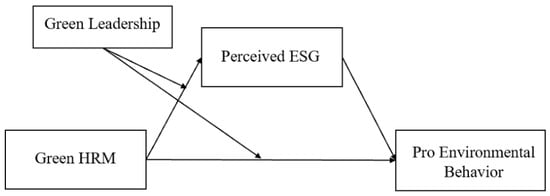
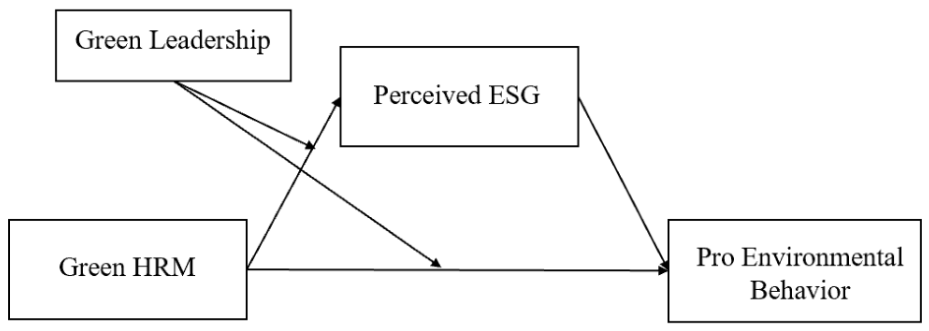
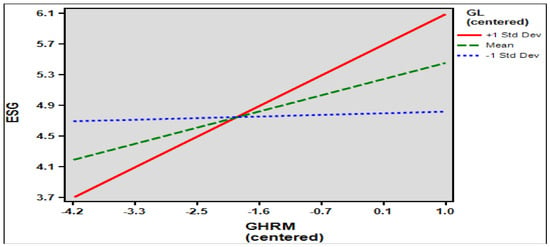
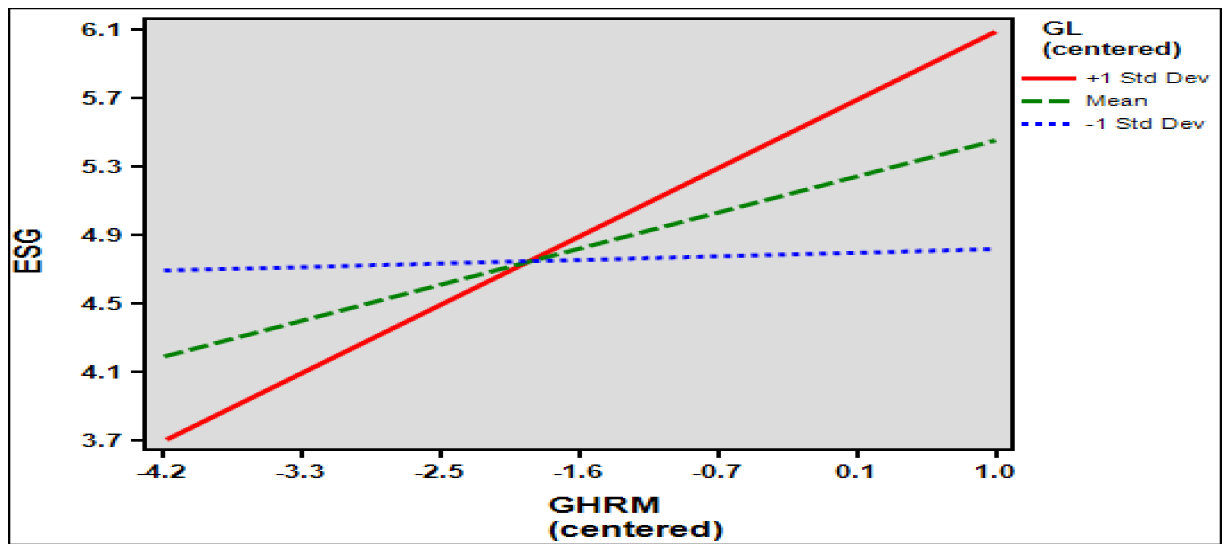
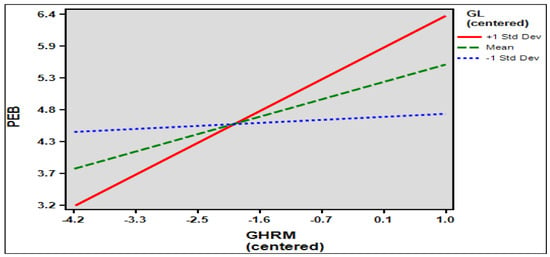
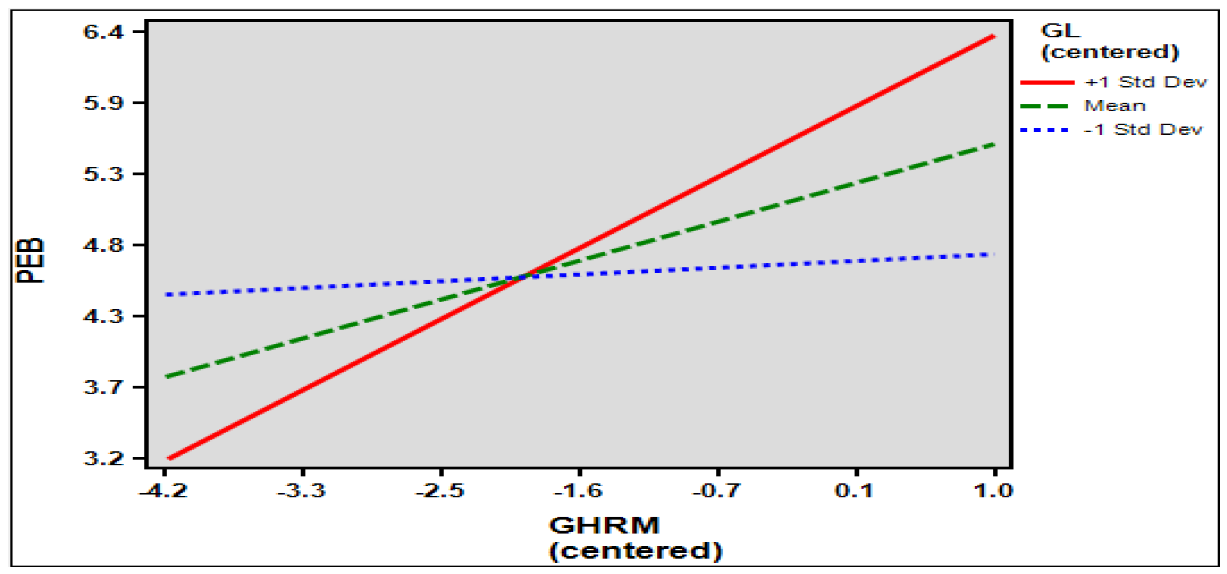

Disclaimer/Publisher’s Note: The statements, opinions and data contained in all publications are solely those of the individual author(s) and contributor(s) and not of MDPI and/or the editor(s). MDPI and/or the editor(s) disclaim responsibility for any injury to people or property resulting from any ideas, methods, instructions or products referred to in the content. |
© 2026 by the authors. Licensee MDPI, Basel, Switzerland. This article is an open access article distributed under the terms and conditions of the Creative Commons Attribution (CC BY) license.