


Abstract
This article examines how time-limited, project-based public funding instruments (the Common Agricultural Policy (CAP), the Recovery and Resilience Plan (PRR), EU LIFE, and Erasmus+) mediate rural cooperation. Integrating policy instrumentation, innovation systems, and territorial resilience literature, it proposes latent territorial resilience: functionally effective yet institutionally fragile cooperative arrangements that deliver outcomes without consolidating into stable organizational forms. A multiple-case design examines 13 purposively selected Portuguese cooperative initiatives, with four illustrative shadow cases (Greece, Austria, Germany, and Hungary). Three candidate mediation mechanisms are specified: functional coordination below institutional thresholds, policy-induced misalignment and exclusion, and informal substitution of governance functions. The first is documented in all 13 cases, the third in ten, and the second in seven, all of them on one clause of the PRR notices, which is not recorded as having blocked formalization in any case. All 13 cases are rated Low or Medium on institutional consolidation. Eleven cases follow a trajectory linked to the project (A), in which joint activity is documented only within the funded period; two (Fruta Feia and Adopt an Olive Tree) continue beyond, or without, project funding (B); and none follow a consolidated trajectory (C). The post-funding phase is documented only for Fruta Feia. CAP-funded support is documented for three cases, and only one of them (Cultivar & Cooperar, under LEADER) involves a cooperation measure, so this study takes project-based public funding, not the CAP alone, as its object. The patterns are consistent with, but do not demonstrate, a role for such funding in institutional fragility. A provisional typology of cooperation trajectories is proposed, and conditions the CAP 2028–2034 proposal would need to meet are discussed.
1. Introduction
Many countries and the European Union increasingly rely on policy instruments that promote cooperation, innovation, and territorial development to address challenges such as sustainable food production, climate change adaptation, and the resilience of peripheral rural areas. This shift reflects growing recognition that effective rural development depends not only on financial support but also on collaborative governance and local capacity building [1,2]. Within this context, the Common Agricultural Policy (CAP) has progressively incorporated instruments designed to foster cooperation among farmers and other rural actors. Initiatives such as LEADER/CLLD and EIP-AGRI operational groups encourage cross-sectoral interaction, community participation, and territorial development while strengthening local human and social capital [1,3,4]. However, the literature suggests that CAP support is more effective at promoting cooperation functionally than at consolidating durable grassroots institutions, while broader agricultural innovation policies continue to prioritize productivity and technological development over social innovation and local experimentation [4,5]. Rural cooperation in Portugal is, however, financed not only by the CAP but by a wider set of time-limited, project-based public funding instruments, including the Recovery and Resilience Plan (PRR), EU LIFE, and Erasmus+, which share with the CAP a funding logic organized around approved projects of limited duration. Across different scales, cooperative arrangements contribute to shared resource management, environmental coordination, improved logistics, and stronger bargaining power [6,7,8]. Studies of European and non-European contexts suggest that informal networks, farmer-led initiatives, and territorial governance arrangements can generate adaptive and context-specific solutions, yet these often remain under-recognized within higher-level policy frameworks [4,5,9,10]. The literature on cooperative fragility in Southern European contexts, which rests mainly on country-level and case-based studies rather than on systematic comparison, suggests that weak coordination, limited resources, unstable institutional environments, and insufficient policy recognition constrain the transition from emergent cooperation to durable organizational forms [4,11]. The political economy of CAP implementation across Member States has been shown to produce highly differentiated institutional effects. Place-based governance models in peripheral territories—particularly in Southern Europe—operate under structural conditions fundamentally different from those assumed by centrally designed instruments [11,12]. Portugal, Spain, Italy, and Greece share a minifundio-dominated agricultural geography rooted in historical land tenure patterns that generate extreme fragmentation, weak bargaining power, and dependence on informal coordination [4]. In Portugal specifically, this structural condition was compounded by the institutional legacies of the Estado Novo period and the post-Carnation Revolution transition: decades of authoritarian suppression of independent rural organization may have left a lasting distrust of formal cooperation structures. The cases examined in this study do not allow this legacy to be tested, and organizational history is therefore treated as a rival explanation (Section 2.6). This article introduces the concept of latent territorial resilience to capture a phenomenon documented across the examined cases but theoretically underspecified: cooperative arrangements that generate tangible collective outcomes without achieving the stable institutionalization typically expected by policy frameworks. Drawing on a multiple-case design encompassing 13 Portuguese cooperative initiatives selected as a purposive theory-building set, this article specifies three candidate mechanisms through which project-based public funding instruments, with the CAP being among them, are proposed to mediate cooperation trajectories. Portugal serves as the critical revealing national context because its extreme farm fragmentation and centralized implementation are proposed to make the mediating effects of public funding instruments easier to observe; whether the same dynamics are present, or less acute, elsewhere is left open by the shadow cases (Section 5.4), three of which differ in outcome, while the fourth documents only an instrument architecture. The patterns identified in this study are consistent with the proposition that, despite explicit objectives to foster collaboration and innovation, project-based public funding instruments may reproduce institutional fragility in peripheral rural areas; because the cases form a purposive set, the study cannot establish how often this occurs, nor how much of it is attributable to the CAP as opposed to the other instruments. The paper makes two main contributions: (i) it proposes and empirically illustrates the concept of latent territorial resilience, bridging agricultural innovation systems, territorial resilience, and evolutionary approaches; and (ii) it advances a relational understanding of policy instruments as institutional mediators within rural agricultural innovation systems.
To make the analytical core of the study explicit, the central research question guiding the analysis is formally stated as follows. RQ1: How do time-limited public funding instruments (CAP, PRR, LIFE, Erasmus+) mediate the trajectories of rural cooperation, and which configurations of mechanisms accompany institutional fragility rather than durable cooperative organizations, in a set of initiatives selected for displaying both functional outcomes and institutional challenges (Section 3.1)? Because this is a qualitative, theory-building case study rather than a hypothesis-testing design, the study does not test statistical hypotheses. Instead, it develops three theoretically grounded propositions, examined empirically in Section 4 and proposed as candidates for future longitudinal validation rather than as confirmed causal claims. P1 (Functional coordination): Public funding instruments enable practical, functional cooperation among rural actors—in logistics, marketing, resource management, and learning—without necessarily requiring or promoting formal institutionalization. P2 (Institutional misalignment and exclusion): Eligibility rules, administrative requirements, size thresholds, and funding cycles may be misaligned with the realities of small-scale and informal cooperation, constraining its formalization or scaling (how often this occurs is not assessed here). P3 (Informal substitution): Where policy instruments fail to provide adequate governance structures, local actors informally substitute governance functions through trust, local rules, and hybrid arrangements. Taken together, P1–P3 are proposed to interact in producing the pattern this article terms latent territorial resilience: cooperation that is functionally effective yet institutionally fragile. A fourth proposition, concerning the reproduction of this pattern across successive funding cycles, is stated in Section 2.6 as a theoretical proposition that is not tested here; in that section, M1–M3 designate the mechanisms through which P1–P3 are expected to operate.
The remainder of the paper is organized as follows. Section 2 develops the theoretical framework and establishes the conceptual positioning of latent territorial resilience against related constructs. Section 3 presents the case study design and methods, including case selection, the data and the author’s position (Section 3.2), the coding procedure, and the operationalization of the constructs. Section 4 presents the empirical findings and typology of cooperation trajectories. Section 5 discusses the results in relation to the literature, and Section 6 concludes with theoretical contributions and policy implications.
2. Theoretical Framework
This article integrates three interrelated strands of research—policy instrumentation, agricultural innovation systems, and territorial resilience—with insights from evolutionary economics to develop a conceptual framework explaining how policy instruments mediate cooperation trajectories in rural territories. Particular attention is paid to processes of path dependence and institutional lock-in, which help account for the persistence of functionally effective yet institutionally fragile cooperation.
2.1. Policy Instruments as Institutional Mediators
Policy instruments are not neutral; they embody particular views of state–society relations, distributing power, resources, and opportunities in patterned ways and shaping actors’ strategies, organizational forms, and long-term institutional pathways [13,14]. Over time, instruments accumulate constituencies, routines, and path-dependent trajectories that can lock in cooperation formats and constrain alternative institutionalizations [15,16]. In innovation policy, instruments often mediate informal rather than formal institutions. Regional actors may have limited influence over formal rules but can foster norms of collaboration, trust, and shared problem framing through networks and joint projects, generating functional cooperation that remains structurally fragile [17]. This is especially pronounced in peripheral and fragmented territories, where social and institutional capital, local leaders, and networks are critical; their absence leads to underdeveloped institutionalization even when informal cooperation is effective [18,19,20]. Without adaptive instruments and supportive constituencies, locally effective informal cooperation often remains functionally strong but institutionally fragile [14,16,17,19,21].
2.2. Cooperation in Agricultural Innovation Systems (AISs)
Agricultural innovation system (AIS) approaches conceptualize innovation as a multi-actor and multi-level process involving farmers, value-chain actors, research organizations, advisory services, financial institutions, and policymakers, whose interactions are shaped by broader institutional and policy environments [22,23,24]. Innovation emerges through the co-evolution of technologies, knowledge, and organizational arrangements, making cooperation central to collective learning, resource mobilization, and adaptive problem-solving [25,26]. Recent AIS research has highlighted the importance of soft institutions, informal networks, and intermediary or hybrid organizations in facilitating innovation. Trust, social learning, and informal relationships strongly influence knowledge exchange and innovation uptake, while cooperatives, producer organizations, advisory services, and multi-stakeholder platforms play key brokerage roles between actors and sectors [5,22,27,28]. This dynamic resonates closely with the rural social innovation literature, which similarly emphasizes informal, bottom-up arrangements that emerge precisely where formal institutions and markets fail to meet local needs and that mobilize social capital and collective agency in the absence of stable institutional support [29,30,31]. This body of work offers complementary theoretical grounding for understanding why informal cooperative arrangements persist and proliferate even without consolidating into formal organizational forms—a dynamic that is directly relevant to the mediation mechanisms developed in Section 2.6. However, the role of broad policy frameworks in shaping these institutional conditions remains weakly theorized within AISs. While studies recognize policies, regulations, and funding rules as important contextual factors, they generally treat them as external conditions rather than as active institutional mediators of cooperation trajectories [22,32,33]. Consequently, the ways in which overarching policy and funding regimes, such as the CAP and the project-based funds that complement it, shape institutional fragility, path dependence, and the transition from informal cooperation to durable organizational forms remain insufficiently understood. Evolutionary approaches further suggest that agriculture operates as a supplier-dominated sector in which both technological and institutional trajectories are strongly influenced by external policy frameworks and upstream actors [34].
2.3. Territorial Resilience, Regimes and Lock-In
The concept of territorial resilience refers to the capacity of rural areas to adapt, withstand shocks, and transform while maintaining core functions and values [4,11]. In rural contexts, resilience is closely linked to collective action, social capital, networks, polycentric governance, and local self-organization [8,11]. Territorialized food systems and integrated projects in marginal areas illustrate how local actors, multi-level governance, and social innovations co-produce resilience by reconnecting production, consumption, and territorial resources [8,35]. However, resilience is shaped and constrained by technological and institutional regimes, which can produce lock-ins and ‘undesirable resilience’ by stabilizing unsustainable paths [36,37,38,39]. Lock-ins occur at economic, institutional, cognitive, and corporate levels, limiting the viability of alternative, sustainable pathways [36,39,40]. Cognitive and institutional constraints further shape farmers’ decisions, making technically viable options appear unfeasible and reinforcing dependence on incumbent regimes [37,38,41]. The literature on cooperative fragility in Southern European contexts [2,4] and on the political economy of CAP implementation [1,42] is directly relevant here. This body of work shows that implementation context significantly moderates the institutional effects of CAP instruments—an insight the cases examined here are consistent with and which this study develops through the concept of latent territorial resilience. The southern European agricultural model, characterized by extreme fragmentation and minifundio structures, creates conditions in which the institutional effects of the CAP differ markedly from those in more consolidated agricultural systems. In Portugal, Spain, Italy, and Greece, the combination of small farm structures and uneven cooperative traditions (in part shaped by authoritarian legacies), together with centralized CAP implementation in Portugal, generates distinctive institutional dynamics that are not fully captured by existing resilience frameworks [4,11]. Territorial governance, social capital, and local institutions are central to creating openings for transformative pathways [12,35,43]. The same reasoning is extended in this article to other time-limited public funding instruments operating in the same territories, an extension that the cited literature, which is centered on the CAP, does not itself test.
2.4. Conceptual Positioning: Latent Territorial Resilience and Its Relationship to Existing Constructs
Before introducing latent territorial resilience, it is necessary to establish its conceptual distinctiveness relative to existing constructs that might appear to cover similar theoretical ground. This is required by the logic of theory building: a new concept is warranted only if it identifies a constitutively distinct phenomenon that is not adequately captured by existing frameworks, whether individually or in combination.
2.4.1. Institutional Bricolage
Cleaver’s [44] concept of institutional bricolage captures the creative, hybrid, and informal institutional arrangements that actors construct under constraining conditions, drawing on available cultural and institutional repertoires. Bricolage is a process-level concept describing how actors improvise institutions from available materials. Latent territorial resilience is an outcome-level concept describing a specific systemic pattern—territorially embedded cooperative arrangements that remain functionally productive while being institutionally fragile—that is proposed to arise when bricolage occurs under a specific combination of conditions: policy-related misalignment, temporary funding cycles, and peripheral structural contexts. Bricolage explains the micro-level mechanism (how actors respond to constraints); latent territorial resilience captures the meso-level outcome (what kind of territorial pattern results). Bricolage can, under some conditions, produce durable institutionalization; latent territorial resilience specifically characterizes the cases where it does not—and the proposed explanation of why this is lies in the mediating role of policy instruments.
2.4.2. Adaptive Resilience
Pike et al.’s [45] adaptive resilience and Boschma’s work [30] on institutional renewal in regions address the capacity of territorial systems to reorganize in the face of shocks, including through the development of new institutional forms. These frameworks focus on large-scale structural adaptation at the regional level and are primarily concerned with successful transitions away from path dependence. Latent territorial resilience, by contrast, captures the state of productive non-transition: territorial systems that generate real adaptive outputs without consolidating into more robust institutional forms; the proposed explanation, kept separate from the definition (Section 2.4.5), is that the design of the policy instruments that support them may constrain that transition. The ‘latency’ is constitutive of the outcome: the arrangements are not merely pre-institutional but remain below the threshold of consolidation, and whether policy design holds them there is a proposition and not part of the definition. If supported, this distinction would have policy implications that adaptive resilience frameworks do not generate.
2.4.3. Farm-Level Resilience
Farm-level resilience frameworks [27] address similar adaptive-but-fragile dynamics at the individual farm level, focusing on robustness, adaptability, and transformability of farming systems. Latent territorial resilience operates at the collective and territorial level: it is irreducibly about the institutional trajectory of multi-actor cooperative arrangements, not the adaptive capacity of individual farms. The territorial dimension—the embeddedness of cooperative arrangements in specific place-based governance structures and policy contexts—is part of the scope of the concept, not an extension of it (policy causation, by contrast, is not part of its definition—see Section 2.4.5).
2.4.4. Path Dependence and Institutional Lock-In
Path dependence and lock-in frameworks [39,46] explain how institutional and technological trajectories become self-reinforcing and persist even when they stabilize unsustainable pathways (Section 2.3). They address the persistence of regimes, not the specific territorial outcome considered here. Latent territorial resilience is compatible with path dependence and draws on it to link the three mechanisms to their joint outcome (Section 2.6), but it differs in two respects: it names a particular outcome—functionally effective multi-actor cooperation that does not consolidate—and it treats the design of policy instruments as a candidate mechanism of lock-in rather than as a given. Path dependence is therefore treated as a complementary explanation of persistence and not as an alternative description of the outcome.
2.4.5. What Latent Territorial Resilience Adds
Table 1 summarizes the conceptual demarcation. Latent territorial resilience is warranted because no existing construct captures both of the following constitutive features of the observed outcome simultaneously: (a) the functional effectiveness of multi-actor cooperation at the territorial level and (b) the inability, in the cases examined, to consolidate into stable organizational forms. The explanation is kept separate from the outcome: the proposed role of policy instrument design in producing and reproducing this pattern is a theoretical proposition about how the outcome arises, not part of its definition or an established causal claim. The concept enables analysis of the ‘productive fragility trap’—a theoretically and practically important category of territorial outcome that existing frameworks either do not address (bricolage, adaptive resilience) or address only at the wrong level of analysis (farm-level resilience).
Table 1.
Conceptual demarcation of latent territorial resilience.
2.5. The Concept of Latent Territorial Resilience
This study proposes the concept of latent territorial resilience to capture the pattern in which rural territories generate tangible cooperative outcomes—shared logistics, joint marketing, collective resource management, knowledge exchange, and adaptive innovation—through arrangements that remain below the threshold of formal institutional consolidation. These arrangements are ‘latent’ because they produce real resilience effects and innovation outcomes without the stability, visibility, or scalability typically associated with formal cooperatives or producer organizations. Where they arise through institutional bricolage [44] under constraining policy conditions (mechanism M3), they are proposed to be reproduced by the structure of the policy instruments that support the cooperation, and not merely by the individual adaptive responses of actors; bricolage is therefore one route to the outcome and not the outcome itself (Section 2.4.1). Conceptually, latent territorial resilience bridges (i) the innovation systems literature, with its focus on networks and learning processes; (ii) the territorial resilience literature, with its focus on adaptive capacity and place-based governance; and (iii) evolutionary approaches, with their focus on path dependence and institutional lock-in. It also extends the policy instrumentation perspective by proposing how instruments may simultaneously enable functional collaboration while locking cooperation into institutionally fragile trajectories.
Four related terms are used with distinct meanings throughout this article. Formalization refers to the acquisition of legal personality or a registered organizational form. Institutionalization refers to the broader process through which cooperative arrangements acquire stable rules, routines, and recognized standing, whether or not they are legally formalized. Consolidation refers to the outcome of that process at a given point in time, assessed here through the degree of institutional consolidation attributed to each case (Table A1). Durability refers to the persistence of a cooperative arrangement over time, including beyond the funding period that supported it. Formalization is therefore neither necessary nor sufficient for durability, and formal organization is not treated as normatively superior to informality: deliberate informality can be a legitimate and rational organizational choice, for example, where actors wish to preserve flexibility, avoid administrative burden, or rely on trust-based relations. The concept of latent territorial resilience does not presuppose that informal arrangements should become formal; it identifies situations in which, on the basis of the proposed explanation, policy design narrows the options available to actors, whatever they would otherwise choose. The term resilience is used here in a restricted sense: for Trajectory A cases it refers to functional effectiveness while support lasts, and resilience to the loss of funding is asserted only for Trajectory B cases, where continuity beyond or without project funding is documented and its fragility remains to be tested (Section 3.4).
2.6. Conceptual Framework: Policy Instruments as Mediators of Cooperation Trajectories
This study proposes that public funding instruments (the CAP, the PRR, EU LIFE, and Erasmus+ in the case set) act as institutional mediators that influence cooperation trajectories through three interconnected mechanisms (see Figure 1):
Figure 1.
Conceptual framework: project-based public funding instruments as mediators of cooperation trajectories. Solid arrows lead from the instruments to M1, M2, and M3; for M2, the coded provision concerns seven cases only (PRR), and P2 is not directly supported for project-based funding (Section 4.4).
- (M1) Functional coordination below institutional thresholds: Public funding support enables or sustains practical collaboration without requiring or facilitating formal organizational development.
- (M2) Policy-induced institutional misalignment and exclusion: Administrative requirements, eligibility criteria, and funding rules misalign with the reality of small-scale and informal arrangements, creating barriers to consolidation.
- (M3) Informal substitution of governance functions: Local actors develop informal rules and hybrid arrangements to compensate for policy gaps, sustaining cooperation but reinforcing its institutional fragility.
These mechanisms operate within a broader context of path dependence. In fragmented territories such as Portugal, with its extreme farm fragmentation, centralized implementation, and historical reliance on informal governance—which may reflect, in part, the suppression of formal cooperative organization under the Estado Novo, a hypothesis not tested here (see the rival explanations below)—the mediating effects of public funding instruments become particularly visible. This framework moves beyond binary success/failure distinctions and allows analysis of the nuanced, often contradictory ways in which policy design is proposed to shape rural innovation networks.
Each mechanism has a distinct theoretical starting point, which was refined in dialogue with the case material (Section 3), and the framework results from combining these sources rather than from applying any one of them in isolation. M1 (functional coordination below institutional thresholds) draws on the agricultural innovation systems literature (Section 2.2), which shows that innovation and collective learning rest on multi-actor cooperation, soft institutions, and informal networks [22,23,24,25,26,27,28], and which explains why cooperation can be functionally effective before, or without, consolidating into formal organizational forms. M2 (policy-induced institutional misalignment and exclusion) draws on the policy instrumentation approach (Section 2.1), according to which instruments are not neutral, accumulate constituencies and routines, and shape the organizational forms available to actors [13,14,15,16]; it is the mechanism through which the design of the funding instruments, and not only the behavior of actors, enters the explanation. M3 (informal substitution of governance functions) draws on institutional bricolage [44] and on the rural social innovation and territorial resilience literature (Section 2.2 and Section 2.3), which document how local actors mobilize trust, social capital, and local rules where formal institutions do not provide adequate support [8,11,29,30,31]. The evolutionary and lock-in literature [36,37,38,39,40,41,46] supplies the link between the three mechanisms and their joint outcome, namely path dependence and institutional lock-in reinforced across funding cycles (Figure 1). Table 2 summarizes these links between the mechanisms and their theoretical sources.
Table 2.
Theoretical sources of the three mechanisms.
Propositions and mechanisms are distinguished as follows. P1–P3, stated in Section 1, are propositions: they specify what public funding instruments are proposed to do to cooperation. M1–M3 are the mechanisms through which each proposition is expected to operate, that is, the sequences of actors and processes that link an instrument to an observable organizational outcome; P1, P2, and P3 correspond to M1, M2, and M3, respectively. The label “policy-induced” in M2 names the proposed mechanism and does not assert an established causal effect. The sequence, the actors, and the observable implications of each mechanism, which guide the coding of the cases (Section 3.3 and Section 3.4), are specified below.
- M1 (functional coordination below institutional thresholds). Sequence: A support instrument creates, sustains, or extends the opportunity for joint activity; a partnership forms or is sustained around the funded activity; joint outputs are delivered during the funding period; the activity continues, weakens, or ceases when funding ends. Actors: There are farmers and other rural actors, project promoters or animators, and the managing authority as a funder. The observable implications are documented collective outputs in at least one functional domain (logistics, marketing, resource management, learning); absence of governance infrastructure that is independent of the funded project; and weakening or interruption of joint activity after the end of funding, where the post-funding period is observable. The rating of M1 in Section 3.4 records documented functional outputs and does not by itself establish that the instrument caused the cooperation, which in some cases predates it (Section 4.3).
- M2 (policy-induced institutional misalignment and exclusion). Sequence: Promoters seek to access an instrument, to scale up, or to formalize; the eligibility, size, administrative, or timing requirements of the instrument are applied; and the initiative adapts its form to the requirement, is delayed, or is excluded. Actors: These are initiative promoters; the managing authority; where applicable, the paying agency; and, where relevant, intermediary bodies such as producer organizations or quality-scheme administrators. The observable implications are eligibility or size barriers, administrative burden, or funding-cycle constraints, recorded in administrative or evaluation documents, that delayed, redirected, or blocked formalization or scaling (rated High or Very High) or, in the weaker case rated Medium, a provision recorded as a constraint on the execution of the project, such as binding milestone or expenditure deadlines, without a documented effect on formalization (Section 3.4).
- M3 (informal substitution of governance functions). Sequence: A governance function (coordination, decision-making, conflict resolution, allocation of resources) is not provided by the instrument or by a formal body; local actors assume it through informal rules, trust, or hybrid arrangements; and the arrangement sustains the activity while remaining dependent on the persons and relations that support it. Actors: These include farmers and other members, local leaders or animators, and, in hybrid forms, a formal legal shell. The observable implications are identifiable informal rules or roles that perform governance functions; continuity of activity without a formal body performing those functions; dependence on named individuals or relationships, which makes the arrangement vulnerable to turnover.
The feedback loop in Figure 1 is retained as a fourth, purely theoretical proposition (P4): because instruments are not redesigned in light of the pattern they help to produce, the conditions of fragility are reproduced in successive funding cycles. P4 is not tested in this study, and the empirical claims of the article are restricted to P1–P3. P4 is formulated so that it can be tested in future longitudinal research: it implies that initiatives supported over two or more consecutive cycles under unchanged instrument design would show the same pattern of project-dependence and unresolved formalization.
Four rival explanations are taken seriously. First, actor preferences: initiatives may remain informal by choice rather than because instrument design constrains them, in line with the terminological note in Section 2.5. Second, local leadership: the continuity or the dissolution of an arrangement may depend on the capacities of particular individuals rather than on policy design. Third, organizational history: prior experience of collective action, or its absence, including the institutional legacy of the Estado Novo, may account for differences in consolidation between cases. Fourth, persistence independent of funding: an arrangement may persist, or fail to consolidate, whatever its funding, so that the fragility attributed here to project-based funding may instead be typical of informal cooperation in general. Two cases bear on this: Fruta Feia persisted after the end of its EU LIFE co-financing, and Adopt an Olive Tree persists with no documented project-based public funding. The case set cannot distinguish fragility induced by funding from fragility typical of informal cooperation. The policy-design reading is supported for a given case only where the documentary record shows that the actors sought, or would have needed, a more consolidated form and that an identifiable instrument provision impeded it (M2), or that the arrangement persisted through informal rules compensating for an identified gap in the instrument (M3). Where the record instead points to a deliberate choice of informality, to the decisive role of a single individual, or to the influence of prior organizational history, the case is read as no more than partial support for the proposition. The present case set does not allow these rival explanations to be excluded systematically, which is treated as a limitation (Section 5.6).
The figure depicts project-based public funding instruments (the CAP, the PRR, EU LIFE, and Erasmus+) at the top as the entry point of mediation. Three interconnected mechanisms—functional coordination below institutional thresholds (M1), policy-induced institutional misalignment and exclusion (M2), and informal substitution of governance functions (M3)—are shown as the immediate channels through which these instruments shape cooperation trajectories. The Portuguese context conditions (extreme farm fragmentation, centralized implementation, and a historical reliance on informal governance, whose Estado Novo origin is hypothesized and untested) are positioned as moderators (dashed arrows) that amplify the visibility and intensity of all three mechanisms rather than as independent causal factors. Solid arrows denote the instrument–mechanism links coded in the 13 cases, whose causal contribution is not established (Section 3.3 and Section 4.3); dashed arrows denote theoretically proposed links (moderation by context conditions, lock-in, and reproduction across funding cycles). The three mechanisms jointly feed into path dependence and institutional lock-in, which is proposed to be reinforced across successive funding cycles, and so to produce the outcome of latent territorial resilience—arrangements combining functional effectiveness with institutional fragility. The dashed feedback loop on the right represents a theoretical link, not an empirically demonstrated relationship, and captures the central dynamic proposed by this study: because the policy instruments that initially enable cooperation are not redesigned in light of this outcome, the same conditions of fragility tend to be reproduced in subsequent funding cycles.
3. Case Study Design and Methods
This study adopts a multiple-case design set within a critical national context, aimed at theory building. Case study research is particularly well suited to examining contemporary phenomena in depth within their real-life context, especially where the boundaries between phenomenon and context are not sharply evident, and where evidence from multiple sources needs to be triangulated across a set of cases. Within this design, the analysis follows an abductive analytical logic, involving systematic movement between empirical observations and theoretical interpretations to generate new concepts and explanations [47]. Within this case study design, the analysis iteratively engages with empirical evidence and theoretical insights from policy instrumentation, agricultural innovation systems, and territorial resilience literature. This process led to the formulation of the concepts of latent territorial resilience and institutional mediation mechanisms. The three mechanisms were formulated in this iterative dialogue with the literature and then used as deductive codes in the structured coding described in Section 3.3; the frequencies reported in Section 4 therefore show how often categories defined in advance could be applied to the cases and are not an independent discovery of the mechanisms. Rigor was ensured through transparent analytical procedures and repeated iteration between data and theory [48].
3.1. Empirical Setting and Case Selection
Consistent with case study logic, Portugal was selected as the critical and revealing national context—the setting within which the units of analysis are embedded—because its highly fragmented agricultural structure, centralized policy implementation, and strong reliance on informal coordination mechanisms make the underlying dynamics of rural cooperation particularly visible [49,50]. The logic of critical-case selection is applied here to the national setting, and not to a single case; it is especially appropriate for theory development when it maximizes analytical leverage on the mechanisms under investigation and supports analytic rather than statistical generalization [49,50].
The unit of analysis is the individual cooperative initiative: the 13 initiatives are treated as separate cases within this national context, and Portugal is not treated as a single case in its own right. This formulation is used consistently in the abstract, in this section, and in Section 4.
The structural conditions that make Portugal a suitable critical case require brief elaboration. Portugal’s agricultural landscape is among the most fragmented in Europe: a historical minifundio pattern, particularly in the north and center of the country, has produced farms that are small relative to the eligibility thresholds typically set by formal cooperation instruments (although no specific size threshold that blocked an initiative is documented among the 13 cases—see Section 4.4). This structural condition was reinforced by the Estado Novo period (1933–1974), during which independent rural organization was suppressed, which may have left a legacy of institutional distrust toward formal cooperative structures (a perception that the Thematic Group’s Background Paper also reports, for historical reasons, in some countries, particularly in Eastern Europe [51]); the cases examined here do not allow this to be tested (Section 2.6). The post-Carnation Revolution transition, while opening space for cooperativism, did not resolve the fundamental structural constraints. Centralized implementation of funding instruments (through a single national paying agency in the case of the CAP, and through national notices of component C05 in the case of the PRR—see Table A3) is proposed to reduce the capacity for place-based adaptation of instrument design and so to amplify the misalignment dynamics described in Mechanism 2 (the case evidence for which is limited—see Section 4.4).
The primary empirical material consists of 13 Portuguese cooperative initiatives. Two further initiatives compiled in the author’s original case report were excluded. Renewable Energy Communities (REC) was excluded because no verifiable public evidence of it could be found (neither the project nor its funding instrument could be located in public sources, and the case sheet could not be corroborated), and criterion (v) is applied to it accordingly. Bolsa Nacional de Terras, a land bank in which regional development agencies match landowners and farmers, was excluded because it meets criterion (i) only through intermediated and not farmer-led cooperation, because the barrier recorded for it derives from land-bank legislation (Lei n.º 62/2012, replaced by Lei n.º 49/2023) and not from a funding instrument, and because its funding varies by regional development agency, so that it lies outside the object of the study, project-based public funding. Neither initiative is rated, typed, or counted anywhere in this article. Cases were selected through purposeful sampling using the following criteria: (i) active involvement of at least two farmers or rural actors in joint activities; (ii) use of, documented attempts to access, or stated eligibility for time-limited public funding instruments (the CAP and rural development measures, the Recovery and Resilience Plan, EU LIFE, Erasmus+, or national and regional funds); (iii) evidence of both functional outcomes and institutional challenges; (iv) geographical diversity across Portuguese territories; and (v) availability of documentation sufficient to describe functional outcomes and institutional challenges, which was met at different levels of depth (one case, Adopt an Olive Tree, rests on a single case sheet; Table A3). The instruments recorded across the 13 cases are heterogeneous (Table A3). The Recovery and Resilience Plan (PRR), through the Agenda de Inovação para a Agricultura 2030 (component C05, investment i03), supports seven cases: AGROVILA (PRR-C05-i03-I-000166), PAGE (PRR-C05-i03-I-000217), HARVEST (PRR-C05-i03-I-000157), AgriFlex (PRR-C05-i03-I-000214), BCheeSE (PRR-C05-i03-I-000168), CERTRA (PRR-C05-i03-I-000161), and BEM COMUM (PRR-C05-i03-I-000241); a CAP measure was not identified for any of them. Fruta Feia was supported by EU LIFE co-financing (FLAW4LIFE, LIFE14 ENV/PT/000817, 2015–2018), crowdfunding, and prizes [52]; and Germinar (run by the Associação Margens Simples) was supported by the Priority Intervention Neighborhoods and Areas program (BIP/ZIP) of the Lisbon City Council (CML) from October 2019 and, from October 2023, by an Erasmus+ project. ValorMais (a network of six operations of its own, and not a subproject of Produzir no Campo, led by the Centro Nacional de Competências dos Frutos Secos, from 2018 with activities until 2021) was financed by the PDR2020 under Measure 20 (technical assistance) of the Rede Rural Nacional, and Produzir no Campo (led by the Associação Distrital dos Agricultores de Castelo Branco, from 2017) is a project of the Rede Rural Nacional financed by the PDR2020; in both, CAP money was used through the Rede Rural Nacional and not through a cooperation measure. Cultivar & Cooperar is a transnational cooperation project of the development associations ADIRN and GRATER with a partner in Cape Verde. GRATER presents it under Measure 19 (CLLD/LEADER) in its cooperation strategy, and ADIRN’s project sheet records it under the PDR2020 (code PDR2020-103-046786). It is therefore the only case in which a CAP cooperation measure is identified; its budget is recorded for each partner (eligible cost of EUR 56,229.29 for GRATER and EUR 38,407.12 for ADIRN) and ADIRN’s sheet gives 31 December 2023 as the date of completion (Table A3). Adopt an Olive Tree has no public funding identified for a specific project: its website displays the PESSOAS2030 logo, but the role of that program is not documented, and the case is read as self-financed. CAP-funded support is therefore documented for three cases (Produzir no Campo, ValorMais, and Cultivar & Cooperar), and only in the last of them is a CAP cooperation measure identified. For AgriFlex, Adopt an Olive Tree, and Germinar the case sheets mention at most CAP-linked measures or eligibility, which is not funding, and none of these three is counted as CAP-funded. The study consequently does not treat the CAP as its empirical object: its object is project-based public funding as such, of which the CAP is one instrument, and the CAP enters the analysis through the cases in which it is stated and, above all, through the policy framework for 2028–2034 (Section 5.5). Adopt an Olive Tree was retained because it documents both functional outcomes and institutional challenges (criterion iii) and meets criterion (ii) only through stated eligibility; it is read as a configuration without project-based public funding, not as evidence on funding dependence (Section 5.6). Because criterion (iii) selects initiatives that display both functional outcomes and institutional challenges—the two dimensions that define latent territorial resilience—the 13 cases constitute a purposive theory-building set, not a representative sample. The frequencies reported in Section 4 therefore describe how the mechanisms are distributed within this set and must not be read as prevalence or as generalizable frequencies. Initiatives that achieved durable consolidation were not included among the Portuguese cases, both because criterion (iii) excludes by design initiatives that display no institutional challenges and because none were identified in the universe of Portuguese initiatives compiled by the author for the EU CAP Network (Section 3.2) or met the documentation criterion (v); the size of that universe is not reported, so the selection ratio cannot be assessed, and the only consolidated cooperative documented, in Greece, enters as a shadow case; this is a limitation (Section 5.6), and adding two or three negative cases (initiatives that did consolidate) is a priority for future research. To assess contextual specificity, four shadow cases from Greece, Austria, Germany, and Hungary were also examined. Given their small number and the absence of a systematic, comparable sampling frame across the four countries, these shadow cases are treated throughout as sensitizing illustrations and plausibility probes that indicate whether analogous dynamics are plausible elsewhere, rather than as a comparative sample capable of supporting generalizable cross-country inferences; this interpretive caution is maintained explicitly wherever shadow case evidence is discussed in Section 4 and Section 5.
3.2. Data Origin, Collection and Triangulation
Data were collected from multiple sources to enhance construct validity and analytical robustness [49,53]. Sources included case sheets prepared by the author for the EU CAP Network; public project records and calls (for example, PRR project pages and notices, the Rede Rural Nacional project catalogue, and EU CAP Network project records); final reports and accountability documents of funded projects (for example, the EU LIFE reports of Fruta Feia); the EU CAP Network briefing of March 2026 [52]; relevant studies; and, in the single case of Fruta Feia, a field observation. The types and number of documents differ between cases (Table A3): one case (Adopt an Olive Tree) rests on a single case sheet, so that triangulation with independent records was possible for the other twelve. Additional comparative material for the four shadow cases was taken from written documentation produced by the Thematic Group: its Background Paper of September 2025 [51], the compendium of examples [52], and the slide presentations of the Greek, Austrian, German, and Hungarian contributions delivered at the Group’s second meeting on 11 December 2025 [54,55,56,57].
The protocol focused on (i) forms of cooperation; (ii) funding and other cooperation instruments employed; (iii) functional outcomes achieved; (iv) institutional barriers encountered; and (v) governance arrangements, including formal, informal, and hybrid configurations. Mechanism 3 (informal governance substitution) is the least well-documented in accountability reports. Direct field observation was available only for Fruta Feia; for the other 12 cases, claims about informal dynamics rest on indirect documentary evidence and on researcher interpretation, and this is noted explicitly (Table A1).
Origin of the data and position of the author. The author compiled 15 Portuguese case descriptions, of which 13 are analyzed here (Section 3.1), prepared the case descriptions and submitted them to the EU CAP Network Thematic Group on Unlocking the Potential of Cooperation, in which she participated as a member. The EU CAP Network selected three of the submitted cases (Fruta Feia, CERTRA, and Bolsa Nacional de Terras, the last of which is not analyzed here) for its official publication [52], in order to balance the cases presented from different countries; the other eleven analyzed here have not been published, and the evidence trail for all 13 cases is therefore reported case by case in Table A3. The author’s participation in the Thematic Group explains where and how the cases were collected; the oral discussions of the Group’s sessions were not used as a source of data. The written materials produced for or presented at those sessions were, however, consulted and used as documentary sources: the Group’s Background Paper of September 2025 [51], the compendium of examples [52], and the slide presentations of the Greek [54], Austrian [55], German [56], and Hungarian [57] contributions (all four presented at the second meeting of the Group on 11 December 2025). The Group’s presentations are made public by the EU CAP Network on the event pages of its two meetings (25 September 2025, online, and 11 December 2025, Brussels), which is why they can be cited as documentary sources. The four shadow cases are drawn from these written materials, as indicated in Table A2, while the Background Paper informs the framing of cooperation and of the CAP’s support for it and not the ratings. Field observation was carried out directly by the author in the case of Fruta Feia, where she visited, in October 2025, the site in Porto at which the baskets are sold to customers and put questions to the person responsible for the initiative in order to obtain information. No field observation or direct contact took place in the other 12 cases, whose evidence is documentary, with researcher interpretation where indicated in Table A1. The person consulted in the case of Fruta Feia was informed that the information might be used in academic research, and oral informed consent was obtained for the questions posed. No formal ethical approval was sought because the evidence consists of project and program documentation (public project records, calls, accountability reports, and case descriptions prepared by the author for the EU CAP Network, eleven of which are unpublished) and of observation of an already-public activity, with questions posed to the person responsible, for which oral consent was obtained. Because the author both compiled and analyzed the Portuguese cases, she acts as compiler and analyst of the same material; this position is addressed by recording the type of evidence behind each rating (Table A1) and by the audit trail described in Section 3.3, and it is acknowledged as a limitation (Section 5.6).
3.3. Data Analysis
The analysis followed a structured qualitative coding procedure combining deductive and inductive categories, an approach well established in single-author qualitative case study and theory-building research [58,59,60]. Deductive codes were derived from the theoretical framework presented in Section 2 (functional coordination below institutional thresholds, policy-induced misalignment and exclusion, informal substitution of governance functions, degree of institutional consolidation, and institutional bricolage [44]); inductive codes emerged directly from the data (project-temporality, funding discontinuity, and local gap-filling). Coding and interpretation were conducted by the author across the full set of 13 Portuguese cases, using a codebook developed iteratively over successive passes through the material (see Appendix B for an excerpt). Coding was conducted in MAXQDA 26(Professional; VERBI Software, Berlin, Germany)) over three successive rounds. After the first complete pass through the 13 cases, the code definitions (in particular those of M1–M3 and of institutional consolidation) were refined and the inductive codes (project-temporality, funding discontinuity, and local gap-filling) were stabilized; a second full re-coding of all cases was then performed with the stabilized codebook, and a third, selective consistency check focused on the High and Very High ratings. The audit trail was maintained through a version-controlled codebook (with dated successive versions) and memo logs recording every decision to change a rating or to assign a trajectory type. The full codebook, including code frequencies, representative quotations, and analytical memos, is available upon request from the corresponding author. Because M1–M3 were also the deductive codes, the coding tests whether the cases can be described with these categories and does not establish the mechanisms independently (Section 4.1).
Rigor was pursued through four mutually reinforcing procedures: (i) triangulation of case sheets with public project records, calls, and reports where these exist (twelve cases; Table A3), supplemented by a field observation in one case (Fruta Feia); (ii) a documented audit trail recording coding decisions and their rationale, allowing the analytic process to be traced and scrutinized; (iii) systematic within-case analysis of each of the 13 cases followed by cross-case comparison to identify recurring patterns; and (iv) explicit reflexivity regarding the author’s positions as a member of the EU CAP Network Thematic Group on Unlocking the Potential of Cooperation and as compiler and analyst of the Portuguese cases (Section 3.2), whose insights informed but did not substitute for the documentary evidence base (and, for Fruta Feia, field observation), and which is mitigated by recording the type of evidence behind each rating and by the audit trail.
Cross-case comparison of the coded material was used to refine the three mediation mechanisms and to inductively derive the typology of cooperation trajectories presented in Section 4.2 [61]. Two trajectories were distilled directly from the 13 cases; a third, consolidated trajectory is retained in the typology on theoretical grounds, with no Portuguese case assigned and comparative shadow-case evidence used only as a probe (Section 5.4); they are proposed as theoretically grounded propositions for future validation, not as statistically representative or causally confirmed categories. Given the qualitative, theory-building nature of this design, all findings are exploratory propositions rather than confirmed causal findings; this caveat applies to the whole article and is restated only where the evidence is thinnest. Four kinds of statements are distinguished throughout: (a) an empirically observed pattern, that is, a regularity documented in the coded material; (b) a researcher interpretation, such as an inference about informal dynamics drawn from documentary descriptions or, in the case of Fruta Feia, from field observation; (c) a proposed theoretical mechanism, namely the three mechanisms and the typology; and (d) a causal claim that would require longitudinal validation. Causal language is used only where the traceability of the evidence is sufficient; elsewhere the text uses formulations such as “is consistent with”, “suggests”, and “is proposed”.
3.4. Operationalization of Key Constructs and Levels of Analysis
Levels of analysis. The principal unit of analysis is the individual cooperative initiative (Section 3.1). Two further levels are distinguished. The embedded level consists of the instrument–initiative interactions within each case, that is, the funding instruments through which the initiative was supported and the governance arrangements it developed; the mechanisms M1–M3 are inferred at this level, from the documentary record (and, for Fruta Feia, the field observation) of how specific provisions and actors interacted. Latent territorial resilience is assessed at the level of the initiative as a whole, as a territorially embedded collective arrangement (the meso level in Table 1), and not at the level of individual farms or of the national policy system. The cross-case level is used to compare configurations of mechanisms and to derive the typology.
Institutional threshold. An institutional threshold is a formal requirement that a collective actor must meet to obtain, retain, or scale up support under a public funding instrument or the surrounding regulatory framework. Four kinds are distinguished: legal form (recognition as a legal entity or as an eligible beneficiary), minimum size or membership, administrative and reporting capacity, and minimum duration or continuity of commitment. Functional coordination takes place below the threshold when joint activity is carried out without the collective actor satisfying such requirements as a collective.
Legal personality. Legal personality is neither a necessary nor sufficient condition for consolidation. It is one indicator of recognized standing, and several cases combine a formal legal shell with informal operation (hybrid forms, Section 4.5). An arrangement is therefore not classified as institutionally fragile merely because it lacks legal personality, nor as consolidated merely because it has it.
Institutional consolidation and fragility. Institutional consolidation is rated on three dimensions: (a) stable rules and decision routines, whether written or customary, that are recognized by participants; (b) recognized standing toward public authorities, markets, or other actors, of which legal personality is one indicator; and (c) a resource base that does not depend on a single funding cycle. It is rated Low when the activity depends on a single funding cycle and the record shows weakening or interruption once support ends or, provisionally, when dependence on a single funding cycle is documented but the post-funding phase has not yet been observed or is not documented in the records (Trajectory A, described as Low (temporary) in Section 4.2); Medium when stable informal or hybrid rules and recognized standing among participants persist beyond a funding cycle, or without one, without stable formal recognition or independent resources (Trajectory B); and Medium-High when partial formalization with recognized standing and some resource continuity has been achieved (Trajectory C, a theoretical contrast type to which no case is assigned). The same rule is applied to the German shadow case: its cooperatives’ management costs are financed through the Landwirtschaftliche Rentenbank until November 2026 and group applications operate only in Brandenburg, so its consolidation is rated Low (provisional), as for the Portuguese cases that depend on a single funding cycle, and no Medium-High rating is assigned. Institutional fragility is the converse of consolidation: an arrangement is classified as institutionally fragile when it is rated Low or Medium on consolidation and its continuity depends on a funding cycle, on specific individuals, or on a resource base that is not independent, or when documented barriers block its formalization or scaling. The criterion is met in different ways across the types: in the Trajectory A cases, it is met through documented dependence on a single funding cycle; and in the Trajectory B cases, through researcher interpretation, is it met by the dependence on named individuals, relationships, or non-independent resources that is an observable implication of M3 (Section 2.6) and, for Fruta Feia, by a resource base resting on volunteers, donated or loaned spaces, prizes, and crowdfunding. For Adopt an Olive Tree, which documents no project-based public funding, fragility rests on the dependence on individuals, relationships, or a non-independent resource base alone. That all 13 cases satisfy the definition therefore reflects the rating rules applied to a purposive set selected for displaying institutional challenges and, for Trajectory B, partly an interpretation (Table A1); it is not an independent finding.
Persistence after funding. An arrangement is regarded as having persisted beyond the funding period when its core joint activity continues for at least two years after the end of the support that financed it, without a comparable replacement grant, and this is shown by a dated source. A project portal that remains online, or a plan for future activity, is not counted as joint activity. Where the funding ended less than two years before the cut-off date of the case material (approximately 2025/26; Table A3 records the period covered by each case), persistence is assessed over the period available and reported as provisional. On this rule the post-funding phase is not yet observable for the PRR cases (AGROVILA, HARVEST, AgriFlex, BCheeSE, CERTRA, PAGE, and BEM COMUM), whose projects ended between 30 September 2025 and 31 December 2025, or for Germinar, whereas it is documented for Fruta Feia, whose EU LIFE co-financing ended in 2018. For AGROVILA the only document located after the end of funding is a sustainability plan of 29 January 2026, which records planning and not activity. Adopt an Olive Tree documents no project-based public funding, so there is no funding cycle for it to outlast; its continuity is observed over the period covered by the case sheet (from 2023; the 2015 date in the case sheet corresponds to the Spanish initiative Apadrina un Olivo, on which the Portuguese one is modeled). For Germinar (BIP/ZIP of the CML from October 2019, and Erasmus+ from October 2023), the BIP/ZIP is an open-ended program, and the activity has been sustained under successive project funding, so persistence beyond a funding cycle is not observable. For ValorMais (PDR2020 technical assistance, from 2018 with activities until September 2021), Produzir no Campo (from 2017, with its final project seminar on 25 November 2020), and Cultivar & Cooperar (completion recorded as 31 December 2023) the funding ended at least two years before the cut-off, but the records do not document joint activity after it: the last dated activities of ValorMais are from July and September 2021; the Produzir no Campo portal was online on 18 October 2026, but its news section ends in April 2022, which shows that the platform subsists as an artefact and not that the partnership continued; and no dated record of joint activity after the funded period is available for Cultivar & Cooperar in the material consulted. For these three cases persistence is reported as not observed, which is neither persistence nor dissolution, and they are assigned to Trajectory A because the documented activity is tied to the funded project.
Resilience to what. Functional resilience is defined relative to the perturbations that cooperative initiatives face in the policy environment in which they operate, and not relative to a generic external shock. The reference perturbation is the end or interruption of a funding cycle; secondary perturbations are changes in eligibility or administrative rules and the loss or turnover of key actors. Latent territorial resilience is a matter of degree: it is strongest where collective outputs persist through such perturbations on informal or hybrid bases (Trajectory B) and weakest where outputs are delivered while support lasts and weaken afterwards (Trajectory A). The concept is retained for Trajectory A because the outputs are real and functional while support lasts, but the article does not claim that Trajectory A initiatives are resilient to the loss of funding; what they display is functional effectiveness combined with institutional fragility. Resilience to climatic, market, or health shocks is not assessed. Likewise, functional effectiveness is not equated with durable resilience: delivering outputs during a project does not show that institutions have consolidated or that cooperation will continue once support ends.
Ratings of the mechanisms. Each mechanism is rated Low, Medium, High, or Very High for each case, using ordinal criteria applied to the coded material. M1 is rated High when joint activities delivered documented collective outputs in two or more functional domains (logistics, marketing, resource management, learning), Medium when outputs are documented in one domain or only in part, and Low when joint activity is nominal. No minimum duration is required for the M1 rating: it records the outputs documented within the period covered by each case sheet (Table A3), while persistence after the end of funding is assessed separately (see below—at least two years). M1 therefore rates the functional effectiveness of the cooperation, which is one of the two defining features of the outcome (Section 2.4.5), and not the causal contribution of an instrument; since the cases were selected for displaying functional outcomes (criterion iii), its near-universal presence is expected by construction. M2 is rated Medium when one provision of an instrument or of the surrounding regulatory framework (an eligibility or size threshold, an administrative or regulatory requirement, or a binding funding-cycle rule) is recorded as a constraint on the initiative, High when two or more such provisions are documented as having delayed, redirected, or blocked formalization or scaling, and Very High when a single provision is documented as the decisive obstacle to formalization or access; it is rated Low where no provision is recorded or barriers are incidental. A barrier described only in general terms, without a recorded provision, does not justify a rating above Low. M3 is rated Medium when informal rules or roles perform governance functions only in part or intermittently; High when they perform a substantial share of the functions of coordination, decision-making, or conflict resolution alongside formal structures; and Very High when they are the dominant means of governance in the initiative, including where a formal legal shell exists. It is rated Low where governance functions are assured mainly by formal structures or are marginal. M3 is rated Low for Produzir no Campo (because the case sheet names no informal rules or roles and the project was led by a formal association); for AGROVILA; and for Cultivar & Cooperar, for which an informal learning network is asserted but no dated record of its functioning is available. It is rated Medium for BEM COMUM because the governance of baldios is assured by the formal organs that Lei n.º 75/2017 prescribes for all common lands (the assembly of commoners and the management board), so that informal rules are not documented as the dominant means of governance. A mechanism is counted as present in a case when it is rated Medium or above, and as pronounced when it is rated High or Very High (Table 3). Each rating in Table A1 is accompanied by the type of evidence on which it rests (documentary, observation, or interpretation), and the identifiable sources, the programming period, and the period covered by each case are recorded in Table A3. Produzir no Campo is rated Low: the case sheet names only a type of requirement (administrative complexity) and the project records identify no provision of the instrument; under the rule above, a barrier described only in general terms does not justify a rating above Low. ValorMais is rated Low because no provision of the instrument used (technical assistance of the Rede Rural Nacional, PDR2020 Measure 20) is recorded in its project records. The Medium M2 ratings of the seven PRR cases (AGROVILA, HARVEST, AgriFlex, BCheeSE, CERTRA, PAGE, and BEM COMUM) rest on a provision recorded in the PRR notices (Table A3): in each case the notice (Aviso n.º 14/C05-i03/2021 for AGROVILA and BCheeSE, n.º 12/C05-i03/2021 for HARVEST and CERTRA, n.º 17/C05-i03/2022 for PAGE and BEM COMUM, and n.º 19/C05-i03/2022 for AgriFlex) requires milestones and targets to be met by the date set in the program contract, with 30 September 2025 as the maximum reference, and sets 31 December 2025 as the deadline for submitting expenditure (point 5.4 of each notice). The case sheets of AgriFlex, BCheeSE, CERTRA, PAGE, and BEM COMUM record no such provision; it was identified by reading the notice texts, which carry the same clause as those of AGROVILA and HARVEST. The seven PRR cases are therefore rated alike on M2: the rating records a provision of the instrument that applies to every project funded under it, and not a case-specific difference in exposure to the program’s execution rules or in the effect of the provision on the initiative. BEM COMUM is identified as a PRR project by its project reference (Aviso n.º 17/C05-i03/2022, PRR-C05-i03-I-000241), so that its Medium rating rests on the PRR notice. The Trajectory A assignment of Produzir no Campo and ValorMais rests on the absence of documented joint activity after the funded period, which does not depend on identifying the CAP, so that a change in their M2 ratings would alter Table 3 but not their trajectory. The trajectory assignment does not use the M2 or M3 ratings (Section 4.2), so that rating the five PRR cases identified from the notice texts as Medium on M2 changes no assignment. The ratings are ordinal judgments made by a single coder (Section 3.3) and are not measurements. There is a conceptual overlap between M2 and M1: where the only recorded provision is the funding-cycle and milestone rule, that rule is also the basis of the project-temporality measured in M1. To avoid double counting, a funding-cycle and milestone rule counts as an M2 provision only when it fixes binding milestones or expenditure deadlines that condition the execution of the project (M2 Medium); the High and Very High ratings keep the conditions stated above, and the mere existence of a time-limited funding period is not counted as M2.
Table 3.
Distribution and intensity of mediation mechanisms within the set of 13 Portuguese cases. Present: rated Medium or above in Table A1; pronounced: rated High or Very High.
4. Findings
The case study analysis of the 13 Portuguese cooperative initiatives suggests patterns broadly consistent with latent territorial resilience—that is, functionally effective cooperative arrangements that deliver documented collective outputs (economic, environmental, social, and innovative outcomes as reported in the case material, not measured in this study), yet remain institutionally fragile and, within this set, do not evolve into stable organizational forms.
4.1. Distribution of Mediation Mechanisms Within the Case Set
Table 3 shows how the three mechanisms are distributed within the case set, using the ratings in Table A1 and the counting rule in Section 3.4. On that rule, M1 is present in all 13 cases, M2 in seven (the seven PRR cases, namely AGROVILA, HARVEST, AgriFlex, BCheeSE, CERTRA, PAGE, and BEM COMUM, and Low in the other six), and M3 in ten (all except AGROVILA, Produzir no Campo, and Cultivar & Cooperar, rated Low); M1 is pronounced in 11 cases, M3 in seven, and M2 in none. M2 is therefore the least often pronounced of the three mechanisms and the one whose evidence is the most concentrated: a provision of an instrument is recorded for seven cases, and in all of them it is the same milestone and expenditure clause of the PRR notices, which is not recorded as having blocked formalization or scaling, so that the M2 evidence specific to project-based funding rests on a single clause of a single instrument, the PRR notices. Adopt an Olive Tree documents no project-based public funding; when it is excluded, M1 is present in 12 of 12 cases (pronounced in ten), M2 in seven (pronounced in none), and M3 in nine (pronounced in six). The high co-occurrence of M1 and M3 in these descriptive-exploratory data reflects both the underlying theoretical claim and the structure of the data source, which was selected with awareness of these mechanisms. The frequency of M1 and the wide presence of M3 are consistent with the interpretation that public funding support enables functional collaboration while informal governance solutions are common alongside it, but this association is a pattern observed across cases rather than a demonstrated causal relationship, and the case evidence supports the policy-misalignment reading less than the other two, because M2 is pronounced in no case and rests on one timing and expenditure clause of the PRR notices that is not recorded as having blocked formalization.
4.2. Cooperation Trajectories Across the Cases
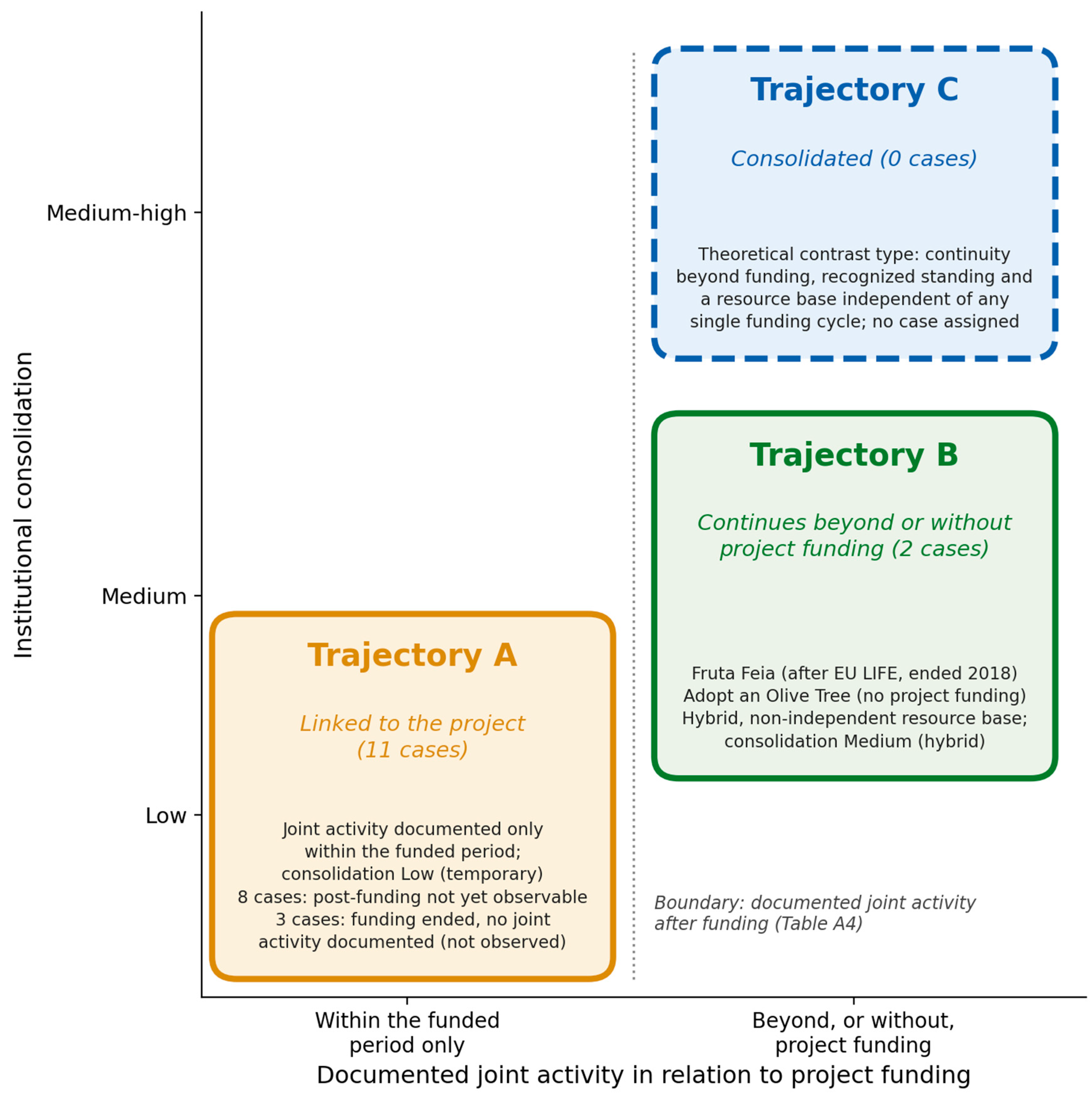
Through systematic cross-case comparison, two cooperation trajectories were inductively developed from the 13 cases, complemented by a third, consolidated trajectory specified only theoretically, with the shadow-case comparison used as a probe (Section 5.4). Trajectory C is not an empirical type on a par with the other two: it is a theoretically specified contrast type to which no case is assigned; the German shadow case (MoNaKo) is discussed against it in Section 5.4 but is rated Low on consolidation under the rule of Section 3.4 and is not an instance of it. Trajectory C is kept separate from the two trajectories derived inductively from the Portuguese cases. These trajectories are descriptive analytical categories, consistent with an ideal-type approach to typology construction: they do not describe any single case perfectly but characterize dominant patterns across cases [62,63]. They are named for the relation between joint activity and project funding, and they are assigned by an explicit rule, applied, in order, to the evidence recorded in Table A1 and Table A3: Trajectory C when joint activity continues beyond the funding period, or without project funding, and recognized standing and a resource base independent of any single funding cycle are also documented; Trajectory B when joint activity is documented as continuing at least two years after the end of the project funding that supported it, or when no project-based public funding is documented and activity is documented over several years; and Trajectory A otherwise, that is, when joint activity is documented only within the funded period, whether the funding is still running (the post-funding phase is not yet observable) or has ended without documented continuation (not observed). Because the assignment rests on the persistence evidence and not on the M1–M3 ratings, the three mechanisms describe how each trajectory operates but do not define it. Consolidation is rated separately (Section 3.4), and the correspondence between trajectory and consolidation level in Table 4 (Low (temporary), Medium (hybrid)) follows largely from the two sets of criteria; it describes how the trajectories are built and is not an independent empirical association. Intermediate cases exist; where a case could plausibly be assigned to more than one trajectory, the documented evidence on activity after funding was used as the primary criterion, as recorded in Appendix A.
Sensitivity of the trajectory assignment: Because the assignment depends on the persistence evidence, it was tested against that evidence and not against the M3 ratings (Table A4). Moving each M3 rating one step down or up changes no assignments; the assignment changes only if the persistence evidence changes. Fruta Feia stays in Trajectory B under any reading, since its activity is documented in the March 2026 compendium [52] and was observed in October 2025, more than seven years after the end of its EU LIFE co-financing in 2018. Adopt an Olive Tree is placed in Trajectory B on the basis of a single case sheet; if that sheet were not accepted as evidence, the case would be unclassified and would not move to Trajectory A. ValorMais, Produzir no Campo, and Cultivar & Cooperar would pass to Trajectory B if dated joint activity after the end of their funding were documented, which the material consulted does not show. The eight cases whose post-funding phase is not yet observable (the seven PRR cases and Germinar) are provisional members of Trajectory A, and the PRR cases can be retested from late 2027, when two years will have elapsed since the end of their funding. The separation between Trajectories A and B is therefore a provisional reading, sensitive to the persistence evidence.
All 13 Portuguese cases were classified as latent trajectories (A or B); none achieved the consolidated Trajectory C pattern, which is specified theoretically and is not observed in any case (Section 5.4). This full-sample latency reflects the composition of the case set (Section 3.1).
Table 4.
Typology of cooperation trajectories.
Figure 2.
Typology of cooperation trajectories. The figure positions the three trajectories in a two-dimensional space defined by (x-axis) the relation between documented joint activity and project funding and (y-axis) the level of institutional consolidation, as specified in Table 4. Trajectory A (11 cases) groups the cases whose joint activity is documented only within the funded period: eight without a post-funding phase yet observable and three without documented activity after their funding ended. Trajectory B (two cases) groups the cases that continue beyond, or without, project funding. Trajectory C (dashed outline) is a theoretically specified contrast type to which no case is assigned. Positions are ideal-typical, not case-level ratings. The dotted line marks the boundary between Trajectories A and B, which is sensitive to the persistence evidence (Table A4).
4.3. Mechanism 1: Functional Coordination Below Institutional Thresholds
Present in all 13 cases and pronounced in 11, this mechanism is the one most consistently rated at high intensity. Public funding instruments are associated with practical collaboration—shared logistics, joint marketing, collective resource management, and adaptive learning—without requiring or facilitating the transition toward stable organizational forms. The functional outcomes of the cases are directly evidenced in project documentation, whereas the link between instrument and cooperation is more tenuous (see below): outcome records consistently show functional achievements (e.g., Fruta Feia: 7254 tonnes of food waste reduction, 380 producers, and 10,000+ consumers, supported by an EU LIFE co-financed project, crowdfunding, and prizes [52]) alongside a resource base that rests on volunteers, donated or loaned spaces, prizes, and crowdfunding rather than on stable independent resources (the initiative is nevertheless legally constituted as the cooperative Fruta Feia CRL [52]). The sequence between instrument and cooperation is not uniform across the set: Fruta Feia (cooperation from 18 November 2013; EU LIFE 2015–2018), CERTRA (from 2019; PRR 2021–2026), and BCheeSE (from 2020; PRR 2021–2026) show cooperation that predates or runs alongside the identified instrument, and Adopt an Olive Tree documents no project-based public funding. For these four cases M1 records documented functional outputs and does not show that an instrument induced the cooperation; the claim that funding enables functional coordination (P1) therefore rests, for the remaining nine cases, on temporal association alone. Likewise, CERTRA and BCheeSE are assigned to Trajectory A, provisionally, because their joint activity is documented only within the funded period and the post-funding phase is not yet observable (Section 3.4), and not because the instrument originated the cooperation.
In the Trajectory A cases the result is project-temporality: cooperation is concentrated in funding periods, and its continuation afterwards is uncertain; weakening after funding ends is not documented for any of the eleven Trajectory A cases: for eight of them the post-funding phase is not yet observable, and for the other three (Produzir no Campo, ValorMais, and Cultivar & Cooperar) no joint activity after the funded period was observed in the material consulted, which is neither persistence nor dissolution (Section 3.4). The funding periods concerned are, for example, those of the PRR project AgriFlex (2023–2025) and, as a boundary case, of the EU LIFE project of Fruta Feia (2015–2018) (Table A3). Fruta Feia marks the boundary of this pattern: the initiative continued after the end of the EU LIFE project (2015–2018) as a legally constituted cooperative that relies on volunteers and donated or loaned spaces, and it is therefore assigned to Trajectory B rather than Trajectory A. It is also the only case in which persistence after funding is documented, and there the arrangement persisted; the fragility attributed to it lies in its non-independent resource base and not in an observed weakening. While generating clear short-term resilience benefits, project-temporality is consistent with Trajectory A. Whether the design of the funding instruments, rather than actor preferences or external conditions, produces this pattern is assessed against the rival explanations set out in Section 2.6: the co-occurrence of functional outcomes with the absence of governance infrastructure independent of the funded project or of informal arrangements across the 13 cases (several have a legal shell but operate largely informally) is consistent with the design reading but does not by itself exclude them. The persistence of Fruta Feia after its LIFE funding ended, and that of the case without project-based public funding, is also compatible with the fourth rival explanation, persistence independent of funding (Section 2.6).
4.4. Mechanism 2: Policy-Induced Institutional Misalignment and Exclusion
Present in seven of the 13 cases (the seven PRR cases) and pronounced in none, this mechanism is defined by administrative burdens, minimum size thresholds, short project cycles, and eligibility rules poorly aligned with the realities of small-scale, fragmented, and informal arrangements. Documentary evidence for it is limited and narrow. It is direct only for the seven PRR cases (binding milestone and expenditure rules of the PRR notices, identified from the notice texts and not from the case sheets). In the case sheet for Produzir no Campo (administrative complexity, scheduling, and coordination demands) the barrier is described only in general terms, without an identifiable provision, and M2 is rated Low. For the other five cases (Fruta Feia, Adopt an Olive Tree, ValorMais, Germinar, and Cultivar & Cooperar) no provision is recorded, and M2 is rated Low. The M2 evidence specific to project-based funding is therefore confined to the PRR notices of the seven PRR cases, that is, to a single instrument. For that object P2 finds no direct support: the clause recorded in the PRR notices concerns the deadlines for executing a funded project, which apply to any funded project, and no eligibility, size, or administrative provision is recorded as having blocked formalization or scaling in any case. A deadline for executing a project is not in itself misalignment with small-scale or informal arrangements, so the construct validity of M2 for project-based funding is limited.
On the present evidence the mechanism cannot be shown to contribute to bureaucratic lock-in or to affect attempts at formalization, and it characterizes no trajectory: M2 is Low to Medium in Trajectory A and Low in Trajectory B (Table 4). It is, however, where the structural conditions of the southern European agricultural model, and specifically Portugal’s minifundio structure and centralized implementation, would be expected to create the most acute effects: size thresholds designed for more consolidated agricultural systems can be expected to exclude the scale at which many Portuguese cooperative initiatives operate, although no specific size threshold that blocked an initiative is documented among the 13 cases (Table A3).
Case-level evidence on instrument provisions. Appendix A allows the provisions through which instruments affected organizational development to be identified only for the seven PRR cases. For Produzir no Campo, the case sheet records only general administrative complexity and the scheduling and coordination demands of multi-stakeholder projects, without identifying the measure or provision concerned, so it is not counted as M2. Project-temporality is read here, as an interpretation, as a possible lock-in mechanism: in the seven PRR cases the notices fix binding milestones (by 30 September 2025 at the latest) and expenditure deadlines (by 31 December 2025), and in HARVEST, in addition, the funding-dependent structure of the support is read here, as an interpretation and not as a recorded provision, as a possible reason why documented functional outcomes were not accompanied by a lasting organizational form. For CERTRA, the briefing identifies the Recovery and Resilience Plan as the source of funding and records the maintenance of uniform quality across farms and the adoption of best practices as the main challenges of a collective activity centered on local varieties, which are not instrument provisions; its Medium M2 rating rests on the milestone and expenditure clause of the notice (Aviso n.º 12/C05-i03/2021), not on those challenges [52]. Fruta Feia (supported by an EU LIFE co-financed project, crowdfunding, and prizes [52]) continued after the end of the LIFE project as a legally constituted cooperative that still relies on volunteers and donated or loaned spaces. BCheeSE and AgriFlex are Recovery and Resilience Plan projects (PRR-C05-i03-I-000168 and PRR-C05-i03-I-000214) for which no instrument provision is recorded in the case sheets; M2 is rated Medium for both on the basis of the milestone and expenditure clause of their notices (Aviso n.º 14/C05-i03/2021 and n.º 19/C05-i03/2022; Table A1), and both are assigned to Trajectory A (provisional) because their joint activity is documented only within the funded period. BEM COMUM and PAGE, funded under Aviso n.º 17/C05-i03/2022, carry the same clause, and their Medium rating likewise rests on the notice and not on the challenges named in their case sheets (informal rules and dependence on local leaders). M2 is rated Low for Fruta Feia, ValorMais, Germinar, Adopt an Olive Tree, and Cultivar & Cooperar, whose case sheets or records name challenges (such as volunteer-based resources, informal rules, or unspecified structural barriers) but no provision of an instrument. For the six cases outside the PRR, the available documentation identifies the type of barrier or funding dependence but not the specific regulation, measure, call, or article concerned, which is a limitation of the evidence. For the five PRR cases whose case sheets record no provision (AgriFlex, BCheeSE, CERTRA, PAGE, and BEM COMUM), the Medium rating records a provision of the notice identified from its text and not a constraint described in the case material, so that the seven PRR cases do not differ on M2 and the rating does not show how the clause affected each initiative (Section 3.4).
4.5. Mechanism 3: Informal Substitution of Governance Functions
Present in ten of the 13 cases (all except AGROVILA, Produzir no Campo, and Cultivar & Cooperar, rated Low) and pronounced in seven, this mechanism is the one whereby local actors compensate for policy gaps through trust-based rules, hybrid organizational forms, and institutional bricolage. A critical methodological note applies here: the informal dynamics captured in this mechanism are precisely those that official accountability documentation is least likely to report directly. The evidentiary basis for Mechanism 3 is therefore more mixed than for Mechanisms 1 and 2: documentary sources provide indirect evidence (activity descriptions that imply informal coordination, outcomes inconsistent with formal governance only), while the researcher’s interpretation of that material, and the single field observation in Fruta Feia, provide more direct but less independently verifiable evidence. Direct field observation is available only for Fruta Feia; the Mechanism 3 ratings of nine other cases rest wholly or partly on researcher interpretation of documentary descriptions, and those of the remaining three (Produzir no Campo, AGROVILA, and Cultivar & Cooperar) rest on documentary descriptions that are themselves indirect, or on the absence of a dated record (Table A1).
Within Mechanism 3, it is analytically important to distinguish three qualitatively different informal governance responses with different implications for institutionalization trajectories. First, trust-based informal norms substituting for formal rules: agreements among farmers that operate on social trust without any formal registration (e.g., the informal rules inferred for BEM COMUM, rated Medium because they operate alongside the formal organs that Lei n.º 75/2017 prescribes for common land and are not documented as the dominant means of governance). Second, hybrid organizational forms combining formal registration with informal operational logic: initiatives that have a formal legal shell but operate primarily through informal relationships and trust-based decision-making (e.g., Adopt an Olive Tree; Germinar; Fruta Feia, a legally constituted cooperative that operates largely through volunteers). Third, local actor gap-filling in the absence of formal structures: individual leaders or animators who sustain cooperation personally without institutional anchoring (e.g., PAGE women’s innovation network). These three sub-types have distinct implications for the durability and transferability of the cooperative arrangements: trust-based informal norms are highly dependent on stable personal relationships and vulnerable to actor turnover; hybrid forms provide somewhat more stability but face legal ambiguity; gap-filling is the most fragile but also the most flexible.
4.6. The Emergent Pattern: Latent Territorial Resilience
The interaction of the three mechanisms is proposed to produce a distinctive outcome, which the concept of latent territorial resilience is intended to capture. Across the Portuguese cases, cooperative arrangements are reported to produce collective outputs—reduced costs, improved market access, biodiversity management, knowledge exchange—which this study documents but does not quantify, and they remain in institutionally fragile states. This pattern is proposed to be made visible by Portugal’s extreme farm fragmentation and centralized implementation; the cases cannot show that it is more pronounced than elsewhere. It is empirically consistent with the theoretical proposition that the design of project-based public funding instruments contributes to this outcome, although the persistence of a case without project-based public funding shows that the pattern may also arise independently of funding (Section 2.6). In terms of trajectories, eleven cases follow Trajectory A (joint activity documented only within the funded period), and two follow Trajectory B (continuation beyond, or without, project funding); none follow the consolidated Trajectory C (Table 4).
5. Discussion
The findings from the case study analysis of 13 Portuguese cases, interpreted through the theoretical framework developed in Section 2, suggest that project-based public funding instruments, of which the CAP is one, are proposed to function as institutional mediators within agricultural innovation systems. The observed outcome is latent territorial resilience; the proposed explanation, with which the cases are consistent but which they do not demonstrate, is that, rather than merely enabling or constraining cooperation, such instruments shape its evolutionary trajectories.
5.1. Revisiting Policy Instruments as Institutional Mediators
The case evidence is consistent with conceptualizing policy instruments as institutional mediators [14,21]. The three mechanisms are consistent with an interpretation in which public funding does not simply incentivize cooperation but also reconfigures the institutional space in which cooperation can or cannot consolidate. This is consistent with the literature on CAP implementation differentiation [1,42]: the literature reports that the same instrument design produces qualitatively different institutional effects depending on the structural and governance context into which it is implemented. The findings point to an inconsistency within the public funding landscape that rural cooperation encounters. Project-based instruments, among them the PRR, EU LIFE, and Erasmus+ projects in the case set and, according to the literature cited in Section 1, CAP instruments such as EIP-AGRI operational groups and LEADER, stimulate short-term functional collaboration, while other design features (short funding cycles, rigid eligibility criteria, high administrative burdens) are proposed to undermine long-term institutional development; in the case set, a recorded provision supports this reading only for the seven PRR cases (binding milestones and expenditure deadlines); because the PRR clause concerns deadlines for executing funded projects, P2 is not directly supported for project-based funding (Section 4.4). The cases do not allow this inconsistency to be attributed to the CAP policy mix specifically. This is interpreted, as a proposition rather than a demonstrated effect, as a form of policy-induced institutional lock-in [46], whereby functionally effective arrangements are sustained but constrained in evolving into more robust organizational forms. These patterns extend the policy instrumentation literature by indicating how seemingly coherent policy frameworks may be associated with contradictory institutional effects, particularly in peripheral and fragmented territories.
This lock-in dynamic can also be read through the lens of the broader policy-learning literature: instruments that lack formal channels for feeding field-level dynamics back into their own design tend to reproduce the same institutional architecture across successive funding cycles, regardless of its fit with the realities of informal cooperation. In the Portuguese case, the absence of structured channels through which experiences of latent cooperation could feed back into instrument design—beyond ad hoc consultation during programming phases—is proposed as a possible reason why the same architecture of short funding cycles and rigid eligibility criteria persists despite the fragility observed in the case set; the reproduction of this pattern across successive funding cycles is not tested here (P4).
5.2. Latent Territorial Resilience: Theoretical Positioning
The concept of latent territorial resilience constitutes the central theoretical contribution of this study. The systematic conceptual demarcation in Section 2.4 established that the concept adds to existing frameworks by identifying a constitutively distinct category: the productive fragility trap in multi-actor territorial cooperation, proposed to be produced and reproduced by policy instrument design. While the territorial resilience literature has focused primarily on either successful institutional arrangements or systemic vulnerability [30,45], and the AIS literature has emphasized multi-actor networks and partnerships [64,65], this study proposes an important intermediate phenomenon: arrangements that generate tangible collective outcomes without achieving stable institutionalization.
This ‘latent’ form of resilience can arise through institutional bricolage [44] under constraining policy conditions without being reducible to it (Section 2.4.1). The typology of cooperation trajectories further advances this contribution by offering a nuanced analytical tool for understanding different evolutionary paths under policy influence. Because the case set was selected for displaying both functional outcomes and institutional challenges (Section 3.1), the dominance of latent trajectories within it cannot be taken as evidence that the phenomenon is structurally embedded in current public funding instruments, the CAP included; establishing that, and its prevalence in the broader population of European cooperative initiatives, would require a more representative sampling frame.
5.3. Implications for Agricultural Innovation Systems
The pattern documented in this case set is consistent with qualifying optimistic assumptions about the capacity of project-based public funding and, by extension and subject to the limited CAP evidence, of the CAP, to foster durable innovation networks in Southern European contexts, where small farms and fragmented structures predominate, although the only case observed after its funding (Fruta Feia) did continue. This concern is directly connected to the southern European agricultural model: the minifundio structure and uneven cooperative traditions that characterize Portugal, Spain, Italy, and Greece, with differences between them (centralized implementation characterizes Portugal), create conditions under which current CAP cooperation instruments may be structurally misaligned with the governance realities they encounter, a point that the case set can illustrate but, given the limited CAP evidence (Section 3.1), cannot establish. The findings also contribute to the literature on multi-regime interactions [66] by illustrating how project-based public funding, the CAP among it, is interpreted as creating a funding-sustained regime of rural cooperation—kept going by the availability of public funds rather than by autonomous organizational structures, and multifunctional—that generates valuable outcomes and whose vulnerability to funding discontinuities and administrative shifts is inferred from its dependence on single funding cycles and not observed after funding (Section 3.4). The shadow-case illustrations (Section 5.4) show variation in outcomes (a historically consolidated cooperative, a stable contract-based partnership, and an emerging partial consolidation), while the Hungarian illustration documents only an instrument architecture and shows no outcome; they do not show whether the dynamics identified in Portugal are present, or less acute, elsewhere. The German illustration points to implementation governance architecture as a hypothesized moderating variable of the three mediation mechanisms, which the ratings do not show and which remains to be tested in future research; the Austrian illustration, sustained without a CAP cooperation instrument, does not bear on it. The digital and energy cases in the dataset (AgriFlex and AGROVILA) deserve particular attention in this context: they represent potentially the most policy-relevant cluster for the digital transition agenda of the CAP 2028–2034, yet both fall into Trajectory A (provisional). A recorded provision (the binding milestones of the AGROVILA and AgriFlex notices) is found in both, but it is the same clause as in the other five PRR cases and does not single out this cluster, so that the evidence is too thin to treat it as particularly vulnerable; an energy-community initiative compiled for the set was excluded for lack of verifiable public evidence (Section 3.1). This is an area warranting targeted future research.
Portugal’s extreme farm fragmentation is not only a structural condition that amplifies the three mechanisms identified in this study; it is also a context in which the distance between evidence generated on the ground about how cooperation actually functions and its translation into operational adjustments tends to be particularly long. Without dedicated monitoring channels that systematically translate implementation experience into institutional response—clearly distinguishing observation, interpretation, and corrective action—signals of latent territorial resilience risk remaining invisible to decision-makers until they become manifestly irreversible, that is, until initiatives that depend on time-limited support weaken or dissolve when it ends, a possibility that the case set does not document (Section 3.4).
5.4. Shadow Cases as Sensitizing Illustrations and Plausibility Probes
The four shadow cases are presented here as sensitizing illustrations and plausibility probes of whether the Portuguese pattern is contextually specific or whether similar dynamics appear in structurally different European contexts. They are not offered as systematic comparative evidence; the analytical treatment applied to the Portuguese cases was not replicated at equal depth for the shadow cases, and no cross-case matrix incorporating the shadow cases at the same level of analytical resolution is provided. Claims resting on shadow case comparisons are therefore explicitly limited in scope. Because the Greek, German, and Hungarian shadow cases involve identified CAP measures or interventions (Table A2 and the descriptions below), they bear more directly on the CAP than most of the Portuguese cases do; they remain, however, illustrations of the kind described above. The shadow cases are not used to validate the typology, and they do not establish that decentralized governance moderates the mechanisms in other countries.
The shadow cases do, however, provide sensitizing between-country variation that is compatible with governance architecture as a hypothesized moderating variable:
- Greece (Mesotopos cooperative, Lesvos): The documentation describes a cooperative founded in 1923, formally registered and recognized as a producer organization (Measure 9), which has drawn on LEADER, Measure 10.2.1, and Measure 9 funding; the main challenges it records are complex, time-consuming administrative processes and delays in disbursement [52,54]. This suggests a long-established cooperative whose consolidation may owe more to its history than to CAP instruments, with administrative misalignment as its main recorded constraint, rather than to formalization difficulties; the case is thus consistent with the role of organizational history among the rival explanations (Section 2.6), although this is not demonstrated here. The same presentation also documents the neighboring Mesagros cooperative (founded 1925; a recognized producer organization that received LEADER, Measure 9, and innovation-support funding between 2021 and 2024), whose remaining challenges are administrative complexity, limited liquidity caused by the initial financial burden, and outstanding debts inherited from the former Union of Cooperatives of Lesvos (LESEL), and the collapse of LESEL itself (founded 1929; some 13,000 producers and 62 olive mills), which the presenter attributes to dependence on state subsidies, a lack of transparency in decision-making, and excessive borrowing [54]. These elements suggest that formal consolidation is not in itself a guarantee of durability, a reading that is consistent with, but not demonstrated by, the Portuguese evidence.
- Austria (heifer-rearing partnership): The documentation describes a bilateral arrangement between two farms, formalized by contract in 1998 and renewed in 2020, which has been sustained without direct CAP funding for the cooperation itself; the farms used CAP-supported advisory, knowledge-transfer, and investment interventions individually [52,55]. The case resembles Trajectory B (continuity without project funding) but is not a latent case (Table A2): its stability since 1998 shows that hybrid arrangements of this kind can be long-lived, and because no CAP cooperation instrument was applied it does not allow inferences about regional institutional support compensating for instrument-level misalignment. That it resembles Trajectory B without being latent shows that continuity without project funding does not by itself identify latency, which depends on the fragility criterion of Section 3.4 and was not assessed for this shadow case.
- Germany (MoNaKo Conservation Cooperatives): Evidence consistent with partial consolidation pathways (compatible with the theoretical Trajectory C, but rated Low on consolidation under the rule of Section 3.4 while the management costs are project-funded), linked to the federal states’ responsibility for implementing agri-environment measures, which has allowed different application models to be tested (group applications in Brandenburg; coordinated individual applications in Rhineland-Palatinate and Saxony-Anhalt) [52,56]. Group applications were, however, suspended in Lower Saxony because of VAT-related risks, and the project runs until November 2026 [56]. This comparison is theoretically suggestive: it raises the possibility that implementation architecture—specifically, the degree of subsidiarity in translating CAP instruments to local contexts—may be a moderating variable in whether latent trajectories persist or resolve.
- Hungary (cooperation interventions of the CAP Strategic Plan): The presentation by the European Agricultural Fund for Rural Development (EAFRD) unit of the Managing Authority documents a dense instrument architecture: 14 rural development cooperation interventions, of which four continue the previous program, three are partially new or broadened, and seven are new, together accounting for about 10% of the rural development budget [57]. They range from producer groups and quality schemes to short supply chains, social enterprises, generational renewal, water-management communities, and EIP cooperation, and several use simplified cost options such as lump sums, unit costs, or flat rates [57]. The presentation records instrument design and call status as of December 2025; it contains no evidence on outcomes, on beneficiaries’ experience, or on administrative barriers, and several calls had not yet been opened. No mechanism is therefore rated, and no trajectory type is assigned (Table A2). The case is retained because it frames a question that the Portuguese evidence cannot answer, namely whether a larger and more differentiated set of cooperation interventions reduces the instrument-level misalignment described by M2 or only multiplies the provisions that can misalign; this is a question for future research, and the Hungarian material is not evidence on it.
Trajectory C in context: a hypothesis on why consolidation may occur in some contexts and not in others. The German case is the only shadow case in which the evidence is compatible with partial consolidation emerging under current instruments (Table A2: M1 High, M2 Medium, M3 High; consolidation Low (provisional) under the rule of Section 3.4, because management costs depend on project funding until November 2026); the Greek cooperative, founded in 1923, is consolidated for historical reasons and is not an emerging case. Read against the Portuguese Trajectory A and Trajectory B cases, the contrast does not lie in the presence or the rated intensity of the mechanisms. Functional coordination and informal governance are strongly present in both settings, and M2 is rated Medium in the German case, whereas among the 13 Portuguese cases M2 is rated Medium in seven (the PRR cases) and Low in six, and High in none (Table A1); the German case therefore lies within the Portuguese range of M2 ratings, and the ratings do not show lower misalignment in Germany. The documentation records that responsibility for second-pillar funding lies with the federal states, which explains why the application models differ between them, and it stresses that flexibility at the national level is needed so that cooperatives can plan and implement agri-environment measures [52]; the ratings therefore do not distinguish the two contexts, and a role for subsidiarity in translating CAP instruments to local conditions is not supported by the data of this study. It is a hypothesis that would require an indicator of its own, for example, which level (national, regional, or local) sets the eligibility and application rules, applied to all cases, which the present material does not allow. Group applications operate only in Brandenburg, and the project runs until November 2026, so the partial consolidation remains emerging. As a hypothesis, such flexibility would allow eligibility and administrative requirements to be adjusted to the scale and form of cooperation, so that functional outcomes that in Portugal remain tied to a project cycle can be carried into a partially formalized organization. Two implications follow. First, consolidation does not require the disappearance of informal governance: M3 remains High in the German case, and partial formalization appears to coexist with it. Second, the difference between contexts is more plausibly located in how instruments are implemented than in the instruments themselves, since the same CAP framework applies in Portugal and Germany, although most Portuguese cases in the set were funded by other instruments (Section 3.1), so that the comparison is indicative only. This is a candidate explanation, subject to the limits stated above: it rests on one shadow case documented at lower analytical depth, and it is not used to validate Trajectory C as an empirical type. Applying the rule of Section 4.2 to the German case (joint activity documented within a funding period that runs until November 2026, so that the post-funding phase is not yet observable) would, if the case were coded at equal depth, place it in Trajectory A (provisional), which is a further reason not to read it as an instance of Trajectory C.
Actors and interactions across phases in selected cases: Drawing only on the case material summarized in Appendix A, the trajectory of an initiative can be described in three phases, each with a different configuration of actors. In the initiation and funding phase, farmers and other rural actors, together with project promoters or animators, interact with the managing authority as funder; this is the phase in which M1 operates, as in Fruta Feia, where producers (380) and consumers (10,000+) were mobilized around joint activity through a legally constituted consumer cooperative (Fruta Feia CRL) whose resources nonetheless rested on project support, prizes, and crowdfunding. In the phase in which formalization or scaling is attempted, promoters interact with the administrative and intermediary bodies that apply eligibility and size requirements; this is where M2 would become visible; in the case set it is recorded only as the milestone and expenditure rules that the managing authority applies to the seven PRR projects, without a documented effect on formalization (Section 4.4). In the phase after funding ends, or where no fitting instrument exists, the interaction shifts to actors internal to the initiative: local leaders or animators, as in PAGE; groups of commoners whose informal rules operate alongside the formal organs prescribed by Lei n.º 75/2017, as in BEM COMUM (for both PAGE and BEM COMUM, persistence beyond the PRR funding is not yet observable); and members of hybrid arrangements that combine a formal shell with informal operation, as in Adopt an Olive Tree, Germinar (run by the Associação Margens Simples), and Fruta Feia (which continued as a legally constituted cooperative after the end of LIFE co-financing). This is the phase in which M3 operates. In the German shadow case, the additional actors whose role the documentation highlights are the federal states, which are responsible for second-pillar funding and shape the application models used (Table A2); the Austrian case, by contrast, was sustained without any CAP cooperation instrument [52]. The identification of individual actors, and of how they interacted in each phase, is limited by the documentary record and, for M3, by the reliance on indirect documentary evidence and researcher interpretation noted in Section 4.5. For the German case (MoNaKo), the documentation names the German Farmers’ Association (DBV) as lead organization, working with the cultural landscape foundations of Lower Saxony, Rhineland-Palatinate, and Saxony-Anhalt and with the Brandenburg State Farmers’ Association, which manage the cooperatives; their management costs are currently financed through the Landwirtschaftliche Rentenbank. In the implementation phase, cooperative managers invite farmers within pre-defined areas, develop conservation concepts together with local conservation bodies, and coordinate applications for agri-environment-climate measures, as group applications in Brandenburg and as coordinated individual applications in Rhineland-Palatinate and Saxony-Anhalt, while group applications were suspended in Lower Saxony; the cooperatives have also established legal structures, rules, and private contracts with their members, and they interact with the federal and state ministries involved in coordination [52]. Because the project runs until November 2026, its post-funding phase cannot yet be observed. For Fruta Feia, the documentation records that the initiative was supported by prizes, crowdfunding, and EU LIFE co-financing, and that 380 producers supply non-standard produce while consumers collect baskets at delivery points [52]. For CERTRA, the project is coordinated by the Instituto Politécnico de Bragança together with small cereal producers, local bakeries and mills, agricultural schools, cooperatives, and regional research institutions [52]. For BEM COMUM, the initiating actors were the Polytechnic Institute of Viana do Castelo, the National Federation of Baldios (BALADI), and local partners, and the governance of common land (baldios) rests on the formal organs prescribed by Lei n.º 75/2017 (the assembly of commoners and the management board; the project’s governance workshop report of 16 December 2024 discusses these organs and the administration of baldios by parish councils through delegation from the assembly), alongside informal rules and partner organizations whose role in filling governance functions is inferred from the project documentation and is not documented as dominant (Section 3.4).
Whether implementation governance architecture moderates the intensity of the three mechanisms, including whether more decentralized, place-sensitive implementation (Germany) reduces Mechanism 2 effects, remains a hypothesis that requires systematic cross-country analysis with comparable selection criteria and analytical depth.
5.5. Implications in Light of the CAP 2028–2034 Proposal
Because the cases are consistent with fragility under project-based public funding in general, the relevant question for the CAP 2028–2034 is whether it would reproduce, or correct, the fragility identified in the case set (documented as dependence on a single funding cycle for Trajectory A, and interpreted from a non-independent resource base for Trajectory B), whose funding comes mainly from the PRR, EU LIFE, Erasmus+, and other non-CAP sources. The European Commission presented its proposal for the CAP 2028–2034 in July 2025 [67]. The proposal integrates the CAP into the National and Regional Partnership Plans under a single fund, ringfences a minimum allocation for income support, and lists among the CAP interventions LEADER, support for knowledge sharing and innovation, and territorial and local cooperation initiatives [67,68]. The proposal is still under negotiation in the Council and the European Parliament and its provisions may change; the discussion below therefore reads the proposal as tabled, together with the EU CAP Network work on cooperation for 2025–2026 [52] (in particular, its March 2026 compendium of examples of cooperation among farmers), rather than a final legal text [69].
What the case set says about the CAP itself is limited. CAP-funded support is documented for three cases (Produzir no Campo and ValorMais, through the Rede Rural Nacional of the PDR2020, and Cultivar & Cooperar, under LEADER—see Section 3.1), and only for the last is a cooperation measure identified. All three are Trajectory A cases, for which joint activity is documented only within the funded period and no joint activity after it was observed in the material consulted; M2 is rated Low for all three (Table A1). These cases are consistent with the CAP taking part in project-temporality dynamics, but they cannot establish it; they record no CAP provision that constrained an initiative, and the one cooperation measure among them (LEADER) belongs to the case whose sources agree least on budget and dates (Table A3). The reading best supported is that the case set speaks to project-based public funding as a category, of which the CAP is one thinly documented instrument; the study cannot show whether the dynamics are specific to any instrument (Section 5.6), and the CAP is exposed to them only to the extent that it funds cooperation through approved projects of limited duration.
What the proposal already incorporates: Three features of the proposal move in the direction of the design principles proposed in this article. First, the emphasis on simplification and on flexibility for Member States to tailor interventions within their plans is consistent with the principle of greater early-stage flexibility; the proposal also foresees a wider use of lump sums and a single set of rules for the plans [67,68]. Second, cooperation remains on the policy agenda in an identifiable form: LEADER and territorial and local cooperation initiatives are listed among the CAP interventions (Article 5(1), points (l) and (n)), Member States must support LEADER at least in rural areas with specific disadvantages, and LEADER projects are expected to cover, among others, start-ups, farm diversification, and innovation (Article 18) [67]. Third, the move from separate programming documents to integrated plans prepared in partnership with regional and local authorities and rural partners creates, in principle, a channel for the shorter learning cycles discussed in Section 5.1: plans may be amended on a reasoned request and must be reviewed at mid-term, by 31 March 2031 [68].
Gaps that persist: Read against the mechanisms identified here, the text of the proposal leaves four points open. (i) Eligibility thresholds and administrative requirements are largely delegated to Member States. For EIP-AGRI operational groups, for instance, support requires an approved project plan and at least two different actors, and Member States set the criteria and requirements for the content, duration, submission, and approval of project plans (Article 19(4)) [67]. This discretion allows calibration to small-scale and informal arrangements, but nothing in the proposal ensures it, and greater national discretion may also widen differences in implementation between Member States, especially in fragmented territories such as Portugal. (ii) Support for cooperation remains organized around approved projects rather than sequenced along the trajectory of an arrangement (from informal to hybrid to formal forms); the wider use of lump sums may lower administrative burden [67,68], but it does not in itself alter the project-temporality identified in Mechanism 1. (iii) The provisions on operational groups and LEADER define eligible actors by partnership composition (at least two different actors; local action groups) rather than by legal form, which leaves room for hybrid arrangements, but they do not recognize hybrid or informal governance forms explicitly, and support for knowledge sharing and innovation involving research bodies only is excluded (Article 19(5)) [67]; Mechanism 3 may therefore remain the only route for local actors wherever national plans do not open others. (iv) The proposal provides for an implementation report during the programming period, a retrospective evaluation, a mid-term review of the plans, and the dissemination of operational-group results through national and Union CAP networks (Article 19(3)) [67,68], but it does not specify how cooperation-specific implementation experience would trigger operational adjustments before the mid-term review. Article 74 of the proposed Fund Regulation [68], entitled “Territorial and local cooperation initiatives” and referred to in Article 16(1)(g) and (h) of the proposed CAP Regulation [67], is the provision under which Member States are to support local cooperation initiatives; it is read here as tabled in July 2025, since the text remains under negotiation.
How the design principles refine or differ from the proposal: In a national-plan architecture, the principles proposed in Section 6 acquire a different locus: adaptive sequencing and the recognition of hybrid governance would need to be written into national plans (in the Portuguese case, the agriculture chapter of the future National and Regional Partnership Plan, building on the current CAP Strategic Plan [70]) rather than only into EU-level rules; early-stage flexibility would depend on national and regional implementation choices; and learning loops would need to connect the governance of the partnership plans with the cooperation work of the EU CAP Network [52]. The principles differ from the proposal in two respects: they treat cooperation support as something designed around the trajectory of an arrangement rather than around individual project cycles, and they accept deliberate informality as a legitimate end state, not only as a transitional stage. Read against the funding instruments in the case set, the principles amount to a test for the CAP 2028–2034: that cooperation support be sequenced beyond the project cycle (Mechanism 1), calibrated to small-scale and informal arrangements (Mechanism 2), and open to hybrid governance (Mechanism 3), so that the CAP does not reproduce the fragility identified in the case set: project-temporality in the PRR-funded cases and, in Fruta Feia (supported by EU LIFE, which persisted in hybrid form after the end of the funding), a resource base that is not independent; for Germinar (BIP/ZIP and Erasmus+) activity has been sustained under successive project funding, so that its persistence beyond a funding cycle is not observable.
5.6. Limitations
This study has several limitations that should inform interpretation of its findings. First, the case study design is well-suited for theory-building but produces theoretically grounded propositions rather than confirmed causal findings. The three mechanisms and the typology are hypotheses warranting longitudinal validation. Second, the case pool reflects a positive selection bias toward more visible and well-documented initiatives, meaning that the most fragile or dissolved cooperative arrangements are systematically underrepresented. Cases in which cooperation achieved durable consolidation were not included, and criterion (iii) selected initiatives showing both functional outcomes and institutional challenges, so the study cannot assess how consolidated cases differ, and the size of the universe of Portuguese initiatives from which the 13 were drawn is not reported; adding two or three negative cases is a priority for future research. Two of the 15 initiatives compiled in the author’s original case report were excluded: Renewable Energy Communities, because no verifiable public evidence of it could be found (criterion (v)), and Bolsa Nacional de Terras, because it lies outside the object of the study, project-based public funding (Section 3.1). Neither exclusion rests on ratings; the set is thereby reduced from 15 to 13, so that Table 3 and Table 4 refer to the 13 retained cases. Third, the shadow cases provide theoretically informative variation but are not systematically analyzed at the same depth as the Portuguese cases (and the Hungarian case documents only instrument design, with no outcome evidence); cross-country claims should be treated as illustrative hypotheses rather than comparative findings. Fourth, the rival explanations set out in Section 2.6 (actor preferences, local leadership, organizational history, and persistence independent of funding) cannot be excluded systematically with the present case set, and the reproduction of fragility across funding cycles (P4) is not tested. Fifth, the study does not measure effects on farm income, employment, productivity, or environmental quality; the outcomes of the initiatives are taken from project documentation and case sheets, so their relevance for farmers, cooperatives, local organizations, and policymakers is potential and not empirically measured impact. Sixth, the author both compiled and analyzed the Portuguese cases, and only two of the thirteen have been published by the EU CAP Network; independent scrutiny of the other eleven depends on the evidence trail in Table A3. No second coder independently coded any case, so the reliability of the interpretive M3 ratings, which enter Table 3 but not the trajectory assignment (Section 4.2), has not been assessed. Seventh, direct field observation was limited to one case (Fruta Feia); for the other cases the Mechanism 3 ratings rest on indirect documentary evidence and researcher interpretation (Table A1), so this mechanism, and the interpretive fragility criterion applied to the Trajectory B cases (Section 3.4), are the least independently verifiable part of the analysis. Eighth, the funding instruments in the case set are heterogeneous (the PRR, EU LIFE, Erasmus+, regional and national funds, and, for three cases, CAP-funded support, identified as a cooperation measure (LEADER) only for Cultivar & Cooperar, whose budget is recorded for each partner—see Section 3.1 and Table A3), so the study cannot separate the effects of project-based funding in general from those of any particular instrument, and its evidence on the CAP proper is limited to those cases; one case (Adopt an Olive Tree) documents no project-based public funding and informs only the configuration without it. Ninth, the instrument classification rests on public project records (the PRR project register, the EU LIFE database, the Rede Rural Nacional project catalogue, EU CAP Network project records, and the partners’ project pages), not on an audit of the funding; for ValorMais, Produzir no Campo, and Cultivar & Cooperar the records do not identify the provisions of the instruments used, so that their M2 ratings (all Low) record the absence of a documented provision, and a different reading of those provisions would change the counts in Table 3. Tenth, the evidence for M2 is narrow: a provision is recorded for seven cases, and in all of them it is the same milestone and expenditure clause of the PRR notices, and M2 is pronounced in none, so that the policy-misalignment component of the framework rests on thin case evidence; the Medium ratings of the PRR cases record a provision of the notice and not a constraint described in the case material, and do not show how the clause affected each initiative (Section 3.4); and the M2 ratings do not discriminate between the Portuguese cases and the German shadow case. Likewise, the post-funding phase is documented for no Trajectory A case, so that institutional fragility in those cases is inferred from documented dependence on a single funding cycle and not from observed weakening; and P2 is not directly supported for project-based funding, since M2 there rests on a clause on execution deadlines (Section 4.4). Eleventh, the mechanisms were used as deductive codes as well as being products of the abductive analysis, which limits the independence of their frequencies (Section 3.3); in addition, M1 rates the functional effectiveness that is part of the definition of the outcome, so that its frequency is largely fixed by the selection criteria. Twelfth, the boundary between Trajectories A and B is provisional and depends on the persistence evidence, not on the M3 ratings (Table A4): the three Trajectory A cases whose funding has ended would move to B if dated joint activity after the funded period were documented, the eight cases whose post-funding phase is not yet observable (the seven PRR cases and Germinar) can be retested from late 2027, and “not observed” reflects the documents consulted (for Produzir no Campo, a consultation of 18 October 2026) and not a verified absence of activity. Thirteenth, the amounts and planned dates of the PRR projects are taken from the IFAP list of contracted projects of 5 September 2023 [71], which records approved support and planned dates; the later end date of 31 December 2025 is taken from the PRR portal. Future research should address these limitations through longitudinal studies tracking the evolution of latent arrangements over time, more representative sampling strategies, and systematic cross-country analysis using independent data sources.
6. Conclusions
This article conceptualized time-limited, project-based public funding instruments, the CAP being among them, as institutional mediators of rural cooperation that is functionally effective yet institutionally fragile within agricultural innovation systems. Through a multiple-case analysis of 13 Portuguese cooperative initiatives, selected as a purposive theory-building set and complemented by illustrative shadow cases from other Member States, this study specified three candidate mechanisms through which project-based public funding instruments are proposed to shape cooperation trajectories: (1) functional coordination operating below institutional thresholds, (2) policy-induced institutional misalignment and exclusion, and (3) informal substitution of governance functions by local actors. These mechanisms are proposed to explain the emergence and persistence of latent territorial resilience—functionally effective cooperative arrangements that report collective economic, environmental, social, and innovative outcomes (documented in the case material and not measured here) yet are institutionally fragile, their vulnerability to the end of funding being inferred and not observed.
Portugal served as the critical revealing national context. Its extreme farm fragmentation, rooted in historical minifundio structures and, as a hypothesis the cases cannot test, possibly reinforced by the legacy of the Estado Novo’s suppression of independent cooperative organization; centralized policy implementation; and reliance on informal governance are proposed to make the mediating effects of public funding instruments easier to observe—whether the same dynamics are present elsewhere remains an open question. The German shadow case is compatible with the hypothesis that implementation governance architecture—specifically, the degree of subsidiarity and place-sensitivity in translating CAP instruments to local contexts—moderates these dynamics, but the M2 ratings do not distinguish it from the Portuguese cases, so the hypothesis is not supported by the data in this study and requires an indicator of its own in future research. The study also cannot distinguish fragility induced by funding from fragility typical of informal cooperation since Fruta Feia persisted after its LIFE funding ended and one further case persists without project-based funding, and the separation between Trajectories A and B is provisional since it rests on persistence evidence that is documented only for Fruta Feia (Table A4).
What does the evidence support, and what remains an open question? Within the purposive set of 13 cases, this study documents that functional coordination (M1) is present in all cases, that informal substitution of governance functions (M3) is present in ten, and that a recorded provision of an instrument (M2) is present in seven, all of which include the same milestone and expenditure clause of the PRR notices, which is not recorded as having blocked formalization in any case. Eleven cases follow Trajectory A, in which joint activity is documented only within the funded period; two follow Trajectory B; none follow the consolidated Trajectory C; and all 13 are rated Low or Medium on institutional consolidation. These findings are consistent with the proposition that project-based public funding is associated with functionally effective but institutionally fragile cooperation; they do not show that the funding produces it. Several points remain open and limit what can be claimed without preventing the conclusion: the post-funding phase is documented for one case only (Fruta Feia), is not yet observable for eight cases, and was not observed for three, so the fragility of the Trajectory A cases is inferred from their dependence on a single funding cycle and not from observed weakening; the CAP is documented for three cases only, and for one of them (Cultivar & Cooperar, under LEADER), it is documented as a cooperation measure; and the case set cannot separate fragility induced by funding from fragility typical of informal cooperation. These points can be addressed by retesting the PRR cases from late 2027; by employing dated sources on joint activity after the funding of Produzir no Campo, ValorMais, and Cultivar & Cooperar; and by including negative cases (Section 5.6).
This study makes two main contributions to the literature. First, it introduces and empirically illustrates the concept of latent territorial resilience, establishing its conceptual distinctiveness from related constructs (institutional bricolage, adaptive resilience, farm-level resilience, path dependence) and indicating its analytical utility for understanding a category of territorial outcome suggested by the cases analyzed here but still undertheorized. Second, it advances a relational understanding of policy instruments as institutional mediators, extending the policy instrumentation and policy mix bodies of the literature by suggesting how seemingly coherent policy frameworks may produce internally contradictory institutional effects in peripheral and fragmented territories.
The findings have implications for the design of the CAP 2028–2034, proposed by the European Commission in July 2025 [67] (see Section 5.5), and, more broadly, for the time-limited public funding of rural cooperation. Because the cases show fragility mainly in initiatives funded through the PRR, EU LIFE, Erasmus+, and other non-CAP sources (for the Trajectory A cases inferred from the documented dependence on a single funding cycle, not observed as weakening after funding) and document the CAP itself only to a limited extent, the implications for the CAP are framed as conditions it would need to meet in order not to reproduce that fragility, not as findings about its current performance. To transform latent territorial resilience into more robust and durable innovation capacity, three interconnected design principles are proposed:
- Adaptive sequencing: Develop flexible, staged pathways that support cooperative initiatives from informal/functional stages through hybrid forms to fully consolidated organizations where actors seek them (with deliberate informality being accepted as a legitimate end state—see Section 2.5 and Section 5.5), with appropriate administrative simplification and tailored support at each transition point. This is proposed as a response to the project-temporality documented under Mechanism 1, whose effect remains to be tested.
- Recognition of informal and hybrid governance: Explicitly acknowledge and create space for the three sub-types of informal governance identified in Section 4.5 (trust-based informal norms, hybrid organizational forms, local actor gap-filling), rather than imposing rigid formal templates. Deliberate informality should be recognized as a legitimate option rather than as a transitional deficit. This requires legal frameworks that can accommodate arrangements operating between full formality and pure informality.
- Greater early-stage flexibility: Reduce entry barriers—particularly administrative and reporting requirements and, where they exist, minimum-size or membership thresholds (the cases document the former more than the latter (see Section 4.4))—for the initial phases of cooperation, especially in fragmented and peripheral areas. The southern European minifundio context requires instrument design specifically calibrated to small-scale cooperation, not instruments designed for consolidated agricultural systems adapted downward.
These principles also presuppose that the policy design process itself incorporates shorter cycles of learning: early recognition of arrangements that are functionally effective but institutionally fragile requires sustained dialogue between managing authorities and local actors, rather than periodic evaluations confined to the close of programming periods. Translating recommendations into operational adjustments—rather than into formal reporting alone—is a necessary, though not sufficient, condition for addressing the pattern of latency recorded in this study for the Portuguese context, whose reproduction across funding cycles (P4) remains to be tested. These principles would require implementation choices that allow flexibility at national and regional levels (the degree of subsidiarity being a candidate, untested moderating factor—see Section 5.4), place-based approaches, and improved coordination between different funding instruments (CAP and non-CAP) and governance levels. Future research should extend this framework through systematic comparative studies across Member States with different farm structures and governance traditions, longitudinal analyses tracking the evolution (or dissolution) of latent resilient arrangements over time, and investigation of whether similar latent resilience patterns exist in other policy domains (energy communities, circular economy initiatives) where similar combinations of functional effectiveness and institutional fragility have been observed.
By better aligning policy instruments with the realities of latent territorial resilience, the CAP 2028–2034, and the other public funding instruments that finance rural cooperation, could, if the principles above prove effective, move beyond promoting cooperation on paper to building more inclusive, adaptive, and durable foundations for rural innovation and territorial development across the European Union.
Funding
This work was supported by national funds through FCT—Fundação para a Ciência e a Tecnologia, I.P., under the ERA Chair BESIDE project, funded by the European Union’s Horizon 2020 research and innovation program under grant agreement No 951389 (https://doi.org/10.3030/951389), and through the projects UID/50017/2025 (https://doi.org/10.54499/UID/50017/2025) and UID/04928/2025 (https://doi.org/10.54499/UID/04928/2025).
Institutional Review Board Statement
Ethical review and approval were not required for this study, as it is based on publicly available project documentation and on the observation of an already public activity, with oral consent obtained from the single person consulted (see Recital 26 of the GDPR, Regulation (EU) 2016/679).
Informed Consent Statement
Verbal informed consent was obtained from the participant. Verbal consent was obtained rather than written because the exchange consisted of brief, informal questions about a public activity, and no personal data were recorded.
Data Availability Statement
The evidence trail for each case (Table A3), the cross-case ratings (Table A1), and a codebook excerpt (Appendix B) are provided in the article. The full codebook and the case sheets that have not been published by the EU CAP Network are available from the corresponding author on request; two of the analyzed case descriptions (Fruta Feia and CERTRA) are published in [52], and the Thematic Group materials used for the shadow cases are listed in [51,54,55,56,57].
Acknowledgments
This work emerged in the context of the author’s participation in the Thematic Group on Unlocking the Potential of Cooperation of the EU CAP Network. The author would like to thank the EU CAP Network team, particularly the coordinators and members of the Thematic Group, for the opportunity to participate in the Thematic Group. The oral discussions with the Thematic Group sessions were not used as data for this study; written materials pertaining to the Group were used as documentary sources (Section 3.2).
Conflicts of Interest
The author declares no conflict of interest. The author’s participation in the EU CAP Network Thematic Group on Unlocking the Potential of Cooperation is described in Section 3.2.
Appendix A. Expanded Cross-Case Matrix with Trajectory Assignment Rationale
This appendix presents the cross-case matrix of the 13 Portuguese cooperative initiatives, including the explicit case-by-case trajectory assignment rationale. For each case, the dominant mechanism configuration, evidence basis, and institutional consolidation assessment are documented to enable transparency in the trajectory assignment, which follows the rule of Section 4.2 and rests on the persistence evidence and not on the M1–M3 ratings. Evidence codes used in Table A1: “doc.” denotes documentary evidence (case sheets, project records and calls, accountability reports, implementation records); “obs.” denotes field observation, such as site visits and direct questions posed to those responsible for the initiative (field observation was performed only in Fruta Feia, where the person responsible for the initiative was informed that the information might be used in academic research and oral informed consent was obtained for the questions posed); and “interp.” denotes researcher interpretation, that is, an inference about informal governance drawn from indirect documentary descriptions and not directly evidenced in any source. Table A3 specifies the evidence trail for each case.
Table A1.
Cross-case matrix of Portuguese cooperative initiatives (N = 13). Trajectories follow the rule of Section 4.2 and rest on the persistence evidence; the M1–M3 ratings do not enter the assignment, and its sensitivity is shown in Table A4.
Table A2.
Shadow benchmark cases—comparative mapping.
Table A3.
Evidence trail by case.
Table A4.
Sensitivity of the trajectory assignment (rule of Section 4.2) to the M3 rating and to the persistence evidence.
Appendix B. Sample of the Coding Framework (Codebook Excerpt)
To enhance transparency and replicability, this appendix presents an excerpt of the final codebook. The codebook was developed iteratively, combining deductive codes from the theoretical framework with inductive codes emerging from the data. Coding was conducted in MAXQDA 26 (Professional), using a codebook developed iteratively over three successive rounds. After the first complete pass, code definitions were refined and inductive codes were stabilized. A second full re-coding of all 13 cases was performed with the stabilized codebook, followed by a third selective consistency check. The audit trail was maintained through a version-controlled codebook (dated successive versions) and memo logs recording every analytical decision. The full codebook, including code frequencies, representative quotations, and analytical memos, is available upon request from the corresponding author.
Table A5.
Functional Coordination Below Institutional Thresholds (Mechanism 1).
Table A6.
Policy-Induced Institutional Misalignment and Exclusion (Mechanism 2).
Table A7.
Informal Substitution of Governance Functions (Mechanism 3)—differentiated sub-codes.
Table A8.
Latent Territorial Resilience & Institutional Outcomes.
Summary: Total first-order codes: 38, grouped into 12 s-order themes and 4 main axes. Coding was conducted by the author, with each case re-coded after the codebook stabilized to check consistency over time. The full codebook, including code frequencies, representative quotations, and analytical memos, is available upon request from the corresponding author.
References
- Grant, W. Policy instruments in the common agricultural policy. West Eur. Politics 2010, 33, 22–38. [Google Scholar] [CrossRef] [Scilit]
- Martos-Pedrero, A.; Cortes-Garcia, F.J.; Abad-Segura, E.; Belmonte-Urena, L.J. Internationalization, innovation, and resilience: Financial performance of agricultural cooperatives in southeastern Spain’s rural economy. J. Rural Stud. 2025, 117, 103682. [Google Scholar] [CrossRef] [Scilit]
- Gargano, G.; Del Prete, A. LEADER territorial cooperation in rural development: Added value, learning dynamics, and policy impacts. Land 2025, 14, 1494. [Google Scholar] [CrossRef] [Scilit]
- Knickel, K.; Redman, M.; Darnhofer, I.; Ashkenazy, A.; Chebach, T.C.; Šūmane, S.; Tisenkopfs, T.; Zemeckis, R.; Atkociuniene, V.; Rivera, M.; et al. Between aspirations and reality: Making farming, food systems and rural areas more resilient, sustainable and equitable. J. Rural Stud. 2018, 59, 197–210. [Google Scholar] [CrossRef] [Scilit]
- Gutiérrez Cano, L.F.; Zartha Sossa, J.W.; Orozco Mendoza, G.L.; Suárez Guzmán, L.M.; Agudelo Tapasco, D.A.; Quintero Saavedra, J.I. Agricultural innovation system: Analysis from the subsystems of R&D, training, extension, and sustainability. Front. Sustain. Food Syst. 2023, 7, 1176366. [Google Scholar] [CrossRef] [Scilit]
- Ivona, A.; Rinella, A.; Rinella, F.; Epifani, F.; Nocco, S. Resilient rural areas and tourism development paths: A comparison of case studies. Sustainability 2021, 13, 3022. [Google Scholar] [CrossRef] [Scilit]
- Schut, M.; Van Asten, P.; Okafor, C.; Hicintuka, C.; Mapatano, S.; Nabahungu, N.L.; Kagabo, D.; Muchunguzi, P.; Njukwe, E.; Dontsop-Nguezet, P.M.; et al. Sustainable intensification of agricultural systems in the Central African Highlands: The need for institutional innovation. Agric. Syst. 2016, 145, 165–176. [Google Scholar] [CrossRef] [Scilit]
- Kato, K.Y.M.; Delgado, N.G.; Romano, J.O. Territorial approach and rural development challenges: Governance, state and territorial markets. Sustainability 2022, 14, 7105. [Google Scholar] [CrossRef] [Scilit]
- Bisaga, A.; Sokołowska, S. The role of instruments of the Common Agricultural Policy in securing sustainable development of rural areas. a case study of Opole Province. Econ. Environ. 2018, 64, 11. [Google Scholar]
- Yongabo, P.; Göktepe-Hultén, D. Emergence of an agriculture innovation system in Rwanda: Stakeholders and policies as points of departure. Ind. High. Educ. 2021, 35, 581–597. [Google Scholar] [CrossRef] [Scilit]
- Cheshire, L.; Pérez, J.E.; Shucksmith, M. Community resilience, social capital and territorial governance. AGER 2015, 18, 7–38. [Google Scholar] [CrossRef] [Scilit]
- McAreavey, R. Finding rural community resilience: Understanding the role of anchor institutions. J. Rural Stud. 2022, 96, 227–236. [Google Scholar] [CrossRef] [Scilit]
- Capano, G.; Lippi, A. How policy instruments are chosen: Patterns of decision makers’ choices. Policy Sci. 2017, 50, 269–293. [Google Scholar] [CrossRef] [Scilit]
- Lascoumes, P.; Le Galès, P. Understanding public policy through its instruments. Governance 2007, 20, 1–21. [Google Scholar] [CrossRef] [Scilit]
- Kassim, H.; Le Galès, P. Exploring governance in a multi-level polity: A policy instruments approach. West Eur. Politics 2010, 33, 1–21. [Google Scholar] [CrossRef] [Scilit]
- Simons, A.; Voß, J.P. The concept of instrument constituencies: Accounting for dynamics and practices of knowing governance. Policy Soc. 2018, 37, 14–35. [Google Scholar] [CrossRef] [Scilit]
- Miörner, J.; Zukauskaite, E.; Trippl, M.; Moodysson, J. Creating institutional preconditions for knowledge flows in cross-border regions. Environ. Plan. C Politics Space 2018, 36, 201–218. [Google Scholar] [CrossRef] [Scilit]
- Grillitsch, M.; Nilsson, M. Innovation in peripheral regions: Do collaborations compensate for a lack of local knowledge spillovers? Ann. Reg. Sci. 2015, 54, 299–321. [Google Scholar] [CrossRef] [Scilit]
- Koopmans, M.E.; Rogge, E.; Mettepenningen, E.; Knickel, K.; Šūmane, S. The role of multi-actor governance in aligning farm modernization and sustainable rural development. J. Rural Stud. 2018, 59, 252–262. [Google Scholar] [CrossRef] [Scilit]
- Tödtling, F.; Asheim, B.; Boschma, R. Knowledge sourcing, innovation and constructing advantage in regions of Europe. Eur. Urban Reg. Stud. 2013, 20, 161–169. [Google Scholar] [CrossRef] [Scilit]
- Capano, G.; Howlett, M. Causal logics and mechanisms in policy design: How and why adopting a mechanistic perspective can improve policy design. Public Policy Adm. 2021, 36, 141–162. [Google Scholar] [CrossRef] [Scilit]
- Chinseu, E.L.; Dougill, A.J.; Stringer, L.C. Strengthening Conservation Agriculture innovation systems in sub-Saharan Africa: Lessons from a stakeholder analysis. Int. J. Agric. Sustain. 2022, 20, 17–30. [Google Scholar] [CrossRef] [Scilit]
- Aerni, P.; Nichterlein, K.; Rudgard, S.; Sonnino, A. Making agricultural innovation systems (AIS) work for development in tropical countries. Sustainability 2015, 7, 831–850. [Google Scholar] [CrossRef] [Scilit]
- Kamara, L.I.; Lalani, B.; Dorward, P. Towards agricultural innovation systems: Actors, roles, linkages and constraints in the system of rice intensification (SRI) in Sierra Leone. Sci. Afr. 2023, 19, e01576. [Google Scholar] [CrossRef] [Scilit]
- Kilelu, C.W.; Klerkx, L.; Leeuwis, C. Unravelling the role of innovation platforms in supporting co-evolution of innovation: Contributions and tensions in a smallholder dairy development program. Agric. Syst. 2013, 118, 65–77. [Google Scholar] [CrossRef] [Scilit]
- Fielke, S.J.; Botha, N.; Reid, J.; Gray, D.; Blackett, P.; Park, N.; Williams, T. Lessons for co-innovation in agricultural innovation systems: A multiple case study analysis and a conceptual model. J. Agric. Educ. Ext. 2018, 24, 9–27. [Google Scholar] [CrossRef] [Scilit]
- Darnhofer, I.; Bellon, S.; Dedieu, B.; Milestad, R. Adaptiveness to enhance the sustainability of farming systems. In Sustainable Agriculture; Springer: Dordrecht, The Netherlands, 2011; Volume 2, pp. 45–58. [Google Scholar]
- Hermans, T.; Smith, H.; Whitfield, S.; Sallu, S.; Recha, J.; Dougill, A.; Thierfelder, C.; Gama, M.; Bunderson, W.T.; Museka, R.; et al. Role of the interaction space in shaping innovation for sustainable agriculture: Empirical insights from African case studies. J. Rural Stud. 2023, 100, 103012. [Google Scholar] [CrossRef] [Scilit]
- Neumeier, S. Why do social innovations in rural development matter and should they be considered more seriously in rural development research?–Proposal for a stronger focus on social innovations in rural development research. Sociol. Rural. 2012, 52, 48–69. [Google Scholar] [CrossRef] [Scilit]
- Boschma, R. Towards an evolutionary perspective on regional resilience. Reg. Stud. 2015, 49, 733–751. [Google Scholar] [CrossRef] [Scilit]
- Bock, B.B. Rural marginalisation and the role of social innovation; a turn towards nexogenous development and rural reconnection. Sociol. Rural. 2016, 56, 552–573. [Google Scholar] [CrossRef] [Scilit]
- Fieldsend, A.F.; Cronin, E.; Varga, E.; Biró, S.; Rogge, E. Organisational Innovation Systems for multi-actor co-innovation in European agriculture, forestry and related sectors: Diversity and common attributes. NJAS Wagening. J. Life Sci. 2020, 92, 1–11. [Google Scholar] [CrossRef] [Scilit]
- Fieldsend, A.F.; Cronin, E.; Varga, E.; Biró, S.; Rogge, E. ‘Sharing the space’in the agricultural knowledge and innovation system: Multi-actor innovation partnerships with farmers and foresters in Europe. J. Agric. Educ. Ext. 2021, 27, 423–442. [Google Scholar] [CrossRef] [Scilit]
- Possas, M.L.; Salles-Filho, S.; da Silveira, J. An evolutionary approach to technological innovation in agriculture: Some preliminary remarks. Res. Policy 1996, 25, 933–945. [Google Scholar] [CrossRef] [Scilit]
- Barbanente, A.; Grassini, L. Landscape regeneration and place-based development in marginal areas: Learning from an Integrated Project in Southern Salento. City Territ. Archit. 2024, 11, 26. [Google Scholar] [CrossRef] [Scilit]
- Hackfort, S. Unlocking sustainability? The power of corporate lock-ins and how they shape digital agriculture in Germany. J. Rural Stud. 2023, 101, 103065. [Google Scholar] [CrossRef] [Scilit]
- Melchior, I.C.; Newig, J. Governing transitions towards sustainable agriculture—Taking stock of an emerging field of research. Sustainability 2021, 13, 528. [Google Scholar] [CrossRef] [Scilit]
- Plumecocq, G.; Debril, T.; Duru, M.; Magrini, M.B.; Sarthou, J.P.; Therond, O. The plurality of values in sustainable agriculture models. Ecol. Soc. 2018, 23, 21. [Google Scholar] [CrossRef] [Scilit]
- Vermunt, D.A.; Wojtynia, N.; Hekkert, M.P.; Van Dijk, J.; Verburg, R.; Verweij, P.A.; Wassen, M.; Runhaar, H. Five mechanisms blocking the transition towards ‘nature-inclusive’agriculture: A systemic analysis of Dutch dairy farming. Agric. Syst. 2022, 195, 103280. [Google Scholar] [CrossRef] [Scilit]
- Russo Lopes, G.; Bastos Lima, M.G. Understanding deforestation lock-in: Insights from Land Reform settlements in the Brazilian Amazon. Front. For. Glob. Chang. 2022, 5, 951290. [Google Scholar] [CrossRef] [Scilit]
- Weituschat, C.S.; Pascucci, S.; Materia, V.C.; Tamas, P.; de Jong, R.; Trienekens, J. Goal frames and sustainability transitions: How cognitive lock-ins can impede crop diversification. Sustain. Sci. 2022, 17, 2203–2219. [Google Scholar] [CrossRef] [Scilit]
- Lefebvre, M.; Espinosa, M.; Gomez y Paloma, S.; Paracchini, M.L.; Piorr, A.; Zasada, I. Agricultural landscapes as multi-scale public good and the role of the Common Agricultural Policy. J. Environ. Plan. Manag. 2015, 58, 2088–2112. [Google Scholar] [CrossRef] [Scilit]
- Tapsoba, P.K.; Aoudji, A.K.; Kabore, M.; Kestemont, M.P.; Legay, C.; Achigan-Dako, E.G. Sociotechnical context and agroecological transition for smallholder farms in Benin and Burkina Faso. Agronomy 2020, 10, 1447. [Google Scholar] [CrossRef] [Scilit]
- Cleaver, F. Reinventing institutions: Bricolage and the social embeddedness of natural resource management. Eur. J. Dev. Res. 2002, 14, 11–30. [Google Scholar] [CrossRef] [Scilit]
- Pike, A.; Dawley, S.; Tomaney, J. Resilience, adaptation and adaptability. Camb. J. Reg. Econ. Soc. 2010, 3, 59–70. [Google Scholar] [CrossRef] [Scilit]
- Vanloqueren, G.; Baret, P.V. How agricultural research systems shape a technological regime that develops genetic engineering but locks out agroecological innovations 1. In Food Sovereignty, Agroecology and Biocultural Diversity; Routledge: Abingdon, Oxfordshire, UK, 2017; pp. 57–92. [Google Scholar]
- Tavory, I.; Timmermans, S. Abductive Analysis: Theorizing Qualitative Research; University of Chicago Press: Chicago, IL, USA, 2014. [Google Scholar]
- Ong, B.K. Ways of establishing rigour in the Abductive Research Strategy (ARS). Int. J. Soc. Res. Methodol. 2024, 27, 707–719. [Google Scholar] [CrossRef] [Scilit]
- Yin, R.K. Case Study Research: Design and Methods; Sage: Newbury Park, CA, USA, 1984. [Google Scholar]
- Gerring, J. Case Study Research: Principles and Practices; Cambridge University Press: Cambridge, UK, 2006. [Google Scholar]
- EU CAP Network. Thematic Group on Unlocking the Potential of Cooperation. 2025. Available online: https://eu-cap-network.ec.europa.eu/thematic-groups-cap-implementation/thematic-group-unlocking-potential-cooperation_en (accessed on 4 October 2026).
- EU CAP Network. Examples of Cooperation Among Farmers to Support Businesses’ Income and Resilience: Compendium of Examples (Output of the Thematic Group on Unlocking the Potential of Cooperation). 2026. Available online: https://eu-cap-network.ec.europa.eu/sites/default/files/publications/2026-03/eu-cap-network-briefing-tg-examples-of-cooperation.pdf (accessed on 4 October 2026).
- Yin, R.K. Case Study Research: Design and Methods; SAGE Publications: Thousand Oaks, CA, USA, 2003. [Google Scholar]
- Sentas, E. Cooperation in practice: Success and failure on the island of Lesvos. Examples from Mesagros, Mesotopos and the former Union of Cooperatives (LESEL) [Slide presentation]. In Proceedings of the 2nd Meeting of the EU CAP Network Thematic Group on Unlocking the Potential of Cooperation, Brussels, Belgium, 11 December 2025; Available online: https://eu-cap-network.ec.europa.eu/sites/default/files/2025-12/eucapnetwork-tg2-coop-cooperation%20in%20practice-greece.pdf (accessed on 4 October 2026).
- Oßberger, L. (Long-term) cooperation as a driver of farm development: A case study from Austria [Slide presentation]. In Proceedings of the 2nd Meeting of the EU CAP Network Thematic Group on Unlocking the Potential of Cooperation, Brussels, Belgium, 11 December 2025; Available online: https://eu-cap-network.ec.europa.eu/sites/default/files/2025-12/eucapnetwork-tg2-coop-farm%20development-austria.pdf (accessed on 4 October 2026).
- Wilde, R. MoNaKo—Modell.Naturschutz.Kooperativ [Slide presentation]. In Proceedings of the 2nd Meeting of the EU CAP Network Thematic Group on Unlocking the Potential of Cooperation, Brussels, Belgium, 11 December 2025; Available online: https://eu-cap-network.ec.europa.eu/sites/default/files/2025-12/eucapnetwork-tg2-coop-monako-germany.pdf (accessed on 4 October 2026).
- Szekeresné Köteles, R. Cooperation related measures of the Hungarian CAP Strategic Plan [Slide presentation]. In Proceedings of the 2nd Meeting of the EU CAP Network Thematic Group on Unlocking the Potential of Cooperation, Brussels, Belgium, 11 December 2025; Available online: https://eu-cap-network.ec.europa.eu/sites/default/files/2025-12/eucapnetwork-tg2-coop-cooperation%20related%20measures-hungary.pdf (accessed on 4 October 2026).
- Langley, A. Strategies for theorizing from process data. Acad. Manag. Rev. 1999, 24, 691–710. [Google Scholar] [CrossRef] [Scilit]
- Timmermans, S.; Tavory, I. Theory construction in qualitative research: From grounded theory to abductive analysis. Sociol. Theory 2012, 30, 167–186. [Google Scholar]
- Strauss, A.; Corbin, J. Basics of Qualitative Research Techniques; SAGE Publications: Thousand Oaks, CA, USA, 1998. [Google Scholar]
- Pedersen, I.K.; Blok, A. Abductive cross-case comparison in qualitative research: Methodological lessons from the teamwork study of professional change. Sociol. Methodol. 2024, 54, 193–216. [Google Scholar] [CrossRef] [Scilit]
- Kvist, J. Fuzzy set ideal type analysis. J. Bus. Res. 2007, 60, 474–481. [Google Scholar] [CrossRef] [Scilit]
- Eidlin, F.H. Updating Weber: Ideal type analysis and Popper’s situational logic. Pol. Sociol. Bull. 1988, 82, 17–26. [Google Scholar]
- Klerkx, L.; Van Mierlo, B.; Leeuwis, C. Evolution of systems approaches to agricultural innovation: Concepts, analysis and interventions. In Farming Systems Research into the 21st Century: The New Dynamic; Springer: Dordrecht, The Netherlands, 2012; pp. 457–483. [Google Scholar]
- Hermans, F.; Sartas, M.; Van Schagen, B.; Van Asten, P.; Schut, M. Social network analysis of multi-stakeholder platforms in agricultural research for development: Opportunities and constraints for innovation and scaling. PLoS ONE 2017, 12, e0169634. [Google Scholar] [CrossRef] [Scilit]
- Sutherland, L.A.; Peter, S.; Zagata, L. Conceptualising multi-regime interactions: The role of the agriculture sector in renewable energy transitions. Res. Policy 2015, 44, 1543–1554. [Google Scholar] [CrossRef] [Scilit]
- European Commission. Proposal for a Regulation of the European Parliament and of the Council Establishing the Conditions for the Implementation of Union Support to the Common Agricultural Policy for the Period 2028 to 2034, COM(2025) 560 Final. Brussels, 16 July 2025. 2025. Available online: https://eur-lex.europa.eu/legal-content/EN/TXT/?uri=celex:52025PC0560 (accessed on 4 October 2026).
- European Commission. Proposal for a Regulation of the European Parliament and of the Council Establishing the European Fund for Economic, Social and Territorial Cohesion, Agriculture and Rural, Fisheries and Maritime, Prosperity and Security for the Period 2028–2034 and Amending Regulation (EU) 2023/955 and Regulation (EU, Euratom) 2024/2509, COM(2025) 565 final, 2025/0240(COD). Brussels, 16 July 2025. 2025. Available online: https://eur-lex.europa.eu/legal-content/EN/TXT/?uri=celex:52025PC0565 (accessed on 4 October 2026).
- Šajn, N. Regulation on the Common Agricultural Policy for the Period 2028 to 2034 [EU Legislation in Progress]. European Parliamentary Research Service, European Parliament. December 2025. Available online: https://epthinktank.eu/2025/12/10/regulation-on-the-common-agricultural-policy-for-the-period-2028-to-2034-eu-legislation-in-progress/ (accessed on 4 October 2026).
- Ministério da Agricultura e Alimentação (Portugal). Plano Estratégico da PAC 2023–2027 Portugal (PEPAC), Full Version After the Fourth Amendment, Approved on 12 December 2025. (In Portuguese) Available online: https://pepacc.pt (accessed on 4 October 2026).
- Instituto de Financiamento da Agricultura e Pescas. Projetos Contratados—Componente C05, Investimento i03 (Agenda de Inovação para a Agricultura 2030) [Data Set/List of Contracted Projects]. 5 September 2023. Available online: https://www.ifap.pt/portal/documents/182/26622567/C05-i03_Projetos+Contratados_05092023_v2.pdf (accessed on 4 October 2026).
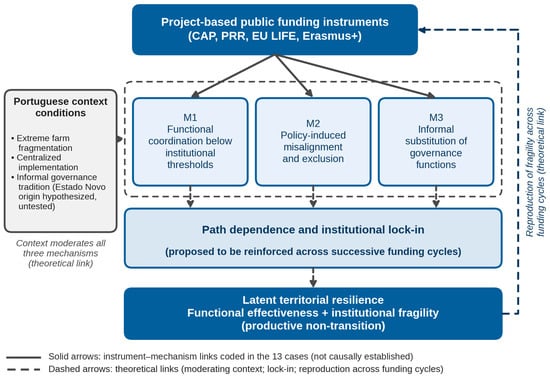
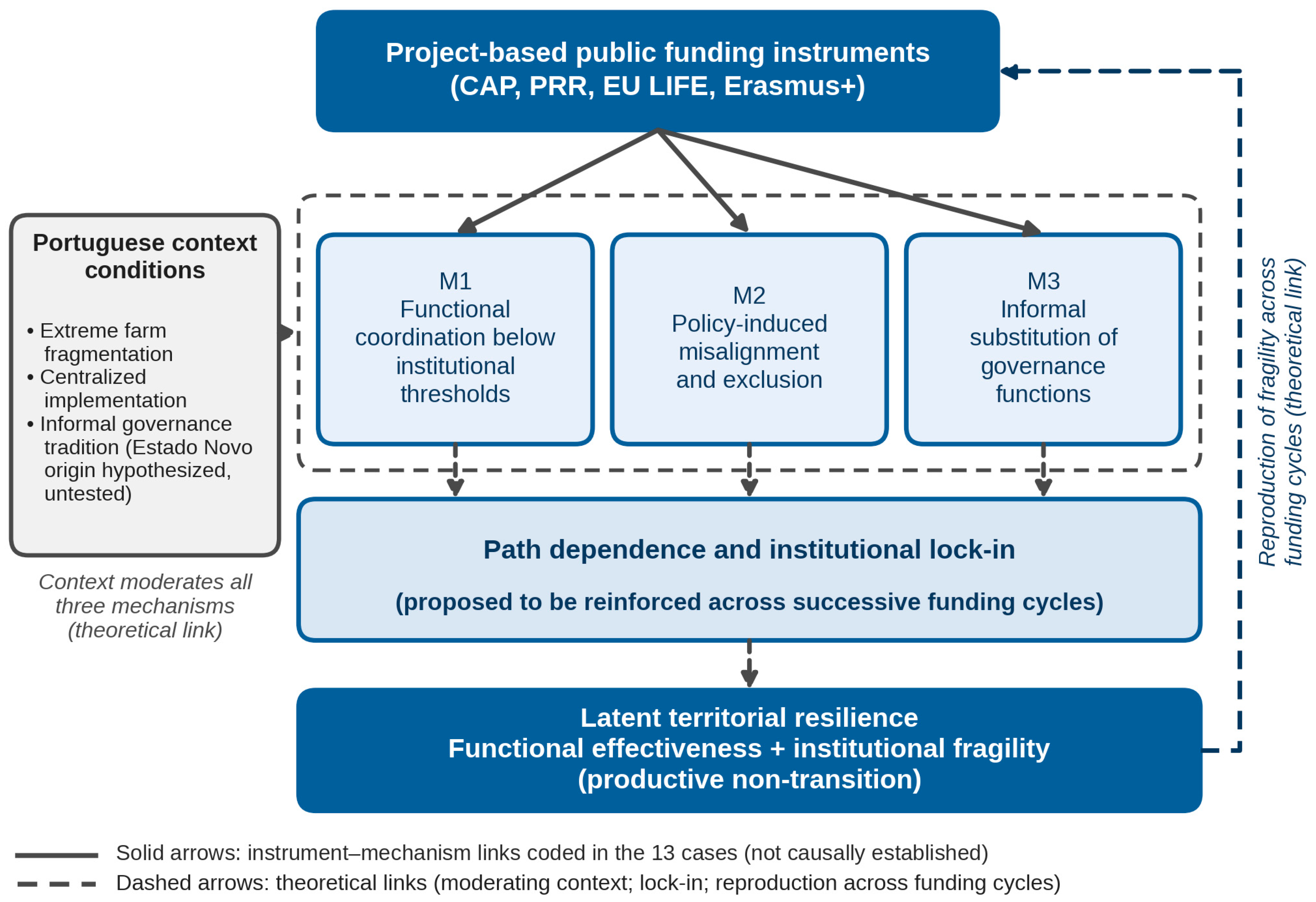

Disclaimer/Publisher’s Note: The statements, opinions and data contained in all publications are solely those of the individual author(s) and contributor(s) and not of MDPI and/or the editor(s). MDPI and/or the editor(s) disclaim responsibility for any injury to people or property resulting from any ideas, methods, instructions or products referred to in the content. |
© 2026 by the author. Licensee MDPI, Basel, Switzerland. This article is an open access article distributed under the terms and conditions of the Creative Commons Attribution (CC BY) license.