


Abstract
Gender development in Sub-Saharan Africa (SSA) remains influenced by financial, labor market, and institutional conditions that vary across countries. This study examines the relationships of digital financial inclusion (DFI) and female economic participation (FEP) with gender development (GD), focusing on the moderating role of institutional quality (IQI). Using panel data for 15 SSA economies over 2015–2024, the study constructs composite DFI and IQI indices using principal component analysis (PCA) and employs Method of Moments Quantile Regression (MMQR) to investigate heterogeneity across the conditional distribution of GD. Feasible Generalized Least Squares (FGLS), Instrumental Variable Quantile Regression (IVQR), and Two Stage Least Squares (2SLS) estimators are additionally used to assess the robustness and sensitivity to potential endogeneity. The MMQR results indicate that DFI and FEP are positively and significantly associated with GD across the baseline conditional quantiles. Economic development and trade openness also exhibit positive association, whereas urbanization is generally negative and its statistical significance varies across specifications. IQI is generally positively associated with GD, although its statistical significance varies across the models and quantiles. The moderating results of and interaction terms are heterogeneous across the models and quantiles. The findings highlight the relevance of digital financial inclusion and female economic participation for gender development, while indicating that institutional quality conditions these relationships differently across the distribution of gender development. The findings provide insightful policy recommendations to 15 SSA economies.
1. Introduction
Gender development constitutes an important dimension of inclusive and sustainable development because improvements in aggregate economic performance do not necessarily translate into comparable improvements in gender equality, women’s socioeconomic opportunities, and human development [1,2] The human development perspective therefore emphasizes that development extends beyond the availability of economic resources to people’s substantive capabilities and agency to achieve valuable outcomes, including improvements in health, education, and access to economic resources [3,4]. In this context UNDP measures gender development through the gender development index to capture gender disparities in three fundamental dimensions of human development: health, education, and command over economic resources [5] Despite considerable progress in women’s educational attainment and economic participation in many developing economies, persistent gender disparities remain, specifically in access to productive opportunities, economic resources, and labor market opportunities [6] The persistence of these disparities is particularly relevant in SSA economies, where gender outcomes vary considerably across economies and where institutional, financial, technological, and labor market constraints continue to shape women’s economic opportunities. Recent evidence shows that despite progress in gender equality and female labor force participation, substantial disparities remain in access to finance, quality employment, education, health, and economic resources across the region [7,8,9]. Accordingly, understanding the mechanisms through which financial access, women’s participation, and institutional conditions influence gender development remains an important research and policy concern.
One important dimension of this challenge concerns the limited access of women to financial resources and productive economic opportunities. Conventional financial systems in SSA economies remain constrained by geographical distance, transition costs, limited physical banking infrastructure, affordability barriers, and institutional exclusion. The expansion of digital financial services provides an alternative mechanism through which these constraints may be reduced. DFI can facilitate access to payment, saving, transfer, and other financial services without requiring extensive physical banking infrastructure. The evidence from Kenya illustrates that mobile money expansion can improve financial resilience and saving behavior while facilitating occupational mobility among women, specifically through movement from agricultural activities towards business activities [10]. More recently, cross-country evidence has documented a positive nexus between gender-inclusive development and gender-based digital financial inclusion [11], whereas evidence from 42 African economies indicates that financial inclusion is positively associated with women’s human development, with pronounced effects in lower- and middle-income economies [12]. At the same time financial access alone may be insufficient to translate into broader GD gains when women face constraints in entering and remaining in productive activities. Therefore, female economic participation is another important component of the GD process. IQI may further shape these associations by influencing the regulatory environment, enforcing economic rights, market access, and the effectiveness of public institutions. Consequently, this study considers DFI, FEP, and IQI within an integrated framework rather than examining DFI, FEP, and IQI in isolation.
The theoretical foundation of this study is drawn primarily from three main theories. First, financial inclusion theory provides the basis for understanding how broader access to and use of financial services can reduce financial constraints and expand economic opportunities for the individuals who have faced barriers to formal finance. In the context of digital finance, these mechanisms are relevant to women because mobile-based financial services can reduce geographical, informational, and transaction cost barriers to financial participation. Second, endogenous theory complements this perspective by emphasizing the importance of technological progress and human capital in shaping development outcomes. In this perspective digital financial infrastructure can facilitate the allocation of resources and participation in productive activities, while female economic participation denotes an important component of this effective utilization of human resources. Finally, institutional theory documents that the benefits associated with financial and economic participation depend on the quality of the institutional environment. Effective regulations, government capacity, the rule of law, and control of corruption can shape the extent to which individuals can access, use, and benefit from financial and economic opportunities. Therefore, the IQI is conceptualized in this study to assess the potential conditioning mechanism through which digital financial inclusion and female economic participation can be translated into GD.
Moreover, the empirical literature provides important evidence on the individual nexus among financial inclusion, female economic participation, institutional quality, and development, but these strands remain insufficiently integrated. Tripathi and Rajeev [11] provide evidence by constructing gender-based financial inclusion and document a positive nexus between financial inclusion and gender development; however, their study is primarily based on measuring gender-based financial inclusion and identifying its determinants rather than estimating an integrated model in which GD in the development outcome. Similarly, Maruta and Edjigu [12] documented that financial inclusion is positively associated with women’s human development across African economies, while Faton and Nonvide [13] found that digital financial inclusion is associated with lower gender inequality in Africa. These studies establish the relevance of financial inclusion for gender related outcomes but they do not simultaneously incorporate female economic participation and institutional quality into a common gender development framework. On the labor market side, Osinubi and Simatele [14] found that female labor force participation enhances sustainable development in African economies. Although this study provides important evidence on the nexus, the study considered broader sustainable development rather than gender development and digital financial inclusion. Related African evidence shows that institutional quality is relevant to female labor participation and human capital development [7,15].
Despite the growing literature on financial inclusion, female economic participation, and institutional quality in African economies, an important conceptual question remains: how do financial access and economic participation, as distinct but complementary dimensions of women’s capabilities, relate to gender development, and under what institutional conditions might these relationships become stronger or weaker? Existing studies have established the relevance of financial inclusion for women’s human development and gender-related outcomes [8,11,13], examined the relationship between female labor force participation and broader development outcomes [14,16], and investigated the role of governance in shaping financial inclusion and labor market participation [7,17,18]. Nevertheless, these strands of evidence do not establish whether access to digital financial services and participation in economic activities are associated with gender development through distinct channels and whether institutional quality systematically conditions both relationships when gender development is measured through health, education, and command over economic resources.
This study addresses this conceptual gap by distinguishing DFI as a mechanism that potentially expands women’s access to financial resources from FEP as a mechanism that potentially expands their engagement in productive economic activities and income generation. It further conceptualizes IQI as a potential institutional conversion condition that may influence the extent to which these opportunities are associated with GD outcomes. Moreover, the existing studies have predominantly relied on mean-based estimators, leaving it less understood whether these nexuses differ across GD distributions. Therefore, this addresses these gaps by developing an integrated DFI-FEP-GD framework for SSA economies and applying the Method of Moments Quantiles Regression (MMQR) to examine the heterogeneous nexuses at different quantiles of the GD distribution. Based on the above discussion, the study addresses four research questions:
RQ1: Is digital financial inclusion associated with gender development in SSA economies?
RQ2: Is female economic participation associated with gender development in SSA economies?
RQ3: Does institutional quality condition the relationship between digital financial inclusion and gender development?
RQ4: Does institutional quality condition the relationship between female economic participation and gender development?
This study contributes to the existing literature in several ways: First, it contributes to the literature by developing and empirically examining a capability-based framework that distinguishes DFI from FEP as two related but theoretically distinct dimensions of GD. While DFI captures access to and use of financial resources, EP reflects women’s engagement in productive economic activities and income generation. The study further examines whether IQI is associated with GD directly and whether it conditions the relationships between DFI and FEP with GD. This distinction is important because the availability of financial resources and participation in economic activities do not automatically translate into improvements in women’s health, education, and command over economic resources. By examining these relationships across the conditional distribution of GD in SSA economies, the study provides evidence on the distributional patterns of these associations and the extent to which the proposed institutional conditioning mechanisms are supported empirically. Second, the study employs a DFI index developed using factors (1) mobile money accounts, (2) active mobile money accounts, (3) number of mobile money transactions, and (4) the value of mobile money transaction employing Principal Component Analysis (PCA) to assess digital finance access. Third, the study extends the literature by examining the institutional quality not only as a direct correlate of GD but also as a potential moderator of the DFI-GD and FEP-GD nexus. Fourth, the study contributes methodologically by applying the advanced MMQR estimator to identify distributional heterogeneity in GD. In addition, it uses Fully Generalized (FGLS), Instrumental Variable Quantile Regression (IVQR), and Two Stage Least Squares (2SLS) estimators to assess the robustness of the findings and their sensitivity to potential endogeneity. Finally, by focusing on SSA economies, it provides insightful policy recommendations to governments and stakeholders.
2. Theoretical and Empirical Review and Hypothesis Development
2.1. Theoretical Foundation
This study integrates the capability approach, the financial inclusion perspective, and institutional theory into a unified framework for explaining gender development. Sen and Sen’s [19] capability approach provides the overarching development criterion, such that financial resources and economic opportunities matter insofar as they expand women’s substantive capabilities in health, education, and command over economic resources. It therefore predicts that digital financial inclusion and female economic participation may be positively associated with gender development, while recognizing that these relationships depend on women’s ability to convert available resources and opportunities into actual developmental achievements. The financial perspective identifies the specific financial access mechanism underlying the expected DFI-GD relationship. By reducing geographical and transactional barriers and facilitating payments, saving, and financial management, digital financial services may expand women’s economic agency. Nevertheless, these benefits may remain limited where digital access is unaffordable, digital literacy is inadequate and women lack control over financial resources. In contrast, FEP represents a labor market and productive participation mechanism through which women may obtain earnings, work experience, and greater economic autonomy. Its development implications depend on employment quality, remuneration, and women’s ability to retain and control their earnings.
Institutional theory [20] adds a distinct conditioning mechanism by explaining why similar financial and economic opportunities may generate different developmental outcomes across institutional environments. Effective regulations, legal protection, public service delivery, and enforcement of equal rights may enable women to convert digital financial access and economic participation into improvements in GD. This reasoning motivates examining IQI both as a direct correlate of GD and as a moderator of the DFI-GD and FEP-GD relationships. However, institutional complementarity is not the only plausible mechanism. Where conventional institutions are weak, digital services may partly substitute for inadequate financial infrastructure, potentially reducing the marginal contribution of stronger institutions. Accordingly, positive moderation represents a theoretically motivated expectation that requires empirical testing rather than an inevitable consequence of institutional quality.
The Complementary Capability-Enhancing Role of Digital Financial Inclusion and Female Economic Participation
Although DFI and FEP may both expand women’s socioeconomic opportunities, they operate through distinct but complementary channels. DFI primarily concerns women’s capacity to access and use financial resources, whereas FEP reflects their engagement in income-generating and productive economic activities. Accordingly, DFI can be understood as a financial access mechanism that expands the resources available to women. FEP represents an economic participation mechanism through which women may generate income, accumulate experience, and strengthen their economic agency.
In the context of SSA economies, digital financial services may reduce geographical and transactional cost barriers associated with conventional banking, facilitates payment and saving, and support the management of financial resources. These functions may help women overcome constraints on entrepreneurship and economic activity. Nevertheless, the availability of digital financial services does not automatically translate into improved gender development, particularly when women face digital literacy limitations, affordability constraints, and restrictive social norms, and limited control over household finances. By contrast, female economic participation can expand access to earnings, productive experience, and economic decision making. However, its developmental implications depend partly on renumerations, job security, employment conditions, and the extent to which women can retain and control the income they generate. Participation in low-paid, insecure, and unpaid activities may therefore produce more limited improvements in women’s substantive capabilities.
Moreover, institutional quality provides an additional enabling dimension by shaping the conditions under which financial and economic opportunities can be converted into substantive development achievements. Drawing on institutional theory, regulatory effectiveness, governance capacity, the rule of law, and control of corruption may influence the security, accessibility, and distribution of economic opportunities. Stronger institutions may support DFI by strengthening consumer protection, enforcing financial services, improving regulatory oversight, and increasing confidence in digital financial services. Similarly, they may support FEP by protecting labor rights, reducing discriminatory barriers, improving the enforcement of equal opportunity provisions, and facilitating access to public services that enable women to participate in economic life. From a capability perspective, institutional quality therefore functions as a potential conversion condition. It may influence whether access to finance and participation in economic activities translate into improvements in health, education, and command over economic resources, which are dimensions captured by gender development.
However, the conditioning role of institutional quality need not be uniform. Where formal institutions are weak, digital financial services may partly compensate for deficiencies in conventional financial infrastructure by enabling transactions without an extensive physical banking network. Conversely, stronger aggregate governance may not eliminate discrimination, unequal household bargaining power, and the concentration of women in vulnerable employment. Consequently, institutional quality may be directly associated with gender development without necessarily strengthening the marginal association of DFI and FEP with GDP. This distinction separates the direct institutional relationship from the moderation mechanism and provides a theoretical basis for testing the DFI × IQI and FEP × IQI interaction terms independently.
Taken together, these theoretical perspectives provide the basis for examining both the direct relationships of DFI, FEP, and IQI with GD and the potential moderating roles of IQI. DFI may be associated with GD through improved access to and management of financial resources, whereas FEO may be associated with GD through income generation, productive engagement, and greater economic agency. IQI may my influence GD directly and potentially condition the extent to which financial access and economic participation are associated with GD outcomes. Accordingly, this study empirically examines the direct associations and interaction effects using a mobile-money-based DFI index, an institutional quality index, and female economic participation across sub-Saharan African economies. The MMQR allows these relationships to be examined across different points of the conditional GD distribution, recognizing that the relative importance of financial access, economic participation, and institutional conditions may varies with countries’ levels of GD. The theoretical framework of this study is presented in Figure 1.
Figure 1.
Theoretical framework of the study.
2.2. Empirical Review and Hypothesis Development
2.2.1. Digital Financial Inclusion and Gender Development
The empirical literature generally suggests that financial inclusion can improve women’s welfare and development outcomes, although the magnitude of the relationship varies across measures and country contexts. Osei-Assibey and Ababio [21] examined financial inclusion and human development in frontier economies, while Maruta and Edjigu [12], using data from 42 African countries, found that financial inclusion was positively associated with women’s human development, with access to financial services particularly influential. Dianda et. al. [8], similarly reported that financial inclusion improved inclusive human development across 35 SSA countries, with stronger effects for women’s financial empowerment and countries with lower initial development. At the household level, Suri and Jack [10] found that mobile money contributed to higher consumption and reduced extreme poverty in Kenya. Adegbite and Machethe [22] highlighted the potential of financial inclusion to address gender-related constraints among smallholder farmers in Nigeria. Research on mobile money and women’s economic empowerment across several African and South Asian countries has also identified financial-management practices as a possible channel through which digital services support empowerment. Faton and Nonvide [13] found that digital financial inclusion was associated with reduced gender inequalities across 36 African countries, while Asaloko and Mondjeli [23] highlighted the digital divide as a constraint on women’s financial inclusion. Collectively, these studies provide a basis for expecting DFI to be positively associated with gender-related development outcomes. Nevertheless, existing evidence should be interpreted cautiously because financial inclusion, women’s empowerment, and gender development capture distinct dimensions of well-being. Moreover, aggregate mobile-money indicators measure digital financial activity but do not reveal women’s actual access to or control over financial resources. This study addresses this gap by examining the relationship between digital financial inclusion and gender development in 15 sub-Saharan African economies over 2015–2024, using a quantile-based approach to account for potential heterogeneity across the distribution of GD. Accordingly, the following hypothesis is proposed:
H1.
Digital Financial Inclusion is positively associated with gender development in SSA economies.
2.2.2. Female Economic Participation and Gender Development
Female economic participation can contribute to gender development by expanding women’s access to income, productive resources, and economic decision-making. Nevertheless, empirical studies show that its implications depend on the nature of employment and the broader economic and social environment. Idowu and Owoeye [24] examined the determinants of female labor-force participation in African countries and showed that participation is associated with a range of macroeconomic conditions. Anyanwu and Augustine [25] investigated gender equality in employment in Africa, emphasizing the importance of understanding employment disparities in their economic context. Osinubi and Aremo [16], examining 43 SSA countries, found a U-shaped relationship between female labor-force participation and economic development, indicating that the relationship is not necessarily linear. Backhaus and Loichinger [26] showed that rising educational enrolment can temporarily depress measured female labor-force participation, illustrating that lower participation does not always indicate weaker capabilities. Zawaira et al. [27] found that historical social institutions and gender attitudes influence female employment outcomes in SSA. Umar et al. [7] reported that governance dimensions have differing relationships with female labor-force participation across 48 SSA countries. In related research, Asongu and Le Roux [28] and Asongu and Odhiambo [29] found that mobile-money innovations may support women’s self-employment and business activities, although the estimated relationships vary across quantiles. These findings collectively indicate that female economic participation may support women’s development, but its effects are shaped by structural, social, and institutional conditions.
Despite this evidence, female economic participation should not be treated as equivalent to gender development. Labor-force participation measures involvement in the labor market but does not necessarily capture earnings, job security, occupational status, unpaid care responsibilities, or control over income. Furthermore, evidence that participation contributes to economic growth does not by itself establish that women experience corresponding improvements in health, education, or command over resources. The nonlinear relationship reported by Osinubi and Aremo [16], together with the social and institutional constraints identified by Zawaira et al. [27] and Umar et al. [7], also cautions against assuming uniform benefits across countries. The present study addresses this limitation by examining FEP as a separate explanatory variable in a gender-development model, rather than treating economic participation as a direct measure of gender equality. The expected positive association reflects the possibility that participation expands women’s economic resources and autonomy, while recognizing that the extent of these gains must be established empirically. A summary of the literature is presented in Appendix B Table A9.
H2.
Female economic participation is positively associated with gender development in SSA economies.
2.2.3. Institutional Quality and Gender Development
Institutional quality may contribute to gender development by protecting individual rights, enforcing laws, strengthening public accountability, and improving access to essential services. However, empirical evidence indicates that institutional effects vary across governance dimensions and development contexts. Enchill [30] found that female representation and institutional quality were associated with human development in Africa, while Umar et al. [7] reported differing relationships between individual governance indicators and female labor-force participation across sub-Saharan African countries. Zawaira et al. [27] further demonstrated that historical social institutions and gender attitudes influence women’s employment outcomes, suggesting that formal governance reforms may not fully overcome entrenched social constraints. Similarly, Osakede et al. [31] highlighted cross-country and gender-related heterogeneity in African human development. In broader international evidence, Zeqiraj and Sohag [32] linked institutional quality to access to and use of financial services, while Ouechtati [17] showed that institutional quality conditions the relationship between financial inclusion and inequality. Onwe et al. [18] examined institutional quality in the financial inclusion–female labor-force participation nexus in SSA, whereas Osinubi and Simatele [14] found that governance moderated the relationship between female economic participation and sustainable development in Africa. Collectively, these studies establish the relevance of institutional conditions but provide limited direct evidence on the relationship between institutional quality and a composite gender-development indicator.
Institutional quality may also condition the extent to which DFI and FEP translate into gender-development gains. Regarding DFI, Maruta and Edjigu [12] and Dianda et. al. [8] found that financial inclusion was associated with women’s human development and inclusive human development, respectively, while Osei-Assibey et al. [21] linked financial inclusion to human development in frontier economies. Faton and Nonvida [13] examined digital financial inclusion and gender-related inequality in Africa, and Suri and Jack [10] demonstrated the potential of mobile money to improve long-term welfare in Kenya. These studies, together with Ouechtati [17] and Onwe et al. [18], support examining institutional conditions as a potential moderator, although they do not all directly estimate the DFI–GD interaction. Two competing mechanisms are plausible: effective regulation, consumer protection, and legal enforcement may complement digital finance by enabling users to benefit more fully from financial services; alternatively, digital finance may compensate for weaknesses in conventional financial institutions, making its marginal benefits greater where institutional quality is lower. Similarly, stronger institutions may reinforce the relationship between FEP and gender development by protecting labor rights, improving access to productive resources, and supporting public-service delivery. Nevertheless, findings from Osinubi and Simatele [14], suggested that governance effects can vary across regions and institutional dimensions. Furthermore, research by Idowu and Owoeye [24], Anyanwu and Augustine [25], and Ofori et al. [33] highlights the importance of economic, social, and digital conditions for women’s employment and entrepreneurial opportunities, but does not directly establish whether institutional quality strengthens the FEP–GD relationship.
These limitations motivate the examination of both the direct association between institutional quality and gender development and its potential moderating roles in the DFI–GD and FEP–GD relationships across SSA economies. Stronger institutions are expected to support gender development directly by improving rights protection and public-service provision, while potentially strengthening the developmental benefits of digital financial access and women’s economic participation. However, the possibility that digital finance substitutes for weak institutions, together with evidence of heterogeneous governance effects, means that the proposed positive interactions should be tested empirically rather than assumed. Accordingly, the following hypotheses are proposed:
H3.
Institutional quality is positively associated with gender development in SSA economies.
H4.
Institutional quality positively moderates the relationship between digital financial inclusion and gender development in SSA economies.
H5.
Institutional quality positively moderates the relationship between female economic participation and gender development in SSA economies.
3. Materials and Methods
3.1. Data and Variables
This study examines the effect of digital financial inclusion and female economic participation on gender development across 15 SSA economies over the time period 2015–2024, while accounting for economic development, trade openness, urbanization, and control variables. The bassline regression model (Model 1) is expressed as under in Equation (1).
Model (1): Baseline
where denotes the gender development index; refers to digital financial inclusion. This study constructed a DFI index using PCA following the composite index approach used in the previous literature, such as Khera et al. [34] who established a methodological precedent for measuring digital financial inclusion through a composite index of digital financial access and usage. More directly, Ugwuanyi et al. [35] incorporated mobile money transaction frequency and transaction volume into a PCA-based assessment of DFI in SSA economies. Similarly, Zheng and Rahman et al. [36] constructed FinTech-driven inclusive finance indices using PCA and incorporated indicators of active mobile money accounts, transaction frequency, and transaction values. Therefore, based on previous studies, this study constructs DFI index from four indicators: (1) registered mobile-money accounts per 1000 adults (REGMM), active mobile money accounts per 1000 adults (ACTMM), the number of mobile money transactions per 1000 adults (MMTRANS), and the value of mobile money transactions as a percentage of GDP (MMVALUE). These indicators capture complementary dimensions of mobile money penetration, account activity, transaction intensity, and the economic scale of mobile money usage. The use of population-adjusted account and transaction indicators, together with transaction value expressed relative to GDP, improves comparability across countries with different adult populations and economic size. Before conducting PCA, each indicator is standardized using the z score transformation, where by its simple mean is subtracted and the resulting value is divided by its standard deviation. This procedure placed all indicators on a common scale and prevented differences in their original measurement units from disproportionately influencing the index. PCA is subsequently performed on the standardized indicators, which is equivalent to using the correlation matrix. PCA outcomes are presented in Appendix A. The correlation matrix outcomes in Table A1 shows positive and statistically significant correlation among all four indicators with correlations coefficient raining from 0.490 to 0.854 (p < 0.01). These positive correlations indicate that the indicators share a common dimension and provide an empirical basis for applying PCA. The overall Kaiser–Meyer–Olkin (KMO) statistic is 0.7129, indicating acceptable sampling adequacy as shown in A4. In Appendix A Table A2, the first principal component has an eigenvalue of 3.089 and explains 77.2% of the total variance. The eigenvalues of the remaining components are 0.646, 0.142, and 0.123; all are below the conventional Kaiser retention threshold of one. The first component is therefore retained as the DFI measure. The scree plot (see Appendix A Figure A1) provides as an additional visual assessment of the component retention decision. First, component eigenvectors reported in Appendix A Table A3 are positive for all four indicators: 0.528 for REGMM, 0.465 for ACTMM, 0.513 for MMTRANS, and 0.492 for MMVALUE. These results indicate that all four indicators contribute to a common component representing digital financial activity. Moreover, represents female economic participation, and represents the k-th control variables (economic development, trade openness, and urbanization) with coefficient , and is the error term. i represent the sample economies (Benin, Botswana, Eswatini, Ghana, Lesotho, Madagascar, Mali, Mauritius, Namibia, Niger, Rwanda, Senegal, Tanzania, Togo, and Zambia) and t refers to the time period of the study (2015–2024). The sample is determined by the availability of the data required to construct the DFI and IQI indices and to estimate the empirical models using gender development, female economic participation, and the control variables. The selection of sample economies is therefore data constrained rather than a random selection of SSA economies. The availability from IMF, WDI, and UNDP enables the use of consistently defined indicators across the selected economies. Nevertheless, the reliance on data availability in determining the sample may introduce selection bias if countries included in the analysis differ systematically from excluded economies in terms of digital financial infrastructure, institutional quality, economic development, and gender related outcomes. Although the presence and extent of such bias may not have been formally assessed, the possibility that the selected sample may not fully represent the broader SSA economies cannot be ruled out. Accordingly, the findings of this study are interpreted in the context of 15 sampled economies and the 2015–2024 study period.
Furthermore, the study investigates the moderating role of institutional quality between digital financial inclusion and gender development and between female economic participation and gender development. The IQI is constructed from six governance indicators including voice and accountability (VA), political instability and absence of violence (PV), governance effectiveness (GE), regulatory quality (RQ), rule of law (RL), and control of corruption (CC). Before conducting PCA, each indicator is standardized using the z score transformation, whereby its simple mean is subtracted and the resulting value is divided by its standard deviation. This procedure placed all indicators on a common scale and prevented differences in their original measurement units from disproportionately influencing the index. PCA is subsequently performed on the standardized indicators, which is equivalent to using the correlation matrix. As shown in Appendix B Table A5, the pairwise corrections are positive and range from 0.572 to 0.944, indicating substantial share variation among the governance measures. The overall KMO statistic is 0.8592, suggesting strong sampling adequacy for PCA (see Appendix B Table A8). Appendix B Table A6 shows that the first principal component has an eigenvalue of 5.024 and explains 83.7% of the total variance across the six indicators. The remaining eigenvalues are 0.484, 0.251, 0.157, 0.058, and 0.026, all below one. Together with the scree plot in Appendix B Figure A2, these results support retaining the first principal component as the composite IQI. The first component eigenvectors reported in Appendix B Table A7 are positive across all six indicators, ranging from 0.353 or VA to 0.438 for RL. Thus, the first component captures a common dimension of institutional quality shared by the six governance measures. The moderation models (Model 2, 3, and 4) are expressed in Equations (2), (3), and (4), respectively.
Model (2): (DFI × IQI) moderation term
Model (3): (FEP × IQI) moderation term
Model (4): (DFI × IQI) and (FEP × IQI) joint moderation
where (in Equations (2)–(4)) denotes the institutional quality index, refers to the interaction term, and represents the interaction term. The study employs data obtained from three major sources: The International Monetary Fund (IMF), World Development Indicators (WDI), and the United Nations Development Programme (UNDP). Table 1 summarizes the definitions, measurements, and sources of all variables. Moreover, Figure 2 illustrates the kernel density distribution of the study variables, offering a visual assessment of their distributional characteristics.
Table 1.
Variables summary.
Figure 2.
Kernel density distribution.
3.2. Estimation Strategy
The empirical estimation strategy is implemented in three stages: First, a series of diagnostic tests is conducted to assess the statistical characteristic and underlying properties of the data. Second, the appropriate econometric models are selected based on the outcomes of the diagnostic tests. Third, additional estimation techniques are employed as robustness checks and to address potential endogeneity concerns.
3.2.1. Stage 1: Preliminary Diagnostic Tests
First, the study employs the cross-sectional dependence test proposed by Pesaran [37] to assess the interdependencies across the SSA economies. Such dependence may arise because these economies are exposed to common external shocks, regional economic conditions, fluctuations in international financial and commodity markets, and the diffusion of technological and digital financial innovations across the region. In addition, increasing economic and financial interconnectedness among SSA economies may cause developments in one country to influence outcomes in other countries. Therefore, ignoring such cross-sectional dependence may lead to biased estimates and unreliable statistical inferences. Consequently, accounting for cross-sectional dependence is essential to ensure that the selected econometric estimators appropriately reflect the interconnected nature of the SSA economies in this study.
Second, given the potential presence of cross-sectional dependence, the study employs the second-generation panel unit root tests, namely the “Cross- Sectionally Augmented Dickey–Fuller (CADF)”, test to assess the stationarity properties of the variables. These tests account for cross-sectional dependence and provide a more reliable assessment of the integration properties of the variables. Ignoring stationarity may lead to spurious regression outcomes. Therefore, establishing the stationary properties of the variables provides an important basis for selecting the appropriate econometric estimation technique for the subsequent analysis.
Third, the study investigates slope heterogeneity using the Slope Heterogeneity tests proposed by Pesaran and Yamagata [38] and Blomquist and Westerlund [39]. This test examines whether the relationships between the explanatory variables and gender development differ across the sampled economies. The presence of the heterogeneous slopes indicates that the effects of digital financial inclusion, female economic participation, and institutional quality on gender development may vary according to country-specific economic, institutional, technological, and socioeconomic characteristics. Therefore, accounting for slope heterogeneity is essential to avoid imposing the assumption of a homogeneous relationship across the economies and to ensure that the selected econometric methods adequately capture the diverse characteristics of the SSA economies.
Fourth, to assess the relationships among the variables and the potential presence of multicollinearity, this study uses a pairwise correction matrix and Variance Inflation Factor (VIF). The correlation matrix is examined to identify the direction and strength of the linear associations among variables. While, the VIF test is employed to assess potential multicollinearity may inflate the variances of the estimated coefficients and reduce the precision of statistical inference. Therefore, the VIF results are used to determine whether the explanatory variables exhibit problematic levels of linear dependence before proceeding with the main estimation.
Fifth, the study examines the distributional properties of the variables using the Shapiro–Wilk and Shapiro–Francia tests for normality. These tests assess the null hypothesis; the normality tests provide additional evidence regarding the distributional characteristics of the variables and help determine whether the data exhibit significant departures from normality.
Finally, the study examines whether a stable long-run equilibrium relationship exists among the variables. Failure to account for cointegration may result in misleading inferences regarding their long-run relationships. To provide comprehensive evidence the study employs panel cointegration tests developed by Westerlund [40], Kao [41] and Pedroni [42]. The Kao and Pedroni tests provide residual-based evidence of panel cointegration, while the Westerlund test adopts an error correction-based approach to examine whether deviation from long-run equilibrium among the SSA economies; particular emphasis is placed on the Westerlund test because its framework is more suitable for panels characterized by interdependence across cross-sectional units. The Kao and Pedroni tests are therefore used as complementary to assess the robustness of the cointegration findings. Establishing the existence of a long-run relationship among digital financial inclusion, female economic participation, institutional quality, and gender development provides an important basis for the subsequent empirical analysis.
3.2.2. Stage 2: Econometric Model Selection
The choice of estimator is guided by the structure of the dataset, the distributional objectives of the study, and the diagnostic properties of the panel. The sample comprises 15 SSA economies observed annually from 2015 to 2024. Furthermore, the preliminary diagnostics provide complementary information for evaluating the empirical specification. The cross-sectional test shows that the sampled economies are exposed to common shocks, while slope heterogeneity tests provide evidence of heterogeneity in the slope of coefficients, unit root estimations show the mixed order of integration, and the panel cointegration test shows the presence of a long-term equilibrium relationship. This requires an estimation strategy that is appropriate for the available sample while allowing the relationships between DFI, FEP, IQI, and GD to vary across the conditional distribution of the dependent variable.
Accordingly, in stage 2, the study employs the Method of Moments of Quantile Regression (MMQR) proposed by Machado and Silva [43] as the principal estimation to examine the effects of digital financial inclusion and female economic participation on gender development across the conditional distribution of gender development. Unlike conventional mean-based estimators, which estimate the average effect of the explanatory variables on gender development, MMQR provides a more comprehensive heterogeneous assessment. Second, MMQR framework accommodates unobserved individual specific heterogeneity and allows the conditional distribution of the gender development to vary systematically with digital financial inclusion and female economic participation. This feature of MMQR is particularly relevant for the heterogeneous economic, institutional, technological and socioeconomic conditions prevailing across the SSA economies. Consequently, MMQR estimates the 25th, 50th, and 75th conditional quantiles, representing the lower, middle, and upper portions of the conditional distribution of gender development, respectively. Following Machado and Silva [43], the conditional distribution of gender development can be expressed using a location-scale model:
MMQR Model (1): Baseline
MMQR Model (2): (DFI × IQI) moderation term
MMQR Model (3): (FEP × IQI) moderation term
MMQR Model (4): (DFI × IQI) and (FEP × IQI) joint moderation
where Equations (6)–(8) extend the baseline MMQR specification by incorporating institutional quality as a potential moderator of the relationship between digital financial inclusion, female economic participation, and gender development and , respectively. refers to the conditional th quantile of the gender development for country i in year t and represents the 25th, 50th, and 75th conditional quantiles. represent country-specific and year effects respectively.
3.2.3. Stage 3: Robustness Checks and Potential Endogeneity
To assess the robustness of the baseline findings and examine their sensitivity to potential endogeneity, the study employs Fully Generalized Least Squares (FGLS), Instrumental Variable Quantile Regression (IVQR), and Two Stage Least Squares (2SLS) estimators. Potential endogeneity may arise from reverse causality, omitted variables, or joint determination of DFI and GD. As a supplementary robustness, the IVQR and 2SLS specifications use the first lag of DFI as an internal instrument for its current value. The relevance of the lagged instrument is assessed using first-stage regression results and conventional identification and weak instrument diagnostics. However, instrument relevance alone does not establish the validity of the exclusion restriction. In particular, past financial development may influence current GD through persistent financial access, accumulated savings, business opportunities, and other channels that are not fully captured by current DFI. Consequently, the assumption that lagged DFI affects current GD exclusivity through current DFI cannot be established solely from the first-stage statistics. Accordingly, the IVQR and 2SLS estimations are interpreted as supplementary robustness evidence rather than definitive causal estimates. The analysis examines whether the estimated relationship between DFI and GD remains positive and statistically significant under instrumental-variable specifications. The methodological flow of the study is illustrated in Figure 3.
Figure 3.
Methodology strategy.
4. Results
Table 2 reports the descriptive statistics, CD, and CADF test results. GD has a mean of 0.924 with a standard deviation of 0.061, indicating relatively high average gender development across SSA economies. The mean FEP of 58.28% reflects substantial heterogeneity in female economic participation across the region. The means of DFI and IQI are close to 0 with standard deviation ranging from −1.172 to 3.293 and IQI from −4.375 to 5.101, respectively, confirming pronounced heterogeneity in DFI and IQI across SSA economies. Moreover, the outcomes of the CD test are significant for all variables except TR. This finding suggests that country-specific developments are interconnected through common shocks and regional spillovers. The outcomes of the CADF unit root test shows mixed order of integration I(0) and I(1).
Table 2.
Descriptive Statistics, CD, and CADF test outcomes.
Table 3 rejects the null hypothesis of homogeneous slopes. The Blomquist and Westerlund [39] test yields Delta = 33.835 (p < 0.01) and adj. Delta = 6.126 (p < 0.01), while the Pesaran and Yamagata [35] test yields Delta = 3.845 (p < 0.01) and adj. Delta = 6.142 (p < 0.01). These results indicate that the effect of DFI and FEP on GD varies significantly across countries, justifying the use of the MMQR estimator, which allows slope coefficients to vary across quantiles.
Table 3.
Slope heterogeneity test.
Table 4 shows the correlation matrix where GD is significantly correlated with IQI (0.5757, p < 0.01), GDP (0.5740, p < 0.01), TR (0.6288, p < 0.01), and UR (0.3212, p < 0.01). These correlations suggest that higher institutional quality, economic development, trade openness, and urbanization are related with higher gender development. Interestingly, DFI shows a weak positive correlation with GD (0.1312), while FEP shows a weak negative correlation (−0.1600, p < 0.10). The negative correlation between FEP and GD may appear counterintuitive but could reflect the fact that in many SSA countries, high female labor force participation is often driven by economic necessity rather than empowerment, and may be concentrated in low-paying informal sectors. The correlation between the independent variables is generally low, except for GDP and IQI (0.7758, p < 0.01), which is expected given that higher-income countries tend to have stronger institutions.
Table 4.
Correlation matrix.
Table 5 presents multicollinearity using Variance Inflation Factors and Tolerance statistics. The Mean VIF is 2.04 for the baseline model and 2.18 for the joint moderation model, with Maximum VIFs of 3.1000 and 3.5600, respectively. All individual VIF values are well below the threshold of 10, and all Tolerance values exceed 0.1. These results indicate that multicollinearity is not a concern in this study.
Table 5.
Multicollinearity.
Table 6 shows long term relationship between variables. The Kao test (Modified Dickey–Fuller t = 2.824, p < 0.01; Augmented Dickey–Fuller t = 2.757, p < 0.01), the Westerlund test (Variance ratio = 1.6013, p < 0.10), and the Pedroni test (Modified Phillips-Perron t = 4.169, p < 0.01; Phillips-Perron t = 4.620, p < 0.01; Augmented Dickey–Fuller t = 5.186, p < 0.01) all reject the null hypothesis of no cointegration. This confirms a long-run equilibrium relationship among the variables, justifying the estimation of the models in their level form.
Table 6.
Cointegration test outcomes.
Table 7 strongly rejects the null hypothesis of normality for all variables (Shapiro–Wilk and Shapiro–Francia. The Shapiro–Wilk W statistics where all variables are significant at the 1% level, except UR which is significant at the 5% level. Figure 4 illustrates the graphical representation of the non-normality of variables of the study.
Table 7.
Normality test.
Figure 4.
QQ plots of variables.
Table 8 presents the MMQR results across three quantiles (Q25, Q50, Q75) for the four models, capturing the heterogeneous effects of the independent variables across different levels of gender development. In Model 1 (Baseline), DFI exhibits a positive and statistically significant association with GD across all three quantiles. The DFI coefficients decrease from 0.0298 at Q25 to 0.0218 at Q50 and 0.0173 at Q75, with all coefficients significant at the 1% level. This pattern suggests that DFI is positively associated with GD throughout the conditional distribution, although its estimated association is stronger at the lower quantile than at the median and upper quantiles. This finding highlights the potential importance of expanding access to and use of digital finance services in supporting GD, particularly in countries located towards the lower end of the conditional GD distribution. Moreover, FEP also exhibits a positive and statistically significant association with GD across all three quantiles. Its coefficient declines from 0.0222 at Q25 to 0.0207 at Q50 and 0.0199 at Q75. These results suggest that greater FEP is consistently associated with improved gender development, with a relatively stronger estimated association at the lower quantiles. GDP is positive and significant across all quantiles, with coefficients ranging from 0.0286 to 0.0277. TO is also positive and significant throughout the distribution. In contrast, UR exhibits a negative association with GD, significant at the 10% level at Q25 and Q50 but insignificant at Q75.
Table 8.
MMQR outcomes.
Model 2 (DFI × IQI Moderation) introduces institutional quality and its interaction term with DFI to examine whether IQI moderates the relationship between DFI and GD. The coefficient of DFI remains positive and statistically significant at the 1% level across all three quantiles. Its estimated magnitude declines from 0.0229 at Q25 to 0.0198 at Q50 and 0.0179 at Q75. This suggests that the positive association between DFI and GD persists after accounting for IQI and its interaction with DFI. IQI has a positive and statistically significant coefficient across all three quantiles. The estimated coefficients are 0.0082 at Q25, 0.0079 at Q50, and 0.0077 at Q75. The coefficient at Q25 is significant at the 5% level, whereas those at Q50 and Q75 are significant at the 1% level. These findings suggest that stronger institutional quality is positively associated with GD throughout the conditional distribution. Moreover, the interaction term (DFI × IQI) reveals a more heterogeneous pattern. The interaction coefficient is positive and statistically significant at the 10% level at Q25 (0.0047), but statistically insignificant at Q25 (0.0014) and Q75 (−0.0006). This suggests that the positive moderating association of institutional quality with the DFI-GD relationship is most evident at the lower quantile. At the median and upper quantiles, the estimates do not provide sufficient evidence that IQI significantly moderates the DFI-GD relationship. FEP remains positive and statistically significant across all three quantiles. GDP and TR also retain positive and statistically significant coefficients, while UR is negative and statistically significant across the distribution.
Model 3 (FEP × IQI Moderation) examines whether institutional quality moderates the association between FEP and GD. DFI remains positive and statistically significant at the 1% level across all three quantiles. Its coefficients decline from 0.0274 at Q25 to 0.0228 at Q50 and 0.0204 at Q75, indicating that the positive association between DFI and GD persists in this specification, although its estimated magnitude decreases across the quantiles. FEP is also positive and statistically significant at the 1% level across all three quantiles. Similarly, IQI has a positive coefficient at all three quantiles. Its estimated association is statistically insignificant at Q25 (0.0117) but significant at the 5% level at Q50 (0.0120) and Q75 (0.0121). This indicates that the positive association between IQI and GD is statistically evident at the median and upper quantiles, but not at the lower quantile.
The interaction term (FEP x IQI) has negative coefficients across all three quantiles, with estimates of −0.0073 at Q25, −0.0078 at Q50, and −0.0081 at Q75. However, the statistical significance of these estimates varies across the conditional distribution: the interaction is statistically insignificant at Q25 but negative and statistically significant at the 10% level at Q50 and Q75. These findings provide evidence of negative moderating association of institutional quality with the relationship between FEP and GD, particularly at the median and upper quantiles. Specifically, the negative interaction coefficients suggest that the positive conditional relationship between FEP and GD becomes weaker as institutional quality increases, holding the other variables constant. Nevertheless, the absence of statistical significance at Q25 indicates that this moderating relationship is not uniformly supported across all three quantiles.
Model 4 (Joint Moderation) incorporates both interaction terms simultaneously to examine whether IQI moderates the relationships of DFI and FEP with GD when both mechanisms are considered together. DFI remains positive and statistically significant at the 1% level across all three quantiles. Its coefficient is 0.0245 at Q25, 0.0237 at Q50, and 0.0232 at Q75. These results suggest that DFI maintains a positive association with GD after accounting for both moderation channels. FEP also remains positive and significant at the 1% level across all quantiles. Its coefficient declines from 0.0192 at Q25 to 0.0173 at Q50 and 0.0164 at Q75. These results suggest that DFI maintains a positive association with GD after accounting for both moderation channels. FEP also remains positive and significant at the 1% level across all quantiles. Its coefficient declines from 0.0192 at Q25 to 0.0173 at Q50 and 0.0164 at Q75. IQI has a positive coefficient throughout the distribution. However, its coefficient is statistically insignificant at Q25 (0.0104) and significant at the 5% level at Q50 (0.0121) and Q75 (0.0129). This pattern suggests that the positive association between IQI and GD is more clearly evident at the median and upper quantiles. The DFI × IQI interaction is positive at all three quantiles, but its the statistically significance varies. The coefficient is 0.0064 at Q25 and significant at the 5% level, whereas the coefficients at Q50 (0.0024) and Q75 (0.0005) are statistically insignificant. This suggests that the positive moderating association is most evident at Q25, even when the FEP × IQI interaction is included in the model. In the joint moderation model, the FEP × IQI interaction is negative and statistically significant across all three quantiles. Specifically, it is significant at the 10% level at Q25 (−0.0113) and the 5% level at Q50 (−0.0096 and Q75 (−0.0088). This indicates that the moderating relation of institutional quality with the FEP–GD relationship persists when the interaction between digital financial inclusion and institutional quality is considered simultaneously. This finding suggests that higher institutional quality is associated with a weaker positive conditional relationship between female economic participation and gender development, conditional on the other variables in the model. Compared with Model 3, the negative FEP × IQI interaction is statistically significant across all three quantiles in the joint specification, rather than only at Q50 and Q75. GDP and TR remain positive and statistically significant across all three quantiles, whereas UR is negative and statistically insignificant at Q25 but negative and statistically significant at Q50 and Q75. Moreover, Appendix B Table A10 reports the outcomes of disaggregate dimension of IQI used to assess their moderating role between DFI and GD and FEP and GD relationships.
Table 9 and Table 10 report MMQR outcomes using female and male HD to provide additional insights into gender specific relationships. Table 9 shows that DFI is positively associated with female human development at the middle and upper quantile, while FEP exhibits positive coefficients across the distribution. These findings suggest that the relationships identified in the main analysis are not limited to female to male HDI ratio. Nevertheless, the estimated interaction terms do not provide consistent evidence of IQI moderation. In particular, the negative FEP × IQI interaction term at the upper quantile indicates that the conditional association between FEP and Female HD varies with IQI in the distribution. Moreover, Table 10 shows that DFI is positively associated with male HD at lower quantiles, whereas its coefficients are statistically insignificant at the median and upper quantiles. FEP is positively associated with male HD at the lower and median quantiles in the baseline model. The negative DFI × IQI and FEP × IQI interaction coefficients at selected quantiles further indicate that the estimated relationships vary across the models.
Table 9.
MMQR findings: Female HDI.
Table 10.
MMQR findings: Male HDI.
To investigate whether the estimated relationships differ across the conditional distribution of GD, pairwise Wald tests of cross-quantile coefficient equality are conducted. Table 11 reports statistically significance differences in the DFI coefficients across three quantile pairs in the baseline model (Model 1), with p-values below 0.05. Similarly, FEP × IQI interaction coefficients in Model 2 differ significantly across Q25 and Q50 (p = 0.0159), Q25 and Q75 (p = 0.0141), and Q50 and Q75 (p = 0.0248). These findings indicate that the estimated association between DFI and GD, indicating its moderation by IQI, varies significantly across the conditional distribution of GD. In contrast, the FEP × IQI interaction coefficients in Model 3 do not differ significantly between Q25 and Q50 (p = 0.6408), Q25 and Q75 (p = 0.6406), and Q50 and Q75 (p = 0.6418). Thus, although the FEP × IQI interaction is negative and statistically significant at selected quantiles in the separate moderation model and across the quantiles in the joint moderation model, its estimated magnitude does not exhibit statistically significant cross-quantile variation.
Table 11.
Cross-quantile Wald equality test.
Table 12 reports the marginal effects of DFI at different levels of institutional quality. The outcomes indicate that DFI is positively and significantly associated with GD at low, average, and high levels of IQI. Specifically, the estimated marginal effect is 0.0159 at low quality (−1 SD), significant at the 5% level (p = 0.041). At the mean level (0 SD) of institutional quality, the marginal effect increases to 0.0206 (p < 0.001), while at the high institutional quality (+1 SD), it reaches 0.0253 (p < 0.001). This upward pattern suggests that the positive association between DFI and GD is stronger at higher levels of IQI. Figure 5 provides a graphical representation of these marginal effects.
Table 12.
Marginal effects of DFI at different levels of IQI.
Figure 5.
Marginal effects of DFI on GD at different levels of institutional quality.
Table 13 presents the FGLS results as a robustness check for the MMQR findings. In model 1 (Baseline), DFI (0.0209, p < 0.01) and FEP (0.0239, p < 0.01) exhibit positive and statistically significant associations with GD. Among control variables GDP and TR are positive and significant, whereas UR is negative and significant. In Model 2 (DFI × IQI moderation), DFI (0.0178, p < 0.01), FEP (0.0241, p < 0.01), and IQI (0.0065, p < 0.01) remain positive and statistically significant. However, the DFI × IQI interaction term (0.0013) is statistically insignificant, providing no significant moderating association in this specification. In Model 3 (FEP × IQI moderation), DFI (0.0195, p < 0.01), FEP (0.0216, p < 0.01), and IQI (0.0130, p < 0.05) are positive and statistically significant. The FEP × IQI interaction coefficient (−0.0079, p < 0.10) is negative and weakly significant, suggesting that IQI weakens the positive association between FEP and GD. In Model 4 (Joint Moderation) DFI (0.0187, p < 0.01), FEP (0.0228, p < 0.01), and IQI (0.0121, p < 0.05) remain positive and statistically significant, whereas both interaction terms are statistically insignificant.
Table 13.
FGLS outcomes.
Table 14 presents the IVQR and 2SLS additional sensitivity analysis of the DFI-GD relationship. The IVQR results indicate that DFI remains positively and statistically significantly associated with GD across the conditional quantiles (Q25: 0.0143, p < 0.05; Q50: 0.0105, p < 0.05; Q75: 0.0090, p < 0.10). The 2SLS estimate for DFI is also positive and statistically significant (0.0255, p < 0.01). FEP also remains positive and statistically significant at the median and upper quantiles (Q50: 0.0015, p < 0.01; Q75: 0.0015, p < 0.01). The 2SLS estimate for FEP is likewise positive and statistically significant (0.0018, p < 0.05). GDP and TR remain positive, while UR is negative and mostly statistically insignificant. The 2SLS model reports a centered R2 of 0.6103. This indicates that the model explains approximately 61% of the variation in GD.
Table 14.
IVQR and 2SLS outcomes.
Table 15 indicates that lagged DFI is strongly associated with current DFI, with a first stage coefficient of 1.0764 (p < 0.01) and an excluded instrument F-statistic of 3250.87 (p < 0.01). These results provide strong evidence of instrument relevance and do not indicate a conventional weak instrument problem. The Kleibergen–Paap rk LM statistic also rejects the null of underidentification (p = 0.0018). Nevertheless, these diagnostics do not establish the validity of the exclusion restriction, which requires that lagged DFI affect current GD only through current DFI, conditional on the included regressors. This restriction is potentially demanding because digital financial development may have persistent effects on women’s economic opportunities, financial resilience, and access to productive resources. The endogeneity test for DFI yields a p-value of 0.1252. Therefore, the null hypothesis of exogeneity cannot be rejected at the 5% significance level, indicating that the test does not provide statistically significant evidence of endogeneity. Therefore, IVQR and 2SLS estimators are used as supplementary sensitivity analyses.
Table 15.
First-stage instrument relevance and IV diagnostic tests.
5. Discussion
The empirical findings reveal that DFI and FEP are positively and significantly associated with GD in the SSA economies, although the magnitude of these associations varies across the conditional distribution of GD. These findings are consistent with Tripathi and Rajeev [11], who document a positive association between gender-based FinTech and gender development in 109 countries. Their findings suggest that improved access to FinTech services can contribute to gender-inclusive development by facilitating women’s access to financial resources and economic opportunities. Additionally, Elouardighi and Oubejja [44] examined 15,192 women across 29 African economies and provided a plausible mechanism through which digital financial services contribute to broader gender development by improving women’s access to financial resources and facilitating their participation in economic activities. The MMQR findings indicate that the positive association between DFI and GD is quantitatively larger at the lower end of the conditional GD distribution. This suggests that the expansion of digital financial services may be particularly relevant to improving gender development in economies where conventional financial infrastructure and socioeconomic opportunities remain constrained. In the SSA context, digital financial services can reduce transaction and access costs, facilitate women’s access to formal and semi-formal financial resources, and support savings, payments, transfers, and income generating activities. These mechanisms are particularly relevant to women who face geographical, institutional, and affordability barriers to conventional financial services. Thus, the stronger DFI coefficient at the lower GD quantiles suggests that DFI has a stronger estimated association with GD in contexts where existing financial and socioeconomic constraints are more pronounced.
Moreover, the positive association of FEP provides complementary evidence that women’s engagement in economic activity is linked with higher levels of gender development. The coefficients of FEP remain positive and statistically significant across all quantiles. However, unlike the DFI, the magnitude of FEP coefficients is relatively stable across the conditional distribution. This finding suggests that FEP is not confined to a particular segment of the GD distribution; rather, it is positively associated with GD relatively consistently across lower, middle, and higher GD economies. The greater FEP in the labor market can increase women’s access to income and income resources and strengthen their bargaining position within households and communities. In SSA economies, where women’s economic activities frequently form an important component of household livelihood, greater participation in paid employment and other income generating activities can contributes to improvements in women’s command over economic resources. Consequently, the findings suggest that women’s economic participation constitutes an important dimension of gender equality and development. These findings are in line with Enchill [30] who argued that women’s economic engagement constitute an important component of gender-inclusive development in Africa.
Furthermore, findings of institutional quality provide a more pronounced picture. IQI is positively associated with GD across the moderation specification, indicating that stronger governance conditions are associated with improved gender development outcomes. This finding is consistent with Ouedraogo et al. [15] who showed that improved institutional quality increases human capital development in Africa. Umar et al. [7] found that several institutional quality dimensions significantly increased female labor force participation. This reinforces the argument that institutional environments form an important structural foundation of gender-inclusive development. However, the moderating role of institutional quality differs between the DFGD and FEPGD relationships and across the conditional distribution. In Model 2, the () interaction is positive and statistically significant at Q25 but statistically insignificant at Q50 and Q75. This indicates that the evidence for a positive moderating association between DFI and GD is concentrated at the lower conditional quantile rather than being consistent across the distribution. The joint moderation specification provides only limited evidence of moderation at the lower quantiles, where the () interaction is marginally significant, while the interaction becomes statistically insignificant at the median and upper quantiles. This suggests that any conditioning role of IQI is concentrated among economies with comparatively lower levels of GD rather than representing a general pattern across SSA economies [44]. Likewise, the interaction term () between FEP and GD is statistically insignificant across the conditional distribution. Although FEP and IQI individually exhibit a positive nexus with GD. The finding suggests that improvements in institutions contribute directly to gender development without necessarily amplifying the contribution of FEP. In the context of SSA economies, the benefits associated with women’s economic participation depend not only on formal institutional quality but also on other factors, for instance, the structure of employment, access to productive assets, social norms, gender specific constraints, and the extent to which women participate in formal versus informal economic activities. While previous studies suggest that governance can condition some determinants of women’s empowerment in SSA [45]. Consequently, the conditioning role in the specific DFI-GD and FEP-GD nexuses is not consistently supported by the estimated models.
Finally, the findings for the control variables provides useful insights into the broader socioeconomic determinants of gender development. Economic development is positive and statistically significant across the quantiles. This indicates that improvements in economic conditions are positively associated with GD and that the association becomes stronger toward the upper quantiles. This finding is consistent with [7], who reported that economic growth significantly increased female labor force participation in SSA. Trade openness is positive and statistically significant across all quantiles, suggesting that broader economic integration is associated with improved gender development outcomes, potentially through greater economic opportunities and access to markets. Ofori and Asongu [33] in their study of 41 SSA economies found a positive nexus between trade and women’s empowerment. Similarly, Bataka [46] stated that participation in global value chains reduces gender inequalities in SSA economies. In contrast, urbanization exhibits a negative but statistically insignificant association, indicating that urbanization alone does not provide robust evidence of an independent association with GD after accounting for the other explanatory variables.
6. Conclusions
This study examined the associations of digital financial inclusion (DFI) and female economic participation (FEP) with gender development (GD) in 15 Sub-Saharan African economies over the period 2015–2024. It also investigated whether institutional quality (IQI) moderates the relationships between DFI and GD and between FEP and GD. By combining composite indices constructed using PCA with the Method of Moments Quantile Regression (MMQR) and supplementary estimation procedures, the study provides evidence on the relationships among digital financial inclusion, female economic participation, institutional quality, and gender development.
The baseline MMQR results indicate that DFI and FEP are positively and statistically significantly associated with GD across the estimated conditional quantiles. Economic development and trade openness also generally exhibit positive associations, whereas urbanization is statistically insignificant in the baseline specification. IQI exhibits a positive direct association with GD, although the evidence of moderation varies across models and quantiles. In particular, the DFI × IQI interaction is positive and statistically significant at the lower quantile in the separate and joint moderation models, but is not statistically significant at the median and upper quantiles. The FEP × IQI interaction indicates a negative moderating association, although its statistical significance varies across quantiles. The supplementary estimates broadly support a positive association between DFI–GD, although their interpretation remains conditional on the assumptions underlying each estimation.
These findings have several policy implications. First, policymakers may consider expanding accessible and reliable digital financial infrastructure while addressing barriers related to affordability, digital literacy, consumer protection, and effective use. Such initiatives should be evaluated not only by the number or value of mobile-money transactions but also by whether women can access, use, and control financial resources. Second, policies supporting women’s economic participation should consider employment quality, remuneration, job security, skills development, and barriers arising from unpaid care responsibilities. Increasing participation alone may not be sufficient to improve all dimensions of gender development. Third, institutional reforms remain important for the broader gender-development environment. However, the negative FEP × IQI interaction suggests that improvements in aggregate institutional quality do not necessarily strengthen the positive relationship between female economic participation and gender development. Policymakers should therefore consider how institutional reforms interact with women’s labor-market participation, including employment quality, remuneration, job security, and access to economic opportunities, rather than assuming that improvements in aggregate governance automatically translate into stronger gender-development outcomes.
Several limitations should be acknowledged. First, the analysis covers 15 SSA economies over 2015–2024, so the findings may not generalize to all African countries or other periods. Second, the aggregate DFI indicators do not identify women’s individual ownership of accounts, control over funds, or actual use of digital financial services. Third, the composite IQI index may conceal differences across its underlying governance dimensions. Fourth, potential endogeneity and omitted-variable concerns cannot be ruled out, and the validity of the instrumental-variable estimates depends on the instrument assumptions. Fifth, quantile-specific estimates reveal patterns across the conditional distribution but do not, by themselves, establish causality or prove that coefficients differ statistically across quantiles. Finally, money mobile indicators used to construct the DFI index are aggregated at the national level and are not disaggregated by gender. Consequently, the index captures the country-level digital financial development and transaction activity rather than women’s individual access to, used of and control over digital financial services. Future research could use individual-level or gender-disaggregated financial data to examine whether women’s access to and control over digital financial services are associated with improvements in health, education, income, and other gender-related outcomes. Further studies could also distinguish among governance dimensions, investigate the role of digital literacy and employment quality, and assess whether the observed relationships persist across larger country samples and longer periods.
Author Contributions
Conceptualization, C.N.; formal analysis, M.A.; investigation, C.N.; data curation, C.N.; writing—original draft preparation, C.N., M.S. and M.A.; writing—review and editing, T.T. and M.S. All authors have read and agreed to the published version of the manuscript.
Funding
This research received no external funding.
Institutional Review Board Statement
Not applicable.
Informed Consent Statement
Not applicable.
Data Availability Statement
The data used in this study are obtained from three publicly available sources: The International Monetary Fund’s Financial Access Survey (IMF-FAS) (https://data.imf.org/Datasets/FAS?utm_source (accessed on 15 September 2026)), the United Nations Development Programme (UNDP) Gender Development Index database (https://hdr.undp.org/gender-development-index?utm_source=/indicies/GDI#/indicies/GDI (accessed on 15 September 2026)), and the World Bank’s World Development Indicators (WDI) (https://databank.worldbank.org/source/world-development-indicators (accessed on 15 September 2026)).
Conflicts of Interest
The authors declare no conflicts of interest.
Appendix A. PCA of DFI
Figure A1.
DFI scree plot components obtained from principal component analysis (PCA). The blue line represents the eigenvalues of the principal components, while the red horizontal line indicates the Kaiser criterion threshold (eigenvalue = 1).
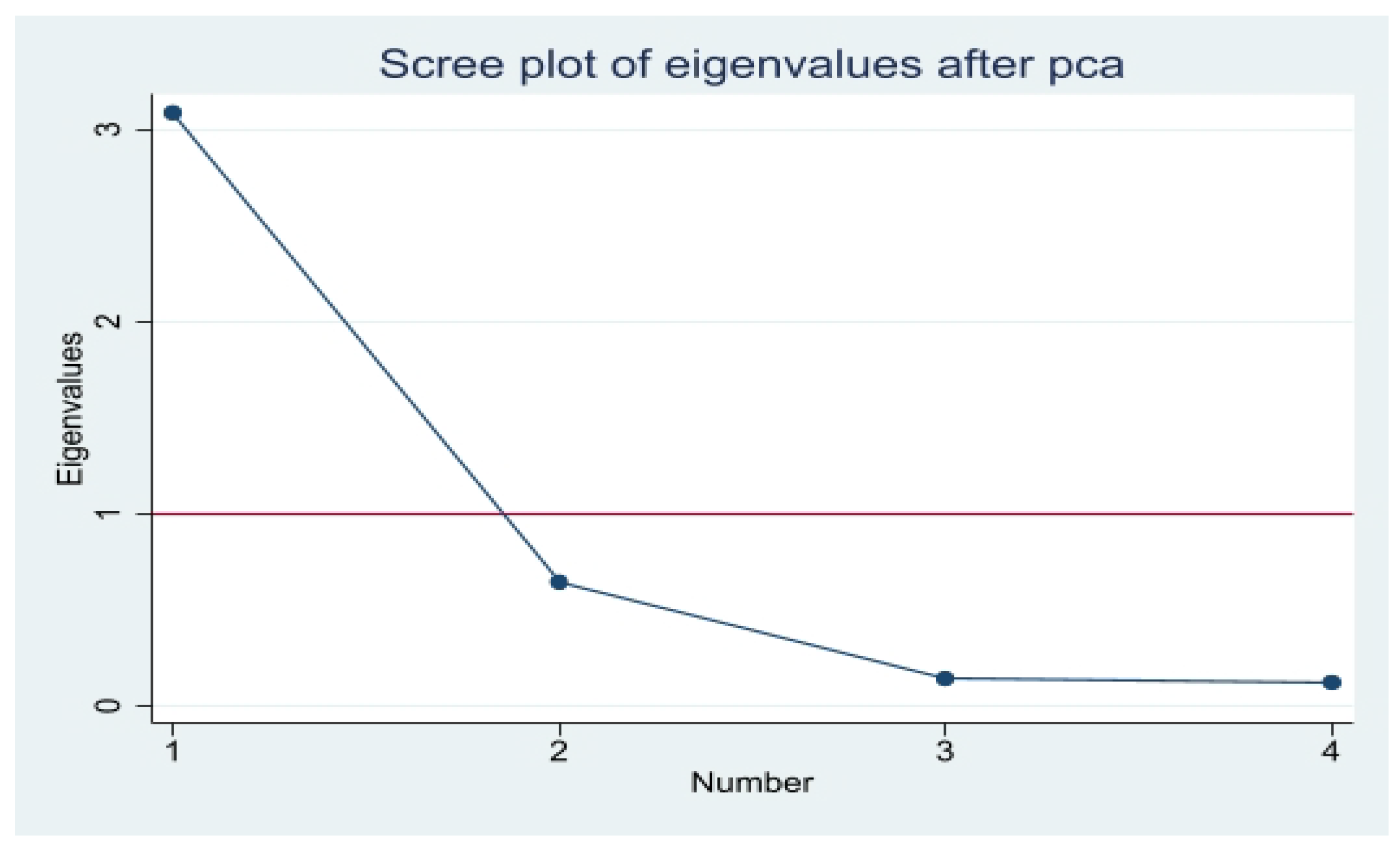
Table A1.
Correlation matrix of DFI components.
Table A2.
Principal component analysis.
Table A3.
Principal components (eigenvectors).
Table A4.
Kaiser–Meyer–Olkin measure of sampling adequacy.
Appendix B. PCA of IQI
Figure A2.
IQI scree plot components obtained from principal component analysis (PCA). The blue line represents the eigenvalues of the principal components, while the red horizontal line indicates the Kaiser criterion threshold (eigenvalue = 1).
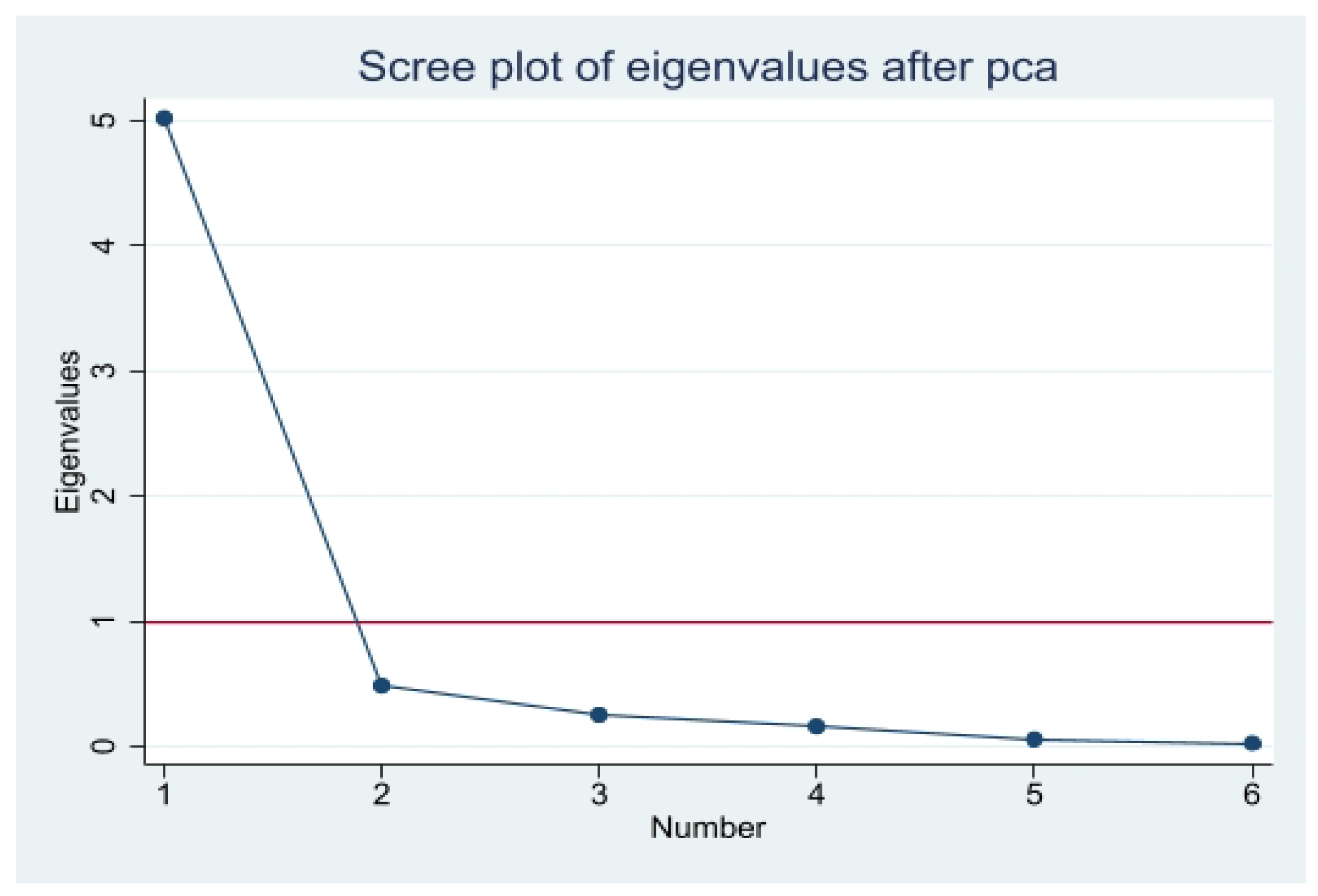
Table A5.
Correlation matrix of institutional quality components.
Table A6.
Principal component analysis of institutional quality.
Table A7.
Principal components (eigenvectors).
Table A8.
Kaiser–Meyer–Olkin measure of sampling adequacy.
Table A9.
Summary of the literature.
Table A10.
Governance dimensions.
References
- Cabeza-García, L.; Del Brio, E.B.; Oscanoa-Victorio, M.L. Gender factors and inclusive economic growth: The silent revolution. Sustainability 2018, 10, 121. [Google Scholar] [CrossRef] [Scilit]
- Santos Silva, M.; Klasen, S. Gender inequality as a barrier to economic growth: A review of the theoretical literature. Rev. Econ. Househ. 2021, 19, 581–614. [Google Scholar] [CrossRef] [Scilit]
- Bartolomei, L.; Blundo-Canto, G.; De Muro, P. How is the capability approach applied to assess well-being impacts? A systematic review. J. Hum. Dev. Capab. 2024, 25, 367–399. [Google Scholar] [CrossRef] [Scilit]
- MacKenzie, A.; Chiang, T.-H. The human development and capability approach: A counter theory to human capital discourse in promoting low SES students’ agency in education. Int. J. Educ. Res. 2023, 117, 102121. [Google Scholar] [CrossRef] [Scilit]
- UNDP. Gender Development Index (GDI). 2026. Available online: https://hdr.undp.org/gender-development-index?utm_source=chatgpt.com#/indicies/GDI (accessed on 5 October 2026).
- Klasen, S. The impact of gender inequality on economic performance in developing countries. Annu. Rev. Resour. Econ. 2018, 10, 279–298. [Google Scholar] [CrossRef] [Scilit]
- Umar, H.M.; Seraj, M.; Ozdeser, H. Female labour participation in sub-saharan African: The role of institutional quality. J. Knowl. Econ. 2025, 16, 18583–18611. [Google Scholar] [CrossRef] [Scilit]
- Dianda, I.; Ouedraogo, I.; Sawadogo, H. Inclusive human development effect of financial inclusion in Sub-saharan Africa: A gender perspective. J. Int. Dev. 2024, 36, 1896–1917. [Google Scholar] [CrossRef] [Scilit]
- UNDP. Gender Social Norms Index 2023: A Decade of Stagnation. 2023. Available online: https://hdr.undp.org/decade-stagnation?utm_source=chatgpt.com (accessed on 5 October 2026).
- Suri, T.; Jack, W. The long-run poverty and gender impacts of mobile money. Science 2016, 354, 1288–1292. [Google Scholar] [CrossRef] [Scilit] [PubMed]
- Tripathi, S.; Rajeev, M. Gender-inclusive development through Fintech: Studying gender-based digital financial inclusion in a cross-country setting. Sustainability 2023, 15, 10253. [Google Scholar] [CrossRef] [Scilit]
- Maruta, A.A.; Edjigu, H.T.; Kassa, W. Does financial inclusion empower women in Africa? Econ. Notes 2023, 52, e12226. [Google Scholar] [CrossRef] [Scilit]
- Faton, C.Y.; Nonvide, G.M.A.; Chabossou, A.F. Digital financial inclusion and the reduction of gender inequalities in Africa. Discov. Glob. Soc. 2025, 3, 25. [Google Scholar] [CrossRef] [Scilit]
- Osinubi, T.; Simatele, M. Female economic participation and sustainable development in African countries: The moderating role of governance. Sustain. Dev. 2025, 33, 1212–1230. [Google Scholar] [CrossRef] [Scilit]
- Ouedraogo, I.; Tabi, H.N.; Ondoa, H.A.; Jiya, A.N. Institutional quality and human capital development in Africa. Econ. Syst. 2022, 46, 100937. [Google Scholar] [CrossRef] [Scilit]
- Osinubi, T.; Aremo, A. Female Labour Force Participation and Economic Development in Sub-Saharan Africa (1990–2017). Afr. J. Gend. Dev. 2022, 1, 13–35. [Google Scholar]
- Ouechtati, I. Financial inclusion, institutional quality, and inequality: An empirical analysis. J. Knowl. Econ. 2023, 14, 620–644. [Google Scholar] [CrossRef] [Scilit]
- Onwe, J.C.; Celik, B.A.; Bisiriyu, S.O.; Olarewaju, O.M. Financial Inclusion Access and Female Labour Participation in Sub-Saharan Africa: The Moderating Role of Institutional Quality. Sustain. Dev. 2026, early view. [Google Scholar] [CrossRef] [Scilit]
- Sen, A.; Sen, A. Development as Freedom; Oxford University Press: Oxford, UK, 1999; Volume 6. [Google Scholar]
- North, D.C. Institutions, Institutional Change and Economic Performance; Cambridge University Press: Cambridge, UK, 1990. [Google Scholar]
- Ofosu-Mensah Ababio, J.; Attah-Botchwey, E.; Osei-Assibey, E.; Barnor, C. Financial inclusion and human development in frontier countries. Int. J. Fin. Econ. 2021, 26, 42–59. [Google Scholar] [CrossRef] [Scilit]
- Adegbite, O.O.; Machethe, C.L. Bridging the financial inclusion gender gap in smallholder agriculture in Nigeria: An untapped potential for sustainable development. World Dev. 2020, 127, 104755. [Google Scholar] [CrossRef] [Scilit]
- Asaloko, P.P.; Mondjeli, I.M.M.N. The Digital Divide and the Financial Inclusion of Women: Evidence From African Countries. Econ. Notes 2025, 54, e70013. [Google Scholar] [CrossRef] [Scilit]
- Idowu, O.O.; Owoeye, T. Female labour force participation in African countries: An empirical analysis. Indian J. Hum. Dev. 2019, 13, 278–293. [Google Scholar] [CrossRef] [Scilit]
- Anyanwu, J.C.; Augustine, D. Gender equality in employment in Africa: Empirical analysis and policy implications. Afr. Dev. Rev. 2013, 25, 400–420. [Google Scholar] [CrossRef] [Scilit]
- Backhaus, A.; Loichinger, E. Female labor force participation in sub-Saharan Africa: A cohort analysis. Popul. Dev. Rev. 2022, 48, 379–411. [Google Scholar] [CrossRef] [Scilit]
- Zawaira, T.; Clance, M.; Chisadza, C. Social institutions, gender attitudes and female labour force participation in sub-Saharan Africa. S. Afr. J. Econ. 2023, 91, 186–213. [Google Scholar] [CrossRef] [Scilit]
- Asongu, S.A.; Le Roux, S. The role of mobile money innovations in transforming unemployed women to self-employed women in sub-Saharan Africa. Technol. Forecast. Soc. Change 2023, 191, 122548. [Google Scholar] [CrossRef] [Scilit]
- Asongu, S.A.; Odhiambo, N.M. Female unemployment, mobile money innovations and doing business by females. J. Innov. Entrep. 2023, 12, 75. [Google Scholar] [CrossRef] [Scilit]
- Enchill, G.E. Female Representation and Human Development in Africa: The Role of Institutional Quality. Afr. Rev. Econ. Financ. 2024, 16, 63–86. [Google Scholar]
- Osakede, U.A.; Aramide, V.O.; Adesipo, A.E.; Akunna, L.C. Correlates of human development in Africa: Evidence across gender and income group. Res. Glob. 2023, 6, 100135. [Google Scholar] [CrossRef] [Scilit]
- Zeqiraj, V.; Sohag, K.; Hammoudeh, S. Financial inclusion in developing countries: Do quality institutions matter? J. Int. Financ. Mark. Inst. Money 2022, 81, 101677. [Google Scholar] [CrossRef] [Scilit]
- Ofori, P.E.; Asongu, S.A.; Tchamyou, V.S.; Salahodjaev, R. The synergy between governance and trade openness in promoting female economic inclusion in Sub-Saharan Africa. Women’s Stud. Int. Forum 2023, 96, 102672. [Google Scholar] [CrossRef] [Scilit]
- Khera, P.; Ng, S.; Ogawa, S.; Sahay, R. Measuring digital financial inclusion in emerging market and developing economies: A new index. Asian Econ. Policy Rev. 2022, 17, 213–230. [Google Scholar] [CrossRef] [Scilit]
- Ugwuanyi, U.; Ugwuoke, R.; Onyeanu, E.; Festus Eze, E.; Isahaku Prince, A.; Anago, J.; Ibe, G.I. Financial inclusion—Economic growth nexus: Traditional finance versus digital finance in Sub-Saharan Africa. Cogent Econ. Financ. 2022, 10, 2133356. [Google Scholar] [CrossRef] [Scilit]
- Zheng, C.; Rahman, M.A.; Hossain, S.; Moudud-Ul-Huq, S. Does Fintech-driven inclusive finance induce bank profitability? Empirical evidence from developing countries. J. Risk Financ. Manag. 2023, 16, 457. [Google Scholar] [CrossRef] [Scilit]
- Pesaran, M.H. General diagnostic tests for cross-sectional dependence in panels. Empir. Econ. 2021, 60, 13–50. [Google Scholar] [CrossRef] [Scilit]
- Pesaran, M.H.; Yamagata, T. Testing slope homogeneity in large panels. J. Econom. 2008, 142, 50–93. [Google Scholar] [CrossRef] [Scilit]
- Blomquist, J.; Westerlund, J. Testing slope homogeneity in large panels with serial correlation. Econ. Lett. 2013, 121, 374–378. [Google Scholar] [CrossRef] [Scilit]
- Westerlund, J. Testing for error correction in panel data. Oxf. Bull. Econ. Stat. 2007, 69, 709–748. [Google Scholar] [CrossRef] [Scilit]
- Kao, C. Spurious regression and residual-based tests for cointegration in panel data. J. Econom. 1999, 90, 1–44. [Google Scholar] [CrossRef] [Scilit]
- Pedroni, P. Critical values for cointegration tests in heterogeneous panels with multiple regressors. Oxf. Bull. Econ. Stat. 1999, 61, 653–670. [Google Scholar] [CrossRef] [Scilit]
- Machado, J.A.; Silva, J.S. Quantiles via moments. J. Econom. 2019, 213, 145–173. [Google Scholar] [CrossRef] [Scilit]
- Elouardighi, I.; Oubejja, K. Can digital financial inclusion promote women’s labor force participation? Microlevel evidence from Africa. Int. J. Financ. Stud. 2023, 11, 87. [Google Scholar] [CrossRef] [Scilit]
- Pondie, T.M.; Wayisovia, E.J.; Sibayirwandeke, A.M. Trade openness and women’s empowerment in Sub-Saharan Africa: The role of governance. World Dev. Perspect. 2025, 38, 100684. [Google Scholar] [CrossRef] [Scilit]
- Bataka, H. Global value chains participation and gender inequalities in Sub-Saharan Africa: Importance of women education. Int. Econ. 2024, 178, 100483. [Google Scholar] [CrossRef] [Scilit]
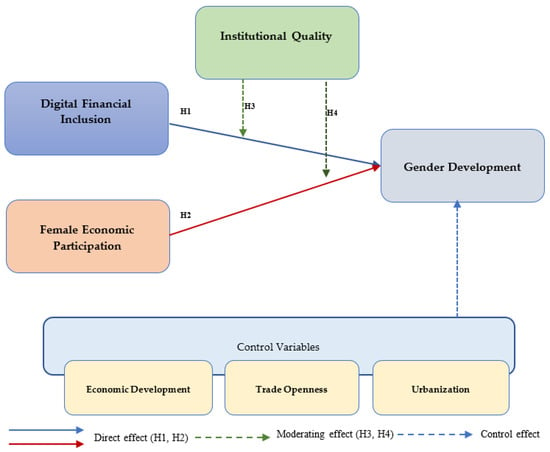
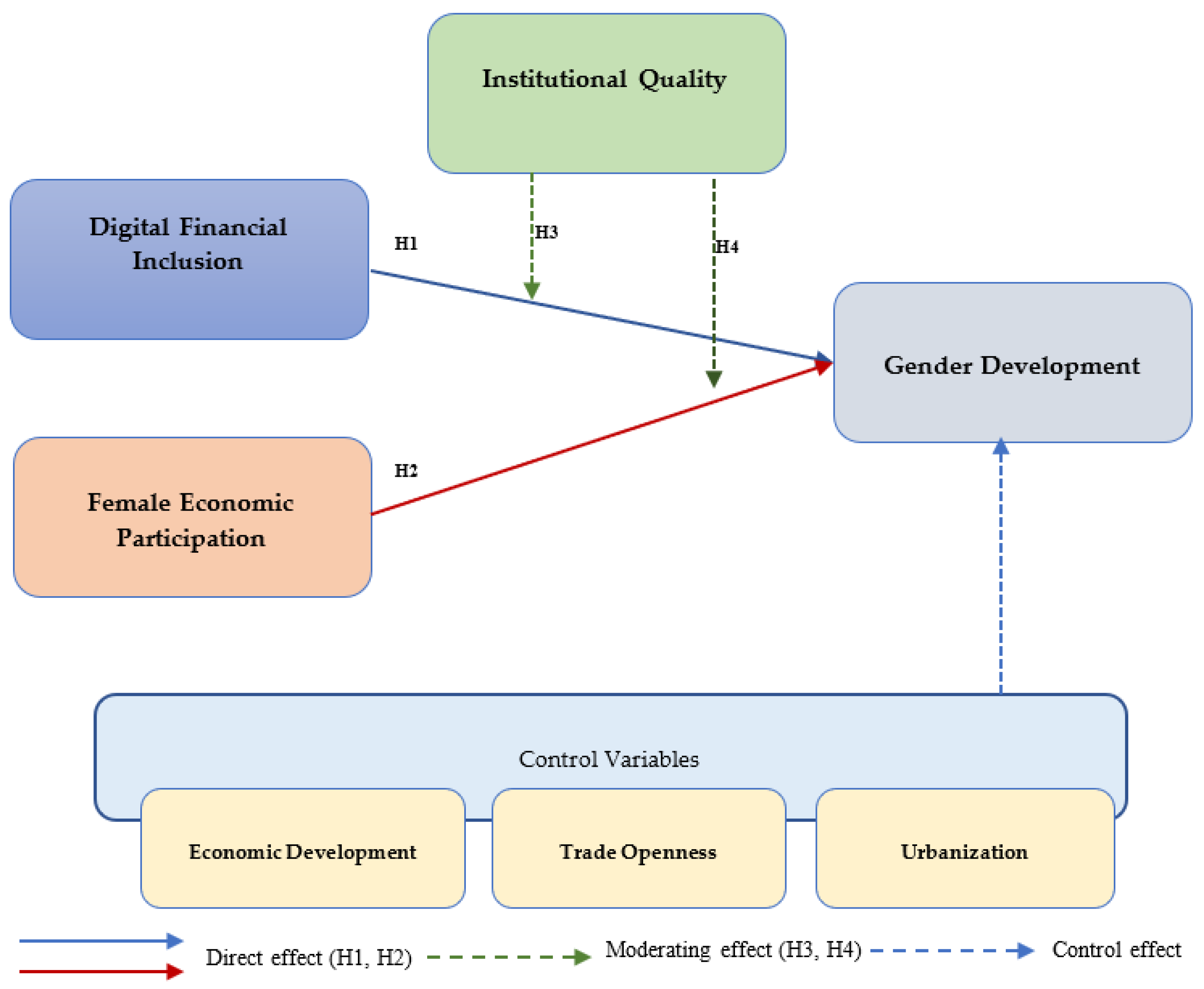
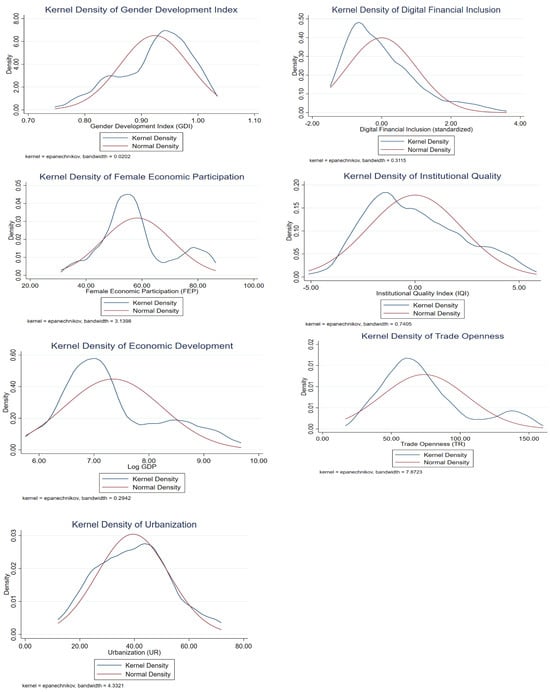
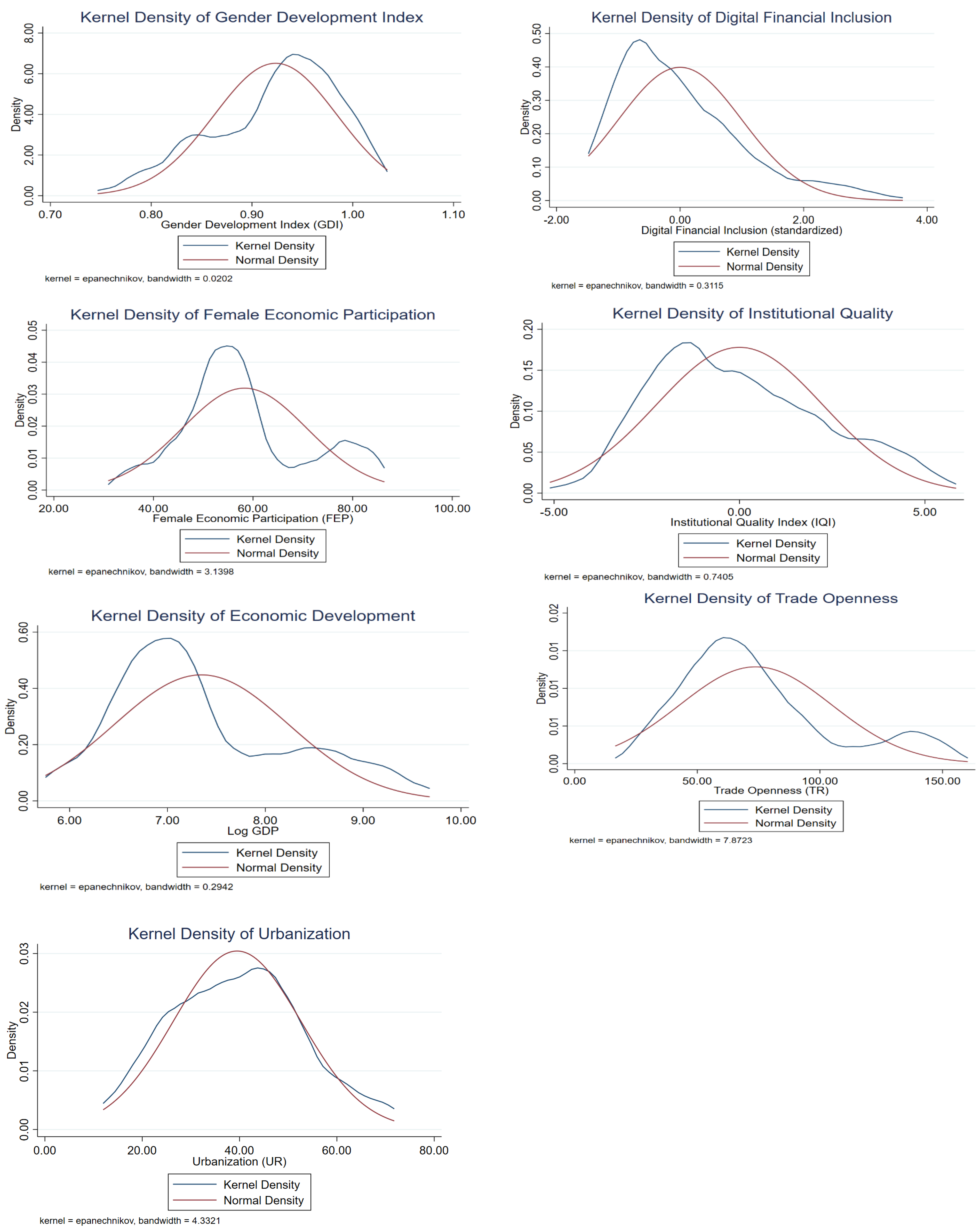
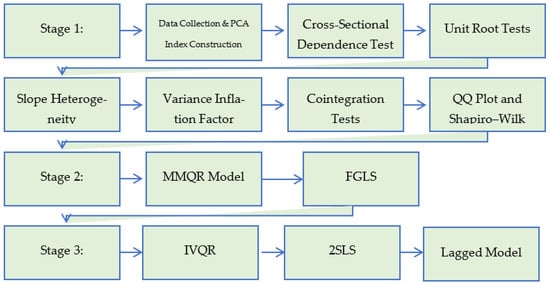
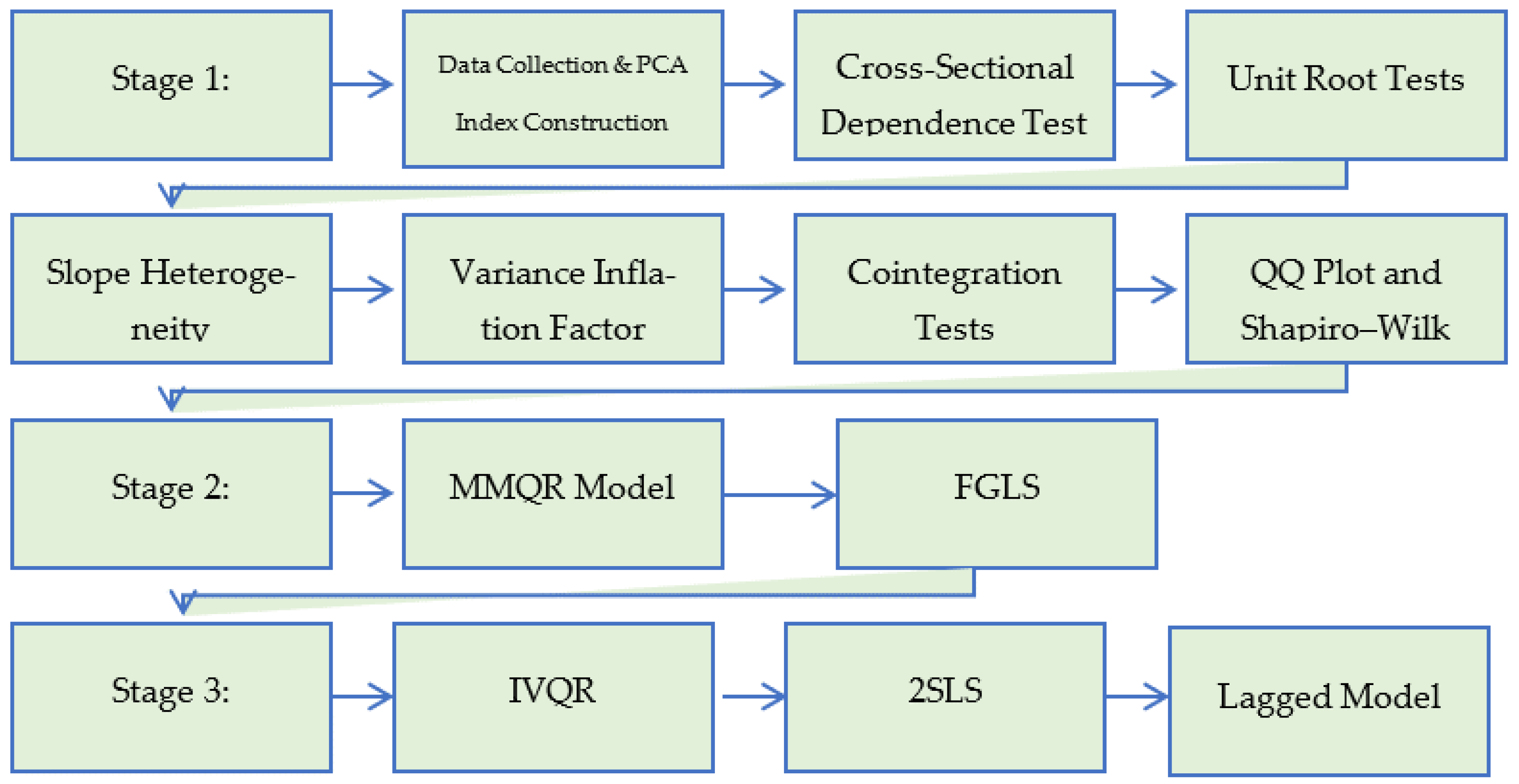
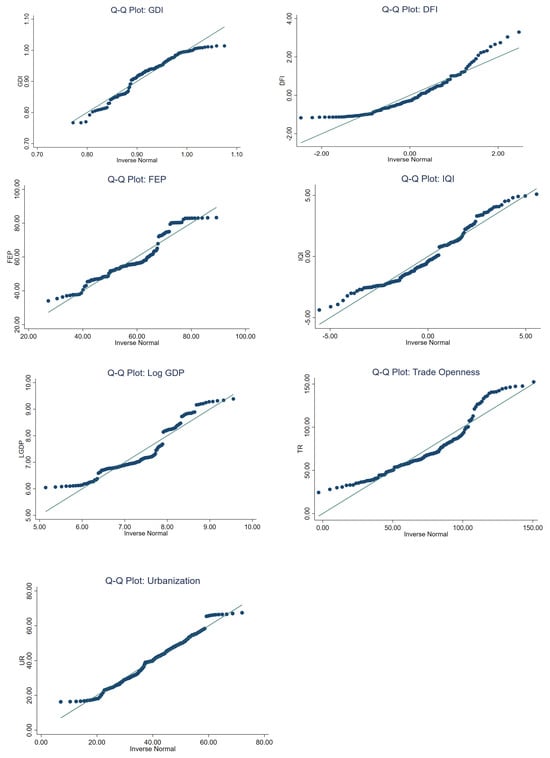
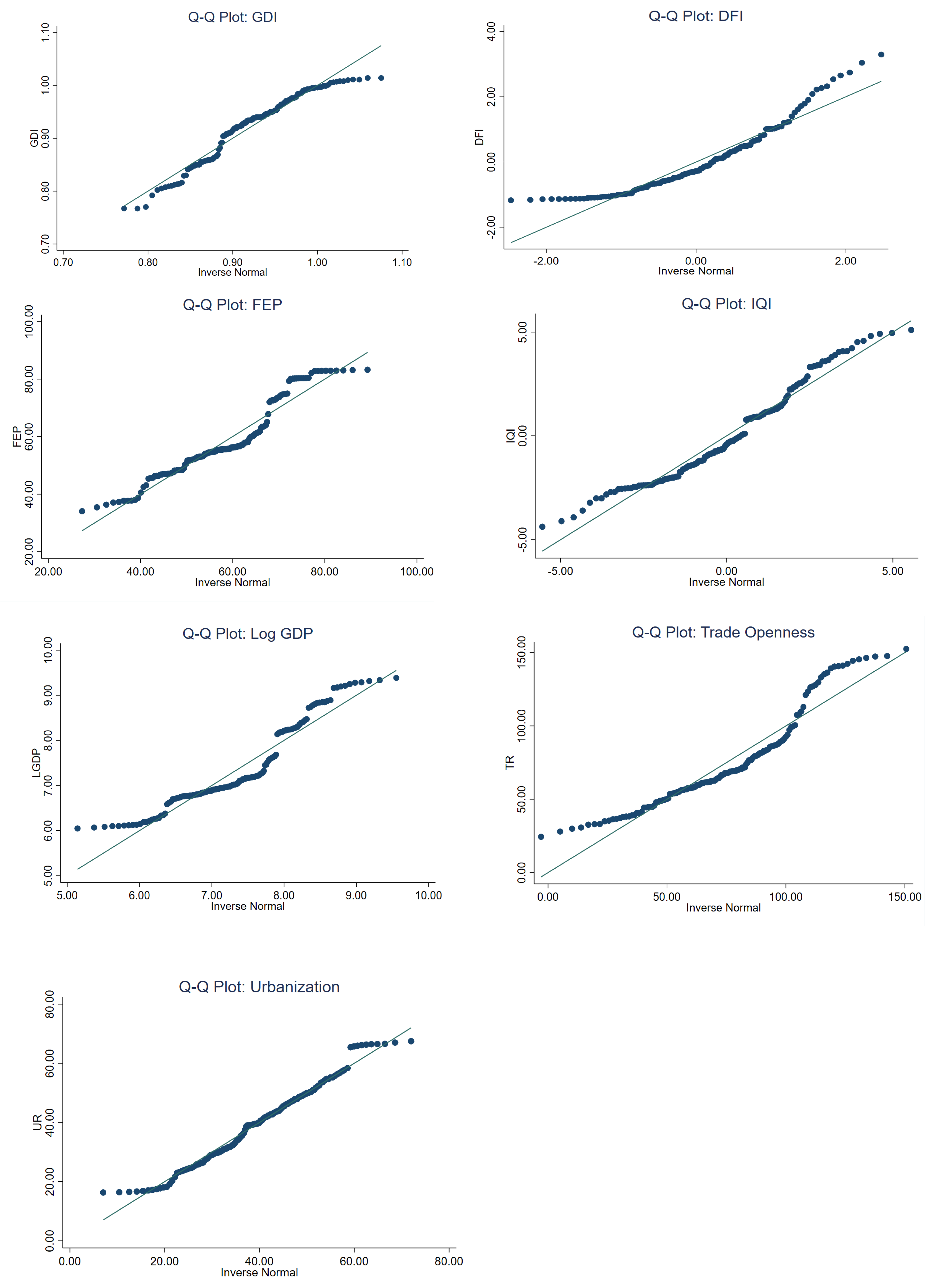
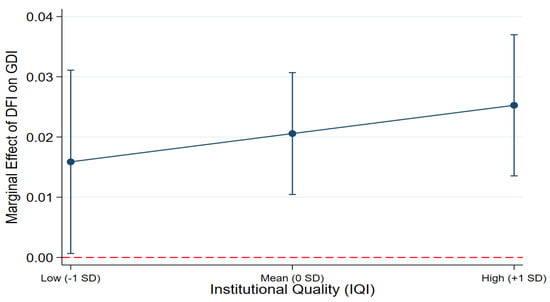
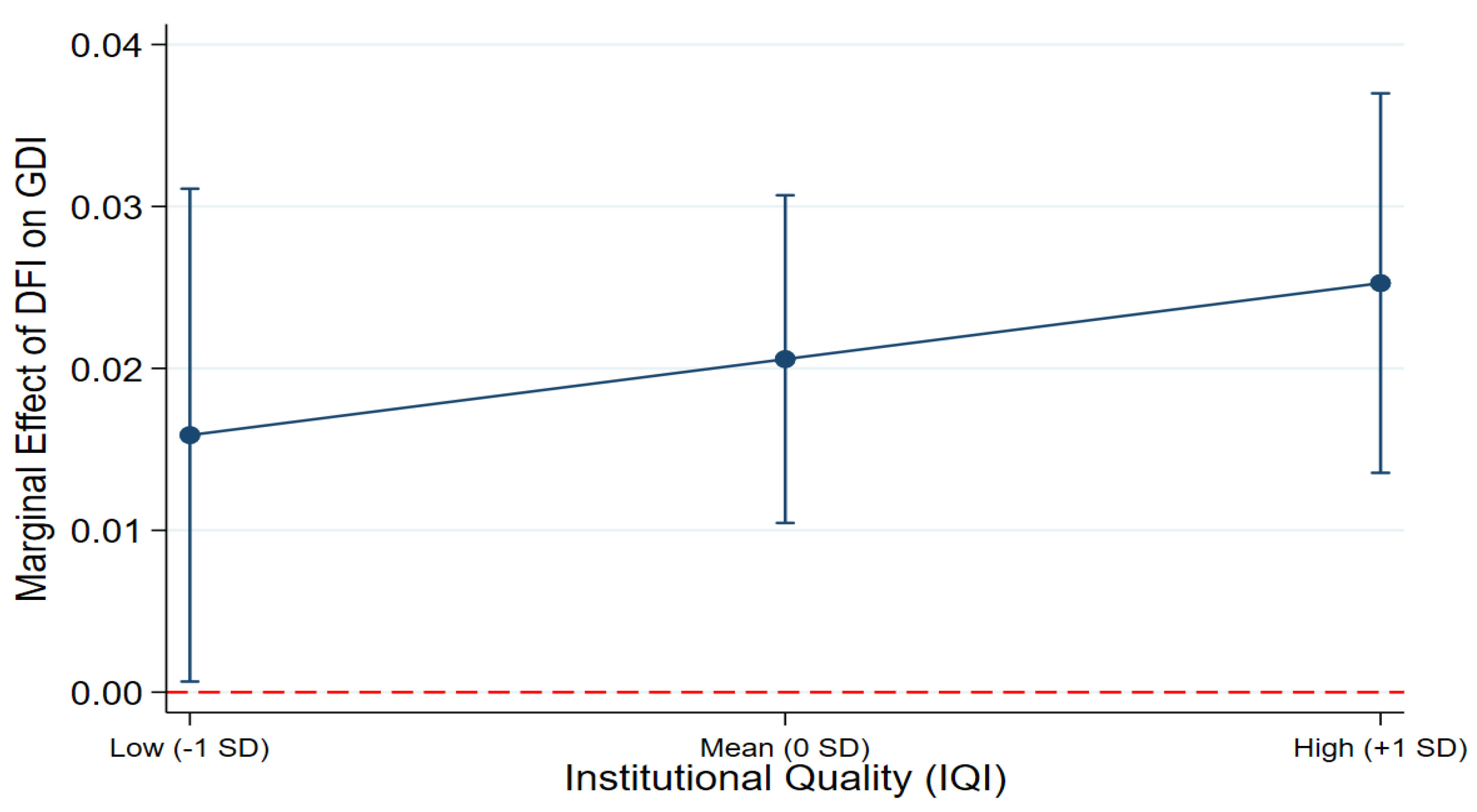

Disclaimer/Publisher’s Note: The statements, opinions and data contained in all publications are solely those of the individual author(s) and contributor(s) and not of MDPI and/or the editor(s). MDPI and/or the editor(s) disclaim responsibility for any injury to people or property resulting from any ideas, methods, instructions or products referred to in the content. |
© 2026 by the authors. Licensee MDPI, Basel, Switzerland. This article is an open access article distributed under the terms and conditions of the Creative Commons Attribution (CC BY) license.