


Abstract
This study examines the effect of government expenditure on education on environmental degradation, proxied by carbon dioxide emissions, across a panel of 17 Sub-Saharan African (SSA) countries from 2005 to 2024. It also examines whether the institutional environment in SSA influences this relationship. Applying the Lewbel two-stage least squares method to address endogeneity and omitted variable challenges, the study finds that government expenditure on education reduces environmental degradation in SSA, whereas the poor institutional environment increases it. The results further show that the poor institutional environment in SSA reverses the beneficial effect of government expenditure on education on the environment. These findings suggest that policymakers in SSA can rely on government educational finance to promote environmental sustainability; however, efforts should be geared towards strengthening the institutional environment to realise the positive environmental gains of government educational finance.
1. Introduction
Global carbon dioxide emissions have reached an astronomical high, rising from a minimal level of 1751 million metric tons in 1970 to 39,633 million metric tons in 2024, representing a 2164% increase [1]. This astronomical increase in global carbon dioxide emissions is widely agreed to be the main cause of climate change, with its attendant impacts such as rising global temperatures, frequent extreme weather events, biodiversity loss, and declining air quality facing humanity today [2]. This negative development hampers the realisation of all the climate change goals. To this end, both local and global policymakers have shifted much of their attention to ascertaining the determinants of carbon dioxide emissions to support the realisation of Sustainable Development Goal 13 to limit the escalation in global carbon dioxide emissions [3].
Recently, scholars have begun exploring the impact of government expenditure on education on environmental quality [4,5]. According to Zhao et al. [4], public investment in education influences environmental quality by promoting environmental awareness and pro-environmental behaviours among the populace. Thus, resources allocated to environmental education in school curricula enhance citizens’ understanding of environmental issues and sustainable practices. Also, government spending on education promotes innovation in green technologies, thereby driving structural transformation towards less carbon-intensive economic activities. Nevertheless, other scholars have documented that government expenditure on education may lead to increased environmental degradation when it results in higher consumption of fossil fuels or when the quality of education is insufficient to promote environmental stewardship [5]. Given these conflicts, we ask this question: Does the level of governance/institutional quality of a country matter in this relationship?
Institutions, defined as the “rules of the game in a society” [6], are crucial for a country’s economic and environmental progress [7]. According to Acemoglu et al. [7], strong institutional frameworks lower risks and uncertainties and promote fair resource distribution, which can result in improved environmental outcomes. Conversely, an ineffective institutional framework often leads to higher corruption, misallocation of resources, and underdevelopment. This can hinder the positive impacts of government education expenditures on the environment, ultimately causing environmental degradation. The World Bank [8] argued that directing public resources to priority sectors might not produce the intended results if the institutional structures for budget creation, execution, and oversight are weak. Thus, a country’s institutional quality could significantly influence the link between government educational spending and environmental outcomes. However, empirical scholarship validating the relevance of institutions in the relationship between government spending on education and environmental degradation is scarce. This study, therefore, addresses this lacuna by examining the moderating role of institutional quality in the relationship between government expenditure on education and environmental degradation using a sample of 17 SSA countries.
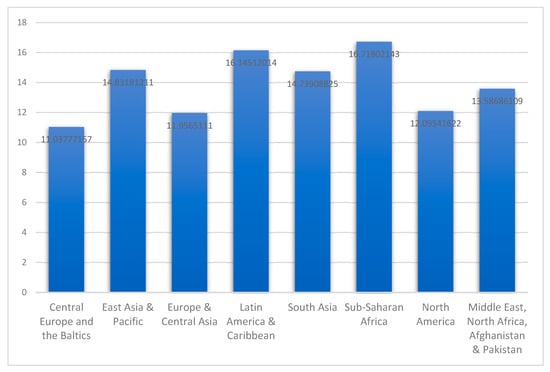
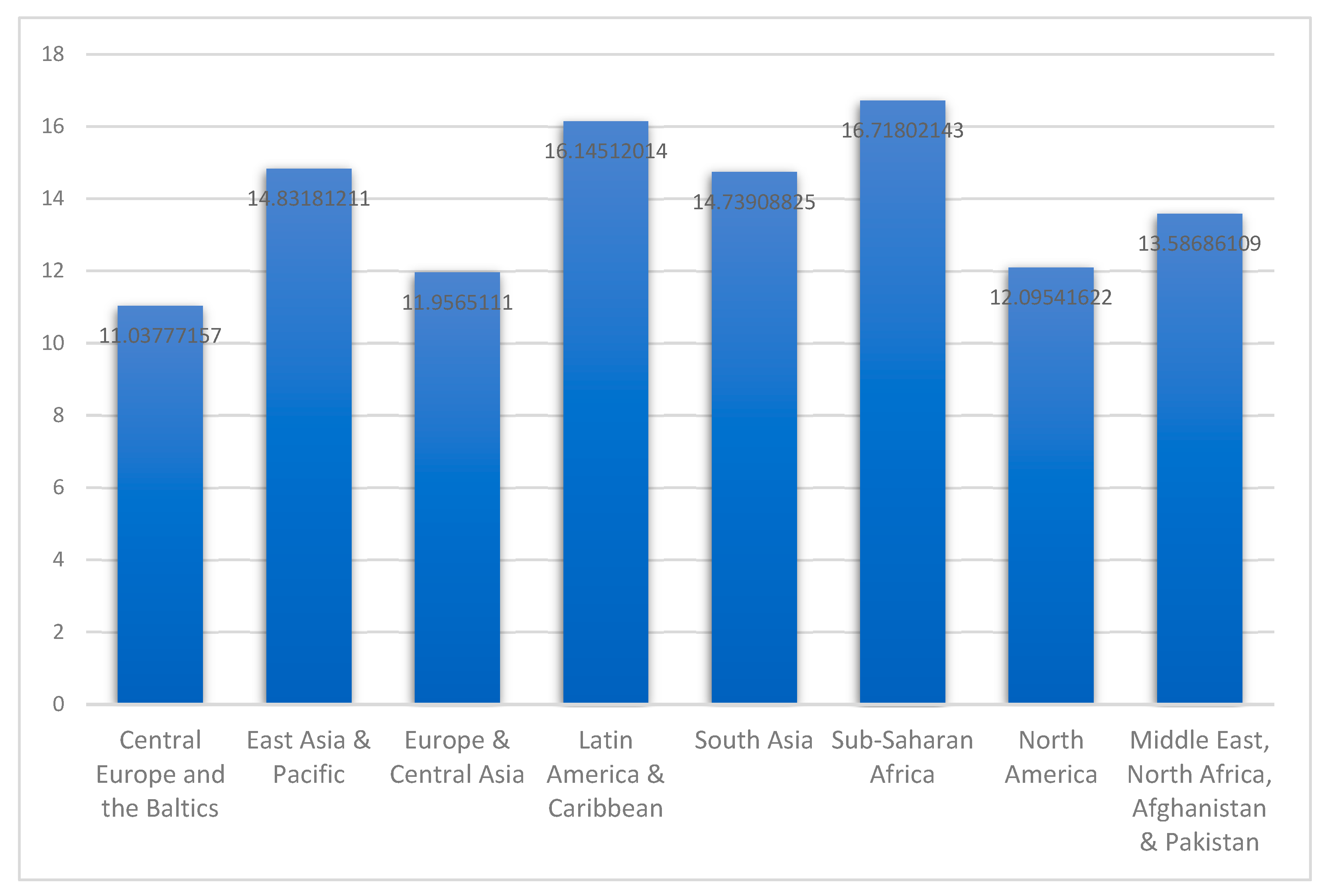
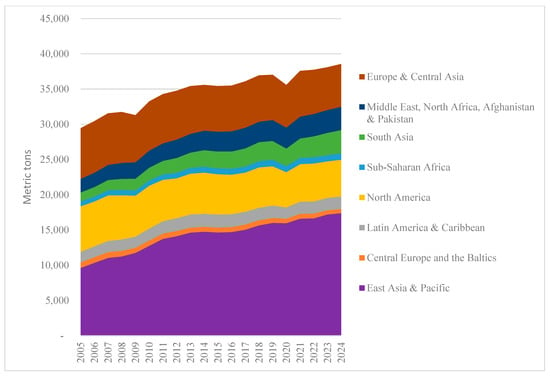
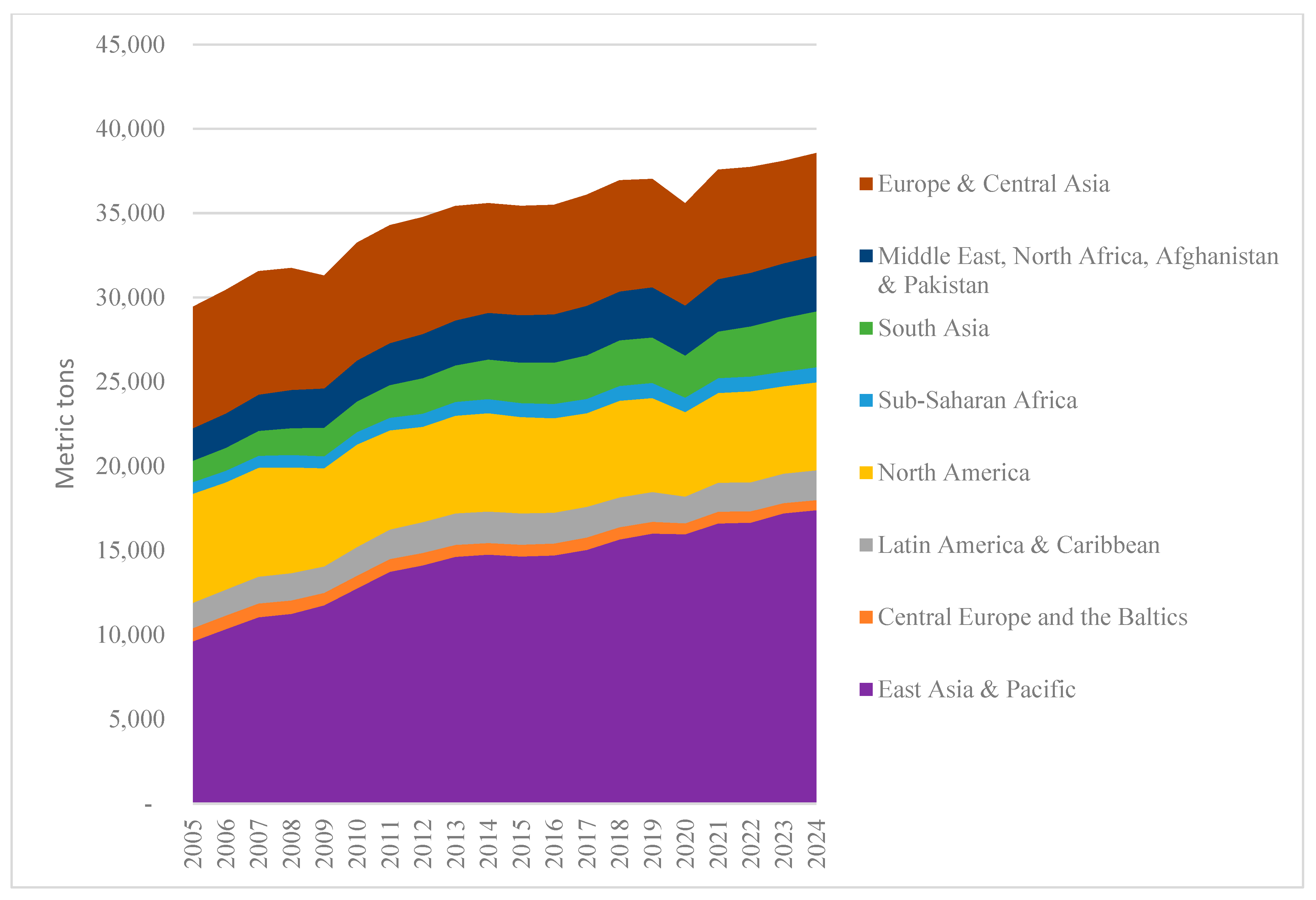
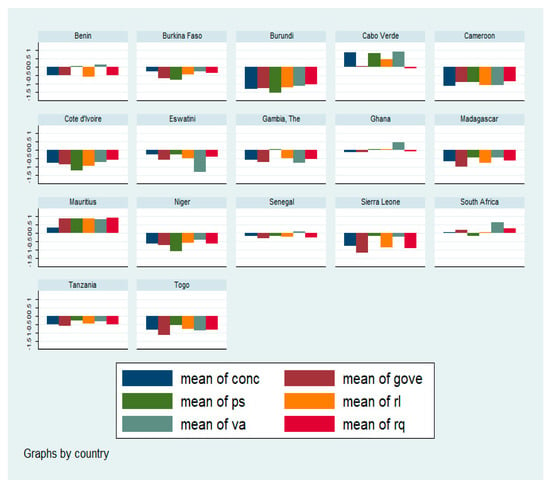
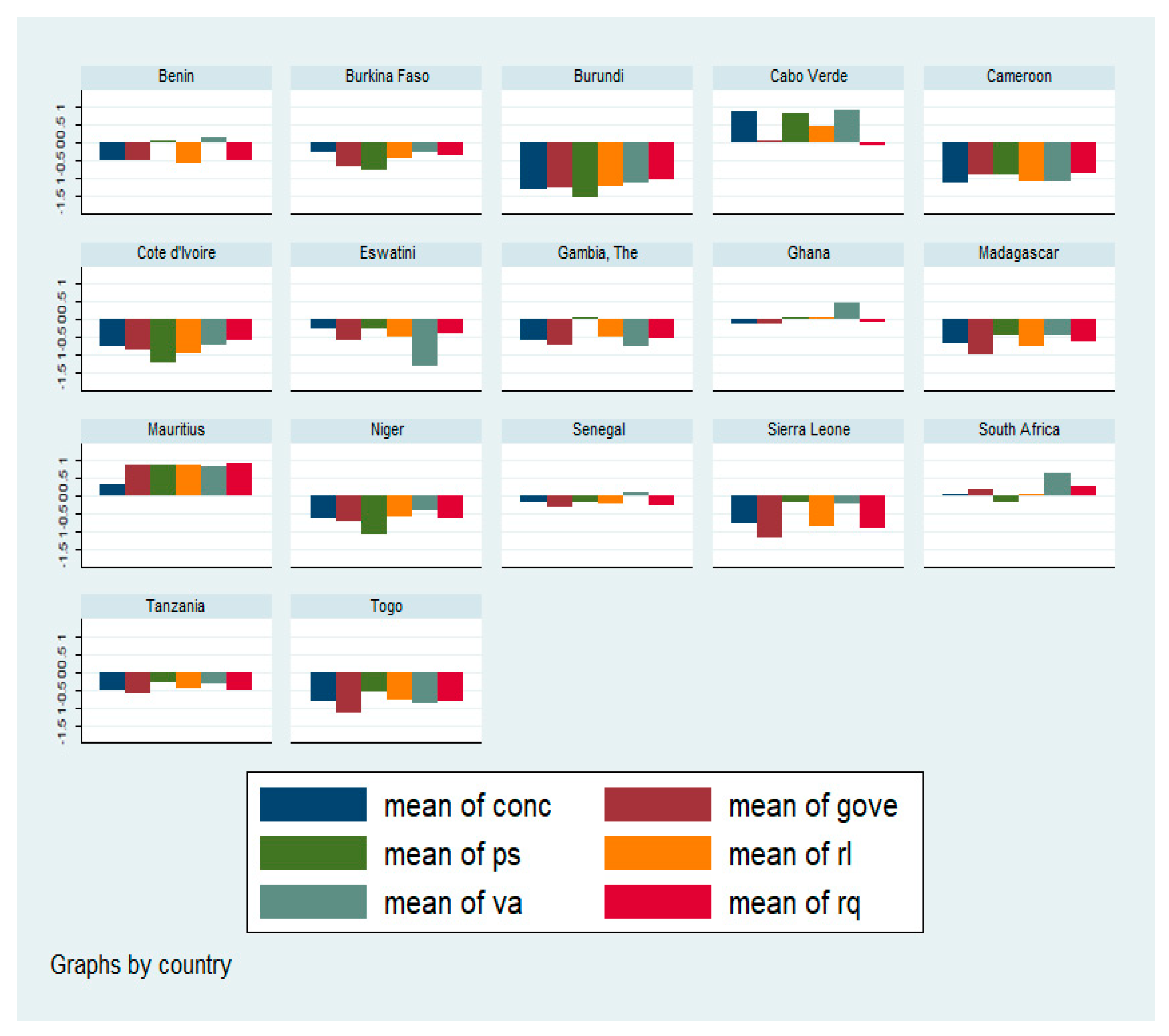
SSA has one of the highest levels of government spending on education compared with other regions of the world (see Figure 1). Nevertheless, the region continues to see a rise in carbon dioxide emissions (See Figure 2). Also, most countries in the region have negative averages on institutional quality measures, except Cabo Verde, Mauritius, and South Africa (see Figure 3), suggesting that the region suffers from poor institutional quality, which might weaken the performance of government spending on education in reducing environmental degradation. Thus, understanding the role of government expenditure on education and institutional quality in environmental degradation will guide policymaking to address climate change in SSA.
Figure 1.
Averages of government expenditure on education from 2005 to 2024. Source: WDI. The figure shows the averages of government expenditure on education from 2005 to 2024 across regions, with Sub-Saharan Africa having the highest average expenditure, followed by Latin America and the Caribbean, East Asia and the Pacific, South Asia, the Middle East, North Africa, Afghanistan and Pakistan, North America, Europe and Central Asia, with Central Europe and the Baltics having the lowest.
Figure 2.
Carbon dioxide emissions. Source: WDI. The figure shows the trend of carbon dioxide emissions across regions, with East Asia and the Pacific, Europe and Central Asia, North America, South Asia, the Middle East, North Africa, Afghanistan and Pakistan, and Latin America and the Caribbean having high concentrations of carbon dioxide emissions, while Central Europe and the Baltics and sub-Saharan Africa contribute the least.
Figure 3.
Averages of institutional quality variables. Source: WDI. The figure shows the averages of institutional quality from 2005 to 2024, with countries such as Burkina Faso, Burundi, Cameroon, Cote D’Ivoire, Eswatini, Madagascar, Niger, Sierra Leone, Tanzania and Togo having negative averages across all institutional quality proxies, while countries such as Benin, Cabo Verde, The Gambia, Ghana, Senegal, and South Africa had a mixture of both positive and negative institutional quality averages. Madagascar had positive averages for all institutional quality proxies.
The study advances the literature in the following ways. First, we extend previous studies [4,5] which measured the direct environmental returns of government expenditure on education by exploring the moderating role of institutional quality in the links between government expenditure on education and environmental degradation. Although education fosters environmental consciousness, technical know-how, and green innovation, strong institutions guarantee the realisation of these advantages via efficient policy implementation, accountability, and regulatory enforcement. Strong institutions also reduce corruption and ensure the equitable and efficient distribution of scarce public resources, ensuring the translation of educational investments into environmental outcomes. Also, we account for the independent role of six institutional quality parameters (the rule of law, control of corruption, government effectiveness, regulatory quality, voice and accountability, and political stability). This helps identify which institutional parameter matters most in the links between government spending on education and environmental degradation. Furthermore, we use principal component analysis (PCA) to develop a comprehensive institutional quality index from the six parameters to study the relationship between government expenditure on education and environmental degradation. Methodologically, we apply the Lewbel two-stage least squares model, which is effective at addressing endogeneity and heterogeneity, thereby ensuring the accuracy of our findings. Theoretically, we contribute to institutional theory by showing how a weak governance system alters the positive environmental gains from government expenditure on education.
2. Synthesis of Literature, Theoretical Framework, and Hypotheses
2.1. Theoretical Framework
This study builds on human capital theory and institutional theory. Human capital theory argues that educational investment spurs individuals’ knowledge and skills acquisition, fostering economic development and social progress [9]. In the environmental field, education is believed to enhance human capital by training skilled experts who can develop green technologies [10]. Educated populations tend to be more environmentally conscious, readily support environmental regulations, advocate for environmental protection measures, and prefer eco-friendly consumption options [11,12,13,14,15]. On the contrary, according to Nathaniel et al. [15], education may degrade the environment by increasing the consumption of fossil fuels due to the associated increase in income. Education could also degrade the environment via the production of technologies for natural resource extraction. Moreover, education could degrade the environment via the generation of waste and the consumption of transportation, especially in cities. Finally, low levels of environmental education could also reduce environmental awareness, thereby degrading the environment.
Institutional theory highlights the relevance of governance structures in resource allocation [6,7]. In countries with strong institutions, coupled with effective rule of law, strong protection of property rights, and low corruption, resources for education will be effectively applied. Also, there will be a high-quality educational curriculum, and finally, there will be enforcement of environmental laws and regulations. On the contrary, in countries with poor institutional quality, funds meant for education could easily be diverted into unproductive activities. Also, there is the likelihood of poor supervision of the educational curriculum and weak enforcement of environmental regulations and laws. In summary, institutional theory highlights the relevance of the quality of governance in reaping the positive returns from educational investment.
We, therefore, argue that government spending on education can reduce environmental degradation, but its efficacy is dependent on the quality of institutions, with strong institutional quality serving as the bedrock for efficient resource utilisation, enhancing educational quality, and driving environmental awareness. In contrast, weak institutions undermine these advantages through corruption, reduced educational effectiveness, and hampered environmental accountability.
2.2. Education Expenditure and Environmental Quality
The literature on educational spending and environmental quality remains inconclusive. For instance, Zhao et al. [4] focused on the USA and China and, while applying the Vector Autoregressive model, discovered that past educational investment improves environmental quality in the USA while degrading the environment in China. Li et al. [5] focused on the city level of China and discovered that government spending on education improves environmental quality. Other scholars have explored the environmental implications of education, with the literature also remaining conflicting.
Meyer [10] focusing on Europe, showed that education enhances pro-environmental behaviours, especially by reducing the consumption of energy and car usage, consuming environmentally friendly products, using environmentally friendly transportation and using environmentally labelled products. Özbay and Duyar [14] focused on 20 countries and found that higher education improves environmental quality while lower educational levels degrade the environment. Piao and Managi [13] focused on 37 countries and found that higher educational levels are associated with pro-environmental behaviours. A study by Bano et al. [16] in Pakistan showed that education reduces carbon dioxide emissions in the long run. He et al. [17] focused on China and found that education improves environmental quality at both the provincial and national levels. Xiao et al. [18] and Khan [19] found that higher educational attainment is associated with improved environmental outcomes. Conversely, Nathaniel et al. [15] focused on 30 SSA countries and found that education degrades the environment.
Based on the human capital theory and the findings of Li et al. [5], we hypothesise:
Hypothesis 1.
Government expenditure on education significantly reduces environmental degradation.
2.3. Institutional Quality and Environmental Quality
Institutional quality is found to have an inconclusive effect on the environment. Studies such as Danish et al. [20] for BRICS countries, Abid [21] for 41 European and 58 Middle Eastern countries, Nam and Ryu [22] for European transition countries, Danish et al. [23] for 35 Organisation for Economic Cooperation and Development countries, Lau et al. [24] for Malaysia, Sarkodie [25] for South Africa, and Bhattacharya et al. [26] for 82 developing and developed countries found that institutional quality improves environmental quality, while Le et al. [27] for 47 emerging markets and developing economies, Acheampong et al. [28] for French-colonised countries, Cole [29] for 94 countries found that institutional quality degrades the environment.
Based on the institutional theory and the literature showing a positive environmental outcome from institutional quality, we propose our second hypothesis:
Hypothesis 2.
Institutional quality, characterised by control of corruption, government effectiveness, rule of law, voice and accountability, political stability, and regulatory quality, significantly reduces environmental degradation.
Although there is scarce literature studying the moderating role of institutional quality in government spending on education and environmental degradation, other scholars have explored institutional effectiveness in other contexts. For instance, Nam et al. [30] focused on financial openness and financial development in Europe, showing that institutional quality plays a meaningful role in the connection. Cepparulo et al. [31] also showed that institutional quality moderates the link between financial development and poverty reduction in developing countries. Bayraktar et al. [32] showed that the relationship between financial development and economic growth in emerging and middle-income countries is conditioned by governance quality. Basnayake et al. [33] also showed that institutional quality matters in the links between financial inclusion and economic growth in Asia-Pacific countries. These findings could imply that institutional moderation may equally function in the interaction between government spending on education and environmental degradation. Accordingly, building on our first and second hypotheses, we derive our third hypothesis:
Hypothesis 3.
The interaction between institutional quality and government educational expenditure significantly reduces environmental degradation.
2.4. Economic Growth, Trade Openness and Population Size
The literature abounds with studies on the environmental impact of economic growth, population size, and trade openness. Focusing on economic growth, Raihan et al. [34] found an increase in carbon dioxide emissions from economic growth in Egypt from 1990 to 2016 using the DOLS model. In a similar study done by Ridzuan et al. [35] using the ARDL model, the same results were found for Malaysia from 1978 to 2016; however, other scholars have discovered diverse outcomes regarding the economic growth–carbon dioxide emissions nexus. For example, Appiah-Otoo and Acheampong [36] using the IV-GMM method in their study of BRICS from 2000 to 2016, showed a decrease in carbon dioxide emissions from economic growth, while Alaganthiran and Anaba [37] and Appiah et al. [38] observed the opposite using the POLS and the PARDL models among 20 and 14 SSA countries between 2000 and 2020, respectively.
The connection between trade openness and carbon dioxide emissions is also contentious in the literature. For example, Opoku-Mensah et al. [39] analysed 25 African countries and found that trade openness increases carbon dioxide emissions using the PARDL model. Al-Mulali et al. [40] also reached this conclusion using the ARDL model for Vietnam. Dauda et al. [41], employing the POLS model, equally observed that trade openness raises carbon dioxide emissions levels in South Africa and Mozambique. Kasman and Duman [42] confirmed these results using the FMOLS model and a panel of 15 countries. Conversely, Shahbaz et al. [43] for the USA and Shahbaz et al. [44] for South Africa found that trade openness reduces carbon dioxide emissions while using the ARDL model.
The environmental implications of population size are also widely studied with varied conclusions. For instance, the empirical research of Adams et al. [45] indicated that higher carbon dioxide emissions are generally caused by population growth in 19 SSA countries using the IV-GMM technique. Such evidence was also given by Appiah et al. [38] for 14 SSA countries. Yu et al. [46] using ridge regression, showed a positive association between population size and carbon dioxide emissions in the Jiangsu province of China. Bai et al. [47] used the 2SLS estimator and reached the same conclusion in China. However, Opoku-Mensah et al. [48] found that population size does not affect carbon dioxide emissions across eight SCO nations using the FMOLS model.
3. Data and Methods
3.1. Data
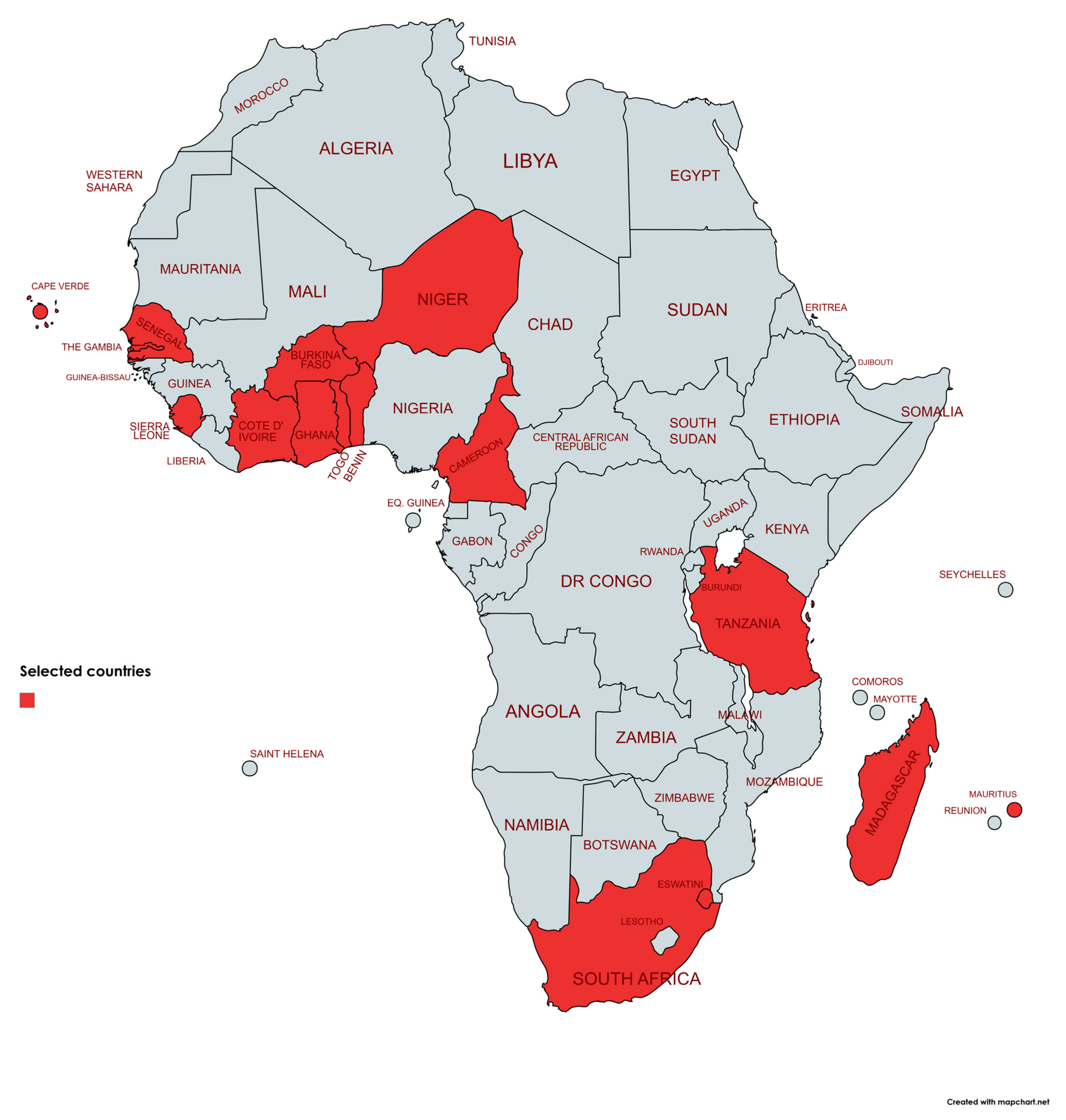
This study used panel data covering 17 SSA countries (see Figure 4 for the selected countries) from 2005 to 2024 for the analysis. The study used carbon dioxide emissions to represent environmental degradation while also accounting for economic growth, population size, trade openness, government educational expenditure, and the institutional quality index (consisting of the control of corruption, government effectiveness, political stability, voice and accountability, regulatory quality and the rule of law). The absolute variables (carbon dioxide emissions, economic growth and population size) were selected following the STIRPAT (stochastic impact by regression on population, affluence, and technology) theoretical model and the literature to represent environmental pressure, economic activity and the demographic effect, while relative variables (trade openness, government educational expenditure and the institutional quality index), which measure structural and policy-related characteristics, were also accounted for following the literature. The selection of countries, as well as the variables and the time period was influenced by the availability of data, especially on government expenditure on education. The World Bank’s World Development Indicators database [1] and the World Bank’s Worldwide Governance Indicators (WGI) [49] served as the sources of the data. The institutional quality proxies are standardised to a scale of −2.5 to 2.5, with higher values indicating stronger institutional quality. For analytical purposes, the logarithmic form of all variables was used, except for the institutional quality proxies. This conversion was necessary to present the findings as elasticities. The analysis was conducted using STATA version 15. Table 1 shows the definitions of the variables.
Figure 4.
Map of Africa showing the selected countries. Source: mapchart.net.
Table 1.
Variables, code and unit of measurement.
Table 2 presents the descriptive statistics of the variables. The mean of carbon dioxide emissions is 1.332%, while the maximum is 6.190%. South Africa emits the largest amount of carbon dioxide emissions in the region. Population has an average of 16.086%, with a minimum of 13.092% and a maximum of 18.043%. Countries such as South Africa and Tanzania have the largest populations, while Eswatini and Cabo Verde have the smallest. Economic growth recorded an average of 7.136% with a minimum and maximum values of 5.525% and 9.387%, respectively. Mauritius, South Africa and Cabo Verde have high levels of income compared to Niger, Madagascar, and Burundi, which have the lowest. Trade openness has an average of 4.057%, with minimum and maximum values of 3.057% and 4.995%, respectively. Mauritius is the most open country in the region. Government expenditure on education as a share of the budget is 2.862%, with minimum and maximum values of 0.921% and 3.556%, respectively. Ghana has the highest government spending on education in the region. This could be attributed to free primary and secondary education, as well as the recent introduction of free tuition for first-year university students. The mean of the institutional quality index, as well as the individual measures, is negative, suggesting that the region has a weak institutional environment.
Table 2.
Descriptive statistics.
The correlation matrix, as shown in Table 3, shows that the highest correlation coefficient is 0.692, which is below the 0.7 threshold, suggesting the absence of multicollinearity in the datasets.
Table 3.
Matrix of correlations.
3.2. Empirical Model
This study follows the STIRPAT theoretical model, which is a robust technique for examining the connections between human activities and the environment [50,51], to study the environmental outcome of government spending on education.
The modified model is shown in Equation (1):
where is the natural logarithm, is carbon dioxide emissions representing environmental degradation, represents population size, represents economic growth, is trade openness, denotes government spending on education, denotes institutional quality, and country and time are denoted as and , respectively. The residual error is denoted by .
To examine the moderating role of institutional quality in the relationship between government spending on education and environmental degradation, we estimate Equation (2).
3.3. Methods
We use the Lewbel [52] two-stage least squares (2SLS) estimator for the analysis of the datasets. This model addresses issues of endogeneity and omitted variables and is most applicable when external instruments are unavailable or their validity is uncertain, as noted by Lewbel [52].
The model is expressed as Equations (3) and (4)
where stands for environmental degradation, for government expenditure on education, for the vector of additional explanatory variables, for the first- and second-stage coefficients, for factors that are not visible but have an impact on environmental degradation and government spending on education, and and for idiosyncratic errors.
4. Results and Discussion
4.1. Direct Effect Results
The direct effect findings are shown in Table 4. The results show that population has a statistically significant positive effect on environmental degradation across all the models, with coefficients ranging from 1.1 to 1.2% at the 1% level. The rise in population causes high demand for energy, housing, industrialisation, and transportation, contributing to environmental degradation. The findings suggest that policymakers should promote the consumption of clean energy technologies among the populace to curtail environmental degradation. The findings of Appiah et al. [38] and Adams et al. [45] are supported by this discovery. Economic growth exerts a significant positive impact on environmental degradation. This could be attributed to the overreliance on fossil fuels for production and consumption in the region. This aligns with the findings of Alaganthiran and Anaba [37] and Appiah et al. [38]. This also suggests that policymakers should promote the use of cleaner energy for production. This can be accomplished by providing tax incentives, subsidised loans, and a reduction in fossil fuel subsidies. Also, policymakers should implement carbon taxes or cap-and-trade schemes to ensure a shift from fossil fuel consumption to clean energy. Trade openness has a significant positive impact on environmental degradation in Model 3. This finding also suggests that policymakers should enforce environmental regulations on imported goods while reducing tariffs on environmentally friendly goods. This confirms the conclusions of Opoku-Mensah et al. [39] and Dauda et al. [41].
Table 4.
Direct effect.
Government expenditure on education has a significant negative influence on environmental degradation across all models, except in Model 6. A 1% increase in government spending on education decreases environmental degradation within the range of 0.2–0.6%. Thus, government spending on education is essential to improving environmental quality in SSA. This suggests that when governments finance education, they facilitate the development of environmental awareness and the promotion of pro-environmental behaviours among individuals, leading to environmental stewardship and thus improving environmental outcomes [10]. Additionally, government spending on education fosters green innovation by enabling the development of new technologies and thereby facilitating structural transformation toward less carbon-intensive economic activities, which indirectly reduces environmental degradation [4]. This concurs with our Hypothesis 1 and the conclusions of Li et al. [5].
Institutional quality, as well as all the sub-indicators, exerts a significant positive effect on environmental degradation in SSA. The findings could suggest that the poor institutional environment in the region fails to strengthen environmental regulations and laws, leading to an increase in environmental degradation. This aligns with the findings of Le et al. [27], Acheampong et al. [28], and Cole [29]; however, it is contrary to our Hypothesis 2.
4.2. Interaction Effect Results
The results of the interaction between government education spending and environmental degradation are shown in Table 5. The findings indicate that the interactions between government spending on education and government effectiveness, rule of law, voice and accountability, regulatory quality, and overall institutional quality exert a statistically significant positive impact on environmental degradation, whereas the interactions between government spending on education and the control of corruption and political stability were insignificant. These findings suggest that weak institutions in SSA reverse the positive environmental gains from government education expenditure, contrary to our Hypothesis 3. This is reasonable because the institutional framework in SSA is inadequate to promote effective regulatory enforcement within the education system to foster environmental awareness capable of reducing environmental degradation in the region. Also, the poor institutional environment in the region could spur corruption, leading to the diversion of government educational funds away from schools, reducing educational quality and the human capital produced, thereby hampering the translation of educational efforts into environmental outcomes. Finally, a poor institutional environment may not encourage the enforcement of environmental regulations, resulting in low or no adoption of cleaner technologies for production and consumption. Therefore, while government expenditure on education reduces environmental degradation, SSA countries’ weak institutional environment acts as a constraint that reverses the positive effect of government spending on education on the environment.
Table 5.
Indirect effect.
5. Conclusions and Policy Implications
This study examined the effect of government expenditure on education on environmental degradation, represented by carbon dioxide emissions, for a panel of 17 SSA countries from 2005 to 2024, while also examining whether the institutional environment in SSA conditions government expenditure on education to either reduce or increase environmental degradation. Using the Lewbel two-stage least squares technique, we found that government educational expenditure reduces environmental degradation in SSA, whereas poor institutional quality in SSA increases it. The results further showed that a poor institutional environment in SSA mitigates the beneficial role of government educational spending on the environment. Finally, we established that economic growth, population size, and trade openness are all significant drivers of environmental degradation in SSA.
Given these findings, this study makes the following recommendations. First, regarding the positive environmental returns from government spending on education, we suggest that policymakers in SSA increase educational spending. This can be achieved by expanding the tax base to cover the informal sectors of the economy. Also, policymakers should deploy modern technologies to boost domestic tax revenue. Furthermore, policymakers can direct a fixed share of revenues to the educational sector. Finally, policymakers can also seek external financial support, such as educational aid and concessional loans, to supplement domestic funds for the educational sector. Moreover, regarding the negative environmental returns from institutional quality, we suggest that policymakers ensure the enforcement of environmental laws and regulations to boost regulatory quality. Furthermore, policymakers should promote educational curricula coupled with environmental content. Finally, policymakers should ensure the creation of environmental courts to support the application of environmental knowledge.
This study had the following shortcomings. First, we relied on a sample of 17 SSA countries from 46 due to data constraints. Future research can expand the sample to cover all SSA countries as well as other developing countries. Also, we relied on aggregate education expenditure data due to data constraints, ignoring variations in government educational spending, such as primary, secondary, and tertiary education. Thus, future studies should consider these measures for robustness analysis. Furthermore, we focused on carbon dioxide emissions as the main environmental degradation indicator; however, other metrics, such as the ecological footprint and air pollution, can be considered by future studies. Finally, we relied on the Lewbel 2SLS model because we could not control for other important factors that equally influence environmental degradation; accordingly, future studies should consider alternative models for the analysis.
Funding
This research received no external funding.
Institutional Review Board Statement
Not applicable.
Informed Consent Statement
Not applicable.
Data Availability Statement
Data is openly available from the World Bank’s World Development Indicators database and the World Bank’s Worldwide Governance Indicators database.
Conflicts of Interest
The author declares no conflict of interest.
Abbreviations
| Abbreviation | Definition |
| 2SLS | Two-stage least squares |
| ARDL | Autoregressive distributed lag |
| BRICS | Brazil, Russia, India, China, and South Africa |
| co2 | Carbon dioxide emissions |
| conc | Control of corruption |
| DOLS | Dynamic ordinary least squares |
| FMOLS | Fully modified ordinary least squares |
| gdppc | GDP per capita |
| gee | Government expenditure on education |
| gove | Government effectiveness |
| ICT | Information and communication technology |
| inst | Institutional quality index |
| IV-GMM | Instrumental variable generalised method of moments |
| PARDL | Panel autoregressive distributed lag |
| pca | Principal component analysis |
| POLS | Pooled ordinary least squares |
| pop | Population |
| rl | Rule of law |
| rq | Regulation quality |
| SCO | Shanghai Cooperation Organisation |
| SSA | sub-Saharan Africa |
| STIRPAT | Stochastic impact through a regression on population, affluence, and technology |
| va | Voice and accountability |
| WDI | World development indicators |
| WGI | Worldwide governance indicators |
References
- The World Bank Group. WDI World Development Indicators Database. Available online: https://databank.worldbank.org/data/source/world-development-indicators (accessed on 1 March 2026).
- World Bank. World Bank Group Action Plan on Climate Change Adaptation and Resilience: Managing Risks for a More Resilient Future; World Bank: Washington, DC, USA, 2019. [Google Scholar]
- Adams, S.; Acheampong, A.O. Reducing Carbon Emissions: The Role of Renewable Energy and Democracy. J. Clean. Prod. 2019, 240, 118245. [Google Scholar] [CrossRef] [Scilit]
- Zhao, J.; Li, Q.; Hu, X. Dynamic Effects of Education Investment on Sustainable Development Based on Comparative Empirical Research Between China and the United States. Sustainability 2025, 17, 3068. [Google Scholar] [CrossRef] [Scilit]
- Li, L.; Shen, Z.; Song, M.; Vardanyan, M. Public Expenditure, Green Finance, and Environmental Governance: Evidence From China. Environ. Model. Assess. 2023, 28, 859–873. [Google Scholar] [CrossRef] [Scilit]
- North, D.C. Institutions, Institutional Change and Economic Performance; Cambridge University Press: Cambridge, UK, 1990; ISBN 0521394163. [Google Scholar] [CrossRef] [Scilit]
- Acemoglu, D.; Johnson, S.; Robinson, J.A. Chapter 6 Institutions as a Fundamental Cause of Long-Run Growth. Handb. Econ. Growth 2005, 1, 385–472. [Google Scholar] [CrossRef] [Scilit]
- World Bank. World Development Report 2004: Making Services Work for Poor People; World Bank: Washington, DC, USA, 2003. [Google Scholar]
- Vaizey, J. Schultz (T. W.). Investment in Human Capital. Econ. J. 1972, 82, 787–788. [Google Scholar] [CrossRef] [Scilit]
- Meyer, A. Does Education Increase Pro-Environmental Behavior? Evidence from Europe. Ecol. Econ. 2015, 116, 108–121. [Google Scholar] [CrossRef] [Scilit]
- Opoku, E.E.O.; Acheampong, A.O.; Aluko, O.A. Impact of Rural-Urban Energy Equality on Environmental Sustainability and the Role of Governance. J. Policy Model. 2024, 46, 304–335. [Google Scholar] [CrossRef] [Scilit]
- Nathaniel, S.P.; Dauda, R.O.; Ajide, K.B. Linking Energy Consumption to Ecological Footprint in Sub-Saharan Africa with Education as a Moderator. Energy Geosci. 2025, 6, 100398. [Google Scholar] [CrossRef] [Scilit]
- Piao, X.; Managi, S. The International Role of Education in Sustainable Lifestyles and Economic Development. Sci. Rep. 2023, 13, 8733. [Google Scholar] [CrossRef] [Scilit] [PubMed]
- Özbay, F.; Duyar, I. Exploring the Role of Education on Environmental Quality and Renewable Energy: Do Education Levels Really Matter? Curr. Res. Environ. Sustain. 2022, 4, 100185. [Google Scholar] [CrossRef] [Scilit]
- Nathaniel, S.P.; Dimitriou, D.; Bolat, S.; Asongu, S.A. Does Education Mediate the Relationship Between Renewable Energy and Ecological Footprint in Africa? Evidence From New Artificial Intelligence Methods. Geogr. J. 2026, 192, e70075. [Google Scholar] [CrossRef] [Scilit]
- Bano, S.; Zhao, Y.; Ahmad, A.; Wang, S.; Liu, Y. Identifying the Impacts of Human Capital on Carbon Emissions in Pakistan. J. Clean. Prod. 2018, 183, 1082–1092. [Google Scholar] [CrossRef] [Scilit]
- He, M.; Abbasi, B.N.; Fan, Z. Education and Technological Innovation in Mitigating CO2 Emissions and Fostering Green Economic Growth in China: Marginal Effects and Policy Threshold Analyses. J. Environ. Manag. 2024, 370, 122786. [Google Scholar] [CrossRef] [Scilit] [PubMed]
- Xiao, J.; Shen, L.; Du, X. Exploring the Effect of Human Capital on Carbon Emissions: Evidences from 125 Countries. Environ. Sci. Pollut. Res. 2023, 30, 85429–85445. [Google Scholar] [CrossRef] [Scilit] [PubMed]
- Khan, M. CO2 Emissions and Sustainable Economic Development: New Evidence on the Role of Human Capital. Sustain. Dev. 2020, 28, 1279–1288. [Google Scholar] [CrossRef] [Scilit]
- Danish; Baloch, M.A.; Wang, B. Analyzing the Role of Governance in CO2 Emissions Mitigation: The BRICS Experience. Struct. Change Econ. Dyn. 2019, 51, 119–125. [Google Scholar] [CrossRef] [Scilit]
- Abid, M. Does Economic, Financial and Institutional Developments Matter for Environmental Quality? A Comparative Analysis of EU and MEA Countries. J. Environ. Manag. 2017, 188, 183–194. [Google Scholar] [CrossRef] [Scilit] [PubMed]
- Nam, H.J.; Ryu, D. Impacts of Trade and Institutional Quality on Carbon Emissions in Transition Economies. Financ. Res. Lett. 2024, 67, 105872. [Google Scholar] [CrossRef] [Scilit]
- Danish; Hassan, S.T.; Khan, I. Achieving Net-Zero Carbon Emission Targets in OECD Countries: The Role of the Energy Transition, Institutional Quality, and Green Technological Innovation. Gondwana Res. 2025, 144, 20–32. [Google Scholar] [CrossRef] [Scilit]
- Lau, L.S.; Choong, C.K.; Eng, Y.K. Carbon Dioxide Emission, Institutional Quality, and Economic Growth: Empirical Evidence in Malaysia. Renew. Energy 2014, 68, 276–281. [Google Scholar] [CrossRef] [Scilit]
- Sarkodie, S.A.; Adams, S. Renewable Energy, Nuclear Energy, and Environmental Pollution: Accounting for Political Institutional Quality in South Africa. Sci. Total Environ. 2018, 643, 1590–1601. [Google Scholar] [CrossRef] [Scilit] [PubMed]
- Bhattacharya, M.; Awaworyi Churchill, S.; Paramati, S.R. The Dynamic Impact of Renewable Energy and Institutions on Economic Output and CO2 Emissions across Regions. Renew. Energy 2017, 111, 157–167. [Google Scholar] [CrossRef] [Scilit]
- Le, H.P.; Ozturk, I. The Impacts of Globalization, Financial Development, Government Expenditures, and Institutional Quality on CO2 Emissions in the Presence of Environmental Kuznets Curve. Environ. Sci. Pollut. Res. 2020, 27, 22680–22697. [Google Scholar] [CrossRef] [Scilit] [PubMed]
- Acheampong, A.O.; Dzator, J.; Savage, D.A. Renewable Energy, CO2 Emissions and Economic Growth in Sub-Saharan Africa: Does Institutional Quality Matter? J. Policy Model. 2021, 43, 1070–1093. [Google Scholar] [CrossRef] [Scilit]
- Cole, M.A. Corruption, Income and the Environment: An Empirical Analysis. Ecol. Econ. 2007, 62, 637–647. [Google Scholar] [CrossRef] [Scilit]
- Nam, H.J.; Batten, J.A.; Ryu, D. Do Institutional Quality and Trade Openness Enhance the Role of Financial Openness in Eastern European Financial Development? Glob. Financ. J. 2025, 64, 101071. [Google Scholar] [CrossRef] [Scilit]
- Cepparulo, A.; Cuestas, J.C.; Intartaglia, M. Financial Development, Institutions, and Poverty Alleviation: An Empirical Analysis. Appl. Econ. 2017, 49, 3611–3622. [Google Scholar] [CrossRef] [Scilit]
- Bayraktar, Y.; Ozyilmaz, A.; Toprak, M.; Olgun, M.F.; Isik, E. The Role of Institutional Quality in the Relationship between Financial Development and Economic Growth: Emerging Markets and Middle-Income Economies. Borsa Istanb. Rev. 2023, 23, 1303–1321. [Google Scholar] [CrossRef] [Scilit]
- Basnayake, D.; Naranpanawa, A.; Selvanathan, S.; Bandara, J.S. Financial Inclusion and Institutional Quality: Catalysts for Economic Growth in Asia-Pacific Countries. World Dev. Perspect. 2025, 37, 100670. [Google Scholar] [CrossRef] [Scilit]
- Raihan, A.; Ibrahim, S.; Muhtasim, D.A. Dynamic Impacts of Economic Growth, Energy Use, Tourism, and Agricultural Productivity on Carbon Dioxide Emissions in Egypt. World Dev. Sustain. 2023, 2, 100059. [Google Scholar] [CrossRef] [Scilit]
- Ridzuan, N.H.A.M.; Marwan, N.F.; Khalid, N.; Ali, M.H.; Tseng, M.L. Effects of Agriculture, Renewable Energy, and Economic Growth on Carbon Dioxide Emissions: Evidence of the Environmental Kuznets Curve. Resour. Conserv. Recycl. 2020, 160, 104879. [Google Scholar] [CrossRef] [Scilit]
- Appiah-Otoo, I.; Acheampong, A.O. Does Insurance Sector Development Improve Environmental Quality? Evidence from BRICS. Environ. Sci. Pollut. Res. 2021, 28, 29432–29444. [Google Scholar] [CrossRef] [Scilit] [PubMed]
- Alaganthiran, J.R.; Anaba, M.I. The Effects of Economic Growth on Carbon Dioxide Emissions in Selected Sub-Saharan African (SSA) Countries. Heliyon 2022, 8, e11193. [Google Scholar] [CrossRef] [Scilit] [PubMed]
- Appiah, E.; Song, N.; Appiah-Otoo, I.; Nanor, E.; Arhin, J.R.; Chen, X. Africa’s Carbon Emissions: Probing the Economic Determinants, Forecasting and Proposing a Roadmap towards Carbon Neutrality Using a Machine Learning Algorithm. World Dev. Sustain. 2026, 8, 100316. [Google Scholar] [CrossRef] [Scilit]
- Opoku-Mensah, E.; Yin, Y.; Oppong, A.; Darko, P.A.; Sai, R.; Tuffour, P. African Continental Free Trade Area Treaty and CO2: A Volatility-Driven CO2 Mitigation Pathways Model for Ratified Countries. J. Clean. Prod. 2021, 328, 129570. [Google Scholar] [CrossRef] [Scilit]
- Al-Mulali, U.; Saboori, B.; Ozturk, I. Investigating the Environmental Kuznets Curve Hypothesis in Vietnam. Energy Policy 2015, 76, 123–131. [Google Scholar] [CrossRef] [Scilit]
- Dauda, L.; Long, X.; Mensah, C.N.; Salman, M.; Boamah, K.B.; Ampon-Wireko, S.; Kofi Dogbe, C.S. Innovation, Trade Openness and CO2 Emissions in Selected Countries in Africa. J. Clean. Prod. 2021, 281, 125143. [Google Scholar] [CrossRef] [Scilit]
- Kasman, A.; Duman, Y.S. CO2 Emissions, Economic Growth, Energy Consumption, Trade and Urbanization in New EU Member and Candidate Countries: A Panel Data Analysis. Econ. Model. 2015, 44, 97–103. [Google Scholar] [CrossRef] [Scilit]
- Shahbaz, M.; Gozgor, G.; Adom, P.K.; Hammoudeh, S. The Technical Decomposition of Carbon Emissions and the Concerns about FDI and Trade Openness Effects in the United States. Int. Econ. 2019, 159, 56–73. [Google Scholar] [CrossRef] [Scilit]
- Shahbaz, M.; Kumar Tiwari, A.; Nasir, M. The Effects of Financial Development, Economic Growth, Coal Consumption and Trade Openness on CO2 Emissions in South Africa. Energy Policy 2013, 61, 1452–1459. [Google Scholar] [CrossRef] [Scilit]
- Adams, S.; Boateng, E.; Acheampong, A.O. Transport Energy Consumption and Environmental Quality: Does Urbanization Matter? Sci. Total Environ. 2020, 744, 140617. [Google Scholar] [CrossRef] [Scilit] [PubMed]
- Yu, S.; Zhang, Q.; Hao, J.L.; Ma, W.; Sun, Y.; Wang, X.; Song, Y. Development of an Extended STIRPAT Model to Assess the Driving Factors of Household Carbon Dioxide Emissions in China. J. Environ. Manag. 2023, 325, 116502. [Google Scholar] [CrossRef] [Scilit] [PubMed]
- Bai, Y.; Deng, X.; Gibson, J.; Zhao, Z.; Xu, H. How Does Urbanization Affect Residential CO2 Emissions? An Analysis on Urban Agglomerations of China. J. Clean. Prod. 2019, 209, 876–885. [Google Scholar] [CrossRef] [Scilit]
- Opoku-Mensah, E.; Chun, W.; Appiah-Otoo, I.; Chen, W.; Tuffour, P. What Level of Renewable Energy Production Will Reduce Ecological Footprint without Compromising Trade? Evidence from Shanghai Cooperation Organization Nations. Environ. Sci. Pollut. Res. Int. 2023, 30, 119228–119242. [Google Scholar] [CrossRef] [Scilit] [PubMed]
- The World Bank Group. World Bank Worldwide Governvance Indicators Database. Available online: https://databank.worldbank.org/source/worldwide-governance-indicators (accessed on 1 March 2026).
- Dietz, T.; Rosa, E.A. Effects of Population and Affluence on CO2 Emissions. Proc. Natl. Acad. Sci. USA 1997, 94, 175–179. [Google Scholar] [CrossRef] [Scilit] [PubMed]
- York, R.; Rosa, E.A.; Dietz, T. STIRPAT, IPAT and ImPACT: Analytic Tools for Unpacking the Driving Forces of Environmental Impacts. Ecol. Econ. 2003, 46, 351–365. [Google Scholar] [CrossRef] [Scilit]
- Lewbel, A. Using Heteroscedasticity to Identify and Estimate Mismeasured and Endogenous Regressor Models. J. Bus. Econ. Stat. 2012, 30, 67–80. [Google Scholar] [CrossRef] [Scilit]

Disclaimer/Publisher’s Note: The statements, opinions and data contained in all publications are solely those of the individual author(s) and contributor(s) and not of MDPI and/or the editor(s). MDPI and/or the editor(s) disclaim responsibility for any injury to people or property resulting from any ideas, methods, instructions or products referred to in the content. |
© 2026 by the author. Licensee MDPI, Basel, Switzerland. This article is an open access article distributed under the terms and conditions of the Creative Commons Attribution (CC BY) license.