


Abstract
The transition towards a sustainable bioeconomy has increased the need to assess social sustainability. Social Life Cycle Assessment (S-LCA) has emerged as a key methodology for this purpose; however, its application within the European bioeconomy remains fragmented. This study systematically reviews the methodological implementation of S-LCA in the European bioeconomy between 2015 and 2025 following the PRISMA framework. Searches were conducted in Scopus and Web of Science, resulting in 54 studies, of which 35 case studies were analysed according to methodological characteristics, stakeholder categories, social indicators, impact categories, and alignment with the UNEP-SETAC Guidelines. The results reveal considerable methodological heterogeneity, including inconsistent definitions of functional units and system boundaries, extensive variation in social indicator selection, uneven stakeholder representation, and a strong reliance on secondary data. Workers and local communities were the most frequently assessed stakeholder groups, while 505 unique social indicators were identified, highlighting a lack of standardisation. Several studies also conflated impact categories with indicators, reducing analytical consistency. These findings demonstrate that current S-LCA applications in the European bioeconomy are limited by methodological inconsistencies that affect comparability and policy relevance. Greater methodological harmonisation, stakeholder-informed indicator selection, and improved context-specific social data are needed to strengthen S-LCA as a decision-support tool for socially sustainable bioeconomy transitions in Europe.
1. Introduction
1.1. Bioeconomy and Sustainability Assessment Context
In recent years, interest in transitioning towards more sustainable systems of production and consumption has grown considerably. In response, the European Union launched strategies to promote the development of a resource-based bioeconomy: one that sustainably produces renewable biological resources and processes them into high value-added products such as food, feed, bio-based materials, bio-based chemicals, and bioenergy [1]. The bioeconomy, as defined by [2], refers to an economy in which the basic building blocks for materials, chemicals, and energy are derived from renewable biological resources.
The European Commission has actively pursued the implementation of a ‘sustainable and circular’ bioeconomy as a means to achieve climate mitigation targets and ecosystem restoration while addressing current unsustainable production and consumption patterns [3]. Yet bioeconomic activities are not inherently sustainable simply because they are bio-based [4]: a bio-based product can generate positive impacts without being socially sustainable, and its full consequences only become visible when assessed holistically across economic, environmental, and social dimensions [5,6].
The social dimension is the least developed of the three. Despite growing interest in bioeconomy projects, analysis of how these supply chains affect the lives of the people and communities involved remains limited [6]. This gap may lead to the oversight of crucial aspects such as working conditions, employment opportunities, community acceptance, land rights, and cultural values [7]. To ensure a comprehensive assessment of bioeconomy transitions, it is essential to consider not just environmental and economic implications but also social dimensions [8].
1.2. Role and Challenges of Social Life Cycle Assessment (S-LCA)
Social Life Cycle Assessment (S-LCA) is a tool designed to evaluate the social effects associated with organisations within a production system, offering a structured way to assess social performance and stakeholder well-being [9]. It follows the structure of a traditional Life Cycle Assessment: Goal and Scope definition, Life Cycle Inventory, Impact Assessment and Interpretation [10]. Ref. [11] traced its development through four stages—the first steps (1996–2009), the uncertainty years (2009–2012), the development years (2013–2016) and the search for standardisation (2017–onward)—the last stage marked by a sharp rise in research output. However, the application of S-LCA specifically to bio-based products and systems is still relatively novel and faces several methodological challenges and limitations.
Several factors explain this. Social impacts are deeply rooted in culture and the local context [12], and the causal links between production activities and social effects are not as straightforward as in environmental LCA, complicating the choice of appropriate indicators and the comparison across different studies. Additionally, social impacts are often linked to the overall conduct of organisations instead of specific processes or products under study, making direct attribution challenging [13]. Available databases, such as the Social Hotspots Database (SHDB) [10], may also be outdated or incomplete [14], and the evaluation process itself can be complex and resource-intensive [5].
As a result, many case studies depart from standard S-LCA methodology instead of following it. For example, ref. [15] highlighted that a combination of literature review and participatory stakeholder workshops can help identify context-specific impact categories and indicators for bioeconomy evaluations. Ref. [16] similarly found that S-LCA studies in bio-based value chains are limited in number, often inconsistent in methodology, and stated that UNEP-SETAC guidelines or the Social Hotspots Database do not capture local nuances. Ref. [8] also did something similar by developing the RESPONSA framework, which emphasises regional specificity in indicator selection and system boundary definition. Further work by [17] proposed a three-step methodology to improve indicator selection in S-LCA. Furthermore, ref. [5] pointed out that although social categories included in the S-LCA Methodological Sheets [10] cover a wide range of aspects, stakeholder groups such as “smallholders” and “family farms” remain under-addressed. In addition, the implementation of bio-based projects may result in unintended social effects such as displacement of land uses, exacerbation of existing inequalities, or disruption of local livelihoods, especially when social considerations are not adequately included in the planning and evaluation stages [5].
1.3. Research Gap, Research Aim and Research Questions
Despite the increasing application of Social Life Cycle Assessment (S-LCA), there is currently no systematic synthesis of how S-LCA is implemented within the European bioeconomy, particularly regarding indicator selection, stakeholder coverage, and alignment with UNEP-SETAC guidelines. While S-LCA frameworks are designed to be globally applicable, their implementation is inherently shaped by context-specific factors, including regulatory environments, socio-economic conditions, and governance structures [18]. Several reviews are closely related to this study’s topic, including [19], which examined S-LCA within the circular economy; [20], which provided a broader review of S-LCA applications; and [21], which focused specifically on bio-based plastics. However, unlike these reviews, the present study specifically examines the methodological application of S-LCA across bioeconomy systems within the European context, enabling the identification of methodological patterns and gaps in relation to the particular socio-economic and policy context of Europe. This is particularly important since, due to S-LCA’s context-dependent nature [8,18], approaches developed in other regions have the risk of not properly representing the institutional, regulatory, and socio-economic conditions of European countries when applied without appropriate contextualisation.
The European bioeconomy presents a distinctive case in this regard. It is characterised by a highly developed and multi-level policy landscape, such as the EU Bioeconomy Strategy [3], as well as a socio-institutional context characterised by strong labour protections, welfare systems, and formalised stakeholder participation. The EU’s commitment to social rights emphasises fair working conditions and social protection [22], while worker participation and consultation are institutionalised within its legal framework [23]. In addition, stakeholder engagement is systematically integrated into regulatory processes across Member States [24]. These features, together with comparatively high welfare standards in many European countries, shape both the expectations and the operationalisation of social sustainability assessments. Moreover, the European context places a strong normative emphasis on a “just transition” [25] which requires more explicit consideration of distributional impacts, rural livelihoods, and social acceptance of bio-based innovations.
However, without a proper systematic synthesis of existing European applications, it is difficult to determine whether S-LCA studies consistently capture the social dimensions most relevant to the European bioeconomy or whether important stakeholders and social issues remain underrepresented. Differences in indicator selection, system boundaries, data sources, and assessment approaches may also limit comparisons across studies and reduce the usefulness of their findings for identifying recurring social risks and trade-offs. A clearer understanding of these methodological patterns and limitations can help researchers develop more consistent and context-sensitive assessments, providing a stronger evidence base for policies intended to support socially sustainable bioeconomy development and a just transition.
Although European countries have established labour protections and social policy frameworks, the social implications of bioeconomy activities may differ across sectors, regions, and stakeholder groups. Ensuring that these implications are adequately assessed is important for supporting a just transition that considers the distribution of social benefits and burdens. Against this background, this review addresses the following overarching research question: How is S-LCA applied in the European bioeconomy, and to what extent do current methodological approaches, stakeholder coverage, and indicator selection support context-sensitive assessments of social sustainability and inform a just transition? This question is addressed through five sub-questions: (1) What methodological approaches are used in S-LCA of bioeconomy systems? (2) Which stakeholder groups and social indicators are assessed? (3) To what extent do studies comply with UNEP-SETAC guidelines? (4) What methodological and social gaps remain? (5) What implications do these gaps have for future S-LCA development?
2. Materials and Methods
2.1. Review Framework and Protocol
This systematic review was reported in accordance with the PRISMA 2020 guidelines [26], which provide a framework for transparently reporting the review process. The reproducibility of the review depends on the specific procedures used for literature searching, screening, eligibility assessment, and data extraction, as described in the following sections. The completed PRISMA 2020 checklist and PRISMA for Abstracts checklist are provided in the Supplementary Materials Documents S2 and S3.
2.2. Database Selection and Search Strategy
A systematic literature search was conducted using two major academic databases: Scopus and Web of Science. These databases were selected due to their broad coverage of peer-reviewed literature across interdisciplinary fields, including environmental and sustainability sciences.
Search queries were designed to capture studies at the intersection of the bioeconomy (e.g., biomass, bioenergy, bioeconomy) and S-LCA methodologies. Keywords were applied to titles, abstracts, and author keywords, and adapted to the specific syntax requirements of each database. The full search strings are presented in Table 1.
Table 1.
Queries searched per database.
2.3. Inclusion and Exclusion Criteria
Studies were selected based on predefined inclusion and exclusion criteria to ensure relevance and consistency. Publications were included if they: (i) explicitly mentioned applying S-LCA to assess social impacts or reviewed the subject, and (ii) focused on processes within the bioeconomy. For the European context, the authors assessed if studies examined S-LCA applications in European countries or European bioeconomy contexts. For bioeconomy-related systems, those studies examining products, processes, or value chains that fall within the bioeconomy scope were selected. And for actual social assessment, studies that applied or reviewed S-LCA, rather than merely mentioning S-LCA or social sustainability without implementing an assessment. Studies were excluded if they: (i) were conducted outside the European context, (ii) did not claim to apply S-LCA to evaluate social aspects, or (iii) did not address bioeconomy-related systems. The last search for both databases was conducted in August 2026.
The review covers studies published between 2015 and 2025, capturing a decade of recent methodological developments and applications in the field.
2.4. Study Selection Process
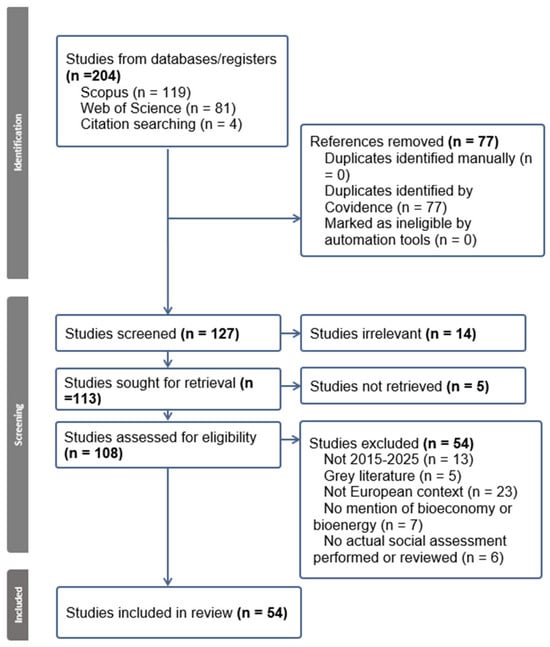
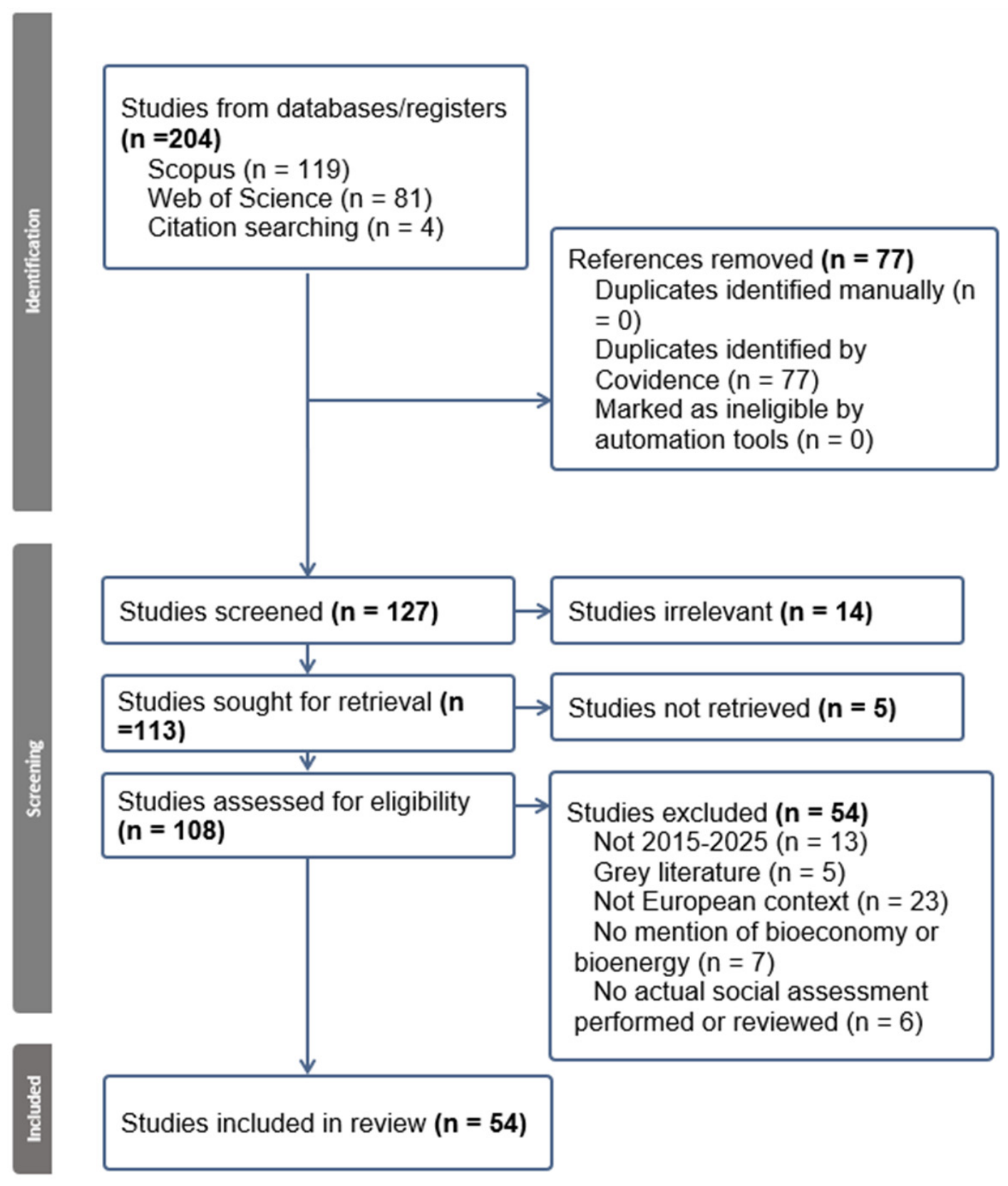
The database search yielded a total of 204 records; 119 from Scopus, 81 from Web of Science, and four from a citation search. The citation search papers were retrieved from references found during the full text review after the screening process. After the removal of 77 duplicates, 127 studies remained for title and abstract screening. During this stage, 14 studies were excluded due to lack of relevance to the research scope and five studies were not retrieved as they were unavailable. The remaining studies were assessed for eligibility through full-text screening, applying the inclusion and exclusion criteria outlined in Section 2.3. This resulted in the exclusion of studies not conducted within a European context (n = 23) and those not related to the bioeconomy (n = 7), studies published outside the period of 2015–2025 (n = 13), those that had no actual social assessment performed or reviewed (n = 6) and grey literature (n = 5).
A final sample of 54 studies was included in the review. The study selection process is summarised in Figure 1, following the PRISMA flow diagram.
Figure 1.
PRISMA Diagram. Source: Own elaboration with format from [26].
2.5. Data Extraction and Analytical Framework
Following study selection, a structured data extraction process was conducted to systematically analyse the selected literature. The analytical framework was informed by the methodological components of the UNEP-SETAC Life Cycle Initiative S-LCA guidelines.
Extracted variables were grouped into the following three categories: General characteristics: authors, year of publication, and journal; methodological characteristics: study type (e.g., case study, review), scope of evaluation (social only or combined with environmental/economic dimensions), country of assessment, data sources, methodological approach, functional unit, impact assessment method, and system boundaries; and social assessment characteristics: stakeholder categories assessed, social impact categories, and specific social indicators.
This categorisation enabled a comparative analysis of how S-LCA is operationalised across studies, with particular attention to methodological consistency and alignment with established guidelines.
The review included 54 studies overall. Analyses of general publication characteristics were based on this full sample. The methodological compliance assessment was restricted to 35 case-study applications, including publications that combined case studies with reviews or framework development. The denominator for each analysis is specified where it differs from the full sample. The document comprising the included studies and their full extracted variables analysed can be found in Supplementary Materials Document S1.
Additionally, a compliance rubric was developed to systematically assess the extent to which the reviewed case studies (35) aligned with key methodological elements of the UNEP-SETAC S-LCA Guidelines.
The rubric comprised eight criteria covering goal and scope definition, functional unit, system boundaries, stakeholder categories, impact categories, indicator selection, impact assessment approach, and data sources. Each criterion was scored from 0 to 2, where 0 indicated absence or inadequate application, 1 indicated partial or implicit application, and 2 indicated explicit and traceable application. Table 2 explains the scoring system and criteria assessed.
Table 2.
Criteria for assessment of compliance.
The resulting total scores ranged from 0 to 16 and were classified as low compliance (0–6), partial compliance (7–12), or high compliance (13–16). These cut-offs were used to facilitate descriptive comparison; they are defined by the authors and are not thresholds set within the UNEP-SETAC Guidelines. Additionally, while the updated S-LCA guidelines were published in 2020, the framework and its core characteristics have been available since 2009; therefore, all the selected case studies were evaluated based on compliance, since the core methodological elements examined in the rubric were already relevant to S-LCA practice before 2020.
Screening, data extraction, indicator classification, and methodological compliance scoring were conducted by a single reviewer. All authors reviewed and approved the final manuscript.
3. Results
3.1. General Characteristics of Studies
The distribution of publications across journals indicates a strong concentration within sustainability-oriented outlets. Sustainability (18.5%), Journal of Cleaner Production (16.7%), and International Journal of Life Cycle Assessment (13%) account for more than half of the selected studies, highlighting the interdisciplinary positioning of S-LCA research at the intersection of sustainability science and life cycle methodologies. The remaining publications are dispersed across a wide range of journals, each contributing smaller shares (Table 3), suggesting that research on S-LCA in the European bioeconomy remains fragmented across disciplines.
Table 3.
Journal distribution of the selected studies.
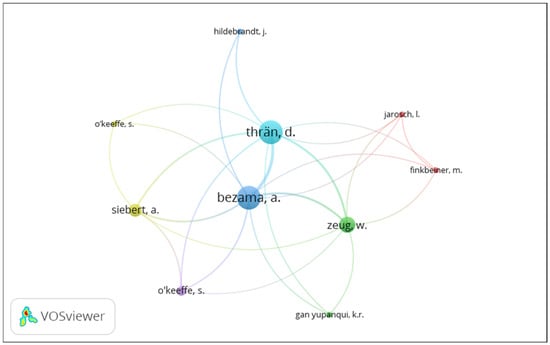
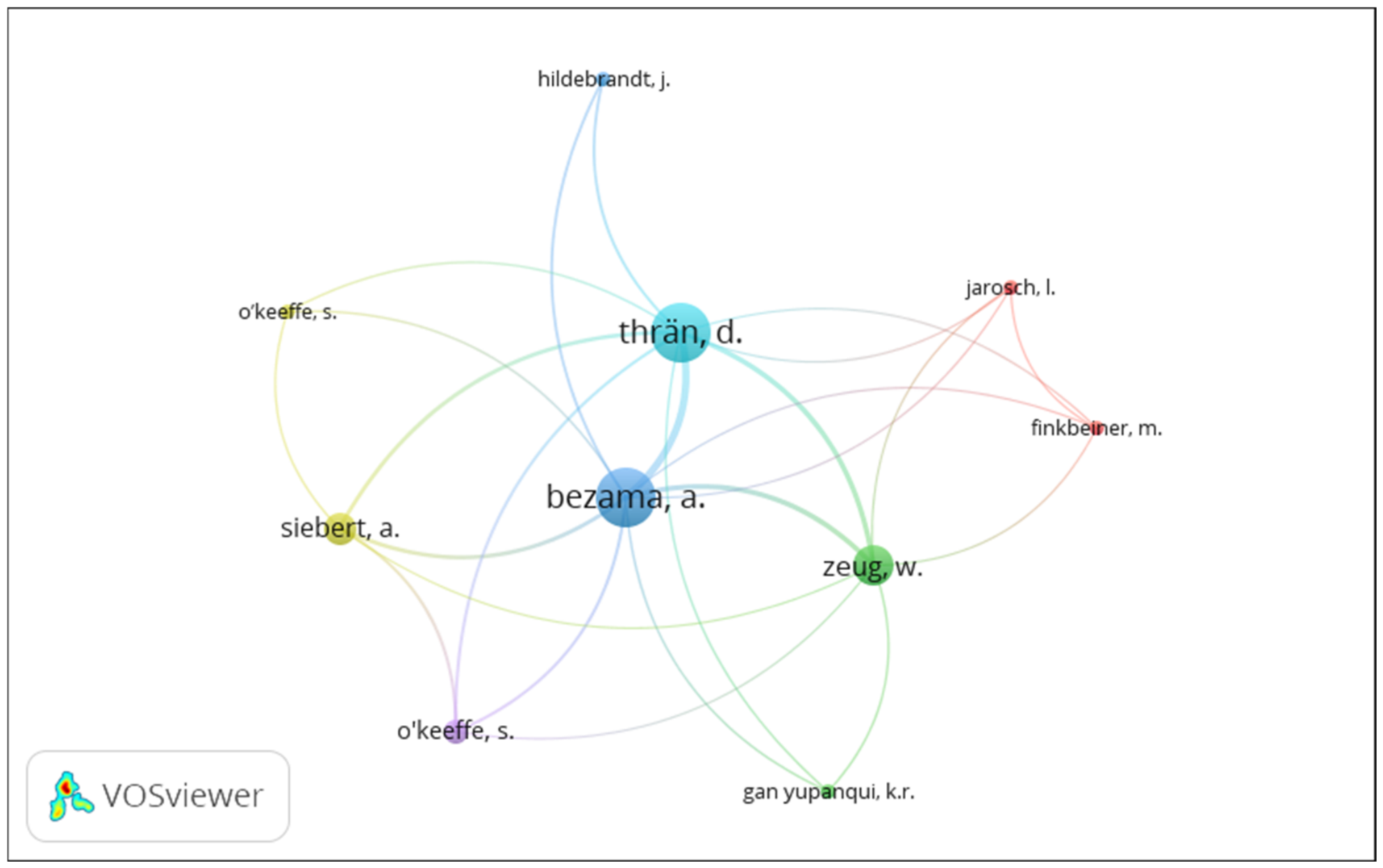
Authorship patterns further reflect this fragmentation. As illustrated in Figure 2, only a limited number of authors have contributed to more than one publication, indicating the absence of a highly consolidated research community in this field. Figure 2 was created by using VOSviewer version 1.6.20, based on bibliographic data (co-authorship data) retrieved from reference manager files (RIS); the type of analysis was co-authorship, the unit of analysis selected was authors, the counting method was full counting, and the minimum number of documents of an author was 1; the authors with the greatest total link strength selected were 20 and showcased the largest set of connected items (10).
Figure 2.
Authors contributing to more than two publications were selected. Source: Own elaboration with VOSviewer software version 1.6.20.
The selected studies vary in nature. Table 4 shows a count of the types of study designs found. Consequently, the results section focuses on empirical case studies, as primary research offers greater explanatory power and alignment with the overarching objectives of this investigation.
Table 4.
Study design distribution of the selected studies.
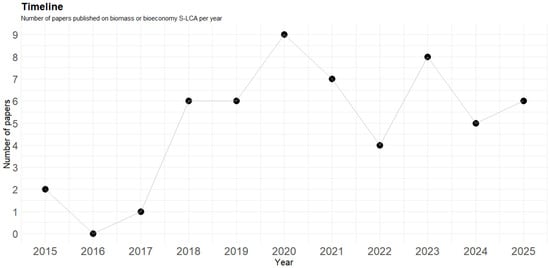
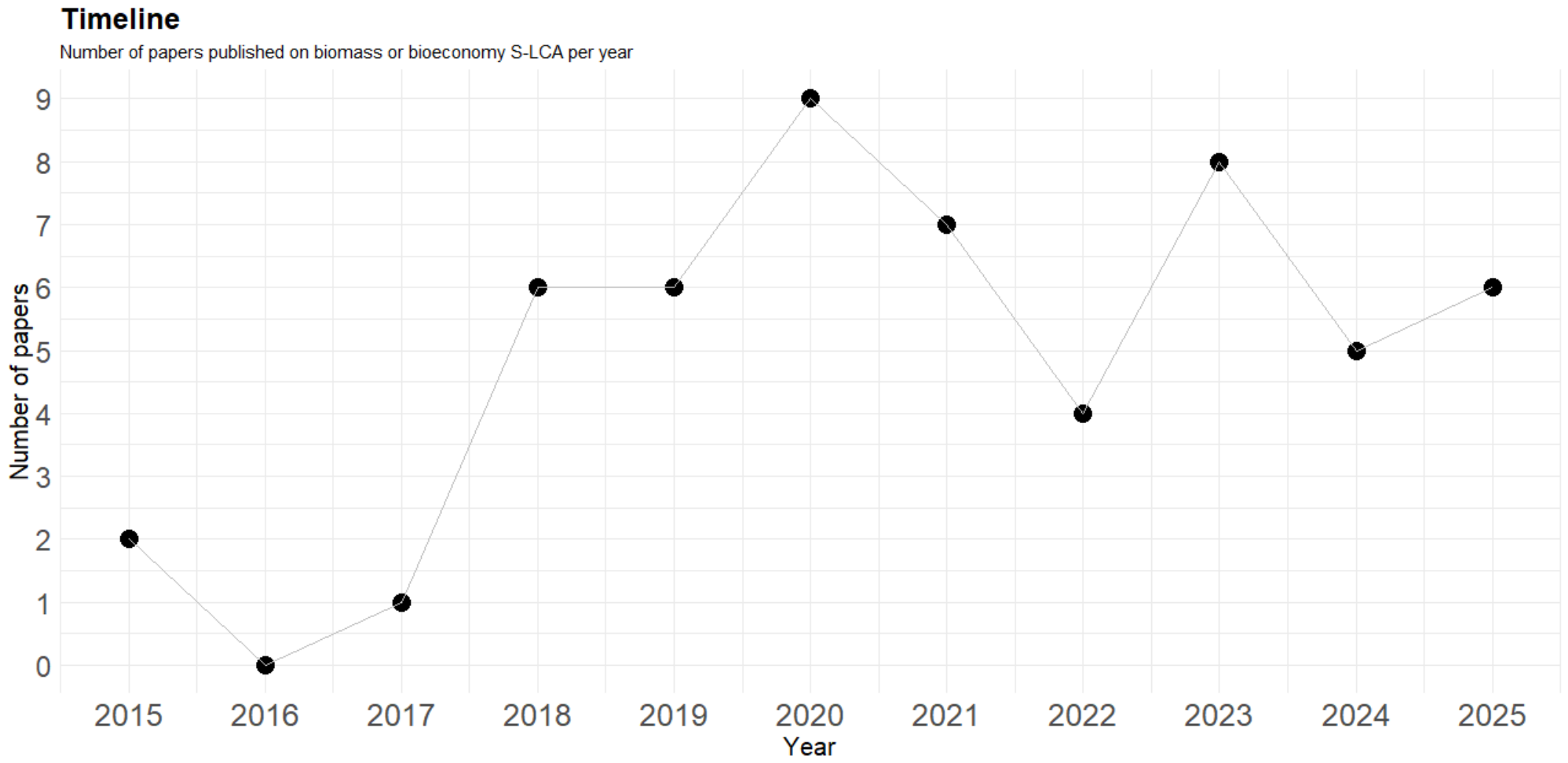
In terms of temporal trends, publications have increased over time, with a noticeable peak in 2020 with nine studies (16.7% of total studies). This is followed by year 2023 where eight studies were published on the subject (14.8%), as shown in Figure 3, and year 2021 with a total of seven studies (13%). The years 2018 and 2019 yielded six studies on the topic (11% each); 2022 had four studies (7.4%). For 2024 and 2025 only five (9.3%) and six (11%) studies, respectively, were published. The first year of this assessment, 2015, only shows two papers published (3.7% of total), 2016 no papers and 2017 only shows one study (1.9% of total) This pattern suggests a substantial growing interest, but still uneven academic attention to S-LCA applications within the bioeconomy.
Figure 3.
Timeline of papers selected on S-LCA for the bioeconomy.
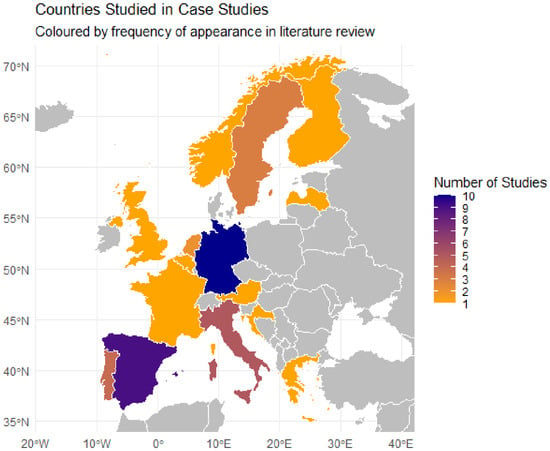
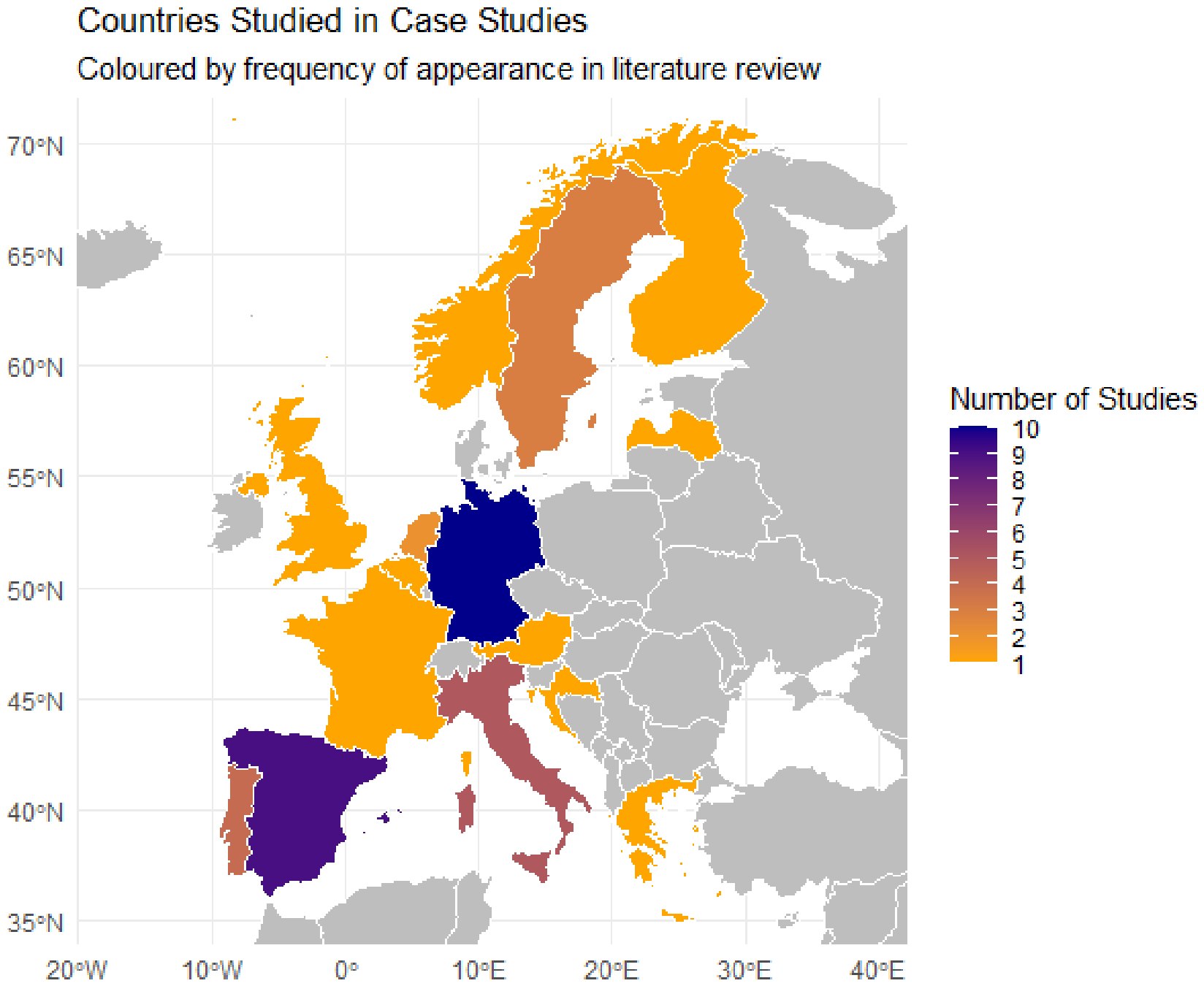
Geographically, the literature is concentrated in a small number of countries. Germany and Spain account for the largest share of case studies (21.3% and 19.1% respectively), followed by Italy (10.6%), Portugal (8.5%), and Sweden (6.4%). There are also two case studies that focus on the whole European region without accounting for specific countries (4.3%). This uneven distribution (Figure 4) indicates that evidence on S-LCA applications is clustered in specific national contexts, potentially limiting the generalisability of findings across the broader European bioeconomy.
Figure 4.
Countries studied in the selected case studies.
3.2. Functional Unit Definition
The definition of a functional unit (FU) is a fundamental requirement in life cycle assessment, as it ensures comparability across systems [10]. In the reviewed literature, 80% of studies defined a functional unit, while 20% did not specify one.
Despite the relatively high rate of FU adoption, substantial heterogeneity exists in how functional units are defined (Table 5). These range from physical units (e.g., mass, energy, land area) to economic units (e.g., monetary value of output) and even composite or system-level definitions (e.g., product baskets).
Table 5.
Functional units of selected case studies.
This variability reflects the diversity of bioeconomy applications but also introduces challenges for cross-study comparability. In particular, the use of economic-based functional units alongside physical units complicates the interpretation of social impacts, as the reference flow may not consistently represent equivalent functions across studies.
3.3. System Boundaries
System boundary definition shows notable inconsistency across the reviewed studies. Cradle-to-gate is the most commonly applied boundary (46%), followed by cradle-to-grave (20%). A further 20% of studies define system boundaries that do not align with standard LCA typologies, while approximately 14% do not specify system boundaries at all.
According to the UNEP-SETAC Life Cycle Initiative guidelines [10], a cradle-to-grave perspective is recommended to capture the full range of life cycle impacts. However, practical constraints, particularly data availability, often limit studies to partial system boundaries.
This inconsistency has important implications. Previous research has shown that excluding downstream phases can significantly alter the assessment of system performance, particularly when end-of-life processes play a critical role [21]. As a result, the variability in system boundary definitions, such as the one observed in this review, may hinder the comparability of findings and lead to incomplete or potentially misleading interpretations of social impacts [20].
3.4. Impact Assessment Approaches
Two primary approaches are used in S-LCA impact assessment: the Reference Scale Approach (RSA) and the Impact Pathway Approach (IPA) [10]. The former assesses the social performance, practice, or situation of actors in the life cycle based on a score attributed using performance reference points [59,60]. The latter assesses the “consequences of the change that is felt by the people affected, and the related impact on their wellbeing and health” [59], and it identifies the relations between causes and effects, called pathways [60].
The results show a clear dominance of the RSA within the reviewed literature. Approximately 40.5% of studies explicitly apply this approach, increasing to 67.5% when including studies that implicitly follow RSA principles. In contrast, the IPA is used far less frequently (10.8% combined explicit and implicit use). Only one study employed both approaches (2.7%). A notable proportion of studies (19%) do not clearly adopt either approach.
This imbalance suggests a preference for more operational and less data-intensive methods, as the IPA typically requires more complex causal modelling and data. However, the limited use of IPA may also indicate a gap in capturing deeper social impact pathways, particularly those related to long-term or indirect effects.
3.5. Stakeholder Categories Assessed (UNEP Classification)
Within the S-LCA framework, social impacts are assessed across stakeholder categories defined by the UNEP-SETAC Life Cycle Initiative, including workers, local communities, consumers, society, and value chain actors.
As shown in Table 6, workers accounted for the largest share of stakeholder-category occurrences (26.7%) and were assessed in 80.0% of the 35 case studies included in the methodological assessment. Local communities represented 21.9% of occurrences and were assessed in 65.7% of case studies, followed by society, which accounted for 17.1% of occurrences and was assessed in 51.4% of case studies. Consumers and value chain actors were assessed in 31.4% and 28.6% of case studies, respectively. These results indicate that workers and local communities received the greatest attention, while other stakeholder categories were assessed less frequently.
Table 6.
Stakeholder category distribution amongst case studies included in the review.
Some categories received particularly limited attention. Farmers and children were each assessed in 5.7% of case studies, while suppliers, small-scale entrepreneurs, shareholders, and authorities were each identified in 2.9%. In addition, stakeholder categories were not specified in 20.0% of the case studies, indicating that stakeholder coverage was not always clearly reported.
Several studies also extended beyond the main UNEP stakeholder categories by including more specific or context-dependent groups, such as small-scale entrepreneurs, shareholders, and authorities. Although such adaptations can help capture the social characteristics of individual case studies, the diversity of stakeholder classifications may complicate comparisons across studies.
Overall, the distribution suggests that stakeholder assessment was concentrated on workers and local communities, while several other groups received substantially less attention. These findings highlight variation in stakeholder coverage across the reviewed case studies and suggest that some stakeholder groups may be underrepresented in S-LCA assessments of the European bioeconomy.
3.6. Social Indicators Used
The analysis of social indicators reveals a high degree of heterogeneity in both the selection and formulation of indicators across the reviewed studies. In total, 505 unique indicators were identified, many of which appear only once, indicating a lack of standardisation in how social impacts are operationalised within S-LCA applications in the European bioeconomy.
3.6.1. Diversity and Fragmentation of Indicators
A key finding is the extensive fragmentation of indicators. While some correspond to commonly recognised social themes, such as occupational health and safety, wages, gender equality, and labour rights, many are highly context-specific or formulated as case-dependent statements.
As a result, similar social issues are measured using different indicators, and indicators vary widely in level of specificity and measurability. For example, occupational health and safety is represented through a wide range of metrics, including accident rates, safety policies, exposure risks, and qualitative descriptions of working conditions. This diversity limits comparability across studies and captures the need for context-specific indicators.
3.6.2. Quantitative vs. Qualitative Indicators
The reviewed studies employ a mix of quantitative and qualitative indicators, with no consistent balance across the literature. Quantitative indicators (e.g., injury rates, wages, working hours) are typically derived from secondary datasets and allow for cross-case comparison. Qualitative indicators, often based on surveys or stakeholder perceptions, capture context-specific dynamics but introduce subjectivity and reduce comparability.
A large proportion of indicators fall into quantitative forms. While this is valuable for capturing the general picture, it may lack the context-specific focus that is so important for S-LCA evaluations.
3.6.3. Misclassification of Indicators and Categories
An additional issue identified in the literature is the misclassification of impact categories as indicators. In several studies (e.g., refs. [33,45]) broad concepts such as “health and safety” are used directly as indicators. However, according to the UNEP-SETAC Life Cycle Initiative, such concepts represent impact categories, which should be operationalised through more specific and measurable indicators (e.g., accident rates, exposure to hazards, existence of safety policies).
Using overly broad indicators presents several challenges: it reduces analytical precision, limits reproducibility, and increases subjectivity in interpretation. This issue highlights a lack of conceptual clarity in the application of S-LCA methodologies, where the distinction between categories and indicators is not consistently maintained.
3.6.4. Alignment with UNEP Guidelines
The extent to which studies align with UNEP-recommended indicators varies considerably. While some studies adopt or adapt indicators from methodological sheets, many introduce custom or modified indicators without clear justification or linkage to standard categories. This partial alignment suggests that, although UNEP guidelines are widely acknowledged, they are not systematically implemented in practice.
A significant number of indicators are developed specifically for individual case studies, reflecting local socio-economic conditions, sectoral characteristics, or stakeholder perceptions. While this enhances contextual relevance, particularly important in the European bioeconomy, it also contributes to fragmentation and limits transferability. In many cases, these indicators are not clearly embedded within a broader analytical framework, further complicating comparison across studies.
3.7. Impact Categories
To complement the analysis of indicators, the reviewed studies were also examined in terms of the impact categories they address, following the structure proposed by the UNEP-SETAC Life Cycle Initiative [10].
The results show that health and safety is the most frequently assessed impact category, being in 74.3% of the studies. This is followed by a notable proportion of studies that do not clearly specify impact categories (28.6%), indicating gaps in methodological transparency. Other commonly assessed categories include: employment (present in 22.3% of studies), equal opportunities (22.3%), human rights (22.3%), labour rights and decent work (22.3%), contribution to economic development (20%), and governance (20%).
Less frequently addressed categories include adequate remuneration (17%), adequate working time (17%), community engagement (17%), knowledge capital (27%), fair salary (14.3%), child labour (11.4%). A long tail of categories appears only sporadically (less than 8.6%), including cultural heritage, migration, food security, corruption, and access to material resources.
The distribution of impact categories is highly uneven, with a strong concentration on worker-related aspects, particularly health and safety, while other dimensions, such as governance, societal impacts, and broader community dynamics, receive comparatively limited attention. This imbalance suggests that S-LCA applications within the European bioeconomy tend to prioritise operational and labour-related impacts, potentially overlooking more systemic or long-term social dimensions. Additionally, the lack of available data and the use of only secondary data facilitate the prioritisation of certain categories over other ones, which could then lead to bias if categories are being primarily evaluated due to their data availability instead of actual social impact.
The presence of studies that do not clearly define impact categories further highlights inconsistencies in methodological application. In some cases, categories are implicitly addressed through indicators without being explicitly defined, while in others, non-standard or overlapping categories are used. This lack of clarity reinforces the issue identified in Section 3.6 regarding the misalignment between indicators and categories, and points to broader challenges in the consistent operationalisation of S-LCA frameworks.
3.8. Data Sources
The analysis of data sources reveals a strong reliance on secondary data. A total of 57.1% of studies exclusively use secondary sources, including databases such as the Social Hotspots Database (SHDB), PSILCA, RESPONSA, and SOCA (Ecoinvent), as well as previously published literature. In contrast, 20% of studies rely solely on primary data collection methods, such as questionnaires, interviews, or stakeholder workshops. An additional 22.9% combine both primary and secondary data sources. Among secondary data tools, the Social Hotspots Database is the most widely used, appearing in 32% of studies that rely on secondary data, followed by RESPONSA and PSILCA.
This reliance on secondary data suggests limitations in access to primary, context-specific social data, which may affect the sensitivity of S-LCA results to local conditions. At the same time, the relatively limited use of stakeholder engagement approaches indicates a potential gap in capturing context-specific social dynamics, particularly relevant in the European bioeconomy context.
3.9. Overall Compliance with S-LCA
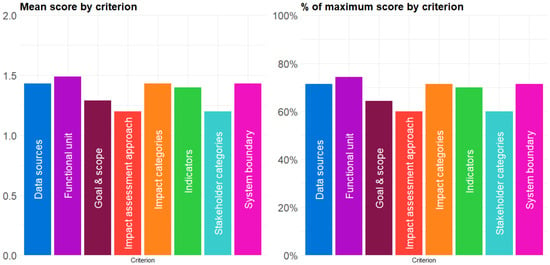
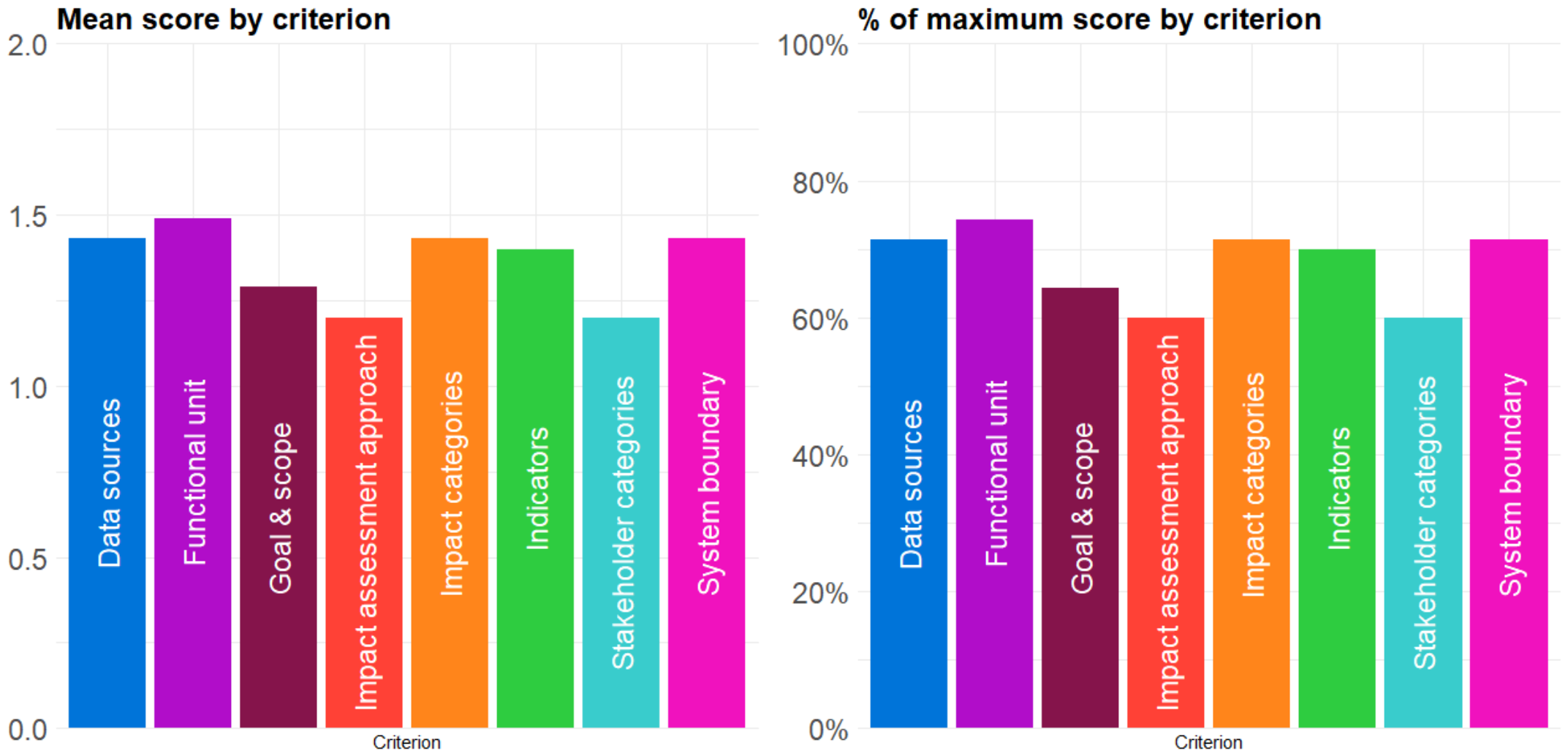
The compliance rubric, developed to provide a consistent basis for comparing methodological implementation across the reviewed studies and identifying areas where the UNEP-SETAC recommendations were applied inconsistently, is presented in Table 7. This compliance assessment was conducted for the 35 studies that are case studies (including those that were both review and case studies, and framework development and case study). The results of mean score and maximum percentage of compliance per criterion are reported in Figure 5.
Table 7.
S-LCA compliance per study rubric.
Figure 5.
Mean and percentage of maximum compliance score.
The compliance assessment provides further evidence of the uneven implementation of key methodological elements across the reviewed studies. The mean total score was 10.9 out of 16, showing a compliance of around 68% of the maximum score. Most studies (68.6%, n = 24) were classified as showing partial compliance, while 28.6% (n = 10) achieved high compliance and one study (2.9%) fell within the low-compliance category. Thus, although the majority of studies incorporated several elements recommended by the UNEP-SETAC Guidelines, relatively few demonstrated comprehensive alignment across all assessed criteria.
The criterion-level results reveal particular weaknesses in stakeholder categories and impact assessment approaches, both of which obtained the lowest mean scores (1.20/2; 60%). This finding is consistent with the uneven stakeholder coverage identified in Section 3.5 and the strong predominance of the Reference Scale Approach identified in Section 3.4. The relatively low score for stakeholder categories suggests that studies do not consistently adopt the five stakeholder groups proposed by the UNEP-SETAC framework, instead frequently selecting or adapting categories according to the individual case study. While contextual adaptation is an important feature of S-LCA, insufficiently transparent stakeholder selection may result in the systematic omission of relevant groups.
The low score for impact assessment approach similarly indicates that the methodological basis for assessing social performance is not always explicitly stated or applied. This is particularly relevant given that a considerable proportion of studies either implicitly followed an assessment approach or did not clearly identify whether they used the Reference Scale Approach or Impact Pathway Approach. Greater transparency in the selection and application of impact assessment methods would improve reproducibility and facilitate comparison between studies.
Functional unit definition received the highest mean score (1.49/2; 74.3%), indicating relatively strong uptake of this fundamental LCA component. However, the heterogeneity in functional units identified in Section 3.2 demonstrates that defining a functional unit does not necessarily ensure comparability between studies. Similarly, goal and scope received a comparatively lower score (1.29/2; 64.3%), despite being a foundational component of S-LCA. System boundaries, impact categories, indicators, and data sources each achieved 1.43/2 (71.4%), suggesting moderate implementation but also considerable room for improvement.
The mean methodological compliance score was higher among studies published from 2020 onwards (11.08 out of 16) than it was among studies published before 2020 (9.8 out of 16). This difference may partly reflect the publication of the 2020 S-LCA Guidelines and their influence on methodological practice and reporting. However, other factors, such as differences in study characteristics and reporting practices, may also have contributed to the observed difference. Therefore, although the updated Guidelines may be one explanation for the higher mean score, the comparison is descriptive and does not allow us to determine the extent to which they influenced the results.
4. Discussion
The review identifies several interconnected limitations in the application of S-LCA within the European bioeconomy, particularly regarding geographical coverage, stakeholder inclusion, indicator selection, methodological consistency, and the availability of context-specific social data. These limitations affect the comparability, comprehensiveness, and policy relevance of current assessments. At the same time, the increasing number of applications and the emergence of context-specific approaches indicate a field that is developing but has not yet achieved methodological consistency. This is consistent with [11], which identified the period since 2017 as a stage of increasing S-LCA application and continuing efforts toward standardisation.
4.1. Geographical Concentration and Contextual Relevance
The reviewed literature is concentrated in a relatively small number of countries, particularly Germany, Spain, Italy, Portugal, and Sweden. This uneven geographical distribution indicates that S-LCA evidence is not equally developed across the European bioeconomy. Since social impacts are strongly influenced by national socio-economic conditions, regulatory systems, labour markets, and governance structures, findings from one national context cannot necessarily be transferred directly to another.
This finding complements the conclusions of [61], who emphasised the importance of territorial and regional perspectives, local knowledge, and stakeholder participation in the forest bioeconomy. Although their review focused specifically on wood-based and forest bioeconomy systems, the present findings suggest that the need for contextualisation extends across European bioeconomy applications more broadly. Further country and region-specific S-LCA applications are needed to identify social impacts that may not be captured by generic indicator sets or existing databases, while maintaining sufficient methodological consistency to enable comparison.
Additionally, the use of global social databases in European bioeconomy assessments raises questions about both geographical representativeness and the attribution of social impacts. Although databases such as SHDB and PSILCA can facilitate the assessment of social risks across supply chains, country-level data may not capture regional inequalities or the specific circumstances of local communities. Furthermore, social effects are often associated with the conduct and practices of organisations instead of being directly attributable to the activities involved in producing a particular product [13]. These characteristics complicate the interpretation of social performance at the product-system level and reinforce the need to consider the geographical resolution, sectoral coverage, and conceptual basis of the data used. Future S-LCA applications should document database limitations and complement secondary data with regional statistics, locally available evidence, or stakeholder engagement. This would help balance the practicality of database-based assessments with the need to represent the social conditions and context-specific concerns of European bioeconomy systems.
4.2. Stakeholder Coverage and Engagement
A key finding is the uneven representation of stakeholder categories. Workers are the most frequently assessed stakeholder group, while consumers, children, small-scale entrepreneurs, farmers, and other potentially vulnerable or less visible groups receive considerably less attention. Although worker-related impacts are important, the social implications of bioeconomy transitions extend beyond employment and working conditions to include local livelihoods, rural development, social acceptance, distributional effects, and community well-being.
This imbalance is consistent with previous bioeconomy reviews. Ref. [61] highlighted the importance of local communities and stakeholder participation in forest bioeconomy development, while [62] identified community engagement, employment, equality, health and safety, and food security as important dimensions of social sustainability in biojet fuel development. The present review extends these observations by demonstrating that, across European bioeconomy applications more broadly, stakeholder coverage remains uneven and is still strongly oriented towards production-related stakeholders.
Stakeholder engagement is also limited in practice. More than half of the reviewed studies rely exclusively on secondary data (57.1%), while only 20% use primary data alone and a further 22.9% combine primary and secondary sources. Secondary databases can provide valuable and comparatively consistent information, but they may not adequately capture local perceptions, priorities, or emerging social concerns.
4.3. Indicator Selection and Social Assessment
The analysis identified substantial heterogeneity in the selection and formulation of social indicators, with 505 distinct indicators identified across the reviewed studies. Many indicators appear only once, while similar social issues are frequently operationalised using different variables. This fragmentation limits comparability and makes it difficult to establish which indicators are most appropriate for particular bioeconomy applications.
A further concern is the use of overly broad concepts as indicators. For example, “health and safety” is sometimes treated as an indicator, although such a concept is more appropriately understood as an impact category that should be operationalised through specific and measurable indicators, such as accident rates, exposure to hazards, or the existence of safety policies. Similar inconsistencies were observed in the treatment of categories and indicators, with some studies using concepts such as “labour rights” as categories and “child labour” as indicators, while others adopt indicators from the UNEP-SETAC Methodological Sheets without consistently assigning them to the corresponding stakeholder categories.
These inconsistencies reduce analytical precision and may increase subjectivity in interpretation. Previous reviews have similarly identified the need for more detailed and appropriate social indicators. Ref. [63], for example, highlighted the limited attention given to social sustainability transformation in bioeconomy assessments, while other studies have emphasised the need for more specific indicators and improved reference data. The present review extends these observations by demonstrating that the issue is not a lack of indicators, but the absence of transparent and consistently applied procedures for selecting and operationalising them.
Additionally, of the 35 case studies assessed, nine conflated impact categories or subcategories with indicators. Among these nine studies, seven relied on a single type of data source, predominantly secondary data, while only one relied exclusively on primary data; the remaining two combined primary and secondary sources. This descriptive pattern suggests that the classification issue occurred frequently among studies relying on a single data-source type, particularly secondary data. However, the small number of studies involved and the absence of a comparison of data-source patterns across all studies mean that no association can be established between data-source type and the occurrence of this issue. The finding nevertheless highlights the importance of clearly distinguishing conceptual impact categories from the specific indicators used to operationalise them, regardless of the data sources employed.
Structured approaches to indicator selection have been proposed, including the three-step process developed by [17], but these approaches appear to have limited uptake within the reviewed literature.
4.4. Methodological Consistency and Guideline Implementation
The review also identifies inconsistencies in several fundamental methodological elements. Although most studies define a functional unit, substantial variation exists in their formulation, ranging from physical and energy-based units to economic and system-level references. Similarly, system boundaries vary considerably, with cradle-to-gate being the most common approach, while some studies use non-standard boundaries or do not clearly specify them. These differences affect the scope of social impacts captured and limit comparison between studies. Partial life cycle boundaries may, in particular, exclude relevant social impacts occurring in downstream stages.
The compliance assessment provides further evidence of these methodological inconsistencies. Across the 35 studies that could be assessed using the compliance rubric, the mean score was 10.9 out of 16 (68%), with 24 studies (68.6%) classified as showing partial compliance, ten studies (28.6%) as high compliance, and one study (2.9%) as low compliance. No single criterion achieved a mean score above 80% of the maximum, indicating that even relatively well-reported methodological elements were not consistently implemented across the reviewed literature.
The weakest areas were stakeholder categorisation and explicit declaration of the impact assessment approach, both of which received a mean score of 1.20 out of 2 (60%). Goal and scope also showed relatively limited compliance (64.3%). In contrast, functional unit definition achieved the highest mean score (74.3%), while system boundaries, impact categories, indicators, and data sources each reached 71.4%. These results suggest that methodological inconsistency is not limited to individual poorly reported studies but is distributed across several core components of S-LCA.
The compliance results should not be interpreted as evidence that the UNEP-SETAC Guidelines are ineffective. Alternatively, they indicate a gap between the availability of methodological guidance and its operationalisation in published applications. In particular, the relatively low scores for stakeholder categorisation and impact assessment approach suggest that some aspects of the guidelines may require clearer procedures for implementation and reporting. There are multiple reasons why this is the case. Collecting social data can be time-consuming and costly [56], while reliable information on downstream life-cycle stages may be difficult to obtain. These constraints, together with the complexity of modelling social impacts across extended supply chains, may contribute to the frequent use of cradle-to-gate boundaries.
Although this approach can make assessments more manageable, it may exclude social impacts associated with product use, end-of-life treatment, and other downstream activities. Furthermore, the absence of widely established causal relationships between social subcategories and impact categories complicates the aggregation and interpretation of results [14]. Selecting indicators also involves trade-offs: quantitative indicators can facilitate comparison across systems, whereas qualitative indicators can provide richer contextual information but may be more difficult to standardise [14]. These challenges highlight the importance of transparent methodological choices and context-appropriate approaches to S-LCA.
Greater methodological transparency could improve reproducibility and comparability while preserving the contextual flexibility that is fundamental to S-LCA.
4.5. Data Availability and Methodological Development
The strong reliance on secondary data highlights a broader limitation in the availability of high-quality, context-specific social data. As discussed in Section 3.8, reliance on available databases may create a risk that assessments prioritise social issues for which data are readily available instead of those identified as important by stakeholders.
Databases such as the Social Hotspots Database and PSILCA facilitate the application of S-LCA across sectors and geographical areas, but their ability to represent regional and sector-specific social conditions may be limited. The development of more geographically and sectorally disaggregated social datasets, alongside greater availability of primary data, would therefore support more sensitive assessments.
At the same time, the literature indicates a gradual methodological development of S-LCA within the bioeconomy. The increasing number of studies, emergence of context-specific indicators, consideration of regional characteristics, and integration of social assessment with environmental and economic dimensions suggest growing methodological maturity. These developments indicate that future research should build upon existing S-LCA approaches rather than replace them, focusing on improving their consistency, transparency, and contextual sensitivity.
4.6. Implications for S-LCA Development and the European Bioeconomy
Taken together, the findings indicate a need for S-LCA frameworks that balance methodological standardisation with contextual flexibility. Future methodological development should provide clearer procedures for defining system boundaries and functional units, identifying relevant stakeholder groups, selecting and operationalising indicators, choosing impact assessment approaches, and documenting data sources.
This does not imply the need for a single universal set of indicators or stakeholder groups. Instead, standardisation should focus on establishing a transparent and reproducible process through which these elements can be selected and justified according to the characteristics of each system. Such an approach would address the methodological fragmentation identified in this review while preserving the contextual specificity that distinguishes social assessment from environmental LCA.
For the European bioeconomy, this balance is particularly important because social sustainability cannot be assessed solely through generic production-related indicators. Greater integration of stakeholder perspectives, improved regional social data, and more transparent indicator-selection procedures could strengthen the ability of S-LCA to capture issues such as rural livelihoods, community acceptance, social inclusion, and distributional impacts. Addressing these methodological and data gaps would strengthen the comparability, transparency, and policy usefulness of S-LCA and support its development as a decision-support tool for a socially sustainable and just transition to the European bioeconomy.
To better support a just transition, future S-LCA frameworks should consider which social impacts occur and how their benefits and burdens are distributed across stakeholder groups and regions. Depending on the system under assessment, relevant dimensions could include the distribution of employment and economic benefits, community participation in decision-making, access to information, and differences in social risks and opportunities for vulnerable or underrepresented groups. These dimensions should be operationalised through context-relevant indicators and by stakeholder engagement. Such an approach would help identify not only overall social risks and benefits but also potential inequalities that may be obscured by aggregate or national-level data.
This review focuses on methodological trends in the application and reporting of S-LCA in the European bioeconomy; it does not assess the actual social impacts of the systems examined or systematically map their geographical distribution. Nevertheless, the geographical scope of an S-LCA application should be distinguished from the geographical extent of the supply chain being assessed. European bioeconomy systems may rely on raw materials and upstream activities outside Europe, where relevant social risks and impacts may occur. Although assessing these impacts was beyond the scope of this review, their consideration is important for a comprehensive assessment of social sustainability. Future S-LCA practitioners should therefore consider relevant upstream activities, including international sourcing, when defining system boundaries. Where these activities cannot be adequately assessed, the resulting limitations in geographical coverage should be transparently reported. Further research examining how international upstream stages are represented in S-LCA applications of the European bioeconomy could help clarify the extent to which these impacts are currently captured.
Practical Recommendations for Researchers, Practitioners, and Policymakers
The findings suggest several priorities for strengthening S-LCA in the European bioeconomy. For researchers, transparent indicator-selection procedures, clear distinctions between impact categories and indicators, and consistent reporting of methodological choices would improve comparability while allowing context-specific assessments.
To balance scalability with context-specific social assessment, practitioners could adopt a tiered approach to data collection. Secondary databases could first be used to establish a baseline of potential social risks across supply chains. Practitioners could then identify gaps in geographical or sectoral coverage and prioritise primary data collection for issues or stakeholder groups that are insufficiently represented. Targeted interviews, surveys, or focus groups could help investigate local concerns and validate the relevance of the initial findings. The extent of primary engagement should be justified according to the assessment objectives, identified risks, stakeholder context, and available resources, with data limitations reported transparently.
For policymakers and data providers, improving the availability of geographically and sectorally relevant social data could support more context-sensitive assessments. Clearer reporting expectations could also improve transparency across studies. Together, these measures could strengthen the evidence base for identifying social risks and opportunities associated with bioenergy and bio-based production in the European bioeconomy.
4.7. Limitations of the Review
A limitation of this review is that screening, data extraction, indicator classification, and methodological compliance scoring were conducted by a single reviewer. No independent duplicate assessment or inter-rater reliability analysis was performed. During the revision process, additional checks were undertaken to improve the consistency and accuracy of the results. These included repeating the search, screen, extraction, and assessment, re-scoring and comparing results with those obtained during the initial assessment, and auditing the percentages, numerical values, tables, and figures. However, these checks did not constitute independent verification, and some interpretive uncertainty may remain. Consequently, researcher judgement may have influenced the classification of indicators, the grouping of conceptually similar indicators, and the assignment of compliance scores.
Additionally, differences in system boundaries, functional units, stakeholder categories, indicators, data sources, and assessment approaches limited direct comparability across studies. Incomplete reporting also meant that the absence of a methodological detail in a publication could not always be distinguished from the absence of the underlying activity. These limitations support a primarily descriptive interpretation of the findings.
Despite these limitations, the review provides a structured overview of how S-LCA has been applied in the European bioeconomy and identifies methodological patterns and evidence gaps that can inform future research and the development of assessment frameworks.
5. Conclusions
This review provides a systematic analysis of how Social Life Cycle Assessment (S-LCA) is applied within the European bioeconomy, highlighting key methodological patterns and limitations.
From a methodological perspective, the results reveal inconsistencies in the definition of functional units, system boundaries, and impact assessment approaches, alongside partial alignment with the UNEP-SETAC Life Cycle Initiative Guidelines. The Reference Scale Approach predominates among the assessment approaches identified, while the frequent use of cradle-to-gate boundaries may limit the representativeness of the full cycle and comparability of assessments.
In terms of social assessment, the findings reveal an uneven coverage of stakeholder categories, with a strong focus on workers and limited attention to consumers and vulnerable groups. Indicator selection is highly heterogeneous, often including overly broad or poorly defined indicators, and in some cases conflating impact categories with indicators. Additionally, the reliance on secondary data and limited stakeholder engagement constrain the context sensitivity and validity of results. This tension between flexibility and standardisation continues to shape the development of S-LCA.
These methodological and social gaps reduce the robustness, transparency, and comparability of S-LCA applications, limiting their effectiveness as decision-support tools. To address these challenges, further development of S-LCA frameworks should prioritise clearer methodological guidance, standardised yet flexible indicator selection processes, and stronger integration of stakeholder perspectives.
For the European bioeconomy, these improvements are essential to ensure that S-LCA can effectively support policy objectives related to social sustainability and a just transition, by providing more comprehensive, consistent, and context-relevant assessments.
Supplementary Materials
The following supporting information can be downloaded at https://www.mdpi.com/article/10.3390/su182111086/s1.: Document S1. List of selected studies and characteristics ANNEX; Document S2. PRISMA_2020_abstract_checklist; Document S3. PRISMA_2020_checklist.
Author Contributions
Conceptualization, O.A.F., with input from E.G.; methodology, O.A.F., with methodological guidance from E.G.; formal analysis, O.A.F.; investigation, O.A.F.; data curation, O.A.F.; development and application of the compliance assessment rubric, O.A.F., based on the rubric structure and guidance provided by E.G.; writing—original draft preparation, O.A.F.; writing—review and editing, E.G. and F.M.; visualization, O.A.F.; supervision, F.M. All authors have read and agreed to the published version of the manuscript.
Funding
This research was funded by the Department of Agriculture, Food and the Marine, and the Sustainable Energy Authority of Ireland under the SEAI Research, Development & Demonstration Funding Programme 2023, Grant number: 23/RDD/913.
Institutional Review Board Statement
Not applicable. Ethical approval was not required because the study analysed published literature only. The review was not registered, and no protocol was prepared.
Informed Consent Statement
Not applicable.
Data Availability Statement
Not applicable; there were no original data generated for this study.
Conflicts of Interest
The authors declare no conflicts of interest. The funders had no role in the design of the study; in the collection, analyses, or interpretation of data; in the writing of the manuscript; or in the decision to publish the results.
References
- European Commission: Directorate-General for Research and Innovation. Innovating for Sustainable Growth—A Bioeconomy for Europe; Publications Office: Luxembourg, 2012; Available online: https://data.europa.eu/doi/10.2777/6462 (accessed on 20 October 2024).
- McCormick, K.; Kautto, N. The Bioeconomy in Europe: An Overview. Sustainability 2013, 5, 2589–2608. [Google Scholar] [CrossRef] [Scilit]
- European Commission: Directorate-General for Research and Innovation. A Sustainable Bioeconomy for Europe: Strengthening the Connection Between Economy, Society and the Environment. Updated Bioeconomy Strategy. 2018. Available online: https://www.qualenergia.it/wp-content/uploads/2018/10/ec_bioeconomy_strategy_2018.pdf (accessed on 20 October 2024).
- Lewandowski, I.; Boysen-Urban, K.; Boysen, O.; Kuckertz, A. Markets, Sustainability Management and Entrepreneurship. In Bioeconomy; Springer Nature: Berlin/Heidelberg, Germany, 2018; pp. 229–284. [Google Scholar] [CrossRef] [Scilit]
- Vidaurre, N.M.; Vargas-Carpintero, R.; Wagner, M.; Lask, J.; Lewandowski, I. Social Aspects in the Assessment of Biobased Value Chains. Sustainability 2020, 12, 9843. [Google Scholar] [CrossRef] [Scilit]
- Sanz-Hernández, A.; Esteban, E.; Garrido, P. Transition to a bioeconomy: Perspectives from social sciences. J. Clean. Prod. 2019, 224, 107–119. [Google Scholar] [CrossRef] [Scilit]
- Cerca, M.; Sosa, A.; Gusciute, E.; Murphy, F. Strategic planning of bio-based supply chains: Unlocking bottlenecks and incorporating social sustainability into biorefinery systems. Sustain. Prod. Consum. 2022, 34, 219–232. [Google Scholar] [CrossRef] [Scilit]
- Siebert, A.; Bezama, A.; O’Keeffe, S.; Thrän, D. Social life cycle assessment: In pursuit of a framework for assessing wood-based products from bioeconomy regions in Germany. Int. J. Life Cycle Assess. 2018, 23, 651–662. [Google Scholar] [CrossRef] [Scilit]
- Jørgensen, A.; Le Bocq, A.; Nazarkina, L.; Hauschild, M. Methodologies for social life cycle assessment. Int. J. Life Cycle Assess. 2008, 13, 96–103. [Google Scholar] [CrossRef] [Scilit]
- Benoît Norris, C.; Traverso, M.; Neugebauer, S.; Ekener, E.; Schaubroeck, T.; Russo Garrido, S.; Berger, M.; Valdivia, S.; Lehmann, A.; Finkbeiner, M.; et al. Guidelines for Social Life Cycle Assessment of Products and Organizations 2020; United Nations Environment Programme (UNEP): Paris, France, 2020; Available online: https://www.lifecycleinitiative.org/wp-content/uploads/2021/01/Guidelines-for-Social-Life-Cycle-Assessment-of-Products-and-Organizations-2020-22.1.21sml.pdf (accessed on 17 September 2024).
- Huarachi, D.A.R.; Piekarski, C.M.; Puglieri, F.N.; de Francisco, A.C. Past and future of Social Life Cycle Assessment: Historical evolution and research trends. J. Clean. Prod. 2020, 264, 121506. [Google Scholar] [CrossRef] [Scilit]
- Mattila, T.; Judl, J.; Macombe, C.; Leskinen, P. Evaluating social sustainability of bioeconomy value chains through integrated use of local and global methods. Biomass Bioenergy 2018, 109, 276–283. [Google Scholar] [CrossRef] [Scilit]
- Dreyer, L.; Hauschild, M.; Schierbeck, J. A Framework for Social Life Cycle Impact Assessment (10 pp). Int. J. Life Cycle Assess. 2006, 11, 88–97. [Google Scholar] [CrossRef] [Scilit]
- Cadena, E.; Rocca, F.; Gutierrez, J.A.; Carvalho, A. Social life cycle assessment methodology for evaluating production process design: Biorefinery case study. J. Clean. Prod. 2019, 238, 117718. [Google Scholar] [CrossRef] [Scilit]
- Falcone, P.M.; García, S.G.; Imbert, E.; Lijó, L.; Moreira, M.T.; Tani, A.; Tartiu, V.E.; Morone, P. Transitioning towards the bio-economy: Assessing the social dimension through a stakeholder lens. Corp. Soc. Responsib. Environ. Manag. 2019, 26, 1135–1153. [Google Scholar] [CrossRef] [Scilit]
- Martin, M.; Røyne, F.; Ekvall, T.; Moberg, Å. Life cycle sustainability evaluations of bio-based value chains: Reviewing the indicators from a Swedish perspective. Sustainability 2018, 10, 547. [Google Scholar] [CrossRef] [Scilit]
- Fürtner, D.; Ranacher, L.; Echenique, E.A.P.; Schwarzbauer, P.; Hesser, F. Locating Hotspots for the Social Life Cycle Assessment of Bio-Based Products from Short Rotation Coppice. BioEnergy Res. 2021, 14, 510–533. [Google Scholar] [CrossRef] [Scilit] [PubMed]
- Moltesen, A.; Bonou, A.; Wangel, A.; Bozhilova-Kisheva, K.P. Social Life Cycle Assessment: An Introduction. In Life Cycle Assessment: Theory and Practice; Hauschild, M.Z., Rosenbaum, R.K., Olsen, S.I., Eds.; Springer International Publishing: Cham, Switzerland, 2018; pp. 401–422. [Google Scholar] [CrossRef] [Scilit]
- Bhatnagar, A.; Härri, A.; Levänen, J.; Niinimäki, K. Exploring the role of social life cycle assessment in transition to circular economy: A systematic review. Resour. Conserv. Recycl. 2024, 207, 107702. [Google Scholar] [CrossRef] [Scilit]
- Petti, L.; Serreli, M.; Di Cesare, S. Systematic literature review in social life cycle assessment. Int. J. Life Cycle Assess. 2018, 23, 422–431. [Google Scholar] [CrossRef] [Scilit]
- Spierling, S.; Knüpffer, E.; Behnsen, H.; Mudersbach, M.; Krieg, H.; Springer, S.; Albrecht, S.; Herrmann, C.; Endres, H.-J. Bio-based plastics—A review of environmental, social and economic impact assessments. J. Clean. Prod. 2018, 185, 476–491. [Google Scholar] [CrossRef] [Scilit]
- European Union. Advancing a Stronger Social Europe. 2021. Available online: https://www.consilium.europa.eu/en/infographics/social-europe/ (accessed on 20 September 2024).
- EESC. An EU legal framework on safeguarding and strengthening workers’ information, consultation and participation. Study European Economic and Social Committee. 2020. Available online: https://www.eesc.europa.eu/sites/default/files/files/qe-02-20-818-en-n.pdf (accessed on 7 November 2024).
- OECD. Better Regulation Practices Across the European Union 2022; OECD Publishing: Paris, France, 2022. [Google Scholar] [CrossRef] [Scilit]
- European Commission. The European Green Deal; European Commission: Brussels, Belgium, 2019. [Google Scholar]
- Page, M.J.; McKenzie, J.E.; Bossuyt, P.M.; Boutron, I.; Hoffmann, T.C.; Mulrow, C.D.; Shamseer, L.; Tetzlaff, J.M.; Akl, E.A.; Brennan, S.E.; et al. The PRISMA 2020 statement: An updated guideline for reporting systematic reviews. BMJ 2021, 372, n71. [Google Scholar] [CrossRef] [Scilit] [PubMed]
- Andrade, E.P.; Bonmati, A.; Esteller, L.J.; Vallejo, A.A. Assessment of social aspects across Europe resulting from the insertion of technologies for nutrient recovery and recycling in agriculture. Sustain. Prod. Consum. 2022, 31, 52–66. [Google Scholar] [CrossRef] [Scilit]
- Assies, F.; Messmann, L.; Thorenz, A.; Tuma, A. Life cycle sustainability assessment of substituting fossil based with biogenic materials: A German case study on drinking cups and insulation boxes. J. Ind. Ecol. 2025, 29, 1551–1567. [Google Scholar] [CrossRef] [Scilit]
- Barrio, A.; Francisco, F.; Leoncini, A.; Wietschel, L.; Thorenz, A. Life Cycle Sustainability Assessment of a Novel Bio-Based Multilayer Panel for Construction Applications. Resources 2021, 10, 98. [Google Scholar] [CrossRef] [Scilit]
- Bezama, A.; Hildebrandt, J.; Thrän, D. Analyzing the Potential Environmental and Socio-Economic Impacts of Regional Energy Integration Scenarios of a Bio-Based Industrial Network. Sustainability 2022, 14, 15886. [Google Scholar] [CrossRef] [Scilit]
- Bezama, A.; Hildebrandt, J.; Thrän, D. Integrating Regionalized Socioeconomic Considerations onto Life Cycle Assessment for Evaluating Bioeconomy Value Chains: A Case Study on Hybrid Wood–Concrete Ceiling Elements. Sustainability 2021, 13, 4221. [Google Scholar] [CrossRef] [Scilit]
- Blanc, S.; Massaglia, S.; Brun, F.; Cristiana, P.; Mosso, A.; Giuggioli, N. Use of Bio-Based Plastics in the Fruit Supply Chain: An Integrated Approach to Assess Environmental, Economic, and Social Sustainability. Sustainability 2019, 11, 2475. [Google Scholar] [CrossRef] [Scilit]
- Elginoz, N.; van Blokland, J.; Safarian, S.; Movahedisaveji, Z.; Wedajo, D.Y.; Adamopoulos, S. Wood Waste Recycling in Sweden—Industrial, Environmental, Social, and Economic Challenges and Benefits. Sustainability 2024, 16, 5933. [Google Scholar] [CrossRef] [Scilit]
- Messmann, L.; Wietschel, L.; Thorenz, A.; Tuma, A. Assessing the social dimension in strategic network optimization for a sustainable development: The case of bioethanol production in the EU. J. Ind. Ecol. 2023, 27, 760–776. [Google Scholar] [CrossRef] [Scilit]
- González-García, S.; Estévez, P.G.; Gullón, B. Bio-Compounds Production from Agri-Food Wastes Under a Biorefinery Approach: Exploring Environmental and Social Sustainability; Springer: Singapore, 2019; pp. 25–53. [Google Scholar] [CrossRef] [Scilit]
- Karklina, K.; Slisane, D.; Romagnoli, F.; Blumberga, D. Social life cycle assessment of biomethane production and distribution in Latvia. Environ. Technol. Resour. Proc. Int. Sci. Pract. Conf. 2015, 2, 128–132. [Google Scholar] [CrossRef] [Scilit][Green Version]
- Ladu, L.; Morone, P.P. Holistic approach in the evaluation of the sustainability of bio-based products: An Integrated Assessment Tool. Sustain. Prod. Consum. 2021, 28, 911–924. [Google Scholar] [CrossRef] [Scilit]
- Marting, N.A.; Jurišić, V.; Bieling, C.; Magenau, E.; Wagner, M.; Kiesel, A.; Lewandowski, I. Social assessment of miscanthus cultivation in Croatia: Assessing farmers’ preferences and willingness to cultivate the crop. GCB Bioenergy 2023, 15, 916–931. [Google Scholar] [CrossRef] [Scilit]
- Pihkola, H.; Hylkilä, E.; Paronen, E.; Markkula, A.; Liirus, H. Social-LCA providing new insights and learnings for social responsibility—Case pulp and paper industry. Int. J. Life Cycle Assess. 2024, 30, 1435–1450. [Google Scholar] [CrossRef] [Scilit]
- Yupanqui, K.R.G.; Zeug, W.; Thrän, D.; Bezama, A. A regionalized social life cycle assessment of a prospective value chain of second-generation biofuel production. J. Clean. Prod. 2024, 472, 143370. [Google Scholar] [CrossRef] [Scilit]
- Guarino, F.; Cellura, M.; Traverso, M. Costructal law, exergy analysis and life cycle energy sustainability assessment: An expanded framework applied to a boiler. Int. J. Life Cycle Assess. 2020, 25, 2063–2085. [Google Scholar] [CrossRef] [Scilit]
- Pérez, T.H.; Rodríguez-Chueca, J.; Rodríguez, J.P. Inclusion of key social indices for a comparative assessment of the sustainability of the life cycle of current and future electricity generation in Spain: A proposed methodology. Sci. Total Environ. 2023, 899, 165541. [Google Scholar] [CrossRef] [Scilit] [PubMed]
- Jarosch, L.; Zeug, W.; Bezama, A.; Finkbeiner, M.; Thrän, D. A Regional Socio-Economic Life Cycle Assessment of a Bioeconomy Value Chain. Sustainability 2020, 12, 1259. [Google Scholar] [CrossRef] [Scilit]
- Josa, I.; Garfi, M. Social life cycle assessment of microalgae-based systems for wastewater treatment and resource recovery. J. Clean. Prod. 2023, 407, 137121. [Google Scholar] [CrossRef] [Scilit]
- Kostidi, E.; Lyridis, D. Social impact assessment of biofuel production for maritime and aviation sectors: A case study of a pilot biorefinery project. Front. Energy Res. 2024, 12, 1454862. [Google Scholar] [CrossRef] [Scilit]
- Mair-Bauernfeind, C.; Boiger, T.; Asada, R.; Stern, T. Social consequences of wood-based innovations: A generic analysis of sectoral differences in Austria. Int. J. Life Cycle Assess. 2025, 30, 1281–1305. [Google Scholar] [CrossRef] [Scilit]
- Martín-Gamboa, M.; Dias, A.; Arroja, L.; Iribarren, D. A protocol for the definition of supply chains in product social life cycle assessment: Application to bioelectricity. Sustain. Energy Fuels 2020, 4, 5533–5542. [Google Scholar] [CrossRef] [Scilit]
- Martin-Gamboa, M.; Dias, A.; Iribarren, D. Definition, assessment and prioritisation of strategies to mitigate social life-cycle impacts across the supply chain of bioelectricity: A case study in Portugal. Renew. Energy 2022, 194, 1110–1118. [Google Scholar] [CrossRef] [Scilit]
- Martín-Gamboa, M.; Quinteiro, P.; Dias, A.; Iribarren, D. Comparative Social Life Cycle Assessment of Two Biomass-to-Electricity Systems. Int. J. Environ. Res. Public Health 2021, 18, 4918. [Google Scholar] [CrossRef] [Scilit] [PubMed]
- Panoutsou, C.; von Cossel, M.; Ciria, P.; Ciria, C.S.; Baraniecki, P.; Monti, A.; Zanetti, F.; Dubois, J. Social considerations for the cultivation of industrial crops on marginal agricultural land as feedstock for bioeconomy. Biofuels Bioprod. Biorefining 2022, 16, 1319–1341. [Google Scholar] [CrossRef] [Scilit]
- Pérez-López, P.; Rajaonison, A.; Zebian, B.; Bouallou, C.; González-Fernández, C.; Greses, S.; Gómez-Serrano, C.; Fernández, F.G.A. Exploiting outcomes of life cycle costing to conduct coherent screening social life cycle assessments of emerging systems: A case study of microalgae biorefineries. Int. J. Life Cycle Assess. 2025, 30, 770–791. [Google Scholar] [CrossRef] [Scilit]
- Portner, B.W.; Valente, A.; Guenther, S. Sustainability assessment of combined animal fodder and fuel production from microalgal biomass. Int. J. Environ. Res. Public Health 2021, 18, 11351. [Google Scholar] [CrossRef] [Scilit] [PubMed]
- Sadhukhan, J.; Sen, S.; Gadkari, S. The Mathematics of life cycle sustainability assessment. J. Clean. Prod. 2021, 309, 127457. [Google Scholar] [CrossRef] [Scilit]
- Siebert, A.; O’Keeffe, S.; Bezama, A.; Zeug, W.; Thrän, D. How not to compare apples and oranges: Generate context-specific performance reference points for a social life cycle assessment model. J. Clean. Prod. 2018, 198, 587–600. [Google Scholar] [CrossRef] [Scilit]
- Ugolini, M.; Recchia, L.; Avolio, C.; Yebra, C. Social Life Cycle Assessment of Multifunctional Bioenergy Systems: Social and Socioeconomic Impacts of Hydrothermal Treatment of Wet Biogenic Residues into Intermediate Bioenergy Carriers and Sustainable Solid Biofuels. Energies 2025, 18, 3695. [Google Scholar] [CrossRef] [Scilit]
- Valente, C.; Brekke, A.; Modahl, I.S. Testing environmental and social indicators for biorefineries: Bioethanol and biochemical production. Int. J. Life Cycle Assess. 2018, 23, 581–596. [Google Scholar] [CrossRef] [Scilit]
- Zarauz, I.; Sanz-Hernández, A.; Rivera-Lirio, J. Social life cycle assessment in the context of bioeconomy: A comparative study of fertilizer value chains. Environ. Dev. Sustain. 2025, 1573–2975. [Google Scholar] [CrossRef] [Scilit]
- Zeug, W.; Bezama, A.; Thrän, D. A framework for implementing holistic and integrated life cycle sustainability assessment of regional bioeconomy. Int. J. Life Cycle Assess. 2021, 26, 1998–2023. [Google Scholar] [CrossRef] [Scilit]
- Harmens, R.; Goedkoop, M.; Alvarenga, R.A.; Boone, L. ORIENTING-D1.2 Critical Evaluation of Social Approaches; European Union: Brussels, Belgium, 2022. [Google Scholar] [CrossRef]
- Parent, J.; Cucuzzella, C.; Revéret, J.-P. Impact assessment in SLCA: Sorting the sLCIA methods according to their outcomes. Int. J. Life Cycle Assess. 2010, 15, 164–171. [Google Scholar] [CrossRef] [Scilit]
- Di Letizia, G.; De Lucia, C.; Pazienza, P.; Cappelletti, G. Forest bioeconomy at regional scale: A systematic literature review and future policy perspectives. For. Policy Econ. 2023, 155, 103052. [Google Scholar] [CrossRef] [Scilit]
- Sharno, M.; Hiloidhari, M. Social sustainability of biojet fuel for net zero aviation. Energy Sustain. Dev. 2024, 79, 101419. [Google Scholar] [CrossRef] [Scilit]
- Zarauz, I.; Sanz-Hernández, A.; Rivera-Lirio, J. Social sustainability in a good bioeconomy paradigm: A systematic review of social life cycle assessment (S-LCA). J. Clean. Prod. 2025, 486, 144570. [Google Scholar] [CrossRef] [Scilit]

Disclaimer/Publisher’s Note: The statements, opinions and data contained in all publications are solely those of the individual author(s) and contributor(s) and not of MDPI and/or the editor(s). MDPI and/or the editor(s) disclaim responsibility for any injury to people or property resulting from any ideas, methods, instructions or products referred to in the content. |
© 2026 by the authors. Licensee MDPI, Basel, Switzerland. This article is an open access article distributed under the terms and conditions of the Creative Commons Attribution (CC BY) license.