


Abstract
Marine intraplatform reef–shoal systems are important carbonate reservoirs. Understanding their evolution and reservoir response is critical for reducing exploration uncertainty and supporting more efficient hydrocarbon exploration. This study integrates field outcrops, cores, thin sections, well logs, integrated prediction-error filter analysis (INPEFA), petrophysical data, and 3D seismic data to establish a sequence-stratigraphic framework for the Upper Permian Changxing Formation in the central Sichuan Basin. The formation is divided into two third-order sequences and five fourth-order sequences (ssq1–ssq5). Reef–shoal bodies occur mainly in highstand system tracts and progressively expand from ssq2 to ssq5, showing multi-stage stacking and strong lateral heterogeneity. Palaeogeomorphic highs favor the development of bioclastic shoals and local reefs. Reservoirs occur mainly in bioclastic shoals and reefs, with pore systems dominated by dissolution pores, vugs, intercrystalline pores, and fractures. Sequence architecture primarily influences reef–shoal development stages, whereas palaeogeomorphology contributes to their spatial differentiation. Multi-stage stacking influences reservoir scale, while diagenesis plays a major role in determining reservoir quality. These results provide a geological basis for favorable reservoir prediction, reduced geological uncertainty, and more efficient hydrocarbon exploration.
1. Introduction
Marine carbonate reef–shoal systems are important hydrocarbon reservoirs. Their development is jointly influenced by relative sea-level changes, palaeogeomorphology, hydrodynamic conditions, and reef-building processes [1,2,3,4,5]. Reefs and grain shoals commonly occur as composite bodies. Their depositional architecture, stacking patterns, and subsequent diagenetic modification control reservoir heterogeneity and quality [6,7,8,9,10]. Constraining reef–shoal development stages, spatial migration, and reservoir responses within a sequence-stratigraphic framework is critical for carbonate sedimentology and favorable reservoir prediction [11,12,13]. Improved geological prediction can reduce inefficient resource evaluation and improve the use of existing subsurface data. Although such improvements may contribute to more rational use of exploration resources, their direct effects on drilling reduction, cost, and environmental impact require independent operational assessment.
The Upper Permian Changxing Formation in the Sichuan Basin is a major marine carbonate gas exploration target in China [14,15,16]. During the Late Permian, the central Sichuan Basin was located within the Yangtze carbonate platform. Intraplatform reef–shoal deposits were widely developed. Intra-platform palaeogeomorphic highs flanking the Pengxi–Wusheng intraplatform depression provided favorable settings for reef–shoal reservoir development [17,18]. Previous studies have established the general sequence-stratigraphic framework and documented the sedimentary facies, intraplatform shoals, and reservoir characteristics of the Changxing Formation [11,18,19,20,21,22,23,24]. These studies provide an important basis for understanding Changxing reef–shoal systems. However, several aspects remain insufficiently resolved. First, the internal fourth-order sequence architecture has not been consistently constrained across the study area. Second, the stage-by-stage migration, lateral expansion, and multi-stage stacking of reef–shoal bodies within individual fourth-order sequences remain unclear. Third, sequence position, palaeogeomorphology, reef–shoal architecture, and reservoir quality have rarely been integrated within a single prediction framework. These gaps limit refined reconstruction of reef–shoal evolution and prediction of favorable reservoirs. These uncertainties limit accurate reservoir prediction and efficient hydrocarbon resource evaluation.
Intraplatform reef–shoal reservoirs show pronounced depositional–diagenetic heterogeneity [24,25]. High-energy grain shoals and reefs provide favorable grain-supported fabrics and biogenic frameworks, whereas subsequent dissolution, dolomitization, and fracturing further modify the pore system [26,27,28]. Recent studies of heterogeneous subsurface reservoirs have highlighted the importance of quantitatively characterizing pore structure, permeability heterogeneity, and fluid-transport behavior. Recent studies on CH4 production and CO2 storage under zonal-permeability control and on the evolution of coal structure and fluid transport during compression failure further highlight the value of quantitative analysis of reservoir heterogeneity and flow capacity [29,30]. Although these studies focus on coal-bearing systems rather than carbonate reef–shoal reservoirs, their quantitative approaches provide useful methodological insights for complex reservoir characterization. Palaeogeomorphology further controls reef–shoal location, scale, and lateral continuity by regulating water depth, hydrodynamic energy, and accommodation [31,32,33,34]. Sedimentary facies or a single reservoir parameter alone cannot fully explain reef–shoal reservoir development. An integrated analysis of sequence position, palaeogeomorphology, reef–shoal stacking, pore structure, and reservoir quality is therefore required within a consistent sequence-stratigraphic framework.
Improving the geological constraints on exploration targets can reduce inefficient resource evaluation and improve the use of existing subsurface data. Although this study does not directly quantify drilling reduction, cost, or environmental impacts, more accurate reservoir prediction provides a geological basis for resource-efficient exploration and may contribute to more rational use of subsurface hydrocarbon resources. Building on previous sequence-stratigraphic and reef–shoal studies, this study focuses on refining the fourth-order sequence framework and linking stage-specific reef–shoal evolution with palaeogeomorphology and reservoir quality. This study integrates field outcrops, cores, thin sections, conventional well logs, INPEFA, petrophysical data, and 3D seismic data from the Upper Permian Changxing Formation in the central Sichuan Basin. The objectives are to: (1) characterize lithofacies associations, vertical stacking, lateral variation, and plan-view evolution of intraplatform reef–shoal bodies within a consistent stratigraphic framework; (2) evaluate the controls of depositional fabrics, pore systems, and diagenetic modification on reservoir quality; and (3) clarify the constraints of sequence architecture and palaeogeomorphology on reef–shoal evolution and favorable reservoir distribution. The results define the development patterns of intraplatform reef–shoal reservoirs, improve geological constraints on favorable exploration targets, and provide a basis for reducing exploration uncertainty, improving hydrocarbon resource evaluation, and supporting more resource-efficient exploration in the central Sichuan Basin.
2. Geological Setting
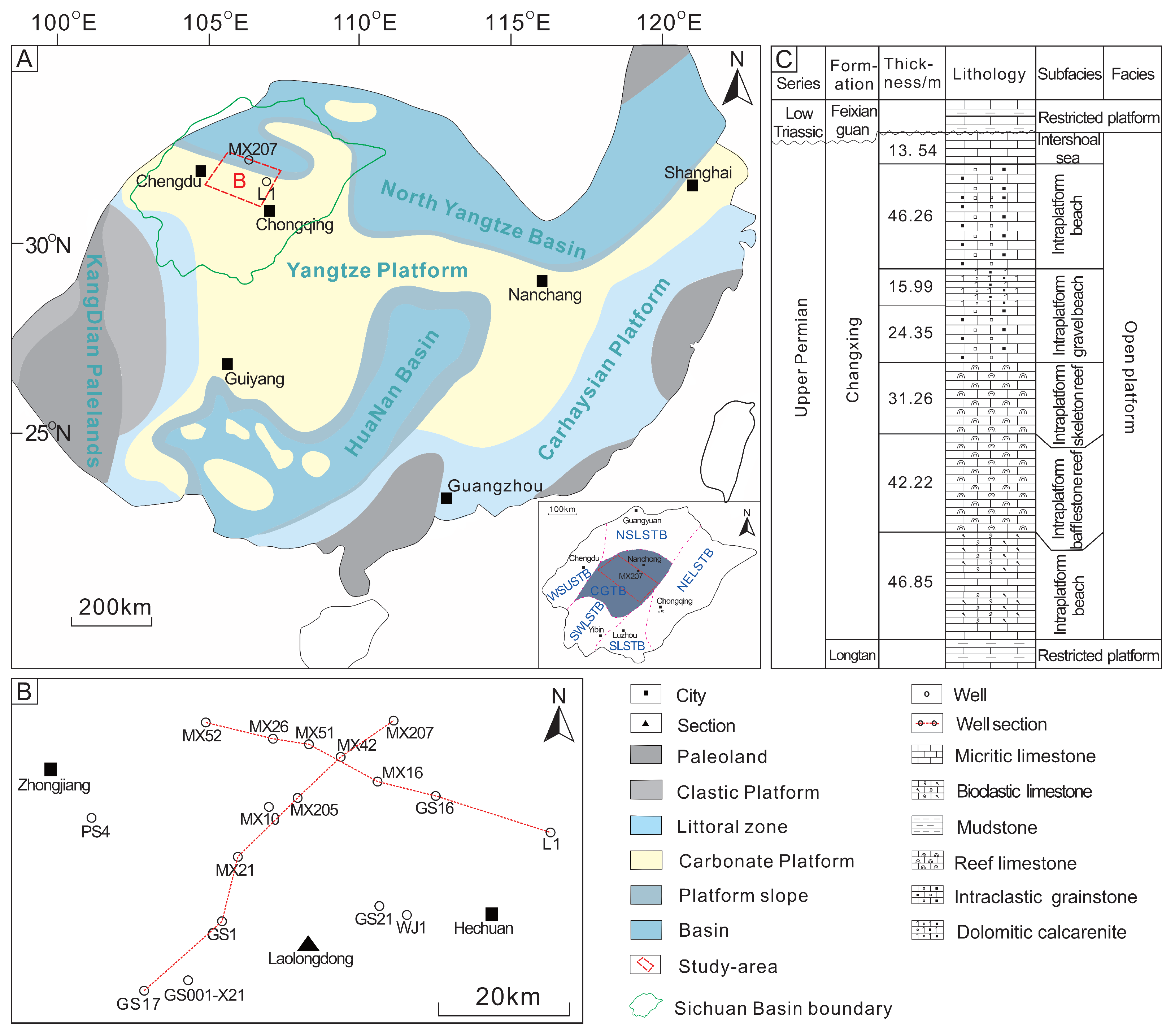
The Sichuan Basin is located in the northwestern Yangtze Block. It is a large multicycle superimposed basin developed on a stable cratonic basement, covering approximately 26 × 104 km2 [35,36,37]. During the Late Permian, the Sichuan Basin and adjacent areas were largely part of the Yangtze carbonate platform system. The surrounding region comprised palaeolands, carbonate platforms, platform slopes, and deep-water basins [38,39,40]. The central Sichuan Basin lay within the interior of the Yangtze carbonate platform and was clearly separated from the surrounding platform-margin, slope, and basinal settings (Figure 1A). In the present-day tectonic framework, the Sichuan Basin is divided into several first-order tectonic units. The study area lies within the relatively stable central Sichuan gentle structural belt. Tectonic deformation is weak, and secondary structures are poorly developed (Figure 1A) [41,42,43]. The study area extends southeastward from Zhongjiang to Hechuan, south of Nanchong. Numerous wells and two regional well-correlation profiles are distributed across the area. The Changxing Formation is exposed in the southern part of the study area, with the Laolongdong section representing a typical outcrop (Figure 1B).
The Permian succession is relatively well preserved in the study area. The Changxing Formation overlies the Longtan Formation and is overlain by the Lower Triassic Feixianguan Formation. It represents an important Late Permian marine carbonate succession in the central Sichuan Basin (Figure 1C) [44,45]. The Changxing Formation is dominated by carbonates, including lime mudstone, bioclastic limestone, intraclastic grainstone, and reef limestone. Locally, dolomitized carbonates such as dolomitic intraclastic limestone occur [46,47,48]. The formation was deposited mainly in an open carbonate-platform setting, with diverse intraplatform reef–shoal associations [49,50,51,52]. The lower Changxing Formation consists mainly of lime mudstone and argillaceous deposits formed under relatively low-energy platform conditions. Upsection, bioclastic, and granular components increase, accompanied by intraplatform bioclastic shoals, intraclastic shoals, and various reef types. The reefs mainly include framework reefs and bafflestone reefs. They occur in association with intraplatform shoals and intershoal deposits. Reef–shoal deposits become more abundant in the middle and upper Changxing Formation, where grainstones and reef limestones are well developed and local dolomitization occurs. The uppermost interval remains dominated by bioclastic and grain-rich carbonates. Vertically, the Changxing Formation records a progressive shift from relatively low-energy platform deposition to increasingly high-energy intraplatform reef–shoal sedimentation.
Figure 1.
Palaeogeographic setting, study-area location, and stratigraphic–depositional framework of the Changxing Formation in the central Sichuan Basin. (A) Late Permian palaeogeographic framework of South China and present-day tectonic subdivision of the Sichuan Basin (NELSTB, low-steep tectonic belt in northeastern Sichuan; NSLSTB, low-steep tectonic belt in northern Sichuan; WSUSTN, upper-steep tectonic belt in northwestern Sichuan; CRGTB, gentle tectonic belt in central Sichuan; SWLSTB, low-steep tectonic belt in southwestern Sichuan; SLSTB, low-steep tectonic belt in southern Sichuan) [53]; (B) distribution of wells, outcrop sections, and well-correlation profiles in the study area; (C) Upper Permian–Lower Triassic stratigraphic column of the central Sichuan Basin [54].
3. Data and Methods
3.1. Data
This study integrates drilling, core, field outcrop, thin-section, well-log, petrophysical, and 3D seismic data. Data from 32 wells were collected, including 10 cored wells. Field data include three Changxing Formation outcrop sections at Laolongdong, Wenxingchang, and Chunmuping. A total of 60 rock samples were collected. Twelve wells and one outcrop section were used for regional stratigraphic correlation. Petrographic analysis was conducted on 120 thin sections from 14 wells and three outcrop sections. Reservoir petrophysical data include 124 log-interpreted reservoir intervals from six wells and 176 measured porosity–permeability datasets from Well GS001-X21. The study area is covered by 3D seismic data. Drilling, core, and seismic data were provided by the Sichuan Basin Research Center, Research Institute of Petroleum Exploration and Development, PetroChina. A total of 256 rock samples were examined, comprising 60 samples collected from field outcrop profiles and 196 samples obtained from cores. These samples provided the material basis for lithologic and lithofacies characterization. Petrographic analysis was conducted on the relevant thin-section subset, and the number of rock samples was distinguished from the number of thin sections and petrophysical measurements to maintain consistency in sample reporting.
3.2. Sequence-Stratigraphic Analysis
Sequence-stratigraphic subdivision of the Changxing Formation was based on outcrop, core, well-log, and seismic data. Key sequence boundaries were identified primarily from abrupt lithologic and lithofacies changes, conventional well-log responses, vertical stacking patterns, and regional stratigraphic correlations. These criteria were used to establish the third-order sequence-stratigraphic framework. Well MX42, which fully penetrates the Changxing Formation, was selected as the reference well for sequence-stratigraphic analysis. Reference-well calibration and regional well correlation were used to trace sequence boundaries. Within the third-order framework, integrated prediction-error filter analysis (INPEFA) was used to assist in identifying depositional cycles and fourth-order sequence boundaries [55,56]. INPEFA analysis was performed using Cyclolog 3.2. The log sampling interval was 0.125 m, and the filter window was 10 m. Trend reversals in the INPEFA curve, together with lithologic changes and conventional log responses, were used to identify maximum flooding surfaces. Fourth-order sequence boundaries were determined by integrating outcrop, core, conventional log, INPEFA, and regional stratigraphic-correlation evidence. INPEFA was not used as an independent criterion for sequence subdivision. To evaluate parameter sensitivity, two additional parameter settings were tested: a sampling interval of 0.125 m with a 5-m filter window, and a sampling interval of 0.25 m with a 10-m filter window. The three schemes were used to assess the effects of filter-window and sampling-interval variations on INPEFA responses. The 0.125 m/5 m and 0.125 m/10 m settings were compared to evaluate filter-window sensitivity, whereas the 0.25 m/10 m and 0.125 m/10 m settings were compared to evaluate sampling-interval sensitivity.
3.3. Lithofacies and Sedimentary-Facies Analysis
Outcrop and core observations were used to document lithology, sedimentary structures, biotic components, and vertical facies associations. Thin sections were prepared to a thickness of approximately 30 μm and examined using a Leica DM4P polarizing microscope (Leica Microsystems CMS GmbH, Wetzlar, Germany). Mineral composition, grain types, micritic matrix, cements, and rock textures were recorded. Carbonate rocks were classified using the Dunham (1962) scheme [57]. Coarse-grained carbonates and reef carbonates were further classified following the modified scheme of Embry and Klovan (1971) [58]. Lithofacies were defined mainly by micrite content, grain-support fabric, grain size, and biogenic framework structure, with further subdivision based on dominant grain types. Dolomitization was recorded separately as a diagenetic overprint. Sedimentary-facies interpretation followed the carbonate facies belts and standard microfacies models of Wilson (1975) [59] and Flügel (2010) [60], with adjustments based on lithofacies associations in the study area. Depositional environments were interpreted from lithofacies associations, vertical successions, reef-building organisms, log facies, and seismic facies. Reefs were identified mainly by in situ reef-building organisms and biogenic framework structures. Shoals were recognized primarily from grain-supported lithofacies associations. Interpretations from representative wells and regional well correlations were used to constrain facies distribution and reconstruct the plan-view sedimentary-facies patterns of each fourth-order sequence. Facies identification was based on integrated depositional-textural and biological criteria rather than on a single grain-size threshold. Reefs were identified by in situ reef-building organisms and framework structures, whereas shoals were characterized by grain-supported bioclastic lithofacies associations.
3.4. Palaeogeomorphology Reconstruction and Seismic-Attribute Extraction
The 3D seismic data were interpreted using GeoEastV4.3 (National Engineering Research Center for Oil and Gas Exploration Computer Software, Beijing, China). The dataset has positive polarity, a dominant frequency of approximately 30 Hz, a sampling interval of 2 ms, and a trace spacing of about 50 m. Wells MX21, MX52, and L1 were used for well-to-seismic calibration and for tracking the top and base of ssq3. Thickness-derived relative palaeorelief at the base of ssq3 was estimated using the stratigraphic-thickness method [61]. The regionally continuous top of ssq5 was used as a flattening datum, and thickness variations within the ssq3–ssq5 interval were used to approximate relative relief at the base of ssq3. Because this interval also contains the main reef–shoal buildups, local depositional thickening may influence the reconstructed pattern. The resulting surface is therefore interpreted as relative stratigraphic relief rather than an independent reconstruction of absolute palaeogeomorphology. The ssq5 top was used only as a regional reference surface and is not assumed to have been completely flat during deposition. The ssq3–ssq5 interval contains the main reef–shoal development stages in the study area. Root mean square (RMS) amplitude was extracted within a horizon-constrained window bounded by the base of ssq3 and the top of ssq5. Reef–shoal thickness and reservoir thickness from wells were used to calibrate amplitude anomalies. RMS amplitude was used as an auxiliary attribute to delineate the plan-view distribution of reef–shoal bodies in the middle–upper Changxing Formation [62]. The thickness-based reconstruction represents relative palaeorelief rather than absolute palaeoelevation or palaeowater depth. Quantitative compaction correction and trend-surface residual analysis were not applied because independent constraints on compaction magnitude and palaeowater depth are unavailable. RMS amplitude was used only as an auxiliary attribute because its response may be affected by thin-bed tuning, noise, interval thickness, and lithologic variations. It was therefore not used independently to identify reef–shoal bodies or high-quality reservoirs. The approximate tuning thickness of the target interval was estimated using the quarter-wavelength criterion, based on the representative seismic dominant frequency and P-wave velocity of the Changxing Formation. The resulting estimate was approximately 50 m. This value provides a first-order reference for interpreting the sensitivity of seismic amplitude attributes to reef–shoal reservoir thickness. Favorable reef–shoal reservoir zones within ssq3–ssq5 were delineated by integrating reef–shoal facies, well-based cumulative reservoir thickness, sequence architecture, multi-stage stacking, and relative palaeorelief. Intervals with cumulative thicknesses ≥ 15 m were classified as relatively thick reservoirs; this threshold is an operational criterion for regional delineation rather than a universal reservoir-quality cutoff. RMS amplitude was used as a qualitative auxiliary indicator, and no numerical palaeorelief threshold was applied.
3.5. Reservoir Characterization and Petrophysical Analysis
Reservoir characterization was based on core, thin-section, log-interpretation, and measured porosity–permeability data. Cores and thin sections were used to identify reservoir rock types, pore types, and major diagenetic features. Particular attention was given to intergranular pores, intragranular dissolution pores, moldic pores, framework pores, intercrystalline pores, dissolution vugs, and fractures. Their relationships with dissolution, cementation, compaction, and dolomitization were also examined. Multiwell log interpretations were used to characterize regional variations in reservoir properties, reservoir thickness, and spatial distribution. Measured porosity–permeability data from Well GS001-X21 were used to evaluate porosity–permeability relationships and pore-space types. Petrophysical data were compared among lithofacies, reef–shoal types, and fourth-order sequence positions to assess reservoir-quality variations among different depositional architectures. Sedimentary facies, palaeogeomorphology, and well-based reservoir interpretations were integrated to evaluate the spatial distribution of favorable reef–shoal reservoirs. Log-derived petrophysical properties were used primarily to characterize regional trends and relative reservoir-quality variations. Because uniform core-calibration data were unavailable for all wells, uncertainties associated with lithologic heterogeneity, complex pore systems, fractures, and vugs were considered when interpreting absolute log-derived values. Diagenetic features were identified from core and conventional thin sections based on pore morphology, cement occurrence, dolomite crystals, fractures, and petrographic relationships. Because cathodoluminescence, stable-isotope, fluid-inclusion, and quantitative point-counting data were unavailable, the analysis focuses on directly observable petrographic features rather than detailed diagenetic timing or fluid evolution. A porosity cutoff of 2% was used solely as a screening criterion for identifying effective reservoir intervals. This cutoff was not applied to filter the dataset used for the statistical analysis. Accordingly, the porosity distribution includes all 124 interpreted intervals, including those with porosity below 2%. The screening criterion for effective reservoir intervals and the descriptive statistics of the full dataset were treated separately.
4. Results
4.1. Sequence Boundaries and Subdivision
Well MX42, located in the Weiyuan–Longnüsi structural belt of the central Sichuan Basin, penetrates the Changxing Formation at depths of 4130.65–4297.83 m, with a thickness of approximately 167.2 m. This well was selected as the reference well for sequence-stratigraphic analysis. The sequence framework was established primarily from lithologic and lithofacies changes, conventional well-log responses, depositional stacking patterns in well-correlation profiles, and regional stratigraphic correlations. The Changxing Formation was subdivided into two third-order sequences (SQ1 and SQ2) and five fourth-order sequences (ssq1–ssq5). SQ1 comprises ssq1–ssq3, whereas SQ2 comprises ssq4–ssq5. The six sequence boundaries (SB1–SB6) were interpreted by integrating lithologic transitions, conventional well-log responses, and stratigraphic relationships within the well-correlation framework.
SB1 marks the transition from Longtan Formation shale to Changxing Formation argillaceous limestone and is characterized by an abrupt GR response. SB2 separates ssq1 from ssq2, corresponding to a transition from lime mudstone to argillaceous limestone. SB3 separates ssq2 from ssq3 and marks a transition from bioclastic dolostone to shale. The well-correlation profiles show a corresponding change in depositional stacking patterns across SB3, supporting its interpretation as a fourth-order sequence boundary. SB4 separates SQ1 from SQ2 and also marks the boundary between ssq3 and ssq4. It corresponds to a transition from bioclastic dolostone to lime mudstone, accompanied by a change in the GR response. A comparable change in depositional stacking patterns is observed across SB4 in the well-correlation profiles. The integrated lithologic, log, and correlation evidence supports its interpretation as both a third-order and a fourth-order sequence boundary. SB5 separates ssq4 from ssq5 and marks a transition from bioclastic limestone to lime mudstone. SB6 corresponds to the Changxing–Feixianguan Formation boundary, where Changxing Formation bioclastic limestone is overlain by Feixianguan Formation argillaceous limestone, accompanied by an abrupt GR response (Table 1).
Table 1.
Summary of evidence supporting the interpretation of sequence boundaries in the Changxing Formation.
INPEFA processing of the GR log from Well MX42 identified 11 characteristic inflection points (Figure 2). Six positive inflections broadly correspond to the interpreted sequence boundaries SB1–SB6, whereas five negative inflections correspond to the interpreted maximum flooding surfaces (MFS) within the fourth-order sequences. The inflection signs are defined according to the direction of the features in the processed INPEFA curve. These correspondences provide supplementary constraints on the sequence-stratigraphic interpretation rather than independent criteria for identifying sequence boundaries or MFSs. Sensitivity tests using three parameter settings show that variations in filter window and sampling interval affect the local morphology of the INPEFA curve, whereas the principal inflection points remain generally stable (Figure 2). This stability supports the reproducibility of the principal curve features under the tested settings but does not independently validate their stratigraphic interpretation. A sampling interval of 0.125 m and a filter window of 10 m were therefore retained as the reference parameters for INPEFA analysis. Based on the interpreted vertical facies successions and depositional stacking patterns, both SQ1 and SQ2 contain transgressive systems tracts (TSTs) and highstand systems tracts (HSTs). SQ1 is slightly thinner than SQ2.
Figure 2.
Composite sequence-stratigraphic column of the Upper Permian Changxing Formation in Well MX42, central Sichuan Basin. TST, transgressive systems tract; HST, highstand systems tract; MFS, maximum flooding surface; SB, sequence boundary; INPEFA, integrated prediction-error filter analysis. Three parameter settings were tested for the INPEFA analysis: a sampling interval of 0.125 m with a filter window of 5 m, a sampling interval of 0.25 m with a filter window of 10 m, and a sampling interval of 0.125 m with a filter window of 10 m. The last setting was adopted as the reference parameter scheme for sequence-stratigraphic analysis. Comparison between the first and third settings evaluates the effect of filter-window variation, whereas comparison between the second and third settings evaluates the effect of sampling-interval variation.
4.2. Sedimentary Characteristics of Intraplatform Reef–Shoal Deposits
4.2.1. Lithofacies Types and Depositional Environments
Outcrop, core, and thin-section observations show that the Changxing Formation is dominated by carbonate rocks. Rock composition, grain-support fabric, and biogenic framework structure vary markedly. Based on the classifications of Dunham (1962) and Embry and Klovan (1971) [57,58], the main lithofacies include lime mudstone, bioclastic wackestone, bioclastic grainstone, and sponge bafflestone. Some bioclastic carbonates underwent variable dolomitization. Siliceous mudstone occurs locally (Figure 3). These lithofacies record changes in hydrodynamic conditions, water depth, and reef-building activity.
Figure 3.
Representative macro- and microscopic lithofacies of the Upper Permian Changxing Formation in the central Sichuan Basin. (A) Laolongdong section, bioclastic limestone with abundant skeletal fragments; red arrows indicate echinoderm and other bioclasts. (B) Well MX21, bioclastic grainstone with a clear grain-supported fabric and sparry calcite cement. (C) Well MX22, bioclastic wackestone with bioclasts dispersed in a micritic matrix. (D) Chunmuping section, reef limestone; red arrows indicate spheroidal sponges. (E) Well GS001-X21, reef limestone; red arrows indicate sponge frameworks. (F) Well GS1, sponge bafflestone with in situ sponge frameworks forming a distinct reef structure. (G) Well MX52, dolomitized bioclastic grainstone with partly preserved primary bioclastic fabrics. (H) Well MX21, lime mudstone dominated by micritic matrix with low grain content. (I) Well MX22, siliceous mudstone representing a relatively low-energy, deeper-water depositional setting.
Lime mudstone is dominated by micritic matrix and contains few grains. The texture is relatively homogeneous (Figure 3H). Minor bioclasts occur locally. Preservation of fine carbonate mud indicates low-energy conditions with limited sediment reworking. Darker intervals with higher argillaceous or siliceous contents reflect relatively deeper and lower-energy settings.
Bioclastic wackestone is matrix-supported and contains more bioclasts than lime mudstone (Figure 3C). The bioclasts mainly include echinoderms, brachiopods, foraminifers, and other skeletal fragments. Grains are dispersed within the micritic matrix and do not form a continuous grain-supported framework. These lithofacies formed under low- to moderate-energy conditions and represent a transition from fine-grained background deposition to grain-rich carbonate sedimentation.
Bioclastic grainstone is dominated by skeletal grains and shows a clear grain-supported fabric. Micritic matrix is sparse or absent. Intergranular spaces are mainly filled by sparry calcite cement (Figure 3A,B). Strong winnowing and removal of micrite indicate persistent high-energy hydrodynamic conditions. This lithofacies represents shallow-water, high-energy carbonate deposition in the Changxing Formation.
Reef limestone is dominated by sponge bafflestone. Well-preserved in situ sponge frameworks and distinct reef structures occur in outcrops and cores (Figure 3D,E). Thin sections show in situ sponge frameworks that baffled and trapped sediment, forming typical bafflestone fabrics (Figure 3F). This lithofacies was controlled by in situ sponge growth and reef-building activity. It developed in shallow-marine settings with good water circulation.
Some bioclastic limestones were modified by dolomitization (Figure 3G). Under weak dolomitization, primary grain fabrics and bioclasts remain recognizable. Increasing dolomitization progressively modifies the original textures. Dolomitization is treated as a post-depositional diagenetic overprint rather than a separate depositional lithofacies. The original depositional setting was interpreted from relict grain fabrics, biotic components, and associated lithofacies.
Siliceous mudstone consists mainly of fine-grained argillaceous and siliceous components and lacks a clear grain-supported fabric (Figure 3I). It reflects weak hydrodynamic conditions and low depositional energy, representing a relatively deeper-water fine-grained depositional setting.
4.2.2. Reef–Shoal Associations and Vertical Architecture
Reef–shoal deposits of the Changxing Formation developed mainly in an open-platform setting. The principal depositional units include intraplatform reefs, intraplatform shoals, and intershoal sea deposits. Intraplatform depressions occur locally. Some lower intervals retain carbonate-ramp characteristics (Figure 4). Vertical successions in representative wells show two main reef–shoal associations: reef successions and stacked bioclastic shoals.
Figure 4.
Representative vertical sedimentary-facies associations and log responses of the Changxing Formation in the central Sichuan Basin. (A) Well L1, intraplatform reef subfacies. (B) Well MX21, intraplatform shoal subfacies. (C) Well MX52, intershoal sea subfacies. (D) Well MX205, intraplatform depression subfacies. (E) Well MX52, carbonate-ramp facies. Green shading marks the target subfacies intervals. GR, natural gamma ray.
Intraplatform reefs show a relatively complete vertical succession (Figure 4A). From base to top, the reef consists of reef base, reef core, and reef cap. The reef base is dominated by bioclastic limestone and provides the substrate for reef growth. The reef core is mainly composed of reef limestone, with sponge bafflestone as a typical lithofacies. It forms the main body of the reef. The reef cap is dominated by bioclastic limestone, with local lime mudstone. Reef-building activity decreases markedly upward. The resulting vertical architecture is characterized by a “bioclastic reef base–sponge reef core–bioclastic reef cap” succession. It records reef initiation, main growth, and final decline.
Intraplatform shoals are dominated by bioclastic grain-rich deposits and alternate with low-energy fine-grained carbonates (Figure 4B). Shoal bodies consist mainly of bioclastic limestone. Lime mudstone and marl commonly occur above and below the shoals. This produces a “low-energy background deposit–bioclastic shoal–low-energy background deposit” succession. Repeated shoal bodies indicate episodic development and multi-stage stacking. Intershoal–sea deposits are dominated by lime mudstone, bioclastic wackestone, and marl (Figure 4C). They represent low-energy background deposition between reef–shoal bodies.
Intraplatform depressions and carbonate ramps are dominated by fine-grained, low-energy deposits. Intraplatform depressions mainly contain lime mudstone, marl, and argillaceous carbonates (Figure 4D). Shallow-water ramps are dominated by lime mudstone, siliceous limestone, and nodular chert-bearing limestone (Figure 4E). Deep-water ramps contain a higher proportion of argillaceous and fine-grained deposits (Figure 4E). Vertical facies associations indicate clear depositional-energy differentiation within the Changxing Formation. Intraplatform reefs are characterized by sustained reef growth. Intraplatform shoals show multi-stage stacking formed by repeated alternation between grain-rich shoal deposits and low-energy background sediments.
4.3. Spatiotemporal Evolution of Intraplatform Reef–Shoal Deposits
4.3.1. Vertical Stacking and Lateral Variation of Reef–Shoal Bodies
Two regional well-correlation profiles show that the five fourth-order sequences (ssq1–ssq5) of the Changxing Formation can be traced continuously across the study area. Transgressive systems tracts and highstand systems tracts are recognized within each sequence (Figure 5 and Figure 6). Reef–shoal bodies occur mainly in the highstand systems tracts and show repeated multi-stage vertical stacking. The lower Changxing Formation is dominated by carbonate-ramp and low-energy background deposits. Upsection, deposition gradually shifts to an open-platform setting. Intraplatform shoals become more frequent and extensive. Local reefs and reef–shoal complexes also develop.
Figure 5.
SW-NE-trending well-correlation profile and spatial distribution of sedimentary facies of the Changxing Formation in the study area.
Figure 6.
NW-SE-trending well-correlation profile and spatial distribution of sedimentary facies of the Changxing Formation in the study area.
The SW–NE-trending A–A′ profile shows marked lateral-thickness variation from Well GS17 to Well MX207, accompanied by strong facies differentiation (Figure 5). Early ssq1 is dominated by carbonate-ramp deposits. Intraplatform shoals appear locally during the HST. During ssq2 and ssq3, bioclastic shoals persist in the MX21–MX42 area and form multi-stage vertical stacks. During ssq4, a local reef develops near Well GS1, whereas Wells MX21 and MX42 remain dominated by intraplatform shoals. During ssq5, bioclastic shoals expand laterally and form thicker grain-rich deposits. The MX205–MX207 area is dominated by intraplatform depression and low-energy deposits through most of the succession. Overall, the profile records multi-stage shoal stacking, local reef development, and persistent low-energy depressions.
The NW–SE-trending B–B′ profile shows relatively minor lateral thickness variation in the Changxing Formation. Fourth-order sequence boundaries are laterally continuous (Figure 6). ssq1 is still dominated by carbonate-ramp and low-energy background deposits. From ssq2 onward, bioclastic shoals become more abundant in the MX52–MX16 area. Relatively continuous grain shoals develop within the HSTs of ssq2, ssq3, and ssq5. At Well L1, reefs and reef–shoal complexes develop during ssq4–ssq5. These record local reef growth on a relatively stable grain-shoal substrate. Intershoal deposits occur between the shoal bodies. The vertical succession is characterized by repeated alternation between high-energy grain-rich deposits and low-energy background sediments.
The two profiles show pronounced multi-stage stacking and lateral heterogeneity of reef–shoal deposits in the Changxing Formation. Bioclastic shoals recur in several fourth-order sequences and show relatively good lateral continuity. Reefs are restricted to local well areas and have limited lateral extent. Along the SW–NE direction, stratigraphic thickness and facies belts vary markedly, and reef–shoal bodies are strongly segmented by low-lying areas. Along the NW–SE direction, stratigraphic thickness is more stable and grain shoals are more laterally continuous. Overall, the Changxing Formation records an upward transition from early low-energy ramp deposition to repeated stacking of intraplatform reef–shoal bodies during the middle to late stages.
4.3.2. Plan-View Reef–Shoal Evolution
The plan-view evolution of reef–shoal deposits in the Changxing Formation shows clear stage-dependent changes. The overall pattern is characterized by a transition from a ramp setting to initial local shoal development, shoal expansion, formation of continuous shoal bodies, local reef growth, and widespread reef–shoal development. The depositional system evolved from an early carbonate ramp to an open platform. Intraplatform shoals expanded from isolated patches to belt-like and sheet-like bodies. Reefs developed mainly during the middle to late stages (Figure 7). The plan-view facies maps represent the preferred geological interpretation constrained by wells, outcrops, regional stratigraphic correlations, and seismic information. Confidence is highest near direct data control and decreases toward sparsely constrained areas; therefore, facies boundaries should be regarded as interpretive rather than exact deterministic limits.
Figure 7.
Plan-view sedimentaryfacies distribution and reef–shoal evolution during different sequence stages of the Changxing Formation in the central Sichuan Basin. (A) Transgressive systems tract (TST) of ssq1; (B) highstand systems tract (HST) of ssq1; (C) ssq2; (D) ssq3; (E) ssq4; (F) ssq5.
During the transgressive stage of ssq1, carbonate-ramp deposition dominated (Figure 7A). A NW–SE-trending deep-water ramp occupied the central part of the study area. Shallow-water ramps developed around it. Reef–shoal bodies were poorly developed. During the highstand stage of ssq1, the depositional system shifted to an open platform (Figure 7B). A NW–SE-trending intraplatform depression formed in the central area. A small intraplatform shoal developed near Well MX42.
During ssq2, intraplatform shoals expanded markedly (Figure 7C). Local shoals developed near Wells MX52, MX51–MX42, and L1. A more continuous shoal belt formed in the PT1–MX21 area. Shoals were concentrated along both sides of the intraplatform depression and occurred mainly as patchy and short belt-like bodies.
During ssq3, the depositional pattern largely inherited that of ssq2, with further shoal expansion (Figure 7D). A relatively continuous NW–SE-trending shoal belt developed in the MX52–MX16 area. Shoals persisted in the PT1–MX21 area. New local shoals appeared near Wells GS1, GS001-X21, WJ1, and Z202. Lateral connectivity increased markedly.
During ssq4, intraplatform shoals continued to expand and local reefs began to develop (Figure 7E). The shoal belt in the MX52–MX16 area extended southeastward. Shoals around Well GS1 increased in scale. Isolated intraplatform reefs developed near Wells GS1 and L1. These reefs formed local reef–shoal complexes with the surrounding shoals.
During ssq5, reef–shoal deposits reached their maximum extent (Figure 7F). Intraplatform shoals were widely distributed along both sides of the intraplatform depression. Earlier shoal bodies progressively coalesced into more continuous belt-like and sheet-like deposits. Patch reefs persisted locally near Wells GS1 and L1 and formed late-stage reef–shoal associations with adjacent bioclastic shoals.
4.4. Reef–Shoal Reservoir Characteristics and Quality Variations
4.4.1. Reservoir Rocks, Pore Systems, and Petrophysical Characteristics
Reservoirs in the Changxing Formation are mainly developed in reef–shoal carbonates. The principal reservoir rocks are bioclastic limestone, reef limestone, and bioclastic dolostone (Figure 8A–C). Bioclastic limestone is dominated by skeletal and other grain components. Reef limestone preserves in situ reef-building frameworks. Bioclastic dolostone retains relict bioclastic textures.
Figure 8.
Representative reservoir rocks and pore-space types of the Upper Permian Changxing Formation in the central Sichuan Basin. (A) Well MX21, bioclastic limestone; fusulinids and foraminifers occur within the red dashed outlines. (B) Well GS1, sponge bafflestone; the red dashed outlines mark the sponge-dominated framework with subordinate coral components. (C) Well MX10, relict bioclastic dolostone; red dashed outlines indicate dolomitized areas. (D) Well ZJ1, dolomitized bioclastic grainstone; red dashed outlines indicate intergranular dissolution pores, and green dashed outlines indicate intragranular dissolution pores. (E) Well PS2, dolomite-bearing bioclastic limestone; red dashed outlines indicate intercrystalline dissolution pores, with local bitumen filling. (F) Well GS001-X21, bioclastic micritic–silty limestone; red dashed outlines indicate intragranular dissolution pores and moldic pores. (G) Well Gaoshi 001-X21, pinhole-bearing silty bioclastic limestone; red arrows indicate intraskeletal pores. (H) Well PS4, limestone; red dashed outlines indicate abundant dissolution pores and vugs. (I) Well GS001-X21, gray bioclastic limestone; green-arrow indicate dissolution fractures, and red-arrow indicate dissolution grooves.
The pore system mainly includes intergranular dissolution pores, intragranular dissolution pores, intercrystalline pores, moldic pores, intraskeletal pores, dissolution pores and vugs, and fractures (Figure 8D–I). Intergranular and intragranular dissolution pores occur mainly between and within bioclastic grains. Intercrystalline pores are common in dolomitized rocks and are locally filled with bitumen. Moldic and intraskeletal pores are related to bioclast dissolution and framework preservation. Dissolution further produces pores, vugs, dissolution fractures, and local dissolution grooves. These pores, vugs, and fractures together form the pore system of the Changxing Formation.
Multiwell log interpretations show reservoir porosities of 0.15–7.73%, with an average of 2.59%. Most values fall between 2% and 4%, accounting for 47.62% of the dataset (Figure 9A). Permeability ranges from 0.0001 × 10⁻³ to 99.48 × 10⁻³ μm2, with an average of 2.24 × 10⁻³ μm2. Values between 0.1 × 10⁻³ and 1 × 10⁻³ μm2 account for 39.3% of the dataset (Figure 9B). Overall, the reservoirs are characterized by low porosity and low permeability.
Figure 9.
Petrophysical characteristics and reservoir-quality variations of the Upper Permian Changxing Formation in the central Sichuan Basin. (A) Porosity-frequency distribution of 124 log-interpreted reservoir intervals from six wells. (B) Permeability-frequency distribution of 124 log-interpreted reservoir intervals from six wells. (C) Porosity–permeability distribution of the reservoir in Well GS001-X21. (D) Average porosity of different lithofacies associated with depositional subfacies of the open platform. The green-dashed box groups lithofacies predominantly associated with higher-energy intraplatform reef and shoal settings, whereas the blue dashed box groups lithofacies predominantly associated with lower-energy intershoal–sea and intraplatform-depression settings.
Measured porosity–permeability data from Well GS001-X21 show strong scatter and a weak overall correlation (Figure 9C). Permeability generally increases with porosity for the main sample population. Some low-porosity, high-permeability samples indicate enhanced flow capacity related to fractures or large dissolution vugs. The Changxing Formation is dominated by pore-type reservoirs, with local fracture–pore and vuggy reservoirs. Reservoir heterogeneity is pronounced.
4.4.2. Reservoir-Quality Variations Among Reef–Shoal Types
Reservoir quality differs markedly among reef–shoal-related rock types (Figure 9D). Grain-rich rocks and reef limestone generally have higher average porosity than low-energy micritic rocks. Bioclastic grainstone has the highest average porosity (5.52%), followed by sponge bafflestone (4.81%) and dolostone (4.51%). Bioclastic wackestone has an average porosity of 3.21%. Lime mudstone with sparse bioclasts, dolomitized lime mudstone, and lime mudstone have lower average porosities of 1.12%, 0.91%, and 0.65%, respectively.
Intraplatform shoal reservoirs are dominated by bioclastic grain-rich rocks. Grain-supported fabrics favor the preservation of intergranular pores. Later dissolution produces intergranular dissolution pores, intragranular dissolution pores, and moldic pores (Figure 8A,D,F). These grain-rich shoal deposits therefore show relatively good reservoir properties. Intraplatform reef reservoirs occur mainly in reef limestone. In situ biogenic frameworks preserve intraskeletal pores, which may be enlarged by later dissolution (Figure 8B,G). Locally dolomitized reef–shoal rocks contain intercrystalline pores (Figure 8C,E), providing an additional pore type. Micritic rocks associated with intershoal seas and intraplatform depressions contain fewer grains and more micritic matrix. Their average porosity is markedly lower than that of grain-rich reef–shoal rocks. Better reservoirs in the Changxing Formation are therefore concentrated in bioclastic shoals, reefs, and locally dolomitized reef–shoal rocks. Reservoir-quality differences mainly reflect variations in pore abundance, pore type, and connectivity. The porosity–permeability relationship is highly scattered, with a very low linear correlation (R2 ≈ 0.0015). This indicates that permeability is strongly influenced by pore-throat connectivity and the presence of fractures and vugs rather than by porosity alone.
4.4.3. Reservoir Variations Among Fourth-Order Sequences
The available reservoir data characterize reservoir thickness and petrophysical properties mainly in ssq4 and ssq5 (Table 2). Because quantitative data for ssq1–ssq3 are insufficient, the relationship between reservoir development and fourth-order sequence position cannot be reliably evaluated across the entire Changxing Formation.
Table 2.
Reservoir intervals and petrophysical properties of the Changxing Formation in six wells.
In ssq5, 12 reservoir intervals were identified in six wells, with a cumulative reservoir thickness of 89.875 m, a mean interval thickness of 7.49 m, a mean porosity of 3.23%, and a mean permeability of 32.4 × 10⁻³ μm2. In ssq4, two reservoir intervals with complete petrophysical data have a cumulative thickness of 37.125 m, a mean interval thickness of 18.56 m, a mean porosity of 5.15%, and a mean permeability of 88.17 × 10⁻³ μm2.
Combined with the interwell facies correlations, the available data indicate that reservoir intervals are concentrated mainly within reef–shoal-bearing successions of ssq4–ssq5. However, because petrophysical data for ssq1–ssq3 are limited and the ssq4 dataset is small, these results are used only to demonstrate the observed sequence–reservoir relationship rather than to rank reservoir quality among all five fourth-order sequences.
5. Discussion
5.1. Controls of Sequence Architecture and Palaeogeomorphology on Intraplatform Reef–Shoal Evolution
Regional well correlations show that reef–shoal development in the Changxing Formation was strongly constrained by the sequence-stratigraphic framework (Figure 5 and Figure 6). Early ssq1 was dominated by carbonate-ramp and low-energy deposits, with limited reef–shoal development. During the highstand systems tract, water depth decreased and grain-rich deposition increased. Intraplatform shoals expanded markedly during ssq2–ssq3. Their lateral connectivity increased during ssq4–ssq5, with local development of reefs and reef–shoal complexes. Reef–shoal bodies are concentrated mainly within highstand systems tracts, indicating strong sequence control on their principal development stages.
Reef–shoal development shows a clear spatial association with thickness-derived relative palaeorelief. Relative palaeogeomorphic highs were characterized by shallower water and stronger hydrodynamic conditions, favoring bioclastic shoal accumulation and reef growth. Low-lying areas were dominated by intershoal sea and intraplatform depression deposits [63,64,65,66,67]. Figure 10A shows that the main reef–shoal zones occur on or adjacent to relative palaeogeomorphic highs. Along the SW–NE profile, stratigraphic thickness and facies belts vary markedly, and reef–shoal bodies are strongly segmented by low-lying areas. Along the NW–SE profile, stratigraphic thickness is more stable and intraplatform shoals are more laterally continuous. However, because the ssq3–ssq5 interval itself contains major reef–shoal buildups, part of the thickness variation may reflect depositional construction rather than pre-existing relief. Therefore, Figure 10A is used only as supporting evidence for regional spatial relationships and not as independent proof of palaeogeomorphic control. The well-based thickness comparison indicates relatively limited thickness variation in ssq1, whereas ssq2 exhibits more pronounced spatial variability. These observations provide a preliminary stratigraphic constraint on the depositional configuration preceding ssq3, although the relationship between early thickness variations and subsequent palaeogeomorphology requires evaluation alongside the regional well correlations and sedimentological evidence.
Figure 10.
Relative palaeorelief, RMS-amplitude characteristics, and well-based calibration of reef–shoal reservoir development in the Upper Permian Changxing Formation, central Sichuan Basin. (A) Thickness-derived relative palaeorelief and locations of wells, cities, outcrop sections, and well-correlation profiles. (B) RMS-amplitude distribution within the combined ssq3–ssq5 interval. (C) Crossplot of approximate RMS amplitude versus cumulative reservoir thickness at six selected wells. The fitted linear relationship is y = −43.50x + 3262.92, with R2 = 0.377. Relationship between seismic RMS amplitude and cumulative reef–shoal reservoir thickness across ssq3–ssq5 at six calibration wells.
RMS-amplitude attributes show good spatial correspondence with reef–shoal development identified from wells (Figure 10B). Lower-amplitude anomalies occur mainly in the central part of the study area and along several NW–SE-trending zones. These anomalies broadly coincide with the continuous bioclastic shoals in the MX52–MX16 area and the reef–shoal zones near Wells GS1 and L1. Higher-amplitude areas generally correspond to low-energy background deposits or intraplatform depressions. This spatial relationship is further supported by the well-based crossplot between RMS amplitude and reservoir thickness (Figure 10C). The crossplot shows an overall inverse relationship, with thicker reservoirs generally corresponding to lower RMS amplitudes R2 = 0.377, r =-0.614. Although the correlation is moderate and some scatter remains, the result provides semi-quantitative well control for the RMS interpretation. Uncertainty remains in both the palaeogeomorphologic reconstruction and RMS-amplitude interpretation. Thickness-based reconstruction mainly reflects relative palaeorelief and cannot completely exclude the effects of differential compaction or regional depositional trends. RMS amplitude may also be influenced by thin-bed tuning, noise, and lithologic variations. Therefore, neither palaeogeomorphology nor RMS anomalies were used as independent criteria for reef–shoal identification. They were interpreted together with well data, sedimentary facies, and regional well correlations. Future work incorporating compaction restoration, seismic forward modeling, spectral decomposition, and independent well validation would further improve interpretation reliability [68,69,70,71,72].
Integration of the sequence framework, palaeogeomorphology, regional well correlations, and seismic attributes suggests that sequence architecture primarily influences the main development stages of the reef–shoal system, whereas palaeogeomorphology contributes to its spatial differentiation. Highstand systems tracts provided shallow-water, high-energy conditions. Relative palaeogeomorphic highs and adjacent areas formed the main loci of reef–shoal development. During ssq2–ssq5, reef–shoal bodies underwent repeated stacking and progressive lateral expansion. Local shoal bodies gradually coalesced, forming reef–grain-shoal complexes during the middle to late stages.
5.2. Depositional–Diagenetic Coupling and Formation of High-Quality Reef–Shoal Reservoirs
Reservoir quality in the Changxing Formation is jointly controlled by depositional facies and diagenesis [73,74,75,76,77]. Bioclastic limestone, reef limestone, and bioclastic dolostone formed in intraplatform reefs and shoals generally have better petrophysical properties than micritic rocks from intershoal seas and intraplatform depressions. High-energy reef–shoal deposits are characterized by grain-supported fabrics and in situ biogenic frameworks, providing a favorable primary pore framework. Low-energy deposits contain more micrite and have limited primary effective porosity. Depositional facies therefore establish the initial reservoir framework by controlling grain composition, support fabric, and biogenic framework development.
Diagenesis further modifies the pore system. The Changxing Formation experienced compaction, cementation, recrystallization, dissolution, and dolomitization. Dissolution is the most commonly observed constructive diagenetic feature in the examined thin sections. Intergranular dissolution pores, intragranular dissolution pores, moldic pores, dissolution pores and vugs, and dissolution fractures are common in cores and thin sections. These features indicate enlargement of pre-existing pores and improved pore connectivity. Local dolomitization generated intercrystalline and intercrystalline dissolution pores and locally improved reservoir properties. Compaction and cementation reduced pore volume and enhanced reservoir heterogeneity. Favorable depositional fabrics in high-energy reef–shoal settings provided the basis for later dissolution and dolomitization. Constructive diagenesis further amplified reservoir-quality contrasts among different facies.
Reservoir thickness shows a clear spatial relationship with sedimentary-facies distribution. Changxing reservoirs are dominated by bioclastic shoal reservoirs, with local reef reservoirs. Reservoir thickness is mainly 10–35 m. The thicker reservoirs form NW–SE-trending belts along both sides of secondary intraplatform depressions (Figure 11). These reservoir bodies mainly coincide with intraplatform shoals and local reefs. Reservoirs are thinner or absent within intraplatform depressions and intershoal areas. This pattern indicates that reef–shoal deposition controlled the formation and distribution of favorable reservoir rocks and also defined zones prone to later constructive diagenetic modification. The weak overall porosity–permeability correlation further indicates that reservoir quality is controlled by a complex pore network rather than by porosity or a single diagenetic process alone (Figure 9C).
Figure 11.
Reef–shoal reservoir thickness distribution of the Changxing Formation in the central Sichuan Basin. The thickness map was generated by uniform interpolation of well-based reservoir-thickness data. Well locations and thickness contours are shown without individual well-value labels for visual clarity. RMS amplitude was used only as a supplementary qualitative indicator. The map illustrates regional thickness trends, with greater uncertainty in areas distant from well control.
5.3. Reef–Shoal Reservoir Development and Efficient Exploration
Reef–shoal reservoirs in the Changxing Formation of the central Sichuan Basin are jointly controlled by sequence architecture, palaeogeomorphology, depositional facies, multi-stage stacking, and diagenesis. The highstand systems tracts of ssq2–ssq5 represent the main development stages, with greater extent and continuity during ssq3–ssq5. Palaeogeomorphic highs and the flanks of intraplatform depressions favored bioclastic shoals and local reefs, whereas multi-stage stacking promoted the formation of thicker reef–shoal complexes. Overall, sequence architecture constrains development stages, palaeogeomorphology controls spatial location, depositional facies determine initial reservoir conditions, multi-stage stacking governs reservoir scale, and diagenesis modifies reservoir quality.
Integrated prediction using sequence architecture, palaeogeomorphology, interwell reef–shoal stacking, and seismic attributes can improve geological constraints on favorable reservoir identification and narrow exploration targets. Compared with predictions based on isolated seismic anomalies or individual reef bodies, this framework can reduce geological uncertainty and improve the use of existing well, log, and seismic data.
Favorable reservoirs occur mainly on palaeogeomorphic highs, along the flanks of secondary intraplatform depressions, and within multi-stage reef–shoal stacking zones of ssq3–ssq5 (Figure 12). These areas can therefore be prioritized for exploration. This study does not directly quantify wells avoided, exploration success rate, cost, or environmental footprint. The direct implication of the proposed framework is therefore improved target-selection and exploration efficiency. Its broader sustainability relevance lies in supporting more rational allocation of exploration effort and more efficient use of subsurface hydrocarbon resources. Potential reductions in ineffective drilling and improvements in exploration success require validation using future drilling data.
Figure 12.
Favorable reservoir zones and exploration target selection for intraplatform reef–shoal reservoirs of the Upper Permian Changxing Formation in the central Sichuan Basin.
5.4. Limitations and Uncertainties
Several limitations should be considered when interpreting the results of this study. The fourth-order sequence framework is constrained mainly by outcrop observations, lithologic and facies changes, conventional well logs, regional correlation, and auxiliary INPEFA responses. Because independent high-resolution age control is unavailable, ssq1–ssq5 should be regarded as regional sequence-stratigraphic correlation units rather than strictly synchronous chronostratigraphic units. In addition, the thickness-derived relative palaeorelief at the base of ssq3 may partly reflect depositional thickening associated with reef–shoal growth. It is therefore used only as an auxiliary indicator of regional relief rather than as independent evidence of palaeogeomorphic control.
Seismic interpretation is also limited by vertical resolution. The approximately 30 Hz dominant frequency does not allow reliable separation of all individual fourth-order units, and RMS amplitude is therefore interpreted only for the combined ssq3–ssq5 interval. Limited well control introduces uncertainty into the reservoir-thickness map and favorable-zone delineation, particularly away from wells. The absence of consistent gas-test and production data prevents independent validation of the predicted favorable zones. Finally, diagenetic interpretations are based mainly on conventional petrographic observations, so detailed diagenetic timing, fluid evolution, and the quantitative contribution of individual processes remain unresolved. These limitations should be addressed in future work using denser well control, higher-resolution seismic data, production information, and additional petrographic and geochemical analyses.
6. Conclusions
- (1)
- The Changxing Formation in the central Sichuan Basin comprises two third-order sequences and five fourth-order sequences (ssq1–ssq5). Reef–shoal bodies occur mainly in highstand systems tracts and evolved from an early carbonate ramp to a middle–late open-platform reef–shoal system.
- (2)
- Reservoirs occur mainly in bioclastic shoals and reefs. High-energy depositional fabrics influenced the initial pore framework, whereas dissolution, local dolomitization, and fracturing modified reservoir pore systems to varying degrees. Compaction and cementation reduced pore volume, and the combined effects of depositional facies and diagenesis contributed to variations in reservoir quality.
- (3)
- Reef–shoal reservoir development reflects the combined influences of sequence architecture, palaeogeomorphology, multi-stage stacking, and diagenesis. Within ssq3–ssq5, palaeogeomorphic highs, depression flanks, and reef–shoal stacking zones are prospective areas for further exploration. Integrating these geological factors provides a basis for refining reservoir prediction, reducing geological uncertainty, and improving exploration efficiency and resource allocation.
Author Contributions
Conceptualization, C.Z. and Z.H.; methodology, Q.C.; software, C.Z., W.T. and S.W. (Siyi Wang); validation, Q.D. and Y.G.; formal analysis, C.Z.; resources, S.W. (Saijun Wu) and W.X.; writing—original draft preparation, C.Z.; writing—review and editing, Z.H.; supervision, S.W. (Saijun Wu); project administration, W.X.; funding acquisition, Z.H. All authors have read and agreed to the published version of the manuscript.
Funding
This study was funded by the “Oil and Gas Major Project” (Grant No. 2025ZD1400400).
Data Availability Statement
The data used in this study were provided by the PetroChina Research Institute of Petroleum Exploration and Development. Owing to data ownership and confidentiality restrictions, the raw core, well-log, and 3D seismic data are not publicly available. Data supporting the findings of this study may be available from the corresponding author upon reasonable request and with permission from the PetroChina Research Institute of Petroleum Exploration and Development.
Acknowledgments
The authors thank the PetroChina Research Institute of Petroleum Exploration and Development for providing the core, well, well-log, and 3D seismic data used in this study. All individuals have consented to being acknowledged in the manuscript.
Conflicts of Interest
The authors declare no conflicts of interest.
References
- Heckel, P.H. Carbonate buildups in the geologic record: A review. In Reefs in Time and Space; Laporte, L.F., Ed.; SEPM (SEPM Society for Sedimentary Geology) Special Publication: Tulsa, OK, USA, 1974; Volume 18, pp. 90–155. [Google Scholar] [CrossRef] [Scilit]
- Ruf, M.; Aigner, T. Facies and poroperm characteristics of a carbonate shoal (Muschelkalk, South German Basin): A Reservoir analogue investigation. J. Pet. Geol. 2004, 27, 215–239. [Google Scholar] [CrossRef] [Scilit]
- Hu, X.L.; Fan, T.L.; Gao, Z.Q.; Li, B.; Chen, X.Z.; Li, Z.; Meng, X.J.; Li, Z.F. Depositional Combination Characteristics and Distribution of Ordovician Carbonate Shoals in the Tarim Basin. Acta Sedimentol. Sin. 2014, 32, 418–428. [Google Scholar]
- Shen, A.J.; Chen, Y.N.; Meng, S.X.; Zheng, J.F.; Qiao, Z.F.; Ni, X.F.; Zhang, J.Y.; Wu, X.N. The research progress of marine carbonate reservoirs in China and its significance for oil and gas exploration. Mar. Orig. Pet. Geol. 2019, 24, 1–14. [Google Scholar]
- Ngia, N.R.; Hu, M.Y.; Gao, D. Hydrocarbon reservoir development in reef and shoal complexes of the Lower Ordovician carbonate successions in the Tazhong Uplift in central Tarim basin, NW China: Constraints from microfacies characteristics and sequence stratigraphy. J. Pet. Explor. Prod. Technol. 2020, 10, 2693–2720. [Google Scholar] [CrossRef] [Scilit]
- Zhou, J.G.; Deng, H.Y.; Yu, Z.; Guo, Q.; Zhang, R.; Zhang, J.Y.; Li, W.Z. The genesis and prediction of dolomite reservoir in reef-shoal of Changxing Formation-Feixianguan Formation in Sichuan Basin. J. Pet. Sci. Eng. 2019, 178, 324–335. [Google Scholar] [CrossRef] [Scilit]
- Luo, W.; Shi, Z.J.; Tian, Y.M.; Hu, X.Q. Characteristics and Forming Processes of Reef-Shoal Reservoir in Changhsing Formation of the Eastern Sichuan Basin in Dianjiang, China. Arab. J. Sci. Eng. 2022, 47, 725–737. [Google Scholar] [CrossRef] [Scilit]
- Wang, H.; Zhou, Q.M.; Zhou, W.; Zhang, Y.D.; He, J.H. Carbonate Platform Reef-Shoal Reservoir Architecture Study and Characteristic Evaluation: A Case of S Field in Turkmenistan. Energies 2022, 15, 226. [Google Scholar] [CrossRef] [Scilit]
- Sha, Y.H.; Zhang, Y.F.; Luo, B.; Liu, F.; Chen, S.C.; Luo, N.N.; Liu, D.X.; Yi, J.Z.; Liu, K.F. Evolution of platform margin reef beach reservoir of Permian Changxing Formation in Liangping area: Petrological and geochemical evidence from Well Tiandong 110. Fault-Block Oil Gas Field 2024, 31, 810–819. [Google Scholar]
- Wang, J.X.; Sun, H.F.; Xu, L.; Ming, Y.; Xu, C.; Ran, Y.; Li, C.Z.; Li, Y.; Yang, R. Study on characteristics of reef shoal deposition and reservoir source of Changxing Formation in Deyang-Wusheng trough, Sichuan Basin. Fault-Block Oil Gas Field 2025, 32, 242–250. [Google Scholar]
- Wang, D.; Liu, H.; Tang, S.; Bai, J.H.; Zhou, G.; Li, Z.Y.; Liang, F.; Tan, X.C.; Geng, C.; Yang, Y. Sedimentary architecture and distribution of intra-platform shoal in sequence framework of Permian Changxing Formation in central Sichuan Basin, SW China. Pet. Explor. Dev. 2023, 50, 388–403. [Google Scholar] [CrossRef] [Scilit]
- Tan, L.; Liu, H.; Chen, K.; Ni, H.L.; Zhou, G.; Zhang, X.; Yan, W.; Zhong, Y.; Lyu, W.Z.; Tan, X.C.; et al. Sequence sedimentary evolution and reservoir distribution in the third and fourth members of Sinian Dengying Formation, Gaomo area, Sichuan Basin, SW China. Pet. Explor. Dev. 2022, 49, 1004–1018. [Google Scholar] [CrossRef] [Scilit]
- Xu, S.C.; Hu, X.Q.; Shi, Z.J.; Zhang, C.; Mao, J.T.; Wang, B.T. Prediction of Thin Shoal Reservoirs Under Reef Controlled by Isochronous Stratigraphic Framework. J. Mar. Sci. Eng. 2024, 12, 1974. [Google Scholar] [CrossRef] [Scilit]
- Gu, Y.F.; Jiang, Y.Q.; Fu, Y.H.; Chen, Z.Y.; Zhang, J.W.; Zhou, L.; Jiang, Z.Z. Hydrocarbon accumulation and main controlling factors of reef-shoal gas reservoirs in Changxing Formation in the complex tectonic area, Eastern Sichuan Basin. Arab. J. Geosci. 2019, 12, 776. [Google Scholar] [CrossRef] [Scilit]
- Li, P.P.; Zou, H.Y.; Yu, X.Y.; Hao, F.; Wang, G.W. Source of dolomitizing fluids and dolomitization model of the Upper Permian Changxing and Lower Triassic Feixianguan formations, NE Sichuan Basin, China. Mar. Pet. Geol. 2021, 125, 104834. [Google Scholar] [CrossRef] [Scilit]
- Zhao, H.; Yi, J.C.; Zhang, H.; Zhao, R.R.; Zhang, J.W.; Dai, J.Y.; Lü, L.; An, H. Seismic geological characteristics and gas reservoir distribution of Changxing Formation biological bio-reef reservoir in the Longhuichang-Tieshan area, northeastern Sichuan Basin, China. J. Nat. Gas Geosci. 2024, 9, 111–122. [Google Scholar] [CrossRef] [Scilit]
- Deng, M.; Zhao, G.W.; Lin, X.B.; Chen, C.Y.; Li, L.L.; Liang, Q.S. Sedimentary Facies, Paleogeography, and Depositional Models of the Middle-Late Permian in the Sichuan Basin, Southwest China. Minerals 2023, 13, 1406. [Google Scholar] [CrossRef] [Scilit]
- Bai, J.H.; Liu, H.; Tang, S.; Hua, X.; Ren, L.M.; Wang, D.; Yang, Y.; Tan, L. Main Controlling Factors and Evolution Models of Bioclastic Shoal Reservoirs of Permian Changxing Formation in Zhongjiang-Moxi Region. J. Earth Sci. 2025, 36, 2613–2626. [Google Scholar] [CrossRef] [Scilit]
- Li, R.; Hu, Z.G.; Zhang, H.; Hu, M.Y.; Chen, X.; Zhu, Y.X.; Liu, F. Depositional Pattern and Reservoir Distribution of Changxing Formation Intra-platform Reef and Shoal in Wolonghe-Yangduxi Zone of Eastern Sichuan Basin. Acta Sedimentol. Sin. 2016, 34, 973–982. [Google Scholar] [CrossRef]
- Ma, Y.S.; Cai, X.Y.; Zhao, P.R. Characteristics and formation mechanism of Changxing Formation-Feixianguan Formation reef-shoal reservoirs in Yuanba Gasfield. Pet. Res. 2016, 1, 123–134. [Google Scholar] [CrossRef] [Scilit]
- Dong, Q.M.; Hu, Z.G.; Chen, S.Y.; Yuan, B.G.; Dai, X. Reservoir characteristics of intra-platform reef-shoal and formation mechanism of the Changxing Formation in the eastern Sichuan Basin. J. China Univ. Min. Technol. 2021, 50, 847–863+892. [Google Scholar] [CrossRef]
- Dong, Q.M.; Hu, Z.G.; Chen, S.Y.; Yuan, B.; Yuan, B.G. Reef-shoal combinations and reservoir characteristics of the Changxing-Feixianguan Formation in the eastern Kaijiang-Liangping trough, Sichuan Basin, China. Carbonates Evaporites 2021, 36, 24. [Google Scholar] [CrossRef] [Scilit]
- Zuo, M.T.; Wang, J.G.; Sun, X.J.; Hu, Z.G.; Bai, Y.D.; Yang, W.; Li, H.Z. Platform margin belt structure and sedimentation characteristics of Changxing Formation reefs on both sides of the Kaijiang-Liangping trough, eastern Sichuan Basin, China. Open Geosci. 2024, 16, 20220615. [Google Scholar] [CrossRef] [Scilit]
- Bi, Y.H.; Hu, Z.G.; Wu, S.J.; Hu, J.Z.; Tong, W.J.; Yao, M. Distribution Pattern and Controlling Factors of Reef-Shoal Reservoirs on Both Sides of the Intra-Platform Depression in the Changxing Formation, Wolonghe-Yangduxi Area, Sichuan Basin. Appl. Sci. 2025, 15, 2128. [Google Scholar] [CrossRef] [Scilit]
- Wang, X.D.; Tan, W.C.; Lu, P.; Wang, Y.; Li, Q.; Zhao, L.; Niu, P.F.; Cang, Z.Y.; Gong, B.; Shen, J.G. Sequence-lithofacies paleogeographic evolution and its control on deep and ultra-deep reservoir types: A case study of the Permian Maokou Formation in northeastern Sichuan Basin. PLoS ONE 2025, 20, e0327224. [Google Scholar] [CrossRef] [Scilit] [PubMed]
- Liu, C.; Xie, Q.B.; Wang, G.W.; Song, Y.F.; Qi, K.N. Dolomite origin and its implication for porosity development of the carbonate gas reservoirs in the Upper Permian Changxing Formation of the eastern Sichuan Basin, Southwest China. J. Nat. Gas Sci. Eng. 2016, 35, 775–797. [Google Scholar] [CrossRef] [Scilit]
- Xu, W.L.; Wen, H.G.; Zheng, R.C.; Li, F.J.; Huo, F.; Hou, M.C.; Zhou, G. The Carbonate Platform Model and Reservoirs’ Origins of the Callovian-Oxfordian Stage in the Amu Darya Basin, Turkmenistan. Crystals 2018, 8, 84. [Google Scholar] [CrossRef] [Scilit]
- Wang, L.Z.; Yan, H.J.; He, D.B.; Cao, Z.L.; Guo, J.L.; Wang, Z.N.; Wang, Q.F.; Yan, Y.H.; Zhang, N. High-frequency sequences and their control on reef-shoal complexes: A case study of the Changxing Formation at the southern margin of the Kaijiang-Liangping trough, NE Sichuan Basin. Front. Earth Sci. 2026, 14, 1808926. [Google Scholar] [CrossRef] [Scilit]
- Teng, T.; Yang, S.Q.; Zhao, Y.X.; Cui, L.F.; Zhang, J. Quantitative determination of CH4 production and CO2 storage in coal mine goaf: A CO2-ECBM recovery model that considers zonal permeability. Green Smart Min. Eng. 2025, 2, 98–108. [Google Scholar] [CrossRef] [Scilit]
- Teng, T.; Wang, Y. Fractal characteristics of coal structure and fluid transport during compression failure process. Fractal Fract. 2026, 10, 421. [Google Scholar] [CrossRef] [Scilit]
- Sun, K.; Lin, H.X.; Wang, G.M.; Chen, Q.H.; Zhang, J.B. Sedimentary Characteristics and Evolution Controlling Factors of Platform Margin Reef-Shoal: A Case Study of Upper Carboniferous-Middle Permian in Wushi Area, Tarim Basin. Geofluids 2022, 2022, 4488032. [Google Scholar] [CrossRef] [Scilit]
- Tang, Y.Z.; Chai, H.; Wang, H.J.; Zhang, L.J.; Chen, P.Y.; Luo, M.; Zhang, W.Q.; Jiang, L.Z.; Pan, X.M.; Wang, C.; et al. Seismic geomorphology analysis and petroleum geology significance of presalt Jurassic carbonate in the right bank of Amu Darya River. Geoenergy Sci. Eng. 2023, 230, 212266. [Google Scholar] [CrossRef] [Scilit]
- Zhao, W.; Zeng, H.; Xu, Z.; Hu, S.; Fu, Q. Seismic sedimentology of a broad, low-relief carbonate platform: The Cambrian Longwangmiao Formation, Moxi-Gaoshiti area, Sichuan Basin, China. AAPG Bull. 2024, 108, 547–575. [Google Scholar] [CrossRef] [Scilit]
- Wang, Y.; Wang, S.Y.; Yan, H.J.; Zhang, Y.J.; Zhao, Z.Y.; Ma, D.B. Microbial carbonate reservoir characteristics and their depositional effects, the IV Member of Dengying Formation, Gaoshiti-Moxi area, Sichuan Basin, Southwest China. Sci. Rep. 2023, 13, 18965. [Google Scholar] [CrossRef] [Scilit] [PubMed]
- Chen, H.L.; Zhu, M.; Chen, S.Q.; Xiao, A.C.; Jia, D.; Yang, G. Basin-orogen patterns and the late Triassic foreland basin conversion process in the western Yangtze Block, China. J. Asian Earth Sci. 2020, 194, 104311. [Google Scholar] [CrossRef] [Scilit]
- Liu, S.G.; Yang, Y.; Deng, B.; Zhong, Y.; Wen, L.; Sun, W.; Li, Z.W.; Jansa, L.; Li, J.X.; Song, J.M.; et al. Tectonic evolution of the Sichuan Basin, Southwest China. Earth-Sci. Rev. 2021, 213, 103470. [Google Scholar] [CrossRef] [Scilit]
- Zhou, Y.; You, X.L.; Li, Q.; Zhang, Z.F.; Du, Q.; Wei, Z.Y.; Li, X.; Zhou, H. Sedimentary model evolution and palaeoenvironmental significance of the Upper Ediacaran microbial dolomites. Precambrian Res. 2025, 430, 107934. [Google Scholar] [CrossRef] [Scilit]
- Shao, L.Y.; Wang, X.T.; Wang, D.D.; Li, M.P.; Wang, S.; Li, Y.J.; Shao, K.; Zhang, C.; Gao, C.X.; Dong, D.X.; et al. Sequence stratigraphy, paleogeography, and coal accumulation regularity of major coal-accumulating periods in China. Int. J. Coal Sci. Technol. 2020, 7, 240–262. [Google Scholar] [CrossRef] [Scilit]
- Xiao, Y.F.; Wang, K.Y.; He, W.H.; Suzuki, N.; Zhang, K.X.; Yang, T.L.; Wu, S.B. Changhsingian (Lopingian, Permian) radiolarian paleobiogeography on and around the Yangtze Platform. Palaeoworld 2024, 33, 1409–1424. [Google Scholar] [CrossRef] [Scilit]
- Chen, B.C.; Wu, F.; Xie, X.N.; Gao, Y.; Xiao, W.; Tang, Z.Y. Sequence stratigraphic analysis of the late Permian Changhsingian platform marginal reef, Western Hubei, South China. Front. Mar. Sci. 2024, 11, 1470867. [Google Scholar] [CrossRef] [Scilit]
- Zhang, Z.Q.; Yao, H.J.; Wang, W.T.; Liu, C.M. 3-D Crustal Azimuthal Anisotropy Reveals Multi-Stage Deformation Processes of the Sichuan Basin and Its Adjacent Area, SW China. J. Geophys. Res. Solid Earth 2022, 127, e2021JB023289. [Google Scholar] [CrossRef] [Scilit]
- Huang, X.Y.; Chen, Q.; Chen, H.; Zhu, J.; Li, G.G. Features of Gravity Anomalies and Oil-Gas Distribution Rules in Central and Western Sichuan Basin, China. Processes 2023, 11, 1200. [Google Scholar] [CrossRef] [Scilit]
- Ni, C.; Li, W.Z.; Zhou, J.G.; Chang, S.Y.; Gu, M.F.; Chen, H.L.; Wang, M.X.; Zhu, K.D. Multi-Stage Tectonic Superposition and the Evolution of Strike-Slip Faults in the Central Sichuan Basin of China. Geosciences 2026, 16, 247. [Google Scholar] [CrossRef] [Scilit]
- Feng, X.K.; Yang, Y.; Zhu, Y.D.; Cui, Y.P.; Chen, H.; Wu, F.R.; Zang, D.G.; Ni, H.L.; Wu, Y.L.; Xu, B.L.; et al. Development characteristics, distribution patterns and favorable exploration zones of Permian reef shoals in Sichuan Basin. Sediment. Geol. Tethyan Geol. 2024, 44, 278–294. [Google Scholar] [CrossRef]
- Wen, L.; Luo, B.; Sun, H.F.; Zhang, X.H.; Chen, X.; Li, C.Z.; Chen, K.; Ma, H.L.; Ming, Y.; Zhang, W.J.; et al. Breakthrough and significance of natural gas exploration of Permian Changxing Formation at Well Pengshen10 in Sichuan Basin. Acta Pet. Sin. 2025, 46, 2001–2012. [Google Scholar] [CrossRef]
- Zhang, B.; Yang, K.; Jia, X.L.; Zheng, R.C.; Guo, Q.; Wen, H.G. Sedimentary-Diagenetic Systems of Dolomite Reservoir in Changxing Formation in the Eastern Kaijiang-Liangping Intraplatform Trough. J. Jilin Univ. (Earth Sci. Ed.) 2017, 47, 1631–1641. [Google Scholar]
- Zhang, S.M.; Liu, B.; Qin, S.; Tian, Y.J.; Zhang, X.F.; Guo, R.T. Deeply buried diagenetic process and its significance for the carbonate of Changxing Formation in the northeastern Sichuan Basin. Acta Petrol. Sin. 2017, 33, 1295–1304. [Google Scholar]
- Li, M.L.; Tan, X.C.; Li, Y.J.; Jiang, L.; Hu, L. Sedimentary Microfacies Characterization of Upper Permian Changxing Formation in Southern Sichuan Basin. Spec. Oil Gas Reserv. 2020, 27, 66–73. [Google Scholar]
- Chen, X.; Hu, M.Y.; Xu, C.H.; Wang, D.W. Sedimentary architectures of reef-shoal facies at the platform margin during Changxing times of the Late Permian around Kaijiang-Liangping trough in the Sichuan Basin and their differences. Oil Gas Geol. 2022, 43, 833–844. [Google Scholar] [CrossRef]
- Dong, J.; Gao, Y.; Du, J.; Ding, D.; Zhang, P. Major controlling factors for hydrocarbon accumulation of Changxing Formation in west Pengxi-Wusheng intra-platform sag, Sichuan Basin. Fault-Block Oil Gas Field 2024, 31, 106–113. [Google Scholar]
- Xie, W.R.; Wen, L.; Wang, Z.C.; Luo, B.; Zhou, G.; Li, W.Z.; Chen, X.; Fu, X.D.; Wu, S.J.; Xin, Y.G.; et al. Hydrocarbon accumulation conditions and exploration potential of deep-ultra-deep carbonate rocks in Sichuan Basin. China Pet. Explor. 2024, 29, 61–76. [Google Scholar] [CrossRef]
- Liu, J.W.; Wu, G.H.; Tang, Q.S.; Wu, Y.H.; Zhang, W.J.; Zhao, Z.Y. Effects of Intracratonic Strike-slip Fault on the Differentiation of Carbonate Microfacies: A Case Study of a Permian Platform Margin in the Sichuan Basin (SW China). Acta Geol. Sin. (Engl. Ed.) 2024, 98, 936–954. [Google Scholar] [CrossRef] [Scilit]
- Shen, S.Z.; Cao, C.Q.; Zhang, H.; Bowring, S.A.; Henderson, C.M.; Payne, J.L.; Zheng, Q.F. High-resolution δ13Ccarb chemostratigraphy from latest Guadalupian through earliest Triassic in South China and Iran. Earth Planet. Sci. Lett. 2013, 375, 156–165. [Google Scholar] [CrossRef] [Scilit]
- Wen, L.; Luo, B.; Zhang, B.J.; Chen, X.; Li, W.Z.; Liu, Y.F.; Hu, A.P.; Zhang, X.H.; Shen, A.J. Formation and preservation of pores in deep limestone reservoirs: A case study of Upper Permian Changxing Formation, central Sichuan Basin, SW China. Pet. Explor. Dev. 2025, 52, 330–345. [Google Scholar] [CrossRef] [Scilit]
- Shi, B.B.; Chang, X.C.; Liu, Z.Q.; Pang, Y.M.; Xu, Y.D.; Mao, L.X.; Zhang, P.F.; Chen, G. Intelligent identification of sequence stratigraphy constrained by multipopulation genetic algorithm and dynamic time warping technique: A case study of Lower Cretaceous Qingshuihe Formation in hinterland of Junggar Basin (NW China). Basin Res. 2021, 33, 2517–2544. [Google Scholar] [CrossRef] [Scilit]
- Liu, Y.F.; Li, H.; Peng, P.; Wu, M.L.; Yan, N.; Qin, X.; Zhang, Y. High-resolution sequence stratigraphy research based on continuous wavelet transform and INPEFA—A case study in the Kalashayi Formation, Tarim Basin, China. Unconv. Resour. 2024, 4, 100099. [Google Scholar] [CrossRef] [Scilit]
- Dunham, R.J. Classification of carbonate rocks according to depositional texture. In Classification of Carbonate Rocks—A Symposium; Ham, W.E., Ed.; AAPG Memoir; American Association of Petroleum Geologists: Tulsa, OK, USA, 1962; Volume 1, pp. 108–121. [Google Scholar] [CrossRef] [Scilit] [PubMed]
- Embry, A.F.; Klovan, J.E. A Late Devonian reef tract on northeastern Banks Island, N.W.T. Bull. Can. Pet. Geol. 1971, 19, 730–781. [Google Scholar]
- Wilson, J.L. Carbonate Facies in Geologic History; Springer: New York, NY, USA, 1975; 471p. [Google Scholar] [CrossRef] [Scilit]
- Flügel, E. Microfacies of Carbonate Rocks: Analysis, Interpretation and Application, 2nd ed.; Springer: Berlin/Heidelberg, Germany, 2010; 984p. [Google Scholar] [CrossRef] [Scilit]
- Dong, Y.W.; Wang, J.Y.; Wu, S.J.; Chen, X. Sedimentary Characteristics and Controls of Reef-Shoal Reservoirs, M Block, Eastern Sichuan Basin. Appl. Sci. 2026, 16, 1257. [Google Scholar] [CrossRef] [Scilit]
- Wen, L.; Zhang, B.J.; Chen, X.; Xu, L.; Ma, H.L.; Peng, H.L. Permian and Triassic in Sichuan Basin: Tectono-sedimentary characteristics and favorable exploration belts. Nat. Gas Explor. Dev. 2023, 46, 1–12. [Google Scholar] [CrossRef]
- Koirala, D.R.; Ettensohn, F.R.; Clepper, M.L. Eustatic and far-field tectonic control on the development of an intra-platform carbonate-shoal complex: Upper tongue of the Tanglewood Member, Upper Ordovician Lexington Limestone, central Kentucky, U.S.A. Sediment. Geol. 2016, 345, 1–18. [Google Scholar] [CrossRef] [Scilit]
- Du, X.B.; Lu, Y.C.; Li, X.Q.; Li, J.T. Development and controlling factors of Upper Oligocene-Lower Miocene carbonate platforms and reefs in the Liyue Basin, South China Sea. Geol. J. 2019, 54, 3272–3285. [Google Scholar] [CrossRef] [Scilit]
- Kelley, B.M.; Lehrmann, D.J.; Yu, M.Y.; Jost, A.B.; Meyer, K.M.; Lau, K.V.; Altiner, D.; Li, X.W.; Minzoni, M.; Schaal, E.K.; et al. Controls on carbonate platform architecture and reef recovery across the Palaeozoic to Mesozoic transition: A high-resolution analysis of the Great Bank of Guizhou. Sedimentology 2020, 67, 3119–3151. [Google Scholar] [CrossRef] [Scilit]
- Maillet, M.; Huang, W.T.; Li, X.; Yang, Z.Y.; Guan, C.Q.; Zhang, Y.L.; Gong, P.G.; Katsumi Ueno, K.; Samankassou, K. Late Pennsylvanian carbonate platform facies and coral reef: New insights from southern China (Guizhou Province). Facies 2021, 67, 3. [Google Scholar] [CrossRef] [Scilit] [PubMed]
- Piller, W.E.; Auer, G.; Graber, H.; Gross, M. Marine facies differentiation along complex paleotopography: An example from the Middle Miocene (Serravallian) of Lower Austria. Swiss J. Geosci. 2022, 115, 25. [Google Scholar] [CrossRef] [Scilit] [PubMed]
- Sarhan, M.A. The efficiency of seismic attributes to differentiate between massive and non-massive carbonate successions for hydrocarbon exploration activity. NRIAG J. Astron. Geophys. 2017, 6, 311–325. [Google Scholar] [CrossRef] [Scilit]
- Wadas, S.H.; Krumbholz, J.F.; Shipilin, V.; Krumbholz, M.; Tanner, D.C.; Buness, H. Advanced seismic characterization of a geothermal carbonate reservoir—Insight into the structure and diagenesis of a reservoir in the German Molasse Basin. Solid Earth 2023, 14, 871–908. [Google Scholar] [CrossRef] [Scilit]
- Ontosari, D.; Hafeez, A.; Setyadi, A.L. Carbonate shoal microfacies characterization using the interdependent of depositional systems and diagenesis of Kais Formation in the Matoa Field, Salawati Basin. Ber. Sedimentol. 2023, 49, 56–74. [Google Scholar] [CrossRef] [Scilit]
- Abbani, G.; Adelinet, M.; Inati, L.; Bailly, C.; Nader, F. Seismic characterization of Cenomanian-Turonian carbonate platform based on sedimentological and geophysical investigation of onshore analogue outcrop (northern Lebanon). Geophys. Prospect. 2023, 71, 1616–1632. [Google Scholar] [CrossRef] [Scilit]
- Dong, X.Y.; Hampson, G.J.; Lonergan, L.; Wang, Y.H. Seismic-attribute-driven analysis of an ultra-deep carbonate reservoir: Middle Cambrian to Middle Ordovician strata, north-central Tarim Basin, northwest China. J. Sediment. Res. 2024, 94, 871–894. [Google Scholar] [CrossRef] [Scilit]
- Li, Q.; Miao, S.; Li, Y.; Wang, T.; Li, J.; Jiang, Q.; Zhai, X. Reservoir Characteristics and Genesis of the Changxing Formation on the Margin of Yanting-Tongnan Trough, Central Sichuan Basin. Earth Sci. 2018, 43, 3553–3567. [Google Scholar] [CrossRef] [Scilit]
- Li, Y.; Wen, H.G.; Xu, W.L.; Zhao, S.; Zeng, H.C.; Cao, G.; Hu, W.W.; Li, D.; Xiao, J. Genesis of Changxing Formation dolomite in Huanglongchang area, northeast Sichuan Basin, China. J. Chengdu Univ. Technol. (Sci. Technol. Ed.) 2019, 46, 41–52. [Google Scholar] [CrossRef]
- Jing, X.Y.; Zhang, X.Q.; Gao, L.; Zhang, M.D.; Li, G.R. Research on the Reservoir Characteristics and Controlling Factors of the Changxing Formation Reef in Yuanba Gas Field of Sichuan Basin, China. Northwest. Geol. 2021, 54, 188–197. [Google Scholar] [CrossRef]
- He, W.Y.; Yun, J.B.; Zhong, J.H. Reservoir-forming mechanism of carbonate dolomitization of Permian Changxing Formation in northeastern Sichuan Basin. Lithol. Reserv. 2022, 34, 1–25. [Google Scholar] [CrossRef]
- Wang, Y.M.; Hu, Z.G.; Wu, S.J.; Xie, W.R.; Chen, Z.A.; Tong, W.J.; Zhao, C.H.; Ma, Y.Y. Sedimentary characteristics and favorable reservoir distribution of the Upper Permian Changxing Formation in the eastern part of southern Sichuan Basin. Mar. Orig. Pet. Geol. 2026, 31, 150–163. [Google Scholar] [CrossRef]
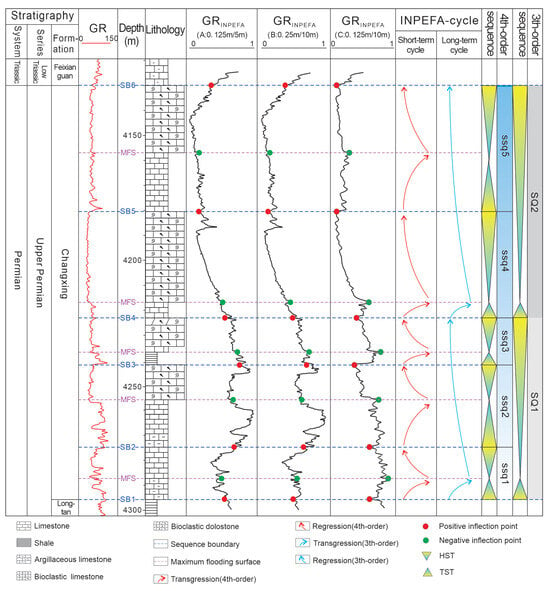
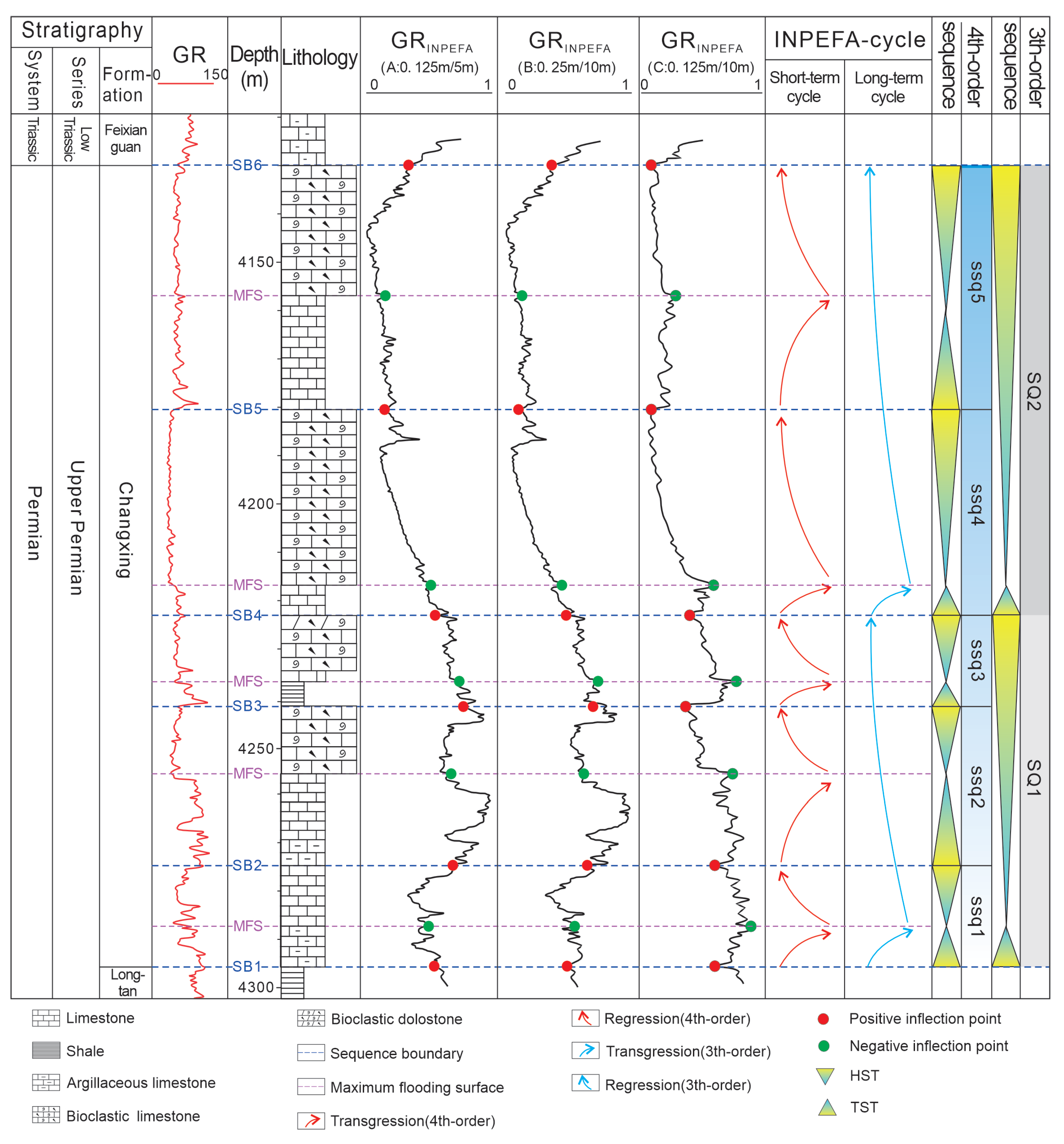
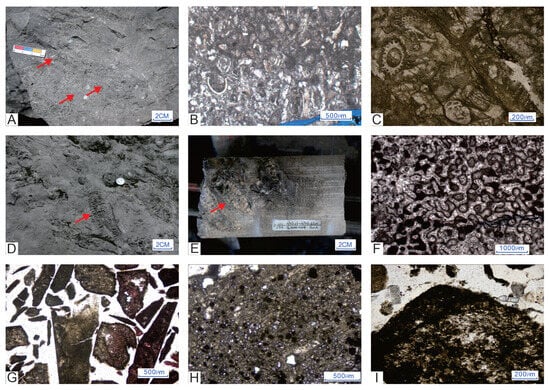
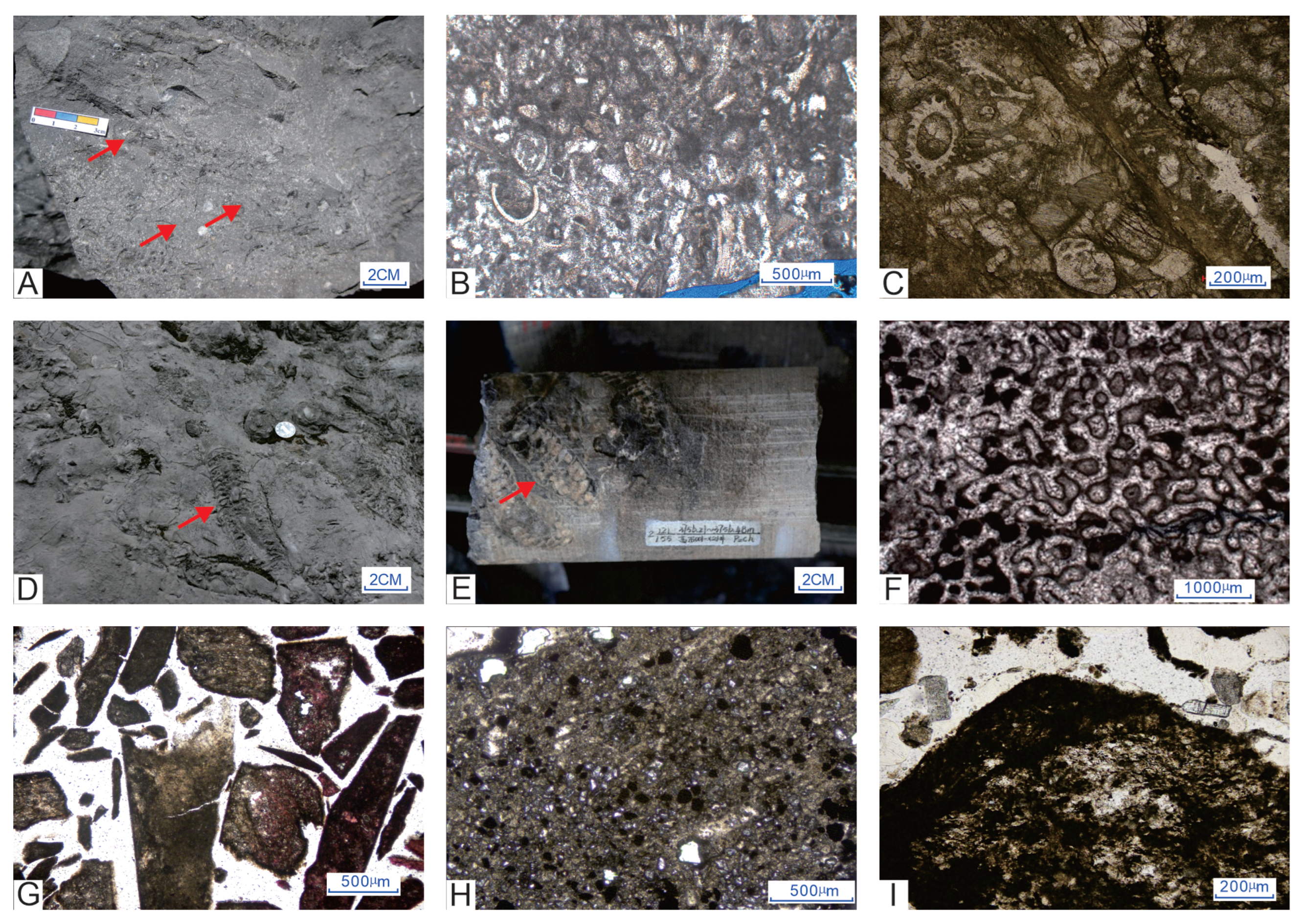
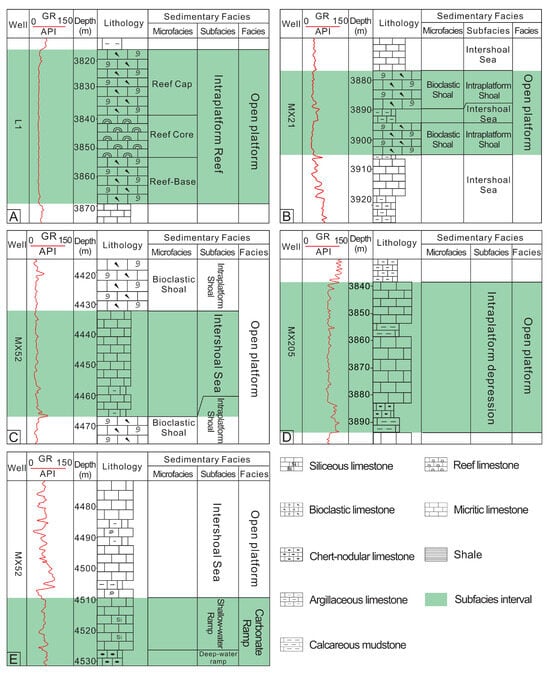
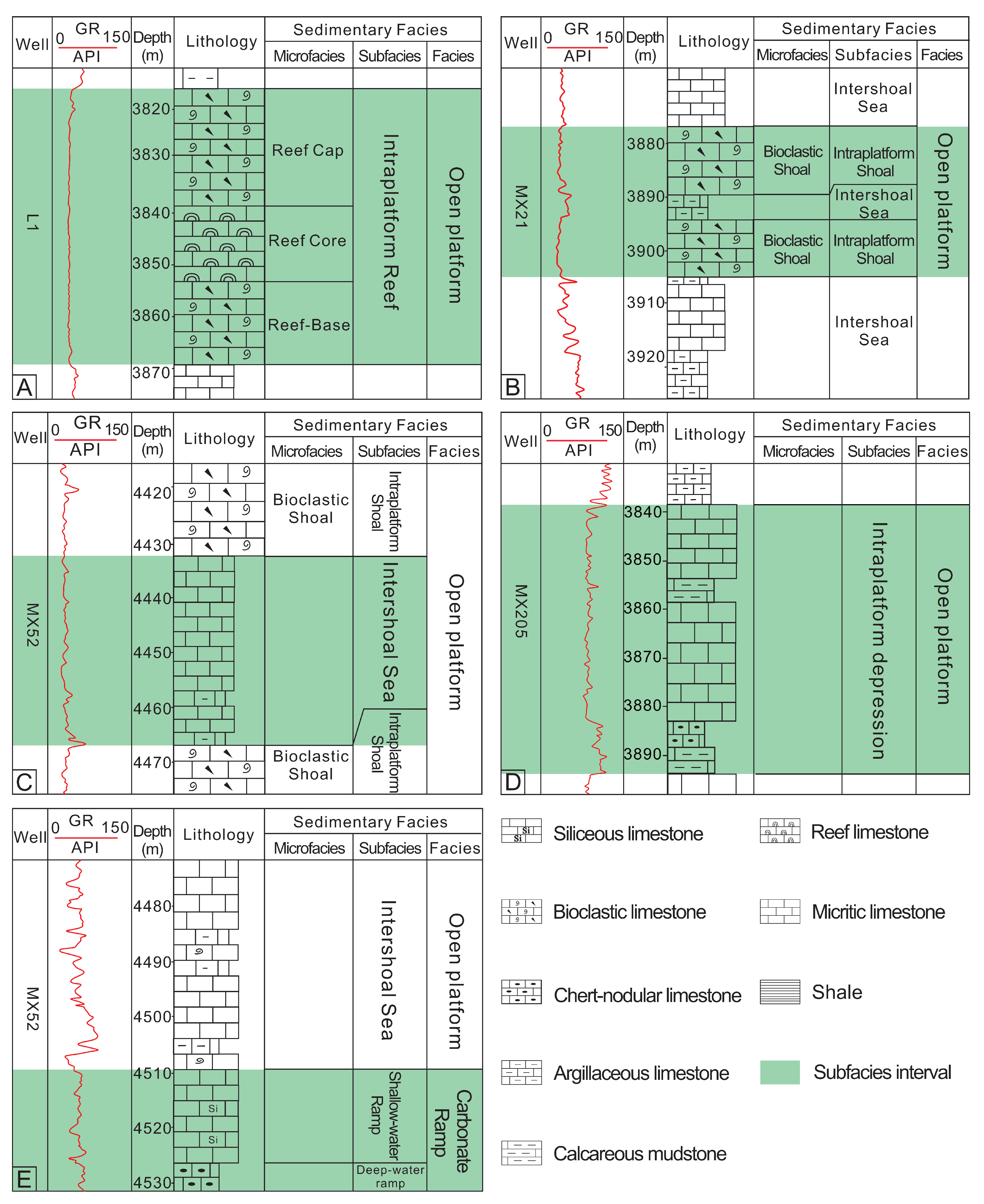
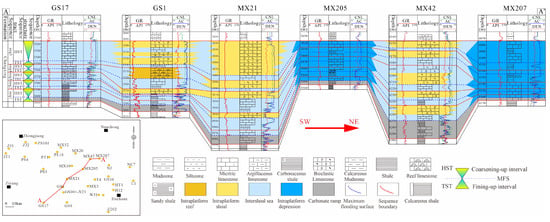
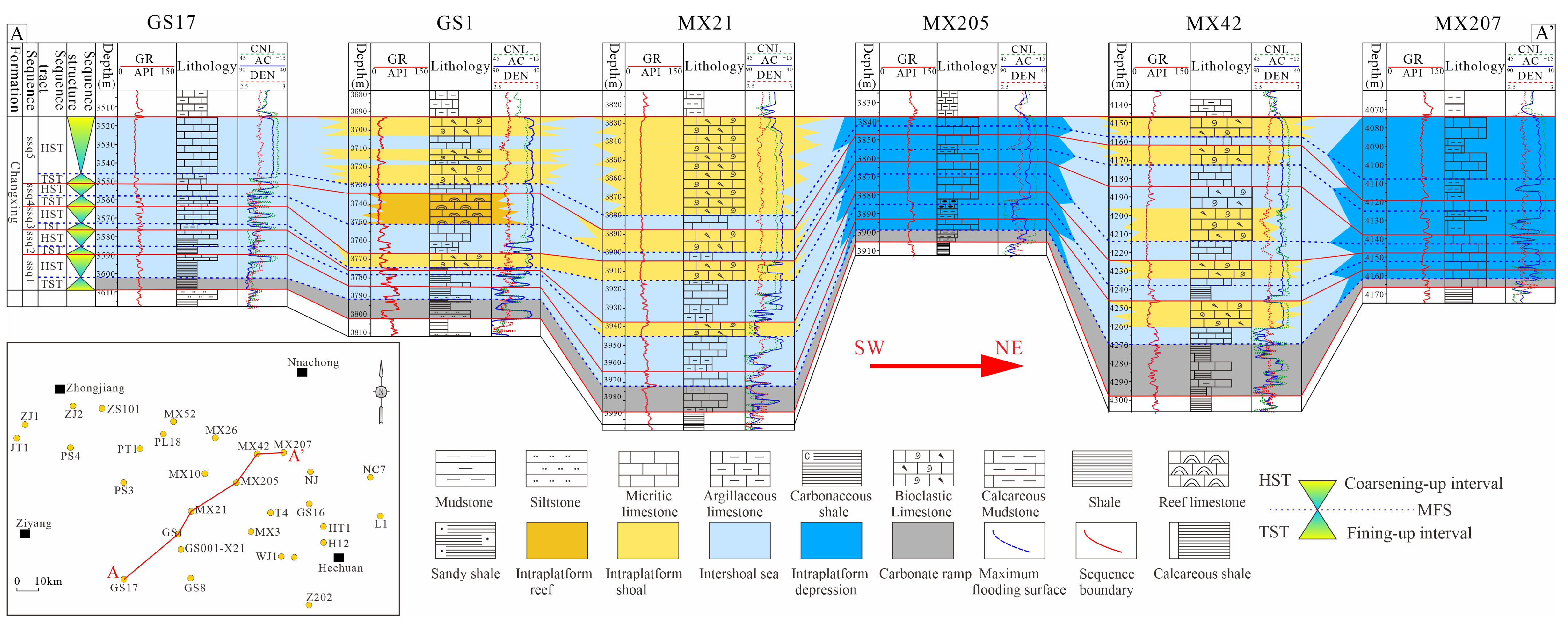
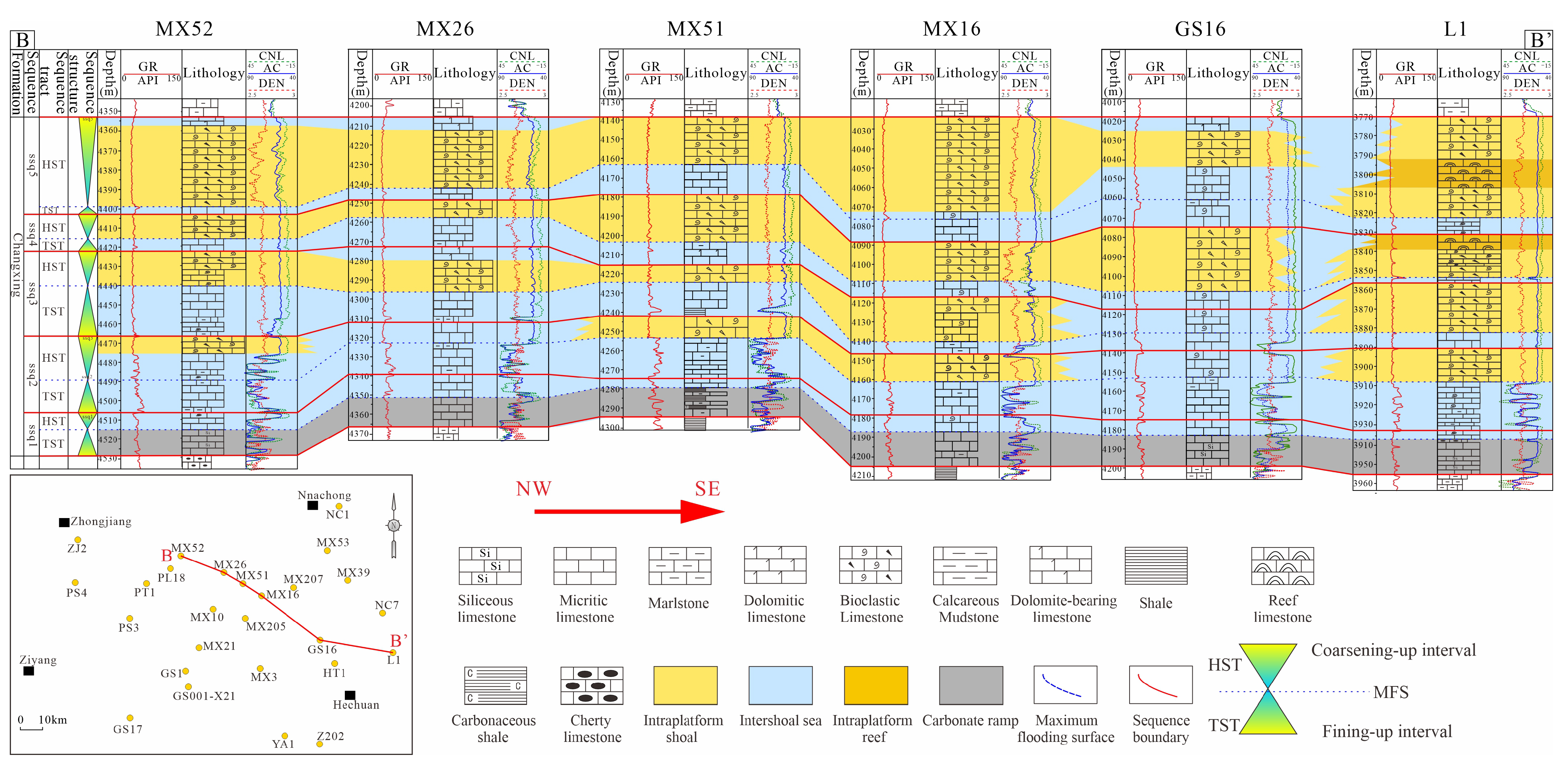
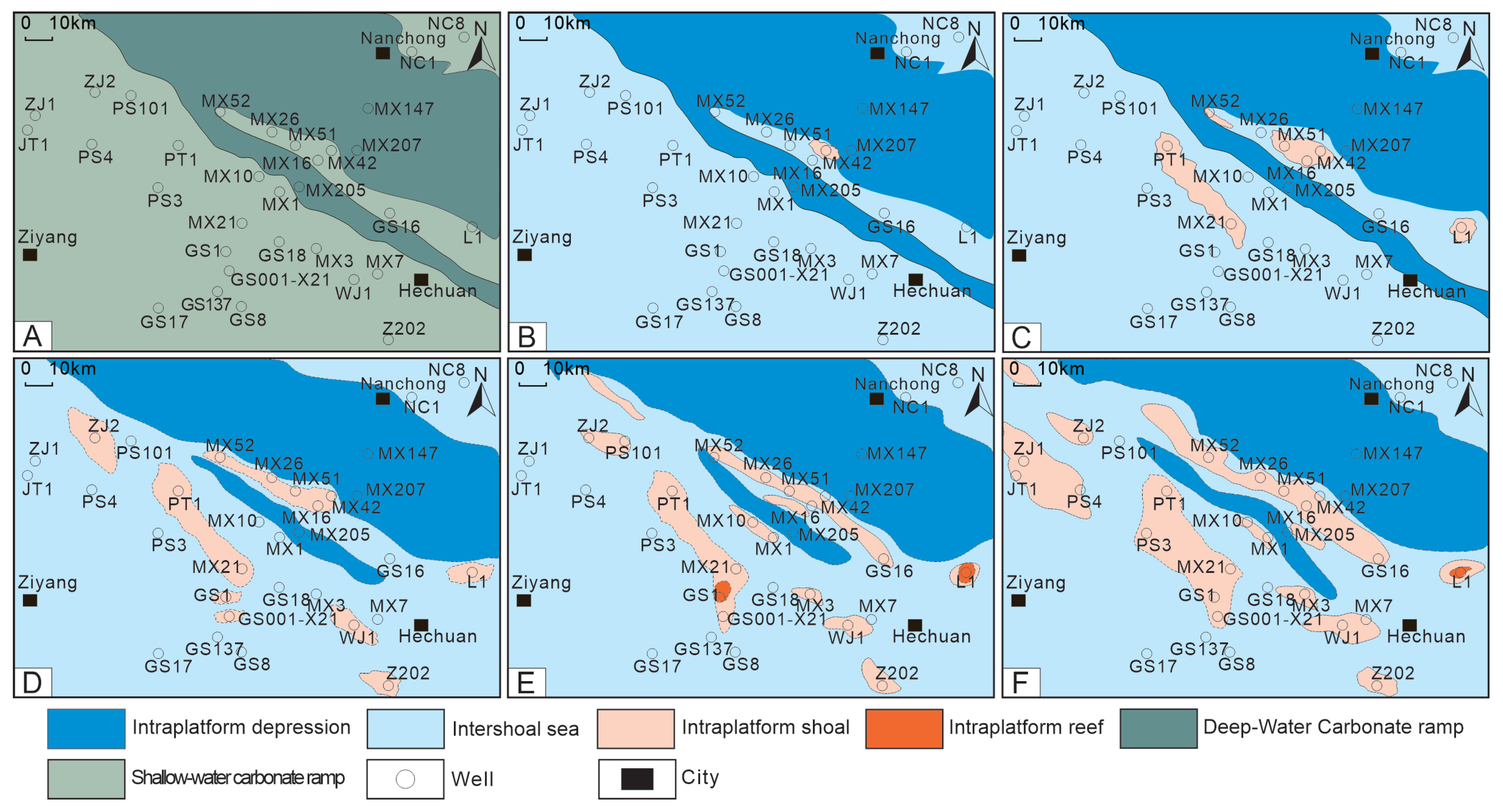
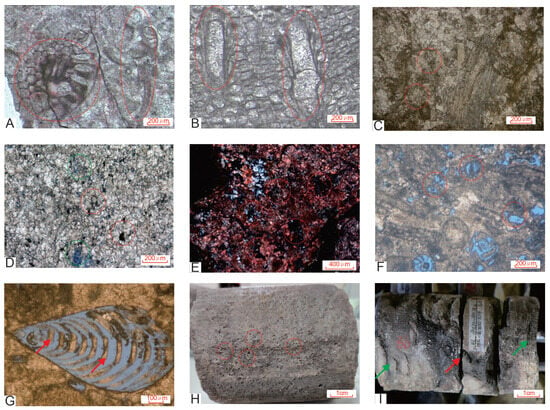
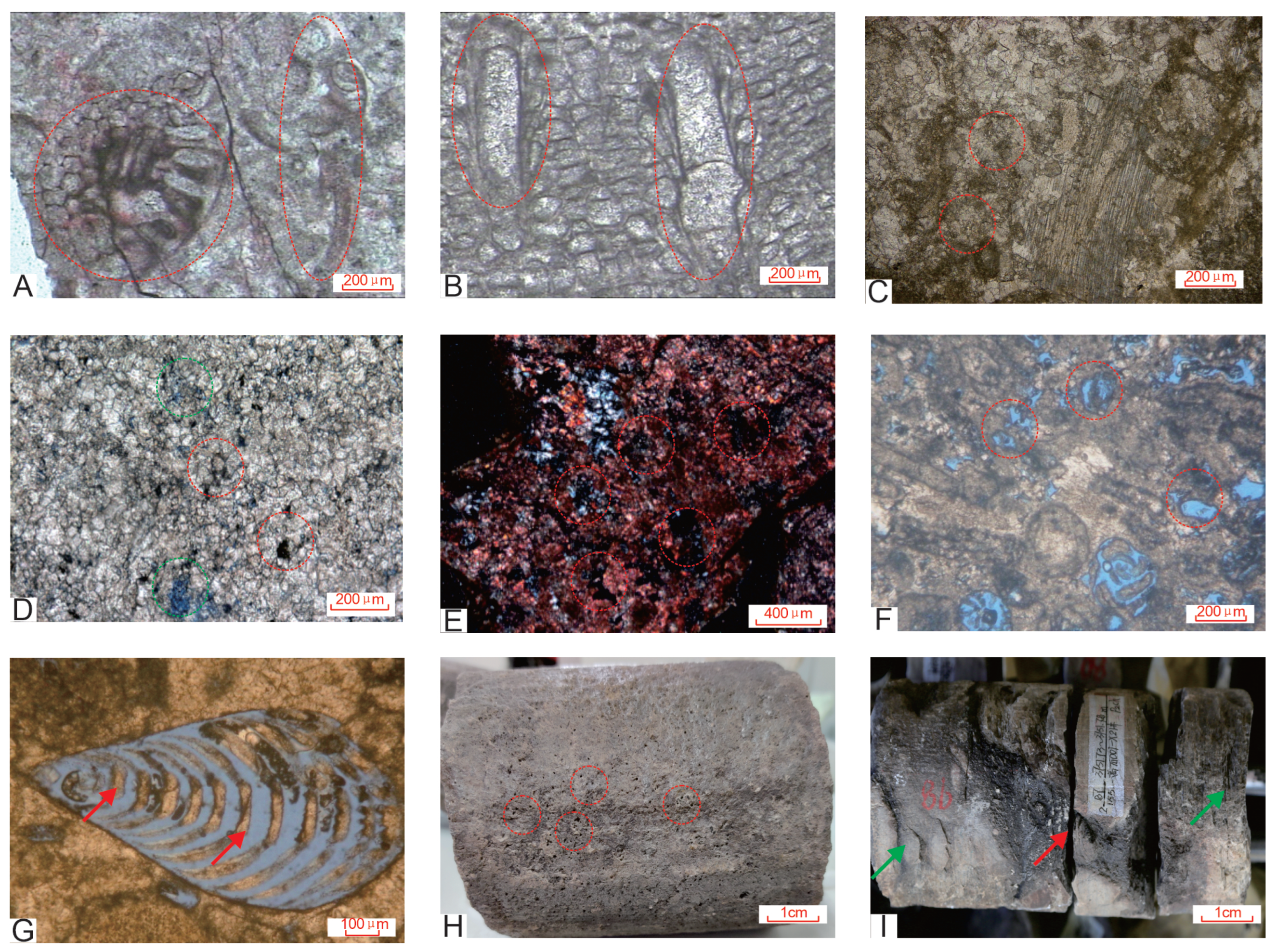
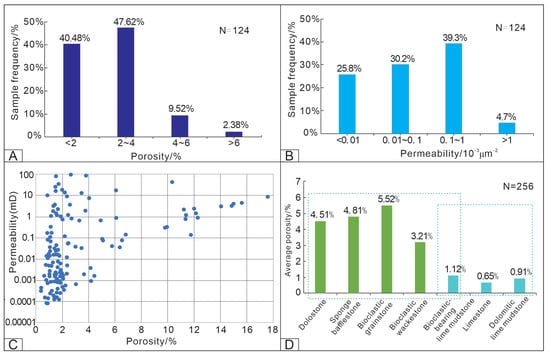
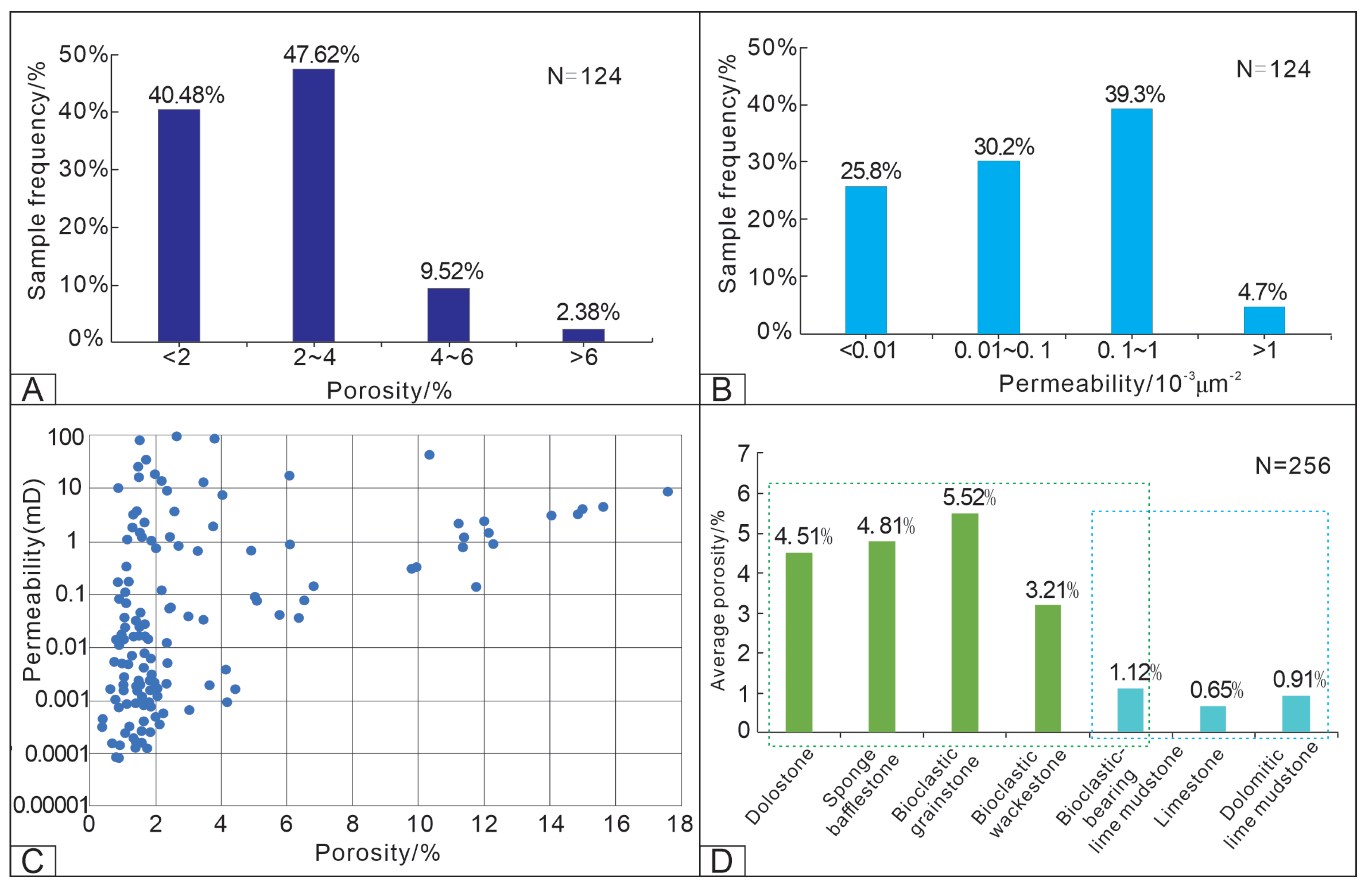
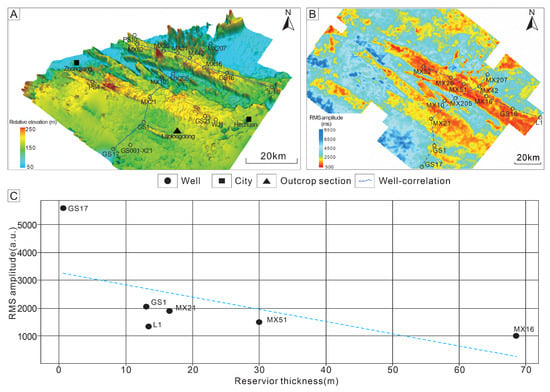
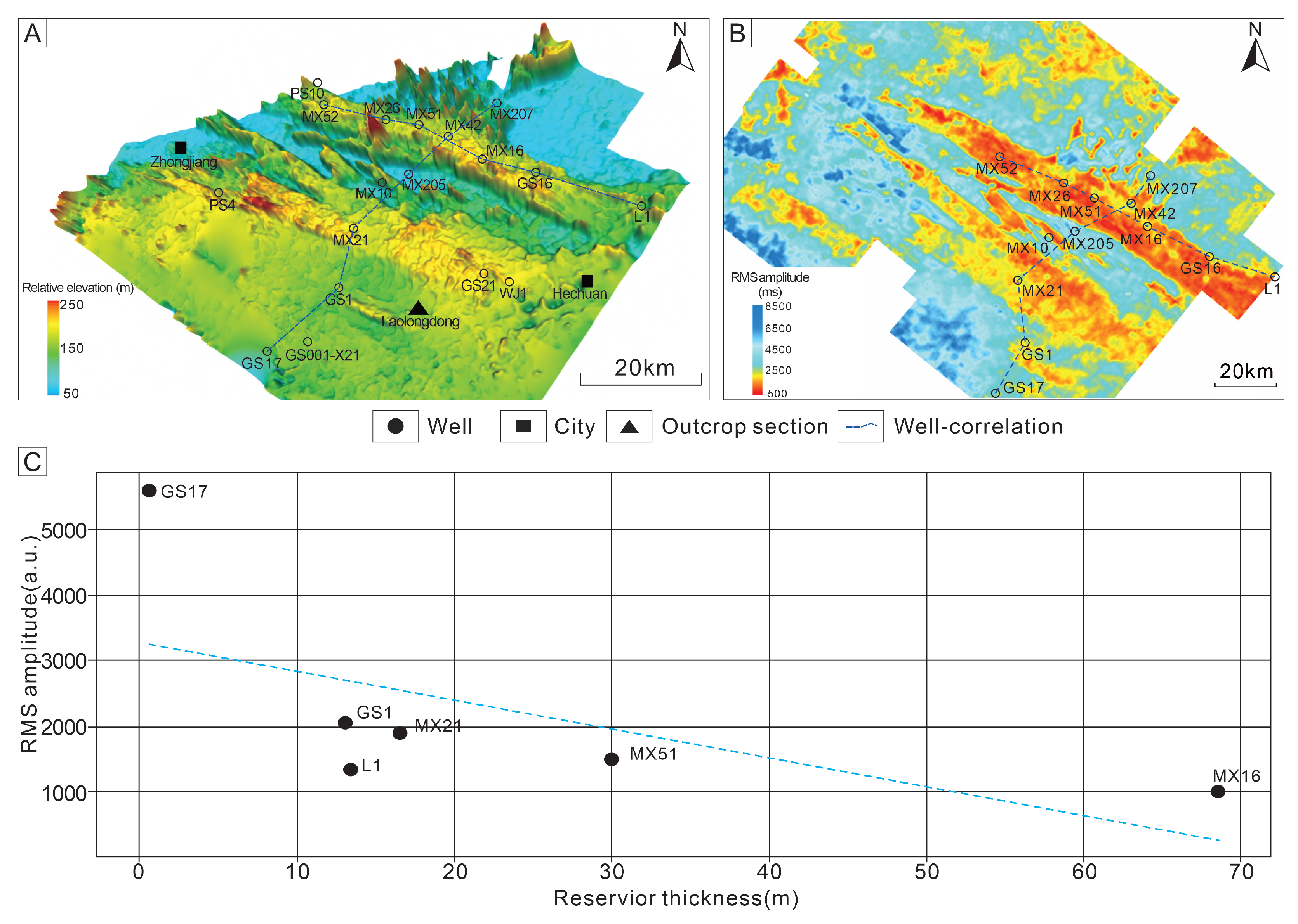
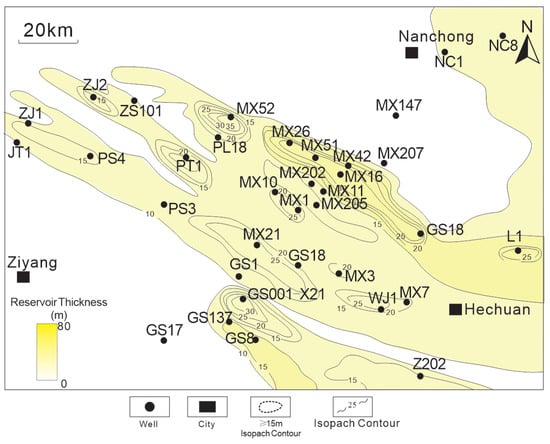
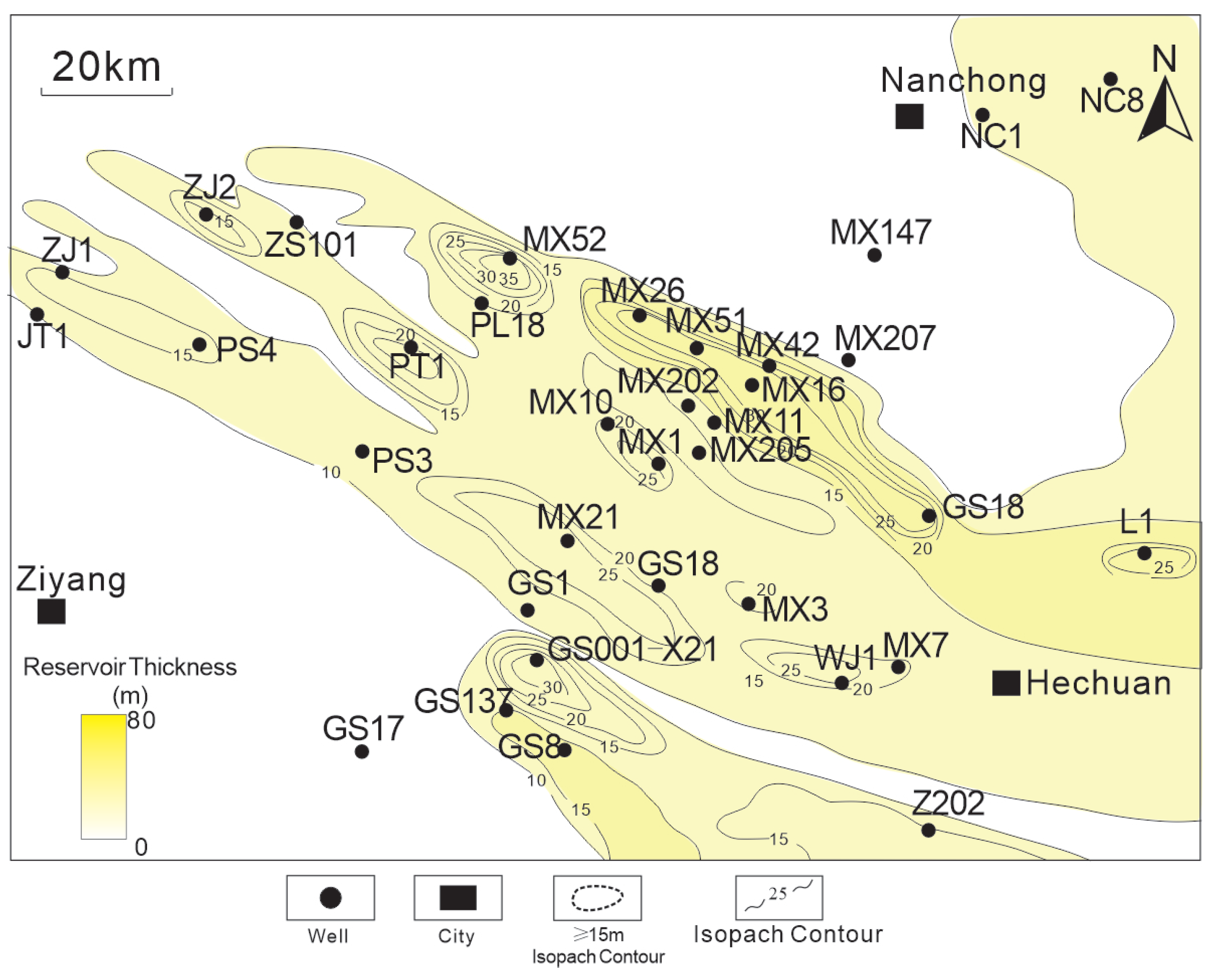
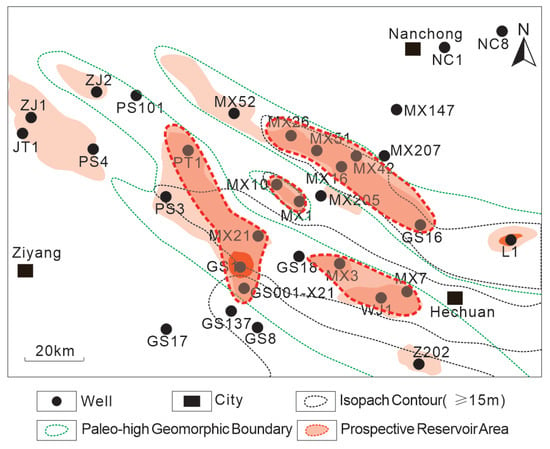
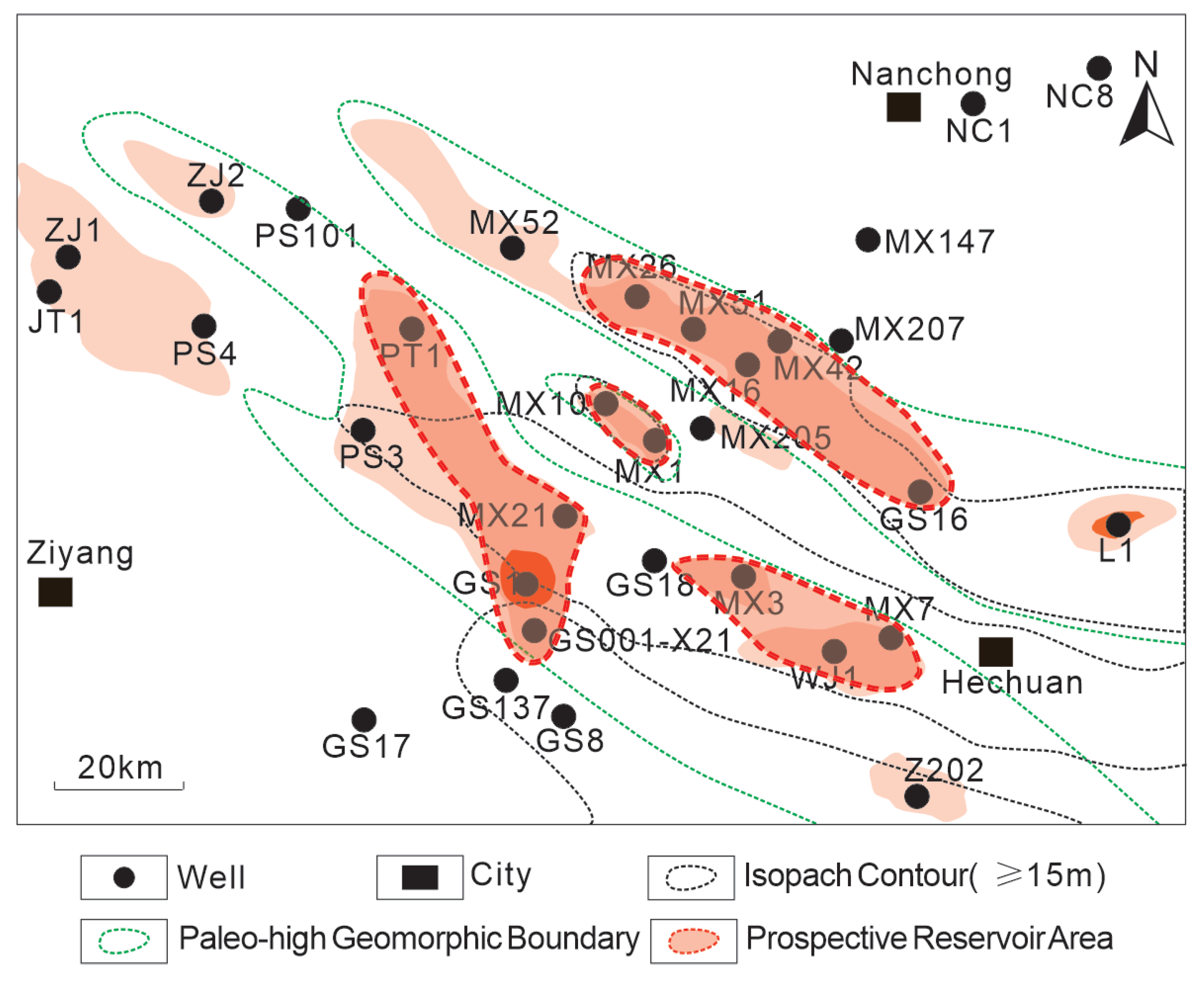

Disclaimer/Publisher’s Note: The statements, opinions and data contained in all publications are solely those of the individual author(s) and contributor(s) and not of MDPI and/or the editor(s). MDPI and/or the editor(s) disclaim responsibility for any injury to people or property resulting from any ideas, methods, instructions or products referred to in the content. |
© 2026 by the authors. Licensee MDPI, Basel, Switzerland. This article is an open access article distributed under the terms and conditions of the Creative Commons Attribution (CC BY) license.