


Abstract
Education for Sustainable Development (ESD) has increased expectations that school leaders contribute not only to educational improvement but also to the long-term sustainability of schools and communities. While research has advanced understanding of the implementation of sustainability initiatives, less attention has been given to the leadership processes through which sustainability becomes embedded within school practices and structures. This study examines how school principals enact Sustainability-Oriented Instructional Leadership (SOIL) to support the institutionalization of ESD. A qualitative multiple-case study was conducted with six principals from schools participating in the Leading Education for Sustainable Futures (LESF) project in South Africa. Data were generated through semi-structured interviews and analyzed using abductive reflexive thematic analysis informed by the SOIL framework. The findings suggest that principals enacted SOIL through systems-thinking, values-thinking, strategic-thinking, interpersonal, and implementation competencies that shaped how they interpreted sustainability challenges and mobilized organizational support. Organizational learning and stakeholder engagement emerged as important organizational processes through which sustainability-related knowledge, practices, and commitments became embedded within schools. Although all participating schools had implemented sustainability initiatives, the extent of institutionalization varied according to the degree to which sustainability was integrated into curriculum practices, organizational routines, professional learning, and stakeholder relationships. The study refines the Sustainability-Oriented Instructional Leadership framework as a process model of ESD institutionalization. By distinguishing between implementation and institutionalization, it contributes a contextually grounded explanation of how school leaders support the long-term embedding of sustainability within schools.
1. Introduction
1.1. Educational Leadership, Sustainability, and Education for Sustainable Development
Schools are increasingly expected to respond to complex environmental, social, and economic challenges while preparing learners for sustainable futures. In response, Education for Sustainable Development (ESD) has emerged as a global priority that seeks to equip learners with the knowledge, skills, values, and dispositions required to contribute to sustainable development [1,2,3,4]. Beyond curriculum content, ESD increasingly emphasizes a whole-school approach in which sustainability is embedded within teaching and learning, school culture, leadership, governance, and community engagement.
Within this context, school leadership plays a critical role in shaping how sustainability is enacted within educational institutions. Educational leadership research has consistently highlighted the importance of principals in influencing school improvement, organisational development, teaching quality, and learner outcomes [5,6,7,8]. While instructional leadership remains one of the most influential frameworks for understanding leadership practice in schools [5,9], contemporary educational leadership scholarship increasingly emphasises leaders’ roles in fostering organisational learning, building adaptive capacity, and promoting whole-school improvement through collaborative cultures, professional learning, and continuous improvement processes [6,10,11].
Contemporary educational challenges are particularly significant in South Africa, where schools often operate within contexts characterized by socio-economic inequality, food insecurity, environmental vulnerability, and uneven access to educational resources. Principals in disadvantaged school communities frequently confront challenges related to learner welfare, community development, and resource mobilization alongside their educational responsibilities [4,12]. Consequently, schools are increasingly expected to contribute not only to educational achievement but also to social resilience and sustainable development.
School food gardens provide a useful example of this expanded role. Beyond supporting food production, gardens can function as spaces for experiential learning, environmental stewardship, entrepreneurship education, and community engagement. In this way, sustainability initiatives provide opportunities for schools to address multiple educational and developmental priorities simultaneously. However, their contribution is not automatic; sustainability initiatives often remain project-based and vulnerable to resource constraints unless they are embedded within school structures and culture. Their long-term effectiveness therefore depends on leadership that can mobilise resources, build partnerships, and institutionalise sustainability as a core dimension of school improvement and organisational learning [4,13,14,15].
Sustainability leadership offers a useful perspective for understanding these demands. By emphasizing systems thinking, stakeholder collaboration, strategic action, and organizational transformation, sustainability leadership provides insights into how educational leaders might respond to complex sustainability challenges [13,14]. Consequently, there is growing interest in understanding how sustainability competencies influence school leadership practice and contribute to the advancement of ESD.
1.2. Research Gap and Purpose of the Study
While recent scholarship has significantly advanced understanding of ESD implementation and whole-school sustainability approaches [16,17,18], much of this work has focused on programme design, institutional structures, and sustainability outcomes rather than the leadership processes through which schools develop the organisational learning, adaptive capacity, and stakeholder engagement in supporting the institutionalization of ESD [19,20,21]. Less attention has been given to the organizational processes through which sustainability becomes embedded within school practices over time. In particular, the roles of leadership, organizational learning, and stakeholder engagement in supporting the institutionalization of ESD remain underexplored [22]. Consequently, important questions remain regarding how school leaders enact and institutionalise sustainability practices within diverse educational contexts.
This distinction is important because implementation does not necessarily result in institutionalization. Recent research suggests that sustainability initiatives are more likely to endure when they become embedded within organizational routines, culture, and decision-making processes rather than remaining project-based activities [18,22]. Consequently, schools may successfully implement sustainability initiatives without integrating sustainability into their everyday practices, leaving them dependent on individual champions, external support, or short-term funding arrangements [17]. This implementation–institutionalization gap highlights the need to better understand how sustainability becomes embedded within schools over time.
The challenge is particularly relevant in resource-constrained school contexts where sustainability initiatives frequently arise through external support and project-based interventions. While such initiatives may generate positive outcomes, less is known about how school leaders support the transition from implementation to institutionalization. Understanding this process requires greater attention to the leadership competencies and organizational processes that enable sustainability initiatives to become embedded within schools.
To address this gap, the present study introduces Sustainability-Oriented Instructional Leadership (SOIL) as a conceptual framework that integrates instructional leadership, sustainability competencies, organizational learning, stakeholder engagement, and ESD institutionalization. Drawing on evidence from six South African schools participating in the Leading Education for Sustainable Futures (LESF) project, the study examines how principals enact sustainability-oriented instructional leadership and how such leadership contributes to the institutionalization of ESD.
1.3. Research Question and Contributions
The study is guided by the following research question:
How do school principals enact Sustainability-Oriented Instructional Leadership to support the institutionalization of Education for Sustainable Development within schools?
To address this question, the study explores:
- Which sustainability competencies are evident in principals’ leadership practices?
- How do these competencies influence the implementation and institutionalization of ESD initiatives?
- What organizational processes shape the relationship between sustainability competencies and ESD institutionalization?
The study makes three contributions. First, it extends instructional leadership scholarship by integrating insights from sustainability leadership and sustainability competency theory. Second, it develops and empirically refines the Sustainability-Oriented Instructional Leadership (SOIL) framework as a means of explaining how sustainability competencies influence leadership practice and contribute to ESD institutionalization. Third, it contributes empirical evidence from South African schools and highlights the distinction between implementing sustainability initiatives and institutionalizing sustainability within educational organizations. By focusing on the relationship between sustainability competencies, organizational learning, stakeholder engagement, and ESD institutionalization, the study advances understanding of how educational leadership contributes to sustainability-oriented organizational change within schools.
2. Literature Review
2.1. Instructional Leadership and Organizational Learning
Instructional leadership remains one of the most influential perspectives in educational leadership research because of its established relationship with school improvement, teaching quality, and learner achievement [9,23]. Traditionally, instructional leadership focuses on principals’ efforts to coordinate curriculum, support teacher development, monitor instruction, and create organizational conditions that promote effective teaching and learning. While these functions remain important, contemporary educational challenges increasingly require leaders to foster organizational capacity for continuous learning and adaptation.
The importance of instructional leadership is particularly evident in South African schools operating within socio-economically disadvantaged communities. Principals frequently confront challenges associated with poverty, food insecurity, inadequate resources, and learner welfare needs, all of which influence teaching and learning. Consequently, leadership responsibilities often extend beyond instructional improvement to include community engagement, resource mobilization, and organizational adaptation. Research in South African schools highlights the importance of leadership that is responsive to context and capable of supporting educational improvement under challenging conditions [4,12,24,25].
Organizational learning provides an important lens for understanding how school leaders develop such capacity. Argyris and Schön’s [26] conceptualize organizational learning as the process through which organizations generate, share, and apply knowledge to improve practice. Similarly, Senge [27] argues that learning organizations continuously expand their capacity to create desired outcomes through collective inquiry, collaboration, and reflective practice. Within schools, organizational learning occurs when educators collectively develop knowledge, share experiences, and embed learning within organizational routines and systems.
From this perspective, leaders influence school improvement not only through direct instructional practices but also through their ability to create conditions that support professional learning, collaboration, and collective problem-solving. Organizational learning is therefore particularly relevant to sustainability because ESD requires schools to respond adaptively to complex environmental, social, and economic challenges. Organizational learning thus provides a useful theoretical foundation for understanding how sustainability-related knowledge and practices become embedded within schools over time.
2.2. Sustainability Leadership and Sustainability Competencies
The growing complexity of sustainability challenges has generated increasing interest in leadership approaches capable of supporting long-term organizational and societal transformation. Sustainability leadership differs from traditional leadership models by emphasizing systems thinking, stakeholder collaboration, ethical responsibility, and the ability to navigate complexity and uncertainty [17,28]. Rather than focusing exclusively on organizational performance, sustainability leadership seeks to build organizational capacity for learning, adaptation, and transformation in response to interconnected environmental, social, and economic challenges [14]. Recent scholarship further suggests that sustainability leadership plays a critical role in embedding sustainability within organizational practices, cultures, and decision-making processes, thereby supporting long-term sustainability-oriented change [18,29].
Within educational settings, sustainability leadership is particularly important because schools are increasingly expected to contribute to environmental stewardship, social responsibility, community development, and sustainability learning. In South Africa, sustainability initiatives such as school food gardens, environmental education programmes, and school greening projects have emerged as important processes for addressing local challenges while creating educational opportunities. Their success depends not only on curriculum integration but also on effective leadership, stakeholder participation, and supportive organizational conditions [4,30].
A central concern within sustainability leadership scholarship is the development of competencies that enable individuals and organizations to address sustainability challenges effectively. Wiek et al. [13] identify systems-thinking, anticipatory, normative, strategic, and interpersonal competencies as critical for sustainability practice. Building on this work, Redman and Wiek [14] propose a more comprehensive framework comprising systems-thinking, futures-thinking, values-thinking, strategic-thinking, interpersonal competence, intrapersonal competence, implementation competence, and integration competence.
These competencies are particularly relevant to educational leadership because principals seeking to advance sustainability must navigate multiple pedagogical, organizational, social, and community-based demands simultaneously. Sustainability competencies therefore provide a useful lens for understanding how school leaders support collaboration, organizational learning, stakeholder engagement, and sustainability-oriented change.
2.3. Institutionalizing Education for Sustainable Development
Education for Sustainable Development has increasingly evolved from a curriculum initiative to a whole-school transformation agenda. UNESCO [31] argues that sustainability should be embedded across educational systems through teaching and learning, leadership, governance, organizational culture, and community partnerships. Consequently, the long-term success of ESD depends not only on implementation but also on institutionalization.
Although implementation and institutionalization are closely related, they represent different stages of organizational change. Implementation concerns the introduction and enactment of sustainability initiatives, policies, or practices, whereas institutionalization concerns the extent to which these initiatives become embedded within the routines, structures, culture, and everyday functioning of an organization [32]. Recent research on sustainability and whole-institution approaches highlights that successful implementation does not necessarily lead to institutionalization; initiatives often remain vulnerable when they depend on individual champions, external partnerships, or short-term funding arrangements [17,18]. Institutionalization, by contrast, requires the development of organizational conditions that support the sustained integration of sustainability into decision-making, professional learning, stakeholder relationships, and organizational practices over time [22]. This distinction is particularly significant for schools because it shifts attention from the implementation of sustainability projects to the organizational processes through which Education for Sustainable Development becomes embedded and sustained.
Institutional theory suggests that practices become institutionalized when they acquire legitimacy, become incorporated into organizational routines, and are increasingly perceived as normal or taken-for-granted ways of operating [32]. Within schools, ESD institutionalization occurs when sustainability becomes integrated into curriculum practices, professional learning activities, strategic planning processes, stakeholder relationships, and organizational culture. Institutionalization therefore involves moving beyond isolated sustainability projects towards embedding sustainability within the everyday functioning of the school.
This distinction is particularly important in the South African context, where schools often establish sustainability initiatives in response to immediate challenges related to food security, environmental awareness, and community development. Research on school greening initiatives suggests that sustaining such efforts can be difficult because of resource constraints, competing priorities, staff turnover, and limited organizational capacity [15]. These challenges highlight the importance of understanding how sustainability initiatives move from implementation to institutionalization.
2.4. Conceptualizing Sustainability-Oriented Instructional Leadership (SOIL)
To address the highlighted challenge, this study proposes Sustainability-Oriented Instructional Leadership (SOIL) as an integrative framework that brings together insights from instructional leadership, sustainability leadership, organizational learning, and ESD institutionalization. SOIL is defined as the integration of sustainability competencies into instructional leadership practices to support organizational learning, stakeholder engagement, and the institutionalization of Education for Sustainable Development within schools. While instructional leadership explains how principals influence teaching, learning, and improvement, sustainability leadership focuses on organizational transformation, resilience, and long-term adaptation [14,33].
The framework draws primarily on Redman and Wiek’s [14] sustainability competency framework, which provides a comprehensive account of the competencies required to support sustainability-oriented organizational transformation. Within the SOIL framework, sustainability competencies are conceptualized as leadership resources that shape how principals understand sustainability challenges, engage stakeholders, support teaching and learning, and facilitate organizational change. Rather than viewing sustainability competencies as individual attributes alone, the framework conceptualizes them as capabilities that influence both leadership practice and organizational processes.
A central assumption of the framework is that sustainability-oriented leadership contributes to ESD institutionalization through the organizational processes of organizational learning and stakeholder engagement. Organizational learning enables sustainability-related knowledge and practices to be shared, adapted, and embedded within schools [26,27], while stakeholder engagement strengthens ownership, legitimacy, and support for sustainability initiatives. Organizational learning and stakeholder engagement processes create conditions that support the long-term integration of sustainability within school practices and culture.
The South African context further underscores the need for a framework capable of explaining how sustainability initiatives become embedded within schools. While food gardens and environmental education projects are increasingly evident in schools, less attention has been devoted to understanding the leadership processes through which these initiatives evolve from project-based interventions into established organizational practices. The SOIL framework responds to this gap by providing a conceptual explanation of how sustainability competencies shape leadership practices that support organizational learning, stakeholder engagement, and ESD institutionalization. SOIL also recognizes that leadership is enacted within specific contexts. Resource availability, policy environments, professional learning opportunities, school–community relationships, and socio-economic conditions may either enable or constrain the enactment of sustainability competencies. Consequently, the institutionalization of ESD is understood as the outcome of an interaction between leadership competencies, mediating organizational processes, and contextual conditions.
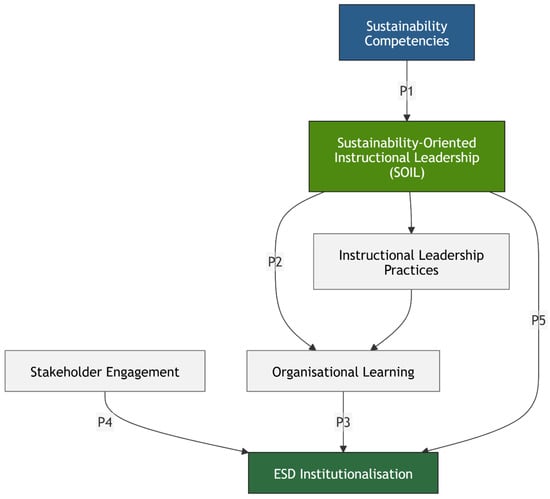
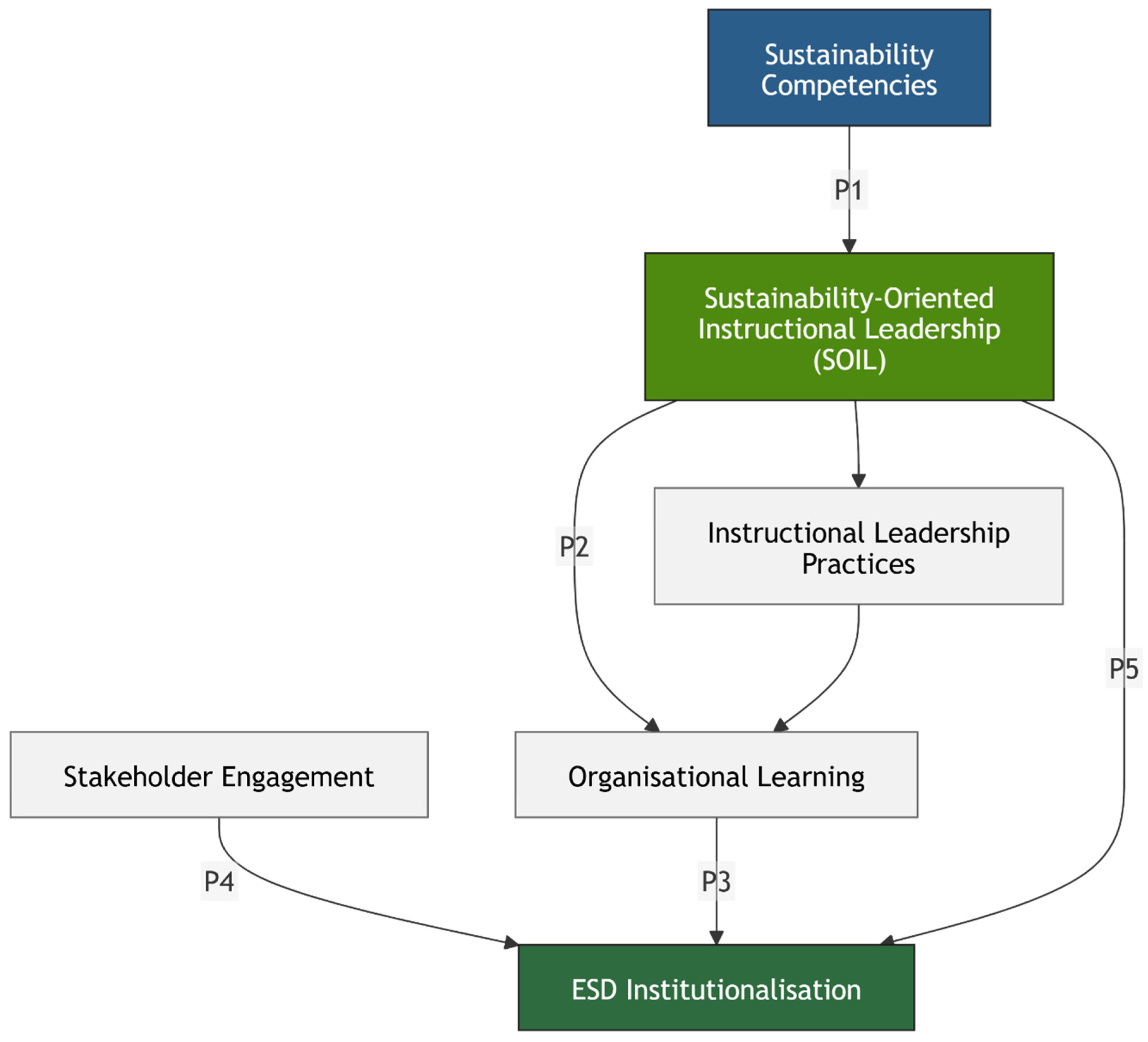
Figure 1 presents the Sustainability-Oriented Instructional Leadership (SOIL) framework developed in this study. The framework proposes that sustainability competencies shape principals’ enactment of Sustainability-Oriented Instructional Leadership, which fosters organisational learning and stakeholder engagement. These organisational processes support the embedding of sustainability within school practices and contribute to ESD institutionalisation.
Figure 1.
Sustainability-Oriented Instructional Leadership (SOIL) framework for the institutionalization of Education for Sustainable Development (ESD).
Propositions Guiding the Study
Proposition 1.
Sustainability competencies shape principals’ enactment of Sustainability-Oriented Instructional Leadership.
Proposition 2.
Sustainability-Oriented Instructional Leadership fosters organizational learning by creating opportunities for collective reflection, collaboration, and knowledge-sharing.
Proposition 3.
Sustainability-Oriented Instructional Leadership fosters stakeholder engagement through building relationships, shared ownership, and support for sustainability initiatives.
Proposition 4.
Organizational learning enables sustainability initiatives to become embedded within school practices, routines, and culture.
Proposition 5.
Stakeholder engagement enhances the legitimacy and sustainability of ESD initiatives, thereby supporting their long-term institutionalization.
The presented propositions provide an interpretive account of how sustainability competencies are enacted through leadership practices associated with organizational learning and stakeholder engagement. These propositions offer a conceptual framework for understanding how principals support the institutionalization of ESD within schools.
3. Methodology
3.1. Research Design
This study employed a qualitative multiple-case study design to examine how school principals enact Sustainability-Oriented Instructional Leadership (SOIL) to support the institutionalization of Education for Sustainable Development (ESD). A multiple-case study design was considered appropriate because it enabled an in-depth exploration of leadership practices across different school contexts while facilitating the identification of patterns and variations across cases [34]. The design aligned with the study’s objective of understanding the processes through which sustainability competencies influence leadership practice and ESD institutionalization.
The study was informed by an interpretivist research orientation, which assumes that social reality is constructed through the meanings individuals attach to their experiences and interactions within particular contexts [35,36]. Interpretivist inquiry seeks to understand how participants make sense of social phenomena rather than identify universal causal relationships. This orientation was therefore appropriate because the study sought to understand how principals interpreted sustainability challenges, enacted Sustainability-Oriented Instructional Leadership (SOIL), and experienced the processes through which ESD became embedded within their schools.
Consistent with the theory-building purpose of the study, the research adopted an abductive approach. The Sustainability-Oriented Instructional Leadership (SOIL) framework informed data collection and analysis, while the empirical findings were simultaneously used to refine and extend the framework. This iterative movement between theory and data enabled the development of contextually grounded insights into the institutionalization of ESD.
3.2. Research Context
The study was conducted within the Leading Education for Sustainable Futures (LESF) project, a collaborative initiative aimed at promoting Education for Sustainable Development within schools through sustainability-oriented learning experiences and food-garden initiatives. The project involved partnerships among schools, university researchers, community stakeholders, and external partners seeking to strengthen sustainability education and whole-school approaches to ESD.
The participating schools had established food gardens that functioned as more than food-production spaces. The gardens served as sustainability learning environments through which learners engaged with environmental stewardship, food security, entrepreneurship, biodiversity, and experiential learning. As outdoor learning spaces, gardens provide opportunities to connect sustainability concepts to curriculum activities while addressing local community challenges.
The project was implemented within South African school contexts characterized by varying levels of socio-economic disadvantage. In many cases, sustainability initiatives were linked to broader concerns relating to food insecurity, learner well-being, and community development. This context provided a valuable setting for exploring how principals support the implementation and institutionalization of ESD through leadership practices.
3.3. Participant Selection
Purposive sampling was used to identify participants who could provide rich insights into sustainability-oriented leadership and ESD institutionalization [37]. Participants were selected on the basis of their leadership role within schools participating in the LESF project and their direct involvement in sustainability initiatives and school food-garden programmes.
The sample consisted of six principals from six participating schools. As school leaders, the principals were well positioned to provide insights into leadership practices, stakeholder engagement, organizational learning processes, and challenges associated with embedding sustainability within schools. Table 1 presents an overview of the participants and school characteristics, including principal gender and leadership experience, school enrolment, and quintile. These details provide contextual information for interpreting the findings and assessing their potential transferability while preserving participant and school anonymity.
Table 1.
Participant Profile.
3.4. Data Collection
Data were generated through semi-structured interviews with the six participating principals. Semi-structured interviews were selected because they provided sufficient flexibility to explore participants’ experiences and perspectives while ensuring consistency across cases [36]. The interview protocol was informed by the SOIL framework and its associated propositions. Questions explored:
- principals’ understandings of sustainability and ESD;
- leadership practices supporting sustainability initiatives;
- organizational learning processes;
- stakeholder engagement and partnerships;
- curriculum integration;
- challenges associated with sustainability initiatives;
- factors influencing the institutionalization of ESD.
The use of open-ended questions enabled participants to describe their experiences in their own words and allowed unanticipated issues to emerge during the interviews.
3.5. Data Analysis
Data were analyzed using reflexive thematic analysis following Braun and Clarke’s [38] six-phase approach. The process involved:
- Familiarization with the data;
- Initial coding;
- Theme development;
- Theme review;
- Theme definition and refinement;
- Report writing.
An abductive analytical approach was employed. While the SOIL framework informed the initial analytical lens, the analysis remained open to new understandings emerging from the data. Themes were therefore developed through iterative engagement with participants’ accounts and continuous movement between the data, emerging interpretations, and relevant theoretical perspectives.
The analysis focused on identifying:
- sustainability competencies evident in principals’ leadership practices;
- organizational learning processes supporting sustainability initiatives;
- stakeholder engagement practices;
- factors contributing to ESD institutionalization;
- relationships among these concepts.
The final themes were subsequently interpreted in relation to the propositions underpinning the SOIL framework.
3.6. Trustworthiness
The trustworthiness of the study was enhanced through methodological transparency, contextual richness, reflexive engagement with the research process, and systematic data analysis, drawing on Lincoln and Guba’s [35] criteria of credibility, transferability, dependability, and confirmability.
Credibility was strengthened through the alignment between the research questions, conceptual framework, interview protocol, and analytical procedures. The multiple-case study design enabled the exploration of Sustainability-Oriented Instructional Leadership across six school contexts, while cross-case analysis facilitated the identification of recurring patterns and contextual variations.
Transferability was supported through the provision of detailed descriptions of the research context, the LESF project, participating schools, and the sustainability initiatives under investigation. Such contextual detail enables readers to assess the relevance of the findings to other educational settings.
Dependability was strengthened through a transparent and systematic analytical process. Data were analyzed using Braun and Clarke’s [38] reflexive thematic analysis approach, and analytical decisions were documented throughout the study. Consistent with reflexive thematic analysis, themes were viewed as interpretive outputs generated through engagement between the researcher, the data, and relevant theoretical concepts [38].
Confirmability was supported through reflexive engagement with the research process. The researcher occupied an insider position within the broader LESF project and therefore had prior familiarity with the participating schools and sustainability initiatives. While this position provided valuable contextual understanding, it also required ongoing critical reflection regarding how prior experiences and theoretical commitments could shape interpretation. Consistent with Braun and Clarke’s [38] conceptualization of reflexivity, researcher subjectivity was treated as an analytical resource rather than a source of researcher influence to be eliminated. Themes were developed through iterative engagement with participants’ accounts and continuous comparison between the data, emerging interpretations, and relevant theoretical perspectives. The inclusion of verbatim quotations in the findings section further enables readers to evaluate the relationship between the empirical data and the interpretations presented.
The trustworthiness strategies used enhanced the rigor, transparency, and interpretive quality of the study and strengthened confidence in the findings concerning the role of Sustainability-Oriented Instructional Leadership in supporting the institutionalization of Education for Sustainable Development within schools.
3.7. Ethical Considerations
Ethical clearance for the study was obtained from the relevant university research ethics committee prior to data collection. Permission was also obtained from the relevant educational authorities and participating schools. All participants provided informed consent and were informed of the purpose of the study, the voluntary nature of participation, and their right to withdraw at any time without penalty. To protect confidentiality and anonymity, pseudonyms were assigned to all participants and identifying information was removed from interview transcripts and reports. Data were securely stored and accessed only by the researcher for research purposes.
3.8. Use of Generative Artificial Intelligence
Microsoft 365 Copilot was used in four limited ways during manuscript preparation: (1) suggesting alternative wording for selected sentences to improve clarity and readability; (2) assisting with copy-editing and language refinement; (3) supporting the organisation and formatting of references according to journal requirements; and (4) generating an initial visual representation of the SOIL Framework from author-supplied conceptual descriptions. The author subsequently revised the diagram and all textual outputs for accuracy, scholarly appropriateness, and consistency with the study's aims. The AI tool did not contribute to the study design, data collection, data analysis, interpretation of results, theoretical development, or conclusions.
4. Findings
The findings suggest that principals enacted Sustainability-Oriented Instructional Leadership (SOIL) through sustainability competencies that supported organizational learning, stakeholder engagement, and the institutionalization of Education for Sustainable Development (ESD). Four interconnected themes emerged from the analysis: (a) sustainability competencies shaping leadership practice; (b) organizational learning as a process for sustainability-oriented change; (c) stakeholder engagement as a source of capacity and legitimacy; and (d) institutionalizing sustainability beyond project implementation.
4.1. Sustainability Competencies Shaping Sustainability-Oriented Instructional Leadership
The findings indicate that sustainability competencies functioned as leadership resources that influenced how principals interpreted sustainability challenges and organized sustainability-related changes within their schools. Participants demonstrated systems-thinking, values-thinking, strategic-thinking, and implementation competencies in their approaches to school food gardens and ESD initiatives.
A recurring pattern across the cases was the tendency to view sustainability initiatives as interconnected with broader educational and community goals. Participant A explained:
“It is important to know that the school is made up of many parts that are connected. Taking teaching and learning to the gardens involves learners, teachers, parents, curriculum, pedagogy, timetabling, etc. All these parts must be synchronized and speak to each other.”
Similarly, Participant B emphasized the coordination required to support sustainability-related teaching and learning:
“Instructional leadership is about ensuring that teaching and learning takes place, and it requires organizing different units. There must be a willing qualified teacher; willing learners; timetable; LTSM; and for gardens, space, seeds, water. These things need to be coordinated, and the coordinator must have systems thinking.”
These accounts suggest that principals viewed sustainability initiatives not as isolated projects but as embedded within broader organizational systems. Systems-thinking enabled participants to recognize connections among curriculum, learner welfare, resource allocation, stakeholder participation, and sustainability outcomes.
Value-thinking competencies were evident in the emphasis placed on shared vision and collective ownership. Participant C stated:
“You need to carry my vision of the school, and it should not be my vision alone. It should be our vision because this is our school, a shared vision.”
Likewise, Participant D explained:
“As a principal I have my own vision for the school, but as a leader I must make sure that my vision aligns with the vision of the community.”
Although all participants demonstrated sustainability competencies, differences were evident in how these competencies were enacted. Participants A and B placed stronger emphasis on systems coordination and organizational interconnectedness, whereas Participants C and D focused more strongly on shared vision and collective ownership. Despite these differences, all participants viewed sustainability as extending beyond environmental concerns alone and requiring leadership practices capable of integrating educational, organizational, and community priorities. These findings also suggest that sustainability-oriented leadership involved aligning diverse interests around a shared commitment to sustainability and school improvement. These findings support Proposition 1, which suggests that sustainability competencies shape principals’ enactment of Sustainability-Oriented Instructional Leadership.
4.2. Organizational Learning as a Process for Sustainability-Oriented Change
A second theme concerned the role of organizational learning in supporting sustainability-oriented change. Participants consistently describe leadership as involving continuous learning, reflection, adaptation, and knowledge sharing.
Participant B reflected:
“I learn as I go. Sometimes I’ll find something fascinating. How does this happen? So, I learn as I go in most instances and I take what I think is positive and introduce it to my school.”
Similarly, Participant E explained:
“I learnt from my experience, and I also learnt from other managers while I was still an educator before I got promoted. These experiences help me to make informed decisions now.”
These accounts suggest that principals viewed leadership learning as an ongoing developmental process informed by experience and reflection. However, learning was not confined to individual development. Participants also highlighted the significance of collaboration and professional relationships.
Participant C noted:
“I learned a lot from that principal because he would guide me on how I could get more teachers to participate in the garden initiative. When I experienced challenges, I would consult him and he would guide me.”
This statement illustrates how leadership knowledge was shared through interpersonal relationships and professional networks. Such learning processes appeared to support the adoption and refinement of sustainability-related practices.
Evidence of organizational learning varied across cases. Participants B, C, and E provided the strongest evidence of learning through experience, mentoring, and professional relationships. These accounts suggest that organizational learning extended beyond individual knowledge acquisition and involved processes through which sustainability-related knowledge became shared and adapted within schools. The findings support Proposition 2, which proposes that Sustainability-Oriented Instructional Leadership fosters organizational learning through collective reflection, collaboration, and knowledge sharing.
4.3. Stakeholder Engagement as a Source of Capacity and Legitimacy
Stakeholder engagement emerged as a third theme and was consistently identified as an important element of sustainability-oriented leadership. Participants emphasized the role of partnerships, community relationships, and collaborative networks in sustaining sustainability initiatives.
Participant E explained:
“EXXARO came to reintroduce the issue of a food garden in our school. Since then, we have maintained a good relationship with them.”
Similarly, Participant A highlighted the importance of relationships within the school:
“Fortunately, we had a general assistant who had an interest in the garden and volunteered. It was through maintaining good relationships with staff that this was possible.”
Other participants emphasized broader stakeholder participation. Participant F stated:
“Community and stakeholder involvement is crucial for ensuring the success of a project.”
Likewise, Participant B argued:
“Keep stakeholders informed and involve them fully in the project. All stakeholders must be given regular updates of what is happening and maintain that good relationship.
Stakeholder engagement was evident across all six schools but operated in different ways. Participants A and E focused primarily on leveraging internal and external support networks, whereas Participants B and F emphasized participation, communication, and shared ownership. The findings suggest that stakeholder engagement contributed not only material resources but also legitimacy and community support for sustainability initiatives. These findings support Proposition 3, which proposes that Sustainability-Oriented Instructional Leadership fosters stakeholder engagement through relationship building and shared ownership.
4.4. From Implementation to Institutionalization
The final theme concerns the distinction between implementation and institutionalization. Although all participating schools had established sustainability initiatives, participants frequently distinguished between operating sustainability projects and embedding sustainability within the core work of the school.
Participants C, E, and F emphasized curriculum integration as a key indicator of institutionalization. Participant C suggested:
“They can play a bigger role in making sure that it is part of our curriculum.”
Similarly, Participant E stated:
“Sustainable development and food production has to be part of the curriculum. I think it will be very beneficial to the learners.”
Participant F reinforced this perspective:
“What I think the Department should be doing is to integrate the issue of gardening into the curriculum.”
These accounts suggest that principals viewed sustainability as institutionalized when it became integrated into teaching and learning rather than remaining an additional activity. Participants also highlighted the broader developmental significance of sustainability initiatives. Participant C explained:
“Ninety percent of our learners come from informal settlements … many do not have food at home. We have about twenty learners who depend on the school for food parcels. If we don’t provide that support, they come back saying they did not eat over the weekend.”
The most significant variation across cases is related to the extent of institutionalization. While all schools had implemented sustainability initiatives, participants differed in the extent to which they emphasized curriculum integration, organizational embedding, and long-term sustainability. Participants C, E, and F demonstrated the strongest institutionalization orientation, whereas Participants A and B focused more strongly on coordination and implementation. These findings suggest that schools occupied different positions along a continuum from implementation to institutionalization. They further support Propositions 4 and 5, which propose that organizational learning and stakeholder engagement contribute to the institutionalization of ESD.
4.5. Cross-Case Comparison
Comparison across the six cases suggests that schools differed less in their commitment to sustainability than in their capacity to institutionalize sustainability initiatives. A key pattern emerging from the findings is that stronger evidence of institutionalization was associated with stronger organizational learning processes and broader stakeholder engagement. Schools where sustainability knowledge was shared across staff and supported by diverse stakeholder networks appeared more likely to demonstrate curriculum integration, distributed ownership, and sustainability-related organizational routines.
The emerging findings suggest that Sustainability-Oriented Instructional Leadership contributes to ESD institutionalization not primarily through the implementation of sustainability projects, but through the creation of organizational conditions that enable sustainability to become embedded within the everyday functioning of schools.
5. Discussion
5.1. Sustainability Competencies and the Enactment of Sustainability-Oriented Instructional Leadership
The first research question examined which sustainability competencies were evident in principals’ leadership practices. The findings suggest that principals enacted Sustainability-Oriented Instructional Leadership (SOIL) through systems-thinking, values-thinking, strategic-thinking, interpersonal, and implementation competencies. Rather than viewing sustainability initiatives as discrete environmental projects, principals consistently framed them as complex organizational challenges involving curriculum, learner welfare, community engagement, and sustainability outcomes.
The prominence of systems-thinking aligns with sustainability competency scholarship, which emphasizes the importance of understanding interconnections among social, environmental, and organizational systems [13,14]. Sustainability competencies therefore influenced not only the content of leadership but also how principals interpreted and responded to sustainability challenges. The findings further suggest that values-thinking competencies enabled principals to cultivate shared visions and collective commitment, reinforcing the relational dimensions of sustainability-oriented change.
These findings support Proposition 1 and extend instructional leadership scholarship by demonstrating how sustainability competencies shape leadership practice in school contexts. Sustainability competencies functioned as leadership resources that enabled principals to align educational, community, and sustainability priorities.
5.2. Sustainability Competencies and ESD Institutionalization
The second research question explored how sustainability competencies influenced the implementation and institutionalization of ESD initiatives. The findings suggest that sustainability competencies supported institutionalization by enabling principals to move beyond project implementation towards organizational embedding.
Participants consistently distinguished between implementing sustainability initiatives and embedding sustainability within curriculum practices, organizational routines, and long-term planning. This finding aligns with recent scholarship suggesting that sustainability becomes enduring when it is integrated into organizational practices rather than remaining project-based [18,22]. Consistent with institutional perspectives, principals appeared to associate institutionalization with the normalization of sustainability within the everyday functioning of the school [32].
The South African context is critical to understanding these findings. Sustainability initiatives frequently addressed issues of food insecurity, learner welfare, and community development in addition to environmental concerns. These findings resonate with research demonstrating that school leaders in socio-economically disadvantaged contexts often navigate educational and social challenges simultaneously [4]. Sustainability-oriented leadership therefore functioned as a process for addressing interconnected educational and developmental needs.
The findings further suggest that ESD institutionalisation in South African schools cannot be understood separately from broader developmental challenges. Sustainability initiatives frequently addressed food insecurity, learner welfare, social inclusion, and community resilience alongside environmental concerns. Consequently, sustainability-oriented leadership was enacted not only as an educational practice but also as a response to local socio-economic realities. This finding highlights the importance of understanding ESD institutionalisation within the broader context of sustainable community development and educational equity.
5.3. Organizational Learning and Stakeholder Engagement as Explanatory Processes
The third research question examined the organizational processes that mediate the relationship between sustainability competencies and ESD institutionalization. The findings identify organizational learning and stakeholder engagement as the primary organizational process through which sustainability competencies were translated into institutional outcomes. Organizational learning emerged not merely as an outcome of sustainability-oriented leadership but as the primary organizational process through which sustainability-related knowledge, practices, and commitments became shared, adapted, and embedded within schools. This finding suggests that organizational learning occupies a central explanatory role within the SOIL framework.
More significantly, organisational learning emerged as the primary organisational process through which sustainability-related knowledge, practices, and commitments became distributed across participating schools. Rather than remaining concentrated within individual principals or project champions, sustainability-related learning became collectively shared through collaboration, mentoring, reflection, and professional interaction. This finding suggests that ESD institutionalisation depends not only on the implementation of sustainability initiatives but also on schools’ capacity to learn collectively and embed that learning within organisational routines and practices.
Organizational learning enabled sustainability-related knowledge to be generated, shared, and embedded within schools. Consistent with organizational learning theory [26,27], participants described learning through experience, collaboration, mentoring, and reflection. Schools demonstrating stronger evidence of collaborative learning also appeared more likely to demonstrate sustainability integration within routine school practices.
Stakeholder engagement emerged as an equally important organizational process. Participants highlighted the role of external partners, community members, and school staff in sustaining sustainability initiatives. These findings are consistent with South African environmental education literature, which highlights the significance of partnerships in supporting sustainability learning and resource mobilization [30]. However, the findings indicate that stakeholder engagement contributed more than resources alone. Partnerships strengthened legitimacy, ownership, and commitment to sustainability initiatives.
The findings support Propositions 2 and 3 and suggest that organizational learning and stakeholder engagement create the organizational conditions necessary for sustainability-oriented change.
5.4. Understanding the Implementation–Institutionalization Gap
The most significant contribution of this study concerns the distinction between implementation and institutionalization. Although all schools had implemented sustainability initiatives, the extent to which sustainability became embedded within school systems and practices varied considerably.
The findings suggest that organizational learning and stakeholder engagement help explain variation in institutionalization across cases. Participants who described stronger collaborative learning processes and broader stakeholder participation were more likely to discuss curriculum integration, distributed ownership, and organizational embedding. These findings support Proposition 4, which proposes that organizational learning enables sustainability initiatives to become embedded within school practices, routines, and culture.
Similarly, the findings support Proposition 5 by demonstrating that stakeholder engagement enhanced the legitimacy and sustainability of ESD initiatives. Sustainability initiatives appeared more likely to endure when responsibility was shared among teachers, support staff, community members, and external partners.
The implementation–institutionalization gap appears particularly relevant in resource-constrained school contexts where sustainability initiatives frequently depend on external support and project-based interventions. Consistent with South African sustainability research [15], participants described challenges relating to resources, competing priorities, and organizational capacity. Institutionalization therefore required more than sustaining activities; it required embedding sustainability within the organizational fabric of the school.
5.5. Towards a Theory of Sustainability-Oriented Instructional Leadership
The findings provide empirical support for the Sustainability-Oriented Instructional Leadership (SOIL) framework and contribute to a process explanation of ESD institutionalization.
The findings suggest that sustainability competencies shape principals’ enactment of SOIL, which in turn fosters organizational learning and stakeholder engagement. These organizational processes enable sustainability-related knowledge, values, and practices to become embedded within curriculum activities, organizational routines, stakeholder relationships, and school culture. The resulting process can be represented as:
Sustainability Competencies → Sustainability-Oriented Instructional Leadership → Organizational Learning and Stakeholder Engagement → ESD Institutionalization
This process model extends sustainability competency scholarship by identifying how sustainability competencies become translated into organizational outcomes. It also extends instructional leadership scholarship by demonstrating that leadership contributes not only to teaching and learning but also to sustainability-oriented organizational change.
The study further contributes a contextually grounded understanding of sustainability-oriented leadership within South African schools. By examining leadership in contexts characterized by inequality, food insecurity, and resource constraints, the findings demonstrate how sustainability competencies are enacted in response to interconnected educational, social, and environmental challenges.
The principal theoretical contribution of this study is the development of a process explanation of ESD institutionalization. The SOIL framework suggests that sustainability competencies influence institutionalization indirectly through leadership practices that foster organizational learning and stakeholder engagement. By explaining how sustainability becomes embedded within school routines, relationships, and organizational culture, the framework extends both instructional leadership and sustainability leadership scholarship.
5.6. Limitations and Future Research
Several limitations should be acknowledged. First, the study involved six principals participating in a single sustainability initiative within one South African region, limiting the transferability of the findings to other contexts. Second, data were generated primarily through interviews and therefore reflect participants’ accounts of practice rather than direct observations of leadership practice. Third, the study examined sustainability initiatives at a particular point in time and was therefore unable to investigate institutionalization longitudinally. Future research could employ longitudinal and multi-stakeholder designs to examine how sustainability initiatives evolve from implementation to institutionalization over time.
6. Conclusions
This study examined how school principals enact Sustainability-Oriented Instructional Leadership (SOIL) to support the institutionalization of Education for Sustainable Development (ESD). Drawing on evidence from six South African schools participating in the Leading Education for Sustainable Futures (LESF) project, the findings suggest that principals enacted SOIL through sustainability competencies that enabled them to align teaching and learning, stakeholder engagement, and broader sustainability goals.
The findings indicate that organizational learning and stakeholder engagement are critical processes through which sustainability initiatives move beyond implementation and become embedded within school practices. While all participating schools had implemented sustainability initiatives, the extent of institutionalization varied according to the degree to which sustainability became integrated into curriculum practices, organizational routines, professional learning, and stakeholder relationships. The study therefore highlights the importance of distinguishing between implementation and institutionalization when examining ESD in schools.
The principal contribution of this study is the development of a process explanation of ESD institutionalization. The findings suggest that sustainability competencies shape principals’ enactment of Sustainability-Oriented Instructional Leadership, which fosters organizational learning and stakeholder engagement that support the embedding of sustainability within schools. By distinguishing between implementation and institutionalization, the SOIL framework extends instructional leadership and sustainability leadership scholarship and provides a contextually grounded explanation of sustainability-oriented educational change.
The findings also underscore the importance of context. In the participating schools, sustainability initiatives were closely linked to food security, learner well-being, community development, and educational inclusion. ESD institutionalization therefore emerged as both an educational and developmental process requiring leadership capable of responding to interconnected social, environmental, and organizational challenges. Future research should examine the applicability of the SOIL framework across diverse educational contexts and explore how sustainability initiatives become institutionalized over time through longitudinal and multi-stakeholder investigations.
The findings suggest that efforts to advance ESD should focus not only on implementing sustainability projects but also on developing principals’ sustainability competencies and strengthening organizational learning and stakeholder engagement within schools. Professional development programmes and sustainability initiatives should therefore prioritize the organizational conditions that enable sustainability to become embedded within everyday school practice.
Ultimately, the study shifts attention from implementing sustainability initiatives to understanding how sustainability becomes institutionalised. The findings suggest that Sustainability-Oriented Instructional Leadership helps create the organisational conditions through which sustainability-related knowledge, practices, and commitments become embedded within school routines, relationships, and culture. In this respect, the SOIL framework offers a process explanation of ESD institutionalisation and a contextually grounded contribution to instructional leadership and sustainability leadership scholarship.
Funding
The research forms part of a larger project funded by the University of Johannesburg under funding number 2024URC00889.
Institutional Review Board Statement
The study, which involved humans, was reviewed and approved by review granted by the Faculty of Education Ethics Committee, University of Johannesburg (Reference Number: SEM 1-2024-059) on 10 May 2024. All procedures were conducted in accordance with the Declaration of Helsinki, relevant national regulations governing research involving human participants, and institutional guidelines.
Informed Consent Statement
All procedures were performed in compliance with relevant laws and institutional guidelines and have been approved by the University of Johannesburg, Faculty of Education. Privacy rights of human subjects have been observed and informed consent was obtained from all participants involved in the study. Participation was voluntary and anonymous.
Data Availability Statement
The data that support the findings of this study are available from the corresponding author upon reasonable request.
Acknowledgments
During the preparation of this study, the author used the generative AI assistant Microsoft 365 Copilot (Microsoft Corporation, Redmond, WA, USA), to assist in drafting and editing text, generating SOIL Framework diagram, generating suggestions for rewording some sentences for clarity, and sort referencing. The author has reviewed and edited the output and takes full responsibility for the content of this publication.
Conflicts of Interest
The author declares no conflicts of interest.
Abbreviations
The following abbreviations are used in this manuscript:
| ESD | Education for sustainable Development |
| UNESCO | United Nations Educational, Scientific and Cultural Organization |
| SOIL | Sustainability-Oriented Instructional Leadership |
References
- United Nations Educational, Scientific and Cultural Organization. Education for Sustainable Development: A Roadmap; UNESCO: Paris, France, 2020. [Google Scholar] [CrossRef] [Scilit]
- Department of Basic Education. National Curriculum Statement (NCS): Curriculum and Assessment Policy Statement (CAPS); Government Printer: Pretoria, South Africa, 2011. [Google Scholar]
- Lotz-Sisitka, H.; Wals, A.E.J.; Kronlid, D.; McGarry, D. Transformative, transgressive social learning: Rethinking higher education pedagogy in times of systemic global dysfunction. Curr. Opin. Environ. Sustain. 2015, 16, 73–80. [Google Scholar] [CrossRef] [Scilit]
- Heystek, J.; Shula, M. Leadership and context for the improvement of quality education in socio-deprived school contexts. S. Afr. J. Educ. 2024, 44, 2306. [Google Scholar] [CrossRef] [Scilit]
- Hallinger, P.; Wang, W.-C.; Chen, C.-W. Assessing the evolution of instructional leadership as a school leadership model for the twenty-first century. In The Wiley Handbook of Educational Leadership; Wiley: Hoboken, NJ, USA, 2020; pp. 147–173. [Google Scholar]
- Leithwood, K.; Harris, A.; Hopkins, D. Seven strong claims about successful school leadership revisited. Sch. Leadersh. Manag. 2020, 40, 5–22. [Google Scholar] [CrossRef] [Scilit]
- Robinson, V.M.J.; Lloyd, C.A.; Rowe, K.J. The impact of leadership on student outcomes: An analysis of the differential effects of leadership types. Educ. Adm. Q. 2008, 44, 635–674. [Google Scholar] [CrossRef] [Scilit]
- Day, C.; Gu, Q.; Sammons, P. The impact of leadership on student outcomes: How successful school leaders use transformational and instructional strategies to make a difference. Educ. Adm. Q. 2016, 52, 221–258. [Google Scholar] [CrossRef] [Scilit]
- Hallinger, P. Leadership for learning: Lessons from 40 years of empirical research. J. Educ. Adm. 2011, 49, 125–142. [Google Scholar] [CrossRef] [Scilit]
- Fullan, M.; Quinn, J. Coherence: The Right Drivers in Action for Schools, Districts, and Systems; Corwin: Thousand Oaks, CA, USA, 2016. [Google Scholar]
- Harris, A. Leading Professional Learning; Routledge: London, UK, 2021. [Google Scholar]
- Mestry, R. Empowering principals to lead and manage public schools effectively in the 21st century. S. Afr. J. Educ. 2017, 37, 1334. [Google Scholar] [CrossRef] [Scilit]
- Wiek, A.; Withycombe, L.; Redman, C.L. Key competencies in sustainability: A reference framework for academic program development. Sustain. Sci. 2011, 6, 203–218. [Google Scholar] [CrossRef] [Scilit]
- Redman, A.; Wiek, A. Competencies for Advancing Transformations Towards Sustainability. Front. Educ. 2021, 6, 785163. [Google Scholar] [CrossRef] [Scilit]
- Bopape, J.; Mudau, A.V.; Msezane, S.B. Greening the school for sustainable development: Tshwane North District case. J. Educ. Gift. Young Sci. 2021, 9, 161–180. [Google Scholar] [CrossRef] [Scilit]
- Laurie, R.; Nonoyama-Tarumi, Y.; McKeown, R.; Hopkins, C. Contributions of Education for Sustainable Development (ESD) to Quality Education: A Synthesis of Research. J. Educ. Sustain. Dev. 2016, 10, 226–242. [Google Scholar] [CrossRef] [Scilit]
- Abidin, M.S.Z.; Mokhtar, M.; Arsat, M. School leaders’ challenges in education for sustainable development: A scoping review. Int. J. Acad. Res. Progress. Educ. Dev. 2023, 12, 401–420. [Google Scholar] [CrossRef] [Scilit] [PubMed]
- Holst, J.; Grund, J.; Brock, A. Whole institution approach Measurable and highly effective in empowering learners and educators for sustainability. Sustain. Sci. 2024, 19, 1359–1376. [Google Scholar] [CrossRef] [Scilit]
- Mogren, A.; Gericke, N.; Scherp, H.-Å. Whole school approaches to education for sustainable development: A model that links to school improvement. Environ. Educ. Res. 2019, 25, 508–531. [Google Scholar] [CrossRef] [Scilit]
- Vare, P.; Arro, G.; de Hamer, A.; Del Gobbo, G.; de Vries, G.; Farioli, F.; Kadji-Beltran, C.; Kangur, M.; Mayer, M.; Millican, R.; et al. Devising a competence-based training program for educators of sustainable development: Lessons learned. Sustainability 2019, 11, 1890. [Google Scholar] [CrossRef] [Scilit]
- Hallinger, P.; Kovačević, J. Mapping the intellectual lineage of educational management, administration and leadership, 1972–2020. Educ. Manag. Adm. Leadersh. 2022, 50, 192–216. [Google Scholar] [CrossRef] [Scilit]
- Washington-Ottombre, C. Campus sustainability, organizational learning and sustainability reporting: An empirical analysis. Int. J. Sustain. High. Educ. 2024, 25, 1626–1645. [Google Scholar] [CrossRef] [Scilit]
- Hallinger, P.; Wang, W.-C.; Chen, C.-W. Assessing the measurement properties of the Principal Instructional Management Rating Scale: A meta-analysis of reliability studies. Educ. Adm. Q. 2020, 56, 245–280. [Google Scholar] [CrossRef] [Scilit]
- Chikoko, V.; Naicker, I.; Mthiyane, S. School leadership practices hat work in areas of multiple deprivation in South Africa. Educ. Manag. Adm. Leadersh. 2015, 43, 452–467. [Google Scholar] [CrossRef] [Scilit]
- Naicker, I.; Chikoko, V.; Mthiyane, S.E. Instructional leadership practices in challenging school contexts. Educ. Change 2014, 17, S137–S150. [Google Scholar] [CrossRef] [Scilit]
- Argyris, C.; Schön, D.A. Organizational Learning: A Theory of Action Perspective; Addison-Wesley: Reading, MA, USA, 1978. [Google Scholar]
- Senge, P.M. The Fifth Discipline: The Art and Practice of the Learning Organization; Doubleday: New York, NY, USA, 1990. [Google Scholar]
- Lambert, M.C.; Hancock, D.R.; Holshouser, K.O. Understanding school principals’ actions regarding the implementation of Education for Sustainable Development. J. Educ. Leadersh. Policy Stud. 2023, 7, n2. [Google Scholar]
- Uleanya, C.; Naicker, S.R. Future-fit and innovative school leadership in the African context: Lesson for sustainability in underdeveloped and developing countries. Leadersh. Policy Sch. 2025, 24, 221–232. [Google Scholar] [CrossRef] [Scilit]
- Damoah, B.; Adu, E.O. Environmental education in South African schools: The role of civil society organizations. Res. Soc. Sci. Technol. 2022, 7, 1–17. [Google Scholar] [CrossRef] [Scilit]
- UNESCO. Education for Sustainable Development: Learning to Act for People and Planet; UNESCO: Paris, France, 2024; Available online: https://www.unesco.org/en/sustainable-development/education (accessed on 20 October 2026).
- Scott, W. Developing the sustainable school: Thinking the issues through. Curric. J. 2014, 25, 181–205. [Google Scholar] [CrossRef] [Scilit]
- Aung, P.N.; Hallinger, P. Research on sustainability leadership in higher education: A scoping review. Int. J. Sustain. High. Educ. 2023, 24, 517–534. [Google Scholar] [CrossRef] [Scilit]
- Yin, R.K. Case Study Research and Applications: Design and Methods, 6th ed.; Sage: Thousand Oaks, CA, USA, 2018. [Google Scholar]
- Lincoln, Y.S.; Guba, E.G. Naturalistic Inquiry; Sage: Beverly Hills, CA, USA, 1985. [Google Scholar]
- Creswell, J.W.; Poth, C.N. Qualitative Inquiry and Research Design: Choosing Among Five Approaches, 4th ed.; Sage: Thousand Oaks, CA, USA, 2018. [Google Scholar]
- Patton, M.Q. Qualitative Research & Evaluation Methods: Integrating Theory and Practice, 4th ed.; Sage Publications: Thousand Oaks, CA, USA, 2015. [Google Scholar]
- Braun, V.; Clarke, V. Thematic Analysis: A Practical Guide; Sage: London, UK, 2021. [Google Scholar]

Disclaimer/Publisher’s Note: The statements, opinions and data contained in all publications are solely those of the individual author(s) and contributor(s) and not of MDPI and/or the editor(s). MDPI and/or the editor(s) disclaim responsibility for any injury to people or property resulting from any ideas, methods, instructions or products referred to in the content. |
© 2026 by the author. Licensee MDPI, Basel, Switzerland. This article is an open access article distributed under the terms and conditions of the Creative Commons Attribution (CC BY) license.