


Abstract
With the deepening advancement of the “Belt and Road Initiative”, Xinjiang, China, has increasingly become an important study abroad destination for students from Central Asia. The research developed a cross-cultural adaptation scale and conducted a questionnaire survey among three groups, collecting a total of 2222 valid responses (1599 from current students, 260 from graduates and 363 from university lecturers) to assess the cross-cultural adaptation of international students in Xinjiang and identify group differences; one-way analysis of variance was employed to examine differences in cross-cultural adaptation among current students of different nationalities, whilst a multiple linear regression model was used to analyze the factors influencing cross-cultural adaptation among current students. The results indicate that the level of cross-cultural adaptation among international students in Xinjiang is relatively high (M = 3.74~3.97), there was no significant difference in cross-cultural adaptation between current students and graduates, and the self-reported scores for both groups were significantly higher than the observational scores provided by lecturers; after Bonferroni adjustment for six omnibus tests, differences across country-of-origin groups remained statistically significant for academic, language and psychological adaptation, with effect sizes ranging from small to near-moderate (η2 = 0.016~0.059), these nationality comparisons provided exploratory evidence for the observed differences in adaptation scores; factors such as personal resources and situational resources have a significant positive influence on cross-cultural adaptation. The research findings provide a scientific basis and guidance for the sustainable and high-quality development of education for international students in Xinjiang.
1. Introduction
Amidst the rapid economic globalization, higher education internationalization is advancing. Encouraging study abroad for global students is a prevalent strategy worldwide. It is vital for nurturing top-tier international talent, boosting national competitiveness, driving economic growth, and fostering exchanges in science, technology, and culture. The substantial political, economic, and cultural advantages motivate nations to leverage their educational and technological prowess to actively support study abroad programs, solidifying their position as global education hubs [1]. Data and projections from UNESCO show a surge in global international student numbers, rising from 2.1 million in 2000 to almost 7.3 million in 2023, and are anticipated to surpass 9 million by 2030 [2]. This swift expansion has shifted the focus of higher education research and cross-cultural studies towards the central issue of international students’ adaptation to different cultures [3].
In recent years, the growing international influence of China, along with its increasing economic power, has resulted in a rise in the number of international students choosing to pursue higher education in the country due to the advancing Belt and Road Initiative. China, traditionally a “sender country” of international students, is now rapidly becoming a significant “destination country” for overseas study [4]. Xinjiang in China shares land borders with Central Asian countries, has close cultural ties with them, and enjoys a strong bond between their peoples. As a key hub along the Silk Road Economic Belt, Xinjiang, drawing on its unique geographical and cultural strengths, is increasingly becoming a major destination for international students from Central Asia and other “Belt and Road” countries [5]. By the end of 2025, Xinjiang had trained more than 14,000 international students from 95 countries, with 77.6% originating from Central Asian nations [6]. The significant challenge of cross-cultural adaptation persists for these students due to disparities in language, culture, social norms, educational systems, and societal expectations [7]. This issue is garnering increasing attention from the education sector, academia, and society [3]. How do international students adapt to cross-cultural challenges in Xinjiang? Are there differences in adaptation among students from various countries? Can these students effectively assimilate and persist in Xinjiang? What factors impact their cross-cultural adjustment? Addressing these inquiries is vital for the well-being of international students and China’s national reputation. Moreover, it directly influences the success of internationalization endeavors at Xinjiang’s higher education institutions and the sustainable, high-quality advancement of international student education.
International students, representing the dual identity of “students” and “foreigners” [1], must face the challenges of a new academic system, unfamiliar social norms and, often, a linguistically heterogeneous environment [7], which makes their experience of cross-cultural adaptation particularly complex and leads to difficulties in adapting to their new sociocultural environment. Despite this, existing research on the cross-cultural adaptation of international students has mainly focused on those from developed nations in Europe and the United States [8]. There is a lack of empirical studies that concentrate on the growing population of international students from developing countries, notably Xinjiang. Due to cultural and national distinctions, outcomes from Western contexts inadequately elucidate the challenges faced by international students in China and do not fully grasp the intricacies of student mobility in the globalized epoch. At the same time, the vast majority of studies employ a cross-sectional, single-group design [9], focusing predominantly on a specific group of current international students, while excluding from the analysis both actors who have graduated and departed and observers of the educational process. In fact, the cross-cultural adaptation of international students constitutes a dynamic continuum that begins with motivational preparation prior to departure, continues through full engagement during their time at university, and extends to social connections after leaving. A review of the key literature from both China and abroad reveals that cross-group, multi-source comparative research on cross-cultural adaptation remains largely unexplored territory [10].
Based on the above analysis, this study, guided by existing theoretical frameworks on cross-cultural adaptation, focuses on the population of international students in Xinjiang. Employing quantitative research methods, it incorporates three independent sample group self-assessments by students, self-assessments by graduates, and external evaluations by university lecturers to provide a multidimensional and comprehensive perspective. Through the use of a self-developed cross-cultural adaptation questionnaire, this study empirically investigates the cross-cultural adaptation status of international students in Xinjiang, analyses the similarities and differences in adaptation perceptions and evaluations among these three distinct stakeholder groups, explores variations in cross-cultural adaptation among students from different countries of origin, and identifies the key factors influencing the cross-cultural adaptation of current students. The presentation of the research findings aims to provide scientific evidence and practical guidance for educational administrative bodies and higher education institutions to optimize policies and services for the management of international student education, thereby promoting the sustainable and high-quality development of such education. Furthermore, it is expected to offer a novel analytical perspective and theoretical extension for a comprehensive understanding of the complexities of international students’ cross-cultural adaptation within a non-Western context.
2. Theoretical Research Framework
2.1. Current State of Research on Cross-Cultural Adaptation Among International Students
Research on cross-cultural adaptation emerged in the early 20th century, focusing on how individuals or groups from different cultural backgrounds adjust their attitudes, behaviors, cognitions, and emotions when transitioning between cultures. This adaptation process can be active or passive, leading to a stable and satisfying relationship with the new cultural environment [11]. Scholars from diverse disciplines have recently studied the cross-cultural adaptation of international students, initially examining how Chinese students adapted to foreign cultures. For instance, Chen Xiangming [12] and Yan Kun [13] explored the challenges faced by Chinese students in the United States. Subsequently, attention turned to the adaptation of international students in China, with scholars like Zhang Qiuhong [14] and Xue Huijuan [15] analyzing this issue through real-life social experiences and psychological adjustment. Moreover, Qi Hua et al. [16], Liu Hongyu et al. [17], and Wang Bingyi [5] investigated adaptation among international students of various nationalities. Additionally, Song Fengning et al. [18] and Tan Xuhu [19] delved into the challenges of cross-cultural adaptation and the coping strategies employed.
Early studies mainly consisted of theoretical reviews, such as those by Wan Mei [20], Zhu Guohui [21], Rachel A. Smith et al. [22], Wang Lijuan [23], Sun Jin [24], Huang Zhan [25], Sun Shunv [11], Cao & Meng [3], Gebregergis et al. [9], and Fariba Soheili et al. [26] These researchers conducted comprehensive reviews of both national and international studies on the cross-cultural adjustment of overseas students, examining historical evolution, research participants, research approaches, influencing variables, adjustment processes, intervention techniques, and predictive elements. Gradually, studies evolved to combine theoretical examination with empirical approaches. This shift is evident in studies by Tan Yu [27], Wen Wen et al. [1], Zheng Peng [28], Wang Zulei [29], Li Ya [30], He Peiyi [31], Wang Bingyi [32], Bo Eun Jung [33], Zhu Junqi [34], and Sa ma [35], who conducted empirical investigations into the current state of international students’ cross-cultural adaptation and its influencing factors from diverse perspectives. Further empirical research by Yan Xiuying [36], Wang Yikang et al. [37], and Renee Gibbs et al. [38] explored the relationship between cross-cultural adaptation and mental health, examining temporal patterns and influencing factors. Additionally, Hu Yuting et al. [39], Gina Lee et al. [40], Ma Jiani et al. [41], and Liu Yu et al. [42] investigated the mediating and moderating roles of various factors in cross-cultural adaptation, as well as their underlying mechanisms.
Contemporary research on the cross-cultural adaptation of international students, both domestic and international, mainly consists of literature reviews and qualitative and quantitative analyses. These studies investigate the current status, challenges, influencing factors, and adaptation strategies. However, there is a notable lack of empirical research on international students from developing countries, especially those from Xinjiang, China. Existing research is constrained by limited methodologies and perspectives, narrow scope and sample sizes, and deficiencies in theoretical integration and variable relationship definitions. This study aims to fill these gaps by focusing on the theoretical logic of variable relationships. Specifically, it will investigate the methodological core question: “Which factors influence which outcomes through which pathways?” By systematically examining theoretical foundations, core constructs, and their interconnections in international students’ cross-cultural adaptation, this study aims to establish a strong theoretical basis for future empirical research.
2.2. Theoretical Integration Framework
2.2.1. Job Demands–Resources (JD-R) Model
The Job Demands—Resources (JD-R) model was originally proposed by Demerouti et al. [43] in the field of occupational health psychology to explain burnout and engagement in the workplace. Recently, it has been extended to cross-cultural adaptation research among international students. The model’s core principle is that adaptation outcomes hinge on the dynamic balance between personal and situational resources, as well as personal and situational needs. Specifically, when resources, such as cultural intelligence and social support, are plentiful and needs, like cross-cultural adaptation stress and cultural distance, are minimal, individuals are more likely to adapt successfully. Conversely, when needs surpass resources, cross-cultural adaptation becomes challenging. Cao & Meng [3] identified five key clusters of factors influencing international students’ cross-cultural adaptation based on the JD-R model: demographic factors, personal resources, situational resources, personal needs, and situational needs. This framework offers a systematic organization for analyzing the factors that impact cross-cultural adaptation. The strength of this framework lies in its ability to not only identify “which factors influence adaptation” but also explain “why these factors have an impact.” Resources facilitate adaptation through empowerment, while needs impede it through depletion. The key contribution of the JD-R model lies in explaining the mechanisms behind the question: “Why do some students adapt well whilst others do not?”
2.2.2. Model of Cross-Cultural Adaptation Strategies
Berry [44] defines cross-cultural adaptation as “the changes that occur when individuals or groups from different cultures come into contact with one another”; these changes encompass both shifts in cultural patterns at the group level and emotional fluctuations, behavioral adjustments and cognitive developments at the individual level. In 1997, Berry [44] introduced the influential “Model of Cross-Cultural Adaptation Strategies”, which identifies four strategies based on attitudes towards “preserving one’s home culture” and “adopting the host culture”: integration (high preservation, high adoption), assimilation (low preservation, high adoption), separation (high preservation, low adoption), and marginalization (low preservation, low adoption). The strategy of “integration” which involves preserving one’s original culture while actively participating in the mainstream culture, has been demonstrated to yield the most positive psychological and social adaptation results. The core contribution of Berry’s theory lies in addressing the question of strategic choice regarding “how” international students adapt.
2.2.3. The Two-Dimensional Model of Cross-Cultural Adaptation
Ward et al. (1992, 2001) proposed a dual model of cross-cultural adjustment, dividing it into psychological and sociocultural dimensions [45,46]. Psychological adjustment relates to an individual’s emotional well-being and mental health in a new cultural context, encompassing feelings, self-worth, and overall satisfaction with life. In contrast, sociocultural adjustment focuses on an individual’s ability to assimilate into the societal and cultural norms of the host country, acquire culturally appropriate skills, and establish meaningful social relationships, such as social identity, a sense of belonging, and social support [46]. This differentiation is critical as psychological adjustment is mainly influenced by emotional factors like personal characteristics, life transitions, and social backing, whereas sociocultural adjustment is more impacted by cognitive elements, such as cultural understanding, language fluency, and cultural variations. Ward’s dual model has been widely applied in empirical research on the cross-cultural adaptation of international students, emerging as a highly referenced theoretical framework in the field. In recent years, academic adaptation—as a key dimension of international students’ adaptation to the institutional requirements of the host country’s education system—has gradually been incorporated into the cross-cultural adaptation framework, thereby forming a three-dimensional framework comprising psychological adaptation, sociocultural adaptation and academic adaptation. The core contribution of Ward’s model lies in addressing the structural question of “what to adapt to”.
2.2.4. Theoretical Analytical Framework
Figure 1 presents the theoretical analytical framework of this study, which integrates the JD-R model, the Berry strategy model and the Ward structural model, and aims to provide a theoretical organizational logic for the selection of variables and the delineation of dimensions in this study. Among these, the JD-R model provides antecedent variables, explaining” what factors influence adaptation”; Berry’s theory provides path strategies, explaining the strategic choices involved in “how to adapt”; and the Ward model provides outcome constructs, explaining the structural issue of “what to adapt to”. This study does not measure integration strategies, but rather focuses on describing the relationships between demographic factors, personal resources, situational resources, situational demands and cross-cultural adaptation.
Figure 1.
Theoretical analytical framework. Note: The dotted box indicates that this level constitutes a logical component within the theoretical analytical framework; however, no empirical measurements or tests of effects were conducted at this level in this study.
2.3. Definition and Operationalization of Core Variables
2.3.1. Independent Variable: Factors Influencing Cross-Cultural Adaptation
Scholars such as Chen Hui [47], Wang Lijuan [23], Tan Yu [27], Fu Jingxiang [48], Zheng Peng [28], and Xiao Fen [49] argue that the factors influencing cross-cultural adaptation include both external and internal factors. External factors encompass the macro-environment, including the social, cultural, economic, and diplomatic contexts of both the home and host countries, as well as values, cultural distance [1], and social support networks [40] like family, friends, and educational institutions. Internal factors primarily refer to demographic factors [28] such as age, gender, personality, and duration of stay, alongside cognitive approaches like study abroad goals and motivations. They also include personality traits [28] such as flexibility, self-confidence, and openness and knowledge and skills [49] like cultural background, educational level, language proficiency, professional knowledge, learning motivation, and adaptability in interpersonal interactions. Li Xiaoyan [50], Xiao Fen [49], Wang Zeyu [51], and Ma Davei [52] conducted empirical research on the impact of cultural intelligence on the cross-cultural adjustment of groups such as international students and visiting scholars in China. Cao & Meng [3] built upon the Job Demands–Resources (JD-R) theory proposed by Demerouti et al. [43], and identified five crucial factors influencing international students’ adaptation to a new culture: demographic characteristics personal and situational resources, as well as personal and situational stressors [3,9]. Demographic factors encompass gender, age, education level, marital status, length of stay in the host country, economic status, and country of origin. Personal resources, including emotional intelligence, cultural intelligence, psychological capital, self-determination, multicultural personality, personal growth orientation, and academic self-efficacy, as well as situational resources like social support [40], social connectedness, attachment, and social media use, play a significant role in facilitating international students’ cross-cultural adjustment. Conversely, individual stressors such as cultural adaptation stress, academic stress, and intergroup anxiety, along with situational stressors like perceived discrimination, cultural differences [1], and sociocultural challenges, have a negative impact on cross-cultural adaptation.
Drawing on the classification logic of factors influencing cross-cultural adaptation based on the Job Demands–Resources (JD-R) model, as proposed by Cao & Meng [3] and Gebregergis [9], this study selected key variables such as “demographic factors”, “personal resources”, “situational resources” and “situational requirements” as independent variables for measurement. “Demographic factors” reflect the “differences in starting points” for international students’ cross-cultural adaptation; “personal resources” reflect the quality of the study abroad experience gained by international students during their time in China; “situational resources” reflect the actual support received and the real-world environment encountered by international students during their time in China; and “situational requirements” reflect the difficulties, such as cultural differences, perceived by international students during their time in China.
2.3.2. Dependent Variable: Cross-Cultural Adaptation of International Students
The cross-cultural adaptation structural model, as proposed by Ward and colleagues [45], encompasses psychological and sociocultural adaptation and is widely acknowledged. Crano [53] classified cross-cultural adaptation for international students into six dimensions: educational, local family, language, problem, interpersonal relationship, and social factors. Chen Xiangming [12] delineated six dimensions: environmental, daily life, language, social interaction, academic, and psychological adaptation. Chen Hui [54] suggested seven dimensions: life adaptation, public morality, social interaction, social support, service model, social environment, and local lifestyle adaptation. Rienties et al. [55] suggested that academic adaptation should be considered an additional dimension in the study of international student adaptation. Wang Changming [56] classified it into three dimensions: psychological, sociocultural, and academic adaptation. Wang Zulei [29] identified four dimensions: linguistic, daily life, psychological, and cultural adaptation. Zhu Beiqian [57] assessed the urban integration of Shanghai’s foreign residents across six dimensions: psychological needs, economic integration, behavioral adaptation, cultural identity, social construction, and institutional acceptance.
Drawing on existing research, this study adopts the classification of cross-cultural adaptation proposed by the aforementioned scholars and deconstructs international students’ cross-cultural adaptation into five dimensions: academic adaptation, linguistic adaptation, cultural adaptation, social adaptation and psychological adaptation. Specifically, ① academic adaptation is the core task, focusing on international students’ ability to adapt to the pace of courses, teaching methods, assessment criteria and academic standards at Chinese universities. It is an essential part of their cross-cultural adaptation. It is connected to and distinct from the other four sub-dimensions. Integrating academic adaptation into the framework is one thing that distinguishes this work from cross-cultural psychological studies because the international students we are studying are mainly “students.” ② Language adaptation forms the foundation, focusing on international students’ ability and confidence in mastering and using Chinese for everyday communication and academic study. Language is the most important tool for cross-cultural adaptation, and lack of language skills can be detrimental to adaptation across all other dimensions. We consider language adaptation as a separate sub-dimension of cross-cultural adaptation. ③ Cultural adaptation is a profound challenge, focusing on the extent to which international students understand, respect and accept traditional Chinese culture, social norms and values. This is the “adoption of host culture” part of Berry’s integration theory. ④ Social adaptation is a marker of integration, focusing on international students’ ability to use lifestyle apps proficiently, build social networks in China, utilize public service systems and manage day-to-day affairs. This part corresponds to sociocultural adaptation of Ward’s theory. ⑤ Psychological adjustment is a comprehensive measure that focuses on international students’ ability to maintain a positive and healthy psychological state whilst living in a foreign country; this dimension corresponds directly to the psychological adjustment dimension in Ward’s framework.
3. Research Methods
This study focuses on Xinjiang, which hosts a large number of international students from Central Asian countries. It began by developing a cross-cultural adaptation scale, followed by a questionnaire survey of three distinct groups: current students, graduates and university lecturers. Descriptive statistics and box-and-whisker plots were used to analysis these groups’ evaluations of the cross-cultural adaptation of international students in Xinjiang and their adaptation across different dimensions. One-way analysis of variance (ANOVA) was employed to examine differences in cross-cultural adaptation among the three groups and among current students of different nationalities, whilst a multiple linear regression model was utilized to investigate the factors influencing the cross-cultural adaptation of current students.
3.1. The Development of a Cross-Cultural Adaptation Scale
3.1.1. Design of the Initial Items for the Scale
Based on an integrated framework of cross-cultural adaptation theory and a review of the literature, this study drew upon established cross-cultural adaptation scales from both China and abroad [58,59,60,61] to develop a questionnaire in strict accordance with standard scale development procedures. The first section of the questionnaire covers individual background and perceptions of the macro-environment, with item design varying according to three distinct participant groups. ① The questionnaire for current students comprises 17 items. “Demographic Factors” include nationality, gender, age, parents’ highest level of education, and duration of study. “Personal Resources” include personality, familiarity with China, purpose of studying abroad, level of study, academic discipline, professional interests, and Chinese proficiency. “Situational Resources” include family support, university attended, perceived closeness of home-country–China relations, and perceived policy support. “Situational requirements” include perceived cultural distance. ② The graduate questionnaire contains 15 items. These include nationality, country of residence, gender, age, employment status, time since graduation, personality, highest level of education, academic discipline, Chinese proficiency, type of employing institution, work related to China, university of graduation, depth of cooperation between the two countries, and establishing an institutional framework. ③ The university lecturer questionnaire consists of 6 items. These include gender, age, identity, length of service, highest level of education, and respondent’s university. Part Two of the questionnaire focuses on experiences in China and multidimensional integration. The structure and dimensions are consistent across the three sets of questionnaires for current students, graduates and university lecturers, comprising five dimensions: academic adaptation, language adaptation, cultural adaptation, social adaptation and psychological adaptation. Each dimension consists of five items—four positive items and one reverse-scored item, making a total of 25 items. Scoring was based on a five-point Likert scale, where 1 indicated “strongly disagree”, 2 “disagree”, 3 “neutral”, 4 “agree” and 5 “strongly agree”; a higher score indicates a higher level of cross-cultural adaptation in China.
3.1.2. Expert Review and Questionnaire Translation
To ensure the content validity of the initial survey items, this study conducted two rounds of expert review. In the first round, ten experts in the field of education management for international students in China were specifically invited to amend, merge or delete nine items whose wording was ambiguous or whose classification was unclear. In the second round, six experts in the field of international education administration were invited to conduct a content review and provide final approval of the revised items, refining five items that were particularly sensitive in meaning or prone to misinterpretation. To ensure accurate comprehension among international students, the questionnaires for current students and graduates were translated into three language pairs: Chinese–English, Chinese–Russian, and Chinese–Uzbek.
3.1.3. Preliminary Survey and Reliability Testing
This study conducted a preliminary survey using a random sample of six higher education institutions in Xinjiang, recovering a total of 386 questionnaires from current students, 159 from graduates and 82 from university lecturers. Data were cleaned by excluding questionnaires with excessively short response times, answers exhibiting obvious patterns, or logical contradictions between reverse-scored and forward-scored items, resulting in 235 valid questionnaires from current students, 99 from graduates and 52 from university lecturers. Cronbach’s α was used to test the reliability of the three versions of the questionnaire. As the internal consistency of most reverse-scored items was low compared to the forward-scored items within the same dimension, this significantly lowered the overall reliability; therefore, given the relatively limited language and comprehension abilities of international students, it was decided to remove the reverse-scored items. As shown in Table 1, Cronbach’s α coefficients ranged from 0.675 to 0.802 for current students, from 0.702 to 0.894 for graduates, and from 0.733 to 0.878 for university lecturers. Following validity and reliability testing, three sets of measurement tools were ultimately developed that align closely with the theoretical research framework. These comprise: a 37-item version for current students, a 35-item version for graduates, and a 26-item version for university lecturers; all three versions contain 20 scale items (five dimensions, with four items per dimension).
Table 1.
Preliminary reliability test (Cronbach’s α).
3.2. Data Collection
The formal questionnaire survey was conducted between December 2025 and January 2026 across the 15 higher education institutions in Xinjiang enrolling international students. A census approach was used for current international students and university lecturers involved in international student education and management. As shown in Table 2, all 2173 eligible current students and 383 eligible lecturers were invited to participate. A total of 1763 student questionnaires and 383 lecturer questionnaires were returned, corresponding to response rates of 81.13% and 100%, respectively. Graduates were recruited through snowball sampling, yielding 283 returned questionnaires. Participation in the survey was voluntary and anonymous, with privacy and security ensured, and questionnaires were completed through the “Wenjuanxing” platform, with each participant limited to one response. Following the data cleaning procedures used in the preliminary survey, the data collected from the formal survey were cleaned as follows: firstly, samples with excessively short response times (less than one-third of the average time) were excluded; secondly, samples exhibiting obvious patterns in responses (such as linear or sawtooth-shaped patterns) were excluded. A total of 207 questionnaires were excluded (164 from current students, 23 from graduates and 20 from lecturers), resulting in 2222 valid responses: 1599 from current students, 260 from graduates and 363 from university lecturers.
Table 2.
Overview of the formal survey sample.
3.3. Description of Basic Sample Characteristics
3.3.1. Sample of Current Students
The sample of 1599 current students accounts for 73.58% of all international students currently enrolled. In terms of nationality, 99.6% of the students come from “Belt and Road” countries, with students from Central Asian countries and Pakistan making up the majority at 86.6%; in terms of gender, males predominate, accounting for 63.3%; in terms of age, the group is predominantly composed of young people aged 18–25, accounting for 81.9%; in terms of personality, the “pleasant” type (friendly/easygoing) is the most common, accounting for 40.8%; regarding attitudes toward studying abroad, 93% of families support their children’s decision to study in China; regarding the educational attainment of the students’ parents, 60.2% of parents hold a bachelor’s, master’s, or doctoral degree, with bachelor’s degrees being the most common, accounting for 33.7%; regarding initial perceptions of China, only 31.8% of current students had some understanding of China before arriving, while 49.8% believed there were significant cultural differences between China and their home countries; regarding study abroad objectives, career development, learning Chinese, and academic pursuits were the primary motivations, accounting for 78.1%; regarding institutions attended, students were primarily concentrated at Shihezi University (22.0%) and Xinjiang Medical University (21.7%); in terms of academic level, undergraduate studies were the most common, accounting for 60.4%; in terms of disciplines and majors, medicine, literature, and economics were the most prevalent, accounting for 67.9%; 82.43% of the students expressed interest in their chosen majors; the average duration of study was approximately two and a half years; and 43% of the students had reached an intermediate level of Chinese proficiency (HSK Levels 3–4).
3.3.2. Sample of Graduates
The number of graduates who could be contacted was very limited, with only 260 respondents. Nearly 99.6% of graduates are from the “Belt and Road” countries. A total of 75% are from Central Asia and Pakistan. The majority are male, with 67.7%. The age group is predominantly made up of young people aged 18–25, accounting for 51.5%. In terms of personality, the “pleasant” type (friendly/easygoing) is most prevalent, representing 41.9%. Regarding current status, 51.9% of graduates are pursuing further studies. Regarding type of employing institution, 43.5% work in educational or research institutions, and 15.8% work in government or public sector. In terms of job contents, 42.3% of graduates have roles directly related to China, whilst 16.5% have roles indirectly related to China. The majority of graduates are from Xinjiang Medical University (40.4%) and Xinjiang University (30.4%), with 41.5% having graduated within the past year. A bachelor degree is the most common highest degree (57.3%). In terms of academic disciplines, medicine, literature and education dominate (84.6%). A total of 58.1% of graduates have an intermediate level of Chinese (HSK Levels 3–4).
3.3.3. Sample of University Lecturers
All 383 eligible university lecturers involved in international student education and management returned questionnaires. After excluding 20 questionnaires during data screening, 363 valid responses were retained for analysis. The majority of the lecturers are women (64.7%). The largest group is middle-aged (45 and older), accounting for 25.1%. Most of the lecturers belong to Shihezi University, accounting for 52.1%. A total of 74.4% are full-time lecturers specializing in international student affairs, and 16% are management staff. A total of 43.5% have been involved in international student affairs for less than 3 years. A total of 58.1% hold a master’s degree, and 30.3% hold a PhD degree.
3.4. Reliability and Validity Testing
3.4.1. Reliability and Convergent and Discriminant Validity
To ensure the reliability and stability of the measurement instruments, this study employed Cronbach’s α to assess the reliability of the scales (α > 0.7), used composite reliability (CR) and average factor variance extracted (AVE) to assess convergent validity (CR > 0.7, AVE > 0.5), and assessed discriminant validity by determining whether the square root of AVE was greater than the Pearson correlation coefficients with other factors. As shown in Table 3 and Table 4, ① The standardized loadings for the current student scale ranged from 0.627 to 0.837, Cronbach’s α ranged from 0.776 to 0.880, composite reliability (CR) ranged from 0.785 to 0.881, and average factor variance extracted (AVE) ranged from 0.479 to 0.649. The square roots of the AVE for all factors (ranging from 0.692 to 0.806) were all greater than their correlation coefficients with other factors. The questionnaire for current students demonstrated good reliability; whilst the convergent validity of the two dimensions showed some shortcomings, the discriminant validity was good. ② For the graduate scale, the standardized loadings ranged from 0.568 to 0.872, Cronbach’s α coefficients ranged from 0.791 to 0.907, composite reliability (CR) ranged from 0.771 to 0.908, and average variance extracted (AVE) ranged from 0.458 to 0.711. With the exception of language adaptation ↔ social adaptation (0.677 < 0.679) and cultural adaptation ↔ social adaptation (0.787 < 0.791), the square roots of the AVE for all other factors (ranging from 0.793 to 0.843) were greater than their correlation coefficients with other factors. Upon re-examination of the HTMT values, the value for language adaptation ↔ social adaptation was 0.823 (95% CI [0.742, 0.890]), whilst that for cultural adaptation ↔ social adaptation was 0.913 (95% CI [0.854, 0.967]). The graduate questionnaire demonstrated good reliability; convergent validity was somewhat flawed in one dimension, whilst discriminant validity was generally acceptable. ③ The standardized loadings for the university lecturers’ scale ranged from 0.691 to 0.911, Cronbach’s α ranged from 0.850 to 0.934, composite reliability (CR) ranged from 0.847 to 0.935, and the average variance extracted (AVE) ranged from 0.582 to 0.782; the square roots of the AVE values for all factors (ranging from 0.763 to 0.884) are all greater than their correlation coefficients with other factors. The university lecturer questionnaire demonstrates good reliability, convergent validity and discriminant validity.
Table 3.
Results of the validity and reliability tests for the three sets of scales.
Table 4.
Distinctive validity test for three sets of scales: Pearson correlation and the square root of the average variances (AVEs).
3.4.2. Confirmatory Factor Analysis
To supplement the reliability, convergent validity and discriminant validity assessments, a correlated five-factor confirmatory factor analysis (CFA) was estimated separately for each respondent group using maximum likelihood. Each adaptation dimension was represented by four items. This analysis evaluated the overall fit of the proposed five-dimensional measurement structure.
As shown in Table 5, CFI values ranged from 0.934 to 0.952, TLI values from 0.922 to 0.943, RMSEA values from 0.065 to 0.071, and SRMR values from 0.041 to 0.054. These results provide additional support for the five-dimensional structure, although model fit was not uniformly strong. They do not resolve the previously identified limitations in convergent and discriminant validity or establish a higher-order overall adaptation factor.
Table 5.
Goodness of fit for a first-order five-factor model.
3.4.3. Principal Component Analysis of the Composite Score
Overall adaptation was operationalized as an equal-weight descriptive composite of the five-dimension scores. To examine their shared variation and the sensitivity of this composite to the weighting scheme, principal component analysis (PCA) was conducted separately for each respondent group using the correlation matrix of the five dimensions. The first-component scores were then compared with the equal-weight composite.
As shown in Table 6, the first principal component explained 66.97~74.94% of the variance in the five-dimension scores, with positive scoring coefficients for all dimensions. Its correlation with the equal-weight composite ranged from 0.9995 to 0.9996, indicating that the two scoring approaches produced almost identical scores in these samples. This finding supports the stability of the composite with respect to weighting, but does not establish a second-order latent structure or resolve limitations in discriminant validity.
Table 6.
Principal component analysis of the five adaptation dimensions and comparison with the equal-weight composite score.
4. Research Findings
4.1. A Study on the Cross-Cultural Adaptation of International Students in Xinjiang from the Perspective of Three Groups
This study utilized SPSS 27.0 software to conduct descriptive statistics and box-and-whisker plot analyses of cross-cultural adaptation and its five sub-dimensions among three groups, current students, graduates and university lecturers, in order to compare the levels of cross-cultural adaptation and identify differences between these three groups.
4.1.1. Descriptive Statistical Analysis of Cross-Cultural Adaptation
Table 7 shows that the mean scores of cross-cultural adaptations between the three groups were generally high, with negatively skewed and peak distributions. The graduates group has the highest mean score (M = 3.9677, SD = 0.6639, 95% CI [3.8866, 4.0488]) and the most variability (SD = 0.6639, IQR = 0.90), followed by current students (3.8765, SD = 0.6003, 95% CI [3.8471, 3.9060]) and moderate variability (SD = 0.6003, IQR = 0.80) while university lecturers have the lowest mean score (M = 3.7423, SD = 0.5919, 95% CI [3.6812, 3.8034]) and the least variability (SD = 0.5919, IQR = 0.70).
Table 7.
Descriptive statistics on cross-cultural adaptation.
Figure 2 displays the distributions of composite scores across the three respondent groups. Graduates have the highest median and the largest interquartile range, followed by current students and university lecturers. Low-score outliers occur in all three groups. The box heights represent the interquartile ranges and describe the dispersion of the middle 50% of scores within each group.
Figure 2.
Box-and-whisker plot of cross-cultural adaptation. Note: ‘*’ indicate extreme outliers.
4.1.2. Descriptive Statistical Analysis of the Five Sub-Dimensions of Cross-Cultural Adaptation
As shown in Table 8, the mean scores for the five dimensions of cross-cultural adaptation across the three groups were generally at a high level. Specifically, for current students, the order was psychological adaptation (4.1346) > academic adaptation (4.0394) > social adaptation (3.9018) > cultural adaptation (3.8022) > linguistic adaptation (3.5047); for graduates: psychological adaptation (4.1260) > social adaptation (4.0519) > academic adaptation (4.0) > cultural adaptation (3.9740) > linguistic adaptation (3.6865); in university lecturers’ observational assessments of the international students they come into contact with, the order was psychological adaptation (3.9621) > social adaptation (3.9311) > academic adaptation (3.7686) > cultural adaptation (3.6963) > language adaptation (3.3533).
Table 8.
Descriptive statistics on the five sub-dimensions of cross-cultural adaptation.
The multi-group CFA results in Table 9 support approximate metric and scalar invariance between current students and graduates, providing a basis for comparing their mean scores across the five dimensions. The metric and scalar models show small decreases in CFI relative to the preceding model (ΔCFI = −0.0011 and −0.0030, respectively). Accordingly, comparisons between these two self-report groups focus on their dimension-specific scores in Table 8, while lecturers’ ratings provide a separate observer perspective.
Table 9.
Measurement invariance between current students and graduates.
As shown in Table 8, graduates report higher mean scores than current students for language adaptation (3.6865 versus 3.5047), cultural adaptation (3.9740 versus 3.8022), and social adaptation (4.0519 versus 3.9018). The two groups show similar mean scores for academic adaptation (4.0000 versus 4.0394) and psychological adaptation (4.1260 versus 4.1346). At the descriptive level, the largest difference occurs in language adaptation, while psychological adaptation shows the smallest difference. These patterns describe differences between the two independently sampled groups at the time of the survey.
Figure 3 illustrates the distributions of the five adaptation dimension scores within each respondent group. Language adaptation generally received lower ratings, while psychological and social adaptation received relatively high ratings. The medians and interquartile ranges indicate variation in the central tendency and dispersion of the observed scores. These patterns are descriptive: no dimension-level tests of differences between respondent groups were conducted. Moreover, students’ self-reports and lecturers’ observer assessments reflect different rating perspectives, so differences in the distributions should not be interpreted as confirmed differences in students’ underlying adaptation levels.
Figure 3.
Box-and-whisker plot of the five sub-dimensions of cross-cultural adaptation. Note: ‘*’ indicate extreme outliers.
4.1.3. Comparative Analysis of Cross-Cultural Adaptation Differences Among the Three Groups
To examine whether there exist significant differences in the mean values of cross-cultural adaptation among three groups of current students, graduates and university lecturers, we employed Levene’s test to evaluate the homogeneity of variances across these groups. The Levene’s test statistic, based on means, was F (2, 2219) = 2.043, with a p-value of 0.130, which is greater than 0.05. Robust tests based on the median and trimmed mean also yielded p-values exceeding 0.05, indicating no statistical significance. These results provided no evidence against the assumption of homogeneity of variances. Through a one-way analysis of variance (ANOVA), we identified significant differences in cross-cultural adaptation among the groups, with F (2, 2219) = 11.440 and p < 0.001. The corresponding effect size is small (η2 = 0.0102), indicating that respondent-group membership accounts for approximately 1% of the observed variance in the composite scores. As detailed in Table 10, the Bonferroni post hoc test revealed that the difference in mean scores between current students and graduates was not statistically significant (mean difference = −0.091, standard error = 0.041, corrected p = 0.074, 95% CI [−0.188, 0.006]). However, current students’ self-reported scores are significantly higher than lecturers’ observer ratings (mean difference = 0.134, standard error = 0.035, p < 0.001, 95% CI [0.050, 0.219]), and graduates’ self-reported scores are also significantly higher than lecturers’ observer ratings (mean difference = 0.225, standard error = 0.049, p < 0.001, 95% CI [0.107, 0.344]).
Table 10.
Results of post hoc tests.
4.2. A Study on Differences in Cross-Cultural Adaptation Among Students of Different Nationalities in Xinjiang
Based on the actual situation of international students currently studying in Xinjiang, this study grouped the main countries of origin with sufficient sample sizes into separate categories, whilst classifying other countries of origin with insufficient sample sizes according to World Bank income levels. These were divided into 10 groups: Pakistan, Kazakhstan, Kyrgyzstan, Tajikistan, Turkmenistan, Uzbekistan, other low-income countries, other lower-middle-income countries, other upper-middle-income countries, and high-income countries. An ANOVA was conducted to analyze differences in cross-cultural adaptation and five sub-dimensions (academic, language, cultural, social, and psychological adaptation) among current students from different nationalities. Because six omnibus tests were conducted for overall cross-cultural adaptation and its five dimensions, we applied a Bonferroni adjustment across these outcomes and used a significance threshold of 0.05/6 (approximately 0.0083) for the omnibus tests. Homogeneity of variances was assessed using Levene’s test, and Welch’s correction was applied if variances were not equal. Post hoc multiple comparisons were performed with the Bonferroni correction, using Tamhane’s T2 correction for unequal variances. Statistical significance of the omnibus tests was assessed against the adjusted threshold; effect sizes and post hoc comparisons were used to interpret the magnitude and pattern of the differences.
The multi-group CFA results in Table 11 assess measurement invariance across the six main country-of-origin groups: Pakistan, Kazakhstan, Kyrgyzstan, Tajikistan, Turkmenistan and Uzbekistan. The configural model shows relatively weak fit (CFI = 0.902, TLI = 0.883, RMSEA = 0.082, SRMR = 0.069). Constraining factor loadings produces a small decrease in CFI (ΔCFI = −0.0048), whereas imposing equal item intercepts produces a larger decrease (ΔCFI = −0.0143), indicating insufficient support for full scalar invariance. Accordingly, the following comparisons describe exploratory differences in observed adaptation scores across country-of-origin groups, with interpretation taking account of possible measurement differences.
Table 11.
Measurement invariance across six country-of-origin groups.
Levene’s test for cross-cultural adaptation across nationalities: F (9, 1589) = 1.547, p = 0.126 > 0.05; the assumption of homogeneity of variances was met. The ANOVA test yielded F (9, 1589) = 1.929, p = 0.044, η2 = 0.011 (95% CI [0.000, 0.017]). According to Cohen’s criteria, this constitutes a small effect, and the lower limit of the confidence interval is 0. The descriptive statistics in Table 12 show that other low-income countries (M = 3.981) and Pakistan (M = 3.943) had higher scores, whilst high-income countries (M = 3.494) had the lowest scores. The Bonferroni post hoc tests in Table 13 revealed no significant differences between any of the groups. The omnibus test for overall cross-cultural adaptation did not meet the Bonferroni-adjusted significance threshold of 0.0083 (p = 0.044). The effect size was small (η2 = 0.011), and the post hoc comparisons identified no significant pairwise differences. Thus, the data do not provide sufficient evidence of differences in overall cross-cultural adaptation across the country-of-origin groups.
Table 12.
Descriptive statistics on cross-cultural adaptation among international students of different nationalities (N = 1599).
Table 13.
Post-test results on cross-cultural adaptation among students of different nationalities (N = 1599).
Levene’s test for the academic adaptation dimension across nationalities: F (9, 1589) = 1.880, p = 0.051 > 0.05; the assumption of homogeneity of variances was met. The ANOVA test yielded F (9, 1589) = 11.124, p < 0.001, η2 = 0.059 (95% CI [0.034, 0.078]). The descriptive statistics in Table 12 show that other low-income countries (M = 4.346, SD = 0.702) and Pakistan (M = 4.246, SD = 0.667) had the highest scores, whilst Tajikistan (M = 3.852, SD = 0.822) had the lowest. Bonferroni post hoc tests in Table 13 indicate that Pakistan scored significantly higher than Kazakhstan, Kyrgyzstan, Tajikistan, Turkmenistan and Uzbekistan; other low-income countries and other lower-middle-income countries scored significantly higher than Kyrgyzstan, Tajikistan, Turkmenistan and Uzbekistan; differences between the remaining groups were not significant. Overall, academic adaptation shows the most pronounced differences in observed scores across the country-of-origin groups, with an effect size approaching the medium level.
Levene’s test for the cross-national language adaptation dimension: F (9, 1589) = 2.889, p = 0.002 < 0.05; the assumption of homogeneity of variances was not met. The Welch test yielded F (9, 145.189) = 4.067, p < 0.001. Based on the observed language adaptation scores, η2 = 0.025 (95% CI [0.008, 0.037]). The descriptive statistics in Table 12 show that Kazakhstan (3.605), Tajikistan (3.631), Turkmenistan (3.635), and Uzbekistan (3.612) were relatively high; high-income countries (2.875) were the lowest. Tamhane’s T2 post hoc test in Table 13 showed that students from Turkmenistan and Tajikistan scored significantly higher on the language adaptation dimension than those from Pakistan, although the effect size was small; differences between the remaining groups were not significant.
Levene’s test for the cross-national cultural adaptation dimension: F (9, 1589) = 1.578, p = 0.116 > 0.05; the assumption of homogeneity of variances was met. The ANOVA test yielded F (9, 1589) = 2.239, p = 0.017, η2 = 0.013 (95% CI [0.000, 0.020]). Descriptive statistics in Table 12 show that other upper-middle-income countries (3.923) and Pakistan (3.906) scored highest, whilst high-income countries (3.531) and Turkmenistan (3.695) scored lower. Although the unadjusted omnibus p-value was 0.017, it did not meet the adjusted threshold. The descriptive differences and the pairwise comparison reported in Table 13 are therefore considered exploratory.
Levene’s test for the social adaptation dimension across nationalities: F (9, 1589) = 1.137, p = 0.333 > 0.05; the assumption of homogeneity of variances was met. The ANOVA test yielded F (9, 1589) = 1.966, p = 0.040, η2 = 0.011 (95% CI [0.000, 0.017]), indicating a very small effect size. The descriptive statistics in Table 12 show that other low-income countries scored highest (4.066), whilst high-income countries scored lowest (3.313). However, the Bonferroni post hoc tests in Table 13 revealed no significant differences between any of the groups. The omnibus test did not meet the adjusted threshold, and the post hoc comparisons identified no significant pairwise differences.
For the Levene’s test of psychological adaptation dimension across nationalities, F (9, 1589) = 0.545, p = 0.842 > 0.05; the variances were found to be homogeneous. The ANOVA test yielded F (9, 1589) = 2.868, p = 0.002, η2 = 0.016 (95% CI [0.002, 0.025]). Descriptive statistics in Table 12 show that Pakistan (4.247), other upper-middle-income countries (4.208) and other low-income countries (4.177) scored higher; high-income countries (3.719), Tajikistan (4.035) and Turkmenistan (4.038) scored relatively lower. Bonferroni post hoc tests in Table 13 revealed that students from Pakistan scored significantly higher on the psychological adjustment dimension than those from Tajikistan (p = 0.004) and Turkmenistan (p = 0.013), although the effect sizes were small; differences between the remaining groups were not significant.
After adjustment for the six omnibus tests, differences across country-of-origin groups remained statistically significant for academic adaptation (p < 0.001), language adaptation (p < 0.001), and psychological adaptation (p = 0.002). The corresponding tests for overall cross-cultural adaptation (p = 0.044), cultural adaptation (p = 0.017), and social adaptation (p = 0.040) did not meet the adjusted threshold of 0.0083. Effect sizes were small across the outcomes, with the largest observed for academic adaptation (η2 = 0.059). The results therefore provide limited, exploratory evidence of differences in observed adaptation scores across the specified country-of-origin groups.
As a sensitivity analysis, we excluded the eight respondents in the high-income group and repeated the comparisons across the remaining nine groups (N = 1591). After Bonferroni adjustment across the six omnibus tests, academic, language and psychological adaptation scores remained significant, whereas overall adaptation, cultural adaptation and social adaptation did not. Thus, the omnibus significance pattern was unchanged. Full sensitivity-analysis results and the corresponding comparison procedures are reported in Table S14 in the Supplementary Material.
4.3. A Study on Factors Influencing the Cross-Cultural Adaptation of Current International Students in Xinjiang
To reduce multicollinearity and enhance model parsimony, this study utilized SPSS 27.0 software to carry out a theory-driven consolidation of the categorical independent variables relating to “demographic factors”, “personal resources” and “situational resources” among current students. Seven categorical variables with a large number of options, such as nationality, academic discipline, and university attended, were reclassified into simpler categories, whilst retaining the original items for three categorical variables, gender, personality and Chinese proficiency. Six single-item predictors, family support, familiarity with China before arrival, perceived cultural distance, professional interest, perceived closeness of home-country–China relations, and perceived policy support, were entered as quantitative variables. The six options in the multiple-response purpose of studying abroad question were entered as separate binary predictors. Following consolidation, a total of 31 predictor variables (including categorical variables that had undergone dummy variable treatment) were used to conduct a multiple linear regression analysis, with cross-cultural adaptation as the dependent variable. Diagnostic checks for multicollinearity revealed that the VIF values for all predictor variables ranged from 1.044 to 3.453, all of which were less than 5; the tolerance values ranged from 0.290 to 0.958; and the maximum condition number was 36.72, which was slightly higher than 30. However, based on an assessment of the VIF and tolerance values, there were no serious issues of multicollinearity. The model was significant as a whole (F (31,1567) = 24.079, p < 0.001), explaining 30.9% of the variance in the cross-cultural adaptation (adjusted R2 = 0.309). The Durbin–Watson statistic was 1.954, which was close to 2, indicating good independence of the residuals.
The following categoriesare shown in Table 14: ① Demographic factors: Compared with students who had studied for 2 years or less, students who had been studying for 2–4 years (β = −0.049, p = 0.030) showed a significant negative correlation with cross-cultural adaptation. Demographic factors such as nationality, gender, age and parents’ highest level of education did not reach statistical significance. ② Personal resources: Compared with openness, extraversion (β = 0.106, p = 0.002), agreeableness (β = 0.086, p = 0.027), conscientiousness (β = 0.068, p = 0.037), and emotional stability (β = 0.068, p = 0.039) are positively associated with cross-cultural adaptation. Familiarity with China prior to arrival (β = 0.090, p < 0.001), selecting cultural experience as a purpose of studying abroad (β = 0.092, p < 0.001), postgraduate study (Master’s or PhD) (β = 0.058, p = 0.045), professional interest (β = 0.284, p < 0.001), and advanced Chinese proficiency (HSK Levels 5–6) (β = 0.089, p = 0.001) also showed significant positive associations with cross-cultural adaptation. Academic discipline did not reach statistical significance. ③ Situational resources: family support (β = 0.100, p < 0.001), perceived closeness of home-countryChina relations (β = 0.121, p < 0.001) and the level of policy support (β = 0.190, p < 0.001), were all significantly positively correlated with cross-cultural adaptation. The university attended did not reach statistical significance. ④ Situational requirements: Cultural distance did not reach statistical significance.
Table 14.
Multiple linear regression analysis of cross-cultural adaptation among current students (N = 1599).
5. Discussion
5.1. The Current Status and Differences in Cross-Cultural Adaptation Among Three Groups
Existing research has rarely examined the cross-cultural adaptation of international students from the perspectives of these three distinct groups simultaneously. In fact, it is only by incorporating the perspectives of current students, graduates and university lecturers that a complete picture can be painted of international students’ initial perceptions of China prior to their arrival their cross-cultural adaptation whilst at university—and their social connections after graduation. Current students provide a perspective based on their first-hand experience of cross-cultural adaptation; graduates offer a perspective on how adaptation is translated into practical action; and university lecturers provide an observational perspective on the adaptation process. This study describes cross-cultural adaptation from three complementary perspectives. Current students report their present experiences, graduates provide retrospective self-reports, and university lecturers offer observer assessments of the international students they have encountered. The three samples are independent and unmatched. The inclusion of these three sample groups broadens the scope of this study’s description. Self-report scores from both current students and graduates were significantly higher than the observational ratings provided by university lecturers; however, the overall effect size was small (η2 = 0.0102), and the differences may partly reflect variations in the rating perspectives and sample composition. From the perspective of the five dimensions of cross-cultural adaptation, the common and stable pattern across the three groups is “highest psychological adaptation, lowest linguistic adaptation, and second-lowest cultural adaptation”, whilst the relative positions of academic and social adaptation vary across the different groups. Linguistic adaptation is the weakest link across all dimensions; the education authorities should prioritize improving international students’ proficiency in Chinese and enhancing the quality of education, as this will facilitate better cross-cultural adaptation among international students.
5.2. Differences in Cross-Cultural Adaptation Among International Students by Nationality
After Bonferroni adjustment across the six omnibus tests, differences across country-of-origin groups remained statistically significant for academic, language and psychological adaptation. Overall adaptation, cultural adaptation and social adaptation did not meet the adjusted significance threshold. Academic adaptation showed the largest effect (η2 = 0.059), approaching a medium effect, while the effects for language and psychological adaptation were small. These findings provide limited evidence of differences between the specified groups and should not be interpreted as broad nationality-based differences. Due to the uneven sample sizes across the groups—particularly the high-income group, which comprised only eight respondents—the interpretation of the results for this group is limited.
5.3. Factors Affecting Cross-Cultural Adaptation Among Current Students
The results of the regression analysis indicate that ① demographic factors such as nationality, gender, age and parents’ highest level of education have no direct impact on cross-cultural adaptation, which is consistent with the findings of previous studies [28]. Compared with students who have studied for 2 years or less, students with a study duration of 2–4 years have lower cross-cultural adaptation scores (β = −0.049, p = 0.030). This association was small and met the conventional, unadjusted significance threshold. Because the data are cross-sectional, the finding reflects differences between students with different study durations rather than changes within individuals over time. ② Personality traits such as extraversion, agreeableness, conscientiousness and emotional stability [28], familiarity with China prior to arrival, pursuing cultural experiences as the purpose of studying abroad, enrolment at Master’s or PhD level, interest in one’s field of study, and advanced Chinese language proficiency (HSK Levels 5–6) [49,50] play a key role in facilitating international students’ cross-cultural adaptation. Chinese, as an essential language skill, influences international students’ academic performance, well-being and cross-cultural adaptation [49]; the higher their proficiency in Chinese, the stronger their cross-cultural adaptation ability [1]. ③ Situational resources such as the macro-environment (the closeness of diplomatic relations between the home country and China), policy support and family support [40,50] play an important role in facilitating international students’ cross-cultural adaptation. ④ Scholars such as Malay et al. [62], Bethel et al. [63] and Swami et al. [64] argue that cultural distance hinders cross-cultural adaptation; however, in this study, cultural distance, as a situational requirement factor, did not reach statistical significance.
6. Conclusions and Implications
6.1. Research Conclusions
This study utilized a questionnaire survey to investigate the cross-cultural adaptation of international students in Xinjiang, including group differences, variations in cross-cultural adaptation amongst students of different nationalities, and the key factors influencing their cross-cultural adaptation. The conclusions of the empirical study are as follows: ① all three groups rated the cross-cultural adaptation of international students in Xinjiang as being at a relatively high level (M = 3.74–3.97); there is no significant difference in cross-cultural adaptation between current students and graduates, and both groups’ self-reported scores are significantly higher than lecturers’ observer ratings. ② After Bonferroni adjustment across six omnibus tests, differences across country-of-origin groups remained significant for academic, language and psychological adaptation. Academic adaptation showed the largest effect (η2 = 0.059), while language and psychological adaptation showed small effects (η2 = 0.025 and 0.016, respectively). Overall adaptation, cultural adaptation and social adaptation did not meet the adjusted threshold. These nationality comparisons provide exploratory evidence of differences in observed adaptation scores, given the limited support for cross-national scalar invariance. ③ Most demographic factors had no direct impact on the cross-cultural adaptation of international students in Xinjiang; factors such as personal resources and situational resources jointly influenced their cross-cultural adaptation. The measurement-invariance results support approximate comparability between current students’ and graduates’ self-reports across the five adaptation dimensions, while lecturers’ independent observer ratings provide a complementary descriptive perspective.
6.2. Management Insights
The government should strengthen bilateral relations with neighboring countries, proactively establish platforms for international exchange and cooperation, and increase policy support for international student education. Universities should focus on enhancing the overall quality of teaching, administration and services, and they should adopt multiple measures to facilitate international students’ cross-cultural adaptation.
Firstly, before international students arrive at the campus, diverse carriers such as transnational education exhibitions, promotional lectures, enrollment promotion meetings, and Chinese cultural experience activities should be utilized to expand the overseas promotion of the brand “Study in China · Learn in Xinjiang”, so as to enhance international students’ understanding of and interest in Xinjiang, China, before their arrival.
Secondly, after international students are enrolled, universities should familiarize themselves with the characteristics and cultural differences among students of different nationalities, pay special attention to the language proficiency and academic experiences of students at different training levels, optimize education and teaching methods, and enhance students’ learning interest; establish a “One-Stop Service Center for International Students” to provide one-stop services including multilingual life guidance, cross-cultural adaptation support, and internship and employment assistance; attach importance to the mental health of international students, organize mental health lectures and psychological counseling sessions, and strengthen psychological guidance, humanistic care, and emotional support; enrich campus cultural life by organizing club cultural activities, high-quality education on China’s national conditions, splendid “Perceiving China” Chinese cultural experience activities, and paired language exchange programs, so as to enhance the friendship between international students and Chinese students and create a positive, pleasant, and supportive micro-environment for international students’ cross-cultural adaptation.
Thirdly, after international students graduate and leave the campus, universities should proactively build an international student alumni association platform, establish and improve the alumni management system, implement the “Alumni Growth Tracking Program”, continuously update the international alumni database, and properly carry out contact and service work for international alumni. Regular international alumni homecoming events should be held to invite alumni back to their alma mater for visits and exchanges, so that they can learn about the development and changes at the university, enhance their sense of belonging, honor, and identity, build two-way empowerment of emotional connection and value co-creation, and activate the long-term effect of the alumni network.
6.3. Limitations and Future Prospects
Due to constraints such as time and resources, this study has the following limitations: firstly, a cross-sectional design was adopted. As data were collected at a single point in time, it is not possible to infer the dynamic changes in cross-cultural adaptation. Secondly, self-report bias. Several regression predictors were measured using single items, limiting construct coverage and preventing assessment of internal-consistency reliability. Furthermore, predictors and adaptation outcomes were collected from the same respondents at one time point. Although Harman’s assessment did not indicate a single dominant factor, common-method bias remains possible and may affect the estimated associations. The data rely primarily on self-assessments by current students and graduates, as well as evaluations by university lecturers; these may be influenced by social desirability, recall bias, item comprehension and response styles, leading to certain dimensions of adaptation being overestimated or underestimated. The questionnaires were primarily distributed through the departments responsible for international student management at universities in Xinjiang, using a comprehensive, anonymous survey approach; however, respondents may still have felt that participation in the survey was expected of them and may have provided answers regarding their adaptation that conformed to social expectations. Thirdly, measurement equivalence was only partly supported. Multi-group CFA provided support for approximate metric and scalar invariance between current students and graduates, but full scalar invariance was not supported across the six main nationality groups, and evidence across bilingual questionnaire versions was mixed. The small Chinese–Uzbek group limited the precision of the language-version analysis. Nationality invariance was not examined within the graduate sample because several groups were small. Lecturer ratings used different observer wording and were not treated as equivalent to student self-reports. Fourthly, due to the difficulties in contacting alumni, the graduate sample size in this study is relatively small and was recruited through the snowball sampling method. This limits the precision and generalizability of the descriptive research results targeting graduates. Fifthly, all samples are international students from universities in Xinjiang, and caution should be exercised when generalizing the research findings to regions outside Xinjiang.
Future research should establish a dynamic and continuous monitoring mechanism for the cross-cultural adaptation of international students; draw a broader sample from higher education institutions in more provinces across China; construct simpler and more effective models based on theoretical considerations; conduct systematic comparative studies on the cross-cultural adaptation patterns of international students from different countries and cultural backgrounds; undertake further longitudinal and follow-up studies on the status, mechanisms and influencing factors of international students’ cross-cultural adaptation; and explore the impact of different variables on changes in international students’ cross-cultural adaptation over time.
Supplementary Materials
The following supporting information can be downloaded at: https://www.mdpi.com/article/10.3390/su182110861/s1, Table S1: Xinjiang International Students’ Cross-Cultural Adaptation Questionnaire (Current Students’ Version); Table S2: Xinjiang International Students’ Cross-Cultural Adaptation Questionnaire (University Lecturers Version); Table S3: Xinjiang International Students’ Cross-Cultural Adaptation Questionnaire (Graduate Version); Table S4: Basic characteristics of the sample of current students (N = 1599); Table S5: Basic characteristics of the sample of graduates (N = 260); Table S6: Basic characteristics of the sample of university lecturers (N = 363); Table S7: Category consolidation and reference categories used in the revised regression model; Table S8: Original regression analysis table; Table S9: Single-group CFA fit by country of origin; Table S10: Measurement invariance across bilingual questionnaire versions in the current student sample; Table S11: OLS regression results for adaptation excluding the academic dimension; Table S12: Harman’s single-factor assessment in the current student sample; Table S13: Heterotrait–monotrait ratios (HTMT) and bootstrap confidence intervals; Table S14: Sensitivity analysis excluding the high-income group: omnibus comparisons (N = 1591).
Author Contributions
Conceptualization, Y.Z. and J.X.; methodology, Y.Z. and J.X.; software, Y.Z.; validation, Y.Z. and J.X.; formal analysis, Y.Z.; investigation, Y.Z.; resources, Y.Z.; data curation, Y.Z.; writing—original draft preparation, Y.Z.; writing—review and editing, Y.Z. and J.X.; visualization, Y.Z.; supervision, J.X.; project administration, J.X.; funding acquisition, J.X. All authors have read and agreed to the published version of the manuscript.
Funding
This research received no external funding.
Institutional Review Board Statement
Ethical review and approval were waived for this study by the Institution Committee as per Article 32 of the “Measures for Ethical Review of Life Science and Medical Research Involving Human Subjects”.
Informed Consent Statement
Informed consent was obtained from all subjects involved in the study.
Data Availability Statement
The de-identified item-level data are not publicly available due to the risk of re-identification of international students from small nationality subgroups and because public data sharing was not included in the original study protocol. The descriptive statistics are provided in the article. De-identified data may be made available by the corresponding author upon reasonable request and subject to institutional approval.
Acknowledgments
Firstly, I would like to thank my supervisor, Xu Jian, for his careful guidance and assistance. Secondly, I would like to thank the academic staff and international students from 15 universities in Xinjiang for taking part in the questionnaire survey. Finally, I would like to thank the staff responsible for international student affairs at these universities for their help in distributing the questionnaires.
Conflicts of Interest
The authors declare no conflicts of interest.
References
- Wen, W.; Liu, J.Q.; Hu, D.; Chen, Q. An Empirical Study of Cross-cultural Adaptation of International Students in China and Its Determinants. Fudan Educ. Forum 2014, 12, 50–57. [Google Scholar]
- UNESCO. Higher Education Global Trends Report: Towards Inclusive, Equitable and Quality Higher Education in an Internationally Mobile Landscape; UNESCO: Paris, France, 2026. [Google Scholar] [CrossRef] [Scilit]
- Cao, C.; Meng, Q. A systematic review of predictors of international students’ cross-cultural adjustment in China: Current knowledge and agenda for future research. Asia Pac. Educ. Rev. 2022, 23, 45–67. [Google Scholar] [CrossRef] [Scilit]
- Xinhua Institute National High-end Think Tank Research Group. Study in China: Contributing to the Building of a Community with a Shared Future for Humanity; Xinhua Institute: Beijing, China, 2026. [Google Scholar]
- Wang, B.Y.; Zhao, G.D. Research on Cross—Cultural Adaptation Crisis and Countermeasures for Students from Central Asia in China. Heilongjiang Res. High. Educ. 2019, 37, 35–38. [Google Scholar]
- Zhao, J.M.; Zhu, F.K.; Jia, H. Reflections on Integrating the “China–Central Asia Spirit” into Education for International Students in China: Value Implications, Practical Dilemmas and Advancement Paths—A Case Study of International Student Education in Xinjiang. J. Int. Chin. Teach. 2026, 1, 70–78. [Google Scholar]
- Singh, M.K.M.; Xue, W. Review of the Intercultural Academic and Social Challenges among Chinese International Students in Malaysia. J. Int. Stud. 2025, 15, 99–120. [Google Scholar] [CrossRef] [Scilit]
- Oduwaye, O.; Kiraz, A.; Sorakin, Y. A Trend Analysis of the Challenges of International Students Over 21 Years. Sage Open 2023, 13. [Google Scholar] [CrossRef] [Scilit]
- Gebregergis, W.T.; Csukonyi, C. A systematic review of personal and situational factors associated with intercultural adaptation of international students: Unravelling the resources and demands. Int. J. Intercult. Relat. 2025, 108, 102252. [Google Scholar] [CrossRef] [Scilit]
- Vu, D.-H.; Kunst, J.R.; Tong, R.; Bierwiaczonek, K. Methodological challenges in cross-cultural adaptation research: Insights from a large-scale meta-analysis. In Handbook on Communication and Culture; Arasaratnam-Smith, L.A., Ed.; Edward Elgar Publishing: Cheltenham, UK, 2025; pp. 167–186. [Google Scholar] [CrossRef] [Scilit]
- Sun, S.N. A Study of Cross-Cultural Adaptation Theory from a Multidisciplinary Perspective. Zhejiang Acdemic J. 2018, 1, 214–221. [Google Scholar] [CrossRef]
- Chen, X.M. Sojourners and “Foreigners”: A Study on Chinese Students’ Intercultural Interpersonal Relationships in the United States; Educational Science Publishing House: Beijing, China, 2004. [Google Scholar]
- Yan, K. Chinese International Students in the United States: Cross-cultural Adjustment and Challenges. Tsinghua J. Educ. 2011, 32, 100–109. [Google Scholar]
- Zhang, Q.H. An Analysis of and Strategies for Cross-Cultural Psychological Adaptation Issues Among International Students. Mod. Educ. Sci. 2011, 9, 71–74. [Google Scholar] [CrossRef]
- Xue, H.J. Acculturation of International Students in Chinese Higher Education: An Educational Experience. Educ. Res. Mon. 2014, 11, 75–81. [Google Scholar] [CrossRef]
- Qi, H.; Li, M.Y. The Cross-Cultural Adaptation of Russian Students in Beijing. Lang. Teach. Res. 2011, 2, 36–42. [Google Scholar]
- Liu, H.Y.; Jia, Z.C. A Study on Cross-cultural Adaptation of International Students in China—A Case Study of Central Asian Students in Xinjiang. J. Minzu Univ. China (Philos. Soc. Sci. Ed.) 2014, 41, 171–176. [Google Scholar]
- Song, F.N.; Chen, X.L. A Study on a Model of Cross-Cultural Adaptation among International Students in China from the Perspective of Psychological Capital. Guangxi Soc. Sci. 2014, 9, 192–196. [Google Scholar] [CrossRef]
- Tan, X.H. Problems and Countermeasures of Intercultural Education for International Students in China. J. High. Educ. 2020, 41, 37–43. [Google Scholar]
- Wan, M. A Review of Research on the Cross-Cultural Adaptation of International Students in China. Mod. Educ. Sci. 2008, 11, 19–21. [Google Scholar] [CrossRef]
- Zhu, G.H. A Review of Research on the Cross-Cultural Psychological Adaptation of International Students in the West. Innov. Entrep. Educ. 2011, 2, 51–55. [Google Scholar]
- Smith, R.A.; Khawaja, N.G. A review of the acculturation experiences of international students. Int. J. Intercult. Relat. 2011, 35, 699–713. [Google Scholar] [CrossRef] [Scilit]
- Wang, L.J. A Review of the Current State of Research on Cross-Cultural Adaptation. Shandong Soc. Sci. 2011, 4, 44–49. [Google Scholar] [CrossRef]
- Sun, J. Cultural Adaptation: Western Theories and Models. J. Beijing Norm. Univ. (Soc. Sci. Ed.) 2010, 5, 45–52. [Google Scholar]
- Huang, Z. The New Development of the Overseas Study on International Students’ Intercultural Psychological Adjustment in Recent Decade. Comp. Educ. Rev. 2014, 36, 88–92. [Google Scholar] [CrossRef]
- Soheili, F.; Lanz, M. Psychological adaptation of international students in higher education: A bibliometric analysis. Curr. Psychol. 2025, 44, 10670–10678. [Google Scholar] [CrossRef] [Scilit]
- Tan, Y. A Study on the Cross-Cultural Adaptation of Students in Sino-Foreign Cooperative Education Programmes at Higher Education Institutions. Ph.D. Thesis, Minzu University of China, Beijing, China, 2013. [Google Scholar]
- Zheng, P. Sojourner Cross-cultural Adaptation Factors: A Case Study of Americans in China. Areal Res. Dev. 2015, 34, 42–47. [Google Scholar]
- Wang, Z. A Survey on Acculturation of International Students in Universities of Beijing. Res. High. Educ. China 2016, 1, 91–96. [Google Scholar]
- Li, Y. A Study of Cross-cultural Adaptation of Tajikistan Overseas Students in China. J. Res. Educ. Ethn. Minor. 2017, 28, 92–98. [Google Scholar] [CrossRef]
- He, P.Y.; Zhang, Z.S.; Wang, Y.; Xiao, D.T.; Ding, C.Y.; Zeng, K. Survey of Cross-Cultural effectiveness and adaptation status of international medical students studying in China. Chin. Nurs. Res. 2018, 32, 3268–3270. [Google Scholar]
- Wang, B.Y.; Sun, J. The Investigation on Cross-cultural Adaptation of Overseas Students from Central Asia and Educational Strategies. Theory Pract. Educ. 2019, 39, 6–8. [Google Scholar]
- Jung, B.E. Effects of acculturation types on acculturative stress and adjustment to South Korean society: Focusing on Chinese immigrants. Sustainability 2022, 14, 13370. [Google Scholar] [CrossRef] [Scilit]
- Zhu, J.; Li, G.; Wan, M.; Li, S.; Sun, L.; Li, J.; Wang, X. Survey study of the cultural integration of international students in East China under ecosystem theory. Sustainability 2022, 14, 14485. [Google Scholar] [CrossRef] [Scilit]
- Al-Muaalemi, S.O. A Study on the Academic Adaptation of Postgraduate Students from Yemen Studying in China. Master’s Thesis, Shanghai Normal University, Shanghai, China, 2023. [Google Scholar]
- Yan, X.Y. A Study on the Cross-Cultural Adaptation of Chinese and South Korean International Students. People’s Forum 2010, 11, 148–149. [Google Scholar] [CrossRef]
- Wang, Y.; Li, T.; Noltemeyer, A.; Wang, A.; Zhang, J.; Shaw, K. Cross-cultural Adaptation of International College Students in the United States. J. Int. Stud. 2018, 8, 821–842. [Google Scholar] [CrossRef] [Scilit]
- Gibbs, R.; Güneri, O.Y.; Pankau, T.; Bikos, L. Birds of a Feather Fare Less Well Together: Modeling Predictors of International Student Adaptation. Sustainability 2020, 12, 2317. [Google Scholar] [CrossRef] [Scilit]
- Hu, Y.T.; Hong, J.Z.; Diao, C.T. Relationship between Cross-Cultural Communication Competence and Depression in International Students: Mediating Effect of Identity Gaps. J. Psychol. Sci. 2019, 42, 942–948. [Google Scholar]
- Lee, G.; Park, T.I.; Cho, H. Maladaptive Perfectionism and College Adjustment of International Students in Korea: A Moderated Mediation Model of Social Support. Sustainability 2020, 12, 4729. [Google Scholar] [CrossRef] [Scilit]
- Ma, J.; Sun, C.; Wang, Y. The mediating role of learning engagement on learning gains of international students in Chinese higher education institutions—Based on a multi-cohort analysis. Sustainability 2022, 14, 14052. [Google Scholar] [CrossRef] [Scilit]
- Liu, Y.; Ismail, A. Academic adaptation and performance among international students in China: The mediating role of student engagement. Sustainability 2025, 17, 11256. [Google Scholar] [CrossRef] [Scilit]
- Demerouti, E.; Bakker, A.B.; Nachreiner, F.; Schaufeli, W.B. The job demands-resources model of burnout. J. Appl. Psychol. 2001, 86, 499–512. [Google Scholar] [CrossRef] [Scilit]
- Berry, J.W. Immigration, acculturation, and adaptation. Appl. Psychol. 1997, 46, 5–34. [Google Scholar] [CrossRef] [Scilit]
- Ward, C.; Kennedy, A. Locus of control, mood disturbance, and social difficulty during cross-cultural transitions. Int. J. Intercult. Relat. 1992, 16, 175–194. [Google Scholar] [CrossRef] [Scilit]
- Ward, C.; Bochner, S.; Furnham, A. The Psychology of Culture Shock, 2nd ed.; Routledge: London, UK, 2001. [Google Scholar]
- Chen, H.; Che, H.S.; Zhu, M. A Review of Research on the Influencing Factors of Cross-cultural Adaptation. Adv. Psychol. Sci. 2003, 6, 704–710. [Google Scholar]
- Fu, J.X.; Ye, C.Y. An Analysis of the Cross-Cultural Adaptation of International Students in China: A Case Study of Students from the University of Ottawa at Universities in Beijing. Mod. Commun. (J. Commun. Univ. China) 2014, 36, 144–145. [Google Scholar]
- Xiao, F.; Zhang, J.M. Cultural Intelligence: A New Perspective for Cross-Cultural Adjustment Based on Individual Difference. J. Zhongnan Univ. Econ. Law 2012, 4, 16–22. [Google Scholar]
- Li, X.Y.; Zhou, E.H.; Yao, S.H. The Influence of Cultural Intelligence on Cross-Cultural Adaptation of Overseas Students in China. Chin. J. Manag. 2012, 9, 1779–1785. [Google Scholar]
- Wang, Z.Y.; Wang, G.F.; Jing, R.T. Cultural Intelligence, Culture Novelty and Cross-Cultural Adjustment: An Empirical Study on Expatriate Academics. Chin. J. Manag. 2013, 10, 384–389. [Google Scholar]
- Ma, D.W. A Study on the Mechanisms by Which Cultural Intelligence Influences Cross-Cultural Adaptation: A Perspective Based on Cross-Cultural Psychological Adaptation. Theory Reform 2016, 3, 163–168. [Google Scholar] [CrossRef]
- Crano, S.L.; Crano, W.D. A measure of adjustment strain in international students. J. Cross-Cult. Psychol. 1993, 24, 267–283. [Google Scholar] [CrossRef] [Scilit]
- Chen, H. The Research in Behavioral Psychology of Foreign Students’ Sociocultural Adaptation in China. J. Beijing Norm. Univ. (Soc. Sci. Ed.) 2003, 6, 135–142. [Google Scholar]
- Rienties, B.; Beausaert, S.; Grohnert, T.; Niemantsverdriet, S.; Kommers, P. Understanding academic performance of international students: The role of ethnicity, academic and social integration. High. Educ. 2012, 63, 685–700. [Google Scholar] [CrossRef] [Scilit]
- Wang, C.M. Cultural Adjustment, Institutional Construction and Social Support—Intercultural Adaptation of Foreign Students in China. Contemp. Youth Res. 2014, 4, 5–13. [Google Scholar]
- Zhu, B.Q. Social Integration and International Migration in Shanghai. Ph.D. Thesis, East China Normal University, Shanghai, China, 2016. [Google Scholar]
- Ward, C.W.; Kennedy, A. The measurement of sociocultural adaptation. Int. J. Intercult. Relat. 1999, 23, 659–677. [Google Scholar] [CrossRef] [Scilit]
- Demes, K.A.; Geeraert, N. Measures Matter: Scales for Adaptation, Cultural Distance, and Acculturation Orientation Revisited. J. Cross-Cult. Psychol. 2014, 45, 91–109. [Google Scholar] [CrossRef] [Scilit]
- Wilson, J.K. Exploring the past, present and future of cultural competency research: The revision and expansion of the sociocultural adaptation construct. Ph.D. Thesis, Victoria University of Wellington, Wellington, New Zealand, 2013. [Google Scholar]
- Liu, J.Q. Research on the Measurement, the Effect Factors and the Mechanism of International Students’ Social-Culture Adaptation in China. Ph.D. Thesis, Tsinghua University, Beijing, China, 2015. [Google Scholar]
- Malay, E.D.; Coelen, R.J.; Otten, S. The dynamics in the relationship between perceived cultural distance, cultural intelligence and adjustment of international students. Int. J. Intercult. Relat. 2024, 102, 102016. [Google Scholar] [CrossRef] [Scilit]
- Bethel, A.; Ward, C.; Fetvadjiev, V.H. Cross-Cultural Transition and Psychological Adaptation of International Students: The Mediating Role of Host National Connectedness. Front. Educ. 2020, 5, 539950. [Google Scholar] [CrossRef] [Scilit]
- Swami, V.; Arteche, A.; Chamorro-Premuzic, T.; Furnham, A. Sociocultural adjustment among sojourning Malaysian students in Britain: A replication and path analytic extension. Soc. Psychiatry Psychiatr. Epidemiol. 2010, 45, 57–65. [Google Scholar] [CrossRef] [Scilit] [PubMed]
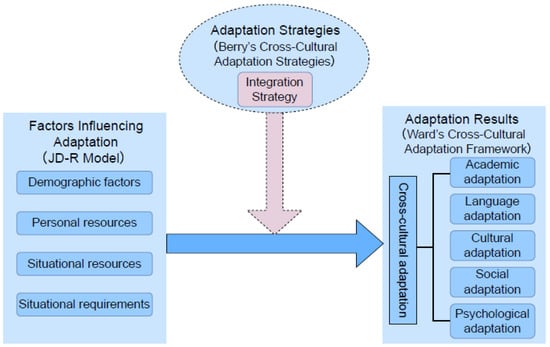
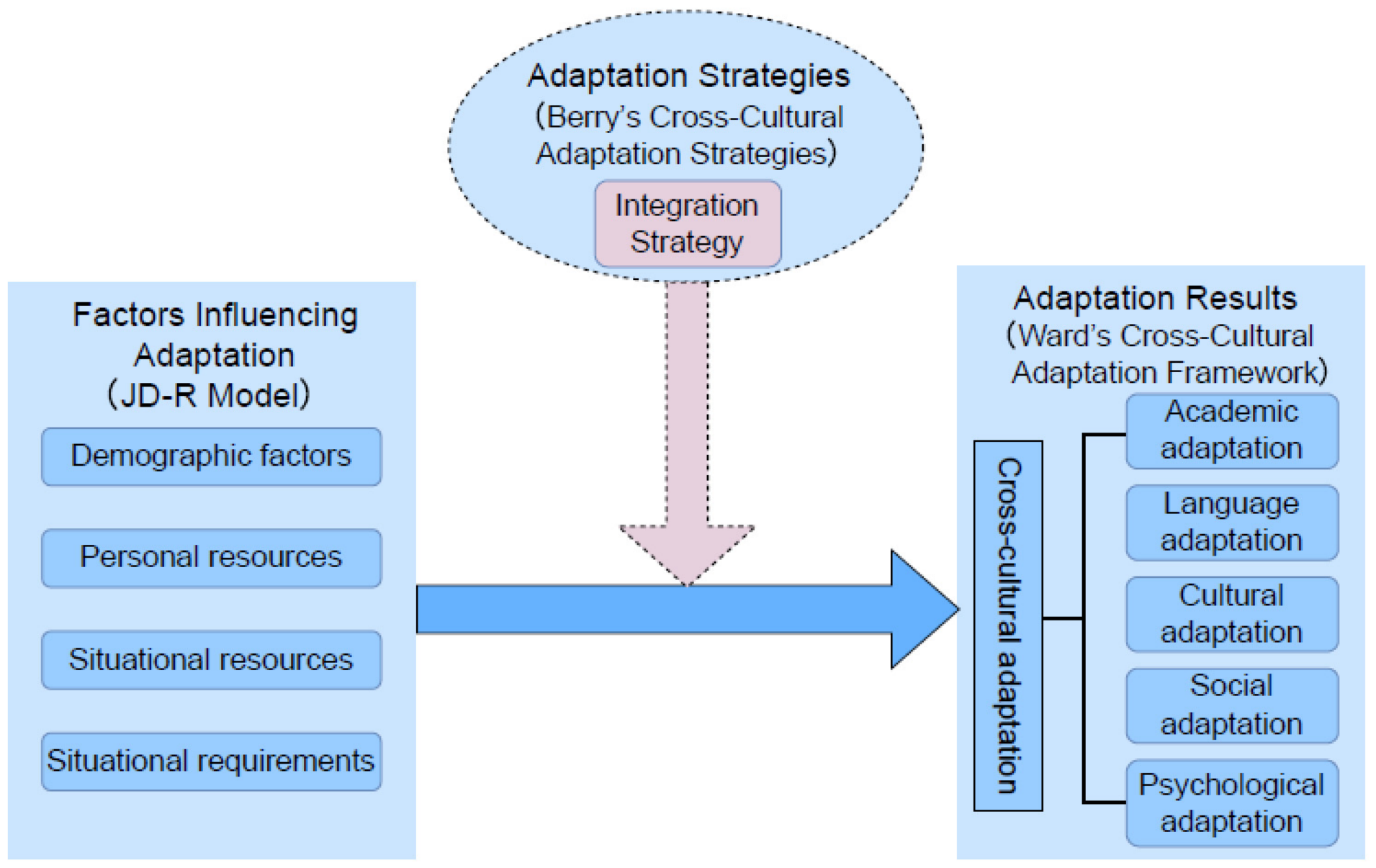
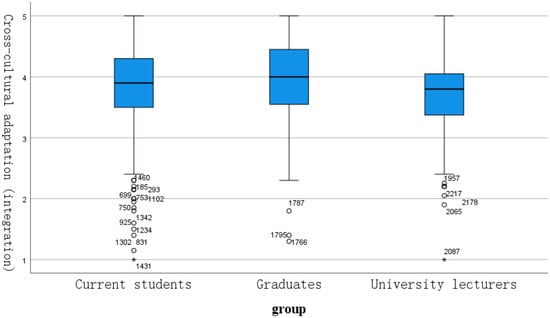
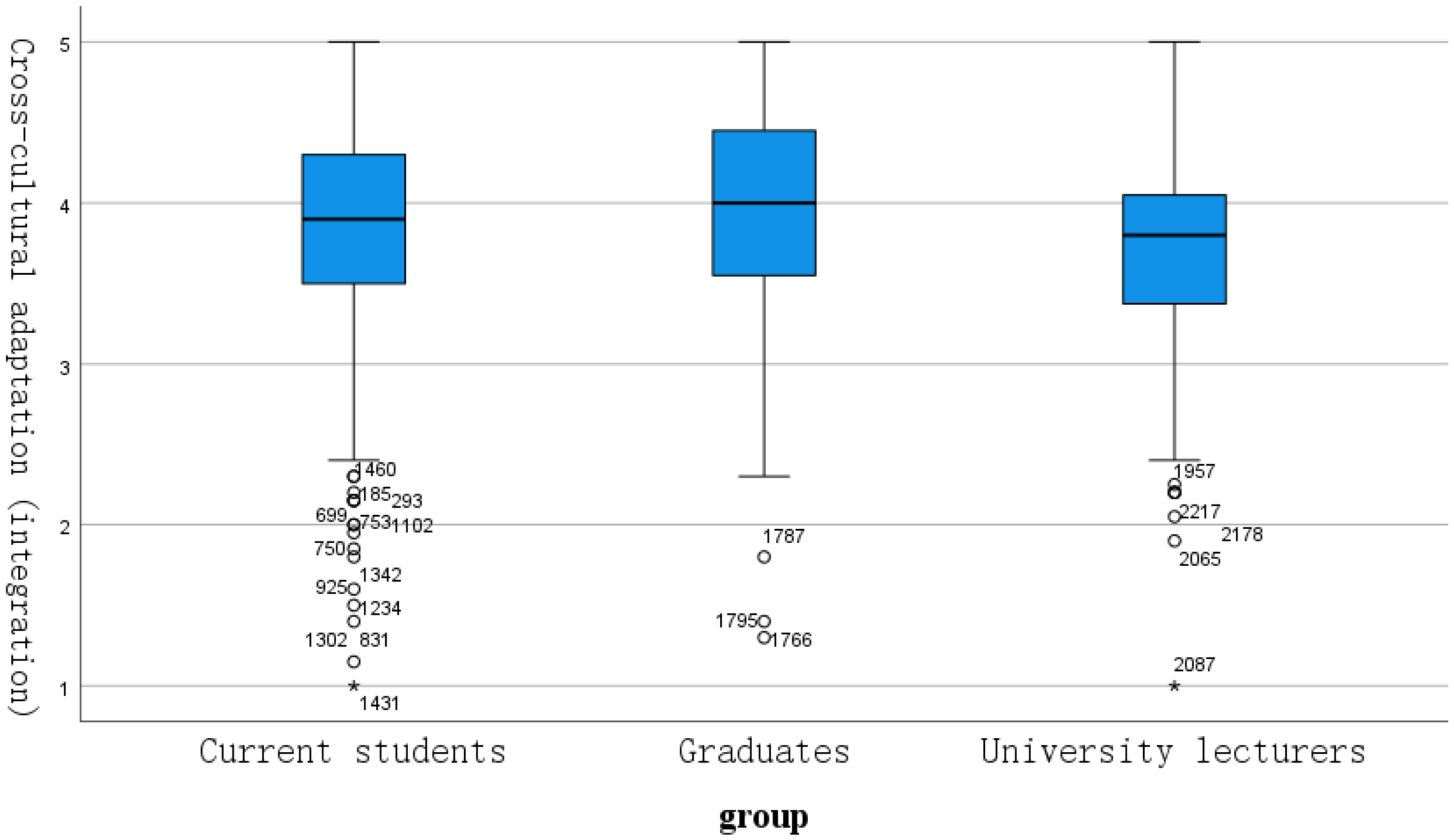
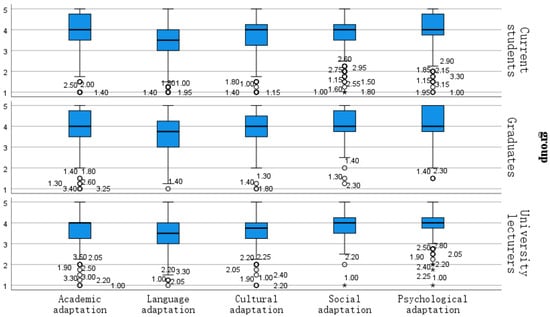
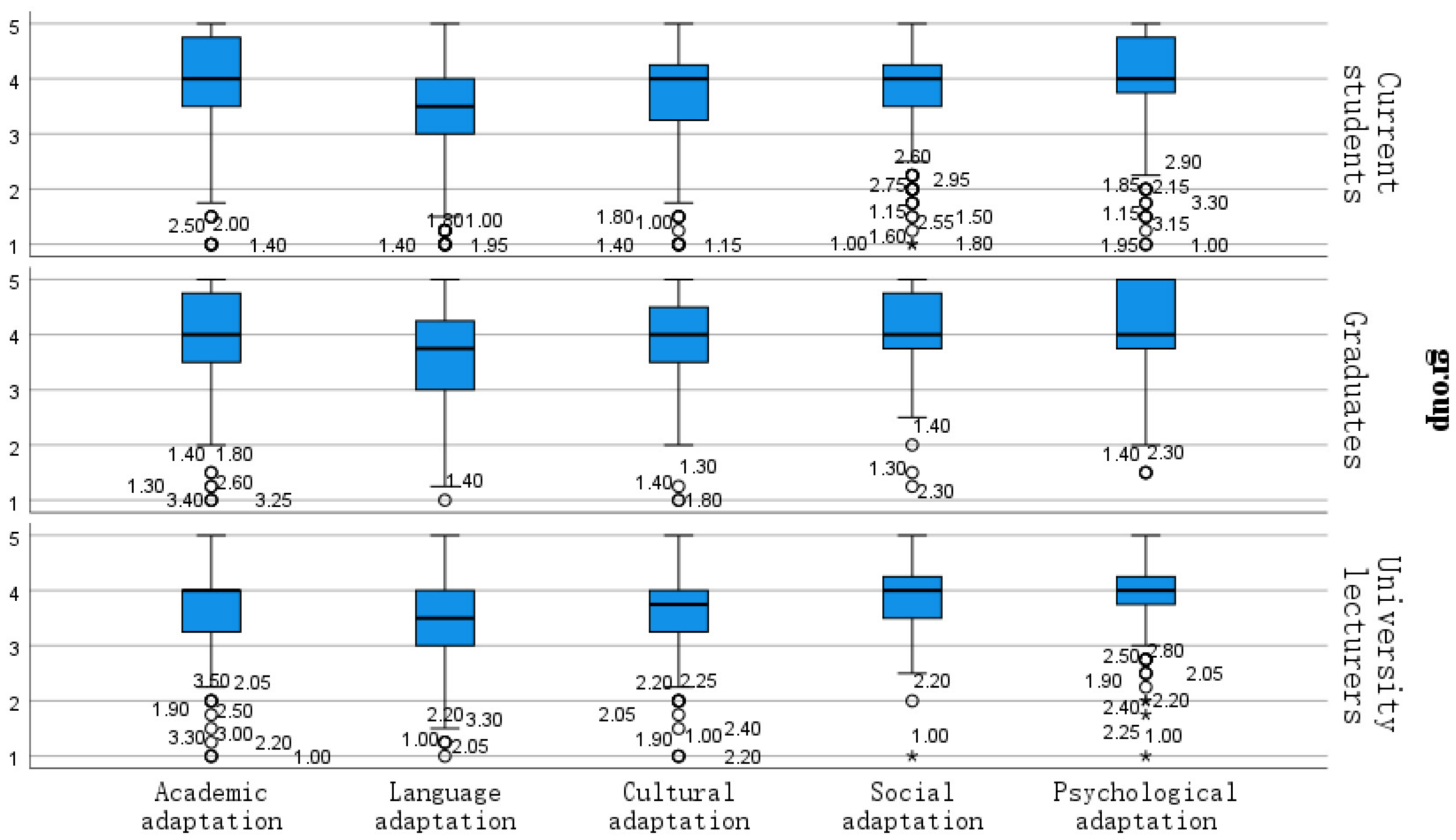

Disclaimer/Publisher’s Note: The statements, opinions and data contained in all publications are solely those of the individual author(s) and contributor(s) and not of MDPI and/or the editor(s). MDPI and/or the editor(s) disclaim responsibility for any injury to people or property resulting from any ideas, methods, instructions or products referred to in the content. |
© 2026 by the authors. Licensee MDPI, Basel, Switzerland. This article is an open access article distributed under the terms and conditions of the Creative Commons Attribution (CC BY) license.