


Abstract
Agricultural specialized villages (ASVs) are important organizational and spatial units for promoting agricultural sustainability in ecologically fragile areas. However, the process through which green practices evolve from individual farm households to village-wide transformation and then extend across village boundaries remains insufficiently understood. Taking Ledu District, Qinghai, China, as a case study, this study drew on historical records, statistical data, policy documents, and field surveys and employed process tracing to examine the stages, mechanisms, and pathways of cluster-based (pianqu) development. The findings identify four stages: farm household green practices, overall transformation of specialized villages, cross-village linkage, and cluster-based promotion. Five dimensions jointly shape this process: resource endowment provides foundational conditions; institutional arrangements play a decisive organizational role; technological innovation supports changes in production modes; market mechanisms provide sustained incentives; and spatial coordination enables cross-village expansion. Distinct resource conditions are associated with differentiated transformation pathways in river-valley and mountain areas. Seedling bases, agricultural parks, cooperative organizations, and market networks serve as nodes linking multiple villages through shared services, standards, and production–marketing relations. The findings offer a process-based framework for understanding ASV green transformation and provide practical implications for promoting coordinated green development in ecologically fragile regions.
1. Introduction
Ecologically fragile areas represent a type of region in which the conflict between agricultural production activities and the ecological environment is particularly concentrated. Arid, semi-arid and plateau transitional zones, in particular, are typically characterized by strong constraints on water and land resources, high sensitivity of ecosystems to climate change and human activities, and limited recovery capacity once disturbed [1,2]. Although agricultural intensification helps to improve land productivity and the supply capacity of agricultural products, the high-intensity input of chemical fertilizers, pesticides, water and land resources may also lead to soil degradation, nutrient loss, biodiversity decline and other ecological and environmental problems, thereby intensifying the conflict among agricultural output growth, farmers’ income growth and ecological conservation [3,4]. At the same time, agriculture remains an important foundation for farmers’ employment, income generation and rural industrial development in many ecologically fragile areas. Consequently, agricultural development in these areas can neither rely simply on reducing agricultural production to achieve ecological protection nor continue to follow a development mode characterized by high resource input and scale expansion. How to reconcile agricultural production, farmers’ income growth and ecological conservation under resource and environmental constraints and how to promote the transformation of traditional agriculture toward a resource-saving, environmentally friendly, high-quality and efficient green development mode therefore constitute important theoretical and practical questions for the sustainable development of agriculture in ecologically fragile areas. Furthermore, agricultural non-point source pollution, water resource utilization and ecological conservation exhibit pronounced spatial externalities, and green actions undertaken by individual farm households or single villages are often insufficient to generate stable regional ecological benefits. Accordingly, how to enable dispersed green practices to break through the boundaries of individual households and village territories and to achieve a scalar shift from point-based transformation to coordinated, cluster-based green development, equally warrants in-depth investigation.
Since 2012, the guiding philosophy and policy objectives of agricultural development in China have gradually shifted from the sole pursuit of output growth toward equal emphasis on quantity, quality and ecological benefits. The 2017 Opinions on Innovating Institutional Mechanisms to Promote Green Agricultural Development explicitly proposed taking resource and environmental carrying capacity as the benchmark and promoting the transformation of agricultural development modes through spatial optimization, resource conservation, environmental friendliness, and innovation in institutional, technological and market mechanisms [5]. The National Plan for Agricultural Green Development during the 14th Five-Year Plan Period further established the comprehensive green transformation of agriculture as a key objective, emphasizing the coordination of multiple actors including government, market and society, as well as the agglomeration of resource elements such as capital, talent and technology [6]. In 2026, the CPC Central Committee and the State Council issued the Opinions on Anchoring Agricultural and Rural Modernization and Solidly Advancing Comprehensive Rural Revitalization, which proposed to advance rural revitalization in a classified, orderly and cluster-based (pianqu) manner [7], providing a policy context for cross-village resource integration and regional coordination. Here, a pianqu refers to a group of neighboring or functionally connected villages that are coordinated through shared industries, services, infrastructure, and market linkages, rather than a formal administrative level (see Section 2.2). These policies set out requirements with respect to green development objectives, multi-actor coordination and the organizational modes of rural construction, thereby establishing the institutional context for agricultural green transformation. For regions subject to stronger ecological and environmental constraints, identifying effective organizational carriers capable of mobilizing dispersed farm households for green transformation and further translating isolated green practices into cross-village linkage and cluster-based action have become a key questions that agricultural green transformation must address.
Agricultural specialized villages (ASVs) constitute an important type of specialized village [8]. They refer to village-level industrial organization units dominated by the cultivation or breeding of characteristic agricultural products, in which a large number of farm households participate in specialized production, and relatively stable production divisions of labor, technology diffusion and market linkages have been formed [9]. Compared with highly dispersed smallholders, business entities within ASVs are geographically proximate, their leading products are relatively homogeneous, and their technological demands are similar; moreover, they possess foundations of specialized division of labor, organizational cooperation and market linkage. These features facilitate the diffusion of green technologies, the unification of production standards, quality certification, socialized services and resource sharing and reduce the organizational and coordination costs of green transformation for dispersed farm households. Based on these characteristics, ASVs provide an important research carrier for revealing the process through which green transformation extends from individual farm households to the specialized village as a whole and further breaks through village boundaries to diffuse into neighboring villages and develop in a cluster-based manner.
International research on agricultural green transformation displays an evolutionary trend from farm-scale technological improvement toward landscape-scale collaborative governance. Early studies mainly focused on the adoption and diffusion of precision agriculture technologies at the farm scale [10,11,12], the impacts of agri-environmental measures on farm environmental and economic performance [13], and results-based payment mechanisms grounded in environmental performance [14]. However, agri-environmental objectives such as biodiversity conservation, soil and water resource management and climate mitigation exhibit pronounced spatial externalities, and the dispersed implementation of green measures on individual farms is often unable to generate continuous and coordinated regional ecological effects [15,16,17]. Consequently, related research and policy practice have increasingly emphasized promoting the contiguous implementation of green measures and landscape-scale governance through spatial coordination and multi-actor cooperation [18,19] and have relied on actors such as farmer collectives, cooperative organizations and local facilitators to advance the effective implementation of collaborative governance [20,21]. Domestic research on ASVs has mainly concentrated on three aspects. The first concerns industrial organization and transformation and upgrading, centering on the cultivation of characteristic industries and “one village, one product” development [22], industrial agglomeration and transformation and upgrading [23], and cooperative organizations and organizational innovation [24], which have revealed the important role of industrial foundations and organized development in the transformation of specialized villages. The second concerns urban–rural interaction and factor flows, focusing on the influence of the flows of capital, technology, labor and market factors on the development of specialized villages [25,26,27] and further discussing the role of digital technologies, e-commerce participation and other emerging business forms in shaping urban–rural market linkages and the transformation of green production modes [28,29,30]. The third concerns transformation pathways under ecological constraints, examining the coordinated relationship between agricultural development and ecological conservation from the perspective of green and sustainable development in ecologically fragile areas [31,32]. With specific regard to the green transformation of ASVs, existing studies have also revealed the evolutionary characteristics and formation mechanisms of green ASVs in the Yellow River Basin from the perspectives of spatial distribution, spatiotemporal evolution and influencing factors [33]. Overall, existing research on agricultural green transformation and specialized village development has accumulated relatively rich insights, yet process-oriented research linking the two remains insufficient. In particular, few studies have traced how green practices scale up from farm households to village-wide transformation and then extend beyond village boundaries through demonstration and diffusion, technology sharing, organizational cooperation, and market linkage or how resource endowment, institutional arrangements, technological innovation, market mechanisms, and spatial coordination interact in this process under ecological constraints. Accordingly, this study addresses the following core question: How does the green transformation of ASVs evolve from individual farm household practices to the overall transformation of specialized villages and further to cross-village linkage and cluster-based development? To address this question, this study selected Ledu District, Qinghai Province, China, as a case study. Located in an ecologically fragile area in the upper reaches of the Yellow River, Ledu District features a relatively concentrated distribution of ASVs and a diverse range of characteristic industries and is therefore an information-rich case for examining the green transformation of ASVs under ecological constraints. Drawing on field investigation, interviews, policy documents and statistical data, this study constructed a five-dimensional analytical framework of “resource endowment—institutional arrangements—technological innovation—market mechanisms—spatial coordination”. On this basis, the study had three objectives: (1) to identify the stages through which green transformation evolves from individual farm household practices to the overall transformation of specialized villages, cross-village linkage, and cluster-based promotion; (2) to explain how the five dimensions jointly shape this process; and (3) to propose pathways for promoting cluster-based green development in ecologically fragile areas. The study contributes to the literature by linking farm-household, specialized-village, and cluster scales in a process-oriented account, integrating the five dimensions within an analytical framework in which their interaction is conditional rather than automatic and identifying cross-village linkage as the critical intermediate stage through which village-level green transformation extends toward cluster-based development, thereby connecting ASV research with international work on landscape-scale agri-environmental coordination.
2. Theoretical Analysis of the Green Transformation of Agricultural Specialized Villages
2.1. Connotations of Agricultural Specialized Villages and Their Green Transformation
The national “one village, one product” statistical survey classifies specialized villages into three types: agricultural product production-oriented, agriculture-related service-oriented, and non-agricultural industry-oriented [33]. This study focuses on production-oriented specialized villages, collectively termed “agricultural specialized villages” (ASVs), whose core characteristic lies in the formation of specialized production centered on leading agricultural products, together with corresponding technological, organizational, and market linkages.
Agricultural green development aims to improve resource use efficiency, reduce environmental loads, and enhance the quality of agricultural products [34,35]. This study defines the green transformation of ASVs as a dynamic process in which, under resource and environmental constraints and the requirements of green development, specialized agricultural production is transformed toward resource conservation, environmental friendliness, quality improvement, and organizational coordination through the adjustment of production modes, the upgrading of quality standards, and the optimization of organizational arrangements. This understanding is broadly consistent with the literature on the ecologization of agriculture and agroecological transitions, which views such change as multidimensional and multiscale rather than as a change in production inputs alone [36,37]. In the present study, this perspective is applied with additional attention to organizational coordination and market linkages. For the empirical analysis, green transformation is operationalized through the following three observable dimensions. First, the greening of production modes promotes the transformation of production practices through input reduction, water-saving irrigation, green pest prevention and control, and the resource utilization of agricultural waste. Second, the upgrading of quality standards improves the level of production standardization through standardized production, quality supervision, and certifications such as green food and organic agricultural products. Third, the coordination of organizational arrangements relies on farmers’ professional cooperatives (hereafter “cooperatives”), village collectives, and leading agribusiness enterprises to promote organizational coordination in technical services, production standards, and market linkages. It should be noted that quality certification serves as an important operational criterion for identifying green specialized villages in this study, whereas the broader green transformation process is assessed through observable changes in production modes, quality standards, organizational arrangements, and market linkages.
Compared with highly dispersed smallholders, ASVs provide favorable conditions for green transformation by drawing on their specialized production foundations and organizational linkages, which is reflected in four main aspects. First, they facilitate the demonstration and diffusion of green technologies. Farm households within a village have similar production conditions and technological demands, so the green practices of pioneering households are more readily diffused to other households through observational learning and the exchange of experience [9,38]. Second, they realize the scale effects of specialized production. The agglomeration of leading industries provides an industrial foundation for the concentrated promotion of green technologies, production standards, and quality control measures [23]. Third, they strengthen the capacity for collective action. By coordinating technical services, production standards, and market sales, cooperatives, village collectives, and leading agribusiness enterprises gradually transform the green production behaviors of dispersed farm households into coordinated village-level action [24,39]. Fourth, they facilitate the realization of green value. Existing sales channels and brand foundations help to enhance the market recognition of green products, thereby providing economic incentives for sustained transformation [26,30]. These advantages, however, do not imply that a higher degree of specialization necessarily leads to greener outcomes. Excessive concentration on a single leading product may reinforce ecological pressures associated with intensive production, including biodiversity decline [3,4] while also increasing the risks of monoculture, farm household dependence on a narrow income source, exposure to price fluctuations, and reduced resilience of local food systems. These risks are particularly relevant in ecologically fragile areas. The green transformation of ASVs therefore requires balancing the organizational and scale advantages of specialization with ecological constraints, appropriate diversification, and risk management. At the cluster level, inter-village functional differentiation and crop–livestock linkages may provide one means of achieving such a balance. Therefore, ASVs constitute not only the village-level carrier through which the green production behaviors of farm households are extended in an organized manner but also an appropriate research unit for examining how green practices evolve from farm households to the transformation of the specialized village as a whole and further extend toward cross-village coordination and cluster-based promotion.
2.2. A Multi-Level Evolutionary Framework for the Green Transformation of ASVs
The green transformation of ASVs is not a production-mode adjustment by a single actor but evolves from the practices of individual farm households toward the transformation of the specialized village as a whole and cluster-based promotion, accompanied by an increase in participating actors, strengthened organizational linkages, and an expanded scope of influence. Existing research has shown that the spatial organization of specialized villages may evolve from relatively discrete production units toward diversified and networked forms [40]. Accordingly, this study constructs a multi-level evolutionary framework encompassing three spatial scales—farm household, specialized village, and cluster (pianqu)—and divides the green transformation of ASVs into four stages: farm household green practices, overall transformation of the specialized village, cross-village linkage, and cluster-based promotion (Figure 1). These stages represent an analytical evolutionary pathway rather than a strictly progressive sequence: stages may overlap, and villages may stagnate, readjust, or partially regress under changing ecological, market, and organizational conditions. In this framework, the greening of production practices, quality standards, and resource use constitutes the substantive content of transformation, whereas organizational coordination, industrial linkage, and facility sharing serve as the means through which these green practices are sustained and extended across villages.
Figure 1.
Multi-level evolutionary framework for the green transformation and cluster-based (pianqu) promotion of agricultural specialized villages. Arrows indicate the progression across the four stages of green transformation and cluster-based (pianqu) promotion, as well as the links between the main actors and core transformation content within each stage.
First, farm household green practices constitute the micro-level starting point of the green transformation of ASVs. Farm households are the direct agents of agricultural production decisions and green technology adoption. Households within a specialized village engage in production centered on identical or closely related leading industries, and their production conditions and technological demands are similar. Pioneering actors such as science and technology demonstration households, large-scale growers, and family farms are the first to adopt measures including input reduction, water-saving irrigation, and green pest prevention and control and then diffuse them to surrounding households through observable production outcomes and the exchange of experience [9,30].
Second, the overall transformation of the specialized village is the key stage in which green practices shift from individual behavior toward organized and standardized production at the village level. As green practices diffuse within the village, voluntary imitation among farm households alone is insufficient to maintain consistency in production standards, product quality, and technology application. Through the unification of technical services, production standards, quality control, and market connection, actors such as cooperatives, village collectives, and leading agribusiness enterprises incorporate dispersed farm households into a relatively stable production organization system [24,39], thereby transforming individual green practices into collective action at the level of the specialized village.
Third, cross-village linkage is the key transitional stage in which green transformation breaks through village boundaries and moves toward cluster-based promotion. As the production scale of specialized villages expands and industrial linkages are strengthened, green technologies, production standards, and organizational services begin to extend beyond the boundaries of a single village. Drawing on seedling supply, agricultural technology services, linkages among cooperative organizations, and contract-based collaboration, green practices gradually spread to neighboring villages, and cross-village connections expand from technology transmission into the coordinated extension of technologies, services, standards, and market relations.
Fourth, cluster-based promotion represents the process through which cluster-based development is advanced and constitutes the deepening stage in which multiple villages form functional linkages and collaborative relations. Once neighboring villages have established relatively stable production linkages around shared or related industries, actors such as governments, industrial parks, and production bases are required to incorporate multiple villages into a common collaborative network through integrated planning, infrastructure sharing, industrial division of labor, and market connection. Relevant research has indicated that spatial coordination and multi-actor cooperation help to alleviate the insufficient coordination arising from the dispersed implementation of agri-environmental measures [18,21]. The term “cluster-based (pianqu)” as used in this study does not refer to simple geographical contiguity but to the formation of relatively stable functional linkages and collaborative relations among multiple villages in terms of industry, technology, infrastructure, and markets.
In summary, the green transformation of ASVs is manifested as a scalar shift from individual practices to collective action at the village level and further to cross-village linkage and cluster-based promotion. Its essence lies in the expansion of participating actors, the strengthening of organizational coordination, the deepening of transformation content, and the broadening of the scope of influence.
2.3. A Five-Dimensional Collaborative Mechanism for the Green Transformation of ASVs
The green transformation of ASVs is jointly shaped by multiple dimensions, including resource endowment, institutional arrangements, technological innovation, market mechanisms, and spatial coordination. Among them, resource endowment provides the foundational conditions, institutional arrangements provide organizational conditions for coordination, technological innovation drives the transformation of production modes, market mechanisms generate sustained incentives, and spatial coordination promotes the cross-village extension of green practices. These five dimensions are interrelated and jointly constitute the analytical framework for the green transformation of ASVs (Figure 2).
Figure 2.
Five-dimensional analytical framework for the green transformation and cluster-based (pianqu) promotion of agricultural specialized villages. Arrows indicate the progression across the four stages of green transformation and cluster-based (pianqu) promotion, while horizontal arrows indicate the links between the main actors and core transformation content within each stage.
Resource endowment constitutes the foundational condition for the green transformation of ASVs. Natural resources, ecological environments, and agricultural production conditions influence the development of characteristic industries and the suitability of green production modes. Differences in water and land resources, climatic conditions, and industrial foundations across regions give green technology choices and directions of industrial transformation a pronounced regional adaptability. Meanwhile, the experience and industrial foundations accumulated through long-term specialized production provide conditions for green technology diffusion, standardized production, and organizational collaboration; yet resource endowment does not automatically translate into green development advantages and still requires the joint action of other factors.
Institutional arrangements provide the rules and organizational conditions through which the green transformation of ASVs is coordinated. Institutional theory emphasizes that actors’ behavior is shaped by both formal and informal institutions [41,42], while collective-action theory highlights how shared rules, trust, and organizational coordination can reduce free-riding and coordination costs among dispersed actors [16,43]. Formal institutions such as green agricultural policies, ecological and environmental regulations, production standards, and quality certification promote green production through rule-based constraints and normative guidance [44,45], while public investment and industrial support reduce transformation costs. Informal institutions and socially embedded factors such as village norms, inter-actor trust, and local leadership shape the transmission of experience and the coordination of behavior. These arrangements are implemented through organizational carriers, including cooperatives, village collectives, leading agribusiness enterprises, and agricultural extension agencies, which coordinate technical services, production standards, quality control, and market linkages [24,39]. In ecologically fragile areas, strong ecological constraints and the high coordination and investment requirements of green transformation can increase the importance of institutional support in mobilizing resources, technologies, and market incentives. The field evidence presented in Section 5.2 further shows that, in Ledu District, institutional arrangements play a decisive organizational role in this process. Through the interaction of formal rules, informal norms, and organizational carriers, dispersed farm household practices can be transformed into coordinated collective action.
Technological innovation is the key force driving the transformation of green production modes. Technologies such as improved variety breeding, precision fertilization, water-saving irrigation, green pest prevention and control, and resource recycling provide the technological conditions for reducing resource consumption and optimizing production processes. Technology application depends not only on the suitability of the technology itself but also on farm household cognition, environmental awareness, training, and service conditions. Existing research has shown that the cognition and technology perception of business entities influence the adoption of sustainable production technologies, and that technical training helps to promote the application of low-carbon agricultural technologies [46,47]. Within ASVs, green technologies can be gradually translated into replicable production modes through demonstration and extension, technical services, and standardized production.
Market mechanisms provide important momentum for the sustained advancement of green transformation. Green production requires stable market incentives generated through quality identification and value realization. Quality certification, brand building, and quality traceability help to enhance the market recognition of products, while contract farming and production-marketing linkage stabilize transaction relations and reduce market risks. Existing research has found that geographical indications of agricultural products and enterprise brands generate price premiums and exhibit synergistic effects [48]. Market mechanisms therefore strengthen the motivation of business entities to sustain green production modes through quality improvement, market recognition, and income feedback.
Spatial coordination is an important mechanism through which green transformation breaks through village boundaries and advances toward cluster-based promotion. Geographical proximity and industrial linkages provide conditions for the diffusion of green technologies and the sharing of services. Spatial nodes such as seedling nurseries, improved variety breeding bases, and agricultural industrial parks connect different villages through infrastructure sharing and service provision, while business entities such as leading agribusiness enterprises promote cross-village collaboration through production organization and market linkage. Existing research has shown that shared services within industrial agglomerations [23] and spatial coordination and multi-actor cooperation in agri-environmental governance [18,21] help address coordination problems. Spatial coordination therefore provides the organizational foundation for the cluster-based promotion of green transformation through technology diffusion, node-driven effects, and inter-village collaboration.
In summary, the five dimensions form a chain of effects running from resource foundation to institutional organization, technological empowerment, market incentive, and spatial coordination. Institutional arrangements provide conditions for technology application and market linkage through rule-based constraints, resource allocation, and organizational coordination. Technological progress and market feedback mutually reinforce each other, while spatial coordination further expands the scope of application of green technologies and production services. Through their interaction, the five dimensions drive the green transformation of ASVs to deepen from individual practices toward collective action at the village level and cluster-based promotion. Social factors are not treated as a separate sixth dimension in this framework; rather, they are embedded in and condition the operation and interaction of the five dimensions. Social capital, inter-actor trust, and local leadership may influence institutional coordination and collective action; farmers’ attitudes, environmental awareness, and technology perceptions may shape the adoption and persistence of green practices; and divergent interests among farm households, cooperatives, enterprises, and governments may facilitate or constrain market coordination and cross-village collaboration. Accordingly, the five-dimensional mechanism should be understood as socially embedded rather than as a set of purely structural drivers.
3. Case Study Area, Data and Methods
3.1. Selection of the Case Study Area
Ledu District, formerly Ledu County, is administered by Haidong City, Qinghai Province. It is located in northeastern Qinghai Province, in the middle and lower reaches of the Huangshui River, and lies in the transitional zone between the Qinghai–Tibet Plateau and the Loess Plateau. The district covers a total area of 3050 km2, with elevations ranging from 1850 to 4484 m. Influenced by topography, elevation, and hydrothermal conditions, Ledu District has formed internally differentiated agricultural production zones, including the river valley zone, shallow mountain zone, deep mountain zone, and rocky mountain-forest zone, and exhibits typical characteristics of a high-altitude arid ecologically fragile area (Figure 3). The Huangshui River Valley is relatively flat and has favorable light and irrigation conditions, making it the main area for the concentrated development of characteristic crop cultivation. The northern and southern mountain areas are dominated by rainfed agriculture, potato seed breeding, forage cultivation, and characteristic livestock farming.
Figure 3.
Location of the study area in Ledu District, Haidong City, Qinghai Province, China (ArcGIS Desktop 10.2; Esri, Redlands, CA, USA).
Ledu District was purposively selected as an information-rich explanatory case, with specialized villages as embedded units of analysis, based on three criteria. First, its ecological environment is highly relevant to the research question. Constraints related to water and land resources, topographic conditions, and ecological carrying capacity reflect the real-world context faced by agricultural green transformation in ecologically fragile areas. Second, its foundation for agricultural specialization is prominent. Ledu District has long developed an agricultural industrial system dominated by characteristic crop cultivation and animal husbandry. From 2008 to 2017, the average annual number of specialized villages reached 141, significantly higher than the contemporaneous average of 8.1 among the 132 county-level units in the upper reaches of the Yellow River. Third, agricultural specialized villages in Ledu District have shown clear stage-based changes in green technology application, standardized production, organized management, and cross-village collaboration. Through multiple rounds of field surveys and follow-up visits, the research team has been able to continuously track their transformation process.
Compared with ASV cases commonly examined in China, such as those in typical agricultural areas of Henan Province [26,27,40] and Guangdong Province [25], where previous studies have focused primarily on market linkages, factor flows, labor mobility, and the spatial transformation of specialized villages, Ledu represents a different research context. Its specialization has developed under high-altitude ecological fragility and pronounced vertical differentiation, so green transformation is strongly constrained by water, land, and ecological carrying capacity and must be adapted to differentiated river-valley and mountain environments. Ledu is therefore not intended to be statistically representative of all Chinese ASVs but provides an information-rich case for examining ASV green transformation under ecological constraints.
The number of agricultural specialized villages in Ledu District increased from 7 in 1990 to 182 in 2010, before declining to 106 in 2024. Field investigation and departmental materials indicate that this decline was associated mainly with urban expansion and environmental regulation, which reduced or restructured production space for some specialized villages. Unlike the overall trajectory of specialized villages, which first increased and then decreased, the number of green specialized villages increased from 11 in 2008 to 38 in 2024. Their share of total specialized villages rose from 6.96% to 35.85%, and their spatial coverage gradually expanded from a small number of townships in the early period to 11 townships. The growth in the number of green specialized villages and the expansion of their spatial coverage provide a case basis for analyzing how green production practices evolve from individual farm households to the overall transformation of specialized villages, and further toward cross-village linkage and cluster-based promotion.
3.2. Research Design and Process Tracing
This study employs an explanatory single-case design and process tracing to identify the mechanisms underlying the green transformation of ASVs. The procedure involved three steps. First, evidence from statistical records, policy documents, departmental materials, field surveys, and interviews was organized chronologically around key events to reconstruct the four-stage sequence of farm household green practices, overall transformation of specialized villages, cross-village linkage, and cluster-based promotion. Second, causal-process observations were identified from temporally ordered changes in green technology application, production standards, organizational participation, quality certification, market linkages, and cross-village diffusion and were related to the five analytical dimensions. Third, the proposed mechanism linkages were assessed through temporal sequencing and cross-validation across different source types. This procedure was intended to identify plausible causal mechanisms within the case rather than to estimate statistical causal effects.
3.3. Data Sources
The data used in this study were mainly drawn from the national “one village, one product” statistical survey, field surveys, materials from agricultural and rural affairs departments, and policy documents. For specialized village data, information for 1990 and 2000 was retrospectively compiled based on interviews; data for 2008–2017 were mainly obtained from the national “one village, one product” statistical survey; and data for 2024 were supplemented and updated using departmental materials and village-level surveys. The names, types, leading products, spatial locations, and geographic coordinates of specialized villages were standardized and verified to construct the 1990–2024 spatial database of ASVs in Ledu District. Green specialized villages were identified mainly according to certification information for pollution-free agricultural products, green food, and organic agricultural products. After 2017, identification was further verified in combination with commitment-based compliance certificates and departmental materials. Because the identification criteria shifted after 2017, comparisons of green specialized villages before and after 2017 should be interpreted with caution. The identification and interpretation of the green transformation process drew on observable changes in production technologies, resource recycling, business organization, and market linkages, based on statistical records, departmental materials, field surveys, and interview evidence. Policy documents were used to reconstruct institutional changes and policy interventions rather than to measure transformation effectiveness, while district-level information reporting zero growth in chemical fertilizer and pesticide use for four consecutive years [49] was used only as supplementary descriptive evidence because continuous village-level data were not consistently available. These sources were used for process identification and cross-validation rather than for constructing a composite green-transformation index.
The research team conducted three rounds of field surveys in 2017, 2024, and 2026. The 2017 survey covered the Ledu District Agriculture and Animal Husbandry Bureau, the Vegetable Technology Extension Center, all ten townships, and 105 specialized villages. The 2024 follow-up survey covered the Ledu District Agriculture and Rural Affairs Bureau and all ten townships and included interviews or telephone follow-ups with the heads of 45 specialized villages. In July 2026, supplementary interviews and telephone follow-ups were conducted with agricultural and rural affairs departments, relevant townships, and the heads of 38 green specialized villages. Cross-validation was performed using statistical records, departmental documents, policy materials, and publicly available information to verify village names, leading industries, green certification status, organizational forms, market linkages, and spatial changes.
4. Green Transformation Process of Agricultural Specialized Villages in Ledu District
4.1. Standard-Driven Green Transformation and Diffusion of Farm Household Production
At the farm household level, the green transformation of agricultural specialized villages in Ledu District was first manifested in changes in production modes. However, this change was not initiated entirely spontaneously by farm households. Rather, under the guidance of pollution-free production standards, agricultural technology extension, and demonstration projects, pioneering households took the lead in practice, and these practices gradually diffused to ordinary farm households.
In 2003, the Standardization Administration of China approved the project entitled “Ledu County Pollution-Free Protected Long Pepper Production Standardization Demonstration Zone”, which was organized and implemented by the Ledu County Vegetable Technology Extension Center to promote pollution-free and standardized production of Ledu long pepper. In March 2005, Ledu long pepper obtained the pollution-free agricultural product certification issued by the Agricultural Product Quality Safety Center of the Ministry of Agriculture, marking the entry of local characteristic agriculture into a stage of institutionalized and standardized green production [50]. The demonstration project was promoted in Yingsheng, Gaodian, Yurun, and other township-level areas. Among them, Xueqing Village in former Yingsheng Township, which was incorporated into Shoule Town after the 2012 administrative adjustment, was one of the earlier village-level demonstration bases for pollution-free long pepper production. The project eventually formed a demonstration area of 50 ha, covered 1015 farm households, and incorporated requirements for variety selection, protected cultivation, input use, and production management into farm household production through technical regulations for pollution-free protected long pepper production [51]. During the same period, green production practices gradually expanded to other characteristic agricultural products. Around 2005, Ledu District successively formulated local standards covering Ledu purple-skinned garlic, its seed garlic production, and its pollution-free cultivation (DB63/T 502-2005 [52], DB63/T 527-2005 [53], and DB63/T 538-2005 [54]); in 2008, Zhongling Township had already formed a pollution-free potato seed base [55]. Thus, early green production practices began to expand from a single long pepper demonstration to multiple characteristic agricultural products and different areas.
On the basis of early standardization and pollution-free production practices, green production gradually diffused from a small number of households to other households within villages. Wangfosi Village in Shoule Town is a typical case of this process. In 2010–2011, under the policy guidance of “bringing vegetables into gullies and up mountains,” some households in Wangfosi Village began to build arched plastic greenhouses for long pepper cultivation, with the first 225 greenhouses completed in 2010 and an additional 282 built in 2011. Pioneering households gradually opened up the market through trial planting, variety improvement, and contacts with external purchasers. As the planting scale expanded and sales channels became more stable, an increasing number of households participated in protected vegetable production [56]. In 2012, Wangfosi Village established a standardized long pepper planting demonstration area, and pollution-free production requirements were further integrated into daily production. By 2014, the village had 623 arched plastic greenhouses, and more than 120 households were engaged in long pepper production, accounting for 93% of all households in the village [57]. From the early demonstration in Xueqing Village to the scaled expansion in Wangfosi Village, green production was gradually transformed from a demonstration project into a production mode jointly adopted by more farm households.
As green production practices diffused from a small number of households within specialized villages, the green production technologies adopted by farm households also gradually expanded from early protected cultivation and pollution-free production requirements toward standardization, resource conservation, and precision. Technologies such as unified seedling cultivation, soil testing and formula fertilization, green pest prevention and control, and water-fertilizer integration were gradually introduced into specialized production. In recent years, digital technologies have begun to enter the agricultural production process. In 2025, Ledu District first promoted the Beidou navigation unmanned driving system in high-yield and high-efficiency bases covering approximately 700 ha in 11 townships, enabling precise control of operations such as fertilization and ridging [58,59]; the seedling base in Jiangwan Village, Hongshui Town, introduced automatic seeders and intelligent temperature-control systems, constructing a “factory-based, order-driven” seedling cultivation system and promoting the standardization and precision of the seedling stage; during the same period, the district achieved zero growth in chemical fertilizers and pesticides for four consecutive years [49]. Thus, farm household green production modes gradually evolved from early pollution-free and protected production toward standardization, resource conservation, and precision.
4.2. Overall Green Transformation of Specialized Villages Under Village-Level Co-Governance
As green production modes diffused among farm households, the green transformation of agricultural specialized villages gradually advanced from individual practices to the village as a whole. The green production modes of dispersed households began to be incorporated into unified production standards, technical regulations, and quality requirements, and common production norms gradually took shape within villages. In November 2012, Ledu long pepper was included in the second batch of national “one village, one product” demonstration villages and towns [60], further consolidating the foundation for the specialized development of Wangfosi Village’s characteristic industry. Specialized village production shifted from farm households’ participation in the same industry to coordinated management of variety selection, facility conditions, production standards, and quality safety, thereby promoting the transformation of specialized production toward standardization and green development.
With the expansion of production scale, cooperatives, village collectives, and agricultural technology extension agencies gradually became involved in unified seedling cultivation, technical training, production services, input management, and market connection, guiding dispersed farm households to produce according to shared production requirements. In the development of Ledu’s characteristic agriculture, various organizational forms emerged, such as “Party branch + cooperative + farm households” and “Party branch + enterprise + cooperative + farm households,” while approaches such as the integration of villages and cooperatives and Party member demonstrations strengthened production linkages among farm households [61,62]. The Party committee and government of Dala Tu Ethnic Township adopted the organizational form of “Party branch + cooperative + farm households” to guide the construction of a 67 ha potato planting base centered on Matang Village, incorporating green production measures such as fertilizer reduction and efficiency improvement, crop rotation, and mechanical fertilization into the unified management of cooperative organizations and the base [63].
The overall green transformation of livestock specialized villages was mainly reflected in the standardized adjustment of breeding modes and spatial layout. After 2017, Ledu District regulated breeding activities along the Huangshui River, in water-source protection areas, and in other ecologically sensitive areas through the designation and subsequent optimization of livestock and poultry breeding prohibition zones. Some livestock specialized villages gradually adjusted from river valleys and ecologically sensitive areas to suitable mountain breeding areas while simultaneously promoting the standardization of livestock production [64,65].
In recent years, the overall green transformation of specialized villages has further extended from production links to processing, sales, quality control, and other links in the industrial chain. In 2026, on the basis of an organic planting pilot for Tibetan blood wheat in Yangquan Village, Yurun Town, the village promoted improved variety breeding, standardized organic planting, processing, and sales connection under the guidance of agricultural technicians. Enterprises implemented unified seed supply, fertilizer supply, guaranteed-price purchase, and whole-chain organic standardized control and quality traceability in processing [66]. This practice shows that the green transformation of specialized villages involves not only the unification of production norms within villages, but also the gradual extension to production, processing, sales, and quality traceability, thereby providing a foundation for the expansion of relevant technologies, production services, and organizational modes to neighboring villages.
4.3. Cluster-Based Promotion of Green Transformation Through Cross-Village Linkage
After green production modes gradually stabilized within specialized villages, seedling supply, technical services, production standards, and market linkages began to break through the boundaries of single villages and extend to neighboring villages. After long pepper production in Wangfosi Village developed from trial planting by a small number of households into village-level scaled cultivation, the village gradually became an important demonstration node for protected vegetable development in Yingshenggou, driving the extension of related production practices to surrounding villages [67].
Cross-village linkage was first reflected in the expansion of the coverage of seedling supply and technical services. As centralized seedling cultivation and the agricultural socialized service system gradually improved, seedling bases began to provide seedlings and supporting services to multiple villages and townships. In 2025, the Ledu plateau green vegetable seedling base produced more than 25 million seedlings, of which more than 3 million long pepper seedlings were supplied to Shoule Town and 8 million open-field vegetable seedlings were supplied to townships such as Gaomiao, Hongshui, Qutan, and Yurun. In 2026, the vegetable industry in Shoule Town had covered 16 administrative villages, including Tuguankou and Wangfosi, and centralized seedling supply was carried out through a “factory-based, order-driven” model [68]. At the same time, neighboring villages such as Daxia and Xiakou in Gaodian Town simultaneously developed characteristic vegetables such as flowering broccoli, while the multiple-cropping area of coriander in Hongshui Town had exceeded 5600 mu, with new fine vegetable varieties such as lettuce, broccoli, and flowering stalk vegetables continuously introduced [69,70]. Thus, seedling supply and production services gradually shifted from single-village application to multi-village sharing, providing conditions for the cross-village extension of green production technologies.
As production scale expanded, different villages were gradually incorporated into common production and market networks. In the vegetable industry, business entities such as Qinghai Xingnong Industrial Co., Ltd. relied on contract bases to incorporate farm households and cooperatives from multiple townships into systems of seedling supply, production guidance, quality testing, product purchase, and cold-chain circulation [71]. Cool-climate vegetables such as Ledu long pepper and colored pepper further entered large and medium-sized domestic cities and successively achieved supply to Hong Kong and export to Russia and other external markets [58]. In the potato industry, the Lekang-Shengdao French fries processing plant incorporated dispersed farm households into unified production, processing, and sales chains through the model of “farm household production + factory purchase + enterprise sales” and measures such as guaranteed purchase and training [72]. Different villages thus established linkages through production standards, technical services, and market sales, promoting the expansion of green production from single-village practice to cross-village collaboration.
On the basis of cross-village linkage, green transformation in Ledu District further advanced toward park-based, base-based, and cluster-based promotion. In 2017, the Yingshenggou protected vegetable base in Shoule Town was approved as a green industrial park and was constructed according to the spatial layout of “one axis and four zones” [73]. With the advancement of park construction, Wangfosi and other villages were gradually incorporated into the systems of protected vegetable production, seedling services, and industrial support. Since 2022, east–west cooperation funds have been continuously used for greenhouse upgrading, cold-storage construction, and seedling base renovation [74]. By 2025, the district had formed five major standardized production bases, represented by the Yingshenggou base with 10,000 arched plastic greenhouses, and the number of protected greenhouses had exceeded 10,000 [75]. According to field surveys, Ledu District has also formed different types of parks and bases, including the Beishan Potato Industrial Park, the Specialty Fruit and Vegetable Industrial Park, the Xiayinggou Large-Scale Livestock Farming Industrial Park, the Maozhaigou Primary–Secondary–Tertiary Industry Integration Park, and the Beishan Whole-Region Ecological Ranch, and has gradually developed a spatial layout characterized by “stabilizing river-valley areas, moving into gullies, and expanding up mountains” (Figure 4). Relying on park and base construction, green production and supporting services gradually broke through single-village boundaries and expanded toward industrial clusters composed of multiple villages.
Figure 4.
Spatial distribution of agricultural industrial parks and production bases in Ledu District, Qinghai Province, China. P1–P8 denote industrial parks, B1–B8 denote production bases, and R1 denotes the ecological ranch. Industrial parks: P1, Beishan Potato Industrial Park; P2, Yingshenggou Green Industrial Park; P3, Maozhaigou Primary–Secondary–Tertiary Industry Integration Park; P4, Specialty Fruit and Vegetable Industrial Park; P5, Agricultural Micro and Small Enterprise Industrial Park; P6, Xiayinggou Large-Scale Livestock Farming Industrial Park; P7, Putaigou Oil Peony Industrial Park; P8, Hulangou Circular Agriculture and Animal Husbandry Industrial Park. Production bases: B1, Yak Breeding Base; B2, Forage Production Base; B3, Forage Production Base; B4, Seed Potato Base; B5, Dairy Cattle Base; B6, Seed Potato Base; B7, Beef Cattle Base; B8, Forage Production Base. Ecological ranch: R1, Beishan Whole-Region Ecological Ranch.
Cluster-based promotion was also reflected in the integration of production space from single villages to multi-village coordination within township areas. In September 2025, Hongshui Town launched a pilot of “converting small plots into large fields” in Wujiazhuang Village, integrating 427 mu of land in two batches involving 84 households. After integration, cooperatives or business entities engaged in scaled management, promoting the application of large-scale agricultural machinery and sprinkler irrigation facilities and the adjustment of the planting structure toward vegetable production. Subsequently, the neighboring Dazhaizi Village followed suit, and by September 2026, the two villages had cumulatively completed the integration of 848 mu of land [76]. At the same time, Hongshui Town integrated the cultivated land resources of river-valley and shallow mountain areas, developing plateau cool-climate vegetables in Wujiazhuang, Adong, Jiangwan, and other villages in the organizational form of “Party branch + enterprise + cooperative + farm households”; the cool-climate vegetable planting scale in Jiangwan, Adong, and other villages had exceeded 2000 mu, and Wujiazhuang, Jiangwan, and surrounding areas gradually formed relatively stable vegetable production bases [77]. In addition, east–west cooperation funds, designated assistance projects, and the Huangshui North Main Canal irrigation project provided support for park construction, facility improvement, and cross-village industrial collaboration [78,79,80]. Thus, villages gradually shifted from relatively independent specialized production toward production, service, and market collaboration relying on bases and parks, driving the green transformation of agricultural specialized villages toward the cluster-based promotion stage.
4.4. Stage Characteristics and Multi-Level Evolution of Green Transformation
Taken together, the above cases show that the green transformation of agricultural specialized villages in Ledu District exhibits a multi-level evolutionary pattern extending from farm households to specialized villages and further to clusters. At the farm household level, green production is manifested in changes in production technologies and production modes and diffuses from pioneering households to more households. At the specialized village level, dispersed farm household practices are gradually incorporated into unified production standards, technical norms, and organized production systems, thereby promoting the overall green transformation of villages. At the stage of cross-village linkage, seedling supply, technical services, production standards, and market linkages break through the boundaries of single villages and, relying on carriers such as parks and bases, incorporate multiple neighboring villages into relatively stable production collaboration systems, promoting green transformation toward cluster-based promotion. Overall, this process forms an evolutionary pathway of “farm household green practices—overall transformation of specialized villages—cross-village linkage—cluster-based promotion,” in which cross-village linkage constitutes the critical intermediate stage bridging the overall transformation of specialized villages and cluster-based promotion (Table 1). The cases summarized in Table 1 provide process evidence of changes in the unit of action, organizational form, service scope, and spatial reach of green practices, which together distinguish the four stages.
Table 1.
Evolutionary stages and typical manifestations of the green transformation of agricultural specialized villages in Ledu District.
In terms of observable outcomes, the number of green specialized villages increased from 11 in 2008 to 38 in 2024, and their share of all ASVs rose from 6.96% to 35.85%, with spatial coverage expanding to 11 townships. Green practices also extended across actors and spatial scales. The pollution-free long pepper standardization demonstration covered 1015 farm households [51], Ledu District reported zero growth in chemical fertilizer and pesticide use for four consecutive years [49], and in 2025 the plateau green vegetable seedling base produced more than 25 million seedlings, of which more than 11 million were supplied to Shoule Town and other townships [68]. These observations indicate the broader adoption and spatial diffusion of green practices. However, they represent descriptive outcomes of the case rather than a comprehensive performance evaluation and coexisted with the uneven outcomes and adjustment pressures discussed in Section 5.6.
5. Mechanisms of Green Transformation of Agricultural Specialized Villages in Ledu District
The green transformation of agricultural specialized villages (ASVs) in Ledu District results from the joint effects of resource endowment, institutional arrangements, technological innovation, market mechanisms, and spatial coordination. Resource endowment provides the industrial foundation and development direction, institutional arrangements perform organizational coordination and provide key impetus, technological innovation promotes the formation of green production modes, market mechanisms strengthen green value realization, and spatial coordination enables green practices to expand from individual villages toward cluster-based promotion. The five dimensions interact with one another and jointly constitute the driving mechanism of the green transformation of ASVs.
5.1. Resource Endowment Lays the Foundation for Green Transformation
Resource endowment constitutes the foundation for the green transformation of ASVs in Ledu District, influencing not only the formation of characteristic industries but also the appropriate direction of green transformation. Ledu District lies in the transitional zone between the Qinghai–Tibet Plateau and the Loess Plateau, where differences in elevation and topography have formed agricultural areas such as river-valley, shallow mountain, and deep mountain areas. The plateau cool-climate conditions, favorable solar radiation, large diurnal temperature range, and selenium-rich soils provide favorable conditions for the development and quality improvement of characteristic industries such as long pepper, purple-skinned garlic, and potato. Production experience, business entities, and industrial support accumulated through long-term specialized production further provide an industrial foundation for green technology diffusion and standardized production.
Differences in resource endowment further shape the direction and means of green transformation in ASVs. River-valley areas have relatively favorable water and land conditions, transportation access, and protected-agriculture foundations; relying on characteristic industries such as long pepper, purple-skinned garlic, and protected vegetables, they have gradually developed facility-based, standardized, and water-saving green cultivation modes. Shallow mountain areas are constrained by water and land conditions and rely on dryland agriculture and the potato industry, with production modes being adjusted through seed potato breeding, crop rotation, and water-saving dryland farming. Deep mountain areas, drawing on grassland resources and an animal husbandry foundation, promote crop–livestock cycling through standardized breeding, forage utilization, and the resource utilization of livestock manure and waste. Different areas therefore develop differentiated pathways of green transformation based on their own resource conditions, reflecting the foundational role of resource endowment in industrial selection and production-mode adjustment.
It should be noted that resource endowment does not automatically translate into advantages for green development; rather, it mainly provides the industrial foundation and conditions for pathway selection. The formation of green production modes, the overall transformation of specialized villages, and cluster-based promotion also require the joint action of institutional arrangements, technological innovation, market mechanisms, and spatial coordination.
5.2. Institutional Arrangements Drive the Deepening of Green Transformation
Institutional arrangements constitute the decisive force in the green transformation of ASVs in Ledu District, operating mainly through policy guidance, environmental constraints, resource allocation, and organizational coordination.
In terms of vertical policy transmission, the national government has established overarching requirements for green agricultural development and ecological protection through the Opinions on Innovating Institutional Mechanisms to Promote Green Agricultural Development, the National Plan for Green Agricultural Development during the 14th Five-Year Plan Period, and the Outline of the Plan for Ecological Protection and High-Quality Development of the Yellow River Basin [5,6,81]. Centered on developing Qinghai as an output base for green and organic agricultural and livestock products, Qinghai Province has translated these requirements into tasks such as reducing fertilizer and pesticide use while improving efficiency, developing plateau cool-climate vegetables, transforming ecological animal husbandry, and promoting the resource utilization of livestock and poultry breeding waste [82,83,84,85,86,87]. Haidong City has further clarified regional industrial layouts and green production tasks through agricultural and rural development plans and institutional arrangements for green and organic agricultural and livestock products [88,89,90,91]. Ledu District has then translated these requirements into agricultural production and spatial layout through measures including standardization demonstrations, quality supervision, project construction, industrial park development, and the designation and optimization of livestock and poultry breeding prohibition zones [64,65,92]. This has formed a top-down, progressively refined process of policy transmission through which macro-level green development goals are gradually transformed into production norms and development tasks for specialized villages.
In terms of resource allocation and rule-based constraints, east–west cooperation, designated assistance, industrial projects, and irrigation infrastructure construction supplement local development factors through channels such as funding, technology, facilities, human resources, and markets, thereby supporting the development of protected agriculture, seedling bases, and industrial parks [73,78,79,80,93,94]. Meanwhile, green production standards, agricultural product certification systems, input-reduction requirements, and environmental regulations guide business entities to organize production in accordance with green development requirements by regulating production behavior, strengthening quality control, and constraining livestock breeding layouts. Institutional arrangements thus combine external resource support with constraints on production behavior, improving the conditions for implementing green transformation.
More importantly, institutional arrangements promote the transformation of dispersed farm households toward organized collective action. During policy implementation and industrial development, Ledu District has gradually formed a multi-actor organizational structure involving Party organization leadership, village collective coordination, cooperative organization, enterprise participation, and farm household collaboration, integrating technical training, input management, production services, quality control, and market linkage. Through organizational coordination, the green production behaviors of individual farm households are gradually transformed into relatively unified production norms within specialized villages while also providing an organizational foundation for cross-village collaboration and cluster-based promotion.
Overall, through vertical policy transmission, resource allocation, rule-based constraints, and organizational coordination, institutional arrangements gradually transform green transformation from individual farm household choices into collective action supported by common rules and an organizational foundation while providing institutional conditions for technological innovation, market expansion, and spatial coordination.
5.3. Technological Innovation Promotes the Transformation of Green Production Modes
Technological innovation is a key force driving the transformation of green production modes in ASVs, with its core role lying in translating green development requirements into operational, replicable, and scalable production practices.
Relying on agricultural technology extension, experimental demonstrations, technical training, and standardized production bases, Ledu District has gradually embedded technologies such as improved variety breeding, water-saving irrigation, green pest prevention and control, and precision input use into specialized production while using technical protocols to improve the consistency and stability of technology application [95,96]. Existing studies show that technology adoption is influenced by business entities’ cognition, technology perceptions, and training conditions and that technical training helps promote the adoption of low-carbon agricultural technologies [46,47]. Demonstration and extension, together with technical services, therefore help transform individual production experience into standardized operations.
Technological innovation drives production-mode transformation mainly through resource conservation, precision input, and recycling. In crop production, technologies such as centralized seedling cultivation, integrated water and fertilizer management, soil testing and formulated fertilization, green pest prevention and control, intelligent temperature control, and Beidou-enabled precision operations promote shifts toward water saving, fertilizer saving, pesticide reduction, and precision management. In animal husbandry, standardized breeding, disease prevention and control, and the resource utilization of livestock manure and waste promote more standardized livestock production. Manure returning to fields, forage utilization, and crop–livestock cycling further connect crop and livestock production and improve the resource utilization of agricultural waste.
The ability of technological innovation to sustain green transformation also depends on whether technologies can shift from individual application to standardized service provision. Previous research has found spatial dependence in farmers’ decisions to adopt organic agriculture, with adoption behavior showing similarities among geographically proximate farmers and with farmer interactions and related social factors exhibiting spatial spillover effects [38]. As centralized seedling bases and agricultural technology service systems have gradually improved, services such as unified seedling supply, technical guidance, production protocols, and quality control have crossed the boundaries of individual farm households and villages, transforming green production technologies into replicable and scalable operating standards. Seedling bases in Ledu District provide seedlings and supporting technical services to multiple villages and townships, illustrating the shift of green technologies from the diffusion of individual experience to standardized service provision.
Technological innovation therefore promotes the transformation of production modes toward resource conservation, standardized practices, and recycling through technological improvement, the embedding of standards, and service provision. It also facilitates the extension of green technologies from individual farm household application to specialized villages and across villages, providing a technological foundation for the continued expansion of green transformation.
5.4. Market Mechanisms Strengthen the Momentum for Green Transformation
Market mechanisms provide important momentum for the sustained advancement of green transformation in ASVs. Their role lies not only in expanding the scale of agricultural product sales but more importantly in converting the advantages of green production into economic incentives for business entities to continue transforming through quality identification, value realization, and income feedback. Only when quality improvements generated by green production can obtain relatively stable market returns will business entities have stronger incentives to continue investing in green technologies, facilities, and standardized production.
As consumer demand for high-quality, safe, and ecological agricultural products increases, green production gradually shifts from an external policy requirement to a production choice through which business entities actively adapt to market demand. Relying on characteristic agricultural products such as purple-skinned garlic, long pepper, and potato, Ledu District uses certification schemes such as green food and organic agricultural products, geographical indications, regional brand building, and quality traceability to improve market recognition and trust in product quality. Quality identification and brand building therefore help strengthen expectations of market returns from green production and increase the willingness of business entities to organize production according to green standards.
Market mechanisms also impose reverse constraints on production standards through contract, purchasing, and supply-chain relationships. Buyers, leading agribusiness enterprises, and processing entities usually require stable supply, relatively uniform product quality, and traceable production. Through contract purchasing, production guidance, and quality control, they incorporate dispersed farm households into relatively stable production-marketing networks. When a single specialized village cannot meet large-scale market demand, contracts and production services extend further to surrounding villages, promoting the unification of production standards and cross-village industrial linkage [71]. Ledu cool-climate vegetables have entered large and medium-sized domestic cities as well as external markets such as Russia, while potato-processing enterprises have incorporated dispersed farm households into processing chains through arrangements such as guaranteed purchase and training [58,72]. These developments show that market linkages have extended from simple product transactions to production organization and quality control. Stable market linkages help reduce sales risks, encourage different production entities to organize production according to relatively unified quality standards, and promote the extension of green production norms from single villages to cross-village areas.
Market mechanisms thus generate a positive feedback mechanism of “green production—quality improvement—market recognition—income growth—continuous investment” through demand guidance, quality identification, stable transactions, and income feedback, thereby strengthening the motivation of business entities to sustain transformation. At the same time, contract and supply-chain relationships extend green production standards, technical services, and organizational linkages to surrounding villages, providing market support for the deepening of the green transformation of ASVs and cluster-based promotion.
5.5. Spatial Coordination Advances Cluster-Based Promotion
Spatial coordination is an important mechanism through which the green transformation of ASVs breaks through the boundaries of individual villages and advances toward cluster-based promotion. Its role is mainly manifested in proximity-based diffusion, node-driven expansion, and inter-village functional collaboration on the basis of regional differentiation.
Regional differentiation provides the spatial foundation for organizing the green transformation of ASVs. As shown in Section 5.1, river-valley, shallow mountain, and deep mountain areas in Ledu District have developed differentiated green transformation pathways according to their water and land conditions, transport accessibility, and industrial foundations. Regional differentiation therefore influences not only industrial directions and technology choices in green transformation but also the formation of different industrial nodes and the subsequent development of inter-village collaboration.
Geographical proximity and industrial similarity provide basic conditions for the cross-village extension of green production. Neighboring villages usually have similar production conditions and industrial foundations, making varieties, facilities, and production technologies adopted by pioneering specialized villages easier for surrounding villages to learn and apply [38,97]. Meanwhile, seedling supply, agricultural technology services, and agricultural machinery operations all have certain service radii, and geographical proximity helps reduce the costs of technical services and production organization. The expansion of long pepper and plateau cool-climate vegetable industries from core villages to surrounding villages in Ledu District reflects a proximity-based diffusion process in which related production technologies and services cross single-village boundaries [67,68,69,70].
As the scale of green production expands, seedling bases [68,75], improved-variety breeding bases [98], agricultural industrial parks [73], and processing and circulation facilities [72] gradually become key nodes connecting multiple specialized villages. These nodes perform not only production functions but also incorporate previously dispersed villages into common production-service networks through unified seedling supply, technical services, facility sharing, processing and purchasing, and market linkage. In particular, centralized seedling cultivation, irrigation facilities, and cold-chain processing exhibit strong economies of scale and sharing attributes. Because individual villages face relatively high costs when constructing and using such facilities independently, cross-village sharing helps improve facility utilization efficiency and expand the service range of green technologies and production standards. The spatial organization of green transformation thus gradually shifts from “independent single-village development” toward “node-driven expansion—surrounding coordination.”
Spatial coordination is further manifested in the reorganization of production space and inter-village functional relations. Different villages form functional divisions in cultivation, seedling production, processing, storage, and sales around shared or related industries, while industrial parks and production bases connect these dispersed functions. Through the construction of parks and bases, the integration of production space through initiatives such as “small fields into large fields” and adjustments to the industrial layout characterized by “stabilizing river-valley areas, moving into gullies, and expanding up mountains,” Ledu District has promoted the expansion of green production from intra-village organization to multi-village collaboration. In Ledu District, this process is manifested in functional linkages among multiple villages through shared seedling services, industrial parks, processing facilities, and market networks, as illustrated by the extension of vegetable production and centralized seedling supply to 16 administrative villages in Shoule Town [68].
Spatial coordination thus promotes the cross-village allocation and flow of green production factors through regional differentiation, proximity-based diffusion, node-driven expansion, and functional collaboration. Through infrastructure sharing and inter-village functional division, it drives the green transformation of ASVs from single-village practices toward cross-village linkage and cluster-based promotion.
5.6. Five-Dimensional Synergy, Constraints, and the Deepening of Green Transformation
Resource endowment, institutional arrangements, technological innovation, market mechanisms, and spatial coordination do not operate independently; rather, they interact throughout the green transformation process to form a chain of effects running from resource foundation to institutional organization, technological empowerment, market incentive, and spatial coordination. Resource endowment provides the industrial foundation and appropriate direction; institutional arrangements play a decisive organizational role through rule-based constraints, resource allocation, and organizational coordination; technological innovation drives the transformation of green production modes; market mechanisms strengthen the momentum for sustained transformation; and spatial coordination enables technological, service, market, and organizational linkages to break through single-village boundaries. Through their joint effects, the five dimensions enable green transformation to evolve from individual farm household practices into collective action at the specialized-village level and further toward cross-village collaboration and cluster-based promotion.
Institutional arrangements play a decisive organizational role in the five-dimensional synergy. Resource conditions do not automatically translate into advantages for green development, and dispersed farm households are also unable to independently achieve technology diffusion, standard unification, and cross-village collaboration. Through policy guidance, public investment, production standards, and organizational coordination, institutional arrangements introduce resource, technological, and market factors into the green transformation process. Relying on actors such as village collectives, cooperatives, and enterprises, they incorporate dispersed farm households into common production rules and collaborative systems, thereby providing organizational conditions for technology application, market linkage, and spatial expansion.
Technological innovation, market mechanisms, and spatial coordination further form mutually reinforcing feedback relationships. Technical training, demonstration application, and standardized services increase the replicability of green technologies and transform individual experience into standardized production norms. Quality improvements generated by green technology application are converted into value through quality labeling, brand building, and contract purchasing, while relatively stable market returns strengthen business entities’ willingness to continue adopting green technologies, forming a positive cycle of “technology application—quality improvement—market recognition—income feedback—continuous investment.” With the node-driven effects of seedling bases, industrial parks, and processing and circulation facilities, green technologies, production standards, and market services further extend to surrounding villages, shifting technology diffusion from experience sharing among farm households toward standardized service provision relying on organizations, platforms, and market networks. Through organizational coordination, technology–market feedback, and cross-village functional collaboration, the five dimensions jointly drive the green transformation of ASVs from individual farm household practices toward the overall transformation of specialized villages, cross-village linkage, and cluster-based promotion.
However, the interaction of the five dimensions is conditional rather than automatic. Institutional coordination, technology diffusion, market incentives, and cross-village collaboration may be weakened by differences in farmers’ willingness to participate; compliance with common production standards; the alignment of interests among farm households, cooperatives, enterprises, and governments; and the capacity to bear transformation costs. The five-dimensional mechanism should therefore be understood as conditional and uneven rather than as a uniformly harmonious process; its effectiveness depends on the social, economic, and institutional conditions under which these dimensions interact.
The transformation process was also uneven across villages. While the number of green specialized villages increased, the total number of ASVs declined, as noted in Section 3.1. Urban expansion reduced agricultural production space in some locations, while environmental regulation required some livestock specialized villages in river valleys and ecologically sensitive areas to adjust toward suitable mountain areas [64,65], indicating that green transformation may involve the restructuring of existing production activities and short-term adjustment pressures rather than a costless transition. Thus, the four stages identified in this study describe an analytical evolutionary pathway rather than a linear sequence that every village necessarily completes. Some villages may advance toward cross-village linkage and cluster-based promotion, whereas others may stagnate, restructure, or exit specialized production.
6. Conclusions and Discussion
6.1. Main Conclusions and Critical Reflection
Drawing on Ledu District, Qinghai Province, as a case study, this study analyzed the evolutionary process and driving mechanisms of the green transformation of agricultural specialized villages (ASVs) in ecologically fragile areas, producing the following main conclusions.
First, the green transformation of ASVs exhibits a staged evolution from individual farm household practices to the overall transformation of specialized villages, cross-village linkage, and cluster-based promotion. In Ledu District, the green transformation of ASVs evolved gradually on the basis of the long-term accumulation of characteristic industries. As production technologies, organizational arrangements, and market linkages continued to improve, the organizational scope and spatial scale of green transformation expanded. However, these stages represent an analytical evolutionary pathway rather than a fixed sequence that every village necessarily completes.
Second, resource endowment, institutional arrangements, technological innovation, market mechanisms, and spatial coordination jointly shape the green transformation of ASVs. Resource endowment provides the basic conditions and direction for transformation, institutional arrangements play a decisive organizational role in transforming dispersed production into collective action, technological innovation promotes changes in green production modes, market mechanisms provide sustained incentives, and spatial coordination facilitates cross-village extension. Through their interaction, these five dimensions jointly deepen green transformation; however, this interaction is socially embedded and conditional rather than automatically synergistic.
Third, cluster-based promotion is an important manifestation of the deepening green transformation of ASVs. The findings show that green transformation is not confined to individual villages. As the scale of green production expands, seedling bases, agricultural industrial parks, and processing and distribution facilities gradually become nodes connecting multiple specialized villages. Through seedling supply, technical services, infrastructure sharing, and market linkage, these nodes enable green production to move beyond the boundaries of a single village. Relations among specialized villages thus evolve from proximity-based diffusion toward industrial linkage and functional collaboration, displaying characteristics of cluster-based development driven by nodes, infrastructure sharing, and inter-village division of functions.
Fourth, the green transformation of ASVs in ecologically fragile areas exhibits adaptive characteristics shaped by resource constraints and regional differentiation. Under ecological constraints, limited water resources, and differentiated resource endowments, Ledu District has developed locally adapted transformation pathways. River-valley areas focus on facility vegetable production, characteristic crop cultivation, and standardized production; shallow mountain areas rely on dryland agriculture and the potato industry to promote green cultivation, seed potato breeding, and water-saving production; and deep mountain areas combine grassland resources with a livestock industry foundation to advance standardized breeding and crop–livestock cycling. These pathways reflect the adaptive relationship between resource conditions and green production modes, illustrating how ecologically fragile areas can pursue green agricultural development within the bounds of their resource constraints. The broader implication is therefore not that other ecologically fragile regions should replicate Ledu’s specific industrial or spatial pathways but that green transformation should combine locally adapted pathways with coordination beyond the individual farm and village.
Fifth, the green transformation of ASVs involves both actor expansion and content deepening. As participation extends from farm households to cooperatives, village collectives, enterprises, and governments, the focus of transformation shifts from green technology adoption to organizational coordination, production standardization, technology sharing, and industrial collaboration. Green transformation is therefore not merely a technical adjustment but a broader organizational and collaborative process.
Internationally, the cluster-based promotion observed in Ledu resonates with collective and landscape-scale agri-environmental approaches, in which environmental outcomes depend on coordination among neighboring farms [16,18,19,20,21], and with the view that agroecological transitions require multi-actor and multiscale redesign [36,37]. Unlike these approaches, however, coordination in Ledu is organized around specialized industries and villages and is more strongly guided by government planning. The framework is not claimed to be universally applicable; rather, it may offer transferable analytical insights for other ecologically fragile regions, provided that its institutional arrangements are adapted to local governance contexts.
At the same time, the Ledu case reveals tensions and limitations within the transformation process. Agricultural specialization can facilitate technology diffusion, collective action, and market organization, but excessive dependence on a narrow range of products may increase ecological and market risks. Environmental regulation can improve ecological protection, yet the restructuring or relocation of existing production activities may impose short-term adjustment pressures on farm households and specialized villages. Similarly, higher production standards, green technologies, and coordinated organization may generate long-term environmental and economic benefits while also increasing short-term compliance, investment, and organizational costs. Green transformation should therefore not be understood as a process in which environmental and economic objectives are automatically aligned. Its sustainability depends on how ecological constraints, livelihood needs, transformation costs, and the distribution of benefits and burdens among different actors are balanced over time.
6.2. Pathways for Cluster-Based Promotion
The green transformation of ASVs in ecologically fragile areas can be extended from individual-village practices toward cluster-based development through resource matching, organizational coordination, technical services, market linkage, and spatial coordination. The following pathways are proposed.
First, resource matching should be strengthened, and a differentiated green industrial system should be built. Ecologically fragile areas should select green transformation directions according to local resource endowments, industrial foundations, and ecological constraints and avoid simply replicating a uniform development model. Areas with relatively favorable water and land conditions may focus on facility agriculture, standardized cultivation, and the processing of characteristic agricultural products; areas facing stronger resource constraints should explore adaptive development pathways based on dryland agriculture, characteristic crop cultivation, and ecological livestock farming; and areas with a foundation for integrated crop–livestock production should strengthen the resource utilization of agricultural waste and promote crop–livestock cycling. Appropriate diversification should also be maintained to reduce ecological and market risks associated with excessive specialization.
Second, policy guidance and organizational coordination should be strengthened to reduce the collective-action costs of green transformation. Agricultural green development policies should be coordinated with fiscal investment, industrial support, and infrastructure construction to support green production and cross-village collaboration. At the same time, the coordinating roles of grassroots organizations, cooperatives, and leading agribusiness enterprises should be strengthened, farmer participation mechanisms improved, and technical services, production management, quality control, and market linkage integrated. These measures can help transform dispersed farm household behavior into organized action based on shared rules while providing institutional and organizational support for cluster-based promotion.
Third, technical service platforms should be built to improve the replicability of green production. Grassroots agricultural technology extension systems, centralized seedling bases, socialized service platforms, and standardized production bases should be strengthened. Through unified seedling supply, technical guidance, production protocols, and service provision, barriers to farmers’ adoption of green technologies can be reduced. At the same time, locally appropriate technologies—such as crop variety selection, breeding, and improvement—integrated water and fertilizer management, green pest prevention and control, and manure resource utilization should be developed into operational and replicable production packages to support their diffusion across villages.
Fourth, market-based value realization mechanisms should be improved to strengthen the sustained momentum of green transformation. Certification systems for green food and organic agricultural products, brand building, and quality traceability should be further developed to enhance the market recognition of green products. Sales channels should be expanded and production-marketing relations stabilized through contract farming, e-commerce, and value-chain extension so that quality advantages can be translated into stable income, thereby sustaining the motivation of farm households and business entities to continue the transformation.
Fifth, spatial coordination should be advanced to support cross-village collaboration and cluster-based development. Building on ASVs, spatial carriers such as industrial parks, production bases, seedling centers, and processing and distribution nodes should be used to coordinate industrial layout and public infrastructure development and to strengthen collaboration among neighboring villages in technical services, facility use, industrial division of labor, and market linkage. Through node-driven development, infrastructure sharing, and inter-village functional specialization, these spatial carriers can link specialized villages into an interconnected production and service network, thereby strengthening cluster-based coordination.
The long-term sustainability of cluster-based promotion remains an open question. At present, cross-village linkage and cluster-based promotion in Ledu District continue to rely on important external support, including government projects, industrial park construction, and east–west cooperation funds [74,78,79,80]. At the same time, market-oriented arrangements such as the “factory-based, order-driven” seedling supply model [68], contract-based cooperation, and increasingly stable production–marketing linkages indicate that some functions are gradually becoming more internally sustained. Whether this development can continue with less external promotion depends on three conditions: whether market returns from green products are sufficient to cover transformation costs, whether cooperatives and enterprises can internalize technical services and standard management as routine operations, and whether public support shifts from project-based investment toward regular public services such as agricultural extension, quality monitoring, and infrastructure maintenance. Given the broader ecological benefits generated by green transformation in fragile areas, a complete withdrawal of public support may be neither realistic nor desirable. A more sustainable pathway is therefore a gradual shift from government-led to government-guide and market- and organization-driven development.
6.3. Research Limitations and Future Prospects
This study adopted an explanatory single-case design centered on Ledu District and primarily employed process tracing and field surveys to examine the process and mechanisms of the green transformation of ASVs. The applicability of the findings remains to be examined through additional cases in different regional and national contexts, including international cases, and the roles of the five dimensions and their interactions require further quantitative verification. Due to limitations in data continuity, the study provides limited longitudinal evidence on long-term changes in green technology application, organizational models, and market linkages. Differences in data sources and identification criteria across periods may also affect the comparability of specialized villages and green specialized villages, and some recent information was verified using departmental materials, field surveys, and publicly available reports, which may limit the completeness and consistency of the time-series data. Future research could combine comparative multi-case analysis, quantitative methods, and longer-term panel data to test the generalizability of the five-dimensional framework across different ecologically fragile contexts and to further examine the dynamic interactions among resource endowment, institutional arrangements, technological change, market conditions, and spatial coordination in shaping green transformation trajectories.
Author Contributions
Conceptualization, C.L.; methodology, C.L.; software, C.L.; validation, C.L.; formal analysis, C.L.; investigation, C.L. and Y.G.; resources, C.L. and Y.G.; data curation, C.L. and Y.G.; writing—original draft, C.L.; writing—review and editing, C.L. and Y.G.; visualization, C.L.; supervision, C.L.; project administration, C.L.; funding acquisition, C.L. All authors have read and agreed to the published version of the manuscript.
Funding
This research was funded by the National Natural Science Foundation of China, grant number 42001190.
Institutional Review Board Statement
Ethical review and approval were waived for this study because the field surveys and interviews focused on agricultural production, village-level industrial development, policy implementation, and publicly available or administrative information and did not involve medical, psychological, or sensitive personal data. No personally identifiable information of interviewees is disclosed in this article.
Informed Consent Statement
Verbal informed consent was obtained from all interviewees prior to participation. The interviewees were informed of the academic purpose of the study, and no personally identifiable information is disclosed.
Data Availability Statement
The data used in this study were obtained from the national “one village, one product” statistical survey, field surveys, materials from agricultural and rural affairs departments, and policy documents. Due to restrictions on data access, some raw data are not publicly available. Derived data supporting the findings of this study are available from the corresponding author upon reasonable request.
Acknowledgments
During the preparation of this manuscript, the authors used ChatGPT (ArcGIS version 10.2 (Esri)) (OpenAI, San Francisco, CA, USA) for translation assistance and English language polishing. The authors have reviewed, edited, and taken full responsibility for all AI-assisted content.
Conflicts of Interest
The authors declare no conflicts of interest.
Abbreviations
The following abbreviations are used in this manuscript:
| ASVs | agricultural specialized villages |
| CPC | Communist Party of China |
References
- Reynolds, J.F.; Stafford Smith, D.M.; Lambin, E.F.; Turner, B.L.; Mortimore, M.; Batterbury, S.P.J.; Downing, T.E.; Dowlatabadi, H.; Fernández, R.J.; Herrick, J.E.; et al. Global desertification: Building a science for dryland development. Science 2007, 316, 847–851. [Google Scholar] [CrossRef] [Scilit]
- Huang, J.; Li, Y.; Fu, C.; Chen, F.; Fu, Q.; Dai, A.; Shinoda, M.; Ma, Z.; Guo, W.; Li, Z.; et al. Dryland climate change: Recent progress and challenges. Rev. Geophys. 2017, 55, 719–778. [Google Scholar] [CrossRef] [Scilit]
- Pretty, J. Intensification for redesigned and sustainable agricultural systems. Science 2018, 362, eaav0294. [Google Scholar] [CrossRef] [Scilit]
- Rasmussen, L.V.; Coolsaet, B.; Martin, A.; Mertz, O.; Pascual, U.; Corbera, E.; Dawson, N.; Fisher, J.A.; Franks, P.; Ryan, C.M. Social-ecological outcomes of agricultural intensification. Nat. Sustain. 2018, 1, 275–282. [Google Scholar] [CrossRef] [Scilit]
- General Office of the CPC Central Committee; General Office of the State Council. Opinions on Innovating Institutional Mechanisms to Promote Green Agricultural Development. 2017. Available online: https://www.gov.cn/zhengce/2017-09/30/content_5228960.htm (accessed on 30 August 2026). (In Chinese)
- Ministry of Agriculture and Rural Affairs; National Development and Reform Commission; Ministry of Science and Technology; Ministry of Natural Resources; Ministry of Ecology and Environment; National Forestry and Grassland Administration. Notice on Issuing the 14th Five-Year National Plan for Green Agricultural Development: Nonggui [2021] No. 8. 2021. Available online: http://www.moa.gov.cn/nybgb/2021/202109/202112/t20211207_6384020.htm (accessed on 9 September 2026). (In Chinese)
- CPC Central Committee; State Council. Opinions on Anchoring Agricultural and Rural Modernization and Solidly Advancing Comprehensive Rural Revitalization. 2026. Available online: https://www.gov.cn/zhengce/202601/content_7007855.htm (accessed on 30 August 2026). (In Chinese)
- Liu, C. Spatial Pattern Evolution and Influencing Factors of Specialized Villages in the Yellow River Basin. Ph.D. Thesis, Henan University, Kaifeng, China, 2018. (In Chinese) [Google Scholar]
- Li, X.; Luo, Q.; Fan, X. Study on the formation and evolution mechanism of specialized villages in agricultural areas. China Soft Sci. 2009, 71–80. (In Chinese) [Google Scholar] [CrossRef]
- Blasch, J.; van der Kroon, B.; van Beukering, P.; Munster, R.; Fabiani, S.; Nino, P.; Farinelli, L. Farmer preferences for adopting precision farming technologies: A case study from Italy. Eur. Rev. Agric. Econ. 2022, 49, 33–81. [Google Scholar] [CrossRef] [Scilit]
- Masi, M.; Di Pasquale, J.; Vecchio, Y.; Capitanio, F. Precision farming: Barriers of variable rate technology adoption in Italy. Land 2023, 12, 1084. [Google Scholar] [CrossRef] [Scilit]
- Wang, T.; Jin, H.; Sieverding, H.; Kumar, S.; Miao, Y.; Rao, X.; Obembe, O.; Nafchi, A.M.; Redfearn, D.; Cheye, S. Understanding farmer views of precision agriculture profitability in the U.S. Midwest. Ecol. Econ. 2023, 213, 107950. [Google Scholar] [CrossRef] [Scilit]
- Ait Sidhoum, A.; Mennig, P.; Sauer, J. Do agri-environment measures help improve environmental and economic efficiency? Evidence from Bavarian dairy farmers. Eur. Rev. Agric. Econ. 2023, 50, 918–953. [Google Scholar] [CrossRef] [Scilit]
- Bartkowski, B.; Droste, N.; Ließ, M.; Sidemo-Holm, W.; Weller, U.; Brady, M.V. Payments by modelled results: A novel design for agri-environmental schemes. Land Use Policy 2021, 102, 105230. [Google Scholar] [CrossRef] [Scilit]
- Zimmert, F.; Jan, P.; Bonev, P. Participation in biodiversity schemes and environmental performance: Overall farm-level impact and spillover effects on non-enrolled land. Eur. Rev. Agric. Econ. 2024, 51, 690–724. [Google Scholar] [CrossRef] [Scilit]
- Amblard, L. Collective action as a tool for agri-environmental policy implementation: The case of diffuse pollution control in European rural areas. J. Environ. Manag. 2021, 280, 111845. [Google Scholar] [CrossRef] [Scilit]
- Gimona, A.; McKeen, M.; Baggio, A.; Simonetti, E.; Poggio, L.; Pakeman, R.J. Complementary effects of biodiversity and ecosystem services on spatial targeting for agri-environment payments. Land Use Policy 2023, 126, 106532. [Google Scholar] [CrossRef] [Scilit]
- Nguyen, C.; Latacz-Lohmann, U.; Hanley, N.; Schilizzi, S.; Iftekhar, S. Spatial coordination incentives for landscape-scale environmental management: A systematic review. Land Use Policy 2022, 114, 105936. [Google Scholar] [CrossRef] [Scilit]
- Koch, M.; Lakner, S.; Hass, A.L.; Huber, J.M.; Plieninger, T.; Westphal, C.; Schüler, S. Factors influencing farmer participation in bottom-up collaborative agri-environment-climate measures. J. Rural Stud. 2025, 119, 103804. [Google Scholar] [CrossRef] [Scilit]
- Alblas, E.; van Zeben, J. Collaborative agri-environmental governance in the Netherlands: A novel institutional arrangement to bridge social-ecological dynamics. Ecol. Soc. 2023, 28, 28. [Google Scholar] [CrossRef] [Scilit]
- Matthews, P.; Fish, R.D.; Tzanopoulos, J. Overcoming barriers to agri-environmental management at landscape scale: Balancing farmer coordination and collaboration with the aid of facilitators and pioneers. J. Environ. Manag. 2024, 369, 122278. [Google Scholar] [CrossRef] [Scilit]
- Xia, Z. An analysis of the village foundation of agricultural industrialization with Chinese characteristics: Taking specialized villages as the research object. Guizhou Soc. Sci. 2020, 10, 163–168. (In Chinese) [Google Scholar]
- Zhang, Z.; Mu, Y.; Pan, B. Research on the mechanism of industrial agglomeration promoting high-quality agricultural production: Evidence from specialized villages. J. Macro-Qual. Res. 2023, 11, 119–128. (In Chinese) [Google Scholar]
- Huang, X.; Chu, D. Sharing of rights and functions: Organizational innovation of farmers’ professional cooperatives in the era of green agriculture. Rural Econ. 2022, 79–88. (In Chinese) [Google Scholar] [CrossRef]
- Yang, R.; Zhang, X.; Lin, Y. Differentiation characteristics of regional types of agricultural specialized villages and implications for rural industrial revitalization: A case study of Guangdong Province. Econ. Geogr. 2021, 41, 34–44. (In Chinese) [Google Scholar]
- Zhu, Q.; Qiao, J.; Han, D.; Li, J. Spatio-temporal changes in the sales markets of specialized villages in Henan Province: A case study of 50 specialized villages. Geogr. Res. 2022, 41, 794–809. (In Chinese) [Google Scholar]
- Zhu, Q.; Qiao, J.; Han, D.; Li, J. Labor outflow and its influencing factors in specialized villages of Henan Province. Prog. Geogr. 2024, 43, 573–586. (In Chinese) [Google Scholar] [CrossRef] [Scilit]
- Li, X.; Chen, Z.; Xia, X. The impact of e-commerce participation on the green production transformation of kiwifruit growers. J. Northwest A&F Univ. (Soc. Sci. Ed.) 2021, 21, 150–160. (In Chinese) [Google Scholar]
- Chen, G.; Wang, G. A “space of flows” perspective on “Hema villages”: The reconstruction of agricultural and rural modernization driven by the digital agricultural economy. Issues Agric. Econ. 2023, 88–107. (In Chinese) [Google Scholar] [CrossRef]
- Hu, S.; Wang, H.; Xiao, L. Digital technology enables agricultural green development: Internal mechanism and typical practice. Strateg. Study CAE 2024, 26, 150–159. (In Chinese) [Google Scholar] [CrossRef] [Scilit]
- Fang, C. Special thinking and green pathways for the urbanization of the Qinghai-Tibet Plateau. Acta Geogr. Sin. 2022, 77, 1907–1919. (In Chinese) [Google Scholar]
- Zhang, W.; Zhang, H.; Yang, C.; Chen, K.; Li, H. Evaluation and prediction of sustainable development capacity in ecologically fragile areas of the Qinghai-Tibet Plateau based on ecological footprint: A case study of Hainan Tibetan Autonomous Prefecture, Qinghai Province. Ecol. Sci. 2024, 43, 144–152. (In Chinese) [Google Scholar]
- Cui, Z.; Liu, C.; Li, E. Spatio-temporal evolution and mechanism of green agricultural specialized villages in the Yellow River Basin. Econ. Geogr. 2021, 41, 158–166. (In Chinese) [Google Scholar]
- Shen, J.; Zhu, Q.; Jiao, X.; Ying, H.; Wang, H.; Wen, X.; Xu, W.; Li, T.; Cong, W.; Liu, X.; et al. Agriculture green development: A model for China and the world. Front. Agric. Sci. Eng. 2020, 7, 5–13. [Google Scholar] [CrossRef] [Scilit]
- Ma, W.; Ma, L.; Zhang, J.; Zhang, F. Thoughts on the theoretical framework and implementation pathway of agricultural green development. Chin. J. Eco-Agric. 2020, 28, 1103–1112. (In Chinese) [Google Scholar] [CrossRef]
- Lamine, C. Transition pathways towards a robust ecologization of agriculture and the need for system redesign. Cases from organic farming and IPM. J. Rural Stud. 2011, 27, 209–219. [Google Scholar] [CrossRef] [Scilit]
- Darmaun, M.; Chevallier, T.; Hossard, L.; Lairez, J.; Scopel, E.; Chotte, J.-L.; Lambert-Derkimba, A.; de Tourdonnet, S. Multidimensional and multiscale assessment of agroecological transitions. A review. Int. J. Agric. Sustain. 2023, 21, 2193028. [Google Scholar] [CrossRef] [Scilit]
- Läpple, D.; Kelley, H. Spatial dependence in the adoption of organic drystock farming in Ireland. Eur. Rev. Agric. Econ. 2015, 42, 315–337. [Google Scholar] [CrossRef] [Scilit]
- Zhang, Y.; Lu, Q.; Yang, C.; Grant, M.K. Cooperative membership, service provision, and the adoption of green control techniques: Evidence from China. J. Clean. Prod. 2023, 384, 135462. [Google Scholar] [CrossRef] [Scilit]
- Xiao, J.; Qiao, J.; Han, D.; Ma, Y.; Zhu, Q.; Wang, W. Spatial distribution and transformation mechanism of specialized villages in typical agricultural areas: Case study of Henan Province, China. Habitat Int. 2024, 146, 103034. [Google Scholar] [CrossRef] [Scilit]
- North, D.C. Institutions, Institutional Change and Economic Performance; Cambridge University Press: Cambridge, UK, 1990. [Google Scholar] [CrossRef] [Scilit]
- Hodgson, G.M. Formal and informal institutions: Some problems of meaning, impact, and interaction. J. Institutional Econ. 2025, 21, e1. [Google Scholar] [CrossRef] [Scilit]
- Ostrom, E. Governing the Commons: The Evolution of Institutions for Collective Action; Cambridge University Press: Cambridge, UK, 1990. [Google Scholar] [CrossRef] [Scilit]
- Li, X.; Xia, X.; Ren, J. Can the participation in quality certification of agricultural products drive the green production transition? Int. J. Environ. Res. Public Health 2022, 19, 10910. [Google Scholar] [CrossRef] [Scilit]
- Li, M.; Liu, Y.; Huang, Y.; Wu, L.; Chen, K. Impacts of risk perception and environmental regulation on farmers’ sustainable behaviors of agricultural green production in China. Agriculture 2022, 12, 831. [Google Scholar] [CrossRef] [Scilit]
- Li, J.; Feng, S.; Luo, T.; Guan, Z. What drives the adoption of sustainable production technology? Evidence from the large scale farming sector in East China. J. Clean. Prod. 2020, 257, 120611. [Google Scholar] [CrossRef] [Scilit]
- Liu, Y.; Ruiz-Menjivar, J.; Zhang, L.; Zhang, J.; Swisher, M.E. Technical training and rice farmers’ adoption of low-carbon management practices: The case of soil testing and formulated fertilization technologies in Hubei, China. J. Clean. Prod. 2019, 226, 454–462. [Google Scholar] [CrossRef] [Scilit]
- Jiang, Y.; Pu, Y.; Ding, Y.; Jin, S.; Yu, H. Premium between geographical indications of agricultural products and corporate brands and their synergistic effect: Taking green tea for example. Econ. Geogr. 2023, 43, 179–186. (In Chinese) [Google Scholar] [CrossRef]
- Qinghai Daily. Tides Surge in Hehuang as It Seeks New Leaps Forward and Writes a New Chapter Through Hard Work. 2026. Available online: https://epaper.tibet3.com/qhrb/html/202601/26/content_257106.html (accessed on 9 September 2026). (In Chinese)
- China Agricultural Information Network. Vegetable-Based County Development: Ledu Accelerates Standardization. 2005. Available online: https://trop.catas.cn/contents/1395/101562.html (accessed on 9 September 2026). (In Chinese)
- Ledu County Vegetable Technology Extension Center. Ledu County Pollution-Free Protected Long Pepper Production Standardization Demonstration Zone. CNKI Achievement Database. Available online: https://inds.cnki.net/kcms/detail?v=0k0q5qkGnDVnfi/m3JVBiK%2ByLoUrgs7K6D7H7E9KdFDEcy2tVNXfaMF1H%2BPSOWCKYe/2L6LEtGPd1MPFGxim0um3CSeIG06WSnHefN/18Z0%3D (accessed on 9 September 2026). (In Chinese)
- DB63/T 502-2005; Ledu Purple-Skinned Garlic. Qinghai Provincial Bureau of Quality and Technical Supervision: Xining, China, 2005. (In Chinese)
- DB63/T 527-2005; Technical Code of Practice for Seed Garlic Production of Ledu Purple-Skinned Garlic. Qinghai Provincial Bureau of Quality and Technical Supervision: Xining, China, 2005. (In Chinese)
- DB63/T 538-2005; Technical Code of Practice for Pollution-Free Cultivation of Ledu Purple-Skinned Garlic. Qinghai Provincial Bureau of Quality and Technical Supervision: Xining, China, 2005. (In Chinese)
- Yin, H.; Wang, S.; Xiong, Z. With 330,000 mu of Characteristic Planting Area, Ledu County Vigorously Cultivates Advantageous Industries to Promote Income Growth. Qinghai Daily, 12 September 2008. Available online: https://news.sina.com.cn/o/2008-09-12/082514439687s.shtml (accessed on 9 September 2026). (In Chinese)
- Xie, C.Y. Ledu Pollution-Free Arched-Shed Long Pepper Benefits Urban Consumers and Vegetable Farmers. CCTV, 24 July 2012. Available online: https://news.cntv.cn/20120724/105052.shtml (accessed on 9 September 2026). (In Chinese)
- Qinghai Provincial People’s Government. Ledu: Leisure and Sightseeing Agriculture Becomes a New Growth Point. 2018. Available online: http://www.qinghai.gov.cn/zwgk/system/2018/08/12/010309459.shtml (accessed on 9 September 2026). (In Chinese)
- Wang, G.P.; Zhang, T.F. Technology and Branding Drive Breakthroughs for the “Qinghai-Tibet Gateway Ledu Fruits and Vegetables” Brand. Science and Technology Daily, 26 November 2025. Available online: https://www.stdaily.com/web/gdxw/2025-11/26/content_438009.html (accessed on 9 September 2026). (In Chinese)
- Qinghai Provincial People’s Government. Ledu Promotes Beidou Navigation Unmanned Driving Systems in 11 Townships, Enabling Precise Operations in 700 ha of Bases. 2025. Available online: http://www.qinghai.gov.cn/zwgk/system/2025/12/09/030087951.shtml (accessed on 9 September 2026). (In Chinese)
- Ministry of Agriculture of the People’s Republic of China. Notice of the Ministry of Agriculture on Publishing the Second Batch of National “One Village, One Product” Demonstration Villages and Towns: Nongjingfa [2012] No. 8. 2012. Available online: http://www.rcre.agri.cn/zcwj/zcfg/202106/t20210608_7695738.htm (accessed on 9 September 2026). (In Chinese)
- Qinghai Provincial People’s Government. “Village-Cooperative Integration” Opens the Door to Prosperity. 2020. Available online: http://www.qinghai.gov.cn/zwgk/system/2020/08/11/010364477.shtml (accessed on 9 September 2026). (In Chinese)
- Gan, X.L. “Red Engine” Activates the Rural Prosperity Code in Ledu, Haidong. China News Service Qinghai, 25 July 2025. Available online: https://www.qh.chinanews.com/hdqxdt/news/2025/0725/137094.html (accessed on 9 September 2026). (In Chinese)
- Qinghai Provincial People’s Government. Ledu District Ignites “Three Engines” to Activate the “Source of Vitality” for Rural Revitalization. 2021. Available online: http://www.qinghai.gov.cn/zwgk/system/2021/11/16/010396980.shtml (accessed on 9 September 2026). (In Chinese)
- Ledu District Government Office. Notice Forwarding the Plan of the District Agriculture and Animal Husbandry Bureau for the Designation of Livestock and Poultry Breeding Prohibition Zones in Ledu District, Haidong City. 2017. Available online: http://www.ledu.gov.cn/html/lezhengban/16142.html (accessed on 11 September 2026). (In Chinese)
- Ledu District Government Office. Notice on Issuing the Optimized Plan for the Designation of Livestock and Poultry Breeding Prohibition Zones in Ledu District, Haidong City. 2019. Available online: http://www.ledu.gov.cn/html/lezhengban/16236.html (accessed on 11 September 2026). (In Chinese)
- Long, C.Y.; Zhang, T.F. Ledu, Qinghai Deepens the Characteristic Tibetan Blood Wheat Industry to Empower Rural Revitalization. Science and Technology Daily, 18 August 2026. Available online: https://www.stdaily.com/web/gdxw/2026-08/18/content_565887.html (accessed on 9 September 2026). (In Chinese)
- Qinghai Provincial People’s Government. Stable Income Growth in Flourishing Rural Industries: New Scenes of Rural Revitalization in the “Moving Qinghai” Report Series (III). 2022. Available online: http://www.qinghai.gov.cn/zwgk/system/2022/05/12/010408624.shtml (accessed on 9 September 2026). (In Chinese)
- Zhang, H.W. Small Seedlings Foster a Large Industry: Ledu District Long Pepper Plants New Hope for Income Growth. China News Service Qinghai, 28 April 2026. Available online: https://www.qh.chinanews.com.cn/qhgd/news/2026/0428/143814.html (accessed on 9 September 2026). (In Chinese)
- Zhang, H.W. Gaodian Town, Ledu, Haidong: Characteristic Vegetable Industry Paints a Picture of Rural Income Growth. China News Service Qinghai, 18 August 2026. Available online: https://www.qh.chinanews.com.cn/qhgd/news/2026/0818/146654.html (accessed on 9 September 2026). (In Chinese)
- Xu, X.L.; Yan, J.S. Ledu, Haidong: Cool-Climate Vegetables Enjoy Booming Production and Sales, While Villagers Balance Family Care and Income Growth. Qinghai Lingwang, 3 September 2026. Available online: https://www.qhlingwang.com/qinghai/yaowen/2026-09/03/content_500529027.html (accessed on 9 September 2026). (In Chinese)
- Gan, X.L. Xingnong Industrial Co., Ltd. in Ledu District, Haidong Empowers Farmers to Increase Income Through the Whole Industrial Chain. China News Service Qinghai, 21 May 2025. Available online: https://www.qh.chinanews.com.cn/hdqxdt/news/2025/0521/135286.html (accessed on 9 September 2026). (In Chinese)
- Ma, K.X. Ledu, Qinghai: A French Fries Factory Built at the Doorstep. People’s Daily Online Qinghai, 12 March 2025. Available online: http://qh.people.com.cn/n2/2025/0312/c378418-41161269.html (accessed on 9 September 2026). (In Chinese)
- Zhou, X.; Xie, C. Across 2,000 Kilometers: “Customized” Assistance Bears Fruitful Results—A Series Report on the Achievements of East-West Cooperation Between Wuxi and Haidong; Haidong Municipal People’s Government: Haidong, China, 2022. Available online: https://www.haidong.gov.cn/html/39/107675.html (accessed on 9 September 2026). (In Chinese)
- He, X. Ledu District, Haidong, Qinghai: Plateau Cool-Climate Vegetables Take the Lead. China Economic Net, 16 October 2025. Available online: https://www.ce.cn/xwzx/shgj/gdxw/202510/t20251016_2520917.shtml (accessed on 9 September 2026). (In Chinese)
- Qinghai Daily. Plateau Cool-Climate Vegetables Enter the Harvest Season. Qinghai News, 5 September 2026. Available online: http://mobile.qhnews.com/system/2026/09/05/030606427.shtml (accessed on 9 September 2026). (In Chinese)
- Qi, W. From “Palm-Sized Fields” to “Fields of Hope”: The Practical Pathway of the Party Committee of Hongshui Town, Ledu District, in Solving Land Fragmentation. Qinghai Daily, 12 September 2026. Available online: https://www.qhnews.com/newscenter/system/2026/09/12/030609372.shtml (accessed on 15 September 2026). (In Chinese)
- Long, Y.C.; Wei, Z. Ledu: More than 2,000 mu of Plateau Cool-Climate Vegetables Achieve a Bumper Harvest. Xinhua News Agency Qinghai, 20 July 2026. Available online: http://www.qh.xinhua.org/20260720/a5a48efce15c49a0890cc5d3d63218ca/c.html (accessed on 9 September 2026). (In Chinese)
- Niu, Y.; Long, C. Ledu: 97.10 Million Yuan in East-West Cooperation Funds Promotes Development; Qinghai Provincial People’s Government: Xining, China, 2024. Available online: http://www.qinghai.gov.cn/zwgk/system/2024/07/17/030049064.shtml (accessed on 9 September 2026). (In Chinese)
- Ledu District People’s Government. Ledu District Leverages China Cinda Assistance to Focus on Six Areas and Promote the Five Dimensions of Revitalization More Solidly. 2025. Available online: https://www.ledu.gov.cn/html/gzdt/18587.html (accessed on 9 September 2026). (In Chinese)
- Li, Q. Ensuring High-Quality Irrigation for the “Last Mile” of Farmland. Qinghai Daily, 5 June 2023; p. 2. (In Chinese)
- CPC Central Committee; State Council. Outline of the Plan for Ecological Protection and High-Quality Development of the Yellow River Basin. 2021. Available online: https://www.gov.cn/zhengce/2021-10/08/content_5641438.htm (accessed on 9 September 2026). (In Chinese)
- General Office of the Qinghai Provincial People’s Government; General Office of the Ministry of Agriculture and Rural Affairs. Special Plan for Developing Qinghai as an Output Base for Green and Organic Agricultural and Livestock Products (2022–2025): Qingzhengban [2023] No. 9. 2023. Available online: http://www.qinghai.gov.cn/xxgk/xxgk/fd/ghxx/202303/t20230308_192017.html (accessed on 9 September 2026). (In Chinese)
- Qinghai Provincial People’s Government. Notice on Issuing the Overall Approach and 2019 Pilot Implementation Plan for Reducing Fertilizer and Pesticide Use and Improving Efficiency: Qingzheng [2019] No. 26. 2019. Available online: http://www.qinghai.gov.cn/xxgk/xxgk/fd/zfwj/201905/t20190521_33296.html (accessed on 9 September 2026). (In Chinese)
- General Office of the Qinghai Provincial People’s Government. Implementation Opinions on Accelerating the Development of the Plateau Cool-Climate Vegetable Industry: Qingzhengban [2023] No. 29. 2023. Available online: http://www.qinghai.gov.cn/xxgk/szfjdhy_2791/202304/t20230407_192211.html (accessed on 9 September 2026). (In Chinese)
- General Office of the Qinghai Provincial People’s Government. Implementation Opinions on Promoting the Transformation and Upgrading of Ecological Animal Husbandry: Qingzhengban [2023] No. 32. 2023. Available online: http://www.qinghai.gov.cn/xxgk/xxgk/fd/zfwj/202304/t20230410_192233.html (accessed on 9 September 2026). (In Chinese)
- General Office of the Qinghai Provincial People’s Government. Implementation Opinions on Accelerating the Resource Utilization of Livestock and Poultry Breeding Waste: Qingzhengban [2017] No. 206. 2017. Available online: http://www.qinghai.gov.cn/xxgk/xxgk/fd/zfwj/201801/t20180103_27315.html (accessed on 9 September 2026). (In Chinese)
- Qinghai Provincial People’s Government. Notice on Issuing the Plan for Developing Qinghai as an Output Base for Green and Organic Agricultural and Livestock Products (2026–2030). 2026. Available online: http://www.qinghai.gov.cn/xxgk/xxgk/fd/zfwj/202607/t20260716_409169.html (accessed on 9 September 2026). (In Chinese)
- Haidong Municipal People’s Government Office. Notice on Issuing the Work Plan for Resource Utilization of Livestock and Poultry Breeding Waste in Haidong City. 2018. Available online: https://www.haidong.gov.cn/html/52/68123.html (accessed on 9 September 2026). (In Chinese)
- Haidong Municipal People’s Government Office. Notice on Issuing the Ten Action Plans for Rural Revitalization and Agricultural and Animal Husbandry Industry Development in Haidong City (2018–2020). 2018. Available online: https://www.haidong.gov.cn/html/52/69221.html (accessed on 9 September 2026). (In Chinese)
- Haidong Municipal People’s Government Office. Notice on Issuing the Implementation Opinions on Promoting the Joint Construction of Qinghai as a Demonstration Province for Green and Organic Agricultural and Livestock Products (2020–2023). 2020. Available online: https://www.haidong.gov.cn/html/510/80773.html (accessed on 9 September 2026). (In Chinese)
- Haidong Municipal People’s Government Office. Notice on Issuing the 14th Five-Year Plan for Agricultural and Rural Development in Haidong City: Dongzhengban [2022] No. 64. 2022. Available online: https://www.haidong.gov.cn/webaspx/ImageHandler.ashx?portalid=1&filename=/files/202205161033165210.pdf (accessed on 9 September 2026). (In Chinese)
- Ledu District Government Office. Notice Forwarding the Inspection and Assessment Measures for the Seven Action Plans for Agricultural and Animal Husbandry Development in Ledu District, Haidong City. 2017. Available online: http://www.ledu.gov.cn/html/lezhengban/16177.html (accessed on 9 September 2026). (In Chinese)
- Niu, Y.; Wang, G. Huishan-Ledu Industrial Cooperation Provides Targeted Assistance to Increase Farmers’ Income; Qinghai Provincial People’s Government: Xining, China, 2025. Available online: http://www.qinghai.gov.cn/msfw/system/2025/11/28/030087199.shtml (accessed on 9 September 2026). (In Chinese)
- Pang, D. China Cinda’s Poverty-Alleviation Efforts: Fulfilling Its Original Mission on the Plateau. Financial News, 21 September 2020. Available online: https://www.financialnews.com.cn/jigou/zcgl/202009/t20200921_201391.html (accessed on 9 September 2026). (In Chinese)
- Ledu District People’s Government. Ledu Builds on the Development of the “Four Areas” and Advances High-Quality Development. 2024. Available online: https://www.ledu.gov.cn/html/gzdt/17977.html (accessed on 11 September 2026). (In Chinese)
- Ledu District People’s Government. Ecological Circulation, Technological Empowerment, Brand Globalization, and Farmer Prosperity: Ledu District Strives to Build an Output Base for Green and Organic Agricultural and Livestock Products. 2025. Available online: https://www.ledu.gov.cn/html/gzdt/18752.html (accessed on 11 September 2026). (In Chinese)
- Conley, T.G.; Udry, C.R. Learning about a new technology: Pineapple in Ghana. Am. Econ. Rev. 2010, 100, 35–69. [Google Scholar] [CrossRef] [Scilit]
- Zhang, L.; Ma, K. They Grow Vegetables on the Plateau. People’s Daily Online Qinghai, 5 November 2024. Available online: https://qh.people.com.cn/n2/2024/1105/c378418-41031595.html (accessed on 17 September 2026). (In Chinese)
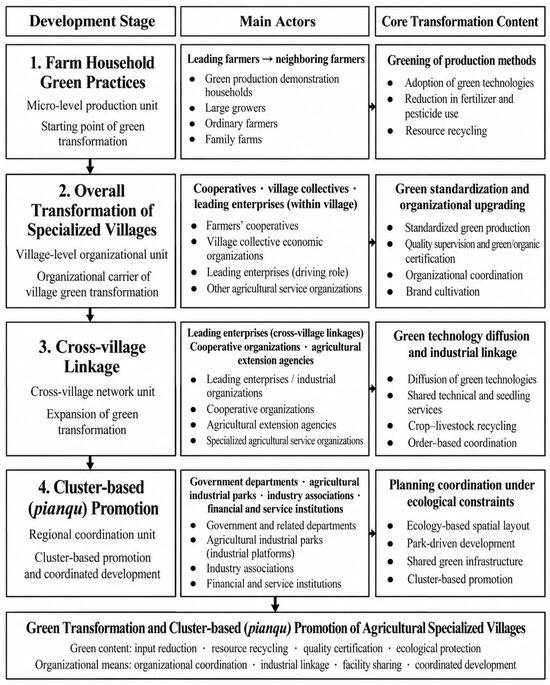
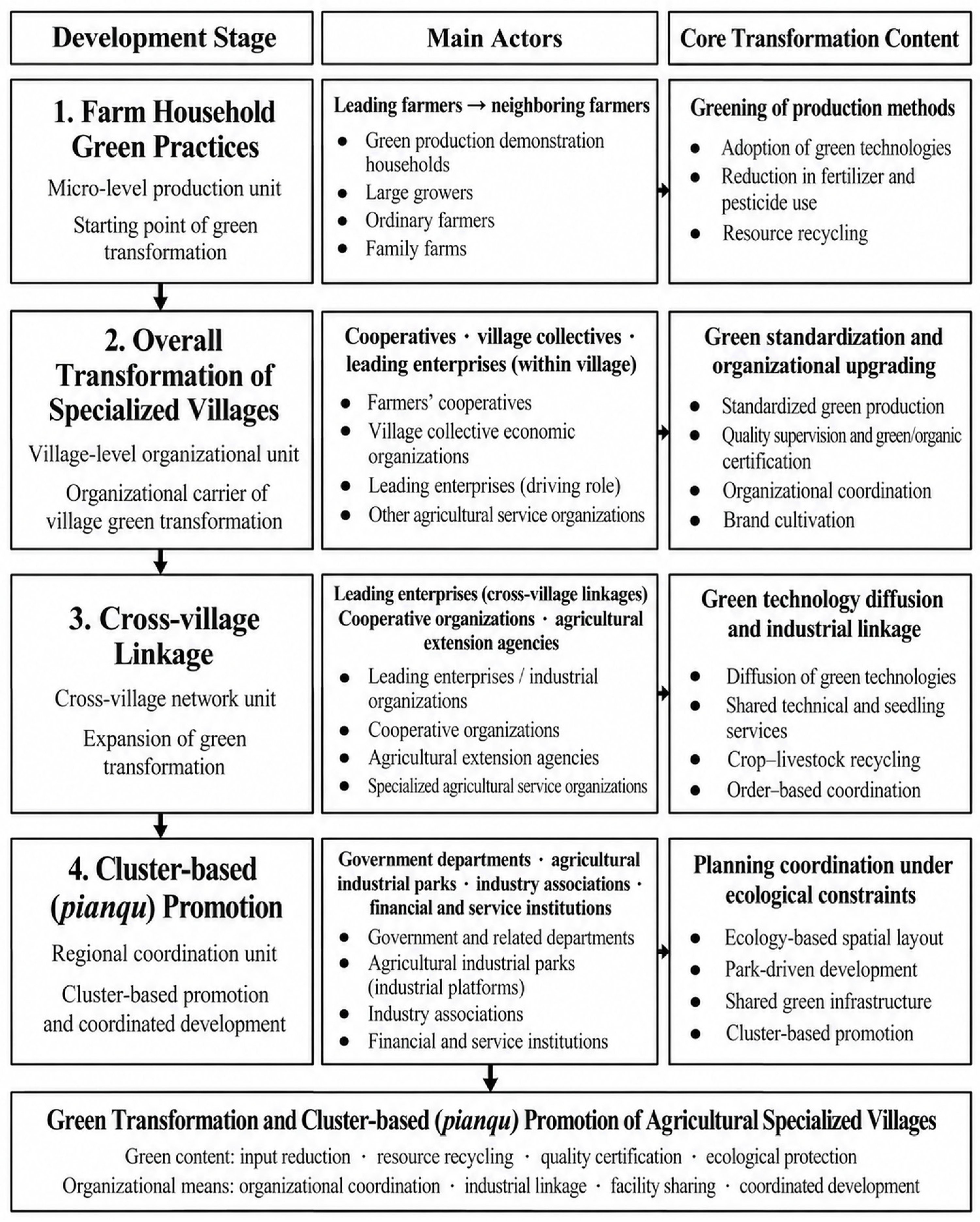
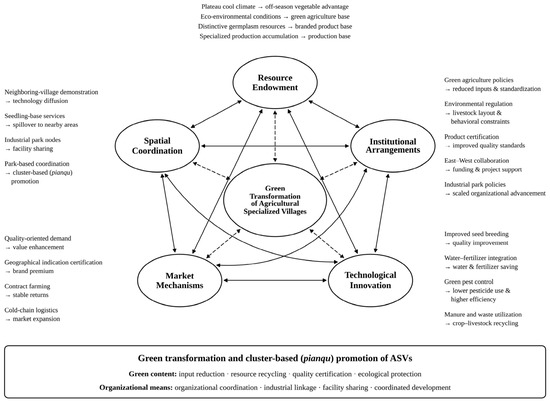
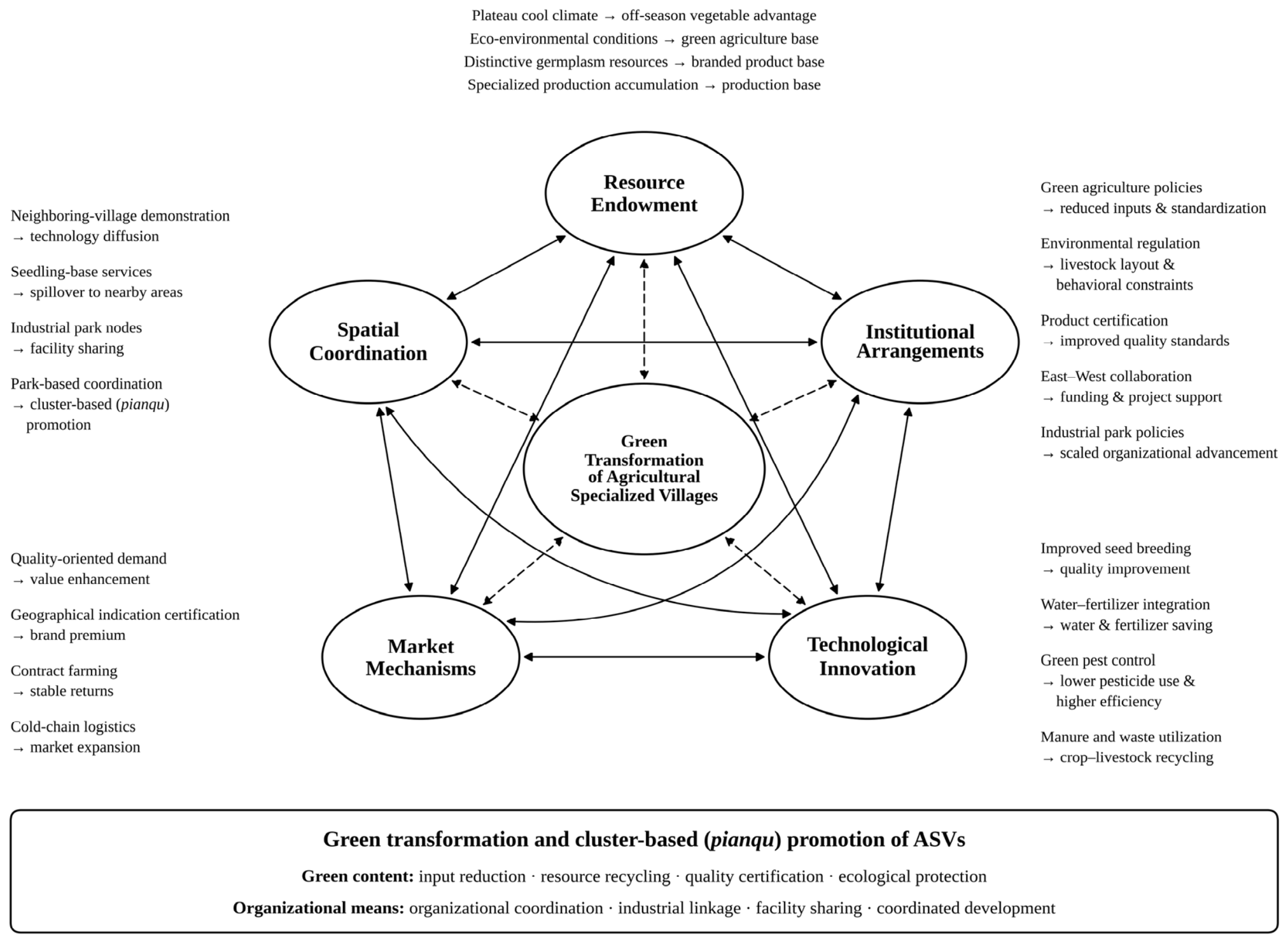
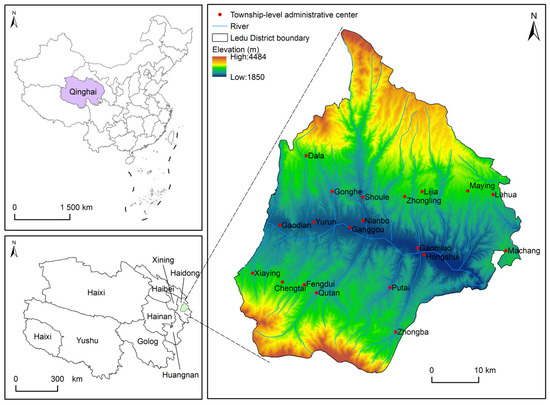
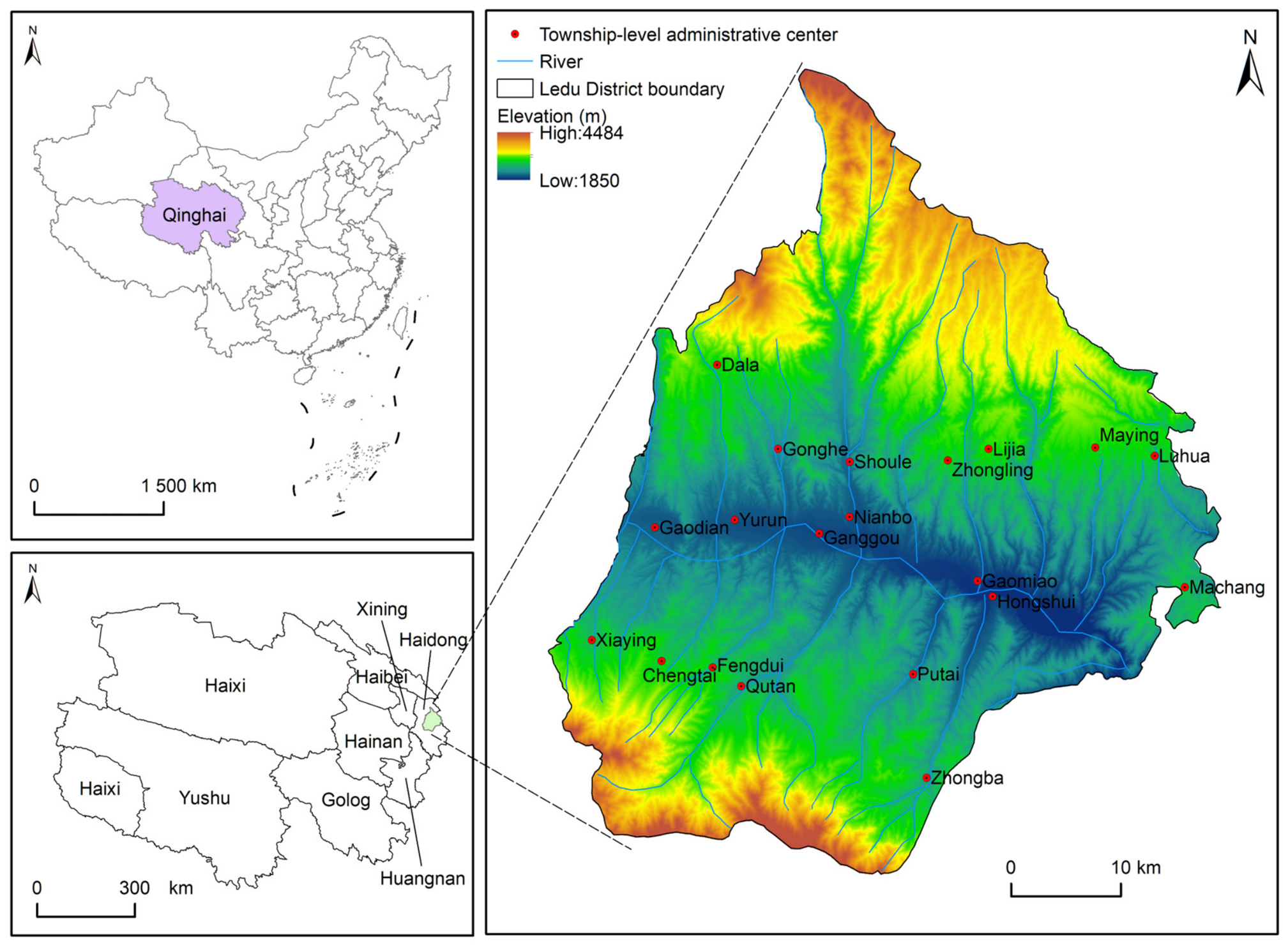
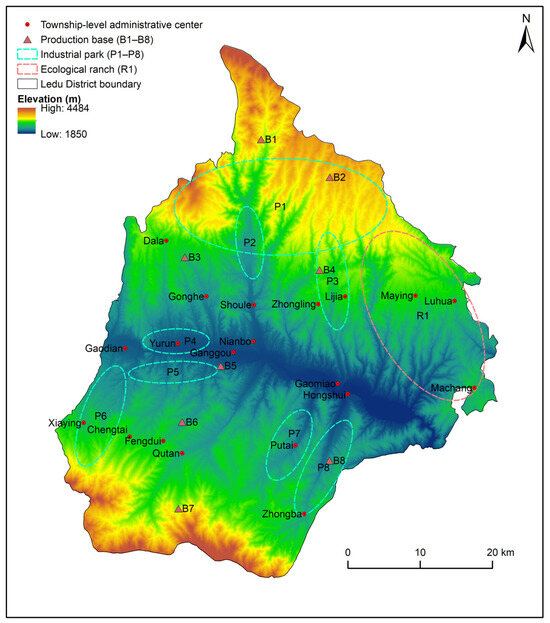
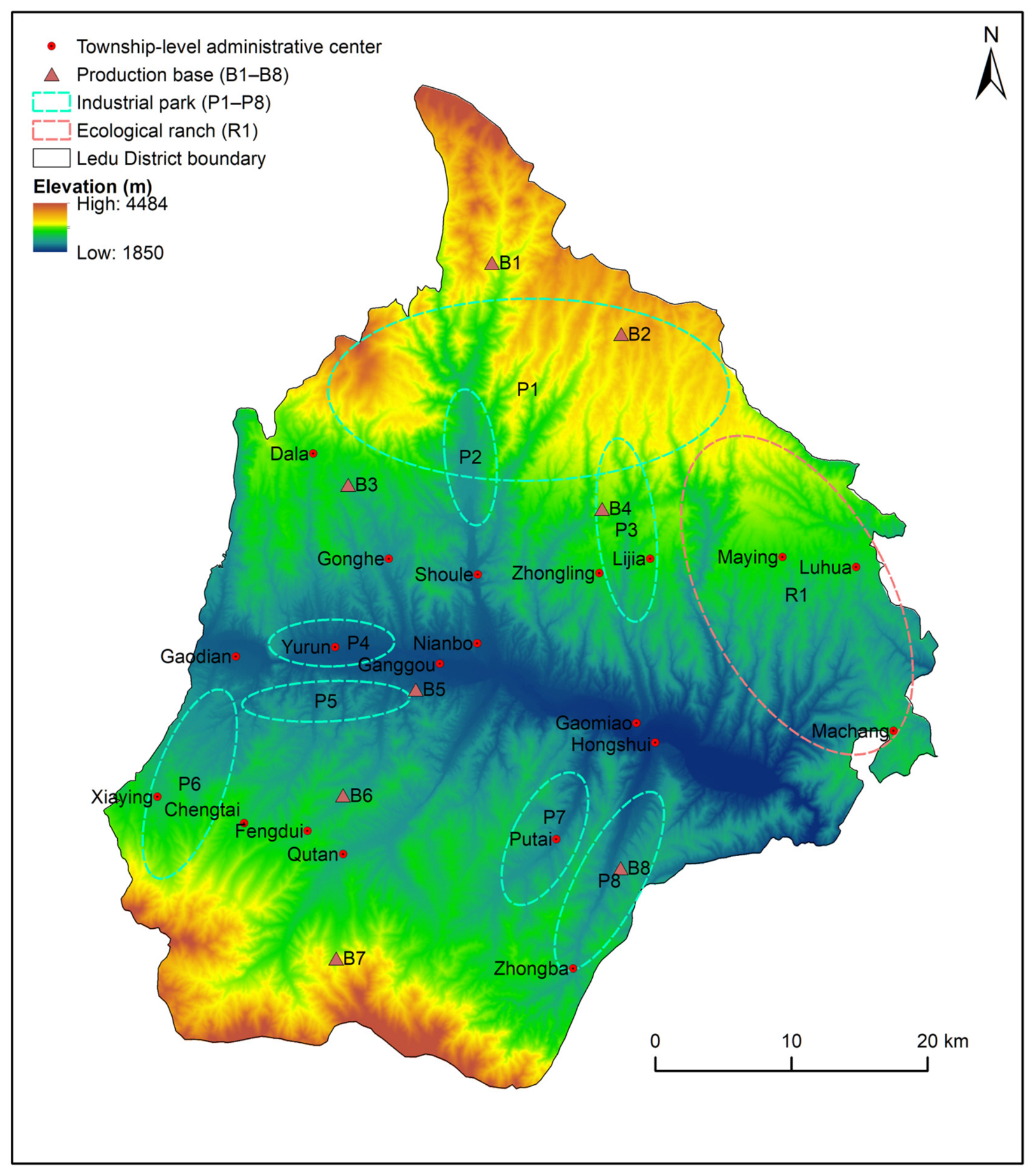

Disclaimer/Publisher’s Note: The statements, opinions and data contained in all publications are solely those of the individual author(s) and contributor(s) and not of MDPI and/or the editor(s). MDPI and/or the editor(s) disclaim responsibility for any injury to people or property resulting from any ideas, methods, instructions or products referred to in the content. |
© 2026 by the authors. Licensee MDPI, Basel, Switzerland. This article is an open access article distributed under the terms and conditions of the Creative Commons Attribution (CC BY) license.