


Abstract
Port expansion strengthens trade connectivity and economic growth, but its socio-ecological costs are often concentrated in fishing communities dependent on coastal space and locally embedded livelihoods. Existing research documents the impacts of port expansion but provides less explanation of why fishing communities exposed to the same broader development context follow different trajectories. Accordingly, this study asks why some fishing communities resist or adapt under the same broader port-development context while others experience heightened vulnerability and decline, using a qualitative comparative case study of five fishing communities around Laem Chabang Port, Thailand, based on 40 semi-structured interviews. The findings show that exposure alone does not explain community outcomes. Divergence reflects how social disruption interacts with the configuration and mobilisation of bonding, bridging, and linking social capital and with governance responsiveness. Strong internal cohesion supported adaptation when connected to durable external relationships and comparatively responsive governance, whereas relational capacity remained limited where institutional access, participation, or substantive responsiveness was weak. These configurations produced five trajectories: organised adaptation, capped resilience, managed decline, underpowered adaptation, and operational vulnerability. Socially sustainable port development therefore requires attention to relational capacity, institutional access, and meaningful participation alongside physical exposure.
1. Introduction
Global trade has expanded rapidly, with ports serving as gateways for goods, raw materials, and industrial flows. This has driven governments to pursue large-scale port expansion to strengthen national competitiveness [1,2,3]. While its benefits are widely distributed, many costs are concentrated among fishing communities that depend directly on coastal space and resources [4].
These communities are particularly exposed because port development transforms the coastal environments that sustain fishing livelihoods. Dredging, land reclamation, and construction degrade habitats and restrict access to fishing grounds, while increased shipping and industrial activity may reduce fish stocks and water quality [5,6,7]. Because fishing livelihoods are embedded in kinship, culture, and place, their decline may weaken social cohesion and erode cultural identity [8,9,10]. Port expansion therefore presents a development paradox. It generates national and global economic gains while imposing concentrated costs on communities with limited influence over decisions that reshape their coastal territories.
These effects do not produce uniform outcomes. Under comparable pressures, some communities mobilise collective action, negotiate compensation, or diversify livelihoods, while others experience fragmentation, economic decline, or out-migration [2,11,12]. This variation constitutes the study’s central puzzle. Existing research explains the distribution of port-driven harm in detail, but offers less insight into why trajectories diverge under similar pressures. Much of this literature establishes where and how disruption occurs but provides less comparative explanation of the social and institutional conditions that enable some communities to organise, adapt, and negotiate while others remain vulnerable or decline. Explaining divergence therefore requires moving beyond exposure toward the social and institutional conditions that shape differential community responses.
This study develops such an explanation by integrating three perspectives. Social disruption theory conceptualises port expansion as a shock that can destabilise livelihoods, social relations, institutions, and attachments to place, while emphasising that the consequences of disruption depend on available coping resources and context [13,14]. Social capital theory identifies the relational resources through which communities organise responses, distinguishing bonding, bridging, and linking ties that support coordination, resource access, and institutional engagement [15,16,17]. Governance responsiveness provides the institutional dimension, shaping whether community relationships gain recognition, access to decision-making, meaningful participation, and practical influence [7,18]. Bringing these perspectives together makes it possible to examine how disruption, relational resources, and institutional conditions interact rather than treating them as separate explanations. It also distinguishes the relational capacity communities can mobilise from the responsiveness of the institutions through which that capacity must operate.
This framing connects port expansion to the sustainability agenda, in which infrastructure-led growth is often framed as compatible with social inclusion yet may deepen inequality unless equity is embedded in governance [19]. It also connects port expansion to debates on community resilience and socially sustainable coastal development. Whether trade-led development can be reconciled with community resilience depends not only on how the costs of growth are distributed, but also on the social and institutional capacities through which communities respond to change.
Accordingly, the study asks: Why do some fishing communities resist or adapt under the same broader port-development context, while others experience heightened vulnerability and decline? To address this question, the study has three aims. First, it examines how port expansion disrupts fishing communities across livelihood, social, institutional, and place-based dimensions. Second, it analyses how bonding, bridging, and linking social capital shape communities’ capacity to organise and respond to disruption. Third, it assesses how governance responsiveness enables or constrains community responses and resilience, and what these processes imply for socially sustainable coastal development.
2. Literature Review
2.1. Port Expansion and Coastal Disruption
Research on port expansion consistently identifies an uneven distribution of benefits and costs. Economic gains are often captured at national, regional, or corporate scales, whereas ecological disruption, restricted access to coastal resources, and livelihood losses are concentrated in nearby fishing communities [4,19,20,21]. Port development can therefore be understood as spatially uneven growth, with coastal-dependent communities bearing disproportionate social and environmental costs.
These effects begin with the physical reconstruction of the coast, as dredging, reclamation, and port-related pressures concentrate in productive bays and estuaries that are often poorly represented in planning data [5,7,22]. Ecological deterioration then translates into economic precarity. This ecological dimension is especially important because shallow coastal and estuarine areas may perform nursery functions that are not fully visible in conventional planning data; combining scientific evidence with fishers’ ecological knowledge can reveal habitats and spatial dependencies otherwise overlooked [23]. Related evidence from coastal reclamation further shows how environmental transformation can translate into livelihood impacts for small-scale fishers [24].
The consequences extend beyond income. Because fishing is embedded in kinship, culture, and ritual, its decline erodes meaning and belonging as well as earnings [10]. Waterfront transformation is therefore economic, ecological, spatial, and symbolic, disrupting communities’ relationships with coastal space. Across Southeast Asian waterfront projects, benefits often flow upward while cumulative socio-ecological costs remain local [4,25,26]. Related coastal research also shows how environmental and livelihood pressures may accumulate through multiple interacting forms of disturbance [27]. State-backed development may further reclassify fishing grounds and coastal settlements as infrastructure, logistics, or investment space, extending exclusion from terrestrial areas into marine space [25,28,29].
These effects may become difficult to reverse as port expansion reorganises infrastructure, land use, and coastal environments, reclassifying coastal space and foreclosing prior uses [30]. Formal assessments may further obscure these costs when developers shape evaluations, cumulative impacts are neglected, and economic ministries exercise greater authority than environmental agencies [31]. This is not simply a technical problem of impact measurement. When local ecological knowledge and cumulative effects are excluded from assessment, institutional procedures can themselves shape which losses become visible and actionable.
Yet community outcomes vary [12,15]. Existing research documents disruption and dispossession but offers less explanation of why fishing communities within a shared port-development context follow different response trajectories. Much of this literature concentrates on documenting exposure, disruption, and community impacts within particular settings [4,27], while research on coastal governance and planning also shows that affected groups can experience and engage with development processes differently [32]. Even within the same megaproject, residents may interpret loss, development, and compensation differently [2]. What remains less clearly explained is how such differences combine with social and institutional conditions to generate divergent community trajectories. The analytical problem is therefore not simply whether port expansion disrupts fishing communities, but why communities situated within a shared development context differ in their capacity to respond.
2.2. Social Disruption and Social Capital Theory
Social disruption theory treats such interventions as shocks that destabilise livelihoods, governance, and cultural practices [13,14]. It emerged from studies of mining towns, oil booms, and dam projects, where rapid development overwhelmed local institutions [33], and has since been extended to coastal and port settings [25]. Its central claim is that disturbance is not incidental to development but affects multiple dimensions of community life.
Recent research conceptualises disruption as relational rather than as a fixed project property. The same intervention may unsettle one community while leaving another intact, because its effects depend on the fit between shock, resources, and context [14,34], and it may involve unresolved uncertainty before outcomes consolidate [35]. This distinction separates disruption from its eventual outcome: an external pressure may destabilise established arrangements without predetermining whether the subsequent response is resistance, adaptation, accommodation, or decline.
Comparable development shocks demonstrate how rapid large-scale investment can destabilise the systems on which communities depend, overwhelming local services, institutions, and adaptive capacity [36,37]. In coastal settings, port expansion can similarly disrupt fishing livelihoods through ecological change, restricted access, and the reorganisation of marine space. Disruption is also symbolic, altering place meaning, weakening trust, and reshaping risk perceptions even where residents acknowledge gains [38]. State-backed development may also alter how coastal and marine space is valued, governed, and accessed, extending disruption beyond direct material loss. Disruption also extends beyond construction. After resettlement, residents still reported psychological hardship, inequity, and loss of social infrastructure [39]. Collective memory may shape interpretations of renewed development proposals [40]. These studies indicate that reduced physical exposure or material compensation should not automatically be equated with successful adaptation, because disruption may persist through weakened relationships, place attachment, livelihood identity, and perceptions of procedural unfairness.
This indeterminacy raises a central question: why do trajectories diverge following comparable shocks? Anderson, Hopster and Lundgren [14] define disruption as a breakdown in normative orientation and joint action, whose severity depends on unequal material, institutional, and epistemic coping resources and on local inequalities, dependence, and cohesion. Maritime investment research similarly links livelihood effects to local capacity, engagement, and domestic institutions [41]. Yet this literature does not explain the relationships through which communities mobilise those resources. Social capital theory addresses this relational mechanism.
Social capital theory treats trust, reciprocity, and cooperation as mechanisms shaping community responses to disruption. Rather than treating social capital as community cohesion alone, development-oriented theory distinguishes bonding ties within groups, bridging ties across groups, and linking ties to formal institutions [42,43]. In fisheries settings, these forms of social capital shape collective organisation, institutional engagement, resource access, and adaptive capacity. Research on fisheries communities involved in marine spatial planning shows that bonding, bridging, and linking ties perform different but interrelated functions in community resilience and access to governance processes [44], while recent evidence from small-scale marine fisheries similarly identifies social organisation and external networks as important conditions shaping coping and longer-term adaptation [45,46].
Bonding capital is nevertheless conditional. Strong internal ties may sustain mutual support without necessarily generating outward adaptive capacity. This is evident in the Mekong Delta, where cooperatives diverged according to whether kin-based bonding was accompanied by cross-group bridging ties [17], and in Aceh, where resettled communities developed internal bonding without equivalent bridging ties to host communities [47]. Bridging relationships therefore extend bounded local ties into wider networks through which communities may access knowledge, organisations, and resources.
Linking capital connects communities vertically to actors possessing institutional authority, formal resources, or decision-making power [48]. Fisheries research further shows that the ability to mobilise linking capital can be constrained by weak institutional trust, while bridging relationships outside formal governance arenas may provide alternative routes to resources and influence [44]. Recent evidence from small-scale marine fisheries likewise shows that bridging and linking networks are particularly important for longer-term adaptation and institution building [46].
The relevant question is therefore not whether a community possesses social capital in the abstract, but how bonding, bridging, and linking relationships are configured and mobilised under conditions of disruption. Social disruption theory explains why an external pressure can destabilise communities differently; social capital theory specifies the relational resources through which communities attempt to respond.
However, relational resources alone do not guarantee institutional influence. A community may possess strong internal cohesion and extensive external connections while remaining unable to affect decisions concerning land, marine access, compensation, or development planning, particularly where linking relationships or institutional access remain weak [44,46]. Relational capacity and institutional responsiveness must therefore be distinguished analytically. The explanatory argument must move from the relationships communities can mobilise to the governance conditions under which those relationships acquire practical influence [18].
2.3. Governance Responsiveness and Community Resilience
Port expansion is commonly framed through sustainable development, the SDGs, and the blue economy [49,50]. These frameworks present infrastructure-led growth as compatible with ecological protection and social inclusion. Yet reconciling these objectives is politically contested [51]. The blue economy is less a settled framework than an arena in which actors compete to define legitimate ocean uses, and coastal-development conflicts often concern values, ownership, access, and control, not merely measurable impacts [52]. Governance therefore becomes a third explanatory component because it shapes whether communities’ relational resources gain recognition, access to decision-making, and practical influence.
This contestation is structural. Governance inelasticity occurs when static governance frameworks cannot adapt to changing ecological conditions, resource uses, access claims, and social values [18]. More broadly, tensions between blue-economy objectives and changing coastal uses illustrate why institutional arrangements may struggle to reconcile competing development and community priorities [49]. Fragmented decision-making can produce uneven justice outcomes. Blue-economy transitions may remain embedded in extractive dynamics [31]. Blue-economy finance concentrates in profitable sectors such as ports and shipping, with limited support reaching vulnerable users [53]. Alignment among economic, ecological, and social objectives cannot be assumed [54].
For the purposes of this study, governance responsiveness is organised around four connected features: recognition, institutional access, participation, and substantive responsiveness.
Recognition concerns whether communities and their livelihood claims are acknowledged as legitimate within governance networks. Research on blue-economy governance shows that coastal communities may remain marginal when they are absent from the networks through which influential actors understand and organise decision-making [55,56].
Institutional access concerns whether communities can reach the agencies and institutional arenas where consequential decisions are made. Access may remain constrained when communities are treated instrumentally, remain peripheral within state-dominated networks, or lack effective channels to actors with formal authority [57,58].
Participation concerns whether communities are meaningfully included in decision-making processes. Participatory space may narrow as decisions move from visioning to the allocation of rights and costs, leaving communities consulted but with limited influence over consequential choices [59,60]. Across marine disputes, effective engagement also depends on governance capacity and benefit-sharing arrangements [61].
Substantive responsiveness concerns whether participation and community claims influence practical outcomes. Consultation can provide procedural access without altering decisions, whereas responsive governance implies that community knowledge and claims can affect resource allocation, access arrangements, compensation, environmental management, or other consequential outcomes [58,62]. Participation therefore concerns inclusion in decision-making, while responsiveness concerns whether that inclusion produces practical influence.
Governance is therefore not merely an external constraint; it also constitutes an institutional environment through which communities may gain recognition, resources, and influence. Vulnerability is produced not only by environmental degradation but also by exclusion from decision-making and limited recognition of fishing claims. Coalitions can strengthen bargaining capacity and institutional access. Sustained multi-actor networks can build trust, mediate conflict, and strengthen access, while institutional legacies shape whether communities retain agency or become subordinated to top-down narratives [12,58,63].
Community resilience is therefore not simply a matter of returning to a previous state, but of drawing on social, institutional, and material resources to adapt and sustain valued community functions under changing conditions. Recent coastal-resilience research identifies community agency, social capital, stakeholder participation, and governance conditions as central dimensions of resilience, particularly in resource-dependent coastal communities [64]. Social capital contributes to this capacity by facilitating collective action, information exchange, mutual support, and access to external resources, although its effectiveness depends on how relationships are configured and mobilised [45]. These relational and institutional dimensions also connect resilience to social sustainability, which increasingly emphasises equity, inclusive governance, local participation, and community capacity to respond to change. In port-affected fishing communities, resilience and social sustainability therefore concern not only the persistence of livelihoods, but also whether communities retain collective agency and meaningful access to the institutions shaping coastal development. Continued livelihood activity should therefore not automatically be interpreted as evidence of resilience where occupational reproduction or collective capacity is weakening.
Taken together, the preceding literature suggests that community responses to port expansion cannot be explained by exposure alone. Port-related pressures become consequential through their effects on livelihoods, social relations, institutions, and place, while communities differ in the bonding, bridging, and linking relationships they can mobilise and in the responsiveness of the governance institutions through which those relationships operate. Figure 1 summarises these interconnected dimensions and provides the analytical basis for comparing the five fishing communities.
Figure 1.
Analytical framework for analysing port expansion, social disruption, social capital, and governance responsiveness.
3. Materials and Methods
3.1. Study Design
This study adopted a qualitative comparative case-study design to examine why fishing communities situated within a shared port-development context experienced different forms of disruption and community response. A case-study design was appropriate because the processes under investigation were embedded within real-world social, livelihood, environmental, and institutional settings that could not be readily separated from their context [65]. Five fishing communities in the Laem Chabang–Si Racha coastal region of Chon Buri Province, Thailand, were treated as analytically distinct cases.
The analytical logic was explanatory rather than descriptive. Within-case analysis examined how port-related pressures were experienced and responded to within each community, while cross-case comparison examined why communities situated within the same broader development context followed different trajectories. The analysis therefore focused on configurations of social disruption, social capital, and governance responsiveness rather than treating exposure intensity as a sufficient explanation for community outcomes. The study was designed to explain variation in community-side experiences and responses rather than to provide an independent evaluation of port or government institutions. The study sought analytical rather than statistical generalisation [65,66]. Figure 2 summarises the overall research design, including case selection, data collection, within-case analysis, and cross-case comparison.
Figure 2.
Stage-wise description of the methodology.
3.2. Case Selection and Context
Laem Chabang Port is Thailand’s principal deep-sea container port and a major component of the Eastern Economic Corridor. The Phase 3 expansion is expected to increase annual capacity to 18.1 million twenty-foot equivalent units (TEUs), with operations scheduled to begin in 2027. In fiscal year 2024, the port handled 9.46 million TEUs [67]. The surrounding Laem Chabang–Si Racha coast combines port and industrial infrastructure with long-established fishing settlements whose livelihoods continue to depend, to varying degrees, on access to nearshore marine space and coastal resources. Figure 3 shows the location of the study region within Thailand, Laem Chabang Port, and the five fishing communities included in the comparative analysis.
Figure 3.
Study area and case locations around Laem Chabang Port, Thailand. (a) Location of the study area within Thailand. (b) Laem Chabang Port and the five fishing communities (C1–C5) included in the comparative analysis. Source: Google Maps (2026); annotations prepared by the author.
Five fishing communities constituted the cases and principal units of comparison. To protect participant and community confidentiality, the communities are reported as C1–5 rather than by their actual names. All had historical or continuing connections to small-scale fishing and were situated within the same broader coastal-development region, but they differed in their relationship to the port–industrial interface, dependence on fishing, livelihood structure, reported ecological conditions, community organisation, and connections with external institutions. These characteristics were used as the principal comparative dimensions across the five cases and are summarised in Table 1. Selecting cases within a common regional setting enabled broader development conditions to be held relatively constant while examining local differences that could help explain divergent community responses. The cases were therefore selected purposively for theoretically relevant variation rather than statistical representativeness [65,66].
Table 1.
Qualitative case profiles and theoretically relevant comparative conditions.
The cases also represented distinct local settings within this shared regional context. C1–3 were located closer to the main port–industrial interface and experienced more direct interaction with port infrastructure, shipping activity, and changes in access to fishing space. C4–5 were situated farther from the principal port complex, where port-related pressures were generally less spatially direct and interacted more strongly with broader ecological, regulatory, labour, and livelihood conditions. This contrast provided an important comparative dimension because it allowed the analysis to distinguish the effects of direct exposure from the social and institutional conditions shaping how communities responded.
Exposure was therefore treated as one axis of comparison rather than a predetermined explanation of community outcomes. Communities with greater physical exposure were not assumed to be more vulnerable, and more peripheral communities were not assumed to be more resilient. Table 1 summarises the principal contextual conditions used in the within-case and cross-case comparison. C1–C5 denote the five anonymised fishing communities, and the entries are qualitative case summaries derived from the interview evidence rather than quantitative scores or measured indices.
3.3. Sampling and Data Collection
A total of 40 participants were interviewed across the five cases (Table 2). Eight participants were included in each community: two fishing-household members, two crew members, two vessel owners, one community leader, and one fisheries-group representative. The comparative design sought coverage of the same five stakeholder groups across the cases rather than statistical representativeness or a formal saturation criterion. The achieved sample provided a consistent basis for within-case and cross-case comparison and allowed similar stakeholder perspectives to be compared systematically across communities [65].
Table 2.
Distribution of interview participants by case and stakeholder group.
The participant groups served distinct analytical purposes. Fishing-household members provided evidence of household livelihood change, fishing dependence, and responses to disruption. Vessel owners contributed perspectives on fishing operations, costs, access to fishing grounds, and enterprise-level adjustment. Crew members provided evidence concerning employment, labour conditions, and livelihood insecurity. Community leaders offered longer-term accounts of collective organisation, community change, and relationships with external actors. Fisheries-group representatives provided evidence concerning collective action, fisheries organisation, external networks, and engagement with government, port, research, and other organisations. Including these different positions enabled comparison of experiences within each community rather than relying on a single respondent category.
Purposive sampling was used to identify participants with direct experience of, or knowledge concerning, fishing livelihoods, environmental and spatial change, community organisation, port development, or local governance. Eligible participants were required to have direct livelihood, occupational, organisational, or governance-related experience relevant to the focal fishing community and its changing coastal conditions. Snowball sampling supplemented purposive recruitment by identifying additional eligible participants who were not readily identifiable through formal community channels [68]. Participant selection sought analytical coverage across the five predefined stakeholder groups rather than population representativeness.
Data were collected through semi-structured interviews. The interview guides contained common questions concerning fishing and livelihood change, access to marine space, environmental and coastal change, community relationships, collective organisation, interaction with external actors, governance and participation, and responses to changing coastal conditions. Role-specific questions and follow-up probes were used according to participants’ experiences and responsibilities [69]. The semi-structured interview questions used during fieldwork are provided in Appendix A.
Interviews were conducted in Thai by the author from January to February 2026, lasted approximately 45–60 min, and were audio-recorded with participants’ consent. The recordings were transcribed by the author and checked against the audio for accuracy. Analysis was conducted in Thai to preserve locally specific meanings and expressions. Selected quotations were translated into English for reporting, with attention to preserving meaning and context rather than literal word-for-word equivalence [70]. Participants’ accounts of ecological change were treated as situated perceptions and attributions rather than as independently verified environmental measurements.
3.4. Data Analysis
Data analysis followed the qualitative analytical framework of Miles et al. [71], comprising three interrelated processes: data condensation, data display, and conclusion drawing and verification. The process was iterative rather than strictly sequential and combined theoretically informed and inductive coding.
During data condensation, interview transcripts were coded in NVivo. The analytical framework summarised in Figure 1 sensitised the initial coding without predetermining community responses or final trajectories. Theory-informed codes addressed four principal analytical domains. These comprised port-related pressures, social disruption, social capital, and governance responsiveness (Appendix B).
Coding also remained open to patterns not specified in the analytical framework. Additional first-cycle codes were developed inductively to capture forms of collective action, livelihood adjustment, diversification, institutional engagement, constraint, continuity, contraction, and other responses described by participants. Community responses and longer-term trajectories were therefore treated as empirical findings rather than predetermined analytical categories. During data display, within-case profiles were developed for each community. Evidence from fishing-household members, crew members, vessel owners, community leaders, and fisheries-group representatives was compared within each case to identify convergence, disagreement, and differences associated with participants’ positions. The profiles reconstructed the principal forms of disruption, relational resources, institutional relationships, and responses within each community.
Cross-case matrices were then constructed to compare the five communities systematically across the principal analytical dimensions [71]. Comparison focused on configurations of conditions rather than isolated determinants. Particular attention was given to how similar forms of port-related pressure were associated with different responses where communities differed in social-capital configurations and governance responsiveness.
In the conclusion-drawing and verification stage, explanations were developed iteratively by moving between coded transcripts, within-case profiles, cross-case matrices, and the analytical framework. Divergent and negative evidence was retained and examined rather than treated as anomalous. Particular attention was given to cases that challenged simple exposure-based explanations, including communities experiencing substantial port-related pressure without corresponding decline and communities with less direct exposure that nevertheless remained vulnerable. These comparisons were used to refine explanations of the conditions under which relational resources and governance responsiveness acquired practical value. The five community trajectories were developed at this stage from recurring cross-case configurations of disruption, relational resources, governance conditions, and observed forms of response rather than assigned to the cases in advance. Appendix C provides examples of how first-cycle codes were connected to broader analytical themes and pattern codes.
3.5. Trustworthiness and Ethical Considerations
Trustworthiness was addressed through credibility, dependability, confirmability, and transferability [72,73]. Credibility was strengthened through within-community triangulation across participant groups and systematic within-case and cross-case comparison. The consistent participant structure across the five cases enabled comparable stakeholder positions to be examined across settings, while divergent and contradictory accounts were retained and examined explicitly rather than treated as inconsistencies to be removed. Such attention to both convergence and divergence helped test whether emerging interpretations could account for variation in participants’ experiences rather than only recurrent patterns [73]. Because interviews were conducted exclusively with community participants, this triangulation could not independently verify institutional perspectives from port authorities, fisheries agencies, or port-operating enterprises. Claims concerning governance responsiveness are therefore interpreted as participants’ experienced interactions with institutions rather than as independent evaluations of institutional performance.
Dependability and confirmability were supported through a systematic analytical trail connecting interview transcripts, coding, within-case profiles, cross-case matrices, and the interpretations reported in the findings. Conclusions were repeatedly checked against the underlying coded material, while negative and discrepant cases were used to test and refine emerging explanations. Maintaining a traceable analytical process and demonstrating how interpretations were derived from the underlying data strengthened the dependability and confirmability of the analysis. Transferability was supported through contextual description of the five cases, enabling readers to assess the applicability of the findings to other settings, while the study sought analytical rather than statistical generalisation [65,72].
Ethical approval was obtained from the Kasetsart University Research Ethics Committee (Reference No. COE68/052). All participants provided informed consent before participation. They were informed that participation was voluntary, that they could decline to answer any question or withdraw without penalty, and that audio recording would occur only with permission. Identifying information was removed or anonymised during analysis and reporting.
4. Results
4.1. A Common Shock, Uneven Consequences
Participants across the directly exposed communities described a common pattern of ecological change associated with port expansion, but severity, attribution, and livelihood consequences varied by location and livelihood structure. Across the directly exposed cases, most participants described declining nearshore catches, changing currents, poorer water quality, and productive species moving into deeper waters. What separated the communities was how strongly these perceived changes translated into livelihood insecurity.
In C1 and C2, port-related change was described primarily through restricted access, spatial displacement, and navigation risk. As one crew member explained, “They won’t let us go near. It’s different now. They keep us back about 300 to 500 meters” (C1, crew member 1). Another linked expansion to livelihood decline: “It changed everything. The sea animals vanished. The squid is gone. It’s just getting harder to make a living since they built and expanded the port” (C1, crew member 2). Navigation was also described as more dangerous, as small boats shared water with cargo vessels: “They don’t give way. They think they are big ships, so they run right at us” (C2, vessel owner 2).
Ecological change, as participants understood it, became economic pressure through longer journeys, lower catches, and higher fuel costs. “In the old days you went out for a short while and you would have enough fish. Now it takes all day into the night, and you don’t even have enough fish. Sometimes I do not want to look at the fuel cost” (C1, vessel owner 2). Respondents across the exposed zone repeatedly tied reduced catches to disrupted nursery systems, shifting currents, cargo traffic, and slower shellfish growth. For small operators, these perceived ecological changes were linked to weaker fishing viability through higher costs and lower returns.
The peripheral cases, C4 and C5, showed a different configuration. Some participants did not attribute their main problems to the port and described fishing routes as largely unchanged. Yet lower direct exposure did not mean security. Vulnerability appeared instead as labour shortages, fuel scarcity, regulation, episodic water-quality problems, and unstable returns. Pollution was described: “Sometimes the water goes bad and fish disappear” (C5, crew member 2). Operators in both peripheral cases depended on migrant labour that had become expensive and unreliable. They paid a per-worker head fee of 20,000–30,000 baht and shared the catch by percentage, so poor trips left crews unpaid and more likely to move to another boat. As one vessel owner put it, the crew “run off to work for another operator” (C5, vessel owner 1). At the far end of the exposure gradient, a single peripheral crew member even described port expansion as a convenience: “It hasn’t changed that much. It’s only more convenient. Navigation became easier now that they expanded the port” (C4, crew member 1). The peripheral cases therefore indicate that lower direct exposure can coexist with livelihood vulnerability, but the interview evidence cannot establish whether these ecological, labour, regulatory, and operational pressures arose from port expansion or broader conditions.
Livelihood adjustment appeared easier where households could partly detach income from fishing. In the directly exposed zone, one household in Community 1 combined fishing with equipment sales and sold its catch “straight to the customer” rather than through a broker. Across both zones, participants with access to supplementary income described greater room to absorb pressures than those relying primarily on fishing. Those without alternatives experienced ecological change more directly as fuel debt, unstable income, and pressure to exit.
4.2. Outward and Inward Bonding
The first difference among communities was not whether they had close ties, but whether those ties were mobilised toward collective action or remained concentrated around household- and boat-level survival. Bonding capital was common at the level of boats and kin groups, yet its community-level form ranged from solidarity strengthened by pressure to solidarity worn down by resignation.
Where bonding rested on long-established families, it supported coordinated response, especially in Community 2. One leader explained, “Here it’s an old community with many long-established people. We have lived together for more than two or three generations” (C2, community leader). A household in the same community framed the port as a reason for unity: “Relations in the community are the same as before. We are still close, still united. The more there’s a port, the more we have to come together and make our unity stronger” (C2, fishing household 1). In this case, strong internal cohesion was connected to organised collective action and external engagement.
In Community 3, by contrast, participants described the erosion of shared life: “These days community relations have faded. It’s everyone for themselves now, not like before” (C3, fishing household 1). Boat-level ties remained, but they did not scale up: “Just the crew members, the friends, no kin, just friends on the same boat” (C3, crew member 2). Fishing no longer structured daily routines, intergenerational learning, or neighbourly exchange. The loss was therefore cultural as well as economic.
Warm ties also did not always become capacity. In Community 4, residents still shared with one another, but participants described daily work demands and weak leadership succession as limiting wider mobilisation. “People really do still share. You’ve got it, I’ve got it, so let’s share” (C4, community leader). Bonding was present but latent: a social resource that existed but was not drawn into collective strategy.
4.3. Similar Institutions, Unequal Capacity
Four communities had crab-bank institutions, but they operated at different levels of capacity. Their effectiveness varied with the external relationships through which communities accessed knowledge, resources, and formal institutions. In C2, the strongest case was, community-initiated crab bank that began with fishers’ own idea and their approach to industry. As a fisheries-group representative explained: “We saw a crab bank on television and thought it was interesting. Then a company that had to do CSR came and asked what they could help with. We asked them to take us to see the crab bank in Phetchaburi so we could adapt it here” (C2, fisheries-group). The crab bank became self-sustaining. It supplied breeding crabs to state research centres, hosted crab-release activities with universities and tourists, and used income generated by the crab bank to buy fishing gear for members. The same community also developed a boat club with a revolving repair fund: “Our group has 21 boats. If anyone’s net is damaged, we have a revolving fund…you take it, but you pay it back. So it keeps circulating” (C2, vessel owner 2). Through these external relationships, Community 2 gained recognition as a model community.
The peripheral comparison shows the limits of institutional form alone. In Community 4, the crab bank ran almost entirely on unpaid volunteer labour, with only space and electricity from the local authority. “No one comes in to help us. We do it by goodwill. We have no budget, no salary, not a single baht” (C4, fisheries-group). Outside engagement lacked follow-through: “They come, they look, they talk nicely, they say they’ll help… and then they disappear” (C4, fisheries-group). Similar institutions therefore generated unequal capacity because they were embedded within different social-capital configurations.
Even within C2, access to the successful network was uneven. One household remained outside the organised network and reported exclusion from compensation: “Why didn’t they compensate us? They compensated the others, group by group. We have petitioned three or four times already” (C2, fishing household 2). The account shows that access to formal claim-making channels did not guarantee equal access to institutional resources. Bridging and linking relationships therefore varied not only in their presence but also in who could use them and what they produced.
4.4. The Governance Ceiling
Relational capacity shaped what communities could attempt, but governance responsiveness conditioned whether those efforts acquired practical influence. Institutional access created opportunities to make claims, but recognition, participation, and substantive responsiveness determined whether those claims affected decisions or material support.
The ceiling was clearest in a well-led directly exposed community. Residents occupied land that had been formally expropriated but still held title deeds, and for two decades they reported frozen utilities. The leader described improved relations under corporate social responsibility norms, but the structural block remained: “They support us a bit, festivals and such...but roads, electricity, water, no. They won’t help at all” (C1, community leader). Organisation and improved relations did not overcome decisions over land and utilities made beyond residents’ reach.
Compensation also carried a time limit. In Community 3, a six-year relief payment was due to end with the next phase of expansion, and at least one household planned to leave fishing when it expired: “The compensation runs for 6 years, this is the 6th. When the 6 years are up, next year we’ll just sell the occupation, and sell the fishing ground” (C3, fishing household 1). Where neither dense social capital nor responsive institutions provided a durable floor, withdrawal emerged as a plausible livelihood response.
For peripheral communities, the issue was not a hard ceiling but institutional absence. Peripheral location was associated with lower direct exposure but also with weaker recognition and fewer apparent channels for compensation or consultation. State contact came mainly through fisheries regulation, and residents described being weakly connected to institutions capable of addressing their livelihood concerns: “I want someone to come and help the sea area. Fishers are starving” (C5, fishing household 2). Across zones, the shared procedural demand was consultation before construction: “If you’re going to do something, come and talk to the community, talk to the villagers first, so we know” (C3, vessel owner 2).
The governance ceiling therefore took two forms. For organised and proximate communities, it appeared as a hard block on practical influence. For peripheral communities, it appeared as institutional absence. In both cases, governance conditioned whether relational capacity and institutional access translated into substantive influence or remained largely a local effort.
4.5. Conditions of Divergence
When disruption, social capital, and governance responsiveness are read together, the cross-case analysis identified five community trajectories. These trajectories represent the dominant configuration and direction of community response observed during the study period rather than mutually exclusive or permanent types. Where communities exhibited mixed characteristics, classification was based on the dominant pattern of collective response and livelihood adjustment across the comparative dimensions, while secondary characteristics remained part of the case interpretation. Table 3 specifies the empirical configuration and defining criterion used to distinguish each trajectory.
Table 3.
Cross-case criteria for empirically identified community trajectories.
Direct exposure did not automatically produce decline, and peripheral location did not produce security. The trajectories therefore varied with the interaction of disruption, social-capital configurations, and governance responsiveness rather than with exposure alone. They should be interpreted as contingent analytical classifications of the dominant configuration observed in each community, not as fixed or mutually exclusive community types.
5. Discussion
5.1. From Comparable Pressure to Uneven Disruption
The principal distinction among community trajectories under port expansion was not simply the magnitude of the shock, but how similar development pressures became socially and economically consequential under different local conditions. Existing research documents port-driven harm but offers less comparative explanation of why community trajectories diverge under similar pressures [4,7]. The cross-case comparison shows that exposure alone was insufficient to explain community outcomes. Directly exposed communities differed substantially from one another, while some more peripheral communities remained vulnerable despite experiencing less direct spatial disruption. Similar spatial-use conflicts have also been documented in offshore aquaculture, where competition for marine space can restrict fishing access and reduce available fishing areas [28,29].
This reframing specifies how external pressures become differently consequential across communities because disruption depends on the interaction between external pressures, available resources, and local context [14,34]. Port-related change became disruptive through fishing access, perceived ecological conditions, operating costs, social relations, and place-based livelihoods, but the severity and persistence of these effects depended on community livelihood, relational, and institutional conditions. Because ecological change was not independently measured, these findings concern how perceived environmental change is translated into livelihood and social consequences rather than establishing biophysical impacts themselves. The social analysis should therefore be interpreted alongside environmental evidence rather than as a substitute for it.
The cross-case evidence reinforces this distinction. Communities exposed to substantial port–industrial pressure followed different trajectories according to fishing dependence, livelihood alternatives, collective organisation, and external relationships, while the peripheral cases remained vulnerable through combinations of ecological, regulatory, labour, and operational pressures. Social vulnerability therefore cannot be inferred from physical exposure alone.
5.2. Social Capital as Relational Capacity
Differences in community response were associated with the configuration and mobilisation of social capital rather than the presence of close ties alone. Bonding capital was common across the cases but was associated with different outcomes. Where internal cohesion supported collective action and was connected to bridging and linking relationships, communities developed greater capacity to organise, secure resources, and engage external actors. Where bonding turned inward toward private survival or remained warm but latent, communities were less able to mobilise collective responses. Social capital theory similarly argues that social capital’s practical effects depend on how bonding, bridging, and linking forms are configured rather than on any single form in isolation [42,74]. Bridging ties were an important channel of outward mobilisation. This extends evidence from Mekong Delta cooperatives, where divergence depended on whether cohesion was accompanied by bridging ties formed through prior shared activity [17], into a setting of state-backed industrial development. It also supports warnings that bonding may constrain as well as enable adaptation: strong place-based solidarity can remain bounded or take oppositional forms rather than necessarily expanding collective reach [75]. Under port-driven pressure, close internal ties were therefore insufficient when they were not connected to durable external relationships.
The crab-bank comparison makes this visible. The same institutional form appeared across four communities yet generated unequal capacity because it was embedded in different relational and institutional environments. In Community 2, the crab bank was connected to companies, universities, state research centres, and internally generated finance. In Community 4, a comparable institution depended largely on unpaid voluntary labour and intermittent external engagement. Replicating institutional form therefore did not reproduce institutional capacity. What mattered was whether the organisation was connected to durable relationships that provided knowledge, resources, recognition, and follow-through.
The cross-case comparison further suggests that outward mobilisation was easier where communities had long-standing social ties, continuity of local leadership, and prior experience of external engagement. These conditions appeared to lower the organisational costs of collective action and provide channels through which new relationships could be developed. Where leadership succession was weak, populations were more fragmented, or external engagement lacked continuity, bonding remained more inward or latent. Social capital should therefore be understood as relational capacity whose practical value depends on how internal and external ties are configured and mobilised under particular organisational and historical conditions [76,77].
5.3. Governance Responsiveness as a Conditioning Mechanism
Relational capacity shaped what communities could attempt, but governance shaped what they could achieve. Linking ties can remain limited when the institutions they reach do not provide formal protection or practical support, and local organisation remains constrained where vertical relationships lack formal weight or practical consequence [64,78].
The findings identify a governance ceiling: a condition in which community organisation and institutional access reach practical limits because consequential decisions remain closed, weakly responsive, or beyond local authority. Across the cases, this ceiling appeared in two forms. For organised and proximate communities, it appeared as a hard block on practical influence, where communities had relationships and channels of engagement but could not alter decisions over land, utilities, compensation, or infrastructure. For peripheral communities, it appeared as institutional absence, where there was no clearly recognised counterpart through which local concerns could be advanced.
Both forms are consistent with arguments about governance inelasticity, in which rigid institutional arrangements fail to adjust to changing socio-ecological realities [18]. Vulnerability is therefore produced not only by environmental degradation but also by exclusion from decision-making and limited recognition of fishing claims [7,56].
The findings also show that consultation alone does not guarantee influence. Participants repeatedly emphasised the need for engagement before construction and before decisions affecting access, compensation, and livelihood conditions were finalised. This is consistent with research showing that participatory space often narrows as decision-making moves from broad consultation toward the allocation of rights, resources, and costs [59,60]. Institutional access therefore matters only when it occurs early enough and carries sufficient weight to shape consequential decisions.
These findings refine the distinction among the dimensions of governance responsiveness used in this study. Recognition concerns whether fishing communities and their claims are acknowledged; institutional access concerns whether channels to relevant organisations exist; participation concerns whether communities are included in decision-making processes; and substantive responsiveness concerns whether their claims can affect decisions or material outcomes [56,58]. The cases show that these dimensions need not move together. Communities may be recognised and consulted yet remain unable to alter consequential decisions, while others may possess strong local organisation but lack effective institutional access altogether.
5.4. Collective Response Capacity and Divergent Trajectories
Taken together, the cases show that collective response capacity emerged from the interaction of social-capital configurations and governance responsiveness rather than from either condition alone. In Community 2, strong external relationships and collective organisation generated substantial benefits, yet at least one household remained outside compensation arrangements despite repeated petitions. This complicates any celebratory reading of bridging and linking capital. Organised relational networks may improve collective capacity while still distributing access and benefits unevenly across households.
This finding shows that collective organisation does not necessarily distribute institutional access and benefits evenly within a community. The relevant point is therefore not that bridging and linking capital inherently produce exclusion, but that access to the networks through which institutional resources are distributed may itself be uneven.
Cross-case comparison further reveals why the communities followed different trajectories. Where strong bonding was connected to bridging and linking relationships and reinforced by comparatively responsive external engagement, collective organisation supported adaptation. Where local organisation remained strong but consequential decisions remained institutionally closed, resilience was capped despite substantial community effort. Where bonding weakened, livelihood alternatives were limited, and support remained temporary, fishing became increasingly difficult to reproduce. In the peripheral communities, lower direct exposure was offset by reported ecological pressures, labour constraints, operational insecurity, and comparatively weak institutional support.
These configurations correspond to the five empirically identified trajectories: organised adaptation, capped resilience, managed decline, underpowered adaptation, and operational vulnerability. These labels describe the direction of community response observed through the cross-case analysis rather than fixed community types. They should therefore be understood as contingent outcomes of particular configurations of disruption, social capital, and governance responsiveness, not as predetermined categories or permanent conditions.
Figure 4 synthesises these findings into an empirically refined framework showing how port-related pressures and social disruption interact with social-capital configurations and governance responsiveness to shape collective response capacity and divergent community trajectories. The framework also recognises that livelihood dependence, livelihood alternatives, operational pressures, and community characteristics condition both the severity of disruption and the capacity for response. Rather than representing a deterministic sequence, the framework summarises the relationships identified through the comparative analysis.
Figure 4.
Empirically refined framework of community responses to port-led coastal transformation.
The peripheral cases are especially important to this interpretation. Lower physical exposure did not eliminate vulnerability, but the sources of that vulnerability cannot be fully disentangled. Reported labour, fuel, regulatory, ecological, and institutional pressures may reflect both the wider port–industrial setting and broader conditions not caused by port expansion. The findings therefore challenge a simple exposure-based interpretation in which proximity alone determines vulnerability [7,21].
5.5. Implications for Community Resilience and Socially Sustainable Coastal Development
The study develops an integrated explanation of divergent community responses to port-led coastal transformation. Bonding, bridging, and linking ties matter not as independent stocks of social capital but through their configuration and mobilisation. Internal cohesion can support collective action, but its practical value depends on whether communities can extend relationships outward, gain access to actors controlling resources and decisions, and obtain a substantive institutional response. Community trajectories therefore reflect the interaction of social disruption, social-capital configurations, and governance responsiveness rather than exposure or social capital alone.
This interpretation also refines how community resilience should be understood. Resilience cannot be inferred simply from the continuation of fishing activity or from the presence of cohesive social relationships. Communities may continue fishing while experiencing declining occupational reproduction, weak generational succession, greater operating insecurity, or dependence on temporary compensation. Conversely, livelihood diversification and external engagement may represent active adaptation rather than abandonment of fishing identity. Community resilience is therefore better understood through communities’ capacity to sustain valued livelihood and social functions while retaining meaningful scope for collective response under changing coastal conditions.
This integration matters for the blue-economy debate. Infrastructure-led growth is frequently framed as compatible with social inclusion, yet scholarship warns that such growth may deepen inequality unless equity is embedded in governance [7,59]. Where finance concentrates around profitable port and shipping activities [53], communities with stronger outward relationships may be better positioned to access limited support, while less organised or weakly recognised groups remain marginal. Inequality can therefore emerge at two points: through unequal capacity to mobilise relational resources and through unequal institutional responsiveness to the claims those relationships make possible.
Policy attention should therefore be matched to each community trajectory rather than applied uniformly. For organised adaptation, the emphasis is on sustaining productive external relationships while preventing unequal access to institutional benefits. For capped resilience, the central issue is removing institutional bottlenecks where collective capacity already exists but cannot influence consequential decisions. For managed decline, attention should focus on viable livelihood transition and avoiding dependence on temporary compensation where occupational reproduction is weakening. For underpowered adaptation, priorities concern strengthening durable bridging and linking relationships together with the material support required to sustain collective initiatives. For operational vulnerability, interventions should address labour, cost, regulatory, ecological, and institutional-recognition constraints rather than assuming that direct spatial exposure is the principal source of vulnerability. These are trajectory-sensitive implications derived from the comparative findings rather than evaluated policy interventions; their effectiveness requires practical testing empirical evaluation before implementation at a broader scale.
From a social-sustainability perspective, the central issue is therefore not simply whether port expansion generates aggregate economic benefits, but whether affected communities retain viable livelihood options, collective agency, and meaningful access to institutions governing coastal transformation. Socially sustainable port development requires attention to distributional effects, recognition of fishing livelihoods, meaningful participation, and institutional arrangements through which community claims can influence consequential decisions.
6. Conclusions
Port-driven transformation affected the five fishing communities unevenly, showing that physical exposure alone was insufficient to explain community outcomes. Community trajectories depended on how disruption interacted with relational resources and governance conditions. Strong internal cohesion supported adaptation when connected to bridging and linking relationships, whereas weaker external connections, limited livelihood alternatives, or constrained institutional responsiveness increased vulnerability.
The findings also show that social capital operates as relational capacity rather than as a static community resource. Its practical value depends on how bonding, bridging, and linking relationships are mobilised and whether governance institutions provide recognition, access, participation, and substantive responsiveness.
Socially sustainable coastal development therefore requires more than compensation or consultation; it requires durable external relationships, meaningful institutional access, and participation before consequential decisions concerning marine space, infrastructure, compensation, and livelihood support are finalised.
These findings support analytical explanation across contrasting communities within a shared port–industrial setting rather than statistical generalisation. Because the study relies exclusively on community-side interviews, claims concerning governance responsiveness and ecological and operational change reflect participants’ experiences and interpretations rather than independent institutional or environmental assessment. Future research should integrate institutional, documentary, environmental, and longitudinal evidence to examine how these community trajectories change over time.
Funding
This research received no external funding.
Institutional Review Board Statement
The study was conducted in accordance with the relevant ethical guidelines and was approved by the Kasetsart University Research Ethics Committee on 16 December 2025 (COE No. COE68/052).
Informed Consent Statement
Informed consent was obtained from all participants involved in the study.
Data Availability Statement
The data supporting the findings of this study are not publicly available due to ethical and confidentiality restrictions. Anonymized excerpts may be available from the author upon reasonable request, subject to ethical approval and participant confidentiality.
Acknowledgments
The author gratefully acknowledges all participants who generously shared their time and experiences during the fieldwork.
Conflicts of Interest
The author declares no conflicts of interest.
Abbreviations
The following abbreviations are used in this manuscript:
| CSR | Corporate social responsibility |
| SDGs | Sustainable development goals |
| TEUs | Twenty-foot equivalent units |
Appendix A. Semi-Structured Interview Questions Used During Fieldwork
Appendix A.1. Fishing-Household Members
- Please describe your household’s main occupation and any supplementary sources of income.
- Since the port expansion began, what changes have you observed in the marine environment or fishery resources?
- How have these changes affected your household income and everyday livelihood?
- Have you experienced any changes in local culture, ways of life, community relationships, or the transfer of fishing knowledge to younger generations?
- How has port development affected uncertainty in your everyday life, such as concerns about the future, livelihood security, or community conflict?
- When problems arise, who provides help or advice within the community?
- Does your household or community cooperate with actors outside the community, such as NGOs, researchers, port-related organisations, or government agencies? If so, how?
- In your view, why are some households or communities better able to adapt than others?
- Have you or your household adopted any new strategies to adapt, such as changing fishing areas or taking supplementary work? What factors have helped or constrained these strategies?
- What kinds of support or action would you like to see from government agencies or the port to enable fishing communities to sustain their livelihoods?
Appendix A.2. Fishing Crew Members
- Please describe the work you do on fishing vessels, how long you have worked in this occupation, and your general working conditions.
- Since the port expansion, how have your working conditions changed?
- Have the fishing grounds you previously used become more restricted or difficult to access? Please explain.
- What changes have you observed in water conditions or the quantity and types of aquatic resources caught?
- How have these changes affected your income and employment security?
- Have relationships among crew members or within the fishing workforce changed? If so, how?
- When you experience work or livelihood problems, who do you rely on for assistance?
- Do you have opportunities to connect with groups outside the fishing workforce, such as researchers, NGOs, government agencies, or other community organisations?
- In your view, why are some fishing crews better able to adapt to these changes than others?
- What forms of support from government agencies or the port would help fishing workers maintain fair and sustainable livelihoods?
Appendix A.3. Fishing-Vessel Owners
- Please describe your fishing operation, including the nature of your work, labour arrangements, and main operating costs.
- How have your fishing costs changed since the port expansion?
- How has port development affected your fishing operations, including fishing routes, access to fishing areas, travel distance, or labour availability?
- Have the quantity or composition of aquatic resources available to you changed in recent years? Please explain.
- How have these changes affected the economic viability and security of your fishing business?
- Have relationships between vessel owners and crew members changed since the port expansion? If so, how?
- How do fishing-vessel owners cooperate or support one another when facing livelihood or business difficulties?
- Do you cooperate with external organisations, such as research institutes, universities, government agencies, or other organisations? If so, what form does this cooperation take?
- In your experience, why are some vessel owners better able to adapt than others?
- What policies or support measures would help fishing businesses continue operating under ongoing port expansion?
Appendix A.4. Community Leaders
- Please describe your role and responsibilities within the community.
- What impacts of port expansion have you observed at the community level, including environmental, economic, social, or cultural changes?
- Which problems have had the most significant effects on fishing livelihoods and households in the community?
- Have relationships within the community changed since the port expansion? If so, how?
- What mechanisms does the community use to respond to or manage these changes?
- How would you describe the current strength of the community in terms of trust, cooperation, and leadership?
- What role do families and kinship networks play in supporting community members during periods of difficulty?
- Does the community cooperate with external actors such as universities, conservation organisations, government agencies, or the media? Please describe these relationships.
- How would you describe the relationship between the community, government agencies, and the port?
- In your view, why are some communities better able to adapt or develop new livelihood options while others become more vulnerable?
Appendix A.5. Fisheries-Group Representatives
- Please describe the role of your organisation or group in relation to fisheries, coastal-resource management, or port-related development.
- In your view, how has port expansion affected fishing communities?
- How are community concerns or complaints considered by relevant organisations or decision-making processes?
- What governance challenges has port development created for coastal and fisheries management?
- What do you consider to be the main sources of vulnerability affecting fishing communities?
- In your view, do fishing communities have sufficient collective capacity and social relationships to respond to these changes? Please explain.
- Does your organisation cooperate with other organisations to address community or fisheries-related problems? If so, how?
- How does your organisation build trust, transparency, and participation with fishing communities?
- Why do you think some fishing communities are better able to adapt while others become more vulnerable?
- What measures are most important for making port development more sustainable and responsive to the needs of fishing communities?
Appendix B
Table A1.
Theory-informed coding framework.
Appendix C
Table A2.
Illustrative Examples of the Coding Process.
References
- Munim, Z.H.; Schramm, H.-J. The impacts of port infrastructure and logistics performance on economic growth: The mediating role of seaborne trade. J. Shipp. Trade 2018, 3, 1. [Google Scholar] [CrossRef] [Scilit]
- Govender, M.; Das, J.; Paul, S.; Shuvo, S.S.; Selim, S.A.; Glaser, M. Toward blue justice in blue growth: Insights from local discourses on coastal megaprojects in Bangladesh. Ocean Coast. Manag. 2025, 269, 107766. [Google Scholar] [CrossRef] [Scilit]
- Vo, H.T.D.; Dinh, H.P.; Nguyen, Q.X. Multidimensional seaport connectivity and competitiveness: Evidence from Ho Chi Minh City, Vietnam. Marit. Bus. Rev. 2025, 11, 130–148. [Google Scholar] [CrossRef] [Scilit]
- Delphine; Busquet, M.; Santpoort, R.; Witte, P.; Spit, T. Living on the edge: Identifying challenges of port expansion for local communities in developing countries, the case of Jakarta, Indonesia. Ocean Coast. Manag. 2019, 171, 119–130. [Google Scholar] [CrossRef] [Scilit]
- Contente, R.F.; Mancini, P.L.; Vaz-dos-Santos, A.M.; Soares, L.S.H.; Fischer, L.G.; Silveira, L.F.; Brenha-Nunes, M.R.; Romagosa, E.; Rossi-Wongtschowski, C.L.D. Spatial-seasonal variability of vertebrate assemblages in a Neotropical tidal flat: Recommendations for monitoring the potential impacts of port expansion. Reg. Stud. Mar. Sci. 2020, 34, 101013. [Google Scholar] [CrossRef] [Scilit]
- Ayilu, R.K. Limits to blue economy: Challenges to accessing fishing livelihoods in Ghana’s port communities. Marit. Stud. 2023, 22, 11. [Google Scholar] [CrossRef] [Scilit]
- Reis-Filho, J.A.; Hatje, V.; Barros, F. Navigating blue justice: Policy gaps and conflicts in coastal development from small-scale fisher perspectives. One Earth 2024, 7, 1786–1802. [Google Scholar] [CrossRef] [Scilit]
- Depellegrin, D.; Martí Llambrich, C.; Roy, S.; Anbleyth-Evans, J.; Bongiorni, L.; Menegon, S. Risk-based analysis of recreational ecosystem services supply and demand in beach areas of the Adriatic Sea. Ocean Coast. Manag. 2023, 243, 106725. [Google Scholar] [CrossRef] [Scilit]
- Pafi, M.; Flannery, W.; Murtagh, B. Picturing the coast: Unravelling community perceptions of seascapes, Blue Growth and coastal change. Marit. Stud. 2023, 22, 28. [Google Scholar] [CrossRef] [Scilit]
- Márquez, L.; García-Vázquez, E.; Dopico, E. Fishing declines as a driver of human mobility. Sustainability 2024, 16, 8742. [Google Scholar] [CrossRef] [Scilit]
- Ferguson, C.E.; Bennett, N.J.; Kostka, W.; Richmond, R.H.; Singeo, A. The tragedy of the commodity is not inevitable: Indigenous resistance prevents high-value fisheries collapse in the Pacific islands. Glob. Environ. Change 2022, 73, 102477. [Google Scholar] [CrossRef] [Scilit]
- Antonova, A.S.; Flannery, W.; Gómez, S.; Gustavsson, M.; Hadjimichael, M.; Murtagh, B.; Ounanian, K.; Solnør, S.; Steiro, V.M.D.; Svels, K. Centering coastal communities’ diverse economic practices in the blue economy. Geoforum 2025, 166, 104410. [Google Scholar] [CrossRef] [Scilit]
- Hopster, J. What are socially disruptive technologies? Technol. Soc. 2021, 67, 101750. [Google Scholar] [CrossRef] [Scilit]
- Anderson, J.; Hopster, J.; Lundgren, B. Defining socially disruptive technologies and reframing the ethical challenges they pose. Technol. Soc. 2026, 86, 103216. [Google Scholar] [CrossRef] [Scilit]
- Richmond, L.; Casali, L. The role of social capital in fishing community sustainability: Spiraling down and up in a rural California port. Mar. Policy 2022, 137, 104934. [Google Scholar] [CrossRef] [Scilit]
- Woolcock, M. Social capital and economic development: Toward a theoretical synthesis and policy framework. Theory Soc. 1998, 27, 151–208. [Google Scholar] [CrossRef] [Scilit]
- Hua, H.H.; Brown, P.R. Social capital enhances the resilience of agricultural cooperatives: Comparative case studies in the Mekong Delta, Vietnam. World Dev. Sustain. 2024, 5, 100170. [Google Scholar] [CrossRef] [Scilit]
- Noort, C.v.; Prall, M.C.; Asif, F.; Coelho, N.F. Conceptualizing the interplay between blue justice, blue economy, and blue governance. Mar. Policy 2026, 184, 106939. [Google Scholar] [CrossRef] [Scilit]
- Anbleyth-Evans, J.; Leiva, F.A.; Gaymer, C.F.; Abel, R.R.A.; Campos, L.; Hidalgo, C. From a Brown to a blue economy in Chile. Environ. Chall. 2024, 14, 100846. [Google Scholar] [CrossRef] [Scilit]
- He, M.-M.; Wang, J.; Lee, S.-H.; Tsai, S.-C. How Traditional Fishing Villages Move towards Sustainable Management: A Case Study of Industrial Transformation and Multi-Party Governance Models. Sustainability 2024, 16, 8532. [Google Scholar] [CrossRef] [Scilit]
- Prado, D.; Armitage, D.; Nayak, P.; Arriagada, N.; Castillo, T.; de la Lama, R.L.; Trimble, M.; Epstein, G. Threats and prospects for the viability of small-scale fishing communities in Latin America: A systematic review of conflicts and blue injustices. Ocean Coast. Manag. 2026, 271, 107934. [Google Scholar] [CrossRef] [Scilit]
- Pfaff, M.C.; Hart-Davis, M.; Smith, M.E.; Veitch, J. A new model-based coastal retention index (CORE) identifies bays as hotspots of retention, biological production and cumulative anthropogenic pressures. Estuar. Coast. Shelf Sci. 2022, 273, 107909. [Google Scholar] [CrossRef] [Scilit]
- Lahellec, G.; Vermard, Y.; Pape, O.L. Mapping essential juvenile habitats of exploited marine fish: Complementary insights from a scientific survey-based model, fishers’ knowledge and fisheries-dependent data. Fish. Res. 2025, 281, 107217. [Google Scholar] [CrossRef] [Scilit]
- Bamasood, S.A.; Sayed, K.; Syakir, M.I.; Jaafar, M.H.; Zuknik, M. Impacts of coastal reclamation on small-scale Fishers in Penang, Malaysia. Ocean Coast. Manag. 2025, 270, 107903. [Google Scholar] [CrossRef] [Scilit]
- Syafi’i, I.; Suryani, D.; Satriani, S.; Aulia, D.; Dhiaulhaq, A.; Adaba, P.Y. Displaced by progress: The new capital development and the powers of exclusion in Balikpapan Bay, Indonesia. Ocean Coast. Manag. 2025, 269, 107801. [Google Scholar] [CrossRef] [Scilit]
- Avni, N.; Moser, S. Mapping waterfront (re)developments in Southeast Asia: Speculation, entrepreneurial urbanism, and blue gentrification. Cities 2026, 170, 106714. [Google Scholar] [CrossRef] [Scilit]
- Simmons, B.A.; Butt, N.; O’Hara, C.C.; Ray, R.; Ma, Y.; Gallagher, K.P. China’s global development finance poses heterogeneous risks to coastal and marine socio-ecological systems. One Earth 2022, 5, 1377–1393. [Google Scholar] [CrossRef] [Scilit]
- Clavelle, T.; Lester, S.E.; Gentry, R.; Froehlich, H.E. Interactions and management for the future of marine aquaculture and capture fisheries. Fish Fish. 2019, 20, 368–388. [Google Scholar] [CrossRef] [Scilit]
- Ramos, J.; Lino, P.G.; Caetano, M.; Pereira, F.; Gaspar, M.; dos Santos, M.N. Perceived impact of offshore aquaculture area on small-scale fisheries: A fuzzy logic model approach. Fish. Res. 2015, 170, 217–227. [Google Scholar] [CrossRef] [Scilit]
- Oskarsson, P.; Nielsen, K.B.; Lahiri-Dutt, K.; Roy, B. India’s new coal geography: Coastal transformations, imported fuel and state-business collaboration in the transition to more fossil fuel energy. Energy Res. Soc. Sci. 2021, 73, 101903. [Google Scholar] [CrossRef] [Scilit]
- Anbleyth-Evans, J. Port developments and marine democracy in Latin America. Mar. Policy 2023, 157, 105767. [Google Scholar] [CrossRef] [Scilit]
- Engen, S.; Falk-Andersson, J.; Murguzur, F.J.A.; Hausner, V.H.; Gurney, G. Challenges for local fisheries in the blue economy—Fishers’ perceptions. Mar. Policy 2026, 190, 107142. [Google Scholar] [CrossRef] [Scilit]
- Freudenburg, W.R. Boomtown’s Youth: The Differential Impacts of Rapid Community Growth on Adolescents and Adults. Am. Sociol. Rev. 1984, 49, 697–705. [Google Scholar] [CrossRef] [Scilit]
- Okada, N.; Renn, O. Coping with Persistent Disruptive Stressors and Polycrisis: Community-Based Policy Making and Local Empowerment. Int. J. Disaster Risk Sci. 2025, 16, 560–574. [Google Scholar] [CrossRef] [Scilit]
- Löhr, G. Conceptual disruption and 21st century technologies: A framework. Technol. Soc. 2023, 74, 102327. [Google Scholar] [CrossRef] [Scilit]
- Becker, K.L. Help wanted: Health care workers and mental health services. An analysis of six years of community concerns from North Dakota’s oil boom residents. J. Rural Stud. 2018, 63, 15–23. [Google Scholar] [CrossRef] [Scilit]
- Klasic, M.; Schomburg, M.; Arnold, G.; York, A.; Baum, M.; Cherin, M.; Cliff, S.; Kavousi, P.; Miller, A.T.; Shajari, D.; et al. A review of community impacts of boom-bust cycles in unconventional oil and gas development. Energy Res. Soc. Sci. 2022, 93, 102843. [Google Scholar] [CrossRef] [Scilit]
- Sangaramoorthy, T.; Jamison, A.M.; Boyle, M.D.; Payne-Sturges, D.C.; Sapkota, A.; Milton, D.K.; Wilson, S.M. Place-based perceptions of the impacts of fracking along the Marcellus Shale. Soc. Sci. Med. 2016, 151, 27–37. [Google Scholar] [CrossRef] [Scilit]
- Piggott-McKellar, A.; Bergin, G.; Pearson, J. How relocation impacts wellbeing over time and across population groups: The case of Grantham, Australia. Clim. Risk Manag. 2026, 51, 100781. [Google Scholar] [CrossRef] [Scilit]
- Carballo-Cruz, F.; Silva, L.F. Supporting the return of mining? The role of collective memory and perceived impacts in post-extractive communities. Resour. Policy 2026, 113, 105828. [Google Scholar] [CrossRef] [Scilit]
- Song, A.Y.; Fabinyi, M. China’s 21st century maritime silk road: Challenges and opportunities to coastal livelihoods in ASEAN countries. Mar. Policy 2022, 136, 104923. [Google Scholar] [CrossRef] [Scilit]
- Dobbin, K.B.; Smith, D.W. Bridging social capital theory and practice: Evidence from community-managed water treatment plants in Honduras. J. Rural Stud. 2021, 88, 181–191. [Google Scholar] [CrossRef] [Scilit]
- The Nguyen, H.; Le Hoang Thuy To Nguyen, Q. Measuring bonding, bridging and linking dimensions of social capital: The case of city-dwellers in Vietnam. Cogent Soc. Sci. 2025, 11, 2490676. [Google Scholar] [CrossRef] [Scilit]
- Bakker, Y.W.; de Koning, J.; van Tatenhove, J. Resilience and social capital: The engagement of fisheries communities in marine spatial planning. Mar. Policy 2019, 99, 132–139. [Google Scholar] [CrossRef] [Scilit]
- Zhao, G.; Hui, X.; Zhao, F.; Feng, L.; Lu, Y.; Zhang, Y. How does social capital facilitate community disaster resilience? A systematic review. Front. Environ. Sci. 2025, 12, 1496813. [Google Scholar] [CrossRef] [Scilit]
- Shah, B.V.; O’Leary, B.C.; Rejula, K.; Kemp, P.; Sandhya, K.M.; Madhu, V.R.; Gopal, N. Adaptation Strategies of Small-Scale Marine Fisheries in Response to Climate Change, Resource Changes, and Sudden Systemic Shocks. WIREs Clim. Change 2025, 16, e70019. [Google Scholar] [CrossRef] [Scilit]
- Daly, P.; Mahdi, S.; Mundir, I.; McCaughey, J.; Amalia, C.S.; Jannah, R.; Horton, B. Social capital and community integration in post-disaster relocation settlements after the 2004 Indian Ocean Tsunami in Indonesia. Int. J. Disaster Risk Reduct. 2023, 95, 103861. [Google Scholar] [CrossRef] [Scilit]
- Kuran, U.; Krause, T.; Ünal, V. Co-management of small-scale fisheries in the Eastern Mediterranean: Insights and lessons from Türkiye’s Gökova MPA. Marit. Stud. 2025, 24, 24. [Google Scholar] [CrossRef] [Scilit]
- Monteith, W.; Escobar, V.B. Speculative connections: Port authorities, littoral territories and the assembling of the green hydrogen frontier. Political Geogr. 2025, 118, 103271. [Google Scholar] [CrossRef] [Scilit]
- Midlen, A. Delivering Blue Economy and Nature Recovery in Coastal Communities—A Diverse Economies Perspective. Sustainability 2026, 18, 730. [Google Scholar] [CrossRef] [Scilit]
- Voyer, D.M.; van Leeuwen, D.J. Social license to operate in the Blue Economy. Resour. Policy 2019, 62, 102–113. [Google Scholar] [CrossRef] [Scilit]
- Decker-Lange, C.; Bothe, K.; Caussat, P.; Lange, K.S.G. Tides of tension: Exploring the blue economy through stakeholder narrations. Environ. Sci. Policy 2026, 178, 104348. [Google Scholar] [CrossRef] [Scilit]
- Schutter, M.S.; Cisneros-Montemayor, A.; Voyer, M.; Allison, E.H.; Domarchuk-White, C.; Benzaken, D.; Mohammed, E.Y. Mapping flows of blue economy finance: Ambitious narratives, opaque actions, and social equity risks. One Earth 2024, 7, 638–649. [Google Scholar] [CrossRef] [Scilit]
- González-Espinosa, P.C.; Singh, G.G.; Cisneros-Montemayor, A.M. Implementing the Blue Economy: Analysis of indicator interrelationships across countries and over time. Ocean Coast. Manag. 2025, 262, 107589. [Google Scholar] [CrossRef] [Scilit]
- Thomas, G.; Steel, L.; Attala, L. For the Love of the Sea: Technocratic Environmentalism and the Struggle to Sustain Community-Led Aquaculture. Sustainability 2025, 17, 10136. [Google Scholar] [CrossRef] [Scilit]
- Das, J.; Govender, M.; Irfanullah, H.M.; Selim, S.A.; Glaser, M. Stakeholder perceptions of blue economy governance networks and their equity implications in Bangladesh. Mar. Policy 2024, 170, 106359. [Google Scholar] [CrossRef] [Scilit]
- Di Maddaloni, F.; Davis, K. Project manager’s perception of the local communities’ stakeholder in megaprojects. An empirical investigation in the UK. Int. J. Proj. Manag. 2018, 36, 542–565. [Google Scholar] [CrossRef] [Scilit]
- Kashwan, P.; Lee, H. Beyond stakeholder consultations: Red-green coalition democratizes Maine’s offshore wind energy policymaking. Energy Res. Soc. Sci. 2024, 116, 103692. [Google Scholar] [CrossRef] [Scilit]
- Sowman, M.; Mbatha, P.; von Holdt, J. Strategies for addressing conflicts arising from blue growth initiatives: Insights from three case studies in South Africa. Marit. Stud. 2023, 22, 51. [Google Scholar] [CrossRef] [Scilit]
- Tafon, R.; Armoskaite, A.; Gee, K.; Gilek, M.; Ikauniece, A.; Saunders, F. Mainstreaming coastally just and equitable marine spatial planning: Planner and stakeholder experiences and perspectives on participation in Latvia. Ocean Coast. Manag. 2023, 242, 106681. [Google Scholar] [CrossRef] [Scilit]
- Selig, E.R.; Achi, N.G.; Sundnes, F.; Wabnitz, C.C.C.; Nakayama, S.; Hjermann, D.Ø.; Palacios-Abrantes, J.; Spijkers, J.; Hara, M.; Isaacs, M.; et al. Patterns of marine resource conflicts across Africa highlight need for fair access and benefit sharing for a blue economy. One Earth 2026, 9, 101644. [Google Scholar] [CrossRef] [Scilit]
- Gammage, T.; Gurney, G.G.; Diedrich, A.; Dudayev, R. Equity Through Co-Management in Small-Scale Fisheries—A Review. Fish Fish. 2025, 26, 425–443. [Google Scholar] [CrossRef] [Scilit]
- Argente-Garcia, J.E.; Caruso, S.; Gonzalez-Vidal, A.; Skarmeta, A.F. Strengthening alliances for a sustainable blue economy and governance: Advancing the implementation of the SDGs in Murcia and Valencia Regions. Mar. Policy 2026, 185, 106963. [Google Scholar] [CrossRef] [Scilit]
- Lessy, M.R.; Lassa, J.; Zander, K.K. The adaptable community resilience assessment framework for small islands and coastal communities (SICC): A scoping review. Ocean Coast. Manag. 2026, 271, 107949. [Google Scholar] [CrossRef] [Scilit]
- Yin, R.K. Case Study Research and Applications; Sage: Thousand Oaks, CA, USA, 2018; Volume 6. [Google Scholar]
- Eisenhardt, K.M. Building Theories from Case Study Research. Acad. Manag. Rev. 1989, 14, 532–550. [Google Scholar] [CrossRef] [Scilit]
- Boonpeth, C. Laem Chabang Port Advances Phase 3 Expansion to Strengthen Thai Logistics; LM Logistics Manager: Bangkok, Thailand, 2026. [Google Scholar]
- Noy, C. Sampling knowledge: The hermeneutics of snowball sampling in qualitative research. Int. J. Soc. Res. Methodol. 2008, 11, 327–344. [Google Scholar] [CrossRef] [Scilit]
- Adams, W.C. Conducting Semi-Structured Interviews. In Handbook of Practical Program Evaluation; Jossey-Bass: San Francisco, CA, USA, 2015; pp. 492–505. [Google Scholar]
- van Nes, F.; Abma, T.; Jonsson, H.; Deeg, D. Language differences in qualitative research: Is meaning lost in translation? Eur. J. Ageing 2010, 7, 313–316. [Google Scholar] [CrossRef] [Scilit]
- Miles, M.B.; Huberman, A.M.; Saldaña, J. Qualitative Data Analysis: A Methods Sourcebook, 3rd ed.; SAGE Publications: Thousand Oaks, CA, USA, 2014. [Google Scholar]
- Lincoln, Y.S. Naturalistic Inquiry; Sage: Beverly Hills, CA, USA, 1985. [Google Scholar]
- Nowell, L.S.; Norris, J.M.; White, D.E.; Moules, N.J. Thematic Analysis: Striving to Meet the Trustworthiness Criteria. Int. J. Qual. Methods 2017, 16, 1–13. [Google Scholar] [CrossRef] [Scilit]
- Obregón, C.; Sokach, A.; Neihapi, P.; Arudere, A.; Joy, L.; Ephraim, R.; Ham, J.; Koran, D.; Malverus, V.; Sami, A.; et al. Coastal fisheries and community-based support systems in post disaster contexts. Marit. Stud. 2024, 23, 35. [Google Scholar] [CrossRef] [Scilit]
- Buckley, E.; Colvin, R.M. Transmission, turbines, and trust: The social dynamics and narratives of opposition to renewable energy infrastructure in regional Australia. Energy Res. Soc. Sci. 2026, 132, 104546. [Google Scholar] [CrossRef] [Scilit]
- Hocking, L.; Opdyke, A.; Siguan, A.; Aldrich, D.P. Linking social infrastructure and social capital: Barangay halls and basketball courts as cornerstones of community resilience. Int. J. Disaster Risk Reduct. 2025, 130, 105868. [Google Scholar] [CrossRef] [Scilit]
- Ierapetritis, D.G. Beyond the Shoreline: Rethinking Coastal Futures of Fisheries-Based Communities Through Blue Εntrepreneurial Ecosystems in Greece. Sustainability 2025, 17, 7289. [Google Scholar] [CrossRef] [Scilit]
- Gaviola, J.H.; Beaven, S.J.; Wilson, T.M. Filipino migrant worker organisations, social capital and disaster resilience: An Aotearoa-New Zealand case study. Int. J. Disaster Risk Reduct. 2024, 108, 104523. [Google Scholar] [CrossRef] [Scilit]
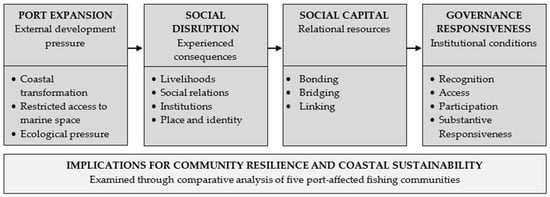
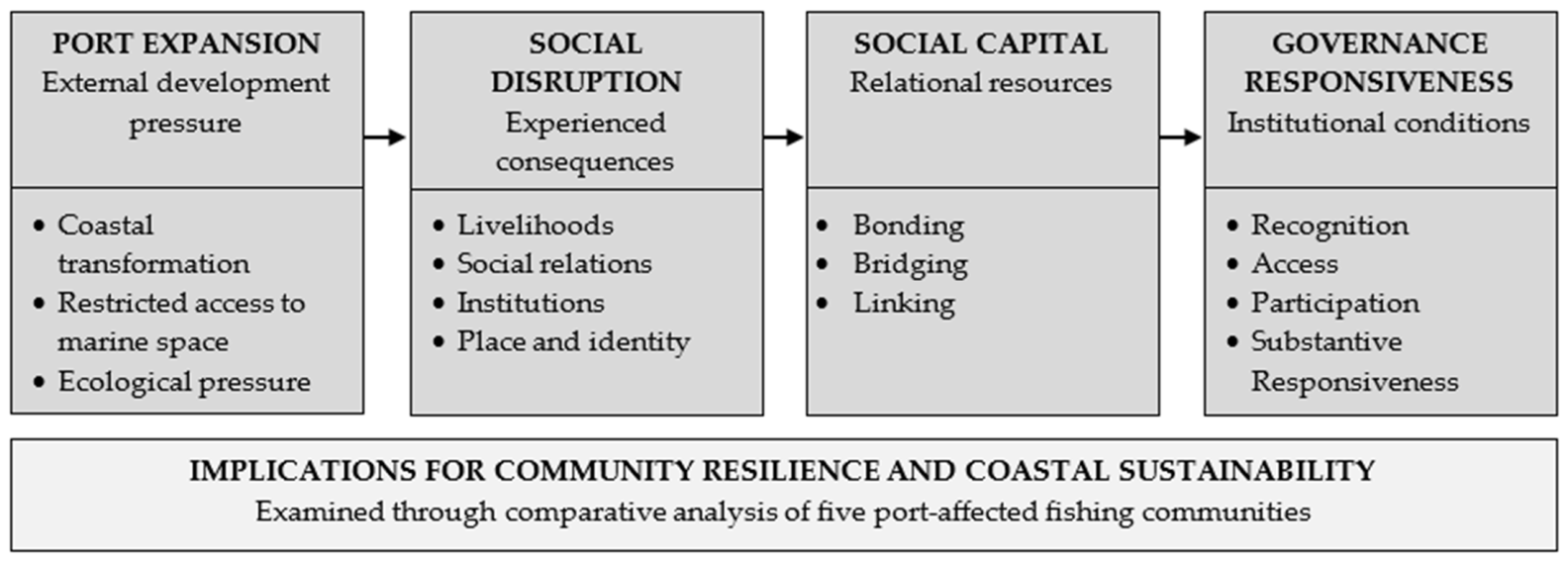
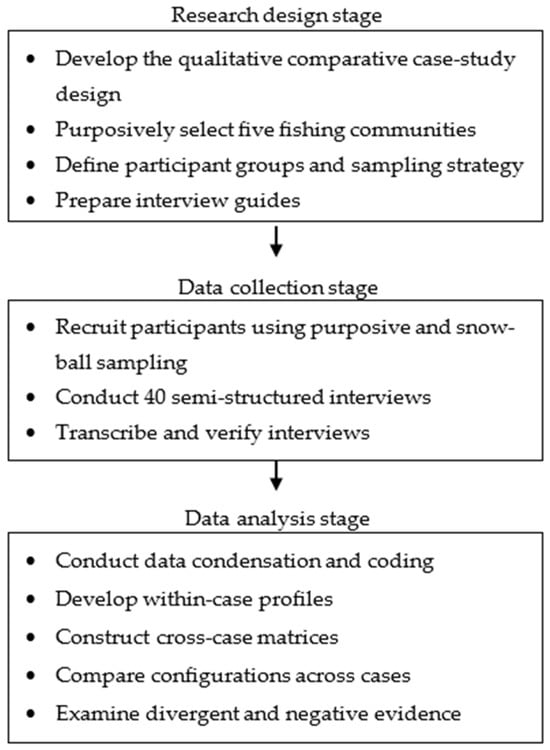
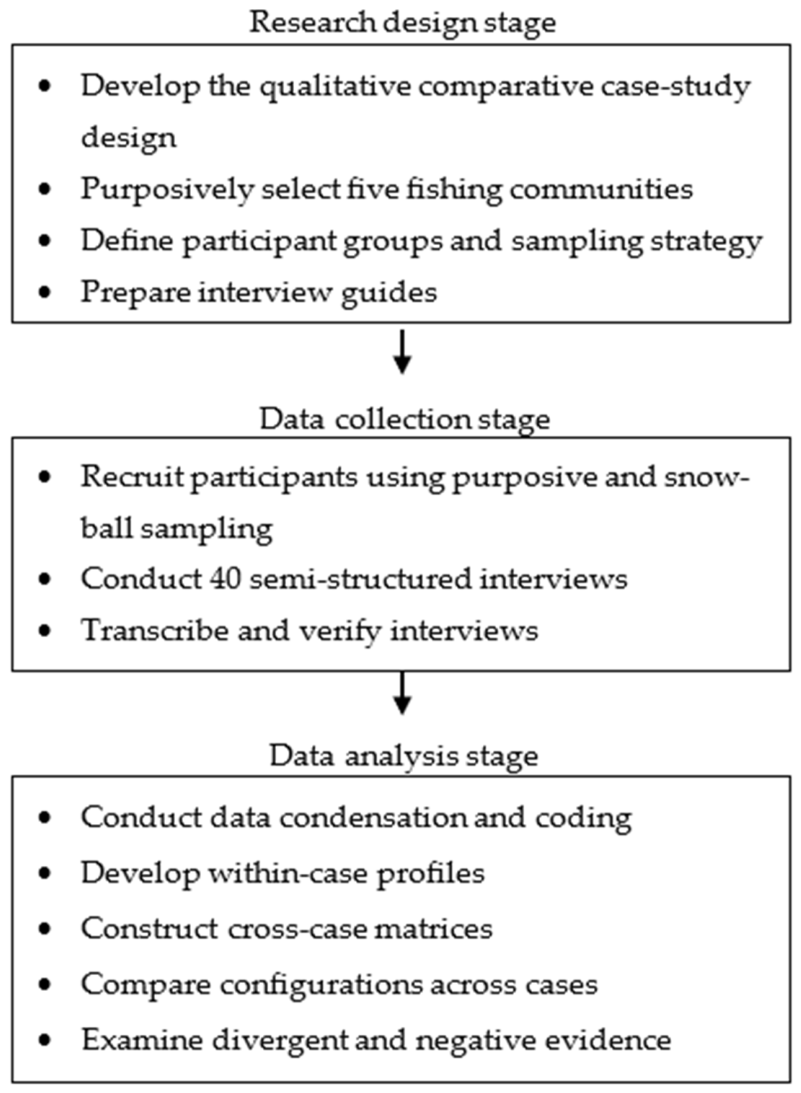
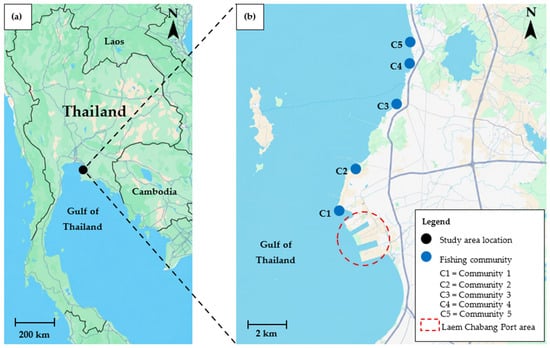
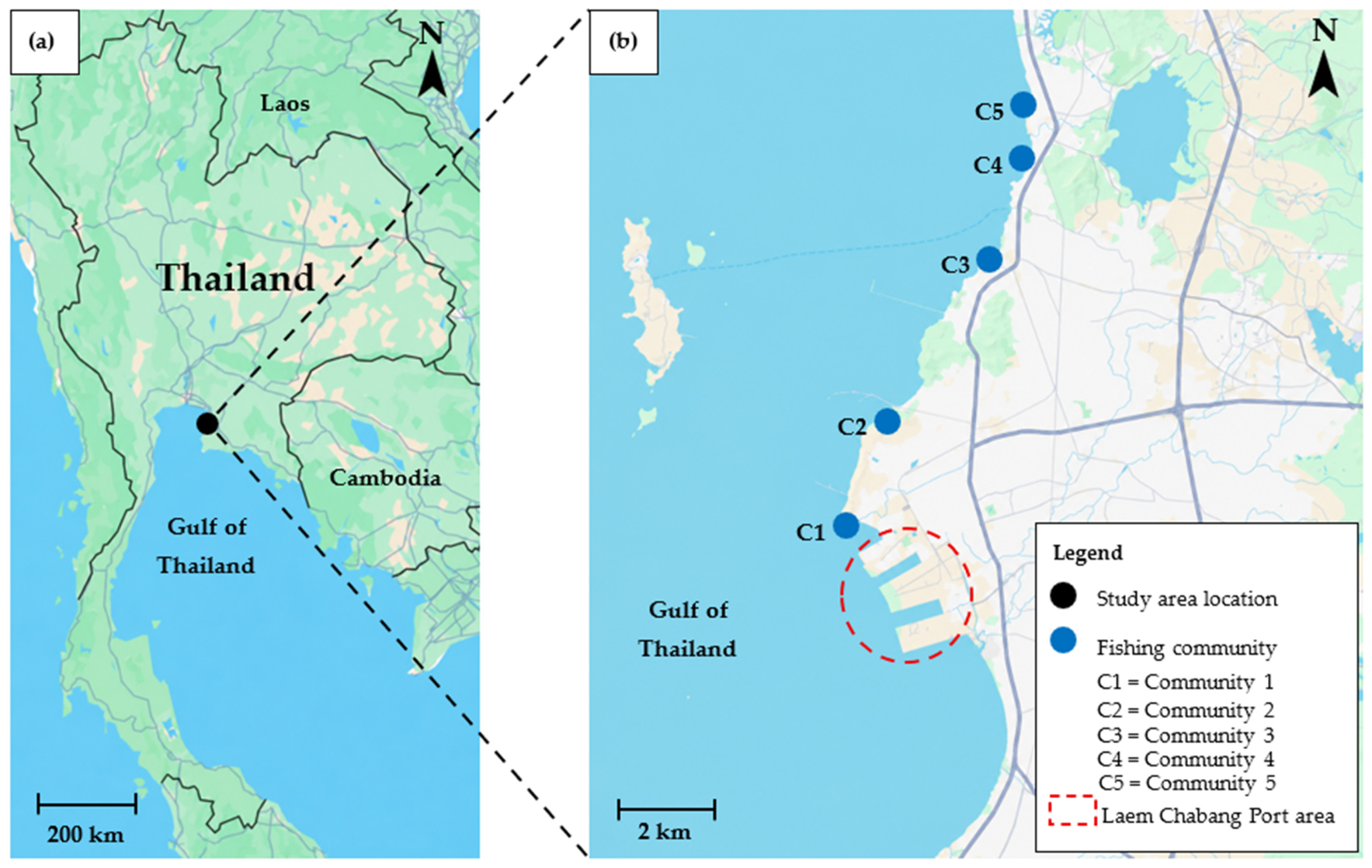
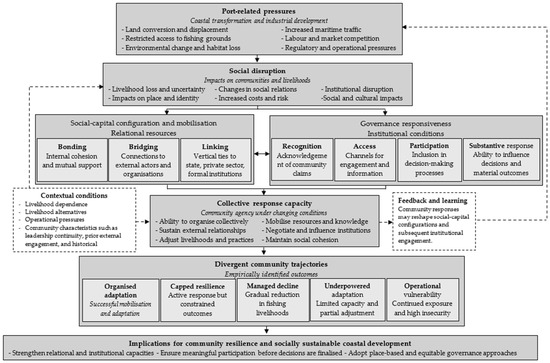
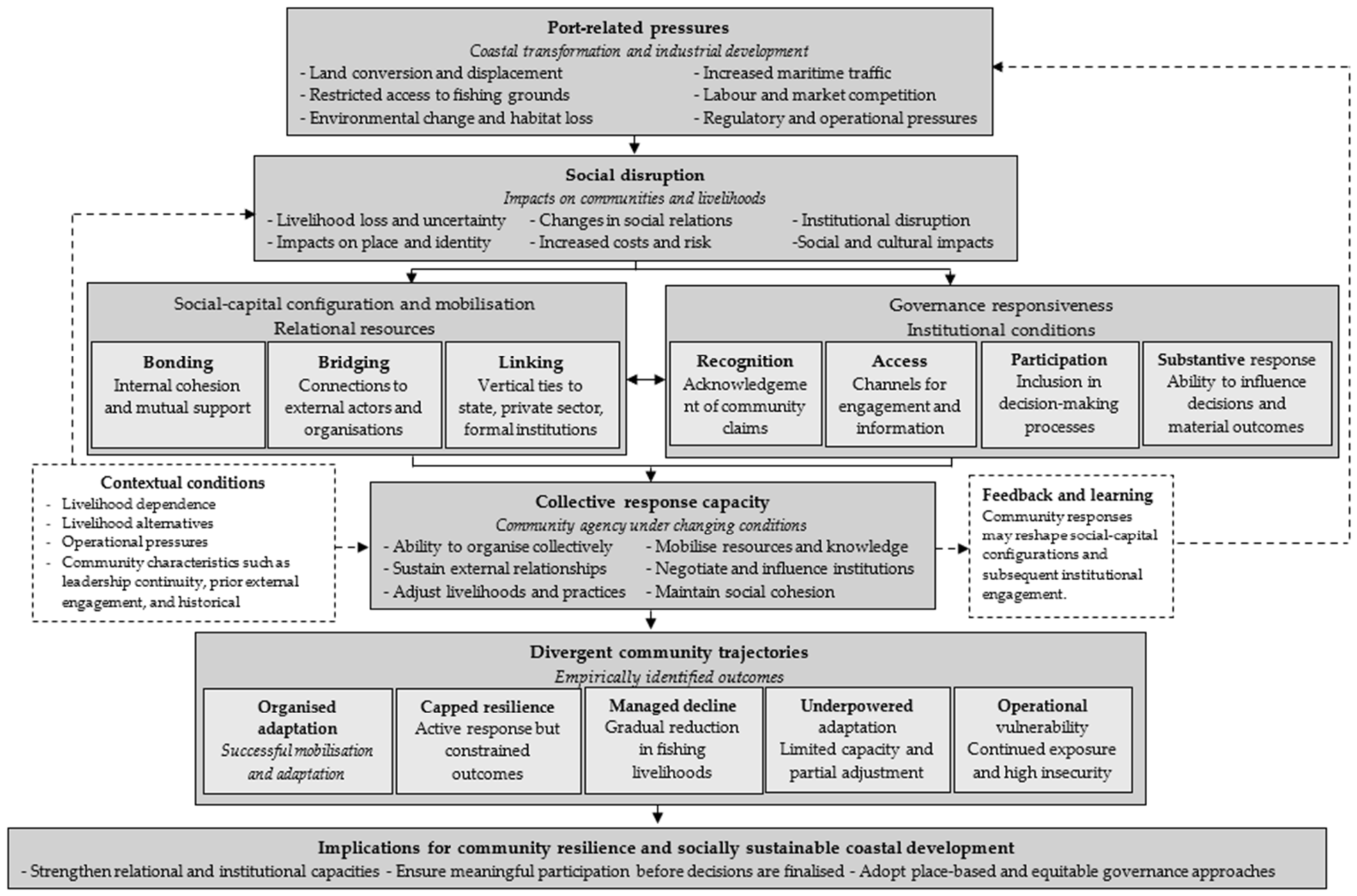

Disclaimer/Publisher’s Note: The statements, opinions and data contained in all publications are solely those of the individual author(s) and contributor(s) and not of MDPI and/or the editor(s). MDPI and/or the editor(s) disclaim responsibility for any injury to people or property resulting from any ideas, methods, instructions or products referred to in the content. |
© 2026 by the author. Licensee MDPI, Basel, Switzerland. This article is an open access article distributed under the terms and conditions of the Creative Commons Attribution (CC BY) license.