


Abstract
This paper examines the determinants of carbon dioxide (CO2) emissions across the Gulf Cooperation Council (GCC) countries over the period 2000–2022. The GCC region presents a distinctive empirical setting, characterized by high fossil fuel dependency, among the highest per capita CO2 emission rates globally, and ambitious national sustainability agendas. Despite the region’s environmental significance, empirical evidence on the combined role of digitalization, investment flows, demographic pressures, and renewable energy in driving GCC emissions remains limited. This study examines these factors together, unlike much of the existing GCC literature, taking into account cross-sectional dependence and heterogeneity across GCC economies. The analysis considers the association of foreign direct investment, economic growth, energy use, information and communication technologies, population, and renewable energy with CO2 emissions and environmental sustainability. A balanced panel dataset from the World Bank is employed to examine both the short-run dynamics and long-run associations. To account for cross-sectional dependence and heterogeneity, the study applies second-generation panel econometric techniques, including the Cross-sectionally Augmented Dickey–Fuller (CADF) equation, the Cross-sectionally Augmented IPS (CIPS) test, Westerlund cointegration tests, and the Cross-Sectional Autoregressive Distributed Lag (CS-ARDL) model, complemented by Dumitrescu–Hurlin causality and fixed-effects instrumental-variable robustness analyses. The empirical findings show that energy use, population, and economic growth are positively associated with CO2 emissions. ICT is negatively associated with CO2 emissions in the CS-ARDL estimates; however, this relationship becomes statistically insignificant when ICT is treated as endogenous in the IV robustness analysis, indicating that it should not be interpreted as a causal emission-reduction effect. Renewable energy and foreign direct investment do not show statistically significant associations in the main CS-ARDL estimates. The causality results further indicate predictive causality from CO2 emissions to ICT, reinforcing the possibility of reverse causality. These findings carry important policy implications for GCC policymakers seeking to align economic development with environmental sustainability and long-term climate commitments.
1. Introduction
Climate change has emerged as one of the greatest global challenges, with carbon dioxide (CO2) emissions recognized as one of the main contributors to global warming and environmental degradation [1]. As countries continue to pursue economic growth, industrial development, and technological advancement, concerns regarding environmental sustainability have become increasingly important. The Gulf Cooperation Council (GCC) represent a notable case in point due to their rapid economic growth, high energy consumption, growing populations, and increasing adoption of technologies [2]. Understanding the factors influencing CO2 emissions in these economies is therefore important for effective environmental policies.
Economic growth has traditionally been associated with increased production, transportation, and energy consumption, all of which contribute to higher carbon emissions [3]. Energy use remains one of the largest drivers of environmental degradation because most economic activities heavily rely on energy resources [4]. At the same time, foreign direct investment (FDI) can either increase environmental pressure through pollution-intensive industries or improve environmental performance by introducing cleaner technologies and more efficient production methods [5].
The rapid expansion of information and communication technology (ICT) has also transformed economic activity throughout the GCC region. Internet usage and mobile cellular subscriptions have increased significantly with continuing investments in digital infrastructure technologies and smart economy strategies by governments [6]. Even though digital technologies may help improve efficiency and reduce resource waste, they require more power in the form of data centers, networks, and digital devices, and therefore may influence CO2 emissions [4]. Population growth contributes to these environmental concerns because it raises the need for energy, transport, housing, and other public services [7].
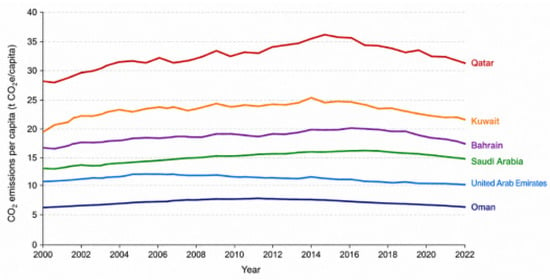
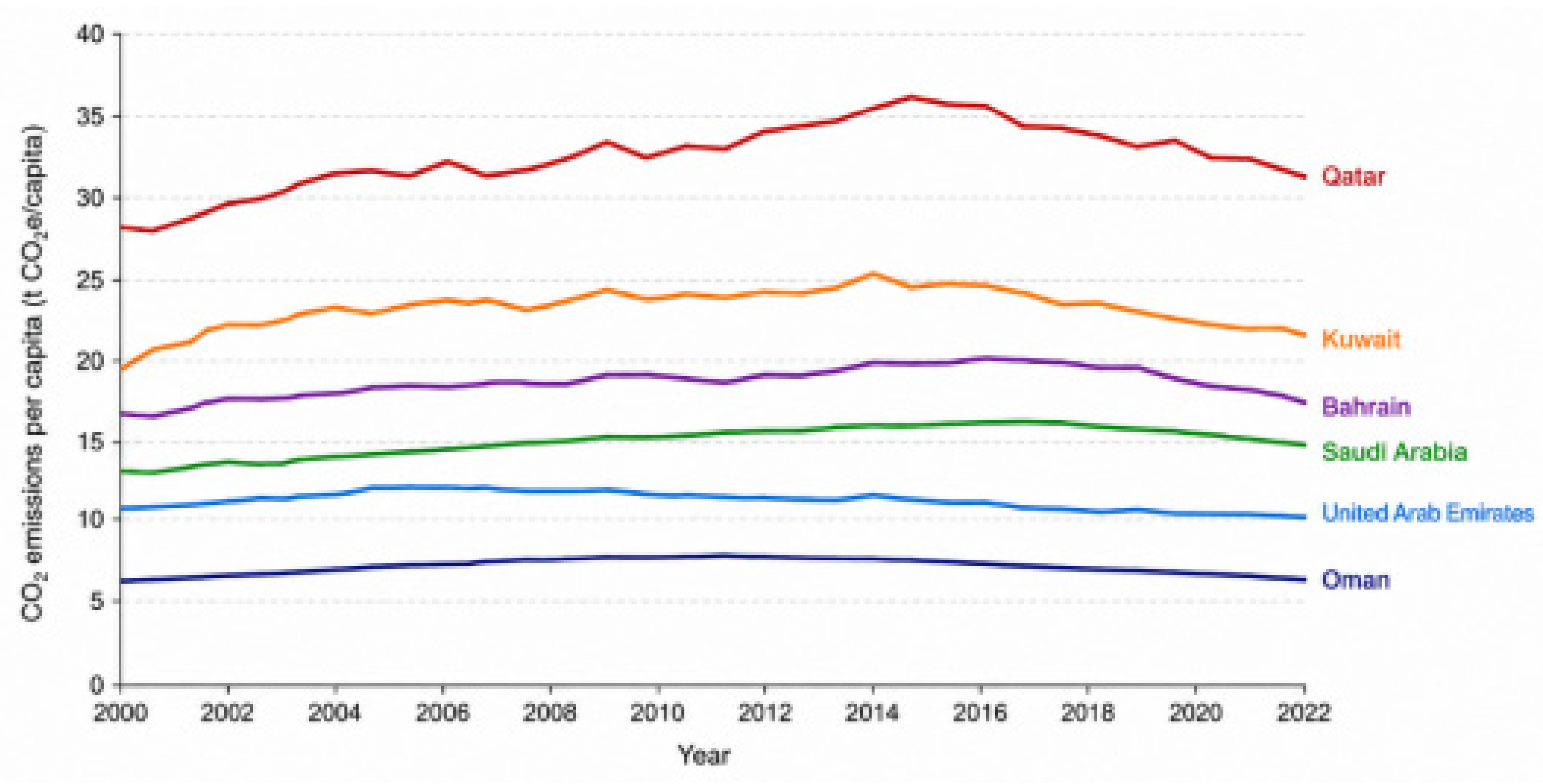
Figure 1 illustrates the trends in CO2 emissions per capita across the six GCC countries from 2000 to 2022. Qatar recorded the highest emission levels throughout the period, followed by Kuwait and Bahrain, while Saudi Arabia, the United Arab Emirates, and Oman showed comparatively lower levels.
Figure 1.
Trends in CO2 emissions across GCC countries. Source: World Bank database [2]. World Development Indicator: Carbon dioxide (CO2) emissions excluding LULUCF per capita (t CO2 e/capita).
The GCC countries have introduced ambitious economic diversification programs, such as Saudi Vision 2030, which emphasize sustainable development alongside digital transformation [2]. Evaluating how foreign investment, economic growth, energy use, and ICT development influence environmental quality is therefore increasingly relevant for policymakers. Despite the growing body of literature on CO2 emission determinants, studies focusing specifically on the GCC region and jointly examining the roles of digitalization, FDI, and demographic factors using second-generation panel techniques remain scarce. This study investigates the determinants of CO2 emissions across the GCC countries during the period 2000–2022. Specifically, it examines the impacts of foreign direct investment, GDP per capita, energy use, internet usage, mobile cellular subscriptions, and population using advanced panel-data econometric techniques, including the Cross-sectionally Augmented Dickey–Fuller (CADF), Cross-sectionally Augmented IPS (CIPS), Westerlund cointegration test, and Cross-Sectional Autoregressive Distributed Lag (CS-ARDL) approaches, which account for cross-sectional dependence and slope heterogeneity across GCC economies. The findings contribute to the growing literature on environmental sustainability in resource-rich economies and provide evidence-based recommendations for achieving balanced economic growth and environmental protection within the GCC region.
2. Literature Review
Environmental sustainability has become one of the major concerns in environmental economics due to the continuous increase in CO2 emissions associated with economic expansion, rapid urbanization, industrialization, population growth, and technological development [8,9,10]. Identifying the key determinants of CO2 emissions has therefore attracted considerable attention among researchers and policymakers seeking to achieve sustainable economic growth while reducing environmental degradation. This concern is particularly pressing for the GCC countries, which have committed to ambitious sustainability agendas, including Saudi Vision 2030 and the UAE Net Zero 2050 strategy, yet continue to face significant environmental challenges associated with rapid economic and demographic expansion. A substantial body of empirical literature has investigated the factors affecting CO2 emissions across developed and developing economies, producing mixed findings depending on countries’ economic structures, energy systems, technological advancement, and empirical methodologies [11,12,13,14]. The following subsections review the key determinants most relevant to the present study.
2.1. ICT and CO2 Emissions
The relationship between ICT and CO2 emissions has attracted growing empirical attention, with studies providing mixed evidence. Faisal, Azizullah, Tursoy and Pervaiz [8] found that ICT initially increases CO2 emissions through higher energy demand but improves environmental quality as technological development progresses. Similarly, Ebaidalla and Abusin [12] demonstrated that ICT expansion initially raises environmental degradation in GCC countries, though this effect diminishes with greater digital maturity. Other studies report more consistently positive environmental effects: Salahuddin et al. [15] found a long-run relationship between internet usage and CO2 emissions in OECD countries; Wang and Xu [16] reported that internet usage contributes to environmental improvement under conditions of higher human capital; and Chatti [11] and Appiah-Otoo et al. [17] demonstrated that mobile cellular subscriptions contribute to lower emissions through improvements in technological efficiency. In the GCC context, Rahaman and Islam [14] and Islam et al. [18] argued that digital transformation promotes environmental sustainability through improved resource management and energy efficiency.
Recent studies further reinforce the positive environmental potential of ICT. Iqbal et al. [19] demonstrated that ICT, combined with green technological innovation and renewable energy, significantly reduces CO2 emissions. Khan et al. [20] and Liu et al. [21] confirmed that ICT contributes to environmental improvement when integrated with renewable energy and financial development, while Añón Higón et al. [22] and Chatti and Majeed [23] highlighted the importance of complementary technological innovation and smart urbanization. Overall, while evidence remains heterogeneous, the majority of recent studies suggest that ICT can support environmental sustainability, particularly when accompanied by efficient energy policies and institutional quality. Nevertheless, limited evidence has constructed and examined a composite ICT index—comprising mobile cellular subscriptions, internet usage, and telephone subscriptions—within the GCC context, motivating the present study.
2.2. Energy Use and CO2 Emissions
Energy use has long been recognized as one of the most significant determinants of CO2 emissions, particularly in fossil-fuel-dependent economies. Faisal, Azizullah, Tursoy and Pervaiz [8] demonstrated that higher energy use significantly increases carbon emissions, while Elhaj [13] confirmed that fossil-fuel-based energy use remains the principal driver of CO2 emissions in GCC economies despite recent efficiency improvements. Islam, Rahaman, Rehman and Khan [18] similarly found that increasing energy use continues to exert a positive effect on CO2 emissions, arguing that ICT improvements alone are insufficient without complementary clean energy policies. Recent evidence further shows that renewable energy adoption significantly mitigates these adverse effects: Iqbal, Hassan, Geng and Cai [19]; Khan, Liu and Khan [20]; and Liu, Khan, Khan and Han [21] confirmed that ICT and renewable energy jointly reduce CO2 emissions by improving production efficiency and reducing reliance on conventional energy sources. Overall, energy use consistently emerges as one of the strongest determinants of CO2 emissions and is incorporated as a principal explanatory variable in the present study.
2.3. Population and CO2 Emissions
Population growth has been widely recognized as an important determinant of CO2 emissions due to its direct influence on energy demand, transportation, industrial production, and urban expansion. Alaganthiran and Anaba [10] found that demographic growth contributes significantly to environmental degradation by increasing pressure on production systems and natural resources, while Salahuddin, Alam and Ozturk [15] highlighted that growing demographic pressures stimulate higher energy demand and [16] argued that the environmental consequences depend largely on countries’ technological capabilities and energy efficiency. Chatti and Majeed [23] further demonstrated that rapid urbanization and population concentration significantly intensify environmental pressures, noting that smart urban development and advanced ICT can partially mitigate these effects through improved resource management. Despite its acknowledged importance, population has received relatively limited attention in studies examining the ICT–environment nexus within GCC countries, where rapid demographic expansion and increasing resource demand make this variable particularly relevant.
2.4. Research Gap
Despite the rapidly growing literature on environmental sustainability, several important research gaps remain. Existing empirical studies have extensively examined the effects of ICT, energy use, economic growth, foreign direct investment, and demographic factors on CO2 emissions. However, the findings remain inconsistent across countries, datasets, and empirical methodologies, particularly within the context of GCC economies [13,14,18,24,25].
First, although ICT has become one of the most widely investigated determinants of environmental sustainability, previous studies have generally relied on aggregate ICT indicators or composite digitalization measures. Only a limited number of studies have examined ICT as a composite index—combining internet usage, mobile cellular subscriptions, and telephone subscriptions—rather than as separate proxies, despite evidence that these indicators may influence environmental sustainability through different transmission mechanisms [11,15,16]. Accordingly, the present study employs internet usage and mobile cellular subscriptions as two independent ICT indicators to provide a more comprehensive assessment of digital transformation and its impact on CO2 emissions.
Second, several recent studies have adopted composite indices, such as the Frontier Technology Readiness Index (FTRI), to evaluate technological readiness and digital transformation [13]. Although this index provides a broad measure of technological readiness, it does not allow researchers to isolate the direct environmental effects of ICT itself, as the estimated impact reflects the combined influence of several technological and institutional dimensions rather than digital diffusion alone [19,23,26]. Therefore, the present study focuses on direct and observable ICT indicators to obtain clearer empirical evidence regarding the environmental implications of ICT.
Third, economic growth and foreign direct investment have consistently been identified as important determinants of CO2 emissions. Numerous studies reported that economic growth increases environmental degradation through higher production and energy demand [10,15,27], while FDI may either improve environmental quality through technology transfer or increase emissions depending on investment characteristics and host-country conditions [10,14]. Given their well-established relationship with environmental degradation, the present study incorporates economic growth and FDI as control variables, allowing the analysis to isolate the environmental effects of ICT while controlling for other widely recognized determinants.
Finally, although several studies have focused on GCC countries, methodological limitations remain. Ebaidalla and Abusin [12], for instance, did not explicitly account for the high degree of cross-sectional dependence characterizing GCC economies despite their strong economic integration, similar energy structures, and common regional policies. Ignoring cross-sectional dependence may lead to biased statistical inference and unreliable long-run estimates.
To overcome these limitations, the present study explicitly accounts for cross-sectional dependence by employing second-generation panel unit root tests prior to estimating the long-run relationship using the CS-ARDL model. Compared with earlier GCC studies, this empirical framework provides more robust and reliable estimates while simultaneously examining the effects of ICT, energy use, population, economic growth, and FDI on CO2 emissions. The present study thereby contributes to the environmental sustainability literature by offering methodologically rigorous evidence to inform climate and energy policies across GCC economies transitioning towards diversified and low-carbon development pathways. By doing this, it directly supports the goals of the sustainability transition set out in national plans like Saudi Vision 2030 and the UAE Net Zero 2050 strategy. It also gives evidence-based advice on how to balance economic growth with long-term environmental commitments.
3. Methods and Data
3.1. Data
The primary objective of this empirical analysis is to assess the factors influencing environmental sustainability across the GCC countries. To achieve this, the study investigates the environmental impacts of information and communication technology, energy use, population growth, and key macroeconomic factors. Following the established literature on regional environmental performance, economic expansion and structural shifts often dictate emissions trajectories. The dataset used for this investigation is a balanced panel spanning the period from 2000 to 2022, with statistical observations drawn from the World Bank database [2].
The dependent variable is total CO2 emissions. The three main independent variables are information and communication technology (ICT), energy use (Enr), and population (Pop). ICT is constructed as a composite index encompassing mobile cellular subscriptions, individuals using the internet, and telephone subscriptions, reflecting the accelerating digital transformation across the GCC region. To make the three indicators comparable, we standardize each component using the z-score transformation and then combine the standardized values by calculating an equal-weight average to construct the composite ICT index. Energy use (Enr) captures total energy consumption intensity, while population (Pop) accounts for demographic-driven environmental pressures. In addition, foreign direct investment net inflows (FDI) and GDP per capita are incorporated as control variables to account for their widely recognized roles in shaping CO2 emission trajectories. The complete structural breakdown and functional definitions of these variables are detailed below in Table 1.
Table 1.
Variable explanation.
Before executing the primary panel regressions, it is essential to examine the statistical properties and distributional characteristics of the updated dataset. Table 2 presents comprehensive descriptive statistics for the variables evaluated across the GCC panel from 2000 to 2022, focusing on their central tendency, dispersion, and asymmetry.
Table 2.
Descriptive analysis.
The descriptive statistics presented in Table 2 highlight the main characteristics of the GCC panel dataset and indicate notable regional heterogeneity. CO2 emissions, FDI, and population exhibit positive skewness, while GDP, ICT, and energy use show negative skewness [12]. GDP and population display considerable variability across GCC countries, reflecting differences in economic and demographic scales [25]. Furthermore, kurtosis values suggest that FDI, GDP, ICT, and Enr follow leptokurtic distributions (kurtosis > 3), indicating the presence of extreme observations and heavy tails, whereas CO2 emissions and population present platykurtic distributions (kurtosis < 3). Overall, these findings suggest substantial cross-country heterogeneity within the GCC sample and support the use of panel-data techniques in subsequent analyses.
To further scrutinize linear dependencies and ensure the absence of severe multicollinearity, a Pearson correlation analysis was conducted before implementing the primary econometric estimates [28]. Table 3 sets out the detailed correlation matrix.
Table 3.
Correlation matrix and variance inflation factors.
As presented in Table 3, the correlation analysis reveals a strong positive association between CO2 emissions and population, reflecting the close interaction among demographic and environmental factors within GCC economies. Conversely, a strong negative relationship is observed between economic growth and energy consumption, with a correlation coefficient of −0.6651. The ICT indicator also exhibits a positive relationship with emissions, suggesting its relevance within the broader development process. Furthermore, the correlation matrix indicates no evidence of severe multicollinearity among the explanatory variables, supporting the suitability of including these indicators simultaneously in the empirical model.
3.2. Methodology
To evaluate the short-run and long-run environmental impacts of digital communication infrastructure alongside key macroeconomic and demographic components, the basic theoretical and functional framework of this study can be initially expressed through the following structural function:
where the subscript “i” denotes the cross-sectional units (the six GCC countries) and “t” represents the specific time period, extending annually from 2000 to 2022. The logarithmic form of the paper model is shown in Equation (1):
where represents the natural logarithm operator, and signifies the idiosyncratic structural error term of the dynamic regression system [29].
Given the deep economic integration and resource similarities among the GCC countries, macro-level shocks or policies in one nation are highly likely to propagate across neighboring states. To systematically test for cross-sectional dependence across the panel data, this study utilizes the Lagrange Multiplier (LM) test pioneered by Breusch and Pagan [30]. Furthermore, Pesaran’s cross-sectional dependence (CD) diagnostic test statistic is calculated to evaluate residual independence [30]:
If cross-sectional dependence is confirmed within the variables, conventional first-generation panel unit root assessments lose power and display size distortions. To circumvent this, second-generation panel unit root techniques are performed, specifically utilizing the Cross-sectionally Augmented Dickey–Fuller (CADF) equation formulated by Pesaran [31].
Following the unit root confirmations, long-run equilibrium co-movements are investigated using the Westerlund [32] second-generation panel cointegration framework. Upon establishing a steady long-run cointegrating relationship, the system parameters are estimated via the Cross-Sectional Autoregressive Distributed Lag (CS-ARDL) method introduced by Chudik and Pesaran [33]. The dynamic panel CS-ARDL specification is written as:
where consolidates the matrix of core regressors, and explicitly integrates the unobserved common factors captured via cross-sectional averages of both dependent and independent series to absorb global and regional CD.
To examine the potential endogeneity of ICT, an additional fixed-effects instrumental-variable (IV) robustness test is estimated, treating ICT as endogenous and using its lagged values as instruments. To further examine the direction of predictive relationships among the variables, the study applies the heterogeneous Dumitrescu–Hurlin Panel Causality Test [34]. The test allows the causal relationships to differ across countries and provides evidence on the direction of predictive causality within the panel. Combined, these complementary approaches offer a more complete assessment of the relationships among CO2 emissions and their determinants among GCC economies.
4. Results and Discussion
4.1. Results
This section presents the empirical findings of the study. Given the considerable similarities among the GCC countries in many characteristics, and their interconnection through several channels, including trade agreements, investment flows, geographical proximity, and a common language, ignoring the interdependence among cross-sectional units may lead to misleading and biased results [28]. Therefore, prior to conducting unit root tests [31] for the study variables, the presence of cross-sectional dependence in the sample data is examined using the Pesaran [28] CD test.
The results presented in Table 4 clearly show that the null hypothesis of cross-sectional independence for CO2 emissions, FDI, GDP growth, ICT, Pop, and REN is rejected, indicating that changes in these variables in one GCC country may affect the others. However, the null hypothesis of cross-sectional independence for energy use cannot be rejected (p = 0.187), indicating that the Pesaran CD test does not provide statistically significant evidence of contemporaneous cross-country dependence in this variable during the sample period. This may be attributed to differences in domestic energy structures, pricing and subsidy regimes, industrial composition and national energy policy frameworks in the GCC countries. For this reason, the second-generation unit root test was employed, as explained in the methodology section.
Table 4.
Cross-sectional dependence tests.
Table 5 shows the results of the second-generation panel unit root tests. The maximum lag length was restricted to one to conserve degree of freedom and avoid over-parameterization due to the limited time range of the panel (T = 23). The dynamic specification of the CIPS test was obtained with a general to particular approach based on a joint F-test in the specified maximum lag. The CADF test was implemented with one augmentation lag in an effort to keep the results consistent.
Table 5.
Second-generation panel unit root tests.
The CIPS test results indicate that most variables achieve stationarity at the level I(0), with the exception of energy consumption and renewable electricity output, which becomes stationary only after first differencing I(1). On the other hand, the CADF test shows that the ICT index and population are stationary at the level I(0); however, after first differencing I(1), all variables become stationary at the significance level of 1% and 5%.
To examine the long-run relationships between carbon dioxide emissions and the study variables across GCC economies, this paper employs the cointegration test developed by Westerlund [32]. The results in Table 6 indicate no long-run relationship between carbon dioxide emissions and the other variables, as all statistics are not statistically significant. It is worth noting that this test is highly sensitive to small sample sizes. Therefore, to overcome this limitation, this study relies on the CS-ARDL model to accurately capture long-run dynamics.
Table 6.
Westerlund cointegration tests.
To analyze the short- and long-run relationships, the CS-ARDL model estimates reported in Table 7 provide evidence of significant dynamic relationships among the variables. The coefficient of the lagged dependent variable, L.lnCO2, is negative and statistically significant (−1.444, p < 0.01), indicating strong short-run adjustment dynamics. However, the Westerlund test does not provide formal evidence of cointegration, and therefore the estimated long-term coefficients are interpreted with caution as conditional long-run relationships rather than conclusive equilibrium effects.
Table 7.
CS Panel ARDL model.
The estimates indicate that the short-run association between ICT and CO2 emissions is negative and significant at the 10% level. The conditional long-run coefficient also shows a significant negative association at the 5% significance level, indicating consistency across both time horizons. However, given the endogeneity concerns identified in the additional IV analysis, this relationship should not be interpreted as evidence of a causal emission-reduction effect of ICT.
GDP per capita growth, population, and energy use are positively related to CO2 emissions. The GDP per capita growth rate is statistically significant at the 5% level both in the short run and conditional long run. Population is significant at the 10% level in the short run and at the 5% level in the conditional long run, while energy use is positive and statistically significant at the 1% level in both horizons. In contrast, FDI and renewable energy do not show statistically significant associations with CO2 emissions in either horizon.
Accordingly, Table 8 presents the results of the Dumitrescu–Hurlin causality test between carbon dioxide emissions and the independent variables. The results reveal unidirectional Granger causality from carbon dioxide emissions to economic growth, population, ICT, and renewable energy. This indicates that the past values of carbon dioxide emissions contain useful information for predicting subsequent changes in these variables.
Table 8.
Dumitrescu–Hurlin panel causality test.
Conversely, no evidence of Granger causality is found between carbon dioxide emissions and either FDI or energy use in either direction, indicating that past carbon dioxide emissions do not significantly predict FDI or energy use, and these variables’ past values do not significantly predict carbon dioxide emission.
To examine potential endogeneity and reverse causality between ICT and CO2 emissions, additional fixed-effects IV estimations were conducted by treating ICT as endogenous and instrumenting it with its first lag, second lag, and both lags jointly. As reported in Table 9, the ICT coefficient becomes statistically insignificant across all three specifications. This indicates that the negative ICT association obtained from the CS-ARDL model is sensitive to the treatment of endogeneity and should therefore not be interpreted as evidence that ICT causally reduces CO2 emissions. This finding is also consistent with the Dumitrescu–Hurlin result showing predictive causality from CO2 emissions to ICT.
Table 9.
Endogeneity robustness check.
To test robustness, we first examined the sensitivity of the results to different measures of ICT. As reported in Table 10, we disaggregated the composite ICT index into its three basic indicators, namely internet usage, mobile subscriptions and telephone subscriptions and re-estimated CS-ARDL for each of the indicators. The coefficients for these three distinct ICT measures were negative in both the short run and long run, consistent with the pattern observed for the composite ICT index. However, the coefficients were not statistically significant. This suggests that the direction of the ICT–CO2 association is generally similar across different measures of ICT, but its statistical significance is conditional on how digitalization is measured.
Table 10.
Robustness analysis using alternative ICT measures.
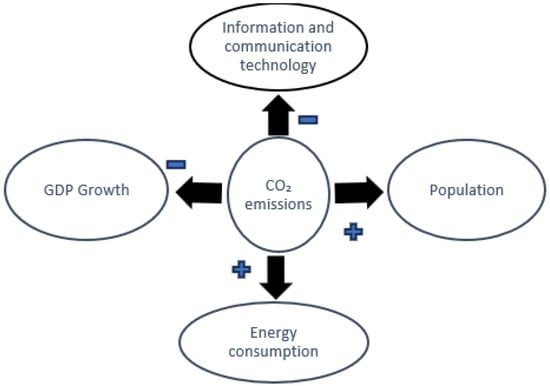
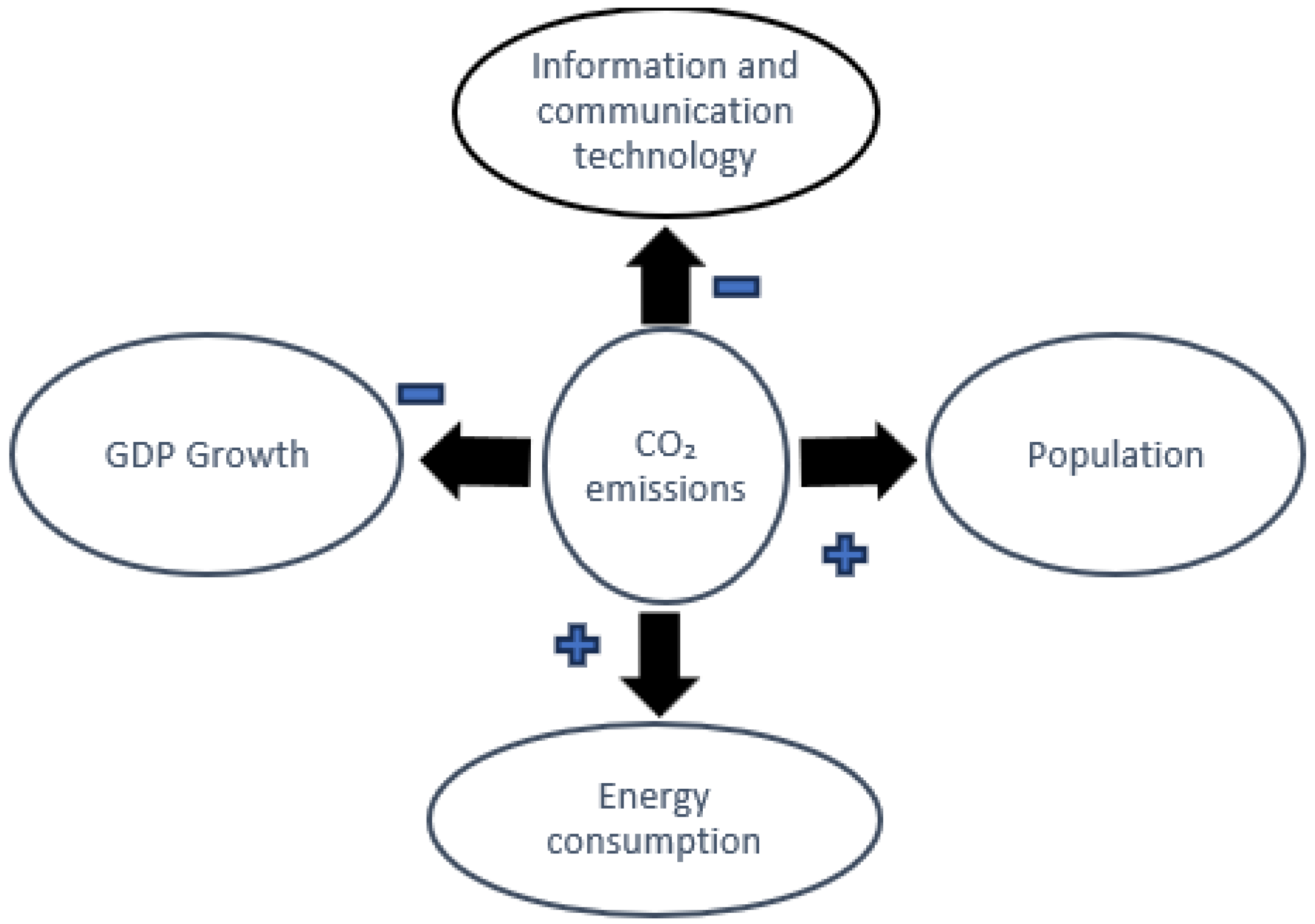
As a further robustness check, we conducted a leave-one-country-out sensitivity analysis by sequentially excluding each GCC country and re-estimating the CS-ARDL model. As reported in Table 11, the results show a very robust association between energy use and CO2 emissions. The coefficient is always positive and statistically significant at the 1% level in both the short run and conditional long run for all country exclusions. The ICT index always shows a negative coefficient for all specifications, but the statistical significance varies with the countries excluded. Despite the weak significance for some models, all still demonstrate a positive relationship between population and CO2 emissions. The effect of excluding some countries is more significant on the growth of GDP per capita, while renewable energy is statistically insignificant, and its coefficient changes its sign in different models. Overall the leave-one-country-out analysis indicates that the main directional results, particularly for ICT and energy use, are not driven by any single GCC country, although the statistical strength of some associations varies across models. Figure 2 shows the graphical results of the empirical analysis.
Table 11.
Leave-one-country-out robustness analysis.
Figure 2.
The graphical results of the empirical analysis from the ARDL model. Source: author presentation.
These findings collectively demonstrate that digital transformation, demographic pressures, and energy consumption are important factors associated with CO2 emission trajectories across GCC economies, with direct implications for regional sustainability and low-carbon transition policies.
4.2. Discussion
This section aims to provide an in-depth analysis and detailed discussion of the empirical results derived from the econometric tests. The focus is to elucidate the underlying economic dimensions of causal relationships and predictive causality, as well as the long-run and short-run associations of the study variables within the context of the GCC economies.
The CS-ARDL model results shown in Table 7 reveal a significant adjustment mechanism within the estimated model. However, given the lack of formal cointegration evidence from the Westerlund test, the long-run coefficients are interpreted cautiously as conditional long-run association rather than definitive equilibrium effects. Furthermore, the model reveals a persistent inverse relationship between ICT and CO2 emissions in the GCC. The causality tests in Table 8 confirm a unidirectional predictive relationship from emissions to ICT, a result that diverges from Ahmed and Le [9] in the ASEAN context. While ICT in ASEAN economies primarily acts as a production input driving emissions, our findings indicate that in the GCC, higher emission pressures may precede and encourage greater digital investment and adoption. This divergence reflects the region’s specific structural and climatic pressures, where digital transformation is adopted not merely for industrial expansion, but also as part of broader efforts toward environmental monitoring, efficiency, and sustainability.
Although Ebaidalla and Abusin [12] and Rahaman and Islam [14] report a positive association between ICT and emissions, applying the CS-ARDL model within the context of the GCC’s current digital maturity reveals a different relationship. Our findings show that ICT has a negative effect on CO2 emissions in both short run and long run. However, this negative association cannot be interpreted as a proof of a causal reduction in emissions by ICT, as the Dumitrescu–Hurlin test reveals a predictive causality from CO2 emissions to ICT and not the other way around.
This relationship is supported by the broader structural evolution of the region. Our study indicates that GCC economies are undergoing significant structural transformation. The CS-ARDL results show FDI has no statistically significant association with CO2 emissions, whereas GDP growth is positively and significantly associated with emissions in both the short and long run. The results thus do not provide enough evidence to support a claim of full economic–emissions decoupling. Nevertheless, the ongoing structural diversification, service-sector expansion, and clean energy transitions underway across the GCC under national agendas such as Saudi Vision 2030 and the UAE Net Zero 2050 Target may gradually alter this relationship. The unidirectional predictive causality from CO2 emissions to GDP suggests that information in past emission levels is useful for forecasting future economic growth. This could be one way for pressure from the environment to feed back into investment, regulation and economic restructuring, although this mechanism is not directly tested in the present study.
Beyond the role of technology and structural maturity, this study further explores the relationship of population growth and energy consumption with carbon emissions. While previous studies, such as Wen, et al. [35], have identified a unidirectional causal relationship from population to emissions in developing economies, the present study reveals a reversal in the GCC context. The causality results indicate unidirectional predictive causality from CO2 emissions to population. One possible explanation relates to the region’s distinctive demographic structure, as GCC countries rely heavily on expatriate labor, and carbon-intensive economic activities may coincide with increased demand for migrant workers. However, the migrant-pull mechanism has not been directly tested in the current analysis. Therefore, it should be understood as a plausible interpretation rather than a confirmed causal channel.
Moreover, the causality tests show no predictive causal relationship between energy consumption and CO2 emissions, although the coefficient for energy use in the CS-ARDL model is positive and statistically significant. These results are not necessarily conflicting because the CS-ARDL coefficient measures a conditional relationship, whereas the Dumitrescu–Hurlin test checks whether past values of one variable can help predict the other variable. The absence of predictive causality may be attributed, in part, to the heavily regulated and historically subsidized energy systems of GCC states, as well as differences in domestic consumption patterns and energy structures [18]. It may also capture the relatively steady dominance of fossil fuels through much of the study period, while recent advances in energy efficiency and renewable energy penetration are only slowly shifting the regional energy mix. Hence, the results should not be interpreted as evidence that energy consumption is unrelated to emissions but that the causality test finds no statistically significant predictive direction. The causality results also indicate a unidirectional predictive relationship from CO2 emissions to renewable energy. This suggests that increasing pressure from emissions may lead to greater deployment of renewable energy and policy responses in GCC economies. However, the absence of causality from renewable energy to CO2 implies that the growth of renewable energy during the study period has not resulted in a statistically detectable reduction in emissions.
5. Conclusions
This paper has investigated the determinants of CO2 emissions in the GCC countries over the period 2000–2022 by examining the roles of foreign direct investment, economic growth, energy use, an ICT composite index (comprising mobile cellular subscriptions, internet usage, and telephone subscriptions), population, and renewable energy. Using second-generation panel econometric techniques, the analysis accounted for cross-sectional dependence and examined both short-run dynamics and long-run associations among the variables.
The empirical results indicate that energy use and population are positively and significantly associated with CO2 emissions, highlighting the environmental challenges associated with rising energy demand and demographic pressures. Foreign direct investment does not show a statistically significant association with CO2 emissions in either the short run or conditional long run. The ICT composite index shows a significant negative association with CO2 emissions in both horizons, indicating that higher levels of digitalization are associated with lower emissions within the CS-ARDL specification. However, this relationship should not be interpreted as evidence that ICT causally reduces emissions. Importantly, the additional FE-IV endogeneity analysis shows that the ICT coefficient becomes statistically insignificant when ICT is treated as endogenous and instrumented using its lagged values. GDP growth per capita exhibits a positive and statistically significant association with CO2 emissions in both the short run and conditional long run, while renewable energy shows a negative but statistically insignificant relationship.
The Dumitrescu–Hurlin panel causality analysis further reveals unidirectional predictive causality running from CO2 emissions to GDP growth per capita, ICT, population, and renewable energy, while no predictive causal relationship is found between FDI and CO2 emissions or between energy use and CO2 emissions. These results suggest that increasing pressures from emissions may precede changes in economic activity, digital adoption, demographics patterns, and renewable energy development. In particular, the predictive direction from CO2 emissions to ICT suggests that environmental pressures may stimulate more digital investment and adoption rather than confirming a direct emission-reduction effect of ICT.
These findings suggest that GCC policymakers should continue encouraging environmentally responsible investment. Promoting energy efficiency and transitioning to cleaner energy sources remain important for addressing carbon emissions in line with the GCC countries’ national sustainability agendas and long-term climate commitments. Digital transformation is advancing rapidly across the region, enabling governments to enhance environmental and energy monitoring as well as resource efficiency and sustainable management. Digital technologies should be integrated into wider environmental and energy policies and should not be considered a direct solution to emission reductions. Green technological innovation can also help integrate economic development and sustainability goals.
GCC governments can further leverage their national sustainability frameworks to integrate digital transformation with environmental and energy policy objectives. These include Saudi Vision 2030, the UAE Net Zero by 2050 Strategic Initiative, and Qatar National Vision 2030. Scaling renewable energy capacity alongside improvements in energy efficiency remains an important priority, particularly given the evidence that emission pressures may precede renewable energy expansion. Complementary policy instruments such as green finance and well-designed carbon-management mechanisms may also help to support low-emission investment across the region.
At the country level, policy priorities may differ according to the national economic and energy structure. Saudi Arabia and the UAE can continue to combine digital technologies with energy-efficiency, environmental monitoring, and decarbonization initiatives, considering the size of economies and rapid digital transformation. Qatar and Kuwait may need to do more to enhance energy efficiency and reduce the carbon intensity of their energy-intensive activities. Oman and Bahrain can continue expanding renewable energy deployment and strengthen their digital infrastructure to enable a more resource-efficient development. There is scope for greater regional cooperation in areas like digitalization, renewable energy, energy efficiency, and environmental monitoring. The partnership could be an important part of helping the GCC transition toward lower carbon development.
This study has several limitations. First, although the analysis covers the full population of the six GCC countries, the small cross-sectional dimension may reduce statistical power, particularly for detecting small or heterogeneous effects. Second, the Westerlund test does not provide formal evidence of cointegration, which limits the interpretation of the estimated long-run coefficients; these are therefore treated as conditional long-run associations rather than established equilibrium effects. Third, potential endogeneity and reverse causality, particularly between ICT and CO2 emissions, cannot be fully ruled out. Although additional FE-IV estimations were conducted, the validity of lagged instruments remains subject to the usual identifying assumptions. Fourth, the composite ICT index may not fully capture qualitative dimensions of digital development. Fifth, renewable energy data show relatively limited variation, particularly during the earlier years of the sample, which may reduce the precision of the estimated renewable energy coefficient. The dataset spans the period 2000–2022 and may not fully reflect more recent structural changes in the region’s energy systems. Finally, the use of country-level aggregate data may mask important firm-level and sectoral heterogeneity.
Future research could extend this analysis to other developing regions, particularly the broader MENA region, to assess the generalizability of the findings. It could also examine additional dimensions of digitalization beyond the ICT index used in this study, explore renewable energy and energy transition in greater depth, and use firm-level and sector-level data to provide a more nuanced understanding of the ICT–emissions relationship in the GCC.
Author Contributions
Conceptualization, J.B., S.A., N.A., D.A., A.A. and M.E.; methodology, J.B.; software, J.B.; validation, J.B., S.A., N.A., D.A., A.A. and M.E.; formal analysis, J.B.; investigation, J.B., S.A., N.A., D.A., A.A. and M.E.; resources, J.B.; writing—original draft preparation, J.B., S.A., N.A., D.A., A.A. and M.E.; writing—review and editing, J.B., S.A., N.A., D.A., A.A. and M.E.; funding acquisition, M.E. All authors have read and agreed to the published version of the manuscript.
Funding
This research was funded by Princess Nourah bint Abdulrahman University Researchers Supporting Project number (PNURSP2026R866), Princess Nourah bint Abdulrahman University, Riyadh, Saudi Arabia.
Institutional Review Board Statement
Not applicable.
Informed Consent Statement
Not applicable.
Data Availability Statement
The data presented in this study are openly available in [World Bank] at [http://databank.worldbank.org/data/source/world-development-indicators], accessed on 3 June 2026.
Acknowledgments
The authors extend their appreciation to Princess Nourah bint Abdulrahman University Researchers Supporting Project number (PNURSP2026R866), Princess Nourah bint Abdulrahman University, Riyadh, Saudi Arabia.
Conflicts of Interest
The authors declare no conflicts of interest.
References
- Intergovernmental Panel on Climate Change. Climate Change 2023: Synthesis Report; IPCC: Geneva, Switzerland, 2023. [Google Scholar]
- The World Bank World Development Indicators (Wdi); The World Bank: Washington, DC, USA, 2025.
- Grossman, G.M.; Krueger, A.B. Economic Growth and the Environment. Q. J. Econ. 1995, 110, 353–377. [Google Scholar] [CrossRef] [Scilit]
- International Energy. Co2 Emissions in 2023; International Energy Agency: Paris, France, 2023. [Google Scholar]
- Organisation for Economic Co-Operation and Development. Foreign Direct Investment for Development: Maximising Benefits, Minimising Costs; OECD: Paris, France, 2002. [Google Scholar]
- International Telecommunication Union. Measuring Digital Development: Facts and Figures 2023; International Telecommunication Union: Geneva, Switzerland, 2023. [Google Scholar]
- United Nations World Population Prospects 2022; United Nations Department of Economic and Social Affairs: New York, NY, USA, 2022.
- Faisal, F.; Azizullah, A.; Tursoy, T.; Pervaiz, R. Does Ict Lessen Co2 Emissions for Fast-Emerging Economies? An Application of Heterogeneous Panel Estimations. Environ. Sci. Pollut. Res. 2020, 27, 36567–36582. [Google Scholar] [CrossRef] [Scilit]
- Ahmed, Z.; Le, H.P. Linking Information Communication Technology, Trade Globalization Index, and Co2 Emissions: Evidence from Advanced Panel Techniques. Environ. Sci. Pollut. Res. 2020, 27, 43900–43916. [Google Scholar] [CrossRef] [Scilit]
- Alaganthiran, J.R.; Anaba, M.I. The Effects of Economic Growth on Carbon Dioxide Emissions in Selected Sub-Saharan African Countries. Heliyon 2022, 8, e11193. [Google Scholar] [CrossRef] [Scilit]
- Chatti, W. Moving Towards Environmental Sustainability: ICT, Freight Transport, and Co2 Emissions. Heliyon 2021, 7, e08390. [Google Scholar] [CrossRef] [Scilit]
- Ebaidalla, E.M.; Abusin, S. The Effect of ICT on Co2 Emissions in the GCC Countries: Does Globalization Matter? Int. J. Energy Econ. Policy 2022, 12, 56–66. [Google Scholar] [CrossRef] [Scilit]
- Elhaj, M. Do Energy Efficiency and Technology Boost Sustainable Environment: Evidence from GCC Countries. J. Ecohumanism 2024, 3, 2545–2561. [Google Scholar] [CrossRef] [Scilit]
- Rahaman, S.H.; Islam, M.S. ICT and Food Security Nexus in the GCC Region: Exploring Corruption Control, FDI, and Environmental Sustainability Dynamics. Discov. Food 2025, 5, 161. [Google Scholar] [CrossRef] [Scilit]
- Salahuddin, M.; Alam, K.; Ozturk, I. The effects of Internet usage and economic growth on CO2 emissions in OECD countries: A panel investigation. Renew. Sustain. Energy Rev. 2016, 62, 1226–1235. [Google Scholar] [CrossRef] [Scilit]
- Wang, X.; Xu, Z. Internet Usage, Human Capital and Co2 Emissions: A Global Perspective. Sustainability 2021, 13, 8268. [Google Scholar] [CrossRef] [Scilit]
- Appiah-Otoo, I.; Acheampong, A.O.; Song, N.; Chen, X. The Impact of Information and Communication Technology (ICT) on Carbon Dioxide Emissions: Evidence from Heterogeneous ICT Countries. Energy Environ. 2023, 34, 3080–3102. [Google Scholar] [CrossRef] [Scilit]
- Islam, M.S.; Rahaman, S.H.; Rehman, A.U.; Khan, I. ICT’s Impact on Co2 Emissions in GCC Region: The Relevance of Energy Use and Financial Development. Energy Strategy Rev. 2023, 49, 101147. [Google Scholar] [CrossRef] [Scilit]
- Iqbal, K.; Hassan, S.T.; Geng, Y.; Cai, C. Impact of Green Technological Innovations, ICT, and Renewable Energy on Co2 Emissions in Emerging Economies. Int. J. Energy Res. 2024, 2024, 5594324. [Google Scholar] [CrossRef] [Scilit]
- Khan, H.; Liu, W.; Khan, I. Examining the Effect of Information and Communication Technology, Innovations, and Renewable Energy Consumption on Co2 Emissions: Evidence from Brics. Environ. Sci. Pollut. Res. 2022, 29, 47696–47712. [Google Scholar] [CrossRef] [Scilit]
- Liu, W.; Khan, H.; Khan, I.; Han, L. The Impact of Information and Communication Technology, Financial Development, and Energy Consumption on Carbon Dioxide Emissions: Evidence from the Belt and Road Countries. Environ. Sci. Pollut. Res. 2022, 29, 27703–27718. [Google Scholar] [CrossRef] [Scilit]
- Añón Higón, D.; Gholami, R.; Shirazi, F. ICT and Environmental Sustainability: A Global Perspective. Telecommun. Policy 2017, 41, 85–95. [Google Scholar] [CrossRef] [Scilit]
- Chatti, W.; Majeed, M.T. Information Communication Technology (ICT), Smart Urbanization, and Environmental Quality: Evidence from a Panel of Developing and Developed Economies. J. Clean. Prod. 2022, 366, 132925. [Google Scholar] [CrossRef] [Scilit]
- Mahmood, H. Impact of Oil Price, Economic Growth and Urbanization on Co2 Emissions in GCC Countries: Asymmetry Analysis. Sustainability 2022, 14, 4562. [Google Scholar] [CrossRef] [Scilit]
- Binsuwadan, J. Transport Sector Emissions and Environmental Sustainability: Empirical Evidence from GCC Economies. Sustainability 2024, 16, 10760. [Google Scholar] [CrossRef] [Scilit]
- Shobande, O.A.; Asongu, S.A. Searching for Sustainable Footprints: Does ICT Increase Co2 Emissions? Electron. Commer. Res. 2022, 1, 133–143. [Google Scholar] [CrossRef] [Scilit]
- Briglauer, W.; Köppl-Turyna, M.; Schwarzbauer, W. Evaluating the Effects of ICT Core Elements on Co2 Emissions: Recent Evidence from OECD Countries. Telecommun. Policy 2023, 47, 102581. [Google Scholar] [CrossRef] [Scilit]
- Pesaran, M.H. General diagnostic tests for cross-sectional dependence in panels. Empir. Econ. 2021, 60, 13–50. [Google Scholar] [CrossRef] [Scilit]
- Benoit, K. Linear Regression Models with Logarithmic Transformations. In Methodology Institute Course Notes; London School of Economics: London, UK, 2011; pp. 23–36. [Google Scholar]
- Breusch, T.S.; Pagan, A.R. The Lagrange Multiplier Test and Its Applications to Model Specification in Econometrics. Rev. Econ. Stud. 1980, 47, 239–253. [Google Scholar] [CrossRef] [Scilit]
- Pesaran, M.H. A Simple Panel Unit Root Test in the Presence of Cross-Section Dependence. J. Appl. Econom. 2007, 22, 265–312. [Google Scholar] [CrossRef] [Scilit]
- Westerlund, J. Testing for Error Correction in Panel Data. Oxf. Bull. Econ. Stat. 2007, 69, 709–748. [Google Scholar] [CrossRef] [Scilit]
- Chudik, A.; Pesaran, M.H. Common Correlated Effects Estimation of Heterogeneous Dynamic Panel Data Models with Weakly Exogenous Regressors. J. Econom. 2015, 188, 393–420. [Google Scholar] [CrossRef] [Scilit]
- Dumitrescu, E.I.; Hurlin, C. Testing for Granger Non-Causality in Heterogeneous Panels. Econ. Model. 2012, 29, 1450–1460. [Google Scholar] [CrossRef] [Scilit]
- Wen, Y.; Chukwuma Onwe, J.; Haseeb, M.; Saini, S.; Matuka, A.; Sahoo, D. Role of Technological Innovation, Renewable and Non-Renewable Energy, and Economic Growth on Environmental Quality. Evidence from African Countries. Front. Energy Res. 2022, 10, 958839. [Google Scholar] [CrossRef] [Scilit]

Disclaimer/Publisher’s Note: The statements, opinions and data contained in all publications are solely those of the individual author(s) and contributor(s) and not of MDPI and/or the editor(s). MDPI and/or the editor(s) disclaim responsibility for any injury to people or property resulting from any ideas, methods, instructions or products referred to in the content. |
© 2026 by the authors. Licensee MDPI, Basel, Switzerland. This article is an open access article distributed under the terms and conditions of the Creative Commons Attribution (CC BY) license.