


Abstract
Former industrial sites can retain metal residues long after industrial activities have ceased, yet their contamination patterns may remain poorly resolved when assessments rely only on surface soils. This study provides a reconnaissance-scale, depth-resolved characterization of heavy metals in a former industrial zone in Tabuk, northwestern Saudi Arabia, an arid environment where limited precipitation, alkaline conditions, and sandy soils may influence contaminant retention and redistribution. Twenty-seven soil samples were collected from three closely spaced investigation points within an approximately 100 m2 area, representing three sampling depths: 0–2 cm (surface interval), 5 cm, and 10 cm (nominal depths), with triplicate sampling at each depth. Eight potentially toxic elements (As, Cd, Cr, Cu, Hg, Ni, Pb, and Zn) were quantified by inductively coupled plasma mass spectrometry (ICP-MS), complemented by soil physicochemical characterization, depth-based statistical analysis, Pearson correlation analysis, and two reference-normalized contamination indices: the Contamination Factor (CF) and Geo-accumulation Index (Igeo). The results revealed pronounced metal-specific and depth-dependent patterns. As ranged from 70 to 115 µg/kg, Cu from 95 to 335 µg/kg, Ni from 165 to 555 µg/kg, and Zn from 440 to 1650 µg/kg, whereas Cd was quantified only at selected locations (20–25 µg/kg). Cr, Hg, and Pb remained below their respective limits of quantification. Significant depth-related variability was observed for As (p = 0.006) and Ni (p = 0.031). Strong positive correlations among Zn, Cu, and Ni (r ≈ 0.84–0.93) further suggest shared sources or comparable transport and retention processes. Based on mean concentrations, CF values were below 1 for all quantified metals, while Igeo values ranged from −8.23 to −3.74, indicating low reference-normalized contamination and practically uncontaminated conditions. All quantified concentrations were also below applicable Saudi regulatory limits. The study demonstrates that low overall contamination does not preclude localized subsurface variability. The combined use of multi-depth sampling, statistical analysis, and contamination indices therefore provides a useful baseline for monitoring legacy metal behavior in arid post-industrial soils. The findings support environmental sustainability by providing evidence to guide soil-quality monitoring, sustainable land management, and the responsible use of land in arid environments.
1. Introduction
Rapid industrialization and urban expansion have substantially intensified environmental contamination, causing critical risks to ecological balance and public health [1]. Soil pollution occurs when hazardous substances such as heavy metals, pesticides, and industrial chemicals accumulate in the soil, impairing its physical, chemical, and biological functions [2,3,4]. As soil is a fundamental component of terrestrial ecosystems, its degradation has far-reaching consequences for ecosystem integrity, agricultural productivity, human health, and food security [4,5,6]. Among the various sources of soil pollution, industrial activities represent one of the most significant and persistent contributors, particularly in areas with a long history of manufacturing, mining, and waste disposal [7,8]. Industrial zones are characterized by intensive human activity associated with manufacturing, energy production, mineral processing, and transportation [9]. While supporting economic development, these activities can release waste into the environment through spills, deposition, or improper disposal [10,11]. As a result, soil within and surrounding industrial areas frequently act as long-term sinks for contaminants [12]. In many cases, pollutants accumulate progressively over time, creating heterogeneous contamination patterns that are difficult to detect through surface observations alone [2,13].
Heavy metals are among the most problematic contaminants in industrial soils due to their persistence, non-biodegradable nature, and potential toxicity at relatively low concentrations [3,14]. Metals such as arsenic (As), cadmium (Cd), chromium (Cr), copper (Cu), mercury (Hg), nickel (Ni), lead (Pb), and zinc (Zn) are commonly associated with industrial processes including metal smelting, machinery maintenance, fuel combustion, chemical manufacturing, and waste handling [15,16,17]. Once released into the environment, these elements can remain in soils for decades or longer, where they may undergo limited transformation but are rarely removed naturally [3,18]. The presence of heavy metals in soil poses serious environmental and human health risks [19]. From an ecological perspective, elevated metal concentrations can disrupt soil microbial communities, reduce nutrient cycling efficiency, and impair plant growth [20,21]. In agricultural or peri-urban settings, contaminated soils may facilitate the transfer of metals into crops, allowing them to enter the food chain [22]. Human exposure can also occur through direct contact with contaminated soils or through inhalation of metal-bearing dust particles, particularly in arid and semi-arid environments where wind erosion is common [23,24]. Chronic exposure to heavy metals has been associated with a wide range of adverse health effects, including neurological disorders, developmental impairments, respiratory diseases, and increased cancer risk [25,26,27]. In addition to their surface accumulation, heavy metals may migrate vertically within the soil profile depending on soil texture, pH, organic matter content, and hydrological conditions [28,29]. In arid regions, limited rainfall and alkaline soil conditions often restrict metal mobility; however, localized subsurface enrichment can still occur due to historical inputs, preferential flow paths, or adsorption processes [30,31]. Consequently, contamination confined to shallow subsurface layers may remain undetected if assessments rely solely on surface sampling [32]. Understanding the vertical distribution of heavy metals is therefore essential for accurate environmental risk evaluation, particularly with respect to groundwater vulnerability and long-term land-use planning [33,34]. Former industrial zones represent a unique and critical context for contamination assessment [35]. Although industrial operations may have ceased or relocated, residual pollutants often persist in the soil long after active use has ended. These legacy contaminants can pose ongoing environmental risks, especially if land use changes to residential, agricultural, or recreational purposes [36]. Site-specific investigations of post-industrial soils are therefore necessary to establish baseline contamination levels, identify spatial and vertical heterogeneity, and support evidence-based decision-making for monitoring and management [37]. Although a substantial body of research has investigated heavy metals in soil and agricultural crops, limited attention has been paid to their interactive dynamics. For instance, Xiang, Li [38] evaluated the ecological and human health risks associated with soil-borne heavy metals but did not incorporate vegetable contamination or soil–crop transfer relationships. Similarly, Li, Leng [39] assessed health risks arising from heavy metals in soil and wheat. However, their analysis did not account for inter-metal interactions. In reality, heavy metals exhibit complex interdependencies, which includes both synergistic and antagonistic behaviors. For example, Cu and Zn enhance the uptake of Pb and Cd in wheat through synergistic mechanisms [40]. In addition, numerous previous investigations have demonstrated a clear inverse relationship between proximity to urban centers or primary road networks and heavy metal accumulation in surface soils [41,42]. Despite extensive global research on industrial soil contamination, there remains a notable gap in the literature regarding post-industrial soil contamination in arid regions, where unique climatic and soil conditions influence heavy metal behavior differently than in temperate environments [43,44]. The Tabuk region, located in a hyper-arid zone, presents distinctive soil chemistry, hydrological patterns, and land-use histories that can alter heavy metal mobility and persistence compared to other regions [45]. Furthermore, studies focused on multi-depth contamination profiling in former industrial zones are limited, especially those that quantify both surface and shallow subsurface contamination patterns. Therefore, this study provides a preliminary, site-specific characterization of heavy metal concentrations and their depth-related variability in soils from a former industrial zone in Tabuk, Saudi Arabia, under arid environmental conditions. Soil samples were collected from three closely spaced investigation points at three sampling depths: 0–2 cm (surface interval), 5 cm, and 10 cm (nominal depths), with triplicate sampling at each depth. The samples were analyzed using ICP–MS to determine concentrations of selected potentially toxic elements, including As, Cd, Cr, Cu, Hg, Ni, Pb, and Zn. Statistical analyses were used to characterize inter-element associations and depth-related differences in metal concentrations within the sampled soil profile. The study focuses on local variability among the three investigated locations and on depth-related concentration patterns. The findings provide preliminary site-specific information that can support future, broader spatial and temporal investigations and environmental monitoring of former industrial soils under arid conditions. This study contributes to environmental sustainability by characterizing the depth-wise distribution of heavy metals in soils from a former industrial zone in an arid environment. By integrating metal concentrations, contamination indices, and regulatory comparisons, the research provides valuable information to support soil-quality assessment, sustainable land management, and environmental monitoring. The findings contribute to informed decisions on the responsible use of land, pollution prevention, and the long-term protection of soil resources and terrestrial ecosystems.
2. Materials and Methods
2.1. Study Area
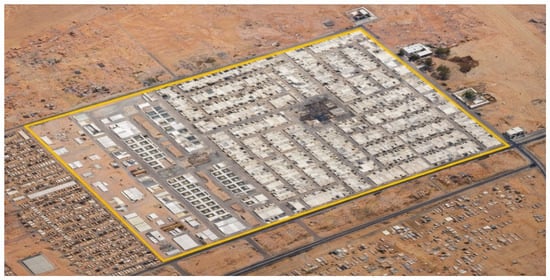
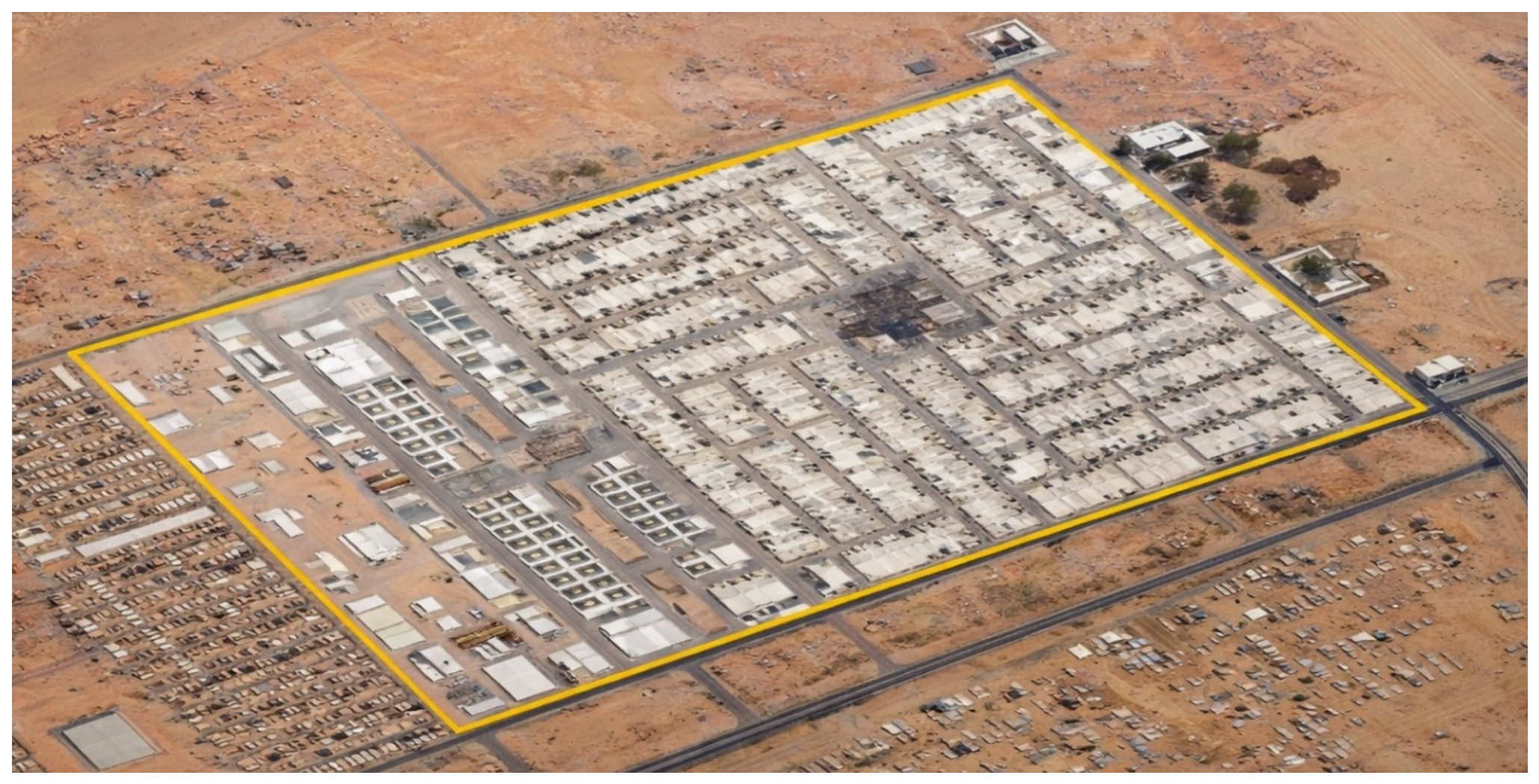
The former industrial zone in Tabuk, Saudi Arabia, is located in an arid environment with limited rainfall and long-term persistence of contaminants. Established in 2003 for industrial and automotive activities, the site retains residual pollution that makes it suitable for assessing heavy metal distribution in post-industrial soils. Soil conditions are influenced by the arid climate, prevailing wind patterns, limited leaching, and historical industrial activities that may contribute to localized contamination hotspots. The area was selected because of its former industrial use and the potential for residual metal accumulation associated with historical activities. The study site is located at approximately 28.4423° N latitude and 36.4647° E longitude, within the former industrial zone of Tabuk. Heavy metals such as lead, cadmium, chromium, nickel, and zinc are of particular interest due to their persistence in soils and potential ecological and human health impacts [17]. Figure 1 shows the layout and geographic location of the former industrial zone, highlighting key industrial features and surrounding land use relevant to soil contamination interpretation. All sampling was carried out in publicly accessible areas without restrictions during the fieldwork.
Figure 1.
Location and general layout of the former industrial zone in Tabuk, northwestern Saudi Arabia (Google Earth Pro v7.3).
2.2. Soil Sampling
2.2.1. Sampling Design and Site Selection
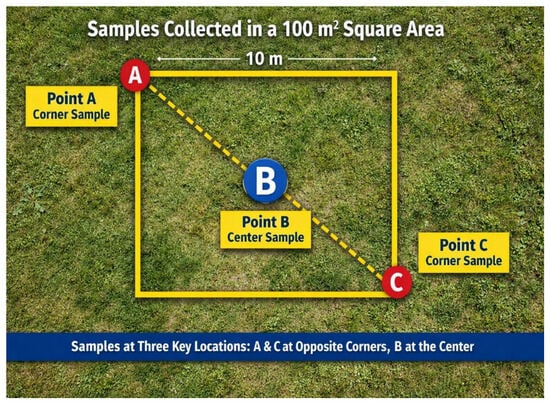
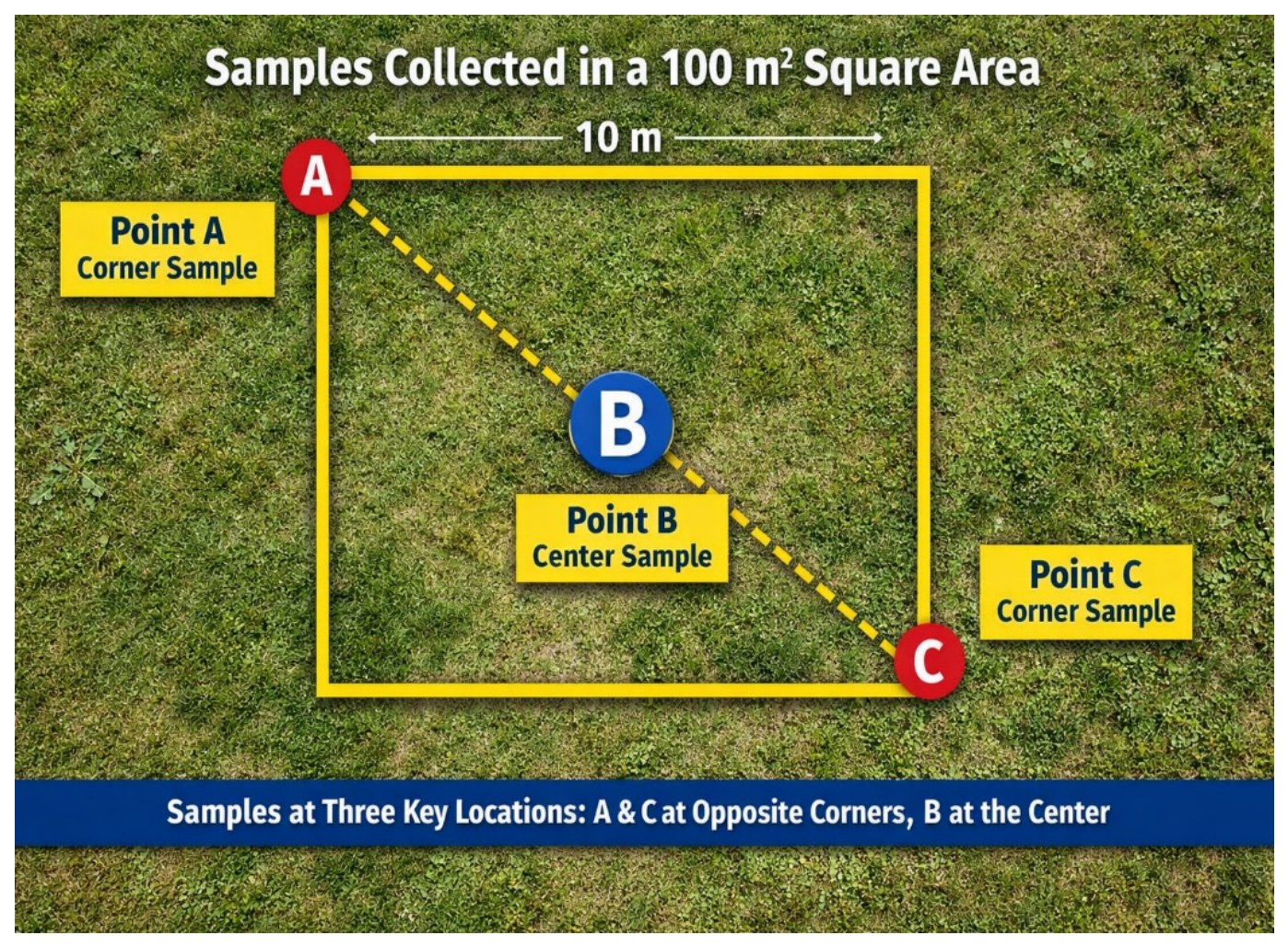
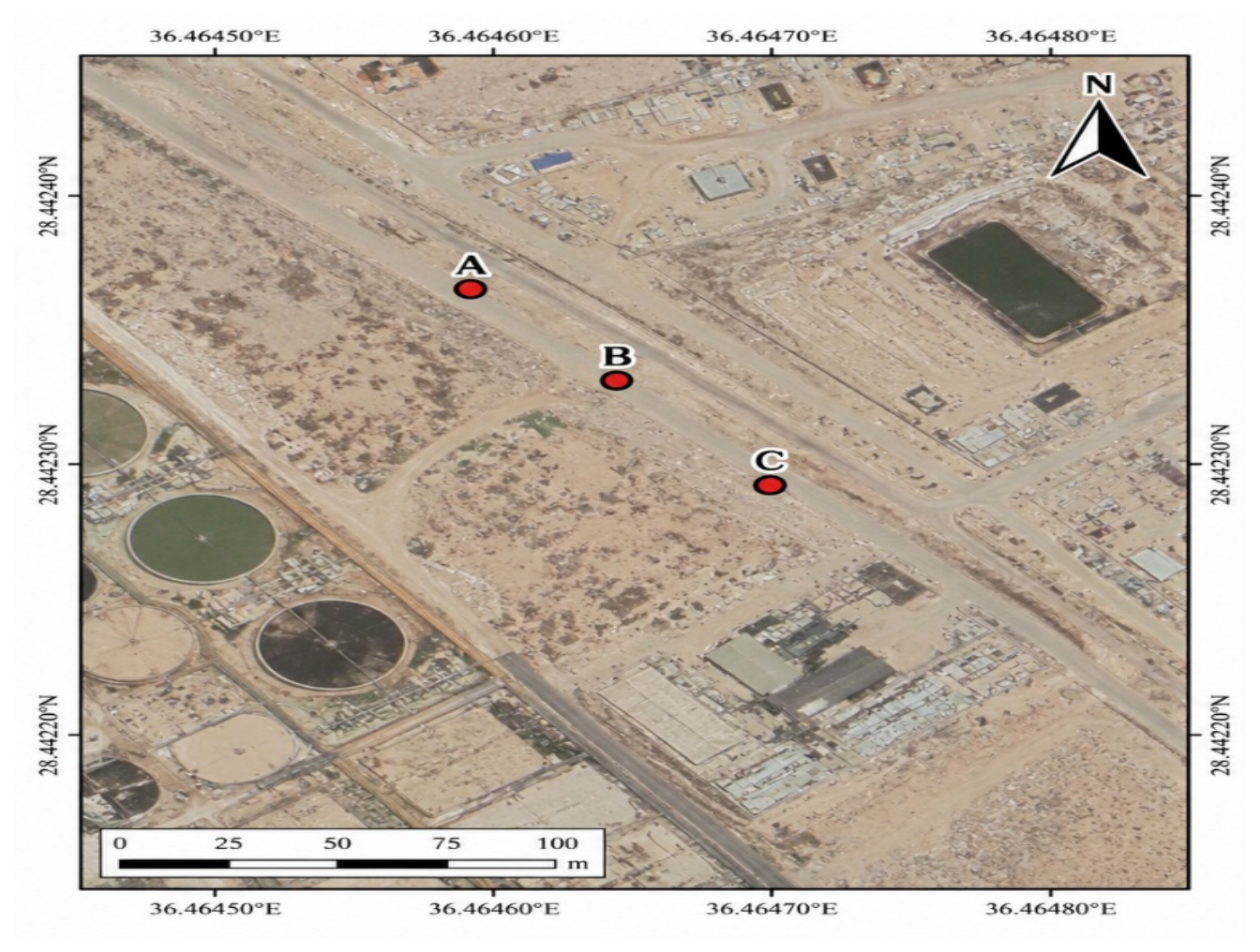
A targeted, reconnaissance-scale sampling strategy was adopted based on the historical industrial use of the investigated area and the accessibility of representative locations. Three closely spaced sampling points (A, B, and C) were selected along a short transect within an approximately 100 m2 area to investigate local-scale spatial variability and vertical distribution of heavy metals. All sampling locations were georeferenced using GPS to ensure accurate positioning, documentation, and reproducibility. Given the limited number and close spacing of sampling locations, the results are intended to characterize local contamination patterns rather than provide a spatially exhaustive assessment of the entire former industrial zone. The local sampling layout within each grid unit is illustrated in Figure 2. The three sampling points (A, B, and C) were closely spaced along a short transect to capture local spatial variability in soil properties and heavy metal concentrations across the former industrial site. Their coordinates, recorded in the geographic coordinate system, were Point A (36.4645996 28.4423306), Point B (36.4646507 28.4422857), and Point C (36.4647018 28.4422408), expressed as longitude and latitude, respectively.
Figure 2.
Local sampling layout within a 100 square meter area.
This figure shows the arrangement of three sampling points within each square unit, designed to capture local variability in soil contamination at three depths (surface (0 to 2 cm), 5 cm, and 10 cm). Figure 3 illustrates the spatial distribution of the three soil sampling points (A, B, and C) within the study area based on high-resolution satellite imagery. The exact geographic coordinates of each sampling location are provided, showing a closely spaced transect aligned along the site of investigation. The map includes a north arrow and scale bar for spatial reference.
Figure 3.
Spatial distribution map of soil sampling sites (A, B, and C) in the study area.
The targeted transect design was selected to provide an initial site-specific reconnaissance of vertical and local-scale variability; however, a systematic grid-based sampling design covering the wider industrial footprint would provide more comprehensive spatial characterization and should be considered in future investigations.
2.2.2. Soil Sampling Procedure and Depth Selection
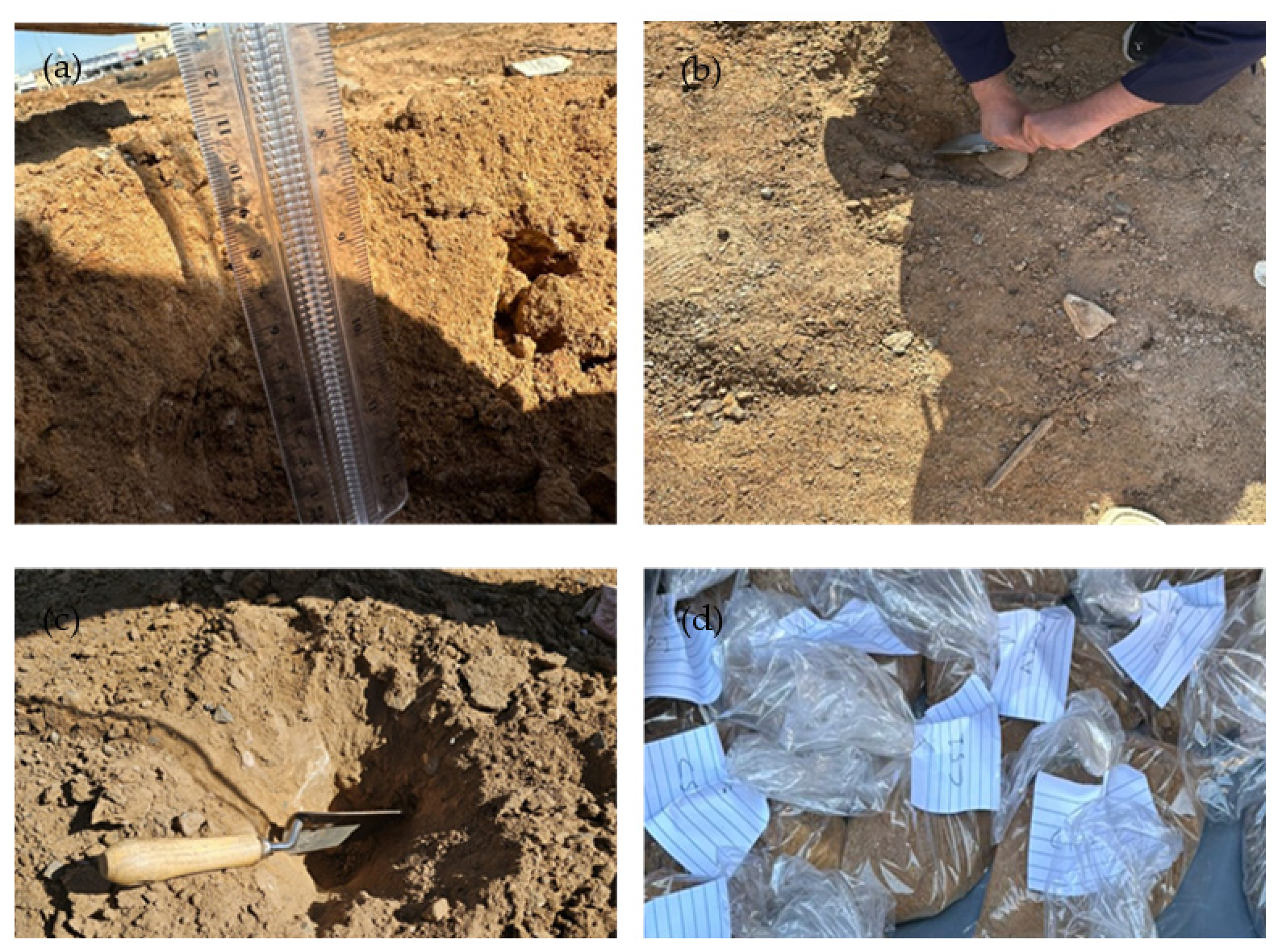
Soil samples were collected at three depths to capture near-surface contamination and to evaluate vertical distribution patterns of heavy metals in the upper soil profile. Sampling depths included the surface layer (0–2 cm), 5 cm, and 10 cm below the ground surface. These depths were selected to represent (i) recent surface deposition and direct anthropogenic inputs (0–2 cm), (ii) early-stage subsurface redistribution and retention processes (5 cm), and (iii) deeper shallow-soil migration under arid conditions where limited precipitation restricts leaching but does not fully prevent vertical transport processes (10 cm). This multi-depth design enables the identification of concentration gradients and improves interpretation of contaminant behavior in post-industrial soils. At each sampling point, soil was collected separately from each depth, and three replicate samples were obtained to account for local heterogeneity. Samples from different depths were analyzed independently, with no mixing or compositing across depth intervals. Each sample was assigned a unique identifier and GPS coordinates, and field observations were recorded to document site conditions. Soil samples were collected using a clean stainless-steel hand auger and stainless-steel spatula to minimize the risk of external contamination during sampling. Approximately 500 g of soil was collected from each depth interval at every sampling point. After collection, samples were immediately transferred into clean labeled polyethylene plastic bags for transport and storage prior to laboratory preparation and ICP-MS analysis. This procedure ensures consistency and reproducibility, providing reliable material for subsequent chemical analysis. The soil sampling procedure and depth intervals are illustrated in Figure 4.
Figure 4.
(a–d) Soil sampling procedure showing collection at surface, 5 cm, and 10 cm, depths.
This figure demonstrates the collection of soil samples at multiple depths (surface (0 to 2 cm), 5 cm, and 10 cm) with separate analysis for each depth. The local sampling strategy, within defined 100-square-meter areas, enabled assessment of spatial variability in heavy metal concentrations while maintaining efficiency in both field work and laboratory analysis. A total of twenty-seven soil samples were collected in this study, corresponding to three sampling points, three depth intervals (0–2 cm, 5 cm, and 10 cm), and three field replicates per depth.
2.3. Sample Preparation and Heavy Metal Analysis
2.3.1. Sample Preparation and Soil Characterization
Upon collection, soil samples were air-dried at room temperature to minimize alterations in their chemical composition. The dried samples were gently disaggregated and sieved through a 2 mm mesh to remove coarse fragments and improve sample homogeneity. Prepared samples were then stored in clean, labeled containers prior to laboratory analysis to minimize contamination.
To provide contextual information for interpreting the measured heavy metal concentrations, selected physicochemical properties were determined for each sampling depth (0–2 cm, 5 cm, and 10 cm). Soil pH and electrical conductivity (EC) were measured in a 1:2.5 soil-to-deionized water suspension using calibrated pH and conductivity meters. Organic matter content was determined using the Walkley–Black method, while soil texture was analyzed using the hydrometer method after dispersion. These parameters were selected because they provide relevant contextual information for interpreting heavy metal concentration patterns in soils, particularly under arid environmental conditions. The measured soil properties were considered alongside the observed concentration patterns to examine potential relationships with depth-related variability; however, they were not used to establish specific mechanisms of metal retention, mobility, redistribution, or source contribution.
2.3.2. Analytical Method
The identification and quantification of the selected heavy metals were performed using inductively coupled plasma mass spectrometry (ICP-MS; Agilent 7900, Agilent Technologies, Santa Clara, CA, USA), operated according to the manufacturer-recommended conditions for multi-element trace-metal analysis. Soil samples were air-dried, gently disaggregated, homogenized, and sieved through a 2 mm mesh prior to digestion. Approximately 0.5 g of each homogenized soil sample was transferred to a microwave digestion vessel, followed by the addition of 9 mL of concentrated nitric acid (HNO3) and 3 mL of concentrated hydrochloric acid (HCl). The vessels were sealed and subjected to microwave-assisted acid digestion under controlled temperature and pressure conditions. After digestion, the vessels were allowed to cool to room temperature, and the resulting solutions were quantitatively transferred and diluted with ultrapure deionized water to the required final volume prior to ICP-MS analysis. Multi-element certified standard solutions were used for calibration, with multi-point calibration curves established for each analyzed element (R2 > 0.999). Quality assurance and quality control included reagent blanks and certified reference materials, where applicable, together with internal quality-control checks to monitor analytical performance. Samples showing evidence of analytical problems were reprocessed when necessary.
2.4. Accuracy Measurement and Benchmarks
Accuracy and precision were ensured through the analysis of certified reference materials (CRMs), spiked samples, blanks, and sample duplicates. CRMs were periodically analyzed throughout the analytical sequence to verify instrument performance and stability. Reagent and field blanks were included to monitor potential contamination, while spiked samples were used to evaluate recovery methods. Recovery values ranged between 90% and 110%, and relative standard deviations (RSD) for replicate analyses were below 5% for all elements, confirming good analytical precision and accuracy. Limits of Detection (LOD) and Limits of Quantification (LOQ) were determined using the standard deviation of ten blank measurements and the slope of the calibration curves. Equations (1) and (2) highlighted mathematical expressions to determine the LOD and LOQ.
The calculated LOD and LOQ values for each heavy metal are presented in Table 1. Concentrations below the LOQ were reported as <LOQ. Elements consistently below the LOQ across all points and depths (Cr, Hg, Pb) were reported qualitatively as <LOQ, and no numerical statistics were derived, in accordance with standard analytical practice.
Table 1.
LOD and LOQ for Heavy Metals Using ICP-MS.
2.5. Contamination Assessment Indices
To provide a quantitative interpretation of the measured heavy metal concentrations, two widely used reference-based indices, the contamination factor (CF) and geo-accumulation index (Igeo), were applied. These indices were selected because they provide complementary screening-level information on the magnitude of measured metal concentrations relative to reference concentrations while remaining appropriate for the reconnaissance-scale nature of the present investigation.
Because uncontaminated reference soils from the study area were not available, the reference concentrations used for calculating CF and Igeo were obtained from published literature. These values were therefore treated as literature-derived reference concentrations rather than site-specific natural geochemical background values. The reference values provide a basis for comparative screening of the measured concentrations but do not represent the natural background conditions of the former industrial zone. Accordingly, the resulting CF and Igeo values were interpreted cautiously and were not used as definitive evidence of anthropogenic enrichment or source attribution.
The use of these indices was also restricted to metals for which quantitative concentrations were available. Cr, Hg, and Pb were below the LOQ in all analyzed samples and were therefore excluded from numerical index calculations. Cd was included only where concentrations were quantitatively measured above the LOQ. The indices were calculated separately for each sampling point and soil depth to preserve the observed spatial and vertical variability.
2.5.1. Contamination Factor (Cf)
The CF was used to quantify the relative concentration of each metal in soil by comparing its measured concentration with the corresponding literature-derived reference concentration [46,47,48,49]:
where CFi is the contamination factor for metal i, Ci is its measured concentration in the soil, and Bi is its corresponding literature-derived reference concentration.
The CF provides a simple measure of the relative magnitude of a measured metal concentration compared with the selected reference value. In this study, CF was interpreted as a comparative screening indicator rather than as a definitive measure of anthropogenic contamination because the reference values were not derived from uncontaminated soils collected locally within the former industrial zone.
For interpretation, CF values were classified according to commonly used contamination categories [46,47,48]. Values of CF < 1 indicate low contamination, 1 ≤ CF < 3 indicate moderate contamination, 3 ≤ CF < 6 indicate considerable contamination, and CF ≥ 6 indicate very high contamination. These categories were used to facilitate comparative interpretation and were considered together with the measured concentrations, applicable regulatory limits, and site-specific spatial and depth-related patterns. Given the use of literature-derived reference concentrations, the CF classifications should not be interpreted as definitive evidence of anthropogenic contamination or as a formal human-health or ecological risk assessment.
2.5.2. Geo-Accumulation Index (Igeo)
The Igeo was used as a complementary indicator of the relative accumulation of individual metals in the investigated soils:
where Ci is the measured concentration of metal i, Bi is its literature-derived reference concentration, and 1.5 is incorporated to account for possible natural variability in background concentrations and minor variations in lithological composition. The calculated geo-accumulation index values indicated varying degrees of metal accumulation across the investigated soil depths and sampling locations. Overall, most metals exhibited low to moderate levels of contamination, while relatively higher values were observed for specific metals and depths. The observed variations indicate that metal accumulation was spatially and vertically heterogeneous across the investigated area, potentially reflecting differences in historical industrial activities, metal sources, and their transport and retention within the soil profile. The depth-related variations highlight the importance of considering subsurface soils when evaluating metal accumulation at former industrial sites. As locally uncontaminated background soils were not available, literature-derived reference concentrations were used, and the resulting Igeo values provide a comparative assessment of metal accumulation at the investigated site. Therefore, the Igeo results were considered together with measured concentrations, historical land use, soil physicochemical characteristics, and published regional data to provide a more comprehensive interpretation of metal contamination.
2.5.3. Rationale for Excluding Other Pollution and Ecological Risk Indices
The Enrichment Factor (EF), Pollution Load Index (PLI), Potential Ecological Risk Factor (Er), and Potential Ecological Risk Index (RI) were not applied because their use would require assumptions beyond the scope of the available dataset. EF was not calculated because the analytical dataset did not include a validated conservative reference element and site-specific background concentrations. PLI, being derived from multiple contamination factors, would similarly depend on literature-based reference values and could overstate site-wide pollution given the limited and closely spaced sampling locations. The Er and RI indices were excluded because the study did not assess metal speciation, bioavailability, ecological receptors, or exposure pathways, and several metals were below the LOQ. Accordingly, contamination assessment was limited to CF and Igeo as complementary, reference-normalized screening indicators. Their interpretation is therefore restricted to comparative assessment of metal concentrations across sampling points and depths rather than definitive source attribution or formal ecological risk contamination indices.
2.6. Data Analysis
Heavy metal concentrations obtained from the ICP-MS analysis were compiled and subjected to statistical evaluation. Descriptive statistics, including minimum, maximum, mean, and standard deviation values, were calculated for each element to summarize their concentration range and variability across the study area. Spatial distribution patterns were visualized using maps generated from georeferenced sampling data, providing insights into areas of higher contamination. The results from this analysis form the foundation for understanding the impact of historical industrial activities on soil quality in the Tabuk zone. By quantifying the presence of metals such as lead, cadmium, chromium, nickel, and zinc, the study identifies potential hotspots and assesses environmental risks. These data are essential for informing future environmental management, monitoring, and potential remediation strategies, although remediation planning is beyond the scope of the current study. For metals partially detected above the LOQ (e.g., cadmium), statistical parameters were calculated using only quantified values, while <LOQ results were excluded from numerical averaging.
3. Results and Discussion
This section presents and discusses the measured concentrations of heavy metals in soils from a former industrial zone in Tabuk, along with their spatial and vertical distribution across the investigated depths. The interpretation of results is grounded in the scope of this study, which is focused on a reconnaissance-scale, multi-depth characterization of near-surface soil contamination using ICP-MS analysis. The discussion is based on observed concentration data and comparison with regulatory guidelines and literature-reported values. It is important to note that the scope of the study did not include local background soil values, uncontaminated control sites, or formal ecological and human health risk assessment frameworks. In addition, metal speciation and bioavailability were not investigated. Therefore, the analysis is limited to describing concentration patterns, depth-dependent variability, and relative comparisons rather than quantitative risk assessment or enrichment factor calculations. Any environmental implications discussed are intended as preliminary interpretations within the defined scope of the study.
3.1. Heavy Metal Distribution and Spatial Trends
The analysis of soil samples collected from the ex-industrial area of Tabuk revealed heterogeneous distribution of heavy metals, reflecting the complex and site-specific legacy of former industrial activities. Soil sampling was conducted at three depths: surface (0–2 cm), 5 cm, and 10 cm. Each depth was sampled in triplicate, and results are expressed as mean ± standard deviation (SD). Concentrations of As, Cd, Cr, Cu, Hg, Ni, Pb, and Zn were determined in soil samples collected from three investigation points at different depths. The results revealed noticeable spatial and vertical variations in the distribution of several metals, reflecting differences in contamination sources, mobility, and retention within the soil profile. In general, certain elements exhibited elevated concentrations at specific depths, suggesting the influence of both surface deposition and subsurface accumulation processes. Conversely, some metals remained consistently below the LOQ, indicating either limited anthropogenic contribution or effective immobilization within the soil matrix.
3.1.1. Descriptive Statistics
To evaluate whether heavy metal concentrations differed significantly across the three soil depths (surface: 0–2 cm, 5 cm, and 10 cm), a one-way analysis of variance (ANOVA) was performed for each metal. The analysis was conducted at the sampling-point level, with the three field replicates used to characterize local variability within each point and depth. As, Cd, Cu, Ni, and Zn were included in the statistical analysis, whereas Cr, Hg, and Pb were excluded because their concentrations were consistently below the LOQ across all sampling points and depths. For Cd, concentrations below the LOQ were substituted with LOQ/2 for the ANOVA, while only quantified Cd concentrations were included in the descriptive statistical analyses. Prior to conducting ANOVA, normality and homogeneity of variance were assessed using the Shapiro–Wilk and Levene tests, respectively. It should be noted that, given the limited number of sampling locations and the inherently heterogeneous nature of the study area, the statistical power of inferential tests (Shapiro–Wilk, Levene’s test, and one-way ANOVA is inherently constrained. These tests were applied following standard statistical procedures to assess distributional assumptions and evaluate depth-related differences; however, results should be interpreted with caution due to sample size limitations. The triplicate samples collected at each depth were treated as field replicates intended to capture local-scale variability rather than fully independent spatial units across the entire study area. Therefore, the statistical analysis primarily aims to support exploratory assessment of depth-dependent trends rather than high-power spatial inference. When assumptions were violated, a logarithmic transformation was applied to the data to satisfy ANOVA requirements. If transformation failed to normalize the distribution, results were interpreted cautiously, with emphasis placed on descriptive trends rather than statistical significance. The ANOVA results (Table 2) showed significant depth-dependent variability for As and Ni (p < 0.05), indicating that vertical distribution influences contamination patterns. Cu and Zn did not show statistically significant depth differences (p > 0.05), reflecting strong spatial heterogeneity. Cd showed a marginal depth effect (p = 0.056), suggesting weak depth dependence consistent with its generally low concentrations. These findings highlight the importance of multi-depth sampling to capture vertical variability, particularly for As and Ni, in former industrial soils.
Table 2.
Statistical comparison of heavy metal concentrations by soil depth.
3.1.2. Quantification of Heavy Metals
Arsenic concentrations exhibited pronounced variability with both depth and location. At point A, arsenic increased from 80 ± 2 µg/kg at the surface to 100 ± 3 µg/kg at 5 cm and reached 110 ± 4 µg/kg at 10 cm (Figure 5). This pattern is consistent with downward redistribution followed by retention within the shallow soil profile. However, the specific retention horizon and the mineralogical phases responsible for arsenic accumulation cannot be established from the present dataset because lithological and mineralogical analyses were not performed.
Figure 5.
Mean concentrations (µg/kg) of heavy metals at point A.
At point B, the highest arsenic concentration occurred at the surface (110 ± 3 µg/kg), followed by a decrease with depth to 105 ± 3 µg/kg at 5 cm and 75 ± 2 µg/kg at 10 cm (Figure 6). This distribution indicates dominant surface deposition, likely related to historical industrial emissions, with limited vertical migration. At point C, arsenic peaked at mid-depth, increasing from 85 ± 2 µg/kg at the surface to 115 ± 3 µg/kg at 5 cm before decreasing to 70 ± 2 µg/kg at 10 cm (Figure 7). This suggests the presence of an intermediate retention horizon where arsenic is preferentially accumulated. Collectively, these patterns demonstrate that arsenic distribution is strongly site-specific and may reflect differences in soil properties, historical inputs, and redistribution processes. Mineralogical and geochemical analyses would be required to determine whether specific mineral phases or soil constituents control arsenic retention at the observed depths. Research conducted by indicated that arsenic levels in Riyadh soils are significantly elevated compared to other Saudi regions, such as Al-Ahsa, where arsenic concentrations are near or below acceptable thresholds. The enrichment factor analysis confirmed the elevated arsenic levels in Riyadh and demonstrated significant to extreme arsenic enrichment. This result indicates that anthropogenic inputs, rather than natural soil composition, are the dominant source of arsenic in the region.
Figure 6.
Mean concentrations (µg/kg) of heavy metals at point B.
Figure 7.
Mean concentrations (µg/kg) of heavy metals at point C.
Cadmium concentrations were generally low across the study area. At point A, cadmium remained below the LOQ at all depths (Figure 5), indicating negligible contamination. At point B, cadmium was quantifiable at all depths, with concentrations of 25 ± 2 µg/kg at the surface and 5 cm, decreasing slightly to 20 ± 1 µg/kg at 10 cm (Figure 6). This suggests near-surface inputs with limited downward redistribution. At point C, cadmium was below LOQ at the surface and 5 cm but increased to 20 ± 2 µg/kg at 10 cm (Figure 7), indicating localized accumulation at depth. Overall, cadmium shows restricted mobility and low contamination levels, with quantifiable concentrations confined to specific locations and depths. Studies conducted by found that the average quantity for Cd in the soil of Riyadh city was 1100 µg/kg. Based on their findings, the elevated cadmium concentrations suggest substantial accumulation driven by emissions from nearby industrial facilities. In addition to localized factory discharges, other major contributors include activities associated with oil refining, petrochemical processing, battery manufacturing, cement production, and intense heavy-vehicle traffic [50,51,52].
Chromium, mercury, and lead were consistently below the LOQ at all sampling points and depths (Figure 5, Figure 6 and Figure 7). Consequently, these elements are reported as <LOQ and are not discussed in terms of numerical trends. Their uniform presence below LOQ suggests minimal anthropogenic contribution and/or strong geochemical immobilization under the prevailing alkaline and arid soil conditions. Compared with other metals, Cr, Hg, and Pb do not represent significant contamination concerns in the area investigated. Studies conducted by Alzahrani, El-Sorogy [53] highlighted that chromium posed a low non-carcinogenic health risk to adults and children, with hazard index (HI) values remaining below the safety threshold of 1.0. However, their study noted comparatively higher HI and lifetime cancer risk values for chromium in children at the western Saudi region, reflecting increased exposure sensitivity due to behavioral factors such as hand-to-mouth activity and soil ingestion. Furthermore, Alzahrani, El-Sorogy [53] also stated that the localized elevations of Pb were due to the past industrial operations, together with proximity to industrial infrastructure, and have contributed to lead accumulation in the surrounding soils.
Copper exhibited clear depth-dependent and site-specific patterns. At point A, copper peaked at 5 cm (220 ± 6 µg/kg) and decreased slightly at 10 cm (185 ± 5 µg/kg), indicating a subsurface retention horizon (Figure 5). At point B, copper concentrations increased continuously with depth, from 110 ± 4 µg/kg at the surface to 200 ± 5 µg/kg at 5 cm and 335 ± 6 µg/kg at 10 cm (Figure 6), suggesting deeper accumulation associated with historical subsurface inputs or vertical redistribution along preferential pathways.
At point C, copper showed a gradual increase with depth, from 95 ± 3 µg/kg at the surface to 105 ± 4 µg/kg at 10 cm (Figure 7), consistent with limited vertical migration. These variations highlight the heterogeneous nature of copper contamination across the study area. Studies conducted by Zhou, Chen [54] stated that Cu levels at post-industrial locations were attributed to localized human activities, including agricultural inputs, industrial residues, and traffic-related emissions, which can introduce copper through machinery wear, and atmospheric deposition.
Nickel concentrations were relatively elevated compared with several other metals and displayed complex vertical profiles. At point A, nickel decreased from 410 ± 7 µg/kg at the surface to 325 ± 6 µg/kg at 5 cm, then increased again to 400 ± 8 µg/kg at 10 cm (Figure 5), indicating alternating zones of accumulation and depletion. At point B, nickel increased sharply with depth, from 165 ± 5 µg/kg at the surface to 420 ± 6 µg/kg at 5 cm and 555 ± 7 µg/kg at 10 cm (Figure 6), suggesting a strong subsurface source and potential implications for deeper soil horizons. At point C, nickel peaked at 5 cm (380 ± 7 µg/kg) and decreased slightly at 10 cm (305 ± 6 µg/kg) (Figure 7), indicating localized retention at mid-depth.
In general, nickel exhibits relatively high geochemical stability in soils and tends to associate with iron and manganese oxides, which explains its uniform spatial distribution and limited enrichment. However, based on the study conducted by Zhou, Chen [54], permissible Ni levels posed no immediate non-carcinogenic or carcinogenic risk, but prolonged exposure to elevated nickel concentrations may lead to phytotoxic effects and bioaccumulation in crops, posing indirect risks to human health through the food chain.
Zinc showed the highest concentrations and the most pronounced vertical variability among the analyzed metals. At point A, zinc increased from 935 ± 10 µg/kg at the surface to 1180 ± 12 µg/kg at 5 cm before decreasing to 905 ± 11 µg/kg at 10 cm (Figure 5), indicating mid-depth retention. At point B, zinc increased continuously with depth, reaching 1650 ± 12 µg/kg at 10 cm (Figure 6), reflecting deep and concentrated contamination. At point C, zinc concentrations decreased with depth, from 805 ± 10 µg/kg at the surface to 675 ± 9 µg/kg at 10 cm (Figure 7), suggesting dominant surface deposition. These contrasting trends highlight the spatial heterogeneity of zinc contamination and its dependence on historical deposition and soil retention mechanisms.
Alzahrani, El-Sorogy [48] performed a study to evaluate the spatial distribution patterns of heavy metals in the regions of western Saudi Arabia and revealed that higher zinc concentrations occurred in specific sampling locations, which was attributed partly to agricultural practices, including fertilizer application and soil amendments. Furthermore, the health risk assessment performed by the authors showed that zinc posed no significant non-carcinogenic risk, with hazard index values well below the critical threshold for both adults and children.
3.1.3. Cross-Metal Comparison and Spatial Trends
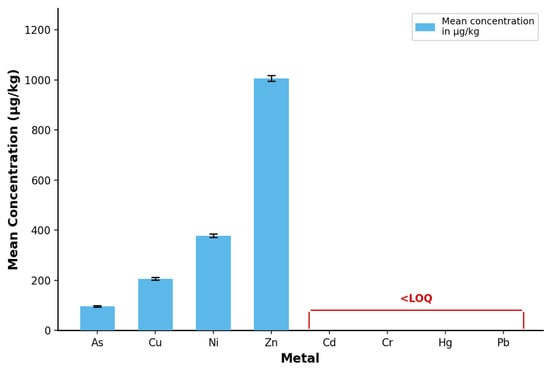
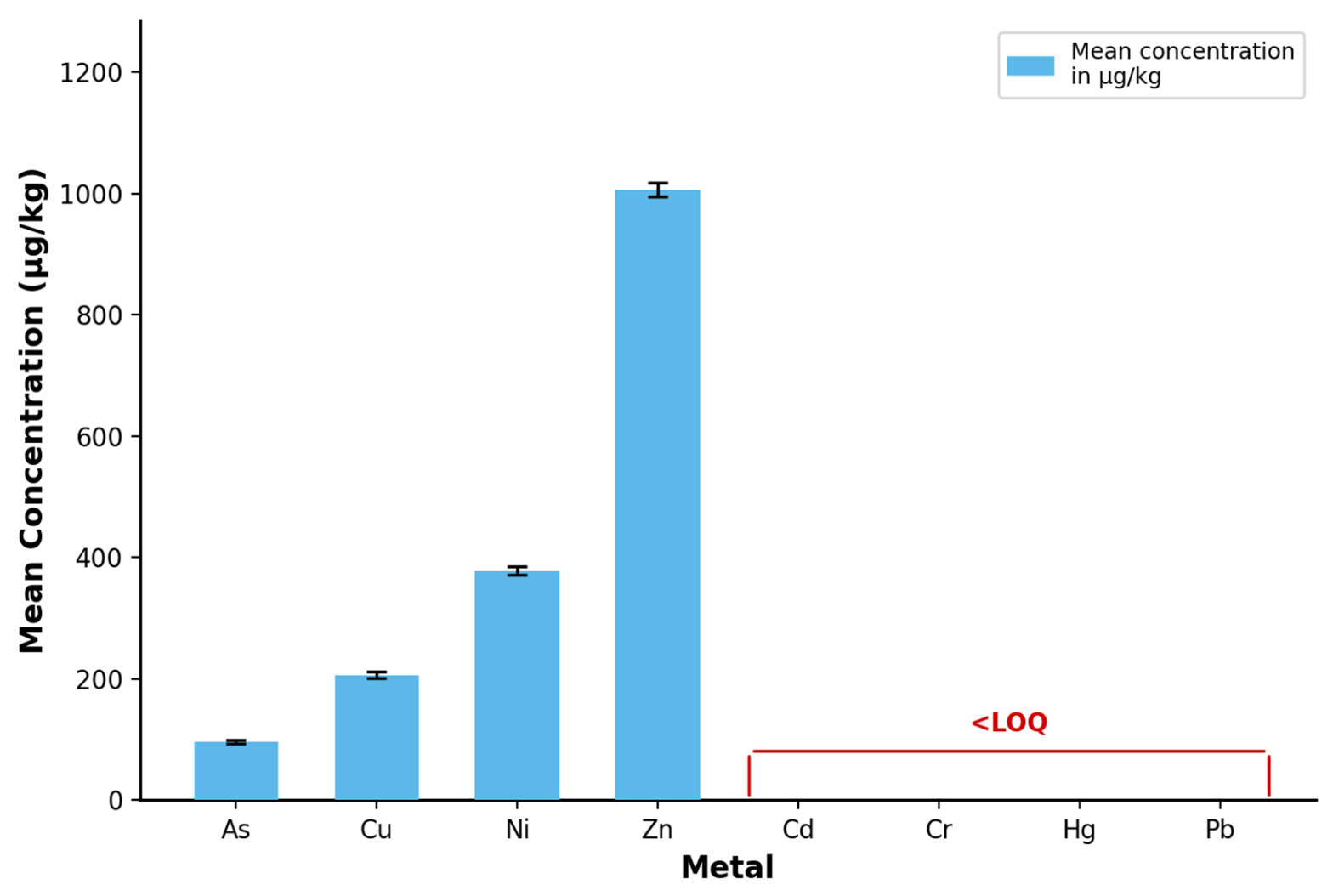
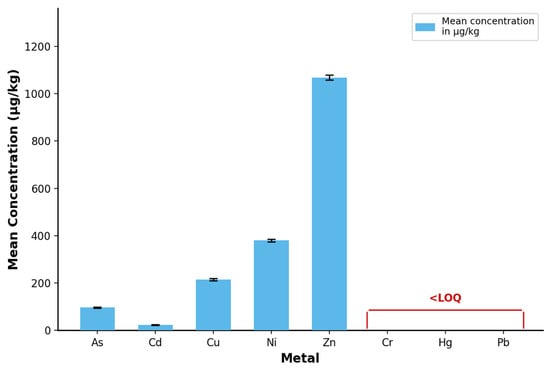
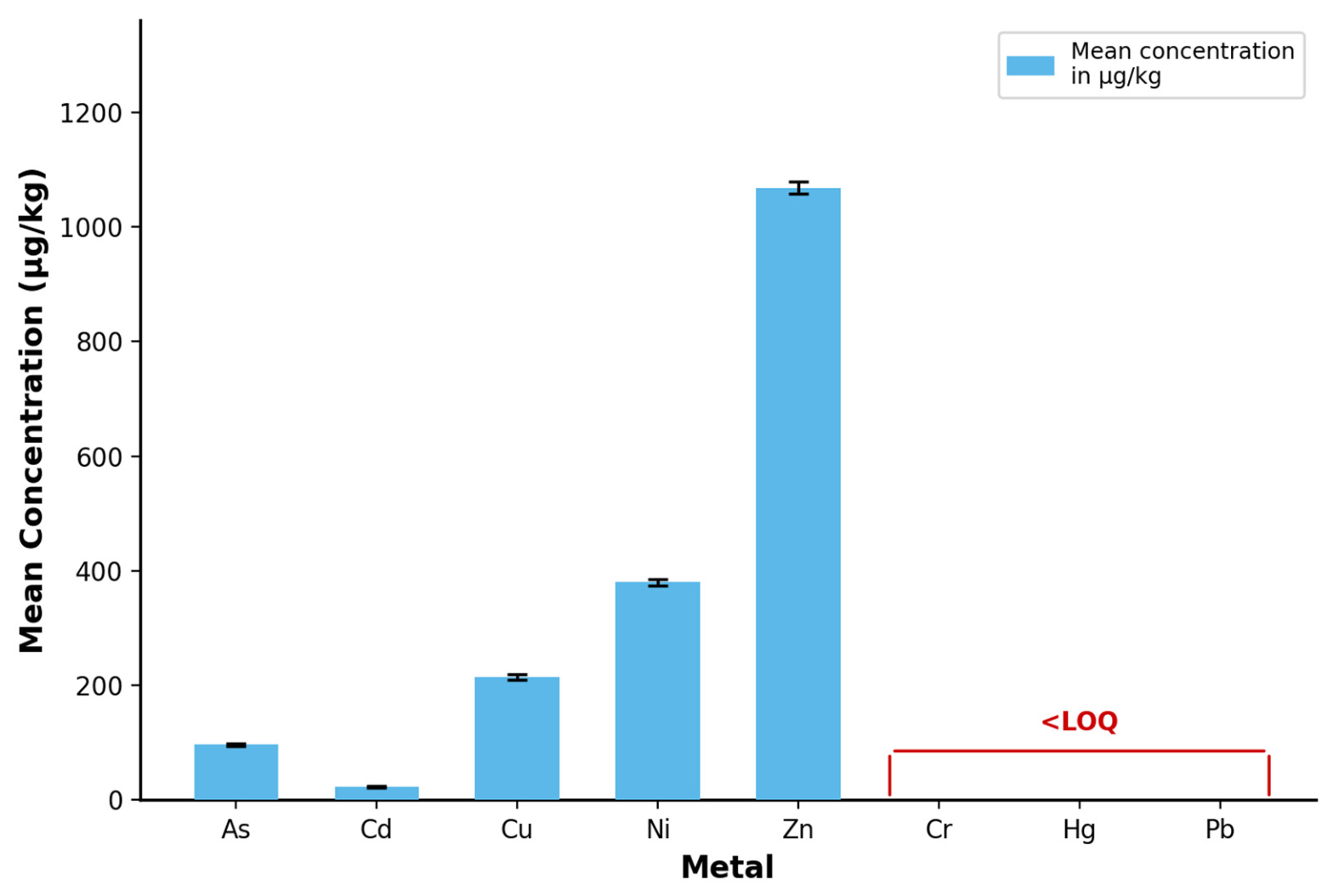
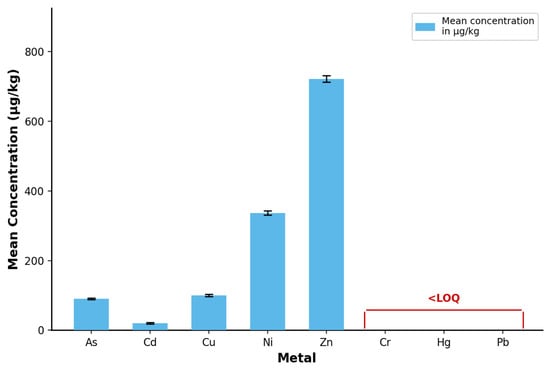
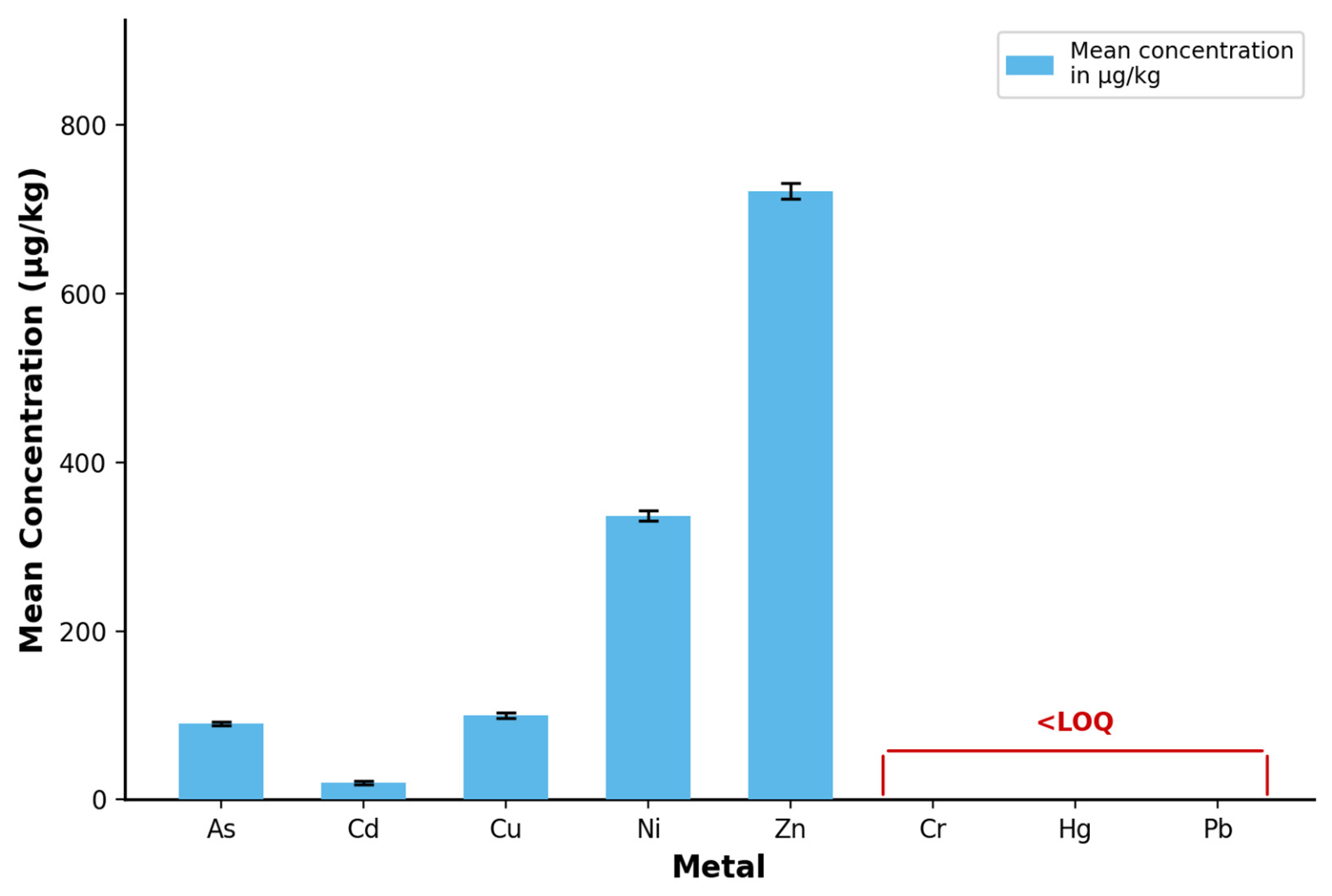
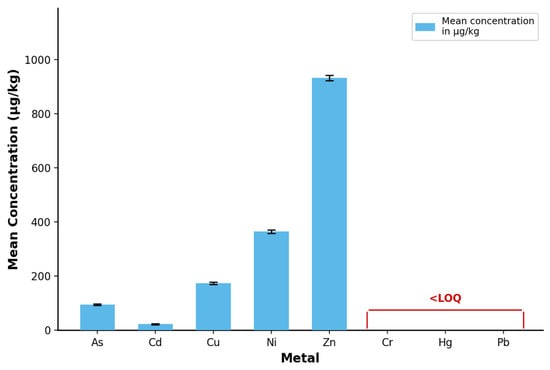
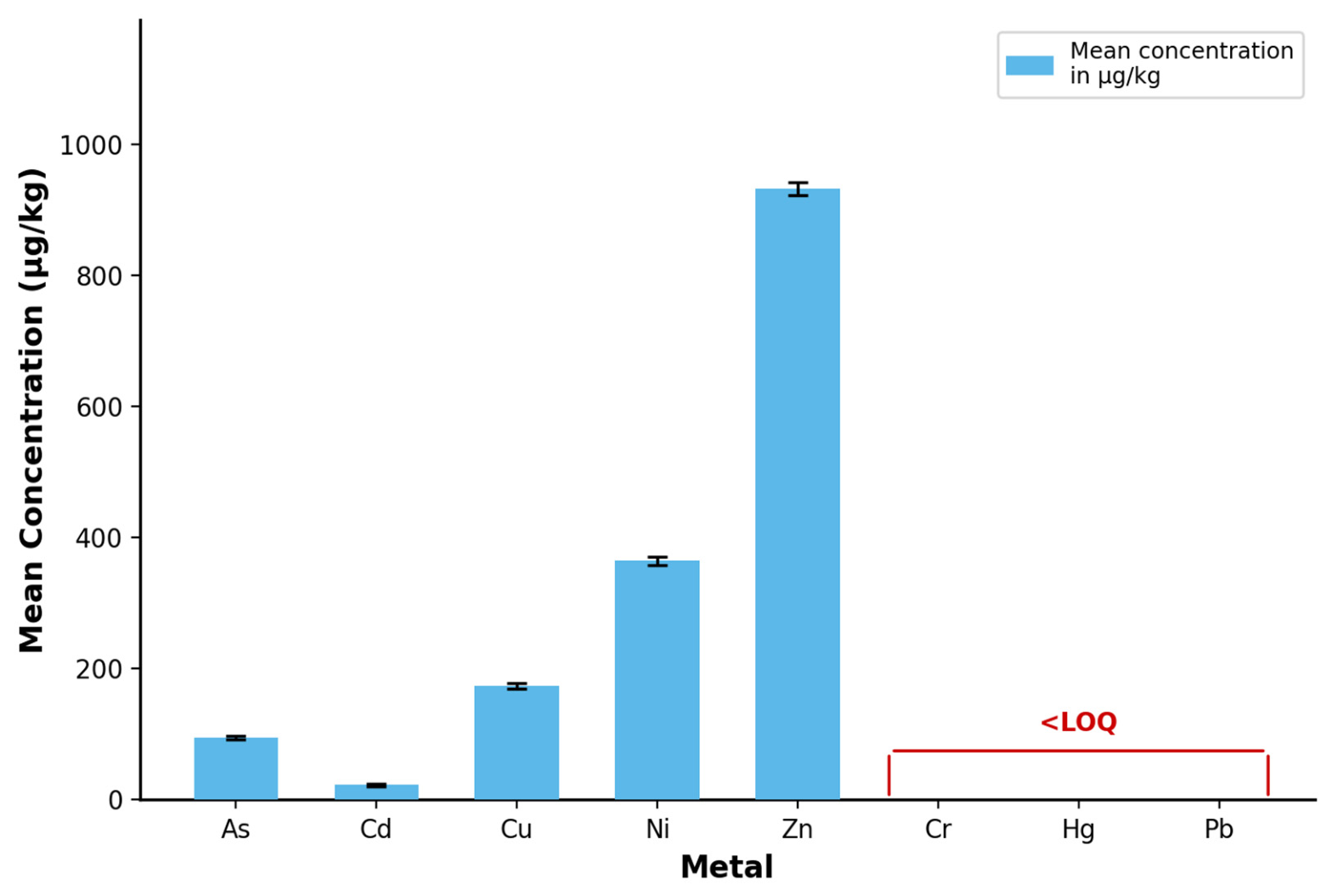
A comparative assessment reveals that arsenic, copper, nickel, and zinc exhibit site-specific depth-dependent enrichment, whereas cadmium shows localized quantifiable occurrences, and chromium, mercury, and lead remain consistently below LOQ. point B displays the highest variability and strongest vertical gradients, particularly for copper, nickel, and zinc, indicating localized subsurface accumulation. point A shows moderate enrichment with mid-depth retention zones, while point C exhibits intermediate contamination levels with less pronounced vertical gradients. The triplicate sampling approach resulted in low standard deviations for most metals, while point B showed higher variability reflecting heterogeneous contamination. The observed elevation and spatial variability of heavy metal concentrations in the study area are primarily associated with historical anthropogenic activities within the former industrial zone. These activities include automotive repair workshops involving oil and lubricant handling, mechanical maintenance operations, chemical storage and handling, industrial production activities, waste disposal practices, and traffic related emissions. These sources are considered the main drivers influencing the accumulation and distribution of zinc, copper, nickel, and arsenic in the soil profile across the investigated sites. Figure 8 illustrates the mean concentrations of quantified heavy metals across all points and depths.
Figure 8.
Mean concentrations (µg/kg) of quantified heavy metals across all points and depths.
All quantified heavy metal concentrations remain below Saudi regulatory limits, indicating general compliance with soil quality standards. Nevertheless, arsenic, nickel, and zinc show moderate enrichment relative to background levels, reflecting localized or historical industrial inputs. These results emphasize the importance of site-specific and depth-resolved assessments when evaluating contamination in former industrial zones. A site-specific comparison indicates that point B exhibits the highest variability and the most pronounced depth-dependent enrichment, particularly for arsenic, copper, nickel, and zinc, reflecting localized accumulation and vertical redistribution associated with historical industrial activities. point A shows the lowest contamination levels, with cadmium, chromium, mercury, and lead consistently below the LOQ across all depths, suggesting minimal anthropogenic influence and strong metal immobilization. Site C displays intermediate contamination, with detectable concentrations of arsenic, copper, nickel, and zinc, but with less pronounced vertical gradients compared to point B. The mean concentrations of heavy metals in soils from Tabuk’s ex-industrial zone, together with Saudi regulatory limits and representative literature values, are summarized in Table 3. All quantified metals are well below Saudi soil quality guideline values, indicating overall compliance with national environmental standards. Comparison with literature data further shows that contamination levels in the study area are substantially lower than those reported for heavily polluted industrial sites, although moderate enrichment is observed for selected elements. Arsenic exhibited a mean concentration of 94.44 µg/kg, which is significantly lower than the literature-reported value of 6610 µg/kg, yet remains clearly detectable and indicative of measurable accumulation within the soil matrix. Cadmium averaged 22.5 µg/kg, far below both the Saudi regulatory limit (3800 µg/kg) and the reported literature value (200 µg/kg), suggesting limited anthropogenic input and restricted mobility. Copper showed a mean concentration of 173.89 µg/kg, markedly lower than the literature value of 34,770 µg/kg, while nickel averaged 365 µg/kg, which is substantially below concentrations reported for highly contaminated industrial soils (29,220 µg/kg). Nevertheless, nickel levels may be considered moderately enriched relative to typical background concentrations, reflecting historical industrial influence. Zinc presented a mean concentration of 932.22 µg/kg, remaining well below the Saudi regulatory limit (200,000 µg/kg) and the literature-reported value (110,670 µg/kg), but exhibiting higher concentrations than several other metals. This pattern is consistent with the widespread use of zinc in industrial activities and its tendency to accumulate in soils. Chromium, mercury, and lead were consistently below the LOQ in all samples analyzed. Consequently, numerical mean values are not reported for these elements. Their presence below LOQ indicates negligible contamination relative to both regulatory thresholds and literature-reported concentrations, suggesting minimal anthropogenic contribution and/or strong geochemical immobilization under the prevailing arid and alkaline soil conditions. Table 3 shows that heavy metal concentrations in Tabuk’s ex-industrial soil remain below regulatory limits, although As, Ni, and Zn exhibit moderate enrichment relative to background and literature values. These findings highlight the importance of site-specific, depth-resolved assessments for characterizing contamination patterns in former industrial areas. The literature-reported concentrations presented in Table 3 are provided for comparative context and should not be interpreted as site-specific background concentrations. The values originate from studies conducted under different geographic, geological, land-use, and sampling conditions and are therefore not directly equivalent to natural geochemical background values for the present study area.
Table 3.
Heavy Metal Levels in Tabuk Ex Industrial Zone Soils Compared with Standards.
3.2. Soil Physicochemical Properties and Their Influence on Heavy Metal Behavior
The soil characterization results indicated that the ex-industrial zone in Tabuk is dominated by arid soil conditions, which significantly influence heavy metal mobility and retention. The measured soil pH ranged from 7.6 to 8.4, reflecting neutral to slightly alkaline conditions, while electrical conductivity values were low to moderate (0.5–1.8 dS/m). These physicochemical conditions can influence metal retention and mobility through processes such as adsorption, dissolution, and precipitation. However, because mineralogical phases and metal speciation were not determined in this study, the specific mechanisms responsible for metal retention or mobility cannot be directly established from the measured soil properties alone. Organic matter content was generally low (0.6–1.8%), consistent with the arid climate and limited vegetation cover of the study area. Low organic matter may limit the contribution of organic-matter-associated metal binding and may therefore influence the observed vertical variability of arsenic, copper, nickel, and zinc. Soil texture analysis showed that the soils are predominantly sandy loam, with sand fractions ranging from 60% to 75%, and silt and clay contents between 15% and 25% and 10–15%, respectively. The predominantly sandy texture may favor water infiltration and potentially facilitate downward redistribution during episodic wetting events; however, the extent of metal transport cannot be established from the present dataset. This characteristic explains the depth-dependent enrichment patterns observed for arsenic, copper, nickel, and zinc in specific sites, where subsurface retention zones were identified. Overall, the combination of alkaline pH, low organic matter, and sandy texture confirms that the soil’s physicochemical conditions strongly control heavy metal behavior, leading to limited mobility for certain metals and vertical migration for others. These results emphasize the importance of including soil characterization in contamination assessments to accurately interpret spatial distribution patterns and potential environmental risks.
3.3. Reference-Normalized Contamination Assessment
The CF and Igeo were further used to provide a comparative assessment of the quantified metals relative to the literature-derived reference concentrations selected for this study. Because uncontaminated local background soils were not available, these indices should be interpreted as reference-normalized screening indicators rather than definitive measures of anthropogenic enrichment or ecological risk. Chromium, mercury, and lead were not included because their concentrations were consistently below the analytical limit of quantification, while cadmium was considered only where concentrations were quantitatively detected. Using the mean concentrations reported for the investigated soils, the calculated CF values were below 1 for all quantified metals. The CF values were approximately 0.014 for As, 0.113 for Cd, 0.005 for Cu, 0.013 for Ni, and 0.008 for Zn. According to the commonly applied CF classification, values below 1 indicate low contamination relative to the selected reference concentration. Thus, none of the quantified metals showed a CF value corresponding to moderate, considerable, or very high contamination based on the selected literature-derived reference values. The Igeo results showed a similar pattern. The calculated Igeo values were approximately −6.71 for As, −3.74 for Cd, −8.23 for Cu, −6.91 for Ni, and −7.48 for Zn. All values were below zero, corresponding to the practically uncontaminated category according to the conventional Igeo classification. These results indicate that the measured mean concentrations were substantially lower than the corresponding literature-derived reference concentrations used in the calculations. The relatively low CF and Igeo values should nevertheless be interpreted in conjunction with the measured concentration patterns rather than as evidence that historical anthropogenic inputs were completely absent. In particular, the individual measurements demonstrated localized and depth-dependent variation in As, Cu, Ni, and Zn, despite the low reference-normalized index values calculated from the overall mean concentrations. Such differences are important because a mean-based index can mask localized elevated concentrations within a small investigation area. For example, the maximum observed concentrations reached 115 µg/kg for As, 335 µg/kg for Cu, 555 µg/kg for Ni, and 1650 µg/kg for Zn, while Cd reached 25 µg/kg at the quantified sampling locations. These localized concentrations remained below the applicable values used for comparison in this study but demonstrate measurable spatial and vertical variability.
The difference between the concentration patterns and the low CF and Igeo classifications also emphasizes the importance of the selected reference values. The reference concentrations used here were obtained from published literature rather than from uncontaminated soils collected within the former industrial zone. Consequently, the calculated indices cannot establish the extent of anthropogenic enrichment relative to the site’s natural geochemical background. Instead, they provide a comparative indication that the measured concentrations are low relative to the selected literature reference levels. Establishing site-specific background concentrations through additional sampling of uncontaminated soils surrounding the former industrial area would improve the reliability of future contamination-index assessments.
4. Conclusions
This study provides a multi-depth assessment of selected heavy metals in soils from a former industrial zone in Tabuk, Saudi Arabia, using ICP-MS analysis at three soil depths (0–2, 5, and 10 cm). The results demonstrate that metal concentrations can vary substantially with both sampling location and depth, highlighting the value of vertical profiling when characterizing soils in post-industrial environments. Among the quantified metals, arsenic, copper, nickel, and zinc were the principal contributors to the measurable geochemical signature of the investigated soils. Arsenic concentrations ranged from 70 to 115 µg/kg, while nickel and zinc showed broader concentration ranges of 165–555 and 440–1650 µg/kg, respectively. Copper concentrations ranged from 95 to 335 µg/kg and exhibited distinct site-dependent vertical patterns, including mid-depth and deeper accumulation at some locations. Although all quantified concentrations were substantially below the applicable Saudi regulatory thresholds, their spatial and depth-related variability indicates that metal distribution within the investigated soil volume is heterogeneous.
Cadmium was detected only at selected locations and depths, with concentrations of 20–25 µg/kg, whereas chromium, mercury, and lead remained below their respective limits of quantification. The depth-dependent statistical analysis identified significant variability for arsenic and nickel, further supporting the importance of considering subsurface layers rather than relying exclusively on surface-soil measurements. Correlations among the quantified metals, particularly the positive relationships observed between zinc, copper, and nickel, suggest possible similarities in their distribution or controlling geochemical processes. However, these relationships should be interpreted cautiously because correlation alone cannot establish common sources or distinguish anthropogenic inputs from natural geochemical variability.
The contamination factor and geo-accumulation assessments further showed low reference-normalized contamination for all metals for which quantitative indices could be calculated. Therefore, the present results do not support a classification of the investigated soils as moderately enriched based on these indices. Instead, the findings indicate generally low levels of contamination relative to the literature-derived reference concentrations, together with localized and depth-dependent variability that warrants further investigation. The study combined multi-depth sampling, quantitative metal analysis, statistical evaluation, and contamination indices to characterize heavy metal distribution at the investigated former industrial site. Multi-depth sampling helped reveal vertical variation in metal concentrations at the investigated site, providing site-specific baseline information that can support future environmental monitoring and soil quality assessment.
5. Limitations and Future Studies
Several limitations should be considered when interpreting the findings. First, sampling was restricted to three closely spaced locations within a relatively small portion of the former industrial zone and to depths of 0–10 cm. Consequently, the study should be considered a reconnaissance-scale assessment of local soil conditions rather than a comprehensive representation of the entire industrial area. The limited spatial coverage also constrains the ability to characterize broader spatial patterns. Future investigations should employ a more systematic sampling strategy, such as a grid-based or stratified design, covering a wider portion of the industrial footprint, with additional sampling locations and deeper soil intervals, such as 0–20 and 20–50 cm, to determine whether metals occur below the investigated depth.
Second, the absence of uncontaminated site-specific background soils required the contamination-factor and geo-accumulation calculations to rely on literature-derived reference concentrations. Accordingly, these indices should be regarded as comparative screening indicators rather than definitive evidence of anthropogenic enrichment. Establishing local geochemical background values through sampling of appropriate reference areas would substantially improve the interpretation of enrichment and potential source contributions.
Third, the study measured total metal concentrations and did not investigate chemical speciation, bioavailability, or metal partitioning among different soil phases. These parameters are important for understanding metal retention, mobility, and potential exposure. Mineralogical and complementary geochemical analyses should therefore be considered in future investigations to identify the mineral phases potentially associated with heavy metals and to better understand their sorption, incorporation, retention, and potential mobility within the soil matrix. Sequential extraction or other appropriate speciation approaches could further help distinguish operationally defined metal fractions and provide additional information on their potential mobility and availability.
Fourth, chromium, mercury, and lead were consistently below the limits of quantification, preventing reliable quantitative assessment of their spatial correlations and contamination indices. Their non-quantification should therefore not be interpreted as proof of complete absence, negligible contribution, or effective immobilization. Similarly, although three field replicates were collected at each sampling point and depth to characterize local variability, the limited number of sampling points does not allow the observed replicate variability to be generalized to the wider industrial area. The replicate results are therefore useful for describing local measurement variability within the investigated locations, while broader spatial variability requires additional sampling.
Finally, sampling was conducted during a single sampling period, so temporal changes in metal distribution and mobility could not be assessed. Repeated seasonal or long-term sampling would be required to determine whether the observed metal distributions and retention patterns remain stable or change over time under varying environmental conditions.
Author Contributions
Conceptualization, A.L., W.S.A.-R. and S.Y.H.A.; Methodology, A.L. and W.S.A.-R.; Software, A.L. and W.S.A.-R.; Validation, A.L. and W.S.A.-R.; Formal analysis, A.L. and W.S.A.-R.; Investigation, A.L., W.S.A.-R. and S.Y.H.A.; Resources, A.L. and W.S.A.-R.; Data curation, A.L. and W.S.A.-R.; Writing—original draft, A.L. and W.S.A.-R.; Writing—review & editing, A.L.; Visualization, A.L., W.S.A.-R. and S.Y.H.A.; Supervision, A.L., W.S.A.-R. and S.Y.H.A.; Project administration, A.L. and W.S.A.-R.; Funding acquisition, W.S.A.-R. All authors have read and agreed to the published version of the manuscript.
Funding
This research received no external funding.
Institutional Review Board Statement
Not applicable.
Informed Consent Statement
Not applicable.
Data Availability Statement
The original contributions presented in this study are included in the article. Further inquiries can be directed to the corresponding author.
Conflicts of Interest
The authors declare no conflicts of interest.
References
- Mkhonza, N.P.; Zondo, S.; Vilakazi, S. Toxic heavy metals distribution in urban soils of Africa: A systematic review. Environ. Monit. Assess. 2026, 198, 205. [Google Scholar] [CrossRef] [Scilit] [PubMed]
- Fang, S.; Hua, C.; Yang, J.; Liu, F.; Wang, L.; Wu, D.; Ren, L. Combined pollution of soil by heavy metals, microplastics, and pesticides: Mechanisms and anthropogenic drivers. J. Hazard. Mater. 2025, 485, 136812. [Google Scholar] [CrossRef] [Scilit] [PubMed]
- Correia, A.A.S.; Rasteiro, M.G. A Review of Persistent Soil Contaminants: Assessment and Remediation Strategies. Environments 2025, 12, 229. [Google Scholar] [CrossRef] [Scilit]
- Isah, A.; Akinbiyi, O.A.; Hansen-Ayoola, A.; Ayajuru, N.C.; Muraina, T.A.; Rafiu, F.O. Heavy metal contamination driven by artisanal gold mining in the Ile-Ife–Ilesha Schist Belt, Nigeria: Geospatial assessment of pollution sources and hotspots. Environ. Monit. Assess. 2025, 197, 1081. [Google Scholar] [CrossRef] [Scilit] [PubMed]
- Hurni, H.; Giger, M.; Liniger, H.; Studer, R.M.; Messerli, P.; Portner, B.; Schwilch, G.; Wolfgramm, B.; Breu, T. Soils, agriculture and food security: The interplay between ecosystem functioning and human well-being. Curr. Opin. Environ. Sustain. 2015, 15, 25–34. [Google Scholar] [CrossRef] [Scilit]
- Bayata, A. Soil Degradation: Contributing Factors and Extensive Impacts on Agricultural Practices and Ecological Systems-Systematic Review. J. Agric. Environ. Sci. 2024, 13, 16–34. [Google Scholar]
- Peng, J.-y.; Zhang, S.; Han, Y.; Bate, B.; Ke, H.; Chen, Y. Soil heavy metal pollution of industrial legacies in China and health risk assessment. Sci. Total Environ. 2022, 816, 151632. [Google Scholar] [CrossRef] [Scilit] [PubMed]
- Moghimi Dehkordi, M.; Pourmuroz Nodeh, Z.; Soleimani Dehkordi, K.; Salmanvandi, H.; Rasouli Khorjestan, R.; Ghaffarzadeh, M. Soil, Air, and Water Pollution from Mining and Industrial Activities: Sources of Pollution, Environmental Impacts, and Prevention and Control Methods. Results Eng. 2024, 23, 102729. [Google Scholar] [CrossRef] [Scilit]
- Su, B.; Shen, X.; Wang, Q.; Zhang, Q.; Niu, J.; Yin, Q.; Chen, Y.; Zhou, S. The Evolution and Performance Response of Industrial Land Use Development in China’s Development Zone: The Case of Suzhou Industrial Park. Land 2024, 13, 2182. [Google Scholar] [CrossRef] [Scilit]
- Nurullah, A.B.M.; Khatun, M.S.; Ritchie, L. Industrial Wastewater Disposal and Its Socio-Environmental Consequences: Evidence from the Uttara Export Processing Zone, Bangladesh. Sustainability 2025, 17, 7716. [Google Scholar] [CrossRef] [Scilit]
- Szulc, J.; Okrasa, M.; Nowak, A.; Ryngajłło, M.; Nizioł, J.; Kuźniar, A.; Ruman, T.; Gutarowska, B. Uncontrolled Post-Industrial Landfill—Source of Metals, Potential Toxic Compounds, Dust, and Pathogens in Environment—A Case Study. Molecules 2024, 29, 1496. [Google Scholar] [CrossRef] [Scilit] [PubMed]
- Sánchez-Castro, I.; Molina, L.; Prieto-Fernández, M.-Á.; Segura, A. Past, present and future trends in the remediation of heavy-metal contaminated soil-Remediation techniques applied in real soil-contamination events. Heliyon 2023, 9, e16692. [Google Scholar] [CrossRef] [Scilit] [PubMed]
- Xu, L.; Dai, H.; Skuza, L.; Xu, J.; Shi, J.; Wang, Y.; Shentu, J.; Wei, S. Integrated survey on the heavy metal distribution, sources and risk assessment of soil in a commonly developed industrial area. Ecotoxicol. Environ. Saf. 2022, 236, 113462. [Google Scholar] [CrossRef] [Scilit]
- Yao, C.; Yang, Y.; Li, C.; Shen, Z.; Li, J.; Mei, N.; Luo, C.; Wang, Y.; Zhang, C.; Wang, D. Heavy metal pollution in agricultural soils from surrounding industries with low emissions: Assessing contamination levels and sources. Sci. Total Environ. 2024, 917, 170610. [Google Scholar] [CrossRef] [Scilit] [PubMed]
- Zhao, Y.; Ren, Y.; Wang, F. Distribution, Sources, and Risks of Heavy Metal Contamination in Farmland Soils Surrounding Typical Industrial Areas of South Shanxi Province, China. Toxics 2025, 13, 984. [Google Scholar] [CrossRef] [Scilit] [PubMed]
- Ajarem, J.S.; Hegazy, A.K.; Allam, G.A.; Allam, A.A.; Maodaa, S.N.; Mahmoud, A.M. Heavy metal accumulation, tissue injury, oxidative stress, and inflammation in dromedary camels living near petroleum industry sites in Saudi Arabia. Animals 2022, 12, 707. [Google Scholar] [CrossRef] [Scilit] [PubMed]
- Chen, T.; Lei, C.; Yan, B.; Li, L.-L.; Xu, D.-M.; Ying, G.-G. Spatial distribution and environmental implications of heavy metals in typical lead (Pb)-zinc (Zn) mine tailings impoundments in Guangdong Province, South China. Environ. Sci. Pollut. Res. 2018, 25, 36702–36711. [Google Scholar] [CrossRef] [Scilit] [PubMed]
- Li, S.; Xu, Y.; Xu, R.; Zhao, Y.; Liu, Z. Comprehensive understanding long-term heavy metals release characteristics and environmental impacts of ultra-alkaline fly ash based roadbed materials. J. Hazard. Mater. 2025, 496, 139182. [Google Scholar] [CrossRef] [Scilit] [PubMed]
- Zhang, J.; Jiao, Q.; Wu, Y.; Liu, H.; Yu, P.; Liu, D.; Hua, D.; Song, J. Evaluation of Heavy Metal Contamination and Associated Human Health Risk in Soils around a Battery Industrial Zone in Henan Province, Central China. Agriculture 2024, 14, 804. [Google Scholar] [CrossRef] [Scilit]
- Sazykin, I.; Khmelevtsova, L.; Azhogina, T.; Sazykina, M. Heavy Metals Influence on the Bacterial Community of Soils: A Review. Agriculture 2023, 13, 653. [Google Scholar] [CrossRef] [Scilit]
- Bao, H.; Wang, Y.; Bao, H.; Wang, F.; Jiang, Q.; He, X.; Li, H.; Ding, Y.; Zhu, C. Ecotoxicological Impacts of Heavy Metals on Medicinal Plant Quality and Rhizosphere Microbial Communities. Plants 2025, 14, 3214. [Google Scholar] [CrossRef] [Scilit]
- Guerrieri, N.; Mazzini, S.; Borgonovo, G. Food Plants and Environmental Contamination: An Update. Toxics 2024, 12, 365. [Google Scholar] [CrossRef] [Scilit] [PubMed]
- Ahmed, R.S.; Abuarab, M.E.; Ibrahim, M.M.; Baioumy, M.; Mokhtar, A. Assessment of environmental and toxicity impacts and potential health hazards of heavy metals pollution of agricultural drainage adjacent to industrial zones in Egypt. Chemosphere 2023, 318, 137872. [Google Scholar] [CrossRef] [Scilit] [PubMed]
- Balkhair, K.S.; Ashraf, M.A. Field accumulation risks of heavy metals in soil and vegetable crop irrigated with sewage water in western region of Saudi Arabia. Saudi J. Biol. Sci. 2016, 23, S32–S44. [Google Scholar] [CrossRef] [Scilit] [PubMed]
- Vesković, J.; Onjia, A. Exposure and Toxicity Factors in Health Risk Assessment of Heavy Metal(loid)s in Water. Water 2025, 17, 2901. [Google Scholar] [CrossRef] [Scilit]
- da Silva, A.S.; Santos, R.M.S.; De Marco, P.G.; Rezende, V.H.M.; Martins, T.C.; Silva, J.R.; Romano-Silva, M.A.; Miranda, D.M.d. Neurodevelopmental Outcomes Associated with Early-Life Exposure to Heavy Metals: A Systematic Review. Int. J. Environ. Res. Public Health 2025, 22, 1308. [Google Scholar] [CrossRef] [Scilit] [PubMed]
- Ali, I.H.; Siddeeg, S.M.; Idris, A.M.; Brima, E.I.; Ibrahim, K.A.; Ebraheem, S.A.; Arshad, M. Contamination and human health risk assessment of heavy metals in soil of a municipal solid waste dumpsite in Khamees-Mushait, Saudi Arabia. Toxin Rev. 2021, 40, 102–115. [Google Scholar] [CrossRef] [Scilit]
- Zhang, Y.; Zheng, K.; Song, Y.; Cui, T.; Chen, Z.; Tao, C. Ecological Load and Migration of Heavy Metals in Soil Profiles in Wheat–Corn Rotation Systems. Agronomy 2025, 15, 2647. [Google Scholar] [CrossRef] [Scilit]
- Pikuła, D.; Stępień, W. Effect of the Degree of Soil Contamination with Heavy Metals on Their Mobility in the Soil Profile in a Microplot Experiment. Agronomy 2021, 11, 878. [Google Scholar] [CrossRef] [Scilit]
- Lima, A.T.; Safar, Z.; Loch, J.P.G. Evaporation as the transport mechanism of metals in arid regions. Chemosphere 2014, 111, 638–647. [Google Scholar] [CrossRef] [Scilit] [PubMed]
- Liu, J.; Wang, L.; Guo, S.; Hu, H. Halophyte-Mediated Metal Immobilization and Divergent Enrichment in Arid Degraded Soils: Mechanisms and Remediation Framework for the Tarim Basin, China. Sustainability 2025, 17, 8771. [Google Scholar] [CrossRef] [Scilit]
- Rashid, A.; Schutte, B.J.; Ulery, A.; Deyholos, M.K.; Sanogo, S.; Lehnhoff, E.A.; Beck, L. Heavy Metal Contamination in Agricultural Soil: Environmental Pollutants Affecting Crop Health. Agronomy 2023, 13, 1521. [Google Scholar] [CrossRef] [Scilit]
- Li, S.; Zhao, B.; Jin, M.; Hu, L.; Zhong, H.; He, Z. A comprehensive survey on the horizontal and vertical distribution of heavy metals and microorganisms in soils of a Pb/Zn smelter. J. Hazard. Mater. 2020, 400, 123255. [Google Scholar] [CrossRef] [Scilit] [PubMed]
- Ma, Y.; Ning, J.; Yang, H.; Zhang, L.; Xu, C.; Huang, C.; Liang, J. Distribution Characteristics, Risk Assessment, and Source Analysis of Heavy Metals in Farmland Soil of a Karst Area in Southwest China. Land 2024, 13, 979. [Google Scholar] [CrossRef] [Scilit]
- Romero-Castro, N.; Miramontes-Viña, V.; López-Cabarcos, M.Á. Understanding the Antecedents of Entrepreneurship and Renewable Energies to Promote the Development of Community Renewable Energy in Rural Areas. Sustainability 2022, 14, 1234. [Google Scholar] [CrossRef] [Scilit]
- Xia, F.; Zhao, Z.; Niu, X.; Wang, Z. Integrated pollution analysis, pollution area identification and source apportionment of heavy metal contamination in agricultural soil. J. Hazard. Mater. 2024, 465, 133215. [Google Scholar] [CrossRef] [Scilit] [PubMed]
- Ahado, S.K.; Nwaogu, C.; Sarkodie, V.Y.O.; Borůvka, L. Modeling and Assessing the Spatial and Vertical Distributions of Potentially Toxic Elements in Soil and How the Concentrations Differ. Toxics 2021, 9, 181. [Google Scholar] [CrossRef] [Scilit] [PubMed]
- Xiang, M.; Li, Y.; Yang, J.; Lei, K.; Li, Y.; Li, F.; Zheng, D.; Fang, X.; Cao, Y. Heavy metal contamination risk assessment and correlation analysis of heavy metal contents in soil and crops. Environ. Pollut. 2021, 278, 116911. [Google Scholar] [CrossRef] [Scilit] [PubMed]
- Li, J.; Leng, Z.; Wu, Y.; Du, Y.; Dai, Z.; Biswas, A.; Zheng, X.; Li, G.; Mahmoud, E.K.; Jia, H. Interactions between invasive plants and heavy metal stresses: A review. J. Plant Ecol. 2022, 15, 429–436. [Google Scholar] [CrossRef] [Scilit]
- Wu, J.; Jiang, J.; Xu, C.; Cai, Y.; Li, M.; Yang, Y.; Yang, G.; Meng, X.-Z.; Leib, J.; Zhangb, H. A comprehensive assessment of heavy metals, VOCs and petroleum hydrocarbon in different soil layers and groundwater at an abandoned Al/Cu industrial site. Ecotoxicol. Environ. Saf. 2024, 284, 116927. [Google Scholar] [CrossRef] [Scilit] [PubMed]
- McClintock, N. Assessing soil lead contamination at multiple scales in Oakland, California: Implications for urban agriculture and environmental justice. Appl. Geogr. 2012, 35, 460–473. [Google Scholar] [CrossRef] [Scilit]
- Sharma, K.; Basta, N.T.; Grewal, P.S. Soil heavy metal contamination in residential neighborhoods in post-industrial cities and its potential human exposure risk. Urban Ecosyst. 2015, 18, 115–132. [Google Scholar] [CrossRef] [Scilit]
- Luo, H.; Yang, L.; Zhang, C.; Xiao, X.; Lyu, X. Early warning of heavy metals contamination in agricultural soils: Spatio-temporal distribution and future trends in the Hexi Corridor. Ecol. Indic. 2024, 160, 111908. [Google Scholar] [CrossRef] [Scilit]
- Nazzal, Y.; Bărbulescu, A.; Sharma, M.; Howari, F.; Salem, I.B.; Dghaim, R.; Kumbhar, P.; Xavier, C.M.; Alghafli, S.; Al-Taani, A.A.; et al. Heavy Metal Pollution in Arid Urban Environments: Anthropogenic and Geogenic Insights from Road Dust in the United Arab Emirates. Arch. Environ. Contam. Toxicol. 2025, 89, 313–334. [Google Scholar] [CrossRef] [Scilit] [PubMed]
- Al-Mutairi, K.A. Do Spatially Structured Soil Variables Influence the Plant Diversity in Tabuk Arid Region, Saudi Arabia? Sustainability 2022, 14, 2611. [Google Scholar] [CrossRef] [Scilit]
- Hakanson, L. An ecological risk index for aquatic pollution control.a sedimentological approach. Water Res. 1980, 14, 975–1001. [Google Scholar] [CrossRef] [Scilit]
- Ma, Q.; Han, L.; Zhang, J.; Zhang, Y.; Lang, Q.; Li, F.; Han, A.; Bao, Y.; Li, K.; Alu, S. Environmental Risk Assessment of Metals in the Volcanic Soil of Changbai Mountain. Int. J. Environ. Res. Public Health 2019, 16, 2047. [Google Scholar] [CrossRef] [Scilit] [PubMed]
- Alharbi, T.; El-Sorogy, A.S.; Rikan, N.; Salem, Y. Geographic Information System and Contamination Indices for Environmental Risk Assessment of Landfill Disposal Sites in Central Saudi Arabia. Sustainability 2024, 16, 9822. [Google Scholar] [CrossRef] [Scilit]
- Kowalska, J.B.; Mazurek, R.; Gąsiorek, M.; Zaleski, T. Pollution indices as useful tools for the comprehensive evaluation of the degree of soil contamination—A review. Environ. Geochem. Health 2018, 40, 2395–2420. [Google Scholar] [CrossRef] [Scilit] [PubMed]
- Aloud, S.S.; Alotaibi, K.D.; Almutairi, K.F.; Albarakah, F.N. Assessment of heavy metals accumulation in soil and native plants in an industrial environment, Saudi Arabia. Sustainability 2022, 14, 5993. [Google Scholar] [CrossRef] [Scilit]
- Luo, W.; Wei, P.; Zhang, Y.; Sun, C. Soil Heavy Metal(loid) Pollution Evaluation, Risk Assessment, and Source Analysis of a Mineral Processing Plant. Sustainability 2024, 16, 5271. [Google Scholar] [CrossRef] [Scilit]
- Luo, W.; Wei, P.; Zhang, Y.; Sun, C. Characterization and Source Analysis of Heavy Metal(loid)s Pollution in Soil of an Industrial Park in Kunming, China. Appl. Sci. 2024, 14, 6547. [Google Scholar] [CrossRef] [Scilit]
- Alzahrani, H.; El-Sorogy, A.S.; Alghamdi, A.G.; Alasmary, Z.; Albugami, T.M. A Multivariate and Geographic-Information-System Approach to Assess Environmental and Health Hazards of Fe, Cr, Zn, Cu, and Pb in Agricultural Soils of Western Saudi Arabia. Sustainability 2025, 17, 1610. [Google Scholar] [CrossRef] [Scilit]
- Zhou, H.; Chen, Y.; Yue, X.; Ren, D.; Liu, Y.; Yang, K. Identification and hazard analysis of heavy metal sources in agricultural soils in ancient mining areas: A quantitative method based on the receptor model and risk assessment. J. Hazard. Mater. 2023, 445, 130528. [Google Scholar] [CrossRef] [Scilit] [PubMed]
- Hu, B.; Wang, J.; Jin, B.; Li, Y.; Shi, Z. Assessment of the potential health risks of heavy metals in soils in a coastal industrial region of the Yangtze River Delta. Environ. Sci. Pollut. Res. 2017, 24, 19816–19826. [Google Scholar] [CrossRef] [Scilit] [PubMed]
- Wuana, R.; Okieimen, F. Heavy Metals in Contaminated Soils: A Review of Sources, Chemistry, Risks and Best Available Strategies for Remediation. Int. Sch. Res. Not. 2011, 2011, 402647. [Google Scholar] [CrossRef] [Scilit]
- Yang, Q.; Li, Z.; Lu, X.; Duan, Q.; Huang, L.; Bi, J. A review of soil heavy metal pollution from industrial and agricultural regions in China: Pollution and risk assessment. Sci. Total Environ. 2018, 642, 690–700. [Google Scholar] [CrossRef] [Scilit] [PubMed]
- Miletić, A.; Gajić, B.; Vesković, J.; Dragović, S.; Lučić, M.; Dragović, R.; Onjia, A. Integrated assessment of radiological and heavy metal (loid) hazards in soil at a remediated oil drilling site. J. Radioanal. Nucl. Chem. 2026, 335, 287–302. [Google Scholar] [CrossRef] [Scilit]
- Zhang, Y.; Wei, D.; Xie, Z.; Li, H.; Yang, S.; Luo, M.; Vesković, J.; Onjia, A.; Wang, Y.; Wang, Y. Spatial source-oriented analysis and probabilistic health risk assessment of potentially toxic elements in soils integrating the Geo-detector, APCS-MLR, and Monte-Carlo models. J. Environ. Chem. Eng. 2025, 13, 117983. [Google Scholar] [CrossRef] [Scilit]
- Su, C.; Meng, J.; Zhou, Y.; Bi, R.; Chen, Z.; Diao, J.; Huang, Z.; Kan, Z.; Wang, T. Heavy Metals in Soils from Intense Industrial Areas in South China: Spatial Distribution, Source Apportionment, and Risk Assessment. Front. Environ. Sci. 2022, 10, 820536. [Google Scholar] [CrossRef] [Scilit]
- Ramlan; Basir-Cyio, M.; Napitupulu, M.; Inoue, T.; Anshary, A.; Mahfudz; Isrun; Rusydi, M.; Golar; Sulbadana; et al. Pollution and contamination level of Cu, Cd, and Hg heavy metals in soil and food crop. Int. J. Environ. Sci. Technol. 2022, 19, 1153–1164. [Google Scholar] [CrossRef] [Scilit]
- Verma, F.; Singh, S.; Dhaliwal, S.S.; Kumar, V.; Kumar, R.; Singh, J.; Parkash, C. Appraisal of pollution of potentially toxic elements in different soils collected around the industrial area. Heliyon 2021, 7, e08122. [Google Scholar] [CrossRef] [Scilit] [PubMed]
- Adimalla, N.; Chen, J.; Qian, H. Spatial characteristics of heavy metal contamination and potential human health risk assessment of urban soils: A case study from an urban region of South India. Ecotoxicol. Environ. Saf. 2020, 194, 110406. [Google Scholar] [CrossRef] [Scilit] [PubMed]

Disclaimer/Publisher’s Note: The statements, opinions and data contained in all publications are solely those of the individual author(s) and contributor(s) and not of MDPI and/or the editor(s). MDPI and/or the editor(s) disclaim responsibility for any injury to people or property resulting from any ideas, methods, instructions or products referred to in the content. |
© 2026 by the authors. Licensee MDPI, Basel, Switzerland. This article is an open access article distributed under the terms and conditions of the Creative Commons Attribution (CC BY) license.