


Abstract
This study examines how territorial peripherality and regional entrepreneurial ecosystem quality shape the growth trajectories of Italian university spin-offs, with a specific focus on internal areas. Combining firm-level data from NETVAL and AIDA with territorial indicators from the Italian Strategy for Inner Areas (SNAI) and ISTAT, we construct a panel of 655 university spin-offs observed between 2018 and 2022. Two composite indicators capture provincial peripherality and regional ecosystem quality. Using mixed-effects models, we analyse their effects on revenue and employment growth. Results show that stronger regional ecosystems support employment growth overall and significantly amplify revenue growth for spin-offs located in internal areas, partially compensating for structural territorial disadvantages. The findings highlight the importance of place-based ecosystem policies and the strategic role of universities in fostering knowledge-based development and proxy indicators of territorial resilience in peripheral regions.
1. Introduction
Italy is widely recognised as a country characterised by a mosaic of small and medium-sized urban centres and by pronounced territorial heterogeneity. According to recent ISTAT statistics, 24.5% of the Italian population resides in peripheral or internal areas, confirming the structural relevance of these territories within the national landscape. This configuration makes Italy an especially significant context for analysing regional innovation processes. Strong interregional disparities and urban fragmentation, together with the presence of medium-sized universities distributed across diverse local systems, make Italy an ideal setting to observe how academic institutions interact with their surrounding environments [1,2,3].
Internal and peripheral areas are often characterised by structural weaknesses, including lower infrastructural endowment, reduced business density and limited capacity to attract and retain highly skilled individuals [4,5]. In these contexts, university spin-offs can play a strategic role. As one of the central instruments of the university third mission, spin-offs represent channels through which academic knowledge is translated into entrepreneurial activity and socio-economic value, strengthening the connection between universities and their local territories [6,7,8]. Beyond generating qualified employment, spin-offs can contribute to renewing local development trajectories by diffusing innovation and activating knowledge flows [9,10,11].
However, the ability of spin-offs to thrive is strongly influenced by the characteristics of the territorial context in which they operate. Several studies underline that the innovative capacity of academic ventures is closely linked to the strength or fragility of the regional ecosystem that surrounds universities [12]. Spin-offs tend to grow less than other innovative start-ups because they are generally less embedded in commercial networks and local innovation systems, particularly in marginal or less dynamic territories [13]. As Brekke [14] notes, the connection between universities and regional development depends on organisational capacity, intermediaries, knowledge dynamics and territorial policies, which tend to be weaker in internal areas.
Existing literature has mainly examined spin-offs from two complementary perspectives. On the one hand, a vast body of research focuses on internal determinants, such as human capital, parent-university characteristics, research quality, internal support policies and academic incentives [15]. On the other hand, a growing number of studies analyse the role of external determinants, emphasising that spin-offs do not operate in isolation but within more or less favourable local ecosystems characterised by specific institutional, infrastructural and socio-economic features [16,17]. Rasmussen [18] further observes that the value of spin-offs does not lie solely in their economic weight but in their indirect contributions: knowledge diffusion, human capital development and network strengthening.
Despite these advances, a significant gap remains. Very few studies have explicitly investigated how internal areas—slow-growth regions, structurally disadvantaged yet increasingly central in national policy agendas—affect the development trajectories of university spin-offs. These territories, though marginal in traditional innovation geographies, may represent unique contexts for experimentation, resilience and new forms of knowledge circulation. The relationship between academic entrepreneurship and internal areas therefore deserves specific analytical attention.
Building on these premises, this study examines how the characteristics of internal areas influence the growth and evolution of university spin-offs. The analysis is grounded in a multidimensional theoretical framework that integrates the Knowledge Spillover Theory of Entrepreneurship [19], the Resource-Based View [20], and the Resource Dependency Theory [21]. These perspectives are combined to explore how territorial factors—such as infrastructural endowment, institutional networks, local entrepreneurial density and innovation capacity—interact with the internal resources of spin-offs.
The central research question guiding this study is therefore:
What is the impact of regional characteristics, particularly internal areas, on the development trajectories of university spin-offs?
To address this question, the study employs an integrated dataset of Italian academic spin-offs, enriched with territorial indicators derived from national classifications of internal areas and regional statistical frameworks. Through multivariate regression models, we analyse the extent to which territorial disadvantage or resilience affects the capacity of spin-offs to grow and survive over time.
By focusing on internal areas, this study contributes to filling a significant gap in the literature on academic entrepreneurship. It provides a more comprehensive understanding of how territorial fragilities shape knowledge transfer processes and how university spin-offs can act as levers of sustainable development in disadvantaged regions. From a policy perspective, the findings offer insights for strengthening entrepreneurial development strategies in marginal territories through university technology transfer.
2. Theoretical Framework
University spin-offs represent one of the most significant instruments through which universities operationalise their third mission, complementing teaching and research with a direct contribution to the economic, social, and cultural development of their surrounding regions. A substantial body of research highlights that academic spin-offs perform a crucial function in technology transfer, innovation promotion, and the entrepreneurial valorisation of scientific knowledge generated within universities [22].
This role becomes especially relevant in what have been termed “University Peripheral Regions”: areas where universities are present but where the broader socio-economic and institutional fabric is often weak, with limited infrastructures and a scarcity of actors capable of independently sustaining development. In these contexts, the innovative capacity and growth potential of spin-offs appear strongly conditioned by the strength—or fragility—of the regional environment in which they operate [6,12]. Empirical evidence further suggests that, compared to other innovative start-ups, university spin-offs tend to grow more slowly, largely due to their limited integration into commercial networks and local innovation systems [13]. Brekke [14] emphasises that organisational capacities, intermediaries, knowledge dynamics, and territorial policies are central in defining how effectively universities can contribute to regional development; dimensions that tend to vary considerably across internal, intermediate, and central areas.
Alongside these contextual determinants, a consistent research stream examines the internal factors shaping spin-off trajectories. Prior studies have analysed the human capital of academic founders, the characteristics and research quality of parent universities, the availability of internal support mechanisms, and the incentive structures that encourage (or discourage) academic entrepreneurship [15]. This literature has extensively investigated both university-level and entrepreneur-level determinants of spin-off creation and performance, as well as their impact on local ecosystems [16].
Taken together, these contributions underscore that spin-offs do not operate in isolation. Rather, they are embedded in local ecosystems that can be more or less favourable, depending on the configuration of institutional networks, infrastructures, and economic dynamics. Understanding spin-off growth thus requires an integrated perspective capable of considering internal firm resources—such as competences, strategy, and human capital—alongside external territorial conditions [17]. As [22] argue, spin-offs alone cannot generate substantial regional transformation; their impact depends on the broader entrepreneurial and third-mission activities of universities [23]. Rasmussen extends this view by noting that spin-offs often do not grow into firms with considerable direct economic weight, but provide indirect contributions through knowledge diffusion, human capital development, and network strengthening.
This reinforces the need for an interactionist perspective that recognises the complex relationships between firms and territories. The notion of multi-destination universities highlights how universities simultaneously pursue teaching, research, and territorial engagement, generating economic and social outcomes across multiple spatial scales. In this framework, spin-offs represent one of the mechanisms through which universities activate knowledge spillovers, but the effectiveness of these spillovers depends on the characteristics of the regional environment.
In line with these considerations, this study proposes a multidimensional theoretical framework articulated on two levels—regional and firm-level—with the explicit aim of analysing how internal and external factors jointly influence the growth of university spin-offs, particularly in peripheral and internal areas. At the regional level, the conceptual foundation derives from the Knowledge Spillover Theory of Entrepreneurship (KSTE), which maintains that locally generated knowledge—such as that produced within universities—can lead to entrepreneurial activity only when a supportive territorial ecosystem exists to bridge the gap between research and market application [19]. Central to this view is the concept of absorptive capacity, the ability of firms to recognise, assimilate, and exploit external knowledge. In internal areas, where knowledge flows tend to be more fragmented, absorptive capacity may be limited, thereby constraining the entrepreneurial exploitation of scientific knowledge.
At the firm level, two theoretical lenses are particularly relevant. The Resource-Based View (RBV) highlights the importance of internal resources—human capital, technological competences, organisational routines—in establishing and sustaining competitive advantage [20]. In the context of spin-offs, these resources are essential for transforming scientific knowledge into marketable innovations [24]. However, RBV must be complemented by the Resource Dependency Theory (RDT), which emphasises that spin-offs are also deeply reliant on external actors—networks, institutions, and local stakeholders—for legitimacy, complementary assets, and access to resources [21]. This dependency becomes particularly relevant in internal areas, where such external actors may be limited or weakly interconnected.
From a RDT perspective, university spin-offs are inherently dependent on external actors for access to critical resources such as markets, finance, and legitimacy. This dependency is likely to be stronger in internal and peripheral areas, where alternative sources of market access and institutional support are more limited. In such contexts, the regional entrepreneurial ecosystem plays a key role in reducing uncertainty and facilitating legitimacy-building processes. Consequently, stronger ecosystems may be particularly important for supporting revenue generation in internal areas, where spin-offs rely more heavily on local networks and institutional intermediaries.
Bringing these perspectives together, the proposed theoretical framework conceptualises spin-off development as the outcome of the interaction between internal firm resources and the characteristics of the territorial ecosystem. The starting point is the university, which generates scientific, technological, and entrepreneurial knowledge. Through technology transfer processes, this knowledge is channelled toward the creation of spin-offs. However, the relationship between the spin-off and the university continues beyond the founding moment, as universities provide training support, laboratory access, networks, and mentoring.
Simultaneously, the regional ecosystem—comprising networks, infrastructures, access to resources, and local entrepreneurial culture—plays a crucial role. The territory is not a passive backdrop: it can either support or hinder spin-off growth, particularly in internal areas characterised by structural disadvantages. The conceptual model developed in this study therefore illustrates how university-generated knowledge is transformed into entrepreneurial activity through a dynamic process shaped by the interplay of internal resources and external environmental conditions.
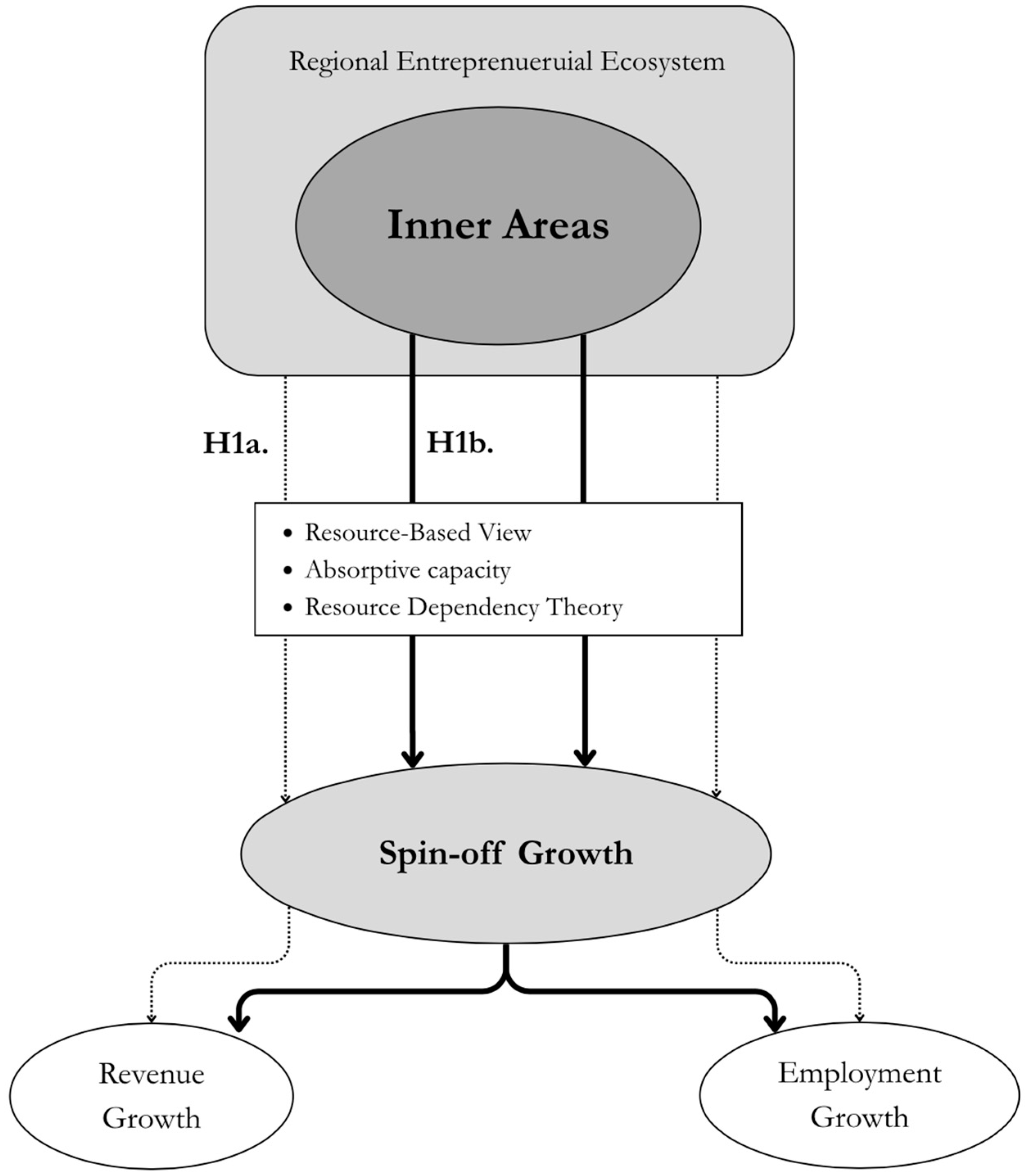
Building on the theoretical arguments above, we propose the following hypothesis:
H1a.
The quality of the regional entrepreneurial ecosystem is positively associated with university spin-off growth.
H1b.
The positive effect of the regional entrepreneurial ecosystem on spin-off growth is stronger for spin-offs located in internal areas.
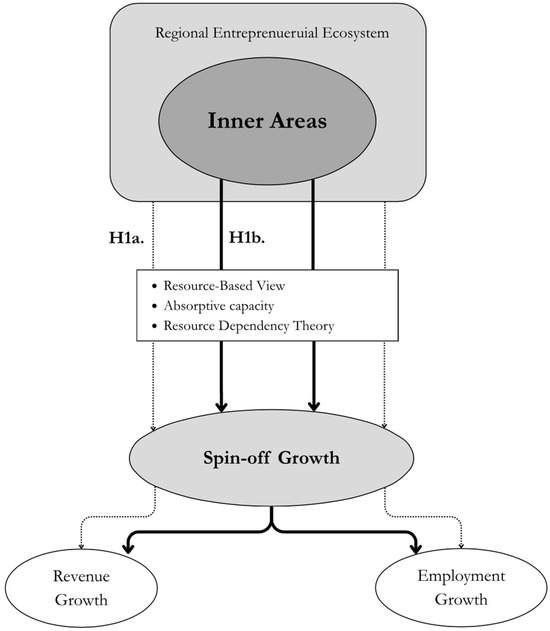
Figure 1 shows the conceptual framework and the related hypotheses.
Figure 1.
Conceptual framework.
3. Data and Methodology
3.1. Sample and Data Sources
The empirical analysis relies on an original dataset combining information from multiple sources to construct a longitudinal database of Italian university spin-offs and their territorial environments. Firm-level information was obtained from the NETVAL registry of Italian university spin-offs and from the AIDA—Bureau van Dijk financial database. The integration of these two sources was performed using the firm’s VAT number as a unique identifier, ensuring an exact match and full alignment of firm-level records. This multi-source approach strengthens the internal validity of the study by reducing measurement errors and increasing the completeness of financial and structural information, thus enhancing the reliability and generalizability of the results [25].
The resulting dataset is an unbalanced panel consisting of 1184 firm–year observations, corresponding to 655 unique university spin-offs observed over the period 2018–2022. The unbalanced structure of the panel is due to missing financial information for some firms in specific years. The panel structure enables the analysis of performance dynamics over time and allows the estimation of within-firm variation while controlling for unobserved heterogeneity. Spin-offs are classified by simplified ATECO codes and linked to their territory at the municipal and provincial levels through ISTAT geographical identifiers.
To capture the characteristics of the regional context, the firm-level data were matched with (i) the official classification of Italian Inner Areas from the National Strategy for Inner Areas (SNAI), (ii) provincial-level socio-economic indicators and innovation capacity measures drawn from national dataset of the ISTAT “BES dei territori Edizione 2025”. Within the Italian SNAI framework, municipalities classified as “peripheral” or “ultra-peripheral” are defined not simply by low population density, but by limited accessibility to essential services (healthcare, education, and mobility), demographic decline, and structural socio-economic fragilities, which distinguish internal areas from generic rural territories.
The integration across these sources provides a multi-dimensional representation of both firms and territories, consistent with the theoretical emphasis on the embeddedness of academic entrepreneurship in regional ecosystems.
3.2. Construction and Operationalization of the Inner Areas Intensity Index
A central objective of the empirical strategy is to quantify the degree of territorial marginality in which each spin-off operates. The official SNAI framework classifies Italian municipalities into five categories—polo, cintura, intermedio, periferico, ultraperiferico—based on accessibility to essential services and structural socio-demographic fragilities [26].
However, because every Italian province contains at least one municipality classified as an Inner Area, a simple binary indicator at the provincial level would be constant and therefore unusable for econometric estimation [27]. To overcome this limitation, the municipal-level classification was aggregated into a continuous index reflecting the intensity of inner-area characteristics within each province.
The Inner Areas Intensity Index (IAI) was defined as:
where
- denotes the number of municipalities classified as periferico or ultraperiferico within province p;
- denotes the total number of municipalities in province p.
This index captures the structural degree of territorial peripherality, reflecting infrastructural scarcity, demographic decline, and limited accessibility. It provides a theoretically coherent and empirically varying measure aligned with recent literature on spatial inequality and the uneven geography of innovation [1,2].
3.3. Construction of the Regional Ecosystem Quality Index (REQ)
To represent the broader socio-economic and innovation environment surrounding each firm, the study constructs a synthetic measure of Regional Ecosystem Quality (REQ). The index aggregates five territorial indicators obtained from ISTAT at the provincial level:
- (i)
- The share of tertiary-educated individuals aged 25–39;
- (ii)
- The general employment rate (20–64);
- (iii)
- The youth employment rate (15–29);
- (iv)
- Disposable income per capita;
- (v)
- Patent propensity.
Each variable was standardized using a z-score transformation:
where denotes the value of indicator X in province p at time t, μX its mean, and σX its standard deviation.
The REQ index was then computed as the arithmetic mean of the five standardized indicators:
Higher values indicate a stronger, more dynamic socio-economic and innovation ecosystem.
The construction of REQ follows the logic of formative indices [28], where each component represents a distinct, non-substitutable dimension of ecosystem quality.
The decision to assign equal weights to the components of the REQ index is consistent with its formative nature, where each indicator captures a distinct and non-substitutable dimension of regional ecosystem quality. In the absence of a consolidated theoretical or empirical consensus on the relative importance of these dimensions, the use of differential weights would introduce arbitrary assumptions. Equal weighting therefore represents a transparent and replicable choice, widely adopted in the construction of composite territorial indicators, and ensures that no single dimension disproportionately drives the overall index.
3.4. Dependent Variables and Controls
Two dimensions of firm performance are examined: growth and scalability.
The main dependent variable is revenue growth, defined as the year-to-year logarithmic variation in total revenues. A secondary measure, employment growth, is defined analogously:
These transformations reduce skewness, mitigate scale effects, and are consistent with standard practices in the analysis of firm dynamics [29].
Firm-level control variables include firm age (years since foundation), lagged firm size (log employment), lagged firm revenues and simplified ATECO sector dummies.
3.5. Empirical Strategy and Econometric Approach
To assess how territorial marginality and regional ecosystem quality shape the growth trajectories of academic spin-offs, the empirical analysis relies on a hierarchical (multilevel) modelling strategy rather than conventional fixed-effects panel estimators. Spin-offs are nested within provinces, and provinces differ substantially in their degree of territorial internality and ecosystem quality. A multilevel approach is therefore theoretically appropriate and econometrically efficient, as it allows us to model firm-level dynamics while accounting for the clustered spatial structure of the data [30].
The baseline specification is a two-level mixed-effects model of the form:
where
Growthit = β1IAIp(i) + β2REQp(i)t + β3[IAIp(i) × REQp(i)t] + Xitγ + τt + δs(i) + up(i) + εit,
- -
- i denotes firms, t years, and p(i) the province where firm i is located;
- -
- Growthit is the yearly growth rate of firm revenues;
- -
- IAIp(i) measures the degree of Inner Areas incidence in the firm’s province;
- -
- REQp(i)t is the Regional Ecosystem Quality index (z-score standardized composite measure);
- -
- IAI × REQ tests whether strong ecosystems mitigate structural territorial disadvantages;
- -
- Xit includes firm-level controls;
- -
- τt are year fixed effects;
- -
- δs(i) are ATECO 2-digit sector fixed effects;
- -
- up(i) is the province-level random intercept;
- -
- εit is the idiosyncratic error.
Given the limited within-province temporal variation in both territorial internality and ecosystem conditions, standard fixed-effects panel estimators would eliminate nearly all substantive territorial variation, yielding unstable or unidentified coefficients for the variables of interest. The mixed-effects specification preserves cross-provincial information, while allowing for robust inference by clustering standard errors at the provincial level, thus accounting for spatial correlation and intra-territorial dependence.
All continuous territorial predictors (IAI and REQ) are standardized (z-scores) and their interaction is estimated using centred regressors to reduce multicollinearity. The empirical strategy also incorporates a series of robustness checks, including alternative growth measures, exclusion of extreme observations, and models without sectoral fixed effects.
4. Descriptive Statistics
Table 1 reports descriptive statistics for the variables used in the empirical analysis.
Table 1.
Descriptive Statistics.
The two performance indicators—revenue growth and employment growth—display substantial dispersion, consistent with the heterogeneous trajectories typically observed among academic spin-offs.
Revenue growth exhibits high variability (mean = 0.141; SD = 0.764), with a wide range spanning from −8.06 to 12.28. Employment growth is also highly dispersed (mean = 0.093; SD = 0.374), reflecting the limited but volatile scaling capacity of early-stage research-based firms.
The Inner Areas Intensity Index (IAI) shows an average value of 0.584 (SD = 0.464), indicating that a sizeable proportion of firms operate in provinces structurally affected by internal-area characteristics.
The Regional Ecosystem Quality index (REQ), standardized with mean ~0, displays very strong variation across provinces (SD = 1.70), confirming the pronounced territorial disparities in local innovation environments.
Firm age ranges from 5 to 70 years, with a mean of 13.89 (SD = 6.04), capturing a mix of young spinoffs and more mature companies that still maintain the legal status of academic origin.
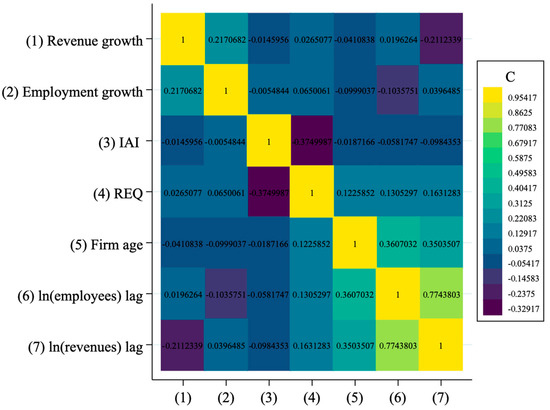
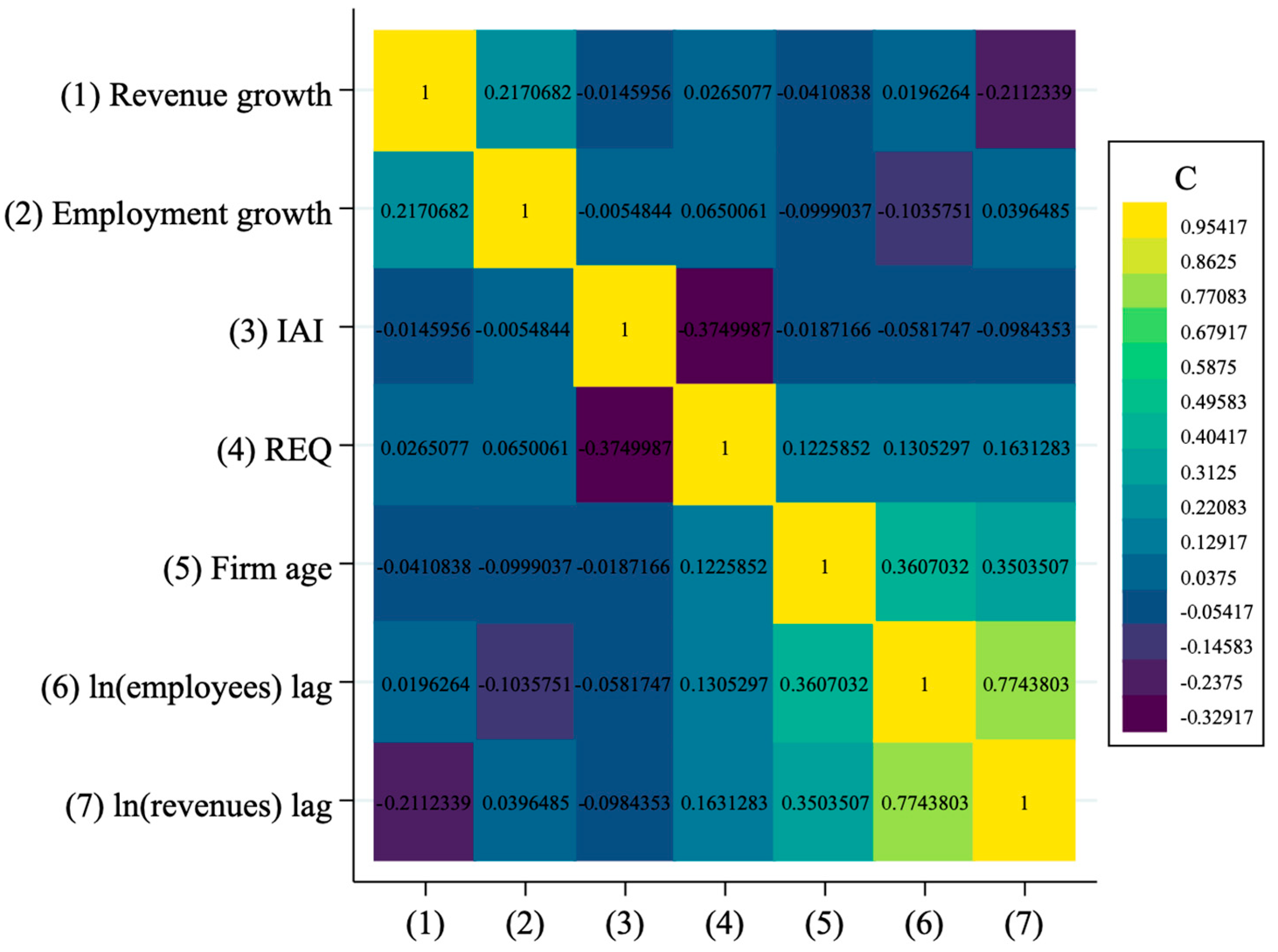
Table 2 and Figure 2 show pairwise correlations and corresponding p-values. The two performance indicators are positively correlated (r = 0.217, p < 0.001), suggesting that firms growing in revenues tend to expand employment as well. The IAI index is uncorrelated with both growth measures, but—as expected—is negatively associated with REQ (r = −0.375, p < 0.001), indicating that structurally weak areas tend to host weaker innovation ecosystems. REQ is positively correlated with firm size (lagged employees and revenues), consistent with the idea that stronger ecosystems support larger and more consolidated ventures. Firm age correlates moderately with size (r ≈ 0.36 with employees, 0.35 with revenues), reflecting the cumulative nature of organizational development. Overall, correlations remain moderate, and no multicollinearity issues emerge.
Table 2.
Correlations.
Figure 2.
Correlation heatmap of main variables. Notes: The figure reports the pairwise Pearson correlations among the main variables used in the empirical analysis: (1) revenue growth; (2) employment growth; (3) Inner Areas Intensity (IAI); (4) Regional Ecosystem Quality (REQ); (5) firm age; (6) lagged log employees; (7) lagged log revenues. Color shading ranges from −1 (dark purple) to +1 (yellow), with numerical values displayed within each cell.
5. Results from Mixed-Effects Models
5.1. Baseline Model: Revenue Growth
Table 3 presents the results of the mixed-effects model estimating the determinants of revenue growth. The specification includes year fixed effects; sector fixed effects (ATECO 2-digit) and a province-level random intercept to capture unobserved territorial heterogeneity. Standard errors are clustered at the provincial level.
Table 3.
Mixed-effects model on revenue growth.
The coefficient for the Inner Areas Intensity Index (IAI) is negative but statistically insignificant (β = −0.056; p = 0.145), indicating that internal areas are not directly associated with lower revenue performance once other covariates are controlled for. Similarly, the main effect of the Regional Ecosystem Quality Index (REQ) is small and nonsignificant (β = −0.003; p = 0.849), suggesting that ecosystem quality alone does not exert a direct; unconditional impact on revenue growth
By contrast, the interaction term between IAI and REQ is positive and statistically significant (β = 0.0668, p = 0.027). This result indicates that the relationship between territorial ecosystem quality and revenue performance varies systematically depending on the territorial context. Substantively, higher REQ translates into stronger revenue growth specifically for spin-offs located in internal areas, whereas no significant ecosystem effect emerges for spin-offs in central or intermediate territories. This pattern is consistent with the idea that disadvantaged areas exhibit higher marginal returns from improved institutional, infrastructural and entrepreneurial conditions.
This finding provides empirical support for H1b, indicating that the beneficial role of regional ecosystems is stronger—not weaker—for spin-offs located in internal areas. At the same time, the nonsignificant main effect of REQ offers no evidence in favour of H1a when considered outside this moderating mechanism.
Turning to the control variables, firm size (ln(employees), lag) is positively associated with revenue growth (β = 0.309, p < 0.001), suggesting that scale advantages matter in later-stage development. In contrast, lagged revenues (ln(revenues), lag) are negatively associated with growth (β = −0.301, p < 0.001), coherent with diminishing growth rates among larger firms. Firm age does not exert significant influence. Year dummies indicate no strong macro-trend differences across the two years observed.
Taken together, the results highlight that ecosystem quality becomes economically relevant only in interaction with territorial marginality, supporting an interpretation centred on context-specific absorptive capacity and differential ecosystem dependence.
The province-level random intercept variance is estimated to be close to zero, indicating that once observed territorial characteristics (Inner Areas Intensity and Regional Ecosystem Quality) are explicitly included in the model, little residual unobserved heterogeneity remains at the provincial level. This result suggests that the key sources of territorial variation relevant for university spin-off growth are effectively captured by the included contextual indicators, supporting the adequacy of the model specification.
5.2. Robustness Check: Employment Growth
Table 4 reports the results of the robustness model using employment growth as an alternative dependent variable. The inclusion of the same set of controls, fixed effects and multilevel structure ensures direct comparability with the revenue growth specification.
Table 4.
Mixed-effects model on employment growth.
Unlike in the previous model, here the main effect of REQ is positive and statistically significant (β = 0.0261, p = 0.003), indicating that stronger regional ecosystems foster employment expansion among spin-offs. This finding provides supporting evidence for H1a when performance is measured through staffing capacity rather than revenues, suggesting that ecosystem quality may initially translate into labour absorption.
However, the interaction between IAI and REQ is not statistically significant (β = 0.0039, p = 0.809), implying that the marginal effect of territorial ecosystems on employment growth does not vary across internal and non-internal areas. This contrasts with the pattern observed for revenue growth and indicates that—although ecosystem quality supports hiring—its ability to compensate for the disadvantages of internal areas emerges only in revenue dynamics, not in employment outcomes.
Control variables behave consistently with expectations: age is negatively associated with employment growth (β = −0.0066, p < 0.001), confirming that younger firms expand their workforce more rapidly. Larger firms (ln(employees), lag) experience lower subsequent employment growth (β = −0.113, p < 0.001), while firms with higher initial revenues (ln(revenues), lag) tend to hire more. Sector fixed effects capture substantial heterogeneity in labour dynamics across industries.
Overall, the robustness analysis reinforces the central conclusion: ecosystem quality matters for spin-off performance, but its compensatory effect for internal areas is specific to revenue growth rather than employment expansion.
6. Conclusions
6.1. Main Findings and Implications
This study examined how the territorial characteristics of internal areas and the quality of regional entrepreneurial ecosystems jointly shape the growth trajectories of Italian university spin-offs. By integrating multiple theoretical lenses—including knowledge spillovers, resource-based perspectives, and resource dependency—we proposed an interactionist approach in which spin-off performance is understood as the outcome of both firm-level resources and territorial conditions.
The empirical analysis reveals three main insights.
First, the quality of the regional entrepreneurial ecosystem plays an important role in supporting the development of university spin-offs. While its direct effect on revenue growth is modest, the positive association with employment growth indicates that stronger ecosystems favour organisational expansion and the accumulation of human resources; key drivers for the consolidation of young, research-based firms.
Second, the analysis shows that internal areas do not constitute homogeneous spaces of disadvantage. Their structural weaknesses—such as limited infrastructures and thinner institutional networks—can be partially offset when they are embedded in high-quality regional ecosystems. In such contexts, spin-offs located in internal areas demonstrate stronger revenue performance, suggesting that supportive regional conditions enable these firms to overcome part of the liabilities associated with territorial marginality. This finding aligns with recent discussions on resilience-oriented dynamics regions when endowed with adequate institutional capacity and knowledge infrastructures.
Third, the differential patterns observed between revenue and employment growth highlight that not all forms of spin-off development respond equally to territorial factors. Ecosystem quality seems to enhance commercial and financial performance in internal areas, whereas founders’ experience, prior firm size and structural characteristics play a more dominant role in shaping employment trajectories. This distinction reinforces the value of adopting a multidimensional view of growth.
Overall, the results contribute to a more nuanced understanding of how geography and ecosystem quality jointly influence academic entrepreneurship. Rather than viewing internal areas solely as disadvantaged environments, the study illustrates how their capacity to generate knowledge-based growth depends critically on the strength of the broader regional ecosystem. This has important policy implications: interventions aimed at reinforcing local institutional capacity, innovation intermediaries, infrastructure and human capital may have disproportionately positive effects in internal areas, enabling spin-offs to translate scientific knowledge into meaningful economic outcomes.
Future research may extend these findings by exploring longer-term trajectories, examining heterogeneity across university types or scientific domains, or analysing how individual founder characteristics interact with territorial conditions. By shedding light on the complex interplay between firms and places, this study advances our understanding of the geography of academic entrepreneurship and highlights internal areas as promising—though often overlooked—contexts for knowledge-driven regional development.
6.2. Limitations and Future Research
Despite its contributions, this study is subject to several limitations that should be acknowledged. First, potential endogeneity concerns cannot be fully ruled out, as regional ecosystem quality and university spin-off performance may co-evolve over time. Although the inclusion of lagged firm-level controls helps to mitigate reverse causality, future research could adopt instrumental variable approaches or dynamic panel estimators, such as GMM, to further strengthen causal inference.
Second, the relatively short temporal dimension of the panel may give rise to dynamic panel bias when lagged dependent variables are included as controls. While this strategy is commonly employed in firm growth models to account for path dependence, caution is warranted in interpreting the estimated coefficients. Extending the analysis to longer time horizons would allow for more robust dynamic specifications.
Third, the concept of territorial resilience is proxied in this study through growth compensation mechanisms rather than being directly observed. Future research could refine this operationalization by incorporating additional indicators related to adaptability, shock absorption, and long-term sustainability at the territorial level. Finally, the absence of detailed university-level characteristics represents an additional limitation, which future studies could address by explicitly accounting for heterogeneity across parent universities.
Author Contributions
Conceptualization, A.P.; Methodology, A.P.; Validation, A.P.; Investigation, A.P.; Resources, A.P. and D.F.; Data curation, A.P.; Writing—original draft, A.P. and D.F.; Writing—review & editing, A.P. and D.F.; Visualization, D.F.; Project administration, A.P. All authors have read and agreed to the published version of the manuscript.
Funding
This research was funded by the European Union—Next Generation EU, Project Title: Innovation, digitalization and sustainability for the diffused economy in Central Italy—VITALITY, the grand number is ECS00000041.
Institutional Review Board Statement
Not applicable.
Informed Consent Statement
Not applicable.
Data Availability Statement
The original contributions presented in this study are included in the article. Further inquiries can be directed to the corresponding author.
Conflicts of Interest
The authors declare no conflicts of interest.
References
- Crescenzi, R.; Rodríguez-Pose, A.F. The geography of innovation in China and India. Int. J. Urban Reg. Res. 2017, 41, 1010–1027. [Google Scholar] [CrossRef] [Scilit]
- Iammarino, S.; Rodriguez-Pose, A.; Storper, M. Regional inequality in Europe: Evidence, theory and policy implications. J. Econ. Geogr. 2019, 19, 273–298. [Google Scholar] [CrossRef] [Scilit]
- Capello, R.; Lenzi, C. Industry 4.0 and servitisation: Regional patterns of 4.0 technological transformations in Europe. Technol. Forecast. Soc. Change 2021, 173, 121164. [Google Scholar] [CrossRef] [Scilit]
- Grillitsch, M.; Nilsson, M. Firm performance in the periphery: On the relation between firm-internal knowledge and local knowledge spillovers. Reg. Stud. 2017, 51, 1219–1231. [Google Scholar] [CrossRef] [Scilit]
- Basile, G.; Cavallo, A. Rural identity, authenticity, and sustainability in Italian inner areas. Sustainability 2020, 12, 1272. [Google Scholar] [CrossRef] [Scilit]
- Prencipe, A.; Corsi, C.; Rodríguez-Gulías, M.J.; Fernández-López, S.; Rodeiro-Pazos, D. Influence of the regional entrepreneurial ecosystem and its knowledge spillovers in developing successful university spin-offs. Socio-Econ. Plan. Sci. 2020, 72, 100814. [Google Scholar] [CrossRef] [Scilit]
- Compagnucci, L.; Spigarelli, F. The Third Mission of the university: A systematic literature review on potentials and constraints. Technol. Forecast. Soc. Change 2020, 161, 120284. [Google Scholar] [CrossRef] [Scilit]
- Perkmann, M.; Salandra, R.; Tartari, V.; McKelvey, M.; Hughes, A. Academic engagement: A review of the literature 2011–2019. Res. Policy 2021, 50, 104114. [Google Scholar] [CrossRef] [Scilit]
- Guerrero, M.; Urbano, D. A research agenda for entrepreneurship and innovation: The role of entrepreneurial universities. Res. Agenda Entrep. Innov. 2019, 107–133. [Google Scholar] [CrossRef] [Scilit]
- Vega-Gomez, F.I.; Miranda, F.J.; Chamorro Mera, A.; Pérez Mayo, J. The spin-off as an instrument of sustainable development: Incentives for creating an academic USO. Sustainability 2018, 10, 4266. [Google Scholar] [CrossRef] [Scilit]
- Poponi, S.; Arcese, G.; Mosconi, E.M.; Arezzo di Trifiletti, M. Entrepreneurial drivers for the development of the circular business model: The role of academic spin-off. Sustainability 2020, 12, 423. [Google Scholar] [CrossRef] [Scilit]
- Rodríguez-Gulías, M.J.; Rodeiro-Pazos, D.; Fernández-López, S.; Corsi, C.; Prencipe, A. The role of venture capitalist to enhance the growth of Spanish and Italian university spin-offs. Int. Entrep. Manag. J. 2018, 14, 1111–1130. [Google Scholar] [CrossRef] [Scilit]
- Modina, M.; Capalbo, F.; Sorrentino, M.; Ianiro, G.; Khan, M.F. Innovation ecosystems: A comparison between university spin-off firms and innovative start-ups. Evidence from Italy. Int. Entrep. Manag. J. 2024, 20, 575–605. [Google Scholar] [CrossRef] [Scilit]
- Brekke, T. What do we know about the university contribution to regional economic development? A conceptual framework. Int. Reg. Sci. Rev. 2021, 44, 229–261. [Google Scholar] [CrossRef] [Scilit]
- Siegel, D.S.; Wright, M. Academic entrepreneurship: Time for a rethink? Br. J. Manag. 2015, 26, 582–595. [Google Scholar] [CrossRef] [Scilit]
- Iacobucci, D.; Micozzi, A. How to evaluate the impact of academic spin-offs on local development: An empirical analysis of the Italian case. J. Technol. Transf. 2015, 40, 434–452. [Google Scholar] [CrossRef] [Scilit]
- Smith, H.L. The Geography of Academic Entrepreneurship: Spin-Offs, Firm Growth and Regional Impact; Edward Elgar Publishing: Cheltenham, UK, 2023. [Google Scholar]
- Rasmussen, E. The regional impacts of university spin-offs: In what ways do spin-offs contribute to the region? In Handbook of Universities and Regional Development; Edward Elgar Publishing: Cheltenham, UK, 2019; pp. 151–165. [Google Scholar]
- Acs, Z.J.; Audretsch, D.B.; Lehmann, E.E. The knowledge spillover theory of entrepreneurship. Small Bus. Econ. 2013, 41, 757–774. [Google Scholar] [CrossRef] [Scilit]
- Sirmon, D.G.; Hitt, M.A.; Ireland, R.D. Managing firm resources in dynamic environments to create value: Looking inside the black box. Acad. Manag. Rev. 2007, 32, 273–292. [Google Scholar] [CrossRef] [Scilit]
- Rodríguez-Gulías, M.J.; Rodeiro-Pazos, D.; Fernández-López, S. The effect of university and regional knowledge spillovers on firms’ performance: An analysis of the Spanish USOs. Int. Entrep. Manag. J. 2017, 13, 191–209. [Google Scholar] [CrossRef] [Scilit]
- Guerrero, M.; Cunningham, J.A.; Urbano, D. Economic impact of entrepreneurial universities’ activities: An exploratory study of the United Kingdom. Res. Policy 2015, 44, 748–764. [Google Scholar] [CrossRef] [Scilit]
- Soetanto, D.; Jack, S. The impact of university-based incubation support on the innovation strategy of academic spin-offs. Technovation 2016, 50, 25–40. [Google Scholar] [CrossRef] [Scilit]
- Toledano, N.; Gessa, A.; Sanchez-Herrera, R. Rethinking the resources and responsibilities of university spin-offs: Critical factors in times of global crisis. Sustainability 2022, 14, 12628. [Google Scholar] [CrossRef] [Scilit]
- Podsakoff, P.M.; MacKenzie, S.B.; Podsakoff, N.P. Sources of method bias in social science research and recommendations on how to control it. Annu. Rev. Psychol. 2012, 63, 539–569. [Google Scholar] [CrossRef] [Scilit] [PubMed]
- Barca, F.; Casavola, P.; Lucatelli, S. Strategia Nazionale Per le Aree Interne: Definizione, Obiettivi, Strumenti e Governance/[A Cura di Fabrizio Barca, Paola Casavola e Sabrina Lucatelli]; Ministero dello Sviluppo Economico, Dipartimento per lo Sviluppo e la Coesione Economica, Unità di Valutazione degli Investimenti Pubblici: Rome, Italy, 2014.
- Wooldridge, J.M. Econometric Analysis of Cross Section and Panel Data; MIT Press: Cambridge, MA, USA, 2010. [Google Scholar]
- Diamantopoulos, A.; Winklhofer, H.M. Index construction with formative indicators: An alternative to scale development. J. Mark. Res. 2001, 38, 269–277. [Google Scholar] [CrossRef] [Scilit]
- Wiklund, J.; Shepherd, D. Entrepreneurial orientation and small business performance: A configurational approach. J. Bus. Ventur. 2005, 20, 71–91. [Google Scholar] [CrossRef] [Scilit]
- Snijders, T.A.; Bosker, R. Multilevel Analysis: An Introduction to Basic and Advanced Multilevel Modeling; SAGE Publications: Thousand Oaks, CA, USA, 2011. [Google Scholar]

Disclaimer/Publisher’s Note: The statements, opinions and data contained in all publications are solely those of the individual author(s) and contributor(s) and not of MDPI and/or the editor(s). MDPI and/or the editor(s) disclaim responsibility for any injury to people or property resulting from any ideas, methods, instructions or products referred to in the content. |
© 2026 by the authors. Licensee MDPI, Basel, Switzerland. This article is an open access article distributed under the terms and conditions of the Creative Commons Attribution (CC BY) license.