


Abstract
To address climate change and advance environmental sustainability in the context of the United Nations Sustainable Development Goals (SDGs), particularly SDG 9 (Industry, Innovation and Infrastructure), SDG 11 (Sustainable Cities and Communities), and SDG 13 (Climate Action), China has actively promoted digital trade development under its carbon peaking and carbon neutrality goals. However, whether digital trade contributes to environmental improvement, and through which mechanisms it does this, remains an open empirical question. This study examines whether and how digital trade development affects environmental pollution in China, with particular emphasis on spatial spillover effects and underlying mechanisms. Using provincial panel data from 2009 to 2023, we employ a spatial Durbin model combined with a mediation analysis framework. The results show that digital trade development has increased steadily in China and significantly reduces local environmental pollution, indicating a clear green effect. The spatial Durbin model shows that the environmental benefits of digital trade are unevenly distributed across space, with pollution reductions in core regions accompanied by increased emissions in neighboring areas. Further mechanism analysis indicates that industrial structure upgrading and consumption structure transformation are key channels through which digital trade development improves environmental sustainability. These findings provide important insights for coordinating digital trade expansion with regional environmental governance and low-carbon transition strategies.
1. Introduction
The rapid diffusion of digital technologies, including big data, cloud computing, artificial intelligence, and blockchain, has profoundly transformed traditional trading activities and accelerated the transition toward digital trade [1,2]. Characterized by data-driven transactions, platform-based intermediation, and technology-enabled service delivery, digital trade is reshaping the global trading system. According to the World Trade Organization, digital technologies contributed between 1.8 and 2 percentage points to annual growth in global services trade in 2023, and the share of services trade is projected to rise by 50% by 2040, accounting for more than one-third of total international trade. Empirical evidence further confirms the rapid expansion of digital trade across major economies. The United States and the European Union have experienced sustained growth in digital goods and services exports over the past decade. In China, digital trade has also expanded rapidly. The Digital Trade Development and Cooperation Report 2022 indicates that China’s digital service imports and exports grew by 22.3% year-on-year in 2021, accounting for 43.2% of total service trade.
While digital trade has emerged as a new engine of global trade growth, international trade remains a key determinant of environmental outcomes [3]. A large body of literature has examined the relationship between trade and environmental pollution, proposing competing hypotheses such as trade-induced environmental improvement [4,5], the pollution haven effect [6], and trade neutrality [7]. Digital trade differs fundamentally from traditional trade in that it relies more heavily on intangible assets, digital infrastructure, and platform-based transactions. These features suggest that digital trade may influence environmental sustainability through distinct channels, including reduced material intensity, enhanced information efficiency, and accelerated technology diffusion. Against the backdrop of tightening resource constraints, rising pollution intensity, and increasing energy consumption, a critical question arises: can the development of digital trade alleviate environmental pressure and improve environmental quality? Addressing this question is essential for understanding how digital trade can support green development and sustainable growth strategies.
With economic globalization and industrialization, issues such as resource depletion, ecological degradation, and climate warming have become global challenges. Consequently, environmental pollution control and carbon emission reduction tasks have become increasingly urgent for all countries. Since the rapid acceleration of economic globalization in the 1990s, the environmental implications of international trade have attracted increasing scholarly attention [8,9]. The existing literature can be broadly categorized into the following strands.
First, research on the impact of traditional trade on environmental effects. For instance, evidence from the China Railway Express suggests that the expansion of international trade can exacerbate environmental pollution, as trade linkages between Chinese cities and countries along the route increased significantly following its opening [10].
Second, research on the impact of traditional service trade on environmental pollution. Empirical analyses based on long-term data indicate that the development of trade in services can suppress China’s carbon emissions to a certain extent [11]. Consistent evidence from developing countries further shows that expanding trade in commercial services contributes to effective carbon emission reduction [12]. Additional studies find that service trade improves carbon emission efficiency by expanding economies of scale, enhancing economic efficiency, and promoting technological spillovers, thereby significantly improving energy efficiency and emission reduction performance through service trade globalization [9].
Third, research on the impact of the digital economy on environmental pollution. A growing body of literature has examined the role of the digital economy and various digital technologies in reducing environmental pollution and promoting sustainable development, which provides important reference points for the present study on digital trade and environmental pollution. For example, existing research indicates that digital economic development generates energy-saving effects and contributes to the reduction in environmental pollution [13]. Further evidence suggests that increased digital investment significantly curtails pollution emissions in China’s manufacturing sector [14]. However, existing studies also reveal notable nonlinear and threshold effects. Using threshold models, some studies show that once digital economic development exceeds a certain threshold, its inhibitory effect on pollution intensity weakens as digitalization continues to advance [15]. Related evidence documents a U-shaped relationship between digital services trade and carbon emission efficiency [16]. In addition, cross-country analyses further confirm the presence of an inverted U-shaped Environmental Kuznets Curve in G7 countries, indicating that the digital economy significantly reduces carbon emissions after surpassing a critical turning point [17]. Moreover, the environmental effects of the digital economy exhibit significant spatial heterogeneity, indicating that its impact on pollution varies across regions. Taken together, the existing evidence indicates that the environmental consequences of digitalization are far from uniform. These divergent findings likely stem from differences in the scope and measurement of digitalization, the level of analysis, and the omission of spatial interactions and structural mechanisms, underscoring the need for further investigation. In particular, these mixed findings suggest that assessing the environmental consequences of digitalization requires a more granular and integrated analytical perspective that moves beyond broad measures of the digital economy. Focusing on more specific digitally enabled economic activities and explicitly accounting for spatial interactions may help reconcile the existing heterogeneous evidence.
Fourth, research on the impact of digital trade on environmental pollution. In recent years, with digital technology widely applied in trade, digital trade has emerged as a product of the new era and an essential aspect of the digital economy. The environmental effects of digital trade merit in-depth exploration by scholars. Current research on digital trade primarily examines environmental impacts from the perspectives of technological change [18], carbon tax policy [19], and international trade [20]. However, few studies specifically address environmental pollution from the development of digital trade. Instead, scholars have explored the broader impacts of digital trade. For example, existing studies suggest that the development of digital service trade plays a crucial role in promoting technological innovation [21]. Moreover, cross-border empirical evidence shows that digital service trade contributes to carbon emission reduction through scale, structural, and technical effects [22].
In recent studies, SDGs have increasingly been adopted as an analytical framework to examine the relationship between economic transformation and environmental sustainability [23]. Within this framework, existing studies commonly associate SDG 9 with innovation-driven industrial upgrading [24], SDG 11 with coordinated regional environmental governance [25], and SDG 13 with pollution reduction and low-carbon transition [26]. However, empirical evidence on how digital trade contributes to these SDG-related environmental outcomes, particularly through spatial spillover effects, remains limited.
This study has two potential contributions: Firstly, this study advances the literature by clarifying how digital trade affects environmental sustainability and by highlighting dimensions that have been largely overlooked. Unlike existing studies that focus on aggregate measures of the digital economy or digital technologies, we explicitly examine digital trade as a distinct economic activity that reshapes production organization, trade logistics, and consumption patterns. Digital trade may reduce pollution by lowering transaction and transportation costs, substituting physical transactions with digital services, improving supply-chain coordination, and facilitating the diffusion of cleaner production technologies [5,16]. At the same time, digital trade may induce a spatial reallocation of pollution-intensive activities across regions, raising concerns about pollution displacement rather than genuine emission reduction.
Secondly, digital trade development is also inherently spatial. By facilitating cross-regional flows of data, services, and production factors, digital trade may generate spatial spillovers in environmental outcomes. While prior studies document significant green spillovers associated with the digital economy [27,28], whether digital trade exhibits similar spatial externalities remains an open question. Addressing this issue is essential for understanding regional coordination in environmental governance in the digital era.
Accordingly, this paper examines the impact of provincial digital trade development on environmental pollution in China from both production and consumption perspectives. We employ a spatial Durbin model to identify spatial spillover and pollution displacement effects and further investigate the underlying mechanisms through which digital trade influences environmental outcomes. By integrating spatial analysis with mechanism verification, this study provides new evidence on how digital trade contributes to environmental sustainability and offers policy-relevant insights for promoting green development alongside the expansion of digital trade.
2. Theoretical Analysis and Research Hypotheses
Although the mechanisms linking digital trade to environmental pollution are multifaceted, this study builds a unified theoretical framework to systematically organize these mechanisms and guide hypothesis development. Drawing on theories of technological innovation, structural transformation, and consumption upgrading, we conceptualize digital trade as a general-purpose digital force that reshapes both production and consumption systems [7]. Within this framework, digital trade affects environmental outcomes through a combination of direct efficiency-enhancing effects and indirect structural adjustment channels [4]. Specifically, digital trade directly influences environmental performance by strengthening innovation incentives and managerial efficiency, while indirectly reshaping environmental outcomes through production-side industrial upgrading and demand-side consumption structure transformation [29]. These channels are theoretically interrelated rather than independent, jointly determining how digital trade translates into changes in environmental quality. This integrated framework provides a coherent theoretical foundation for model specification and motivates the subsequent development of testable hypotheses.
2.1. Digital Trade and Environmental Pollution
Digital trade is a product of the era that emerges from the integration of digital technology and trade, and it is an important manifestation of the digital economy [28]. It represents a new form of trade that relies on digital technology and digital platforms to facilitate cross-border activities in research and development, production, trading, and consumption.
First, from the perspective of its essential connotation, it can be driven by innovation and management efficiency and can mitigate environmental pollution. (1) Innovation drives environmental improvement. Digital trade is inherently rooted in technological innovation, and its expansion accelerates the adoption and diffusion of advanced digital technologies, thereby enhancing production efficiency and environmental performance [30]. By facilitating the integration of data-driven technologies, digital trade improves energy efficiency, optimizes pollution treatment processes, and supports cleaner production practices [31]. Empirical evidence from studies on digital technology adoption further confirms this innovation-driven mechanism. For example, research on the adoption of the Internet of Things (IoT) in manufacturing industries demonstrates that digital technologies significantly enhance operational efficiency, reduce production costs, and improve decision-making quality through data transparency and automation, generating measurable productivity gains [32]. These innovation-induced efficiency improvements provide an important foundation for reducing energy consumption and pollutant emissions. Moreover, the innovation momentum generated by digital trade promotes continuous upgrading of low-carbon technologies and encourages the reallocation of resources toward greener production sectors with higher emission efficiency, thereby exerting a sustained positive effect on regional environmental quality [22]. (2) A new management mechanism drives environmental improvement. Beyond external regulation and information transparency, digital trade reshapes firms’ internal environmental management mechanisms by altering employees’ abilities, motivations, and opportunities, as emphasized by the Ability–Motivation–Opportunity (AMO) theory [33]. Recent studies suggest that environmental performance is not solely determined by regulatory pressure, but also by how firms internally organize green capabilities and incentives through management systems [32]. First, digital trade enhances firms’ environmental ability by facilitating the diffusion of digital technologies, environmental knowledge, and green management practices along supply chains. Digital platforms and data-driven trade processes enable firms to better monitor resource use, emissions, and compliance, thereby strengthening their operational capacity for environmental management [34]. Second, digital trade strengthens environmental motivation by intensifying market transparency and competitive pressure. Increased visibility of environmental performance on digital platforms raises reputational concerns and market-based incentives, encouraging firms to proactively adopt cleaner production and greener practices. Third, digital trade expands environmental opportunity by fostering cross-firm coordination and supply-chain collaboration. Digital connectivity lowers coordination costs and creates organizational opportunities for firms to engage in joint environmental governance, green supply chain management, and collaborative innovation. Through the joint effects on ability, motivation, and opportunity, digital trade forms a new internal management mechanism that complements formal environmental regulation and contributes to the mitigation of environmental pollution [35].
Second, from the perspective of the internal operation mechanism, it can be driven by the scale effect and the structural effect to produce a mitigating impact on environmental pollution. (1) Scale effect. With the development of digital trade, more digital consumer products will emerge, and the scope and scale of traditional trade transactions will be expanded. This expansion makes hard-to-trade products tradable, enlarges the trade scale, and enhances the economic scale. The digital characteristics of trade also have a restraining effect on environmental pollutant emissions to a certain extent. (2) Structural effect. The development and growth of digital trade will drive the continuous development of ecological industries and the ecological evolution of industrial structure effects. This includes the gradual transformation of the industrial structure towards more advanced forms characterized by low pollution and high production capacity. Consequently, the proportion of pollution-intensive enterprises will gradually decline, and the industrial structure will continue to be optimized, thereby helping to improve environmental quality issues.
Therefore, as digital trade develops, an increasing number of traditional trades will be replaced by digital trade, which essentially frees the trade process from reliance on conventional logistics methods [36]. As the scale of digital trade continues to expand, it is very likely to advance the carbon emission reduction process and improve environmental pollution status [32]. In theory, digital trade is data-intensive and driven by technological and platform-based innovations, which embed strong innovation incentives and may generate a pollution-mitigating effect. Hence, hypothesis 1 is proposed:
Hypothesis 1.
Digital trade development can improve regional environmental pollution.
2.2. Digital Trade, Industrial Structure, and Environmental Pollution
Digital trade relies on digital technology to promote trade development towards intelligent, digital, and convenient online transactions. The new economic growth theory asserts that knowledge accumulation is the core factor in explaining technological progress [8,37]. Furthermore, digital trade and its communication channels significantly enhance the efficiency of knowledge dissemination, thereby driving technological progress in industries. The theory of technological progress shows that when digital trade economic entities increase RD investment, technological progress will be promoted [38]. Among them, the economic subject who masters advanced core technology can effectively improve production efficiency, make scarce resources flow, and allocate interactively between enterprises and departments, form the “Baumol effect”, and further enable new enterprises to develop and grow and gain competitive advantages through “forced replacement” and market “competitive elimination”. At the same time, those traditional enterprises that are behind in RD and stagnate will be eliminated so that economic entities will continue to update, and new economic entities will continue the trend of RD and innovation [39], driving their industrial sectors to be updated and even upgraded, and ultimately promoting the industrial structure upgrading [40].
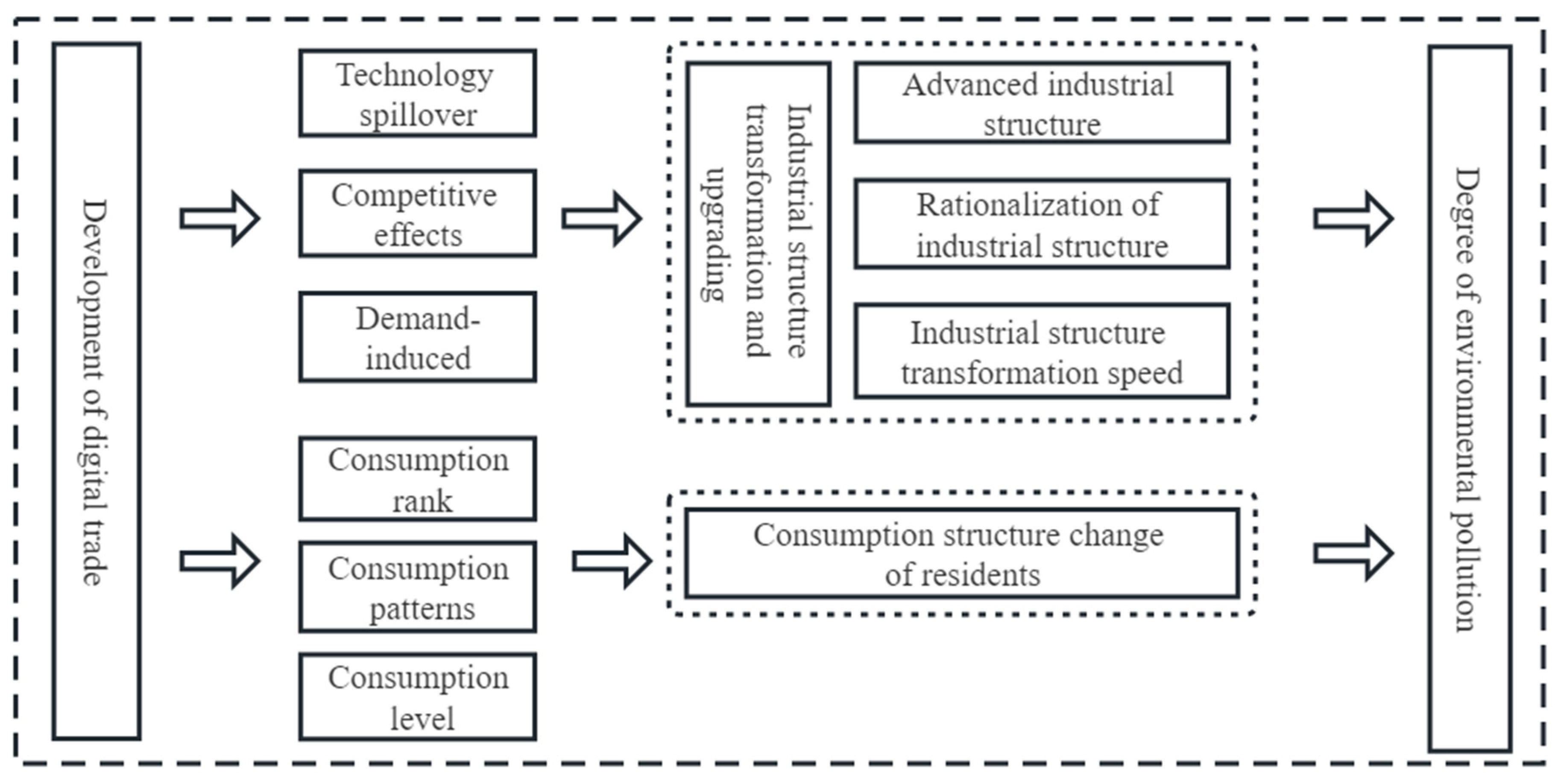
In essence, the development of digital trade to promote industrial structure upgrading can be explained from the following three dimensions: (1) Technology spillover. According to the “learning by doing” theory, when knowledge- and technology-intensive products are produced, circulated, and consumed through digital trade, the embedded technologies, managerial experience, and research and development outcomes are transmitted across firms and regions along with trade flows, generating technology spillover effects [41]. Evidence from digital technology adoption studies suggests that such spillovers are not limited to direct users of new technologies. For instance, research on IoT adoption in manufacturing shows that digital technologies diffuse through organizational learning, management support, and inter-firm interaction, thereby enhancing productivity and technological capabilities beyond the initial adopters [32]. This process strengthens the absorptive capacity of downstream and related industries and accelerates the dissemination of advanced production technologies. Through these spillover effects, digital trade facilitates the gradual transformation of industrial structures toward knowledge- and capital-intensive activities with higher value added, promoting industrial upgrading and supporting a shift toward cleaner and more sustainable production modes [42]. (2) Competitive effects. In the digital trade era, intensified competition does not merely eliminate inefficient firms, but also induces internal organizational transformation through the reallocation of abilities, motivations, and opportunities. According to the AMO framework, firms facing heightened competitive pressure are incentivized to enhance employees’ green skills, strengthen environmental incentives, and create organizational opportunities for green innovation and coordination [33]. Digital trade lowers entry barriers and increases market transparency, exposing firms with outdated technologies and weak environmental management to greater competitive risks [43]. In response, surviving firms are compelled to invest in green technologies, improve managerial efficiency, and integrate environmental objectives into their production and supply-chain decisions. This competitive selection mechanism accelerates the exit of pollution-intensive and low-efficiency enterprises while promoting the expansion of technology-intensive, low-emission industries. Consequently, digital trade-driven competition fosters industrial structure upgrading and contributes to long-term improvements in environmental quality [44]. (3) Demand-induced. The advancement of information and network technologies in the digital trade era has spurred a surge in consumer demand for personalized products and services. In response, businesses have accelerated their digital and intelligent evolution to meet these specific and customized consumer needs, thereby hastening the transformation and upgrading of the industrial structure [45].
Upgrading the industrial structure is widely recognized as a crucial pathway for reducing pollution and emissions, exerting a significant influence on environmental outcomes [46]. At its core, industrial structure upgrading involves a transformation of the economic growth model and its underlying driving forces. The composition and scale of industries determine both the volume and types of pollutants emitted, implying that environmental pollution is closely linked to the advancement of industrial structure, the rationalization of industrial scale, and changes in industrial development dynamics [47]. From a green economy perspective, industrial upgrading is not merely a shift across sectors, but a structural transition toward production systems characterized by lower resource intensity, reduced carbon dependence, and stronger technological content [37]. As emphasized in studies on green economy factors, sustainable development increasingly depends on integrating environmental constraints and green performance criteria into the evaluation and evolution of industrial systems, particularly in resource- and pollution-intensive sectors [37]. This transition requires phasing out high-emission industries and reallocating resources toward cleaner, technology-intensive, and service-oriented activities, thereby improving long-term environmental sustainability [37]. Specifically, when heavy industries dominate the secondary sector, they tend to generate substantial environmental pollution, whereas a higher share of high-tech and knowledge-intensive industries is associated with significantly lower pollution levels. Accordingly, optimizing and upgrading the industrial structure can alleviate environmental pressures. A developmental shift away from pollution-intensive secondary industries toward a tertiary sector centered on modern services, high-tech industries, and digital technologies reflects a more rational and advanced industrial structure [48]. In line with the green economy framework, adjusting industrial structure by optimizing sectoral composition and restricting pollution-intensive activities is essential for achieving energy conservation and emission reduction. As an important component of the digital economy, digital trade serves as a catalyst for high-quality development by accelerating industrial transformation and upgrading. Through this process, high-pollution and high-energy-consumption industries are gradually phased out, while strategic emerging industries and modern service sectors expand more rapidly. These sectors tend to adopt cleaner production technologies and pollution-free input factors, leading to reductions in industrial emissions such as wastewater, waste gas, and solid waste, and fostering more sustainable patterns of production and consumption [49]. Therefore, industrial structure upgrading constitutes a key transmission channel through which digital trade mitigates environmental pollution. Hence, hypothesis 2 is proposed:
Hypothesis 2.
Industrial structure upgrading plays an intermediary role in the process of digital trade, which affects environmental quality.
2.3. Digital Trade, Consumption Structure, and Environmental Pollution
The development of digital trade has integrated new technologies into all aspects of trade and circulation, fundamentally reshaping traditional trade and consumption patterns and thereby driving structural changes in consumption [30]. Specifically, within the realm of digital technology, digital trade significantly impacts consumption in three key areas: consumption levels, consumption modes, and consumption scale. (1) Consumption Levels. Digital trade has introduced new characteristics to consumer activities, leading to the emergence of novel consumption patterns [50]. A rapid shift has occurred from physical consumption to virtual and experiential forms of consumption [8]. Consumers have shown an increased preference for moving from basic needs to more sophisticated forms of consumption, shifting from large-scale material purchases toward service-oriented consumption. This transition is increasingly consumer-centered, evolving from low-end to high-end demand structures and thereby accelerating the upgrading of residents’ consumption structure [50]. (2) Consumption Modes. The rise of various digital platforms utilizing the Internet, the Internet of Things, and big data has given rise to a variety of new consumption modes, including online shopping, short video consumption, livestream purchasing, cross-border e-commerce, and shared consumption [47]. These innovations not only enhance the convenience and diversity of consumer choices, but also expand access to digital financial and payment services. By lowering transaction costs and information barriers, these changes provide consumers with new channels for participation and further promote the upgrading of the consumption structure. (3) Consumption Scale. The expansion of digital trade has increased the tradability of goods previously considered non-tradable, such as online education, tourism, exhibitions, real estate, and healthcare [51]. This expansion has enhanced both the scale and quality of consumer goods and services, leading to simultaneous improvements in both the quantity and quality of consumption, thereby elevating overall consumption to a more advanced and diversified level [52]. In summary, the proliferation of digital trade has brought about profound changes in the consumption domain by reshaping consumer behavior and gradually fostering higher consumption levels, more diversified consumption modes, and an expanded consumption scale, thereby promoting the structural upgrading of residents’ consumption [53].
Changes in consumption structure significantly influence environmental pollution [54]. As one of the three main drivers of economic growth, optimizing the composition of consumption is essential for achieving coordinated economic and ecological development. Firstly, when residents’ consumption structure is upgraded, there is a shift from material- and goods-oriented consumption to service-oriented consumption. This type of consumption primarily involves the service industry, which typically generates higher economic value with relatively lower environmental pressure. From an industrial perspective, reducing the proportion of the secondary sector, which includes heavy industry, in the total economic output can ease environmental pollution issues. Consequently, restructuring consumption to prioritize services over goods reduces resource intensity and pollution emissions, thereby promoting more harmonious economic and ecological development. Secondly, digital trade has introduced new consumption patterns, such as information, green, and digital consumption, supported by advances in digital technology and the Internet of Things [55]. This transformation has facilitated the emergence of greener and more eco-friendly production–consumption linkages across the industrial chain [56]. For instance, the Agricultural Wisdom Ecological Park in Yangling, Shaanxi, China, exemplifies an integrated low-emission production–consumption model that extends from the greenhouse to the dining table. More generally, within the context of digital trade, consumption structure adjustment helps reduce reliance on pollution-intensive production modes and alleviates traditional challenges associated with high emissions and resource consumption in production. Hence, hypothesis 3 is proposed (Figure 1):
Hypothesis 3.
Consumption structure change acts as an intermediary in the impact of digital trade on environmental quality.
Figure 1.
Mechanism analysis.
3. The Measurement and Timely Evolution of Digital Trade
3.1. Measurement of Digital Trade
Consistent with the international statistical framework, digital trade is defined as trade transactions that are digitally ordered or digitally delivered, emphasizing the role of digital technologies in the ordering, intermediation, and delivery of goods and services rather than general economic digitization. In empirical research, however, comprehensive and consistent subnational statistics on digitally ordered or digitally delivered trade remain limited. Following established practice in the literature, we therefore construct a composite index that captures the digital-trade ecosystem, which reflects not only realized digital trade activities but also the enabling conditions and market environments necessary for such transactions to occur and expand.
Specifically, the index system comprises five dimensions—digital network infrastructure, digital technology level, digital trade modes, digital trade objects, and digital trade potential—each of which corresponds to a distinct component of the digital trade process [11,57]. Digital network infrastructure and digital technology level represent trade-enabling capacities, as adequate connectivity, technological capabilities, and digital services are prerequisites for online ordering, digital intermediation, and the delivery of digitally tradable goods and services. Digital trade modes and digital trade objects capture proximate activity proxies of digital trade, including e-commerce transactions, logistics intensity, telecommunications services, and revenues from digital goods and services, which directly reflect the scale and intensity of digitally mediated trade. Finally, digital trade potential reflects market size and purchasing capacity, which condition the scalability and sustainability of digital trade activities across regions. Taken together, these dimensions provide a comprehensive and theoretically grounded measurement of digital trade development that aligns with international conceptualizations while remaining feasible at the provincial level (Table 1).
Table 1.
Comprehensive index system of digital trade development level.
Constructing an index to measure the level of digital trade development requires not only well-defined indicator values but also a scientifically sound weighting scheme to reflect the relative importance of each indicator. Existing weighting approaches can generally be classified into two categories: subjective and objective methods. Subjective weighting methods assign weights based on researchers’ assessments of the influence and role of individual indicators within the evaluation system, such as principal component analysis, the analytic hierarchy process (AHP), and the Delphi method. In contrast, objective weighting methods determine weights according to the statistical characteristics and informational content of the original data, independent of researchers’ subjective judgments. Common objective approaches include the standard deviation method, the entropy method, the range method, and classification-based methods.
However, subjective judgments may distort the weighting process and lead to substantial measurement bias, thereby limiting the ability of composite indices to accurately reflect actual conditions. Taking these considerations into account, this study adopts the entropy weight method, an objective weighting approach, to determine indicator weights. This choice is particularly appropriate given that the 17 indicators employed in this study span multiple dimensions and differ substantially in scale and units. Therefore, all indicators are standardized prior to weighting to ensure consistency and comparability across dimensions. Such normalization enhances the cross-sectional comparability and practical relevance of the indicators, thereby improving the accuracy and reliability of the resulting digital trade development index. Accordingly, positive and negative indicators are normalized using the following formulas:
For positive indicators:
For negative indicators:
where and refer to the maximum and minimum values of the indicator over the entire sample period, respectively, and is the resulting dimensionless value after normalization.
The proportion of the indicator in year is then calculated and denoted by , where .
The information entropy of indicator is calculated as , and the entropy redundancy is defined as , where denotes the number of evaluation years.
Based on the degree of entropy redundancy, the weight of indicator is determined as .
Based on the standardized indicators and the corresponding weights , the level of digital trade development is calculated using a weighted linear aggregation method, defined as , where denotes the number of indicators. This formulation yields a composite index of digital trade development. A higher value of indicates a higher level of digital trade development, whereas a lower value reflects a lower level of development.
3.2. The Temporal Evolution Characteristics
Using Stata 16.0 software, we generated kernel density curves (Figure 2) to illustrate the temporal evolution of digital trade development in China. The results show a persistent rightward shift in the distribution between 2009 and 2023, indicating a continuous increase in the overall level of digital trade development. This upward trend is largely attributable to the rapid diffusion of digital technologies into traditional trade activities and the accelerated digital transformation of conventional trade models. Regarding the height of the central peak, the kernel density curve exhibits a gradual decline from 2009 to 2023, with the magnitude of the decline progressively diminishing over time. Meanwhile, the distribution evolves from a sharp peak toward a flatter and broader shape, suggesting that interprovincial disparities in digital trade development widened during the early stage but tended to stabilize in the later period. In terms of the number and shape of distribution peaks, the curve in 2009 is characterized by a dominant central peak accompanied by a secondary right-side peak, indicating pronounced early-stage polarization in digital trade development across provinces. By contrast, the 2023 distribution displays a unimodal pattern with right skewness, implying that the initial polarization gradually weakened as digital trade continued to develop, and that interprovincial differences in digital trade development were reduced. From the perspective of tail behavior, the right tail of the kernel density curve extends and thickens over the study period, indicating an increasing share of provinces reaching relatively high levels of digital trade development. Correspondingly, the number of provinces with low levels of digital trade development declined, reflecting an overall upward shift in the distribution.
Figure 2.
Estimation of nuclear density of digital trade development in China’s provinces.
Figure 3 presents the Theil Index measuring regional disparities in digital trade development across Chinese provinces. Overall, the national Theil Index exhibits a fluctuating but upward trend during the sample period, indicating that interprovincial disparities in digital trade development have generally widened over time, which may be partly attributable to heterogeneous progress in digital infrastructure construction and digital adoption across regions. From a regional perspective, the western region consistently records the highest Theil Index values, suggesting the largest internal disparities in digital trade development, whereas the central region displays the lowest and most stable Theil Index, reflecting relatively small and steady intraregional differences. The eastern region’s Theil Index remains close to the national average, positioning it between the western and central regions. In terms of relative magnitude, regional disparities in digital trade development follow a clear pattern of western > eastern > central, with the western region exceeding the national average throughout most of the period, the central region remaining the lowest, and the eastern region closely tracking the national level. From a dynamic perspective, the development gap between the eastern and western regions shows a generally rising trend accompanied by fluctuations, as the gap at the end of the sample period is larger than that at the beginning. By contrast, the central region exhibits a relatively stable trajectory, with its Theil Index at the end of the period remaining broadly comparable to its initial level. Overall, these results indicate the coexistence of both interregional and intraregional disparities in digital trade development. Differences involving the western and central regions constitute major contributors to national inequality, underscoring the importance of regionally differentiated and coordinated development strategies when promoting digital trade expansion.
Figure 3.
Theil Index of China’s Provincial Digital Trade Development.
4. Description of Econometric Models, Variables, and Data
4.1. Model Setting
Firstly, an econometric model of the degree of environmental pollution affected by digital trade is constructed, and the existing research shows that regional environmental pollution has spatial autocorrelation, and its pollution degree is affected by both internal factors and environmental factors of neighboring provinces, so the spatial econometric model constructed is as follows:
In Equation (1), P is environmental pollution, and Dtrade is the development of digital trade. CONT is the set of control variables; is the province, is the time, is the spatial autoregressive coefficient of environmental pollution, and are the regional effect and the time effect, respectively, is the random disturbance term.
To reduce the estimation bias caused by improper setting of the spatial weight matrix, three spatial weight matrices are constructed simultaneously for estimation. In this paper, we will use both 0–1 weight matrix, geographic weight matrix, and economic geographic weight matrix for research. 0–1 weight matrix (W01): When province i is adjacent to province j, the value is 1. Otherwise, the value is 0, and the specific structure is . Geographic Weight Matrix (Wdis): uses latitude and longitude to calculate the geographical distance of provincial capitals, and sets the weight with the reciprocal of the distance, and the specific structure is . Economic geography weight matrix (W): using geographical distance and economic distance weighting, where Weco is the economic distance weight matrix, the specific formula is constructed as ; take as 0.5, so that the weights of economic distance and geographical distance account for half each, so the specific structure of the economic geographical weight matrix is .
4.2. Variable Description
4.2.1. Dependent Variable
The dependent variable in this study is the degree of environmental pollution (P). Following the entropy-weighting approach, we construct a composite environmental pollution index that integrates multiple indicators, including industrial wastewater discharge, industrial sulfur dioxide emissions, and industrial smoke (dust) emissions, to comprehensively capture regional pollution intensity. A higher value of the index indicates a higher level of environmental pollution. Accordingly, the composite environmental pollution index serves as the dependent variable in this paper.
4.2.2. Independent Variable
The independent variable is the development of digital trade (Dtrade), which measures the development of digital trade from the perspective of digital infrastructure, technology level, trade mode, trade object, and trade potential, and the specific index construction and measurement methods shown above.
4.2.3. Mediating Variables
The intermediary variables are industrial structure upgrading and consumption structure upgrading. At the same time, this paper will analyze the mechanism from the production perspective, including the advanced and rationalization of industrial structure and the speed of industrial transformation. The mechanism analysis from the consumption perspective mainly refers to the change in the consumption structure of residents.
The process of advanced industrial structure (SHA): Construct a revised industrial structure advancement index, which can not only judge the industrialization process, but also reflect the change in industrial proportional structure and industrial productivity, and also reflect the trend of “economic servitization” of industrial structure upgrading. Among them, the larger the SHA, the higher the proportion of high-tech industries, and the more fully the industrial structure upgrading, with the calculation formula is:
In Equation (2), represents the number of tertiary industries. represents the added value of the period of the industry. represents the number of employed people in the period of industry . represents the gross regional product of the period. represents the value-added index of the three industries, reflecting the speed of change in the proportional relationship in the industrial sophistication index, that is, reflecting the trend of “economic servitization” in the industrial sophistication index.
The degree of rationalization of industrial structure (ISR): construct industrial structure rationalization indicators to represent the deviation of industrial structure, of which the larger the ISR, the more the economy deviates from the equilibrium state, the more unreasonable the industrial structure, the specific calculation formula is:
In Equation (3), represents the output value of industry during period. represents the total amount of employment in period. Other variables are the same as formula (2).
The speed of industrial transformation (ITS): Using the industrial structure level coefficient to reflect the index of industrial structure change and the speed of transformation and upgrading, the evolution process of the three major industries is described through the relative change of share ratio, and the calculation formula is:
In Equation (4), represents the weight of the corresponding j industry. The other variables are the same as the formula (2).
Consumption structure change in residents (RCS): the postal business volume measures the consumption structure change in residents; the postal business volume is a positive indicator, the indicator rises to indicate that the online consumption and online shopping behavior of residents increase, indicating that the online consumption degree of residents’ consumption mode or lifestyle is relatively high, so this paper selects the total amount of postal business per capita to measure the change in residents’ consumption structure [58,59]. In addition, existing studies generally divide the three consumer expenditures of culture, education and entertainment, transportation and communication, and health care into development and enjoyment consumption and use the sum of the three consumption expenditures to measure the upgrading of the consumption structure. In this paper, the sum of the per capita consumption expenditure of the three development and enjoyment types of urban residents and the per capita consumption expenditure of urban residents are used to measure the upgrading of urban residents’ consumption structure (URCS). The sum of the per capita consumption expenditure of the three development and enjoyment types of rural residents and the ratio of the per capita consumption expenditure of rural residents were used to measure the upgrading of the consumption structure of urban residents (RRCS) [60].
4.2.4. Control Variables
To mitigate potential omitted-variable bias, this study incorporates a set of control variables that are widely used in the environmental economics literature. These variables are selected to capture key structural determinants of environmental pollution, including production input factors, economic openness, demographic concentration, and growth dynamics. Controlling for these factors allows us to isolate the environmental effects of digital trade from broader economic and structural influences.
(1) Human capital (Hum). Human capital is measured by the ratio of students enrolled in regular colleges and universities to the total population at year-end [61]. Human capital influences environmental outcomes through multiple channels. Higher educational attainment can facilitate the adoption of cleaner production technologies, enhance environmental awareness, and strengthen firms’ capacity for green innovation, thereby contributing to pollution reduction.
(2) Physical capital (Cap). Physical capital is measured by the ratio of fixed asset investment to GDP. As a core production input, capital accumulation may exert competing effects on environmental quality [62]. On the one hand, increased investment can expand production scale and intensify resource use, leading to higher emissions. On the other hand, capital deepening may promote technological upgrading and the adoption of energy-efficient equipment, potentially mitigating pollution. Controlling for physical capital helps disentangle these scale and technology effects.
(3) Openness to the outside world (Open). This variable is proxied by the ratio of total imports and exports to GDP. A higher degree of openness can facilitate the diffusion of advanced and cleaner technologies through international trade and foreign competition. However, it may also stimulate pollution-intensive production if regions specialize in environmentally sensitive industries. Including this variable allows us to account for these offsetting effects of globalization on environmental outcomes.
(4) Urbanization level (Urban). This variable is measured by the proportion of the urban population to the total population at year-end. Urbanization reshapes production and consumption patterns, population density, and infrastructure demand, all of which are closely linked to pollution emissions. While higher urbanization may increase pollution through congestion and industrial concentration, it may also improve pollution control efficiency via scale economies in public services and environmental regulation.
(5) Economic growth rate (Gdprate). This variable is measured by the growth rate of real regional GDP. This variable captures the pace of regional economic expansion. Rapid economic expansion has often been accompanied by increased energy consumption and environmental pressure [63]. Controlling for economic growth helps distinguish the environmental effects of digital trade from those driven by general growth dynamics.
4.3. Data Description
Select the data of 30 provinces from 2009 to 2023 and exclude Hong Kong, Macao and Taiwan and Tibet, which lack a large number of data, and the variable data were sourced from the statistical yearbook, the National Bureau of Statistics, and the China Economic Network database, and the trend analysis method and the provincial yearbook data were used to complete the missing data, and the descriptive statistical analysis was shown in Table 2.
Table 2.
Descriptive statistics of variables.
5. Empirical Results and Analysis
5.1. Inspection and Selection of Spatial Econometric Models
In this paper, the global Moran index is used to test the spatial correlation, where the Moran index reflects the relationship between the observed value and the spatial lag term, and the constructed spatial autocorrelation is defined as:
In Equation (5), is the sample size; and are observations of cities and ; is the mean of observations; is the spatial proximity of cities i and j. Among them, the absolute value of the Moran index is less than or equal to 1; if it is greater than 0, it means a positive correlation, and less than 0 indicates a negative correlation. It is calculated that the panel Moran’s I value under 0–1 weight, geographic weight, and economic geographic weight are 0.258, 0.312, and 0.605, respectively. The accompanying probability is 0.000, so after controlling the explanatory variables, the environmental pollution emission shows a significant positive spatial correlation, that is, the degree of environmental pollution emission between provinces is high and agglomerate.
In addition, spatial econometrics includes three major models: spatial lag, spatial error and spatial Dubin, so this paper needs to continue testing and selecting models. First, the LR test results all pass a significance level of 1%, that is, the assumption that the spatial Durbin model will not degenerate, and the spatial Durbin model is preferred. At the same time, the Wald test was used to verify its conclusions. Secondly, when the Hausman test is selected for random and fixed effect selection, the Hausman test values are −47.03, 82.94, and −8.76, respectively. The second value should be chosen as a fixed effect after passing the 1% significance test, and the fixed effect should also be used when the Hausman test value is negative. Finally, the fixed-effect types are tested, and the results show that two-way fixed-effects should be chosen. In this review, the two-way fixed spatial Durbin model is tended to be selected under the 0–1 weight, geographic weight, and economic geographic weight matrix.
5.2. Spatial Durbin Model Analysis
Table 3 reports the estimated results of the spatial Durbin model on the impact of digital trade development on regional environmental pollution under three spatial weight matrices. The coefficient of digital trade development (Dtrade) is significantly negative, indicating that the development of digital trade is conducive to reducing the environmental pollution level of the region. From the spatial lag term perspective, the spatial lag term coefficient of digital trade development (W × Dtrade) is significantly positive, indicating that the higher the development degree of digital trade in the region will not help alleviate environmental pollution in the surrounding areas. The significance of the other control variables under the three weights is slightly different, but the direction of influence is the same. Among them, the spatial autoregressive coefficient (rho) of environmental pollution was significantly positive at the level of 1%, indicating that the increase in environmental pollutants in the region will lead to an increase in environmental pollutants in neighboring areas, which is due to natural factors such as atmospheric turbulence, and haze pollutants are more likely to spread to surrounding areas. But this is just a preliminary judgment. Previous methodological studies have shown that relying solely on point estimates to assess spatial spillovers may lead to biased inference [64]. Accordingly, it is necessary to further decompose and examine the direct and indirect effects of explanatory variables, which are reported in Table 3 [65].
Table 3.
Spatial Durbin model estimation results.
5.3. Spatial Effect Decomposition Analysis
The total effect is divided into direct and spillover effects using the partial differentiation method (Table 4). From the perspective of core explanatory variables, the development of digital trade has a significant negative direct effect on environmental pollution; that is, the development of digital trade reduces the level of environmental pollution in the region, and the conclusions are consistent under the three spatial weight matrices, indicating that the higher the degree of digital trade, the lower the degree of environmental pollution in the region. In addition, the impact coefficient of the spatial spillover effects turns from negative to positive; that is, the development of digital trade in the region has worsened the environmental pollution situation in the surrounding areas to a certain extent. A possible explanation for the observed spatial spillover effect is that digital trade development interacts with regional regulatory and economic asymmetries to shape firm location and production decisions, leading to environmental outcomes in neighboring areas [4,6]. At the local level, higher digital trade development facilitates the penetration of digital governance into production activities, enhances environmental information transparency, and improves public participation in environmental supervision. This, in turn, encourages the adoption of advanced technologies, low-carbon processes, and clean energy solutions among local firms, thereby contributing to reductions in local environmental pollution [18]. Such mechanisms are consistent with the notion that improved digital infrastructure and information systems can enhance environmental governance effectiveness (e.g., information disclosure and monitoring) and promote cleaner production practices [14,28]. However, because digital trade development is not uniform across regions, areas with relatively low digitalization and weaker environmental regulation may not achieve similar improvements in environmental governance or technology adoption. Under such conditions, firms located in regions with advanced digital trade and stricter regulatory regimes face higher compliance costs and may relocate to neighboring regions where environmental regulations are laxer and pollution abatement costs are lower. This process is consistent with classic theories of regulatory competition and pollution leakage, whereby firms shift production in response to differences in environmental costs across jurisdictions, leading to spatial spillovers of pollution and industrial activity (the so-called “pollution haven” mechanism). Empirical studies of spatial spillovers in environmental regulation also support this interpretation. For example, research based on spatial econometric methods has shown that local environmental policies can improve local air quality but may exert positive spillover effects on pollution in adjacent areas when regulatory stringency differs across regions, as neighboring jurisdictions can act as “pollution shelters” for displaced firms [64]. Similarly, evidence from China indicates that environmental regulation and industrial policies can have significant spatial spillovers on regional pollution outcomes due to differences in enforcement intensity, industrial structure, and economic linkages among provinces. Taken together, these findings suggest that the interaction between regional digital trade development, heterogeneous regulatory environments, and firm relocation incentives can help explain why digital trade reduces environmental pollution locally but is associated with increased pollution levels in neighboring regions. These findings suggest that the environmental benefits of digital trade development cannot rely solely on isolated local initiatives, but instead require coordinated cross-regional digital governance and environmental regulation to prevent pollution displacement and ensure inclusive and sustainable outcomes [31].
Table 4.
Decomposition of direct and indirect effects.
From the perspective of control variables, firstly, the direct effect impact coefficient of human capital is negative, which is not significant under the three weight matrices, which means that the human capital endowment is still relatively low. The efforts to reduce environmental pollution in the region driven by high-tech talents driven by the opening up of digital trade are still limited. However, the indirect effect of human capital is significantly negative, which means that the development of digital trade will drive the flow of high-tech talents. To a certain extent, it will bring the gathering of talent resources and the improvement of human resource endowments in neighboring areas and promote pollution reduction and emission reduction in the surrounding regions. Secondly, the increase in material capital input has significant positive direct effects and positive indirect effects on environmental pollution; that is, the input of physical capital aggravates the environmental pollution of this province and neighboring provinces, indicating that the economic development mode with material capital input as the main driving force is not conducive to the improvement of environmental quality. In addition, the degree of opening to the outside world has a significant negative direct effect and a negative indirect effect on environmental pollution. With the continuous expansion of opening to the outside world, the financial pressure of local governments has strengthened the investment in environmental quality, and residents’ requirements for environmental quality have promoted the green transformation of consumption and industry, which is conducive to reducing environmental pollution emissions in the region and surrounding areas. Finally, the influence coefficient of urbanization level on environmental pollution is positive, and the influence coefficient of economic growth rate on environmental pollution is negative, but the direct effect and indirect effect are not significant, which means that pollution reduction and emission reduction cannot be achieved only by improving urbanization level and accelerating economic growth.
5.4. Robustness Analysis
5.4.1. Endogenous Testing
The following analysis in this paper no longer uses the three types of spatial weights matrix but only uses the spatial Durbin model under the economic geographic weights matrix to continue the analysis. Considering the bidirectional relationship between digital trade and environmental pollution, whether the model has endogenous problems needs to be further verified. Therefore, the instrumental variable method is adopted to verify the endogenous problem of digital trade.
We employ the number of fixed telephone lines per 100 people and the number of post offices in each province in 1984 as instrumental variables for digital trade. These historical indicators serve as credible proxies for early information and communication technology (ICT) conditions and telecommunications infrastructure. In the early period, information transmission and communication primarily relied on fixed telephone networks and postal services. Consequently, regions with more extensive historical telecommunication and postal infrastructure were better positioned to facilitate information flows and technological diffusion, making them more conducive to the subsequent development of digital trade. This establishes the relevance condition of the instrumental variables.
At the same time, the number of fixed telephone lines and post offices in 1984 is unlikely to have any direct impact on current environmental pollution outcomes, except through their influence on the development of digital trade. Given the substantial temporal gap and the profound structural transformation of the economy, these historical infrastructure measures can be reasonably regarded as exogenous, thereby satisfying the exclusion restriction.
To construct an exogenous time-varying trend, this study uses the lagged number of Internet users and interacts it with historical provincial characteristics, following an established identification strategy [66]. Specifically, we interact the number of Internet users in the previous year (Per) with the number of fixed telephone lines per 100 people in 1984 (Num1) and the number of post offices in 1984 (Num2) at the provincial level. These interactions generate two panel instrumental variables, denoted as IV1 and IV2, respectively. Specifically, IV1 is defined as lnNum1 × lnPer, and IV2 is defined as lnNum2 × lnPer. The estimation results are reported in Table 5. The underidentification test, the weak instrument test, and the overidentification test all support the validity of the instrumental variables. Moreover, the endogeneity test indicates that treating digital trade as an endogenous variable is appropriate.
Table 5.
Results of endogenous tests.
5.4.2. Robustness Test I: Replace the Measure of the Primary Variable
Considering the possible problem that environmental pollution indicators are only measured by the entropy method, this paper replaces the comprehensive environmental pollution index with carbon emission intensity for further robustness testing. Carbon emissions are constructed and measured for 30 provinces and municipalities in China using a Malmquist index based on DEA models with undesirable outputs, following established approaches for carbon emission measurement and index selection [63]. The estimation results indicate that the main findings remain consistent with the benchmark regression results, thereby confirming the robustness of the baseline conclusions.
5.4.3. Robustness Test II: A Test to Exclude Abnormal Sample Values
Due to the great differences in the development level of digital trade and environmental pollution level of different provinces in the whole sample, there may be abnormal sample values in the digital trade data regression sample. Therefore, to test whether the estimation results of the benchmark sample are affected by the possible abnormal sample values, this paper still performs a spatial Durbin model estimation by bilateral 1% reduction treatment on the development level of digital trade and the regional environmental pollution level. It can be found that under the 1% tail reduction treatment of the variables, the coefficient symbols of digital trade development are still entirely consistent with the benchmark regression results, and both pass the significance test and are consistent with the benchmark regression results, which verifies the robustness of the research results (Table 6).
Table 6.
Results of robustness tests.
5.5. Further Research: Mechanism Analysis
5.5.1. Mediation Analysis on the Production Side
Following an established mediation analysis framework, this study examines the influence of digital trade development on the proposed mechanism variables [67]. Columns (1)–(3) of Table 7 report the mediation analysis results for the production-side channel, where industrial structure upgrading, industrial structure rationalization, and industrial structure transformation speed are sequentially used as dependent variables. These regressions assess whether digital trade development influences regional environmental quality through industrial structure transformation and upgrading. The results indicate that industrial structure upgrading plays a significant mediating role in the relationship between digital trade development and environmental pollution. Specifically, digital trade development contributes to the reduction in environmental pollutant emissions by promoting higher-level industrial upgrading and accelerating the pace of industrial structure transformation. These findings provide strong empirical support for Hypothesis H2, suggesting that digital trade improves regional environmental quality primarily through its role in facilitating industrial structure upgrading.
Table 7.
Estimation results of mediating effect.
In line with the emerging empirical literature on the environmental effects of digital trade, our mediation results indicate that digital trade development mitigates environmental pollution primarily through production-side structural adjustment. Recent cross-country evidence shows that digital trade exerts a significant low-carbon effect by facilitating cleaner production patterns and improving resource allocation efficiency [29]. Studies focusing on trade-related digitalization further suggest that digital and ICT-enabled trade can promote industrial upgrading and reduce pollution intensity, particularly in emerging economies [68]. Consistent with these findings, our results demonstrate that industrial structure upgrading and faster transformation speed serve as key mediating channels through which digital trade improves regional environmental quality. Compared with existing studies, our analysis highlights that digital trade not only shifts industrial composition toward less pollution-intensive sectors but also accelerates the pace of structural transformation, thereby strengthening the pollution-mitigating effect of trade-related digitalization.
5.5.2. Mediation Analysis on the Consumer Side
The mediating effect analysis of consumption structure change between digital trade development and regional environmental pollution is shown in columns (4)–(5) of Table 7. Column (4) examines the impact of digital trade development on changes in residents’ consumption structure, and the results indicate that promoting digital trade significantly facilitates consumption structure upgrading. In particular, digital trade development encourages a shift toward online consumption, thereby forming a transmission pathway of “digital trade development → changes in residents’ consumption structure or residents’ transformation to online consumption → reduction in environmental pollution.” These findings confirm that changes in consumption structure constitute an important mechanism through which digital trade mitigates environmental pollution, providing empirical support for Hypothesis H3.
Furthermore, columns (5) and (6) explore heterogeneity in this mediating effect between urban and rural residents. The results show that digital trade development has a stronger effect on upgrading the consumption structure of rural residents than that of urban residents. A plausible explanation is that the marginal utility of consumption upgrading induced by digital trade is higher for rural residents. Given the law of diminishing marginal utility, digital trade generates greater incremental benefits for rural consumers, who typically face higher pre-digital transaction costs and more limited market access. As a result, digital trade more effectively promotes increases in rural consumption levels and accelerates the upgrading of rural consumption structures.
Our consumption-side mediation results are consistent with recent empirical studies showing that digital trade and e-commerce can influence environmental outcomes by reshaping consumption patterns and reducing transaction and search costs, thereby lowering environmental pressure [69]. Compared with the existing literature, our analysis further reveals pronounced urban–rural heterogeneity in this mechanism: the mediating effect of consumption structure change is significantly stronger for rural residents. This finding suggests that digital trade generates larger marginal improvements in consumption upgrading where initial market access and consumption diversity are more limited, highlighting a demand-side channel of digital trade–environment interaction that has received relatively limited attention in prior studies.
6. Conclusions and Policy Implications
This paper integrates digital trade development, industrial structure upgrading, and consumption structure upgrading into a unified analytical framework to examine the environmental consequences of digital trade. Using provincial panel data from China, the paper empirically investigates both the direct impact of digital trade on environmental pollution and the underlying transmission mechanisms operating on the production and consumption sides. The conclusions are as follows. First, the development level of digital trade in China has exhibited a sustained upward trend, and digital trade development can significantly reduce environmental pollutant emissions, thereby generating a clear “green effect.” Second, there exists a significant positive spatial spillover effect associated with digital trade development, reflecting an “agglomeration in neighboring areas” effect. Third, industrial structure upgrading and consumption structure upgrading serve as important transmission mechanisms through which digital trade development reduces environmental pollution. Specifically, digital trade can alleviate environmental pollution by promoting an advanced industrial structure, improving the speed of industrial structure transformation, and promoting the transformation of rural residents’ consumption structures. Overall, these findings indicate that digital trade development can serve as an important pathway for advancing multiple United Nations SDGs, particularly SDG 9 (Industry, Innovation and Infrastructure) through innovation-driven industrial upgrading, SDG 11 (Sustainable Cities and Communities) by supporting coordinated regional environmental governance, and SDG 13 (Climate Action) by contributing to pollution reduction and the low-carbon transition.
The above findings yield several important policy implications.
First, there should be an increase in support for developing digital trade and promote the orderly competition between digital and traditional trade. The government should accelerate the introduction of laws and policy measures conducive to the development of digital trade, so that the development of digital trade has a law to follow. This includes accelerating the construction of China’s digital trade infrastructure and the training of talents in core digital technology fields; expanding the application scenarios of digital technology in traditional trade fields, and accelerating the process of digital trade and trade digitalization; accelerating the formulation and introduction of “coopetition” policies for digital trade and traditional trade, and reasonably guide the digital transformation and upgrading of traditional trade by strengthening technical guidance for traditional trade, lowering trade barriers, and reducing trade taxes.
Second, in view of the spatial spillovers of environmental pollution associated with digital trade development, there should be coordinated interregional actions to reduce pollution and emissions should be strengthened. Empirical results indicate that the expansion of digital trade may induce a spatial reallocation of pollution-intensive activities across regions, particularly under China’s decentralized inter-provincial governance structure and industrial transfer mechanisms. Therefore, the government should accelerate the promotion of dialogue and cooperation within and between regions, with particular emphasis on coordinating environmental regulation and industrial policies among provinces at different stages of digital trade development. Specifically, interregional cooperation and assistance should be strengthened in the process of promoting the deep integration of digital technology and traditional trade, so as to prevent digitally advanced regions from externalizing environmental costs to neighboring areas. At the same time, governments should accelerate the diffusion of digital technologies and digital trade infrastructure across regions, while jointly promoting clean technology adoption and pollution-control standards, improving cross-regional pollution reduction and emission reduction technologies, and reducing the costs of coordinated pollution governance. Such coordinated regional governance provides essential institutional conditions for fostering sustainable cities and communities, as environmental sustainability at the community level critically depends on effective cross-regional pollution control and policy coordination.
Third, there should be an acceleration of industrial transformation and upgrading, and support for the development of industries with high productivity and technological complexity in the economy. This should occur with the acceleration of the development of high-tech industries to promote the industrial chain to the medium and high-end level through the transformation and upgrading of industrial structure, with high-tech as the core of technology-intensive industries to replace high-pollution, high-emission labor-intensive industries; an acceleration of the support for the development of industries with high productivity and technical complexity in the economy, and the promotion of the renewal and upgrading of their industrial sectors; further, we will accelerate the development and growth of strategic emerging industries and modern service industries, and promote the development of emerging industries that use non-polluting and clean production factors.
Fourth, there should be conformity to the new trend of consumer demand and the formulation of development policies to promote the transformation and upgrading of the consumption structure. In the context of digital trade, consumer demand has shifted to the level of enjoyment and development, actively adapting to the trend of new consumption and new demand, and should accelerate the development of new consumption content, create new consumption scenarios, shape new consumer objects, and meet the current personalized and diversified, customized and characteristic consumption forms of consumers; residents’ consumption is also gradually transforming from offline consumption to online consumption, and the consumption strategy should shift to service consumption and omnichannel consumption to meet people’s yearning for a better life and promote the upgrading consumption structure of residents. In the context of the gradual saturation of the urban market, the government should shift its consumption strategy to rural areas, cater to the consumption demand preferences of rural residents, activate the consumption demand in rural areas, and promote the consumption structure upgrading of rural areas.
Author Contributions
L.Y. established the overall framework of the article. L.Y. and S.J. wrote the main manuscript text. S.J. and Y.S. provided the data and ensured the authenticity of the data used in the article. All authors have made significant contributions to this research, and all relevant contributors have been listed as authors. All authors have read and agreed to the published version of the manuscript.
Funding
This work was funded by the General Program of National Social Science Foundation of China (Grant No. 25BJY040).
Institutional Review Board Statement
Not applicable.
Informed Consent Statement
Not applicable.
Data Availability Statement
Data are available from the corresponding author upon request.
Conflicts of Interest
The authors declare no conflicts of interest.
References
- Vial, G. Understanding digital transformation: A review and a research agenda. J. Strateg. Inf. Syst. 2019, 28, 118–144. [Google Scholar] [CrossRef] [Scilit]
- Bresciani, S.; Ferraris, A.; Del Giudice, M. The management of organizational ambidexterity through alliances in a new context of analysis: Internet of Things (IoT) smart city projects. Technol. Forecast. Soc. Change 2018, 136, 331–338. [Google Scholar] [CrossRef] [Scilit]
- Wang, A.; Ruan, Q.; Zhou, T.; Wang, Y. Digitizable Product Trade Development and Carbon Emission: Evidence from 94 Countries. Sustainability 2022, 14, 15245. [Google Scholar] [CrossRef] [Scilit]
- Antweiler, W.; Copeland, B.R.; Taylor, M.S. Is free trade good for the environment? Am. Econ. Rev. 2001, 91, 877–908. [Google Scholar] [CrossRef] [Scilit]
- Gozgor, G. Does trade matter for carbon emissions in OECD countries? Evidence from a new trade openness measure. Environ. Sci. Pollut. Res. 2017, 24, 27813–27821. [Google Scholar] [CrossRef] [Scilit]
- Duan, Y.; Ji, T.; Lu, Y.; Wang, S. Environmental Regulations and International Trade: A Quantitative Economic Analysis of World Pollution Emissions. J. Public Econ. 2021, 203, 104521. [Google Scholar] [CrossRef] [Scilit]
- Grossman, G.M.; Krueger, A.B. Economic growth and the environment. Q. J. Econ. 1995, 110, 353–377. [Google Scholar] [CrossRef] [Scilit]
- Liddle, B. Consumption-Based Accounting and the Trade–Carbon Emissions Nexus. Energy Econ. 2018, 69, 71–78. [Google Scholar] [CrossRef] [Scilit]
- Sun, C.; Ma, T.; Ouyang, X.; Wang, R. Does Service Trade Globalization Promote Trade and Low-Carbon Globalization? Evidence from 30 Countries. Emerg. Mark. Financ. Trade 2019, 57, 1455–1473. [Google Scholar] [CrossRef] [Scilit]
- Dong, W.Y.; Zhang, Z.B. Is China’s International Trade Exacerbating Urban Environmental Pollution?—A Quasi-Natural Experiment Based on the Opening of the China Railway Express. J. Clean. Prod. 2023, 20, 406. [Google Scholar] [CrossRef] [Scilit]
- Zhang, Y.; Zhang, S. The Impacts of GDP, Trade Structure, Exchange Rate and FDI Inflows on China’s Carbon Emissions. Energy Policy 2018, 120, 347–353. [Google Scholar] [CrossRef] [Scilit]
- Hu, H.; Xie, N.; Fang, D.; Zhang, X. The role of renewable energy consumption and commercial services trade in carbon dioxide reduction: Evidence from 25 developing countries. Appl. Energy 2018, 211, 1229–1244. [Google Scholar] [CrossRef] [Scilit]
- Rehman, A.; Ma, H.; Ahmad, M.; Ozturk, I.; Işık, C. Estimating the Connection of Information Technology, Foreign Direct Investment, Trade, Renewable Energy and Economic Progress in Pakistan: Evidence from ARDL Approach and Cointegrating Regression Analysis. Environ. Sci. Pollut. Res. 2021, 28, 50623–50635. [Google Scholar] [CrossRef] [Scilit] [PubMed]
- Tao, J.; Xie, X.; Peng, R.; Bei, N. Digital Economy and Environmental Pollution in the Manufacturing Sector: Emission Reduction Effects and Mechanisms. Int. Rev. Econ. Financ. 2024, 96, 103737. [Google Scholar] [CrossRef] [Scilit]
- Yang, P.; Lin, Z.; Zhu, Z.; Ying, F. Re-evaluating the Impact and Mechanism of Digital Economy on Regional Pollution Intensity from the Perspective of Spatial Spillover. Environ. Sci. Pollut. Res. 2024, 31, 9062–9077. [Google Scholar] [CrossRef] [Scilit]
- Zhou, S.; Chen, W.; Liu, Y. Can the digital transformation of service trade alleviate global warming? An analysis from the perspective of developing economies. Energy Econ. 2025, 148, 108619. [Google Scholar] [CrossRef] [Scilit]
- Yasmeen, R.; Tian, T.; Yan, H.; Shah, W.U.H. A Simultaneous Impact of Digital Economy, Environment Technology, Business Activity on Environment and Economic Growth in G7: Moderating Role of Institutions. Heliyon 2024, 10, e32932. [Google Scholar] [CrossRef] [Scilit]
- Acemoglu, D.; Aghion, P.; Bursztyn, L.; Hemous, D. The Environment and Directed Technical Change. Am. Econ. Rev. 2012, 102, 131–166. [Google Scholar] [CrossRef] [Scilit]
- Barrage, L. Optimal Dynamic Carbon Taxes in a Climate-Economy Model with Distortionary Fiscal Policy. Rev. Econ. Stud. 2020, 87, 1–39. [Google Scholar] [CrossRef] [Scilit]
- Shapiro, J.S. The Environmental Bias of Trade Policy. Q. J. Econ. 2021, 136, 831–886. [Google Scholar] [CrossRef] [Scilit]
- Wen, H.W.; Chen, W.J.; Zhou, F.X. Does Digital Service Trade Boost Technological Innovation?: International Evidence. Socio-Econ. Plan. Sci. 2023, 88, 101647. [Google Scholar] [CrossRef] [Scilit]
- Han, J.; Jiang, R.Y.; Sun, Y.W. Digital Service Trade And Carbon Emissions: An Empirical Study Based on 50 Countries. J. Int. Bus. Econ. 2021, 6, 34–49. (In Chinese) [Google Scholar] [CrossRef]
- Khalufi, N.A.M. Digital Nudges and Environmental Concern in Shaping Sustainable Consumer Behavior Aligned with SDGs 12 and 13. Sustainability 2025, 17, 11292. [Google Scholar] [CrossRef] [Scilit]
- Zeqiri, A.; Ben Youssef, A.; Maherzi Zahar, T. The Role of Digital Tourism Platforms in Advancing Sustainable Development Goals in the Industry 4.0 Era. Sustainability 2025, 17, 3482. [Google Scholar] [CrossRef] [Scilit]
- Figuerola-Ferretti, I.; Lumbreras, S.; Paraskevas, P.; Paraskevopoulos, I. Sustainability in Action: Macro-Level Evidence from Europe (2008–2023) on ESG, Green Employment, and SDG-Aligned Economic Performance. Sustainability 2025, 17, 9103. [Google Scholar] [CrossRef] [Scilit]
- Sarabdeen, M.A. Quantitative Analysis of Foreign Direct Investment, Development Foreign Assistance, and Personal Remittance Earnings on Environmental Sustainability (SDG13) in Developing Economies: Does Corruption Matter? Sustainability 2025, 17, 11218. [Google Scholar] [CrossRef] [Scilit]
- Deng, R.R.; Zhang, A.X. Study on the Impact and Mechanism of Urban Digital Economy Development on Environmental Pollution in China. South. Econ. 2022, 18–37. (In Chinese) [Google Scholar] [CrossRef]
- Yi, M.; Liu, Y.; Sheng, M.S.; Wen, L. Effects of Digital Economy on Carbon Emission Reduction: New Evidence from China. Energy Policy 2022, 171, 113271. [Google Scholar] [CrossRef] [Scilit]
- Li, X.; Hu, Y.; Ding, L.; Huang, Q.Y.; Jiang, Y. Impact of the digital trade on lowering carbon emissions in 46 countries. Sci. Rep. 2024, 14, 25957. [Google Scholar] [CrossRef] [Scilit] [PubMed]
- Verhoef, P.C.; Broekhuizen, T.; Bart, Y.; Bhattacharya, A.; Dong, J.Q.; Fabian, N.; Haenlein, M. Digital transformation: A multidisciplinary reflection and research agenda. J. Bus. Res. 2021, 122, 889–901. [Google Scholar] [CrossRef] [Scilit]
- Zhang, Y.R.; Ran, C.J. Effect of digital economy on air pollution in China? New evidence from the “National Big Data Comprehensive Pilot Area” policy. Econ. Anal. Policy 2023, 79, 986–1004. [Google Scholar] [CrossRef] [Scilit]
- Mitra, A.; Seetharaman, A.; Maddulety, K. A Structural Equation Model Study for Adoption of Internet of Things for the Growth of Manufacturing Industries in Australia. J. Compr. Bus. Adm. Res. 2024, 1, 93–104. [Google Scholar] [CrossRef] [Scilit]
- Nureen, N.; Nuţă, A.C. Envisioning the Invisible: Unleashing the Interplay Between Green Supply Chain Management and Green Human Resource Management: An Ability-Motivation-Opportunity Theory Perspective Towards Environmental Sustainability. J. Compr. Bus. Adm. Res. 2024, 1, 55–64. [Google Scholar] [CrossRef] [Scilit]
- Welsch, H. Environment and happiness: Valuation of air pollution using life satisfaction data. Ecol. Econ. 2006, 58, 801–813. [Google Scholar] [CrossRef] [Scilit]
- Zhang, J.H.; Yang, B.; Chen, M. Challenges of the development for automotive parts remanufacturing in China. J. Clean. Prod. 2017, 140, 1087–1094. [Google Scholar] [CrossRef] [Scilit]
- Clarkson, P.M.; Li, Y.; Richardson, G.D.; Vasvari, F.P. Revisiting the relation between environmental performance and environmental disclosure: An empirical analysis. Account. Organ. Soc. 2008, 33, 303–327. [Google Scholar] [CrossRef] [Scilit]
- Ulanov, V.L. The need for the green economy factors in assessing the development and growth of Russian raw materials companies. J. Compr. Bus. Adm. Res. 2024, 1, 19–26. [Google Scholar] [CrossRef] [Scilit]
- Aghion, P.; Howitt, P. A model of growth through creative destruction. Econometrica 1992, 60, 323–351. [Google Scholar] [CrossRef] [Scilit]
- Zhang, L.L.; Pan, A.; Feng, S.S.; Qin, Y.Y. Digital Economy, Technological Progress, And City Export Trade. PLoS ONE 2022, 17, e0269314. [Google Scholar] [CrossRef] [Scilit]
- Tang, D.; Zhao, Z.; Shen, W.; Zhang, J.; Kong, Y.X.; Boamah, V. Research on the impact of digital finance on the industrial structure upgrading of the Yangtze River Economic Belt from the perspective of R&D innovation. Sustainability 2023, 15, 425. [Google Scholar] [CrossRef] [Scilit]
- Zhao, W.; Toh, M.Y. Impact of innovative city pilot policy on industrial structure upgrading in China. Sustainability 2023, 15, 7377. [Google Scholar] [CrossRef] [Scilit]
- Frank, A.G.; Dalenogare, L.S.; Ayala, N.F. Industry 4.0 technologies: Implementation patterns in manufacturing companies. Int. J. Prod. Econ. 2019, 210, 15–26. [Google Scholar] [CrossRef] [Scilit]
- Beck, T.; Chen, T.; Lin, C.; Song, F.M. Financial innovation: The bright and the dark sides. J. Bank. Financ. 2016, 72, 28–51. [Google Scholar] [CrossRef] [Scilit]
- McMillan, M.; Rodrik, D. Globalization, structural change and productivity growth. J. Econ. Growth 2011, 16, 153–173. [Google Scholar] [CrossRef] [Scilit]
- Davenport, T.H.; Guha, A.; Grewal, D.; Bressgott, T. How artificial intelligence will change the future of marketing. J. Acad. Mark. Sci. 2020, 48, 24–42. [Google Scholar] [CrossRef] [Scilit]
- Cole, M.A.; Elliott, R.J.R.; Okubo, T. Trade, environmental regulations and industrial mobility: An industry-level study of Japan. Ecol. Econ. 2014, 97, 24–36. [Google Scholar] [CrossRef] [Scilit]
- Zhang, S.; Collins, A.R.; Etienne, X.L.; Ding, R. Environmental Effects of International Trade in China. Sustainability 2021, 13, 6895. [Google Scholar] [CrossRef] [Scilit]
- Buera, F.J.; Kaboski, J.P. The rise of the service economy. Am. Econ. Rev. 2012, 102, 2540–2569. [Google Scholar] [CrossRef] [Scilit]
- Santos, V.H.; Campos, T.L.R.; Espuny, M.; de Oliveira, O.J. Towards a green industry through cleaner production development. Environ. Sci. Pollut. Res. 2022, 29, 349–370. [Google Scholar] [CrossRef] [Scilit]
- Hoffman, D.L.; Novak, T.P. Consumer and object experience in the Internet of Things: An assemblage theory approach. J. Consum. Res. 2018, 44, 1178–1204. [Google Scholar] [CrossRef] [Scilit]
- OECD. Key Issues in Digital Trade. 2023. Available online: https://www.oecd.org/trade/OECD-key-issues-in-digital-trade.pdf (accessed on 24 December 2025).
- Zhou, L.; Xia, Q.; Sun, H.; Zhang, L.; Jin, X. The Role of Digital Transformation in High-Quality Development of the Services Trade. Sustainability 2023, 15, 4014. [Google Scholar] [CrossRef] [Scilit]
- UNCTAD. Press Release on Digital Trade. 2021. Available online: https://unctad.org/system/files/official-document/presspb2021d10_en.pdf (accessed on 24 December 2025).
- Hubacek, K.; Baiocchi, G.; Feng, K.; Patwardhan, A. Poverty eradication in a carbon constrained world. Nat. Commun. 2017, 8, 912. [Google Scholar] [CrossRef] [Scilit]
- White, K.; Habib, R.; Hardisty, D.J. How to SHIFT consumer behaviors to be more sustainable: A literature review and guiding framework. J. Mark. 2019, 83, 22–49. [Google Scholar] [CrossRef] [Scilit]
- Stock, T.; Seliger, G. Opportunities of sustainable manufacturing in Industry 4.0. Int. J. Prod. Res. 2016, 54, 536–554. [Google Scholar] [CrossRef] [Scilit]
- Goldfarb, A.; Tucker, C. Digital economics. J. Econ. Lit. 2019, 57, 3–43. [Google Scholar] [CrossRef] [Scilit]
- Taylor, L.D. The Demand for First-Class Mail: An Econometric Analysis. Rev. Ind. Organ. 1993, 8, 523–544. [Google Scholar] [CrossRef] [Scilit]
- Zhu, Q.; Peng, X.; Wu, K. Calculation and Decomposition Of Indirect Carbon Emissions from Residential Consumption in China Based on the Input–Output Model. Energy Policy 2012, 48, 618–626. [Google Scholar] [CrossRef] [Scilit]
- Teece, D.J. Business models, business strategy and innovation. Long Range Plan. 2010, 43, 172–194. [Google Scholar] [CrossRef] [Scilit]
- Wei, Z.; Hao, R. The role of human capital in China’s total factor productivity growth: A cross-province analysis. Dev. Econ. 2011, 49, 393–412. [Google Scholar] [CrossRef] [Scilit]
- Mankiw, N.G.; Romer, D.; Weil, D.N. A contribution to the empirics of economic growth. Q. J. Econ. 1992, 107, 407–437. [Google Scholar] [CrossRef] [Scilit]
- Wang, Q.W.; Zhou, P.; Zhou, D.Q. Dynamic Changes, Regional Differences and Influencing Factors of Carbon Dioxide Emission Performance in China. China Ind. Econ. 2010, 9, 45–54. [Google Scholar] [CrossRef] [Scilit]
- LeSage, J.; Pace, R.K. Introduction to Spatial Econometrics; CRC Press: New York, NY, USA, 2009. [Google Scholar] [CrossRef] [Scilit]
- Elhorst, J.P. Matlab Software for Spatial Panels. Int. Reg. Sci. Rev. 2014, 37, 389–405. [Google Scholar] [CrossRef] [Scilit]
- Nunn, N.; Qian, N. US Food Aid and Civil Conflict. Am. Econ. Rev. 2014, 104, 1630–1666. [Google Scholar] [CrossRef] [Scilit]
- Jiang, T. Mediating Effect and Moderating Effect in The Empirical Study of Causal Inference. China Ind. Econ. 2022, 5, 100–120. (In Chinese) [Google Scholar] [CrossRef]
- Manglani, H.; Kumar, M.; Sharma, A. Harnessing digital and ICT trade for environmental sustainability in emerging economies. Discov. Sustain. 2025, 6, 1153. [Google Scholar] [CrossRef] [Scilit]
- Chen, Y.; Yang, W.; Hu, Y. Internet Development, Consumption Upgrading and Carbon Emissions—An Empirical Study from China. Int. J. Environ. Res. Public Health 2023, 20, 265. [Google Scholar] [CrossRef] [Scilit]
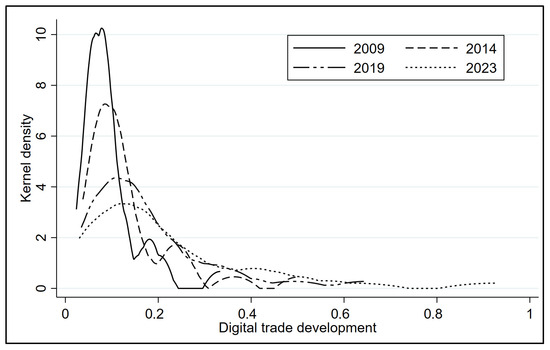
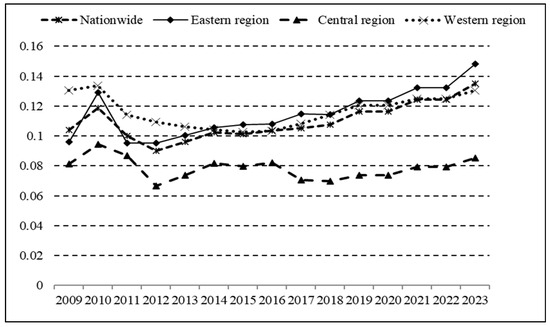
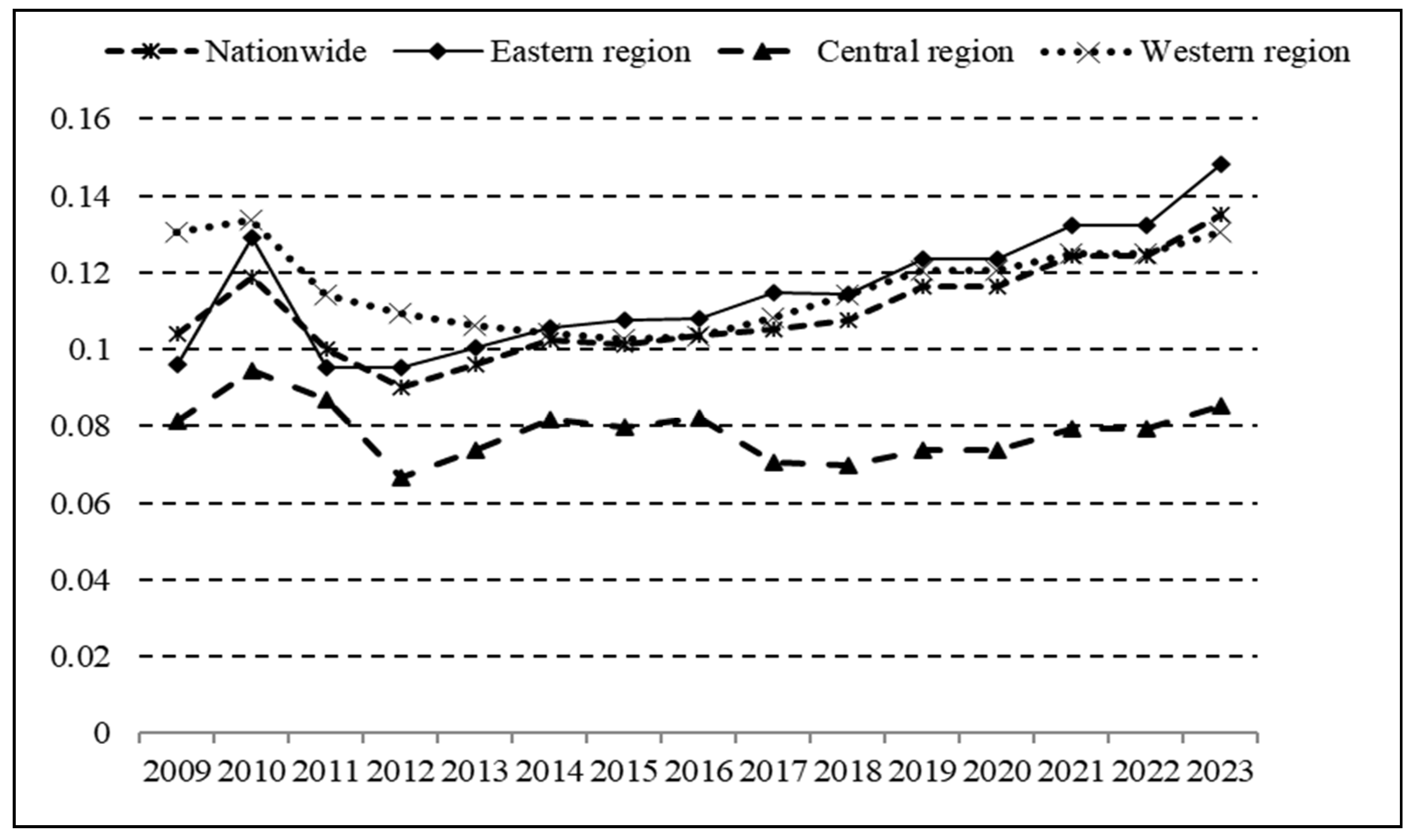

Disclaimer/Publisher’s Note: The statements, opinions and data contained in all publications are solely those of the individual author(s) and contributor(s) and not of MDPI and/or the editor(s). MDPI and/or the editor(s) disclaim responsibility for any injury to people or property resulting from any ideas, methods, instructions or products referred to in the content. |
© 2026 by the authors. Licensee MDPI, Basel, Switzerland. This article is an open access article distributed under the terms and conditions of the Creative Commons Attribution (CC BY) license.