


Abstract
This study examines the relationship between sustainable leadership and learning organization capacity in public schools, focusing on the behavioral and contextual roles of teachers’ innovative work behavior (IWB) and perceived corporate social responsibility (CSR). Drawing on dynamic capabilities theory and social exchange theory, the study tests a moderated mediation model in which IWB is specified as a mediator of the relationship between sustainable leadership and learning organization capacity, while CSR is specified as a moderator of the relationship between sustainable leadership and IWB. Data were collected from 960 teachers working in public K–12 schools in Elazığ, Türkiye, and analyzed using structural equation modeling. The results showed that sustainable leadership was positively associated with both IWB and learning organization capacity, and the estimated indirect association through IWB was statistically significant. CSR moderated the sustainable leadership–IWB relationship, which was nonsignificant at low CSR but became significant at the mean level and stronger at high CSR. The conditional indirect effect through IWB showed a similar pattern, becoming significant at the mean level of CSR and increasing at higher levels. By integrating sustainable leadership, teacher innovation, and perceived school CSR, the study shows that the estimated indirect association between sustainable leadership and learning organization capacity through IWB varies across levels of perceived CSR.
1. Introduction
In contemporary societies, public organizations face increasing pressure not only to deliver effective services but also to generate broader social value through sustainable and innovative practices. Rising societal expectations, rapid technological transformation, and persistent resource constraints have intensified demands for public institutions to become more adaptive, socially responsible, and innovation-oriented [1]. Under these conditions, public leadership is no longer confined to administrative and managerial functions; rather, it is increasingly expected to guide institutions through processes of organizational development and long-term adaptation [2]. Within this evolving landscape, sustainable leadership has emerged as a critical approach that promotes innovation, encourages stakeholder engagement, and prioritizes long-term value creation [3]. In this sense, schools can be conceptualized not merely as educational institutions but as public organizations that play a key role in supporting learning, adaptation, and knowledge production [4].
Sustainability is commonly understood as the capacity of organizations to create long-term value while simultaneously addressing environmental, social, and economic considerations [5,6,7,8]. The emphasis on adaptation and innovation inherent in sustainable leadership aligns closely with the dynamic capabilities perspective, which suggests that organizations must not only utilize existing resources efficiently but also continuously adapt, reconfigure, and develop new strategies in response to changing environmental conditions [9]. From this perspective, innovation can be seen as both an explanatory and complementary dimension of sustainable leadership [10,11,12,13]. Indeed, Hargreaves and Fink [14] argue that resistance to innovation represents one of the key causes of unsustainability in organizations. The dynamic capabilities perspective further highlights the role of leadership in enabling organizations to manage innovative and sustainable processes effectively [15]. This perspective therefore provides a theoretical foundation for understanding the relationships among school leadership, teachers’ innovative behaviors, and learning organization capacity.
For sustainable leadership to be associated with such organizational processes, it must be embedded within organizational contexts that support social responsibility and stakeholder-oriented practices [16]. In public organizations, sustainable leadership practices can be interpreted through the lens of stakeholder theory [17], which emphasizes the importance of maintaining balanced and responsible relationships with various stakeholder groups. When stakeholder theory is applied to public institutions, the concept of CSR becomes particularly relevant. In the present study, CSR is conceptualized as a contextual factor reflecting teachers’ perceptions of their schools’ responsibilities toward society, the environment, and relevant stakeholders, and as an element that shapes the organizational climate. In this sense, CSR may function as an important boundary condition that explains when and under what circumstances the relationship between sustainable leadership and teachers’ innovative behaviors may vary, with implications for learning organization capacity.
Although previous research has examined the relationships among sustainable leadership, innovative behavior, and learning organizations [10,12,18,19,20], empirical evidence regarding the moderating role of corporate social responsibility within these relationships remains limited. More importantly, much of the existing literature tends to examine these constructs primarily through direct or bivariate relationships. Consequently, the mechanisms have not yet been sufficiently explained within an integrated theoretical model. This gap is particularly evident in the school context, where empirical studies examining how CSR may condition the relationships among sustainable leadership, innovative work behavior, and learning organization capacity remain scarce.
Building on this gap, the present study conceptualizes school development as a context-dependent process and examines the relationship between sustainable leadership and learning organization capacity in schools. Specifically, the study proposes a moderated mediation model in which teachers’ innovative work behavior functions as a behavioral mechanism linking sustainable leadership to learning organization capacity, while perceived CSR operates as a contextual condition shaping this relationship. By focusing on teachers working in schools, the study provides an empirical perspective on how CSR operates through employee perceptions in public organizations. In doing so, the research aims to deepen theoretical understanding of the relationships among sustainable leadership, innovative work behavior, CSR, and learning organization capacity within public institutional contexts while also offering empirical evidence regarding the moderating role of CSR in these relationships. Furthermore, the study contributes to the literature by conceptualizing the relationship between sustainable leadership and learning organization capacity not merely as a direct relationship but as a conditional mechanism that operates through innovative work behavior and varies according to employees’ perceptions of CSR. The remainder of the manuscript presents the theoretical framework and hypotheses, followed by the methodology, results, discussion, theoretical and practical implications, limitations, and conclusions.
2. Theoretical Framework
This study is primarily grounded in Dynamic Capabilities Theory [21]. Dynamic capabilities theory posits that to sustain their effectiveness in rapidly changing environments, organizations must develop the ability to sense opportunities, seize them, and continuously reconfigure their internal and external resources in response to evolving environmental, social, and technological conditions [22]. Within the context of public organizations, this perspective emphasizes that sustainability is not merely a matter of preserving existing resources but of continuously renewing organizational capacities in response to societal expectations, stakeholder pressures, and changing institutional conditions. In educational contexts, sustainability similarly extends beyond the maintenance of existing practices to include schools’ capacity to sustain educational quality, respond to changing societal and technological demands, and support continuous learning and improvement [23]. Recent research has therefore increasingly linked educational sustainability with organizational learning, adaptation, resilience, and innovation. From this perspective, sustainable leadership can be understood as a leadership approach associated with organizations’ capacity to adapt, innovate, and pursue long-term development.
Sustainable leadership refers to a leadership approach that not only preserves organizational resources but also directs them in response to changing environmental and institutional conditions, promotes innovation, and prioritizes long-term value creation [24]. In this regard, sustainable leadership may be conceptualized as a strategic capability that facilitates the activation of dynamic capabilities within organizations [25]. Particularly in public institutions such as schools, where stakeholder interactions are extensive and multifaceted, sustainable leadership may support teachers’ innovative work behaviors and foster organizational environments conducive to learning and development. Applied to schools, the dynamic capabilities perspective suggests that educational organizations need to sense changes in policy, technology, and societal expectations, seize emerging opportunities through learning and innovation, and reconfigure organizational practices and resources in response to changing conditions. Although these processes have increasingly been examined in educational research, the explicit application of the sensing–seizing–reconfiguring framework in K–12 settings remains comparatively limited, strengthening the rationale for examining school sustainability through a dynamic capabilities lens. Previous research highlights that supportive leadership practices play a crucial role in strengthening employees’ innovative behaviors [26]. Accordingly, IWB can be interpreted as a key behavioral mechanism linking sustainable leadership to learning organization capacity.
From the perspective of dynamic capabilities theory, organizational sustainability depends not only on responding to change but also on institutionalizing learning processes. In this sense, learning organization capacity represents a theoretically relevant organizational outcome associated with sustainable leadership. Learning organizations are characterized by their ability to adapt to changing conditions, generate and share knowledge, and transform that knowledge into continuous organizational improvement [27]. Research in educational settings similarly identifies learning culture, knowledge creation, and systematic organizational learning as important capabilities through which schools can adapt to changing conditions and sustain improvement over time [23,28]. The concepts of double-loop learning [29] and systems thinking [30] further suggest that sustainable leadership extends beyond short-term managerial success and instead emphasizes long-term organizational development through continuous learning processes. Within this framework, sustainable leadership can be understood as a leadership approach associated with schools’ capacity for collective learning and innovation-oriented development. More specifically, sustainable leadership represents a leadership condition associated with the development and mobilization of adaptive organizational capabilities, while teachers’ IWB represents an employee-level behavioral mechanism through which new ideas and practices are generated and implemented. Learning organization capacity, in turn, reflects schools’ broader capacity to create, share, and apply knowledge in response to changing conditions. Thus, dynamic capabilities theory provides a theoretical basis for explaining how sustainable leadership, teachers’ innovative behavior, and learning organization capacity may be interconnected in educational organizations.
In the present study, CSR is conceptualized as a contextual condition that may shape the relationship between sustainable leadership and teachers’ innovative work behavior. CSR refers to the responsibility of organizations not only toward internal operations but also toward society, the environment, and broader stakeholder groups [31]. In school settings, CSR can be understood as an indicator of organizational climate reflecting teachers’ perceptions of their institution’s commitment to social responsibility. While dynamic capabilities theory helps explain how leadership, innovative behavior, and learning capacity are interconnected in processes of organizational adaptation, it does not by itself fully explain why the relationship between leadership and teachers’ innovative behavior may vary according to their perceptions of the organizational context. Social exchange theory therefore complements the dynamic capabilities perspective by providing an employee-level explanation for this contextual variation. According to this perspective, employees who perceive their organizational environment as supportive, ethical, and socially responsible are more likely to reciprocate with positive attitudes and behaviors. In such contexts, sustainable leadership may be more positively associated with teachers’ innovative behaviors when teachers perceive higher levels of CSR. Consequently, CSR can be conceptualized as a contextual condition under which the relationship between sustainable leadership and innovative work behavior may vary. Although public schools are not corporations, the term corporate social responsibility is retained because it is used in the name of the School CSR Scale employed in this study. In this context, it refers to teachers’ perceptions of their schools’ responsibility toward stakeholders and the wider community, rather than to commercial CSR practices such as philanthropy or brand management. The scale operationalizes this construct through school practices such as stakeholder participation, transparency, and honest information sharing. Accordingly, the findings concern perceived social responsibility in public schools and should not be generalized to corporate CSR practices without qualification.
2.1. Hypotheses and Relationships Among Variables
2.1.1. Sustainable Leadership and Learning Organization
Learning organization capacity is widely recognized as a critical component of long-term institutional sustainability. Organizations possessing dynamic capabilities are better able to improve their learning processes and adapt to environmental changes [32]. Leadership approaches that position teachers as central actors and encourage lifelong learning play a key role in fostering learning organizations [33]. In this regard, sustainable leadership can be understood as a leadership approach associated with the development of learning organization capacity in schools [19].
Previous research also highlights that sustainable leadership is associated with organizational culture [34] and strategic decision-making processes [35]. Through shared vision, managerial support, and systems thinking, sustainable leadership may support the learning processes that characterize learning organizations [36]. Accordingly:
H1.
Sustainable leadership is positively associated with learning organization capacity in schools.
2.1.2. Sustainable Leadership and Innovative Work Behavior
Leadership plays a central role in fostering innovation and creativity. Innovation is essential for achieving organizational sustainability, and its development often requires leadership that prioritizes long-term value creation [12]. Previous studies demonstrate that leadership styles are associated with organizational creativity and innovation [37,38].
Within schools, teachers’ innovative behaviors are critical for enabling educational innovation and organizational improvement [39]. Rapid societal and technological changes increasingly require teachers to adopt innovative practices. A supportive leadership environment is among the most important factors associated with such behaviors [22]. From both dynamic capabilities and social exchange perspectives, sustainable leadership may be positively associated with innovative work behavior through supportive and future-oriented organizational conditions. Accordingly:
H2.
Sustainable leadership is positively associated with teachers’ innovative work behavior.
2.1.3. Innovative Work Behavior and Learning Organization
Organizational sustainability depends on employees’ engagement in innovative behaviors [40]. Learning organizations are characterized by their ability to generate, share, and apply knowledge for continuous improvement [41,42]. In school contexts, learning organizations rely on teachers who generate and apply new knowledge in practice. Teachers’ innovative behaviors may therefore function as a key behavioral mechanism associated with learning organization capacity [43]. Accordingly:
H3.
Teachers’ innovative work behavior is positively associated with learning organization capacity in schools.
2.1.4. Mediating Role of Innovative Work Behavior
Leadership has been consistently associated with innovative behavior [44,45]. In organizations characterized by sustainable leadership, innovation levels are typically higher [10]. Sustainable leadership may provide organizational conditions conducive to innovation through long-term vision and continuous learning [46]. However, learning organization capacity is associated not only with leadership practices but also with how employees interpret and enact the organizational vision [32]. Accordingly, IWB functions as a behavioral mechanism linking sustainable leadership to learning organization capacity.
H4.
Innovative work behavior mediates the relationship between sustainable leadership and learning organization capacity in schools.
2.1.5. Corporate Social Responsibility and Innovative Work Behavior
CSR reflects the relationships between organizations and stakeholders, including employees [47]. Research shows that CSR perceptions are associated with employee attitudes and behaviors [48,49,50,51]. CSR has also been positively associated with innovative behavior [52,53,54,55]. According to social exchange theory, employees may reciprocate positive organizational treatment with proactive behaviors such as innovation [56,57].
H5.
Perceived CSR in schools is positively associated with teachers’ innovative work behavior.
2.1.6. Moderating Role of Corporate Social Responsibility
CSR reflects organizations’ ethical and social responsibilities [31]. In schools, CSR has been associated with institutional development and learning processes [58,59]. Higher CSR perceptions may be associated with greater trust and stronger internalization of leadership practices, which may strengthen the relationship between sustainable leadership and innovative behavior [60,61,62]. Accordingly:
H6.
CSR moderates the relationship between sustainable leadership and teachers’ innovative work behavior, such that the positive relationship is stronger at higher levels of perceived CSR.
H7.
The indirect relationship between sustainable leadership and learning organization capacity through innovative work behavior varies according to the level of perceived CSR.
Taken together, these hypotheses propose a moderated mediation model in which innovative work behavior functions as a behavioral mechanism linking sustainable leadership to learning organization capacity, while perceived CSR operates as a contextual condition that moderates the relationship between sustainable leadership and innovative work behavior and, consequently, the conditional indirect relationship between sustainable leadership and learning organization capacity through innovative work behavior. The proposed model is presented in Figure 1.
Figure 1.
Proposed model. Source: Created by the authors.
3. Method
3.1. Research Design
This study employed a quantitative cross-sectional design to examine the relationships among sustainable leadership, innovative work behavior, CSR, and learning organization capacity based on teachers’ perceptions in public K–12 schools. Cross-sectional studies involve the analysis of data collected from a population at a single point in time [63]. Such designs are particularly useful for identifying relationships among variables and examining organizational phenomena within a specific empirical context [64]. Structural equation modeling (SEM)-based approaches have also been employed in recent educational leadership research to examine theoretically specified relationships among leadership practices, teacher-level mechanisms, and perceived organizational outcomes. For example, Alanoglu et al. [65] used SEM to examine a moderated mediation model linking school leadership to teachers’ instructional practices through collective teacher efficacy under varying levels of perceived school climate, while Kuloglu et al. [66] examined the relationship between learning-centered leadership and perceived school effectiveness through teacher self-efficacy using SEM. These studies demonstrate the utility of SEM for simultaneously examining theoretically specified direct, indirect, and conditional relationships among leadership, teacher, and organizational constructs in educational settings. This design was considered appropriate because the study aimed to test theoretically specified relationships among the focal variables rather than to examine changes over time. However, because all variables were measured at a single point in time, the design does not establish temporal ordering or causal relationships among the constructs. Accordingly, the findings are interpreted as associations within the proposed structural model rather than as evidence of causal effects.
3.2. Sample and Procedure
The target population consisted of approximately 7300 teachers working in public K–12 schools affiliated with the Ministry of National Education in the city center of Elazığ, Türkiye, during the 2025–2026 academic year. A cluster-based sampling procedure was used, with schools serving as the primary sampling units. Schools were randomly selected from the public K–12 schools in the study area, and teachers working in the selected schools were invited to participate in the study. In total, 1200 teachers were invited to participate. Of these, 987 returned the questionnaire, corresponding to a response rate of 82.25%. Following data screening, 27 questionnaires were excluded because of incomplete demographic information or invariant responses across all items, resulting in a final analytic sample of 960 teachers [67].
Before data collection began, ethical approval and the necessary institutional permissions were obtained. Questionnaires were administered face-to-face to teachers in the selected schools. Participation was voluntary, and the participants were informed about the purpose of the study before completing the questionnaire.
Accordingly, the study sample consisted of 960 teachers working in public K–12 schools affiliated with the Ministry of National Education in the city center of Elazığ during the 2025–2026 academic year. Of these participants, 50.9% (n = 489) were female, and 49.1% (n = 471) were male, indicating a relatively balanced gender distribution. In terms of professional experience, 52.9% (n = 508) had less than 17 years of experience, whereas 47.1% (n = 452) had 17 years or more. The mean professional experience of the participants was 17.34 years.
3.3. Measures
Before data collection, the study was conducted in accordance with the ethical principles of the Declaration of Helsinki. Ethical approval was obtained from the Social and Humanities Research Ethics Committee of Fırat University (date: 27 November 2025; approval no: 29; session no: 2025/26), and official permission for implementation was also obtained from the Turkish Ministry of National Education. Data were then collected face-to-face by the researcher.
In addition to a Personal Information Form, the study used four measurement instruments: the Sustainable Leadership Scale in Schools, the Innovative Work Behavior Scale, the Learning School Scale, and the School CSR Scale.
Sustainable Leadership Scale: Sustainable leadership was measured using the Sustainable Leadership Scale in Schools, developed by Dağdeviren Ertaş and Özdemir [68]. The scale consists of 26 items across four dimensions: Strategic Distribution, Deep Learning, Environmental and Social Responsibility, and Human Resource Development. Example items include creating environments in which teachers feel like leaders, fostering awareness of deep learning, promoting efforts to maintain a clean school and environment, and organizing professional development activities for teachers. Responses were rated on a five-point Likert scale ranging from 1 (strongly disagree) to 5 (strongly agree). Higher scores indicate higher levels of teachers’ perceived sustainable leadership. The scale does not contain any reverse-coded items.
Innovative Work Behavior Scale: IWB was measured using the Innovative Work Behavior Scale, originally developed by Scott and Bruce [44] and adapted into Turkish by Çalışkan, Akkoç and Turunç [69]. The scale is unidimensional and consists of 6 items. Sample items include statements such as “I search out new technologies, processes, techniques, and ideas” and “I generate creative ideas.” Responses were rated on a five-point Likert scale ranging from 1 (strongly disagree) to 5 (strongly agree). Higher scores indicate higher levels of innovative work behavior. All items are positively worded; therefore, the scale does not include reverse-coded items.
Learning Organization Scale: Teachers’ perceptions of their schools as learning organizations were measured using the Learning School Scale, developed by Uğurlu, Doğan and Yiğit [70]. The scale contains 20 items across four dimensions: Team Learning, Mental Models, Shared Vision, and Personal Mastery. Example items reflect collaborative efforts among teachers, opportunities that enhance learning, awareness of the school’s vision, and individual efforts to remain professionally up to date. Responses were rated on a five-point Likert scale ranging from 1 (strongly disagree) to 5 (strongly agree). Higher scores indicate stronger perceptions of the school as a learning organization. The scale does not include reverse-coded items.
Corporate Social Responsibility Scale: Teachers’ perceptions of school CSR were measured using the School CSR Scale, developed by Aydoğan and Tanrıöğen [71]. The scale is unidimensional and consists of 9 items. Sample items include statements such as “This school creates a strong institutional culture through the active participation of all stakeholders” and “This school shares information among stakeholders based on honesty and transparency.” Responses were rated on a five-point Likert scale ranging from 1 (never) to 5 (always). Higher scores indicate higher levels of perceived school CSR. All items are positively worded, and no reverse-coded items are included.
Control Variables: Two demographic variables were included in the model as control variables: gender (0 = female, 1 = male) and professional experience (0 = less than 17 years, 1 = 17 years or more). These variables were controlled to examine whether the focal relationships remained significant beyond potential differences associated with gender and professional experience.
3.4. Data Analysis
Data analyses were conducted using Mplus. Because the study relied on self-report measures, the potential influence of common method bias (CMB) was assessed, as this form of bias may occur when all measures are obtained from the same source [72]. To evaluate this issue, Harman’s single-factor test was first applied. The results showed that a single-factor solution accounted for 44.298% of the total variance, which is below the commonly suggested threshold of 50% [73].
In addition, a single-factor confirmatory factor analysis (CFA) model in which all items loaded onto one latent factor was tested. This model showed poor fit to the data (RMSEA = 0.092, CFI = 0.675, TLI = 0.664, SRMR = 0.100). The single-factor test and CFA indicate that a single factor does not adequately represent the observed responses. However, these tests cannot rule out common method bias arising from the use of self-reported measures collected from the same respondents at one time point.
Separate CFAs were then conducted for each scale to confirm their factor structures, and the individual measurement models were supported. Internal consistency reliability was assessed using Cronbach’s alpha and composite reliability (CR) coefficients. In the literature, Cronbach’s alpha values of 0.70 or above are generally considered indicative of acceptable reliability [74]. Similarly, CR values above 0.70 indicate adequate composite reliability, whereas average variance extracted (AVE) values above 0.50 support convergent validity [75]. In the present study, all constructs exceeded the recommended threshold values for both Cronbach’s alpha and CR, indicating adequate internal consistency [76].
Convergent validity was evaluated through AVE values, and all constructs demonstrated AVE values above the 0.50 criterion [68]. Discriminant validity was assessed by comparing AVE values with the corresponding maximum shared variance (MSV) values and by examining heterotrait–monotrait (HTMT) ratios. The findings indicated that the AVE values for all constructs were greater than their MSV values. In addition, all HTMT ratios were below the recommended threshold of 0.85, suggesting that the constructs were empirically distinct from one another (see Table 1) [75,77].
Table 1.
Reliability, validity, and latent correlations of the study constructs.
Multivariate normality was examined using Mardia’s skewness and kurtosis coefficients, and the results indicated that the assumption of multivariate normality was not met. Therefore, the analyses were conducted using the robust maximum likelihood (MLR) estimator, which is considered appropriate and robust in the presence of non-normal data in structural equation modeling [78].
The analyses were carried out in three stages. First, a baseline measurement model including all latent variables was tested without specifying the structural paths among them. Second, a mediation model was estimated to examine the indirect relationship between sustainable leadership and learning organization capacity through innovative work behavior. Third, a moderated mediation model was tested by including a latent interaction term between sustainable leadership and CSR (SL × CSR) in the model predicting innovative work behavior. To probe the interaction, simple slopes were estimated at low (−1 SD), mean, and high (+1 SD) levels of CSR. Conditional indirect effects of sustainable leadership on learning organization capacity through innovative work behavior were estimated at −2 SD, −1 SD, the mean, +1 SD, and +2 SD levels of CSR. The index of moderated mediation (IMM) was also calculated to determine whether the indirect relationship varied systematically as a function of CSR. The significance of indirect relationships, simple slopes, conditional indirect effects, and the index of moderated mediation was assessed using 95% confidence intervals generated under the MLR estimation procedure [79]. All structural relationships were estimated at the individual teacher level based on teachers’ perceptions. Teachers were sampled within schools, but school identifiers were not retained in the final anonymized dataset. Consequently, intraclass correlations could not be estimated, and the analyses could not account for within-school dependence through cluster-robust standard errors or multilevel SEM. The reported standard errors and confidence intervals are therefore based on a single-level model.
Model fit was evaluated using widely accepted fit indices, including the comparative fit index (CFI), Tucker–Lewis index (TLI), root mean square error of approximation (RMSEA), and standardized root mean square residual (SRMR). Values of 0.90 or higher for CFI and TLI and values of 0.08 or lower for RMSEA and SRMR were considered indicative of acceptable model fit [78,80]. For the moderated mediation model that included a latent interaction term, traditional global fit indices were not reported because the estimation required numerical integration. Therefore, conventional χ2, CFI, TLI, RMSEA, and SRMR values were evaluated for the measurement and mediation models without the latent interaction, whereas the moderated mediation model was evaluated on the basis of its parameter estimates, conditional effects, and information criteria.
4. Results
The study findings are presented in the following order. Table 1 summarizes the reliability and validity evidence for the study constructs, as well as the correlations among the latent variables.
The reliability and validity of the constructs included in the study were evaluated using CR, AVE, and MSV values. The findings indicated that the CR values for sustainable leadership, CSR, learning organization capacity, and IWB ranged between 0.91 and 0.95, suggesting that all constructs demonstrated acceptable levels of reliability. The AVE values ranged between 0.59 and 0.70, indicating that the criterion for convergent validity was satisfied. In terms of discriminant validity, the AVE values of all constructs were greater than their corresponding MSV values. In addition, the square roots of the AVE values were higher than the correlations among the latent variables. These findings indicate that the constructs used in the study exhibit adequate reliability and validity. The correlations among the latent variables were also examined. Sustainable leadership, CSR, learning organization capacity, and IWB were found to be positively and significantly correlated (p < 0.001). Although the correlation coefficients ranged from moderate to relatively high levels, they did not indicate potential multicollinearity problems. Table 2 presents the HTMT ratios used to assess discriminant validity among the study constructs.
Table 2.
HTMT ratios among latent constructs.
All values were below the recommended threshold of 0.85. The highest ratio was observed between sustainable leadership and CSR (HTMT = 0.786), indicating that these constructs were closely related but remained empirically distinguishable.
4.1. Mediation Analysis
SEM analyses were conducted to test the proposed mediating and moderated mediation relationships. First, the goodness-of-fit indices of the baseline measurement model and the mediation model were evaluated and compared.
The results presented in Table 3 indicate that both the baseline measurement model and the mediation model demonstrated an acceptable fit with the data (RMSEA < 0.05; CFI and TLI > 0.94; SRMR < 0.06). These findings suggest that the models provide an appropriate basis for testing the proposed structural relationships.
Table 3.
Model fit indices for the measurement and mediation models.
Figure 2 presents the structural model used to examine the mediating role of IWB in the relationship between sustainable leadership and learning organization capacity.
Figure 2.
The mediation model. Source: Created by the authors. Note. Values shown on the paths are standardized coefficients (β).
When the structural path coefficients of the mediation model were examined, the results indicated that sustainable leadership was positively and significantly associated with IWB (β = 0.46, 95% CI [0.40, 0.53]). Similarly, IWB was positively and significantly associated with learning organization capacity (β = 0.17, 95% CI [0.08, 0.26]).
In the specified mediation model, the direct path between sustainable leadership and learning organization capacity remained statistically significant after IWB was included (β = 0.71, 95% CI [0.64, 0.78]). The estimated indirect association through IWB was also statistically significant (β = 0.08, 95% CI [0.04, 0.12]). This pattern is consistent with partial statistical mediation (see Figure 2).
4.2. Moderated Mediation Analysis
The results of the moderated mediation model are presented in Figure 3.
Figure 3.
The moderated mediation model. Source: Created by the authors. Note. Values shown on the paths are standardized coefficients (β). This model includes the SL × CSR interaction. The indirect association shown is estimated at the mean level of perceived CSR.
The analyses revealed that sustainable leadership was positively and statistically significantly associated with learning organization capacity (β = 0.70, 95% CI [0.62, 0.78], p < 0.001), supporting H1. In addition, sustainable leadership was positively and significantly associated with innovative work behavior (β = 0.23, 95% CI [0.12, 0.35], p < 0.001), supporting H2. Innovative work behavior was also positively and significantly associated with learning organization capacity (β = 0.19, 95% CI [0.09, 0.29]), supporting H3.
In the moderated mediation model, the estimated standardized indirect association between sustainable leadership and learning organization capacity through IWB was statistically significant (β = 0.04, 95% CI [0.02, 0.06]). This result supports H4 at the level of statistical association.
Furthermore, corporate social responsibility was positively and significantly associated with innovative work behavior (β = 0.40, 95% CI [0.27, 0.52], p < 0.001), supporting H5. The interaction between sustainable leadership and CSR in relation to innovative work behavior was also positive and statistically significant (β = 0.21, 95% CI [0.14, 0.29], p < 0.001), indicating that the association between sustainable leadership and innovative work behavior varied according to the level of CSR, thereby supporting H6. Finally, the associations of the control variables, namely gender (β = −0.01, 95% CI [−0.06, 0.03]) and teaching experience (β = 0.04, 95% CI [−0.01, 0.08]), with learning organization capacity were not statistically significant.
The significant interaction between sustainable leadership and CSR (SL × CSR) indicated that the association between sustainable leadership and innovative work behavior (IWB) varied across levels of CSR. Simple slope analysis showed that at low CSR (−1 SD), the association between sustainable leadership and IWB was not statistically significant (B = 0.014, SE = 0.046, p = 0.764, 95% CI [−0.076, 0.104]). At the mean level of CSR, the association was positive and statistically significant (B = 0.148, SE = 0.036, p < 0.001, 95% CI [0.077, 0.220]). At high CSR (+1 SD), the association was stronger and remained statistically significant (B = 0.283, SE = 0.043, p < 0.001, 95% CI [0.198, 0.368]). Thus, the positive association between sustainable leadership and teachers’ IWB was stronger at higher levels of perceived CSR (Figure 4).
Figure 4.
Simple Slope Analysis. Source: Created by the authors.
The conditional indirect effects showed a similar pattern. At very low CSR (−2 SD), the indirect effect of sustainable leadership on learning organization capacity through IWB was not statistically significant (B = −0.024, SE = 0.015, p = 0.109, 95% CI [−0.054, 0.005]). The indirect effect also remained nonsignificant at low CSR (−1 SD; B = 0.003, SE = 0.009, p = 0.760, 95% CI [−0.015, 0.021]). At the mean level of CSR, however, the indirect effect was positive and statistically significant (B = 0.030, SE = 0.008, p < 0.001, 95% CI [0.013, 0.046]). The magnitude of the indirect effect increased at high CSR (+1 SD; B = 0.057, SE = 0.014, p < 0.001, 95% CI [0.030, 0.084]) and was largest at very high CSR (+2 SD; B = 0.084, SE = 0.021, p < 0.001, 95% CI [0.042, 0.126]). (See Table 4).
Table 4.
Conditional indirect effects of sustainable leadership on learning organization capacity via IWB at different levels of CSR.
Importantly, the index of moderated mediation was positive and statistically significant (IMM = 0.032, SE = 0.010, 95% CI [0.013, 0.052], p = 0.001). Because the confidence interval did not include zero, this result provides direct evidence that the indirect association between sustainable leadership and learning organization capacity through IWB varied as a function of CSR. Specifically, the indirect association became stronger as perceived CSR increased. Taken together, the simple slope analysis, conditional indirect effects, and index of moderated mediation support H7.
Regarding the explanatory power of the model, sustainable leadership, CSR, and their interaction jointly explained 43.1% of the variance in IWB (R2 = 0.431), corresponding to an overall Cohen’s f2 of 0.76. Sustainable leadership and IWB jointly explained 67.1% of the variance in learning organization capacity (R2 = 0.671), corresponding to an overall Cohen’s f2 of 2.04. According to Cohen’s conventional criteria [81], both values indicate large overall effect sizes.
5. Discussion
Building on dynamic capabilities theory, this study advances the literature by showing that the relationship between sustainable leadership and learning organization capacity is associated with both behavioral and contextual mechanisms. Specifically, the findings indicate that IWB functions as a key behavioral pathway linking sustainable leadership to learning organization capacity, while CSR operates as a contextual condition under which this relationship varies. By integrating leadership, employee innovation, and CSR climate within a moderated mediation framework, the study moves beyond linear explanations and conceptualizes school development as a conditional process associated with leadership, teacher innovation, and perceived organizational context.
This perspective is particularly relevant in the context of contemporary public-sector organizations, where institutions are increasingly expected to improve internal effectiveness while pursuing sustainable and innovation-oriented practices. In this regard, the findings suggest that the relationship between sustainable leadership and learning organization capacity should not be interpreted as a simple direct effect but rather as a context-dependent relationship shaped by employee behavior and organizational climate [82,83]. Such a perspective is consistent with broader policy discussions that emphasize sustainability, social responsibility, and innovation in institutional development.
5.1. Sustainable Leadership, Innovative Work Behavior, and Learning Organization Capacity
The findings show that sustainable leadership is positively associated with learning organization capacity. This result is consistent with previous research suggesting that sustainable leadership supports long-term organizational development by fostering learning cultures, preserving knowledge resources, and encouraging collective improvement processes [84,85,86]. However, beyond confirming existing evidence, the present study extends this line of research by positioning sustainable leadership as a leadership approach associated with innovation-oriented organizational development. In school contexts, this suggests that leadership practices are closely associated with schools’ capacity to adapt, learn, and generate knowledge-based solutions [19,20,21,22,23,24,25,26,27,28,29,30,31,32].
The findings also indicate that sustainable leadership is positively related to innovative work behavior. This supports the view that innovation is not solely an individual-level phenomenon but is also associated with leadership practices and organizational conditions. Previous studies have emphasized the central role of leadership in encouraging innovative activities [87,88,89,90]. Extending this perspective, the present findings suggest that sustainable leadership may provide structural and relational conditions—such as trust, autonomy, and long-term orientation—that are conducive to innovative behavior [91,92]. In this sense, IWB can be interpreted not only as a behavioral outcome but also as an employee-level behavioral pathway associated with broader organizational innovation processes.
Furthermore, the positive relationship between IWB and learning organization capacity highlights the importance of teachers’ everyday innovative practices for learning organization capacity rather than solely formal strategies or leadership intentions. Consistent with prior research [93,94,95], the findings indicate that innovative behaviors are associated with processes through which knowledge is generated, shared, and embedded within organizational routines. In school contexts, this suggests that teachers’ innovative practices are closely associated with schools’ capacity to function as adaptive and learning-oriented organizations capable of responding to complex societal challenges.
5.2. Corporate Social Responsibility as a Contextual Condition
Another important finding concerns the relationship between CSR perceptions and innovative work behavior. The results indicate that CSR operates not only as an ethical framework but also as a perceived organizational condition associated with employee behavior [96,97,98,99,100]. From the perspective of social exchange theory, when teachers perceive their schools as socially responsible and ethically grounded institutions, they may be more likely to engage in proactive and innovation-oriented behaviors [56,57]. This finding suggests that perceived CSR may represent an organizational resource associated with innovation-related behaviors rather than merely a normative or symbolic construct.
The moderating role of CSR further reinforces this argument. The findings show that the association between sustainable leadership and innovative work behavior varies according to the level of CSR. Specifically, this association was not statistically significant at low levels of CSR but became positive and significant at the mean level of CSR and stronger at high levels of CSR. This suggests that leadership practices do not operate in isolation but are embedded within broader organizational contexts that may shape their relationship with employee behavior [16,101,102]. In environments characterized by strong CSR orientations, leadership perceptions may be more strongly associated with innovation-related behaviors. This is consistent with prior research linking CSR to organizational identification, commitment, and positive employee outcomes [49,50,57,103,104,105,106].
5.3. The Conditional Indirect Role of Innovative Work Behavior
Finally, the moderated mediation findings provide a more nuanced understanding of how sustainable leadership is associated with learning organization capacity. The indirect effect of sustainable leadership on learning organization capacity through IWB was not statistically significant at very low or low levels of CSR, but became statistically significant at the mean level of CSR and increased further at higher levels of CSR. Moreover, the significant index of moderated mediation confirmed that the magnitude of this indirect effect varied systematically as a function of CSR. These findings suggest that socially responsible organizational climates may be associated with a stronger indirect relationship between sustainable leadership and learning organization capacity through teachers’ innovative work behavior.
Taken together, these findings suggest that sustainable leadership is associated with learning organization capacity in a conditional pattern of associations involving leadership practices, teachers’ innovative work behaviors, and perceived organizational context. This integrated perspective offers important implications for understanding organizational development in educational settings where sustainability, innovation, and social responsibility are emphasized. In this regard, the study provides a framework for understanding the relationships among sustainable leadership, teacher innovation, perceived CSR, and long-term institutional development.
5.4. Theoretical Contributions
This study contributes to the literature in several important ways. First, it extends research on sustainable leadership by showing that its relationship with learning organization capacity includes a statistically significant indirect association through IWB rather than solely a direct relationship. By identifying IWB as a statistical mediator, the study highlights the role of employee-level innovative behavior in the relationship between sustainable leadership and learning organization capacity, thereby advancing a more nuanced understanding of the associations relevant to school development.
Second, the study contributes to the CSR literature by conceptualizing CSR not only as an organizational condition associated with employee attitudes and behaviors but also as a contextual condition under which the relationship between sustainable leadership and IWB varies. By identifying the moderating role of CSR, the findings suggest that the relationship between sustainable leadership and teachers’ innovative work behavior differs according to the level of perceived CSR, thereby offering a more nuanced and context-sensitive perspective on leadership processes.
Third, the study provides a contextual contribution by examining these relationships within public K–12 school settings. Given that much of the CSR literature has focused on private-sector settings, this study broadens the scope of existing research by examining socially responsible organizational climates in relation to employee behavior and organizational processes in a public-school context. In doing so, the study contributes to emerging discussions on public sector innovation by framing school development as a context-dependent process associated with leadership practices, teachers’ innovative behaviors, and perceived organizational conditions.
5.5. Practical Implications
The findings offer practical considerations for educational organizations and policymakers. School leaders interested in learning organization capacity may consider providing teachers with opportunities to develop and share new ideas. In this study, perceived sustainable leadership and teachers’ innovative work behavior were positively associated with perceived learning organization capacity. Whether changes in leadership practices produce improvements in these outcomes requires longitudinal or intervention research.
The association between sustainable leadership and teachers’ innovative work behavior was stronger among teachers reporting higher perceived school CSR. The estimated indirect association with learning organization capacity through innovative work behavior also increased across CSR levels. These findings suggest that stakeholder participation and transparent communication merit consideration in school leadership practice, although the present study cannot establish that introducing such practices would change teacher behavior.
Policymakers and educational administrators may consider including sustainability, stakeholder participation, and social responsibility in leadership development programs for public schools. The outcomes of such programs should be evaluated before claims are made about their effectiveness.
5.6. Limitations and Future Research
Despite its contributions, this study has several limitations. First, the research was conducted within school settings, which are non-profit and value-oriented institutions. In such contexts, CSR practices may be perceived as inherent aspects of organizational culture. In contrast, CSR in for-profit organizations is often associated with competitive positioning and strategic differentiation. Therefore, the generalizability of the findings to other organizational contexts may be limited.
Second, the study was conducted in public K–12 schools in the city center of Elazığ, Türkiye. Cultural dimensions such as collectivism and power distance may influence leadership perceptions, innovative behaviors, and learning organization-related processes [107]. As Türkiye represents a relatively collectivist and higher power-distance context, the findings may not directly generalize to other cultural settings. Moreover, the geographically bounded sampling frame limits the generalizability of the findings to other regions of Türkiye. Future research could benefit from studies conducted across different regions as well as cross-national and comparative studies to better understand the contextual variability of these relationships.
Third, the study relied on self-report data collected from the same teachers at a single time point, raising concerns about common method bias and causal inference. Although the single-factor tests did not support a one-factor explanation of the data, they cannot establish the absence of common method bias. Moreover, the cross-sectional design does not establish temporal ordering or causal relationships among the constructs. Future studies could assess leadership and CSR perceptions first and measure innovative work behavior and learning organization capacity at later time points. Collecting additional reports from other teachers in the same schools would also provide a separate source of data. Where feasible, future research should use additional methods to assess method-related variance.
Fourth, the strong association between sustainable leadership and CSR also suggests some conceptual proximity, although discriminant validity analyses supported their empirical distinctiveness. Future research may further examine the conceptual boundaries between these constructs across different organizational and cultural contexts.
Finally, teachers were nested within schools, but school identifiers were not retained in the final anonymized dataset. Therefore, intraclass correlations could not be calculated, and cluster-robust or multilevel SEM analyses could not be conducted. If teachers within the same school provided correlated responses, the single-level model may have underestimated standard errors and produced confidence intervals that are too narrow. Statistical significance, particularly for estimates closer to conventional thresholds, should therefore be interpreted cautiously. Future research should retain anonymized school identifiers and use methods that account for clustering.
6. Conclusions
This study provides an integrative framework for understanding the relationship between sustainable leadership and learning organization capacity in relation to behavioral and contextual factors. The findings suggest that the relationship between sustainable leadership and learning organization capacity should be understood not as a simple direct relationship but as a conditional pattern of associations involving teachers’ innovative work behaviors and perceived CSR.
More broadly, the study highlights the importance of considering leadership practices, employee behaviors, and perceived organizational context together when examining learning organization capacity in schools. In this sense, the findings provide a more nuanced understanding of how sustainable leadership, teacher innovation, and perceived CSR are interconnected within educational organizations.
Future research may extend these insights by examining similar mechanisms across different institutional and cultural contexts, using longitudinal, multi-source, and multilevel designs to clarify their temporal and organizational dynamics.
Author Contributions
Conceptualization, S.K. and M.A.; methodology, S.K. and M.A.; validation, S.K., M.A. and Ö.K.; formal analysis, M.A.; investigation, G.V.; resources, G.V. and Ö.K.; data curation, G.V. and M.A.; writing—original draft preparation, S.K., M.A. and Ö.K.; writing—review and editing, S.K., M.A., Ö.K. and G.V.; visualization, M.A.; supervision, S.K.; project administration, S.K. All authors have read and agreed to the published version of the manuscript.
Funding
This research received no external funding.
Institutional Review Board Statement
The study was conducted in accordance with the Declaration of Helsinki and approved by the Social and Humanities Research Ethics Committee of Fırat University (approval no. 29, session no. 2025/26; 27 November 2025).
Informed Consent Statement
Informed consent was obtained from all subjects involved in the study.
Data Availability Statement
The data supporting the findings of this study are available from the corresponding author upon reasonable request.
Conflicts of Interest
The authors declare no conflicts of interest.
Abbreviations
The following abbreviations are used in this manuscript:
| CSR | Corporate Social Responsibility |
| SL | Sustainable Leadership |
| IWB | Innovative Work Behavior |
| LO | Learning Organization Capacity |
References
- Waheduzzaman, W. Understanding Post-COVID Public Sector Innovation: A Systematic Review of Concepts, Antecedents, Outcomes, Constraints, and Theoretical Perspectives. Adm. Sci. 2026, 16, 88. [Google Scholar] [CrossRef] [Scilit]
- Mousa, H.A.H.; Bakar, A.Z.B.; Al-Shami, S. Leadership Agility and Public Sector Innovation in the UAE Through a Structural Framework for Transformational Change. Int. J. Soc. Sci. Res. 2025, 13, 345–372. [Google Scholar] [CrossRef] [Scilit]
- Yaakob, M.F.M.; Hashim, N.H.; Yusof, M.R.; Fauzee, M.S.O.; Aziz, M.N.A.; Khun-Inkeeree, H.; Habibi, A.; Bing, K.W. Critical Success Factors of Sustainable Leadership: Evidence from High-Achievement School. Univers. J. Educ. Res. 2020, 8, 1665–1675. [Google Scholar] [CrossRef] [Scilit]
- Kools, M.; Stoll, L.; George, B.; Steijn, B.; Bekkers, V. The School as a Learning Organisation: The Concept and Its Measurement. Eur. J. Educ. 2020, 55, 24–42. [Google Scholar] [CrossRef] [Scilit]
- Portney, K.E. Sustainability; The MIT Press: Cambridge, MA, USA, 2015; pp. 87–95. [Google Scholar]
- Scoones, I. Sustainability. Dev. Pract. 2007, 17, 589–596. [Google Scholar] [CrossRef] [Scilit]
- Thiele, L.P. Sustainability, 3rd ed.; John Wiley & Sons: Hoboken, NJ, USA, 2024. [Google Scholar]
- Yeni, O. Sürdürülebilirlik ve Sürdürülebilir Kalkınma: Bir Yazın Taraması. Gazi Üniversitesi İktisadi VE İdari Bilim. Fakültesi Derg. 2014, 16, 181–208. [Google Scholar]
- Karaçetin, M. Dinamik Liderlik Yaklaşımının İşletmelerin Dinamik Yetenekleri Üzerindeki Rolünün İncelenmesi: Kavramsal Çerçevede Bir Değerlendirme. In Yönetim Bilimi İçin Yeni Kavram ve Kuram Önerileri; Mücevher, M.H., Ed.; Özgür Yayınları: Gaziantep, Türkiye, 2025; pp. 15–38. [Google Scholar] [CrossRef] [Scilit]
- Haroon, A.; Sami, A.; Rehman, S.; Fahad, H.; Irfan, A. Sustainable Leadership Enhance Innovation: A Systematic Review of Past Decade. J. Public Value Adm. Insight 2019, 2, 1–5. [Google Scholar] [CrossRef] [Scilit]
- Iqbal, Q.; Piwowar-Sulej, K. Sustainable Leadership in Higher Education Institutions: Social Innovation as a Mechanism. Int. J. Sustain. High. Educ. 2022, 23, 1–20. [Google Scholar] [CrossRef] [Scilit]
- Javed, A.; Iqbal, J.; Iqbal, S.M.J.; Imran, M. Sustainable Leadership and Employee Innovative Behavior: Discussing the Mediating Role of Creative Self-Efficacy. J. Public Aff. 2021, 21, e2547. [Google Scholar] [CrossRef] [Scilit]
- Orman, G.O. Özel Okul Yöneticilerinin Sürdürülebilir Liderlik Yeterlilikleri ile Öğretmenlerin Yenilikçi İş Kültürü Arasındaki İlişkinin İncelenmesi. Master’s Thesis, Marmara Üniversitesi, İstanbul, Türkiye, 2024; pp. 17–25. [Google Scholar]
- Hargreaves, A.; Fink, D. Sustainable Leadership. In The Essentials of School Leadership; Davies, B., Ed.; Paul Chapman Publishing: London, UK, 2005; pp. 173–189. [Google Scholar]
- Schoemaker, P.J.H.; Heaton, S.; Teece, D. Innovation, Dynamic Capabilities, and Leadership. Calif. Manag. Rev. 2018, 61, 15–42. [Google Scholar] [CrossRef] [Scilit]
- Liao, Y. Sustainable Leadership: A Literature Review and Prospects for Future Research. Front. Psychol. 2022, 13, 1045570. [Google Scholar] [CrossRef] [Scilit] [PubMed]
- Freeman, R.E. Strategic Management: A Stakeholder Approach; Pitman: Boston, MA, USA, 1984. [Google Scholar]
- Bashynska, I.; Malynovska, Y.; Kolinko, N.; Bielialov, T.; Järvis, M.; Kovalska, K.; Saiensus, M. Performance Assessment of Sustainable Leadership of Enterprise’s Circular Economy-Driven Innovative Activities. Sustainability 2024, 16, 558. [Google Scholar] [CrossRef] [Scilit]
- Dağdeviren Ertaş, B.; Özdemir, M. Sustainable Leadership and Learning Organization Relationship in Schools: A Mixed Method Research. Kastamonu Educ. J. 2023, 31, 707–721. [Google Scholar] [CrossRef] [Scilit]
- Ercan, F.; Aksu, A. Ortaokul Müdürlerinin Sürdürülebilir Liderlikleri ile Öğrenen Örgüt Arasındaki İlişkiler. Buca Educ. Fac. J. 2024, 60, 1577–1598. [Google Scholar] [CrossRef] [Scilit]
- Teece, D.J.; Pisano, G.; Shuen, A. Dynamic Capabilities and Strategic Management. Strateg. Manag. J. 1997, 18, 509–533. [Google Scholar] [CrossRef] [Scilit]
- Teece, D.J. Explicating Dynamic Capabilities: The Nature and Microfoundations of (Sustainable) Enterprise Performance. Strateg. Manag. J. 2007, 28, 1319–1350. [Google Scholar] [CrossRef] [Scilit]
- Salabi, A.S.; Muadin, A.; Prasetyo, M.A.M. Improving the Quality of Learning Organizations through School Effectiveness. Qalamuna J. Pendidik. Sos. Dan Agama 2023, 15, 243–254. [Google Scholar] [CrossRef] [Scilit]
- Hargreaves, A. Sustainable Leadership and Development in Education: Creating the Future, Conserving the Past. Eur. J. Educ. 2007, 42, 223–233. [Google Scholar] [CrossRef] [Scilit]
- Lewandowska, A.; Ullah, Z.; AlDhaen, F.S.; AlDhaen, E.; Yakymchuk, A. Enhancing Organizational Social Sustainability: Exploring the Effect of Sustainable Leadership and the Moderating Role of Micro-Level CSR. Sustainability 2023, 15, 11853. [Google Scholar] [CrossRef] [Scilit]
- Thurlings, M.; Evers, A.T.; Vermeulen, M. Toward a Model of Explaining Teachers’ Innovative Behavior: A Literature Review. Rev. Educ. Res. 2015, 85, 430–471. [Google Scholar] [CrossRef] [Scilit]
- Silins, H.; Zarins, S.; Mulford, B. What Characteristics and Processes Define a School as a Learning Organisation? Is This a Useful Concept to Apply to Schools? Int. Educ. J. Comp. Perspect. 2002, 3, 24–32. [Google Scholar]
- Rad, D.; Bocoș, M. Advancements in Learning Organizations: A Comprehensive Narrative Review. Rev. Rom. Pentru Educ. Multidimens. 2024, 16, 418–446. [Google Scholar] [CrossRef] [Scilit]
- Argyris, C.; Schön, D.A. Organizational Learning: A Theory of Action Perspective. Rev. Esp. Investig. Sociol. 1997, 77–78, 345–348. [Google Scholar] [CrossRef] [Scilit]
- Senge, P.M. The Leader’s New Work: Building Learning Organizations. Sloan Manag. Rev. 1990, 32, 7–23. [Google Scholar]
- Carroll, A.B. Corporate Social Responsibility: The Centerpiece of Competing and Complementary Frameworks. Organ. Dyn. 2015, 44, 87–96. [Google Scholar] [CrossRef] [Scilit]
- Iqbal, Q.; Ahmad, N.H. Sustainable Development: The Colors of Sustainable Leadership in Learning Organization. Sustain. Dev. 2021, 29, 108–119. [Google Scholar] [CrossRef] [Scilit]
- Silva, D.Y.; Gimbert, B.; Nolan, J. Sliding the Doors: Locking and Unlocking Possibilities for Teacher Leadership. Teach. Coll. Rec. 2000, 102, 779–804. [Google Scholar] [CrossRef] [Scilit]
- Morsing, M.; Oswald, D. Sustainable Leadership: Management Control Systems and Organizational Culture in Novo Nordisk A/S. Corp. Gov. 2009, 9, 83–99. [Google Scholar] [CrossRef] [Scilit]
- Peterlin, J.; Pearse, N.J.; Dimovski, V. Strategic Decision Making for Organizational Sustainability: The Implications of Servant Leadership and Sustainable Leadership Approaches. Econ. Bus. Rev. 2015, 17, 273–290. [Google Scholar] [CrossRef] [Scilit]
- Al-Zawahreh, A.; Khasawneh, S.; Al-Jaradat, M. Green Management Practices in Higher Education: The Status of Sustainable Leadership. Tert. Educ. Manag. 2019, 25, 53–63. [Google Scholar] [CrossRef] [Scilit]
- Bratnicka-Myśliwiec, K. Relationship between Leadership Styles and Organizational Creativity. Manag. Bus. Adm. Cent. Eur. 2015, 23, 69–78. [Google Scholar] [CrossRef] [Scilit]
- Lutz Allen, S.; Smith, J.E.; Da Silva, N. Leadership Style in Relation to Organizational Change and Organizational Creativity: Perceptions from Nonprofit Organizational Members. Nonprofit Manag. Leadersh. 2013, 24, 23–42. [Google Scholar] [CrossRef] [Scilit]
- Gkorezis, P. Principal Empowering Leadership and Teacher Innovative Behavior: A Moderated Mediation Model. Int. J. Educ. Manag. 2016, 30, 1030–1044. [Google Scholar] [CrossRef] [Scilit]
- Kim, K. Supervisor Leadership and Subordinates’ Innovative Work Behaviors: Creating a Relational Context for Organizational Sustainability. Sustainability 2022, 14, 3230. [Google Scholar] [CrossRef] [Scilit]
- Garvin, D.A. Building a Learning Organization. Harv. Bus. Rev. 1993, 71, 78–91. [Google Scholar] [PubMed]
- Faiz, E. Öğrenen Örgütlerde Yenilikçilik ve Proaktiflik Üzerine Kavramsal Bir Çalışma. Düzce Üniversitesi Sos. Bilim. Enstitüsü Derg. 2012, 2, 1–21. [Google Scholar]
- Uçar, İ. Öğretmenlerin Bireysel Yenilikçilik Düzeyleri ile Öğrenen Okul Algıları Arasındaki İlişki. Master’s Thesis, İstanbul Kültür Üniversitesi, İstanbul, Türkiye, 2024. [Google Scholar]
- Scott, S.G.; Bruce, R.A. Determinants of Innovative Behavior: A Path Model of Individual Innovation in the Workplace. Acad. Manag. J. 1994, 37, 580–607. [Google Scholar] [CrossRef] [Scilit]
- Yoon, S.N.; Lee, D.H.; Schniederjans, M. Effects of Innovation Leadership and Supply Chain Innovation on Supply Chain Efficiency: Focusing on Hospital Size. Technol. Forecast. Soc. Change 2016, 113, 412–421. [Google Scholar] [CrossRef] [Scilit]
- Kiselevskienė, V. Ugdymo Įstaigos Vadovų Tvarios Lyderystės Patirtys. Master’s Thesis, Vilnius University, Šiauliai, Lithuania, 2025; pp. 20–25. [Google Scholar]
- Crowther, D.; Aras, G. Corporate Social Responsibility; Bookboon: Copenhagen, Denmark, 2008. [Google Scholar]
- Albdour, A.A.; Altarawneh, I.I. Corporate Social Responsibility and Employee Engagement in Jordan. Int. J. Bus. Manag. 2012, 7, 89–105. [Google Scholar] [CrossRef] [Scilit]
- Glavas, A.; Kelley, K. The Effects of Perceived Corporate Social Responsibility on Employee Attitudes. Bus. Ethics Q. 2014, 24, 165–202. [Google Scholar] [CrossRef] [Scilit]
- Kim, H.R.; Lee, M.; Lee, H.T.; Kim, N.M. Corporate Social Responsibility and Employee–Company Identification. J. Bus. Ethics 2010, 95, 557–569. [Google Scholar] [CrossRef] [Scilit]
- Tsourvakas, G.; Yfantidou, I. Corporate Social Responsibility Influences Employee Engagement. Soc. Responsib. J. 2018, 14, 123–137. [Google Scholar] [CrossRef] [Scilit]
- Cao, V.Q. How Does Corporate Social Responsibility Affect Innovative Work Behaviour? Glob. Bus. Financ. Rev. 2023, 28, 34–50. [Google Scholar] [CrossRef] [Scilit]
- Li, Y.-B.; Zhang, G.-Q.; Wu, T.-J.; Peng, C.-L. Employee’s Corporate Social Responsibility Perception and Sustained Innovative Behavior: Based on the Psychological Identity of Employees. Sustainability 2020, 12, 8604. [Google Scholar] [CrossRef] [Scilit]
- Ubius, U.; Alas, R. The Impact of Corporate Social Responsibility on the Innovation Climate. Eng. Econ. 2012, 23, 310–318. [Google Scholar] [CrossRef] [Scilit]
- Wu, W.; Yu, L.; Li, H.; Zhang, T. Perceived Environmental Corporate Social Responsibility and Employees’ Innovative Behavior: A Stimulus–Organism–Response Perspective. Front. Psychol. 2022, 12, 777657. [Google Scholar] [CrossRef] [Scilit] [PubMed]
- Homans, G.C. Social Behavior as Exchange. Am. J. Sociol. 1958, 63, 597–606. [Google Scholar] [CrossRef] [Scilit] [PubMed]
- Paruzel, A.; Schmidt, L.; Maier, G.W. Corporate Social Responsibility and Employee Innovative Behaviors: A Meta-Analysis. J. Clean. Prod. 2023, 393, 136189. [Google Scholar] [CrossRef] [Scilit]
- Burgos, J.; Carnero, M.C. Assessment of Social Responsibility in Education in Secondary Schools. Sustainability 2020, 12, 4849. [Google Scholar] [CrossRef] [Scilit]
- Ismail, M.; Amat Johar, R.F.; Mohd Rasdi, R.; Alias, S.N. School as Stakeholder of Corporate Social Responsibility Program: Teacher’s Perspective on Outcome in School Development. Asia Pac. Educ. Res. 2014, 23, 321–331. [Google Scholar] [CrossRef] [Scilit]
- Altun, A.B.; Çağlıyan, V. Sürdürülebilir Giyim Markalarında Algılanan Kurumsal Sosyal Sorumluluk ve Yenilikçilik Bağlamında Marka İmajının Davranışsal Niyet Üzerine Etkisi. Selçuk. Üniversitesi Sos. Bilim. Enstitüsü Derg. 2023, 50, 219–236. [Google Scholar] [CrossRef] [Scilit]
- İraz, R.; Abul, A.; Kurnaz, G. Çalışanların Kurumsal Sosyal Sorumluluk Algısının Yenilikçilik Performansı ile İlişkisi: Konya’da Tekstil İşletmesi Çalışanları Üzerinde Bir Araştırma. Sos. Ekon. Araştırmalar Derg. 2017, 17, 35–49. [Google Scholar] [CrossRef] [Scilit][Green Version]
- Zhou, H.; Wang, Q.; Zhao, X. Corporate Social Responsibility and Innovation: A Comparative Study. Ind. Manag. Data Syst. 2020, 120, 863–882. [Google Scholar] [CrossRef] [Scilit]
- Wang, X.; Cheng, Z. Cross-Sectional Studies: Strengths, Weaknesses, and Recommendations. Chest 2020, 158, S65–S71. [Google Scholar] [CrossRef] [Scilit] [PubMed]
- Spector, P.E. Do Not Cross Me: Optimizing the Use of Cross-Sectional Designs. J. Bus. Psychol. 2019, 34, 125–137. [Google Scholar] [CrossRef] [Scilit]
- Alanoglu, M.; Vural, G.; Uslukaya, A.; Turan, C.; Demirtas, Z. Unpacking Teachers’ Personal Accomplishments within the JD-R Model: The Roles of Leadership, Communication, and Collaboration. Educ. Manag. Adm. Leadersh. 2026; ahead of print. [CrossRef] [Scilit]
- Kuloglu, A.; Alanoglu, M.; Karabatak, S. Learning-Centered Leadership and Perceived School Effectiveness: The Mediating Role of Teacher Self-Efficacy in a Centralized Education System. Sage Open 2026, 16, 1–14. [Google Scholar] [CrossRef] [Scilit]
- Büyüköztürk, Ş.; Çakmak, E.K.; Akgün, Ö.E.; Karadeniz, Ş.; Demirel, F. Eğitim Bilimlerinde Araştırma Yöntemleri, 24th ed.; Pegem Akademi: Ankara, Türkiye, 2018. [Google Scholar]
- Dağdeviren Ertaş, B.; Özdemir, M. Okullarda Sürdürülebilir Liderlik Ölçeği’nin (OSLÖ) Geliştirilmesi. Manas Sos. Araşt. Derg. 2021, 10, 851–862. [Google Scholar] [CrossRef] [Scilit]
- Çalışkan, A.; Akkoç, İ.; Turunç, Ö. Yenilikçi Davranış Ölçeğinin Türkçe Formunun Geçerlilik ve Güvenilirlik Çalışması. İş İnsan Derg. 2019, 6, 59–74. [Google Scholar]
- Uğurlu, C.T.; Doğan, S.; Yiğit, Y. Öğrenen Okul Ölçeği Geçerlik ve Güvenirlik Çalışması. Türk Eğitim Bilim. Derg. 2014, 12, 56–66. [Google Scholar]
- Aydoğan, S.S.; Tanrıöğen, Z. School Corporate Social Responsibility Scale: A Validity and Reliability Study. Shanlax Int. J. Educ. 2024, 12, 34–48. [Google Scholar] [CrossRef] [Scilit]
- Podsakoff, P.M.; MacKenzie, S.B.; Lee, J.Y.; Podsakoff, N.P. Common Method Biases in Behavioral Research: A Critical Review of the Literature and Recommended Remedies. J. Appl. Psychol. 2003, 88, 879–903. [Google Scholar] [CrossRef] [Scilit] [PubMed]
- Podsakoff, P.M.; Organ, D.W. Self-Reports in Organizational Research: Problems and Prospects. J. Manag. 1986, 12, 531–544. [Google Scholar] [CrossRef] [Scilit]
- Nunnally, J.C.; Bernstein, I.H. Psychometric Theory, 3rd ed.; McGraw-Hill: New York, NY, USA, 1994. [Google Scholar]
- Fornell, C.; Larcker, D.F. Evaluating Structural Equation Models with Unobservable Variables and Measurement Error. J. Mark. Res. 1981, 18, 39–50. [Google Scholar] [CrossRef] [Scilit]
- Hair, J.F.; Hult, G.T.M.; Ringle, C.M.; Sarstedt, M. A Primer on Partial Least Squares Structural Equation Modeling (PLS-SEM); SAGE Publications: Thousand Oaks, CA, USA, 2019. [Google Scholar]
- Henseler, J.; Ringle, C.M.; Sarstedt, M. A New Criterion for Assessing Discriminant Validity in Variance-Based Structural Equation Modeling. J. Acad. Mark. Sci. 2015, 43, 115–135. [Google Scholar] [CrossRef] [Scilit]
- Kline, R.B. Principles and Practice of Structural Equation Modeling, 4th ed.; Guilford Press: New York, NY, USA, 2016. [Google Scholar]
- Muthén, L.K.; Muthén, B.O. Mplus User’s Guide, 8th ed.; Muthén & Muthén: Los Angeles, CA, USA, 2017. [Google Scholar]
- Hu, L.T.; Bentler, P.M. Cutoff Criteria for Fit Indexes in Covariance Structure Analysis: Conventional Criteria Versus New Alternatives. Struct. Equ. Model. 1999, 6, 1–55. [Google Scholar] [CrossRef] [Scilit]
- Cohen, J. Statistical Power Analysis for the Behavioral Sciences, 2nd ed.; Lawrence Erlbaum Associates: Hillsdale, NJ, USA, 1988. [Google Scholar]
- Aguinis, H.; Glavas, A. On Corporate Social Responsibility, Sensemaking, and the Search for Meaningfulness Through Work. J. Manag. 2019, 45, 1057–1086. [Google Scholar] [CrossRef] [Scilit]
- Ghasemzadeh, P.; Rezayat Sorkhabadi, S.M.; Kebriaeezadeh, A.; Nazari, J.A.; Farzaneh, M.; Mehralian, G. How Does Organizational Learning Contribute to Corporate Social Responsibility and Innovation Performance? The Dynamic Capability View. J. Knowl. Manag. 2022, 26, 2579–2601. [Google Scholar] [CrossRef] [Scilit]
- Rogers, K.S. Leading Sustainability. In Advances in Global Leadership; Mobley, W.H., Li, M., Wang, Y., Eds.; Emerald Group Publishing Limited: Bingley, UK, 2011; Volume 6, pp. 137–153. [Google Scholar] [CrossRef] [Scilit]
- Nurillah, V.R.; Herlambang, T.; Fatimah, F. The Role of Human Capital Development and Sustainable Leadership in Building Adaptive Organizations in the Sustainability Era. Int. J. Educ. Manag. Relig. 2026, 3, 420–440. [Google Scholar] [CrossRef] [Scilit]
- Vesudevan, M.; Abdullah, Z. Role of Sustainable Faculty Leadership in Shaping Learning Organizations in Malaysian Higher Education Institutions. Environ.-Behav. Proc. J. 2025, 10, 157–161. [Google Scholar] [CrossRef] [Scilit]
- Ajmal, M.; Sareet, Z.; Islam, A. Unleashing Innovation through Employee Voice Behavior in the Hotel Industry: The Impact of Ambidextrous Leadership on Innovative Work Behavior. J. Hosp. Tour. Insights 2025, 8, 448–471. [Google Scholar] [CrossRef] [Scilit]
- Oke, A.; Munshi, N.; Walumbwa, F.O. The Influence of Leadership on Innovation Processes and Activities. Organ. Dyn. 2009, 38, 64–72. [Google Scholar] [CrossRef] [Scilit]
- Shah, S.M.A.; Ahmed, N.; Haq, A.U.; Saba, S. Leadership for Innovation: Fostering the Culture of Creativity in Organization: A Systematic Literature Review. J. Asian Dev. Stud. 2025, 14, 945–957. [Google Scholar] [CrossRef] [Scilit]
- Tariq, M.U. The Influence of Leadership Styles on Innovation: Driving Change through Effective Leadership. In The Impact of Innovation in Leadership; Paradiso-Testa, M., Ed.; IGI Global Scientific Publishing: Hershey, PA, USA, 2026; pp. 249–274. [Google Scholar] [CrossRef] [Scilit]
- Burton, A.M.; Dickinger, A. Innovation in Crisis: The Role of Leadership and Dynamic Capabilities for a More Innovative Hospitality Industry. Int. J. Hosp. Manag. 2025, 124, 103946, Corrigendum in Int. J. Hosp. Manag. 2025, 127, 104143. https://doi.org/10.1016/j.ijhm.2025.104143. [Google Scholar] [CrossRef] [Scilit]
- Johara, K. Dynamic Capabilities in Times of Educational Change: The Viewpoint of School Leadership. Master’s Thesis, University of Jyväskylä, Jyväskylä, Finland, 2018. [Google Scholar]
- Chen, K.-H.; Wang, J.-S.; Lin, M.-H.; Chang, W.-Y. The Influence of Learning Organization on Organizational Innovation and Organizational Performance Relationship: The Case of Ecology Industry. Ekoloji 2018, 27, 329–335. [Google Scholar]
- Chughtai, M.S.; Syed, F.; Naseer, S.; Chinchilla, N. Role of Adaptive Leadership in Learning Organizations to Boost Organizational Innovations with Change Self-Efficacy. Curr. Psychol. 2024, 43, 27262–27281. [Google Scholar] [CrossRef] [Scilit] [PubMed]
- Eroğlu, İ.; Eroğlu, İ. Yeni Dünya Düzeninde Öğrenen Örgütler, Değişim ve İnovasyon Yönetimi. J. Inf. Syst. Manag. Res. 2019, 1, 51–58. [Google Scholar]
- Ahmad, I.; Donia, M.B.; Shahzad, K. Impact of Corporate Social Responsibility Attributions on Employees’ Creative Performance: The Mediating Role of Psychological Safety. Ethics Behav. 2019, 29, 490–509. [Google Scholar] [CrossRef] [Scilit]
- Gallego-Álvarez, I.; Prado-Lorenzo, J.M.; García-Sánchez, I.M. Corporate Social Responsibility and Innovation: A Resource-Based Theory. Manag. Decis. 2011, 49, 1709–1727. [Google Scholar] [CrossRef] [Scilit]
- Fu, K.; Ruanggoon, J.; Thavorn, J. Corporate Social Responsibility and Employee Performance in China’s Manufacturing Sector: Exploring the Roles of Altruistic Values and Organizational Identification. PLoS ONE 2026, 21, e0339484. [Google Scholar] [CrossRef] [Scilit] [PubMed]
- Jiang, S.; Bibi, S.; Lyu, J.; Khan, A.; Li, Z. Corporate Social Responsibility Needs Base Philosophy: An Integrative Multidimensional Approach to Hospitality Employees’ Green Innovative Behaviors. Int. J. Hosp. Manag. 2025, 124, 103943. [Google Scholar] [CrossRef] [Scilit]
- Martinez-Conesa, I.; Soto-Acosta, P.; Palacios-Manzano, M. Corporate Social Responsibility and Its Effect on Innovation and Firm Performance: An Empirical Research in SMEs. J. Clean. Prod. 2017, 142, 2374–2383. [Google Scholar] [CrossRef] [Scilit]
- Bocquet, R.; Le Bas, C.; Mothe, C.; Poussing, N. Are Firms with Different CSR Profiles Equally Innovative? Empirical Analysis with Survey Data. Eur. Manag. J. 2013, 31, 642–654. [Google Scholar] [CrossRef] [Scilit]
- Zada, M.; Khan, S.; Zada, S.; Dhar, B.K. Driving Sustainable Development through CSR Leadership: Insights into Organizational Learning and Technological Innovation. Sustain. Dev. 2025, 33, 4060–4074. [Google Scholar] [CrossRef] [Scilit]
- Ahmad, N.; Ullah, Z.; Ryu, H.B.; Ariza-Montes, A.; Han, H. From Corporate Social Responsibility to Employee Well-Being: Navigating the Pathway to Sustainable Healthcare. Psychol. Res. Behav. Manag. 2023, 16, 1079–1095. [Google Scholar] [CrossRef] [Scilit] [PubMed]
- Brammer, S.; Millington, A.; Rayton, B. The Contribution of Corporate Social Responsibility to Organizational Commitment: Evidence from the UK Retail Sector. Int. J. Hum. Resour. Manag. 2007, 18, 1701–1719. [Google Scholar] [CrossRef] [Scilit]
- Cachón-Rodríguez, G.; Blanco-González, A.; Díez-Martín, F.; Ortegón, L. From Corporate Social Responsibility to Employee Mental Well-Being: The Differential Role of Social and Psychological Capital in Companies’ Rural Depopulation Areas. Corp. Soc. Responsib. Environ. Manag. 2025, 32, 5606–5620. [Google Scholar] [CrossRef] [Scilit]
- Nyuur, R.B.; Ofori, D.F.; Amankwah, M.O.; Baffoe, K.A. Corporate Social Responsibility and Employee Attitudes: The Moderating Role of Employee Age. Bus. Ethics Environ. Responsib. 2022, 31, 100–117. [Google Scholar] [CrossRef] [Scilit]
- House, R.J.; Hanges, P.J.; Javidan, M.; Dorfman, P.W.; Gupta, V. (Eds.) Culture, Leadership, and Organizations: The GLOBE Study of 62 Societies; SAGE Publications: Thousand Oaks, CA, USA, 2004. [Google Scholar]
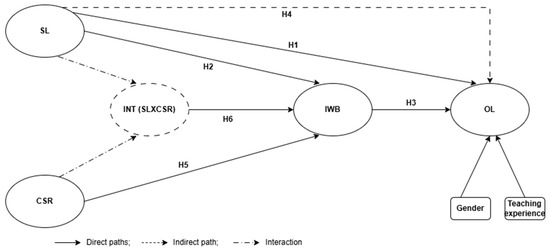
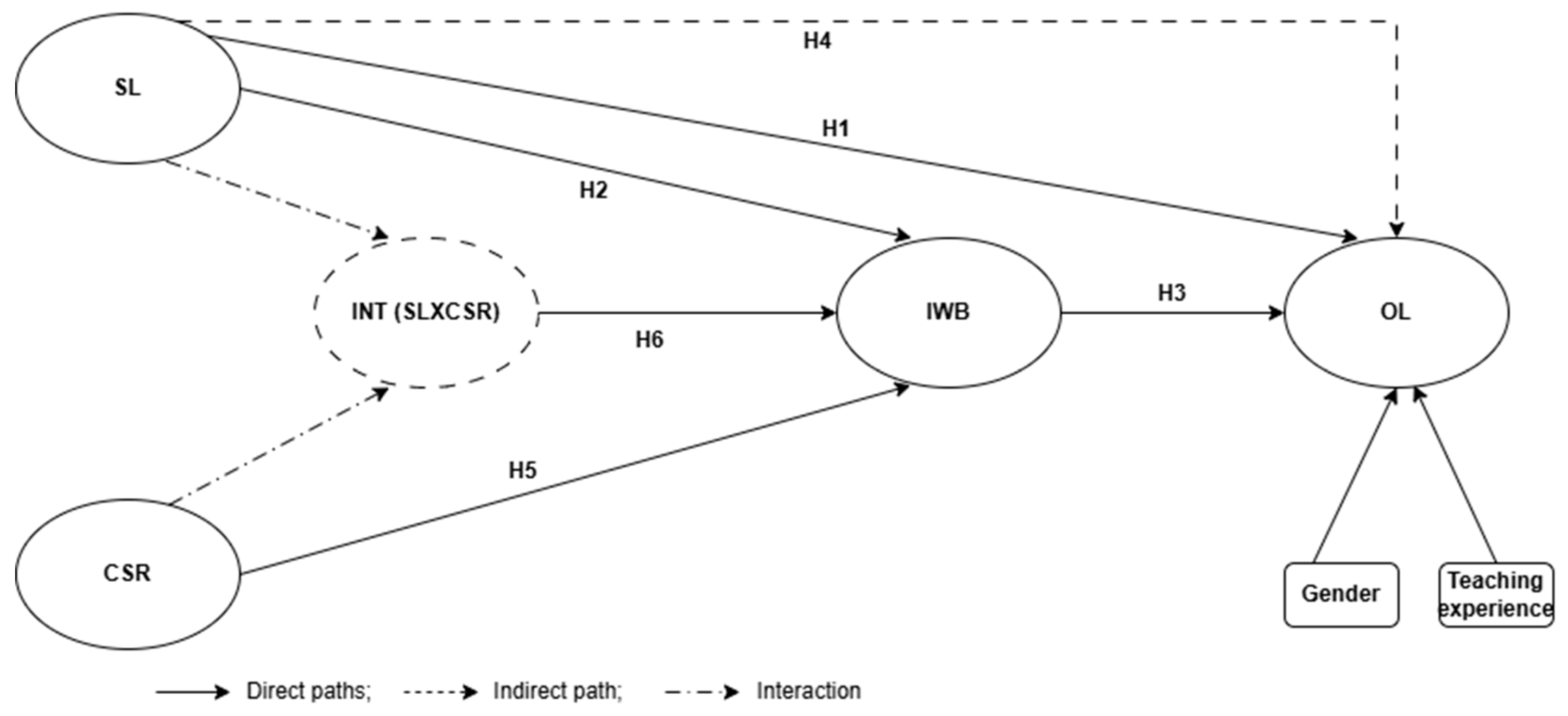
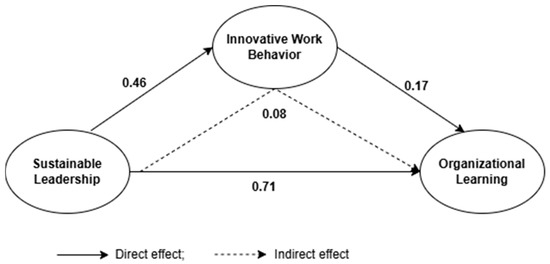
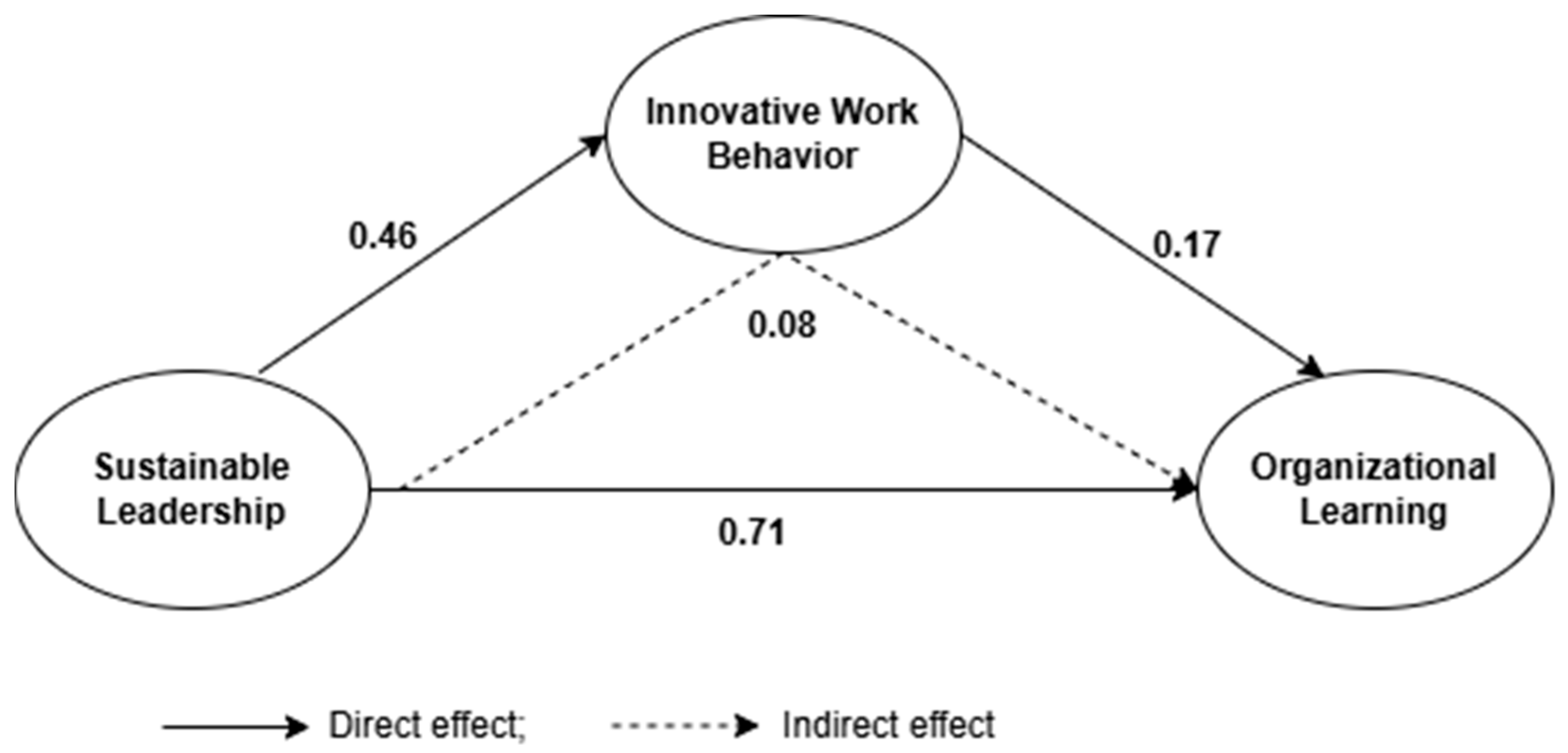
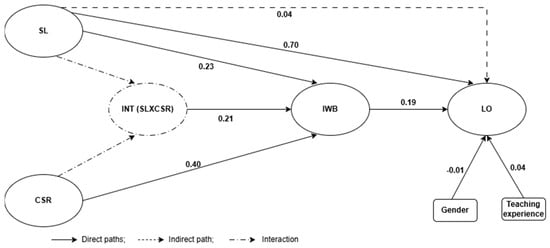
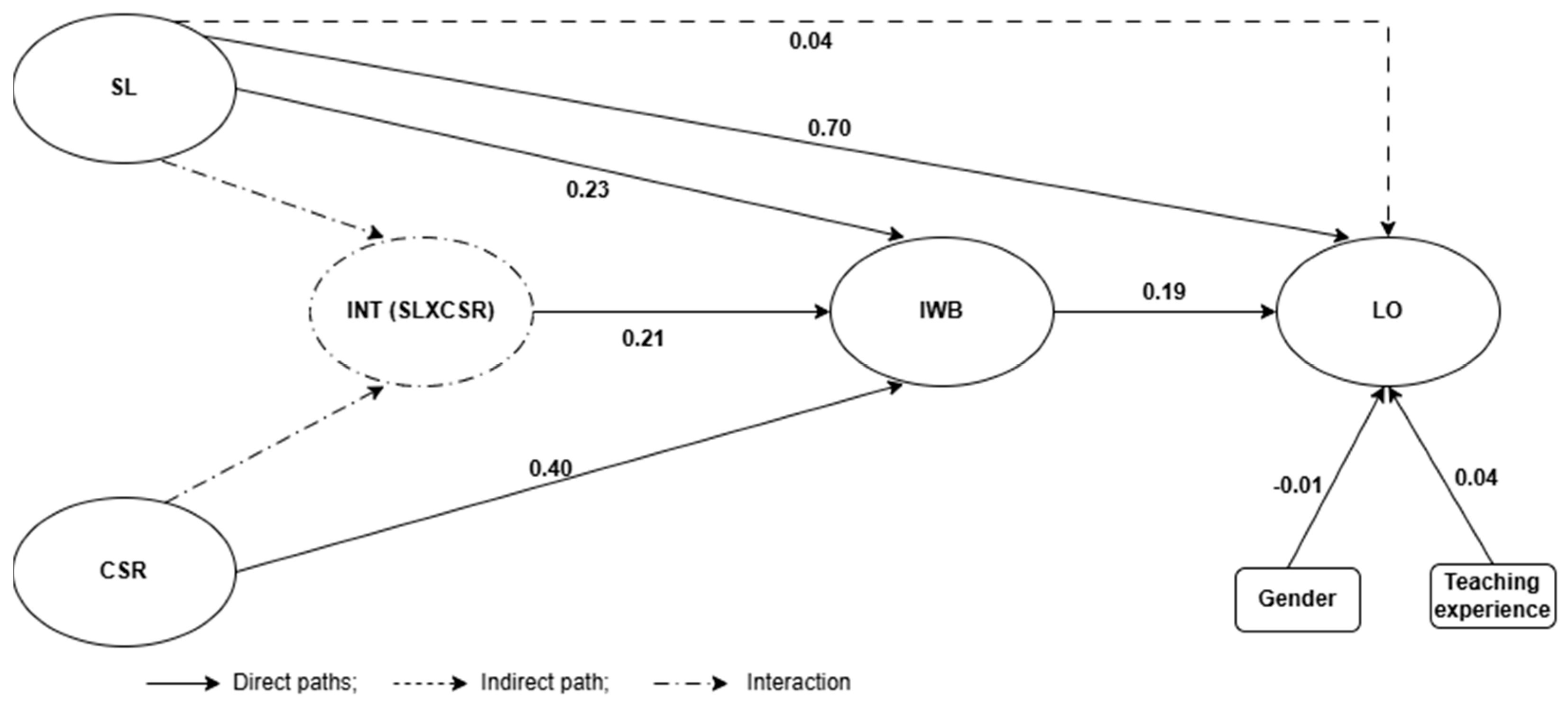
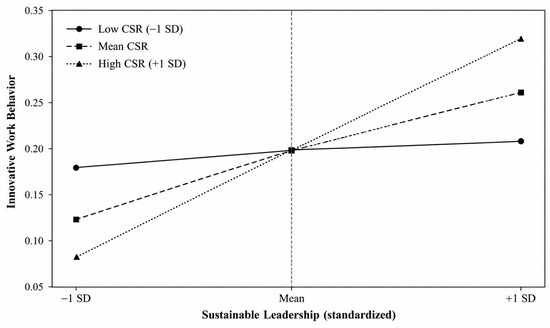
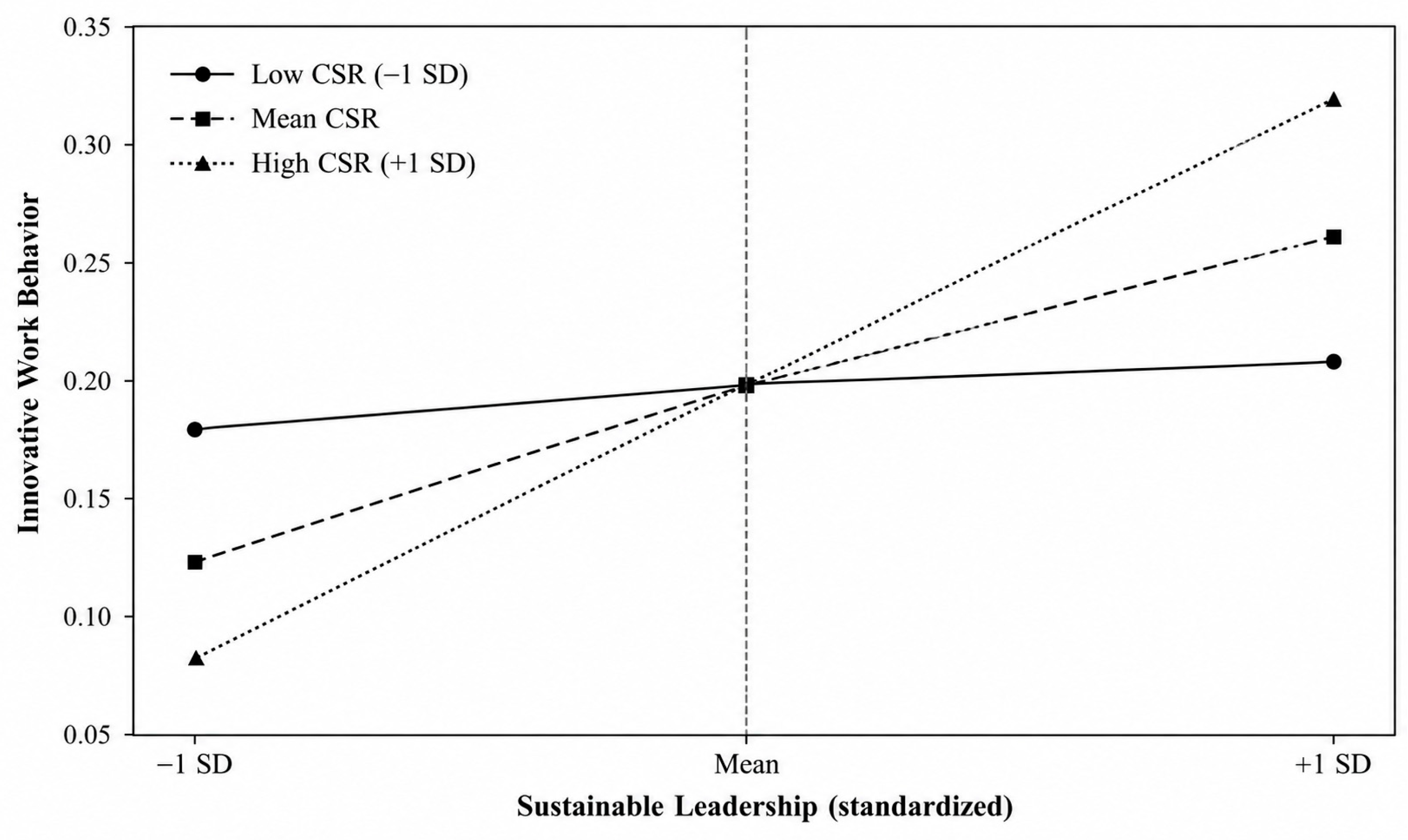

Disclaimer/Publisher’s Note: The statements, opinions and data contained in all publications are solely those of the individual author(s) and contributor(s) and not of MDPI and/or the editor(s). MDPI and/or the editor(s) disclaim responsibility for any injury to people or property resulting from any ideas, methods, instructions or products referred to in the content. |
© 2026 by the authors. Licensee MDPI, Basel, Switzerland. This article is an open access article distributed under the terms and conditions of the Creative Commons Attribution (CC BY) license.