


Abstract
In this study, we examine whether business group affiliation (BGA) enhances firm profitability and financial sustainability in the capital-intensive logistics industry, where stable captive demand and internal financing advantages coexist with potential agency costs. Using a longitudinal panel of 97 Korean logistics firms from 1996 to 2024 (1697 firm-year observations), the analysis identifies the affiliation effect from within-firm variation around affiliation transitions, with matching and dynamic-panel estimators as robustness checks. Affiliation raises return on assets (ROA) by 3.5 percentage points—approximately 0.28 standard deviations—shifting firms from near break-even performance in non-affiliated years to clearly positive profitability. This premium follows a delayed positive pattern: statistically insignificant during the first three years of affiliation, it only becomes significant from the mid-term onward and then persists without decline. Channel-level analyses indicate that the premium is concentrated in the financial channel—a reduction in the interest burden equivalent to 21–37% of the sample mean, consistent with internal capital market financing advantages—whereas operating profitability remains unchanged under Korea’s strict regulation of intragroup transactions. These findings indicate that persistent financing advantages within the group—reflected in a durably lower interest burden—rather than captive-market rents, underpin the financial sustainability of affiliated logistics firms, with implications for policymakers and corporate managers.
1. Introduction
The logistics industry serves as the fundamental backbone of the global economy, connecting supply chains and facilitating international trade [1]. In the Republic of Korea, this sector has evolved beyond simple transportation and storage to become a strategic asset for national competitiveness, particularly for export-oriented conglomerates. Within this context, business groups (often referred to as chaebols) play a dominant role. These large, diversified entities typically internalize logistics functions to enhance the stability and security of global supply chains. As these chains face recurring disruptions and heightened uncertainty, the strategic interdependence between business groups and their logistics affiliates has intensified, raising critical questions about the financial implications of this governance structure [2].
Despite the prevalence of business groups in the Korean economy, the impact of business group affiliation (BGA) on firm profitability and long-term financial performance remains a subject of intense theoretical debate with conflicting empirical results. On the one hand, the value-enhancing view—grounded in the institutional perspective and the internal capital market (ICM)—suggests that affiliation acts as a protective umbrella. According to this view, member firms benefit from reduced transaction costs through captive markets and lower financing costs via access to the group’s internal financial resources (referred to as the group’s “deep pockets”) [3,4]. On the other hand, the value-destroying view warns of tunneling and agency costs, arguing that controlling shareholders may expropriate resources from affiliates or support distressed members (propping), thereby eroding minority shareholder value [5,6].
This theoretical ambiguity is particularly problematic for the logistics sector. While logistics affiliates are often presumed to benefit from stable internal volumes, it is unclear whether this operational advantage translates into actual sustainable profitability. This ambiguity may be further complicated by the unique regulatory environment in Korea, where strict restrictions on internal trading—specifically enforced by Article 45 of the Monopoly Regulation and Fair Trade Act (Prohibition of Unfair Trade Practices)—limit the potential for extracting excessive operating margins from the captive markets. Consequently, it remains uncertain whether the operational advantages of affiliation are realized as firm profitability or prioritized solely for group-wide supply chain efficiency. These questions bear directly on financial sustainability—defined in this study as a firm’s capacity to sustain profitability over the long run through persistent financing advantages that secure stable access to capital (formally operationalized in Section 2)—because what matters for the long-term economic dimension of sustainability is not the single period level of performance but its persistence.
Despite the extensive volume of research on business groups, important gaps remain, particularly with respect to the Korean logistics industry. Most previous studies have concentrated on manufacturing firms or broad industry aggregates [3]. As a result, they often fail to capture the unique dynamics of logistics firms, which are heavily asset-intensive and reliant on complex network integration [1]. This generalization leads to a critical oversight regarding the temporal evolution of the affiliation effect. Prior research has largely relied on static comparisons, overlooking the possibility that value creation following affiliation may unfold dynamically over time. In particular, the early phase of integration often involves substantial coordination challenges, such as IT system integration and network alignment, reflecting the liability of newness [7]. Performance improvements, by contrast, tend to only emerge gradually as firms develop integration capabilities and organizational learning mechanisms. Furthermore, while a link between affiliation and firm profitability has been established, the specific transmission mechanisms remain ambiguous, especially given the regulatory constraints on internal transactions. It is yet to be rigorously determined whether the profitability premium stems from operational efficiency, driven by economies of scale within stable captive markets, or from financial efficiency, facilitated by reduced financing costs via the internal capital market (ICM) [4]. The aim of this study is to bridge these gaps by providing a dynamic and channel-level analysis of the business group effect specific to the logistics sector.
To achieve this, the impact of business group affiliation on the profitability and financial sustainability of Korean logistics firms over the period 1996–2024 is empirically investigated. Using a comprehensive dataset of firms classified under KSIC codes H49–52, rigorous econometric approaches are employed in the analysis, including fixed effects (FE) models, propensity score matching (PSM), and System GMM. Because the sample follows an ever-affiliated panel design, identification derives from within-firm variation around affiliation transitions—comparing each firm’s affiliated years with its own non-affiliated years—rather than from cross-sectional comparisons with never-affiliated standalone firms (Section 3).
The first objective of this study is to empirically verify whether the business group affiliation enhances or erodes firm profitability, acting as a protective umbrella or a conduit for tunneling, specifically, within the context of the asset-intensive logistics industry, where the theoretical tension between institutional benefits and agency costs is most pronounced (H1).
The second objective is to move beyond static comparisons and analyze the temporal evolution of the affiliation effect. By testing for a delayed positive effect, we examine whether the profitability premium remains muted during the initial integration phase—consistent with adjustment costs and the liability of newness—before intensifying over the mid- to long-term through resource orchestration and organizational learning (H2).
The final objective is to uncover the specific transmission channels driving the profitability premium. Conditional on a positive affiliation effect and considering regulatory constraints, this study provides channel-level evidence on the sources of value, distinguishing operational efficiency (derived from the captive stability) from financial efficiency (derived from the internal capital market’s financing advantage), to assess which pathway is empirically dominant (H3).
The remainder of this paper is organized as follows. Section 2 reviews the theoretical background, defines financial sustainability as employed in this study, and develops the research hypotheses. Section 3 describes the sample selection process and econometric methodologies. Section 4 presents the empirical results, including the baseline analysis, mechanism tests, and robustness checks. Finally, Section 5 concludes the study with a summary of the findings, discussing theoretical contributions and their implications for policy and strategy.
2. Theoretical Background and Hypothesis Development
This section develops the theoretical framework and hypotheses, centered on the competition between two channels through which business group affiliation may shape the financial performance of logistics firms (an operational channel rooted in the captive market and a financial channel rooted in the ICM), with Korea’s strict regulation of internal transactions as the boundary condition. Before developing the hypotheses, its central construct is defined. Following the resource-based view, in which competitive advantage is sustained through strategic asset stocks accumulated over time [8,9], and recent conceptual work applying the sustainability principle to firm-level finance [10], financial sustainability is defined as a firm’s capacity to sustain profitability over the long term through persistent financing advantages that secure stable access to capital—that is, the persistence, rather than the single-period level, of financial performance [11]. It is distinct from financial stability, the short-run capacity to absorb shocks and avoid distress, which is treated here as a necessary but insufficient condition [10]. Annual ROA is therefore a single-period realization of profitability, while the construct itself is captured by the persistence of the affiliation premium (Section 4.2) and by a persistently lower interest burden, interpreted as evidence of durable financing advantages (Section 4.3).
2.1. Theoretical Background
2.1.1. Value Enhancement Perspectives
The value enhancement perspectives posit that business group affiliation acts as a source of competitive advantage, thereby generating a performance advantage for member firms. These positive effects can be explained through three theoretical lenses that converge on two empirically testable channels, as summarized at the end of this subsection.
From an institutional perspective, business groups function as an efficient alternative mechanism to mitigate market failures, supporting the performance of affiliated firms. Granovetter [12] posits that business groups emerge to internalize transactions that are costly in the open market due to information asymmetry and weak contract enforcement. Building on this, Khanna and Palepu [13] and Khanna and Rivkin [14] argue that by pooling resources and talent, business groups act as intermediaries that fill “institutional voids”, resulting in superior performance compared to standalone firms. This function extends beyond simple void filling; Manikandan and Ramachandran [15] suggest that groups effectively substitute for “incomplete markets” through superior coordination mechanisms, which provide a critical competitive advantage for logistics firms managing complex supply chains. Furthermore, Ma and Lu [3] conceptualize affiliation as “institutional linkages” that secure necessary legitimacy and access to scarce resources in asset-intensive industries. In this context, the concept of the captive market, which guarantees stable logistics demand within the groups, can be interpreted as a strategic institutional mechanism to internalize market transactions, thereby mitigating demand uncertainty and reducing transaction costs. Consequently, as reported by Ahmad et al. [16] and Fisman and Khanna [17], these institutional functions allow group members to sustain long-term growth and financial performance by compensating for weak financial intermediaries and mitigating structural market imperfections.
The financial perspective posits that the ICM links financing efficiency and risk sharing directly to the cost of capital, investment capability, and firm profitability. Stein [4] and Masulis et al. [18] argue that headquarters act as efficient intermediaries (winner-picking), providing affiliates with financing advantages that lower the cost of capital compared to external markets. Simultaneously, risk sharing within groups [19] and the coinsurance effect arising from cross-guarantee mechanisms [20] mitigate bankruptcy risk and improve the financing conditions faced by affiliated firms. This dual mechanism of low-cost financing and risk reduction enables capital-intensive logistics firms to sustain long-term investments in critical infrastructure [1], thereby supporting financial performance.
From the resource-based perspective, heterogeneity in firms’ resource endowments is a key source of sustained competitive advantage, particularly when such resources are valuable, rare, difficult to imitate, and non-substitutable [8,21]. Applying this framework to the logistics sector, Wong and Karia [1] identify physical assets (e.g., infrastructure) and information resources as critical strategic resources, whose effective integration shapes a logistics firm’s operational efficiency and market responsiveness, subsequently leading to superior financial performance. In the context of business groups, Guillen [22] argues that the competitive advantage of groups stems from the repeated leverage of proprietary resources across industries. Similarly, Chang and Hong [23], in their analysis of Korean chaebols, demonstrate that affiliation provides access to a shared pool of intangible resources such as managerial know-how and brand equity, thereby generating performance gains through intragroup resource sharing. In this light, the business group is interpreted in this study not merely as a parent entity, but as a strategic resource base that logistics affiliates can leverage to overcome the limitations they would face on a standalone basis.
Taken together, these three lenses converge on two distinct channels through which affiliation may improve the profitability of logistics affiliates. The institutional and resource-based perspectives operate primarily through an operational channel: the captive market and shared group resources stabilize demand and raise asset utilization, which should be reflected in operating profitability. The financial perspective operates through a financial channel: the ICM and coinsurance lower the cost and improve the availability of debt financing, which should be reflected in a lower interest burden. In the Korean context, strict restrictions on intragroup transactions (Article 45 of the Monopoly Regulation and Fair Trade Act) constrain the operational channel, so which channel dominates is ultimately an empirical question—one that is directly addressed in this study in H3.
2.1.2. Value Destruction Perspective
Conversely, the value destruction perspective challenges the efficiency arguments, suggesting that the business group affiliation undermines corporate value due to agency problems inherent in the separation of ownership and control. This view posits that the complex ownership structures of business groups exacerbate information asymmetry, allowing controlling shareholders to pursue private benefits at the expense of minority shareholders.
Beyond direct expropriation, the Free Cash Flow hypothesis [24] provides a framework for understanding a more subtle yet pervasive mechanism of value destruction: over-investment, often referred to as empire building. Jensen [24] argues that managers, particularly when subjected to weak governance or aligned with controlling shareholders’ private interests, have incentives to expand the firm’s boundaries beyond its optimal scale. Such pursuits of power and prestige frequently result in investments in projects with negative net present value (NPV). Within business groups (chaebols), these distortions may be amplified through excessive diversification and redundant capital expenditures across affiliated firms. This misallocation of internal resources that would otherwise be distributed to shareholders or high-yield investment opportunities undermines capital efficiency and ultimately erodes aggregate firm value.
Specifically, the practice of tunneling is highlighted as a primary mechanism of value erosion. Bertrand et al. [6] identify tunneling in Indian business groups, where controlling shareholders divert resources from firms where they have low cash flow rights to those where they hold high cash flow rights. This extraction of private benefits directly erodes the value of minority shareholders in the affected affiliates. In the context of Korean chaebols, Moon et al. [25] found a significant association between the operation of the internal capital market and controlling shareholders’ tunneling. Their findings imply that while ICMs provide liquidity, they can be opportunistically utilized for private benefits of control, suggesting that value enhancement is not guaranteed but depends on whether the group prioritizes efficiency or expropriation.
Furthermore, Friedman et al. [26] argue that the transfer of resources to support distressed affiliates during adverse shocks, known as propping, distorts efficient resource allocation. They contend that this practice acts as a tax on profitable affiliates, depressing their valuation to sustain weaker group members. Similarly, Chang and Hong [27] question the magnitude of the group effect in Korea. They point out that the net effect of affiliation may be insignificant because complex cross-subsidization and high internal transaction costs can offset the benefits of resource sharing, ultimately leading to the so-called Korea Discount.
2.1.3. Strategic Context: Logistics Affiliates in Business Groups
Given these conflicting theoretical views, where the value enhancement view emphasizes structural efficiency and the value destruction view warns of agency costs, the existing literature has produced mixed empirical results. This ambiguity underscores the necessity of a sector-specific verification tailored to the unique dynamics of the logistics industry. In particular, within the Korean institutional context, strict regulatory constraints on internal trading (e.g., the Fair Trade Act) may structurally limit the potential for operational profit extraction from the captive market, potentially shifting the primary mechanism of value creation toward financial efficiency.
In the logistics sector, the Strategic Node hypothesis is particularly compelling. Unlike general manufacturing or service sectors, logistics firms within a business group often function as the backbone of the group’s integrated supply chain and physical distribution network. Ahn et al. [28] provide evidence that the expansion of group-affiliated logistics affiliates (2PL) in Korea and Japan relies heavily on captive internal demand. Such demand structures are associated with more stable shipment volumes for group-affiliated logistics firms and more limited growth opportunities for independent third-party logistics (3PL) providers. Given the capital-intensive nature of the logistics industry, such volume stability may alleviate financing constraints and increase the relevance of the ICM within business groups. From the ICM perspective, affiliation with a business group can facilitate access to relatively low-cost internal financing, as the creditworthiness of the parent entity may spill over to affiliated firms and lower their cost of debt [29]. These mechanisms can enable logistics affiliates to undertake investments even during periods of external financial tightening, thereby supporting operational efficiency and strengthening long-term competitiveness [30].
Therefore, extending the empirical inquiry to this specific sector is expected to provide robust evidence that substantiates and refines the value-enhancing role of business groups. By analyzing the distinct pathways through which affiliation leads to improved operating efficiency driven by network synergies within business groups or merely serves as a tool for financial cross-subsidization, the aim of this study is to resolve the theoretical conflict within the specific context of the Korean logistics industry.
2.2. Development of Hypotheses
In summary, it is postulated that within the capital-intensive and network-reliant logistics industry, particularly for affiliated logistics firms, the structural advantages of resource orchestration and financial buffering emphasized by the value-enhancing view significantly outweigh the potential risks of tunneling highlighted by the value-destroying view. Consequently, the business group affiliation is expected to act not as a mechanism for expropriation, but as a critical survival strategy that enhances firm profitability through the stable captive market and efficient internal financing for investment in logistics infrastructure. By empirically verifying these hypotheses (H1 through H3), the aim is to examine the dynamic interplay between institutional benefits and agency costs, ultimately providing evidence consistent with the dominance of the efficiency hypothesis in the Korean logistics sector.
Hypothesis 1 (H1).
Business group affiliation is positively associated with the corporate profitability (ROA) of logistics firms.
Based on the synthesis of the institutional and financial perspectives, the unique characteristics of the logistics industry suggest that the benefits of affiliation are likely to outweigh the potential agency costs. Logistics firms are capital-intensive entities that require continuous large-scale investments in logistics infrastructure to serve business group members and are highly sensitive to economic fluctuations [1]. In this context, business groups can play a stabilizing role by mitigating demand and financing risks. From an institutional perspective, the business group affiliation provides firms with more stable market access and transaction environments, which can help stabilize demand and reduce revenue volatility [3]. Simultaneously, the financial perspective indicates that the internal capital market relieves financing constraints, enabling timely investments that would be difficult to fund on a standalone basis [4,18]. Empirical evidence specifically within the logistics sector supports this view. For instance, Ahn et al. [28] document that logistics affiliates in Korea rely heavily on captive internal demand, which provides a stable volume base relative to independent firms. However, limited research has empirically verified whether these operational gains are reflected in superior profitability (e.g., ROA) when accounting for potential agency costs. This study therefore examines the net association between affiliation and profitability—specifically, whether a logistics firm’s profitability improves after entry into a business group relative to its pre-affiliation years. While the value destruction view warns of tunneling [6], the strategic importance of logistics affiliates as the business group’s supply chain backbone may also create incentives for the business group to provide support in order to preserve overall supply chain efficiency and network competitiveness [31]. Accordingly, it is posited that, in the logistics industry, the efficiency-enhancing effects of the business group affiliation outweigh potential agency costs, so that affiliation is positively associated with firm profitability.
Hypothesis 2 (H2).
For logistics firms, the positive association between business group affiliation and profitability (ROA) emerges with a delay, strengthening in the mid-to-long term rather than manifesting immediately.
The integration of a logistics function affiliated into a business group is not an instantaneous event but rather a progressive process of resource orchestration. The theoretical literature on post-merger integration suggests that performance may initially stagnate or decline due to integration costs before subsequently rising [32]. This phenomenon is particularly pronounced in the logistics sector due to the complexity of network integration. Prior research on post-merger integration suggests that aligning physical assets and rationalizing routes requires a substantial stabilization period, often resulting in delayed value realization [33]. As Rai et al. [34] argue in the context of supply chain integration, the performance (including financial) benefits of digital connectivity only tend to materialize after operational processes have been sufficiently integrated into higher-order capabilities. Dierickx and Cool [9] conceptualize this lag as time compression diseconomies, emphasizing that strategic asset stocks (e.g., integrated supply chain networks) cannot be acquired instantaneously but must be accumulated over time. Building on this logic, the benefits of affiliation are expected to strengthen as the post-affiliation period extends, as learning effects accumulate and any initial adjustment frictions dissipate. Chang and Hong [23] empirically demonstrated that the sharing of intangible resources becomes more effective as the affiliate accumulates experience. Consequently, it is anticipated that, for logistics firms, the profitability effect of the business group affiliation will emerge with a time lag, strengthening in the mid-to-long term. Prior evidence on the temporal dimension of group effects remains limited and mixed. Curvilinear patterns documented in earlier work concern the degree of group diversification rather than the duration of membership, and the persistence literature offers a cautionary counterpoint: Chacar and Vissa [35] found that affiliation in India was associated with greater persistence of below-average performance, suggesting that group structures can entrench poor outcomes as well as sustain good ones. Whether affiliation duration translates into a sustained profitability premium is therefore an open empirical question, which this study addresses with firm-specific relative event time. In the Korean setting, where regulation structurally curbs the operational channel, the premium is expected to emerge with a delay and then persist, rather than to appear immediately.
Hypothesis 3 (H3).
The profitability premium of affiliated logistics firms operates through two channels: (a) an increase in operating ROA derived from a stable captive market (H3a), and (b) a reduction in interest expenses facilitated by the internal capital market (ICM) (H3b).
Having established the positive and dynamic impact of affiliation (H1, H2), in this study, we further investigate the specific transmission channel underlying this profitability premium. To ensure the robustness of the efficiency hypothesis, it is essential to examine the operational and financial (interest expenses) components of the aggregate ROA effect separately.
First, regarding operational efficiency, the institutional perspective suggests that the business group affiliation can provide more stable market access, thereby reducing demand uncertainty [3]. For logistics firms, this guaranteed volume allows for higher asset utilization and economies of scale; accordingly, it is posited that captive market effects mitigate demand uncertainty and thereby enhance operating ROA (H3a). Second, regarding financial efficiency, the channel is grounded in the financing advantage of the ICM. Im et al. [36], in their comprehensive review of Korean chaebols, document that business groups can serve as a financial buffer, allowing affiliated firms to alleviate external financial constraints through the ICM and funding channels. This function is further reinforced by the coinsurance effect [20], whereby business groups’ collective creditworthiness and mutual support mechanisms allow affiliates to share risk and secure more favorable financing conditions under stress. Almeida et al. [30] further demonstrate that, under conditions of severe external financing constraints, business group affiliates benefit from the ICM, which reallocates funds across member firms. For capital-intensive logistics firms, this channel implies reduced reliance on costly external debt financing, potentially leading to lower interest expenses (H3b). Thus, this study anticipates that the profitability premium arises through the joint operation of these two channels.
3. Research Methodology
3.1. Sample Selection and Methodologies
3.1.1. Data and Sample Selection
In this study, we examine whether the relationship between business group affiliation and sustainable firm profitability, as documented in prior research, holds within the Korean logistics industry. If a significant relationship is found, further analysis will explore the structural characteristics that may drive performance differences.
Under the Monopoly Regulation and Fair Trade Act (MRFTA), a business group is defined as a set of companies de facto controlled by a single controlling person (dongil-in). Control is established through a shareholding test—the controlling person and related persons, mainly family members, jointly holding 30% or more of the shares as the largest shareholder—or a de facto control test covering executive appointments, personnel interlocks, and intragroup financial or asset ties beyond the normal scope of business (MRFTA Art. 2(11); Enforcement Decree Art. 4). This definition institutionally embeds two characteristics commonly associated with Korean chaebols: concentrated family ownership and control, and extensive intragroup ties. Since 1987, the Korea Fair Trade Commission (FTC) has annually designated a meeting size threshold for business groups, which is currently total assets of KRW 5 trillion or more for disclosure-subject groups, with larger groups facing additional ownership restrictions; the May 2025 designation comprises 92 groups with 3301 affiliated companies, whose logistics affiliates constitute the sample frame of this study. These diversified groups span manufacturing, construction, retail, and services, and many internalize logistics through dedicated affiliates. They are also subject to regulations on intragroup financing and support—including restrictions on cross-shareholding, new circular shareholding, and intragroup debt guarantees—and, in particular, the prohibition of unfair intragroup support under Article 45. As discussed in Section 2.1.1, this structurally constrains the operational (captive-market) channel, making the operative channel—operational or financial (internal capital market)—an empirical question addressed directly by H3.
To empirically test these questions, the sample was constructed to capture the population of logistics firms in Korea that are relevant to the study’s objectives, namely, firms for which both group affiliation information and reliable financial data are available for a sufficiently long observation period. Of the affiliated firms of these designated groups, those classified under KSIC codes H49–52 were identified using the FTC Business Group Portal (e-Group); based on the 2025 disclosure standards, this initial identification yielded 209 firms. Since the analysis relies heavily on the accuracy and consistency of financial statements, particular attention was paid to maintaining data reliability and representativeness throughout the sample selection process.
First, the 209 identified firms were screened to confirm whether they are subject to external audit under the Act on External Audit of Stock Companies. Firms not meeting this requirement were excluded, as their financial statements lack the independent verification needed for credible empirical analysis. Second, audited financial statements for the remaining firms were collected from the Data Analysis, Retrieval, and Transfer System (DART) operated by the Financial Supervisory Service. Because firms under external audit are legally required to disclose their audited financial reports via DART, this source ensures both transparency and accessibility of the data. Finally, additional filters were applied to ensure suitability for panel estimation. Firm-year observations with qualified, adverse, and disclaimed audit opinions were excluded to preserve data integrity. Moreover, as the empirical model incorporates lagged variables (t − 1 or longer), firms with fewer than five firm-year observations were dropped to secure sufficient time-series depth. The final sample is an unbalanced panel of 97 firms from 1996 to 2024, constituting an ever-affiliated design: all 97 firms belonged to a designated business group as of 2025, and the 480 non-affiliated observations are years in which these firms were not designated as group members—predominantly pre-affiliation years—rather than standalone, never-affiliated entities. Affiliation status is coded at the firm-year level from the FTC’s officially disclosed entry years and annual designation lists so that entries, exits, and re-entries are fully reflected. All financial variables are drawn from the separate (unconsolidated) financial statements of each affiliate, in which intragroup transactions are not eliminated—a feature essential for identifying firm-level and captive-market effects, consistent with standard practice in the business group literature [6,23,30]. Table 1 summarizes the sample selection and composition.
Table 1.
Sample selection and composition.
3.1.2. Estimation Strategy
A fixed effects (FE) model was employed using an unbalanced panel dataset from 1996 to 2024 to examine the impact of business group affiliation on the financial performance of Korean logistics companies. Consistent with prior empirical studies in the business group and logistics literature [3], this approach is designed to control for unobserved heterogeneity.
Prior studies in corporate finance and strategy suggest that unobserved time-invariant firm heterogeneity—such as managerial quality, corporate culture, and risk preferences—is likely to be correlated with firms’ strategic choices, including the business group affiliation. As Roberts and Whited [37] emphasize, such correlations between unobserved heterogeneity and regressors violate the orthogonality assumption of the Random Effects (RE) estimator, rendering the estimates inconsistent. Accordingly, the FE model is employed to account for unobserved firm-level heterogeneity that may jointly affect the business group affiliation and financial performance. As noted by Petersen [38], residuals in corporate finance panel data are often correlated within firm and over time due to persistent firm-level shocks and common macroeconomic conditions. To address these concerns, the estimation incorporates both firm and year fixed effects, and standard errors are clustered at the firm level to mitigate potential biases in inference arising from within-firm residual correlation. As an additional check on error dependence among affiliates of the same business group, standard errors clustered at the business-group level are also examined (Section 4.4).
While the FE model helps control for time-invariant unobserved heterogeneity, potential endogeneity concerns related to selection bias and reverse causality may still persist. To enhance the reliability of the baseline results, two supplementary analyses are conducted: one addressing selection on observables, and one examining sensitivity to dynamic specification. First, to mitigate selection bias from the non-random affiliation of firms with business groups, propensity score matching (PSM) as proposed by Rosenbaum and Rubin [39] is applied. Propensity scores are estimated through a probit model based on one-year lagged firm characteristics: namely, firm size, leverage, and sales growth, together with firm age, which is deterministic and thus not lagged. Affiliated firm-year observations are then matched to non-affiliated counterparts using kernel matching (Epanechnikov) and the common support restriction, and the FE regression is re-estimated on the sample restricted to the common support region. Second, as a supplementary check on dynamic misspecification, the System GMM estimator proposed by Blundell and Bond [40] is employed to account for performance persistence by including the lagged dependent variable. The role assigned to this estimator reflects the panel dimensions of the sample: with an average panel length of 17.5 years, the dynamic-panel (Nickell) bias of the fixed-effects estimator—which is of order 1/T—is expected to be negligible. Thus, the FE estimator, supported by the matched-sample analysis, serves as the primary basis for identification, while System GMM determines whether the baseline results are sensitive to the inclusion of performance persistence. In implementing the estimator, rather than assuming the exogeneity of the affiliation variable, d_BGA is treated as predetermined or as endogenous, and the validity of the corresponding additional moment conditions is assessed using Difference-in-Hansen tests of the relevant instrument subsets. Overall instrument validity and serial correlation are evaluated using the Hansen J-test of overidentifying restrictions [41] and the Arellano–Bond tests for first- and second-order serial correlation [42]. All econometric estimations and statistical analyses in this study were performed using Stata SE (version 18.0; StataCorp LLC, College Station, TX, USA).
3.2. Empirical Models and Variables
To examine the impact of business group affiliation on the financial performance and sustainability of Korean logistics firms, a panel regression analysis was conducted. This section details the empirical model specifications and defines the variables employed to test the hypotheses.
3.2.1. Empirical Model Specification
To mitigate potential endogeneity concerns arising from simultaneity and reverse causality, a one-year lagged specification is adopted for explanatory variables. Following standard econometric protocols [43,44], independent and control variables at time t-1—except firm age, which is deterministic and thus not lagged—are utilized to predict firm profitability at time t. Consequently, this specification requires the omission of the first two observations for each firm—one for the lag structure itself and one additional year for constructing the lagged Growth variable. Combined with gaps in the unbalanced panel, this yields a final estimation sample of 1487 observations.
Model 1 is constructed to test the baseline effect of affiliation (H1) and the transmission mechanisms (H3). The regression equation is specified as follows:
where Yi,t represents the dependent variables for firm i in year t, including ROA (for H1), and Op_ROA, ROS, Int_Exp (for H3). The key independent variable, d_BGAi,t−1, is a dummy variable taking the value of 1 if the firm is affiliated with a business group in year t − 1, and 0 otherwise. μi denotes firm-fixed effects to control for time-invariant heterogeneity, and δt denotes year-fixed effects to capture common macroeconomic shocks.
Yi,t = α + β1d_BGAi,t−1 + γControlsi,t−1 + μi + δt + ϵi,t
Model 2 examines the temporal evolution of the affiliation effect by replacing the affiliation dummy with four mutually exclusive indicators: the affiliation year itself (d_BGA_year0) and three duration stages: early (1–3 years), mid (4–7 years), and long (8 years or more). This segmentation strategy is grounded in the organizational learning perspective, which emphasizes that integration capabilities and performance effects emerge gradually over time, e.g., [7]. Accordingly, the initial post-affiliation phase (typically 1–3 years) may involve integration costs and routine readjustments, during which performance benefits may not yet be detectable. Furthermore, consistent with the concept of time compression diseconomies [9], it is assumed that the accumulation of group-specific strategic assets, such as internal network access and reputation, requires a maturation period, justifying the distinction between mid-term stabilization and long-term synergy realization. The affiliation year (year0) is modeled separately, so that the omitted category consists exclusively of pre-affiliation firm-years, and duration is measured relative to each firm’s affiliation year. The equation is as follows:
ROAi, t = α + β1d_Year0i, t−1 + β2d_Earlyi, t−1 + β3d_Midi,t−1 + β4d_Longi,t−1 + γControlsi,t−1 + μi + δt + ϵi,t
3.2.2. Variable Definitions and Measurement
The primary dependent variable measuring firm profitability is Return on Assets (ROA), calculated as net income divided by total assets. This measure captures the firm’s overall profitability, reflecting outcomes from operating performance and financing conditions. Drawing on the ICM view, firms are expected to exhibit a higher ROA (β > 0) during their post-affiliation period compared to their pre-affiliation period, primarily due to financial synergies such as efficient capital allocation and risk sharing [4,30]. To further investigate the transmission channels of this profitability premium (H3), three additional proxies are utilized. For operational efficiency (H3a), both Operating ROA (Op_ROA) and Return on Sales (ROS) are considered. However, given the specific characteristics of the logistics industry, where freight rates and sales volumes are subject to significant fluctuations, ROS may capture short-term demand noise rather than fundamental efficiency. Therefore, this study prioritizes Op_ROA (operating income divided by total assets) as a complementary and more stable metric for asset utilization. For financial efficiency (H3b), the interest expenses (Int_Exp), measured as the ratio of interest expenses to total assets, is employed. A negative coefficient (β < 0) would indicate a lower interest burden for affiliated firms, consistent with the deep pocket argument [45]. Because Int_Exp scales interest expenses by total assets, it captures the overall interest burden rather than the effective price of debt; a lower ratio may reflect cheaper borrowing, reduced reliance on interest-bearing debt, or greater internal financing, and these sources cannot be fully separated even after controlling for leverage.
The key independent variable is the business group affiliation (d_BGA), defined as a dummy variable that takes the value of 1 if a firm is designated as a member of a large business group by the Korea Fair Trade Commission, and 0 otherwise. To explicitly test H2, this binary variable is further decomposed into four duration-based dummy variables: d_BGA_year0, d_BGA_early, d_BGA_mid, and d_BGA_long. This segmentation allows for the examination of the temporal evolution of the affiliation effect, while ensuring that the omitted category consists exclusively of pre-affiliation firm-years. Following the liability of newness argument [46,47], the coefficients for the affiliation year and early stage may be attenuated, reflecting potential initial costs associated with organizational integration and system alignment. Conversely, the coefficients for the mid- and long-term stages are expected to be positive and significant, as the synergies from resource sharing and network integration materialize gradually over time.
Finally, to isolate the specific impact of affiliation on performance, a set of standard control variables identified in the logistics and corporate finance literature is included. Firm size (Size), measured as the natural logarithm of total assets, is included to control for scale effects. While larger firms typically benefit from economies of scale, evidence from the logistics industry suggests that such advantages are not guaranteed. In particular, empirical analysis documents scale inefficiencies among logistics firms, indicating the presence of decreasing returns to scale [48]. Leverage (Lev), calculated as the ratio of total liabilities to total assets, controls for capital structure; higher leverage is associated with increased financial distress costs and, consistent with prior evidence documenting a negative relationship between leverage and profitability, is expected to adversely affect firm performance [49]. Additionally, sales growth (Growth) and firm age (Age) are included as proxies for growth opportunities and organizational experience, respectively. Both variables are typically expected to have a positive association with firm performance, as firms with greater growth opportunities tend to expand their market presence and mature firms benefit from accumulated operational know-how and organizational capabilities [50]. All variable definitions and measurement specifications are summarized in Table 2.
Table 2.
Variable definitions and measurement.
4. Empirical Results
4.1. Descriptive Statistics and Correlations
Table 3 presents the descriptive overall statistics for the variables used in the analysis. The final sample comprises an unbalanced panel of 1697 firm-year observations from 97 Korean logistics firms over the period 1996–2024.
Table 3.
Descriptive statistics.
Regarding the dependent variables, the mean value of ROA is 0.027, and Op_ROA (operating ROA) is 0.049. These values indicate that, on average, the sample firms operate with relatively low profit margins, which is consistent with the competitive nature of the logistics industry. The standard deviations of 0.127 for ROA and 0.109 for Op_ROA indicate substantial variation in financial performance across firms. Notably, the greater volatility in ROA compared to Op_ROA is consistent with the capital-intensive nature of the logistics industry, suggesting that non-operating financial factors, such as interest expenses, exert a significant influence on final firm profitability.
As for the independent variables, the mean of d_BGA (business group affiliation) is 0.717, reflecting the sample selection that focuses on firms with a history of group affiliation under the 2025 disclosure standards. This implies that, on average, the sampled firms spend about 71.7% of the observed period as members of business groups, while the remaining observations correspond to their pre-affiliation years prior to group inclusion. When decomposing the affiliation period, the d_BGA_long (8 years or more of affiliation) accounts for 43.4% of total observations, which is noticeably higher than the d_BGA_early (first 1–3 years of affiliation) at 11.5% and d_BGA_mid (4–7 years of affiliation) at 14.3%. This distribution suggests that once Korean logistics firms become affiliated with a business group, they tend to remain affiliated for a prolonged period, indicating a high degree of structural persistence.
Regarding the control variables, the average leverage (Lev) is 0.602, implying that total liabilities represent roughly 60.2% of total assets. This capital structure may be attributed to the asset-intensive nature of the logistics industry, where substantial investment in physical logistics infrastructure is typically required. The average firm age is approximately 22.2 years, indicating that the sample largely consists of mature firms with considerable operating histories. All continuous financial variables (ROA, Op_ROA, ROS, Int_Exp, leverage, and sales growth) are winsorized at the first and 99th percentiles to reduce the influence of extreme outliers, whereas firm size (the natural logarithm of total assets) and firm age are used without winsorization.
Table 4 presents the Pearson correlation coefficients for the variables used in the empirical model, and the main patterns can be summarized as follows.
Table 4.
Results of Pearson correlation.
First, the dependent variables (No. 1–4) are strongly correlated with one another, which is consistent with their intended role as alternative measures of firm profitability. In particular, the high correlations between ROA and Op_ROA indicate that both variables track financial performance in a similar way, allowing the analysis to examine not only the overall effect of the business group affiliation on profitability, but also some of the channels through which this effect may arise. Interest expenses (Int_Exp), which proxy for the cost-side mechanism, are negatively and significantly related to the asset-based profitability measures (ROA and Op_ROA), consistent with the possibility that capital structure and the interest burden are relevant channels linking group affiliation and firm performance.
Second, the main explanatory variable, business group affiliation (d_BGA), is positively and significantly correlated with ROA and Op_ROA, and negatively correlated with Int_Exp, while its correlation with ROS is not statistically significant. When affiliation is broken down by duration, the correlations with ROA show a clear time pattern. The affiliation-year indicator (d_BGA_year0) and the early stage indicator (d_BGA_early) show weak negative correlations with ROA (−0.032 and −0.054, respectively), and d_BGA_year0 is significantly negatively correlated with operating profitability (Op_ROA, −0.064), which may partly reflect an adjustment phase around entry. By contrast, the positive correlation in the long stage (d_BGA_long, 0.133) suggests that profitability improves over time as firms benefit from more stable volumes of inter-group transactions and from economies of scale. Finally, among the control variables, leverage (Lev) shows the strongest and most consistent negative correlation with profitability, while the remaining controls show relatively weak correlations. The shift from weak early-stage associations to significant longer-term gains observed in the correlation structure provides a useful motivation for the econometric strategy. Because the impact of affiliation appears to depend on the timing and length of business group membership, a fixed effects (FE) specification is more suitable than pooled OLS or a purely GMM-based approach. The FE framework absorbs unobserved time-invariant firm heterogeneity while exploiting within-firm variation over time, and thus helps to capture the delayed pattern in the performance effects of business group affiliation.
4.2. Baseline Results: Business Group Affiliation and Firm Profitability (H1 and H2)
Table 5 presents the fixed effects (FE) regression results testing Hypotheses 1 and 2. The analysis utilizes 1487 observations, as the first two observations for each firm are omitted due to the one-year lag structure applied to mitigate endogeneity (see Section 3.2).
Table 5.
Baseline regression results (H1, H2): the impact of business group affiliation on ROA.
First, regarding model specification, the Hausman test was conducted to statistically validate the use of the FE model over the Random Effects (RE) model. The test statistics for both Model 1 (x2 = 59.60, p < 0.01) and Model 2 (x2 = 70.39, p < 0.01) strongly reject the null hypothesis. This result confirms the theoretical argument by Roberts and Whited [37] regarding the necessity of controlling for unobserved heterogeneity, thereby empirically justifying the choice of the FE specification.
Regarding the impact of business group affiliation, Model 1 tests Hypothesis 1, which posits that the business group affiliation is positively associated with the profitability (ROA) of logistics firms. The coefficient of the affiliation dummy (d_BGA) is 0.035 and statistically significant at the 5% level (t-value = 2.21). This finding indicates that, after controlling for unobserved firm heterogeneity, time-specific common shocks (via year-fixed effects), and potential endogeneity concerns, affiliated logistics firms achieve a higher ROA relative to their own pre-affiliation years. This result corroborates the Institutional Perspective and Financial Perspective, suggesting that the benefits of affiliation outweigh the potential agency costs (e.g., tunneling) in the Korean logistics industry. Specifically, this aligns with Ahn et al. [28], who argued that logistics affiliates benefit from stable volume guarantees (captive market) provided by group member firms. Furthermore, the finding is consistent with Stein’s [4] ICM hypothesis, which posits that business groups act as efficient financial intermediaries. Consequently, this result provides empirical evidence that, for Korean logistics firms, the business group serves as a protective umbrella that enhances profitability through operational stability and financial support. In economic terms, the estimated premium of 0.035 corresponds to approximately 0.28 standard deviations of ROA. Given that non-affiliated firm-years earn an average ROA statistically indistinguishable from zero (−0.005; Table 3), the premium reflects a shift from approximately break-even operation to clearly positive profitability. The estimate is also conservative: it is smaller than the raw affiliated–non-affiliated gap in mean ROA (0.045), and remains within a plausible range across estimators, from 0.023 (System GMM) to 0.035 (FE).
Model 2 tests Hypothesis 2 by decomposing the affiliation period into the affiliation year (year 0) and three duration stages. The results reveal a delayed positive effect rather than an immediate premium. The coefficients for the affiliation year (d_BGA_year0, β = 0.014, t = 0.92) and the early stage (d_BGA_early, β = 0.020, t = 1.14) are positive but statistically indistinguishable from zero. This implies that the profitability premium does not materialize within the first three years of affiliation. In contrast, the coefficients for the mid-term (β = 0.070, p < 0.01) and long-term (β = 0.063, p < 0.01) stages are positive and statistically significant. Although the mid-term point estimate is slightly larger than the long-term estimate, the two coefficients are statistically indistinguishable (Table 5), indicating that the premium, once realized, persists at a similar level rather than declining. This gradual emergence is consistent with organizational learning arguments [23] and the time compression diseconomies concept [9], implying that group-specific strategic assets must be accumulated over time. Because no decline is observed at any horizon, the pattern is best characterized as a delayed positive effect. Thus, Hypothesis 2 is supported.
The results for the control variables remain consistent across both models and align with prior literature. Firm size (Size) shows a significant negative association with ROA, reflecting potential diseconomies of scale in asset-heavy industries. Such scale inefficiencies have been documented in the logistics sector, where firms may experience decreasing returns to scale as size increases [48]. Similar negative size–performance relationships have also been reported in some recent studies [51,52]. Conversely, sales growth (Growth) and firm age (Age) are positively and significantly related to profitability, highlighting the importance of revenue expansion and accumulated operational experience and learning-by-doing effects. Finally, leverage (Lev) exhibits a negative coefficient, consistent with the generally observed inverse relationship between debt and profitability [49], although this effect is not statistically significant in this study.
To further validate this temporal pattern, an event-study specification with leads and lags around each firm’s affiliation year is estimated, using the year immediately preceding affiliation (t = −1) as the reference category and binning event time at four or more years before and nine or more years after affiliation. Figure 1 plots the estimated coefficients with 95% confidence intervals; the full estimates are reported in Appendix C (Table A4). Addressing the pre-treatment trend assessment, the pre-affiliation coefficients are individually and jointly insignificant (F(3, 96) = 1.30, p = 0.280), indicating that firms were not already on a differential profitability trajectory prior to affiliation. Consistent with the duration-based results, the post-affiliation coefficients are statistically indistinguishable from zero during the first four years and become significant at conventional levels from the fifth year onward, remaining positive throughout; no decline is observed at any horizon, reinforcing the delayed positive effect.
Figure 1.
Event-study estimates of the effect of business group affiliation on ROA. Notes: The reference category is t = −1, the year immediately preceding affiliation. Event time is binned at t ≤ −4 and t ≥ +9. Bars denote 95% confidence intervals based on firm-clustered standard errors. Controls, firm fixed effects, and year fixed effects are included. Full estimates, including the corresponding results for the interest expense ratio, are reported in Appendix C.
4.3. Mechanisms of Firm Profitability (H3): Operational vs. Financial Efficiency
Having established the positive impact of the business group affiliation on ROA, this section investigates the specific transmission channels driving this profitability premium. The analysis examines two competing pathways: operational efficiency (H3a), derived from the captive market view that posits that volume stability within the business group enhances operating margins; and financial efficiency (H3b), grounded in the ICM view regarding intragroup financing advantage.
To test Hypothesis 3a (operational efficiency), two proxies are employed: Return on Sales (ROS) and operating ROA (Op_ROA). Table 6 reports the regression results for the channel analysis. Regarding model specification, the Hausman tests for all four models (including the dynamic analysis in Financial Model B, x2 = 54.47, p < 0.01) reject the null hypothesis at conventional significance levels (10% level for the ROS model and 1% level for the others), supporting the fixed-effects specification to control for unobserved firm heterogeneity. While ROS is a standard measure of profitability, it may be sensitive to short-term demand fluctuations. Given the characteristics of the logistics industry, where revenue volatility typically exceeds asset volatility, Op_ROA (operating income divided by total assets) is adopted as the primary proxy for operational efficiency. This choice is supported by the variance analysis presented in Appendix A, which confirms that the coefficient of variation (CV) for sales is significantly higher than that for total assets across the sample firms.
Table 6.
Mechanism analysis (H3): channels of the profitability (ROA) premium.
Operational Models A and B present the results for the operational efficiency hypothesis. The coefficients for affiliation (d_BGA) in both the Op_ROA (β = 0.025, p> 0.10) and ROS (β = 0.015, p > 0.10) models are positive but statistically insignificant. These findings imply that affiliation does not necessarily guarantee superior operating margins or markup capabilities in the Korean logistics market. While the captive market provides volume stability, it appears that the fierce price competition in the sector limits the ability to generate excess operating profits. Thus, Hypothesis 3a is not supported.
In contrast, Financial Models A and B provide strong evidence for Hypothesis 3b. The coefficient for interest expenses (Int_Exp) is −0.004 and statistically significant at the 5% level (t-value = −2.03). This indicates that affiliated logistics firms bear a significantly lower interest burden after group affiliation compared to their pre-affiliation period. This finding supports the ICM hypothesis, suggesting that business groups function as a financial intermediary that alleviates financing frictions for affiliates through the deep pocket effect [4,45]. By leveraging the group’s collective creditworthiness (coinsurance effect) and cross-debt guarantees, the observed reduction in the interest burden is consistent with cheaper external borrowing, reduced reliance on interest-bearing debt, or greater use of internal funding channels that cannot be fully disentangled from the present measure, thereby improving their net bottom line (ROA) despite the narrow operating margins. Interestingly, regarding control variables, firm size (Size) exhibits a negative relationship with ROA but a positive relationship with interest expenses (p < 0.01). This reflects the structural characteristics of the logistics industry: large firms typically operate under an asset-heavy model (e.g., vessels, terminals) requiring substantial debt financing, which increases their interest burden ratio and creates diseconomies of scale relative to smaller, asset-light firms.
Further analysis decomposing the affiliation period (Financial Model B) reveals that these financial benefits are time-variant, mirroring the delayed pattern observed in the baseline ROA model (H2). The coefficients for the affiliation year and the early stage are negative but statistically insignificant (β = −0.002 and −0.003, respectively), indicating that the reduction in the interest burden is not yet detectable in the initial years of affiliation. This pattern is consistent with, though does not by itself establish, the early-stage integration frictions emphasized in the post-acquisition literature [7]. In contrast, significant reductions are observed in the mid-term (β = −0.008, p < 0.01) and long-term (β = −0.007, p < 0.05) stages, and the two coefficients are virtually identical (Table 6). Thus, Hypothesis 3b is supported.
In economic terms, the estimated reduction in the interest expense ratio (−0.004; −0.008 to −0.007 in the mid- and long-term stages) corresponds to roughly 21–37% of the sample mean interest burden (0.019). Mechanically, however, this saving amounts to only about 0.4 percentage points of pre-tax ROA—a partial share of the total premium of 0.035. The contribution of the channel analysis therefore lies in the contrast it identifies—an insignificant operational channel versus a significant financial channel under Article 45 of the MRFTA—rather than in a full arithmetic decomposition. Moreover, because the interest expense ratio only captures the interest burden component of financing advantages, the measured effect likely represents a lower bound; broader benefits such as avoided distress costs are consistent with, but not separately identified in, our framework.
The event-study estimates for the interest expense ratio, reported in Appendix C (Table A4), corroborate this temporal pattern (Figure 2). The pre-affiliation coefficients are jointly insignificant (F(3, 96) = 1.41, p = 0.244), indicating no differential trend in the interest burden prior to affiliation. The interest expense reduction becomes statistically significant from the third year after affiliation onward and deepens gradually thereafter, preceding the emergence of the ROA premium by roughly two years. This timing is consistent with the interpretation that the delayed improvement in ROA (H2) reflects the lagged realization of financing advantages within the ICM.
Figure 2.
Event-study estimates of the effect of business group affiliation on the interest expense ratio.
Consequently, the results indicate that the ROA premium of Korean logistics affiliates is more closely associated with financing advantages than with fundamental operational improvements.
This pattern is consistent with the business group functioning as a financial buffer that mitigates financing constraints and supports the long-term financial sustainability of affiliated firms, consistent with evidence from the Korean market [30]. Read jointly, the duration and event-time estimates and the interest burden results map directly onto the two dimensions of financial sustainability defined in Section 2: the former documents the persistence of the profitability premium over the affiliation horizon, and the latter documents a persistently lower interest burden, consistent with durable financing advantages through the internal capital market.
4.4. Robustness Checks
To ensure the reliability of the empirical findings, the robustness checks proposed in the empirical specification (Section 3.1.2 and Section 3.2) were conducted, specifically addressing selection bias and examining sensitivity to dynamic specification, and verifying the robustness of inference to the level of clustering.
First, to verify that the ROA premium is not an artifact of self-selection by superior firms, the propensity score matching (PSM) results were analyzed. As outlined in the methodology, a kernel matching (Epanechnikov) algorithm on the common support was executed. The propensity scores were estimated using a probit model conditional on one-year lagged firm characteristics: firm size, leverage, and growth opportunities, together with firm age (not lagged, as it is deterministic). The PSM-FE column of Table 7 presents the estimation results using the common support sample (N = 1477). The coefficient for affiliation (d_BGA) is 0.035 and remains statistically significant at the 5% level (t-value = 2.19). This estimate is virtually identical to the baseline result, indicating that the observed performance premium is not attributable to pre-existing observable differences among sample firms and is consistent with the structural benefits of affiliation (see Appendix B for additional details). The estimate is not sensitive to the matching design: one-to-one nearest-neighbor matching with a 0.01 caliper and a logit-based propensity score yield comparable coefficients (0.032 and 0.030, respectively, both significant at the 5% level).
Table 7.
Robustness checks: PSM and System GMM.
Second, to examine the sensitivity of the baseline results to performance persistence, the System GMM estimator was employed, with the instrument set collapsed to prevent instrument proliferation, which can weaken the Hansen test. Rather than imposing an assumption on the exogeneity of affiliation, d_BGA is instrumented in both reported specifications—as predetermined (GMM-style instruments, lags 1–2, collapsed) in column (2a) and as endogenous (lags 2–3, collapsed) in column (2b) of Table 7—and the validity of the corresponding additional moment conditions is assessed by the Difference-in-Hansen test of the relevant instrument subset.
Model diagnostics support both specifications: the Arellano–Bond tests indicate significant first-order (AR(1) p = 0.002) and no second-order serial correlation (AR(2) p = 0.640 and 0.592), and the Hansen J-tests do not reject the overidentifying restrictions (p = 0.529 and 0.681). The Difference-in-Hansen tests do not reject the validity of the additional moment conditions associated with each treatment of d_BGA (p = 0.172 and 0.279). These tests, however, assess only the validity of the corresponding instrument subsets within the specified GMM framework; they neither establish the exogeneity of affiliation itself nor rule out selection into business groups based on expected performance, financing needs, restructuring, or other time-varying factors, and their power is limited under weak instruments.
The coefficient of d_BGA is small and imprecisely estimated in both specifications (β = −0.008 and 0.006), with standard errors roughly twice as large as the fixed-effects counterpart. This pattern reflects the limited identifying power of lagged instruments for a highly persistent binary treatment: as documented in Table 3, long-tenure observations account for 43.4% of the sample, leaving little within-firm variation in affiliation status for the instruments to exploit. Notably, the confidence intervals of both specifications contain the fixed-effects estimate (0.035), so the dynamic panel results do not contradict the baseline findings. The lagged dependent variable is positive and significant at the 10% level in both specifications (β = 0.33–0.35), confirming the persistence of profitability. Taken together, the results of the System GMM analysis indicate that while the moment conditions used to instrument affiliation are not rejected, the statistical evidence for the affiliation effect weakens materially under the dynamic specifications; identification therefore rests primarily on the fixed-effects and matched-sample estimators, which are reliable given the long average panel length of the sample (T-bar = 17.5 years).
Finally, as noted in Section 3.1.2, the baseline models are re-estimated with standard errors clustered at the business-group level as an additional check on error dependence among affiliates of the same group. For this exercise, each firm is assigned to its primary (modal) business group over the sample period, yielding 44 clusters. The point estimates are unchanged by construction, and the inference is unaffected: the affiliation coefficient in Model 1 remains significant at the 5% level (t = 2.18, versus 2.21 under firm level clustering) and the mid- and long-term coefficients in Model 2 remain significant at the 1% level (t = 3.57 and 2.75, versus 3.30 and 2.65, respectively), while the affiliation-year and early-stage coefficients remain statistically insignificant (Appendix D, Table A5).
5. Discussion and Conclusions
5.1. Summary of Findings
To resolve the conflicting theoretical debate regarding the business group affiliation (BGA) within the asset-intensive logistics industry, a comprehensive empirical analysis of Korean logistics firms from 1996 to 2024 was conducted, utilizing fixed effects (FE) and propensity score matching (PSM) estimators, complemented by System GMM specifications in which affiliation is treated as predetermined or endogenous rather than assumed to be exogenous. The key findings are summarized as follows.
First, consistent with the institutional perspective and the protective umbrella hypothesis, business group affiliation had a significantly positive impact on the profitability (ROA) of logistics firms (supporting H1).
In line with the prior literature, the results are consistent with the view that, in asset-intensive industries, the benefits of affiliation, such as resource sharing and risk mitigation, outweigh the potential agency costs associated with tunneling.
Second, a delayed positive effect in the profitability dynamics was identified (supporting H2). The profitability premium does not materialize immediately; the coefficients for the affiliation year and the early stage (1–3 years) are statistically indistinguishable from zero, and the premium only becomes significant from the mid-term onward, persisting at a similar level thereafter. The event-study estimates confirm this pattern, showing no differential pre-affiliation trends and no decline at any horizon. This gradual emergence indicates that the benefits of resource orchestration and organizational learning require a gestation period, consistent with time compression diseconomies and the deliberate learning perspective described by Zollo and Singh [7], and with recent evidence from Xiang et al. [2] that similar delayed patterns are observed following organizational integration in the logistics industry.
Finally, regarding the transmission channels, the analysis indicates that the profitability premium is more closely associated with financial efficiency than with operational efficiency (supporting H3b). By examining the disaggregated components of profitability, the analysis revealed that affiliation significantly lowers the interest burden (Int_Exp), a pattern consistent with the financing advantages of the ICM and the deep pocket argument [4,45]. Notably, the event-study estimates show that the reduction in the interest burden precedes the emergence of the ROA premium by roughly two years, reinforcing the financial channel interpretation. Conversely, the impact on operating profitability (Op_ROA, ROS) was insignificant. This implies that the competitive advantage of affiliated logistics firms is more closely associated with a reduced interest burden, consistent with intragroup financing advantage (the deep pocket effect), than with operating margin advantages arising solely from the captive market, thereby extending the arguments of Ahn et al. [28] beyond a traditional transaction cost perspective.
In economic terms, affiliation is associated with a 21–37% reduction in the interest expense burden relative to the sample mean, and with a shift from approximately break-even profitability in non-affiliated years to a sustained positive premium of 0.035 (approximately 0.28 standard deviations of ROA), only part of which is accounted for by the measured interest saving.
Taken together, these findings indicate that the financial sustainability of asset-intensive logistics firms, as defined in Section 2, hinges on persistent financing advantages—reflected in a durably lower interest burden—rather than on short-term operational margin expansion.
5.2. Implications and Future Research
This study provides critical theoretical and strategic insights into the dynamics of business group affiliation within asset-intensive sectors, elucidating the channels underlying the profitability effect and defining the distinct policy landscape of this capital-heavy industry.
Theoretically, this research makes a significant contribution by resolving the tension between the value enhancement and destruction perspectives. By providing evidence consistent with the dominance of the protective umbrella effect, this study extends the ICM theory to serve industries characterized by high fixed costs and investment risks. Specifically, the channel analysis indicates that the financial sustainability of logistics firms in this sector is associated primarily with financial buffering—a persistently lower interest burden consistent with the group’s collective creditworthiness—rather than operational margins from the captive market. This distinction is crucial in Korea’s unique institutional environment, where strict regulations on internal transactions (Article 45 of the Monopoly Regulation and Fair Trade Act) effectively curb excessive operational profit extraction. Consequently, this study challenges the traditional resource-based view that focuses on physical assets, suggesting that, for asset-intensive firms, financial access can function as a core strategic asset that remains effective even under rigorous regulatory constraints. Additionally, the identification of the delayed positive effect advances the literature by highlighting the temporal dynamics of synergy materialization in large-scale network industries. The finding that the affiliation premium, once it emerges, persists at a similar level also contrasts with evidence from India, where affiliation was associated with the persistence of below-average performance [35]. A plausible reconciliation lies in the boundary condition emphasized throughout this paper: where regulation forecloses rent extraction through the operational channel, the group’s contribution is consistent with durable financing advantages, which sustain rather than entrench performance. Rather than fully decomposing the profitability premium, the contribution of the channel analysis lies in identifying which channel operates under regulatory constraint: under Article 45 of the MRFTA, which structurally limits operating-margin extraction from captive markets, the financial channel—persistent financing advantages, reflected in a lower interest burden and consistent with the group’s collective creditworthiness—emerges as a strategic resource for asset-intensive logistics firms.
From the strategic and policy perspective, these findings underscore the distinctive financial underpinnings of asset-heavy logistics firms. For corporate managers, business affiliation can serve as a viable strategy to cope with high capital requirements and entry barriers. However, managers must recognize that synergies are not immediate; they should focus on leveraging the group’s deep pockets to secure long-term infrastructure investments while enduring an initial period in which synergies have not yet materialized. For policymakers, the study suggests a paradigm shift in regulation. Given that the ICM serves as a vital substitute for imperfect external financial markets in industries requiring massive capital investment, policies should distinguish between opportunistic tunneling and efficiency-driven financial support. Regulators should acknowledge and permit legitimate financial cooperation that fosters industry stability and national competitiveness, while strictly monitoring for unfair fund funneling.
Despite these findings, this study is subject to limitations. First, the sample is limited to the Republic of Korea. Considering the inherently global connectivity of the logistics industry, future research should expand to include a cross-national comparative analysis. By incorporating country-specific institutional characteristics such as regulatory frameworks, antitrust policies, and governance systems, subsequent studies can not only strengthen the generalizability of the delayed effect and financial efficiency hypotheses, but also systematically identify how the impact of the business group affiliation diverges across different national contexts. Second, while the absence of an early-stage premium may reflect a liability of newness, the specific integration and coordination processes were not explicitly captured, remaining empirically unobservable within this quantitative framework. The statistical insignificance of early-stage performance is consistent with, but does not establish, frictions, warranting future qualitative or micro-level research to rigorously identify specific internal impediments that delay synergy realization, such as organizational restructuring or cultural misalignment. Third, the financial channel measure (interest expenses scaled by total assets) captures the interest burden rather than the effective cost of borrowing. Because consistent data on interest-bearing debt are not available across the full 1996–2024 panel, re-examining this mechanism with an effective borrowing cost measure (interest expenses relative to interest-bearing debt) remains an important avenue for future research. More broadly, the measured financial channel should be interpreted as a lower bound of the financing advantages of affiliation: benefits such as avoided distress costs, investment continuity, and coinsurance effects are consistent with our findings but not separately identified. Accordingly, the channel analysis does not provide a complete arithmetic decomposition of the ROA premium, and a more granular decomposition of the remaining transmission paths remains an important task for future research.
Funding
This research received no external funding.
Institutional Review Board Statement
Not applicable.
Informed Consent Statement
Not applicable.
Data Availability Statement
Publicly available datasets were analyzed in this study. The financial data are available from the Data Analysis, Retrieval, and Transfer System (DART) at [http://dart.fss.or.kr] (accessed on 1 August 2026), and business group affiliation data can be found in the Fair Trade Commission (FTC) eGroup at [https://www.egroup.go.kr] (accessed on 1 August 2026).
Acknowledgments
The author sincerely thanks the three anonymous reviewers and the Academic Editor for their careful reading and constructive suggestions. The detailed and insightful comments, particularly those that prompted careful reconsideration of the empirical specification and interpretation of the results, were invaluable in improving the manuscript and its overall clarity.
Conflicts of Interest
The author declares no conflicts of interest.
Abbreviations
The following abbreviations are used in this manuscript:
| BGA | Business Group Affiliation |
| DART | Data Analysis, Retrieval, and Transfer System |
| FE | Fixed Effects |
| FTC | Fair Trade Commission |
| GMM | Generalized Method of Moments |
| ICM | Internal Capital Market |
| KSIC | Korean Standard Industrial Classification |
| MRFTA | Monopoly Regulation and Fair Trade Act |
| Op_ROA | Operating Return on Assets |
| PSM | Propensity Score Matching |
| ROA | Return on Assets |
| ROS | Return on Sales |
Appendix A. Volatility Verification: Sales vs. Total Assets
To support the use of operating ROA (Op_ROA) as a key proxy for operational efficiency, this appendix compares the volatility of total sales and assets. Volatility is measured using the coefficient of variation (CV).
A paired t-test is conducted to assess whether sales exhibit greater variability than assets. Table A1 reports the results. The mean CV of sales (0.611) is significantly higher than that of total assets (0.577), with a mean difference of 0.034 that is significant at the 1% level (t-value 5.33). This result indicates that sales are more volatile than assets, supporting the use of an asset-based denominator when evaluating operational efficiency.
Table A1.
Paired t-test results: coefficient of variation (sales vs. assets).
Appendix B. Propensity Score Matching Diagnostics
Appendix B presents concise numerical and graphical diagnostics for the propensity score matching procedure employed to address potential selection bias. The reported diagnostics correspond to the kernel-matching specification adopted in Table 7 and focus on covariate balance before and after matching.
The balance diagnostics assess whether observable firm characteristics are comparable between treated and control firms after matching. Adequate covariate balance is a necessary condition for attributing post-matching outcome differences to treatment status rather than pre-existing observable firm heterogeneity.
Table A2.
Variable-level covariate balance diagnostics.
Table A3.
Summary of balance statistics before and after matching.
Figure A1 visualizes standardized mean differences corresponding to the balance statistics reported in Table A2. After matching, all covariates fall within the conventional ±10% standardized bias threshold, indicating satisfactory covariate balance.
Figure A1.
Standardized mean differences before and after matching.
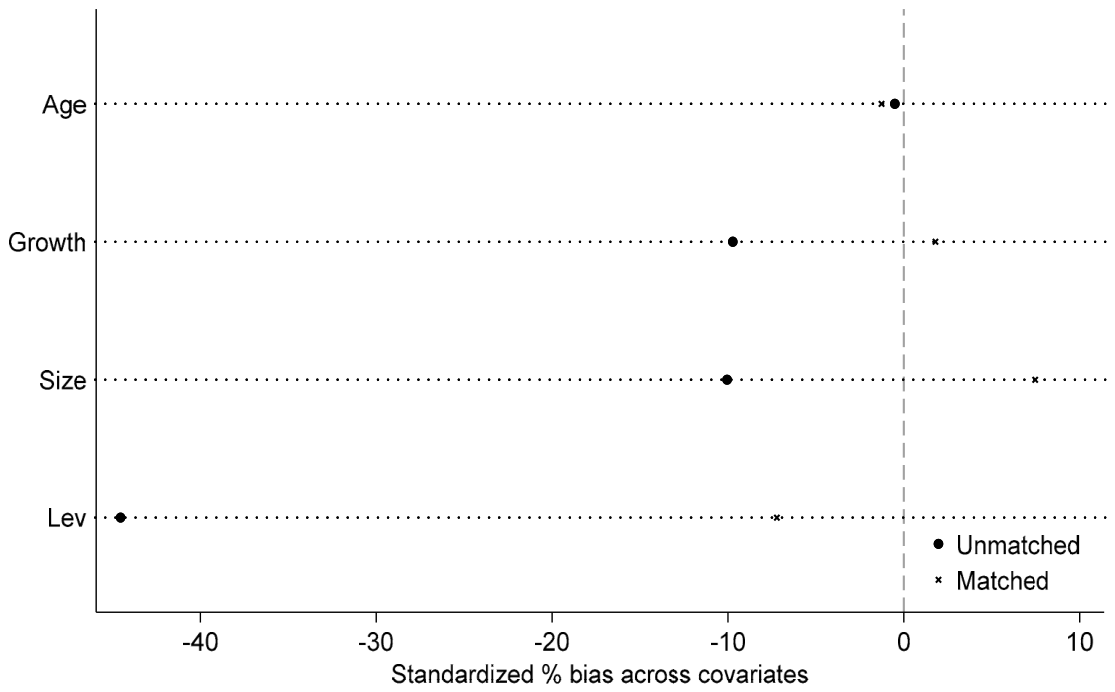
Appendix C. Event-Study Estimates
Appendix C reports the full event-study estimates underlying Figure 1 and Figure 2. The specification includes leads and lags around each firm’s affiliation year, with the year immediately preceding affiliation (t = −1) as the reference category.
Table A4.
Event-study estimates around business group affiliation.
Appendix D. Robustness of Inference to the Level of Clustering
Appendix D reports the full estimates underlying the business group level clustering check described in Section 4.4. The baseline models of Table 5 are re-estimated with standard errors clustered at the business group level, where each firm is assigned to its primary (modal) business group over the sample period. Because clustering only affects the variance estimator, the coefficients are identical to those in Table 5 by construction; only the t-statistics differ.
Table A5.
Baseline estimates with standard errors clustered at the business group level.
References
- Wong, C.Y.; Karia, N. Explaining the Competitive Advantage of Logistics Service Providers: A Resource-Based View Approach. Int. J. Prod. Econ. 2010, 128, 51–67. [Google Scholar] [CrossRef] [Scilit]
- Xiang, J.; Yang, G.; Chen, Y.; Zhou, D. Business Group Affiliation and Corporate Digital Transformation. Econ. Model. 2025, 147, 107068. [Google Scholar] [CrossRef] [Scilit]
- Ma, X.; Lu, J.W. Business Group Affiliation as Institutional Linkages in China’s Emerging Economy: A Focus on Organizational Traits and Institutional Conditions. Asia Pac. J. Manag. 2017, 34, 675–697. [Google Scholar] [CrossRef] [Scilit]
- Stein, J.C. Internal Capital Markets and the Competition for Corporate Resources. J. Finance 1997, 52, 111–133. [Google Scholar] [CrossRef]
- Baek, J.S.; Kang, J.K.; Lee, I. Business Groups and Tunneling: Evidence from Private Securities Offerings by Korean Chaebols. J. Finance 2006, 61, 2415–2449. [Google Scholar] [CrossRef] [Scilit]
- Bertrand, M.; Mehta, P.; Mullainathan, S. Ferreting Out Tunneling: An Application to Indian Business Groups. Q. J. Econ. 2002, 117, 121–148. [Google Scholar] [CrossRef] [Scilit]
- Zollo, M.; Singh, H. Deliberate Learning in Corporate Acquisitions: Post-acquisition Strategies and Integration Capability in US Bank Mergers. Strateg. Manag. J. 2004, 25, 1233–1256. [Google Scholar] [CrossRef] [Scilit]
- Barney, J. Firm Resources and Sustained Competitive Advantage. J. Manag. 1991, 17, 99–120. [Google Scholar] [CrossRef] [Scilit]
- Dierickx, I.; Cool, K. Asset Stock Accumulation and Sustainability of Competitive Advantage. Manag. Sci. 1989, 35, 1504–1511. [Google Scholar] [CrossRef] [Scilit]
- Gleißner, W.; Günther, T.; Walkshäusl, C. Financial Sustainability: Measurement and Empirical Evidence. J. Bus. Econ. 2022, 92, 467–516. [Google Scholar] [CrossRef] [Scilit]
- Chari, M.D.R.; David, P. Sustaining Superior Performance in an Emerging Economy: An Empirical Test in the Indian Context. Strateg. Manag. J. 2012, 33, 217–229. [Google Scholar] [CrossRef] [Scilit]
- Granovetter, M. Coase Revisited: Business Groups in the Modern Economy. Ind. Corp. Chang. 1995, 4, 93–130. [Google Scholar] [CrossRef] [Scilit]
- Khanna, T.; Palepu, K. Is Group Affiliation Profitable in Emerging Markets? an Analysis of Diversified Indian Business Groups. J. Finance 2000, 55, 867–891. [Google Scholar] [CrossRef] [Scilit]
- Khanna, T.; Rivkin, J.W. Estimating the Performance Effects of Business Groups in Emerging Markets. Strateg. Manag. J. 2001, 22, 45–74. [Google Scholar] [CrossRef]
- Manikandan, K.S.; Ramachandran, J. Beyond Institutional Voids: Business Groups, Incomplete Markets, and Organizational Form. Strateg. Manag. J. 2015, 36, 598–617. [Google Scholar] [CrossRef] [Scilit]
- Ahmad, I.; Oláh, J.; Popp, J.; Máté, D. Does Business Group Affiliation Matter for Superior Performance? Evidence from Pakistan. Sustainability 2018, 10, 3060. [Google Scholar] [CrossRef] [Scilit]
- Fisman, R.; Khanna, T. Facilitating Development: The Role of Business Groups. World Dev. 2004, 32, 609–628. [Google Scholar] [CrossRef] [Scilit]
- Masulis, R.W.; Pham, P.K.; Zein, J. Family Business Groups Around the World: Financing Advantages, Control Motivations, and Organizational Choices. Rev. Financ. Stud. 2011, 24, 3556–3600. [Google Scholar] [CrossRef] [Scilit]
- Khanna, T.; Yafeh, Y. Business Groups and Risk Sharing Around the World. J. Bus. 2005, 78, 301–340. [Google Scholar] [CrossRef] [Scilit] [PubMed]
- Jia, N.; Shi, J.; Wang, Y. Coinsurance within Business Groups: Evidence from Related Party Transactions in an Emerging Market. Manag. Sci. 2013, 59, 2295–2313. [Google Scholar] [CrossRef] [Scilit]
- Wernerfelt, B. A Resource-based View of the Firm. Strateg. Manag. J. 1984, 5, 171–180. [Google Scholar] [CrossRef] [Scilit]
- Guillen, M.F. Business Groups in Emerging Economies: A Resource-Based View. Acad. Manag. J. 2000, 43, 362–380. [Google Scholar] [CrossRef] [Scilit]
- Chang, S.J.; Hong, J. Economic Performance of Group-Affiliated Companies in Korea: Intragroup Resource Sharing and Internal Business Transactions. Acad. Manag. J. 2000, 43, 429–448. [Google Scholar] [CrossRef] [Scilit] [PubMed]
- Jensen, M.C. Agency Costs of Free Cash Flow, Corporate Finance, and Takeovers. Am. Econ. Rev. 1986, 76, 323–329. [Google Scholar] [CrossRef] [Scilit]
- Moon, S.J.; Jung, M.G.; Kim, B.G. Internal Capital Market and Controlling Shareholder’s Tunneling in Korean Chaebol Business Groups. Korean J. Financ. Eng. 2022, 21, 87–107. [Google Scholar] [CrossRef]
- Friedman, E.; Johnson, S.; Mitton, T. Propping and Tunneling. J. Comp. Econ. 2003, 31, 732–750. [Google Scholar] [CrossRef] [Scilit]
- Chang, S.J.; Hong, J. How Much Does the Business Group Matter in Korea? Strateg. Manag. J. 2002, 23, 265–274. [Google Scholar] [CrossRef] [Scilit]
- Ahn, W.C.; Ishii, S.; Ahn, S.B. A Comparative Study of Korean and Japanese Logistics Industries’ Market Structures: Focusing on Subsidiary and Third-Party Logistics Companies. Asian J. Shipp. Logist. 2013, 29, 361–376. [Google Scholar] [CrossRef] [Scilit]
- Byun, H.Y.; Choi, S.; Hwang, L.S.; Kim, R.G. Business Group Affiliation, Ownership Structure, and the Cost of Debt. J. Corp. Finance 2013, 23, 311–331. [Google Scholar] [CrossRef] [Scilit]
- Almeida, H.; Kim, C.S.; Kim, H.B. Internal Capital Markets in Business Groups: Evidence from the Asian Financial Crisis. J. Finance 2015, 70, 2539–2586. [Google Scholar] [CrossRef] [Scilit]
- Ghemawat, P.; Khanna, T. The Nature of Diversified Business Groups: A Research Design and Two Case Studies. J. Ind. Econ. 1998, 46, 35–61. [Google Scholar] [CrossRef] [Scilit]
- Haspeslagh, P.C.; Jemison, D.B. Managing Acquisitions: Creating Value Through Corporate Renewal; Free Press: New York, NY, USA, 1991. [Google Scholar]
- Zollo, M.; Meier, D. What Is M&A Performance? Acad. Manag. Perspect. 2008, 22, 55–77. [Google Scholar] [CrossRef] [Scilit]
- Rai, A.; Patnayakuni, R.; Seth, N. Firm Performance Impacts of Digitally Enabled Supply Chain Integration Capabilities. MIS Q. 2006, 30, 225–246. [Google Scholar] [CrossRef] [Scilit]
- Chacar, A.; Vissa, B. Are Emerging Economies Less Efficient? Performance Persistence and the Impact of Business Group Affiliation. Strateg. Manag. J. 2005, 26, 933–946. [Google Scholar] [CrossRef] [Scilit]
- Im, J.; Kim, W.; Lee, I. Internal Capital Markets of Korean Chaebols. In Research Handbook on Alternative Finance; Edward Elgar Publishing: Cheltenham, UK, 2024; pp. 85–115. [Google Scholar] [CrossRef] [Scilit]
- Roberts, M.R.; Whited, T.M. Endogeneity in Empirical Corporate Finance1. In Handbook of the Economics of Finance; Elsevier: Amsterdam, The Netherlands, 2013; Volume 2, pp. 493–572. [Google Scholar] [CrossRef] [Scilit]
- Petersen, M.A. Estimating Standard Errors in Finance Panel Data Sets: Comparing Approaches. Rev. Financ. Stud. 2008, 22, 435–480. [Google Scholar] [CrossRef] [Scilit]
- Rosenbaum, P.R.; Rubin, D.B. The Central Role of the Propensity Score in Observational Studies for Causal Effects. Biometrika 1983, 70, 41–55. [Google Scholar] [CrossRef]
- Blundell, R.; Bond, S. Initial Conditions and Moment Restrictions in Dynamic Panel Data Models. J. Econom. 1998, 87, 115–143. [Google Scholar] [CrossRef] [Scilit]
- Hansen, L.P. Large Sample Properties of Generalized Method of Moments Estimators. Econometrica 1982, 50, 1029–1054. [Google Scholar] [CrossRef] [Scilit]
- Arellano, M.; Bond, S. Some Tests of Specification for Panel Data: Monte Carlo Evidence and an Application to Employment Equations. Rev. Econ. Stud. 1991, 58, 277–297. [Google Scholar] [CrossRef] [Scilit]
- Berger, A.N.; Bouwman, C.H. Bank Liquidity Creation. Rev. Financ. Stud. 2009, 22, 3779–3837. [Google Scholar] [CrossRef] [Scilit]
- Wooldridge, J.M. Econometric Analysis of Cross Section and Panel Data; MIT Press: Cambridge, MA, USA, 2010. [Google Scholar]
- Boutin, X.; Cestone, G.; Fumagalli, C.; Pica, G.; Serrano-Velarde, N. The Deep-Pocket Effect of Internal Capital Markets. J. Financ. Econ. 2013, 109, 122–145. [Google Scholar] [CrossRef] [Scilit]
- Freeman, J.; Carroll, G.R.; Hannan, M.T. The Liability of Newness: Age Dependence in Organizational Death Rates. Am. Sociol. Rev. 1983, 48, 692–710. [Google Scholar] [CrossRef] [Scilit]
- Chaturvedi, T.; Weigelt, C. Operating Synergy and Post-Acquisition Integration in Corporate Acquisitions: A Resource Reconfiguration Perspective. Long. Range Plan. 2024, 57, 102428. [Google Scholar] [CrossRef] [Scilit]
- Wu, H.; Wu, J.; Liang, L.; Li, Y. Efficiency Assessment of Chinese Logistics Firms Using DEA. Int. J. Shipp. Transp. Logist. 2012, 4, 212–234. [Google Scholar] [CrossRef] [Scilit]
- Frank, M.Z.; Goyal, V.K. Capital Structure Decisions: Which Factors Are Reliably Important? Financ. Manag. 2009, 38, 1–37. [Google Scholar] [CrossRef] [Scilit]
- Huo, B.; Gu, M.; Wang, Z. Supply Chain Flexibility Concepts, Dimensions and Outcomes: An Organisational Capability Perspective. Int. J. Prod. Res. 2018, 56, 5883–5903. [Google Scholar] [CrossRef] [Scilit]
- Zavalii, T.; Zhyhlei, I.; Ivashko, O.; Kornatka, A. Does Size Determine Financial Performance of Advertising and Marketing Companies? Evidence from Western Europe on SDGs. Sustainability 2025, 17, 5812. [Google Scholar] [CrossRef] [Scilit]
- Kukeli, A.; Widner, B.; Deari, F.; Sargsyan, G.; Barbuta-Misu, N. Firm Profitability and Economic Crises: The Non-Linear Role of the Cash Conversion Cycle. Int. J. Financ. Stud. 2025, 13, 86. [Google Scholar] [CrossRef] [Scilit]
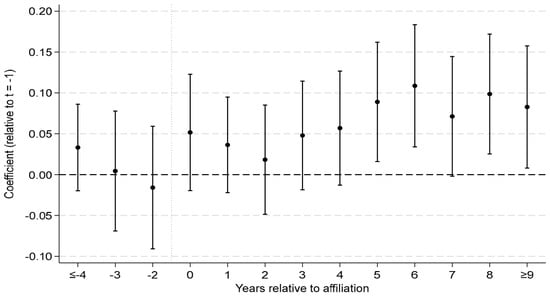
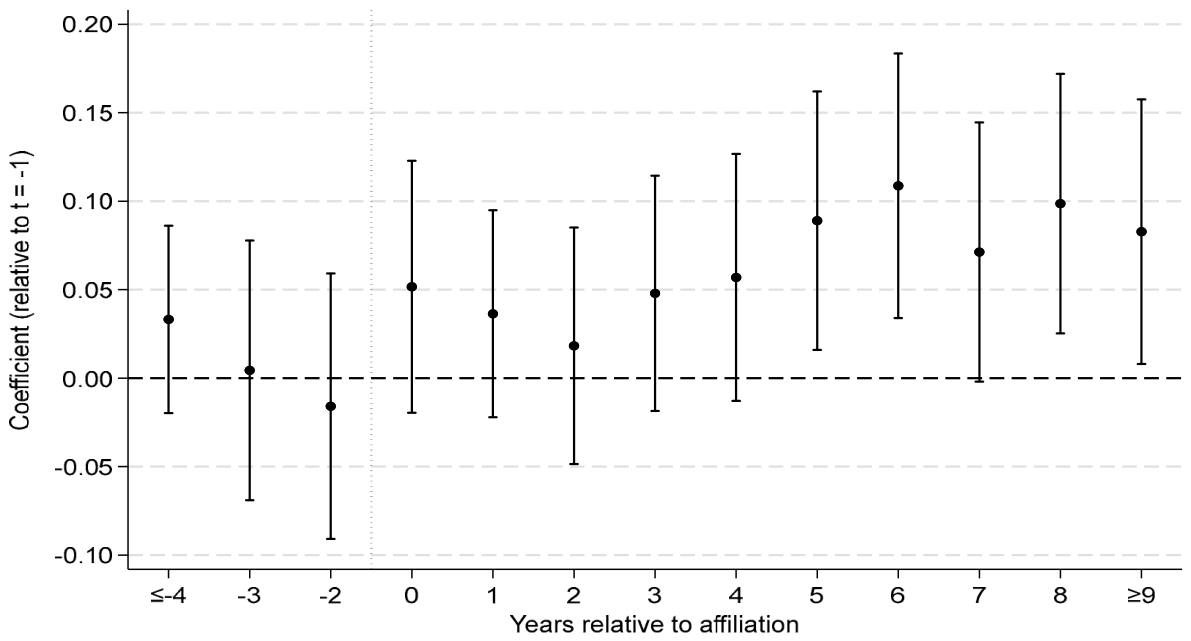
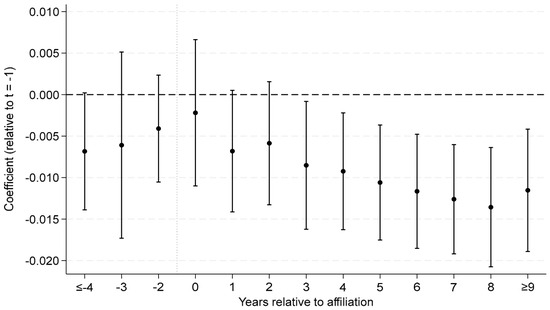
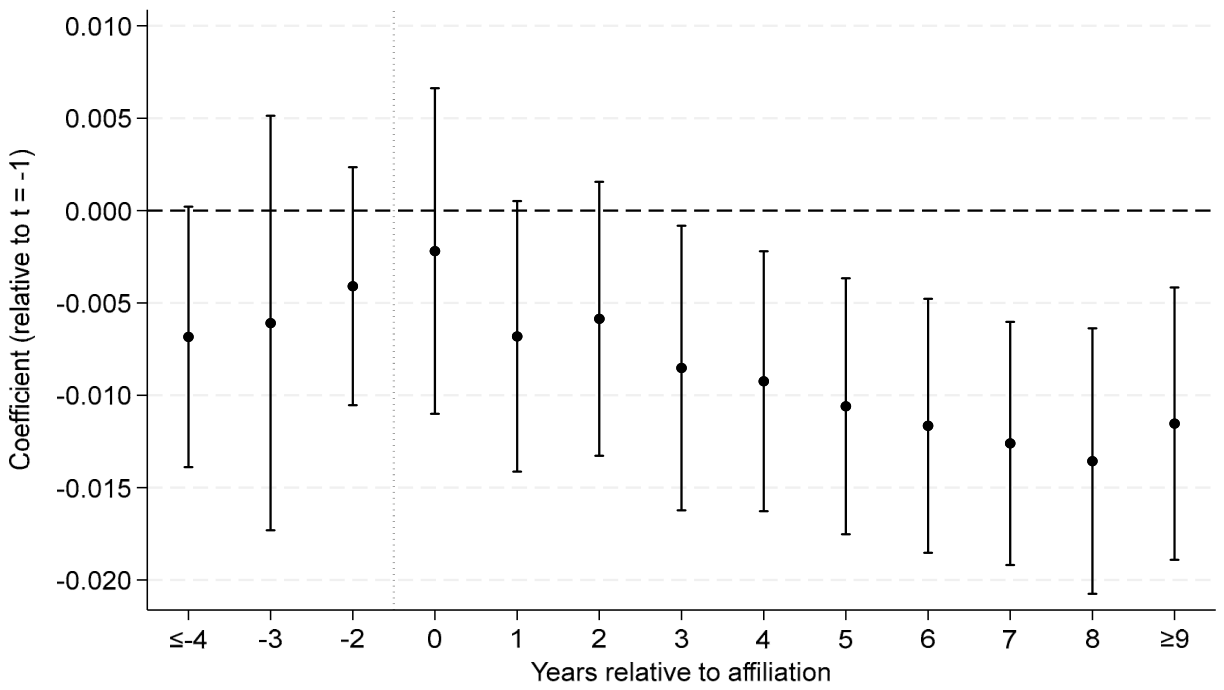

Disclaimer/Publisher’s Note: The statements, opinions and data contained in all publications are solely those of the individual author(s) and contributor(s) and not of MDPI and/or the editor(s). MDPI and/or the editor(s) disclaim responsibility for any injury to people or property resulting from any ideas, methods, instructions or products referred to in the content. |
© 2026 by the author. Licensee MDPI, Basel, Switzerland. This article is an open access article distributed under the terms and conditions of the Creative Commons Attribution (CC BY) license.