


Abstract
Accurately assessing grassland carrying status and its temporal dynamics is essential for implementing forage-based livestock management and advancing grassland ecological restoration. However, existing assessments often consider only natural grassland feed while overlooking other feed sources, which may lead to an underestimation of the total feed resources available for livestock production and introduce substantial uncertainty into assessments of forage–livestock balance. To address this limitation, we construct two accounting frameworks for assessing forage–livestock balance across eight provinces and autonomous regions encompassing China’s major pastoral and agro-pastoral areas. One framework considered natural-grassland forage alone, while the other also included cultivated-grassland forage and agricultural straw. Reasonable livestock carrying capacity and the carrying capacity index (CCI) were calculated under both frameworks and compared using temporal trend analysis, paired t-tests, and a ±10% parameter sensitivity analysis. Across the eight study regions, natural grassland forage accounted for an average of 86.53% of the estimated carrying capacity, while agricultural straw and cultivated-grassland forage contributed 11.25% and 2.22%, respectively. The combined contribution of these supplementary resources varied substantially among provinces, ranging from 1.08% in Qinghai and 1.30% in Xizang to 46.95% in Yunnan. Incorporating supplementary feed significantly increased estimated carrying capacity and reduced the CCI compared with the natural-grassland-only framework (both p < 0.001). The reduction was greatest in Yunnan, Ningxia, and Gansu. Nevertheless, the mean CCI remained above 1 throughout 2000–2020, and seven of the eight provinces remained overstocked under the comprehensive framework. The results were robust to the alternative parameter scenarios. These findings demonstrate that excluding cultivated forage and agricultural straw systematically overestimates regional overstocking, particularly in agro-pastoral regions, although incorporating these resources does not eliminate the underlying imbalance between feed supply and livestock demand.
1. Introduction
Grassland ecosystems are among the most widely distributed and diverse terrestrial ecosystems, playing an important role in regulating the global carbon cycle and maintaining climate stability [1]. In China, grasslands not only constitute one of the largest ecosystem types by area but also provide an important resource base for livestock production and a key natural element for maintaining ecological security and building green barriers [2,3]. Grassland carrying capacity, as a key indicator of the sustainable use of grassland resources, generally refers to the maximum number of livestock that a given area of grassland can sustainably support over the long term under a specific mode of use and serves as a crucial basis for judging the sustainability of grassland-based livestock development [4]. Keeping the actual livestock stocking rate within the grassland carrying capacity is essential for maintaining forage–livestock balance, ensuring the healthy functioning of grassland ecosystems, and promoting the sustainable development of grasslands [5].
A notable apparent contradiction exists in current research on China’s grasslands, where reports of persistent overstock coexist with evidence of widespread ecological recovery. Existing research indicates that China’s grasslands have long experienced overstock as a result of the persistent prioritization of economic growth over ecological sustainability, a problem that has been further exacerbated by the adverse effects of global climate change, including drought and rising temperatures [6,7,8]. For example, a recent county-level assessment showed that grassland areas classified as overstocked accounted for approximately 91.4% of the total assessed grassland area in China’s pastoral and semi-pastoral regions, highlighting the widespread imbalance between livestock stocking and estimated carrying capacity [9]. Prolonged overgrazing has contributed to the continued degradation of grassland ecosystem functions. The resulting ecological consequences include accelerated desertification, severe soil erosion, reduced biodiversity, and a marked decline in forage yield [10]. These issues collectively pose a serious threat to the ecological security and sustainable development of grassland regions. In contrast, a substantial body of research also indicates that the ecological conditions in China’s grassland regions have shown a positive recovery trend [11]. This improvement is largely attributable to the implementation of a series of ecological restoration policies at the national level in recent years, with notable gains in vegetation cover and grassland productivity [12,13]. The underlying reason for these seemingly contradictory findings may lie in the fact that livestock production in China no longer relies solely on natural grasslands. On the one hand, agricultural regions have increasingly used arable land to cultivate forage crops, such as alfalfa and oats, in order to meet the growing demand for high-quality feed [14]. On the other hand, substantial quantities of crop residues generated from agricultural production, including corn stover and wheat straw, have been widely processed and used as livestock feed [15]. These feedstuff sources, derived from non-natural grasslands, effectively support a considerable share of livestock production [16,17]. Nevertheless, most current assessments of grassland carrying capacity remain based solely on the theoretical forage yield of natural grasslands. These assessments fail to adequately account for the supplementary role of cultivated forage and agricultural straw feed in increasing actual livestock carrying capacity [18]. This simplified accounting approach may overestimate the actual grazing pressure on natural grasslands, thereby exaggerating the estimated degree of grassland overgrazing [19,20]. Such bias may subsequently lead policymakers to make inaccurate judgments about grassland ecological conditions and adopt inappropriate management strategies. If left uncorrected, these incomplete assessments may not only hinder a scientifically grounded understanding of the sustainability of the pastoral livestock industry but also reduce the precision of regional ecological compensation policies and livestock-sector planning.
China’s livestock industry exhibits pronounced geographical agglomeration characteristics, being predominantly distributed across eight provincial-level regions in northern and western China, namely Inner Mongolia, Xinjiang, Xizang, Qinghai, Gansu, Sichuan, Ningxia, and Yunnan [21]. These regions contain more than 70% of the nation’s total natural grassland resources and support the production of major herbivorous livestock, including yaks, sheep, and goats, thereby playing an important strategic role in safeguarding regional food security, maintaining grassland cultural heritage, and promoting the economic and social development of pastoral areas [22]. These eight provinces and autonomous regions have been designated as key implementation areas for the National Grassland Ecological Protection Subsidy and Reward Policy and ecological compensation mechanisms, which aim to guide herding households toward rational utilization of grassland resources through economic incentives, curb overgrazing, and facilitate the restoration of degraded grasslands [23,24]. Against this policy backdrop, accurately assessing regional grassland carrying capacity is important not only for the scientific assessment of grassland ecosystem health but also for the precise implementation of differentiated ecological compensation standards and the optimization of livestock-carrying capacity regulatory policies [25]. Therefore, constructing a grassland carrying capacity evaluation system applicable to this region and reasonably assessing regional forage–livestock imbalance and potential overstocking have important theoretical and practical implications for enhancing the targeting and effectiveness of grassland ecological protection policies, as well as for achieving the coordinated development of grassland livestock production and ecological conservation.
In summary, existing assessments of grassland carrying capacity in China are predominantly based on forage supplied by natural grasslands, while supplementary feed resources, particularly cultivated forage and agricultural straw, are often excluded from the accounting framework. This creates a potential mismatch between the feed resources actually available for livestock production and those represented in conventional carrying-capacity estimates. Consequently, the extent to which the conventional approach may underestimate livestock carrying capacity and overestimate grassland stocking pressure remains insufficiently quantified, particularly across regions and over time. Addressing this gap requires a more comprehensive accounting framework that reflects the increasingly diversified feed-resource structure of pastoral livestock production.
Accordingly, this study addresses three research questions: (1) To what extent does incorporating cultivated grassland and agricultural straw alter estimates of reasonable livestock carrying capacity compared with the conventional natural-grassland-only approach? (2) How does the contribution of supplementary feed resources, and therefore the difference between the two carrying-capacity estimates, vary across China’s major pastoral provinces and over time? (3) Does full-feed-resource accounting lead to materially different assessments of grassland carrying status and associated early-warning levels? Based on these questions, three testable hypotheses are proposed. H1: Incorporating cultivated grassland and agricultural straw significantly increases the estimated reasonable livestock carrying capacity relative to the conventional natural-grassland-only approach. H2: The magnitude of this increase exhibits substantial spatial and temporal heterogeneity because the availability and utilization of supplementary feed resources differ across provinces and over time. H3: By accounting for supplementary feed resources, the comprehensive approach yields lower estimated stocking pressure and reduces the degree of overstocking relative to conventional assessments, thereby producing a more comprehensive representation of regional grassland carrying status.
2. Methods
2.1. Study Area
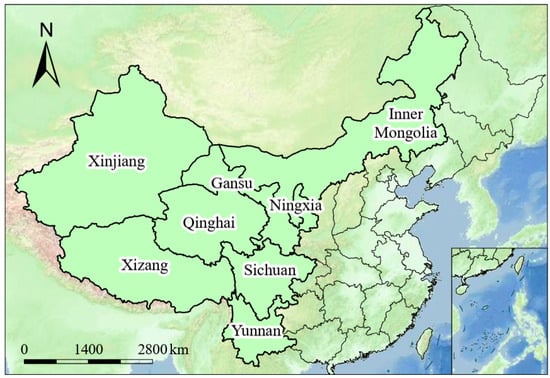
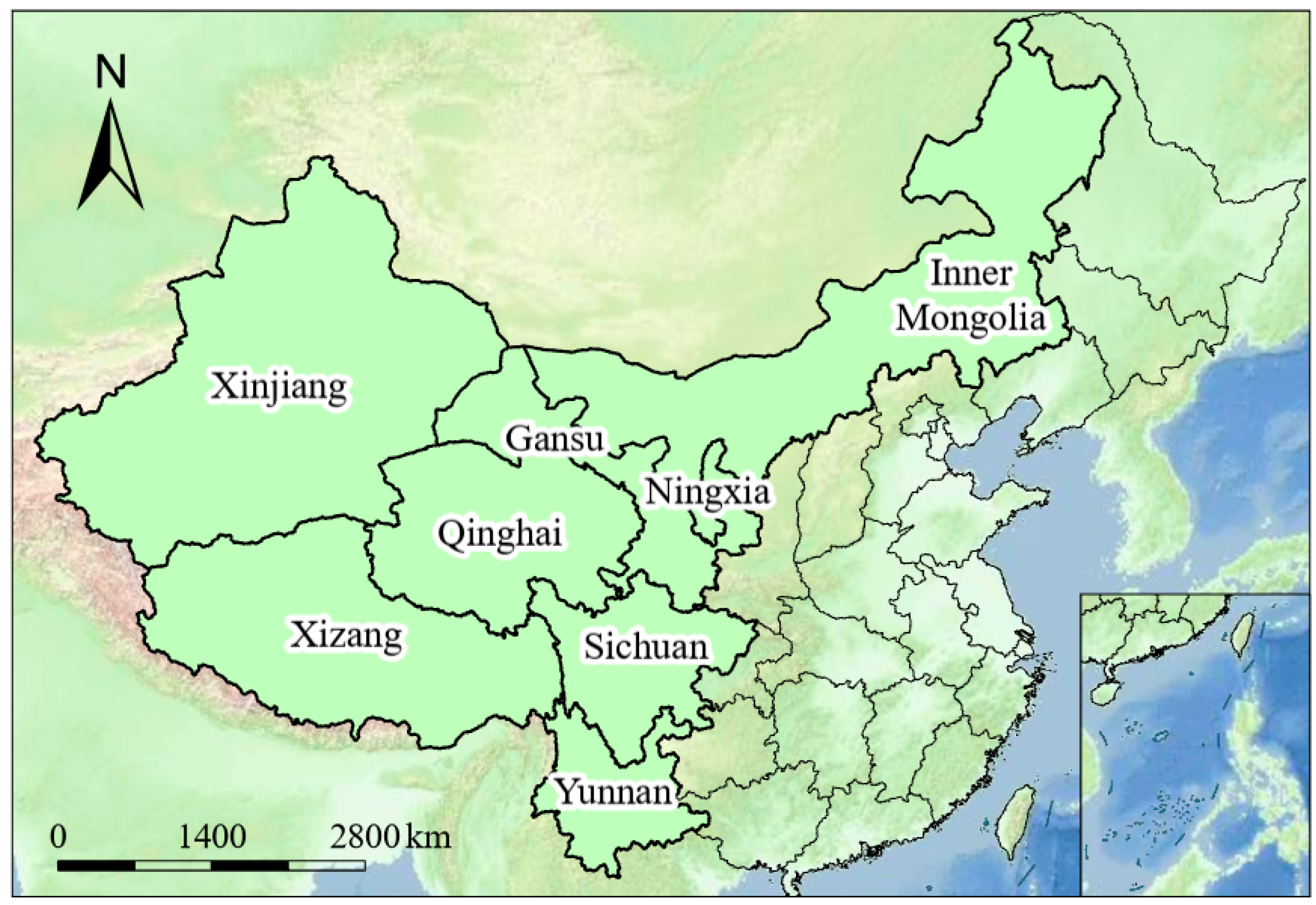
The study area comprises eight provinces and autonomous regions: Inner Mongolia, Xinjiang, Xizang, Qinghai, Sichuan, Gansu, Ningxia, and Yunnan (Figure 1), which were selected as the first pilot regions for China’s Grassland Ecological Protection Subsidy and Reward Policy (GEPSRP) [26]. These regions contain the country’s largest contiguous natural grasslands and constitute China’s major pastoral areas. Owing to the rapid expansion of livestock production and increasing grazing intensity, many grasslands in these regions have experienced overgrazing, resulting in grassland degradation, declining productivity, and reduced ecosystem functioning [27]. To curb grassland degradation and promote the sustainable use of grassland resources, the Chinese government launched the GEPSRP in 2011. The policy aims to establish an ecological compensation mechanism centered on grazing prohibition and forage–livestock balance by providing financial subsidies to herders, thereby encouraging reductions in stocking rates, mitigating overgrazing, and facilitating grassland restoration [28,29]. As the primary implementation area of the GEPSRP and a representative region for grassland degradation control and sustainable grazing management, the study area provides an appropriate regional context for assessing long-term changes in forage–livestock balance.
Figure 1.
Location of the study area and the eight major pastoral provinces of China. The study area includes Inner Mongolia, Xinjiang, Xizang, Qinghai, Gansu, Ningxia, Sichuan, and Yunnan.
2.2. Comprehensive Feed-Resource Accounting Framework
Conventional assessments of grassland livestock carrying capacity generally define the available feed base primarily in terms of forage supplied by natural grasslands. Under this approach, reasonable livestock carrying capacity can be expressed as
where Y denotes the total feed supply, and NG denotes the feed supply from natural grasslands.
However, livestock production in China’s major pastoral provinces is no longer supported exclusively by natural grasslands. Cultivated grasslands and crop residues have increasingly become important supplementary feed resources, particularly through hay production, forage cultivation, crop–livestock integration, and seasonal supplementary feeding. Excluding these resources from the accounting boundary may therefore create a discrepancy between the feed resources actually available to livestock production and those represented in conventional carrying-capacity assessments.
To address this limitation, this study extends the conventional natural-grassland-based accounting boundary and proposes a comprehensive feed-resource accounting framework. Table 1 summarizes the key differences between the conventional approach and the proposed comprehensive framework. The reasonable livestock carrying capacity is calculated as
where Y denotes the total feed supply, NG denotes the feed supply from natural grasslands, CG denotes that from cultivated grasslands, and AS denotes that from agricultural straw. The methodological improvement of this framework lies primarily in the expansion of the feed-resource accounting boundary. Rather than treating natural grassland productivity as the sole resource constraint on livestock carrying capacity, the proposed framework incorporates the major feed resources that are actually available within regional livestock production systems. It therefore provides a more comprehensive measure of the total feed-supporting capacity of pastoral regions and enables a direct comparison between conventional natural-grassland-only estimates and estimates based on multiple feed resources.
Table 1.
Comparison between the conventional natural-grassland-based approach and the comprehensive feed-resource accounting framework.
The natural grasslands’ feed supply is calculated as follows:
denotes the total forage yield of natural grasslands. represents the amount of forage consumed by wildlife, which is assumed to be 20% of the total grass yield [9]. denotes the grassland utilization (or grazing) rate, which is set at 0.5 [30].
Cultivated grasslands’ feed supply is calculated as follows:
denotes the area of cultivated grassland, and denotes the forage yield per unit area. According to official government documents, the fresh forage yield of cultivated grassland can reach 13.05 t ha−1 [31]. Because our carrying-capacity calculations required forage yield on a dry-matter basis, we applied a dry-matter conversion coefficient of 0.30 based on published studies [32,33].
Agricultural straw feed supply is calculated as follows:
In this study, rice, wheat, corn, tuber crops, and sugarcane are considered. denotes the yields of the five crop types. Total agricultural straw production is calculated using the ratio of aboveground stem yield to economic yield (i.e., the straw-to-grain ratio, ) for each crop [34]. Then, based on the provincial straw feed utilization ratios () provided by existing studies, the feed supply from crop straw available for livestock is estimated [35].
Based on the annual forage supply and the requirement to maintain the sustainable functioning of grassland ecosystems, the reasonable livestock carrying capacity is calculated according to the annual forage demand of grazing livestock. The formula is as follows:
denotes the reasonable carrying capacity for a specific grassland type. A denotes the daily feed intake per standard sheep unit, which is set at 1.8 kg/day [36], and 365 represents the number of days per year over which livestock feed demand is calculated.
Grassland carrying state is used to measure forage–livestock balance status in a given region. The carrying capacity index (CCI) is adopted as the indicator and is defined from the perspective of feed supply and livestock demand as follows:
where represents the carrying capacity index. A value of CCI = 1 indicates that the grassland is in a state of forage–livestock balance, whereas CCI > 1 indicates regional overstocking relative to the estimated feed-supported carrying capacity. AS_sheep represents the total annual livestock load, expressed in standard sheep-unit days. Overstocking is defined as a condition in which the stocking rate exceeds the livestock carrying capacity supported by the available feed supply, whereas overgrazing refers to grazing pressure or intensity sufficient to cause the deterioration or degradation of vegetation, soil, or other grassland ecosystem attributes. Accordingly, the carrying capacity index (CCI) focuses primarily on overstocking rather than overgrazing.
Six types of livestock are considered in this study: cattle, sheep (including goats), camels, horses, mules, and donkeys. According to the current grassland carrying capacity accounting standards, the conversion coefficients for different livestock types to standard sheep units are specified as follows: One adult camel is equivalent to 7 sheep units; one horse is equivalent to 6 sheep units; one head of cattle or one mule is equivalent to 5 sheep units; and one donkey is equivalent to 3 sheep units [37]. represents the year-end inventory of standard sheep units, and is set at 365 days. represents the annual number of standard sheep units sold. Since sold animals are mostly young animals produced in the middle of the year, 0.5 times the corresponding standard sheep unit value is used, and is set at 180 days.
2.3. Analysis Methods
2.3.1. Statistical Analysis
Temporal trends in feed-resource supply, livestock inventory, reasonable carrying capacity, and the carrying capacity index (CCI) were assessed using ordinary least-squares linear regression. For each indicator, year was treated as the independent variable, and the estimated slope was used to quantify its annual rate of change. The coefficient of determination (R2) and corresponding p-value were reported to evaluate model fit and trend significance. A two-tailed paired t-test was used to compare the annual estimates generated by the two accounting frameworks over the period 2000–2020. Provincial variation in these measures was used to characterize the spatial heterogeneity in the contribution of non-natural-grassland feed resources. All statistical tests were two-tailed, with statistical significance defined as p < 0.05.
2.3.2. Sensitivity Analysis
Parameters , , , , and , as well as the dry-matter fraction of cultivated grassland, were all derived from previously published studies. However, given regional differences in ecological conditions, livestock feeding practices, feed-use efficiency, and resource utilization patterns, the actual values of these parameters may deviate from those adopted in this study. To further evaluate the sensitivity of our results to the specification of these key parameters, we conducted a sensitivity analysis. Specifically, based on the baseline parameter settings, we constructed both favorable and unfavorable scenarios by adjusting the key parameters affecting available feed supply and reasonable livestock carrying capacity by ±10%, and then compared the resulting estimates of carrying capacity and grassland carrying status with the baseline results. Under the favorable scenario, parameter , which is negatively associated with reasonable livestock carrying capacity, was reduced by 10%, whereas parameters , , , and the dry-matter fraction of cultivated grassland, which are positively associated with carrying capacity, were each increased by 10%. Under the unfavorable scenario, the adjustments were made in the opposite direction: parameter was increased by 10%, while parameters , , , and were each reduced by 10%. By constructing these upper- and lower-bound scenarios, we are able to systematically examine the extent to which plausible changes in key parameter values affect the estimated results and to assess whether the main conclusions regarding reasonable livestock carrying capacity and grassland carrying status remain robust. Notably, these perturbations represent a local, scenario-based sensitivity analysis rather than empirically derived confidence intervals or the actual upper and lower bounds of parameter uncertainty. The ±10% range was used to assess whether the principal results were sensitive to moderate changes around the baseline settings. Accordingly, the analysis evaluates the stability of the results only within the specified perturbation range. It neither captures the full extent of province-specific parameter variation nor eliminates potential systematic bias arising from the use of uniform parameters across heterogeneous provinces.
2.4. Data Sources
Specifically, crop yields, cultivated grassland area, year-end livestock inventory, and annual livestock-related statistics were obtained from the China Statistical Yearbook and relevant official statistical yearbooks. These data are derived from the national statistical reporting system and provide the most consistent and authoritative publicly available provincial-level statistics for conducting long-term and cross-regional comparisons. Because our analysis is ultimately conducted at the provincial level, these statistical data are directly matched to the spatial unit used in the study.
The total forage yield of natural grasslands was derived from the Eurasian Steppe Edible Forage Yield Dataset [38], with a spatial resolution of 1 km. The dataset is associated with the results of China’s official annual reports on global ecological and environmental remote sensing monitoring and therefore provides a relatively well-established spatial dataset for regional-scale grassland forage assessment. In this study, the 1 km raster data were aggregated to the provincial level using zonal statistics in ArcGIS Pro 3.6.0 to ensure consistency with the spatial scale of the other socioeconomic and livestock datasets.
3. Results
3.1. Changes in Feed Supply and Livestock Numbers
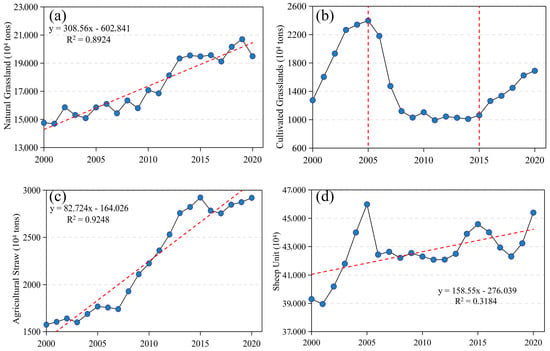
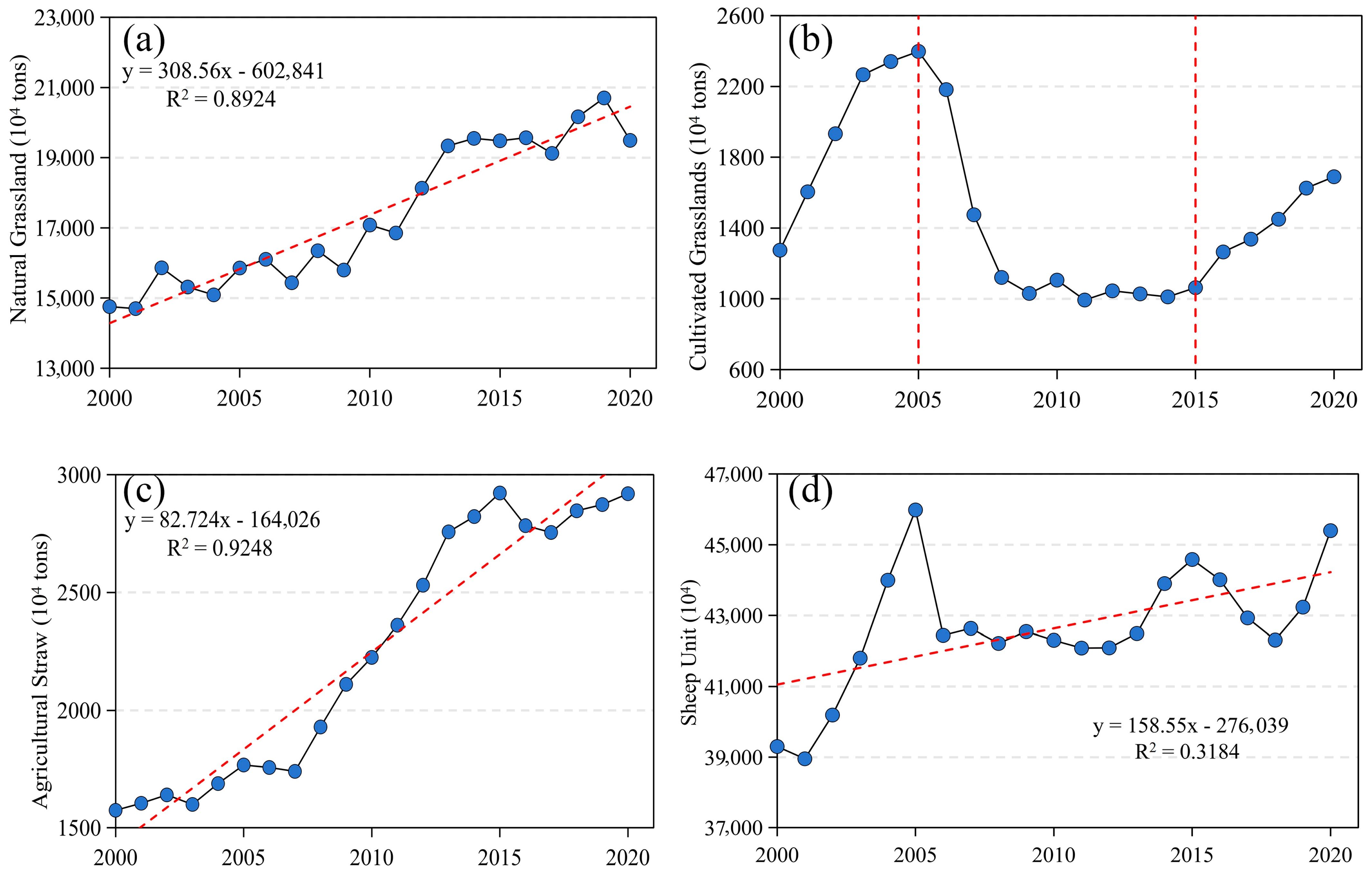
From 2000 to 2020, feed-resource supply and livestock inventory generally increased across the study area, although the temporal patterns differed among feed sources (Figure 2). Natural-grassland forage increased from approximately 148 million tonnes in 2000 to 195 million tonnes in 2020, representing an overall increase of 31.8%. Linear regression confirmed a significant upward trend of 3.09 million tonnes per year (R2 = 0.892; p < 0.001). Cultivated-grassland forage followed a distinctly nonlinear pattern. It increased from approximately 3.9 million tonnes in 2000 to 7.2 million tonnes in 2005, subsequently declined to approximately 3.1–3.4 million tonnes during 2009–2015, and then recovered to 5.1 million tonnes by 2020 (Figure 2b). Agricultural straw available for livestock feed showed the strongest linear temporal pattern, increasing from 15.7 million tonnes in 2000 to 29.2 million tonnes in 2020, equivalent to an overall increase of 86.0%. The estimated annual increase was 0.81 million tonnes (R2 = 0.918; p < 0.001; Figure 2c). Over the same period, year-end livestock inventory increased from approximately 393 million to 454 million sheep units, an increase of 15.5%. The corresponding linear trend was 1.59 million sheep units per year (R2 = 0.318; p < 0.001; Figure 2d). These results demonstrate that natural-grassland forage and feed straw increased significantly over the study period, whereas cultivated-grassland forage exhibited pronounced stage-specific changes.
Figure 2.
Changes in forage resources and livestock numbers in China’s major pastoral provinces from 2000 to 2020: (a) natural grassland forage production; (b) cultivated grassland forage production; (c) agricultural straw feed supply; and (d) actual livestock numbers measured in sheep units. The red dashed line represents the least-squares fitted line.
3.2. Changes in Reasonable Carrying Capacity
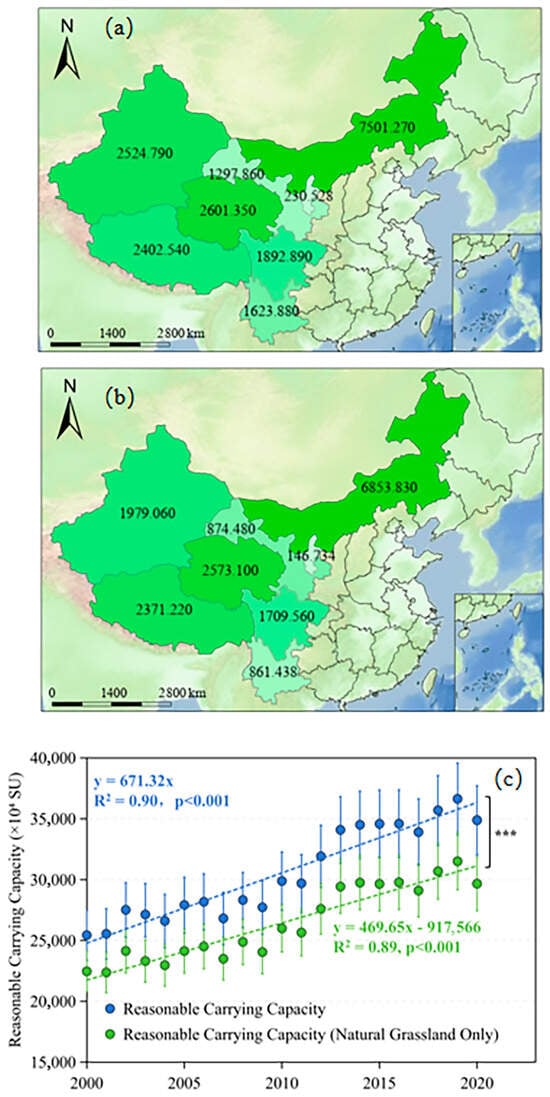
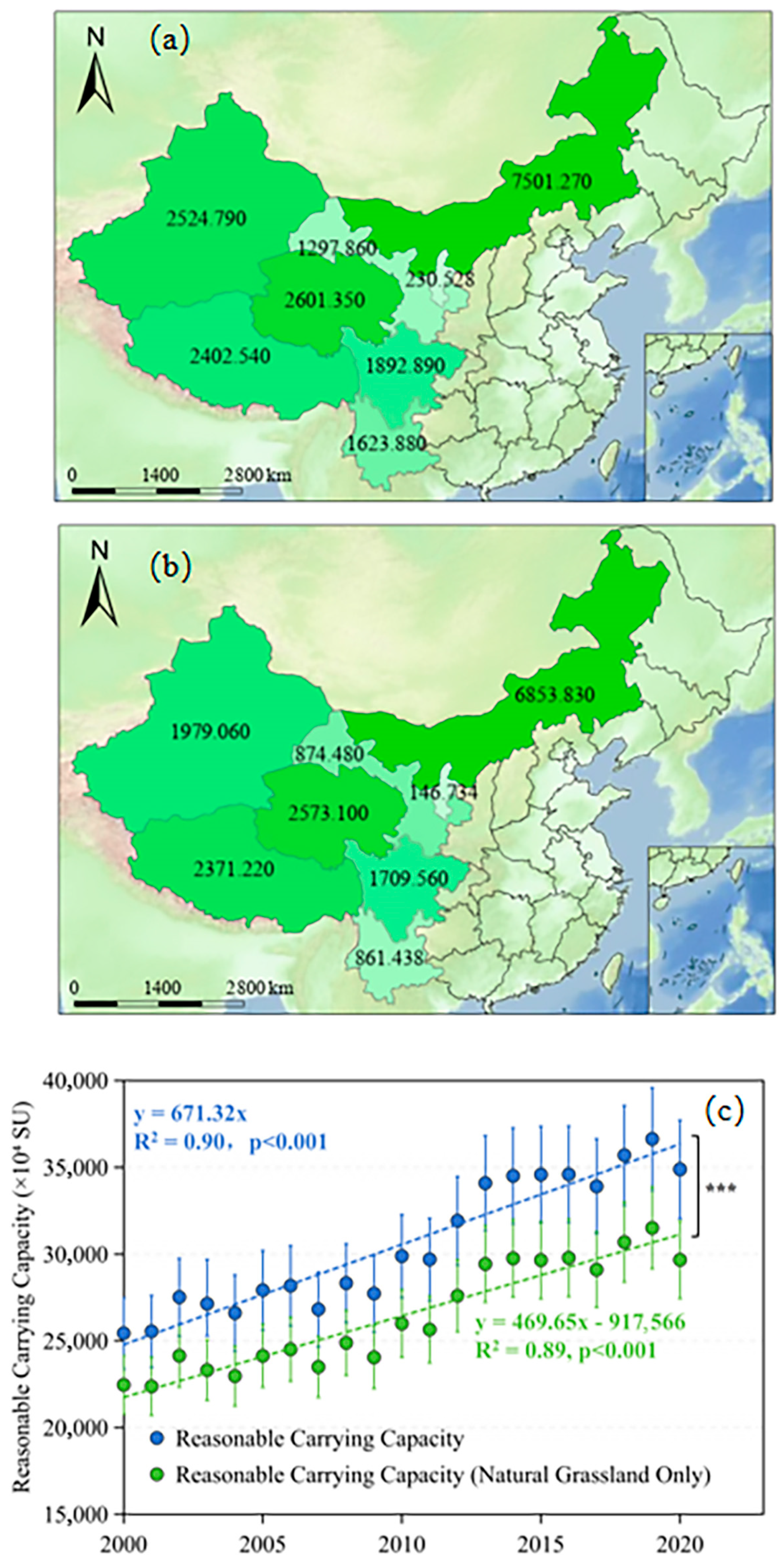
Reasonable carrying capacity exhibited substantial spatial variation across the eight provinces and differed considerably between the two accounting frameworks (Figure 3). When natural grasslands, cultivated grasslands, and agricultural straw were jointly considered, Inner Mongolia had the highest reasonable carrying capacity at 75.01 million sheep units. It was followed by Qinghai (26.01 million), Xinjiang (25.25 million), Xizang (24.03 million), Sichuan (18.93 million), Yunnan (16.24 million), and Gansu (12.98 million sheep units), whereas Ningxia had the lowest capacity at 2.31 million sheep units (Figure 3a). When only natural-grassland forage was considered, Inner Mongolia remained the region with the highest carrying capacity at 68.54 million sheep units, followed by Qinghai (25.73 million), Xizang (23.71 million), Xinjiang (19.79 million), Sichuan (17.10 million), Gansu (8.74 million), Yunnan (8.61 million), and Ningxia (1.47 million sheep units; Figure 3b).
Figure 3.
Spatial distribution and temporal changes in the reasonable livestock carrying capacity across China’s major pastoral provinces: (a) reasonable carrying capacity estimated using natural grassland, cultivated grassland, and agricultural straw feed; (b) reasonable carrying capacity estimated using natural grassland feed only; and (c) temporal trends in the reasonable carrying capacity under the two accounting approaches from 2000 to 2020, with sensitivity ranges under ±10% parameter variation. Error bars represent the sensitivity-analysis range. The upper bounds indicate estimates under the 10% most favorable parameter scenario, whereas the lower bounds indicate estimates under the 10% most unfavorable parameter scenario. SU denotes sheep units. The blue and green dashed lines represent the least-squares fitted lines. Asterisks indicate significant differences between the two groups based on paired t-tests (*** p < 0.001).
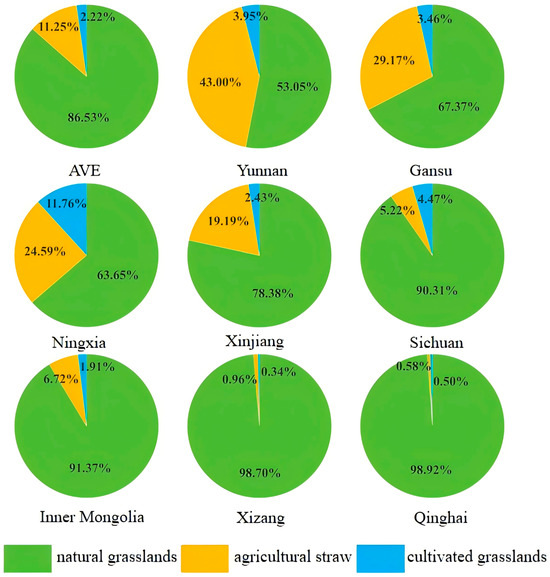
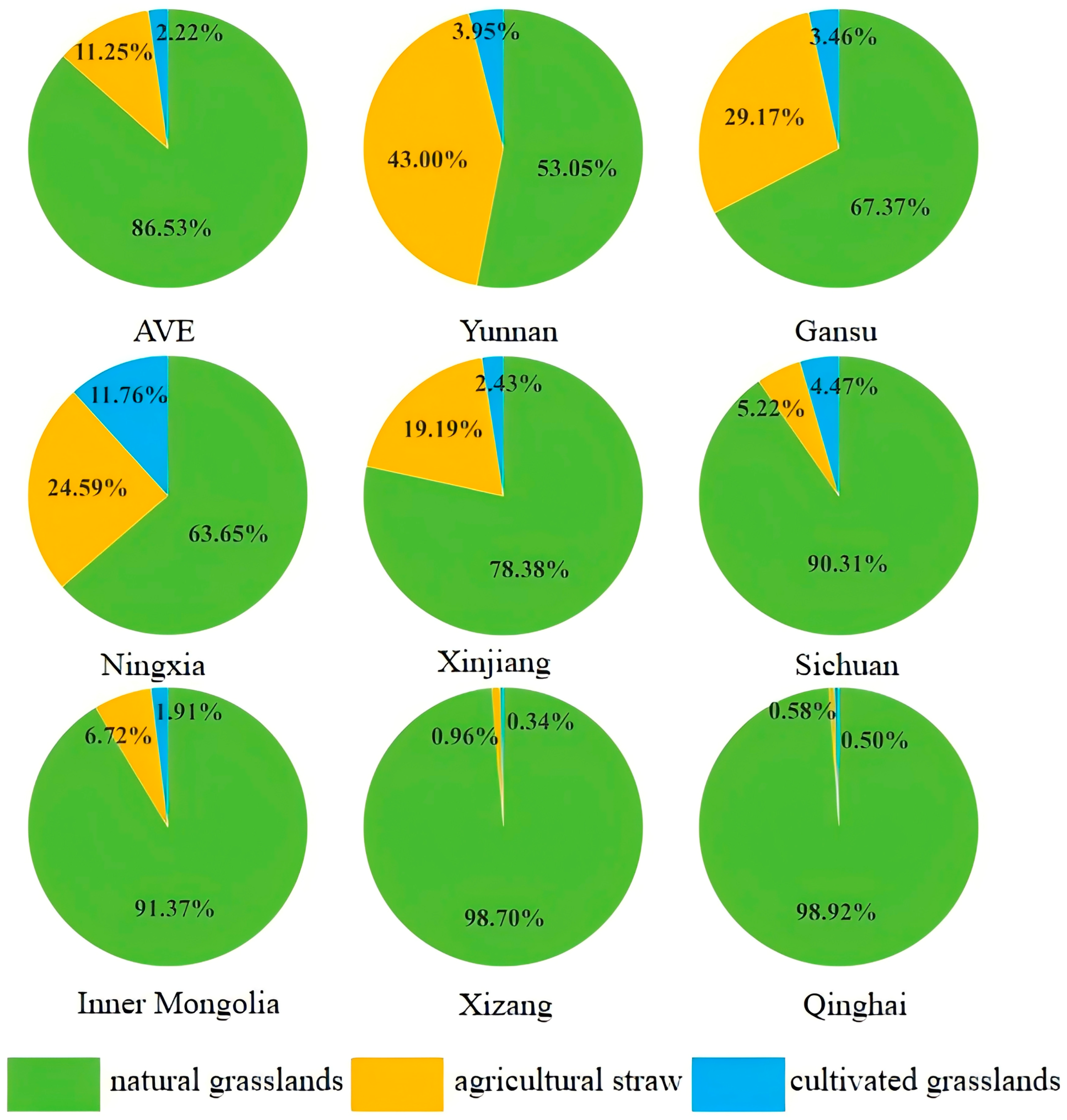
Natural grasslands remained the dominant source of regional livestock carrying capacity, contributing an average of 86.53% across the study area, while agricultural straw and cultivated-grassland forage contributed 11.25% and 2.22%, respectively (Figure 4). This finding supports H1. However, the composition of feed resources varied markedly among provinces. Yunnan had the highest combined contribution from non-natural-grassland feed resources (46.95%), primarily because agricultural straw accounted for 43.00% of its carrying capacity. The corresponding contributions were 36.35% in Ningxia and 32.63% in Gansu, where agricultural straw contributed 24.59% and 29.17%, respectively. Ningxia also had the largest contribution from cultivated-grassland forage among the eight provinces, at 11.76%. Non-natural-grassland feed resources accounted for 21.62% of carrying capacity in Xinjiang, 9.69% in Sichuan, and 8.63% in Inner Mongolia. By contrast, their contributions were only 1.30% in Xizang and 1.08% in Qinghai, where natural grasslands supplied more than 98% of the estimated carrying capacity. This finding supports H2. Overall, agricultural straw constituted the principal supplementary feed resource in most provinces, whereas cultivated-grassland forage made a comparatively limited contribution except in Ningxia (Figure 4). From 2000 to 2020, reasonable carrying capacity increased significantly under both accounting frameworks. The estimated annual increase was 6.71 million sheep units when all three feed resources were included (R2 = 0.90, p < 0.001), compared with 4.70 million sheep units when only natural-grassland forage was considered (R2 = 0.89, p < 0.001). A paired t-test of the annual estimates further showed that reasonable carrying capacity under the full-feed-resource framework was significantly higher than that under the natural-grassland-only framework (p < 0.001; Figure 3c). The error bars represent the sensitivity-analysis ranges, with the upper bounds corresponding to the 10% favorable parameter scenario and the lower bounds corresponding to the 10% unfavorable scenario. Despite changes in parameter assumptions, the upward temporal trends and the higher estimates obtained by incorporating multiple feed resources remained unchanged, supporting the robustness of the main findings.
Figure 4.
Relative contributions of natural-grassland forage, agricultural straw, and cultivated-grassland forage to estimated reasonable livestock carrying capacity across the study area and its eight provinces.
3.3. Changes in Carrying Capacity Index
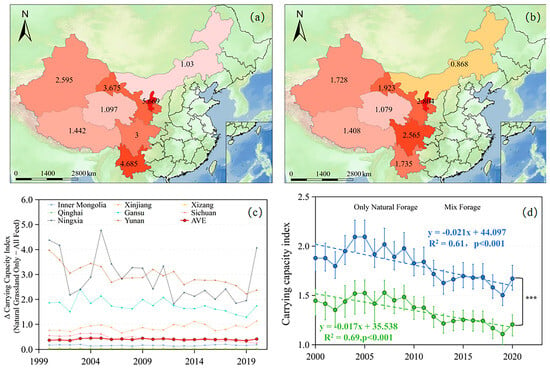
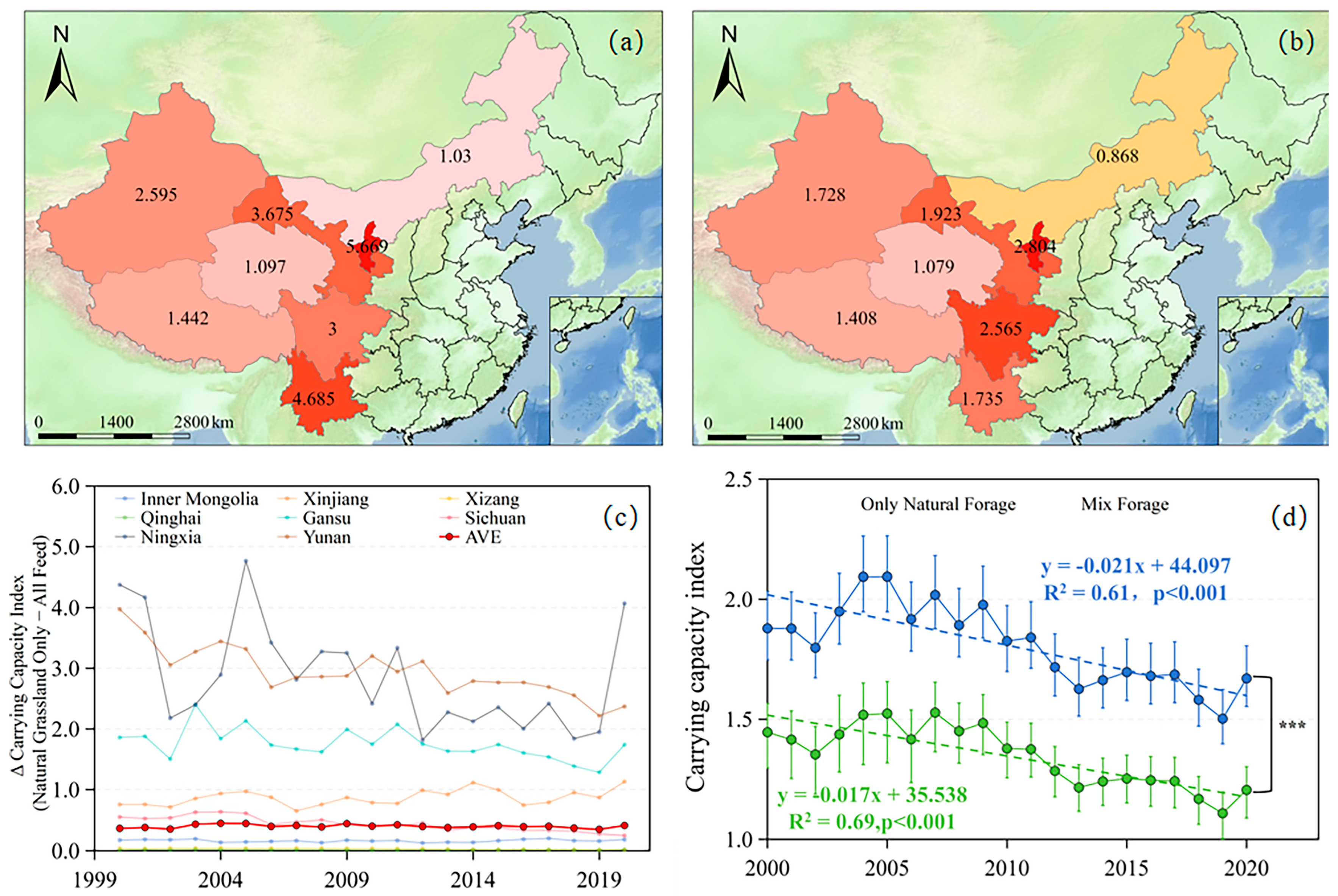
The carrying capacity index (CCI) differed substantially across provinces and between the two accounting frameworks (Figure 5). When only natural-grassland forage was considered, the CCI exceeded the reasonable carrying threshold of 1 in all eight provinces. Ningxia and Yunnan had the highest values, at 5.669 and 4.685, respectively, followed by Gansu (3.675), Sichuan (3.000), and Xinjiang (2.595). The values were lower in Xizang (1.442), Qinghai (1.097), and Inner Mongolia (1.030), but still indicated varying degrees of overstocking pressure (Figure 5a). Including forage from cultivated grasslands and agricultural straw reduced the estimated CCI in every province. Nevertheless, the index remained above 1 in seven of the eight provinces. Ningxia had the highest CCI under the full-feed-resource framework (2.804), followed by Sichuan (2.565), Gansu (1.923), Yunnan (1.735), Xinjiang (1.728), Xizang (1.408), and Qinghai (1.079). Inner Mongolia was the only province with a CCI below 1 (0.868), indicating that its livestock inventory within the estimated reasonable carrying capacity (Figure 5b).
Figure 5.
Spatial patterns and temporal dynamics of the carrying capacity index (CCI) across China’s major pastoral provinces: (a) CCI based on natural-grassland forage only; (b) CCI based on all three feed resources; (c) provincial differences between the two estimates from 2000 to 2020; and (d) trends in the cross-provincial mean CCI under the two accounting frameworks. Error bars show the sensitivity ranges under ±10% parameter variation. CCI values greater than 1 indicate that livestock numbers exceed the estimated reasonable carrying capacity. The blue and green dashed lines represent the least-squares fitted lines. Asterisks indicate significant differences between the two groups based on paired t-tests (*** p < 0.001).
The magnitude of the reduction differed considerably among provinces. The largest absolute reductions occurred in Yunnan and Ningxia, where the CCI decreased by 2.950 and 2.865, respectively. Gansu and Xinjiang also showed substantial reductions of 1.752 and 0.867, whereas the reductions were smaller in Sichuan (0.435), Inner Mongolia (0.162), Xizang (0.034), and Qinghai (0.018). The differences between the two estimates also varied over time, particularly in Ningxia and Yunnan (Figure 5c). From 2000 to 2020, the cross-provincial mean CCI declined significantly under both accounting frameworks. The CCI based solely on natural-grassland forage decreased by 0.021 per year (R2 = 0.61, p < 0.001), while that based on all three feed resources decreased by 0.017 per year (R2 = 0.69, p < 0.001). A paired t-test of the annual estimates showed that the CCI under the full-feed-resource framework was significantly lower than that under the natural-grassland-only framework (p < 0.001; Figure 5d). This finding supports H3. The error bars represent the ranges obtained from the ±10% sensitivity analysis. Although the estimated CCI varied under different parameter assumptions, its overall declining trend and the difference between the two accounting approaches remained unchanged, further supporting the robustness of the main findings. Notably, even under the most favorable parameter scenario, the CCI remained above 1.0 throughout the study period, indicating that the region was still classified as overstocked.
4. Discussion
4.1. Persistent Overstocking with Gradually Declining Pressure
Our results reveal two concurrent characteristics of the forage–livestock relationship in China’s major pastoral provinces: persistent overstocking and gradual improvement. The mean carrying capacity index (CCI) remained above 1 under both accounting frameworks throughout the study period, and most provinces continued to exceed the reasonable carrying threshold even after cultivated-grassland forage and agricultural straw were included. This finding is broadly consistent with previous studies documenting widespread and persistent overstocking in China’s grassland regions [39]. Nevertheless, the cross-provincial mean CCI across the eight study regions declined significantly under both accounting approaches, suggesting that the regional imbalance between feed supply and livestock demand gradually eased over the past two decades, which is consistent with the findings of previous studies [40]. These two findings are not contradictory: a CCI above 1 describes the continuing state of imbalance, whereas a declining CCI indicates an improvement in its direction and degree. The overall pattern can therefore be characterized as gradual improvement from a relatively high and persistent level of imbalance, rather than a transition to balanced livestock production. This distinction is important for policy because a declining CCI may coexist with continued ecological pressure if livestock inventories remain above locally sustainable levels. Three related mechanisms may have contributed to the observed decline in CCI. First, the improvement may be associated with the continued strengthening of grassland conservation policies. Programs such as Returning Grazing Land to Grassland, grazing bans and seasonal grazing restrictions, forage–livestock balance management, and grassland ecological protection subsidies have sought to constrain excessive grazing and promote grassland recovery [41,42,43]. This interpretation is broadly consistent with evaluations of China’s grassland ecological policies, which have generally reported improvements in vegetation conditions and reductions in grazing pressure, while also emphasizing that policy effects have not fully resolved forage–livestock imbalances. Second, the sustained increase in estimated natural-grassland forage supply, reflecting improvements in grassland productivity, enhanced the capacity of natural grasslands to support livestock [21]. This increase directly expanded the feed-supply basis used to estimate reasonable livestock carrying capacity. Third, the expansion of non-natural-grassland feed resources also played an important role. Increases in cultivated-grassland forage and agricultural straw broadened the feed base available for livestock production. This was particularly important in regions with limited natural-grassland resources or relatively developed crop production. The expansion of cultivated forage, straw silage, and stall-fed or semi-stall-fed production systems may shift part of livestock feed demand away from natural grasslands toward cropland-based and cultivated-forage systems, thereby potentially alleviating grazing pressure per unit of natural grassland [44,45]. These contributions should nevertheless be interpreted cautiously. The present accounting framework identifies changes in the relative contributions of different feed resources but does not causally separate the effects of grassland productivity growth, ecological policy interventions, and non-natural feed expansion. Moreover, additional feed resources alleviate pressure on natural grasslands only when they substitute for grazing rather than support further livestock expansion. Overall, the carrying status of China’s major pastoral regions can be characterized by the coexistence of persistent overstocking and gradual improvement. A declining CCI therefore indicates a narrowing regional feed deficit, but it does not mean that pressure on natural grasslands—or localized overgrazing—has been fully resolved.
4.2. The Role of Supplementary Feed Resources in Carrying-Capacity Assessment
A central finding of this study is that assessments of forage–livestock balance are highly sensitive to the range of feed resources included. Conventional assessments generally estimate carrying capacity from natural-grassland productivity and implicitly treat natural forage as the principal or exclusive feed source [46]. However, livestock production in many pastoral and agro-pastoral regions increasingly combines grazing with cultivated forage, crop residues, supplementary feeding, and stall-fed or semi-stall-fed production [44,45,47]. A natural-grassland-only framework therefore captures only part of the feed base supporting regional livestock production. Among the supplementary resources considered, agricultural straw contributed substantially more to reasonable carrying capacity than cultivated-grassland forage at the overall level, highlighting the importance of crop–livestock linkages. Although crop residues are not captured by natural-grassland productivity, they can support a considerable proportion of livestock demand when effectively collected, processed, and utilized. The importance of these supplementary resources varied substantially across regions. Their contributions to carrying capacity were greatest in Yunnan, Ningxia, and Gansu, where their inclusion also produced the largest reductions in the CCI. By contrast, supplementary feed made only limited contributions in Qinghai and Xizang and consequently had relatively little effect on their CCI estimates. This spatial correspondence indicates that differences between the two accounting frameworks are systematically related to regional feed-resource composition rather than representing a uniform adjustment across provinces. The larger contributions observed in Yunnan, Ningxia, and Gansu may reflect the stronger integration of crop and livestock production in their agro-pastoral areas, where crop residues are more readily available, and supplementary feeding and stall-fed production are more widely practiced [44,46]. Consequently, assessments based exclusively on natural-grassland forage are more likely to overstate the overall regional feed deficit and mischaracterize the spatial distribution of estimated overstocking in agro-pastoral regions.
4.3. Policy Implications for Grassland and Feed Resource Management
Even after cultivated forage and agricultural straw were included, most provinces remained above the reasonable carrying threshold. Supplementary feed resources can therefore alleviate regional feed deficits but are not sufficient on their own to eliminate CCI-based overstocking or ensure the ecological sustainability of natural grasslands. Further measures are needed to expand the effective supply of feed resources while controlling livestock demand. In agro-pastoral regions, improving agricultural-straw utilization provides a particularly practical pathway. Straw already makes an important contribution to estimated carrying capacity in Yunnan, Ningxia, and Gansu, demonstrating the potential of crop–livestock integration. Policies should focus on improving straw collection, processing, silage production, storage, and transportation rather than simply increasing its nominal feed-utilization rate. Stronger coordination among crop producers, livestock farms, and feed-processing enterprises could convert more agricultural residues into usable feed and reduce livestock dependence on natural-grassland forage [44,48,49].
Cultivated grasslands provide another important means of increasing the supply of stable and high-quality forage. Although their overall contribution was lower than that of agricultural straw, their relatively important role in Ningxia demonstrates their potential under suitable production conditions. Their generally higher forage yield and more controllable quality can help address seasonal feed shortages and reduce reliance on natural grasslands during ecologically vulnerable periods. Cultivated-forage development should nevertheless be spatially targeted. Priority should be given to regions with concentrated livestock production, suitable land and water resources, and adequate processing and storage facilities. In arid and semi-arid areas, forage cultivation must also consider irrigation demand, competition with grain production, and other environmental costs.
It should be noted that the comprehensive CCI developed in this study should be interpreted as a regional feed-balance indicator (overstocking) rather than as a direct measure of actual grazing intensity or ecological pressure on natural grasslands (overgrazing). It evaluates the livestock population that can be supported by the total feed resources available within a region, including natural-grassland forage, cultivated forage, and agricultural straw. Therefore, although incorporating cultivated-grassland forage and agricultural straw substantially reduced the estimated CCI, this result primarily indicates an improvement in the regional balance between total feed supply and livestock demand. It does not necessarily imply that grazing pressure on natural grasslands has declined correspondingly. Localized overgrazing may persist because of the spatial mismatch between livestock and supplementary feed resources, seasonal concentration of grazing, unequal access to feed, or insufficient substitution of supplementary feed for natural-grassland forage. Accordingly, the lower level of regional overstocking estimated under the comprehensive framework should not be interpreted as evidence that overgrazing on natural grasslands has been eliminated.
Importantly, the ecological benefits of supplementary feed depend on whether it actually substitutes for grazing on natural grasslands. If additional straw or cultivated forage merely enables further expansion of livestock numbers while grazing intensity remains unchanged, the resulting rebound in livestock demand may partly or completely offset the expected reduction in grassland pressure. Policies promoting supplementary feed should therefore be implemented together with stocking controls, grazing restrictions, seasonal pasture management, and forage–livestock balance monitoring. Regional feed-resource development and local grassland management should also be evaluated separately but coordinated: the former addresses the overall balance between feed supply and livestock demand, whereas the latter directly regulates the spatial and temporal intensity of grazing on natural grasslands.
4.4. Robustness, Limitations, and Future Research
The sensitivity analysis provided additional support for the robustness of the main findings. When the key parameters were varied by ±10% under favorable and unfavorable scenarios, incorporating cultivated-grassland forage and agricultural straw consistently increased the estimated carrying capacity and reduced the corresponding CCI, while the general spatial pattern remained unchanged. Nevertheless, this sensitivity analysis provides a practical means of assessing local robustness in the absence of accurately calibrated province-specific parameters. The use of common or literature-derived coefficients may not fully capture regional differences in forage utilization, livestock diets, straw-feeding rates, and feed-conversion efficiency. Future research should therefore develop province-specific parameters using field surveys and locally observed feeding data to improve the precision of carrying-capacity estimates.
Several additional limitations should also be acknowledged. First, natural grasslands subject to grazing bans or other policy restrictions were not explicitly excluded from the available forage base. The analysis may therefore overestimate the amount of natural forage that can actually be utilized and underestimate forage–livestock pressure in regions with extensive restricted areas. Second, domestic feed flows, transportation costs, and international forage imports were not fully considered because consistent provincial data were unavailable. These factors may affect the spatial distribution of feed availability and province-specific CCI estimates. Although these data constraints introduce uncertainty into the precise estimates, the sensitivity analysis indicates that the central conclusion remains robust within the parameter ranges examined: excluding cultivated-grassland forage and agricultural straw understates regional feed availability and produces higher estimates of regional overstocking. The spatial scale of the analysis imposes an additional limitation. This study provides a macro-level assessment and comparison at the provincial scale. Provincial estimates necessarily aggregate substantial within-province heterogeneity in grassland conditions, feed availability, livestock distribution, production systems, and grazing practices. The results are therefore intended to support broad regional assessment and strategic policy formulation and should not be directly downscaled or applied to county-level stocking regulation, pasture-level management, or household-level production decisions. Such applications require locally calibrated parameters and finer-scale data on forage production, livestock diets, seasonal grazing intensity, feed transportation, and supplementary-feeding practices.
5. Conclusions
This study conducted a longitudinal comparative assessment of forage–livestock balance in eight major pastoral provinces of China from 2000 to 2020 by comparing a conventional natural-grassland-only framework with a comprehensive framework incorporating natural grasslands, cultivated grasslands, and agricultural straw. Supplementary feed resources accounted for an average of 13.47% of the estimated carrying capacity, with agricultural straw contributing substantially more than cultivated-grassland forage. Their contribution was highly uneven across provinces and was particularly important in Yunnan, Ningxia, and Gansu but remained limited in Qinghai and Xizang. Consequently, the natural-grassland-only approach produced significantly lower carrying-capacity estimates and higher CCI values, with the largest overestimation of overstocking occurring in regions where crop and livestock production were more closely integrated.
Although the CCI declined significantly under both accounting frameworks from 2000 to 2020, its cross-provincial mean remained above 1 throughout the study period. After cultivated-grassland forage and agricultural straw were included, seven of the eight provinces still exceeded their estimated reasonable carrying capacity. Supplementary feed resources therefore reduced the estimated forage deficit but did not eliminate the broader imbalance between feed supply and livestock demand. These findings support a differentiated management approach. Agro-pastoral regions should improve the collection, processing, storage, and use of agricultural straw and develop cultivated forage where land and water conditions permit, while regions that remain highly dependent on natural grasslands require stronger stocking controls and grassland conservation measures. Supplementary feeding must also substitute for grazing pressure rather than encourage further livestock expansion. The comprehensive CCI should be interpreted as an indicator of regional feed-resource-supported livestock capacity rather than a direct measure of grazing intensity or ecological degradation on individual natural grasslands. Future assessments should incorporate grazing restrictions, interregional feed flows, and locally calibrated parameters to improve the precision of province-specific estimates.
Author Contributions
Conceptualization, Z.H. and D.L.; Methodology, Z.H., D.L. and W.C.; Writing—original draft, Z.H. and D.L.; Writing—review & editing, Z.H. and D.L.; Visualization, W.C.; Supervision, D.L. All authors have read and agreed to the published version of the manuscript.
Funding
This research was funded by the National Social Science Foundation of China, Grant No. 24BMZ039.
Institutional Review Board Statement
Not applicable.
Informed Consent Statement
Not applicable.
Data Availability Statement
The original data used in this study are publicly available. Data on crop yields, cultivated grassland area, livestock inventories, and livestock sales were obtained from the China Statistical Yearbook, while natural grassland forage yield data were obtained from the publicly available Eurasian Steppe Edible Forage Yield Dataset (2000–2020) [38]. The processed data generated in this study are available from the corresponding author upon reasonable request.
Conflicts of Interest
The authors declare no conflicts of interest.
References
- Zhao, Y.; Liu, Z.; Wu, J. Grassland ecosystem services: A systematic review of research advances and future directions. Landsc. Ecol. 2020, 35, 793–814. [Google Scholar] [CrossRef] [Scilit]
- Kemp, D.R.; Guodong, H.; Xiangyang, H.; Michalk, D.L. Innovative grassland management systems for environmental and livelihood benefits. Proc. Natl. Acad. Sci. USA 2013, 110, 8369–8374. [Google Scholar] [CrossRef] [Scilit] [PubMed]
- Du, Z.; Yu, L.; Li, X.; Yu, H.; Peng, D.; Ma, X.; Wang, H. Dryland recovery and potential risk of grassland degradation in three north of China. Sci. Bull. 2026, 71, 1322–1325. [Google Scholar] [CrossRef] [Scilit] [PubMed]
- Ungar, E. Perspectives on the concept of rangeland carrying capacity, and their exploration by means of noy-meir’s two-function model. Agric. Syst. 2019, 173, 403–413. [Google Scholar] [CrossRef] [Scilit]
- Huang, L.; Ning, J.; Zhu, P.; Zheng, Y.; Zhai, J. The conservation patterns of grassland ecosystem in response to the forage-livestock balance in north China. J. Geogr. Sci. 2021, 31, 518–534. [Google Scholar] [CrossRef] [Scilit]
- Han, J.G.; Zhang, Y.J.; Wang, C.J.; Bai, W.M.; Wang, Y.R.; Han, G.D.; Li, L.H. Rangeland degradation and restoration management in China. Rangel. J. 2008, 30, 233–239. [Google Scholar] [CrossRef] [Scilit]
- Zhang, J.; Zhang, L.; Liu, W.; Qi, Y.; Wo, X. Livestock-carrying capacity and overgrazing status of alpine grassland in the three-river headwaters region, China. J. Geogr. Sci. 2014, 24, 303–312. [Google Scholar] [CrossRef] [Scilit]
- Wang, D.; Peng, Q.; Li, X.; Zhang, W.; Xia, X.; Qin, Z.; Ren, P.; Liang, S.; Yuan, W. A long-term high-resolution dataset of grasslands grazing intensity in China. Sci. Data 2024, 11, 1194. [Google Scholar] [CrossRef] [Scilit] [PubMed]
- Zhao, Y.; Song, W.; Wu, Z.; Bai, Y. Spatial and temporal analysis of reasonable livestock carrying capacity and ecological carrying capacity of grasslands in pastoral areas of China. Chin. Sci. Bull. 2024, 70, 1641–1656. [Google Scholar] [CrossRef] [Scilit]
- Zhang, R.; Wang, Z.; Han, G.; Schellenberg, M.P.; Wu, Q.; Gu, C. Grazing induced changes in plant diversity is a critical factor controlling grassland productivity in the desert steppe, northern China. Agric. Ecosyst. Environ. 2018, 265, 73–83. [Google Scholar] [CrossRef] [Scilit]
- Wu, C.; Ma, B.; Feng, C.; Zhao, W.; Wang, W. Changes and drivers of terrestrial ecosystems in protected areas of China. Land Use Policy 2025, 157, 107683. [Google Scholar] [CrossRef] [Scilit]
- Zhang, M.; Zhang, L.; He, H.; Ren, X.; Lv, Y.; Niu, Z.; Chang, Q.; Xu, Q.; Liu, W. Improvement of ecosystem quality in national key ecological function zones in China during 2000–2015. J. Environ. Manag. 2022, 324, 116406. [Google Scholar] [CrossRef] [Scilit] [PubMed]
- Zhang, L.; Li, X.; Liu, X.; Lian, Z.; Zhang, G.; Liu, Z.; An, S.; Ren, Y.; Li, Y.; Liu, S. Dynamic monitoring and drivers of ecological environmental quality in the three-north region, China: Insights based on remote sensing ecological index. Ecol. Inform. 2025, 85, 102936. [Google Scholar] [CrossRef] [Scilit]
- Jiang, X.; Wang, L. Grassland-based ruminant farming systems in China: Potential, challenges and a way forward. Anim. Nutr. 2022, 10, 243–248. [Google Scholar] [CrossRef] [Scilit] [PubMed]
- Hou, F.; Nan, Z.; Xie, Y.; Li, X.; Lin, H.; Ren, J. Integrated crop-livestock production systems in China. Rangel. J. 2008, 30, 221–231. [Google Scholar] [CrossRef] [Scilit]
- Duan, C.; Shi, P.; Zong, N.; Wang, J.; Song, M.; Zhang, X. Feeding solution: Crop-livestock integration via crop-forage rotation in the southern Tibetan plateau. Agric. Ecosyst. Environ. 2019, 284, 106589. [Google Scholar] [CrossRef] [Scilit]
- Li, W.; Qiong, L.; Chen, Z.; Liu, Y.; Zhouyuan, L.; Wang, W. Assessment of grassland carrying capacity and grass–livestock balance in the three river headwaters region under different scenarios. Biology 2025, 14, 978. [Google Scholar] [CrossRef] [Scilit] [PubMed]
- Han, C.; Wang, G.; Yang, H. Study on the coupling system of grain-grass-livestock of herbivorous animal husbandry in agricultural areas: A case study of najitun farm of hulunbuir agricultural reclamation in China. Land 2022, 11, 691. [Google Scholar] [CrossRef] [Scilit]
- Ding, L.; Yan, Q.; Liu, P.; Yang, Q.; Henkin, Z.; Degen, A.A. Livestock turnover and dynamic livestock carrying capacity are crucial factors for alpine grassland management: The Qinghai-Tibetan plateau as a case study. J. Environ. Manag. 2024, 365, 121586. [Google Scholar] [CrossRef] [Scilit] [PubMed]
- Wan, Y.; Wang, Y. Study on comprehensive utilization of crop straw and spatial distribution of cattle and sheep in China: 1978–2023. Agriculture 2025, 15, 853. [Google Scholar] [CrossRef] [Scilit]
- Li, J.; Huang, L.; Cao, W.; Wang, J.; Fan, J.; Xu, X.; Tian, H. Benefits, potential and risks of China’s grassland ecosystem conservation and restoration. Sci. Total Environ. 2023, 905, 167413. [Google Scholar] [CrossRef] [Scilit] [PubMed]
- Yao, L.; Yan, X.; Xu, M.; Wu, M.; Yu, Z.; Li, M. Study on herders’ willingness to protect grassland based on the iad extended decision model. Land 2021, 10, 424. [Google Scholar] [CrossRef] [Scilit]
- Yang, F.; Xu, J.; Zhao, X.; Wang, X.; Xiong, Y. Assessment of the grassland ecological compensation policy (gecp) in Qinghai, China. Agriculture 2022, 12, 1479. [Google Scholar] [CrossRef] [Scilit]
- Zhang, Y.; Wuriliga; Ding, Y.; Li, F.; Zhang, Y.; Su, M.; Li, S.; Liu, L. Effectiveness of grassland protection and pastoral area development under the grassland ecological conservation subsidy and reward policy. Agriculture 2022, 12, 1177. [Google Scholar] [CrossRef] [Scilit]
- Wang, W.; Zhou, L.; Yang, G.; Sun, Y.; Chen, Y. Prohibited grazing policy satisfaction and life satisfaction in rural northwest China—A case study in Yanchi county, Ningxia Hui autonomous region. Int. J. Environ. Res. Public Health 2019, 16, 4374. [Google Scholar] [CrossRef] [Scilit] [PubMed]
- Yin, Y.; Hou, Y.; Langford, C.; Bai, H.; Hou, X. Herder stocking rate and household income under the grassland ecological protection award policy in northern China. Land Use Policy 2019, 82, 120–129. [Google Scholar] [CrossRef] [Scilit]
- Gao, L.; Kinnucan, H.W.; Zhang, Y.; Qiao, G. The effects of a subsidy for grassland protection on livestock numbers, grazing intensity, and herders’ income in inner Mongolia. Land Use Policy 2016, 54, 302–312. [Google Scholar] [CrossRef] [Scilit]
- Hu, Y.; Huang, J.; Hou, L. Impacts of the grassland ecological compensation policy on household livestock production in China: An empirical study in inner Mongolia. Ecol. Econ. 2019, 161, 248–256. [Google Scholar] [CrossRef] [Scilit]
- Hou, L.; Xia, F.; Chen, Q.; Huang, J.; He, Y.; Rose, N.; Rozelle, S. Grassland ecological compensation policy in China improves grassland quality and increases herders’ income. Nat. Commun. 2021, 12, 4683. [Google Scholar] [CrossRef] [Scilit] [PubMed]
- Yang, F.; Shao, Q.; Guo, X.; Tang, Y.; Li, Y.; Wang, D.; Wang, Y.; Fan, J. Effect of large wild herbivore populations on the forage-livestock balance in the source region of the yellow river. Sustainability 2018, 10, 340. [Google Scholar] [CrossRef] [Scilit]
- Baoxu, H. Vigorously Develop the Forage Industry to Increase the Supply of Forage and Livestock Products. Available online: https://jhs.moa.gov.cn/gzdt/202412/t20241209_6467671.htm (accessed on 19 July 2026).
- Li, M.Y.; Meng, X.W.; Wang, B.; Li, X.Y.; Shen, X.T.; Cao, L.J.; Lan, J. Effect of mixed planting of Avena sativa–bean grass on grassland performance. Pratacultural Sci. 2021, 6, 1147–1155. [Google Scholar]
- Bobadilla, L.G.; Altamirano-Tantalean, M.A.; Carrasco-Chilón, W.; Silva Baca, V.L.; Mejía, F.L.; Paucar, Y.; Valqui, L.; Bardales, W.; Maicelo, J.L.; Vásquez, H.V. Agronomic and nutritional potential of ryegrass (Lolium multiflorum lam.) Accessions as raw material for silage in the tropical Andes of Peru. Agronomy 2026, 16, 275. [Google Scholar] [CrossRef] [Scilit]
- Bi, Y.; Gao, C.; Wang, Y.; Li, B. Estimation of straw resources in China. Trans. Chin. Soc. Agric. Eng. 2009, 25, 211–217. (In Chinese) [Google Scholar]
- Zhang, G.; Lu, F.; Zhao, H.; Yang, G.; Ouyang, Z. Residue usage and farmers’ recognition and attitude toward residue retention in China’s croplands. J. Agro-Environ. Sci. 2017, 36, 981–988. [Google Scholar]
- Wilkes, A.; Wang, S.; Lipper, L.; Chang, X. Market costs and financing options for grassland carbon sequestration: Empirical and modelling evidence from Qinghai, China. Front. Environ. Sci. 2021, 9, 657608. [Google Scholar] [CrossRef] [Scilit]
- Xue, C.; Du, F.; Yong, M. Impact of operating scale on factor inputs in grassland animal husbandry—Intermediary effects based on market risk. Sustainability 2024, 16, 7540. [Google Scholar] [CrossRef] [Scilit]
- Xin, X.; Xu, D.; Li, Z. Dataset of Grassland Ecological Conditions in Eurasia, 2000–2020 [Data Set]; Institute of Agricultural Resources and Regional Planning, Chinese Academy of Agricultural Sciences: Beijing, China, 2021. [Google Scholar]
- Cao, J.; Yeh, E.T.; Holden, N.M.; Qin, Y.; Ren, Z. The roles of overgrazing, climate change and policy as drivers of degradation of China’s grasslands. Nomad. Peoples 2013, 17, 82–101. [Google Scholar] [CrossRef] [Scilit]
- Wang, L.; Yan, L.; Zhang, J.; Lu, F.; Ouyang, Z. Spatiotemporal patterns and alleviating of grassland overgrazing under current and future conditions in Qinghai-Tibet plateau. J. Environ. Manag. 2025, 376, 124456. [Google Scholar] [CrossRef] [Scilit] [PubMed]
- Li, Y.; Li, W. China’s rangeland management policy debates: What have we learned? Rangel. Ecol. Manag. 2015, 68, 305–314. [Google Scholar] [CrossRef] [Scilit]
- Hu, Z.; Li, S.; Guo, Q.; Niu, S.; He, N.; Li, L.; Yu, G. A synthesis of the effect of grazing exclusion on carbon dynamics in grasslands in China. Glob. Change Biol. 2016, 22, 1385–1393. [Google Scholar] [CrossRef] [Scilit] [PubMed]
- Jimoh, S.O.; Feng, X.; Li, P.; Hou, Y.; Hou, X. Risk-overgrazing relationship model: An empirical analysis of grassland farms in northern China. Rangel. Ecol. Manag. 2020, 73, 463–472. [Google Scholar] [CrossRef] [Scilit]
- Wang, C.; Zhao, H.; Shi, Y.; Shen, H.; Chang, J.; Wang, M.; Chen, Y.; Xu, K.; Zhao, M.; Feng, Y. Spatial modeling of potential yields of cultivated forages in China and implications for livestock-grassland balance. Earth Crit. Zone 2026, 3, 100069. [Google Scholar] [CrossRef] [Scilit]
- Zhang, Y.; Ye, Z.; Tan, S. Optimizing developed cultivated pastures for sustainable rangeland management: Evidence of ecological efficiency from China’s agro-pastoral ecotone. Land Use Policy 2026, 160, 107823. [Google Scholar] [CrossRef] [Scilit]
- Yang, T.; Dong, J.; Huang, L.; Li, Y.; Yan, H.; Zhai, J.; Wang, J.; Jin, Z.; Zhang, G. A large forage gap in forage availability in traditional pastoral regions in China. Fundam. Res. 2023, 3, 188–200. [Google Scholar] [CrossRef] [Scilit] [PubMed]
- Guo, Z.; Qin, F. An empirical analysis of the role of forage product trade on grassland quality and livestock production in China. Land 2022, 11, 1938. [Google Scholar] [CrossRef] [Scilit]
- Jia, W.; Qin, W.; Zhang, Q.; Wang, X.; Ma, Y.; Chen, Q. Evaluation of crop residues and manure production and their geographical distribution in China. J. Clean. Prod. 2018, 188, 954–965. [Google Scholar] [CrossRef] [Scilit]
- Yang, Z.; Shang, M.; Sun, J.; Chen, C.; Wang, Y.; Hu, G.; Zhu, Q. Spatiotemporal dynamics of crop residue utilization drive regional carbon mitigation in China. Sci. Rep. 2025, 15, 34546. [Google Scholar] [CrossRef] [Scilit] [PubMed]

Disclaimer/Publisher’s Note: The statements, opinions and data contained in all publications are solely those of the individual author(s) and contributor(s) and not of MDPI and/or the editor(s). MDPI and/or the editor(s) disclaim responsibility for any injury to people or property resulting from any ideas, methods, instructions or products referred to in the content. |
© 2026 by the authors. Licensee MDPI, Basel, Switzerland. This article is an open access article distributed under the terms and conditions of the Creative Commons Attribution (CC BY) license.