


Abstract
This study develops a traceable design-translation framework linking intergenerational social-sustainability concerns, mutual-learning mechanisms, user needs, and product-design elements, and illustrates its application through a home-gardening product concept for grandparent–grandchild dyads. Equitable participation, reciprocal knowledge contribution, social connectedness, and continuity of engagement are treated as design concerns rather than measured sustainability outcomes. Mutual-learning mechanisms are organized across three stages of collaborative gardening: preparation and initiation, collaborative engagement, and reflection and continuation. Behavioral observations and semi-structured interviews with eight dyads informed a KJ-based synthesis of user needs, which were prioritized using the Analytic Hierarchy Process (AHP) and translated through the Function–Behavior–Structure (FBS) model into seven functions and eight core structural elements. A descriptive concept evaluation with 30 dyads compared the proposed concept with conventional home gardening under six design-derived criteria. The proposed concept received higher mean ratings across all six criteria, with composite indices of 0.857 and 0.539, respectively. These results reflect concept-level responses rather than evidence of actual behavioral change or long-term social-sustainability outcomes. The main contribution is the documented design-translation framework, while the gardening concept serves as an illustrative application.
1. Introduction
Global demographic structures are being reshaped by rising life expectancy, declining fertility, and changing family-care arrangements. The World Population Prospects 2024 projects that both the number and proportion of older people worldwide will continue to increase and that, by the late 2070s, the population aged 65 years and older will exceed that under 18 years [1]. In China, data from the Seventh National Population Census indicate that people aged 0–14 years and those aged 60 years and older accounted for 17.95% and 18.70% of the total population, respectively [2], making childcare and active aging increasingly interconnected social concerns. Where formal childcare services are limited, grandparents constitute an important source of family-based care. Grandparent-provided childcare influences the allocation of family care resources, supports parental employment, and helps maintain intergenerational family ties [3]. Grandparent–grandchild interaction should therefore be viewed not merely as a one-way process of care and experience transfer, but as a reciprocal family practice that can support older adults’ social participation, strengthen emotional bonds, and foster the development of both generations [4,5]. From a social-sustainability perspective, population aging raises not only questions of care provision but also questions concerning equitable participation, social inclusion, quality of life, and the maintenance of supportive relationships across generations. In this context, everyday grandparent–grandchild interactions represent a micro-level setting in which intergenerational relationships, knowledge exchange, and participation are continuously negotiated.
Intergenerational programs have been used to bring older adults and children together through activities such as education, arts, recreation, volunteering, and technology use. Reviews of these programs report potential benefits for both generations, including greater social participation, better mental well-being, and a stronger sense of purpose among older adults, as well as improved cooperation, intergenerational understanding, and attitudes toward aging among younger participants [6,7,8]. Reverse-mentoring programs provide one example, as they can create opportunities for younger participants to share knowledge while also helping to reduce age-related stereotypes [9]. Even so, the evidence remains mixed because studies differ widely in activity type, program duration, participant composition, and evaluation methods. Long-term effects and the mechanisms that produce these outcomes are still not well established. In addition, many existing programs are conducted in schools, community organizations, or residential-care settings, where older adults are commonly positioned as mentors and children as learners. Comparatively little attention has been given to everyday family settings, particularly to how grandparent–grandchild dyads set common goals, divide roles, and maintain reciprocal interaction through shared tasks [10].
Grandparent–grandchild collaborative gardening involves a series of shared activities, including choosing plants, preparing materials, sowing seeds, caring for plants, observing and recording growth, dealing with problems, and sharing the results. Compared with one-off games or short activities, gardening unfolds over time and involves a sequence of tasks accompanied by visible changes in plant growth. This makes it possible for grandparents to contribute practical experience while grandchildren take part through hands-on work, observation, and exploration, creating repeated opportunities for interaction. Existing studies on gardening have mainly examined horticultural health interventions, intergenerational gardening programs, and gardening-related products. Reviews and meta-analyses indicate that horticultural activities may benefit older adults in areas such as physical functioning, quality of life, positive affect, and mental health [11,12,13,14,15]. Predny and Relf [16], for instance, observed that plant-based activities could encourage interaction between older adults and preschool children, although participation differed depending on task design, difficulty, individual ability, and the assistance available. Similar benefits have been reported in community-based intergenerational gardening, where participants of different ages and abilities were able to build connections, engage with the community, and learn collaboratively [17]. Product-oriented studies have also explored indoor gardening games intended to support cognitive engagement among older adults [18]. However, most of this work has focused on either children or older adults as the primary users, with less consideration of how grandparents and grandchildren jointly set goals, divide tasks, exchange knowledge, and remain involved over time. Gardening itself does not automatically lead to meaningful intergenerational interaction. Design support is still needed for role negotiation, coordinated participation, feedback, and continued engagement. In this study, home gardening is therefore used mainly as a nature-based setting for sustained intergenerational participation rather than as direct evidence of environmental sustainability.
Social sustainability provides a broader conceptual basis for understanding why such intergenerational interactions matter [19]. Although the concept is multidimensional, previous research commonly associates social sustainability with equity, participation, social inclusion and cohesion, social capital, well-being, and the continuity of desirable social relations over time [20,21,22,23,24,25]. In aging societies, social sustainability additionally concerns how the interests, opportunities, knowledge, and social participation of different generations can be maintained and balanced [26]. Design research has similarly argued that socially sustainable products and services should be considered not only in terms of material or environmental performance but also in terms of their capacity to support inclusion, participation, capabilities, well-being, and socially meaningful relationships [27,28,29]. Accordingly, this study focuses specifically on the social dimension of sustainability and operationalizes intergenerational social sustainability at the grandparent–grandchild dyadic level through four design-relevant concerns: equitable participation, reciprocal knowledge contribution, social connectedness, and continuity of engagement.
Mutual learning offers a useful way to organize reciprocal interaction between grandparents and grandchildren. Studies of social interdependence and cooperative learning show that effective collaboration often depends on shared goals, positive interdependence, individual accountability, promotive interaction, and opportunities for feedback and reflection [30]. Peer-learning research also points to benefits on both sides of the exchange. Those who explain, demonstrate, or give feedback may strengthen their own understanding while also gaining cognitive and socio-emotional benefits [31]. In grandparent–grandchild gardening, this two-way process is especially relevant because the two generations may bring different forms of knowledge and experience to the activity [32]. Grandparents may contribute practical gardening experience and judgment, whereas grandchildren may contribute observations, questions, and exploratory activity. Bringing these contributions together can shift the relationship away from a fixed instructor–recipient pattern toward shared participation in a common task. In this study, mutual learning is therefore used as the interaction-level link between intergenerational social sustainability and product use. Shared goals and negotiated roles create room for more equitable participation; complementary strengths and two-way knowledge exchange encourage reciprocal contribution; communication and mutual assistance help build social connectedness; and feedback, reflection, and continued care provide opportunities for engagement to continue over time.
Design research has increasingly examined how technologies, products, and environments can support intergenerational learning and collaboration. Research in human–computer interaction and interaction design has explored intergenerational engagement through digital games, online learning systems, remote communication platforms, collaborative storytelling, and augmented-reality experiences. Zhang and Kaufman [32] reviewed intergenerational digital-play interventions and identified relationship formation, flexible participation, and changing roles between younger and older participants as important design considerations. Fuchsberger et al. [33] highlighted interaction and activity-design challenges in online learning between grandparents and grandchildren, emphasizing the need to accommodate the preferences and capabilities of both generations. Studies of augmented-reality exhibits have similarly proposed design principles for supporting intergenerational learning, communication, and participation [34]. More recently, collaborative digital crafting and storytelling have been shown to reverse conventional educator–learner roles, support shared goals, and facilitate reciprocal cultural exchange between immigrant grandparents and grandchildren [35], while remote intergenerational gaming platforms may facilitate communication and engagement between children and older adults [36]. Participatory and co-design studies have also examined family members’ differing preferences for individual and group interaction with in-home social robots [37], children’s contributions to the design of intergenerational environments [38], and older adults’ involvement as design partners [39,40]. However, most of these studies concern digital systems, health technologies, designed environments, or relatively short-term interactions. Limited systematic attention has been paid to embedding mutual learning mechanisms in continuous home-based gardening activities or to progressively translating the needs of grandparent–grandchild dyads into product functions, anticipated interaction behaviors, and structural elements.
Collectively, these studies demonstrate that technologies and designed environments can support intergenerational communication, shared activities, and changes in traditional educator–learner roles. However, most existing research has focused on digital games, remote communication, online learning, collaborative storytelling, or shared institutional spaces. Such studies have generally examined discrete interaction sessions or technology-mediated communication rather than continuous, materially situated activities in everyday family settings. Home gardening provides a distinctive context because it combines sequential tasks, observable biological changes, complementary forms of knowledge, and continued care over time. These characteristics make it particularly suitable for examining how shared goals, role responsibilities, mutual support, complementary strengths, and feedback and reflection can be embedded in an intergenerational product.
The literature reviewed above points to three unresolved issues. One concerns the gap between social-sustainability principles and their application in family-based product use. Equity, participation, social connectedness, and the balancing of intergenerational interests are widely discussed at the conceptual level, but they are seldom expressed as specific interaction mechanisms that can guide product use within families. A second issue is that intergenerational gardening and design research offers only a limited account of how participation, role allocation, knowledge contribution, mutual assistance, and continued engagement evolve across different stages of a shared activity. A third issue lies in the design process itself: the connection between intergenerational social-sustainability concerns, mutual-learning mechanisms, user needs, product functions, anticipated behaviors, and structural elements is not yet sufficiently explicit or traceable. These gaps suggest the need for a design approach that connects broader social-sustainability concerns with the interaction mechanisms of everyday intergenerational activities. The primary aim of this study is to develop a traceable design-translation framework that connects intergenerational social-sustainability concerns, mutual-learning mechanisms, user needs, and product-design elements. The interactive home-gardening concept is used as an illustrative application of this framework rather than as the sole research outcome.
To address this aim, the study has three objectives. The first is to establish design-oriented relationships between four intergenerational social-sustainability concerns, five mutual-learning mechanisms, and the three stages of collaborative gardening. The second is to make the translation from identified user needs to prioritized design requirements, product functions, anticipated interaction behaviors, and structural elements explicit and traceable. The third is to examine how participating grandparent–grandchild dyads rate the anticipated support offered by the resulting concept relative to conventional home gardening under the study’s design-derived evaluation criteria. These objectives concern the development and application of the framework; they do not imply direct measurement of long-term social-sustainability outcomes. Accordingly, the study addresses the following research questions:
RQ1: How can selected intergenerational social-sustainability concerns be expressed as mutual-learning design considerations across the stages of collaborative home gardening?
RQ2: How can the identified user needs and mutual-learning design considerations be translated into prioritized design requirements, product functions, anticipated interaction behaviors, and structural elements?
RQ3: How do participating grandparent–grandchild dyads rate the anticipated support offered by the resulting product concept compared with conventional home gardening under the study’s design-derived evaluation criteria?
The principal contribution of this study is a traceable intergenerational design-translation framework that makes explicit the relationships between social-sustainability concerns, mutual-learning mechanisms, user needs, prioritized design requirements, and proposed product elements. Within this framework, KJ is used to organize user needs, AHP to establish their relative priorities, and FBS to translate the selected requirements into product functions, anticipated interaction behaviors, and structural elements. The contribution lies in documenting how these established methods are connected within a single design process rather than in claiming that their combination constitutes a newly validated methodology. The interactive home-gardening product concept provides an illustrative application of the framework, while the concept evaluation offers sample-specific feedback on the proposed design direction. The study does not independently validate the framework against alternative design methods or demonstrate improvements in intergenerational social-sustainability outcomes.
The remainder of this paper is organized as follows. Section 2 introduces mutual learning as an integrative theoretical perspective and presents the three-stage framework for grandparent–grandchild collaborative gardening, the research methods, and the methodological workflow. Section 3 reports the user research, user-needs synthesis, AHP-based weighting, FBS-based design translation, and the resulting product concept design proposal. Section 4 discusses the concept evaluation results, design implications, study limitations, and directions for future validation. Section 5 summarizes the main conclusions and the study’s theoretical and practical contributions.
2. Materials and Methods
2.1. Intergenerational Social Sustainability as a Design Perspective
Social sustainability is generally understood as the social dimension of sustainable development, with attention to the conditions that allow individuals and communities to sustain well-being, participation, equity, and meaningful social relationships over time [19,20,21,22,23,24,25]. Its emphasis differs from that of environmental sustainability, which is more closely concerned with resource use and ecological impacts. Although the concept has been defined in different ways across disciplines, recurring themes include equity, participation, social inclusion and cohesion, social capital, well-being, and the maintenance of desirable social relations. In aging societies, these concerns also extend to how the needs, opportunities, participation, and interests of different generations can be balanced over time [26]. At the same time, the breadth of the concept makes its operationalization context-dependent, and studies need to specify which aspects of social sustainability are being addressed [41].
At the family level, these issues are especially relevant to relationships between grandparents and grandchildren. Their relationship is not limited to caregiving; it also involves emotional exchange, mutual support, knowledge sharing, and continued contact across generations. Studies of intergenerational solidarity describe family relationships in terms of several dimensions, such as emotional closeness, frequency of contact, reciprocal support, shared values, and expectations associated with family roles [4,5,42,43]. From this perspective, the quality of an intergenerational relationship depends on more than how often the two generations interact. It also matters whether both sides have opportunities to contribute, receive support, participate in meaningful ways, and sustain the relationship over time.
Based on these perspectives, the present study does not attempt to operationalize social sustainability in its entirety. Instead, it focuses on four design-relevant concerns that are particularly applicable to sustained grandparent–grandchild activities: equitable participation, reciprocal knowledge contribution, social connectedness, and continuity of engagement. Equitable participation refers to opportunities for both grandparents and grandchildren to participate meaningfully in shared activities rather than allowing one generation to dominate task performance. Reciprocal knowledge contribution refers to the capacity of both generations to contribute different forms of knowledge, experience, observation, and skills. Social connectedness concerns communication, mutual assistance, companionship, and shared experiences developed through collaborative activity. Continuity of engagement refers to the capacity of an activity to provide opportunities for repeated participation and continued interaction over time. These four concerns are used in this study as design-oriented dimensions of intergenerational social sustainability rather than as directly measured sustainability outcomes.
2.2. Mutual Learning as an Interaction Mechanism for Intergenerational Social Sustainability
Within the broader perspective of intergenerational social sustainability established above, mutual learning is introduced as an interaction-level mechanism for structuring reciprocal participation between grandparents and grandchildren. It provides a means of translating the four social-sustainability concerns identified in this study into concrete patterns of interaction during collaborative gardening. In this study, mutual learning is treated not as an autonomous theory that replaces social interdependence theory, cooperative learning, peer learning, or reverse mentoring, but as an integrative theoretical perspective informed by these established traditions. Its central premise is that participants work toward shared goals through coordinated roles, knowledge exchange, mutual support, and feedback and reflection, thereby enabling reciprocal development. Social interdependence theory and cooperative-learning research specify the conditions under which participants can work effectively toward shared outcomes. Johnson and Johnson [30] identify positive interdependence, individual accountability, promotive interaction, interpersonal skills, and group processing as essential elements of effective cooperation. Positive interdependence means that an individual’s goal attainment depends on the participation of others; individual accountability requires each participant to undertake a clearly defined and non-substitutable task; and promotive interaction involves explanation, demonstration, encouragement, mutual assistance, and feedback.
Peer-learning studies show that learning can benefit both those who receive help and those who provide it. When participants explain ideas, demonstrate procedures, or offer feedback, they may also strengthen their own understanding and gain cognitive as well as socio-emotional benefits [31]. Reverse mentoring offers a related example by allowing younger participants to share knowledge and guidance with older participants, thereby challenging conventional age-based knowledge hierarchies [9]. Building on these perspectives, this study uses mutual learning to describe a form of grandparent–grandchild interaction in which both generations contribute, draw on complementary strengths, negotiate their roles, and learn from one another. Intergenerational design studies have likewise shown that shared activities can create opportunities for grandparents and grandchildren to contribute in different ways, although the form of participation depends on the activity and interaction setting [44].
These perspectives are related, but each places emphasis on a different aspect of learning and collaboration. Cooperative learning is mainly concerned with the conditions that make collaboration effective, such as how participants depend on and interact with one another, while age- or authority-related differences are not always its central concern [30]. Peer learning more often describes exchanges between participants who occupy broadly similar social or educational positions, even when they differ in what they know or can do [31]. Reverse mentoring shifts the usual direction of mentoring by allowing a younger person to act as a source of knowledge or guidance, although the relationship may still retain relatively clear mentor and mentee roles [9]. The notion of mutual learning used in this study is somewhat different. Neither grandparents nor grandchildren are assigned a fixed position as teacher or learner. Instead, who contributes knowledge or provides guidance may change from one gardening task to another, depending on the experience, knowledge, curiosity, observation, and practical abilities that each person brings to the activity.
In this study, mutual learning is organized around five mechanisms: shared goals, role responsibilities, mutual support, complementary strengths, and feedback and reflection. Shared goals give both participants a common sense of what they are trying to achieve. Role responsibilities help divide tasks according to each person’s abilities and reduce the tendency for one participant to take over the other’s work. Mutual support includes practical help, information sharing, and emotional encouragement. Complementary strengths allow grandparents and grandchildren to contribute different forms of knowledge and experience to the same task. Feedback and reflection, meanwhile, give them an opportunity to review what happened and carry what they learned into later activities. This emphasis is consistent with research showing that cooperative learning based on positive interdependence and peer support can strengthen peer relationships and encourage prosocial behavior [45].
This distinction is particularly relevant to grandparent–grandchild dyads because their interactions are characterized by asymmetries in age, family authority, physical ability, practical experience, and familiarity with different forms of information and technology. In conventional family activities, these asymmetries may position grandparents as permanent instructors and grandchildren as passive recipients. However, the same differences can become complementary resources when roles are negotiated according to the requirements of specific tasks. For example, grandparents may contribute gardening experience, practical judgment, and hands-on guidance, whereas grandchildren may contribute detailed observation, digital recording, exploratory questioning, and experimentation. Research on intergenerational reverse mentoring and co-design with older adults similarly suggests that enabling different generations to express their expertise and participate in decision-making can reduce age-related stereotypes and support more positive intergenerational relationships [9,39]. A mutual learning perspective therefore extends the general conditions of cooperative learning by foregrounding reciprocal contribution, the negotiation and alternation of roles, and the use of complementary intergenerational strengths. Accordingly, the five mechanisms identified in this study are used to organize task goals, role relationships, collaborative behaviors, and process feedback throughout grandparent–grandchild collaborative gardening.
As summarized in Table 1, mutual learning serves as the interaction mechanism through which the selected social-sustainability concerns are translated into design-relevant behaviors. Shared goals and negotiated role responsibilities are associated with equitable participation; complementary strengths enable reciprocal knowledge contribution; mutual support facilitates social connectedness; and feedback and reflection provide a basis for continued engagement. These relationships constitute the conceptual foundation for the subsequent three-stage framework and product-design translation.
Table 1.
Mapping of intergenerational social-sustainability concerns onto mutual-learning mechanisms.
2.3. Research Framework
2.3.1. Development of a Three-Stage Framework for Grandparent–Grandchild Collaborative Gardening Based on a Mutual Learning Perspective
A mutual learning perspective does not prescribe a standardized sequence of stages for specific activities. This study therefore identifies five core mechanisms—shared goals, role responsibilities, mutual support, complementary strengths, and feedback and reflection—and aligns them with the temporal sequence of grandparent–grandchild collaborative gardening. Gardening typically progresses from task preparation, through collaborative task performance, to feedback on plant growth and ongoing care. At the outset, grandparent–grandchild dyads need to establish a shared gardening goal and negotiate their role responsibilities. During the activity, they exchange experiences, make observations, and work together to complete gardening tasks. After the primary gardening tasks have been completed, they review the outcomes, reflect on the process, and develop follow-up care plans based on observed plant growth. Based on this alignment between the theoretical mechanisms and the activity sequence, the framework divides grandparent–grandchild collaborative gardening into three stages: preparation and initiation, collaborative engagement, and reflection and continuation (Figure 1). This framework provides the analytical basis for the subsequent user research, needs analysis, and product design translation.
Figure 1.
Three-stage framework for grandparent–grandchild collaborative gardening based on a mutual learning perspective.
- Preparation and Initiation Stage. This stage brings shared goals and role responsibilities into the preparation of the gardening activity. Grandparents and grandchildren choose plants together, consider suitable growing conditions, prepare the required materials, and discuss how the tasks will be divided. Grandparents can contribute practical experience and guidance, while grandchildren take part by expressing their interests and preferences. Through this preparation, both participants can agree on what they want to achieve, understand their respective roles, and be better prepared for the collaborative activities that follow.
- Collaborative Engagement Stage. This stage focuses on mutual support and complementary strengths during sowing and routine plant care. Grandparents and grandchildren work together to sow seeds, water plants, observe growth, keep records, and deal with problems as they arise. Grandparents can draw on their practical experience and judgment, while grandchildren contribute through observation, questions, and record-keeping. As they coordinate their roles and exchange information throughout the activity, both participants can take part in identifying problems and working out solutions together. This process creates opportunities for knowledge to move in both directions and for reciprocal learning to develop.
- Reflection and Continuation Stage. This stage centers on feedback and reflection as participants respond to visible changes in plant growth and continue caring for the plants. Grandparents and grandchildren review growth records, share the results of their gardening activities, discuss what they learned from the care process, evaluate the experience together, and plan the next steps for plant care. Because the plants continue to grow after the initial activity, they provide a reason for the dyad to return to the task over time. This continued involvement can help both participants build on their gardening experience while maintaining emotional connections across generations.
Across the three stages, the main mechanisms of mutual learning are embedded in the sequence of grandparent–grandchild gardening activities. This stage-based framework also reflects how the activity develops over time. It was then used to guide the construction of the user experience map, the identification of user needs, and the subsequent translation of those needs into product functions, anticipated interaction behaviors, and structural elements.
2.3.2. Research Methods and Study Workflow
Previous product-design studies have used AHP and FBS, either separately or together with other requirement-analysis methods, to rank user needs and connect them with product functions and structural elements [46,47,48]. Following this line of work, this study combines KJ for organizing user needs, AHP for establishing their priorities, and FBS for translating the prioritized needs into design outcomes. These methods are applied within the mutual learning framework developed for grandparent–grandchild collaborative gardening.
This study employed an integrated methodological workflow comprising a literature review, user research, the KJ method, AHP, the FBS model, and a multi-criteria concept evaluation (Figure 2). First, the literature review identified five mutual learning mechanisms: shared goals, role responsibilities, mutual support, complementary strengths, and feedback and reflection. These mechanisms were aligned with the gardening process to develop the three-stage analytical framework. Second, behavioral observations and semi-structured interviews were conducted to document grandparents’ and grandchildren’s behaviors, interaction touchpoints, emotional responses, experiential challenges, and underlying needs. The resulting data were organized according to the three stages and represented in a user experience map. Third, the KJ method was used to cluster and synthesize the initially identified needs into a structured user-needs framework. AHP was then applied to calculate their relative weights and establish their priorities. Before the FBS-based translation, the prioritized user needs were screened using a two-step procedure. First, an 85% cumulative-weight threshold was used as a practical design-management cutoff to focus the subsequent FBS translation on the more highly prioritized needs while maintaining a manageable requirement set. Second, because cumulative weighting alone could exclude an entire stage, the highest-weighted need from any unrepresented stage was added as a separate stage-coverage rule. The sensitivity of the selected requirement set to the cumulative-weight cutoff was subsequently examined using alternative thresholds of 80% and 90%. Fourth, the FBS model was used to translate the resulting key user needs into product functions, anticipated interaction behaviors, and core structural elements, which informed the development of the product design proposal. Finally, 30 grandparent–grandchild dyads participated in a multi-criteria concept evaluation comparing the proposed design with conventional home gardening to provide a preliminary assessment of the appropriateness of the design direction and its subjective acceptability to users.
Figure 2.
Methodological workflow. Blue boxes on the left indicate the main research stages, while the central green panels summarize the methods and outputs within each stage. The blue panel on the right indicates the resulting product-design proposal. Arrows indicate the progression of the workflow.
3. Results
3.1. User Research and Needs Identification
3.1.1. User Research
An exploratory user study was conducted with eight grandparent–grandchild dyads to examine behaviors, interaction difficulties, and user needs in collaborative home gardening. Dyads were eligible for participation when the grandparent regularly provided childcare or when the two generations had lived together for an extended period, allowing them to have established experience of everyday interaction. Participants were recruited through community contacts. The grandchildren were 6–9 years old and the grandparents were 58–72 years old. Additional participant characteristics, including gender, grandparents’ employment or retirement status, and grandchildren’s sibling status, are summarized in Table 2. Data were collected in small-scale home-gardening settings familiar to the participants, including balconies, living-room windowsills, kitchen windowsills, and indoor tabletops. The study was exploratory and context-specific; the eight dyads were not intended to constitute a statistically representative sample of grandparent–grandchild families. The findings from this exploratory sample were used to identify design-relevant needs for the subsequent translation process. They should not be interpreted as representing the needs of grandparent–grandchild families across different regions, family arrangements, or socioeconomic backgrounds. Table 2 summarizes the characteristics of the eight participating dyads and the principal activities, observation procedures, and interview topics included in the exploratory user research.
Table 2.
Characteristics of participants and the user-research procedure.
The user research was organized according to three analytical stages: preparation and initiation, collaborative engagement, and reflection and continuation. Observation focused on activities that could be directly documented during the gardening session, including plant and tool selection, task preparation, role allocation, sowing, watering, plant care, observation, recording, and problem-solving. The study did not systematically observe every dyad across a complete plant-growth cycle. Experiences related to later plant growth, reflection, and continued care were therefore also explored through the subsequent interviews. The three-stage structure was used primarily as an analytical framework for organizing the combined observation and interview data rather than as a fixed longitudinal schedule.
Behavioral observations were conducted without researcher intervention and focused on participants’ task actions, interaction touchpoints, requests for or provision of assistance, verbal exchanges, visible emotional responses, and operational difficulties. After the gardening activity, grandparents and grandchildren were interviewed separately using a semi-structured format. The interview topics were aligned with the three-stage analytical framework and were intended to clarify experiences and difficulties that could not be fully interpreted through observation alone. Questions for grandparents addressed activity organization, task allocation, perceived task burden, the sharing of gardening experience, interaction with the grandchild, and willingness to continue the activity. Questions for grandchildren addressed task understanding, hands-on participation, perceived difficulties, changes in interest, interaction with the grandparent, and willingness to continue participating. Interviews lasted approximately 20–30 min for grandparents and 10–15 min for grandchildren. The interviews were not audio-recorded; instead, researchers documented participants’ responses through contemporaneous written notes during and immediately after each interview. These notes, together with the behavioral-observation records, were subsequently organized according to the three-stage framework and used to develop the user experience map and identify initial user needs. The core interview questions are summarized in Table 3. Follow-up questions were used flexibly according to participants’ responses to clarify specific experiences and difficulties.
Table 3.
Core questions used in the semi-structured interviews.
3.1.2. Development of the User Experience Map and Identification of Experiential Challenges
Figure 3 presents the user experience map developed from the reported observation and interview data. The horizontal axis follows the three analytical stages of preparation and initiation, collaborative engagement, and reflection and continuation. The vertical layers summarize the reported activities and behaviors of grandparents and grandchildren, interaction touchpoints, emotional responses, experiential challenges, and corresponding design opportunities. The map is used as an interpretive design-synthesis tool rather than as a separate quantitative behavioral measure. In particular, the emotional trajectories shown in the figure represent qualitative interpretations of the reported experience and should not be read as numerically measured emotion scores.
Figure 3.
User experience map summarizing reported behaviors, interaction experiences, challenges, and design opportunities across the three stages of grandparent–grandchild collaborative gardening.
The user experience map revealed distinct challenges at each stage. During the preparation and initiation stage, grandparent–grandchild dyads jointly selected plants, prepared tools, and clarified task requirements. Grandchildren displayed curiosity about gardening but had limited familiarity with plant varieties, tool functions, and gardening procedures and therefore tended to rely on guidance from their grandparents. By contrast, grandparents focused more on the feasibility of organizing the activity, the availability of tools, and operational safety. This mismatch in priorities placed greater demands on explanation and coordination, resulting in a relatively limited initial sense of involvement among grandchildren.
The collaborative engagement stage involved the highest level of interaction between grandparents and grandchildren, as both took part in sowing, watering, fertilizing, observing, and recording plant growth. Grandparents often relied on their previous gardening experience to demonstrate how tasks should be done, and in some cases completed the tasks for their grandchildren. This reduced the children’s opportunities for active participation. At the same time, plant growth changed slowly and offered little immediate feedback, so children sometimes lost interest or became distracted during longer periods of care. As a result, maintaining continuous interaction throughout this stage was not always easy.
During the reflection and continuation stage, visible plant growth gave grandchildren a stronger sense of achievement and helped grandparents feel more connected to the shared activity. Even so, most dyads did not have convenient ways to record plant growth or present the results of their gardening work. Gardening experience from grandparents and observations from grandchildren were usually exchanged verbally, which made these contributions difficult to document and revisit later. As the activity continued, grandparents sometimes had less energy to participate, while children’s interest could gradually decline. These changes made it harder for some dyads to maintain the activity over time and, in some cases, led to its discontinuation.
The analysis revealed five recurring challenges in grandparent–grandchild collaborative gardening: uneven participation between the two generations, limited support for working together effectively, difficulty bringing their different knowledge and perspectives into the same activity, greater attention to gardening results than to the interaction process, and few ways to retain shared experiences and emotional connections. These findings shaped the next stage of the design, which focused on guidance across different activity stages, collaboration based on complementary roles, feedback on plant growth, and ways to record and preserve shared experiences and emotional connections.
3.1.3. Synthesis of User Needs Using the KJ Method
Building on the user experience map, the KJ method was used to synthesize the experiential challenges, interaction difficulties, and design opportunities identified through behavioral observations and semi-structured interviews [49]. The analysis was conducted by two members of the research team who were responsible for formal analysis and data organization. First, the researchers jointly reviewed the observation records, written interview notes, and user experience map and reformulated recurring behaviors, difficulties, and expectations into concise initial user-need statements while retaining their original meanings. The statements were then compared according to semantic similarity and their relevance to the three-stage gardening framework. Similar statements were grouped into provisional clusters, and representative labels were assigned to summarize the common design need within each cluster. The two researchers reviewed the grouping results together and discussed differences in interpretation until an agreed classification was reached. Because the KJ process was conducted as a design-oriented consensus synthesis rather than as independent qualitative coding, no formal inter-rater reliability coefficient was calculated. The resulting synthesis produced 14 user needs across the three stages of preparation and initiation, collaborative engagement, and reflection and continuation, as presented in Table 4. A formal data-saturation assessment was not used as a stopping criterion because the user research was exploratory and intended to establish an initial design-oriented needs set for subsequent prioritization and design translation. Accordingly, the 14 needs should be interpreted as a context-specific design synthesis of the present sample rather than as an exhaustive representation of all grandparent–grandchild gardening needs.
Table 4.
User needs synthesized using the KJ method.
3.2. Development of the AHP-Based User-Needs Hierarchy
The user needs synthesized using the KJ method were organized into an AHP-based hierarchical model for an interactive gardening product designed for grandparent–grandchild dyads. The goal level represented the overall objective of prioritizing user needs for the product. The criteria level consisted of three stage-based categories: preparation and initiation, collaborative engagement, and reflection and continuation. The indicator level comprised 14 specific user needs. The preparation and initiation stage included gardening knowledge guidance, preparation process guidance, shared goal setting, and role-allocation guidance. The collaborative engagement stage included collaborative task support, interaction and communication support, engaging motivational feedback, plant-growth reminders, and problem-solving support. The reflection and continuation stage included plant-growth recording, outcome display, emotional expression, reflection on gardening experience, and continued participation (Figure 4).
Figure 4.
AHP-based hierarchy of user needs for an interactive gardening product designed for grandparent–grandchild dyads.
3.2.1. Development of the Pairwise Comparison Matrices and Calculation of User-Need Weights
To incorporate perspectives relevant to both design development and actual use contexts, a multi-stakeholder AHP panel was formed. The panel comprised six product designers with experience in intergenerational gardening or related product design, four practicing industrial designers, three community gardening practitioners, and six grandparent–grandchild dyads with prior experience of gardening together. The design-related participants considered product functions, interaction approaches, and implementation feasibility; the gardening practitioners considered gardening procedures and plant-care requirements; and the dyads considered ease of operation, interaction experience, and willingness to continue participating. Following an explanation of the AHP procedure and with assistance from the researchers when necessary, each individual professional or practitioner completed one set of pairwise comparisons using the 1–9 scale [50]. Each grandparent–grandchild dyad discussed the comparisons jointly and submitted one shared comparison set. Consequently, although 25 individuals participated in the panel, the analysis comprised 19 evaluation units.
Each of the 19 evaluation units was assigned equal weight in the aggregation process. For each pairwise comparison, the 19 judgments were combined element by element using the geometric mean to construct the group comparison matrices. This unit-level equal-weighting approach avoided imposing an additional researcher-defined hierarchy among individual evaluation units. However, it should not be interpreted as assigning equal influence to the four stakeholder categories. Because the panel contained six product designers, four industrial designers, three gardening practitioners, and six dyadic units, their respective representation in the aggregated judgments was 6/19, 4/19, 3/19, and 6/19. The resulting AHP priorities therefore reflect the composition of the assembled evaluation panel rather than a stakeholder-category-balanced consensus. The group pairwise comparison matrix A was expressed as follows:
In the model, aij denotes the relative importance of item i over item j, and n denotes the number of items compared within the same hierarchical level. The matrix satisfies aii = 1 and aji = 1/aij. For each aggregated pairwise comparison matrix, the local priority vector was obtained from the normalized principal right eigenvector corresponding to the maximum eigenvalue. Global weights were then calculated by multiplying each user need’s local weight by the weight of its corresponding stage-level criterion. The group pairwise comparison matrices and corresponding local weights are presented in Table 5, Table 6, Table 7 and Table 8, while the global weights and rankings are presented in Table 9.
Table 5.
Group pairwise comparison matrix for the stage-based criteria (A–B).
Table 6.
Group pairwise comparison matrix for user needs in the preparation and initiation stage (B1–C).
Table 7.
Group pairwise comparison matrix for user needs in the collaborative engagement stage (B2–C).
Table 8.
Group pairwise comparison matrix for user needs in the reflection and continuation stage (B3–C).
Table 9.
Local and global weights and rankings of the user needs.
At the criteria level, collaborative engagement stage needs (B2) received the highest weight (63.70%), followed by preparation and initiation stage needs (B1; 25.82%) and reflection and continuation stage needs (B3; 10.47%). Based on the global weights, collaborative task support (C5) ranked first (18.88%). Engaging motivational feedback (C7) and problem-solving support (C9) were tied for second place (13.15% each), followed by interaction and communication support (C6; 11.30%) and role-allocation guidance (C4; 10.94%). Accordingly, the product design should prioritize collaborative task support, engaging motivational feedback, problem-solving support, and interaction and communication support, while using appropriate role allocation to promote balanced participation and collaboration within grandparent–grandchild dyads.
3.2.2. Consistency Testing of the Pairwise Comparison Matrices
To assess the internal logical coherence of the aggregated pairwise judgments, the comparison matrices at each hierarchical level were subjected to consistency testing. The consistency index (CI) was calculated as follows:
where λmax is the principal eigenvalue of the pairwise comparison matrix and n is the order of the matrix. The random index RI was then selected according to the matrix order. The RI values corresponding to different matrix orders are presented in Table 10.
Table 10.
Random index (RI) values for different matrix orders.
The consistency ratio (CR) was subsequently calculated as follows:
where RI denotes the random index. A judgment matrix is considered to exhibit acceptable consistency when CR < 0.10. Consistency tests were conducted for the pairwise comparison matrices presented in Table 5, Table 6, Table 7 and Table 8. All aggregated matrices yielded CR values below 0.10 and therefore satisfied the conventional AHP consistency criterion. These results indicate acceptable internal coherence of the aggregated matrices; they should not be interpreted as evidence of agreement among the different stakeholder categories. The results are summarized in Table 11.
Table 11.
Consistency test results for the pairwise comparison matrices.
3.2.3. Sensitivity Analysis of AHP-Derived Priorities
To examine the robustness of the AHP-derived user-need priorities, a sensitivity analysis was conducted by independently varying each of the three stage-level criterion weights by ±10%. For each scenario, the perturbed criterion weight was adjusted while the remaining two stage weights retained their original relative proportions, after which all three weights were renormalized to sum to 1. The within-stage local weights were held constant, and the global weights and rankings of the 14 user needs were recalculated. Spearman rank correlations between each perturbed scenario and the baseline ranking were calculated, and the requirements retained under the original 85% cumulative-weight and stage-coverage rule were compared.
As shown in Table 12, the user-need priorities remained highly stable across all six perturbation scenarios. Spearman rank correlations with the baseline ranking ranged from 0.996 to 1.000. Under the original 85% cumulative-weight and stage-coverage rule, the same nine requirements—C5, C7, C9, C6, C4, C8, C2, C3, and C14—were retained in every scenario. Only minor exchanges between adjacent high-priority positions were observed, particularly between C4 (role-allocation guidance) and C6 (interaction and communication support). Overall, the results indicate that the selected requirement set was stable under moderate variations in the relative weights assigned to the three gardening stages.
Table 12.
Sensitivity analysis of AHP-derived user-need priorities under ±10% variation in stage-level criterion weights.
Although the stage-weight sensitivity analysis indicated that the selected requirements were stable under moderate weight perturbations, it did not directly isolate the influence of individual stakeholder categories. Future studies should therefore compare stakeholder-specific and category-balanced AHP models to further examine the effect of panel composition on requirement priorities. The resulting priority weights should therefore be interpreted as sample-specific design priorities rather than as universal rankings of intergenerational gardening needs.
3.3. Design Translation Using the FBS Model
3.3.1. Translation of Selected User Needs into Product Functions
Based on the AHP results, a two-step post-AHP selection procedure was used to identify a manageable set of requirements for subsequent FBS translation. First, user needs were retained in descending order of global weight until their cumulative weight exceeded 85%, with equally weighted indicators retained together. The 85% cutoff was specified before calculating the AHP weights and inspecting the results and was treated as a practical design-management threshold rather than as a statistically optimal or validated cutoff. Under this rule, eight needs, C5, C7, C9, C6, C4, C8, C2, and C3, were retained, accounting for a cumulative global weight of 86.37%. The threshold is not an AHP consistency criterion or a literature-established optimum; the sensitivity analysis below therefore examines the robustness of the resulting selection rather than establishing an optimal cutoff.
Because these eight needs covered only the preparation and initiation and collaborative engagement stages, a separate stage-coverage rule was then applied. Continued participation (C14), the highest-weighted need in the reflection and continuation stage, was added to ensure that all three stages were represented in the design translation. The final baseline set therefore comprised nine key user needs, with a cumulative global weight of 89.04%. The inclusion of C14 was thus a theory-driven stage-coverage decision rather than a result of the 85% cumulative-weight rule.
To examine whether this selection depended strongly on the 85% cutoff, the same procedure was repeated using alternative cumulative-weight thresholds of 80% and 90%. The results are shown in Table 13.
Table 13.
Sensitivity of key-requirement selection to alternative cumulative-weight thresholds.
As shown in Table 13, the final requirement set was unchanged when the cumulative-weight threshold was reduced from 85% to 80%. In both cases, the weight-based procedure retained the same eight requirements, and C14 was subsequently added through the separate stage-coverage rule, resulting in the same nine-requirement set with a cumulative weight of 89.04%. When the threshold was increased to 90%, C1 (gardening knowledge guidance) and C14 entered through the weight-based ranking itself, producing a ten-requirement set with a cumulative weight of 92.20%. Thus, the baseline nine-requirement set was stable between the 80% and 85% thresholds, whereas the more conservative 90% threshold added C1 as an explicit design-translation requirement.
In Figure 5, the selected needs are shown in black, whereas the excluded needs are highlighted in green. Under the baseline 85% rule, gardening knowledge guidance (C1) was not retained as an independent design-translation target. However, essential gardening information was incorporated into the broader gardening-process guidance function. The 90% threshold analysis indicates that C1 lies close to the selection boundary and would be retained as an explicit requirement under a more inclusive cutoff. Based on semantic correspondence, goal alignment, and implementation feasibility, the nine selected needs were translated into seven product functions: gardening-process guidance, shared-goal setting and role allocation, two-user collaborative operation, interaction and communication prompts, plant-growth feedback and motivational support, plant-care problem-solving assistance, and activity recording and continued-care support. The translation relationships are presented in Figure 5.
Figure 5.
Translation of key user needs into product functions. Black text indicates selected needs, while green text indicates excluded needs. Green lines indicate the mapping from user needs to product functions, and the top arrow indicates the overall direction of the translation.
3.3.2. Mapping of Design Elements Using the FBS Model
To translate the selected requirements into design elements, the Function–Behavior–Structure (FBS) model was used as an organizing framework [51,52]. In this study, function refers to what the product concept is intended to provide, behavior refers to the anticipated interaction between grandparents and grandchildren during use, and structure refers to the physical or interface elements proposed to support that interaction. The mapping was developed by considering the meaning of each selected requirement, its intended interaction goal, and its relevance to the gardening task. Two researchers involved in the formal analysis and design development jointly reviewed the proposed mappings. Where alternative mappings were possible, the researchers discussed the options and retained the mapping that best reflected the original requirement and the intended use context. These relationships represent design interpretations rather than results derived directly from the AHP weights. To make this part of the design process easier to inspect, Figure 6 presents the FBS relationships and Table 14 provides a requirement-level traceability matrix.
Figure 6.
FBS-based mapping of product functions, anticipated interaction behaviors, and core structural elements.
Table 14.
Traceability of selected user requirements through the FBS design translation.
Function–behavior mapping. The anticipated behaviors were specified according to the interaction purpose of each product function. Process guidance concerns joint review of gardening steps, while goal setting and role allocation concern agreement on goals and task responsibilities. Collaborative operation focuses on shared plant-care tasks. Communication prompts provide occasions for questions and task-related feedback. Growth feedback, problem-solving assistance, and continued-care functions address observation, care decisions, activity review, and subsequent participation. The detailed relationships are reported in Table 14.
Behavior–structure mapping. Structural elements were selected according to the actions they were intended to support in the gardening process. For example, the process-guidance panel and task cards provide information needed during preparation, while the two-sided work areas and collaborative tools make shared task performance possible. Growth feedback, care-status indicators, and recording functions address observation and continued plant care. Some elements contribute to more than one behavior, so the mapping should be read as a set of proposed design relationships rather than as fixed one-to-one correspondences.
This behavior–structure mapping resulted in eight core structural elements: (1) a visual process-guidance panel with step indicators; (2) task cards and role-marker components; (3) two-sided work areas and collaborative tools; (4) a modular planter; (5) interaction-prompt buttons and cue components; (6) water-level and care-status indicators; (7) a plant-growth feedback component; and (8) a plant-growth logging and care-reminder module. The outcome-display capability is jointly supported by the plant-growth feedback component and the plant-growth logging and care-reminder module. Together, these eight structural elements form the proposed physical and interaction system for the three-stage gardening process. Their role in supporting the anticipated behaviors remains a design proposition to be examined through future prototype-based evaluation.
Structure–stage mapping. The eight core structural elements were mapped onto the three stages of grandparent–grandchild collaborative gardening. The preparation and initiation stage is primarily supported by the visual process-guidance panel with step indicators, task cards, and role-marker components. These elements present gardening steps, support shared-goal setting, and facilitate role negotiation. The collaborative engagement stage is supported mainly by the two-sided work areas and collaborative tools, modular planter, interaction-prompt buttons and cue components, and water-level and care-status indicators. These elements facilitate collaborative task performance, communication, and problem-solving. The reflection and continuation stage is supported mainly by the plant-growth feedback component and the plant-growth logging and care-reminder module. These elements present plant-growth changes, facilitate the review and sharing of gardening outcomes, and support continued-care planning. Although each structural element is associated primarily with one stage, several elements operate across stages, thereby supporting sustained collaboration throughout the gardening process within grandparent–grandchild dyads.
3.4. Product Design Proposal
Guided by the three-stage interaction process of preparation and initiation, collaborative engagement, and reflection and continuation developed from a mutual learning perspective, this study applied the eight core structural elements derived through the FBS-based mapping to the design of an interactive gardening product for grandparent–grandchild dyads. These structural elements support behaviors across the three stages, including shared-goal setting, role allocation, module preparation, collaborative task performance, interaction and communication, problem-solving, plant-growth feedback, and continued care. Together, they constitute the product’s integrated functional and interaction system, as shown in Figure 7. The product-design figures and interface visualizations presented in this section were prepared using Figma (Figma, Inc., San Francisco, CA, USA).
Figure 7.
Product design proposal based on the three-stage interaction process and eight core structural elements. Blue elements represent the preparation and initiation and the reflection and continuation stages, while green elements represent the collaborative engagement stage. Arrows indicate the progression between stages, and the vertical green panel represents the overarching goal of fostering mutual learning, joint participation, and sustained intergenerational engagement.
The design proposal is intended for small-scale home-gardening settings and comprises a visual process-guidance panel, task and role cards, a modular planter, two-sided work areas, interaction and communication prompts, a plant-growth lighting module, an embedded interactive interface, and a plant-growth recording component. The product uses the plant-growth process as a medium for sustained interaction within grandparent–grandchild dyads. Through joint planning, role-based task performance, observation and communication, and the review of gardening outcomes, the product enables grandparents’ gardening experience to complement grandchildren’s abilities in observation, recording, and exploration. It is thereby intended to address the tendency for grandparents to provide one-way instruction and for grandchildren to participate passively in conventional intergenerational activities. The overall product design proposal is presented in Figure 8.
Figure 8.
Overall product design proposal and key interface screens. Blue, orange, and green role indicators represent grandparent, child, and joint participation, respectively.
The design focus of the preparation and initiation stage is to help grandparents and grandchildren understand the gardening process, jointly determine their tasks, and establish a balanced collaborative relationship. The embedded interactive interface presents plant selection, material preparation, and gardening procedures through graphics, audio guidance, and step cards. These features are intended to make gardening knowledge easier for grandchildren to understand while reducing the need for repeated explanations from grandparents. The shared-goal setting and role-allocation interface divides the gardening activities into experience-based guidance, tool preparation, hands-on operation, and observation and recording. Grandparents and grandchildren jointly select plants and negotiate task allocation, which is intended to prevent grandparents from becoming the sole leaders of the activity while enabling grandchildren to undertake tasks appropriate to their abilities. By combining visual process guidance with joint goal setting and role negotiation, the design translates abstract activity goals into explicit operational steps and establishes a foundation for subsequent collaboration, as shown in Figure 9.
Figure 9.
Interface design for the preparation and initiation stage. Blue, orange, and green role indicators represent grandparent, child, and joint participation, respectively.
The collaborative engagement stage is the main period of joint activity, with the design encouraging both grandparents and grandchildren to take an active role. The product uses two work areas that are relatively independent but still connected, together with a modular planter, so that the two participants can carry out complementary tasks such as sowing, watering, plant care, and observation. This setup helps avoid situations in which grandparents complete tasks that grandchildren are able to do on their own. Depending on the condition of the plants, the interactive interface can also provide questions, demonstrations, and prompts for working together. These features encourage grandparents to share practical gardening experience while giving grandchildren opportunities to contribute through observation, recording, and hands-on activity.
When irregularities in water level, lighting, or plant condition occur, the system provides problem-related cues through graphics, indicator lights, and audio guidance. Rather than directly presenting a complete solution, these cues guide grandparents and grandchildren in jointly identifying possible causes and adjusting their care practices. Changes such as seed germination and leaf development are represented through growth scales, stage icons, and task-based rewards, making the gradual plant-growth process more perceptible to grandchildren. Two-user operation, interaction prompts, plant-growth feedback, and problem-solving assistance collectively form a reciprocal interaction mechanism through which grandparents’ experience-based knowledge and grandchildren’s exploratory abilities can complement each other during practical gardening tasks, as shown in Figure 10.
Figure 10.
Interface and product design for the collaborative engagement stage. Blue, orange, and green role indicators represent grandparent, child, and joint participation, respectively.
The reflection and continuation stage focuses on transforming stage-specific gardening outcomes into shared experiences that can be revisited. The plant-growth recording component enables grandparents and grandchildren to document changes in the plants through photographs, audio recordings, and growth markers and compiles these entries into a chronological growth record. Grandparents can supplement the record with their plant-care experience, while grandchildren can document their observations and reflections on the activity. The contributions of both participants therefore form a shared record of the gardening process. When a plant reaches a particular growth milestone, the interface presents the outcomes of their joint work through outcome displays, task badges, and visual comparisons. These features are intended to strengthen the shared sense of accomplishment and companionship within grandparent–grandchild dyads, as shown in Figure 11.
Figure 11.
Interface design for the reflection and continuation stage. Blue, orange, and green role indicators represent grandparent, child, and joint participation, respectively.
3.5. Multi-Criteria Concept Evaluation
A descriptive concept evaluation was conducted with 30 grandparent–grandchild dyads to examine participants’ responses to the proposed design direction. Participants were recruited through community contacts, and the evaluation was conducted in indoor settings familiar to the participating dyads. The sample size was determined pragmatically based on the exploratory and descriptive purpose of the concept evaluation, the availability of eligible grandparent–grandchild dyads, and practical research constraints. No formal statistical power calculation was conducted. The grandparents were 58–72 years old and the grandchildren were 6–9 years old. Eight of the 30 dyads had previously participated in the user research, and six of these eight dyads had also participated in the AHP assessment. The remaining 22 dyads had not participated in either earlier stage. Each dyad was treated as one evaluation unit and provided a joint assessment of both conventional home gardening and the proposed concept.
All dyads received the same evaluation materials. These materials presented a conventional home-gardening scenario and the proposed concept through product renderings, descriptions of its functions and structural elements, the three-stage interaction process, and representative use scenarios. The conventional home-gardening scenario and the proposed concept were presented with the same level of detail, including comparable descriptions of their procedures, functions, and anticipated use. The presentation order of conventional home gardening and the proposed concept was randomized across dyads to reduce potential order effects. Because some participants had already been involved in the earlier research process, prior familiarity with the design topic may still have affected their responses. The proposed concept may also have benefited from novelty or expectancy effects despite the randomized presentation order. The evaluation is therefore treated as a descriptive concept assessment rather than an independent product test.
To examine whether the descriptive comparison could be driven by the eight dyads who had participated in earlier stages of the study, a worst-case sensitivity check was conducted using the reported full-sample means. For each criterion, the mean of the 22 previously uninvolved dyads can be expressed as:
where is the reported mean for all 30 dyads and is the unknown mean of the eight previously involved dyads. Because ratings were bounded between 1 and 5, the most conservative case for the proposed concept was obtained by assuming that all eight previously involved dyads assigned the maximum score of 5 to the proposed concept and the minimum score of 1 to conventional home gardening. This produces a conservative lower bound for the mean of the proposed concept and a conservative upper bound for the mean of conventional gardening among the remaining 22 dyads.
The six evaluation criteria were derived from the AHP-prioritized user needs and the subsequent FBS translation. They were clarity of the gardening process and role allocation, collaborative task support, interaction and communication support, plant-growth feedback and motivational support, problem-solving support, and support for continued participation. The evaluation therefore examined participants’ perceptions of how well the concept addressed the design requirements identified earlier in the study. It was not intended as an independent validation of overall product effectiveness.
Each evaluation criterion was assessed using multiple items on a five-point Likert-type scale ranging from 1 (“very dissatisfied”) to 5 (“very satisfied”). For each dyad, item scores within the same criterion were averaged to obtain a criterion-level score. The criterion-level means and standard deviations reported in Table 15 were then calculated across the 30 dyads using SPSSPRO (Scientific Platform Serving for Statistics Professional), an online statistical analysis platform. No inferential statistical tests were conducted because the evaluation was descriptive and concept-based. The weight of each evaluation criterion was obtained from the global weights of the corresponding AHP user needs and then normalized for the composite evaluation. The composite indices were also recalculated using equal weights for all six criteria to examine whether the overall descriptive comparison was strongly affected by the AHP-derived criterion weights. The criterion weights, normalized satisfaction scores, and composite evaluation indices were calculated as follows:
Table 15.
Descriptive multi-criteria evaluation results for conventional home gardening and the proposed design.
In these equations, Wk denotes the normalized weight of evaluation criterion k; Pk denotes its unnormalized weight; Sjk denotes the mean satisfaction score assigned to design alternative j for criterion k; Zjk denotes the corresponding normalized satisfaction score; and Ej denotes the composite evaluation index for design alternative j. Table 15 presents the criterion-level mean ratings and composite evaluation indices for conventional home gardening and the proposed design.
The proposed concept received higher sample mean ratings than conventional home gardening across all six criteria. The composite evaluation index was 0.857 for the proposed concept and 0.539 for conventional home gardening. The largest mean differences were found for plant-growth feedback and motivational support, collaborative task support, and problem-solving support. These results show that participants in this sample responded favorably to the presented design features. They do not provide evidence that the concept improves actual gardening performance, reciprocal learning, or continued intergenerational engagement.
When the six criteria were assigned equal weights, the composite indices were approximately 0.849 for the proposed concept and 0.542 for conventional home gardening. The overall descriptive pattern was therefore similar to that obtained using the AHP-derived weights. This comparison suggests that the aggregate result was not driven solely by the weighting of the six criteria. However, the equal-weight calculation does not address the fact that the evaluation criteria were derived from the same design process used to develop the concept. A separate sensitivity check examined whether the descriptive comparison could be explained by the eight dyads who had participated in earlier stages of the study. The results are summarized in Table 16.
Table 16.
Worst-case sensitivity check for the influence of participant overlap on the concept evaluation.
As shown in Table 16, the direction of the descriptive comparison remained unchanged under the worst-case assumptions. For all six criteria, the conservative lower bound for the mean of the proposed concept among the 22 previously uninvolved dyads remained higher than the conservative upper bound for the mean of conventional home gardening. The minimum remaining differences ranged from 0.28 to 1.19 points. Using the reported AHP criterion weights, the approximate composite indices were 0.806 for the proposed concept and 0.662 for conventional home gardening, leaving a positive difference of 0.144.
This sensitivity check does not reproduce the actual ratings of the 22 dyads. It only examines whether the eight previously involved dyads could account for a reversal of the overall descriptive pattern. Possible familiarity or expectancy effects therefore cannot be ruled out.
Figure 12 shows the criterion-level ratings for the two gardening approaches. The differences shown in the figure should be read as descriptive comparisons within the present sample. No statistical or causal advantage of the proposed concept is inferred from these results.
Figure 12.
Comparison of evaluation-criterion ratings between conventional home gardening and the proposed design.
4. Discussion
4.1. Implications for Intergenerational Social Sustainability
The principal sustainability contribution of this study lies in translating selected concerns of social sustainability from an abstract societal concept into design-relevant mechanisms at the level of everyday grandparent–grandchild interaction. In the present framework, equitable participation is addressed through shared decision-making and negotiated role allocation; reciprocal knowledge contribution is supported through the complementary use of grandparents’ experiential knowledge and grandchildren’s observation, recording, and exploratory abilities; social connectedness is addressed through communication, mutual assistance, and shared tasks; and continuity of engagement is supported through feedback, reflection, activity recording, and continued-care planning.
These relationships should, however, be interpreted as design propositions rather than demonstrated social-sustainability outcomes. The present study did not directly measure social cohesion, relationship quality, well-being, reciprocal-learning outcomes, or long-term participation. Consequently, the contribution of the proposed framework lies primarily in its conceptual and methodological operationalization of intergenerational social sustainability at the product-interaction level, while its actual social outcomes require further empirical validation.
4.2. Mutual Learning as a Mechanism for Reciprocal Intergenerational Participation
Mutual learning functions as an interaction mechanism through which intergenerational social-sustainability concerns can be translated into reciprocal participation. Rather than maintaining a fixed instructor–learner relationship, the proposed framework encourages grandparents and grandchildren to contribute according to their complementary strengths. Grandparents may provide gardening experience and practical judgment, while grandchildren contribute observation, recording, questioning, and exploration. Shared goals and negotiated roles support equitable participation; complementary strengths facilitate reciprocal knowledge contribution; mutual support promotes communication and social connectedness; and feedback and reflection provide opportunities for continued engagement. In this sense, mutual learning connects intergenerational product design with the broader social-sustainability concerns of equitable participation, reciprocal contribution, and sustained social interaction. However, these relationships should be regarded as design propositions because the present study did not directly measure long-term learning or social-sustainability outcomes.
4.3. Design Translation and Transferability
The methodological contribution of this study lies in establishing a traceable pathway from theoretical concerns to product-design elements rather than merely combining KJ, AHP, and FBS. The overall pathway can be summarized as follows: intergenerational social-sustainability concerns → mutual-learning mechanisms → user needs → prioritized design requirements → product functions → anticipated behaviors → structural elements. User research and the KJ method identified and organized user needs, AHP determined their relative priorities, and FBS translated the prioritized needs into functions, behaviors, and structures. The AHP results showed that collaborative engagement received the highest relative priority (63.70%), with collaborative task support ranked highest among individual needs (18.88%). These findings informed the subsequent emphasis on collaborative operation, interaction support, feedback, and problem-solving.
The value of this process lies in making design decisions more transparent and traceable. Although developed for grandparent–grandchild gardening, the same translation logic may also inform other sustained intergenerational activities, such as cooking, handicrafts, or nature observation. However, what may be transferable is primarily the design-translation process. The specific need priorities, AHP weights, product functions, and structural elements remain dependent on the users, activity context, and study setting.
4.4. Interpretation of the Concept Evaluation
The concept evaluation provides preliminary feedback on participants’ responses to the proposed design. The proposed concept received higher ratings than conventional home gardening across the six criteria used in the study. Within the present sample, participants generally responded favorably to the functions and interaction arrangements presented in the concept.
These results need to be considered in relation to how the evaluation criteria were developed. The six criteria were closely related to the user needs and product functions that had already informed the design. The evaluation therefore mainly examined perceived fit between the concept and its design requirements. It should not be treated as an independent test of product effectiveness. The equal-weight calculation showed that the overall comparison was not strongly dependent on the AHP-derived criterion weights, but it did not remove the shared origin of the design and evaluation criteria. Accordingly, the higher ratings of the proposed concept indicate favorable concept-level responses under the selected criteria, rather than demonstrated changes in intergenerational behavior or social-sustainability outcomes.
Further evaluation should use a functional prototype and include measures developed independently from the design requirements. Actual interaction during gardening activities should also be examined before drawing conclusions about reciprocal learning, participation, or longer-term intergenerational outcomes.
4.5. Study Limitations and Future Research
This study has several limitations. First, the user research and concept evaluation involved relatively small samples. Eight of the 30 dyads in the concept evaluation had participated in the earlier user research, including six that had also taken part in the AHP assessment. Although the worst-case sensitivity check did not reverse the direction of the descriptive comparison, it did not reconstruct the actual ratings of the 22 previously uninvolved dyads or quantify possible familiarity or expectancy effects. In addition, the six evaluation criteria were derived from the same needs and design process used to develop the concept, which limits the independence of the concept evaluation.
Second, the evaluation was based on product renderings, functional descriptions, and use scenarios rather than a functional prototype. The ratings therefore reflect responses to the proposed concept rather than actual use experience. Each dyad also provided a joint rating, which may have obscured differences between grandparents’ and grandchildren’s individual perceptions.
Third, the study did not directly measure changes in intergenerational relationships, sustained participation, or other social-sustainability outcomes. These outcomes require evaluation through actual product use over a longer period. No inferential statistical tests were conducted, so the present findings should be interpreted as descriptive evidence of concept-level acceptability within the study sample.
The study was also conducted within a specific family and cultural context. Patterns of family authority, caregiving arrangements, gardening experience, available home space, and familiarity with interactive technologies may differ across regions and populations. The present findings should therefore be interpreted within the context of the study sample. Further research with participants from different regions and family backgrounds is needed to examine which parts of the framework remain stable and which require contextual adaptation.
Future research should use independent and more diverse samples, functional prototypes, separate and dyadic evaluations, and longitudinal in-home studies to examine actual interaction and continued participation. Because the present study focuses mainly on the social dimension of sustainability, future prototype development should also consider environmental aspects such as material selection, energy consumption, repairability, durability, and end-of-life management.
5. Conclusions
This study examined how intergenerational social-sustainability concerns can be translated into design decisions for collaborative home gardening. In response to RQ1, the study related four social-sustainability concerns to five mutual-learning mechanisms across the three stages of collaborative gardening. These relationships were used as design considerations rather than as measured social-sustainability outcomes.
For RQ2, user research with grandparent–grandchild dyads identified a set of context-specific needs. KJ was used to organize these needs, AHP to establish their relative priorities, and FBS to connect the selected requirements with product functions, anticipated interaction behaviors, and structural elements. The resulting traceability shows how user research and social-sustainability concerns informed the proposed design concept. The specific priorities and design elements should be understood as products of the present study context rather than as universal solutions.
For RQ3, the proposed concept received higher descriptive ratings than conventional home gardening across the six design-derived evaluation criteria. The composite index was 0.857 for the proposed concept and 0.539 for conventional gardening. These results indicate favorable concept-level responses from the participating dyads. Because the evaluation criteria were derived from the same design process, the comparison should not be interpreted as independent evidence of behavioral effectiveness or improved social-sustainability outcomes.
The main contribution of this study is the traceable design-translation framework that links social-sustainability concerns, mutual-learning mechanisms, user needs, requirement priorities, and proposed product elements. The home-gardening concept illustrates how the framework can be applied in a specific design context. Broader application of the framework will require further work with more diverse users and settings. Future studies should also examine functional prototypes in actual use and assess whether the intended interaction patterns persist over time.
Author Contributions
Conceptualization, C.S. and R.Z.; methodology, R.Z. and Y.C.; software, H.W.; validation, R.Z.; formal analysis, C.S. and R.Z.; investigation, H.W. and J.L.; data curation, C.S. and R.Z.; visualization, Y.T.; writing—original draft preparation, R.Z.; writing—review and editing, R.Z., Y.C., H.W., J.L. and Y.T.; supervision, Y.C.; project administration, Y.C.; funding acquisition, C.S. All authors have read and agreed to the published version of the manuscript.
Funding
This work was supported by the Department of Science and Technology of Hubei Province, grant number 2024BAB058.
Institutional Review Board Statement
The research protocol and associated activities were reviewed and approved by the Research Ethics and Science & Technology Security Committee of Hubei University of Technology (Approval No. HBUT20250065). The Committee verified that this protocol meets the university’s research ethics requirements. This study adopts behavioral observations, semi-structured interviews and questionnaire assessments, without any medical, pharmacological, invasive or clinical interventions.
Informed Consent Statement
Written informed consent was obtained from all participating grandparents and from the parents or legal guardians of all participating children. Age-appropriate verbal assent was obtained from all child participants prior to participation.
Data Availability Statement
The data supporting the findings of this study are available from the corresponding author upon reasonable request. The raw participant-level data are not publicly available because they contain information derived from child participants and family interactions and are therefore subject to privacy and ethical restrictions.
Acknowledgments
The authors thank all grandparent–grandchild dyads and expert evaluators who participated in the user research, AHP assessment, and concept evaluation. During the preparation of this manuscript, the authors used OpenAI’s ChatGPT (GPT-5.6) for translation and language editing. The authors have reviewed and edited the output and take full responsibility for the content of this publication.
Conflicts of Interest
The authors declare no conflicts of interest.
References
- United Nations Department of Economic and Social Affairs, Population Division. World Population Prospects 2024: Summary of Results; UN DESA/POP/2024/TR/NO. 9; United Nations: New York, NY, USA, 2024. [Google Scholar]
- National Bureau of Statistics of China. Main Data of the Seventh National Population Census. Available online: https://www.stats.gov.cn/english/PressRelease/202105/t20210510_1817185.html (accessed on 26 August 2026).
- Du, F.; Dong, X.-Y.; Zhang, Y. Grandparent-provided childcare and labor force participation of mothers with preschool children in urban China. China Popul. Dev. Stud. 2019, 2, 347–368. [Google Scholar] [CrossRef] [Scilit]
- Bengtson, V.L. Beyond the nuclear family: The increasing importance of multigenerational bonds. J. Marriage Fam. 2001, 63, 1–16. [Google Scholar] [CrossRef] [Scilit]
- Duflos, M.; Giraudeau, C. Using the intergenerational solidarity framework to understand the grandparent–grandchild relationship: A scoping review. Eur. J. Ageing 2022, 19, 233–262. [Google Scholar] [CrossRef] [Scilit] [PubMed]
- Giraudeau, C.; Bailly, N. Intergenerational programs: What can school-age children and older people expect from them? A systematic review. Eur. J. Ageing 2019, 16, 363–376. [Google Scholar] [CrossRef] [Scilit] [PubMed]
- Peters, R.; Ee, N.; Ward, S.A.; Kenning, G.; Radford, K.; Goldwater, M.; Dodge, H.H.; Lewis, E.; Xu, Y.; Kudrna, G.; et al. Intergenerational programmes bringing together community dwelling non-familial older adults and children: A systematic review. Arch. Gerontol. Geriatr. 2021, 94, 104356. [Google Scholar] [CrossRef] [Scilit] [PubMed]
- Gualano, M.R.; Voglino, G.; Bert, F.; Thomas, R.; Camussi, E.; Siliquini, R. The impact of intergenerational programs on children and older adults: A review. Int. Psychogeriatr. 2018, 30, 451–468. [Google Scholar] [CrossRef] [Scilit] [PubMed]
- Leedahl, S.N.; Brasher, M.S.; LoBuono, D.L.; Wood, B.M.; Estus, E.L. Reducing ageism: Changes in students’ attitudes after participation in an intergenerational reverse mentoring program. Sustainability 2020, 12, 6870. [Google Scholar] [CrossRef] [Scilit]
- Jarrott, S.E.; Smith, C.L. The complement of research and theory in practice: Contact theory at work in nonfamilial intergenerational programs. Gerontologist 2011, 51, 112–121. [Google Scholar] [CrossRef] [Scilit] [PubMed]
- Lin, Y.; Lin, R.; Liu, W.; Wu, W. Effectiveness of horticultural therapy on physical functioning and psychological health outcomes for older adults: A systematic review and meta-analysis. J. Clin. Nurs. 2022, 31, 2087–2099. [Google Scholar] [CrossRef] [Scilit] [PubMed]
- Wang, Z.; Zhang, Y.; Lu, S.; Tan, L.; Guo, W.; Lown, M.; Hu, X.; Liu, J. Horticultural therapy for general health in the older adults: A systematic review and meta-analysis. PLoS ONE 2022, 17, e0263598. [Google Scholar] [CrossRef] [Scilit] [PubMed]
- Soga, M.; Gaston, K.J.; Yamaura, Y. Gardening is beneficial for health: A meta-analysis. Prev. Med. Rep. 2017, 5, 92–99. [Google Scholar] [CrossRef] [Scilit] [PubMed]
- Howarth, M.; Brettle, A.; Hardman, M.; Maden, M. What is the evidence for the impact of gardens and gardening on health and well-being: A scoping review and evidence-based logic model to guide healthcare strategy decision making on the use of gardening approaches as a social prescription. BMJ Open 2020, 10, e036923. [Google Scholar] [CrossRef] [Scilit] [PubMed]
- Thompson, R. Gardening for health: A regular dose of gardening. Clin. Med. 2018, 18, 201–205. [Google Scholar] [CrossRef] [Scilit] [PubMed]
- Predny, M.L.; Relf, D. Interactions between elderly adults and preschool children in a horticultural therapy research program. HortTechnology 2000, 10, 64–70. [Google Scholar] [CrossRef] [Scilit]
- Jakubec, S.L.; Szabo, J.; Gleeson, J.; Currie, G.; Flessati, S. Planting seeds of community-engaged pedagogy: Community health nursing practice in an intergenerational campus-community gardening program. Nurse Educ. Pract. 2021, 51, 102980. [Google Scholar] [CrossRef] [Scilit] [PubMed]
- Tseng, W.S.-W.; Ma, Y.-C.; Wong, W.-K.; Yeh, Y.-T.; Wang, W.-I.; Cheng, S.-H. An indoor gardening planting table game design to improve the cognitive performance of the elderly with mild and moderate dementia. Int. J. Environ. Res. Public Health 2020, 17, 1483. [Google Scholar] [CrossRef] [Scilit] [PubMed]
- Purvis, B.; Mao, Y.; Robinson, D. Three pillars of sustainability: In search of conceptual origins. Sustain. Sci. 2019, 14, 681–695. [Google Scholar] [CrossRef] [Scilit]
- Vallance, S.; Perkins, H.C.; Dixon, J.E. What is social sustainability? A clarification of concepts. Geoforum 2011, 42, 342–348. [Google Scholar] [CrossRef] [Scilit]
- Dempsey, N.; Bramley, G.; Power, S.; Brown, C. The social dimension of sustainable development: Defining urban social sustainability. Sustain. Dev. 2011, 19, 289–300. [Google Scholar] [CrossRef] [Scilit]
- Eizenberg, E.; Jabareen, Y. Social sustainability: A new conceptual framework. Sustainability 2017, 9, 68. [Google Scholar] [CrossRef] [Scilit]
- Boyer, R.H.W.; Peterson, N.D.; Arora, P.; Caldwell, K. Five approaches to social sustainability and an integrated way forward. Sustainability 2016, 8, 878. [Google Scholar] [CrossRef] [Scilit]
- Missimer, M.; Robèrt, K.-H.; Broman, G. A strategic approach to social sustainability—Part 1: Exploring the social system. J. Clean. Prod. 2017, 140, 32–41. [Google Scholar] [CrossRef] [Scilit]
- Missimer, M.; Robèrt, K.-H.; Broman, G. A strategic approach to social sustainability—Part 2: A principle-based definition. J. Clean. Prod. 2017, 140, 42–52. [Google Scholar] [CrossRef] [Scilit]
- Komp-Leukkunen, K.; Sarasma, J. Social sustainability in aging populations: A systematic literature review. Gerontologist 2024, 64, gnad097. [Google Scholar] [CrossRef] [Scilit] [PubMed]
- Corsini, L.; Moultrie, J. What is design for social sustainability? A systematic literature review for designers of product-service systems. Sustainability 2021, 13, 5963. [Google Scholar] [CrossRef] [Scilit]
- Ceschin, F.; Gaziulusoy, I. Evolution of design for sustainability: From product design to design for system innovations and transitions. Des. Stud. 2016, 47, 118–163. [Google Scholar] [CrossRef] [Scilit]
- Tromp, N.; Hekkert, P.; Verbeek, P.-P. Design for socially responsible behavior: A classification of influence based on intended user experience. Des. Issues 2011, 27, 3–19. [Google Scholar] [CrossRef] [Scilit]
- Johnson, D.W.; Johnson, R.T. An educational psychology success story: Social interdependence theory and cooperative learning. Educ. Res. 2009, 38, 365–379. [Google Scholar] [CrossRef] [Scilit]
- Topping, K.J. Trends in peer learning. Educ. Psychol. 2005, 25, 631–645. [Google Scholar] [CrossRef] [Scilit]
- Zhang, F.; Kaufman, D. A review of intergenerational play for facilitating interactions and learning. Gerontechnology 2016, 14, 127–138. [Google Scholar] [CrossRef] [Scilit]
- Fuchsberger, V.; Nebauer, J.; Moser, C.; Tscheligi, M. Design challenges and concept for intergenerational online learning. In Proceedings of the 11th International Conference on Interaction Design and Children (IDC ’12); ACM: New York, NY, USA, 2012; pp. 192–195. [Google Scholar] [CrossRef] [Scilit]
- Yun, S.T.; Olsen, S.K.; Quigley, K.C.; Cannady, M.A.; Hartry, A. A review of augmented reality for informal science learning: Supporting design of intergenerational group learning. Visit. Stud. 2023, 26, 1–23. [Google Scholar] [CrossRef] [Scilit]
- Liaqat, A.; Demmans Epp, C.; Cai, M.; Munteanu, C. Exploring collaborative culture sharing dynamics in immigrant families through digital crafting and storytelling. Proc. ACM Hum.-Comput. Interact. 2023, 7, 307. [Google Scholar] [CrossRef] [Scilit]
- Díaz, M.; Gil, R.M.; Cabeza, L.F.; Cerezo, E.; Teixidó, M. Enhancing active aging through IRAGE: Mitigating social isolation with intergenerational gaming. Heliyon 2024, 10, e32979. [Google Scholar] [CrossRef] [Scilit] [PubMed]
- Cagiltay, B.; Ho, H.-R.; Michaelis, J.E.; Mutlu, B. Investigating family perceptions and design preferences for an in-home robot. In Proceedings of the Interaction Design and Children Conference (IDC ’20); ACM: New York, NY, USA, 2020; pp. 229–242. [Google Scholar] [CrossRef] [Scilit]
- Norouzi, N.; Chen, J.-C.; Jarrott, S.; Satari, A. Designing intergenerational spaces: What to learn from children. HERD Health Environ. Res. Des. J. 2023, 16, 174–188. [Google Scholar] [CrossRef] [Scilit] [PubMed]
- Mannheim, I.; Weiss, D.; van Zaalen, Y.; Wouters, E.J.M. An “ultimate partnership”: Older persons’ perspectives on age-stereotypes and intergenerational interaction in co-designing digital technologies. Arch. Gerontol. Geriatr. 2023, 113, 105050. [Google Scholar] [CrossRef] [Scilit] [PubMed]
- Sumner, J.; Chong, L.S.; Bundele, A.; Lim, Y.W. Co-designing technology for aging in place: A systematic review. Gerontologist 2021, 61, e395–e409. [Google Scholar] [CrossRef] [Scilit] [PubMed]
- Boström, M. A missing pillar? Challenges in theorizing and practicing social sustainability: Introduction to the special issue. Sustain. Sci. Pract. Policy 2012, 8, 3–14. [Google Scholar] [CrossRef] [Scilit]
- Bengtson, V.L.; Roberts, R.E.L. Intergenerational solidarity in aging families: An example of formal theory construction. J. Marriage Fam. 1991, 53, 856–870. [Google Scholar] [CrossRef] [Scilit]
- Geurts, T.; van Tilburg, T.G.; Poortman, A.-R. The grandparent–grandchild relationship in childhood and adulthood: A matter of continuation? Pers. Relatsh. 2012, 19, 267–278. [Google Scholar] [CrossRef] [Scilit]
- Vetere, F.; Davis, H.; Gibbs, M.; Howard, S. The Magic Box and Collage: Responding to the challenge of distributed intergenerational play. Int. J. Hum.-Comput. Stud. 2009, 67, 165–178. [Google Scholar] [CrossRef] [Scilit]
- Van Ryzin, M.J.; Roseth, C.J.; Biglan, A. Mediators of effects of cooperative learning on prosocial behavior in middle school. Int. J. Appl. Posit. Psychol. 2020, 5, 37–52. [Google Scholar] [CrossRef] [Scilit] [PubMed]
- Li, Y.; Xue, L. Children’s toy design process based on the Kano-AHP-FBS model: Case of multisensory educational toys. In Proceedings of the 2023 International Conference on Culture-Oriented Science and Technology (CoST); IEEE: New York, NY, USA, 2023; pp. 311–316. [Google Scholar] [CrossRef] [Scilit]
- Liu, S.; Wang, Y.; Xin, Y.; Shi, Y.; Liu, Y. Research on intergenerational affinity products based on analytic hierarchy process. In Proceedings of the 2023 16th International Symposium on Computational Intelligence and Design (ISCID); IEEE: New York, NY, USA, 2023; pp. 169–172. [Google Scholar] [CrossRef] [Scilit]
- Lu, X.; Peng, L.; Qi, Y.; Kim, K. Research on improved design method of intelligent pharmacy based on KANO/AHP/QFD and FBS modeling. Indian J. Pharm. Educ. Res. 2025, 59, 550–562. [Google Scholar] [CrossRef] [Scilit]
- Scupin, R. The KJ method: A technique for analyzing data derived from Japanese ethnology. Hum. Organ. 1997, 56, 233–237. [Google Scholar] [CrossRef] [Scilit]
- Saaty, T.L. Decision making with the analytic hierarchy process. Int. J. Serv. Sci. 2008, 1, 83–98. [Google Scholar] [CrossRef] [Scilit]
- Gero, J.S. Design prototypes: A knowledge representation schema for design. AI Mag. 1990, 11, 26–36. [Google Scholar] [CrossRef]
- Gero, J.S.; Kannengiesser, U. The situated function–behaviour–structure framework. Des. Stud. 2004, 25, 373–391. [Google Scholar] [CrossRef] [Scilit]
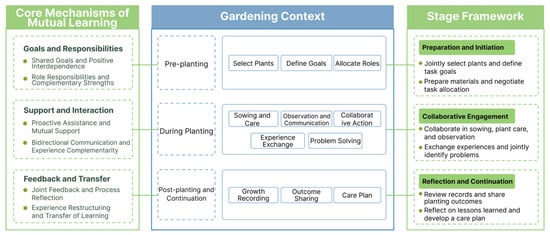
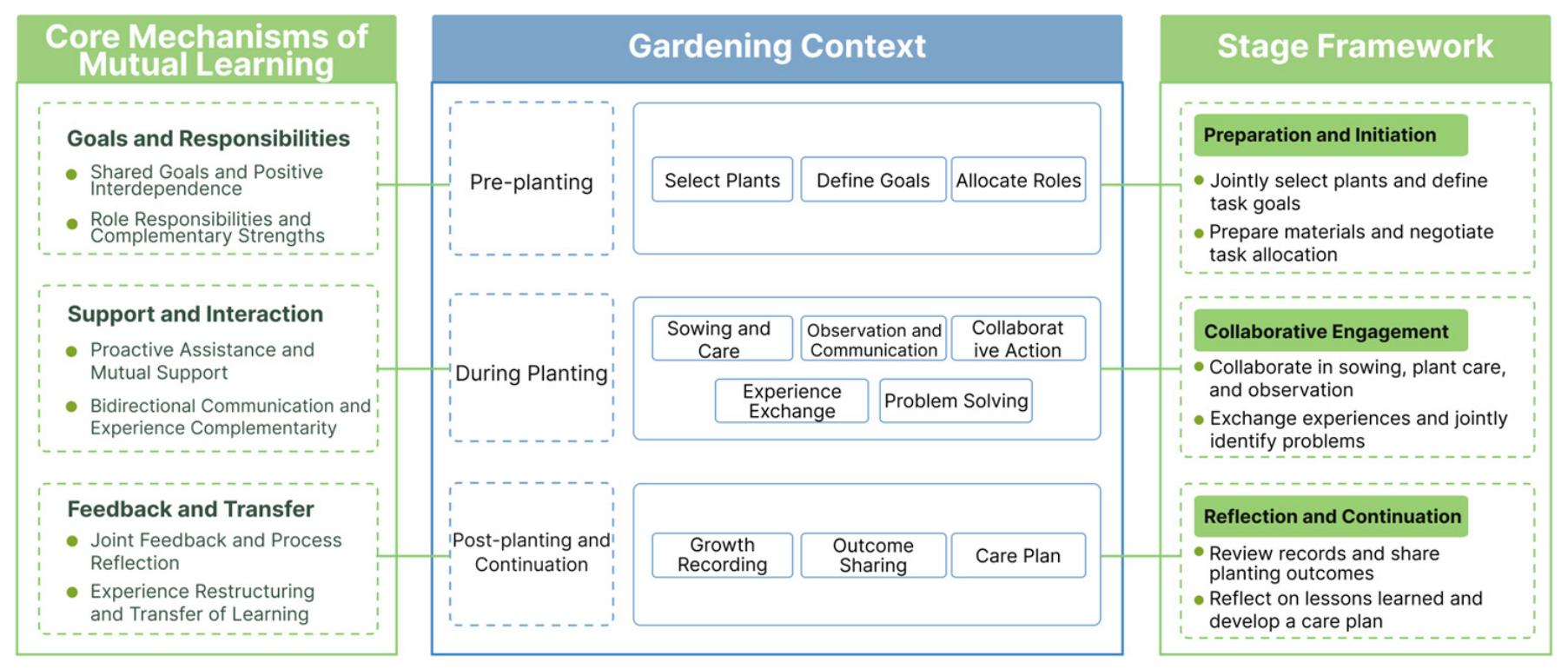
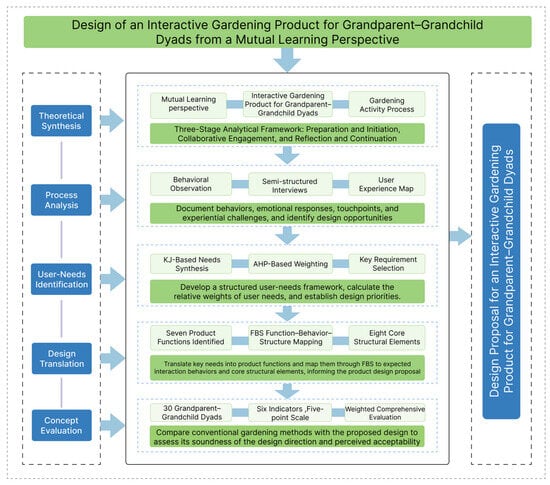
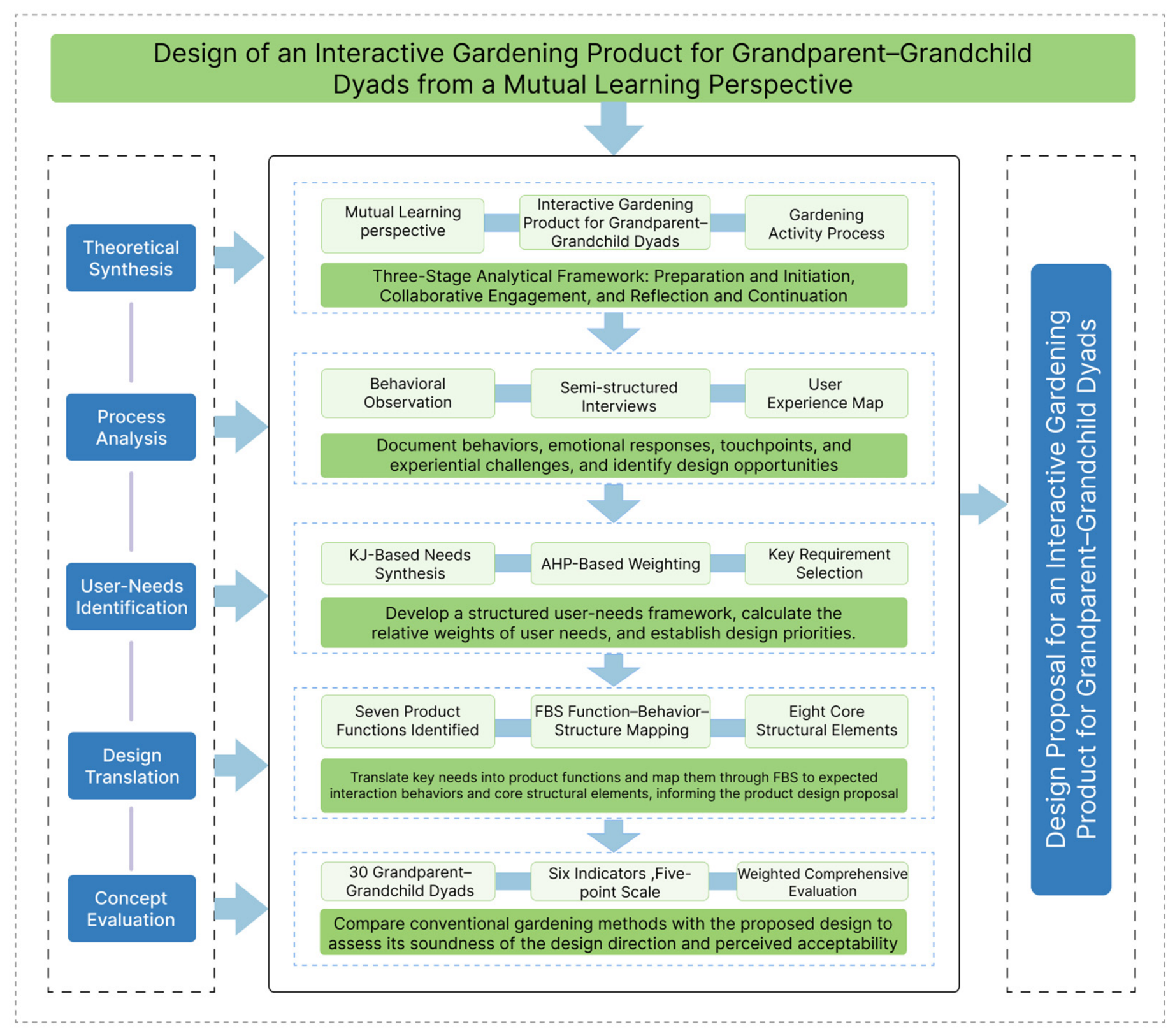
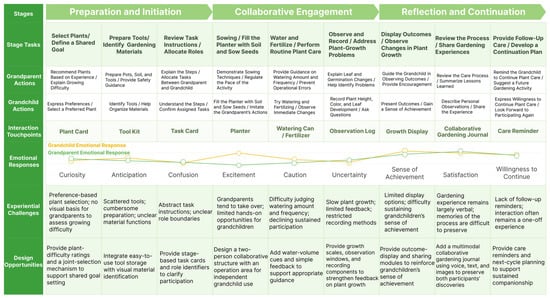
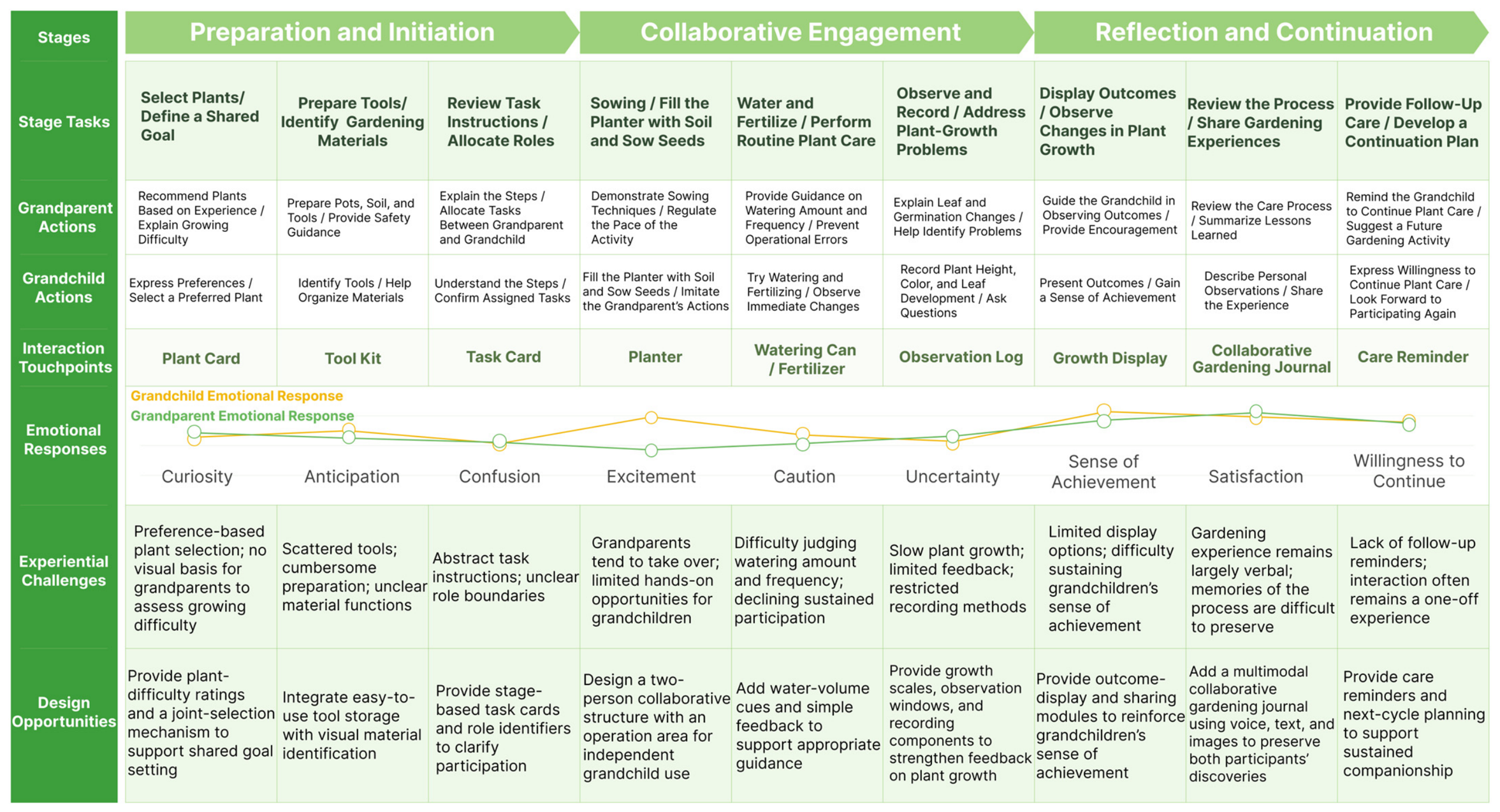
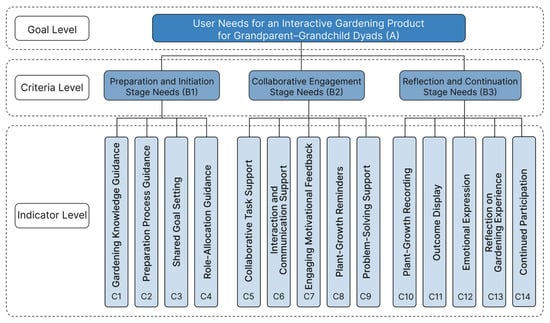
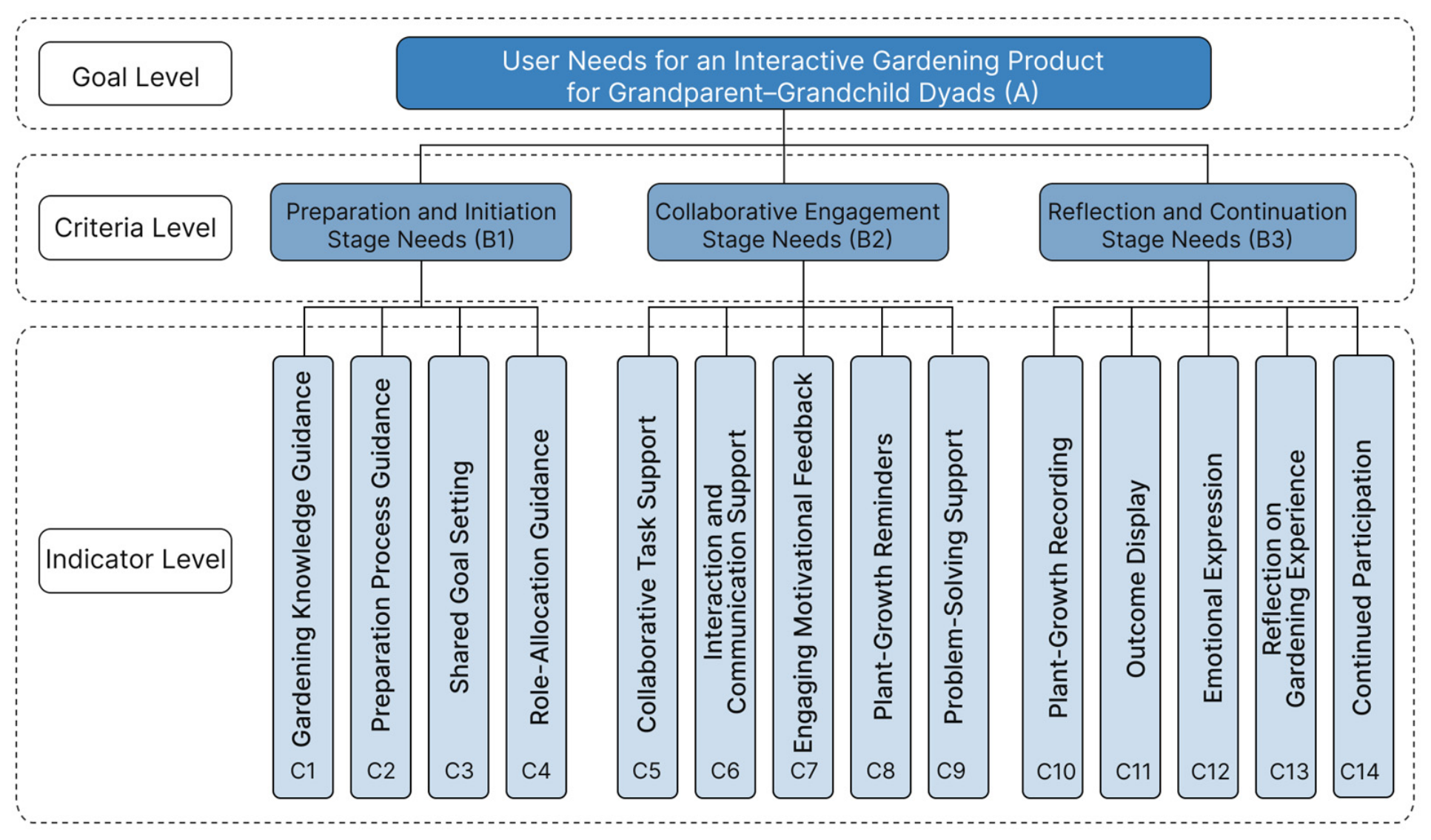
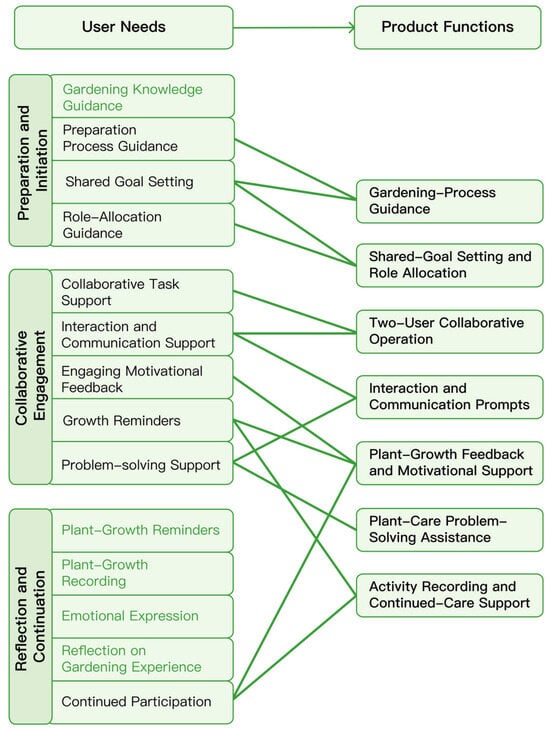
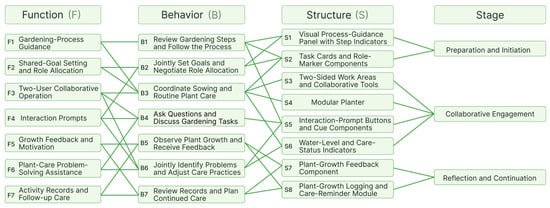
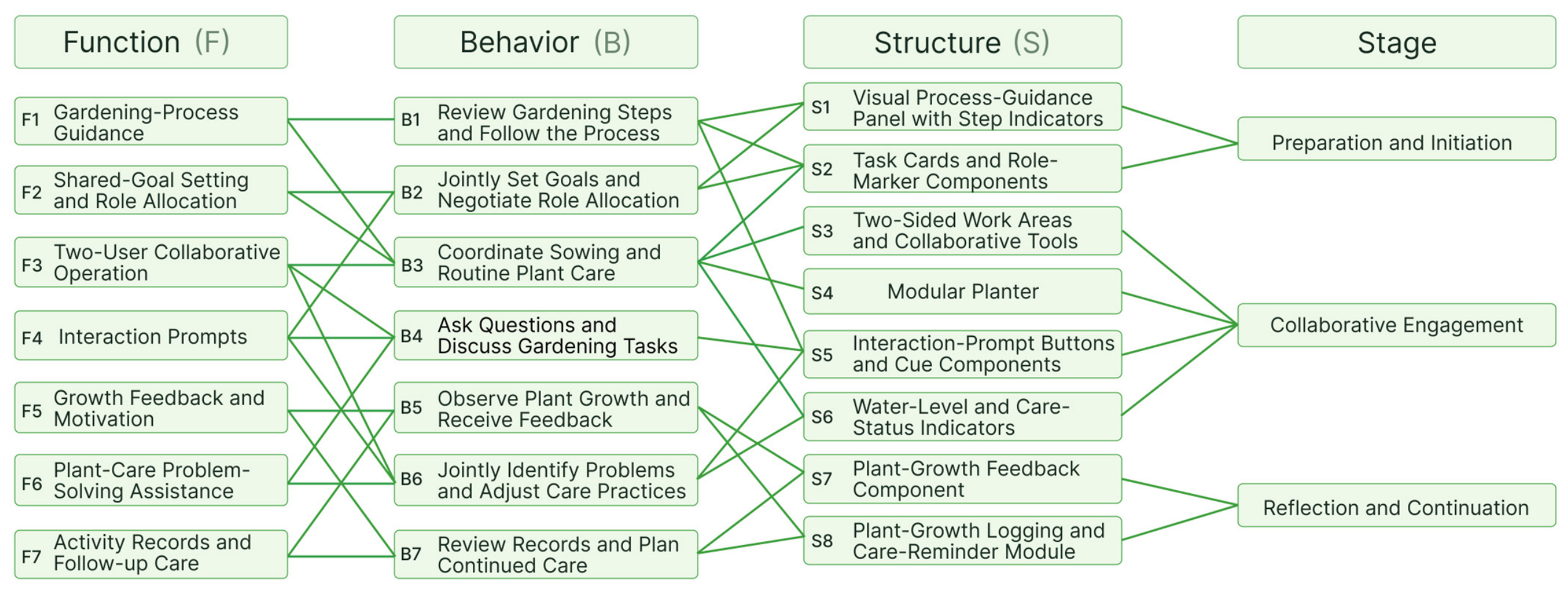
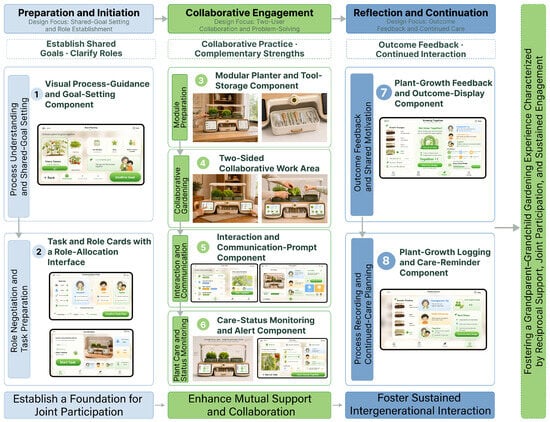
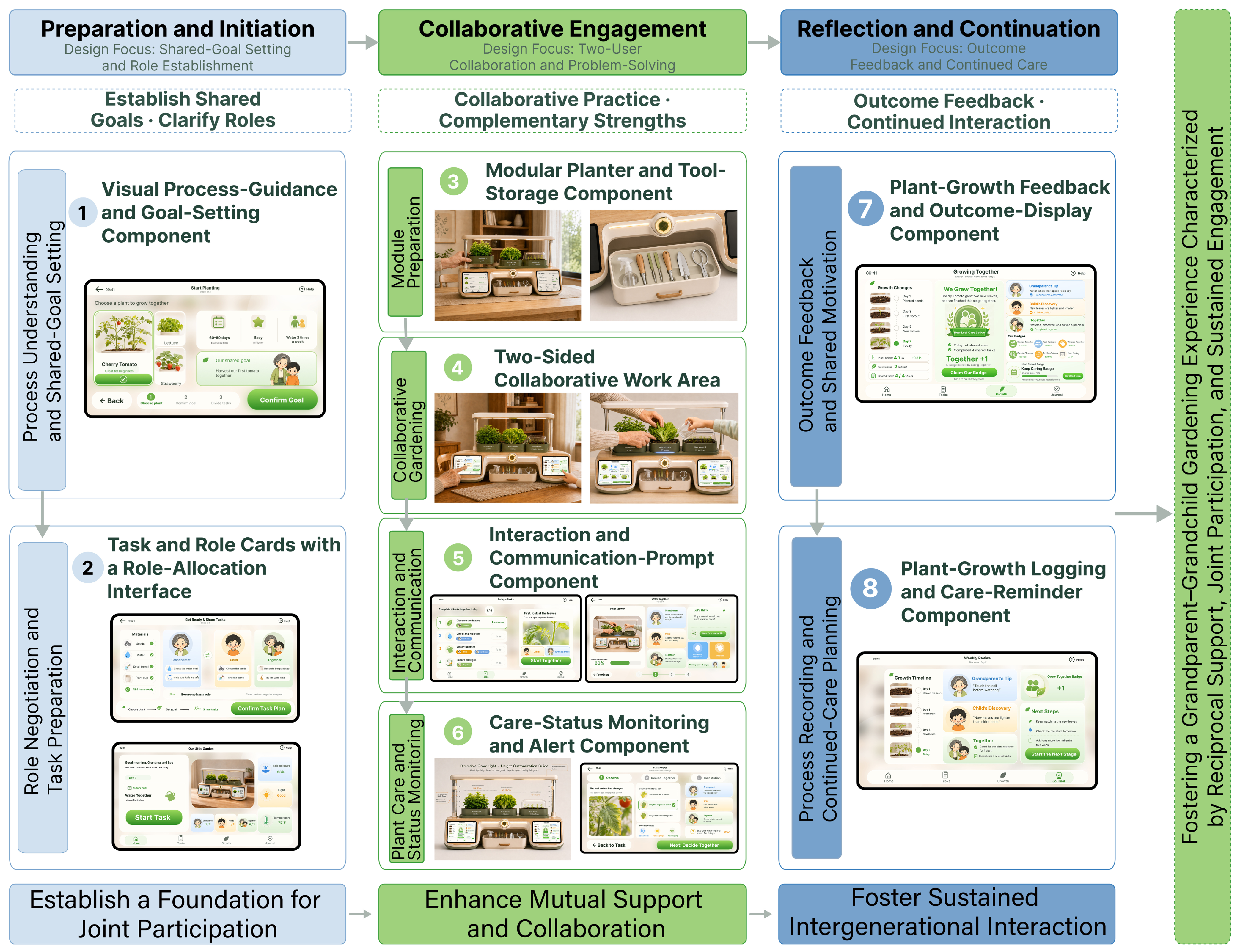
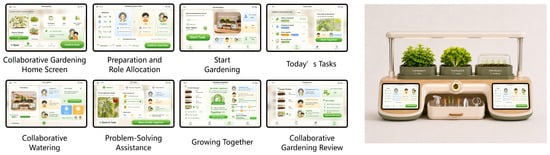
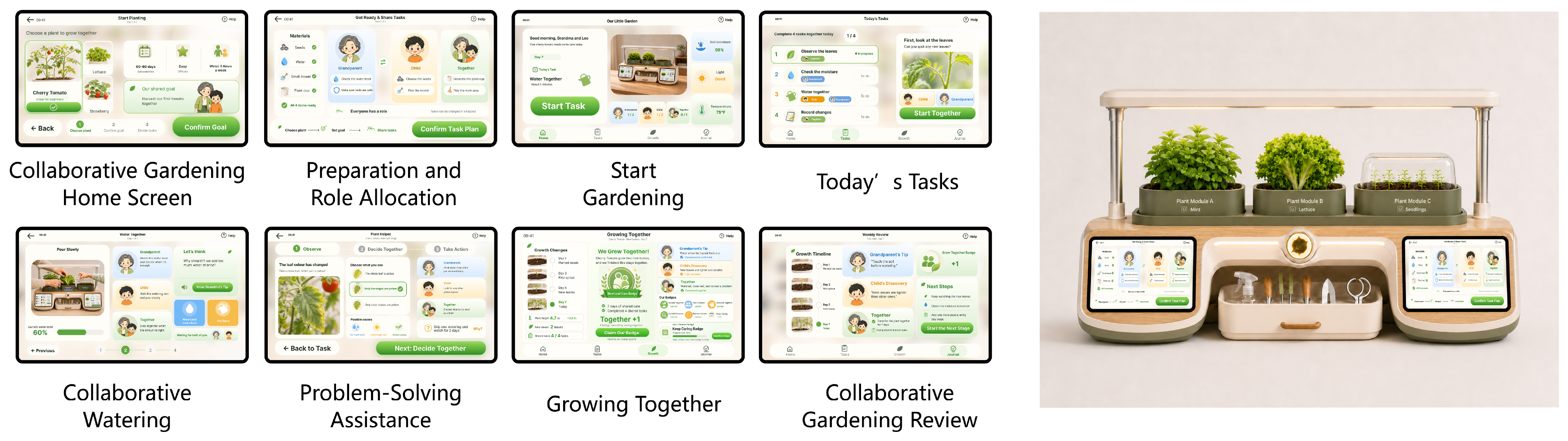


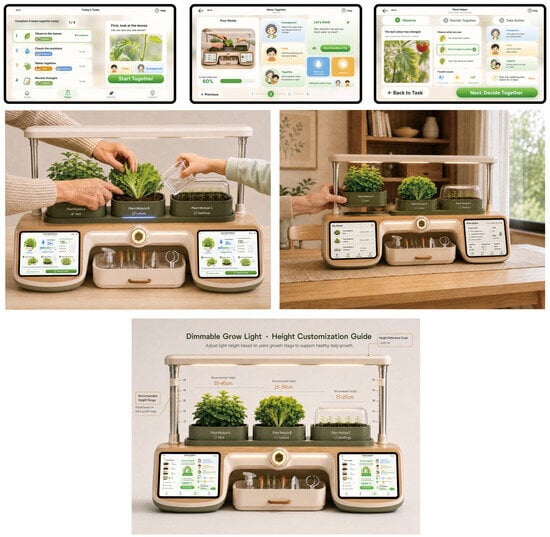
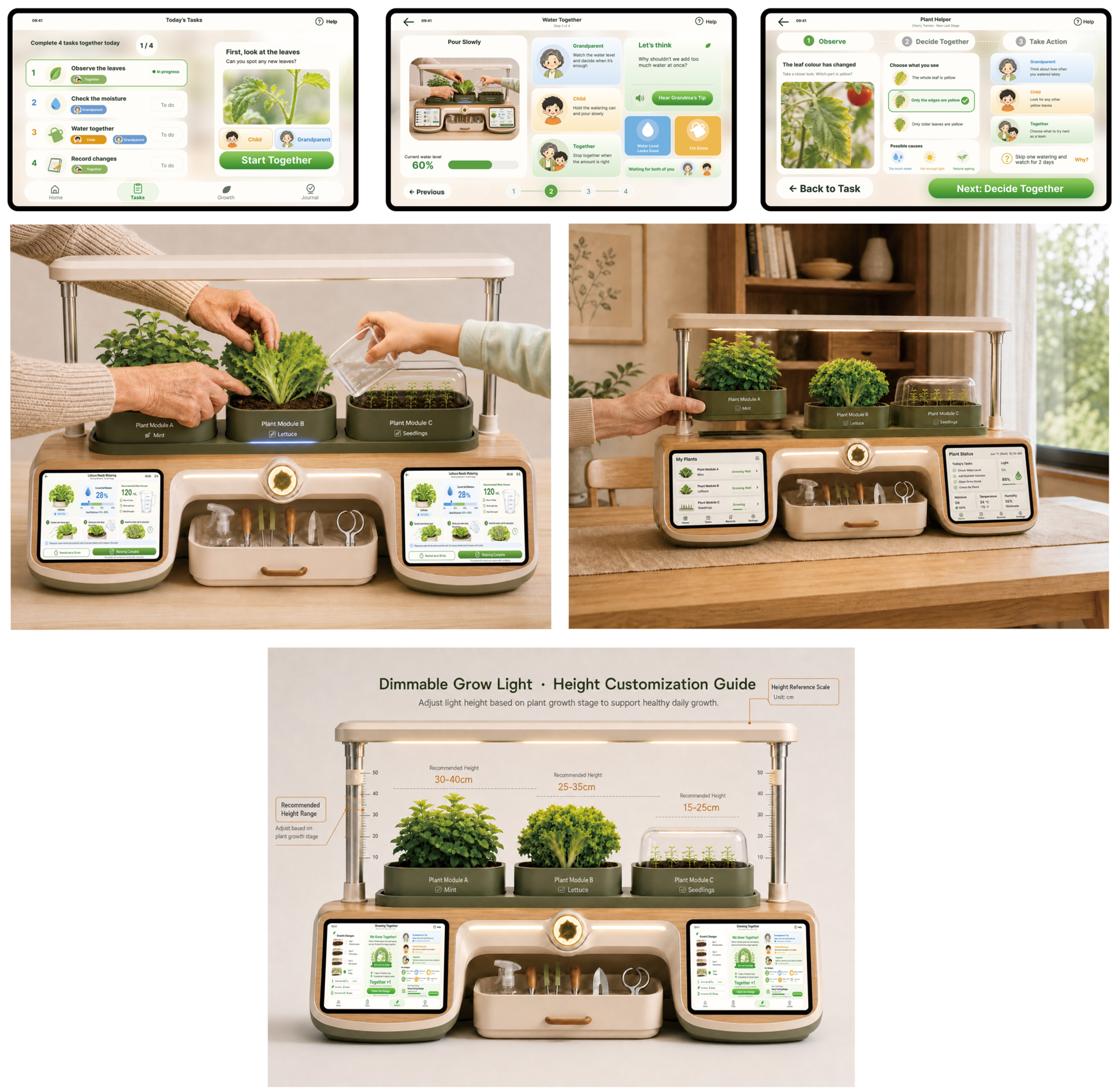
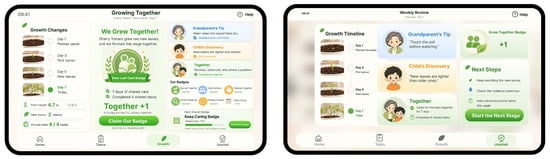
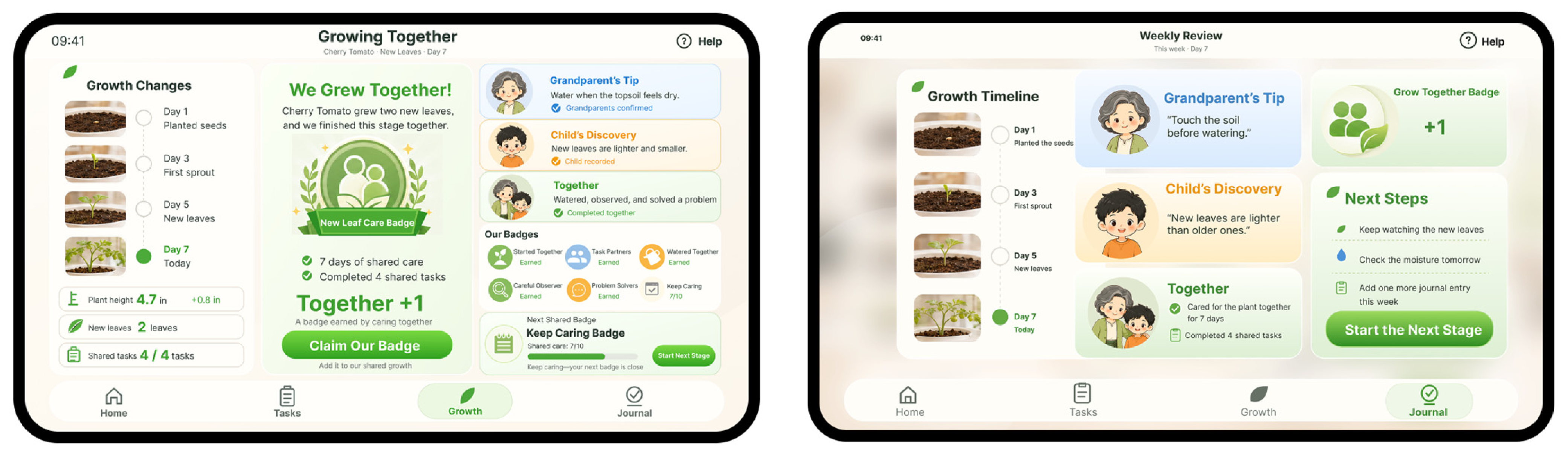
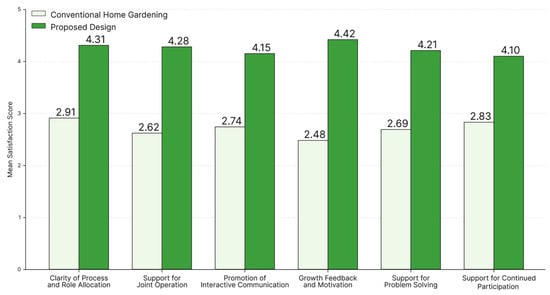
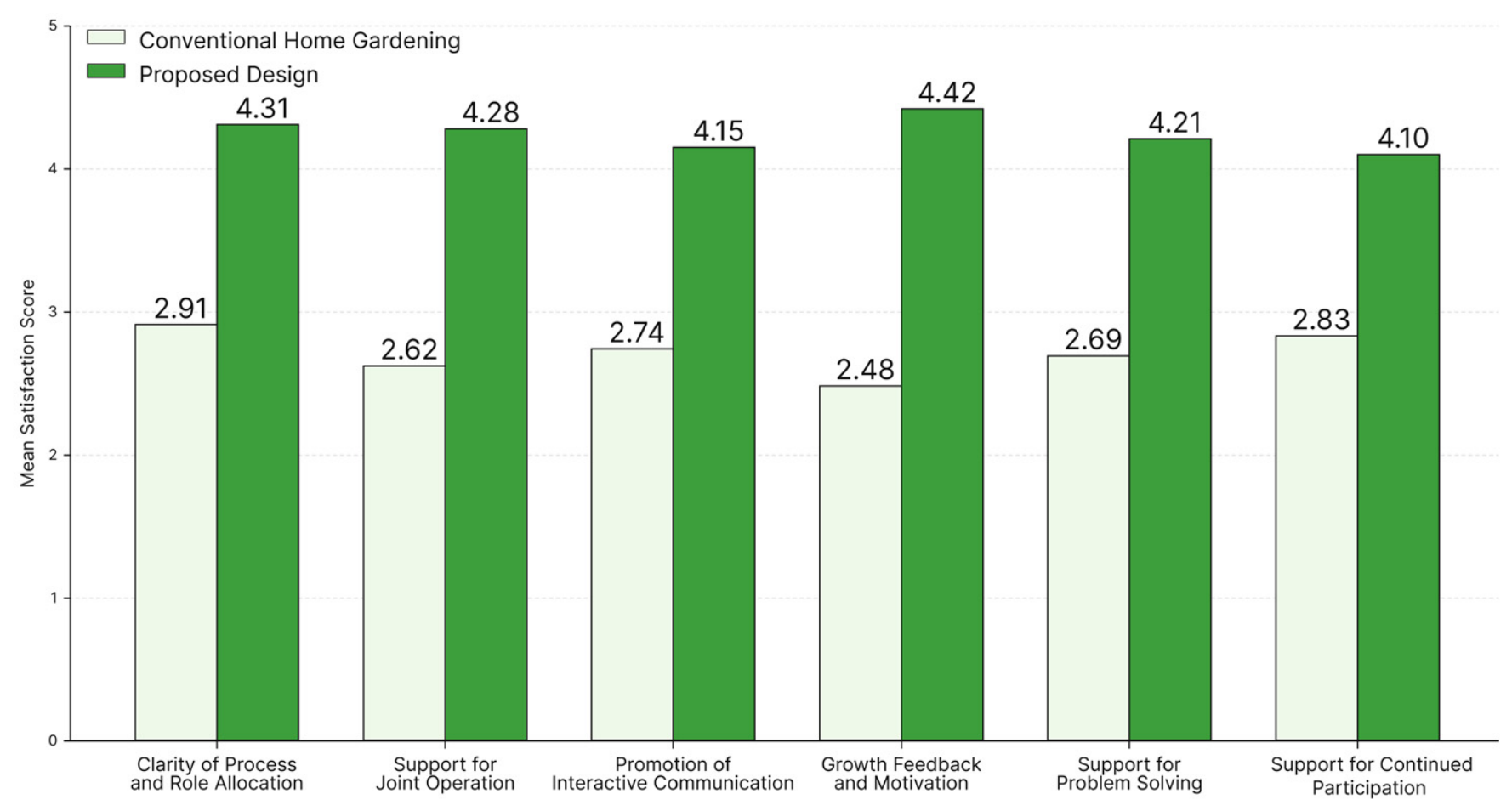

Disclaimer/Publisher’s Note: The statements, opinions and data contained in all publications are solely those of the individual author(s) and contributor(s) and not of MDPI and/or the editor(s). MDPI and/or the editor(s) disclaim responsibility for any injury to people or property resulting from any ideas, methods, instructions or products referred to in the content. |
© 2026 by the authors. Licensee MDPI, Basel, Switzerland. This article is an open access article distributed under the terms and conditions of the Creative Commons Attribution (CC BY) license.