


Abstract
The adoption of smart waste management systems (SWMSs) is increasingly important for textile organizations seeking to improve sustainability while addressing interconnected technological, managerial, organizational, and environmental constraints. A persistent gap is that prior SWMS studies often examine digital technologies or individual barriers in isolation, offering limited support for jointly structuring socio-technical constraints and selecting implementation strategies under uncertainty in expert judgment. This study develops an integrated socio-technical fuzzy multi-criteria decision-support framework in which technical infrastructure and data capabilities are evaluated alongside managerial decisions, organizational capabilities, workforce factors, and the broader environmental and policy context. Barriers and implementation alternatives were identified from the literature and refined through purposive consultation with three experienced textile-industry professionals in Pakistan, with 7–14 years of experience across environment, health and safety, technical, and procurement functions. Spherical fuzzy Analytic Hierarchy Process (SF-AHP) converts linguistic pairwise judgements into criteria and sub-criteria weights while accounting for varying degrees of agreement, disagreement, and uncertainty in expert assessments. These weights are then transferred to triangular fuzzy VIKOR (TF-VIKOR) to evaluate four implementation strategies against the identified barriers. Organizational constraints receive the highest weight (0.284), followed by managerial (0.254), environmental (0.233), and technological (0.230) constraints. Employee empowerment and training (A3) emerges as the preferred strategy (Q = 0.0000), followed by investment in R&D and innovation (A1; Q = 0.7702), policy advocacy and government support (A4; Q = 0.8996), and cross-sector collaboration and partnerships (A2; Q = 0.9795). The first-place ranking of A3 remains unchanged when the VIKOR decision parameter varies from 0.1 to 0.9, although the ordering of A2 and A4 changes at higher values of the parameter. The findings are specific to this expert-based case in Pakistan’s textile industry and should not be interpreted as statistically representative of the national industry. The framework supports managers and policymakers in prioritizing capability building, collaboration, technology investment, and policy support while considering environmental, economic, and social sustainability outcomes. In practical terms, the ranking can guide the sequencing of SWMS investments by emphasizing workforce readiness before sequencing technology investment, policy support, and cross-sector collaboration for capabilities such as waste tracking, automation, recycling technologies, and data analytics.
1. Introduction
The textile industry, a backbone of developing country economies such as Pakistan, is increasingly confronted with both environmental degradation and resource scarcity. It is an industry driving both jobs and exports. Still, it has strong roots in traditional economies with a view towards minimizing cost and improving efficiency at the cost of sustainability. A transition towards a circular economy (CE) is no longer a matter of preference but a necessity for ensuring efficiency in the use of resources, minimizing loss, and long-term competitiveness. In contrast to its contribution towards economies, inefficient disposal of waste and lack of integration with technology in the textile industry hinder its transition towards a sustainable model of operations [1]. With smart waste management systems (SWMSs), a technological revolution can be initiated by leveraging the use of digital technology for the regeneration and restoration of assets, and through a transition towards reuse, recycling, and closed-loop supply chains (SCs), industries can both maximize economic performance and minimize the footprint in terms of environmental degradation [2]. This transformation calls for reimagining existing processes, a transition towards accepting innovation, and an encouragement of environmentally friendly processes for a future-fit, resilient, and competitive textile industry in Pakistan.
A closed-loop CE may improve resource efficiency and environmental outcomes in developing countries’ textile industries at various SC levels [3]. Creating a system to tackle the 3 R concepts—recycle, reduce, and reuse—would require significant endeavors to eradicate strategic gaps and data disintegration inside the current network [4]. The use of Industry 4.0 is necessary to effectively handle SC data for local sensing, integration, and cognitive action, as well as to promote economic development via sustainability in a CE [5]. The textile industry in emerging economies is increasingly focusing on sustainable growth. To effectively manage the various aspects of their design process, procurement and sourcing, production, distribution, usage, and restoration, they require the integrated cyberinfrastructure of the 4.0 industrial revolution [6]. The key to reducing waste creation is the use of Industry 4.0’s pillars, which include big data, cloud manufacturing, cyber–physical systems, data-driven analytics, and the Industrial Internet of Things (IoT) [7,8]. Implementing SWMSs can reduce the overall environmental impact of the textile industry by gathering real-time data and sharing it through the cloud infrastructure of Industry 4.0. The identification and classification of waste at various SC stages facilitate more intelligent and efficient waste management activities [9]. Recent research shows that implementing SWMSs has become crucial for several systems and sectors to minimize their adverse effects and improve their capacity to accomplish CE practically [10].
The rapid growth in waste generation globally accentuates the necessity for smart waste disposal, with an estimated expense of $405 billion in 2025 if no transformation in current processes occurs [11]. The Ellen MacArthur Foundation’s analysis reveals that the textile sector contributes to a yearly waste rise of 6%, posing a challenge for conventional waste management methods [12]. Ineffective garbage material consumption generates a loss of an estimated $600 billion a year, predominantly through inefficient technology. SWMSs introduced a revolution through efficient routing, policymaking, and real-time waste segregation and tracking. SWMSs have demonstrated significant benefits, with 4% savings in fuel, 38% in travel duration, 9% in operational distance, and 70% in urban greenhouse emissions [13]. The SWMS market is predicted to grow immensely, exceeding $2 billion in 2022, with a compound annual growth rate of 23% between 2022 and 2032 [14].
Pakistan’s textile sector, a pillar of its economy with export earnings of $31.782 billion in 2021–2022, grapples with inefficient waste management through inconsistent practices and a lack of documentation [15]. In terms of its improvement in adopting CE philosophies, its lack of effective frameworks holds it back from its development. SWMSs, with methodologies such as AHP and VIKOR, allow the identification and prioritization of key evaluation criteria, such as waste reduction potential, environmental impact, and organizational and technological feasibility. Not only will such an approach minimize operational expenses and pollution, but it will also contribute to Pakistan’s aspirations for a cleaner future, providing useful information for both policymakers and practitioners in similar economies. Data and information have been gathered from Pakistan’s textile sector for the case study.
The textile sector in emerging economies may greatly benefit from using SWMSs to efficiently use resources, manage waste, and promote industrial sustainability [16]. However, including these technical tools in the development of SWMSs is only one of the essential measures. To develop SWMSs, it is necessary to go beyond just implementing innovative technology and instead focus on creating a sustainable SC ecosystem using an interdisciplinary approach. To effectively recover value from waste, the process must include organizational, social, and environmental behaviors and legal policies in a business environment. This involves efficiently collecting, monitoring, separating, and disposing of garbage. Due to data collection and communication integration, SWMS in textile SCs in emerging nations have significant challenges. Despite the deployment of intelligent technology, these economies’ operational, managerial, and social behaviors must effectively incorporate these advancements in their SCs.
Although SWMS and Industry 4.0 research has expanded, an important decision-support gap remains. Existing studies commonly emphasize particular technologies, individual circular-economy barriers, or macro-level adoption issues, but provide less guidance on how heterogeneous technological, managerial, organizational, and environmental constraints should be jointly prioritized and then translated into a ranked set of implementable responses. This gap is especially relevant in developing-country textile settings, where resource constraints, workforce capabilities, institutional support, and digital infrastructure interact. Accordingly, this study treats SWMS adoption as a socio-technical decision problem rather than a purely technological one and develops an integrated framework that links barrier weighting to strategy selection under uncertain and hesitant expert judgements.
This paper presents a novel way of solving problems, ranging from ranked to prioritized, using a hybrid multi-criteria decision-making (MCDM) technique. This technique utilizes the Spherical Fuzzy Analytical Hierarchy Process (SF-AHP) to propose SWMSs in textile manufacturing companies. The proposed methodology in this article combines SF-AHP along with TF-VIKOR (Triangular Fuzzy Vise Kriterijumska Optimizacija Kompromisno Resenje) [17]. A thorough study was conducted to solve the problem. Expert assessments of waste management, business infrastructure, governmental regulations, and economic viewpoints have been included to examine difficulties and provide a comprehensive framework for SWMSs, given their complicated, intricate, and interdisciplinary nature. The identified barriers were matched with feasible solutions utilizing supermatrices of the AHP, which provides a ranking of the strategies necessary for SWMSs.
First, the criteria to be used, along with their weights, were determined using AHP; VIKOR prioritizes the selection of available options for a waste management solution. TF-VIKOR was applied to four key strategies, including investment in R&D and innovation, cross-sector collaboration and partnerships, employee empowerment and training, and policy advocacy and government support. The TF-VIKOR methodology is most relevant to evaluating and selecting alternative strategies for implementing SWMS. This is vital, with rapid urbanization increasing the complexities associated with waste management in the densely populated cities of Pakistan, including the need for robust decision-making frameworks for tackling such emerging challenges [18]. The TF-VIKOR approach provides a structured procedure that can be used to evaluate and prioritize the alternatives, balancing different, mostly conflicting, criteria, such as cost-effectiveness, environmental sustainability, technological feasibility, and logistical efficiency. By combining these multifaceted elements, TF-VIKOR will enable decision-makers to identify optimal solutions that meet environmental and socioeconomic objectives. Based on this two-stage integrated model, the alternatives were ranked.
Second, this study integrates SF-AHP and TF-VIKOR in a sequential decision-support structure. SF-AHP is used to derive the relative weights of the main criteria and sub-criteria from spherical fuzzy pairwise judgements, and these weights are subsequently used in TF-VIKOR to rank four feasible SWMS implementation strategies. The empirical application focuses specifically on smart waste management in Pakistan’s textile sector and is intended to provide a transparent prioritization mechanism for managers and policymakers operating under resource and information constraints.
The article aims to provide policymakers and practitioners with responses to three research questions (RQ): RQ1: What are the primary obstacles to effectively implementing SWMSs in the textile sector within an emerging economy? RQ2: What techniques can efficiently utilize SWMS in the textile sector of an emerging economy to transition towards a sustainable CE? RQ3: What is the most effective way to prioritize the critical obstacles in implementing CE methods?
The paper is organized into seven sections. Following this introduction, Section 2 presents the preliminaries underlying the fuzzy and MCDM techniques employed in the study. Section 3 reviews the relevant literature and identifies the research gaps and contributions. Section 4 identifies and discusses the assessment criteria and alternatives, while Section 5 presents the proposed methodology. Section 6 provides the case analysis and presents and discusses the results of the SF-AHP and TF-VIKOR analyses. Finally, Section 7 concludes the study and discusses its contributions, implications, limitations, and directions for future research.
2. Preliminaries
A fuzzy set (FS) eliminates the imprecise aspect of human assessment by representing scores instead of crisp integers. Decision-making research explores several extensions, including type-2 (T2FS) [19] interval-valued (FSs) [20], intuitionistic (IFS) [21], neutrosophic (NS) [22], and hesitant (HFS) approaches [23,24,25]. These methods use the FS theory to identify, clarify, and analyze hierarchical structures [26]. Regarding FS expansions, the planned FSs are spherical. Among these, several models stand out as the most sophisticated, such as the SFSs, which are considered the most advanced [27].
2.1. Spherical Fuzzy Set
Spherical fuzzy sets were presented as an expansion of IFS. The concept of SFS aims to enable decision-makers to apply various extensions of fuzzy sets by creating a membership function on a spherical surface and autonomously assigning the parameters of that membership function with a broader range. An SFS must meet the following criteria:
Let an SFS over the universe of discourse be given by
where denotes the degree of membership, denotes the degree of non-membership, and denotes the degree of hesitancy, such that
The other essential arithmetic operations are described as follows.
Addition operation:
Multiplication operation:
Multiplication by a scalar :
Raising to the power of :
2.2. Analytical Hierarchy Process (AHP)
AHP, a widely used MCDM method, was presented by Saaty [28] as an organized approach to challenging decision-making issues. AHP aims to measure the relative preferences for different options by considering the judgments made by experts in a paired manner. It allows the creation of hierarchical criteria and calculates the weights of both the criteria and alternatives. The AHP methodology has been used in several scenarios, including both ordinary matters and intricate challenges such as forecasting potential alternative outcomes for a developing country, distributing energy supplies, assessing political candidates, and others [29]. In AHP, decision-makers use precise numerical values to convey their views. A significant drawback of the conventional AHP arises when decision-makers need help articulating their opinions using precise numerical values. Fuzzy logic is crucial in capturing uncertainty in decision-makers’ judgments [30].
Various MCDM techniques have been developed, successfully addressing complex decision-making problems in many management and engineering domains. The SF-AHP technique, one of the most widely used MCDM methods, has gained popularity in the decision-making literature because of its clear and accurate computational processes [31,32]. Several considerations motivate the use of the innovative SF-AHP research approach: (i) the most advanced and recent expansion; (ii) an alternative, more resilient approach in addressing ambiguity, vagueness, and reluctance. This strategy was developed explicitly for the present examination in response to the existing research requirements and the advantages offered by SF-AHP. Based on our observations and comparisons of SF-AHP with other MCDM models, we have determined that SF-AHP is the most prevalent technique among these models. Additionally, the computing process of SF-AHP is straightforward. The following section outlines the many stages of the SF-AHP approach.
2.3. Triangular Fuzzy Numbers (TFNs)
In fuzzy set theory, the membership function maps fuzzy judgment items to a membership degree between 0 and 1. A value of 1 indicates full membership, while a value of 0 indicates no membership; values between 0 and 1 indicate partial membership.
The membership function of the TFN , defined on , is given by
where , and and are the lower and upper values of the support of , respectively, while is the middle value.
Given two TFNs, and , the operations are defined as follows:
Addition:
Multiplication:
Inverse TFN:
2.4. VIKOR
The VIKOR approach is used to identify a compromise solution for problems involving conflicting criteria and to support decision-makers in selecting the most appropriate alternative. The compromise solution is the alternative closest to the ideal solution. The VIKOR approach seeks to maximize group utility while minimizing individual regret. It is based on the relative closeness of alternatives to the positive and negative ideal solutions.
The fuzzy VIKOR approach consists of the following steps.
(1) Develop the fuzzy decision matrix. The fuzzy decision matrix can be expressed as follows:
where is the fuzzy decision matrix, represents the th criterion, and represents the th alternative, with and . The value represents the performance of alternative with respect to criterion .
The decision-makers’ opinions are then pooled to obtain the aggregated fuzzy rating of each alternative. The aggregated fuzzy rating of the alternatives with respect to each criterion is calculated as
where represents the number of decision-makers.
(2) Defuzzify the fuzzy decision matrix. The fuzzy decision matrix is converted into crisp values using the Best Non-fuzzy Performance (BNP) relation based on the center-of-area (COA) defuzzification method. The COA method is straightforward and does not require the introduction of additional evaluator preferences. For a triangular fuzzy performance score , the BNP value is calculated as follows:
(3) Normalize the decision matrix. The normalized decision matrix is expressed as follows:
where represents the normalized performance value and represents the performance value of alternative with respect to the th criterion.
(4) Determine the positive and negative ideal solutions. The positive ideal solution and the negative ideal solution are determined as follows:
(5) Calculate the utility measure and regret measure . These measures are calculated for each alternative as follows:
where represents the weight of criterion .
(6) Compute the compromise index . The compromise index for each alternative is calculated as follows:
where represents the compromise index for the th alternative , , , , and . The parameter represents the weight assigned to maximum group utility and is generally set to 0.5, whereas represents the weight assigned to individual regret.
The alternatives are ranked in ascending order of their values. The alternative with the smallest value is considered the best compromise solution and is assigned the highest rank.
The integrated MCDM framework provides a systematic approach for addressing complex decision-making problems. SF-AHP is used to derive the relative weights of the criteria through pairwise comparisons and to assess the consistency of the judgments, whereas TF-VIKOR uses these weights to evaluate and rank the alternatives based on utility, regret, and compromise measures. Sensitivity analysis can subsequently be performed to examine the robustness of the resulting ranking.
3. Literature Review
Efficient waste management is one of the key elements in the textile industry’s transition toward a CE where resource loops are closed through reuse, recycling, and waste minimization. Industry 4.0 technologies, such as IoT, AI, and robotics, play a critical role in developing SWMS for efficiently handling waste and resource efficiency. The application of robotic technologies and sensor-enabled smart bins for real-time waste detection to enable sorting and treatment in SCs with greater efficiency [14]. Integrated Industry 4.0 technologies into CE practices within a framework. The benefits of reverse logistics and additive manufacturing for recycling and reusing textile waste, thereby reducing environmental impacts [33].
Developing countries face several systemic challenges in adopting SWMS: limited infrastructure technologies, insufficient integration of data providers, and some regulatory gaps. IoT-enabled systems provide much more feasibility to the process of waste segregation and recycling processes for contributing toward the SDGs of Indonesia [14]. The waste management scenario in the Indian textile industry places special emphasis on circular economy-driven strategies like upcycling and recycling for the mitigation of environmental degradation [34]. These studies also explain the need for cross-sectoral collaboration, investment in R&D, and policy interventions to overcome the obstacles to using SWMS in the textile sector. The novel criteria are technological issues, managerial decision-making, organizational issues, and environmental issues.
The CE perspective on sustainable consumption seeks to maximize efficiency by connecting renewable resources, using cleaner manufacturing methods, extending product lifespan, and disposing of trash via well-designed systems [35]. The original framework of CE, which consisted of the 3 Rs—reduce, reuse, recycle—has now been expanded to include 10 Rs. These additional Rs are refuse, rethink, reduce, reuse, repair, refurbish, remanufacture, repurchase, recycle, and recover (see Figure 1). This expansion aims to achieve a more comprehensive management of resources by addressing the call for environmental protection and ensuring economic and social sustainability [36]. Therefore, enterprises need to develop a sustainable SC that incorporates the efficient movement of materials, money, and information [37]. The textile industry has embraced SCs to adopt the CE perspective to reduce waste in both the production and post-consumer phases [38]. Textile companies have mainly concentrated on waste collection, whereby reusable waste materials are recycled within the SC, while non-recyclable waste materials are disposed of [39]. This ensures the textile sector’s value chain operates on a self-sufficient model, enhancing the conversion of waste materials into new products. Nevertheless, the scarcity of resources and internal and external obstacles in developing nations make it challenging to implement a sustainable CE by revolutionizing trash design, collection, and reprocessing [40]. In this study, the empirical system boundary is textile manufacturing and the associated handling and recovery of predominantly pre-consumer textile waste within the textile supply chain; municipal and urban waste management studies are used only as supporting SWMS literature and do not define the empirical setting. Within this boundary, circular actions are interpreted hierarchically, prioritizing prevention and reduction, followed by reuse and recycling/recovery where waste cannot be avoided.
Figure 1.
Sustainable textile manufacturing through circular economy.
The absence of coordination and synergy in policy, infrastructure, and coordination at various SC levels poses challenges for Pakistan’s textile sector to effectively implement CE practices, such as waste reduction, resource optimization, and energy conservation [41]. The obstacles to adopting CE in the textile sector focus on economic, operational, technological, organizational, and environmental factors. Furthermore, the absence of government legislative support, efficient information management, and technical proficiency have been identified as obstacles to implementing CE in the textile sector [42]. The lack of internationally managed SCs and the presence of segregated regulations hinder the transition of the textile sector to CE [43].
Figure 2 conceptualizes SWMS as an operational architecture rather than a generic stakeholder map. Waste generated across textile operations is captured through sensor-enabled collection and tracking; IoT connectivity transfers real-time information to integrated data/cloud infrastructure; analytics convert these data into routing, sorting, recovery, and process decisions; and the resulting actions support reuse, recycling, and circular resource flows. The architecture is enabled by workforce capability, managerial commitment, organization-wide coordination, and policy/stakeholder support, illustrating why successful SWMS implementation is socio-technical rather than solely technology-driven (see Figure 1).
Figure 2.
SWMS integration in textile manufacturing.
Research Gaps and Contributions
Recent research has established the value of Industry 4.0 technologies and MCDM approaches for sustainability decisions, but three gaps remain important for SWMS implementation in textiles. First, technological enablers are often examined separately from managerial, organizational, workforce, and external policy conditions, limiting understanding of their combined socio-technical role. Second, barrier-assessment studies do not always connect the importance of implementation constraints to a subsequent choice among concrete response strategies. Third, expert assessments of emerging SWMS practices are intrinsically imprecise: specialists may support, reject, or remain hesitant about a comparison at the same time, a form of uncertainty that crisp or conventional fuzzy representations capture less explicitly. The present framework addresses these gaps by structuring the problem across interacting socio-technical dimensions, representing membership, non-membership, and hesitancy through spherical fuzzy sets, and transferring SF-AHP-derived importance weights directly into TF-VIKOR strategy evaluation.
Therefore, this study aims to determine the primary obstacles to implementing SWMS for CE in a developing country’s textile sector. The decision framework offers policymakers and practitioners a set of techniques, including technological, managerial, organizational, and environmental, to effectively tackle the difficulties. This study examines the significant obstacles managers and organizational policymakers face in building SWMS to implement CE principles.
Within this framework, ‘managerial’ and ‘organizational’ constraints are deliberately distinguished. Managerial constraints concern choices and priorities exercised by decision-makers, such as investment willingness, innovation planning, and the preference for short-term returns. Organizational constraints concern enterprise-level structures and capabilities that persist beyond an individual decision, including company-wide integration, skilled manpower, proactive innovation routines, and employee dedication. The socio-technical perspective therefore does more than classify criteria: it links the technical subsystem (digital infrastructure, sensing, data transmission, recycling technologies) with the social and institutional subsystem (managerial choices, organizational capability, workforce behavior, and the external policy/ecological environment) in one decision hierarchy.
Among various decision-making techniques, AHP has been commonly used to determine relative importance, while VIKOR is a powerful alternative evaluation technique. A rough number is a suitable method to deal with subjectivities and group decision-making environments to aggregate individual judgments and priorities. Therefore, these two methods can be combined to integrate the merits of AHP in hierarchy evaluation, the superiority of the rough number in manipulating vagueness, and the virtue of VIKOR in modeling MCDM for improving objectivity in decision-making while carrying out design concept evaluation.
4. Identification of the Assessment Criteria and Alternatives
4.1. Technological Issues
The reasons for not adopting integrated SWMS in Pakistan are substantial technological barriers (see Table 1): insufficient expertise and experience, limited capacity and a shortage of skilled personnel to study, operate, and access such systems [44]. Inefficiencies in waste management, such as poor transmission of data from IoT devices to central systems, underlying delays in real-time decisions, is rooted in weaknesses in technological platforms [45]. The recycling technologies applied in Pakistan remain underdeveloped; most of the recycling processes are still based on manually operated, informal systems [46]. In addition, the respective sensors and monitoring systems for trash are of low quality, resulting in poor or incorrect data collection and poor performance in managing waste.
C11: Lack of experts: The shortage of skilled personnel to design, implement, and manage SWMS technologies hinders effective adoption.
C12: Data transmission issues: Ineffective or unreliable data transmission between sensors, IoT devices, and central systems hinders real-time waste management.
C13: Insufficient recycling technologies: The system’s lack of advanced recycling technologies restricts its capacity to handle multiple types of waste.
C14: Quality issues and lack of control: Low-quality sensors and incomplete control systems decrease the reliability of waste data gathering and analysis.
C15: Inefficient real-time data collection: The system’s inability to acquire data correctly and on time restricts its ability to optimize waste management in real time.
4.2. Managerial Decision-Making
The significant managerial barriers in Pakistan are rooted in rigid and inflexible business practices, where both companies and municipalities are slow to adopt new approaches to waste management [47]. Budgetary constraints and a focus on short-term gains limit investment in innovative technologies. Generally, there is a lack of proper innovation planning in organizations dealing with waste management [45]. The profit-making attitude that dominates most private waste management companies discourages investment in sustainable long-term solutions like the circular economy model [48].
C21: Inflexible business practices: The rigid nature of organizational structures and resistance to change hinder the rate at which innovative waste management solutions are adopted.
C22: Lack of investment in technology: Inadequate investment in modern waste management technologies can prevent any system from being efficient or scalable.
C23: Poor innovation planning: Insufficient strategic foresight in adopting and absorbing waste management technologies creates long-term inefficiencies.
C24: Focus on quick profits: Focusing on immediate gains rather than long-term sustainability goals hinders the broad application of the circular economy model in waste management.
4.3. Organizational Issues
Organizational inefficiency is considered one of the major deterrents to the implementation of SWMSs in Pakistan. The lack of company-wide adoption of innovative technologies has fragmented the systems, characterized by little inter-departmental collaboration [49]. A significant obstacle to progress is the lack of trained personnel to manage and operate advanced waste management systems, especially in public sector organizations [50]. Proactive innovations are hardly prioritized, and most institutions lack the vision and drive to implement modern technologies [51]. Furthermore, low wages and poor working conditions translate into low levels of motivation and engagement among employees, contributing to operational inefficiencies [52].
C31: Lack of organization: The lack of organization-wide implementation results in fragmented systems that do not work together cohesively.
C32: Inadequate skilled manpower: A shortage of trained people to operate and maintain innovative waste management technologies influences overall performance.
C33: Lack of proactive innovation: Most organizations lack an innovation-oriented mindset that would motivate them to adopt more advanced SWMS technologies.
C34: Lack of dedication among the staff: A low level of employee engagement and a poorly motivated strategy for engaging employees restrains the successful running of the waste management initiative.
4.4. Environmental Issues
Prevalent environmental issues in Pakistan multiply the complexity in SWMS implementation. The major ones include incomplete awareness and perceived ecological benefits of SWMSs among stakeholders, comprising policymakers, businesses, and people in general [53]. Moreover, neither financial nor indirect government support was available through subsidies and incentives, nor have any clear policies for SWM been taken, which should have otherwise left the job in order and motivated various other issues amongst the players in the private sector. Setting up any form of ecosystem based on a circular economy is very difficult to shape because there is considerable inadequacy in coordination between waste generators and processors or recyclers [51]. Moreover, ecological priority most often becomes subordinate among all the stakeholders to economic factors that hamper the collective effort to work toward sustainability [54].
C41: Lack of perceived ecological benefit: Lack of perceived ecological benefit cases in which the stakeholders fail to realize the ecological benefits of SWMS reduce support and investments.
C42: Insufficient government assistance: Government agencies’ lack of policy incentives, subsidies, or supporting mechanisms dampens the implementation of SWMS.
C43: Difficulty in establishing a CE-based ecosystem for SWMS: Establishing waste management based on a circular economy is complex and thus presents a barrier to long-term success.
C44: Stakeholders’ ecological influence: Conflicting priorities and a lack of ecological awareness among stakeholders are some factors preventing the use of SWMS.
C45: Insufficient business decision-making: Most businesses fail to develop sustainable waste management as a core business decision-making process.
Table 1.
Selected challenges and inhibitors to SWMS practices in the textile industry.
4.5. Alternatives for SWMS Implementation
4.5.1. Investment in R&D and Innovation
Further investment in research and development (R&D) and innovation in waste management technologies is needed to improve system efficiency, reduce costs, and enhance environmental outcomes in Pakistan. Such investment can facilitate technological advancements in waste collection, sorting, processing, and disposal while supporting the adoption of more sustainable waste management practices consistent with broader environmental objectives.
4.5.2. Cross-Sector Collaboration and Partnerships
Cross-sector collaboration is important for the effective implementation of SWMS in Pakistan. Cooperation among the public and private sectors, non-governmental organizations (NGOs), academic institutions, and local communities can facilitate resource sharing, knowledge exchange, and capacity building. Such partnerships can also support the development of integrated strategies for addressing waste management challenges and improving the accessibility and effectiveness of waste management services.
4.5.3. Employee Empowerment and Training
The effectiveness of SWMS can be further enhanced by empowering employees through appropriate training and professional development. Targeted skill-development programs can provide employees with the technical knowledge and operational capabilities required to use smart waste management technologies effectively. Strengthening workforce capabilities can consequently improve waste handling, system efficiency, and the overall operational performance of SWMSs in Pakistan.
4.5.4. Policy Advocacy and Government Support
Effective policy frameworks and sustained government support are important for the successful implementation of SWMSs in Pakistan. Policies that prioritize waste management, sustainability, and environmental protection can provide an enabling institutional environment for SWMS adoption. Government support through appropriate regulations, funding mechanisms, infrastructure development, and implementation incentives can further facilitate the adoption and long-term effectiveness of smart waste management solutions.
5. Methodology
5.1. Applications of MCDM Techniques in CE
The primary objective of this study is to identify the obstacles encountered in the implementation of SWMSs and devise effective ways to overcome these obstacles using an MCDM tool called SF-AHP. MCDM approaches are extensively used in CE to prioritize and rank various criteria to solve difficult challenges methodically. The best–worst method (BWM) and the decision-making trial and evaluation laboratory (DEMATEL) approach identify the key aspects that contribute to the success of CE [77]. The aim was to enhance resource management and improve overall efficiency. BWM was used to examine the crucial risk element in the sustainable leather sector of a developing country [78]. Stević et al. [79] introduced a rough-fuzzy MCDM model for evaluating sustainable manufacturing in CE and a BWM methodology for choosing an environmentally friendly waste disposal technique in CE.
The multi-attribute value theory (MAVT) was used to evaluate the most environmentally friendly options for handling waste plastics and to identify obstacles and potential advantages in implementing circular business models [80]. The multi-criteria analysis assesses three options (paper production, biogas, and feed) for encouraging CE adoption among local authorities [81]. A sustainability evaluation of waste-to-energy systems in poor countries was performed using a multi-criteria analysis [82]. They also examined the potential for renewable power generation, which might inform future policy decisions about SWMS. A fuzzy MCDM was used to efficiently choose the optimal green supplier by considering environmental factors and providing additional practical insights. However, other MCDM approaches, such as AHP, have also been used in the environment to conduct CE research [63]. However, this research used an SF to conduct MCDM analysis, incorporating the AHP.
5.2. Proposed Model
The proposed fuzzy MCDM methodology consists of two sequential stages. The assessment criteria, sub-criteria, and implementation alternatives were first identified through the literature and then reviewed with the participating textile-industry experts for contextual relevance. In Stage 1, experts expressed pairwise comparisons using spherical fuzzy linguistic terms. The three components of a spherical fuzzy assessment, including membership, non-membership, and hesitancy, allow an expert’s support, opposition, and residual uncertainty to be represented simultaneously, which is appropriate where SWMS evidence is incomplete and judgements are not naturally reducible to a single precise score. The expert judgements were aggregated and SF-AHP was used to obtain normalized weights for the four criteria and 18 sub-criteria. In Stage 2, the same experts rated the four implementation alternatives using linguistic evaluations. The SF-AHP weights were used directly as criterion-importance inputs in TF-VIKOR, so barriers that were more influential in Stage 1 exerted proportionately greater influence on the compromise ranking in Stage 2. The procedure is summarized in Figure 3.
Figure 3.
Flowchart of the study and proposed SF-AHP method.
The study uses a purposive expert-elicitation design rather than a statistical survey. Three senior professionals from textile firms in Pakistan participated: a regional manager with a PhD and 14 years of experience in environment, health and safety; a senior manager with a master’s qualification and 12 years of technical experience; and a senior procurement executive with an MS in supply chain management and seven years of experience. Their roles span environmental compliance, technical operations, and procurement, providing complementary perspectives on SWMS implementation. A small expert panel is appropriate for this structured MCDM application because the unit of analysis is informed judgment rather than population prevalence; the objective is to obtain knowledgeable pairwise comparisons and alternative ratings from specialists with direct domain experience. The findings are therefore interpreted as an expert-based case analysis of Pakistan’s textile sector, not as statistically representative estimates for all Pakistani textile firms. Appendix A reports expert profiles. The panel represents three functional perspectives within textile firms rather than the full range of external actors such as regulators, recyclers, or technology providers; this boundary further limits generalization beyond the case setting.
This research uses a sequential technique to evaluate developing countries’ challenges in adopting SWMS technology. In SF-AHP, a linguistic term and its corresponding fuzzy numbers should express the comparison measures for sub-criteria and alternatives. In this study, the computational method is based on the following fuzzy numbers [83,84].
Spherical fuzzy sets were selected because the elicitation involves ambiguity, partial support, and hesitation in expert comparisons. Unlike crisp AHP, which requires a single precise judgment, and standard fuzzy sets, which primarily represent graded membership, the spherical formulation permits membership, non-membership, and hesitancy to vary with greater flexibility subject to the spherical constraint. This is useful for emerging SWMS decisions in which experts can simultaneously perceive advantages, reservations, and incomplete knowledge. TF-VIKOR is then used for the strategy stage because it explicitly balances group utility and individual regret when alternatives perform differently across the weighted barriers.
Nine linguistic terms were used to compare criteria and sub-criteria, “E: Equal” (1,1,1), “WA: Weak advantage” (1,2,3), “NB: Not bad.” (2,3,4), “PR: Preferable” (3,4,5), “G: Good” (4,5,6), “FG: Fairly good” (5,6,7), “VG: Very good” (6,7,8), “AB: Absolute” (7,8,9) and “PF: Perfect” (8,9,10) see Table 2.
Table 2.
Linguistic variable for a pairwise comparison matrix.
VIKOR’s approach enables decision-makers to reach the final decision by finding the compromise options for a problem with conflicting criteria. The compromise approach is suitable and comes closest to the ideal process. Utilizing the utility group to the maximum and minimizing the regret group is an ideal alternative for the TF-VIKOR approach. This method represents the proportion of negative and positive ideal solutions [85,86]. In TF-VIKOR, it is suggested that DM assess the ratings of the alternatives with respect to criteria using linguistic variables. In Table 3, we proposed a table with a 1–5-point scale for rating the alternatives, calculated the average values presented by the experts, and finally normalized Equation (10).
Table 3.
Linguistic variable for alternative rating.
In this respect, experts are suggested to use the linguistic variables (LVs) given in Table 2 to rate the alternatives. The process can be elaborated on, as illustrated in Figure 4. Next, we need some information for the quantitative sub-criteria.
Figure 4.
Hierarchy structure of the goal.
Four implementation alternatives were evaluated because they represent distinct but actionable levers for responding to the identified SWMS barriers. A1, investment in R&D and innovation, covers investment in waste tracking, sensing, data analytics, automation, recycling and recovery technologies, and process innovation. A2, cross-sector collaboration and partnerships, emphasizes knowledge and resource sharing among textile firms, technology providers, recyclers, universities, government bodies, and other relevant stakeholders. A3, employee empowerment and training, focuses on technical and operational capability building, employee involvement, digital skills, safe waste handling, and the routines required to use SWMS effectively. A4, policy advocacy and government support, concerns enabling regulation, incentives, standards, infrastructure support, and public programs. These alternatives were developed from the literature and refined for contextual relevance through expert consultation before evaluation. These alternatives are not assumed to be mutually exclusive; the TF-VIKOR results are interpreted as implementation priorities that can guide sequencing under resource constraints.
6. Case Analysis
The implementation of SWMS in Pakistan’s textile industry should be guided by strategic initiatives aligned with sustainability objectives. Investment in R&D and innovation is essential for developing advanced recycling and waste-reduction technologies that can improve operational efficiency and support the transition toward a circular economy. Cross-sector collaboration and partnerships can facilitate knowledge sharing, resource mobilization, and the development of coordinated approaches to effective waste management. Employee empowerment and training are also important to ensure that personnel have the skills required to operate and manage innovative waste management systems. In addition, policy advocacy and government support can provide the regulatory framework and financial incentives necessary to encourage the adoption of sustainable practices. Collectively, these strategic options can contribute to environmental protection, economic performance, and more effective management of textile waste.
The empirical scope should be interpreted carefully. The analysis does not estimate national adoption rates or claim coverage of all textile organizations in Pakistan. Rather, it is a structured expert-based case application using industry professionals with relevant functional experience to demonstrate and evaluate the proposed decision framework in the Pakistani textile context.
This study structures the SWMS decision framework for Pakistan’s textile sector into four hierarchical levels: goal, criteria, sub-criteria, and alternatives. The framework comprises eighteen sub-criteria that contribute to the evaluation and prioritization of waste management practices aimed at achieving sustainable waste reduction. The four-level hierarchy is evaluated using the integrated AHP-VIKOR methodology.
The goal constitutes the highest level of the hierarchy, followed by the criteria at the second level, the sub-criteria at the third level, and the SWMS alternatives at the fourth level. The study adopts a two-stage approach. First, AHP is applied to determine the relative weights of the criteria and sub-criteria. Subsequently, VIKOR is used to evaluate and prioritize the SWMS alternatives and identify the most appropriate strategy for implementation in Pakistan’s textile industry. The barriers associated with SWMS implementation, identified through the literature review, are categorized into technological, managerial, organizational, and environmental dimensions and are presented in detail in Table 1. This hierarchical framework enables the barriers to the adoption of sustainable waste management practices to be evaluated in a systematic and structured manner.
6.1. Application of SF-AHP
6.1.1. Composite Weights for Criteria and Sub-Criteria
This study develops a structured set of technological, managerial, organizational, and environmental criteria for the proposed framework. The relationships among the criteria were examined using Pearson correlation coefficients derived from the group evaluation matrices, and the results indicated a high level of correlation. Accordingly, all identified criteria and sub-criteria were retained for the subsequent analysis. Based on the comprehensive evaluation, the corresponding values were calculated as follows:
Step 1: A hierarchical decision structure was developed for the problem. The first level represents the overall goal, the second level comprises the main criteria, and the third level includes the corresponding sub-criteria, as shown in Figure 4. An AHP-based pairwise comparison matrix was then constructed, in which each matrix entry represents the relative importance of one element compared with another. The pairwise comparison matrix for the main criteria, based on the assessments of three experts, is presented in Table 4. The questionnaires were sent purposively to the three textile-industry professionals described in Appendix A, selected for relevant seniority, functional expertise, and 7–14 years of industry experience. The decision-makers assessed the criteria and sub-criteria for the issue objective using LVs.
Table 4.
Spherical fuzzy weights by experts for each criterion in linguistic terms.
Step 2: Using spherical fuzzy linguistic variables (LVs), pairwise comparison matrices are constructed for the criteria and sub-criteria. Table 2 presents the assessment scale used by the participants. The score indices (SIs) for AHI, VHI, HI, SMI, and EI are obtained using Equation (20), whereas those for SLI, LI, VLI, and ALI are obtained using Equation (21).
The pairwise comparison matrices are then constructed using the spherical fuzzy LVs. Table 4 presents the pairwise evaluations of the main criteria provided by each decision-maker (DM).
Step 3:The consistency of the pairwise comparisons is assessed to ensure the reliability of the decision-makers’ judgments. The consistency ratio (CR) for each DM is calculated using the SI values corresponding to the pairwise comparison matrix presented in Table 4. The CR values obtained for the three DMs are 0.0575, 0.0971, and 0.0980, respectively.
Step 4:The experts’ evaluations are aggregated using the Spherical Weighted Arithmetic Mean (SWAM) and Spherical Weighted Geometric Mean (SWGM) operators. These aggregation operators enable the individual judgments of the decision-makers to be combined while retaining their spherical fuzzy representation.
The SWAM operator with respect to the assigned weights is expressed in Equation (22):
Similarly, the SWGM operator with respect to the assigned weights is expressed in Equation (23):
where denotes the number of decision-makers and represents the weight assigned to decision-maker . In this study, three decision-makers are involved (), and equal weights are assigned to their judgments; therefore, .
During this step, the linguistic evaluations are converted into their corresponding spherical fuzzy values. The experts’ evaluations are then aggregated using the SWAM operator in Equation (22) to determine the spherical fuzzy local weights of the criteria. The resulting local weights are presented in Table 5.
Table 5.
Spherical fuzzy pairwise comparison matrix.
Step 5: Defuzzify and normalize the spherical fuzzy (SF) weights. The score function , given in Equation (24), is used to convert the SF local weights into crisp values. The resulting crisp values are then normalized using Equation (25).
where represents the crisp score of the SF local weight of criterion , and denotes its corresponding normalized weight.
The crisp values of the SF local weights and their corresponding normalized weights are then calculated. Figure 5 and Table 6 present the aggregated SF local weights and normalized weights for each criterion. Specifically, Equation (24) is used to defuzzify the SF local weights into crisp values, while Equation (25) is applied to obtain the final normalized weights.
Figure 5.
The main criteria for final weight and ranking.
Table 6.
Spherical fuzzy weights and normalized final weights of main criteria.
The same procedure was applied to the sub-barriers. Table 7, Table 8, Table 9 and Table 10 present the corresponding aggregated pairwise comparison matrices. The following section presents and analyzes the results obtained from these pairwise comparison calculations.
Table 7.
Spherical fuzzy pairwise comparison matrix concerning C1 sub-criterion.
Table 8.
Spherical fuzzy pairwise comparison matrix concerning C2 sub-criterion.
Table 9.
Spherical fuzzy pairwise comparison matrix concerning C3 sub-criterion.
Table 10.
Spherical fuzzy pairwise comparison matrix concerning C4 sub-criterion.
6.1.2. Main Barrier Results and Discussion
The assessment aimed to determine the relative importance of the main barriers and sub-barriers that hinder the adoption of SWMS in Pakistan’s textile industry. Using the SF-AHP method, the four main barriers and eighteen sub-barriers were evaluated based on the judgments of three experts. This section presents and discusses the key findings of the analysis. Table 11 summarizes the resulting weights and rankings of the main barriers and sub-barriers.
Table 11.
Overall global weight and ranking.
The SF-AHP results provide quantitative support for the relative influence of the four constraint dimensions. Organizational issues (C3) rank first with a crisp weight of 0.284, followed by managerial decision-making (C2) at 0.254, environmental issues (C4) at 0.233, and technological issues (C1) at 0.230. Thus, organizational and managerial constraints occupy the two highest-ranking positions, although the differences are not large enough to imply that technological or environmental barriers are unimportant. The result indicates that SWMS effectiveness depends not only on acquiring digital technologies but also on organization-wide integration, skills, innovation routines, investment choices, and managerial commitment.
As shown in Figure 6 and Table 11, the barriers impeding the adoption of SWMS in Pakistan can be ranked hierarchically according to their relative importance.
Figure 6.
Overall global weight of sub-benefits.
The results present the hierarchical ranking of SWMS adoption barriers across four main criteria: technological issues (C1), managerial decision-making (C2), organizational issues (C3), and environmental issues (C4). Organizational issues (C3) have the highest weight (0.284), followed by managerial decision-making (C2) (0.254). At the sub-criterion level, C34, lack of dedication among the staff (0.08151), ranks first, followed by C24, focus on quick profits (0.07645), highlighting the importance of organizational and managerial barriers to SWMS adoption. The lowest-ranked sub-criteria are C41 (0.03285) and C11 (0.03542). The global weights and corresponding rankings of all sub-criteria are presented in Figure 6 and Table 11.
6.2. Application of the TF-VIKOR Approach and Discussion
In this study, fuzzy VIKOR is employed to evaluate and prioritize the SWMS implementation alternatives. A group of decision-makers (DMs) participated in the evaluation of four alternatives, which were subsequently ranked using the fuzzy VIKOR method as follows:
A1: Investment in R&D and innovation.
A2: Cross-sector collaboration and partnerships.
A3: Employee empowerment and training.
A4: Policy advocacy and government support.
The evaluation was conducted with the participation of SWMS experts, and their judgments were incorporated using a group decision-making approach.
Step 1: The DMs evaluated each alternative with respect to the relevant criteria using the five-category linguistic scale (Very Poor, Poor, Fair, Good, and Very Good) presented in Table 3; the resulting expert ratings are reported in Table 12.
Table 12.
Expert ratings of alternatives with respect to qualitative sub-criteria.
Step 2: Based on the DMs’ evaluations, the fuzzy decision matrix was constructed. The fuzzy values were then defuzzified using Equation (13) to obtain the corresponding crisp values, as summarized in Table 13.
Table 13.
Defuzzified decision matrix.
The VIKOR procedure was subsequently applied to identify and rank the most suitable SWMS implementation alternatives. Table 14 presents the decision matrix used to evaluate the alternatives with respect to each criterion.
Table 14.
Normalized decision matrix and utility matrix.
Step 3: Following defuzzification, the decision matrix is normalized using Equation (14). The resulting normalized decision matrix is presented in Table 14.
Step 4: The ideal positive and negative solutions are identified using Equations (15) and (16), and the result is shown in the utility matrix Sij (Table 14).
For C11: Lack of Experts (NB criterion: smaller is better): pj* = 0.2795 and pj = 0.6411
For C12: Data Transmission Issues (NB criterion: smaller is better): pj* = 0.3203 and pj = 0.5897
For C13: Insufficient Recycling Tech (NB criterion: smaller is better): pj* = 0.2995 and pj = 0.5865
For C14: Quality issues and Lack of Control Measures (NB criterion: smaller is better): pj* = 0.3354 and pj = 0.6795
For C15: Inefficient Real-Time Data Collection (NB criterion: smaller is better): pj* = 0.4199 and pj = 0.6210
For C21: Inflexible Business Practices (NB criterion: smaller is better): pj* = 0.4122 and pj = 0.5495
For C22: Lack of Investment in Technology (NB criterion: smaller is better): pj* = 0.4205 and pj = 0.5822
For C23: Poor Innovation Planning (NB criterion: smaller is better): pj* = 0.3801 and pj = 0.5990
For C24: Short-Term Profit Focus (NB criterion: smaller is better): pj* = 0.3404 and pj = 0.6127
For C31: Lack of Company-wide SWMs (NB criterion: smaller is better): pj* = 0.2987 and pj = 0.6144
For C32: Insufficient Trained Personnel (NB criterion: smaller is better): pj* = 0.4378 and pj = 0.5628
For C33: Lack of Proactive Innovation (NB criterion: smaller is better): pj* = 0.4311 and pj = 0.5747
For C34: Lack of Staff Dedication (NB criterion: smaller is better): pj* = 0.3704 and pj = 0.5836
For C41: Lack of Perceived Ecological Benefit (NB criterion: smaller is better): pj* = 0.3790 and pj = 0.5972
For C42: Insufficient Government Assistance (NB criterion: smaller is better): pj* = 0.4005 and pj = 0.6440
For C43: Difficulty in Establishing a CE-based Ecosystem for SWMS (NB criterion: smaller is better): pj* = 0.2320 and pj = 0.6960
For C44: Stakeholders’ Ecological influence (NB criterion: smaller is better): pj* = 0.2845 and pj = 0.5877
For C45: Insufficient Business Decision (NB criterion: smaller is better): pj* = 0.4249 and pj = 0.5649
Then, the unity and aggregate measures are calculated for all four alternatives.
Step 5: The compromise index Qi is calculated using Equation (19) from the S and R measures. The final values are reported in Table 15.
Table 15.
Results and ranking of the SWMS implementation alternatives.
Figure 7.
Qi values of the SWMS implementation alternatives.
The results show that employee empowerment and training (A3), with the lowest Qi value (0.0000), ranks first, followed by investment in R&D and innovation (A1) (Qi = 0.7702), policy advocacy and government support (A4) (Qi = 0.8996), and cross-sector collaboration and partnerships (A2) (Qi = 0.9795).
The TF-VIKOR results identify employee empowerment and training (A3) as the preferred compromise priority, with S = 0.0535, R = 0.0247, and Q = 0.0000. Investment in R&D and innovation (A1) ranks second (S = 0.5643, R = 0.0704, Q = 0.7702), followed by policy advocacy and government support (A4; S = 0.7477, R = 0.0701, Q = 0.8996) and cross-sector collaboration and partnerships (A2; S = 0.7193, R = 0.0815, Q = 0.9795). The priority of A3 is consistent with the SF-AHP finding that organizational constraints carry the greatest weight, emphasizing the importance of workforce capability in operating data-enabled waste systems. The four strategies are complementary; the ranking is therefore interpreted as a priority sequence rather than as a requirement to select only one strategy.
Step 6: The alternatives are ranked in ascending order of their Qi values. Accordingly, the alternative with the lowest Qi value represents the preferred compromise solution and receives the highest rank. The results and rankings of all four alternatives are summarized in Table 15.
6.3. Sensitivity Analysis
Sensitivity analysis was conducted by varying the VIKOR decision parameter v from 0.1 to 0.9. Employee empowerment and training (A3) remain ranked first across all nine scenarios, while A1 remains second. A4 ranks third for v = 0.1–0.8, whereas A2 moves to third only at v = 0.9 (Table 16). At baseline v = 0.5, the Q values are 0.0000, 0.7702, 0.8996, and 0.9795 for A3, A1, A4, and A2, respectively. Thus, the principal conclusion regarding A3 is robust, while the ordering of the two lower-ranked priorities changes only at the highest examined value of v.
Table 16.
Sensitivity analysis results.
The sensitivity results support the robustness of the principal result. Across v = 0.1–0.9, employee empowerment and training (A3) consistently retain the first position and investment in R&D and innovation (A1) remains second. A4 ranks third for v = 0.1–0.8, while A2 moves to third only at v = 0.9. Thus, the preferred priority (A3) is stable, and the ordering of the lower-ranked priorities changes only under the most utility-dominant scenario examined.
A direct numerical comparison with conventional AHP–VIKOR, fuzzy AHP–VIKOR, TOPSIS, or other MCDM frameworks was not undertaken because these approaches employ different representations of uncertainty, weighting procedures, normalization mechanisms, and aggregation rules. Consequently, differences in their resulting scores would reflect methodological differences as well as potential differences in the underlying preference structure and would not, by themselves, constitute evidence of superior validity. Instead, the robustness of the proposed framework was assessed internally by systematically varying the principal compromise parameter while retaining the same expert judgments, criteria structure, and weighting information. The unchanged first-place ranking of A3 across all examined scenarios demonstrates that the principal decision outcome is stable under alternative decision-making preferences. This robustness assessment therefore provides evidence that the priority assigned to employee empowerment and training is not driven by a single parameter specification, while preserving the uncertainty-handling characteristics for which the integrated SF-AHP–TF-VIKOR framework was selected.
7. Conclusions
This study developed an integrated SF-AHP–TF-VIKOR framework for evaluating SWMS implementation in Pakistan’s textile sector across four criteria and 18 sub-criteria. Organizational issues (C3) receive the highest SF-AHP weight (0.284), followed by managerial (0.254), environmental (0.233), and technological (0.230) issues. These results show that SWMS adoption is a socio-technical challenge in which digital infrastructure must be matched by organization-wide integration, workforce capability, innovation routines, and managerial commitment. The distinction is substantive: managerial barriers reflect decision priorities such as investment and planning, whereas organizational barriers reflect embedded structures, skills, coordination, and employee engagement.
The strategy results identify A3, employee empowerment and training, as the highest-ranked priority (Q = 0.0000), followed by A1, investment in R&D and innovation (Q = 0.7702), A4, policy advocacy and government support (Q = 0.8996), and A2, cross-sector collaboration and partnerships (Q = 0.9795). The leading position of A3 highlights that smart waste technologies require trained employees who can operate sensors and digital systems, interpret waste data, follow segregation and recovery procedures, and participate in continuous improvement. A3 remains first across v = 0.1–0.9, although the ordering of the lower-ranked priorities changes in the sensitivity analysis.
Regarding environmental issues, stakeholder ecological influence (C44) and lack of support from the government (C42) were important barriers that required policy reforms. This indicates that collaboration is needed to develop better ecological benefits. Consideration of the factors mentioned above within the SWMS framework aligns with the objectives of a sustainable approach to waste management. This research gives a clear roadmap with priorities for investment and interventions to enhance SWMSs in Pakistan. Policymakers and stakeholders should emphasize fostering innovation, bridging organizational gaps, and furthering policy frameworks that guarantee the creation of a sustainable and efficient waste management system. The methodologies and results from this study can be used as a benchmark for future research and practical implementation in similar contexts.
7.1. Contributions and Implications
The study makes three contributions. Theoretically, it operationalizes a socio-technical view of SWMS by jointly considering technical, managerial, organizational, workforce, and external environmental-policy conditions rather than treating digital technology adoption in isolation. Methodologically, the framework integrates spherical fuzzy barrier weighting with strategy ranking, allowing uncertainty in expert judgements to inform the final priorities, while sensitivity analysis is used to assess the robustness of the results. Managerially, it provides a staged decision logic: build employee capability first, then sequence R&D and technology investment, policy support, and cross-sector collaboration according to resource constraints and implementation needs.
The sustainability implications extend beyond implementation feasibility. Environmentally, training, digital waste tracking, improved segregation, recycling, and recovery can reduce material loss and support circular resource flows. Economically, capability building and better information can reduce handling inefficiencies, improve resource productivity, and help firms target technology investments more selectively. Socially, employee empowerment can improve participation, occupational competence, and the quality of work associated with new digital waste management routines. These three dimensions should be considered together when firms translate the ranking into investment plans.
For policy, the results suggest a complementary rather than technology-only approach. Government incentives and technology-support programs can lower adoption barriers for sensing, data infrastructure, recycling, and automation, while common standards and clearer waste management requirements can improve coordination across firms and recyclers. Public–private and university–industry collaborations can support training, demonstration projects, shared technical expertise, and access to recycling infrastructure. Because organizational and managerial barriers rank highly, policy instruments should also encourage capability development and collaborative implementation rather than focusing only on equipment subsidies.
7.2. Limitations and Future Research Directions
The findings should be interpreted within the boundaries of an expert-based case application. The panel comprises three experienced professionals from the Pakistani textile industry, selected purposively for their direct knowledge of environmental, technical, and procurement aspects of SWMS. This depth of expertise supports structured elicitation but does not provide statistical representativeness. The results therefore should not be generalized automatically to all Pakistani textile firms or to other developing countries, where regulation, digital infrastructure, labor organization, recycling markets, and waste management institutions may differ. Future research should replicate the framework with larger and more diverse panels, multiple textile clusters and countries, and stakeholders from government, technology providers, recyclers, academia, and labor. Such studies could also test alternative fuzzy representations and examine whether priorities change across firm size, technology maturity, and regulatory settings.
Author Contributions
Conceptualization, F.A.; methodology, F.A.; software, F.A.; validation, F.A. and A.Q.; formal analysis, F.A.; writing—original draft, F.A. and A.Q. All authors have read and agreed to the published version of the manuscript.
Funding
The work in this paper was supported, in part, by the Open Access Program from the American University of Sharjah. This paper represents the opinions of the authors and does not mean to represent the position or opinions of the American University of Sharjah.
Institutional Review Board Statement
This study was conducted in full accordance with the ethical guidelines approved by the Institutional Review Board (IRB) at the American University of Sharjah (AUS) (protocol code 25-019 and 29 October 2024).
Informed Consent Statement
Informed consent was obtained from all subjects involved in the study.
Data Availability Statement
The original contributions presented in this study are included in the article. Further inquiries can be directed to the corresponding author.
Conflicts of Interest
The authors declare no conflicts of interest.
Appendix A
Table A1.
Designation and experience of experts.
References
- Opferkuch, K.; Caeiro, S.; Salomone, R.; Ramos, T.B. Circular economy in corporate sustainability reporting: A review of organisational approaches. Bus. Strategy Environ. 2021, 30, 4015–4036. [Google Scholar] [CrossRef] [Scilit]
- Ozkan-Ozen, Y.D.; Kazancoglu, Y.; Mangla, S.K. Synchronized barriers for circular supply chains in industry 3.5/industry 4.0 transition for sustainable resource management. Resour. Conserv. Recycl. 2020, 161, 104986. [Google Scholar] [CrossRef] [Scilit]
- Tumpa, T.J.; Ali, S.M.; Rahman, M.H.; Paul, S.K.; Chowdhury, P.; Khan, S.A.R. Barriers to green supply chain management: An emerging economy context. J. Clean. Prod. 2019, 236, 117617. [Google Scholar] [CrossRef] [Scilit]
- Ahmad, S.; Miskon, S.; Alabdan, R.; Tlili, I. Towards sustainable textile and apparel industry: Exploring the role of business intelligence systems in the era of industry 4.0. Sustainability 2020, 12, 2632. [Google Scholar] [CrossRef] [Scilit]
- Fromhold-Eisebith, M.; Marschall, P.; Peters, R.; Thomes, P. Torn between digitized future and context dependent past—How implementing ‘Industry 4.0’production technologies could transform the German textile industry. Technol. Forecast. Soc. Change 2021, 166, 120620. [Google Scholar] [CrossRef] [Scilit]
- Majumdar, A.; Garg, H.; Jain, R. Managing the barriers of Industry 4.0 adoption and implementation in textile and clothing industry: Interpretive structural model and triple helix framework. Comput. Ind. 2021, 125, 103372. [Google Scholar] [CrossRef] [Scilit]
- Aloui, N.; Almukadi, W.; Belghith, A. Towards an IOT approach for smart waste management based on context ontology: A case study. Eng. Technol. Appl. Sci. Res. 2023, 13, 10186–10191. [Google Scholar] [CrossRef] [Scilit]
- Pal, M.S.; Bhatia, M. Smart Solid Waste Management System Using IoT Technology: Comparative Analysis, Gaps, and Challenges. In International Conference on Intelligent Cyber Physical Systems and Internet of Things, Coimbatore, India, 11–12 August 2022; Springer: Berlin/Heidelberg, Germany, 2022. [Google Scholar]
- Upadhyay, D.; Agarwal, A. Smart Bin: An Approach to Design Smart Waste Management for Smart Cities. In Revolutionizing Industrial Automation Through the Convergence of Artificial Intelligence and the Internet of Things; IGI Global: Hershey, PA, USA, 2023; pp. 177–200. [Google Scholar]
- Sosunova, I.; Porras, J. IoT-Enabled Smart Waste Management Systems for Smart Cities. IEEE Access 2022, 10, 73326–73363. [Google Scholar] [CrossRef] [Scilit]
- Zaman, A. Zero-waste: A new sustainability paradigm for addressing the global waste problem. In The Vision Zero Handbook: Theory, Technology and Management for a Zero Casualty Policy; Springer: Berlin/Heidelberg, Germany, 2022; pp. 1195–1218. [Google Scholar]
- MacArthur, E. Foundation a New Textiles Economy: Redesigning Fashion’s Future; Ellen MacArthur Foundation: London, UK, 2017. [Google Scholar]
- Amal, L.; Son, L.H.; Chabchoub, H. SGA: Spatial GIS-Based Genetic Algorithm for Route Optimization of Municipal Solid Waste Collection. Environ. Sci. Pollut. Res. 2018, 25, 27569–27582. [Google Scholar] [CrossRef] [Scilit] [PubMed]
- Chowdhury, N.R.; Paul, S.K.; Sarker, T.; Shi, Y. Implementing smart waste management system for a sustainable circular economy in the textile industry. Int. J. Prod. Econ. 2023, 262, 108876. [Google Scholar] [CrossRef] [Scilit]
- International Trade Administration. Pakistan—Waste Management. 2023. Available online: https://www.trade.gov/country-commercial-guides/pakistan-waste-management (accessed on 13 July 2024).
- Islam, S. Waste management strategies in fashion and textiles industry: Challenges are in governance, materials culture and design-centric. In Waste Management in the Fashion and Textile Industries; Elsevier: Amsterdam, The Netherlands, 2021; pp. 275–293. [Google Scholar]
- Kutlu Gündoğdu, F.; Kahraman, C. A novel VIKOR method using spherical fuzzy sets and its application to warehouse site selection. J. Intell. Fuzzy Syst. 2019, 37, 1197–1211. [Google Scholar] [CrossRef] [Scilit]
- Liao, H.; Xu, Z.; Zeng, X.-J. Hesitant fuzzy linguistic VIKOR method and its application in qualitative multiple criteria decision making. IEEE Trans. Fuzzy Syst. 2014, 23, 1343–1355. [Google Scholar] [CrossRef] [Scilit]
- Zadeh, L.A. The concept of a linguistic variable and its application to approximate reasoning—I. Inf. Sci. 1975, 8, 199–249. [Google Scholar] [CrossRef] [Scilit]
- Sambuc, R. Function Φ-Flous: Application a l’Aide au Diagnostic en Pathologie Thyroidienne. Ph.D. Thesis, University of Marseille, Marseille, France, 1975. [Google Scholar]
- Atanassov, K.T.; Atanassov, K.T. Intuitionistic Fuzzy Sets; Springer: Berlin/Heidelberg, Germany, 1999. [Google Scholar]
- Smarandache, F. Neutrosophy: Neutrosophic Probability, Set, and Logic: Analytic Synthesis & Synthetic Analysis; American Research Press: Rehoboth, DE, USA, 1998. [Google Scholar]
- Kahraman, C.; Öztayşi, B.; Onar, S.C. Warehouse location design using AS/RS technologies: An interval valued intuitionistic fuzzy AHP approach. In Customer Oriented Product Design: Intelligent and Fuzzy Techniques; Springer: Berlin/Heidelberg, Germany, 2020; pp. 379–397. [Google Scholar]
- Dogan, O. Process mining technology selection with spherical fuzzy AHP and sensitivity analysis. Expert Syst. Appl. 2021, 178, 114999. [Google Scholar] [CrossRef] [Scilit]
- Torra, V. Hesitant fuzzy sets. Int. J. Intell. Syst. 2010, 25, 529–539. [Google Scholar] [CrossRef] [Scilit]
- Demirel, T.; Demirel, N.Ç.; Kahraman, C. Fuzzy analytic hierarchy process and its application. In Fuzzy Multi-Criteria Decision Making: Theory and Applications with Recent Developments; Springer: Berlin/Heidelberg, Germany, 2008; pp. 53–83. [Google Scholar]
- Kutlu Gündoğdu, F.; Kahraman, C. Spherical fuzzy sets and spherical fuzzy TOPSIS method. J. Intell. Fuzzy Syst. 2019, 36, 337–352. [Google Scholar] [CrossRef] [Scilit]
- Saaty, T. The Analytic Hierarchy Process (AHP) for Decision Making; Springer: Kobe, Japan, 1980. [Google Scholar]
- Özdağoğlu, A.; Özdağoğlu, G. Comparison of AHP and fuzzy AHP for the multi-criteria decision making processes with linguistic evaluations. İstanbul Ticaret Üniversitesi Fen. Bilim. Derg. 2007, 6, 65–85. [Google Scholar]
- Kahraman, C.; Kaya, I. A fuzzy multicriteria methodology for selection among energy alternatives. Expert Syst. Appl. 2010, 37, 6270–6281. [Google Scholar] [CrossRef] [Scilit]
- Kahraman, C.; Gundogdu, F.K.; Onar, S.Ç.; Oztaysi, B. Hospital location selection using spherical fuzzy TOPSIS. In 11th Conference of the European Society for Fuzzy Logic and Technology (EUSFLAT 2019), Prague, Czech Republic, 9–13 September 2019; Atlantis Press: Dordrecht, The Netherlands, 2019. [Google Scholar]
- Kutlu Gündoğdu, F.; Kahraman, C. A novel spherical fuzzy analytic hierarchy process and its renewable energy application. Soft Comput. 2020, 24, 4607–4621. [Google Scholar] [CrossRef] [Scilit]
- Affan, Y.; Chowdhury, M.T.; Tabassum, R.; Uday, R.; Rafi, N.A. Analyzing barriers of sustainable circular supply chain management in the textile sector of Bangladesh: A fuzzy Dematel approach. Supply Chain. Insid. 2024, 13, 2617–7420. [Google Scholar]
- Bandh, S.A.; Malla, F.A.; Wani, S.A.; Hoang, A.T. Waste Management and Circular Economy. In Waste Management in the Circular Economy; Springer: Berlin/Heidelberg, Germany, 2024; pp. 1–17. [Google Scholar]
- Centobelli, P.; Cerchione, R.; Chiaroni, D.; Del Vecchio, P.; Urbinati, A. Designing business models in circular economy: A systematic literature review and research agenda. Bus. Strategy Environ. 2020, 29, 1734–1749. [Google Scholar] [CrossRef] [Scilit]
- Mishra, S.; Jain, S.; Malhotra, G. The anatomy of circular economy transition in the fashion industry. Soc. Responsib. J. 2021, 17, 524–542. [Google Scholar] [CrossRef] [Scilit]
- Sabuj, S.U.; Ali, S.M.; Hasan, K.W.; Paul, S.K. Contextual relationships among key factors related to environmental sustainability: Evidence from an emerging economy. Sustain. Prod. Consum. 2021, 27, 86–99. [Google Scholar] [CrossRef] [Scilit]
- Colucci, M.; Vecchi, A. Close the loop: Evidence on the implementation of the circular economy from the Italian fashion industry. Bus. Strategy Environ. 2021, 30, 856–873. [Google Scholar] [CrossRef] [Scilit]
- Hole, G.; Hole, A.S. Improving recycling of textiles based on lessons from policies for other recyclable materials: A minireview. Sustain. Prod. Consum. 2020, 23, 42–51. [Google Scholar] [CrossRef] [Scilit]
- Kazancoglu, I.; Kazancoglu, Y.; Yarimoglu, E.; Kahraman, A. A conceptual framework for barriers of circular supply chains for sustainability in the textile industry. Sustain. Dev. 2020, 28, 1477–1492. [Google Scholar] [CrossRef] [Scilit]
- Beyer, K.; Arnold, M.G. Circular approaches and business model innovations for social sustainability in the textile industry. In Sustainable Textile and Fashion Value Chains: Drivers, Concepts, Theories and Solutions; Springer: Berlin/Heidelberg, Germany, 2021; pp. 341–373. [Google Scholar]
- Kazancoglu, I.; Sagnak, M.; Mangla, S.K.; Kazancoglu, Y. Circular economy and the policy: A framework for improving the corporate environmental management in supply chains. Bus. Strategy Environ. 2021, 30, 590–608. [Google Scholar] [CrossRef] [Scilit]
- Pan, S.-Y.; Du, M.A.; Huang, I.-T.; Liu, I.-H.; Chang, E.; Chiang, P.-C. Strategies on implementation of waste-to-energy (WTE) supply chain for circular economy system: A review. J. Clean. Prod. 2015, 108, 409–421. [Google Scholar] [CrossRef] [Scilit]
- Karuppiah, K.; Sankaranarayanan, B.; Ali, S.M.; Jabbour, C.J.C.; Bhalaji, R. Inhibitors to circular economy practices in the leather industry using an integrated approach: Implications for sustainable development goals in emerging economies. Sustain. Prod. Consum. 2021, 27, 1554–1568. [Google Scholar] [CrossRef] [Scilit]
- Mondragon, A.E.C.; Mastrocinque, E.; Tsai, J.-F.; Hogg, P.J. An AHP and fuzzy AHP multifactor decision making approach for technology and supplier selection in the high-functionality textile industry. IEEE Trans. Eng. Manag. 2019, 68, 1112–1125. [Google Scholar] [CrossRef] [Scilit]
- Çolak, H.; Saraç, B.; Kağnicioğlu, C.H. Enhancing Supply Chain Resilience via Digital Technologies in Knowledge Economy with an Emphasis on Human Capital: An Integrated Systematic Literature Review and SF-AHP Approach. J. Knowl. Econ. 2024, 16, 11547–11582. [Google Scholar] [CrossRef] [Scilit]
- Salehzadeh, R.; Ziaeian, M. Decision making in human resource management: A systematic review of the applications of analytic hierarchy process. Front. Psychol. 2024, 15, 1400772. [Google Scholar] [CrossRef] [Scilit] [PubMed]
- Nguyen, P.-H.; Tran, T.-H.; Nguyen, L.-A.T.; Pham, H.-A.; Pham, M.-A.T. Streamlining apartment provider evaluation: A spherical fuzzy multi-criteria decision-making model. Heliyon 2023, 9, e22353. [Google Scholar] [CrossRef] [Scilit] [PubMed]
- Kutlu Gündoğdu, F.; Kahraman, C. Hospital performance assessment using interval-valued spherical fuzzy analytic hierarchy process. In Decision Making with Spherical Fuzzy Sets: Theory and Applications; Springer: Berlin/Heidelberg, Germany, 2021; pp. 349–373. [Google Scholar]
- Shahzad, K.; Abdul, D.; Umar, M.; Safi, A.; Maqsood, S.; Baseer, A.; Lu, B. Analysis of obstacles to adoption of solar energy in emerging economies using spherical fuzzy AHP decision support system: A case of Pakistan. Energy Rep. 2023, 10, 381–395. [Google Scholar] [CrossRef] [Scilit]
- Abdul, D.; Wenqi, J.; Sameeroddin, M. Prioritization of ecopreneurship barriers overcoming renewable energy technologies promotion: A comparative analysis of novel spherical fuzzy and Pythagorean fuzzy AHP approach. Technol. Forecast. Soc. Change 2023, 186, 122133. [Google Scholar] [CrossRef] [Scilit]
- Noorani, N.M.; Zamani, A.T.; Alenezi, M.; Shameem, M.; Singh, P. Factor prioritization for effectively implementing DevOps in software development organizations: A SWOT-AHP approach. Axioms 2022, 11, 498. [Google Scholar] [CrossRef] [Scilit]
- Moslem, S. A novel parsimonious spherical fuzzy analytic hierarchy process for sustainable urban transport solutions. Eng. Appl. Artif. Intell. 2024, 128, 107447. [Google Scholar] [CrossRef] [Scilit]
- Ayyildiz, E.; Taskin, A. A novel spherical fuzzy AHP-VIKOR methodology to determine serving petrol station selection during COVID-19 lockdown: A pilot study for İstanbul. Socio-Econ. Plan. Sci. 2022, 83, 101345. [Google Scholar] [CrossRef] [Scilit]
- Thada, A.; Kapur, U.K.; Gazali, S.; Sachdeva, N.; Shridevi, S. Custom block chain based cyber physical system for solid waste management. Procedia Comput. Sci. 2019, 165, 41–49. [Google Scholar] [CrossRef] [Scilit]
- Cotet, C.E.; Deac, G.C.; Deac, C.N.; Popa, C.L. An innovative industry 4.0 cloud data transfer method for an automated waste collection system. Sustainability 2020, 12, 1839. [Google Scholar] [CrossRef] [Scilit]
- Rao, P.V.; Azeez, P.M.A.; Peri, S.S.; Kumar, V.; Devi, R.S.; Rengarajan, A.; Thenmozhi, K.; Praveenkumar, P. IoT based waste management for smart cities. In 2020 International Conference on Computer Communication and Informatics (ICCCI), Coimbatore, India, 22–24 January 2020; IEEE: New York, NY, USA, 2020. [Google Scholar]
- Adanu, S.K.; Gbedemah, S.F.; Attah, M.K. Challenges of adopting sustainable technologies in e-waste management at Agbogbloshie, Ghana. Heliyon 2020, 6, e04548. [Google Scholar] [CrossRef] [Scilit] [PubMed]
- Priyadarshini, J.; Singh, R.K.; Mishra, R.; Kamal, M.M. Adoption of additive manufacturing for sustainable operations in the era of circular economy: Self-assessment framework with case illustration. Comput. Ind. Eng. 2022, 171, 108514. [Google Scholar] [CrossRef] [Scilit]
- Hannan, M.; Begum, R.; Al-Shetwi, A.Q.; Ker, P.; Al Mamun, M.; Hussain, A.; Basri, H.; Mahlia, T. Waste collection route optimisation model for linking cost saving and emission reduction to achieve sustainable development goals. Sustain. Cities Soc. 2020, 62, 102393. [Google Scholar] [CrossRef] [Scilit]
- Ang, K.L.; Saw, E.T.; He, W.; Dong, X.; Ramakrishna, S. Sustainability framework for pharmaceutical manufacturing (PM): A review of research landscape and implementation barriers for circular economy transition. J. Clean. Prod. 2021, 280, 124264. [Google Scholar] [CrossRef] [Scilit]
- Upadhyay, A.; Laing, T.; Kumar, V.; Dora, M. Exploring barriers and drivers to the implementation of circular economy practices in the mining industry. Resour. Policy 2021, 72, 102037. [Google Scholar] [CrossRef] [Scilit]
- Kumar, P.; Singh, R.K.; Kumar, V. Managing supply chains for sustainable operations in the era of industry 4.0 and circular economy: Analysis of barriers. Resour. Conserv. Recycl. 2021, 164, 105215. [Google Scholar] [CrossRef] [Scilit]
- Grafström, J.; Aasma, S. Breaking circular economy barriers. J. Clean. Prod. 2021, 292, 126002. [Google Scholar] [CrossRef] [Scilit]
- Khan, S.; Haleem, A. Investigation of circular economy practices in the context of emerging economies: A CoCoSo approach. Int. J. Sustain. Eng. 2021, 14, 357–367. [Google Scholar] [CrossRef] [Scilit]
- Ghobadian, A.; Talavera, I.; Bhattacharya, A.; Kumar, V.; Garza-Reyes, J.A.; O’regan, N. Examining legitimatisation of additive manufacturing in the interplay between innovation, lean manufacturing and sustainability. Int. J. Prod. Econ. 2020, 219, 457–468. [Google Scholar] [CrossRef] [Scilit]
- Zhao, M.; Yang, J.; Shu, C.; Liu, J. Sustainability orientation, the adoption of 3D printing technologies, and new product performance: A cross-institutional study of American and Indian firms. Technovation 2021, 101, 102197. [Google Scholar] [CrossRef] [Scilit]
- Martinsuo, M.; Luomaranta, T. Adopting additive manufacturing in SMEs: Exploring the challenges and solutions. J. Manuf. Technol. Manag. 2018, 29, 937–957. [Google Scholar] [CrossRef] [Scilit]
- Devi, K.S.; Paranitharan, K.; Agniveesh, A.I. Interpretive framework by analysing the enablers for implementation of Industry 4.0: An ISM approach. Total Qual. Manag. Bus. Excell. 2021, 32, 1494–1514. [Google Scholar] [CrossRef] [Scilit]
- Muhammad, M.S.; Kerbache, L.; Elomri, A. Potential of additive manufacturing for upstream automotive supply chains. Supply Chain. Forum Int. J. 2022, 23, 1–19. [Google Scholar] [CrossRef] [Scilit]
- Sabarish, S.; Udhayakumar, P.; Pandiyarajan, R. Additive manufacturing for customized hearing aid parts production: An empirical study. J. Chin. Inst. Eng. 2021, 44, 704–717. [Google Scholar] [CrossRef] [Scilit]
- Engelseth, P.; Salman, M.; Mushtaq, W.; Awaleh, F.; Kozlowski, R.; Glavee-Geo, R. Additive manufacturing: Currently a disruptive supply chain innovation? Oper. Supply Chain. Manag. 2021, 14, 410–422. [Google Scholar] [CrossRef] [Scilit]
- Hohn, M.M.; Durach, C.F. Additive manufacturing in the apparel supply chain—Impact on supply chain governance and social sustainability. Int. J. Oper. Prod. Manag. 2021, 41, 1035–1059. [Google Scholar] [CrossRef] [Scilit]
- Fleming, J.; Martin, B.; Villalobos, F.; Yoder, E. Naval Logistics in Contested Environments; RAND Co., Ltd.: Santa Monica, CA, USA, 2024. [Google Scholar]
- Dwivedi, G.; Srivastava, S.K.; Srivastava, R.K. Analysis of barriers to implement additive manufacturing technology in the Indian automotive sector. Int. J. Phys. Distrib. Logist. Manag. 2017, 47, 972–991. [Google Scholar] [CrossRef] [Scilit]
- Khorram Niaki, M.; Nonino, F. Impact of additive manufacturing on business competitiveness: A multiple case study. J. Manuf. Technol. Manag. 2017, 28, 56–74. [Google Scholar] [CrossRef] [Scilit]
- Moktadir, M.A.; Dwivedi, A.; Khan, N.S.; Paul, S.K.; Khan, S.A.; Ahmed, S.; Sultana, R. Analysis of risk factors in sustainable supply chain management in an emerging economy of leather industry. J. Clean. Prod. 2021, 283, 124641. [Google Scholar] [CrossRef] [Scilit]
- Moktadir, M.A.; Kumar, A.; Ali, S.M.; Paul, S.K.; Sultana, R.; Rezaei, J. Critical success factors for a circular economy: Implications for business strategy and the environment. Bus. Strategy Environ. 2020, 29, 3611–3635. [Google Scholar] [CrossRef] [Scilit]
- Stević, Ž.; Karamaşa, Ç.; Demir, E.; Korucuk, S. Assessing sustainable production under circular economy context using a novel rough-fuzzy MCDM model: A case of the forestry industry in the Eastern Black Sea region. J. Enterp. Inf. Manag. 2021, 38, 261–291. [Google Scholar] [CrossRef] [Scilit]
- Deshpande, P.C.; Skaar, C.; Brattebø, H.; Fet, A.M. Multi-criteria decision analysis (MCDA) method for assessing the sustainability of end-of-life alternatives for waste plastics: A case study of Norway. Sci. Total Environ. 2020, 719, 137353. [Google Scholar] [CrossRef] [Scilit] [PubMed]
- Gollakota, A.R.; Gautam, S.; Shu, C.-M. Inconsistencies of e-waste management in developing nations—Facts and plausible solutions. J. Environ. Manag. 2020, 261, 110234. [Google Scholar] [CrossRef] [Scilit] [PubMed]
- Khan, I.; Kabir, Z. Waste-to-energy generation technologies and the developing economies: A multi-criteria analysis for sustainability assessment. Renew. Energy 2020, 150, 320–333. [Google Scholar] [CrossRef] [Scilit]
- Gumus, A.T. Evaluation of hazardous waste transportation firms by using a two step fuzzy-AHP and TOPSIS methodology. Expert Syst. Appl. 2009, 36, 4067–4074. [Google Scholar] [CrossRef] [Scilit]
- Sun, C.-C. A performance evaluation model by integrating fuzzy AHP and fuzzy TOPSIS methods. Expert Syst. Appl. 2010, 37, 7745–7754. [Google Scholar] [CrossRef] [Scilit]
- Sharaf, I.M. A new approach for spherical fuzzy TOPSIS and spherical fuzzy VIKOR applied to the evaluation of hydrogen storage systems. Soft Comput. 2023, 27, 4403–4423. [Google Scholar] [CrossRef] [Scilit]
- Sharaf, I.M. A cognitive-based similarity measure for decision-making with spherical fuzzy information. J. Comput. Cogn. Eng. 2023, 2, 331–342. [Google Scholar] [CrossRef] [Scilit]
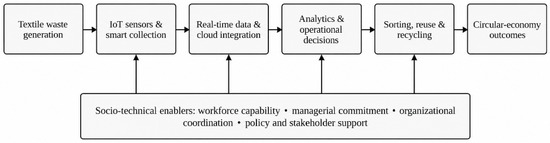
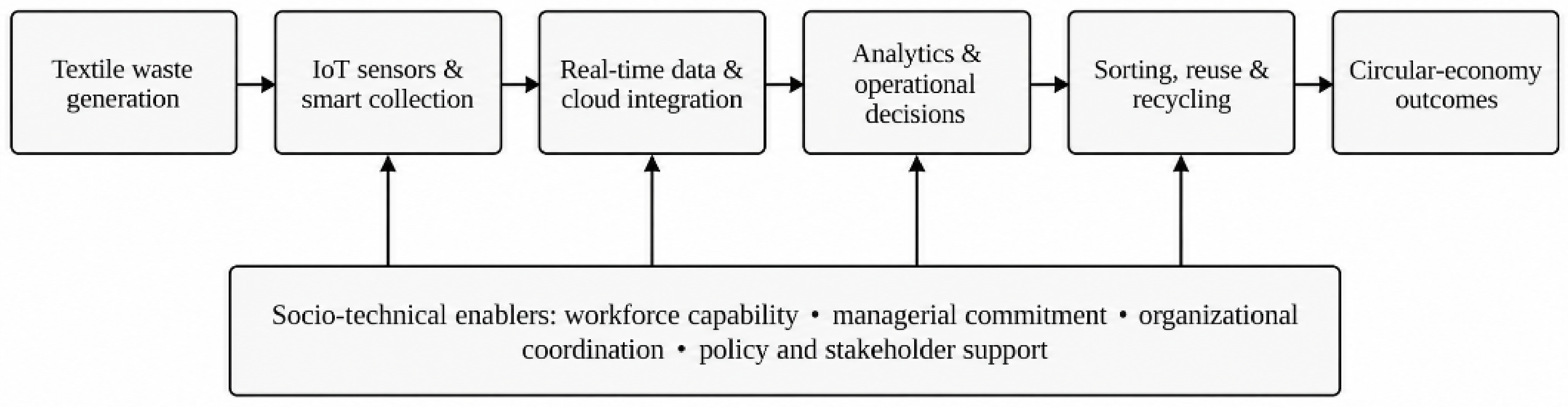
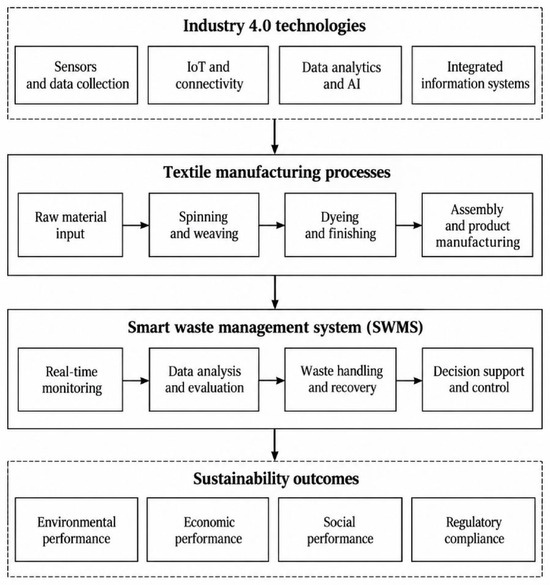
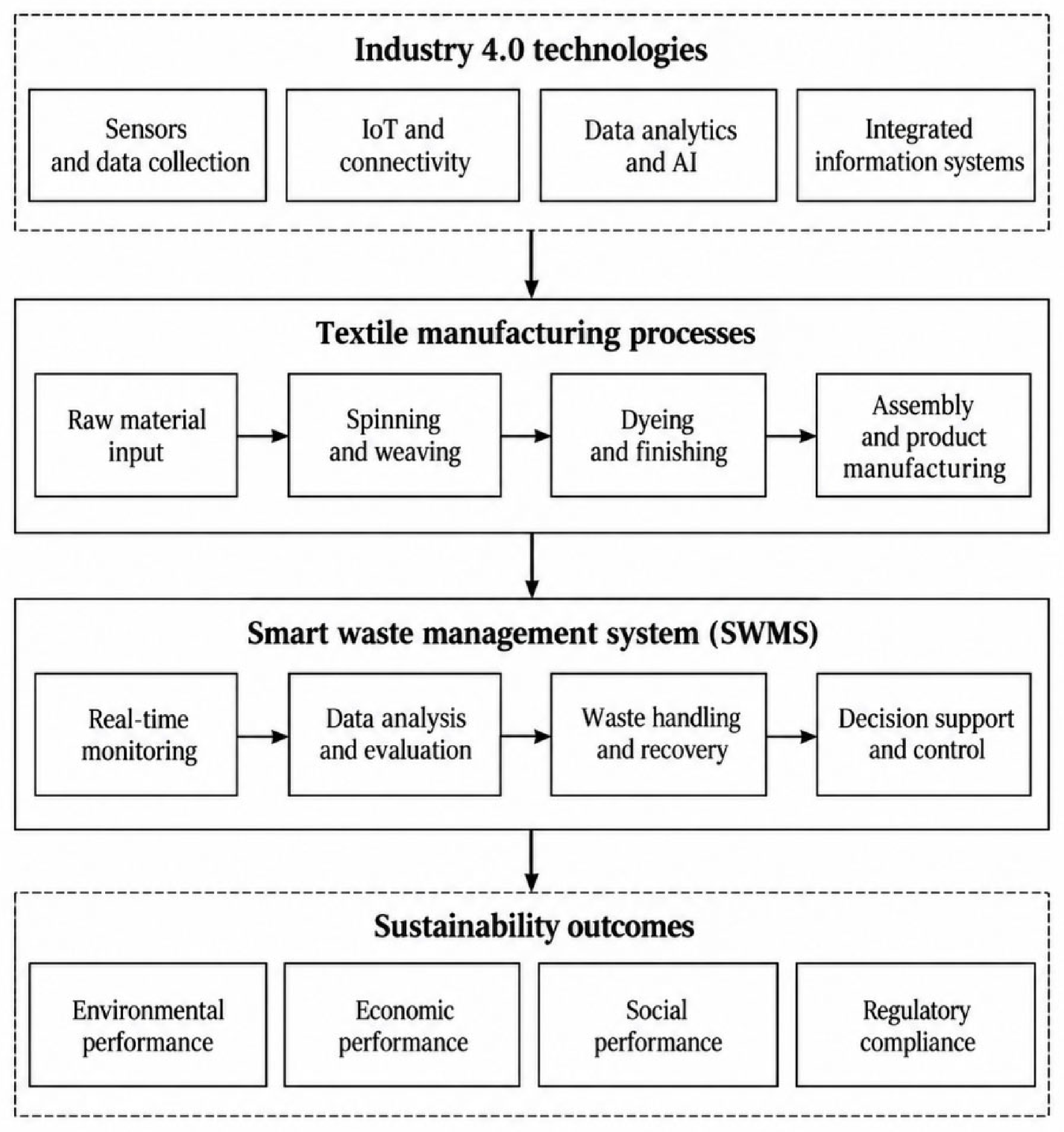
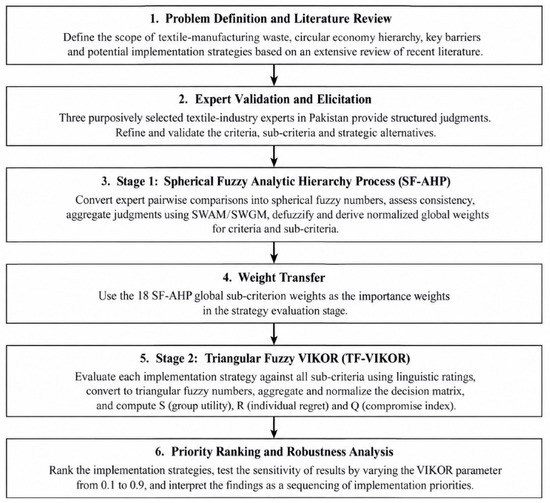
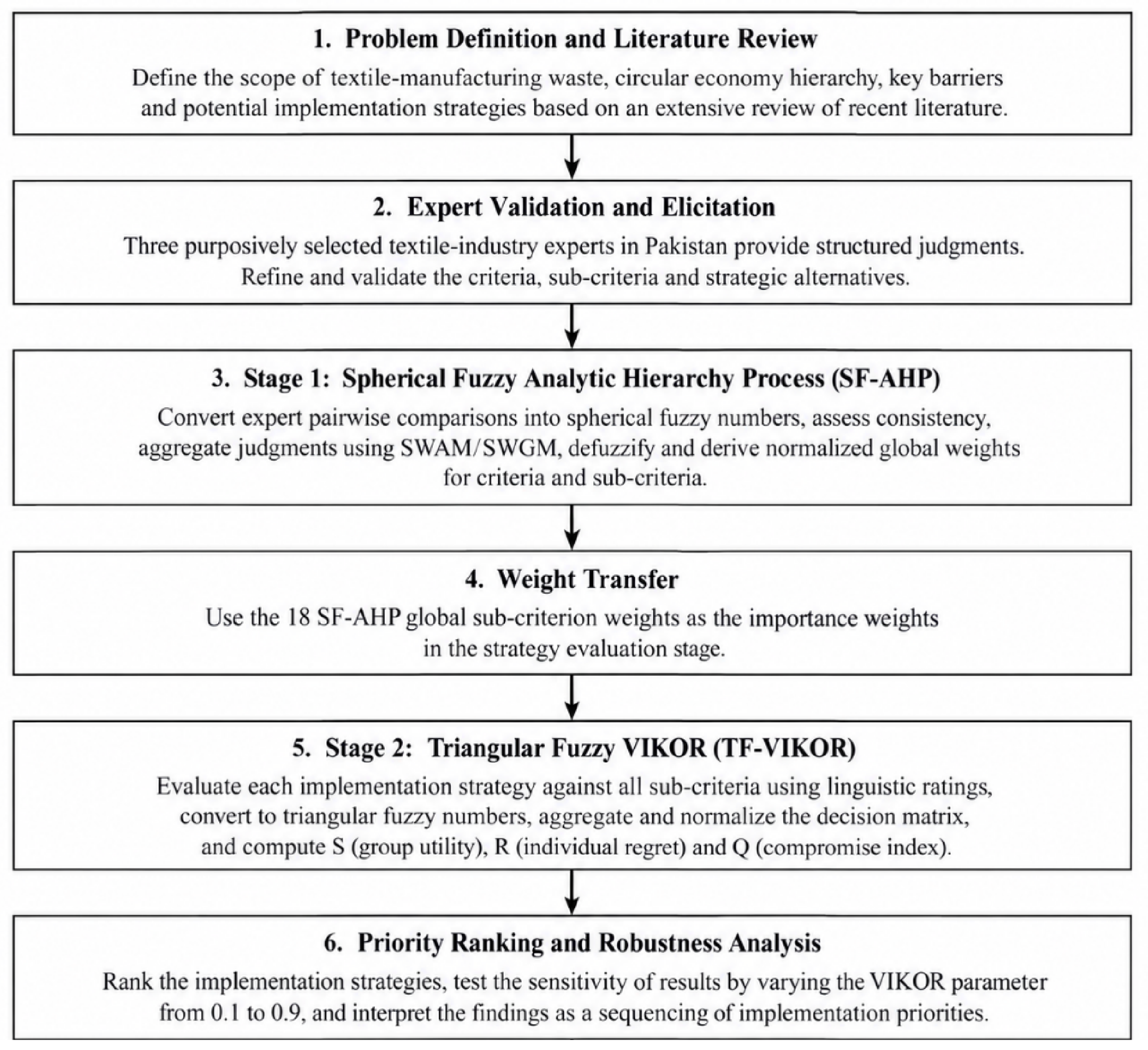
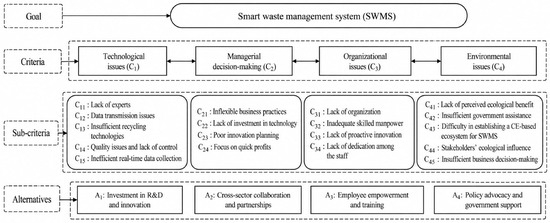
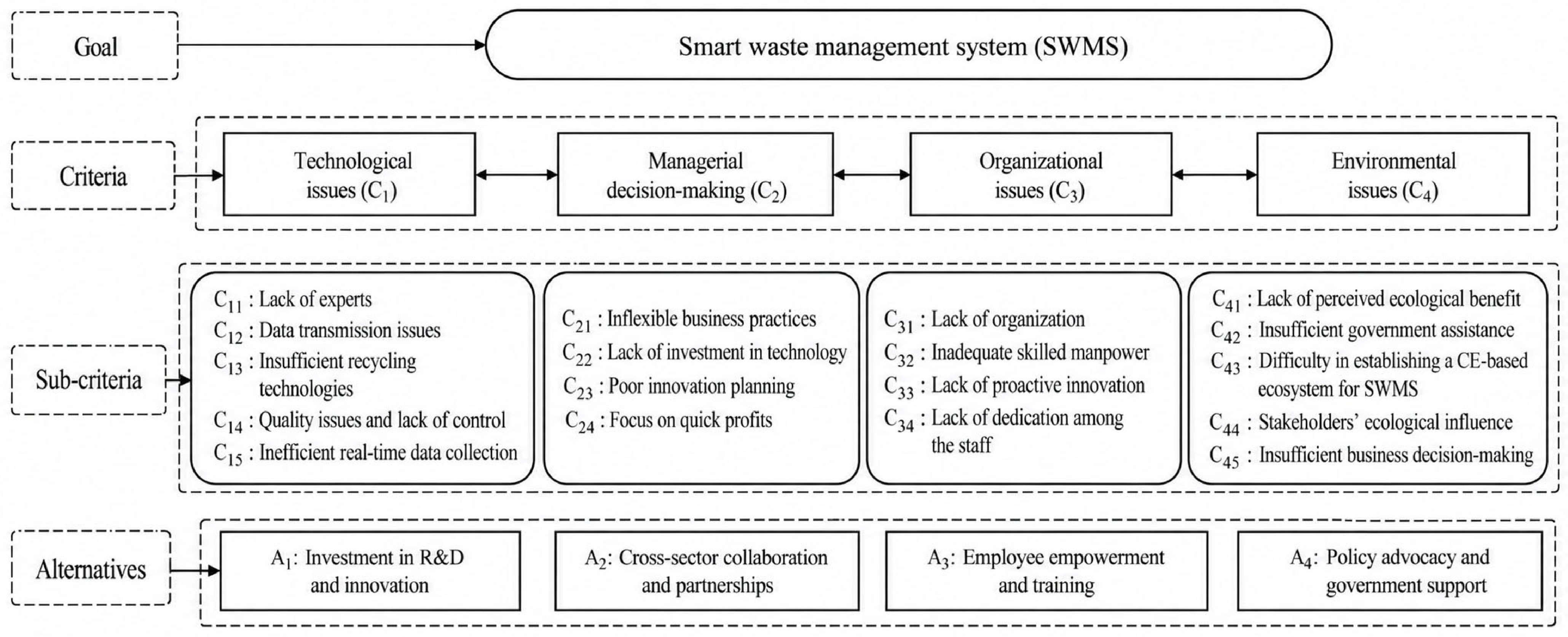
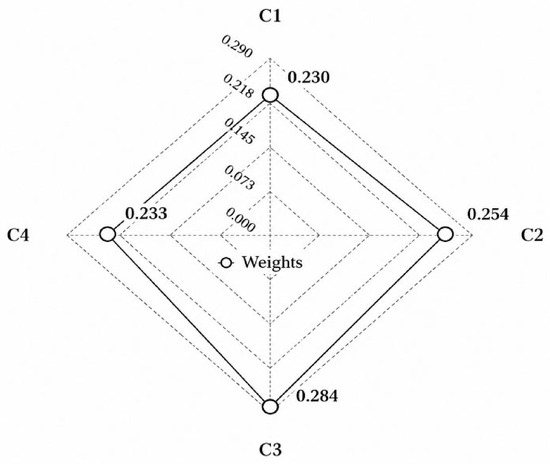
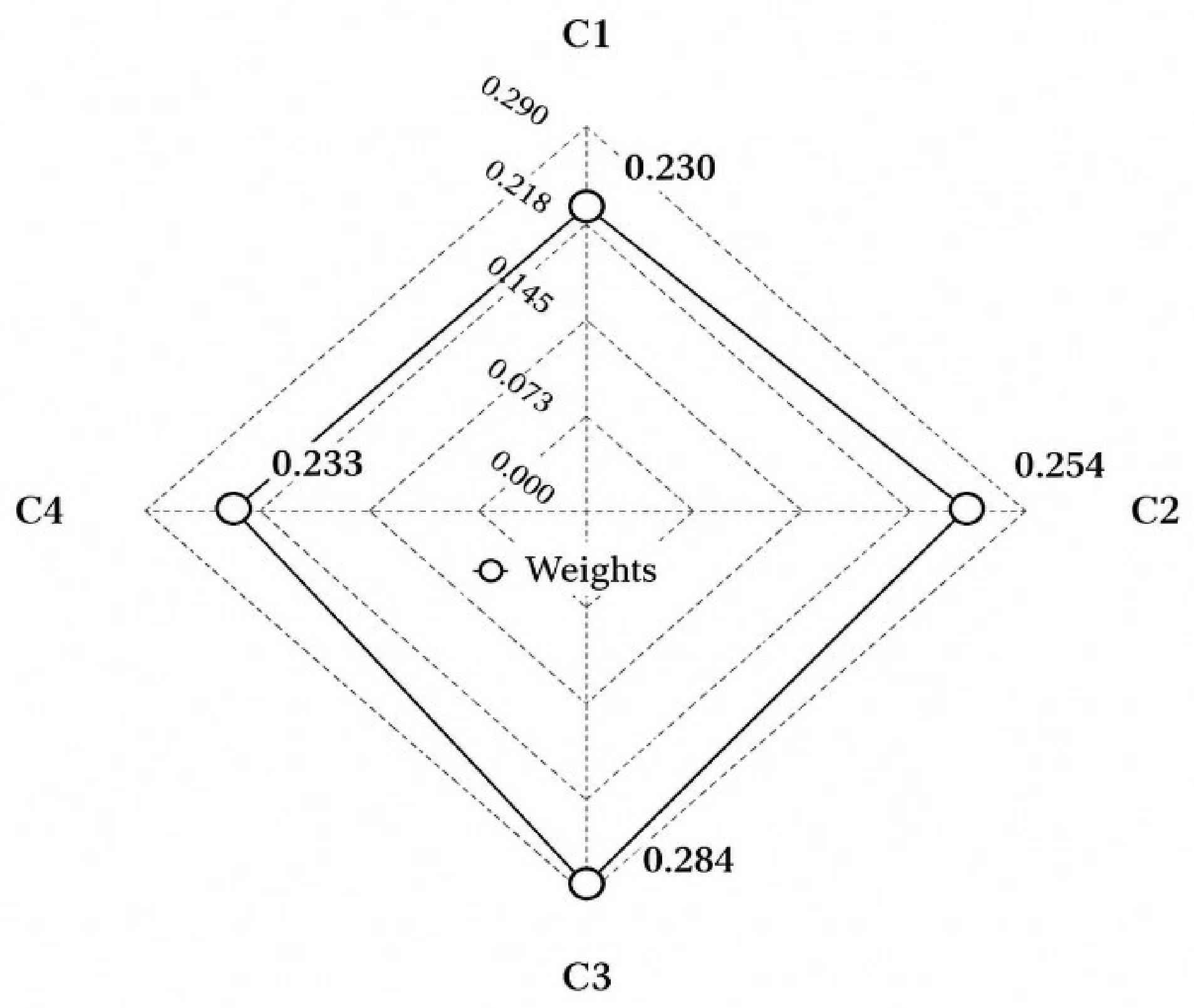
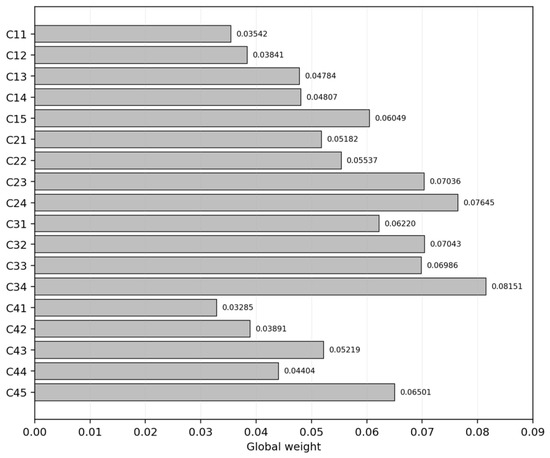
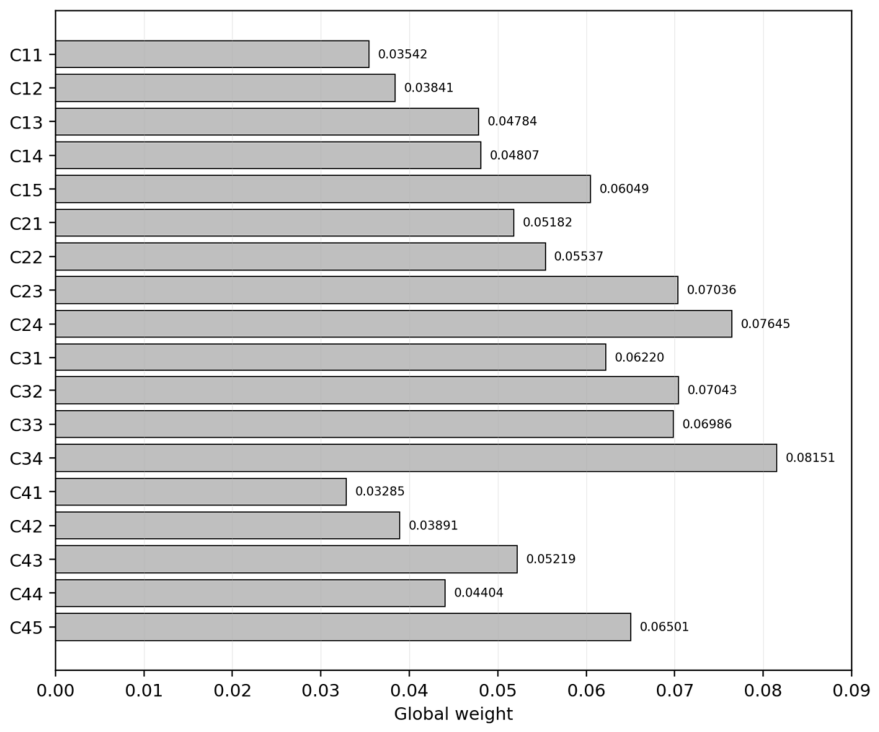
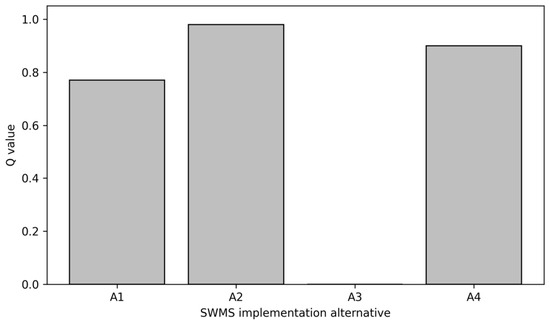
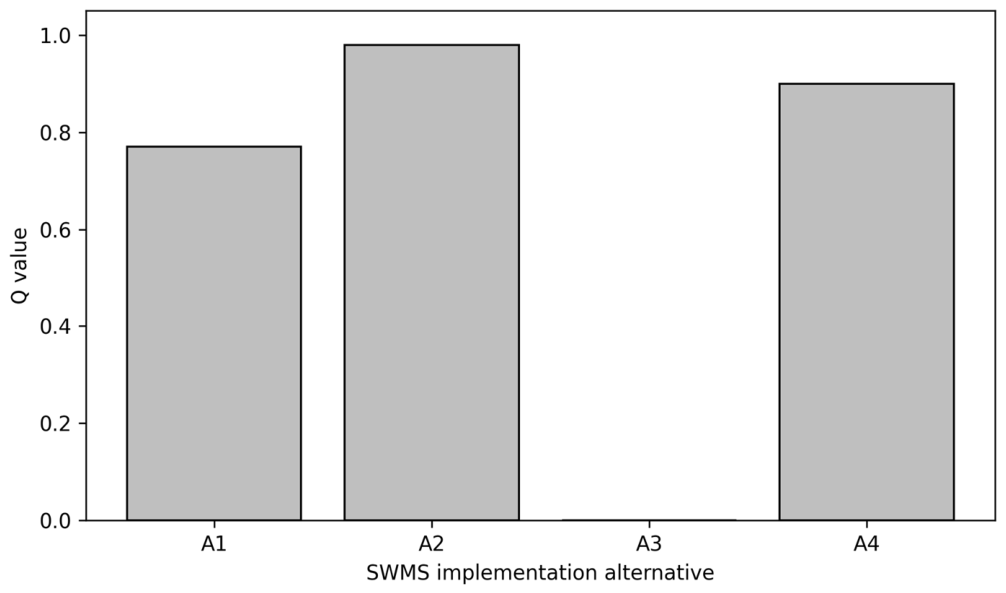

Disclaimer/Publisher’s Note: The statements, opinions and data contained in all publications are solely those of the individual author(s) and contributor(s) and not of MDPI and/or the editor(s). MDPI and/or the editor(s) disclaim responsibility for any injury to people or property resulting from any ideas, methods, instructions or products referred to in the content. |
© 2026 by the authors. Licensee MDPI, Basel, Switzerland. This article is an open access article distributed under the terms and conditions of the Creative Commons Attribution (CC BY) license.