


Abstract
Early end-user participation in architectural decision-making remains limited despite Building Information Modelling (BIM) and Digital Twin practice. This paper presents a human-centred, lifecycle-oriented framework that integrates extended reality (XR), generative artificial intelligence (AI), and metaverse environments with a federated BIM and Digital Twin backbone to embed non-specialists at the stages of highest design leverage. A mixed-methods design combined a critical narrative review with a bilingual cross-sectional survey of 69 architectural professionals in the United Kingdom and Turkey, who rated framework components on a four-point Likert scale. Analyses applied Spearman’s ρ, Kendall’s τ-b, and Kruskal–Wallis H tests under Benjamini–Hochberg false discovery rate correction. Eight stakeholder interviews on explainable AI and human-in-the-loop processes refined governance and transparency requirements. Endorsement was moderate to strong across lifecycle stages. Technical design and whole-life circularity recorded the strongest agreement, while metaverse governance returned the lowest mean (M = 2.78). After correction, BIM familiarity was positively associated with one capability item, 5D cost integration, and with one risk-recognition item on neglecting operation and maintenance during coordination, so the BIM familiarity hypothesis (H1) was supported by evidence of two kinds. No positively worded metaverse item survived correction, so the metaverse familiarity hypothesis (H2) was not supported as originally formulated. An exploratory finding indicated that greater metaverse familiarity was associated with heightened awareness of a governance risk—that unclear stakeholder roles would complicate immersive project initiation. The framework as appraised separates core BIM-centred dimensions from emerging metaverse-centred dimensions and aligns with the RIBA Plan of Work and BS EN 15978-1:2021. The framework is conceptual and has not been instantiated as a prototype, so the evidence establishes perceived viability rather than demonstrated effectiveness. It guides phased adoption that prioritises interoperability and identifies functional prototypes as the empirical next step.
1. Introduction
Digital transformation has reshaped architectural practice through Building Information Modelling (BIM) and, increasingly, Digital Twin (DT) technologies, which maintain a synchronised virtual representation of a physical asset updated from live data. These advances support coordination, information consistency, and lifecycle management across design, construction, and operation [1,2,3]. A persistent challenge remains the meaningful engagement of end-users when decisions carry the greatest downstream impact. Conventional artefacts such as two-dimensional drawings and static visualisations are difficult for non-specialists to interpret [4], and augmented alternatives have been developed in part because that difficulty persists into formal submission and approval [5].
The consequence is a matter of timing rather than of tool availability. User knowledge that arrives after the design is fixed cannot be absorbed without rework, so this study asks when that knowledge enters the information chain and under what governance it becomes an authoritative record, rather than whether digital tools for consultation exist.
Human-centred and participatory design argue for designing with users rather than for users, yet accessible digital pathways are still limited [6,7,8]. Extended reality (XR), an umbrella term spanning virtual reality (VR), augmented reality (AR), and mixed reality (MR), can improve comprehension of scale and performance [4,9], and generative artificial intelligence (AI), which produces design alternatives from stated goals and constraints, can translate expressed needs into bounded alternatives. In parallel, the metaverse, a persistent and interoperable network of shared, immersive three-dimensional environments [10,11], has emerged as a setting for real-time collaboration. When coupled with Digital Twins, the metaverse acts as the experiential layer while the twin provides the data-rich engine for simulation, operations, and decision support. This symbiosis underpins many high-value use cases across the Architecture, Engineering and Construction (AEC) sector, which designs, delivers, and operates the built environment [3], and motivates a platform stance that privileges interoperability and data federation.
The transition from Industry 4.0 to Industry 5.0 in the AEC sector further underscores the need for human-AI collaboration within BIM environments [12,13]. Industry 5.0 prioritises synergy between human creativity, intuition, and emotional intelligence on one hand, and AI’s capacity for rapid data processing, pattern recognition, and precision on the other. BIM serves as a medium to integrate these elements, yet current applications often fall short due to barriers such as inadequate human-AI interaction, data interoperability issues, and trust concerns [14,15,16]. Insights from stakeholder interviews highlight how explainable AI interfaces and human-in-the-loop decision-making can enhance transparency and collaboration, particularly in stages involving generative design and constructability reviews. These early, participatory stages also determine much of a building’s whole-life carbon and operational energy performance [17], so strengthening front-end user involvement directly affects net-zero outcomes in the built environment. These approaches align with practical steps to optimise workflows, reduce waste, and improve sustainability.
Related proposals have advanced individual capabilities, yet they tend to treat BIM coordination, immersive visualisation, generative design, and Digital Twin monitoring separately, and they rarely combine lifecycle-wide end-user involvement with governance over information quality, so end-users remain peripheral to early decisions [14,15]. This study proposes a metaverse-based, human-centred framework that situates XR and generative methods within a governance-compliant environment anchored to a federated BIM/Digital Twin backbone [10,11,18]. The framework aligns with the Royal Institute of British Architects (RIBA) Plan of Work and the lifecycle modules in BS EN 15978-1 to preserve traceability across stages [17,19]. The aim is to operationalise early and continuous end-user involvement without compromising information quality or lifecycle control, while leveraging human-AI collaboration to facilitate the Industry 5.0 shift. To achieve this aim, the study critically reviews literature on BIM, Digital Twins, the metaverse, and generative AI with respect to participatory decision-making; develops an integrated conceptual framework to enable meaningful and governance-compliant end-user involvement across project stages; conducts a survey with architectural professionals to evaluate the perceived viability of the proposed framework; draws on semi-structured interviews with AEC professionals to examine the human, organisational, and governance conditions that shape adoption; analyses survey data using descriptive and non-parametric inferential methods to test relationships between technology familiarity and agreement with the framework; and synthesises the findings to discuss implications for practice, highlighting contributions, limitations, and directions for future implementation. The scope is bounded. The framework is developed and validated at the level of perceived viability through a survey and professional interviews rather than a deployed prototype, and the evidence is drawn from architectural professionals in the United Kingdom and Turkey.
The study is guided by three research questions. RQ1 asks whether AEC professionals regard the proposed framework as viable across the project lifecycle. RQ2 asks whether professional familiarity with the underlying technologies is associated with the level of agreement with the framework. RQ3 asks which human, organisational, and governance conditions shape adoption of the framework in practice. The quantitative strand tests two directional hypotheses linked to RQ2. H1 states that greater familiarity with BIM is positively associated with agreement with the framework. H2 states that greater familiarity with metaverse technologies is positively associated with agreement. RQ3 is addressed through the qualitative strand and the integration of the two evidence types.
The significance of the problem is twofold. Participation determines whether a building serves the people who occupy it, and the decisions taken at the front end also fix much of a building’s whole-life carbon and operational energy performance [17]. Improving the quality of early involvement therefore bears on the social and environmental performance of the asset, which is the connection this study draws between participatory design and net-zero objectives in the built environment.
The remainder of the paper is organised as follows. Section 2 sets out the research design, including the literature review approach, the survey, and the interview strand. Section 3 reviews the literature on BIM and Digital Twins, participatory design, the metaverse, generative AI, and information governance, and identifies the research gap. Section 4 develops the framework, detailing its concept, components, roles, information flows, and lifecycle mapping. Section 5 reports the validation, combining descriptive results and hypothesis tests. Section 6 discusses the findings in relation to the research questions and to prior work, and states the limitations. Section 7 concludes and outlines directions for future work.
2. Research Design and Methodology
This study investigates how end-user participation in architectural decision-making can be strengthened through a metaverse-based, human-centred framework anchored to a federated Building Information Modelling (BIM) and Digital Twin backbone. Current BIM and Digital Twin practice supports professional collaboration but constrains the active involvement of non-expert end-users at the stages of highest design leverage. The study addresses this problem through a mixed-methods design that first develops the framework from the literature and then evaluates it against professional judgement using two complementary strands of primary data.
2.1. Research Philosophy and Design
The research adopts a pragmatist philosophy. Pragmatism treats the research question as the driver of method selection and supports the combination of quantitative and qualitative evidence within a single study [20]. This stance suits the dual aim of measuring the perceived viability of the framework across a professional population and explaining the human and organisational conditions that shape that viability. Following the structure of the research onion, the design pairs a deductive quantitative strand with an inductive qualitative strand and integrates the two at the interpretation stage [20]. The design is a convergent mixed-methods design with a dominant quantitative survey strand and a supporting qualitative interview strand. The survey tests whether familiarity with key technologies is associated with agreement with the framework. The interviews surface the mechanisms, in particular trust, explainability, and organisational readiness, that the survey cannot capture directly. Both strands are primary data collected for this study. A cross-sectional time horizon applies to each strand, which gives a snapshot of professional sentiment and practice at the current stage of digital maturity in the sector.
2.2. Literature Review Approach
The literature review is a critical narrative review rather than a systematic review. Its purpose is to define the participation gap, to position BIM, Digital Twins, generative artificial intelligence (AI), extended reality (XR), and the metaverse in relation to participatory decision-making, and to derive the requirements that the framework must satisfy. Sources were drawn from peer-reviewed journals, recognised standards, and sector analyses identified through database and citation searching, and were selected for relevance to lifecycle-integrated, governance-compliant participation. The review does not claim exhaustive coverage or protocol-driven screening, and its conclusions are interpretive. This approach is appropriate for a conceptual contribution that synthesises several fast-moving technological strands into a single framework.
Sources were included where they were peer-reviewed journal articles, recognised international or national standards, or sector analyses of platform capability, where they addressed the built environment or a directly transferable domain, and where they bore on at least one of the five strands that structure Section 3. Sources were excluded if they treated immersive or generative technology without reference to design, delivery or asset management; if they duplicated a finding already represented by a stronger source; or if a claim could not be traced to a stated method or dataset. Standards were included for definitional and normative content rather than as evidence of effect. Selection was purposive and iterative rather than protocol-driven, so no screening flow and no inter-rater agreement are reported, and the review carries the limitation stated in Section 6.3.
2.3. Quantitative Strand: Survey
2.3.1. Instrument Design
A self-administered online questionnaire was developed and delivered through Google Forms. The instrument was organised thematically around the four primary lifecycle stages of the framework, presented as Sections A to D: preparation, conceptual design and coordination, technical design, and implementation, operation and lifecycle management. Each section contained statements representing framework components, and respondents rated their agreement on a four-point Likert scale from strongly disagree to strongly agree. A four-point scale was selected to remove the central neutral category and to require respondents to commit to a positive or negative position. This choice is appropriate when the aim is to detect the direction of professional sentiment towards an unfamiliar framework rather than to measure fine gradations of intensity. The questionnaire opened with a screening item on familiarity with key technologies, which confirmed a knowledgeable sample and provided the familiarity measure used in the inferential analysis. The instrument was prepared in English and Turkish. The English wording of every item is reproduced in Appendix C, and the complete questionnaire as administered in both languages is provided in the Supplementary Materials (File S1).
2.3.2. Sampling and Recruitment
Participants were architectural and AEC professionals in the United Kingdom and Turkey. A non-probability strategy combined convenience, purposive, and snowball sampling. Purposive selection targeted professionals with working knowledge of digital design tools, convenience sampling drew on accessible professional networks, and snowball referral extended reach within those networks. Two national contexts were chosen to broaden the professional base and to capture perceptions across settings with differing levels of BIM adoption and digital maturity, and the bilingual instrument made this dual-context recruitment feasible. The study does not claim a probability or statistically representative sample, and the analysis therefore addresses perceived viability rather than population-level generalisation.
Occupants and end-users were not recruited. What is appraised at this stage is whether the framework is workable within professional information-management practice, which requires respondents able to judge its implications for common data environments, information-exchange requirements, and lifecycle governance. Occupant evaluation answers a different question, namely whether participation through the framework improves comprehension and influence, and that question can be answered only once an instantiated environment exists for occupants to use. The ethics approval obtained for this study also covered professional participants. Section 6.3 states what this means for the interpretation of the findings.
2.3.3. Sample and Data Screening
The instrument returned 72 responses. Three responses were removed during data-quality screening for straight-line response patterns, in which a respondent selects the same option across all or nearly all items. All three removed cases were from the Turkish sub-sample. This left a final analytic sample of 69 valid responses, comprising 57 respondents from Turkey and 12 from the United Kingdom. All descriptive, reliability, and inferential results reported in this paper are computed on this screened sample. Before distribution, the instrument was piloted with three bilingual participants to confirm clarity and linguistic equivalence between the English and Turkish versions, and minor wording adjustments were made.
2.3.4. Analysis
Data were analysed in IBM SPSS Statistics 29. Descriptive statistics summarised agreement by item and by lifecycle section, and internal consistency was assessed using Cronbach’s alpha for each section. Because the data were ordinal and the sample was non-probability, non-parametric methods were used for inference. Associations between technology familiarity and agreement were tested with Spearman’s ρ and Kendall’s τ-b, and group differences across familiarity levels were tested with Kruskal–Wallis H tests. Tests were one-tailed in the hypothesised positive direction. To control the false discovery rate (FDR) across multiple comparisons, the Benjamini–Hochberg procedure was applied [21], and adjusted p-values are reported alongside unadjusted values. The analysis syntax and the complete statistical output for the reliability coefficients and the thirteen item-level tests are provided in the Supplementary Materials (File S2).
2.4. Qualitative Strand: Interviews
2.4.1. Design and Instruments
The qualitative strand used semi-structured interviews to obtain depth on professional experience of human-AI collaboration in BIM-enabled workflows. Four interview guides were prepared, one for each role group, and each guide was structured around RIBA Plan of Work stages 0 to 7 so that responses could be compared across the project lifecycle. The role-specific guides covered context and background, AI and BIM integration, human-AI collaboration and the role of human judgement, barriers to adoption, and future potential. The semi-structured format ensured consistent coverage of core topics while allowing the interviewer to probe issues that emerged during each conversation.
2.4.2. Participants
Eight professionals were interviewed, two from each of four role groups: architects and design engineers, project and construction managers, data scientists, and academics and researchers. This composition was chosen to represent the principal perspectives that shape adoption decisions across the lifecycle, from design intent and delivery to data infrastructure and independent evaluation. Table 1 summarises the participant profile.
Table 1.
Interview participant profile.
2.4.3. Data Collection and Analysis
Interviews were conducted online through Microsoft Teams and Zoom to accommodate participants across locations and were recorded and transcribed with consent. Transcripts were analysed using reflexive thematic analysis, beginning with an inductive coding pass on each transcript, followed by a template analysis that organised codes against the study objectives. Codes were clustered into candidate themes, reviewed against the data and against negative cases, and refined into four themes: the shift from automation to human-centred collaboration, AI as a co-designer across RIBA stages, BIM and Digital Twins as the data backbone for lifecycle collaboration, and the ethical, organisational, and cultural conditions that govern adoption. The themes were triangulated against the literature to strengthen credibility. The same eight interviews inform both the present study and a companion study of human-AI collaboration in BIM-enabled workflows, and both uses are covered by the ethics approval under reference TETHIC_2025_11316.
2.5. Integration of the Two Strands
The strands were integrated at the interpretation stage. The survey provides the primary evidence on the perceived viability of the framework; the interview findings are presented in Section 5.4, and the interview themes are used in Section 6 to interpret the survey patterns. These include the more cautious appraisals of metaverse governance and operational monitoring, the value attached to explainable AI in coordination, and the asymmetric maturity of established BIM functions relative to emerging metaverse functions. This convergent use of the two evidence types supports a fuller account than either strand could provide alone.
3. Literature Review
This review follows a critical narrative approach rather than a systematic protocol. Sources were drawn from peer-reviewed journals, recognised standards, and sector analyses. Searching was carried out in Scopus, Web of Science, and Google Scholar using the terms metaverse in architecture, end-user participation, human-centred design, generative design, immersive technologies (XR/VR/AR), digital twins in AEC, use of metaverse in the AEC sector, and metaverse applications in industries. The search was limited to journal articles and review papers published in English in the five years preceding the review, and was extended by citation searching from the retrieved sources. Records were screened and scored for relevance to lifecycle-integrated and governance-compliant participation, and inclusion was agreed between the authors. The review does not claim exhaustive coverage, and its synthesis is interpretive. Section 2.2 sets out this approach in full alongside the study’s other methods.
This review examines how digital transformation has reshaped architectural practice, and asks why meaningful end-user participation has remained limited despite it. It first situates BIM and DT development within Construction 4.0, incorporating the shift to Industry 5.0. It then considers evidence on human-centred and participatory design, highlighting limits in conventional and digital engagement, with emphasis on human-AI synergies. It evaluates the metaverse as a persistent, multi-user environment and positions generative AI and immersive technologies as enabling mechanisms. Figure 1 maps the reviewed literature as a set of connected themes, organised into the five strands that structure this section: BIM and Digital Twins, end-user participation, the metaverse, generative AI and immersive technologies, and governance and interoperability. The map was derived by thematically coding the reviewed sources and grouping recurrent topics into these five strands and their sub-themes, so it presents the organising structure of the review rather than an empirical result. It concludes by synthesising these strands to identify the need for an integrated, lifecycle-oriented and governance-compliant framework that operationalises early and continuous end-user involvement.
Figure 1.
Thematic map of the reviewed literature.
3.1. Digital Transformation in Architectural Design: From BIM to Digital Twins
BIM has become a cornerstone of digital construction. It supports multi-disciplinary coordination, improves information consistency, and links design with time, cost, and asset data within common data environments. Studies associate BIM adoption with better collaboration and efficiency across planning, construction, and operation [22,23]. BIM also enables workflow integration with visualisation platforms and with extended reality to improve communication and plan checking, which is relevant to lay stakeholders who struggle with technical artefacts [24]. These advances are part of a wider Construction 4.0 transition that emphasises data-driven planning and lifecycle asset management [2].
Adoption of these capabilities is uneven across the sector, and the literature records persistent barriers at the technical, organisational, and process levels. Gu and London found that successful uptake depends as much on non-technical strategies, including clear role definition and collaboration, as on tool functionality [25]. Evidence from the United Kingdom shows that BIM use concentrates in the early project stages and tapers across construction and operation, with resistance to change and limited client demand among the main obstacles [26]. These findings caution against assuming seamless uptake, and they strengthen the case for a phased, human-centred approach that lowers the threshold for non-specialist participation.
The transition to Industry 5.0 prioritises synergy between human expertise and AI capabilities within BIM environments [12,13]. BIM acts as the digital backbone, integrating AI for predictive analytics, automation, and real-time collaboration.
Digital Twins build upon but are distinct from BIM. A twin is a dynamic, data-connected representation that mirrors the state and behaviour of the physical asset across its lifecycle. Research in the built environment frames Digital Twins as enablers of design simulation, construction logistics, predictive operations, and performance optimisation [3,27,28]. The literature cautions against treating BIM and Digital Twins as interchangeable, since BIM models often lack real-time telemetry and the behavioural fidelity that twins require [27]. Several reviews argue that the full value of twins arises when they are connected to sensor networks, reality capture, and enterprise systems in a way that supports continuous decision-making and learning over time, a conclusion shared by successive digital twin reviews [28,29] and supported by evidence on lifecycle information flow [3].
Despite these capabilities, studies continue to identify a participation gap. Complex interfaces, proprietary data flows, and professionalised workflows limit early involvement by non-expert clients and users [30,31,32]. User engagement tends to concentrate in late reviews or post-occupancy stages, when scope and cost constraints are already fixed, which increases the risk of misalignment and rework [2]. There is also evidence that Digital Twin initiatives overlook stakeholder inclusion, focusing on technical implementation rather than collaborative governance and human–computer interaction [2,33]. These limitations point to a methodological and technological need for accessible, persistent environments that bridge professional information management and lay comprehension.
3.2. End-User Involvement in the Design Process: Importance and Challenges
Human-centred design and participatory design provide the conceptual foundation for meaningful involvement. The literature urges a shift from designing for users to designing with and by users through co-creation and value-inclusive processes [6,8]. Research links human-centred principles to preferences and behaviours in real settings, indicating that earlier and richer participation supports satisfaction, well-being, and social resilience [7,18]. Empirically grounded approaches such as neighbourhood-level co-design suggest that engagement quality is a determinant of acceptance and equity outcomes [6].
Explainable AI interfaces and human-in-the-loop systems promote transparency and trust, allowing users to understand and influence AI-driven decisions.
However, legacy engagement tools struggle to convey spatial scale, ambience, and trade-offs to non-specialists. Two-dimensional drawings and static renders limit comprehension and can entrench passive review behaviours. Evidence shows that conventional media are less effective than immersive environments for communicating scale, layout, and experiential qualities during design reviews [4,9]. Studies also report that many end-users remain passive until occupancy, embedding assumptions without adequate feedback loops [34,35]. Even when digitised, technical artefacts are a barrier. Non-experts find 2D extracts from BIM models difficult to interpret, while usability issues in digital tools hinder participation [2,5]. This creates a recurring mismatch between the sophistication of industry information systems and the accessibility required for early, meaningful involvement.
Recent work proposes combinations of XR, data visualisation, and co-design practices to improve understanding and agency. Comparative studies indicate that immersive VR supports more accurate appraisals of spatial attributes and preferences, with low discomfort under appropriate configurations [9]. Mobile augmented reality has improved on-site comprehension and engagement by overlaying alternatives in context, although technical limits remain [36]. Semi-automatic 3D floor plan generation has been explored to lower barriers for professional and non-expert users, but such tools rarely address lifecycle governance or decision traceability on their own [37]. These strands signal a direction but do not yet specify a lifecycle-integrated, governance-compliant environment that embeds end-users in decision-making.
3.3. The Metaverse as an AEC Participation Platform
Against this backdrop, the metaverse has emerged as a persistent, shared, and interoperable set of 3D environments for real-time interaction. In an AEC context, the metaverse is best understood as a multi-user workspace that couples immersive presence with data-rich models, where professionals and lay participants can experience, discuss, and record decisions. Recent syntheses emphasise the symbiotic relation between the metaverse as the experiential collaboration layer and the Digital Twin as the data and simulation engine. When connected, the twin provides fidelity and live data, while the metaverse supplies the human interface, presence, and continuity that enable co-creation and governance over time. This distinction matters because it clarifies investment priorities and avoids conflation of mediums and models. It also aligns with platform developments that focus on real-time interoperability, data federation, and lifecycle continuity across cloud and edge infrastructure.
Evidence from sectoral analyses and case material suggests that metaverse-style environments are already supporting design reviews, coordination, remote inspections, and training [14,15]. Multi-user VR has reduced meeting time and accelerated feedback cycles in complex projects, while mixed reality overlays assist on-site verification and progress tracking. Experimental deployments have combined live point clouds with design intent for remote inspections, reducing travel and allowing interim checks that flag deviations. Safety programmes using VR simulations report gains in engagement and retention compared with traditional training, with indications of behavioural change. At the urban scale, city-level twins accessed through immersive interfaces support citizen engagement and policy prototyping. These exemplars remain heterogeneous, but they illustrate mechanisms through which immersive, persistent workspaces can enhance comprehension, reduce rework, and widen participation.
These developments are underpinned by an enabling ecosystem. Real-time collaboration engines and open-format scene descriptions are improving cross-tool synchronisation. Infrastructure twin platforms are extending data federation across design, construction, and operations. Together, these platform layers aim to connect previously siloed applications and data, which is a precondition for a functional AEC metaverse that is usable by non-experts without sacrificing information integrity or version control. Integration with the Internet of Things (IoT) and 5G enhances real-time data flow, supporting monitoring and decision-making.
At the same time, reviews are clear about adoption challenges. Interoperability remains uneven and often proprietary. Scaling persistent environments to building- or city-level fidelity with many concurrent users is computationally intensive. Hardware cost and ergonomics constrain long sessions and on-site use. Organisations face skills gaps that span game-engine fluency, data engineering, and immersive interaction design. Governance questions arise around identity, privacy, audit, and professional conduct in virtual workspaces. These are important constraints that motivate phased adoption and a focus on governance by design.
3.4. Core Concepts: Generative AI and Immersive Technologies
Generative AI addresses the production of alternatives within intelligible boundaries. Research in housing and urban design shows how user preferences and performance targets can be translated into parameter sets that drive optioneering, meaning the systematic generation and comparison of design alternatives against stated objectives, with multi-objective optimisation balancing conflicting goals such as cost, energy, and accessibility [38,39,40,41]. Computational frameworks allow non-experts to customise layouts using modular, rule-based schemas, often with real-time feedback [42,43]. These methods enable exploration of large design spaces while retaining professional control through constraints, which aligns with governance and safety requirements in practice.
Immersive technologies provide the experiential layer that makes such alternatives understandable to non-specialists. Integrations of VR with BIM and game engines have increased public involvement and enabled real-time testing of variations [4]. Evidence indicates that immersive VR improves the accuracy of affective appraisals of spatial qualities and preferences with minimal discomfort under suitable configurations [9]. Studies in healthcare settings show that realistic simulations support meaningful perception gathering from vulnerable populations, which implies broader accessibility benefits when configured appropriately [44]. Mobile AR has improved user understanding and engagement by enabling contextual exploration of options [36]. Multi-user immersive systems support synchronous reviews and can improve error detection relative to traditional methods [45]. Mixed reality offers further advantages in visual comfort and scale handling, particularly when combined with generative systems for rapid iterations [46].
These benefits coexist with technical drawbacks. Cybersickness, latency, tracking drift, and field-of-view limits can constrain participation, especially over extended sessions. Device heterogeneity and content optimisation requirements increase delivery complexity. Unless addressed through careful configuration, user onboarding, and performance tuning, these factors limit the inclusivity of XR-enabled participation [4,47]. The literature therefore supports both the adoption of immersive tools and their integration into accessible workflows with measured technical thresholds and support practices.
3.5. Governance, Interoperability, and Information Management
A persistent finding across the literature is that participation must be implemented without eroding information quality or lifecycle governance. This requires alignment with Common Data Environment (CDE) practices, clear Exchange Information Requirements (EIR), and versioned exchanges that preserve provenance and permissions [1]. In such a configuration, the metaverse environment functions as a collaboration and decision interface, while the federated BIM or Digital Twin remains the authoritative record. Decision logs, model updates, and risk registers must be synchronised to ensure traceability and compliance.
Interoperability is central. Reviews emphasise that achieving an immersive, multi-user environment connected to live models and enterprise systems depends on open formats, robust data federation, and connector ecosystems that avoid lossy conversions. Platform-level advances mitigate fragmentation by synchronising scene graphs, models, and telemetry across tools, while infrastructure twin services align discipline-specific sources and reality capture with operational data. This platform shift changes the locus of value from stand-alone tools to connective tissue, which is relevant for both professional workflows and end-user interfaces.
These governance and interoperability considerations extend into operations and urban contexts. In facility management, performance twins accessed through immersive interfaces promise proactive maintenance, energy optimisation, and operational transparency. At city scale, digital twins support policy simulation and citizen engagement, but they also raise questions around data rights, inclusion, and public governance of the virtual layer. Reviews recommend explicit frameworks for identity, consent, and conduct, alongside technical security controls, to create safe and trustworthy environments for professional and civic participation. Trust in human-AI collaboration requires explainable systems to justify decisions, addressing reluctance in high-stakes environments. This requirement follows from the human-centric orientation of Industry 5.0 [12] and from accounts of how that orientation departs from the efficiency focus of Industry 4.0 [13].
3.6. Literature Synthesis and Research Gap
The reviewed literature demonstrates rapid progress in each technological strand. BIM and Digital Twins have improved coordination, information quality, and lifecycle management [1,2,3]. Human-centred and participatory approaches articulate the rationale and benefits of earlier user involvement in architectural decision-making [6,8,18]. Generative AI offers a mechanism for producing constrained design alternatives that reflect user inputs while respecting professional rules [38,40,42]. XR systems improve comprehension [4,9] and support multi-user collaboration [45] in plausible, first-person conditions. Sectoral analyses argue that the metaverse can serve as a persistent, shared workspace that binds these elements into an everyday medium for collaboration and decision-making.
Yet, much of the available work examines components in isolation or through pilots that are partial in scope [14,15]. Reviews of Digital Twins frequently prioritise technical integration over participatory governance. XR studies have tended to focus on evaluation of comprehension or coordination rather than on lifecycle traceability and information management. Generative systems demonstrate optioneering but rarely articulate how user choices become authoritative records tied to delivery, cost, and risk in a live project. Emerging metaverse exemplars illustrate potential but seldom specify how to link end-user input, professional validation, and federated models under CDE and EIR constraints. These silos mean that, despite technological advances, end-users remain peripheral to early decision-making and the benefits of digital workflows are not fully realised in human-centred terms. Taken together, this evidence supports the conclusion anticipated at the start of the review. Meaningful end-user participation has remained limited because these strands have developed in isolation, rather than within an integrated process that makes user input authoritative under lifecycle governance.
Two recent proposals come closest to the framework developed here and merit direct comparison. Hadavi and Alizadehsalehi trace a path from BIM to the metaverse for the AEC sector and set out the enabling technologies and their maturity, but they treat the metaverse largely as a visualisation and collaboration environment and do not specify how lay input becomes an authoritative record under lifecycle information management [14]. Chen et al. propose an application framework for the construction metaverse together with an analysis of adoption barriers, which establishes what obstructs uptake but stops short of defining roles, information flows and decision gates across project stages [15]. Both accounts are led by technology. The framework developed in this study differs in three respects. It is organised around lifecycle stages rather than around technologies, it assigns end-users a defined role at each stage rather than treating them as an audience, and it binds participation to exchange information requirements and a common data environment so that user input carries the same provenance and auditability as professional information.
This gap motivates an integrated framework that is lifecycle-oriented, platform-agnostic, and governance-compliant. The framework should align with the RIBA Plan of Work and the lifecycle modules defined in BS EN 15978-1:2021 to ensure traceability of decisions and impacts across stages. It should define roles, components, and information flows that place end-users as continuous contributors while preserving the single source of truth through a federated BIM and Digital Twin backbone. It should operationalise generative AI as a kit-of-parts mechanism for intelligible personalisation, and it should deliver immersive participation through XR interfaces situated within a persistent metaverse workspace. The literature indicates that such a synthesis is feasible in principle and desirable in practice, but it requires careful attention to interoperability, security, identity, and ethics, as well as to professional boundaries and responsibilities.
By distinguishing mature BIM-centred practices from emerging metaverse-centred applications, the integrated approach also acknowledges asymmetric readiness. BIM-linked coordination, 4D and 5D integration, and operations-oriented twins are validated and transferable. Metaverse-specific participation, stakeholder governance, and cross-platform interoperability are prospective and require empirical demonstration. The objective that follows, therefore, is to articulate a framework that merges these strands, strengthens end-user participation at the stages of highest leverage, and maintains lifecycle coherence and accountability through established information management practices, and to establish whether professionals judge that framework viable. Whether the objective is met is assessed in Section 5 and discussed in Section 6, and contributions are claimed in Section 7 only to the extent that the evidence supports them.
4. Framework Development
This section describes how the metaverse-based participatory design framework was conceived and specified (Figure 2). It focuses on the design rationale, architectural choices, role definitions, information flows, and lifecycle mapping that together form a platform-agnostic, governance-compliant model for end-user participation. The framework was derived in three steps. First, the critical narrative review in Section 3 was synthesised into a set of design requirements, namely early and meaningful end-user participation, continuity of information across the lifecycle, and explicit governance of immersive and AI-assisted processes. Second, these requirements were organised around the construction lifecycle, using the RIBA Plan of Work and the lifecycle modules of BS EN 15978-1 as the staging structure, so that each component is tied to a recognised stage and decision point. Third, the eight stakeholder interviews reported in Section 2.4 were used to test and refine the components, and their themes on explainable AI, human-in-the-loop control, and organisational readiness shaped the role definitions and the governance model set out below. The resulting framework was then expressed as testable statements and examined through the survey reported in Section 5.
Figure 2.
The framework across the lifecycle: nine stages in six phases, with the measures produced by the six components of Figure 3 grouped into five dimensions. Dashed outlines mark the emerging dimensions identified in Section 5.6. The full node-level view is given in Figure A1 of Appendix B. Small coloured dots on a measure indicate the additional dimensions to which it also belongs, in the colour of that dimension.
4.1. Concept, Rationale, and Principles
The framework responds to a persistent participation gap. BIM and Digital Twin technologies have improved professional collaboration and lifecycle coordination. Their specialist interfaces and complexity tend to marginalise non-expert clients. Conventional visualisations communicate scale, ambience, and trade-offs poorly to non-experts, as immersive comparisons show [4,9], and this limitation spans the lifecycle stages where participation matters most [2,3,31]. Each of those sources addresses a different part of that span, namely the user perspectives that digital twin research has tended to omit [2], the information flows that must remain continuous across stages [3], and the persistence of the limitation even where participatory methods are deliberately introduced [31].
The framework treats the metaverse as a persistent and interoperable environment where stakeholders co-create, inspect alternatives, and record decisions. Generative methods translate expressed needs and constraints into explainable options. A federated BIM or Digital Twin backbone, meaning a set of discipline models linked for coordination while each remains under the control of its originator, maintains a single source of truth across the lifecycle [10,11]. The design is conceptual and functional. It specifies roles, components, and information flows that can be instantiated on different technology stacks. It adopts composability and modularity through a kit-of-parts schema in which end-user choices are constrained by parametric modules with explicit adjacency and performance rules. Choices remain intelligible and traceable while still enabling variation, as shown for rule-bound housing configuration with a real-time interface [42] and for multi-objective optimisation of adaptable modular systems [48].
The architectural stance aligns with emerging industrial metaverse and infrastructure-twin platform ecosystems that emphasise real-time collaboration and data federation. It draws on human-AI collaboration principles to ensure synergy between user intuition and AI precision, as seen in explainable interfaces that promote trust and transparency across stages. Guiding principles structure the development. Participation-by-design makes end-users continuous contributors rather than periodic reviewers [8]. Explainable personalisation requires that generative options and their trade-offs are transparent to non-experts [38,42]. Lifecycle continuity ensures that early decisions propagate through coordinated BIM or Digital Twin models.
These principles correspond to the three that the European Commission sets out for Industry 5.0, namely human-centricity, sustainability and resilience [12]. Human-centricity is carried by participation-by-design and by the retention of human authority over consequential decisions. Sustainability is carried by surfacing whole-life carbon, energy and circularity information to users at the point of choice rather than reporting it once the design is settled. Resilience is the least developed of the three in current AEC practice and is carried here by the federated information structure, by permissioned and auditable exchange, and by the phased adoption stance set out in Section 4.6, which allows the framework to be instantiated incrementally and to fall back to established BIM practice if an emerging component proves unworkable.
Figure 3 shows the six components set out in Section 4.2 and the paths along which information moves between them. Reading from left to right, end-users and non-expert stakeholders enter the workspace through onboarding, which converts their goals and constraints into a project parameter set. Generative AI produces modular options within rules set by the architect, and the XR interface allows those options to be experienced and commented on, with each contribution attributed and timestamped. Curated decisions pass through a controlled gate in the common data environment to the federated BIM and Digital Twin, which remains the authoritative record and returns model status, constraints and performance to the workspace. Operational data captured once the asset is in use re-enters the same loop, so participation continues beyond handover. Figure 2 presents the same framework from a lifecycle perspective, grouping the measures these components produce into five dimensions across the nine lifecycle stages, and Figure A1 in Appendix B gives the full node-level view.
Figure 3.
The six components of the framework and the information flows between them. End-user input is converted into a project parameter set that drives generative optioneering; immersive review produces attributed and timestamped records; and validated changes pass through a controlled gate in the common data environment to the federated BIM and Digital Twin, which returns model status, constraints and performance to the workspace. The same framework is shown across the project lifecycle in Figure 2.
Safety and risk are integrated from the outset rather than appended late. Interoperability and governance follow CDE and EIR practices to preserve provenance, permissions, and auditability [1]. Sustainability and circularity are surfaced to users within the same environment, connecting choices in design, operation, and end-of-life strategies [21]. The framework is mapped to the RIBA Plan of Work and aligned with the lifecycle modules in BS EN 15978-1:2021 [17,19].
4.2. Architecture and Core Components
The framework integrates six components so that end-users can make early, active choices and have approved decisions synchronised to a federated BIM or Digital Twin with versioned, traceable records. It incorporates layered enablers from human-AI models, such as digital skills audits for organisational readiness and socio-cultural fit, to support adoption. Table 2 sets out the derivation of each component, linking it to the design requirement it answers, to the literature and interview evidence that supports it, and to the survey items through which it was appraised.
Table 2.
Derivation of the framework components, showing for each component the design requirement it answers, the literature and interview evidence that supports it, and the survey items through which it was appraised.
Onboarding and parameterisation convert user goals, constraints, and preferences into a project parameter set. This set drives optioneering and sets the bounds for compliant variation. AI-driven skill audits align team capabilities with technology needs from the start.
Generative AI composes modular alternatives and exposes intelligible trade-offs in cost, energy, accessibility, and other performance dimensions within designer-set rules [38,42]. Explainable AI interfaces allow stakeholders to understand decisions, enhancing transparency.
The metaverse workspace provides the persistent, multi-user environment where interactions occur, are stored, and are synchronised with the federated model. It extends beyond XR devices to encompass project-wide presence, session history, and decision logging [10,11]. Its platform-agnostic stance anticipates connectors to collaboration engines and infrastructure-twin services that support real-time interoperability and data federation.
XR acts as the immersive interface that allows stakeholders to experience, comment on, and co-create options in real time. The framework assumes XR experiences are configured to promote comprehension and comfort for non-experts, following evidence on public engagement in VR and BIM workflows [4] and on the accuracy and comfort of immersive design review [9].
The federated BIM or Digital Twin remains the authoritative record. It provides coordinated data for 4D, 5D, and 6D uses and anchors health and safety (H&S) and risk registers to approved decisions [3]. When connected to the metaverse workspace, it enables a living record of design, construction, and operations activity, with predictive analytics for ongoing safety and performance.
Interoperability and governance are enforced through the organisation’s centralised data platforms in line with the EIR. Exchanges are permissioned, versioned, and auditable to maintain provenance and consistency [1]. Linked-data ontologies support cross-disciplinary integration.
These six components and the five dimensions in Figure 2 describe the same framework. The component view in this section and the dimension view in that figure correspond directly. Onboarding and parameterisation, the metaverse workspace, and XR drive the human impact dimension, because they govern how non-experts engage with, comprehend, and contribute to the design. Generative AI and the federated BIM or Digital Twin populate the technology and steps dimensions, because they supply the option generation and the authoritative model progression. The federated record, together with interoperability and governance, underpins the safety and risk dimension through permissioned, auditable exchanges and linked health and safety registers. The energy, cost and sustainability dimension is surfaced across stages by generative AI and the federated model, which expose performance and lifecycle trade-offs to users. Reading the framework by component or by dimension therefore describes the same system, with the lifecycle columns in Figure 2 indicating where each dimension is most active.
4.3. Roles and Responsibilities
Role definitions were specified to balance human agency with automated assistance and to protect information quality. They incorporate human-in-the-loop decision-making to promote collaboration and adjust workflows continuously. End-users provide onboarding inputs, explore and comment on options through the metaverse and XR, make bounded choices within the kit-of-parts, and join collective decisions. They track permissions, approvals, and progress in the same workspace. The system role interprets profiles and constraints, proposes feasible typologies, clusters similar users to accelerate curation, explains trade-offs, and blocks non-compliant requests based on codes, design rules, and engineering limits. Notifications alert stakeholders to conflicts and pending decisions. AI monitors progress in real time through Digital Twin technology.
The architect or lead designer defines the kit-of-parts and decision boundaries, sets rules and evaluation criteria, curates options, publishes design rationales, and ensures alignment with the EIR and coordination with the federated model. The delivery team formed by engineers, contractors, and manufacturers validates constructability, logistics, and cost integration. The team maintains H&S and risk registers, incorporates product and system constraints, and updates the federated BIM or Digital Twin as the authoritative record. Human-in-the-loop cycles assess and refine processes for trust and safety.
4.4. Information Flow and Governance Model
Information moves bidirectionally between the metaverse workspace and the federated model along controlled paths. Onboarding data creates a parameter set. Generative engines use this to produce options. XR sessions generate comments, annotations, and approvals that are stored with timestamps and author identities. Curated decisions and validated changes are promoted to the federated model through controlled gates in the CDE. The federated model publishes back to the workspace to visualise status, constraints, and performance. Linked services generate 4D sequences, 5D cost forecasts, and 6D asset data. All exchanges are logged to preserve provenance and support audit. The approach assumes connectors that preserve meaning across tools and reduce lossy conversions, reflecting platform developments documented in recent AEC metaverse and twin ecosystems. Governance includes explainable AI to justify decisions and build team alignment.
4.5. Lifecycle Mapping and Workflows
The workflow is mapped to the building lifecycle and mirrors the logic shown in Figure 2, where the complete node-level framework is provided as Figure A1 of Appendix B. It translates the principles and components into stage-specific practices. It follows the eight stages of the RIBA Plan of Work, from stage 0 to stage 7, and adds a ninth stage for end of life corresponding to module C of BS EN 15978-1. It also incorporates human-AI layers for enablers, technology stacks, collaboration dynamics, and impact channels like sustainability and productivity.
4.5.1. Preparation
Strategic definition begins with user-friendly data capture of household composition, finance, and location preferences. Inputs are converted into parameters that drive AI-enabled optioneering. The metaverse workspace is established as the primary collaboration environment. XR supports early comprehension and reduces dependence on static scoping artefacts. Digital skills audits assess readiness and socio-cultural fit.
Strategic summary introduces sustainability benchmarks that integrate environmental and financial considerations such as land selection and mortgage options. A modular kit-of-parts allows personalisation within predefined rules to balance expression and constructability. Change management strategies ensure adoption of AI and BIM systems.
Brief development is reconceived as an evolving entity. Within the metaverse workspace, the brief is iteratively refined through Digital Twin integration, data feeds, and AI-powered simulations. An initial seed brief sets scope, targets, and roles, then evolves through iterative testing of feasibility, sustainability, and constructability. Multi-criteria trade-off analysis enables stakeholders to explore interactions between cost, flexibility, energy, and comfort.
Level of Detail increases progressively as objectives are translated into validated requirements. Updates are synchronised to the federated model to preserve a living brief and ensure traceability through the CDE.
4.5.2. Design
Concept design uses an integrated loop that operates three mechanisms in concert. Metaverse-based XR sessions turn non-experts into active participants who can understand options in real time. Modular generative engines translate feedback into adaptive alternatives that remain within rules and performance boundaries. Budget and spatial analysis services provide continuous checks on feasibility so that exploration remains aligned with technical and financial constraints. This loop embeds participation while protecting information quality and design intent. Lean construction principles integrate with BIM for optimisation.
Spatial coordination extends the loop to ensure project-wide performance. Reactive clash detection is replaced with proactive coordination inside a federated model hosted through the metaverse. Monitoring is continuous. Analysis expands beyond geometry to include performance, eco-design, and H&S. A shared workspace allows disciplines to review, comment, and act synchronously. Comparable directions are noted where BIM, Digital Twins, and immersive platforms converge to strengthen collaborative decision-making. Explainable AI interfaces promote understanding of design decisions.
4.5.3. Pre-Construction
Technical design is defined as Next-Level BIM through metaverse and AI integration, a term used here for the stage at which the federated model, immersive review and generative support operate together to produce a validated virtual prototype. The objective is a validated virtual prototype before physical works. The federated model is enriched with material and structural detail to improve technical robustness. Construction logistics are mapped with 4D sequencing for anticipatory planning. Energy, environmental, and cost scenarios are executed as real-time simulations in the metaverse so both professionals and end-users can understand trade-offs. H&S and risk registers are updated to reflect manufacturing and assembly processes. Radio-frequency identification (RFID) tagging establishes traceability and prepares for future lifecycle monitoring. 5D cost integration aligns procurement and logistics with technical design. Continuous checking against the EIR sustains contractual and client-defined criteria. Buildability strategies are refined to ensure feasible fabrication, transport, and assembly [52]. The resulting virtual prototype becomes a decision-support environment that reduces uncertainty before mobilisation. Sustainability analysis tools integrate predictive analytics for building safety and performance.
4.5.4. Construction and Assembly to Close-Out
Verified data is transferred to physical manufacturing and assembly while maintaining digital-physical synchronisation. Real-time monitoring combines IoT-enabled laser scanning, photogrammetry, drones, mobile scanning, and RFID for “as-constructed” capture. Data is synchronised to the Digital Twin to track progress and alignment with design. Human-centred quality assurance governs the integration of prefabricated and site-built elements and supports reverse logistics for defective or reusable components to advance sustainability. At completion, an End-of-Construction BIM Record consolidates as-constructed data, risk registers, and performance records for digital handover. Automated hazard detection improves site safety and productivity.
4.5.5. Use and Maintenance
Operations are managed as a Living Digital Twin. The configuration integrates operational telemetry, user experience input, and maintenance and asset records. The metaverse workspace provides dashboards and session recording so facility teams and users can annotate spatial experience and trace decisions. Evidence from immersive reviews supports richer appraisal during design and can extend to operations when linked to the twin. Operational measurements from IoT, metres, and building management system (BMS) logs synchronise with 6D BIM to keep asset registers, locations, service life, warranties, and maintenance histories up to date.
Governance follows CDE and EIR practices for authorisation, version control, and auditability. Post-occupancy evaluation (POE) instruments and structured surveys conducted in immersive sessions feed corrective and preventive actions into maintenance workflows. Standardised systems are monitored via condition-based rules. Sensor trends and service histories enable predictive interventions and coordination of scheduled tasks and work orders within the 6D environment. Objectives, roles, deliverables, and cadence are organised under the Soft Landings framework, which extends design-team involvement through handover and into early operation, to standardise continuous improvement. Digital Twin feedback loops monitor performance metrics like energy efficiency. By returning occupant feedback and sensed operational data to the federated model, this loop directly targets the gap between predicted and measured energy performance [53], supporting net-zero operational outcomes through continuous, user-informed calibration.
4.5.6. Demolition and Reuse
The end-of-life stage is approached through a cradle-to-cradle orientation that treats waste reduction as a design objective. DfD principles are embedded from concept so assets can be dismantled while preserving salvage value. The Living Digital Twin matures into a material passport, a structured record of the materials and components in the asset, that retains properties, condition, and deconstruction instructions to guide systematic disassembly and routing to reuse, repurposing, recycling, or remanufacturing. The metaverse workspace acts as the collaborative front-end, where stakeholders review sequences, visualise hazards in situ, and record component-level decisions. Approved actions update the 6D environment and trigger reverse-logistics workflows to preserve provenance across value chains. Sustainability metrics optimise energy consumption and predictive maintenance. Recent peer-reviewed assessments of metaverse adoption in construction reinforce these directions. They set out the technological path from BIM to the metaverse [14], an application framework and the barriers to adopting it [15], and a ranking of those barriers by influence [16], and together they underline persistent interoperability, cost, and governance constraints.
4.6. Development Choices and Implementation Stance
Two cross-cutting choices shaped the framework. First, platform agnosticism was adopted to allow instantiation on different stacks. This recognises the emergence of collaboration engines and infrastructure-twin platforms that provide real-time interoperability and data federation across tools and disciplines. Second, composability was prioritised so functions can be phased and combined. The model supports incremental adoption, for example beginning with XR-enabled reviews linked to the CDE, then adding generative kits, decision logging, and live twin connections as capacity grows. This stance is consistent with sector analyses that recommend phased implementation and governance by design for industrial metaverse use. It aligns with human-AI layers for enablers, technology, collaboration, and impacts.
4.7. Integration and Data Exchange
The framework treats a federated building information model as the shared source of truth, exchanged through the open Industry Foundation Classes (IFC) schema so that authoring, analysis, immersive and generative tools can read and write model data without depending on a single vendor [49]. Information is organised and version-controlled in a common data environment, following the information-management concepts and principles of the ISO 19650 series, which define how information is exchanged, recorded and approved across the asset lifecycle [50]. A Digital Twin layer synchronises the as-designed model with sensor and operational data, so that the model state seen in the metaverse reflects the current condition of the asset. Extended reality clients connect to this environment as views onto the federated model rather than as separate files, reading geometry and metadata for review and writing back structured comments, decisions and markups against specific model elements. Generative design services operate through defined interfaces, consuming model and brief data, returning candidate options as model variants, and recording provenance so that each option can be traced, accepted or rejected. Application programming interfaces and a shared identifier scheme bind these exchanges together, which keeps participation, analysis and decision records attached to the model elements they concern.
4.8. Governance, Privacy, and Security
Because participation occurs in a shared and persistent environment, governance is specified as a set of concrete controls rather than a general aspiration. Access follows role-based permissions managed through the common data environment, so that each participant can see and change only the information appropriate to their role and project stage, consistent with the information-management roles of the ISO 19650 series [50]. Sensitive information is handled through the security-minded approach of ISO 19650-5, which calls for a sensitivity assessment, a security management plan, and the monitoring and audit of compliance, and the framework adopts these as standing requirements for any metaverse deployment [51]. Identity is verified before entry, contributions are attributed to authenticated participants, and an append-only audit log records who changed what and when, which supports accountability and dispute resolution. Personal data captured during participation, including the records of non-expert contributors, is minimised, stored against a lawful basis, and subject to consent and retention rules in line with applicable data-protection law. Provenance metadata travels with generative outputs and recorded decisions, so that the origin of each option and the reasoning behind each choice remain inspectable. Conduct and safety rules govern behaviour in immersive sessions, and they are enforced through the same permission and logging mechanisms.
Ownership is settled before participation begins rather than negotiated afterwards. Rights in the federated model, in the options returned by generative services, and in the operational data captured once the asset is in use are assigned in the appointment documents and recorded in the exchange information requirements and the BIM execution plan, following the information-management responsibilities of the ISO 19650 series [50]. Where occupant-derived data is used to calibrate operation, the purposes for which it may be used and the parties who may access it are stated at the point of capture, and use outside those purposes requires fresh authorisation.
Informed participation requires more than consent to data processing. Participants are told at onboarding what their contribution can influence, which decisions remain with the professional team, and by what route they will see the outcome of their input. The framework constrains user choice within a kit-of-parts, and that constraint is disclosed rather than concealed, because participation that appears open while operating within undisclosed bounds would misrepresent the influence available to participants. Recorded decisions are returned to participants in the environment in which they were made, so that the relationship between contribution and outcome remains inspectable.
Algorithmic transparency is specified as a set of disclosure requirements rather than as a general commitment to explainability. Options produced by generative services are labelled as machine-generated, the constraint set and objectives that produced them are inspectable by any participant, and the provenance record identifies which requirement each option responds to. Explanation is bounded. The framework does not claim that participants can interrogate the internal behaviour of a generative model, and it therefore places responsibility for accepting or rejecting an option with the professional team rather than with the explanation.
Security controls address exposures specific to persistent immersive environments as well as those common to information management. Sessions are authenticated and bounded, so that an identity cannot be assumed by an unauthorised participant in a shared space, and live connections between the workspace and the Digital Twin enlarge the attack surface in ways that the sensitivity assessment required by ISO 19650-5 must consider explicitly [51]. Telemetry paths from the asset are treated as security-relevant, because a workspace connected to operational data can expose the behaviour and occupancy of a building as well as its geometry.
Three ethical questions attach to the generative component. The first is bias. A generative service configured on a narrow set of precedents will reproduce that narrowness, and the framework responds by requiring that the rule set and the precedent library are declared and open to challenge rather than by claiming that outputs are neutral. The second is responsibility. Design decisions taken with generative assistance remain the responsibility of the appointed professionals, and the audit record is structured so that the person who accepted an option can be identified. The third is a risk the framework creates for itself. Constraining user choice within a kit-of-parts makes participation intelligible and traceable, but it also narrows the field of what can be proposed, and a process that presents a bounded set of options as an open invitation would be participatory in form rather than in substance. The disclosure requirements above are intended to keep that boundary visible, and whether participants experience it as enabling or as limiting is a question for the pilot described in Section 6.3.
4.9. Illustrative Application
To show how the components operate together in practice, this section presents an illustrative application of the framework to a representative project, a mid-scale community building such as a neighbourhood library. The scenario is illustrative rather than empirical. It traces how the framework would support participation and decision-making across lifecycle stages, and it is offered to demonstrate the implementation workflow ahead of the pilot noted in Section 6.3. The stages follow the RIBA Plan of Work and the lifecycle modules of BS EN 15978-1 used elsewhere in the framework. At the briefing and concept stage, the design team publishes an early federated model to the common data environment and opens an extended reality review space onto it. Residents, library staff and the operator join the space through verified identities with permissions set for their role, as described in Section 4.8. They walk the proposed layout at full scale, comment on sightlines, accessibility and the arrangement of shared areas, and place their comments against the specific model elements they concern. A generative design service proposes layout variants that respond to the brief and to the recorded comments, and each variant carries provenance so the team can see which requirement it addresses. The participation records and the chosen direction are logged in the common data environment, which gives an auditable account of how the brief was shaped.
During spatial coordination and technical design, the federated model is exchanged through the Industry Foundation Classes schema so that structural, services and cost tools work from the same source, as set out in Section 4.7. End-users return for a second review to test changes against their earlier comments, and the audit log links each resolved comment to the decision that addressed it. At the construction stage, the model is connected to a Digital Twin that receives progress and site data, and the immersive space is used for coordination and for briefing trades on complex assemblies. Issues raised on site are written back to the model elements they affect, so that the record of decisions remains continuous from brief to build.
In use, the Digital Twin synchronises the model with sensor and operational data, and occupants and the operator access a lightweight view of the building to report issues, request changes and see how spaces are performing. Their input is governed by the same permission, consent and audit rules, so that participation continues into operation without exposing sensitive information. This walkthrough shows that the framework can be instantiated incrementally, beginning with extended reality reviews linked to the common data environment and adding generative support, twin connections and operational feedback as the project proceeds. It also shows where practical feasibility must still be tested, namely the effort of preparing models for non-expert participation and the facilitation that meaningful participation requires, which the planned pilot will examine.
5. Framework Validation
This section validates the metaverse-based participatory design framework using the survey of architectural professionals. It reports reliability and descriptive results by lifecycle stage, followed by hypothesis tests on whether technology familiarity shapes agreement with the framework (Table 3). Triangulation with the interview findings presented in Section 5.4 adds depth to the perceptual data.
Table 3.
Summary of hypotheses and corresponding tests.
5.1. Data Quality and Respondent Context
After straight-line screening, 69 valid responses were retained. The instrument was bilingual. Internal consistency exceeded the conventional 0.70 threshold for all lifecycle sections: Section A α = 0.713, Section B α = 0.733, Section C α = 0.830, and Section D α = 0.803 (Table 4). These coefficients support section-level inference and item-level interpretation.
Table 4.
Cronbach’s Alpha values of each section.
Self-reported familiarity provided framing for the inferential analysis. BIM appeared most established; AI/machine learning (ML) and VR/AR occupied an intermediate position; the metaverse was emergent; and generative design showed notable engagement among a minority. The distribution is shown in Figure 4.
Figure 4.
Distribution of self-reported familiarity with key technologies.
The screened sample comprised 57 respondents practising in Turkey (82.6%) and 12 in the United Kingdom (17.4%). Part 2 of the instrument collected professional role, years of experience, and country of practice. The survey was administered anonymously under the approved ethics protocol (TETHIC_2025_11316), and the analytic file was prepared so that no personally identifiable information was retained, with the consequence that professional role and years of experience are not retained at respondent level in that file. The respondent profile available for reporting is therefore country of practice together with the familiarity distribution in Figure 4, in which BIM was the most established technology (37.7% moderately familiar and 29.0% expert) and the metaverse the most emergent (36.2% not familiar and 5.8% expert).
Interviews with eight professionals (architects/design engineers, project/construction managers, data scientists, and academics/researchers) provided complementary qualitative depth. Thematic analysis revealed recurring emphasis on human-AI collaboration, explainable interfaces, human-in-the-loop decision-making, and phased adoption. These insights directly illuminate survey patterns on governance and maturity asymmetry. The findings are presented with illustrative quotations in Section 5.4.
5.2. Descriptive Validation by Lifecycle Stage
Section A Preparation recorded broadly positive appraisals of user-centred data capture and sustainability-aligned goal setting. Highest means were for aligning land and finance with sustainability benchmarks and for user-friendly onboarding interfaces. Caution was expressed around unclear role definitions in metaverse environments at initiation and around early BIM–Digital Twin integration. Table 5 reports the item means and Figure 5 visualises the distribution.
Table 5.
Mean and standard deviation values for Section A: Preparation.
Figure 5.
Survey responses for Section A: Preparation.
Section B, Conceptual design and coordination, again showed endorsement. Strongest support was for AI-driven budget and spatial analyses in concept design and for real-time federated BIM improving coordination. XR-enabled participation was positively viewed. Lifecycle-oriented simulation and early operation and maintenance considerations attracted more careful, though favourable, judgements. Table 6 and Figure 6 present the results.
Table 6.
Mean and standard deviation values for Section B: Conceptual design and coordination.
Figure 6.
Survey responses for Section B: Conceptual design and coordination.
Section C, Technical design, produced some of the highest ratings, reflecting confidence in production-oriented digitalisation. Adding material and structural properties for constructability, updating construction methods to reflect selected components, and 4D integration for time planning scored strongly. RFID for logistics, Digital Twin support for performance, and 5D cost integration were also well rated, with a relative prompt for firmer emphasis on risk and formal verification of user requirements. Table 7 and Figure 7 summarise these findings.
Table 7.
Mean and standard deviation values for Section C: Technical design.
Figure 7.
Survey responses for Section C: Technical design.
Section D, Implementation, operation, and lifecycle management, contained the single highest mean across the instrument for design for disassembly and reuse. Recycling plans and 6D integration for performance management were strongly endorsed, with on-site quality controls also rated important. Metaverse-based real-time monitoring for participation and metaverse-updated performance tracking were evaluated positively but conservatively. Table 8 and Figure 8 report these outcomes.
Table 8.
Mean and standard deviation values for Section D: Implementation, operation, and lifecycle management.
Figure 8.
Survey responses for Section D: Implementation, operation, and lifecycle management.
Across sections, means consistently exceeded 3.0 on the four-point scale. The comparative pattern is shown in Figure 9 and indicates strongest endorsement for technical design and whole-life circularity, with more guarded appraisals where governance clarity or operational metaverse monitoring was at issue. Interview themes reinforced these patterns, particularly the value of explainable AI in coordination and the need for clear governance in emerging metaverse applications.
Figure 9.
Comparison of mean agreement scores across framework stages.
5.3. Hypothesis Tests on Familiarity Effects
The inferential strategy used non-parametric methods suitable for ordinal data, with one-tailed tests in the hypothesised positive direction and Benjamini–Hochberg false discovery rate control across multiple comparisons. Spearman’s ρ and Kendall’s τ-b were estimated alongside Kruskal–Wallis tests for group differences. The Benjamini–Hochberg correction was applied separately within the six metaverse comparisons and within the seven BIM comparisons, so each hypothesis family carries its own false discovery rate. Within each family, the Spearman and Kendall tests were treated as separate correction families, which is why Appendix A reports an adjusted p-value column for each statistic.
5.3.1. Metaverse Familiarity and Agreement
Correlations with metaverse familiarity were weak to moderate and positive, and one survived FDR correction. Agreement with A4, which states that unclear stakeholder role definitions and collaboration platforms may complicate project initiation in a metaverse environment, was positively associated with metaverse familiarity (ρ = 0.324, unadjusted p = 0.003, FDR p = 0.020). Kendall’s τ-b was also significant (τ-b = 0.285, FDR p = 0.023), and the group difference approached the conventional threshold (Kruskal–Wallis H = 7.76, p = 0.051, ε2 = 0.114). A5 on Digital Twin and BIM integration for project initiation approached significance after adjustment (ρ = 0.231, FDR p = 0.085). No other correlation survived correction. Kruskal–Wallis identified a group-level difference for D4 on real-time monitoring for participation (H = 8.82, p = 0.032, ε2 = 0.130), although the pattern was not strictly monotonic across familiarity categories and the corresponding correlation did not survive adjustment (ρ = 0.197, FDR p = 0.105). Table 9 and Figure 10 document these results. The direction of the surviving association matters for interpretation. A4 is negatively worded, so greater familiarity corresponds to stronger agreement that unresolved role definitions would obstruct immersive project initiation. Familiarity therefore tracks awareness of a governance risk rather than endorsement of a metaverse capability, and neither of the two positively worded metaverse items survived correction. Because H2 was formulated directionally, as a positive association between metaverse familiarity and agreement with the framework, the A4 result does not test that proposition. H2 was therefore not supported as originally formulated, and the A4 association is reported as an exploratory finding of heightened awareness of a governance risk. Interview data echoed this caution, emphasising the need for robust governance frameworks before wider adoption.
Table 9.
Spearman correlations and Kruskal–Wallis tests for Metaverse familiarity (full results in Appendix A: Hypothesis Tests).
Figure 10.
Metaverse familiarity effects on agreement with A4 and D4.
5.3.2. BIM Familiarity and Agreement
BIM familiarity showed significant positive associations after FDR correction. Agreement with B4 on the risks of neglecting operation and maintenance during coordination correlated with BIM familiarity (ρ = 0.306, FDR p = 0.031), with Kendall’s τ-b also significant (τ-b = 0.277, FDR p = 0.034) and a corresponding group difference across familiarity levels (Kruskal–Wallis H = 9.09, p = 0.028, ε2 = 0.136). Agreement with C8 on 5D cost integration likewise correlated with BIM familiarity (ρ = 0.284, FDR p = 0.031), with Kendall’s τ-b significant (τ-b = 0.250, FDR p = 0.034), although the corresponding group difference fell just outside the conventional threshold (Kruskal–Wallis H = 7.64, p = 0.054, ε2 = 0.112). C4 on constructability approached significance after FDR adjustment (ρ = 0.216, FDR p = 0.087). Table 10 and Figure 11 present these outcomes. The two surviving items differ in kind. C8 is positively worded and endorses a capability: the association of subcontractor and supplier costs with the digital model in 5D, so it supports H1 directly. B4 is negatively worded and registers recognition of a risk that neglecting operation and maintenance during coordination would restrict the functionality of the federated model. H1 is therefore supported, with the support resting on one positive capability item and one risk-recognition item rather than two equivalent endorsements of capability.
Table 10.
Spearman correlations and Kruskal–Wallis tests for BIM familiarity (full results in Appendix A: Hypothesis Tests).
Figure 11.
BIM familiarity effects on agreement with C8 and B4.
5.4. Interview Findings
This subsection presents the qualitative findings from the eight interviews described in Section 2.4. Reflexive thematic analysis produced the four themes named in Section 2.4.3, and each theme is illustrated below with short verbatim quotations attributed to the participant codes defined in Table 1. Table 11 records which participants contributed quoted evidence to each theme, so that the distribution of the material can be read alongside the illustrations.
Table 11.
Occurrence of the four interview themes by participant. A filled circle marks a participant whose account contributed quoted evidence to the theme in the thematic analysis.
The first theme is the shift from automation to human-centred collaboration. Participants described a division of labour that keeps judgement with people while delegating pattern-intensive work to AI, and they connected that division to sustainability outcomes and to information readiness. D2 stated, “My focus is on sustainability-driven digitalisation, specifically how AI and BIM can work together to deliver net-zero outcomes.” A2 described the operating rule, “As models prove consistent and safe, we shift repetitive or data-intensive tasks to AI-first workflows while keeping a human in the loop.” C2 tied the shift to information practice, “The biggest indicator is how early a team starts talking about data. If the client and design team come with model element definitions, LOD expectations, and structured asset requirements already in mind, that is a green flag.”
The second theme is AI as a co-designer across RIBA stages. Design-side participants described generative exploration at concept stage, and delivery-side participants set the conditions under which generated options are accepted. A2 explained, “We run a parametric massing engine leveraging Genetic Algorithms to explore layout variants under constraints like site footprint, daylight access, and cost per square meter.” B1 set the threshold for trust: “For us to trust an AI-generated option, it must display clear logic chains, what variables it used, what constraints were prioritised, and which trade-offs were made.” B2 added, “As an engineer, I need to verify that AI outputs align with industry codes and best practices. Transparency is crucial.” Acceptance of generated options is therefore conditional on explainability and compliance, which is the gatekeeping behaviour the framework assigns to the professional team in Section 4.3.
The third theme is BIM and Digital Twins as the data backbone for lifecycle collaboration. Participants located the value of AI-assisted work in a standards-based information environment rather than in any single tool. A1 stated, “We are committed to IFC 4.3 for geometric and semantic consistency across platforms.” B1 described handover practice: “We produce COBie deliverables enriched with performance and maintenance attributes.” C1 illustrated the operational return: “AI models flagged abnormal fan curve data during commissioning, which led us to identify a faulty VFD before sign-off. That early catch prevented a major handover delay.” These accounts support the framework’s anchoring of participation to a federated model within a common data environment managed under the ISO 19650 series.
The fourth theme is the ethical, organisational, and cultural conditions that govern adoption, and it is the only theme to which all eight participants contributed. B2 described the human barrier, “Among senior engineers, there is sometimes fear of deskilling. Others feel the tools are not mature or trustworthy. We frame AI as decision support, not decision replacement.” C1 identified the adoption signal, “The most crucial indicator is cultural readiness. Teams that understand digital workflows and maintain open communication channels adapt best.” D2 named the open governance problem, “The ‘human oversight’ component is still underdeveloped. We do not yet have standard measures for when and how human intervention should occur in an AI–BIM workflow to ensure both efficiency and accountability.”
The distribution in Table 11 shows that the technical themes draw principally on the design, delivery, and data roles, while the conditions that govern adoption were raised by every participant, including both academics. The interviews concern human-AI collaboration in BIM-enabled workflows rather than metaverse platforms as such, so their bearing on the metaverse layer of the framework runs through the governance, explainability, and readiness conditions they identify. This weighting corroborates the survey finding that governance clarity, rather than exposure, conditions confidence in the emerging components. The synthesis in Section 5.5 reads the two evidence types together.
5.5. Synthesis of Validation Evidence
The descriptive analysis validates the framework in general terms, with consistent agreement above the neutral threshold across all lifecycle stages and strongest endorsement for information-rich modelling, integrated time–cost planning, and circularity. The familiarity tests reveal an asymmetry. BIM-centred elements are both well supported on average and significantly associated with familiarity, through one capability endorsement and one risk recognition, reflecting the maturity of BIM practices in professional settings. Metaverse-centred elements attract positive but more measured appraisals, and the one familiarity effect that survives multiple-comparison control is exploratory with respect to H2, attaching to the risk of undefined stakeholder roles rather than to any metaverse capability. Respondents with greater exposure are more alert to the governance problem without being more confident in the operational functions. This divergence is consistent with the industry’s current readiness profile, where BIM functions are embedded while metaverse participation and operational monitoring remain prospective and sensitive to governance clarity. Figure 9, Figure 10 and Figure 11 consolidate this pattern. Interview insights on human-in-the-loop processes and explainable AI further substantiated the value of core BIM elements while highlighting unresolved governance and oversight conditions that bear on the metaverse layer.
5.6. Implications for Framework Refinement
The empirical pattern was used to differentiate framework elements into core validated and emerging dimensions. Core validated dimensions comprise the BIM-linked backbone, including coordinated modelling, lifecycle integration, and 5D cost management. Emerging dimensions capture forward-looking metaverse components such as early-stage role governance, operational monitoring, and performance tracking. Figure 2 and Figure A1 in Appendix B present the framework with this classification, ensuring that the model reflects current professional consensus while preserving a roadmap for iterative development as immersive platforms and governance mechanisms mature.
6. Discussion
6.1. Interpretation in Relation to the Research Questions
The validation evidence answers the study’s research questions and frames the contribution of the framework. In response to RQ1, professionals in both national samples regarded the framework as viable, with mean agreement above the neutral threshold for every lifecycle stage and the strongest endorsement for information-rich technical design and whole-life circularity. In response to RQ2, the familiarity tests produced an asymmetric result. H1 was supported because greater BIM familiarity was positively and significantly associated with agreement on two items after false discovery rate correction, although the two differ in kind. C8 is a positively worded capability item on 5D cost integration and supports the hypothesis directly, whereas B4 is negatively worded and registers recognition of an operation and maintenance risk, so the support rests on one capability endorsement and one risk recognition. H2 was not supported as originally formulated. Metaverse familiarity was significantly associated with agreement on one item after correction, and that item, A4, is negatively worded and concerns the risk posed by undefined stakeholder roles rather than the value of a metaverse capability, so the association is reported as an exploratory finding of heightened awareness of a governance risk. The positively worded metaverse items showed no familiarity effect that survived adjustment. This asymmetry is the central empirical finding. Familiarity with BIM predicts endorsement of a delivered capability alongside recognition of a coordination risk, whereas familiarity with metaverse technologies predicts only recognition of what must be governed before the technology can deliver. The difference reflects the maturity of the two strands in current practice rather than a rejection of the metaverse components.
The interview themes explain why the framework was endorsed most strongly where it builds on established, data-rich workflows. The theme of AI as a co-designer across RIBA stages corresponds to the high ratings for AI-assisted budget and spatial analysis in conceptual design and for federated BIM in coordination, where participants saw value in tools that extend rather than replace professional judgement. The theme of a shift from automation to human-centred collaboration accounts for the weight participants placed on explainable AI and human-in-the-loop review. Agreement was highest where the framework kept the professional in control of consequential decisions, and the same theme accounts for the caution attached to functions that imply autonomous or opaque operation.
The asymmetry between the BIM and metaverse results is consistent with the remaining two themes. The theme of BIM and Digital Twins as the data backbone for lifecycle collaboration aligns with the significant BIM familiarity effects, since respondents who work daily with federated models recognised the value of lifecycle integration and 5D cost control and rated the corresponding items highly. The theme of the ethical, organisational, and cultural conditions that govern adoption aligns with the measured appraisals of metaverse role governance and real-time operational monitoring. Interview participants treated governance clarity, data protection, and trust as preconditions for deeper digital collaboration rather than as secondary concerns, conditions that bear directly on metaverse-based participation, which explains why metaverse items were viewed positively while the only familiarity effect among them concerned role governance. The two evidence types were collected independently yet converge on the same interpretation, which strengthens confidence in the conclusion.
6.2. Comparison with Prior Research and Implications
Set against prior work, these findings both confirm and qualify earlier results. The significant association between BIM familiarity and agreement is consistent with Gu and London [25], who found that BIM uptake depends on organisational readiness rather than tool functionality alone, and with evidence linking BIM adoption to improved collaboration and efficiency [22,23]. Studies reporting strong benefits from immersive engagement, such as Ehab et al. [4] and Ma et al. [9] on virtual reality for public engagement and design review, were conducted in focused, single-stage settings. The present results qualify that optimism for whole-lifecycle professional use, because the only familiarity effect in the metaverse layer was exploratory and attached to the risk of undefined roles rather than to any capability, indicating that confidence in metaverse-based participation is conditioned by governance and organisational factors rather than by exposure alone, in line with the barriers reported for the construction metaverse, where organisational and governance obstacles rank alongside technical ones [14], and with the maturity assessment of the transition from BIM to the metaverse [15].
These results extend the participatory design literature, which has documented the benefits of immersive and AI-assisted engagement but has rarely specified how such engagement can be sustained across the whole project lifecycle within a governed information environment. The framework addresses this gap, and the validation indicates that its BIM-anchored core is ready for adoption while its metaverse layer requires governance scaffolding before wider use. In response to RQ3, the conditions that shape adoption are the availability of explainable interfaces, the retention of human authority over consequential decisions, and the establishment of clear data governance for immersive environments. For practice, this supports a phased adoption path that consolidates the BIM-linked backbone first and introduces metaverse participation as governance models and operational use cases mature.
Two theoretical implications follow. The first concerns how technology acceptance is explained in this setting. Familiarity predicted endorsement of an established capability and recognition of a coordination risk among the BIM-anchored elements, whereas among the metaverse elements it predicted, in an exploratory finding, only agreement that undefined roles would obstruct adoption. This suggests that exposure-based accounts of acceptance require qualification for technologies whose governance is unsettled. Exposure appears to raise awareness of what must be resolved without producing endorsement of the technology itself, so governance clarity rather than exposure becomes the operative condition for acceptance. The second concerns human-centricity as it is used in the Industry 5.0 literature [12]. Agreement was highest where the framework preserved professional authority over consequential decisions, which suggests that human-centred design in this domain is a property of the decision structure and of the accountability that surrounds it, and only secondarily a property of the medium through which people participate.
6.3. Limitations of the Study
The survey captures perceptions rather than behaviour, which means the analysis addresses perceived viability rather than task performance. The sample was recruited through professional networks rather than by probability sampling, and it was unevenly distributed, with most respondents based in Turkey and a smaller group in the United Kingdom; therefore, the subsample sizes limit the strength of the familiarity-group comparisons and constrain generalisability across national contexts. Self-report measures for familiarity and agreement can introduce bias. Because the analytic file was anonymised in line with the ethics approval, professional role and years of experience are not retained at respondent level, so the sample cannot be profiled beyond country of practice and technology familiarity, and comparisons by role or experience are not possible. The validation also sampled architectural professionals who appraise the framework rather than the end-users and building occupants whose participation it is designed to support, so the evidence reflects professional endorsement rather than direct end-user experience. The interview sample, while thematically rich, was modest in size. These limitations were mitigated by reliability checks, non-parametric estimation, FDR correction, and triangulation with interview data, but they remain relevant for interpretation. Conceptual validation was a deliberate first stage, intended to establish whether professionals judge the framework viable before resources are committed to build it. Establishing practical feasibility requires a real-world pilot, which lay outside the scope of this study because it needs a live project, access to occupants who are not covered by the present ethics approval, and a longitudinal observation window. A pilot is planned on a mid-scale public building of the type described in Section 4.9, with residents and operational staff alongside the design team, and with measures of comprehension, decision traceability, and the facilitation effort that meaningful participation requires.
The absence of occupants bounds what the findings can support. The study evidences professional judgement that the framework is workable and appropriately governed. It does not evidence that participation through the framework improves comprehension, influence or satisfaction for the people it is designed to serve, and it does not establish that the framework produces better design outcomes. Claims about human-centredness in this paper are therefore claims about design intent, and about professional appraisal of that intent, rather than about demonstrated effect on end-users.
The sample also constrains what the inferential tests can detect. With 69 responses distributed across four familiarity categories, the analysis is powered to detect moderate associations, so the absence of significant familiarity effects for the metaverse items is consistent with limited statistical power as well as with a genuine absence of association. Those results should be read as inconclusive rather than as evidence of no effect.
The two national contexts differ in digital maturity, as Section 2.3.2 notes, and the design cannot separate that difference from the results. With 57 respondents from Turkey and 12 from the United Kingdom, the United Kingdom subsample is too small to support a test of country effects, so results are reported pooled and reflect the Turkish sub-sample more strongly than the United Kingdom sub-sample. Whether the familiarity effects observed here hold in a setting with a central BIM mandate is an open question that a larger and more balanced sample would be needed to address.
The literature review was a critical narrative synthesis rather than a systematic review, so the source base reflects purposive selection and is not reproducible from a stated protocol.
7. Conclusions
The study addressed the participation gap that persists despite widespread digitalisation of architectural workflows. It developed a metaverse-based framework that embeds end-users as continuous contributors through XR-enabled interaction and generative, rule-bound optioneering, while maintaining lifecycle governance via a federated BIM/Digital Twin backbone. Validation with 69 professionals confirmed broad support for the framework. Agreement was highest for coordinated modelling, constructability, 4D/5D integration, and circularity. Governance in metaverse workspaces and operational monitoring received more guarded appraisals. BIM familiarity was positively linked to endorsement of 5D budget control and to recognition of the risk of neglecting operation and maintenance at coordination. Metaverse familiarity was associated, in an exploratory finding, with agreement on the risk of undefined stakeholder roles, and with no metaverse capability item, after correction. These patterns are consistent with evidence that BIM uptake depends on organisational readiness rather than tool functionality [25], and they temper reports of strong immersive engagement benefits [4,9] by showing that greater exposure to metaverse technologies sharpens awareness of the governance problem rather than raising confidence in the functions themselves.
These findings answer the study’s research questions. The framework was judged viable across the lifecycle (RQ1); familiarity was associated with two of the BIM-anchored items, one a capability endorsement and one a risk recognition, and, among the metaverse items, only with exploratory recognition of the role-definition risk, so H1 was supported, and H2 was not supported as originally formulated (RQ2); and the interview themes identified the human, organisational, and governance conditions that shape adoption (RQ3). The study delivered three contributions. First, it specified and, through the survey of 69 professionals and the interviews, established the perceived viability of a framework that embeds end-user participation across the whole project lifecycle within a governed, BIM-anchored environment, rather than confining it to early consultation. Second, it generated evidence from the survey and interviews on how professionals appraised the framework and on how technology familiarity conditioned that appraisal. Third, it linked participatory design to the Industry 5.0 agenda by positioning explainable AI and human-in-the-loop decision-making as the mechanisms of human-centred collaboration in BIM-enabled workflows.
These results justify an adoption strategy that consolidates core, BIM-centred capabilities while phasing in metaverse functions where they add value to participation and decision traceability. In practice, this means using the metaverse as a collaborative front end to authoritative models in a CDE, instrumenting decision logging and audit, and deploying XR where it improves comprehension for non-experts. Platform choices should prioritise interoperability and data federation so that immersive sessions remain bound to a single source of truth throughout delivery and operation. Recent sector analyses of collaboration engines and infrastructure twin platforms support this stance and highlight the importance of open connectors across tools.
As detailed in Section 6.3, the main limitations concern the reliance on perceptions rather than behaviour, a non-probability sample concentrated in one national context, and self-report measures, mitigated by the reliability checks, non-parametric tests, and false discovery rate control described there. Future work should progress from conceptual validation to empirical testing through a pilot application and functional prototypes deployed on real projects. Task-based studies with end-users and professionals can measure decision quality, coordination efficiency, and usability. Longitudinal case studies can evaluate lifecycle effects on cost control, risk management, and user satisfaction. Research should also formalise governance for metaverse participation, including identity, permissions, and audit, and specify interoperability patterns that bind immersive workspaces to Digital Twins at building and urban scales.
The framework offers a pragmatic route to human-centred digital practice. It anchors emerging metaverse capabilities to established BIM and Digital Twin processes, aligns with recognised lifecycle standards, and provides a clear roadmap that can be phased in line with organisational readiness and evidence from implementation. By aligning participation with recognised lifecycle standards, the framework is positioned to surface whole-life carbon and net-zero considerations within design and governance from the earliest project stages, a capability that future pilots should test directly.
Supplementary Materials
The following supporting information can be downloaded at: https://www.mdpi.com/article/10.3390/su18199788/s1. File S1: Survey instrument as administered in English and Turkish; File S2: Analysis syntax and complete statistical output.
Author Contributions
Conceptualisation, S.A. and I.U.T.; methodology, S.A. and I.U.T.; formal analysis, I.U.T.; investigation, S.A. and I.U.T.; data curation, I.U.T.; writing, original draft preparation, I.U.T.; writing, review and editing, S.A.; visualisation, S.A. and I.U.T.; supervision, S.A.; project administration, S.A. All authors have read and agreed to the published version of the manuscript.
Funding
This research received no external funding.
Institutional Review Board Statement
The study was conducted in accordance with the Declaration of Helsinki and approved by the Ethics Committee of the University of Portsmouth (reference TETHIC_2025_11316, approval date 13 June 2025).
Informed Consent Statement
Informed consent was obtained from all participants.
Data Availability Statement
The original contributions presented in this study are included in the article and Supplementary Materials. Further inquiries can be directed to the corresponding authors.
Conflicts of Interest
The authors declare no conflicts of interest.
Abbreviations
The following abbreviations are used in this manuscript:
| AEC | Architecture, Engineering and Construction |
| AI | Artificial Intelligence |
| AR | Augmented Reality |
| BIM | Building Information Modelling |
| BMS | Building Management System |
| CDE | Common Data Environment |
| CDW | Construction and Demolition Waste |
| D-DAS | Disassembly and Deconstruction Analytics System |
| DfD | Design for Disassembly |
| DfMA | Design for Manufacture and Assembly |
| DT | Digital Twin |
| EIR | Exchange Information Requirements |
| EoC | End of Construction |
| FDR | False Discovery Rate |
| FM | Facility Management |
| H&S | Health and Safety |
| IFC | Industry Foundation Classes |
| IoT | Internet of Things |
| LoD | Level of Detail |
| MEP | Mechanical, Electrical and Plumbing |
| ML | Machine Learning |
| MR | Mixed Reality |
| POE | Post-Occupancy Evaluation |
| RFID | Radio Frequency Identification |
| RIBA | Royal Institute of British Architects |
| RQ | Research Question |
| SPSS | Statistical Package for the Social Sciences |
| VR | Virtual Reality |
| XR | Extended Reality |
Appendix A. Hypothesis Tests (Screened Analytic Sample, n = 69)
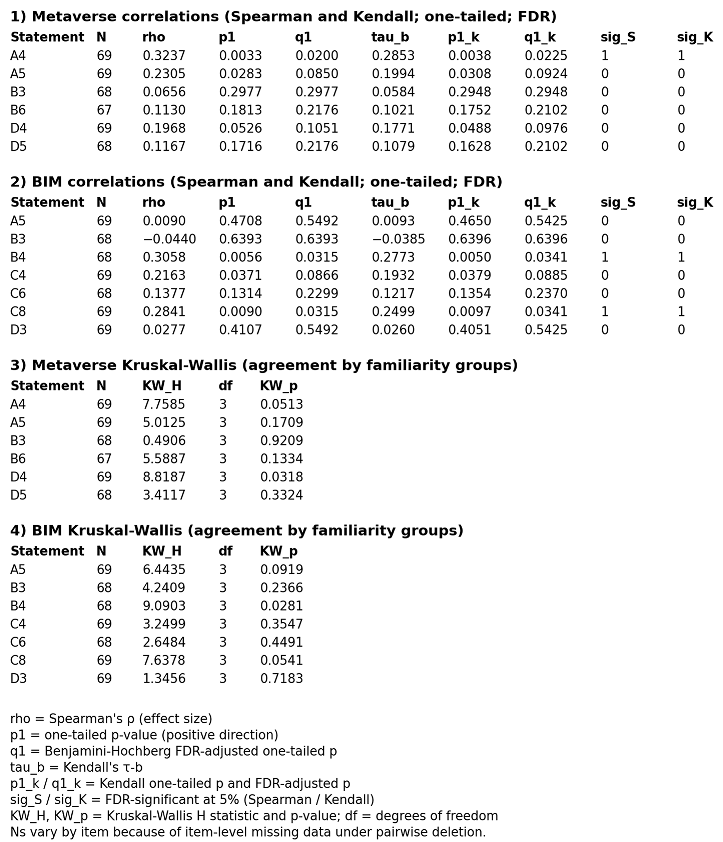
Appendix B. The Framework in Detail
Figure A1.
The framework in full: node-level measures, dimension coding, Emerging Dimensions, and the integrated user feedback loop across the nine lifecycle stages.
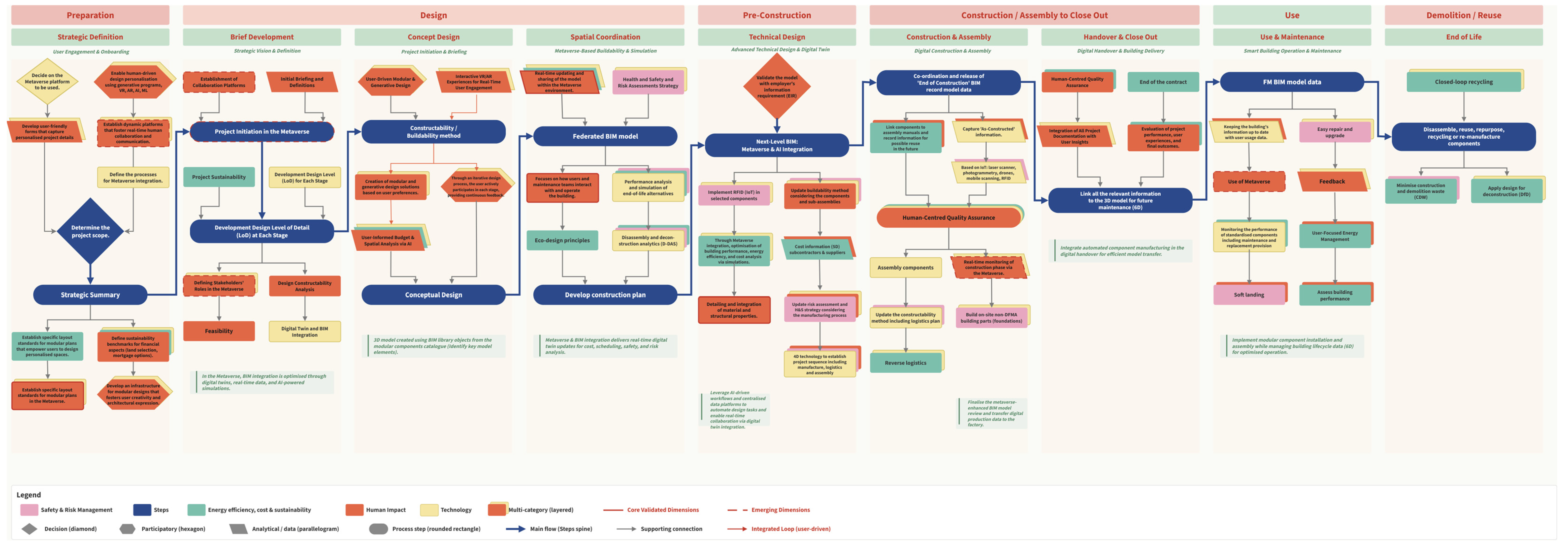
Appendix C. Survey Instrument
The survey instrument is reproduced below. It was administered online through Google Forms in English and in a validated Turkish translation. Respondents first reported their familiarity with five technologies, then rated their agreement with statements grouped by the four lifecycle stages of the framework. Terms marked with an asterisk were accompanied by a short definition in the questionnaire.
Part 1. Technology familiarity
Respondents rated their familiarity with each of the following on a four-point scale (not familiar, somewhat familiar, moderately familiar, expert): generative design, virtual and augmented reality (VR/AR), artificial intelligence and machine learning (AI/ML), building information modelling (BIM), and the metaverse.
Part 2. Agreement with framework components
Respondents rated their agreement with each statement on a four-point Likert scale, from 1 (strongly disagree) to 4 (strongly agree). The statements were grouped into four sections corresponding to the lifecycle stages of the framework.
Section A. Preparation
A1. Considering user land selection and financial choices within sustainability benchmarks contributes to defining more comprehensive project goals.
A2. User-friendly interfaces for end users to enter personal project preferences improve data collection efficiency.
A3. Modular infrastructure and customisable layout standards that foster end-user creativity facilitate user contribution and reinforce the project’s objectives.
A4. Unclear stakeholder role definitions and collaboration platforms within the Metaverse may complicate project initiation in a Metaverse environment.
A5. Digital Twin and BIM integration makes project initiation in the Metaverse more efficient.
Section B. Conceptual design and coordination
B1. User participation in the design process through XR* contributes to the development of modular and generative design* solutions.
B2. AI-driven budget and spatial analyses based on user preferences enhance informed design decisions in the concept design phase.
B3. A federated BIM model*, updated in real-time in the Metaverse*, improves stakeholder coordination and decision-making.
B4. Ignoring the building’s operation and maintenance processes at the coordination stage may restrict the functionality of the federated BIM model*.
B5. Inadequate simulation of the building’s end-of-life alternatives* at this stage may adversely affect sustainability objectives.
B6. Real-time monitoring of health and safety risks in the Metaverse* environment contributes to proactive site management.
Section C. Technical design
C1. Failure to verify that the digital model meets end-user requirements may adversely affect the design objectives.
C2. Integrating RFID* tags into building components increases the efficiency of logistics and the construction process.
C3. The use of a Digital Twin* supports the enhancement of building performance and energy efficiency.
C4. Adding material and structural properties to the digital model is important for the design’s constructability.
C5. It is important to update the construction method at this stage according to the selected components.
C6. 4D* integration increases the accuracy of time planning, from manufacturing to assembly.
C7. Taking the production process into consideration, insufficient integration of risk and safety strategies may adversely affect design safety.
C8. Associating subcontractor and supplier costs with the digital model (5D*) is important for budget control.
Section D. Implementation, operation and lifecycle management
D1. On-site quality controls contribute to effective site operations and logistics management.
D2. Failure to implement recycling plans for construction waste may weaken sustainability objectives.
D3. Integrating maintenance and operation data of building components into the 6D* model supports building performance management.
D4. Real-time monitoring of on-site activities via the Metaverse* enables end-user participation in the process.
D5. Performance tracking via a Metaverse* updated with user data contributes to building operation.
D6. The easy disassembly* and reuse of building components and the reduction in waste are important for resource efficiency.
References
- Abdelalim, A.M.; Elhakeem, A.; Alnaser, A.A.; Shibeika, A.; Elsayed, A.M. VEIDEA: A comprehensive framework for implementing building information modeling based value engineering within a common data environment in construction projects. Appl. Sci. 2024, 14, 9807. [Google Scholar] [CrossRef] [Scilit]
- Miraj, P.; Wang, T.; Koutamanis, A.; Chan, P. Organising digital twin in the built environment: A systematic review and research directions on the missing links of use and user perspectives of digital twin in architecture, engineering and construction (AEC) sector. Constr. Manag. Econ. 2025, 43, 465–481. [Google Scholar] [CrossRef] [Scilit]
- Raitviir, C.R.; Lill, I. Conceptual framework of information flow synchronization throughout the building lifecycle. Buildings 2024, 14, 2207. [Google Scholar] [CrossRef] [Scilit]
- Ehab, A.; Burnett, G.; Heath, T. Enhancing Public Engagement in Architectural Design: A Comparative Analysis of Advanced Virtual Reality Approaches in Building Information Modeling and Gamification Techniques. Buildings 2023, 13, 1262. [Google Scholar] [CrossRef] [Scilit]
- Schranz, C.; Urban, H.; Gerger, A. Potentials of augmented reality in a BIM based building submission process. J. Inf. Technol. Constr. 2021, 26, 441–457. [Google Scholar] [CrossRef] [Scilit]
- Harris, E.; Franz, A.; O’Hara, S. Promoting social equity and building resilience through value inclusive design. Buildings 2023, 13, 2081. [Google Scholar] [CrossRef] [Scilit]
- Javid Khan, R.A.; Lucas, J.D. Building Environments for Human Experiences: An In-Depth Exploration of Human-Centric Design. SSRN 2024. [Google Scholar] [CrossRef] [Scilit]
- Mertens, A.; Hamarat, Y.; Elsen, C. Interactions between architects and end-users during housing design processes: A systematic literature review. Archnet-IJAR Int. J. Archit. Res. 2023, 17, 703–724. [Google Scholar] [CrossRef] [Scilit]
- Ma, J.H.; Erdogmus, E.; Kangisser, S.; Yang, E. A comparative analysis of the effectiveness of immersive virtual reality on end-user design review. Build. Environ. 2025, 267, 112237. [Google Scholar] [CrossRef] [Scilit]
- Ali, M.; Naeem, F.; Kaddoum, G.; Hossain, E. Metaverse communications, networking, security, and applications: Research issues, state-of-the-art, and future directions. IEEE Commun. Surv. Tutor. 2024, 26, 1238–1278. [Google Scholar] [CrossRef] [Scilit]
- Bhattacharya, P.; Saraswat, D.; Savaliya, D.; Sanghavi, S.; Verma, A.; Sakariya, V.; Tanwar, S.; Sharma, R.; Raboaca, M.S.; Manea, D.L. Towards future internet: The metaverse perspective for diverse industrial applications. Mathematics 2023, 11, 941. [Google Scholar] [CrossRef] [Scilit]
- European Commission; Directorate-General for Research and Innovation; Breque, M.; De Nul, L.; Petridis, A. Industry 5.0: Towards a Sustainable, Human-Centric and Resilient European Industry; Publications Office of the European Union: Luxembourg, 2021. [Google Scholar] [CrossRef] [PubMed]
- Xu, X.; Lu, Y.; Vogel-Heuser, B.; Wang, L. Industry 4.0 and Industry 5.0: Inception, conception and perception. J. Manuf. Syst. 2021, 61, 530–535. [Google Scholar] [CrossRef] [Scilit]
- Hadavi, A.; Alizadehsalehi, S. From BIM to Metaverse for AEC Industry. Autom. Constr. 2024, 160, 105248. [Google Scholar] [CrossRef] [Scilit]
- Chen, Z.-S.; Chen, J.-Y.; Chen, Y.-H.; Pedrycz, W. Construction Metaverse: Application Framework and Adoption Barriers. Autom. Constr. 2024, 163, 105422. [Google Scholar] [CrossRef] [Scilit]
- Irfan, M.; Rauniyar, A.; Hu, J.; Singh, A.K.; Sathvik, S.C. Modeling Barriers to the Adoption of Metaverse in the Construction Industry: An Application of Fuzzy-DEMATEL Approach. Appl. Soft Comput. 2024, 167, 112180. [Google Scholar] [CrossRef] [Scilit]
- BS EN 15978-1:2021; Sustainability of Construction Works. Methodology for the Assessment of Performance of Buildings. British Standards Institution (BSI): London, UK, 2021.
- Combrinck, C.; Porter, C.J. Co-design in the architectural process. Archnet-IJAR Int. J. Archit. Res. 2021, 15, 738–751. [Google Scholar] [CrossRef] [Scilit]
- Sinclair, D. RIBA Plan of Work 2020 Overview; RIBA Publishing: London, UK, 2020. [Google Scholar]
- Saunders, M.N.K.; Lewis, P.; Thornhill, A. Research Methods for Business Students, 8th ed.; Pearson: Harlow, UK, 2019. [Google Scholar]
- Benjamini, Y.; Hochberg, Y. Controlling the False Discovery Rate: A Practical and Powerful Approach to Multiple Testing. J. R. Stat. Soc. Ser. B Methodol. 1995, 57, 289–300. [Google Scholar] [CrossRef] [Scilit]
- Nsimbe, A.; Di, J. The impact of building information modeling technology on cost management of civil engineering projects: A case study of the Mombasa port area development project. Buildings 2024, 14, 1175. [Google Scholar] [CrossRef] [Scilit]
- Van, B.P.; Wong, P.; Abbasnejad, B. A systematic review of criteria influencing the integration of BIM and immersive technology in building projects. J. Inf. Technol. Constr. 2025, 30, 243–297. [Google Scholar] [CrossRef] [Scilit]
- Berlato, M.; Binni, L.; Durmus, D.; Gatto, C.; Giusti, L.; Massari, A.; Toldo, B.M.; Cascone, S.; Mirarchi, C. Digital platforms for the built environment: A systematic review across sectors and scales. Buildings 2025, 15, 2432. [Google Scholar] [CrossRef] [Scilit]
- Gu, N.; London, K. Understanding and facilitating BIM adoption in the AEC industry. Autom. Constr. 2010, 19, 988–999. [Google Scholar] [CrossRef] [Scilit]
- Eadie, R.; Browne, M.; Odeyinka, H.; McKeown, C.; McNiff, S. BIM implementation throughout the UK construction project lifecycle: An analysis. Autom. Constr. 2013, 36, 145–151. [Google Scholar] [CrossRef] [Scilit]
- Cascone, S.; Parisi, G.; Caponetto, R. BIM-based strategies for the revitalization and automated management of buildings: A case study. Sustainability 2024, 16, 6720. [Google Scholar] [CrossRef] [Scilit]
- Semeraro, C.; Lezoche, M.; Panetto, H.; Dassisti, M. Digital twin paradigm: A systematic literature review. Comput. Ind. 2021, 130, 103469. [Google Scholar] [CrossRef] [Scilit]
- Lim, K.Y.H.; Zheng, P.; Chen, C.-H. A state-of-the-art survey of digital twin: Techniques, engineering product lifecycle management and business innovation perspectives. J. Intell. Manuf. 2019, 31, 1313–1337. [Google Scholar] [CrossRef] [Scilit]
- Lavikka, R.; Kallio, J.; Casey, T.; Airaksinen, M. Digital disruption of the AEC industry: Technology-oriented scenarios for possible future development paths. Constr. Manag. Econ. 2018, 36, 635–650. [Google Scholar] [CrossRef] [Scilit]
- Luo, J.; Liu, P.; Cao, L. Coupling a physical replica with a digital twin: A comparison of participatory decision-making methods in an urban park environment. ISPRS Int. J. Geo-Inf. 2022, 11, 452. [Google Scholar] [CrossRef] [Scilit]
- Rehman, S.U.; Kim, I.; Hwang, K.E. Advancing BIM and game engine integration in the AEC industry: Innovations, challenges, and future directions. J. Comput. Des. Eng. 2025, 12, 26–54. [Google Scholar] [CrossRef] [Scilit]
- Boyd, D. A critical inquiry into the hyperreality of digitalization in construction. Constr. Manag. Econ. 2021, 39, 549–564. [Google Scholar] [CrossRef] [Scilit]
- Noaime, E.; Alshenaifi, M.; Albaqawy, G.; Abuhussain, M.A.; Abdelhafez, M.H.H.; Alnaim, M.M. Beyond buildings: How does sustainable campus design shape student lives? Hail University as a case study. Buildings 2025, 15, 1468. [Google Scholar] [CrossRef] [Scilit]
- Sharif, A.A.; Karvonen, A. Supporting, tinkering, adjusting and resisting: A typology of user translations of the built environment. Open House Int. 2021, 46, 266–280. [Google Scholar] [CrossRef] [Scilit]
- Shouman, B.; Othman, A.A.E.; Marzouk, M. Enhancing users involvement in architectural design using mobile augmented reality. Eng. Constr. Archit. Manag. 2022, 29, 2514–2534. [Google Scholar] [CrossRef] [Scilit]
- Sepulveda, G.K.; Romero, N.; Vidal-Silva, C.; Besoain, F.; Barriga, N.A. Semi-automatic building layout generation for virtual environments. IEEE Access 2024, 12, 87014–87022. [Google Scholar] [CrossRef] [Scilit]
- Abuzuraiq, A.M.; Erhan, H. Designing with sense: A critical review and proposal for enhanced design space exploration in generative design. Int. J. Archit. Comput. 2025, 23, 5–26. [Google Scholar] [CrossRef] [Scilit] [PubMed]
- Bernardo, G.; Palmero, L. AI-driven generative prototyping for the reconstruction of Gaza. Vitruvio 2025, 10, e23801. [Google Scholar] [CrossRef] [Scilit]
- Fawaz, M.; Megahed, N.A.; El-Mowafy, B.N.; Elgheznawy, D. Perforated building envelopes based on a parametric approach: A conceptual framework to improve indoor environmental quality. City Territ. Archit. 2025, 12, 8. [Google Scholar] [CrossRef] [Scilit]
- van Ameijde, J. Data-driven urban design: Conceptual and methodological interpretations of Negroponte’s ‘Architecture Machine’. SPOOL 2022, 9, 35–48. [Google Scholar] [CrossRef] [Scilit]
- Samadi, P.; Sedghimehr, S.; Shevidi, S.; Andaji Garmaroodi, A. A generative framework for designing linear-modular housing integrated with a real-time user interface. Nexus Netw. J. 2025, 27, 355–371. [Google Scholar] [CrossRef] [Scilit]
- Abrishami, S.; Goulding, J.; Rahimian, F. Generative BIM Workspace for AEC Conceptual Design Automation: Prototype Development. Eng. Constr. Archit. Manag. 2021, 28, 482–509. [Google Scholar] [CrossRef] [Scilit]
- Yang, T.; White, M.; Lipson-Smith, R.; Shannon, M.M.; Latifi, M. Design decision support for healthcare architecture: A VR-integrated approach for measuring user perception. Buildings 2024, 14, 797. [Google Scholar] [CrossRef] [Scilit]
- Tea, S.; Panuwatwanich, K.; Ruthankoon, R.; Kaewmoracharoen, M. Multiuser immersive virtual reality application for real-time remote collaboration to enhance design review process in the social distancing era. J. Eng. Des. Technol. 2022, 20, 281–298. [Google Scholar] [CrossRef] [Scilit]
- Chen, X.; Gao, W.; Chu, Y.; Song, Y. Enhancing interaction in virtual-real architectural environments: A comparative analysis of generative AI-driven reality approaches. Build. Environ. 2024, 266, 112113. [Google Scholar] [CrossRef] [Scilit]
- You, W.; Shao, Y.; Zheng, Z.; Lu, Y.; Yang, C.; Zhou, Z.; Sun, L. Old house new home: Facilitating interior design with RedesignUS in virtual reality. Displays 2023, 80, 102555. [Google Scholar] [CrossRef] [Scilit]
- Ma, C.Y.; van Ameijde, J. Adaptable modular construction systems and multi-objective optimisation strategies for mass-customised housing: A new user-driven paradigm for high-rise living in Hong Kong. Int. J. Archit. Comput. 2022, 20, 96–113. [Google Scholar] [CrossRef] [Scilit]
- ISO 16739-1:2018; Industry Foundation Classes (IFC) for Data Sharing in the Construction and Facility Management Industries. Part 1: Data Schema. International Organization for Standardization (ISO): Geneva, Switzerland, 2018.
- ISO 19650-1:2018; Organization and Digitization of Information About Buildings and Civil Engineering Works, Including Building Information Modelling (BIM). Information Management Using Building Information Modelling. Part 1: Concepts and Principles. International Organization for Standardization (ISO): Geneva, Switzerland, 2018.
- ISO 19650-5:2020; Organization and Digitization of Information About Buildings and Civil Engineering Works, Including Building Information Modelling (BIM). Information Management Using Building Information Modelling. Part 5: Security-Minded Approach to Information Management. International Organization for Standardization (ISO): Geneva, Switzerland, 2020.
- Abrishami, S.; Martín-Durán, R. BIM and DfMA: A Paradigm of New Opportunities. Sustainability 2021, 13, 9591. [Google Scholar] [CrossRef] [Scilit]
- de Wilde, P. The Gap between Predicted and Measured Energy Performance of Buildings: A Framework for Investigation. Autom. Constr. 2014, 41, 40–49. [Google Scholar] [CrossRef] [Scilit]
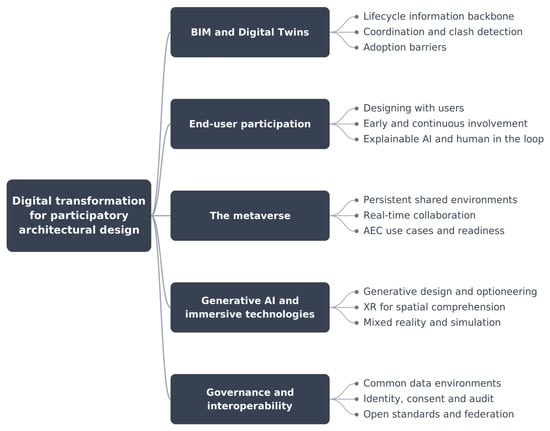
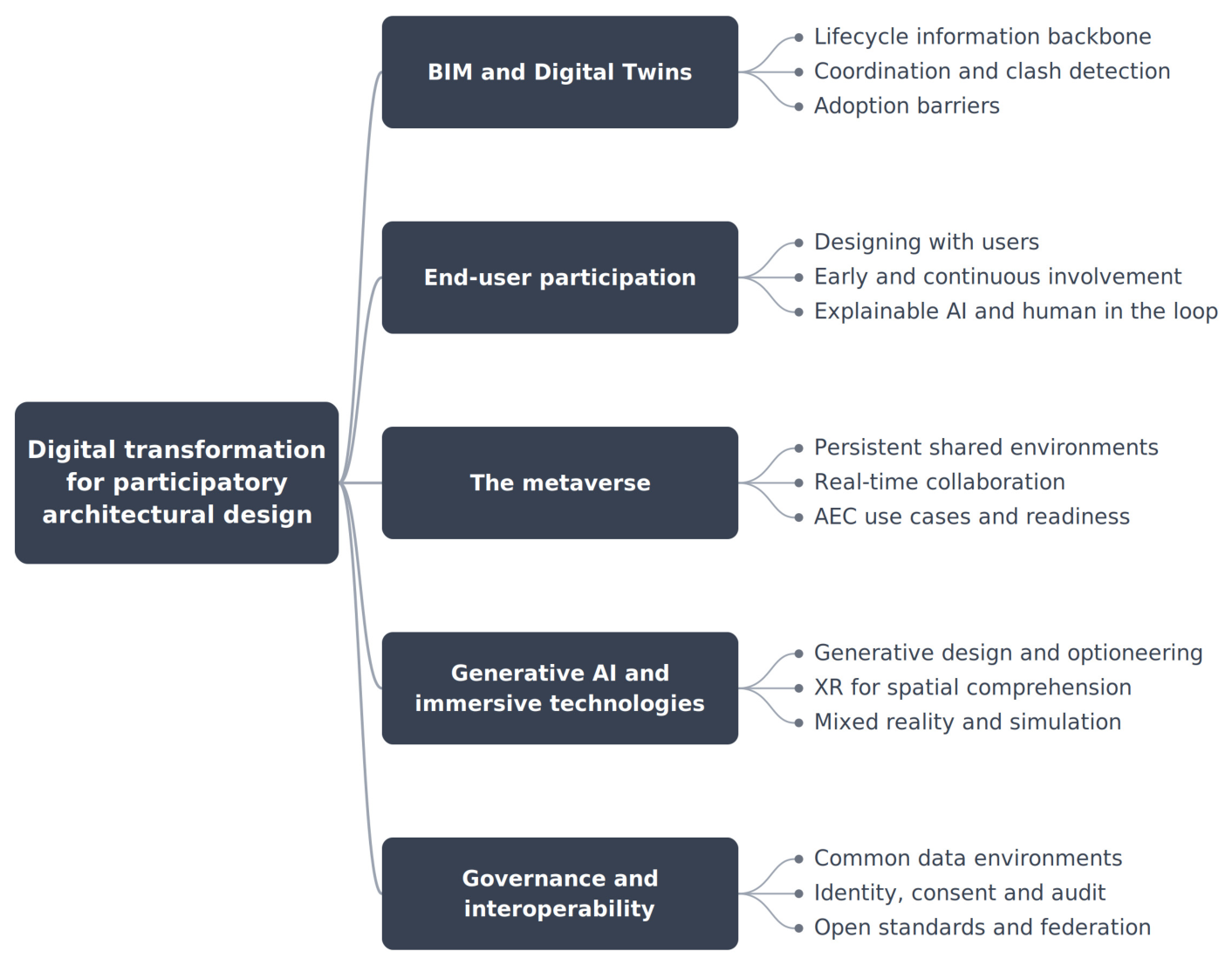
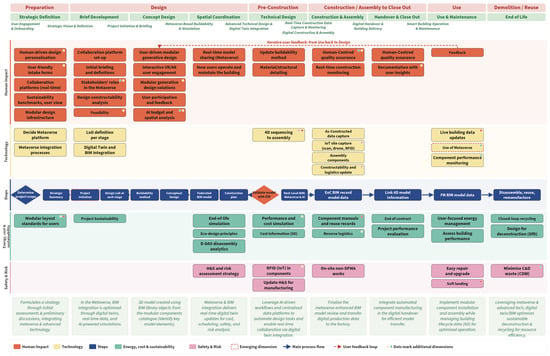
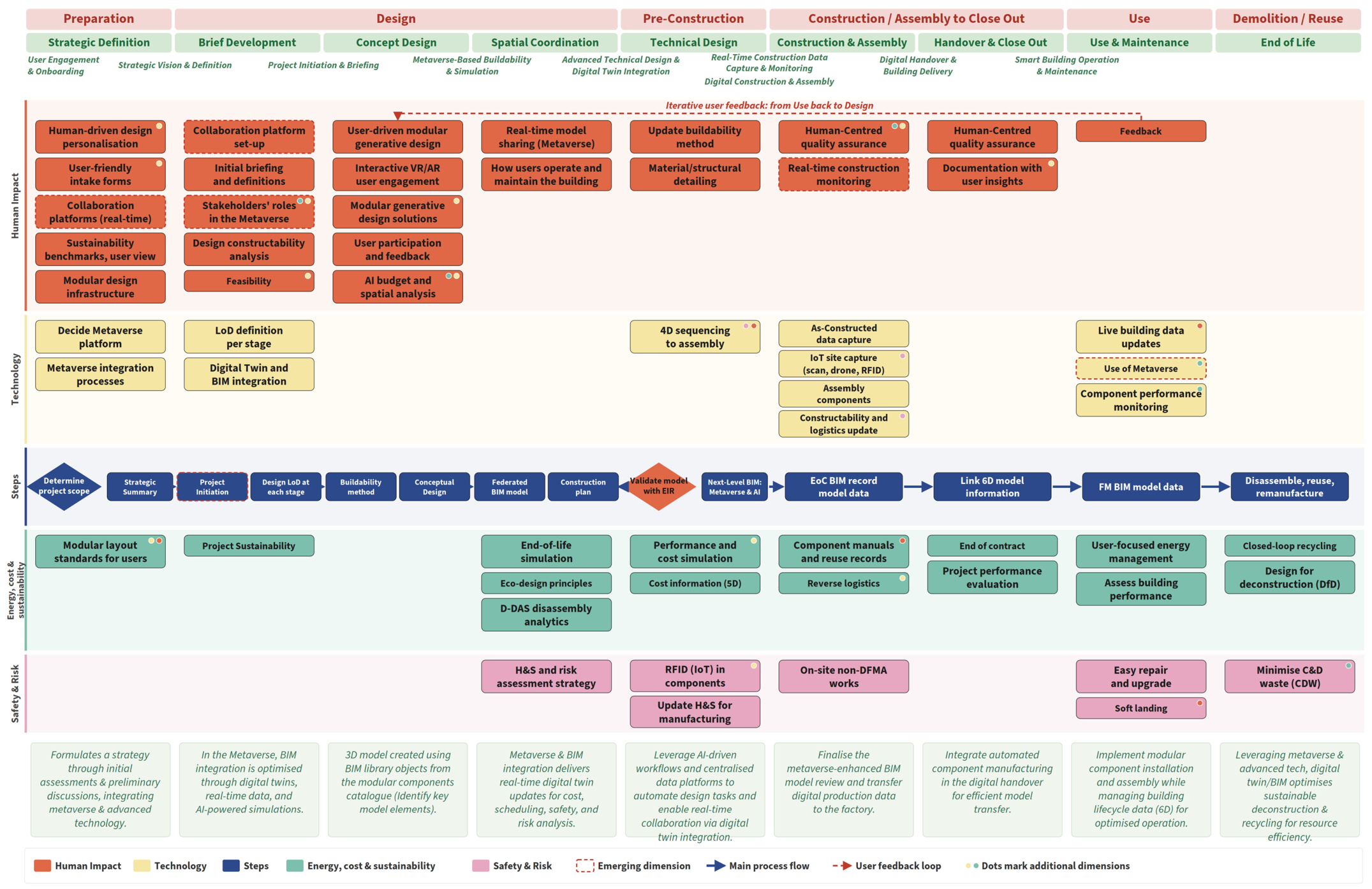
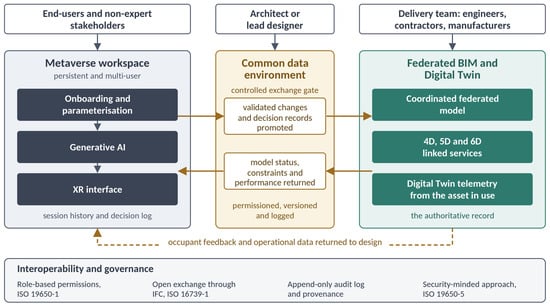
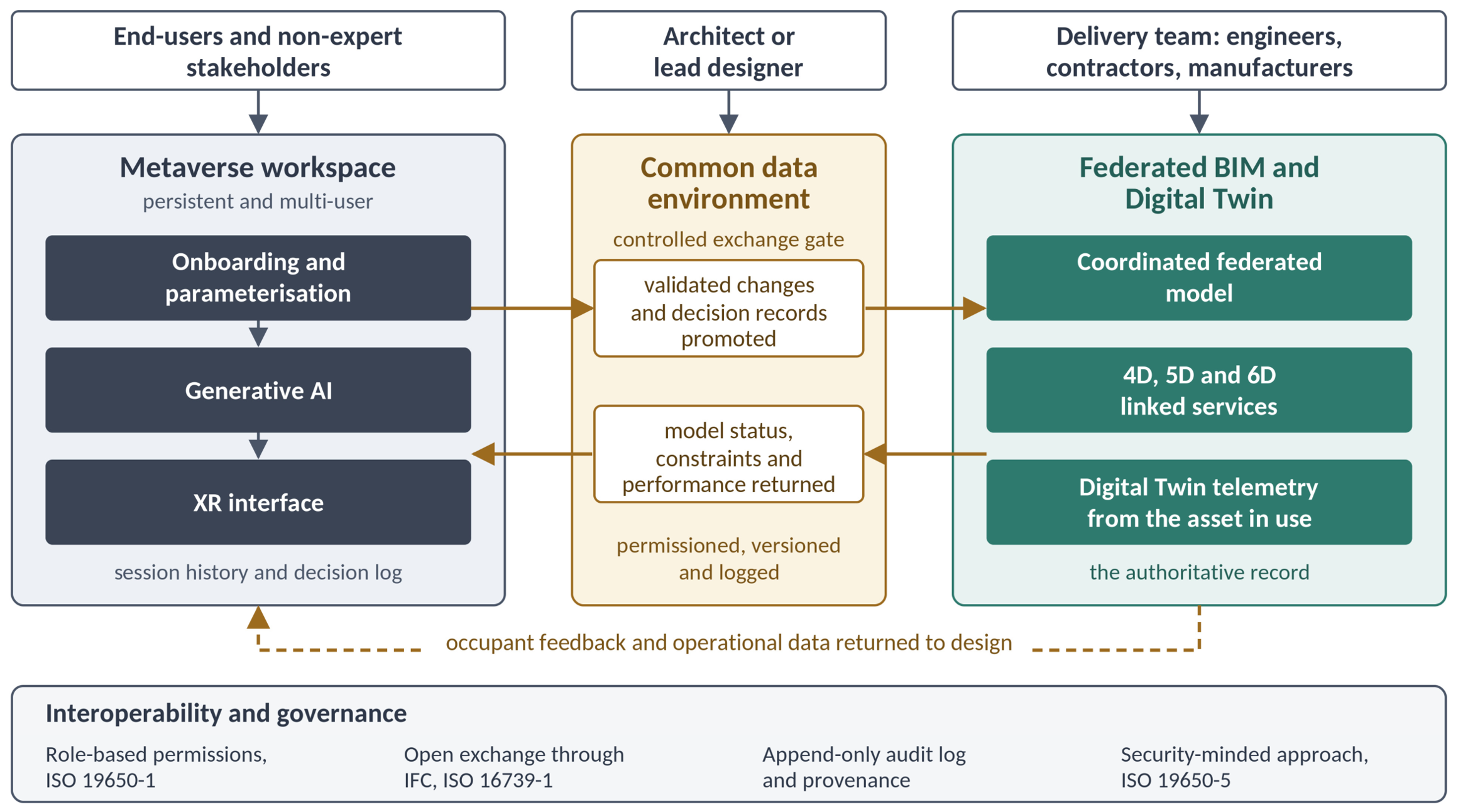
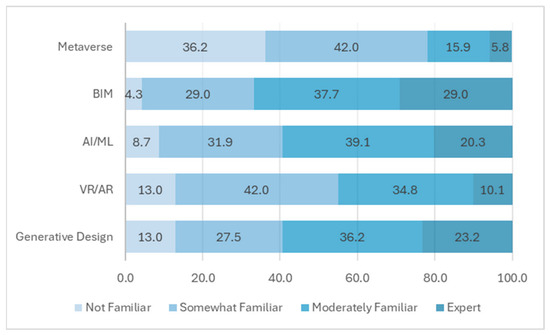
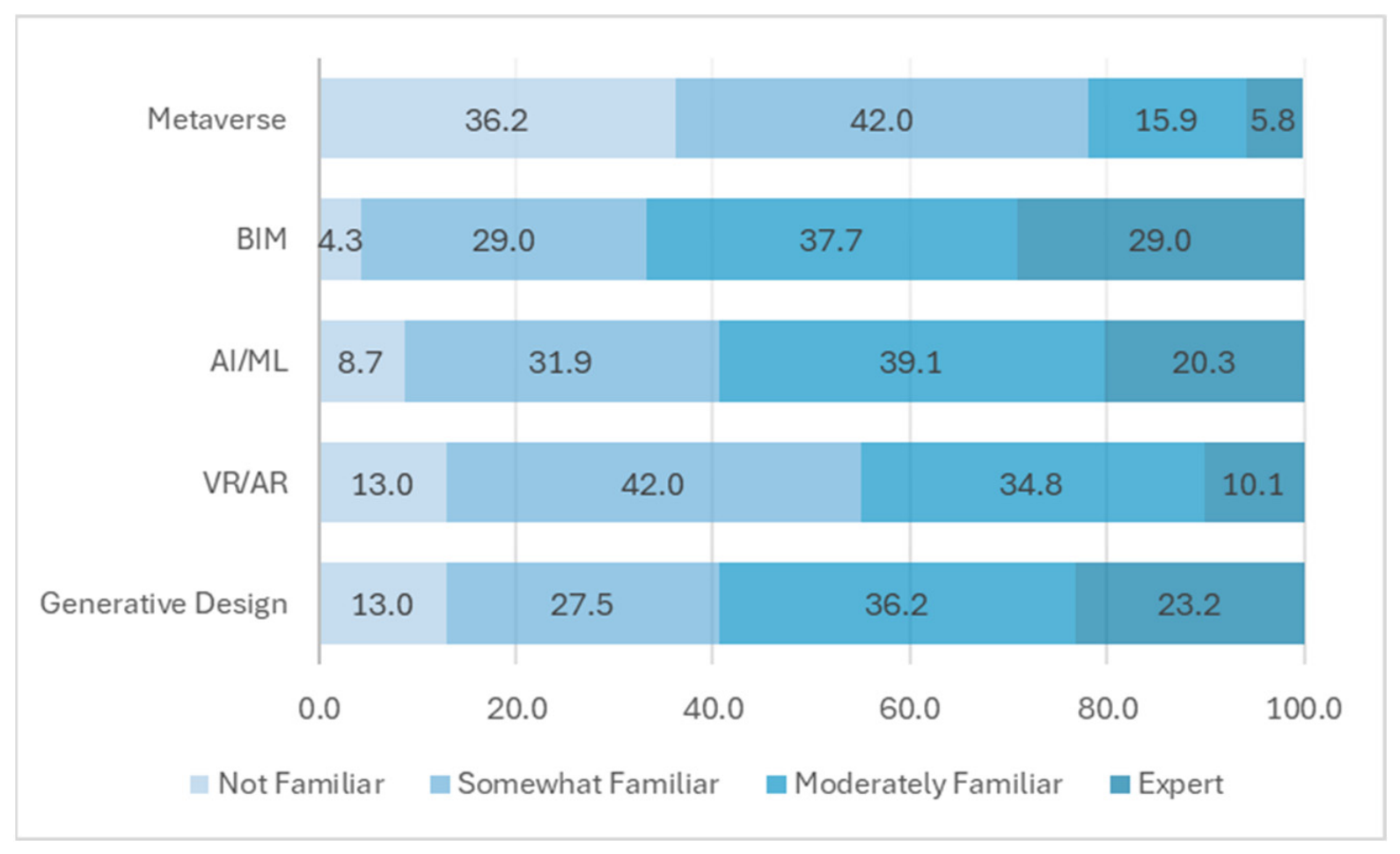
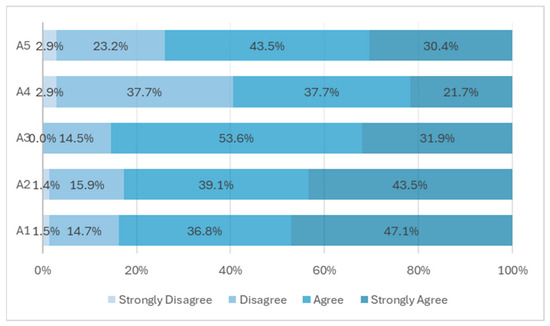
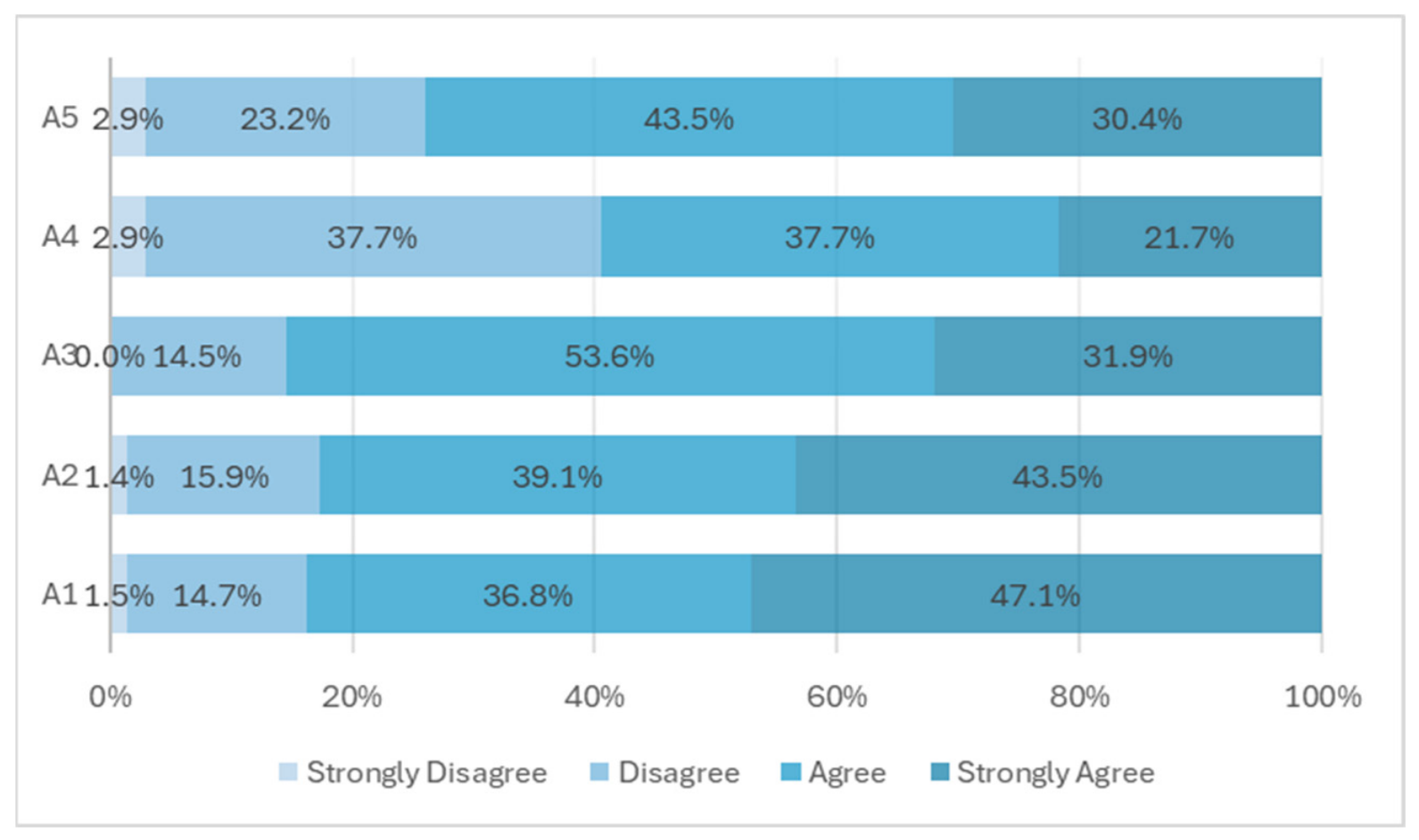
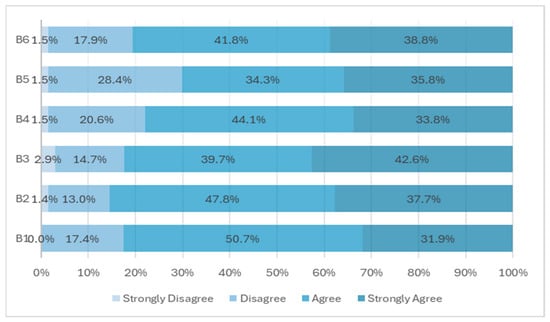
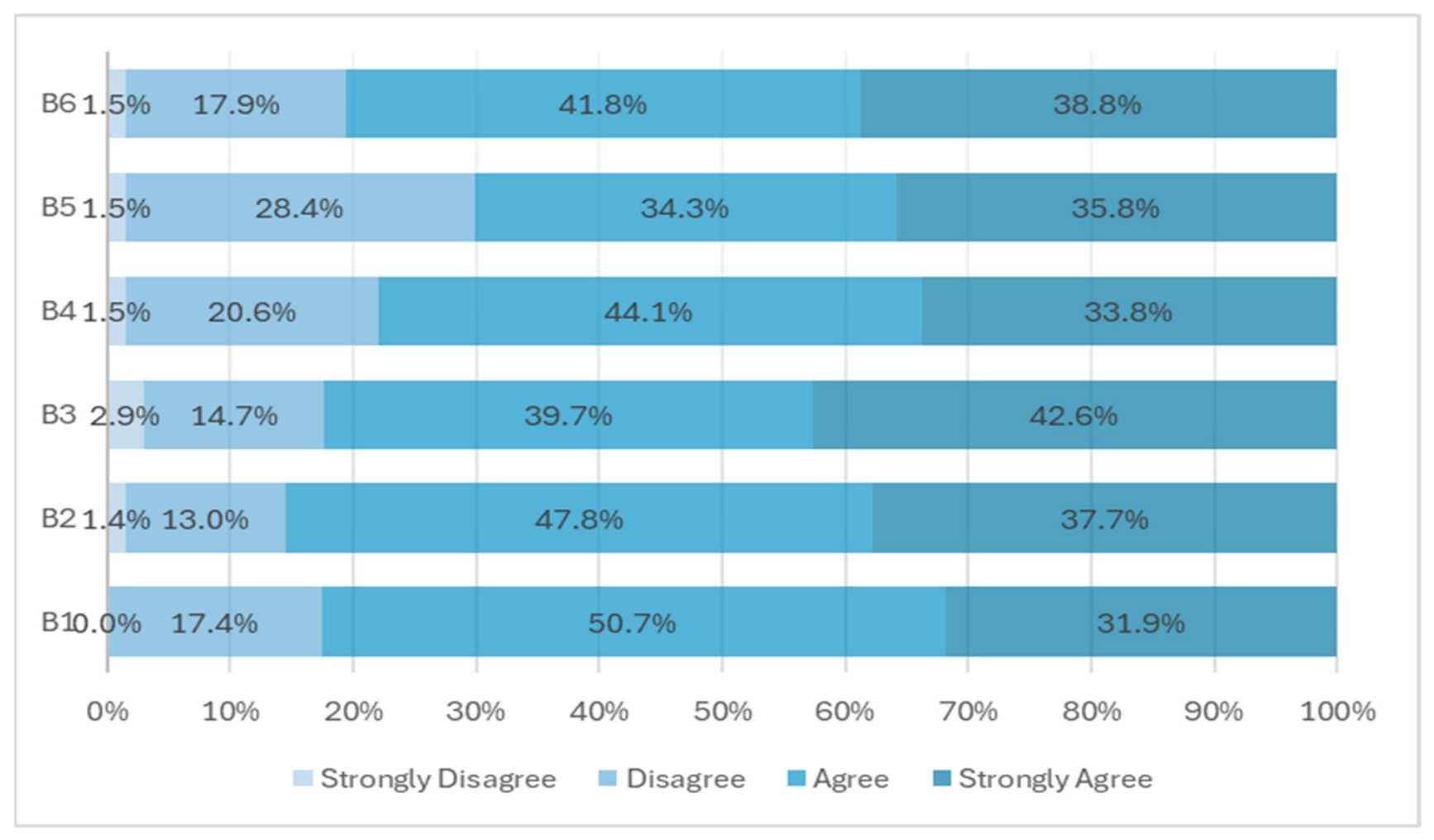
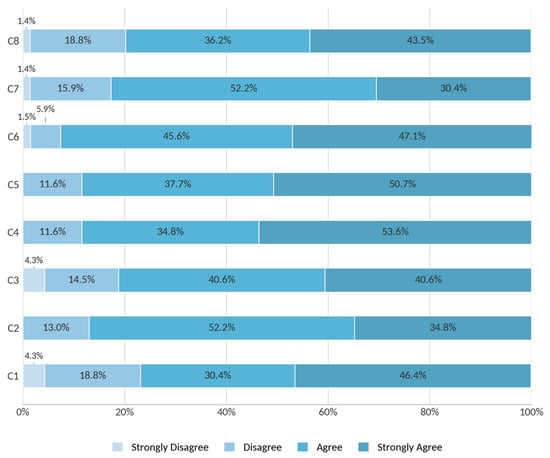
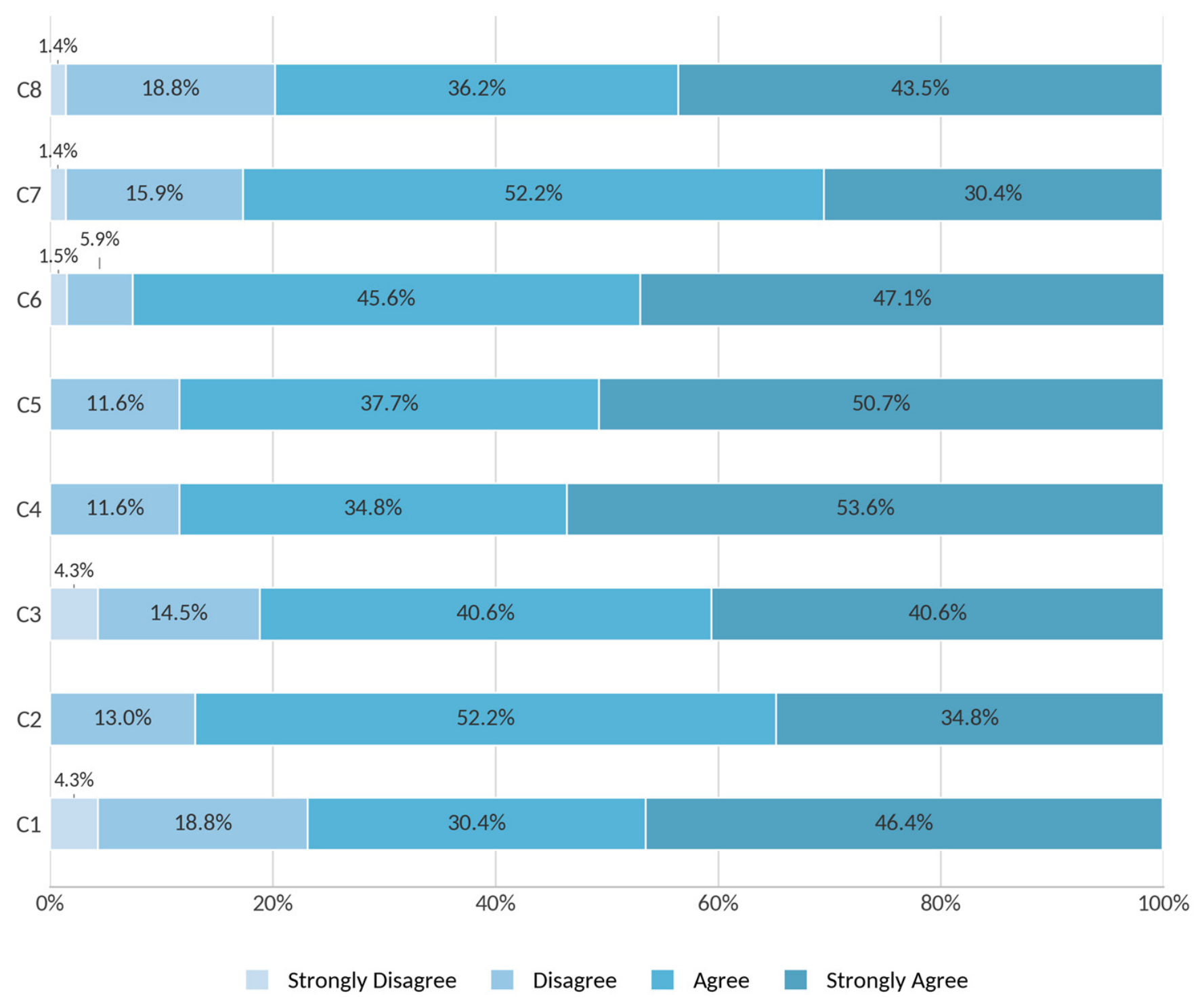
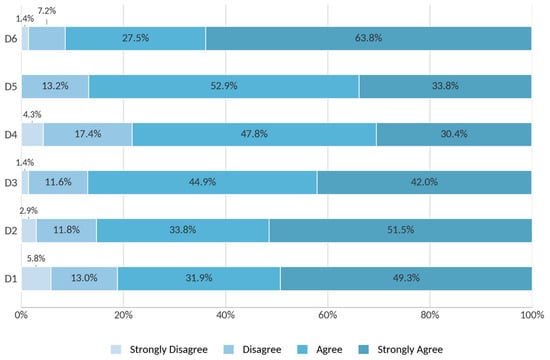
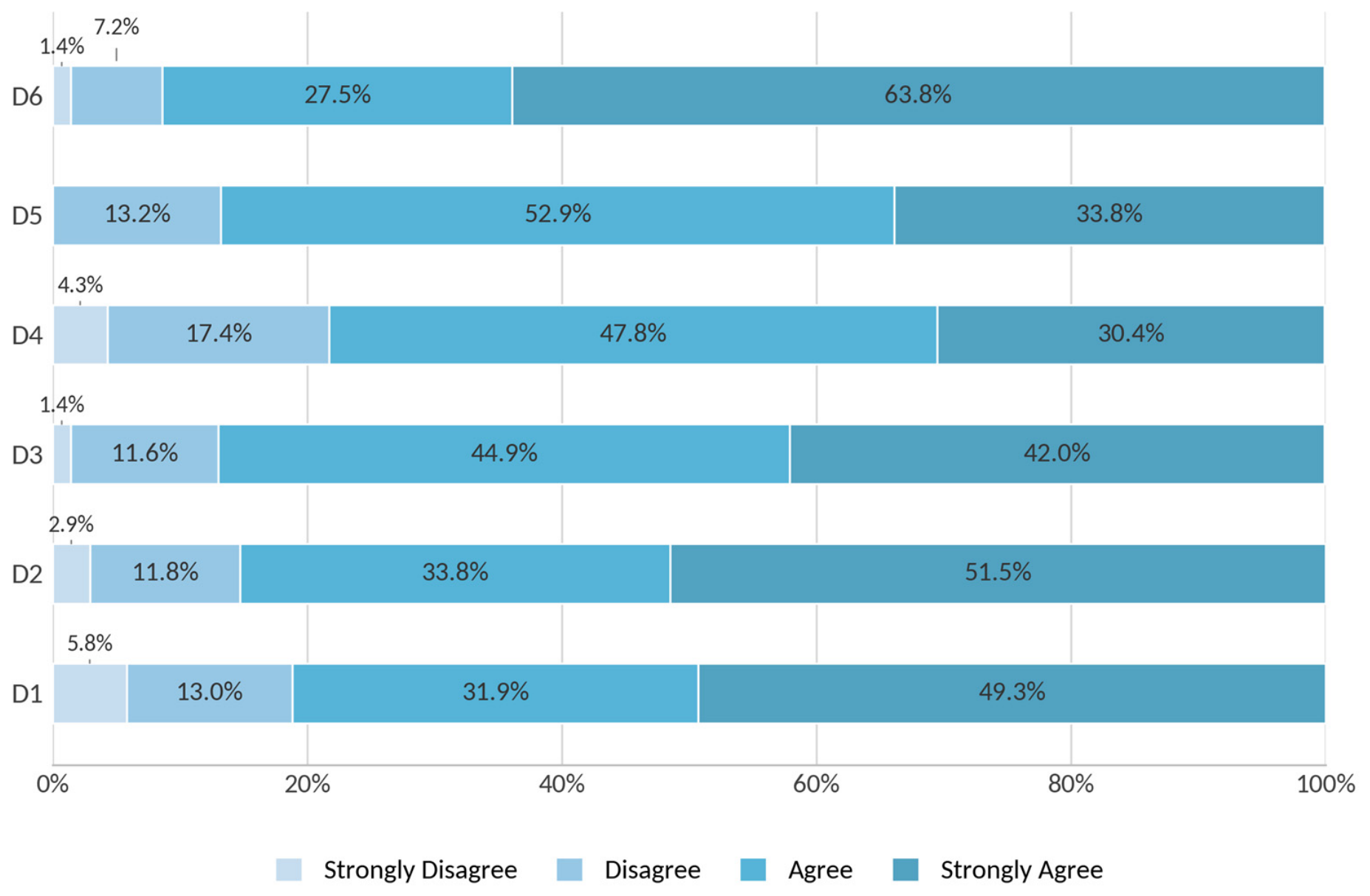
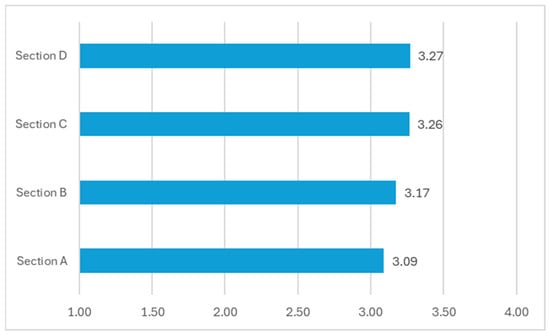
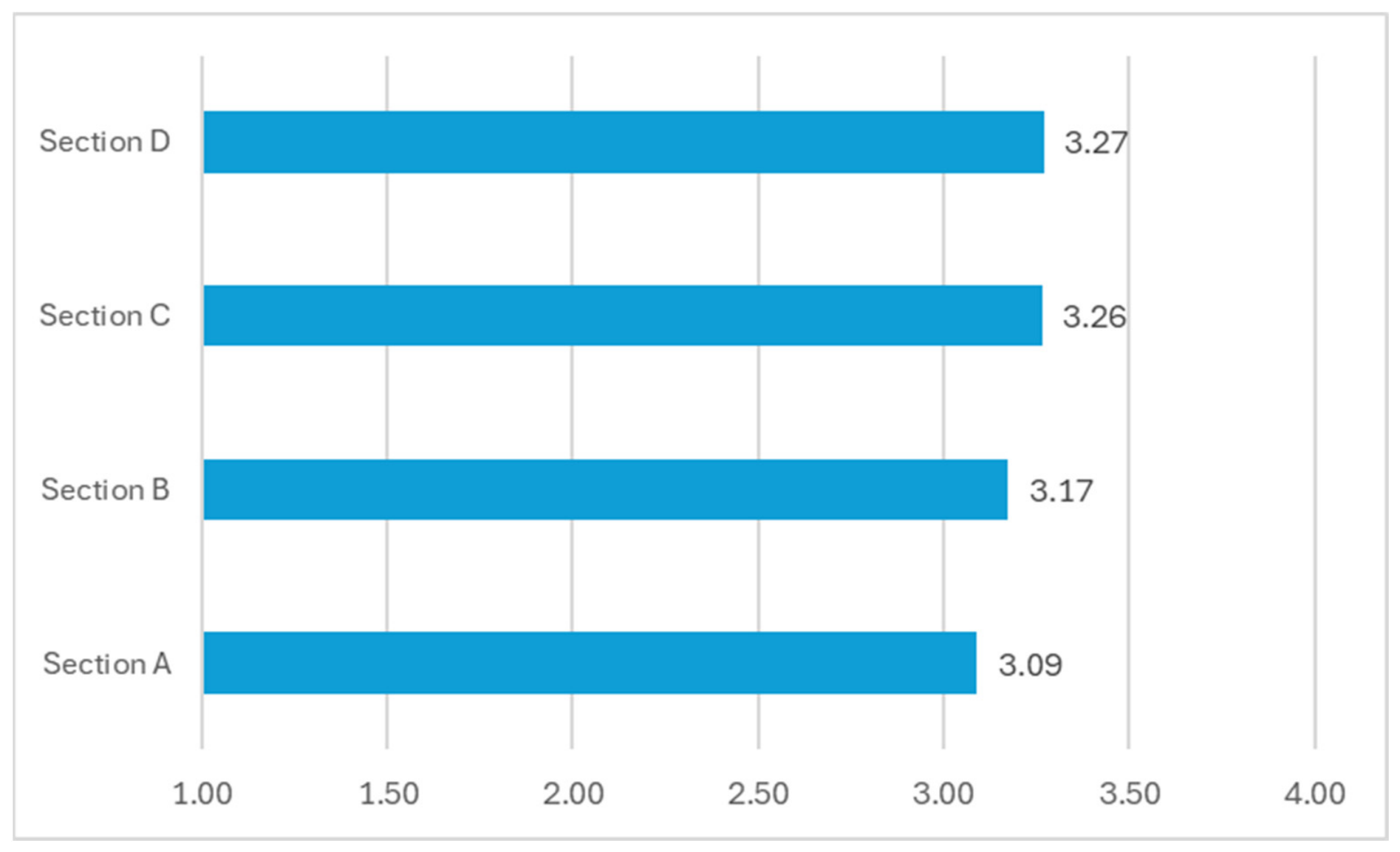
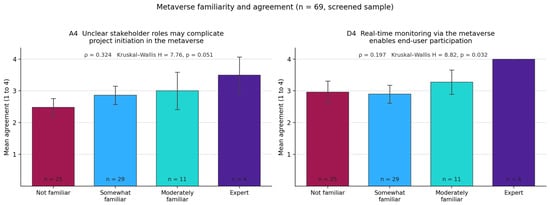
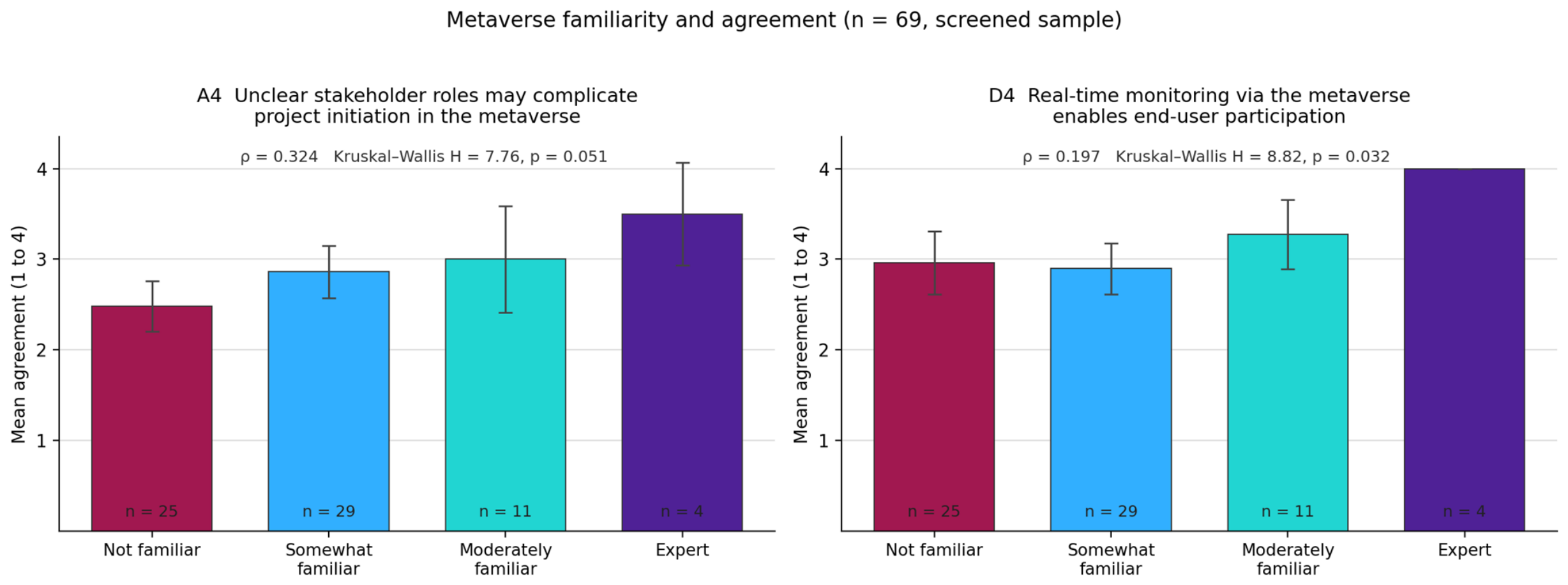
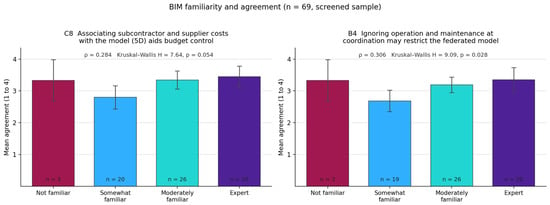
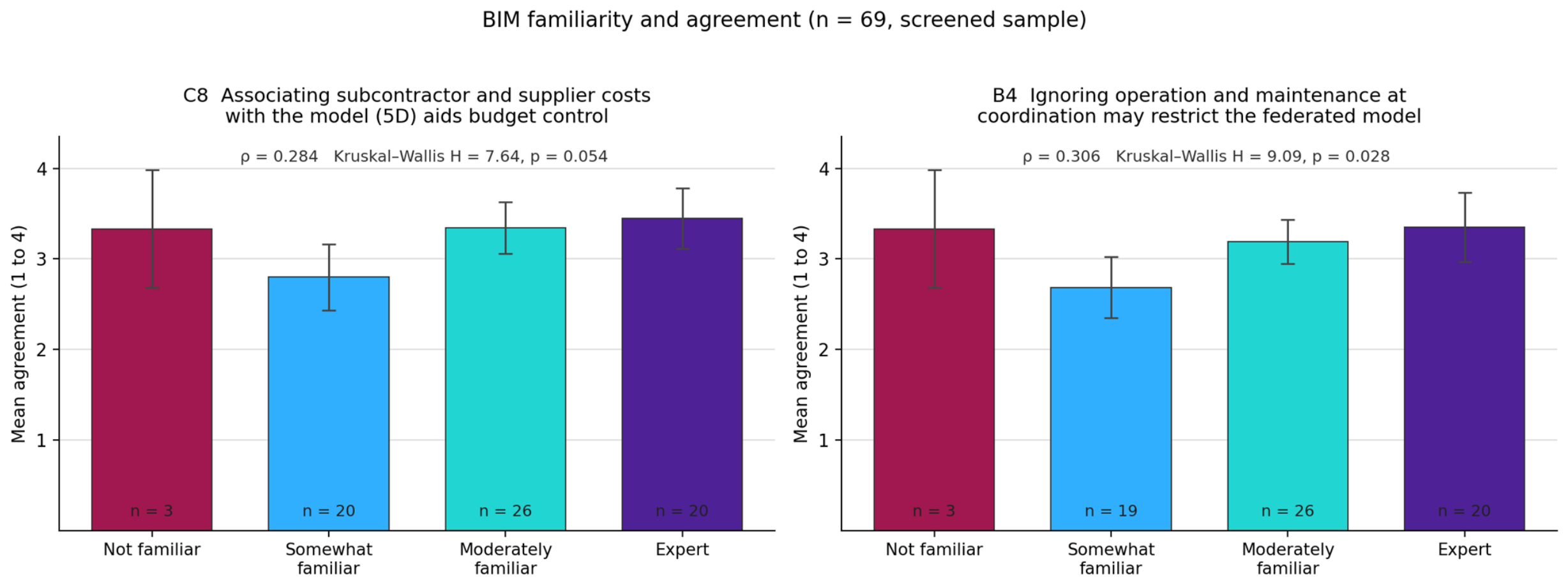

Disclaimer/Publisher’s Note: The statements, opinions and data contained in all publications are solely those of the individual author(s) and contributor(s) and not of MDPI and/or the editor(s). MDPI and/or the editor(s) disclaim responsibility for any injury to people or property resulting from any ideas, methods, instructions or products referred to in the content. |
© 2026 by the authors. Licensee MDPI, Basel, Switzerland. This article is an open access article distributed under the terms and conditions of the Creative Commons Attribution (CC BY) license.