


Abstract
This paper investigates the impact of corporate financial asset holdings on green innovation and explores the internal mechanisms through which financialization shapes firms’ sustainability-oriented technological strategies. Using a comprehensive panel dataset of Chinese A-share non-financial firms from 2010 to 2023, the analysis confirms that corporate financialization significantly inhibits green innovation, supporting the crowding-out hypothesis. Mechanism tests reveal three economic channels: reduced innovation capability (measured by R&D staffing), diminished innovation willingness (proxied by environmental investment), and a deteriorated innovation environment (captured through financial constraints). Heterogeneity analysis further shows that this negative effect is particularly pronounced among non-state-owned enterprises, firms operating in low-pollution industries, and those facing high market competition. These findings highlight how financialized capital allocation undermines long-term sustainable investment, especially where institutional protections are weak or absent. The study offers important policy implications for regulating excessive financialization, enhancing green financing mechanisms, and designing targeted incentives to foster sustainability-driven innovation across different industry and ownership structures.
1. Introduction
The 2019 Chinese Central Economic Work Conference emphasized that the primary objective of economic policy should be to promote high-quality development. However, China’s real economy continues to face multiple structural challenges, including rising raw material costs, declining demographic dividends, insufficient brand competitiveness, and persistent industrial overcapacity. Meanwhile, China’s real estate market has undergone a deep correction. Deleveraging has steadily advanced, speculative returns have shrunk sharply, and the era of property as a reliable investment channel is over. Yet non-financial firms continue to park substantial funds in financial assets such as wealth management products, entrusted loans, and equity investments, especially when returns in the real sector remain uncertain and financing costs stay high. Policymakers have repeatedly called for capital to flow from the virtual economy into the real one. Against this twin backdrop of real estate adjustment and policy reorientation, a pressing concern has emerged: that corporate financialization may still be draining resources away from manufacturing and other productive sectors, eroding long-term growth and the foundation for innovation.
At the same time, green development has become central to China’s high-quality growth strategy. The government has repeatedly called for the vigorous development of a green economy and the establishment of a green innovation system. However, green innovation typically entails high levels of financial commitment, extended development cycles, and considerable uncertainty. This makes it particularly sensitive to firms’ internal financial decisions and external financing constraints. While prior research has explored the influence of environmental regulations, corporate governance, and media coverage on green innovation, the role of corporate financial asset holdings remains significantly under-explored [1,2,3,4].
Theoretically, the relationship between financial asset holdings and green innovation can be understood through two competing mechanisms. The crowding-out effect posits that increased financial asset allocation reduces a firm’s willingness and ability to invest in uncertain, long-term projects such as green R&D. Financialized firms often prioritize short-term speculative gains, redirecting resources from real-sector investments to liquid, high-return assets [5,6]. This effect is particularly pronounced in China’s institutional environment, where financing constraints and short-term performance pressures prevail. In contrast, the reservoir effect suggests that financial asset holdings may provide liquidity buffers, enabling firms to sustain innovation during periods of cash flow volatility [7]. Yet, this effect depends heavily on firms’ internal governance structures and external policy support. This paper argues that, under current institutional conditions in China, the crowding-out effect dominates, making financial asset accumulation a potential obstacle to green transformation.
Despite extensive research on corporate financialization and innovation, few studies have examined their direct relationship, particularly in the context of green innovation. Prior research has primarily focused on the general effects of financialization on corporate investment decisions, the determinants of green innovation, including policy regulations, corporate governance, and external environmental pressures, and the role of environmental regulations in shaping corporate investment behavior [4,5,6,8,9,10]. However, few studies directly investigate the link between corporate financial asset holdings and green innovation, especially in emerging markets like China. Moreover, little is known about the mechanisms through which financialization affects green innovation outcomes or whether these effects vary across firms with different institutional characteristics.
To address these gaps, this paper uses a panel dataset of A-share-listed non-financial firms in China from 2010 to 2023 to empirically test whether corporate financial asset holdings hinder green innovation. We explore three mediating mechanisms—innovation capability, innovation willingness, and innovation environment—to identify how financialization affects firms’ innovation behavior. In addition, a heterogeneity analysis is conducted to examine whether the effect differs across firms with varying levels of state ownership, pollution intensity, and industry competition. The findings contribute to both theory and practice by providing empirical evidence on the financialization-innovation relationship, identifying key economic channels, and offering policy recommendations for balancing financial investment with real economic development.
This study contributes to the literature in three main ways. First, it extends the financialization-innovation literature beyond the general crowding-out versus reservoir debate to green innovation [5,6,11]. Existing studies predominantly examine how financial asset holdings affect aggregate firm innovation or investment, but green innovation, which concerns long-term development, has remained unexamined. This paper provides direct evidence on whether and how corporate financial asset holdings impede green innovation, thereby addressing an important gap in understanding the effects of financialization on environmental performance. Second, this study empirically tests three mediating channels: innovation capability, innovation willingness, and the innovation environment. Third, the negative effect of financial asset holdings on green innovation is concentrated in non-SOEs, low-pollution industries, and highly competitive sectors. By examining this heterogeneity, the paper deepens understanding of the economic consequences of the crowding-out effect. These findings not only refine the theoretical predictions of the crowding-out hypothesis but also offer differentiated, policy-relevant implications for designing targeted interventions across firm types and industries.
The remainder of this paper is organized as follows. Section 2 reviews the relevant literature and presents the research hypotheses. Section 3 outlines the data, variable definitions, and empirical model. Section 4 reports the baseline findings and robustness checks. Section 5 explores heterogeneity across firm types. Section 6 examines the mediating mechanisms. Section 7 discusses the findings, and Section 8 concludes with key implications.
2. Literature Review and Hypotheses Development
2.1. Literature Review
2.1.1. Corporate Financial Asset Holdings
The proliferation of financial instruments and derivatives has accompanied the increasing complexity of financial markets and rising demand for financial services. These instruments enable wealth appreciation and risk diversification. However, as firms progressively allocate capital to financial markets, their profits become increasingly dependent on volatile financial assets, heightening exposure to market uncertainty and leading to greater fluctuations in asset values. Under macroeconomic uncertainty, enterprises tend to shift investments toward short-term, liquid financial assets, reducing their commitment to real asset investment [12,13]. Demir (2009) empirically shows that managers driven by short-term performance goals—often a result of principal-agent conflicts—are more likely to invest in high-yield financial instruments, leading to a shift in profit structure from operational to financial gains [5]. Zhang & Zhang (2016) further argue that this trend undermines firms’ long-term development potential [14]. Du et al. (2017) provide evidence that financial asset holdings do not serve a reservoir function to alleviate capital constraints but instead crowd out innovation output and fixed asset investment [11]. Wang et al. (2017) similarly show a negative correlation between financial asset allocation and innovation performance, concluding that the crowding-out effect dominates in the Chinese institutional context [6]. Thus, corporate financialization appears to be driven more by preferences for short-term capital gains than by strategic considerations for long-term development.
2.1.2. Green Innovation
The determinants of green innovation have been widely studied from both external and internal perspectives. Externally, regulatory pressure plays a crucial role. Wagner (2007) and Qu et al. (2025) find that environmental regulations can deter innovation in manufacturing firms, while Yuan et al. (2024) argue that such regulations influence firms’ performance in green and intangible domains [4,15,16]. Conversely, more recent work suggests that institutional support can promote green innovation. Huang et al. (2022) show that the establishment of environmental courts improves dispute resolution efficiency, reduces compliance costs, and significantly boosts green innovation output [17]. Chen et al. (2022) explore the role of media oversight, demonstrating that environmental governance and regional digital infrastructure enhance the positive relationship between media attention and corporate green innovation [2].
From the internal perspective, Amore & Bennedsen (2016) show that firms with weak corporate governance exhibit lower levels of green innovation, particularly when institutional ownership is low, patent stock is insufficient, and financing constraints are high [1]. He et al. (2021) find that senior executives with academic backgrounds significantly improve firms’ green patent output, especially when they occupy key positions or have higher educational attainment [3]. Hao & He (2022) further show that corporate social responsibility practices are positively associated with both the number and success rate of green patent applications in Chinese listed companies from 2008 to 2019 [18].
2.1.3. Corporate Financial Asset Holdings and Green Innovation
While substantial research has explored the effects of financialization on firm-level innovation, few studies have directly examined its impact on green innovation. Duan & Zhuang (2021) confirm that financial investments reduce innovation by diverting internal resources—particularly under the crowding-out mechanism [19]. Liu & Liu (2022), using a difference-in-differences approach, find that environmental protection laws indirectly reduce financial asset holdings by compelling firms to increase environmental investment [10]. Similarly, Fang et al. (2021) demonstrate that enhanced environmental regulations in heavily polluting industries promote green patenting by increasing disclosure requirements and intensifying regulatory scrutiny [9]. Despite these insights, most existing studies focus either on the influence of financialization on general innovation or on the determinants of green innovation. The direct link between corporate financial asset holdings and green innovation—particularly in China’s high-quality development context—remains underexplored. This study addresses this gap by empirically examining how financialization affects green innovation and by investigating the mechanisms and heterogeneity of this relationship across different firm types.
2.2. Hypotheses Development
Green innovation is characterized by long development cycles, significant investment requirements, and high risk [20]. Compared with conventional R&D, green innovation faces greater uncertainty and often depends on external institutional support and long-term strategic commitment. In contrast, financialized firms tend to favor short-term returns and liquidity, which can undermine sustained investment in environmentally oriented innovation. In China’s capital-constrained environment, where internal cash flow and limited external financing are the primary sources of R&D funding, the rise in corporate financial asset holdings may have profound implications for green innovation outcomes [21,22].
Green innovation demands long-term capital commitment, risk tolerance, and sustained R&D investment. While increasing environmental regulation and central government policy support have reduced some institutional uncertainty, firms must still rely heavily on internal cash flows and external financing to sustain innovation [22,23,24,25]. In China’s financial environment—characterized by high financing costs, performance pressure, and speculative returns—corporate financialization tends to crowd out real investment [26,27].
There are three theoretical perspectives that underpin the relationship between corporate financial asset holdings and green innovation: the resource-based view (RBV), financing constraint theory, and the crowding-out effect theory. First, the resource-based view shows that a firm’s competitive advantage lies in the possession of valuable and rare resources, including financial capital, R&D personnel, and technological capabilities [28]. Green innovation requires sustained resource commitment; therefore, the allocation of resources between financial assets and real-sector innovation directly shapes a firm’s green innovation capacity. Second, financing constraint theory emphasizes that firms facing limited external financing must rely on internal cash flow to fund long-term investments such as R&D [29]. Third, the crowding-out effect theory states that when financial investment offers higher short-term returns and greater liquidity than real-sector projects, firms shift resources away from long-term, uncertain innovation toward financial assets, thereby weakening green innovation [11].
According to resource-based view and financing constraint theory, the relationship between financial asset holdings and green innovation can be understood through two competing mechanisms: the crowding-out effect and the reservoir effect [28,29]. The crowding-out effect suggests that financial investments, due to their high liquidity and short-term profitability, diminish firms’ willingness and capacity to pursue long-term, uncertain innovation projects [5,6,11]. Particularly in China, high financing costs and persistent corporate financialization will continue to crowd out innovation even as the real estate market undergoes transformation [14,30]. In contrast, the reservoir effect suggests that financial assets may serve as liquidity buffers. When cash flows are volatile or external financing is constrained, firms can sell financial assets to support innovation investment, including green R&D [7]. This effect is more likely to operate under several conditions. First, financial assets should be held for precautionary purposes rather than speculative motives [31]. Second, corporate governance should be sound, so that financial and innovation investment remain strategically aligned. Third, external financing conditions should be unfavorable but not prohibitively restrictive, which makes the buffer more valuable.
The crowding-out and reservoir effects can therefore coexist, and their net effect depends on the scale and motive of financial asset holdings, governance quality, financing constraints, and management decisions. Given China’s institutional conditions—limited innovation funding, high financial speculation, and weak long-term incentives—the crowding-out effect is likely to dominate. Therefore, we propose:
Hypothesis 1a.
An increase in corporate financial asset holdings negatively affects, or does not significantly affect, green innovation.
Hypothesis 1b.
An increase in corporate financial asset holdings positively affects green innovation.
To unpack the internal mechanisms through which corporate financial asset holdings influence green innovation, this study identifies three mediating channels: innovation capability, innovation willingness, and the innovation environment. Green innovation requires substantial investment in R&D personnel, technological infrastructure, and long-term experimentation. However, excessive financialization weakens firms’ ability to sustain innovation efforts by limiting capital availability for R&D and discouraging investment in research talent [7]. In highly financialized firms, however, capital is often diverted toward financial assets with high liquidity and immediate returns, crowding out funds for long-term R&D [7,11]. As a result, lower innovation capability translates into fewer green innovation outputs. In China, this effect is more pronounced due to limited external financing, forcing firms to rely heavily on internal cash flow to support innovation [21,32]. As a result, firms reduce their capacity to build technological expertise, maintain research teams, and generate innovation outputs. We test whether innovation capability serves as a mediating factor between financial asset holdings and green innovation. Since firms still maintain some level of innovation effort despite financialization, we expect partial mediation, where financial asset holdings reduce green innovation partly by lowering firms’ innovation capability. Therefore, we propose:
Hypothesis 2.
Corporate financial asset holdings reduce green innovation by weakening firms’ innovation capability (partial mediation).
Corporate financialization is often driven by managerial short-termism and speculative profit-seeking behavior [33]. Managers under pressure to deliver quick financial results may allocate resources toward financial investments instead of committing to long-term, high-risk innovation projects [34]. The high costs, uncertain returns, and delayed payoffs of green innovation make it less attractive in the presence of more predictable financial gains. This weakens firms’ willingness to pursue environmentally sustainable strategies and can turn green innovation into a passive or symbolic activity. Firms may also scale back innovation initiatives if financial investments promise faster or safer returns [7]. Accordingly, we propose:
Hypothesis 3.
Corporate financial asset holdings reduce green innovation by weakening firms’ innovation willingness (partial mediation).
Beyond internal resource allocation, financialization may also influence the broader environment in which innovation decisions are made. When firms prioritize financial investments over productive activities, it may signal weak commitment to long-term growth, reducing their attractiveness to external investors and policymakers. This, in turn, increases financing constraints, reduces access to policy support, and lowers stakeholder confidence in innovation-led growth [35,36]. These systemic constraints are particularly harmful in capital-intensive and policy-sensitive domains such as green innovation. Therefore:
Hypothesis 4.
Corporate financial asset holdings reduce green innovation by deteriorating the external innovation environment (partial mediation).
The above analysis hypotheses after integration are shown in Figure 1.
Figure 1.
Research hypothesis.
3. Method
3.1. Data and Sample
This study uses panel data on A-share listed firms from the Shanghai and Shenzhen Stock Exchanges over the period 2010–2023. The data is sourced from the CSMAR (China Stock Market & Accounting Research) database, which provides detailed financial and corporate governance information on Chinese publicly listed companies. To ensure data integrity and eliminate potential bias, the following sample screening criteria are applied: (1) Firms in the financial, insurance, and real estate sectors are excluded due to their unique balance sheet structures and financial investment behavior; (2) Observations with missing values in key financial or innovation-related variables are removed; (3) Firms designated as Special Treatment (ST) or Potential Termination (PT) are excluded to avoid distortions from financial distress or regulatory scrutiny; and (4) All continuous variables are winsorized at the 1st and 99th percentiles to mitigate the influence of extreme values. The final sample consists of non-financial A-share listed firms with complete and reliable data, ensuring a robust dataset for empirical analysis.
3.2. Variable Definitions and Measurements
3.2.1. Dependent Variable: Corporate Financial Asset Holdings (Fin)
Following Demir (2009), corporate financial asset holdings are measured as financial assets divided by total assets [5]. Total financial assets include derivative financial assets (e.g., options, futures, and swaps used for hedging or speculative gains), available-for-sale financial assets (liquid financial instruments not held for trading purposes), transactional financial assets (short-term financial securities held for trading), held-to-maturity investments (long-term fixed-income securities), recoursable financial assets acquired (assets recoverable under certain conditions), investment real estate (properties held for rental income or capital appreciation), loans and payments (corporate loans extended to other entities), and long-term equity investments (holdings in affiliated or strategic enterprises). This measure reflects the extent of resource reallocation from real-sector investment to financial assets, serving as a proxy for corporate financialization.
3.2.2. Independent Variable: Green Innovation (GI)
According to Wang & Qi (2016), green innovation is measured using the total number of green patent applications [37]. To address data skewness, we use the natural logarithm transformation:
GI = ln (1 + Green Patent Applications)
Green Patent Applications (GreenPat) include the number of green invention patents (GreenInv), the number of green utility model patents (GreenUty) and the number of green design patents (GreenDes).
To ensure the robustness of our findings, we employ alternative dependent variables: the percentage of total patents classified as green patents (RatioGreen), the proportion of green invention patents to total patents (RatioGreenInv), the proportion of green utility model patents to total patents (RatioGreenUty), and the proportion of green design patents to total patents (RatioGreenDes). These complementary measures allow for a comprehensive assessment of green innovation intensity and ensure robustness across different innovation dimensions.
3.3. Model Specification
To examine the effect of corporate financial asset holdings on green innovation, we estimate the following fixed-effects panel regression model. If Hypothesis 1a is supported, the estimated coefficient of is expected to be negative. If Hypothesis 1b is supported, the coefficient of is expected to be positive.
where GIi,j,t represents the green innovation output of firm i in industry j at time t. Finj,t is the key independent variable measuring corporate financial asset holdings in industry j, at time t, representing the proportion of financial assets to total assets. Controli,j,t,k denotes a vector of firm-level control variables, including financial leverage (Lev), firm size (Size), state ownership (Soe), operating cashflows (Cfo), ownership concentration (Top1), board size (Board) and independent directors (Indep), following the methodology of Hao & He (2022) [18]. Year and Industry are fixed effects to account for time-specific and industry-specific heterogeneity, and is the residual error. The model is estimated using firm-level fixed effects to control for unobserved time-invariant heterogeneity. Standard errors are clustered at the firm level to account for potential serial correlation and heteroskedasticity. Table 1 summarizes the definition of variables.
Table 1.
Variable definitions and construction.
4. Empirical Results
4.1. Descriptive Statistics
Table 2 provides descriptive statistics for key variables, highlighting significant heterogeneity in corporate financial asset holdings and green innovation among Chinese-listed firms. The mean value of financial asset holdings (Fin) is 0.0238, with a wide range up to 0.7612, highlighting significant variation in the extent of corporate financialization. While most firms allocate relatively little to financial assets, some devote a substantial share, raising concerns about potential crowding out of real-sector investment. This supports the broader narrative of a “real-to-financial” shift, wherein firms may prioritize short-term financial gains over long-term innovation. Green innovation, proxied by the number and type of green patent applications, exhibits considerable heterogeneity across the sample. The average value of GreenPat, measured as ln(1 + total green patent applications), is 0.352 per firm-year, with a standard deviation of 0.801 and a maximum of 3.85, reflecting a highly skewed distribution—many firms report zero green patent activity, while a smaller subset shows high levels of innovation output. Among patent subtypes, green invention patents (GreenInv) average 0.22, utility model patents (GreenUty) average 0.194, and design patents (GreenDes) only 0.0628, indicating that invention patents dominate green innovation portfolios. The relatively low mean values of all green patent metrics underscore that green innovation remains limited in the broader corporate sector. When measured relative to total patenting activity, the ratio-based variables (e.g., RatioGreen, RatioGreenInv, RatioGreenDes) also report low averages—ranging from 0.0006 to 0.011. These figures suggest that green innovation comprises a small share of overall R&D output, reinforcing the notion that environmental innovation remains nascent among most Chinese firms.
Table 2.
Summary statistics of key variables (2010–2023).
Turning to firm characteristics, the average firm size (Size), measured as the natural logarithm of total assets, is 22.16 (in log terms), indicating a sample skewed toward large enterprises. The mean leverage ratio (Lev) is 0.424, suggesting that many firms rely significantly on debt financing, which may influence their capacity to pursue long-term innovation. State-owned enterprises (Soe) comprise 37.4% of the sample, highlighting the enduring role of government-affiliated firms in China’s corporate sector. Ownership concentration (Top1) averages 57.6%, implying that majority shareholders may exert strong influence on strategic decision-making, including investment priorities. The proportion of independent directors (Indep) averages 37.5%, though with substantial variation, reflecting differences in governance practices across firms. In summary, the descriptive statistics suggest that while financial asset allocation is highly variable across firms, green innovation output remains limited overall. These patterns raise the possibility that corporate financialization may be crowding out innovation investment—an issue explored more rigorously in the subsequent empirical analysis.
4.2. Baseline Results
Table 3 presents the baseline regression estimates used to test Hypothesis 1, which posits that financial asset holdings (Fin) suppress green innovation output, offering robust evidence in support of the crowding-out hypothesis. We first estimate the model without control variables and then re-estimate it with all control variables included, in order to verify whether the results remain robust. Across all models, the coefficient on Fin is significantly negative for total green patents (GreenPat = −0.4531, p < 0.01), green invention patents (GreenInv = −0.3355, p < 0.01), and green utility model patents (GreenUty = −0.1960, p < 0.10), indicating that firms allocating more resources to financial assets tend to invest less in green innovation, particularly in technologically intensive or long-horizon innovation activities. This aligns with prior literature, which suggests that firms allocating significant capital to financial assets deprioritize innovation activities with delayed and uncertain returns [5]. The coefficient for green design patents (GreenDes) is positive but not statistically significant (0.0475, p > 0.10), suggesting that design-oriented innovations—often linked to aesthetics or branding—are less affected by financial asset allocation pressures. This pattern is consistent with arguments that such innovations may still receive support under financial constraints due to their role in enhancing firm visibility and competitiveness [17].
Table 3.
Baseline regression: Effect of financial asset holdings on green innovation.
Among the control variables, financial leverage (Lev) has a significantly negative effect across all patent types, suggesting that higher debt burdens constrain firms’ ability to pursue green innovation. Operating cash flow (Cfo), in contrast, is positively associated with all categories of green patents, underscoring the importance of internal financing in enabling innovation investment. State ownership (Soe) is positively associated with green invention patents but shows no significant effect on other innovation types, reflecting the possibility that state-backed firms prioritize more strategic and long-term technological innovations. Ownership concentration (Top1) is negatively correlated with most green innovation outcomes, suggesting that controlling shareholders may prioritize short-term returns over environmental R&D. Governance variables such as board size and independence exhibit weak or inconsistent effects, indicating that governance structure alone does not significantly influence the decision to engage in green innovation.
Overall, the findings in Table 3 strongly support the crowding-out hypothesis, showing that increased financial asset holdings are associated with reduced commitment to green innovation, particularly in invention and utility patents. These results validate Hypothesis 1a and suggest that financialization serves as a constraint on firms’ environmental innovation efforts. In the following sections, we further test the robustness of this relationship, explore heterogeneity across firm types and industries, and examine the internal mechanisms through which financial asset holdings influence green innovation outcomes.
4.3. Robustness Tests
4.3.1. Endogenous Problems
While the baseline regression controls for observable firm-level characteristics, concerns regarding endogeneity—particularly reverse causality—remain. It is plausible that firms experiencing a decline in green innovation may increase financial asset holdings as an alternative profit source, creating a feedback loop that biases coefficient estimates. To address this concern, this study employs a two-stage least squares (2SLS) instrumental variable (IV) approach, using the one-period and two-period lagged financial asset holdings (Fint−1 and Fint−2) as instruments. Following Du et al. (2017), these lagged variables are expected to be correlated with current financialization but uncorrelated with contemporaneous green innovation shocks, thus satisfying relevance and exogeneity conditions [11].
The results in Table 4 indicate that the coefficient of Fin remains negative and statistically significant across all specifications—except for GreenDes—confirming that corporate financial asset holdings suppress green innovation, particularly for technologically intensive forms. Specifically, in column (2), corporate financialization negatively affects total green patents (GreenPat, −0.6510, p < 0.05), while similar negative and statistically significant effects are observed in columns (3) and (4) for green invention patents (GreenInv, −0.5068, p < 0.05) and green utility model patents (GreenUty, −0.4143, p < 0.05). These results provide robust empirical support for the crowding-out hypothesis, suggesting that financialized firms systematically deprioritize longer-term innovation in favor of financial investments.
Table 4.
Instrumental variable regression: Addressing endogeneity using lagged Fin.
However, the coefficient for GreenDes in column (5) is positive but not statistically significant (0.1720, p > 0.10), indicating that corporate financialization does not have a discernible effect on design patents. This distinction is important: design patents often reflect aesthetic or functional improvements with lower capital intensity, and as such, may be less vulnerable to crowding-out pressures. This aligns with the idea that firms, even when financially constrained, may continue investing in design-based innovations to maintain brand identity or marketing differentiation—consistent with prior studies [17].
The F-statistic of the first-stage regression exceeds the conventional threshold of 10 and is highly statistically significant, indicating that the first-stage model has strong explanatory power. We further conduct a series of IV validity tests. The Kleibergen-Paap rk LM statistic is 572.884 (p = 0.0000), which strongly rejects the null hypothesis of underidentification and confirms that the instruments are significantly correlated with the endogenous explanatory variable. Regarding weak instrument tests, the Cragg-Donald Wald F statistic is 6549.368, and the heteroskedasticity-robust Kleibergen-Paap rk Wald F statistic is 653.076; both far exceed the Stock-Yogo 10% maximal IV bias critical value of 19.93, ruling out the weak instrument problem. The Hansen J test for overidentification yields a p-value of 0.2508, so the null hypothesis that all instruments are exogenous cannot be rejected. Taken together, the instrumental variables satisfy both the relevance and exogeneity conditions, confirming the validity of the IV specification.
These results are consistent with the baseline findings, reinforcing Hypothesis 1a and offering stronger causal evidence for the crowding-out effect of financialization on green innovation, consistent with prior studies [5,6]. Notably, the IV coefficients are larger in magnitude than those in the baseline regression, suggesting that baseline estimates may underestimate the true adverse effect due to attenuation bias.
Among the control variables, results remain broadly consistent with the baseline model. Financial leverage continues to have a significantly negative impact, affirming that debt burdens restrict green R&D. Firm size is positively associated with green innovation, likely reflecting scale-related advantages. Operating cash flow (Cfo) retains a strong positive influence, highlighting the importance of internal liquidity in sustaining innovation. Ownership concentration (Top1) remains negatively associated, supporting the view that dominant shareholders may discourage long-term investment. State ownership continues to show a positive effect only on invention patents, aligning with the notion of state-led technological advancement. Governance measures like board size and board independence are generally insignificant, with only a modest positive impact of Indep on GreenInv.
These findings confirm that the negative effect of corporate financial asset holdings on green innovation is not merely correlational but reflects a robust causal relationship. The IV approach confirms the crowding-out effect of financialization on corporate green innovation, with the strongest adverse impact observed in patent types that require sustained R&D investment. In contrast, the non-significance for design patents suggests a differentiated innovation strategy under financial constraints, further highlighting the nuanced nature of firm behavior in response to financialization.
4.3.2. Alternative Measures
Table 5 presents the robustness check using proportional measures of green innovation to test whether the baseline findings are influenced by absolute patenting activity. By analyzing the ratio of green patents to total patent applications—RatioGreen, RatioGreenInv, RatioGreenUty, and RatioGreenDes—the analysis addresses the concern that firms may increase green patent counts without meaningfully shifting innovation strategy, potentially due to regulatory incentives or reputational motives [38,39].
Table 5.
Robustness: Proportional measures of green innovation.
The results demonstrate that corporate financial asset holdings have a statistically significant negative impact on the relative share of green innovation across most specifications. The coefficients are negative and significant for RatioGreen (−0.0254, p < 0.01), RatioGreenInv (−0.0156, p < 0.01), and RatioGreenUty (−0.0098, p < 0.01), affirming that financially engaged firms are less likely to prioritize green technological development relative to their overall innovation output. These findings underscore the crowding-out effect of financialization not only on the volume but also on the intensity of green R&D efforts. This crowding-out effect is most pronounced in technologically substantive areas (e.g., invention and utility models), where long-term commitment and significant resource allocation are required. In contrast, the coefficient for RatioGreenDes (column 4) is statistically insignificant (0.0000), suggesting that the share of design patents within total patents remains unaffected by financial asset holdings. This supports earlier findings that design-oriented innovation, being less capital-intensive and shorter in development cycles, is more resilient to financial constraints [17].
Control variables display expected patterns. Financial leverage continues to exert a strong negative influence, while firm size shows a consistent positive effect across all models. State ownership is negatively associated with the overall green patent ratio but not with invention or design patents, suggesting a limited commitment to green innovation intensity unless explicitly mandated. Cash flow is positively associated with invention and design patent ratios, highlighting the importance of internal liquidity in driving specific green innovation types. Ownership concentration negatively impacts RatioGreenInv, reaffirming that controlling shareholders may deter riskier innovation strategies. Governance variables (Board, Indep) remain statistically insignificant.
These findings reinforce the robustness of our baseline results: corporate financialization reduces not only the absolute level of green innovation but also its relative share in firms’ innovation portfolios. The consistency across alternative green innovation metrics supports the crowding-out hypothesis, whereby financial asset accumulation suppresses sustainability-driven R&D. To encourage firms to allocate a larger share of innovation resources to green technologies, policy responses should go beyond patent quantity incentives and emphasize green R&D intensity. This includes linking public subsidies or tax benefits to the proportion of R&D expenditure directed at green innovation and introducing performance-based evaluation systems—particularly for SOEs and firms with high ownership concentration.
4.3.3. Add Additional Control Variables
To further control for the potential influence of firm characteristics on the relationship between corporate financialization and green innovation, this study reexamines the baseline regression with additional firm-level control variables. The newly added controls include return on total assets (Roa), the tangible asset ratio (Tag), and the gross profit margin (Gpm). After including these variables, the regressions are re-estimated, and the results are reported in Table 6. The coefficients of corporate financial asset holdings (Fin) on GreenPat, GreenInv, and GreenUty are −0.5690, −0.4162, and −0.2388, respectively, and are statistically significant at the 1%, 1%, and 5% levels, respectively. These results remain consistent with the baseline findings.
Table 6.
Robustness: Additional control variable.
4.3.4. The Effect of Lagged Explanatory Variable
To examine the influence of the lagged explanatory variable on the baseline results, the explanatory variable is lagged by one period, and the regression is re-estimated. The results, reported in Table 7, remain consistent with the baseline findings.
Table 7.
Robustness: The effect of the lagged explanatory variable.
4.3.5. Placebo Tests
To further examine the possibility that baseline results are driven by unobservable random factors, we conduct a randomization-based placebo test. Specifically, we randomly reassign the core explanatory variable—corporate financialization (Fin)—across observations while preserving its distributional properties, thereby severing its genuine economic link with green innovation. We then re-estimate the baseline specification 500 times, recording the coefficient estimates from each iteration. If the true coefficient lies far in the tail of the placebo distribution, the baseline result is unlikely to be spurious. Figure 2 presents the kernel density distributions from the 500 simulations. The true coefficients for total green patents (GreenPat) and green invention patents (GreenInv)—−0.453 and −0.336, respectively—fall in the far left tail of their corresponding placebo distributions, each with a two-sided p-value of 0.010. For green utility model patents (GreenUty), the p-value is 0.126, still within the suggestive range. These results indicate that the dampening effect of corporate financialization on green innovation—particularly on higher-quality green invention patents—is unlikely to arise by chance, reinforcing the robustness of the baseline findings.
Figure 2.
Placebo Test.
5. Heterogeneity Analysis
5.1. Ownership Structure: State-Owned vs. Non-State-Owned Enterprises
Ownership structure plays a pivotal role in shaping firms’ innovation strategies and responsiveness to financial pressures. State-owned enterprises (SOEs), in particular, often pursue government-mandated objectives and enjoy privileged access to credit, subsidies, and policy support [40]. In contrast, non-state-owned enterprises (non-SOEs) operate in more competitive markets with limited institutional backing, making them more vulnerable to financial constraints and market pressures. To explore this distinction, we divide the sample into two subgroups—SOEs and non-SOEs—and examine whether the impact of corporate financial asset holdings on green innovation differs between them.
Table 8 reports the results of the heterogeneity analysis by ownership type, focusing on GreenPat, GreenInv, GreenUty, and GreenDes. For non-SOEs, the coefficient of Fin is significantly negative for GreenPat (−0.7992, p < 0.01), GreenInv (−0.6333, p < 0.01), and GreenUty (−0.4456, p < 0.01), confirming the crowding-out effect of financialization on innovation activities, particularly those involving higher technological content. These results validate Hypothesis 1a and align with the expectation that non-state-owned firms—lacking institutional safeguards—are more susceptible to liquidity constraints and thus redirect funds away from long-term R&D. The negative and significant coefficient for GreenUty among non-SOEs is particularly noteworthy. Utility model patents, while less capital-intensive than invention patents, still require dedicated R&D investment. The finding that financial asset accumulation suppresses even this category of innovation underscores the breadth of financialization’s adverse effects in the private sector. In contrast, the effect of Fin on GreenDes is insignificant, consistent with previous findings that design-based innovations are less financially demanding and more resilient to liquidity pressures. For SOEs, all coefficients on Fin are statistically insignificant across the four patent types, suggesting that financialization does not materially influence green innovation in state-owned firms. This insulation may stem from policy-driven mandates, soft budget constraints, and preferential access to capital, which buffer SOEs against the resource trade-offs typically associated with financial asset holdings. These findings corroborate prior literature on the stabilizing role of public ownership in sustaining strategic, long-term investments [17].
Table 8.
Heterogeneity analysis by state ownership: SOEs vs. non-SOEs.
Control variables yield consistent patterns across ownership types. Lev negatively affects all forms of green innovation, reflecting the constraining impact of debt burdens on R&D budgets. Size and Cfo are positively associated with green innovation outcomes, suggesting that scale and internal liquidity are vital enablers of innovation. Top1 exhibits a significant negative association with green innovation in both ownership types. Board remains insignificant, while Indep is positively associated with green innovation in non-SOEs but not in SOEs, suggesting that external governance mechanisms are more effective in firms not subject to direct state oversight.
In sum, the heterogeneity analysis confirms that the negative impact of financialization on green innovation (H1) is concentrated in non-SOEs. These firms, facing tighter budget constraints and greater exposure to market discipline, are more likely to deprioritize green R&D when reallocating resources toward financial assets. SOEs, by contrast, appear largely shielded from such pressures due to their alignment with national policy objectives and enhanced access to funding. These findings underscore the critical role of ownership structure in moderating the financialization–innovation nexus and suggest that policy interventions aimed at promoting green innovation must account for institutional heterogeneity among firms.
5.2. Industry Pollution Level
Pollution intensity significantly shapes the regulatory and strategic environment in which firms operate. Heavily polluting industries are subject to stronger environmental oversight and stricter compliance mandates, which may compel firms to prioritize green innovation regardless of financial constraints. In contrast, low-pollution industries face weaker regulatory enforcement, giving firms greater discretion in capital allocation and making them more vulnerable to the crowding-out effects of financialization. To investigate these dynamics, we divide the sample based on pollution intensity and re-estimate the baseline model for high- and low-pollution subsamples. Industries are classified based on the 16 high-pollution industries designated by the Ministry of Environmental Protection in 2010 (High-polluting industries include thermal power, steel, cement, electrolytic aluminum, coal, metallurgy, chemical industry, petrochemical, building materials, paper making, brewing, pharmacy, fermentation, textile, tanning and mining industries, respectively), assigning a value of 1 to high-pollution industries and 0 to others.
Table 9 presents the regression results, revealing contrasting effects of corporate financial asset holdings (Fin) across pollution-intensive and low-pollution industries. In low-pollution industries, financialization significantly reduces all core forms of green innovation. The coefficients of Fin are strongly negative and statistically significant for total green patents (GreenPat: −0.8122, p < 0.01), green invention patents (GreenInv: −0.5682, p < 0.01), and green utility model patents (GreenUty: −0.4613, p < 0.01). These findings support Hypothesis 1a, indicating that in less regulated environments, firms tend to prioritize short-term financial gains over long-term sustainability investments. For green design patents (GreenDes), however, Fin is not statistically significant, consistent with prior findings that design innovation is less capital-intensive and hence more resilient to financial constraints. In contrast, high-pollution industries show a different pattern. The coefficients of Fin are positive but statistically insignificant for GreenPat, GreenInv, and GreenUty, suggesting that financial asset holdings do not crowd out core green innovation in these sectors. Notably, Fin is positively and significantly associated with green design patents (GreenDes: 0.3155, p < 0.05). This may reflect strategic adaptation by polluting firms: rather than abandoning green innovation altogether, they may shift toward design-based innovations that signal ESG compliance without incurring the costs of deep technological transformation.
Table 9.
Heterogeneity analysis by industry pollution intensity: High vs. low pollution.
The control variables behave consistently with previous models. Leverage remains significantly negative across both subsamples, indicating that firms with higher debt levels deprioritize long-term innovation. Size is positively associated with green patenting, highlighting the scale advantages in innovation investment. Operating cash flow continues to exert a strong positive influence, especially in low-pollution sectors, underscoring the importance of internal financing in the absence of external policy pressure. Ownership concentration is negatively significant in low-pollution industries but less so in high-pollution ones, reflecting the stricter innovation requirements faced by polluting firms. Board size remains insignificant, while independent directors have a marginally positive effect only in low-pollution sectors, where governance mechanisms may exert greater influence over voluntary innovation strategies.
In summary, these findings reinforce that the crowding-out effect of financialization (H1) is context-dependent, manifesting strongly in low-pollution industries where green innovation is discretionary. In high-pollution sectors, regulatory mandates appear to neutralize the negative impact of financial asset holdings, compelling firms to maintain green R&D efforts. This highlights the need for differentiated policy responses across industries to counteract financialization risks and promote sustainable innovation.
5.3. Industry Competition
Intensified industry competition reduces profit margins, increasing firms’ incentives to shift from real economic activities to financial investments [41]. As competition heightens, firms face greater operational risks and financing constraints, making financial investments more attractive compared to long-term R&D [42,43]. In highly competitive markets, firms face stronger pressures to innovate for survival and differentiation, especially in areas like green innovation that offer regulatory compliance, reputation enhancement, and technological leadership. By contrast, in low-competition industries, firms are more insulated from these pressures and may prioritize financial asset holdings over long-term R&D. To investigate the moderating role of industry competition, we divide the sample based on the Herfindahl-Hirschman Index (HHI) calculated from firms’ operating income within each industry. A lower HHI indicates greater competition. Firms are categorized into high and low competition subsamples based on the median HHI value each year. At the firm-year level, 19,440 observations (66.70%) fall into the high-competition group and 9707 (33.30%) into the low-competition group. The mean HHI is 0.0326 in the high-competition group and 0.1511 in the low-competition group, confirming that the two groups capture meaningfully different levels of industry concentration. This approach follows established methodologies in the literature [44].
Table 10 presents the regression results across the two subsamples. In the high-competition group, the coefficient of financial asset holdings (Fin) is significantly negative for green invention patents (GreenInv, −0.4948, p < 0.05), green invention patents (GreenInv, −0.3233, p < 0.05) and green utility model patents (GreenUty, −0.1942, p < 0.1), confirming that financialization suppresses green innovation in more dynamic market environments. This aligns with Hypothesis 1a and reinforces the idea that in competitive industries—where technological innovation is necessary to maintain market position—financialization imposes greater opportunity costs by diverting capital away from R&D-intensive innovation. In contrast, the low-competition group shows no statistically significant relationship between Fin and any of the green innovation indicators, suggesting that firms in less competitive environments are less sensitive to financialization in shaping their innovation strategies. These firms may face fewer innovation pressures, allowing them to maintain or reduce green R&D investments regardless of their financial asset allocations. Moreover, across both subsamples, the coefficient for green design patents (GreenDes) remains statistically insignificant. This consistently observed pattern throughout our empirical analysis suggests that financialization predominantly suppresses substantive, technology-oriented green innovation, while design-related innovation—which tends to be less capital-intensive and more marketing-driven—is largely unaffected.
Table 10.
Heterogeneity analysis by industry competition: High vs. low HHI (Herfindahl–Hirschman Index).
Control variables remain consistent with earlier findings. Financial leverage negatively impacts green innovation across both groups, while Size and Cfo have positive and significant effects, particularly in competitive industries. Ownership concentration has a negative effect in high-competition sectors, reinforcing that controlling shareholders may resist innovation risks in volatile markets. Board size remains insignificant, and independent directors have a mildly positive effect on green innovation, but only under competitive pressures—suggesting that external governance is more influential when firms are exposed to market scrutiny.
In summary, the evidence shows that industry competition moderates the crowding-out effect of financial asset holdings on green innovation. The negative relationship is pronounced only in high-competition sectors, where innovation is a strategic necessity. In low-competition settings, the lack of innovation pressure reduces the salience of financialization’s impact. These results support Hypothesis 1a and reinforce the importance of considering market structure when evaluating the consequences of corporate financialization.
6. Channel Test
The baseline regression and robustness tests confirm that corporate financial asset holdings significantly and negatively impact firms’ green innovation. To further investigate the underlying economic mechanisms, this section examines whether innovation capability, innovation willingness, and the innovation environment serve as channels. These tests directly assess Hypotheses 2–4, which propose that financialization suppresses green innovation through weakening firms’ R&D infrastructure, environmental commitment, and access to financing, respectively.
6.1. Innovation Capability
In line with Hypothesis 2, we first test whether corporate financialization reduces firms’ innovation capability, proxied by the number of R&D staff [45,46]. According to human capital theory, skilled personnel form the foundation of innovative capacity. Existing research suggests that corporate financial asset holdings divert resources away from R&D activities, reducing skilled recruitment and limiting firms’ ability to engage in breakthrough innovations [47]. However, the empirical results in Table 11 (Columns 1–2) reveal a more complex dynamic.
Table 11.
Mediation analysis: Channels between financial asset holdings and green innovation.
Specifically, corporate financial asset holdings are positively associated with the number of R&D staff (IC, β = 1.6458, p < 0.01), indicating that financialized firms do not reduce innovation employment. Furthermore, R&D staffing is positively related to green innovation (β = 0.0315, p < 0.01), consistent with the expectation that human capital supports technological advancement. Nonetheless, the direct effect of financial asset holdings on green innovation remains significantly negative (β = −0.5049, p < 0.01), suggesting that the presence of R&D personnel does not offset the adverse impact of financialization.
Control variables yield expected patterns. Firm size and cash flow both exhibit positive effects on R&D staffing and green innovation, suggesting that larger, more liquid firms are better equipped to support innovation capacity. In contrast, ownership concentration has a consistent negative impact, indicating a preference for financial stability over long-term R&D. State ownership slightly reduces R&D staffing but enhances green innovation, reflecting policy-driven innovation mandates. Board structure and independent directors show weak or inconsistent effects, implying limited governance influence absent stronger sustainability incentives.
These results refine Hypothesis 2, demonstrating that while financialized firms may retain or even expand R&D headcount, they do not effectively translate human capital into substantive green innovation. Several mechanisms may account for this disconnect. First, financialized firms might redirect R&D resources toward incremental or short-term projects rather than transformative green technologies. Second, while maintaining parallel investment in both financial assets and R&D, firms may prioritize financial returns, undermining the strategic depth of innovation initiatives. Third, financialized firms may lack the long-term funding stability required to sustain complex green innovation, despite employing a sizable R&D workforce.
These findings imply that simply retaining R&D personnel is not sufficient to drive substantive green innovation within financialized firms. Policymakers should go beyond encouraging headcount expansion in innovation departments and instead introduce incentives that link R&D staffing with long-term environmental outcomes. For example, performance-based subsidies or targeted innovation tax credits could be designed to reward firms not only for hiring innovation staff but also for achieving measurable green technology outputs. Furthermore, corporate governance frameworks should emphasize strategic alignment between R&D investment and environmental goals, ensuring that R&D budgets are allocated toward long-term sustainability priorities rather than short-term or cosmetic innovation efforts. We additionally perform a Bootstrap mediation test as a robustness check, and the results remain consistent with our baseline findings.
6.2. Innovation Willingness
To test Hypothesis 3, this section examines whether corporate financialization reduces firms’ willingness to engage in green innovation, proxied by environmental investment. Green innovation typically involves long development cycles, high uncertainty, and delayed returns, making it less attractive to firms pursuing short-term financial gains [7]. Financialized firms, driven by speculative motives and short-termism, may deprioritize sustainability-focused R&D, especially when financial investments offer more immediate and predictable returns [33,34]. Because environmental investment is a comprehensive payment covering green technology innovation, environmental management, and pollution control, it can reflect firms’ willingness to engage in green innovation [48]. Following Yu et al. (2019), this study constructs the proxy variable IW as the natural logarithm of one plus firms’ capital environmental protection expenditure [49].
In Table 11 (Columns 3–4), the empirical results confirm this mechanism. Corporate financial asset holdings exhibit a negative and statistically significant association with environmental investment (IW, β = −0.0413, p < 0.05), suggesting that financialization erodes firms’ proactive environmental commitment. At the same time, environmental investment is positively and significantly associated with green innovation outcomes (β = 0.0315, p < 0.01), indicating that firms with greater environmental engagement are more likely to produce green patents.
The control variables align with prior findings. Firm size and operating cash flow are positively associated with both environmental investment and green innovation, underscoring the importance of financial capacity in sustaining green R&D. Leverage and ownership concentration exhibit negative effects, reflecting financial and managerial risk aversion toward uncertain environmental projects. State ownership shows a limited role in promoting environmental investment, suggesting that without targeted incentives, SOEs may not prioritize voluntary green commitments. Governance variables such as board size and independent directors have marginal influence, indicating that deeper governance reforms may be needed to drive environmental initiative alignment.
These findings provide robust support for Hypothesis 3. Financialization reduces green innovation not by eliminating innovation resources outright, but by lowering managerial incentives to pursue uncertain and long-term sustainability goals. Even when firms retain technical capacity, financialized firms may opt out of green R&D if it conflicts with short-term financial performance metrics or market expectations. This mechanism has important policy implications. First, aligning executive incentives with long-term sustainability performance—such as through ESG-linked compensation schemes—could offset the disincentives created by financialization. Second, regulatory interventions could mandate or incentivize minimum environmental investment thresholds, especially for firms with high financial asset exposure. Third, green subsidies, tax credits, and performance-based innovation grants could redirect managerial focus toward environmentally impactful R&D projects. In sum, the evidence suggests that corporate financialization constrains not only firms’ innovation outcomes but also their willingness to innovate in green domains, particularly when managerial decision-making is biased toward short-term financial returns.
6.3. Innovation Environment
According to Hypothesis 4, we assess whether corporate financial asset holdings influence green innovation by deteriorating the firm’s external innovation environment, particularly by increasing financial constraints. Access to capital is crucial for green innovation, which is typically capital-intensive, risk-laden, and characterized by extended return horizons. Firms undertaking green R&D often rely on stable internal cash flows or external financing to sustain long-term innovation strategies [50]. However, financialized firms may divert liquidity toward speculative financial assets, paradoxically increasing their financing constraints despite holding nominally higher financial resources.
To test this mechanism, we employ the Kaplan and Zingales index (KZ Index) as a proxy for IE. Table 11 (Columns 5–6) presents the results [29]. The analysis shows that corporate financial asset holdings are positively and significantly associated with financial constraints (IE, β = 1.3339, p < 0.01), confirming that financialized firms face greater difficulty in accessing capital. In turn, financial constraints exhibit a significant negative effect on green innovation (β = −0.0202, p < 0.01), implying that resource scarcity limits the capacity of firms to pursue sustainability-oriented R&D.
Control variables follow expected patterns. Higher leverage intensifies financial constraints and dampens green innovation, while larger firms experience reduced constraints and stronger innovation output. State ownership is positively associated with financial access but does not significantly boost green innovation in this context. Operating cash flow weakens financial constraints, though its impact on green innovation is not robust. Ownership concentration continues to negatively affect both liquidity and innovation. Governance variables have minor or inconsistent effects, suggesting a limited role in mitigating structural financing issues.
These results offer strong empirical support for Hypothesis 4, revealing a paradox at the heart of financialization. Instead of serving as a liquidity buffer to support innovation during times of uncertainty, financial assets amplify firms’ capital shortages, crowding out long-term investment in green technologies. This finding reinforces the broader crowding-out narrative, showing that financialization systematically weakens the financial conditions necessary for sustained green innovation.
The findings from the innovation environment channel emphasize the urgency of restructuring financial access for sustainability-driven firms. Policymakers should expand dedicated green finance channels, including sustainability-linked bonds, low-interest green credit facilities, and green innovation guarantee schemes to ensure that firms engaged in green innovation can secure affordable financing. Moreover, regulators could require financialized firms to disclose the opportunity cost of financial asset holdings in terms of forgone innovation investment, increasing transparency and accountability in capital allocation. Strengthening capital market incentives—such as preferential listing rules or ESG-based ratings for green innovators—could also help rebalance investment decisions away from speculative assets and toward long-term environmental innovation.
7. Discussion
This study provides compelling empirical evidence that corporate financial asset holdings significantly suppress green innovation, offering strong support for Hypothesis 1a and reinforcing the crowding-out hypothesis [5,11]. Firms that allocate a larger share of their capital to financial assets appear to systematically divert resources away from long-term technological development, particularly in green innovation, which demands sustained investment and greater risk tolerance. This outcome is especially pronounced for invention-based green patents—those most reliant on intensive R&D input—and the relationship remains robust across alternative model specifications and innovation proxies.
The heterogeneity analysis further reveals that this crowding-out effect is conditional on firm characteristics. The negative effects of financialization are most significant among non-state-owned enterprises, low-pollution industries, and high-competition sectors, where firms face tighter financial constraints and greater pressure for short-term performance. In contrast, state-owned enterprises (SOEs)—which operate under policy mandates and enjoy privileged access to public capital —appear relatively insulated from these effects [17,40]. However, even SOEs underperform in areas such as green design innovation, which is often more market-driven. These results underscore the institutional contingency of financialization’s effects and confirm Hypothesis 1a in the context of ownership structure, pollution intensity, and industry competition. The mechanism analysis validates Hypotheses 2–4, identifying three distinct channels through which financialization suppresses green innovation.
First, although financialized firms do not reduce the number of R&D personnel, they fail to translate this human capital into innovation output—suggesting that innovation capability is not eliminated but strategically misallocated [45,47]. This supports Hypothesis 2 and implies that firms may retain R&D staff for reputational or compliance purposes, while prioritizing short-term, low-risk projects over transformative green innovation.
Second, financialization erodes innovation willingness, as evidenced by significantly lower environmental investment among firms with higher financial asset holdings. This aligns with existing research on managerial short-termism and speculative bias, and provides empirical support for Hypothesis 3 [33,34]. When financial returns offer faster and more predictable gains, managers are disincentivized from investing in long-horizon R&D with uncertain payoffs.
Third, corporate financial asset holdings intensify financial constraints, rather than relieving them, indicating that financialization fails to serve as a liquidity buffer and instead reallocates liquid resources toward speculative activities [7,50]. The significant increase in the KZ index among financialized firms corroborates this mechanism and supports Hypothesis 4.
These findings offer multiple policy implications. First, financial regulators could introduce differentiated policies for financial versus productive investment, and promote long-term innovation [35]. A burden tax will be applied when companies’ financial asset holdings exceed productive investment. Second, Policymakers and financial institutions should expand the use of targeted financial instruments such as green bonds, innovation subsidies, and sustainability-linked loans to reach firms that struggle with access to capital markets, especially non-state-owned enterprises. Third, state-owned enterprises lag behind in design-intensive green innovation, partly because they face less pressure from financial markets. This gap calls for governance reforms that push SOEs toward more market-facing, consumer-oriented innovation. One concrete step is to include environmental performance metrics in managerial evaluations. Provincial asset-supervision agencies, for instance, could assign explicit weights to green design patents and market-driven innovation indicators in annual reviews, so that compliance targets and market differentiation carry comparable weight. Fourth, corporate governance needs reform. Concentrated ownership tends to encourage short-term, profit-driven decisions that crowd out long-term R&D [7]. Several measures would help realign firm strategy with national green development goals. Institutional investors could take a more active role in sustainability oversight. Boards could tie executive compensation to ESG metrics. Regulators could also require stronger financial disclosure around innovation activities, making it harder for firms to cut R&D without market scrutiny.
In conclusion, this study enriches the literature on financialization and innovation by demonstrating that corporate financial asset holdings crowd out green innovation through weakened willingness, misallocated capability, and aggravated financial constraints. By empirically validating Hypotheses 1–4 and uncovering the differentiated effects across ownership and industry conditions, this study provides a comprehensive framework for understanding and mitigating the innovation-suppressing effects of financialization in China’s evolving economic context.
8. Conclusions and Implications
8.1. Conclusions
As China transitions toward high-quality economic development, understanding how corporate financial strategies interact with green innovation becomes increasingly critical. Against the backdrop of mounting internal competition, industrial overcapacity, and environmental policy pressures, this study investigates whether and how corporate financial asset holdings influence firms’ engagement in green innovation.
Using a large panel dataset of Chinese A-share listed non-financial firms from 2010 to 2023, we find robust evidence that corporate financial asset holdings significantly suppress green innovation, confirming a dominant crowding-out effect. Rather than supporting innovation through liquidity or risk mitigation, financialization appears to divert capital away from long-term R&D activities. Mechanism analysis further reveals that this effect operates through three pathways: by misallocating human capital, weakening managerial commitment to sustainability, and exacerbating financing constraints.
The negative impact of financialization is not uniform. It is especially pronounced in non-state-owned enterprises, low-pollution industries, and highly competitive sectors—highlighting the importance of institutional and industrial context. Our findings are robust to alternative model specifications and endogeneity concerns, reinforcing the causal interpretation of the relationship.
8.2. Policy Implications
From a theoretical standpoint, this study enriches the literature by integrating insights from corporate financialization, innovation management, and environmental economics. It clarifies the mechanisms by which financial asset accumulation impedes sustainability-oriented innovation and situates these dynamics within the unique institutional environment of an emerging economy. For policymakers, the findings justify concrete reforms, including differentiated taxation of speculative financial gains, conditional green credit for financially constrained non-SOEs, ESG-linked executive compensation, and periodic monitoring of financialization intensity and green innovation outcomes. By revealing the structural misalignment between short-term financial returns and long-term green development, this research contributes to ongoing debates on how to balance capital market efficiency with ecological and technological sustainability.
8.3. Limitations and Future Work
Despite these contributions, this study has several limitations that offer avenues for future research. First, corporate financial asset holdings are measured as the ratio of financial assets to total assets, which may not fully capture the heterogeneity of financial assets or their maturity structure. Future research could distinguish between short-term speculative holdings and long-term strategic financial assets, and examine their differential effects on green innovation. Second, the proxies for the mediating channels are subject to measurement limitations. Innovation capability is proxied by the number of R&D staff, innovation willingness by environmental investment, and the innovation environment by the KZ index. These proxies capture only part of the underlying constructs, and future studies could employ richer measures, such as the quality of green R&D personnel, the composition of environmental investment, or alternative financial constraint indicators. Third, the sample focuses on Chinese A-share listed non-financial firms, so the findings may not be directly generalizable to private firms, unlisted firms, or other institutional environments. Future research could extend the analysis to other emerging markets or cross-country settings. Fourth, although the heterogeneity analysis covers ownership structure, pollution intensity, and industry competition, other factors, such as digital transformation, managerial incentives, and regional green finance development, may also moderate the financialization-green innovation nexus and merit further investigation.
Author Contributions
S.L. conceptualized the study and led the writing. S.Z. performed the empirical analysis. R.E.K. helped refine the theoretical framing and final revisions. Y.G. supported the literature review and manuscript editing. All authors have read and agreed to the published version of the manuscript.
Funding
This paper was supported by grants from the Project supported by the Asia Research Centre of Liaoning University (No. Y202411). Project supported by the 2024 Liaoning University Undergraduate Teaching Reform Project (Grant No. JG2024PTXM04). The authors also gratefully acknowledge the constructive comments and valuable suggestions provided by the editor and anonymous reviewers, which have substantially improved the quality and clarity of this paper.
Institutional Review Board Statement
Not applicable.
Informed Consent Statement
Not applicable.
Data Availability Statement
The data supporting the results of this study can be made available upon reasonable request from the corresponding author.
Conflicts of Interest
Siyuan Zhao is an employee of the State Grid Shenyang Electric Power Supply Company. The authors declare no conflicts of interest.
References
- Amore, M.D.; Bennedsen, M. Corporate governance and green innovation. J. Environ. Econ. Manag. 2016, 75, 54–72. [Google Scholar] [CrossRef] [Scilit]
- Chen, Z.; Jin, J.; Li, M. Does media coverage influence firm green innovation? The moderating role of regional environment. Technol. Soc. 2022, 70, 102006. [Google Scholar] [CrossRef] [Scilit]
- He, K.; Chen, W.; Zhang, L. Senior management’s academic experience and corporate green innovation. Technol. Forecast. Soc. Change 2021, 166, 120664. [Google Scholar] [CrossRef] [Scilit]
- Wagner, M. On the relationship between environmental management, environmental innovation and patenting: Evidence from German manufacturing firms. Res. Policy 2007, 36, 1587–1602. [Google Scholar] [CrossRef] [Scilit]
- Demir, F. Financial liberalization, private investment and portfolio choice: Financialization of real sectors in emerging markets. J. Dev. Econ. 2009, 88, 314–324. [Google Scholar] [CrossRef] [Scilit]
- Wang, H.; Cao, Y.; Yang, Q.; Yang, Z. Does the financialization of non-financial enterprises promote or inhibit corporate innovation. Nankai Bus. Rev. 2017, 20, 155–166. [Google Scholar]
- Tori, D.; Onaran, Ö. The effects of financialization on investment: Evidence from firm-level data for the, U.K. Camb. J. Econ. 2018, 42, 1393–1416. [Google Scholar] [CrossRef] [Scilit]
- Testa, F.; Iraldo, F.; Frey, M. The effect of environmental regulation on firms’ competitive performance: The case of the building & construction sector in some EU regions. J. Environ. Manag. 2011, 92, 2136–2144. [Google Scholar] [CrossRef] [Scilit] [PubMed]
- Fang, Z.; Kong, X.; Sensoy, A.; Cui, X.; Cheng, F. Government’s awareness of Environmental protection and corporate green innovation: A natural experiment from the new environmental protection law in China. Econ. Anal. Policy 2021, 70, 294–312. [Google Scholar] [CrossRef] [Scilit]
- Liu, X.; Liu, F. Environmental regulation and corporate financial asset allocation: A natural experiment from the new environmental protection law in China. Financ. Res. Lett. 2022, 47, 102974. [Google Scholar] [CrossRef] [Scilit]
- Du, Y.; Zhang, H.; Chen, J.Y. The impact of financialization on future development of real enterprises’ core business: Promotion or inhibition. China Ind. Econ. 2017, 12, 113–131. [Google Scholar] [CrossRef]
- Tornell, A. Real vs. financial investment can Tobin taxes eliminate the irreversibility distortion? J. Dev. Econ. 1990, 32, 419–444. [Google Scholar] [CrossRef] [Scilit]
- Si, D.-K.; Zhuang, J.; Ge, X.; Yu, Y. The nexus between trade policy uncertainty and corporate financialization: Evidence from China. China Econ. Rev. 2024, 84, 102113. [Google Scholar] [CrossRef] [Scilit]
- Zhang, C.; Zhang, B. The falling real investment puzzle: A view from financialization. Econ. Res. J. 2016, 51, 32–46. [Google Scholar]
- Qu, F.; She, W.; Li, D. Environmental tax reform and green innovation: Unintended suppression effects and policy mix solutions from China. Econ. Anal. Policy 2025, 88, 1393–1415. [Google Scholar] [CrossRef] [Scilit]
- Yuan, S.; Zhou, D.; Wang, X. Does voluntary environmental regulation stimulate corporate green innovation efficiency? An empirical study from China’s A-share listed companies. J. Environ. Plan. Manag. 2024, 68, 3219–3248. [Google Scholar] [CrossRef] [Scilit]
- Huang, X.; Liu, W.; Zhang, Z.; Zhao, Z. Intensive judicial oversight and corporate green innovations: Evidence from a quasi-natural experiment in China. China Econ. Rev. 2022, 74, 101799. [Google Scholar] [CrossRef] [Scilit]
- Hao, J.; He, F. Corporate social responsibility (CSR) performance and green innovation: Evidence from China. Financ. Res. Lett. 2022, 48, 102889. [Google Scholar] [CrossRef] [Scilit]
- Duan, J.; Zhuang, X. Financial investment behavior and enterprise technological innovation: Motivation analysis and empirical evidence. China Ind. Econ. 2021, 1, 155–173. [Google Scholar] [CrossRef]
- Xu, J.; Cui, J. Low-carbon cities and firms’ green technological innovation. China Ind. Econ. 2020, 12, 178–196. [Google Scholar] [CrossRef]
- Brown, J.R.; Martinsson, G.; Petersen, B.C. Do financing constraints matter for R&D? Eur. Econ. Rev. 2012, 56, 1512–1529. [Google Scholar] [CrossRef] [Scilit]
- Gorodnichenko, Y.; Schnitzer, M. Financial Constraints and Innovation: Why Poor Countries Don’t Catch Up. J. Eur. Econ. Assoc. 2013, 11, 1115–1152. [Google Scholar] [CrossRef] [Scilit]
- Amores-Salvadó, J.; Castro, G.M.; Navas-López, J.E. Green corporate image: Moderating the connection between environmental product innovation and firm performance. J. Clean. Prod. 2014, 83, 356–365. [Google Scholar] [CrossRef] [Scilit]
- Liao, Z.; Xu, L.; Zhang, M. Green finance policy instrument mix and firms’ environmental innovation: Does firm life-cycle stage matter? Sustain. Dev. 2024, 32, 4535–4544. [Google Scholar] [CrossRef] [Scilit]
- Li, Y.; Chu, E.; Nie, S.; Peng, X.; Yi, Y. Fintech, financing constraints and corporate green innovation. Int. Rev. Financ. Anal. 2024, 96, 103650. [Google Scholar] [CrossRef] [Scilit]
- Stockhammer, E. Financialisation and the slowdown of accumulation. Camb. J. Econ. 2004, 28, 719–741. [Google Scholar] [CrossRef] [Scilit]
- Shi, P.; Huang, Q. The impact of financial investment on corporate environmental sustainability: Reservoir effect or crowding-out effect? Bus. Strategy Environ. 2024, 33, 6084–6105. [Google Scholar] [CrossRef] [Scilit]
- Barney, J. Firm resources and sustained competitive advantage. J. Manag. 1991, 17, 99–120. [Google Scholar] [CrossRef] [Scilit]
- Kaplan, S.N.; Zingales, L. Do investment-cash flow sensitivities provide useful measures of financing constraints? Q. J. Econ. 1997, 112, 169–213. [Google Scholar] [CrossRef] [Scilit]
- Duan, C.; Chen, X. The impact mechanism of enterprise financialization on firm innovation. Financ. Res. Lett. 2024, 68, 105968. [Google Scholar] [CrossRef] [Scilit]
- Keynes, J.M. The general theory of employment, interest and money. Yale Law J. 1938, 47, 498. [Google Scholar] [CrossRef] [Scilit] [PubMed]
- Giebel, M.; Kraft, K. R&D investments under financing constraints. Ind. Innov. 2024, 31, 1141–1168. [Google Scholar] [CrossRef] [Scilit]
- Feng, Y.; Yao, S.; Wang, C.; Liao, J.; Cheng, F. Diversification and financialization of non-financial corporations: Evidence from China. Emerg. Mark. Rev. 2022, 50, 100834. [Google Scholar] [CrossRef] [Scilit]
- Sen, S.; Dasgupta, Z. Financialisation and corporate investments: The Indian case*. Rev. Keynes. Econ. 2018, 6, 96–113. [Google Scholar] [CrossRef] [Scilit]
- Bilicka, K. Are financing constraints binding for investment? Evidence from a natural experiment. J. Econ. Behav. Organ. 2020, 177, 618–640. [Google Scholar] [CrossRef] [Scilit]
- Sakai, H. Did financing constraints cause investment stagnation in Japan after the 1990s? J. Corp. Financ. 2020, 64, 101673. [Google Scholar] [CrossRef] [Scilit]
- Wang, B.B.; Qi, S.Z. The effect of market-oriented and command-and-control policy tools on emissions reduction innovation—An empirical analysis based on China’s industrial patents data. China Ind. Econ. 2016, 6, 91–108. [Google Scholar] [CrossRef]
- Popp, D. International innovation and diffusion of air pollution control technologies: The effects of NOX and SO2 regulation in the US, Japan, and Germany. J. Environ. Econ. Manag. 2006, 51, 46–71. [Google Scholar] [CrossRef] [Scilit]
- Yim, J.; Lee, S.-Y. Patents as green signals: Capital market responses to corporate green innovation in carbon- and energy-intensive firms. Bus. Strategy Environ. 2026, 35, 1234–1250. [Google Scholar] [CrossRef] [Scilit]
- Cong, L.W.; Gao, H.; Ponticelli, J.; Yang, X. Credit Allocation Under Economic Stimulus: Evidence from China. Rev. Financ. Stud. 2019, 32, 3412–3460. [Google Scholar] [CrossRef] [Scilit]
- Wang, H.; Li, M.; Tang, T. The driving factors of cross-industry arbitrage and its impact on innovation. China Ind. Econ. 2016, 11, 73–89. [Google Scholar] [CrossRef]
- Ju, X.S.; Lu, D.; Yu, Y. Financing constraints, working capital management and the persistence of firm innovation. Econ. Res. J. 2013, 1, 4–16. [Google Scholar]
- Meng, M. Product market competition, financing constraints, and corporate digital transformation. Financ. Res. Lett. 2025, 85, 108183. [Google Scholar] [CrossRef] [Scilit]
- Meng, Q.; Wang, S. Green credit, industry competition and corporate green innovation. Financ. Res. Lett. 2025, 86, 108428. [Google Scholar] [CrossRef] [Scilit]
- Chang, X.; Fu, K.; Low, A.; Zhang, W. Non-executive employee stock options and corporate innovation. J. Financ. Econ. 2015, 115, 168–188. [Google Scholar] [CrossRef] [Scilit]
- Ma, B.; Yu, D. Research on the influence of R&D human resources on innovation capability—Empirical research on GEM-listed enterprises of China. Manag. Decis. Econ. 2021, 42, 751–761. [Google Scholar] [CrossRef] [Scilit]
- He, J.; Tian, X. Finance and Corporate Innovation: A Survey. Asia-Pac. J. Financ. Stud. 2018, 47, 165–212. [Google Scholar] [CrossRef] [Scilit]
- Xiao, H.; Yang, Z.; Ling, H. Does corporate social responsibility have a green innovation effect? Econ. Perspect. 2022, 8, 117–132. [Google Scholar] [CrossRef] [Scilit]
- Yu, L.; Zhang, W.; Bi, Q. The impact of environmental enforcement supervision on corporate green innovation. Financ. Econ. Theory Pract. 2019, 40, 127–134. [Google Scholar]
- Yu, C.-H.; Wu, X.; Zhang, D.; Chen, S.; Zhao, J. Demand for green finance: Resolving financing constraints on green innovation in China. Energy Policy 2021, 153, 112255. [Google Scholar] [CrossRef] [Scilit]
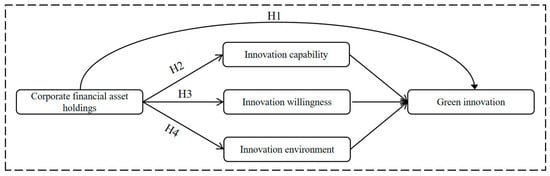
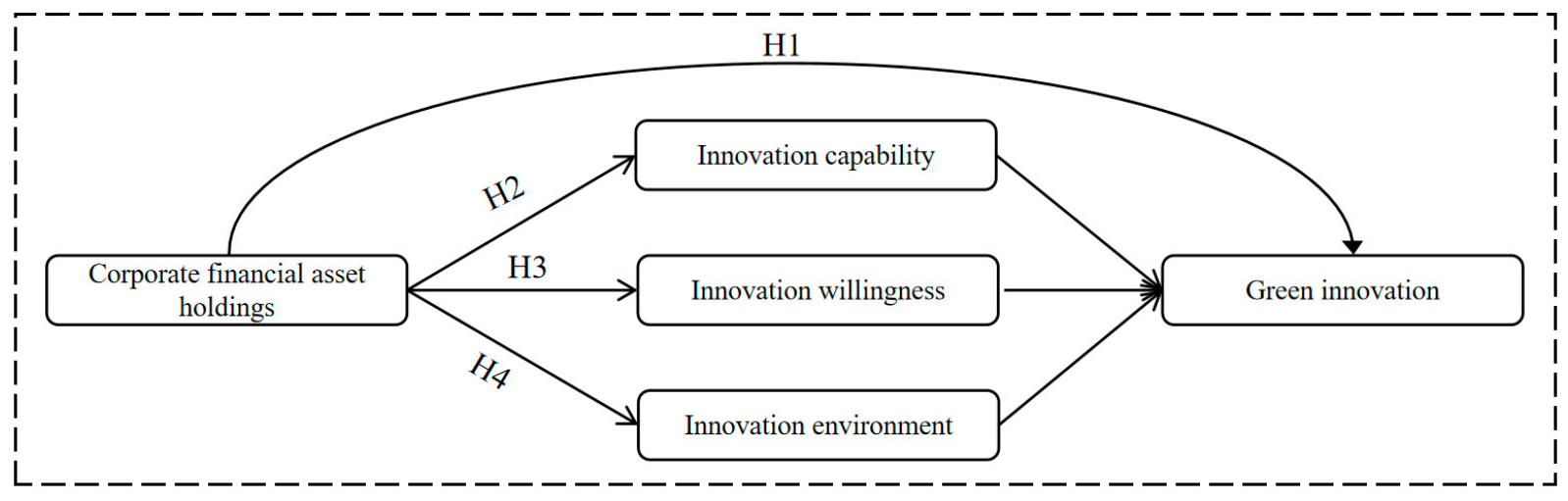
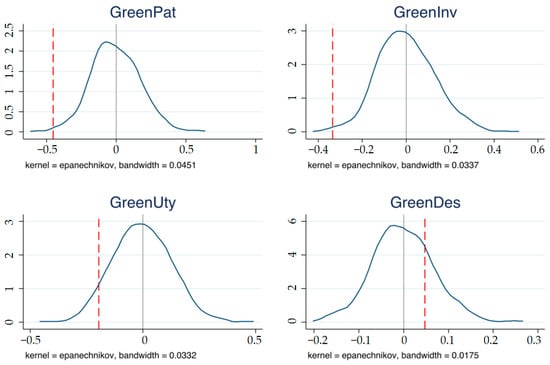
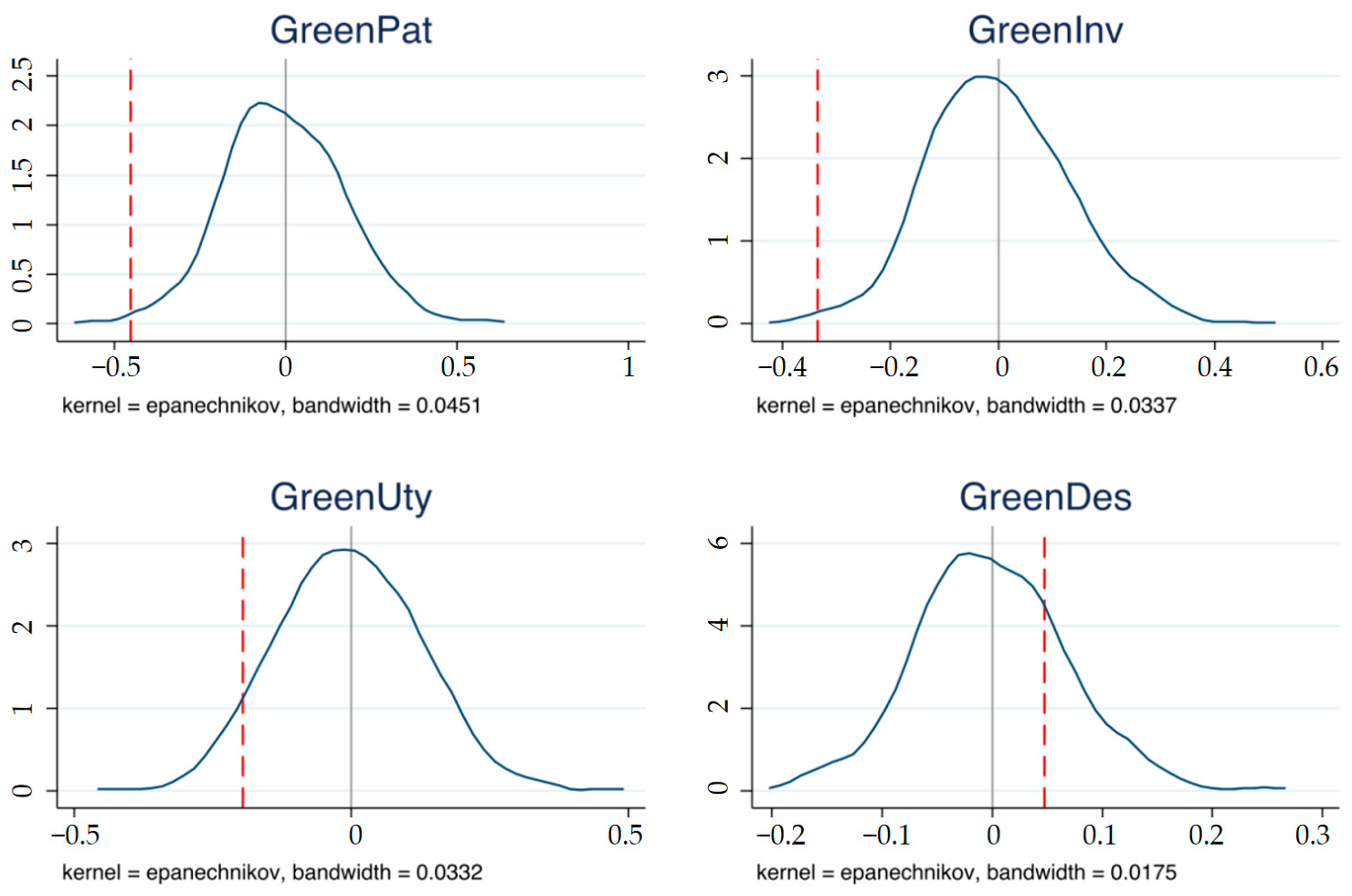

Disclaimer/Publisher’s Note: The statements, opinions and data contained in all publications are solely those of the individual author(s) and contributor(s) and not of MDPI and/or the editor(s). MDPI and/or the editor(s) disclaim responsibility for any injury to people or property resulting from any ideas, methods, instructions or products referred to in the content. |
© 2026 by the authors. Licensee MDPI, Basel, Switzerland. This article is an open access article distributed under the terms and conditions of the Creative Commons Attribution (CC BY) license.