


Abstract
The phenomenon of climate change has exerted an escalating degree of pressure on coastal livelihoods in Bangladesh. In this region, communities find themselves confronted with a dual challenge, being exposed to both rapid-onset hazards, including cyclones, storm surges, and floods, and slow-onset stresses, such as salinity intrusion and sea-level rise. These hazards have ramifications for agriculture, aquaculture, food security, and livelihood sustainability. However, extant studies frequently examine individual risks, livelihood sectors, or disaster responses in isolation. Consequently, there is a paucity of research that comprehensively examines the influence of multiple climate-related hazards on coastal livelihoods and the adaptation options that are locally feasible in overcoming institutional, community, and financial constraints. This study synthesizes evidence from the published literature and is complemented by qualitative evidence from 30 open-ended questionnaires with farmers in selected coastal areas of Bangladesh. The objective of this synthesis is to validate and contextualize the current livelihood conditions, climate-related challenges, and locally adopted adaptation practices. The analysis examines four interconnected dimensions. The following elements are to be considered: (i) climate-related hazards and their sectoral impacts, (ii) livelihood opportunities and vulnerabilities, (iii) adaptation practices, and (iv) institutional, community, and financial constraints. These elements are to be complemented by a SWOT assessment of livelihood adaptation options. The findings indicate that a combination of factors, including salinity intrusion, cyclones, storm surges, flooding, sea-level rise, drought, and changing temperature and rainfall patterns, collectively impose constraints on agricultural and aquaculture productivity, thereby exacerbating livelihood insecurity. Concurrently, practices such as salt-tolerant crop cultivation, sorjan farming, freshwater conservation, pond-dyke vegetable cultivation, tower cultivation, composite agriculture, and environmentally responsible aquaculture offer promising pathways for livelihood adaptation. However, the limited availability of infrastructure, inadequate institutional coordination and stakeholder participation, and insufficient financial resources act as constraints on their broader adoption. The manuscript makes a similar observation regarding infrastructure, institutional support, and funding, which are identified as significant constraints. Concurrently, it acknowledges technological development, stakeholder participation, and climate-resilient livelihood opportunities as crucial avenues for enhancement. This study thus posits a series of recommendations for enhancing the resilience and sustainability of coastal livelihoods in Bangladesh. These recommendations encompass the implementation of hazard-specific and livelihood-oriented adaptation measures, the facilitation of access to climate-resilient technologies and financial resources, and the establishment of a more robust coordination framework among diverse stakeholders. The proposed framework involves collaboration between agriculture, fisheries, water management, disaster management, local government, non-governmental organizations (NGOs), academic institutions, and community organizations. These recommendations align with the manuscript’s proposed measures for communities dependent on salinity, cyclones, storm surges, floods, agriculture, and aquaculture. Additionally, the manuscript places emphasis on cross-sectoral governance.
1. Introduction
Bangladesh has been experiencing the catastrophic effects of climate change because of its 710 km-long coastline, low-lying topography, and climatic variabilities. The country is badly affected by climatic effects such as temperature increases, fluctuating rainfall, rising sea levels, saltwater intrusion, and an increase in the frequency and severity of extreme weather events. Several of the strongest storms, recurrent flooding, drought, and increasing salinity intrusion have been observed in Bangladesh, resulting in significant damage to agricultural and aquaculture production, infrastructure, property, livelihoods, and the national economy. From the Global Climate Risk Index 2021 and 2020 reports, Bangladesh ranked seventh in both years because of the long-term climate-induced risks [1]. In the coastal areas of Bangladesh, cyclonic storms occur every year [2], and at least one severe cyclone hits every three years [3]. Along with cyclones, more than half (53%) of the coastal areas of Bangladesh are affected by saline intrusion [4]. This area is exposed to 6 mm to 21 mm sea level rise per year [5]. Likewise, rising sea levels will lead to increased salinity in both surface and groundwater [6]. This tendency not only increases salinity intrusion in freshwater but also enhances soil salinity in cropping land. Apart from cyclones and salinity, more than two-thirds (64%) of the coastal areas are experiencing seasonal flooding. Other than seasonal flooding, coastal flooding often comes with cyclonic storms in this area [7].
Agriculture and aquaculture are the key sectors in Bangladesh that secure food and livelihood. These sectors have been vigorously affected by the changing climate over the years. Climate change effects on aquaculture production are expected to be both direct and indirect [8,9]. In the coastal region, 20–40% of rice yield reduction happens due to the consequences of erratic rainfall, high temperature, increased intensity and frequency of drought, salinity, floods, cyclones, and tidal surges [10]. For instance, according to the Government of Bangladesh and the World Bank Joint Damage, Loss, and Needs Assessment (JDLNA), approximately 120,000 ha of cropland were completely damaged, and 1.39 million ha were partially damaged following Cyclone Sidr in 2007 [11]. Moreover, 3 lac acres of cultivated land and crops were lost due to cyclone Aila in 2009 [12]. Otherthan cyclones, rising sea levels are putting pressure on coastal agriculture because of land submersion and salinity intrusion [13]. Around 30% of the coastal cultivable lands are already affected by salinity [14]. Water salinity triggers an increase in soil salinity, which will reduce agricultural productivity, leading to food insecurity [15]. Furthermore, agricultural lands in the coastal areas are highly vulnerable to tidal flooding and storm surges [16].
Based on the various studies in the literature, future temperatures will be gradually increasing in the monsoon season (June-August), and inconsistent rainfall with increased frequency and intensity is already happening in Bangladesh [17,18,19,20]. These climatic changes pose a great threat to coastal agriculture, as they are a contributor to 20% of the total rice production in Bangladesh [21]. To combat the existing and future climate change scenarios, adaptation is the best way to cope with it. Bangladesh’s government has guided adaptation measures through the National Adaptation Program of Actions (NAPA). However, the coastal people have developed some promising adaptation actions to sustain their livelihoods in those areas since about 40 million coastal people of Bangladesh are directly or indirectly dependent on agriculture and aquaculture. Existing studies have demonstrated individual climate hazards and their effects on agriculture, fisheries, aquaculture, and coastal communities in Bangladesh. However, these dimensions are sometimes examined separately, making it difficult to understand how multiple climate-related hazards collectively influence livelihood systems and how locally feasible adaptation options can relate to institutional and financial support. Volitionally, locally practiced and relatively low-cost adaptation options are not always discussed along with the institutional and community-level barriers that constrain their wider adoption. This study addresses this gap by synthesizing evidence on climate-related hazards, livelihood impacts, agricultural and aquaculture responses, locally relevant adaptation practices, and the institutional, community, and financial constraints affecting adaptation. This research is significant as it connects these dimensions within a coastal livelihood-resilience framework and provides an integrated evidence base for developing context-specific adaptation measures for climate-exposed coastal communities Therefore, this article attempts to disclose and recommend these adaptation practices for improving coastal livelihood in the context of climate change.
Although climate-related hazards and their consequences for coastal Bangladesh have been extensively documented, the evidence remains fragmented across individual hazards, livelihood sectors, and adaptation interventions. The novelty of this review lies not in documenting the existence of climate impacts or individual adaptation practices, but in integrating these fragmented strands of evidence into a hazard–livelihood–adaptation-enabling environment framework. The synthesis demonstrates that livelihood vulnerability is produced through interacting rapid-onset hazards (cyclones, storm surges, and floods) and slow-onset stresses (salinity intrusion, sea-level rise, temperature change, and rainfall variability), whose effects are mediated by livelihood dependence, access to freshwater, infrastructure, institutional support, knowledge, and financial capital. The study further identifies a key analytical distinction between adaptation options that primarily reduce exposure or sensitivity and those that increase livelihood diversification or adaptive capacity. Importantly, the synthesis shows that an adaptation option cannot be considered universally beneficial: its effectiveness depends on local hazard conditions, resource availability, livelihood dependence, institutional support, and environmental consequences. This provides a more context-sensitive basis for evaluating coastal livelihood adaptation than a conventional inventory of climate impacts and adaptation practices.
2. Methodology
This study was conducted using a combination of methods, incorporating both primary data collection and secondary information from the published literature. This study adopted an integrative review approach to synthesize evidence on climate-related hazards, coastal livelihood impacts, adaptation practices, and the institutional, community, and financial conditions influencing adaptation in coastal Bangladesh. The selection of a scoping-oriented approach was determined by the observation that the extant evidence encompasses a wide array of study designs, spatial scales, livelihood sectors, and methodological approaches, thereby rendering direct quantitative meta-analysis inappropriate. The review was divided into four analytical dimensions: (i) climate-related hazards and sectoral impacts, (ii) livelihood vulnerability and livelihood opportunities, (iii) adaptation practices and their potential benefits and limitations, and (iv) institutional, community, and financial enabling conditions and constraints.
Guided by the following research questions, the review sought to address the following: (i) What major climate-related hazards and slow-onset climatic stresses affect coastal livelihoods in Bangladesh? (ii) What are the mechanisms through which these hazards affect agriculture, aquaculture, fisheries, food security, and household livelihood security? (iii) What significant knowledge gaps persist, and what lessons from Bangladesh may apply to other deltaic and tropical coastal socioecological systems? Therefore, the present study was complemented by qualitative field evidence collected through 30 open-ended questionnaires directed to farmers in one selected coastal area of Bangladesh. The selected area is named Gabura Union, which is in Shayamnagar Upazila of Satkhira District (Figure 1). The primary data, which were collected arbitrarily, were employed to validate the findings derived from the extant literature. This approach yielded a realistic representation of the current livelihood conditions, the climate-related challenges faced by the local farmers, and the adaptation practices that have been adopted in the coastal areas of Bangladesh. The present study retrieved secondary open data from a variety of web pages provided by the United Nations Office for the Coordination of Humanitarian Affairs (OCHA), the National Oceanic and Atmospheric Administration (NOAA), and the Flood Forecasting and Warning Center (FFWC), respectively (see Appendix A Table A1).
Figure 1.
Study area map: Location of the Gabura Union (author-generated, 2026) [22].
3. Subnational Climate Hazards and Impacts on Coastal Agriculture and Aquaculture
The coastal regions of Bangladesh are more vulnerable compared to the other parts of Bangladesh due to its unique geographical location, flat topography, vast river networks, dynamic estuaries, funnel-shaped Bay of Bengal and different socioeconomic and infrastructural factors [23,24]. This area is already being impacted by slow-onset climatic stresses such as rising temperatures, salinity intrusion, and drought in agricultural soil and groundwater, as well as an increase in the occurrence and intensity of sudden shocks such as floods, cyclones, storm surges, and riverbank erosion because of climate change [23,24,25].
3.1. Cyclones
In coastal regions, cyclones are the most devastating disaster. Currently, cyclonic storm surges pose a significant hazard to more than two-fifths (45%) of Bangladesh’s coastal areas (Figure 2). Storm surges intensify as they approach the coast due to high astronomical tides and the shallow continental shelf of the Bay of Bengal [26].
Figure 2.
Cyclonic outbreaks in Bangladesh (author-generated, 2026) [27].
Every year, cyclones and depressions pass the coast of Bangladesh (see Appendix A Table A1) [28]. It is estimated by the Intergovernmental Panel on Climate Change (IPCC) [29,30] that the high-risk areas of Bangladesh will increase by 40% and more than 20 million people will be exposed to the risk of cyclone in 2050. Moreover, Halder, in 2011 [31], mentioned that around 86% of the terrestrial land area would be exposed to storm surges in coastal areas by 2100. Out of the 508 storms that formed in the Bay of Bengal over the past 100 years, 17% have crossed across the coastlines of Bangladesh [32]. Furthermore, over the course of the last 44 years, from January 1974 to May 2018, 269 depressions and storms have formed [5].
3.2. Salinity Intrusions
According to Dasgupta et al. [33], climate change enhances the soil salinization risk for coastal Bangladesh. Salinity in soil and water is another pressing hazard in this region. It appears mainly during the dry season [34,35]. The salinity concentration of surface water in 2015 was 1.6 times higher than in 2003 [34]. Over the last 35 years, salinity increased around 26 percent in the coastal region of Bangladesh [36], spreading into non-coastal areas as well. The intrusion of salinity was classified according to electrical conductivity (EC, dS m−1), in accordance with the soil-salinity assessment framework reported by the Soil Resources Development Institute (SRDI) for Bangladesh. The classification system delineates five distinct categories of salinity: non-saline (less than 2 dS m−1), slightly saline (2–4 dS m−1), moderately saline (4–8 dS m−1), strongly saline (8–16 dS m−1), and very strongly saline (greater than 16 dS m−1). Over the course of nine years, approximately 35,400 hectares of new land have been impacted by varying degrees of salinity [37], which indicates that nearly 400 hectares of new land in coastal areas could be exposed to salinity hazards every year [31]. According to Dasgupta et al. [4], rises in sea level, the over-extraction of groundwater, the upstream diversion of surface water, and shrimp farming in coastal Bangladesh are the main reasons for the rapid increasing of groundwater salinity, river salinity, and soil salinity. Soil salinity has expanded substantially across the coastal region of Bangladesh. According to the Soil Resources Development Institute (SRDI), the area affected by salt increased from approximately 0.833 million hectares (ha) in 1973 to 1.056 million ha in 2009, representing an absolute increase of about 0.223 million ha (26.7%) over approximately 36 years. During the subsequent period from 2000 to 2009, a further 35,510 hectares (3.5%) became affected by varying degrees of salinity [37]. It is imperative to note that these figures signify cumulative alterations occurring over specific periods and should not be construed as annual rates of land salinization. The observed expansion has been associated with reduced upstream freshwater flow, saline tidal inundation, irregular rainfall, groundwater conditions, storm surges, and brackish-water shrimp farming. Furthermore, Hossain et al. [38] highlighted that river salinity has increased from 2 to 10 times between 1970 and 2010. The area exposed to high salinity (>5 ppt) will increase by around 24% by 2050, and the population exposed to high salinity (>5 ppt) will be around 14 million in 2050 [39,40].
3.3. Global Warming and Sea Level Rise
Climate change exacerbates Bangladesh’s sea level rise, as Bangladesh’s climate is warming 1.5 times quicker than the global average [41] (Figure 3). The mean sea level is approximately four times greater than the worldwide trend due to the rising trend. Based on the tidal water data from 1980 to 2012, Climate Change Cell under Bangladesh’s Ministry of Environment, Forestry, and Climate Change mentioned that the rise of sea level varies between 6 and 21 mm per year in the coastal areas [42]. Moreover, most of the predictions figured out the relative rise of sea levels in Bangladesh compared to global sea level rise. It is mentioned by the Ministry of Environment and Forests that Bangladesh could face a sea level rise of 32 cm by the year 2050. Furthermore, the World Bank estimated a 10 cm, 25 cm, and 1 m rise in sea level by 2020, 2050, and 2100 [43,44]. This increase would submerge 2%, 4%, and 17.5% of the nation’s entire land area. In the southern region of Bangladesh, two-fifths (40%) of the productive land is projected to be lost to a 65 cm sea level rise by 2080 [5]. In Bangladesh’s coastal regions, storm surges will become even more severe due to the rising sea level.
Figure 3.
Global Forecast System (GFS)-derived 2 m temperature (°C) of South and Southeast Asia and position of Bangladesh on 6 May 2025 (author-generated, 2026) [45].
3.4. Floods
Coastal flooding affects Bangladesh’s west coast, whereas riverine floods, which are frequently made worse by coinciding high tides, are more common in the country’s north and east (Figure 4). However, most of the low-lying coastal areas of Bangladesh are susceptible to flooding even under normal astronomical tide conditions [7]. Nearly two-thirds (64%) of the coastal areas of Bangladesh are exposed to seasonal shallow flooding (up to 90 cm flood depth). Moreover, Jisan et al. [7] mentioned that the low-lying coastal areas of Bangladesh are frequently flooded due to storm surges associated with tropical cyclones. However, flooding in a large area highly depends on the timing of the cyclone’s landfall and its coincidence with the high tide [46]. In the future, flooding is expected to increase because of climate change [47]. In Bangladesh, a storm surge with a 0.3 m sea level rise would result in a 15.3% larger flood risk area than the current risk area and a 22.7% increase in the depth of flooding within 20 km of the shoreline [48].
Figure 4.
Flood inundation map of Bangladesh (author-generated, 2024) [49].
4. Coastal Livelihoods and Impacts of Climate Change
The coastal region of Bangladesh is the hot spot of several disasters occurring due to the impacts of climate change. The coastal region of Bangladesh is mostly affected by salinity intrusion from oceanic and other sources [50]. All the sectors are negatively affected by the problem of salinity in the coastal areas of Bangladesh.
4.1. Agriculture-Based Coastal Livelihood
In Bangladesh, rain-fed agriculture is the main method of crop production. Climate change is having a severe impact on rice production, the main staple food that accounts for 92% of the country’s total food production. The World Bank projected that national rice production would decline under all climate change scenarios. The annual growth rate of rice production is expected to decrease from 2.71% under the existing climate variability scenario to 2.55% under the average climate change scenario from 2005 to 2050, resulting in significant cumulative production losses by 2050 [44]. In Bangladesh, high-yielding types of Boro, Aman, and Aus rice yield less due to year-round high temperatures [8]. Furthermore, several studies suggest that sterility in the rice spikelet is caused by a temperature increase of 1–2 °C combined with decreased sun exposure. Temperature anomaly fluctuations will impede crop production’s vegetative and reproductive growth. Production would drop significantly by about 28% for rice and 68% for wheat with a 4 °C increase in temperature [51,52]. According to a study based on the IPCC Fourth Assessment Report, the effects of temperature on Boro rice yield resulted in significant yield losses (1.5%, 2.5%, 4.4%, and 5.4% for the years 2020, 2030, 2040, and 2050, respectively). Similarly, the possibility of growing potatoes and wheat would be seriously harmed by temperature changes of 2 and 4 degrees Celsius. Production loss may exceed 60% of the achievable yields [50]. For wheat, grain weight declines substantially with increasing temperature, with experimental studies reporting reductions of approximately 15–25% for a 5 °C increase during the grain-filling period [53]. Additionally, food output is limited by water scarcity, and the Bangladesh Agriculture Development Corporation (BADC) reports that irrigation coverage is barely 56%. Consequently, it has a detrimental effect on the nation’s food chain. Drought takes place in Bangladesh more frequently than in the past because of climate change [54], and it appears in this country every 5 years. Every year, during the Rabi season, 0.45 million hectares of land experience extremely severe drought, while during the pre-kharif and kharif seasons, the affected areas are 0.40 and 0.34 million ha, respectively. In addition, Tanner et al. [55] noted that Bangladesh has roughly 2.7 million hectares of land that are susceptible to yearly drought. While it is a common occurrence in some areas of the nation, the northwest is primarily at risk of drought due to its high degree of rainfall variability [56]. It affects agricultural sustainability, food security, natural resources, and the rural livelihood pattern [57].
Climate change affects agricultural productivity directly and indirectly through altered rainfall patterns, droughts, floods, and sea level rise [58]. Figure 5 summarizes the detrimental effects of climate change on agriculture. Climate change affects agriculture through a combination of extreme weather events, changing atmospheric conditions, environmental degradation, ecosystem disruption, and socioeconomic impacts. Heavy rainfall, droughts, heat waves, and other natural disasters can directly damage crops and reduce agricultural productivity. Rising temperatures, strong surface winds, changing humidity, and fire risks further alter crop-growing conditions and increase climatic stress. At the same time, soil erosion, declining water availability, reduced soil fertility, and deteriorating water quality undermine the capacity of agricultural systems to sustain production. Climate-related changes may also increase plant diseases and reduce biodiversity and pollinator populations, weakening important ecosystem services that support crop production. Collectively, these interacting climatic and environmental pressures can reduce agricultural productivity and socioeconomic benefits, thereby increasing risks to farmers’ livelihoods and food security.
Figure 5.
Climate change impact on agriculture (author-generated, 2026).
The overall impacts on agriculture are negative, especially in coastal areas of Bangladesh. Sea level rise affects agriculture in by salinity intrusion, flooding, and increased cyclone frequency [59]. These elements work together to reduce agricultural output in the coastal region. Likewise, salinity intrusion causes land desertification and scarcity of irrigation water [60]. Around 30% of the coastal cultivable land is already affected by salinity [14]. Salt accumulation in the root zone of soil affects plant growth and crop production in coastal soil [34,61]. It decreases the terminative energy and germination rate of some plants [62]. Furthermore, it affects plant germination, biomass production, and yield. Water scarcity or drought is another climate change consequence that negatively impacts agricultural production. Based on rainfall, soil composition, and crop planting timing, yield losses in areas severely prone to drought typically range from 35 to 45 percent [63]. In areas with moderate drought risk, yield losses are more likely to be between 20 and 35 percent.
4.2. Aquaculture-Based Coastal Livelihood
Bangladesh’s aquaculture sector also suffers from climate change. Fish biology, natural breeding, migration, reproduction, and habitat modification are all impacted. Fish reproduction, growth, and migration patterns are all affected by temperature, rainfall, and hydrology [64]. With the increase in global temperature, changes in rainfall patterns, sea level rise, ocean acidification, severe climatic events, and increased mortalities for most fish are likely to occur because of unfavorable ecosystems [65,66]. The distribution and composition of species can shift because of altered water quality and increased salinity, particularly in coastal regions. Salinity intrusion threatens freshwater fish production; however, at the same time, it creates opportunities for catching and cultivating brackish and marine species [67]. Fishery industries suffered losses and damages totalling USD 6.7 million in 2007 because of hurricane Sidr. According to the Bangladesh Fisheries Development Corporation (BFDC), during the past few decades, fishery resources in the Bay of Bengal’s EEZ area have decreased by about 25–30%. Moreover, the Food and Agriculture Organization (FAO) [68] reports that around 100 important fish species have disappeared from the Bay of Bengal over the last few decades. Natural fish stocks have decreased recently because of both human-made and natural disasters, the deterioration of aquatic habitats, and the loss of several wetlands and water regions. In Bangladesh, the primary sources of fish resources are floodplain fisheries. However, these fish supplies will be the most severely affected because of the unpredictable nature of seasonal floods. By 2030, there is a serious risk of losing more than 4 million metric tons of fishery products. Fish reproduction, migration, and growth are significantly impacted by the timing, intensity, and duration of rains and floods. Delays in the onset of rains and floods may affect the breeding and maturation success of fish, which in turn will result in reduced fish production from rivers and floodplains [69]. Furthermore, longer dry spells, decreased precipitation during the dry season, and increasing aridity—especially in Bangladesh’s northwest—will cause floodplain fish pits, depressions, ditches, and other water features to dry up or hold insufficient amounts of water, which is insufficient for fish survival. The Dhaka region’s inland open-water fisheries are experiencing a decline in fish output due to its status as a floodplain. Floods cause hundreds of culture ponds to float every year, killing fish and costing impoverished fish growers money. The substance of pond fish cultivation is also seriously threatened by this consequence of climate variability. All these climate effects combined will have a negative influence on agricultural output and, consequently, the livelihoods of many impoverished people, particularly those who are already vulnerable and food insecure.
The distribution of fish as well as the productivity of freshwater and marine species are changing due to climate change. This affects the communities that depend on fishing for their livelihoods as well as the sustainability of aquaculture and fisheries [67]. Climate change effects on aquaculture production are expected to be both direct and indirect [8,9]. Among the immediate implications are the physiological and physical traits of fish and shellfish stocks in production systems. Indirect effects can also arise from changes in input supplies, input prices, primary and secondary productivity, ecosystem structure, and costs associated with fishmeal, fish oil, and other commodities and services required by aquaculture producers [70,71].
Figure 6 illustrates the negative impact of increasing greenhouse gas (GHG) emission on aquaculture production and the impact of climate change on capture fisheries, aquaculture, and agriculture activities. Climate change affects aquaculture production through interconnected atmospheric, environmental, and food-system pathways. Rising concentrations of greenhouse gases, including CO2, CH4, and N2O, contribute to global temperature increases and broader climatic changes that alter aquaculture production conditions. Changes in temperature, rainfall, water availability, and the frequency of extreme weather events can influence water quality, aquatic species growth, reproduction, disease occurrence, and survival. Climate change also affects aquafeed availability and quality through its impact on agricultural production, which supplies important feed ingredients for aquaculture. Conversely, changes in agricultural production and aquaculture production are interconnected through competition for water, land, and feed resources. Consequently, climate-resilient aquaculture requires the integrated management of climate risks, agricultural production, aquafeed systems, water resources, and aquatic ecosystem health. Several reports have highlighted that the negative impacts of climate change on aquaculture may vary depending on geographical areas, economy, climatic zones, production systems, and cultured species [71,72,73]. For example, the negative impact of climate change on aquaculture is higher in developing nations and poorer economies compared with those in developed ones [72]. The development of aquaculture is greatly impacted by severe weather events, particularly in coastal areas, such as storms, waves, and cyclones [74].
Figure 6.
Climate-change pathways affect aquaculture production (author-generated, 2026).
5. Potential Livelihoods in Coastal Bangladesh
Climate-related risks largely trigger extreme events and impacts on social and livelihood options in the coastal areas of Bangladesh [75]. The ability of livelihoods to endure shocks and stresses, which dominate the degree of livelihood hazards, is the primary and most important driver of adaptive capacity. Any vulnerability reduction plan must start with an understanding of how people currently make a living. The coastal communities of Bangladesh are highly dependent on nature and more vulnerable to climate change than more affluent groups. Nearly 80–90% of people rely on agriculture and fishing either directly or partially for their livelihoods at different times of the year. These livelihood options are highly promising in coastal areas of Bangladesh, but they are experiencing the severe impacts of climate change. Therefore, it is necessary for coastal community people to adapt climate-smart promising opportunities for sustainable livelihood options [76].
5.1. Agricultural Livelihood Option
Large-scale production of high-value crops (e.g., watermelon) can be one of the best possible approaches for the agricultural livelihood option in the coastal areas of Bangladesh. In Bangladesh’s growing watermelon regions, growing watermelon has turned into a lucrative agribusiness. As the demand for this significant cash crop rises, more new areas are being added to the crop’s cultivation. Since a variety of seasonal and off-season watermelon varieties are now available in the market, watermelon is now grown practically year-round in Bangladesh (Figure 7). As a result, consumers are also getting watermelon throughout the year to cherish the taste of watermelon. Early watermelon variety cultivation created an opportunity for higher prices. As a result, farmers can earn more profit, transform their livelihoods, and contribute to the economic development of Bangladesh’s coastal areas by growing selected watermelons as a climate-smart crop.
Figure 7.
Watermelon cultivation in coastal areas of Bangladesh (source: authors, 2026).
5.2. Aquacultural Livelihood Options
Aquaculture is culturally appropriate for the coastal regions of Bangladesh. The agricultural lands are converting to brackish or marine regions and millions of farmers are losing their terrestrial livelihoods [77]. The most promising adaptation options for the communities in coastal Bangladesh [47] are innovative brackish water aquaculture (BWA) and integrated multi-trophic aquaculture (IMTA), which involve growing finfish and shellfish with seaweeds in an integrated farm [78,79]. This is because coastal lands have high levels of saltwater intrusion. The Sundarbans, the largest mangrove forest in the world, serve as a food source and nursery for saline shrimp pond farming, making the southwest coastal region of Bangladesh one of the most promising locations for shrimp pond farming for two main reasons [79]. First, the region has an abundance of fresh and saline water resources available almost year-round. A shrimp farm usually needs saline water that is stored at the shrimp pond [13], which is very common in the coastal belt of Bangladesh. However, the saline shrimp pond farming system should be implemented in a planned manner because unplanned shrimp farming has a variety of negative environmental effects, including high soil salinity, disease outbreaks, pollution of the soil and water, public health risks, biodiversity loss, destruction of mangroves, and local environmental change.
6. Possible Adaptation Practices to Improve Coastal Livelihoods
6.1. Sorjan Technique
Innovative farmers seeking healthy returns have found new interest in lands that were previously overlooked due to waterlogging during the rainy season and drought and salinity problems during the dry months. These lands are now attractive due to the introduction of the sorjan farming method (Figure 8), which combines vegetable crops with fish farms. In Bangladesh’s coastal region, sorjan farming is currently quite popular at the community level. With the application of the sorjan method, coastal communities improve their agricultural production, which enhances food security for poor and vulnerable people [80].
Figure 8.
Sorjan technique in coastal areas (source: authors, 2026).
6.2. Salt-Tolerant Crops
Coastal farmers have up until now primarily attempted to counteract the salt concentrations in the soil, but the measures are costly and have ephemeral results. Farmers can restore the fertility of their fallow saline soil, produce enough food for the community, and make money by learning how to cultivate salt-tolerant crops on land damaged by saltwater [8]. Practices involving short-duration rice, salt-tolerant crops, the use of raised land, the 100% use of rainwater, and the early cultivation of rice (seed bedding-mid June and planting mid-July) are being used. Alt-tolerant rice varieties recommended for the coastal saline ecosystem include BRRI dhan47, BRRI dhan53, BRRI dhan67, BRRI dhan73, BRRI dhan97, and BINA dhan10, together with locally adapted traditional varieties in some areas [8,61]. However, watermelon is not categorized as a salt-tolerant crop. Instead, it is considered a potential high-value and livelihood-diversification crop that may provide additional income to coastal farmers under suitable environmental and management conditions. Its cultivation should therefore not be used as evidence that watermelon is inherently tolerant of saline conditions. Rather, its potential contribution to coastal livelihoods depends on site-specific soil salinity, irrigation-water quality, crop management, market access, and seasonal conditions. Distinguishing physiological salt tolerance from economic suitability is important because a crop may provide livelihood benefits in a saline-affected region without necessarily possessing high salt tolerance.
6.3. Freshwater Conservation
There are unique agroecological conditions for crop cultivation in Bangladesh’s coastal zone. Different levels of soil salinity influence roughly 0.83 million hectares of arable land out of the 2.85 million hectares of coastal and offshore areas [32]. Due to a lack of freshwater for irrigation during the Boro season, farmers are unable to grow rice. Near the surface, the ground water is salty and unsuitable for irrigation. At a depth of 213 to 274 m, groundwater from the deep aquifer has a salinity level of 0.5 dS per meter, making it appropriate for irrigation but unfeasible because deep tube well installation is expensive [61]. During the Rabi (dry) season, most of the coastal region’s land is left fallow. A small number of farmers use residual moisture to cultivate vegetables, oilseeds, groundnuts, sweet potatoes, pulses, and chili. Due to the lack of proper maintenance, ponds have already been abandoned in large numbers. If these many abandoned ponds are re-excavated, a significant amount of the June–September excess rainfall could be drained out as surface runoff [81]. This extra rainwater could then be saved in the re-excavated ponds or ditches in the crop field for the irrigation of Rabi crops; the ditches could also be used to drain excess water (Figure 9) [79]. Rainwater in the rivers and ponds could also be the source of freshwater for crop production [15,71,82].
Figure 9.
Freshwater conservation practices in ponds/ditches (source: authors, 2026).
6.4. Saline Shrimp Pond Farming
More than 85% of the world’s farmed shrimp are produced in coastal areas of the Asia–Pacific region, with Bangladesh being the world’s fifth-largest producer of shrimp [83,84,85]. One of the industries in these areas with the quickest rate of growth is shrimp aquaculture (Figure 9). The entry of seawater for aquaculture causes the salinization of land and groundwater, affecting the productivity of crops [85,86,87].
6.5. Tower Cultivation
During the monsoon season, tower gardening—a vertical, aeroponic growing system—might be a more efficient and superior choice for food production [88]. In the end, a successful winter vegetable production system enables the cultivation of fruits, flowers, herbs, and vegetables in smaller spaces (Figure 10). Given its viability in rural settings, this technology might also be regarded as being geared towards women.
Figure 10.
Tower cultivation (source: authors, 2026).
6.6. Pond Dyke Vegetable Cultivation
Pond-dyke systems contribute towards improved livelihoods of households irrespective of their well-being level (Figure 11). Both vegetables and fish significantly contributed to the total diet in Bangladesh, regardless of geography or degree of well-being. Increased productivity, income, nutrition, and job opportunities for rural populations can be achieved through the intensification of fishpond dykes with crops and poultry [89].
Figure 11.
Pond dyke vegetable cultivation (source: authors, 2026).
6.7. Composite Agriculture
Farmers can use this technique to harvest multiple crops or to combine agriculture with other practices such as animal farming, horticulture, pisciculture, apiculture, and floriculture. Practices such as salt-tolerant vegetables on raised dykes, salt-tolerant rice cultivation, and brackish water fish culture are depicted in Figure 12. Through this practice, income has increased up to 5/6-fold.
Figure 12.
Composite agriculture (source: authors, 2026).
7. Challenges to Adopting Promising Livelihood Practices
Climate adaptation should not be regarded as an inherently positive or universally applicable process. Although adaptation interventions are generally designed to reduce exposure, sensitivity, or livelihood losses associated with climate hazards, their outcomes may vary according to environmental conditions, household resources, institutional arrangements, implementation scale, and interactions with existing livelihood systems. An intervention that reduces short-term climate risk may generate longer-term environmental, economic, or social costs and may therefore contribute to maladaptation. Saline shrimp pond farming provides an important example of this adaptation dilemma in coastal Bangladesh. Increasing salinity can reduce the productivity of conventional agriculture, creating incentives for households and landowners to shift from crop cultivation toward brackish-water aquaculture. Shrimp farming can consequently provide income diversification and an alternative livelihood where agricultural production is increasingly constrained by salinity. Consequently, adaptation effectiveness should be assessed not only in terms of immediate livelihood benefits but also in relation to environmental sustainability, distributional effects, resource requirements, and long-term adaptive capacity.
7.1. Institutional
Involved governmental and non-governmental institutions and organizations as well as policies that have been implemented to encourage adoption practices and investigate ways to enhance and guarantee greater adoption rates (Figure 13). A comprehensive strategy paper outlining the necessary action plans for the agricultural sector has been produced by the government. Even though a wide range of actors along commodity value chains are expected to implement policies, there are still significant obstacles to the effective implementation of climate change policies in the agriculture sector. These include limited resources for reaching large populations, an excessive reliance on funding from the international community, and limited stakeholder involvement in policy formulation. As demonstrated in Figure 13, a discrepancy exists between the formulation of national policy and the effective delivery of climate-adaptation support to farmers. The observed discrepancy can be attributed to constraints related to financial resources, external funding dependence, stakeholder participation, institutional coordination, and local implementation capacity.
Figure 13.
Climate change policy implementation in agriculture (author-generated, 2026).
The focus and balance of agricultural water management can be changed at the national level in several ways. Investments and subsidies can track changes in agroecological zones, which can concentrate on regions that maintain their competitive advantage. Additionally, as a matter of public interest, the government will be heavily involved in safeguarding farmland against flooding and waterlogging. Various structural and non-structural measures that support adaptation techniques will be the primary means of achieving this. Table 1 lists the relevant adaptation policies, laws, rules, acts, and ordinances in Bangladesh.
Table 1.
Relevant adaptation policies, laws, rules, acts, and ordinances relevant to climate adaptation and livelihood resilience in Bangladesh.
7.2. Individual and Community
A few of these issues include the gradual loss of arable land, the deterioration of soil fertility, the salinization of the soil, the lack of funding for agricultural research and training, the unfavorable land-tenure system that hinders farmers’ access to credit and lowers the level of technology adoption by small-scale farmers, the need to deal with the growing effects of climate change and related extreme weather events, and outmigration and labor shortages in rural areas that drive up labor costs [90,91,92]. At the individual and household levels, farmers respond to climate stress by diversifying their livelihoods and modifying their existing production systems. However, household adaptation is strongly differentiated by adaptive capacity. The influence of labor availability and demographic change on individual responses is also a contributing factor. At the community level, collective action and locally accumulated knowledge are significant components of adaptive capacity. It is imperative to shift the paradigm from a passive stance, in which individuals and communities are regarded as passive recipients of policy interventions, to an active role as agents of climate adaptation. This transformation is crucial for effective climate adaptation strategies, particularly in contexts such as coastal Bangladesh. The necessity for a paradigm shift is evident when considering the challenges faced in this region, where technology-centered interventions have not yielded the desired outcomes. A more effective approach entails a shift toward people-centered and community-supported methodologies. These methodologies should prioritize the collective action of local knowledge, household assets, and institutional support, ensuring equitable access to resources. By fostering these community-driven initiatives, the effectiveness and sustainability of adaptation can be enhanced, contributing to the long-term resilience of coastal Bangladesh.
7.3. Financial
Many Bangladeshi farmers continue to face limited financial capital investments and associated activities. For instance, models for climate index insurance have not worked well on a large scale. The expansion of the agricultural sector has not been sufficiently aided by microcredit because many activities (such as purchasing conservation machinery) call for larger funding amounts. Promising livelihood adaptation projects should be financed in a variety of ways, such as through the utilization of national funds, the active participation of development organizations in the creation of policies, and the expansion of any effective, empirically proven technology within local communities. The relative importance of the identified driving factors was synthesized from the reviewed literature and qualitative evidence rather than estimated through an inferential statistical model. Accordingly, the relative rankings shown in the figure represent evidence-based qualitative assessments and should not be interpreted as statistically significant differences. No p-values or significance markers are therefore reported for these assessments (Figure 14).
Figure 14.
Coastal livelihood adaptation framework of Bangladesh (author-generated, 2026).
A SWOT (strengths, weaknesses, opportunities, and threats) analysis of the livelihood possibilities in Bangladesh’s coastal regions is presented in this study (Figure 14 and Figure 15). Understanding how coastal regions might adjust to the problems presented by climate change depends on this analysis. The availability of a variety of natural resources and indigenous knowledge, which encourage creative adaptation techniques, are among the strengths mentioned. However, the successful application of these tactics is hampered by flaws, including inadequate infrastructure, a lack of institutional support, and a lack of funding. The potential for technological development, greater stakeholder participation, and the growth of climate-resilient livelihood patterns presents opportunities. The availability of a variety of natural resources and indigenous knowledge, which encourage creative adaptation techniques, is among the strengths mentioned. However, the successful application of these tactics is hampered by flaws including inadequate infrastructure, a lack of institutional support, and a lack of funding. The potential for technological development, greater stakeholder participation, and the growth of climate-resilient livelihood patterns presents opportunities (Figure 15). The SWOT assessment was conducted as a qualitative synthesis of the strengths, weaknesses, opportunities, and threats identified from the reviewed literature and contextual evidence. The relative positioning of individual factors represents analytical interpretation rather than statistically tested differences; therefore, statistical significance indicators are not applicable to the SWOT categories.
Figure 15.
SWOT analysis of livelihood adaptation (author-generated, 2026).
8. Conclusions and Policy Recommendations
Climate change has had disastrous effects on Bangladesh’s aquaculture and agriculture industries. Increasing floods and drought make water inaccessible to people. This paper has highlighted the potential effects of climate change on agricultural livelihoods and possible adaptation and emergency management (ERM) strategies. The changing climatic conditions negatively affect the overall prospects of livelihood options in the coastal areas of Bangladesh. Social innovations and the exchange of indigenous knowledge beyond technology are essential to enable developmentally effective and ecologically sustainable livelihood options in coastal areas of Bangladesh. This research has shed light on how climate change may affect farmers’ means of subsistence and recommendations for filling the policy void in Bangladesh. Although the government of Bangladesh has a plan of action to address climate change, the main causes of the poor implementation of these strategies are corruption, a lack of institutional cooperation, a lack of coordination, inequity, or the careless use of natural resources. The planning, policymaking, and implementation of climate change adaptation strategies are still in their early stages. Both the government and the people of Bangladesh are now actively striving to mitigate the effects of extreme events brought on by climate change-induced emergencies. They are also fully aware of the possible impacts of these events. To adapt and lessen the effects of climate change, the government has established thorough and effective institutional frameworks and allocated funds from its resources. Nonetheless, a comprehensive strategy to maintain resources in a sustainable state is urgently needed to slow down environmental degradation and ensure overall development by reducing the effects of climate change. Finally, our insights on the possible adaptation strategies to enhance the resilience of the coastal community’s livelihood are highlighted below as policy recommendations.
- (a)
- Salinity- and freshwater-stressed areas: Promote salinity-tolerant crops, freshwater conservation, rainwater harvesting, raised-bed or raised-dyke cultivation, and proper irrigation interventions.
- (b)
- Cyclone-, storm-surge-, and flood-induced areas: Strengthen cyclone shelters, embankments, drainage, roads, early-warning dissemination, and flood-resilient livelihood practices such as sorjan and dyke systems.
- (c)
- Agriculture-dependent households: Improve access to climate-resilient seeds, agricultural extension services, climate information, affordable credit, locally appropriate technologies, and indigenous knowledge.
- (d)
- Aquaculture-dependent households: Promote environmentally responsible shrimp and other aquaculture systems, integrated approaches, and improved pond management, where locally suitable, while minimizing adverse salinity and environmental effects.
- (e)
- Cross-sectoral governance: Strengthen coordination among different departments, including agriculture, fisheries, water management, disaster management, local government, NGOs, academia, and community organizations to increase cooperation for sustainable development.
8.1. Limitations
This study has some limitations. Firstly, this study emphasizes coastal Bangladesh and therefore does not represent livelihood dynamics in non-coastal regions. Secondly, the evidence base combines information from studies conducted at different spatial and temporal scales, together with qualitative field evidence from 30 open-ended farmer questionnaires. Although these questionnaires provide useful contextual information, they do not constitute a statistically representative household survey. Thirdly, the analysis does not quantitatively examine important social processes, including migration, labor mobility, gender-specific livelihood transitions, or changes in household assets. Lastly, this study does not provide a systematic economic comparison of the investment costs, returns, and cost-effectiveness of alternative adaptation and livelihood practices.
8.2. Future Research
Future studies should combine spatially harmonized hazard datasets with larger household surveys, socioeconomic analysis, migration data, and cost–benefit or cost-effectiveness assessment of alternative adaptation practices. Such studies would provide stronger evidence for geographically targeted and economically feasible livelihood adaptation planning. This study primarily synthesizes qualitative and literature-based evidence and therefore does not quantitatively estimate the relative explanatory power or statistical significance of individual climate-related drivers. In particular, the evidence reviewed was generated at different spatial and temporal scales, which limits direct quantitative comparisons among salinity intrusion, flooding, cyclones, storm surges, temperature, precipitation variability, and other factors. Future studies should address this limitation by developing spatially harmonized datasets with a well-defined dependent variable and applying quantitative spatial statistical approaches, such as the Geodetector method, to estimate the explanatory power and statistical significance of individual and interacting forcing factors. Optimal discretization of continuous variables and appropriate parameter selection should be undertaken to ensure the robustness of such analyses.
Author Contributions
Conceptualization, M.S. and M.G.K.; methodology, M.S. and M.H.; software, M.S. and U.H.; validation, M.S., U.H. and I.P.; formal analysis, M.S., M.G.K., M.H. and S.H.S.; investigation, M.S. and S.H.S.; resources, M.S., U.H., I.P. and M.A.A.; data curation, M.S. and S.H.S.; writing—original draft preparation, M.S., M.G.K., S.H.S. and M.A.A.; writing—review and editing, M.S., M.G.K., M.H., U.H., I.P., S.H.S. and M.A.A.; visualization, M.S. and M.A.A.; supervision, M.S.; project administration, M.S.; funding acquisition, M.S. All authors have read and agreed to the published version of the manuscript.
Funding
The present study was funded by the Research and Training Center (RTC) of Patuakhali Science and Technology University (PSTU), Patuakhali, Bangladesh, in the financial year (FY) 2024–2025 under the grant number ESDM-135 (120).
Institutional Review Board Statement
This study is waived for ethical review as it involved minimal-risk social research using a limited number of open-ended questionnaires, with no collection of sensitive personal information or involvement of vulnerable populations.
Informed Consent Statement
Informed consent was obtained verbally from all subjects involved in the study. A total of 30 respondents were interviewed in person for the study at Gabura Union, Shayamnagar Upazila, Satkhira District.
Data Availability Statement
The original contributions presented in this study are included in the article. Inquiries about this study may be directed to the corresponding authors.
Acknowledgments
The authors would like to express their profound gratitude to the Laboratory of Environment and Sustainable Development (ESD Lab), Department of Soil Science, Bangladesh Agricultural University (BAU), Mymensingh-2202, Bangladesh, and the Laboratory of Emergency Management (ERM Lab), Department of Emergency Management (ERM), Patuakhali Science and Technology University (PSTU), Patuakhali-8660, Bangladesh, for their collaboration and technical support during the preparation of this manuscript. The authors would also like to express their deep gratitude to the RTC and the PSTU for their invaluable support through their monitoring activities of the RTC-funded project (FY 2024–2025), without which the completion of this research would not have been possible. The authors are also grateful to the Environmental Systems Research Institute (ESRI) for providing the ArcGIS®10.8.2 software used in this research; to the United Nations Office for the Coordination of Humanitarian Affairs (OCHA) for providing Bangladesh’s subnational administrative boundaries data (shape files); to the National Oceanic and Atmospheric Administration (NOAA), USA, for providing the International Best Track Archive for Climate Stewardship (IBTrACS) database (shape files) and the Global Forecast System (GFS)-Derived 2 m Temperature (°C) data; and to the Flood Forecasting and Warning Center (FFWC), Bangladesh, for providing the necessary Flood Inundation/Depth (m) data for the study.
Conflicts of Interest
The authors declare no conflicts of interest.
Abbreviations
The following abbreviations are used in this manuscript:
| BAU | Bangladesh Agricultural university |
| ERM | Emergency Management |
| FFWC | Flood Forecasting and Warning Centre |
| FY | Financial Year |
| IPCC | Intergovernmental Panel on Climate Change |
| NAPA | National Adaptation Program of Actions |
| NGOs | Non-Governmental Organizations |
| PSTU | Patuakhali Science and Technology University |
| RTC | Research and Training Center |
| SWOT | Strengths, Weaknesses, Opportunities, and Threats |
Appendix A
Table A1.
History and impact of cyclones in the coastal area of Bangladesh (author-generated, 2026) [27,93].
References
- Germanwatch. Global Climate Risk Index 2021; Germanwatch: Bonn, Germany, 2021; Available online: https://www.tbsnews.net/environment/climate-change/bangladesh-remains-7th-most-vulnerable-climate-change-191044 (accessed on 13 May 2026).
- Quader, M.A.; Khan, A.U.; Kervyn, M. Assessing risks from cyclones for human lives and livelihoods in the coastal region of Bangladesh. Int. J. Environ. Res. Public Health 2017, 14, 831. [Google Scholar] [CrossRef] [Scilit]
- Ahammad, R.; Nandy, P.; Husnain, P. Unlocking ecosystem-based adaptation opportunities in coastal Bangladesh. J. Coast. Conserv. 2013, 17, 833–840. [Google Scholar] [CrossRef] [Scilit]
- Dasgupta, S.; Kamal, F.A.; Khan, Z.H.; Choudhury, S.; Nishat, A. River Salinity and Climate Change: Evidence from Coastal Bangladesh; Policy Research Working Paper No. 6817; World Bank: Washington, DC, USA, 2014; Available online: https://documents.worldbank.org/en/publication/documents-reports/documentdetail/522091468209055387 (accessed on 13 July 2026).
- Feist, S.E.; Hoque, M.A.; Islam, M.A.; Ahmed, K.M.; Fowler, M. Recent trends in inland water level change in coastal Bangladesh–implications of sea level rise in low-lying deltas. Glob. Planet. Change 2021, 206, 103639. [Google Scholar] [CrossRef] [Scilit]
- Brammer, H. Bangladesh’s dynamic coastal regions and sea-level rise. Clim. Risk Manag. 2014, 1, 51–62. [Google Scholar] [CrossRef] [Scilit]
- Jisan, M.A.; Bao, S.; Pietrafesa, L.J. Ensemble projection of the sea-level rise impact on storm surge and inundation at the coast of Bangladesh. Nat. Hazards Earth Syst. Sci. 2018, 18, 351–364. [Google Scholar] [CrossRef] [Scilit]
- Habib, M.A.; Babur, K.M.A.R.; Islam, M.M.; Akter, N.; Bari, M.S.; Bashir, M.A.; Ali, M.M. Climate Change Dynamics and Their Effects on Bangladeshi Agriculture: A Systematic Review. Nat.-Based Solut. 2025, 8, 100275. [Google Scholar] [CrossRef] [Scilit]
- Haque, M.M.; Mahmud, M.N.; Ahammad, A.K.S.; Alam, M.M.; Bablee, A.L.; Hasan, N.A.; Bashar, A.; Hasan, M.M. Building Climate Resilient Fisheries and Aquaculture in Bangladesh: A Review of Impacts and Adaptation Strategies. Climate 2025, 13, 209. [Google Scholar] [CrossRef] [Scilit]
- Islam, M.A.; de Bruyn, L.L.; Warwick, N.W.M.; Koech, R. Salinity-affected threshold yield loss: A signal of adaptation tipping points for salinity management of dry season rice cultivation in the coastal areas of Bangladesh. J. Environ. Manag. 2021, 288, 112413. [Google Scholar] [CrossRef] [Scilit]
- Islam, A.S.; Bala, S.K.; Hussain, M.A.; Hossain, M.A.; Rahman, M.M. Performance of Coastal Structures during Cyclone Sidr. Nat. Hazards Rev. 2011, 12, 111–122. [Google Scholar] [CrossRef] [Scilit]
- Rahaman, M.; Zannat, E. Evaluating the impacts of major cyclonic catastrophes in coastal Bangladesh using geospatial techniques. SN Appl. Sci. 2021, 3, 727. [Google Scholar] [CrossRef] [Scilit]
- Rahman, M.M.; Giedraitis, V.R.; Lieberman, L.S.; Akhtar, M.T.; Taminskienė, V. Shrimp cultivation with water salinity in Bangladesh: The implications of an ecological model. Univ. J. Public Health 2013, 1, 131–142. [Google Scholar] [CrossRef] [Scilit]
- Minar, M.H.; Hossain, M.B.; Shamsuddin, M.D. Climate change and coastal zone of Bangladesh: Vulnerability, resilience and adaptability. Middle-East J. Sci. Res. 2013, 13, 114–120. [Google Scholar]
- Ashik-Ur-Rahman, M.; Gain, A.K. Water security in the coastal region of Bangladesh. In Climate Risks to Water Security; Palgrave Studies in Climate Resilient Societies; Ojha, H., Schofield, N., Camkin, J., Eds.; Palgrave Macmillan: Cham, Switzerland, 2023; pp. 147–170. [Google Scholar] [CrossRef] [Scilit]
- Sarwar, M.G.M.; Islam, A. Multi-hazard vulnerabilities of the coastal land of Bangladesh. In Climate Change Adaptation Actions in Bangladesh; Disaster Risk Reduction Series; Shaw, R., Mallick, F., Islam, A., Eds.; Springer: Tokyo, Japan, 2013; pp. 121–141. [Google Scholar] [CrossRef] [Scilit]
- Ahsan, D.; Brandt, U.S. Climate change and coastal aquaculture farmers’ risk perceptions: Experiences from Bangladesh and Denmark. J. Environ. Plan. Manag. 2015, 58, 1649–1665. [Google Scholar] [CrossRef] [Scilit]
- Barua, P.; Rahman, S.H.; Molla, M.H. Sustainable adaptation for resolving climate displacement issues of south-eastern islands in Bangladesh. Int. J. Clim. Change Strateg. Manag. 2017, 9, 790–810. [Google Scholar] [CrossRef] [Scilit]
- Barua, P.; Rahman, S.H. Indigenous knowledge practices for climate change adaptation in the southern coast of Bangladesh. IUP J. Knowl. Manag. 2017, 15, 30–45. [Google Scholar]
- Barua, P.; Rahman, S.H.; Barua, S.; Rahman, I.M. Climate change vulnerability and responses of fisherfolk communities in the south-eastern coast of Bangladesh. Water Conserv. Manag. 2020, 4, 20–30. [Google Scholar] [CrossRef] [Scilit]
- Jamal, M.R.; Kristiansen, P.; Kabir, M.J.; de Bruyn, L.L. Challenges and adaptations for resilient rice production under changing environments in Bangladesh. Land 2023, 12, 1217. [Google Scholar] [CrossRef] [Scilit]
- OCHA (United Nations Office for the Coordination of Humanitarian Affairs). Bangladesh-Subnational Administrative Boundaries. Available online: https://data.humdata.org/dataset/cod-ab-bgd (accessed on 26 January 2026).
- Shampa, M.T.A.; Shimu, N.J.; Chowdhury, K.M.A.; Islam, M.M.; Islam, M.S.; Hossain, M.S. A comprehensive review on sustainable coastal zone management in Bangladesh: Present status and the way forward. Heliyon 2023, 9, e18190. [Google Scholar] [CrossRef] [Scilit]
- Shamsuzzoha, M.; Hasan, M.F.; Rasheduzzaman, M.; Talukder, M.F.; Ahamed, T.; Shaw, R. Bangladesh’s Progress on Disaster Risk Reduction over the Past 20 Years. In Two Decades from the Indian Ocean Tsunami: Key Challenges and Advancements; Shaw, R., Izumi, T., Djalante, R., Imamura, F., Eds.; Springer Nature Singapore: Singapore, 2025; pp. 317–358. [Google Scholar] [CrossRef] [Scilit]
- Huq, N.; Hugé, J.; Boon, E.; Gain, A.K. Climate change impacts in agricultural communities in rural areas of coastal Bangladesh: A tale of many stories. Sustainability 2015, 7, 8437–8460. [Google Scholar] [CrossRef] [Scilit]
- Hussain, M.A.; Tajima, Y.; Hossain, M.A.; Das, P. Impact of cyclone track features and tidal phase shift upon surge characteristics in the Bay of Bengal along the Bangladesh coast. J. Mar. Sci. Eng. 2017, 5, 52. [Google Scholar] [CrossRef] [Scilit]
- NOAA (National Oceanic and Atmospheric Administration). International Best Track Archive for Climate Stewardship. Available online: https://www.ncei.noaa.gov/data/international-best-track-archive-for-climate-stewardship-ibtracs/v04r01/access/shapefile/ (accessed on 20 August 2026).
- Alam, M.; Hossain, A.; Shafee, S. Frequency of Bay of Bengal cyclonic storms and depressions crossing different coastal zones. Int. J. Climatol. 2003, 23, 1119–1125. [Google Scholar] [CrossRef] [Scilit]
- IPCC. Climate Change 2007: Synthesis Report. In Contribution of Working Groups I, II and III to the Fourth Assessment Report of the Intergovernmental Panel on Climate Change; IPCC: Geneva, Switzerland, 2007; Available online: https://www.ipcc.ch/report/ar4/syr/ (accessed on 19 July 2026).
- IPCC. Climate Change 2001: Impacts, Adaptation, and Vulnerability. In Contribution of Working Group II to the Third Assessment Report of the Intergovernmental Panel on Climate Change; Cambridge University Press: Cambridge, UK, 2001; Available online: https://archive.ipcc.ch/ipccreports/tar/wg2/index.php?idp=0 (accessed on 19 July 2026).
- Halder, P.K. Impact of Coastal Flooding on Land-Use Pattern Considering Climate Change. In Proceedings of the Dimensions and Directions of Geospatial Industry, Hyderabad, India, 18–21 January 2011; pp. 18–21. Available online: https://geospatialworld.net/gwf/2011/proceeding/pdf/Pronabfullpaper.pdf (accessed on 19 July 2026).
- Hoque, M.A.A.; Phinn, S.; Roelfsema, C.; Childs, I. Modelling tropical cyclone risks for present and future climate change scenarios using geospatial techniques. Int. J. Digit. Earth 2018, 11, 246–263. [Google Scholar] [CrossRef] [Scilit]
- Dasgupta, S.; Hossain, M.M.; Huq, M.; Wheeler, D. Climate change and soil salinity: The case of coastal Bangladesh. Ambio 2015, 44, 815–826. [Google Scholar] [CrossRef] [Scilit]
- Baten, M.A.; Seal, L.; Lisa, K.S. Salinity intrusion in the interior coast of Bangladesh: Challenges to agriculture in the south-central coastal zone. Am. J. Clim. Change 2015, 4, 248–262. [Google Scholar] [CrossRef]
- Clarke, D.; Williams, S.; Jahiruddin, M.; Parks, K.; Salehin, M. Projections of on-farm salinity in coastal Bangladesh. Environ. Sci. Process. Impacts 2015, 17, 1127–1136. [Google Scholar] [CrossRef] [Scilit]
- Mahmuduzzaman, M.; Ahmed, Z.U.; Nuruzzaman, A.K.M.; Rabbi, F.; Ahmed, S. Causes of salinity intrusion in the coastal belt of Bangladesh. Int. J. Plant Res. 2014, 4, 8–13. [Google Scholar]
- Soil Resources Development Institute (SRDI). Saline Soils of Bangladesh; Ministry of Agriculture: Dhaka, Bangladesh, 2010.
- Hossain, M.S.; Dearing, J.A.; Rahman, M.M.; Salehin, M. Recent changes in ecosystem services and human well-being in the Bangladesh coastal zone. Reg. Environ. Change 2016, 16, 429–443. [Google Scholar] [CrossRef] [Scilit]
- Salehin, M.; Chowdhury, M.M.A.; Clarke, D.; Mondal, M.S.; Nowreen, S.; Jahiruddin, M.; Haque, A. Mechanisms and Drivers of Soil Salinity in Coastal Bangladesh. In Ecosystem Services for Well-Being in Deltas; Springer: Cham, Switzerland, 2018; pp. 333–347. [Google Scholar] [CrossRef] [Scilit]
- Johnson, F.A.; Hutton, C.W.; Hornby, D.; Lázár, A.N. Is Shrimp Farming a Successful Adaptation to Salinity Intrusion? A Geospatial Associative Analysis of Poverty in the Populous Ganges–Brahmaputra–Meghna Delta of Bangladesh. Sustain. Sci. 2016, 11, 423–439. [Google Scholar] [CrossRef] [Scilit]
- Ashrafuzzaman, M.; Santos, F.D.; Dias, J.M.; Cerdà, A. Dynamics and causes of sea level rise in the coastal region of southwest Bangladesh at global, regional, and local levels. J. Mar. Sci. Eng. 2022, 10, 776. [Google Scholar] [CrossRef] [Scilit]
- Sarwar, M.G.M. Sea-Level Rise along the Coast of Bangladesh. In Disaster Risk Reduction Approaches in Bangladesh; Shaw, R., Mallick, F., Islam, A., Eds.; Springer: Tokyo, Japan, 2013; pp. 217–231. [Google Scholar] [CrossRef] [Scilit]
- Sarwar, G.M.; Khan, M.H. Sea Level Rise: A Threat to the Coast of Bangladesh. Int. Asienforum 2007, 38, 375–397. [Google Scholar] [CrossRef] [Scilit]
- World Bank. Bangladesh Climate Change and Sustainable Development; World Bank: Washington, DC, USA, 2000. [Google Scholar] [CrossRef] [Scilit]
- NOAA (National Oceanic and Atmospheric Administration). Global Forecast System (GFS)-Derived 2 m Temperature (°C). Available online: https://www.ncei.noaa.gov/products/weather-climate-models/global-forecast (accessed on 6 May 2025).
- Flather, R.A. A storm surge prediction model for the northern Bay of Bengal with application to the cyclone disaster in April 1991. J. Phys. Oceanogr. 1994, 24, 172–190. [Google Scholar]
- Bruwier, M.; Erpicum, S.; Pirotton, M.; Archambeau, P.; Dewals, B.J. Assessing the operation rules of a reservoir system based on a detailed modelling chain. Nat. Hazards Earth Syst. Sci. 2015, 15, 365–379. [Google Scholar] [CrossRef] [Scilit]
- Karim, M.F.; Mimura, N. Impacts of climate change and sea-level rise on cyclonic storm surge floods in Bangladesh. Glob. Environ. Change 2008, 18, 490–500. [Google Scholar] [CrossRef] [Scilit]
- FFWC (Flood Forecasting and Warning Centre). Flood Inundation/Depth. Available online: https://www.ffwc.gov.bd/app/home (accessed on 20 August 2024).
- Selim, S.A.; Glaser, M.; Tacke, F.I.; Rahman, M.; Ahmed, N. Innovative aquaculture for the poor to adjust to environmental change in coastal Bangladesh? Barriers and options for progress. Front. Mar. Sci. 2021, 8, 635281. [Google Scholar] [CrossRef] [Scilit]
- Wassmann, R.; Jagadish, S.V.K.; Heuer, S.; Ismail, A.; Redoña, E.; Serraj, R.; Singh, R.K.; Howell, G.; Pathak, H.; Sumfleth, K. Climate change affecting rice production: The physiological and agronomic basis for possible adaptation strategies. Adv. Agron. 2009, 101, 59–122. [Google Scholar] [CrossRef] [Scilit]
- Karim, Z.; Hussain, S.G.; Ahmed, M. Assessing Impacts of Climatic Variations on Foodgrain Production in Bangladesh. In Climate Change Vulnerability and Adaptation in Asia and the Pacific; Erda, L., Ed.; Springer: Dordrecht, The Netherlands, 1996. [Google Scholar] [CrossRef] [Scilit]
- Tashiro, T.; Wardlaw, I.F. A Comparison of the Effect of High Temperature on Grain Development in Wheat and Rice. Ann. Bot. 1989, 64, 59–65. [Google Scholar] [CrossRef] [Scilit]
- National Drought Mitigation Center (NDMC). What Is Drought? Understanding and Defining Drought; University of Nebraska–Lincoln: Lincoln, NE, USA, 2006; Available online: https://drought.unl.edu/Education/DroughtIn-depth/WhatisDrought.aspx (accessed on 12 October 2023).
- Tanner, T.M.; Hassan, A.; Islam, K.M.N.; Conway, D.; Mechler, R.; Ahmed, A.U.; Alam, M. ORCHID: Piloting Climate Risk Screening in DFID Bangladesh: Detailed Research Report; University of Sussex: Brighton, UK, 2007; Available online: https://www.ids.ac.uk/download.php?file=files/dmfile/ORCHIDBangladeshResearchReport2007.pdf (accessed on 19 July 2026).
- Shahid, S.; Behrawan, H. Drought risk assessment in the western part of Bangladesh. Nat. Hazards 2008, 46, 391–413. [Google Scholar] [CrossRef] [Scilit]
- Kabir, A.; Hasan, M.M.; Ahmed, B.; Islam, S. Climate Change Perception and Adaptation Strategies of Southwest Coastal Bangladesh. Am. Sci. Res. J. Eng. Technol. Sci. 2020, 66, 47–67. [Google Scholar]
- Wheeler, T.; von Braun, J. Climate Change Impacts on Global Food Security. Science 2013, 341, 508–513. [Google Scholar] [CrossRef] [Scilit]
- Shamsuzzoha, M.; Ahamed, T. Shoreline Change Assessment in the Coastal Region of Bangladesh Delta Using Tasseled Cap Transformation from Satellite Remote Sensing Dataset. Remote Sens. 2023, 15, 295. [Google Scholar] [CrossRef] [Scilit]
- Hossain, M.M.; Pal, I.; Abedin, M.A.; Setu, S.H.; Shamsuzzoha, M. Salinity and Livelihoods: Dermatological Health Challenges in Coastal Bangladesh. J. Hazards Risk Resil. 2026, 1, 11. [Google Scholar] [CrossRef] [Scilit]
- Hossen, B.; Yabar, H.; Faruque, M.J. Exploring the Potential of Soil Salinity Assessment through Remote Sensing and GIS: Case Study in the Coastal Rural Areas of Bangladesh. Land 2022, 11, 1784. [Google Scholar] [CrossRef] [Scilit]
- Rashid, M.M.; Hoque, A.K.F.; Iftekhar, M.S. Salt tolerances of some multipurpose tree species as determined by seed germination. J. Biol. Sci. 2004, 4, 288–292. [Google Scholar] [CrossRef] [Scilit]
- Karim, Z.; Hussain, S.G.; Ahmed, A.U. Climate Change Vulnerability of Crop Agriculture. In Vulnerability and Adaptation to Climate Change for Bangladesh; Huq, S., Karim, Z., Asaduzzaman, M., Mahtab, F., Eds.; Kluwer Academic Publishers: Dordrecht, The Netherlands, 1998; pp. 39–54. [Google Scholar]
- Ficke, A.D.; Myrick, C.A.; Hansen, L.J. Potential impacts of global climate change on freshwater fisheries. Rev. Fish Biol. Fish. 2007, 17, 581–613. [Google Scholar] [CrossRef] [Scilit]
- Chakrabortty, P.; Shamsuzzoha, M.; Islam, M.S.; Abedin, M.A.; Sarkar, M.S.K.; Khatun, M.M.; Shaw, R. Impact of Climate Change on Soil-Water Quality, Food, and Nutritional Security in the Coastal Areas of Bangladesh: A Climate Crisis Management-Based Review to Achieve SDGs. Malays. J. Sustain. Agric. 2026, 10, 103–114. Available online: https://myjsustainagri.com/mjsa-02-2026-103-114/ (accessed on 27 August 2026).
- Yadav, N.K.; Patel, A.B.; Singh, S.K.; Mehta, N.K.; Anand, V.; Lal, J.; Dekari, D.; Devi, N.C. Climate Change Effects on Aquaculture Production and Its Sustainable Management through Climate-Resilient Adaptation Strategies: A Review. Environ. Sci. Pollut. Res. 2024, 31, 31731–31751. [Google Scholar] [CrossRef] [Scilit]
- Maulu, S.; Hasimuna, O.J.; Haambiya, L.H.; Monde, C.; Musuka, C.G.; Makorwa, T.H.; Nsekanabo, J.D.; Munganga, B.P.; Phiri, K.J.; Naeem, S.; et al. Climate change effects on aquaculture production: Sustainability implications, mitigation, and adaptations. Front. Sustain. Food Syst. 2021, 5, 609097. [Google Scholar] [CrossRef] [Scilit]
- Food and Agriculture Organization of the United Nations (FAO). Building Adaptive Capacity to Climate Change: Policies to Sustain Livelihoods and Fisheries; New Directions in Fisheries—A Series of Policy Briefs on Development Issues, No. 8; FAO: Rome, Italy, 2007; Available online: https://www.uncclearn.org/wp-content/uploads/library/fao23.pdf (accessed on 20 July 2026).
- Government of the People’s Republic of Bangladesh. National Adaptation Programme of Action (NAPA); Final Report; Ministry of Environment and Forests: Dhaka, Bangladesh, 2005. Available online: https://unfccc.int/resource/docs/napa/ban01.pdf (accessed on 20 July 2026).
- Mitra, S.; Khan, M.A.; Nielsen, R.; Kumar, G.; Rahman, M.T. Review of Environmental Challenges in the Bangladesh Aquaculture Industry. Environ. Sci. Pollut. Res. 2024, 31, 8330–8340. [Google Scholar] [CrossRef] [Scilit]
- Adhikari, S.; Keshav, C.A.; Barlaya, G.; Rathod, R.; Mandal, R.N.; Ismail, S.; Saha, G.S.; De, H.K.; Sivaraman, I.; Mahapatra, A.S.; et al. Adaptation and mitigation strategies of climate change impacts in freshwater aquaculture in selected states of India. J. Fish. 2018, 6, 016–021. [Google Scholar]
- Haque, M.S.; Belton, B.; Alam, M.M.; Hossain, M.A.R.; Alam, M.G.M.; Barman, B.K. Vulnerability of Inland and Coastal Aquaculture to Climate Change: Evidence from a Developing Country. Aquac. Fish. 2019, 4, 183–189. [Google Scholar] [CrossRef] [Scilit]
- Zolnikov, T.R. Global Adaptation and Resilience to Climate Change; Palgrave Macmillan: Cham, Switzerland, 2019. [Google Scholar] [CrossRef] [Scilit]
- Brander, K.M. Impacts of Climate Change on Fisheries. J. Mar. Syst. 2010, 79, 389–402. [Google Scholar] [CrossRef] [Scilit]
- Alam, M.; Ahammad, R.; Nandy, P.; Rahman, S. Coastal livelihood adaptation in a changing climate: Bangladesh experience of NAPA priority project implementation. In Climate Change Adaptation Actions in Bangladesh; Shaw, R., Mallick, F., Islam, A., Eds.; Springer: Tokyo, Japan, 2013; pp. 253–276. [Google Scholar] [CrossRef] [Scilit]
- Cinner, J.E.; Adger, W.N.; Allison, E.H.; Barnes, M.L.; Brown, K.; Cohen, P.J.; Gelcich, S.; Hicks, C.C.; Hughes, T.P.; Lau, J.; et al. Building adaptive capacity to climate change in tropical coastal communities. Nat. Clim. Change 2018, 8, 117–123. [Google Scholar] [CrossRef] [Scilit]
- Rahman, M.M.; Rahman, M.M. Impacts of Shrimp Farming on Land Use, Livelihood and Environment in the Southwest Coastal Region of Bangladesh. Ocean Coast. Manag. 2015, 114, 1–9. [Google Scholar] [CrossRef] [Scilit]
- Ahmed, N.; Glaser, M. Can integrated multi-trophic aquaculture (IMTA) adapt to climate change in coastal Bangladesh? Ocean Coast. Manag. 2016, 132, 120–131. [Google Scholar] [CrossRef] [Scilit]
- Didar-Ul Islam, S.M.; Bhuiyan, M.A.H. Impact scenarios of shrimp farming in the coastal region of Bangladesh: An ecological model approach for sustainable management. Aquac. Int. 2016, 24, 1163–1190. [Google Scholar] [CrossRef] [Scilit]
- Abedin, M.A.; Habiba, U. People and community actions on food security. In Food Security and Risk Reduction in Bangladesh; Shaw, R., Ed.; Disaster Risk Reduction Series; Springer: Tokyo, Japan, 2015. [Google Scholar] [CrossRef] [Scilit]
- Mainuddin, M.; Kirby, M.; Chowdhury, A.K.M.A.; Shah-Newaz, S.M. Opportunities for Cropping Intensification in the Coastal Zone of Bangladesh through Improved Water Management. Agric. Water Manag. 2014, 137, 1–10. [Google Scholar] [CrossRef] [Scilit]
- Shamsudduha, M.; Taylor, R.G.; Ahmed, K.M.; Zahid, A. The Impact of Intensive Groundwater Abstraction on Recharge to a Shallow Regional Aquifer System: Evidence from Bangladesh. Hydrogeol. J. 2011, 19, 901–916. [Google Scholar] [CrossRef] [Scilit]
- Hossain, M.S.; Uddin, M.J.; Fakhruddin, A.N.M. Impacts of shrimp farming on the coastal environment of Bangladesh and approaches for management. Rev. Environ. Sci. Biotechnol. 2013, 12, 313–332. [Google Scholar] [CrossRef] [Scilit]
- Samanta Chandan, C.S.; Roy, P. Aquaculture Practices in Bangladesh: A Synopsis on Prospects, Productivity, and Problems. J. World Aquac. Soc. 2024, 55, 4–25. [Google Scholar] [CrossRef] [Scilit]
- Ahmed, N. Linking Prawn and Shrimp Farming Towards a Green Economy in Bangladesh: Confronting Climate Change. Ocean Coast. Manag. 2013, 75, 33–42. [Google Scholar] [CrossRef] [Scilit]
- Alam, S.M.N. Portraying the Bangladesh Shrimp Industry: A SWOT Analysis. Sustainability 2024, 16, 1290. [Google Scholar] [CrossRef] [Scilit]
- Kumar, P.; Singh, R.; Kumar, A.; Kumar, S. Vertical Farming for Sustainable Agriculture: Opportunities, Challenges, and Future Prospects. Sustainability 2024, 16, 2238. [Google Scholar] [CrossRef] [Scilit]
- Karim, M.; Little, D.C. The Impacts of Integrated Homestead Pond-Dike Systems in Relation to Production, Consumption and Seasonality in Central North Bangladesh. Aquac. Res. 2018, 49, 313–334. [Google Scholar] [CrossRef] [Scilit]
- Mondal, M.H. Crop agriculture of Bangladesh: Challenges and opportunities. Bangladesh J. Agric. Res. 2010, 35, 235–245. [Google Scholar] [CrossRef] [Scilit]
- Rahman, M.M.; Islam, M.S.; Ahmed, T.; Kabir, M.J.; Rahman, M.S.; Islam, M.T. Climate-Smart Agriculture in Bangladesh: Technologies, Challenges and Prospects. Agriculture 2023, 13, 1815. [Google Scholar] [CrossRef] [Scilit]
- Kabir, M.J.; Cramb, R.; Alauddin, M.; Roth, C.; Crimp, S. Farm-Level Adaptation to Climate Change in Coastal Bangladesh: Adoption Determinants and Policy Implications. Sustainability 2024, 16, 4021. [Google Scholar]
- Hasan, M.K.; Rahman, M.M.; Islam, M.S.; Alam, M.J.; Hossain, M.S. Sustainable Agricultural Development in Bangladesh: Challenges, Adaptation Strategies, and Policy Implications. Sustainability 2024, 16, 5216. [Google Scholar] [CrossRef] [Scilit]
- CRED (Centre for Research on the Epidemiology of Disasters). Monitoring Hazards & Disasters Worldwide Since. 1988. Available online: https://www.emdat.be/ (accessed on 18 July 2026).
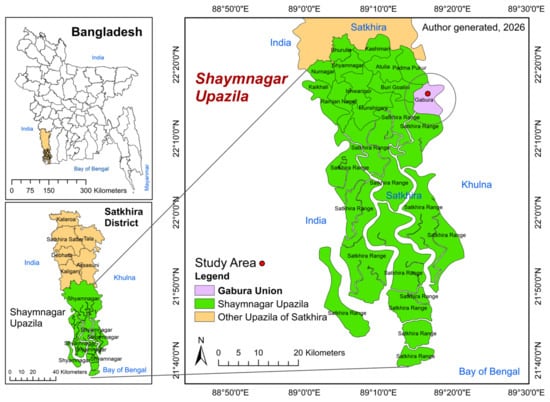
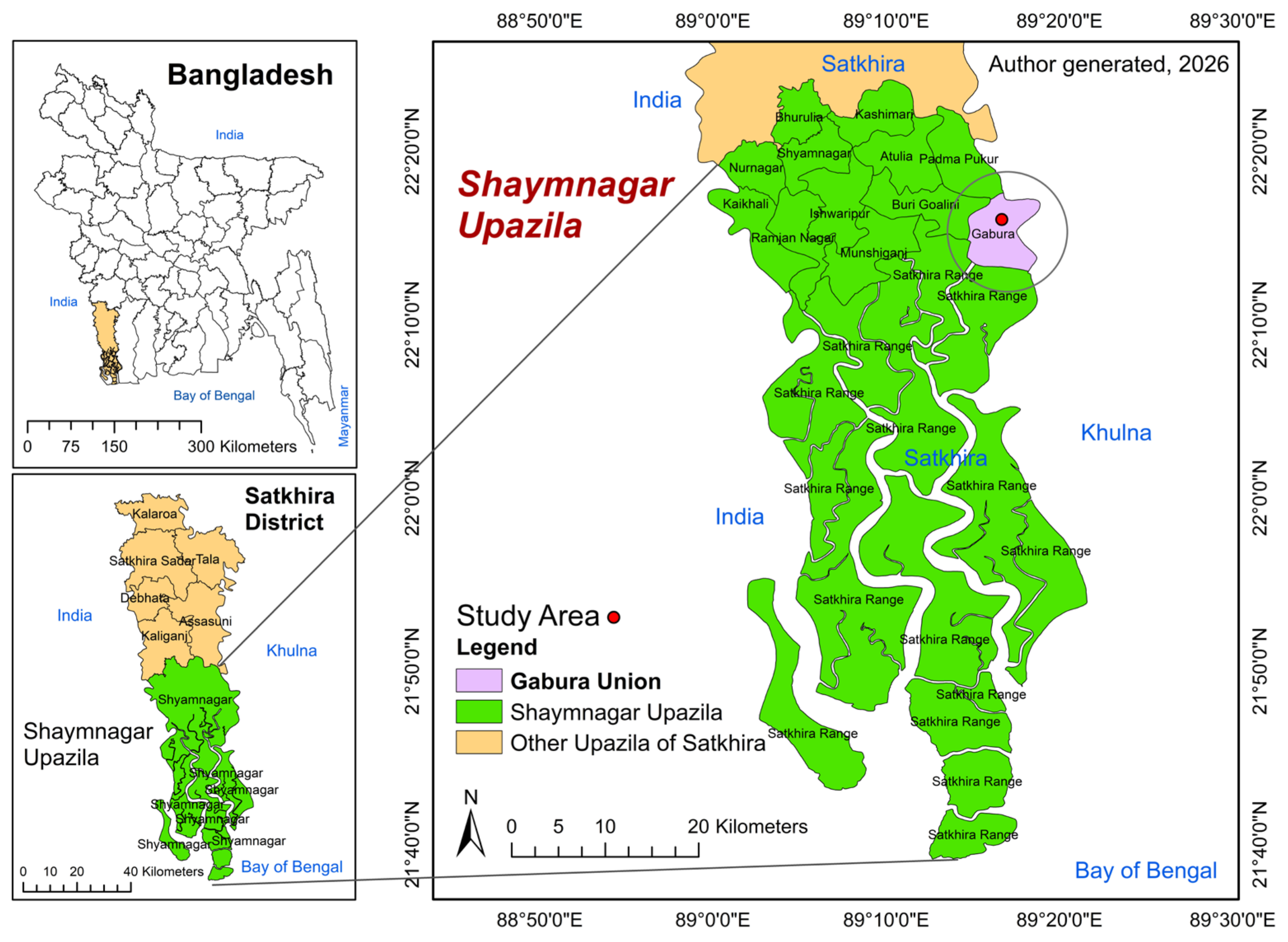
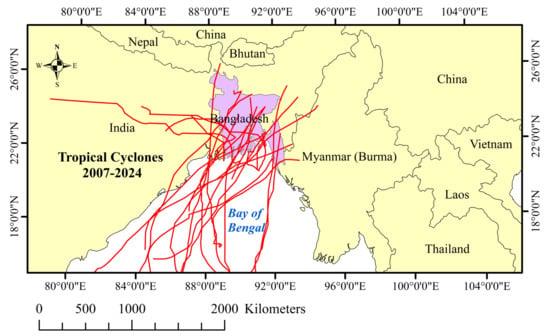
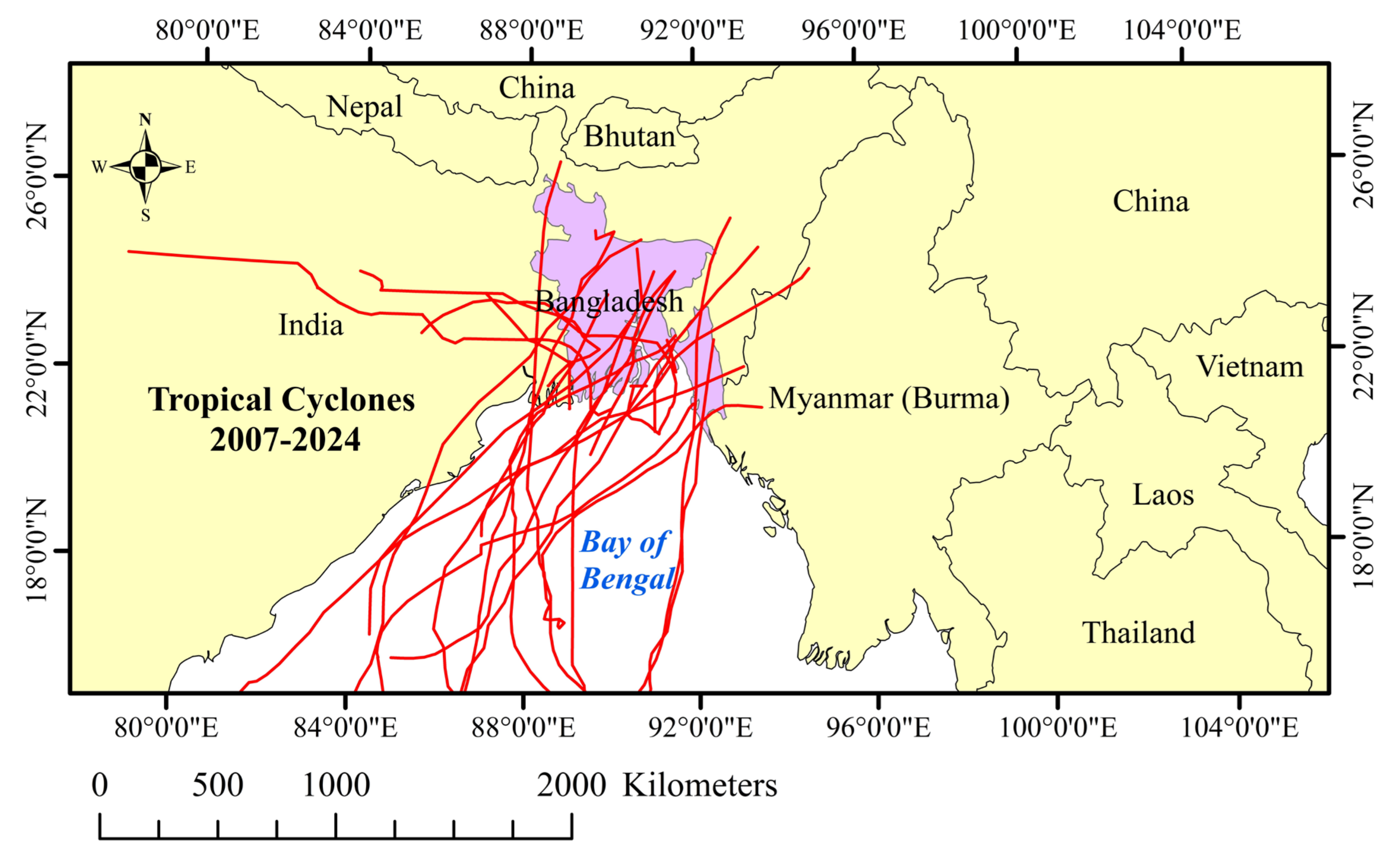
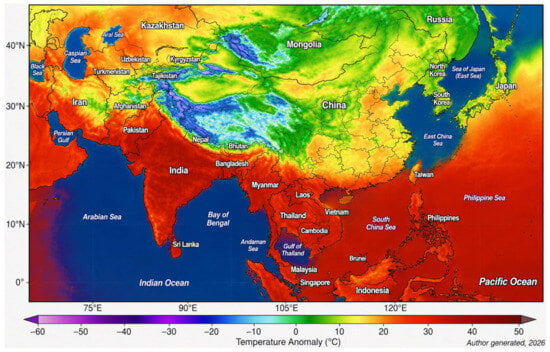
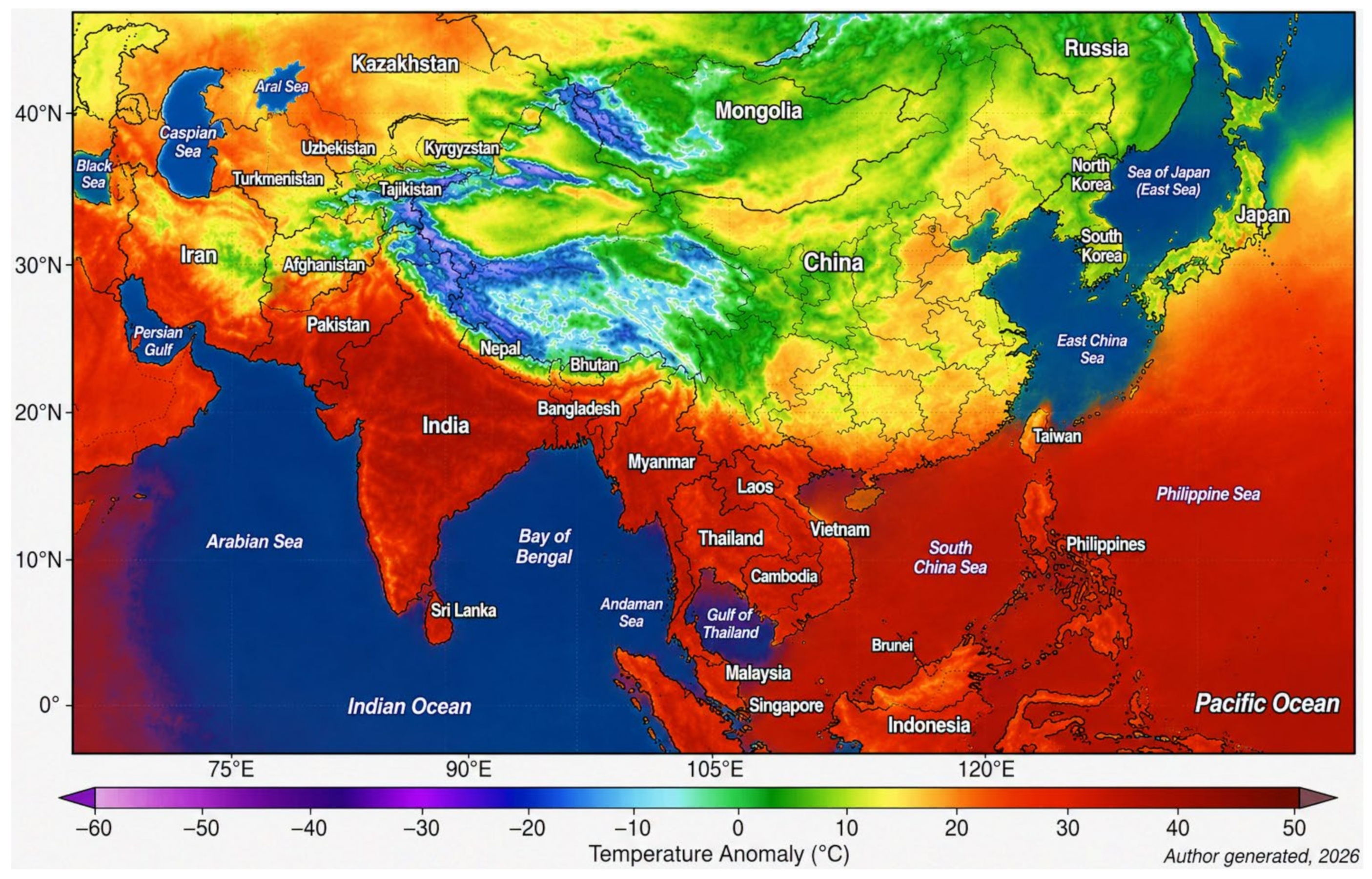
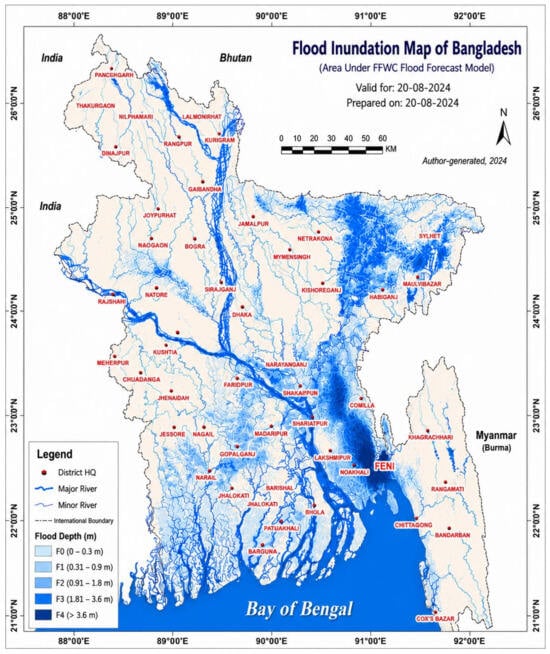
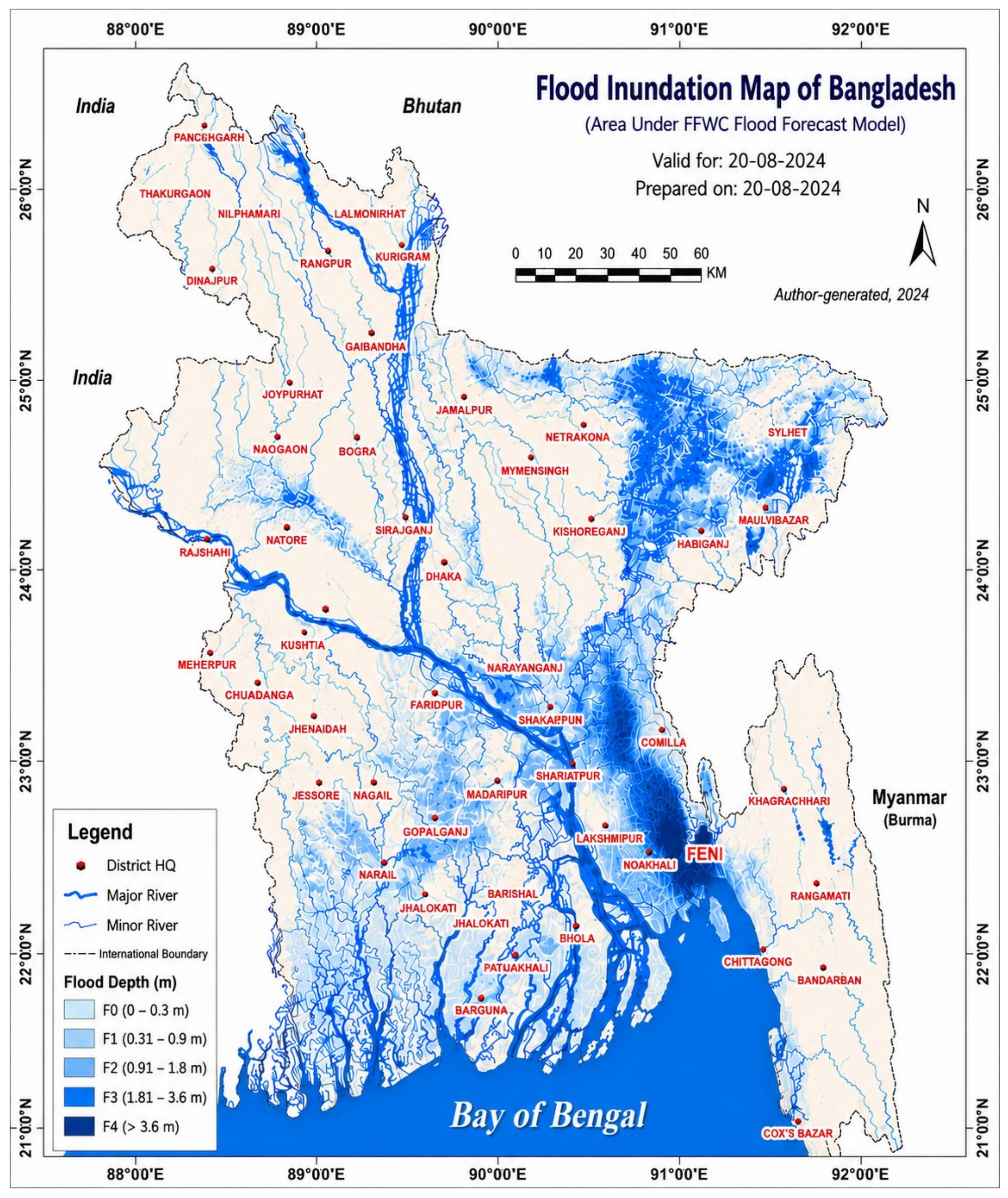
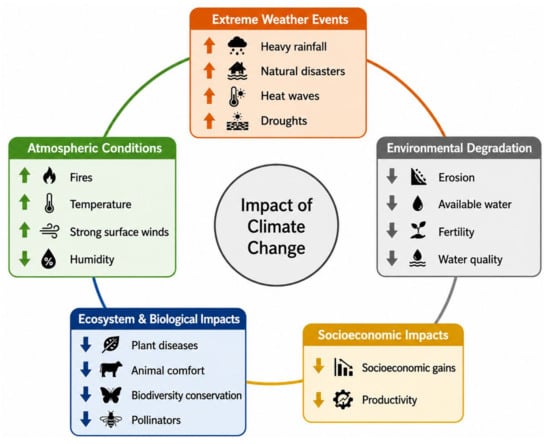
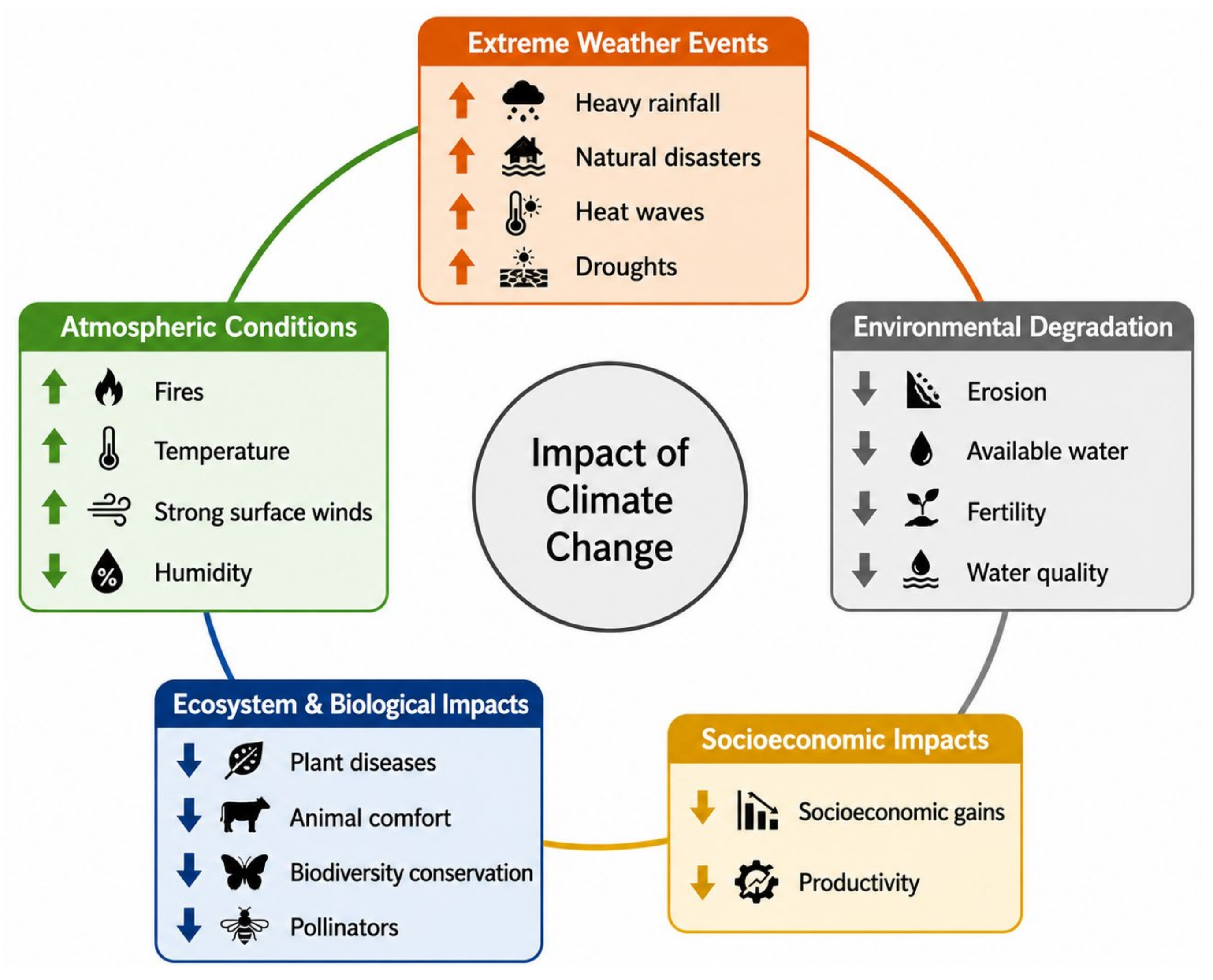
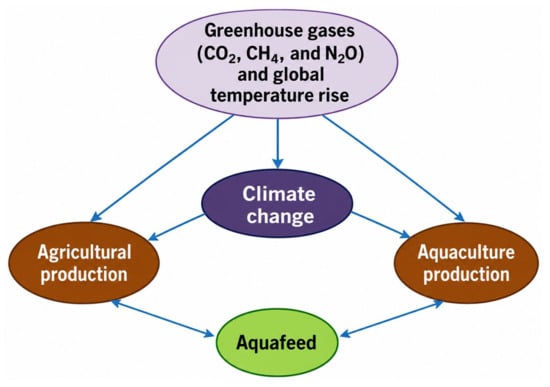
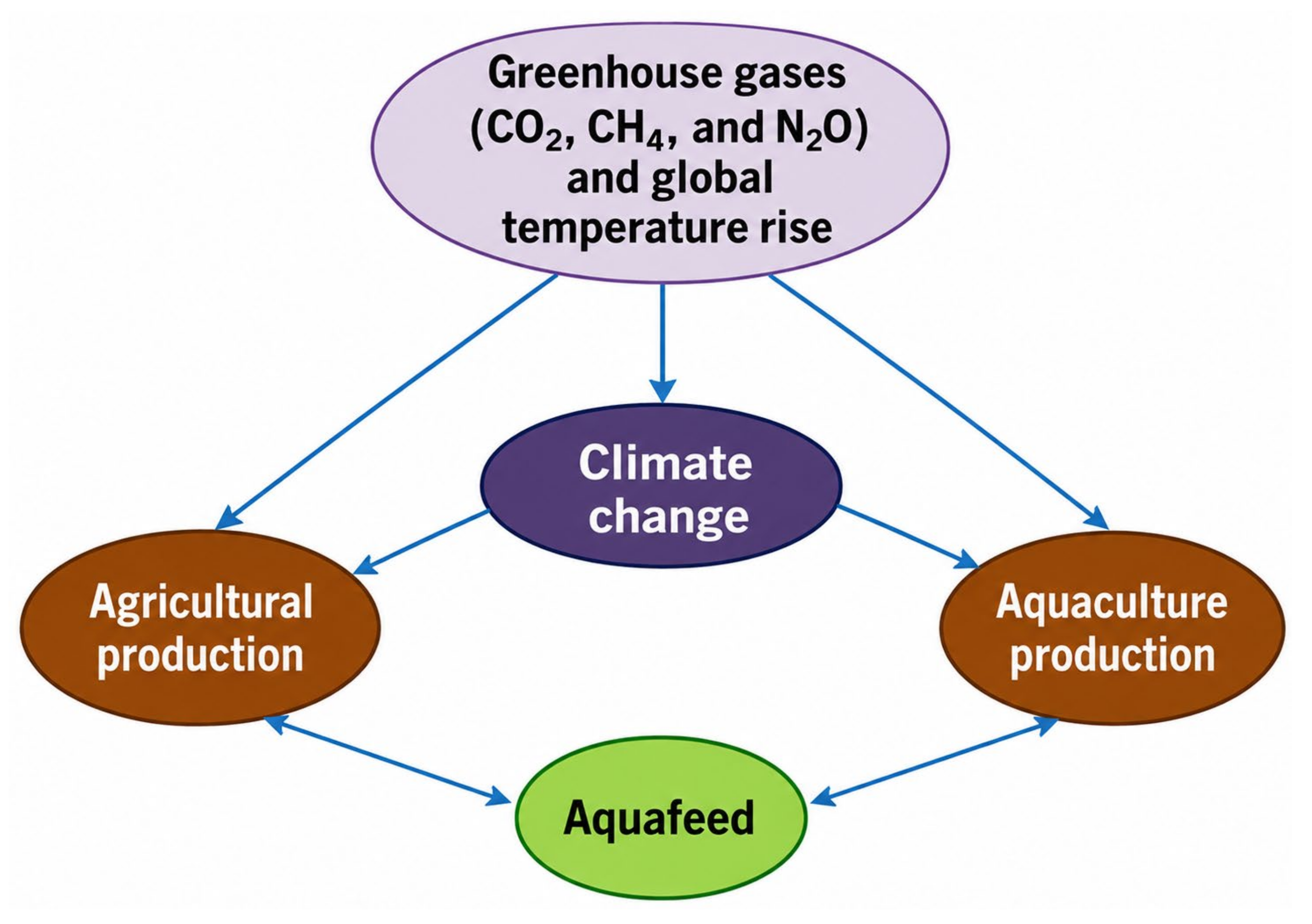
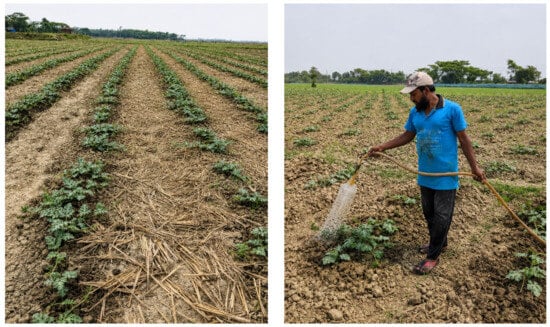
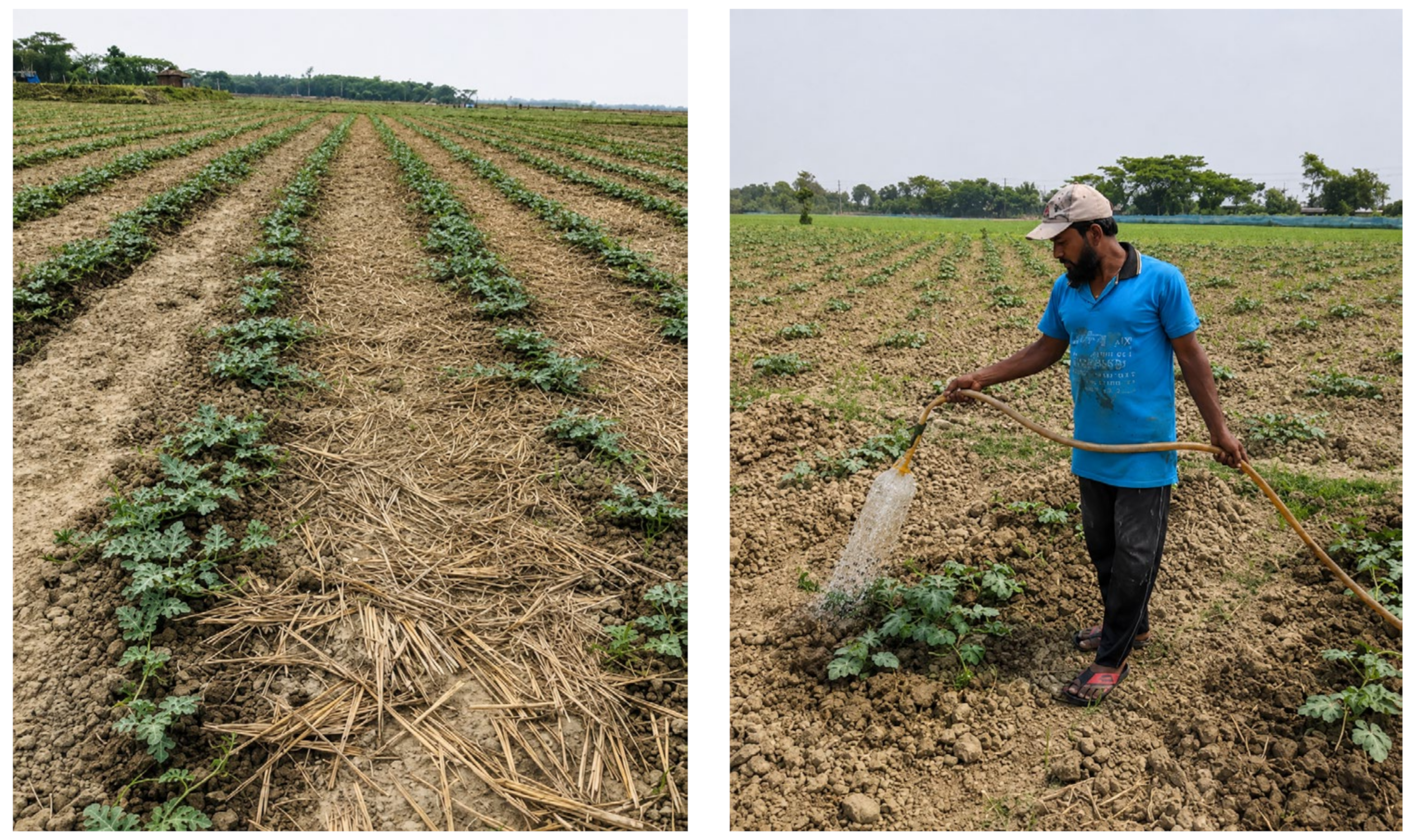
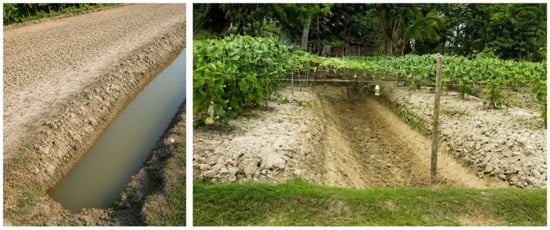
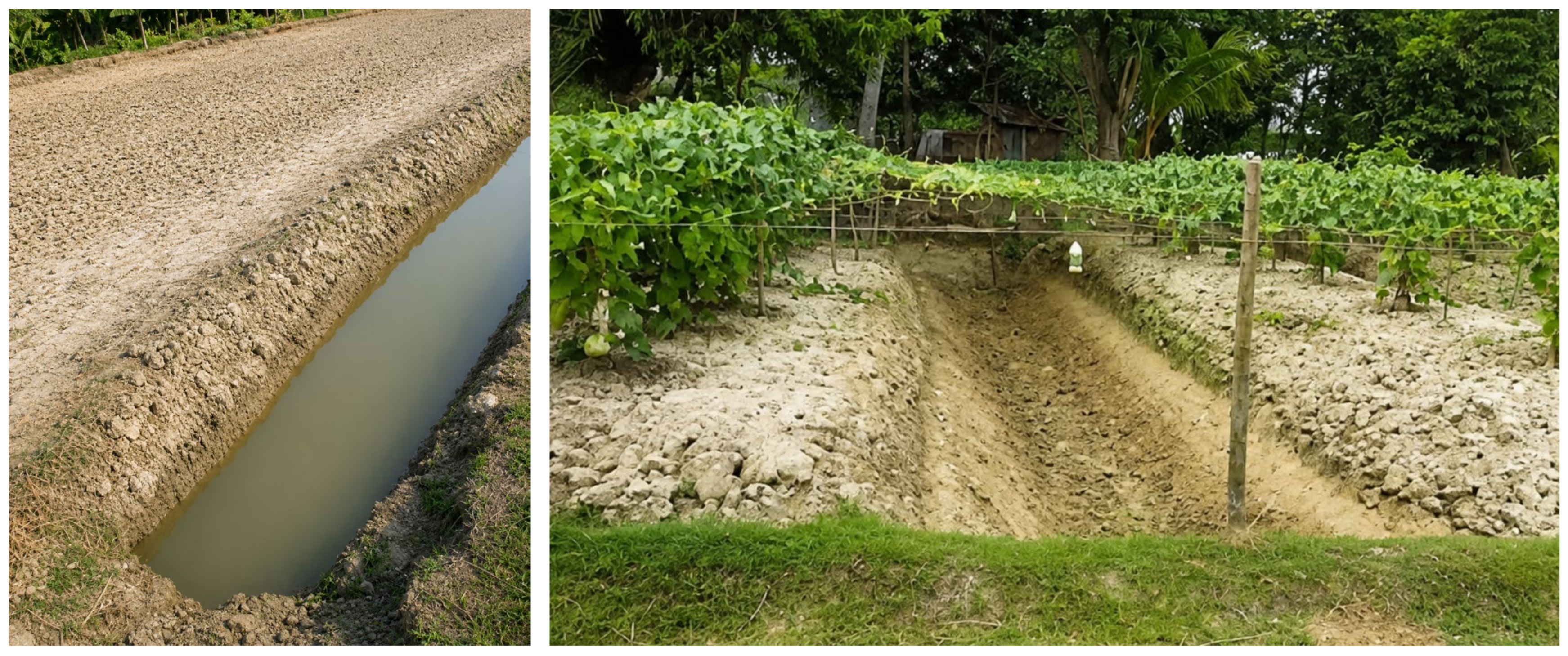
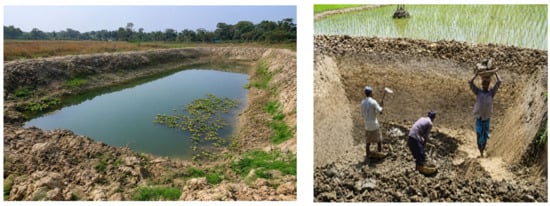
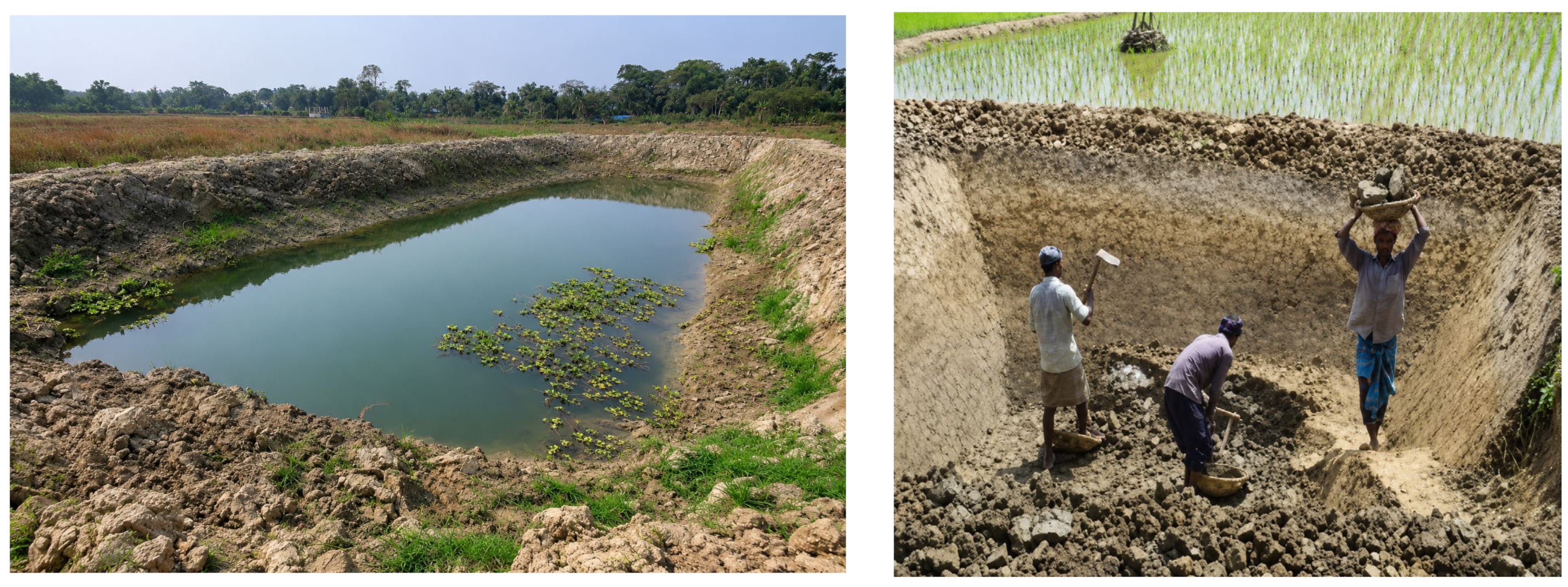
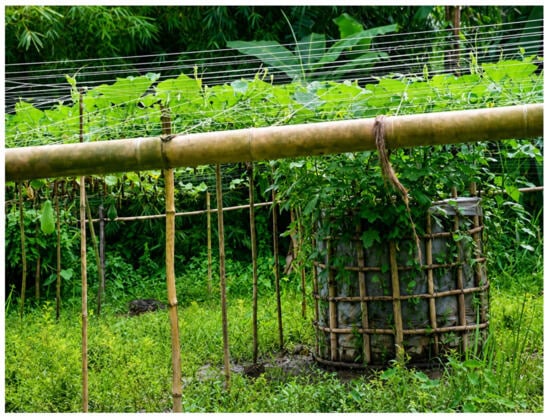
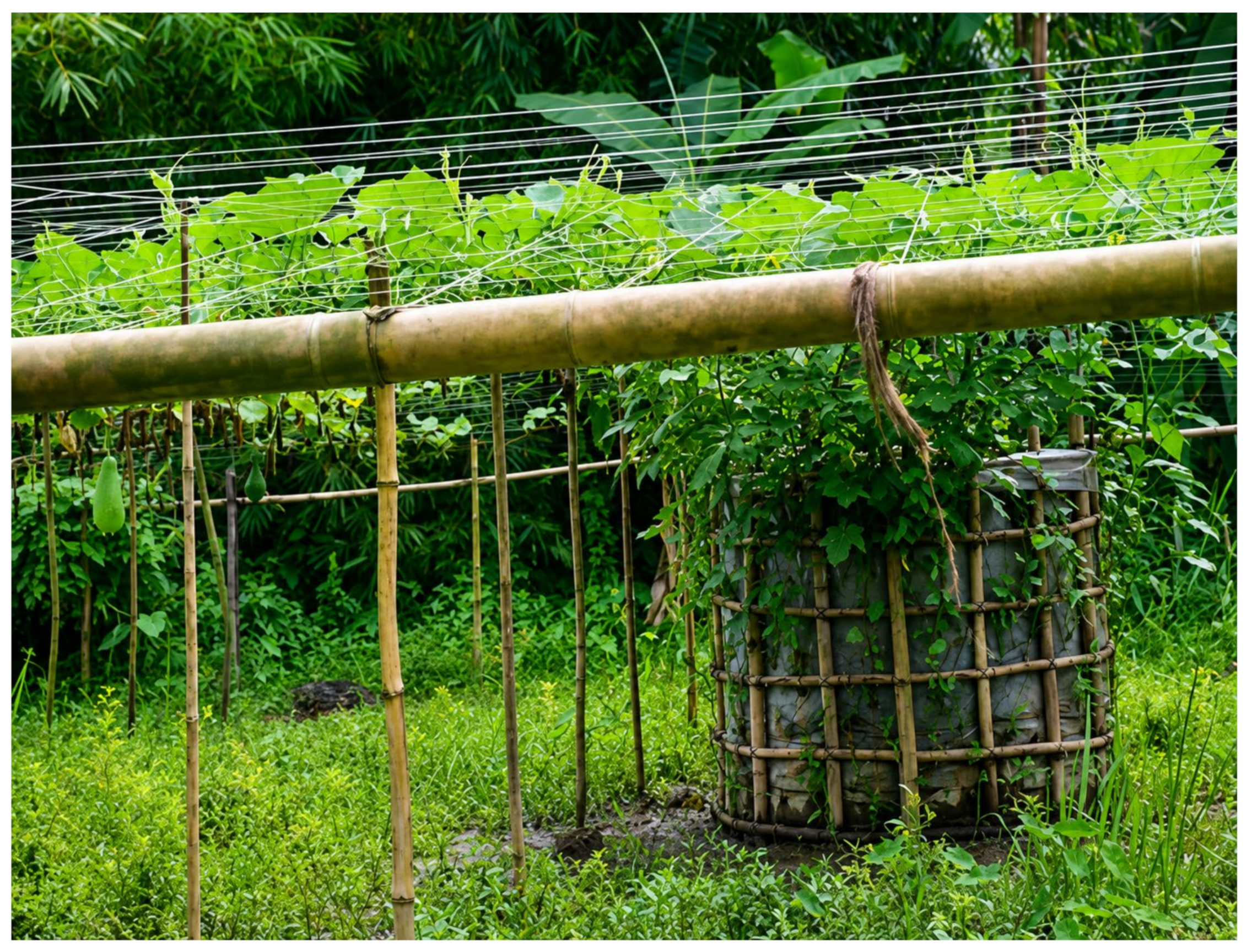
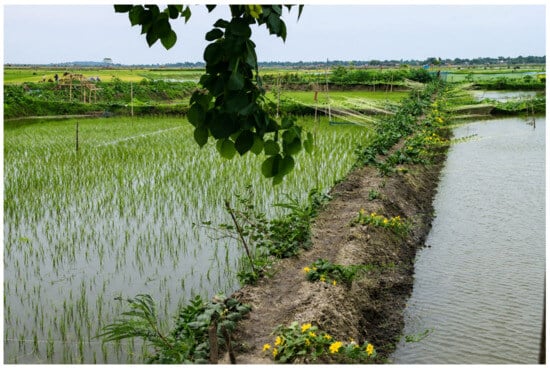
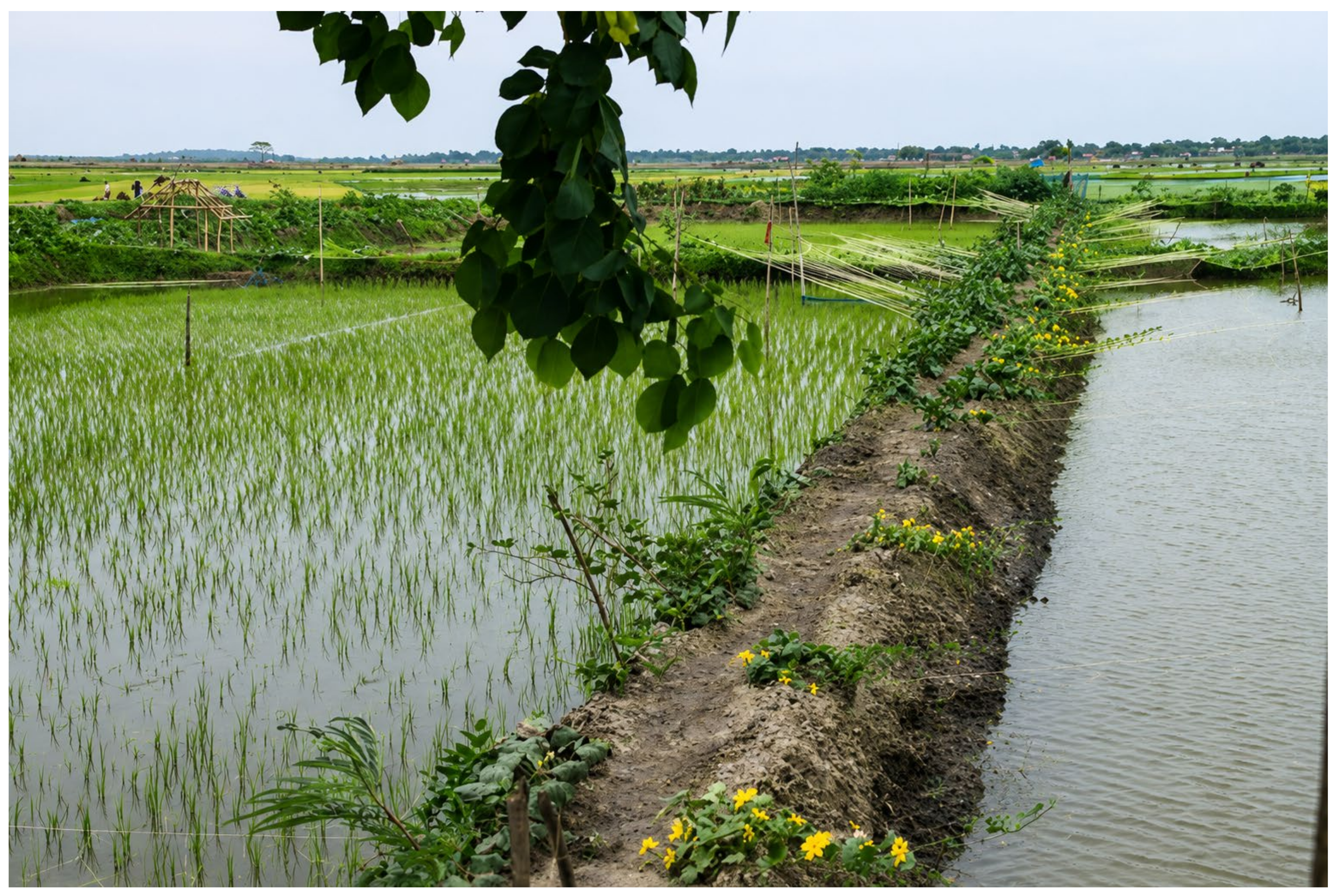
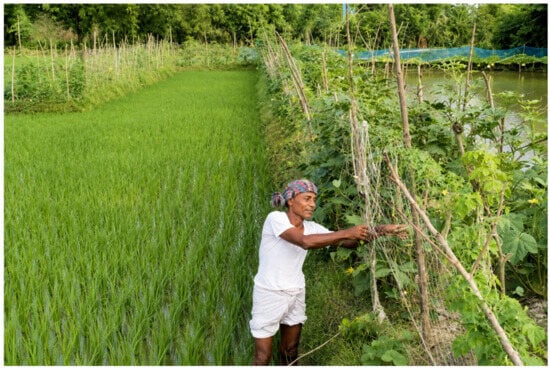
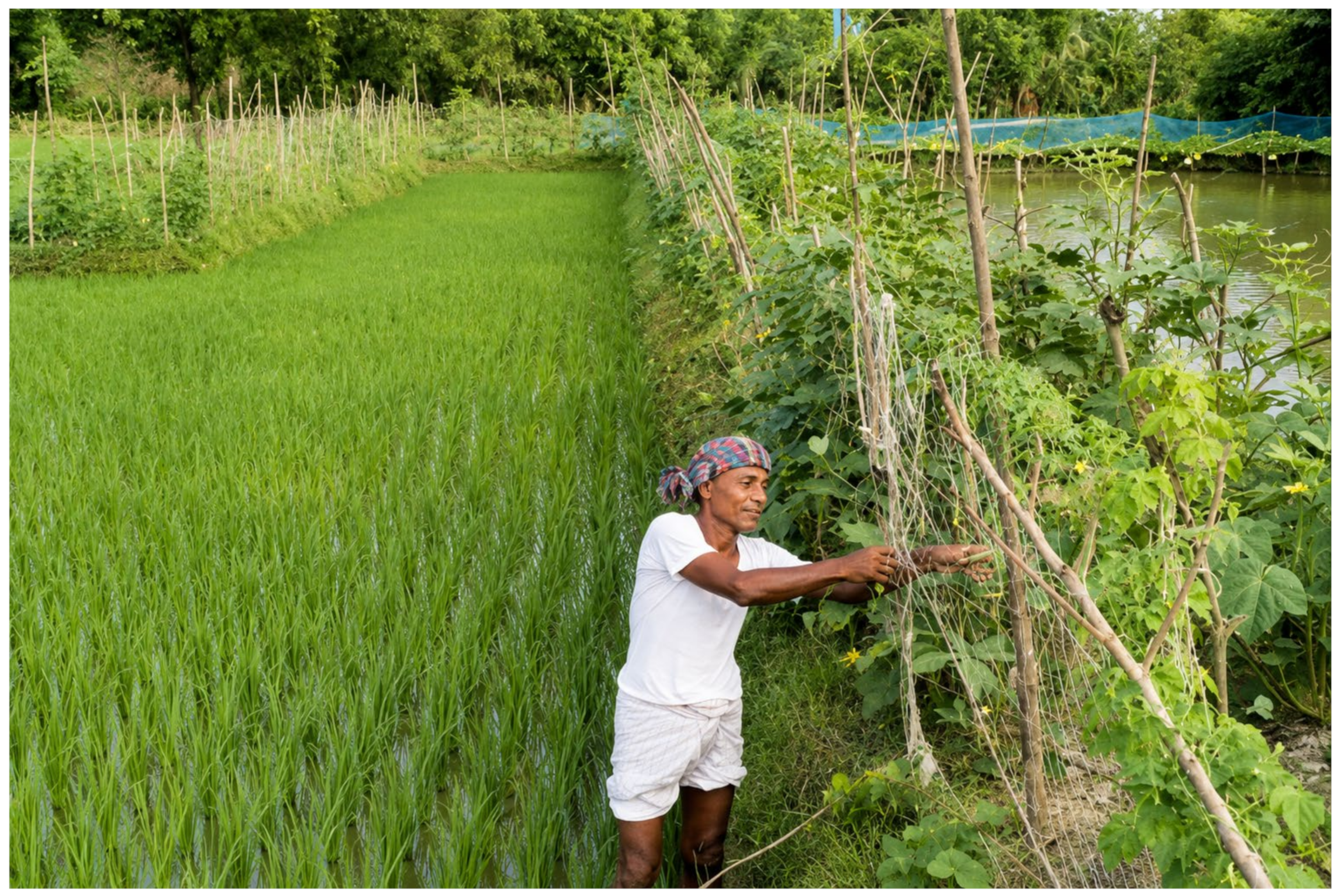
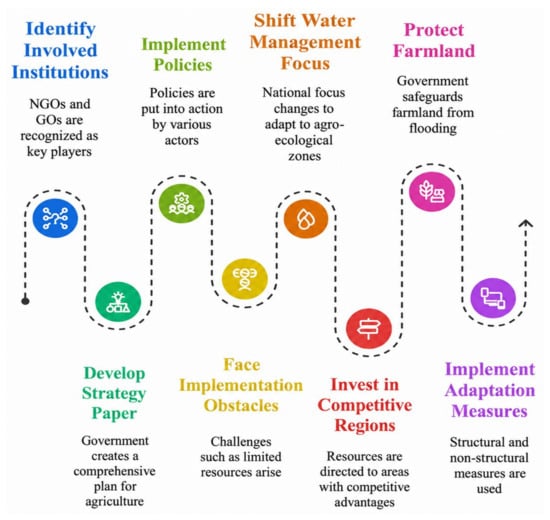
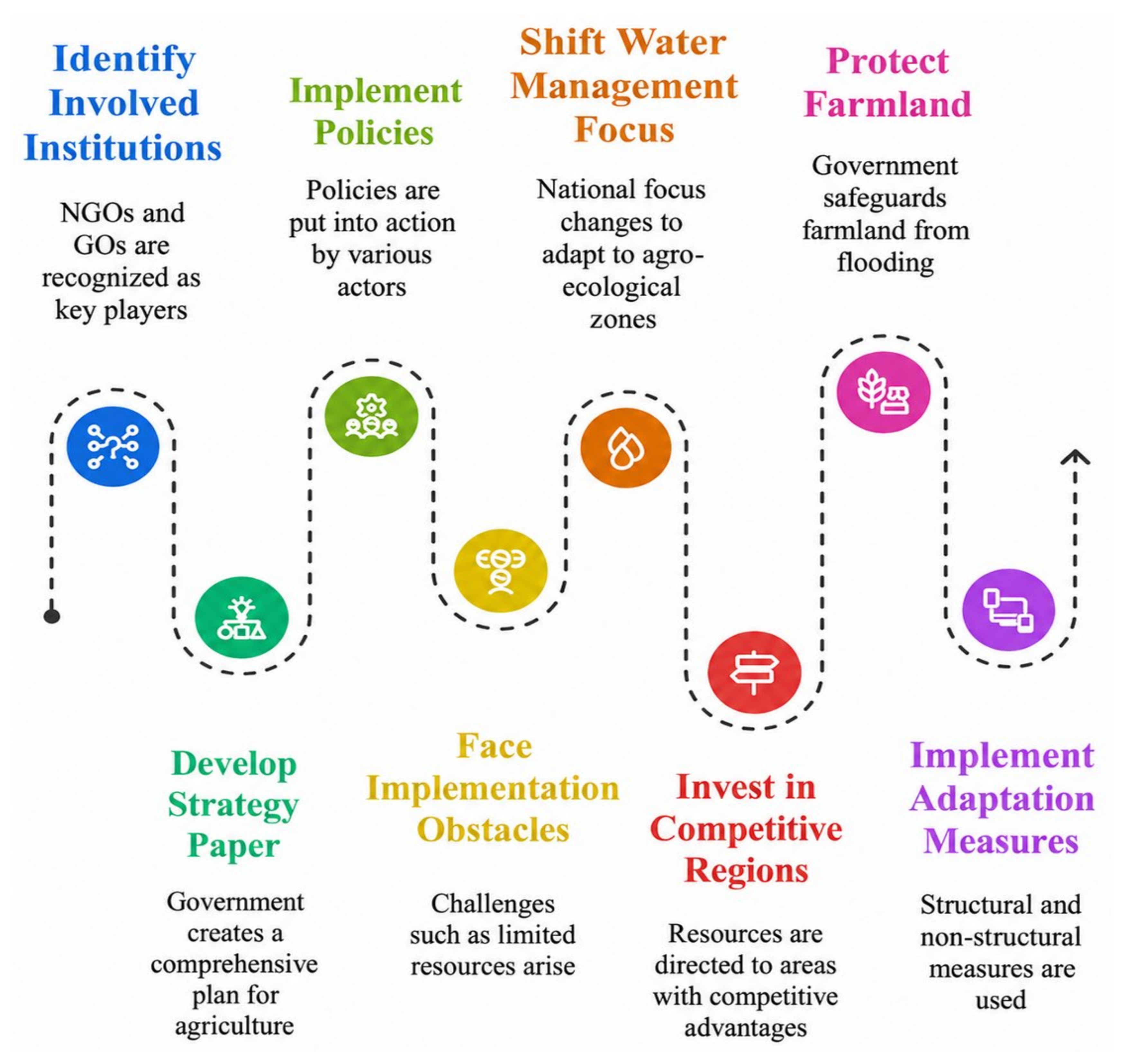
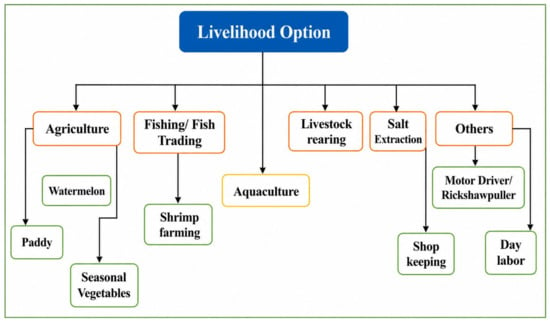
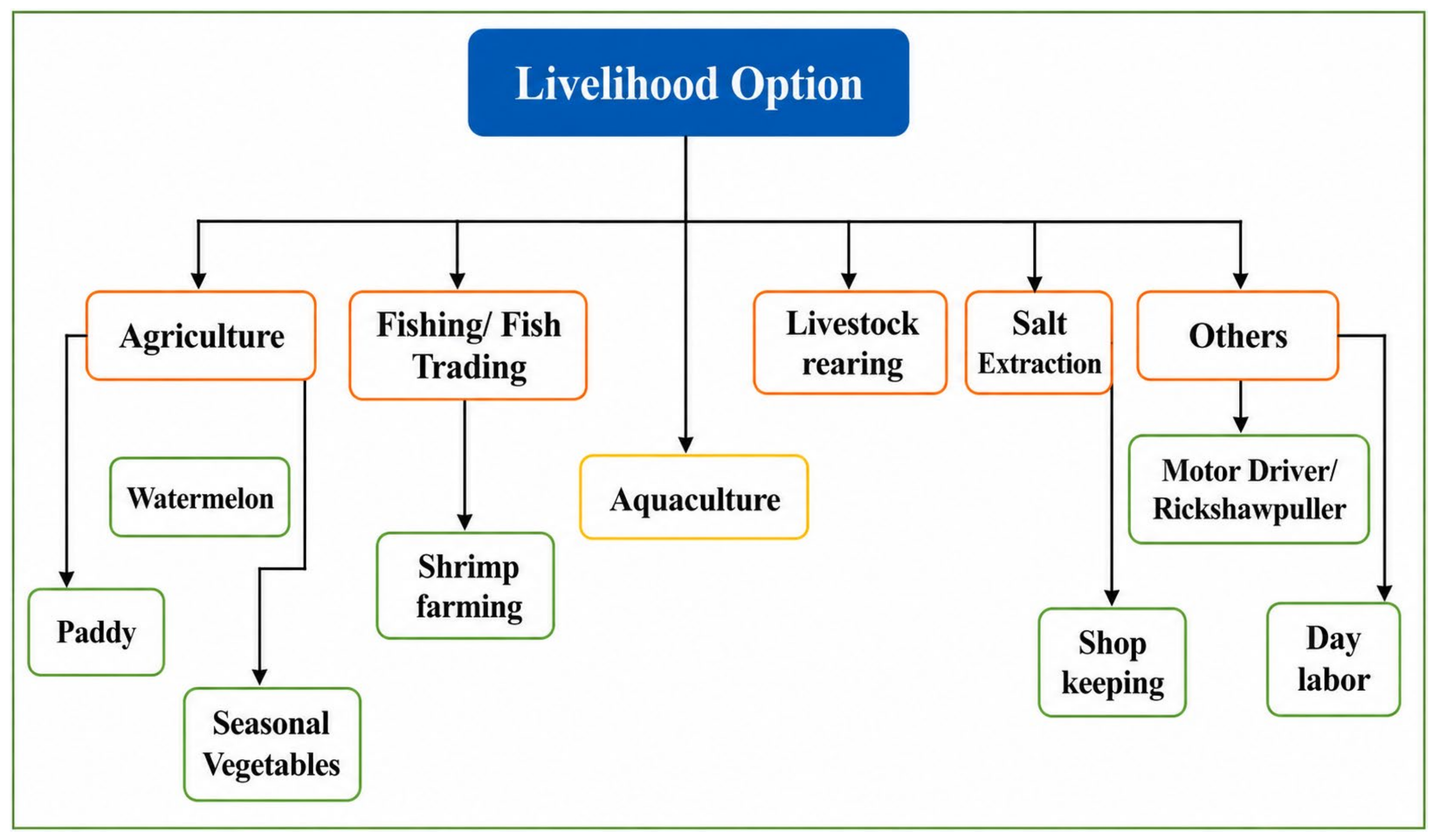
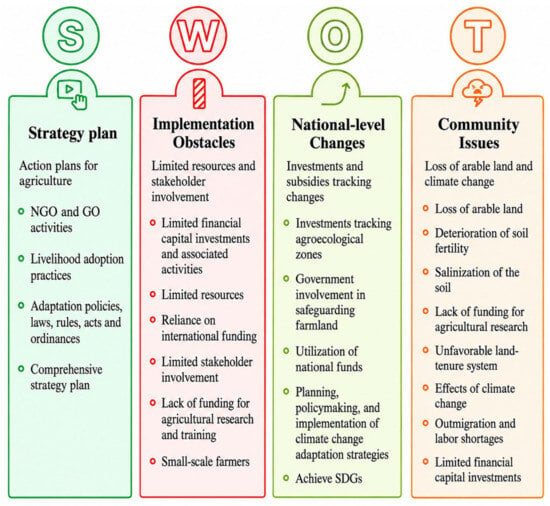
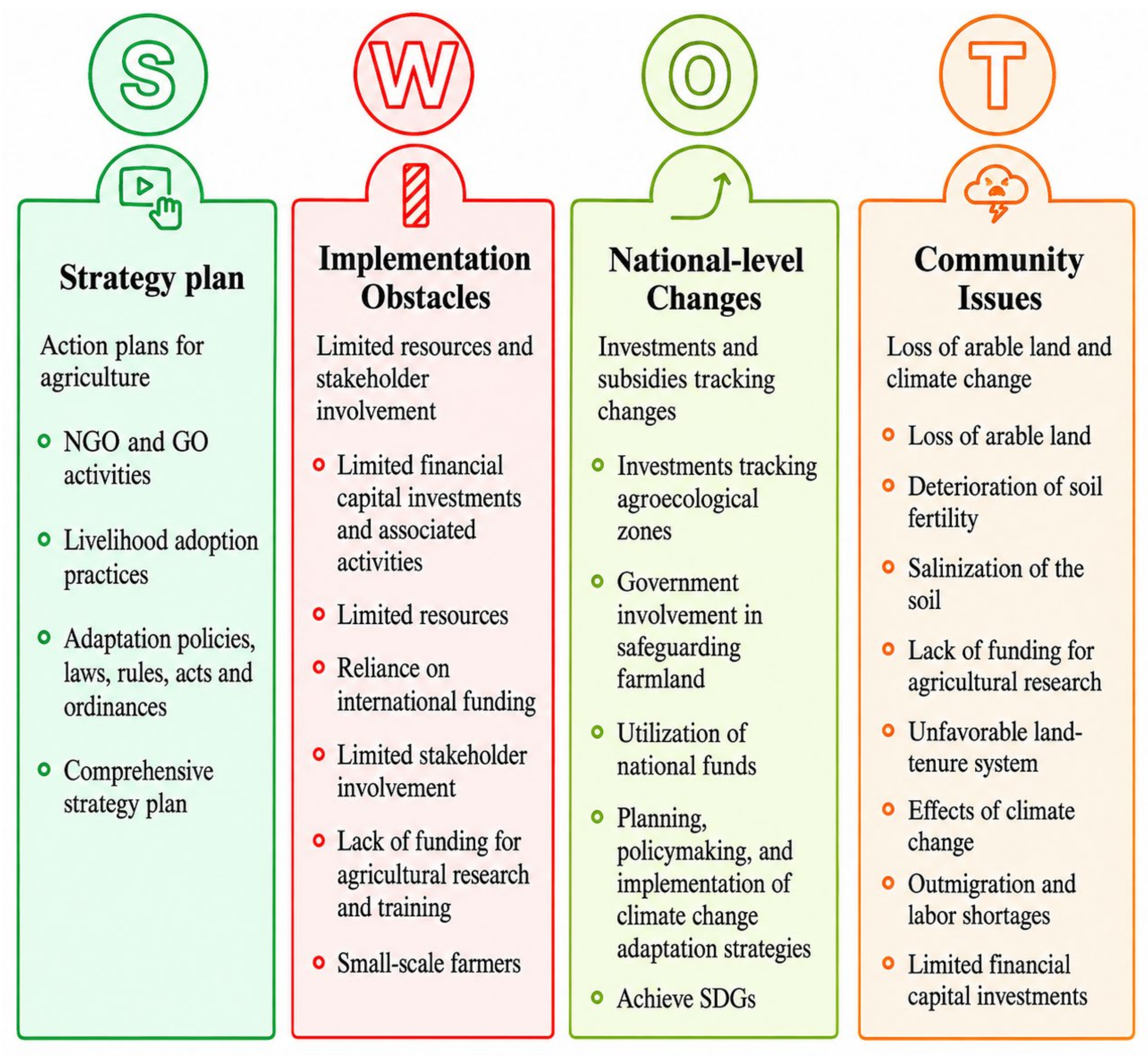

Disclaimer/Publisher’s Note: The statements, opinions and data contained in all publications are solely those of the individual author(s) and contributor(s) and not of MDPI and/or the editor(s). MDPI and/or the editor(s) disclaim responsibility for any injury to people or property resulting from any ideas, methods, instructions or products referred to in the content. |
© 2026 by the authors. Licensee MDPI, Basel, Switzerland. This article is an open access article distributed under the terms and conditions of the Creative Commons Attribution (CC BY) license.