


Abstract
Zero-sum beliefs about the nature–human relationship (ZSB-NH) conceptualise environmental protection and human wellbeing as inherently conflicting and have been shown to reduce pro-environmental behaviour (PEB). However, the psychological mechanisms underlying this relationship remain poorly understood. The present study examined whether empathy for humans and empathy for nature mediate the relationship between ZSB-NH and PEB. Australian adults (N = 943) completed measures of ZSB-NH, human-directed empathy, nature-directed empathy, and PEB. Parallel mediation analyses showed that ZSB-NH negatively predicted both empathy for humans and empathy for nature, which, in turn, positively predicted PEB. Both forms of empathy significantly and partially mediated the relationship between ZSB-NH and PEB, with neither indirect effect differing significantly in magnitude. When empathy was examined at the facet level, ZSB-NH negatively predicted all dimensions of human and nature empathy; however, only taking a human perspective uniquely mediated the relationship with PEB, possibly due to multicollinearity present between the nature empathy subscales. The direct effect of ZSB-NH remained significant, indicating partial mediation. These findings suggest that zero-sum beliefs may inhibit pro-environmental behaviour partly by reducing empathy, particularly cognitive perspective taking, while also highlighting that additional mechanisms contribute to this relationship. Interventions that foster perspective taking and directly challenge zero-sum beliefs may therefore promote greater engagement in pro-environmental behaviour.
1. Introduction
Environmental challenges such as climate change, biodiversity loss, and resource depletion continue to pose significant global risks [1], underscoring the importance of understanding the psychological factors that shape pro-environmental action. Among these factors, zero-sum beliefs about the nature–human relationship (ZSB-NH), the perception that benefits to humans necessarily come at a cost to nature, and vice versa, have emerged as a barrier to engagement in pro-environmental behaviour (PEB) [2]. Individuals who endorse such beliefs perceive environmental protection as inherently conflicting with human well-being, thereby reducing their motivation to act. While prior research has demonstrated that ZSB-NH negatively predicts PEB [2], the psychological mechanisms underlying this relationship, to date, are underexplored. This present study addresses this by examining whether empathy, toward both humans and nature, accounts for the relationship between ZSB-NH and PEB.
1.1. Pro-Environmental Behaviour
Pro-environmental behaviour (PEB) refers to actions that individuals undertake with the intention of benefiting, or at least minimising harm to, the natural environment [3,4]. These behaviours can range from private-sphere actions, such as recycling and reducing energy consumption, to public-sphere engagement, including environmental advocacy and support for policy initiatives [5]. PEB is widely recognised as a critical component in addressing environmental challenges [6], and a substantial body of research has sought to identify its psychological determinants. Factors such as environmental attitudes [7,8], values [9], norms [10], and connectedness to nature [11,12] have all been shown to influence PEB. However, less attention has been given to psychological barriers, including beliefs that frame the relationship between humans and nature as inherently antagonistic.
1.2. Zero-Sum Beliefs About the Nature–Human Relationship
Zero-sum beliefs about the nature–human relationship (ZSB-NH) reflect a fundamentally antagonistic cognitive bias in which environmental gains only occur at an equal cost to human wellbeing, and vice versa [2]. These beliefs foster an “us versus them” mindset, even when outcomes of the nature–human relationship could be mutually beneficial. Within human relationships, zero-sum beliefs have been shown to predict general prejudice and lower willingness to engage in pro-social and helping behaviours, such as hosting refugees in one’s home country and providing autonomy-oriented support to one’s colleagues [13,14]. As a more recent construct in the psychological literature, the research examining the predictors and outcomes of ZSB-NH is sparser, with studies showing that ZSB-NH negatively predicts pro-social behaviour directed toward both human and nature others, i.e., humanitarian behaviour intentions and PEB [2], including negatively predicting PEB in longitudinal research [15]. ZSB-NH has been shown to be negatively predicted, most clearly, by the Honesty–Humility personality trait, a trait highlighting individual differences in sincerity, fairness, greed-avoidance, and modesty [16], and positively underpinned by social dominance orientation, the preference for hierarchical and unequal social structure, suggesting a reflection of human dominance over nature and preferring the exploitation of the natural world as a means to ensure human progress [17].
ZSB-NH may be particularly consequential in understanding motivations for PEB, as it implies that environmental gains necessitate human sacrifice, thereby undermining motivation for environmentally responsible action [2]. Indeed, viewing the relationship between humans and nature as zero-sum necessitates a competitive win–lose dynamic whereby acting for the benefit of nature is believed to come at the expense of the self or human societies. ZSB-NH can be situated within the broader literature by examining how people conceptualise the relationship between humans and the natural environment. Related research has identified human exceptionalist thinking and social dominance orientation as important mental models or ideological orientations that can constrain pro-environmental action. Human exceptionalism involves viewing humans as fundamentally distinct from, and often superior to, the natural world [18,19], whereas social dominance orientation reflects a preference for hierarchical and unequal relations [20,21] that may extend to human–nature relations. ZSB-NH overlaps conceptually with these perspectives insofar as it frames humans and nature as competing; indeed, it represents a more specific belief about the compatibility of human and environmental wellbeing. Whereas human exceptionalism emphasises human distinctiveness or superiority [18,19], and social dominance orientation emphasises hierarchy and dominance [20], ZSB-NH specifically concerns whether gains for humans and gains for nature are perceived as mutually exclusive [2]. Thus, ZSB-NH may represent a particular cognitive model through which broader beliefs about human–nature are translated into judgements about the costs and benefits of environmental action.
1.3. Reduced Empathy as Mechanism
One potential pathway through which ZSB-NH may be associated with PEB is through empathy. Empathy involves the capacity to understand and respond to the experiences and emotional states of others [22,23] and has been proposed as an important basis for pro-social behaviour [24,25]. The relevance of empathy to ZSB-NH follows from the nature of the belief itself. ZSB-NH represents human and environmental wellbeing as competing interests, such that benefits to one are perceived as necessarily requiring costs to the other [2]. This zero-sum representation may alter whose experiences and welfare are considered psychologically relevant when environmental decisions involve perceived trade-offs between human and environmental interests. When the interests of another target are construed as competing with one’s own interests or those of one’s social group, there may be less motivation to attend to, understand, or respond to that target’s experiences. Thus, ZSB-NH may be associated with lower empathic responding because it frames the welfare of humans or nature as being in conflict with human interests, rather than as potentially compatible with them. Empathy is of particular theoretical interest in the context of ZSB-NH because these beliefs concern how individuals construe the competing interests of humans and nature. Empathy provides a potential explanation for translating this cognitive representation into behavioural engagement by determining the extent to which the welfare of human and non-human others is psychologically considered.
Empathy is therefore not proposed as the sole explanation for the association between ZSB-NH and PEB. Rather, empathy represents one theoretically plausible pathway through which a zero-sum representation of the human–nature relationship may be associated with pro-environmental behaviour. This possibility is particularly relevant because PEB can affect the wellbeing of both human and non-human targets. Environmental protection may benefit other people, including vulnerable populations and future generations, while also protecting ecosystems and non-human entities [26]. Consequently, reduced empathy may weaken motivation to engage in behaviours whose benefits accrue to these targets, perhaps especially when those benefits are not immediately experienced by the target.
Empathy for Humans. Empathy for humans is a multidimensional construct that encompasses both cognitive and affective components, typically conceptualised as the capacity to understand and share the feelings of other people [22,23]. Davis’s [23] Interpersonal Reactivity Index (IRI) is one of the most widely used frameworks for measuring empathy and includes several distinct dimensions, of which perspective taking, empathic concern, and fantasy are particularly relevant in the present context. Perspective taking refers to the tendency to adopt the psychological viewpoint of others, facilitating an understanding of their experiences and needs. Empathic concern captures feelings of compassion and concern for others, often motivating pro-social behaviour. Fantasy reflects the tendency to imaginatively transpose oneself into fictional situations, which may generalise to an enhanced capacity for empathy in real-world contexts. These dimensions relate to a range of pro-social outcomes, including altruistic behaviour [26], and also underpin environmental decision-making, although the findings are less consistent, such as farmers’ soil conservation behaviour [27], particularly insofar as environmental issues often involve consequences for other people, including future generations and vulnerable populations.
The empathy–altruism hypothesis proposes that individuals who experience stronger empathic concern are more likely to engage in genuine altruistic behaviours, motivated by a desire to improve another’s wellbeing rather than to benefit themselves [28]. This framework is relevant to PEB because environmental degradation and environmental protection have consequences for human wellbeing, including the wellbeing of people who are geographically distant, socially vulnerable, or part of future generations [29]. Thus, individuals who are more empathetic to the experiences of other people may be more motivated to engage in behaviours that protect environmental conditions on which those individuals depend. However, evidence suggests that cognitive aspects of empathy also contribute to helping behaviour, providing a complementary pathway to pro-social action. For instance, Cialdini et al. [30] found that the relationship between empathic concern and helping behaviour was mediated by perceived oneness, or self–other overlap, highlighting the potential contribution of cognitive processes to pro-social behaviour. Therefore, as a form of pro-social behaviour [31,32], PEB may be driven by empathy toward humanity as a concern for others’ wellbeing. Specifically, this suggests that individuals who are more inclined to consider the experiences and perspectives of others may be more likely to regard environmental outcomes as relevant to the wellbeing of people beyond themselves. Conversely, a zero-sum representation of human and environmental interests may make such psychological expansion more difficult by emphasising competition between interests rather than their interdependence.
Empathy for Nature. In addition to empathy for humans, empathy for nature represents another potentially important mediator. Research has extended the concept of empathy beyond human targets to include the natural world, conceptualising empathy for nature as the capacity to understand and share the experiences or states of non-human entities and ecosystems [33]. Tam [33] proposed a framework for empathy for nature that parallels key components of human-directed empathy, particularly perspective taking and empathic concern. Perspective taking in this context involves imaginatively adopting the standpoint of nature, such as considering the impacts of environmental degradation on ecosystems or non-human organisms. Empathic concern for nature refers to feelings of care, compassion, and moral concern directed toward the natural environment. These dimensions have been shown to predict stronger environmental attitudes and greater engagement in PEB [34,35], suggesting that empathy for nature may serve as an important motivational pathway.
The empathy–sustainability hypothesis [34] suggests that in human–nature relationships, empathy promotes sustainable behaviour by extending one’s concern beyond the self as a human participant in the human–nature relationship to encompass non-human nature and its inhabitants. This thereby decreases the psychological distance between humans and nature. This process involves broadening the boundaries of concern, such that individuals may draw on familiar human experiences to understand and respond to the vulnerabilities of non-human beings with nature [35,36,37,38]. For example, conceptualising an animal’s loss of habitat following a natural disaster may provide a familiar experiential reference (i.e., the loss of a “home”) through which humans can imagine the significance of such a loss. Central to this process is the ability to adopt perspectives beyond one’s immediate human context, enabling empathic concern to extend to psychologically distant others—in this case, non-human entities and the broader natural environment—and translating into sustainable behaviours. From the perspective of ZSB-NH, individuals who perceive human and environmental interests as mutually exclusive may be less likely to engage in such empathic processes toward nature, as viewing the world through a zero-sum lens positions nature as an “other” and, therefore, cognitively and emotionally distant. Consequently, reduced empathy for nature may partially explain the negative relationship between ZSB-NH and PEB.
As environmental issues and, therefore, PEB impact both human communities as well as natural systems, empathy in both human and nature domains may play a role in determining PEB. Greater empathy in each domain is expected to positively predict PEB. ZSB-NH, on the other hand, may diminish empathy for both humans and nature by reinforcing a dichotomy between human and environmental well-being and highlighting the competitive nature of interactions. Examining both forms of empathy simultaneously allows us to determine whether the effects of ZSB-NH extend across both human- and nature-directed domains of empathy and whether these domains make comparable contributions to explaining pro-environmental behaviour.
Although ZSB-NH may be expected to undermine empathy toward both humans and nature, the proposed pathways differ according to the target of empathy. For human-directed empathy, ZSB-NH may make the interests of other people appear to compete with one’s own or with those of human society more broadly. Environmental protection may consequently be construed primarily in terms of the costs it imposes on people, reducing attention to those who may benefit from environmental protection, including vulnerable populations and future generations. In contrast, for nature-directed empathy, ZSB-NH may position nature itself as an opposing interest, such that if environmental gains are perceived as necessarily requiring human sacrifice, the welfare of ecosystems and non-human entities may become less important. Thus, ZSB-NH may constrain empathy toward humans by reinforcing an interpersonal or intergroup “us versus them” framing, while ZSB-NH may constrain empathy toward nature by legitimising the prioritisation of human interests over those of the natural world, again positioning nature as an outgroup within an “us versus them” framing. These processes are conceptually distinct, although they may arise from underlying ZSB-NH.
2. The Current Study
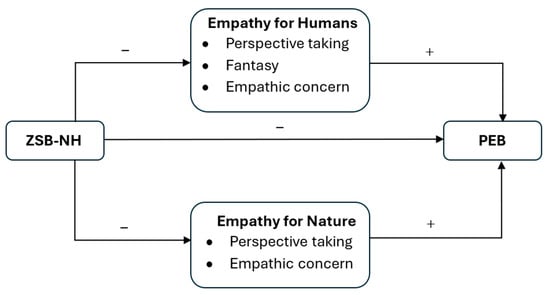
The current study aims to elucidate the psychological processes through which zero-sum beliefs about the nature–human relationship inhibit pro-environmental behaviour. In doing so, the study examines whether empathy for humans and empathy for nature mediate the relationship between ZSB-NH and PEB. Drawing on established multidimensional frameworks of empathy, the study focuses on the perspective taking, empathic concern, and fantasy components of human-directed empathy, and on the perspective taking and empathic concern components of nature-directed empathy (see Figure 1). Previous research has established that ZSB-NH predicts lower PEB, but research has provided limited insight into the psychological processes underlying this association. Although empathy is well established as a correlate of pro-social and sustainable behaviour, it remains unclear whether ZSB-NH predicts reduced empathy and, importantly, whether this includes both empathy for nature and empathy for other humans. Examining human- and nature-directed empathy simultaneously therefore provides a test of whether ZSB-NH is associated with a domain-specific reduction in empathy or a broader constraint on perspective taking and empathic concern. By integrating ZSB-NH with established theories of pro-social motivation, this present study seeks to identify psychological explanations that may explain the impact of how people conceptualise human–nature relations on their pro-environmental behaviour.
Figure 1.
Conceptual model whereby ZSB-NH negatively predicts PEB mediated by empathy for humans and nature.
It is proposed that empathy across human and nature domains will positively predict PEB; however, ZSB-NH will predict lower levels of both empathy for humans and nature. Accordingly, the study addresses the following research questions: (1) Does ZSB-NH negatively predict empathy for humans and empathy for nature? (2) Do these forms of empathy mediate the negative relationship between ZSB-NH and PEB? It was hypothesised that:
H1.
ZSB-NH would negatively predict PEB.
H2.
Empathy for humans (H2a) and empathy for nature (H2b) would positively predict PEB.
H3.
ZSB-NH would negatively predict empathy for humans (H3a) and empathy for nature (H3b).
H4.
There would be an indirect effect via empathy for humans (H4a) and empathy for nature (H4b), whereby these forms of empathy mediate the relationship between ZSB-NH and PEB.
3. Methods
3.1. Participants
The sample comprised 943 adults residing in Australia. The sample participants were aged between 18 and 89 (M = 54.62, SD = 16.71) and were predominantly women (61%) (N = 573), of Australian ethnicity (66%) (N = 626), and with a university education (68.7%) (N = 648). See the Supplementary Materials for full demographic details. Participants were recruited using a voluntary convenience sampling strategy via a Facebook advertisement. This was set to appear to ages 18 to 99, with a geographical limit to the entire Australian landmass. No other advertising restrictions were used. This recruitment approach enabled efficient access to a large and geographically diverse sample of Australian adults. Unfortunately, we do not have data on the response rate, but the completion rate of those who began the survey was approximately 80%. Given that the study examined individual differences in psychological constructs rather than estimating population prevalence, a convenience sample was considered appropriate for testing the hypothesised relationships among variables. The demographics of the current sample are similar to other studies using this recruitment approach, suggesting that the sample reflects Facebook users who respond to survey advertisements.
An a priori power analysis indicated that a sample of 688 participants was required to detect small effects (f2 = 0.02) with an alpha of 0.05 to achieve a power of 0.80 in a regression model with six predictors [39]. Estimating sample sizes for mediation models is, however, challenging due to difficulty in estimating the indirect effect, and mediation-specific tools like MedPower [40] are only available for mediation models with one mediator variable. Thus, the current study aimed for a larger sample size, with the sample size (N = 943) being considerably greater than this estimate.
3.2. Measures
The six-item ZSB-NH scale [2] was used; e.g., “Environmental conservation means that fewer resources will be allocated to improving our society.” Items were measured on a five-point scale from 1 (Strongly Disagree) to 5 (Strongly Agree). A mean score was computed, with higher scores indicating greater ZSB-NH (α = 0.86).
Empathy for Humans. Three factors from Davis’s [23] Interpersonal Reactivity Index (IRI) were used, assessing perspective taking (e.g., “When I’m upset at someone, I usually try to “put myself in his shoes” for a while”), fantasy (e.g., “I really get involved with the feelings of the characters in a novel”), and empathic concern (e.g., “I often have tender, concerned feelings for people less fortunate than me”), with seven items each. We omitted the fourth factor, personal distress, due to usually rather weak associations with pro-social outcomes [41,42]. Each item was assessed on a five-point scale from 0 (Does not describe me well) to 4 (Describes me very well). A mean score was calculated overall, and for each factor, with higher scores indicating greater overall empathy for humans (α = 0.85), perspective taking (α = 0.79), fantasy (α = 0.81), and empathic concern (α = 0.79), respectively.
Empathy for Nature. Tam’s [33] Dispositional Empathy with Nature Scale (DENS) was used, comprising two factors: perspective taking (four items; e.g., “I imagine how I would feel if I were the suffering animals and plants”) and empathic concern (six items; e.g., “I feel the pain the suffering animals and plants are experiencing”). Items were assessed on a seven-point Likert scale from 1 (Strongly Disagree) to 7 (Strongly Agree). A mean score was calculated overall and for each factor, with higher scores indicating greater overall empathy for nature (α = 0.95), perspective taking (α = 0.92), and empathic concern (α = 0.91), respectively.
Pro-Environmental Behaviour. The 22-item PEB scale [5], with two items modified to suit the Australian context as in Ref. [31], was used. This measure asked how often in the last six months certain behaviours were performed (e.g., “I sign pro-environmental petitions”) on a five-point scale from 1 (Never) to 5 (Always/Every day). A mean score was calculated, with a higher score indicating a higher PEB (α = 0.83).
3.3. Procedure
Following ethics approval, participants were recruited via a Facebook advertisement for the study “Beliefs about the World & Behaviour”. Interested individuals were directed to the study hosted on Qualtrics, where they were provided with an explanatory statement outlining the study’s aims, risks and benefits, confidentiality, and participant right to withdraw at any time. Participants were then asked to complete screening questions (i.e., at least 18 years of age and residing in Australia), with those not meeting these criteria directed out of the study. Eligible participants completed the study measures in a counterbalanced order, after which the remaining demographic items were presented. The survey also included additional measures not reported here, with an overall estimated completion time of 15 min. Consent was implied through completion of the survey.
3.4. Design and Analytic Approach
The study utilised a cross-sectional design to examine a parallel mediation model whereby empathy for humans and empathy for nature mediated the relationship between ZSB-NH and PEB. Analyses were performed in SPSS 29 and Jamovi 2.7. Relevant assumptions included the normality, linearity, and homoskedasticity of residuals; independence of errors; and no multicollinearity. Mediation models were assessed with the PROCESS macro 4.2 [43] (model 4) in SPSS with bootstrapped 95% confidence intervals (5000 iterations), with mediation occurring when the confidence intervals of the indirect effect(s) did not cross zero. Common method bias was assessed with Harman’s single-factor test, which revealed that the single factor accounted for only 19.75% of variance, which is well below the 50% threshold indicating concern. Thus, our data are not impacted by common method bias.
4. Results
4.1. Descriptive Statistics and Preliminary Analyses
Descriptive analyses revealed relatively low levels of ZSB-NH, on average, while scores across the empathy measures and PEB were, on average, around the scale midpoints (see Table 1). Pearson’s correlations between ZSB-NH and all variables are negative and significant (see Table 2). The correlations between all forms of empathy and PEB are positive and significant.
Table 1.
Descriptive statistics.
Table 2.
Pearson’s correlations.
4.2. Confirmatory Factor Analysis
Due to apparent multicollinearity between the empathy for nature perspective taking and empathic concern subscales (r = 0.89), confirmatory factor analyses (CFA) were conducted in Jamovi 2.7. Analyses were conducted to examine, firstly, whether a two-factor solution or, secondly, a one-factor solution fits the nature empathy (DENS) data. Model fit was assessed through several indices: the root mean square error of approximation (RMSEA; <0.08 indicates reasonable fit [44]), standardised root mean square residual (SRMR; <0.08 is acceptable [45]), comparative fit index (CFI; >0.90 is acceptable [46]), and ratio of χ2 to degrees of freedom (<3 is acceptable [44]). The two-factor CFA revealed that the model satisfied only SRMR but not the other indices of model fit. Specifically, SRMR = 0.065. However, RMSEA = 0.214, 90% CI [0.21, 0.22], and CFI = 0.837 did not align with guidelines, and the χ2 to degrees of freedom ratio was well above the recommended level of 3 (χ2/df = 44.18). Thus, the CFA did not provide adequate support for the proposed two-factor structure of the DENS in this sample.
The CFA examining whether a single-factor solution fits the data revealed very similar results. SRMR = 0.063 was within guidelines. However, RMSEA = 0.215, 90% CI [0.21, 0.22], and CFI = 0.830 were not, and the χ2 to degrees of freedom ratio was well above the recommended level of 3 (χ2/df = 44.69). Thus, the CFA did not provide adequate support for a single-factor structure of the DENS in this sample. Overall, the factor structure of the DENS is not adequately represented by either a two- or one-factor structure in this sample. Thus, the results involving the DENS should be interpreted cautiously.
4.3. Inferential Statistics
Mediation models were examined where ZSB-NH predicts PEB, mediated by empathy for humans (perspective taking, fantasy, and empathic concern) and empathy for nature (perspective taking and empathic concern). Models were conducted both with (N = 772) and without (N = 943) covariates of age and gender (men and women only), as these showed meaningful correlations with the constructs. The majority of the difference in these two sample sizes is due to missing age data, likely due to survey formatting. The two sets of analyses broadly replicate each other. Given the covariates’ relationships to the constructs, the models including covariates are presented here, with the mediation models without covariates presented in the Supplementary Materials. The statistical assumptions relevant to the mediation models were assessed prior to analysis, and apart from multicollinearity as noted, there were no serious violations.
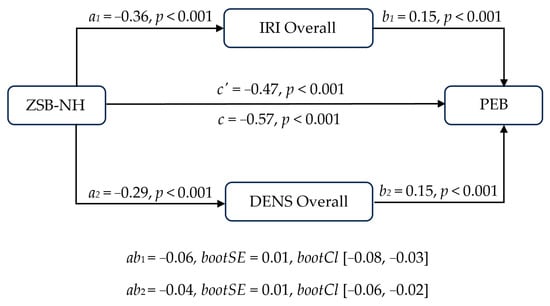
Firstly, due to the multicollinearity between the empathy for nature perspective taking and empathic concern subscales, the overall scores for empathy for humans and empathy for nature were first examined as parallel mediators. This showed that ZSB-NH negatively predicted empathy for both humans (b = −0.16, SE = 0.02, p < 0.001) and nature (b = −0.36, SE = 0.04, p < 0.001), both of which had positive effects on PEB (empathy for humans: b = 0.15, SE = 0.03, p < 0.001; empathy for nature: b = −0.05, SE = 0.01, p < 0.001). Mediation occurred via both empathy for humans (indirect effect = −0.02, bootSE = 0.01, bootCI [−0.04, −0.01]) and for nature (indirect effect = −0.02, bootSE = 0.01, bootCI [−0.03, −0.01]). This was partial mediation, as the direct effect remained significant (b = −0.21, SE = 0.01, p < 0.001); total effect, b = −0.25, SE = 0.01, p < 0.001. A comparison of the indirect effects showed that the two mediation effects did not significantly differ in magnitude (effect = −0.01, bootSE = 0.02, bootCI [−0.05, 0.02]). See Figure 2 for the standardised coefficients of this model.
Figure 2.
The parallel mediation model with standardised effects for the relationship between ZSB-NH and PEB mediated by empathy for humans (IRI overall mean score) and empathy for nature (DENS overall mean score) (N = 772).
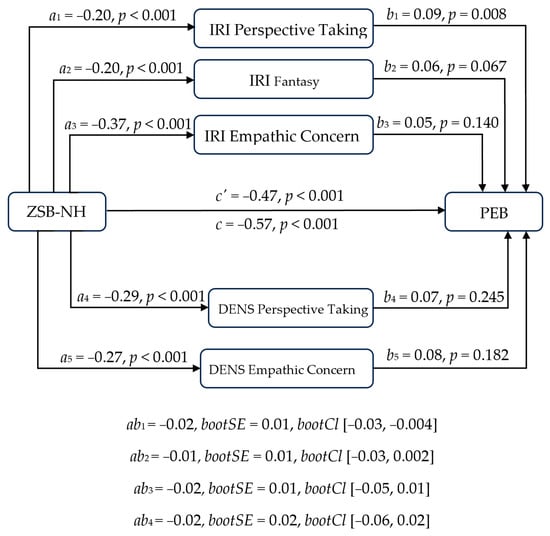
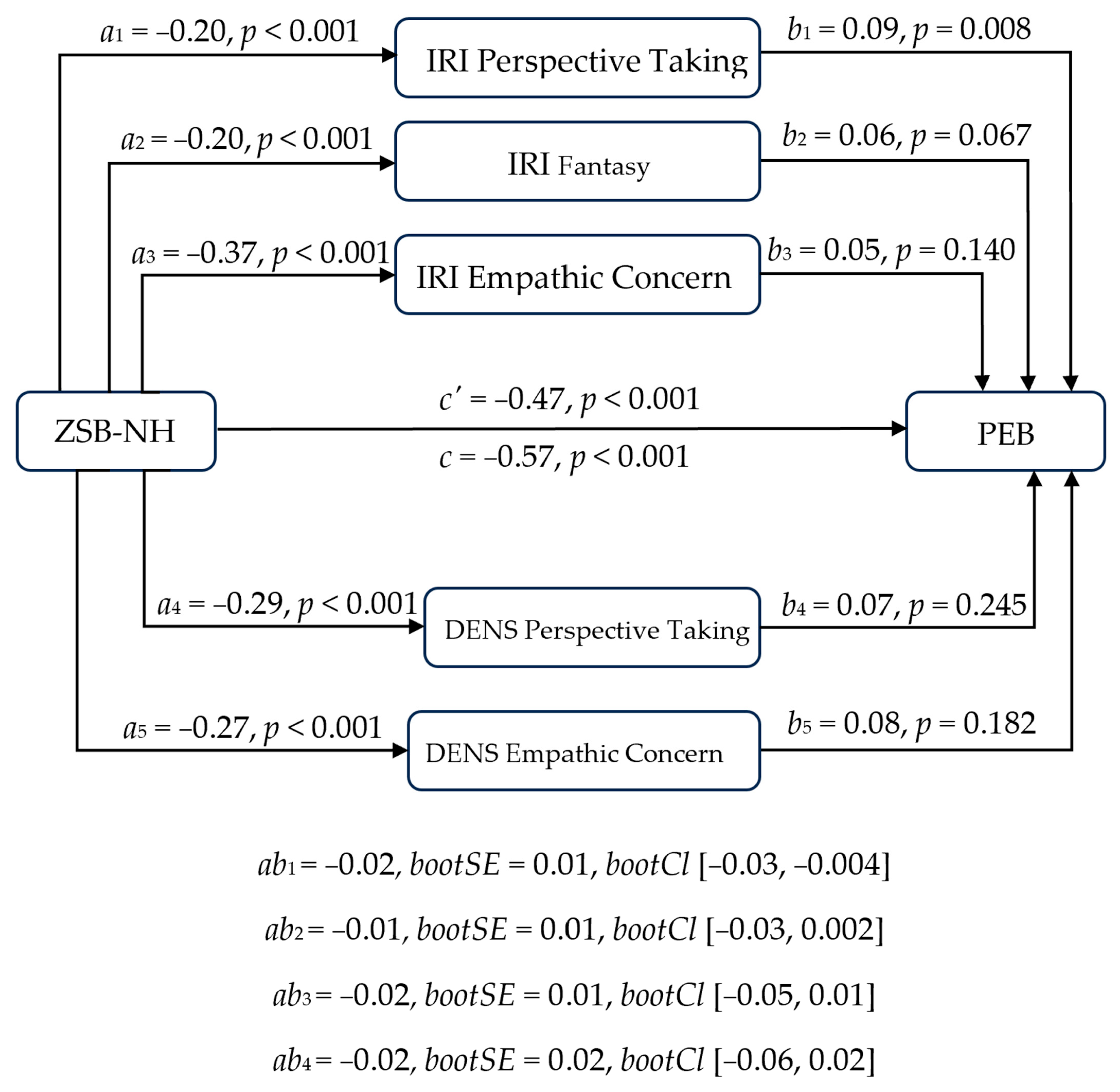
To examine the factors of empathy for humans and nature, another mediation model was examined. This was an exploratory analysis, noting the multicollinearity present between nature empathy facets and its unclear factor structure. This analysis revealed that while ZSB-NH negatively predicted each factor of both empathy for humans (perspective taking: b = −0.11, SE = 0.02, p < 0.001, fantasy: b = −0.12, SE = 0.02, p < 0.001, empathic concern: b = −0.22, SE = 0.02, p < 0.001) and empathy for nature (perspective taking: b = −0.42, SE = 0.05, p < 0.001, empathic concern: b = −0.32, SE = 0.04, p < 0.001), only human perspective taking was significant in predicting PEB (b = 0.07, SE = 0.03, p = 0.008). Pathways from human fantasy (b = 0.04, SE = 0.02, p = 0.067) and empathic concern (b = 0.04, SE = 0.03, p = 0.140) were not significant. That neither nature perspective taking (b = 0.02, SE = 0.02, p = 0.245) nor nature empathic concern (b = 0.03, SE = 0.02, p = 0.182) were significant in predicting PEB is not surprising given their multicollinearity. As such, in this model, mediation occurred only via human perspective taking (indirect effect −0.008, bootSE = 0.004 bootCI [−0.02, −0.002]), not via empathic concern (indirect effect = −0.01, bootSE = 0.01 bootCI [−0.02, 0.003]) or fantasy (indirect effect = −0.005, bootSE = 0.003 bootCI [−0.01, 0.001]), nor via nature perspective taking ((indirect effect = −0.01, bootSE = 0.01 bootCI [−0.03, 0.01]) or empathic concern (indirect effect = −0.01, bootSE = 0.01 bootCI [−0.03, 0.005]). Again, this was partial mediation, as the direct effect remained significant (b = −0.21, SE = 0.01, p < 0.001); total effect, b = −0.25, SE = 0.01, p < 0.001. See Figure 3 for the standardised coefficients of this model. The above mediation models were also examined without covariates, broadly replicating these findings. These, along with the full statistics for the models reported here with covariates, are provided in the Supplementary Materials.
Figure 3.
The exploratory parallel mediation model with standardised effects for the relationship between ZSB-NH and PEB mediated by empathy for humans (IRI: perspective taking, fantasy, empathic concern) and empathy for nature (DENS: perspective taking, empathic concern) (N = 772).
5. Discussion
This study examined whether reduced empathy for humans and for nature explains, at least partially, why zero-sum beliefs about the nature–human relationship (ZSB-NH) reduce pro-environmental behaviour (PEB). Overall, the findings were consistent with indirect pathways through overall empathy for both humans and nature providing primary evidence that empathy across these domains may partially account for the relationship between ZSB-NH and PEB. Further exploratory analyses examined whether facets of human and nature empathy might account for such associations. Although analyses were limited by multicollinearity among the nature-empathy facets, as well as a lack of clarity on its factor structure, human perspective taking was the only facet to show a statistically significant indirect association between ZSB-NH and PEB. Such findings provide preliminary evidence that human perspective-taking may represent a particularly relevant cognitive component of this pathway. ZSB-NH negatively predicted all facets of empathy examined, suggesting that stronger zero-sum beliefs may be associated with a reduction of empathy more broadly, while the unique mediated pathway observed for human perspective-taking warrants further investigation. In interpreting these findings, the robust negative association between ZSB-NH and PEB aligns with previous findings [2,15] and suggests that pro-environmental action is undermined by zero-sum beliefs, as these frame such behaviours as being costly to human interests. This highlights the importance of how individuals conceptualise the human–nature relationship in determining pro-environmental engagement. Research on mental models of the human–nature relationship suggest that mental models of the relationship, such as human exceptionalism [18,19] and social dominance orientation [20,21], are associated with lower engagement in sustainability behaviours. The present findings suggest that ZSB-NH may represent a cognitive framing of the human–nature relationship that is associated with reduced perspective taking. Conceptually aligned with notions of human exceptionalism, ZSB-NH reflects the assumption that human and environmental outcomes are inherently in conflict. Such a framework may distort the cognitive simulation of the experiences of others by failing to incorporate the ecological conditions underpinning human wellbeing. The present findings suggest that ZSB-NH may operate as a cognitive bias that negatively influences PEB through a possible constrained perspective taking process that includes both empathy for humans and nature.
In following the empathy–altruism hypothesis [28], individuals with higher empathic feelings towards humanity may be more likely to engage in PEBs as a response to relieving potential adverse effects felt by other humans. Cialdini et al. [30] further argued that perspective-taking facilitates pro-social motivation through “self-other” merging, providing a cognitive explanation to complement feelings of empathic concern. Humans often underestimate the environmental consequences of their actions as such consequences are temporally distant and embedded within complex ecological systems [47,48]. As a result, immediate human benefits are more psychologically salient than delayed environmental costs for future generations and vulnerable populations when considering those who endorse ZSB-NH [49]. Furthermore, physical and temporal proximity to those affected by climate change can determine one’s perception of psychological distance to others and, therefore, their motivations to act sustainably. For example, Heinz et al. [50] suggests that increased physical distance decreases one’s willingness to engage in PEB. Perspective taking, as a higher-order cognitive process, addresses this barrier and acts to reduce psychological distance by incorporating another’s experience, as well as their environmental context, into their own. Indeed, engaging in active-perspective taking of future generations has been shown to increase the endorsement of PEB [51,52].
The present findings also align with the empathy–sustainability hypothesis [34], which proposes that PEB increases when empathy extends beyond local or proximal contexts to encompass broader spatial and temporal perspectives, primarily through perspective taking. There are at least three complementary explanations that may explain the seemingly important role of cognitive empathy that is perspective taking. Firstly, the prominence of human perspective taking may lie in the cognitive nature of ZSB-NH itself. ZSB-NH is fundamentally a belief about the relationship between human and environmental interests, involving construing these interests as mutually exclusive rather than recognising their potential interdependence [2]. This representation is primarily cognitive rather than affective. Perspective taking is similarly a cognitive process that involves considering a situation from another person’s viewpoint and incorporating information about their experiences and circumstances into one’s own understanding [23]. Indeed, individuals who are better able or more inclined to consider the perspectives of other people may be better positioned to recognise how environmental conditions affect human wellbeing, thereby challenging the assumption that environmental and human interests are necessarily opposed.
A second explanation considers that perspective taking may be more proximal than empathic concern in this context. To engage in PEB in response to environmental consequences for other people, individuals may first need to recognise and understand how those consequences affect others. Perspective taking may facilitate this process by expanding attention beyond immediate personal interests to the circumstances of other people, including those who are geographically distant, socially vulnerable, or part of future generations. As such, empathic concern may subsequently reflect the affective response elicited by that understanding. While previous research has positioned empathic concern as a precursor to perspective taking [30], it is possible that perspective taking may be more proximal in at least some instances. From this perspective, ZSB-NH may constrain the cognitive process through which individuals recognise the interdependence between human wellbeing and environmental conditions, with perspective taking representing a relatively proximal pathway to PEB.
Finally, a third explanation considers that a human rather than a nature perspective taking emerged as the significant mediator. ZSB-NH is specifically framed around a perceived conflict between human and environmental wellbeing [2]. Such a belief involves making judgements about the implications of environmental outcomes for humanity [2,53]. Consequently, challenging this belief may require individuals to consider what environmental conditions mean for the lives of other people and may be relevant to questioning this perceived trade-off. Human perspective taking may facilitate recognition that environmental degradation does not simply affect nature, in that it can also affect people’s health, livelihoods, security, communities, and opportunities, particularly among vulnerable populations and future generations [50]. By bringing these human consequences into consideration, perspective taking may weaken the perceived opposition between environmental protection and human wellbeing that is central to ZSB-NH; it is just that these human consequences are somewhat distal. In this sense, human perspective taking may provide a cognitive route through which individuals can move beyond a narrow, immediate conception of human interests and recognise the longer-term interdependence between human wellbeing and environmental conditions.
Of note, mediation was only partial, suggesting that other factors, in addition to cognitive empathy for nature and humans, account for the effect of ZSB-NH on pro-environmental action. Reductions in feelings of environmental guilt are likewise undermined by ZSB-NH, decreasing PEB [54]. There may be other mediators as well, such as the perceived behavioural costs associated with PEB, which are expected to be underpinned by ZSB-NH, as by definition, performing PEB comes with an associated cost that would be more salient to those endorsing ZSB-NH.
6. Implications
Theoretical Implications. From a theoretical perspective, the findings are consistent with the interpretation that ZSB-NH is primarily a cognitive barrier to pro-environmental behaviour more so than an emotional one. The current findings also highlight the importance of distinguishing between different domains and components of empathy and their differential relevance to pro-environmental behaviour. The results suggest that cognitive empathy, namely perspective taking, may be more pertinent than affective empathy in understanding why ZSB-NH inhibits PEB. This finding suggests the possibility that firstly, the capacity to consider how environmental conditions affect other people may be particularly relevant to overcoming the zero-sum framing of human and environmental interests, possibly due to the shared cognitive nature of ZSB-NH and perspective taking. It also suggests that perspective taking may be a more proximal experience than empathic concern. Finally, given that only human perspective taking was significant, this finding suggests that the inclination to take the perspective of more distal humans that may be affected by environmental conditions may be undermined.
Practical Implications. From an applied standpoint, interventions aimed at reducing the negative impact of ZSB-NH on PEB may benefit from fostering perspective taking, directed both toward human and nature others. Implementing commitment mechanisms, similar to that of Ref. [50], in which participants are assigned the role of negotiators acting on behalf of future generations actively applies cognitive perspective taking processes, leading to increased sustainability behaviours. These approaches may mitigate the cognitive empathy losses associated with ZSB-NH. However, given substantial unexplained variance in ZSB-NH’s effect on PEB, such approaches are unlikely to be sufficient in isolation and should be integrated with strategies that directly address zero-sum beliefs or enhance other motivational drivers of PEB, such as connectedness to nature [11,12] and nature exposure interventions [12]. Campaigns could explicitly challenge zero-sum framings of the human–nature relationship by communicating that environmental protection is not conditional upon losses to human wellbeing. For example, rather than presenting conservation primarily in terms of restrictions, costs, or sacrifices, communications could highlight situations in which protecting ecosystems also supports human wellbeing and community interests. These findings suggest that practitioners may benefit from identifying and addressing zero-sum beliefs directly when designing environmental communication, particularly where environmental initiatives are perceived as threatening human interests.
Study Strengths, Limitations, and Future Research Directions
This study has several strengths. Notably, it employed a large sample size, which afforded adequate statistical power to detect small effects. Additionally, the inclusion of both human- and nature-directed empathy provides a comprehensive examination of potential mediating processes. However, these strengths should be considered alongside important limitations. The cross-sectional design precludes causal inferences; we have provided evidence of indirect associations consistent with the proposed model, rather than evidence of causal mediation. It is therefore not possible to determine the directionality of the observed relationships. For instance, lower engagement in PEB could potentially reinforce zero-sum beliefs. Cross-sectional mediation analyses may also provide biased estimates of the corresponding longitudinal mediation processes when the temporal ordering of variables cannot be established [55]. The cross-sectional design may have also exposed the data to common method bias. While we minimised this bias through procedural controls, such as ensuring participant confidentiality, the use of varied response sales, and the presentation of scales on discrete survey pages, the single-timepoint data collection remains a constraint. While our statistical assessment revealed no concerns with common method bias, future longitudinal studies are recommended to validate these findings over time. The use of a convenience sample also limits the generalisability of the findings, as the sample may not be demographically representative of the broader population; indeed, participation may have been subject to self-selection biases common to online survey research. However, the recruitment materials did not explicitly reference environmental topics, reducing the likelihood of recruitment based specifically on environmental interest. The use of a voluntary convenience sampling strategy using social media recruitment facilitated the efficient recruitment of a large sample of adults from across Australia but may also have introduced self-selection bias and limited the generalisability of the findings to the broader Australian population as well as across cultures. Accordingly, the observed relationships should be interpreted with appropriate caution and replicated in more representative samples. Additionally, assessing pro-environmental behaviour with a single, self-report, measure may have also introduced bias due to potential inaccuracies in self-reporting, and the specific content of the items may not fully capture the breadth of pro-environmental engagement. While cognitive perspective-taking emerged as a significant mediator, its relatively small effect size and the presence of multicollinearity among mediators suggest that these findings should be interpreted with caution. Finally, the inability to distinguish between forms of nature empathy prevented robust analysis. This presents a key limitation in the present research, and therefore, the finding that human perspective-taking partially mediated this relationship is still tentative and requires replication in a study that includes an alternative measure of nature empathy. Confirmatory factor analyses did not provide an adequate fit for either a single-factor model or a two-factor model distinguishing perspective taking and empathic concern. Although the two DENS facets were highly correlated, the present data do not provide clear evidence for either a one-dimensional or two-dimensional measurement structure. Consequently, findings involving empathy for nature should be interpreted cautiously, particularly when distinguishing between its constituent facets.
Future research would benefit from employing longitudinal or experimental designs to more rigorously test causal pathways between ZSB-NH, empathy, and PEB. Future research should also consider examining the mechanism(s) by which ZSB-NH undermines perspective taking, specifically in the human domain. Given the multicollinearity observed between the two dimensions of nature empathy, future research should focus on the measurement structure of nature empathy. Research may also consider whether other measures of nature empathy, such as that by Ref. [56], may show better discriminant validity. It may also be valuable to examine additional mediators, such as perceived behavioural costs that may accompany pro-environmental engagement [57], which are theoretically expected to accompany ZSB-NH. Exploring these relationships in more diverse and representative samples and in cross-cultural settings would also enhance the generalisability and applied relevance of the findings. Examining practical interventions for reducing ZSB-NH is also a key avenue for future research, given its demonstrated negative relationship to pro-environmental engagement.
7. Conclusions
In conclusion, this study contributes to our growing understanding of the psychological barriers to pro-environmental behaviour by demonstrating that zero-sum beliefs about the nature–human relationship undermine pro-environmental engagement. While empathy, both in human and nature domains, partially explains this effect, this seemed to be predominantly driven by reductions in cognitive, namely perspective taking, elements of empathy, and when this is directed toward human others. However, the predominance of the effect via human perspective taking should be interpreted cautiously given multicollinearity present in cognitive and emotional nature empathy facets. These findings suggest that empathy interventions targeting perspective taking may be most effective at reducing the negative impact of zero-sum beliefs on pro-environmental behaviour. However, given the remaining substantial negative effect of zero-sum beliefs, empathy should not be the sole target with attempts made to directly address zero-sum beliefs in the pursuit of sustainability.
Supplementary Materials
The following supporting information can be downloaded at: https://www.mdpi.com/article/10.3390/su18179012/s1.
Author Contributions
Conceptualization, P.P.; methodology, M.S. and P.P.; software, M.S. and P.P.; validation, M.S. and P.P.; formal analysis, M.S. and P.P.; investigation, M.S. and P.P.; resources, M.S. and P.P.; data curation, P.P.; writing—original draft preparation, M.S. and P.P.; writing—review and editing, M.S. and P.P.; visualization, M.S. and P.P.; supervision, P.P.; project administration, P.P. All authors have read and agreed to the published version of the manuscript.
Funding
This research received no external funding.
Institutional Review Board Statement
This study was conducted in accordance with the Declaration of Helsinki and approved by the Ethics Committee of Monash University (protocol code 41837; 8 April 2024).
Informed Consent Statement
Informed consent was obtained from all subjects involved in the study.
Data Availability Statement
The original data presented in the study are openly available in OSF at https://osf.io/yh6qm/overview?view_only=4d7828474a34491589aa45aa6af43129 (accessed on 26 August 2026).
Conflicts of Interest
The authors declare no conflicts of interest.
References
- IPCC. Climate Change 2023: Synthesis Report; Intergovernmental Panel on Climate Change: Geneva, Switzerland, 2023; Available online: https://www.ipcc.ch/report/ar6/syr/ (accessed on 2 February 2024).
- Chen, D.; Pensini, P. The development of the Zero-Sum Beliefs between Nature and Humanity Scale. J. Environ. Psychol. 2024, 94, 102247. [Google Scholar] [CrossRef] [Scilit]
- Kollmuss, A.; Agyeman, J. Mind the gap: Why do people act environmentally and what are the barriers to pro-environmental behavior? Environ. Educ. Res. 2002, 8, 239–260. [Google Scholar] [CrossRef] [Scilit]
- Siegel, L.; Cutter-Mackenzie-Knowles, A.; Bellert, A. Still ‘minding the gap’ sixteen years later: (Re)storying pro-environmental behaviour. Aust. J. Environ. Educ. 2018, 34, 189–203. [Google Scholar] [CrossRef] [Scilit]
- Gkargkavouzi, A.; Halkos, G.; Matsiori, S. A multi-dimensional measure of environmental behaviour: Exploring the predictive power of connectedness to nature, ecological worldview and environmental concern. Soc. Indic. Res. 2019, 143, 859–879. [Google Scholar] [CrossRef] [Scilit]
- Nejat, P.; Jomehzadeh, F.; Mahdi Taheri, M.; Gohari, M.; Majid, M.Z.A. A global review of energy consumption, CO2 emissions and policy in the residential sector (with an overview of the top ten CO2 emitting countries). Renew. Sustain. Energy Rev. 2015, 43, 8430862. [Google Scholar] [CrossRef] [Scilit]
- Miller, L.B.; Rice, R.E.; Gustafson, A.; Goldberg, M.H. Relationships among environmental attitudes, environmental efficacy, and pro-environmental behaviors across and within 11 countries. Environ. Behav. 2022, 54, 1063–1096. [Google Scholar] [CrossRef] [Scilit]
- Paswan, A.K.; Guzman, F.; Lewin, J. Attitudinal determinants of environmentally sustainable behavior. J. Consum. Mark. 2017, 34, 414–426. [Google Scholar] [CrossRef] [Scilit]
- Tamar, M.; Wirawan, H.; Arfah, T.; Putri, R.P.S. Predicting pro-environmental behaviours: The role of environmental values, attitudes and knowledge. Manag. Environ. Qual. 2020, 32, 1477–7835. [Google Scholar] [CrossRef] [Scilit]
- Farrow, K.; Grolleau, G.; Ibanez, L. Social norms and pro-environmental behavior: A review of the evidence. Ecol. Econ. 2017, 140, 1–13. [Google Scholar] [CrossRef] [Scilit]
- Whitburn, J.; Linklater, W.; Abrahamse, W. Meta-analysis of human connection to nature and proenvironmental behavior. Conserv. Biol. 2020, 34, 180–193. [Google Scholar] [CrossRef] [Scilit]
- Mayer, F.S.; Frantz, C.M. The connectedness to nature scale: A measure of individuals’ feeling in community with nature. J. Environ. Psychol. 2004, 24, 503–515. [Google Scholar] [CrossRef] [Scilit]
- Chernyak-Hai, L.; Davidai, S. “Do not teach them how to fish”: The effect of zero-sum beliefs on help giving. J. Exp. Psychol. Gen. 2022, 151, 2466–2480. [Google Scholar] [CrossRef] [Scilit]
- Piotrowski, J.; Różycka-Tran, J.; Baran, T.; Żemojtel-Piotrowska, M. Zero-sum thinking as mediator of the relationship of national attitudes with (un)willingness to host refugees in own country. Int. J. Psychol. 2019, 54, 722–730. [Google Scholar] [CrossRef] [Scilit]
- Burgstaller, L.; Florack, A. Sacrificing for the environment: The role of nonzero-sum beliefs. J. Environ. Psychol. 2025, 103, 102577. [Google Scholar] [CrossRef] [Scilit]
- Yoo, S.; Pensini, P. The personality correlates of zero-sum beliefs: The role of HEXACO personality dimensions in zero-sum beliefs in human-human and nature-human relations. Personal. Individ. Differ. 2025, 247, 113428. [Google Scholar] [CrossRef] [Scilit]
- Taylor, M.; Pensini, P. Zero-sum beliefs about the human–nature relationship: The role of social dominance orientation, tolerance of ambiguity, and need for cognition. Psychol. Int. 2025, 7, 89. [Google Scholar] [CrossRef] [Scilit]
- Betz, N.; Coley, J.D. Human exceptionalist thinking about climate change. Sustainability 2022, 14, 9519. [Google Scholar] [CrossRef] [Scilit]
- Kim, J.J.H.; Betz, N.; Helmuth, B.; Coley, J.D. Conceptualizing human–Nature relationships: Implications of human exceptionalist thinking for sustainability and conservation. Top. Cogn. Sci. 2023, 15, 357–387. [Google Scholar] [CrossRef] [Scilit]
- Stanley, S.K.; Wilson, M.S.; Milfont, T.L. Social dominance as an ideological barrier to environmental engagement: Qualitative and quantitative insights. Glob. Environ. Change 2021, 67, 102223. [Google Scholar] [CrossRef] [Scilit]
- Uçar, G.K.K.; Kaynak Malatyali, M.; Kaynak, B.D. Social and ecological dominance orientations, climate change denial, and pro-environmental behaviour. Glob. Environ. Psychol. 2023, 3, e11651. [Google Scholar] [CrossRef] [Scilit]
- Cuff, B.M.P.; Brown, S.; Taylor, L.; Howat, D. Empathy: A review of the concept. Emot. Rev. 2016, 8, 144–153. [Google Scholar] [CrossRef] [Scilit]
- Davis, M.H. Measuring individual differences in empathy: Evidence for a multidimensional approach. J. Personal. Soc. Psychol. 1983, 44, 113–126. [Google Scholar] [CrossRef]
- Decety, J.; Bartal, I.B.; Uzefovsky, F.; Knafo-Noam, A. Empathy as a driver of prosocial behaviour: Highly conserved neurobehavioural mechanisms across species. Philos. Trans. R. Soc. B 2016, 371, 20150077. [Google Scholar] [CrossRef] [Scilit]
- Taylor, L.K.; Glen, C. From empathy to action: Can enhancing host-society children’s empathy promote positive attitudes and prosocial behaviour toward refugees? J. Community Appl. Soc. Psychol. 2020, 30, 214–226. [Google Scholar] [CrossRef] [Scilit]
- Klimecki, O.; Mayer, S.; Jusyte, A.; Scheeff, J.; Schonenberg, M. Empathy promotes altruistic behavior in economic interactions. Sci. Rep. 2016, 6, 31961. [Google Scholar] [CrossRef] [Scilit]
- Neaman, A.; Pensini, P.; Navarro-Villarroel, C.; Ermakov, D.S.; Castro, M. Helping people, neglecting soil: Contrasting effects of emotional empathy with humans on altruistic behaviour and soil conservation in a population of Chilean farmers. Front. Psychol. 2026, 17, 1843293. [Google Scholar] [CrossRef] [Scilit]
- Batson, C.D.; Weeks, J.L. Mood effects of unsuccessful helping: Another test of the empathy-altruism hypothesis. Personal. Soc. Psychol. Bull. 1996, 22, 148–157. [Google Scholar] [CrossRef] [Scilit]
- Shultz, P.W. Inclusion with nature: The psychology of human-nature relations. In Psychology of Sustainable Development; Schmuck, P., Schultz, W.P., Eds.; Kluwer Academic Publishers: Dordrecht, The Netherlands, 2002; pp. 61–78. [Google Scholar] [CrossRef] [Scilit]
- Cialdini, R.B.; Brown, S.L.; Lewis, B.P.; Luce, C.; Neuberg, S.L. Reinterpreting the empathy–altruism relationship: When one into one equals oneness. J. Personal. Soc. Psychol. 1997, 73, 481–494. [Google Scholar] [CrossRef]
- Duong, M.; Pensini, P. The role of connectedness in sustainable behaviour: A parallel mediation model examining the prosocial foundations of pro-environmental behaviour. Personal. Individ. Differ. 2023, 209, 112216. [Google Scholar] [CrossRef] [Scilit]
- Neaman, A.; Pensini, P.; Zabel, S.; Otto, S.; Ermakov, D.S.; Dovletyarova, E.A.; Burnham, E.; Castro, M.; Navarro-Villarroel, C. The prosocial driver of ecological behavior: The need for an integrated approach to prosocial and environmental education. Sustainability 2022, 14, 4202. [Google Scholar] [CrossRef] [Scilit]
- Tam, K.-P. Dispositional empathy with nature. J. Environ. Psychol. 2013, 35, 92–104. [Google Scholar] [CrossRef] [Scilit]
- Brown, K.; Adger, W.N.; Devine-Wright, P.; Anderies, J.M.; Barr, S.; Bousquet, F.; Butler, C.; Evans, L.; Marshall, N.; Quinn, T. Empathy, place and identity interactions for sustainability. Glob. Environ. Change 2019, 56, 11–17. [Google Scholar] [CrossRef] [Scilit]
- Li, Y.; Zhao, Y.; Huang, Q.; Deng, J.; Deng, X.; Li, J. Empathy with nature promotes pro-environmental attitudes in preschool children. PsyCh J. 2024, 13, 598–607. [Google Scholar] [CrossRef] [Scilit]
- Hills, A.M. Empathy and belief in the mental experience of animals. Anthrozoös 1995, 8, 132–142. [Google Scholar] [CrossRef] [Scilit]
- Berenguer, J. The effect of empathy in proenvironmental attitudes and behaviors. Environ. Behav. 2007, 39, 269–283. [Google Scholar] [CrossRef] [Scilit]
- Sevillano, V.; Aragonés, J.I.; Schultz, P.W. Perspective taking, environmental concern, and the moderating role of dispositional empathy. Environ. Behav. 2007, 39, 685–705. [Google Scholar] [CrossRef] [Scilit]
- Faul, F.; Erdfelder, E.; Buchner, A.; Lang, A.G. Statistical power analyses using GPower 3.1: Tests for correlation and regression analyses. Behav. Res. Methods 2009, 41, 1149–1160. [Google Scholar] [CrossRef] [Scilit]
- Kenny, D.A. MedPower: An Interactive Tool for the Estimation of Power in Tests of Mediation. 2017. Available online: https://davidakenny.shinyapps.io/MedPower/ (accessed on 6 March 2024).
- Eisenberg, N.; Forbes, R.A. Empathy: Conceptualization, measurement, and relation to prosocial behavior. Motiv. Emot. 1990, 14, 131–149. [Google Scholar] [CrossRef] [Scilit]
- Hülsemann, M.J.; Kaurin, A.; Kollmann, B.; Chmitorz, A.; Ahrens, K.F.; Schenk, C.; Plichta, M.M.; Lutz, B.; Basten, U.; Fiebach, C.J.; et al. Self-oriented affective empathy is associated with increased negative affect. Sci. Rep. 2025, 15, 27767. [Google Scholar] [CrossRef] [Scilit]
- Hayes, A.F. Introduction to Mediation, Moderation, and Conditional Process Analysis: A Regression-Based Approach, 3rd ed.; The Guilford Press: New York, NY, USA, 2022. [Google Scholar]
- Hu, L.T.; Bentler, P.M.; Kano, Y. Can test statistics in covariance structure analysis be trusted? Psychol. Bull. 1992, 112, 351–362. [Google Scholar] [CrossRef] [Scilit]
- Hu, L.T.; Bentler, P.M. Cutoff criteria for fit indexes in covariance structure analysis: Conventional criteria versus new alternatives. Struct. Equ. Model. 1999, 6, 1–55. [Google Scholar] [CrossRef] [Scilit]
- Schumacker, R.E.; Lomax, R.G. A Beginner’s Guide to Structural Equation Modelling, 3rd ed.; Routledge/Taylor & Francis Group: Oxfordshire, UK, 2010. [Google Scholar]
- Díaz-Siefer, P.; Neaman, A.; Salgado, E.; Celis-Diez, J.L.; Otto, S. Human-environment system knowledge: A correlate of pro-environmental behavior. Sustainability 2015, 7, 15510–15526. [Google Scholar] [CrossRef] [Scilit]
- Galvani, A.P.; Bauch, C.T.; Anand, M.; Singer, B.H.; Levin, S.A. Human–environment interactions in population and ecosystem health. Proc. Natl. Acad. Sci. USA 2016, 113, 14502–14506. [Google Scholar] [CrossRef] [Scilit]
- Baker, S.H.; Craig, R.K.; Dernbach, J.C.; Hirokawa, K.; Krakoff, S.; Owley, J.; Powers, M.; Roesler, S.; Rosenbloom, J.; Ruhl, J.B.; et al. Beyond zero-sum environmentalism. Environ. Law Rep. 2017, 191, 10328–10351. [Google Scholar]
- Heinz, N.; Koessler, A.K.; Engel, S. Distance to climate change consequences reduces willingness to engage in low-cost mitigation actions–results from an experimental online study from Germany. PLoS ONE 2023, 18, e0283190. [Google Scholar] [CrossRef] [Scilit]
- Halali, E.; Perez, O. Binding the future boosts intergenerational sustainability. npj Clim. Action 2025, 4, 15. [Google Scholar] [CrossRef] [Scilit]
- Shahen, M.E.; Kotani, K.; Sajo, T. Intergenerational sustainability is enhanced by taking the perspective of future generations. Sci. Rep. 2021, 11, 2437. [Google Scholar] [CrossRef] [Scilit]
- Urberg, L. Conflicts of interest in environmental and sustainability education. Scand. J. Educ. Res. 2026, 70, 302–315. [Google Scholar] [CrossRef] [Scilit]
- Schauer, S.; Pensini, P. Environmental guilt partially mediates the negative effect of zero-sum beliefs about nature-human relations on pro-environmental behaviour. Psychol. Int. 2026, 8, 52. [Google Scholar] [CrossRef] [Scilit]
- Maxwell, S.E.; Cole, D.A. Bias in cross-sectional analyses of longitudinal mediation. Psychol. Methods 2007, 12, 23–44. [Google Scholar] [CrossRef] [Scilit]
- Musitu-Ferrer, D.; León-Moreno, C.; Callejas-Jerónimo, J.E.; Esteban-Ibáñez, M.; Musitu-Ochoa, G. Relationships between Parental Socialization Styles, Empathy and Connectedness with Nature: Their Implications in Environmentalism. Int. J. Environ. Res. Public Health 2019, 16, 2461. [Google Scholar] [CrossRef] [Scilit]
- Huang, L.; Wen, Y.; Gao, J. What ultimately prevents the pro-environmental behavior? An in-depth and extensive study of the behavioral costs. Resour. Conserv. Recycl. 2020, 158, 104747. [Google Scholar] [CrossRef] [Scilit]

Disclaimer/Publisher’s Note: The statements, opinions and data contained in all publications are solely those of the individual author(s) and contributor(s) and not of MDPI and/or the editor(s). MDPI and/or the editor(s) disclaim responsibility for any injury to people or property resulting from any ideas, methods, instructions or products referred to in the content. |
© 2026 by the authors. Licensee MDPI, Basel, Switzerland. This article is an open access article distributed under the terms and conditions of the Creative Commons Attribution (CC BY) license.