


Abstract
Amid global warming, mountain forests increasingly serve as summer climate shelters, yet the behavioral logic of forest sojourning extends beyond mere heat avoidance. This study employs a grounded theory approach, based on semi-structured in-depth interviews with 30 summer forest sojourners in Lingchuan County, China, to construct a theoretical model of the “dual-pathway driving mechanism for psychophysical state transition.” The findings reveal three interconnected dimensions. First, forest sojourning is associated with two intertwined motivational pathways—heat avoidance (damage aversion) and wellness pursuit (benefit seeking)—forming a nested structure where heat avoidance is the surface layer and wellness pursuit the underlying driver, with participants retrospectively describing a perceived shift in motivational salience as their sojourn deepened. Second, psychophysical restoration is perceived by participants as emerging from a synergy of environmental perception, activity experience, and companionship interaction, as a conceptual heuristic formula formally expressed as Restorative Effect ≈ Environmental Perception × Activity Experience × Companionship Interaction. Third, the core value of forest sojourning lies in enabling a fundamental existential state transition from “fast-paced survival” to “slow-living being,” which becomes internalized as value identification with pristine ecology and opposition to over-commercialization, crystallizing into normative expectations for destination development. This model extends push-pull theory in wellness tourism, advances restorative mechanisms research within Attention Restoration Theory, and redirects tourism value inquiry from experience evaluation toward existential states, providing theoretical foundations for the sustainable planning of forest wellness destinations.
1. Introduction
Global warming has become an indisputable global reality, with the frequency and intensity of extreme heat events increasing markedly worldwide [1]. As confirmed by the Intergovernmental Panel on Climate Change Sixth Assessment Report, climate change is reshaping human mobility patterns through multiple pathways, and climate-driven migration (a permanent or semi-permanent relocation) has evolved from a marginal phenomenon into a widespread adaptive strategy [2]. China’s warming rate exceeds the global average, making heat-induced spatial relocation an increasingly prominent behavioral response among urban populations seeking to mitigate threats to their physical and mental health [3].
Within this landscape of climate-adaptive mobility, forest ecosystems play an irreplaceable role due to their unique regulatory and service functions. Substantial research confirms that forest vegetation generates a pronounced “cool island effect” via evapotranspiration, providing critical thermal buffering spaces while simultaneously delivering restorative, immersive nature-based experiences for visitors [4,5]. This functional evolution has elevated forests from mere “ecological barriers” to dual-purpose spaces that serve as both “climate shelters” and “psychophysical healing fields” [6,7]. Under sustained global warming pressure, summer forest sojourning (a form of temporary, seasonal, and voluntary mobility) is transitioning from a niche lifestyle choice into a mainstream form of social adaptation [8,9], yet the full behavioral logic underlying this phenomenon remains insufficiently unpacked.
Prior research has established that tourist motivations for forest visits extend well beyond traditional sightseeing and leisure [10]. Recent empirical studies have identified health-seeking as a core positive driver of visitor satisfaction, alongside psychological restoration, curiosity, and attraction to natural beauty [11,12]. However, our fieldwork reveals a more complex motivational structure than has been documented to date. Interviewees consistently cite climate-driven needs such as escaping heat as their immediate, explicit reason for visiting, while simultaneously articulating deeper desires for relaxation, stress relief, and quality time with family. This raises a critical, underexplored question: are heat avoidance and wellness pursuit independent, parallel motivations, or do they exhibit a nested, dynamically transformative relationship as the sojourn unfolds? While existing scholarship has confirmed the importance of health-related motivations, it has yet to systematically delineate how these two pathways intersect and coexist over the course of the visitor experience.
Beyond motivational structure, the mechanisms through which forest sojourning generates psychophysical restoration require deeper investigation. A robust body of empirical evidence documents the positive physical and mental health outcomes of forest exposure: at the physiological level, these include reduced blood pressure, improved parasympathetic function, and enhanced cardiovascular health; at the psychological level, they encompass reduced anxiety and depressive symptoms, improved mood, and increased vitality [13,14]. A common limitation of these studies, however, is their implicit framing of restoration as a unidirectional outcome of environmental exposure, resting on the untested assumption that “exposure equals restoration.” Our field observations, by contrast, indicate that tourists place equal emphasis on slow-paced activities and deep interpersonal companionship as core components of their restorative experience. The interrelationships and synergistic dynamics among environmental perception, activity experience, and companionship interaction thus remain a critical gap in existing restorative environment research.
A third underexplored dimension lies at the level of perceived value: what is the ultimate meaning of forest sojourning for tourists themselves? Existing research has begun to examine how forest tourism experiences translate into value cognition. Studies show that systematic forest healing practices can foster long-term recognition of forest ecological value and willingness to protect it, and that restorative, immersive experiences indirectly shape tourists’ perceived value of natural destinations [15,16]. However, our fieldwork captures a more fundamental form of transformation in visitor narratives. Respondents repeatedly describe their experience in terms of existential shift—“slowing down,” “loosening up,” “recharging,” or “pressing the pause button on life.” These descriptions refer not to discrete gains from the experience, but to a fundamental change in their mode of being. The essence and dimensional structure of this state transition remains relatively underexplored in tourism value research.
Building on these empirical observations, this study addresses three core interrelated questions regarding the motivational structure, restorative mechanisms, and perceived value of summer forest sojourning. First, what core motivations drive urban residents to engage in summer forest sojourning, and how do heat avoidance needs and wellness pursuits intersect, coexist, and transform over the course of the experience? Second, through what specific mechanisms is psychophysical restoration achieved, and what respective roles do environmental perception, activity experience, and interpersonal companionship play? Third, from the tourist perspective, what constitutes the core value of forest sojourning?
Employing a grounded theory approach, this study inductively develops theory from empirical data drawn from semi-structured in-depth interviews with 30 summer forest sojourners in Lingchuan County, China. Through this approach, the study endeavors to: (1) extend the explanatory scope of push-pull theory by uncovering a dual pathway of heat-avoidance and wellness pursuit; (2) deepen the application of Attention Restoration Theory in forest wellness contexts by elucidating the synergistic environment-activity-companionship mechanism; and (3) redirect tourism value research from the dominant “experience evaluation” paradigm toward a deeper exploration of “existential states” by foregrounding the concept of “state transition.” Ultimately, the findings provide an empirically grounded reference for the scientific planning, precise positioning, and sustainable development of forest wellness destinations.
2. Literature Review
2.1. Tourism Motivation
Tourism motivation constitutes a foundational and enduring theme in tourism scholarship, serving as the logical starting point for understanding travel behavior. The push-pull framework, introduced by Dann, conceptualizes tourist flows as the product of internal push factors in origin regions and external pull factors at destinations, and has accumulated robust empirical support in forest tourism contexts [17]. Prior research has identified multiple motivational dimensions including health, culture, and social drivers, with health-seeking emerging as the dominant force in forest wellness settings [18]. Nevertheless, push-pull theory exhibits inherent explanatory limitations in this domain: it effectively captures “damage aversion” motives, whereby individuals mitigate negative environmental stimuli through spatial displacement, but fails to fully account for motivations oriented toward active pursuit of long-term psychophysical benefits. When tourists seek improved sleep, restored energy, and spiritual healing rather than mere heat relief, their decisions transcend escape logic and represent proactive health investment.
The Health Belief Model (HBM) offers a complementary cognitive perspective on health-related travel decision-making [19]. Existing studies have preliminarily validated its applicability to forest wellness tourism, demonstrating that perceived health benefits, barriers, and action cues shape tourists’ behavioral intentions via self-efficacy and trust [20,21]. However, the HBM’s rational decision-making premise cannot fully accommodate the non-cognitive dimensions of wellness tourism motivation, such as aesthetic pleasure, emotional experience, and social interaction, which are integral to holistic quality-of-life aspirations.
Self-Determination Theory (SDT) provides additional insight into the intrinsic logic of wellness experiences, positing that behavior is driven by the satisfaction of autonomy, competence, and relatedness needs [22]. Research has linked natural environment exposure to enhanced well-being via satisfaction of these three needs, and autonomous motivation among nature-based tourists is associated with both ecologically responsible attitudes and subjective well-being [23,24]. This framework helps explain why slow-paced activities and companionship are core to restorative forest experiences, yet its systematic application in forest wellness research remains limited. Specifically, how the three basic psychological needs interact synergistically within concrete sojourning activities has not been empirically delineated.
In sum, while push-pull theory, the HBM, and SDT each illuminate distinct facets of tourist motivation, research integrating them into a unified framework to explain how heat avoidance and wellness pursuit pathways coexist, intertwine, and transform over the course of forest sojourning remains notably sparse. This constitutes the first theoretical gap addressed by this study.
2.2. Forest Restoration
Substantial empirical evidence has confirmed the multifaceted health benefits of forest environment exposure. Physiologically, forest bathing is associated with reduced heart rate and blood pressure, enhanced parasympathetic function, and improved cardiovascular outcomes [25,26,27]. Psychologically, forest exposure consistently reduces anxiety, depressive symptoms, and fatigue, while boosting vitality and positive mood [28,29]. Recent scholarship has increasingly emphasized the conditionality of these effects, noting that restorative outcomes are moderated by factors such as exposure duration and activity type, challenging the simplistic assumption that “exposure equals restoration” [30,31].
Attention Restoration Theory (ART) and Stress Reduction Theory (SRT) are the dominant theoretical frameworks explaining forest restorative effects [32,33]. While they operate at cognitive and physiological levels respectively, both share a core theoretical presupposition: they frame the individual as a passive recipient of environmental stimuli, conceptualizing restoration as an automatic psychophysiological response to nature exposure. This premise overlooks the active agency of tourists, who do not merely occupy forest spaces but engage in diverse behaviors ranging from walking to quiet contemplation. Empirical research confirms that dynamic, static, and combined activity types yield significantly different health benefits, with combined activities producing the most comprehensive improvements [34].
Furthermore, tourists are not isolated individuals but enter forest spaces embedded in social relationships. Emerging research on companion-based forest therapy demonstrates that emotional support from travel companions significantly amplifies restorative outcomes, outperforming individual forest therapy in emotion regulation and stress reduction [35]. This aligns with the concept of collective healing, which posits that group interaction and emotional bonding generate an amplification effect atop individual physiological relaxation [36].
To date, however, relatively few studies have systematically integrated environmental perception, activity experience, and companionship interaction into a unified analytical framework to examine how these three elements synergistically generate psychophysical restoration. This constitutes the second theoretical gap of this study.
2.3. Tourism Perceived Value
Perceived value theory provides a foundational framework for understanding how tourism experiences translate into behavioral intentions. Originally defined as a consumer’s overall utility assessment comparing gains and sacrifices [37], perceived value has been extended to tourism as a multi-dimensional construct encompassing functional, emotional, and social value [38]. In forest wellness contexts, perceived value mediates the relationship between motivation and behavioral intention, indicating that value judgments formed during experience shape subsequent behavior [39]. Research on leisure involvement and place attachment further reveals that restorative experiences and positive emotions indirectly shape perceived health benefits, with place attachment moderating this process [40].
Recent advances in transformative tourism research have expanded the theoretical boundaries of tourism value, shifting focus from utilitarian evaluation to existential dimensions of personal growth and meaning-making. Studies demonstrate that tourism experiences can generate transformative value through self-reflection, fostering deep personal development beyond short-term relaxation [41,42]. This body of work suggests that tourism value can undergo a qualitative leap from experiential evaluation to existential self-reconstruction.
When experiences touch on lifestyle reflection, they can further crystallize into identification with a destination’s core values and willingness to protect them. Research on place identity shows that recreational landscape perception promotes pro-environmental behavior via place identity, with effects spilling over into daily life [43]. Awe elicited by natural landscapes also generates moral motivation for conservation, positioning tourists as potential co-stewards of destination value [44].
Nevertheless, two critical questions remain insufficiently addressed in the specific context of forest sojourning. First, how do immediate psychophysical relaxation experiences evolve into lasting identification with core values such as pristine ecology and slow living? Second, how does such value identification crystallize into normative expectations for destination development? These questions constitute the third theoretical gap this study seeks to address.
2.4. Research Overview
Collectively, existing literature has constructed a multi-dimensional theoretical framework for forest sojourning research. Motivation research has expanded beyond push-pull dynamics to incorporate health belief and self-determination mechanisms. Restorative research has moved beyond direct environmental effects to explore the conditional roles of multisensory perception, activity type, and companionship. Value research has advanced from experiential evaluation to the existential significance of transformative experiences.
Despite these advances, most studies progress along isolated theoretical trajectories, lacking an integrative framework that connects motivation, experiential process, and value cognition into a coherent whole. Specifically, the synergistic effects of environment, activity, and companionship in the restorative process have not been systematically theorized, and the mechanisms through which restorative experiences sediment into core value identification remain unclear. These notable gaps in the literature call for a grounded theory approach that inductively derives theory directly from tourists’ embodied experiences.
This study addresses this need by weaving three fragmented theoretical strands into a unified explanatory chain: from the dual-pathway motivational structure of heat avoidance and wellness pursuit, through the synergistic restorative mechanism of environmental perception–activity experience–companionship interaction, to the generation and internalization of state transition as core value.
It should be noted that although the literature review synthesizes several theoretical perspectives, this does not mean that the analysis was strictly deductive or confirmatory. Rather, these perspectives served as sensitizing concepts that guided the initial research questions and interview themes while allowing new insights to emerge from the data.
3. Research Design
3.1. Case Site Selection
This study selected Lingchuan County, Jincheng City, Shanxi Province as the research site. Located in the southern section of the Taihang Mountains, Lingchuan has an elevation range of 1000–1800 m, with a county-wide forest coverage rate exceeding 50% and over 80% in core forest areas. Driven by its topography and vegetation, the county maintains average summer temperatures of 20–25 °C, approximately 8–10 °C lower than surrounding plain cities, giving it long-standing recognition as a summer cooling destination. The site attracts a large number of summer sojourners with varying lengths of stay, forming a mature forest wellness tourism system.
Three considerations guided site selection. First, the phenomenon is sufficiently representative and large-scale, providing a rich sample pool for theoretical sampling across motivational, experiential, and value-related dimensions. Second, the site aligns closely with the study’s core focus: tourist motivations here deeply intertwine heat avoidance and wellness pursuit, offering an ideal natural laboratory for observing the coexistence and transformation of the two pathways. Third, the site has good transport accessibility and concentrated visitor gathering spots, supporting efficient fieldwork and participant recruitment.
3.2. Research Method
This study adopted grounded theory as its core methodology, following the three-stage coding procedure developed by Corbin & Strauss [45,46]. Grounded theory is suited to exploratory research questions, as it systematically generates theory from empirical data through iterative constant comparison and coding, rather than testing pre-established frameworks. Given that existing research cannot fully explain the dual-pathway motivational structure and synergistic restorative mechanisms underlying summer forest sojourning, this inductive approach allows us to derive concepts, categories, and their interrelationships directly from tourists’ lived experiences, and ultimately construct a robust explanatory theoretical model.
This study follows the procedural grounded theory framework, which acknowledges the value of theoretical sensitivity rather than requiring researchers to enter the field with complete theoretical ignorance. The literature review and existing theories (including push-pull theory, HBM, SDT, and ART) were used to identify substantive theoretical gaps in the existing scholarship on forest tourism motivation, restorative mechanisms, and perceived value—gaps that justified the need for an inductive, exploratory inquiry. It also provided sensitizing concepts—such as “push-pull dynamics” and “restorative environments”—that alerted us to potentially relevant dimensions of the phenomenon without determining what we would find.
Critically, we did not develop a pre-specified coding framework or theoretical model prior to data collection. The semi-structured interview guide was designed around open-ended core questions, with no theoretically derived preset categories introduced to participants. During the open-coding phase, the three coders were instructed to remain as close as possible to participants’ own language and to avoid imposing external theoretical labels unless they were clearly grounded in the data. Core categories such as “heat avoidance” and “wellness pursuit” are second-order abstractions refined from participants’ original narratives, rather than theoretical labels preset before data analysis. These categories were subsequently refined and elevated to higher-order theoretical concepts during the axial and selective coding stages, through constant comparison between emergent patterns and existing theories. We therefore consider our approach to be one of theoretically informed grounded analysis [47], in which prior theory sensitizes but does not determine the inductive coding process, and emergent categories are subsequently brought into dialogue with existing theoretical frameworks in Section 5.
3.3. Data Collection
A sampling strategy combining initial purposive sampling and maximum variation sampling was adopted to cover heterogeneity across age, length of stay, travel mode, place of origin, and prior visiting experience (Supplementary Table S1). This initial sampling frame was designed to ensure broad diversity and to maximize the potential for capturing a wide range of experiential patterns. As data collection and analysis proceeded iteratively—in line with the constant comparative logic of grounded theory—we adopted a theoretical sampling approach. Emerging categories and tentative theoretical insights guided the recruitment of subsequent participants. For instance, after initial interviews suggested that length of stay might be a significant differentiator in motivational narratives, we deliberately recruited additional long-stay (≥2 weeks) and short-stay (≤7 days) participants to further explore and refine this emerging pattern. This iterative process of data collection and analysis continued until no new conceptually relevant insights emerged from additional interviews.
Field data collection was conducted from 12 July to 31 August 2025. Semi-structured in-depth interviews were carried out with summer forest sojourners, covering themes including travel motivations, on-site experiences, perceived psychophysical changes, and destination evaluations. Each interview lasted approximately 40 min, was fully audio-recorded with prior informed consent, and was subsequently transcribed verbatim and fully anonymized. In total, 30 valid interview transcripts were obtained. Detailed respondent demographic information and the interview guide are provided in Supplementary Table S2. All transcripts were imported into NVivo (Version 12.6, Doncaster, Victoria, Australia) software for systematic coding and management.
3.4. Data Analysis and Reliability Testing
Data analysis followed three progressive coding stages: open coding, axial coding, and selective coding. In the open coding phase, initial concepts and categories were extracted line-by-line from the raw transcripts. Axial coding then systematically connected initial categories into higher-order core categories using the paradigm model (causal conditions → phenomenon → context → intervening conditions → action strategies → outcomes). Finally, selective coding identified the overarching core category and constructed an integrated theoretical model through iterative comparative analysis.
To ensure analytical trustworthiness, the following procedures were implemented. Of the 30 transcripts, 3 were reserved a priori for theoretical saturation testing; the remaining 27 were subjected to full coding. In the open coding phase, three authors (Y. Li, J. Yang, and H. Li) independently coded six randomly selected transcripts (approximately 22% of the 27). They then compared their coding and resolved discrepancies through iterative discussion until consensus was reached, yielding a standardized initial coding framework. Subsequently, the first author coded the remaining 21 transcripts, with regular team meetings held to monitor consistency. To assess coding reliability, a fourth author (S. Zhao), who was not involved in the initial coding, independently coded the same six transcripts using the established framework. Inter-coder agreement (PA) was calculated using the percentage agreement formula recommended by Boyatzis [48]. This yielded an inter-coder agreement of 0.73. The overall reliability coefficient (R), also computed using the Boyatzis formula across all coded text segments, was 0.84. Both indices exceeded the commonly accepted threshold of 0.70, indicating satisfactory inter-rater consistency.
where PA is the proportion of inter-coder agreement, A is the number of coding judgements on which the two coders agreed, N1 is the total number of coding judgements made by coder 1, N2 is the total number of coding judgements made by coder 2, R is the overall reliability coefficient, and n is the number of coders participating in coding.
Theoretical saturation was assessed through a combination of strategies. First, saturation was monitored continuously throughout the coding process using the constant comparative method: after every five to eight interviews, the research team reviewed emerging categories and assessed whether new interviews were still generating novel conceptual insights. Saturation was considered to have been approached when three consecutive interviews yielded no new categories and only marginal elaborations of existing categories. To provide a more formal validation, we reserved three transcripts (approximately 10% of the sample) a priori, as is common practice in grounded theory studies. These transcripts were set aside during the initial round of coding and analysis. After the coding framework had been fully developed and the theoretical model had been constructed based on the remaining 27 transcripts, the three reserved transcripts were then coded using the established framework. All concepts identified in these transcripts were fully accommodated within the existing category system, and no new salient categories or relational patterns emerged. Based on this combined evidence—the absence of new categories in the reserved transcripts and the stabilization of category properties across later interviews—we concluded that theoretical saturation was reasonably achieved for the purposes of this study, while acknowledging that saturation in qualitative research is always provisional.
Two external experts in tourism psychology also reviewed the coding outcomes and emergent model to enhance construct validity. This study follows the Consolidated Criteria for Reporting Qualitative Research (COREQ) guidelines for reporting qualitative research [49]. The completed 32-item COREQ checklist, including details on researcher–participant relationships, researcher reflexivity, and recruitment context, is provided as Supplementary Material (Table S4).
All authors hold disciplinary backgrounds in tourism management and human geography, with extensive research experience in forest wellness and tourist behavior. We approached the study with a robust theoretical foundation and substantial fieldwork experience in forest sojourning contexts. Investigator triangulation, regular team debriefing, and external expert review were implemented throughout the research process to mitigate potential disciplinary bias and ensure analytical interpretations remain grounded in participants’ authentic narratives.
4. Research Findings
4.1. Open and Axial Coding
Line-by-line open coding of interview transcripts yielded 78 initial concepts, which were grouped into 32 initial categories. These categories systematically cover the full trajectory of the summer forest sojourning experience: from urban driving forces (sweltering heat, work pressure, health distress, lack of companionship) to destination attractors (cool climate, fresh air, natural landscape, quiet atmosphere); from multisensory immersion and slow-paced activities to interpersonal interaction; from multidimensional health benefits to behavioral intentions and value identification. This category system reveals that tourists’ core concern is not limited to heat avoidance or sightseeing alone; instead, it unfolds along a clear trajectory: “predicament-driven → environmental attraction → immersive experience → psychophysical restoration (participants self-reported) → value identification,” reflecting a deep logic that evolves from functional needs to existential experience. The complete open coding example is provided in Supplementary Table S3.
Through axial coding, the 32 initial categories were further integrated into eight main categories based on the paradigm model (causal conditions → phenomenon → context → intervening conditions → action strategies → outcomes). The connotations and structural positions of these main categories are summarized in Table 1. The paradigm model clarifies the logical connection among categories. Under the combined effect of push factors and pull factors, tourists form the intention to engage in summer forest sojourning. Supported by intervening conditions (holidays, self-driving accessibility, affordable costs), they achieve psychophysical restoration through three interrelated action strategies: environmental perception, activity experience, and companionship interaction. This process ultimately produces health benefits, behavioral intentions, value identification, and the core value of state transition. The full paradigm model diagram is provided in Supplementary Figure S1.
Table 1.
Main categories, their connotations, and positions within the paradigm model.
4.2. Selective Coding
Through iterative comparison of the eight main categories, the core category of this study was identified as the Dual-Pathway Driving Mechanism for Psychophysical State Transition. Its core connotation is that tourists, propelled by the dual pathways of heat avoidance (damage aversion) and wellness pursuit (benefit seeking), undergo a fundamental shift from a tense, exhausted daily state to a relaxed, calm restorative state through the synergistic mechanism of environment-activity-companionship interaction. This process translates into high satisfaction, revisit intention, and internalized value identification with pristine ecology and opposition to over-commercialization. Centering on this core category, a four-act storyline is constructed to present the whole process of state transition.
4.2.1. Act I: Predicament and Escape—Initiation of State Transition
Immersed in sweltering summer heat and burdened by work pressure, health concerns and lack of companionship, urban residents are generally trapped in a negative psychophysical state of tension, irritability and exhaustion. Respondents vividly described this daily predicament: “Before coming here, I always felt a bit on edge at work—kind of flustered, uneasy in my heart” (R03–045); “When I’m at home, my body just feels heavy and sluggish all the time” (R12–045). The absence of daily companionship further aggravates the emotional void: “Work keeps me so busy that I barely have time for my wife and kids” (R05–012).
These urban dilemmas constitute the internal driving force of escape, and also the shared starting point of both the heat avoidance and wellness pursuit pathways. When tourists learn about the cool climate and pleasant environment of the forest through social media or word of mouth, the push of urban predicaments resonates with the pull of the forest, thus activating travel motivation. Supported by facilitating conditions, tourists start their summer forest sojourning journey, remaining in a pre-transition state of tension and fatigue.
4.2.2. Act II: Immersion and Restoration—Realization of State Transition
Upon arrival, tourists enter a spatiotemporal field completely different from daily urban life, and psychophysical transformation unfolds through three interrelated experiential layers.
The first is environmental perception, the foundational restorative “field”. Cool temperature, fresh air, panoramic greenery and tranquil soundscapes loosen the body through multiple sensory channels. Respondents commonly described: “It’s only in the twenties here during the day, and at night you actually need a quilt—no air conditioning at all” (R01–029); “The air is exceptionally fresh—just breathing feels so soothing” (R28–024); “Everywhere you look is green, and just looking at it puts your mind at ease” (R04–023); “It’s so quiet—you can hear the birds singing and the wind rustling through the leaves” (R01–033).
The second is activity experience, the behavioral catalyst of restoration. Slow-paced walking, casual photography, aimless water playing and other low-intensity activities free from time pressure allow body and mind to unwind further in an unhurried rhythm. “Just strolling along at a leisurely pace—it’s so relaxing” (R24–033); “No rushing around scenic spots, no stressing about work” (R05–016); “The whole point is just to escape the heat in a relaxed, easygoing way” (R28–013).
The third is companionship interaction, the emotional soul of the restorative experience. Deep interaction with family and friends fills the emotional void of daily companionship and warms the heart. “The whole family sticks together—we feel incredibly close” (R08–030); “Just hanging out with the guys, shooting the breeze, venting a bit, cracking jokes—super relaxing” (R03–036); “Laughing and chatting with colleagues—we’ve really gotten closer” (R28–020). However, a solo traveler held different views: “I just enjoy being alone quietly, and I feel more relaxed without company. … I’m here by myself this time, and honestly, it’s a whole different kind of experience” (R14–025).
Therefore, for most respondents, these three dimensions are not isolated parallel processes, but rather interdependent and mutually reinforcing. The environment provides a comfortable background for activities; activities create interactive scenarios for companionship; companionship infuses emotional warmth into both the environment and activities. Their synergistic effect far exceeds that of any single dimension. As respondents confirmed: “I feel it’s precisely the combination of all three that makes the experience so wonderful—if even one were missing, it just wouldn’t be the same” (R17–059). At this stage, tourists are in a transitional state: slowed down, relaxed and emotionally warmed.
4.2.3. Act III: Transformation and Return—Completion of State Transition
The cumulative synergistic effect of the three dimensions is accompanied by multifaceted health benefits. Participants reported perceived physiological benefits. Sleep quality was described as significantly improved: “I slept incredibly soundly—right through till morning” (R27–025); neck and shoulder discomfort was obviously relieved: “That constant stiffness in my neck and shoulders is completely gone, and my head no longer feels all fuzzy and heavy” (R16–052). Respondents also reported feeling more energetic and physically at ease. On the psychological level, participants described a perceived reduction in stress: “That stress has completely vanished into thin air” (R16–047); emotions become calm and peaceful in their words: “My mind feels so open and clear—no trace of agitation” (R05–041), and a sense of inner peace and emotional healing.
These health benefits further translate into high satisfaction, strong revisit intention and active recommendation intention. Meanwhile, tourists develop a deep appreciation for the pristine ecological character of the destination: “The natural environment here is truly primordial—it doesn’t have that artificial, man-made scenic-spot feel at all” (R19–107), and hold a vigilant attitude towards over-commercialization: “I just hope they don’t overdevelop it—just keep this unspoiled, slow-paced vibe as it is now” (R19–120).
Most fundamentally, tourists achieve the core value cognition of state transition: from “fast-paced” to “slowed down”, from “tense” to “at ease”, from “passively pushed” to “actively in control”. Respondents summarized this transition with simple and precise language: “My whole being just slowed down” (R21–018); “It’s like I pressed the pause button on my life and got totally recharged” (R25–139). At this point, tourists have completed the fundamental shift from “fast-paced survival” to “slow-living being”. However, two participants expressed ambivalence about the “slowing down” ideal: “I’m used to being busy all the time. Staying here too long actually gets a bit boring” (R06–042); “It’s really comfortable, but I think I could only stick it out for a week at most. After all, daily life isn’t as convenient as at home” (R15–091).
4.2.4. Act IV: Cherishing and Expectation—Consolidation of State Transition
Tourists who have completed the state transition form deep emotional identification with the forest destination. They highly value its unspoiled, non-commercial and tranquil character, and regard these qualities as the core competitive advantage of the destination. At the same time, they generally express concern about the potential damage caused by excessive development, and hope that destination managers will protect this tranquility: “There’s no need to make it overly commercial—keeping the pristine ecology just as it is now would be perfect” (R01–085); “Whatever you do, don’t overdevelop it—otherwise it’ll lose that special something” (R12–092); “I truly hope Lingchuan can hold on to this peacefulness and simplicity forever, and not become too commercialized” (R22–049).
This value identification forms a feedback-regulation mechanism for destination development: it requires managers to adhere to the baseline of “tranquility” in development, and at the same time reinforces tourists’ own loyalty. Tourists are willing to revisit, recommend and even take the initiative to protect the destination’s value precisely because they identify with the value it represents.
4.3. Theoretical Model
Based on the coding analysis and storyline, this study constructs the theoretical model of “Dual-Pathway Driving Mechanism for Psychophysical State Transition” (Figure 1). The model takes dual-pathway motivation as the starting point, takes the synergy of environmental perception, activity experience and companionship interaction as the core restorative mechanism, and takes state transition as the ultimate value outcome. The key dimensions are elaborated as follows.
Figure 1.
Theoretical model.
4.3.1. Dual-Pathway Motivation Structure: Coexistence and Dynamic Transformation of Damage Aversion and Benefit Seeking
Summer forest sojourning is driven by two intertwined motivational pathways. The heat avoidance pathway is essentially a damage aversion behavior: extreme urban heat constitutes an environmental threat, and spatial displacement is used to relieve acute physiological discomfort, following the logic of “discomfort → escape → immediate relief”. This is a passive response to adverse environmental conditions, consistent with the logic of classic push-pull theory.
The wellness pursuit pathway is essentially a benefit-seeking behavior: cumulative daily pressure, health concerns and chronic companionship deficit drive tourists to actively seek psychophysical restoration. The core concern is to achieve physical and psychological improvement through forest immersion, following the logic of “sub-health → proactive healing → long-term benefits”. This transcends the traditional escape logic and represents a proactive health investment.
The two pathways form a nested structure: “heat avoidance is the surface layer, and wellness pursuit is the underlying driver”. In their retrospective narratives, most tourists initially framed heat avoidance as the explicit surface motivation, while wellness-related motives remained implicit. When comparing participants with different lengths of stay and visitation histories, a retrospective pattern emerged from the narratives: respondents who had stayed longer or who were repeat visitors tended to articulate their motivations with greater emphasis on wellness-related themes, whereas short-stay and first-time visitors were more likely to foreground heat avoidance as their primary reason. For instance, a first-time short-stay visitor typically stated, “It’s so much cooler here—we came mainly to escape the heat” (R09–007), whereas a long-stay repeat sojourner reflected, “I originally came here just to escape the summer heat. After staying for a while, I noticed I was sleeping better and in a much better mood. So now I come and stay for one or two months every year” (R22–032). This pattern suggests that, from participants’ retrospective accounts, the motivational salience appears to shift as the sojourn experience deepens.
4.3.2. Restorative Mechanism: Synergy of Environment-Activity-Companionship
Restorative effect is not merely a unilateral benefit conferred by the environment, but the product of synergistic interaction among environmental perception, activity experience and companionship interaction.
Environmental perception serves as the restorative “field”, providing the possibility for relaxation through multisensory immersion, but it is not enough to realize the full psychophysical relaxation and restoration. Activity experience acts as the “catalyst”: slow-paced, low-intensity, goal-free activities shift tourists from task-oriented to process-oriented mode, and convert the latent restorative potential of the environment into tangible embodied benefits. Companionship interaction is the “soul” of the restorative experience: deep emotional bonding fills the daily relational deficit, infuses emotional warmth into the whole process, and elevates restoration from an individual event to a profound relational event.
The relationship among the three dimensions is better understood as one of conceptual interdependence and non-compensatory synergy rather than simple addition. The inadequacy or absence of any single dimension is perceived by participants to substantially diminish the overall restorative quality of the experience. Building on this qualitative evidence, this study proposes the following conceptual heuristic formula to summarize the synergistic, non-compensatory nature of the three dimensions: Restorative Effect ≈ Environmental Perception × Activity Experience × Companionship Interaction. It should be emphasized that this expression is intended as a conceptual proposition rather than a mathematically tested model. The multiplication sign is used metaphorically to indicate that the three elements reinforce one another and that a deficit in any one element cannot be fully compensated by the others.
4.3.3. Multidimensional Health Benefits and Temporal Sustainability
Health benefits are manifested in both physiological and psychological dimensions, and can last for a period after the sojourn.
Self-reported physiological benefits include perceived improvements in sleep quality, perceived relief of neck and shoulder discomfort, restored sense of energy and vitality, and enhanced physical relaxation and ease—experiences that directly speak to common urban sub-health complaints such as prolonged sedentary behavior, chronic insomnia, and neck-shoulder strain. Self-reported psychological benefits include reduced perceived stress, improved emotional state, a perceived deeper sense of inner peace and security, and a subjective experience of psychological relaxation and restoration. These reported experiences go beyond simple relaxation and suggest a deeper form of emotional adjustment.
Three forms of temporal extension are observed: memory effect, psychological resource reserve, and behavioral habit continuation. This shows that the restorative effect of forest sojourning has long-term psychological value, and can provide sustained emotional support and psychological resilience for tourists’ daily life.
4.3.4. Behavioral Intentions and Value Identification
Restorative experiences are transformed into two interlocking feedback loops. The behavioral intention loop is composed of high satisfaction, strong revisit intention and active word-of-mouth recommendation, which constitute tourist loyalty rooted in the transformative experience of state transition.
The value identification loop points to a deeper psychological process. Tourists who have completed the full state transition not only develop functional satisfaction with the destination, but also form a transcendent value identification, manifesting as appreciation of pristine ecology, opposition to over-commercialization, and clear normative expectations for future development. This value identification has a feedback-regulation function: it sets clear boundary conditions for destination development; that is, development must be based on the premise of “not damaging the pristine ecology,” as violating this premise would inevitably erode the destination’s core competitive advantage. Tourists effectively participate in shaping the development direction of the destination through revisiting, recommending, and expressing expectations, and shift from passive service recipients to active co-stewards of destination value.
The two loops reinforce each other. Value identification elevates behavioral intentions beyond utilitarian calculation, transforming them into moral commitments. In turn, sustained revisiting and recommendation behavior continuously deepen tourists’ identification with the destination’s core values.
4.3.5. Core Value: Existential Significance of State Transition
Before elaborating on the concept of state transition, we clarify its relationship to the broader constructs of perceived value and value identification, as these terms have been used throughout this manuscript and may otherwise create conceptual ambiguity.
Perceived value, as defined in literature review, refers to tourists’ overall evaluative judgment of the utility and worth of the forest sojourn experience. It is a multi-dimensional construct encompassing functional, emotional, and social dimensions. Within this broader evaluative framework, we identify state transition as the core, ultimate value that tourists derive from forest sojourning—the most fundamental and deeply meaningful dimension of perceived value that transcends mere functional or emotional satisfaction. Value identification, in turn, refers to a deeper psychological process through which tourists internalize this transformative experience into a lasting cognitive and affective commitment to the destination’s core attributes (e.g., pristine ecology, tranquility, non-commercialization). While state transition is the immediate lived experience of existential shift, value identification is its internalized sediment—the durable, post hoc meaning that tourists attach to the destination as a result of having undergone this transition.
Thus, the three constructs are conceptually nested and temporally sequenced: state transition is the core content of what tourists most deeply value (i.e., the ultimate perceived value); value identification is the enduring cognitive-affective outcome that crystallizes from this transformative experience; and both are subsumed under the broader umbrella of perceived value as the most significant dimension of tourists’ overall evaluative judgment. This conceptual architecture is also reflected in the structure of our theoretical model (Figure 1), where state transition is positioned as the ultimate outcome and value identification as its feedback-regulation mechanism.
The core value of forest sojourning lies in state transition: a fundamental transformation from “fast-paced survival” to “slow-living being”. This is not a quantitative accumulation of incremental changes, but a qualitative leap in the mode of being. This is precisely the key distinction that sets state transition apart from ordinary tourism experiences: it highlights a fundamental adjustment of the whole mode of existence, rather than mere evaluation of consumption quality.
State transition can be decomposed into five interrelated dimensions: temporal perception (from being “chased by time” to “temporal autonomy”), psychophysical tension (from “tense and exhausted” to “relaxed and revitalized”), emotional state (from “irritability and anxiety” to “equanimity and inner peace”), behavioral agency (from “passive coping” to “active self-determination”), and social relations (from “companionship deprivation” to “emotional abundance”). These five dimensions reinforce each other and jointly bring about the transformation from body–mind dissociation to integration, and from functional unit to whole person.
The proposition of state transition thus reveals a profound insight: the restorative value of forest sojourning lies not merely in the cool temperatures or fresh air it provides, but more importantly, in the unique spatiotemporal conditions it creates—conditions that make such a state transition possible in the first place. It allows tourists to temporarily free themselves from daily role constraints, regain control over their time and actions, and re-experience existence as a “human being” rather than a mere “functional body.”
5. Discussion
5.1. Theoretical Contributions and Dialogue
The findings above reveal the motivational structure, restorative mechanism and value formation logic of summer forest sojourning. In this section, we situate these findings within the existing theoretical framework, systematically elaborate the theoretical contributions of this study, and conduct dialogue with relevant research.
5.1.1. Theoretical Implications of the Dual-Pathway Motivational Structure
Push-pull theory has long been the dominant framework in tourism motivation research, conceptualizing travel decisions as the joint product of internal push forces and external destination pull factors. However, when applied to wellness tourism centered on health enhancement, the framework reveals clear explanatory limitations: tourists are not merely “escaping” a negative state, but actively “striving for” a more desirable mode of psychophysical existence.
This “escape-seeking” dichotomy has deep roots in leisure research. Iso-Ahola’s classic escape-seeking motivation theory posits that leisure behavior simultaneously encompasses escaping from personal and interpersonal environments and seeking intrinsic psychological rewards, two dimensions that are dialectically unified rather than mutually exclusive [50]. Mannell & Iso-Ahola further extended this framework, arguing that motivation precedes leisure experience and satisfaction follows from it [51]. The findings of this study—that heat avoidance is the explicit surface motivation while wellness pursuit is the implicit deeper driver, and the two shift dynamically over time—directly resonate with this decades-old theoretical tradition. The distinct advancement of this study lies in revealing the unique nature of “health” as a pursuit goal: unlike novelty, excitement or a sense of achievement, health is an investment-oriented concern focused on long-term physical and spiritual rejuvenation, characterized by cumulative benefits and delayed returns.
Contemporary research continues to validate and extend escape-seeking theory. Musselman, in a study of suborbital space tourism motivations, found that the relative weight of escape versus seeking motivations varies systematically across tourism types, with seeking motivation playing a significantly stronger role in high-investment activities [52]. This naturally raises the question of whether seeking motivation is similarly dominant in health-centered forest sojourning. The data from this study confirm that the wellness pursuit pathway—an active motivation oriented toward health gain—becomes increasingly salient as the sojourn experience deepens. This aligns with Musselman’s finding and points to a broader proposition: when the value of a tourism activity shifts from immediate gratification to long-term investment, the relative weight of seeking motivation tends to increase accordingly.
Recent studies have also strongly confirmed the multidimensional structure of wellness tourism motivation. Lee & Kim distilled seven core motivational dimensions including relaxation, healing, nature connectedness and social relationship enhancement [53], while Ahn & Kim further validated a six-dimensional framework covering physical motivation, transcendence, relaxation and escape [54]. Collectively, these studies demonstrate that wellness tourism drivers have expanded beyond a singular focus on “escape” or “relaxation” into a multidimensional system integrating physical restoration, psychological adjustment, social bonding and self-growth.
The findings of this study—that wellness pursuit encompasses both physiological and psychological health, alongside a deep desire for social connection—align closely with this multidimensional framework. Beyond alignment, this study further reveals that wellness motivation does not operate in isolation; it is nested within heat avoidance motivation, and their explicit-implicit relationship evolves dynamically over the duration of the stay. This insight carries an important implication: health tourism motivation research must move beyond static typological descriptions and deliberately incorporate a temporal dimension to capture the fluid evolution of motivational structures. From a theoretical grounding perspective, the heat avoidance pathway aligns with the core logic of classic push-pull theory, while the wellness pursuit pathway can be jointly explained by the HBM and SDT: the former accounts for how perceived health benefits drive behavioral decision-making, and the latter explains how satisfaction of autonomy, competence and relatedness needs sustains tourists’ intrinsic motivation for slow-paced sojourning.
5.1.2. Theoretical Contributions of the Restorative Formula
Abundant empirical research has documented the health benefits of forest environments, but most follow an “exposure-effect” dose–response paradigm that attributes restorative outcomes primarily to the environment’s physicochemical properties. We acknowledge that ART and SRT have made foundational contributions to understanding restorative environments. ART, in particular, emphasizes the role of fascination and compatibility—qualities that require the individual’s active cognitive engagement with the environment. Similarly, SRT, while focusing on automatic physiological responses, also recognizes the role of aesthetic appraisal and individual differences in landscape preferences. Nevertheless, we suggest that both theories have been predominantly applied in ways that emphasize the environment as the primary causal agent of restoration, with relatively less attention devoted to the role of intentional behavioral choices and social contextual factors in shaping restorative outcomes. This study complements this line of research by highlighting the synergistic role of activity experience and companionship interaction.
The restorative formula proposed in this study seeks precisely to break through the constraints of this paradigm. Its core thesis is that environmental perception provides the “field of possibility” in which restoration can occur; activity experience converts this latent potential into tangible psychophysical benefits; and companionship interaction infuses the entire process with emotional warmth, elevating restoration from a solitary individual event into a profound relational one. The nature of the relationship means optimizing any single dimension in isolation can never compensate for the inadequacy or absence of another.
The theoretical lineage of this formula traces back to the classic triadic interaction of “environment-behavior-experience” in environmental psychology, particularly Gibson’s affordance theory, which emphasizes that environmental affordances are not inherent fixed properties, but are perceived by an active agent and realized only through dynamic subject-environment interaction. Mohammad Nasir et al. demonstrated that design affordances embedded in ecotourism settings can significantly strengthen tourists’ environmental identification and foster pro-environmental behavior [55]. This aligns closely with a core contention of this study: the restorative function of the environment is not actualized automatically, but is triggered only through tourists’ active perception and intentional use of environmental affordances. Viewed through this lens, slow-paced activities represent tourists’ active selection of “slowing down” as a behavioral affordance of the forest setting, while companionship interaction constitutes a form of meaning-making through which tourists appropriate shared space as a distinctly social affordance.
Within forest therapy research specifically, the differential effects of activity type have received growing empirical support. Wen et al. found that dynamic and static activity modes yield significantly divergent health outcomes, with notable gender-based differentiation [56]. This lends direct empirical support to the contention that activity mode itself—not merely the fact of environmental exposure—profoundly shapes the quality and magnitude of restorative outcomes. This study goes one step further by pointing out that activity experience not only contributes independently to restoration, but also functions as the critical link connecting environmental perception to companionship interaction: it acts as both the “catalyst” that activates latent restorative potential and the behavioral medium through which companionship interaction is enabled and sustained.
Regarding the restorative value of companionship interaction, Giusti et al. demonstrated that guided forest bathing activities deepen participants’ “human–nature connection.” [57]. The companionship interaction identified in this study complements this finding by deepening the “human–human connection”: through emotional bonding and social support, it transforms a solitary individual experience into a shared relational one. This echoes the core logic of collective healing theory and the companion-based forest therapy framework: group interaction and affective bonding amplify individual psychological restoration, turning physiological relaxation into genuine psychological healing. Together, human-nature connection and human-human connection jointly constitute the holistic integrity of the forest sojourning restorative experience.
A question meriting further theoretical reflection is whether this relationship has cross-contextual stability. The data were gathered in a summer mountain forest setting where “coolness” is the core dimension of environmental perception, but the underlying functional architecture—environment as the “field,” activity as the “catalyst,” companionship as the “soul”—may prove transferable across diverse wellness destination contexts. Likewise, the restorative value of companionship interaction may be especially pronounced in collectivist cultural contexts. Research on self-construal has shown that cultural backgrounds shape how companionship influences tourist well-being: tourists with interdependent self-construal report higher hedonic well-being when accompanied, while those with independent self-construal achieve higher eudaimonic well-being when traveling alone [58,59]. This nuanced finding both corroborates the restorative value of companionship for specific populations and cautions that the companionship effect may be bounded by cultural conditions. These cross-contextual and cross-cultural boundary conditions await systematic empirical examination in future research.
It is important to clarify the epistemological status of the proposed formula. As a qualitative study employing grounded theory, we present this formula as a conceptual heuristic and analytic proposition rather than a mathematically validated function. Its purpose is to conceptualize the non-compensatory synergistic and mutually reinforcing roles of the three dimensions in a concise and memorable form, thereby providing a testable theoretical framework for future quantitative investigations.
Furthermore, sojourning experiences were not uniform across all participants. As noted above, companionship interaction constituted a central restorative dimension for most group- and family-traveling participants, yet its role was less prominent—and at times intentionally downplayed—for solo travelers. These participants reported strong overall restoration despite minimal companionship interaction, where the absence of social connection was offset by heightened feelings of autonomy and solitude. This observation does not contradict the logic of the restorative formula; instead, it highlights that the model operates conditionally upon travel mode. For solo travelers, the restorative affordances of the environment and the catalytic effects of slow-paced activities can partially compensate for, or even be amplified by, a lack of companionship, as solitude creates distinctive opportunities for introspection and deeper nature connectedness. This finding resonates with Su et al.’s observation that individuals with independent self-construal may attain greater eudaimonic well-being during solo travel [59]. Collectively, these results suggest that the relative weight of the three dimensions may vary systematically according to travel contexts and personal preferences. Accordingly, the formula captures the dominant pattern observed within our sample, yet its generalizability across diverse traveler groups and cultural settings remains an open avenue for future empirical inquiry.
5.1.3. Theoretical Positioning of State Transition and Value Identification
This study identifies “state transition”—the fundamental transformation from “fast-paced survival” to “slow-living being”—as the core value of forest sojourning. This proposition addresses a persistently underexplored question at the heart of tourism experience research: what kind of fundamental change can tourism ultimately bring about in individuals? Existing research predominantly assesses tourism benefits through outcome-oriented constructs such as satisfaction, subjective well-being or quality of life—constructs that at bottom represent evaluations of “consumption outcomes.” State transition, by contrast, points to a transformation at the ontological level: the tourist focuses not on “what I have gained,” but on “who I have become.”
This line of thinking has clear conceptual affinities with “flow” and “psychological detachment” in positive psychology. Csikszentmihalyi’s flow theory describes an optimal experiential state marked by intense concentration, temporary suspension of self-awareness and distorted time perception [60]. Sonnentag & Fritz stressor-detachment model identifies psychological detachment from work stressors as the core mechanism of recovery [61]. The state transition documented in this study—manifested in experiences of “slowing down” and “pressing the pause button”—can at one level be understood as a form of deep psychological detachment. Crucially, however, state transition is not reducible to merely detaching from an old state; it also encompasses the positive, agentic construction of a new mode of being, pointing toward a process of restoring and reconfiguring self-continuity itself. In the tourism context specifically, Song et al. demonstrated that flow experience partially mediates the relationship between sport tourism experience and psychological recovery, with social, natural and sensory dimensions exerting direct restorative effects [62]. This finding implies that the psychological mechanisms underlying state transition may themselves be multi-pathway: a portion of restorative benefits are realized through the catalytic function of activity experience (analogous to flow), while another portion derives from direct environmental immersion (analogous to the direct relaxation effect of environmental perception).
This study further finds that tourists who complete the full state transition not only develop behavioral loyalty, but more profoundly form deeply internalized value identification with pristine ecology and firm opposition to over-commercialization, expressed as normative expectations for the destination’s future development trajectory. This finding significantly expands our understanding of the tourist-destination relationship, moving it beyond the conventional “consumption-supply” framework and reframing it within a “co-production-co-stewardship” paradigm. Theories of place attachment and place identity have long illuminated how affective bonds form between tourists and destinations, but prior research has mostly framed place identity narrowly as an antecedent of loyalty, devoting considerably less attention to its feedback function in destination governance [63,64]. The distinct advancement of this study lies in demonstrating that tourists’ value identification not only drives personal pro-environmental behavior, but also constitutes a form of normative pressure directly exerted on destination managers—a pressure that insists development must be based on the fundamental premise of “not damaging the pristine ecology.” This shift from “consumer preference” to “normative expectation” represents a decisive conceptual leap from market logic to governance logic: tourists are no longer positioned as external demanders outside the destination governance system, but participate as value stewards in actively shaping the destination’s development trajectory.
To clarify the distinctive contribution of the state transition concept, it is instructive to distinguish it from several related but distinct constructs in positive psychology and tourism research mentioned above. Flow describes an optimal experiential state characterized by intense absorption in an ongoing activity, temporary loss of self-consciousness, and distorted time perception. State transition, by contrast, is not reducible to the quality of any single activity; it refers to a fundamental recalibration of one’s entire mode of being that encompasses temporal perception, psychophysical tension, emotional state, behavioral autonomy, and social relations simultaneously. Psychological detachment focuses on “switching off” from work-related stressors, emphasizing the absence of cognitive engagement with stressors. State transition goes beyond mere “switching off”; it entails the active, positive construction of a new existential rhythm—a process of “recharging” and “reconfiguring” rather than merely “disconnecting.” Transformative tourism typically refers to profound, often irreversible life changes that persist long after the trip ends, such as shifts in life philosophy or career paths. State transition, as documented in our data, is more situational and potentially reversible: it describes a temporary yet profound shift in existential mode that occurs within the spatial–temporal affordances of the forest sojourn, and while it may have lasting psychological residuals, its primary significance lies in the immediate transformation of “being-in-the-world” during and shortly after the sojourn. Finally, while place identity captures the affective bond between tourists and destinations, state transition explains how and why such bonds are formed at the ontological level—namely, through the lived experience of existential transformation that then crystallizes into value identification.
In sum, the distinctive contribution of the state transition framework lies in its five-dimensional operationalization (temporal perception, psychophysical tension, emotional state, behavioral agency, social relations), which provides an analytically tractable and empirically observable structure for understanding how tourism experiences evolve from temporary recovery to a fundamental reconfiguration of one’s mode of being. This conceptual specificity, we argue, is what sets state transition apart from broader terms such as “well-being” or “satisfaction,” and what justifies its introduction as a novel theoretical construct.
5.2. Practical Implications
Grounded in the empirical findings and theoretical analysis above, this study provides the following practical implications for the planning and management of forest wellness destinations. It is important to emphasize that these implications are derived from the tourist perspective and reflect tourists’ values, expectations, and concerns. They should not be interpreted as a comprehensive stakeholder analysis, which would require input from operators, local residents, and government administrators. Rather, we offer these as tourist-informed recommendations that can be integrated with other stakeholder perspectives in holistic destination planning.
- (1)
- Shift Destination Positioning from Functional Promotion to Experiential Narrative. At present, most forest wellness destinations remain positioned around functional labels such as “summer retreat” or “natural oxygen bar.” The findings indicate that tourists’ core concern has evolved from “climate consumption” toward the pursuit of “state transition.” What they seek is not merely cool temperatures or fresh air, but a transformative experience that allows them to escape the relentless pace of daily life and recalibrate their psychophysical rhythm. Destination branding should therefore shift from stating “what we have” to evoking “what tourists can become,” replacing functional claims about temperature or negative oxygen ion concentration with experientially resonant narratives such as “press the pause button on life” or “rediscover your own rhythm deep in the forest.” This narrative shift is supported by existing research confirming that nature connectedness and self-awareness are key to cultivating mindful, transformative wellness experiences [65].
- (2)
- Achieve Synergistic Design of Environmental, Activity and Social Elements. A key implication of the restorative formula is that isolated single-point optimizations rarely generate significant improvements in holistic visitor experience. Operators should treat environment, activity and companionship as an interlocking triad of design pillars coordinated for synergy. At the environmental level, priorities include rigorous protection of pristine landscapes, strict control of commercial noise, and active maintenance of high-quality soundscapes. At the activity level, precedence should be given to low-intensity, slow-paced, non-goal-oriented offerings such as forest trails, viewing platforms and quiet contemplation spaces, rather than high-arousal thrill-based facilities. At the companionship level, shared spatial settings that facilitate family interaction and peer communication should be deliberately created, such as double seating, family picnic zones and semi-enclosed seating nooks conducive to relaxed group conversation. This aligns with research confirming that thoughtfully combined dynamic and static activities yield greater health benefits than single activity types [34].
- (3)
- Maintain a Bottom-Line Mindset on Development Boundaries. Tourists’ deeply held value identification with pristine ecology, tranquility and non-commercialization, together with widespread concern about overdevelopment, delineates clear boundary conditions for destination development. Managers should translate this collective consensus into enforceable rules: establishing ecological red lines for core conservation zones, rigorously controlling the scale and density of built structures, restricting entry of high-decibel entertainment facilities, and guiding commercial activities toward lightweight, indigenously rooted, human-scaled development models. Research on ecotourism design affordances confirms that when a destination’s design ethos signals ecological integrity and authentic conservation, it actively deepens tourists’ value identification and destination loyalty [66].
- (4)
- Innovate Channels for Tourist Participation in Destination Governance. This study demonstrates that tourists function not merely as passive service recipients, but as active co-stewards of destination value. Managers should establish institutionalized channels to systematically incorporate tourists’ value expectations into planning and decision-making. Beyond conventional satisfaction surveys, deeper participatory engagement merits exploration: regularly holding destination development roundtables with repeat visitors, launching crowd-sourcing campaigns on social media to solicit improvement ideas, and building transparent feedback loops that demonstrate concrete connections between public opinion and planning adjustments. Existing research on resident responsible behavior indicates that trust in governance authorities and place attachment jointly drive participatory behavior [67], meaning transparent decision-making and timely response are essential to building a virtuous cycle of trust, participation and value co-creation.
5.3. Limitations and Future Research Directions
The limitations of this study are outlined below, each pointing toward a promising avenue for future research.
- (1)
- Geographical and Cultural Boundaries of the Case Site. Lingchuan is located in the Taihang Mountains of North China, with regional specificity in climate, forest type and tourist source market composition. Whether the motivational structures, restorative mechanisms and value perceptions identified here are generalizable to other contexts—such as southern China montane forests, northeast China’s dense forest expanses, or peri-urban forest parks—awaits systematic examination through cross-case comparative research.
- (2)
- Temporal Constraints of Seasonally Bound Data. Data collection was concentrated exclusively in the summer months, when heat avoidance motivation is naturally most prominent. Whether forest wellness in spring and autumn still operates with wellness pursuit as the underlying driver beneath surface heat avoidance, and whether winter forest recuperation follows the same restorative mechanisms, remain open questions. Cross-seasonal longitudinal research designs are needed to build a more comprehensive, temporally sensitive understanding of forest sojourning dynamics. Moreover, because our data are cross-sectional, the observed dynamic shift in motivation is based on comparisons across different groups of tourists with varying stay durations and visitation histories, rather than on repeated measures of the same individuals over time. We therefore treat this as a retrospectively reported pattern of motivational change rather than as definitively established within-person dynamics. Future studies employing pre-, during-, and post-sojourn longitudinal designs will be essential to validate this temporal trajectory.
- (3)
- Measurement Boundaries of Self-Report Data. The assessment of health benefits in this study rests on tourists’ subjective self-reports. While this approach captures the nuanced subjectivity of lived experience, it lacks corroboration from objective physiological indicators. Consequently, all references to health outcomes throughout this manuscript should be understood as perceived or self-reported benefits rather than medically confirmed effects. Future research integrating wearable physiological monitoring technologies could objectively test the physiological substrates underpinning the multiplicative synergy identified here.
- (4)
- Need for Quantitative Validation of the Qualitative Model. The theoretical model constructed through qualitative methods is inherently exploratory. Its core propositions—the dual-pathway motivational structure, the restorative formula, and the five dimensions of state transition—await systematic validation and potential refinement through large-scale questionnaire surveys and structural equation modeling. The restorative formula proposed in this study was a conceptual abstraction derived from qualitative interviews and has not been empirically quantified. Its mathematical form, including the assumption of non-compensatory interaction, requires validation through future quantitative studies with validated scales and statistical interaction tests. A logical next step would be the development of standardized psychometric scales based on these qualitative findings.
- (5)
- Absence of a Multi-Stakeholder Perspective. This study adopts an exclusively tourist-centric lens and does not incorporate the perspectives of other stakeholders inextricably tied to destination development: operators, local community residents, and government administrators. These groups may hold substantially divergent or even conflicting views on the optimal balance between ecological preservation and tourism-driven economic development. Future comparative research across four stakeholder categories would greatly enrich understanding of the balancing mechanisms and negotiation processes underlying destination governance.
6. Conclusions
Taking Lingchuan County, Shanxi Province as the case site and drawing on semi-structured in-depth interviews with 30 summer forest sojourners, this study employs a grounded theory approach to construct the Dual-Pathway Driving Mechanism for Psychophysical State Transition theoretical model. The model clarifies the coherent logical chain connecting the dual-pathway motivational structure, the restorative mechanism, and the state transition core value.
Three core conclusions are drawn. First, summer forest sojourning is driven by two intertwined parallel pathways: the heat avoidance pathway follows a “damage aversion” logic as a passive response to urban heat stress, while the wellness pursuit pathway follows a “benefit seeking” logic as an active health investment. The two form a nested structure where heat avoidance acts as the explicit surface layer and wellness pursuit as the implicit underlying driver. Based on participants’ retrospective accounts, their relative salience appears to shift with extended stays and repeat visits, although this perceived dynamic awaits confirmation through longitudinal tracking designs. Second, perceived psychophysical restoration relies on the synergy of environmental perception, activity experience, and companionship interaction. The relationship means that the inadequacy or absence of any single dimension will significantly reduce the overall restorative effect. Third, the core value of forest sojourning resides in the state transition from “fast-paced survival” to “slow-living being”. This transformative experience is internalized into identification with pristine ecology and normative expectations for destination development, driving tourists to shift from passive service recipients to active co-stewards of destination value.
Theoretically, this study extends the explanatory boundaries of classic push-pull theory, proposes a restorative formula that corrects the implicit “environmental determinism” bias in prior research, and redirects tourism value research from the dominant “experience evaluation” paradigm toward deeper inquiry into existential states through the proposition of state transition.
Set against the backdrops of global climate change and the Healthy China initiative, this study provides a theoretical foundation and actionable references for the positioning transformation, product optimization and sustainable development of forest wellness destinations. Future research can extend the findings through cross-case comparison, longitudinal tracking and large-scale quantitative verification.
Supplementary Materials
The following supporting information can be downloaded at: https://www.mdpi.com/article/10.3390/su18178928/s1, Table S1: Sampling dimensions and classification criteria; Table S2: Interviewee profile; Table S3: Illustrative results of the open coding process; Table S4: Consolidated Criteria for Reporting Qualitative Research (COREQ) Checklist; Figure S1: Paradigm model diagram; and semi-structured interview guide.
Author Contributions
Y.L.: Conceptualization, Methodology, Investigation, Formal analysis, Validation, Writing—original draft. J.Y.: Investigation, Data curation, Software, Formal analysis, Writing—original draft. H.L.: Investigation, Data curation, Software, Formal analysis, Writing—review & editing. S.Z.: Investigation, Data curation, Formal analysis, Writing—original draft. Z.L.: Conceptualization, Funding acquisition, Project administration, Supervision, Writing-review & editing. All authors have read and agreed to the published version of the manuscript.
Funding
This study was financially supported by the Shanxi Provincial Department of Finance (no. 102699901008).
Institutional Review Board Statement
This study adhered to strict ethical research standards. In accordance with China’s national legislation and Shanxi University’s institutional policies, formal ethical approval was not required for this non-invasive qualitative study involving semi-structured in-depth interviews with adult participants, which posed no more than minimal risk. All procedures complied with the 1964 Helsinki Declaration and its later amendments.
Informed Consent Statement
All participants were fully informed of the study purpose, data usage, and their rights to anonymity, confidentiality, and voluntary withdrawal. Written informed consent was obtained prior to all interviews, and all identifying information was permanently removed from the dataset.
Data Availability Statement
The data presented in this study are available on request from the corresponding author. The data are not publicly available as further analyses are ongoing.
Acknowledgments
The authors gratefully acknowledge Gaifang Liu for providing linguistic assistance during the preparation of this manuscript and for her insightful review of the coding results. We also thank Zhiliang Zhang for his valuable feedback on the coding and the theoretical model. The authors would like to thank the editors and the anonymous reviewers for their constructive comments.
Conflicts of Interest
The authors declare no conflicts of interest.
References
- World Meteorological Organization. State of the Global Climate 2024; World Meteorological Organization: Geneva, Switzerland, 2024. [Google Scholar]
- Intergovernmental Panel on Climate Change. Climate Change 2022: Mitigation of Climate Change; Intergovernmental Panel on Climate Change: Geneva, Switzerland, 2022. [Google Scholar]
- National Climate Centre of China Meteorological Administration. Blue Book on Climate Change in China 2024; Science Press: Beijing, China, 2024. [Google Scholar]
- Acharya, R.P.; Maraseni, T.; Cockfield, G. Global Trend of Forest Ecosystem Services Valuation—An Analysis of Publications. Ecosyst. Serv. 2019, 39, 100979. [Google Scholar] [CrossRef] [Scilit]
- Wilson, S.J.; Schelhas, J.; Grau, R.; Nanni, A.S.; Sloan, S. Forest Ecosystem-Service Transitions: The Ecological Dimensions of the Forest Transition. Ecol. Soc. 2017, 22, 38. [Google Scholar] [CrossRef] [Scilit]
- He, X.; Yin, T.; He, Y.; Guo, C. Key Design Elements and Mechanisms for Nature-Based Healing in China’s National Parks: Insights from Expert Interviews. Front. Public Health 2026, 14, 1780352. [Google Scholar] [CrossRef] [Scilit] [PubMed]
- Buckley, R.; Chauvenet, A.; Zhong, L.; Campbell, C. Mental Health Value of Parks in China. Biol. Conserv. 2023, 284, 110159. [Google Scholar] [CrossRef] [Scilit]
- Fu, X.; He, B.-J. Dynamics of Landscape and Thermal Environments with Cool Town Development and Implications for Migration-Related Tourism and Responsible Planning. Environ. Impact Assess. Rev. 2026, 120, 108411. [Google Scholar] [CrossRef] [Scilit]
- Zhong, L.; Xu, L. Forest Tourism Research Progress and Prospect: A Perspective of Sustainable Forest Resource Utilization. Acta Agric. Univ. Jiangxiensis 2025, 47, 1183–1196. [Google Scholar] [CrossRef] [Scilit]
- Perera, P.; Vlosky, R.P.; Wahala, S.B. Motivational and Behavioral Profiling of Visitors to Forest-Based Recreational Destinations in Sri Lanka. Asia Pac. J. Tour. Res. 2012, 17, 451–467. [Google Scholar] [CrossRef] [Scilit]
- Gu, J.; Zhang, H.; Li, K.; Wang, H.; Shi, H. Exploring the Perceptions and Preferences of Forest Health-Care Experiencers and Their Influencing Factors: A Case Study of the Qinling Forest Health-Care Base in Shaanxi. Landsc. Archit. Acad. J. 2025, 42, 121–128. [Google Scholar] [CrossRef]
- Wang, X.; Zheng, J.; Han, Z.; Zhao, C. Beyond the Experience: How Lifestyle, Motivation, and Physical Condition Shape Forest Traveler Satisfaction. Forests 2025, 16, 1426. [Google Scholar] [CrossRef] [Scilit]
- Guardini, B.; Secco, L.; Moè, A.; Pazzaglia, F.; De Mas, G.; Vegetti, M.; Perrone, R.; Tilman, A.; Renzi, M.; Rapisarda, S. A Three-Day Forest-Bathing Retreat Enhances Positive Affect, Vitality, Optimism, and Gratitude: An Option for Green-Care Tourism in Italy? Forests 2023, 14, 1423. [Google Scholar] [CrossRef] [Scilit]
- Li, Q.; Ochiai, H.; Ochiai, T.; Takayama, N.; Kumeda, S.; Miura, T.; Aoyagi, Y.; Imai, M. Effects of Forest Bathing (Shinrin-Yoku) on Serotonin in Serum, Depressive Symptoms and Subjective Sleep Quality in Middle-Aged Males. Environ. Health Prev. Med. 2022, 27, 22–00136. [Google Scholar] [CrossRef] [Scilit] [PubMed]
- Pang, J.; Park, H.-J. Forest Therapy in Republic of Korea: Practices and Insights. World For. Res. 2025, 38, 112–117. [Google Scholar] [CrossRef]
- Wu, H.; Li, D.; Chen, Z.; Tang, X.; Wang, G. Linking Forests, Coasts, and People: Social Media Insights into Sentiment and Wellness Perceptions in China’s Nature Reserves. Trees For. People 2025, 22, 101068. [Google Scholar] [CrossRef] [Scilit]
- Dann, G.M.S. Anomie, Ego-Enhancement and Tourism. Ann. Tour. Res. 1977, 4, 184–194. [Google Scholar] [CrossRef] [Scilit]
- Bi, P.; Zhang, X.; Yan, D.; Yun, J.; Xue, H.; Li, J.; Wang, Z. Visitor Motivation and Landscape Preferences in Shigaoshan Forest Therapy Base. J. Chin. Urban For. 2024, 22, 11–17. [Google Scholar] [CrossRef]
- Rosenstock, I.M.; Strecher, V.J.; Becker, M.H. Social Learning Theory and the Health Belief Model. Health Educ. Q. 1988, 15, 175–183. [Google Scholar] [CrossRef] [Scilit] [PubMed]
- Li, Y.; Wen, T. Psychological Mechanism of Forest-Based Wellness Tourism Decision-Making during the Prevention and Control of COVID-19. For. Policy Econ. 2024, 160, 103140. [Google Scholar] [CrossRef] [Scilit]
- Zeng, H.; Zhong, H.; Feng, Y.; Lu, S. Influence Mechanism of Forest Recreation Tourism Behavior with the Theory of Planned Behavior—Taking Fuzhou City as An Example. China For. Econ. 2024, 4, 23–32. [Google Scholar] [CrossRef]
- Deci, E.L.; Ryan, R.M. Conceptualizations of Intrinsic Motivation and Self-Determination. In Intrinsic Motivation and Self-Determination in Human Behavior; Springer: Boston, MA, USA, 1985; pp. 11–40. [Google Scholar]
- Yang, Y.; Cai, H.; Yang, Z.; Zhao, X.; Li, M.; Han, R.; Chen, S.X. Why Does Nature Enhance Psychological Well-Being? A Self-Determination Account. J. Environ. Psychol. 2022, 83, 101872. [Google Scholar] [CrossRef] [Scilit]
- Ciki, K.D.; Tanriverdi, H. Examining the Relationships among Nature-Based Tourists’ Travel Motivations, Ecologically Responsible Attitudes and Subjective Well-Being within the Scope of Self-Determination Theory. Curr. Issues Tour. 2024, 27, 2363–2368. [Google Scholar] [CrossRef] [Scilit]
- Andrade, A.M.; Durães, S.D.F.; Franco Netto, L.C.R.; Fenner, A.L.D.; Carvalho, M.A.B.; Franco Netto, G. Short-Term Cardiovascular and Mental Health Responses to Shinrin-Yoku (Forest Bathing): A Systematic Review and Meta-Analysis. Front. Psychol. 2026, 17, 1707829. [Google Scholar] [CrossRef] [Scilit] [PubMed]
- Fu, Y.; Yang, P.B.; Lam, T.L.H.; Lau, B.W.M.; Tan, D.G.H. The Effect of the Natural Environment on Cognition, Mood and Stress in Adults: A Systematic Review. J. Environ. Psychol. 2025, 107, 102802. [Google Scholar] [CrossRef] [Scilit]
- Tao, R.; Long, D.; Zhang, J.; Long, R.; Cao, Y. Exploring the Effects of Short-Term Forest Bathing on Anxious Medical Undergraduates’ Stressful Emotions Using near-Infrared Functional Brain Imaging and Facial Expression Technology. Front. Psychol. 2026, 17, 1734650. [Google Scholar] [CrossRef] [Scilit] [PubMed]
- Li, Q. Effets des forêts et des bains de forêt (shinrin-yoku) sur la santé humaine: Une revue de la littérature. Sante Publique 2019, 31, 135–143. [Google Scholar] [CrossRef] [Scilit] [PubMed]
- Siah, C.J.R.; Goh, Y.S.; Lee, J.; Poon, S.N.; Ow Yong, J.Q.Y.; Tam, W.W. The Effects of Forest Bathing on Psychological Well-being: A Systematic Review and Meta-analysis. Int. J. Ment. Health Nurs. 2023, 32, 1038–1054. [Google Scholar] [CrossRef] [Scilit] [PubMed]
- Bell, C.N.; St George, R.; Honan, C.; Bell, L.J.; Jolly, A.T.W.; Matthews, A. The Relationship between Nature Exposures and Attention Restoration, as Moderated by Exposure Duration: A Systematic Review and Meta-Analysis. J. Environ. Psychol. 2025, 104, 102632. [Google Scholar] [CrossRef] [Scilit]
- Sun, Z.; Wu, C. A Review of Research on the Influencing Factors and Industrialization Progress of Forest Healing. Landsc. Archit. 2025, 32, 93–101. [Google Scholar] [CrossRef] [Scilit]
- Kaplan, S. The Restorative Benefits of Nature: Toward an Integrative Framework. J. Environ. Psychol. 1995, 15, 169–182. [Google Scholar] [CrossRef] [Scilit]
- Ulrich, R.S. Aesthetic and Affective Response to Natural Environment. In Behavior and the Natural Environment; Springer: Boston, MA, USA, 1983; pp. 85–125. [Google Scholar]
- Yin, M.; Xu, Z.; Zheng, X.; Jiao, R.; Li, K. The Differential Effects of Dynamic, Static, and Combined Activities in Forest Bathing on Health Outcomes by Gender in Older Adults: Evidence from a National Forest Park Trial. Front. Psychol. 2025, 16, 1648144. [Google Scholar] [CrossRef] [Scilit] [PubMed]
- He, M.; Hu, Y.; Dong, X.; Ma, J.; Wang, G. Research on Companion-Based Forest Therapy and Its Physiological and Psychological Benefits to College Students. Int. J. Environ. Res. Public Health 2025, 22, 1026. [Google Scholar] [CrossRef] [Scilit] [PubMed]
- Xu, W.; Li, M.; Liu, W. Collective healing via leisure experiences on holidays: A case of transnational migrant workers in Hong Kong. Tour. Trib. 2024, 39, 91–105. [Google Scholar] [CrossRef]
- Zeithaml, V.A. Consumer Perceptions of Price, Quality, and Value: A Means-End Model and Synthesis of Evidence. J. Mark. 1988, 52, 2–22. [Google Scholar] [CrossRef] [Scilit]
- Sánchez, J.; Callarisa, L.; Rodríguez, R.M.; Moliner, M.A. Perceived Value of the Purchase of a Tourism Product. Tour. Manag. 2006, 27, 394–409. [Google Scholar] [CrossRef] [Scilit]
- Zhao, Y.; Yang, J.; Song, J.; Lu, Y. The Effects of Tourism Motivation and Perceived Value on Tourists’ Behavioral Intention Toward Forest Health Tourism: The Moderating Role of Attitude. Sustainability 2025, 17, 713. [Google Scholar] [CrossRef] [Scilit]
- Zhou, W.; Fan, S.; Wu, Y.; Wang, G.; Lan, S. How Leisure Involvement Impacts Visitors’ Perceived Health Benefits in Urban Forest Parks: Examining the Moderating Role of Place Attachment. Front. Psychol. 2024, 15, 1493422. [Google Scholar] [CrossRef] [Scilit] [PubMed]
- Bai, M.; Huang, S.; Li, Z.; Si, Z.; Cui, R. From Restoration to Transformation in Tourism Experience: Unearthing the Critical Roles of Motivation and Reflection. Ann. Tour. Res. 2025, 115, 104032. [Google Scholar] [CrossRef] [Scilit]
- Zheng, Y.; Han, X.; Wu, J.; Xiao, L. Transformative Value in Cultural Tourism: Scale Development and Its Impact on Tourist Eudaimonic Well-Being. Tour. Manag. Perspect. 2025, 56, 101346. [Google Scholar] [CrossRef] [Scilit]
- Zhang, K. Recreational Landscape Perception and Pro-Environmental Behavior: The Mediating Roles of Place Identity and pro-Environmental Behavioral Spillover. Front. Psychol. 2025, 16, 1616154. [Google Scholar] [CrossRef] [Scilit] [PubMed]
- Huang, G.I.; Xie, H.; Du, J.; Zhang, C. When and How to Encourage Tourists to Be More Responsible: Essential Issues for Natural World Heritage Site Post-Disaster Restorations. J. Travel Res. 2026, 65, 1421–1445. [Google Scholar] [CrossRef] [Scilit]
- Corbin, J.; Strauss, A. Basics of Qualitative Research (3rd Ed.): Techniques and Procedures for Developing Grounded Theory, 3rd ed.; SAGE Publications, Inc.: Thousand Oaks, CA, USA, 2008. [Google Scholar]
- Corbin, J.; Strauss, A. Grounded Theory Research: Procedures, Canons, and Evaluative Criteria. Qual. Sociol. 1990, 13, 3–21. [Google Scholar] [CrossRef] [Scilit]
- Thornberg, R.; Charmaz, K. Grounded Theory and Theoretical Coding. In The SAGE Handbook of Qualitative Data Analysis; SAGE Publications, Inc.: London, UK, 2014; pp. 153–169. [Google Scholar]
- Boyatzis, R.E. Transforming Qualitative Information: Thematic Analysis and Code Development; Sage: Thousand Oaks, CA, USA, 1998. [Google Scholar]
- Tong, A.; Sainsbury, P.; Craig, J. Consolidated Criteria for Reporting Qualitative Research (COREQ): A 32-Item Checklist for Interviews and Focus Groups. Int. J. Qual. Health Care 2007, 19, 349–357. [Google Scholar] [CrossRef] [Scilit] [PubMed]
- Iso-Ahola, S.E. Toward a Social Psychological Theory of Tourism Motivation: A Rejoinder. Ann. Tour. Res. 1982, 9, 256–262. [Google Scholar] [CrossRef] [Scilit]
- Mannell, R.C.; Iso-Ahola, S.E. Psychological Nature of Leisure and Tourism Experience. Ann. Tour. Res. 1987, 14, 314–331. [Google Scholar] [CrossRef] [Scilit]
- Musselman, B.T. Assessment of Iso-Ahola’s Theory of Tourism Motivation on Willingness to Fly as a Point-to-Point Suborbital Space Tourist. Ph.D. Thesis, Embry-Riddle Aeronautical University, Daytona Beach, FL, USA, 2022. [Google Scholar]
- Lee, J.; Kim, J.-J. A Study on Market Segmentation According to Wellness Tourism Motivation and Differences in Behavior between the Groups—Focusing on Satisfaction, Behavioral Intention, and Flow. Int. J. Environ. Res. Public Health 2023, 20, 1063. [Google Scholar] [CrossRef] [Scilit] [PubMed]
- Ahn, Y.; Kim, K.B. Understanding the Interplay between Wellness Motivation, Engagement, Satisfaction, and Destination Loyalty. Behav. Sci. 2024, 14, 239. [Google Scholar] [CrossRef] [Scilit] [PubMed]
- Mohammad Nasir, M.B.; Azinuddin, M.; Hanafiah, M.H.; Mior Shariffuddin, N.S. Ecotourism Design Affordances, Identity, and Intelligence: How Does It Influence Tourist pro-Environmental Behaviour? J. Ecotourism 2025, 24, 267–287. [Google Scholar] [CrossRef] [Scilit]
- Wen, Y.; Gu, X.; Deng, W.; Zou, Q.; Hu, Y.; Yan, Q.; Pan, Y.; Wen, Z.; Wan, R.; Sheng, G.; et al. The Effects of Dynamic and Static Forest Bathing (Shinrin-Yoku) on Physiological and Psychological Health in Males and Females. Forests 2023, 14, 1592. [Google Scholar] [CrossRef] [Scilit]
- Giusti, M.; Vårhammar, A.; Masterson, V.; Cau Wetterholm, P.E. Novel Pathways to Value Nature: How Guided Forest Bathing Promotes New Relationships with Nature. Ecol. Soc. 2025, 30, art19. [Google Scholar] [CrossRef] [Scilit]
- Markus, H.R.; Kitayama, S. Culture and the Self: Implications for Cognition, Emotion, and Motivation. Psychol. Rev. 1991, 98, 224–253. [Google Scholar] [CrossRef]
- Su, L.; Ji, Y.; Huang, Y.; Wang, X. Are Tourists Happier When Traveling Together? The Interplay of Self-Construal and Companion Presence on Hedonia and Eudaimonia. J. Travel Res. 2025, 1–19. [Google Scholar] [CrossRef] [Scilit]
- Csikszentmihalyi, M. Flow and the Foundations of Positive Psychology; Springer: Dordrecht, The Netherlands, 2014. [Google Scholar]
- Sonnentag, S.; Fritz, C. Recovery from Job Stress: The Stressor-Detachment Model as an Integrative Framework. J. Organ. Behav. 2015, 36, S72–S103. [Google Scholar] [CrossRef] [Scilit]
- Song, H.; Wang, D.; Ma, T. The Impact of Active Sport Tourism Experiencescape Perception on Tourists’ Psychological Recovery: The Mediating Role of Flow Experience. Front. Psychol. 2025, 16, 1604948. [Google Scholar] [CrossRef] [Scilit] [PubMed]
- Stedman, R.C. Toward a Social Psychology of Place: Predicting Behavior From Place-Based Cognitions, Attitude, and Identity. Environ. Behav. 2002, 34, 561–581. [Google Scholar] [CrossRef] [Scilit]
- Ramkissoon, H.; Weiler, B.; Smith, L.D.G. Place Attachment and Pro-Environmental Behaviour in National Parks: The Development of a Conceptual Framework. J. Sustain. Tour. 2012, 20, 257–276. [Google Scholar] [CrossRef] [Scilit]
- Rana, K.; Gangotia, A.; Bhatt, K. Mindful Escapes: Unveiling the Transformative Wellness Journeys of Generation Z. J. Vacat. Mark. 2025, 1–17. [Google Scholar] [CrossRef] [Scilit]
- Azinuddin, M.; Hanafiah, M.H.; Mior Shariffuddin, N.S.; Kamarudin, M.K.A.; Mat Som, A.P. An Exploration of Perceived Ecotourism Design Affordance and Destination Social Responsibility Linkages to Tourists’ pro-Environmental Behaviour and Destination Loyalty. J. Ecotourism 2023, 22, 518–541. [Google Scholar] [CrossRef] [Scilit]
- Jiang, X.; Gossage, M.G. A Moderated Mediation Model for Explaining Residents’ Environmental and Cultural Responsible Behavior. Front. Psychol. 2025, 16, 1489481. [Google Scholar] [CrossRef] [Scilit] [PubMed]
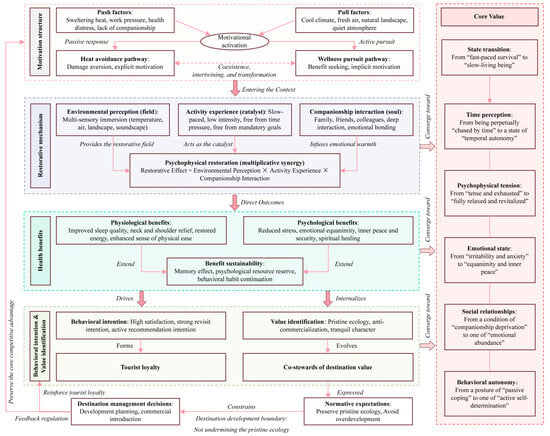
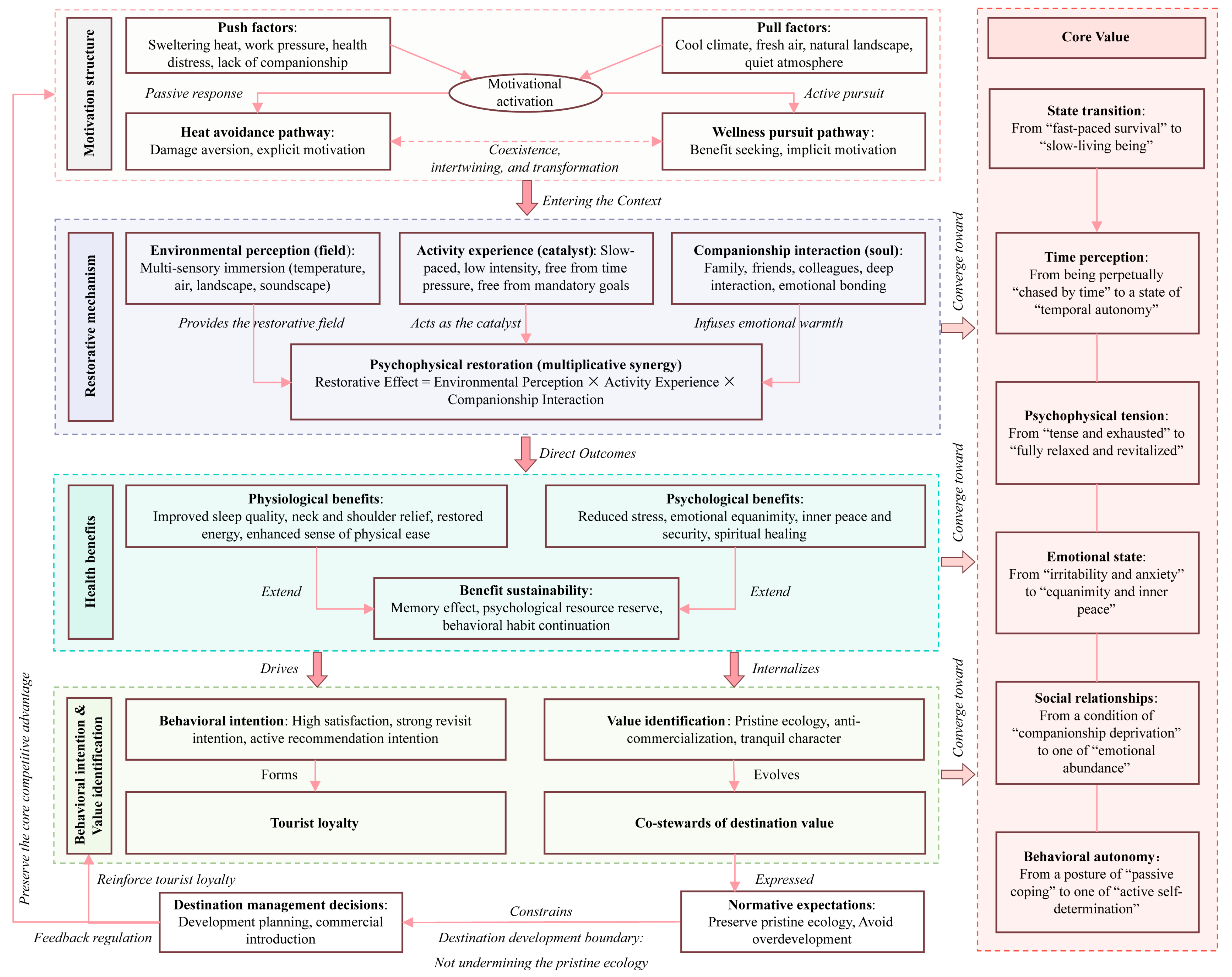

Disclaimer/Publisher’s Note: The statements, opinions and data contained in all publications are solely those of the individual author(s) and contributor(s) and not of MDPI and/or the editor(s). MDPI and/or the editor(s) disclaim responsibility for any injury to people or property resulting from any ideas, methods, instructions or products referred to in the content. |
© 2026 by the authors. Licensee MDPI, Basel, Switzerland. This article is an open access article distributed under the terms and conditions of the Creative Commons Attribution (CC BY) license.