


Abstract
The social and economic sustainability of family farms depends partly on generational renewal and younger household members’ participation in farm operations and management. This study examines individual, household, and family governance- and succession-related factors associated with young adults’ participation in family farming. A cross-sectional survey of 329 individuals aged 19–39 years from farming households in six villages in Jambi Province, Indonesia, was conducted through face-to-face interviews and analyzed using binary logistic regression. Overall, 46.2% of respondents regularly participated in at least one operational farm activity. Participation was positively associated with being male (AOR = 2.366, p = 0.027), agricultural training (AOR = 3.212, p = 0.002), agricultural land managed by the household (AOR = 1.266, p = 0.008), family support (AOR = 2.125, p = 0.001), involvement in farm decision-making (AOR = 2.931, p < 0.001), and family succession expectations and planning (AOR = 2.393, p < 0.001). Higher educational attainment was negatively associated with participation, including senior secondary education (AOR = 0.296, p = 0.011) and tertiary education (AOR = 0.124, p < 0.001), as were household size (AOR = 0.390, p < 0.001) and household income per capita (AOR = 0.941, p = 0.029). The findings suggest that regular participation is more closely associated with access to productive resources, family support, and meaningful operational and managerial roles than with favorable attitudes or anticipated future access to farm assets. Supporting generational renewal in family farming should therefore emphasize opportunities for younger household members to use productive resources, participate in decision-making, and progressively assume meaningful farm responsibilities.
1. Introduction
Agriculture plays a vital role in food provision, rural livelihoods, and economic development by generating income and employment and supporting related economic activities [1,2]. Most agricultural production worldwide is organized through family farming, in which household members contribute substantially to labor, farm management, resource allocation, and decision-making [3,4,5,6].
Because family farming relies heavily on household members, generational renewal and intergenerational succession are essential for its long-term sustainability. Generational renewal involves more than the transfer of farm ownership; it also includes the development of potential successors, the transfer of knowledge and responsibilities, and the gradual delegation of managerial authority [7,8]. This process is closely related to the continuity of agricultural production, the adaptive capacity of family farms, and the long-term economic development of rural communities [9,10]. In this study, the sustainability of family farms is understood primarily in its social and economic dimensions, particularly as the capacity of farming households to maintain productive activities and managerial continuity across generations.
Over the past several decades, declining youth participation in agriculture has raised concerns about the social and economic sustainability of family farming, particularly in rural areas dominated by small-scale farms [11,12]. Previous studies have linked youth participation to age, educational attainment, land ownership, household income, and perceptions of the prestige and prospects of farming [13,14]. Limited access to land, capital, local institutions, extension support, and training may further constrain young people’s opportunities to enter and develop agricultural enterprises [15,16]. At the same time, the expansion of non-farm employment, income differentials, education, and opportunities for upward social mobility has increased the opportunity cost of working on family farms [17,18,19]. Consequently, the decision to remain in agriculture continues to depend on the profitability, scale, and economic viability of the family farm [20,21]. When family farming provides limited income and few opportunities for advancement, non-farm employment becomes more attractive, reducing the pool of potential farm successors [11,22].
These broader pressures are also evident in Indonesia. According to the 2023 Agricultural Census, farmers aged 19–39 years, officially classified by Statistics Indonesia as “millennial farmers,” account for only 21.93% of all farmers. In this study, however, the term “young adults” is used to refer to respondents in this age range, rather than “millennial farmers” as a generational label. Although this proportion exceeds the national average, Jambi still records the 22nd-lowest proportion among Indonesia’s 38 provinces [23]. Plantation activities, particularly rubber and oil palm and their processing industries, contribute substantially to output, employment, and household income in Jambi [24]. These conditions indicate that generational renewal remains an important challenge in Jambi. Without the active participation of younger generations and the gradual transfer of managerial responsibilities, the long-term management of family farms and agricultural assets may become increasingly difficult to sustain. Moreover, these statistics only include individuals who are already classified as farmers, whereas young adults from farming households may range from non-participants and occasional helpers to regular participants in family farming activities.
Previous studies have primarily explained differences in participation in terms of individual capabilities and access to productive resources. In Indonesia, age, cosmopolitan orientation, extension support, family background, income potential, skills, and attitudes toward farming have been associated with young people’s interest in and participation in agriculture [25,26]. Limited access to finance, land, infrastructure, institutional support, and technical assistance may also constrain their ability to establish and operate productive farming enterprises [27,28]. However, positive attitudes and aspirations do not necessarily translate into regular participation when access to productive resources and meaningful farming roles remains limited [26,29,30,31]. Household conditions are also associated with participation through differences in the allocation of labor and other resources. Larger households may distribute work more broadly, while expanding non-farm employment and income opportunities may reduce dependence on family labor [32,33,34,35].
Within family farms, participation is also embedded in intergenerational relationships that govern access to productive assets, responsibilities, knowledge, and managerial authority. In Indonesia, farm succession may be constrained by geographical conditions, agricultural land conversion, limited promotion of farming as a profession, and the attractiveness of non-farm employment [36]. Evidence from other countries suggests that farm characteristics, gender norms, education, access to land, household arrangements, and institutional support are associated with the availability of successors and the timing of intergenerational farm transfer [37,38,39]. These arrangements are also associated with family communication and the gradual involvement of potential successors in farm work, decision-making, and managerial responsibility [40,41], while succession intentions reflect sociocultural identity, gendered opportunities, family traditions, perceived capability, and social norms [42,43,44,45]. Family support is particularly important because productive resources and managerial authority often remain concentrated in the older generation. Such support may include information, capital, land, facilities, trust, and opportunities to assume managerial responsibilities [46,47,48]. Opportunities to manage farming activities and participate in decision-making may strengthen young adults’ sense of ownership and commitment to the family farm [49], while agricultural knowledge alone may be insufficient when opportunities to apply it in practice are limited.
Farm succession is a gradual process rather than a single event. It may involve the identification of potential successors and the development of succession intentions, participation in routine farming activities, the delegation of managerial authority, and the eventual transfer of farm management or ownership [50,51,52]. Participation in day-to-day farming operations may provide experience relevant to succession preparation, but it does not constitute succession itself or indicate that succession will necessarily occur. Expectations of becoming a successor do not always lead to actual succession. The transfer of assets and managerial authority may be delayed when the older generation continues to depend on farmland as a source of economic and social security or is unwilling to relinquish managerial control [53]. Accordingly, access to productive resources, participation in decision-making, succession expectations, and ownership transfer should be regarded as distinct, although closely related, dimensions.
Against this background, two issues are particularly relevant to the present study. First, previous studies have examined different outcomes, including interest in farming, career aspirations, willingness or intentions to farm, and participation in agricultural activities [17,54,55,56]. These outcomes are not conceptually equivalent because favorable perceptions or intentions do not necessarily indicate regular involvement in day-to-day farm operations [57]. The present study therefore focuses specifically on regular operational participation in family farming as a distinct behavioral outcome. Second, studies of youth participation and farm succession have tended to emphasize different sets of factors. Youth participation studies generally emphasize education, individual capabilities, entrepreneurship, institutional support, and access to land and capital [15,25,58,59], whereas succession research primarily examines successor intentions, family relationships, identity, gender norms, and succession planning [40,42,44]. Consequently, the connections between young adults’ economic choices, household resource allocation, and their positions within family governance remain insufficiently understood.
Accordingly, this study aims to identify the individual characteristics, household resources, and family- and succession-related factors associated with young adults’ regular participation in family farming in Jambi Province, Indonesia. Participation is defined as sustained involvement in routine farming operations rather than merely an interest in farming, an intention to become a farmer, or an expectation of inheriting farm assets in the future. By distinguishing regular operational participation from interest, intention, and anticipated inheritance, the study contributes to understanding the social and economic conditions associated with young adults’ roles in family farming and the intergenerational continuity of family farms.
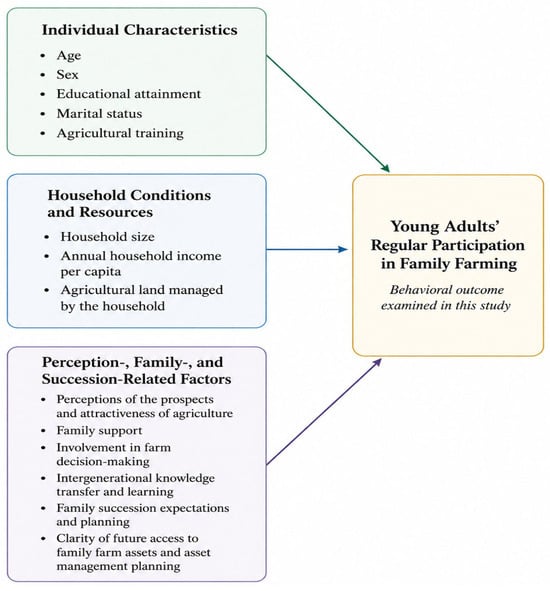
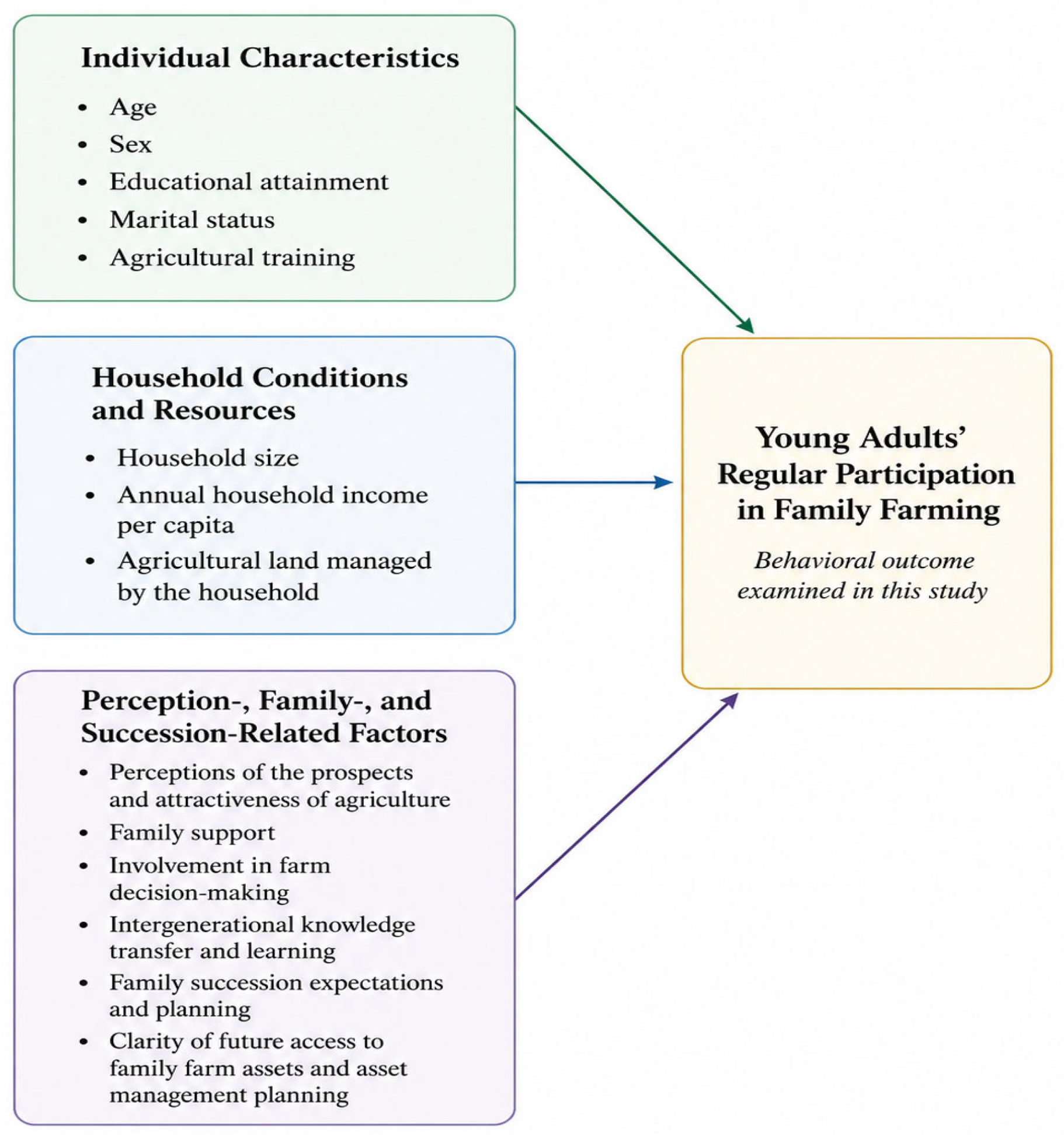
Figure 1 presents the conceptual framework used to organize the explanatory factors examined in the study.
Figure 1.
Conceptual framework of factors associated with young adults’ participation in family farming.
2. Materials and Methods
2.1. Research Design and Study Area
This study employed a quantitative cross-sectional survey design. Primary data were collected between July and August 2025 from individuals aged 19–39 years who were members of farming households.
The study was conducted in Merangin Regency and Muaro Jambi Regency, Jambi Province, Indonesia. These regencies were purposively selected to capture geographical differences, market accessibility, and farming systems between the western and eastern parts of the province. Merangin Regency is located in western Jambi Province and includes both lowland and highland areas. In 2025, the agriculture, forestry, and fisheries sector accounted for the largest share of the regency’s gross regional domestic product (GRDP), contributing 53.22% [60]. Muaro Jambi Regency is located in eastern Jambi Province and is predominantly lowland. As part of Jambi City’s hinterland, it has relatively greater access to markets, agricultural distribution networks, and non-farm economic activities. In 2025, agriculture, forestry, and fisheries also accounted for the largest share of the regency’s GRDP, at 48.53% [61].
The study covered six agricultural villages, with three villages selected from each regency. The villages represented the major agricultural subsectors of food crops, horticulture, and smallholder plantations. Food crop- and horticulture-based villages in Jambi generally have a strong agricultural base. However, many also contain non-agricultural economic activities that may support their development as local growth centers [62]. The principal commodities included rice, horticultural crops, rubber, and oil palm. This selection provided variation in family farming systems across the western and eastern regions of Jambi Province.
2.2. Study Population and Sampling
The target population comprised individuals aged 19–39 years from farming households in Jambi Province, regardless of whether they currently participated in family farming. This age range follows the age criterion used for the category of “millennial farmers” in the 2023 Agricultural Census. The term young adults from farming households is used throughout this study because this age group spans multiple generations, and not all individuals in this age group are currently working as or officially recorded as farmers.
Eligible respondents were required to reside in one of the selected villages, belong to a household that owned or managed a farm, and agree to participate in the interview. The household served as the sampling unit, whereas the unit of analysis was one eligible individual selected from each sampled household.
The village sampling frame was developed using the 2024 Village Potential Statistics (Potensi Desa) database. Villages were included if agriculture constituted the primary source of livelihood for most residents. Based on these criteria, 195 agricultural villages were identified in Merangin Regency and 129 in Muaro Jambi Regency. Villages were first grouped by their dominant agricultural subsector—food crops, horticulture, or smallholder plantations—and one village from each subsector was randomly selected within each regency.
A preliminary survey was conducted to identify farming households with at least one member aged 19–39 years. The resulting accessible population comprised 1846 households, including 524 households in Merangin Regency and 1322 households in Muaro Jambi Regency.
The required sample size was calculated using the finite population formula proposed by Yamane [63] with a precision level of 5%:
where n is the required sample size, N is the accessible population, and e is the desired level of precision. The calculation yielded a minimum sample size of 329 households.
The sample was allocated proportionally according to the number of eligible households in each village. Households were selected through simple random sampling from the lists generated during the preliminary survey. When more than one household member met the eligibility criteria, a single respondent was randomly selected. The distribution of the accessible population and the final sample is presented in Table 1.
Table 1.
Distribution of the accessible population and study sample.
2.3. Variables and Measurement
The study included participation in family farming as the dependent variable and individual characteristics, household conditions and resources, and perception-, family-, and succession-related factors as the independent variables. The operational definitions, indicators, measurement scales, coding schemes, and conceptual bases for all variables are presented in Appendix A (Table A1 and Table A2).
The dependent variable, regular participation in family farming, was defined as the respondent’s direct and regular involvement in at least one operational activity of the family farm during the 12 months preceding the survey. Operational activities included crop production, farm maintenance, harvesting, post-harvest processing, marketing, farm administration, financial record-keeping or transactions, and the use of agricultural technologies. The variable was coded as 1 if the respondent regularly or repeatedly participated in at least one of these activities, and as 0 if the respondent did not participate or provided only occasional assistance. These activities were treated as alternative forms of operational participation within the family farm rather than as separate outcome variables. The measure was intended to identify whether young adults had a regular operational role in the farm, regardless of whether that role was primarily related to production, marketing, administration, financial management, or technology use.
Individual characteristics included age, sex, educational attainment, marital status, and participation in agricultural training. Educational attainment was classified into three categories: junior secondary school or below, senior secondary school, and tertiary education. Agricultural training was defined as participation in at least one agricultural training program during the three years preceding the survey.
Household conditions and resources included household size, annual per capita income, and the total area of agricultural land managed by the household. Annual per capita income was calculated from all agricultural and non-agricultural income sources during the previous 12 months and is expressed in million Indonesian rupiah per person per year. Agricultural land included both owned land and land managed by the household under other tenure arrangements.
Perception-, family-, and succession-related factors were measured using six composite indices developed for this study: (1) perceptions of the prospects and attractiveness of agriculture, (2) family support, (3) involvement in farm decision-making, (4) intergenerational knowledge transfer and learning, (5) family succession expectations and planning, and (6) clarity of future access to farm assets and asset management planning.
The index measuring perceptions of the prospects and attractiveness of agriculture comprised five items, whereas each of the remaining indices comprised three items. All items were measured using a five-point Likert scale ranging from 1 (strongly disagree) to 5 (strongly agree), with all items coded in the same direction. Each index was calculated as the unweighted mean of its constituent items, with higher scores indicating a higher level of the corresponding dimension.
The variables included in the regression model were selected a priori based on the conceptual framework and previous empirical research on young adults’ participation in agriculture, household resource allocation, family farm governance, and succession. The model was intended to represent the three domains central to the study—individual characteristics, household conditions and resources, and perception-, family-, and succession-related factors. Other potentially relevant influences, such as broader institutional, market, and community-level conditions, were not included because the analysis focused on individual- and household-level factors measured consistently across respondents.
2.4. Instrument Development and Data Collection
Data were collected using a structured questionnaire. The items included in the six composite indices were developed through a synthesis of concepts and measurement approaches reported in previous studies on youth participation in agriculture, family farm management, farm decision-making, intergenerational learning, and farm succession. These studies informed the conceptual dimensions and measurement domains of the indices. At the same time, the wording of individual items was adapted to reflect the context of family farming in the study area. The instrument, therefore, represents a conceptual adaptation rather than the direct adoption of any existing scale. The conceptual basis for each variable and questionnaire item is provided in Appendix A (Table A2). The internal consistency of the six composite indices was assessed using Cronbach’s alpha.
Face-to-face interviews were conducted by trained enumerators who received standardized instruction on respondent selection, questionnaire administration, response coding, and maintaining neutrality during data collection. Before the interview, each respondent received an explanation of the study objectives, the voluntary nature of participation, and the confidentiality of the information provided. Oral informed consent was obtained from all respondents before the interview commenced. Personal identifiers were excluded from the analytical dataset, and all findings are reported only in aggregated form.
2.5. Statistical Analysis
Respondent characteristics and the distribution of study variables were summarized using frequencies, percentages, means, and standard deviations, as appropriate for the level of measurement. The internal consistency of the six composite indices was assessed using Cronbach’s alpha, with a value of 0.70 considered acceptable. Each index was calculated as the mean of its constituent items and treated as a continuous variable in the subsequent analyses.
The associations between the independent variables and participation in family farming were examined using binary logistic regression. This approach was selected because the dependent variable represented a single binary outcome—regular operational participation in the family farm—rather than participation in separate activity-specific outcomes.
The model is specified as follows:
where denotes the probability that respondent i regularly participated in the family farm, and represents the probability of non-participation. The intercept is denoted by , whereas , , , , and – are the regression coefficients for the respective predictor variables. The definitions and coding of all predictors are provided in Appendix A (Table A1 and Table A2).
Multicollinearity was assessed using tolerance and variance inflation factor (VIF) values. The assumption of linearity in the logit for continuous predictors was evaluated using the Box–Tidwell procedure with a Bonferroni correction. Potentially influential observations were assessed using standardized residuals, leverage values, Cook’s influence statistics, and DFBETAs. Sample-size adequacy was also considered relative to model complexity; the model included 15 estimated predictor parameters and 152 cases in the smaller outcome category. Overall model fit was assessed using the Omnibus test of model coefficients, the −2 log likelihood statistic, the Cox–Snell and Nagelkerke pseudo- statistics, and the Hosmer–Lemeshow goodness-of-fit test. Model discrimination was evaluated using the classification table and the area under the receiver operating characteristic (ROC) curve.
All statistical tests were two-sided, with statistical significance set at p < 0.05, except for the Box–Tidwell procedure, for which the Bonferroni-adjusted significance level of p < 0.005 was applied. p-values are reported to three decimal places, and values smaller than 0.001 are presented as p < 0.001. All statistical analyses were performed using IBM SPSS Statistics, version 22 (IBM Corp., Armonk, NY, USA).
As a robustness check, the logistic regression model was re-estimated after excluding the 130 respondents from oil-palm farming households to assess whether this relatively large subgroup disproportionately influenced the estimated associations.
3. Results
3.1. Respondent and Household Characteristics
Table 2 presents the respondents’ sociodemographic characteristics, household conditions and resources, participation in agricultural training, and participation in family farming.
Table 2.
Respondent and household characteristics (total sample = 329).
Of the 329 respondents, 152 (46.2%) had regularly participated in at least one operational activity of the family farm during the 12 months preceding the survey. The sample was predominantly male (57.4%), had completed senior secondary education (58.4%), and had never married (61.1%). Approximately 34.7% had participated in agricultural training during the three years preceding the survey. The respondents had a mean age of 26.02 years. Mean household size was 4.07 persons, mean annual household income per capita was IDR 16.02 million, and the mean area of agricultural land managed by the household was 2.24 hectares.
3.2. Characteristics and Internal Consistency of the Composite Indices
Table 3 presents the descriptive statistics and internal consistency of the six composite indices representing perception-, family-, and succession-related factors.
Table 3.
Descriptive statistics and internal consistency of the composite indices.
Perceptions of the prospects and attractiveness of agriculture had the highest mean score (4.40), whereas intergenerational knowledge transfer and learning had the lowest (3.27). Cronbach’s alpha values ranged from 0.758 to 0.910, indicating acceptable internal consistency across all six composite indices.
3.3. Model Diagnostics, Fit, and Discrimination
Table 4 presents the results of the overall model significance test, goodness-of-fit assessment, classification performance, discrimination, multicollinearity diagnostics, and linearity-in-the-logit assessment. Influence diagnostics were examined separately to assess whether any individual observation exerted undue influence on the fitted model.
Table 4.
Diagnostics, fit, and discrimination of the binary logistic regression model.
The logistic regression model was statistically significant overall, χ2(15) = 232.553, p < 0.001, with a Nagelkerke R2 of 0.677. The Hosmer–Lemeshow test provided no evidence of poor model fit, χ2(8) = 6.981, p = 0.539. VIF values ranged from 1.171 to 2.499, indicating no substantial multicollinearity. The Box–Tidwell procedure also identified no violations of the linearity-in-the-logit assumption at the Bonferroni-adjusted significance level.
The model yielded a sensitivity of 89.5%, a specificity of 84.7%, and an overall classification accuracy of 86.9%. The AUC was 0.929 (95% CI: 0.900–0.958), indicating strong discrimination within the study sample.
Influence diagnostics did not indicate any observation exerting undue influence on the fitted model; the maximum Cook’s influence statistic was 0.584, and the DFBETAs for all predictor coefficients were small in magnitude.
3.4. Multivariable Analysis of Young Adults’ Participation in Family Farming
Table 5 presents the results of the binary logistic regression analysis examining the factors associated with young adults’ regular participation in family farming.
Table 5.
Factors associated with young adults’ participation in family farming.
Sex, educational attainment, agricultural training, household size, annual household income per capita, household-managed agricultural land, family support, involvement in farm decision-making, and family succession expectations and planning were significantly associated with regular participation in family farming.
Male respondents had higher odds of regular participation than female respondents (AOR = 2.366; 95% CI: 1.101–5.089). The odds of regular participation were also higher among respondents who had participated in agricultural training during the previous three years than among those who had not (AOR = 3.212; 95% CI: 1.535–6.718).
Compared with respondents who had completed junior secondary school or below, those with senior secondary education (AOR = 0.296; 95% CI: 0.116–0.754) and tertiary education (AOR = 0.124; 95% CI: 0.041–0.373) had lower odds of regular participation. Household size (AOR = 0.390; 95% CI: 0.269–0.566) and annual household income per capita (AOR = 0.941; 95% CI: 0.891–0.994) were also negatively associated with regular participation. By contrast, the household’s area of agricultural land was positively associated with participation (AOR = 1.266; 95% CI: 1.064–1.507).
Among the family- and succession-related factors, involvement in farm decision-making had the largest adjusted odds ratio (AOR = 2.931; 95% CI: 1.740–4.936), followed by family succession expectations and planning (AOR = 2.393; 95% CI: 1.637–3.498) and family support (AOR = 2.125; 95% CI: 1.387–3.254).
Age, marital status, perceptions of the prospects and attractiveness of agriculture, intergenerational knowledge transfer and learning, and clarity of future access to family farm assets and asset management planning were not significantly associated with regular participation.
As a robustness check, the model was re-estimated after excluding the 130 respondents from oil-palm farming households (n = 199). The direction of the estimated associations remained unchanged across all variables. Gender, educational attainment overall, agricultural training, household size, family support, involvement in farm decision-making, and family succession expectations and planning remained statistically significant. The associations with annual household income per capita and agricultural land managed by the household were no longer significant at the 5% level. Within the education categories, tertiary education remained significant, whereas senior secondary education did not. Overall, the pattern of results remained broadly consistent with the full-sample model, suggesting that the main findings were not driven solely by the oil-palm subgroup (Appendix A Table A3).
4. Discussion
The findings suggest that young adults’ regular participation in family farming is more closely associated with access to meaningful roles, productive resources, and decision-making authority than with favorable attitudes or future expectations alone. Participation is therefore embedded in both individual occupational choices and household arrangements governing labor, resources, responsibilities, and managerial authority. Although regular participation may provide experience relevant to succession preparation, it should not be regarded as equivalent to succession itself. The long-term continuity of family farming may depend partly on whether younger household members are given opportunities to assume productive and managerial roles in the present.
4.1. Individual Opportunities and Capabilities
The higher participation of men may reflect the gendered division of labor and the recognition of certain types of work as core agricultural activities. Men are more often involved in field-based production, technology use, and formal farm management, whereas women’s contributions may be distributed across post-harvest processing, marketing, record-keeping, livestock care, household-based production activities, and unpaid family work [64,65,66].
This finding does not imply that women contribute less to family farming. Some of their work may be less visible as agricultural participation, particularly when it is performed alongside domestic responsibilities or regarded as a supporting role [67,68,69].
Gender differences may also begin to develop through socialization within the family. Sons tend to receive greater exposure to fieldwork and farm management, whereas daughters are more often directed toward domestic tasks or supporting functions. These unequal opportunities may influence skills, authority, and recognition as potential successors [70,71,72]. Research from Brazil similarly shows that gender norms are associated with internal succession planning and the limited recognition of women in generational renewal in agriculture [37,42]. These gendered patterns may undermine the social sustainability of family farming when women’s contributions are underrecognized and their opportunities to acquire managerial experience or to be considered successors remain limited.
The lower participation observed among respondents with higher educational attainment may reflect the broader employment opportunities available to more educated young adults. Higher education expands access to non-farm employment, offering more diverse opportunities in terms of income, stability, social status, and career development [73]. When family farms are small or insufficiently profitable, these expanded opportunities may increase the opportunity cost of remaining in agriculture.
This relationship does not indicate that education itself causes young people to leave agriculture. The attractiveness of farming continues to depend on farm profitability, scale, and development prospects [21,29]. Potential successors from more profitable farms may still choose agriculture as their primary occupation despite having higher levels of education [20]. A study of agricultural graduates in Nigeria likewise found that involvement in agribusiness was supported by access to productive resources, particularly land and credit [74]. The observed negative association may therefore reflect the limited competitiveness of some family farms relative to alternative employment, particularly in areas with greater access to non-farm jobs and urban mobility [11,22,37]. For the long-term sustainability of family farming, the challenge is therefore not to retain educated young adults in low-productivity agricultural roles, but to create opportunities for them to apply their knowledge in farm management, technology adoption, value addition, marketing, and enterprise development.
In contrast to formal education, agricultural training may provide skills that are more directly applicable to production, technology use, farm management, marketing, and problem-solving. It may also expand access to extension agents, agricultural institutions, and information sources. This finding is consistent with studies linking skills development to youth participation, entrepreneurship, productivity, and employment opportunities in agriculture [75,76,77]. The consistency of these findings may reflect the occupation-specific skills and institutional connections provided by agricultural training, which can be applied directly within existing family-farm activities. When combined with access to productive resources and meaningful responsibilities, agricultural training may be associated with greater adaptive capacity and economic sustainability by providing younger household members with opportunities to apply new knowledge and technologies. However, this association may also reflect participant selection. Individuals who are already active in, or more interested in, agriculture may be more likely to attend training or be selected as participants.
The absence of independent associations for age and marital status may partly reflect the restricted age range of 19–39 years and limited variation in life-course stages within the sample, while the relationship between marital status, economic responsibility, and labor allocation may already be reflected in household size, per capita income, and broader livelihood arrangements.
4.2. Household Labor Allocation and Productive Resources
Household size, income, and agricultural land point to the importance of how labor and productive resources are organized within farming households. Their associations with participation may reflect differences in labor requirements, livelihood diversification, and the allocation of farm responsibilities. For younger household members, the availability of resources may therefore matter partly through the roles and responsibilities those resources make possible.
The negative association between household size and participation may reflect greater flexibility in labor allocation. Larger households may have a greater potential supply of family labor [33]. However, agricultural tasks can also be distributed among more household members, making the participation of any particular young adult less necessary. Household size is also not equivalent to the number of available workers because it includes members of different ages, occupations, and responsibilities [32]. Research from rural South Africa similarly shows that the presence of young adults in the household does not necessarily translate into their labor being mobilized for family farming, as participation may depend on intra-household roles and obligations [78]. The negative association should therefore not be interpreted as evidence that larger households contribute less labor to farming overall. Rather, it may indicate that labor demands can be shared among more household members, reducing the probability that any particular young adult participates regularly.
The inverse relationship with per capita income may reflect the effects of livelihood diversification rather than farm profitability alone. Because this measure includes both agricultural and non-agricultural income, it represents the household’s overall economic position rather than the profitability of farming itself. Non-farm employment may increase household income while reducing the time young adults have available for agriculture. Such income may also enable households to hire labor or adopt mechanization, thereby reducing their dependence on family labor [34,35]. A study from northern Ghana likewise suggests that off-farm work can involve a trade-off between labor withdrawn from farming and additional income that can support farm activities [79]. This relationship does not necessarily imply that higher household income undermines farm sustainability. Income diversification may strengthen household resilience and provide capital for agricultural investment, even as it reduces young adults’ direct participation in routine farm work.
Greater agricultural land under household management may increase the scale of farm operations and create additional operational and managerial responsibilities for younger household members. A larger operational scale may also make mechanization and more organized farm management more feasible, although mechanization may reduce some routine labor requirements while creating new technical and managerial roles. However, its implications for labor participation depend on the commodity, production system, productivity, and market access [80]. Previous studies indicate that larger farms are more likely to plan for family succession, whereas limited land availability may hinder generational renewal [37,51]. Recent research from Malawi further shows that youth agricultural participation is strongly associated with access to land, alongside extension services and farm implements [77]. Together, these findings suggest that a larger productive resource base may provide a wider range of farm tasks and responsibilities, creating more opportunities for younger family members to assume meaningful roles. For the sustainability of family farming, a larger productive resource base may therefore create more opportunities for younger household members to assume operational and managerial responsibilities.
Because the land variable includes both owned land and land managed under other tenure arrangements, productive access does not necessarily require prior ownership transfer. However, the survey recorded the total area of land owned and/or managed by the household rather than the specific tenure arrangement under which the land was operated. The prevalence of arrangements such as rental, sharecropping, joint management, or delegated management therefore cannot be determined from the present data. Future research could distinguish these tenure arrangements to examine whether the form and security of access to agricultural land are associated with young adults’ participation and managerial responsibility.
4.3. Family Governance and Succession
Among the family- and succession-related factors, current support, responsibilities, and decision-making opportunities were more closely associated with regular participation than favorable perceptions or anticipated future access to assets. This contrast points to the relevance of family governance in how resources, responsibilities, and managerial authority are distributed across generations.
Perceptions of the prospects and attractiveness of agriculture had the highest mean score among the composite indices, but favorable perceptions alone did not distinguish regular participants from non-participants. Young adults may regard agriculture as a worthwhile occupation, but may not participate regularly when access to productive resources, finance, technical and institutional support, and viable farming opportunities remains limited. Under such conditions, participation appears to depend more on actual opportunities than on favorable perceptions or aspirations alone [31,81,82]. Previous research similarly indicates that positive perceptions may strengthen intentions to enter agripreneurship, whereas actual participation is more strongly conditioned by access to land, training, household farming involvement, and institutional support [83,84]. Positive perceptions may therefore provide a motivational foundation without being sufficient to sustain participation in the absence of economically viable and institutionally supported roles.
The importance of family support may reflect the continued concentration of productive assets and managerial authority in the older generation. Such support can provide younger family members with access to resources, guidance, and recognition of their roles within the farm despite this concentration of control. Parents’ attitudes toward farm continuity have been linked to successors’ decisions to continue participating in the family farm [46]. Likewise, family communication, relationship quality, and the active involvement of family members have been shown to influence both succession intentions and the succession process itself [47,48]. In this sense, family support may be relevant to the social sustainability of family farming because it is associated with opportunities for younger members to move from peripheral to recognized and responsible roles within the farm enterprise.
The strong association with involvement in farm decision-making indicates that regular participation extends beyond the performance of farm tasks to a recognized role in farm governance. Opportunities to participate in decision-making may strengthen their sense of responsibility, ownership, and position within family farm governance [85]. Jansuwan and Zander [40] show that more advanced stages of family-farm succession planning involve children in farm decision-making while responsibilities are gradually transferred to them, illustrating how managerial authority may be delegated before the formal transfer of farm management or ownership. The delegation of decision-making authority may therefore function as a practical mechanism through which succession intentions are converted into managerial experience and preparation for farm continuity. This is particularly important for the long-term sustainability of family farming because continuity requires not only future owners, but also individuals who have progressively acquired the capacity to manage the farm.
Intergenerational knowledge transfer may have limited relevance to regular participation when young adults have few opportunities to apply what they learn or assume responsibility. Knowledge remains important for preparing potential successors [43,86], but ideas introduced by younger family members are not always accepted even when they already participate in production and farm planning [87]. Its practical relevance may therefore depend on whether learning is accompanied by dialogue, trust, and opportunities to exercise increasing managerial responsibility. For intergenerational continuity, knowledge transfer is likely to matter most when it is accompanied by opportunities for practical application and increasing responsibility.
Family succession expectations and planning may be associated with participation because they reflect greater clarity regarding young adults’ prospective roles in the family enterprise. When families discuss the farm’s future and identify potential successors, such discussions may also be associated with greater commitment to routine farming activities and may indicate that the family has progressed further in succession planning [50].
Succession expectations, however, should not be interpreted as actual succession. Formal succession generally involves subsequent stages, including the delegation of managerial responsibilities and the transfer of farm management and ownership [51,88]. The relationship may also be reciprocal: stronger succession expectations may be associated with greater participation, while young adults who participate regularly may also be more likely to be recognized as potential successors. Evidence from Finland similarly shows that stated succession plans do not necessarily predict actual farm succession once farm and farmer characteristics are taken into account [89]. The positive association should therefore be interpreted as an alignment between expectations and current participation rather than evidence that formal succession will ultimately occur.
The absence of an independent association for clarity regarding future access to farm assets contrasts with the positive association for agricultural land currently managed by the household, suggesting that the timing and form of resource access may matter. This finding differs from the positive association observed for the area of agricultural land managed by the household because the two variables represent different forms and timing of resource access. Land area reflects productive resources currently available to the household, whereas the asset-access index reflects anticipated access that has not yet materialized. The findings therefore suggest that participation is more closely associated with resources that can be used immediately than with anticipated access that is not yet accompanied by managerial authority or productive benefits. Such transfers may be delayed when the older generation continues to depend on farmland as a source of economic and social security, or is unwilling to relinquish managerial control [53]. This distinction suggests that anticipated inheritance alone may be insufficient to retain younger family members in farming. More immediate forms of productive access and delegated responsibility may be needed to connect future succession plans with present participation.
The results support a view of intergenerational farm continuity as a set of related but non-sequential processes. Access to productive resources, regular operational participation, involvement in decision-making, managerial responsibility, and formal succession are distinct and should not be treated as interchangeable. Family business succession research similarly distinguishes the transfer of managerial responsibility from the transfer of ownership [50]. Intergenerational transmission, solidarity, and social reproduction perspectives further suggest that farm continuity involves the transfer not only of knowledge and assets but also of roles, responsibilities, authority, and opportunities to use productive resources across generations [90,91].
5. Conclusions
Young adults’ participation in family farming appears to be more closely associated with access to productive resources, meaningful responsibilities, and opportunities to participate in farm management and decision-making than with favorable attitudes or anticipated future access to farm assets. Regular participation may provide experience relevant to later managerial responsibility or succession preparation, but it should not be interpreted as succession itself. From a sustainability perspective, intergenerational continuity depends not only on young adults’ willingness to remain in agriculture, but also on whether family farming provides opportunities for them to develop productive and managerial roles. The sustainability implications are primarily social and economic, as the continued participation of younger family members is closely tied to the human and managerial capacity required for family farms to continue across generations.
5.1. Policy Implications
Programs promoting generational renewal in agriculture should connect skills development with opportunities for practical application. Training is likely to be more effective when participants also gain access to agricultural land under their management, technology, mentoring, markets, and farming activities that allow them to assume meaningful responsibilities. Support should be tailored to participants’ levels of involvement, from occasional assistance to readiness for farm management, and should combine skill development with productive access and gradually expanding responsibility.
The lower participation observed among more highly educated young adults should not be addressed by directing them toward low-productivity forms of farming. Family farms should instead provide opportunities to apply knowledge in farm management, post-harvest processing, marketing, technology use, and enterprise development. Enabling educated young adults to contribute through managerial, technological, marketing, and value-adding roles may improve the economic viability and adaptive capacity of family farms and strengthen agriculture as an occupational option.
Generational renewal initiatives should also involve farming families. Facilitation may help families clarify roles, productive-resource use, decision-making arrangements, and the gradual transfer of managerial responsibility. Responsibility for specific parts of the farm enterprise may be delegated before ownership is formally transferred. Family-based succession support should also promote joint decision-making and ensure that young women receive equal recognition, access to productive resources, managerial experience, and consideration as potential successors.
5.2. Limitations and Future Research
The participation measure used in this study distinguished regular participation from non-participation or occasional assistance. However, the binary measure does not capture variation in the intensity or breadth of participation, such as frequency of involvement, time allocation, number or type of activities performed, managerial responsibility, or economic contribution to the farm. Future studies could complement binary participation measures with activity counts, frequency- or time-based measures, or multidimensional participation indices to provide a more differentiated understanding of young adults’ participation in family farming.
The six composite indices were developed specifically for this study and evaluated solely for internal consistency. Information on family support, decision-making, and succession was also obtained from a single young respondent in each household. Testing the instruments in different samples and contexts, together with collecting matched data from young adults and their parents, could provide a more complete understanding of the distribution of authority, the alignment of expectations, and the family succession process.
The cross-sectional design does not permit causal interpretation or determination of the direction of the observed relationships. Young adults who already participate regularly may be more likely to attend agricultural training, become involved in farm decision-making, or be identified as potential successors. Longitudinal research could examine how participation, managerial responsibility, and succession expectations develop over time.
The land variable captured the total area owned and/or managed by the household but did not distinguish between specific tenure arrangements. Future studies could differentiate ownership, rental, sharecropping, joint management, and other tenure arrangements to examine whether the form and security of land access are associated with young adults’ participation and managerial responsibility.
The study was conducted in six selected agricultural communities in two regencies of Jambi Province. The findings should therefore not be generalized to all farming households in Jambi Province or Indonesia without caution. Comparative studies across regions, commodities, farm sizes, and land-tenure systems could clarify the extent to which the observed relationships are context-specific.
The sample size also limited the feasibility of more detailed subgroup analyses. Stratified analyses by sex, educational attainment, commodity, location, or other household characteristics could potentially reveal heterogeneity in the observed relationships, but the resulting subgroup sizes would have been too small for reliable multivariable estimation. Future studies with larger samples could examine whether the factors associated with young adults’ participation differ across these groups.
Finally, this study approached sustainability primarily through the social and economic dimensions of intergenerational continuity. It did not directly measure environmental sustainability, farm profitability, adaptive capacity, or long-term succession outcomes. Future research could integrate social, economic, and environmental indicators, including young adults’ environmental knowledge and their adoption of sustainable farming practices such as soil and water conservation, more efficient use of chemical inputs, waste management, and climate-adaptive practices, to examine whether and under what conditions young adults’ participation contributes to the broader sustainability of family farming.
Author Contributions
Conceptualization, J.J. and M.R.; methodology, J.J.; software, Z.Z.; validation, M.R. and H.H.; formal analysis, J.J.; investigation, H.H.; resources, J.J.; data curation, Z.Z.; writing—original draft preparation, J.J. and M.R.; writing—review and editing, Z.Z. and H.H.; visualization, H.H.; supervision, J.J.; project administration, J.J.; funding acquisition, J.J. All authors have read and agreed to the published version of the manuscript.
Funding
This research was funded through the DIPA PNBP of the Faculty of Economics and Business, Universitas Jambi, under the Professorial Research Scheme, Research Contract No. 167/UN21.11/PT.01.05/SPK/2025, dated 2 July 2025.
Institutional Review Board Statement
At the time the study was conducted, the institutional ethical review mechanism available at Universitas Jambi was intended for health and/or clinical research. Accordingly, this non-interventional socioeconomic survey involving adult respondents was not submitted for formal ethical clearance. The research was institutionally approved and authorized before data collection through a Rector’s Decree dated 25 June 2025, a Research Contract dated 2 July 2025, and an Assignment Letter from the Institute for Research and Community Service dated 15 July 2025, and was conducted in accordance with the 2024 Universitas Jambi Research Implementation Guidelines. This institutional status and the applicable ethical review mechanism were subsequently confirmed in an official statement issued by the Faculty of Economics and Business, Universitas Jambi, on 19 August 2026.
Informed Consent Statement
Informed consent was obtained from all participants before the interviews. Participants were informed about the study objectives, the voluntary nature of participation, and the confidentiality of the information provided. Oral consent was obtained before the interview commenced, and personal identifiers were not included in the dataset used for analysis.
Data Availability Statement
The corresponding author [J.J.] of the present work is available for any information about data availability.
Conflicts of Interest
The authors declare no conflicts of interest.
Appendix A
Table A1.
Variables measured directly.
Table A2.
Composite indices related to perceptions, family, and succession.
Table A3.
Robustness check of factors associated with young adults’ participation in family farming after excluding respondents from oil-palm farming households (n = 199).
References
- Mellor, J.W. Agriculture and Economic Development. In The New Palgrave Dictionary of Economics; Palgrave Macmillan: London, UK, 2018; pp. 215–222. [Google Scholar]
- Kaur, S.; Chauhan, B.S. Challenges and opportunities to sustainable crop production. In Plant Small RNA in Food Crops; Elsevier: Amsterdam, The Netherlands, 2023; pp. 25–43. [Google Scholar]
- Bonnal, P.; Losch, B.; Marzin, J.; Parrot, L. Challenges of Poverty, Employment and Food Security. In Family Farming and the Worlds to Come; Springer: Dordrecht, The Netherlands, 2015; pp. 163–180. [Google Scholar]
- Graeub, B.E.; Chappell, M.J.; Wittman, H.; Ledermann, S.; Kerr, R.B.; Gemmill-Herren, B. The State of Family Farms in the World. World Dev. 2016, 87, 1–15. [Google Scholar] [CrossRef] [Scilit]
- Nuthall, P.L.; Old, K.M. Will future land based food and fibre production be in family or corporate hands? An analysis of farm land ownership and governance considering farmer characteristics as choice drivers. The New Zealand case. Land Use Policy 2017, 63, 98–110. [Google Scholar] [CrossRef] [Scilit]
- Aubron, C.; Bainville, S.; Philippon, O.; Dorin, B. Neither Corporate, Nor Family: The Indian “Patronal” Farm. Front. Sustain. Food Syst. 2022, 6, 850545. [Google Scholar] [CrossRef] [Scilit]
- Coopmans, I.; Dessein, J.; Accatino, F.; Antonioli, F.; Bertolozzi-Caredio, D.; Gavrilescu, C.; Gradziuk, P.; Manevska-Tasevska, G.; Meuwissen, M.; Peneva, M.; et al. Understanding farm generational renewal and its influencing factors in Europe. J. Rural Stud. 2021, 86, 398–409. [Google Scholar] [CrossRef] [Scilit]
- Balmann, A.; Wauters, E.; Appel, F.; Bijttebier, J.; Coopmans, I.; Pitson, C. Demographic Dimensions of Resilient Farming Systems in the EU. In Resilient and Sustainable Farming Systems in Europe; Cambridge University Press: Cambridge, UK, 2022; pp. 38–62. [Google Scholar]
- Suess-Reyes, J.; Fuetsch, E. The future of family farming: A literature review on innovative, sustainable and succession-oriented strategies. J. Rural Stud. 2016, 47, 117–140. [Google Scholar] [CrossRef] [Scilit]
- Farrell, M.; Murtagh, A.; Weir, L.; Conway, S.F.; McDonagh, J.; Mahon, M. Irish Organics, Innovation and Farm Collaboration: A Pathway to Farm Viability and Generational Renewal. Sustainability 2021, 14, 93. [Google Scholar] [CrossRef] [Scilit]
- Żmija, K.; Fortes, A.; Tia, M.N.; Šūmane, S.; Ayambila, S.N.; Żmija, D.; Satoła, Ł.; Sutherland, L.-A. Small farming and generational renewal in the context of food security challenges. Glob. Food Sec. 2020, 26, 100412. [Google Scholar] [CrossRef] [Scilit]
- Villán, A.; Villamayor-Tomás, S.; Corbera, E. Family farm succession and agroecology? A life-history approach to young farmers’ sustainability strategies. J. Rural Stud. 2025, 120, 103815. [Google Scholar] [CrossRef] [Scilit]
- Haryati, N.; Lasitya, D.S.; Nurirrozak, M.Z.; Herdianti, D.F.; Fibrianingtyas, A.; Hidayat, A.R.T. Demographics and course choices: Impact on youth farming intention in Indonesia. Int. J. Adolesc. Youth 2024, 29, 2358088. [Google Scholar] [CrossRef] [Scilit]
- Yulmardi, Y.; Amir, A.; Junaidi, J. Household livelihoods strategies of descendants of transmigrants in Jambi Province, Indonesia. Int. J. Adv. Sci. Technol. 2020, 29, 6118–6133. [Google Scholar]
- Rustandi, Y.; Farid, A. Involvement of Millennial Farmers in the Implementation of Integrated Agriculture in Trenggalek District, East Java, Indonesia. Anuário do Inst. Geociências 2024, 47, 60967. [Google Scholar] [CrossRef] [Scilit]
- Wimatsari, A.D.; Hariadi, S.S.; Martono, E. Sikap Pemuda Desa Terhadap Usahatani Salak Organik dan Pengaruhnya Terhadap Minat Berusahatani Salak Organik. Agrar. J. Agribus. Rural Dev. Res. 2019, 5, 55–65. [Google Scholar] [CrossRef] [Scilit]
- Mukwedeya, B.; Mudhara, M. Factors affecting rural youth participation in the smallholder farming sector. J. Agric. Food Syst. Community Dev. 2024, 13, 259–275. [Google Scholar] [CrossRef] [Scilit]
- Ninson, J.; Brobbey, M.K. Review on engaging the youth in agribusiness. Cogent Soc. Sci. 2023, 9, 2193480. [Google Scholar] [CrossRef] [Scilit]
- Obayelu, O.A.; Ajibobare, A.O.; Adepoju, A.O.; Ayanboye, A.O. Youths’ Participation in Urban Agriculture in Ibadan Metropolis, Nigeria. In Sustainable Agricultural Marketing and Agribusiness Development; CABI: Wallingford, UK, 2023; pp. 28–40. [Google Scholar]
- Hennessy, T.C.; Rehman, T. An Investigation into Factors Affecting the Occupational Choices of Nominated Farm Heirs in Ireland. J. Agric. Econ. 2007, 58, 61–75. [Google Scholar] [CrossRef] [Scilit]
- Matysiak, I. Motivations to study: Narratives of university graduates in rural Poland. Rural Soc. 2021, 30, 129–146. [Google Scholar] [CrossRef] [Scilit]
- Shahzad, M.A.; Abubakr, S.; Fischer, C. Factors Affecting Farm Succession and Occupational Choices of Nominated Farm Successors in Gilgit-Baltistan, Pakistan. Agriculture 2021, 11, 1203. [Google Scholar] [CrossRef] [Scilit]
- Badan Pusat Statistik. Hasil Pencacahan Lengkap Sensus Pertanian 2023; Badan Pusat Statistik: Jakarta, Indonesia, 2023. [Google Scholar]
- Hardiwan, D.; Amir, A.; Junaidi, J.; Delis, A. The linkages and impact of plantation-based sectors on economy and poverty in Jambi province, Indonesia: Miyazawa’s input-output model. Agric. Resour. Econ. Int. Sci. E-J. 2019, 5, 5–19. [Google Scholar] [CrossRef] [Scilit]
- Dayat, D.; Anwarudin, O.; Makhmudi, M. Regeneration of farmers through rural youth participation in chili agribusiness. Int. J. Sci. Technol. Res. 2020, 9, 1201–1206. [Google Scholar]
- Firdaus, R.B.R.; Ebekozien, A.; Samsurijan, M.S.; Rosli, H. What Drives the Young Malaysian Generation to Become Horticulture Farmers? A Qualitative Approach. Millenn. Asia 2024, 15, 465–486. [Google Scholar] [CrossRef] [Scilit]
- Boye, M.; Ghafoor, A.; Wudil, A.; Usman, M.; Prus, P.; Fehér, A.; Sass, R. Youth Engagement in Agribusiness: Perception, Constraints, and Skill Training Interventions in Africa: A Systematic Review. Sustainability 2024, 16, 1096. [Google Scholar] [CrossRef] [Scilit]
- Geza, W.; Ngidi, M.; Ojo, T.; Adetoro, A.A.; Slotow, R.; Mabhaudhi, T. Youth Participation in Agriculture: A Scoping Review. Sustainability 2021, 13, 9120. [Google Scholar] [CrossRef] [Scilit]
- Consentino, F.; Vindigni, G.; Spina, D.; Monaco, C.; Peri, I. An Agricultural Career through the Lens of Young People. Sustainability 2023, 15, 11148. [Google Scholar] [CrossRef] [Scilit]
- Henning, J.I.F.; Matthews, N.; August, M.; Madende, P. Youths’ Perceptions and Aspiration towards Participating in the Agricultural Sector: A South African Case Study. Soc. Sci. 2022, 11, 215. [Google Scholar] [CrossRef] [Scilit]
- Mulema, J.; Mugambi, I.; Kansiime, M.; Chan, H.T.; Chimalizeni, M.; Pham, T.X.; Oduor, G. Barriers and opportunities for the youth engagement in agribusiness: Empirical evidence from Zambia and Vietnam. Dev. Pract. 2021, 31, 690–706. [Google Scholar] [CrossRef] [Scilit]
- Fasakin, I.J.; Ogunniyi, A.I.; Bello, L.O.; Mignouna, D.; Adeoti, R.; Bamba, Z.; Abdoulaye, T.; Awotide, B.A. Impact of Intensive Youth Participation in Agriculture on Rural Households’ Revenue: Evidence from Rice Farming Households in Nigeria. Agriculture 2022, 12, 584. [Google Scholar] [CrossRef] [Scilit]
- Bharadwaj, P. Fertility and rural labor market inefficiencies: Evidence from India. J. Dev. Econ. 2015, 115, 217–232. [Google Scholar] [CrossRef] [Scilit]
- Takahashi, K.; Otsuka, K. The increasing importance of nonfarm income and the changing use of labor and capital in rice farming: The case of Central Luzon, 1979–2003. Agric. Econ. 2009, 40, 231–242. [Google Scholar] [CrossRef] [Scilit]
- Amare, M.; Shiferaw, B. Nonfarm employment, agricultural intensification, and productivity change: Empirical findings from Uganda. Agric. Econ. 2017, 48, 59–72. [Google Scholar] [CrossRef] [Scilit]
- Maulida, Y.F.; Wati, R.I.; Subejo. The Succession Patterns of Agricultural Lands in the Special Region of Yogyakarta Province, Indonesia. J. Popul. Soc. Stud. 2022, 30, 625–639. [Google Scholar] [CrossRef] [Scilit]
- Arends-Kuenning, M.; Kamei, A.; Garcias, M.; Romani, G.E.; Assis Shikida, P.F. Gender, education, and farm succession in Western Paraná State, Brazil. Land Use Policy 2021, 107, 105453. [Google Scholar] [CrossRef] [Scilit]
- Leonard, B.; Kinsella, A.; O’Donoghue, C.; Farrell, M.; Mahon, M. Policy drivers of farm succession and inheritance. Land Use Policy 2017, 61, 147–159. [Google Scholar] [CrossRef] [Scilit]
- Tofollo, V.; Foguesatto, C.R.; Pelegrini, T.; Dal Moro, L.; Neckel, A.; Breitenbach, R.; Mores, G. Generational succession in dairy-producing families associated with an agricultural cooperative in Rio Grande do Sul, Brazil. J. Agribus. Dev. Emerg. Econ. 2026, 16, 812–825. [Google Scholar] [CrossRef] [Scilit]
- Jansuwan, P.; Zander, K.K. Aspirations over tradition: Understanding Thai family farm succession planning. J. Int. Dev. 2024, 36, 3047–3064. [Google Scholar] [CrossRef] [Scilit]
- Pitts, M.J.; Fowler, C.; Kaplan, M.S.; Nussbaum, J.; Becker, J.C. Dialectical Tensions Underpinning Family Farm Succession Planning. J. Appl. Commun. Res. 2009, 37, 59–79. [Google Scholar] [CrossRef] [Scilit]
- Breitenbach, R.; Foguesatto, C.R. Should I stay or should I go? Gender differences and factors influencing family farm business succession in Rio Grande do Sul, Brazil. Land Use Policy 2023, 128, 106597. [Google Scholar] [CrossRef] [Scilit]
- Monteiro, R.; Mujica, F.P. A identidade sociocultural do jovem agricultor na vitivinicultura familiar e sua relação com a sucessão rural. Rev. Econ. Sociol. Rural 2022, 60, e235637. [Google Scholar] [CrossRef] [Scilit]
- Morais, M.; Borges, J.A.R.; Binotto, E. Using the reasoned action approach to understand Brazilian successors’ intention to take over the farm. Land Use Policy 2018, 71, 445–452. [Google Scholar] [CrossRef] [Scilit]
- de Oliveira Müller, B.; Bánkuti, F.I.; dos Santos, G.T.; Borges, J.A.R.; da Silva Siqueira, T.T.; Damasceno, J.C. Sociopsychological factors underlying dairy farmers’ intention to adopt succession planning. Anim.-Open Sp. 2024, 3, 100057. [Google Scholar] [CrossRef] [Scilit]
- Kerbler, B. The role and importance of owners’ perceptions and opinions in preserving continuity between generations on slovenian mountain farms. Acta Geogr. Slov. 2010, 50, 35–58. [Google Scholar] [CrossRef] [Scilit]
- Engelhart, R.; Vogel, S.; Larcher, M. Determinanten familiärer Hofnachfolge in Österreich-eine multivariate Analyse mit betrieblichen, sozialen sowie emotionalen Faktoren. Berichte Uber Landwirtsch. 2018, 96. [Google Scholar] [CrossRef]
- Balogh, J.M.; Borda, Á.J.; Maró, Z.M. Understanding intergenerational farm succession intentions and discussions in family farms: Evidence from Hungary. Soc. Sci. Humanit. Open 2026, 13, 103099. [Google Scholar] [CrossRef] [Scilit]
- García-Rodríguez, F.J.; Gutiérrez-Taño, D.; Ruiz-Rosa, I. Parents’ support for children’s entrepreneurial behavior: Incentivizing the next generation of entrepreneurs. Int. J. Entrep. Behav. Res. 2026, 32, 675–700. [Google Scholar] [CrossRef] [Scilit]
- Wiatt, R.D.; Marshall, M.I.; Musselman, R. Management and ownership transfer in small and medium family farms. Agric. Financ. Rev. 2022, 82, 505–521. [Google Scholar] [CrossRef] [Scilit]
- Borda, Á.J.; Sárvári, B.; Balogh, J.M. Generation Change in Agriculture: A Systematic Review of the Literature. Economies 2023, 11, 129. [Google Scholar] [CrossRef] [Scilit]
- Hayden, M.T.; Leonard, B. Concerns and barriers surrounding the farm succession process-perception versus reality for beef farmers in Ireland. J. Rural Stud. 2024, 112, 103456. [Google Scholar] [CrossRef] [Scilit]
- Romero-Padilla, A.; Hernández-Juárez, M.; Santoyo-Cortés, V.H.; Mendoza-Rosas, A.R. Factores que intervienen en la elección de sucesor de tierras agrícolas en la agricultura familiar. Papeles Poblac. 2022, 28, 227–256. [Google Scholar]
- Safitri, H.I.; Muhaimin, A.W.; Nugroho, T.W. Structural Equation Modelling to Measure Perceptions, Interests and Their Influence on Young People’s Intention to Venture into Agriculture. Agro Bali Agric. J. 2024, 7, 931–943. [Google Scholar] [CrossRef] [Scilit]
- Taylor, E.; McDonald, N.; O’Dea, M.; Manning, J.; Cosby, A. How perception, gender, parental occupations and role models shape Gippsland secondary school students’ agriculture career choices. Aust. Int. J. Rural Educ. 2026, 36, 17–35. [Google Scholar] [CrossRef] [Scilit]
- Nandi, R.; Pratheepa, C.M.; Nedumaran, S.; Rao, N.; Rengalakshmi, R. Farm Parent and Youth Aspirations on the Generational Succession of Farming: Evidence From South India. Front. Sustain. Food Syst. 2022, 5, 804581. [Google Scholar] [CrossRef] [Scilit]
- Ruiz Salvago, M.; Phiboon, K.; Faysse, N.; Nguyen, T.P.L. Young people’s willingness to farm under present and improved conditions in Thailand. Outlook Agric. 2019, 48, 282–291. [Google Scholar] [CrossRef] [Scilit]
- Ankrah Twumasi, M.; Jiang, Y.; Owusu Acheampong, M. Capital and credit constraints in the engagement of youth in Ghanaian agriculture. Agric. Financ. Rev. 2019, 80, 22–37. [Google Scholar] [CrossRef] [Scilit]
- Pathma, P.K.S.; Ramasubramanian, M.; Krishnan, R.; Senthil Kumar, M.; Saravanakumar, V. Global perspectives on youth participation in agriculture: A bibliometric analysis and literature review. Plant Sci. Today 2025, 12, 1–11. [Google Scholar] [CrossRef] [Scilit]
- Badan Pusat Statistik Kabupaten Merangin. Produk Domestik Regional Bruto Kabupaten Merangin Menurut Lapangan Usaha 2021–2025; BPS Kabupaten Merangin: Bangko, Indonesia, 2026. [Google Scholar]
- Badan Pusat Statistik Kabupaten Muaro Jambi. Produk Domestik Regional Bruto Kabupaten Muaro Jambi Menurut Lapangan Usaha 2021–2025; BPS Kabupaten Muaro Jambi: Sengeti, Indonesia, 2026. [Google Scholar]
- Junaidi, J.; Yulmardi, Y.; Hardiani, H. Food Crops-Based and Horticulture-Based Villages Potential as Growth Center Villages in Jambi Province, Indonesia. J. Crit. Rev. 2020, 7, 514–519. [Google Scholar] [CrossRef] [Scilit]
- Yamane, T. Statistics: An Introductory Analysis; Harper and Row: New York, NY, USA, 1967. [Google Scholar]
- Contzen, S.; Forney, J. Family farming and gendered division of labour on the move: A typology of farming-family configurations. Agric. Hum. Values 2017, 34, 27–40. [Google Scholar] [CrossRef] [Scilit]
- Assefa, W.; Kewessa, G.; Datiko, D. Agrobiodiversity and gender: The role of women in farm diversification among smallholder farmers in Sinana district, Southeastern Ethiopia. Biodivers. Conserv. 2022, 31, 2329–2348. [Google Scholar] [CrossRef] [Scilit]
- Areef, M.; Sekhar, C.S.C. Productivity in the Shadows: Unpaid Female Family Labour in Agriculture. Econ. Polit. Wkly. 2025, 60, 37. [Google Scholar] [CrossRef] [Scilit]
- Verma, N.; Kashyap, P.; Arya, M.P.S.; Singh, M.P.; Nath, A.; Singh, S.P. Economic quantification of women’s work in farming system: A case study of western plain zone of Uttar Pradesh. Indian J. Agric. Sci. 2017, 87, 355–362. [Google Scholar] [CrossRef] [Scilit]
- Alam, K.; Rahman, M.H. The invisible workforce: Women’s role in agricultural decisionmaking and production in Bangladesh. In Bangladesh: Economic, Political and Social Issues; Nova Science Publishers, Inc.: Hauppauge, NY, USA, 2018; pp. 119–143. [Google Scholar]
- Mamaril, M.; Lu, J. Roll up your sleeves: Why is it important to highlight gender in agriculture? J. Int. Womens. Stud. 2019, 20, 139–153. [Google Scholar]
- Rossier, R. Intérêt et motivation pour la succession à la ferme. Rev. Suisse d’Agric. 2008, 40, 120–122. [Google Scholar]
- Bessière, C. Female and male domestic partners in wine-grape farms (Cognac, France): Conjugal asymmetry and gender discrimination in family businesses. Hist. Fam. 2014, 19, 341–357. [Google Scholar] [CrossRef] [Scilit]
- Carnegie, M.; Cornish, P.S.; Htwe, K.K.; Htwe, N.N. Gender, decision-making and farm practice change: An action learning intervention in Myanmar. J. Rural Stud. 2020, 78, 503–515. [Google Scholar] [CrossRef] [Scilit]
- Drall, A.; Mandal, S.K. Investigating the existence of entry barriers in rural non-farm sector (RNFS) employment in India: A theoretical modelling and an empirical analysis. World Dev. 2021, 141, 105381. [Google Scholar] [CrossRef] [Scilit]
- Mukaila, R.; Awoyelu, F.E.; Emeakayi, C.F. Driving Factors for Agricultural Graduates’ Involvement in Agribusiness Enterprise in Nigeria. Tekirdağ Ziraat Fakültesi Derg. 2024, 21, 404–415. [Google Scholar] [CrossRef] [Scilit]
- Anwarudin, O.; Sumardjo, S.; Satria, A.; Fatchiya, A. The Entrepreneurial Capacity of Young Farmers on Agribusiness Activities in West Java. J. Penyul. 2020, 16, 267–276. [Google Scholar] [CrossRef] [Scilit]
- Maïga, W.H.E.; Porgo, M.; Zahonogo, P.; Amegnaglo, C.J.; Coulibaly, D.A.; Flynn, J.; Seogo, W.; Traoré, S.; Kelly, J.A.; Chimwaza, G. A systematic review of employment outcomes from youth skills training programmes in agriculture in low- and middle-income countries. Nat. Food 2020, 1, 605–619. [Google Scholar] [CrossRef] [Scilit]
- Kachola, S.D.; Makoka, D.; Phiri, L.G.; Chombo, C. Not a Decline but a Constraint: An analysis of youth agricultural engagement in Malawi using nationally representative data. J. Rural Stud. 2026, 126, 104230. [Google Scholar] [CrossRef] [Scilit]
- Hull, E. The Social Dynamics of Labor Shortage in South African Small-Scale Agriculture. World Dev. 2014, 59, 451–460. [Google Scholar] [CrossRef] [Scilit]
- Anang, B.T.; Apedo, C.K. The influence of off-farm work on farm income among smallholder farm households in northern Ghana. Cogent Econ. Financ. 2023, 11, 2196861. [Google Scholar] [CrossRef] [Scilit]
- Kareemulla, K.; Krishnan, P.; Ravichandran, S.; Kumar, B.G.; Sharma, S.; Bhatta, R. Spatiotemporal Analysis of Size and Equity in Ownership Dynamics of Agricultural Landholdings in India Vis-à-Vis the World. Sustainability 2021, 13, 10225. [Google Scholar] [CrossRef] [Scilit]
- Lieke, S.-D.; Spiller, A.; Busch, G. Can consumers understand that there is more to palm oil than deforestation? Sustain. Prod. Consum. 2023, 39, 495–505. [Google Scholar] [CrossRef] [Scilit]
- Henning, J.I.F.; Jammer, B.D.; Jordaan, H. Youth participation in agriculture, accounting for entrepreneurial dimensions. South. Afr. J. Entrep. Small Bus. Manag. 2022, 14, a461. [Google Scholar] [CrossRef] [Scilit]
- Magagula, B.; Tsvakirai, C.Z. Youth perceptions of agriculture: Influence of cognitive processes on participation in agripreneurship. Dev. Pract. 2020, 30, 234–243. [Google Scholar] [CrossRef] [Scilit]
- Rambuda, H.P.; Wale, E.; Chipfupa, U. The Propensity of Rural Youth to Take Rain-Fed Smallholder Farming as Their Livelihood Strategy in KwaZulu-Natal (South Africa): A Multinomial Logit Analysis. Poverty Public Policy 2025, 17, e70028. [Google Scholar] [CrossRef] [Scilit]
- Rodriguez-Lizano, V.; Montero-Vega, M.; Sibelet, N. Drivers and actions that determine the choice of young farmers in Costa Rica to stay on the family farm. Int. J. Sociol. Agric. Food 2022, 28, 41–58. [Google Scholar] [CrossRef]
- Abdala, R.G.; Binotto, E.; Borges, J.A.R. Family farm succession: Evidence from absorptive capacity, social capital, and socioeconomic aspects. Rev. Econ. e Sociol. Rural 2022, 60, e235777. [Google Scholar] [CrossRef] [Scilit]
- Magalhães, B.F.; da Silva Nunes, A.; Sznitowski, A.M. Family Succession and the young person’s staying in Rural Areas. Rev. Agronegocio Meio Ambient. 2025, 18, e14135. [Google Scholar] [CrossRef] [Scilit]
- Monteiro, E.P.; Martins, C.M.; Galvao de Araújo, J.; Brabo, M.F.; Souza dos Santos, M.A. Sucessão na agricultura familiar brasileira: Uma revisão sistemática da literatura. Rev. Bras. Educ. Campo 2024, 9, 15729. [Google Scholar] [CrossRef] [Scilit]
- Väre, M.; Pietola, K.; Weiss, C.R. The irrelevance of stated plans in predicting farm successions in Finland. Agric. Food Sci. 2008, 19, 81. [Google Scholar] [CrossRef] [Scilit]
- Gimenez-Jimenez, D.; Edelman, L.F.; Minola, T.; Calabrò, A.; Cassia, L. An Intergeneration Solidarity Perspective on Succession Intentions in Family Firms. Entrep. Theory Pract. 2021, 45, 740–766. [Google Scholar] [CrossRef] [Scilit]
- Fabre, A.; Rossi, V. The process of generational transfer. Agrociencia Urug. 2025, 29, e1637. [Google Scholar] [CrossRef] [Scilit]
- May, D.; Arancibia, S.; Behrendt, K.; Adams, J. Preventing young farmers from leaving the farm: Investigating the effectiveness of the young farmer payment using a behavioural approach. Land Use Policy 2019, 82, 317–327. [Google Scholar] [CrossRef] [Scilit]
- Morais, M.; Binotto, E.; Borges, J.A.R. Identifying beliefs underlying successors’ intention to take over the farm. Land Use Policy 2017, 68, 48–58. [Google Scholar] [CrossRef] [Scilit]
- Girdziute, L.; Besuspariene, E.; Nausediene, A.; Novikova, A.; Leppala, J.; Jakob, M. Youth’s (Un)willingness to work in agriculture sector. Front. Public Health 2022, 10, 937657. [Google Scholar] [CrossRef] [Scilit]
- Pessotto, A.P.; Costa, C.; Schwinghamer, T.; Colle, G.; Corte, V.F.D. Factors influencing intergenerational succession in family farm businesses in Brazil. Land Use Policy 2019, 87, 104045. [Google Scholar] [CrossRef] [Scilit]
- Foguesatto, C.R.; de Vargas Mores, G.; Dalmutt Kruger, S.; Costa, C. Will I have a potential successor? Factors influencing family farming succession in Brazil. Land Use Policy 2020, 97, 104643. [Google Scholar] [CrossRef] [Scilit]
- Van Niekerk, J.A.; Mahlobogoane, M.; Tirivanhu, P. The transfer of intergenerational family knowledge for sustainable commercial farming in Mpumalanga province of South Africa: Lessons for extension. S. Afr. J. Agric. Ext. 2015, 43, 66–77. [Google Scholar]
- Calus, M.; Van Huylenbroeck, G.; Van Lierde, D. The Relationship between Farm Succession and Farm Assets on Belgian Farms. Sociol. Rural. 2008, 48, 38–56. [Google Scholar] [CrossRef] [Scilit]

Disclaimer/Publisher’s Note: The statements, opinions and data contained in all publications are solely those of the individual author(s) and contributor(s) and not of MDPI and/or the editor(s). MDPI and/or the editor(s) disclaim responsibility for any injury to people or property resulting from any ideas, methods, instructions or products referred to in the content. |
© 2026 by the authors. Licensee MDPI, Basel, Switzerland. This article is an open access article distributed under the terms and conditions of the Creative Commons Attribution (CC BY) license.