


Abstract
Amid intensifying global geopolitical conflicts and increasingly frequent market fluctuations, enhancing the resilience of agricultural sustainable development has become a core issue for ensuring food security and promoting rural revitalization. Digital infrastructure offers a crucial pathway for addressing the pain points in agricultural development and improving resilience levels. Using panel data from 30 Chinese provinces over the period 2013–2024, this paper employs the entropy method to measure agricultural sustainable development resilience and the level of digital infrastructure development. It empirically examines the empowering effect and mechanism of digital infrastructure on agricultural sustainable development resilience through FE two-way models, mediation models, and other econometric approaches. The findings are as follows: (1) digital infrastructure can enhance agricultural sustainable development resilience in the long term; (2) digital inclusive finance plays a significant partial mediating role, and this empowering effect exhibits a double-threshold characteristic; (3) marketization exerts a positive moderating effect; (4) the empowering effect is more pronounced in the central region. Accordingly, this paper proposes policy recommendations including optimizing the regional layout of digital infrastructure, implementing threshold-based differentiated policies for digital inclusive finance, and improving market-oriented supporting mechanisms, thereby providing practical support for international academic research on enhancing agricultural sustainable development resilience.
1. Introduction
As a foundational industry of the national economy, agriculture’s stable operation and sustainable development are fundamental to ensuring national food security and are critical for maintaining the security and stability of industrial and supply chains [1]. Currently, intensifying global climate change and frequent geopolitical conflicts pose severe challenges to the stable functioning of agricultural systems [2,3]. Moreover, agriculture itself is a significant source of greenhouse gas emissions [4]. Against this backdrop, how to enhance the resilience of agricultural systems has become a major concern shared by international academia and policymakers. Meanwhile, China’s agricultural development is at a critical juncture of transitioning from traditional to modern models, facing multiple external shocks and internal constraints. Specifically, Chinese agriculture confronts four major structural challenges: First, regional development is highly unbalanced—agriculture in the eastern coastal regions has achieved preliminary scale and intelligence, while the central and western regions, especially the western mountainous areas, remain dominated by smallholder farming, with significant digital divides and infrastructure gaps. Second, resource and environmental constraints are tightening—issues such as farmland degradation, water scarcity, and agricultural non-point source pollution are becoming increasingly prominent, placing continuous pressure on the ecological bottom line of agricultural production. Third, demographic structures are undergoing drastic changes—rural aging rates have surpassed those of urban areas, and the average age of the agricultural labor force continues to rise, which not only weakens the physical supply of agricultural labor but also reduces the willingness to adopt new technologies and the efficiency of their diffusion. Fourth, climate risks are intensifying—frequent extreme weather events pose direct threats to stable production and supply in major grain-producing areas. These multiple and overlapping pressures make it difficult for traditional single-dimensional concepts such as agricultural economic resilience or industrial chain resilience to comprehensively characterize the capacity of agricultural systems to cope with compound shocks, necessitating a new resilience concept that integrates the triple constraints of economic, ecological, and social dimensions. At the same time, digital infrastructure represented by 5G, big data, the Internet of Things, and artificial intelligence is rapidly penetrating rural and agricultural sectors. The deep integration of digital technologies with agricultural production, processing, distribution, and services [5] provides new technological pathways and momentum support for overcoming vulnerability challenges in agricultural development and enhancing supply chain resilience.
Currently, academic research on agricultural resilience mainly focuses on the connotations, measurements, influencing factors, and enhancement pathways of agricultural economic resilience, agricultural industrial chain resilience, and climate-resilient agriculture. Agricultural economic resilience refers to the comprehensive capability of the agricultural economic system to resist risks, adapt to changes, restore stability, and achieve long-term sustainable development when facing external shocks and internal disturbances [6,7,8]. Agricultural industrial chain resilience is the comprehensive capacity of the agricultural industrial chain to effectively withstand shocks, rapidly resume production, dynamically adapt to environmental changes, and achieve transformation and upgrading through structural optimization and technological innovation, thereby maintaining stable operation and sustainable development across the entire chain when encountering uncertain risks such as natural disasters, market fluctuations, factor constraints, and external shocks [9,10]. Climate-resilient agriculture refers to the sustainable production capacity of agricultural ecosystems to simultaneously achieve adaptation and emission reduction goals when responding to climate change and meteorological disasters such as extreme heat, droughts, floods, frost, typhoons, pests and diseases, shifting precipitation patterns, and long-term warming [11]. With the rapid development of the digital economy, the relationship between digital infrastructure and agricultural development has gradually become a research hotspot. Relevant studies indicate that digital infrastructure serves as a social backbone [12], characterized by complex networking features and high availability requirements. Digital infrastructure can effectively reduce information asymmetry, improve resource allocation efficiency, and promote technological diffusion and business model innovation [13], playing a significant role in enhancing agricultural industrial chain resilience, boosting agricultural total factor productivity, optimizing supply chain management, and strengthening risk early-warning capabilities [14]. Furthermore, digital village construction [14,15,16,17,18], digital inclusive finance [9,19,20,21], and smart agricultural technologies [10,22] contribute to enhancing agricultural economic resilience, rural livelihood resilience, and regional economic resilience. Digital technologies can effectively improve agricultural production efficiency and resource utilization efficiency [3,23], and the digital economy can drive high-quality agricultural development. At the international level, the relationship between digital technologies and sustainable agricultural development has also attracted extensive attention. Research hotspots include the application of artificial intelligence and precision agriculture in improving resource efficiency and reducing environmental footprints [24]; the mechanisms through which information and communication technologies contribute to sustainable agricultural development by promoting agricultural technological innovation and socialized services [23]; and the impact of digital financial inclusion on farmers’ income, risk-coping capacity, and economic resilience [25]. In both domestic and international studies on the enhancement pathways of agricultural economic resilience and agricultural industrial chain resilience, most scholars have concluded through regression analyses that digital infrastructure significantly improves agricultural economic resilience, industrial chain resilience, and climate-resilient agriculture. However, research specifically targeting agricultural sustainable development resilience—particularly in the context of agricultural transformation in developing countries—and employing digital infrastructure as the core explanatory variable for mechanism testing and empirical analysis remains relatively limited, lacking systematic theoretical elaboration and empirical verification.
Existing research largely focuses on agricultural economic resilience, industrial chain resilience, and climate-resilient agriculture, without simultaneously covering the composite dimension of “sustainability + risk resistance + long-term development + innovation.” To address this gap, this paper innovatively proposes the concept of agricultural sustainable development resilience (ASDR). Unlike existing resilience concepts, ASDR emphasizes the simultaneous embedding of the triple bottom-line constraints of ecological sustainability, economic viability, and social equity on the basis of risk resistance, rapid recovery, and proactive adaptation. It is a composite systemic capability that integrates “risk resistance capacity + sustainability attributes + innovation drive.” The complete definition of this concept is provided in Section 2.1.
Based on the above analysis, this study aims to answer the following core questions: Can digital infrastructure construction significantly enhance China’s agricultural sustainable development resilience? Through what transmission mechanisms does it operate? Does this empowering effect exhibit nonlinear characteristics and regional disparities? What role does marketization play in this process? To answer these questions, this paper constructs a comprehensive ASDR indicator system covering four dimensions—resistance, recovery, adaptability, and innovativeness—and employs panel data from 30 Chinese provinces for 2013–2024. It systematically conducts empirical tests using two-way fixed effects models, mediation models, threshold models, and moderation models. The objective is to clarify the transmission pathways and internal mechanisms through which digital infrastructure empowers ASDR, empirically verify its specific effects and heterogeneity characteristics, and provide empirical evidence and policy references for leveraging digital infrastructure construction to enhance ASDR, safeguard food security, and promote agricultural modernization.
2. Mechanism Analysis and Research Hypotheses
2.1. Definition of Agricultural Sustainable Development Resilience
According to the “National Agricultural Sustainable Development Plan (2015–2030)” issued with the participation of the Ministry of Finance of the People’s Republic of China, agricultural sustainable development refers to a path of modern agriculture with Chinese characteristics that, based on the carrying capacity of resources and the environment, transforms extensive agricultural development methods to achieve high efficiency, product safety, resource conservation, and environmental friendliness; ensures national food security, agricultural product quality safety, ecological security, and sustained income growth for farmers; and realizes the organic unity of production development, affluent living, and a sound ecology, enabling development for the present generation while sustaining it for future generations. The Swedish Board of Agriculture (Jordbruksverket) and the Environmental Protection Agency (Naturvårdsverket), in the “Swedish Agricultural Strategic Plan 2023–2027,” formulated an official localized definition: agricultural sustainable development is underpinned by the triple synergy of environmental, economic, and social dimensions. Under the constraints of protecting arable land, water and soil resources, biodiversity, and rural landscapes, it aims to stabilize food supply, enhance the profitability of the agricultural industry, improve rural livelihoods and animal welfare, and achieve long-term shock resistance and intergenerational sustainability of the agricultural system. Compared with general definitions, the Swedish official definition additionally strengthens the statutory weight of farmland ecological conservation, low-carbon emission reduction, and animal welfare, providing an international reference for the four-dimensional construction of ASDR in this study—namely, “resistance, recovery, adaptability, and innovativeness.”
On this basis, the concept of resilience has evolved from “engineering resilience”—emphasizing the ability of a system to return to its original equilibrium after a shock—to “ecological resilience”—which allows for multiple equilibrium states—and further to “evolutionary resilience”—which emphasizes the system’s dynamic adaptation through structural adjustments and functional transformations [3,26]. The evolutionary resilience framework adopted in this study emphasizes that agricultural systems should not only possess the capacity to recover from shocks but also the ability to achieve transformational development through adaptive adjustments in structure and function [26]. Current research on agricultural resilience mainly concentrates on agricultural economic resilience and agricultural industrial chain resilience, with relatively few studies on ASDR. To bridge this gap, this study draws on the core connotations of agricultural economic resilience and agricultural industrial chain resilience, and, building upon and synthesizing previous research, innovatively proposes ASDR, thereby broadening the existing theoretical framework of agricultural resilience. It refers to the comprehensive capacity of agricultural systems to effectively resist risks, rapidly resume production, proactively adapt and transform, and maintain ecological sustainability, economic viability, and social equity through technological innovation when facing multiple external shocks and internal pressures such as climate change, resource constraints, market fluctuations, ecological risks, and industrial chain disruptions, so that sustainable development capacity is not diminished and key functions are not lost. Compared with traditional agricultural economic resilience and industrial chain resilience, ASDR places greater emphasis on “sustainability bottom-line constraints,” stressing that, on the basis of risk resistance, rapid recovery, and proactive adaptation, it simultaneously ensures the continuity of long-term development capacity. It is a composite systemic capability that integrates “risk resistance capacity + sustainability attributes + innovation drive,” forming a clear boundary with existing resilience concepts. The “ASDR” defined in this study also has theoretical internal consistency with the internationally advocated “Climate-Smart Agriculture” (CSA) framework. The CSA framework, advocated by the Food and Agriculture Organization of the United Nations, emphasizes that agricultural systems should simultaneously achieve three core objectives: enhancing productivity, strengthening climate adaptation capacity, and reducing greenhouse gas emissions [27]. On this basis, our concept further integrates the triple constraints of economic viability, ecological sustainability, and social equity, forming a more comprehensive analytical framework.
To more intuitively demonstrate the differences among various types of resilience, this paper systematically reviews and compares the relevant concepts along the dimensions of core definition, system boundary, core dimensions, primary shocks addressed, sustainability constraint intensity, theoretical foundation, and limitations of existing research, as shown in Table 1.
Table 1.
Comparison of four types of agricultural resilience concepts.
As shown in the comparison table above, existing agricultural economic resilience, agricultural industrial chain resilience, and climate-resilient agriculture all suffer from the limitations of single-dimensionality and a lack of sustainability constraints. The core distinction between ASDR and agricultural economic resilience lies in the latter’s exclusive focus on the recovery and growth of economic output while neglecting ecological losses and the fairness of farmers’ livelihoods. Its distinction from industrial chain resilience lies in the latter’s sole pursuit of smooth chain operations without hard ecological constraints or intergenerational sustainability requirements. Its distinction from climate-resilient agriculture lies in the latter’s exclusive focus on the natural ecological dimension while ignoring industrial benefits and farmers’ welfare. ASDR integrates these three subsystems into an organic whole and embeds the multi-objective constraints of SDG 2 (Zero Hunger), SDG 12 (Responsible Consumption and Production), and SDG 13 (Climate Action) into the resilience assessment, constituting a composite resilience framework with a clearly defined theoretical boundary. Accordingly, the ASDR proposed in this paper embodies certain theoretical innovations: First, unlike traditional resilience concepts that focus solely on the economy or industrial chains, it constructs a tripartite composite analytical framework integrating economy, ecology, and rural livelihoods, aligning with the multiple bottom lines of the UN Sustainable Development Goals and remedying the shortcomings of previous studies that fragmented ecological, industrial, and livelihood subsystems. Second, traditional resilience centers on short-term risk response without imposing hard conditions for intergenerational sustainability, while climate resilience overemphasizes ecology at the expense of industry and livelihoods. This study embeds the triple sustainability bottom lines—ecological, economic, and social—into the core connotation of resilience, achieving an organic unity of risk resistance and sustainable agri-food system construction. Finally, this paper integrates short-term resistance, medium-term recovery, long-term self-adaptation, and endogenous technological innovation into a complete evaluation system, where innovativeness is no longer a secondary supplementary indicator but the core driver of long-term sustainable evolution in agriculture, distinguishing it from static traditional resilience definitions that lack a logic of technological evolution.
2.2. Direct Effect
Digital infrastructure construction directly drives and enhances the sustainable development resilience of agricultural systems from multiple dimensions by enabling intelligent agricultural production, optimizing information resource allocation, promoting deep industrial integration, and strengthening risk early-warning and prevention capabilities. First, through well-developed digital infrastructure, all stages of agricultural production achieve intelligent management. Precision data collection and analysis optimize decision-making processes, significantly improving production efficiency and accuracy, effectively controlling operational costs, and thereby strengthening the intrinsic resilience of agricultural development [28]. Second, digital infrastructure facilitates the accumulation and sharing of agricultural data, enabling agricultural producers to obtain market information, policy information, and technological information more rapidly, thereby better responding to changes in market demand and policy adjustments, and improving the adaptability and flexibility of agricultural development. Third, digital infrastructure promotes deep integration of agriculture with finance, logistics, and other industries, providing agriculture with more financing channels and logistics support, alleviating financial pressures and logistical bottlenecks in agricultural production, and further enhancing the resilience and stability of agricultural development. Finally, digital infrastructure also strengthens agricultural risk management capabilities. The application of digital technologies in climate risk management has garnered widespread international attention. By integrating multi-source environmental data and intelligent algorithms, AI-driven predictive models can help agricultural producers anticipate extreme climate events in advance and take adaptive measures, thereby effectively reducing the impact of climate disasters on agricultural production [29]. Through data analysis and predictive modeling, early warnings and responses to risks such as climate change and pests and diseases can be issued, reducing risk losses in agricultural production and providing strong guarantees for the sustainable development of the agricultural economy. International studies show that digital technologies represented by artificial intelligence have been widely applied in precision monitoring, disease prevention, and climate-adaptive management of livestock production, effectively improving the operational efficiency and risk-response capacity of agricultural systems [3], and can help farmers identify heat stress risks in advance and optimize production decisions [29].
Based on the above theoretical framework of the impact of digital infrastructure construction on ASDR, this study puts forward Hypothesis 1:
H1.
Digital infrastructure construction can have a long-term positive impact on agricultural sustainable development resilience.
2.3. Indirect Effect
Digital infrastructure can empower the development of digital inclusive finance. By relying on digital inclusive finance to broaden agricultural finance supply, optimize agricultural factor allocation, and resolve financing constraints in agricultural operations, multiple pathways synergistically enhance the risk resistance, recovery, and adaptation capacities of agricultural systems. Digital inclusive finance plays a mediating transmission role in the process through which digital infrastructure empowers ASDR. The essence of digital inclusive finance is to promote the popularization and deepening of financial services through digital technologies, a concept that closely aligns with the “financial inclusion” widely discussed in international academia [30]. International research indicates that financial inclusion can enhance the economic resilience of households and communities, helping low-income groups better cope with economic shocks [25]. Digital inclusion is a core lever for breaking development vulnerabilities and enhancing the resilience of economic and agricultural systems [31]. Well-established infrastructure is the foundational support for breaking financial exclusion and expanding the boundaries of inclusive financial services. Relying on digital hardware and network systems such as big data, the Internet of Things, and blockchain, digital infrastructure bridges the geographic gaps in urban-rural financial services, compensates for the shortcomings of traditional rural financial outlets—such as insufficient coverage, high risk-control costs, and difficult credit evaluation—and cultivates a digital inclusive finance system with wider coverage, lower costs, and greater precision. This, in turn, provides continuous financial vitality to the entire agricultural chain and consolidates the foundation of ASDR [32]. The improvement of digital infrastructure can drive the development of digital inclusive finance, alleviate financing constraints across the entire agricultural industrial chain, and enhance agricultural risk resistance capacity. Traditional agricultural operators commonly face financing difficulties such as lack of collateral, information asymmetry, and high loan thresholds. Digital infrastructure, by establishing digital credit databases for farmers and agricultural enterprises, enables digital inclusive finance to build intelligent credit evaluation systems based on agricultural data, launch tailored products, cover funding needs across all stages, stabilize agricultural production inputs, reduce operational shocks from natural disasters and price volatility, and thus build a risk-buffering barrier for sustainable agricultural development [9]. Digital inclusive finance provides sustained financial support for the development of new agricultural varieties, innovation in intelligent equipment, and the implementation of digital agricultural technologies, thereby improving the level of agricultural scientific and technological innovation, deepening the specialization of agricultural division of labor, enriching agricultural business formats, and forming risk-hedging mechanisms. After encountering external shocks, it enables rapid adjustment of production and management structures and cultivation of new growth pathways, achieving long-term enhancement of ASDR [33]. Moreover, digital inclusive finance possesses cross-regional factor allocation and spillover attributes. Through the digital interconnection networks built on digital infrastructure, it promotes the cross-urban-rural and cross-regional flow of capital and technology, narrows regional gaps in agricultural development resilience, and evenly enhances the overall level of sustainable agricultural development [34], thereby helping agriculture fulfill the sustainable production requirements of SDG 12. In summary, digital infrastructure, by improving the digital inclusive finance system, broadens the financing channels and risk-hedging instruments for agricultural operators, alleviates capital constraints on production inputs and post-disaster recovery, and ultimately converts financial accessibility into the risk resistance and recovery capacities of the agricultural system, forming a complete transmission loop. Based on the above analysis, this paper puts forward Hypothesis 2:
H2.
Digital infrastructure can enhance agricultural sustainable development resilience by promoting digital inclusive finance.
However, the intensity of the mediation effect is not a priori constant but may depend on the development level of digital inclusive finance itself. Theoretically, the development of digital inclusive finance follows a typical S-shaped diffusion curve. In the initial stage, it primarily addresses basic credit accessibility, and the mediation efficiency is relatively high. In the intermediate stage, due to the mismatch between financial products and the demands of the agricultural industrial chain, the mediation efficiency temporarily declines. After crossing the maturity threshold, coverage breadth, usage depth, and digitalization achieve synergistic maturity, and the mediation efficiency rises again. This implies that digital inclusive finance serves as both a transmission “conduit” and a determinant of the conduit’s smoothness based on its own maturity. Therefore, this paper further employs digital inclusive finance as a threshold variable to test whether this mediation pathway exhibits nonlinear leapfrog characteristics. This does not negate the existence of the mediation effect but rather refines the identification of its boundary conditions.
2.4. Moderating Effect
Marketization development accelerates the multi-directional flow of production factors such as information and data, strengthens the penetration and application of digital factors in agricultural development, and enhances the empowering effect of digital infrastructure. On the one hand, marketization helps optimize the development environment for digital markets. Marketization development can effectively regulate and improve regional factor and product markets, guide the full flow of digital factors in agricultural development, accelerate the digital transformation process of agricultural development, enhance digital innovation and transformation capabilities in the agricultural development process, and thereby strengthen ASDR. On the other hand, marketization helps improve factor allocation. In regions with higher levels of marketization, the market plays a more complete core role in resource allocation, and the market resource environment in these regions is relatively superior. This helps digital infrastructure make faster progress by leveraging a favorable market environment, promotes the full utilization of digital technologies in agricultural development, and strengthens ASDR. On this basis, when facing external risk shocks during agricultural development, agriculture can promptly improve its organizational structure and production methods through resource exchanges, collaborative innovation, and other forms, enhancing its adjustment and transformation capabilities in response to risks, and thereby strengthening ASDR.
Thus, this paper further puts forward Hypothesis 3:
H3.
Marketization has a positive moderating effect on the relationship between digital infrastructure and agricultural sustainable development resilience.
The theoretical relationships among the direct effect, indirect effect, and moderating effect described above can be summarized in the conceptual model shown in Figure 1.
Figure 1.
Conceptual Model of Digital Infrastructure Empowering Agricultural Sustainable Development Resilience. Note: Solid arrows indicate direct paths; dashed arrows indicate indirect paths. H1, H2, and H3 mark the corresponding research hypotheses.
3. Materials and Methods
To test the conceptual model constructed for the above hypotheses (Figure 1), this chapter first specifies various econometric models, including a two-way fixed effects benchmark model, a mediation effect model, a threshold effect model, and a moderation effect model. It then constructs comprehensive evaluation indicator systems for ASDR and digital infrastructure, and provides explanations for each variable. Finally, it conducts empirical tests based on panel data from 30 provinces for 2013–2024. The following subsections provide detailed descriptions.
3.1. Model Specification
3.1.1. Benchmark Regression Model Specification
Based on the above analysis, the following benchmark regression model is constructed:
and represent each province and year respectively; represents the resilience of agricultural sustainable development; represents the construction level of digital infrastructure; represent control variables; and represent provincial fixed effect and time fixed effect respectively; and represents the random error term.
3.1.2. Mediating Effect Model Specification
To thoroughly investigate the transmission mechanism of digital infrastructure on ASDR, this paper introduces digital inclusive finance (DFit) as a mediating variable for empirical analysis and constructs the following models:
3.1.3. Threshold Effect Model Specification
The threshold effect model is constructed as follows:
In the equation, the meaning of the corresponding variable is consistent with Equation (1), where , , , indicate the threshold value to be estimated, and represents the threshold indicative function, used to determine the authenticity of the expression in parentheses.
3.1.4. Moderating Effect Model Specification
According to the above analysis, the degree of marketization has a positive moderating effect on digital infrastructure empowering ASDR. Therefore, marketization () is set as the moderating variable in the process of digital infrastructure empowering ASDR, and the following model is constructed:
3.2. Variable Selection
3.2.1. Explained Variable
Agricultural Sustainable Development Resilience (): This study takes agricultural sustainable development resilience as the dependent variable. Referring to existing practices [15,35,36,37] and integrating innovations on this basis, we define ASDR as the adaptive capacity of agricultural systems to maintain key characteristics unchanged when subjected to external environmental shocks during development—that is, the intrinsic ability to sustain the stability of the agricultural development system structure and the integrity of its functions. ASDR mainly comprises four dimensions: resistance, recovery, adaptability, and innovativeness. Therefore, this paper proceeds from these four dimensions and uses the entropy method to construct a comprehensive evaluation index system. The detailed index system is presented in Table 2.
Table 2.
Index system of agricultural sustainable development resilience.
The Index System of Agricultural Sustainable Development Resilience has several notes on the construction of the indicator system: First, “number of rural doctors and health workers” is included in the adaptability dimension because rural healthcare conditions are directly related to the recovery capacity of the agricultural labor force when facing health shocks such as diseases and epidemics, and are an important manifestation of the “people-oriented” social adaptability of the agricultural system. Second, “fiscal support for agriculture” is included in the innovativeness dimension rather than the resistance or recovery dimensions because fiscal support for agriculture at the current stage is primarily used to support agricultural science and technology R&D, new variety promotion, high-standard farmland construction, and green production technology demonstrations. Its core function is to cultivate long-term agricultural innovation capacity rather than short-term risk buffering. Third, following the measurement conventions in the existing literature on “innovation input-innovation output,” this study selects four indicators—agricultural S&T personnel, agricultural technicians, agricultural S&T patents, and agricultural S&T activity funds—to comprehensively characterize agricultural innovation capacity from three perspectives: human capital, output outcomes, and financial investment. These indicators are comparable with those used in existing studies.
3.2.2. Explanatory Variable
Digital infrastructure (): This study takes rural digital infrastructure as the core explanatory variable. Drawing on existing practices [16,38], under the broader context of digital development and according to specific application scenarios, we establish a comprehensive index of rural digital infrastructure from multiple angles and dimensions, and use this system to quantitatively analyze rural digital infrastructure. Following the relevant provisions of the “Digital Agriculture and Rural Development Plan” and referring to existing research outcomes, we select digital infrastructure input, digital infrastructure application, and digital infrastructure development as first-level indicators to reflect the construction level of rural digital infrastructure in China, and employ the entropy method in the measurement process. Specific indicators are shown in Table 3.
Table 3.
Index system of digital infrastructure.
Some of the digital infrastructure indicators selected in this paper (such as software business revenue and the number of domain names) indeed reflect the overall regional digitalization level rather than purely agricultural sector indicators. This choice is based on the following considerations: First, digital infrastructure exhibits significant network externalities and spillover effects—rural and agricultural sectors are beneficiaries of regional overall digital infrastructure construction, and the two are inseparable. Second, province-level agricultural-specific digital infrastructure indicators (such as the number of agricultural IoT nodes and agricultural big data platforms) are not systematically reported in the current statistical system, making region-level indicators a reasonable approximation under existing data constraints. Third, through robustness checks that exclude provinces with the highest digitalization levels, such as Beijing, Shanghai, and Guangdong, and that replace the measurement method for the core explanatory variable, this paper has verified the robustness of the results from different angles, confirming that the conclusions regarding the impact of region-level digital infrastructure indicators on the agricultural sector are reliable.
3.2.3. Mediating Variable
Digital inclusive finance (): As a functional extension of digital infrastructure in the financial domain, digital inclusive finance transmits the empowering effects of digital infrastructure to the agricultural system through mechanisms such as alleviating financing constraints, promoting land transfer, and driving technological progress. Since the digital inclusive finance index and the dependent variable (ASDR) differ in magnitude, we divide it by 10 for use as empirical data. This paper uses the provincial digital inclusive finance index as the indicator for measuring digital inclusive finance.
3.2.4. Moderating Variable
Marketization (): Markets serve as the core vehicle for resource allocation. A greater number of markets implies a more comprehensive market system, more sufficient factor flows, and more adequate competition, thereby indicating a higher level of marketization. Marketization reform serves as a key driver of economic growth. As the marketization process advances, market incentives reshape resource allocation, which in turn affects the level of ASDR. Following existing practices [39], this paper adopts marketization as the moderating variable and employs the number of markets in each province as the proxy indicator for marketization level.
3.2.5. Control Variables
Drawing on previous research results, this paper selects the following control variables: opening-up level (): measured by the ratio of total import and export volume to local GDP in each region; aging (): measured by the old-age dependency ratio in each region; infrastructure level (): measured by the logarithm of highway mileage in each region; economic development level (): measured by the logarithm of regional GDP.
3.3. Data Sources and Descriptive Statistics
This study selects panel data from 30 provinces, autonomous regions, and municipalities directly under the central government of China (excluding Hong Kong, Macao, Taiwan, and Xizang) for the period 2013–2024. Statistical data for these 30 provinces are sourced from the China Statistical Yearbook, China Rural Statistical Yearbook, and China Population and Employment Statistical Yearbook, with additional data obtained from the CSMAR database. However, due to the unavailability of certain indicators, localized data gaps for a small number of indicators during the 2013–2023 period are filled using linear interpolation. Within the digital infrastructure indicator system, seven indicators exhibit localized data gaps. Specifically, rural broadband access users have five province-year missing observations, filled by linear interpolation; rural delivery routes lack data for 2023–2024, agrometeorological observatories lack data for 2024, the share of enterprises with e-commerce transactions lacks data for 2024, and the proportion of rural cable TV subscribers to total households lacks data for 2023–2024—these four indicators are filled using trend-based extrapolation; and mobile phone ownership and computer ownership per 100 rural households lack data for 2013–2014 because these variables were first collected from 2015 onward, and are filled using linear interpolation.
Within the agricultural sustainable development resilience (ASDR) indicator system, eight indicators exhibit localized data gaps. Specifically, pesticide usage and agricultural plastic film usage lack data for 2022–2024; the number of cooperatives lacks data for 2024; provincial agricultural S&T personnel lack data for both 2013 and 2024; urban unit employees in information transmission, software, and information technology services lack data for 2024; agricultural technicians in public-owned enterprises and institutions lack data for 2024; provincial agricultural S&T patents lack data for 2024; and provincial agricultural S&T activity funds lack data for 2024—all of which are filled using linear interpolation or trend-based extrapolation. In addition, soil erosion control area data for Shanghai are consistently unavailable due to statistical reporting reasons, and are replaced by the mean value of neighboring provinces (Jiangsu, Zhejiang, and Anhui).
Among the control variables, the aging variable (old-age dependency ratio) lacks data for 2020, which is filled using linear interpolation.
In total, there are 15,120 observations across all variables (including 36 indicators constructed via the entropy method and 6 other variables). Among these, approximately 725 observations (approximately 4.79%) are filled using linear interpolation (including trend-based extrapolation), and 12 observations (0.08%) are filled using neighboring-province mean substitution. In total, 737 observations (approximately 4.87%) undergo data filling procedures. In the descriptive statistics table and the original measurement data table, observations that are filled via interpolation or extrapolation are uniformly distinguished with an asterisk (*). To verify that the imputation procedures do not affect the core empirical conclusions, this paper additionally sets a control group in the robustness checks by excluding all 2024 imputed samples and re-running the regressions. The baseline regression results do not change substantively, confirming the reliability of the imputation approach. Descriptive statistics for all variables are presented in Table 4.
Table 4.
Descriptive statistics of main variables.
4. Empirical Results and Analysis
4.1. Benchmark Regression and Long-Term Effect Test
4.1.1. Benchmark Regression Results
To test model reliability, this paper employs the variance inflation factor (VIF) method for collinearity diagnostics. The results show a mean VIF of 2.80, indicating that the model construction is reliable and that there is no significant multicollinearity among the variables. Since the data sample is panel data, this paper follows standard panel data modeling procedures, sequentially conducting the F-test and the Hausman test. The F-test yields F(29, 314) = 70.07, and the Hausman test statistic is 58.41, both passing the significance tests and rejecting the null hypothesis, indicating that the fixed-effects model is preferable. Therefore, given the nature of the panel data, this paper adopts a FE two-way model, controlling for both time effects and individual effects.
The baseline regression results are presented in Table 5. Columns (1) and (2) show the regression results of the OLS model and the FE two-way model, respectively. Regardless of the model used, digital infrastructure has a significantly positive effect on ASDR at the 1% level. This indicates that improvements in digital infrastructure development are conducive to enhancing ASDR.
Table 5.
Benchmark regression and long-term effect test results.
Test Results (see original table content). The results show that whether using OLS model regression or FE two-way model regression, under the condition of adding control variables, digital infrastructure has a significant positive impact on ASDR at the 1% level, indicating that digital infrastructure can indeed effectively improve ASDR. Among the control variables, openness is significantly negative in the FE two-way model, indicating that, at the current stage, openness exhibits an inhibitory effect on ASDR. This may stem from intensified competition in international agricultural product markets, outflows of agricultural production factors, and increased trade uncertainty, which have impacted the agricultural system and weakened the risk resistance and long-term stability of domestic agriculture. The capacity of domestic agriculture to withstand external risks still needs further strengthening. The coefficient of aging is significantly negative, indicating that population aging is detrimental to enhancing ASDR. This may be due to the weakening of the agricultural labor force structure, declining risk resistance, insufficient agricultural labor supply, reduced willingness to adopt technologies, and intergenerational transmission gaps as aging deepens—all of which undermine the stability and risk resistance of agricultural production and suppress ASDR. The coefficient of traditional infrastructure construction is significantly negative, contrasting with the positive empowering effect of digital infrastructure. This may be because traditional infrastructure tends to favor trunk roads and county-level suburban areas, with insufficient supporting rural terminal road networks [38], and some regions exhibit a construction bias of “prioritizing cities over rural areas.” At the same time, there is a crowding-out effect from imbalanced resource allocation, which squeezes effective agricultural inputs, causing traditional infrastructure construction to exhibit an inhibitory effect on ASDR. The coefficient of economic development is negative but not significant, indicating that the impact of economic development on ASDR remains unclear. This may be because economic development, while enhancing fiscal support capacity, is also accompanied by crowding-out effects of industrialization and urbanization on agricultural production factors. These two opposing forces offset each other, resulting in an insignificant overall effect.
4.1.2. Long-Term Effect Test Results
Furthermore, based on the above results, to further verify whether rural digital infrastructure can have a long-term promoting effect on ASDR, this paper conducts regression analyses on the relationship between current digital infrastructure and ASDR in the first, second, and third future periods. The relevant results are shown in columns (3)–(5) of Table 5. It can be observed that rural digital infrastructure has significantly positive effects on ASDR in the first, second, and third future periods. The choice of T + 1 to T + 3 as the lag period is based on the following considerations: First, the transmission cycle from investment in digital infrastructure to observable impacts on the agricultural system typically takes 1–3 years—infrastructure deployment (approximately 1 year), technology promotion and farmer adoption (approximately 1 year), and production efficiency improvement and resilience enhancement (approximately 1 year). The three-year window covers the complete transmission chain from investment to output. Second, the study’s time window spans 2013–2024, totaling 12 years. Adopting T + 4 or longer lags would substantially reduce the sample size to fewer than 240 observations, resulting in insufficient statistical power. Third, as a robustness supplement, this paper attempted T + 4 and T + 5 lag regressions in unreported results. The core coefficient directions remained consistent, though significance declined to the 10% level, which is directly attributable to the reduced sample size and does not alter the basic conclusion that “digital infrastructure has a long-term positive impact.” Thus, the long-term effect of rural digital infrastructure is confirmed, and Hypothesis H1 is supported.
4.2. Endogeneity Test and Robustness Test
4.2.1. Endogeneity Test
The baseline two-way fixed effects model can control for time-invariant individual heterogeneity, but still faces endogeneity concerns arising from reverse causality and time-varying omitted variables. To address this, we first employ the two-stage least squares (2SLS) instrumental variable approach for identification, using the first-order lag of the core explanatory variable () as the instrumental variable. The results are presented in Table 6. The results show that in the two-stage regression, the instrumental variable is highly significantly and positively correlated with digital infrastructure. The F-statistic far exceeds the 10% critical value, effectively mitigating concerns about weak instruments. The LM test is significant, confirming that the model does not suffer from under-identification and thus satisfies the identification conditions. The 2SLS estimation results show that the coefficient of digital infrastructure remains significantly positive, indicating that after controlling for endogeneity, the positive empowering effect of digital infrastructure on ASDR remains robust.
Table 6.
Two-stage least squares (2SLS) regression results.
However, relying solely on lagged terms of variables as internal instruments cannot fully circumvent the threat that time-varying omitted common trends pose to the exclusion restriction. Following the approach of existing studies [40], we further construct a system GMM model for dynamic panels, incorporating the first-order lag of the dependent variable () into the model framework to mitigate endogeneity arising from omitted variables. The results are presented in Table 7. The model estimation results show that the regression coefficient of digital infrastructure remains positive and significant at the 10% level, which is consistent with the baseline model findings, further confirming its stable promoting effect on ASDR. The AR(1) test yields a p-value of 0.022, which is below 0.1, while the AR(2) test and the Hansen overidentification test both yield p-values greater than 0.1, indicating the absence of residual autocorrelation and the validity of the instruments. This further confirms that digital infrastructure is a significant factor in enhancing ASDR.
Table 7.
GMM estimation results for the impact of dig on ASDR.
4.2.2. Robustness Test
To test the robustness of the baseline regression conclusions, this paper refers to existing practices and designs multiple differentiated testing schemes. ① To ensure that the core conclusions are not affected by extrapolated data, this paper excludes all 2024 samples and re-runs the regressions using the balanced panel for 2013–2023. The results are shown in Table 8, column (1). ② Meanwhile, given that Beijing, Shanghai, and Guangdong are relatively developed regions that play important roles in China’s digitalization process, to verify the universality of digital infrastructure’s empowering effect on ASDR, we exclude data from these three regions and re-run the regression for the remaining provinces (autonomous regions and municipalities) [41]. The results are shown in Table 8, column (2). ③ Next, we adopt a 1% winsorization approach to mitigate the influence of outliers, winsorizing the upper and lower 1% of the main continuous variables and then re-running the regression tests [42]. The results are shown in Table 8, column (3). ④ Furthermore, we replace the core explanatory variable with the digital infrastructure level measured by principal component analysis and re-run the regression [43,44]. The results are shown in Table 8, column (4). ⑤ In addition, to further verify the robustness of the ASDR index measurement, we recalculate the ASDR composite index using principal component analysis, replace the dependent variable, and re-run the benchmark regression. The results are shown in Table 8, column (5). ⑥ Moreover, we exclude data from 2020–2022 to reduce the interference of the COVID-19 pandemic, a major external shock, on ASDR [45]. The regression results are shown in Table 8, column (6). ⑦ Finally, because the complete index system of the dependent variable includes innovation-related indicators such as agricultural patents, agricultural R&D investment, and agricultural technical personnel, and because the transmission effect of digital inclusive finance may also manifest through alleviating financing constraints for innovation activities, there is a certain conceptual overlap between the two in the “innovation” dimension, which may lead to mechanical correlation bias. To avoid this statistical shortcoming, we exclude all third-level indicators under the innovation dimension and recalculate the ASDR index based solely on the three core dimensions of resistance, recovery, and adaptability. The regression results are shown in Table 8, column (7).
Table 8.
Robustness test results.
As shown in Table 8, column (1), after excluding all 2024 samples, the core coefficient and significance of digital infrastructure remain highly consistent with the baseline regression, indicating that the extrapolation treatment does not alter the core conclusions of this paper and confirming the robustness of our benchmark regression results. In Table 8, column (2), after excluding the three regions mentioned above, digital infrastructure still positively affects ASDR at the 1% significance level. In Table 8, column (3), after winsorizing the main variables at 1%, digital infrastructure remains statistically significant at the 1% level in promoting ASDR. In Table 8, column (4), after using principal component analysis to measure the digital infrastructure level, the regression coefficient of digital infrastructure on ASDR remains significant at the 1% level, indicating that the enhancing effect of digital infrastructure on ASDR persists. In Table 8, column (5), after using principal component analysis to measure the ASDR level, the regression coefficient of digital infrastructure on ASDR remains significant at the 1% level, confirming that the enhancing effect still holds. In Table 8, column (6), after excluding data from 2020–2022 to reduce the impact of the pandemic, digital infrastructure remains statistically significant at the 1% level in enhancing ASDR, confirming that the effect persists. In Table 8, column (7), after excluding the innovation indicators, digital infrastructure remains statistically significant at the 1% level in enhancing ASDR, further demonstrating that the effect is robust.
4.3. Heterogeneity Test
China has a vast territory with unbalanced regional development. Theoretically, as the national grain-producing area, the central region has the greatest potential for synergy between digital infrastructure and agricultural production; the eastern region, with agricultural modernization already at a high level, has limited marginal room for improvement; and the western region, constrained by natural conditions and infrastructure, may exhibit a relatively weaker empowering effect. According to the standards of the National Bureau of Statistics of China and the National Main Functional Area Plan, this paper classifies the data by economic regions, dividing the sample into three major regions—eastern, central, and western—to explore the regional differential effect of digital infrastructure on ASDR. The results are shown in Table 9.
Table 9.
Heterogeneity test results.
Comparing the regression coefficients across regions, the estimated coefficients of digital infrastructure are significantly positive at the 1% level in all three regions, with the coefficient being notably larger in the central region. To ensure rigor, this paper further conducts cross-group coefficient difference tests based on the seemingly unrelated estimation (SUEST) framework. The results show that the coefficients of the core variable across the eastern, central, and western regions exhibit highly significant structural differences (χ2 = 6.32, p = 0.0425), confirming the presence of strong regional heterogeneity. Further pairwise tests indicate that the coefficient for the central region is significantly higher than that for the eastern region (χ2 = 5.92, p = 0.0150) and the western region (χ2 = 6.05, p = 0.0139), while there is no significant difference between the eastern and western regions (χ2 = 0.01, p = 0.9191). These findings correspond to the regression results, collectively showing a regional heterogeneity pattern where the empowering effect in the central region is significantly stronger than in both the eastern and western regions, with no significant difference between the latter two.
In recent years, under the national strategy of the Rise of Central China and policy support, the economic development of the central region has markedly improved, and the advantages of digital infrastructure have gradually emerged. As a core grain-producing area in the country, the central region has the best coordination of digital infrastructure support, achieving the strongest effect of digital empowerment for sustainable grain production (SDG2), thereby driving local farmers’ income growth and ASDR. Specifically, the eastern region has a relatively high degree of agricultural scale and modernization, with digital infrastructure applications already covering major agricultural production links, leaving limited room for further improvement in local farmers’ income and ASDR. The marginal benefits for farmers in obtaining market information and optimizing planting structures through digital technologies are gradually diminishing. Meanwhile, the eastern region’s urbanization level is already high, and the transfer of rural surplus labor is approaching saturation, leaving limited space for digital infrastructure to promote non-agricultural employment through urbanization. Moreover, urban-rural factor flows in the eastern region are already relatively smooth, and the marginal driving effect of digital technologies on urbanization is weakening. Therefore, the empowering effect of digital infrastructure on ASDR is attenuated in the eastern region, though it remains significant. The western region, with unfavorable natural conditions and relatively lower infrastructure development, lags behind in overall effect levels, yet it still demonstrates great development potential under the national Western Development Strategy. At the same time, regional differences may also stem from the following mechanisms: first, the digital leapfrogging effect—the central region, while undertaking industrial transfers from the east, can skip certain traditional development stages and directly apply the latest digital technologies, creating a late-mover advantage; second, the spatial spillover effect—digital infrastructure in the eastern region may generate positive spillovers to neighboring central provinces through technology diffusion and industrial chain linkages; third, structural transformation differences—the central region has a higher proportion of agricultural GDP, providing greater marginal room for improvement through digital technologies. Although not directly tested in this paper, these mechanisms offer multidimensional perspectives for understanding regional heterogeneity and merit further exploration in future research. In summary, digital infrastructure exhibits a heterogeneity pattern across regions characterized by “high central dependence, great western potential, and diminishing eastern marginal returns,” with the root cause lying in the gaps in the synergy between digital supporting services and infrastructure [46]. Compared with the eastern and western regions, the empowering effect of digital infrastructure is more prominent in the central region.
4.4. Mediating Effect Test
To further reveal the mechanism through which digital infrastructure enhances ASDR, this paper introduces digital inclusive finance as a mediating variable, constructing the transmission pathway of “digital infrastructure–digital inclusive finance–agricultural resilience.” Table 10 presents the regression results.
Table 10.
Mediating effect test results.
Table 10 presents the mediation effect test. When digital inclusive finance is set as the mediating variable, the coefficients of both digital infrastructure and digital inclusive finance are significantly positive at the 1% level, indicating that digital inclusive finance has a mediating effect in the process of digital infrastructure empowering ASDR. The baseline model regression reveals that digital infrastructure construction has a direct positive impact on ASDR, with a regression coefficient of 0.119, significant at the 1% level, indicating that improvements in digital infrastructure can directly enhance ASDR. The coefficient of digital infrastructure construction on digital inclusive finance is 0.881, significant at the 1% level, indicating that digital infrastructure improvement significantly promotes the development of digital inclusive finance. When both digital infrastructure and digital inclusive finance are introduced together, the coefficient of digital infrastructure drops to 0.107 but remains significant at the 1% level, and the coefficient of digital inclusive finance on ASDR is 0.0130, also significant at the 1% level. This indicates that digital inclusive finance can enhance ASDR and serves as a transmission pathway through which digital infrastructure construction empowers ASDR.
To further ensure the reliability of the mediation model results, in addition to the stepwise coefficient test, we also employ the Bootstrap test and the Sobel test, both of which can detect more mediation effects with higher statistical power. This paper conducts the tests using Stata 16, with 5000 Bootstrap replications and a 95% confidence interval. The test results are shown in Table 11.
Table 11.
Results of bootstrap and sobel test.
The indirect effect of digital inclusive finance is 0.0115, significant at the 5% level, with a 95% confidence interval of [0.0002, 0.0227], not containing 0. The direct effect is 0.1073, significant at the 1% level, with a 95% confidence interval of [0.0681, 0.1465], not containing 0.
These results indicate that digital inclusive finance plays a significant partial mediating role in the impact of digital infrastructure on ASDR, with the mediation effect accounting for approximately 9.68%. The Sobel test further validates this result, with a mediation coefficient of 0.0221 for digital inclusive finance, significant at the 5% level, confirming its statistical significance. Hypothesis H2 is supported.
4.5. Threshold Effect Test
To further explore the non-linear threshold characteristics of digital infrastructure investment on ASDR enhancement, this paper selects digital inclusive finance as the threshold variable. Following existing methods, we conduct threshold effect tests using the Bootstrap approach [47] with 5000 replications to determine the number of thresholds. The results show that digital inclusive finance significantly passes the double-threshold test, which verifies the theoretical expectation in Section 2.3 regarding the “conditional mediation” characteristics of digital inclusive finance—namely, that the intensity of the mediation effect is not constant but exhibits non-linear changes with the staged progression of digital inclusive finance’s own development level. The estimated threshold values and regression results are presented in Table 12 and Table 13.
Table 12.
Bootstrap resampling threshold test results with digital inclusive finance as the threshold variable.
Table 13.
Threshold regression analysis results of benchmark model.
Table 12 presents the Bootstrap resampling threshold test results with digital inclusive finance as the threshold variable. After 5000 repeated sampling replications, the p-values for both the single-threshold and double-threshold tests are significant at the 5% level; the p-value for the triple-threshold test is 0.510, failing to pass the 10% significance test. These results demonstrate that the impact of digital infrastructure on ASDR exhibits a significant double-threshold effect, with the two critical threshold values of the digital inclusive finance index being 14.6130 and 36.1930, respectively. The F-statistic for the single threshold is 26.86, and that for the double threshold is 24.89, both exceeding their respective 5% critical values, further corroborating the statistical reliability of the two-threshold division.
Table 13 reports the threshold regression results. When the digital inclusive finance index is ≤14.6130, the coefficient of digital infrastructure on ASDR is 0.4735, highly significant at the 1% level. When the index falls within the interval [14.6130, 36.1930], the coefficient declines to 0.0556, significant at the 5% level, indicating a weakened empowering effect at this stage. When the index exceeds 36.1930, the coefficient rebounds to 0.1092 and returns to the 1% significance level, with the empowering effect becoming significantly stronger again.
The mediation effect shows that digital inclusive finance plays a transmission role, while the threshold effect further reveals that this transmission pathway exhibits significant stage-based differences. When digital inclusive finance is below the first threshold, rural digital financial services are initially implemented, quickly opening up basic agricultural credit channels, and the dividends of digital infrastructure support are rapidly released. This reflects the marginal dividend release effect of digital infrastructure in the early stage of rural digital inclusive finance development, exerting a prominent driving effect on ASDR. Notably, this highlights the strongest marginal driving effect within this interval, not that lower financial development is inherently superior. When digital inclusive finance enters the middle development range, there is a stage-based mismatch between rural financial supply and agricultural industrial digital demand, with insufficient adaptation of financial products to the entire agricultural chain, causing the marginal driving effect of digital infrastructure through financial channels to temporarily decline. Once digital inclusive finance surpasses the second threshold, with comprehensive maturity in coverage breadth, usage depth, and digitalization, and with improved product systems such as agricultural credit, agricultural insurance, and supply chain finance, digital infrastructure and digital inclusive finance achieve deep synergy. Capital is precisely channeled into sustainable business formats like green agriculture, smart planting, and deep processing of agricultural products, while risk-hedging and industrial restructuring capabilities are simultaneously enhanced, and the empowering effect is again significantly amplified. This finding also provides micro-level evidence for the synergistic advancement of SDG2 and SDG13.
4.6. Moderating Effect Test
To further confirm the positive moderating effect of marketization in the process of digital infrastructure empowering ASDR, this study adds the interaction term of marketization and digital infrastructure to the baseline regression model. The estimation results are shown in Table 14.
Table 14.
Moderating effect test results.
As shown in Table 14, in model (1), when only the marketization variable is added, its coefficient is not significant. In model (2), after adding the interaction term between digital infrastructure and marketization, the coefficient of marketization itself remains insignificant, while the interaction term coefficient is significantly positive at the 1% level. This indicates that marketization itself is not a direct determinant of ASDR, but rather acts as an “empowerment amplifier,” enhancing the marginal effect of digital infrastructure by optimizing the resource allocation environment, thereby facilitating the role of digital infrastructure in empowering ASDR.
Meanwhile, this paper divides the sample into low- and high-marketization groups based on the annual median of the marketization index, and separately applies the FE two-way model to test the differentiated effects of digital infrastructure. The results are shown in Table 15.
Table 15.
Results of simple slope test.
From Table 15, column (1), in low-marketization regions, the coefficient of digital infrastructure is −0.032 and not statistically significant, indicating that under conditions of imperfect market circulation systems and missing factor allocation mechanisms, the empowering effect of digital infrastructure cannot be effectively released, and may even exhibit a slight negative trend due to distorted resource allocation. From column (2), in high-marketization regions, the coefficient of digital infrastructure rises to 0.119 and is significantly positive at the 1% level. There are clear differences in both the magnitude and significance of the coefficients between the two groups. The simple slope test results echo the significantly positive interaction term found earlier, further confirming that marketization has a positive moderating effect, and Hypothesis H3 is supported.
5. Conclusions
5.1. Summary of Research Results
Based on panel data from 30 Chinese provinces for 2013–2024, this study systematically examines the direct effects, mechanisms, and non-linear characteristics of digital infrastructure on ASDR, and analyzes heterogeneity and moderating effects. The main conclusions are as follows:
First, digital infrastructure has a significant and sustained positive effect on ASDR. This conclusion holds after multiple robustness tests, including excluding outliers, winsorization, replacing the core explanatory variable, excluding pandemic years, and excluding 2024 interpolated samples, indicating that digital infrastructure has long-term stability in enhancing agricultural resilience.
Second, digital inclusive finance plays a significant partial mediating role in the process of digital infrastructure empowering ASDR, with a mediation effect share of about 9.68%. Digital infrastructure not only directly enhances agricultural resilience but also indirectly empowers it by improving the level of digital inclusive finance.
Third, the impact of digital infrastructure on ASDR exhibits a double-threshold characteristic with digital inclusive finance as the threshold variable. When digital inclusive finance crosses the second threshold, the empowering effect significantly increases, indicating that digital inclusive finance is a key condition for activating the empowering effect of digital infrastructure. The threshold results further reveal a stage-based evolution pattern in this mediating transmission pathway.
Fourth, the degree of marketization plays a positive moderating role. Higher marketization levels strengthen the promoting effect of digital infrastructure on ASDR; in regions with lower marketization, the empowering effect is difficult to effectively release.
Fifth, there is significant regional heterogeneity in the effects. Digital infrastructure significantly enhances ASDR in the eastern, central, and western regions, with the strongest effect in the central region, followed by the eastern region, and relatively weaker in the western region, closely related to regional differences in digital development stages, agricultural modernization foundations, and policy support intensity.
5.2. Policy Implications
Based on the empirical findings, this paper proposes policy recommendations from four dimensions: long-term monitoring mechanisms for digital infrastructure, differentiated layout, threshold-based digital inclusive finance policies, and marketization environment optimization. Each recommendation is directly grounded in the empirical findings of this paper, with quantified targets, responsible institutions, and timelines clearly specified, as summarized in Table 16.
Table 16.
Summary table of policy suggestions.
- (1)
- Establish sound long-term monitoring and policy coordination mechanisms. This paper finds that the empowering effect of digital infrastructure on ASDR is long-term in nature, requiring long-term institutional guarantees. Accordingly, it is recommended that ASDR be incorporated into local agricultural modernization evaluation systems by 2027, and that dynamic monitoring and assessment mechanisms be established. A central government special fund for “Digital Agriculture and Agricultural Resilience Enhancement” should be established in 2026, with an initial scale that could be considered no less than 10 billion RMB. The fund should be established by the Ministry of Finance in conjunction with the Ministry of Agriculture and Rural Affairs, and implemented on a rolling basis from 2026 to 2030.
- (2)
- Coordinate and promote the differentiated layout of digital infrastructure. The empirical findings of this paper demonstrate that the empowering effect of digital infrastructure on ASDR exhibits a regional heterogeneity pattern characterized by “strongest in the central region, followed by the eastern region, and weaker in the western region.” Accordingly, the three types of regions should adopt differentiated strategies:The central region, as the national core grain-producing area, exhibits the most prominent synergy between digital infrastructure and agricultural production. It is recommended that by 2027, each of the five central provinces (Henan, Hubei, Hunan, Anhui, and Jiangxi) establish 2–3 provincial-level smart agriculture demonstration zones, with a focus on promoting the full-chain digitalization of grain production. This should be led by the Ministry of Agriculture and Rural Affairs, with implementation by provincial-level agricultural and rural departments. For the period 2026–2028, the central government could consider allocating no less than 3 billion RMB annually in special transfer payments.The eastern region already has relatively high digital infrastructure coverage and should shift from “broad coverage” to “deep application,” developing smart agriculture and whole-industry-chain monitoring. It is recommended that by 2028, each of the seven eastern provinces and municipalities establish one agricultural whole-industry-chain digital monitoring platform to achieve data integration across production, processing, and distribution. This should be implemented by provincial-level agricultural and rural departments in conjunction with industry and information technology departments.The western region still faces major digital infrastructure gaps. It is recommended that achieving 5G coverage in over 85% of administrative villages in the western region by the end of 2027 be set as a phased target, with priority given to addressing gaps in basic networks such as the Internet of Things and broadband. This should be led by the Ministry of Industry and Information Technology, with cooperation from the three major telecom operators, and the central government should allocate special funds during 2026–2027 for the rural network infrastructure gap-filling project in the western region.
- (3)
- Strengthen the mediating transmission function of digital inclusive finance and implement threshold-based targeted policies. This paper finds that the empowering effect of digital inclusive finance on ASDR exhibits a double-threshold characteristic. Accordingly, three types of regions should adopt threshold-based differentiated strategies:For regions below the first threshold, the core task is to “build the foundation.” It is recommended that by the end of 2027, basic financial services in rural administrative villages achieve full coverage, with priority given to advancing rural credit system construction. This should be led by the People’s Bank of China, with implementation by agricultural financial institutions.For regions between the two thresholds, the core task is to “improve adaptation.” It is recommended that by 2028, no fewer than 20 specialized agricultural credit products and agricultural insurance products be developed, with a focus on addressing the stage-based mismatch between financial products and the demands of the agricultural industrial chain. This should be implemented by the National Financial Regulatory Administration in conjunction with the Ministry of Agriculture and Rural Affairs.For regions above the second threshold, the core task is to “promote integration.” It is recommended that by 2028, 50 pilot projects for the integration of digital inclusive finance and smart agriculture be established to promote the improvement of the agricultural credit, agricultural insurance, and supply chain finance product systems. This should be jointly implemented by the People’s Bank of China and the National Financial Regulatory Administration.
- (4)
- Leverage the positive moderating effect of marketization and optimize the development environment for digital agriculture. This paper finds that the level of marketization has a positive moderating effect on digital infrastructure empowering ASDR. Accordingly, it is recommended that relevant policies and regulations be issued by 2027 to clarify the rules for agricultural data rights confirmation, trading, and sharing. Five regional agricultural data trading platforms should be established by 2028. A “Smallholder Farmer Digital Empowerment Training Program” should be implemented for three consecutive years from 2026 to 2028, with a recommended annual training target of approximately 1 million person-times, to reduce the digital usage costs for smallholder farmers. This should be led by the National Development and Reform Commission, with implementation in coordination with the Ministry of Agriculture and Rural Affairs and the National Data Bureau.
5.3. Research Limitations and Future Research Directions
This study has certain limitations in terms of sample, variables, and methods, which may provide directions for future research:
First, the research scope and variable selection still have room for expansion. This paper focuses on the roles of digital infrastructure, digital inclusive finance, and marketization, but external factors such as climate change, agricultural subsidies, and land policies also profoundly affect ASDR. Future research could incorporate variables such as climate volatility, disaster risk, and fiscal support intensity for agriculture into the model to more comprehensively identify multi-dimensional driving mechanisms.
Second, variable measurement still has room for improvement. This paper uses the provincial digital inclusive finance index to measure the development level of digital inclusive finance. Although this index can reasonably reflect regional overall coverage breadth and usage depth, it cannot accurately capture the differences in financial service penetration and actual usage effects at the county and household levels. Future research could combine micro-survey data and introduce more granular inclusive finance indicators to more precisely identify the transmission mechanisms and their boundary conditions.
Third, external validity needs to be expanded. This study is based on Chinese provincial panel data, and the generalizability of its conclusions to countries at different development stages and under different institutional environments remains to be tested. Future research could conduct cross-country comparative studies, particularly in developing countries, to test the robustness and universality of the findings. It could also incorporate frontier variables such as AI agriculture and data governance to enrich the theoretical and empirical evidence on sustainable agri-food systems.
Future research may continue to deepen in the above directions, continuously improving theoretical frameworks and empirical designs, and more systematically and precisely reveal the formation mechanisms and enhancement pathways of ASDR in the digital economy era.
Author Contributions
Conceptualization, X.Q. and L.Y.; Methodology, X.Q.; Software, X.Q.; Validation, X.Q. and L.Y.; Formal Analysis, X.Q.; Investigation, X.Q.; Resources, L.Y.; Data Curation, X.Q.; Writing—Original Draft, X.Q.; Writing—Review and Editing, X.Q. and L.Y.; Visualization, X.Q.; Supervision, L.Y.; Project Administration, L.Y. All authors have read and agreed to the published version of the manuscript.
Funding
This research received no external funding.
Institutional Review Board Statement
Not applicable.
Informed Consent Statement
Not applicable.
Data Availability Statement
The raw data supporting the conclusions of this article will be made available by the authors on request.
Conflicts of Interest
The authors declare no conflicts of interest.
References
- Chen, A.Z.; Chen, F.L. Competition and cooperation in industrial and supply chains between China and major countries along the Belt and Road: Foundation, development and countermeasures. J. Xiamen Univ. (Arts Soc. Sci.) 2022, 72, 40–53. [Google Scholar]
- Zou, G.; Shi, X.; Yang, C. The Impact of Artificial Intelligence on Agricultural Supply Chain Resilience: Evidence from Agricultural Listed Firms. Agriculture 2026, 16, 1136. [Google Scholar] [CrossRef] [Scilit]
- Abdel-Wareth, A.A.A.; Ahmed, A.A.; Taqi, M.O.; Salahuddin, M.; Lohakare, J. Artificial Intelligence Applications in Animal Production Systems for Climate Resilience and Sustainability: A Comprehensive Review. Agriculture 2026, 16, 1146. [Google Scholar] [CrossRef] [Scilit]
- Carretero-Paulet, L.; Mendoza-Fernández, A.J.; Alcalá, F.J.; Castro, A.J. Leveraging agrobiodiversity for sustainable transition in greenhouse-based intensive agriculture across Mediterranean drylands. J. Arid. Environ. 2025, 228, 105354. [Google Scholar] [CrossRef] [Scilit]
- Xu, Z.S.; Ren, P. The Logical Mechanism and Empirical Study of Digitalization Empowering Agricultural and Rural Modernization. J. Jilin Univ. (Soc. Sci. Ed.) 2026, 66, 171–181+270. [Google Scholar]
- Jiang, H.; Zhang, C.; Jiang, H.P. Influence Effect and Mechanism of China’s Agricultural Economic Resilience on High-Quality Agricultural Development. Agric. Econ. Manag. 2022, 1, 20–32. [Google Scholar]
- Wen, C.H.; Liu, Z.C. Measurement, Spatiotemporal Evolution and Regional Difference Analysis of Agricultural Industrial Chain Resilience in Global South Countries. World Agric. 2026, 5, 113–127. [Google Scholar]
- Martin, R. Regional Economic Resilience, Hysteresis and Recessionary Shocks. J. Econ. Geogr. 2012, 12, 1–32. [Google Scholar]
- Huang, X. The Impact of Digital Inclusive Finance on Agricultural Industrial Chain Resilience—Causal Inference Based on Double Machine Learning. Commer. Res. 2025, 5, 46–55. [Google Scholar]
- Luo, Y.F.; Han, M.; Wang, Z.B. The Effect and Mechanism of Digitization on Agricultural Economic Resilience. J. Northwest A F Univ. (Soc. Sci. Ed.) 2026, 26, 121–135. [Google Scholar]
- Chen, W.H.; Yu, Q. Influence Mechanism of Digital Economy Development on Agricultural Climate Resilience—Analysis Based on Moderating Effect and Spatial Spillover Effect. Chin. J. Eco-Agric. 2024, 32, 944–956. [Google Scholar]
- Eva, B.; Hanno, W.; Andrea, M. Digital Twin Conceptual Framework for Improving Critical Infrastructure Resilience. Automatisierungstechnik 2021, 69, 1062–1080. [Google Scholar] [CrossRef] [Scilit]
- Wang, L.; Wu, M.Y.; Che, Y. Theoretical Mechanism of New Infrastructure Construction Promoting the Improvement of Agricultural Industrial Chain Resilience. Res. Agric. Mod. 2025, 46, 649–659. [Google Scholar]
- Chen, X.M.; Tan, Y.W. Influence Mechanism of Digital Rural Construction on County Economic Resilience. Theory Pract. Financ. Econ. 2026, 47, 91–98. [Google Scholar]
- Chen, Z.T.; Liao, R.F. Improvement Mechanism and Spatial Spillover Effect of Digital Rural Construction Driving the Resilience of Agricultural Industrial Chain and Supply Chain. Southwest China J. Agric. Sci. 2025, 38, 1799–1812. [Google Scholar]
- Liu, X.Z.; Zhou, H.M.; Kong, F.X. Influence Mechanism and Spatial Effect of Digital Rural Construction on Farmers’ Consumption. Rural Econ. 2025, 3, 95–104. [Google Scholar]
- Su, F.; Wu, B.R.; Zhang, P.Y. Spatiotemporal Evolution and Driving Mechanism of Coupling Coordination between Digital Rural Construction and Rural Economic Resilience. Prog. Geogr. 2025, 44, 1434–1451. [Google Scholar]
- He, Y.Y.; Chen, Z.; Zhou, D. Effect, Mechanism and Path of Digital Rural Construction Improving Agricultural Industrial Chain Resilience. Chin. J. Agric. Resour. Reg. Plan. 2026, 1–14. Available online: https://link.cnki.net/urlid/11.3513.S.20251021.1433.032 (accessed on 8 May 2026).
- Wang, J.J.; Shao, J.L.; Du, J.P. Research on the Impact of Digital Inclusive Finance on Agricultural Economic Resilience—Moderating Effect Based on Scientific and Technological Innovation. Invest. Res. 2025, 44, 125–137. [Google Scholar]
- Zhan, J.; Guan, J.G. Digital Inclusive Finance, Agricultural Economic Resilience and Common Prosperity of Farmers. J. Harbin Univ. Commer. (Soc. Sci. Ed.) 2025, 4, 56–70. [Google Scholar]
- Zeng, X.W.; Zhang, X.Q.; Li, Z.S. Spatial Effect of Digital Inclusive Finance on Agricultural Industrial Chain Resilience. Econ. Geogr. 2025, 45, 183–191. [Google Scholar]
- Zhang, B.S.; Sun, J.H.; Wang, X.H. Influence Mechanism and Spatial Effect of New Quality Productive Forces on Rural Economic Resilience. Chin. J. Agric. Resour. Reg. Plan. 2026, 1–20. Available online: https://link.cnki.net/urlid/11.3513.S.20250715.0950.004 (accessed on 8 May 2026).
- Meng, Y.; Li, D. Digital Pathways to Sustainable Agriculture: Examining the Role of Agricultural Digitalization in Green Development in China. Sustainability 2025, 17, 3652. [Google Scholar] [CrossRef] [Scilit]
- Rani, V.; Bansal, S.; Prajapati, A.A.; Kumar, M.; Kumar, K. Artificial Intelligence for Sustainable and Climate-Smart Agriculture: A Comprehensive Review. Arch. Comput. Methods Eng. 2026, 1–27. [Google Scholar] [CrossRef] [Scilit]
- Xiong, Q.; Guo, X.; Yang, J. Digital Financial Inclusion, Land Circulation and High-Quality Development of Agriculture. Sustainability 2024, 16, 4775. [Google Scholar] [CrossRef] [Scilit]
- Luo, L.; Nie, Q.; Jiang, Y.; Luo, F.; Wei, J.; Cui, Y. Spatiotemporal Dynamics and Spatial Spillover Effects of Resilience in China’s Agricultural Economy. Agriculture 2024, 14, 1522. [Google Scholar] [CrossRef] [Scilit]
- Rajiv, G.; Arun, C.K.; Netra, C. Institutional Innovations for Climate Smart Agriculture: Assessment of Climate-Smart Village Approach in Nepal. Front. Sustain. Food Syst. 2022, 6, 734319. [Google Scholar] [CrossRef] [Scilit]
- Meng, W.F.; Chen, L.X.; Ren, B.Y. Influence of Digital Infrastructure Construction on Agricultural Economic Resilience—Quasi-Natural Experiment Based on the “Broadband China” Strategy. J. Hebei Univ. Econ. Bus. 2026, 1–14. [Google Scholar] [CrossRef]
- Nie, L.; Wang, X.; Wu, Z.; He, B.; Wei, Y.; Yue, X. The Impact of Artificial Intelligence on Agricultural Carbon Sinks and Net Carbon Sinks in the Yellow River Basin: Evidence from Panel Data from 97 Chinese Cities. Agriculture 2026, 16, 1209. [Google Scholar] [CrossRef] [Scilit]
- Mwalupaso, G.E.; Geng, X.; Yasin, S.I. Financial inclusion for sustainable agriculture: Pathways among smallholder women farmers in rural Zambia. PLoS ONE 2025, 20, e0326980. [Google Scholar] [CrossRef] [Scilit] [PubMed]
- Ma, Z.; Liu, Z.; Zhang, P.; Wei, X.; Chen, W. Analysis of the Impact of Digital Inclusive Finance on the Development of Green Agriculture. Agronomy 2024, 14, 2777. [Google Scholar] [CrossRef] [Scilit]
- Du, J.T.; Chen, S.J.; Gu, Q.N. Impact of Digital Inclusive Finance Policy on Agricultural Development Resilience. Agric. Econ. Manag. 2025, 3, 40–54. [Google Scholar]
- Jiang, J.; Wu, H.T. The Impact of Rural Labor Aging on Agricultural Industrial Chain Resilience—Analysis from the Perspective of Digital Technology and Digital Inclusive Finance. J. Nanjing Agric. Univ. (Soc. Sci. Ed.) 2025, 25, 168–181. [Google Scholar]
- Li, M.Q.; Cai, X.X.; Guo, P. Research on the Impact of Digital Inclusive Finance on Rural Economic Resilience—Moderating Effect Based on Digital Exclusion. Anhui Univ. J. (Philos. Soc. Sci.) 2024, 48, 164–175. [Google Scholar]
- Zhang, M.D.; Hui, L.W. Spatial Differences and Influencing Factors Identification of China’s Agricultural Economic Resilience. World Agric. 2022, 1, 36–50. [Google Scholar]
- Abdukerim, A.; Yulwas, A.; Ma, Y. Spatiotemporal Evolution, Regional Differences and Driving Factors of China’s Agricultural Economic Resilience. Chin. J. Agric. Resour. Reg. Plan. 2026, 1–13. Available online: https://link.cnki.net/urlid/11.3513.S.20260203.1040.002 (accessed on 8 May 2026).
- Lü, Y.H.; Yuan, J.W.; Zhang, S.Q. Agricultural Industrial Chain Resilience, Regional Differences and Dynamic Evolution. Stat. Decis. 2025, 41, 87–93. [Google Scholar]
- Zhu, H.G.; Chen, H. Measurement, Spatiotemporal Evolution and Promotion Path of China’s Digital Rural Development. Issues Agric. Econ. 2023, 3, 21–33. [Google Scholar]
- Li, J.; Zheng, S.Y. Regional Public Brands of Agricultural Products and Agricultural Economic Growth: Mechanism and Evidence. China Bus. Mark. 2026, 63–74. [Google Scholar] [CrossRef]
- Guo, Y.M.; Zhou, X.Y. How Does the Integration of Digital and Real Economies Empower the Resilience of Agricultural Industrial Chain?—An Analysis Based on Mediation Effects and Threshold Effects. Contemp. Econ. 2025, 42, 45–55. [Google Scholar]
- Yan, X.X.; Guo, W. How Does Digital Infrastructure Affect Regional Economic Resilience? Mod. Econ. Res. 2023, 10, 33–42. [Google Scholar]
- Wang, Z.L.; Zeng, H.; Luo, R. Does Digital Infrastructure Construction Enhance Agricultural Economic Resilience? Study Pract. 2023, 12, 33–44. [Google Scholar]
- Song, Y.C.; Zhao, Y.Y. The Impact of Digital Economy on Agricultural Industrial Chain Resilience. J. Henan Agric. Univ. 2025, 59, 1101–1111. [Google Scholar]
- Li, L.F.; Jiang, X.; Shi, M. Mechanism and Heterogeneous Effect of Seed Industry Innovation Promoting the Improvement of Agricultural Industrial Chain Resilience. Res. Agric. Mod. 2026, 47, 98–109. [Google Scholar]
- Sun, Z.L.; Kan, R.; Chen, J.L. Research on the Impact of Digital Economy on Agricultural Economic Resilience. J. Northeast. Univ. (Soc. Sci.) 2025, 27, 37–48. [Google Scholar]
- Han, J.; Ge, W.; Chou, Y. Leveraging digital infrastructure for sustainable grain production: Evidence from China. Front. Sustain. Food Syst. 2024, 8, 1440321. [Google Scholar] [CrossRef] [Scilit]
- Jie, Y.; Hu, S.; Zhu, S.; Weng, L. How Digitalization and Its Context Affect the Urban–Rural Income Gap: A Configurational Analysis Based on 274 Prefecture-Level Administrative Regions in China. Land 2024, 13, 2118. [Google Scholar] [CrossRef] [Scilit]
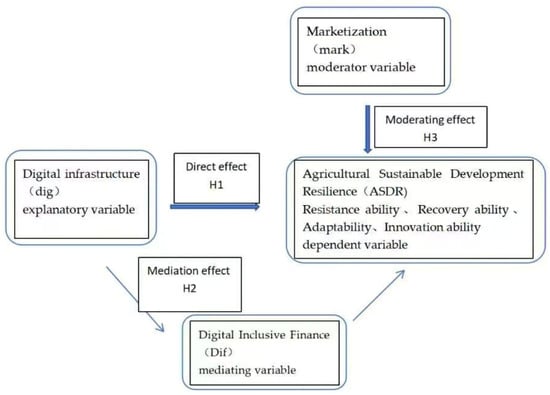
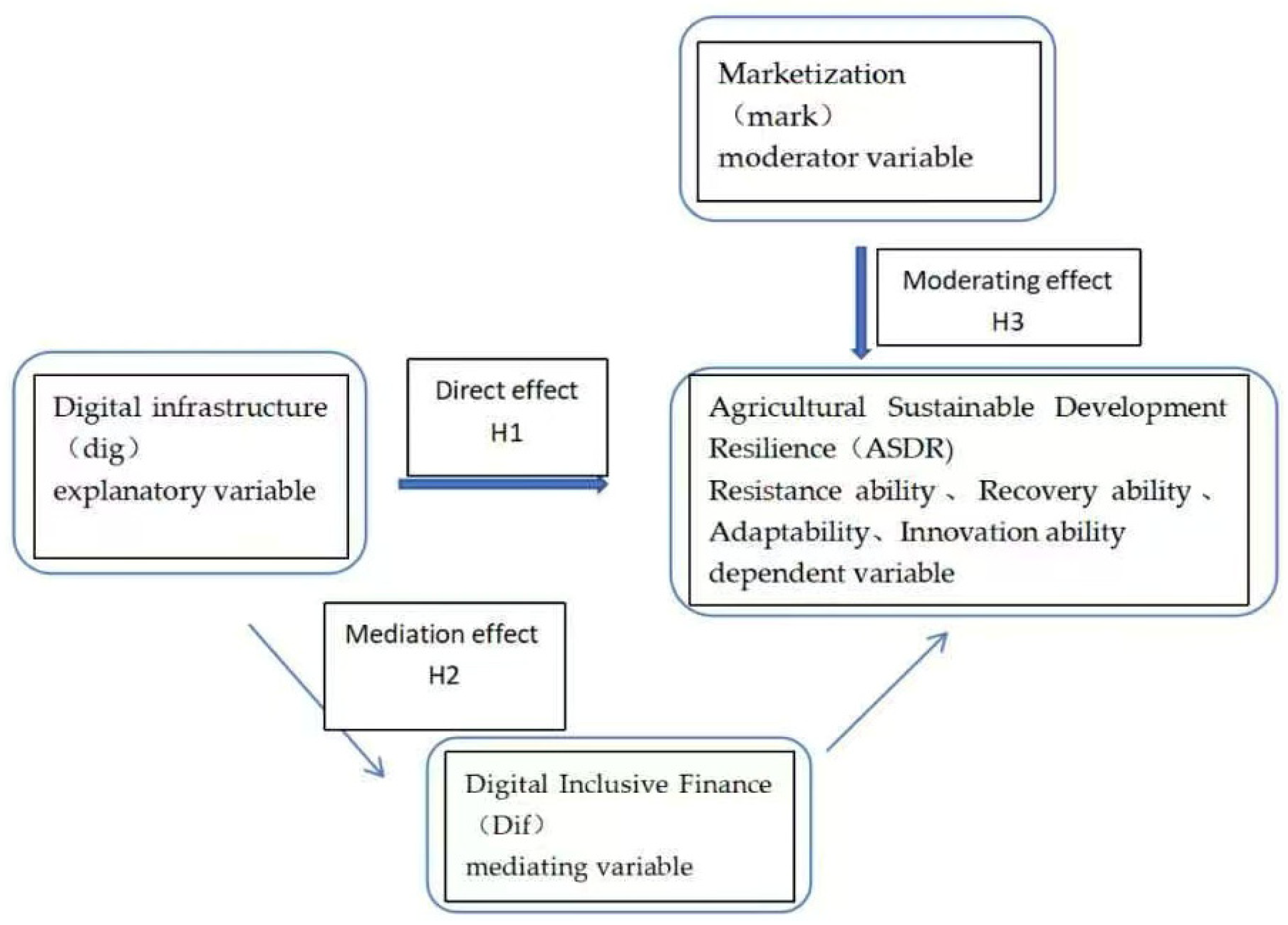

Disclaimer/Publisher’s Note: The statements, opinions and data contained in all publications are solely those of the individual author(s) and contributor(s) and not of MDPI and/or the editor(s). MDPI and/or the editor(s) disclaim responsibility for any injury to people or property resulting from any ideas, methods, instructions or products referred to in the content. |
© 2026 by the authors. Licensee MDPI, Basel, Switzerland. This article is an open access article distributed under the terms and conditions of the Creative Commons Attribution (CC BY) license.