


Abstract
Although government-directed supply-chain programs increasingly seek to enhance firms’ operational capabilities, their downstream effects on supplier selection—and the firm-level conditions that shape these effects—remain underexplored. Using China’s 2018 Supply Chain Innovation and Application Pilot Program (SCIAPP) as a quasi-natural experiment, we exploit the staggered designation of pilot firms and apply a difference-in-differences framework to a panel of Chinese A-share-listed firms from 2014 to 2023. This design allows us to examine how a government-led supply-chain digitalization initiative reshapes firms’ supplier selection decisions. We find that the SCIAPP designation increases the share of newly added suppliers whose AI capability exceeds the industry-year median by approximately 3.2 percentage points. Event-study estimates provide no evidence of differential pre-designation trends and show that the effect strengthens progressively during the post-treatment period. This temporal pattern suggests a gradual reorientation of procurement routines rather than an immediate or merely ceremonial response to program designation. The effect is weaker among firms with a stronger pre-existing internal AI orientation, indicating that the program primarily influences firms that have not yet incorporated AI capability into their supplier evaluation criteria. Heterogeneity analyses further show that the effect is more pronounced among firms with stronger general digital capabilities, non-manufacturing firms, and smaller firms—contexts in which the capacity to identify and integrate AI-capable suppliers, or the dependence on suppliers’ external AI resources, is relatively high. These findings extend the supply-chain digitalization literature from intraorganizational capability upgrading to interorganizational relationship formation and clarify how public digitalization policy can promote sustainable supply-chain realignment by encouraging firms to select technologically capable suppliers.
1. Introduction
Supplier selection is a consequential mechanism through which firms configure the capability architecture of their supply chains. The composition of a supplier portfolio determines not only input costs, quality, and delivery reliability, but also a buying firm’s access to the complementary knowledge, technologies, and operational capabilities embedded in upstream relationships. As artificial intelligence (AI) increasingly transforms manufacturing and service operations, suppliers’ ability to develop and deploy AI has become a strategically important dimension of interorganizational capability alignment. AI-capable suppliers can facilitate data-driven coordination, process automation, demand forecasting, production optimization, and the effective deployment of buying firms’ own technological investments [1]. Selecting such suppliers therefore represents more than compliance with a digitalization mandate; it reveals whether firms are redefining the capabilities they value when forming new supply-chain relationships.
This issue is particularly consequential for sustainable supply-chain transformation. Such transformation requires firms not only to upgrade their internal technologies but also to build supply networks capable of supporting efficiency, resilience, transparency, and collaborative upgrading across organizational boundaries. AI-capable suppliers may contribute to these objectives by enhancing information-processing capacity, improving real-time visibility, reducing operational waste, strengthening adaptive coordination, and enabling joint technological development. Their inclusion in a firm’s supplier portfolio may therefore reshape the technological and organizational foundations of the broader supply chain. Nevertheless, existing research offers limited insight into how firms revise their capability preferences when selecting new suppliers, particularly when the impetus for digital transformation originates from government intervention rather than market competition or endogenous strategic change.
This omission has become increasingly important as governments move beyond conventional firm-level innovation subsidies and increasingly use supply-chain governance as an instrument of digital transformation and technological diffusion. China’s 2018 Supply Chain Innovation and Application Pilot Program (SCIAPP) exemplifies this institutional shift. The program designated 266 pilot firms across 55 pilot cities and explicitly sought to promote the digital and intelligent upgrading of upstream and downstream supply-chain relationships, rather than merely encouraging the internal adoption of digital technologies. SCIAPP, therefore, provides a valuable institutional setting in which to examine a broader theoretical question: How does government-directed digitalization alter the capabilities that firms prioritize when forming new supplier relationships? If policy designation increases firms’ preference for AI-capable suppliers, its influence extends beyond the operational upgrading of designated firms. It also changes the logic of interorganizational matching and redirects the evolution of supplier portfolios toward technologically more capable partners.
Research on supply-chain digitalization has predominantly examined firm-level consequences. Studies of SCIAPP and related initiatives have documented improvements in total factor productivity [2,3], green innovation [4,5], environmental, social, and governance performance [6,7], supply-chain resilience [8], and carbon-emission efficiency [9]. This literature provides important evidence that digitalization policies can enhance organizational processes and sustainability-related outcomes. Yet its emphasis on firm-level performance offers only a partial account of how digital transformation propagates across supply chains. Firms do not merely absorb institutional pressures internally; they may also translate policy mandates into changes in their search routines, evaluation criteria, and partner-selection decisions. The formation of new supplier relationships thus constitutes a distinct relational mechanism through which digitalization policy can reshape the capability structure of supply chains.
Focusing on newly added suppliers is theoretically important because the formation of new relationships provides a particularly revealing indication of firms’ forward-looking capability preferences. Existing supplier portfolios are constrained by relationship-specific investments, contractual commitments, switching costs, and established organizational routines. By contrast, firms generally exercise greater discretion when selecting new suppliers and can more readily align new relationships with emerging strategic priorities. An increase in the selection of AI-capable suppliers would therefore indicate that government-directed digitalization changes not only firms’ internal practices but also the capability attributes they seek in prospective partners. Such interorganizational capability matching may further facilitate technological diffusion across supply chains. As procurement demand shifts toward technologically advanced suppliers, upstream firms may face stronger incentives to invest in digital capabilities in order to gain access to valuable relational opportunities.
However, firms are unlikely to respond uniformly to the same digitalization mandate. The extent to which policy designation changes supplier capability preferences should depend on whether the corresponding selection logic has already been embedded in a firm’s organizational routines. Firms with a strong internal AI orientation are more likely to possess the managerial attention, technological knowledge, and procurement capabilities required to recognize, assess, and engage AI-capable suppliers. For these firms, the SCIAPP designation may reinforce an established preference while generating relatively little marginal change. Firms with a weaker internal AI orientation, by contrast, may not previously have regarded supplier AI capability as a salient selection criterion. Policy intervention may exert greater influence on these firms by redirecting managerial attention, legitimizing technologically oriented evaluation criteria, and prompting the redesign of supplier-search and procurement routines. This reasoning shifts the analytical focus from whether government-directed digitalization is effective on average to the organizational conditions under which it is most likely to reconfigure supplier selection.
Against this background, we examine how government-directed digitalization changes firms’ capability preferences when they form new supplier relationships. We address three related questions. First, does the SCIAPP designation increase the share of newly added suppliers with stronger AI capabilities? Second, does this effect emerge immediately, or does it intensify over time as firms gradually adapt their search, screening, and evaluation routines? Third, is the effect conditioned by firms’ preexisting internal AI orientation, such that government-directed digitalization produces greater marginal change among firms whose supplier-selection systems were previously less technologically oriented? By addressing these questions, we treat SCIAPP not as the ultimate object of inquiry, but as an institutional setting through which to investigate how external digitalization mandates reshape interorganizational capability matching.
We examine these questions using a panel of Chinese A-share-listed firms from 2014 to 2023. Our primary dependent variable is the proportion of newly added suppliers whose AI capability exceeds the median for their respective industry-year cohort. Following Babina et al. [1], we construct a composite measure of supplier AI capability based on AI-related patents and textual disclosures in the Management Discussion and Analysis sections of annual reports. Our identification strategy exploits the staggered designation of SCIAPP firms within a difference-in-differences framework. Three principal findings emerge. First, the SCIAPP designation increases the share of newly added suppliers with high AI capability by approximately 3.2 percentage points. This economically meaningful effect indicates that government-directed digitalization changes the capability composition of firms’ newly formed supplier relationships. Second, event-study estimates provide no evidence of differential pre-designation trends and show that the effect strengthens progressively during the post-designation period. This temporal pattern is consistent with a gradual reorientation of supplier-search and evaluation routines rather than an immediate or merely ceremonial response to policy designation. Third, the effect is weaker among firms with a stronger preexisting internal AI orientation. Government-directed digitalization therefore exerts its greatest marginal influence where AI-related capability preferences have not yet been embedded in firms’ procurement and supplier-selection routines.
This study makes four theoretical contributions. First, it extends supply-chain digitalization research from intra-firm outcomes to interfirm relationship formation. Whereas prior studies have primarily examined how digitalization affects firm performance, innovation, resilience, and sustainability, we show that digitalization policy also changes who firms select as supply-chain partners. By identifying newly formed supplier relationships as a policy-sensitive outcome, this study broadens the literature from internal capability upgrading to relational reconfiguration. Second, the study contributes to supplier-selection and strategic sourcing research by identifying AI capability as an emerging supplier-selection criterion under digital transformation [10]. Our findings show that supplier-evaluation criteria are neither fixed nor determined solely by cost, quality, and reliability. They are also shaped by technological change and institutional conditions that redefine what constitutes a strategically valuable partner. Third, the study advances a contingency perspective on policy-induced supply-chain transformation. The effect of SCIAPP is stronger among firms with greater general digital capabilities, smaller firms, and non-manufacturing firms, indicating that organizational readiness, flexibility, and dependence on external technological resources condition firms’ ability and incentives to translate policy mandates into supplier-base reconfiguration. Government-led digitalization therefore reshapes supply-chain relationships unevenly across firms. Fourth, the study refines capability-based explanations of organizational adaptation. The negative interaction between SCIAPP designation and internal AI orientation suggests that stronger preexisting capability may reduce, rather than amplify, the marginal effect of policy when AI-oriented supplier-selection routines are already established. This finding highlights the importance of firms’ initial capability positions in determining the observable magnitude of policy-induced change.
The remainder of the paper proceeds as follows. Section 2 reviews the relevant literature and develops the hypotheses. Section 3 introduces the institutional background, data, variable construction, and empirical strategy. Section 4 presents the main findings and robustness analyses. Section 5 discusses the theoretical, sustainability, managerial, and policy implications. Section 6 concludes.
2. Literature Review and Hypothesis Development
2.1. Sustainable Supply-Chain Transformation, Digitalization, and Supplier Selection
Sustainable supply-chain transformation requires firms to enhance efficiency, resilience, environmental performance, and collaborative upgrading across organizational boundaries. Achieving these outcomes depends not only on improvements in firms’ internal operations but also on relationships with supply-chain partners capable of supporting information transparency, resource optimization, adaptive coordination, and joint capability development. Sustainability is therefore partly relational, as it is shaped by the technological and organizational capabilities embedded in a firm’s supply base. Supply-chain digitalization—the integration of artificial intelligence (AI), the Internet of Things, cloud-based platforms, and related technologies into operational processes and interfirm information exchange—provides an important technological foundation for such transformation. Prior research documents stronger supply-chain resilience [8,11], higher total factor productivity [2,3], greater green innovation [4,5], and improved ESG performance [6,7]. These benefits are commonly attributed to reduced information asymmetry and greater supply-chain visibility [12], as well as improved information processing and operational decision-making [8,13]. Related studies examine the governance of digital supply networks [14] and the conditions under which digital investments generate operational benefits among Chinese firms [15,16,17].
Despite these advances, existing research has primarily focused on firm-level outcomes within established organizational and relational structures. Much less is known about whether digital transformation changes these structures by altering how firms search for, evaluate, and select new suppliers. This omission is important because supplier selection determines which external capabilities become incorporated into the supply chain and whether subsequent digitalization and sustainability initiatives can be implemented effectively.
The formation of new supplier relationships is particularly informative because it reflects firms’ forward-looking capability preferences. Existing relationships are constrained by contractual commitments, relationship-specific investments, switching costs, and established organizational routines. When selecting new suppliers, firms have greater discretion to align their supply bases with emerging technological priorities. The capabilities of newly added suppliers therefore provide an indication of whether digitalization changes the underlying logic of interfirm matching. In this context, supplier AI capability is theoretically meaningful rather than merely serving as an indicator of policy compliance. AI investment contributes to innovation and productivity [1,18], while AI-capable suppliers can support demand forecasting, defect detection, inventory planning, and the adaptive coordination of production and logistics activities. These capabilities may reduce operational waste, strengthen firms’ responses to disruptions, and facilitate data sharing and joint problem-solving. Selecting AI-capable suppliers may therefore reinforce the relational infrastructure underlying supply-chain efficiency, resilience, and collaborative upgrading.
These benefits, however, depend on effective interorganizational capability matching. Digital technologies generate value only when buyers and suppliers possess compatible systems, routines, and knowledge that enable them to exchange, interpret, and use operational data effectively [8,19]. Firms with a stronger internal AI orientation may be better able to identify, integrate, and leverage technologically advanced suppliers. Yet because these firms may already incorporate AI capability into their procurement criteria, an external digitalization policy may generate relatively little marginal change. By contrast, firms with a weaker preexisting AI orientation may respond more strongly because supplier technological capability was previously less salient in their supplier-selection routines.
Supplier selection also provides a demand-side channel for technology diffusion. When firms increasingly select AI-capable suppliers, commercial opportunities shift toward technologically advanced firms, potentially encouraging other upstream firms to upgrade their own capabilities. Digital transformation may therefore diffuse not only through internal technology adoption or knowledge transfer within established relationships, but also through the reallocation of newly formed supply-chain ties. In summary, prior research shows that digitalization improves productivity, innovation, resilience, environmental performance, and supply-chain governance [2,3,4,5,6,7,8,11,12,13,14,15,16,17]. It also establishes the operational value of AI capability [1,18] and the importance of technological compatibility in digital collaboration [8,19]. What remains unclear is whether government-directed digitalization changes the capabilities that firms prioritize when forming new supplier relationships, whether this process contributes to sustainable supply-chain transformation and technology diffusion, and under what organizational conditions its effects are most pronounced. We address this gap by examining supplier selection as an interorganizational capability-matching mechanism through which digitalization policy can reshape the structure and capability composition of supply chains.
2.2. Theoretical Framework
2.2.1. Absorptive Capacity and the Recognition of External AI Capability
Absorptive capacity theory holds that a firm’s ability to recognize, assimilate, and exploit external knowledge depends on its prior related knowledge [10]. Zahra and George [20] further distinguish between the acquisition and assimilation of knowledge and its subsequent transformation and exploitation. Applied to supplier selection, this logic suggests that evaluating an AI-capable supplier requires more than comparing conventional attributes such as price, quality, and delivery performance. Buyers must assess the credibility, sophistication, compatibility, and operational relevance of the supplier’s AI capabilities. Firms with limited internal AI knowledge may struggle to distinguish substantive technological capabilities from symbolic claims or to determine whether a supplier’s technologies can be effectively integrated into their existing operational processes.
Absorptive capacity, therefore, operates even before a supplier relationship is formed. A firm’s internal technological knowledge serves as an ex-ante filter that shapes which prospective suppliers it recognizes as valuable. It also influences the value realized after supplier selection, because the benefits derived from supplier-generated data and AI-enabled services depend on the buyer’s ability to interpret, assimilate, and apply them. This argument is consistent with evidence that the returns to information technology depend on complementary organizational resources [21] and that internal R&D and external knowledge acquisition can function as strategic complements [22]. Firms with a stronger internal AI orientation may therefore be better able to identify, evaluate, and effectively engage AI-capable suppliers. At the same time, these firms may already have incorporated AI capability into their procurement and supplier-evaluation routines, leaving less scope for policy-induced change. By contrast, firms with a weaker preexisting AI orientation may exhibit a stronger response because policy intervention increases the salience of a supplier attribute that was previously underweighted in their selection criteria.
2.2.2. Resource Dependence and Access to External Digital Capabilities
Resource dependence theory argues that firms actively manage their external relationships to secure critical resources that are not fully available within organizational boundaries [23]. Supplier portfolios therefore constitute strategic arrangements through which firms gain access to knowledge, technology, data, and operational capabilities. As supply chains undergo digital transformation, firms increasingly depend on suppliers capable of providing AI-enabled services, compatible data interfaces, analytical expertise, and technology-supported coordination [24,25]. Access to these capabilities may enhance operational efficiency, resilience, and collaborative upgrading. By contrast, suppliers that are unable to generate, exchange, or process the data required by digital systems may become operational bottlenecks.
Government-directed digitalization increases the strategic importance of these external capabilities by raising expectations for technological upgrading across the supply chain. Firms may therefore reconfigure their supplier portfolios by selecting technologically capable partners rather than relying exclusively on the slower development of equivalent capabilities internally. This response may be prospective as well as reactive: firms may establish relationships with AI-capable suppliers before existing capability gaps translate into observable performance losses. Resource dependence theory does not imply that technologically advanced suppliers eliminate dependence altogether, as such relationships may generate new switching costs, technological lock-in, or interoperability risks. Its central implication is that, when digital capabilities become strategically important yet remain unevenly distributed across firms, organizations have stronger incentives to access those capabilities through supplier selection.
2.2.3. Institutional Pressure and the Legitimation of AI-Based Selection Criteria
Institutional theory holds that organizational practices reflect not only efficiency considerations but also pressures for legitimacy and conformity [26,27]. DiMaggio and Powell [26] distinguish among coercive, normative, and mimetic pressures, each of which may increase the legitimacy of AI capability as a criterion for supplier selection. Coercive pressure arises from formal expectations that SCIAPP-designated firms digitally upgrade their supply-chain relationships. These expectations increase the salience of suppliers’ technological capabilities and provide firms with a legitimate basis for incorporating AI-related criteria into procurement standards. Normative pressure emerges as digitally enabled supplier management becomes increasingly associated with competent and modern supply-chain practice. Mimetic pressure arises when firms imitate visible pilot firms or industry leaders under uncertainty about how best to implement digitalization mandates. Institutional theory therefore explains why policy intervention may alter supplier selection even before firms fully recognize or realize the technical value of AI-capable suppliers. Policy endorsement makes technology-oriented procurement appear more appropriate, rational, and legitimate, while reducing internal resistance to revising established supplier-selection standards.
Taken together, the three theoretical perspectives explain complementary aspects of policy-induced supplier reconfiguration. Absorptive capacity concerns whether firms are able to recognize, assimilate, and use external AI capabilities; resource dependence theory explains why firms seek access to such capabilities through supplier relationships; and institutional theory explains how policy intervention legitimizes AI-related supplier-selection criteria. Our empirical analysis does not directly identify the relative importance of these mechanisms. Rather, we interpret the observed patterns as being consistent with their combined theoretical implications.
2.3. Hypothesis Development
2.3.1. SCIAPP Designation and AI-Capable Supplier Selection
Government-directed digitalization can reshape supply chains not only by improving firms’ internal operations but also by altering the capabilities they prioritize when forming new supplier relationships. SCIAPP requires designated pilot firms to promote the digital and intelligent upgrading of both upstream and downstream activities. As firms adopt AI-enabled systems for forecasting, quality inspection, procurement, and logistics, the effectiveness of these investments increasingly depends on suppliers’ ability to generate, exchange, and process compatible operational data. Supplier AI capability may therefore become an important qualification criterion rather than a peripheral technological attribute.
From an absorptive-capacity perspective, SCIAPP may increase the importance that firms attach to the technological content of supplier relationships. Firms must assess whether prospective suppliers possess credible AI capabilities, whether those capabilities are compatible with their existing systems, and whether they can support data-intensive coordination. The policy may therefore broaden supplier evaluation beyond conventional criteria such as price, quality, and delivery performance to include the external technological capabilities required for digital integration.
Resource dependence theory explains why this change in evaluation criteria may lead to supplier-base reconfiguration. As digital capabilities become increasingly important to operational performance, firms depend not only on suppliers’ production capacity but also on their ability to support digitally enabled workflows. Suppliers that cannot provide usable data or interface effectively with intelligent systems may limit the returns to the focal firm’s own digital investments. Selecting AI-capable suppliers enables firms to access externally embedded digital resources more rapidly than developing all relevant capabilities internally.
Institutional theory further clarifies how policy intervention facilitates this change. SCIAPP legitimizes technological capability as a formal criterion for supplier selection. Coercive pressures make supply-chain digital upgrading an explicit policy objective, normative pressures associate technology-oriented procurement with competent management, and mimetic pressures encourage firms to follow the practices of visible pilot firms and industry leaders. Together, these forces make the selection of AI-capable suppliers more organizationally defensible and reduce internal resistance to revising established procurement routines. Taken together, these mechanisms imply that SCIAPP may induce a relational, rather than merely internal, form of adaptation. Designated firms are expected to alter the technological composition of their supplier portfolios by directing new relationships toward suppliers with stronger AI capabilities. This form of relational reconfiguration is theoretically important because it determines which external capabilities become embedded in the supply chain and how digital technologies diffuse across organizational boundaries.
Such reconfiguration may also contribute to sustainable supply-chain transformation. AI-capable suppliers can potentially improve information visibility, forecasting accuracy, resource allocation, disruption response, and joint problem-solving. Their inclusion in the supply base may therefore strengthen the relational foundations of efficiency, resilience, and collaborative upgrading. We do not assume that supplier AI capability automatically generates sustainability outcomes. Rather, it provides a technological and relational foundation upon which more sustainable supply-chain practices may be developed.
An alternative possibility is that pilot firms respond primarily by upgrading their internal systems or improving established supplier relationships, leaving the selection of new suppliers unchanged. Existing buyer–supplier relationships may indeed absorb part of the required adjustment. However, internal upgrading and supplier-base reconfiguration are unlikely to be complete substitutes. As firms’ digital systems become more advanced, the costs of coordinating with technologically incompatible suppliers may increase. Moreover, SCIAPP explicitly directs attention toward the digital upgrading of both upstream and downstream activities, making the supply base itself a legitimate target of organizational change.
We therefore propose:
Hypothesis 1 (H1).
Firms designated as SCIAPP pilots exhibit a higher share of newly added suppliers with above-median AI capability than otherwise comparable non-pilot firms.
2.3.2. Moderation by a Firm’s AI Orientation
The effect of government-directed digitalization should vary with firms’ preexisting internal AI orientation. This orientation reflects not only a firm’s technological resources but also the extent to which AI-related knowledge and evaluation criteria have already been incorporated into its procurement routines before policy intervention. It therefore captures differences in firms’ prior adaptation to digital transformation.
Two competing predictions are possible. A complementarity argument suggests that firms with a stronger internal AI orientation should respond more strongly to policy intervention. These firms possess the knowledge required to identify credible AI capabilities, assess technological compatibility, and integrate technologically advanced suppliers into existing operations. Their internal systems may also enable them to derive greater value from supplier-generated data, while their technological sophistication may make them more attractive partners to AI-capable suppliers. A marginal-adjustment argument, however, predicts a weaker policy effect among such firms. Firms with a stronger preexisting AI orientation are more likely to have already recognized the strategic value of technologically capable suppliers and incorporated AI capability into their supplier-qualification criteria. For these firms, SCIAPP primarily reinforces an established selection logic and provides relatively little new information or incentive. Although their ability to benefit from AI-capable suppliers may be greater, the remaining scope for observable policy-induced change is relatively limited.
By contrast, firms with a weaker preexisting AI orientation are less likely to have embedded technological capability in their procurement criteria. Their supplier-selection systems may remain centered on conventional dimensions such as price, quality, and delivery performance, while organizational inertia may inhibit the adoption of new evaluation standards. SCIAPP may generate a larger adjustment among these firms by redirecting managerial attention, legitimizing AI capability as a relevant supplier-selection criterion and providing an external rationale for revising established routines. This marginal-adjustment logic is particularly relevant to supplier selection because qualification criteria and procurement procedures tend to be organizationally persistent [28]. Once AI capability has become an established supplier attribute, additional policy pressure may produce little observable change. Where it has not yet been incorporated into supplier evaluation, however, policy intervention may alter the evaluative framework through which new relationships are formed.
The predicted negative moderating effect, therefore, does not imply that firms with a stronger internal AI orientation place less value on AI-capable suppliers. On the contrary, they may be better able to recognize, evaluate, and utilize such capabilities. The key distinction concerns the marginal effect of policy intervention: firms with a stronger internal AI orientation have already adapted their supplier-selection systems, whereas firms with a weaker orientation have greater scope for policy-induced relational reconfiguration. More generally, this argument highlights organizational heterogeneity in responses to external digitalization mandates. The same policy may reinforce established practices in some firms while triggering substantive change in others, depending on whether the capability preference promoted by the policy has already been institutionalized within the organization. Preexisting internal AI orientation thus reflects not merely the source of a statistical interaction, but also the stage of organizational adaptation at which policy intervention occurs.
We therefore propose the following:
Hypothesis 2 (H2).
The positive effect of SCIAPP designation on the AI-capable share of newly added suppliers is weaker for firms with stronger preexisting internal AI orientation.
3. Data and Methodology
3.1. Institutional Background
SCIAPP was launched in 2018 by China’s Ministry of Commerce in conjunction with other central agencies as part of a broader national strategy to modernize supply-chain infrastructure through digital and intelligent upgrading. The program designated pilot enterprises and pilot cities and explicitly mandated the standardization, digitalization, and intelligent transformation of supply-chain operations—including the deployment of AI and related technologies across upstream and downstream relationships. Designations were conducted in three successive waves in 2018, 2019, and 2020, with each wave expanding the pilot cohort. This staggered rollout generates variation in the timing of treatment exposure that is independent of post-designation outcomes and is central to our identification strategy.
Two institutional features of SCIAPP make it a suitable setting for studying supplier-selection behavior. First, the program’s mandate is explicitly network-level: pilot firms were required to demonstrate progress not only in internal process upgrading but in the digital and intelligent capacity of their supply-chain relationships, directing managerial attention toward the supply base as a legitimate object of compliance. Second, while the mandate imposed concrete obligations—including submission of digitalization progress reports to supervising authorities and eligibility criteria for associated policy benefits—it left firms substantial discretion over the operational means of achieving the mandated upgrading. This combination of binding obligation and implementation flexibility creates the conditions under which supplier-selection decisions, rather than a single prescribed action, become the observable margin of behavioral adjustment.
A necessary condition for credible identification is that the SCIAPP designation can be treated as plausibly exogenous to the outcome of interest. Pilot status was awarded on the basis of firm and local government applications evaluated by the Ministry of Commerce, which introduces the possibility that designated firms differ from non-designated firms on dimensions that independently predict supplier-selection behavior. We address this concern through two complementary strategies. First, we include firm fixed effects in all specifications, absorbing all time-invariant differences between pilot and non-pilot firms—including those that may have influenced the selection decision. Second, we conduct formal pre-trend tests using an event-study specification and verify that the new-AI-supplier share evolves in parallel for treated and control firms in the years preceding designation. The absence of pre-designation divergence in the outcome variable provides the primary evidence that the DID design recovers a valid counterfactual.
3.2. Data and Sample
Our sample comprises Chinese A-share-listed firms on the Shanghai and Shenzhen Stock Exchanges from 2014 to 2023. The sample period provides a four-year pre-treatment window before the first wave of SCIAPP designations in 2018, enabling us to assess pre-treatment trends while also capturing medium-term adjustments in firms’ supplier-selection behavior through 2023. Firm-level financial data are obtained from the China Stock Market and Accounting Research (CSMAR) database. Data on buyer–supplier relationships, including the annual supplier disclosures used to construct the dependent variable, are drawn from CSMAR’s supply-chain module, which compiles information on major suppliers disclosed by listed firms in their annual reports. AI-related patent data are obtained from records of the China National Intellectual Property Administration (CNIPA) available through CSMAR. Information on SCIAPP pilot designations is collected from official announcements issued by the Ministry of Commerce of the People’s Republic of China.
To construct the estimation sample, we first restrict the buyer–supplier panel to the 2014–2023 period. We then retain firm-year observations with nonmissing values for the dynamic supplier-selection measure, the firm-level SCIAPP treatment indicator, and all baseline control variables. Finally, we exclude singleton observations that do not contribute to within-firm identification in the fixed-effects estimation. These procedures result in a final baseline sample of 4843 firm-year observations (see Table 1).
Table 1.
Sample construction and estimation sample flow.
3.3. Variable Measurement
3.3.1. Dependent Variable
Our dependent variable, the new-AI-supplier share, captures a focal firm’s revealed tendency to select AI-capable suppliers when forming new upstream relationships. For each firm year (t), we compare the suppliers disclosed in year (t) with those disclosed in year (t − 1). A supplier is classified as newly added if it appears in the focal firm’s disclosed supplier list in year (t) but not in the corresponding list in year (t − 1). This definition focuses on the formation of new relationships rather than changes in purchasing intensity within existing buyer–supplier dyads. It therefore provides a direct indicator of the capability attributes that firms prioritize when reconfiguring their supply bases.
We classify a newly added supplier as AI-capable if its AI capability index exceeds the median for listed firms in the same two-digit CSRC industry and year. The dependent variable is calculated as the number of newly added AI-capable suppliers divided by the total number of newly added suppliers disclosed by the focal firm in year (t). Higher values indicate a stronger tendency to form relationships with suppliers whose AI capabilities exceed those of the median firm in their industry-year cohort. We adopt an industry-year-relative definition because both the relevance and prevalence of AI vary substantially across sectors and over time. The industry-year median provides a transparent benchmark that accounts for these differences and is less sensitive than the mean to the highly right-skewed distribution of AI-related activity among Chinese listed firms.
Following Babina et al. [1], we construct the supplier AI capability index using two complementary components. The first is the supplier’s cumulative stock of AI-related patent applications filed with the China National Intellectual Property Administration. Patent applications provide an externally observable indicator of accumulated technological development and inventive activity. The second is the frequency of AI-related terms in the supplier’s Management Discussion and Analysis (MD&A) section. MD&A disclosures capture the managerial attention devoted to AI and the extent to which the firm presents AI as relevant to its current operations and future development. The two indicators capture distinct dimensions of AI capability. Patent activity reflects codified technological output, but it may be affected by heterogeneous patenting strategies and may not fully capture the operational deployment of AI. MD&A disclosures reflect managerial attention and strategic orientation, but they may also be influenced by disclosure incentives or symbolic communication. Combining the two indicators reduces reliance on either source alone and provides a broader proxy for suppliers’ engagement with AI technologies. Both components are standardized within industry-year cells and then averaged, ensuring that differences in measurement scale do not mechanically determine the composite index. In the robustness analyses, we further validate the measure using a patent-only definition of supplier AI capability and alternative specifications of the textual indicator.
3.3.2. Treatment Variable and Moderator
The treatment variable, SCIAPP, is a binary indicator equal to one for all firm-year observations in which the firm has received a SCIAPP pilot designation in or before year t, and zero otherwise. The absorbing-state coding reflects the permanent nature of pilot status: once designated, a firm remains subject to the program’s mandate and compliance obligations throughout the subsequent period.
The moderator, internal AI orientation, proxies the degree to which AI is embedded in the focal firm’s strategic and operational discourse prior to any policy exposure. It is measured as the natural logarithm of one plus the count of AI-related terms in the focal firm’s own MD&A section in the year immediately preceding SCIAPP designation. For never-treated firms, the moderator is computed as the average of the pre-2018 annual values. We use this pre-designation value—rather than a time-varying annual measure—to ensure that the moderator reflects a firm’s AI orientation before exposure to the policy mandate, thereby avoiding contamination of the moderating variable by treatment. The AI keyword taxonomy covers terminology spanning machine learning, deep learning, natural language processing, computer vision, intelligent manufacturing, and robotic process automation, consistent with prior studies of AI disclosure in Chinese listed firms [19]. As argued in Section 2, the frequency with which a firm discusses AI in its forward-looking strategic narrative proxies both the depth of its prior AI knowledge base and the degree to which AI-oriented thinking has already been internalized in its organizational routines—both of which are theoretically relevant to conditioning the policy effect on supplier selection.
3.3.3. Control Variables
To isolate the effect of SCIAPP designation from other firm-level determinants of supplier-selection behavior, we include a set of controls measured in year t − 1 to mitigate simultaneity concerns. Control variables are selected to satisfy two criteria: theoretical relevance to supplier-selection decisions and plausible independence from the treatment assignment, so as to avoid introducing post-treatment controls that would absorb part of the causal effect of interest.
Intangible asset intensity (intangible assets scaled by total assets) proxies knowledge-capital endowment, which may independently predict both a firm’s willingness to engage technologically sophisticated partners and its organizational capacity to evaluate them. Leverage (total liabilities scaled by total assets) captures financial constraints that may limit a firm’s ability to bear the costs of supply-base reconfiguration, including supplier qualification, onboarding, and relationship development. Tangibility (property, plant, and equipment scaled by total assets) reflects the physical capital intensity of operations; asset-heavy firms may depend less on suppliers’ technological capabilities and more on input reliability and scale. Inventory turnover proxies baseline supply-chain velocity and operational efficiency, which may correlate with both the urgency of upgrading the supply base and the sophistication of existing procurement practices. AI patent stock (natural logarithm of one plus the firm’s cumulative AI-related patent applications) is included to ensure that the treatment effect is not confounded with a firm’s broader innovation trajectory—since more innovative firms may be both more likely to receive SCIAPP designation and independently more inclined to seek AI-capable suppliers. Because AI patenting may itself respond to SCIAPP designation over time, we measure this variable at t − 1 and verify in robustness checks that results are qualitatively unchanged when it is excluded entirely. In the extended specifications reported in Section 4, we additionally control for firm size, measured as the natural logarithm of total assets, return on assets, cash holdings, gross profit margin, and a firm-level digitalization index. These supplementary controls account for differences in firm scale, profitability, liquidity, operating performance, and broader digital engagement that may otherwise confound the estimated relationship. They are included to assess the sensitivity of the baseline results to alternative model specifications.
3.4. Empirical Strategy
3.4.1. Baseline Specification
To identify the causal effect of SCIAPP designation on supplier-selection behavior, we estimate a staggered difference-in-differences model with two-way fixed effects [29]:
where () denotes the new-AI-supplier share of firm (i) in year (t); () is an absorbing treatment indicator equal to one from the year in which firm (i) is designated as an SCIAPP pilot onward, and zero otherwise; () is a vector of firm-level control variables; () denotes firm fixed effects, which absorb all time-invariant firm characteristics, including stable differences in firm quality that may have influenced pilot designation; () denotes year fixed effects, which absorb aggregate time trends and macroeconomic shocks common to all firms; and () is the idiosyncratic error term.
The coefficient of interest, (), captures the average within-firm change in the new-AI-supplier share following the SCIAPP designation relative to the contemporaneous change among firms that had not yet been designated or were never designated. Under the identifying assumptions of the difference-in-differences design, particularly the parallel-trends assumption, this coefficient represents the estimated effect of SCIAPP designation on firms’ selection of newly added AI-capable suppliers. All models are estimated using the REGHDFE routine [30], with standard errors clustered at the firm level to account for serial correlation within firms [31].
To test Hypothesis 2, we augment Equation (1) with the pre-designation moderator and its interaction with the treatment indicator:
where () denotes the firm’s pre-designation internal AI orientation, measured as described in Section 3.3.2. Because () is time-invariant, its main effect is absorbed by the firm fixed effects ; the reported () is therefore identified from the cross-sectional variation in () interacted with the time variation in . A negative and statistically significant () would indicate that the policy-induced increase in the new-AI-supplier share is attenuated among firms with stronger pre-designation AI orientation, consistent with Hypothesis 2.
3.4.2. Event-Study Specification and Parallel-Trends Testing
To test the parallel-trends assumption underlying the DID design and to characterize the dynamic path of the treatment effect, we estimate the following event-study specification:
where denotes the SCIAPP designation year for treated firm and indexes the event time relative to the designation, with normalized to zero as the omitted reference period. Observations more than four years before or after designation are binned into endpoint indicators to improve estimation precision. The coefficients for constitute a falsification test of the parallel-trends assumption: if pre-designation trends in the new-AI-supplier share are statistically indistinguishable between treated and control firms, it provides evidence that the counterfactual trajectory of treated firms is well approximated by the control group. The coefficients for characterize the dynamic response to designation, allowing us to distinguish between an immediate compliance response and the gradual reorientation of procurement routines hypothesized in Section 2. For never-treated firms, all event-time indicators are set to zero.
3.4.3. Addressing Heterogeneous Treatment Effects in Staggered Designs
Recent econometric work has shown that the two-way fixed-effects estimator in staggered adoption settings can produce biased or misleading estimates when treatment effects are heterogeneous across cohorts or evolve over event time [28,29]. The source of bias is that the TWFE estimator implicitly uses already-treated units as part of the comparison group for later-treated cohorts, potentially introducing “forbidden comparisons” that contaminate the treatment effect estimate. To assess whether this concern materially affects our conclusions, we complement the baseline TWFE estimates with two heterogeneity-robust estimators. In robustness checks, we additionally report two-way clustered standard errors at the firm and year level.
4. Results
4.1. Descriptive Statistics
Table 2 reports descriptive statistics for the full sample and separately for pilot and non-pilot firms. On average, pilot firms are larger, more profitable, and have higher AI capability than non-pilot firms, reflecting the selection criteria applied by the program administrators. The mean variance inflation factor (VIF) across the baseline specification is 1.27, well below conventional thresholds, indicating that multicollinearity is not a concern.
Table 2.
Descriptive statistics and correlation.
4.2. Baseline Results
Table 3 reports the baseline estimates of the effect of SCIAPP on the AI composition of newly added suppliers. In column (1), the coefficient on SCIAPP is positive and significant. From the perspective of economic significance, the estimate indicates that treated firms increase the share of newly added suppliers with above-median AI capability by approximately 3.2 percentage points relative to untreated firms. Relative to the sample mean, this magnitude represents a meaningful shift in the technological composition of newly formed supplier relationships. It suggests that government-led supply-chain digitalization influences not only firms’ internal operations but also the allocation of new interfirm relationships toward technologically more capable suppliers. AI-capable suppliers may support more efficient resource utilization, more accurate demand forecasting, improved operational visibility, and better coordination across organizational boundaries. By shifting their supplier portfolios toward such partners, focal firms may strengthen the technological foundations of supply-chain efficiency, resilience, and adaptability. These findings therefore suggest that supplier selection constitutes an important relational channel through which digitalization policy can contribute to broader supply-chain transformation.
Table 3.
Baseline effect results.
Column (2) adds the firm’s internal AI orientation and its interaction with the treatment. The coefficient on SCIAPP remains positive and significant and rises to 0.0460 (p < 0.01), confirming the robustness of the baseline result. The main effect of internal AI orientation is not significant, whereas the interaction (SCIAPP × Internal AI orientation) is negative and significant (β = −0.0015, p < 0.05). The negative interaction reveals an important boundary condition: the effect of SCIAPP on AI-oriented supplier selection is weaker among firms with a stronger preexisting internal AI orientation. From an economic perspective, this pattern is consistent with diminishing marginal policy effects. Firms with a stronger internal AI orientation may have already incorporated AI-related capabilities into their supplier-screening and evaluation routines before policy designation, leaving less scope for further policy-induced adjustment. By contrast, firms with a weaker internal AI orientation have greater room to revise their supplier-selection criteria in response to the policy. Taken together, the baseline results indicate that SCIAPP shifts firms’ newly formed supplier relationships toward partners with stronger AI capabilities, while the magnitude of this shift depends on firms’ initial AI orientation. The positive main effect provides support for H1, and the negative interaction is consistent with the marginal-adjustment mechanism proposed in H2.
4.3. Parallel Trends and Dynamic Effects
Figure 1 plots the dynamic treatment effects from an event-study specification; the full coefficient estimates are reported in Appendix A Table A1. The pre-treatment coefficients are close to zero and statistically indistinguishable from zero, supporting the parallel-trends assumption. In the post-treatment periods, the coefficients turn positive and increase over time, indicating that the effect of SCIAPP on the selection of AI-capable new suppliers does not appear immediately but strengthens as the policy unfolds. This pattern is consistent with a gradual adjustment process in which firms progressively revise procurement routines and supplier-evaluation criteria in response to the mandate, rather than with a one-time symbolic response.
Figure 1.
Dynamic treatment effect of SCIAPP on the new-AI-supplier share. Notes: The purple line with blue markers plots the estimated dynamic treatment effects. Black dashed bars indicate 95%confidence intervals. The gray vertical dashed line marks the policy implementation period, and the green horizontal dashed line denotes the zero-effect benchmark.
4.4. Placebo Test
We conduct a placebo test to assess whether the baseline results are driven by spurious correlations or chance treatment assignments. Firms are randomly assigned to pseudo-treatment groups, and artificial designation years unrelated to the actual implementation of SCIAPP are generated. We then construct the corresponding placebo treatment indicator and re-estimate the baseline difference-in-differences model. Repeating this procedure 500 times yields an empirical distribution of placebo estimates. If the baseline findings capture the effect of SCIAPP rather than random variation, the placebo coefficients should be concentrated around zero and generally statistically insignificant. As shown in Figure 2, the placebo estimates are centered close to zero, and the vast majority of the corresponding p-values exceed 0.10. These results provide further evidence that the baseline estimates are unlikely to be driven by random treatment assignment or spurious correlations.
Figure 2.
Distribution of p-values.
4.5. Other Robustness of the Baseline Effect
Table 4 reports robustness checks for the baseline effect. Across all specifications, the coefficient on SCIAPP remains positive and significant at the 5% level or better, indicating that the main finding is not sensitive to reasonable changes in sample construction or model specification. Shifting the window to 2015–2023 yields a positive, significant estimate (β = 0.0307, p < 0.05; column 1). Excluding the pandemic years 2020–2021 produces a similar estimate (β = 0.0324, p < 0.05; column 2). Re-winsorizing the five baseline controls at the 1st and 99th percentiles again yields a positive, significant coefficient (β = 0.0321, p < 0.05; column 3). Adding a firm-level digitalization index produces a somewhat larger estimate (β = 0.0427, p < 0.01; column 4), indicating that the SCIAPP effect does not merely reflect firms’ broader digital orientation. Sequentially adding firm size and ROA, cash holdings, and gross margin leaves the treatment coefficient essentially unchanged (0.0295–0.0309, all significant at the 5% level; columns 5–7). Overall, the positive effect of SCIAPP is robust to alternative windows, the exclusion of pandemic-period observations, stricter outlier treatment, and additional controls.
Table 4.
Robustness of the baseline effect.
Table 5 reports a series of additional robustness analyses designed to address concerns regarding nonrandom policy designation, dependence within buyer–supplier networks, selective supplier disclosure, and the measurement of supplier AI capability. Column (1) presents the results of a propensity-score-matching difference-in-differences (PSM-DID) analysis. We first estimate each firm’s probability of receiving an SCIAPP designation based on the observed pretreatment characteristics included in the baseline model and then match treated firms with observationally comparable untreated firms using nearest-neighbor matching. The baseline difference-in-differences specification is subsequently re-estimated in the matched sample. The estimated coefficient remains positive and statistically significant, indicating that the baseline finding is unlikely to be explained solely by observable differences in firm characteristics between designated and non-designated firms. Column (2) examines whether statistical inference is sensitive to dependence across firms connected through supply-chain relationships. Because multiple observations may involve the same buyer or supplier, disturbances may be correlated within either side of the relationship. We therefore re-estimate the model using two-way clustered standard errors at the buyer and supplier levels. The coefficient remains positive and statistically significant under this more conservative inference procedure, suggesting that the main result is not attributable to underestimated standard errors arising from within-network dependence. Column (3) addresses potential disclosure bias in the supplier data reported in listed firms’ annual reports. Such disclosures generally cover only major suppliers and may therefore provide an incomplete representation of the focal firm’s broader supplier portfolio. We reconstruct the dependent variable using buyer–supplier relationships obtained from FactSet Revere, an independently compiled supply-chain database that identifies interfirm relationships from multiple public sources. The coefficient based on this alternative data source remains positive and highly significant, indicating that the baseline result is not specific to the supplier relationships disclosed in annual reports. Columns (4)–(6) assess the sensitivity of the results to alternative definitions of supplier AI capability. In column (4), we apply a more restrictive high-AI threshold to identify suppliers in the upper tier of the AI-capability distribution, thereby examining whether the result extends beyond suppliers that merely exceed the industry-year median. Column (5) constructs supplier AI capability exclusively from AI-related patent activity, reducing potential concerns that textual disclosures reflect managerial rhetoric or strategic impression management rather than substantive technological capability. Column (6) uses an alternative measure based on the level of firms’ AI-related investment, capturing resource commitments to AI development and deployment from an input-oriented perspective. Across all three specifications, the estimated effect of SCIAPP designation remains positive and statistically significant. Taken together, these results indicate that the baseline finding is robust to alternative sample-construction procedures, clustering structures, supplier-relationship data sources, and measures of supplier AI capability.
Table 5.
Additional identification and alternative outcome robustness checks.
4.6. Robustness Check of the Moderating Effect
Table 6 examines the robustness of the moderating effect. Across all six specifications, the coefficient on SCIAPP remains positive and significant (0.0438 to 0.0487), confirming the stability of the baseline policy effect after introducing the moderator. More importantly, the interaction (SCIAPP × Internal AI orientation) remains negative and significant in every specification (−0.0027 to −0.0015), indicating that the positive effect of SCIAPP is systematically weaker among firms with stronger preexisting AI orientation. The main effect of internal AI orientation remains insignificant throughout, suggesting that it operates not as a direct predictor of supplier choice but as a contingency that shapes the marginal effect of the policy. The moderating pattern is therefore not an artifact of any single specification choice.
Table 6.
Robustness of the moderating effect.
4.7. Heterogeneity Analysis
To probe the boundary conditions of the baseline effect, we conduct heterogeneity analyses along three dimensions: firms’ digitalization level, industry type, and size. These dimensions capture three theoretically relevant sources of variation in firms’ responses to a digitalization mandate. Digitalization level reflects a firm’s preexisting technological readiness and its ability to translate policy pressure into changes in supplier screening and coordination. Industry type captures differences in operating context and reliance on information-intensive interfirm coordination. Firm size reflects variation in resource constraints, organizational flexibility, and adjustment costs.
Table 7 reports substantial heterogeneity. The coefficient on SCIAPP is positive and significant among firms with high digitalization (β = 0.0400, p < 0.05) but insignificant among low-digitalization firms (β = 0.0132), suggesting that the mandate alters supplier selection mainly when firms already possess the digital foundation needed to identify, evaluate, and integrate AI-capable upstream partners. The effect is also concentrated in non-manufacturing firms (β = 0.0402, p < 0.05), whereas the estimate for manufacturing firms is positive but insignificant (β = 0.0234); non-manufacturing firms, which tend to rely more on information processing and digitally mediated coordination, may be better positioned to adjust supplier composition. Finally, the effect is substantially stronger among small firms (β = 0.0716, p < 0.05) than among large firms (β = 0.0241), consistent with smaller firms facing stronger incentives to draw on external technological complementarities and having less inertial, more easily adjusted procurement routines. Together, these results indicate that the effect of SCIAPP on AI-oriented supplier selection is more pronounced where digital readiness is higher, organizational flexibility is greater, and the operating context is more conducive to digitally enabled coordination.
Table 7.
The results of heterogeneity analysis.
5. Discussion
5.1. Main Findings
This study examines how a government-led supply-chain digitalization policy reshapes firms’ supplier-selection behavior. Rather than treating SCIAPP solely as a policy intervention with effectiveness that must be evaluated, we use it as a quasi-natural experimental setting to investigate how external digitalization mandates alter the criteria firms apply when forming new supply relationships. The findings show that SCIAPP designation increases the share of newly added suppliers with stronger AI capabilities. This result indicates that supply-chain digitalization policy influences not only firms’ internal upgrading but also the formation of their external relationships. In doing so, the study identifies supplier selection as an important relational channel through which digitalization policy may promote technological upgrading across supply chains.
This finding is theoretically meaningful because supplier selection is typically governed by relatively stable routines, qualification systems, and relational constraints. Firms could have responded to SCIAPP by upgrading their internal digital systems, improving established supplier relationships, or adopting the formal language of digitalization without changing the composition of newly added suppliers. The observed increase in the selection of AI-capable suppliers therefore suggests that the policy was associated with meaningful changes in firms’ procurement criteria. More specifically, AI capability appears to have become a more salient attribute in supplier evaluation following the SCIAPP designation. This finding extends supply-chain digitalization research beyond intra-firm performance outcomes to interfirm matching and relationship formation.
The moderating analysis further qualifies the baseline finding. The negative interaction between SCIAPP designation and internal AI orientation indicates that firms with a stronger preexisting emphasis on AI exhibit smaller marginal adjustments following designation. We cautiously interpret this pattern as being consistent with a marginal-adjustment explanation. Firms that had already embedded AI-related considerations in their procurement routines before designation had less scope for additional policy-induced change. By contrast, firms with a weaker preexisting AI orientation may have experienced SCIAPP as a more consequential institutional trigger that increased the salience of AI capability in supplier-selection criteria. Although this result does not isolate a single causal mechanism, it is consistent with the view that the effects of digitalization policy depend on the extent to which firms have already internalized an AI-oriented procurement logic.
The heterogeneity analyses further show that the policy effect is contingent rather than uniform. The effect is more pronounced among firms with stronger general digital capabilities, non-manufacturing firms, and smaller firms. These findings suggest that organizational readiness, coordination requirements, and structural flexibility condition firms’ ability and incentives to translate digitalization mandates into supplier-base reconfiguration. Firms with stronger general digital capabilities may be better equipped to identify, evaluate, and integrate AI-capable suppliers. Non-manufacturing firms may rely more heavily on digitally mediated coordination and information-intensive supplier relationships, whereas smaller firms may have stronger incentives to access external AI resources and may face less rigid procurement procedures.
These results shift the interpretation from a uniform average policy effect toward a more nuanced account of the organizational conditions under which digitalization policy reshapes supplier selection. Importantly, the stronger effect among firms with greater general digital capabilities and the weaker effect among firms with a stronger internal AI orientation are not contradictory. General digital capability reflects a firm’s operational readiness to implement supplier-base reconfiguration, whereas internal AI orientation reflects the extent to which AI-related supplier-selection logic had already been incorporated into procurement routines before designation. These two characteristics therefore operate through distinct channels: the former enhances a firm’s capacity to act on the policy mandate, while the latter reduces the remaining scope for marginal policy-induced adjustment.
The findings also have implications for sustainable supply-chain transformation. By redirecting new supplier relationships toward AI-capable partners, government-led digitalization may strengthen the technological and relational foundations of information processing, resource allocation, operational resilience, and collaborative innovation. These potential benefits, however, should not be overstated. Selecting suppliers with stronger AI capabilities does not automatically generate sustainability improvements and may create trade-offs, including technological dependence, supplier concentration, and the exclusion of less digitalized suppliers. The results therefore suggest that digitalization policy may contribute to sustainable supply-chain development through supplier selection, but the realization of such benefits depends on the organizational conditions under which firms implement the policy mandate.
5.2. Theoretical Contributions
This study makes four theoretical contributions. First, it extends the supply-chain digitalization literature by shifting attention from intra-firm outcomes to interfirm relationship formation. Prior research has largely examined whether digitalization policies and technologies improve firm-level productivity, innovation, resilience, ESG performance, and environmental outcomes. This literature has generated important insights into how digitalization transforms internal operations and organizational performance. Our findings extend this perspective by showing that digitalization policy also influences whom firms select as supply-chain partners. Supplier selection is not merely an operational decision; it shapes firms’ access to external capabilities, their potential for interorganizational coordination, and their future positions within supply networks. By identifying newly formed supplier relationships as a policy-sensitive outcome, the study broadens the theoretical scope of supply-chain digitalization research from internal capability upgrading to relational reconfiguration.
Second, the study contributes to research on supplier selection and strategic sourcing by identifying AI capability as an emerging supplier-selection criterion in the context of digital transformation. Traditional supplier-selection research has emphasized cost, quality, delivery reliability, flexibility, relational governance, and risk. Our evidence suggests that, under a government-led digitalization mandate, technological capability—and AI capability in particular—also becomes a salient attribute in supplier evaluation. This finding refines supplier-selection theory by demonstrating that selection criteria are neither fixed nor driven solely by operational efficiency. Instead, they are shaped by technological change and institutional conditions that redefine what constitutes a strategically valuable supplier. In this sense, digitalization policy does more than improve existing supply-chain practices; it can alter the evaluative standards through which firms form new interfirm relationships.
Third, the study advances a contingency perspective on policy-induced supply-chain transformation. Although the average treatment effect shows that the SCIAPP designation increases the share of newly added suppliers with stronger AI capabilities, the heterogeneity analyses reveal that this effect is not uniform across firms. It is more pronounced among firms with stronger general digital capabilities, smaller firms, and non-manufacturing firms. These patterns suggest that organizational readiness, structural flexibility, and reliance on digitally mediated coordination may condition firms’ ability and incentives to translate policy mandates into supplier-base reconfiguration. This contribution moves the interpretation beyond a narrow assessment of policy effectiveness toward a broader account of the organizational conditions under which government-led digitalization can reshape supply-chain relationships.
Fourth, the study refines capability-based explanations of organizational adaptation by distinguishing between the enabling role of prior capability and its implications for marginal policy effects. The negative interaction between SCIAPP designation and internal AI orientation indicates that a stronger preexisting capability does not necessarily amplify the observable effect of policy intervention. When AI-related supplier-selection logic has already been embedded in procurement routines before designation, firms have less scope for additional policy-induced adjustment. This finding qualifies the conventional expectation that greater technological capability invariably strengthens organizational responses to external opportunities. In the context of supplier selection, prior capability may enhance a firm’s ability to recognize and engage technologically advanced suppliers while simultaneously reducing the incremental change attributable to policy intervention. We interpret this pattern cautiously: the evidence is consistent with a marginal-adjustment explanation, but the empirical design does not directly distinguish among the underlying roles of absorptive capacity, institutional pressure, and resource dependence.
5.3. Sustainability, Managerial, and Policy Implications
5.3.1. Sustainability Implications
The findings have important implications for sustainable supply-chain transformation. The increased selection of AI-capable suppliers may contribute to sustainability through several channels. First, AI-capable suppliers may strengthen supply-chain resilience by improving demand forecasting, disruption detection, inventory coordination, and operational responsiveness. Second, they may enhance resource efficiency by supporting more accurate production planning, reducing redundant inventory, optimizing logistics, and minimizing waste arising from coordination failures or quality problems. Third, AI-capable suppliers may facilitate collaborative innovation by enabling richer data exchange, joint problem-solving, and digitally supported process improvement across organizational boundaries. Fourth, AI-related capabilities may support environmental performance by improving traceability, monitoring energy use, tracking emissions, and strengthening green procurement evaluation. In this sense, the selection of AI-capable suppliers can be understood as a relational pathway through which digitalization policy may contribute to long-term sustainable supply-chain development.
At the same time, these sustainability implications should not be overstated. Selecting more AI-capable suppliers does not automatically generate sustainability improvements. It may also create trade-offs, including technological dependence, supplier concentration, lock-in risks, and the exclusion of smaller or less digitalized suppliers from high-value supply-chain opportunities. AI adoption may further raise concerns related to data governance, algorithmic transparency, cybersecurity, and energy consumption. The sustainability contribution of digitalization policy therefore depends not only on whether firms select more AI-capable suppliers, but also on how these relationships are governed, how inclusive the upgrading process is, and whether digital capabilities are ultimately translated into measurable environmental and social performance improvements.
5.3.2. Policy Implications
For policymakers, the results suggest that supply-chain pilot programs can promote digital upgrading indirectly by shaping buyer behavior. When treated firms begin to favor more AI-capable suppliers, they create demand-side incentives for upstream firms to invest in digital capabilities. This implies that supply-chain governance can complement conventional firm-level subsidies, tax incentives, or innovation grants as an instrument for technology diffusion. Rather than targeting only the internal capabilities of designated pilot firms, policy programs may promote broader supply-chain upgrading by reshaping the criteria through which buyers allocate relational opportunities to prospective suppliers.
However, the heterogeneity results also point to an important policy-design consideration. The effect of SCIAPP is more pronounced among firms with stronger digital readiness and more adaptable procurement routines. This pattern suggests that policy mandates alone may be insufficient to induce comparable adjustments among firms with weak digital foundations. To avoid widening the gap between digitally advanced and digitally lagging firms, pilot programs could be complemented by supporting measures such as digital infrastructure assistance, supplier-evaluation toolkits, procurement capability training, and platforms that help buyers identify credible AI-capable suppliers. Policymakers should also consider mechanisms that limit excessive supplier concentration and support less digitalized suppliers in upgrading their capabilities, thereby ensuring that digital supply-chain transformation remains both effective and inclusive.
5.3.3. Managerial Implications
For managers, the findings indicate that AI capability is becoming an increasingly important dimension of supplier evaluation as supply chains undergo digital transformation. Buying firms may therefore need to move beyond traditional supplier-screening criteria, such as cost, quality, and delivery reliability, and develop more systematic routines for assessing suppliers’ digital and AI-related capabilities. Such routines may include evaluating suppliers’ AI-related patents, digital infrastructure, data-processing capacity, interoperability with buyers’ systems, cybersecurity standards, and capacity to support collaborative innovation.
For suppliers, the results suggest that investment in AI capability is not only an internal operational decision but also a means of strengthening their competitive position in buyer–supplier markets. Suppliers that can make their digital capabilities visible, credible, and operationally relevant may become more attractive to buyers facing digitalization mandates or sustainability-related pressures. This is particularly important because AI capability must be both observable and interpretable to prospective buyers. Technological investment alone may not translate into new relationship opportunities unless suppliers can demonstrate how their capabilities support coordination, resilience, efficiency, and potentially sustainability-related outcomes.
5.4. Limitations and Future Research
Several limitations qualify our conclusions and point to directions for future research. First, SCIAPP designation was not randomly assigned, and residual selection bias may remain despite the inclusion of firm fixed effects, pre-trend tests, and extensive robustness analyses. Future studies could exploit administrative scoring rules, eligibility thresholds, geographic discontinuities, or other quasi-experimental sources of variation to strengthen causal identification. Relatedly, because treatment effects may vary across designation cohorts and over time, future research could employ difference-in-differences estimators that are robust to treatment-effect heterogeneity and examine variation across designation waves, industries, and regions. Second, our measures of supplier AI capability are necessarily incomplete. Patents capture formal technological output, whereas MD&A disclosures reflect managerial attention and strategic emphasis. Neither measure, however, fully captures implementation quality, data infrastructure, tacit organizational routines, or the actual operational deployment of AI. Combining archival indicators with surveys, interviews, procurement records, platform data, or system-level evidence would enable a more direct assessment of realized AI capability. Third, the dependent variable is constructed from disclosures of major suppliers and may therefore not capture changes across the focal firm’s entire supplier portfolio. Transaction-level procurement data, customs records, platform-based supplier information, or purchasing-volume-weighted measures could help determine whether the observed shift extends beyond major disclosed suppliers. Fourth, our analysis focuses on the extensive margin of new relationship formation rather than on purchasing intensity, relationship duration, contractual depth, joint innovation, or post-formation performance. Future research could examine whether relationships with AI-capable suppliers become more durable and whether they subsequently improve resilience, resource efficiency, collaborative innovation, or environmental performance. Fifth, although our theoretical arguments draw on absorptive capacity theory, institutional theory, and resource dependence theory, the empirical design does not separately identify the mechanisms associated with these perspectives. Surveys, procurement documents, interviews, experiments, and field-based research designs could help distinguish whether firms respond primarily through enhanced capability recognition, institutional pressure, external resource dependence, or interactions among these mechanisms. Finally, the institutional context of China may limit the generalizability of our findings because government-led pilot programs play a particularly prominent role in supply-chain upgrading. Cross-country research could examine whether similar patterns emerge in more market-oriented or less state-coordinated institutional environments.
6. Conclusions
This study examines whether and under what organizational conditions a government-led supply-chain digitalization policy reshapes firms’ supplier-selection behavior. Using China’s Supply Chain Innovation and Application Pilot Program (SCIAPP) as a quasi-natural experimental setting, we find that designated firms increase the share of newly added suppliers with above-median AI capability by approximately 3.2 percentage points relative to non-designated firms. This effect strengthens progressively during the post-designation period, suggesting a gradual adjustment of procurement routines rather than an immediate, one-time response. The effect is weaker among firms with a stronger preexisting internal AI orientation, indicating that the policy exerts its greatest marginal influence on firms that have not yet fully incorporated AI-related considerations into their supplier-selection routines. Heterogeneity analyses further show that the effect is more pronounced among firms with stronger general digital capabilities, smaller firms, and non-manufacturing firms, highlighting the importance of organizational readiness, structural flexibility, and reliance on digitally mediated coordination.
The study makes several theoretical contributions. First, it extends supply-chain digitalization research from intra-firm capability upgrading and performance outcomes to interfirm relationship formation. Digitalization policy influences not only how firms operate internally but also whom they select as supply-chain partners. Second, it contributes to supplier-selection theory by showing that AI capability becomes a salient supplier attribute in the context of digital transformation and policy-induced digitalization mandates. Third, it advances a contingency perspective on policy-induced supply-chain transformation by demonstrating that the effect of digitalization policy varies across organizational contexts. Fourth, it refines capability-based explanations of organizational adaptation by showing that stronger prior capability may reduce, rather than amplify, the marginal effect of policy when the relevant supplier-selection logic has already been embedded in organizational routines.
The findings also have implications for sustainable supply-chain transformation. By redirecting newly formed supplier relationships toward AI-capable partners, digitalization policy may strengthen the technological and relational foundations of supply-chain resilience, resource efficiency, collaborative innovation, environmental monitoring, and long-term adaptability. These potential benefits, however, are not automatic. Their realization depends on how relationships with AI-capable suppliers are governed and whether digital upgrading remains inclusive rather than concentrating valuable relational opportunities among a narrow group of technologically advanced suppliers.
For policymakers, the study suggests that supply-chain pilot programs can influence technology diffusion by reshaping buyer-side supplier-selection criteria. Such programs may complement direct innovation subsidies by creating demand-side incentives for suppliers to develop digital capabilities. At the same time, the uneven effects across firms indicate that policy design should account for differences in organizational readiness. Firms with weaker digital foundations may require complementary support to translate digitalization mandates into changes in procurement practices, while less digitalized suppliers may need assistance to avoid exclusion from technologically upgraded supply networks.
For managers, the findings indicate that AI capability is becoming an increasingly important criterion in supplier evaluation. Buying firms should develop systematic procedures for assessing suppliers’ digital capabilities, technological compatibility, and potential contributions to resilience, efficiency, innovation, and sustainability-related objectives. Suppliers, in turn, should not only invest in AI capabilities but also make those capabilities visible, credible, and operationally relevant to prospective buyers. As AI becomes increasingly important to supply-chain competition and transformation, understanding how public policy shapes the distribution of AI capabilities across supply networks remains an important agenda for future research.
Author Contributions
Conceptualization, F.L.; Methodology, F.L. and Y.L.; Validation, F.L. and Y.L.; Formal analysis, F.L.; Investigation, F.L.; Data curation, F.L.; Writing—original draft, F.L.; Writing—review & editing, Y.L.; Visualization, Y.L.; Supervision, Y.L. All authors have read and agreed to the published version of the manuscript.
Funding
This research received no external funding.
Institutional Review Board Statement
Not applicable.
Informed Consent Statement
Not applicable.
Data Availability Statement
Firm-level financial data are available from the CSMAR database under license; supply-chain relationship data and AI-capability measures were derived from firms’ publicly disclosed annual reports. Restrictions apply to the availability of the licensed data.
Conflicts of Interest
The authors declare no conflicts of interest.
Appendix A
Table A1.
Event-study coefficient estimates.
References
- Babina, T.; Fedyk, A.; He, A.X.; Hodson, J. Artificial intelligence, firm growth, and product innovation. J. Financ. Econ. 2024, 151, 103745. [Google Scholar] [CrossRef] [Scilit]
- Ren, J.; Zhang, Y. Research on the impact of supply chain digital transformation on enterprise performance in the context of the digital economy. In Cyber Security Intelligence and Analytics (CSIA 2024); Xu, Z., Ed.; Springer: Cham, Switzerland, 2025; pp. 527–542. [Google Scholar] [CrossRef] [Scilit]
- Li, C.; Wang, M. Can supply chain digitization improve total factor productivity of enterprises? Res. Financ. Econ. Issues 2024, 5, 75–88. [Google Scholar] [CrossRef]
- Jiang, G.; Peng, J.; Liang, X.; Pan, J. Supply chain digitization and continuous green innovation: Evidence from China. Energy Econ. 2025, 142, 108158. [Google Scholar] [CrossRef] [Scilit]
- Wang, Y. Supply chain digitalization and corporate green innovation. Financ. Res. Lett. 2025, 74, 106656. [Google Scholar] [CrossRef] [Scilit]
- Xu, B.; Guo, Q.; Chen, L. The influence of supply chain digitalization on enterprise ESG performance: A quasi-natural experiment based on pilot policies for supply chain innovation and application. Econ. Anal. Policy 2025, 87, 1058–1072. [Google Scholar] [CrossRef] [Scilit]
- Zhu, Y.; Zhang, Z. Supply chain digitalization and corporate ESG performance: Evidence from supply chain innovation and application pilot policy. Financ. Res. Lett. 2024, 67, 105818. [Google Scholar] [CrossRef] [Scilit]
- Zhao, N.; Hong, J.; Lau, K.H. Impact of supply chain digitalization on supply chain resilience and performance: A multi-mediation model. Int. J. Prod. Econ. 2023, 259, 108817. [Google Scholar] [CrossRef] [Scilit] [PubMed]
- Wei, J.; Zhang, X.; Cheng, Y. Digital supply chain transformation improves corporate carbon emission efficiency in Chinese listed companies. Sci. Rep. 2025, 15, 40775. [Google Scholar] [CrossRef] [Scilit] [PubMed]
- Cohen, W.M.; Levinthal, D.A. Absorptive capacity: A new perspective on learning and innovation. Adm. Sci. Q. 1990, 35, 128–152. [Google Scholar] [CrossRef] [Scilit]
- Dubey, R.; Bryde, D.J.; Dwivedi, Y.K.; Graham, G.; Foropon, C.; Papadopoulos, T. Dynamic digital capabilities and supply chain resilience: The role of government effectiveness. Int. J. Prod. Econ. 2023, 258, 108790. [Google Scholar] [CrossRef] [Scilit]
- Hamann-Lohmer, J.; Bendig, M.; Lasch, R. Investigating the impact of digital transformation on relationship and collaboration dynamics in supply chains and manufacturing networks: A multi-case study. Int. J. Prod. Econ. 2023, 262, 108932. [Google Scholar] [CrossRef] [Scilit]
- Huang, H.; Wang, J.; Liao, Y.; Yu, J.; Tian, J. Supply chain digitalization and corporate innovation: Evidence from China. Econ. Model. 2026, 158, 107548. [Google Scholar] [CrossRef] [Scilit]
- Keller, J.; Lasch, R.; Matook, S. Governance of digital supply networks: Systematic literature review and research agenda. Aust. J. Manag. 2024, 49, 740–789. [Google Scholar] [CrossRef] [Scilit]
- Li, G.; Li, L.; Choi, T.-M.; Sethi, S.P. Green supply chain management in Chinese firms: Innovative measures and the moderating role of quick response technology. J. Oper. Manag. 2020, 66, 958–988. [Google Scholar] [CrossRef] [Scilit]
- Li, Y.; Li, D.; Liu, Y.; Shou, Y. Digitalization for supply chain resilience and robustness: The roles of collaboration and formal contracts. Front. Eng. Manag. 2023, 10, 5–19. [Google Scholar] [CrossRef] [Scilit]
- Chen, M.; Tan, X.; Zhu, J.; Dong, R.K. Can supply chain digital innovation policy improve the sustainable development performance of manufacturing companies? Humanit. Soc. Sci. Commun. 2025, 12, 307. [Google Scholar] [CrossRef] [Scilit]
- Czarnitzki, D.; Fernández, G.P.; Rammer, C. Artificial intelligence and firm-level productivity. J. Econ. Behav. Organ. 2023, 211, 188–205. [Google Scholar] [CrossRef] [Scilit]
- Gupta, S.; Modgil, S.; Choi, T.-M.; Kumar, A.; Antony, J. Influences of artificial intelligence and blockchain technology on financial resilience of supply chains. Int. J. Prod. Econ. 2023, 261, 108868. [Google Scholar] [CrossRef] [Scilit]
- Zahra, S.A.; George, G. Absorptive capacity: A review, reconceptualization, and extension. Acad. Manag. Rev. 2002, 27, 185–203. [Google Scholar] [CrossRef] [Scilit]
- Brynjolfsson, E.; Hitt, L.M. Beyond computation: Information technology, organizational transformation and business performance. J. Econ. Perspect. 2000, 14, 23–48. [Google Scholar] [CrossRef] [Scilit]
- Cassiman, B.; Veugelers, R. In search of complementarity in innovation strategy: Internal R&D and external knowledge acquisition. Manag. Sci. 2006, 52, 68–82. [Google Scholar] [CrossRef] [Scilit]
- Pfeffer, J.; Salancik, G.R. The External Control of Organizations: A Resource Dependence Perspective; Harper & Row: New York, NY, USA, 1978. [Google Scholar]
- Faruquee, M.; Paulraj, A.; Irawan, C.A. Strategic supplier relationships and supply chain resilience: Is digital transformation that precludes trust beneficial? Int. J. Oper. Prod. Manag. 2021, 41, 1192–1219. [Google Scholar] [CrossRef] [Scilit]
- Argyres, N.; Bercovitz, J.; Zanarone, G. The role of relationship scope in sustaining relational contracts in interfirm networks. Strateg. Manag. J. 2020, 41, 222–245. [Google Scholar] [CrossRef] [Scilit]
- DiMaggio, P.J.; Powell, W.W. The iron cage revisited: Institutional isomorphism and collective rationality in organizational fields. Am. Sociol. Rev. 1983, 48, 147–160. [Google Scholar] [CrossRef] [Scilit]
- Scott, W.R. Institutions and Organizations: Ideas and Interests, 3rd ed.; SAGE Publications: Thousand Oaks, CA, USA, 2008. [Google Scholar]
- Goodman-Bacon, A. Difference-in-differences with variation in treatment timing. J. Econom. 2021, 225, 254–277. [Google Scholar] [CrossRef] [Scilit]
- Callaway, B.; Sant’Anna, P.H.C. Difference-in-differences with multiple time periods. J. Econom. 2021, 225, 200–230. [Google Scholar] [CrossRef] [Scilit]
- Correia, S. REGHDFE: Stata Module for Linear and Instrumental-Variable/IV Regressions with Multiple Levels of Fixed Effects; Statistical Software Components S457874; Boston College Department of Economics: Boston, MA, USA, 2016; Available online: https://ideas.repec.org/c/boc/bocode/s457874.html (accessed on 19 July 2026).
- Petersen, M.A. Estimating standard errors in finance panel data sets: Comparing approaches. Rev. Financ. Stud. 2009, 22, 435–480. [Google Scholar] [CrossRef] [Scilit]
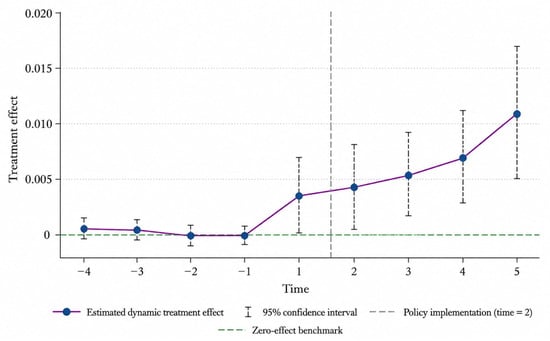
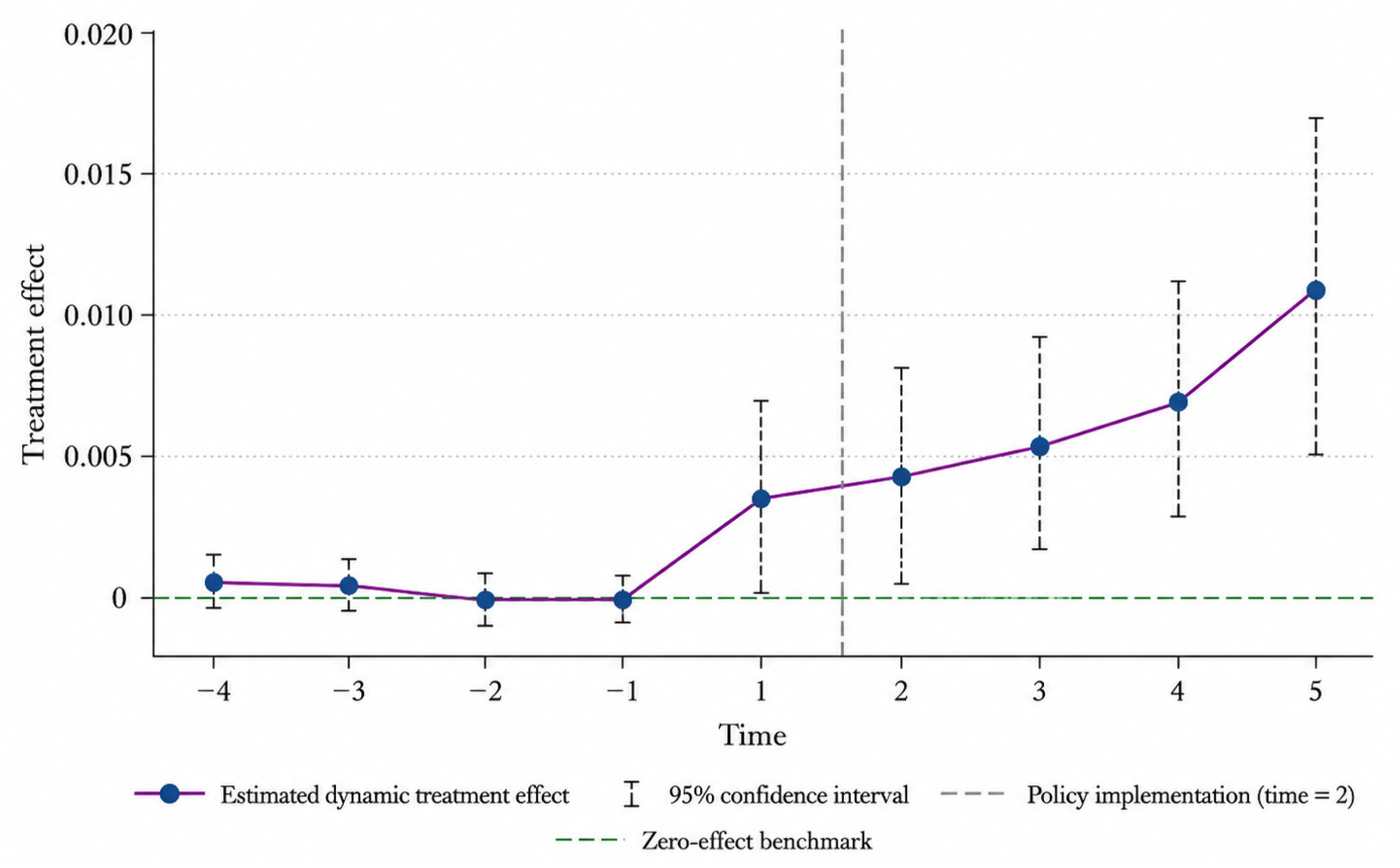
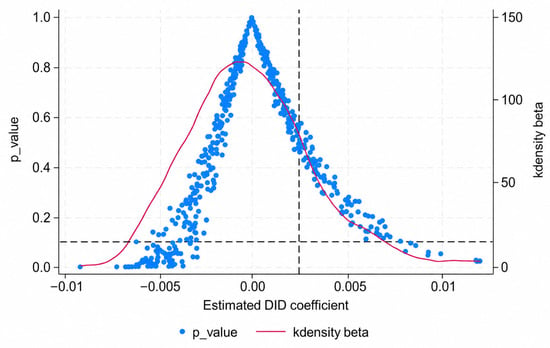
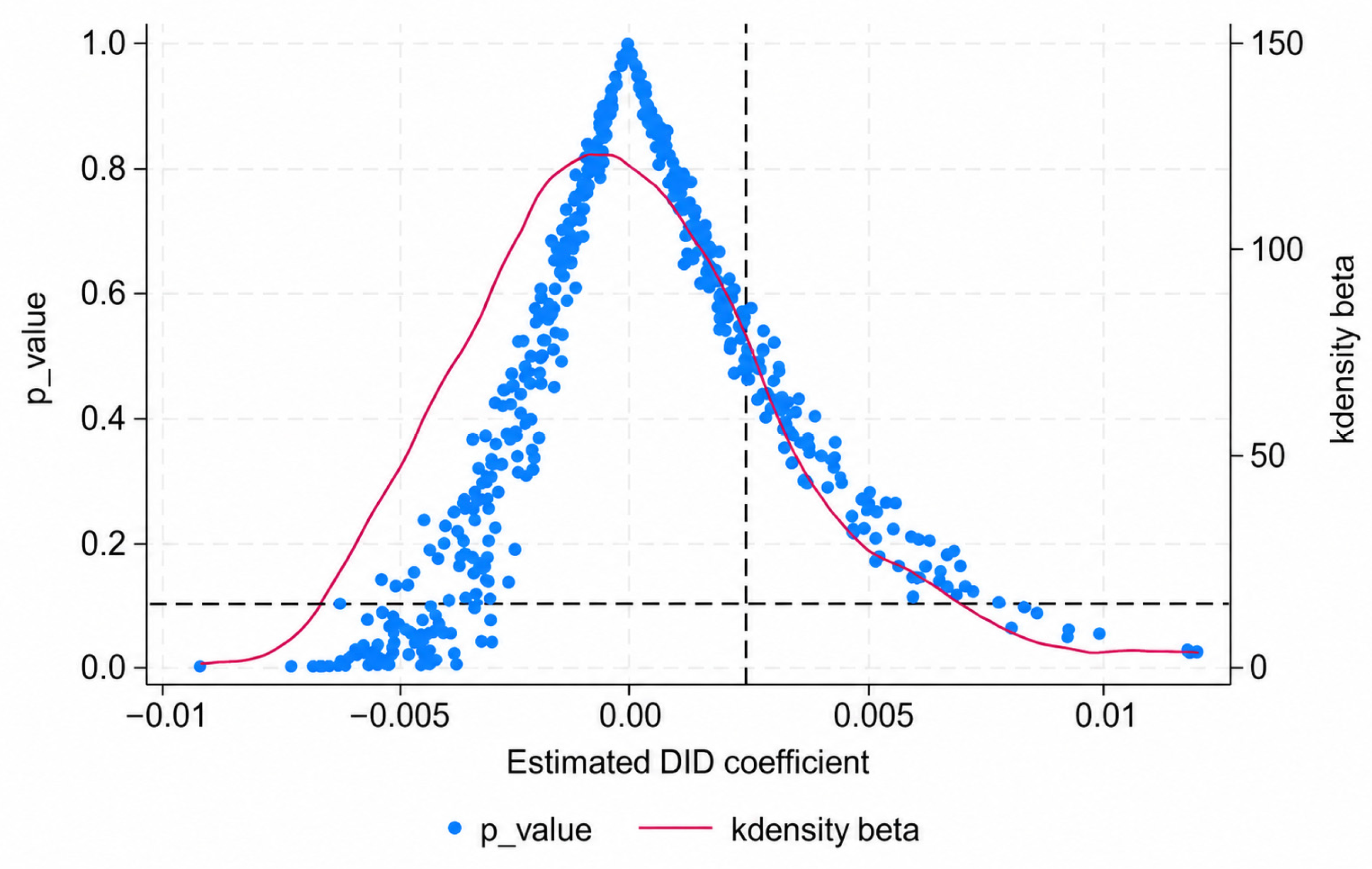

Disclaimer/Publisher’s Note: The statements, opinions and data contained in all publications are solely those of the individual author(s) and contributor(s) and not of MDPI and/or the editor(s). MDPI and/or the editor(s) disclaim responsibility for any injury to people or property resulting from any ideas, methods, instructions or products referred to in the content. |
© 2026 by the authors. Licensee MDPI, Basel, Switzerland. This article is an open access article distributed under the terms and conditions of the Creative Commons Attribution (CC BY) license.