


Abstract
Using balanced panel data for 30 Chinese provinces from 2014 to 2023, this study examines the relationship between digital village development and input-related agricultural carbon emissions in China. A composite digital village index is constructed from eight standardised indicators, and PCA diagnostics together with a PCA-based alternative index are used to assess index validity and sensitivity. Two-way fixed-effects models are used for empirical estimation. The results show that digital village development is significantly associated with lower agricultural carbon emissions after controlling for economic, fiscal, technological, regulatory, provincial, and temporal factors. The finding remains robust when using a rural e-commerce proxy and alternative specification checks. The lagged digital index has a negative coefficient but is less precisely estimated after the first-year observations are excluded. Heterogeneity analysis shows that the association is stronger in provinces with higher rural educational attainment, in Central China, and in major grain-producing areas, while the coefficient for grain-balanced areas is negative but not statistically significant. Mechanisation-based subgroup results further show that the negative association is more pronounced where agricultural mechanisation is relatively advanced. These findings suggest that rural digitalisation can support a low-carbon agricultural transition, particularly when digital infrastructure is transformed into effective industrial applications, public services, human capital development, and improved production organisation. This study focuses on input-related and field-operation-related agricultural carbon emissions rather than a complete agricultural greenhouse gas inventory including methane, nitrous oxide, and manure management and land use change emissions.
1. Introduction
Climate change, ecological degradation, and the continued growth of greenhouse gas (GHG) emissions continue to place considerable pressure on global sustainable development. Carbon mitigation is not only an environmental issue but also a strategic development goal for China. The country has announced that before 2030, it will reach peak carbon dioxide emissions, and before 2060, it will become carbon neutral [1]. While emissions from sectors based primarily on CO2 combustion from fossil fuels are different from agricultural emissions, this means that achieving national climate targets will not be possible without mitigation measures in all parts of the economy, not just in heavy industry, power generation and transport [2]. It is, hence, essential for policies concerning agricultural and rural progress to be incorporated into the holistic framework of climate governance in China.
When compared with manufacturing, electricity generation, transportation or construction, agriculture is sometimes considered a relatively low-carbon industry. However, this perception might not consider the significant carbon footprint of today’s food production. The current agricultural system relies on chemical fertilisers, pesticides, plastic mulch, machinery powered by diesel, and irrigation and tillage systems. These inputs and practices are sources of emissions during their manufacture and distribution and also during their use on-farm; they are significant contributors to agricultural carbon emissions [3]. Fossil energy is also required during irrigation and land management operations, which can also have an impact on the soil carbon cycle and consequently increase the climate change footprint of agriculture [4]. The spatial distribution of agricultural emissions in China is uneven, and high emissions are frequently found in the north. This trend is due to variations in natural resource endowments, crop composition, production technologies, intensities of production inputs, and local policies [5]. Earlier empirical studies have also revealed that the performance of emissions varies widely across regions, suggesting that mitigating policies should be flexible and locally tailored instead of managed at the national level [6]. Technological progress and the change of the organisation of agricultural production have been important means of achieving a low-carbon transition in agriculture in this context [7].
Rural economies are changing in the context of digitalisation all over the world. The collection, transfer, interpretation and utilisation of agricultural information is transforming through big data analysis, Internet of Things (IoT) equipment, mobile communication networks, remote sensing technologies, cloud-based platforms, and digital service systems. Evidence from the international literature shows that data-intensive farming can lead to better resource allocation and a reduction in the waste of resources [8]. Smart farming systems can help to better manage water, fertilisers, pesticides and machinery [9]. However, rural digital transformation is not merely the introduction of new equipment into agricultural production. It also transforms agricultural extension, institutions at the local level, market linkages, farmers’ behaviour in managing business, and the linkages among farmers, service providers, firms and consumers [10].
The impacts of digital agriculture are quite varied at the national and regional levels. In many high-income countries, sensor-based systems, IoT applications and automated control technologies have been adopted for large-scale commercial farming. In these situations, digital solutions have shown the potential to optimise input usage and create tangible gains in emissions reductions [11]. On the other hand, there is still a significant gap in agriculture mechanisation, according to data from many low- and middle-income economies. Digitalisation is limited by weak rural infrastructure, fragmented farms, limited financial access and a lack of technical support to achieve environmental gains [12]. Such disparities reveal that the climatic effects brought by digital farming hinge on plot scale, institutional arrangement, human capital stock and matched service infrastructures. The digital village strategy in China has emerged in an agricultural landscape dominated by smallholders. It is not the “smart-farm” model that has been adopted by many advanced economies, nor is it the more nascent digital agriculture model in many low-income economies. It, thus, serves as a valuable case study to explore the linkages between rural digitalisation and agricultural carbon mitigation in the context of a developing country.
In China, digital village development is not limited to access to the internet or the construction of hardware. It is a holistic rural transformation approach integrating digital infrastructure, digital industry, public services, financial inclusion, logistics systems and e-governance. According to comparisons among different provinces, it is known that the development of the digital village is still in an imbalanced state in China [13]. Recent evaluation studies also indicate a close relationship between digital rural development results and rural revitalisation outcomes and governance capacity [14]. The advancement of the rural digital economy has further facilitated industrial upgrading and the restructuring of local production and organisational patterns [15]. Digital platforms have made the farmers’ market more accessible, brought agricultural products into circulation faster and have helped rural household income and welfare [16].
However, the environmental implications of digital village development remain insufficiently understood. From a macro perspective, the digital economy promotes green total factor productivity through three channels: knowledge spillover, optimised resource allocation and industrial structure transformation [17]. In China, internet development has impacted energy consumption in three ways: energy use efficiency, the nature of energy consumption, and industrial transformation [18]. International evidence also suggests that digitalisation can contribute to energy transition, but the impact is contingent on the quality of local governance and institutional capacity [19]. Based on the empirical studies conducted in China, energy intensity and emissions may be reduced by digitalisation if the conditions are suitable [20]. Digitalisation in agriculture has the potential to lower carbon intensity through structural change and technological innovation [21]. Digital village development can also enhance information flow and the land use of cultivated lands, which can help greener land use transformation [22]. There is recent research evidence that digitalisation in the countryside can enhance the green performance of agricultural production; however, direct evidence on input-related agricultural carbon emissions remains limited [23].
International studies have highlighted the importance of institutional arrangements and rural human capital in determining the potential of turning digital tools into low-carbon farming practices [24,25]. Many developing economies are confronted with two pressures: on the one hand, rural digitalisation remains underdeveloped, while on the other hand, agricultural production relies on carbon-intensive inputs. The lessons learned from China suggest that digitalisation can contribute to emission reduction and green transition if it is integrated into relevant policy systems, service systems, and production systems; thus, the country is able to offer empirical references for nations confronting similar development challenges [20,21,26].
Despite growing interest in the environmental consequences of digitalisation, several gaps remain. First, much of the existing literature examines the general digital economy, urban digitalisation, or isolated digital–agricultural technologies, while fewer studies focus on digital village development as a multidimensional rural transformation process that integrates infrastructure, industrial applications, public services, digital finance, logistics, and rural e-commerce. Second, agricultural carbon emissions from the input side and the field-operation side have been less directly discussed in many studies, while agricultural green total factor productivity, carbon intensity, and pollution indicators are used as outcome variables. Third, there is scarce evidence regarding the circumstances in which digital village development is more strongly connected to agricultural carbon mitigation, including its relationship to rural education, the region in which it is implemented, grain-functional areas, and mechanisation. Fourth, there is a need for increased transparency in the construction of the composite digital village indicators, including indicator selection, PCA loadings, and the contribution of various digital dimensions.
The following question guides this study: is digital village development associated with lower agricultural carbon emissions across China? A multidimensional digital village development index is constructed from eight standardised indicators to answer this question. PCA diagnostics and a PCA-based alternative index are further used to examine the validity and sensitivity of the index construction. To estimate the relationship between digital village development and agricultural carbon emissions, this study utilises balanced panel datasets covering 30 provincial regions from 2014 to 2023. Empirical analysis consists of two-way fixed-effects models, multiple robustness tests, heterogeneity analysis, and an additional instrumental-variable exercise (reported in the Appendix A) and exploratory subgroup analysis with regard to potential mechanisms.
This study contributes to the literature in three ways. First, it links digital village development with agricultural climate governance by examining input-related agricultural carbon emissions rather than only rural income, industrial upgrading, or agricultural green total factor productivity. Unlike recent prefecture-level or county-level studies that usually focus on the rural digital economy or agricultural green productivity, this study treats the digital village as a multidimensional policy and development framework and directly examines input-related agricultural carbon emissions. Second, it constructs a multidimensional digital village index from eight standardised indicators and reports additional PCA diagnostics, including component loadings, variance contribution, and the KMO statistic. It also uses a recomputed PCA-based index as a sensitivity check, thereby improving the transparency and reproducibility of index construction. Third, it examines heterogeneous associations across rural education levels, regions, grain-functional areas, and mechanisation conditions and provides mechanism-related evidence based on different agricultural carbon-emission sources.
China’s digital village strategy has a distinctive institutional context. It has developed in a smallholder-dominated agricultural system but is supported by national rural revitalisation policies, public investment in digital infrastructure, the rapid expansion of rural e-commerce, digital inclusive finance, and logistics networks. This differs from the capital-intensive smart-farming model in many high-income economies and from more fragmented digital–agriculture initiatives in some low-income economies. Therefore, the findings should not be interpreted as mechanically generalisable to all countries. Rather, they provide analytical evidence for developing economies seeking to combine rural digital inclusion, agricultural modernisation, and low-carbon transition under smallholder conditions.
The remainder of this paper is organised as follows. Section 2 reviews the related literature. Section 3 develops the theoretical framework and research hypotheses. Section 4 describes the data, variables, and empirical models. Section 5 presents the empirical results. Section 6 discusses the findings. Section 7 concludes the paper and provides policy implications.
2. Literature Review
2.1. Digital Village Development and Rural Transformation
Digital village development is a comprehensive process of rural transformation which involves the connectivity of infrastructure, digital industrial activities, service delivery and the modernisation of governance. Digital tools improve agricultural production efficiency through real-time data gathering, remote farm supervision, precision agricultural management and data-driven decision-making [27]. A special characteristic of digitalisation in the rural areas of China is the fast development of rural e-business, especially the growth of the ‘Taobao villages’ linked to big online platforms [28]. These new rural economic models are examples of the way that digital marketplaces can connect geographically dispersed producers with national consumer markets and encourage local entrepreneurship [28,29]. Advancement in the development of digital villages helps bridge the income gap between urban and rural residents. It enables rural populations to gain easier access to information, employment opportunities, financial services, logistics systems and public service facilities [29]. New evidence from the provinces shows that digital village development can also help to foster agricultural green growth [30].
The majority of studies published so far agree that digital village development can bring about economic and social benefits and that the impact on the environment is more complex [17,21,22]. Increased digital infrastructure can, on the one hand, lead to a higher electricity demand and a higher use of digital equipment in rural areas. Conversely, there are applications in the fields of precision agriculture, rural logistics, e-commerce and extension that could help to decrease the overuse of agricultural inputs, enhance coordination and lower agricultural carbon emissions [22].
The environmental impact overall will hinge on how the implementation of digital infrastructure is followed by productive applications and service innovations that impact decisions in agricultural production. International experiences demonstrate that digitalisation in rural areas can take several forms in different countries. In the high-income context of Western Europe, digital technologies are frequently used in large mechanised agriculture, but their use is still dependent on the social, political and institutional situation in rural communities [31]. In many of the settings in which digital benefits are explored in developing contexts, these services are also critical, including mobile money, input markets, extension networks, and reliable infrastructure. Smallholder dominance might also constrain the environmental benefits of applications of digital technology, unless service systems can be developed to address scale constraints [32]. These differences indicate that the size of the farm, institutional conditions and service capacity play a key role in whether or not rural digitalisation can make a positive contribution to carbon reduction.
2.2. Agricultural Carbon Emissions: Measurement, Drivers, and Mitigation
In the agricultural carbon-accounting literature in China, emissions are often estimated based on the inputs and field operations of agricultural production processes [3,5,7]. The use of chemical fertilisers, pesticides and plastic mulch films continues to be a significant source of the carbon footprint of Chinese agriculture [33]. Other practices such as diesel, irrigation and tillage are also important because they are closely related to energy use and field management. Agricultural emissions of carbon are highly location- and time-dependent and are influenced by land resources, planting systems, mechanisation, environmental policies and input levels [34].
Digitalisation has increasingly been regarded as a potential pathway for greener agricultural development. Digital technologies offer the potential to better allocate resources in agriculture, to increase on-farm information access and to share green production techniques more quickly [35]. Nevertheless, existing county-level empirical evidence reveals that rural digital transformation exerts a promoting effect on agricultural green total factor productivity [23]. Digital green finance and blockchain technology could help overcome the difficulties in financing and increase transparency in agricultural supply chains [36,37]. In general, precision agriculture technology can help enhance productivity and mitigate the impact on natural resources and ecosystems [38].
A number of low-carbon pathways for agriculture have been investigated in international research. The use of precision irrigation in conjunction with monitoring and control technologies has led to energy-saving and emission-reduction benefits in dry and water-limited agricultural regions [39]. The agricultural GHG emission structure and accounting method differ significantly among countries and regions, such as the Chinese economy and African economies [40]. The results suggest that the carbon-mitigation impact of digital agriculture is sensitive to local production systems, ecology, and technology-adoption contexts [39,40].
2.3. Digital Finance, Rural Services, and Green Agriculture
Digital finance, as one of the components of digital village development, can be a pathway through which rural digitalisation can impact green agricultural transformation. Rural financial backing is capable of boosting the rollout of eco-friendly production techniques within the agriculture industry [41]. Digital inclusive finance can also lower transaction costs, open up green investment opportunities, and enhance access to finance for rural actors [42]. It might also affect rural human capital accumulation in terms of the farmers’ willingness and ability to adopt digital and green production technologies [43].
Existing recent studies confirm that digital green finance and digital inclusive finance serve as important channels for improving agricultural productivity and agricultural green total factor productivity [44,45]. Digital inclusive finance can be a way to optimise agricultural structure and support green agricultural development [46]. Low-carbon farmers’ production behaviour is also affected by rural financial support policies [41]. Empirical evidence from China suggests that digital finance exerts positive effects on agricultural green total factor productivity (TFP) [44]. The insights derived from such findings apply to developing nations confronting comparable financial service limitations for rural households and micro-rural enterprises [41,42]. There is also evidence that digital financial inclusion might help to alleviate environmental constraints, including agricultural non-point source pollution [47].
Digital finance is part of the digital rural ecosystem and, therefore, is included in the composite digital village index in this study. Meanwhile, to examine whether the core finding is mainly driven by the finance dimension, we perform a robustness test with an alternative index that excludes digital finance.
2.4. Human Capital, Technology Adoption, and Rural Education
Rural human resources serve as a core determinant for the spread and efficient deployment of digital and eco-friendly agricultural techniques [48]. Farmers’ uptake of precision farming tools is shaped by their schooling background, operational scale, the accessible technical resources, information channels and the practical value of relevant techniques [49,50]. Providing training and technical assistance can enhance the farmer’s ability to adopt digital platforms and utilise agricultural information to make production decisions [51]. Reviews focusing on agricultural technology uptake across developing economies also identify information barriers as a major obstacle to the popularisation of innovative farming technologies [48,51].
However, the rural digital divide, particularly in digital literacy and human capital, has always been a limiting factor in the adoption of digital agriculture for low-carbon practices in many developing rural areas [52]. Therefore, the role of professional training, extension and knowledge dissemination is crucial in addressing this constraint [52]. Beyond serving as an indicator of social progress, rural human capital acts as an essential prerequisite for digital infrastructure to advance low-carbon agricultural development. This suggests that digital village development may generate stronger environmental benefits in regions where farmers are better educated and more digitally literate.
2.5. Government Intervention, Regional Heterogeneity, and Spatial Context
There are several ways in which the government can affect rural digitalisation and the reduction of carbon in agriculture. Public investment and subsidies are available for the supply of digital infrastructure, agricultural services and the diffusion of green technology. Meanwhile, the way that digital policy instruments are designed impacts the extent to which producers adopt precision technologies [53]. ICTs can interface with environmental governance for the enhancement of green energy efficiency and to contribute to the reduction of pollution and carbon [54]. Patterns in the carbon-mitigation potential of the digital economy also offer valuable insights for designing policies at the country level [55]. According to related research, under the proper policy conditions, digital development can enhance environmental quality [56].
Regional heterogeneity is important because digital infrastructure, agricultural production conditions, and institutional capacity vary substantially across space. Although this study does not estimate spatial econometric models, it accounts for spatial and functional differences through regional heterogeneity tests and grain-functional-area analysis.
2.6. International Perspective and Research Gap
The theory of directed technical change provides a useful framework for understanding how technological progress can be directed towards an environmentally friendly path [57]. Empirical reviews also provide a summary of the trends and implications of agricultural technology adoption in developing economies [48]. The rural digital economy has boosted industrial upgrading, income growth and green transformation in China [15,16,58]. Scholars have increasingly focused on the nexus between digital economic progress and agricultural carbon emissions in recent years, while prefecture-level evidence has started to directly connect rural digital economy development and agricultural carbon emissions in China [59]. This study, therefore, extends the literature by focusing on input-related agricultural carbon emissions and by examining the conditions under which digital village development is more strongly associated with agricultural carbon mitigation.
3. Theoretical Framework and Research Hypotheses
Digital village development may be associated with lower agricultural carbon emissions through three interrelated pathways: efficiency enhancement, structural optimisation, and scale management. These pathways work through production decisions, market coordination, provision of services and the capacity of rural organisations [21,22,59]. Digital technologies offer ways to provide information, connectivity and coordination tools, and their environmental impacts hinge on their shaping of agricultural behaviour and input application.
3.1. Efficiency Enhancement Effect
Digital village development can enhance the efficiency of agriculture by introducing digital technology in the production decision-making system [8,9,11]. Sensors, satellite data, big data analysis, mobile apps, and IoT sensors are capable of providing real-time information regarding soil humidity, nutrient concentration and crop growth status, weather shifts, and pest activity to farmers and/or service providers. These data can help to facilitate better irrigation, fertilisation, pesticide usage and field management. Agricultural emissions are closely linked to the excessive use of fertilisers, pesticides, diesel, irrigation and tillage [3,4,33,34], and more precise decisions on input use can help to avoid unnecessary emissions [9,11,60].
Digitalisation can be used to bolster agricultural extension as well. Traditional extension systems are too often limited in their coverage and slow in transmitting information and are weak in adapting to local conditions. Digital platforms can deliver weather forecasts, disease alerts, price information, and technical recommendations more rapidly and at lower cost. Improved information will help farmers make better changes to production practices, minimise the wasteful application of inputs, and increase the efficiency of using resources. Thus, digital village development does not reduce emissions just because digital technology is available; rather, it alters the information environment in which agricultural decisions are made.
3.2. Structural Optimisation Effect
Digital village development has the potential to modernise agricultural value chains by expanding market access and agricultural logistics and enabling high-value agriculture in rural areas [15,16,28]. Traditional agriculture is generally defined by short value chains, low value added, weak market linkages and a high reliance on primary production, which is resource-intensive. Digital platforms, rural e-commerce, logistics and traceability technologies can be used to extend agricultural value chains to processing, direct sale, branding, quality certification and rural service provision.
There are a number of ways that structural optimisation can influence carbon emissions. Better market links help minimise storage losses and unnecessary transport and enable better product circulation. Digital logistics and traceability systems can support the coordination of supply chains and provide incentives for cleaner production [36,37,61].
Producers may be more motivated to switch to greener production methods when they are linked to consumers who are willing to pay for safety, quality and ecological characteristics. There are also possibilities in terms of emission reductions per euro of economic value through structural upgrading, which can be achieved by stimulating higher value and quality production. Digital village development helps to reduce the obstacles to market entry and link small producers with larger markets [15,16].
3.3. Scale Management Effect
Small land holdings continue to be one of the biggest challenges for agriculture in China. Fragmentation leads to the inefficient use of machines and labour and the inefficient management of inputs and can impede the adoption of cleaner technology. The literature on smallholders’ transformation, rural digitalisation, and agricultural services outsourcing in China indicates that digital platforms help to move towards and implement land transfer, services outsourcing, and coordinated farm management, thus enabling suitable scale operations [15,28,62].
Expansive farm management optimises the energy consumption efficiency of agricultural machines and increases the overall utilisation rate of farming equipment. It can also reduce the expenses and difficulties involved in acquiring low-carbon technologies like energy-saving equipment, smart irrigation, precision fertilisation equipment, and digital monitoring devices. Platform-based services can amortise the fixed costs of technology over larger areas of operation and enable access to such tools to smallholders that may be unable to afford the tools themselves.
Ecological practices could also be facilitated by scale management. Better coordinated production generally provides more opportunities for crop rotation, soil conservation, straw utilisation, organic fertiliser substitution and climate-adaptive farm management. The emission benefits associated with these practices include a reduction in fertiliser use, an increase in soil carbon storage and an increase in ecosystem resilience, which is consistent with the emission benefits associated with appropriately scaled and better organised agricultural production [62].
3.4. Rural Education as a Conditioning Factor
The impact on the environment with respect to digital village development will likely not be the same in different parts of the world. Past studies highlight the fact that having access to digital technologies does not necessarily mean that the user will be able to use them, as it is important to be able to understand and make use of them [49,52,53]. Digital resources do not automatically generate positive environmental outcomes. Digital information must be accessible; farmers need to assess technology options, utilise digital platforms, and translate information into production decisions. Low-carbon outcomes of digital village development are, therefore, dependent on rural education and digital literacy.
More education in rural areas could reinforce the carbon-reducing impact of digital village development in multiple ways. Farmers with higher education levels are more likely to have access to internet-based information, to adopt precision technologies, to engage in digital training and to follow green production standards. Rural firms and cooperatives in more educated regions might also be more capable of integrating digital logistics, traceability and green supply chain management. Existing studies on digital literacy, rural human capital, and green agricultural transformation suggest that better human capital can strengthen the emission-reduction effect of digital village development [49,52,58]. Therefore, digital village development is expected to generate stronger carbon-reduction effects in regions with higher rural human capital.
Drawing on the above theoretical analysis and previous empirical findings [21,22,53], we put forward the research hypotheses below:
H1.
Digital village development is significantly associated with lower agricultural carbon emissions.
H2.
The negative association between digital village development and agricultural carbon emissions is stronger in regions with higher rural educational attainment.
The theoretical pathways between digital village development and agricultural carbon mitigation are shown in Figure 1.
Figure 1.
Theoretical pathways linking digital village development and agricultural carbon emissions. Source: Authors’ illustration.
4. Methodology and Data
4.1. Data Sources
This study uses a balanced provincial panel covering 30 Chinese provinces from 2014 to 2023, with 300 province–year observations. Tibet is excluded because of data unavailability, and Hong Kong, Macao and Taiwan are not included. The raw dataset covers 30 provinces over 2013–2024. To maintain consistency with the availability of the digital village indicators and the agricultural carbon-accounting variables, the final estimation sample retains the period 2014–2023. Data sources include the China Statistical Yearbook, China Rural Statistical Yearbook, China Agricultural Products Processing Yearbook, Peking University Digital Inclusive Finance Index, and official datasets released by the National Bureau of Statistics of China and the Ministry of Agriculture and Rural Affairs.
We further checked missing values in both the raw dataset and the final estimation sample. In the 2014–2023 final sample, the dependent variable, the six agricultural carbon-emission sources, the eight digital village indicators, and the control variables used in the baseline regression contain no missing values. The only missing observation in the raw 2014–2023 dataset relates to primary-industry employment, which is not used in the baseline regression, index construction, or agricultural carbon-accounting procedure. Therefore, no interpolated values of core variables enter the final estimation sample, and a robustness test excluding interpolated core observations is not applicable. The missing-value check is reported in Table A2.
For a number of reasons, province-level panel data are appropriate for this study. First, provincial governments have significant responsibilities in terms of policy-making, infrastructure development, industrial development in rural areas, agricultural planning and the provision of public services. These activities are tightly coupled with the development of the digital village in China. Second, agricultural carbon emissions can be estimated on the basis of the agricultural input and activity information given in the official statistics for each province. Thirdly, the provincial data can be compared across different regions with different endowments with respect to agriculture, education, mechanisation, etc., and different functions for grain production. However, due to the variation in behaviour at the village or household level, the level of analysis in this study is restricted to the provincial level, which is discussed later.
4.2. Variable Measurement
4.2.1. Agricultural Carbon Emissions
Agricultural carbon emissions are used as the dependent variable in this study. It should be emphasised that the accounting boundary refers to input-related and field-operation-related agricultural carbon emissions, rather than to a complete agricultural greenhouse gas inventory. Following previous agricultural carbon-accounting studies in China [3,5,7], six emission sources are considered: chemical fertiliser, plastic film, diesel consumption, pesticide use, tillage, and irrigation. These sources capture carbon emissions associated with major agricultural material inputs and field operations. Emission coefficients are derived from commonly used references and technical sources, including West and Marland [63] for fertiliser, the IPCC guidelines [64] for diesel, and Huang et al. [65] for plastic film, pesticides, tillage, and irrigation. The emission coefficients and their corresponding sources are reported in Table 1. Total farming carbon emissions are:
where Carbonit stands for agricultural carbon emissions in province i and year t; Usages,it signifies the magnitude of agricultural material inputs or productive activities; and Coefficients refers to the matching carbon-emission factor. This accounting system records emissions from the inputs of materials used and the field-management practices and allows for emissions to be tracked consistently across provinces and over time.
Table 1.
Emission coefficients for agricultural carbon sources.
This accounting framework does not include all agricultural greenhouse gas sources. In particular, methane emissions from rice cultivation and livestock, nitrous oxide emissions from agricultural soils, manure management emissions, and land use change-related emissions are outside the scope of this study. Therefore, the dependent variable should be interpreted as input-related and field-operation-related agricultural carbon emissions. This boundary is consistent with a common strand of China-focused agricultural carbon-accounting literature, but it also implies that the results should not be generalised to total agricultural GHG emissions.
4.2.2. Core Explanatory Variable: Digital Village Development
The baseline digital village index is constructed as the arithmetic mean of the eight standardised indicators, normalised to [0,1]. Principal component analysis (PCA) is used diagnostically to assess the internal structure of the indicators and to construct an alternative index for sensitivity checking (reported in Table A6). The main empirical results, therefore, rely on the transparent and easily replicable mean-based index, while the PCA-based index serves as a sensitivity check.
The core explanatory variable is the digital village development index. Digital village development is a multidimensional process, and, therefore, the index is constructed from eight indicators covering three dimensions: digital infrastructure, digital industry, and digital services. The digital infrastructure dimension includes mobile phone ownership, computer ownership, and rural broadband users, which reflect basic digital access and connectivity. The digital industry dimension includes modern agricultural demonstration zones, e-commerce transaction volume, and digital inclusive finance, which capture the integration of digital technologies with rural industries, market participation, and financial services. The digital service dimension includes rural delivery route length and the share of Taobao villages, which reflect logistics capacity and platform-based rural service development. The selection of these indicators is consistent with existing studies on digital village evaluation, rural digital economy development, digital finance, rural e-commerce, and agricultural green transformation [13,14,30,41,42].
All eight indicators are first standardised to remove differences in units and scales. The baseline digital village development index is constructed as the arithmetic mean of the standardised indicators and is then normalised to the range [0,1] using min–max normalisation. This approach gives equal importance to the infrastructure, industry, finance, logistics, and platform-service elements included in the digital village framework. To improve transparency and assess the validity of the index construction, PCA diagnostics are also reported. Table A1 presents the PCA loadings, the eigenvalue of the first component, the variance contribution, and the KMO statistic. The first principal component explains 35.97% of the total variance, and all eight indicators have positive loadings. The overall KMO statistic is 0.5796, indicating a moderate but acceptable level of sampling adequacy. In addition, a recomputed PCA-based index is used as a sensitivity check, and the results are reported in Table A6. The recomputed PCA-based index is highly correlated with the baseline index, with a correlation coefficient of 0.9873, which suggests that the baseline index and the PCA-based index capture highly similar variations in digital village development.
4.2.3. Control Variables
Control variables are included to reduce omitted-variable bias from economic, fiscal, technological, and regulatory factors. The logarithm of per capita GDP (ln_gdp_percap) is used to proxy economic development. Agricultural fiscal support (agri_finance_ratio) is measured as the ratio of agricultural fiscal expenditure to total fiscal expenditure. Agricultural mechanisation (mech_level) is measured as agricultural machinery power per agricultural worker. Environmental regulation intensity (ln_env_reg) is calculated as the natural logarithm of the frequency of environment-related policy terms plus one. Urbanisation (urban_pct) and agricultural value added (ln_agri_valueadded) are reported in the descriptive statistics, while the baseline and subsequent regressions use the parsimonious control-variable set reported in the regression tables.
Robustness, heterogeneity and mechanism-related analyses are performed using several auxiliary variables. They include the digital inclusive finance index (digital_finance), Taobao village share (taobao_pct), average years of schooling of the rural population (edu_year), the carbon-trading pilot dummy (carbon_pilot), the dummy for higher rural education (high_edu), and the dummy for higher government intervention (high_gov). The variable high_gov equals one if the ratio of local general public budget expenditure to GDP exceeds the sample median, and zero otherwise. The definitions, measurement units, and data sources of all variables used in the empirical analysis are summarised in Table 2.
Table 2.
Variable definitions and sources.
4.2.4. Descriptive Statistics
Table 3 summarises the descriptive statistical results for all observed samples. The average aggregate agricultural carbon discharge reaches 2615.91 (10,000 tons), and the standard deviation shows that there are significant inter-provincial and interannual variations. The digital village development index falls within the range from 0 to 1, with a mean of 0.324 and a standard deviation of 0.183. This distribution indicates that there is significant inter-provincial variation in the pattern of rural development with respect to digitalisation. There is also variation in rural human capital within the sample. Rural residents’ average years of schooling are 7.910; the minimum is 5.878, and the maximum is 10.274. Overall, the descriptive statistics indicate that the main variables of interest are sufficiently varied to proceed with econometric analysis.
Table 3.
Descriptive statistics.
4.3. Empirical Models
4.3.1. Baseline Two-Way Fixed-Effects Model
To examine the association between digital village development and agricultural carbon emissions, the benchmark two-way fixed-effects specification is specified as follows:
where ln(Carbon)it indicates the logarithm of input-related and field-operation-related agricultural carbon emissions in province i and year t; Digitalit is the baseline composite digital village index; Xit is a vector of control variables; μi represents province fixed effects; λt represents year fixed effects; and εit is the error term. Province fixed effects control for time-invariant provincial characteristics, while year fixed effects control for common annual shocks. Following standard practice for panel data [66], standard errors are clustered at the province level.
The coefficient of interest is β. A significantly negative β indicates that higher digital village development is associated with lower agricultural carbon emissions within the accounting boundary of this study. This specification should be interpreted as estimating conditional associations rather than definitive causal effects.
4.3.2. Robustness Specifications
There are several alternative specifications that are estimated to attempt to measure whether the baseline is stable. To check if the result is driven by the PCA-based construction of the composite digital village index, we then switch to using the share of Taobao villages as a more direct proxy for rural e-commerce and platform-based digital development:
Second, the contemporaneous digital village index is replaced with a one-period lag of the digital village index as a supplementary check for temporal ordering:
Additional specification checks are carried out using four approaches: excluding the four provincial-level municipalities, controlling for carbon-trading pilot policy status, reconstructing the digital village index by excluding the digital-finance component, and applying winsorisation to reduce the influence of extreme values. These checks examine whether the baseline association is sensitive to sample composition, policy context, index construction, and outliers.
4.3.3. Heterogeneity Model
To examine whether the digital village–carbon association differs across provincial conditions, this study estimates the following interaction model:
where HighEduit is a dummy variable equal to one if the average years of schooling of rural residents in province i and year t exceed the sample median, and zero otherwise. In this specification, the estimated association for the low-education subgroup equals β1, while that for the high-education subgroup equals β1 + β2.
A similar interaction specification is used to examine whether the digital village–carbon association differs by government-intervention intensity. Government-intervention intensity is measured by a dummy variable indicating whether the ratio of local general public budget expenditure to GDP is above the sample median. In addition, separate regressions are performed by region and by grain-functional-area category to investigate spatial and functional heterogeneity.
4.3.4. Instrumental-Variable Estimation
Although the fixed-effects framework controls for time-invariant provincial characteristics and common annual shocks, potential endogeneity may still arise from omitted time-varying factors, measurement error, or reverse causality. Therefore, this study reports an instrumental-variable exercise as a supplementary identification check. Given the limited strength and precision of the IV estimates, this exercise is not used as the main basis for causal interpretation.
The instrumental variable is constructed by multiplying the indicator of whether a province serves as a fibre-optic backbone core node by the annual leave-one-out average value of digital village development across all remaining provincial samples. The leave-one-out mean reflects the average national digital-development trends in all other provinces, and the historical positioning of communication networks could shape the capacity of a province to reap national digital benefits. The first stage equation is:
The instrument is defined as follows:
The second-stage equation is:
where IVit is the interaction instrument, CoreProvincei is a binary variable that equals one for fibre-optic backbone core-node provinces, and LeaveOneOutDigital−i,t is the leave-one-out mean of the digital village development index in other provinces. A valid instrumental variable should be correlated with digital village development and should affect agricultural carbon emissions only through digital village development. Because this exclusion restriction cannot be directly tested, the IV results are interpreted cautiously. In both stages, province and year fixed effects are included, and standard errors are clustered at the province level. The IV results are reported in the Appendix A.
5. Empirical Results
5.1. Baseline Regression Outcomes
Table 4 reports the benchmark fixed-effects estimation results. In Column (1), the estimated coefficient of the digital village development index is −0.2497 and statistically significant at the 1% level. In terms of economic magnitude, the standard deviation of the normalised digital village index is 0.1833. Multiplying this value by the baseline coefficient indicates that a one-standard-deviation increase in digital village development is associated with a 0.0458 log-point decrease in agricultural carbon emissions, equivalent to approximately 4.5% lower input-related agricultural carbon emissions. This finding suggests that digital village development is significantly associated with lower input-related agricultural carbon emissions after controlling for economic development, agricultural fiscal support, mechanisation, environmental regulation, province fixed effects, and year fixed effects. The result is consistent with Hypothesis 1 and suggests that rural digitalisation may contribute to agricultural carbon mitigation through better information access, production coordination, and input-use efficiency. However, the estimate should be interpreted as a conditional association rather than definitive causal evidence.
Table 4.
Baseline regression results.
The composite index in columns (2)–(4) is replaced by the three subdimensions (digital infrastructure, digital industry development and digital service provision). The estimated coefficient of digital infrastructure shows a statistically significant positive value, suggesting that infrastructure expansion alone may not generate carbon-reduction outcomes in the short term. One possible explanation is that the construction and operation of broadband networks, digital equipment, and related facilities may increase electricity demand and digital device use. Another explanation is that infrastructure mainly provides access and connectivity, while carbon-reduction outcomes depend on whether such connectivity is converted into production management, digital extension, irrigation scheduling, logistics coordination, and green supply chain applications. By contrast, the coefficients of digital industry development and digital service provision are significantly negative. This pattern indicates that the environmental value of digital village development is more closely associated with application-oriented and service-oriented digital transformation than with infrastructure expansion alone.
Mechanisation is positively and significantly correlated with agricultural carbon emissions in all specifications. This result should be interpreted carefully. Because the dependent variable measures aggregate input-related agricultural carbon emissions rather than carbon intensity, higher mechanisation may be associated with greater diesel use and more intensive field operations. At the same time, mechanisation may also improve operational efficiency and reduce emissions per unit output when combined with precision management and digital scheduling. Therefore, the positive coefficient does not imply that mechanisation is environmentally undesirable in all respects. The significance of other control variables varies across specifications.
5.2. Robustness Tests
Table 5 reports six robustness and specification checks. First, the composite digital village index is replaced by the share of Taobao villages. The coefficient is negative and statistically significant, suggesting that the baseline association is not solely driven by the PCA-based composite indicator. Second, the one-period lag of the digital village index is used as a supplementary temporal-ordering check. The coefficient remains negative, but it is not statistically significant after the first-year observations of each province are excluded. Therefore, this result should be interpreted as directionally supportive rather than strong robustness evidence.
Table 5.
Robustness test results.
Third, the coefficient remains negative and statistically significant after the four provincial-level municipalities are excluded, suggesting that the baseline finding is not driven by the distinctive administrative and economic characteristics of Beijing, Tianjin, Shanghai, and Chongqing. Fourth, the baseline coefficient is unchanged when carbon-trading pilot status is considered. Because carbon pilot status is time-invariant at the provincial level during the sample period, it is absorbed by province fixed effects.
Fifth, the digital village index is reconstructed without the digital-finance component. The coefficient remains negative and statistically significant, indicating that the baseline association is not solely attributable to digital finance. Sixth, winsorising the dependent variable and the core explanatory variable at the 1% level does not change the sign or significance of the coefficient. Overall, these checks indicate that the baseline association is not driven by one specific measurement method, sample composition, policy context, digital-finance component, or extreme values.
In addition, we reconstruct a PCA-based digital village index directly from the first principal component of the eight indicators and normalise it to [0,1]. The recomputed PCA index is highly correlated with the baseline index, with a correlation coefficient of 0.9873. The coefficient of the recomputed PCA index remains negative and statistically significant, as reported in Table A6. This confirms that the main conclusion is not sensitive to the alternative PCA-based index construction.
5.3. Heterogeneity Analysis: Interaction Effects
The estimates of the interaction effects are reported in Table 6. Column (1) examines whether the association between digital village development and agricultural carbon emissions differs by government-intervention intensity. The interaction term between digital village development and high government intervention is positive and marginally significant. This means that the negative association between digital village development and agricultural carbon emissions is weaker in provinces with higher government-expenditure intensity. This finding does not mean that public support is not needed. In the field of rural digitalisation, the importance of public investment, digital public services, training programmes and agricultural data systems still cannot be neglected. Instead, it indicates that the nature of policy implementation may be more significant for the effectiveness of a policy than simply the level of intervention. Market coordination and the incentive for green production may be partially affected if the government’s actions most successfully increase infrastructure or investment activity but do not really set in motion digital tools to meet the farmers’ needs.
Table 6.
Heterogeneity analysis: Interaction effects.
Column (2) examines the conditioning role of rural education. The interaction term between digital village development and high rural education is negative and statistically significant at the 1% level. This indicates that the negative association between digital village development and agricultural carbon emissions is stronger in provinces with higher rural educational attainment. Specifically, the coefficient of digital village development is negative but statistically insignificant in the low-education group, while the combined coefficient for the high-education group is substantially more negative. This result supports Hypothesis 2 and highlights the importance of rural human capital in transforming digital access into low-carbon agricultural practices.
The marginal associations between digital village development and agricultural carbon emissions are compared by rural education level in Figure 2.
Figure 2.
Marginal associations between digital village development and agricultural carbon emissions by rural education level. Notes: Marginal associations for digital village development are calculated from Equation (2) in Table 6. The value stands at −0.0119 for provinces with low education levels and −0.2554 for provinces with high education levels. This latter figure equals the sum of the baseline main effect and the interaction term. The gap between the two groups is −0.2435, and such disparity reaches statistical significance at the one-percent threshold. Source: Authors’ calculations based on Table 6.
5.4. Regional Heterogeneity
Table 7 reports the regional heterogeneity across eastern, central, and western China. The coefficient of digital village development is negative and statistically significant only in central China, while the coefficients in eastern and western China are statistically insignificant. This suggests that the carbon-reduction association is mainly concentrated in central China.
Table 7.
Regional heterogeneity.
This interpretation is supported by the regional descriptive statistics reported in Table A4. Central China has the highest average agricultural carbon emissions and the highest mechanisation level among the three regions, while its digital village development level remains lower than that of eastern China. These conditions imply greater marginal space for digital applications to improve input-use efficiency, field-operation management, and production coordination. In eastern China, the agricultural sector accounts for a relatively smaller role in the regional economy, and digital transformation may generate more benefits outside of traditional farming. In western China, terrain constraints, weaker service integration, and lower absorptive capacity may limit the conversion of digital access into measurable agricultural carbon mitigation.
To further assess whether the regional differences are statistically distinguishable, we estimate an interaction specification between the digital village index and regional dummies, allowing the control variables and year effects to vary by region. The formal coefficient-difference tests are reported in Table A7. The difference between central and eastern China is marginally significant at the 10% level, and the difference between central and western China is also marginally significant. These results provide supplementary evidence that the negative association is more pronounced in central China, although the small number of provinces in each regional subgroup highlights the need for cautious interpretation.
5.5. Heterogeneity Across Grain-Functional Areas
Table 8 shows the heterogeneity for major grain-producing, major grain-consuming, and grain-production-and-consumption-balanced areas. In the major grain-producing areas, the coefficient of digital village development is negative and statistically significant. The grain-consuming areas have a positive but statistically insignificant coefficient, and the grain-balanced areas have a negative but statistically insignificant coefficient. Thus, the highest levels of evidence are obtained for the key grain-producing regions.
Table 8.
Heterogeneity across grain-functional areas.
This result suggests that digital village development is more closely associated with agricultural carbon mitigation in areas where grain production plays a more prominent economic role and agricultural inputs are used more intensively. In core grain-producing regions, digital transformation may have greater potential to improve fertiliser management, field monitoring, machinery allocation, irrigation scheduling, and supply chain coordination. In grain-consuming regions, agriculture accounts for a smaller share of local economic activity, which may weaken the observable agricultural carbon effect of rural digital upgrading. The negative but insignificant coefficient in grain-balanced areas should be interpreted as suggestive rather than conclusive.
The grain-functional-area results are broadly consistent with the regional heterogeneity results, as both suggest that digital village development is more relevant for carbon mitigation in farming-based areas. However, the statistically significant evidence is concentrated in major grain-producing areas. The coefficients of digital village development are negative for all six emission sources, but the association is statistically significant only for irrigation-related emissions (p < 0.01) and marginally significant for fertiliser-related emissions (p < 0.10). For the other four sources—plastic film, diesel, pesticide, and tillage—the coefficients are negative but not statistically distinguishable from zero. This pattern provides suggestive but not conclusive evidence that the digital village–carbon association may operate partly through improved irrigation management and fertiliser use, while the evidence for other input channels remains weak. Therefore, these subgroup results should be interpreted as suggestive evidence that the environmental consequences of digital village development depend on the agricultural function of the local economy. More detailed county- or farm-level data are needed to verify this pattern. We further conduct formal coefficient-difference tests using interaction terms between the digital village index and grain-functional-area dummies, allowing control variables and year effects to vary across grain-functional-area groups. The results are reported in Table A7. The difference between major grain-producing and major grain-consuming areas is statistically significant, while the difference between major producing and grain-balanced areas is not significant. This supports the conclusion that the strongest evidence is found for major grain-producing areas, whereas the negative coefficient for grain-balanced areas should be interpreted as suggestive rather than conclusive.
5.6. Supplementary Identification Check
As a supplementary identification check, this study reports an instrumental-variable exercise based on an interaction-based instrument combining core-node province status and the leave-one-out annual mean of digital village development in other provinces. The first-stage F-statistic is below the conventional threshold of 10, indicating that the instrument is weak. Consequently, the IV results reported in Table A5 should not be interpreted as providing reliable causal evidence. The main conclusions of this study, therefore, rest on the fixed-effects estimates, robustness checks, and heterogeneity analyses, all of which are interpreted as associations rather than causal effects. The second-stage coefficient has the expected negative sign but is imprecisely estimated. Given the limited statistical strength of the IV estimates, the IV exercise is reported in Table A5 and interpreted cautiously. It should not be regarded as the primary basis for causal inference. The main empirical evidence, therefore, relies on the fixed-effects estimates, robustness checks, heterogeneity analyses, and mechanism-related evidence.
5.7. Mechanism-Related Evidence
To provide mechanism-related evidence, this study further re-estimates the baseline model using six agricultural carbon-emission sources as dependent variables: fertiliser-related emissions, plastic film-related emissions, diesel-related emissions, pesticide-related emissions, tillage-related emissions, and irrigation-related emissions. The results are reported in Table A3. The coefficients of digital village development are negative for all six emission sources. The association is statistically significant for irrigation-related emissions and weakly significant for fertiliser-related emissions. This indicates that digital village development might be more closely related to improved irrigation management and to the reduction of emissions due to fertiliser. These results do, however, need to be interpreted as ‘mechanism consistent’ evidence and not formal mediation tests. Moreover, exploratory evidence of possible differential relationships between the digital village and carbon is derived from subgroup regressions by mechanisation level. This analysis investigates whether the association is more pronounced for provinces where equipment utilisation is higher and the potential for digital scheduling, production monitoring, and optimisation is greater.
The results indicate clear differences between the mechanisation groups. In high-mechanisation provinces, digital village development is significantly and negatively associated with agricultural carbon emissions. In low-mechanisation provinces, the coefficient is close to zero and statistically insignificant. This suggests that the carbon-reduction association of digital village development is more likely to emerge where agricultural production already has stronger equipment support and where digital tools can be connected with machinery scheduling, production monitoring, irrigation management, and input-use optimisation.
Together with the emission-source results, these subgroup findings provide exploratory evidence consistent with the efficiency-enhancement pathway discussed in Section 3. Nevertheless, they do not constitute formal mediation tests. The mechanism-related evidence should, therefore, be interpreted cautiously. Therefore, the mechanism analysis in this study should be understood as channel-consistent empirical evidence rather than a causal mediation analysis.
6. Discussion
The empirical analysis shows that digital village development is significantly associated with lower input-related agricultural carbon emissions in China. In Table 4, the coefficient of digital_rural_pca_norm is −0.2497 and statistically significant at the 1% level. Because the dependent variable is the logarithm of agricultural carbon emissions, the coefficient can be interpreted in percentage terms. The standard deviation of the normalised digital village index is 0.1833. Therefore, a one-standard-deviation increase in digital village development is associated with a 0.0458 log-point decrease in input-related agricultural carbon emissions, corresponding to approximately 4.5% lower emissions. This magnitude is economically meaningful, but it should be interpreted as an association rather than causal proof. The findings imply that rural digitalisation can create environmental value in addition to its better-known roles in productivity growth, market access, and rural development [21,22,59].
The dimension-level results provide a more detailed interpretation. The digital industry and digital service dimensions are negatively associated with agricultural carbon emissions, whereas the digital infrastructure dimension is positively associated with emissions. This finding should not be interpreted as evidence that digital infrastructure is inherently environmentally harmful. Rather, it suggests that infrastructure expansion alone is not sufficient to generate agricultural decarbonisation. In the early stage of digital village development, broadband construction, digital devices, data facilities, and related network operations may increase electricity demand and equipment use. In addition, infrastructure mainly creates the possibility of digital access but does not automatically change farmers’ production decisions or input-use behaviour. Its environmental benefits are more likely to emerge when infrastructure is embedded in application scenarios such as digital extension, production monitoring, irrigation scheduling, logistics coordination, and supply chain management. Therefore, the positive infrastructure coefficient highlights a transition problem from “digital access” to “digital application”. The environmental value of rural digitalisation depends less on connectivity alone and more on the integration of digital technologies with agricultural production and service systems.
This interpretation is in line with the experience of other countries. In more developed economies, such as Europe and North America, digital farming can bring environmental benefits, particularly by enabling more intensive farming, more precise input application and well-established agricultural service structures [11,12]. However, in many developing economy countries, the low-carbon impact of digitalisation is often restricted by inadequate infrastructure, weak service integration, limited access to finance and limited human capital [12,24,30,48]. China’s digital village model does not fit neatly into either pattern. It has taken root in a smallholder-centric agriculture but is now being assisted by booming digital services, rural e-commerce, public investment, and rural service networks. This study shows that China’s comparative advantage is not just about infrastructure construction but also about the combination of digital technologies and rural services, market channels, and production organisation. This experience could be important for developing countries trying to pursue agricultural modernisation and low-carbon transition in parallel [30,67].
The robustness and specification checks generally support the main conclusion. The Taobao village proxy remains significantly negative, the results excluding municipalities are not materially different, the index excluding digital finance remains negative, and the winsorised specification is similar. The lagged digital village index has a negative coefficient, but it does not reach statistical significance after the first-year observations of each province are excluded. Therefore, the lagged result is treated as directionally supportive rather than strong robustness evidence. Overall, the main finding is not solely attributable to one measurement method, one group of provinces, the digital-finance component, or extreme observations.
Local complementary conditions are important, as shown in the heterogeneity analysis. The negative interaction between digital village development and high rural education implies that digitalisation has a stronger carbon-reduction association when rural education levels are higher. This is consistent with the literature that users’ capacity to access, interpret, and use information is critical to digitalisation [49]. Digital platforms and precision technologies, as well as green standards and digital extension programmes, may be more easily adopted by better-educated farmers. Digitalisation should, thus, be understood as a socio-technical transformation process, in which the role of human capital is a key enabler.
The government-intervention result is to be interpreted with caution. The positive, although not statistically significant, interaction of digital village development and high government intervention suggests that the negative relationship between digital village development and agricultural carbon emissions is less pronounced in provinces with high government-expenditure intensity. This does not imply that public support is not required. The role of public participation is still crucial in digital infrastructure, public services, training programs, and agricultural data systems. Instead, the finding indicates that the quality of policy design and implementation may be of greater significance than the degree of intervention per se. If the policy focus is primarily on administrative scale-up instead of farmer demands, market coordination, and incentive compatibility, then digital village development does not necessarily lead to environmental benefits [19,53,54,55,56].
Further spatial and functional heterogeneity explains where digital village development is more likely to be associated with lower emissions. The negative correlation focuses on central China and can be statistically discerned in major grain-producing regions. As illustrated in Table A4, the average agricultural carbon emissions are the highest in central China, which is also the region with the highest mechanisation level but lower digital village development compared to eastern China. These conditions point to higher levels of margin for digital applications to boost input-use efficiency, field-operation management, and production coordination. In eastern China, the economic profile and attributes are more service- and industry-oriented, while the attributes of western China, such as terrain limitations, less service integration, and less absorptive capacity, may limit the potential to transform digital access into measurable agricultural carbon mitigation. The grain-balanced areas have a negative coefficient, although not statistically significant, so caution is advised when interpreting the results for this area.
Mechanisation is also an important complementary condition, as shown by the subgroup results in Table 9. The coefficient of digital_rural_pca_norm is negative and significant at the 1% level in high-mechanisation provinces (−0.3640), whereas it is statistically insignificant in low-mechanisation provinces (−0.0209). This result suggests that the negative association between digital village development and agricultural carbon emissions is more pronounced when agricultural production already has stronger equipment support and a higher degree of operational standardisation. Mechanisation provides the technical and organisational basis for digital information to improve machinery scheduling, field-operation timeliness, and input allocation. Therefore, the low-carbon association of digitalisation depends not only on connectivity but also on its interaction with the broader agricultural modernisation process.
Table 9.
Mechanism-related subgroup evidence based on mechanisation level.
The supplementary IV results provide additional but cautious evidence. The first-stage relationship is positive but weak, while the second-stage coefficient has the expected negative sign but lacks statistical precision. Therefore, the IV evidence should not be overstated. The fixed-effects estimates, robustness checks, and heterogeneity analyses remain the main empirical basis of this study. Overall, the findings indicate that the environmental value of digital village development does not arise from digital access alone. Rather, it depends on the combined effects of digital applications, service capacity, rural human capital, and production modernisation. This finding extends the literature on rural digitalisation beyond its traditional economic focus [12,14,30,48].
7. Conclusions
Using a balanced panel dataset covering 30 Chinese provinces from 2014 to 2023, this study examines the association between digital village development and input-related agricultural carbon emissions. A multidimensional digital village development index is constructed from eight standardised indicators, and PCA diagnostics together with a recomputed PCA-based index are used to assess index validity and sensitivity. The baseline results show that digital village development is significantly and negatively associated with agricultural carbon emissions. In the baseline model, the coefficient of digital_rural_pca_norm is −0.2497 and significant at the 1% level. Given that the standard deviation of the normalised digital village index is 0.1833, a one-standard-deviation increase in digital village development is associated with a 0.0458 log-point decrease in agricultural carbon emissions, corresponding to approximately 4.5% lower input-related agricultural carbon emissions. This magnitude should be interpreted as an association rather than causal proof. The result remains robust when rural e-commerce is used as an alternative proxy, municipalities are excluded, the digital-finance component is removed from the index, and variables are winsorised. The lagged digital index remains negative but is not statistically significant and is, therefore, interpreted as supplementary rather than strong robustness evidence.
This study further finds that the digital village–carbon association is heterogeneous. The negative association is mainly driven by the digital industry and digital service dimensions, rather than by digital infrastructure alone. The association is stronger in provinces with higher rural education levels, in central China, in major grain-producing areas, and in provinces with higher mechanisation levels. The coefficient for grain-balanced areas is negative but not statistically significant. Mechanism-related evidence based on emission sources suggests that the association is most evident for irrigation-related emissions and weakly evident for fertiliser-related emissions. These results indicate that the environmental potential of rural digitalisation depends on industrial applications, service systems, human capital, agricultural functions, and production conditions. Additional sensitivity and coefficient-difference tests further show that the main conclusion is robust to a recomputed PCA-based index and that the regional and grain-functional heterogeneity patterns should be interpreted as statistically supported but still subject to subgroup sample size limitations.
The Chinese digital village model presents an innovative path towards agricultural decarbonisation in a smallholder context from an international perspective. China’s digital agriculture model places greater emphasis on platform-based services and rural e-commerce, public digital infrastructure and the connection between digital technologies and local production systems, instead of the capital-intensive digital agriculture implemented in many developed economies [11,12,24,30,67]. The experience can be valuable for other developing nations that aim to simultaneously facilitate agricultural modernisation, food system upgrading and the transition towards low carbon.
The results have several evidence-supported policy implications. First, digital village policies should be better linked with agricultural carbon-reduction policies, particularly in central China and major grain-producing areas, where the negative association is more evident. For grain-balanced areas, policy interventions in these areas should, therefore, be accompanied by enhanced monitoring and evaluation to determine whether the association observed in major grain-producing areas can be replicated. Second, policy attention should shift from infrastructure development alone towards digital applications that directly affect production management, logistics, extension services, irrigation scheduling, and green supply chain coordination. This implication is supported by the finding that digital industry and digital service dimensions are negatively associated with emissions, whereas infrastructure alone is positively associated with emissions. Third, rural education and digital-skills training should be strengthened to help bridge the gap between digital access and actual low-carbon production behaviour, as the education interaction result shows a stronger negative association in high-education provinces. Fourth, digitalisation and mechanisation should be promoted in a coordinated manner because the negative association is stronger in high-mechanisation provinces. Beyond these evidence-supported implications, broader policy initiatives may include agricultural carbon monitoring systems, green certification schemes, and performance-based digital public support. These suggestions are consistent with the broader goal of integrating digital village development with agricultural climate governance, but they go beyond the direct empirical tests in this study and, therefore, require further evaluation in future research.
Several limitations remain. First, this study relies on provincial-level aggregate data and is unable to measure technology adoption, household input choices, plot-level irrigation management, or village-level conditions with digital services at the farm level. Thus, the micro-level mechanisms cannot be fully identified. Second, agricultural carbon emissions measured by the dependent variable are input- and field-operation related, not a comprehensive agricultural greenhouse gas inventory. The emissions from rice cultivation and livestock, nitrous oxide emissions from soils, manure management emissions, and land use change emissions are not included. Third, the instrumental-variable results have the expected negative sign but limited statistical precision and, therefore, should not be interpreted as conclusive causal evidence. Further investigations into the mechanisms and causal pathways may involve county-level and/or village-level or household/farm-level data, integration of quasi-experimental design, and the development of more comprehensive agricultural GHG inventories.
Author Contributions
Conceptualisation, Y.L. and J.Z.; methodology, Y.L. and J.Z.; software, C.X.; validation, Y.L. and J.Z.; formal analysis, Y.L. and J.Z.; investigation, C.X.; data curation, C.X.; writing—original draft preparation, Y.L.; writing—review and editing, Y.S. and J.Z.; visualisation, C.X.; project administration, Y.S. and J.Z. All authors have read and agreed to the published version of the manuscript.
Funding
This research was supported by the General Project of the National Social Science Foundation of China (23BJL103), the Key Project of Education Science Planning in Sichuan Province (SCJG24B025); the Key Laboratory of Digital Analysis and Intelligent Decision making for the Integration of Urban and Rural Industries in Sichuan Province (CXCYRH25B-09), the Key Research Base of Social Sciences in Sichuan Province-Research Center for Science and Technology Finance and Entrepreneurial Finance (KJJRR202501), the Sichuan Social Science Fund Special Project for Beautiful Sichuan Construction (SC25ST002), the Key Project of the Chengdu Social Sciences Fund Special Project for New-Type Think Tank Development (2026SKGHZKZX025).
Institutional Review Board Statement
Not applicable.
Informed Consent Statement
Not applicable.
Data Availability Statement
The provincial panel dataset adopted in this research is extracted from open-access databases and publications, including China Statistical Yearbook, China Rural Statistical Yearbook, China Agricultural Products Processing Yearbook, the Peking University Digital Inclusive Financial Index and reports released by Alibaba Research Institute.
Conflicts of Interest
The authors declare no conflicts of interest.
Appendix A
Supplementary Tables
Table A1.
PCA diagnostics for the digital village development indicators.
Table A2.
Missing-value check for the final estimation sample.
Table A3.
Mechanism-related evidence by agricultural carbon-emission source.
Table A4.
Regional descriptive statistics.
Table A5.
Instrumental-variable estimation.
Table A6.
Sensitivity check using the recomputed PCA-based digital village index.
Table A7.
Formal coefficient-difference tests for heterogeneity analysis.
References
- Liu, Z.; Deng, Z.; He, G.; Wang, H.; Zhang, X.; Lin, J.; Qi, Y.; Liang, X. Challenges and Opportunities for Carbon Neutrality in China. Nat. Rev. Earth Environ. 2021, 3, 141–155. [Google Scholar] [CrossRef] [Scilit]
- Lynch, J.; Cain, M.; Frame, D.; Pierrehumbert, R. Agriculture’s Contribution to Climate Change and Role in Mitigation Is Distinct From Predominantly Fossil CO2-Emitting Sectors. Front. Sustain. Food Syst. 2021, 4, 518039. [Google Scholar] [CrossRef] [Scilit] [PubMed]
- Xiong, C.; Yang, D.; Xia, F.; Huo, J. Changes in Agricultural Carbon Emissions and Factors That Influence Agricultural Carbon Emissions Based on Different Stages in Xinjiang, China. Sci. Rep. 2016, 6, 36912. [Google Scholar] [CrossRef] [Scilit] [PubMed]
- Lal, R. Carbon Emission from Farm Operations. Environ. Int. 2004, 30, 981–990. [Google Scholar] [CrossRef] [Scilit] [PubMed]
- Wu, H.; Huang, H.; Tang, J.; Chen, W.; He, Y. Net Greenhouse Gas Emissions from Agriculture in China: Estimation, Spatial Correlation and Convergence. Sustainability 2019, 11, 4817. [Google Scholar] [CrossRef] [Scilit]
- Liu, M.; Yang, L. Spatial Pattern of China’s Agricultural Carbon Emission Performance. Ecol. Indic. 2021, 133, 108345. [Google Scholar] [CrossRef] [Scilit]
- Tian, Y.; Zhang, J.; He, Y. Research on Spatial-Temporal Characteristics and Driving Factor of Agricultural Carbon Emissions in China. J. Integr. Agric. 2014, 13, 1393–1403. [Google Scholar] [CrossRef] [Scilit]
- Wolfert, S.; Ge, L.; Verdouw, C.; Bogaardt, M.-J. Big Data in Smart Farming—A Review. Agric. Syst. 2017, 153, 69–80. [Google Scholar] [CrossRef] [Scilit]
- Walter, A.; Finger, R.; Huber, R.; Buchmann, N. Smart Farming Is Key to Developing Sustainable Agriculture. Proc. Natl. Acad. Sci. USA 2017, 114, 6148–6150. [Google Scholar] [CrossRef] [Scilit] [PubMed]
- Klerkx, L.; Jakku, E.; Labarthe, P. A Review of Social Science on Digital Agriculture, Smart Farming and Agriculture 4.0: New Contributions and a Future Research Agenda. NJAS Wagening. J. Life Sci. 2019, 90–91, 1–16. [Google Scholar] [CrossRef] [Scilit]
- Maraveas, C.; Piromalis, D.; Arvanitis, K.G.; Bartzanas, T.; Loukatos, D. Applications of IoT for Optimized Greenhouse Environment and Resources Management. Comput. Electron. Agric. 2022, 198, 106993. [Google Scholar] [CrossRef] [Scilit]
- Mehrabi, Z.; McDowell, M.J.; Ricciardi, V.; Levers, C.; Martinez, J.D.; Mehrabi, N.; Wittman, H.; Ramankutty, N.; Jarvis, A. The Global Divide in Data-Driven Farming. Nat. Sustain. 2020, 4, 154–160. [Google Scholar] [CrossRef] [Scilit]
- Li, X.; Singh Chandel, R.B.; Xia, X. Analysis on Regional Differences and Spatial Convergence of Digital Village Development Level: Theory and Evidence from China. Agriculture 2022, 12, 164. [Google Scholar] [CrossRef] [Scilit]
- Liu, H.; Zhang, Y.; Wang, S.; Zhao, H. Comprehensive Evaluation of Digital Village Development in the Context of Rural Revitalization: A Case Study from Jiangxi Province of China. PLoS ONE 2024, 19, e0303847. [Google Scholar] [CrossRef] [Scilit] [PubMed]
- Tian, Y.; Liu, Q.; Ye, Y.; Zhang, Z.; Khanal, R. How the Rural Digital Economy Drives Rural Industrial Revitalization—Case Study of China’s 30 Provinces. Sustainability 2023, 15, 6923. [Google Scholar] [CrossRef] [Scilit]
- Chen, W.; Wang, Q.; Zhou, H. Digital Rural Construction and Farmers’ Income Growth: Theoretical Mechanism and Micro Experience Based on Data from China. Sustainability 2022, 14, 11679. [Google Scholar] [CrossRef] [Scilit]
- Deng, H.; Bai, G.; Shen, Z.; Xia, L. Digital Economy and Its Spatial Effect on Green Productivity Gains in Manufacturing: Evidence from China. J. Clean. Prod. 2022, 378, 134539. [Google Scholar] [CrossRef] [Scilit]
- Ren, S.; Hao, Y.; Xu, L.; Wu, H.; Ba, N. Digitalization and Energy: How Does Internet Development Affect China’s Energy Consumption? Energy Econ. 2021, 98, 105220. [Google Scholar] [CrossRef] [Scilit]
- Shahbaz, M.; Wang, J.; Dong, K.; Zhao, J. The Impact of Digital Economy on Energy Transition across the Globe: The Mediating Role of Government Governance. Renew. Sustain. Energy Rev. 2022, 166, 112620. [Google Scholar] [CrossRef] [Scilit]
- Huang, J.; Wang, Y.; Luan, B.; Zou, H.; Wang, J. The Energy Intensity Reduction Effect of Developing Digital Economy: Theory and Empirical Evidence from China. Energy Econ. 2023, 128, 107193. [Google Scholar] [CrossRef] [Scilit]
- Zhong, R.; He, Q.; Qi, Y. Digital Economy, Agricultural Technological Progress, and Agricultural Carbon Intensity: Evidence from China. Int. J. Environ. Res. Public Health 2022, 19, 6488. [Google Scholar] [CrossRef] [Scilit] [PubMed]
- Tang, Y.; Chen, M. The Impact Mechanism and Spillover Effect of Digital Rural Construction on the Efficiency of Green Transformation for Cultivated Land Use in China. Int. J. Environ. Res. Public Health 2022, 19, 16159. [Google Scholar] [CrossRef] [Scilit] [PubMed]
- Lu, S.; Zhuang, J.; Sun, Z.; Huang, M. How Can Rural Digitalization Improve Agricultural Green Total Factor Productivity: Empirical Evidence from Counties in China. Heliyon 2024, 10, e35296. [Google Scholar] [CrossRef] [Scilit] [PubMed]
- Klerkx, L.; Rose, D. Dealing with the Game-Changing Technologies of Agriculture 4.0: How Do We Manage Diversity and Responsibility in Food System Transition Pathways? Glob. Food Secur. 2020, 24, 100347. [Google Scholar] [CrossRef] [Scilit]
- Khanna, M.; Atallah, S.S.; Kar, S.; Sharma, B.; Wu, L.; Yu, C.; Chowdhary, G.; Soman, C.; Guan, K. Digital Transformation for a Sustainable Agriculture in the United States: Opportunities and Challenges. Agric. Econ. 2022, 53, 924–937. [Google Scholar] [CrossRef] [Scilit]
- Zeng, J.; Yang, M. Digital Technology and Carbon Emissions: Evidence from China. J. Clean. Prod. 2023, 430, 139765. [Google Scholar] [CrossRef] [Scilit]
- Subramanian, A. Harnessing Digital Technology to Improve Agricultural Productivity? PLoS ONE 2021, 16, e0253377. [Google Scholar] [CrossRef] [Scilit] [PubMed]
- Leong, C.; Pan, S.L.; Newell, S.; Cui, L. The Emergence of Self-Organizing E-Commerce Ecosystems in Remote Villages of China: A Tale of Digital Empowerment for Rural Development1. MIS Q. 2016, 40, 475–484. [Google Scholar] [CrossRef] [Scilit]
- Liu, Y.; Zhang, H.; Ning, M.; Wang, L. Has Digital Village Construction Narrowed the Urban–Rural Income Gap: Evidence from Chinese Counties. Sustainability 2024, 16, 5330. [Google Scholar] [CrossRef] [Scilit]
- Li, J.; Peng, Z. Impact of Digital Villages on Agricultural Green Growth Based on Empirical Analysis of Chinese Provincial Data. Sustainability 2024, 16, 9590. [Google Scholar] [CrossRef] [Scilit]
- Rotz, S.; Duncan, E.; Small, M.; Botschner, J.; Dara, R.; Mosby, I.; Reed, M.; Fraser, E.D.G. The Politics of Digital Agricultural Technologies: A Preliminary Review. Sociol. Rural. 2019, 59, 203–229. [Google Scholar] [CrossRef] [Scilit]
- Abdul-Rahaman, A.; Abdulai, A. Mobile Money Adoption, Input Use, and Farm Output among Smallholder Rice Farmers in Ghana. Agribusiness 2022, 38, 236–255. [Google Scholar] [CrossRef] [Scilit]
- Guo, L.; Zhao, S.; Song, Y.; Tang, M.; Li, H. Green Finance, Chemical Fertilizer Use and Carbon Emissions from Agricultural Production. Agriculture 2022, 12, 313. [Google Scholar] [CrossRef] [Scilit]
- Cui, Y.; Khan, S.U.; Deng, Y.; Zhao, M. Spatiotemporal Heterogeneity, Convergence and Its Impact Factors: Perspective of Carbon Emission Intensity and Carbon Emission per Capita Considering Carbon Sink Effect. Environ. Impact Assess. Rev. 2022, 92, 106699. [Google Scholar] [CrossRef] [Scilit]
- Jiang, Q.; Li, J.; Si, H.; Su, Y. The Impact of the Digital Economy on Agricultural Green Development: Evidence from China. Agriculture 2022, 12, 1107. [Google Scholar] [CrossRef] [Scilit]
- Qin, L.; Zhang, Y.; Wang, Y.; Pan, X.; Xu, Z. Research on the Impact of Digital Green Finance on Agricultural Green Total Factor Productivity: Evidence from China. Agriculture 2024, 14, 1151. [Google Scholar] [CrossRef] [Scilit]
- Xiong, H.; Dalhaus, T.; Wang, P.; Huang, J. Blockchain Technology for Agriculture: Applications and Rationale. Front. Blockchain 2020, 3, 7. [Google Scholar] [CrossRef] [Scilit]
- Khan, N.; Ray, R.L.; Sargani, G.R.; Ihtisham, M.; Khayyam, M.; Ismail, S. Current Progress and Future Prospects of Agriculture Technology: Gateway to Sustainable Agriculture. Sustainability 2021, 13, 4883. [Google Scholar] [CrossRef] [Scilit]
- Abioye, E.A.; Abidin, M.S.Z.; Mahmud, M.S.A.; Buyamin, S.; Ishak, M.H.I.; Rahman, M.K.I.A.; Otuoze, A.O.; Onotu, P.; Ramli, M.S.A. A Review on Monitoring and Advanced Control Strategies for Precision Irrigation. Comput. Electron. Agric. 2020, 173, 105441. [Google Scholar] [CrossRef] [Scilit]
- Tongwane, M.I.; Moeletsi, M.E. A Review of Greenhouse Gas Emissions from the Agriculture Sector in Africa. Agric. Syst. 2018, 166, 124–134. [Google Scholar] [CrossRef] [Scilit]
- Zhang, S.; Dou, W.; Wu, Z.; Hao, Y. Does the Financial Support to Rural Areas Help to Reduce Carbon Emissions? Evidence from China. Energy Econ. 2023, 127, 107057. [Google Scholar] [CrossRef] [Scilit]
- Ozturk, I.; Ullah, S. Does Digital Financial Inclusion Matter for Economic Growth and Environmental Sustainability in OBRI Economies? An Empirical Analysis. Resour. Conserv. Recycl. 2022, 185, 106489. [Google Scholar] [CrossRef] [Scilit]
- Li, H.; Zhuge, R.; Han, J.; Zhao, P.; Gong, M. Research on the Impact of Digital Inclusive Finance on Rural Human Capital Accumulation: A Case Study of China. Front. Environ. Sci. 2022, 10, 936648. [Google Scholar] [CrossRef] [Scilit]
- Hong, M.; Tian, M.; Wang, J. Digital Inclusive Finance, Agricultural Industrial Structure Optimization and Agricultural Green Total Factor Productivity. Sustainability 2022, 14, 11450. [Google Scholar] [CrossRef] [Scilit]
- Gao, Q.; Cheng, C.; Sun, G.; Li, J. The Impact of Digital Inclusive Finance on Agricultural Green Total Factor Productivity: Evidence from China. Front. Ecol. Evol. 2022, 10, 905644. [Google Scholar] [CrossRef] [Scilit]
- Li, H.; Lin, Q.; Wang, Y.; Mao, S. Can Digital Finance Improve China’s Agricultural Green Total Factor Productivity? Agriculture 2023, 13, 1429. [Google Scholar] [CrossRef] [Scilit]
- Lin, Q.; Cheng, Q.; Zhong, J.; Lin, W. Can Digital Financial Inclusion Help Reduce Agricultural Non-Point Source Pollution?—An Empirical Analysis from China. Front. Environ. Sci. 2022, 10, 1074992. [Google Scholar] [CrossRef] [Scilit]
- Takahashi, K.; Muraoka, R.; Otsuka, K. Technology Adoption, Impact, and Extension in Developing Countries’ Agriculture: A Review of the Recent Literature. Agric. Econ. 2020, 51, 31–45. [Google Scholar] [CrossRef] [Scilit]
- Zheng, H.; Ma, W.; Wang, F.; Li, G. Does Internet Use Improve Technical Efficiency of Banana Production in China? Evidence from a Selectivity-Corrected Analysis. Food Policy 2021, 102, 102044. [Google Scholar] [CrossRef] [Scilit]
- Aker, J.C.; Ghosh, I.; Burrell, J. The Promise (and Pitfalls) of ICT for Agriculture Initiatives. Agric. Econ. 2016, 47, 35–48. [Google Scholar] [CrossRef] [Scilit]
- Deichmann, U.; Goyal, A.; Mishra, D. Will Digital Technologies Transform Agriculture in Developing Countries? Agric. Econ. 2016, 47, 21–33. [Google Scholar] [CrossRef] [Scilit]
- Liu, X.; Wang, Z.; Han, X. The Impact of Digital Literacy on Farmers’ Green Production Behavior: Mediating Effects Based on Ecological Cognition. Sustainability 2024, 16, 7507. [Google Scholar] [CrossRef] [Scilit]
- Ehlers, M.-H.; Huber, R.; Finger, R. Agricultural Policy in the Era of Digitalisation. Food Policy 2021, 100, 102019. [Google Scholar] [CrossRef] [Scilit]
- Hao, Y.; Guo, Y.; Wu, H. The Role of Information and Communication Technology on Green Total Factor Energy Efficiency: Does Environmental Regulation Work? Bus. Strategy Environ. 2022, 31, 403–424. [Google Scholar] [CrossRef] [Scilit]
- Wang, J.; Dong, K.; Dong, X.; Taghizadeh-Hesary, F. Assessing the Digital Economy and Its Carbon-Mitigation Effects: The Case of China. Energy Econ. 2022, 113, 106198. [Google Scholar] [CrossRef] [Scilit]
- Li, Z.; Li, N.; Wen, H. Digital Economy and Environmental Quality: Evidence from 217 Cities in China. Sustainability 2021, 13, 8058. [Google Scholar] [CrossRef] [Scilit]
- Acemoglu, D.; Aghion, P.; Bursztyn, L.; Hemous, D. The Environment and Directed Technical Change. Am. Econ. Rev. 2012, 102, 131–166. [Google Scholar] [CrossRef] [Scilit] [PubMed]
- Guo, H.; Gu, F.; Peng, Y.; Deng, X.; Guo, L. Does Digital Inclusive Finance Effectively Promote Agricultural Green Development?—A Case Study of China. Int. J. Environ. Res. Public Health 2022, 19, 6982. [Google Scholar] [CrossRef] [Scilit] [PubMed]
- Yang, Y.; Wang, P. The Impact of Rural Digital Economy Development on Agricultural Carbon Emissions: A Study Based on Prefecture-Level Cities in China. Resour. Conserv. Recycl. Adv. 2025, 28, 200290. [Google Scholar] [CrossRef] [Scilit]
- Balafoutis, A.; Beck, B.; Fountas, S.; Vangeyte, J.; Wal, T.; Soto, I.; Gómez-Barbero, M.; Barnes, A.; Eory, V. Precision Agriculture Technologies Positively Contributing to GHG Emissions Mitigation, Farm Productivity and Economics. Sustainability 2017, 9, 1339. [Google Scholar] [CrossRef] [Scilit]
- Ji, X.; Xu, J.; Zhang, H. Environmental Effects of Rural E-Commerce: A Case Study of Chemical Fertilizer Reduction in China. J. Environ. Manag. 2023, 326, 116713. [Google Scholar] [CrossRef] [Scilit] [PubMed]
- Zhang, X.; Yang, J.; Thomas, R. Mechanization Outsourcing Clusters and Division of Labor in Chinese Agriculture. China Econ. Rev. 2017, 43, 184–195. [Google Scholar] [CrossRef] [Scilit]
- West, T.O.; Marland, G. A Synthesis of Carbon Sequestration, Carbon Emissions, and Net Carbon Flux in Agriculture: Comparing Tillage Practices in the United States. Agric. Ecosyst. Environ. 2002, 91, 217–232. [Google Scholar] [CrossRef] [Scilit]
- IPCC. 2006 IPCC Guidelines for National Greenhouse Gas Inventories; IPCC: Hayama, Japan, 2006. [Google Scholar]
- Huang, Y.; Su, Y.; Li, R.; He, H.; Liu, H.; Li, F.; Shu, Q. Study of the Spatio-Temporal Differentiation of Factors Influencing Carbon Emission of the Planting Industry in Arid and Vulnerable Areas in Northwest China. Int. J. Environ. Res. Public Health 2019, 17, 187. [Google Scholar] [CrossRef] [Scilit] [PubMed]
- Wooldridge, J.M. Econometric Analysis of Cross Section and Panel Data, 2nd ed.; MIT Press: Cambridge, MA, USA, 2010. [Google Scholar]
- Yu, Y.; Zhang, R. Can Digital Village Construction Promote Sustainable Agricultural Development in China? PLoS ONE 2025, 20, e0329206. [Google Scholar] [CrossRef] [Scilit] [PubMed]
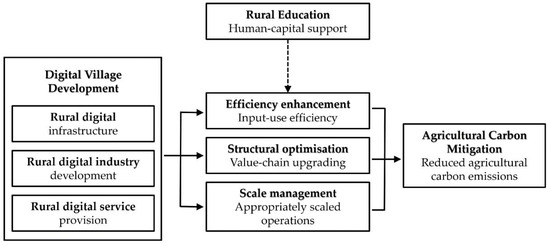
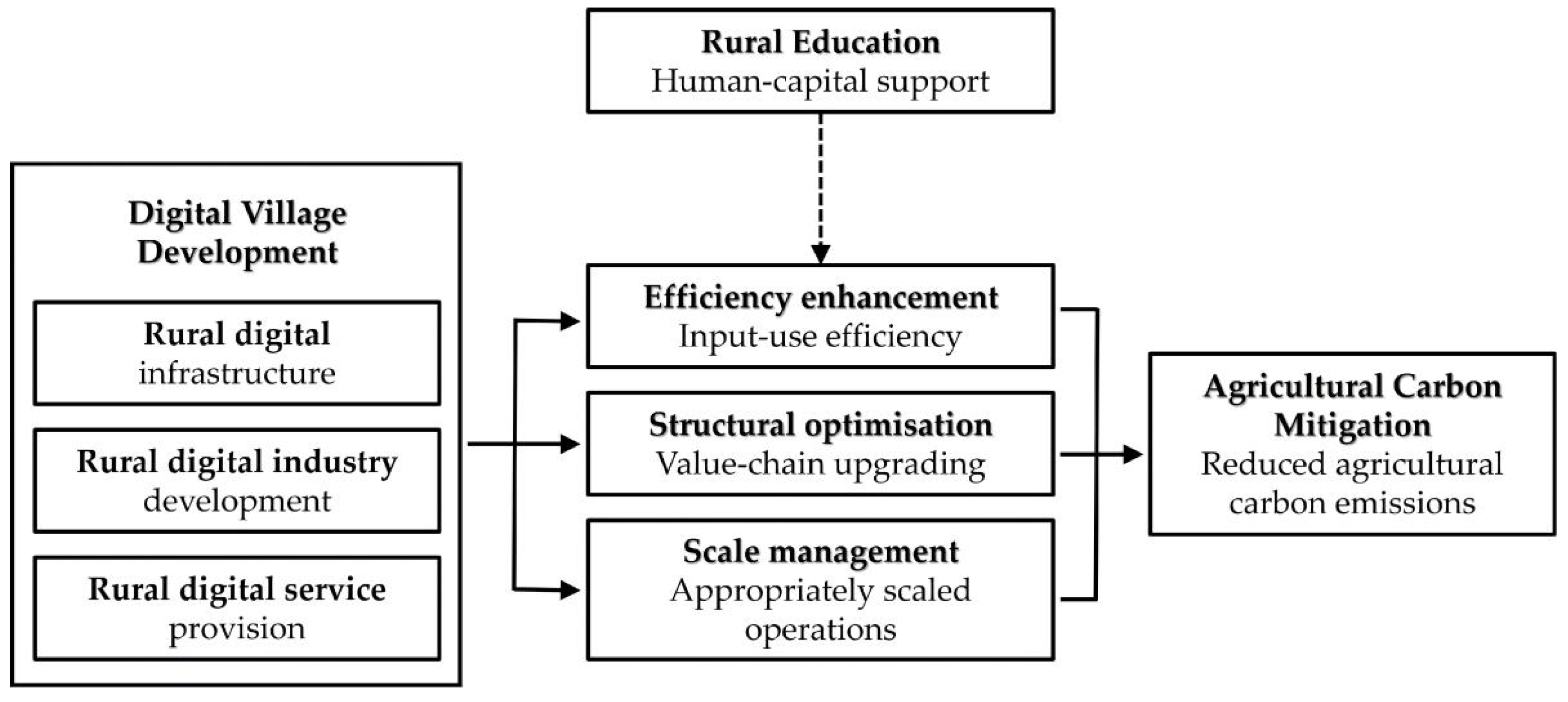
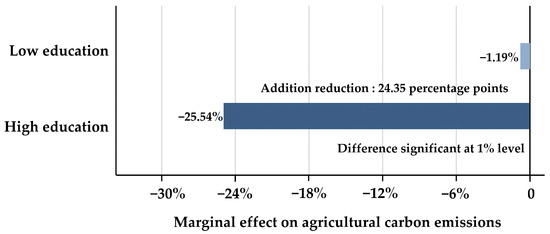
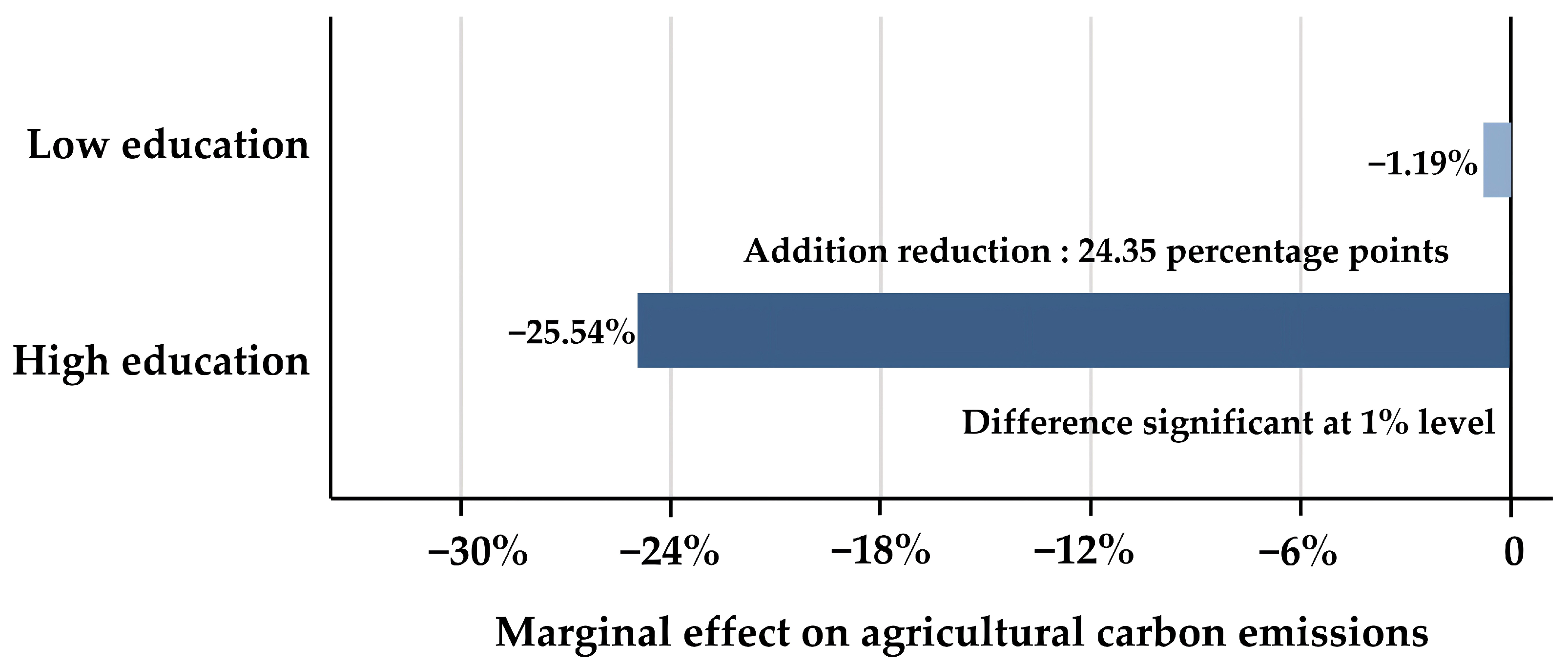

Disclaimer/Publisher’s Note: The statements, opinions and data contained in all publications are solely those of the individual author(s) and contributor(s) and not of MDPI and/or the editor(s). MDPI and/or the editor(s) disclaim responsibility for any injury to people or property resulting from any ideas, methods, instructions or products referred to in the content. |
© 2026 by the authors. Licensee MDPI, Basel, Switzerland. This article is an open access article distributed under the terms and conditions of the Creative Commons Attribution (CC BY) license.