


Abstract
This study evaluates the effects of Eucalyptus camaldulensis stands established within the ramblas of the Tabernas Desert (SE Spain) on ant communities used as ecological bioindicators. Ants were sampled using pitfall traps in four eucalyptus stands and adjacent areas of natural vegetation between 2017 and 2024. Diversity indices, species accumulation curves, non-metric multidimensional scaling (NMDS), PERMANOVA, and indicator species analyses were conducted. The results show that, although the total number of species is similar in both environments, eucalyptus ecosystems present significantly higher diversity and evenness, also harboring a notable presence of the specialist genus Temnothorax, which is typical of structured habitats. In the context of extreme aridity, these tree formations act as hybrid ecosystems that increase landscape heterogeneity, providing refuge and microclimatic regulation. Therefore, from a sustainable management perspective, the study advises against the drastic eradication or clear-cutting of this non-native species, as this could destabilize the soil and worsen habitat degradation. Instead, it is recommended to use their current structure transitorily as an “ecological bridge,” applying selective thinning to facilitate the progressive and safe recovery of native flora and fauna.
1. Introduction
The Tabernas Desert constitutes one of the most arid landscapes in Europe, characterized by an extreme semi-arid Mediterranean climate, with annual precipitation generally below 250 mm and high evapotranspiration rates [1,2]. These environmental conditions have fostered a highly specialized vegetation assemblage dominated by xerophytic communities adapted to both water scarcity and nutrient-poor, heavily eroded soils. Vegetation cover is sparse and discontinuous, typically organized into open shrublands interspersed with extensive areas of bare ground. Plant species exhibit characteristic adaptations to arid environments, including reduced leaf surface area (e.g., small leaves or spines), deep or extensive root systems, thick cuticles, and opportunistic phenologies—such as ephemeral species that develop rapidly following rainfall events [1,3].
From a floristic perspective, the vegetation includes characteristic species of southeastern Iberia, such as Artemisia barrelieri, Salsola genistoides (together with other halophytic chenopods), Ziziphus lotus, which forms islands of denser vegetation, and Lycium intricatum. Likewise, ephemeral annual species play a significant role in the episodic productivity of the ecosystem [4]. The distribution of vegetation is strongly conditioned by environmental heterogeneity. In particular, ramblas (ephemeral watercourses characteristic of arid and semi-arid regions) support riparian communities that are denser and structurally more complex than the surrounding shrublands [5]. These systems are subjected to a dual stress regime consisting of prolonged drought and episodic torrential flash floods. In this context, species such as Tamarix spp. and Nerium oleander are particularly noteworthy for their ability to tolerate salinity, temporary flooding, and extended drought, thereby contributing to channel stabilization and sediment retention [6]. Ramblas function as biodiversity “hotspots” within the arid landscape, providing refuge and resources while acting as ecological corridors. Their role in the redistribution of water and sediments generates complex ecological mosaics essential for local biodiversity [2]. Nevertheless, these systems are highly sensitive to anthropogenic disturbances, including alterations to hydrological regimes, groundwater overexploitation, and the introduction of exotic species [4].
Among these introduced species is Eucalyptus camaldulensis, whose presence in Tabernas is associated with forestry, soil stabilization, or ornamental purposes, occurring mainly in ramblas or areas with access to groundwater [7]. In this context, eucalyptus is regarded as a localized non-native element rather than a native structural component of the ecosystem. The ecological impact of eucalyptus in ramblas is ambivalent; however, in water-limited systems, it tends to be predominantly negative. While eucalyptus may locally contribute to sediment stabilization and provide shade—thereby increasing structural heterogeneity [8]—its high water consumption constitutes its primary ecological impact, as it reduces water availability and affects native riparian species such as Tamarix [9,10]. Furthermore, eucalyptus competes with native vegetation for resources, alters floristic composition [8], modifies soil properties through the accumulation of litter rich in secondary compounds [10], influences the hydromorphological dynamics of ramblas [3], and increases fire risk due to its high flammability [11]. Overall, its negative effects—particularly those related to water balance—tend to outweigh its positive contributions [4].
Regarding fauna, eucalyptus trees influence insect communities through changes in habitat structure, resource availability, and microclimatic conditions. While they may provide additional trophic resources (nectar and pollen) for generalist insects and create microhabitats that locally increase arthropod abundance [12,13], numerous studies indicate that eucalyptus plantations reduce the diversity of specialized native insects by replacing native vegetation that supports more complex trophic networks [14]. Habitat homogenization and reduced plant diversity tend to favor communities dominated by generalists. Likewise, chemical compounds produced by eucalyptus may indirectly affect insect communities by limiting host plant suitability [10], while low palatability reduces the presence of native herbivores [14]. In semi-arid systems, the reduction in soil moisture associated with high water consumption may particularly affect soil-dwelling insects and species dependent on moist microhabitats [3]. Furthermore, eucalyptus trees may promote the presence of associated—often exotic—insect species, thereby altering local ecological networks [15]. In arid and semi-arid ecosystems, where environmental conditions strongly constrain biological communities, changes in vegetation structure and water availability can have substantial effects on arthropod assemblages.
The introduction of Eucalyptus spp. into ramblas may alter habitat structure, soil properties, microclimatic conditions, and resource availability, potentially affecting both the composition and diversity of insect communities. Although eucalyptus species are exotic in Spain and may show invasive behavior under certain ecological conditions [16], they are not currently listed as invasive alien species of Union concern [17], nor are they included in the Spanish Catalogue of Invasive Alien Species [18]. Therefore, from a legal perspective, their status should be described as exotic or potentially invasive depending on the local context. However, the scientific community states that E. camaldulensis has shown a clear “shift” during the last decade toward naturalization and invasive behavior on the pebbly shores of watercourses with torrential rainfall regimes, threatening native plant communities [19]. It is even considered a “super-invader” on the Andalusian coast by some authors [20].
The aim of this study is to assess the effects of eucalyptus stands established within the ramblas of this desert ecosystem on insect diversity, using ant communities as ecological bioindicators. Ants are widely recognized as effective indicators of ecological change due to their high abundance, taxonomic and functional diversity, sensitivity to environmental disturbance, and key roles in terrestrial ecosystems. By comparing ant communities associated with eucalyptus stands and those occurring in native riparian or shrubland vegetation, this study aims to determine whether eucalyptus plantations contribute to habitat heterogeneity and increased arthropod abundance or, conversely, promote biotic homogenization and the decline of native specialist species. Given the ecological importance of ramblas as biodiversity hotspots and ecological corridors within the Tabernas Desert, understanding the impacts of introduced tree species on these systems is particularly relevant for conservation and restoration strategies in Mediterranean semi-arid environments.
2. Materials and Methods
2.1. Study Area
The study was conducted in the Tabernas Desert, located in southeastern Spain within the province of Almería (Andalusia), approximately between 37°00′–37°10′ N and 2°15′–2°30′ W. The study area is mainly situated within the municipality of Tabernas and extends into adjacent areas of the central Almería basin.
The Tabernas Desert is considered the only true desert ecosystem in continental Europe and covers an area of approximately 280 km2. The region is characterized by an extreme semi-arid Mediterranean climate, with annual precipitation generally ranging between 150 and 250 mm, high evapotranspiration rates, and intense solar radiation. The mean annual temperature is approximately 17–18 °C. Aridity is reinforced by the surrounding mountain ranges, including Sierra de los Filabres, Sierra Alhamilla, and Sierra Nevada, which create a heavy rain shadow effect [21].
The landscape is dominated by highly eroded badlands, ephemeral watercourses (ramblas), gullies, and marl substrates with scarce and discontinuous vegetation cover. Native vegetation mainly consists of xerophytic shrub communities adapted to drought, high temperatures, and poor soils. Riparian vegetation is concentrated along ramblas, where species such as Tamarix spp. and Nerium oleander occur.
Sampling was carried out in ramblas containing stands of Eucalyptus camaldulensis, an introduced tree species associated with past reforestation and soil stabilization programs [1]. These eucalyptus stands are typically restricted to areas with greater access to groundwater and contrast structurally with the surrounding native vegetation.
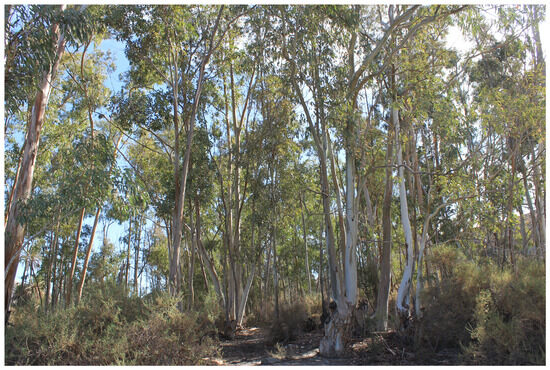
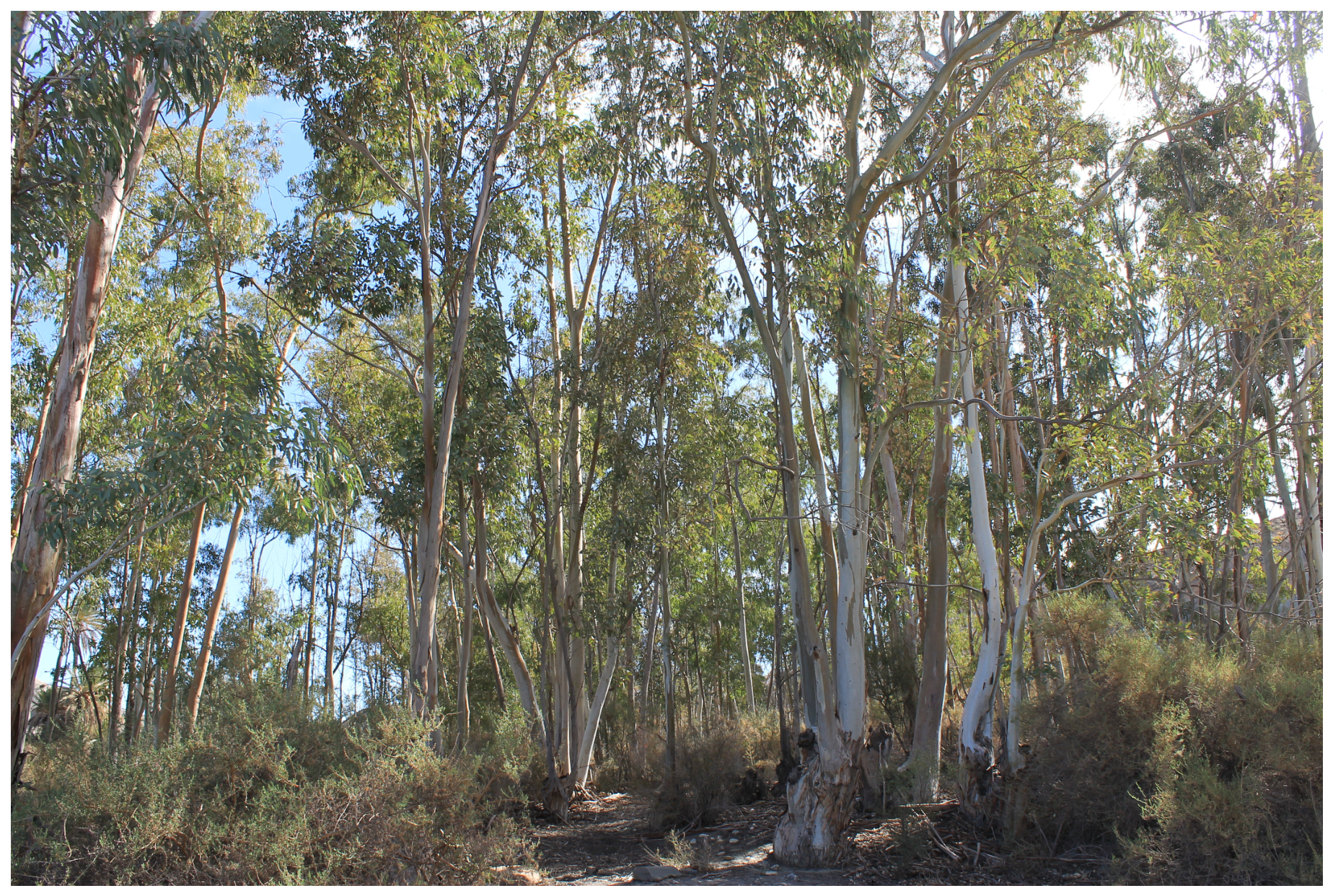
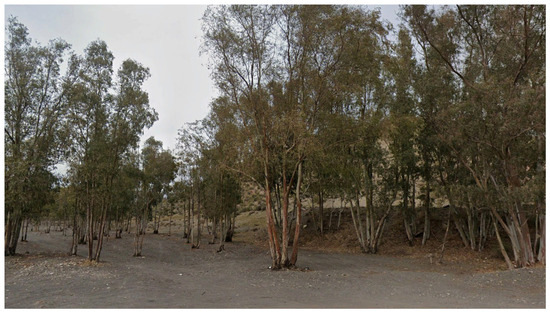
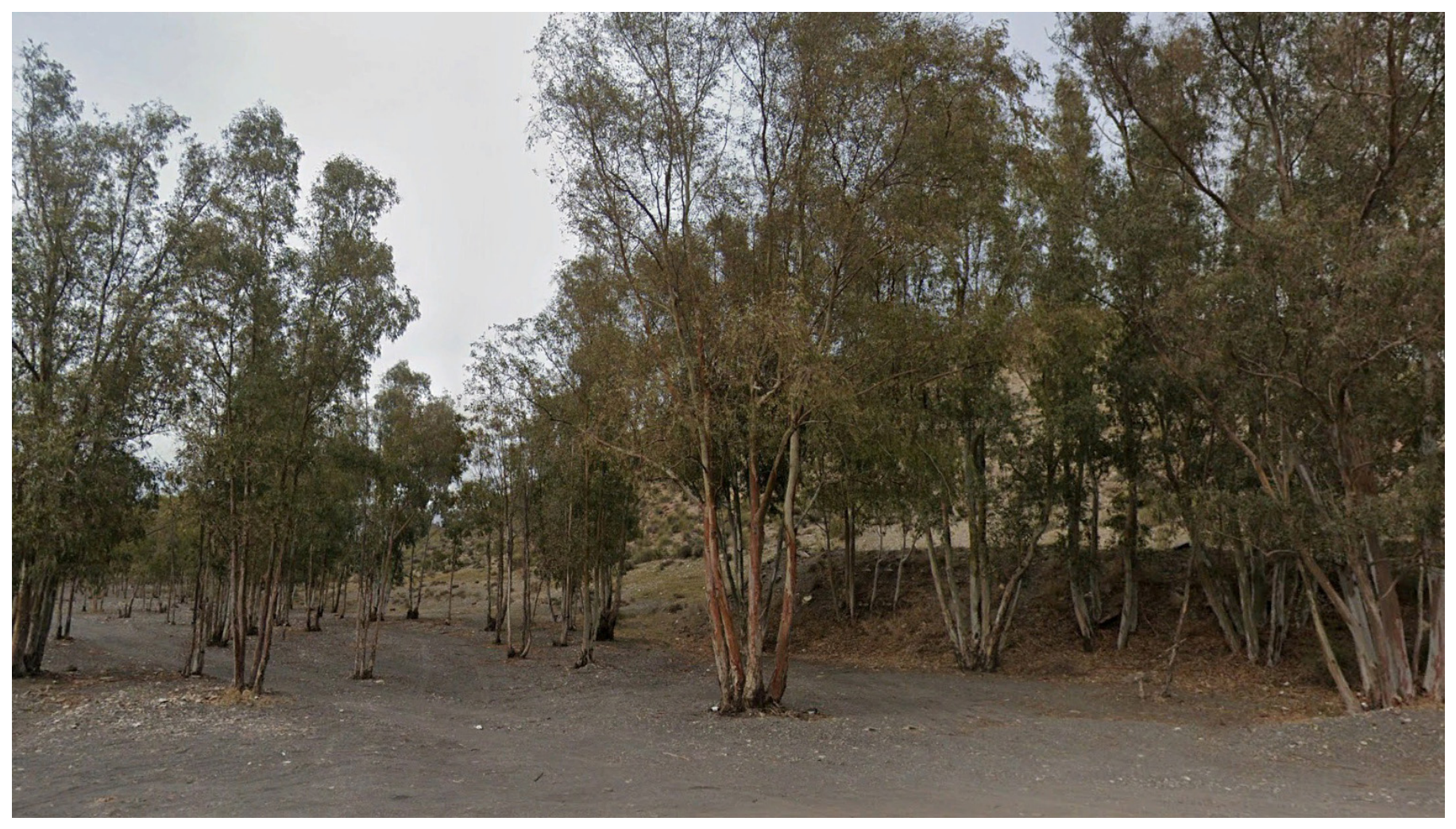
Four eucalyptus stands were selected within the Rambla de Tabernas and in the Rambla de los Molinos and Rambla de la Galera, both tributaries of the former (diversity indices, Figure 1 and Figure 2). These stands were already present in the 1977–1983 Andalusian orthophotographs. All of them are associated with groundwater springs, show no evidence of forest management, and display a shrub-dominated structure. The maximum linear distance between the two most distant sampling points was approximately 12 km. Simultaneously, sampling points with natural vegetation were selected along the ramblas. All sampling sites are located close to the western boundary of the protected Tabernas Desert area, but outside its limits; therefore, they are not subject to its protection measures (Table 1).
Figure 1.
View of the eucalyptus grove “Laurence Oasis” (authors’ photograph).
Figure 2.
View of the eucalyptus grove “Fuente de la Maravillas” (Source: Google Earth).
Table 1.
List of the sampled sites. For each site, the main type (TYPE: EUC vs. SCRUB) and the group (TYPE2: EUC1–4/SCRUB/SCRUB.H) are provided. The site name and geographic coordinates are also included.
Pitfall traps consisted of transparent plastic cups with a diameter of 5.7 cm at the upper opening, 5 cm at the base, a depth of 7.3 cm, and a capacity of 150 mL. Each cup was inserted into an excavated hole to ensure that the trap opening was flush with the soil surface and there were no gaps between the container and the surrounding soil. Each trap was filled with a 1% solution of water and detergent (commercial liquid dishwashing soap) to reduce the surface tension of the water and prevent ants’ escape. No bait or preservatives were used. This method allows recording both the presence of species and their relative abundances [22,23].
The traps were arranged in transects of ten units, spaced 5–6 m apart from each other. Each transect was considered an experimental unit for the statistical analyses, using the total number of worker ants collected across its traps. The traps were deployed between April and August from 2020 to 2024, with two additional series having been placed in 2017 (which were not used in the statistical calculations).
In all cases, traps remained active in the soil for 48 h. This enables the capture of the different species, regardless of their activity rhythm. After this period, the ants were separated from other arthropods and from detritus and preserved in ethanol.
Scrubland areas were sampled once between April and September. Eucalyptus stands were sampled in April and June to assess potential phenological differences; however, given the limited sample size, this factor was excluded from the analyses in this study.
It should be noted that, during the summer, the central channel of the ramblas is used as a roadway and supports vehicular traffic. This entails various environmental impacts, including the emission of combustion gases and the generation of dust clouds.
2.2. Statistical Analysis
All statistical analyses were conducted using R version 4.5.1 [24].
Species Composition
Species composition was analyzed using non-metric multidimensional scaling (NMDS) based on Bray–Curtis distance, applying the metaMDS function from the vegan package in R [25]. For each species, the variable used was the total number of workers captured along each sampling line of 10 pitfall traps. The relationship between species and ordination gradients was evaluated using the envfit function with 999 permutations, considering species with p ≤ 0.05 as significant.
For comparisons among ant assemblages, a non-parametric multivariate analysis of variance (PERMANOVA) was performed using the adonis2 function from the vegan package in R, based on Bray–Curtis distances [25].
2.3. Species Accumulation Curves Calculation
Species accumulation curves were calculated using the specaccum function from the vegan package in R [25], applying the “random” method with 999 permutations. Curves were generated separately for eucalyptus plantations and scrubland habitats.
2.4. Map
Sampling locations were georeferenced using geographic coordinates and visualized in an interactive map generated in R using the leaflet package [26]. Sampling points were represented as numbered markers and classified according to habitat category, with each category displayed using a distinct color. Multiple base map layers, including satellite imagery, topographic maps, and street maps, were incorporated to facilitate spatial visualization. Interactive pop-up windows provided information on sampling point identity, habitat category, and geographic coordinates. The final map was exported as a self-contained HTML file. The R code used to generate the interactive map is provided in the Supplementary Materials.
3. Results
A total of 250 pitfall traps were collected: 160 distributed among the four eucalyptus groves and 90 located within the natural vegetation of the ramblas. To complete the general species inventory of the area, 20 additional traps installed in 2017 in areas of natural vegetation were included, although they were not used in the general statistical analysis. A total of 11,095 workers were captured: 7094 in the eucalyptus trees and 4001 in the natural vegetation (2367 in SCRUB and 1634 in SCRUB.H). Thirty-two species from 17 different genera were captured (Table 2), with Temnothorax (7 spp.) and Camponotus (4 spp.) being the most abundant. It should be noted that Solenopsis workers were not identified to the species level due to the lack of updated keys. Likewise, specimens of Tapinoma were identified only as the nigerrimum complex (most likely Tapinoma ibericum). Therefore, the actual number of species could be higher. There were 19 species common to the habitat types.
Table 2.
List of all species collected in this study, together with the six-letter code used as an abbreviation. ‘NW.EUC’ indicates the total number of workers collected in the eucalyptus stands. The abbreviation ‘SCRUB’ refers to natural vegetation, and ‘SCRUB.H’ is vegetation in a water seepage zone. To these species, Messor timidus Espadaler, 1997, and Temnothorax exilis Emery, 1869, from 2017 should also be added.
3.1. Diversity Metrics Analysis
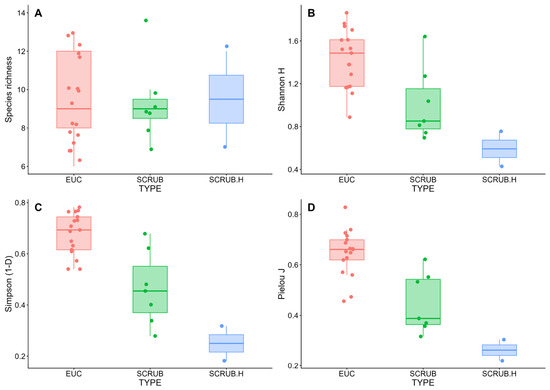
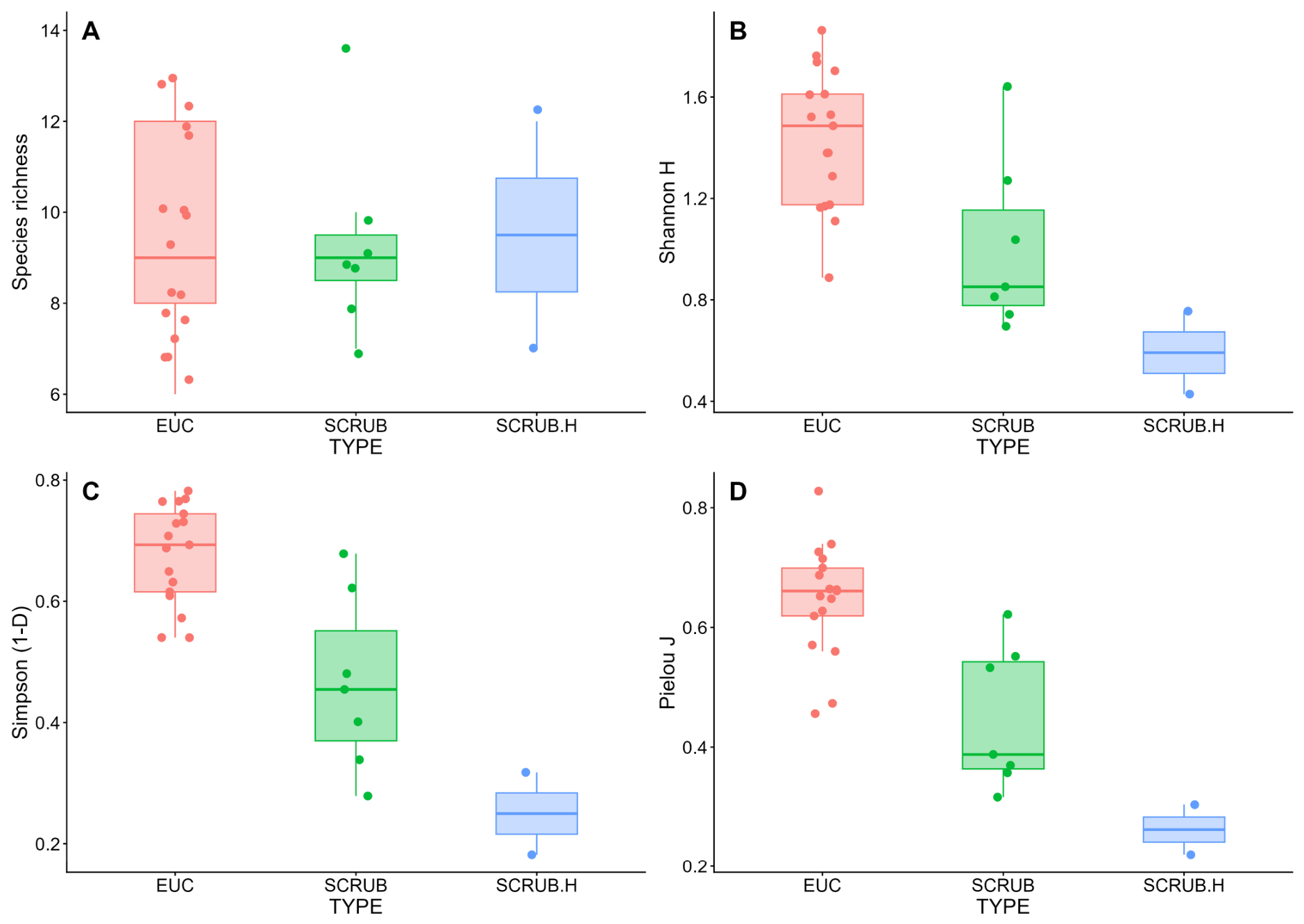
The diversity comparisons show clear differences between the eucalyptus stands (EUC) and vegetation of the natural habitats (SCRUB, SCRUB.H), especially in the indices related to community structure (Figure 3). Differences were assessed using the non-parametric Kruskal–Wallis test.
Figure 3.
Comparison of ant assemblage diversity between eucalyptus stands (EUC) and surrounding scrubland habitats (SCRUB): (A) Species richness (p = 0.9820), (B) Shannon diversity index (p = 0.0051), (C) Simpson diversity index (p = 0.0016), and (D) Pielou’s evenness index (p = 0.0009). Boxplots show the median, interquartile range, and data dispersion, while points represent individual sampling units. Differences between habitat types were assessed using the Kruskal–Wallis test. Significant differences were detected for Shannon diversity, Simpson diversity, and Pielou’s evenness, whereas species richness did not differ significantly between habitats.
3.1.1. Species Richness
Species richness did not differ significantly between habitats (Figure 3A, H = 0.04; p = 0.982). This indicates that both EUC and SCRUB harbor a similar number of species. Although some internal variability exists, median richness values were nearly identical.
3.1.2. Shannon Index
The Shannon index was significantly higher in EUC than in SCRUB (Figure 3B, H = 10.54; p = 0.0051). This suggests that communities in EUC exhibit greater diversity when both species richness and relative abundance are considered simultaneously. In SCRUB, lower values indicate more simplified communities or communities dominated by fewer species.
3.1.3. Simpson Index (1-D)
The Simpson index was also significantly higher in EUC (Figure 3C, H = 12.21; p = 0.0016). This confirms greater community heterogeneity in the eucalyptus habitat and lower dominance by particular species. In contrast, SCRUB showed stronger dominance by a few species.
3.1.4. Pielou’s Evenness
Pielou’s evenness was significantly higher in EUC (Figure 3D, H = 14.13; p = 0.0009). This indicates that species abundances were more evenly distributed in EUC, whereas SCRUB exhibited a more uneven distribution, with some species clearly predominating.
Overall, the results indicate that, although species richness was similar across habitats, EUC communities showed a more even and diverse structure than SCRUB/SCRUB.H communities. This suggests that habitat differences mainly influenced the relative abundance and dominance patterns of species, rather than the total number of species present.
3.2. Species Accumulation Curves Results
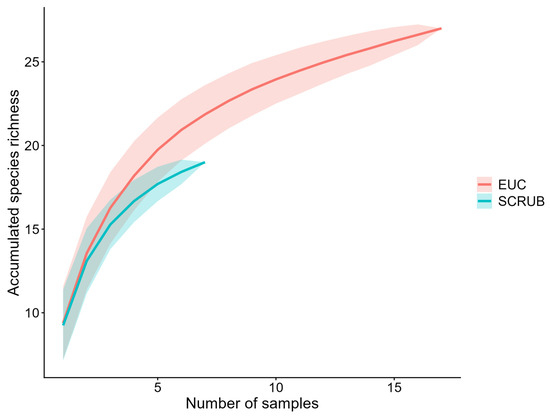
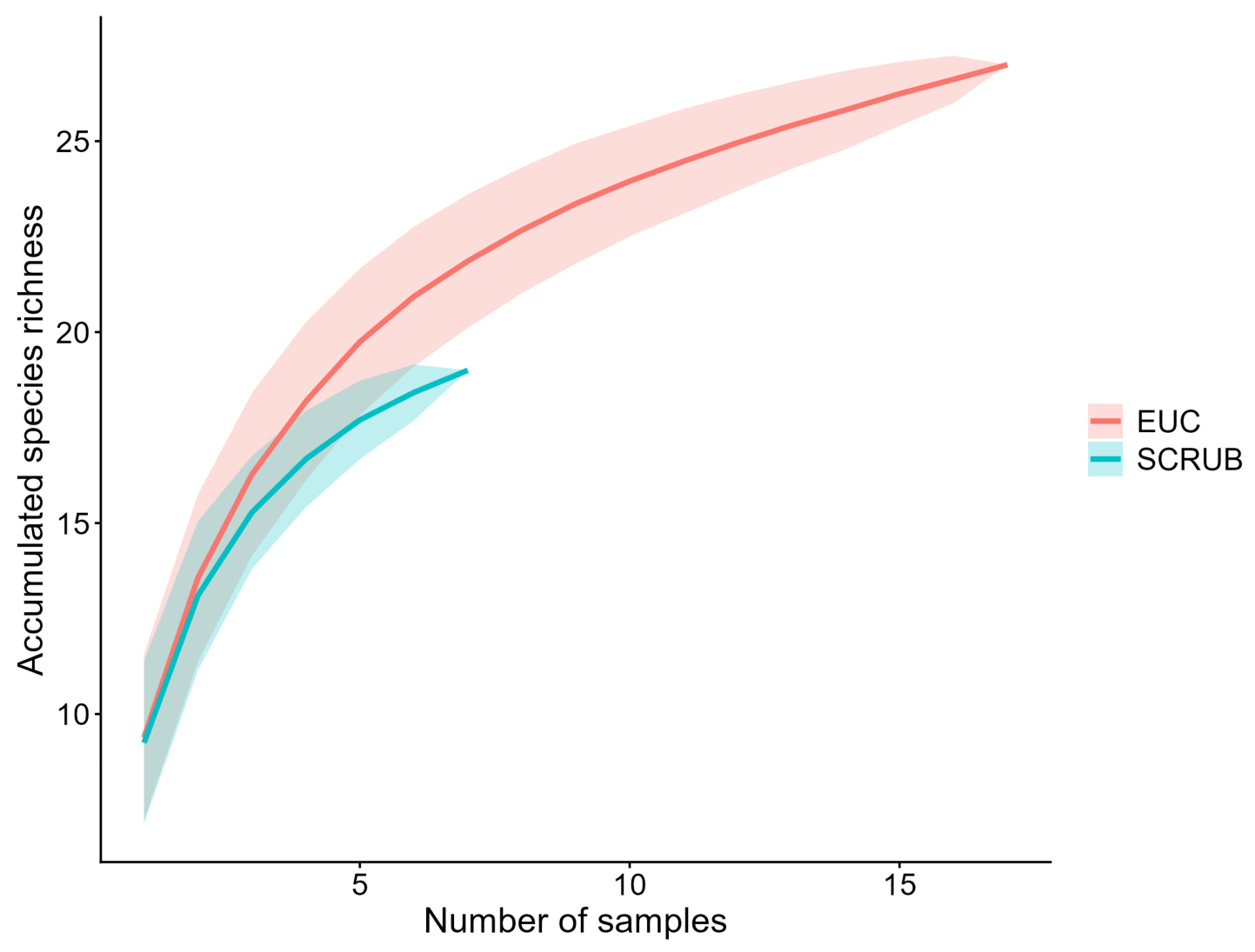
Figure 4 shows species accumulation curves constructed to compare accumulated ant species richness between the EUC and SCRUB habitats. The results show that both habitats exhibited a rapid initial accumulation of species, indicating that a large proportion of the diversity was detected in the first samples. However, the curve corresponding to EUC continued to increase more steadily and reached higher final values of accumulated richness compared to SCRUB. The EUC habitat reached approximately 27 accumulated species, whereas SCRUB stabilized at around 23 species. This suggests that eucalyptus stands harbor a slightly higher total species richness than the scrub habitats studied.
Figure 4.
Species accumulation curves based on the number of pitfall traps sampled. SCRUB.H was not included because it comprised only two sampling series.
3.3. NMDS
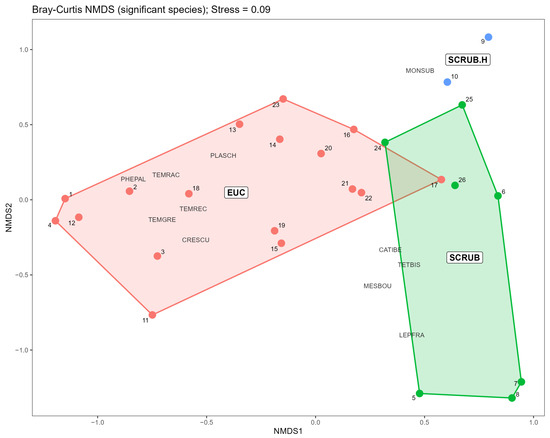
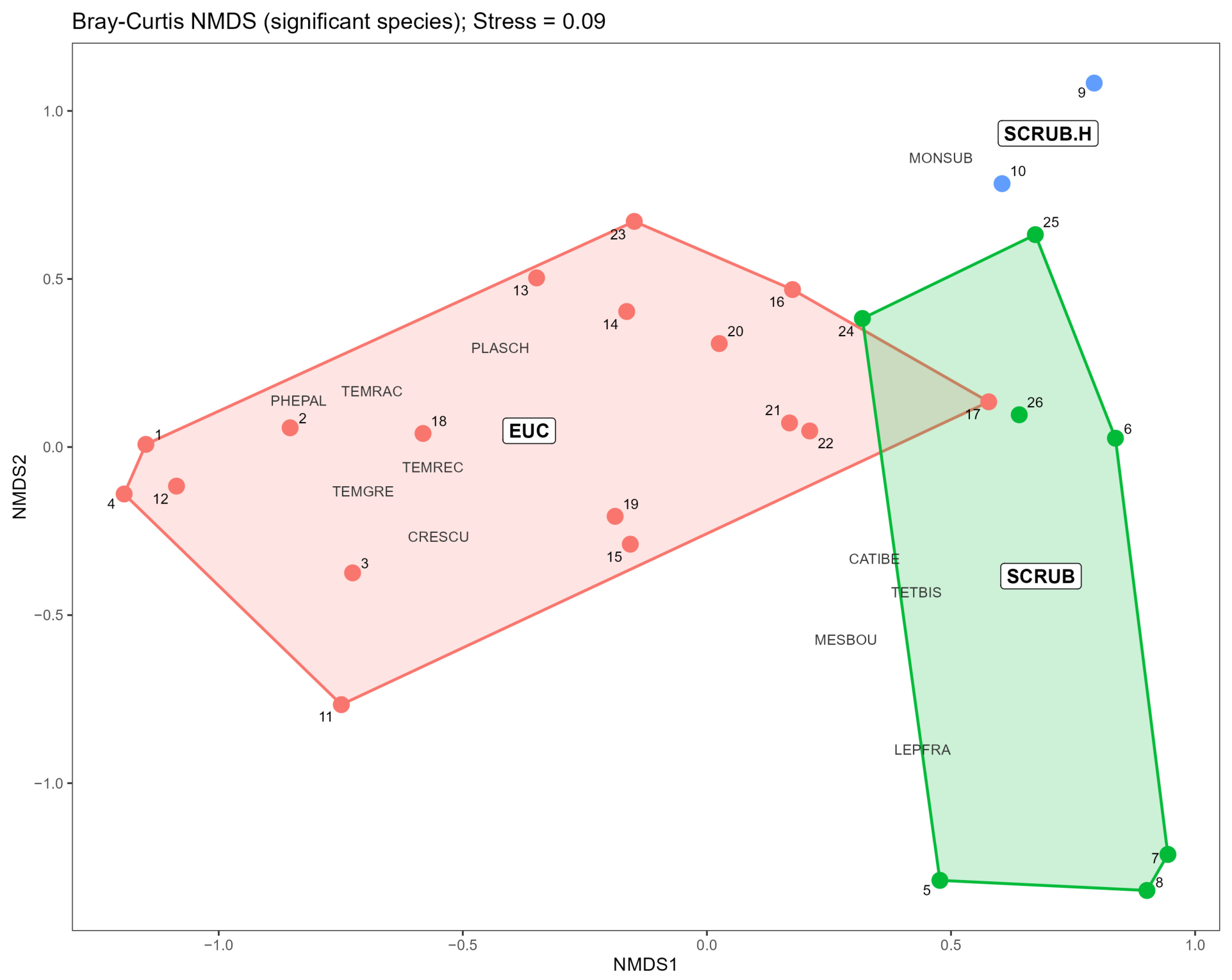
With the aim of evaluating differences in ant community composition between the habitats defined as EUC and SCRUB/SCRUB.H, an NMDS (Non-metric Multidimensional Scaling) ordination based on Bray–Curtis distances was performed using the incidence matrix of captures (i.e., the number of traps in which each species was recorded within each sampling series, ranging from 0 to 10). This approach helps to smooth differences in worker abundance among species, as well as the effects of recruitment and environmental factors such as temperature. The results are shown in Figure 5.
Figure 5.
Representation of the first two axes of the NMDS ordination. The two-colored polygons represent the two habitat categories considered: eucalyptus stands (EUC, green points) and natural vegetation (SCRUB, orange points). Red points indicate SCRUB.H sampling sites.
The NMDS ordination showed a clear differentiation in ant community composition among the groups defined as EUC vs. SCRUB. The obtained stress value (0.114) indicates a good representation of multivariate relationships in two dimensions, allowing a reliable interpretation of the observed spatial pattern. The SCRUB group (natural vegetation) appeared clearly separated from the remaining habitats, occupying mainly the left side of the ordination space (negative NMDS1 values) and also showing greater internal dispersion among samples. This suggests a distinct and relatively heterogeneous faunal composition compared to the eucalyptus environments (EUC). Scrubland areas with higher phreatic moisture (SCRUB.H) showed a marked numerical dominance of M. subopacum.
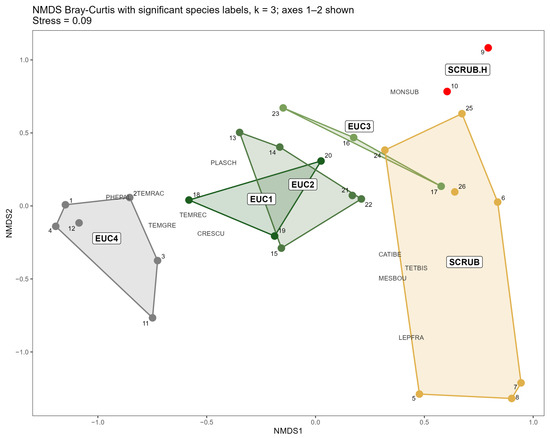
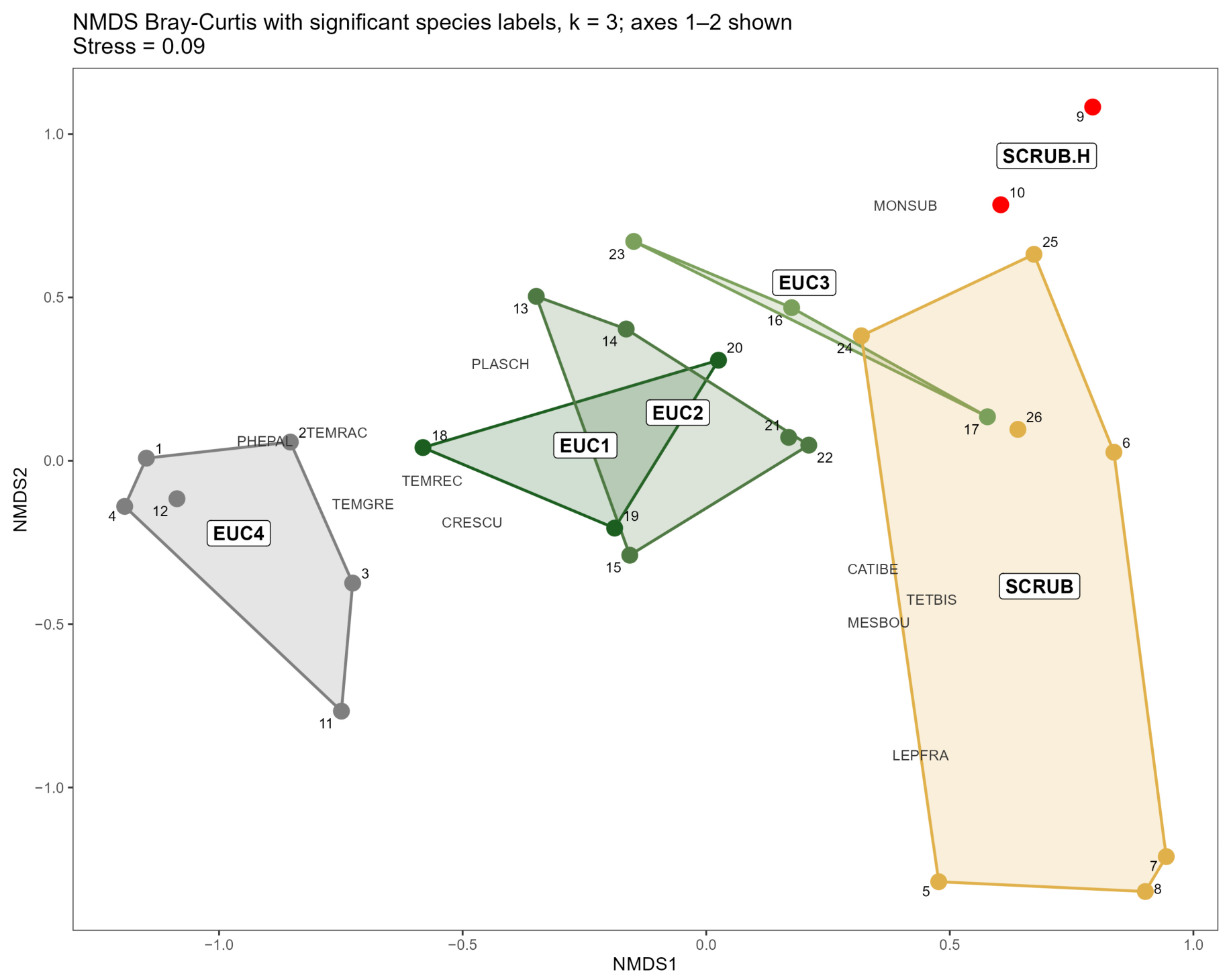
In contrast, the EUC groups were distributed toward positive NMDS1 values, although showing internal differences among subtypes. EUC1 occupied an intermediate-lower position, whereas EUC3 was in a central position, and EUC2 and especially EUC4 appeared more displaced toward positive NMDS1 values, indicating progressive changes in species composition among these environments. Characterizing the different groupings within the natural vegetation of the ramblas is beyond the scope of this study.
The species significantly associated with the ordination (p ≤ 0.05 in envfit) contributed to explaining these ecological gradients. Species such as CATIBE, MESBOU, and LEPFRA were mainly associated with the SCRUB group, whereas PLASCH, TEMRAC, PHEPAL, and CRESCU were related to the most differentiated EUC groups, particularly EUC4. Other species, such as CAMLAT, TETBIS, and CAMSYL, were associated with intermediate positions along the gradient represented by EUC2 and EUC3. The eucalyptus stand most similar to the surrounding vegetation was EUC1 (Figure 2), i.e., the stand with the lowest shrub density between trees. Examination of all the photographs available for each area suggests that the gradient observed among the eucalyptus stands, all of which are of approximately the same age, is mainly due to differences in the development of the accompanying shrub vegetation, which is minimal at “La Fuente de las Maravillas” and greater at “Puente Moreno”. The importance of shrub cover has already been evidenced in other studies [7].
The PERMANOVA results indicated significant differences in ant assemblage composition both between the main groups defined by habitat type (EUC, SCRUB & SCRUB.H; Figure 5) and among all subgroups (p = 0.001 in both cases). The model based on the eucalyptol subgroups (Figure 6) explained a greater proportion of the variation (R2 = 0.541) than the model based on the three main groups (R2 = 0.272), suggesting a stronger separation among assemblages when more detailed categories were considered.
Figure 6.
Representation of the first two axes of the NMDS ordination, including all sampling groups considered in the study. The colored polygons represent the main habitat categories, eucalyptus stands (EUC 1–4) and natural vegetation (SCRUB/SCRUB.H), while individual points correspond to sampling units. The correspondence between EUC1–4 and the names of each eucalyptus stand is shown in Table 1.
Overall, the results indicate a marked reorganization of ant communities among the different habitat types, with a particularly clear separation between SCRUB and eucalyptus-dominated environments. Moreover, the position of the scrubland samples with abundant phreatic water availability (series 9 and 10) was clearly separated from those associated with tree-dominated sites.
3.4. Temnothorax Genus
Species of the genus Temnothorax are frequently associated with structurally complex and relatively undisturbed habitats, making them useful indicators of habitat quality and ecological stability. A total of 7 different ant species of the Temnothorax genus were recorded in eucalyptus sites, whereas only 2 species were found in “no eucalyptus” sites (T. exilis and T. racovitzai). This indicates a higher richness of the Temnothorax genus in eucalyptus habitats compared to scrub habitats. Up to six species of this genus can be found in eucalyptus stands, including notably T. gredosi and T. recedens, two forest-associated species [8]. Finally, T. racovitzai was the most abundant species of this genus present in both habitat types, with 363 workers collected (Table 2).
4. Discussion
Our results reflect a situation frequently observed in degraded or abandoned ecosystems, where a non-native tree species (although present at relatively low abundance) is associated with humid environments characterized by dense shrub cover and minimal human disturbance. In this context, eucalyptus stands established within ramblas appear to play a significant structural and functional role, promoting the development of hybrid ecosystems. These systems are characterized by the coexistence of native and non-native species (including some invasive taxa) forming relatively stable and functional communities [27]. This interpretation is closely linked to the concept of “novel ecosystems,” which are characteristic of landscapes profoundly transformed by human activities [27].
The dynamics of E. camaldulensis in Andalusia remain a subject of debate. Although historically considered a localized species dependent on anthropogenic uses [12], recent studies document a clear process of naturalization and invasive behavior [19,20]. Regardless of its current dispersal capacity, the profound structural and edaphic alterations generated by these plantations fully justify their categorization as “novel ecosystems” [27].
While species turnover in novel ecosystems often results in degraded communities dominated by generalist taxa, our data reveal a more complex reality. Notably, we observed an abundant presence of ants of the genus Temnothorax within the eucalyptus stands. Far from being generalists, these are cryptic specialists with strict microhabitat requirements—such as decaying wood and structured leaf litter—and are recognized as bioindicators of mature ecosystems and relatively undisturbed soils [28]. Their prevalence demonstrates that these stands are not merely degraded biotic communities; rather, they provide the necessary structural complexity to act as microhabitat refuges for demanding native fauna, particularly when accounting for shrub cover [29,30].
The emergence of such ecosystems is often associated with irreversible changes resulting from land-use transformations, habitat fragmentation, hydrological alterations, recurrent fires, or the introduction of exotic species, all of which hinder a return to a historical reference state [27]. Consequently, some authors have argued that certain hybrid ecosystems may maintain important ecological functions even when full restoration of the original ecosystem is no longer feasible [31].
From a pragmatic or functional conservation perspective, hybrid ecosystems may represent an acceptable ecological alternative in highly modified landscapes. Under this approach, species are evaluated not solely based on their biogeographical origin but also on the ecological functions they perform and the potential consequences of their removal [32]. In severely degraded environments, some exotic species may provide cover, structural complexity, soil stabilization, microclimatic regulation, and refuge for native flora and fauna [31]. Nevertheless, we regard this option as a provisional solution within conservation strategies rather than an end in itself.
In the specific case of ramblas, eucalyptus stands may contribute to the creation of cooler, more humid microhabitats; increase organic matter accumulation; and provide refuge for species associated with moist, shrub-dominated environments. Tree cover may also reduce erosion and enhance landscape structural heterogeneity, particularly in areas where native vegetation has been severely impoverished. This situation may be interpreted as a transitional or adaptive state within an altered ecological trajectory, in which the exotic/invasive species temporarily acts as a structural component in the absence of management interventions [33].
However, acknowledging the partial functionality of these hybrid ecosystems does not imply that biological invasions are desirable or that their ecological risks should be minimized. Invasive species remain a major threat to biodiversity because they can alter ecological processes, modify resource availability, hinder natural regeneration, and compete with rare or specialist native species [34]. Furthermore, the ecological functions performed by exotic species rarely substitute for the full complexity of well-conserved native communities [35].
For this reason, the immediate removal of exotic species may not always represent the most appropriate management strategy. Management should focus on the progressive naturalization of Eucalyptus stands through a gradual reduction in their structural dominance and the active promotion of native vegetation. Rather than applying abrupt clear-cutting, which may intensify soil disturbance and stimulate massive Eucalyptus resprouting, selective and phased thinning would allow canopy cover to be reduced while maintaining habitat continuity. This approach should be accompanied by regular control of Eucalyptus seedlings and resprouts, especially during the years immediately following intervention.
Simultaneously, management should encourage the establishment and development of native shrubs and trees adapted to local semi-arid conditions. Increasing understory complexity would help reduce the structural homogenization of Eucalyptus stands and provide a greater diversity of microhabitats for soil fauna. Wetter microsites, such as areas associated with runoff concentration or phreatic moisture, should be prioritized as nuclei for native vegetation recovery, as they may offer more favorable conditions for colonization.
Soil microhabitats should also be conserved whenever possible, including litter layers, dead wood, stones, and small-scale surface heterogeneity, as these elements contribute to habitat complexity and biodiversity. Overall, a combination of selective thinning, resprout control, native vegetation recovery, and the protection of key microsites would favor the gradual transition of Eucalyptus stands toward more heterogeneous and ecologically integrated habitats.
Finally, it should be noted that to clearly distinguish between the “effects of eucalyptus” and the “effects of habitat,” at least one of the following conditions would have needed to be met: (1) the availability of paired plots, with and without eucalyptus, under comparable moisture conditions; or (2) the inclusion of eucalyptus plots located in drier environments. However, the characteristics of the study area prevented either condition from being met, as eucalyptus trees were present only in the wetter areas.
Sustainability and Conservation Strategies
The sustainable management of E. camaldulensis stands in the Tabernas Desert requires overcoming the traditional dichotomy between native and exotic species, prioritizing the long-term viability of the ecosystem.
Under this approach, the following guidelines can be drawn:
- Recognition of transitional services: In degraded environments, these exotic species provide structural support, refuge, and microclimatic regulation. They represent a valid temporary solution, but not the ultimate conservation goal.
- Low-impact management: Drastic eradications or clear-cutting are counterproductive because they destabilize the soil. An adaptive approach based on selective thinning is required to avoid collateral habitat degradation.
- Pragmatic vision (“Ecological bridge”): Instead of perpetuating the invasive species, its current structure should be leveraged to protect and promote the progressive regeneration of native riparian and shrub flora.
Ultimately, sustainability in these ramblas requires abandoning short-termism. The ultimate goal is not to maintain the eucalyptus trees but to use them as a safe transitional pathway to recover local biodiversity, thereby ensuring a resilient ecosystem in the face of future environmental stress scenarios.
5. Conclusions
Eucalyptus-associated habitats with groundwater access are associated with higher ant diversity. These stands established within the ephemeral stream channels of the Tabernas Desert are associated with more humid and structurally complex habitats than the surrounding landscape, supporting ant assemblages that include several shrubland- and forest-associated species. These stands appear to function as hybrid ecosystems in which native and non-native species coexist, contributing to habitat heterogeneity and providing ecological functions such as increased vegetation cover, microclimatic buffering, and potential refuge for biodiversity.
Although eucalyptus is a non-native species (locally, it appears to behave only as an exotic species), our results suggest that its ecological role in these highly transformed environments cannot be assessed solely on the basis of its origin. The immediate removal of eucalyptus stands could entail unintended ecological consequences, particularly where they currently provide structural functions in otherwise degraded habitats. Eucalyptus stands may be preferable to having no tree cover at all.
Management strategies should therefore adopt a balanced approach that considers both the conservation risks associated with invasive species and the ecological functions currently provided by these stands. Conservation efforts should prioritize the progressive recovery of native riparian and shrub vegetation while maintaining ecosystem stability and minimizing negative impacts on local biodiversity.
Supplementary Materials
The following supporting information can be downloaded at https://www.mdpi.com/article/10.3390/su18147428/s1, Code R for HTLM map.
Author Contributions
Conceptualization, J.L.R.-L.; Methodology, J.L.R.-L. and F.J.-C.; Formal analysis, J.L.R.-L. and F.J.-C.; Investigation, J.L.R.-L. and F.J.-C.; Resources, J.L.R.-L.; Data curation, J.L.R.-L. and F.J.-C.; Writing—original draft, J.L.R.-L. and F.J.-C.; Writing—review and editing, J.L.R.-L. and F.J.-C.; Supervision, J.L.R.-L.; Project administration, J.L.R.-L. All authors have read and agreed to the published version of the manuscript.
Funding
This research received no external funding.
Institutional Review Board Statement
Not applicable.
Informed Consent Statement
Not applicable.
Data Availability Statement
The data are available in the Supplementary Materials.
Acknowledgments
Language editing and translation assistance were provided using ChatGPT (OpenAI, GPT-5.5), with all outputs reviewed and verified by the authors.
Conflicts of Interest
The authors declare no conflicts of interest.
References
- Lázaro, R.; Rodrigo, F.S.; Gutiérrez, L.; Domingo, F.; Puigdefábregas, J. Analysis of a 30-year rainfall record (1967–1997) in semi–arid SE Spain for implications on vegetation. J. Arid Environ. 2001, 48, 373–395. [Google Scholar] [CrossRef] [Scilit]
- Solé Benet, A.; Cantón, Y.; Lázaro, R.; Puigdefábregas, J. Meteorización y erosión en el sub-desierto de Tabernas, Almería. Cuad. Investig. Geogr. 2013, 35, 141–163. [Google Scholar] [CrossRef] [Scilit]
- Puigdefábregas, J.; Mendizabal, T. Perspectives on desertification: Western Mediterranean. J. Arid Environ. 1998, 39, 209–224. [Google Scholar] [CrossRef] [Scilit]
- Mota, J.F.; Sola, A.J.; Jiménez-Sánchez, M.L.; Pérez-García, F.; Merlo, M.E. Gypsicolous flora, conservation and restoration of quarries in the Southeast of the Iberian Peninsula. Biodivers. Conserv. 2004, 13, 1797–1808. [Google Scholar] [CrossRef] [Scilit]
- Salinas, M.J.; Blanca, G.; Romero, A.T. Evaluating riparian vegetation in semi-arid Mediterranean watercourses in the south-eastern Iberian Peninsula. Environ. Conserv. 2000, 27, 24–35. [Google Scholar] [CrossRef] [Scilit]
- Stromberg, J.C.; Lite, S.J.; Marler, R.; Paradzick, C.; Shafroth, P.B.; Shorrock, D.; White, J.M.; White, M.S. Altered stream-flow regimes and invasive plant species: The Tamarix case. Glob. Ecol. Biogeogr. 2007, 16, 381–393. [Google Scholar] [CrossRef] [Scilit]
- Martinez-Lirola, M.J.; Gonzalez-Tejero, M.R.; Molero-Mesa, J. Ethnobotanical resources in the province of Almeria, Spain: Campos de Nijar. Econ. Bot. 1996, 50, 40–56. [Google Scholar] [CrossRef] [Scilit]
- Richardson, D.M. Forestry trees as invasive aliens. Conserv. Biol. 1998, 12, 18–26. [Google Scholar] [CrossRef] [Scilit]
- White, D.A.; Silberstein, R.P.; Balocchi-Contreras, F.; Quiroga, J.J.; Meason, D.F.; Palma, J.H.N.; Ramírez de Arellano, P. Growth, water use, and water use efficiency of Eucalyptus globulus and Pinus radiata plantations compared with natural stands of Roble-Hualo forest in the coastal mountains of Central Chile. For. Ecol. Manag. 2021, 501, 119676. [Google Scholar] [CrossRef] [Scilit]
- Dye, P. A review of changing perspectives on Eucalyptus water-use in South Africa. For. Ecol. Manag. 2013, 301, 51–57. [Google Scholar] [CrossRef] [Scilit]
- Younes, N.; Yebra, M.; Boer, M.M.; Griebel, A.; Nolan, R.H. A review of leaf-level flammability traits in Eucalypt trees. Fire 2024, 7, 183. [Google Scholar] [CrossRef] [Scilit]
- Iglesias-Carrasco, M.; Torres, J.; Cruz-Dubon, A.; Candolin, U.; Wong, B.B.M.; Velo-Antón, G. Global impacts of exotic Eucalypt plantations on wildlife. Biol. Rev. 2025, 100, 1734–1753. [Google Scholar] [CrossRef] [Scilit] [PubMed]
- Zahn, A.; Rainho, A.; Rodrigues, L.; Palmeirim, J.M. Low macro-arthropod abundance in exotic Eucalyptus in the Mediterranean. Appl. Ecol. Environ. Res. 2009, 7, 297–301. [Google Scholar] [CrossRef] [Scilit]
- Brockerhoff, E.G.; Jactel, H.; Parrotta, J.A.; Quine, C.P.; Sayer, J. Plantation forests and biodiversity: Oxymoron or opportunity? Biodivers. Conserv. 2008, 17, 925–951. [Google Scholar] [CrossRef] [Scilit]
- Hurley, B.P.; Garnas, J.; Wingfield, M.J.; Branco, M.; Richardson, D.M.; Slippers, B. Increasing numbers and intercontinental spread of invasive insects on Eucalypts. Biol. Invasions 2016, 18, 921–933. [Google Scholar] [CrossRef] [Scilit]
- Elorsa, M.; Dana, E.; Vesperinas, E. Atlas de las Plantas Alóctonas Invasoras de España; Organismo Autónomo Parques Nacionales: Madrid, Spain, 2004. [Google Scholar]
- Regulation (EU) No 1143/2014 of the European Parliament and of the Council of 22 October 2014 on the prevention and management of the introduction and spread of invasive alien species. Eur. Energy Environ. Law Rev. 2014, 317, 35–55. [CrossRef] [Scilit]
- Ministerio para la Transición Ecológica y el Reto Demográfico. Catálogo Español de Especies Exóticas Invasoras. Available online: https://www.miteco.gob.es/es/biodiversidad/temas/conservacion-de-especies/especies-exoticas-invasoras/ce-eei-catalogo.html (accessed on 3 July 2026).
- Badalamenti, E.; Cusimano, D.; La Mantia, T.; Pasta, S.; Romano, S.; Troia, A.; Ilardi, V. The ongoing naturalisation of Eucalyptus spp. in the Mediterranean basin: New threats to native species and habitats. Aust. For. 2018, 81, 239–249. [Google Scholar] [CrossRef] [Scilit]
- Goncalves, E.; Casimiro-Soriguer Solanas, F.; García-Caballero, J.; Hidalgo-Triana, N. Terrestrial alien flora of the Iberian Alboran coast: Assessment, attributes, and future implications. Diversity 2023, 15, 1120. [Google Scholar] [CrossRef] [Scilit]
- Alexander, R.W.; Harvey, A.M.; Calvo, A.; James, P.A.; Cerda, A. Natural stabilisation mechanisms on badland slopes: Tabernas, Almería, Spain. In Environmental Change in Drylands: Biogeographical and Geomorphological Perspectives; Millington, A.C., Pye, K., Eds.; John Wiley & Sons: London, UK, 1994; pp. 85–111. [Google Scholar]
- Siewers, J.; Schirmel, J.; Buchholz, S. The efficiency of pitfall traps as a method of sampling epigeal arthropods in litter rich forest habitats. Eur. J. Entomol. 2014, 111, 69–74. [Google Scholar] [CrossRef] [Scilit]
- Wang, C.; Strazanac, J.; Butler, L. A comparison of pitfall traps with bait traps for studying leaf litter ant communities. J. Econ. Entomol. 2001, 94, 761–765. [Google Scholar] [CrossRef] [Scilit] [PubMed]
- R Core Team. R: A Language and Environment for Statistical Computing; R Foundation for Statistical Computing: Vienna, Austria, 2025. [Google Scholar]
- Oksanen, J.; Simpson, G.L.; Blanchet, F.G.; Kindt, R.; Legendre, P.; Minchin, P.R.; O’Hara, R.B.; Solymos, P.; Stevens, M.H.H.; Szoecs, E.; et al. Vegan: Community Ecology Package. 2025. Available online: https://CRAN.R-project.org/package=vegan (accessed on 15 July 2026).
- Cheng, J.; Schloerke, B.; Karambelkar, B.; Xie, Y.; Aden-Buie, G. Leaflet: Create Interactive Web Maps with the JavaScript “Leaflet”, R Package Version 2.2.3.9000. 2025. Available online: https://rstudio.github.io/leaflet/ (accessed on 15 July 2026).
- Hobbs, R.J.; Arico, S.; Aronson, J.; Baron, J.S.; Bridgewater, P.; Cramer, V.A.; Epstein, P.R.; Ewel, J.J.; Klink, C.A.; Lugo, A.E.; et al. Novel ecosystems: Theoretical and management aspects of the new ecological world order. Glob. Ecol. Biogeogr. 2006, 15, 1–7. [Google Scholar] [CrossRef] [Scilit]
- Arnan, X.; Cerdá, X.; Retana, J. Ant functional responses along environmental gradients. J. Anim. Ecol. 2014, 83, 1398–1408. [Google Scholar] [CrossRef] [Scilit] [PubMed]
- Carrilho, M.; Teixeira, D.; Santos-Reis, M.; Rosalino, L.M. Small mammal abundance in Mediterranean Eucalyptus plantations: How shrub cover can really make a difference. For. Ecol. Manag. 2017, 391, 256–263. [Google Scholar] [CrossRef] [Scilit]
- Conde-Raposo, E.; Azcárate, F.M.; López-Angulo, J.; Jiménez-López, F.J.; Pescador, D.S.; Calvo-Donate, V.; Rojo-Valencia, M.; Navas-Golmar, N.; Escudero, A.; García-Cervigón, A.I. The value of old pine plantations in ants’ conservation in the Mediterranean: A comparison with well-conserved forests. For. Ecol. Manag. 2026, 606, 123556. [Google Scholar] [CrossRef] [Scilit]
- Evers, C.R.; Wardropper, C.B.; Branoff, B.; Granek, E.F.; Hirsch, S.L.; Link, T.E.; Olivero-Lora, S.; Wilson, C. The ecosystem services and biodiversity of novel ecosystems: A literature review. Glob. Ecol. Conserv. 2018, 13, e00362. [Google Scholar] [CrossRef] [Scilit]
- Macdonald, E.; King, E.G. Novel ecosystems: A bridging concept for the consilience of cultural landscape conservation and ecological restoration. Landsc. Urban Plan. 2018, 177, 148–159. [Google Scholar] [CrossRef] [Scilit]
- Hobbs, R.J.; Higgs, E.; Harris, J.A. Novel ecosystems: Implications for conservation and restoration. Trends Ecol. Evol. 2009, 24, 599–605. [Google Scholar] [CrossRef] [Scilit] [PubMed]
- Simberloff, D. Non-native invasive species and novel ecosystems. F1000Prime Rep. 2015, 7, 47. [Google Scholar] [CrossRef] [Scilit] [PubMed]
- Miller, J.R.; Bestelmeyer, B.T. What’s wrong with novel ecosystems, really? Restor. Ecol. 2016, 24, 577–582. [Google Scholar] [CrossRef] [Scilit]

Disclaimer/Publisher’s Note: The statements, opinions and data contained in all publications are solely those of the individual author(s) and contributor(s) and not of MDPI and/or the editor(s). MDPI and/or the editor(s) disclaim responsibility for any injury to people or property resulting from any ideas, methods, instructions or products referred to in the content. |
© 2026 by the authors. Licensee MDPI, Basel, Switzerland. This article is an open access article distributed under the terms and conditions of the Creative Commons Attribution (CC BY) license.