


Abstract
Since the late 1970s, regional areas in Japan have experienced prolonged contraction driven by population decline, aging, and industrial shrinkage. Prior research has shown that some localities exhibit adaptive resilience under these conditions, yet the firm-level processes underlying such resilience remain insufficiently understood. This study examines Nagano International Country Club (NICC), a regionally central growth-era firm in Nagano Prefecture that increased its visitor numbers to 165% of the 2013 level despite severe financial constraints and flat performance among nearby competitors. Using semi-structured member interviews (n = 3), employee surveys (n = 5), and a reflexively governed autoethnographic analysis, the study explores how stakeholders perceived NICC’s recovery trajectory. Under extreme resource scarcity, the manager repeatedly engaged in a low-cost, labor-intensive practice of personally repairing divots. Participants interpreted this sustained practice as an authentic expression of leadership that appeared to foster trust, activate or generate a sense of belonging, and encourage voluntary participation in course maintenance. These processes were perceived as contributing to spontaneous value co-creation that emerged without crisis framing or financial incentives. The study offers a context-specific interpretation of how endogenous, trust-based value co-creation may be experienced within a resource-constrained legacy firm and suggests that early contours of adaptive resilience observed at the regional level may also manifest at the firm level.
1. Introduction
Since the late 1970s, rural Japan has experienced a compounding progression of population decline, aging, and industrial contraction—a “long-term shrinkage phase” spanning half a century. This contraction has been associated with the gradual obsolescence of business models, systems, and organizations built during the growth phase, revealing long-standing structural vulnerabilities. Companies and industries that once anchored regional economies have increasingly faced these pressures.
The severity of this contraction is pronounced in international comparison. Japan’s total population peaked at approximately 128 million in 2008 and declined to approximately 124 million by 2023 (National Institute of Population and Social Security Research). The proportion of residents aged 65 and overreached 29.1% in 2023, the highest in the world, with conditions even more acute in rural areas. Such demographic change has increasingly required structural adaptation at the regional level and has placed pressure on growth-era business models to undergo fundamental revision [1].
Nagano Prefecture exemplifies this trajectory. Since the 1990s, population decline and aging have interacted with the hollowing-out of regional demand in tourism, leisure, and retail. The golf industry illustrates this pattern with clarity. The primary structural rupture can be traced to the collapse of Japan’s asset bubble in the early 1990s, which was followed by a simultaneous contraction in corporate entertainment golf, a sharp reduction in participation among public servants and bank employees following ethics reforms, and intensified competition among bubble-era courses built within overlapping catchment areas. These dynamics drove green fees to half their pre-collapse levels and left many rural membership clubs structurally exposed. National rounds played fell from roughly 93.5 million in 1992 to approximately 57 million in 2024 [2]. Demographic contraction has interacted with these pressures over subsequent decades, functioning as a secondary influence on an already altered industry structure. Shrinkage may also function as a structural condition that creates openings for endogenous adaptation [1]. The case examined here offers a firm-level illustration of how such dynamics may unfold in practice. Japan has undergone this transition ahead of many European and East Asian countries, making its experience a useful reference point for societies facing similar trajectories [3].
Analyzing real GDP per worker across all 47 prefectures from 1975 to 2021, Nishimura [1] identified a paradoxical pattern: regions with substantially declining working-age populations often exhibit notable productivity gains, suggesting that adaptive resilience may emerge under long-term demographic pressure. That study further illustrated how endogenous resilience in shrinking regions can arise through cross-industry resource circulation. However, it also noted that the firm-level mechanisms underlying endogenous renewal have been less fully explored, calling for future research to incorporate industry- or firm-level data to better understand how structural transformation unfolds within regions—a gap that the present study directly addresses.
2. Theoretical Background and Literature Review
During Japan’s high-growth era, rising population and incomes were accompanied by the emergence of clusters of firms that served as the core of local life, culture, and economic activity. This study terms these “regionally central growth-era firms” (RCGEFs). Such firms share four characteristics: (1) business models optimized for the social structures of the growth era; (2) strong mutual interdependence with local communities; (3) a symbolic cultural role within their region; and (4) structural vulnerability in the transition to a maturing society.
Many RCGEFs have struggled amid population decline, demand contraction, and the limits of external support. Yet some firms appear to have adapted to changing conditions and are acquiring new forms of sustainability. The divergence in how such firms respond to these pressures remains an important theoretical challenge in sustainability research for shrinking regions (Pike et al. [4]; Martin and Sunley [5]).
2.1. Nagano International Country Club (NICC): A Focal Case
NICC (founded in 1972), the subject of this study, is a prototypical RCGEF. As of 2013, it faced extreme resource constraints: annual cash flow of approximately ¥10 million, ¥1.1 billion in debt, zero new borrowing capacity, successive resignations of key officers, and dim prospects for legal restructuring. Standard turnaround methods, such as investment, staffing increases, and expansion of outsourcing, were simply unavailable.
In the context of these extreme conditions, the new manager’s first visible action was a zero-cost physical practice: taking the initiative in divot repair work (mezuchi), a form of course maintenance conducted before and after play. The subsequent trajectory is notable. While two neighboring competitors remained flat (see Figure 1), the club reached 54,443 annual visitors in 2024 (165% of its 2013 level) and recorded a 62% increase in revenue from the time of appointment.
Figure 1.
Annual Visitor Trends at NICC (2013–2024). Note: Data sourced from management records (NICC). Study period: 2013–2024. Comparison: Neighboring golf courses A and B, both 18-hole membership clubs in the same Nagano Prefecture market area. Both facilities remained flat (A: 29,694 → 29,733; B: 30,562 → 30,949 visitors) under the same external conditions (weather, economy, demographics). Only this club showed a sustained upward trajectory (32,982 → 54,443 visitors; 165% of 2013 level), a divergence that appears to be associated with internal organizational dynamics.
Although external environmental factors undoubtedly shaped the broader operating context, the magnitude and direction of this divergence suggest that internal organizational dynamics may have played an important role. This study therefore focuses on internal dynamism as a plausible explanatory lens for understanding the club’s renewal under resource-constrained conditions.
This study’s core question is how the adaptive resilience observed at the regional and industrial levels in prior research [1] may have manifested at the firm level under the extreme conditions of resource constraint evident in this case—a direct response to the firm-level gap identified in that line of research.
2.2. Review of the Prior Literature
2.2.1. Adaptive Resilience at the Firm Level: An Unaddressed Gap
Research on regional economic resilience has expanded significantly over the past two decades. Martin and Sunley [5] conceptualized regional resilience as an evolutionary process encompassing resistance, recovery, reorientation, and renewal, while Boschma [6] emphasized the long-term capacity of regions to develop new growth paths through industrial, network, and institutional reconfiguration. Pike et al. [4] further demonstrated that resilience is shaped by the interplay of agents, mechanisms, and sites within evolving regional economies.
At the firm level embedded in shrinking regions, however, the micro-level processes through which individual organizations may initiate or experience endogenous renewal remain theoretically underdeveloped (Haase et al. [7]; Nishimura [1]). Existing studies have documented regional-level outcomes of structural adaptation but have not qualitatively traced the internal organizational mechanisms that may underpin such adaptation within resource-constrained legacy firms. This study responds to that gap.
Matanle and Rausch [3] documented how Japanese communities responded to the compounding pressures of depopulation and economic contraction, showing that endogenous agency was a distinguishing feature of resilient localities. The present study builds on this community-level insight by examining its relevance at the firm level, asking what internal mechanisms enable an individual legacy organization embedded in a shrinking region to experience analogous forms of endogenous renewal.
At the firm level, Lengnick-Hall et al. [8] proposed that organizational resilience is developed through human resource practices that build cognitive, behavioral, and contextual competencies in employees, a framework that shifts attention from structural to relational and identity-based mechanisms of resilience capacity.
2.2.2. Authentic Leadership and Symbolic Practice
Authentic leadership theory identifies self-awareness, internalized moral perspective, balanced processing, and relational transparency as the core dimensions through which leaders foster trust and positive follower outcomes (Avolio and Gardner [9]; Walumbwa et al. [10]). A central but underexplored question concerns how authentic leadership operates under conditions of extreme resource scarcity, where conventional tools of organizational influence, financial incentives, formal programs, and structured communication, are limited or unavailable.
Symbolic leadership research offers a complementary perspective: Pfeffer [11] argued that managerial action functions through the creation and maintenance of organizational meaning systems, while Smircich and Morgan [12] theorized leadership as the management of meaning, whereby leaders frame organizational reality for followers through observable practices, rituals, and language. Together, these traditions suggest that the interpretive weight of leader behavior may become more salient when material alternatives are limited, a dynamic that has been recognized theoretically but not empirically examined in the context of firm-level resilience under scarcity. Luthans [13] further demonstrated that positive psychological capacities, including resilience, hope, efficacy, and optimism, are developable through leader modeling and may contribute to performance-relevant behaviors.
2.2.3. Sense of Belonging: Social Identity and Psychological Ownership
Social identity theory (Tajfel and Turner [14]) established that individuals derive a significant portion of their self-concept from group membership, and that identification with a group motivates prosocial behavior toward fellow members and the collective. Ashforth and Mael [15] extended this framework to the organizational context, demonstrating that organizational identification motivates behaviors congruent with organizational interests and reduces turnover intentions.
Psychological ownership theory (Pierce et al. [16]) further demonstrated that feelings of ownership over an object or organization are associated with stewardship behaviors and commitment even in the absence of legal title. Both frameworks, however, treat belonging and ownership primarily as stable states rather than as dynamic processes that emerge, transform, or are generated anew in response to leadership behavior. The temporal dimension of belonging formation—specifically, how latent belonging is activated versus how entirely new belonging is generated among individuals who lacked prior attachment—has not been theorized within these traditions. This study highlights this distinction as analytically useful.
2.2.4. Value Co-Creation and Voluntary Action
Value co-creation research, grounded in service-dominant logic (Vargo and Lusch [17]; Vargo and Lusch [18]), reconceptualizes customers and community members as active resource integrators whose operant resources—knowledge, skills, and relational engagement—contribute to the co-production of value. Prahalad and Ramaswamy [19] argued that the interaction between firm and customer is the locus of value creation. Grönroos [20] refined this by identifying that genuine co-creation occurs only when service provider and customer enter a direct interaction sphere, a condition instantiated by the divot repair practice in this study.
Broaden-and-build theory (Fredrickson [21]) is theorized to link positive relational experiences to the accumulation of behavioral resources: positive emotions broaden individuals’ thought–action repertoires and may contribute to the development of enduring personal and social resources over time. A critical assumption in both traditions, however, is that co-creative behavior is motivated by awareness of a problem, need, or opportunity. Whether voluntary co-creation can emerge in the complete absence of crisis recognition—initiated instead by relational trust and symbolic leader behavior—has not been empirically examined.
2.2.5. The Integrative Gap This Study Addresses
Taken together, these research traditions—adaptive resilience, authentic and symbolic leadership, social identity and psychological ownership, and value co-creation—provide a rich theoretical foundation but have largely developed as independent lineages. To the authors’ knowledge, few studies have examined their intersection in the specific context of a resource-constrained legacy firm operating in a shrinking region. Likewise, empirical work has only rarely explored how authentic symbolic practice may relate to trust formation, belonging transformation, and voluntary co-creation in the absence of financial incentives or shared crisis recognition.
This study offers a context-specific empirical exploration of these previously siloed streams. The mechanisms identified here should be understood as analytically grounded propositions that warrant further examination across comparative cases to assess their broader applicability.
2.3. Research Purpose and Research Question
The purpose of this study is to extend the adaptive resilience framework from the regional and industrial levels to the firm level and to respond to the firm-level gap identified in prior research [1]. Specifically, through analysis of the NICC case, this study theoretically and empirically elucidates how an RCGEF may initiate or experience endogenous renewal and embody adaptive resilience amid the resource constraints of a maturing society. Accordingly, this study is positioned as a theory-building single case study aimed at analytic, rather than statistical, generalization.
Research Question: By what endogenous mechanism did an RCGEF in a shrinking region appear to activate adaptive resilience and move toward sustainable renewal under conditions of depleted financial resources in which conventional turnaround methods were unavailable?
3. Materials and Methods
3.1. Research Design
We adopt an exploratory qualitative research design grounded in Yin’s single-case methodology [22], designating NICC as the unit of analysis. A case study approach is appropriate for three reasons:
- (1)
- The phenomenon of organizational renewal at the point of business nadir cannot be experimentally reproduced outside its real-world context;
- (2)
- Case study design is well suited to explanatory “how” and “why” questions [22];
- (3)
- Two neighboring golf courses operating under identical regional conditions provide natural comparative controls that strengthen internal validity.
To complement the case study, we incorporate analytic autoethnography as defined by Ellis et al. [23] and elaborated by Anderson [24]. Autoethnography enables access to experiential and processual data unavailable to external observers, particularly in long-duration organizational processes embedded in tacit cultural meanings (Denzin and Lincoln [25]; Chang [26]). Following the analytic tradition, the first author’s insider perspective is systematically interrogated through SCAT coding, reflexive documentation, and dialogic validation rather than presented as unmediated self-report. As Wall [27] notes, autoethnography’s strength lies in its capacity to link personal experience to broader sociocultural understanding, a capacity realized only through rigorous methodological governance.
The dual role of practitioner and researcher introduces potential self-reflection bias. Rather than eliminating this bias, the study governs it through a formal reflexivity protocol grounded in Ellis et al. [23], comprising:
- (1)
- Reflexive documentation, using autoethnographic inquiry sheets cross-referenced with contemporaneous management records and external media reports;
- (2)
- Dialogic validation, in which the second author (Professor N. Nishimura, doctoral supervisor and co-author, who held no organizational role in the case organization) independently reviewed the interview guides, interview transcripts, and emerging interpretations at each stage of analysis. Any discrepancies between the two authors’ interpretations were resolved through structured discussion;
- (3)
- Multi-source triangulation, comparing autoethnographic insights with semi-structured member interviews (n = 3) and an employee questionnaire (n = 5).
The data themselves provide structural evidence against interviewer-induced bias. The three member interviewees—selected based on objective criteria unrelated to their disposition toward the researcher—arrived at convergent interpretations through distinct pathways: sustained observation, resonance with management philosophy, and attribute-based empathy. The presence of a dissenting employee case (R4), attributable to an unrelated organizational grievance, further indicates that contrary evidence was neither suppressed nor discouraged.
A deeper epistemological justification for autoethnography lies in the temporal structure of the phenomenon. The first author acted solely as a practitioner during 2013–2024, with no research intention or data-collection agenda. Only after the organizational trajectory had fully unfolded and its outcomes were objectively documented did the first author adopt an analytical stance in 2026. This temporal separation ensures that the research process did not influence the phenomenon under study. Moreover, the core phenomenon—authentic leadership enacted through sustained, low-visibility practice—cannot be externally observed without altering its nature. An external researcher’s presence would have transformed the behavior into strategic performance, undermining the authenticity under investigation. Thus, the insider position, while requiring rigorous methodological governance, provides access to temporal and relational dimensions of the phenomenon that would be unavailable to external observers.
Finally, the study aligns with the practitioner-researcher tradition grounded in Schön’s reflective-practitioner framework [28], action research methodology, and analytic autoethnography (Anderson [24]). The question is not whether the researcher has a stake in the phenomenon—all researchers do—but whether that stake is transparently disclosed, structurally governed, and independently triangulated. On all three counts, the present study meets the standard. These safeguards do not eliminate insider bias but serve as partial mitigation strategies appropriate to long duration insider contexts where independent verification is structurally infeasible.
3.2. Research Site and Sample Selection
The research site is NICC, a membership golf club in Nagano Prefecture founded in 1972. Following the industry-wide slump after Japan’s asset bubble collapse, the club recorded a business nadir of 32,655 annual visitors in 2011, with visitor numbers remaining depressed in subsequent years, standing at 32,982 at the time of the new manager’s appointment in 2013. In the same year, a new manager from the founding family (the first author of this study) assumed the position of President and CEO. Three reasons justify selecting this club: (1) an outstanding visitor recovery to 165% of the 2013 baseline; (2) the researcher’s insider access to detailed data; and (3) the unexplored context in prior research of a membership-based community organization.
Purposive sampling was adopted for member interview selection. All three of the following conditions were required: (1) active membership at the time of the new manager’s appointment in 2013; (2) status as an early participant who began voluntarily participating in divot repair during 2013–2015; and (3) current availability to consent to an interview. The total number of living members satisfying all three conditions was n = 3, positioning this study as a census-based survey under these conditions.
The member interview sample is explicitly positioned as a census-based survey: it does not claim theoretical saturation but rather represents a complete enumeration of all individuals satisfying the three selection criteria. Because additional sampling is structurally impossible, theoretical propositions extracted from these three participants are treated as a starting point, with validity reinforced through triangulation with the employee questionnaire (n = 5). While a sample of three does not support statistical generalization, it has legitimacy within Yin’s [22] framework of analytic generalization.
3.3. Data Collection
We conducted multi-source data collection using the following four data sources (see Table 1).
Table 1.
Overview of data sources.
3.4. Data Analysis
Interview data were analyzed using Steps for Coding and Theorization (SCAT) (Ohtani [29]). SCAT is a matrix-format analytical procedure comprising four steps: (1) extraction of salient words and phrases from the text; (2) paraphrase within the text; (3) replacement with extra-textual concepts; and (4) generation of themes and constituent concepts (see Table 2). As SCAT was developed in Japan and may be unfamiliar to international readers, its characteristics and comparison with other methods are described below.
Table 2.
SCAT: Four-step analytical procedure.
Like Grounded Theory (GT) and Thematic Analysis (TA), SCAT aims at inductive concept generation from text and is more suitable for this study in several respects. GT excels at theory-building from multiple cases with large datasets, but theoretical saturation is structurally difficult to achieve with the small sample here. TA offers high flexibility in code and theme extraction, but analytical steps can vary across researchers. SCAT’s comparative advantage over GT and TA is threefold in the present context. First, transparency: the matrix-format four-step structure makes every inferential move visible and traceable, enabling readers to audit the analytical chain from raw text to theoretical proposition. Second, suitability for small-N insider research: unlike GT’s requirement for theoretical saturation across multiple cases, SCAT is explicitly designed for single-case, small-sample qualitative work, making it structurally appropriate here. Third, international auditability: by documenting each step in a standardized matrix format, reproduced in Appendix A, international readers unfamiliar with SCAT can independently verify the analytical procedure.
In integrating multiple data sources, constructs derived from member interviews were cross-referenced with employee data, autoethnography, and management performance data through triangulation. Appendix A includes full SCAT matrices tracing raw quotations through intermediate coding to final propositions.
3.5. Validity, Limitations, and Ethical Considerations
Addressing Yin’s [22] validity criteria: construct validity was ensured through the use of multiple data sources; internal validity through elimination of competing explanations via comparison with two neighboring facilities (Course A operating as a private membership club and Course B as a public pay-and-play facility, ensuring that the flat trajectory observed is not attributable to factors specific to either business format); external validity through analytic generalization (generalization to theoretical propositions); and reliability through SCAT matrix documentation. Interview subjects received prior explanation of research purpose, data use, and privacy handling, and provided informed consent. All names and identifying information were anonymized.
Regarding the employee questionnaire: we explicitly position this instrument as a supplementary triangulation source rather than an independent empirical foundation. Given the sample of five respondents, the questionnaire does not support statistical inference, instrument validation, or psychometric testing. Its function is limited to one specific purpose: to examine whether the patterns identified through member interviews were also present in the employee perspective. In this bounded triangulation role, the questionnaire serves to confirm directional consistency across data sources, not to establish statistical significance. All theoretical propositions in this study rest on the convergent evidence from member interviews and autoethnography; the questionnaire provides corroborating signals rather than independent causal evidence.
Regarding causal inference: this study does not identify the proposition that “the symbolic practice of divot repair activated the transformation of sense of belonging” as a statistical causal effect. What is claimed in this qualitative single-case study is that divot repair was perceived by participants as a salient factor associated with subsequent events, as determined through retrospective analysis. This identification is supported by the convergence of member interviews, employee questionnaires, and autoethnography—three independent sources—on the same proposition. The difficulty of specifying statistical causation is acknowledged as a limitation; it is a methodological characteristic of qualitative case studies and is compatible with the purpose of analytic generalization.
Detailed data are provided in the Appendix to enable readers to replicate the analyses. Appendix A: full SCAT matrices for all three member interviews; Appendix B: employee questionnaire items, responses, and aggregate data; Appendix C: summary of the autoethnographic inquiry sheets.
Regarding the use of AI tools: during the preparation of this manuscript, the authors used Claude (Anthropic, San Francisco, CA, USA, claude-sonnet-4-6, 2026) for the purposes of translation assistance (Japanese to English), grammar editing, and structural formatting. The authors have reviewed and edited all output and take full responsibility for the content of this publication. AI was not used for data collection, analysis, or interpretation.
4. Analysis
4.1. The Business Nadir and Recovery Trajectory
The new manager was appointed in 2013 at the request of the club’s primary creditor institutions, following a prolonged period of severe financial distress. Although principal repayment suspension and interest rate reductions had already been negotiated, the operating environment remained critically constrained. Annual cash flow in FY2012 was approximately ¥10 million—insufficient to support investment, maintenance, or recovery initiatives. NICC faced a compound management crisis: annual visitors had fallen to 32,982; cash flow remained at ¥10 million; the club carried ¥1.1 billion in debt and member deposits; key officers were resigning; new borrowing capacity was zero; and prospects for legal restructuring were minimal. Conventional turnaround measures—outsourcing expansion, staff redeployment, incentive programs, or workforce reduction—were structurally unavailable due to cost constraints and already-minimal staffing levels.
This crisis was embedded in a broader industry-wide collapse following the burst of Japan’s asset bubble. Membership prices that had peaked at approximately ¥26 million in 1990 had fallen to around ¥300,000 by 2013—a decline of 98.8%. The club’s redemption crisis stemmed from memberships sold in 1996 at ¥4.7 million, whose contractual redemption deadline in 2006 had been extended only with partial member consent. From 2006 onward, non-consenting members intermittently demanded redemption, creating a chronic financial drain. By 2013, a second extended deadline (2016) for approximately 300 memberships was approaching, concentrating obligations within a narrow window. With negative net worth preventing new borrowing, the club was forced to service redemptions from operating cash flow while deteriorating course conditions made fee increases impossible. Staff colloquially referred to the organization as a “sinking ship,” and many employees ultimately resigned.
Despite these constraints, the club resolved 265 deposit claims between 2013 and 2025 (face value ¥772.6 million), achieving actual payments of ¥262.8 million—an average reduction of 66%—without legal restructuring. It was within this context of structural, financial, and organizational crisis that the managerial actions described below were initiated.
The new manager’s first action was voluntary divot repair work conducted outside business hours. As recorded in the autoethnographic notes (Step 2): “The course was in poor condition and there were no hands available, so I did it myself. It is also rooted in the essential spirit of golf.” This practice was well suited to the constraints of the environment:
- (1)
- Divot repair is normatively prescribed by the Rules of Golf, lowering the threshold for member participation;
- (2)
- It required no budget, equipment, or authorization;
- (3)
- Its effects were immediately visible, providing tangible evidence of commitment.
4.2. Authenticity Recognition: Three Pathways
The leader’s choice of divot repair as the initiating symbolic practice had theoretical significance beyond its zero-cost character. Three structural properties made it a particularly powerful authenticity signal under conditions of resource scarcity. First, because divot repair is explicitly prescribed by the Rules of Golf, members encountered the leader’s behavior within a shared normative framework, it was recognizable as “what every golfer should do” before it was interpreted as a managerial act. Second, the practice could begin immediately and therefore preceded any organizational stabilization, making it implausible to interpret as performance-motivated behavior. Third, its visible and rapid effect on course conditions provided members with non-verbal, independently verifiable evidence that the practice was real and sustained. These properties explain why authenticity recognition converged on divot repair across observers with entirely different interpretive orientations.
SCAT analysis of member interviews revealed three distinct pathways through which authenticity was recognized (Table 3), each grounded in a different experiential logic but arriving at the same conclusion: “this person is genuine; this is not performance.”
Table 3.
Integrated SCAT analysis: theoretical descriptions by core theme.
- Pathway 1: Sustained-Observation Type (Member 1)
A long-standing practitioner of divot repair, Member 1 formed authenticity judgments gradually through accumulated observation. The decisive moment was the leader’s continuation of the practice “after guests had finished their round,” when no audience was present. The absence of observers served as strong evidence that the behavior was not strategic.
- Pathway 2: Management-Philosophy Aptitude Type (Member 2)
An entrepreneur with managerial experience, Member 2 interpreted the leader’s actions through a management-philosophy lens: “A company will fail if you don’t lead by example with clear principles.” Authenticity was recognized immediately as a resonance with personal practice, “Since I enjoy divot repair myself, I could understand the feeling.”
- Pathway 3: Attribute-Empathy Type (Member 3)
A second-generation business successor, Member 3 recognized authenticity through identity-based empathy: “I felt that a grandchild of the founder would have a different attachment; I understood it well as a second-generation owner myself.” Authenticity was confirmed through perceived alignment of personal background and organizational commitment.
Employee perceptions corroborated these findings (Table 4). High mean scores were recorded for B1 (“I observed the president conducting divot repair alone,” 3.80), B2 (“I felt this was genuine and not performance,” 3.60), and B3 (“I felt a deep commitment to the golf course,” 3.80). One notable exception was R4, a part-time employee with 30 years of tenure, whose lower scores (mean 2.40) reflected dissatisfaction with an unrelated organizational change—the discontinuation of a long-standing staff golf gathering. This distinction is theoretically important: R4’s response does not contradict the authenticity mechanism but clarifies its boundary conditions. Authentic practice can activate trust and voluntary engagement in relation to the core organizational mission, but it does not automatically resolve pre-existing grievances unrelated to that mission.
Table 4.
Employee questionnaire Likert scale results (n = 5).
The retention of this counterevidence underscores the study’s commitment to transparent reporting and highlights the context-specific nature of authenticity-based renewal.
4.3. Transformation of Sense of Belonging: Activation and Generation Models
Integrated SCAT analysis revealed two distinct pathways through which members developed a sense of belonging: an activation model and a generation model. These pathways differed in their temporal and psychological origins but converged on a shared condition—trust in a leader who acts. Notably, crisis recognition was not required for either pathway.
- Activation Model (Member 1)
Member 1, who had been practicing divot repair independently before the new manager’s arrival, experienced the leader’s actions as the activation and visualization of a latent sense of belonging. The decisive moment occurred when the leader continued divot repair “after guests had finished their round,” in the absence of observers. This sustained, unpublicized behavior transformed solitary practice into shared commitment.
- Generation Model (Member 2)
Member 2 explicitly reported having no prior attachment to the club: “I had happened to become a member when it was still International Farm and didn’t feel that attachment.” For this member, belonging was newly generated through the perception of “a leader who executes, not just talks.” Trust in action—not historical ties—served as the catalyst for identification.
- Identity-Resonance Pathway (Member 3)
Although analytically distinct from the two models above, Member 3’s narrative complements them by highlighting identity-based empathy. As a second-generation business successor, Member 3 recognized authenticity through shared experience: “I felt that a grandchild of the founder would have a different attachment; I understood it well as a second-generation owner myself.” This pathway illustrates how belonging can emerge through resonance with the leader’s background.
Employee data corroborates these patterns. A course-management staff member with 13 years of tenure (R3) stated: “In the past I was embarrassed to say I worked here. Now I can say it with pride,” consistent with the high score for C2 (“my awareness and pride regarding the course increased,” mean 3.80). Importantly, all five employees who completed the questionnaire remained continuously employed from 2013 to 2024. Among other course-maintenance staff, departures during the same period were attributable exclusively to mandatory retirement, not voluntary resignation.
This zero-voluntary-turnover pattern provides behavioral evidence that the transformation in belonging, and pride was not merely attitudinal but organizationally consequential. It suggests that enhanced workplace engagement both preceded and outlasted the period of material scarcity, indicating that the mechanism was rooted in authentic practice and trust formation rather than financial conditions.
4.4. Connection to Value Co-Creation: Participation Without Crisis Recognition
First, the disconnection between crisis recognition and participation motivation. Member 3 stated: “I didn’t know. I thought it wouldn’t fail because a bank was behind it”, confirming participation with zero recognition of the management crisis. Member 1 denied any action-oriented response to the crisis: “I hadn’t thought about what I as an individual member could do.” Participation motivation arose from contexts unique to each member: showing support for the leader, solidarity, and role awakening.
Second, the separation of participation motivation and continuation motivation. Member 3 stated: “I didn’t know about divot repair. But after 10 years of doing, it you start to understand the condition of the course”, demonstrating that the initial motivation to join (showing support) differed from the motivation to continue (attachment to the course; growing mastery). Regarding the diffusion cascade, the following narrative serves as empirical description: “After the president started doing divot repair, I started, and then 5 or 6 people began joining, and the people who had been doing it became even more active, that’s when it really took off.” The mature form of sense of belonging took different expressions across the three members (see Table 5).
Table 5.
Three expressions of mature sense of belonging.
5. Discussion
5.1. Core Findings
Through the analysis in this study, the following core structure emerged as the mechanism activating the endogenous renewal of regionally central growth-era firms in shrinking regions (see Figure 2).
Figure 2.
Conceptual model of the endogenous renewal mechanism in regionally central growth-era firms (RCGEFs). Note: This figure summarizes the sequential endogenous-renewal mechanism identified in this study. Arrows indicate the direction of influence. Side annotations highlight the theoretical linkages and conceptual novelties. The mechanism proceeds as follows: authentic practice → trust formation → sense of belonging → voluntary value co-creation → cultural entrenchment.
Under conditions of depleted financial resources in which conventional turnaround methods were unavailable, the leader sustained a belief-based symbolic practice—daily divot repair work. Members interpreted these actions as genuine within their own contexts and took initial steps toward value co-creation through distinct pathways, expressing support, solidarity, and role awakening. Notably, this early engagement did not depend on crisis recognition. With “trust in a leader who acts” as the sole shared condition, members’ sense of belonging appeared either to be activated or to emerge anew, and participation gradually diffused through the community, eventually forming a pattern of voluntary involvement without compulsion.
The findings suggest a paradoxical pattern: resource constraints, rather than hindering renewal, may have amplified the perceived visibility of authentic behavior. This interpretation challenges the conventional assumption that organizational renewal requires financial investment. The study therefore proposes the context-specific idea of “resource scarcity as a catalyst-like condition for authenticity,” in which extreme resource constraints are interpreted by organizational members as heightening the salience of authentic leadership and encouraging collective identity and voluntary value co-creation.
5.2. The Endogenous Activation Mechanism
In this study, endogenous renewal refers to a self-reinforcing process of organizational revitalization initiated internally, without reliance on external financial or institutional resources. The analysis reveals a coherent mechanism linking authentic leadership behavior to voluntary value co-creation under conditions of extreme resource constraint.
The mechanism unfolds as follows: The leader’s sustained physical practice—daily divot repair work—functioned as an authenticity signal that members interpreted as “a leader who acts.” This trust-based recognition activated a transformation in sense of belonging through two pathways identified earlier: the activation of latent belonging and the generation of new belonging. Crucially, this pathway did not require shared crisis recognition. Instead, belonging emerged retrospectively through continued participation, and over time diffused through the membership base, eventually stabilizing as a culture of “voluntary participation without compulsion.”
A notable feature of this mechanism is that it required none of the conventional turnaround tools typically associated with organizational recovery: no external resources, no financial incentives, and no formal mobilization efforts. The participant narratives suggest that extreme resource scarcity amplified the perceived visibility and interpretive weight of the leader’s authentic practice. Because no alternative interventions were available, the leader’s actions appear to have stood out as both credible and consequential, thereby fostering members’ internal motivation. This context-specific pattern—resource scarcity being interpreted as a catalyst-like condition rather than solely as a constraint—offers a theoretically informative perspective for firm-level adaptive resilience research in shrinking regions and warrants further examination across comparative cases.
This finding also extends the logic of “structural adaptation amid contraction” observed at regional and industrial levels [1] to the organizational level. Just as population decline can induce productivity-enhancing adaptations at the regional scale, a structural parallel emerges here: resource contraction at the firm level can promote endogenous renewal by making authentic leadership practices more visible and more interpretable as genuine. In this sense, the firm-level mechanism identified in this study represents a micro-level instantiation of the broader adaptive dynamics documented in shrinking-region research.
5.3. Contribution to Sustainability: From Preventing Closure to Building a Sustainable Foundation
The findings of this study have relevance for sustainability research, though it is important to distinguish clearly between empirically demonstrated outcomes and theoretically inferred implications.
At the organizational level, the evidence directly supports two outcomes. First, the club sustained approximately 20 full- and part-time jobs in a rural area with limited alternative employment opportunities. Second, it maintained operations serving more than 54,000 annual visitors as of 2024. These outcomes are empirically documented. Whether they constitute meaningful contributions to SDG 8 (Decent Work) or SDG 11 (Sustainable Communities) depends on contextual counterfactuals, such as the likely consequences of closure or the availability of substitute community spaces, that this study does not empirically evaluate. For this reason, we frame the sustainability relevance of these outcomes as a theoretical proposition, not as a demonstrated causal contribution.
Beyond these organizational outcomes, the mechanism identified in this study aligns themes in endogenous development theory within sustainability research. The renewal process unfolded independently of external resources, subsidies, or population recovery—conditions that are often unavailable in shrinking regions. This suggests a practical pathway for organizational continuity in contexts where exogenous support cannot be assumed. Given Japan’s position as a global front-runner in the transition to a mature, shrinking society, such mechanisms may hold broader relevance for regions and countries facing similar demographic trajectories.
A further sustainability implication arises from the cultural transformation documented in Section 5.1. In organizational theory, culture is understood as a higher-order capability that shapes behavior beyond formal rules or incentives (Schein [30]). The entrenchment of a “culture of voluntary participation without compulsion,” grounded in the universal norms of golf etiquette, represents a durable organizational asset. Because culture persists even when external conditions fluctuate, this transformation can be interpreted as the emergence of a sustainable foundation for long-term organizational resilience.
5.4. Theoretical Contributions
Adaptive resilience has traditionally been conceptualized as a dynamic process of positive adaptation within changing socio-ecological contexts (Folke [31]). While prior research has focused primarily on regional or ecological systems, this study extends the concept to the firm level in shrinking regions, where organizations face prolonged resource scarcity and demographic contraction.
We acknowledge that the empirical foundation of this study—a single organizational case supported by three member interviews and five employee questionnaire responses—is necessarily limited in scope. Accordingly, the theoretical contributions presented here are offered as analytically generalized propositions in the sense of Yin [22]: context-specific, theoretically informed mechanisms that emerge from this case and warrant examination in other resource-constrained organizational settings. Their value lies not in statistical generalizability but in their potential to illuminate how endogenous renewal may unfold under extreme resource scarcity. In particular, the study highlights a plausible pathway through which renewal may be activated without financial resources, crisis recognition, or formal incentives—a pathway that has received limited empirical attention in prior research.
With these scope conditions in view, the study advances three primary theoretical contributions, which are summarized in Section 6.1.
- Resource scarcity as a catalyst for authenticity
The findings suggest a paradoxical pattern in which extreme resource constraints appear to amplify the perceived visibility and interpretive impact of authentic leadership. In the absence of financial or organizational slack, the leader’s sustained physical practice, daily divot repair, became unusually salient to members and employees. This heightened visibility enabled trust formation and collective meaning-making, suggesting that resource scarcity may function not only as a constraint but also as a perceived amplifier of authenticity. This insight extends adaptive-resilience research in shrinking regions [1,4,5,6,7] by showing that endogenous renewal can be activated through symbolic leadership practices even when conventional turnaround resources are unavailable. It also complements authentic-leadership theory [9,10] and symbolic-leadership perspectives [11,12] by identifying resource scarcity as a contextual condition that intensifies the interpretive weight of leader behavior.
- 2.
- Activation and generation models of belonging
The analysis identifies two distinct pathways through which a sense of belonging emerges within a legacy firm:
- An activation model, in which latent attachment is surfaced and reinforced;
- A generation model, in which belonging is newly created among individuals who previously lacked attachment.
Despite their differences, both pathways share a single necessary condition: trust in a leader who acts rather than merely instructs. This distinction refines social-identity theory [14] and psychological-ownership theory [16] by introducing a temporal dimension—latent versus emergent belonging—and by demonstrating how authentic leadership serves as the initiating condition for both. Importantly, these models are not relabeling of existing constructs. Ashforth and Mael’s [15] organizational identification framework does not theorize the formation or reformation of identification in response to specific leader behaviors. Pierce et al.’s [16] psychological-ownership theory does not distinguish between surfacing latent attachment and generating new attachment among previously unaffiliated individuals. The activation/generation distinction therefore adds a processual and temporal nuance absent from both frameworks.
- 3.
- A crisis-recognition-free pathway to voluntary value co-creation
Contrary to dominant assumptions in resilience research, S-D logic [17,18], and the turnaround management literature [32], the study shows that voluntary value co-creation does not require crisis awareness, shared threat perception, or external incentives. Members participated not because they recognized organizational crisis, but because they perceived the leader’s authentic commitment and wished to support it. This mechanism challenges crisis-driven models of collective action and proposes a crisis-recognition-free pathway in which voluntary co-creation is triggered by relational trust and symbolic leadership rather than by problem awareness. The process aligns with broaden-and-build theory [21], which explains how positive relational cues can accumulate into sustained prosocial action. This pathway should be distinguished from turnaround management literature (Pearce and Robbins [32]) and resilience research (Lengnick-Hall et al. [8]), both of which presuppose crisis awareness as a prerequisite for mobilizing collective action. The finding that voluntary co-creation emerged without crisis recognition identifies a boundary condition under which the standard crisis-driven model does not apply—a condition that has received limited theoretical attention in the existing literature.
Taken together, these contributions advance firm-level theories of adaptive resilience by demonstrating how endogenous renewal can be activated under severe resource constraints in shrinking regional contexts. The findings show that adaptive resilience is not solely a structural or environmental outcome but can emerge through micro-level symbolic practices that reshape collective identity, belonging, and voluntary action.
5.5. Practical Implications
This study offers several practical implications for managers, practitioners, and policymakers working with legacy firms in shrinking regional contexts.
First, authentic leadership can substitute for financial resources under conditions of extreme scarcity. The case demonstrates that visible, sustained, and non-delegable leader actions, such as daily divot repair, can generate trust, strengthen collective identity, and initiate voluntary co-creation even when investment, staffing increases, or outsourcing are impossible. For managers operating in resource-constrained environments, this suggests that symbolic practices grounded in personal commitment can serve as a viable starting point for organizational renewal. The mechanism identified here represents one plausible pathway among others that may operate in similar contexts, rather than a comprehensive causal account; structural and contextual factors inevitably operate alongside it.
Second, cultivating belonging does not require large-scale programs or formal interventions. The activation and generation pathways identified in this study indicate that belonging emerges through repeated exposure to authentic leader behavior rather than through structured engagement initiatives. Managers may therefore focus on consistent, observable actions that embody organizational values, even when formal programs are infeasible.
Third, voluntary value co-creation can be mobilized without invoking crisis narratives. Members and employees did not participate because they perceived crisis, but because they wished to support a leader whose actions they trusted. Practitioners should consider relational trust and symbolic leadership as alternative levers for mobilizing voluntary contributions, particularly in contexts where crisis framing may be counterproductive or unwelcome.
Finally, the findings offer guidance for policymakers supporting firms in shrinking regions. Policies that focus exclusively on financial assistance or structural reform may overlook the micro-level relational mechanisms that enable endogenous renewal. Supporting leadership development, community engagement, and trust-building practices may be equally important for fostering adaptive resilience among regionally embedded firms, especially in areas where external resources are limited.
5.6. Limitations (Summarized in Section 6.2)
This study has several limitations, each of which also suggests directions for future research.
First, the study is based on a single case of a regionally central growth-era firm in a shrinking region. While the case provides a theoretically rich setting for examining endogenous adaptive resilience, the findings should be interpreted as analytic rather than statistical generalization [22]. Future research could extend the proposed mechanisms through comparative case studies across multiple RCGEFs, industries, or regional contexts.
Second, the member-interview sample was structurally constrained. Only three living members met all selection criteria, active membership in 2013, early participation in divot repair, and availability for interview, making the interview component a census rather than a theoretically saturated sample. Although triangulation with employee data and management records enhances validity, future studies could incorporate broader member samples or longitudinal interview designs.
Third, the dual role of the first author introduces potential self-reflection bias. This study addressed this challenge through reflexively governed autoethnography, dialogic validation with the second author, and multi-source triangulation. Nevertheless, future research could complement insider perspectives with external ethnographic observation or independent qualitative teams. The single dissenting case (R4) reflects tenure-related resistance to organizational change more broadly (Barker and Mone [33]) rather than resistance to the divot-repair mechanism itself and thus represents a boundary condition rather than a disconfirmation.
Fourth, the study does not establish statistical causality. The identification of divot repair as a triggering mechanism is based on retrospective convergence across interviews, employee responses, and autoethnographic records. Mixed-methods designs, such as longitudinal surveys or behavioral tracking, could examine causal pathways between authentic leadership, belonging, and voluntary co-creation.
Fifth, alternative explanations for the observed performance divergence warrant careful consideration. Three categories of potential confounders can be assessed against the factual record:
- Pricing strategy: No membership-fee or green-fee revisions occurred during the 2013–2015 formative period; demand effects cannot account for the observed changes.
- Capital investment: Extreme resource constraints, annual cash flow of approximately ¥10 million, ¥1.1 billion in liabilities, and zero borrowing capacity, made capital expenditure structurally impossible. Improvements in course conditions resulted from voluntary labor, not investment.
- External market conditions: Neighboring golf courses operating under identical regional conditions exhibited flat visitor trajectories (29,694 → 29,733; 30,562 → 30,949), making regional tourism recovery or competitor deterioration implausible explanations.
Taken together, these alternatives are inconsistent with the documented record for the 2013–2015 period, providing a reasonable basis for internal validity within the constraints of single-case research. While unmeasured factors may have influenced the longer 2013–2024 trajectory, the study’s core theoretical claim concerns the endogenous activation mechanism operating during the formative period.
Further observation reinforces this interpretation. The 2013–2015 period represented the organization’s financial nadir, during which bankruptcy was a structurally plausible outcome. Conventional turnaround theory predicts organizational failure under conditions of approximately ¥10 million annual cash flow, ¥1.1 billion in liabilities, zero borrowing capacity, and successive officer resignations. That the organization not only survived but subsequently recovered to 165% of its 2013 visitor level suggests that the endogenous mechanism identified here was not merely accelerating an inevitable recovery, it was a necessary condition for survival at the starting line. The theoretical question is therefore not only “why did the organization recover?” but also “why did it not go bankrupt?”, and the answer traces directly to the relational dynamics activated internally during the crisis period.
Finally, the generalizability of the crisis-recognition-free mechanism requires further examination. The emergence of voluntary co-creation without crisis recognition may reflect boundary conditions specific to membership-based community organizations. These include:
- A community structure in which members possess intrinsic relational stakes;
- A shared activity grounded in universal values that provides a culturally legible platform for authentic practice;
- A leader identity that enables attribute-based resonance.
Future research should examine whether similar mechanisms operate in corporate, municipal, or non-profit settings, and under what conditions crisis recognition becomes necessary.
6. Conclusions
This study examined how a regionally central growth-era firm (RCGEF) in a shrinking region activated endogenous adaptive resilience under conditions of extreme resource scarcity. Through a qualitative single-case design integrating semi-structured member interviews, an employee questionnaire, and a reflexively governed autoethnography, the analysis identified a mechanism in which sustained authentic leader behavior triggered trust formation, activated or generated a sense of belonging, and initiated a diffusion cascade of voluntary value co-creation.
The study advances theory by proposing three analytically generalized mechanisms:
- (1)
- Resource scarcity as a catalyst for authenticity;
- (2)
- Activation and generation models of belonging;
- (3)
- A crisis-recognition-free pathway to voluntary co-creation.
Together, these mechanisms offer theoretically grounded propositions for understanding how endogenous adaptive resilience can emerge within resource-constrained organizations operating in shrinking regions.
Practically, the findings suggest that, even under severe financial constraints, leaders can activate collective identity and voluntary participation through visible, belief-based symbolic practices. This challenges the conventional assumption that organizational renewal requires financial investment and highlights the potential of authenticity-driven leadership in mature, contracting societies.
This study is not without limitations. As a qualitative single-case analysis, its purpose is analytic rather than statistical generalization. Future research could strengthen interpretive robustness by triangulating insider perspectives with external ethnographic observers or independent qualitative teams, or by examining whether similar mechanisms operate in other resource-constrained organizational contexts.
Despite these limitations, the study provides a theoretically grounded and empirically rich account of how endogenous adaptive resilience can emerge within legacy firms facing long-term structural decline. It demonstrates that organizational renewal is not solely a function of external resources or structural reform, but can also be activated through micro-level relational dynamics that reshape belonging, identity, and voluntary action.
6.1. Theoretical Contributions
This study advances theory across four intersecting domains:
First, it extends adaptive resilience research from the regional to the firm level by illustrating how symbolic leadership practices can support endogenous renewal under extreme resource scarcity.
Second, it contributes to authentic leadership theory by suggesting that resource scarcity may heighten the perceived visibility of authentic behavior, thereby strengthening its trust-building effects.
Third, it refines social identity theory and psychological ownership theory by introducing the activation/generation distinction—a temporal dimension not explicitly addressed in either framework—or by showing how authentic leadership can initiate both processes.
Fourth, it offers a context-specific challenge to a core assumption in service-dominant logic by documenting a crisis-recognition-free pathway to voluntary value co-creation, highlighting a boundary condition under which crisis-driven models may not apply.
6.2. Limitations and Future Directions
Four limitations frame the scope of these contributions:
First, as a qualitative single-case analysis, the study supports analytic rather than statistical generalization; the proposed mechanisms should be examined across additional cases, industries, and regional contexts.
Second, the member-interview component represents a structural census (n = 3) rather than a theoretically saturated sample, reflecting the complete population that met all selection criteria.
Third, the dual role of the first author introduces potential self-reflection bias. This was governed through reflexive documentation, dialogic validation by the second author (who held no organizational role in the case organization), and multi-source triangulation. Future research could complement insider perspectives with external ethnographic observation or independent qualitative teams.
Fourth, the crisis-recognition-free pathway may reflect boundary conditions specific to membership-based community organizations, such as shared relational stakes, a culturally legible platform for authentic practice, and leader identity that enables attribute-based resonance. Its applicability to corporate, municipal, or non-profit settings remains an open question.
Author Contributions
Conceptualization, S.F. and N.N.; methodology, S.F. and N.N.; formal analysis, S.F.; investigation, S.F.; data curation, S.F.; writing—original draft preparation, S.F.; writing—review and editing, N.N.; supervision, N.N. All authors have read and agreed to the published version of the manuscript.
Funding
This research received no external funding.
Institutional Review Board Statement
Ethical review and approval were waived for this study due to in Japan, there is no national law requiring formal IRB approval for non-medical research involving human participants, such as sociological interviews, qualitative fieldwork, or autoethnography. Legally mandated ethics review applies only to medical and clinical studies under the Clinical Trials Act and the Ethical Guidelines for Medical and Biological Research Involving Human Subjects.
Informed Consent Statement
Informed consent was obtained from all subjects involved in the study.
Data Availability Statement
The data presented in this study are available on request from the corresponding author due to privacy restrictions.
Acknowledgments
The authors thank the member interviewees and employee questionnaire respondents of NICC for their participation. The authors also thank the members of the Nishimura Laboratory, Graduate School of Regional Innovation Studies, Mie University, Tsu 514-8507, Japan; 626d004@m.mie-u.ac.jp (S.F.), for their constructive feedback during the preparation of this manuscript.
Conflicts of Interest
The authors declare no conflicts of interest. The first author is the president of the company that operates NICC, the subject of this study. This dual role is explicitly acknowledged as a potential source of self-reflection bias, and methodological measures to govern this bias are described in Section 3.1 and Section 5.6 of the manuscript.
Abbreviations
The following abbreviations are used in this manuscript:
| RCGEF | Regionally Central Growth-Era Firm |
| SCAT | Steps for Coding and Theorization |
| NGK | National Golf Course Owners Association Japan |
| NICC | Nagano International Country Club |
| GT | Grounded Theory |
| TA | Thematic Analysis |
| RQ | Research Question |
| SDG | Sustainable Development Goal |
Appendix A
Appendix A.1. Full SCAT Matrices for Member Interviews
This appendix presents the complete SCAT (Steps for Coding and Theorization) matrices used in the qualitative analysis of member interviews. The matrices are provided in full to ensure transparency, auditability, and methodological rigor in accordance with Ohtani’s [29] SCAT framework.
All SCAT matrices were coded by the first author and independently reviewed by the second author (doctoral supervisor, Professor N. Nishimura, Mie University) through dialogic validation. Any discrepancies were resolved through structured discussion.
The Four Steps of SCAT
- Salient words and phrases: Key expressions used by the participant that carry meaning, emotion, or evaluative judgment.
- Paraphrasing within the text: Contextual reinterpretation of the expressions in Step 1.
- Extra-textual concepts: Further abstraction of Step 2, linking the data to existing theories and conceptual frameworks.
- Themes and constituent concepts: A theoretically grounded proposition derived from Step 3, articulated in a single sentence.
Additional analytic notes: Questions, interpretive issues, and implications that emerged during the coding process are documented as supplementary analytic reflections following each matrix.
Appendix A.1.1. Member 1 SCAT Matrix
Table A1.
Member 1 SCAT matrix (early participant/value-solidarity type).
- Storyline
Member 1 was an early practitioner who, even before the president’s appointment, had already developed a strong awareness of the club’s quality problems and held latent values expressed through voluntary divot repair. When the president-initiated divot repair work, Member 1 perceived it as “a lone practitioner gaining companions.” Through sustained observation, a conviction of the leader’s authenticity formed gradually. The member’s sense of belonging—already latent prior to the president’s arrival—was activated, made visible, and reinforced through the leader’s continued actions.
- Theoretical Statement
For early participants who already hold latent values, a leader’s symbolic practice functions as a solidarity-based visualization of previously solitary action, thereby activating internalized values and reinforcing their sense of belonging.
Appendix A.1.2. Member 2 SCAT Matrix
Table A2.
Member 2 SCAT matrix (support for a junior/personal-bond type).
- Storyline
Member 2, who had a personal bond with the president and prior experience resisting the old regime, immediately recognized the president’s divot repair practice as leadership by example, grounded in a managerial-philosophy literacy developed through experience. Before the president’s appointment, this member’s sense of belonging was almost nonexistent; it was newly generated on the condition of “trust in a leader who not only talks but also acts.” This trust amplified the member’s motivation to support the leader to a level described as “150%,” an intensity that exceeded verbal articulation.
- Theoretical Statement
For members with a personal bond to the leader, trust in action-based leadership generates a support motive that becomes intertwined with the emerging sense of belonging. Through continued interaction, this support motive intensifies to a level that defies verbal articulation and ultimately becomes integrated into the belonging itself.
Appendix A.1.3. Member 3 SCAT Matrix
Table A3.
Member 3 SCAT matrix (second-generation empathy/immediate-participation type).
- Storyline
Member 3 became immediately convinced of the president’s authenticity through identity-based resonance and joined the divot repair practice despite having no prior knowledge of golf etiquette. Crisis awareness played no role; participation was driven solely by a support motive. However, through ten years of continued involvement, a sense of attachment to the course emerged belatedly. This provides an important finding: a clear separation between the initial motive for participation and the subsequent motive for continuation.
- Theoretical Statement
An observer who experiences identity-level resonance with the leader becomes immediately convinced of the leader’s authenticity and engages in value co-creation driven initially by a pure support motive, without crisis awareness or prior knowledge. Through continued participation, intrinsic values that were absent at entry are gradually formed, demonstrating a temporal separation between participation and continuation motives.
Table A4.
Integrated SCAT—theoretical statements by core theme.
Appendix A.2. Three-Party Integration Analysis
Analytical axis: ‘Did the president’s actions serve as motivation?’—The leader’s symbolic practice and the initial dynamics of value co-creation.
- Core Research Proposition
The leader’s symbolic practice (divot repair work) functioned, within each member’s unique personal context, as a form of motivation derived from the president’s actions, thereby triggering the initial dynamics of value co-creation. While the three members’ pathways to participation and motivational content differ substantially, they share a common structure: the fact that ‘the president acted first’ served as the starting point for each member’s participation. This shared structure constitutes the initial mechanism of organizational transformation through the change in interpersonal relationships under resource constraints.
Table A5.
Comparison 1: Problem recognition at the time (preconditions for transformation).
- Common interpretive point
All three members held a strong, specific, emotionally charged sense that ‘the course had fallen into serious disrepair.’ This shared problem recognition formed the cultural groundwork for accepting the president’s actions as ‘a necessary and legitimate intervention’ and for being sensitized to the authenticity of that intervention.
Table A6.
Comparison 2: Authenticity perception (core of research question).
- Common interpretive point
All three members arrived at the same conviction ‘this person is genuine; this is not a performance’ through entirely different pathways and at different speeds. The shared endpoint, not the shared pathway, constitutes the theoretical finding.
Table A7.
Comparison 3: Sense of belonging—formation and change.
- Common interpretive point
Across all three cases, ‘trust in a leader who acts’ functioned as the shared necessary condition for both the generation and activation of a sense of belonging. Crisis awareness did not directly connect to participation motivation in any of the three cases.
- Propositions Derived from the Three-Party IntegrationP1: Multiple pathways exist for the authenticity perception of symbolic practice
The same symbolic practice was perceived as authentic through different pathways depending on each observer’s background, experience, and values. This diversity expands the potential for broader member engagement.
- P2: Action-based leadership functions as the shared trigger for initial participation
Although the motivational content differed across members, all three identified “the president/CEO acted first” as the starting point of their participation. This shared structure constitutes the core of the initial mechanism.
- P3: Crisis recognition is not a necessary condition for transformation
In no case did crisis recognition directly connect to participation motivation. “Trust in a leader who acts” emerged as the sole necessary condition.
- P4: A sense of belonging is generated or activated only when trust in an action-based leader is established
Member 1 demonstrates an activation model, whereas Members 2 and 3 demonstrate a generation model. In both cases, trust in a leader who acts served as the shared enabling condition.
- P5: Entry-point motivation and continuation motivation can be distinct
Member 3 joined with no prior etiquette awareness. Over ten years, attachment to the course formed as a secondary outcome. The motivation that triggers participation and the motivation that sustains it are temporally distinct.
- P6: The depth of belonging is not proportional to the intensity of emotional expression
Member 1 expressed incremental pride; Member 2 expressed “150%”; Member 3 expressed quiet conviction. Sustained belonging does not necessarily manifest through linguistic or emotional intensity.
Appendix B. Employee Questionnaire: Items, Individual Responses, and Aggregate Data
This appendix presents the full set of questionnaire items, individual responses (R1–R5), section means, overall means, and standard deviations. The instrument employed a 5-point Likert scale (1 = strongly disagree, 5 = strongly agree), and data were collected in March 2026 (n = 5). All respondents were full-time or long-tenured part-time employees of NICC. The complete dataset is provided to ensure transparency, auditability, and methodological rigor.
Table A8.
Respondent profiles.
Table A9.
Full item scores by respondent and section mean. Section (A) Situational awareness at the time of appointment (2013). Section (B) Observation of divot repair practice and authenticity recognition. Section (C) Organizational impact and transformation. Section (D) initial resistance.
Appendix C. Autoethnographic Inquiry Sheets: Summary
This summary is based on the autoethnographic inquiry sheets (Divot Repair Practice and V-Shaped Recovery from the Brink), compiled by the first author in February 2026. The sheets integrate five source materials: the autoethnographic inquiry sheet (divot repair version), the academic manuscript, IMS Newsletter (differentiation strategy), IMS Newsletter (reasons for the president’s own repair work), and two journalistic articles (Kigyou Shindan News, August 2025; Business Support Nagano, November 2025). External journalistic accounts are treated as third-party observational data to complement insider autoethnographic description.
- Step 1. Contextual situation at appointment (2013)
At the time of appointment, annual visitors stood at 32,982; annual cash flow at approximately ¥10 million; total debt at ¥1.1 billion; key officers were resigning; and no new borrowing capacity existed. The course was in poor condition due to neglected divot repair, wildlife damage, and the absence of caddies under the self-play system. The first author’s internal question was: “Is it acceptable to leave the course in this state? What means exist to restore quality without personnel or funds?”
- Step 2. Action—Divot repair and parallel initial practices
Beginning in 2013, the first author undertook voluntary divot repair outside business hours (early morning and evening), approximately every two days, without budget allocation or managerial directive. The motivating premise was: “The course was in poor condition and there were no hands available, so I did it myself. It is also rooted in the essential spirit of golf.” Parallel practices included greeting customers at the entrance each morning (continued to the present), learning members’ names and preferences, and listening directly to complaints.
- Step 3. Reactions—From “customer” to “co-creator”
Initial staff reactions were negative (“sand costs money”; “that is not a manager’s job”). However, members began to respond voluntarily. One member who arrived early completed divot repair on a fairway before opening. Requests for personal divot bags emerged, and sand buckets were subsequently installed on all holes. A key insight emerged: the manager never instructed members to participate; participation emerged voluntarily. This directional reversal (instruction → voluntary action) constitutes the essence of value co-creation identified in the study.
- Step 4. Generation, updating, and succession of judgment premises
A judgment premise formed: “Responsibility means doing one’s best within given constraints.” This premise was not predesigned as a strategy; it stabilized post hoc through repeated practice. As visitor numbers increased, workload per divot repair also increased, requiring organizational redesign. Course management was internalized (previously outsourced), and a family member with over a decade of course management experience was appointed as responsible manager. The concept of judgmental succession, the dynamic process by which judgment premises grounded in essential values are taken over by different actors while remaining continuously operative, is introduced here as a direction for future theoretical development.
- Step 5. Differentiation strategy—“The third axis”
Positioned between premium and mass-market offerings, the club adopted a “customization route,” focusing on approximately 1700 members and maximizing individual satisfaction. Key practices included: no touch-panel ordering (staff personally attend to member preferences), sourcing all competition prizes from local businesses, and flexible scheduling (night golf, early-morning golf, open competitions). The underlying principle was: “We have no manuals because manualizing makes it impossible to respond to customer needs.”
- Step 6. Points of friction with existing theory
Symbolic leadership theory treats symbolic action as intentional communication design. This case reveals a paradox: the divot repair practice was not designed for symbolic effect; it functioned symbolically because it was authentic. Core proposition: non-designed authenticity is a necessary condition for symbolic leadership to function. Value co-creation theory focuses on customer motivation, but this case shows that leader behavior can serve as the trigger for co-creation initiation, an underexplored pathway in existing SDL/co-creation literature.
- Step 7. Thick description—An early-morning divot repair session
In the pale morning light, carrying a bucket of sand across a frost-covered fairway. Divot marks, traces left by the previous day’s players, scattered like the course’s wounds. No one ordered this. It was not in any job description. There was simply a hole, sand, and a pair of hands. Later, a familiar member’s voice from behind: “Hey, I finished up the fairway for you this morning.” He asked for nothing. He was simply there. The culture of “maintaining our own place” had begun.
- Step 8. Self-reflection—Positionality and reflexivity
The first author holds simultaneous roles as CEO, primary leader under study, auto ethnographer, interviewer, coder, and analyst. Countermeasures for interpretive bias included:
- -
- Analyzing not only phases of successful premise generation but also phases of stagnation;
- -
- Integrating four journalistic articles as complementary third-party perspectives;
- -
- Explicitly distinguishing descriptive and analytical passages;
- -
- Incorporating external perspective through dialogue with the second author and co-author review.
- Step 9. Linkage to outcomes and unresolved questions
Outcome timeline: 2013 (32,982 visitors) → 2024 (54,443 visitors; +65% from appointment; +62% revenue increase). Hypothesized causal chain: symbolic practice → cultural transformation → enhanced strategy execution capability → business outcomes. Unresolved questions include:
- -
- Conditions under which judgmental succession may fail;
- -
- Theoretical conditions for applying broaden-and-build theory at organizational/community level;
- -
- Sustainability of “manual-less management” dependent on individual judgment capability.
- Step 10. Integrated reflection—Five sources in dialogue
Integrating external journalistic accounts with internal autoethnographic description and theoretical framing produced a more three-dimensional structure. External accounts describe the first author as an “action-oriented, decisive CEO” and “entrepreneur who believes in regional value.” The internal experience was simpler: “The course was dirty. There was sand, and there were my hands—so I did it.” The gap between strategic retrospective narrative and the impulse that drove action may be the locus of judgment premises as a theoretical construct.
Note: This summary integrates five source materials, including four published journalistic accounts. External journalistic sources are treated as third-party observational data, serving to complement and partially counterbalance the interpretive perspective of the insider researcher.
References
- Nishimura, N. Depopulation and Regional Sustainability: Structural Transformation and Economic Resilience in Post-Growth Japan. Sustainability 2026, 18, 1841. [Google Scholar] [CrossRef] [Scilit]
- National Golf Course Owners Association Japan (NGK). Monthly Golf Course Utilization Statistics; NGK: Tokyo, Japan, 2024. [Google Scholar]
- Matanle, P.; Rausch, A.S. Japan’s Shrinking Regions in the 21st Century: Contemporary Responses to Depopulation and Socioeconomic Decline; Cambria Press: Amherst, NY, USA, 2011. [Google Scholar]
- Pike, A.; Dawley, S.; Tomaney, J. Resilience, adaptation and adaptability. Camb. J. Reg. Econ. Soc. 2010, 3, 59–70. [Google Scholar] [CrossRef] [Scilit]
- Martin, R.; Sunley, P. On the notion of regional economic resilience: Conceptualization and explanation. J. Econ. Geogr. 2015, 15, 1–42. [Google Scholar] [CrossRef] [Scilit]
- Boschma, R. Towards an evolutionary perspective on regional resilience. Reg. Stud. 2015, 49, 733–751. [Google Scholar]
- Haase, A.; Hospers, G.-J.; Pekelsma, S.; Rink, D. Shrinking Areas: Front-Runners in Innovative Citizen Participation; European Urban Knowledge Network: The Hague, The Netherlands, 2012. [Google Scholar]
- Lengnick-Hall, C.A.; Beck, T.E.; Lengnick-Hall, M.L. Developing a capacity for organizational resilience through strategic human resource management. Hum. Resour. Manag. Rev. 2011, 21, 243–255. [Google Scholar] [CrossRef] [Scilit]
- Avolio, B.J.; Gardner, W.L. Authentic leadership development: Getting to the root of positive forms of leadership. Leadersh. Q. 2005, 16, 315–338. [Google Scholar] [CrossRef] [Scilit]
- Walumbwa, F.O.; Avolio, B.J.; Gardner, W.L.; Wernsing, T.S.; Peterson, S.J. Authentic leadership: Development and validation of a theory-based measure. J. Manag. 2008, 34, 89–126. [Google Scholar]
- Pfeffer, J. Management as symbolic action: The creation and maintenance of organizational paradigms. In Research in Organizational Behavior; JAI Press: Greenwich, CT, USA, 1981; Volume 3, pp. 1–52. [Google Scholar]
- Smircich, L.; Morgan, G. Leadership: The management of meaning. J. Appl. Behav. Sci. 1982, 18, 257–273. [Google Scholar] [CrossRef] [Scilit] [PubMed]
- Luthans, F. The need for and meaning of positive organizational behavior. J. Organ. Behav. 2002, 23, 695–706. [Google Scholar] [CrossRef] [Scilit]
- Tajfel, H.; Turner, J.C. An integrative theory of intergroup conflict. In The Social Psychology of Intergroup Relations; Austin, W.G., Worchel, S., Eds.; Brooks/Cole: Monterey, CA, USA, 1979; pp. 33–47. [Google Scholar]
- Ashforth, B.E.; Mael, F. Social identity theory and the organization. Acad. Manag. Rev. 1989, 14, 20–39. [Google Scholar] [CrossRef] [Scilit]
- Pierce, J.L.; Kostova, T.; Dirks, K.T. The state of psychological ownership: Integrating and extending a century of research. Rev. Gen. Psychol. 2003, 7, 84–107. [Google Scholar] [CrossRef] [Scilit]
- Vargo, S.L.; Lusch, R.F. Evolving to a new dominant logic for marketing. J. Mark. 2004, 68, 1–17. [Google Scholar] [CrossRef] [Scilit]
- Vargo, S.L.; Lusch, R.F. Service-dominant logic: Continuing the evolution. J. Acad. Mark. Sci. 2008, 36, 1–10. [Google Scholar]
- Prahalad, C.K.; Ramaswamy, V. Co-creation experiences: The next practice in value creation. J. Interact. Mark. 2004, 18, 5–14. [Google Scholar] [CrossRef] [Scilit]
- Grönroos, C. Value co-creation in service logic: A critical analysis. Mark. Theory 2011, 11, 279–301. [Google Scholar] [CrossRef] [Scilit]
- Fredrickson, B.L. The role of positive emotions in positive psychology: The broaden-and-build theory of positive emotions. Am. Psychol. 2001, 56, 218–226. [Google Scholar] [PubMed]
- Yin, R.K. Case Study Research: Design and Methods, 5th ed.; Sage: Thousand Oaks, CA, USA, 2014. [Google Scholar]
- Ellis, C.; Adams, T.E.; Bochner, A.P. Autoethnography: An overview. Forum Qual. Soc. Res. 2011, 12, 10. [Google Scholar]
- Anderson, L. Analytic autoethnography. J. Contemp. Ethnogr. 2006, 35, 373–395. [Google Scholar] [CrossRef] [Scilit]
- Denzin, N.K.; Lincoln, Y.S. (Eds.) The SAGE Handbook of Qualitative Research, 5th ed.; Sage: Thousand Oaks, CA, USA, 2018. [Google Scholar]
- Chang, H. Autoethnography as Method; Left Coast Press: Walnut Creek, CA, USA, 2008. [Google Scholar]
- Wall, S. An autoethnography on learning about autoethnography. Int. J. Qual. Methods 2006, 5, 9. [Google Scholar] [CrossRef] [Scilit]
- Schön, D.A. The Reflective Practitioner: How Professionals Think in Action; Basic Books: New York, NY, USA, 1983. [Google Scholar]
- Ohtani, T. Steps for Coding and Theorization: Methodological steps of qualitative research. Bull. Nagoya Univ. Sch. Educ. 2008, 54, 27–44. (In Japanese) [Google Scholar]
- Schein, E.H. Organizational Culture and Leadership, 4th ed.; Jossey-Bass: San Francisco, CA, USA, 2010. [Google Scholar]
- Folke, C. Resilience: The emergence of a perspective for social-ecological systems analyses. Glob. Environ. Change 2006, 16, 253–267. [Google Scholar]
- Pearce, J.A.; Robbins, D.K. Toward improved theory and research on business turnaround. J. Manag. 1993, 19, 613–636. [Google Scholar] [CrossRef] [Scilit]
- Barker, V.L.; Mone, M.A. Retrenchment: Cause of turnaround or consequence of decline? Strateg. Manag. J. 1994, 15, 395–405. [Google Scholar]
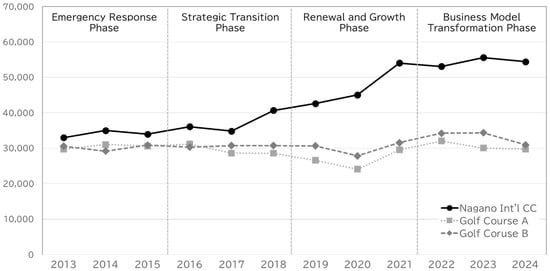
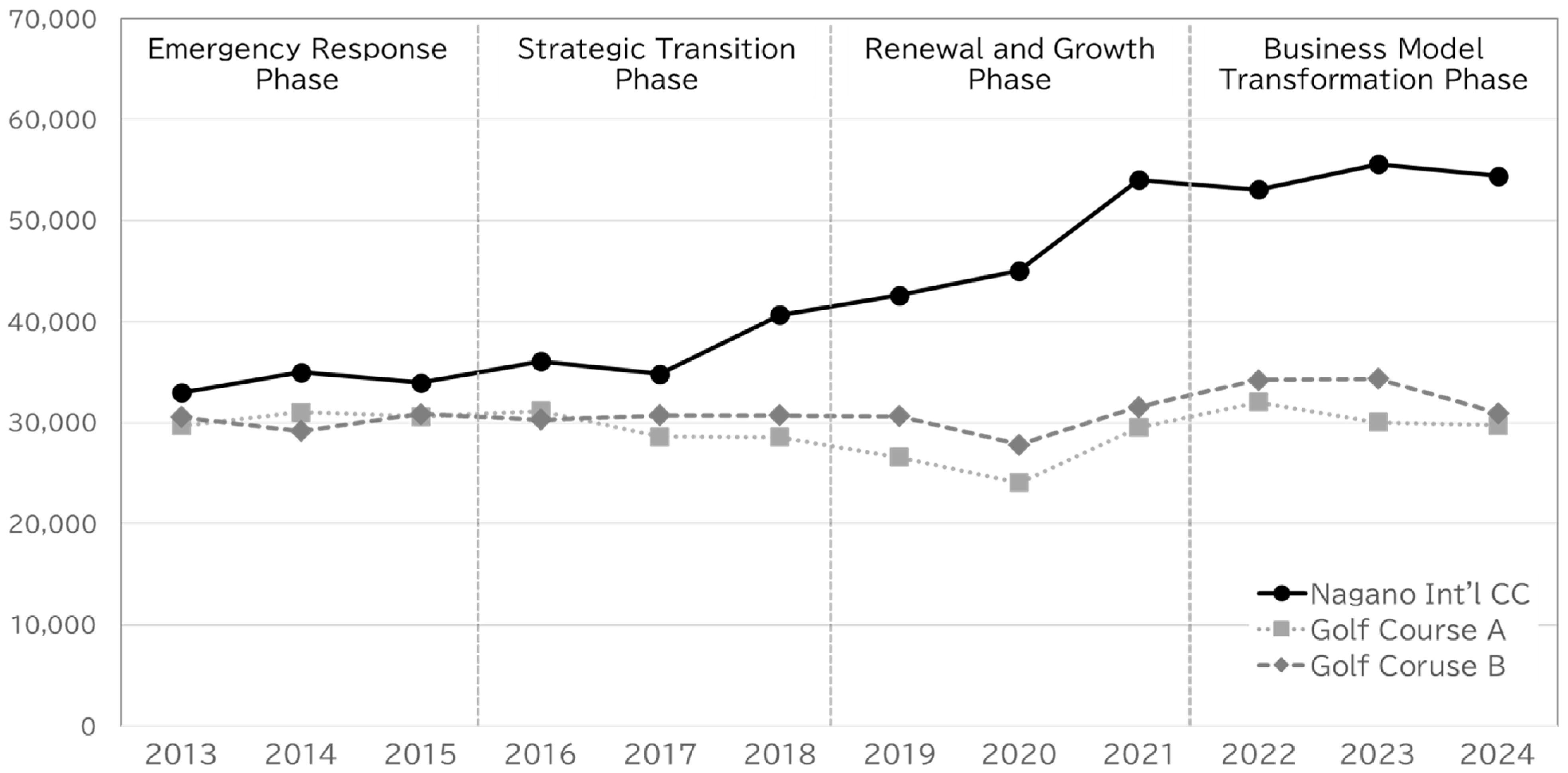
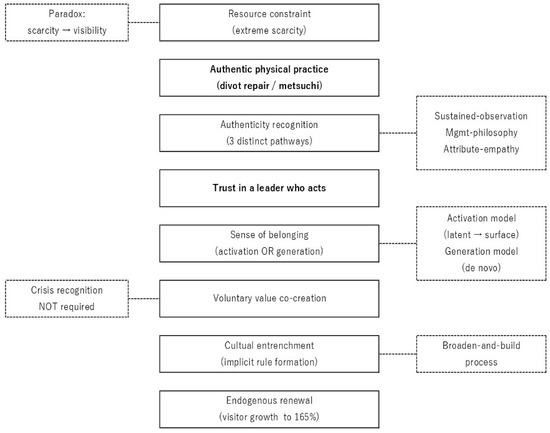
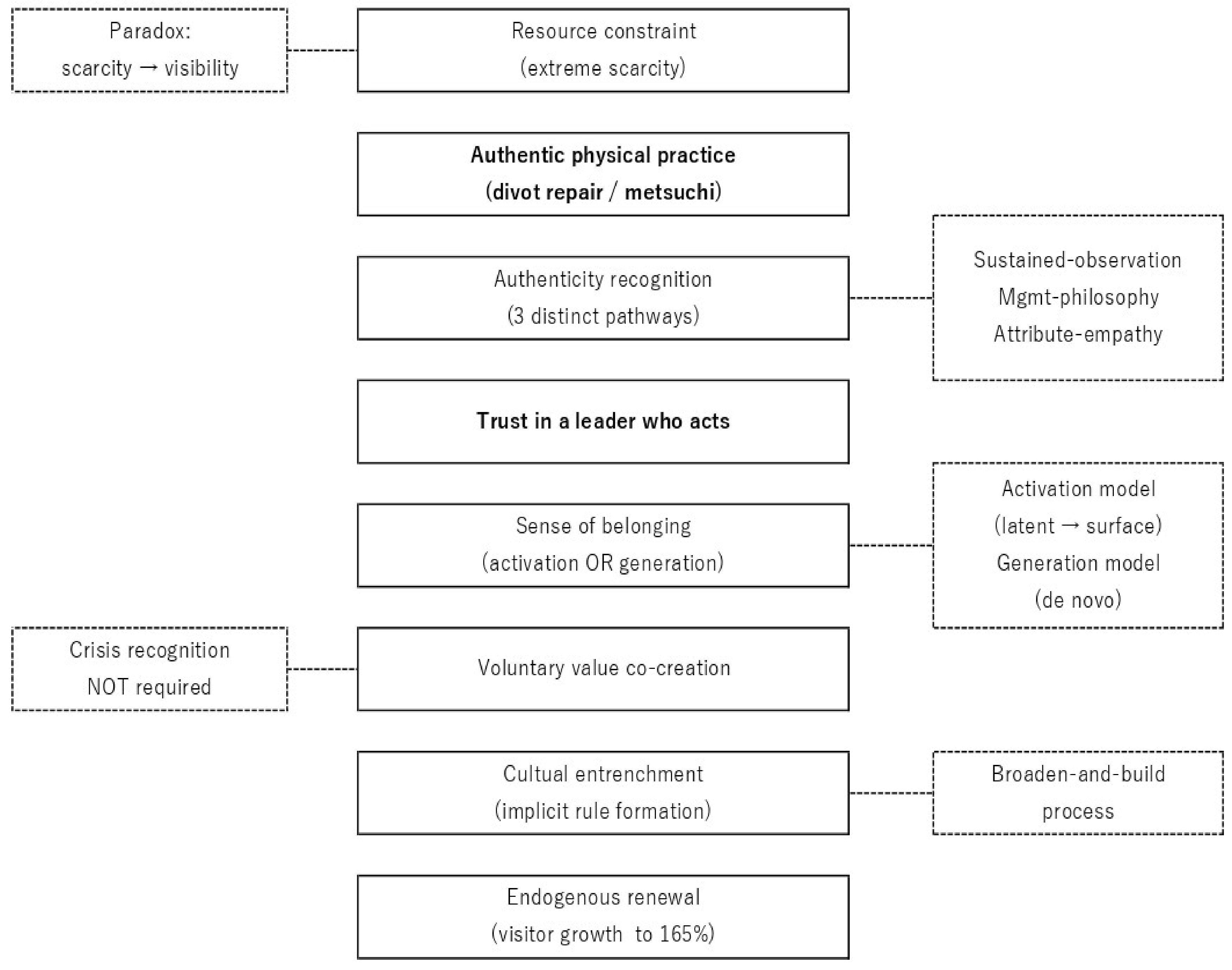

Disclaimer/Publisher’s Note: The statements, opinions and data contained in all publications are solely those of the individual author(s) and contributor(s) and not of MDPI and/or the editor(s). MDPI and/or the editor(s) disclaim responsibility for any injury to people or property resulting from any ideas, methods, instructions or products referred to in the content. |
© 2026 by the authors. Licensee MDPI, Basel, Switzerland. This article is an open access article distributed under the terms and conditions of the Creative Commons Attribution (CC BY) license.