


Abstract
Virtual tourism is a key emerging form of digital sustainable tourism that supports the sustainable transformation of the tourism industry. Although scholars have increasingly investigated how virtual tourism experiences influence on-site destination visit intentions, there is still a lack of systematic explanations for the underlying formation mechanism. Furthermore, research on the experience-behavior transformation mechanism of virtual tourism platforms remains inadequate. To fill these gaps, this study integrates the Stimulus-Organism-Response (SOR) framework, Technology Readiness Model (TR) and Technology Acceptance Model (TAM) to construct an emotional-technology psychology–cognition–behavior chain-mediated model. Using 683 valid questionnaires, the proposed model was examined via structural equation modeling and Bootstrap analysis. Results reveal that perceived enjoyment strengthens technology optimism and alleviates technology insecurity. Technology optimism positively predicts perceived usefulness and ease of use, while technology insecurity shows a negative effect on perceived usefulness. Perceived ease of use enhances perceived usefulness, which further promotes intention to use the platform’s virtual modules, thereby increasing real destination visit intentions. Perceived ease of use enhances intention to use the platform’s virtual modules, while increasing real destination visit intentions. Perceived ease of use enhances intention to use the platform’s virtual modules, and further promotes real destination visit intentions through chain-mediated pathways. Notably, perceived enjoyment exerts significant chain-mediating effects through three pathways: technology optimism → perceived usefulness → virtual module usage intention; technology optimism → perceived ease of use → virtual module usage intention; and technology optimism → perceived ease of use → perceived usefulness → virtual module usage intention. This study extends the application of the SOR framework to digital sustainable tourism contexts, clarifies micro-psychological transformation mechanisms, and provides practical implications for platform optimization, destination marketing and tourism development.
1. Introduction
Virtual tourism is generally defined as a form of remote destination experience enabled by digital technologies, which allows individuals to obtain visual, auditory and spatial information about a destination without physical visitation [1]. Existing research indicates that virtual tourism is not a single technological format, but encompasses a variety of technical implementations, such as 360° panoramic videos, virtual reality (VR), augmented reality (AR), immersive digital environments and metaverse tourism. Among these formats, 360° panoramic videos stand out as one of the most widely adopted applications in current virtual tourism research and practice, thanks to their high accessibility, low entry barriers and strong scene authenticity. Virtual tourism (VT), defined by its distinctive high immersion and sense of presence, has redefined the way tourists engage with destinations by offering an experiential pathway that departs fundamentally from traditional information-centric presentation modes [2]. Amid the global digital transformation of the tourism industry, VT has experienced exponential growth, driven by the declining cost of immersive technologies, the expanding scope of application scenarios, and the rising demand for personalized, pre-trip experiences [3,4]. With the ongoing digital transformation of the tourism industry, virtual tourism has evolved from an experimental technological innovation into an increasingly important means of delivering destination experiences, supporting destination marketing, and assisting tourists in their travel decision-making processes [5,6].
According to projections from the International Data Corporation [7], global investment in augmented reality (AR) and virtual reality (VR) research and development (R&D) is poised to surge from USD 12 billion in 2020 to USD 72.8 billion in 2024—a 507% growth that underscores the rapidly expanding technological and capital foundation supporting VT’s integration into mainstream tourism ecosystems. In practice, VT has been widely adopted across diverse tourism contexts, including destination visualization, pre-trip experience simulation, digital storytelling in cultural institutions (e.g., museums), and travel decision support systems [8,9,10,11]. As such, virtual tourism has emerged as an important form of digital innovation, enabling tourists to remotely access destination experiences and interact with destination-related content in novel ways.
Prior empirical research has consistently demonstrated VT’s potential to enhance users’ experience, reduce information asymmetry between tourists and destinations, and stimulate initial travel interest [12,13]. However, despite its rapid technological advancement and growing industry adoption, VT faces persistent challenges that hinder its large-scale commercialization and effective translation into tangible tourism outcomes—creating an urgent need for scholarly intervention. First, the ecosystem of virtual tourism platforms remains underdeveloped, characterized by low user engagement, poor retention rates, and a lack of standardized, scalable application models [14]. Second, VT functions are often weakly integrated into comprehensive tourism platforms, resulting in fragmented user experiences and significant variability in acceptance levels across different platforms. In many cases, virtual experiences are treated as isolated functional modules rather than being embedded within the broader travel decision-making journey of users. Most critically, platform operators and destination management organizations have yet to establish effective mechanisms for converting virtual engagement into actual travel behavior—a gap that undermines VT’s practical value and limits its contribution to tourism recovery and growth [15].
Against this backdrop, existing research on VT has been predominantly anchored in a functionalist perspective, focusing primarily on the effects of experiential attributes (e.g., immersion, presence) and cognitive evaluations (e.g., perceived usefulness, reliability) on users’ usage intention and destination visit intention [16,17]. While these studies have provided valuable insights into VT’s technological and instrumental value, they suffer from three critical limitations that impede a comprehensive understanding of how virtual experiences translate into on-site destination visit intention—creating a pressing research gap. First, the mechanism underlying the role of emotional experience in the formation of virtual tourism behaviors remains to be further explored. While perceived enjoyment is widely recognized as a core affective response in virtual tourism experiences [1,18], existing studies have not reached a consensus on its theoretical function. Most relevant research focuses on its direct behavioral effects or regards it as an outcome variable of presence, yet few investigate how it further shapes users’ technological readiness and technology acceptance and influences subsequent behavioral decisions. Accordingly, the relationships between emotional experience, technological readiness and technology acceptance need to be further clarified, which also serves as a key theoretical issue for understanding the formation mechanism of on-site destination visit intention. Second, prior studies tend to silo technological characteristics and user attitudinal responses, neglecting the pivotal role of virtual tourism platforms as intermediaries that bridge tourists, destinations, and virtual experiences [19,20]. This oversight has left the mechanisms underlying the conversion of virtual experiences into intention to engage in on-site tourism insufficiently explored and poorly understood. Third, there is a lack of systematic explanations for the formation mechanism of behavioral intention influenced by virtual tourism. Although existing studies have confirmed that virtual tourism exerts positive effects on tourists’ affective responses, destination evaluation and behavioral intention, the interpretations of how such impacts occur remain fragmented. Current research mainly explains the behavioral effects of virtual tourism from a single perspective, such as technical characteristics, emotional experience, or cognitive evaluation, with insufficient effective integration across different theoretical traditions [21,22]. Accordingly, there is still a lack of a systematic theoretical account of how tourists translate virtual tourism experiences into subsequent behavioral intentions and what key psychological mechanisms are involved in this transformation process.
Virtual tourism should be conceptualized not merely as a technological application but as an experience-driven consumption context where emotional responses play a central role in shaping subsequent behavior [23,24]. Specifically, the perceived enjoyment generated during virtual tourism experiences is likely to significantly influence users’ evaluations of platforms, their willingness to engage with virtual functions, and ultimately their decisions to visit real-world destinations. Yet, the role of such emotional mechanisms in the VT-behavior conversion process has received limited scholarly attention, with most studies prioritizing cognitive and technological factors over affective drivers [19,20].
Furthermore, virtual tourism behavior is inherently contextual and shaped by multidimensional psychological processes. Users’ responses to virtual experience functions depend not only on their cognitive evaluations of platform features (e.g., perceived usefulness, ease of use) but also on their broader psychological readiness toward emerging technologies [25]. The technology readiness (TR) model offers a valuable lens for capturing individuals’ predispositions toward technology adoption through dimensions such as optimism and insecurity, complementing the Technology Acceptance Model (TAM), which focuses primarily on instrumental cognition [21,26]. Integrating the TR and TAM models enables a more comprehensive understanding of how psychological readiness shapes cognitive evaluations and behavioral intentions in platform-based VT contexts, addressing a key limitation of prior research that has treated these frameworks in isolation [27].
Existing studies have demonstrated that virtual tourism experiences can positively shape tourists’ destination evaluations and visitation intentions, yet the underlying mechanisms remain poorly explained systematically. Current research mostly examines the impacts of virtual tourism from isolated perspectives, including emotional, cognitive and technological factors. There is still a lack of integrated understanding of the psychological processes through which tourists translate virtual destination experiences into subsequent behavioral intentions. Particularly in the context of virtual tourism based on 360° panoramic videos, tourists tend to generate affective responses, psychological perceptions and cognitive evaluations simultaneously. Accordingly, it is essential to develop a more comprehensive analytical framework to uncover the psychological mechanisms linking virtual tourism experiences to destination visitation intentions.
To address these critical gaps and respond to calls for more integrated, context-specific research on VT [28,29], this study develops an integrated research framework that embeds the TR and TAM models within the Stimulus–Organism–Response (SOR) framework—a theoretical lens well-suited to explaining how external stimuli (e.g., virtual experiences) trigger psychological processes (organism) and subsequent behavioral responses [19]. Specifically, the virtual tourism experience based on 360° panoramic videos is defined as the external stimulus. Perceived enjoyment derived from virtual tourism experiences, technology-related attitudes (i.e., technological optimism and technological insecurity), and platform-related cognitive perceptions (perceived usefulness and perceived ease of use) are categorized as variables at the organism level. The virtual tourism platform is identified as a critical mediating mechanism linking virtual experiences to on-site destination visit intentions. Meanwhile, the intention to use virtual tourism functions and the on-site destination visit intentions are defined as the core behavioral responses.
This study makes three distinct and important contributions to the literature, addressing the urgent need for more nuanced, integrated research on VT. First, this study reveals the mechanism of emotional experience in the formation of virtual tourism behaviors. It clarifies the relationships between emotional experience, technology readiness and technology acceptance, thereby advancing the understanding of how virtual tourism behaviors develop. Second, it elaborates the functional mechanism of virtual tourism platforms in facilitating the transformation from virtual tourism experiences to on-site visitation intentions. Third, this study uncovers the formation mechanism through which virtual tourism affects behavioral intentions. By incorporating multidimensional technology-related psychological constructs into the SOR framework, this research establishes a structured mechanism linking virtual tourism experience, emotional responses, technology readiness, technology acceptance, and behavioral responses. It further explains the micro-level psychological mechanisms underlying the transformation from virtual tourism (VT) experience to on-site destination visit intention [21,30].
2. Theoretical Foundations and Research Hypotheses
2.1. Technology Readiness Model (TR)
The technology readiness (TR) model explains individuals’ predispositions toward accepting or resisting emerging technologies by distinguishing between enabling dimensions (e.g., optimism and innovativeness) and inhibiting dimensions (e.g., insecurity and discomfort). It emphasizes that users’ psychological readiness shapes their attitudes toward technology and, consequently, their technology adoption behavior. It is important to distinguish between trait-based technology readiness and context-specific technology readiness. Traditional technology readiness theory conceptualizes technology readiness as a relatively stable individual predisposition toward new technologies, reflected in dimensions such as optimism, innovativeness, discomfort, and insecurity [31]. As such, technology readiness has traditionally been viewed as a cross-situational personal characteristic.
However, subsequent research suggests that technology readiness is not entirely invariant across contexts. Rather, it exhibits domain-specific and situationally sensitive characteristics, meaning that individuals’ readiness toward a focal technology may vary according to their experiences and evaluations within a particular technological environment [32]. For example, Blut and Wang argued that technology readiness should be understood as a situational trait whose manifestation may differ across technological contexts [33]. Similarly, research in virtual tourism has shown that users’ experiential responses can significantly influence technology-related optimism and discomfort, thereby shaping their readiness toward virtual tourism technology [34]. Accordingly, technology readiness in specific technological contexts may reflect not only a general predisposition toward technology but also users’ technology-related evaluations and psychological preparedness developed through actual experience. Following this perspective, the present study conceptualizes technology readiness as a domain-specific readiness toward virtual tourism technology, reflecting users’ optimism, confidence, and preparedness regarding virtual tourism platforms. In tourism and hospitality research, the TR model has been widely applied to explain consumers’ intentions to adopt smart tourism platforms and online booking systems [24].
In the context of virtual tourism, technology optimism enhances users’ expectations of and trust in virtual tourism functions, whereas technology insecurity intensifies concerns related to privacy leakage and system risks [23]. Compared with evaluations based solely on functional attributes, the TR model captures individuals’ broader psychological orientations toward emerging technologies, thereby accounting for subjective differences in how users perceive technological value and potential risks during virtual tourism experiences [35]. Accordingly, incorporating the TR model provides a more comprehensive explanation of how virtual tourism experiences influence users’ cognitive evaluations and subsequent behavioral responses from a technology-related psychological perspective. The classic TR framework comprises four dimensions: optimism, innovativeness, discomfort, and insecurity. Given the hedonic and experiential nature of the 360° panoramic virtual tourism context in this study, we select two core dimensions most closely related to the research theme. Optimism (positive driving force of technology acceptance) and insecurity (negative inhibiting force of technology acceptance) as the technology-related psychological constructs at the organism level. These two dimensions respectively capture users’ positive expectations and risk perceptions toward virtual tourism technology, and have been widely adopted and validated in existing tourism technology adoption research. Innovativeness and discomfort are not included in the current model, as they are more relevant to cross-situational personal traits rather than situational psychological responses triggered by specific virtual tourism experiences.
Consistent with the logic of the TR model, perceived enjoyment in virtual tourism can strengthen users’ expectations regarding technological benefits while reducing perceived uncertainty. In this context, enjoyment not only reflects an affective response but also indirectly shapes users’ acceptance of virtual tourism technology by reinforcing positive technological beliefs and alleviating perceived risks. Accordingly, the following hypotheses are proposed:
H1a.
Perceived enjoyment of virtual tourism experience has a significant positive effect on optimism toward virtual tourism technology.
H1b.
Perceived enjoyment of virtual tourism experience has a significant negative effect on insecurity toward virtual tourism technology.
2.2. Technology Acceptance Model (TAM)
The Technology Acceptance Model (TAM) further complements the cognitive evaluation pathway within the organism component of the SOR framework. It clearly states that perceived usefulness and perceived ease of use are the core cognitive judgments determining users’ technology adoption intention, and that they also constitute the essential cognitive basis for subsequent behavioral responses [21]. In the context of virtual tourism, the functional value and operational convenience of virtual experience modules on platforms directly affect users’ acceptance of virtual tourism services, which has been widely validated in existing studies on digital tourism.
However, TAM has been criticized for overemphasizing instrumental cognition at the expense of emotional experiences generated during immersive interactions. Although recent studies have incorporated variables such as perceived enjoyment and flow experience into the TAM framework [17], most have focused on platform usage intention rather than examining how virtual experiences translate into intention to engage in on-site tourism. Therefore, extending TAM to include experiential and affective factors is necessary to better explain the broader behavioral consequences of virtual tourism experiences.
From an integrated TR–TAM perspective, users’ technology-related psychological orientations directly shape their cognitive evaluations of virtual tourism platforms’ virtual experience modules. Technology optimism enhances users’ confidence in system effectiveness, usability, and reliability, whereas technology insecurity may weaken such cognitive evaluations. Accordingly, the following hypotheses are proposed:
H2a.
Optimism toward virtual tourism technology has a significant positive effect on the perceived usefulness of the platform’s virtual experience modules.
H2b.
Optimism toward virtual tourism technology has a significant positive effect on the perceived ease of use of the platform’s virtual experience modules.
In contrast, technology insecurity refers to users’ inherent anxiety and uncertainty when engaging with emerging digital tools. According to the negative mechanism of the technology readiness theory, such insecurity arouses users’ doubts about system stability and functional performance, thereby undermining their positive value perceptions of technological products. Virtual tourism is a typical hedonic experience context. When users experience high levels of technology insecurity, their perceptions of the functional value of virtual experience modules will be significantly diminished. Accordingly, technology insecurity exerts a negative influence on users’ evaluations of the perceived usefulness of virtual tourism platforms. This study thus puts forward the following hypothesis:
H3.
Insecurity toward virtual tourism technology has a significant negative effect on the perceived usefulness of the platform’s virtual experience modules.
2.3. The SOR Framework and Model Integration
The Stimulus–Organism–Response (SOR) framework serves as the core theoretical foundation of this study. This theory holds that external environmental stimuli first activate individuals’ internal psychological states, including psychological traits and cognitive judgments, and eventually lead to corresponding behavioral responses. Within the analytical paradigm of this research, the virtual tourism experience based on 360° panoramic videos is defined as the external stimulus. Users’ affective responses (perceived enjoyment), technology-related psychological dispositions (Technology Readiness Index, TRI), and platform-based cognitive evaluations (Technology Acceptance Model, TAM) collectively form a hierarchical internal mechanism at the organism stage. This tiered theoretical structure clarifies the inherent logical relationships among the three theories. The Stimulus–Organism–Response (SOR) framework posits that external stimuli influence individuals’ internal psychological states, which subsequently drive behavioral responses. Within this framework, stimuli encompass environmental and experiential inputs; the organism represents cognitive and emotional processing; and responses refer to behavioral intentions and actual actions.
The SOR framework has been widely applied in tourism research to explain how environmental cues shape tourists’ psychological states and decision-making processes [36]. Prior studies indicate that, in digital tourism contexts, emotional experiences and cognitive evaluations often influence behavioral intentions through mediating mechanisms. For example, flow experience has been shown to mediate the relationship between content stimuli and impulsive travel intention.
In virtual tourism research, the SOR framework has been used to conceptualize virtual experiences as external stimuli and to examine their effects on psychological responses such as virtual platform attachment and revisit intention [14]. Some studies further suggest that virtual experiences can indirectly promote on-site travel intention through psychological mechanisms [37]. However, existing research often focuses on isolated stimuli or direct effects and pays insufficient attention to the role of positive emotions—particularly perceived enjoyment—in shaping multi-stage behavioral processes. Moreover, few studies have systematically examined how emotional stimuli interact with technology-related psychology and platform cognition to form a chain mechanism influencing behavioral outcomes.
Based on the SOR framework and the cognitive evaluation–behavioral response mechanism in TAM, perceived ease of use of virtual experience modules may not only directly influence platform usage intention but also indirectly enhance perceived usefulness by improving users’ perceptions of system convenience. Accordingly, we have the following:
H4.
Perceived ease of use of the platform’s virtual experience modules has a positive effect on perceived usefulness of the platform’s virtual experience modules.
Furthermore, as a core cognitive variable in TAM, perceived usefulness is an important antecedent of users’ intention to use a system. Therefore, the following hypothesis is proposed:
H5.
Perceived usefulness of the platform’s virtual experience modules has a positive effect on intention to use the platform’s virtual experience modules.
H6.
Perceived ease of use of the platform’s virtual experience modules has a positive effect on intention to use the platform’s virtual experience modules.
Finally, because virtual experience is not merely an online interactive behavior but also establishes cognitive and emotional connections between users and destinations, thereby driving real-world travel behavior, the following hypothesis is proposed:
H7.
Intention to use the platform’s virtual tourism modules has a positive effect on on-site destination visit intention.
2.4. Hypotheses on the Chain-Mediating Pathways
Integrating the relationships proposed in H1–H6 yields a continuous process characterized by “emotional stimulus-technology-related psychology–cognitive evaluation–behavioral response.” Within this structure, perceived enjoyment (stimulus) influences technology optimism and insecurity, which in turn shape perceived usefulness and perceived ease of use, ultimately leading to platform usage intention and intention to engage in on-site tourism (response). Based on this logic, the following chain-mediation hypotheses are proposed:
H8.
Perceived Enjoyment of Virtual Tourism Experience → Optimism toward Virtual Tourism Technology → Perceived Usefulness of the Platform’s Virtual Experience Modules → Intention to Use the Platform’s Virtual Experience Modules → Intention to Visit Real Destinations.
H9.
Perceived Enjoyment of Virtual Tourism Experience → Optimism toward Virtual Tourism Technology → Perceived Ease of Use of the Platform’s Virtual Experience Modules → Intention to Use the Platform’s Virtual Experience Modules → Intention to Visit Real Destinations.
H10.
Perceived Enjoyment of Virtual Tourism Experience → Optimism toward Virtual Tourism Technology → Perceived Ease of Use of the Platform’s Virtual Experience Modules → Perceived Usefulness of the Platform’s Virtual Experience Modules → Intention to Use the Platform’s Virtual Experience Modules → Intention to Visit Real Destinations.
H11.
Perceived Enjoyment of Virtual Tourism Experience → Insecurity toward Virtual Tourism Technology → Perceived Usefulness of the Platform’s Virtual Experience Modules → Intention to Use the Platform’s Virtual Experience Modules → Intention to Visit Real Destinations.
2.5. Theoretical Summary and Model Development
Although prior studies have applied the SOR, TR, and TAM frameworks individually to explain virtual tourism behavior, each approach has inherent limitations. The SOR framework lacks sensitivity to individual differences in technology acceptance; the TR model captures psychological readiness toward emerging technologies but does not explicitly model cognitive evaluations of platform functions; and the TAM emphasizes instrumental cognition while underrepresenting emotional and psychological antecedents of technology adoption.
To address these limitations, this study integrates the TR and TAM models within the SOR framework and develops a chain-path model linking emotional stimulus, technology-related psychological orientations, cognitive evaluations, and behavioral responses. Specifically, perceived enjoyment of virtual tourism experience is conceptualized as the external stimulus; technology optimism and insecurity as psychological variables; perceived usefulness and perceived ease of use of virtual experience modules as cognitive evaluations; and intention to use virtual experience modules and intention to engage in on-site tourism as behavioral outcomes.
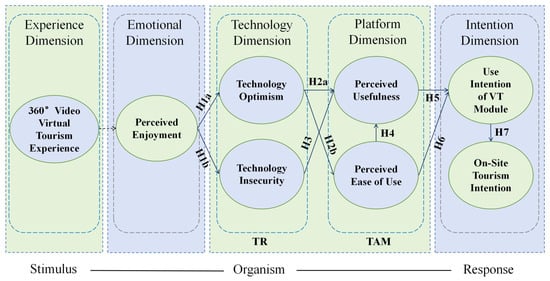
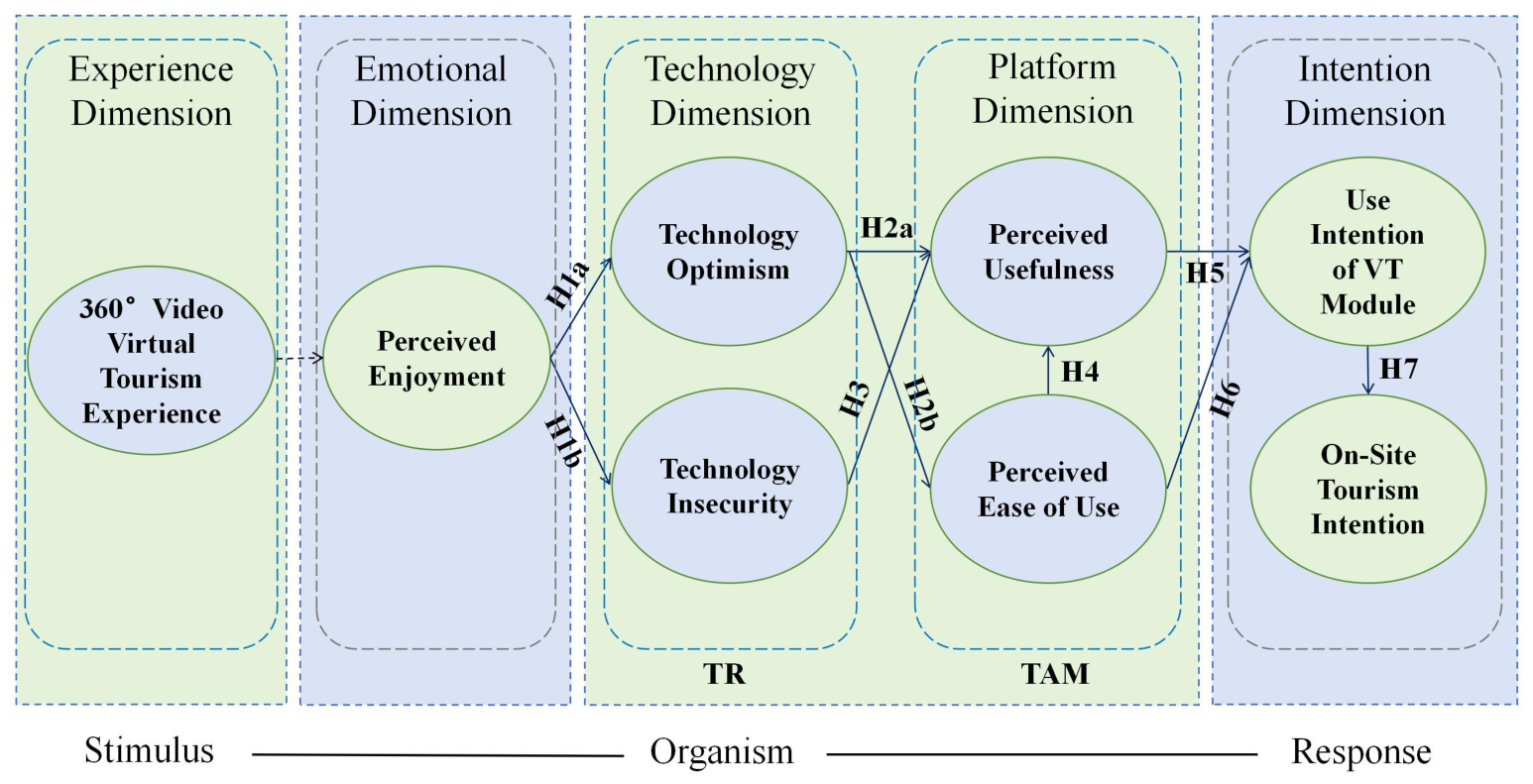
This integrated framework enables a systematic examination of the multiple mediating pathways through which virtual tourism experiences influence intention to engage in on-site tourism. In doing so, it addresses the central research question of how virtual tourism experiences are transformed into actual tourism behavior. The conceptual model is presented in Figure 1.
Figure 1.
Conceptual model of platform-embedded virtual tourism experience.
3. Materials and Methods
This study employed a scenario-based online survey to examine how a virtual tourism experience module embedded in a commercial tourism platform influences users’ intention to engage in on-site tourism. Following standard scale development procedures and drawing on well-established scales from both Chinese and international literature, a questionnaire was designed to capture users’ perceptions of and responses to the platform-based virtual tourism experience. In the introductory section of the questionnaire, respondents were first informed that the study focused on a commercial tourism platform that integrates virtual tourism functions into its destination display and service interface. This study defines a virtual tourism experience as a remote destination exploration process, in which users perceive and experience tourist environments by viewing 360° panoramic videos on virtual tourism platforms. Accordingly, the research context of the present study is confined to 360° panoramic video-based virtual tourism, rather than immersive VR tourism that requires head-mounted equipment or metaverse-based tourism. They were then directed to designated platform-based virtual tourism content through a link embedded in the questionnaire and were asked to complete the relevant questionnaire items after browsing the virtual tourism module.
The questionnaire consisted of two parts. The first part measured the variables in the theoretical model. All measurement items were adapted from established scales and semantically adjusted to fit the research context of platform-embedded virtual tourism. Specifically, perceived enjoyment of the platform-based virtual tourism experience was measured with reference to scales related to flow experience and immersive experience and included four items developed based on Han et al. [38]. Optimism toward virtual tourism technology was measured using the optimism dimension of the Technology Readiness Index (TRI), including four items adapted from the work of Errichiello et al. [14]. Insecurity toward virtual tourism technology was measured based on the insecurity dimension of the TRI, with three items based on Wei et al. [37]. Perceived usefulness and perceived ease of use of the virtual tourism module integrated into the commercial platform were measured using the corresponding scales from the Technology Acceptance Model (TAM), with four items for each construct derived from the work of Theodoropoulos et al. [21]. Intention to use the platform’s virtual tourism module was developed with reference to the behavioral intention scales in TAM and related studies on tourism technology adoption and included three items inspired by Subawa et al. [36]. Intention to engage in on-site tourism was measured with reference to studies on tourist behavioral intention and revisit intention and included three items based on Ying et al. In total, the above variables comprised 25 observed items. The second part collected respondents’ demographic and travel-related information, including gender, age, education, income, occupation, frequency of travel, and health status. All attitudinal and perceptual items were measured using a seven-point Likert scale, where 1 indicated “strongly disagree” and 7 indicated “strongly agree.”
A pilot survey was conducted in January 2022, and the questionnaire was revised and refined based on the pilot results. The formal survey was then administered from February to March 2022 through the Wenjuanxing platform using anonymous online questionnaires. To ensure a consistent understanding of the research scenario, respondents were first provided with brief explanations of commercial tourism platforms, virtual tourism modules, and on-site tourism. They were then asked to enter a designated virtual tourism page presented as part of a commercial tourism platform interface. To better simulate the actual user experience of platform-based destination exploration, respondents were required to complete a standardized browsing task, including viewing the destination information page, entering the virtual tourism module, and exploring the core virtual tourism content for no less than 3 min before proceeding to the survey questions. In addition, screening questions and repeated items were included to improve response quality and reduce common method bias (CMB).
This study included the following screening questions at the beginning of the questionnaire to ensure that the sample met the research objectives: S1. Have you experienced 360° panoramic video virtual tourism (e.g., panoramic views of scenic spots on travel platforms, cloud tourism panoramic videos) through mobile phones or computers in the past 12 months? S2. Have you personally visited any of the virtual tourism destinations covered in this questionnaire in the past 12 months? Only respondents who answered “Yes” to both questions were included in the subsequent analysis; otherwise, the questionnaire was terminated immediately, marked as “Failed Screening,” and excluded from further analysis. Additionally, to verify that respondents are answering seriously and consistently, prevent systematic biases caused by random clicks or careless responses, and improve data quality, a pair of semantically opposite or highly similar items is included in the latter part of the questionnaire (e.g., “Using VR for travel makes me feel as if I am there” and “When using VR for travel, I find it difficult to feel as if I am there”). A separate mandatory repeat item is also included: “Please select ‘Strongly Disagree’ for this question (to test attention).” If a respondent answers the semantically opposite items in the same direction (e.g., selecting “Agree” for both) or fails to select the specified option as instructed, the questionnaire is deemed invalid and excluded from the analysis.
Since virtual tourism relies heavily on digital infrastructure and users’ technological literacy, we limited our sample to five provincial-level administrative regions where the virtual tourism market is particularly active: Beijing, Shanghai, Guangdong, Zhejiang, and Jiangsu. A total of 160 questionnaires were distributed in each region, resulting in 800 questionnaires overall.
This study primarily distributed questionnaires to users with IP addresses located in the aforementioned five provinces and municipalities via a professional online survey platform, supplemented by recruitment through local WeChat groups and offline posters in technology parks. Respondents were required to currently reside in one of the five regions and to have experienced virtual tourism at least once in the past 12 months (including but not limited to: VR panoramas of scenic spots, 3D virtual scenic areas, cloud tourism livestreams, and travel apps with VR functionality). The questionnaire’s homepage displayed an informed consent form clearly outlining the study’s objectives, anonymity, data usage, and the right to withdraw at any time. Respondents must click “Agree and Continue” to begin the survey. The platform monitors IP geographic distribution and completion time in real time; after data collection, two researchers independently clean the data. After excluding invalid responses—such as those with insufficient completion time or repetitive response patterns—683 valid questionnaires were retained for data analysis, yielding an effective response rate of 85.38%.
Among the 683 valid questionnaires, 51.83% of the respondents were male and 48.17% were female. Respondents aged 26–35 accounted for 61.35% of the sample. In addition, 93.12% of the respondents had a college degree or above, and 71.45% were enterprise employees. Most respondents reported a personal monthly income above RMB 6000, and more than half reported relatively good physical health (Table 1).
Table 1.
Descriptive statistics of the sample.
4. Results
4.1. Reliability and Validity Tests
Reliability testing was conducted to assess the internal consistency and measurement reliability of the questionnaire scales. As shown in Table 2, the Cronbach’s alpha coefficients of all latent variables reached acceptable levels. Specifically, the Cronbach’s alpha coefficient was 0.789 for perceived enjoyment of virtual tourism experience, 0.746 for optimism toward virtual tourism technology, 0.860 for insecurity toward virtual tourism technology, 0.748 for perceived usefulness of the platform’s virtual experience modules, 0.707 for perceived ease of use of the platform’s virtual experience modules, 0.740 for intention to use the platform’s virtual experience modules, and 0.722 for intention to visit real destinations. Overall, the Cronbach’s alpha coefficients of all latent variables were no lower than 0.70, and most exceeded 0.75, indicating that the scales demonstrated good internal consistency and that the questionnaire data had a high level of reliability, thus satisfying the requirements for subsequent structural equation modeling analysis. Furthermore, the average variance extracted (AVE) value exceeding 0.5 suggests a high variance explained by the constructs, indicating a sound confidence level.
Table 2.
Measurement model assessment.
Convergent validity is a measurement approach used to assess the degree of interrelatedness among items under the same construct. In this study, discriminant validity was assessed by comparing the square root of the AVE for each construct with the correlations among constructs. As shown in Table 3, the items within each construct are highly correlated, indicating that the questionnaire scale used in this study demonstrates satisfactory convergent validity.
Table 3.
Discriminant validity test.
4.2. Common Method Bias
This study used the variance inflation factor (VIF) value to evaluate standard method bias and conduct the measurement model’s collinearity test (Table 4). The results revealed that the VIF values in the structural model are all lower than the recommended threshold range (<5), indicating that collinearity between constructs is not a vital issue in this study.
Table 4.
Variance inflation factor.
4.3. Predictive Relevance (Q2)
Q2 values were estimated using the blindfolding technique with a default value of 7 for the omission distance. As shown in Table 5, the Q2 values are all greater than 0, supporting the model’s predictive relevance.
Table 5.
Coefficient of determination and predictive relevance.
4.4. Structural Equation Model Testing
Given that both reliability and validity were found to be satisfactory, path analysis was conducted on the proposed model. Since consumers’ attitudes toward and intentions to use virtual tourism platforms are multidimensional and complex, the model needed to be adjusted and refined in accordance with the empirical data. The final model fit results are presented in Table 6. After confirming the model’s fitness, this study used PLS software 4.0 to implement the bootstrap sampling method to test the hypothesized pathways, presenting the model’s path coefficients, t-values, and p-values in Table 6. The empirical results show that all hypothesized paths are significant.
Table 6.
Results of path hypothesis test.
4.5. Mediation Effect Testing
Based on the results of the mediation analysis in Table 7, this study examined the mediating mechanisms through which the perceived enjoyment of virtual tourism experiences influences users’ willingness to use virtual experience modules and their ultimate willingness to visit the destination in person via different pathways. Specifically, four mediation pathways (H8 to H11) were tested, each involving two mediating variables—optimism and insecurity—in combination with perceived usefulness and perceived ease of use from the Technology Acceptance Model. The following provides a detailed interpretation of each pathway.
Table 7.
Mediating effect.
Path H8: Perceived enjoyment of the virtual tourism experience → Optimistic attitude toward virtual tourism technology → Perceived usefulness of the platform’s virtual experience module → Willingness to use the platform’s virtual experience module → Willingness to visit the destination in person. The raw coefficient for the mediating effect in this path is 0.123, with a standard deviation of 0.019. The t-statistic is 6.316, corresponding to a p-value of less than 0.001, indicating high significance at the 99.9% confidence level. The 95% confidence interval is [0.089, 0.165], which does not include zero, further confirming the reliability of the effect. The mediation type is classified as “partial mediation.” This implies that the pleasure derived from virtual tourism experiences not only directly promotes subsequent behavioral intentions but also enhances users’ perceived usefulness of the platform’s virtual experience module by fostering an optimistic attitude toward virtual tourism technology, thereby increasing their willingness to use it and ultimately translating into an intention to visit the physical destination. This pathway demonstrates the integrity of the cognitive–affective–behavioral chain, with an optimistic attitude serving as a positive psychological resource that amplifies the cognitive evaluation of technological usefulness.
Path H9: Perceived enjoyment of virtual tourism experiences → Optimistic attitude toward virtual tourism technology → Perceived ease of use of the platform’s virtual experience module → Willingness to use the platform’s virtual experience module → Willingness to visit the actual destination. The mediation coefficient for this path is 0.046, with a standard deviation of 0.012, a t-statistic of 3.975, and a p-value also less than 0.001; the confidence interval [0.026, 0.072] is entirely positive. The mediation type is partial mediation. Compared to H8, the effect size of this path is smaller, indicating that the indirect effect of optimistic attitude mediated through perceived ease of use is weaker than that mediated through perceived usefulness. A possible reason is that, in a virtual tourism context, users are more concerned with whether the technology can provide valuable content (such as immersion and information richness) rather than whether it is easy to operate; however, perceived ease of use still constitutes a significant psychological pathway—a pleasant experience leads users to view the technology optimistically, reduces concerns about operational difficulty, thereby increasing their willingness to use the virtual module, and ultimately promotes the intention to visit in person.
Path H10: Perceived enjoyment of virtual tourism experiences → Optimistic attitude toward virtual tourism technology → Perceived ease of use → Perceived usefulness → Willingness to use the platform’s virtual experience module → Willingness to visit the physical destination. The mediation coefficient for this path is 0.054, with a standard deviation of 0.009, a t-statistic of 5.736, p < 0.001, and a confidence interval of [0.038, 0.074]. Partial mediation. This is a chained path involving dual cognitive mediation: an optimistic attitude first enhances perceived ease of use, which in turn further strengthens perceived usefulness, ultimately influencing the intention to visit the physical destination through the intention to use the platform. The effect size falls between H8 and H9, indicating that the sequential mechanism of “usability → usefulness” indeed exists—when users perceive the virtual experience module as easy to use, they are more likely to recognize its practical benefits, thereby strengthening their motivation to use it. This path fully replicates the core logic of the Technology Acceptance Model while integrating the priming effects of emotion (pleasure) and belief (optimistic attitude).
Path H11: Perceived enjoyment of virtual tourism experiences → Perceived insecurity regarding virtual tourism technology → Perceived usefulness → Willingness to use the platform’s virtual experience module → Willingness to visit the physical destination. In stark contrast to the first three paths, the mediating effect in this path was not significant. The raw coefficient is only 0.002, the standard deviation is 0.001, the t-statistic is 1.726 (below the commonly used critical value of 1.96), and the p-value is 0.084 (>0.05). Since the 95% confidence interval [0.000, 0.005] includes 0, the mediation effect is deemed to be absent. This suggests that the enjoyment derived from virtual tourism experiences does not inhibit subsequent behavior through the negative pathway of “insecurity.” Possible reasons include: users in the sample generally have low safety concerns regarding virtual tourism technology, or the enjoyable experience itself is sufficient to offset the impact of insecurity. In summary, insecurity failed to serve as an effective mediating variable.
5. Discussion
The principal contribution of this study lies in empirically establishing a chain-mediating mechanism—“emotion–psychology–platform”—through which virtual tourism experiences on comprehensive tourism platforms translate into real-world travel intentions. This extends prior functionalist perspectives that treat virtual tourism primarily as an isolated technological experience or marketing tool [39,40]. Instead, our findings highlight the platform as a critical intermediary that integrates emotional experience, psychological responses, and behavioral outcomes, which is consistent with emerging research on digital platforms bridging virtual and on-site tourism [35,41,42,43] and digital commerce studies emphasizing platform-mediated behavioral conversion [44,45]. By incorporating emotional and psychological factors into platform-based transformation processes, this study addresses calls for research on micro-level psychological pathways linking virtual and real-world tourism [29,41].
First, perceived enjoyment plays a central role in shaping users’ behavioral intentions by acting as the key emotional driver of the proposed mechanism. Empirical results show that perceived enjoyment enhances technology optimism and reduces technology insecurity, indicating that affective experiences directly shape users’ psychological readiness toward virtual tourism technologies. This extends prior research that has emphasized technological attributes or cognitive evaluations as primary determinants of engagement [19,20], and aligns with the “affective turn” in digital consumption research [29]. Unlike prior studies that either link emotional experience directly to behavioral intention [46,47] or focus on cognitive mediators, this study demonstrates that emotional experience operates through technology-related psychological dimensions to influence cognition and behavior. Accordingly, we extend the SOR framework by enriching the organism component with both emotional experience and technology-related psychological dispositions [40].
Second, this study reveals differentiated effects of technology readiness dimensions, contributing to a more nuanced integration of TR and TAM. Empirical results indicate that technology optimism exerts significant positive effects on both perceived usefulness and perceived ease of use, while technology insecurity has a significant negative impact on perceived usefulness. This finding reveals that users’ cognitive evaluations in hedonic virtual tourism contexts are not dominated solely by positive technological expectations, which validates the proposition proposed by Parasuraman and Colby that the effects of each technology readiness dimension are context-dependent [25]. Meanwhile, this conclusion advances the understanding of the hedonic nature of virtual tourism: although immersive experiential enjoyment serves as the core appeal of virtual tourism [47,48,49], users still rationally weigh the risks associated with technology use, and negative technological psychology substantially interferes with their functional cognitive judgments.
On this basis, this study effectively extends the integrated TRAM framework and verifies that the two dimensions of technology readiness generate differentiated effects on TAM constructs [27]. This discovery refines the internal explanatory logic of the TRAM model and improves the integrated affective–cognitive dual-path system for explaining technology adoption behavior. Furthermore, the results complement and extend the findings of Lew et al. [50] and Bilynets et al. [51]. Although virtual tourism adoption is primarily driven by hedonic value, hedonic experiences cannot fully eliminate users’ concerns about technological risks. To further enhance the explanatory power of the TAM in digital tourism contexts, researchers must simultaneously consider both positive and negative technological psychological variables, rather than only focusing on positive psychological factors.
Third, this study provides empirical evidence that virtual tourism functions as a catalyst rather than a substitute for real-world travel. Platform usage intention significantly enhances destination visit intention, supporting prior arguments [5,39,47,52] and extending them by identifying the psychological mechanism underlying this relationship. The mediation results further show that the transformation from virtual experience to travel intention follows a sequential chain: emotional experience → technology-related psychology → cognitive evaluation → platform usage intention → destination visit intention. This clarifies prior conceptualizations of virtual tourism as a facilitating mechanism by specifying its micro-level psychological pathway.
Finally, this study develops an integrated SOR–TR–TAM framework to explain staged behavioral transformation in virtual tourism. By linking emotional stimuli, psychological dispositions, cognitive evaluations, and behavioral outcomes, the model demonstrates the value of multi-theory integration in digital tourism research [22,28,53,54]. It also provides a more comprehensive explanation of how perceived enjoyment drives on-site tourism intentions through multiple chain-mediated pathways, offering both theoretical consolidation and contextual extension of existing models.
5.1. Theoretical Implications
First, this study deepens academic understanding of the central role of emotional experience in virtual tourism research and expands the conceptual connotation of experience value in digital sustainable tourism contexts. Although existing studies recognize perceived enjoyment as a core affective response in virtual tourism experiences [1,18], no consensus has been reached on its theoretical function. By identifying perceived enjoyment as a core emotional stimulus variable, this study demonstrates its foundational role in activating technology-related psychological attitudes—particularly technology optimism—and facilitating behavioral conversion. This finding aligns with emerging research emphasizing hedonic motivation in digital technology adoption and extends virtual tourism research from a predominantly functional perspective to an integrated emotional–cognitive framework. It further shows that perceived enjoyment influences behavioral intentions both directly and indirectly through multiple mediating mechanisms, thereby enriching theoretical explanations of affective processes in virtual tourism experience research.
Second, this study advances the integration and evolution of theoretical frameworks within virtual tourism research. By embedding the TR and TAM models within the SOR framework, it develops a structured mechanism linking emotional stimuli, technology-related psychological orientations, cognitive evaluations, and behavioral responses. The findings indicate that technology optimism significantly influences perceived usefulness and perceived ease of use of virtual experience modules, whereas technology insecurity negatively affects perceived usefulness. This finding supports the proposition that the effects of each dimension of technology readiness vary across application contexts. It further indicates that in hedonic and exploratory contexts such as virtual tourism, users’ positive beliefs about technological potential and their risk concerns jointly shape cognitive evaluations, yet these two factors exert influences in opposite directions. This integrated framework provides a more refined theoretical pathway for understanding how technology-related psychological orientations shape users’ cognitive evaluations and subsequent behavioral intentions in virtual tourism settings.
Third, this study clarifies the relationship between virtual tourism experiences and real-world tourism behavior from a micro-psychological perspective. It supports the philosophy of digital empowerment rather than digital substitution in tourism, and further consolidates the theoretical basis for digital technologies to advance tourism development. While prior research has generally acknowledged the facilitating role of virtual tourism in promoting real-world travel, limited attention has been paid to the underlying psychological mechanisms. By identifying a multi-stage chain mediation process, this study demonstrates that enjoyment derived from virtual experiences indirectly promotes real-world travel intention through the development of technology optimism, enhanced perceptions of platform usefulness, and increased intention to use virtual experience modules. This finding substantiates the conceptualization of virtual tourism as a “catalyst” in the tourism decision-making process and provides a detailed theoretical explanation of how such catalytic effects occur.
5.2. Managerial Implications
First, virtual tourism platform operators should prioritize the enhancement of emotional value rather than focusing solely on information presentation or technological novelty. As perceived enjoyment is a key antecedent of users’ behavioral intentions, platform design should emphasize interactivity, immersion, and user participation to strengthen users’ emotional experiences and foster positive psychological responses toward virtual tourism technologies. Specifically, scenario-based interactive designs, personalized experience recommendations, and immersive digital storytelling can effectively improve users’ perceived enjoyment during virtual tourism experiences.
Second, platform operators should foster users’ technology optimism and reduce their perceived technological risks. Empirical results demonstrate that technology optimism exerts significant positive effects on the perceived usefulness and perceived ease of use of virtual experience modules, while technology insecurity has a significant direct negative impact on perceived usefulness, indicating that negative technological psychology also acts as a critical variable shaping users’ cognitive judgments. In exploratory application scenarios such as virtual tourism that integrate hedonic experience and practical functions, users’ positive beliefs about technological potential and their concerns over technological risks simultaneously participate in cognitive decision-making and jointly determine users’ value evaluations of virtual tourism modules.
Third, destination management organizations (DMOs) should integrate virtual tourism into the broader tourism decision-making chain rather than treating it as a standalone digital product. As intention to use virtual experience modules significantly promotes intention to engage in on-site tourism, virtual tourism can serve as an effective front-end tool for stimulating tourism demand. By enhancing users’ cognitive understanding of destinations and strengthening their emotional connections with destination cultures and landscapes, virtual tourism can facilitate the conversion of potential interest into actual on-site visitation.
5.3. Limitations and Future Research
This study is subject to several limitations that suggest directions for future research. First, this study uses cross-sectional survey data, which prevents rigorous causal inference among variables. Future studies should employ longitudinal research designs, experimental methods, and behavioral tracking data to capture changes in users’ emotional responses, platform usage intentions, and actual travel behavior over time, thereby providing more robust causal evidence for the proposed chain-mediating mechanism.
Second, although this study systematically examines the chain-mediating mechanisms, it does not consider potential moderating effects of individual and contextual factors. Future research could incorporate individual characteristics (e.g., personality traits, prior virtual tourism experience, and technology literacy) and contextual factors (e.g., platform service quality, destination type) to explore the boundary conditions of the proposed model and enhance its explanatory power.
Third, this study does not differentiate among types of virtual tourism content (e.g., natural landscapes, cultural heritage, or urban tourism). As different content forms may elicit distinct emotional and behavioral responses from users, future research should conduct comparative analyses across content categories to further refine theoretical understanding and provide more targeted practical implications.
In addition, the ecosystem of tourism platforms, industrial supervision, and residents’ technology usage behaviors in China have distinct local features. These contextual differences may hinder the direct replication of our findings in North America, Europe, and other Asian regions. It is worthwhile for future research to carry out cross-regional and cross-cultural comparisons to explore the general applicability of the model across different contexts.
6. Conclusions
This study investigates the psychological and behavioral mechanism by which virtual tourism experiences on comprehensive tourism platforms stimulate intention to engage in on-site tourism by constructing and validating an integrated theoretical model within the Stimulus–Organism–Response (SOR) framework that incorporates the Technology Readiness (TR) model and the Technology Acceptance Model (TAM). Centered on the chain-mediating pathway of emotion–psychology–platform, this research systematically examines how perceived enjoyment as a core affective stimulus drives the conversion from virtual engagement to offline travel behavior, thereby addressing key theoretical and practical gaps in the functionalist-dominated virtual tourism literature that often treats virtual tourism merely as a technical tool or isolated marketing tactic.
The empirical findings yield several central conclusions. First, perceived enjoyment in virtual tourism experiences acts as a foundational antecedent that strengthens users’ technology optimism and alleviates their technology insecurity, extending the organism stage of the SOR framework to integrate both emotional experience and stable technology-related psychological dispositions. Second, the two dimensions of technology readiness exert opposing differentiated effects: technology optimism significantly promotes perceived usefulness and ease of use of platform-based virtual modules, whereas technology insecurity imposes a significant negative direct influence on perceived usefulness. Third, virtual tourism functions as a catalyst rather than a substitute for physical travel, and the translation from pleasurable virtual experiences to on-site travel intentions follows a sequential multi-stage chain process: positive emotional responses shape technology-related psychological orientations, which further form platform-related cognitive evaluations, enhance platform usage intention, and ultimately boost real-world destination visit intention. Fourth, the integrated SOR–TR–TAM framework effectively explains the staged and hierarchical behavioral transformation process. It not only verifies and contextualizes the applicability of these three classical theories in digital tourism contexts, but also lays a theoretical foundation for promoting virtual tourism development.
Overall, this study underscores the pivotal role of tourism platforms in behavioral conversion and provides a systematic theoretical and empirical foundation for understanding how virtual tourism experiences foster real-world tourism demand in the digital era. Meanwhile, it offers empirical evidence for leveraging digital technologies to advance digital tourism and facilitate the transformation of the tourism industry.
Author Contributions
Conceptualization, Y.Y. and J.W.; Methodology, Z.M. and J.L.; Software, Z.M.; Validation, Y.Y. and J.W.; Formal analysis, J.L. and Z.X.; Investigation, Z.X.; Data curation, J.L. and Z.X.; Writing—original draft, Z.M.; Writing—review & editing, Z.M. and J.W.; Supervision, J.W.; Project administration, Z.M. All authors have read and agreed to the published version of the manuscript.
Funding
This work was supported by the Key Project of the National Social Science Fund of China (24AGL034), the National Key Research and Development Program of China (No. 2023YFC3305700), the Industry–University Cooperative Education Project of the Ministry of Education (KMAX221012395), the Fundamental Research Funds for the Central Universities (ZX20230673), and the Teaching Quality and Teaching Reform Project of Jinan University (JG2023096).
Institutional Review Board Statement
The study was conducted in accordance with the Declaration of Helsinki and approved by the Human Research Ethics Committee for the School of Economics and Management of the Beijing Forestry University (protocol code: 2022RE02; date of approval: 9 January 2022).
Informed Consent Statement
Informed consent was obtained from all subjects involved in the study.
Data Availability Statement
The data presented in this study are available upon request from the corresponding author.
Acknowledgments
My sincere gratitude is extended to Xue Yongji and Wang Jingyu.
Conflicts of Interest
The authors declare no conflicts of interest.
References
- Kim, M.J.; Hall, C.M. A hedonic motivation model in virtual reality tourism: Comparing visitors and non-visitors. Int. J. Inf. Manag. 2019, 46, 236–249. [Google Scholar] [CrossRef] [Scilit]
- Bogicevic, V.; Seo, S.; Kandampully, J.A.; Liu, S.Q.; Rudd, N.A. Virtual reality presence as a preamble of tourism experience: The role of mental imagery. Tour. Manag. 2019, 74, 55–64. [Google Scholar] [CrossRef] [Scilit]
- Bec, A.; Moyle, B.D.; Schaffer, V.; Timms, K. Virtual reality and mixed reality for second chance tourism. Tour. Manag. 2021, 83, 104256. [Google Scholar] [CrossRef] [Scilit]
- Sujood; Bano, N.; Siddiqui, S. Consumers’ intention towards the use of smart technologies in tourism and hospitality (T&H) industry: A deeper insight into the integration of TAM, TPB and trust. J. Hosp. Tour. Insights 2024, 7, 1412–1434. [Google Scholar]
- Kieanwatana, K.; Vongvit, R. Virtual reality in tourism: The impact of virtual experiences and destination image on the travel intention. Results Eng. 2024, 24, 103650. [Google Scholar] [CrossRef] [Scilit]
- Nguyen, T.H.; Le, V.H.; Pham, Q.T.; Saiia, D.H.; Nguyen Le Dinh, Q. Virtual destination brand experiences shaping real-world travel intentions: Evidence from global and Vietnamese discourse. Tour. Hosp. Res. 2025, 14673584251414700. [Google Scholar] [CrossRef] [Scilit]
- IDC. Worldwide Spending on Augmented and Virtual Reality Forecast to Deliver Strong Growth Through 2024; Business Wire: Framingham, MA, USA, 2020; Available online: https://www.businesswire.com/news/home/20201117005228/en/ (accessed on 2 June 2026).
- Beck, J.; Rainoldi, M.; Egger, R. Virtual reality in tourism: A state-of-the-art review. Tour. Rev. 2019, 74, 586–612. [Google Scholar]
- Tian, F.; Lv, J.; Yuan, Q.; Yang, B.; Liang, Z.; Zhang, X.; Hou, Y.; Pan, W. From virtual engagement to real travel intentions: A nonlinear hybrid modeling approach to VR tourism behavior. Tour. Manag. Perspect. 2025, 59, 101423. [Google Scholar] [CrossRef] [Scilit]
- Wagler, A.; Hanus, M.D. Comparing virtual reality tourism to real-life experience: Effects of presence and engagement on attitude and enjoyment. Commun. Res. Rep. 2018, 35, 456–464. [Google Scholar] [CrossRef] [Scilit]
- Ying, T.; Tang, J.; Ye, S.; Tan, X.; Wei, W. Virtual reality in destination marketing: Telepresence, social presence, and tourists’ visit intentions. J. Travel Res. 2022, 61, 1738–1756. [Google Scholar]
- Chiao, H.M.; Chen, Y.L.; Huang, W.H. Examining the usability of an online virtual tour-guiding platform for cultural tourism education. J. Hosp. Leis. Sport Tour. Educ. 2018, 23, 29–38. [Google Scholar] [CrossRef] [Scilit]
- Godovykh, M.; Baker, C.; Fyall, A. VR in tourism: A new call for virtual tourism experience amid and after the COVID-19 pandemic. Tour. Hosp. 2022, 3, 265–275. [Google Scholar] [CrossRef] [Scilit]
- Errichiello, L.; Micera, R.; Atzeni, M.; Del Chiappa, G. Exploring the implications of wearable virtual reality technology for museum visitors’ experience: A cluster analysis. Int. J. Tour. Res. 2019, 21, 590–605. [Google Scholar] [CrossRef] [Scilit]
- Merkx, C.; Nawijn, J. Virtual reality tourism experiences: Addiction and isolation. Tour. Manag. 2021, 87, 104394. [Google Scholar] [CrossRef] [Scilit]
- Fritz, F.; Susperregui, A.; Linaza, M.T. Enhancing cultural tourism experiences with augmented reality technologies. In Proceedings of the 6th International Symposium on Virtual Reality, Archaeology and Cultural Heritage (VAST 2005), Pisa, Italy, 8–11 November 2005. [Google Scholar]
- Guerra, J.P.; Pinto, M.M.; Beato, C. Virtual reality-shows a new vision for tourism and heritage. Eur. Sci. J. 2015, 11, 49–54. Available online: https://www.academia.edu/92574032/Virtual_Reality_Shows_a_New_Vision_for_Tourism_and_Heritage (accessed on 24 May 2026).
- Zhang, Q.; Abdullah, F. Hedonic beats utilitarian: Differential effects of AI chatbots and AR/VR on consumer engagement in e-commerce. J. Theor. Appl. Electron. Commer. Res. 2026, 21, 60. [Google Scholar] [CrossRef] [Scilit]
- Flavián, C.; Ibáñez-Sánchez, S.; Orús, C. The impact of virtual, augmented and mixed reality technologies on the customer experience. J. Bus. Res. 2019, 100, 547–560. [Google Scholar] [CrossRef] [Scilit]
- Tussyadiah, I.P.; Wang, D.; Jung, T.H.; tom Dieck, M.C. Virtual reality, presence, and attitude change: Empirical evidence from tourism. Tour. Manag. 2018, 66, 140–154. [Google Scholar] [CrossRef] [Scilit]
- Theodoropoulos, A.; Antoniou, A. VR games in cultural heritage: A systematic review of the emerging fields of virtual reality and culture games. Appl. Sci. 2022, 12, 8476. [Google Scholar] [CrossRef] [Scilit]
- Gao, Z.; Cheah, J.H.; Lim, X.J.; Ng, S.I.; Cham, T.H.; Yee, C.L. Can travel apps improve tourists’ intentions? Investigating the drivers of Chinese gen Y users’ experience. J. Vacat. Mark. 2024, 30, 505–534. [Google Scholar]
- Xie-Carson, L.; Magor, T.; Benckendorff, P.; Hughes, K. All hype or the real deal? Investigating user engagement with virtual influencers in tourism. Tour. Manag. 2023, 99, 104779. [Google Scholar] [CrossRef] [Scilit]
- Tamim, Z.H.; Akter, B.; Rahman, S.; Kaiser, M.S.; Rahman, A.; Ogliari, E.; Tanasiev, V. Exploring equitable opportunities and cultural preservation in smart tourism through sustainable and accessible Virtual Reality. Sustain. Cities Soc. Adv. 2025, 1, 100007. [Google Scholar] [CrossRef] [Scilit]
- Parasuraman, A.; Colby, C.L. An updated and streamlined technology readiness index: TRI 2.0. J. Serv. Res. 2015, 18, 59–74. [Google Scholar]
- Poux, F.; Valembois, Q.; Mattes, C.; Kobbelt, L.; Billen, R. Initial user-centered design of a virtual reality heritage system: Applications for digital tourism. Remote Sens. 2020, 12, 2583. [Google Scholar] [CrossRef] [Scilit]
- Lin, C.H.; Shih, H.Y.; Sher, P.J. Integrating technology readiness into technology acceptance: The TRAM model. Psychol. Mark. 2007, 24, 641–657. [Google Scholar] [CrossRef] [Scilit]
- Chen, L.; Wu, X.; Liu, Y.; Hu, Z.; Chen, X.; Zhang, Z. Integrating TAM–ISSM–SOR framework to explore how virtual tourism experience influences tourists’ travel intention. Sci. Rep. 2025, 15, 38826. [Google Scholar] [PubMed]
- Kim, M.J.; Lee, C.K.; Preis, M.W. The impact of innovation and gratification on authentic experience, subjective well-being, and behavioral intention in tourism virtual reality: The moderating role of technology readiness. Telemat. Inform. 2020, 49, 101349. [Google Scholar] [CrossRef] [Scilit]
- Guttentag, D.A. Virtual reality: Applications and implications for tourism. Tour. Manag. 2010, 31, 637–651. [Google Scholar] [CrossRef] [Scilit]
- Parasuraman, A. Technology Readiness Index (TRI): A Multiple-Item Scale to Measure Readiness to Embrace New Technologies. J. Serv. Res. 2000, 2, 307–320. [Google Scholar]
- Westjohn, S.A.; Arnold, M.J.; Magnusson, P.; Zdravkovic, S.; Zhou, J.X. Technology readiness and usage: A global-identity perspective. J. Acad. Mark. Sci. 2009, 37, 250–265. [Google Scholar] [CrossRef] [Scilit]
- Blut, M.; Wang, C. Technology readiness: A meta-analysis of conceptualizations of the construct and its impact on technology usage. J. Acad. Mark. Sci. 2020, 48, 649–669. [Google Scholar]
- Yang, C.; Yan, S.; Wang, J.; Xue, Y. Flow experiences and virtual tourism: The role of technological acceptance and technological readiness. Sustainability 2022, 14, 5361. [Google Scholar] [CrossRef] [Scilit]
- Yang, Y.; Chen, Y. Leveraging VR immersive technology: An SEM analysis of virtual tourism’s psychological pathways to on-site travel intentions. In Proceedings of the 2nd International Conference on Intelligent Computing and Data Analysis; Association for Computing Machinery: New York, NY, USA, 2025; pp. 894–901. [Google Scholar]
- Subawa, N.S.; Widhiasthini, N.W.; Astawa, I.P.; Dwiatmadja, C.; Permatasari, N.P.I. The practices of virtual reality marketing in the tourism sector, a case study of Bali, Indonesia. Curr. Issues Tour. 2021, 24, 3284–3295. [Google Scholar] [CrossRef] [Scilit]
- Wei, W. Research progress on virtual reality (VR) and augmented reality (AR) in tourism and hospitality: A critical review of publications from 2000 to 2018. J. Hosp. Tour. Technol. 2019, 10, 539–570. [Google Scholar]
- Han, D.I.D.; Weber, J.; Bastiaansen, M.; Mitas, O.; Lub, X. Virtual and augmented reality technologies to enhance the visitor experience in cultural tourism. In Augmented Reality and Virtual Reality: The Power of AR and VR for Business; Springer: Cham, Switzerland, 2019; pp. 113–128. [Google Scholar]
- Carrasco-García, P.M.; Frías-Jamilena, D.M.; Polo-Peña, A.I. Virtual tours: The effect of artificial intelligence and intelligent virtual environments on behavioral intention toward the tour and the tourist destination. Curr. Issues Tour. 2025, 1–26. [Google Scholar] [CrossRef] [Scilit]
- Dutta, S.; Dixit, S. Examining the impact of media type and perceived interactivity on virtual tour intentions: Empirical evidence using SOR framework. Asia Pac. J. Tour. Res. 2025, 30, 1157–1176. [Google Scholar]
- Ye, D.; Cho, D.; Liu, F.; Xu, Y.; Jia, Z.; Chen, J. Investigating the impact of virtual tourism on travel intention during the post-COVID-19 era: Evidence from China. Univers. Access Inf. Soc. 2024, 23, 1507–1523. [Google Scholar]
- Buhalis, D.; Lin, M.S.; Leung, D. Metaverse as a driver for customer experience and value co-creation: Implications for hospitality and tourism management and marketing. Int. J. Contemp. Hosp. Manag. 2023, 35, 701–716. [Google Scholar]
- Hao, F.; Liu, S.; Zhang, C.; Chon, K.K.S. Metaverse in tourism: From virtual worlds to sustainable worlds. Tour. Rev. 2025, 80, 1495–1514. [Google Scholar] [CrossRef] [Scilit]
- Mohammadi, F.; Yazdani, P.; Feiz, M.R. Consumers’ cognitive, emotional, and behavioral responses to augmented reality technology in e-commerce platforms. Media Manag. Rev. 2025, 4, 330–356. [Google Scholar]
- Ruangkanjanases, A.; Khan, A.; Sivarak, O.; Rahardja, U.; Chen, S.C. Modeling the consumers’ flow experience in e-commerce: The integration of ECM and TAM with the antecedents of flow experience. Sage Open 2024, 14, 21582440241258595. [Google Scholar] [CrossRef] [Scilit]
- Rasul, T.; Lim, W.M.; O’Connor, P.; Ahmad, A.; Farhat, K.; de Oliveira Santini, F.; Junior Ladeira, W. Immersive virtual reality experiences: Boosting potential visitor engagement and attractiveness of natural world heritage sites. Asia Pac. J. Tour. Res. 2024, 29, 515–526. [Google Scholar] [CrossRef] [Scilit]
- Sann, R.; Luecha, P.; Rueangchaithanakun, R. The effects of virtual reality travel on satisfaction and visiting intention utilizing an extended stimulus-organism-response theory: Perspectives from Thai tourists. J. Hosp. Tour. Insights 2024, 7, 2684–2703. [Google Scholar]
- Leveau, P.H.; Camus, E.S. Embodiment, immersion, and enjoyment in virtual reality marketing experiences. Psychol. Mark. 2023, 40, 1329–1343. [Google Scholar] [CrossRef] [Scilit]
- Nguyen, S.H. Leveraging virtual reality experiences to shape tourists’ behavioral intentions: The mediating roles of enjoyment and immersion. J. Zool. Bot. Gard. 2025, 6, 24. [Google Scholar] [CrossRef] [Scilit]
- Lew, S.; Tan, G.W.H.; Loh, X.M.; Hew, J.J.; Ooi, K.B. The disruptive mobile wallet in the hospitality industry: An extended mobile technology acceptance model. Technol. Soc. 2020, 63, 101430. [Google Scholar] [CrossRef] [Scilit] [PubMed]
- Bilynets, I.; Trkman, P.; Knežević Cvelbar, L. Virtual tourism experiences: Adoption factors, participation and readiness to pay. Curr. Issues Tour. 2024, 27, 3658–3675. [Google Scholar]
- Lu, J.; Xiao, X.; Xu, Z.; Wang, C.; Zhang, M.; Zhou, Y. The potential of virtual tourism in the recovery of tourism industry during the COVID-19 pandemic. Curr. Issues Tour. 2022, 25, 441–457. [Google Scholar]
- Yersüren, S.; Özel, Ç.H. The effect of virtual reality experience quality on destination visit intention and virtual reality travel intention. J. Hosp. Tour. Technol. 2024, 15, 70–103. [Google Scholar]
- Zhang, Y.; Papp-Váry, Á.; Szabó, Z. Global influences of digital transformation on behavioral factors in tourism: A systematic literature review. Cogent Bus. Manag. 2025, 12, 2536101. [Google Scholar] [CrossRef] [Scilit]

Disclaimer/Publisher’s Note: The statements, opinions and data contained in all publications are solely those of the individual author(s) and contributor(s) and not of MDPI and/or the editor(s). MDPI and/or the editor(s) disclaim responsibility for any injury to people or property resulting from any ideas, methods, instructions or products referred to in the content. |
© 2026 by the authors. Licensee MDPI, Basel, Switzerland. This article is an open access article distributed under the terms and conditions of the Creative Commons Attribution (CC BY) license.