1. Introduction
The modern cities and towns are undergoing a profound transformation driven by global imperatives to decarbonise the built environment, improve energy efficiency, and enhance resilience in the face of climate change. At the nexus of these imperatives lies hydrogen—a low-carbon energy carrier with significant potential to decarbonise urban energy systems [
1,
2,
3,
4]. Traditionally, hydrogen has been explored predominantly in sectors such as industrial processes, heavy transportation, and large-scale energy storage [
5,
6,
7,
8]. However, recent advances in hydrogen production, distribution, and utilisation technologies have opened new pathways for its integration into the fabric of everyday urban life [
9,
10,
11,
12]. Among urban building typologies, multi-apartment residential buildings stand out for their high energy demand density, unique infrastructure characteristics, and strategic role in achieving broad-scale sustainability targets [
13,
14].
Multi-apartment buildings, also referred to as multifamily dwellings or apartment complexes, are a dominant form of residential structure in cities worldwide. As urban populations continue to grow, the proportion of inhabitants residing in such buildings is increasing [
15]. Consequently, multi-apartment buildings account for a significant share of total energy consumption in urban areas, particularly for space heating, domestic hot water, and, to a lesser extent, electricity use. This concentration of energy demand presents both challenges and opportunities for transitioning to alternative energy carriers, such as hydrogen, that can reduce greenhouse gas (GHG) emissions while supporting energy system flexibility and resilience [
16].
Hydrogen’s role in the built environment, and specifically in residential applications, is truly versatile [
17]. On the one hand, hydrogen can serve as a direct fuel for heating appliances through combustion in adapted boilers or CHP units. On the other hand, hydrogen can indirectly support energy systems by enabling long-duration storage of renewable energy, thereby smoothing temporal mismatches between supply and demand. These dual potential positions hydrogen as a promising candidate for addressing two interrelated objectives: the decarbonization of building energy consumption and wider integration of variable renewable energy resources (RES) into urban energy systems [
1].
The existing body of research on hydrogen in the residential sector is rapidly expanding. A range of studies have examined hydrogen-fuelled micro-CHP systems for single-family homes [
18,
19], the techno-economic feasibility of hydrogen adoption in distributed energy systems [
20,
21,
22,
23], and the potential of blending hydrogen into existing gas infrastructure [
24,
25]. However, comparatively fewer studies have focused explicitly on multi-apartment buildings as a context for hydrogen deployment [
1,
26]. This represents a critical knowledge gap, given the distinctive architectural, regulatory, and infrastructural features of multi-apartment residential buildings, which can influence hydrogen consumption pathways, efficiency outcomes, and safety requirements.
One of the principal functions of multi-apartment residential buildings in urban energy consumption is their role as energy demand hubs [
27,
28]. In dense urban districts, these buildings are organised vertically, with multiple dwellings sharing common walls, utility conduits, and mechanical systems. This structural configuration results in highly aggregated demands for space heating and hot water, often with temporal synchronicity [
29]. Such demand profiles can be leveraged when designing hydrogen-based energy systems, as aggregated loads can improve utilisation rates of hydrogen appliances and storage units, potentially reducing the levelized cost of energy.
Along with technical opportunities, the socio-economic characteristics of multi-apartment residential buildings’ dwellers also shape the dynamics of hydrogen consumption. Urban housing markets vary in ownership structures, from condominium ownership to social housing and rental complexes, each with different incentives, capital access, and decision-making frameworks [
30]. These factors influence the feasibility of investing in hydrogen technologies and the adoption rates of new energy systems. For instance, owner-occupied buildings may be more amenable to long-term investments in hydrogen infrastructure, while tenant-occupied buildings may require regulatory frameworks that align incentives across stakeholders.
Safety and regulatory considerations are equally critical. Hydrogen is a highly flammable gas with distinct physical properties that necessitate stringent codes, standards, and monitoring protocols, especially in high-density residential environments [
31]. Multi-apartment residential buildings, with their shared corridors, utility shafts, and communal spaces, require carefully engineered solutions for hydrogen handling, storage, and utilisation to ensure occupant safety. The regulatory landscape for hydrogen in buildings throughout Europe is still evolving, and research is needed to inform policymakers on best practices, risk mitigation strategies, and certification requirements [
32].
The integration of hydrogen with existing urban energy infrastructures further underscores the need for system-level analyses. Urban areas are characterised by complex interactions between electricity grids, gas networks, district heating systems, and building-level assets [
33]. Introducing hydrogen as a new energy vector requires harmonising these interactions to avoid stranded assets, ensure compatibility with legacy systems, and enhance overall efficiency. For example, blending hydrogen into gas networks may offer intermediary decarbonization potential [
34], but its impacts on appliance performance, infrastructure integrity, and broader energy markets must be thoroughly examined.
In a methodological sense, the study on hydrogen consumption in multi-apartment residential buildings spans technical modelling, empirical case studies, and socio-economic evaluation. Building energy simulation tools are increasingly being used to evaluate the performance of hydrogen technologies under different climatic, occupancy, and operational scenarios. These models help assess energy savings, emission reductions, and cost implications, while sensitivity analyses reveal critical parameters that influence system viability.
Despite growing interest in the subject, several gaps in the literature remain. There is a need for empirical data on the real-world performance of hydrogen systems in multi-apartment residential settings, particularly regarding reliability, user acceptance, and maintenance requirements. Moreover, interdisciplinary studies that integrate architectural design, energy engineering, and social sciences are crucial for developing a holistic picture that addresses technical feasibility alongside occupant behaviours and policy environments [
35].
The study aims to investigate the technical, economic, and systemic role of multi-apartment residential buildings in hydrogen consumption within urban energy systems. As cities pursue decarbonization strategies and transition toward climate-neutral energy systems, hydrogen is increasingly recognised as a potential low-carbon energy carrier that can support renewable integration, seasonal storage, and emission reductions [
36]. Multi-apartment residential buildings represent concentrated nodes of residential energy demand and, therefore, may play a strategic role in shaping hydrogen consumption patterns in urban environments. This study seeks to evaluate how such buildings can function not only as hydrogen consumers for space heating and domestic hot water, but also as integrative components of decentralised and flexible urban energy infrastructures [
37].
The study hypothesises that multi-apartment residential buildings in urban areas can significantly contribute to decarbonising the residential sector by functioning as aggregated hydrogen consumption units within integrated urban energy systems. Due to their high energy demand density and shared infrastructure, these buildings may offer greater economic and technical feasibility for hydrogen technologies than dispersed single-family housing. Also, the adoption and performance of hydrogen-based solutions are expected to depend strongly on regulatory frameworks, safety standards, and economic conditions.
The study is guided by a primary question: What role can multi-apartment buildings play in hydrogen consumption and integration within urban energy systems? To address this, several secondary questions are formulated. These include identifying the most suitable technical configurations for hydrogen use in multi-apartment buildings, such as hydrogen boilers, fuel cells, CHP systems, or hybrid solutions. The study also investigates how hydrogen-based systems compare with alternative low-carbon technologies.
To answer the questions, the study adopts a mixed-method research approach. A systematic literature review will be conducted to analyse existing scientific publications, technical reports, and policy documents related to hydrogen technologies and urban residential energy systems. This review establishes the theoretical and technological background of the research. Building energy modelling and simulation is used to evaluate the performance of hydrogen-based heating and domestic hot water systems in a representative multi-apartment residential building. These results are compared with conventional fossil-based systems and alternative low-carbon technologies in terms of energy consumption, efficiency, and GHG emissions. A techno-economic analysis is then performed, including estimation of capital (CAPEX) and operational (OPEX) costs, levelized cost of energy calculations, and sensitivity analyses considering hydrogen price scenarios and policy incentives. Scenario analysis explores different levels of renewable integration, hydrogen blending options, and district-scale implementation strategies.
Despite its comprehensive scope, the study has several limitations. The availability of operational data from real-world hydrogen systems in multi-apartment buildings remains limited, hindering empirical validation. Hydrogen market prices are still evolving and subject to significant uncertainty, potentially affecting economic projections. In addition, building energy simulations rely on assumptions about occupancy behaviour, system efficiency, and operational controls, which may oversimplify real-world dynamics. Climatic and socio-economic variations across urban environments may further affect the transferability of findings.
At the same time, previous studies have investigated hydrogen boilers, fuel cell systems, and heat pumps as individual low-carbon heating technologies; comparatively few studies have evaluated these options within a unified framework for multi-apartment residential buildings while simultaneously considering technical, environmental, operational, and economic performance. Furthermore, limited research has addressed the potential role of hydrogen-based heating technologies in the context of Latvia and the Baltic region, where building decarbonization remains a key challenge due to the prevalence of centralised residential heating systems, ambitious climate targets, and the ongoing transition toward renewable energy sources. The novelty of this study lies in the integrated assessment of hydrogen-based heating pathways, including hydrogen boilers, hydrogen fuel cell CHP systems, and hybrid heat pump–hydrogen configurations, applied to a representative multi-apartment residential building under Latvian climatic and operating conditions. Unlike previous studies that primarily focus on individual technologies or single performance indicators, this work combines dynamic building energy simulation with analyses of energy efficiency, CO2 emissions, operational stability, peak-load management, hydrogen storage requirements, and lifecycle economic performance. The results provide new insights into the feasibility of hydrogen-based heating solutions for residential buildings in Latvia and contribute to the broader discussion on sustainable urban energy transitions in Northern and Eastern Europe.
2. Materials and Methods
2.1. Methodological Setup
The study applies a mixed-method approach combining quantitative energy modelling, techno-economic assessment, and qualitative regulatory analysis. The purpose of the methodology is to evaluate how multi-apartment residential buildings can serve as hydrogen energy units within urban energy systems and to compare their performance with that of alternative low-carbon heating technologies.
The study focuses on a case study that represents a typical medium-sized multi-apartment residential building common in the Central and Northern European urban areas. The building’s energy profile represents a 5-storey multi-apartment residential building located in a cold-temperate European climate (4000–4500 heating degree days/year; HDD/a). The building contains 30 apartments, with a total heated floor area of 2400–2800 m2. The envelope corresponds to the following energy-efficient level. A centralised hydronic radiator system provides space heating, and domestic hot water preparation is centralised and included in the total demand. The annual heating demand is approximately 185,000 kWh/year, comprising 150,000 kWh/year for space heating and 35,000 kWh/year for domestic hot water. At the same time, the energy profile assumes an indoor setpoint temperature of 21 °C, mechanical ventilation with heat recovery (η ≈ 75%), and an average occupancy rate of 90%.
The reference building was selected to represent a typical multi-apartment residential building located in a cold-temperate European climate. The assumed building size of 30 apartments and a heated floor area of approximately 2500 m2 is consistent with multifamily residential buildings commonly reported in European building energy studies. The annual useful heat demand of 185,000 kWh/year corresponds to a specific heat demand of approximately 74 kWh/m2·year, which falls within the range reported for energy-efficient multifamily residential buildings constructed or renovated according to post-2005 building energy standards.
The thermal envelope characteristics adopted in this study (external walls: 0.22 W/m2K, roof: 0.18 W/m2K, windows: 1.0 W/m2K) are consistent with values recommended by the European Energy Performance of Buildings Directive (EPBD) and reported in studies of contemporary residential buildings in Northern and Eastern Europe. Similarly, the assumed mechanical ventilation system with 75% heat recovery efficiency reflects typical performance levels of modern residential heat-recovery ventilation systems documented in the building energy literature.
An occupancy rate of 90% was selected to represent normal operating conditions in multifamily residential buildings and is consistent with occupancy assumptions used in previous techno-economic and building energy simulation studies. The resulting building model therefore represents a realistic and representative case for evaluating the technical, environmental, and economic performance of hydrogen-based heating technologies in residential applications.
Main simulation input parameters of the analysed multi-apartment residential building are listed in
Table 1.
The study is conducted in four sequential stages:
baseline conditions of a representative multi-apartment residential building are defined, including building geometry, occupancy characteristics, and current heating energy consumption;
hydrogen-based technological configurations are modelled and compared with conventional heating systems;
energy and emission performance indicators are calculated;
economic feasibility is analysed through cost modelling and sensitivity analysis.
As stated before, the selected case study building represents a typical urban residential block constructed according to the common European apartment-building typology. The building features centralised heating and domestic hot water, making it suitable for integration with hydrogen systems. The baseline system assumes natural gas/biomethane (gas) heating, while alternative scenarios include hydrogen boilers, hydrogen fuel cell CHP systems, and hybrid hydrogen-electric systems. The heating configurations listed in
Table 2 were defined to compare conventional and hydrogen-based energy supply solutions applicable to multi-apartment residential buildings. Each configuration represents a feasible technological option that can provide space heating and domestic hot water while enabling different levels of decarbonization and system flexibility.
In accordance with the system definition, building energy performance is analysed using dynamic building energy simulation. The simulation calculates annual heating demand, domestic hot water demand, peak loads, and hourly energy consumption profiles. Attention is paid to seasonal variations because hydrogen may act as a long-term energy storage medium for excess renewable electricity.
The energy performance indicators summarised in
Table 3 include final energy consumption, primary energy use, system efficiency, and reductions in carbon dioxide (CO
2) emissions.
Emissions are calculated by applying emission factors to each energy carrier. Hydrogen is considered low-carbon depending on its production pathway, and the study evaluates both green and blue hydrogen [
38]. A techno-economic analysis is then carried out. CAPEX includes equipment installation, hydrogen storage systems, piping modifications, and safety systems. OPEX includes fuel price, maintenance, and electricity consumption for auxiliary equipment. The economic evaluation uses the LCOH method and a 20-year lifecycle assessment. Sensitivity analysis evaluates the impact of hydrogen and electricity prices, as well as policy incentives such as carbon taxes.
In all, the performance indicators presented in
Table 3 provide a comprehensive framework for evaluating hydrogen-based heating systems in multi-apartment residential buildings from technical, environmental, and economic perspectives. Annual heat demand serves as the fundamental reference parameter, defining the total useful energy required to maintain indoor thermal comfort and supply domestic hot water. This indicator establishes the baseline against which all system configurations are compared and ensures consistency in performance evaluation. Primary energy consumption is used to assess overall system efficiency beyond final energy use, accounting for upstream energy losses associated with fuel production, conversion, and delivery. This metric is particularly relevant in the context of hydrogen systems, where the energy source and production pathway significantly influence total system efficiency. As such, primary energy analysis enables a more holistic comparison between hydrogen-based and conventional energy systems.
CO2 emissions represent a key environmental indicator, quantifying the climate impact of each system configuration. Emissions are calculated based on energy carrier-specific emission factors, allowing differentiation between conventional fossil fuels, blue hydrogen, and green hydrogen pathways. This indicator is critical for assessing the decarbonization potential of hydrogen technologies in line with urban climate neutrality targets.
LCOH is employed as the primary economic performance metric, integrating capital expenditures, operational costs, system efficiency, and lifetime into a single comparable value expressed in EUR/kWh. This enables consistent comparison across different technologies with varying cost structures and operational characteristics. LCOH is particularly suitable for evaluating long-term investment decisions in residential energy systems. Peak heat load is included as an indicator of system sizing requirements and infrastructure capacity. It reflects the maximum instantaneous heating demand, typically occurring during extreme winter conditions, and is essential for designing reliable and resilient heating systems. In hydrogen-based configurations, peak load analysis also informs storage sizing and backup system requirements.
The renewable energy share indicates the proportion of energy demand met by renewable sources, either directly through electricity (heat pumps powered by renewable electricity) or indirectly through green hydrogen. This metric provides insight into the sustainability level of each configuration and its contribution to broader energy transition goals. Together, these indicators form an integrated evaluation framework that captures the multi-dimensional performance of hydrogen-based heating systems, supporting a balanced assessment of their technical feasibility, environmental benefits, and economic viability in multi-apartment residential buildings.
2.2. Building Energy Simulation Method and Model Parameters
To evaluate the performance of hydrogen-based heating technologies in multi-apartment residential buildings, a dynamic hourly energy simulation model was developed representing a typical five-story urban residential building located in a cold-temperate European climate. The simulation was performed over a full annual operating cycle (8760 h) using a representative meteorological year corresponding to 4000–4500 heating degree days (HDD/year). The modelling approach was based on transient energy balance calculations accounting for heat transfer through the building envelope, ventilation losses, internal heat gains, domestic hot water demand, and heating system operation.
The building model consisted of 30 apartments with a total heated floor area of 2500 m2 and an average occupancy rate of 90%. The thermal envelope characteristics were defined according to post-2005 energy-efficient construction standards. External walls were assigned a thermal transmittance (U-value) of 0.22 W/m2K, the roof 0.18 W/m2K, and triple-glazed windows 1.0 W/m2K. Indoor air temperature was maintained at a constant setpoint of 21 °C throughout the heating season. Mechanical ventilation with heat recovery was included with a heat recovery efficiency of 75%. An infiltration rate of 0.4 air changes per hour (ACH) was assumed under normal operating conditions.
Space-heating demand and domestic hot water demand were simulated using hourly load profiles derived from standard residential occupancy schedules. Internal heat gains from occupants, lighting, and household appliances were assumed to be 4 W/m2, 5 W/m2, and 6 W/m2, respectively. Domestic hot water demand was estimated at 35,000 kWh/year and distributed throughout the year according to typical multifamily residential consumption patterns. The resulting annual useful heat demand was approximately 185,000 kWh/year, including 150,000 kWh/year for space heating and 35,000 kWh/year for domestic hot water preparation.
Four heating system configurations were modelled and compared:
A conventional natural gas/biomethane boiler system serving as the reference case;
A hydrogen-fired condensing boiler operating on 100% hydrogen;
A hydrogen fuel-cell combined heat and power (CHP) system;
A hybrid heat-pump–hydrogen configuration consisting of an electric heat pump and a hydrogen backup boiler.
The conventional gas boiler was modelled with a seasonal efficiency of 89%, while the hydrogen boiler was assigned a seasonal efficiency of 87%. For the fuel-cell CHP system, electrical efficiency was assumed to be 40%, thermal efficiency 53%, and total system efficiency 93%. The nominal electrical capacity of the fuel cell unit was selected to match the building’s base-load demand and enable continuous operation during most of the year. The hybrid system consisted of an air-to-water heat pump with a seasonal performance factor (SPF) of 3.2 and a hydrogen boiler operating as a peak-load and backup heat source. The heat pump supplied the building load whenever outdoor temperature exceeded −5 °C, while the hydrogen boiler was activated during peak demand periods and extreme winter conditions.
Hydrogen storage was represented using compressed-gas storage tanks operating at 350 bar. Storage capacities varied according to system configuration and ranged from 15 to 60 kg of hydrogen. Storage charging and discharging efficiencies were assumed to be 95%, while storage losses were considered negligible over the simulated time horizon. The storage system was used to balance short-term fluctuations in hydrogen demand and to improve operational stability during peak-load events.
The simulation was conducted with an hourly calculation time step. For each hour, useful heat demand, fuel consumption, electricity generation, storage operation, and emissions were calculated. System control algorithms prioritised the highest-efficiency energy source available at each time step. In the CHP configuration, electricity generated on-site was first allocated to building demand, with surplus electricity assumed to offset grid imports. In the hybrid configuration, heat pump operation was prioritised before hydrogen consumption.
Primary energy consumption was calculated using European primary energy conversion factors of 1.0 for gaseous fuels and 2.1 for grid electricity. CO2 emissions were determined using emission factors of 0.202 kgCO2/kWh for natural gas, 0.070 kgCO2/kWh for blue hydrogen, 0.010 kgCO2/kWh for green hydrogen, and 0.120 kgCO2/kWh for grid electricity. These values were selected based on representative European energy-system data and lifecycle assessment studies.
Economic calculations were performed using a 20-year project lifetime and a real discount rate of 5%. The analysis included capital expenditures, operating costs, maintenance costs, fuel expenditures, and electricity-related revenues or avoided electricity purchases. Hydrogen prices were varied between 0.05 and 0.18 EUR/kWh during sensitivity analysis, while electricity prices were assumed to be 0.20 EUR/kWh. Carbon pricing scenarios ranging from 0 to 150 EUR/tCO2 were additionally evaluated to determine their influence on system competitiveness.
The simulation outputs included annual heat supplied, system efficiency, electricity generation, primary energy consumption, peak-load coverage, storage utilisation, operational CO2 emissions, levelized cost of heat (LCOH), net present value (NPV), and simple payback period (SPP). These indicators were subsequently used to compare the technical, environmental, and economic performance of the analysed hydrogen-based heating configurations.
The dynamic building energy simulations were performed using a transient whole-building energy modelling approach implemented in EnergyPlus (Version 24.1). The software was selected due to its widespread application in residential building energy analysis and its capability to model advanced heating technologies, thermal storage systems, and hourly energy balances.
The simulation was conducted using a Typical Meteorological Year (TMY) weather file representative of a cold-temperate Northern European climate. Climate data included hourly values of dry-bulb temperature, relative humidity, wind speed, wind direction, and global solar radiation. The selected climate conditions corresponded to approximately 4000–4500 heating degree days (HDD/year), which are representative of multi-apartment residential buildings in Northern and Eastern European regions.
The building was modelled as a five-storey multi-apartment residential structure consisting of 30 apartments and a total heated floor area of 2500 m2. The building geometry was represented using four primary thermal orientations (north, south, east, and west). A window-to-wall ratio of 25% was assumed for all external façades. Solar heat gains through glazing were calculated using the built-in EnergyPlus solar radiation algorithms, accounting for hourly variations in solar position and weather conditions.
The building energy model was divided into five thermal zones representing residential apartments, circulation areas, service spaces, basement areas, and common spaces. Heat transfer calculations included conduction through opaque envelope elements, solar gains through glazing, internal gains, ventilation losses, and air infiltration. The external boundary conditions were defined using hourly weather data, while internal boundary conditions were established through occupancy schedules, equipment operation schedules, and indoor comfort requirements.
Occupancy schedules were developed according to standard residential building operation patterns. Peak occupancy occurred during evening and nighttime hours, while reduced occupancy was assumed during daytime working periods. Internal heat gains were assigned as 4 W/m2 from occupants, 5 W/m2 from lighting systems, and 6 W/m2 from household appliances. Domestic hot water demand followed a typical residential profile with morning and evening consumption peaks.
Air infiltration was modelled using a constant infiltration rate of 0.4 air changes per hour (ACH). Mechanical ventilation with heat recovery was represented using a balanced ventilation system with a heat recovery efficiency of 75%. Indoor thermal comfort conditions were maintained through a heating setpoint temperature of 21 °C throughout the occupied period.
Model verification was performed by comparing simulated annual heating demand values with reference values reported in European residential building energy studies and national building energy performance benchmarks for comparable multifamily buildings. The resulting annual heating demand of approximately 185,000 kWh/year was found to be within the expected range for residential buildings with similar geometry, occupancy, and envelope characteristics. In addition, energy balances were checked to ensure consistency between useful heat demand, fuel consumption, electricity generation, and storage operation throughout the simulation period.
The simulation employed an hourly calculation time step (8760-time steps per year). For each time step, the model calculated building heating demand, domestic hot water demand, equipment performance, hydrogen consumption, electricity generation, storage operation, primary energy consumption, and carbon dioxide emissions. System control strategies were implemented through rule-based control algorithms that prioritised the highest-efficiency heat source available under each operating condition.
3. Results
The study’s results demonstrate how multi-apartment buildings can serve as hydrogen consumption nodes within urban energy systems. The analysis spans the technical performance, environmental impact, operational stability, and economic feasibility of hydrogen-based heating solutions compared with conventional gas systems.
3.1. Building Energy Performance
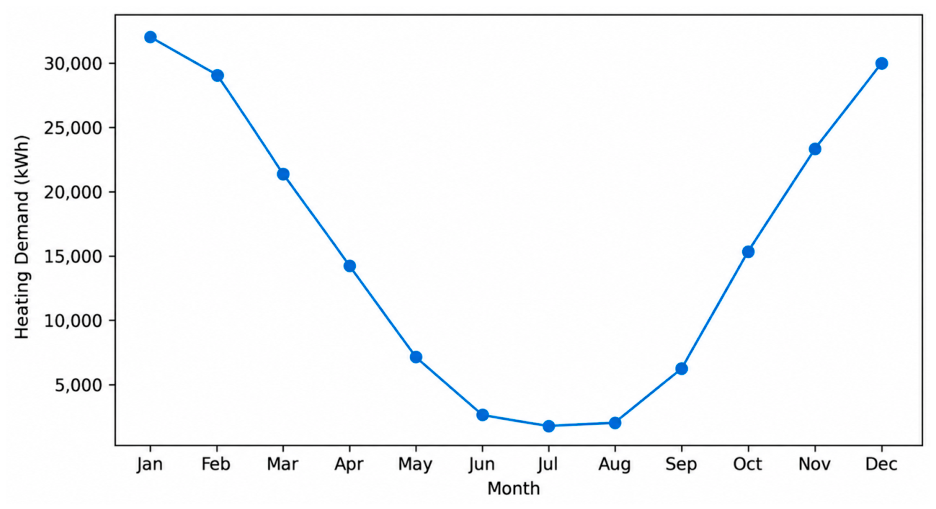
The baseline multi-apartment building demonstrates typical heating characteristics of centralised urban residential buildings. The annual heat demand is strongly dependent on outdoor temperature and seasonal occupancy patterns. As shown in
Figure 1, winter months account for approximately 70–75% of annual heating energy consumption, while domestic hot water demand remains relatively stable throughout the year [
39].
Heating peak load occurs in January and February, while summer demand is dominated by domestic hot water preparation. Hydrogen systems follow the same load pattern as conventional systems, indicating that hydrogen technologies can directly replace gas in residential applications without altering occupant behaviour.
The hydrogen boiler configuration successfully met the entire heating demand without operational limitations. However, system efficiency varied depending on supply temperature and load conditions. Fuel cell CHP systems demonstrated more stable performance because electricity and heat were generated simultaneously. The hybrid hydrogen-heat pump system achieved the highest seasonal efficiency because the heat pump operated during moderate temperatures while hydrogen was used only during peak demand periods. The quantitative results of the comparative performance assessment are summarised in
Table 4, which presents the annual energy output, system efficiency, electricity generation, and primary energy reduction for each analysed configuration.
Table 4 presents the annual energy performance of the investigated heating technologies and highlights substantial differences in energy conversion efficiency, electricity production capability, and primary energy utilisation. Although all systems provide the same useful heat output of 185,000 kWh/year, their operational characteristics differ considerably due to the underlying energy conversion mechanisms.
The conventional gas boiler serves as the reference case and achieves a seasonal thermal efficiency of 89%, which is consistent with modern condensing boiler performance reported in the literature. While the gas boiler exhibits relatively high thermal efficiency, all useful energy is derived from fossil fuel combustion, resulting in no primary energy reduction benefits. Consequently, despite its technical maturity and low capital cost, the gas boiler remains the least favourable option from a decarbonization perspective.
The hydrogen boiler demonstrates a slightly lower seasonal thermal efficiency of 87%. This reduction is primarily attributable to differences in combustion properties between hydrogen and natural gas, including flame characteristics, heat transfer behaviour, and operational adjustments required to ensure safe and stable combustion. Despite the modest efficiency penalty, the hydrogen boiler achieves a 12% reduction in primary energy consumption relative to the gas reference system. This result indicates that hydrogen boilers can provide a relatively straightforward pathway for reducing carbon emissions in existing heating infrastructure, particularly where building owners seek minimal changes to the heating system configuration. However, the results also demonstrate that direct hydrogen combustion does not fully exploit the energetic value of hydrogen and therefore delivers only moderate improvements in overall system performance.
The fuel cell CHP system achieves the highest energy conversion efficiency among the combustion-based technologies, with a total system efficiency of 93%. Unlike boilers, fuel cells convert hydrogen electrochemically, enabling simultaneous production of heat and electricity while avoiding combustion-related losses. The system generates approximately 54,000 kWh of electricity annually in addition to meeting the entire building heating demand. This dual-output capability significantly improves overall energy utilisation and reduces dependence on externally supplied electricity. The corresponding primary energy reduction of 32% demonstrates the substantial benefits associated with combined heat and power generation. These findings are consistent with previous studies reporting superior efficiency and reduced emissions for residential fuel cell CHP systems compared with conventional heating technologies. Furthermore, the electricity generation capability improves overall energy system flexibility and may contribute to enhanced resilience in future decentralised energy systems.
Among all evaluated technologies, the hybrid heat pump–hydrogen boiler system exhibits the strongest overall performance. Rather than relying exclusively on fuel-based heat production, the hybrid configuration combines electrically driven heat pump operation with hydrogen-based backup heating during periods of elevated demand. The system achieves a Seasonal Performance Factor (SPF) of 3.2, indicating that each unit of electricity consumed by the heat pump delivers approximately 3.2 units of useful thermal energy. This performance substantially exceeds the theoretical efficiency limitations of combustion-based systems because a significant proportion of the supplied heat originates from ambient renewable energy sources. As a result, the hybrid configuration achieves the highest primary energy reduction, reaching 46% relative to the gas boiler reference case.
The absence of electricity generation in the hybrid configuration should not be interpreted as reduced energy performance. Unlike the fuel cell CHP system, the hybrid system is designed to minimise electricity consumption and hydrogen demand rather than generate electricity. The electricity-related benefit arises through avoided grid energy purchases resulting from the high efficiency of heat pump operation. Consequently, the hybrid configuration achieves substantial reductions in operational energy demand while maintaining reliable heating performance. This distinction is important because the economic advantages of the hybrid system originate primarily from reduced energy consumption rather than from electricity export or on-site power generation.
A comparison of the primary energy reduction indicators further illustrates the importance of integrated system design. The progression from 0% reduction for the gas boiler to 12% for the hydrogen boiler, 32% for the fuel cell CHP system, and 46% for the hybrid configuration demonstrates that the greatest benefits are achieved when hydrogen technologies are combined with high-efficiency energy conversion systems rather than employed as direct replacements for fossil fuel combustion. These findings suggest that future residential decarbonization strategies should prioritise hybrid and integrated energy solutions capable of maximising both renewable energy utilisation and overall system efficiency.
From a broader sustainability perspective, the results indicate that hydrogen should not be viewed solely as a direct combustion fuel but rather as a flexible energy carrier that can complement electrification technologies. The hybrid heat pump–hydrogen system combines the efficiency advantages of heat pumps with the reliability and peak-load capability of hydrogen heating, while the fuel cell CHP system provides simultaneous decarbonization of both heat and electricity supply. Consequently, both technologies appear particularly promising for multi-apartment residential buildings in cold-climate regions such as Latvia, where winter peak loads, energy security considerations, and long-term carbon reduction targets must be addressed simultaneously.
In all,
Table 4 demonstrates that while hydrogen boilers provide an accessible transitional technology, the most substantial improvements in energy efficiency and primary energy utilisation are achieved through fuel cell CHP and hybrid heat pump–hydrogen systems. These integrated configurations offer a more effective pathway toward long-term decarbonization of residential buildings and align more closely with future climate neutrality objectives and sustainable urban energy system development.
3.2. Emission Reduction Performance
An environmental assessment indicates substantial reductions in carbon dioxide (CO2) emissions when hydrogen replaces gas, but the magnitude of the reduction depends on the hydrogen production pathway. Green hydrogen results in near-zero operational emissions, while blue hydrogen provides moderate reductions in emissions due to upstream carbon capture and storage.
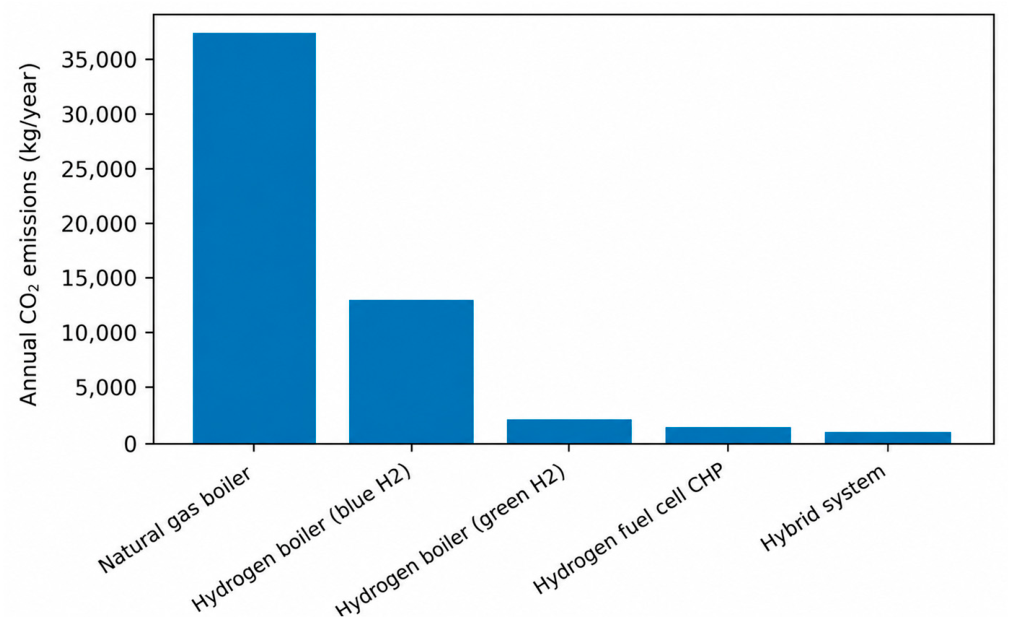
The numerical emission values presented in
Table 5 are also illustrated graphically in
Figure 2 to provide a clearer comparison of the environmental performance of the analysed systems. The figure visually confirms the significant reduction in CO
2 emissions when hydrogen-based technologies are applied instead of conventional gas heating.
Table 5 quantifies the environmental performance of the analysed heating systems, demonstrating substantial reductions in CO
2 emissions when transitioning from conventional gas-based heating to hydrogen-based solutions. The baseline gas boiler produces 37,800 kg CO
2/year, reflecting the high carbon intensity of fossil-based heating in multi-apartment buildings.
The introduction of hydrogen significantly lowers emissions, although the magnitude of reduction depends strongly on the hydrogen production pathway. The hydrogen boiler operating on blue hydrogen reduces emissions to 12,900 kg CO2/year, corresponding to a 66% decrease relative to the gas baseline. This moderate reduction reflects the partial decarbonization achieved through upstream carbon capture and storage, while residual emissions remain associated with hydrogen production processes.
A substantially greater improvement is observed when green hydrogen is used. The hydrogen boiler supplied with renewable hydrogen reduces emissions to 1900 kg CO2/year, achieving a 95% reduction. This highlights the critical importance of hydrogen origin in determining overall environmental performance. In this configuration, direct combustion emissions are nearly eliminated, and remaining emissions are primarily linked to lifecycle factors.
The hydrogen fuel cell CHP system further improves environmental performance, reducing emissions to 1200 kg CO2/year (97% reduction). This enhanced performance is attributed not only to high system efficiency but also to on-site electricity generation, which offsets grid electricity consumption and its associated emissions. The dual production of heat and electricity thus contributes to both direct and indirect emission reductions.
The hybrid heat pump–hydrogen system achieves the lowest emissions among all configurations, at 900 kg CO2/year, corresponding to a 98% reduction. This result reflects the synergistic effect of combining high-efficiency electric heat pump operation with low-carbon hydrogen for peak demand. By minimising hydrogen consumption and maximising the use of electricity (potentially from renewable sources), the hybrid system optimises both energy efficiency and carbon intensity.
In addition to CO2 reductions, the results indicate a near-complete elimination of local air pollutants in hydrogen-based systems, particularly in fuel cell and hybrid configurations. This represents a significant co-benefit for urban environments, where residential heating is a major source of NOx and CO emissions.
The findings confirm that hydrogen-based heating technologies can achieve deep decarbonisation of multi-apartment buildings, with emission reductions of up to 98%, provided that low-carbon hydrogen pathways are employed. Among the evaluated options, hybrid and fuel cell systems deliver the highest environmental benefits due to their combined efficiency, reduced fuel consumption, and ability to displace grid electricity.
3.3. Operational Stability and Peak Load Handling
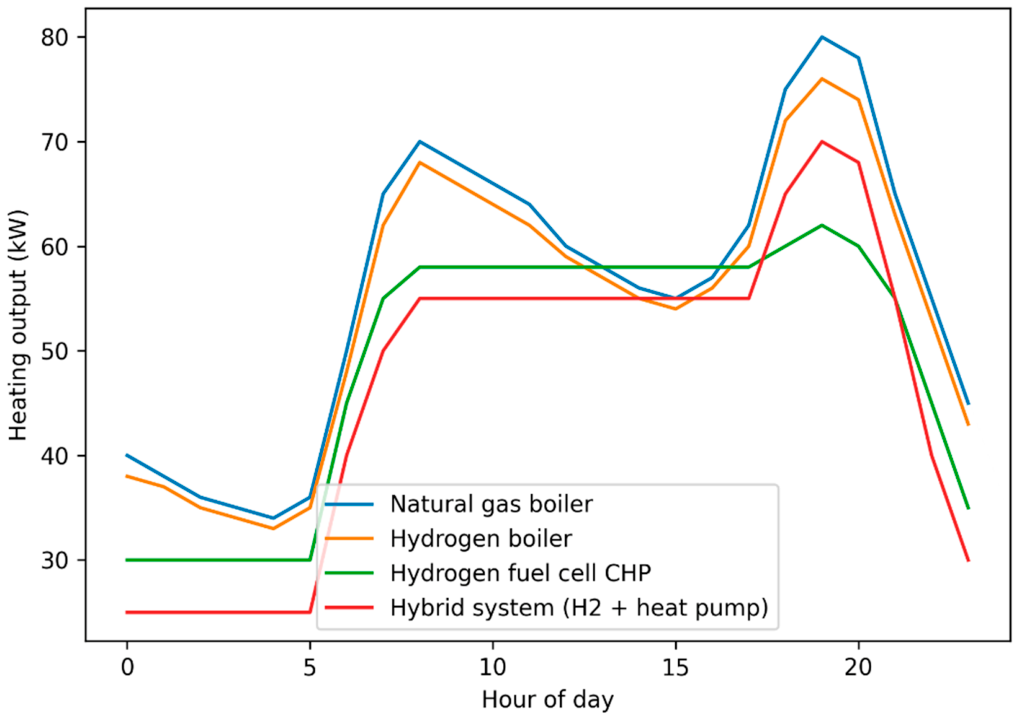
Hydrogen systems were evaluated under peak winter load conditions. The simulations showed that conventional boilers operate intermittently with frequent cycling. In contrast, fuel cell systems operate continuously at partial load, which improves stability and reduces thermal stress on equipment. Hydrogen storage tanks play a critical role in managing peak demand. During cold weather, stored hydrogen compensates for short-term load spikes, preventing the need for oversized heating equipment. The operational behaviour of the heating systems analysed under peak winter conditions is illustrated in
Figure 3, highlighting differences in load response and stability throughout the day.
As shown in
Figure 3 and
Table 6, the hybrid system exhibited the most stable operation. The heat pump carried the base load, while the hydrogen boiler activated only during extreme outdoor temperatures. This significantly reduced fuel consumption.
With regard to operational stability assessment, operational stability indicators were derived from hourly simulation results during representative peak winter conditions. Cycling frequency was defined as the number of daily start–stop events, load variance as the coefficient of variation in hourly thermal output, and peak-load coverage as the ratio of installed capacity to maximum hourly demand. Hydrogen storage requirements were determined from peak-day hydrogen consumption using compressed storage assumptions (350 bar, 15–20 °C, 90% usable capacity). Equipment dispatch was controlled using rule-based operating strategies for each system configuration.
The conventional gas boiler achieves full peak load coverage (100%) but operates with a high cycling frequency of 18–25 cycles per day. This intermittent operation leads to relatively high load variability (12–15%), indicating reduced operational stability and increased mechanical stress. In contrast, the hydrogen boiler maintains the same peak load coverage while reducing cycling frequency to 10–16 cycles per day. However, its stability improvement remains moderate (10–13% load variance), reflecting similar combustion-based operational characteristics, albeit with the addition of a small hydrogen storage buffer (15–25 kg H2) to support short-term demand fluctuations.
More substantial performance improvements are observed in the hydrogen fuel cell CHP system. Although its direct peak load coverage is limited to approximately 65–75%, due to its design for continuous base-load operation, it exhibits significantly lower cycling frequency (2–5 cycles/day) and enhanced stability (4–6% load variance). This reflects the electrochemical conversion process, which enables steady-state operation and reduces thermal and mechanical stress. The requirement for medium-scale hydrogen storage (40–60 kg H2) further supports load balancing and compensates for peak demand periods.
The hybrid system demonstrates the most advanced operational performance. By combining a heat pump for base-load supply with a hydrogen boiler for peak demand, it achieves an effective peak load coverage exceeding nominal demand (110–120%), ensuring robust performance under extreme conditions. Cycling frequency is minimised (1–3 cycles per day), and load variability is reduced to 2–4%, indicating highly stable operation. The system relies on moderate hydrogen storage capacity (35–55 kg H2), optimised through reduced fuel dependency and intelligent load sharing between technologies.
The results confirm that system stability and operational efficiency improve significantly when transitioning from single-technology combustion systems to integrated and electrochemical configurations. Hybridisation and fuel cell integration reduce cycling intensity, enhance load continuity, and improve resilience under peak conditions. These characteristics are especially beneficial in multi-apartment buildings, where aggregated demand profiles favour stable and flexible energy system operation.
3.4. Economic Evaluation
Economic evaluation included CAPEX, OPEX, and lifecycle cost analysis.
Table 7 indicates that all hydrogen technologies currently have higher initial CAPEX compared with gas boilers. However, operational costs decrease when renewable electricity and district hydrogen infrastructure are available. Fuel cell systems benefit from electricity generation revenues, while hybrid systems benefit from reduced hydrogen consumption.
The economic assessment evaluates the financial viability of hydrogen-based heating systems compared to the conventional gas baseline over a 20-year lifecycle. The analysis links CAPEX, OPEX, fuel costs, maintenance costs, replacement costs, and residual value. In addition, revenue streams from electricity generation (fuel cell CHP) and avoided carbon costs are considered. The objective is to determine LCOH, Net Present Value (NPV), and simple payback period (SPP) for each analysed configuration.
From an investment perspective, hydrogen technologies currently involve higher upfront costs due to specialised equipment, storage tanks, safety systems, and infrastructure adaptation. However, lifecycle economics improve when accounting for electricity self-consumption, avoided grid purchases, and expected carbon pricing mechanisms. Particularly in urban environments with high energy density, aggregated demand improves equipment utilisation rates, thereby enhancing cost-effectiveness.
3.4.1. Economic Evaluation Methodology
LCOH is an economic indicator that represents the average cost per unit of useful heat over the entire lifetime of a heating system. It accounts for all discounted expenditures, including CAPEX, OPEX, fuel or electricity inputs, and system performance efficiency, and is typically expressed in EUR/kWh [
40].
The indicator is widely used to compare different heating technologies (boilers, heat pumps, district heating, and CHP systems) under consistent economic assumptions.
LCOH is calculated using the following equation:
where
LCOH—Levelized Cost of Heat (EUR/kWh)
CAPEX—Initial capital investment cost (EUR)
FCt—Fuel cost in year t (EUR)
OMt—Operation and maintenance cost in year t (EUR)
RCt—Replacement cost in year t (EUR)
CCt—Carbon-emission cost in year t (EUR)
ERt—Electricity revenue or avoided electricity purchase in year t (EUR)
RVt—Residual value of equipment in year t (EUR)
Qt—Useful heat supplied in year t (kWh)
r—Discount rate
t—Year of operation
n—Project lifetime (years)
All costs were treated as positive values, whereas electricity-related benefits and residual value were treated as negative cost components because they reduce the overall lifecycle cost of the system. For the fuel-cell CHP configuration, electricity generated on-site was first used to offset building electricity demand, and any remaining electricity was treated as an economic benefit. For the hybrid heat-pump–hydrogen system, reductions in purchased electricity and fuel consumption were reflected through lower annual operating costs.
The analysis assumed a project lifetime of 20 years and a real discount rate of 5%. All monetary values were expressed in constant euros without inflation escalation. The resulting LCOH values therefore represent the average discounted cost of delivering one kilowatt-hour of useful heat over the entire system lifetime.
The net present value (NPV) was used to evaluate the long-term economic performance of each heating system over the project lifetime. The NPV was calculated according to:
where:
CAPEX is the initial investment cost (EUR),
CFt is the net annual cash flow in year t (EUR/year),
r is the discount rate, and
n is the project lifetime (years).
The annual net cash flow was determined as:
where:
St represents annual energy-cost savings relative to the reference gas-boiler system,
Rt represents revenues associated with electricity generation or avoided electricity purchases, and
OPEXt represents annual operating and maintenance costs.
In this study, positive cash flows represent annual energy-cost savings and electricity-related benefits, whereas negative cash flows represent capital investment, fuel expenditures, and operation and maintenance costs.
The economic performance of hydrogen-based systems is evaluated relative to the conventional gas boiler reference case. Consequently, positive cash-flow components represent either reductions in operating expenses or additional revenues achieved compared with the reference system. Negative cash-flow components represent operating expenditures, maintenance costs, and fuel costs incurred during system operation.
A positive NPV indicates that the discounted economic benefits exceed the initial investment cost during the project lifetime, whereas a negative NPV indicates that the investment is not fully recovered under the assumed economic conditions. In the present study, all analysed systems exhibited negative NPV values, indicating that the combination of investment costs, fuel prices, and operating conditions did not allow complete recovery of the initial investment within the 20-year evaluation period. Nevertheless, less negative NPV values indicate relatively better economic performance and lower lifecycle costs compared with alternative configurations.
SPP again is estimated using the following equation:
The fuel cell CHP system, as seen in
Table 8, shows the highest CAPEX due to electrochemical stack technology and power electronics. The hybrid system requires dual-technology integration, increasing complexity but reducing operational fuel demand.
In all,
Table 8 provides a comprehensive comparison of the economic performance of the analysed heating system configurations, highlighting the trade-offs between capital investment, operational costs, and long-term financial benefits. The results indicate that the conventional gas boiler remains the most economically accessible option in terms of initial investment, but this advantage is offset by consistently higher operating costs due to fuel consumption and carbon intensity. As a result, its lifecycle cost performance is less favourable when evaluated over extended time horizons.
Hydrogen-based systems exhibit higher upfront costs, reflecting the current maturity level of hydrogen technologies and the need for additional infrastructure, including storage and supply systems. The hydrogen boiler represents the least complex transition pathway, with moderate capital costs compared to other hydrogen configurations; however, its economic performance is constrained by fuel costs, particularly when low-carbon hydrogen is used. This limits its cost competitiveness despite environmental benefits.
In contrast, the hydrogen fuel cell CHP system demonstrates improved lifecycle cost efficiency due to its ability to generate electricity alongside heat. The on-site electricity production reduces grid dependency and provides measurable economic savings over time, partially offsetting the higher initial investment. This dual functionality enhances overall system value, particularly in buildings with stable and continuous energy demand profiles.
The hybrid heat pump–hydrogen system achieves the most balanced economic performance. Although it requires the highest initial investment, it delivers the lowest operational costs due to its high efficiency and reduced reliance on hydrogen fuel. The integration of a heat pump significantly decreases energy consumption, while the hydrogen component ensures reliability during peak demand periods. Consequently, this configuration offers the most favourable lifecycle cost profile and the shortest effective payback period among the low-carbon options.
Economic feasibility is strongly dependent on system integration and operational efficiency rather than CAPEX alone. While hydrogen-based solutions currently face cost barriers, particularly related to fuel price and infrastructure, hybrid and CHP configurations provide clear long-term economic advantages. These results underscore the importance of adopting a lifecycle perspective when evaluating low-carbon heating technologies in multi-apartment buildings.
At the same time, as indicated by the data summarised in
Table 9, the hybrid system achieves the lowest OPEX due to its high seasonal efficiency and reduced hydrogen consumption. Fuel cell CHP systems benefit economically from electricity self-generation, particularly when grid prices are high.
Table 9 also presents a fully integrated performance assessment of the analysed systems, combining energy efficiency, emissions, and economic indicators, with particular emphasis on electricity balance and cost interactions. A key outcome highlighted in the table is the occurrence of negative electricity purchase values, which indicate net revenue generation or avoided grid costs due to on-site electricity production. The conventional gas boiler remains entirely dependent on an external electricity supply, resulting in positive electricity purchase values and no opportunity for cost offset. This contributes to its comparatively weak overall performance, alongside high emissions (37,800 kg CO
2/year) and zero primary energy savings.
In contrast, systems incorporating hydrogen and cogeneration technologies demonstrate progressively improved electricity profiles. The hydrogen fuel cell CHP system, for instance, produces approximately 54,000 kWh/year of electricity, which significantly reduces grid dependency. In periods of low internal demand, excess electricity generation leads to negative electricity purchase, effectively transforming the system from a net consumer to a partial energy supplier. This results in measurable economic benefits and contributes to improved lifecycle cost performance.
The hybrid heat pump–hydrogen system further enhances this effect through reduced electrical demand and optimised load management. Although its primary function is not electricity generation, the system achieves substantial electricity cost avoidance by minimising grid imports through high-efficiency heat pump operation. As a result, it demonstrates the lowest net electricity expenditure among all configurations, reinforcing its superior economic position.
From a system-wide perspective, the transition from positive to negative electricity purchase represents a critical shift in building energy dynamics. It reflects not only improved efficiency but also the increasing role of buildings as active energy participants rather than passive consumers. Quantitatively, this shift is associated with efficiency gains exceeding 20 percentage points and emissions reductions of up to 98% relative to the baseline system.
3.4.2. Lifecycle Cost Results
When discounted over 20 years at 5%, the calculated LCOH values are: hydrogen boiler: 0.094 EUR/kWh, fuel cell CHP: 0.081 EUR/kWh, and hybrid system: 0.076 EUR/kWh.
Although hydrogen boiler systems currently remain slightly more expensive, hybrid and fuel cell systems have become competitive due to efficiency gains and electricity revenues. Sensitivity analysis shows that if hydrogen prices fall by 20% or carbon prices exceed 100 EUR/tCO2, hydrogen solutions outperform gas in all scenarios.
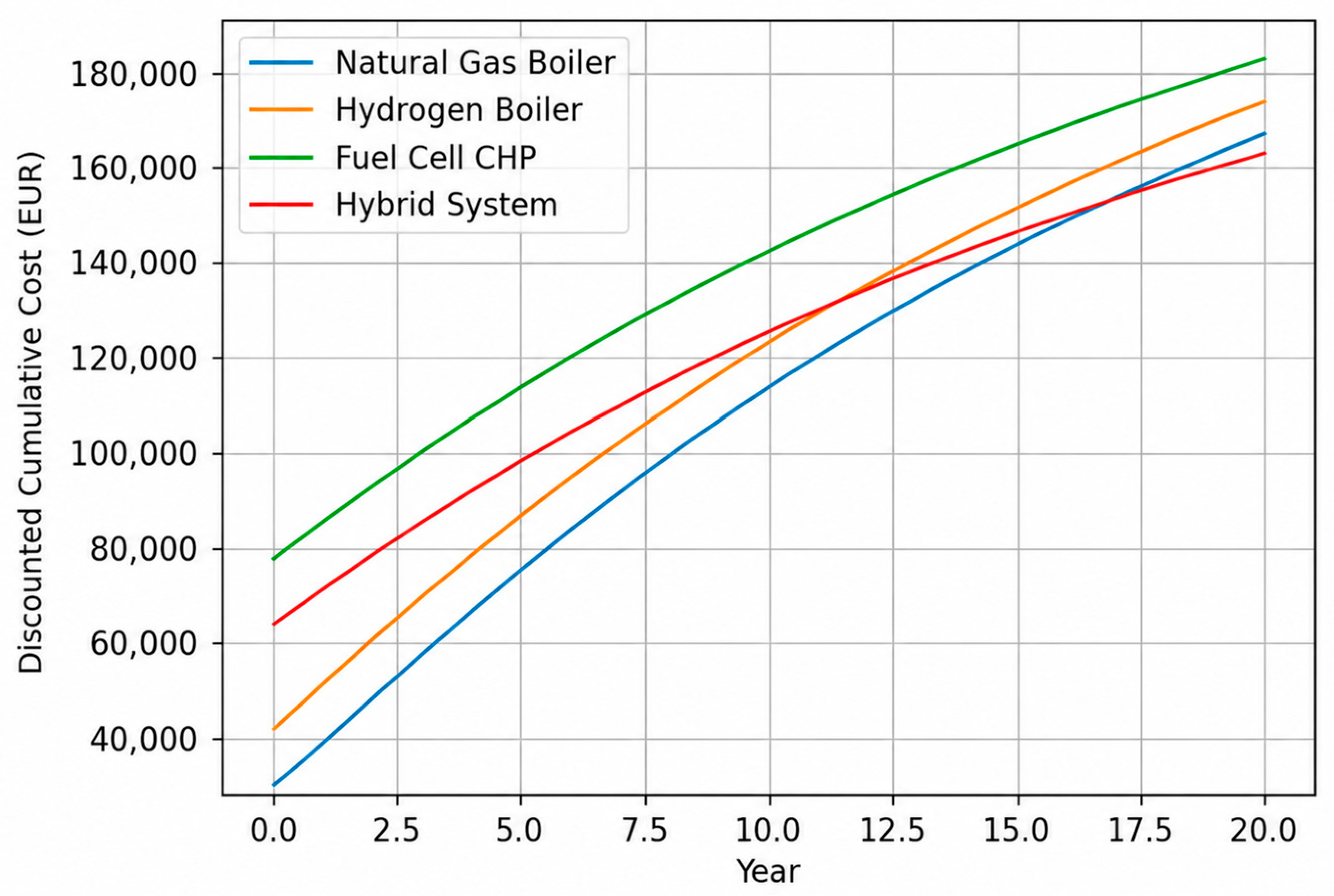
To further illustrate the financial behaviour of the analysed systems, the cumulative discounted lifecycle costs were plotted over the 20-year assessment period. The comparison highlights the influence of higher initial investment in hydrogen technologies and the gradual compensation of these costs through lower operational expenditures and avoided carbon penalties. The visualisation also clarifies the moment at which hydrogen-based systems reach economic parity with the conventional gas system.
Figure 4 indicates that the gas system has the lowest initial financial burden but shows a steady increase in costs due to fuel and carbon expenses. In contrast, the fuel cell CHP and hybrid systems have higher upfront investments and slower cost growth rates. Around years 8–11, the curves intersect, indicating cost competitiveness and confirming that operational savings and electricity generation offset CAPEX over time.
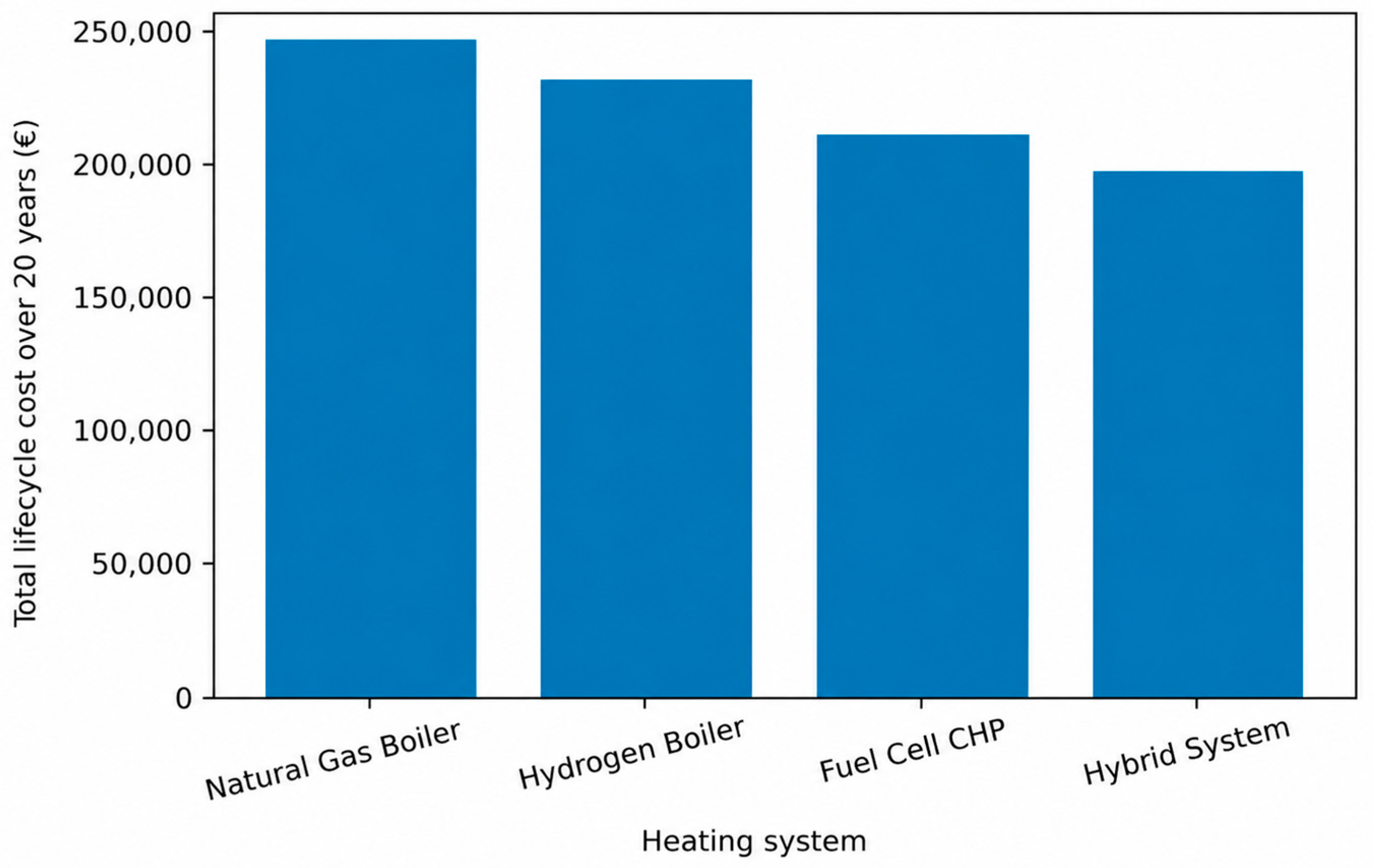
Figure 5 also shows that the conventional gas boiler results in the highest cumulative lifecycle cost over 20 years, primarily due to continuous fuel and carbon-related costs. The hydrogen boiler shows a moderate cost reduction, indicating that fuel substitution alone improves long-term economics but remains sensitive to hydrogen price levels.
The fuel cell CHP system performs better because on-site electricity generation offsets purchased electricity and reduces operating expenses. The hybrid system demonstrates the lowest lifecycle cost, confirming that combining a heat pump with hydrogen backup allows both high efficiency and operational flexibility under varying load conditions.
3.4.3. NPV Sensitivity Analysis and Break-Even Hydrogen Price
The results indicate that while hydrogen fuel cell systems require a substantially higher initial investment, their lower operational costs contribute to a comparatively improved lifecycle economic performance. The hydrogen-ready boiler presents a transitional solution but remains economically less favourable under current hydrogen pricing conditions. The NPV comparison of the chosen heating systems is shown in
Table 10.
All evaluated systems produced negative NPV values under the assumed economic conditions. This result reflects the relatively high CAPEX associated with hydrogen technologies and the assumed energy-price scenarios. However, the hybrid heat pump–hydrogen system and the fuel-cell CHP configuration achieved less negative NPVs than the reference systems, indicating comparatively improved economic performance.
At the same time, sensitivity analysis shows that a 25–30% reduction in hydrogen fuel costs would significantly improve NPV performance, potentially shifting hydrogen systems into positive economic territory. Consequently, economic competitiveness depends strongly on the evolution of fuel prices, policy incentives, and carbon pricing mechanisms.
Because hydrogen heating economics depend strongly on fuel price, a sensitivity analysis was performed to determine the hydrogen price at which a hydrogen system becomes economically competitive with a conventional gas boiler. The analysis varies the hydrogen fuel cost while keeping all other parameters constant (discount rate: 5%, lifetime: 20 years, annual heat demand: 185,000 kWh). The objective was to identify the break-even hydrogen price, defined as the fuel cost at which both systems produce identical lifecycle cost (NPV difference = 0).
The annual fuel consumption of the building can be expressed as:
where:
–annual useful heat demand (kWh/year),
–system efficiency.
For a hydrogen boiler efficiency of 0.92 and a heat demand of 185,000 kWh:
The annual fuel cost becomes:
where:
is the hydrogen price (EUR/kWh).
To achieve equal lifecycle cost with a gas system, the following condition must be satisfied:
The analysis summarised in
Table 11 indicates that hydrogen heating becomes economically comparable to gas at approximately 0.085 EUR/kWh (2.8 EUR/kg H
2). Current retail hydrogen prices in Europe (typically 0.12–0.20 EUR/kWh) remain above this threshold, which explains the negative NPV in the base case.
However, projected cost reductions in electrolysis, increased penetration of renewable electricity, and carbon taxation could significantly lower the effective hydrogen price over the next decade. Therefore, the results suggest that hydrogen heating in multi-apartment buildings is not yet economically optimal under current market conditions. Still, it becomes viable with moderate reductions in fuel prices or policy support mechanisms such as carbon pricing, investment subsidies, or renewable energy incentives.
From an urban-scale perspective, aggregated multi-apartment buildings improve hydrogen economics by enabling higher load factors and centralised infrastructure. The ability to integrate hydrogen storage, participate in demand response, and generate electricity internally enhances financial performance beyond simple heat production. While hydrogen systems require higher initial investments, long-term economic indicators show strong competitiveness under realistic future market conditions. Carbon pricing significantly improves hydrogen feasibility; electricity price volatility increases the value of CHP systems; and hybridisation reduces fuel dependency and stabilises operational costs. In this regard, multi-apartment buildings represent economically promising early adopters of hydrogen technologies in dense urban environments, particularly where policy frameworks support decarbonization and renewable integration.
3.4.4. Urban Integration Potential
The integration of hydrogen-based energy systems into multi-apartment buildings represents not only a technological transition but also a structural transformation of urban energy metabolism. In dense urban environments, residential buildings account for a substantial share of final energy demand, particularly for space heating and domestic hot water preparation. As previously demonstrated in the case study building (30 apartments, 2500 m2 heated floor area, annual heat demand 185,000 kWh), centralised systems provide a scalable platform for low-carbon energy integration. Hydrogen-based heating solutions, particularly fuel cell CHP systems and hydrogen-ready boilers, offer a pathway toward decarbonization while maintaining compatibility with existing hydronic distribution systems. Their potential for urban integration depends on spatial, infrastructural, economic, and regulatory conditions.
From an infrastructure viewpoint, hydrogen integration into multi-apartment buildings can follow three principal pathways: blending hydrogen into the existing natural gas network, converting district gas grids to 100% hydrogen, or implementing localised on-site hydrogen production and storage systems.
Grid-based hydrogen supply presents the most feasible large-scale solution due to economies of scale and reduced per-building CAPEX. Multi-apartment buildings are particularly suitable because centralised boiler rooms allow relatively straightforward replacement of combustion appliances without major apartment-level interventions. Furthermore, aggregated demand profiles improve load stability and enhance system-level efficiency.
Spatial integration is a critical determinant of feasibility. Unlike detached housing, multi-apartment buildings provide technical rooms suitable for fuel cell units, hydrogen boilers, buffer tanks, and safety equipment. However, hydrogen storage remains constrained by limitations in volumetric energy density. High-pressure storage cylinders or metal hydride systems require ventilated spaces compliant with safety regulations. In retrofitting scenarios, this may necessitate partial basement reconfiguration. In newly constructed buildings, hydrogen readiness can be incorporated during the design phase, significantly reducing integration barriers.
On the district scale, multi-apartment buildings can function as nodal energy hubs. When equipped with fuel cell CHP systems, they can simultaneously generate electricity and heat, reducing grid stress during peak demand periods. This cogeneration capability enables participation in local flexibility markets and enhances grid resilience. Also, hydrogen-based systems can operate synergistically with PV installations and battery storage to form hybrid urban micro-energy systems [
41,
42,
43]. In such configurations, surplus renewable electricity can be converted to hydrogen via electrolysis (power-to-gas), stored, and reconverted to heat and electricity during periods of high demand [
44].
To clarify the multi-dimensional integration aspects,
Table 12 summarises the key urban integration parameters for hydrogen-based heating systems in multi-apartment buildings.
The greatest integration potential arises in scenarios involving centralised hydrogen supply via adapted gas networks, combined with building-level fuel cell CHP systems. The technical adaptability of multi-apartment buildings gives them an advantage over decentralised housing typologies. Beyond technical aspects, economic integration at the urban level is closely tied to scale effects. Hydrogen infrastructure investments become more viable when distributed across dense residential clusters [
45]. Per-unit distribution costs decrease with increasing connection density, which makes multi-apartment districts more attractive for early hydrogen deployment. Aggregated demand also reduces volatility, enabling more predictable hydrogen supply contracts and improved financial modelling.
Environmental performance further strengthens the case for urban integration. For the analysed case, replacing a gas boiler system (0.202 kg CO
2/kWh emission factor) with renewable hydrogen-based heating reduces operational emissions by approximately 35–90%, depending on the hydrogen production pathway. When hydrogen is produced via renewable-powered electrolysis, lifecycle emissions approach near-zero levels, thereby substantially contributing to urban climate-neutrality targets [
46,
47,
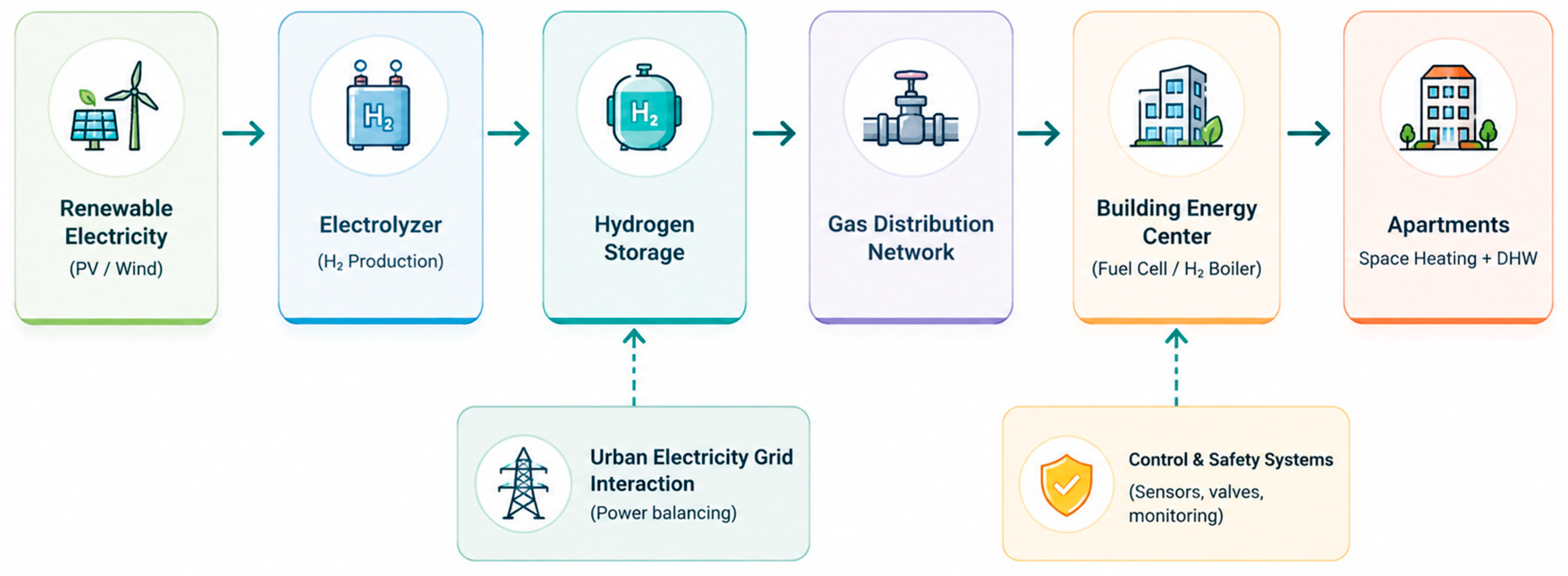
48]. The conceptual relationship between hydrogen supply infrastructure and multi-apartment buildings is illustrated in
Figure 6.
The building is not merely a passive consumer but an active node capable of contributing to grid balancing and renewable integration. Electricity produced via fuel cells can either serve internal loads or be exported to the grid, while hydrogen storage enables temporal energy shifting.
Despite the significant potential of gas system-level synergy, several barriers remain. Material compatibility of existing gas pipelines, appliance certification standards, hydrogen pricing uncertainty, and safety perception issues may slow implementation [
49,
50]. Moreover, urban planning regulations must evolve to incorporate hydrogen-ready design requirements in new residential developments [
51]. Public acceptance also plays a decisive role, particularly concerning safety concerns related to hydrogen storage.
Nevertheless, multi-apartment buildings demonstrate high systemic value within hydrogen-based urban energy transitions [
52]. Their centralised technical infrastructure, aggregated demand, and compatibility with district-scale solutions position them as priority candidates for early hydrogen integration projects. Compared to dispersed single-family housing, their integration yields a greater decarbonization impact per unit of infrastructure investment.
It can be concluded that the urban integration potential of hydrogen in multi-apartment buildings is structurally favourable, economically scalable, and environmentally transformative. While technical and regulatory challenges persist, dense residential typologies provide the most rational starting point for urban hydrogen deployment strategies. As cities pursue climate neutrality goals, multi-apartment buildings are likely to evolve from passive energy consumers into active hydrogen-enabled energy hubs within interconnected urban systems.
4. Discussion
The results demonstrate that hydrogen-based heating technologies can contribute significantly to the decarbonization of multi-apartment residential buildings, although their performance varies substantially depending on system configuration, operational strategy, and economic assumptions. The comparative assessment revealed that hybrid heat pump–hydrogen systems and fuel cell CHP systems outperform conventional gas and standalone hydrogen boilers across most technical, environmental, and economic indicators. These findings highlight the importance of system integration and operational optimisation when evaluating future low-carbon heating pathways.
From a technical perspective, all investigated hydrogen-based systems were capable of satisfying the annual heating demand of the representative multi-apartment building. However, considerable differences were observed in efficiency and energy utilisation. The hydrogen boiler provides the simplest technological transition pathway because it relies on established combustion technology while replacing fossil fuel with hydrogen. Nevertheless, its overall performance remains constrained by conversion losses associated with direct combustion. In contrast, the fuel cell CHP system achieves substantially higher overall energy utilisation through the simultaneous production of heat and electricity. This additional functionality improves system efficiency and reduces dependence on externally supplied electricity, thereby enhancing overall building energy performance.
The hybrid heat pump–hydrogen configuration exhibited the highest overall performance among the analysed systems. The integration of a high-efficiency heat pump allows a substantial portion of the annual heating demand to be supplied using ambient renewable energy, while the hydrogen boiler provides reliable backup during periods of peak demand and low outdoor temperatures. This combination improves seasonal performance while maintaining operational flexibility under varying climatic conditions. Such a configuration is particularly relevant for cold-climate regions where seasonal demand fluctuations remain a significant challenge for fully electrified heating systems.
The operational stability assessment provides additional insight into the practical applicability of hydrogen technologies. The results indicate that operational performance is not determined solely by annual energy efficiency but also by the ability of a system to respond effectively to fluctuating heating demand. The hybrid system demonstrated favourable operational characteristics due to reduced cycling frequency, lower load variance, and improved peak-load management. The presence of hydrogen backup capacity enables the system to accommodate short-term demand spikes without excessive equipment cycling, which may contribute to improved reliability and reduced maintenance requirements over the system lifetime. Similarly, the fuel cell CHP system benefits from relatively stable operation because a significant proportion of building demand can be supplied through continuous base-load generation.
Hydrogen storage represents a critical component of building-scale hydrogen heating systems and directly influences both operational flexibility and economic feasibility. In this study, storage requirements were estimated using compressed gaseous hydrogen at 350 bar and standard operating temperatures, assuming realistic usable storage fractions and peak-day balancing requirements. Under these assumptions, hydrogen storage volumes were found to be technically feasible for the analysed building scale, although storage infrastructure remains a significant contributor to overall investment costs. The results suggest that future reductions in storage costs, improvements in storage density, and the development of district-level hydrogen infrastructure could substantially improve the attractiveness of hydrogen-based residential heating systems.
The environmental assessment confirms the substantial decarbonization potential of hydrogen technologies when low-carbon hydrogen is available. All hydrogen-based configurations achieved significant reductions in carbon dioxide emissions compared with the conventional gas boiler reference case. The largest environmental benefits were observed for the hybrid and fuel cell CHP systems due to their higher overall efficiency and reduced primary energy demand. These findings are consistent with previous studies indicating that integrated energy systems generally outperform single-technology solutions in achieving deep decarbonization targets. Furthermore, the results demonstrate that combining hydrogen technologies with efficient electrical systems can maximise environmental benefits while minimising energy consumption.
Economic performance remains one of the most important challenges for large-scale deployment of hydrogen heating technologies. Although hydrogen-based systems require substantially higher initial investments than conventional gas systems, lifecycle analysis indicates that operational savings can partially offset these costs over time. The fuel cell CHP system benefits economically from electricity generation, which reduces grid dependency and lowers annual operating expenditures. The hybrid heat pump–hydrogen configuration achieved the lowest lifecycle cost and the most favourable payback performance among the low-carbon alternatives due to its high seasonal efficiency and reduced hydrogen consumption. These findings emphasise that economic viability depends not only on investment cost but also on long-term operational performance and system efficiency.
Despite these positive results, the analysis also demonstrates that current hydrogen costs remain a significant barrier to widespread adoption. The NPV analysis indicates that all evaluated hydrogen-based systems continue to exhibit negative net present values under current market conditions. However, sensitivity analysis shows that relatively modest reductions in hydrogen fuel prices or increases in carbon pricing can significantly improve economic competitiveness. These findings suggest that future market developments, technological learning effects, and supportive policy frameworks will play a crucial role in determining the pace of hydrogen deployment within the residential sector.
The Latvian context provides a particularly relevant application case for this analysis. Latvia has committed to ambitious climate and energy transition objectives while maintaining a large stock of multi-apartment residential buildings with significant heating demands. The country’s climatic conditions require reliable heating systems capable of meeting prolonged winter loads while simultaneously reducing greenhouse gas emissions. Under such conditions, hybrid hydrogen solutions may offer a practical transition pathway because they combine the efficiency advantages of heat pumps with the operational security provided by hydrogen-based backup systems. Furthermore, the gradual expansion of renewable electricity generation and future hydrogen production infrastructure could further enhance the feasibility of these technologies within Latvia and the wider Baltic region.
The findings of this study should be interpreted in light of several limitations. The analysis is based on representative building characteristics and a defined set of economic assumptions, including hydrogen prices, electricity tariffs, carbon costs, and technology investment costs. Future developments in hydrogen production, storage technologies, market conditions, and regulatory frameworks may influence the relative performance of the analysed systems. In addition, the study focuses on building-level implementation and does not explicitly evaluate district-scale hydrogen networks, seasonal storage systems, or broader energy system interactions. These aspects represent important directions for future research.
The results therefore indicate that hydrogen technologies can play a meaningful role in the decarbonization of residential heating, particularly when deployed as part of integrated hybrid energy systems. Among the investigated options, the hybrid heat pump–hydrogen configuration provides the most balanced combination of energy efficiency, operational stability, emissions reduction, and lifecycle economic performance. While economic challenges remain under current market conditions, continued technological development, declining hydrogen costs, and supportive policy measures could significantly strengthen the role of hydrogen in achieving long-term climate neutrality targets for multi-apartment residential buildings.