


Abstract
Urban development in medium-sized provinces is increasingly influenced by the interplay of demographic change, socio-economic disparity, and labour market structure. However, these dimensions are frequently examined in isolation, which limits their utility for integrated regional planning. This study offers a planning-oriented assessment of Amasya Province, Türkiye, by integrating population projections, district-level socio-economic disparity analysis, and labour market indicators to evaluate the province’s developmental trajectory toward 2035. The study utilizes official population data for 2007–2024, district-level socio-economic status scores for 2023, and provincial labour market indicators. Linear trend projection and compound annual growth rate analysis were employed to estimate population change, while the Gini coefficient, Theil index, and coefficient of variation were used to assess intra-provincial socio-economic disparities. Labour market performance was evaluated through participation, employment, unemployment, and employment-to-participation efficiency indicators. The results indicate that Amasya is projected to experience a moderate population increase, reaching approximately 350,118 inhabitants by 2035. Growth is anticipated to remain concentrated primarily in the Central District and Merzifon, while socio-economic advantages also exhibit a central–peripheral pattern. Labour market indicators suggest relatively stable employment performance, although more detailed sectoral, gender, and age-specific analyses are necessary for more robust conclusions. The study contributes an integrated framework for linking demographic projection, socio-economic hierarchy, and labour market capacity in medium-sized provincial planning. The findings suggest that future planning should focus on managing growth in central districts while supporting balanced development in peripheral districts.
1. Introduction
Urbanisation and regional development are increasingly shaped by uneven demographic growth, socio-economic concentration, and varied labour market capacities. While metropolitan areas often receive significant attention in urban studies, medium-sized cities play a crucial role in balancing national and regional development. These cities frequently serve as administrative, service, agricultural, and industrial nodes between metropolitan centres and rural hinterlands. However, they may encounter planning challenges when population growth, infrastructure demand, and socio-economic opportunities become concentrated in a limited number of districts. Consequently, medium-sized cities provide an important analytical scale for understanding how demographic change, regional inequality, and labour market structure collectively influence sustainable urban and regional development.
In Türkiye, medium-sized provincial centres are particularly significant for examining the relationship between demographic change, socio-economic disparity, and local development capacity. Many such provinces are neither metropolitan regions nor purely rural areas; instead, they function as intermediary territories where urban growth, agricultural production, service functions, and rural–urban linkages coexist. Amasya Province represents a relevant case in this context because it combines a historical urban core, a settlement structure shaped by the Yeşilırmak River valley, agricultural and service-based economic functions, and visible differences between central and peripheral districts. These characteristics make Amasya suitable for examining how population changes, socio-economic hierarchy, and labour market performance interact within a medium-sized provincial development context.
Population dynamics is one of the key components of urban and regional development because it affects land demand, infrastructure needs, housing requirements, and public service provision for current and future generations. Demographic forecasting is therefore widely used in regional and urban planning studies. Population projections can be strengthened by monitoring migration rates, fertility rates, mortality rates, and other demographic indicators [1,2,3]. In urban and regional planning, linear and comparative approaches are also used to estimate future population change, compare development trajectories, and support long-term planning decisions [4,5,6,7]. In the case of Amasya, population projection provides a baseline for evaluating future service demand, land-use management, infrastructure provision, and spatial planning needs.
However, demographic change alone is not sufficient to explain regional development challenges. Socio-economic differences between districts influence access to infrastructure, services, employment opportunities, and development resources. District-level socio-economic status assessment is therefore important for identifying intra-provincial development hierarchies and territorial disparities. Composite socio-economic indicators and inequality measures can help reveal how development advantages are distributed across districts. In this context, the Gini coefficient, Theil index, and related dispersion measures are commonly used to evaluate inequality and development differences [8,9,10]. Other distribution-sensitive indicators, including concentration and Lorenz-based measures, have also been used to examine spatial inequality and access to opportunities [11,12]. In this study, this analytical perspective is applied to Amasya Province to evaluate whether socio-economic advantages are concentrated in central districts and whether peripheral districts occupy weaker development positions.
The structure of the labour market constitutes a crucial dimension of regional urban development. Indicators such as employment, labour force participation, and unemployment offer insights into whether local economic conditions can sustain demographic and spatial transformations. The capacity of local labour markets is also linked to migration decisions, household stability, economic resilience, and social sustainability. Consequently, comparative regional labour market analysis is instrumental in evaluating whether demographic growth is supported by adequate economic opportunities and whether the available labour force is effectively translated into employment. Broader labour market studies further underscore the significance of labour inequality, regional productivity, poverty, gender-based disparities, and employment quality [13,14,15,16,17]. In this study, labour market indicators are employed to compare Amasya Province with national-level values and to interpret the province’s development capacity within a planning-oriented framework.
Collectively, these three strands of literature demonstrate that demographic projection, socio-economic disparity analysis, and labour market evaluation are interrelated components of sustainable regional planning. Demographic change signals the likely future demand for land, housing, infrastructure, and public services; socio-economic disparity analysis reveals the spatial distribution of development opportunities and disadvantages across districts; and labour market indicators indicate whether local economic capacity can support projected population and urban development patterns. However, many previous studies have examined these dimensions in isolation, focusing either on population forecasting, regional inequality, or labour market performance. Fewer studies have integrated these dimensions within a single planning-oriented framework, particularly for medium-sized provincial contexts in Türkiye. This study addresses this gap by linking population projection, district-level socio-economic hierarchy, and labour market performance to interpret the future development trajectory of Amasya Province through an integrated regional planning perspective.
Accordingly, this study aims to provide an integrated planning-oriented assessment of Amasya Province by combining demographic projection, socio-economic disparity analysis, and labour market evaluation. Rather than treating these dimensions as independent topics, the study interprets them as interconnected components of future urban and regional development. In this framework, population projection identifies future growth pressure, socio-economic indicators reveal the spatial distribution of development advantages, and labour market indicators provide insight into the capacity of the local economy to support demographic and spatial change.
The study addresses the following research questions:
- How is the population of Amasya Province expected to change by 2035 based on historical population trends?
- How are socio-economic advantages distributed among the districts of Amasya Province?
- How does Amasya’s labour market performance compare with national-level indicators?
- What planning implications emerge when demographic projection, socio-economic disparity, and labour market indicators are interpreted together?
2. Materials and Methods
2.1. Study Location
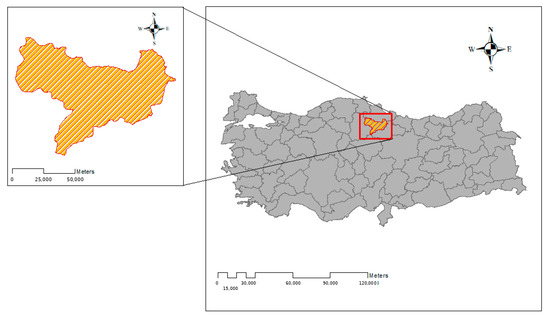
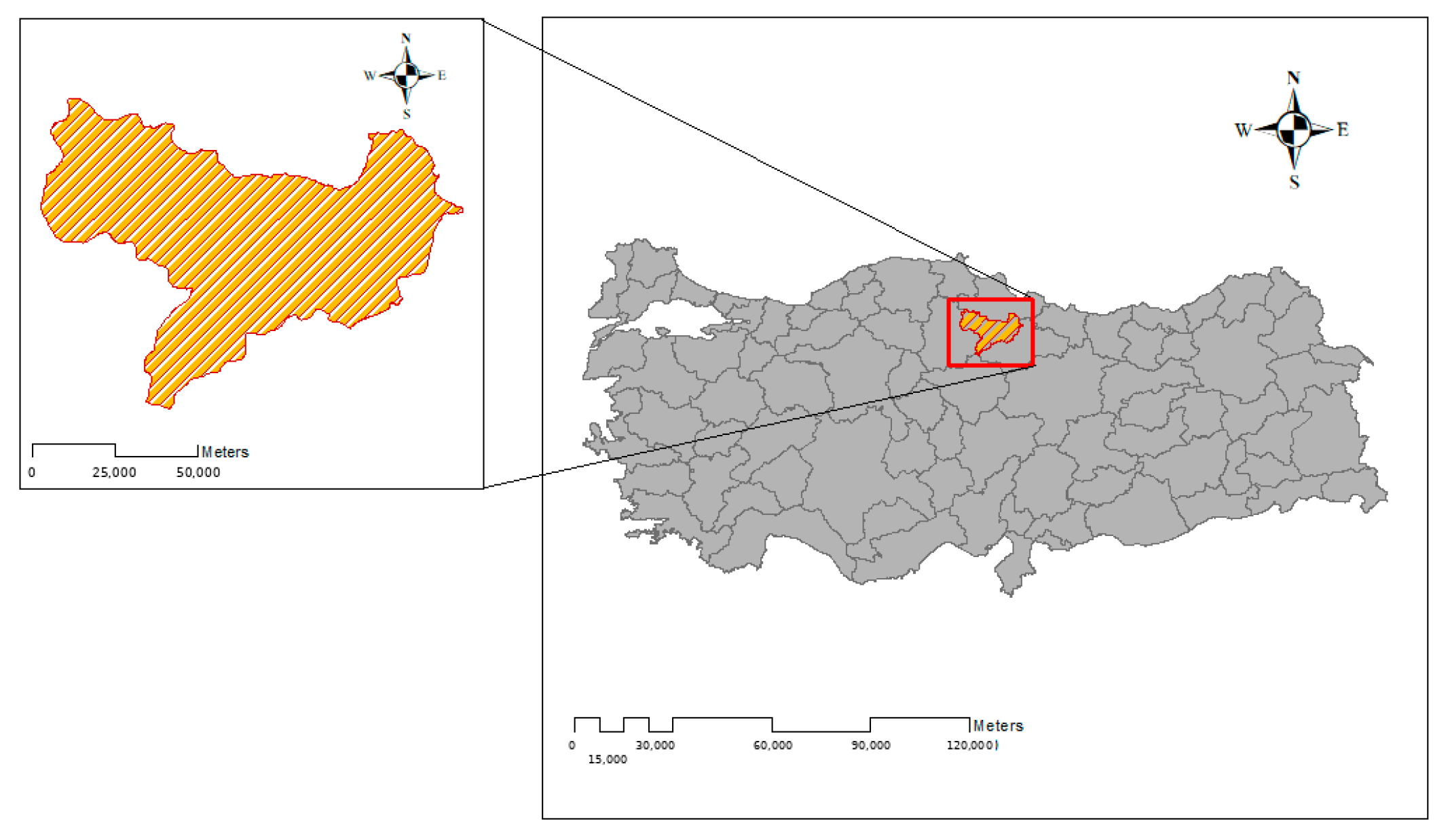
This study examines Amasya Province, situated in the Central Black Sea Region of Türkiye (Figure 1). Amasya is a medium-sized provincial settlement distinguished by its historical urban core, a settlement pattern influenced by the Yeşilırmak River valley, agricultural production, administrative functions, and service-sector activities. The province encompasses both relatively urbanised central areas and peripheral districts with more rural socio-economic characteristics. This central–peripheral structure renders Amasya an appropriate case for investigating the interaction of demographic change, socio-economic disparity, and labour market performance within a medium-sized provincial development context.
Figure 1.
Study Area.
Amasya was chosen as the case study due to its representation of an intermediary territorial structure situated between metropolitan regions and rural hinterlands. Its developmental trajectory is shaped by factors such as population dynamics, agricultural and service-based economic activities, district-level socio-economic disparities, and local labour market conditions. Consequently, the province offers a suitable empirical context for assessing future urban and regional development patterns through an integrated, planning-oriented approach.
2.2. Data Sources and Data Preparation
The study utilised secondary data sourced from official statistical and institutional repositories, including the Turkish Statistical Institute (TURKSTAT) and pertinent national socio-economic development datasets. Three primary datasets were employed. Firstly, annual population data for Amasya Province spanning the period 2007–2024 were utilised to analyse historical demographic changes and to project the population trajectory towards 2035. These annual population figures represent the officially registered population for each year, encompassing the combined effects of natural population change and migration as reflected in the total population values. However, net migration was not analysed as a distinct variable due to the unavailability of annual district-level migration components for the modelling framework. Secondly, district-level socio-economic status scores for 2023 were employed to assess intra-provincial socio-economic disparities. Thirdly, provincial labour market indicators, including labour force participation rate, employment rate, unemployment rate, and employment-to-participation efficiency ratio, were utilised to evaluate labour market performance in comparison with national-level indicators.
The population data were organized as an annual time series for the period 2007–2024. The socio-economic status data were organized at the district level to compare the relative development position of districts within Amasya Province. Labour market data were evaluated at the provincial level and compared with Türkiye-level values. Prior to analysis, the datasets were verified for consistency in temporal coverage, administrative units, and indicator definitions.
2.3. Analytical Methods
The analytical framework comprises three interrelated components: demographic projection, socio-economic disparity analysis, and labour market evaluation. The demographic projection component estimates the future population trajectory of Amasya Province. The socio-economic disparity analysis evaluates the distribution of developmental advantages across districts. The labour market evaluation assesses whether the provincial economy possesses sufficient employment capacity to accommodate the anticipated demographic and spatial changes. These components are collectively interpreted to offer a planning-oriented assessment of Amasya’s developmental trajectory toward 2035.
2.3.1. Demographic Projection
Annual population data from 2007 to 2024 were utilised to project the population trajectory of Amasya Province up to 2035. A linear trend model was employed as the baseline projection method. Linear and comparative methodologies are frequently employed in urban and regional planning studies to estimate future population changes, compare developmental trajectories, and support long-term planning decisions [4,5,6,7]. The model was chosen because the study aims to provide a transparent first-order planning estimate based on observed annual population totals, rather than a comprehensive cohort-component demographic forecast. Cohort-component approaches necessitate detailed age-specific fertility, mortality, and migration data [2], while economic and migration-sensitive projections require additional information on investment patterns, employment opportunities, and in-migration and out-migration dynamics [1]. Due to the unavailability of such detailed components within the scope of this study, the projection was interpreted as a baseline planning scenario rather than a deterministic demographic forecast. The model was specified as:
As a robustness check, the demographic projection was interpreted together with the CAGR value and the absolute percentage increase between 2024 and 2035. This comparison was used to evaluate whether the linear projection implied rapid, moderate, or slow growth. The consistency between the low CAGR value, the limited projected absolute increase, and the baseline linear trend supports the interpretation of the projection as a moderate planning scenario rather than a strong demographic growth forecast.
2.3.2. Socio-Economic Disparity Analysis
District-level socio-economic status (SES) scores for 2023 were utilised to investigate intra-provincial development disparities within Amasya Province. SES-type composite indicators are frequently employed to assess regional development hierarchies and to discern socio-economic differences among territorial units [8]. In this study, however, the authors did not construct a novel socio-economic index through principal component analysis, expert weighting, or additive aggregation. Instead, the existing district-level SES scores were regarded as secondary composite socio-economic development indicators and employed as input data for disparity analysis.
Given that the SES scores were obtained as secondary composite indicators, this study did not reconstruct the original component variables, weighting scheme, or normalisation procedure. Consequently, the SES scores were utilised as already-standardized comparative development scores for district-level analysis. Therefore, the objective of this study was not to develop a new SES index, but to examine the distribution of the available district-level SES scores across Amasya Province and how this distribution correlates with demographic concentration and planning implications.
To assess the distribution of socio-economic development among districts, the Gini coefficient, Theil index, and coefficient of variation were calculated. The Gini coefficient and Theil index are widely recognized measures for evaluating inequality and socio-economic disparity across regions or population groups [10]. The coefficient of variation was also calculated to express the relative dispersion of SES scores around the provincial mean. These indicators were employed to determine whether socio-economic advantages are evenly distributed or concentrated in specific districts. The results were interpreted in relation to the central–peripheral structure of the province.
The Gini coefficient was calculated as follows:
where and represent the socio-economic status scores of districts and , is the number of districts, and is the mean SES score. The Gini coefficient was used to measure the degree of inequality in the distribution of district-level SES scores.
The Theil index was calculated as follows:
where represents the socio-economic status score of district , is the mean SES score, and is the number of districts. The Theil index was used as an additional inequality measure to evaluate the extent of socio-economic disparity among districts.
The coefficient of variation was calculated as follows:
where is the standard deviation of district-level SES scores and is the mean SES score. The coefficient of variation was used to express the relative dispersion of SES scores around the provincial mean.
While additional distribution-sensitive methodologies, such as concentration indices, Lorenz-based approaches, and accessibility-related equity measures, offer valuable insights in broader inequality research [11,12], these techniques were not employed in the current study due to the dataset being restricted to district-level SES scores. Consequently, the analysis was confined to the use of Gini, Theil, and coefficient of variation indicators, which are suitable for the comparative disparity assessment undertaken in this context.
2.3.3. Labour Market Evaluation
The performance of the labour market was assessed using several key indicators: the labour force participation rate, the employment rate, the unemployment rate, and the employment-to-participation efficiency ratio. These metrics were compared between Amasya Province and Türkiye to evaluate the relative standing of the provincial labour market. Indicators such as labour force participation, employment, and unemployment are frequently employed to assess regional labour market performance, employment capacity, and developmental disparities [14,15].
The employment-to-participation efficiency ratio serves as a measure of how effectively labour force participation translates into actual employment. A higher ratio indicates that a greater proportion of the active labour force is employed. The ratio was calculated as follows:
The E/P ratio denotes the employment-to-participation efficiency ratio, serving as an indicator to assess whether labour market participation is effectively translated into employment outcomes. While extensive labour market research addresses issues such as gender inequality, wage disparities, regional deprivation, and employment quality [13,16,17], this study does not disaggregate these dimensions due to the reliance on aggregate provincial labour market data. Consequently, the analysis does not separately examine differences based on gender, age, sector, or wages.
3. Results
3.1. Demographic Concentration and the 2035 Projection
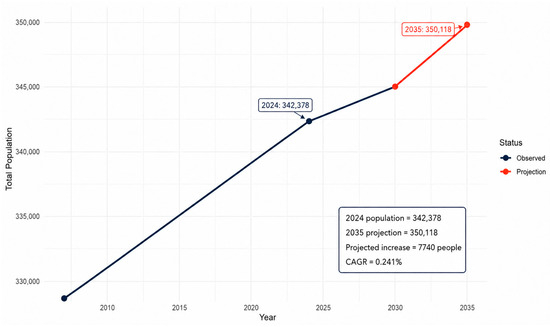
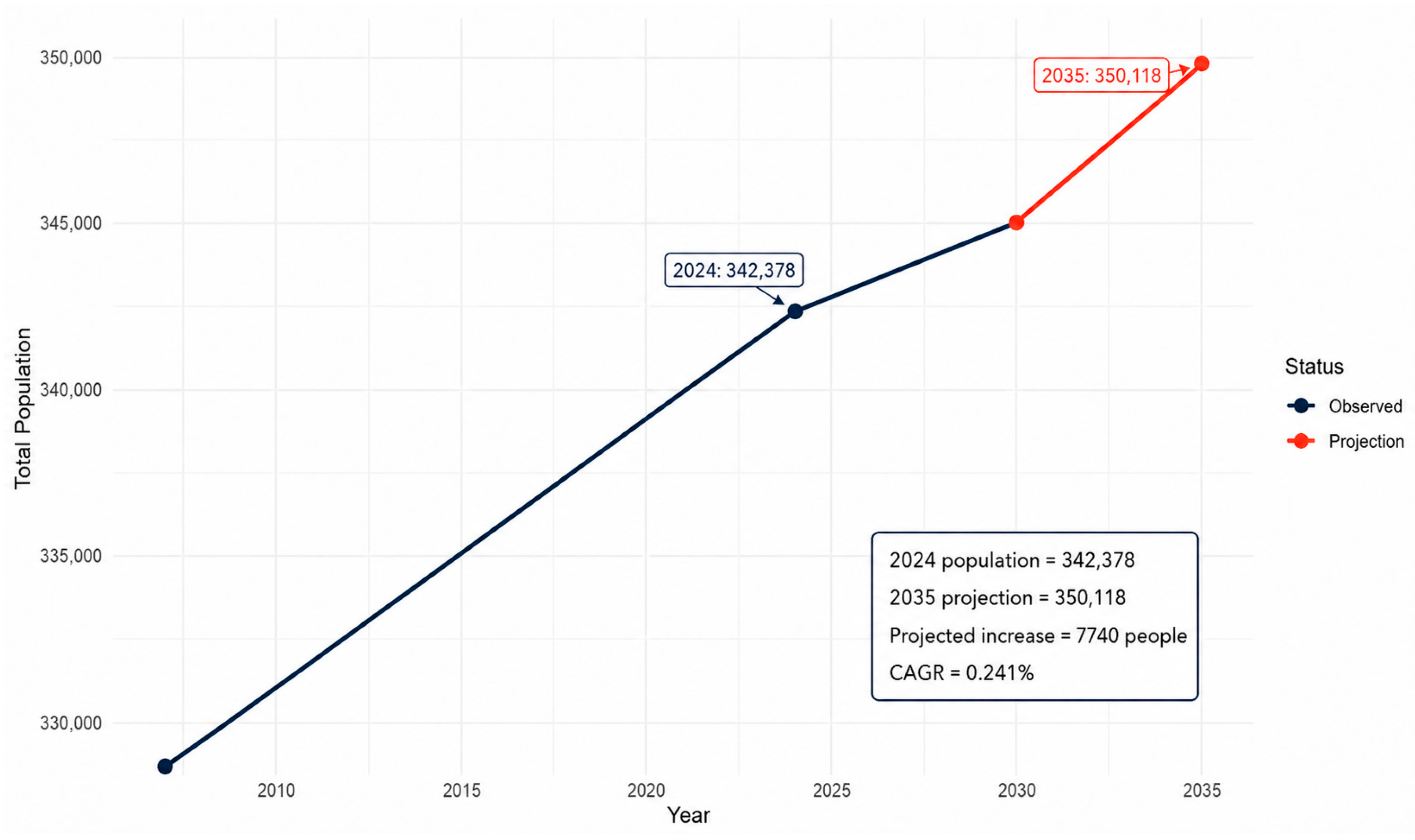
The Amasya Province experienced a gradual increase in population during the observation period from 2007 to 2024. The calculated compound annual growth rate was 0.241%, indicating a slow yet positive demographic trend. As of 2024, the recorded population was 342,378. The baseline linear trend model (P(t) = −1,289,204.12 + 806.1176 t) projects the population of Amasya Province to reach approximately 350,118 by 2035. This projection corresponds to an estimated increase of 7740 individuals between 2024 and 2035, or approximately 2.26%. As a simple robustness check, the linear projection was compared with the CAGR-based interpretation of the observed population trend. Both indicators suggest a slow-to-moderate demographic increase rather than rapid growth. Therefore, the projected 2035 value should be interpreted as a baseline planning estimate.
It is important to interpret this projection as a baseline planning scenario rather than a precise demographic forecast, as the model is based on annual total population values and does not separately account for fertility, mortality, age structure, or net migration. Model performance was assessed using goodness-of-fit and error indicators. These diagnostic results were employed not to assert deterministic forecasting accuracy, but to evaluate whether the linear trend provides a reasonable baseline planning estimate. Given that the analysis is based on a short annual population series and does not include age-sex, fertility, mortality, or migration components, more complex forecasting approaches such as cohort-component modelling, ARIMA, and exponential smoothing were not applied as primary models. Instead, these methods are identified as useful extensions for future research when more detailed demographic data become available.
To address forecast uncertainty, the 2035 projection was interpreted within a scenario-based planning perspective. The medium-growth scenario corresponds to the continuation of the observed linear trend, while low- and high-growth scenarios represent potential deviations caused by migration, investment, labour market changes, or policy interventions. Therefore, the projected value of 350,118 should be understood as a baseline estimate rather than a fixed endpoint. The observed population trend and 2035 projection are presented in Figure 2.
Figure 2.
Population Growth and 2035 Projection of Amasya.
3.2. Regional Economic Disparity: The SES Hierarchy
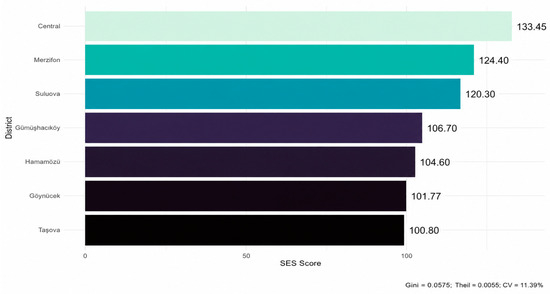
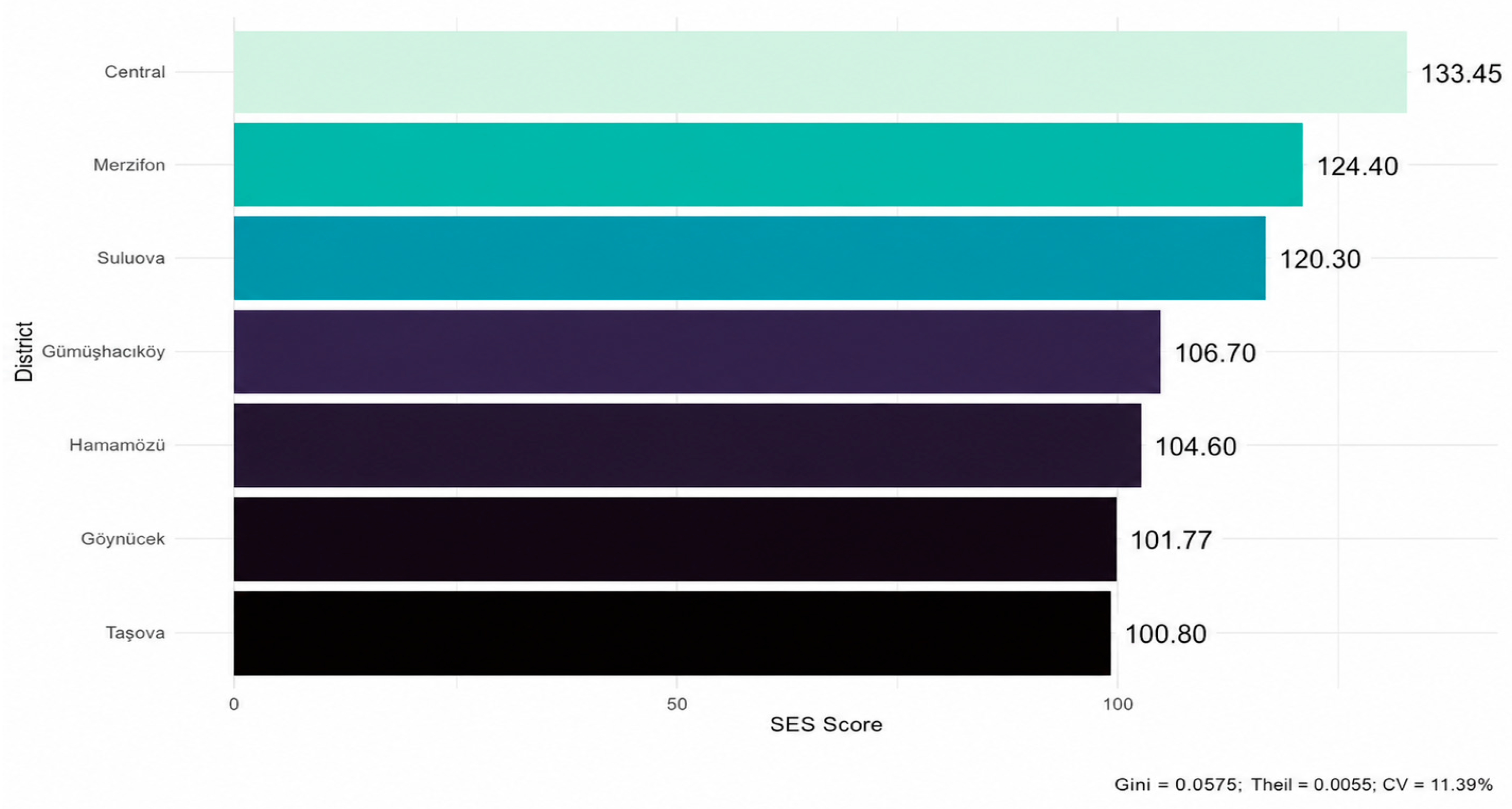
The mean SES score was 113.07, with a standard deviation of 12.88, resulting in a coefficient of variation of 11.39%. The highest SES score was observed in the Central District, followed by Merzifon and Suluova, whereas the lowest SES score was recorded in Taşova, followed by Göynücek. This ranking highlights a discernible central–peripheral differentiation in socio-economic development within Amasya Province, where centrally located and better-connected districts occupy relatively higher positions, while more peripheral districts remain at the lower end of the SES distribution.
The Gini coefficient was calculated as 0.0575, and the Theil index was determined to be 0.0055. These values suggest measurable, yet not extreme, district-level disparities in SES scores. Consequently, the primary significance of the SES results lies not in a high level of inequality, but in the spatial pattern of socio-economic differentiation between central and peripheral districts. The district-level SES ranking is presented in Figure 3.
Figure 3.
Socio-Economic Status (SES) Ranking by District Note: Gini coefficient = 0.0575; Theil index = 0.0055; coefficient of variation = 11.39%.
The socio-economic status (SES) ranking at the district level reveals that the Central District (133.45) and Merzifon (124.40) are positioned relatively higher, whereas Taşova (100.80) and Göynücek (101.77) are situated at the lower end of the SES distribution. This pattern suggests a central–peripheral differentiation in socio-economic development within Amasya Province.
3.3. Labour Market Resilience
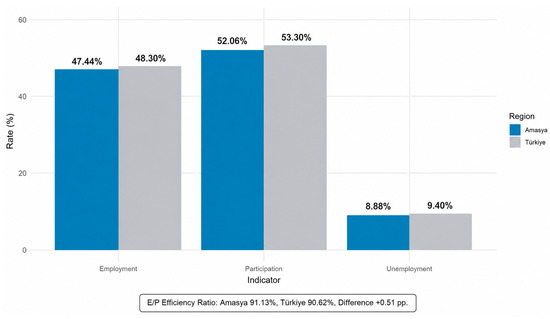
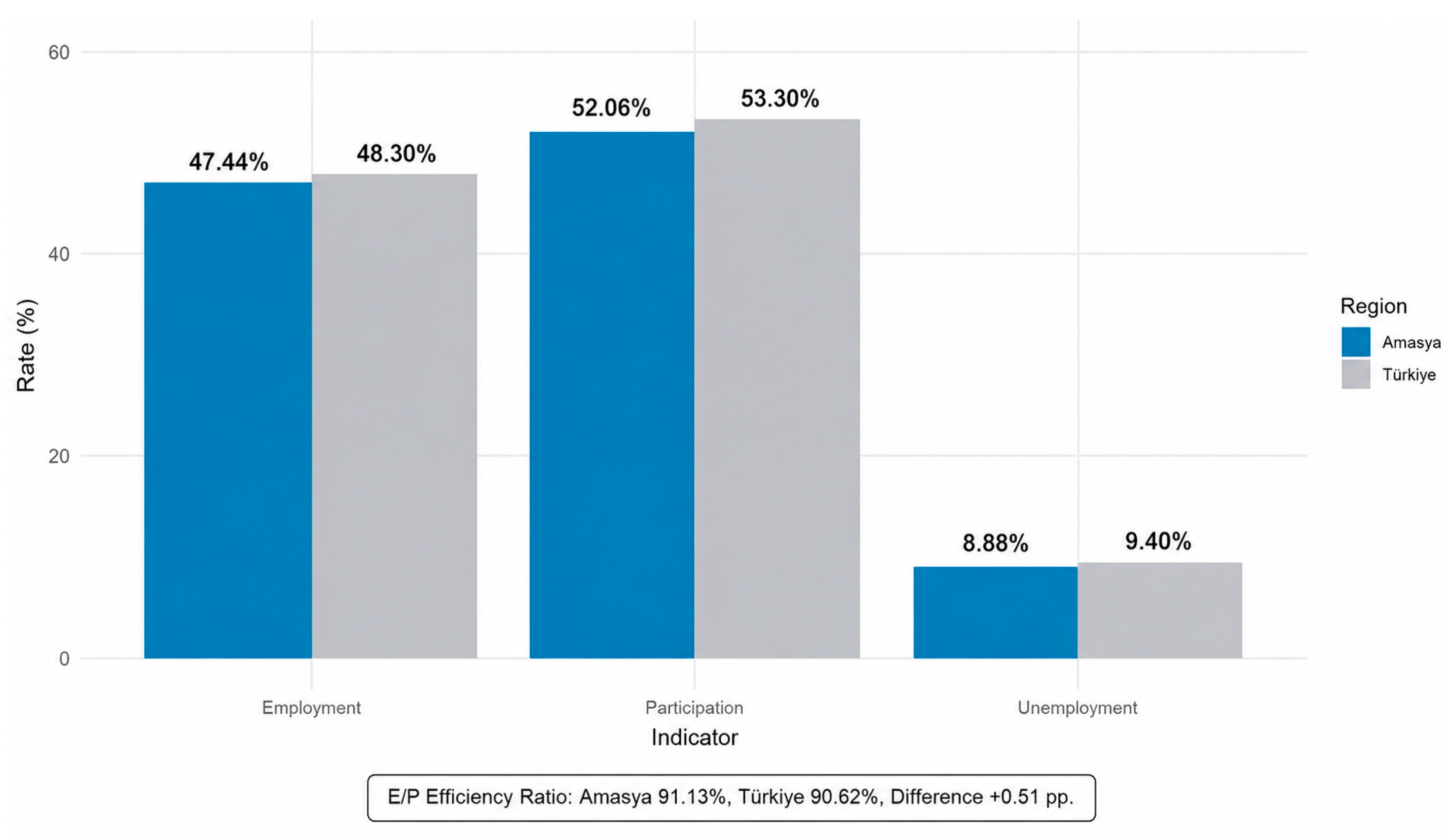
Labour market indicators reveal that Amasya Province exhibits a slightly lower labour force participation rate and employment rate compared to the national average, while also demonstrating a marginally lower unemployment rate. Specifically, the labour force participation rate in Amasya was 52.06%, in contrast to 53.30% in Türkiye. The employment rate stood at 47.44% in Amasya, compared to 48.30% in Türkiye. The unemployment rate was recorded at 8.88% in Amasya, as opposed to 9.40% in Türkiye. These findings indicate that Amasya performs slightly below the national average in terms of participation and employment, yet it maintains a marginally lower unemployment rate.
The employment-to-participation efficiency ratio was 91.13% in Amasya, compared to 90.62% in Türkiye. This suggests that, among those participating in the labour force, the proportion transitioning into employment was slightly higher in Amasya than at the national level. However, this difference should be interpreted with caution, as the analysis is based on aggregate provincial indicators. The comparison of employment, participation, and unemployment rates is illustrated in Figure 4, while the E/P efficiency ratio is detailed in Table 1.
Figure 4.
Labour Market Comparison: Amasya vs. Türkiye.
Table 1.
Comparative visualization of labour market indicators in Amasya and Türkiye.
4. Discussion
4.1. Demographic Concentration and Planning Pressure
The demographic projections for Amasya Province suggest a moderate population increase by 2035, rather than a rapid demographic expansion. Although the projected increase is limited in absolute terms, its planning significance is underscored by its spatial concentration. The findings indicate that future growth is anticipated to be concentrated primarily in the Central District and Merzifon. This pattern implies that population-related planning pressures will not be uniformly distributed across the province. Instead, central and better-connected districts are likely to experience heightened demand for housing, transportation, infrastructure, public services, and employment opportunities.
From a planning perspective, the moderate scale of projected growth should not be construed as insignificant. Even a limited demographic increase can exert local pressure when concentrated in districts that already serve as administrative, service, and economic centres. Therefore, the critical issue for Amasya is not solely the magnitude of population growth, but also the locations where this growth will occur and whether existing urban systems can accommodate it without exacerbating spatial inequality. In this context, urban carrying capacity is a valuable planning concept as it links demographic pressure with land use, transportation, infrastructure, public services, and environmental resources [19]. Similarly, studies on urban development and planning demonstrate that population concentration in already developed urban cores or along transportation corridors can intensify pressure on infrastructure and services if proactive spatial planning is not implemented [20,21].
While the anticipated increase is moderate, its significance in planning is underscored by its spatial concentration and potential interaction with labour market dynamics. Changes in population may influence future labour supply, skills demand, youth employment patterns, and regional employment stability. Consequently, demographic projections should be considered in conjunction with labour market conditions and infrastructure capacity when formulating long-term regional planning strategies [22,23,24]. Furthermore, even moderate demographic growth necessitates a careful evaluation of educational, service, and infrastructure capacity in districts where population concentration is expected to rise [25].
4.2. Socio-Economic Hierarchy and Centre–Periphery Differentiation
The socio-economic findings reveal a distinct district-level hierarchy within Amasya Province. Higher socio-economic status (SES) scores are concentrated in central and relatively better-connected districts, whereas peripheral districts exhibit lower levels of socio-economic development. This outcome suggests that Amasya’s development pattern reflects a central–peripheral structure, wherein socio-economic opportunities are not uniformly distributed across the province.
The central–peripheral differentiation observed in Amasya aligns with broader regional development patterns, wherein socio-economic opportunities, services, education, and infrastructure are predominantly concentrated in central or better-connected districts. Similar patterns have been documented in studies on regional development, human capital, and socio-economic differentiation [26,27]. In the Turkish context, regional development research indicates that central areas frequently benefit from enhanced service provision, superior infrastructure quality, and greater institutional capacity, whereas peripheral settlements may remain relatively disadvantaged [28,29,30,31]. Consequently, the SES pattern in Amasya should be interpreted not as extreme statistical inequality, but as a spatially significant centre–periphery differentiation with important planning implications.
The Gini coefficient, Theil index, and coefficient of variation reveal measurable but not extreme disparities among districts. Therefore, the primary significance of the SES findings lies not solely in the absolute magnitude of inequality, but in the spatial pattern of development differentiation. Central districts appear to possess stronger socio-economic capacity, while peripheral districts may encounter more limited access to development opportunities, services, and economic functions. This pattern is crucial for regional planning, as population concentration in already advantaged districts may exacerbate existing socio-economic disparities if peripheral districts are not supported through targeted policies.
4.3. Labour Market Capacity and Data Limitations
The findings from the labour market offer an additional perspective for understanding Amasya’s prospective development trajectory. In comparison to Türkiye as a whole, Amasya exhibits a marginally lower labour force participation rate and employment rate, yet also a slightly reduced unemployment rate. The employment-to-participation efficiency ratio in Amasya surpasses the national average, indicating a relatively efficient conversion of labour force participation into employment.
However, this observation warrants cautious interpretation. The available labour market indicators are aggregate values at the provincial level and do not facilitate district-level comparisons among the Central District, Merzifon, and peripheral districts. Consequently, the study does not assert that the districts experiencing the most significant population growth also demonstrate the highest labour market efficiency. Instead, the provincial labour market outcomes suggest that Amasya maintains a relatively stable employment structure at the aggregate level. Nonetheless, more detailed district-level, sectoral, gender-based, and age-specific labour data are necessary to more accurately assess local labour market disparities.
The labour market findings should also be contextualized within the broader framework of regional inequality and uneven economic development in Türkiye. Previous research has highlighted that income inequality, regional deprivation, and labour market disparities remain significant challenges across provinces and regions [16,32,33]. Although Amasya exhibits a slightly higher employment-to-participation efficiency ratio than the national average, this should not be construed as evidence of sectoral resilience or structural labour market strength without more comprehensive sectoral data. Regional employment studies indicate that sectoral composition and employment performance vary considerably across provinces [34]. Similarly, the broader regional development literature suggests that economic activity and labour market opportunities tend to concentrate in more robust regional centres, contributing to uneven development and persistent regional labour market disparities [35,36,37,38,39]. Therefore, the labour market results in this study should be interpreted as an aggregate provincial comparison rather than a detailed sectoral or district-level labour market assessment.
4.4. Integrated Planning Implications for Amasya Province
When the demographic, socio-economic, and labour market findings are collectively analysed, Amasya’s developmental trajectory emerges as a coupled yet uneven pattern of population, socio-economic, and labour dynamics. Population growth is anticipated to be predominantly concentrated in the Central District and Merzifon, with socio-economic advantages also more pronounced in central and well-connected districts. This indicates a spatial alignment between demographic growth and socio-economic capacity, resulting in a pattern of concentrated development within the province.
This coupled concentration has two significant implications. Firstly, central districts may evolve into stronger growth nodes due to the combination of population growth, higher socio-economic status, and access to provincial-level employment opportunities. Secondly, peripheral districts may become relatively more disadvantaged if population, services, investment, and employment opportunities continue to concentrate in a limited number of districts. Consequently, Amasya’s future development should be assessed not solely through total population growth but through the spatial relationship between population distribution, socio-economic hierarchy, and labour market capacity.
The findings also reveal that the relationship among these three dimensions is not entirely symmetrical. While demographic and socio-economic status (SES) data are available at the district level, labour market indicators are evaluated at the provincial level. Therefore, the study offers an integrated planning interpretation but refrains from making deterministic district-level labour market claims. Future research should employ district-level employment, sectoral structure, commuting, and income data to more precisely assess whether population growth, SES advantage, and labour market efficiency spatially overlap.
The integrated findings suggest that future planning in Amasya should adopt a dual strategy. In the Central District and Merzifon, where population growth and socio-economic capacity are more concentrated, planning should focus on managing urban carrying capacity. This includes housing supply, transportation accessibility, infrastructure capacity, public service provision, and the protection of environmental resources. These districts are likely to experience the most significant development pressure and thus require proactive spatial planning. The broader regional planning literature also suggests that balanced development necessitates strengthening secondary centres and preventing excessive concentration of investment and opportunities in a single dominant core [40,41].
In peripheral districts, the primary focus of planning should be to mitigate the risk of socio-economic divergence. This necessitates the enhancement of local economic opportunities, the improvement of access to services, the support of rural and small-town economies, and the enhancement of connectivity with central districts. Rather than promoting the concentration of growth in already advantaged areas, regional planning should advocate for a more balanced provincial development pattern. Such a strategy aligns with planning approaches that emphasize the prudent management of developed land resources, the prevention of social fragmentation, and the balanced integration of urban expansion with regional development priorities [42,43,44].
Overall, the study indicates that Amasya’s future urban and regional development cannot be comprehended solely through population projections. A planning-oriented interpretation necessitates the combined evaluation of demographic change, socio-economic hierarchy, and labour market capacity. This integrated perspective offers a more effective foundation for long-term planning than treating population, inequality, and labour indicators as separate analytical topics.
5. Conclusions
This study investigates the prospective developmental trajectory of Amasya Province by integrating demographic projections, district-level socio-economic disparity analysis, and labour market indicators. The findings indicate that Amasya is anticipated to experience a moderate population increase by 2035, rather than rapid demographic growth. The baseline projection estimates that the provincial population will reach approximately 350,118 by 2035. Although the absolute increase is limited, its planning significance lies in the spatial concentration of growth, particularly in the Central District and Merzifon.
The socio-economic analysis revealed that development advantages are not uniformly distributed among districts. Higher socio-economic status (SES) values are concentrated in central and relatively better-connected districts, while peripheral districts exhibit lower socio-economic positions. The Gini coefficient, Theil index, and coefficient of variation indicate measurable but not extreme district-level disparity. Therefore, the central planning issue is not only the scale of population growth but also the spatial alignment between demographic concentration and socio-economic hierarchy.
The labour market comparison showed that Amasya has a slightly lower labour force participation rate and employment rate than Türkiye as a whole, but also a slightly lower unemployment rate. The employment-to-participation efficiency ratio was slightly higher than the national value, indicating that a relatively large share of labour force participants is employed. However, because the labour market indicators are available only at the provincial level, district-level labour market differences could not be directly evaluated.
The main contribution of this study is the development of an integrated planning-oriented assessment framework for a medium-sized province in Türkiye. Instead of treating demographic projection, socio-economic disparity, and labour market performance as separate topics, the study interprets them as interrelated components of future urban and regional development. In this sense, the strategic analysis produced by the study is not a deterministic prediction but a baseline planning assessment that identifies where future planning pressure may increase and where balanced regional development policies may be needed.
The findings indicate two primary strategic implications for Amasya Province. Firstly, in districts where population growth and socio-economic capacity are concentrated, notably the Central District and Merzifon, planning policies should prioritize urban carrying capacity, housing supply, infrastructure provision, transportation accessibility, and public service capacity. Secondly, in peripheral districts, policy interventions should aim to mitigate socio-economic divergence by strengthening local economic opportunities, improving service accessibility, supporting rural and small-town economies, and enhancing connectivity with central districts.
This study has several limitations. Firstly, the demographic projection is based on annual total population data and does not separately model fertility, mortality, age-sex structure, or net migration. Secondly, the linear model should be interpreted as a baseline planning scenario rather than a precise demographic forecast. Thirdly, the SES analysis relies on secondary district-level scores, and the study does not reconstruct the original index components or weighting procedure. Fourthly, the labour market analysis is based on aggregate provincial indicators and does not include district-level, sectoral, gender-based, age-based, or wage-level differences.
Future research should address these limitations by applying cohort-component demographic modelling, incorporating migration and age-sex data, linking population change with land-use and infrastructure capacity, and analysing labour market dynamics at district and sectoral levels. Further studies could also compare Amasya with other medium-sized provinces in Türkiye to evaluate whether similar population–socio-economic–labour coupling patterns are observed in different regional contexts.
Author Contributions
Conceptualization, M.R.Ö. and M.E.; methodology, M.E.; formal analysis, M.R.Ö. and M.E.; investigation, M.R.Ö. and M.E.; data curation, M.R.Ö.; writing—original draft preparation, M.E.; writing—review and editing, M.R.Ö. and M.E.; visualization, M.E.; supervision, M.E. All authors have read and agreed to the published version of the manuscript.
Funding
This research received no external funding.
Institutional Review Board Statement
Not applicable.
Informed Consent Statement
Not applicable.
Data Availability Statement
The data presented in this study were derived from publicly available official statistical resources provided by the Turkish Statistical Institute (TÜİK), available at https://www.tuik.gov.tr/. The processed datasets generated and analyzed during the current study are available from the corresponding author upon reasonable request.
Conflicts of Interest
The authors declare no conflicts of interest.
References
- Al-Shaar, W.; Bonin, O. A comparative study of land use dynamics in urban and peri-urban areas of Greater Beirut Agglomeration and Greater Paris Region: A geospatial approach. Mod. Cartogr. Ser. 2024, 11, 89–115. [Google Scholar] [CrossRef] [Scilit]
- Aydın, C.; Erdoğan, G. Measuring the accessibility of social and technical infrastructure areas by via GIS: The case of Izmir Karaburun. Yönetim Bilişim Sist. Derg. 2024, 10, 80–90. [Google Scholar]
- Azizi, P.; Soltani, A.; Bagheri, F.; Sharifi, S.; Mikaeili, M. An integrated modelling approach to urban growth and land use/cover change. Land 2022, 11, 1715. [Google Scholar] [CrossRef] [Scilit]
- Arbu, N.; Lim, A.; Me-ead, C. Forecasting the patterns and trends in age-specific fertility in South Asia. Turk. J. Comput. Math. Educ. 2021, 12, 2595–2600. [Google Scholar] [CrossRef] [Scilit]
- Nlend, B. Hydrological Processes in a Hyper-Humid Coastal Area with Strong Anthropogenic Influences (Douala, Cameroon): A Geochemical Study of Water Dynamic from the Atmosphere to the Subsurface. Ph.D. Thesis, Université Bourgogne Franche-Comté, Besançon, France, 2019. Available online: https://theses.hal.science/tel-03128471 (accessed on 20 February 2026).
- Shu, E.; Porter, J.R.; Hauer, M.; Olascoaga, S.S.; Gourevitch, J.; Wilson, B.; Pope, M.; Melecio-Vázquez, D.; Kearns, E. Integrating climate change induced flood risk into future population projections. Nat. Commun. 2023, 14, 7870. [Google Scholar] [CrossRef] [Scilit] [PubMed]
- Younan, M.N.; El-Kholei, A.O.; Yassein, G.A. Urban metabolism and dynamic modelling: Pioneering approaches for resilient planning in the Greater Cairo Region. Environ. Dev. Sustain. 2024, 26, 25091–25112. [Google Scholar] [CrossRef] [Scilit]
- Mijanović, D.; Vujačić, D.; Manojlović, B.; Popovic, M.B.; Spalević, V. Population dynamics in the mountainous areas of Montenegro: Ecological transitions and demographic transformations in Pljevlja since the beginning of the 21st century. J. Agric. For. 2023, 69, 105–130. [Google Scholar] [CrossRef] [Scilit]
- Politis, M.; Christakis, N.; Pana, Z.D.; Drikakis, D. Integrating machine learning and scenario modelling for robust population forecasting under crisis and data scarcity. Mathematics 2025, 13, 4024. [Google Scholar] [CrossRef] [Scilit]
- Yakar, M.; Özgür, E.M. The aging population in Turkey is ringing alarm bells at the local level. J. Geogr. 2022, 44, 231–250. [Google Scholar] [CrossRef] [Scilit]
- Gu, Y.; Chen, Y.; Li, W.; Cheng, N.; Deng, S.; Ma, Y.; Xu, D.; Qian, J. Spatiotemporal disparities in hip fractures burden among individuals aged ≥55 years (1990–2021) with projections to 2050. Front. Public Health 2025, 13, 1600452. [Google Scholar] [CrossRef] [Scilit]
- Domján, P.; Angyal, V.; Vingender, I. Concentration and geospatial modelling of Health Development Offices’ accessibility for the total and elderly populations in Hungary. BMC Public Health 2025, 25, 1466. [Google Scholar] [CrossRef] [Scilit]
- Çelebioğlu, F. Women employment in terms of gender inequality across the provinces of Turkey. Eurasian J. Bus. Econ. 2017, 10, 61–80. [Google Scholar] [CrossRef] [Scilit]
- Çiftçi, M. The analysis of interregional sectoral productivity in Turkey. J. Bus. Res. 2018, 10, 551–580. [Google Scholar] [CrossRef] [Scilit]
- Pal, S. A comparative study of inter-regional and intra-industry disparities. GeoJournal 2023, 88, 6467–6482. [Google Scholar] [CrossRef] [Scilit]
- So-Yeong, L.; Jun-Yub, C.; Hee-Sun, H. Development of an index for diagnosing regional inequality levels and analysis of characteristics by region. J. Korea Plan. Assoc. 2024, 59, 5–24. [Google Scholar] [CrossRef] [Scilit]
- Weeks, W.B.; Chang, J.E.; Pagán, J.A.; Aerts, A.; Weinstein, J.N.; Ferres, J.L. An observational, sequential analysis of the relationship between local economic distress and inequities in health outcomes, clinical care, health behaviors, and social determinants of health. Int. J. Equity Health 2023, 22, 181. [Google Scholar] [CrossRef] [Scilit]
- Adzandeh, E.; Alaigba, D.; Nkemasong, C.N. Application of geospatial techniques and logistic regression model for urban growth analysis in Limbe, Cameroon. Niger. J. Environ. Sci. Technol. 2020, 4, 138–151. [Google Scholar] [CrossRef] [Scilit]
- Wei, Y.; Huang, C.; Lam, P.T.; Sha, Y.; Feng, Y. Using urban-carrying capacity as a benchmark for sustainable urban development: An empirical study of Beijing. Sustainability 2015, 7, 3244–3268. [Google Scholar] [CrossRef] [Scilit]
- Jiang, A.; Shao, Q.; Zhang, S. Did urban agglomeration development planning policies accelerate urban population decline? A quasi-natural experiment based on urban agglomeration development planning policies in China. Front. Sustain. Cities 2025, 7, 1604569. [Google Scholar] [CrossRef] [Scilit]
- Orhan-Karaalp, H.S. Regional disparities in Turkey: A socio-economic perspective. Eur. J. Sustain. Dev. 2020, 9, 103–115. [Google Scholar] [CrossRef] [Scilit]
- Kesikoğlu, F.; Balcı, A.İ.; Eraslan, E. Determination of the convergence of Turkey and European Union countries in terms of youth labour indicators by cluster analysis. Sustainability 2025, 17, 7453. [Google Scholar] [CrossRef] [Scilit]
- Pošta, V. The disaggregation of the projected impacts of automation in the regional labour markets between 2019 and 2030: Case of the Czech Republic. Reg. Stat. 2023, 13, 487–509. [Google Scholar] [CrossRef] [Scilit]
- Şahin, Ö. Regional analysis of skills-mismatch in Turkish labour markets. J. Econ. Policy Res. 2021, 8, 1–27. [Google Scholar] [CrossRef] [Scilit]
- Aidarkhanova, G.; Zhumagulov, C.; Nyussupova, G.; Kholina, V.N. Assessing the impact of demographic growth on the educational infrastructure for sustainable regional development: Forecasting demand for preschool and primary school enrollment in Kazakhstan. Sustainability 2025, 17, 4212. [Google Scholar] [CrossRef] [Scilit]
- Homutiņins, A.; Šipilova, V.; Aļeksejeva, L. Human capital at the regional level: Population forecast insights into Latvia from a long-term perspective. Acad. J. Interdiscip. Stud. 2024, 13, 32. [Google Scholar] [CrossRef] [Scilit]
- Milijić, A.; Manasijević, A.; Đorđević, D.; Marjanović, V.; Stanojević, M. Demographic trends and regional disparities in the EU. Soc. Sci. 2025, 14, 556. [Google Scholar] [CrossRef] [Scilit]
- Dolu, A.; Kuvvetli, Ü. Comparison of socio-economic development levels of provinces in Turkiye. Int. J. Public Financ. 2023, 8, 85–106. [Google Scholar] [CrossRef] [Scilit]
- Karahasan, B.C. Borders of socio-economic development in Türkiye. Ekonomi-Tek 2024, 13, 183–197. [Google Scholar]
- Kılavuz, T.; Tunç, B. Address-based school enrollment system: A socio-economic discrimination in education. Int. J. Educ. Stud. Policy 2025, 6, 360–382. [Google Scholar] [CrossRef] [Scilit]
- Varol, Ç.; Sat, N.A. The core-periphery analysis as to socioeconomic characteristics: The case of Ankara. In Global, Regional and Local Perspectives on the Economies of Southeastern Europe; Horobet, A., Belascu, L., Polychronidou, P., Karasavvoglou, A., Eds.; Springer Proceedings in Business and Economics; Springer: Cham, Switzerland, 2021; pp. 75–90. [Google Scholar] [CrossRef] [Scilit]
- Çelebi, E. How could investment incentives address the income inequality in Turkey. Ind. Policy 2022, 2, 4–23. [Google Scholar]
- Zeren, F.; Arı, A.; Menteşe, E.Y. Regional health care inequality in Turkey: Spatial exploratory analysis. İnönü Üniversitesi Uluslararası Sos. Bilim. Derg. 2012, 1, 2–20. [Google Scholar]
- Çakan, S. Revealing regional employment performance: Exploring perspectives beyond traditional growth approaches. J. Public Econ. Public Financ. Manag. 2024, 4, 150–168. [Google Scholar]
- Duman, E. Rocky road along the path to convergence in standards of living: Evidence from Turkish regions. SSRN Electron. J. 2022, 1–53. [Google Scholar] [CrossRef] [Scilit]
- Filiztekin, A. Regional unemployment in Turkey. Pap. Reg. Sci. 2009, 88, 863–879. [Google Scholar] [CrossRef] [Scilit]
- Karkazis, J.; Baltos, G.C. The geo-economic gravity systems as a tool for the analysis of socio-economic polarization in a society: Country case study and geographic information modelling explain long-term transformation potential towards increased regional attractiveness and efficiency. Acad. J. Interdiscip. Stud. 2018, 7, 129–136. [Google Scholar] [CrossRef] [Scilit]
- Orhan, E. Reading vulnerabilities through urban planning history: An earthquake-prone city, Adapazarı case from Turkey. METU J. Fac. Archit. 2016, 33, 139–159. [Google Scholar] [CrossRef] [Scilit]
- Özgüzel, C. Agglomeration effects in a developing economy: Evidence from Turkey. J. Econ. Geogr. 2022, 23, 823–846. [Google Scholar] [CrossRef] [Scilit]
- Ahner, D.; Landabaso, M. Regional policies in times of austerity. Eur. Rev. Ind. Econ. Policy 2011, 2, hal-03468936. [Google Scholar]
- Lerch, M.; Du, W.; Beckendorff, D. Internal migration over the course of Urbanisation in developing countries. Popul. Dev. Rev. 2025, 51, 957–1270. [Google Scholar] [CrossRef] [Scilit]
- Jagódka, M.; Snarska, M. Regional disparities as a result of differences in human capital and innovativeness on the example of Poland. Technol. Econ. Dev. Econ. 2023, 29, 696–716. [Google Scholar] [CrossRef] [Scilit]
- Li, B.; Guan, M.; Zhan, L.; Liu, C.; Zhang, Z.; Jiang, H.; Zhang, Y.; Dong, G. Urban comprehensive carrying capacity and development order: A “pressure-capacity-potential” logical framework. Front. Environ. Sci. 2022, 10, 935498. [Google Scholar] [CrossRef] [Scilit]
- Tame, M.; Gashu, K.; Workineh, B.A. Urban expansion and compensation vis-à-vis livelihood coping strategies of displaced farmers surrounding medium-size towns in northwest Ethiopia. City Territ. Archit. 2025, 12, 28. [Google Scholar] [CrossRef] [Scilit]

Disclaimer/Publisher’s Note: The statements, opinions and data contained in all publications are solely those of the individual author(s) and contributor(s) and not of MDPI and/or the editor(s). MDPI and/or the editor(s) disclaim responsibility for any injury to people or property resulting from any ideas, methods, instructions or products referred to in the content. |
© 2026 by the authors. Licensee MDPI, Basel, Switzerland. This article is an open access article distributed under the terms and conditions of the Creative Commons Attribution (CC BY) license.