


Abstract
Resource endowment serves as the foundational condition and strategic pillar for the sustainable improvement of rural project quality, determining the capacity for sustainable development. Clarifying the intrinsic mechanisms through which resource endowment influences the sustainable improvement of rural project quality not only demystifies the “black box” of resource conversion but also reshapes the project development paradigm centered on endowment matching. Based on panel data from 30 provinces in China spanning from 2015 to 2024, this paper empirically examines the impact of resource endowment on the sustainable improvement of rural project quality using a double machine learning model. The results indicate that resource endowment has significant promoting effect. Furthermore, the baseline regression results remain robust after various robustness checks, including adjustment to the research sample, reestablishment of machine learning model, and endogeneity tests involving the introduction of instrumental variable and lagged core variable. Mechanism analysis indicates that resource endowment primarily achieves promoting effect through government attention. Heterogeneity analysis indicates that the impact of resource endowment varies depending on geographic location and the type of project. The SHAP method is also employed to reveal the key factors driving the sustainable improvement of rural project quality in resource endowment.
1. Introduction
China’s overall development has maintained a long-term positive trend, with the economy continuing to grow healthily. Under the guidance of the national regional coordinated development strategy, provinces have fully leveraged their comparative advantages, forming a regional economic layout characterized by complementary strengths and sustainable development. The eastern region has taken the lead in development, the central and western regions are rising strongly, the revitalization of the northeast has made new progress, and the coordination of regional development continues to strengthen. In the process, the development of village project is a crucial stroke in designing the blueprint for rural modernization. By channeling resources downward, empowering industries, and innovating governance, it deeply activates the intrinsic driving forces within rural areas. This study offers crucial theoretical and practical support for sustainable rural development. Success relies on systematically rebuilding value and revitalizing momentum through infrastructure upgrades, specialized industry growth, and development model transformation, thereby inject new energy into modern elements to drive the pursuit of sustainable rural development.
The advent of the big data era has significantly expanded the dimensions and formats of data, posing severe challenges to traditional research methodologies. Although machine learning algorithms excel at prediction, their inherent biases and black-box nature make them challenging to use directly for unbiased estimation of causal effects. Against this backdrop, the double machine learning (DML) framework proposed by Chernozhukov et al. (2018) [1]. Compared to traditional regression models, DML effectively utilizes machine learning techniques to reduce omitted variable bias in causal inference. It can not only integrate multiple confounding factors and capture complex nonlinear relationships among variables but also identify heterogeneity in effect mechanisms and estimate dynamic trends in causal effects over time [2].
Many scholars use DML to investigate the causal relationships. For example, there is research estimating the built environment’s impact on per capita travel-related CO2 emissions with double machine learning, using travel diaries of 32,201 Berlin residents [3]. Scholars introduced a novel approach to estimating hybrid models via a causal inference framework, specifically employing DML to estimate causal effects. They showcased its use for the Earth sciences on two problems related to carbon dioxide fluxes [4]. Other scholars investigated integrating lean management and emerging technologies for enhanced sustainable performance, employing empirical evidence based on DML approach [5].
Academic discussions on the sustainable improvement of rural project quality primarily focus on dimensions such as implementation, sustainable operation, and the satisfaction of project beneficiaries. For example, researchers studying an agricultural project in M County highlighted that coordinated efforts among local government, village officials, and villagers are essential for its success [6]. Researchers studied the rural heating project in Village L, revealing that the township government’s strict compliance with higher-level directives, disregarding the village’s actual needs, concluding that the village was passive and reactive [7]. Researcher surveyed 1000 households across 41 impoverished Chinese villages to identify factors influencing satisfaction with photovoltaic poverty alleviation projects. They found that rural economic development, beneficiaries’ awareness, and environmental conditions are key determinants of satisfaction [8]. There is research examined 16 World Bank solar home system projects in remote rural areas of developing countries, identifying internal factors—financial, technical, and project design—and external factors—political, institutional, social, and cultural—that affected their success [9].
A literature review reveals that factors influencing the sustainable improvement of rural project quality arise from both macro and micro levels. Macro factors include political, economic, social, and cultural environments, while micro factors involve stakeholder cohesion, village conditions, and project design and implementation. However, existing research has two main limitations: insufficient academic attention and overreliance on qualitative methods, with a notable deficiency in empirical approaches employing models to investigate causal mechanisms. Resource endowment constitutes a form of natural capital that enhances agricultural practices and innovation capacity [10], significantly promotes their common prosperity [11], and plays a vital role in rural development. Research and development intensity plays a positively moderating role in the sustainable development of resource-based cities [12]. Attention, or focus, refers to the extent an individual allocates the cognitive resources to a specific task [13]. As government-led public projects, sustained attention from the government is key to their success. However, from the perspectives of resource endowment and government attention, research analyzing the sustainable improvement of rural project quality remains relatively scarce. Therefore, we are dedicated to integrating resource endowment and government attention into the analytical framework for the sustainable improvement of rural project quality, exploring their relationships and operational dynamics. Specifically, we aim to investigate the following questions: How does resource endowment influence the sustainable improvement of rural project quality in China? Are these effects consistent or heterogeneous? What mediating role does government attention play in this relationship? How can we identify the key factors within resource endowment that influence these projects and objectively quantify their relative importance? Finally, how can we propose constructive and targeted policy recommendations?
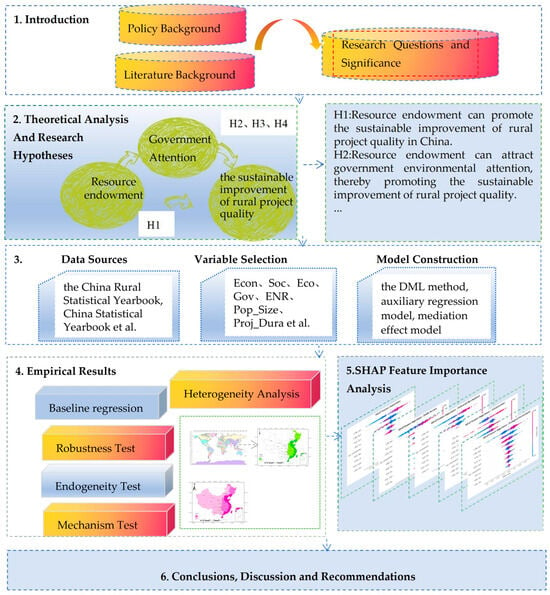
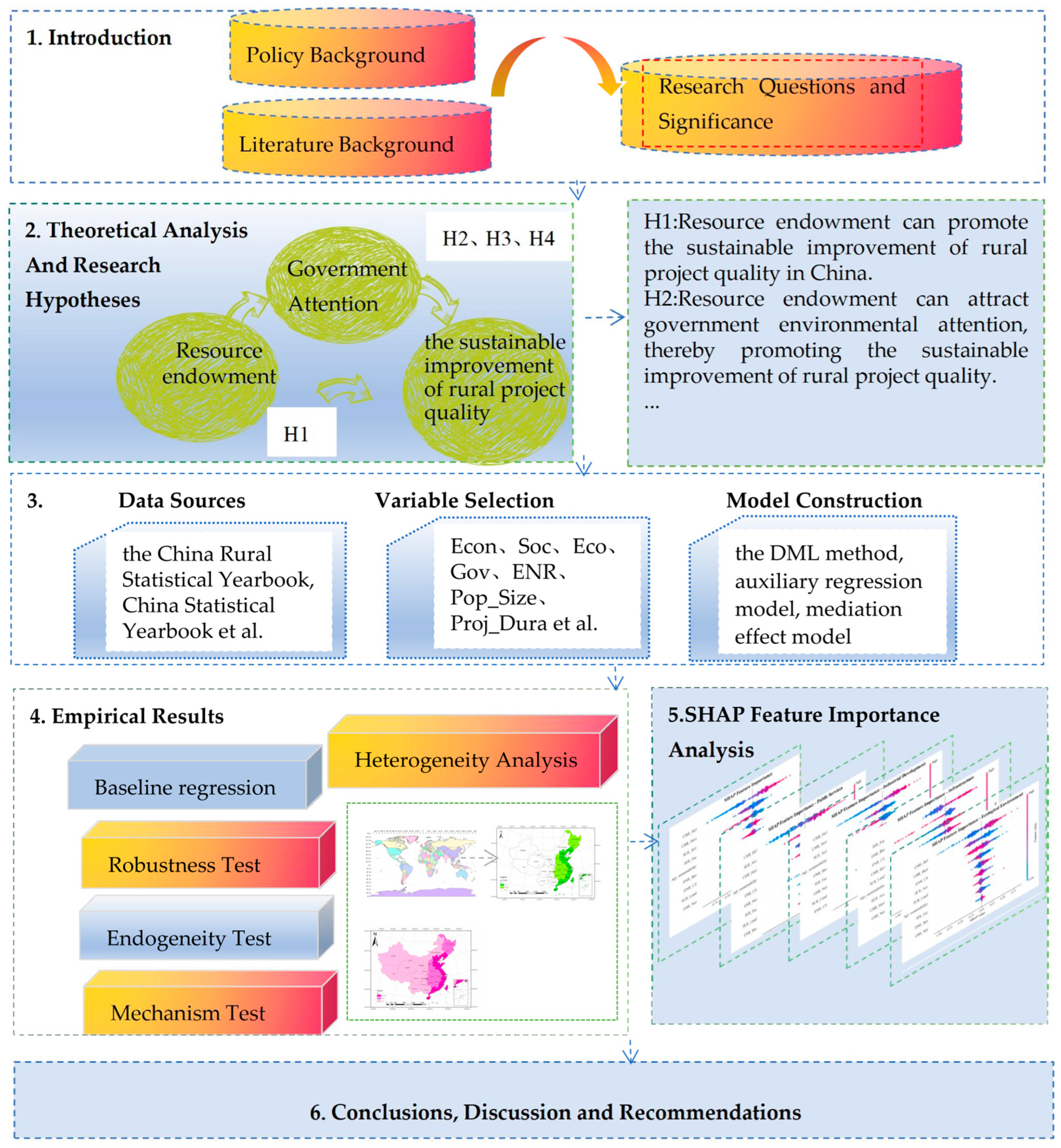
The contributions of this paper are primarily manifested in three aspects. First, it innovatively investigates the factors influencing the sustainable improvement of rural project quality in China from the perspective of resource endowment, thereby broadening the theoretical framework of related research under the context of comprehensive rural revitalization. Second, by examining the degree of government attention, this paper reveals the transmission mechanism through which resource endowment affects the sustainable improvement of rural project quality. Furthermore, it categorizes government attention into three dimensions: environmental, digital, and green development, thereby enriching the variable design and mechanism analysis for causal identification within this domain. Third, DML offers a methodological framework that effectively balances rigor and flexibility in investigating the causal effects of resource endowment on the sustainable improvement of rural project quality. This approach is especially appropriate for rural development contexts, which involve numerous interrelated factors. Furthermore, the integration of SHAP values with DML to identify key determinants effectively overcomes the limitations inherent in traditional linear models. This integration offers innovative analytical tools and provides a solid foundation for strategy proposal. The research framework is shown in Figure 1.
Figure 1.
Research framework.
Its research significance is as follows: From the perspective of theoretical significance, first, the application of the “state-rural-society” interaction theory has been extended within the context of grassroots governance. Placing resource endowment and government attention within the same analytical framework to explore how their interaction affects rural projects can deepen the understanding of how state power and local foundational conditions mutually shape each other and jointly influence the effectiveness of public projects. This approach offers a new theoretical perspective for explaining the performance of grassroots governance with Chinese characteristics. Second, we enriched the study of causal mechanisms in the fields of public policy and project management. The DML method, primarily used in economics and biostatistics, was systematically applied to the evaluation of rural projects in China, promoting a paradigm shift in econometric methods within public administration and policy evaluation, and revealing underlying mechanisms. Third, it connects the theory of “attention politics” with project implementation research. Government attention is a key political variable for understanding policy implementation in China. By operationalizing it and incorporating it into empirical models, we can directly test whether and how higher-level attention allocation translates into grassroots project quality. From the perspective of practical significance, first, we provide a scientific basis for targeted policy implementation and differentiated governance. By identifying the heterogeneous effects of resource endowments on different types of rural projects, the research findings can directly guide local governments in classified guidance and village-specific policies, thereby improving the efficiency of national resource allocation and the success rate of projects. Second, we optimize the allocation of attention and the evaluation mechanisms of higher-level governments. Research emphasizes the role of government attention, which helps higher-level governments improve their strategies for allocating attention by focusing limited administrative resources on the most effective areas or regions that need the most support, and by designing more scientific assessment and incentive mechanisms.
The remainder of this paper is structured as follows: Section 2 presents theoretical analysis and research hypotheses. Section 3 presents data sources, variable selection, and model construction. Section 4 presents the empirical results. Section 5 presents the SHAP feature importance analysis. Finally, we summarize the conclusions, discussion and recommendations in Section 6.
2. Theoretical Analysis and Research Hypotheses
2.1. The Promoting Role of Resource Endowment
The new endogenous development theory emphasizes a comprehensive approach to rural development by integrating external resources with internal drivers [14] and highlighting the significance of resource endowment. From the perspective of village project development, resource endowment refers to the total production factors available to rural communities, including natural resources, labor, capital, technology, and geographical location. Efficient utilization and integration of these resources provide the material foundation and sustained momentum for project development. Bourdieu (1986) categorized it from the perspective of capital endowment into three types: economic, cultural, and social capital [15]. Domestic scholars have pointed out that resource endowment mainly includes economic status, human capital, political capital, and social capital [16]. Village resources include natural, cultural, economic, and primary resources [17].
In the context of rural development, resource endowment—characterized by their localization and diversity—determines the strategic direction, primary industrial forms, and sustainability of projects. The region’s unique natural resources and cultural assets are the core attractions of rural tourism. They stimulate the development of specialty agriculture, rural tourism, and related industries, create more job opportunities and income sources, and provide businesses with differentiated competitive advantages that attract investment and industry [18]. From the perspective of the enterprise, the resource-based theory holds that the formation of a firm’s sustainable competitive advantage stems from the accumulation of its heterogeneous resources [19]. Resource endowment is a fundamental prerequisite for the location of rural projects, shaping their distinctive industrial core and ultimately ensuring sustainable development. All parties involved precisely identify existing resources, creatively transform them, and enhance their value through institutional innovation, technological integration, and cultural empowerment, thereby continuously revitalizing the driving forces of rural development. Resource endowment has become a relatively well-established concept and has been applied across numerous fields. Research has investigated whether natural resource endowment and human capital development can drive the transition to clean cooking in sub-Saharan African countries [20]. Other studies have examined environmental decentralization, resource endowment and urban industrial transformation and upgrading [21]. Based on the analysis above, the following research hypothesis is proposed:
H1:
Resource endowment can promote the sustainable improvement of rural project quality in China.
2.2. Resource Endowment, Government Attention, and the Sustainable Improvement of Rural Project Quality
Unlike traditional public administration theories, the new public management theory innovates around a series of issues such as government public administration orientation and government function, establishing a brand-new knowledge system and research paradigm in public administration. It emphasizes reshaping the relationship among government, market, and society, and stresses the development of a service-oriented and guidance-oriented government, providing an important theoretical perspective for exploring the role of government in rural project construction [22]. The national and local governments play important roles in public policy and public enforcement. A governance framework promotes cooperation between national and local governments by clearly defining their roles in public policy. The national government designs high-level policies, develops nationwide strategies, sets legal frameworks and standards, and coordinates cross-regional enforcement. Local governments implement policies, adapt plans to local conditions, deliver services, enforce regulations, and provide feedback on policy effectiveness. In promoting the sustainable development of rural project quality, the government also plays a crucial role that extends beyond its traditional administrative functions. Through top-level design and strategic planning, it establishes scientific systems, mechanisms, and development directions for these projects. Through the leverage effect of public finance and policy-based financial instruments, the government no longer takes on everything alone. Instead, through organic collaboration with the market, it channels social capital into rural revitalization, achieving a win-win outcome that balances public goals with market efficiency. More importantly, as the guardian of public interest, the government coordinates the complex interests of multiple parties, including enterprises, village collectives, and farmers, to ensure the inclusiveness and fairness of project development.
Government attention essentially refers to policy preferences implemented by the government through a “visible hand”; this represents a concentrated reflection of the government’s work focus. Government demand intensity is generally conveyed by the level of government attention; the higher the government attention, the stronger the government demand [23]. Under high level of government attention, actively responding to government initiatives and implementing relevant policies can help enterprises establish close ties with the government and gain access to valuable policy resources [24]. Government attention includes government environmental attention [25], digital attention [26], and green development attention [27]. Government environmental attention can improve urban energy efficiency [28], promote regional low-carbon development [29], and enhance the efficiency of urban green innovation [30]. Government digital engagement can significantly promote citizen engagement and awareness [31], dismantle information barriers [32], and improve firms’ total factor productivity [33]. Green government initiatives have key advantages in enhancing the effectiveness of local public services and achieving sustainable development [34]. The integrated implementation of regulatory policies alongside incentive-based strategies can effectively promote green technological innovation [35].
The theory of government attention advocates that the allocation and competition of government attention affect fiscal resources and public policy. Attention allocation is a prerequisite for government governance; the allocation results reflect government preferences and governance priorities, directly influencing the distribution of public finances [36]. Government attention is crucial for the sustainable improvement of rural project quality driven by resource endowment. Its mechanism lies in the government’s use of policy formulation and strategic planning to identify rural resources and empower the value, transforming existing assets into policy endowment with developmental significance. It not only directs the concentration of production factors toward areas with endowment advantages but also reshapes the institutional environment and transaction structures by establishing property rights protections and production standards. Under the dual assurance of institutional empowerment and precise governance, it promotes the deep integration of projects into rural communities, ensures the scientific rigor of project planning, enhances the effectiveness of implementation, and guarantees the sustainability of outcomes. Based on the above analysis, the following research hypotheses are proposed:
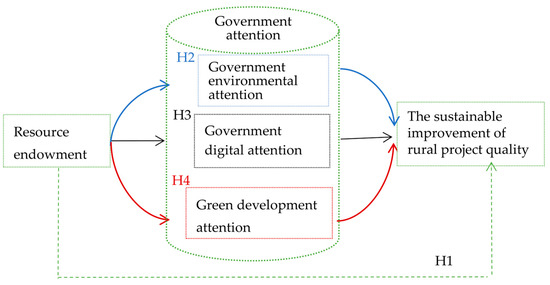
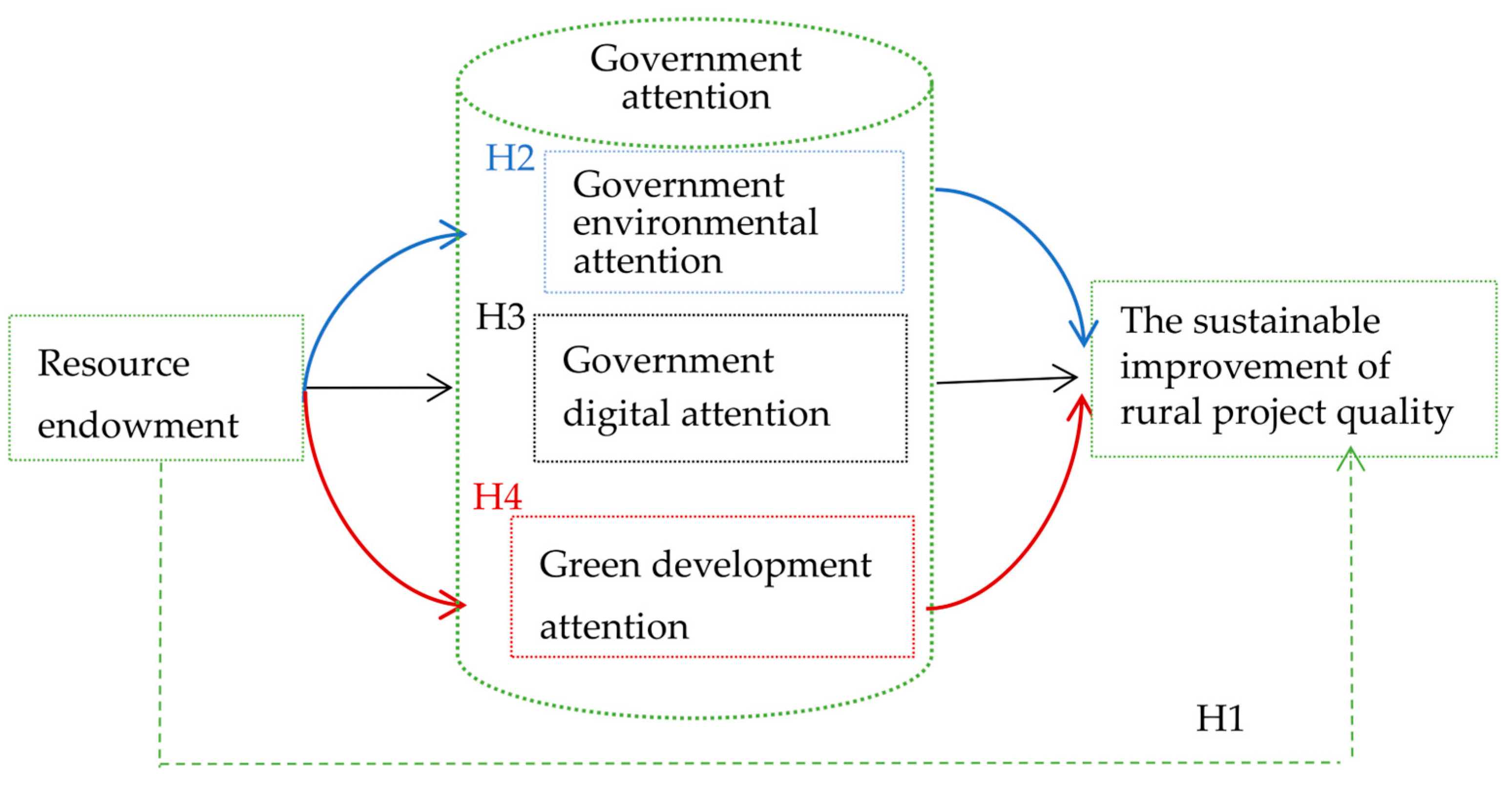
H2:
Resource endowment can attract government environmental attention, thereby promoting the sustainable improvement of rural project quality.
H3:
Resource endowment can attract government digital attention, thereby promoting the sustainable improvement of rural project quality.
H4:
Resource endowment can attract green development attention, thereby promoting the sustainable improvement of rural project quality.
The relationship between resource endowment, government attention, and the sustainable development of rural project quality is shown in Figure 2.
Figure 2.
Research mechanism diagram.
3. Data Sources, Variable Selection, and Model Construction
3.1. Data Sources
Based on the principles of data integrity and availability, we construct a panel dataset of village projects from 2015 to 2024 for 30 provinces in China, excluding the Tibet, Hong Kong, Macau, and Taiwan regions. To reduce the impact of extreme values on the results, winsorization is applied to the continuous variables at the 1st and 99th percentiles. The data sources include the China Rural Statistical Yearbook, China Statistical Yearbook, China Rural Management Statistical Report, China Employment and Population Statistical Yearbook, China Agricultural Yearbook, statistical yearbooks from various provinces, statistical bulletins on national economic and social development, statistical data from the Ministry of Agriculture and Rural Affairs, official government websites, and survey questionnaires. Some missing values are handled using linear interpolation [37].
3.2. Variable Selection
Explained Variable: the sustainable improvement of rural project quality. To prevent the “project silo” issue, the indicator adopts a public interest perspective, integrating rural economy, society, ecology, governance, and related fields into a comprehensive system rather than focusing solely on economic impact. Existing research has established a comprehensive evaluation framework for rural revitalization levels, comprising 9 criterion layers—including thriving industries, ecological livability, and civilized rural customs—and 37 indicator layers, with 5 primary indicators, 15 secondary indicators, and 23 tertiary indicators [38,39]. We develop a primary indicator system comprising four dimensions: sustainable development of project economic quality, sustainable development of social quality, sustainable development of ecological quality, and sustainable development of governance quality. The sustainable development of project economic quality includes the total revenue, the growth rate of villagers’ income, the growth rate of village collective economic income, and the project’s return on investment. Sustainable development of social quality includes the infrastructure improvement rate, the public service enhancement rate, and the level of talent revitalization. Sustainable development of ecological quality includes the effectiveness of air pollution control, air quality grade, and village greening coverage rate. Sustainable development of governance quality includes villagers’ participation, organizational management capability, long-term operation and maintenance mechanisms. Additionally, this indicator serves as a composite index. The existing literature commonly employs various weighting methods in multi-indicator comprehensive evaluations, including expert scoring, entropy weighting, principal component weighting, and the Analytic Hierarchy Process (AHP). This study adopts the AHP to calculate the weighting of indicators for the sustainable improvement of rural project quality [40]. The results are shown in Table 1.
Table 1.
Weighting of various indicators.
Explanatory Variable: Resource endowment. Based on the resource endowment needs of village projects, we have developed a measurement system that includes ecological and natural resource, cultural and human resource, industrial and economic foundation resource, and spatial and locational resource. Ecological and natural resource includes terrain and landform, climate, and characteristic biological resources. Cultural and human resource includes cultural heritage, talent resources, and external relationship networks. Industrial and economic foundation resource includes agricultural sustainability and production facilities. Spatial and locational resource includes transportation accessibility and land use potential.
Control Variables: To accurately identify the causal effects of government attention and resource endowment on projects, the regression model controlled for a series of variables that could potentially confound the estimation results. These variables primarily include village population size, proportion of the labor force population, rural economic foundation, project implementation duration, and the dominant project type. All continuous variables were log-transformed to mitigate heteroscedasticity.
Mechanism variable: Government attention. As mentioned earlier, government attention is primarily examined from three dimensions: environmental attention, digital attention, and green development attention. Following Zhang’s approach and utilizing the “Provincial and Municipal Environmental Attention” dataset from the China National Research Data Service Platform (CNRDS), an index measuring environmental attention was constructed [41]. According to the research in ref. [42], measuring digital attention involves creating a keyword dictionary and calculating the proportion of these keywords in the government work report. Based on Liu et al. [43], measuring green development attention starts by creating a green development keyword lexicon, and then analyzing annual provincial government work reports to calculate the frequency of these keywords relative to the total word count. All variables and symbols are shown in Table A1.
3.3. Model Construction
We develop an analytical model based on the research of Kabata et al. [44]. It first constructs a partially linear model and then creates an auxiliary regression to reduce regularization bias in small-sample estimation. The partially linear regression model, constructed employing the DML method, is as follows:
where i represents the individual province, t represents the year, and HIQ_pro is the explained variable. RES_end is the explanatory variable. θ0 and θ1 are the regression coefficients of the explanatory variable. Xit is the set of high-dimensional control variables, and εit is the random error term, which satisfies the assumption of having a conditional mean of zero. g(Xit) represents the effect of the high-dimensional control variables on the explained variable.
In the model, machine learning and regularization algorithms are employed to estimate ĝ(Xit). Regressing only Equation (1) limits estimator variance but slow ĝ(Xit)’s convergence to g(Xit). Additionally, as the sample size grows, may not converge to θ0, causing bias in the final value [45]. Thus, an auxiliary regression model is needed:
In the above equation, m(Xit) represents the regression function of the treatment variable on control variables, estimated via machine learning algorithms. μit is the random error term with a conditional mean of zero.
To analyze the mechanisms of government attention, a mediation effect model under the DML framework is employed [46], as detailed below:
Equation (3) extends the baseline regression by introducing ATT_gov—including ENV_gov, DIG_gov, and GRE_gov—as a mediating variable through which resource endowment affects the sustainable improvement of rural project quality. Following Jing’s two-step mechanism test [47], the first step examines the effect of resource endowment on project development (baseline regression), and the second assesses its impact on government attention. Chernozhukov and others listed estimation effect algorithms such as Lasso, Regression Tree, Random Forest, Boosting, and Neural Network when exploring DML. Integrating machine learning algorithms such as LASSO, Random Forest, and Gradient Boosting Decision Trees, DML automatically selects high-dimensional control variables, extracts essential information, minimizes redundant variables’ impact, and improves model robustness and inference accuracy [48]. Considering that random forests can flexibly and robustly estimate complex conditional expectation functions, and based on prior research [49], both the primary regression and the auxiliary regression employ the random forest algorithm.
4. Empirical Results
4.1. Baseline Regression
We apply DML with a 1:4 sample split to analyze how resource endowment influences the sustainable improvement of rural project quality in China. Table 2 presents the estimation results. Models (1) to (4) correspond to regressions that include first-, second- and third-order terms of control variables, along with year and province fixed effects. All coefficients are significantly positive at the 1% level, except Model (3), which is positive at the 5% level. Model (5), controlling for all fixed effects and controls, shows the core explanatory variable remains significantly positive at 5%. Holding other factors constant, a one-unit increase in resource endowment corresponds to a 0.029-unit increase in the sustainable improvement of rural project quality, supporting Hypothesis H1.
Table 2.
Baseline regression results.
Models (6) to (9) further examine the impact of resource endowment on various dimensions of the sustainable improvement of rural project quality. The result indicates that resource endowment has significantly positive effect on sustainable development of project economic quality, social quality, and ecological quality, at the 5%, 1%, and 5% levels, respectively. The impact on the sustainable development of governance quality is positive but did not pass the significance test. From a management science perspective, village projects, especially infrastructure and public services, are public goods characterized by non-competitiveness and non-excludability. Their governance is handled as public affairs led by the government, which ensures standardized operations through a comprehensive institutional framework with clearly defined rights and responsibilities. Consequently, resource endowment has limited impact.
4.2. Robustness Test
4.2.1. Adjusting the Research Sample
There are significant differences in resource endowments exist among provinces, with some possessing greater project autonomy and more concentrated resources. To prevent estimation bias in the regression analysis of all provinces, samples from Beijing, Tianjin, Shanghai, and Chongqing were excluded. Regression results (Table 3, Model 1) show resource endowment still significantly promotes the sustainable improvement of rural project quality in China (β = 0.035, p < 0.10), confirming its robust driving effect.
Table 3.
Robustness test results.
4.2.2. Reset the Double Machine Learning Model
To mitigate the impact of model specification errors in the DML model, we primarily conduct robustness checks from the following aspects: First, the sample splitting ratio is varied. Existing studies typically employ 5-fold cross-validation, that is, a sample splitting ratio of 1:4 for DML causal inference. To prevent instability in estimation results caused by model specification errors, the sample splitting ratio is adjusted to 1:6 to explore whether different ratios affect the inference results. Second, we replace the machine learning algorithms. The random forest algorithm used in the baseline regression is successively replaced with Lasso regression [50] and gradient boosting algorithms [51] to explore the potential impact of different algorithms on the study. Third, the original partially linear model is replaced by a more general interactive model to eliminate the impact of subjective model specification on the results [52]. In the regression results from recalibrating the model, shown in Table 3 (columns 2–5), the effect remains consistent across different sample splits, algorithm adjustments, and an interactive model (β = 0.041, p < 0.05; β = 0.036, p < 0.05; β = 0.049, p < 0.01; β = 0.027, p < 0.05), demonstrating the robustness of the original benchmark results.
4.2.3. Eliminating the Impact of Outliers
To minimize estimation bias from outliers in the sample data, this paper applies winsorization to all variables except the treatment variable in the baseline regression at both the 1% and 99% quantiles, as well as the 5% and 95% quantiles. Values exceeding the upper quantile or falling below the lower quantile are replaced accordingly. The specific regression results are shown in Model (6) of Table 3, showing that the significant relationship between variables remains consistent after outlier adjustment (β = 0.019, p < 0.10).
4.3. Endogeneity Test
The endogeneity issues in this study mainly stem from the following aspects: First, we omitted variable bias. Unobserved factors may bias the results despite controlling for village population, labor force proportion, and dominant project types. Second is measurement error. Systematic errors may exist in measuring resource endowment and the sustainable improvement of rural project quality, causing the explanatory variable to correlate with the error term and thereby leading to endogeneity problems. Third is bidirectional causality. The sustainable improvement of rural project quality may enhance the efficiency of rural resource utilization through technological innovation and institutional optimization, thereby creating a positive feedback loop. To address potential estimation bias resulting from the endogeneity issues aforementioned, the instrumental variable method is applied. Instrumental variables are commonly employed to mitigate endogeneity by being correlated with endogenous explanatory variable and uncorrelated with the error term [53]. Referring to the study by Fan et al. [54], rural regional policy pilots are used as instrumental variables for resource endowment.
On one hand, from the perspective of relevance, rural regional policy pilots are closely related to resource endowment. Pilot areas often receive abundant project funding and policy support, leading to high resource stock and efficient allocation. On the other hand, From the perspective of exogeneity, rural regional policy pilots are essentially experimental initiatives implemented in specific areas to test the feasibility and effectiveness of new policies or systems. Although qualifying for these pilots grants access to policy benefits, it is not directly associated with the sustainable improvement of the quality of rural projects. Due to the difficulties in fully satisfying the exogeneity assumption of the instrumental variables, empirical tests were conducted to evaluate their validity. To date, China has implemented national pilot projects for rural construction, digital rural development pilots, and pilot reform of the rural collective property right. We primarily examine whether these projects were conducted within rural regional policy pilots. Columns (1) to (3) in Table 4 show the results of the endogeneity tests, which reveal significantly positive regression coefficients for the core treatment variables, consistent with the baseline findings. As shown in column (4), resource endowment remains significantly positive, while the instrumental variable is not significant, indicating that the exogeneity condition is satisfied.
Table 4.
Endogeneity test results.
4.4. Heterogeneity Analysis
4.4.1. Geographic Location Heterogeneity
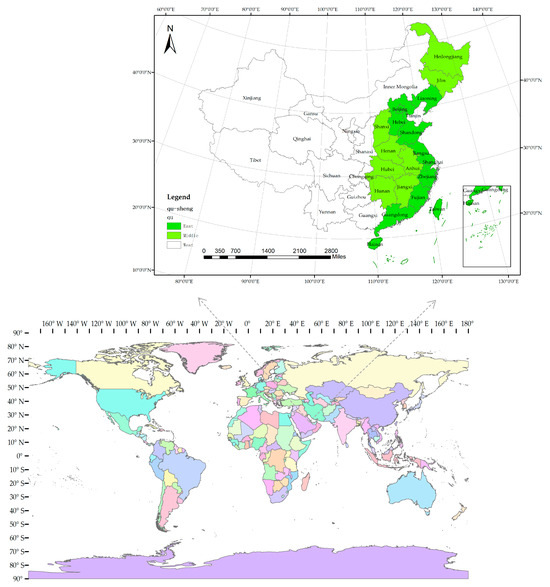
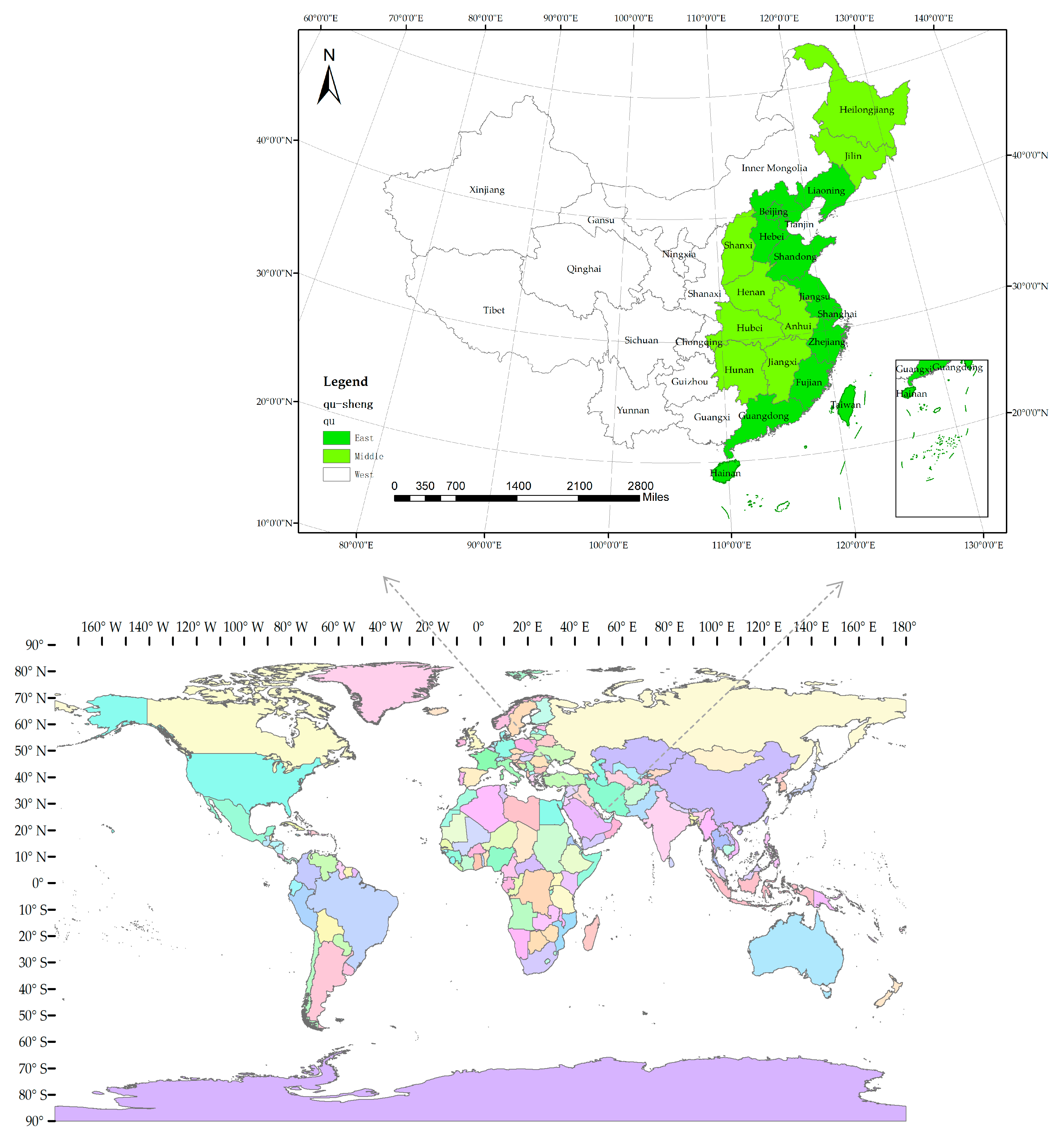
Amid uneven regional development, disparities in economic foundations, social progress, and policy support affect the quality of rural projects. This study categorizes samples into Eastern, Central, Western regions (As shown in Figure 3) based on the standards of the National Bureau of Statistics and employs grouped regression analyses to identify regional constraints affecting the relationship between resource endowment and sustainable rural project quality improvement. This approach facilitates the formulation of differentiated and targeted strategies to enhance project quality.
Figure 3.
Study area of geographic location heterogeneity.
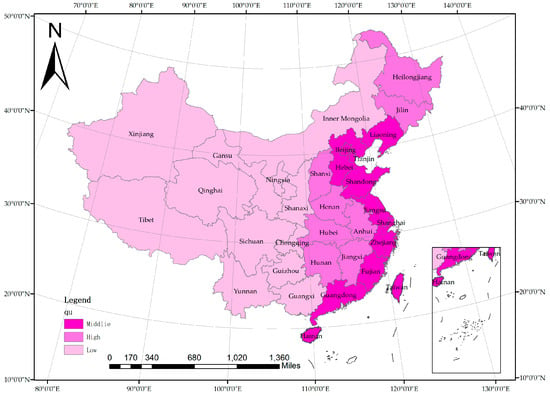
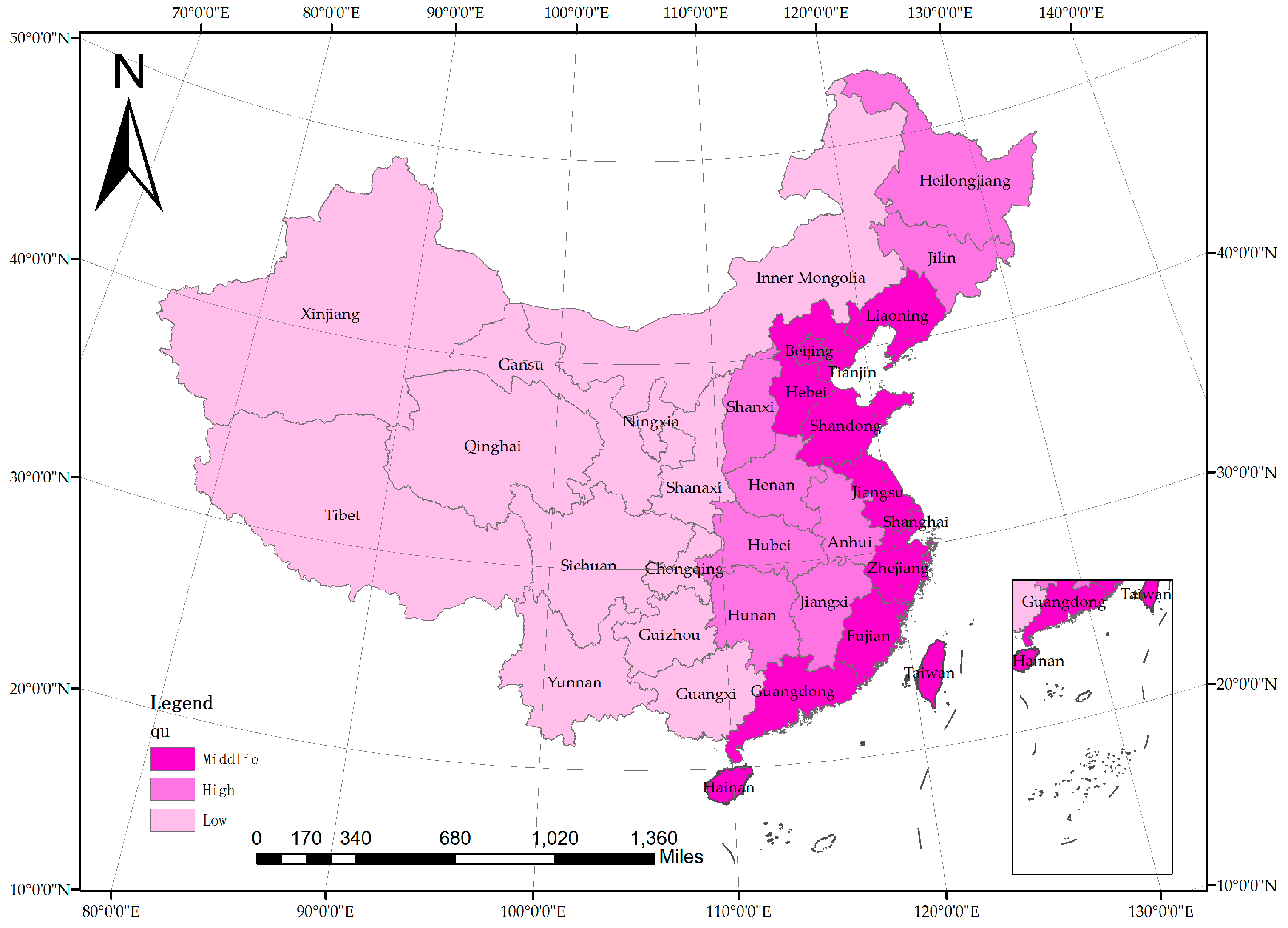
Column (1) of Table 5 and Figure 4 show significantly positive regression coefficients for all three sub-samples, ranked as Central > Eastern > Western. Under the continuous implementation of the Central Rise Strategy, the central region has developed a relatively mature market mechanism and strong government governance capabilities, establishing an efficient institutional environment and a solid foundation for the structural alignment of resource factors with market demand. At the same time, as a strategic hub connecting East and West and spanning from North to South, this region can not only absorb technology spillovers and capital inflows resulting from industrial transfers in the eastern areas but also integrate the natural resources and labor advantages of the western regions, thereby creating a “two-way siphon effect”. In contrast, although the eastern region possesses high-quality resources, it faces diminishing marginal returns. Conversely, the western regions suffer from imperfect markets, limited industrial structures, and institutional constraints, leading to relatively low mobility and inefficient resource allocation. Consequently, these regions struggle to transform the resource endowment and may even experience the “resource curse.”
Table 5.
Results of heterogeneity analysis.
Figure 4.
Results of geographic location heterogeneity analysis.
4.4.2. Project Types Heterogeneity
The impact mechanisms of resource endowment vary across four project types: ecological projects depend on ecological resources; infrastructure projects rely on geographical conditions; industrial projects centered on market value; and public service projects require balanced accessibility. Therefore, analysis should be tailored accordingly. Column (2) of Table 5 shows significantly positive regression coefficients across all four sub-samples, ranked as follows: industrial projects > public services > ecological projects > infrastructure. Industrial projects are highly sensitive to resource availability, relying on the local industrial base, specialized human capital, and market access for growth. Public service projects rank second in importance, with their effectiveness influenced not only by resource endowment but also significantly moderated by local fiscal capacity and institutional design. The quality manifestation of ecological projects has a time lag, requiring the long-term accumulation of natural capital and a comprehensive response from the ecosystem. Infrastructure projects rely more on external investment and the application of standardized technologies, showing a weaker association with specific resources.
4.5. Mediating Effects Test
The analysis above demonstrates that resource endowment has a significant positive impact on the sustainable improvement of rural project quality. It is now essential to further clarify the mechanisms through which resource endowment achieves the effect. Based on existing research and theoretical analysis, we propose government attention as the key mediator, operating through environmental, digital, and green development pathways. The results are presented in Table 6. Model (1) shows the effect of the independent variable RES_end on the dependent variable HIQ_pro, which is the baseline regression result. Models (2) to (5) represent the coefficients of the independent variable RES_end on the mediating variable ATT_gov and its three main dimensions: ENV_gov, DIG_gov, and GRE_gov, respectively.
Table 6.
Mediating effects test results.
Column (3) shows a positive and statistically significant coefficient for the effect of resource endowment on government environmental attention. Specifically, a one-unit increase in resource endowment corresponds to a 0.206-unit increase in government environmental attention. Resource endowment supports rural development, and government environmental attention facilitates the sustainable improvement of rural project quality by converting resource advantages into policy support and institutional guarantees. Combining the baseline regression results above, it can be inferred that resource endowment effectively promotes the sustainable improvement of rural project quality through government environmental attention. Therefore, Hypothesis H2 is supported.
Column (4) shows that the regression coefficient of resource endowment on government digital attention is positive and statistically significant at the 1% level. Specifically, a one-unit increase in resource endowment corresponds to a 0.412-unit increase in government digital attention. Government digital attention enhances project quality through digital operations, promotion, and supervision, thereby promoting efficient alignment between endowed resource and project demands and achieving digital empowerment in project development. Combined with the baseline regression results above, this indicates that resource endowment promotes the sustainable improvement of rural project quality through government digital attention. Therefore, Hypothesis H3 is supported.
Column (5) shows that the coefficient of resource endowment on government green development attention is positive and statistically significant at the 1% level. Specifically, a one-unit increase in resource endowment corresponds to a 0.301-unit increase in government green development attention. It promotes the coordinated development of both economic and ecological achievements of projects through the application of green technologies, the enhancement of environmental standards, and the adoption of sustainable management models. Combining the benchmark regression results, it can be concluded that resource endowment effectively fosters the sustainable improvement of rural project quality through government green development attention. Therefore, Hypothesis H4 is supported.
5. SHAP Feature Importance Analysis
The Shapley value, introduced by L. Shapley in 1953, addresses the problem of fairly allocating contributions in cooperative games [55]. Building on this foundation, Lundberg and Lee proposed the SHAP (Shapley Additive Explanations) framework in 2017 [56]. SHAP values calculate the prediction value f(x) by summing the marginal contributions of each feature as it is added to the model [57], providing an interpretable method to quantify the contribution of features to the predictions. This paper employs the SHAP value method to objectively analyze how various elements of resource endowment affect the sustainable improvement of rural project quality, thereby guiding quality intervention strategies. The calculation formula is as follows:
Here, ϕ0 is the baseline prediction value, and ϕ0 represents the contribution of the i-th feature, where positive values indicate a positive impact and negative values indicate a negative impact.
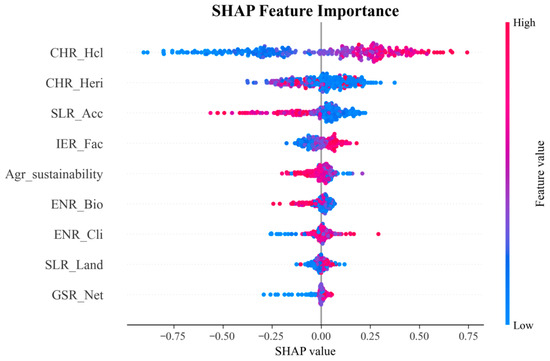
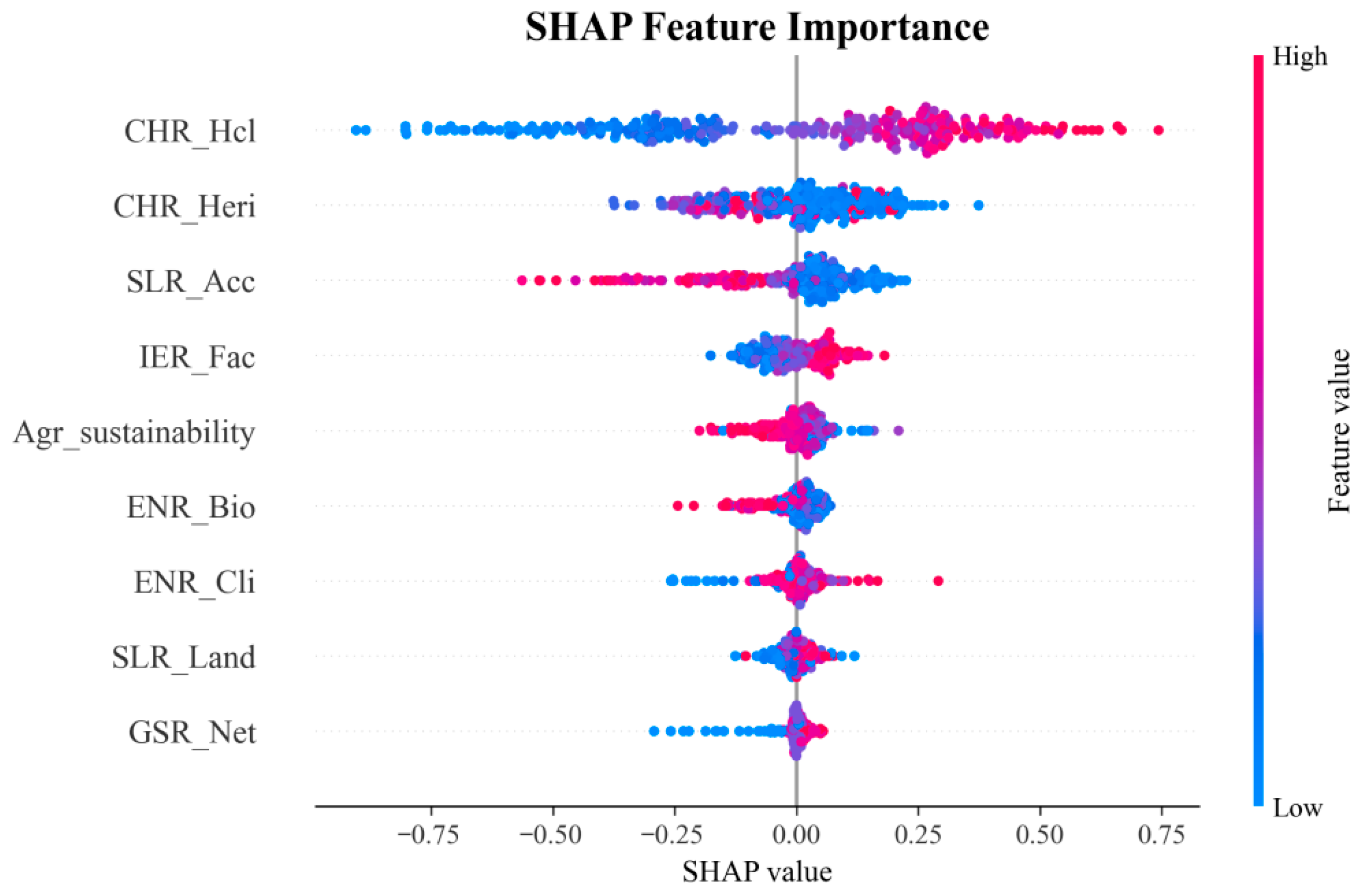
The analysis results of the SHAP model are presented in Figure 5. CHR_Hcl, CHR_Heri, SLR_Acc, IER_Fac, and Agri_sustainability are identified as the top five drivers of resource endowment. In project construction, talent resources play multiple roles, including knowledge spillover, technology diffusion, and organizational coordination. Highly skilled talent not only enhances project management and technical capabilities but also identifies development opportunities, integrates various resources, and promotes innovative practices.
Figure 5.
Importance ranking of SHAP values for various resource endowment factors.
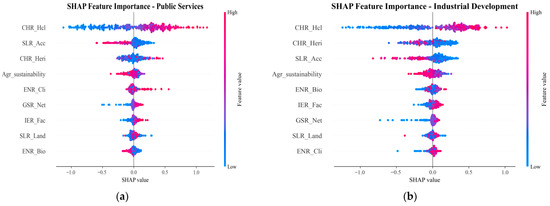
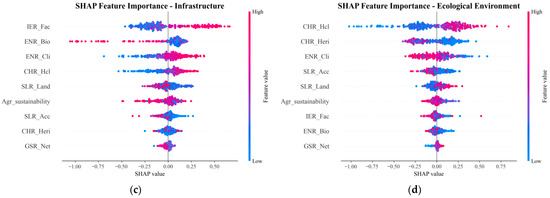
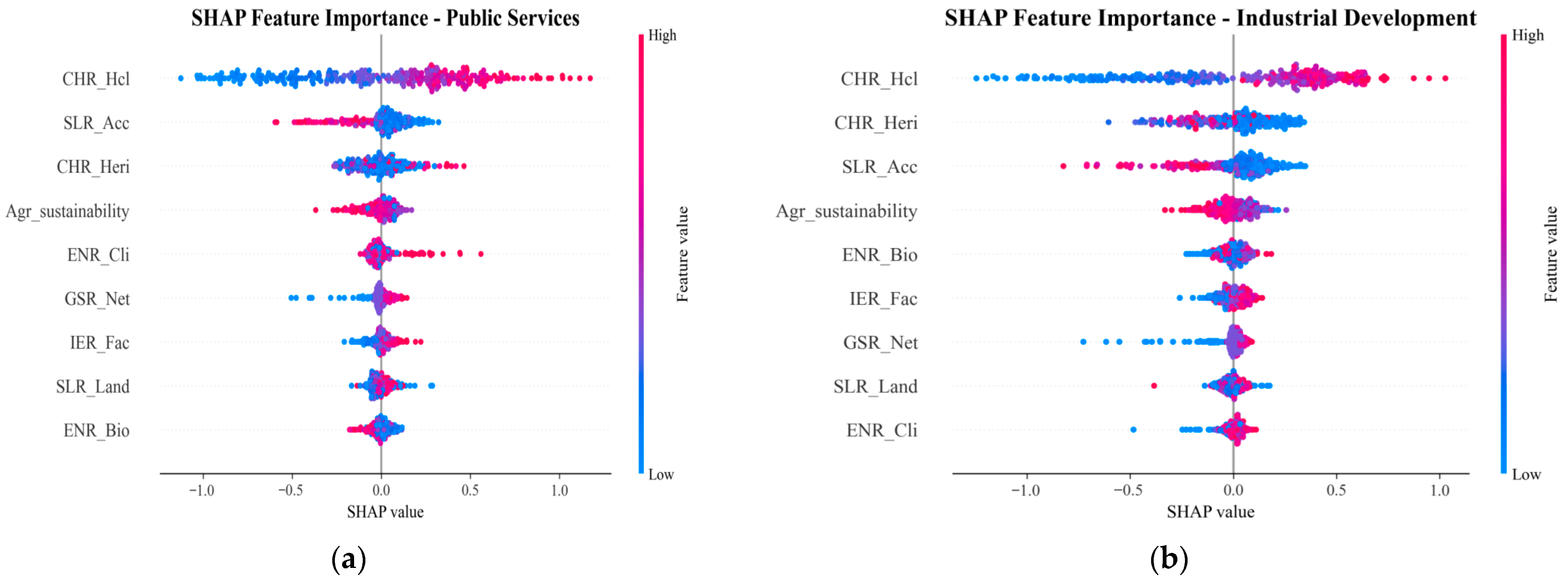
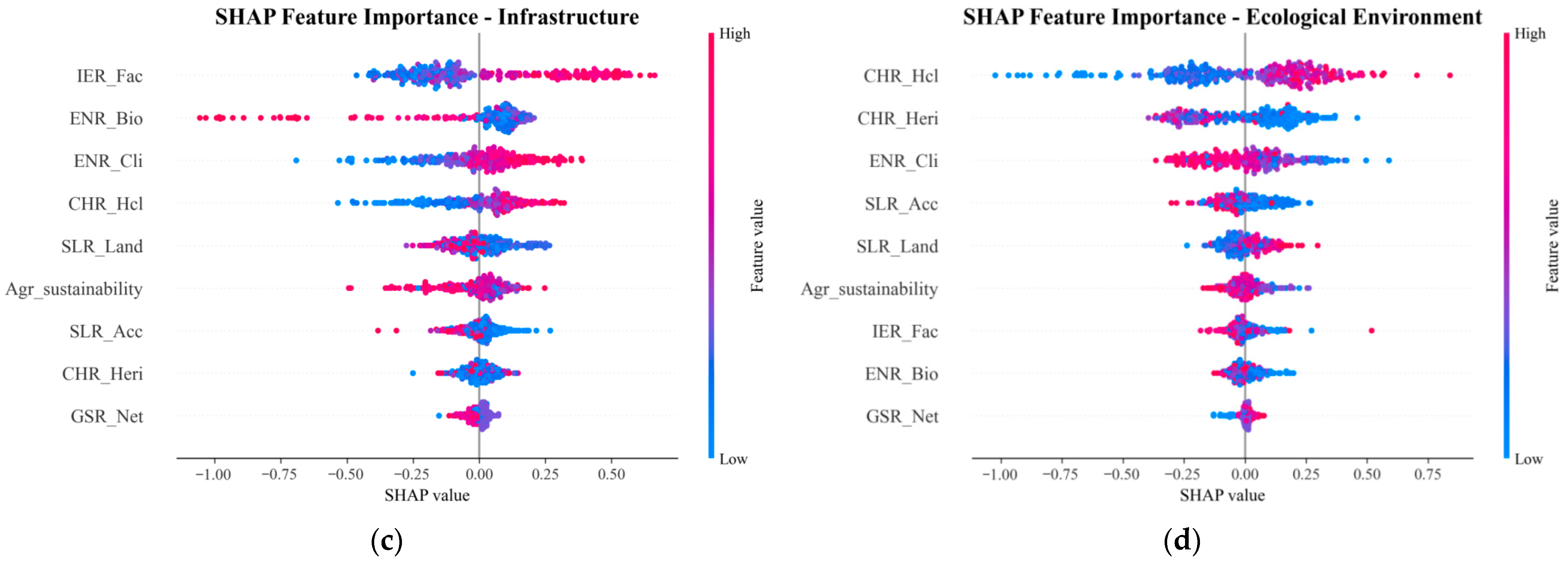
This study also evaluates how the impact of resource endowment varies by project types and analyzes the relative weights of their components. The results are presented in Figure 6. For public service and industrial development projects (a, b), the top three SHAP values are CHR_Hcl, SLR_Acc, and CHR_Heri, which together form a synergistic development mechanism driven by these factors. The SHAP values for infrastructure projects (c) are ranked as IER_Fac, ENR_Bio, and ENR_Cli, highlighting the production facilities constrained by biodiversity and climate. For ecological projects (d), the top three SHAP feature rankings are CHR_Hcl, CHR_Heri, and ENR_Cli, indicating that talent, culture, and climate are the main driving factors. All four types of projects demonstrate a reliance on talent individuals. Whether providing technical support for ecological protection, driving innovation in industrial development, managing infrastructure operations, or delivering professional public services, each requires expert talent and intellectual contributions. Moreover, every project type reflects an organic integration of multiple factors.
Figure 6.
SHAP value importance ranking for different types: (a) type of public service; (b) type of industrial development projects; (c) type of infrastructure projects; (d) type of ecological projects.
6. Conclusions, Discussion and Recommendations
This study aims to systematically investigate the intrinsic mechanisms by which resource endowment affects the sustainable improvement of rural project quality. Through an analysis of resource transformation pathways and endowment adaptation models, it seeks to reconstruct the theoretical framework and practical rationale that underpin project implementation. Utilizing panel data from 30 provinces in China spanning the period from 2015 to 2024, this study innovatively employs the double machine learning model for causal inference and applies the SHAP method to identify key driving factors. The methodological framework integrates advanced techniques to ensure robustness: the double machine learning approach effectively mitigates issues related to model misspecification and endogeneity, while the SHAP method facilitates a visual interpretation of complex resource systems. The findings indicate that resource endowment significantly enhances the sustainable improvement of rural project quality and remains robust after a series of tests addressing both robustness and endogeneity tests. The mechanism test results indicate that resource endowment mainly exerts its promoting effect through government attention, encompassing environmental, digital, and green development. Heterogeneity analysis indicates that differences in geographical location and project type are key factors contributing to the varying impacts of resource endowment. Specifically, resource endowment in the central region more strongly drives the sustainable improvement of rural project quality. Regarding project type, resource endowment exerts a stronger promoting influence on industrial development projects. The study advances beyond the conventional “resource black box” by proposing a theoretical framework centered on endowment adaptation. It provides a quantifiable foundation for decision-making to improve the precise implementation of rural projects through the application of rigorous machine learning techniques. Based on the research findings presented above, we propose the following countermeasures and recommendations:
- Establish a project configuration paradigm driven by resource endowment to optimize the utility of rural construction elements. There is a significant causal relationship between resource endowment and the quality of village projects. Future rural project development should transition from traditional methods to a new endowment-focused paradigm. For example, developing a digital resource map for projects and using artificial intelligence to optimize resource allocation and accurately identify clusters, ensuring full use of local assets. Simultaneously, create a matrix aligning resource endowment with project types to ensure optimal matching and prevent resource mismatches that may affect project quality. This thereby promotes resource endowment to become an important cornerstone and key leverage for the sustainable improvement of rural project quality.
- Enhance the government’s attention allocation mechanism and strengthen its governance capacity. Intermediary verification confirms that government attention is the primary pathway through which resource endowment achieves project substantial empowerment. In project construction, scientific resource allocation and precise deployment are achieved through lifecycle performance management and linking investment intensity to official evaluations, and other policy design. This approach transforms resource endowment into project effectiveness by enhancing government governance transformation process and improving service delivery efficiency through human capital development; For long-term ecological projects, it is essential to innovate the “resource-to-value” realization mechanism and establish a system for accounting and compensating the value of ecological products; For highly standardized infrastructure projects, the “resource-to-technology” adaptation model should be optimized by prioritizing the resolution of technical bottlenecks within existing resource constraints and efficiency, ultimately creating a positive feedback loop of “resource endowment-government governance-project quality improvement.”
- Implement a differentiated quality improvement strategy, optimize the effectiveness of spatial governance, and establish dual-dimensional measures of “zoning” and “classification”. The eastern region, with its strong industrial base, should prioritize industrial development. The western region, rich in ecological resources, requires targeted support for environmental projects. The central regions can adopt a hybrid model to balance public service equalization and infrastructure modernization, achieving Pareto-optimal resource allocation. In terms of the “classification” dimension, for industrial development projects that are highly dependent on resources, the key point is on building a “resource-to-industry chain” system to facilitate the transformation of unique resources into industrial clusters; for governance-dependent public service projects, efforts should concentrate on enhancing the “resource-to-capabilities”.
Although effective progress has been made in this paper, there are still some limitations. In the future, it can be supplemented and improved in the following aspects. First, this study primarily collects data on rural project development from various villages in China, which may not fully reflect differences in the sustainable improvement of rural project quality across different countries and rural environments. Future research could expand the sample size to incorporate more cross-national rural project data. Second, this study examines the unidirectional impact of resource endowment on the sustainable improvement of China’s rural project quality from a resource perspective, but it lacks an exploration of the bidirectional causal relationship between the two. Future research could investigate how the sustainable improvement of rural project quality, in turn, influences the formation of rural resource endowment, thereby revealing the mutually reinforcing dynamic relationship.
Author Contributions
Conceptualization, J.D. and X.Z.; methodology, J.D. and X.Z.; software, J.D. and X.Z.; validation, J.D. and X.Z.; formal analysis, J.D.; investigation, J.D.; resources, J.D. and X.Z.; data curation, J.D. and X.Z.; writing—original draft preparation, J.D.; writing—review and editing, J.D.; visualization, J.D.; supervision, J.D. and X.Z.; project administration, J.D. and X.Z.; funding acquisition, X.Z. All authors have read and agreed to the published version of the manuscript.
Funding
This research received no external funding.
Institutional Review Board Statement
Not applicable.
Informed Consent Statement
Not applicable.
Data Availability Statement
The data of this study are available from the corresponding author upon reasonable request.
Conflicts of Interest
The authors declare no conflicts of interest.
Abbreviations
The following abbreviation is used in this manuscript:
| DML | Dual Machine Learning |
| CNRDS | China National Research Data Service Platform |
Appendix A
Table A1.
All Variables and Symbols.
References
- Chernozhukov, V.; Chetverikov, D.; Demirer, M.; Duflo, E.; Hansen, C.; Newey, W.; Robins, J. Double/Debiased Machine Learning for Treatment and Structural Parameters. Econom. J. 2018, 21, C1–C68. [Google Scholar] [CrossRef] [Scilit]
- Chen, Z.; Chen, Y.S. The Application of Double Machine Learning in Causal Inference in Social Sciences. Zhejiang Soc. Sci. 2025, 6, 72–85+158. [Google Scholar]
- Nachtigall, F.; Wagner, F.; Berrill, P.; Creutzig, F. Built environment and travel: Tackling non-linear residential self-selection with double machine learning. Transp. Res. D Transp. Environ. 2025, 140, 104593. [Google Scholar] [CrossRef] [Scilit]
- Cohrs, K.-H.; Varando, G.; Carvalhais, N.; Reichstein, M.; Camps-Valls, G. Causal hybrid modeling with double machine learning—Applications in carbon flux modeling. Mach. Learn. Sci. Technol. 2024, 5, 035021. [Google Scholar] [CrossRef] [Scilit]
- Presciuttini, A.; Frecassetti, S.; Ferrazzi, M.; Cantini, A.; Portioli-Staudacher, A. Integrating lean management and emerging technologies for enhanced sustainable performance: Empirical evidence based on double machine learning approach. Data Sci. Manag. 2025; in press. [CrossRef] [Scilit]
- Xie, L.L. Three Forces for the “Project Entering the Village” and Its Successful Operation: Taking the Role of Immigrant Villages in M County in the Successful Operation of Agricultural Production Projects as an Example. Gansu Soc. Sci. 2016, 1, 247–251. [Google Scholar]
- Cao, H.L.; Wang, Z.Z. The Generative Mechanism and Governance Path of Projects Being Difficult to Truly “Enter the Village and Household”: A Case Analysis Based on the Biomass Heating Project in L Township. J. China Agric. Univ. 2022, 39, 87–102.1. [Google Scholar]
- Ding, L.; Dai, Q.; He, C.; Zhang, Z.; Shi, Y. How do individual characteristics, cognition, and environmental factors affect the beneficiaries’ satisfaction of photovoltaic poverty alleviation projects?—Empirical evidence of 41 villages in rural China. Energy Sustain. Dev. 2022, 66, 271–286. [Google Scholar] [CrossRef] [Scilit]
- Shyu, C.W. Lessons from the World Bank’s solar home system-based rural electrification projects (2000–2020): Policy implications for meeting Sustainable Development Goal 7 by 2030. Energy Rep. 2023, 9, 2820–2838. [Google Scholar] [CrossRef] [Scilit]
- Kong, R.; Castella, J.C. Farmers’ resource endowment and risk management affect agricultural practices and innovation capacity in the Northwestern uplands of Cambodia. Agric. Syst. 2021, 190, 103067. [Google Scholar] [CrossRef] [Scilit]
- Jia, Y.J.; Gao, J.; Zhang, X.Q. Research on the Promoting Effect of Rural Public Environment and Resource Endowment on Farmers’ Common Prosperity. J. Jiangsu Univ. 2025, 27, 1–15+53. [Google Scholar]
- Li, S.; Xia, T.; Choi, Y.; Lee, H. Is It Feasible for China’s Resource-Based Cities to Achieve Sustainable Development? A Natural Resource Dependence Perspective. Land 2025, 14, 710. [Google Scholar] [CrossRef] [Scilit]
- Wang, C.J.; Xu, Z.; Chen, C.Y. Government’s Attention Allocation to Basic Research in the Process of Science and Technology System Reform—A Discourse Analysis Based on the Central Government Work Reports (1985–2018). Sci. Sci. Manag. S.&T. 2018, 12, 54–66. [Google Scholar]
- Li, H.R.; Deng, G.S. Research on the New Endogenous Development Path of Social Forces Participating in Rural Revitalization—A Comparison Based on Four Cases. Chin. Public Adm. 2021, 5, 15–22. [Google Scholar]
- Bourdieu, P. The forms of capital 1. In Cultural Theory: An Anthology; Routledge: Oxfordshire, UK, 2011; Volume 1, p. 949. [Google Scholar]
- Ma, Y.R.; Tian, B.H. Responsibility Awareness, Resource Endowment, and Farmers’ Participation Level in Social Governance. J. Huazhong Agric. Univ. 2022, 4, 169–180. [Google Scholar]
- Zeng, G.L.; Qin, X.S. The Coupling between Hunan’s Rural Industry Revitalization Models and Rural Resources. Huxiang Forum 2022, 35, 94–106. [Google Scholar]
- Zhuang, G.Y.; Wang, S.B.; Dou, X.M. Rethinking the Realization of Ecological Product Value from the Perspective of Green Common Prosperity. Chin. J. Soft Sci. 2023, 9, 53–63. [Google Scholar]
- Zhang, B.J.; Yang, J.W.; Hu, X.Y.; Tian, Y.N.; Li, N.N. Research on the Impact Mechanism of Corporate ESG Performance on New Quality Productive Forces: An Empirical Analysis Based on Resource-Based Theory. Sci. Decis. 2025, 04, 104–123. [Google Scholar]
- Aladejare, S.A.; Dimnwobi, S.K. Can natural resource endowment and human capital development drive clean cooking transition in sub-Saharan African countries? Energy Policy 2025, 207, 114835. [Google Scholar] [CrossRef] [Scilit]
- Zheng, F.; Niu, Y. Environmental decentralization, resource endowment and urban industrial transformation and upgrading: A comparison of resource-based and non-resource-based cities in China. Sustainability 2023, 15, 10475. [Google Scholar] [CrossRef] [Scilit]
- Zhang, Y.L.; Lei, S.P.; Le, L. The Government’s Role and Its Realization Pathways in Building a Skilled Society: An Analytical Framework Based on New Public Management Theory. Vocat. Tech. Educ. 2022, 43, 35–40. [Google Scholar]
- Yang, Y.D.; Cheng, H.W. Political Resources and Corporate Targeted Poverty Alleviation: Capital Considerations under Public Welfare Projects. Mod. Financ. Econ. 2020, 40, 64–82. [Google Scholar]
- Wang, L.Q.; Jiang, Z.L.; Na, C.H. Government Attention and the “More Words, Fewer Deeds” in Enterprise Digital Transformation. Financ. Trade Res. 2024, 35, 97–110. [Google Scholar]
- Man, H.; Sun, Y.; Wang, X.; Qin, Z.; Chen, S.; Chen, J. Effect of government environmental attention on green transformation: Empirical analysis from a spatiotemporal perspective in China. J. Clean. Prod. 2024, 473, 143595. [Google Scholar] [CrossRef] [Scilit]
- Gil-Garcia, J.R.; Dawes, S.S.; Pardo, T.A. Digital government and public management research: Finding the crossroads. Public Manag. Rev. 2018, 20, 633–646. [Google Scholar] [CrossRef] [Scilit]
- Ghosh, R.; Barral, S.; Guillet, F. Historical foundations of green developmental policies: Divergent trajectories in United States and France. Regul. Gov. 2025, 19, 370–382. [Google Scholar] [CrossRef] [Scilit]
- Wang, H.; Deng, W.; Zhang, Z.; Li, M. Does Government’s Environmental Attention Improve Urban Energy Efficiency? Int. Rev. Financ. Anal. 2024, 91, 103046. [Google Scholar] [CrossRef] [Scilit]
- Zhang, H.Z.; Sun, R.F. Research on the Impact of Government Environmental Attention on Regional Low-Carbon Development—Also on the Moderating Role of Central Environmental Interview. Macroeconomics 2023, 12, 69–84. [Google Scholar]
- Zhang, J.; Kang, L.; Li, H.; Ballesteros-Pérez, P.; Skitmore, M.; Zuo, J. The impact of environmental regulations on urban Green innovation efficiency: The case of Xi’an. Sustain. Cities Soc. 2020, 57, 102123. [Google Scholar] [CrossRef] [Scilit]
- Paul, S.; Das, S. Investigating information dissemination and citizen engagement through government social media during the COVID-19 crisis. Online Inf. Rev. 2023, 47, 316–332. [Google Scholar] [CrossRef] [Scilit]
- Iyad, D.E. Government for sustainable development: Evidence from MENA countries. J. Knowl. Econ. 2022, 13, 2070–2099. [Google Scholar]
- Li, E.; Chen, Q.; Zhang, X.; Zhang, C. Digital government development, local governments’ attention distribution and enterprise total factor productivity: Evidence from China. Sustainability 2023, 15, 2472. [Google Scholar] [CrossRef] [Scilit]
- Megawati, S.; Alfarizi, M.; Syamsul, M.R. Key Advantages of the Green Government Initiative in Achieving Local Public Service Performance and Sustainable Development. Int. J. Sustain. Dev. Plan. 2024, 19, 3715–3725. [Google Scholar] [CrossRef] [Scilit]
- Zhang, H.Z.; Sun, R.F. How Does Government Environmental Attention Affect Regional Green Technology Innovation—A Study Based on the Perspective of Government Governance. Sci. Tech. Prog. Policy 2023, 40, 12–22. [Google Scholar]
- Wang, H.N.; Ma, L. How Does Government Attention Affect Environmental Governance Effectiveness? An Empirical Test of the Mediating Role of Environmental Regulation and the Moderating Role of Promotion Incentives. Comp. Econ. Soc. Syst. 2024, 2, 119–129. [Google Scholar]
- Flores, A.; Tito-Chura, H.; Cuentas-Toledo, O.; Yana-Mamani, V.; Centty-Villafuerte, D. PM2.5 Time Series Imputation with Moving Averages, Smoothing, and Linear Interpolation. Computers 2024, 13, 312. [Google Scholar] [CrossRef] [Scilit]
- Tian, W.H.; Pang, Q.M. A Study on the Spatio-Temporal Coupling of Rural Revitalization and New Professional Farmer Cultivation in Western China. J. Manag. 2023, 36, 92–111. [Google Scholar]
- Li, C.; He, W.; Cao, E. Impact of green data center pilots on the digital economy development: An empirical study based on dual machine learning methods. Comput. Ind. Eng. 2025, 201, 110914. [Google Scholar] [CrossRef] [Scilit]
- Kriswardhana, W.; Toaza, B.; Esztergár-Kiss, D.; Duleba, S. Analytic hierarchy process in transportation decision-making: A two-staged review on the themes and trends of two decades. Expert Syst. Appl. 2025, 261, 125491. [Google Scholar] [CrossRef] [Scilit]
- Zhang, Y. The Driving Effect and Mechanism of Government Environmental Attention on Enterprise Green Transformation. Soc. Sci. Beijing 2025, 6, 49–62. [Google Scholar]
- Liu, M.T.; Fang, X.B.; Li, G.Q. Government Digital Attention and Enterprise Digital Innovation: Evidence from Government Work Report Text Analysis. China Econ. Q. 2023, 3, 111–142. [Google Scholar]
- Liu, J.; Kang, X.; Liu, X.H. The Impact of Local Government Green Development Attention on Green Total Factor Productivity. J. Syst. Manag. 2025, 34, 766–779. [Google Scholar]
- Kabata, D.; Shintani, M. Variable selection in double/debiased machine learning for causal inference: An outcome-adaptive approach. Commun. Stat.-Simul. Comput. 2023, 52, 5880–5893. [Google Scholar] [CrossRef] [Scilit]
- Sun, L.; Zhang, J. Does the Integration of Digital and Real Economies Enhance Urban Export Quality?—Causal Inference Based on Double Machine Learning. Financ. Sci. 2025, 5, 94–108. [Google Scholar]
- Liu, C.; Li, G.C.; Gao, Y. Patient Capital Expansion and New Quality Productive Forces Development: Causal Inference Based on Double Machine Learning. Mod. Financ. Econ. (J. Tianjin Univ. Financ. Econ.) 2025, 9, 3–24. [Google Scholar]
- Jiang, T. Mediating Effects and Moderating Effects in Empirical Research on Causal Inference. China Ind. Econ. 2022, 5, 100–120. [Google Scholar]
- Huang, X. The Impact of Digital Inclusive Finance on Agricultural Industry Chain Resilience—Causal Inference Based on Double Machine Learning. Commer. Res. 2025, 46–55. [Google Scholar] [CrossRef]
- Liu, J.; Fang, Y.; Ma, Y. The Driving Impact of Digital Innovation Ecosystems on Enterprise Digital Transformation: Based on an Interpretable Machine Learning Mode. Sustainability 2025, 17, 5898. [Google Scholar] [CrossRef] [Scilit]
- Heilemann, J.; Klassert, C.; Samaniego, L.; Thober, S.; Marx, A.; Boeing, F.; Klauer, B.; Gawel, E. Projecting impacts of extreme weather events on crop yields using LASSO regression. Weather Clim. Extrem. 2024, 46, 100738. [Google Scholar] [CrossRef] [Scilit]
- Han, X.-F.; Zheng, Z.-J.; Xu, J.; Dong, M.-F. Research on the Mechanism and Effect of Green Digital Infrastructure Driving Urban Green Innovation. Chin. J. Manag. 2025, 22, 95–105. [Google Scholar]
- Zhang, T.; Li, J.C. Network Infrastructure, Inclusive Green Growth, and Regional Disparities: Causal Inference Based on Double Machine Learning. J. Quant. Tech. Econ. 2023, 40, 113–135. [Google Scholar]
- Li, W.Z.; Zhai, W.K.; Liu, W.Z. How Can the “Fang Guan Fu” Reform Optimize the Business Environment?—From the Perspective of Governance Structure. J. Manag. World 2023, 39, 104–124. [Google Scholar]
- Fan, X.; Xiao, H.B. Can Science and Technology Innovation Pilots Become Innovation Growth Poles?—Empirical Evidence from 15 Pilot Policies. Stud. Sci. Sci. 2024, 42, 837–849. [Google Scholar]
- Shapley, L.S. A Value for n-Person Games. In Contributions to the Theory of Games II; Kuhn, H.W., Ed.; Princeton University Press: Princeton, NJ, USA, 1953; pp. 307–317. [Google Scholar]
- Lundberg, S.M.; Lee, S.I. A unified approach to interpreting model predictions. arXiv 2017, arXiv:1705.07874. [Google Scholar] [CrossRef] [Scilit]
- Yi, M.; Yao, Y.J.; Hu, M. An Interpretable Model of Public Value Consensus on Government New Media Integrating XGBoost and SHAP—Taking the Top Ten Municipal Government Accounts on “Jinri Toutiao” as Examples. Lib. Inf. Serv. 2022, 66, 36–47. [Google Scholar]

Disclaimer/Publisher’s Note: The statements, opinions and data contained in all publications are solely those of the individual author(s) and contributor(s) and not of MDPI and/or the editor(s). MDPI and/or the editor(s) disclaim responsibility for any injury to people or property resulting from any ideas, methods, instructions or products referred to in the content. |
© 2025 by the authors. Licensee MDPI, Basel, Switzerland. This article is an open access article distributed under the terms and conditions of the Creative Commons Attribution (CC BY) license.