


Abstract
Recreational activities are essential in the field of tourism as they improve the overall travel experience and offer chances for relaxation, adventure, cultural immersion, and personal development. However, the activities certainly generate an impact. This review-based study identified and synthesized 21 impact-based research papers in indexed journals from 2004 to 2022. The selected papers underwent four steps of an evidence-based systematic review. Content analysis was used to categorize impacts by theme. Additionally, bibliometric analysis was used to identify research trends. This study found that recreational activities affect the biotic environment of ecology by introducing invasive species, changing behavior and habitat, and reducing population density. The abiotic environment is also affected by soil compaction, degradation, littering, and water pollution. It was also found that management interventions are highly recommended for mitigating negative impacts. The major contribution of this study is that researchers, policymakers, and practitioners can gain valuable insights from the results as it offers a thorough synthesis of the impact of recreational activities, which may be put into immediate action to mitigate negative impacts.
1. Introduction
Ecology or ecological environment comprises multiple components. These include visible and invisible components, and organisms that either live on land or in aquatic environments. Living organisms are referred to as biotic components, while non-living things that are highly influential are referred to as abiotic components [1]. The biotic components comprise animals, plants, and insects, whereas abiotic components comprise soil, water, rainfall, moisture, nutrients, energy, etc. [2,3]. Regardless of the types and origins of components of ecology, all the elements are closely connected. The impact on one component consequently impacts others as all are associated with a food web [4]. Thus, understanding ecology is complex, critical, and crucial. As the top predator, humans play a key role in the ecological environment. Human anthropogenic activities, both directly and indirectly, impact the ecosystem. Thus, it is the ethical responsibility of human beings to ensure the sustainability of the ecosystem or ecological components.
Human beings interact and use the components of the ecosystem in their daily life. One of the major forms of using and interacting with ecological components is recreation. A person who performs recreational activities is called a recreationist [5]. The beauty, nature, characteristics, and esthetic value of ecological components (especially biotic components) attract recreationists to conduct their recreational activities in a specific destination. Recreational activities refer to voluntary, leisure-time engagements for relaxation, enjoyment, or personal enrichment [6]. These activities often utilize natural or designed environments, encompassing a broad spectrum. While some studies in the literature use the terms recreation activities and recreational activities interchangeably, this paper adopts the term “recreational activities” consistently to maintain clarity and precision. There are different forms of recreational activities, such as hiking, trekking, horse riding, rafting, snorkeling, scuba diving, swimming, wildlife viewing, hunting (permitted), camping, and so on. These activities satisfy the psychological needs of recreationists and recharge and motivate them with new enthusiasm for work. While recreation serves as an overarching term encompassing all leisure pursuits, recreational activities are more precise and descriptive when discussing specific forms of engagement or individual actions. It is particularly useful in academic contexts for emphasizing the variety and specificity of leisure behaviors [7,8]. After finishing the recreational activities, the recreationist leaves the destination, but their footprint remains. The footprint of recreational activities can either be detrimental or beneficial for the ecological environment area and is a subject that recreationists rarely consider. Most recreational activities have detrimental effects on the ecosystem [9]. The negative effects emerge from uncontrolled activities [10,11,12] and affect both the land and sea. Several studies have been conducted to determine the impact of recreational activities. The studies are diverse and cover the impact of different types of recreational activities. Researchers have researched the impacts of recreational activities on mammals such as bobcats and black bears, as well as analyzed the impact of recreational bathing on rivers [11,13,14]. On the other hand, the impact of beach recreational activities is also investigated [15]. Some researchers also examined the overall recreation impact, such as the effect of recreation on soil, vegetation, water, and wild game in national parks [10], such as the favorable and unfavorable effects of tourism in protected areas [16]. A few comparative studies were also conducted. For instance, the relative impacts of formal and informal recreational trails [17] and the differences in exotic plants cover a local and a state-managed protected area in terms of recreation use and disturbance [12]. From the studies, it can be proven that different recreational activities have their respective significant negative effects on ecology. Therefore, it can be said that the studies on the impact of recreational activities are diverse and not as rare. This study attempts to accumulate and synthesize all impact-based studies so that it can be possible to analyze all the diversified impacts of diversified recreational activities immediately.
2. Objectives of Study
- i.
- To analyze bibliometric data to understand the trends of recreation impact research.
- ii.
- To synthesize and determine the impacts of recreational activities on ecology.
- iii.
- To synthesize and propose guidelines and strategies to mitigate the negative impact and for future research.
3. Methodology
This review-based study is followed by two different systematic literature review (SLR) methods. One study is the PRISMA technical analysis that includes a thematic analysis of 21 articles from 2000 to 2022 [18,19,20,21]. Moreover, a bibliometric analysis of 103 articles, papers, books, etc., from 1968 to 2022 was also conducted to explore the research trends on recreation impacts. Given the broad scope of the review (recreation impacts) and the large dataset (103 sources spanning over 50 years), a bibliometric analysis is indeed an appropriate approach [22]. This aligns with the recommendations of several authors for using bibliometric methods when dealing with extensive literature that would be impractical to review manually [22,23,24]. Four steps of the evidence-based systematic review were aligned with PRISMA analysis and also suggested by Mengist et al. (2020) for conducting research in environmental science were applied to conduct this study which are discussed below [25].
3.1. Literature Search
This study aims to synthesize and identify the impacts of recreational activities on ecological environments based on reviewing the existing relevant literature. To meet the objective, this study accumulated literature from Google Scholar, Scopus, and ScienceDirect databases. In the process of searching for literature, only the three search expressions were utilized- the impact of recreation, the impact of recreational activities, and the impact of nature-based recreation were used. Initially, one hundred three (103) pieces of literature were collected.
3.2. Literature Assessment
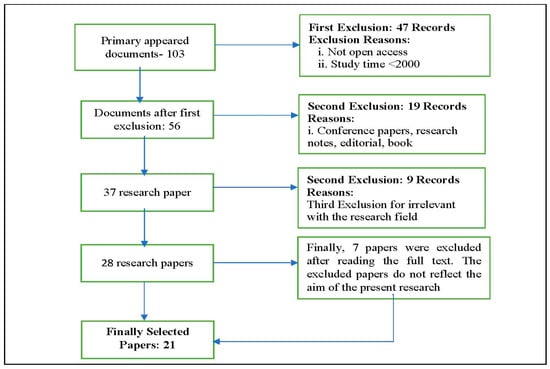
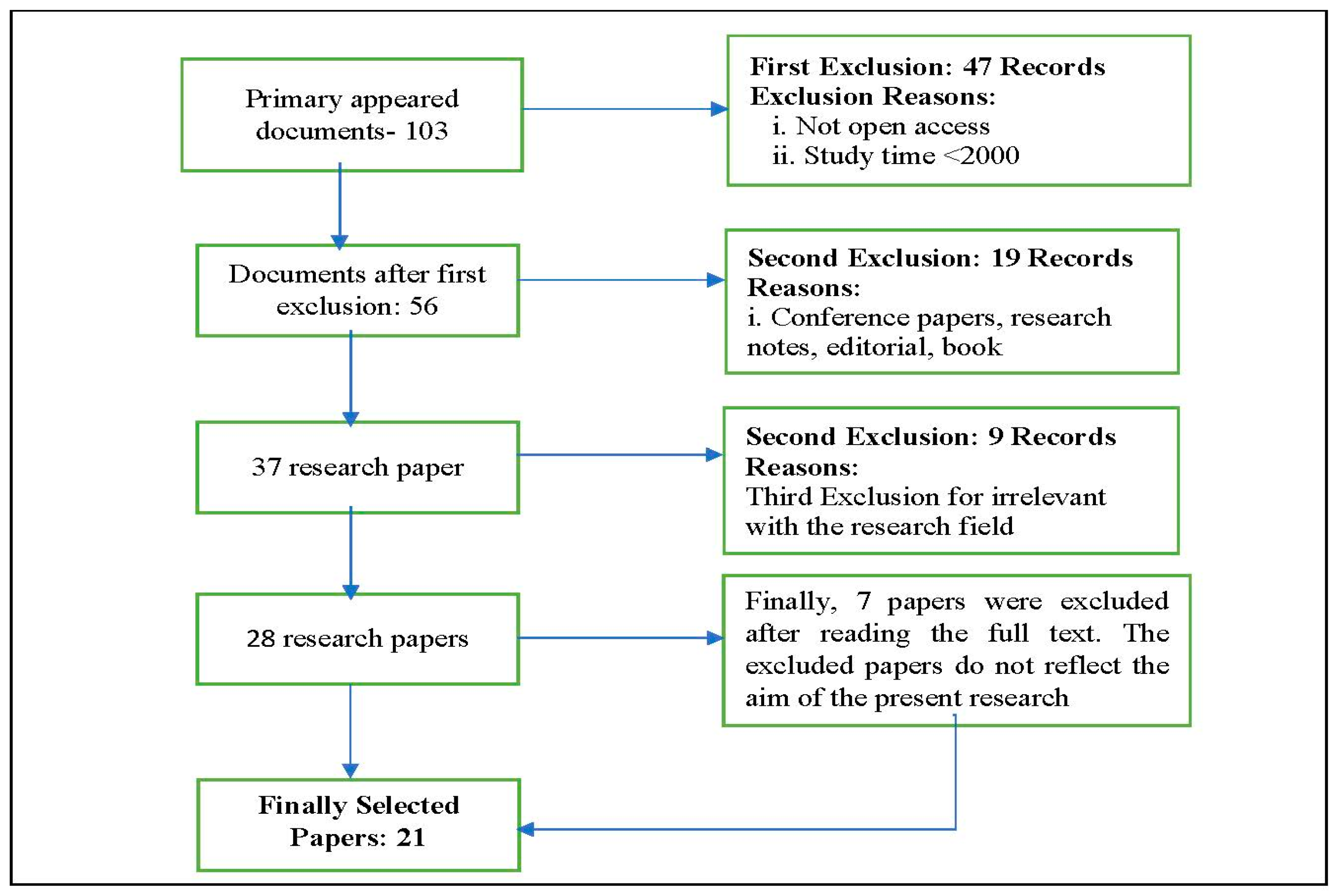
In the second stage, these 103 documents were assessed. In assessing the literature, this study followed the PRISMA (Preferred Reporting Items for Systematic Reviews and Meta-Analysis) technique, which was recommended and applied by several researchers [18,19,20,21]. In the PRISMA technique, the literature is assessed considering the year of publications, access to the document, publication types, and consistency of the study with the objective proposed study. This study only considered research papers published during the year 2000–2022. Following the technique, this study finally selected 21 research papers for final reporting and review. The PRISMA steps are mentioned in Figure 1.
Figure 1.
PRISMA flow chart of the study.
3.3. Literature Synthesis
Synthesis is the core of the literature review. In this stage, the data are extracted and categorized according to their nature [25]. Researchers usually follow a template or matrix for synthesizing the data. This study also developed a matrix for synthesizing literature. The data are extracted from the 21 literature studies and presented according to their category in a matrix of Table 1. Finally, the impact of recreation is also highlighted and discussed in the study.
Table 1.
Matrix of 21 synthesized literature studies.
3.4. Analysis and Reporting
In the last stage, this study analyzed 21 articles to identify the impact of recreation. This study followed the content analysis technique for analyzing the articles [38,39,40,41,42]. Moreover, thematic analysis was conducted to develop the themes of different impacts of recreation [43,44,45,46,47]. The analyses were carried out narratively and reported descriptively (Section 5). Moreover, this study also collected bibliometric data of relevant studies from the Scopus database. The data were analyzed with Excel version 2016 and VOS viewer version 1.6.20 software and reported with descriptive statistics (Section 4). Bibliometrics and other analyses are mentioned in the Section 4 and Section 5.
4. Results
4.1. Study Regions
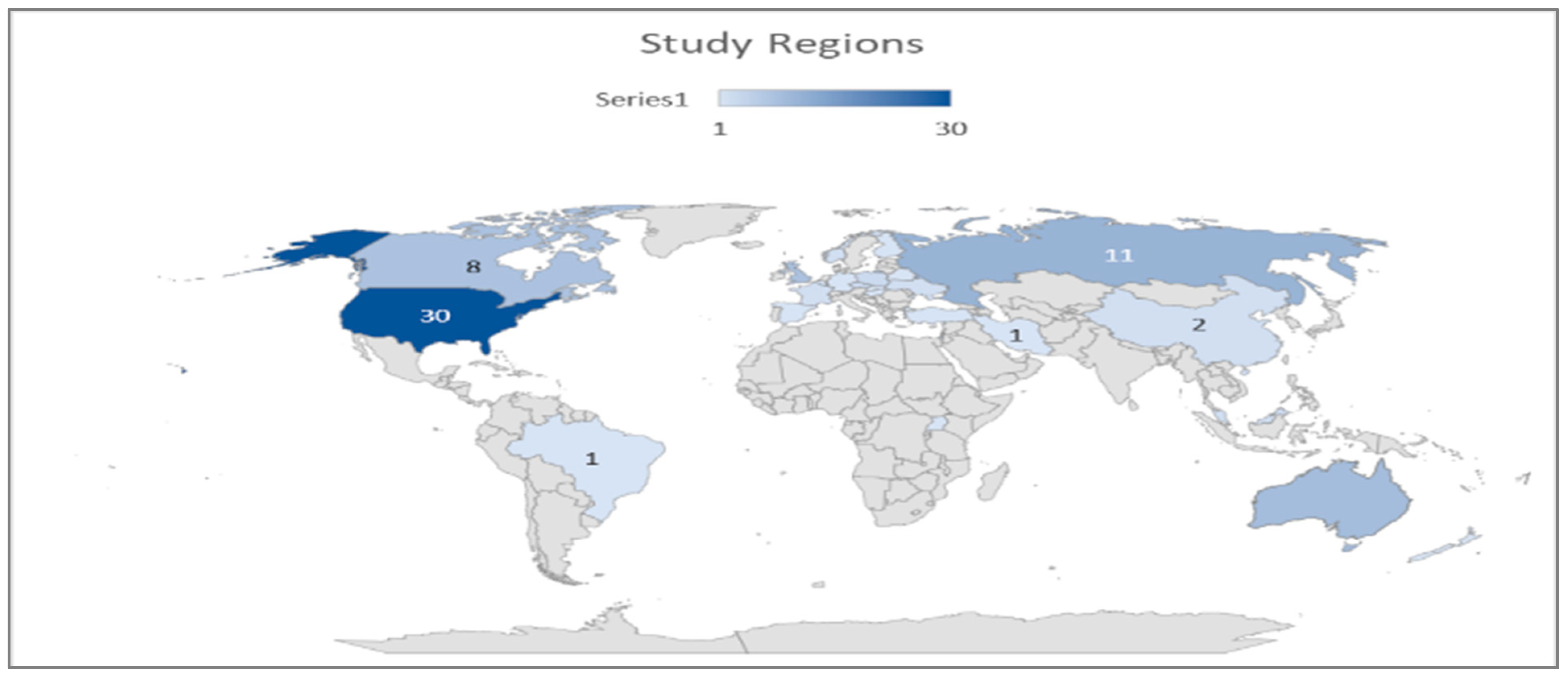
Researchers, scientists, and environmentalists all over the world are concerned about the impact of recreation on ecology. Thus, numerous studies have been conducted by researchers all over the world. Figure 2 indicates that the United States dominates in this field of study. Researchers from the USA contributed 30 (29%) studies in this field. The second country is the Russian Federation, which contributed 11 (11%) studies. The next mentionable contribution was made by Australia at 9%, Canada at 8%, and the United Kingdom at 8%. From a developmental perspective, it is found that developed countries have the highest (65%) contribution to the field study of the impact of recreation on ecology, whereas the rest of the studies were conducted in developing or underdeveloped countries.
Figure 2.
Country-wise publications. Data source: Scopus.
4.2. Authors’ Affiliation
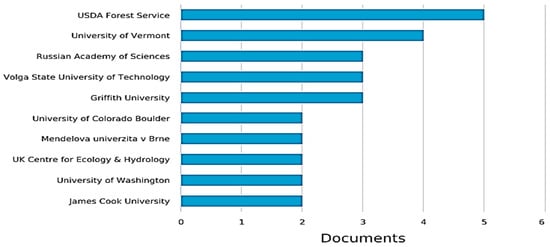
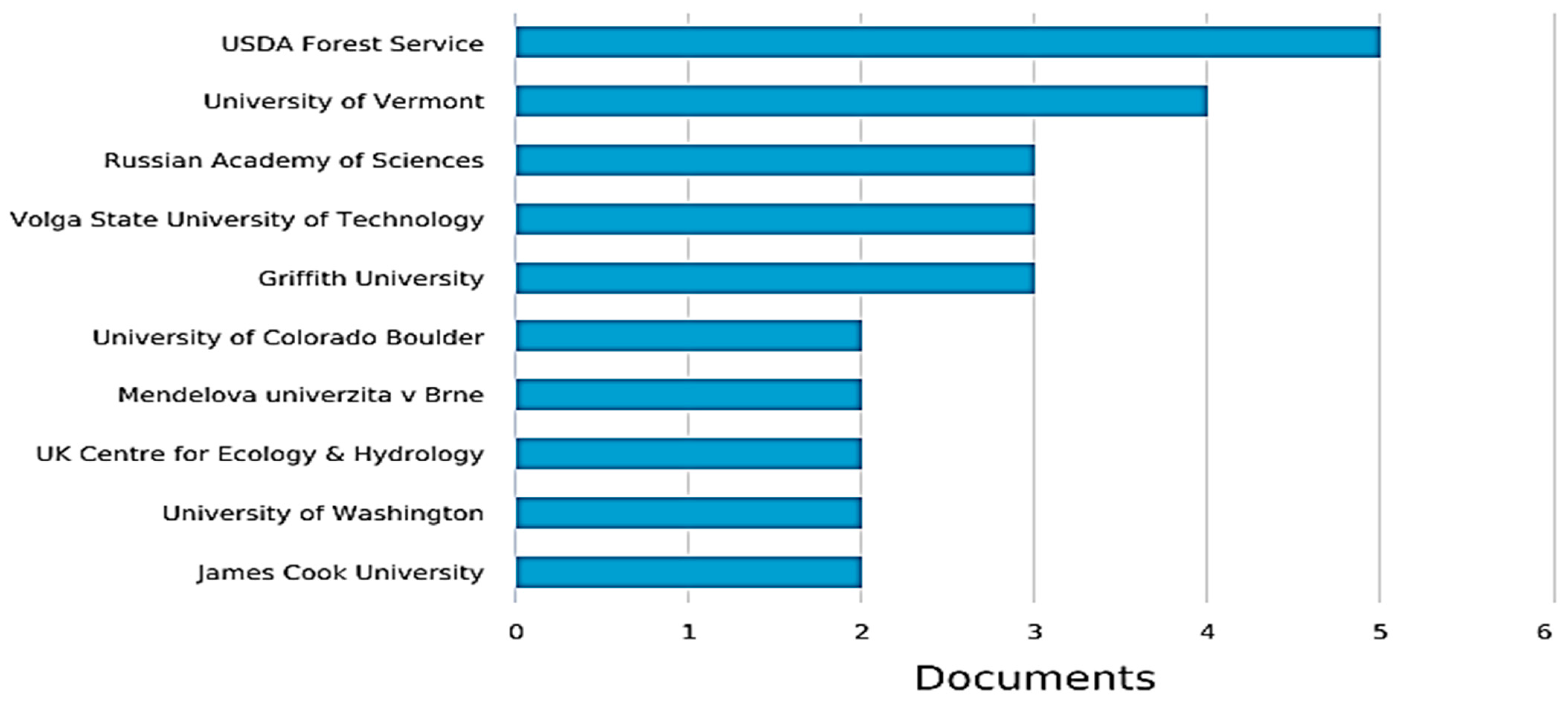
Figure 3 highlights that most authors studying the impacts of recreation are affiliated with institutions in the USA and Russia. Notably, the USDA Forest Service leads with 11 publications, while authors from other American institutions, such as the University of Vermont and the University of Colorado Boulder, have also made significant contributions. Russian institutions, including the Russian Academy of Sciences and the Volga State University of Technology, collectively contributed six articles. Additionally, researchers from Griffith University and James Cook University in Australia, as well as the UK Centre for Ecology & Hydrology, made noteworthy contributions. Smaller contributions came from Mendelova univerzita v Brně (Czech Republic). This dominance by USA and Russian institutions reflects their strong focus on environmental research, with fewer contributions from other regions.
Figure 3.
Publications by authors affiliated in different countries. Source: Scopus.
4.3. Study Types
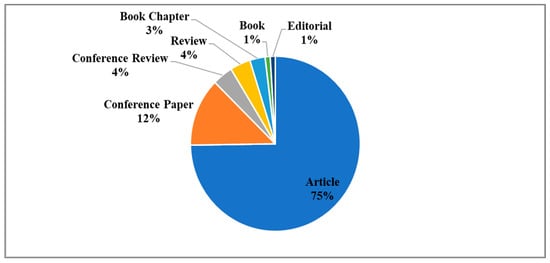
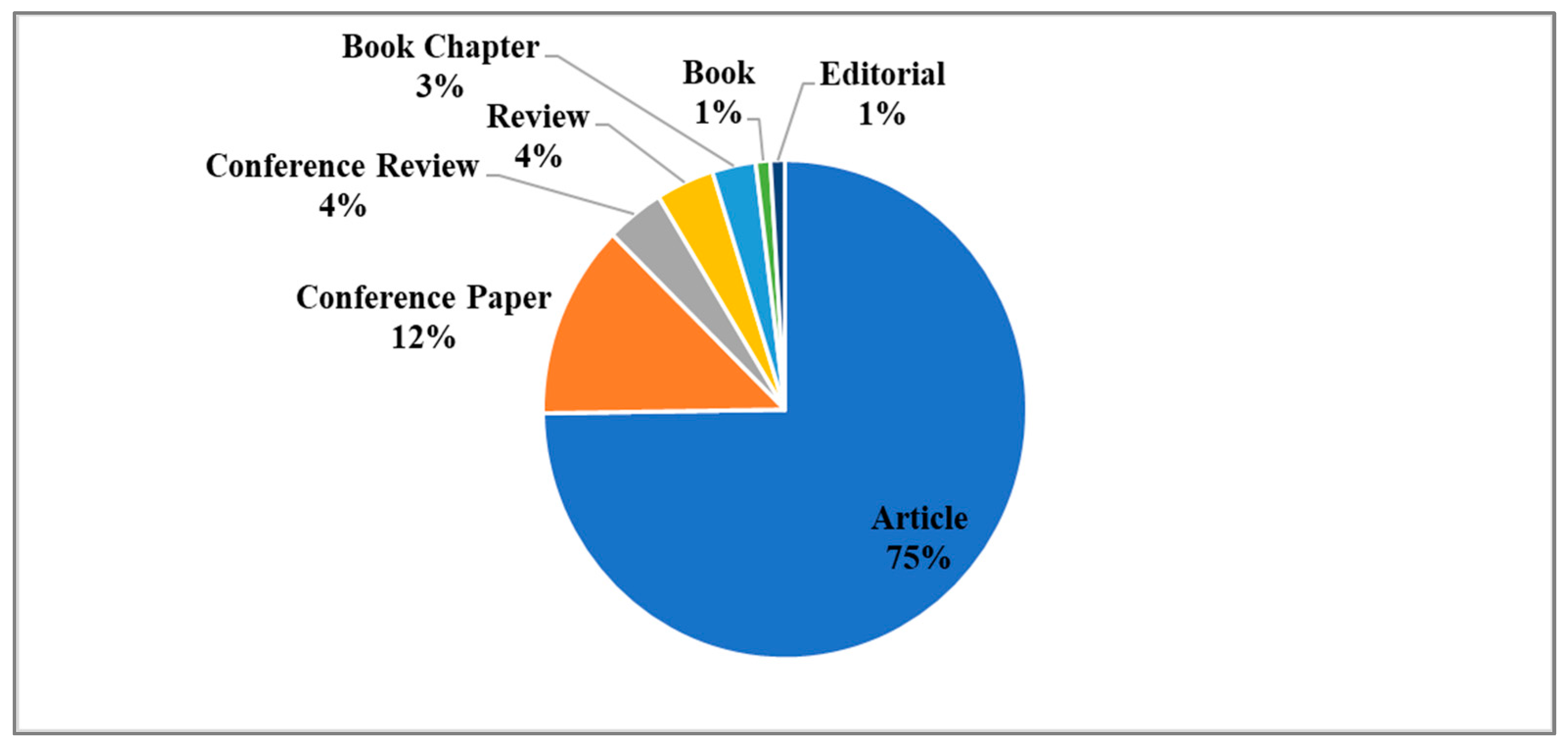
Figure 4 highlights the type of publications in the field of impact of recreation. It was found that most of the publications are research articles (75%). The second mentionable publications are conference papers (12%). The rest of the publication types include conference reviews and reviews, which comprise 4%, respectively; book chapters, 3%; books, 1%; and editorial, 1%.
Figure 4.
Types of study on the impact of recreation. Data source: Scopus.
4.4. Area of Study
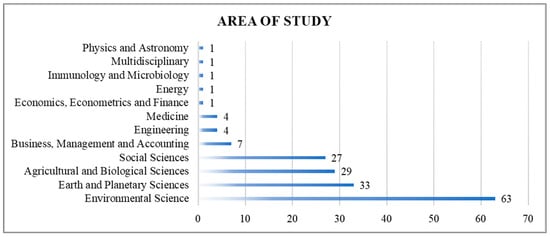
Recreation has a huge impact on the environment and ecology. Thus, researchers also focused on these areas. From Figure 5, it is found that 63 studies were conducted in the area of environmental science, 33 studies were conducted in the area of earth and planetary science, and 29 were conducted in agricultural and biological science. From an anthropocentric perspective, humans greatly influence the ecology and the environment. It is noticed that recreation impact studies (27) are also conducted in the field of social sciences. The rest of the studies covered the areas of business, management, accounting, engineering, medicine, and energy to some extent.
Figure 5.
Focused area of study. Data source: Scopus.
4.5. Co-Occurrence of Keywords
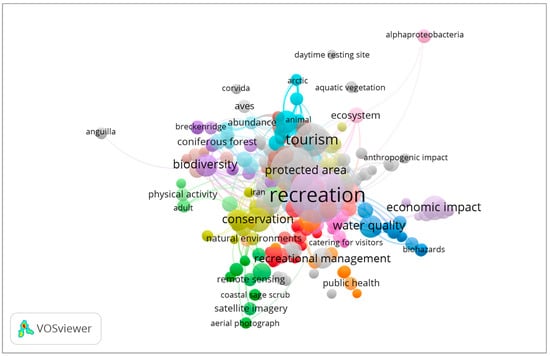
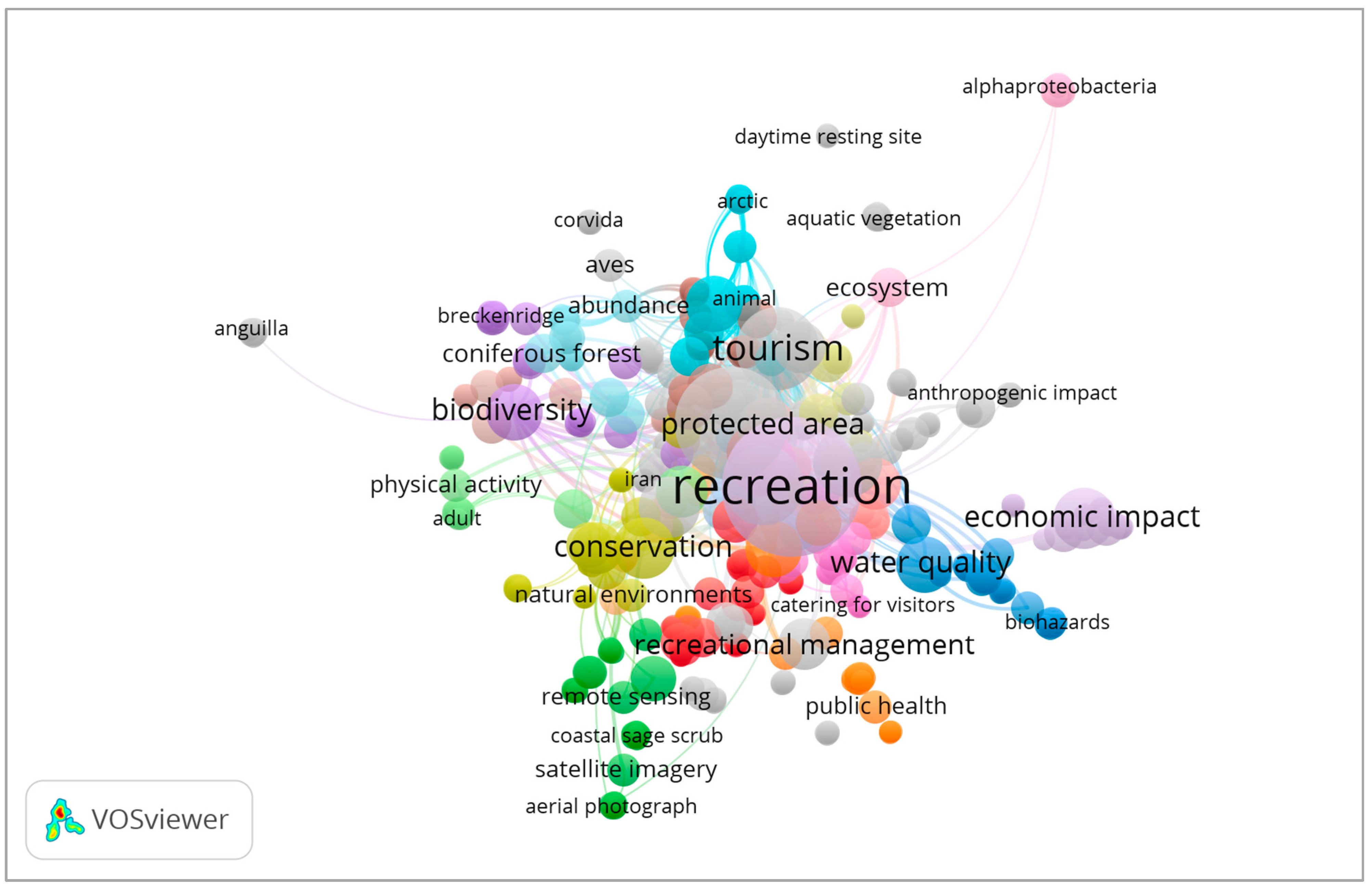
Figure 6 shows the keywords mentioned in different studies of recreation impact. The larger the size of the colored point, the more the occurrence of the words. It is highlighted that a single keyword, “recreation”, is mentioned in most of the studies. This word has also occurred in several other types of research with similar meanings, such as “recreational activity” and “recreation impact”. The other keywords that are dominant in the studies are tourism, protected area, biodiversity, recreational management, water or water quality/pollution, forestry, coastal zones, non-human, anthropogenic effect, human disturbance, and ecosystem.
Figure 6.
Network of keywords co-occurrence in the relevant studies of recreation impact. Source: Generated by VOS viewer based on bibliometric data. Data source: Scopus.
4.6. Term Co-Occurrence
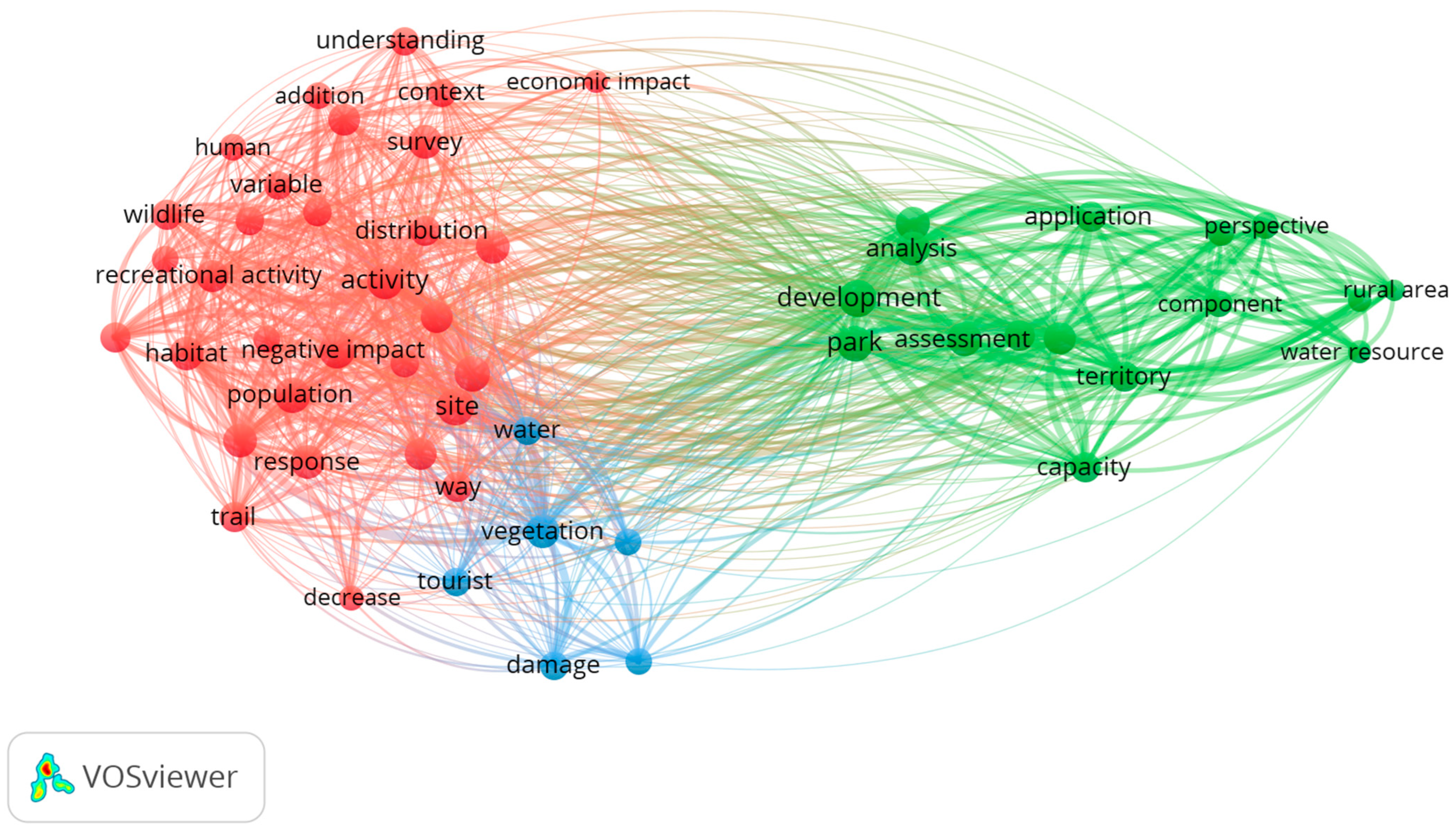
Figure 7 depicts the words mentioned in the title and abstract of selected publications. According to the figure, the most dominant words that are related to recreation impacts are outdoor recreation, activity, disturbance, vegetation, habitat, species, water, trail, wildlife, outdoor recreation, park, capacity, and assessment. These words are mostly used in the studies on recreation impact.
Figure 7.
Co-occurrence of words in the abstract and title of the selected studies. Source: generated by VOS viewer based on bibliometric data. Data source: Scopus.
5. Discussion and Future Research Direction
5.1. Geographic Focus of the Studies
Most recreation impact studies are conducted in developed nations like the USA, Russia, Australia, and the UK, with authors from these countries dominating the field. This suggests greater concern for ecological impacts in developed nations. Fewer studies come from developing or underdeveloped countries, which often prioritize recreation’s economic benefits over environmental concerns [48]. This gap is concerning, as these areas may experience more negative effects from recreational activities. The scarcity of research from developing nations may also stem from financial constraints, particularly high Article Processing Charges (APC) for publication in top journals. To address this imbalance, more impact studies should be conducted in recreation-dependent economies, and publication support should be extended to researchers in developing countries. This would provide a more comprehensive global understanding of recreation’s ecological impacts.
5.2. Focused Area and Field of the Studies
This study analyzed the literature on the impacts of various recreational activities in different natural settings. The effects of recreation encompass diverse areas, from protected lands to aquatic environments. Some researchers investigated specific recreation forms, while others assessed overall impacts. Researchers found that recreational activities create biotic and abiotic disturbances in protected areas, including the presence of exotic plants [12]. Another author evaluated the effects of recreation on soil, vegetation, water, and wildlife in national parks, noting the high negative impacts of activities like hiking and game drives [10]. Several studies focused on wildlife impacts also assessed the effects on species such as bobcats, black bears, and birds [11,15,26,31]. They found that hiking and motorized vehicles had significant negative impacts on wildlife habitats. Water-based recreational activities were also studied where researchers found negative impacts of boating, shore use, angling, swimming, and bathing on aquatic species [14,26]. Notably, many researchers (Ballantyne and Pickering, 2015; Cole, 2004; Pickering et al., 2010; Wang and Watanabe, 2019; Wolf and Croft, 2014) focused on trails, vegetation, and soil, suggesting these areas experience more severe effects from recreation [17,29,30,32,35].
The study identified gaps in current research, including recreation impacts outside protected areas, effects on personnel and local communities, factors influencing recreationists’ behavior, and emerging recreational activities. Researchers emphasized the need to study new recreational activities as technology and society advance [48]. Additionally, the impacts of activities like bungee jumping, snorkeling, and scuba diving are areas that require further investigation [49]. Future research could address these gaps to provide a more comprehensive understanding of recreation impacts across various environments and stakeholders.
5.3. Impact Analysis of the Studies
Recreational activities can have huge short-term and long-term effects at the individual, population, and community levels [10]. The effects can be both positive and negative, although the positive impacts on ecology decrease with the increase in recreational activities [28]. The literature found that the impacts are mostly negative. Such uncontrolled impacts may change the ecosystem in the long run. The broad objective of this study is to identify the impacts of recreation. This study categorizes the identified impacts under two broad themes- (i) Impact on Biotic Components and (ii) Impact on Abiotic Components. The following sections highlight the biotic and abiotic impact of specific recreational activities (Table 2).
Table 2.
Key impacts of recreational activities.
5.3.1. Impact on Biotic Components
Recreational activities significantly impact wildlife, particularly mammals. Studies showed that human activities like hunting, hiking, and motorized vehicles alter the behavior and habitat of black bears and bobcats [11,13]. Birds are also affected by changing their feeding and breeding patterns, spending less time in nests, and increasing alarm calls [36]. These disturbances can lead to predation of eggs and chicks, as well as physical damage to habitats. Researchers also found that recreation reduces animal concentration and microbenthic fauna, forcing species to adapt to human presence, which is detrimental in the long term [31].
Aquatic habitats suffer as well, such as found that beach trampling significantly reduces ghost crab populations [15]. Boating, angling, and swimming alter the biological organization of aquatic species and negatively impact sea birds, plants, and invertebrates [26]. Excessive tourist bathing degrades ecological status [14]. Terrestrial ecosystems are not spared. Recreational activities contribute to forest strata loss and increase fire risks [16,17]. Infrastructure development for tourism often requires deforestation [50]. Moreover, these activities can introduce non-native invasive species, altering floristic composition and potentially dominating native species over time [30]. Therefore, while recreation provides human benefits, it poses significant threats to wildlife and ecosystems across various habitats, necessitating careful management and conservation efforts.
5.3.2. Impact on Abiotic Components
Recreational activities also limit the water supplies [10]. Moreover, it creates water pollution. Human waste can contaminate the water in the recreation area, and this has severe effects on the local people and recreationists. The campsites of a recreational area are also disturbed and polluted due to litter [27]. Soil degradation is also a common problem in the camping areas. Experts mentioned that undesignated trail is another very common problem in the recreation area [28]. This means that recreationists create shortcuts to reach a destination. This is detrimental to the ecosystem as it destroys the vegetation and soil condition of undesignated areas. This statement is also supported by researchers who found that an undesignated trail destroys the landscape [16]. Such activities make the surface condition poor, leading to soil compaction [17]. Scientists found that hiking, mountain biking, and horse-riding damage existing trails [33]. These activities also cause soil erosion, such as severe soil erosion in national parks for horse riding activities [51]. Moreover, it is found that soil hydrology also changed because of hiking, mountain biking, and horse riding. The authors also highlighted the exposure of tree roots, rocks, and bedrock, which can cause problems, and found similar effects of recreational activities [33]. Furthermore, they found that recreational activities cause the loss of soil moisture. They also highlighted the excessive nutrients in the soil from human waste and found that damage to biotic components varies on the number of recreationists [11]. Larger groups often do more damage than smaller ones. Thus, the researchers urge to limit the recreationists as per the ecological capacity.
5.4. Management Guidelines and Implications
Recreational activities in natural areas inevitably impact the ecosystem [34,48]. A researcher mentioned that as a form of recreation, tourism has effects on environmental sustainability [52]. To mitigate these effects, researchers propose various strategies and guidelines. Management intervention is crucial, with policymakers and managers advised to engage proactively with stakeholders and clearly articulate conservation goals [26]. Intensive monitoring by Destination Management Organizations (DMOs) helps identify specific impacts [10]. Zoning strategies, such as dividing beaches into different areas and allowing interval use, can help ecosystems recover [15]. Trail hardening and network design are recommended for managing campgrounds, using materials like boardwalks and concrete to reduce soil erosion [17,29]. Experts recommend prioritizing efficient waste management, strategic land allocation, and sustainable energy alternatives [53].
Limiting visitor numbers is suggested, as studies show a correlation between the number of recreationists and the extent of damage. Developing quarantine and hygiene protocols can mitigate effects and reduce invasive plant spread [11]. Visitor education through signage and leaflets is essential for implementing these protocols effectively [30]). Technology plays a crucial role in modern recreation management. Innovative tools like trail counters, ESRI GIS technologies, and landscape analysis software can help collect long-term data, monitor visitor impacts, and track recreational disturbance [9,13,27]. Online reservation systems can address overcrowding issues [29]. Implementing strict rules and regulations, along with developing a legislative framework, can help manage recreational activities and educate visitors [11,33]. Specifying designated recreation areas can concentrate and limit impacts. If impacts remain severe despite preventive measures, researchers recommend postponing specific activities or closing recreation sites for ecological restoration. Overall, a balanced approach considering both conservation goals and recreational needs is essential for the sustainable management of natural areas and planned recreational activities can mitigate environmental damage [54].
6. Conclusions
This study was conducted to identify and accumulate the diversified impacts of recreational activities on ecology. This research also traced the bibliometric data of the relevant publications. In developing this review paper, the author followed a systematic literature review technique. The study found that recreation impacts are negative and diverse in the ecology. The effects on the biotic environment include changes in the normal behavior and habitat, biological disorganization, degradation, reduced diversity of microbenthic fauna, reduced abundance and breeding, predation, birds leaving feeding, and so on. The abiotic environment has also faced severe effects such as soil compaction, littering, water pollution, soil erosion, an amalgamation of soil nutrification, soil moisture loss, abrasion of organic matter, etc. From the bibliometric analysis, this study found that the number of impact-based studies is not very high as only 103 publications were found, where this area received more attention from researchers after 2014.
This study has certain limitations that should be acknowledged. First, the geographical focus of the reviewed literature is skewed towards developed nations, limiting insights into the unique recreational and ecological dynamics in developing or underdeveloped regions. Second, reliance on systematic review and bibliometric methods may overlook emergent, unpublished, or localized impacts of recreational activities. Additionally, most included studies provide snapshot analyses, with limited exploration of long-term, temporal changes in ecological impacts.
Future research could address these limitations by expanding the geographical scope of studies to include underrepresented regions, particularly developing countries, where recreational activities are growing rapidly and often have distinct ecological effects. Investigating the impacts of emerging recreational trends, such as adventure tourism, virtual-reality-based recreation, and technologically augmented activities, would also be valuable. Furthermore, conducting longitudinal studies would provide deeper insights into temporal shifts and long-term trends in ecological impacts. Researchers could also explore the socio-economic dimensions of recreational activities and their intersection with ecological effects, particularly in protected areas. Finally, the integration of advanced technologies, such as GIS mapping, real-time monitoring tools, and machine learning, could enhance methodologies for impact prediction and sustainable management. The major contribution of this study is to accumulate and describe the impact of specific recreational activities and future research directions/topics, which would guide the researchers, policymakers, environmentalists, Destination Management Organizations (DMOs), and stakeholders to research and formulate effective policies to manage the recreational activities and to minimize the negative effects on the ecological environment.
Funding
This research received no external funding.
Acknowledgments
I (Sazu Sardar) would like to convey my gratitude and thanks to my course instructor Dr. Jiraporn Teampanpong, Assistant Professor, Parks, Recreation, and Tourism Program of Kasetsart University, Bangkok, Thailand for enlightening me to become an eco-minded tourism fellow. Moreover, I acknowledge the contribution and motivation of Dr. Noppawan Tanakanjana Phongkhieo, Dr. Sangsan Phumsathan, and Dr. Yutthaphong Kheereemangkla in all my hardships. Special thanks to the University of Rajshahi, Bangladesh for approving my study leave and Kasetsart University, Thailand for offering me a scholarship to study in Thailand.
Conflicts of Interest
The authors declare no conflict of interest.
References
- Swingland, I.R. Biodiversity, definition of. Encycl. Biodivers. 2001, 1, 377–391. [Google Scholar]
- Bhardwaj, L.; Chauhan, A.; Ranjan, A.; Jindal, T. Persistent organic pollutants in biotic and abiotic components of Antarctic pristine environment. Earth Syst. Environ. 2018, 2, 35–54. [Google Scholar] [CrossRef] [Scilit]
- Stiling, P.D. Ecology: Theories and Applications, 4th ed.; Prentice Hill: Hoboken, NJ, USA, 2015. [Google Scholar]
- Stiling, P.D. Ecology: Global Insights & Investigations Ecology; McGraw-Hill: New York, NY, USA, 2012. [Google Scholar]
- Taff, B.D.; Rice, W.L.; Lawhon, B.; Newman, P. Who started, stopped, and continued participating in outdoor recreation during the COVID-19 pandemic in the United States? Results from a national panel study. Land 2021, 10, 1396. [Google Scholar] [CrossRef] [Scilit]
- Mateer, T.J.; Rice, W.L.; Taff, B.D.; Lawhon, B.; Reigner, N.; Newman, P. Psychosocial factors influencing outdoor recreation during the COVID-19 pandemic. Front. Sustain. Cities 2021, 3, 621029. [Google Scholar] [CrossRef] [Scilit]
- Rahman, S.M.; Singh, T.I. Recreation, physical activity, play, game and sports: Discussion in terms of classification and history. Int. J. Physiol. Nutr. Phys. Educ. 2020, 5, 199–202. [Google Scholar]
- Coakley, J. Sports in Society: Issues and Controversies; McGraw-Hill Education: New York, NY, USA, 2017. [Google Scholar]
- Gutzwiller, K.J.; D’Antonio, A.L.; Monz, C.A. Wildland recreation disturbance: Broad-scale spatial analysis and management. Front. Ecol. Environ. 2017, 15, 517–524. [Google Scholar] [CrossRef] [Scilit]
- Gathoni, B.; Munayi, S.P.; Wanjira, J. Impact of Recreation Activities in The National Parks on Vegetation, Soil, Water And Wild Game in The Central Kenya Region; Dedan Kimathi University of Technology: Nyeri, Kenya, 2022. [Google Scholar]
- Hubbard, T.; Cove, M.V.; Lafferty, D.J. Human recreation impacts seasonal activity and occupancy of American black bears (Ursus americanus) across the anthropogenic-wildland interface. Sci. Rep. 2022, 12, 12201. [Google Scholar] [CrossRef] [Scilit]
- Stachowiak, C.; Crain, B.J.; Kroetz, K.; Sanchirico, J.N.; Armsworth, P.R. The impact of recreational use and access on biotic and abiotic disturbances on areas protected by local communities and a state conservation agency. J. Nat. Conserv. 2022, 68, 126216. [Google Scholar] [CrossRef] [Scilit]
- Procko, M.; Naidoo, R.; LeMay, V.; Burton, A.C. Human impacts on mammals in and around a protected area before, during, and after COVID-19 lockdowns. Conserv. Sci. Pract. 2022, 4, e12743. [Google Scholar] [CrossRef] [Scilit]
- Arnanz, C.; López-Archilla, A.I.; Alcorlo, P. Ecological impact of recreational bathing at Las Presillas (Lozoya River, Sierra de Guadarrama National Park, central Spain). Limnetica 2022, 41, 393–411. [Google Scholar] [CrossRef] [Scilit]
- Schlacher, T.A.; Thompson, L. Beach recreation impacts benthic invertebrates on ocean-exposed sandy shores. Biol. Conserv. 2012, 147, 123–132. [Google Scholar] [CrossRef] [Scilit]
- Belsoy, J.; Korir, J.; Yego, J. Environmental impacts of tourism in protected areas. J. Environ. Earth Sci. 2012, 2, 64–73. [Google Scholar]
- Ballantyne, M.; Pickering, C.M. Differences in the impacts of formal and informal recreational trails on urban forest loss and tree structure. J. Environ. Manag. 2015, 159, 94–105. [Google Scholar] [CrossRef] [Scilit]
- Munn, Z.; Peters, M.D.; Stern, C.; Tufanaru, C.; McArthur, A.; Aromataris, E. Systematic review or scoping review? Guidance for authors when choosing between a systematic or scoping review approach. BMC Med. Res. Methodol. 2018, 18, 143. [Google Scholar] [CrossRef]
- Page, M.J.; McKenzie, J.E.; Bossuyt, P.M.; Boutron, I.; Hoffmann, T.C.; Mulrow, C.D.; Shamseer, L.; Tetzlaff, J.M.; Akl, E.A.; Brennan, S.E. The PRISMA 2020 statement: An updated guideline for reporting systematic reviews. Int. J. Surg. 2021, 88, 105906. [Google Scholar] [CrossRef]
- Saif, A.N.M.; Islam, K.A.; Haque, A.; Akhter, H.; Rahman, S.M.; Jafrin, N.; Rupa, R.A.; Mostafa, R. Blockchain Implementation Challenges in Developing Countries: An evidence-based systematic review and bibliometric analysis. Technol. Innov. Manag. Rev. 2022, 12, 1–17. [Google Scholar]
- Zhang, J.; Han, L.; Shields, L.; Tian, J.; Wang, J. A PRISMA assessment of the reporting quality of systematic reviews of nursing published in the Cochrane Library and paper-based journals. Medicine 2019, 98, e18099. [Google Scholar] [CrossRef] [Scilit]
- Donthu, N.; Kumar, S.; Mukherjee, D.; Pandey, N.; Lim, W.M. How to conduct a bibliometric analysis: An overview and guidelines. J. Bus. Res. 2021, 133, 285–296. [Google Scholar] [CrossRef] [Scilit]
- Mukherjee, D.; Lim, W.M.; Kumar, S.; Donthu, N. Guidelines for advancing theory and practice through bibliometric research. J. Bus. Res. 2022, 148, 101–115. [Google Scholar] [CrossRef] [Scilit]
- Snyder, H. Literature review as a research methodology: An overview and guidelines. J. Bus. Res. 2019, 104, 333–339. [Google Scholar] [CrossRef] [Scilit]
- Mengist, W.; Soromessa, T.; Legese, G. Method for conducting systematic literature review and meta-analysis for environmental science research. MethodsX 2020, 7, 100777. [Google Scholar] [CrossRef] [Scilit]
- Schafft, M.; Wegner, B.; Meyer, N.; Wolter, C.; Arlinghaus, R. Ecological impacts of water-based recreational activities on freshwater ecosystems: A global meta-analysis. Proc. R. Soc. B 2021, 288, 20211623. [Google Scholar] [CrossRef] [Scilit]
- Phillippe, C.E. Wilderness Recreation Trends and Impacts: A Case Study of the Sawtooth Wilderness; University of Montana: Missoula, MT, USA, 2020. [Google Scholar]
- Taff, B.D.; Benfield, J.; Miller, Z.D.; D’antonio, A.; Schwartz, F. The role of tourism impacts on cultural ecosystem services. Environments 2019, 6, 43. [Google Scholar] [CrossRef] [Scilit]
- Wang, T.; Watanabe, T. Impact of recreational activities on an unmanaged alpine campsite: The case of Kuro-dake campsite, Daisetsuzan National Park, Japan. Environments 2019, 6, 34. [Google Scholar] [CrossRef] [Scilit]
- Wolf, I.D.; Croft, D.B. Impacts of tourism hotspots on vegetation communities show a higher potential for self-propagation along roads than hiking trails. J. Environ. Manag. 2014, 143, 173–185. [Google Scholar] [CrossRef] [Scilit] [PubMed]
- Hardiman, N.; Burgin, S. Recreational impacts on the fauna of Australian coastal marine ecosystems. J. Environ. Manag. 2010, 91, 2096–2108. [Google Scholar] [CrossRef] [Scilit]
- Pickering, C.M.; Hill, W.; Newsome, D.; Leung, Y.-F. Comparing hiking, mountain biking, and horse riding impacts on vegetation and soils in Australia and the United States of America. J. Environ. Manag. 2010, 91, 551–562. [Google Scholar] [CrossRef] [Scilit]
- Pickering, C.M.; Hill, W. Impacts of recreation and tourism on plant biodiversity and vegetation in protected areas in Australia. J. Environ. Manag. 2007, 85, 791–800. [Google Scholar] [CrossRef] [Scilit] [PubMed]
- Wood, K.T.; Lawson, S.R.; Marion, J.L. Assessing Recreation Impacts to Cliffs in Shenandoah National Park: Integrating visitor Observation with Trail and Recreation Site Measurements; Virginia Tech.: Blacksburg, VA, USA, 2006. [Google Scholar]
- Cole, D.N. Impacts of hiking and camping on soils and vegetation: A review. Environ. Impacts Ecotourism 2004, 41, 60. [Google Scholar]
- Buckley, R. Impacts of ecotourism on birds. Environ. Impacts Ecotourism 2004, 2, 187–210. [Google Scholar] [CrossRef] [Scilit]
- Lynn, N.A.; Brown, R.D. Effects of recreational use impacts on hiking experiences in natural areas. Landsc. Urban Plan. 2003, 64, 77–87. [Google Scholar] [CrossRef] [Scilit]
- Adeyinka-Ojo, S. A strategic framework for analyzing employability skills deficits in rural hospitality and tourism destinations. Tour. Manag. Perspect. 2018, 27, 47–54. [Google Scholar]
- Camprubí, R.; Coromina, L. Content analysis in tourism research. Tour. Manag. Perspect. 2016, 18, 134–140. [Google Scholar] [CrossRef] [Scilit]
- White, M.; Marsh, E. Content analysis: A flexible Methodology. Libr. Trends 2006, 55, 22–45. [Google Scholar] [CrossRef] [Scilit]
- Yuan, Y.; Tseng, Y.-H.; Ho, C.-I. Tourism information technology research trends: 1990–2016. Tour. Rev. 2019, 74, 5–19. [Google Scholar] [CrossRef] [Scilit]
- Ara, A.M.; Hossain, E.M.; Sardar, S. An exploratory approach of pro-poor tourism and poverty alleviation on some selective tourism destinations in Bangladesh. J. Bus. Stud. 2020, 13, 68–83. [Google Scholar]
- Braun, V.; Clarke, V. Using thematic analysis in psychology. Qual. Res. Psychol. 2006, 3, 77–101. [Google Scholar] [CrossRef] [Scilit]
- Fereday, J.; Muir-Cochrane, E. Demonstrating rigor using thematic analysis: A hybrid approach of inductive and deductive coding and theme development. Int. J. Qual. Methods 2006, 5, 80–92. [Google Scholar] [CrossRef] [Scilit]
- Ose, S.O. Using Excel and Word to structure qualitative data. J. Appl. Soc. Sci. 2016, 10, 147–162. [Google Scholar] [CrossRef] [Scilit]
- Ray, R.; Tiew FN, H.; Adeyinka-Ojo, S.F.; Chitra, S.S.; Hossain, M.I.; Sardar, S. Micro and Small Enterprises Engagement in Pro-poor Tourism: Challenges and Solutions. Rigeo 2021, 11, 46–59. [Google Scholar] [CrossRef]
- Sardar, S.; Ray, R.; Hasan, M.K.; Chitra, S.S.; Parvez, A.T.M.S.; Avi, M.A.R. Assessing the Effects of COVID-19 on Restaurant Business From Restaurant Owners’ Perspective. Front. Psychol. 2022, 13, 849249. [Google Scholar] [CrossRef] [Scilit] [PubMed]
- Sumanapala, D.; Wolf, I.D. Recreational ecology: A review of research and gap analysis. Environments 2019, 6, 81. [Google Scholar] [CrossRef] [Scilit]
- Wolch, J.; Zhang, J. Beach recreation, cultural diversity, and attitudes toward nature. J. Leis. Res. 2004, 36, 414–443. [Google Scholar] [CrossRef] [Scilit]
- Sudipa, N.; Mahendra, M.S.; Adnyana, W.S.; Pujaastawa, I.B. Tourism impact on the environment in Nusa Penida tourism area. J. Environ. Manag. Tour. 2020, 11, 113–124. [Google Scholar] [CrossRef] [Scilit] [PubMed]
- Dragovich, D. Encouraging tourism in protected areas: Horse-riding in national parks in New South Wales, Australia. Int. J. Tour. Policy 2018, 8, 173–186. [Google Scholar] [CrossRef] [Scilit]
- Schaff, H.R. Impacts of tourism activities on environment and sustainability of Pattaya beach in Thailand. J. Environ. Manag. Tour. (JEMT) 2017, 8, 1469–1473. [Google Scholar]
- Tubey, W.C.; Kyalo, D.N.; Mulwa, A.S. Environmental conservation strategies and sustainability of community-based tourism in Kenya: A case of Maasai Mara conservancies. Int. J. Tour. Policy 2020, 10, 123–141. [Google Scholar] [CrossRef] [Scilit]
- Kitheka, B.M.; Backman, K.S. Gaps identified in tourism-environment policy in Kenya: A content analysis to assess sustainable tourism policy in the country. Int. J. Tour. Policy 2016, 6, 235–255. [Google Scholar] [CrossRef] [Scilit]

Disclaimer/Publisher’s Note: The statements, opinions and data contained in all publications are solely those of the individual author(s) and contributor(s) and not of MDPI and/or the editor(s). MDPI and/or the editor(s) disclaim responsibility for any injury to people or property resulting from any ideas, methods, instructions or products referred to in the content. |
© 2024 by the authors. Licensee MDPI, Basel, Switzerland. This article is an open access article distributed under the terms and conditions of the Creative Commons Attribution (CC BY) license (https://creativecommons.org/licenses/by/4.0/).