


Abstract
The agricultural sector is a cornerstone of many developing economies, supporting millions of livelihoods, contributing significantly to GDP, and ensuring food security and social stability. This study explores the crucial role of off-takers in enhancing the resilience and sustainability of agricultural clusters. Through predetermined purchase agreements, off-takers offer market certainty, stabilize income for smallholder farmers, and provide essential support in capital access, technical assistance, and technology adoption. Employing a Systematic Literature Review (SLR) method and secondary data analysis, along with a case study focusing on an agricultural cluster in West Java, Indonesia, this research highlights how off-takers contribute to price stability, promote entrepreneurial skills among farmers, and foster social entrepreneurship. The findings emphasize the importance of building strategic partnerships between farmers, off-takers, and government entities to strengthen agricultural competitiveness, support sustainable rural economies, and ensure food security. Practical recommendations are provided for policymakers and stakeholders to optimize off-taker engagement in agricultural clusters, thereby fostering thriving agricultural ecosystems and economic prosperity in rural communities.
1. Introduction
In many countries, especially in developing economies, the agriculture sector is a crucial contributor to employment, GDP, food security, and social stability. Millions of people rely on agriculture as their primary source of income, and it significantly boosts the GDP of the country, in addition to being essential for preserving social stability and guaranteeing food security. Over seventy percent of people live in rural areas in many developing countries, and many of them depend either directly or indirectly on agriculture for their livelihoods. Furthermore, agriculture is the backbone of rural economies, providing locals with a source of income and employment prospects [1,2].
However, despite the importance of the agricultural sector, farmers often face various challenges that hinder their productivity and welfare. Farmers often struggle to gain access to adequate sources of capital to purchase agricultural inputs such as quality seeds, fertilizers, pesticides, and modern equipment. This capital limitation results in low productivity and crop quality. Prices of agricultural products often fluctuate drastically due to changes in weather, market demand, and government policies. This price uncertainty causes farmers’ income to be unstable, which in turn affects their economic welfare [3]. Farmers face difficulties in accessing wider and more profitable markets. They are often trapped in long and complex value chains, which reduce their share of profits. Without direct access to markets, farmers often have to sell their products at low prices to middlemen.
Advanced agricultural technologies and modern agronomic practices are often unavailable or unaffordable to farmers. Without adequate technological support, farmland productivity and crop quality tend to be low. Unsustainable agricultural practices can result in land degradation, decreased soil fertility, and loss of biodiversity [4]. Without adequate attention to sustainability aspects, long-term agriculture may be jeopardized.
In the context of these challenges, off-takers—entities that agree to purchase agricultural produce at pre-agreed prices—play a vital role in addressing these issues by reducing income instability, facilitating access to credit, and promoting technology adoption within agricultural clusters. Recent studies highlight off-takers’ potential to improve the welfare of farmers and foster sustainable agricultural practices. An offtaker is an entity that commits to buying agricultural produce from farmers at a predetermined price. Off-takers can be agribusiness companies, cooperatives, financial institutions, or even the government. Off-takers provide market certainty for farmers, which helps address some of the key challenges faced by smallholders [5,6,7]. Off-takers are usually involved in contract farming, where they agree to buy crops from farmers at a pre-agreed price. In addition, off-takers also often provide working capital, technical training, and other support to ensure that farmers can produce products with quality that meet market standards. Thus, off-takers help farmers in several ways, namely (i) income stability; (ii) access to capital; (iii) improved production and technology; and (iv) business sustainability [8].
With fixed-price agreements in place, farmers can better plan their finances and reduce the risk of market price uncertainty. Off-takers often provide working capital or facilitate access to credit, allowing farmers to purchase necessary agricultural inputs without worrying about capital constraints [9]. Through technical support and training, off-takers help farmers adopt better agricultural technologies, increase production efficiency, and improve crop quality. Market guarantees from off-takers provide incentives for farmers to invest in sustainable farming practices and improve soil quality and long-term crop yields.
Several case studies and empirical evidence show that partnerships between farmers and off-takers can bring significant positive impact. For example, according to research conducted by [10], partnerships between large agribusiness companies and smallholders have successfully increased rice production and farmers’ welfare [11,12]. The study shows that fixed-price agreements and technical support from off-takers help increase farmers’ income, reduce the risk of market price uncertainty, and encourage the adoption of better agricultural technologies. This is in line with the findings of a previous study [13], which showed that off-takers provide market certainty for farmers and facilitate their access to working capital and credit, which in turn increases the productivity and sustainability of agricultural businesses.
This study aims to provide an in-depth review of the roles of off-takers, exploring how they contribute to sustainable agriculture and economic resilience within cluster-based farming communities. Based on this background, this study aims to analyze in more depth how the role of off-takers can improve cooperation and competitiveness of agricultural businesses in West Java. It will also explore how off-takers can support farmers in accessing capital, technology, and wider markets.
2. Materials and Methods
This section will discuss in depth the conceptual framework and research methodology used in this study. The main focus of this section is to explain in detail the concept of agricultural clusters and off-takers as important elements in supporting the sustainability of agricultural clusters. This explanation will provide a strong theoretical and empirical basis for understanding the strategic role of off-takers in improving the competitiveness of agricultural clusters, ensuring the stability of farmers’ incomes, and encouraging the adoption of more modern agricultural technologies.
2.1. Agricultural Cluster
Agricultural clusters are livestock or agricultural organizations that are created from, by, and for farmers who know, are close to, trust, and have an interest in farming together with commonalities in customs, settlements, and the amount of land used for farming. They are established on the basis of shared interests, similar environmental conditions (social, economic, and resource-related), and familiarity to enhance and grow the businesses of their members [14].
An agricultural cluster is an institution that unites farmers horizontally and can be formed by several units in one village, based on commodities, agricultural planting areas, and gender. Thus, to understand the movement of agricultural development, attention is needed to the agricultural clusters in the village. An agricultural cluster is defined as an institution at the farmer level that is formed to organize farmers in running their businesses [6].
Agricultural clusters essentially aim to mobilize farmers’ human resources. The development of agricultural clusters plays a role in improving the knowledge, attitudes, and skills of farmers [11,14,15]. The agricultural cluster will help farmers who are members to facilitate all needs ranging from purchasing production facilities to post-harvest handling and marketing.
The agricultural cluster is also an important point for implementing and translating the concept of farmers’ rights into policies, strategies, and programs that are feasible in one complete unit and developed into operational steps [16,17]. Agricultural clusters have three main functions, namely as learning units, cooperation units, and production units. If the three units are already running, they will be directed to become business group units. The success of agricultural clusters in carrying out these functions cannot be separated from the influence of members’ hard work in group activities to achieve mutually agreed goals [18].
2.2. Off-Taker
Off-takers are parties that commit to purchase products or services from producers or providers at a predetermined price [19]. They often engage in long-term contracts to ensure stable supply and reduce market risk for producers [20]. With off-takers in place, producers or providers can secure markets for their products or services, reduce price risk, and increase revenue stability [21]. In addition, off-takers can also provide access to working capital, technical support, and other resources that help producers improve efficiency and product or service quality [22].
Off-takers can also help expand market access for producers or suppliers, both locally and internationally, which can improve competitiveness and economic growth. The role of off-takers can be utilized in the form of partnerships that will have a positive impact on the development of agriculture in the future [23,24].
In the context of agricultural activities, there is a partnership agreement called “contract farming” where the farmer and the party who will buy, also called the “contractor”, agree on a price for the farmer’s produce in advance. This contractor can be a processing company or a trading/marketing company, acting as an off-taker, and can be private or public. In the implementation of this partnership, there is usually an agreement that includes production support from the contractor, such as input provision and technical assistance. Contract farming can be implemented based on the commitment of farmers to provide certain commodities in quantities and quality standards determined by the buyer (contractor), as well as the commitment of the contractor to support farmers’ production and purchase of these commodities [13].
The monopsony market feature of contract farming partnerships is one of the new hazards that farmers must contend with in this business model. Farmers will become even more dependent on the main firm as a result [25]. It is also thought that risk management development will raise the caliber of the contract farming model [26]. If farmers are unable to diversify their business, such as by producing multiple crops at once or earning money from non-farm pursuits, the situation would only worsen, particularly if there is a monopoly in the input market.
3. Methods
This study employs a Systematic Literature Review (SLR) to examine the role of off-takers in promoting sustainable agricultural clusters. A comprehensive search was conducted across Scopus, Web of Science, and Google Scholar using Boolean operators (“AND” and “OR”) and keywords like “off-taker”, “sustainable agriculture”, “agricultural cluster”, and “contract farming”. The search was refined with inclusion criteria focusing on studies exploring off-takers’ roles in enhancing market access, credit availability, or technology adoption for smallholder farmers. Studies with small sample sizes, limited statistical rigor, or lack of relevance to sustainable agriculture were excluded. To ensure quality, each selected study underwent a rigorous assessment based on sample size, methodological rigor, and relevance. A quality rubric was applied to exclude biased or non-empirical studies, ensuring that only high-quality evidence was included. This process strengthens the reliability of findings and highlights the impact of off-takers on agricultural sustainability.
The study selection process followed the PRISMA (Preferred Reporting Items for Systematic Reviews and Meta-Analyses) framework to ensure transparency and reproducibility.
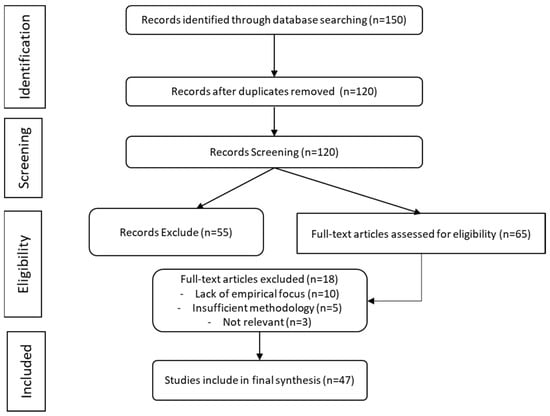
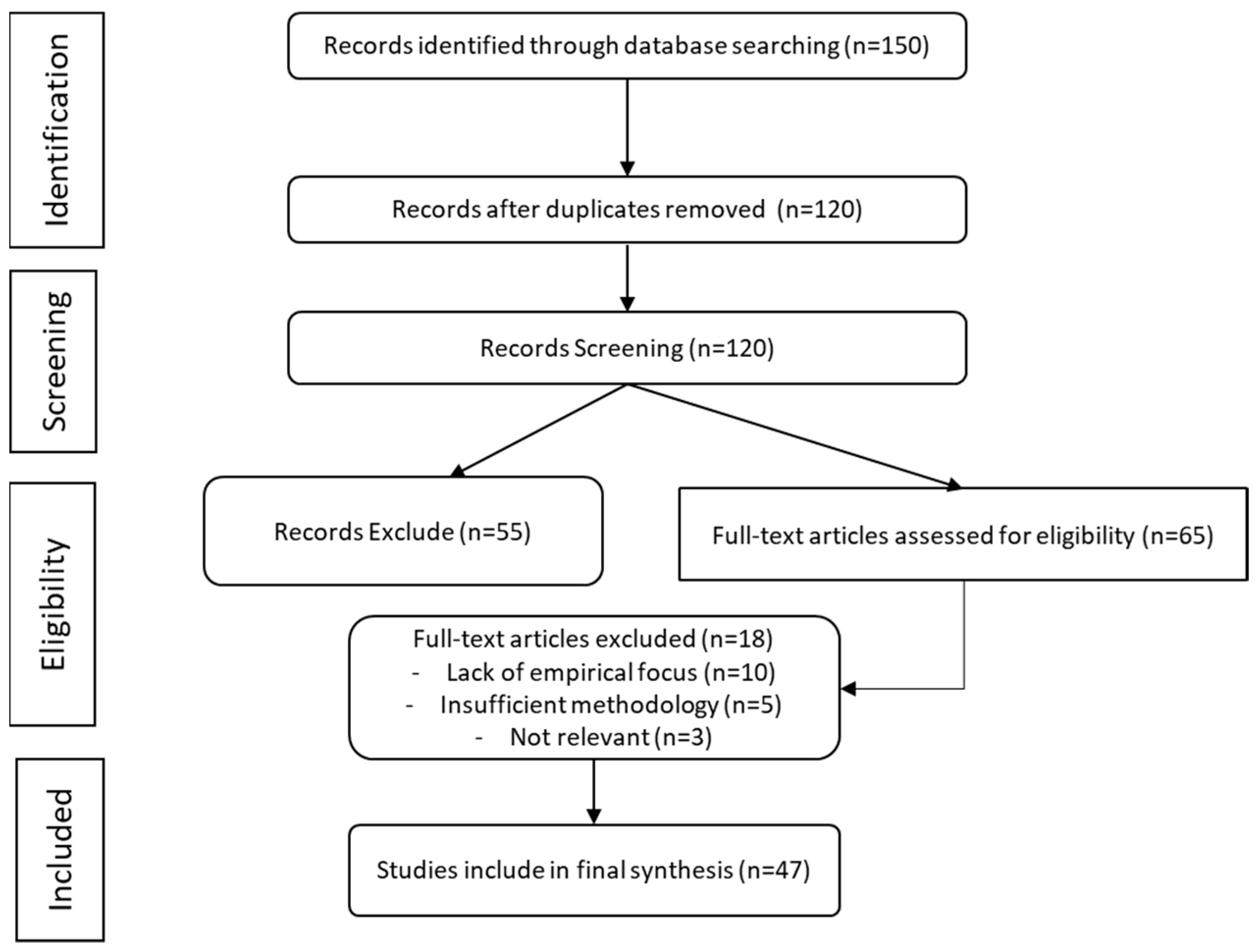
Figure 1 illustrates the flow of records through the identification, screening, eligibility, and inclusion stages:
Figure 1.
PRISMA Flow Diagram of Study Selection Process. Source: Data Processed, 2024.
- -
- Identification: A total of 150 records were identified through database searches (Scopus, Web of Science, Google Scholar).
- -
- Screening: After removing duplicates, 120 records were screened based on relevance to the research objectives. Fifty-five records were excluded due to irrelevance or insufficient focus.
- -
- Eligibility: The remaining 65 full-text articles were assessed for eligibility. Eighteen articles were excluded due to a lack of empirical focus (n = 10), insufficient methodological detail (n = 5), and irrelevance to the study objectives (n = 3).
- -
- Included: A total of 47 studies were included in the final synthesis.
4. Results
According to [27], selecting and evaluating numerous publications is a necessary step for every researcher wishing to employ a strategy.
The literature review synthesizes key thematic areas where off-takers play a significant role in agricultural clusters (Table 1). First, off-takers contribute to price stability by offering fixed prices, which helps reduce market volatility and provides smallholder farmers with more reliable income, enabling better financial planning. Additionally, off-takers facilitate access to credit and capital, often in partnership with financial institutions, which allows farmers to obtain necessary agricultural inputs and expand their operations. Furthermore, off-takers support technological advancements by encouraging the adoption of innovations such as high-yield seeds, efficient irrigation systems, and farm management software, all of which lead to increased productivity and more sustainable farming practices. Finally, off-takers are also key players in social entrepreneurship and community development, where they act as mentors to young farmers, fostering entrepreneurial skills and helping them access broader market opportunities, which ultimately strengthens the local agricultural ecosystem.
Table 1.
Systematic literature review result.
Beyond these thematic areas, a case study of an agricultural cluster in West Java, Indonesia, demonstrates the real-world impact of off-takers. In this cluster, off-takers provide essential services such as market access, financial support, and technical training to farmers. The interventions have led to increased agricultural productivity, more stable income, and improved access to credit and technology for farmers. This case exemplifies how off-takers can not only stabilize income but also promote sustainable agricultural practices that lead to economic growth and greater environmental resilience in cluster-based farming models.
5. Discussion
These studies show that off-takers in agricultural clusters play an important role in various aspects, such as increasing production, adopting technology, accessing credit, and developing entrepreneurship. Small livestock numbers are the root reason for Ethiopia’s low livestock market participation, according to research by Asfaw Negassa and Mohammad Jabbar [28]. Off-takers can support increasing livestock production by offering a stable market with profitable prices. In order to promote agricultural MSMEs, ref. [34] emphasize the significance of designing MSME standardization, training, and network strengthening, which can be aided by off-takers.
Research by [15,31] shows that the adoption of information technology by poultry farm off-takers can improve supply chain efficiency and reliability through monitoring product quality and optimizing logistics [36]. Ref. [37] found that institutional credit has a significant impact on agricultural production, where off-takers can help farmers access credit more easily through product purchase guarantees. Ref. [38], emphasizes the importance of social entrepreneurship training for youth in the agricultural sector, where off-takers can function as mentors and training providers to help young farmers develop entrepreneurial skills and identify market opportunities. Overall, off-takers in agricultural clusters can contribute significantly to increasing production, market access, technology adoption, and entrepreneurship development, which ultimately improves farmers’ welfare and their participation in the market [39,40,41].
The findings suggest that off-takers contribute to multiple dimensions of agricultural sustainability and economic resilience. Key themes such as price stability, capital access, and technology support emerged as crucial factors. These aspects not only increase productivity but also enhance resilience among farmers by reducing their dependency on unpredictable markets. Furthermore, policy implications indicate that government support is vital for the success of off-taker models. In particular, resource allocation, credit facilitation, and regulatory backing play pivotal roles. Collaborative frameworks between government entities and off-takers could significantly improve smallholder farmers’ access to critical resources, thereby strengthening their position in the market.
Additionally, the review highlights a theoretical framework that illustrates the relationship between off-takers, economic resilience, and agricultural cluster sustainability. This framework provides a foundation for future research and practical applications, demonstrating how strategic off-taker partnerships within agricultural clusters can foster rural development, stabilize agricultural markets, and contribute to overall sustainability in the sector.
In Indonesia’s vibrant agricultural landscape, the People’s Business Credit (KUR) program has significantly transformed opportunities for local communities by empowering Micro, Small, and Medium Enterprises (MSMEs). The relationship between the KUR program and off-takers in Indonesia’s agricultural sector exemplifies a symbiotic partnership aimed at enhancing economic opportunities and market dynamics for these enterprises [35,42].
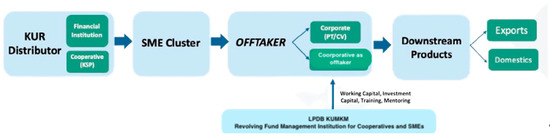
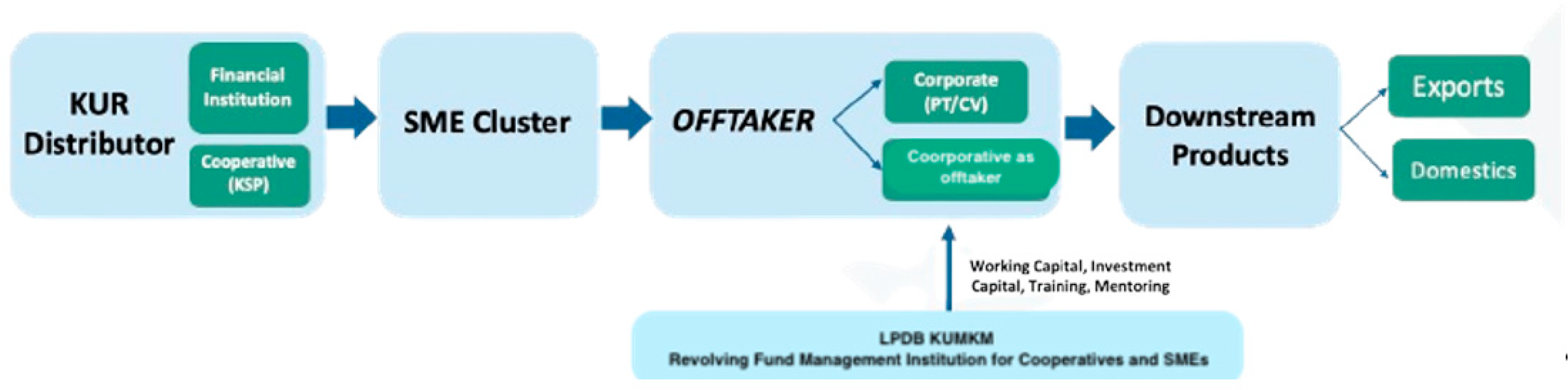
Figure 2 is the model developed for the distribution of Kredit Usaha Rakyat (KUR) downstream credit assistance:
Figure 2.
Distribution of Kredit Usaha Rakyat (KUR).
Figure 2 represents a conceptual model of the distribution process of Kredit Usaha Rakyat (KUR), illustrating the flow from financial support to downstream products and global market access. This model is designed to streamline the integration of financial institutions, cooperatives, and off-takers in facilitating micro, small, and medium enterprises (MSMEs). The elements within the model and their relationships are explained as follows:
- Financial Support Channels: KUR funds are disbursed through established Financial Institutions and Savings and Loans Cooperatives (KSPs), ensuring equitable access to financing for Cluster MSMEs across the archipelago.
- Role of Off-takers: Companies and cooperatives act as vital off-takers, purchasing goods directly from Cluster MSMEs. This direct link fosters a sustainable market environment.
- Empowering MSMEs: Within cooperative frameworks, Cluster MSMEs determine fair prices independently, bypassing traditional middlemen. This autonomy enhances profitability and economic resilience.
- Facilitated Funding: Each MSME within the cluster can access up to Rp 500 million in KUR funding, supported by advanced digital tools, AI technologies, and robust credit scoring mechanisms. This streamlined process ensures efficient resource allocation.
- Support from LPDB: The People’s Business Credit Board (LPDB) plays a pivotal role by providing crucial support such as working capital, investment funding, and comprehensive training and mentoring programs tailored to the needs of cooperatives. LPDB KUMKM Lembaga Pengelola dana Bergulir koperasi dan UKM is Revolving Fund Management Institution for Cooperatives and SMEs.
- Dual Roles of Cooperatives: Cooperatives serve dual functions as KUR Distributors (KSPs) and Off-takers (Production Cooperatives), bridging financial gaps and stimulating local economic growth.
- Value Addition: Off-takers play a transformative role by processing raw materials into downstream products, thereby adding significant value before these products enter the market [43,44,45].
- Global Reach: Products originating from these MSME clusters are not only marketed domestically but also internationally, showcasing Indonesia’s agricultural prowess on the global stage.
The model in Figure 2 demonstrates a holistic approach to MSME empowerment and economic development by addressing key challenges such as financing accessibility, market linkages, and value addition. This structured process underscores the critical role of integrated systems in achieving sustainable growth for MSMEs in Indonesia.
In essence, the collaboration between the KUR program and off-takers underscores a strategic alignment aimed at promoting sustainable development, empowering local entrepreneurs, and enhancing the overall competitiveness of Indonesia’s agricultural sector [46,47]. This integrated approach not only supports economic resilience but also fosters inclusive growth across diverse regions of the country, ultimately benefiting communities and stakeholders nationwide. Controls that contribute positively to the control of the model built are collaborative partnerships, stakeholder participation, and professional development in SME entities.
The benefits of having agricultural off-takers are:
The following is a discussion of research results related to the off-taker concept in the agricultural cluster, in the form of short points:
- Increased Production: Off-takers can provide a stable market and favorable prices to encourage increased production in areas with limited market participation.
- Strengthening Agricultural MSMEs: Off-takers can help design MSME standardization, provide training, and strengthen networks to improve the performance and trade mobility of agricultural MSMEs.
- Technology Adoption: Off-takers can encourage the adoption of information technology by farmers, increasing the efficiency and reliability of the supply chain through monitoring product quality and optimizing logistics.
- Institutional Credit Access: Off-takers can help farmers access credit more easily through product purchase guarantees, which in turn increases agricultural production.
- Social Entrepreneurship Development: Off-takers can serve as mentors and social entrepreneurship training providers for young farmers, helping them develop entrepreneurial skills and identify market opportunities.
Overall, off-takers in agricultural clusters can contribute significantly to various aspects such as increasing production, market access, technology adoption, and entrepreneurship development, which ultimately increases the welfare of farmers and their participation in the market.
In addition to the off-taker’s position, the following factors should be taken into account:
- Good institutional governance: This is essential to guaranteeing that small-scale agricultural business organizations have an efficient and transparent decision-making process, a well-defined organizational structure, and good standard operating procedures. Effective resource management, heightened responsibility, and the development of trust within and beyond the company are all facilitated by good governance.
- Sufficient Data Gathering: Information is a crucial resource for business decision-making. Good data collection for micro-scale agricultural enterprises comprises of meteorological, soil, production, and market information. When there is enough data available, business owners may evaluate their performance, spot industry trends, and make well-founded judgments.
- Adaptability to Current Conditions: Weather, commodity pricing, and governmental regulations are just a few examples of the external elements that have a big impact on agricultural enterprises. It’s critical to react quickly to these changes in order to preserve business continuity. This calls for the capacity to change course rapidly, modify marketing and production plans, and seize new possibilities as they present themselves.
- Creation of New Technology: Technology is always evolving and has the potential to significantly boost production and efficiency in small-scale farming. Reducing risks and raising agricultural yields can be achieved by implementing technologies for farm management, such as mobile applications, real-time weather monitoring, smart irrigation, and soil sensors.
6. Conclusions
The agricultural sector plays a vital role in the economies of many countries, particularly in developing nations, serving as a primary source of livelihood for millions and contributing significantly to national GDP, food security, and social stability. However, farmers often face numerous challenges, including limited access to capital, market price volatility, and inadequate technology. These challenges hinder productivity and welfare, jeopardizing the long-term sustainability of agriculture.
In addressing these challenges, the role of off-takers emerges as crucial. Off-takers, entities committing to purchase agricultural produce at predetermined prices, provide market certainty for farmers, thereby mitigating some key challenges. Through involvement in contract farming and provision of capital, technical support, and market access, off-takers assist farmers in achieving income stability, accessing capital, adopting better technologies, and ensuring business sustainability.
A systematic literature review reveals various studies emphasizing the importance of off-takers in agricultural clusters. Research findings illustrate that off-takers contribute to increased production, technology adoption, access to credit, and entrepreneurship development. By providing stable markets, favorable prices, and support services, off-takers empower farmers, enhance supply chain efficiency, and improve overall welfare.
The benefits of having agricultural off-takers are multifaceted, ranging from increased production to the development of entrepreneurial skills among farmers. Therefore, fostering partnerships between farmers and off-takers is imperative for enhancing agricultural competitiveness, sustainability, and farmer welfare. By harnessing the potential of off-takers and promoting collaboration within agricultural clusters, policymakers and stakeholders can create an enabling environment for thriving agricultural ecosystems, thereby ensuring food security and economic prosperity in rural communities. Other factors that can increase the role of off-takers in the agricultural industrial sector are good institutional governance, adequate data collection, agility to face current conditions, and the development of new technology in micro-scale business entities in the agricultural business.
Off-takers play an essential role in stabilizing agricultural clusters by providing market stability, facilitating access to credit, and promoting sustainable farming practices. This study highlights the multifaceted contributions of off-takers, emphasizing their potential to improve productivity, economic resilience, and sustainability within rural agricultural communities. The findings suggest that policymakers should foster stronger partnerships between government agencies, financial institutions, and off-takers to amplify these benefits and promote inclusive growth. By strategically integrating off-takers into agricultural policies, stakeholders can support resilient and sustainable agricultural ecosystems, ultimately contributing to national food security and rural communities. However, this contribution is not without a number of limitations that need to be considered to provide a more complete context to the research results.
6.1. Limitations
This review offers valuable insights but is constrained by its reliance on secondary data, which may fail to capture region-specific challenges in off-taker models. The absence of primary data limits the depth of analysis, particularly in understanding off-taker impacts at a micro level. The study’s reliance on secondary data may overlook regional variations in challenges, while the lack of primary empirical testing reduces its ability to assess direct impacts on individual farmers. Furthermore, the analysis does not fully account for contextual differences across regions, potentially affecting the local relevance of off-taker models. These limitations highlight the need for more comprehensive research, as discussed in the subsequent section.
6.2. Future Research
Future research should focus on primary data collection within agricultural clusters to gain more granular insights into the impacts of off-takers. Conducting qualitative and quantitative field studies can help uncover specific effects on smallholder farmers. Additionally, exploring the integration of new technologies, such as blockchain for contract transparency and IoT for real-time monitoring, could enhance the efficiency of off-taker models. Investigating collaborative frameworks between governments, financial institutions, and off-takers could improve resource allocation and policy support for smallholders. These recommendations aim to address the study’s limitations and promote the development of more effective and sustainable off-taker models.
Author Contributions
A.M., T.M. and W.O.Z.M. contributed to the concept and the content of this research, supervised and reviewed the research. T.F. and D.S.T. contributed to the design of the concept, the manuscript, and manuscript preparation. All authors have read and agreed to the published version of the manuscript.
Funding
The research was funded by Ministry of Cooperative and Micro Small Medium Enterprise, Indonesia.
Institutional Review Board Statement
This research received approval for Ministry of Cooperative and Micro Small Medium Enterprise, Indonesia.
Informed Consent Statement
Not applicable.
Data Availability Statement
The data presented in this study are available on request from the corresponding author.
Conflicts of Interest
The authors declare no conflicts of interest.
References
- Lanfranchi, M.; Giannetto, C.; Abbate, T.; Dimitrova, V. Agriculture and the social farm: Expression of the multifunctional model of agriculture as a solution to the economic crisis in rural areas. Bulg. J. Agric. Sci. 2015, 21, 711–718. [Google Scholar]
- Hudcová, E.; Chovanec, T.; Moudrý, J. Social entrepreneurship in agriculture, a sustainable practice for social and economic cohesion in rural areas: The case of the Czech Republic. Eur. Countrys. 2018, 10, 377–397. [Google Scholar] [CrossRef] [Scilit]
- Abid, M.; Ngaruiya, G.; Scheffran, J.; Zulfiqar, F. The role of social networks in agricultural adaptation to climate change: Implications for sustainable agriculture in Pakistan. Climate 2017, 5, 85. [Google Scholar] [CrossRef] [Scilit]
- Dorward, A.; Guenther, B.; Sabates-wheeler, R. Agriculture and Social Protection in Malawi; Future Agricultures Consortium: Brighton, UK, 2009. [Google Scholar]
- Samadi; Rahman, A.; Afrizal. Peranan Badan Usaha Milik Desa (BUMDes) dalam peningkatan ekonomi masyarakat (Studi Pada Bumdes Desa Pekan Tebih Kecamatan Kepenuhan Hulu Kabupaten Rokan Hulu). J. Mhs. Prodi Manaj. Fak. Ekon. 2015, 2, 1–19. [Google Scholar]
- Hermanto, N.; Swastika, D.K.S. Penguatan Kelompok Tani: Langkah Awal Peningkatan Kesejahteraan Petani. Anal. Kebijak. Pertan. 2016, 9, 371–390. [Google Scholar] [CrossRef] [Scilit]
- Pujiharto, P. Kajian Pengembangan Gabungan Kelompok Tani (Gapoktan) Sebagai Kelembagaan Pembangunan Pertanian Di Pedesaan. Agritech 2010, 12, 64–80. [Google Scholar]
- Utami Putri, A.; Mirani, D.; Khairunnisyah, T. Digital Transformation for MSME Resilience in The Era of Society 5.0. In Proceedings of the InIapa Proceedings Conference, Udine, Italy, 11–15 September 2023; pp. 154–174. [Google Scholar] [CrossRef] [Scilit]
- Rhoades, E.; Aue, K. Social agriculture: Adoption of social media by agricultural editors and broadcasters. In Proceedings of the 107th Annual Meeting and Conference of Southern Association of Agricultural Scientists, Alexandria, VA, USA, 2–5 August 2010; pp. 1–20. [Google Scholar]
- Rahmawati, R.; Wayan, N.; Mitariani, E.; Cempaka, N.P.; Atmaja, D. Pengaruh Lingkungan Kerja, Stres Kerja dan Motivasi Kerja terhadap Kinerja Karyawan pada PT. Indomaret Co Cabang Nangka. J. EMAS 2021, 2, 191–201. [Google Scholar]
- Ridwan, A.; Sasmi, M.; Mahrani, D. Analisis Kemampuan Kelompok Tani Padi Sawah (Oriza sativa) Rawang Kalimanting di Desa Seberang Pulau Busuk Kecamatan Inuman Kabupaten Kuantan Singingi. J. Green Swarnadwipa 2021, 10, 142–153. [Google Scholar]
- Krisnanik, E.; Rahayu, T.; Muliawati, A. Empowerment of Farmers by Bogor Agricultural Development Polytechnic in Lemahduhur Village Caringin District Bogor Regency. Prospect J. Pemberdaya. Masy. 2022, 2, 233–239. [Google Scholar]
- Harsanto, B.; Mulyana, A.; Faisal, Y.A.; Shandy, V.M. Open Innovation for Sustainability in the Social Enterprises: An Empirical Evidence. J. Open Innov. Technol. Mark. Complex. 2022, 8, 160. [Google Scholar] [CrossRef] [Scilit]
- Krikser, T.; Piorr, A.; Berges, R.; Opitz, I. Urban agriculture oriented towards self-supply, social and commercial purpose: A typology. Land 2016, 5, 28. [Google Scholar] [CrossRef] [Scilit]
- Sjaf, S.; Aulia, A.; Ray, A.; Gandi, R.; Elson, L.; Hakim, L.; Ardinal, Z.; Budi, R.; Muhammad, B.; Anom, S.; et al. Heliyon Partnership 4.0: Smallholder farmer partnership solutions. Heliyon 2022, 8, e12012. [Google Scholar] [CrossRef] [Scilit] [PubMed]
- Cabannes, Y.; Raposo, I. Peri-urban agriculture, social inclusion of migrant population and Right to the City: Practices in Lisbon and London. City 2013, 17, 235–250. [Google Scholar] [CrossRef] [Scilit]
- Foti, V.T.; Scuderi, A.; Timpanaro, G. Organic social agriculture: A tool for rural development. Qual.-Access Success 2013, 14, 266–271. [Google Scholar]
- Shreck, A.; Getz, C.; Feenstra, G. Social sustainability, farm labor, and organic agriculture: Findings from an exploratory analysis. Agric. Hum. Values 2006, 23, 439–449. [Google Scholar] [CrossRef] [Scilit]
- Janker, J.; Mann, S. Understanding the social dimension of sustainability in agriculture: A critical review of sustainability assessment tools. Environ. Dev. Sustain. 2020, 22, 1671–1691. [Google Scholar] [CrossRef] [Scilit]
- Specht, K.; Weith, T.; Swoboda, K.; Siebert, R. Socially acceptable urban agriculture businesses. Agron. Sustain. Dev. 2016, 36, 17. [Google Scholar] [CrossRef] [Scilit]
- Velten, S.; Leventon, J.; Jager, N.; Newig, J. What is sustainable agriculture? A systematic review. Sustainability 2015, 7, 7833–7865. [Google Scholar] [CrossRef] [Scilit]
- Torres, J.; Valera, D.L.; Belmonte, L.J.; Herrero-Sánchez, C. Economic and social sustainability through organic agriculture: Study of the restructuring of the citrus sector in the “Bajo Andarax” District (Spain). Sustainability 2016, 8, 918. [Google Scholar] [CrossRef] [Scilit]
- Ravazzoli, E.; Dalla Torre, C.; Da Re, R.; Marini Govigli, V.; Secco, L.; Górriz-Mifsud, E.; Pisani, E.; Barlagne, C.; Baselice, A.; Bengoumi, M.; et al. Can social innovation make a change in european and mediterranean marginalized areas? Social innovation impact assessment in agriculture, fisheries, forestry, and rural development. Sustainability 2021, 13, 1823. [Google Scholar] [CrossRef] [Scilit]
- Prause, L. Digital agriculture and labor: A few challenges for social sustainability. Sustainability 2021, 13, 5980. [Google Scholar] [CrossRef] [Scilit]
- Harsanto, B.; Mulyana, A.; Faisal, Y.A.; Shandy, V.M.; Alam, M. A Systematic Review on Sustainability-Oriented Innovation in the Social Enterprises. Sustainability 2022, 14, 14771. [Google Scholar] [CrossRef] [Scilit]
- Earles, R. Sustainable Agriculture: An Introduction; ATTRA: Melbourne, Australia, 2005; pp. 1–8. [Google Scholar]
- Triandini, E.; Wijaya, I.G.N.S.; Suniantara, I.K.P.; Wulandari, R.; Pratami, W.C.A.; Sugiarto, S.; Djarkasih, A.R.; Sulyani, A.C.; Larasati, N.; Kuswanto, D. Analysis Adoption of Information Technology Using the UTAUT Method on Off-taker Poultry Farmers in Indonesia. In Proceedings of the 13th Annual International International Conference on Industrial Engineering and Operations Management, Manila, Philippines, 6–9 March 2023; pp. 1716–1728. [Google Scholar]
- Negassa, A.; Jabbar, M. Commercial Offtake of Cattle Under Smallholder Mixed Crop-Livestock Production System in Ethiopia, Its Determinants and Implications for Improving Live Animal Supply for Export Abattoirs. In Proceedings of the 2007 International Conference on Ethiopian Development Studies (4th ICEDS), Kalamazoo, MI, USA, 2–4 August 2007. [Google Scholar]
- Rahman, A.A.; Pratikto, H.; Siswanto, E. The Effect of Entrepreneurial Orientation on Firm Performance: The Role of Networking Capability. Briliant Int. J. Manag. Tour. 2022, 2, 263–280. [Google Scholar] [CrossRef] [Scilit]
- Saleem, M.; Arshad, M.U.; Ismail, T.; Ashraf, M.A. Impact of Institutional Credit on Agriculture Production in Pakistan. Int. J. Bus. Mark. Manag. (IJBMM) 2018, 3, 1–30. [Google Scholar]
- Risnawati, N.; Indonesia, U.K.; Dan, K.; Sosial, K. “Training and Capacity Building f or Eligible SMEs” Kewirausahaan Sosial bagi Pemuda Bidang Pertanian pada Program Youth Entrepreneurship And Employment Support Service (YESS) di Bogor Jawa Barat. E-Coops-Day 2023, 4, 131–138. [Google Scholar] [CrossRef] [Scilit]
- Fardudin, R.; Basori, Y.F.Y.; Meigawati, D. Implementation of the One Region One Off-taker Policy in the Department of Food Security, Agriculture, and Fisheries of Sukabumi City. J. Adm. Publik 2022, 20, 170–185. [Google Scholar]
- Yanuar, R.; Tinaprilla, N.; Rachmania, M.; Harti, H. Dampak Kemitraan Closed Loop Terhadap Pendapatan dan Efisiensi Usahatani Cabai. J. Agribisnis Indones. 2022, 10, 180–199. [Google Scholar] [CrossRef] [Scilit]
- Gandhi, H.H.; Hoex, B.; Jason, B. Strategic investment risks threatening India’s renewable energy ambition. Energy Strateg. Rev. 2022, 43, 100921. [Google Scholar] [CrossRef] [Scilit]
- Haryono, A.; Maarif, M.S.; Suroso, A.I.; Jahroh, S. The Design of a Contract Farming Model for Coffee Tree Replanting. Economies 2023, 11, 185. [Google Scholar] [CrossRef] [Scilit]
- SARE. What Is Sustainable Agriculture? A Sare Sampler of Sustainable Practices; SARE: College Park, MD, USA, 2023. [Google Scholar]
- Yanuar, Y.; Arifin, A.Z. The Effect of Perceived Behavioral Control, Personality Traits, Financial Risk, and Expected Investment Value on Investment Intention Among Millennial Investors. In Proceedings of the 3rd Tarumanagara International Conference on the Applications of Social Sciences and Humanities (TICASH 2021), Online, 25 August 2021; Volume 655, pp. 901–906. [Google Scholar] [CrossRef] [Scilit]
- Ulfa, I. Krining Masalah Kesehatan Jiwa Dengan Kuesioner DASS-42 Pada Civitas UIN Syarif Hidayatullah Jakarta Yang Memiliki Riwayat Hipertensi; Universitas Islam Negeri Syarif Hidayatullah Jakarta: Kota Tangerang Selatan, Indonesia, 2019; pp. 1–80. [Google Scholar]
- Luh, N.; Juniartini, P. Pengelolaan Sampah Dari Lingkup Terkecil dan Pemberdayaan Masyarakat sebagai Bentuk Tindakan Peduli Lingkungan. J. Bali Membangun Bali 2020, 1, 27–40. [Google Scholar]
- Akbar, M.; Mauluddin, M. Effect of Work Engagement, Job Satisfaction, and Organizational Commitment to Employee Performance. Int. J. Recent Technol. Eng. 2019, 8, 815–822. [Google Scholar] [CrossRef] [Scilit]
- Mathis, R.L.; Jackson, J.H.; Valentine, S.R. Human Resource Management; Cengage Learning: Boston, MA, USA, 2013. [Google Scholar]
- Uyanah, A.A.; John, U.A.; Eyibio, O. COVID-19 Public Programmes and Implementation Challenges: The Nigerian Experience. Int. J. Capacit. Build. Educ. Manag. 2020, 4, 19–25. [Google Scholar]
- Permana, S.H. Strategy of Enhancement on the Small and Medium-Sized Enterprises (SMES) in Indonesia. Aspirasi 2017, 8, 93–103. [Google Scholar] [CrossRef] [Scilit]
- Yulk, G.; Gardner, W.L. Leadership in Organizations (9 Global); Pearson Education: London, UK, 2020. [Google Scholar]
- Chan, S.C.H. Participative leadership and job satisfaction at work. Leadersh. Organ. Dev. J. 2019, 40, 319–333. [Google Scholar] [CrossRef] [Scilit]
- Yanti, V.A.; Amanah, S.; Muldjono, P. Faktor Yang Mempengaruhi Keberlanjutan Usaha Mikro Kecil Menengah di Bandung Dan Bogor. J. Pengkaj. Pengemb. Teknol. Pertan. 2018, 20, 137–148. [Google Scholar]
- Paat, R.; Pangemanan, S.; Singkoh, F. Implementasi Bantuan Langsung Tunai Dana Desa Tahun 2020 Di Desa Tokin Baru Kecamatan Motoling Timur Kabupaten Minahasa Selatan. Eksek. J. Jur. Ilmu Pemerintah. 2021, 1, 1–11. [Google Scholar]

Disclaimer/Publisher’s Note: The statements, opinions and data contained in all publications are solely those of the individual author(s) and contributor(s) and not of MDPI and/or the editor(s). MDPI and/or the editor(s) disclaim responsibility for any injury to people or property resulting from any ideas, methods, instructions or products referred to in the content. |
© 2024 by the authors. Licensee MDPI, Basel, Switzerland. This article is an open access article distributed under the terms and conditions of the Creative Commons Attribution (CC BY) license (https://creativecommons.org/licenses/by/4.0/).