


Abstract
South Korea has crafted a series of policy measures to regulate or stimulate housing markets. One interesting feature is that policy makers and market observers have paid enormous attention to one particular housing market, the Greater Gangnam Area in Seoul. The area is an upscale and self-sufficient urban neighborhood with high-priced residential properties; the nation’s housing policies have been directed toward tempering housing price appreciation there. This leads to the following research question: whether the housing policy tools achieved the intended goals or not. This study examined the differential impacts of government-initiated policy measures on housing submarkets in the primary real estate market. Quasi-experimental econometric evaluations, which are AITS-DID methods, revealed that recent policy measures did not achieve the intended goal of housing price stabilization. Rather, those policy instruments brought about unintended consequences. The Housing Welfare Roadmap measure was intended to cool down the Gangnam housing market, but it in fact increased the Gangnam housing prices by 5.69 percent points in comparison to the non-Gangnam area. In order to tackle housing market imbalances, the government should devise long-term urban and regional planning strategies to create self-sustaining communities suitable for various population groups so that they can compete with existing strong real estate markets.
1. Introduction
Land development and housing supply could not keep up with the soaring demand for housing in the era of rapid urbanization and industrialization in South Korea (hereafter, Korea). People searching for job opportunities continued to move into urban areas and, thus, Korea’s housing crisis only became worse (Kim & Kim, 2000 [1]; Ha, 2010 [2]). While the country is good at allocating resources to the industrial sector, its developmental state failed to cope with the housing shortage for the poor in Seoul, the capital city of South Korea (Mobrand, 2008 [3]). In the 1980s, a lot of large-scale apartment complexes were developed, but housing prices kept skyrocketing due to the expanding demand, exacerbating the affordability problem for low- and middle-income people. As the 1980s property boom spread throughout housing markets all over the world, almost all urban areas were full of speculative behaviors. In response, the Korean government (Roh Tae-woo administration) set up a national housing plan, which included the supply of two million apartment units and the construction of five new towns around Seoul (Potter, 2015 [4]). Starting from this audacious intervention, a series of housing policy measures were promulgated and these government-led policy tools have in turn affected the private housing sector (Kim, 2005 [5]; Yu & Lee, 2010 [6]).
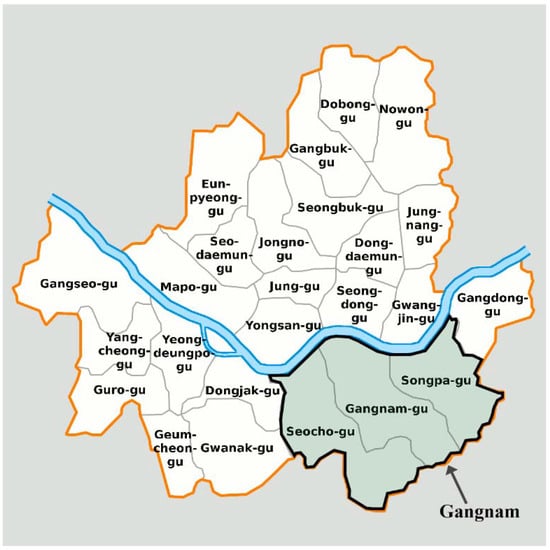
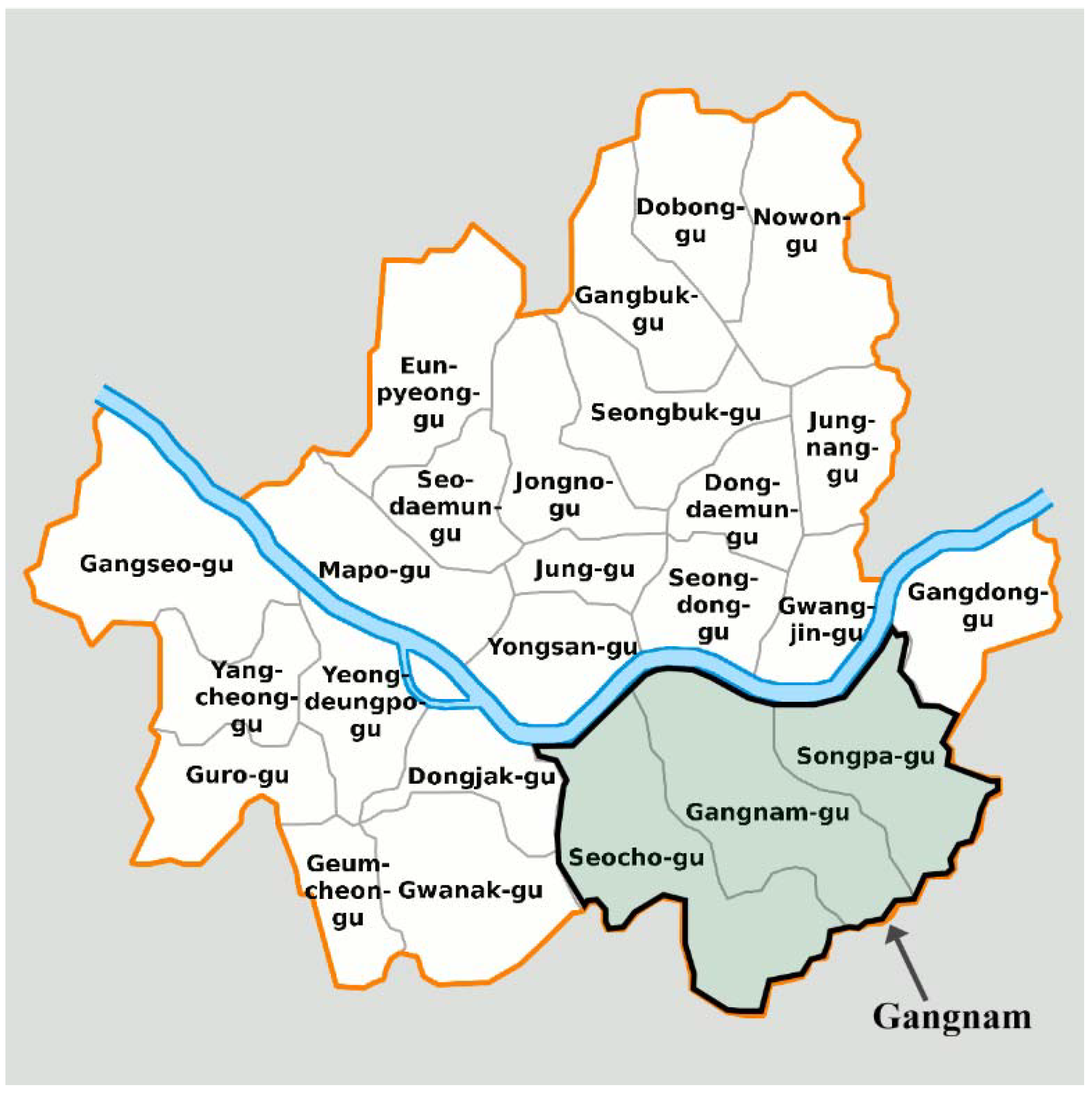
One interesting feature in the history of devising and implementing housing policy measures and guidelines in Korea is that not only policy makers but also almost all housing market participants have paid enormous attention to one particular housing market, which is the Greater Gangnam Area (also referred to as Greater Gangnam or Gangnam). The area consists of three administrative districts: Gangnam, Seocho, and Songpa. The current government (Moon Jae-in administration) has exerted a great deal of effort to stabilize housing prices in Gangnam. A study that was conducted by the Korea Research Institute for Human Settlements (KRIHS) to prepare for the government’s 2003–2012 Long-Term Comprehensive Housing Plan clearly states that one of the main purposes of the plan is to address the chronic excess demand for housing in the Greater Gangnam Area (KRIHS, 2003 [7]). In the plan, the area is located at the top of Korea’s housing market hierarchy and is described as “where the imbalance between demand and supply is severe and the market instability persists” (KRIHS, 2003, p. 159 [7]).
The government has announced a series of policy measures to stabilize the Seoul housing market by regulating the Gangnam apartment market directly or indirectly. Since its inception on 10 May 2017, the administration announced eight housing policy measures from 19 June 2017 to 13 September 2018. They consist of tightening mortgage rules, strengthening the screening process for household and personal loans, supporting relatively disadvantaged people through an affordable housing supply with subsidized mortgage loans, stimulating the rental housing sector, regulating the redevelopment of apartment complexes in Gangnam, and raising taxes for high-value real estate property.
The government switched gears from demand regulation to large-scale housing development, announcing the Housing Welfare Roadmap (HWR) on 29 November 2017. The policy measure was a supply-side initiative to enhance housing affordability in urban areas. The main purpose of the HWR is to provide a “housing ladder” for low- and middle-income households, newlyweds, and young households to meet their housing needs (OECD, 2018 [8]). In order to achieve the goal, the government planned to construct one million public housing units within four or five years through new land development projects around Seoul.
After the HWR, the nationwide growth rate for apartment prices during the first half of 2018 was 0.1%, a slowdown in comparison with the 0.4% rate during the first half of 2017 (KAB, 2019 [9]). Seoul experienced a slower apartment market and the pace of the weakening of prices was faster in regions outside of Seoul. However, in the southern part of the city, which includes the Greater Gangnam Area, the prices of medium- and large-sized apartments continued to rise. Moreover, the once-tempered housing prices in Seoul rose again starting in July 2017, whereas nationwide housing prices continued to stabilize during the second half of 2018. The government concluded that the housing shortage and speculative demand caused housing markets to be more volatile and that stronger regulation is necessary to normalize housing markets and enhance affordability. In response, the government announced the Housing Market Stabilization (HMS) measure on 13 September 2018.
The HMS measure aimed at preventing speculation on residential properties, expanding the housing supply for low- and middle-income households, and achieving fair taxation. The introduction of tougher taxation was intended to signal that the cost of ownership would rise for those who possessed real estate as a means of speculation, especially in the Greater Gangnam Area. Raising property tax rates has been the last resort to curb housing prices and tightening real estate tax rules is believed to be the most effective measure to cool down the apartment market (Shin & Yi, 2019 [10]).
Were those housing policy measures effective to achieve the intended policy goals? In which directions did those measures affect the targeted housing markets? To answer those questions, this study employed the adjusted interrupted time series–difference in differences (AITS-DID) methodology in order to examine whether or not the government-oriented housing policies decreased the price gap between the targeted (Gangnam) and the non-Gangnam areas.
2. Literature Review
Previous studies conducted by Korean scholars found that government-led housing policy measures have generally failed to achieve policy goals. Kwak and Lee (2006) [11] concluded that housing policy measures announced from January 1978 to July 2004 did not contribute to the stabilization of housing markets. Seo (2008) [12] created a set of score variables to quantify the degree of regulation or deregulation of the policy measures announced from February 1986 to May 1990. The impulse response of apartment prices to the scores suggested that the measures did not play a role in tempering prices in the southern part of Seoul. Kim (2010) [13] found that the impact of policy measures was not significant in cooling down housing markets through the four previous administrations. Kim (2012) [14] concluded that the government’s myopic policy formulation exerts little or no effect on housing markets in the long run.
Some macroprudential instruments appeared to be partly effective in Korea; for example, tightening loan requirements had an impact on prices and mortgage lending in a short period of time (Crowe et al., 2013 [15]). Hwang and Park (2015) [16] found that apartment prices in Seoul decreased by 1.74% annually as the debt-to-income (DTI) regulation became stricter by 10 percentage points. Jung and Lee (2017) [17] found that tightening the loan-to-value (LTV) or DTI limits was important in stabilizing housing price growth. Designating some overheated areas as “speculative zones” has partly succeeded in mitigating local housing price appreciation (Igan & Kang, 2011 [18]; Song et al., 2018 [19]).
The linkage macroprudential policies and housing prices have been well documented in many studies. It is clear that, as the magnitude of lending becomes bigger, lending institutions’ levels of dependency on housing prices become greater (Himmelberg et al., 2005 [20]). Kuttner and Shim (2016) [21] found that DTI regulations are effective policy measures in curbing the heated housing markets. Dimova et al. (2016) [22] also concluded that the LTV and DTI regulations effectively contained household credit growth for Southeastern European countries. Similarly, Alam et al. (2019) [23] provided evidence that loan regulations have a significant impact on household credit by using a survey conducted by the IMF, which examined 134 countries’ loan-targeted instruments. Poghosyan (2020) [24] investigated the effectiveness of macroprudential policies in 28 EU nations and found a significant linkage between such lending regulations and housing prices. For the Hong Kong case, Wong et al. (2011) [25] concluded that LTV policy may reduce systematic risk from the macroeconomic perspective.
Countrywide or regionally targeted policies may lead to spillover effects or unintended consequences. Aiyar et al. (2014) [26] showed that bank-specific minimum capital requirements increased the amount of lending from unregulated banks. This “leakage” effect the amounts to one-third of the initial shock from the introduction of the regulation. According to Armstrong et al. (2019) [27], LTV policies have an effect of tempering the rise in housing prices by limiting the demand for housing and credit in New Zealand. The magnitude and persistence of the policy effect depend on the rate of increase in housing prices at the time the policy is implemented. In particular, in the period where housing prices are rapidly rising, the LTV policy rarely has an impact on housing prices. Tightening LTV and DTI rules in the Netherlands caused first-time buyers in peripheral areas to be more financially constrained relative to those in major cities (Hekwolter of Hekhuis et al., 2017 [28]). Increasing the stock of social housing in cities would crowd out ineligible marginal buyers to peripheral areas (Nijskens & Lohuis, 2019 [29]). Spatially differentiated macroprudential interventions would be counterproductive if unexpected housing demand were tilted toward adjacent areas across the boundary of the targeted region (Fáykiss et al., 2017 [30]). The country-to-country financial spillover effects may also occur via international trade and financial and commodity price linkages (Kang et al., 2017 [31]). Wan (2018) [32] showed that imposing the limit on the purchase of housing may result in the increase in vacancy, the decrease in the housing investment, and the decrease in the number of housing-related companies. Recently, Auer and Ongena (2022) [33] found that lending regulations in one location caused an unintended spillover, which generated an increase in lending in another place in Switzerland.
This study extends the existing literature on the impact of urban housing policies in two ways. First, investigating the differential impacts of policy measures on housing submarkets sheds light on whether or not housing policies produce unintended consequences. Second, this study employed a rigorous quasi-experimental examination, which not only reflects the mean difference in housing prices, but also incorporates pre- and post-price trends before and after the policy intervention. Furthermore, the empirical models are combined with matching procedures in order to reduce potential selection bias. The empirical results provide policy implications and suggest alternative policy options with regard to housing market stabilization.
3. Significance of the Greater Gangnam Area in Korea
In the 1960s, explosive population growth, followed by the Miracle on the Han River, exacerbated urban and housing problems in the populated northern part of Seoul. In response, the development of Gangnam was proposed in the Seoul Urban Plan in 1966. The main purpose of the development was to disperse a large portion of the existing population of the city to a new area, which was called the Yeongdong District (Seoul Solution, 2017 [34]). To expedite the development process, new housing developments in the north of Seoul were prohibited in 1972. In 1975, major administrative offices and commercial banks were developed in the newly developing area. In the following year, some prestigious public high schools were relocated from the north to Gangnam. In the 1980s, the initial Gangnam area expanded to accommodate the development of large-scale apartment complexes, forming today’s boundary (see Figure 1). From the 1990s, the housing supply could not catch up with the ever-growing demand. The lack of developable land resulted in the conversion of single-detached houses into low-rise multi-family properties. High-rise mixed-use apartment complexes were developed and popularized and neighborhood redevelopment and apartment reconstruction became lucrative to owners and investors.
Figure 1.
Seoul metropolitan city and the Gangnam area. Source: Wikimedia Commons (https://commons.wikimedia.org/wiki/File:Map_Seoul_districts_de.png, accessed on 2 August 2022).
Since 2001, apartment prices in Korea’s major cities have skyrocketed. Over the course of policy responses to the upward spiral, apartment prices in Gangnam have drawn the greatest attention. Virtually every administration has aimed at stabilizing the apartment market even when speculative demand was perceived as a regional or national phenomenon. The reason is that Gangnam has been dubbed ground zero of the nation’s real estate price instability. The Korean government used to establish housing policies targeting Gangnam and evaluate the success of policy instruments with respect to whether or not apartment prices in Gangnam were tempered. Indeed, some studies have found significant relationships between the housing market in Gangnam and in neighboring areas (Han, 2007 [35]; Jeon & Hyung, 2018 [36]; Kim & Park, 2006 [37]; KRIHS, 2005 [38]; Lee & Lee, 2004 [39]). However, it is not sufficient to draw causal interpretations from the co-movement. The strong relationship might merely reflect spatial and temporal differences in the speed of responding to market information on housing prices (KRIHS, 2005 [38]; Lee & Lee, 2004 [39]). If the government aims to stabilize prices at the regional or national level by regulating the Gangnam market directly or indirectly, it is the Gangnam market that should move in accordance with the goals of the policy measures in the first place, which is in question and is discussed in this study.
4. Research Methodology
4.1. Data Collection and Processing
The apartment sales data used in this study were retrieved from the Open System for Real Estate Prices (https://rt.molit.go.kr/, accessed on 2 August 2022), managed by the Ministry of Land, Infrastructure and Transport (MOLIT). In Korea, housing transactions should be reported to the local government within 60 days. The central government provides some basic characteristics of units sold through the Open System, which include selling price, address, square meters of living area, year built, and floor level. The property-level variables (i.e., information on the apartment complex where the unit is located) were obtained from the Building Register dataset, which contains the floor area ratio (FAR) and the number of units in each complex. The two datasets were combined by using the 19-digit parcel number unit (PNU) as the primary key. Finally, the distance to the nearest subway station from each apartment unit was calculated using the ESRI GIS program. The merged data were further processed in several ways. Underground apartment units were deleted because they are very rare in the Seoul market or they could be another housing type. For the sake of data cleaning, observations were removed where the FAR was less than 1 and the number of units in the apartment complex was less than 30. Observations below the 1st percentile and above the 99th percentile were removed for square meters of living area and sales price. Santiago et al. (2001) [40] excluded the highest and lowest 2% of sales by price. This study opted for the 1% cutoff because the sales data are collected by the government by law and, thus, are more reliable.
4.2. Methods
4.2.1. Difference-in-Difference (DID)
One common way to estimate the effect of a specific intervention or event from the observational data is to use the difference-in-difference (DID) method, a quasi-experimental technique. The DID model is expressed as the typical hedonic price model, as follows:
where is the natural logarithm of the CPI-adjusted price per square meter of apartment unit ; where 0 indicates apartment units that are sold in the non-Gangnam area in Seoul (control group) and 1 indicates units that are sold in the Greater Gangnam area (treatment group); is the dummy variable that is 1 for apartment units sold after the announcement of the housing policy measure (post-treatment) and 0 otherwise (pre-treatment); is the interaction term of and ; , indexed by , represents the other factors that affect apartment prices; and is the error term. The parameter of interest in the DID regression equation is , which implies the average treatment effect, measuring the change in apartment prices in Gangnam due to the announcement of the housing policy measure. As the dependent variable is the natural log of sales price, the treatment effect is %.
4.2.2. Adjusted Interrupted Time-Series Difference-in-Difference (AITS-DID)
Galster et al. (2004) [41] proposed the adjusted interrupted time series difference-in-difference method (AITS-DID). Whereas the traditional DID method does not control for time trends, the AITS-DID method incorporates both the change in value and the temporal movements of the dependent variable before and after the policy intervention. The authors argued that the pre-post level and pre-post trend design can overcome the shortcomings of the simple DID method by decomposing the overall effect into the temporal trend and the treatment effect driven by the policy intervention. The AITS-DID method and its equivalents were used to test for the spillover effect of housing programs in the USA in Denver, CO (Santiago et al., 2001 [40]), the City of New York (Schwartz et al., 2006 [42]; Ellen et al., 2009 [43]), Seattle, WA (Koschinsky, 2009 [44]), and North Carolina and Ohio (Woo et al., 2016 [45]). The AITS-DID model in this study is expressed as follows:
In the AITS-DID specification, the treatment group is divided into two groups: sales before and after the policy intervention. Therefore, two dummy variables are entered into the AITS-DID model, which are designed to capture the difference in price levels before and after the intervention. adopts the value of 1 if apartment unit was sold in Gangnam before the announcement of the policy measure and zero otherwise. Similarly, adopts the value of 1 if apartment unit is sold after the intervention and zero otherwise. The formula indicates that apartment prices in the Greater Gangnam Area were []% higher than prices in the non-Gangnam area after the policy intervention. Similarly, the formula corresponds to the difference in sales prices between the two areas before the policy measure. Therefore, the treatment effect is in terms of percentage points. Significance tests for the treatment effects of DID and AITS-DID were performed using the delta method (“nlcom” procedure in Stata).
When it comes to the pre-post trend design, two additional variables capture the temporal movements of housing sales prices in Gangnam relative to the non-Gangnam area. One is the pre-trend variable PRETRi, which covers the time period from the start date of the sample to the sale date for the Gangnam area. The other is the post-trend variable , which reflects the time period from the policy intervention to the sale date for the Gangnam area. The data used in this study provide the sale date as 1–10, 11–20, 21–28, 21–30, or 21–31. Accordingly, the date of the announcement of the 11/29 HWR was assumed to be 1 December 2017 and that of the 9/13 HMS was assumed to be 11 September 2018. The time difference between sales is thus 10 days. For example, for the HWR sample is coded as 1 if an apartment unit was sold between 1 and 10 May 2017 and 21 if a unit was sold between 21 and 30 November 2017. Finally, the time trend variables are divided by 3 to represent monthly time trends. The two trend variables adopt a value of 0 for housing units sold in the non-Gangnam area. is a vector of independent variables and is the error term.
The DID and AITS-DID hedonic models were estimated for the three housing size categories separately, small (smaller than 60 m2), medium (60–85 m2), and large (bigger than 85 m2), in order to understand which policy measure affected which submarket in Gangnam. This dwelling size classification reflects the current housing submarkets and the government housing policy orientation in Korea. Almost all housing units that are built through national policy projects, fall into the small size category. Medium-sized housing in the major housing markets, including Gangnam, are largely purchased by relatively affluent working-class or middle-class households. A dwelling size of 85 m2 is designated as “national standard housing” in the Housing Act (Article 2–6). Housing units that exceed 85 m2 are not part of the government’s housing policy; rather, they are subject to regulation from time to time.
4.2.3. Propensity Score Matching (PSM)
In policy impact evaluation studies, matching methods are applied to ensure the control and treatment groups are comparable. This procedure is to ensure that the pre-intervention characteristics of the observations in the two groups are as similar as possible (Dehejia & Wahba 2002 [46]; Black & Smith 2004 [47]). As housing prices in the Gangnam area systematically differ from those in the non-Gangnam area, the non-Gangnam sales, via a proper matching algorithm, become close to the counterfactuals, which reduces the selection bias in estimating the treatment effect. Based on a suggestion by Rosenbaum and Rubin (1983) [48], this study utilizes the propensity score matching (PSM) technique, which matches observations using the predicted probability from logistic regression (i.e., the probability that a housing unit sold is located in the Gangnam area). Once the probability is calculated for all apartment units, observations in the Gangnam area are matched with observations in the non-Gangnam area that have the closest probability. Then, the DID and AITS-DID equations are re-estimated using the matched samples. Using DID (or AITS-DID) in combination with a good matching method yields less biased treatment effects (Gertler et al., 2016 [49]). This study ended up using the nearest neighborhood matching with a caliper algorithm. This study implemented the “psmatch2” module in Stata, developed by Leuven and Sianesi (2003) [50]. The caliper size is a quarter of the standard deviation of the estimated propensity scores, as suggested by Rosenbaum and Rubin (1985) [51].
5. Results
5.1. Variables and Descriptive Statistics
Detailed definitions of the variables are shown in Table 1. The variable UPA is the CPI-adjusted apartment price per living area of the unit sold and its logarithmic form is the dependent variable, which is expressed as in Equations (1) and (2). THWR and THWRG are used in the DID equation (Equation (1)), corresponding to and for the HWR measure. PREGHWR, POSTGHWR, PRETRHWR, and POSTTRHWR are the AITS-DID variables for the HWR sample, expressed as , , , and in Equation (2), respectively. The other variables that contain “HMS” are for the HMS measure. Table 2 reports the number of sales in the non-Gangnam and Gangnam areas by apartment size. Apartment prices per square meter tend to be higher for small-sized units relative to other sizes in either area. While apartment sales per month slowed in a less dramatic fashion after the announcement of the HWR measure, sales fell drastically after the HMS measure. Table 3 shows the descriptive statistics of the variables. For all sizes, the difference in average CPI-adjusted apartments per square meter in Gangnam before and after the HWR measure is 1356.30 − 1243.21 = 113.09 and the difference in non-Gangnam is 729.15 − 670.07 = 59.08. Therefore, the observed DID estimate for the HWR measure is 54.01. The mean difference in Gangnam and non-Gangnam for the HMS measure is 26.5 (=1382.80 − 1356.30) and 24.38 (=753.53 − 729.15). Thus, the DID estimate for the HMS measure is 2.12. These numbers are purely descriptive and were estimated using detailed econometric evaluations.
Table 1.
Variable definition.
Table 2.
The number of apartment sales by area and apartment size.
Table 3.
Descriptive statistics of the hedonic variables.
5.2. PSM Results
Binary logit models were specified to extract the propensity score for an apartment sold in Gangnam (Table 4). Apartment units with larger living areas in larger complexes tend to be located in the Gangnam area. The signs for building age variables are either positive or negative across different samples. In Korea, older apartment units in some locations have more value because of the possibility of redevelopment (Lee et al., 2005 [52]). Many of the re-developable 30- to 40-year-old large-scale apartment complexes in Seoul are located in the Greater Gangnam Area and their redevelopment tends to yield profits. Apartments in Gangnam tend to be on relatively higher floors and closer to subway stations. The quality of the matching process was evaluated in several ways. If there were no significant differences in the averages of housing characteristics between treatment (Gangnam) and control (non-Gangnam), the matching was acceptable. Table 5 and Table 6 show a comparison of the means of apartment characteristics between Gangnam and non-Gangnam before and after the matching. It turns out that most of the mean differences are significantly reduced.
Table 4.
Binary logit models.
Table 5.
Comparison of apartment characteristics between Gangnam and non-Gangnam before and after matching (HWR).
Table 6.
Comparison of apartment characteristics between Gangnam and non-Gangnam before and after matching (HMS).
Table 7 reports the indicators to assess the overall covariate balance after the matching, which are pseudo R2, Rubin’s B, and Rubin’s R. A good matching should exhibit very low pseudo R2 after matching. A significant reduction in pseudo R2 after matching means that the covariates as a whole do not fully explain the tendency for an apartment unit sold to be located in Gangnam. Rubin’s B indicates the absolute standardized difference of the means of the propensity score. Rubin’s R is the ratio of treatment (Gangnam) to the control (non-Gangnam) variances of the propensity score index. According to Rubin (2001) [53], a value of B below 25 and a value of R between 0.5 and 2 indicates a sufficiently balanced matching. The likelihood ratio tests indicate that there are still significant differences in the distribution of covariates after the matching in some subsamples. However, this result does not invalidate the quality of matching in this study. Indeed, almost all subsamples exhibit much lower pseudo R2 values after the matching. Furthermore, the matching procedure effectively removed the previous imbalances in almost all subsamples. Even though some variables and subsamples did not pass the PSM-related litmus test, the quality of matching in this study is satisfactory overall in consideration of Korea’s housing markets, which are highly heterogeneous in nature.
Table 7.
Mean and median standardized differences for all the covariates.
5.3. Parameter Estimates for Hedonic Pricing Models
Four hedonic pricing models were specified for each housing policy measure sample: DID and AITS-DID without using PSM and DID and AITS-DID with PSM (PSM-DID and PSM-AITS-DID) (Table 8, Table 9, Table 10, Table 11, Table 12, Table 13, Table 14 and Table 15). The R2 values of the models with PSM were slightly higher than those without PSM. Apartment units in larger complexes have more value because they can have co-located amenities for residents, including kindergartens, elementary schools, health centers, convenience stores, and even their own parks. The coefficient of residential density (FAR) is significant and negative, controlling for the size of the apartment complex (DHH). Thus, if the size of the complex is the same, an apartment unit with a more congested residential environment sells for a lower price. Apartments on higher floors are more expensive and proximity to the nearest subway station has a positive effect on housing price.
Table 8.
Regression results for the HWR measure for the whole sample.
Table 9.
Regression results for the HWR measure for the small-sized housing sample.
Table 10.
Regression results for the HWR measure for the medium-sized housing sample.
Table 11.
Regression results for the HWR measure for the large-sized housing sample.
Table 12.
Regression results for the HMS measure for the whole sample.
Table 13.
Regression results for the HMS measure for the small-sized housing sample.
Table 14.
Regression results for the HMS measure for the medium-sized housing sample.
Table 15.
Regression results for the HMS measure for the large-sized housing sample.
The variable of building age and its quadratic term are highly statistically significant across all models, except for the small-sized houses. It is normal for a property to lose value as it deteriorates. However, current housing value allows for the option that the property can be redeveloped in the future. In urban areas in Seoul, most redevelopment projects in general have brought considerable financial benefits. Therefore, the positive and significant quadratic term (AGESQ) reflects the redevelopment option and future value is capitalized in the current price in the apartment market (Choi & Kong, 2003 [54]; Kim & Lee, 2005 [55]; Lee, 2001 [56]; Lee et al., 2005 [52]; Lee & Shin, 2001 [57]).
5.4. Estimates of Treatment Effects
Table 16 reports the treatment effects calculated from the HWR and HMS regression equations. The main substantive result generated from PSM–AITS–DID modeling is that the growth rate for the overall apartment prices was 5.69 percentage points higher in Gangnam than in non-Gangnam after the HWR policy intervention (at a significance level of α = 0.05), while the treatment effect for the HMS policy measure for all sizes is substantially negative (–17.86%p). In the medium-sized apartment market, the positive price gap between Gangnam and the rest of Seoul widened from 68.37 to 81.21% about 9 months after the HWR policy measure, producing a significantly positive treatment effect. The post-HWR price gap is and the pre-HWR price gap is . Therefore, the treatment effect for the HWR measure is . On the other hand, the HWR measure did not have an impact on the small-sized apartment market. In the large-sized apartment market, however, the positive price gap between those two areas was reduced and the corresponding treatment effect was −6.73 percentage points (at a significance level of α = 0.1). The HMS measure had a negative impact on the small-sized apartment market, with a treatment effect of −16.38 percentage points. There was no significant treatment effect in the medium- or large-sized apartment market for the HMS sample.
Table 16.
Treatment effects.
6. Discussion
6.1. Unintended Consequences of Housing Policy Measures in the Primary Housing Market
The main purpose of the HWR initiative was to provide a large-scale supply of small-sized apartment units by constructing new towns near the Greater Gangnam Area and around Seoul. The previous administrations responded to the housing shortage and incessant housing price appreciation in Seoul by designating the Housing Development District and building new towns in the district. In order to mitigate holdout problems in land assembly and supply housing units swiftly, the Housing Development Promotion Act enables the government to expropriate rural land using eminent domains (Choi & Lee, 2018 [58]). The HWR measure adopts the same approach to cool down the Gangnam market: designate districts on rural land adjacent to Seoul, obtain and assemble rural land parcels, and primarily construct high-rise apartment complexes filled with small-sized units.
Because the HWR measure mainly focuses on the provision of small-sized apartment units around Seoul, market participants anticipate that new developments of medium-sized units would be limited near the Greater Gangnam Area. The positive treatment effect of the HWR on the medium-sized apartment market in Gangnam suggests that the potential crowd-out effect will occur if the follow-up HWR guidelines are implemented in the near future. This limitation on future housing development is reflected in the current medium-sized apartment market in the primary real estate market. Medium-sized units are expected to be purchased or rented by lower- or upper-middle-class households. As a result, the increased price of these homes will act as a barrier preventing those households from living in or near the Greater Gangnam Area. Some might argue that the increased price of medium-sized homes would cause the existing households in Gangnam to be better off. The increased property value, however, does not necessarily bring about welfare gains. If they want to realize capital gains, the existing residents should leave their homes, by either selling them or renting them out. This is because almost all mortgages are purchase mortgages and second mortgages are generally not available in Korea. However, once people successfully move in, it is highly unlikely that they will move out of this convenient upscale urban neighborhood. A portion of middle-income households could buy large-sized homes, the prices of which were lower after the HWR (the treatment effect of the HWR on the large-sized apartment market is −6.73%p.), but the number of such households would be very small.
Turning to the HMS measure, this study finds that this property tax-related policy had little or no impact on medium- or large-sized apartment prices in Gangnam. By announcing the HMS, the government wanted to signal that it would continue to devise regulation-oriented policies. Some market observers and policy practitioners believed that tax policies would be the most effective policy instruments to regulate the demand for high-value apartment units. However, toughening property tax-related policies in general does not contribute to the stabilization of housing markets in Korea (Kim, 2007 [59]). The Gangnam market seemed to show a sharp slowdown as the number of sales dropped drastically after the HMS announcement. The prices of relatively bigger houses, however, showed little or no change because the number of housing units that are affected by the HMS is expected to be very small. In addition, the effective monetary burden from raising the bar on the tax would not be very significant for owners of one or more high-value housing units (Ronald & Jin, 2010 [60]). While the intended effect of the HMS is limited, the sudden drop in the number of transactions would trigger a sharp decrease in the number of apartment units listed for sale. Then, those who wanted to buy a house would have to search for a rental. If that happens, what the HMS would really do could be to cause renting a home to be far more expensive.
6.2. Changing Direction in Korean Housing Policies
Korea’s housing system has been dominated by a periodic repetition of price stabilization measures and market revitalization measures. Price stabilization measures have been announced in periods of rising housing prices and, when housing markets are in a downward spiral, stimulus measures are announced in order to revitalize the nation’s economy as well as the construction industry. Those measures in general have failed to achieve the intended goals, causing market distortions. Unintended consequences were experienced on both the demand and supply side. Many applications for pre-sale apartments were concentrated right before the announcement of a new policy measure. Homebuilders accelerated their pre-sale schedule in order to avoid the upcoming regulations. Those movements on the part of buyers and sellers caused local markets to be more volatile. Suppressed prices by government-led policy instruments typically have bounced back to the original long-run structural prices, so that buyers who succeeded in circumventing the regulations would enjoy some windfall gains. Moreover, follow-up policy measures were announced even when the effectiveness of the measures was not thoroughly examined. Stimulus measures were sometimes followed by regulatory measures only after several months. Some blame this inconsistency in Korea’s housing policy for the failure to provide appropriate incentives and regulations. Most of the central government-led housing policy measures turn out to be ineffective because policy makers tend to devise those measures in a rush in response to temporal housing market movements and media reports, rather than based on a comprehensive understanding of the operation of housing markets (Ham & Son, 2012 [61]). Indeed, Korea’s government officials have failed to devise fundamental solutions for housing problems (Kim & Kim, 2000 [1]).
It is believed that there are many prospective buyers in a long line, waiting to enter the prime real estate market. In order to stabilize the market and improve housing affordability in the major urban center, more medium-sized houses for lower- and upper-middle-class households and more large-sized homes for upper-class families need to be built near and around the center. More importantly, the newly developed areas should improve their self-sufficiency by attracting more jobs and other urban functions. More neighborhoods similar to Gangnam need to be developed in order to temper the housing price increase in the existing area. Meanwhile, the government should provide incentives to renovate and reuse existing old small- and medium-sized houses and to regenerate deteriorating communities in the urban center. The current government’s Urban Regeneration New Deal program, however, is reluctant to support old communities in Seoul because the central government is afraid that such support would raise selling prices and rents of relatively affordable existing houses. The government also heavily regulates the redevelopment of aging apartment complexes in Seoul and other major cities, fearing that such development might trigger housing price appreciation. This fear has some sense, because new residential developments could generate positive spillover effects on existing house prices (Zahirovich-Herbert & Gibler, 2014 [62]). The residential redevelopment projects in Korea, however, are typically accompanied by a higher FAR, adding more units to the existing stock, which would be a factor lowering local housing prices.
7. Concluding Remarks
The findings of this study, by utilizing an advanced version of difference-in-difference modeling with matching, add to the existing literature on unintended or spillover effects of spatially targeted housing policies. The result from PSM–AITS–DID modeling is that the growth rate for overall apartment prices was 5.69 percentage points higher in Gangnam than in non-Gangnam after the HWR policy intervention. For the HMS measure, the treatment effects for the medium- and large-sized markets were not statistically significant, which means that those markets did not respond to the government policy tools. Hence, no evidence was found that tightening property tax regulations helps with price stabilization of high-value apartment markets, contrary to the common belief spread throughout the market. The reason is quite straightforward: a slight modification in the property tax system does not disincentivize owners and speculators from holding their houses, especially when house prices are expected to keep rising.
As the government still holds significant power over the conversion of land from rural to urban uses, the provision of many small-sized housing units in combination with tight regulations on the redevelopment of depreciating houses would amplify the housing market imbalances between Gangnam and the rest of Seoul, bringing the unintended instability to another corner of the market. While it did not help to temper the speculative demand in the central areas, providing housing units on a large scale within a short period of time created a distorted distribution of housing stock.
The government, heading in the wrong direction, should move away from muddling through with the short-sighted repetition of ineffective policy measures. It has only focused on controlling the demand for houses in the prime real estate market, in a situation where there is no alternative housing choice available that could replace the market. In that regard, policy makers need to understand that the problem is not just a matter of housing. The combination of creating self-sustaining communities attracting various population groups and promoting urban redevelopment in inner cities should be a recipe for tackling local and regional housing market imbalances.
There are two limitations in this study that could be addressed in future research. First, the data used in this study lack some location attributes in the hedonic regressions, such as proximity to local amenities or distance to major employment centers. In fact, the indicator variable GANGNAM and the distance to the nearest subway station SUBWAY would be enough to capture the locational variation of housing prices without resulting in multicollinearity with other apartment characteristics in the Korean context. Future studies, however, would use data with more detailed information and compare the results with those from this study. Second, this study does not provide a detailed analysis of the negative HWR treatment effect on large-sized apartment units. We can conjecture that, as investing in medium-sized residential properties in Gangnam becomes more promising, market participants would shift their investing from large- to medium-sized units. Future research could evaluate the impact of policy measures on various submarkets and draw implications on their differential consequences.
Author Contributions
Conceptualization, C.K. and J.K.; methodology, C.K.; software, C.K.; validation, C.K. and J.K.; formal analysis, C.K.; investigation, C.K.; resources, C.K. and J.K.; data curation, C.K.; writing—original draft preparation, C.K.; writing—review and editing, J.K.; visualization, C.K.; supervision, J.K.; project administration, J.K.; funding acquisition, J.K. All authors have read and agreed to the published version of the manuscript.
Funding
This research was funded by the Research Grant of Kwangwoon University in 2022.
Data Availability Statement
The output files from Stata are available upon request.
Conflicts of Interest
The authors declare no conflict of interest.
References
- Kim, C.-H.; Kim, K.-H. The political economy of Korean government policies on real estate. Urban Stud. 2000, 37, 1157–1169. [Google Scholar] [CrossRef] [Scilit]
- Ha, S.-K. Housing crises and policy transformations in South Korea. Int. J. Hous. Policy 2010, 10, 255–272. [Google Scholar] [CrossRef] [Scilit]
- Mobrand, E. Struggles over Unlicensed Housing in Seoul, 1960—80. Urban Stud. 2008, 45, 367–389. [Google Scholar] [CrossRef] [Scilit]
- Potter, C. Two Million Houses: Multiscalar spatial fixes in Korean housing policy. In Proceedings of the Ideal City: Between Myth and Reality. Representations, Policies, Contradictions and Challenges for Tomorrow’s Urban Life, Urbino, Italy, 27–29 August 2015. [Google Scholar]
- Kim, K.H. The impact of Government Intervention on Housing Markets in Korea: 1980–2002. J. Mark. Econ. 2005, 34, 23–45. [Google Scholar]
- Yu, H.J.; Lee, S. Government housing policies and housing market instability in Korea. Habitat Int. 2010, 34, 145–153. [Google Scholar] [CrossRef] [Scilit]
- KRIHS. A Study to Establish the Comprehensive Housing Plan (2003~2012); MOCT: Gwacheon, Republic of Korea, 2003. [Google Scholar]
- OECD. Housing Dynamics in Korea: Building Inclusive and Smart Cities; OECD Publishing: Paris, France, 2018. [Google Scholar]
- KAB. Korea Real Estate Market Report: Trends in 2018 and Outlook for 2019; KAB: Daegu, Republic of Korea, 2019. [Google Scholar]
- Shin, H.S.; Yi, H.C. The Korean housing market: Its characteristics and policy responses. In Hot Property; Springer: Berlin/Heidelberg, Germany, 2019; pp. 181–194. [Google Scholar]
- Kwak, S.-J.; Lee, J. The impacts of public policy on housing price volatility changes. Hous. Stud. Rev. 2006, 14, 175–194. [Google Scholar]
- Seo, S.-B. A study on the effect of the real estate policy on apartment market. Korea Spat. Plan. Rev. 2008, 56, 79–102. [Google Scholar]
- Kim, J.-Y. Characteristics of government’s housing policy and its stabilization effects. Hous. Stud. Rev. 2010, 18, 73–95. [Google Scholar]
- Kim, H.-J. Analyzing the real estate policies using the panel data: Analysis of the policy effect on Aug. 31st and Oct. 29th. J. Policy Dev. 2012, 12, 105–131. [Google Scholar]
- Crowe, C.; Dell’Ariccia, G.; Igan, D.; Rabanal, P. How to deal with real estate booms: Lessons from country experiences. J. Financ. Stab. 2013, 9, 300–319. [Google Scholar] [CrossRef] [Scilit]
- Hwang, G.; Park, C. An analysis of DTI regulation effects in Seoul Metropolitan Area using Difference in Difference Method. Hous. Stud. Rev. 2015, 23, 157–180. [Google Scholar]
- Jung, H.; Lee, J. The effects of macroprudential policies on house prices: Evidence from an event study using Korean real transaction data. J. Financ. Stab. 2017, 31, 167–185. [Google Scholar] [CrossRef] [Scilit]
- Igan, D.; Kang, H. Do Loan-to-Value and Debt-to-Income Limits Work? Evidence from Korea; IMF Working Paper 11/297; International Monetary Fund: Washington, DC, USA, 2011. [Google Scholar] [CrossRef] [Scilit]
- Song, T.-H.; Cho, W.-J.; Ro, S.-H. The Impact upon Real Estate Market of the ‘Overheating Zone Policy’. Rev. Real Estate Urb. Stud. 2018, 11, 25–42. [Google Scholar] [CrossRef] [Scilit]
- Himmelberg, C.; Mayer, C.; Sinai, T. Assessing high house prices: Bubbles, fundamentals and misperceptions. J. Econ. Perspect. 2005, 19, 67–92. [Google Scholar] [CrossRef] [Scilit]
- Kuttner, K.N.; Shim, I. Can non-interest rate policies stabilize housing markets? Evidence from a panel of 57 economies. J. Financ. Stab. 2016, 26, 31–44. [Google Scholar] [CrossRef] [Scilit]
- Dimova, D.; Kongsamut, M.P.; Vandenbussche, J. Macroprudential Policies in Southeastern Europe; International Monetary Fund: Washington, DC, USA, 2016. [Google Scholar]
- Alam, Z.; Alter, M.A.; Eiseman, J.; Gelos, M.R.; Kang, M.H.; Narita, M.M.; Nier, E.; Wang, N. Digging Deeper—Evidence on the Effects of Macroprudential Policies from a New Database; International Monetary Fund: Washington, DC, USA, 2019. [Google Scholar]
- Poghosyan, T. How effective is macroprudential policy? Evidence from lending restriction measures in EU countries. J. Hous. Econ. 2020, 49, 101694. [Google Scholar] [CrossRef] [Scilit]
- Wong, T.-C.; Fong, T.; Li, K.-F.; Choi, H. Loan-to-value ratio as a macroprudential tool-Hong Kong’s experience and cross-country evidence. Syst. Risk Basel III Financ. Stab. Regul. 2011. [Google Scholar] [CrossRef] [Scilit]
- Aiyar, S.; Calomiris, C.W.; Wieladek, T.; Banking. Does macro-prudential regulation leak? Evidence from a UK policy experiment. J. Money Credit Bank. 2014, 46, 181–214. [Google Scholar] [CrossRef] [Scilit]
- Armstrong, J.; Skilling, H.; Yao, F. Loan-to-value ratio restrictions and house prices: Micro evidence from New Zealand. J. Hous. Econ. 2019, 44, 88–98. [Google Scholar] [CrossRef] [Scilit]
- Hekhuis, M.; Nijskens, R.; Heeringa, W. The housing market in major Dutch cities. DNB Occas. Study 2017, 15, 7–59. [Google Scholar]
- Nijskens, R.; Lohuis, M. The housing market in major Dutch cities. In Hot Property; Nijskens, R., Lohuis, M., Hilbers, P., Heeringa, W., Eds.; Springer: Berlin/Heidelberg, Germany, 2019; pp. 23–35. [Google Scholar]
- Fáykiss, P.; Nagy, M.; Szombati, A. Regionally-differentiated debt cap rules: A Hungarian perspective. BIS Pap. 2017, 94, 153–178. [Google Scholar]
- Kang, M.H.; Vitek, F.; Bhattacharya, M.R.; Jeasakul, M.P.; Muñoz, M.S.; Wang, N.; Zandvakil, R. Macroprudential Policy Spillovers: A Quantitative Analysis; International Monetary Fund: Washington, DC, USA, 2017. [Google Scholar]
- Wan, J. Non-performing loans and housing prices in China. Int. Rev. Econ. Financ. 2018, 57, 26–42. [Google Scholar] [CrossRef] [Scilit]
- Auer, R.; Matyunina, A.; Ongena, S. The countercyclical capital buffer and the composition of bank lending. J. Financ. Intermed. 2022, 52, 100965. [Google Scholar] [CrossRef] [Scilit]
- Seoul Solution. Development of Gangnam. Available online: https://seoulsolution.kr/en/content/3445 (accessed on 7 August 2022).
- Han, D.-G. Contagious Effect of Apartment Price Movements. J. Econ. Stud. 2007, 25, 1–30. [Google Scholar]
- Jeon, H.-C.; Hyung, N. Spillover Effects in the Housing Market: Shocks Originating From Gangnam. Hous. Stud. Rev. 2018, 26, 63–88. [Google Scholar] [CrossRef] [Scilit]
- Kim, S.-W.; Park, K.-J. Study on Korean housing price’s dynamic characteristics and regional relationship: Evidence from nonlinear estimation with STAR model. J. Korean Reg. Sci. Assoc. 2006, 22, 55–78. [Google Scholar]
- KRIHS. A Study on the Structure of Gangnam Housing Market in Seoul; MOCT: Gwacheon, South Korea, 2005. [Google Scholar]
- Lee, Y.-M.; Lee, S.-H. Does the housing price in Gang-nam area determine on the change of housing price in neighbouring area? J. Korea Plan. Assoc. 2004, 39, 73–91. (In Korean) [Google Scholar]
- Santiago, A.M.; Galster, G.C.; Tatian, P. Assessing the property value impacts of the dispersed subsidy housing program in Denver. J. Policy Anal. Manag.: J. Assoc. Public Policy Anal. Manag. 2001, 20, 65–88. [Google Scholar] [CrossRef]
- Galster, G.; Temkin, K.; Walker, C.; Sawyer, N. Measuring the impacts of community development initiatives: A new application of the adjusted interrupted time-series method. Eval. Rev. 2004, 28, 502–538. [Google Scholar] [CrossRef] [Scilit]
- Schwartz, A.E.; Ellen, I.G.; Voicu, I.; Schill, M.H. The external effects of place-based subsidized housing. Reg. Sci. Urb. Econ. 2006, 36, 679–707. [Google Scholar] [CrossRef] [Scilit]
- Ellen, I.G.; O’Regan, K.M.; Voicu, I. Siting, spillovers, and segregation: A reexamination of the low income housing tax credit program. In Hous. Mark. Econ.: Risk Regul. Policy; Glaeser, E., Quigley, J., Eds.; Lincoln Institute of Land Policy: Cambridge, MA, USA, 2009; pp. 233–267. [Google Scholar]
- Koschinsky, J. Spatial heterogeneity in spillover effects of assisted and unassisted rental housing. J. Urb. Aff. 2009, 31, 319–347. [Google Scholar] [CrossRef] [Scilit]
- Woo, A.; Joh, K.; Van Zandt, S. Impacts of the low-income housing tax credit program on neighborhood housing turnover. Urb. Aff. Rev. 2016, 52, 247–279. [Google Scholar] [CrossRef] [Scilit]
- Dehejia, R.H.; Wahba, S. Propensity score-matching methods for nonexperimental causal studies. Rev. Econ. Stat. 2002, 84, 151–161. [Google Scholar] [CrossRef] [Scilit]
- Black, D.A.; Smith, J.A. How robust is the evidence on the effects of college quality? Evidence from matching. J. Econ. 2004, 121, 99–124. [Google Scholar] [CrossRef] [Scilit]
- Rosenbaum, P.R.; Rubin, D.B. The central role of the propensity score in observational studies for causal effects. Biometrika 1983, 70, 41–55. [Google Scholar] [CrossRef]
- Gertler, P.J.; Martinez, S.; Premand, P.; Rawlings, L.B.; Vermeersch, C.M. Impact Evaluation in Practice, 2nd ed.; The World Bank: Washington, DC, USA, 2016. [Google Scholar]
- Leuven, E.; Sianesi, B. PSMATCH2: Stata Module to Perform Full Mahalanobis and Propensity Score Matching, Common Support Graphing, and covariate Imbalance Testing. Statistical Software Components 2003. Available online: https://EconPapers.repec.org/RePEc:boc:bocode:s432001 (accessed on 7 August 2022).
- Rosenbaum, P.R.; Rubin, D.B. Constructing a control group using multivariate matched sampling methods that incorporate the propensity score. Am. Stat. 1985, 39, 33–38. [Google Scholar]
- Lee, B.S.; Chung, E.-C.; Kim, Y.H. Dwelling age, redevelopment, and housing prices: The case of apartment complexes in Seoul. J. Real Estate Financ. Econ. 2005, 30, 55–80. [Google Scholar] [CrossRef] [Scilit]
- Rubin, D.B. Using propensity scores to help design observational studies: Application to the tobacco litigation. Health Serv. Outcomes Res. Methodol. 2001, 2, 169–188. [Google Scholar] [CrossRef] [Scilit]
- Choi, Y.; Kong, Y.-K. The influence of expectations of reconstruction in future on price of the multi-family attached house. J. Korea Plan. Assoc. 2003, 38, 103–113. (In Korean) [Google Scholar]
- Kim, S.-H.; Lee, H.-S. An analysis on the change of apartment prices according to reconstruction expectation: In case of building age and floor area ratio. J. Korea Plan. Assoc. 2005, 40, 67–78. (In Korean) [Google Scholar]
- Lee, H.-S. An analysis of real estate market structure considering interrelationship between space and capital markets. J. Korea Real Estate Anal. Assoc. 2001, 7, 17–31. (In Korean) [Google Scholar]
- Lee, S.-K.; Shin, W.-J. The effect of reconstruction probability on apartment price. J. Korea Plan. Assoc. 2001, 36, 101–110. (In Korean) [Google Scholar]
- Choi, C.G.; Lee, S. Suburbanization in Asia: A focus on Seoul. In The Routledge Companion to the Suburbs; Hanlon, B., Vicino, T., Eds.; Routledge: New York, NY, USA, 2018; pp. 121–132. [Google Scholar]
- Kim, J.-G. A study on the impact of the property tax on the real estate price. Korea Tax Res. Forum 2007, 7, 409–437. [Google Scholar]
- Ronald, R.; Jin, M.-Y. Homeownership in South Korea: Examining sector underdevelopment. Urb. Stud. 2010, 47, 2367–2388. [Google Scholar] [CrossRef] [Scilit]
- Ham, J.-Y.; Son, J.-Y. Causality between housing price and policy: Is housing policy exogenous? Hous. Stud. Rev. 2012, 20. [Google Scholar]
- Zahirovich-Herbert, V.; Gibler, K.M. The effect of new residential construction on housing prices. J. Hous. Econ. 2014, 26, 1–18. [Google Scholar] [CrossRef] [Scilit]

Disclaimer/Publisher’s Note: The statements, opinions and data contained in all publications are solely those of the individual author(s) and contributor(s) and not of MDPI and/or the editor(s). MDPI and/or the editor(s) disclaim responsibility for any injury to people or property resulting from any ideas, methods, instructions or products referred to in the content. |
© 2023 by the authors. Licensee MDPI, Basel, Switzerland. This article is an open access article distributed under the terms and conditions of the Creative Commons Attribution (CC BY) license (https://creativecommons.org/licenses/by/4.0/).