


Abstract
This study presents a critical literature review on the tourist attitude–behavior gap and intention–behavior gap in sustainable tourism research and proposes future research directions. A systematic review was conducted using preferred reporting items for systematic review and meta-analysis (PRISMA) on the existing literature from the Scopus and Web of Science databases. Key research topics in attitude–behavior gaps are the role of environmental knowledge, protected area management, the role of service quality, risk perception, moral licensing, sustainability communication, business owners in tourism, environmental concern, tourist psychology, and intervention. Key research topics in the intention–behavior gaps of sustainable tourism are green certification or label, value, rationality and social desirability, motivation, trust, inconvenience, and quality. Four emerging research trends were discovered in recent years: (1) increased use of mixed methods and surveys; (2) consideration of green or environmental knowledge; (3) role of green certification; and (4) consideration of tourist moral values. Recommended future research directions include theoretical development studies in the hospitality sector, cross-cultural comparisons, investigation, of under-researched tourism sectors, and new research methodologies. This review provides an overview of research on the attitude–behavior gap and the intention–behavior gap in sustainable tourism. Our study proposes a new framework for the attitude–behavior gap and the intention–behavior gap, departing from the theory of planned behavior. We identify direct and indirect factors that influence sustainable tourist behavior, with sustainable tourist attitude and intention serving as mediators. Overall, our findings offer valuable insights into the complex relationship between attitudes, intentions, and behaviors in sustainable tourism.
1. Introduction
Tourists’ behavior might not align with their intentions [1] or attitudes, especially in the sustainable tourism context [2]. Small changes in sustainable travel behavior or the pro-environmental behavior of each tourist can have a big impact on our environment. For instance, encouraging hotel guests to reuse towels for an additional day can result in significant energy savings by reducing the need for frequent washing. Another example is the preference for refillable shampoo and soap dispensers instead of individual shampoo and soap bottles [3]. The purpose of this study is to uncover the causes of the attitude–behavior gap and the intention–behavior gap. While tourists generally express agreement with the principles of sustainability and environmental protection, they often struggle to translate these attitudes into actual behavior [1]. On one hand, pragmatic considerations such as convenience and time constraints have been identified as key factors that hinder the adoption of sustainable travel practices. On the other hand, moral considerations push tourists to adopt pro-environmental behavior [2]. To shed light on this complex issue, we review the existing literature on moderating or mediating factors that influence the relationship between sustainable tourism attitudes or intentions and behavior. Based on our findings, several avenues for future research are proposed.
Social psychological theories such as the theory of planned behavior or the theory of reasoned action posit that attitudes generally affect behavior [4]. However, this assumption may not hold true for sustainable tourism. A positive attitude towards environmental protection does not necessarily translate into corresponding behavior. It was found that environmental concern could be one of the mediators between attitude and behavior [5]. In short, tourists would have a quasi-positive attitude towards the environment, but this does not necessarily correspond to their pro-environmental behavior, which can vary between positive and negative.
Intention refers to one’s determination to perform a certain action [6]. The concept of “Intention” is a central construct in the theory of planned behavior and has been widely used to explain the theoretical mechanism of attitude and subsequent behavior [7]. Empirical evidence suggests that sustainable or ecological tourism education has been effective in raising awareness among tourists about the importance of sustainability. However, policymakers and marketers are still seeking to identify the key factors that influence the association between sustainable tourism intentions and behavior [8].
Existing studies have primarily focused on tourist consumption behavior. According to [9], tourists’ purchase intention is a rational process that is influenced by safety, for example, under the threat of COVID-19. Tourist behavior is associated with both price and the service environment, which is a combination of rational and emotional considerations [9]. However, a review article on tourism purchase intention and behavior by [9] does not address the attitude–behavior gap, which suggests that travel motivation has a strong impact on travel behavior [10]. It is worth noting that sustainable or pro-environmental tourism behavior differs from traditional buying behavior and requires a more nuanced understanding of the underlying factors that drive it.
The tourist attitude–behavior gap and intention–behavior gap in sustainable tourism have received relatively limited research attention [11,12]. This study aims to review the moderating or mediating factors that influence the relationship between sustainable tourism attitudes or intentions and behavior.
The research questions for this study are listed as follows:
- (1)
- What are the key research topics that emerge from the literature on the tourist attitude/intention–behavior gap in sustainable tourism?
- (2)
- What are the future directions for research on the tourist attitude/intention–behavior gap in sustainable tourism?
2. Methodology
This review follows PRISMA (preferred reporting items for systematic review and meta-analysis) proposed by [13], which requires authors to report the eligibility criteria, information sources, search strategy, selection process, and data collection process. The inclusion criteria encompassed several standard databases, including Scopus, Google Scholar, ProQuest, EBSCO, and Web of Science, and included journal articles until August 2023, with no restrictions on the time period. We search our data sources from the Scopus database, which includes over 23,700 peer-reviewed journals, and the Web of Science database. Google Scholar, ProQuest, and EBSCO were used to subsequently check for any articles missing from Scopus and Web of Science.
The search was based on the following formula: (“intention behavior gap” OR “attitude behavior gap” OR “intention behavior discrepancy” OR “intention behavior inconsistency” OR “attitude behavior discrepancy” OR “attitude behavior inconsistency”) AND (“tourism” OR “hospitality” or “travel” or “tourist” or “traveler”) AND (“sustainable” or “sustainability” OR “pro-environmental”).
We searched the titles, abstracts, and keywords of peer-reviewed journal articles written in all languages. Journal articles that only discussed intention/behavior without the context of tourism or hospitality were also excluded. For example, one study discusses intention–behavior gap in entrepreneurship was excluded. In summary, the inclusion criteria were listed as follows:
- (i)
- Published in a peer-reviewed journal before August 2023;
- (ii)
- Written in English or other languages;
- (iii)
- Related to the fields of travel, tourism, and hospitality;
- (iv)
- Focused on sustainability, sustainable attitude/intention, or pro-environmental behavior in the tourism and hospitality industry.
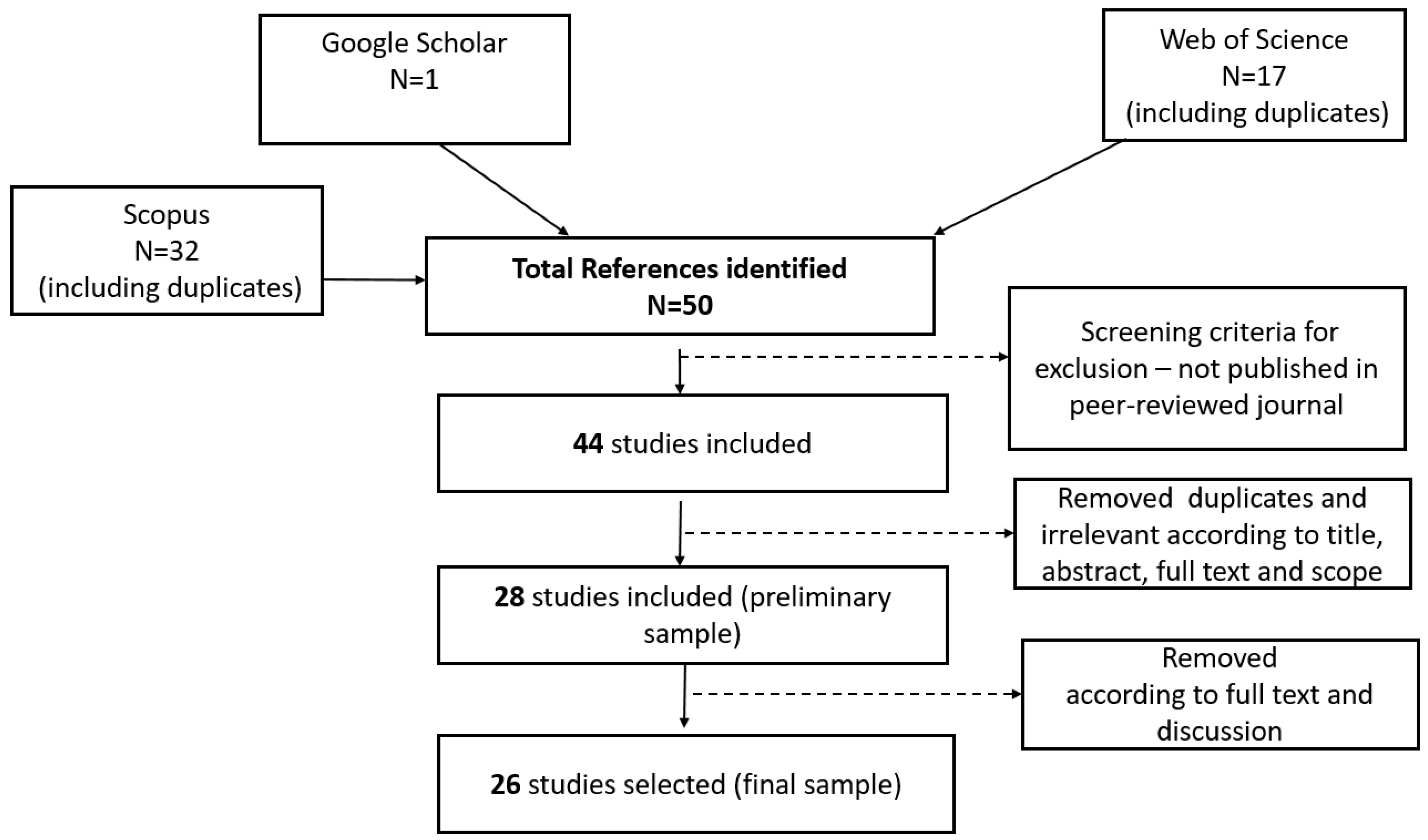
Initially, four articles written in Spanish were collected but subsequently dropped due to the irrelevant content. As of August 2023, there were 32 entries from Scopus and 17 entries from Web of Science. After double-checking the Google Scholar, ProQuest, and EBSCO databases, one more entry was found in Google Scholar. After removing duplicates and irrelevant entries, we selected 44 entries from Scopus for further examination. Two of these were excluded during discussions among the three researchers for being unrelated to sustainable tourism. Papers on green purchase behavior were excluded as well. The three researchers examined each paper independently. The remaining 26 articles are related to sustainable tourism, either closely or loosely.
In the first step of the PRISMA protocol (see Supplementary Materials), 50 items are identified. After going through the identification, screening, and selection steps [14,15], the final sample consisted of 26 studies (Figure 1).
Figure 1.
Procedure for journal article selection.
Regarding key topic identification, the selected papers were reviewed by two of our researchers. If there was disagreement between the two researchers, a discussion time was arranged to resolve the misalignment. If the researchers still could not reach a final agreement, the third researcher was involved in the decision.
3. Results
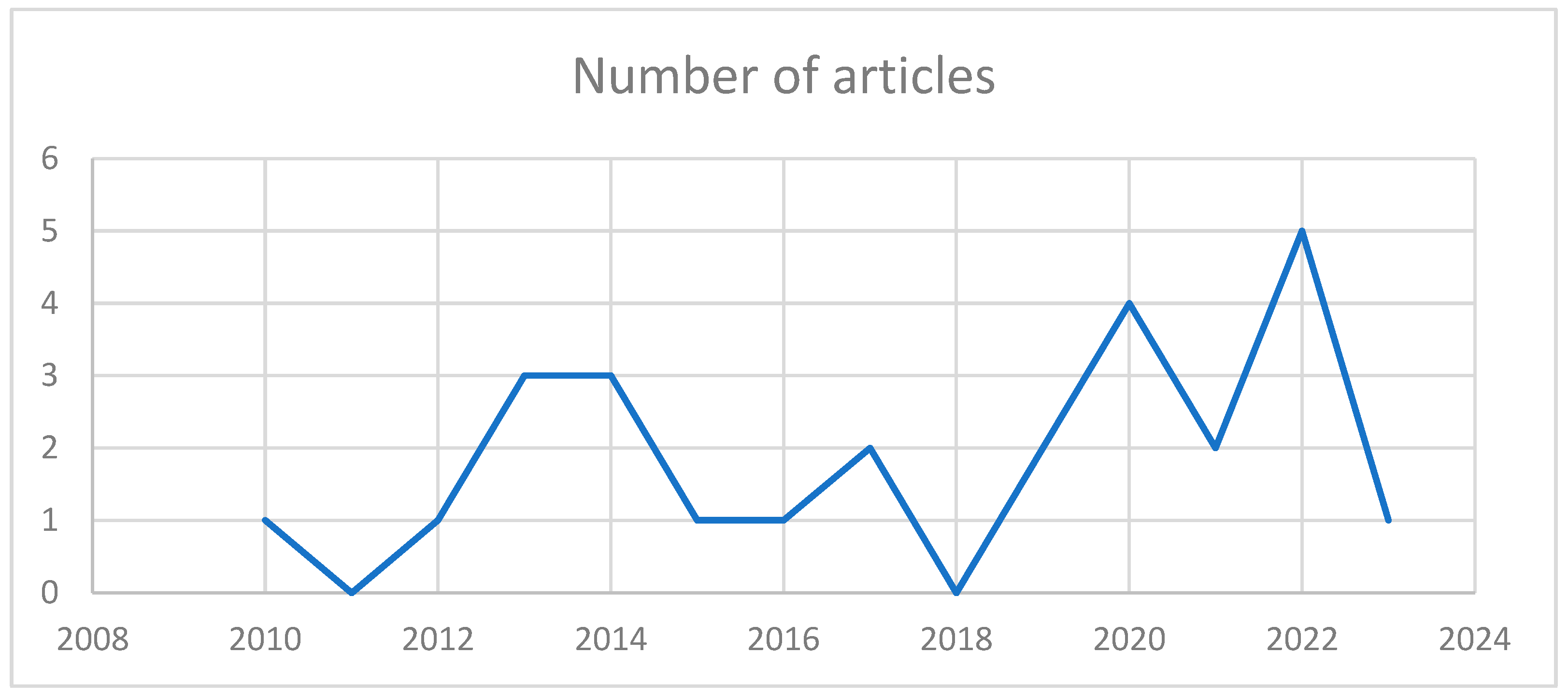
Of the 26 publications, six were published in 2022, two in 2021, and four in 2020. There has been an evident upward trend recently (Figure 2). The topic caught scholars’ attention starting in 2010. There is only one article published in 2023 because articles take time from their acceptance to publication. In terms of publication outlets, six articles were published in the Journal of Sustainable Tourism, three articles in the International Journal of Hospitality Management, and two articles in the Annals of Tourism Research, the Scandinavian Journal of Hospitality and Tourism, and Tourism Recreation Research, respectively (Table 1). In the first period (2010 to 2018), articles were mostly published in the Journal of Sustainable Tourism and the Annals of Tourism Research. In the recent period (2019–2023), articles were published diversely in different journals. They are the International Journal of Hospitality Management, the Scandinavian Journal of Hospitality and Tourism, Tourism Recreation Research, Sustainability, the Journal of Tourism Futures, Sustainability Development, Tourism and Hospitality Research, Tourism Review, the Journal of Destination Marketing and Management, the Journal of Hospitality and Tourism Management, and the Journal of Rural Studies. In terms of active scholars, Higham, J. appeared three times, twice as a first author and once as a co-author. Cohen, S. A. also appeared three times, once as the first author and twice as a co-author.
Figure 2.
Number of articles over the years.
Table 1.
List of journals on the attitude/intention–behavior gap in sustainable tourism (N = 26). (source: authors).
All records were assessed for eligibility through the full text. Please refer to the two tables listed below. The first table (Table 2) is a summary of the literature findings on the attitude–behavior gap, with 18 articles listed chronologically. From 2012 to 2020, the main method used to study the attitude–behavior gap was in-depth interviews, with respondents mainly from the US or Europe. In 2021, a survey or mixed methods were used, with respondents from Iran and Thailand.
Table 2.
Summary of the literature findings on the attitude-behavior gap in sustainable tourism (source: authors).
Seven articles are devoted to the intention–behavior gap. Almost all of them are using survey method. Only one article is a conceptual article, and another is a case study. Respondents are mainly from United States and Europe (Table 3).
Table 3.
Summary of literature findings pertaining to the intention-behavior gap in sustainable tourism.
4. Key Research Topics
Key research topics in attitude–behavior gaps are the role of environmental knowledge [11,23], protected area management [16], the role of service quality [17], risk perception [18], moral licensing [12], sustainability communication [20], business owners in tourism [21], environmental concern [5,22], tourist psychology [27,28], and intervention [2,26].
Key research topics in the intention–behavior gaps of sustainable tourism are green certification or label [30,32], value, rationality, and social desirability [8], motivation [10], and trust, inconvenience, and quality [31,33].
In summary, four emerging research trends have been discovered in recent years: (1) more studies are using mixed methods and/or surveys; (2) green or environmental knowledge of tourist; (3) the role of green certification; and (4) tourist moral values.
A survey was used with a student sample, and expert interviews were conducted on the attitude–behavior gap. Researchers can cover both the scope (external environmental factors) and depth (various stakeholders) of the Lake Constance region [11]. A similar approach was adopted by another scholar [16] in a small village in Iran.
Tourists are found to often lack the necessary wildlife specialist knowledge, and their decisions about whether to attend a particular wildlife tourist attraction are affected by psychological biases [23]. Social identity theory suggests that one’s behavior is motivated by self-perceived identity, which has been shown to play a role in explaining the attitude–behavior gap [27]. Additionally, moral considerations are known to be one of the factors affecting travel decisions. However, changing one’s lifestyle to align with sustainable travel practices is a significant undertaking that requires support from various suppliers [12]. In this context, understanding the role of psychological biases, identity, and moral considerations can inform the development of effective strategies to promote sustainable tourism.
5. Discussion
5.1. Intention-Behavior Gap
Green information is a prerequisite for customers to make the decision to book a green hotel, but there is an intention–behavior gap. However, the authors did not measure actual behavior outcomes; instead, they still asked respondents about their intentions in the survey. In conclusion, providing more green information to respondents is expected to increase their intention to book the hotel [30]. If intention is a prerequisite to sustainable tourism behavior, then the goal-setting process is inevitable. Once one has a clear mindset and will, they are more likely to set a clear goal. According to self-regulation theory, behavior is an outcome of goal-setting [30].
To investigate the intention–behavior gap, one effective method involves comparing their past behavior to their future intentions [31]. While this method allows for the measurement of actual behavior, it is worth noting that the timing of cause and effect is not always perfectly aligned, as intentions usually form before behavior, and sustainable travel behavior may take time to develop.
Factors affecting travel behavior and travel intention are different. For example, travel motivation dimensions affect behavior but not the intention to travel [10].
5.2. Attitude-Behavior Gap
The attitude-behavior gap is defined as cognitive dissonance between understanding something and responding to it [2,5]. Researchers have noted that the tourism experience is different from daily routine work that is supposed to be sustainable [27]. According to the theory of planned behavior, attitude is only one of the independent variables affecting intention and behavior. Other variables include social norms and perceived behavior control. These are the possible sources, besides attitude, that influence behavior [2]. Drawing upon the attribution theory, tourists might attribute negative environmental situations to others [2]. Personal norms, perceived values, and beliefs could also affect a tourist’s sustainable intentions [36].
Another example of the attitude-behavior gap is evident when tourists express support for renewable energies and sustainable mobility, yet do not actually use these resources [9]. In a similar vein, another study has found that tourists claim to prioritize environmental impact when choosing a tour, but the effect of eco-certification on their actual behavior is not significant [24].
Service quality is a moderator between environmental attitude and behavior in an eco-friendly hotel context [17]. Risk perception is a moderator of the attitude-behavior gap; when tourists perceive higher risk, they tend to avoid traveling [18]. Attitude-behavior gap studies have mainly utilized surveys and in-depth interviews to collect data. However, when testing a specific moderator/variable, the quantitative method may be employed. For example, in one study, service quality was tested as a moderator of the association between attitude and behavior using the quantitative approach [17]. Besides, the qualitative method may also be used to identify additional factors that may influence the relationship between attitude and behavior.
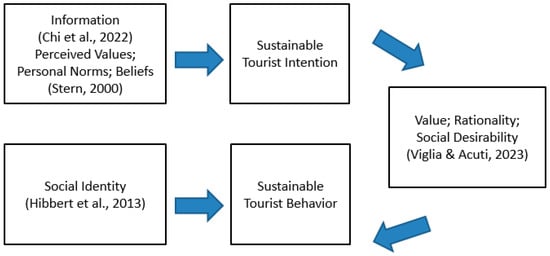
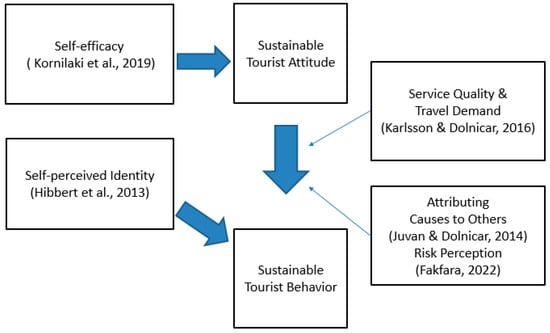
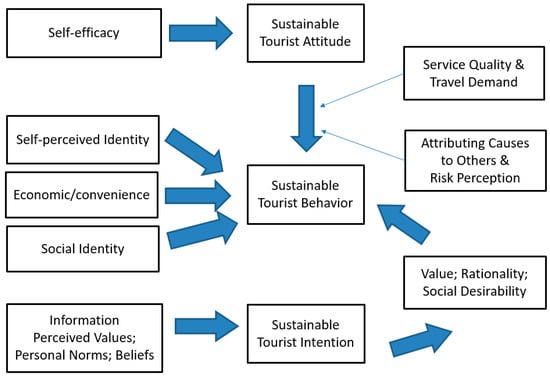
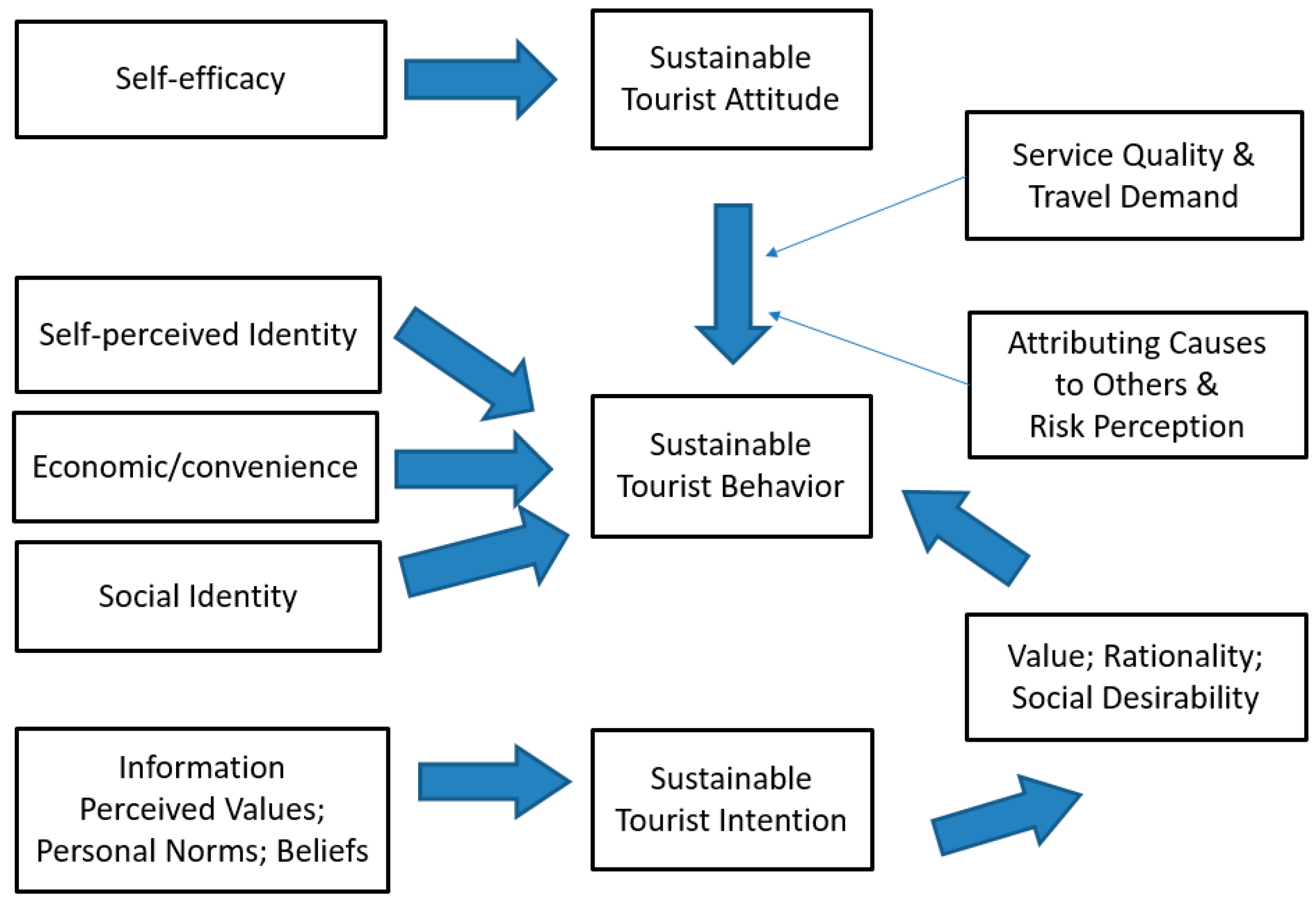
Based on recent findings, two proposed models explain the intention-behavior gap and the attitude-behavior gap in sustainable tourism. There are forces that directly affect sustainable tourist intentions and behaviors. Between sustainable tourist intention and behavior, there are mediators such as value, rationality, and social desirability (Figure 3). Similarly, there are variables such as self-efficacy that directly affect sustainable tourist attitudes, and self-perceived identity affects sustainable tourist behavior. Between sustainable tourist attitude and behavior, there are moderators such as service quality, travel demand, risk perception, and attribution effect to others (Figure 4). Figure 5 is a combined framework of Figure 3 and Figure 4 (Figure 5). Factors including economics and convenience are added to the combined model.
Figure 3.
Antecedents and outcomes of sustainable tourist intention and sustainable tourist behavior [8,27,30,35] (source: authors).
Figure 4.
Attitude–behavior gap in sustainable tourism [2,18,21,24,27] (source: authors).
Figure 5.
A combined framework for sustainable tourist behavior (sources: authors).
6. Future Research Areas
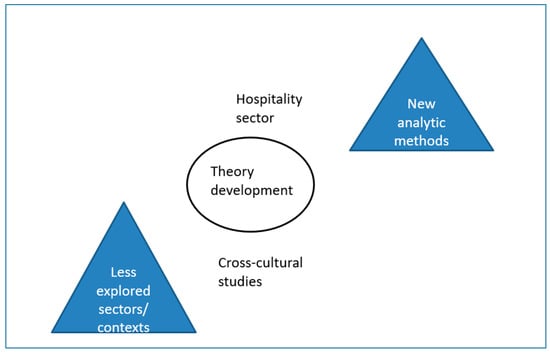
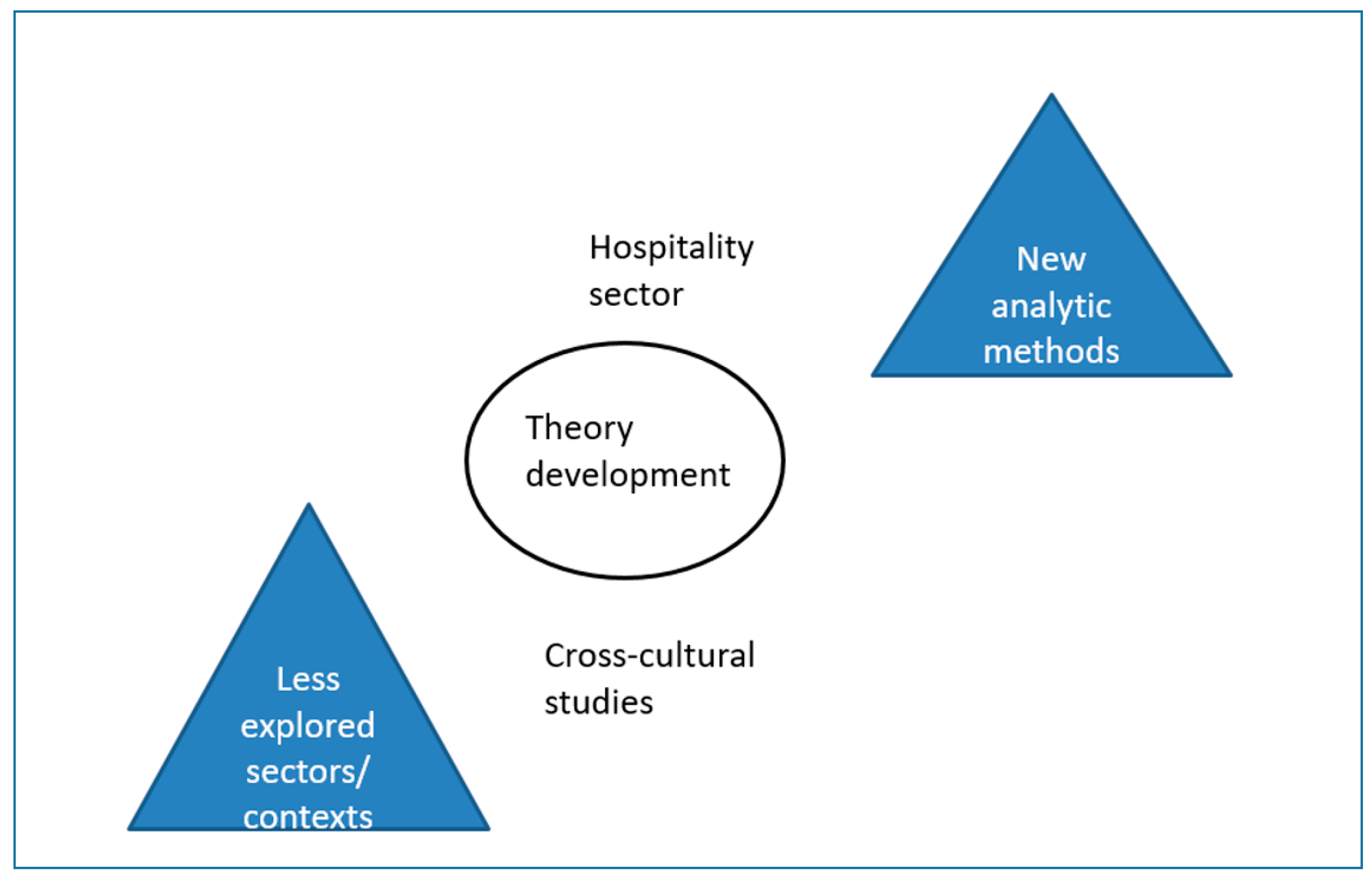
Following a systematic review of the literature until August 2023 and emerging research trends, there are several future research areas identified below (Figure 6).
Figure 6.
Future research areas (source: authors).
6.1. Theory Development
Numerous journal articles still make use of well-established frameworks such as the theory of planned behavior (TPB) and the technology acceptance model (TAM). While it may have been reasonable to use these models in the past, further theoretical development is necessary to address the intention–behavior gap in sustainable tourism. The role of prescribed responsibility, moral consideration and citizenship behavior would be the possible moderators.
The value–belief–norm theory has been found to be useful in the environmental movement. People’s behavior comes from their values and beliefs that their actions can protect and/or restore their values [35]. It was used by a group of researchers [27] and recently by [20] in the tourism context of the attitude–behavior gap.
6.2. Hospitality Sector
Despite the importance of the hospital sector, there have been relatively few studies conducted in this area. One study examined the impact of eco-certification on tourists’ choice of service providers [24], while another indicated the role of price in shaping consumer behavior [30]. Future research in this area can contribute to a more comprehensive understanding of the complex issues that arise in the hospitality sector and help inform effective policy and sustainable practice.
6.3. Cross-Cultural Studies
The findings of our study on collaboration patterns are presented in a unified location. The availability of adequate equipment and collaboration among institutions across different countries can facilitate such research. Moreover, investigating cross-cultural factors can be more easily achieved in this context, given the lack of existing literature on cross-cultural research in this area.
6.4. Other Tourism Sectors
The cruise market and parks have been the focus of relatively few studies, while areas such as wine, sports, wellness spas, exhibitions, conferences, and airlines remain relatively unexplored.
6.5. Qualitatively Studies and Other Methodologies
Recent research in 2023 has witnessed a surge in the number of quantitative studies, indicative of an increasing interest in rigorous empirical approaches. However, other methodologies, such as conjoint analysis and qualitative comparative analysis (QCA), could also be applied to further enhance our understanding of complex phenomena. In addition, experimental methods can be particularly useful for collecting behavioral data in controlled settings.
Following an analysis of the research gaps above, Table 4 below illustrates the recent findings, specific unanswered research questions in the existing literature, and further research questions based on the theory–context–method (TCM) model [37].
Table 4.
Further research directions (source: authors).
7. Conclusions
Our study is the first systematic review conducted on the attitude–behavior gap and the intention–behavior gap. The topic is important, but only a few studies are devoted to it. It might be due to the difficulties in behavior measurement [7]. Key topics on the attitude–behavior gap and intention–behavior gap were identified. The results of the study showed that theoretical development is restricted to the extension of well-established frameworks, such as the theory of planned behavior. Recent research trends indicate a preference for mixed methods or surveys in studying the attitude–behavior gap and the intention–behavior gap. Two proposed models explain the intention–behavior gap and attitude–behavior gap in sustainable tourism based on recent findings. A combined framework was proposed to explain sustainable tourist behavior.
There has been an evident upward trend in the number of published articles recently. In terms of publication outlets, six articles are in the Journal of Sustainable Tourism. Analysis of publication outlets shows that some high-impact journals are popular with a large number of citations. Journal articles are much more common in tourism and less in hospitality. Four emerging research trends have been discovered in recent years: (1) more studies are using the mixed method and/or survey; (2) green or environmental knowledge; (3) the role of green certification; and (4) tourist moral values. It is expected that more journal articles could be published in the future with suggested research directions, including theory development, the hospitality sector, and cross-cultural settings. Unanswered research questions are listed under the TCM framework based on the previous literature.
We have made an original contribution by proposing new frameworks for the attitude–behavior gap and intention–behavior gap, departing from traditional theories such as the theory of planned behavior, and summarizing previous findings. Direct and indirect factors that influence sustainable tourist behavior, with sustainable tourist attitude and intention serving as mediators, have been identified.
The outcome of this study summarizes previous findings and proposes a series of research questions. Practitioners would like to know the other factors affecting sustainable tourist behavior and the mediators or moderators between the association of intention and behavior in sustainable tourism. Travel agents, hotel owners, and retailers know how to convert tourists’ sustainable intentions into behavior. Policy makers will find our results useful.
We suggest future research can measure tourist behavior directly, or “proxy” behavior, and use mixed or multi-methods to create triangulation. Field studies and experimental studies with realistic scenarios are the possible options. All in all, our findings offer valuable insights into the complex relationship between attitudes, intentions, and behaviors in sustainable tourism.
Supplementary Materials
The following supporting information can be downloaded at: https://www.mdpi.com/article/10.3390/su151914076/s1, PRISMA 2020 Checklist. Reference [39] is cited in the Supplementary Materials.
Author Contributions
Conceptualization, T.M.W. and D.L.; methodology, T.M.W.; software, T.M.W.; validation, T.M.W.; formal analysis, T.M.W.; investigation, T.M.W.; resources: D.L. and S.W.L.; data curation, T.M.W.; writing—original draft preparation, T.M.W.; writing—review and editing, S.W.L.; visualization, T.M.W.; supervision, S.W.L. All authors have read and agreed to the published version of the manuscript.
Funding
This study was partially funded by College of Professional and Continuing Education, The Hong Kong Polytechnic University.
Institutional Review Board Statement
Not applicable.
Informed Consent Statement
Not applicable.
Data Availability Statement
Not applicable.
Conflicts of Interest
The authors declare no conflict of interest.
References
- Essiz, O.; Mandrik, C. Intergenerational influence on sustainable consumer attitudes and behaviors: Roles of family communication and peer influence in environmental consumer socialization. Psychol. Mark. 2022, 39, 5–26. [Google Scholar] [CrossRef] [Scilit]
- Juvan, E.; Dolnicar, S. The attitude–behaviour gap in sustainable tourism. Ann. Tour. Res. 2014, 48, 76–95. [Google Scholar] [CrossRef] [Scilit]
- Kim, J.; Kim, S.; Lee, J.; Kim, P.; Cui, Y. Influence of Choice Architecture on the Preference for a Pro-Environmental Hotel. J. Travel Res. 2020, 59, 512–527. [Google Scholar] [CrossRef] [Scilit]
- Ajzen, I. From intentions to actions: A theory of planned behavior. In Action-Control: From Cognition to Behavior; Kuhl, J., Beckmann, J., Eds.; Springer: Heidelberg, Germany, 1985; pp. 11–39. [Google Scholar]
- Higham, J.; Reis, A.C.; Cohen, S.A. Australian climate concern and the ‘attitude-behaviour gap’. Curr. Issues Tour. 2015, 19, 338–354. [Google Scholar] [CrossRef] [Scilit]
- Morwitz, V.; Munz, K. Intentions. Consum. Psychol. Rev. 2021, 4, 26–41. [Google Scholar] [CrossRef] [Scilit]
- Hulland, J.; Houston, M. The importance of behavioral outcomes. J. Acad. Mark. Sci. 2021, 49, 437–440. [Google Scholar] [CrossRef] [Scilit]
- Viglia, G.; Acuti, D. How to overcome the intention-behavior gap in sustainable tourism: Tourism agenda 2030 perspective article. Tour. Rev. 2023, 78, 321–325. [Google Scholar] [CrossRef] [Scilit]
- Wang, T.; Li, C. Differences between the formation of tourism purchase intention and the formation of actual behavior: A meta-analytic review. Tour. Manag. 2022, 91, 104527. [Google Scholar] [CrossRef] [Scilit]
- Karl, M.; Batter, A.; Ritchie, W.; Passauer, M. The impact of travel constraints on travel decision-making: A comparative approach of travel frequencies and intended travel participation. J. Destin. Mark. Manag. 2020, 18, 100471. [Google Scholar] [CrossRef] [Scilit]
- Thimm, T. E-destination: The future of e-mobility in the Lake Constance region, Germany. J. Tour. Futures 2022, 8, 24–36. [Google Scholar] [CrossRef] [Scilit]
- Nikolic, T.; Pantic, S.; Paunovic, I.; Filipovic, S. Sustainable Travel Decision-Making of Europeans: Insights from a Household Survey. Sustainability 2021, 13, 1960. [Google Scholar] [CrossRef] [Scilit]
- Moher, D.; Liberati, A.; Tetzlaff, J.; Altman, G. Preferred reporting items for systematic reviews and meta-analysis. The PRISMA statement. PLoS Med 2009, 6, 1–6. [Google Scholar] [CrossRef] [Scilit] [PubMed]
- Sana; Chakraborty, S.; Adil, M.; Sadiq, M. Ecotourism experience: A systematic review and further research agenda. Int. J. Consum. Stud. 2023, 1–26. [Google Scholar] [CrossRef] [Scilit]
- Chaudhary, A.H.; Polonsky, M.J.; McClaren, N. Littering behavior: A systematic review. Int. J. Consum. Stud. 2021, 45, 478–502. [Google Scholar] [CrossRef] [Scilit]
- Rastegar, R.; Breakey, N.; Drimi, S.; Ruhanen, L. Does tourism development shift residents’ attitudes to the environment and protected area management? Tour. Recreat. Res. 2023, 1–17. [Google Scholar] [CrossRef] [Scilit]
- Sadiq, M.; Adil, M.; Paul, J. Eco-friendly hotel stay and environmental attitude: A value-attitude-behaviour perspective. Int. J. Hosp. Manag. 2022, 100, 103094. [Google Scholar] [CrossRef] [Scilit]
- Fakfare, P.; Wattanacharoensil, W. Low-carbon tourism for island destinations: A crucial alterative for sustainable development. Sustain. Dev. 2023, 31, 180–197. [Google Scholar] [CrossRef] [Scilit]
- Seeler, S.; Zacher, D.; Pechlaner, H.; Hannes, T. Tourists as reflexive agents of change: Proposing a conceptual framework towards sustainable consumption. Scand. J. Hosp. Tour. 2021, 21, 567–585. [Google Scholar] [CrossRef] [Scilit]
- Tolkes, C. The role of sustainability communication in the attitude–behaviour gap of sustainable tourism. Tour. Hosp. Res. 2020, 20, 117–128. [Google Scholar] [CrossRef] [Scilit]
- Kornilaki, M.; Font, X.; Thomas, R. The sustainability behaviour of small firms in tourism: The role of self-efficacy and contextual constraints. J. Sustain. Tour. 2019, 27, 97–117. [Google Scholar] [CrossRef] [Scilit]
- Reis, A.; Higham, J. Climate change perceptions among Australian non-frequent flyers. Tour. Recreat. Res. 2017, 42, 59–71. [Google Scholar] [CrossRef] [Scilit]
- Moorhouse, T.; D’Cruze, N.C.; Macdonald, D.W. Unethical use of wildlife in tourism: What’s the problem, who is responsible, and what can be done? J. Sustain. Tour. 2017, 25, 505–516. [Google Scholar] [CrossRef] [Scilit]
- Karlsson, L.; Dolnicar, S. Does Eco Certification Sell Tourism Services? Evidence from a Quasi-Experimental Observation Study in Iceland. J. Sustain. Tour. 2016, 24, 694–714. [Google Scholar] [CrossRef] [Scilit]
- McDonald, S.; Oates, S. The researcher role in the attitude-behaviour gap. Ann. Tour. Res. 2014, 46, 168–170. [Google Scholar]
- Cohen, S.A.; Higham, J.E.S.; Reis, A.C. Sociological barriers to developing sustainable discretionary air travel behaviour. J. Sustain. Tour. 2013, 21, 982–998. [Google Scholar] [CrossRef] [Scilit]
- Hibbert, J.; Dickinson, J.; Gossling, S.; Curtin, S. Identity and tourism mobility: An exploration of the attitude-behaviour gap. J. Sustain. Tour. 2013, 21, 999–1016. [Google Scholar] [CrossRef] [Scilit]
- Higham, J.; Cohen, S.A.; Peeters, P.; Gössling, S. Psychological and behavioural approaches to understanding and governing sustainable mobility. J. Sustain. Tour. 2013, 21, 949–967. [Google Scholar] [CrossRef] [Scilit]
- Antimova, R.; Nawijn, J.; Peeters, P. The awareness/attitude-gap in sustainable tourism: A theoretical perspective. Tour. Rev. 2012, 67, 7–16. [Google Scholar] [CrossRef] [Scilit]
- Chi, C.; Chi, O.; Xu, X.; Kennedy, I. Narrowing the intention-behavior gap: The impact of hotel green certification. Int. J. Hosp. Manag. 2022, 107, 103305. [Google Scholar] [CrossRef] [Scilit]
- Birch, D.; Memery, J. Tourists, local food and the intention-behaviour gap. J. Hosp. Tour. Manag. 2020, 43, 53–61. [Google Scholar] [CrossRef] [Scilit]
- Lissner, I.; Mayer, M. Tourists’ willingness to pay for Blue Flag’s new ecolabel for sustainable boating: The case of whale-watching in Iceland. Scand. J. Hosp. Tour. 2020, 4, 352–357. [Google Scholar] [CrossRef] [Scilit]
- Dinis, I.; Simoes, O.; Cruz, C.; Teodoro, A. Understanding the impact of intentions in the adoption of local development practices by rural tourism hosts in Portugal. J. Rural. Stud. 2019, 72, 92–103. [Google Scholar] [CrossRef] [Scilit]
- Lee, C.; Mjelde, J.; Kim, T.; Lee, H. Estimating the intention behavior gap associated with a mega event: The case of the Expo 2012 Yeosu Korea. Tour. Manag. 2014, 41, 168–177. [Google Scholar] [CrossRef] [Scilit]
- Stern, P.C. Toward a coherent theory of environmental significant behavior. J. Soc. Issues 2000, 56, 407–424. [Google Scholar] [CrossRef] [Scilit]
- Han, H.; Kim, Y. An Intestigation of green hotel customers’ decision formation: Developing an extended model of the theory of planned behavior. Int. J. Hosp. Manag. 2015, 29, 659–668. [Google Scholar] [CrossRef] [Scilit]
- Paul, J.; Parthasarathy, S.; Gupta, P. Exporting challenges of SMEs: A review and future research agenda. J. World Bus. 2017, 52, 1810–1824. [Google Scholar] [CrossRef] [Scilit]
- Batool, T.; Ross, V.; Brijs, K.; Neven, A.; Smeets, C.J.P.; Scherrenberg, M.; Dendale, P.; Vanrompay, Y.; Janssens, D.; Wets, G. It’s how you say it—The extended Theory of Planned Behaviour explains active transport use in cardiac patients depending on the type of self-report in a hypothesis-generating study. Transp. Res. Part F Psychol. Behav. 2022, 90, 120–135. [Google Scholar] [CrossRef] [Scilit]
- Page, M.J.; McKenzie, J.E.; Bossuyt, P.M.; Boutron, I.; Hoffmann, T.C.; Mulrow, C.D.; Shamseer, L.; Tetzlaff, J.M.; Akl, E.A.; Brennan, S.E.; et al. The PRISMA 2020 statement: An updated guideline for reporting systematic reviews. BMJ 2021, 72, n71. [Google Scholar] [CrossRef] [Scilit]

Disclaimer/Publisher’s Note: The statements, opinions and data contained in all publications are solely those of the individual author(s) and contributor(s) and not of MDPI and/or the editor(s). MDPI and/or the editor(s) disclaim responsibility for any injury to people or property resulting from any ideas, methods, instructions or products referred to in the content. |
© 2023 by the authors. Licensee MDPI, Basel, Switzerland. This article is an open access article distributed under the terms and conditions of the Creative Commons Attribution (CC BY) license (https://creativecommons.org/licenses/by/4.0/).