Article

An Introductory Review of Input-Output Analysis in Sustainability Sciences Including Potential Implications of Aggregation


by
Jonas Bunsen
*,† and
Matthias Finkbeiner
Chair of Sustainable Engineering, Technische Universität Berlin, 10623 Berlin, Germany
*
Author to whom correspondence should be addressed.
Current address: Fachgebiet für Sustainable Engineering, Technische Universität Berlin, Institut für Technischen Umweltschutz, Sekr. Z 1, Straße des 17. Juni 135, 10623 Berlin, Germany.
Sustainability 2023, 15(1), 46; https://doi.org/10.3390/su15010046
Submission received: 21 November 2022 / Revised: 13 December 2022 / Accepted: 14 December 2022 / Published: 20 December 2022

Abstract

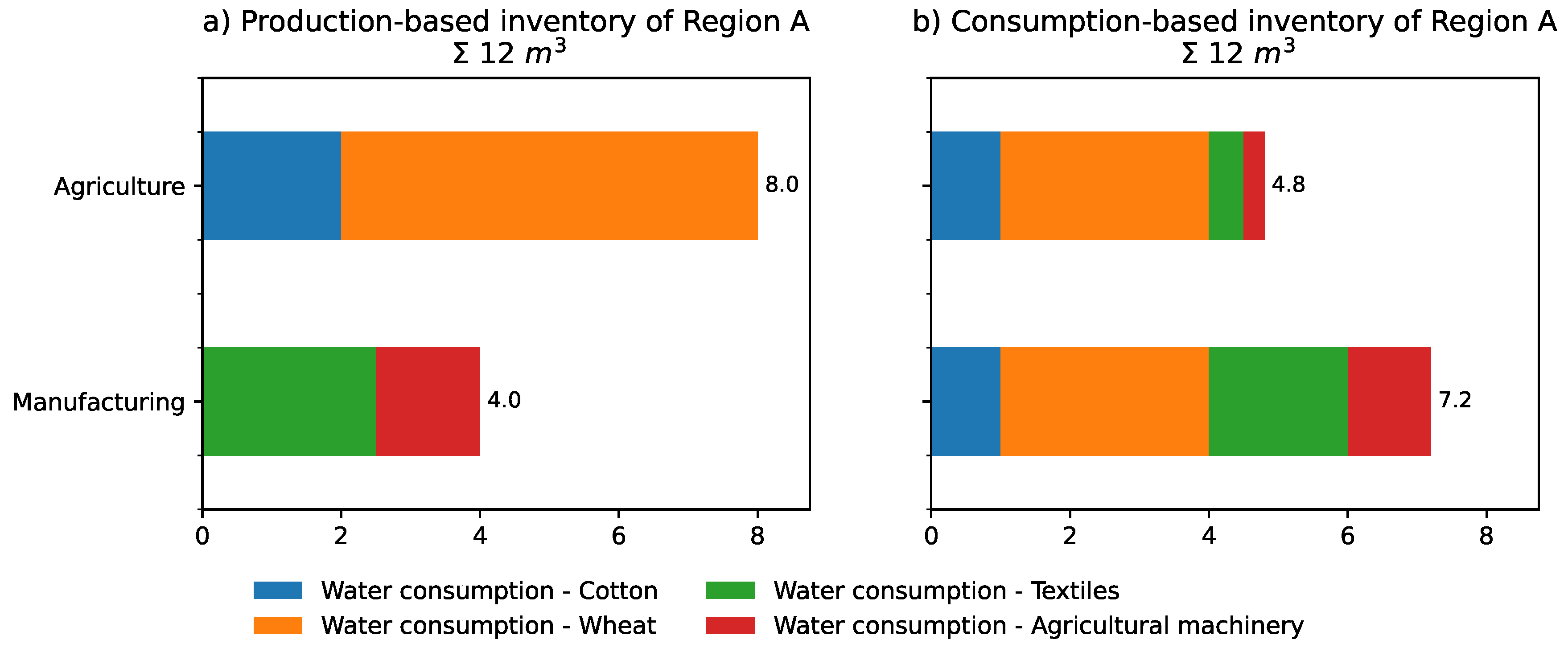
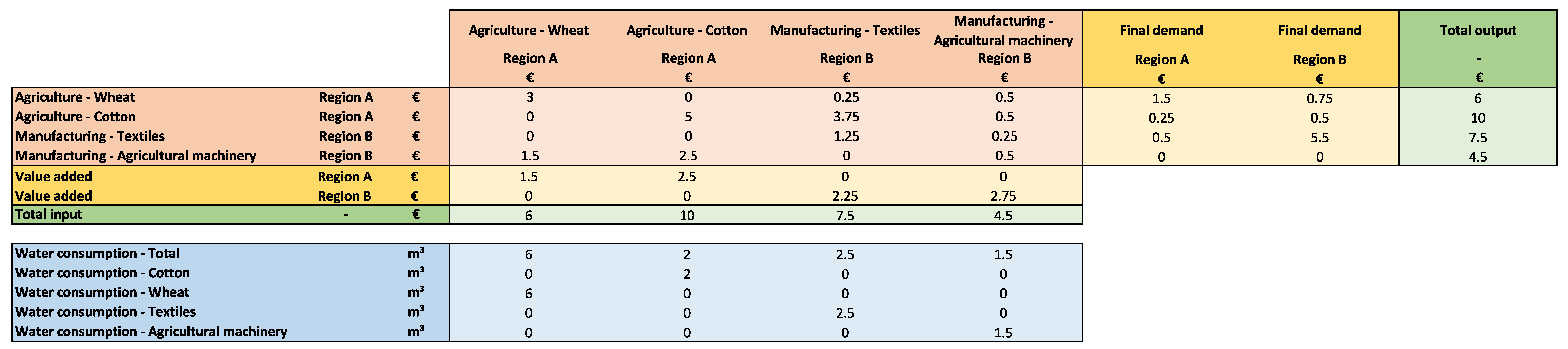
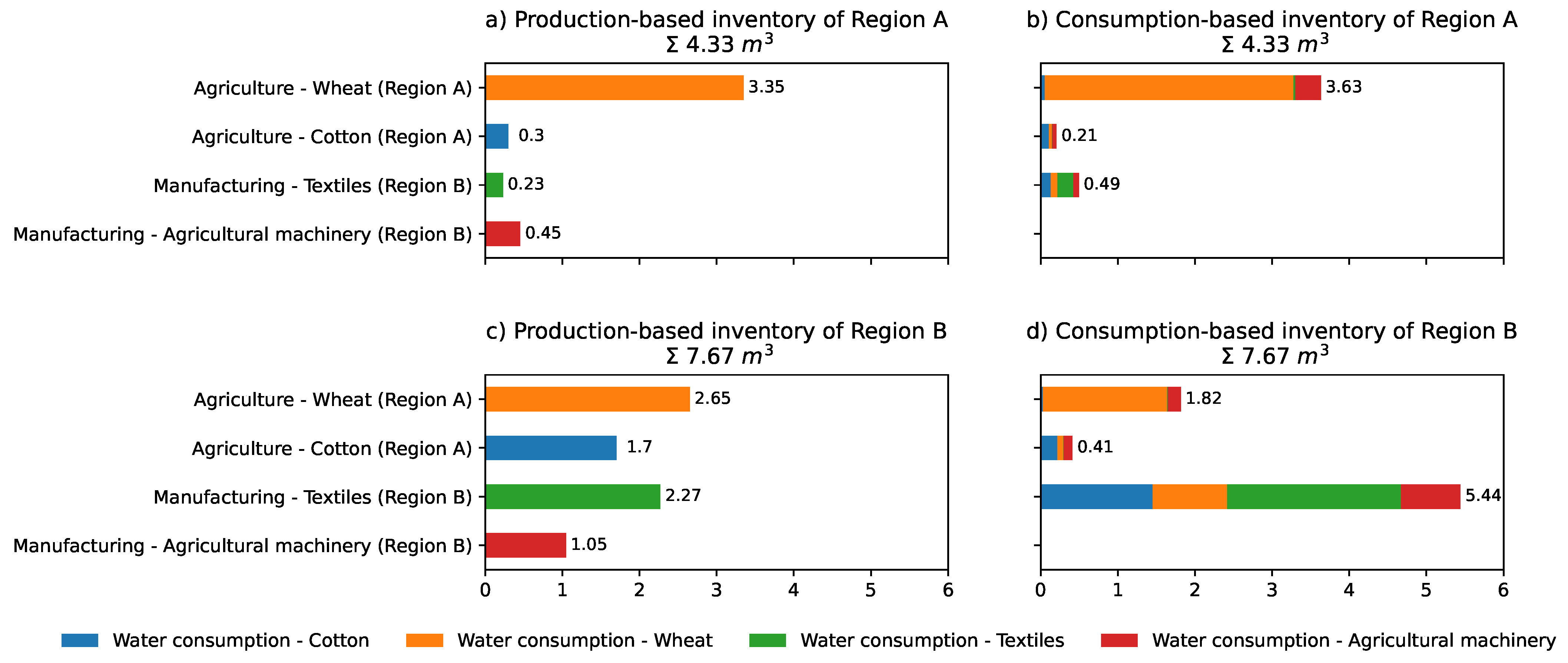
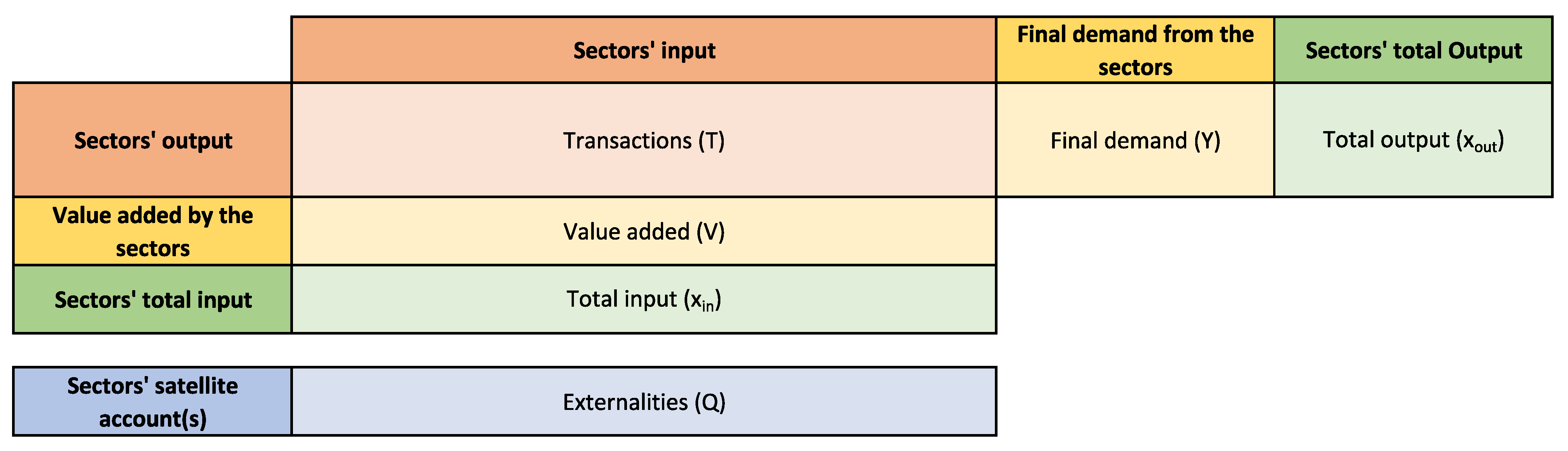
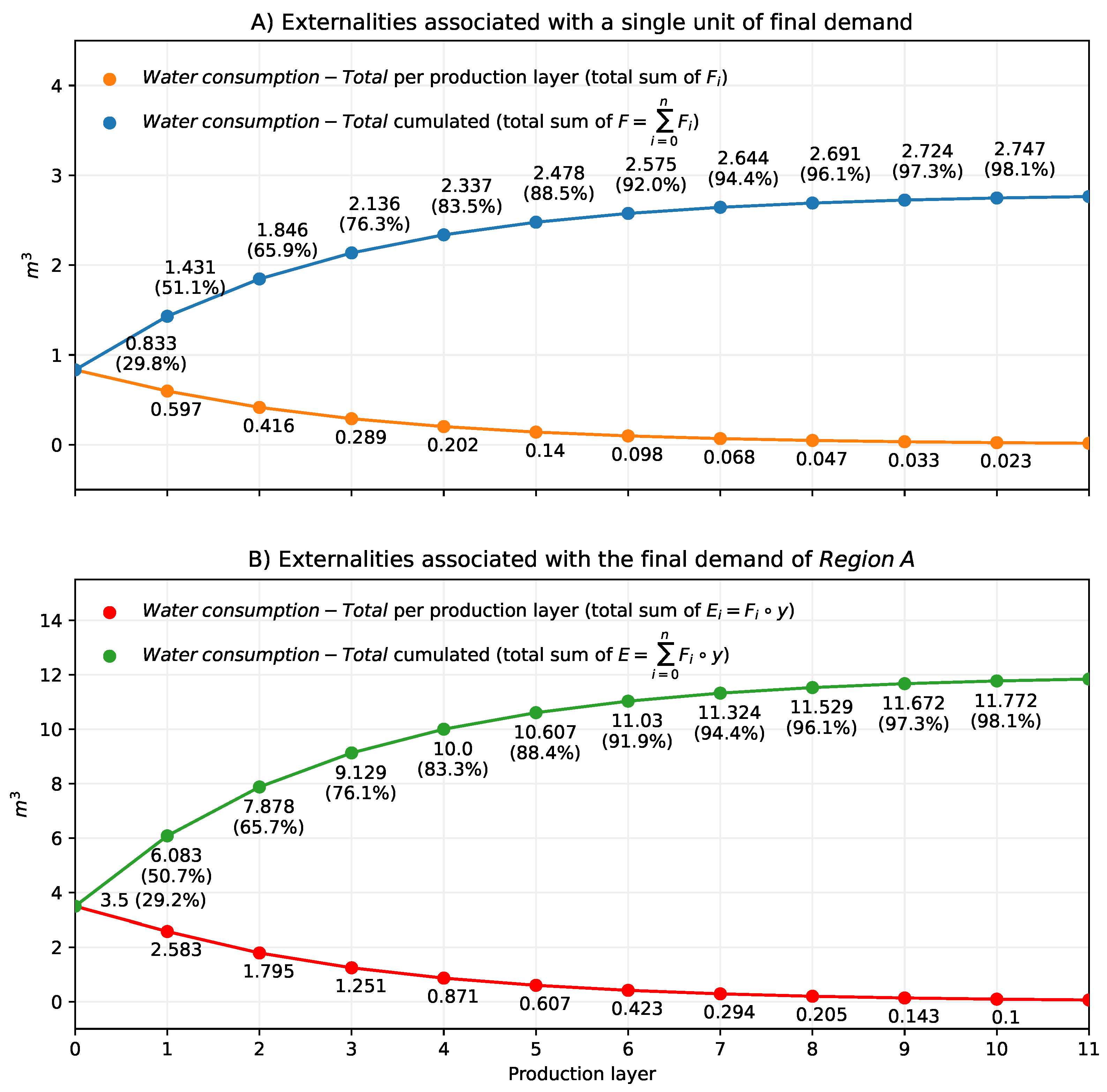
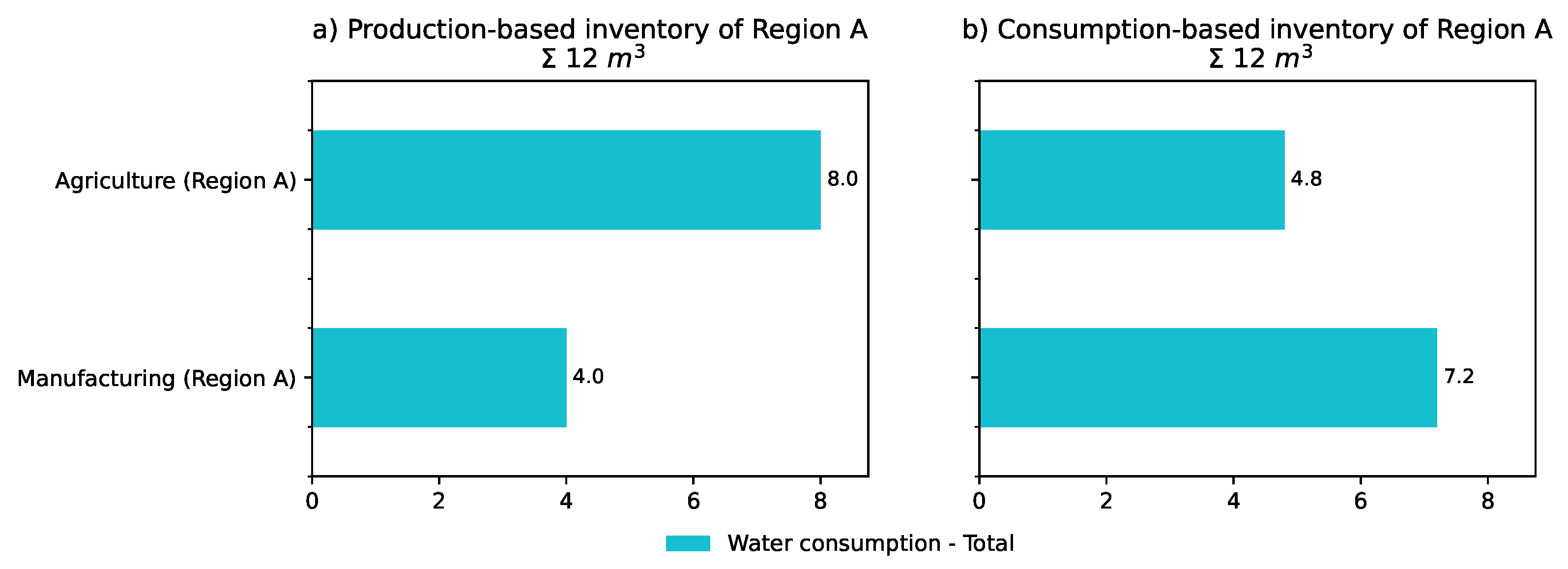
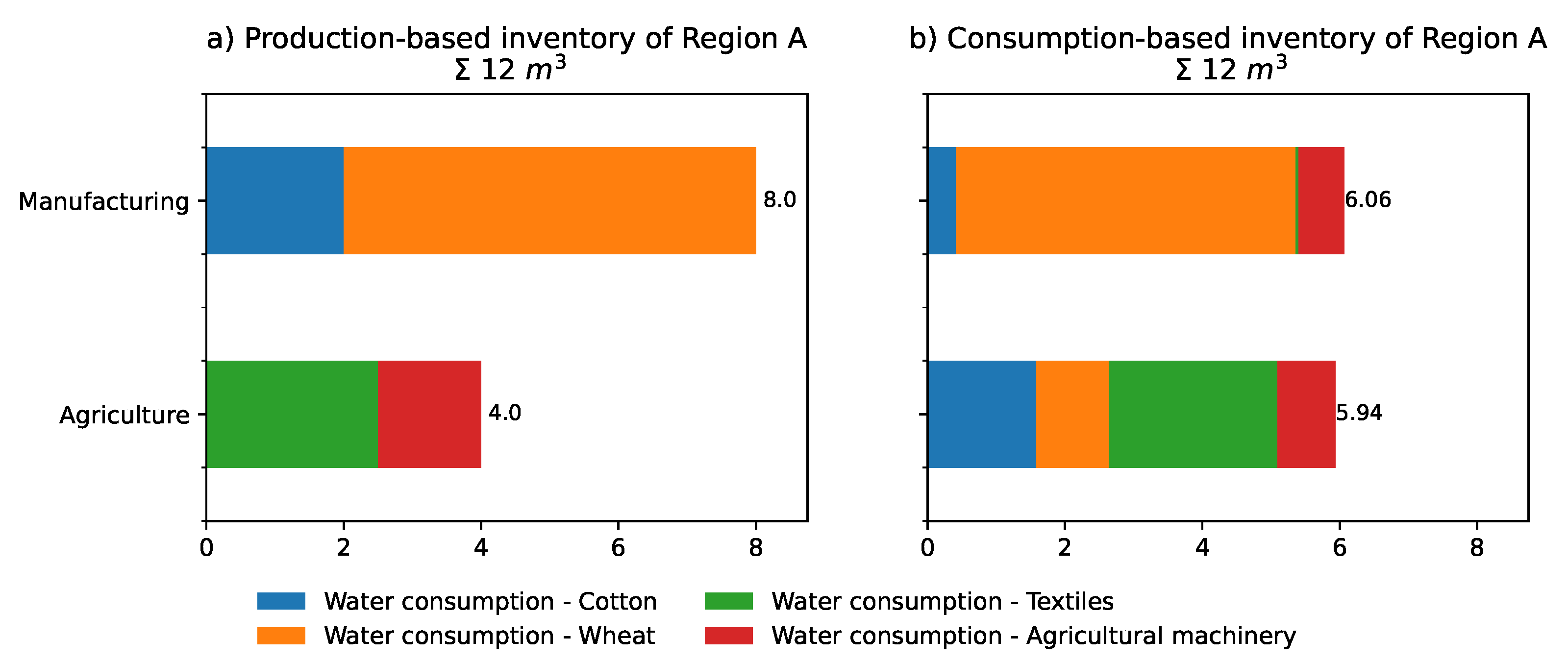
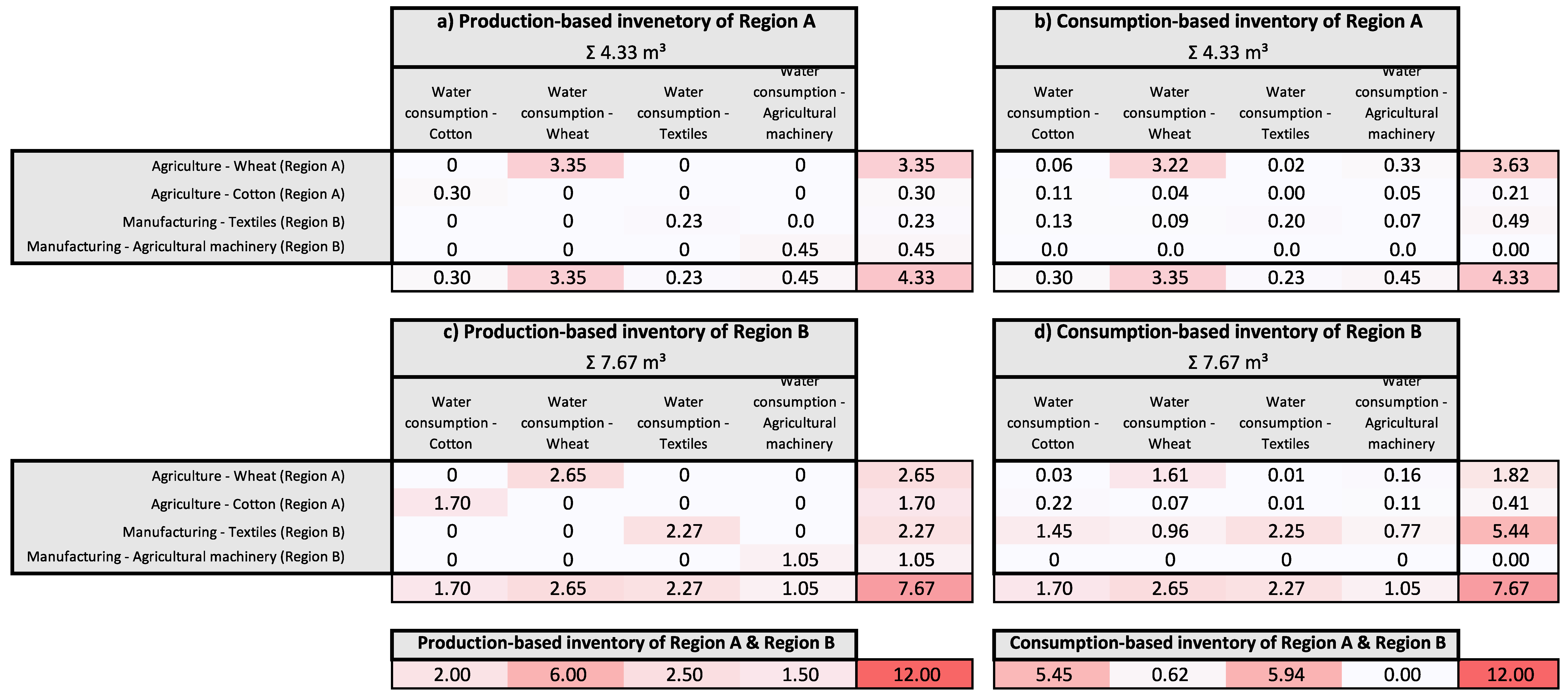
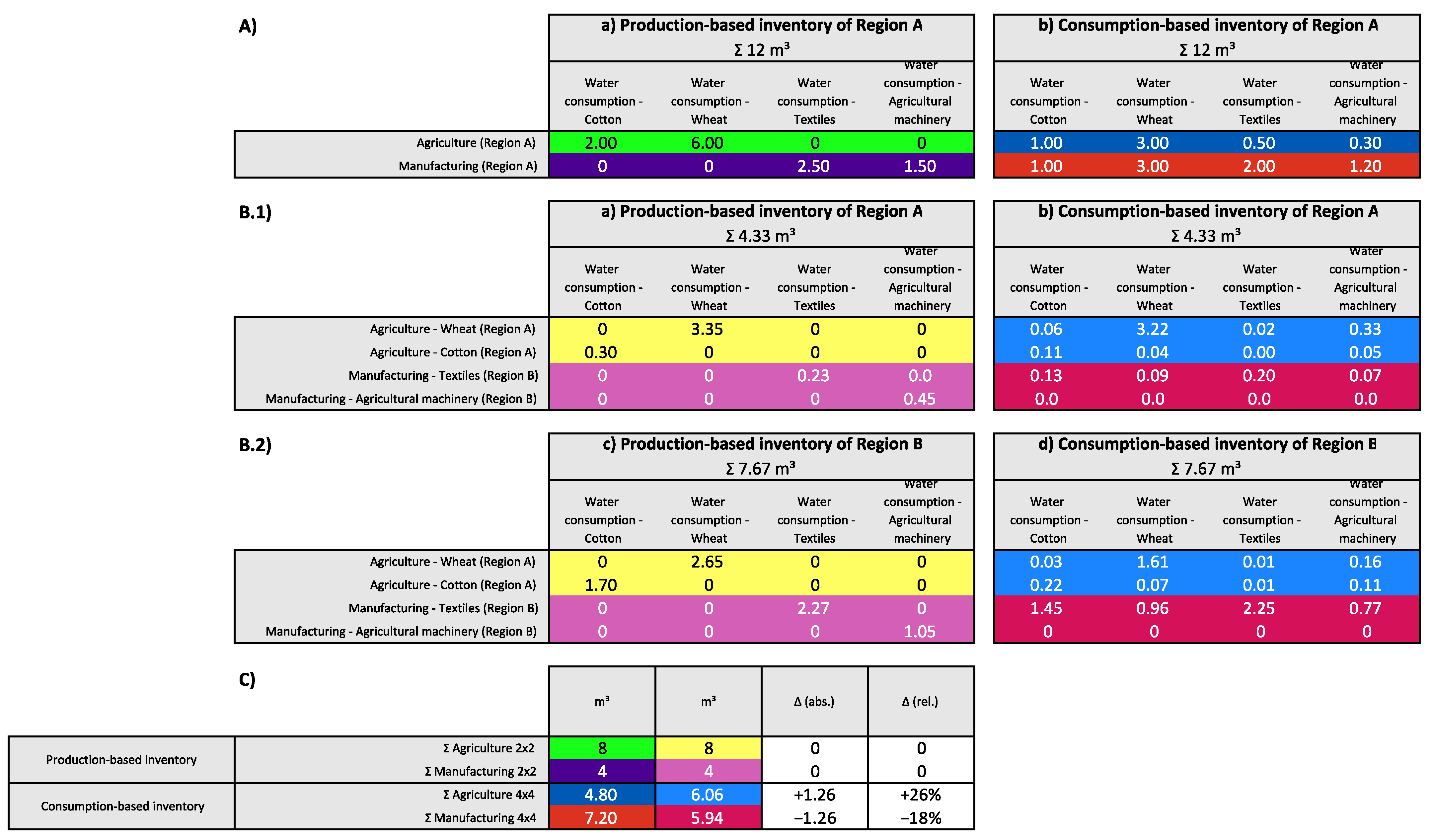
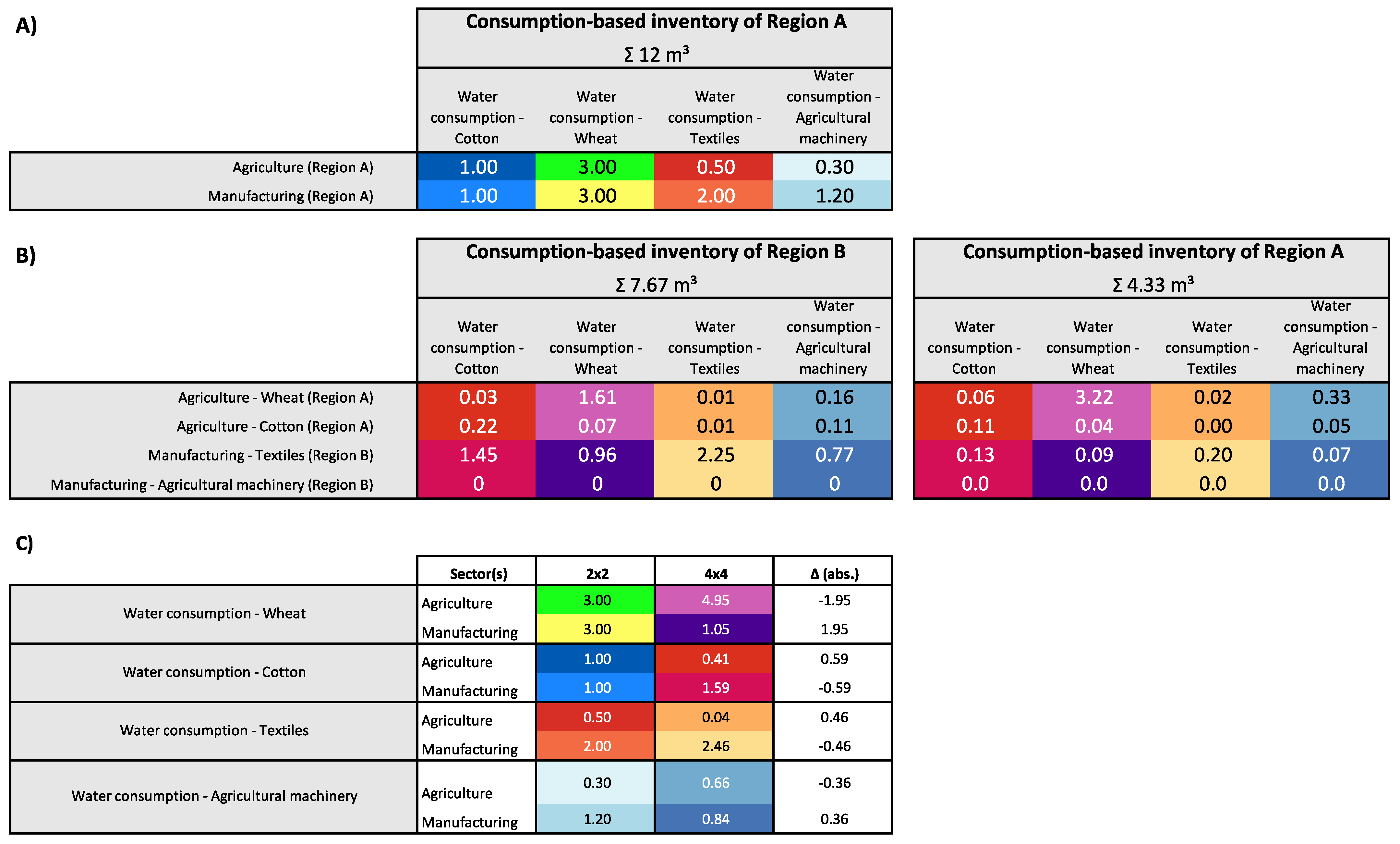
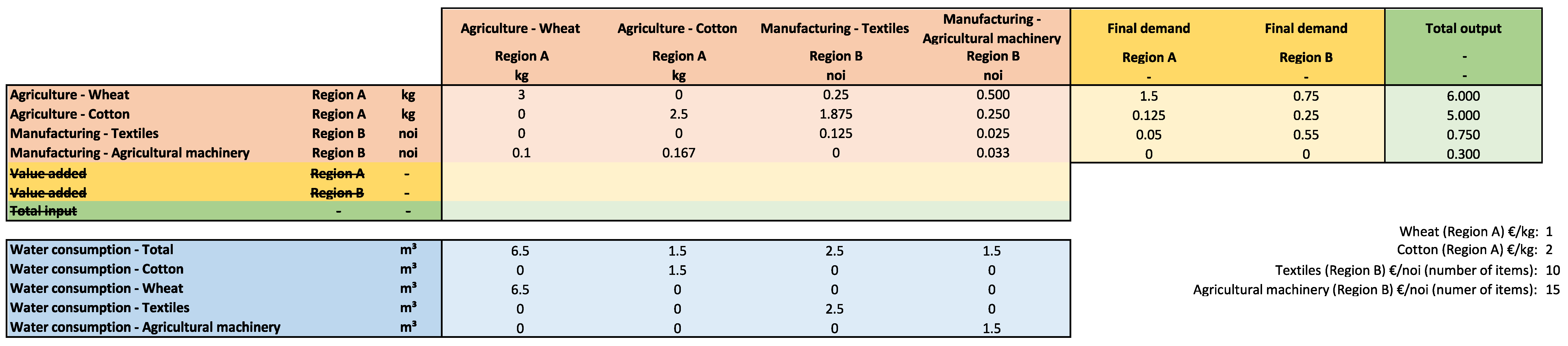
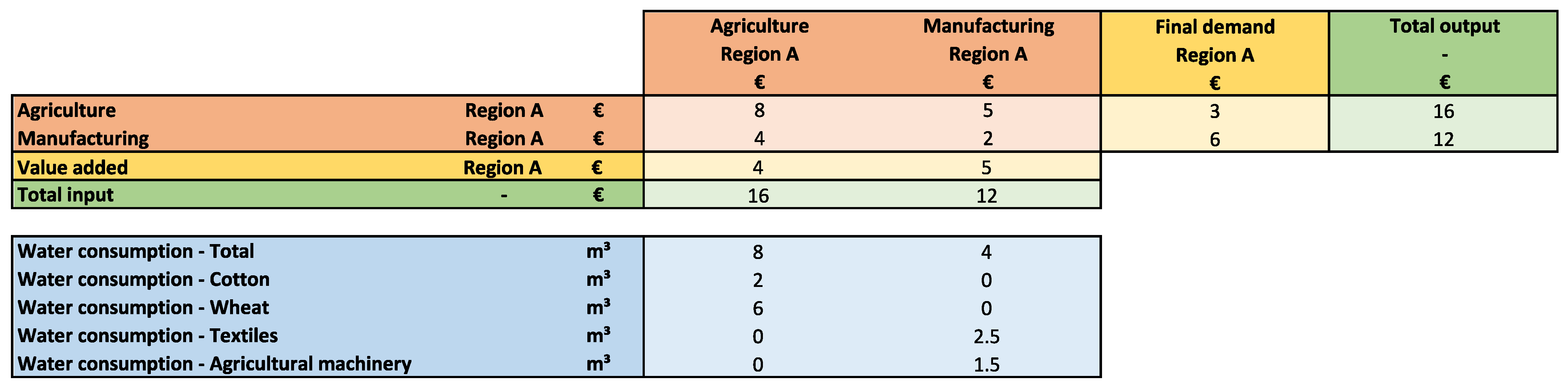
Input-output analysis has become a widely established method in sustainability sciences. It is primarily used in macroeconomic footprint analyses for allocating an economy’s externalities among the agents in that economy based on the agents’ input-output interdependencies. However, databases for input-output analyses are commonly compiled by aggregating data. Aggregation of input-output data inevitably leads to a loss of information and in some instances can lead to misinformed decision-making. The goal of this paper is to provide a simple hands-on numerical introduction to input-output analysis including the potential implications of data aggregation in an original manner. First, the calculation of production-based and consumption-based inventories is introduced based on a dummy 2 × 2 input-output table. Next, the inventories of the 2 × 2 input-output table are compared with the production-based and consumption-based inventories of a corresponding non-aggregated 4 × 4 input-output table. A comparison of the inventories of both dummy input-output tables allows for an exemplary demonstration of inaccurate allocation as a result of data aggregation and to conclude on potential implications for decision-making. Overall, this work offers a succinct and numerically substantiated introductory review of input-output analysis for practitioners in sustainability sciences including the potential implications of aggregation of input-output data. Its simplistic approach sets this work apart from other publications on aggregation in input-output analysis that are founded in economics or econometrics.
Keywords: input-output analysis; methods for sustainability assessment input-output analysis; methods for sustainability assessment