


Abstract
Seasonality is a lever of sustainability. However, very little is known about the social perceptions of “in season” food consumption. We aimed to explore different French social groups’ perceptions of seasonality, “in season” food choices, and their respective advantages or disadvantages. We interviewed 73 individuals (general population = 32, clients of short supply chains = 28, Etiquettable (a sustainability app) users = 13). In-depth, semi-structured interviews using open-ended questions were conducted. Content and thematic, textual, and quantitative analyses were performed. We found four clusters of interviewees who differed in social backgrounds and motivations for eating “in season.” A social divide between individuals for whom “eating seasonally” was a priority (upper strata), and those who “eat unseasonally” (lower strata) was highlighted. An analysis of motivations showed a contrast between individuals who were familiar with seasonal food rhythms and aimed to support the local economy and the older generation for whom seasonal products gave better value for money. The implications of public action on sustainable consumption are discussed with respect to the knowledge of seasonality, targeted segments of the population, and a combination of arguments to encourage seasonal consumption.
1. Introduction
Our food consumption model is moving toward incorporating sustainable food practices; this incorporation presents ecological, economic, and social challenges.
Food choices and diet are considered critical areas for sustainability today [1]. A quarter of the national greenhouse gas emissions come from food production [2]. As part of their daily activities, consumers must make choices that may have a serious impact on the environment [3]. One possible lever for consumers to limit the environmental footprint of their food choices remains relatively underdiscussed—consuming seasonal food, specifically fruit and vegetables, to reduce long-distance imports and unseasonal local production, both of which are energy-consuming [4].
The abundance of our societies has distanced us from seasonal rhythms. Technical innovation and developments in transportation and distribution networks have facilitated year-round consumption and allowed access to a large number of food products from elsewhere “in all seasons” [5]. Consequently, as part of an ecological transition, the return of seasonal foods is a matter of public action. Thus, the ADEME (the French Ecological Transition Agency) carried out several public information campaigns promoting “more virtuous” environmental practices with respect to seasonality.
On the political level, there was an amendment to the “Egalité et citoyenneté (Equality and Citizenship)” bill on 9 June 2016, which called for 40% of the products used in the food service industry to be “local, seasonal and from sustainable sources” as of 1 January 2020. Lastly, “eating seasonally” is included in the recommendations of the French National Program on Nutrition and Health (www.mangerbouger.fr, accessed on 1 March 2022). Recently, consumers have also been increasingly interested in respecting seasonality. They have become more sensitive to the environmental impact of food choices in a bid to be committed to sustainable food consumption [6,7].
Through its presence in the public sphere, “eating seasonally” has become a new imperative. However, very little is known about the social perceptions of “in season” food consumption in France from a social point of view. The profile of individuals who follow the “eating seasonally” recommendations is yet to be determined. The perceptions of “seasonal” products have been analyzed in Anglo-Saxon countries [8,9], particularly with regard to the characteristics attributed to them, and have been perceived as having better taste, freshness, and quality [8,10], similar to qualities associated with “local” products [11]. However, they are associated with the idea of being more expensive, less practical, time-consuming, and less varied. For a long time in France, we have had only a small amount of survey data regarding this topic [12].
Considering the importance of seasonality toward more sustainable choices and the lack of knowledge regarding the perceptions of seasonality in France, our study aimed at:
- Examining the differences between social groups in terms of “seasonal” and off-season consumption practices and perceptions to assess the potential for generalization of “good practices” in terms of sustainability. The following three aspects relate to sustainability: environmental, social, and economic [13]. Which aspects are individuals referring to when discussing seasonality?
- Analyzing the values and perceptions of individuals, and the way they combine ecological, economic, hedonic, health, and ethical motivations. To what extent can seasonal food be considered a lever for more sustainable diets in the French context?
- Identifying the socio-economic and cultural factors that lead to the adoption of environmentally friendly food practices. From a social point of view, it is not known whether there are differences among social groups or socio-economic factors.
2. Materials and Methods
2.1. Study Design and Participants
To address these questions, our study used a qualitative survey to understand the diverse perceptions of seasonality. We used the 32-item consolidated criteria for reporting a qualitative research checklist [14].
We conducted in-depth, individual, and semi-structured interviews with 73 participants. Participants were asked open-ended questions about their food choices and perceptions of “eating seasonally.” The following areas were covered: daily dietary habits, perceptions of seasonality, perceptions of sustainability, and practices related thereto.
To ensure a diversity of interests, three sub-populations were considered (Table 1):
Table 1.
Design of the qualitative sample.
- (1)
- The “general” population (n = 32)
This set represented the general perception of environmental issues. Interviews with the lower and underprivileged strata (Parisian suburbs, eastern and northern France), milieus comprising the middle class (western and southern France), as well as the upper strata (Paris, eastern, western and southern France) were conducted. Participants were recruited from urban, peri-urban, and rural areas. We also incorporated different age groups to determine possible differences based on age, generation, and stage of life. Participants were recruited via personal social networks.
- (2)
- Individuals committed to the environment through food choices (n = 28)
This group consisted of clients of organic stores and members of short-distance, local food supply systems or AMAPs (Association pour le Maintien d’une Agriculture Paysanne/Association for Maintaining Small-scale Family Farming) in the very same regions as the “general” population. Participants were recruited directly in stores or at associations via personal social networks and with the help of a recruitment agency specialized in recruitment for semi-structured interviews.
- (3)
- Users of a collaborative sustainable cooking app (n = 13)
To evaluate the role of digital technology in the field of food [15] and in the promotion of sustainable food practices [16], interviews were conducted with Etiquettable (https://etiquettable.eco2initiative.com, accessed on 1 March 2022) users. Half of the users were in the Paris region so that interviews could be conducted in person, and the other half were individuals from a variety of social backgrounds who lived in different parts of France and were interviewed over the telephone.
Participants were interviewed for 1–2 h, most often in their own homes. All interviews were recorded, transcribed, and anonymized. Transcriptions were performed by a team of transcription consultants trained for homogeneity in processing. The three researchers who conducted the field surveys were warmly welcomed by participants, who were excited to relate their perspectives regarding their daily food habits and expound on familiar seasonal topics. The focus of the first part of the interview, regarding the question of daily dietary preferences, provided a positive start, thereby encouraging participants to describe their tastes and daily habits fully. Moreover, the researchers’ non-judgmental attitude toward food choices (seasonal and non-seasonal) allowed participants with unseasonal food habits to respond and participate with confidence.
Qualitative data were also collected from field notes, and interviews were completed with additional ethnographic observations. The size of the sample made it possible to achieve sufficient saturation; that is, each new participant in each group did not bring any new, substantial, or relevant knowledge to the survey. The total sample provided sufficient internal variation to draw solid conclusions regarding differences between practices and perceptions in relation to the social status of the participating individuals.
Analyses of the data were double-checked by the three sociologists and discussed and validated with the team involved in the project (i.e., the researchers who were directly involved, and the scientific committee of five experts).
2.2. Ethics
The goals of the research were explained to the interviewees, and their consent was obtained for participation in the research and for recording, in accordance with the European GDPR (General Data Protection Regulation). All interviews were anonymized, and respondents were given fictitious names. The interviewees were thanked with gift cards (€20).
2.3. Quantitative and Qualitative Analysis
The analysis was based on a triangulation of methods [17] consisting of:
- Both classical content and thematic analyses of interviews;
- Lexical analysis of the corpus of 531,260 words, using Hyperbase software (Hyperbase 9.0, created by Pierre Brunet, CNRS, Université Nice Sophia Antipolis, Nice, France);
- Quantitative analysis of the codification of the interview responses (with the creation of 32 quantitative variables) and of the words making up the corpus.
First, content and thematic analyses were performed according to the principal themes of the interview guides. Other themes emerged, such as the importance of one’s stage of life for interest in and knowledge of seasonality. Content and thematic analyses were double-checked, using Hyperbase. This lexical analysis was based on the specificity tables drawn for each interview by Hyperbase, using Z-scores that measured the over- or under-representation of a word in an interview with respect to the corpus as a whole (531,260 words).
Subsequently, a quantitative analysis was performed. We considered 32 different practices derived from 73 interviews. The data were coded according to the themes of the interview guide and the new themes derived from the content and thematic analysis. The identified themes led to the characterization of 32 different practices, measured as dichotomous variables, and related to the following points:
- Eating habits
- Seasonal eating habits,
- Stores where food is purchased,
- Criteria for food choices.
- Perceptions of seasonality
- Definition of a “seasonal” product,
- Motivations for eating in season.
- Knowledge of seasonality
- Sources of knowledge,
- Trigger of interest in seasonality.
- Seasonality and sustainability, and other eco-friendly eating practices.
A principal component analysis (PCA, see complete results in Appendix A) of the 32 active variables was performed using the Stata software (Stata 17, College Station, TX, USA). As a robustness check, we conducted a multiple correspondence analysis that produced very similar results. The first three axes generated a correlation circle, representing the 32 active variables, and the illustrative (sociodemographic) variables were represented on the principal plane. These first three axes, accounting for 35 of the total variances of the sample, were used as active variables of a hierarchical ascending classification (Ward’s method, squared Euclidean distance), designed to provide a coherent grouping of those who share the same practices, perceptions, and motivations when it comes to seasons (Figure A1 and Figure A2, Table A1 and Table A2). The clusters are represented on the principal plane of the principal component analysis, and the significance of the correlation between the cluster group and the 32 active variables (Phi coefficient) is presented in the Appendix A (Table A3).
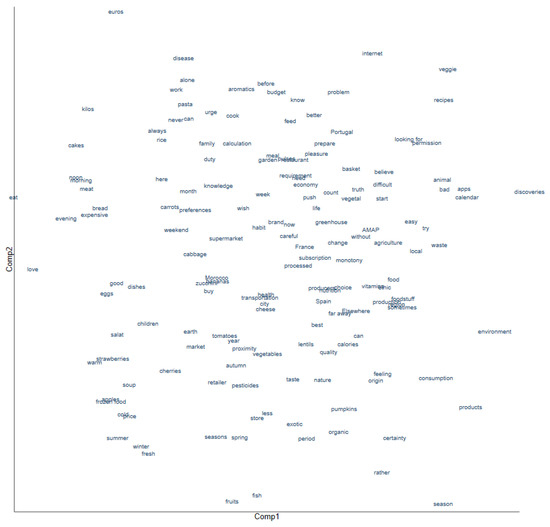
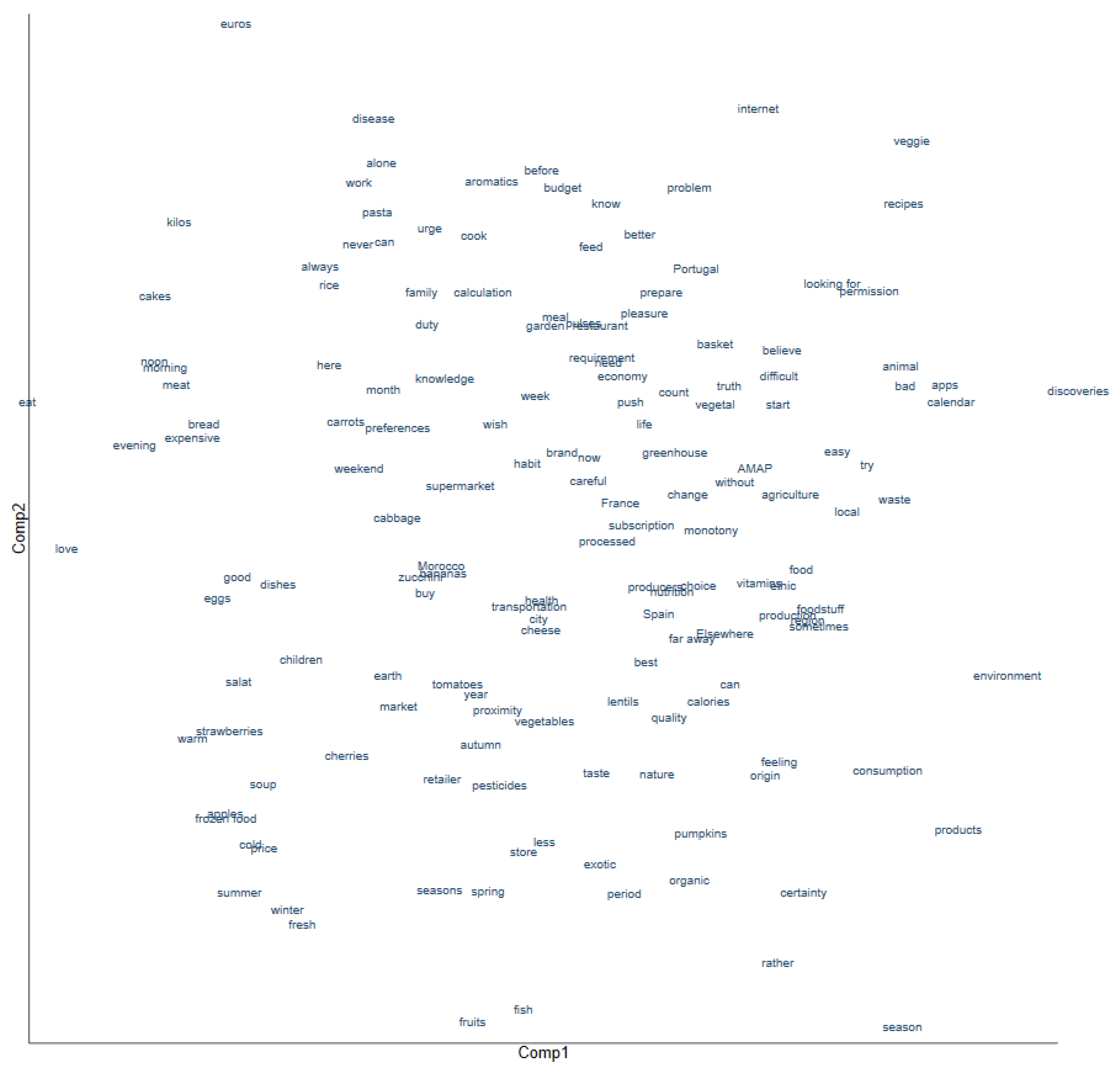
The same analyses were performed on the discourses after lemmatizing the corpus (Figure A3, Table A4 and Table A5). We proceeded to conduct a reasoned lemmatization of the 12,708 vocables contained in the corpus (each word was only counted once, even if it appeared on more than one occasion. Lemmatization refers to the grouping together of forms of words to a single canonical form (verbal forms to the infinitive, plural nouns to singular, adjectives to the masculine singular (in French)). Automatic lemmatization of a corpus has its limitations, so we preferred a manual lemmatization of our corpus, systematically verifying each vocable. For example, the feminine and plural forms of the adjective “local” (in French) were grouped together under the “local” lemma). Of the 537 lemmas, we processed a second PCA (see in Appendix A) of the 158 most selective (without being rare) ones to create a proximity matrix to establish ascending hierarchical classifications (clustering in 5 groups, see in Appendix A) to group individuals with homogeneous characteristics within the heterogeneous entity of the 73 interviews. Furthermore, performing a factor analysis enabled us to identify the best differentiators between these 73 individuals and to assess the structure of their discourses (Figure 1).
Figure 1.
PCA correlation circle between components 1 and 2 of the 158 lemmas. Footnote: Components 1 and 2 are interpreted as “adhesion to eating seasonally” (7.8% of variance) and “motivations and constraints” (5.4%), respectively.
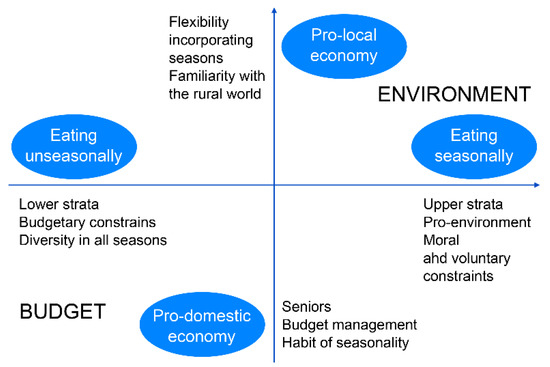
Both analyses (of the dichotomous 32 practices and of the 158 lemmas, see complete PCAs and clusters in Appendix A) delivered similar results. They have been synthesized in Figure 2.
Figure 2.
Perceptions of “eating in season”: Cleavages and motivations. Source: The diagram was derived from the static processing of the codified responses and words from the corpus. Axes 1 and 2 were derived from factor analyses. The third axis was derived from an in-depth interpretation of the material [18].
3. Results
3.1. Sociodemographic Characteristics
This contrasted sample included slightly more women than men (42 vs. 31). Women were a bit more eager to participate in a study related to food (Table 2) and more often in charge of the tasks related to food. We strove for a diversity of age, giving us access to different generations. Interviewees were aged between 19 and 73 years, with a mean age of 46 years. Interviewees also had diverse social profiles in terms of occupational status and standard of living, with participants belonging to the middle class (28), upper class (19), and working class (18). Eight participants were not engaged in active employment (retired people, students).
Table 2.
Sociodemographic characteristics of the participants.
3.2. Social Cleavage and a Diversity of Motivations
Two types of data processing revealed significant cleavage lines (Figure 2). The first cleavage contrasts individuals for whom “eating in season” is imperative (wealthy, urban, student categories) with those who eat “unseasonal” (lower strata). A second cleavage revealed opposition within the motivations to “eat in season” among individuals who were familiar with the seasons but adopted a more flexible approach. Some expressed their willingness to support the local economy, while others were motivated by a concern for the domestic economy. The third axis contrasts those for whom food choices are driven by sustainability issues (upper right), and those for whom choices are driven by budgetary issues (lower left) [18].
The differences in the four major groups of individuals’ relationship to the seasonality of food are depicted in Figure 2. The sample quotes for each group are furnished in Table 3.
Table 3.
Groups, main themes, and quotes.
3.3. Eating in or out of Season?
The first group—“eating in season”—included individuals for whom seasonality represented a binding imperative that drove their food choices. In most cases, these individuals belonged to the wealthy, educated, or student categories. Their choices were made with regard to seasonal variations. Out-of-season foods were viewed negatively and were often excluded.
These individuals reported “eating in season” mostly for environmental considerations (the “planet” and “carbon footprints”), thereby revealing the environmental dimension of sustainability through their comments. Seasonal eating was accompanied by other practices that were deemed environment-friendly (waste reduction, preferring the consumption of pulses to meat products). These individuals usually leveraged external knowledge, gained by consulting websites, referring to calendars, using applications such as Etiquettable, subscribing to vegetable baskets, or belonging to an association supporting small farming (AMAP).
This group included individuals who could define seasons most precisely, referring to natural production conditions and, in the case of those with the most expertise (who are also the most concerned about the environment), technical production conditions and, notably, the absence of heated greenhouses.
These individuals were interested in the seasons for all food items—not only fruits and vegetables but also meat, fish, and cheese. They emphasized that “eating in season” also helped them make new discoveries (vegetables that they were previously unfamiliar with or had never cooked before), which led them to follow the “eating in season” imperative in a particularly positive way.
Underprivileged Categories: Eating out of Season
Conversely, the individuals included in the “eating out of season” group belonged to underprivileged categories and were subject to the biggest financial constraints in the sample. These constraints were most evident when making purchases where price was the determining factor. Their purchases were predominantly made in supermarkets.
Seasonality was not a determining factor in these individuals’ purchases or their diets, which led them to consume out-of-season products, either without explicitly stating so or, alternatively, in an assertive manner (by refusing the constraint of limiting their food choices to seasonal food items). They mentioned few benefits of “eating in season,” referring to constraints such as a restrictive range of products and the weariness of eating seasonally instead.
Several sub-groups were identified. For the first sub-group, the lack of attention paid to seasonal rhythms stemmed from a lack of knowledge of seasonality. In fact, the interviews indicated an inability to define seasonal food and total ignorance of seasonal rhythms.
The price of certain out-of-season foods (especially fruits), led to seasonal purchase variations. Other individuals in this sub-group knew about seasonal cycles but claimed to enjoy being free of these constraints and appreciated the diversity of consuming “all-season” food.
The second sub-group included individuals who asserted that their refusal to eat “in season” food was a rejection of what they perceived as the limitation of their freedom of choice as consumers. They prioritized the pleasure of freely choosing food without constraints.
Finally, for the third sub-group of individuals, respecting seasonality represented an unachievable ideal. They perceived seasonal food to be something desirable but prohibitively expensive, which they would buy if they had the means.
3.4. Different Motivations
Alongside individuals who want to “eat in season” for the environment, the second cleavage revealed opposing motivations for following seasonal rhythms among those who follow the seasons without making it imperative.
3.4.1. Outside of Dense Urban Centers: “Eating in Season” to Support the Local Economy
A third group of individuals who were “pro-local economies” knew about the seasonal rhythms of food and followed their variations flexibly. For these individuals, seasonal purchasing habits were part of a routine that stemmed from their personal knowledge and familiarity with rural areas.
These participants spanned all social categories and generations; however, they shared the common trait of living outside urban centers, close to fruit and vegetable growing areas. They recognized the importance of seasonal rhythms and strived to follow them without making them imperative. For these individuals, respecting seasonality was an ideal that they targeted but did not always achieve. Eating out of season occurred; however, it was discouraged, not for ecological reasons, but due to the absence of taste in out-of-season food.
These individuals collectively displayed the greatest number of motivations that coexist; supporting the local economy, nutritional benefits (local and seasonal products are richer in nutrients), superior taste, and a greater sense of pleasure. They referred to the social and economic aspects of sustainability more than the environmental aspects.
3.4.2. Seasons and Household Budget Management among Working-Class Seniors
Finally, the fourth group included individuals who were “pro-household economy,” and who demonstrated a strong concern for managing their budgets and seeking out the best quality/price ratios. Seasons, taken as a whole, were seldom part of the reflexive discourse. “Eating in season” was self-evident and an everyday fact, but they did not consider it to be an imperative. They made seasonal purchases a habit to manage their budgets better.
This group consisted of the oldest individuals in the study, belonging to the working and intermediate classes, and their attitudes were characteristic of the older generation in the study. Food shopping was conducted in both supermarkets and open-air markets.
Their motivations revolved around budget, taste, and quality. They sought the best quality/price ratio, and reconciling the economic and hedonistic aspects was paramount. As such, buying out of season would lead to eating tasteless food (or wasting money), and they associated seasonal products with taste and quality.
4. Discussion
Several elements explaining these differences can be discussed here by highlighting the attention factors related to the seasons. Table 4 presents these factors using quoted examples.
Table 4.
Explaining factors, main theme, and quotes.
4.1. Social Perceptions of Seasonality
Our field results indicate that individuals who are most willing to eat seasonally belong to the wealthy categories, and those who are the most reluctant or least sensitive to seasons are part of the underprivileged categories. These results align with the econometric analyses of our project’s purchasing data. Caillavet and Badji demonstrated that seasonal purchasing habits vary according to household types [19,20]. The youngest, least educated, and lowest-income households make the least seasonal purchases. Conversely, the oldest, most educated, and highest-income households make maximum seasonal purchases.
Our results align with studies on sustainability, revealing that individuals who are most concerned about the environment belong to the wealthy or middle classes. In terms of seasonality, those who pay the most attention to seasons and buy local products belong to the wealthy classes [8]. Similarly, individuals with the most environmentally driven consumption belong to the wealthy, middle class, and highly educated categories, in both France and elsewhere [6,7,21].
Our qualitative data provide some explanation for these findings. Belonging to the lower strata brings budgetary issues that lead to favoring inexpensive food, whether in season or not. Furthermore, respecting seasonality is not a priority in the context of budgetary constraints. Being a part of the lower strata is also associated with lower consumption of fresh fruits and vegetables [22]. However, the results of the field survey revealed that interest in seasons was linked to the consumption of fruits and vegetables, the variety of vegetables consumed, and the form in which they were consumed (fresh rather than frozen or canned). The importance placed on fruits and vegetables in daily diets, without necessarily being tied to environmental issues, led them to be sensitive to seasonal rhythms, which was not the case for those who did not consume them regularly and who did not place much importance on them.
Finally, the pleasure of eating food and the valorization of abundance found in the lower strata [23] do not align with the limiting and ascetic character of “seasonal” consumption, which restricts food choices by excluding “out of season” products.
Social status refers to the skills related to knowledge and understanding. The ignorance of seasonal rhythms was especially prominent among the youth from the working classes. In higher social classes, calendars (whether on paper or in the digital format) proved to be a valuable source of knowledge for environmentally motivated individuals who were unfamiliar with the seasons and were far from rural areas.
Similarly, studies demonstrate strong links between concern for the environment (most evident in the wealthy categories) and the implementation of environment-friendly dietary practices [24].
4.2. Territorial Affiliation: Proximity to Rural Areas and Identification with a Territory
The second factor that shed light on seasonal practices was territorial affiliation. However, it is more than just an opposition between rural connoisseurs and urbanites who are unfamiliar with seasons. Familiarity with the season can be classified into two categories. First, we observed that living near vegetable-growing areas or residing in an urban environment close to a rural area, for example, in southwest France, led to familiarity with seasonal rhythms. Second, this familiarity also ran in the family (family members were farmers or had a vegetable garden) or the society (through professional experience in rural areas). These results reinforced the lessons stemming from the analysis of purchasing data, which revealed that having a vegetable garden or living close to growing areas encouraged seasonal fruit and vegetable purchases [19,20]. Here again, the field surveys provided an explanation. The desire among individuals living in rural areas to eat in season could be explained by their proximity to (or identification with) local producers whom they knew and wanted to support through their purchases. This attitude was observed in other contexts where it was described as an “ethnocentric trend”, leading consumers to favor the purchase of domestic products [25].
4.3. Individual and Collective Trajectories
Other factors stemmed from individual or collective trajectories; individuals in the sense that events, transitions, and disruptions over the course of one’s life constituted a trigger for focusing on seasons.
Life events have a significant influence on food choices [26]. For example, having a child results in more attention being paid to food [27]. Similarly, one’s stage of life can influence one to consume less meat, be it for health, environmental, or budgetary reasons [28]. Becoming a parent makes one pay more attention to seeking “better” food, which is most often characterized by “organic” and “seasonal” fruits and vegetables.
Finally, becoming older and experiencing illness drive a heightened interest in the impact of food on one’s health, specifically with respect to the natural growing periods of food. Some studies have shown that older adults may undergo positive dietary changes after the onset of certain chronic health conditions [29]. Research on the impact of retirement on diets revealed that vegetable consumption increases with age [30].
4.4. Generational Affiliation, a Key to Understanding Seasons
Collective trajectories, as generational affiliations, provide a key to understanding the perception of seasons. The field results show that the seasonal practices and perceptions of the oldest individuals in our corpus differ greatly from those of other individuals in the study. They are mindful of seasonal rhythms without elaborating on them extensively. For them, eating in the season is a reflex, not something that they have to think about. Their choice to eat seasonally is not driven by the environment but rather by habit or household budget.
The characteristics of the older generation can be explained through several factors. First, sexagenarians and septuagenarians consume more fruits and vegetables than other age categories. Despite accounting for only 36% of the population of France, they purchase 45% of the fruits and vegetables [31]. We previously noted that eating fresh fruits and vegetables was associated with interest in seasons. They do most of their grocery shopping in outdoor markets, which is also considered a factor in the attention paid to the seasons.
Moreover, their precise knowledge of seasonality is linked to food socialization, where seasons were “taken for granted” and where unseasonal food was rare and costly. It is also linked to an era when there still existed a strong connection to the rural world (a time when close to 30% of the French society worked in agriculture, compared to 4% today). Undoubtedly, the rise of supermarkets in the 1950s and hypermarkets in the 1960s accelerated the standardization and de-seasonalization of the available fruits and vegetables. However, studies have also pointed to the importance of eating habits acquired by the youth [32].
Generational differences can also be observed in the analysis of the position of the younger generations. Two opposing profiles emerged among the younger generations. On the one hand, some of the young participants in the study (who mostly belonged to the lower strata) ate “without seasons” and displayed the most frequent out-of-season food practices. They did not know anything about seasonal rhythms, which was exacerbated by a dislike of vegetables by some of them—a common characteristic of the working classes [33]. The end of rural society distanced subsequent generations from the rural world. This could explain the “unseasonal” attitudes of the segment of the younger participants in the study who belong to the lower strata. In addition, the context of the economic crisis and the weakening of the wage-earning society and the working class [34] led to budget management becoming the determining factor for food choices. In 2018, 20% of the lowest-income households allotted six to seven points more to the food budget (eating at home) than the wealthiest 20% [35].
On the other hand, the study also revealed a second profile of young individuals—students who were very concerned about environmental issues and who consequently made “in season” food choices. They were the most sensitive and open to the environmental aspect of eating seasonally and had a strong desire for knowledge. They used digital technology as an access point for knowledge related to eco-gestures and sustainable food [36]. Our results align with other studies that highlighted the commitment of the young generation to sustainability issues [37], the diversity of a generation with different views on climate change, and the role that nutrition can play in it [38].
Finally, the generational divide also leads to the observation of a social inversion of the attention paid to the seasons. For the generations born before the Second World War, eating “out of season” was a practice reserved only for the “rich.” Today, the willingness to eat “in season” is more characteristic of the wealthy.
4.5. The “Snowball Effect” of Seasonality
Interest in the environment and the use of specific supply chains can shed light on the interest in the “eating in season” imperative. Studies have shown close links between the awareness of climate change and dietary choices [39].
Indeed, individuals in our sample described a “journey toward sustainability,” which gradually increased their interest in seasonality, starting with environment-friendly actions unrelated to food, which, through a snowball effect, led to sustainable eating habits. This journey, most often, started with environment-friendly actions unrelated to food (waste sorting, a desire to achieve “zero waste,” and making “homemade” cleaning or personal care products) and led to more sustainable food practices.
4.6. The Supply Chain
The type of shops that are patronized by the participants is another important lever of interest in seasons and knowledge of seasonality. The flexibility of the range of vegetables available throughout the year in superstores (the primary location of purchases) sheds light on the tendency toward de-seasonalization of dietary practices. About 62% of fruit and vegetable purchases are made at superstores (supermarkets, hypermarkets, and hard discount markets), as opposed to only 11% at outdoor markets [31]. Studies have shown that purchasing from superstores leads consumers to have lower exposure to information on the origin and seasonality of the products [9]. Similarly, the strategies employed by superstores in terms of the layout of their offerings allow them to dictate their seasonal rhythms [5].
These differences related to supply chains also reflect social differences: superstores and hard discount markets are favored by low-income households [40], while those who are most interested in seasons, i.e., seniors and individuals from the wealthiest categories, tend to make purchases at markets, short food supply chains, or local retailers [33].
In contrast, short or alternative supply chains raise awareness about seasonal rhythms, and studies have highlighted their role in sustainability [41]. In our sample, participants who made purchases from local food supply chains emphasized that access to short-distance, local food supply systems in all varieties [42] led to their awareness of seasonality and a desire to respect it.
5. Implications
Seasonal eating can constitute a lever of sustainability under certain conditions (see the recommendations of F. Régnier and F. Caillavet [19]). Consumer information can also be an important lever [43]. Thus, food knowledge should be expanded, especially for vegetables, which tend to be less noticeable than fruits in food offerings. In the absence of an official label, some simple reference points should be added for consumers who often confuse “local” or “organic” with “in season.” These results, which were obtained in a French context, are similar to those of other studies that have shown the difficulty of delimiting local produce [1].
In the area of sustainability, recent studies have suggested that eco-labels could be effective tools [44,45] to simplify communication about sustainable food issues. Our participants expressed a strong need for a label that would allow them to identify whether a product was seasonal easily. Likewise, the introduction of labels might help them differentiate “local” from “in season,” two terms that are important for consumers but are often confused with one another.
Finally, consumers should be informed about the environmental impacts of eating out of season—especially impacts that are poorly understood and incorrectly prioritized. A relevant example is the difference between food that is produced “in season” but comes from far away versus food that is produced in a heated greenhouse.
Certain targets were also identified in this study. First, it appears possible to target favorable dynamics, e.g., individuals outside the food industry who are committed to the environment and are quite open to making environment-friendly food choices, particularly with regard to the seasons. Those who are less interested in the seasons should also be targeted, particularly those belonging to the younger generation of the working class and, more globally, individuals from the lower strata. However, some checks and red flags must be established to ensure that an appeal to only eat “in season” does not lead to a reduction in the consumption of fruits and vegetables. This could begin by removing the barriers to eating fresh fruits and vegetables experienced by the working class. Impediments to seasonal eating include cost, preparation time, risk of wastage due to perishability, and the often negative perception of vegetables.
Another important takeaway from our study is the necessity to refer to several arguments and to take the importance of social differences in the perception of seasons into account. The environmental aspect is not legitimate for everyone. Therefore, for those with less interest in seasonality (the less educated), different aspects of sustainability should be stressed (cost, taste, quality and price/quality ratio), rather than just environment-related aspects. In terms of product range, more work should be undertaken to create transparency and awareness about production related to seasonality.
Limitations
This is a qualitative study; the method of face-to-face interviews was particularly beneficial in obtaining first-hand access to participants’ perceptions. In order to verify our results, we systematically discussed them with those obtained from the quantitative part of our project. The results were congruent.
Our analyses focused on the consumer. Further research is needed to understand the role of the offering (place of purchase, labeling, etc.) to augment the current study.
6. Conclusions
Eating “seasonally” has been included in public policy and generated substantial interest among food industry professionals and consumers alike.
Our study aimed at examining the social perceptions of seasonal consumption and the socio-economic factors of these differences. Thus, our paper sheds light on the importance of social differences, both in terms of the importance placed on seasonal rhythms and the reasons for seasonal eating. For a part of the population (urban, well-educated people), “eating seasonally” has become a requirement pertaining to environmental motivations. For those in proximity to rural areas, the concern for “local” is a motivating factor for eating seasonally, while for older generations and some part of the working class, seasonality is a way of managing the budget as well as a part of one’s lifestyle.
These social differences should be addressed in public policies to take into account environmental and social issues simultaneously. Given the increase in social inequalities and climate crises, our study offers significant insights for combining social issues and environmental questions.
Author Contributions
F.R. secured funding, conceived the protocol, conducted the field survey, and wrote the manuscript. A.-L.D. and C.R. conducted the field survey, participated in the analysis of the results, and in writing the manuscript. L.C. supervised the final statistical analysis based on the anonymized statistical datasets. All authors have provided consent for publication in this journal. All authors have read and agreed to the published version of the manuscript.
Funding
This study was funded by the Agence de la Transition Ecologique (ADEME) as part of the “Ecological, Economic and Social Transitions” call for research projects (Appel à Projets de Recherche—APR). Grant number: 17-03-C0062—Diet4Trans.
Institutional Review Board Statement
The study was conducted according to the guidelines of the Declaration of Helsinki. We strictly complied with the European RGPD (“Règlement Général sur la Protection des Données”, “General Data Protection Regulation”, GDPR).
Informed Consent Statement
Informed consent was obtained from all participants involved in the study.
Data Availability Statement
Raw data from the interviews are not publicly available due to RGPD. Anonymized data can be made available upon reasonable request.
Acknowledgments
The authors extend their thanks to the ADEME and Sarah Martin for their financial support, to the scientific committee of the project Diet4Trans, Yuna Chiffoleau, Antoine Bernard de Raymond, Marie-Josèphe Amiot-Carlin, Dominique Desjeux; France Caillavet, Ikpidi Badji, Sophie Dubuisson-Qullier, Monique Poulot-Moreau, Guy Meunier and Sylvie Issanchou for stimulating discussions, and to the management of Etiquettable for their help in the recruitment of Etiquettable users. The authors would like to thank our student interns. Finally, we wish to thank all the participants of the field survey for the hospitality they extended to us.
Conflicts of Interest
The authors declare no conflict of interest.
Appendix A
Figure A1.
PCA correlation circle between axes 1 (horizontal) and 2 (vertical) of 32 practices. Footnote: Axes 1 (Comp1) and 2 (Comp2) are interpreted as the “adhesion to eating seasonally” (15.9% of variance) and “motivations for eating seasonally” (8.2%), respectively. See abbreviations in Table A1.
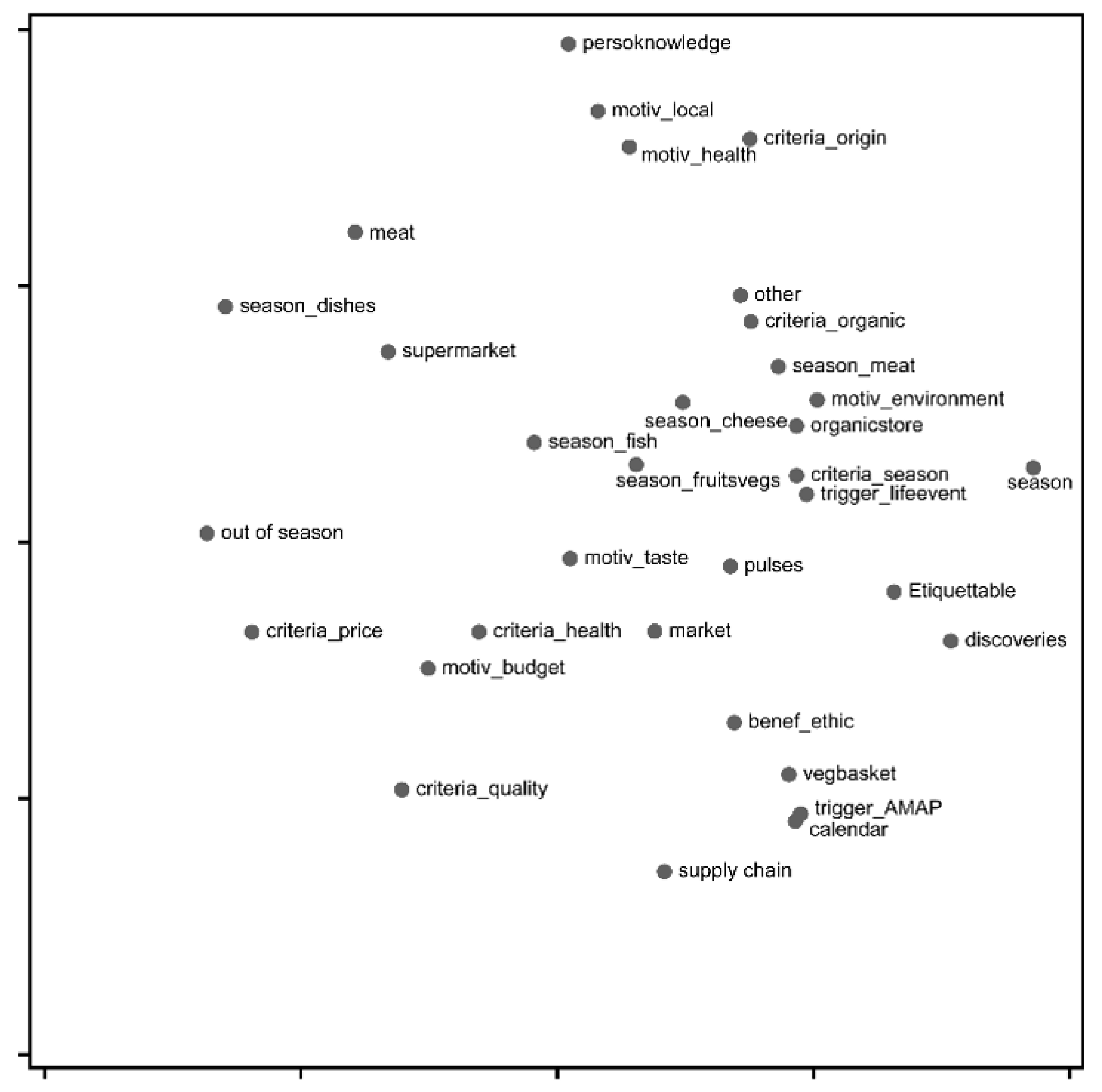
Figure A2.
PCA of 32 practices: Principal plan axes 1 (horizontal) and 2 (vertical) of descriptive sociodemographic variables. Footnote: see Figure A1.
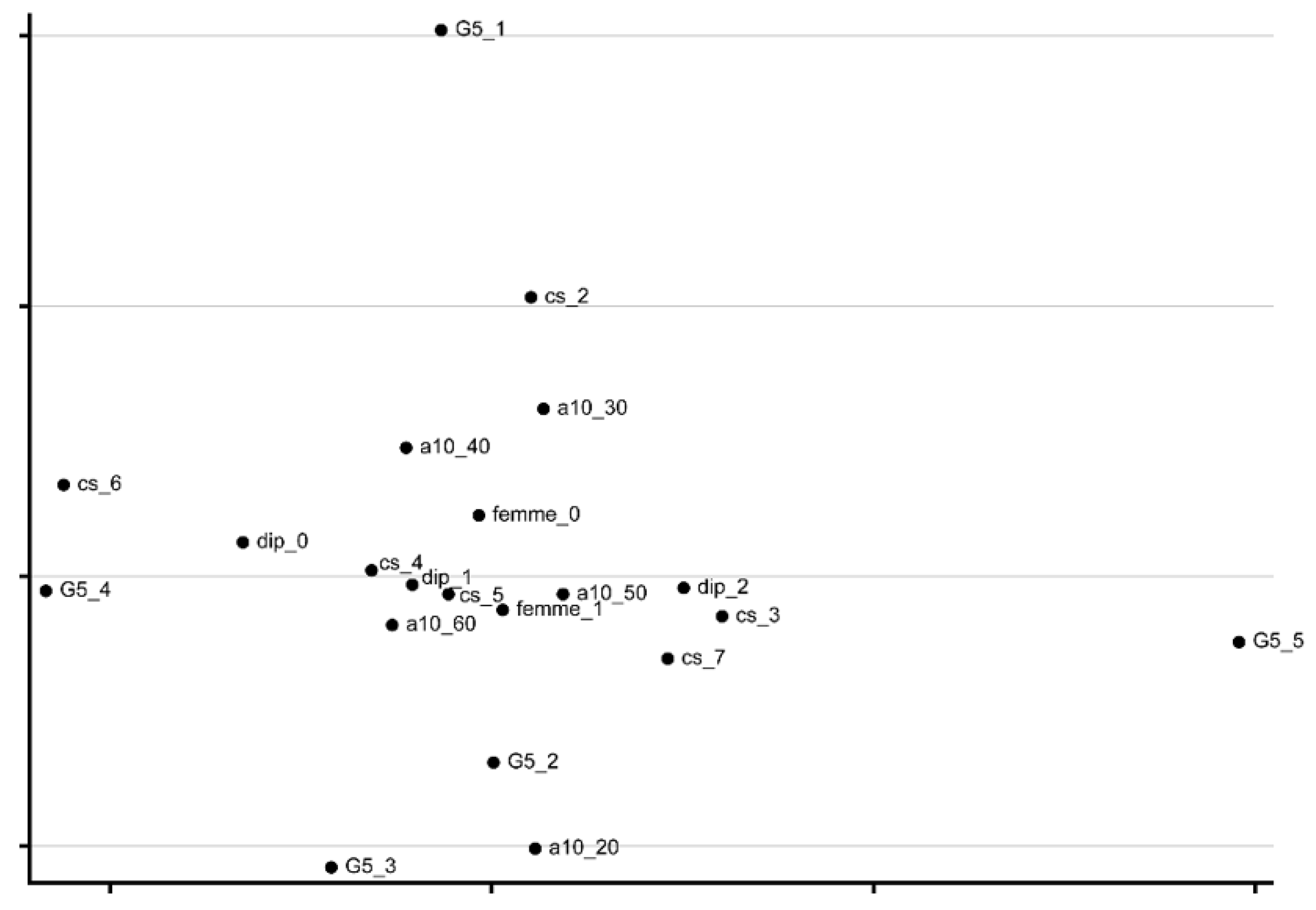
Figure A3.
PCA of the 158 lemmas: Principal plan axes 1 (horizontal) and 2 (vertical) of descriptive sociodemographic variables. Footnote: Components 1 and 2 are interpreted as “adhesion to eating seasonally” (7.8% of variance) and “motivations and constraints” (5.4%), respectively.
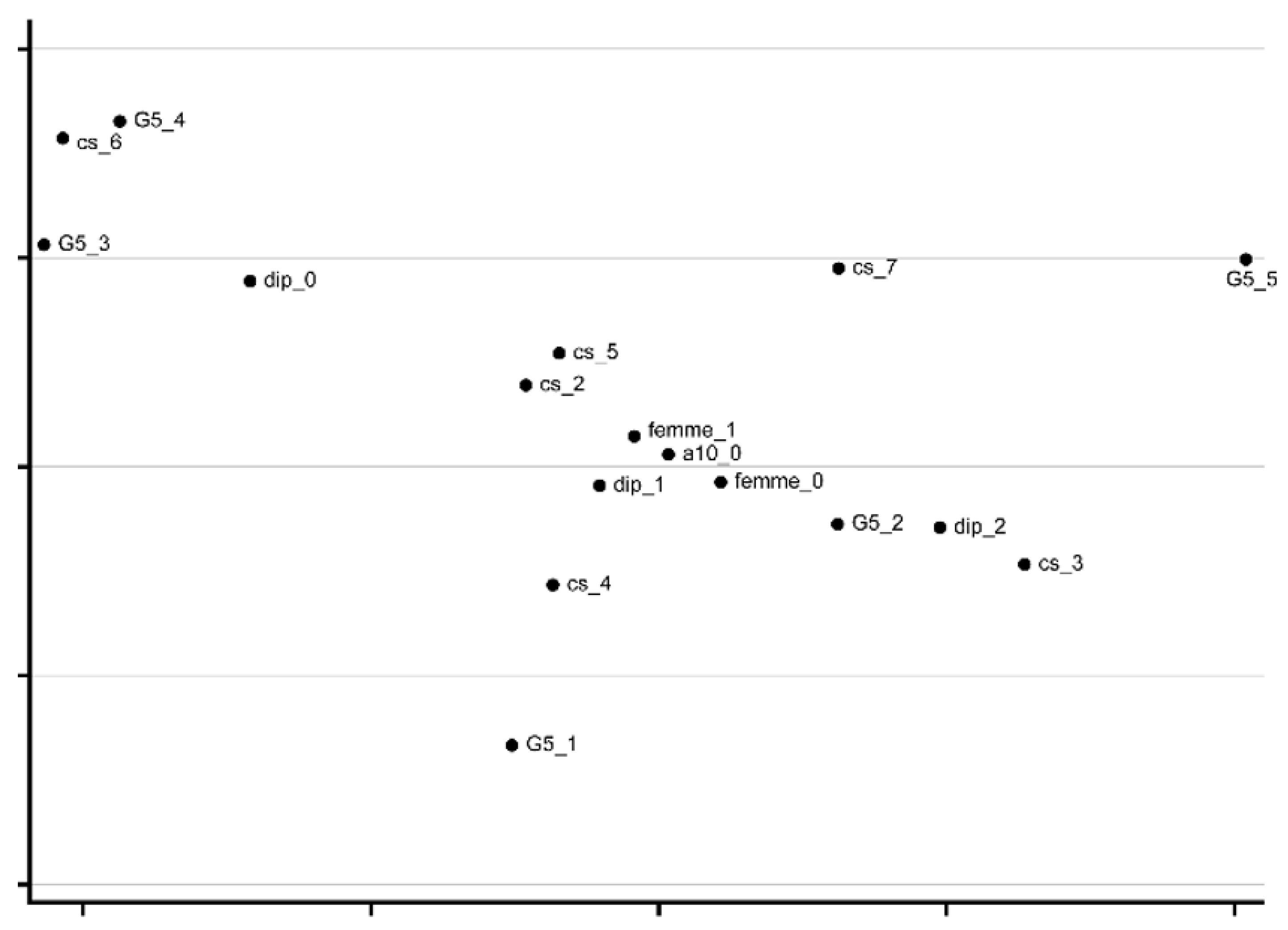
Table A1.
Abbreviations of descriptive and sociodemographic variables.
Table A2.
PCA of 32 practices, details: components.
Table A3.
Correlation between active variables and clusters of 32 practices (Phi coefficients).
Table A4.
PCA of the 158 lemmas, details: components.
Table A5.
Correlation between active variables, and clusters of the 158 lemmas (Phi coefficients).
References
- Vargas, A.M.; de Moura, A.P.; Deliza, R.; Cunha, L.M. The Role of Local Seasonal Foods in Enhancing Sustainable Food Consumption: A Systematic Literature Review. Foods 2021, 10, 2206. [Google Scholar] [CrossRef] [Scilit] [PubMed]
- ADEME. ADEME et Vous: Le Mag 2017. Volume 102, pp. 5–11. Available online: https://presse.ademe.fr/wp-content/uploads/2017/02/ADEME_MAG102-complet-26-01.pdf (accessed on 10 January 2022).
- Tobler, C.; Visschers, V.H.M.; Siegrist, M. Eating green. Consumers’ willingness to adopt ecological food consumption behaviors. Appetite 2011, 57, 674–682. [Google Scholar] [CrossRef] [Scilit] [PubMed]
- Esnouf, C.; Russel, M.; Bricas, N. Pour une Alimentation Durable. Réflexion Stratégique duAline; Quæ: Versailles, France, 2011. [Google Scholar]
- De Raymond, A.B. En toute Saison. Le Marché des Fruits et Légumes en France; Presses Universitaires de Rennes: Rennes, France, 2013. [Google Scholar]
- Dubuisson-Quellier, S. Ethical Consumption; Fernwood Publishing: Winnipeg, MB, Canada, 2013. [Google Scholar]
- Johnston, J.; Szabo, M.; Rodney, A. Good food, good people: Understanding the cultural repertoire of ethical eating. J. Consum. Cult. 2011, 11, 293–318. [Google Scholar] [CrossRef] [Scilit]
- MacDiarmid, J.I. Seasonality and dietary requirements: Will eating seasonal food contribute to health and environmental sustainability? Proc. Nutr. Soc. 2014, 73, 368–375. [Google Scholar] [CrossRef] [Scilit]
- Wilkins, J.L.; Bowdish, E.; Sobal, J. Consumer perceptions of seasonal and local foods: A study in a U.S. community. Ecol. Food Nutr. 2002, 41, 415–439. [Google Scholar] [CrossRef] [Scilit]
- Uetrecht, C.L.; Greenberg, M.; Dwyer, J.J.M.; Sutherland, S.; Tobin, S. Factors influencing vegetable and fruit use: Implications for promotion. Am. J. Health Behav. 1999, 23, 172–181. [Google Scholar] [CrossRef] [Scilit]
- Chambers, S.; Lobb, A.; Butler, L.; Harvey, K.; Traill, W.B. Local, national and imported foods: A qualitative study. Appetite 2007, 49, 208–213. [Google Scholar] [CrossRef] [Scilit]
- Harris Interactive. Les Pratiques Alimentaires D’aujourd’hui et de Demain. 2017. Available online: http://harris-interactive.fr/wp-content/uploads/sites/6/2017/02/Rapport-Alimentation-HI-SITE.pdf (accessed on 15 December 2021).
- U.N. Report of the World Commission on Environment and Development: Our Common Future. 1987. Available online: https://sustainabledevelopment.un.org/content/documents/5987our-common-future.pdf (accessed on 15 December 2021).
- Tong, A.; Sainsbury, P.; Craig, J. Consolidated criteria for reporting qualitative research (COREQ): A 32-item checklist for interviews and focus groups. Int. J. Qual. Health Care 2007, 19, 349–357. [Google Scholar] [CrossRef] [Scilit]
- Chen, Y.; Perez-Cueto, F.J.A.; Giboreau, A.; Mavridis, I.; Hartwell, H. The promotion of eating behaviour change through digital interventions. Int. J. Environ. Res. Public Health 2020, 17, 7488. [Google Scholar] [CrossRef] [Scilit]
- Humphery, K.; Jordan, T. Mobile moralities: Ethical consumption in the digital realm. J. Consum. Cult. 2016, 18, 520–538. [Google Scholar] [CrossRef] [Scilit]
- Carter, N.; Bryant-Lukosius, D.; DiCenso, A.; Blythe, J.; Neville, A.J. The use of triangulation in qualitative research. Oncol. Nurs. Forum 2014, 41, 545–547. [Google Scholar] [CrossRef] [Scilit] [PubMed]
- Régnier, F. Consommation Alimentaire et Société. Réception des Normes et Structure Sociale. Dossier pour l’habilitation à Diriger des Recherches; Université Paris: Paris, France, 2021. [Google Scholar]
- Régnier, F.; Caillavet, F.; Badji, I.; Dalstein, A.L.; Rouballay, C. Diet4Trans, Saisonnalité et Contre-Saisonnalité pour une Alimentation Durable, Rapport ADEME. Available online: https://librairie.ademe.fr/consommer-autrement/158-diet4trans.html (accessed on 3 July 2019).
- Régnier, F.; Caillavet, F.; Badji, I. Saisonnalité et Contre-Saisonnalité pour une Alimentation Durable; INRAE Sciences Sociales, 2019; Available online: https://ageconsearch.umn.edu/record/296763?ln=en (accessed on 30 November 2021).
- Niva, M.; Jallinoja, P. Taking a Stand through Food Choices? Characteristics of Political Food Consumption and Consumers in Finland. Ecol. Econ. 2018, 154, 349–360. [Google Scholar] [CrossRef] [Scilit]
- Inserm. Inégalités sociales de santé en lien avec l’alimentation et l’activité physique. In Collection: Expertise Collective; Inserm, EDP Sciences: Les Ulis, France, 2014. [Google Scholar]
- Régnier, F.; Masullo, A. Obésité, goûts et consommation. Intégration des normes d’alimentation et appartenance sociale [Obesity, taste, and consumption. Integration of food standards and social belonging]. Rev. Fr. Sociol. 2009, 50, 747–773. [Google Scholar] [CrossRef] [Scilit]
- Saari, U.A.; Damberg, S.; Frömbling, L.; Ringle, C.M. Sustainable consumption behavior of Europeans: The influence of environmental knowledge and risk perception on environmental concern and behavioral intention. Ecol. Econ. 2021, 189, 107155. [Google Scholar] [CrossRef] [Scilit]
- Erraach, Y.; Jaafer, F.; Radíc, I.; Donner, M. Sustainability labels on olive oil: A review on consumer attitudes and behavior. Sustainability 2021, 13, 12310. [Google Scholar] [CrossRef] [Scilit]
- Devine, C.M. A life course perspective: Understanding food choices in time, social location, and history. J. Nutr. Educ. Behav. 2005, 37, 121–128. [Google Scholar] [CrossRef] [Scilit]
- Bianchi, C.M.; Huneau, J.F.; Le Goff, G.; Verger, E.O.; Mariotti, F.; Gurviez, P. Concerns, attitudes, beliefs and information seeking practices with respect to nutrition-related issues: A qualitative study in French pregnant women. BMC Preg. Childbirth 2016, 16, 306. [Google Scholar] [CrossRef] [Scilit]
- Kemper, J.A. Motivations, Barriers, and Strategies for Meat Reduction at Different Family Lifecycle Stages. Appetite 2020, 150, 104644. Available online: https://www.sciencedirect.com/science/article/pii/S0195666319310876 (accessed on 18 January 2022). [CrossRef] [Scilit]
- Shatenstein, B. Impact of health conditions on food intakes among older adults. J. Nutr. Elder. 2008, 27, 333–361. [Google Scholar] [CrossRef] [Scilit] [PubMed]
- Plessz, M.; Guéguen, A.; Goldberg, M.; Czernichow, S.; Zins, M. Ageing, retirement and changes in vegetable consumption in France: Findings from the prospective GAZEL cohort. Br. J. Nutr. 2015, 114, 979–987. [Google Scholar] [CrossRef] [Scilit]
- France AgriMer. Achats de Fruits et Légumes Frais par les Ménages Français en. Available online: https://www.franceagrimer.fr/fam/content/download/63789/document/Achats+de+fruits+et+l%C3%A9gumes+frais+par+les+m%C3%A9nages_+Donn%C3%A9es+2019.pdf?version=1 (accessed on 12 January 2022).
- Schwartz, C.; Vandenberghe-Descamps, M.; Sulmont-Rossé, C.; Tournier, C.; Feron, G. Behavioral and physiological determinants of food choice and consumption at sensitive periods of the life span, a focus on infants and elderly. Innov. Food Sci. Emerg. Technol. 2018, 46, 91–106. [Google Scholar] [CrossRef] [Scilit]
- Anses, 2017. Étude Individuelle Nationale des Consommations Alimentaires INCA3. Avis de L’anses, Rapport D’expertise Collective. Available online: https://www.anses.fr/fr/system/files/NUT2014SA0234Ra.pdf (accessed on 10 January 2022).
- Chauvel, L. La Spirale du Déclassement. Essai sur la Société des Illusions; Le Seuil: Paris, France, 2016. [Google Scholar]
- Ferret, A.; Demoly, E. Les Comportements de Consommation en 2017; INSEE Première, 2019; Available online: https://www.insee.fr/fr/statistiques/4127596#:~:text=En%202017%2C%20les%20m%C3%A9nages%20consomment,les%2020%20%25%20les%20plus%20modestes (accessed on 17 December 2021).
- Alonso-Martínez, D.; Jiménez-Parra, B.; González-Álvarez, N.; Godos-Díez, J.L.; Cabeza-García, L. Taking advantage of students’ passion for apps in sustainability and CSR teaching. Sustainability 2019, 11, 779. [Google Scholar] [CrossRef] [Scilit]
- Yamane, T.; Kaneko, S. Is the younger generation a driving force toward achieving the sustainable development goals? Survey experiments. J. Clean. Prod. 2021, 292, 125932. [Google Scholar] [CrossRef] [Scilit]
- Kamenidou, I.C.; Mamalis, S.A.; Pavlidis, S.; Bara, E.G. Segmenting the generation Z cohort university students based on sustainable food consumption behavior: A preliminary study. Sustainability 2019, 11, 837. [Google Scholar] [CrossRef] [Scilit]
- Jürkenbeck, K.; Spiller, A.; Schulze, M. Climate Change Awareness of the Young Generation and Its Impact on Their Diet. Clean. Responsible Consum. 2021, 3, 100041. Available online: https://www.sciencedirect.com/science/article/pii/S2666784321000358 (accessed on 10 January 2022). [CrossRef] [Scilit]
- Kranklader, E. Où Fait-on ses Courses? Les Achats en Ligne Progressent, Excepté pour L’alimentation. INSEE PREMIÈRE. 2014. Available online: https://www.insee.fr/fr/statistiques/1283665 (accessed on 12 December 2014).
- De Fazio, M. Agriculture and sustainability of the welfare: The role of the short supply chain. Agric. Agric. Sci. Procedia 2016, 8, 461–466. [Google Scholar] [CrossRef] [Scilit]
- Chiffoleau, Y.; Millet-Amrani, S.; Rossi, A.; Rivera-Ferre, M.G.; Merino, P.L. The participatory construction of new economic models in short food supply chains. J. Rural Stud. 2019, 68, 182–190. Available online: https://www.sciencedirect.com/science/article/pii/S0743016718304157 (accessed on 10 January 2022). [CrossRef] [Scilit]
- Bergeron, H.; Castel, P.; Dubuisson-Quellier, S.; Nouguez, E.; Pilmis, O. Governing by labels?: Not that simple: The cases of environmental and nutritional politics in France. In Labeling the Economy; Palgrave MacMillan: London, UK, 2020; pp. 185–206. [Google Scholar]
- Fretes, G.; Sepúlveda, A.; Corvalán, C.; Cash, S.B. Children’s perceptions about environmental sustainability, food, and nutrition in Chile: A qualitative study. Int. J. Environ. Res. Public Health 2021, 18, 9679. [Google Scholar] [CrossRef] [Scilit]
- Ladaru, G.R.; Ilie, D.M.; Diaconeasa, M.C.; Petre, I.L.; Marin, F.; Lazar, V. Influencing factors of a sustainable vegetable choice. The Romanian consumers’ case. Sustainability 2020, 12, 9991. [Google Scholar] [CrossRef] [Scilit]

Publisher’s Note: MDPI stays neutral with regard to jurisdictional claims in published maps and institutional affiliations. |
© 2022 by the authors. Licensee MDPI, Basel, Switzerland. This article is an open access article distributed under the terms and conditions of the Creative Commons Attribution (CC BY) license (https://creativecommons.org/licenses/by/4.0/).