


Abstract
The article addresses the issues of sustainable development in relation to a selected group of mining companies. The main objective of the article was to verify the companies’ declarations on the convergence of sustainable development goals (SDGs) and the assessment of their actual actions. In order to achieve this objective, the authors hypothesized and adopted, among others, a multi-stage logical thinking-based methodology. In addition, several research methods were used, i.e., a review of regulations and scientific articles, a qualitative literature review—extracting and collecting information, developing a categorization framework, and a comparative method based on a case study. The study started with extracting and collecting social and environmental information disclosed by Polish mining companies at the level of declaring SDGs targets (KGHM, LW Bogdanka, and JSW). Sourced from reports and company statements. In the next step, a leader (KGHM) was selected, and a comparison was made with a global enterprise (Barrick Gold), according to the adopted categorization framework for social initiatives. Common areas of both SDGs declarations and actions for these entities were identified, and measures of their implementation were suggested. Two main metrics were proposed for the social area, i.e., health and safety in relation to the financial performance of the companies and diversity in management and supervisory bodies. The role and importance of the prioritization of ESG (environmental, social, and governance) disclosures by the industry players are indicated.
1. Introduction
The article addresses the current research topic of sustainable development in the context of reporting and analysis of its effects for mining companies. The research group consisted of representatives of the mining industry in Poland (KGHM, LW Bogdanka, and JSW), and a global enterprise (Barrick Gold) for comparison. The research hypothesis is it is possible to verify the implementation of selected sustainability objectives based on data reported by mining companies. The main objective of the article was to verify the companies’ declarations on the convergence of sustainable development goals (SDGs) and the assessment of their actual actions. Social data are presented in relation to selected information on corporate governance. The resulting summary is used to indicate trends in the manner of reporting non-financial data and prioritizing sustainable development objectives for the selected research group (mining sector). In the era of dynamic changes in formal and legal guidelines, at the international, EU, and national levels, in the environmental and social areas, there is a need to verify the operational activities of companies of significant importance to the state economy. Regulatory guidelines in the field of ESG are subject to dynamic changes. Meanwhile, there is no decision support tool designed strictly for the assessment of sustainability-related activities in the mining industry (sectoral unification). This is a major challenge which is also related to the specificity of the industry and the reputation of its “poor sustainability”. So, will regulatory guidance verify the gap between communication and actual practiced commitment to sustainability? The article seeks to partly answer this problem in relation to the selected social objectives of the SDGs. Thus, it fills a research gap regarding the verification and quantification of the implementation of the SDGs. The practices of domestic companies are compared to the rules in a multinational corporation. Differences are pointed out, among others, in the approach to the level of financing social projects of KGHM and Barrick Gold. The preliminary and detailed analysis of the companies’ reports leads through the categorization of social issues to the assessment of the precision and presentation of the data.
2. SDGs and Reporting Standards (GRI, SASB)
The standards address the reporting by companies on a range of issues related to sustainability topics. Due to increasing investor demand for companies’ non-financial information, a set of guidelines has evolved to improve the standardization of environmental (E), social (S), and corporate governance (G) (ESG) disclosure [1]. The current (non-financial) reporting obligations are captured by Directive 2014/95/EU [2], but there have been a number of recent regulatory developments. The most important include the international initiative TCFD (Task Force on Climate-Related Financial Disclosures), the CSRD (Corporate Sustainability Reporting Directive) package with the addition of ESRS (European Sustainability Reporting Standards), and the Taxonomy system or SFDR (Sustainable Finance Disclosure Regulation). The CSRD will replace the existing NFRD and will be in force from 01.2023, after being adopted by the Member States and implemented in national legislation [3]. These are just some of the initiatives that not only broaden the group of entities subject to reporting in this area but also introduce, among others, the following:
- Inside-out and outside-in double materiality, aiming to provide reliable and relevant data presenting an integrated view of the company (financial and non-financial data);
- The improvement in the quality of the reported information and its better alignment with investor expectations;
- Definition of reporting requirements towards the realistic implementation of processes and measuring and improving ESG and decarbonization performance (act not talk);
- ESG reporting needs and taxonomy disclosures;
- ESG risks and opportunities arising from the sector of activity;
- Redirection of the financial capital to support low-carbon investments, projects, businesses, and areas of the economy;
- Integration of the financial reporting, climate risks and opportunities, and promotion of transparency;
- The possibility to compare companies’ ESG disclosures and actions, across sectors, within a country or market, etc., moving away from the current freedom to choose standards;
- Changes in terminology: the current trend is to report sustainable development (ESG) information rather than non-financial data; the terms purpose-oriented, mission-driven company, regenerative company, net-positive, climate-resilient company, and stakeholder-oriented appear instead of a socially responsible company (CSR);
- Requirement to verify reports [4,5,6,7].
Although much of the guidance is aimed directly at financial market participants, there is apparent pressure to address ESG issues across the value chain due to business access to finance. The importance is reinforced by the fact that in November 2021 the head of the International Financial Reporting Standards (IFRS) Foundation announced the establishment of the International Sustainability Standards Board (ISSB), which will develop a single global approach to ESG reporting. The term ‘ESG’ is typically used by investors, while companies are more likely to use the term ‘sustainability’. These terms are not fully identical; however, they capture a wide range of environmental, social, and corporate governance issues [4].
The article discusses companies that have been subject to non-financial reporting and now sustainability reporting (ESG) since the beginning of the introduced guidelines. More than 80 emissive economic activities have been defined within the EU taxonomy system; however, these are not all industries. The various non-financial reports that have been produced over the years in the form of reports, e.g., social, environmental, sustainability, integrated, or statements/reports on activities, have often used the available non-financial reporting standards and frameworks. According to the authors of [4], three are mentioned among the most used: GRI (Global Reporting Initiative), IIRC (International Integrated Reporting Council), and SASB (Sustainability Accounting Standards Board). Only two of them, i.e., GRI and SASB, promote sector-specific guidelines, e.g., targeted at the extractive industry. Both institutions have developed sustainability reporting standards, but for different purposes. GRI addresses issues that are of fundamental importance to different stakeholder groups, regardless of the market (all companies). Helping companies and other organizations to communicate their social, environmental, and economic impacts is its main objective. SASB focuses on helping US-listed companies disclose non-financial information in reports filed with the Securities and Exchange Commission (SEC). It is a tool aimed at a group of investors [4,8,9].
A collaboration between GRI and SASB was announced for 2020. The European Commission recognized the importance of coordinating the development of EU standards with existing and emerging global initiatives (European Reporting Lab 2020) by mandating the European Financial Reporting Advisory Group (EFRAG) to undertake preparatory work on possible EU non-financial reporting standards [10]. In addition to the aforementioned GRI, SASB, and IIRC standards, frameworks focused on environmental and climate change issues, i.e., Task Force on Climate-Related Financial Disclosures (TCFD), Carbon Disclosure Project (CDP), and Climate Disclosure Standards Board (CDSB) are worth mentioning. The regulations, frameworks, and standards discussed place great emphasis on the “materiality” of reporting. Changes in regulations and the cooperation of leading institutions in action to unify standards will introduce the mandatory definition of materiality and effectiveness indicators in the area of ESG, key risks, and reporting on them. According to the GPW [4] methodology, recommended core indicators are:
- Scope S (human rights policy, human rights due to diligence procedures, diversity among supervisory board, equal pay index, job rotation, freedom of association, and collective bargaining);
- Scope E (greenhouse gas emissions, energy consumption, climate risks and opportunities);
- Scope G (board structure, code of ethics, anti-corruption policy, whistleblowing mechanism).
- Areas that may be relevant to the mining sector are:
- Scope S (occupational health and safety);
- Scope E (intensity of greenhouse gas emissions, emissions management, water consumption and management, impact on biodiversity, waste management).
Governance policies and data protection are rarely relevant in the extractive sector [4].
According to KPMG [11], social inequality and climate change are transforming the business environment and leading to the evolution of ESG risks and opportunities within organizations. Stakeholders, i.e., investors, regulatory bodies, customers, and employees increasingly expect organizations to manage the impact of these issues. According to the Deloitte report, among the key aspects of a sustainability strategy, BlackRock identified a more rigorous application of ESG criteria in active investment strategies on environmental issues, including decarbonization and renewable energy development [12]. Similarly, in a report [13] on trends for the entire extractive sector, the ESG aspect appeared in 3 out of 10 points (i.e., trend 3: ESG Getting serious about decarbonization, trend 4: ESG: Working to overcome the social trust deficit. Linking social investments to sustainable outcomes, trend 5: ESG: Corporate governance adding to competitive advantage. Emerging risks mandate greater oversight). When carrying out research in the extractive industries, it is impossible to ignore the international initiative of the International Council on Mining and Metals (ICMM), which sets standards for responsibly produced raw materials in a sustainable world.
The quality and extent of non-financial disclosures by mining companies can be analyzed with the aspect of greenwashing [14]. The low quality of disclosures (especially the negative ones regarding violations) and ignorance of the environmental issues were observed after analyzing the reports of Australian companies. The role of stakeholders (especially when reporting on the implementation of actions according to the SDGs is voluntary) in controlling and disciplining unreliable companies was highlighted. Comparing fossil fuel company statements with actions is necessary as certain behaviors have dangerous consequences both locally and globally, and those practices may not be ‘good’ or ‘green’ [15]. Sustained greenwashing by a company can turn against it, leading to a diminished corporate reputation and a legitimacy crisis [16]. The recommendation for companies is to eliminate greenwashing by publishing detailed official reports on green policy and company achievements [17]. Therefore, in order to improve the implementation of sustainable development goals in the mining sector, there is a need for methodologies and tools for assessing/quantifying activities consistent with the SDGs [18]. An example of such solutions is the definition of challenges faced by the mining industry in India in achieving sustainable practices [19].
3. Results Reporting on SD Goals in Industry Entities
Implementing the Sustainable Development Goals (SDGs) can be described as innovative in the mining enterprise. The goals themselves help to measure the environmental impact and to manage new processes that aim to reduce negative impacts [20]. The sustainable mining framework should take into account the entire life cycle of the mined mineral [21]. Successful implementation of cutting-edge actions is of particular importance for the mining industry. Research conducted by Pietrobelli, Martin, and Olivari [22] in a group of Latin American representatives indicated that mining is facing rapid technological progress and at the same time has a relatively low adoption rate of new technologies compared to other industries. According to the authors [20], the specificity of the mining industry makes it difficult to introduce innovations because they are associated with changes in mining activities that affect the value chain. With growing concerns about environmental issues and socio-economic inequalities, selected stakeholder groups [23] expect an integral assessment of innovations and technologies in terms of their contribution to the environmental and social area. Monteiro, de Silva, and Neto [24] emphasized that the cooperation of the industry stakeholders means recognition of the sector’s potential in the practical implementation of 17 SDGs. Building partnerships and responding to community needs is key [25]. It is necessary to find a balance between economic issues, profitability, and social license to operate, accepted by stakeholders. The effectiveness and efficiency of the mining industry along with social responsibility can be combined when a mining facility operates with dual legitimacy—internal and external—which is strongly influenced by stakeholders [26,27,28]. In the mining sector, the applicable standards have an impact on the intensification in conducting environmentally, socially, and economically sustainable activities, and SD practices contribute to the competitiveness of enterprises [29]. The International Council on Mining and Metals (ICMM) and the United Nations Development Program (UNDP) have developed a framework and guidelines to better adapt the mining sector to the principles of the Agenda 2030 for Sustainable Development (2015) [30,31].
The analyses of sustainable reports show that most companies choose to share their sustainability activities to manage relationships with external stakeholders. This means that the preparation of sustainability reports is intended to shape and improve the reputation among customers. Companies also seek to manage employee satisfaction by disclosing information related to labor practices and commitment to human rights. Furthermore, they present activities related to the natural environment to manage relationships with customers and investors [32]. A study of reports prepared for the mining industry in Europe shows that the relevant enterprises acknowledge the implementation of the Sustainable Development Goals, but this does not involve an indication and detailed description of specific actions. There is also no reference to indicators that would allow for an objective assessment and verification of the activities and declarations of representatives in the mining industry [33]. This was confirmed by the analyses carried out by Heras-Saizarbitoria, Urbieta, and Boiral [34]. Qualitative research of 1370 reports from worldwide entities representing various industries (including mining and related industries, such as energy or metal production) showed that if companies refer to the implementation of the SDGs, they do it superficially. The key conclusions from the Columbia Center on Sustainable Investment, Responsible Mining Foundation [35] reporting on the implementation of SDGs by mining industry entities were as follows: (1) SDG integration and reporting are still not the norm; (2) good practice and reporting firms make considerable efforts to think about how their activities align with the Sustainable Development Goals and how they can track and report their contribution to the achievement of global goals; (3) the results of the “Mining and SDGs” update that was carried out suggest that good practices have not been widely adopted and that most mining companies need improvement in taking strategic steps to use their significant potential to achieve the SDGs. The SDG-washing is the lack of indicators, quantification of the goal achievement, and thus the possibility of assessing the credibility of the reported data. Changing legal regulations and conducting a reliable audit can help [36]. The evolution of sustainability reports was observed by Perez and Sanchez [37]. As a unique process, it depends, among others, on from stakeholders, resources, and expert support in disclosing non-financial results. However, aspects of sustainable development are often not related to the business strategies of companies, and it is difficult to measure the achievement of the SDGs by adopting an appropriate set of key performance indicators (KPIs). According to Saka and Oshika [38] strategic goals that best represent the social perspective include improving the quality of working conditions, ensuring respect for human rights, participation in social initiatives, etc. This view is shared by Hristov and Chirico [39], who proposed a comprehensive set of KPIs related to the dimensions of sustainable development. Measures to achieve the SDGs in the mining industry were discussed, among others, by the authors of [31,40,41,42,43,44]. Awareness of the SDGs among the business community is high and as shown by the Italian example [45], most listed companies have introduced a reference to the SDGs of disclosed practices in published materials, but the exact nature and requirements of the SDGs and the definitions of the specific KPIs associated with them are still unknown.
4. Research Methodology
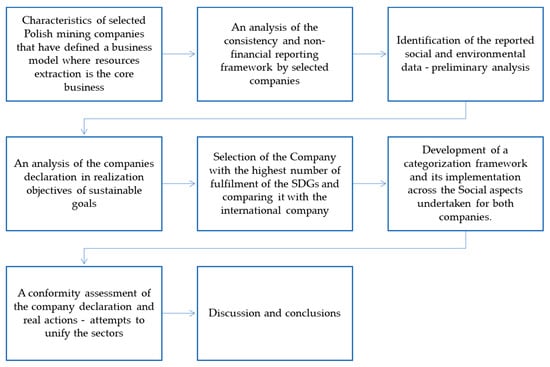
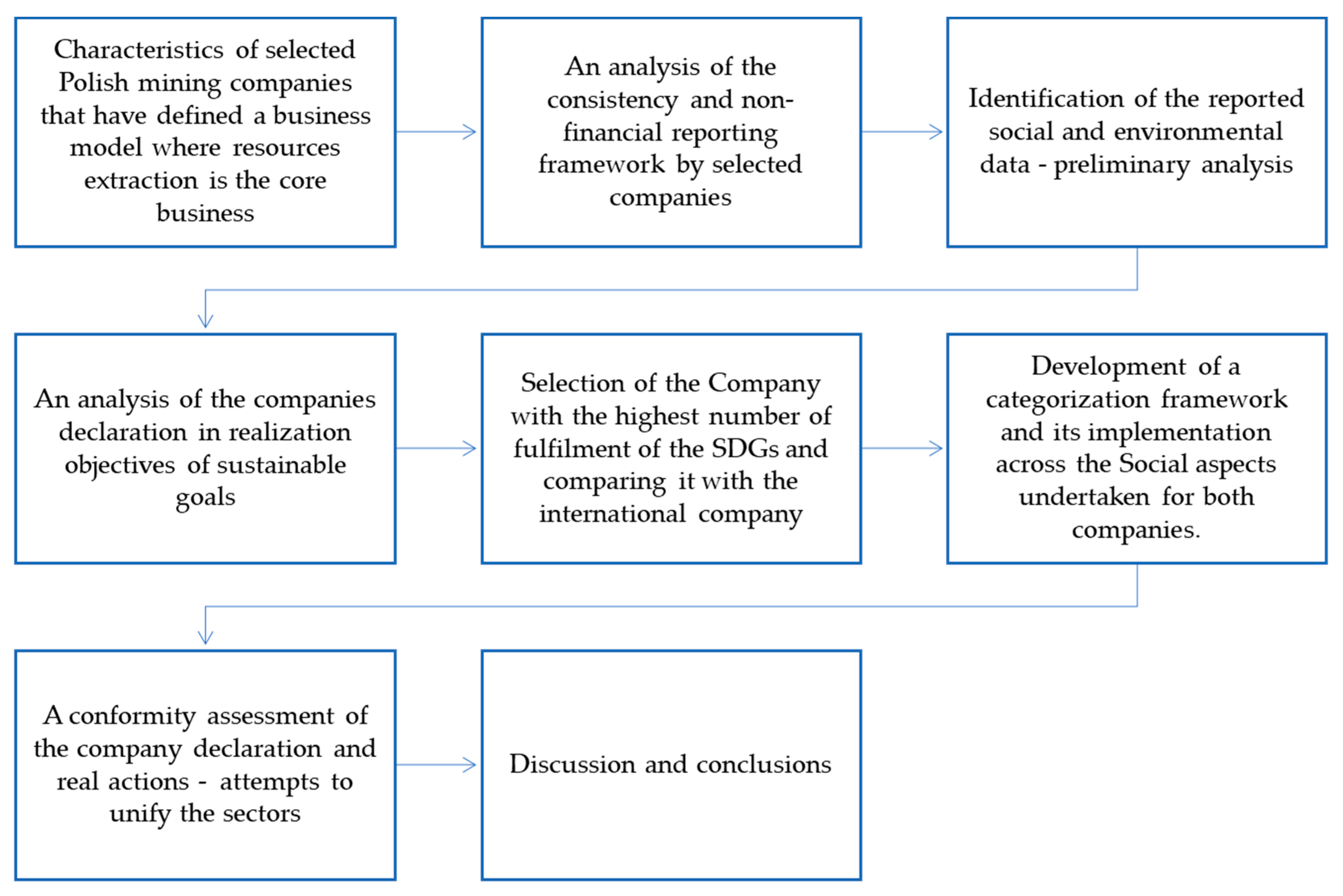
The multi-stage research analysis (Figure 1) began with the characteristics of the entities. In the first step, research objects were selected (Table 1). This resulted from the fact that only these three domestic companies (JSW, KGHM, LW Bogdanka) have reported on sustainable development and have a defined business model in which mining is the core operating activity [42,46,47,48]. In the second stage, the most important aggregate information on entities was compiled along with a list of good practices in non-financial reporting (Table 2). The third stage was the preliminary analysis of the content of the reports (according to the proposed criteria). Reported social and environmental areas were listed in relation to international guidelines and standards (Table 3). In the next step, the declarations of 3 Polish companies regarding the implementation of the SDGs were compiled (Table 4) and the most active entity (KGHM) was selected. This stage ended the analysis of non-financial reporting for 3 Polish companies. Then, a categorization framework was developed by comparing KGHM with an international concern (Barrick Gold), indicating the criteria of association (Table 5). The categorization framework focused on the social area, because reporting activities related to climate goals (comparing environmental indicators) is difficult. Convergent, i.e., three sustainable development goals reported by both companies were indicated (Appendix B). Evaluation criteria and the actual implementation of a given goal were defined for these 2 entities (KGHM, Barrick Gold) in the years 2017–2020. In the final stage, the obtained results were discussed.
Figure 1.
The research methodology adopted in this study.
Table 1.
Basic information on subjects and reporting methods.
Table 2.
Framework for non-financial reporting by Polish companies.
Table 3.
Social and environmental aspects (2017–2020).
Table 4.
SDGs—declared activities.
Table 5.
KGHM and Barrick Gold—selected data.
The research methodology is presented in Figure 1.
5. Data
The basic information and data collected on domestic entities are included in Table 1. They concern the form of the company’s activity, range of operations, type of raw material exploited, communication channel, number of employees, etc. The group includes entities mining metallic minerals using underground technology—KGHM and energy minerals—JSW and LW Bogdanka. All entities have a defined business model in which mining/extraction is the core operating activity. In the era of digitization, a communication channel for these entities has been established.
As part of good reporting practices, Polish entities report according to GRI standards, preparing documents in a digital version—the pdf report and report are available on the home page. The documents are in the form of balanced and integrated reports (financial and non-financial data). The company’s internal regulations are based on the ISO 26000 system, which is perceived as a way of assessing, inter alia, the involvement of the organization in sustainable development (Table 2).
In the process of extracting and collecting social and environmental information by Polish mining entities, guidelines were adopted based, among others, on procedures that ensure compliance with the standard of responsible business activity, the so-called ‘minimum guarantees. They include, e.g., the OECD Guidelines for Multinational Enterprises, the United Nations Guidelines on Business and Human Rights, and the International Labor Organization (ILO). They relate to various issues, e.g., human and employee rights, environmental protection, or combating corruption [53]. The categorization of social aspects took into account the following areas: diversity, human rights, initiatives aimed at employees, initiatives for the local community, anti-corruption initiatives, or social issues at the stage of liquidation of a mining enterprise. The framework for the categorization of environmental aspects included, inter alia, identification of the environmental management system, reporting of energy/water consumption, renewable energy production and investments, emissions, waste management, biodiversity, circular economy (CE) projects, or environmental issues at the stage of liquidation of the mining enterprise (Table 3). A detailed description of each category framework for the discussed social and environmental areas is included in Appendix A.
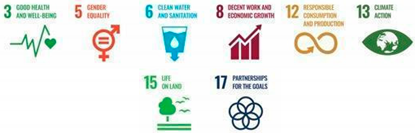
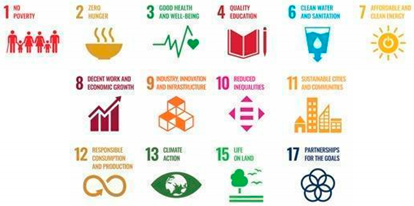
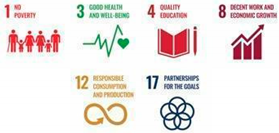
The list of the declared SDGs objectives achieved (Table 4) shows that the domestic company KGHM declares and implements projects within the most numerous areas of the action plan and is also the only mining entity with a global operational range. Therefore, it was selected for a comparative analysis with a global entity, i.e., Barrick Gold, according to the following criteria: global range, type of raw material, and a similar level of employment (Table 5).
6. Results
The comparative analysis of KGHM and Barrick Gold began with the development of a categorization framework in the social area. Three convergent (reported by both companies) sustainable development goals were indicated, i.e., goals 1, 3, and 5, described in detail in Appendix B. Criteria for evaluation and implementation of a given goal for these entities in 2017–2020 were defined. The problem with the unification of companies’ activities in the implementation of the SDG goals and the lack of figures prompted the use of the ESG criterion, allowing for a comparison and evaluation of the real activities of these entities. Examples of social indicators in ESG (according to the Warsaw Stock Exchange methodology) include occupational health and safety (dedicated to the mining sector) or diversity in supervisory bodies. Analysis of the source materials also showed a different approach to funding social projects. Due to the operation of a corporate foundation, KGHM finances social activities through two paths [54]: from the level of the foundation (as a donation of the company) and in the form of sponsorship of KGHM, while Barrick Gold from the operating level of the company. A foundation that operates in Poland and has the status of a public benefit organization has a wider range of tax preferences, which result from Art. 17 of the Act of 15 February 1992 on corporate income tax [55]. The KGHM Polska Miedź Foundation is free of charge and does not conduct any economic activity. It operates on the basis of the Statute, the provisions of the Act of April 6 1984 on Foundations [56], the Act of 24 April 2003 on Public Benefit and Volunteer Work [57], and other applicable laws and regulations.
The KGHM Polska Miedź Foundation (KGHM Polska Miedź S.A.—the founder of the foundation) operates mainly in Poland, but to the extent necessary for the proper implementation of its goals, it may also operate outside its borders [58]. Therefore, it mainly supports national projects under four categories, i.e., health and safety, science and education, sport and recreation, culture, and tradition.
Barrick Gold’s support policies are similar in three categories, with sport, recreation, culture, and tradition encompassing one area of funding. In further analysis, common areas of the financing were adopted in an attempt to unify the actual activities in the social area (Table 6). A collective summary of the annual financing amounts for 2017–2020 was prepared, and these values were referred to the total annual revenues of KGHM and Barrick Gold as a measure of activities. It is worth mentioning that the revenue of KGHM Polska Miedź S.A. is considerably lower each year and accounts for about 34–49% of Barrick Gold’s income.
Table 6.
Social performance—measures.
The obtained results show that for KGHM, the most important area of support is sport, recreation, culture, and tradition. Every year, the company allocates about 0.20–0.25% of its total revenue for this purpose (value of about USD 7–10 million). It is worth mentioning that in this area a large share is made of funds allocated to sponsorship (including sport, culture). The second area with the highest rate of financial support for KGHM is health and safety, 0.03–0.06% of revenue, respectively. About 0.01–0.03% of annual income is spent on science and education. In the case of Barrick Gold, the leading area in the analyzed period is science and education 0.05–0.12% of revenue, except for 2019, where the company spent the most funds on sports, recreation, culture, and tradition, 0.09%. Health and safety were supported at the level of 0.01–0.02% of the revenue (Table 6).
The second main measure of the implementation of social activities was the diversity related to the participation of women on boards of directors and executive committees of the currently applicable social and legislative trends. A collective summary of annual gender quotas was prepared for KGHM Polska Miedź S.A. and Barrick Gold, estimating the percentage of women in the management and supervisory staff in 2017–2020 (Table 7). KGHM has maintained an upward trend, consistent with the Deloitte report [13] on women on boards: in 2018–17.9% and in 2021–28.1%. On the other hand, Barrick Gold showed a significant decrease in the proportion of women in 2018 compared to 2017, which may have resulted from the company’s reorganization, merger with Randgold and Exploration Company Limited. Since 2018, Barrick Gold has recorded a regular increase in the share of women on the board of directors and executive committee, declaring in the diversity policy target for women to represent at least 30% of directors by the end of 2022.
Table 7.
Diversity in 2017–2020.
The mining industry (similarly to the energy production or construction sectors) is masculine [59]. This trend was confirmed by the results of the share of women in employment for KGHM (7.18% in 2017) and the lack of data for the following years (Table 7). A similar, constant level of employment of women in the workforce group for Barrick Gold was maintained at the level of approx. 10%. The literature reports that the vulnerability of women in mining is a cross-border issue. On many continents, women are excluded from the extractive industries, and this is due to superstitions, beliefs, traditions, and legal conditions [60]. Working in a mine is perceived as a male occupation, and women who find employment in the exploitation of minerals often arouse interest and are patronized [61]. The survey results published by Kansake, Sakyi-Addo, and Dumakor-Dupey [62] showed that there is dissatisfaction among women working in the extractive industries over bullying, income inequality, gender discrimination, unclear career paths, and a lack of support from colleagues. More than 50% of the respondents experienced gender discrimination.
7. Summary and Discussion
The main objective of the article has been fulfilled. A research hypothesis assuming that it is possible to verify the implementation of selected sustainability objectives based on data reported by mining companies was positively verified. The verification of the companies’ declarations on the convergent goals of the SDGs and the assessment of their actual actions were performed. In the first stage of the research process, social and environmental initiatives disclosed by Polish mining entities were collected. Among Polish companies, only KGHM stood out not only for the number of declared SDGs goals, but also for its global range of activity. Utilizing a categorization framework for social initiatives, a comparative analysis was performed with a global entity, i.e., Barrick Gold. Common areas of both SDGs declarations (goals 1, 3, and 5) and actions for these entities were indicated, proposing measures of their achievement (Appendix A). With regard to the indicated links between the SDGs goals and the ESG methodology, the actual actions of the companies over the period 2017–2020 were assessed. Two main metrics were proposed for the social area, i.e., occupational health and safety (as an important factor in the mining industry [63,64] in relation to the entities’ financial performance and diversity in management and supervisory bodies (the topic of diversity is discussed on many levels, including by [65], and as the results of Baker et al. [66] showed, organizations that have even a small number of women in their top management/governance bodies are more likely to improve the effectiveness of their work–life balance initiatives in the private sector and benefit from greater representation of women in management positions). Furthermore, additional indicators were proposed in the areas of science and education, sport, recreation, culture, and tradition, relating them to the total annual revenues of the companies.
A different approach to financing community projects was indicated. KGHM, due to the functioning of the corporate foundation, finances community involvement in two ways: from the foundation level and in the form of KGHM sponsoring, whereas Barrick Gold finances it from the operational level of the company. The obtained results showed that sport, recreation, and culture and tradition are the most important community sponsoring areas for KGHM. The second area with the highest ratio of financial support for KGHM is health and safety, followed by science and education. The implementation of these tasks corresponds to SDG3, SDG4, and SDG1. Thus, it can be concluded that these are the sustainable development goals with the highest priority in the company’s activities. In contrast, for Barrick Gold, the leading area is science and education, except for 2019, where the company allocated the most funds to sport, recreation, culture, and tradition. Health and safety were supported at 0.01–0.02% of revenue over the analyzed period (Table 6). The second main measure of the implementation of social activities was diversity (Table 7).
Both KGHM and Barrick Gold are maintaining an upward trend in the share of women in management and supervisory boards, in line with current trends. According to the Deloitte report (2022), only 11.6% of women head supervisory boards (6.7% globally) and 5.1% hold the position of CEO, among GPW-listed companies (5% globally). The diversity ratios of KGHM and Barrick Gold indicate an increase in female representation on corporate boards well above this average. Comparing the analyses carried out by the authors on the declaration and scope of implementation of SDG5 by selected companies (KGHM and Barrick Gold), it can be concluded that it is not yet fully implemented by the industry: Barrick Gold employs about 10% and KGHM about 7% women in the total number of employees. Moreover, in the most recent non-financial reports, KGHM did not provide the number of women employed, which made it impossible to fully analyze the trend. It also does not allow the results of the companies in question to be compared and contradicts the principle that in reporting it is the quality of disclosed information and its completeness, not the quantity, that matters. The observation of the incomplete achievement of SDG5 corresponds with the conclusions of the study ‘MINING and the SDGs status update’ [13] based on the results of the RMI Report, reflecting the range of activities undertaken by companies that contribute to the achievement of the SDGs. The Gender Equality goal was one of the (along with SDG3 and SDG6) least rated. At the same time, among the risks in achieving the aforementioned goal were discrimination against female candidates in recruitment processes, discrimination against female employees in professional development processes, and a lack of acknowledgment of gender-based violence. This is confirmed in the literature [59,67].
Despite the problems encountered by the authors of this article in the course of performing the analyses (incompleteness of data, lack of homogeneity and consistency of materials in the discussed time range), it can be concluded that the proposed methodology allowed for the verification and evaluation of the declaration vs. implementation of the selected social goals of the SDGs by mining companies. However, it should be emphasized that this was possible due to the convergent scope of activities (global) of both companies, the type of mineral exploited, the application of international reporting standards, and, above all, the relative nature of the indicators. The path presented is the first stage and initial proposal of sector unification for the mining industry. The solution allowed for comparison and reliable assessment of companies’ activities. As a case study, the method needs to be tested on other examples, which will fully allow you to learn about its strengths and weaknesses and to introduce possible modifications.
Author Contributions
Conceptualization, J.W. and K.P.; methodology, J.W. and K.P.; formal analysis, J.W., K.P., M.S. and D.C.; investigation, J.W., K.P., M.S. and D.C.; resources, J.W., K.P., M.S. and D.C.; data curation M.S. and D.C.; writing—original draft preparation, J.W. and K.P.; writing—review and editing, J.W., K.P., M.S. and D.C.; visualization, M.S. and D.C.; supervision, J.W. and K.P. All authors have read and agreed to the published version of the manuscript.
Funding
This research received no external funding.
Institutional Review Board Statement
Not applicable.
Informed Consent Statement
Not applicable.
Data Availability Statement
Not applicable.
Conflicts of Interest
The authors declare no conflict of interest.
Appendix A. Detailed Description of the Categorization Framework
Appendix B. Detailed Description of the First, Third and Fifth Sustainable Development Goals
References
- Bose, S. Evolution of ESG Reporting Frameworks. In Values at Work; Palgrave Macmillan: Cham, Switzerland, 2020; pp. 13–33. [Google Scholar]
- Directive 2014/95/EU of the European Parliament and of the Council of 22 October 2014 Amending Directive 2013/34/EU as Regards Disclosure of Non-Financial and Diversity Information by Certain Large Undertakings and Groups Text with EEA Relevance. Available online: http://data.europa.eu/eli/dir/2014/95/oj (accessed on 10 January 2022).
- Proposal for a Directive of the European Parliament and of the Council amending Directive 2013/34/EU, Directive 2004/109/EC, Directive 2006/43/EC and Regulation (EU) No 537/2014, as Regards Corporate Sustainability Reporting, COM/2021/189 Final. Available online: https://eur-lex.europa.eu/legal-content/EN/ALL/?uri=CELEX:52021PC0189 (accessed on 20 May 2022).
- GPW. 2021. Available online: https://www.gpw.pl/pub/GPW/ESG/Wytyczne_do_raportowania_ESG.pdf (accessed on 10 May 2022).
- Stanek-Kowalczyk, A. Raportowanie Niefinansowe/Raportowanie Zrównoważonego Rozwoju w świetle Standardów Odpowiedzialnego Biznesu Oraz Zmieniających Się Regulacji UE, Webinar Presentation, Aktualne Trendy W rozwoju Standardów Odpowiedzialnego Biznesu. Available online: https://www.gov.pl/web/fundusze-regiony/wydarzenia-csr (accessed on 12 May 2022). (In Polish)
- Rok, B. Odpowiedzialny Biznes w XXI Wieku. Trendy Regulacyjne a Trendy Rynkowe, Webinar Presentation, Aktualne Trendy w Rozwoju Standardów Odpowiedzialnego Biznesu. Available online: https://psw.kwidzyn.edu.pl/images/news/20.05.2022/Webinarium_GR_ds_SOU_12_05_2022.pdf (accessed on 12 May 2022). (In Polish)
- Deloitte. 2022. Available online: https://www2.deloitte.com/ (accessed on 5 May 2022).
- SASB. Available online: https://www.sasb.org/company-use/sasb-reporters/ (accessed on 5 May 2022).
- GRI. Available online: https://www.globalreporting.org/ (accessed on 5 May 2022).
- Tóth, Á.; Suta, A.; Szauter, F. Interrelation between the climate-related sustainability and the financial reporting disclosures of the European automotive industry. Clean Technol. Environ. Policy 2022, 24, 437–445. [Google Scholar] [CrossRef] [Scilit]
- KPMG. The Evolution of ESG and Disclosures. Social Issues Now Take Centre Stage Roopa Davé, Partner, Sustainability and Impact Services, KPMG in Canada. Available online: https://assets.kpmg/content/dam/kpmg/ca/pdf/2020/11/the-evolution-of-esg-and-disclosures-roopa-dave.pdf (accessed on 12 May 2022).
- Deloitte. The 2030 Decarbonization Challenge The Path to the Future of Energy. 2021. Available online: https://www2.deloitte.com/content/dam/deloitte/global/Documents/Energy-and-Resources/gx-eri-decarbonization-report.pdf (accessed on 12 May 2022).
- Deloitte. Tracking the 2021 Mining Industry Trends|Deloitte Insights. Available online: https://www2.deloitte.com/us/en/insights/industry/mining-and-metals/tracking-the-trends.html (accessed on 12 May 2022).
- Zharfpeykan, R. Representative account or greenwashing. Voluntary sustainability reports in Australia’s mining/metals and financial services industries. Bus. Strategy Environ. 2021, 30, 2209–2223. [Google Scholar] [CrossRef] [Scilit]
- Scanlan, S.J. Framing fracking: Scale-shifting and greenwashing risk in the oil and gas industry. Local Environ. 2017, 22, 1311–1337. [Google Scholar] [CrossRef] [Scilit]
- Gatti, L.; Seele, P.; Rademacher, L. Grey zone in—Greenwash out. A review of greenwashing research and implications for the voluntary-mandatory transition of CSR. Int. J. Corp. Soc. Responsib. 2019, 4, 6. [Google Scholar] [CrossRef] [Scilit]
- Pimonenko, T.; Bilan, Y.; Horák, J.; Starchenko, L.; Gajda, W. Green Brand of Companies and Greenwashing under Sustainable Development Goals. Sustainability 2020, 12, 1679. [Google Scholar] [CrossRef] [Scilit]
- Alves, W.; Ferreira, P.; Araújo, M. Challenges and pathways for Brazilian mining sustainability. Resour. Policy 2021, 74, 101648. [Google Scholar] [CrossRef] [Scilit]
- Marimuthu, R.; Sankaranarayanan, B.; Ali, S.M.; Lopes de Sousa Jabbour, A.B.; Karuppiah, K. Assessment of key socio-economic and environmental challenges in the mining industry: Implications for resource policies in emerging economies. Sustain. Prod. Consum. 2021, 27, 814–830. [Google Scholar] [CrossRef] [Scilit]
- Kashan, A.J.; Lay, J.; Wiewiora, A.; Bradley, L. The innovation process in mining: Integrating insights from innovation and change management. Resour. Policy 2022, 76, 102575. [Google Scholar] [CrossRef] [Scilit]
- Gorman, M.R.; Dzombak, D.A. A review of sustainable mining and resource management: Transitioning from the life cycle of the mine to the life cycle of the mineral. Resour. Conserv. Recycl. 2018, 137, 281–291. [Google Scholar] [CrossRef] [Scilit]
- Pietrobelli, C.; Marin, A.; Olivari, J. Innovation in mining value chains: New evidence from Latin America. Resour. Policy 2018, 58, 1–10. [Google Scholar] [CrossRef] [Scilit]
- Aznar-Sánchez, J.A.; Velasco-Muñoz, J.F.; Belmonte-Ureña, L.J.; Manzano-Agugliaro, F. Innovation and technology for sustainable mining activity: A worldwide research assessment. J. Clean. Prod. 2019, 221, 38–54. [Google Scholar] [CrossRef] [Scilit]
- Monteiro, N.B.R.; da Silva, E.A.; Neto, J.M.M. Sustainable development goals in mining. J. Clean. Prod. 2019, 228, 509–520. [Google Scholar] [CrossRef] [Scilit]
- Fraser, J. Mining companies and communities: Collaborative approaches to reduce social risk and advance sustainable development. Resour. Policy 2021, 74, 101144. [Google Scholar] [CrossRef] [Scilit]
- Rodrigues, M.; Alves, M.-C.; Silva, R.; Oliveira, C. Mapping the Literature on Social Responsibility and Stakeholders’ Pressures in the Mining Industry. J. Risk Financ. Manag. 2022, 15, 425. [Google Scholar] [CrossRef] [Scilit]
- Rodrigues, M.; Mendes, L. Mapping of the literature on social responsibility in the mining industry: A systematic literature review. J. Clean. Prod. 2018, 181, 88–101. [Google Scholar] [CrossRef] [Scilit]
- Hąbek, P.; Biały, W.; Livenskaya, G. Stakeholder engagement in corporate social responsibility reporting. The case of mining companies. Acta Montan. Slovaca 2019, 24, 25–34. [Google Scholar]
- Famiyeh, S.; Opoku, R.A.; Kwarteng, A.; Asante-Darko, D. Driving forces of sustainability in the mining industry: Evidence from a developing country. Resour. Policy 2021, 70, 101910. [Google Scholar] [CrossRef] [Scilit]
- Agenda 2030, 2015. Transforming our world: The 2030 Agenda for Sustainable Development; A/RES/70/1; United Nations, Resolution adopted by the General Assembly on 25 September 2015. Available online: https://sustainabledevelopment.un.org (accessed on 5 May 2022).
- Endl, A.; Tost, M.; Hitch, M.; Moser, P.; Feiel, S. Europe’s mining innovation trends and their contribution to the sustainable development goals: Blind spots and strong points. Resour. Policy 2021, 74, 101440. [Google Scholar] [CrossRef] [Scilit]
- Ning, X.; Yim, D.; Khuntia, J. Online Sustainability Reporting and Firm Performance: Lessons Learned from Text Mining. Sustainability 2021, 13, 1069. [Google Scholar] [CrossRef] [Scilit]
- Ivic, A.; Saviolidis, N.M.; Johannsdottir, L. Drivers of sustainability practices and contributions to sustainable development evident in sustainability reports of European mining companies. Discov. Sustain. 2021, 2, 17. [Google Scholar] [CrossRef] [Scilit]
- Heras-Saizarbitoria, I.; Urbieta, L.; Boiral, O. Organizations’ engagement with sustainable development goals: From cherry-picking to SDG-washing? Corp. Soc. Responsib. Environ. Manag. 2022, 29, 316–328. [Google Scholar] [CrossRef] [Scilit]
- RMF and CConSI, 2020 Responsible Mining Foundation and Columbia Center on Sustainable Investment 2020. ‘Mining and the SDGs: A 2020 status update’. Available online: https://academiccommons.columbia.edu/doi/10.7916/d8-9h2r-rj13/download (accessed on 5 May 2022).
- Forestier, O.; Kim, R.E. Cherry-pickingthe Sustainable Development Goals: Goal prioritization by national governments and implications for global governance. Sustain. Dev. 2020, 28, 1269–1278. [Google Scholar] [CrossRef] [Scilit]
- Perez, F.; Sanchez, L.E. Assessing the Evolution of Sustainability Reporting in the Mining Sector. Environ. Manag. 2019, 43, 949–961. [Google Scholar] [CrossRef] [Scilit] [PubMed]
- Saka, C.; Oshika, T. Disclosure effects, carbon emissions and corporate value. Sustain. Account. Manag. Policy J. 2014, 5, 22–45. [Google Scholar] [CrossRef] [Scilit]
- Hristov, I.; Chirico, A. The role of sustainability key performance indicators (KPIs) in implementing sustainable strategies. Sustainability 2019, 11, 5742. [Google Scholar] [CrossRef] [Scilit]
- Pactwa, K. Scope of Implementation of Sustainable Development Goals by the Mining Sector in Poland; Mining and Geology Wrocław University of Science and Technology: Wrocław, Poland, 2019. [Google Scholar]
- Bogusz, K.; Sulich, A. The Sustainable Development Strategies in Mining Industry. Educ. Excell. Innov. Manag. Vis. 2020, 6893–6911. Available online: https://www.researchgate.net/publication/333949551_The_Sustainable_Development_Strategies_in_the_Mining_Industry (accessed on 30 May 2022).
- Pactwa, K.; Woźniak, J.; Strempski, A. Sustainable mining–Challenge of Polish mines. Resour. Policy 2021, 74, 101269. [Google Scholar] [CrossRef] [Scilit]
- Janikowska, O.; Kulczycka, J. Impact of minerals policy on sustainable development of mining sector–a comparative assessment of selected EU countries. Miner. Econ. 2021, 34, 305–314. [Google Scholar] [CrossRef] [Scilit]
- Lamjahdi, A.; Bouloiz, H.; Gallab, M. Overall performance indicators for sustainability assessment and management in mining industry. In Proceedings of the 2021 7th International Conference on Optimization and Applications, (ICOA), Wolfenbüttel, Germany, 19–20 May 2021; pp. 1–6. [Google Scholar]
- Izzo, M.F.; Ciaburri, M.; Tiscini, R. The Challenge of Sustainable Development Goal Reporting: The First Evidence from Italian Listed Companies. Sustainability 2020, 12, 3494. [Google Scholar] [CrossRef] [Scilit]
- Pactwa, K.; Woźniak, J. Environmental reporting policy of the mining industry leaders in Poland. Resour. Policy 2017, 53, 201–207. [Google Scholar] [CrossRef] [Scilit]
- Woźniak, J. The Role and Implementation of the Concept of Social Responsibility in the Functioning of Mining and Energy Industry; Wrocław University of Science and Technology: Wrocław, Poland, 2019. [Google Scholar]
- Pactwa, K. Achieving United Nations sustainable development goals by the mining sector—A Polish example. Gospod. Surowcami Miner. Miner. Resour. Manag. 2021, 37, 57–80. [Google Scholar] [CrossRef] [Scilit]
- JSW. 2022. Available online: https://www.jsw.pl/ (accessed on 30 May 2022).
- KGHM. 2022. Available online: https://www.kghm.com/ (accessed on 30 May 2022).
- LW Bogdanka. 2022. Available online: https://www.lw.com.pl/ (accessed on 30 May 2022).
- Barrick Gold. 2022. Available online: https://www.barrick.com (accessed on 30 May 2022).
- PARP. 2021. Available online: https://www.parp.gov.pl/ (accessed on 5 May 2022).
- Woźniak, J. Corporate vs. Corporate foundation as a support tool in the area of social responsibility strategy–Polish mining case. Resour. Policy 2022, 77, 102659. [Google Scholar] [CrossRef] [Scilit]
- Journal of Laws of 1992, No. 21, Item 86 (Art. 17 of the Act of February 15, 1992 on Corporate Income Tax). Available online: https://isap.sejm.gov.pl/isap.nsf/DocDetails.xsp?id=wdu19920210086 (accessed on 30 May 2022).
- Journal of Laws of 2016, Item 40 (Act of April 6, 1984 on Foundations). Available online: https://isap.sejm.gov.pl/isap.nsf/DocDetails.xsp?id=wdu19840210097 (accessed on 30 May 2022).
- Journal of Laws of 2003, No. 96, item 873 (Act of April 24, 2003 on Public Benefit and Volunteer Work). Available online: https://isap.sejm.gov.pl/isap.nsf/DocDetails.xsp?id=wdu20030960873 (accessed on 30 May 2022).
- Statute of the KGHM Foundation. Available online: http://fundacjakghm.pl/ (accessed on 30 May 2022).
- Pactwa, K. Is There a Place for Women in the Polish Mines?—Selected Issues in the Context of Sustainable Development. Sustainability 2019, 11, 2511. [Google Scholar] [CrossRef] [Scilit]
- Mercier, L. Bordering on Equality: Women Miners in North America. Gendering the Field Towards Sustainable Livelihoods for Mining Communities. In Asia-Pacific Environment Monograph; Lahiri-Dutt, K., Ed.; ANU Press: Canberra, Australia, 2011; Volume 6, pp. 33–48. [Google Scholar]
- Parmenter, J. Experiences of Indigenous Women in the Australian Mining Industry. Gendering the Field towards Sustainable Livelihoods for Mining Communities. In Asia-Pacific Environment Monograph; Lahiri-Dutt, K., Ed.; ANU Press: Canberra, Australia, 2011; Volume 6, pp. 67–86. [Google Scholar]
- Kansake, B.A.; Sakyi-Addo, G.B.; Dumakor-Dupey, N.K. Creating a gender-inclusive mining industry: Uncovering the challenges of female mining stakeholders. Resour. Policy 2021, 70, 101962. [Google Scholar] [CrossRef] [Scilit]
- Chen, J.K.C.; Zorigt, D. Managing occupational health and safety in the mining industry. J. Bus. Res. 2013, 16, 2321–2331. [Google Scholar] [CrossRef] [Scilit]
- Tetzlaff, E.J.; Goggins, K.A.; Pegoraro, A.L.; Dorman, S.C.; Pakalnis, V.; Eger, T.R. Safety Culture: A Retrospective Analysis of Occupational Health and Safety Mining Reports. Safe Health Work 2020, 12, 201–208. [Google Scholar] [CrossRef] [Scilit]
- Pimpa, N.; Nunkoo, R. How mining companies promote gender equality through sustainable development? Cogent Bus. Manag. 2019, 6, 1647590. [Google Scholar] [CrossRef] [Scilit]
- Baker, M.; Ali, M.; French, E. Effectiveness of gender equality initiatives in project-based organizations in Australia. Aust. J. Manag. 2018, 44, 425–442. [Google Scholar] [CrossRef] [Scilit]
- Perks, R.; Schulz, K. Gender in oil, gas and mining: An overview of the global state-of-play. Extr. Ind. Soc. 2020, 7, 380–388. [Google Scholar] [CrossRef] [Scilit]


Publisher’s Note: MDPI stays neutral with regard to jurisdictional claims in published maps and institutional affiliations. |
© 2022 by the authors. Licensee MDPI, Basel, Switzerland. This article is an open access article distributed under the terms and conditions of the Creative Commons Attribution (CC BY) license (https://creativecommons.org/licenses/by/4.0/).