


Abstract
Knowing how cities are planning, monitoring, and implementing the 2030 Agenda has been considered by the literature as crucial to the advancement of the United Nations Sustainable Development Goals (SDGs). In this context, the main purpose of this article was to investigate the performance of the municipality of Birigui (São Paulo State, Brazil) in the implementation of the SDGs. To achieve the objectives proposed in this study, first a literature review was carried out on the subject of the SDGs and the importance of the counties for their effectiveness. Next, a case study was realized to understand “how” and “what” practices had been adopted by the county. The results confirm the importance that counties have, as well as the relevance of partnerships for the effective implementation of the SDGs. In addition, it presents the various practices adopted to leverage the SDGs in the county that may serve as an example for other counties in Brazil, in emerging countries and around the world, or for various types of sectors and organizations. Therefore, this work fills an important research gap in bringing to light a personalized study of how the SDGs have been planned, monitored, and implemented in a local government (city) in Brazil.
1. Introduction
For more than half a century, topics such as poverty, famine, health, well-being, global warming, education, sustainable consumption and production, among others, have been increasingly on the agenda of discussions by governments, scholars and organized civil society. These subjects began to stand out in the 2000s when 191 world leaders endorsed the Millennium Declaration that established the Millennium Development Goals (MDGs), a list of eight global goals that should be achieved by the year 2015. Despite all the advances in reducing global poverty, reducing infant mortality and expanding children enrolled in schools, it was observed that the advances occurred partially and unequally in various parts of the world [1,2].
Thus, in 2015, the United Nations (UN) established the 2030 Agenda, considered an action plan for all. This plan was composed of 17 objectives, called Sustainable Development Goals (SDGs), and 169 targets, which aimed to direct actions to achieve a more sustainable world by 2030. The 2030 Agenda makes it clear that to implement the SDGs, a global partnership is needed, bringing together various actors such as governments, civil society, private sector, and the United Nations system, among others [3,4,5].
Among these main actors, the performance of the State, formed by federal, state and municipal governments, is considered relevant, with special emphasis on the role of municipalities as essential actors for progress and sustainable development. It is necessary to implement the SDGs at all levels of society, both for individuals and the community [6] and the various types of businesses and industries representing the private sector [1].
However, it is not much known how cities are planning, monitoring, and implemen- ting their global policy agenda at the local level [7], as well as their monitoring and review structures, which is crucial for advancing SDGs practices and requires personalized studies [8]. Therefore, despite the importance that municipalities have for the implementation of Agenda 2030, there are still few studies dedicated to understanding how municipalities are implementing SDGs and what are the most adopted practices. As far as we know, none of them have studied the Brazilian context. Institutional pressures are motivating the adoption of SDGs in the Brazilian context, which motivated the adoption of the Institutional Theory as a theoretical basis to identify which stakeholders may be exerting pressure, which sorts these are and how these pressures have been contributing to the implementation and the advancement of SDGs.
Thus, to understand how the Sustainable Development Goals have been applied at the municipal level in Brazil is essential for the advancement of sustainable practices and the consolidation of SDGs. Therefore, this article aims to explore these important gaps in the literature: What practices related to SDGs have been adopted in a pioneer municipality in Brazil (Birigui, São Paulo)? How have these practices been implemented? In addition, we seek to verify if indeed we can consider the municipalities essential actors for the development of the SDGs. Furthermore, what are the main motivations that led the municipality to adhere to the United Nations Global Compact and to institutionalize the SDGs?
To achieve these objectives, this study uses the single case study method in seeking to evaluate, describe, understand and interpret the complexity of the actions of a municipality that was the first in the state of São Paulo and the third in Brazil to join the UN Global Compact and has been highlighted in some performance indicators in Brazil.
1.1. Sustainable Development Goals and the Role of the Municipalities
Among the various definitions of Sustainable Development, the best known is that present in the “Our Common Future” report (or Brundtland report) in which sustainable development is considered as the “capacity to meet the needs of the present without compromising the ability of future generations to meet their own needs” [9]. In the course of time, all the studies in this area prescribe that the concept of sustainable development is broad and multidimensional and the only way to achieve it is to take into account the economic, social and environmental aspects and their interactions. Thus, sustainable development has been defined through the triple bottom line perspective [10], that is, the definition focuses on a holistic approach that links economic development, social inclusion and environmental sustainability [11].
In this perspective, in the last few decades issues related to sustainable development have increased considerably, receiving greater attention from academics, professionals and governments [12,13,14]. This increase was even greater after the estimates that the world population will reach 8.5 billion inhabitants in 2030, 9.7 billion in 2050 and 11.2 billion in 2100, bringing with them numerous challenges such as the global increase in carbon emissions and an unprecedented increase in resource use [15].
To address these challenges, in 2015, the 2030 Agenda was proposed as a kind of “update” of the Millennium Development Goals. The 2030 Agenda was composed of 17 goals (Sustainable Development Goals—SDGs) and 169 targets (see Table 1) and is considered a global plan to address the most diverse global challenges such as environmental degradation, poverty [16] and solid waste [17]. This agenda has as one of its premises to guide governments, the private sector and civil society on where to develop actions that go towards a more effective transition towards sustainable development. The 2030 Agenda calls for collective action, public–private partnerships [18] and a global partnership between all countries and stakeholders, involving various actors such as companies, local governments, national, international and civil society bodies [3]. As noted in Table 1, the goals are multi-sectorally coordinated between the various sectors (health, education, sanitation, transportation, etc.), among social actors (local authorities, private sectors, government agencies, etc.) and between countries to implement the SDGs [4,5].
Thus, the specialized literature points out that the SDGs should be adapted at the local level, reducing them to all levels of society, the community, each organization and each individual, because public participation is crucial [6], which makes this field of research of the utmost importance [19] for putting citizens in a key position for the implementation of the SDGs. After all, it is estimated that around 60% of the population will live in cities by 2030 and 70% by 2050; despite the potential for cities to contribute to economic growth, there are huge challenges that must be considered, e.g., cities contribute about 70% of global carbon emissions and more than 60% of resource use. In addition, fast urbanization is putting pressure on infrastructure (water and sanitation collection and treatment systems, etc.) and services (garbage collection, transport, public health) in cities [15], making the involvement of local governments an important force to operationalize the SDGs, mainly through indicators and systems for evaluation of the sustainable development [7,20].
Therefore, the importance of municipalities (cities) to advance in the implementation of the SDGs is clear. In this context, the National Confederation of Municipalities (NCM) and the State Audit Court of São Paulo (SAC-SP) in Brazil have developed initiatives for the implementation and monitoring of the SDGs to guide the actions of the counties. These initiatives seem to be working as a kind of institutional pressure that has led some municipalities to adopt practices for the advancement of SDGs in the local context, as we will see in the next section.
Table 1.
UN Sustainable Development Goals.
1.2. The National Confederation of Municipalities (NCM), the State Audit Court of São Paulo (SAC-SP) and Institutional Theory
The National Confederation of Municipalities (NCM) was founded in 1980. It is the largest confederation of municipalities in Latin America and aims to strengthen the autonomy of the counties aiming at a higher quality of life for the population [22]. In addition, the National Confederation of Municipalities (NCM) is responsible for representing the municipalities before the federal government and the congress, acting mainly in the monitoring of public policies, voting agendas and participation in hearings and meetings. The NCM also represents the Brazilian counties internationally [23]. Given its main objective of strengthening the autonomy of municipalities and ensuring a greater quality of life for the population, the NCM has supported the insertion of the SDGs in the discussion agenda of local governments and has been seeking to direct its actions. One of the tools created and being used for this is the so-called “SDGs Mandala”.
The SDGs Mandala was launched in 2017 with the aim of assisting municipalities with the SDGs. This tool allows the comparison between municipalities and still presents the evolution of the SDGs over the years [24]. The NCM News Agency [25] points out that the mandala provides municipal managers with a means to identify the situation of the implementation of the SDGs in their territory. Mandala data are obtained through indicators and criteria developed by the technical area of the National Confederation of Municipalities (NCM). The publication of the indicators takes place in the following order: establishment of indicators and data, data collection, data processing, systematization, validation and publication of mandala [26].
Succinctly, the SDGs Mandala consists of an application, available to municipal managers, that allows them to analyze, monitor and evaluate the conduct of municipalities regarding the achievement of the goals of the 2030 Agenda/SDGs. In one of its interfaces, the application provides managers with a four-dimensional radar chart (economic, social, environmental and institutional) to demonstrate the current situation of the county’s indicators (see Figure 1). Points positioned in the red area are below the parameter, points in yellow area indicate median level and points in green area are above the parameter [26].
Figure 1.
NCM radar chart example. From [27].
Explaining in more detail, the Mandala is split into four quadrants with the following indicators: i. institutional (covering the following indicators: personal expenditures, fiscal balance index, machine cost, participation in intermunicipal public consortia and transparency index of municipal governments); ii. economic (including Gross Domestic Product (GDP) per capita, average remuneration, developments in business establishments, exporting companies, internet access index, formal jobs and average revenue of individual microentrepreneurs); iii. social (considers number of people in extreme poverty, infant mortality, malnutrition, learning Portuguese and mathematics up to the 5th grade and 9th grade, dropout rate, deaths from legal and illicit drug abuse, homicide rate, and maternal and traffic deaths); and iv. environmental (includes environmental conservation policies, loss in water distribution, sewage treatment and waste collection) [26].
Table 2 shows the dimensions analysed by the mandala, a summary, its indicators and the relationship with SDGs.
Table 2.
Dimensions of the mandala and their relation to the SDGs.
Another important feature of the mandala is that it categorizes 5570 (five thousand five hundred and seventy) Brazilian counties, dividing them by some characteristics such as: population average, net revenue per capita, population in extreme poverty and the municipal human development index [26], which allows and facilitates comparations between municipalities. It is important to note that the mandala was presented as a guideline model at the launch of the NBR ISO 18091:2022 standard (Quality management systems—Guidelines for the application of ABNT ISO 9001 in city halls) [28], demonstrating its importance as a tool in local management to contribute to the planning, monitoring and implementation of SDGs.
Beyond the CNM, another institution that has supported this theme is the State Audit Court of São Paulo (SAC-SP), created in 1924, and whose objective is to carry out accounting, financial and operational assessments of the counties of the State of São Paulo, except the capital [29]. In addition, given the importance of complying with the SDGs, the State Audit Court of São Paulo (SAC-SP) holds the award SAC-SP-SDGs, with the objective of analyzing both municipal and state public policies to combat the COVID-19 pandemic and reach the SDGs. The main goal of the award is to encourage managers to promote environmental, economic and social policies of the 2030 Agenda [30]. In addition to the award, the SAC-SP developed the SDGs panel to provide an overview of the implementation of the SDGs by the municipalities and state government. Monitoring is done in the accounting, budget, financial and operational spheres. After the analysis, possible recommendations are formulated to the county and the State. The main purpose of the panel is to guide managers, identify pending issues and walk the path to compliance with the 2030 Agenda [29].
Briefly, the SDGs panel is called the Municipal Management Effectiveness Index (IEG-M) and its purpose is to assess the quality of public spending. The IEG-M evaluates the efficiency of public policies in seven sectors of administration: health, planning, education, fiscal management, citizen protection, environment and governance in information technology. Several of these sectors are related to the SDGs and this contributes to directing actions by municipal governments to achieve the SDGs [29]. These indicators are organized by cities or by indicator/target, facilitating the comparison between municipalities, and the evaluation, monitoring and decision-making of municipal managers. The IEG-M has the following classifications based on the scores achieved by each municipality in each of the indicators: highly effective (A), very effective (B+), effective (B), in phase of adequacy (C+) and low level of adequacy (C) [29]. It is worth mentioning that if a municipality does not do well in an indicator, the SAC-SP issues an opinion requesting improvement actions.
In the light of Institutional Theory, we observe that these two institutions seem to be exerting pressure for municipalities to start implementing the SDGs. Institutional Theory suggests that organizations and the individuals who work for or populate them, are involved in the values, norms, rules, beliefs and assumptions created by them and taken for granted [31]. It analyzes how external pressures influence organizational practices. These pressures can be of three types: coercive, normative and mimetic [32].
Coercive pressure relates to the rules and regulations that an organization is required to follow by law. Normative pressure occurs, for example, when norms or standards (technical, financial or ethical) are expected to be followed by organizations belonging to an association. Mimetic pressure occurs when the organization tries to match its actions to the actions of other organizations [33]. Thus, we believe that these two institutions (CNM and SAC-SP) are exerting normative pressures on municipalities, especially in the case presented.
2. Materials and Methods
The case study analyzed in this article is in a city located in the northwest region of the State of São Paulo, 521 km from the capital, São Paulo. It was founded in 1911 and its political emancipation was in 1921, having received the name of Birigui. It currently has approximately 123,000 inhabitants [34] and is known, nationally and internationally, as the “Brazilian capital of children’s footwear”. In 2019, estimates from the Birigui Footwear and Clothing Industries Union report that the county was a producer of 56 million pairs of footwear (230,000 pairs per day) generating approximately 17,000 jobs and a total turnover of BRL 1.73 billion. During this period, about 5.5% of the footwear was exported to 73 countries on the American, European, African, and Asian continents and Oceania [35].
The choice of this municipality is justified because it was the first in the state of São Paulo and the third in Brazil to join the UN Global Compact and has been highlighted in the performance indicators SDGs in Brazil.
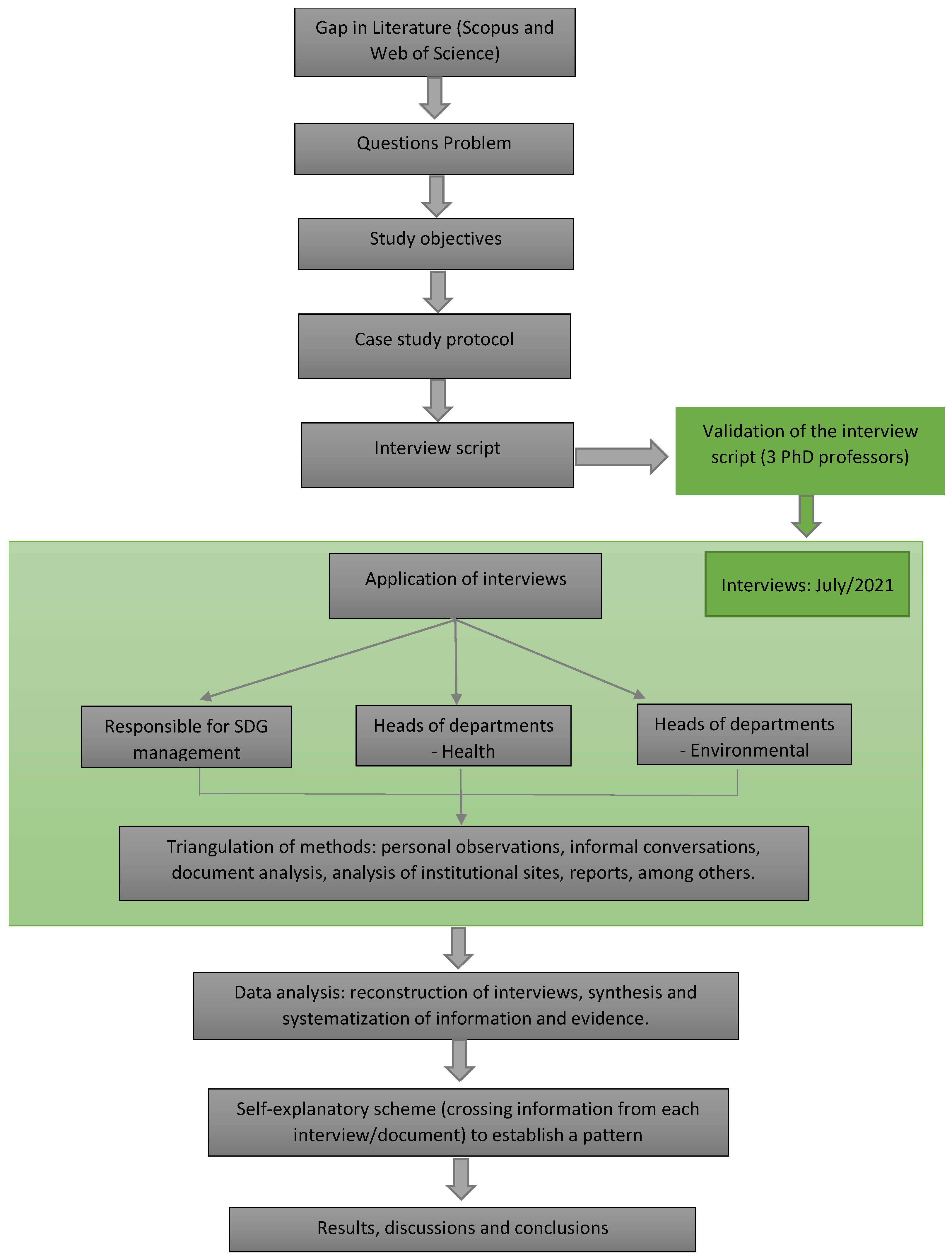
The first step of this research was to establish a problem issue to direct researchers and the creation of a case study protocol [36]. Subsequently, the case study protocol gave rise to the interview script that emerged from the revised theoretical foundation (Appendix A). It is noteworthy that to correct errors and give more credibility to the data collection instrument (interview script), a pre-test was realized with three PhD professors in the area.
Subsequently, the instrument was applied in three interviews [37]. The first was with the person responsible for managing the SDGs in the municipality, followed by another with the same manager to ensure better information collection and to resolve initial doubts. Subsequently, we interviewed the heads of two departments (health—interviewee 1, and environment—interviewee 2) to compare the answers among employees, thus adding more reliability to the collected data [36]. All interviews were conducted during July 2021, lasting more than 15 h in total.
During the interviews, we were looking to gather evidence through personal observations, informal conversations, document analysis, and analysis of institutional websites and reports, among other means, to complement what was called triangulation of methods, ensuring greater data reliability [36].
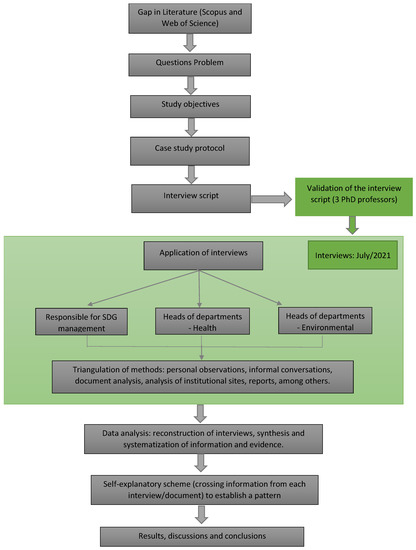
Finally, for data analysis, we reconstructed the interviews and all the documentation collected, seeking to synthesize and systematize all the information and evidence. Next, seeking to develop a self-explanatory scheme about the process of implementing the SDGs in the municipality, we cross-referenced the information from each interview/document looking for patterns to establish our conclusions [36]. Figure 2 summarizes the methodology adopted.
Figure 2.
Summary of methodology adopted.
3. Results
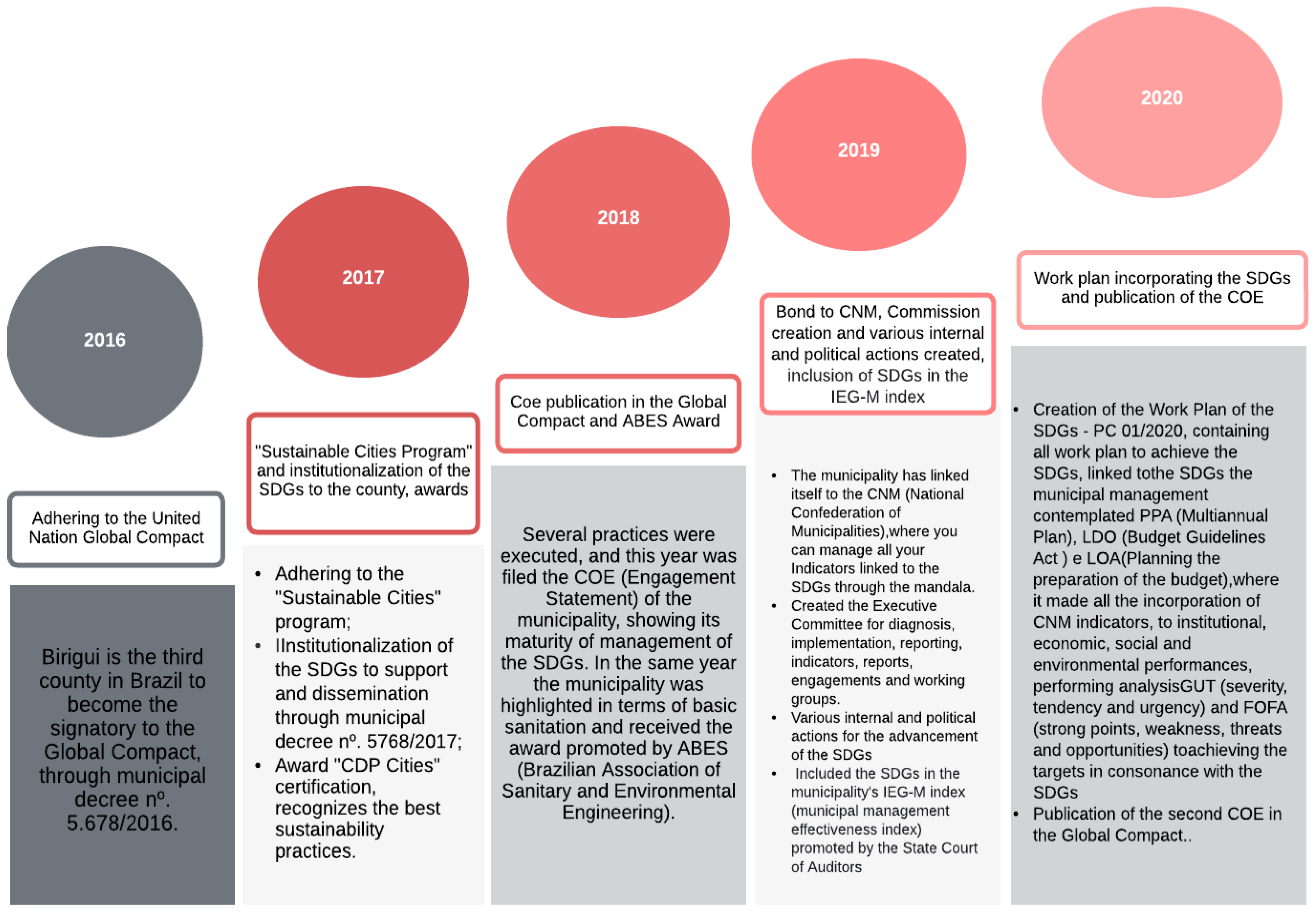
The municipality of Birigui was the first in the State of São Paulo and the third in Brazil to become a signatory in 2016 to the United Nations Global Compact. The Global Compact, based in New York, was launched in 2000 and consists of a voluntary initiative for companies to align their strategies and operations to develop actions that contribute to humanitarian challenges, such as labor issues, corruption, and the environment (including the SDGs) [38].
In 2017, to intensify the institutionalization of the SDGs, the county promulgated municipal decree no. 5768/2017 in which it declared its full support and commitment to disclosure. Later that year, it signed the letter of commitment to the “Sustainable Cities” Program (SCP), and among the first activities carried out by the management team was the elaboration of several policies (SDGs management policy, compliance policy, sustainable purchasing policy, human rights and social responsibility) followed by the offer of training/workshops to give science, disseminate knowledge and achieve the engagement of all. Another activity to be highlighted is the training offered to all partners in the execution of the management of SDGs (workshops, conversation wheels, debates and lectures). According to the manager of the SDGs, “[…] it is important to train and empower everyone involved to carry out their activities in the most correct way possible […]”.
The municipality, in 2019, with the strategic purpose of improving the management of the SDGs, was linked to the National Confederation of Municipalities (NCM), thus having access to the management instrument called “Performance Mandala”, which provided, according to the manager of SDGs, “[…] improvements in the consolidation of actions and a more objective and transparent management”; the objective of the “Mandala” was to be a reference and offer to mayors and managers of data that can be measured, and also to allow each municipality to verify its evolution with respect to these indicators [26].
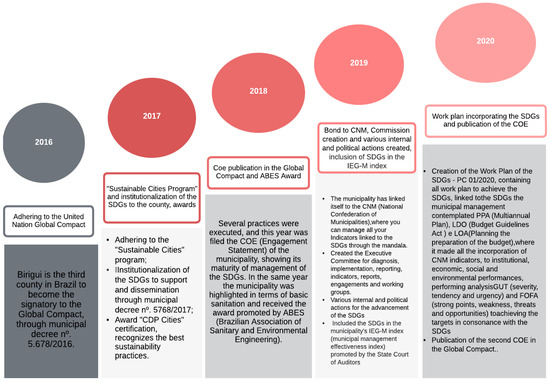
Figure 3 presents some of the main historical milestones of the evolution of the county in its implementation/engagement of the SDGs in its strategic management.
Figure 3.
Timeline of the implantation of the SDGs in the county. Source: Elaborated by the authors.
According to the interviewee 1, the management of SDGs is included in the organizational structure of the municipality and is made by a management team composed of six municipal public servants (two from the health sector, one from the finance sector, one from the social sector, one from the communication sector and one from the legal sector) who give technical guidance to each secretariat (finance, environment, water and sewage, etc.) seeking a better interface in order to plan and carry out actions/public policies aimed at meeting the 2030 Agenda in each secretariat.
This team is directly linked to the chief executive (the municipal mayor), having autonomy to execute actions related to the SDGs and being divided into six committees (executive, engagement, diagnostic, indicator, reporting and SDGs council), in order to facilitate the implementation and management of the Sustainable Development Goals. According to the manager of the SDGs, “[…] the management team makes all the technical direction with the strategic secretariats that interface with the 2030 agenda and through actions and strategic planning directs public policies aimed at meeting the 2030 agenda […]”.
Among the motivations that led the city to join the UN Global Compact and institutionalize actions for the 17 SDGs, the responses of the three interviewees converged to “[…] the responsibility of the public institution (city hall), demands of the population, that increasingly clamor for quality services (for example: health, sanitation and quality education), requirements to attend the State Court of Auditors (SCA) and the incentive of the National Confederation of Municipalities (NCM) […]”. These latter two institutions, together with the demands of organized civil society, are requiring the implementation of actions related to the SDGs (as already discussed in Section 3). When asked about the performance of the city in the management of the SDGs, interviewee 2 stated that, “[…] they are in a phase of monitoring and measuring results, but they still have a lot to learn.” Currently, again according to the manager of the SDGs, “[…] our work is serving as a successful case for other municipalities and companies that comes constantly apprehend how we are managing the SDGs”.
In the words of interviewee 2, “[…] several organizations in the municipality have joined the UN Global Compact by influence of Birigui prefecture, becoming partners in actions for SDGs in the municipality”. Similarly, “[…] these partnerships are the main differential of the municipality to achieve an optimal participation in the 2030 Agenda” (interviewee 1).
It is important to highlight that the city seems to be acting as a “mother company”, and it is a multiplier and incentive—together with the “daughter companies” (partners) and employees—for the importance of carrying out the actions and assimilating concepts involving the 17 SDGs. In the words of the manager of the SDGs, “[…] we are raising awareness and sensitizing all those involved in continuous improvement”.
As we have seen, it is perceived that the city has been executing and consolidating several practices/actions in favor of the SDGs (see a brief summary of the main practices in Table 3) that are periodically disseminated to servers, citizens and partners through various channels (emails, messages by WhatsApp, official website of the city workshops, lectures). These practices/actions provided the city with several awards: “Eco Brasil 2017” for the Sustainable Birigui project, a “sanitation” award promoted by ABES (Brazilian Association of Sanitary and Environmental Engineering), achievement of the seal “Green Blue Municipality” and the seal “Good Route” related to quality education and delivered by the government of the State of São Paulo.
Finally, when we asked the manager of SDGs about what are their main challenges in the management of the SDGs, he stated: i. “[…] the preparation of reports required by the various agencies (Global Compact, NCM, SAC-SP, etc.) that require information from various secretariats and considerable time for collection and analysis of the practices that have been performed in each secretariat”, and ii. “[…] the existing resistance, on the part of some managers and employees, in implementing the actions proposed by the SDGs steering committee”.
Table 3.
Brief summary of the main practices adopted in the municipality for the advancement of SDGs.
4. Discussion
Based on the results found, we observed that the municipality followed a step-by-step path to the implementation of several SDGs through actions that seem to be contributing to the success of this target.
First, we found that the municipality, in one of its first actions, became a signatory of the United Nations Global Compact. This is considered relevant by the literature, as it allows the municipality to align its strategies for actions that contribute to combating various challenges for humanity, such as corruption, hunger, poverty and issues related to the environment [38]. In addition, when joining the United Nations Global Compact, it is necessary to carry out actions that will be part of a report (COE—Communication on Engagement) that must be presented to the entity demonstrating, every two years, the advances made by the municipality. Thus, even if the affiliation is voluntary, it is possible to verify the demand for more and new actions that must be included in the reports to be delivered in each new period, including the measurement of the achieved results. This requirement to be a signatory to the Global Pact demonstrates that institutional “pressures” are relevant to the advancement of SDGs [39].
The second step was the institutionalization of the SDGs, together with all sectors of the prefecture, by the creation of a committee (multidisciplinary team) that was appointed as the management team of the SDGs. This team is responsible for planning, executing, and directing on issues related to SDGs (see for example the importance of the committee in [40,41]) and was designated by the chief executive (Mayor of the municipality), demonstrating the importance that senior management has placed on providing support and guidance for the implementation of the 2030 Agenda (see for example [41,42]).
To advance even further in the institutionalization of the SDGs, the management team (the SDGs committee) was included in the organizational structure of the municipality (step 3). This practice is important because it assigns authorities and responsibilities (see [43,44]) for the faithful implementation and management of the SDGs while presenting (communication) to the entire organization of what is expected of their employees. This management team, in one of its first activities, created what they called “policies for the development of SDGs” (compliance policy, sustainable procurement, human rights and social responsibility—step 4). These policies are extremely important to promote the direction of action and demonstrate the way forward for the entire organization (see [ISO 9001, ISO 14001]). However, it is not enough just to establish authorities, responsibilities and policies for guidance, it is also necessary to raise awareness, sensitize and provide everyone with the skills and capacities necessary for the good development of the daily activities of each employee, including issues related to SDGs (sustainability) (see [45,46,47]) Thus, the SDGs management team, over time, offered training, workshops, conversation circles, debates and lectures to disseminate knowledge and engage everyone, including the partners (step 5).
Another important step (step 6) for the implementation and management of the SDGs was for the municipality to promote engagement and establish partnerships with the private sector, civil society, and other institutions in the municipality. The municipality appears to be encouraging and supporting other organizations to adopt SDGs. This step reminds one of actions usually performed by focal companies in their supply chains to advance sustainability practices [46,48]; after all, for the realization of good management of the SDGs, it is essential to engage various actors and establish partnerships between the public and private sectors and involve governments, civil society, and various types of businesses [3,4,5,16,18].
Finally, by joining the National Confederation of Municipalities (NCM) (step 7) and having access to the management tool “Mandala SDGs”, the municipality starts to adopt an evaluation system with performance indicators that allow the monitoring, evaluation, and continuous improvement of its actions/practices. The proper incorporation of SDGs in evaluation systems (city performance indicators) facilitates decision-making and demonstrates commitment to the 2030 agenda [49], and is a driving force for the operationalization of the SDGs [7,20].
5. Conclusions
This research presented a case study in a pioneer municipality in the implementation of the SDGs in Brazil with the objectives of: identifying which practices were adopted in the implementation of the SDGs; knowing if the municipalities are essential actors for the advancement of SDGs; and identifying the main motivations that led the municipality to adhere to the UN Global Compact and to institutionalize the SDGs.
From our results, it was possible to make it clear that municipalities are relevant actors for the advance of the SDGs, becoming a leader to engage, raise awareness, train and involve different organizations, their employees and the population in general, in joint actions that actually can bring important results for the development of SDGs. We identified that both the CNM and the SAC-SP exerted normative pressures that motivated the city to institutionalize and implement the SDGs. In addition, the affiliation to the United Nations Global Compact and the need to present the Communication on Engagement (COE) every two years, demonstrating the advances made, are exerting pressure for new and more advanced practices of implementation of the SDGs.
Moreover, this work presents some theoretical and practical implications that contribute to fill an important gap in the literature. For example, this work contributes to the state of the art of the theme of several areas, in particular: public management, Sustainable Development Goals (SDGs), sustainable development and sustainability. It is one of the first to explore the implementation of SDGs in municipalities (public sector), which are considered essential actors for achieving SDGs [6].
In addition, our work is one of the rare studies that have sought to understand how cities are planning, monitoring and implementing SDGs, which is considered extremely important by the specialized literature [7]. In this sense, our work contributes to organizational practice by bringing forward a set of indicators (Mandala SDGs) capable of enabling the monitoring and evaluation of the implementation of actions that contribute to SDGs. Our study advances organizational practice by presenting a robust set of practices/actions aimed at the management/implementation of the SDGs and a step-by-step account of how the municipality of Birigui implemented the SDGs that might be useful if adopted/adapted by other municipalities (in Brazil and around the world), by the public sector in general, or even by private sector companies.
This study, despite all the care taken, may present bias. For example, because it is a single case study, it only demonstrates the reality of one organization/institution, in this case the municipality of Birigui, which restricts the generalization of our findings. Thus, for further research it is suggested to carry out multiple case studies, for example, with the municipalities belonging to the UN Global Compact in Brazil, and single or multiple case studies in municipalities around the world. This would make it possible to understand the various trends in the management of SDGs in municipalities, disseminating knowledge of vital importance for the advancement of the 2030 Agenda.
Author Contributions
Conceptualization, T.B.T. and A.A.T.; methodology, T.B.T. and A.A.T.; validation, T.B.T., A.A.T., E.B.M. and R.A.G.B.; formal analysis, T.B.T., R.A.G.B., E.B.M. and A.A.T.; investigation, T.B.T. and A.A.T.; data curation, T.B.T. and A.A.T.; writing—original draft preparation, T.B.T., T.E.C.M. and A.A.T.; writing—review and editing, T.B.T., A.A.T., R.A.G.B. and E.B.M.; supervision, A.A.T. and R.A.G.B.; project administration, T.B.T. and A.A.T.; funding acquisition, R.A.G.B. All authors have read and agreed to the published version of the manuscript.
Funding
This study was financed in part (APC) by the São Paulo State University.
Institutional Review Board Statement
Not applicable. This work does not involve humans or animals.
Informed Consent Statement
Not applicable.
Data Availability Statement
Not applicable.
Acknowledgments
The authors thank the anonymous managers who kindly responded to our inquiries.
Conflicts of Interest
The authors declare no conflict of interest.
Appendix A. Interview Script
- Company Characterization (Respondent: SDGs Manager)
- 1.1.
- Founding date
- 1.2.
- Brief history of the city hall
- 1.3.
- Current number of servers
- 1.4.
- Vision
- 1.5.
- Mission
- 1.6.
- Values
- Characterization of SDG Management (Respondent: Responsible for SDGs)
- 2.1.
- How does the city government see its relationship with the SDGs? Is there an official document?
- 2.2.
- How do you define the management of the SDGs in the city hall?
- 2.3.
- Is there a formal SDG policy at the city hall? Which is?
- 2.4.
- Is the management of the SDGs embedded in the organizational structure, mission, vision and values of the city hall? Explain.
- 2.5.
- Cite the date the city hall joined the UN Global Compact. Comment about it.
- 2.6.
- What are the main motivations for carrying out practices aimed at SDGs? (Community pressure, pressure from government agencies, incentives from government agencies). Try to list the order of priority.
- 2.7.
- Briefly tell the history of the implementation of the SDGs in the city hall. Try to cite dates.
- 2.8.
- Have the practices adopted so far involved other entities, companies, the community? Because?
- 2.9.
- What were the main changes perceived with the management of the SDGs?
- 2.10.
- How do you rate the city hall’s performance in terms of meeting the SDGs?
- 2.11.
- What are the differentials of Birigui City Hall in managing the SDGs compared to other city halls?
- 2.12.
- What were (or are) the main challenges/difficulties in implementing the SDGs?
- 2.13.
- What were (or are) the main opportunities in the implementation of the SDGs?
- 2.14.
- Comment on the mandala of the SDGs (CNM) that measures the performance of municipalities?
- 2.15.
- How important is the municipal government to training for the adoption of good practices related to SDGs? Comment.
- 2.16.
- Which employees (name the areas and hierarchical levels) make decisions about the SDG management process?
- 2.17.
- Do employees who perform high-performance activities in the management of the SDGs receive differentiated training?
References
- United States. The Millennium Development Goals Report 2015. Available online: https://www.un.org/millenniumgoals/2015_MDG_Report/pdf/MDG%202015%20rev%20(July%201).pdf (accessed on 4 June 2022).
- Maurice, J. UN set to change the world with new development goals. Lancet 2015, 386, 1121–1124. [Google Scholar] [CrossRef] [Scilit]
- Caiado, R.G.G.; Leal Filho, W.; Quelhas, O.L.G.; de Mattos Nascimento, D.L.; Ávila, L.V. A literature-based review on potentials and constraints in the implementation of the sustainable development goals. J. Clean. Prod. 2018, 198, 1276–1288. [Google Scholar] [CrossRef] [Scilit]
- Kuruvilla, S.; Hinton, R.; Boerma, T.; Bunney, R.; Casamitjana, N.; Cortez, R.; Fracassi, P.; Franz-Vasdeki, J.; Helldén, D.; McManus, J.; et al. Business not as usual: How multisectoral collaboration can promote transformative change for health and sustainable development. BMJ 2018, 363, k4771. [Google Scholar] [CrossRef] [Scilit]
- Marmot, M.; Bell, R. The sustainable development goals and health equity. Epidemiology 2018, 29, 5–7. [Google Scholar] [CrossRef] [Scilit]
- Leal Filho, W.; Azeiteiro, U.; Alves, F.; Pace, P.; Mifsud, M.; Brandli, L.; Caeiro, S.S.; Disterheft, A. Reinvigorating the sustainable development research agenda: The role of the sustainable development goals (SDGs). Int. J. Sustain. Dev. World Ecol. 2018, 25, 131–142. [Google Scholar] [CrossRef] [Scilit]
- Croese, S.; Green, C.; Morgan, G. Localizing the sustainable development goals through the lens of urban resilience: Lessons and learnings from 100 resilient cities and cape town. Sustainability 2020, 12, 550. [Google Scholar] [CrossRef] [Scilit]
- Fourie, W. Aligning South Africa’s National Development Plan with the 2030 Agenda’s Sustainable Development Goals: Guidelines from the policy coherence for development movement. Sustain. Dev. 2018, 26, 765–771. [Google Scholar] [CrossRef] [Scilit]
- The World Commission on Environment and Development. Our Common Future; Oxford University Press: Oxford, UK, 1987. [Google Scholar]
- Swarnakar, V.; Singh, A.R.; Antony, J.; Tiwari, A.K.; Cudney, E. Development of a conceptual method for sustainability assessment in manufacturing. Comput. Ind. Eng. 2021, 158, 107403. [Google Scholar] [CrossRef] [Scilit]
- Sachs, J.D. The age of sustainable development. In The Age of Sustainable Development; Columbia University Press: New York, NY, USA, 2015. [Google Scholar]
- Ansari, Z.N.; Kant, R. A state-of-art literature review reflecting 15 years of focus on sustainable supply chain management. J. Clean. Prod. 2017, 142, 2524–2543. [Google Scholar] [CrossRef] [Scilit]
- Dubey, R.; Gunasekaran, A.; Papadopoulos, T. Green supply chain management: Theoretical framework and further research directions. Benchmark. Int. J. 2017, 24, 184–218. [Google Scholar] [CrossRef] [Scilit]
- Hafezalkotob, A. Competition, cooperation, and coopetition of green supply chains under regulations on energy saving levels. Transp. Res. Part E Logist. Transp. Rev. 2017, 97, 228–250. [Google Scholar] [CrossRef] [Scilit]
- United States. Sustainable Cities and Communities. Available online: https://www.un.org/sustainabledevelopment/cities/ (accessed on 5 August 2022).
- United States. Take Action for the Sustainable Development Goals. Available online: https://www.un.org/sustainabledevelopment/sustainable-development-goals/ (accessed on 4 June 2022).
- Deus, R.M.; Mele, F.D.; Bezerra, B.S.; Battistelle, R.A.G. A municipal solid waste indicator for environmental impact: Assessment and identification of best management practices. J. Clean. Prod. 2020, 242, 118433. [Google Scholar] [CrossRef] [Scilit]
- Jomo, K.S.; Chowdhury, A.; Sharma, K.; Platz, D. Public-Private Partnerships and the 2030 Agenda for Sustainable Development: Fit for Purpose? DESA Working Paper No. 148 ST/ESA/2016/DWP/148; United Nations: New York, NY, USA, 2016. [Google Scholar]
- Alaimo, L.S.; Maggino, F. Sustainable development goals indicators at territorial level: Conceptual and methodological issues—The Italian perspective. Soc. Indic. Res. 2020, 147, 383–419. [Google Scholar] [CrossRef] [Scilit]
- Littlewood, D.; Holt, D. How social enterprises can contribute to the Sustainable Development Goals (SDGs)—A conceptual framework. In Entrepreneurship and the Sustainable Development Goals; Emerald Publishing Limited: Bingley, UK, 2018. [Google Scholar] [CrossRef] [Scilit]
- United States. Transforming Our World: The 2030 Agenda for Sustainable Development. Available online: https://sdgs.un.org/2030agenda (accessed on 4 June 2022).
- CNM. Quem Somos. Available online: https://www.cnm.org.br/institucional/conhecaacnm (accessed on 4 June 2022).
- CNM. Atuação. Available online: https://www.cnm.org.br/institucional/conhecaacnm#atuacao (accessed on 4 June 2022).
- CNM. Roda de Conhecimento Apresenta Mandala ODS 2021. Available online: https://www.cnm.org.br/comunicacao/noticias/roda-de-conhecimento-apresenta-mandala-ods-2021-confira-como-foi-a-transmissao (accessed on 4 June 2022).
- Agência CNM de Notícias. Dia Mundial da Água: CNM traz Orientações Sobre a Gestão da Água e Boas Práticas Municipais. Available online: https://www.cnm.org.br/comunicacao/noticias/dia-mundial-da-agua-cnm-traz-orientacoes-sobre-a-gestao-da-agua-e-boas-praticas-municipais (accessed on 4 June 2022).
- CNM. Mandala ODS. Available online: https://ods.cnm.org.br/mandala-municipal (accessed on 4 June 2022).
- CNM. Mandala de Desenvolvimento Municipal. Available online: https://www.cnm.org.br/cms/biblioteca/Mandala%20de%20Desenvolvimento%20Municipal%20(2018) (accessed on 4 June 2022).
- CNM. Como Modelo de Diretrizes aos Gestores, Mandala CNM foi Apresentada no Lançamento da Norma NBR ISSO 18091: 2022. Available online: https://ods.cnm.org.br/noticia/63878 (accessed on 6 June 2022).
- TCESP. Tribunal Lança Plataforma Para Monitorar ODS no Estado de SP. Available online: https://www.tce.sp.gov.br/6524-tribunal-lanca-plataforma-para-monitorar-ods-estado-sp (accessed on 4 June 2022).
- Observatório do Futuro. Prêmio ODS. Available online: https://www.tce.sp.gov.br/premio-ods (accessed on 4 June 2022).
- Barley, S.R.; Tolbert, P.S. Institutionalization and structuration: Studying the links between action and institution. Organ. Stud. 1997, 18, 93–117. [Google Scholar] [CrossRef] [Scilit]
- DiMaggio, P.J.; Powell, W.W. The iron cage revisited: Institutional isomorphism and collective rationality in organizational fields. Am. Sociol. Rev. 1983, 48, 147–160. [Google Scholar] [CrossRef] [Scilit]
- Dhanda, K.K.; Sarkis, J.; Dhavale, D.G. Institutional and stakeholder effects on carbon mitigation strategies. Bus. Strategy Environ. 2022, 31, 782–795. [Google Scholar] [CrossRef] [Scilit]
- IBGE. População. 2010. Available online: https://cidades.ibge.gov.br/brasil/sp/birigui/panorama (accessed on 4 June 2022).
- SINBI. O Sindicato. Available online: http://sindicato.org.br/institucional/ (accessed on 4 June 2022).
- Yin, R.K. Case Study Research: Design and Methods; Sage Publications: Thousand Oaks, CA, USA, 2009. [Google Scholar]
- Voss, C.; Tsikriktsis, N.; Frohlich, M. Case research in operations management. Int. J. Oper. Prod. Manag. 2002, 22, 195–219. [Google Scholar] [CrossRef] [Scilit]
- Rosati, F.; Faria, L.G. Addressing the SDGs in sustainability reports: The relationship with institutional factors. J. Clean. Prod. 2019, 215, 1312–1326. [Google Scholar] [CrossRef] [Scilit]
- Hirsch, P.M. Organizational effectiveness and the institutional environment. Adm. Sci. Q. 1975, 20, 327–344. [Google Scholar] [CrossRef] [Scilit]
- Valencia, S.C.; Simon, D.; Croese, S.; Nordqvist, J.; Oloko, M.; Sharma, T.; Buck, N.T.; Versace, I. Adapting the Sustainable Development Goals and the New Urban Agenda to the city level: Initial reflections from a comparative research project. Int. J. Urban Sustain. Dev. 2019, 11, 4–23. [Google Scholar] [CrossRef] [Scilit]
- Krantz, V.; Gustafsson, S. Localizing the sustainable development goals through an integrated approach in municipalities: Early experiences from a Swedish forerunner. J. Environ. Plan. Manag. 2021, 64, 2641–2660. [Google Scholar] [CrossRef] [Scilit]
- Ilyas, S.; Hu, Z.; Wiwattanakornwong, K. Unleashing the role of top management and government support in green supply chain management and sustainable development goals. Environ. Sci. Pollut. Res. 2020, 27, 8210–8223. [Google Scholar] [CrossRef] [Scilit] [PubMed]
- Atkinson, S.; Schaefer, A.; Viney, H. Organizational structure and effective environmental management. Bus. Strategy Environ. 2000, 9, 108–120. [Google Scholar] [CrossRef]
- Jabbour, C.J.C.; Lopes de Sousa Jabbour, A.B.; Stefanelli, N.O.; Teixeira, A.A. Environmental management and organizational structure: A study of multiple cases. REGE-Rev. Gestão 2012, 19, 361–375. [Google Scholar] [CrossRef] [Scilit]
- Teixeira, A.A.; Jabbour, C.J.C.; Jabbour, A.B.L.S. Relationship between green management and environmental training in companies located in Brazil: A theoretical framework and case studies. Int. J. Prod. Econ. 2012, 140, 318–329. [Google Scholar] [CrossRef] [Scilit]
- Teixeira, A.A.; Jabbour, C.J.C.; de Sousa Jabbour, A.B.L.; Latan, H.; de Oliveira, J.H.C. Green training and green supply chain management: Evidence from Brazilian firms. J. Clean. Prod. 2016, 116, 170–176. [Google Scholar] [CrossRef] [Scilit]
- Stefanelli, N.O.; Teixeira, A.A.; De Oliveira, J.H.C.; Ferreira, M.A.; Sehnem, S. Environmental training: A systematic review of the state of the art of the theme. Benchmark. Int. J. 2019, 27, 2048–2076. [Google Scholar] [CrossRef] [Scilit]
- Pohlmann, C.R.; Scavarda, A.J.; Alves, M.B.; Korzenowski, A.L. The role of the focal company in sustainable development goals: A Brazilian food poultry supply chain case study. J. Clean. Prod. 2020, 245, 118798. [Google Scholar] [CrossRef] [Scilit]
- Rashed, A.H.; Shah, A. The role of private sector in the implementation of sustainable development goals. Environ. Dev. Sustain. 2021, 23, 2931–2948. [Google Scholar] [CrossRef] [Scilit]


Publisher’s Note: MDPI stays neutral with regard to jurisdictional claims in published maps and institutional affiliations. |
© 2022 by the authors. Licensee MDPI, Basel, Switzerland. This article is an open access article distributed under the terms and conditions of the Creative Commons Attribution (CC BY) license (https://creativecommons.org/licenses/by/4.0/).