Article

Study of the Competitiveness of Quanzhou Port on the Belt and Road in China Based on a Fuzzy-AHP and ELECTRE III Model


1
School of Business Administration, Wonkwang University, 460 Iksandae-ro, Iksan, Jeonbuk 54538, Korea
2
School of Management Science and Engineering, Hebei GEO University, Shijiazhuang 050031, China
*
Author to whom correspondence should be addressed.
Sustainability 2018, 10(4), 1253; https://doi.org/10.3390/su10041253
Submission received: 4 March 2018 / Revised: 14 April 2018 / Accepted: 16 April 2018 / Published: 19 April 2018
(This article belongs to the Section Economic and Business Aspects of Sustainability)

Abstract

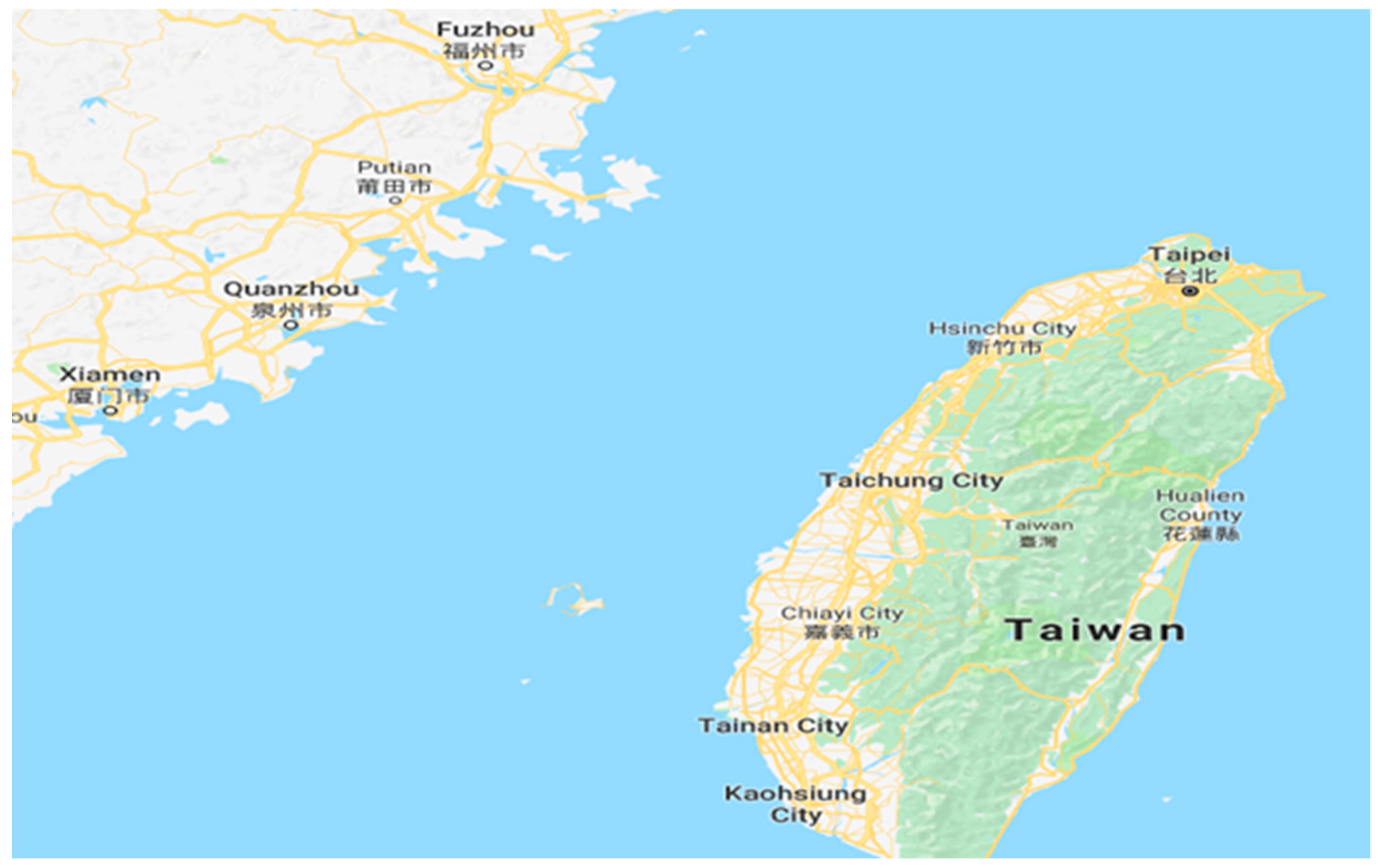
With the establishment of the Belt and Road national strategy, Quanzhou Port is a significant development opportunity. Quanzhou Port is the origin of the 21st century Maritime Silk Road and part of the Belt and Road, but as a pioneer project of the Maritime Silk Road and the main port in the Belt and Road strategy, its development has encountered some challenges and problems. Hence, this paper aims to evaluate the competitiveness of Quanzhou Port based on the criteria selected by experts and corresponding improvement suggestions are put forward for its weaknesses. Using fuzzy-AHP and ELECTRE III, port competitiveness is evaluated according to the total weights obtained based on the different criteria used. The key criteria consist of six factors (port size, port location, hinterland economy, port costs, operations management and growth potential) that are divided into 18 sub-criteria. Five competing ports were selected with respect to geographical proximity. The order of ranking according to ELECTRE III are as follows: Kaohsiung Port, Xiamen Port, Fuzhou Port, Taichug Port and Quanzhou Port. The findings show that the port of Quanzhou appears last in the ordering sequence, resulting in a need for integrative approaches to promote its competitiveness. Compared with competitive ports, Quanzhou Port has relatively weak overall infrastructure and relatively high port costs, which leads to a lack of obvious flow of port materials and a decrease in professional unloading services. Particularly in hinterland port economies, the industrial structure is extensive and backward. Hence, the question of how to achieve a green transformation of the manufacturing industry will be important for Quanzhou Port. This paper points out directions for the future development of Quanzhou Port and applies comprehensive evaluation methods, namely fuzzy-AHP and ELECTRE III.
Keywords: port competitiveness; fuzzy-AHP; ELECTRE III; Belt and Road; Quanzhou Port port competitiveness; fuzzy-AHP; ELECTRE III; Belt and Road; Quanzhou Port