


Abstract
Background: Artificial intelligence (AI) is increasingly used in obstetric ultrasound, cardiotocography, wearable fetal electrocardiography, and remote maternal-fetal monitoring. Evidence on real-world implementation, including feasibility, acceptability, workflow, task sharing, sustainability, equity, cost, and user experience, remains limited. This review aimed to map global real-world implementation evidence for AI-enabled obstetric monitoring and identify outcomes, determinants, gaps, and research priorities for scale-up. Methods: We conducted a scoping review using the Arksey and O’Malley framework with Levac refinements, Joanna Briggs Institute guidance, and PRISMA-ScR. PubMed/MEDLINE, Web of Science, and Dimensions were searched from January 2010 to May 2026 and Scopus from January 2010 to December 2025. We included studies on AI-enabled obstetric monitoring in clinical or community settings and primary research on implementation readiness. We classified findings as operational (Tier 1) or readiness (Tier 2), mapped outcomes to RE-AIM, and interpreted determinants using NASSS. Results: Thirteen studies met the criteria: ten on AI-enabled obstetric ultrasound, two on AI-assisted cardiotocography, and one on wearable fetal electrocardiography. Seven were Tier 1 and six Tier 2; ten were conducted in LMICs or mainly represented LMIC stakeholders. Included studies reported higher ultrasound process-quality measures, shorter expert-review time, feasible image acquisition, high acceptability, and potential for task sharing. Selection bias, confounding, short follow-up, and reliance on proximal outcomes limited inference. No randomized trial showed improved maternal or neonatal outcomes, and no complete cost-effectiveness evaluation met the criteria. Conclusions: Implementation evidence remains sparse, recent, and concentrated in AI-enabled ultrasound. Pragmatic comparative studies, long-term implementation research, economic evaluation, safety monitoring, referral completion, and equitable scale-up should be prioritized.
1. Introduction
Maternal and perinatal mortality remain major global health problems despite sustained gains in antenatal, intrapartum, and newborn care. The World Health Organization (WHO) and partner agencies estimated 287,000 maternal deaths in 2020, with most deaths occurring in low- and lower-middle-income countries [1]. Preventable stillbirths and neonatal deaths add substantially to this burden. Timely recognition of fetal compromise, abnormal presentation, multiple pregnancy, placental abnormalities, growth problems, hypertensive complications, and preterm labor forms a central part of effective antenatal and intrapartum care [2,3].
Obstetric monitoring includes technologies and clinical processes used to assess maternal physiology, fetal growth, fetal heart activity, uterine activity, placental function, and pregnancy risk. Ultrasound scan supports gestational-age estimation, fetal viability assessment, detection of multiple pregnancy, fetal presentation, placental localization, growth assessment, and structural-anomaly screening. The WHO recommends one ultrasound examination before 24 weeks of gestation as part of routine antenatal care [2]. Cardiotocography (CTG) records fetal heart rate and uterine contractions during pregnancy or labor. Non-invasive fetal electrocardiography (fECG), wearable sensors, and remote-monitoring platforms seek to extend surveillance beyond conventional facilities.
Access and quality healthcare remain unequal. Many low-resource settings lack trained sonographers, fetal-monitoring equipment, maintenance systems, reliable power, digital connectivity, referral transport, and specialist interpretation of investigations [4,5,6,7]. Task sharing with nurses, midwives, community health workers, and non-specialist clinicians offers one response to workforce shortages, but image acquisition, signal quality, interpretation, supervision, and referral remain important constraints [4,7,8]. The interpretation of conventional CTG also suffers from interobserver and intraobserver variations, high false-positive rates, inconsistent escalation, and limited evidence of benefit from some computerized decision-support approaches [9,10].
Artificial intelligence (AI) offers potential approaches to some of these challenges. AI systems process data using computational methods designed to perform tasks commonly associated with human cognition, including pattern recognition, classification, prediction, segmentation, quality assessment, and decision support [11,12,13]. In obstetric ultrasound, AI applications include automated biometry, plane recognition, quality control, gestational-age estimation from blind sweeps, anatomical segmentation, anomaly detection, and real-time acquisition guidance [14,15,16,17]. In fetal monitoring, algorithms analyze fetal heart-rate patterns, uterine contractions, fetal ECG signals, and multimodal maternal-fetal data. Wearable systems combine sensors, mobile applications, automated signal processing, and remote review.
Technical promise alone does not establish clinical value. Studies often emphasize discrimination, accuracy, sensitivity, specificity, or agreement with experts [18,19,20]. They rarely examine how clinicians use outputs, how patients respond, whether workflows improve, whether errors change clinical decisions, whether services sustain use, or whether benefits reach disadvantaged populations [21,22,23,24]. Dataset shift, limited transportability, automation bias, hidden confounding, incomplete reporting, and weak post-deployment surveillance create further risks [24,25,26,27].
Clinical evaluation standards increasingly recognize this problem. CONSORT-AI and SPIRIT-AI require trial reports and protocols to describe algorithm inputs, outputs, error handling, human–AI interaction, and the skills required from users [28,29]. DECIDE-AI extends this focus to early prospective clinical evaluation and asks investigators to report workflow integration, user experience, safety, and system failures [30]. These standards improve reporting, but obstetric monitoring also requires pregnancy-specific attention to fetal and maternal safety, time-critical escalation, shared decision-making, and the downstream consequences of false reassurance or unnecessary intervention.
Regulatory clearance also answers a different question from implementation. Regulators assess safety and performance for a defined intended use. Health systems still need local evidence on staffing, infrastructure, referral pathways, procurement, training, cybersecurity, accountability, and affordability. This need becomes more important when software receives updates after deployment or when the same algorithm operates across different probes, monitors, populations, and levels of care. WHO guidance, therefore, places transparency, accountability, inclusiveness, sustainability, and continuous oversight alongside technical performance [12,13].
Implementation research addresses this translational gap. Proctor et al. (2011) described implementation outcomes, such as acceptability, adoption, appropriateness, feasibility, fidelity, cost, penetration, and sustainability [31]. RE-AIM examines reach, effectiveness, adoption, implementation, and maintenance [32]. The non-adoption, abandonment, scale-up, spread and sustainability (NASSS) framework focuses on non-adoption, abandonment, scale-up, spread, and sustainability of health technologies across the condition, value proposition, adopters, organization, wider system, and adaptation over time [33]. These frameworks distinguish technical performance from implementation success.
The distinction matters profoundly in obstetrics. An accurate ultrasound algorithm has limited clinical value if frontline workers cannot acquire adequate sweeps, if batteries fail, if internet access interrupts analysis, or if referral hospitals lack capacity. An AI-CTG alert might increase operative delivery or anxiety without improving neonatal outcomes. A wearable monitor might generate reassurance during supervised testing yet prove difficult to wear at home. Automated guidance might support task sharing while creating over-reliance or uncertainty about responsibility. Cost savings from faster review might be offset by licenses, cloud infrastructure, maintenance, training, repeat scans, referrals, and confirmatory testing.
Several reviews describe AI in obstetric ultrasound and maternal-fetal medicine [14,15,34]. Others summarize medical AI performance, AI trials, tele-ultrasound, or task-shared POCUS [8,16,23,35]. These reviews provide valuable technical and clinical context, but they commonly include model-development studies, stored-image validation, retrospective prediction, or secondary literature. Few have specifically distinguished primary evidence of real-world implementation from evidence of implementation readiness across different obstetric monitoring devices.
This review uses two review-specific categories to organize implementation evidence. Tier 1 studies required operational exposure to an AI-enabled monitoring system in a clinical, community, training, or service-delivery setting, with at least one implementation or service outcome. Tier 2 studies required primary data on implementation readiness, including stakeholder perceptions, acceptability, trust, training, workflow, governance, task sharing, or health-system integration. Tier 2 studies did not require operational deployment, but they had to focus explicitly on implementation of a defined AI-enabled obstetric monitoring application. The distinction was used to keep direct operational experience separate from anticipated or preparatory implementation evidence. Throughout the review, AI-enabled obstetric monitoring is used as the umbrella term, while AI-POCUS, AI-CTG, and wearable fetal ECG refer to specific modalities.
The review addressed four objectives:
- To identify and characterize primary studies on real-world implementation or implementation readiness for AI-enabled obstetric monitoring.
- To classify the evidence by monitoring domain, implementation tier, study design, population, geography, and reported outcomes.
- To synthesize implementation outcomes and determinants using RE-AIM and NASSS.
- To identify evidence gaps and priorities for safe, equitable, effective, and sustainable implementation.
2. Methods
2.1. Review Design
We conducted a global scoping review and implementation evidence map. A scoping design suited the heterogeneous technologies, populations, study designs, implementation stages, and outcome measures expected in this emerging field. We followed the five stages proposed by Arksey and O’Malley (2005): identifying the research question, identifying relevant studies, selecting studies, charting data, and collating, summarizing, and reporting results [36]. We incorporated Levac et al.’s (2010) recommendations for an iterative team process, clear linkage between questions and purpose, transparent selection, and interpretive synthesis [37]. We also aligned the review with updated Joanna Briggs Institute guidance [38]. Reporting followed PRISMA-ScR guidance [39,40]. The review materials were registered retrospectively on the Open Science Framework [10.17605/OSF.IO/EPK73]. Reporting was also cross-checked against the PRISMA 2020 checklist. The completed PRISMA-ScR and PRISMA 2020 checklists are provided in Supplementary Files S2 and S3, respectively.
2.1.1. Review Questions
- The primary question was the following: what primary evidence documents real-world implementation or implementation readiness for AI-enabled obstetric monitoring?
2.1.2. Secondary Questions Examined
- Which monitoring technologies, settings, countries, users, and populations have been studied?
- Which implementation outcomes and determinants have been reported?
- What evidence exists for feasibility, acceptability, appropriateness, adoption, task sharing, training, workflow, cost, effectiveness, safety, equity, and sustainability?
- Which evidence gaps limit routine use or scale-up?
2.1.3. Eligibility Framework
We structured eligibility using the Population, Concept, and Context (PCC) framework:
- i.
- Population: pregnant or postpartum individuals, fetuses, healthcare professionals, health managers, implementers, policy-makers, family members, or communities involved in obstetric monitoring.
- ii.
- Concept: AI-enabled monitoring technologies incorporating machine learning, deep learning, computer vision, neural networks, automated classification, automated signal interpretation, automated quality assessment, automated acquisition guidance, or algorithmic risk estimation. Standard digital health platforms, telemedicine tools, or routine electronic medical record systems lacking an explicit algorithmic AI function were excluded.
- iii.
- Context: antenatal, intrapartum, community, primary-care, hospital, home-monitoring, training, or health-system settings globally.
2.2. Inclusion Criteria
Studies were eligible if they represented primary empirical research (quantitative, qualitative, or mixed-methods) published between January 2010 and May 2026, evaluated an explicit AI-enabled obstetric monitoring technology, and reported at least one Tier 1 operational outcome or Tier 2 implementation-readiness parameter.
2.3. Exclusion Criteria
We excluded secondary syntheses, editorials, pure model development or validation studies, retrospective analyses of archived datasets without service exposure, animal or in vitro models, non-obstetric applications, and grey literature that did not contain analyzable primary empirical data, such as press releases and commercial product sheets. Publication status alone was not an exclusion criterion, and eligible preprints were retained.
2.4. Implementation Tiers
Tier 1 represented direct implementation. Participants, providers, or services used an operational AI-enabled monitoring system. Eligible outcomes included feasibility, uptake, image or signal acquisition, workflow, referrals, satisfaction, training performance, service use, clinical outcomes, safety, cost, maintenance, or sustainability. Tier 2 represented implementation readiness. Studies collected primary data on anticipated or early implementation, stakeholder perceptions, trust, acceptability, appropriateness, workforce preparation, training, governance, liability, workflow, or system integration. Participants did not need direct system exposure. We kept Tier 2 separate from Tier 1 throughout the synthesis.
2.5. Information Sources and Search Period
We searched PubMed/MEDLINE, Web of Science Core Collection, and Dimensions from 1 January 2010 through 31 May 2026 and Scopus from 1 January 2010 through 31 December 2025 (reflecting database licensing windows at data retrieval). Concept blocks combined AI-related terms, monitoring terms, and pregnancy terms using Boolean operators. Reference lists of included studies and relevant reviews were screened for additional citations. Full search strings for all electronic databases are provided in Supplementary File S1.
We combined blocks with Boolean AND operators and synonyms within blocks with OR. We applied no language restriction during database searching. We also screened reference lists and forward citations of included studies and relevant reviews. We included preprints because implementation evidence often appears before journal publication in a rapidly developing field. We labeled preprints and interpreted them cautiously.
Supplementary File S1 presents the full database-specific search strategies. The supplied Scopus search ended in December 2025. We identified 2026 reports through the May 2026 searches in the other databases and supplementary citation searching.
2.6. Study Selection
Screening decisions were managed using Rayyan (Rayyan Systems Inc., Cambridge, MA, USA; https://www.rayyan.ai, accessed on 20 July 2026), a web-based systematic review management platform. Titles and abstracts were screened against the eligibility criteria. When abstracts did not provide enough information to distinguish technical AI validation from implementation evidence, records were retained for full-text assessment to reduce the risk of false exclusion. Potentially eligible and uncertain records underwent full-text assessment. Uncertain decisions were resolved through team discussion and re-examination of the AI function, obstetric-monitoring purpose, implementation exposure, and reported outcomes. Reviewer-specific screening assignments and agreement statistics were not retained in a form that supports reliable retrospective reporting, so no agreement coefficient is presented.
2.7. Data Collection Process
VAA performed the primary data charting using a structured extraction form developed for the review. The form captured citation and publication status, country and income setting, study design and duration, sample characteristics, monitoring domain, AI function, target users, implementation tier, implementation outcomes and determinants, quantitative findings, qualitative findings, adverse effects, training, task sharing, workflow, referral, equity, cost, and sustainability. We extracted only results supported by the full text.
QESA independently checked the charted information against the source reports, with particular attention to study eligibility, sample denominators, numerical results, implementation-tier classification, and interpretation of reported outcomes. Differences identified during verification were resolved through review of the original publication and discussion between VAA and QESA. IOA provided methodological adjudication where uncertainties persisted. ABO, GUE, SB, and AAC contributed to validation and technical interpretation of the synthesized findings.
Data were extracted only from information reported in the eligible publications and associated Supplementary Materials. Where numerical information was internally inconsistent and could not be resolved from the source report, the affected estimate was not extracted or used in the synthesis. Study investigators were not routinely contacted for additional information because the review relied on published or publicly available study reports. The Rayyan software was used for study management and linkage of screening decisions.
2.8. Evidence Synthesis
We used descriptive counts to summarize monitoring domains, tiers, geography, designs, and populations. We did not perform meta-analysis because technologies, implementation stages, comparators, and outcomes differed substantially. VAA performed the initial framework mapping during data charting, including mapping reported outcomes to RE-AIM [32] and determinants relevant to NASSS [33]. QESA checked the mapped interpretations against the source reports as part of independent verification of charted data, and unresolved methodological uncertainty was discussed with IOA. Reach covered participation and representativeness. Effectiveness covered clinical, service, quality, safety, and unintended outcomes. Adoption spanned provider and facility uptake. Implementation covered fidelity, training, workflow, cost, adaptations, and delivery conditions. Maintenance covered sustained use and institutionalization. Individual findings were allowed to inform more than one domain where conceptually appropriate. We treated all framework mappings as review-level interpretations unless the original study explicitly used the framework.
2.9. Critical Appraisal
Consistent with scoping-review guidance, we did not exclude studies on the basis of methodological quality [36,37,38,40]. We did not undertake a formal design-specific risk-of-bias appraisal because the purpose was to map the range and maturity of implementation evidence across heterogeneous study designs rather than estimate a pooled effect. Instead, we documented design and reporting limitations relevant to interpretation, including non-random allocation, small samples, single-center designs, hypothetical exposure, self-selection, incomplete upload denominators, short follow-up, preprint status, commercial conflicts, and absence of patient outcomes. Findings were, therefore, interpreted according to study design and were not treated as having equivalent evidentiary strength.
2.10. Ethics
The review used publicly available reports and did not require research-ethics approval.
3. Results
3.1. Study Selection and Characteristics
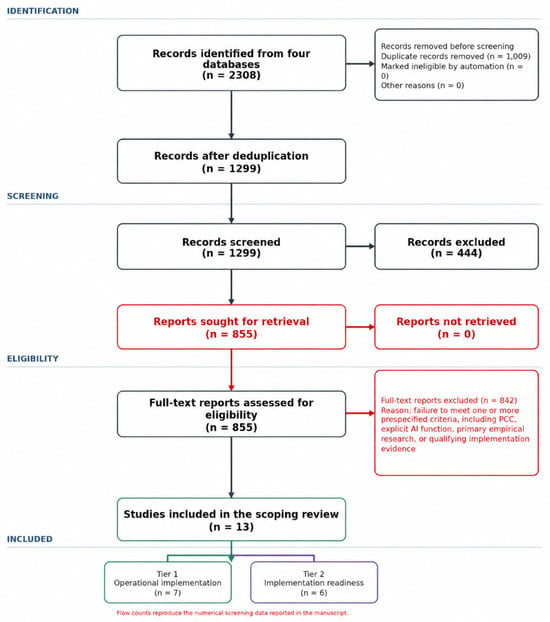
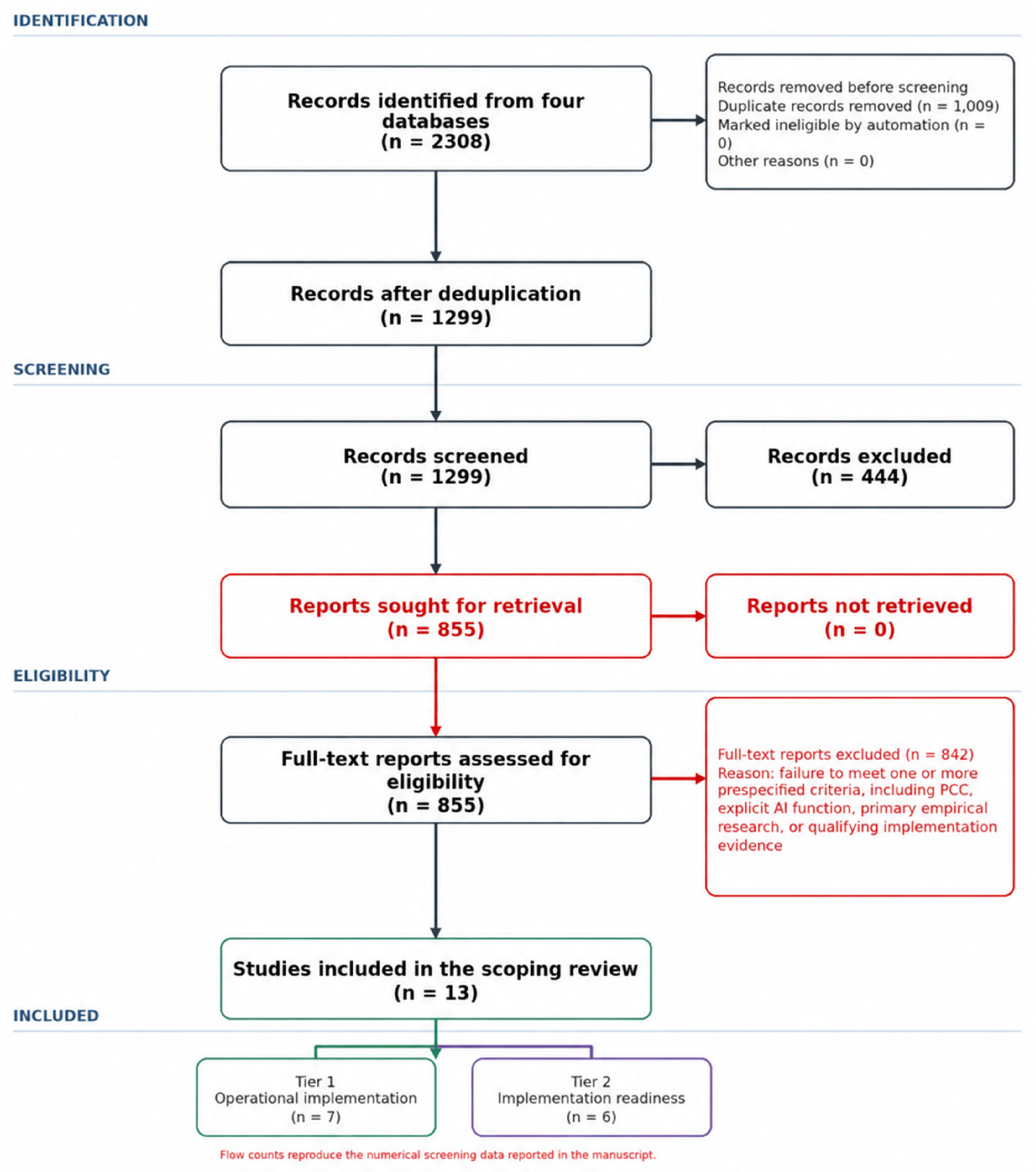
The database searches identified 2308 records. After removal of 1009 duplicates, 1299 unique records underwent title and abstract screening. Of these, 444 records were excluded, and 855 full-text reports were assessed against the review eligibility criteria. The high proportion progressing to full text reflected the deliberately sensitive screening approach used when abstracts did not clearly distinguish algorithm development or validation from real-world implementation or implementation-readiness evidence. Following full-text assessment, 842 reports were excluded because they did not meet one or more prespecified population, concept, context, explicit-AI, primary-empirical-research, or implementation-evidence requirements. The screening export did not preserve a mutually exclusive primary exclusion reason for every excluded full-text report. We, therefore, did not retrospectively reconstruct numerical reason categories, which would have required re-screening and risked misclassification. The final scoping review included 13 primary studies (Figure 1): 7 Tier 1 studies documenting operational exposure and 6 Tier 2 studies examining implementation readiness. All 855 reports sought for retrieval were assessed, and none was unavailable.
Figure 1.
PRISMA 2020 flow diagram. The diagram includes identification, deduplication, screening, retrieval, eligibility, and inclusion stages.
3.2. Characteristics of Included Studies
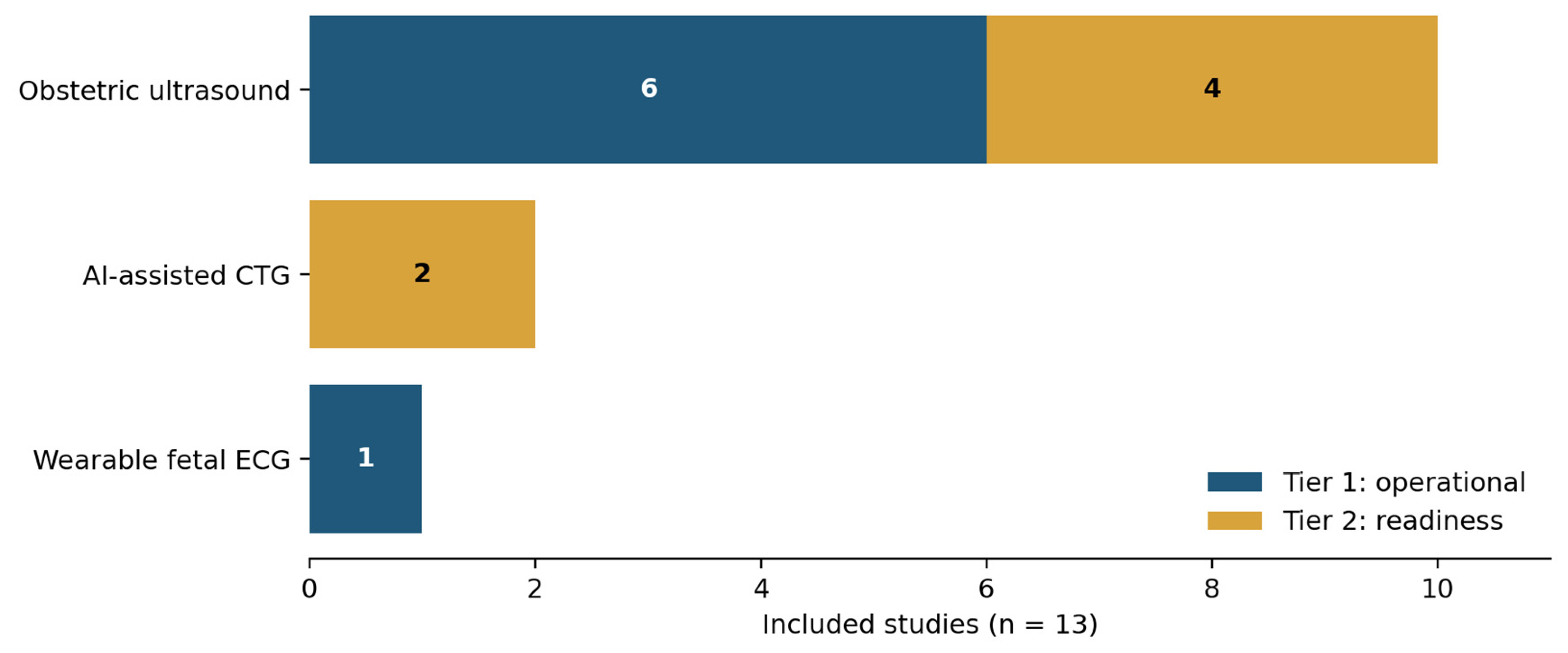
The 13 studies were published from 2022 to 2026. Ten were related to AI-enabled obstetric ultrasound [41,42,43,44,45,46,47,48,49,50]. Two were related to AI-assisted CTG [51,52]. One assessed a wearable non-invasive fetal ECG system [53]. Table 1 summarises the characteristics and principal findings of the 13 studies (Table 1).
Table 1.
Characteristics and findings of included studies.
Seven studies documented operational exposure and were included as Tier 1 [41,42,46,48,49,50,53]. Six were included as Tier 2 because they examined perceptions, readiness, training, trust, or anticipated implementation without routine deployment of the defined system [43,44,45,47,51,52].
Ten studies took place in LMICs or mainly represented LMIC stakeholders. Country-specific studies came from Kenya [45], Egypt [52], China [42,48,50], Sierra Leone [41], and Ethiopia [46,49]. Della Ripa et al. and Ginsburg et al. recruited multinational samples with substantial or predominant LMIC representation [43,44]. Dlugatch et al. studied clinicians in England, Karmakar et al. studied pregnant participants in Australia, and Smit et al. surveyed Dutch obstetric ultrasound professionals [47,51,53]. Two studies were preprints [46,49].
3.3. AI Ultrasound Quality Control
Three Chinese studies evaluated automated image-quality assessment in clinical workflows [42,48,50].
Tan et al. allocated 14 experienced ultrasonographers to AI-assisted or manually supervised quality control [48]. Baseline quality scores were similar, 83.83 in the AI group and 84.24 in the manual group. The AI-group scores increased to 90.42 after one month, 91.02 after two months, and 92.36 after three months. The manual-group scores remained 84.84, 84.60, and 84.31. The between-group effect was significant (F = 13.113, p = 0.004, and η2 = 0.522). Change over time was also significant in the AI group (F = 9.827, p = 0.003, and η2 = 0.747), but not in the manual group.
The study measured professional time rather than full economic value. Real-time AI feedback required no extra expert-review time. The median post-scan AI processing took 13.76 s, while the median manual post-scan review took 1239.50 s and real-time manual supervision took 1541 s. The authors did not report equipment, license, cloud, maintenance, referral, patient, or opportunity costs.
Cao et al. compared first-trimester image quality before and after four radiologists received AI feedback [42]. Junior radiologists increased standard images from 80.8% to 88.5%, an absolute increase of 7.7 percentage points. Mid-level radiologists improved from 86.7% to 91.8%, an increase of 5.1 percentage points. The axial fetal-abdominal plane improved from 62.5% to 76.6% among junior radiologists. AI assessment averaged 0.05 s per image, compared with the mean expert review of 23.7 s before feedback and 22.0 s after feedback. The agreement between AI and experts also exceeded κ = 0.80 for all four planes.
Zhao et al. provided the largest implementation dataset. The study included 34 hospitals, 186 sonographers, 61,959 examinations, and 551,144 uploaded images. Between months 1 to 3 and months 21 to 24, examinations meeting the complete standard increased from 39.5% to 82.1% for first-trimester scans, 46.3% to 65.5% for basic biometry, 29.2% to 58.8% for limited anomaly scans, and 16.1% to 53.3% for standard anomaly scans [50]. All temporal trends had p < 0.0001.
Maintenance dwindled over time. Actively uploading hospitals declined from 34 in months 1 to 3 to 25 in months 21 to 24, with 12 active sites at the end of the period. Three hospitals with complete denominators uploaded only 6.0% to 37.5% of eligible examinations. Sonographers appealed 358 of 551,144 image ratings, 0.065%. Successful appeals, interpreted as AI errors, ranged from 11.1% to 42.1% across four representative planes. Selective uploading, hospital attrition, changing case mix, and observational design restricted causal interpretation in this study.
3.4. Frontline AI-POCUS Implementation
Three studies examined frontline AI-POCUS in African antenatal services [41,46,49]. Sesay et al. provided the most detailed implementation-process evaluation. Eighty-one providers completed 2315 scans across seven facilities [41]. Providers included midwives, community health officers, maternal and child health aides, community health assistants, state-enrolled community health nurses, trainees, traditional birth attendants, and community health volunteers.
Overall, 1940 scans, 83.8%, had sufficient quality for remote or AI-supported analysis. Forty-eight providers, 59.3%, achieved at least 80% sufficient-quality scans. Quality rose from 69.1% for each provider’s first scan to 87.2% for scans numbered 101 or higher. Among tutorial-supported scans, 1905 of 2234, 85.3%, were sufficient. Without tutorials, 35 of 81 scans, 43.2%, were sufficient. The crude OR was 14.1, 95% CI 6.40 to 31.12, p < 0.001. In first-time users, tutorial support remained associated with sufficient acquisition, OR 12.2, 95% CI 4.11 to 36.32.
Furthermore, quality varied by facility from 43.2% at the referral hospital to 92.3% at one maternal and child health post. Twenty-six of twenty-nine providers at the lowest-performing hospital used the device once. The null mixed-effects model attributed approximately 26% of quality variation to provider-level differences.
Providers and clients also valued portability, guided sweeps, tutorial videos, immediate feedback, risk categorization, and faster referrals. Barriers included electricity, connectivity, equipment availability, repair and replacement, staff transfers, workload, recurrent training, financing, unclear guidelines, and weak referral capacity. Some providers described dependence on the device and reduced physical examination. Earlier implementation relied on remote expert review, while later implementation introduced AI analysis. The study did not isolate AI effects from remote support.
Richardson et al. studied 101 women at four urban government health centers in Addis Ababa over four weeks. Frontline providers used three Butterfly devices. Gestational age was recorded in 100 cases [46]. Ninety-three examinations were classified as normal and eight as non-normal. Seven of ninety-nine women with referral data were referred, 7.1%. The pilot did not provide universal expert over-reading, a comparator, formal image-quality outcomes, referral completion, delivery outcomes, or longer-term adoption data.
Tian et al. compared 108 AI-POCUS recipients with 598 controls in Ethiopia. Trained midwives and nurses performed the scans [49]. Fourteen AI-POCUS recipients were referred, including twelve of sixty-one women scanned in the second trimester and two of forty-four scanned in the third trimester. Twelve referrals followed an abnormal AI finding.
Ninety AI-POCUS recipients, 83.3%, completed at least four ANC contacts, compared with 306 controls, 51.2%. Firth regression produced an adjusted OR of 4.923, 95% CI 2.863 to 8.465, p < 0.001. Maternal complications occurred in 11 AI-POCUS recipients and 45 controls, adjusted OR 1.615, 95% CI 0.759 to 3.439. Neonatal complications occurred in 3 AI-group births and 25 control births, adjusted OR 0.971, 95% CI 0.289 to 3.261. Neither outcome differed significantly. AI-POCUS recipients differed from controls in residence, employment, partner education, and age distribution. Non-random exposure and unequal group size restricted causal inference.
3.5. Wearable Fetal Electrocardiography
Karmakar et al. evaluated a non-invasive fetal ECG wearable in 70 high-risk pregnancies from 36 weeks. Participants wore the device for 30 min alongside standard CTG in a tertiary hospital [53].
Before use, 79% expressed interest in continuous wear over days or weeks, 90% expressed interest in home monitoring, 89% expected reassurance, and 14% anticipated increased anxiety. After use, 90% reported high comfort during wear, 91% reported high comfort during removal, and 3% reported high skin irritation. Seventy-five percent were willing to wear the system for at least 24 h and eighty-nine percent reported high satisfaction. Thirty percent preferred the wearable to CTG, while sixty percent had no preference.
Participants described reassurance, convenience, reduced anxiety, and home use as favorable. They requested a smaller, wireless design. The study assessed brief hospital exposure rather than extended home deployment. The authors did not examine clinical decisions, false alerts, service workload, maternal or neonatal outcomes, or long-term adherence. In addition, several authors disclosed commercial interests in the device developer.
3.6. Implementation Readiness for AI Ultrasound
Four studies assessed readiness, perceptions, or anticipated implementation of AI-enabled obstetric ultrasound [43,44,45,47].
Koech et al., interviewed 18 healthcare workers and conducted six focus groups with 52 community members in Kenya [45]. Community participants included 19 pregnant women, 15 male partners, and 18 mothers or mothers-in-law. Participants watched a five-minute TraCer demonstration rather than using the device. They anticipated reassurance, improved gestational dating, better scheduling, increased ANC attendance, fewer referrals for dating scans, and lower travel expenditure. Nurses were widely accepted as users. Accuracy, training, electricity, maintenance, storage, workflow, and clear explanation of device limits shaped perceived feasibility. Some participants attributed broader diagnostic capabilities to TraCer than the intended gestational-age function.
Ginsburg et al. surveyed 176 professionals from 34 countries. A total of 96% came from LMICs, including 63.1% from Africa and 32.1% from Asia [44]. Eighty-five percent reported ultrasound access, seventy-two percent had obstetric-ultrasound training, 60 percent considered themselves at least somewhat experienced, and seventy-seven percent reported some confidence. Only 52.1% reported local ultrasound policies or guidelines.
Among 156 respondents, 27.6% viewed AI-assisted obstetric ultrasound as always useful, 25.6% as frequently useful, and 37.8% as sometimes useful. Fifty-three of one hundred and fifty-four respondents, 34.4%, reported reservations. Within this group, concerns included provider misunderstanding, 71.7%, misdiagnosis, 62.3%, cost, 58.5%, patient misunderstanding, 47.2%, malpractice, 43.4%, and misuse, 43.4%. Priority applications were gestational age, 79%, fetal viability, 69%, ectopic pregnancy, 50%, fetal presentation, 50%, and multiple pregnancy, 44%. The survey did not define a specific AI system.
Della Ripa et al. combined 40 survey responses with six focus groups and 14 interviews involving 41 participants [43]. Sixty-five percent of survey respondents lived in LMICs. Seventy-eight percent were LMIC residents or citizens when qualitative demographic information was included. Fifty-seven percent had clinical or research experience with POCUS and 12.5% had AI-POCUS research or product-development experience.
Participants ranked fetal-heart-rate or viability assessment, multiple pregnancy, and placental location as priority automated functions. Agreement was lower for AI-POCUS than standard POCUS regarding improved ANC attendance, 65.0% versus 75.0%, provider-client trust, 60.0% versus 82.5%, provider confidence, 70.0% versus 85.0%, appropriate referrals, 72.5% versus 85.0%, and neonatal outcomes, 72.5% versus 85.0%. Respondents expected less intensive training for AI-POCUS, 42.5%, than standard POCUS, 67.5%, and more streamlined documentation, 70.0% versus 62.5%.
Midwives and nurses were the preferred users, selected by 97.2% of respondents answering this question. Other doctors were selected by 55.6%, obstetricians by 52.8%, and community health workers by 27.8%. Concerns included inappropriate referrals, algorithmic error, reduced human interaction, declining clinical skills, professional displacement, unclear liability, data ownership, fetal-sex misuse, and weak referral systems. Research priorities included diagnostic accuracy, 77.5%, ANC quality, 65%, early ANC attendance, 50%, referral effects, 37.5%, and women’s experience, 37.5%.
Smit et al. surveyed 151 Dutch obstetric ultrasound professionals. Sixty-two percent reported current AI use, mainly automated biometry [47]. Eighty-seven percent supported AI as an add-on and 86% retained final clinical authority. Seventy-three percent expected improved scan completeness, seventy percent expected improved anomaly detection, and thirty-nine percent expected a lower workload. Ten percent reported data-security concerns, and twelve percent reported software-manipulation concerns.
3.7. AI-CTG Readiness
Two studies addressed implementation readiness for AI-assisted CTG [51,52]. Neither of these documented operational deployment.
Dlugatch et al. interviewed eight obstetricians and five midwives across NHS trusts in England regarding OxSys 3.0 [51]. Participants did not use the system. Accuracy and efficient risk assessment formed prerequisites for adoption. Clinicians requested evidence across different populations and settings, information on training data and error rates, clear limitations, and procedures for clinician-AI disagreement. They retained professional judgement and opposed uncritical reliance on automated output. Trust depended more on transparent evidence, reliability, and accountability than on whether public or private organizations developed the system.
Shehata Ahmed et al. evaluated instruction among 51 maternity nurses in Egypt. Before training, 76.5% had low perspective scores, and 77.4% had negative attitudes toward AI fetal monitoring [52]. After training, 62.8% had high perspective scores, and 76.5% had positive attitudes. Differences were significant at p < 0.001. Post-intervention perspective and attitude scores correlated strongly, r = 0.980, p = 0.001. Thirty-nine nurses, 76.5%, reported no previous AI fetal-monitoring training. The single-group design measured immediate education effects rather than adoption or clinical use.
3.8. RE-AIM Evidence Map
The findings mapped to RE-AIM are summarised in Table 2.
Table 2.
RE-AIM synthesis.
3.9. Evidence by Monitoring Domain
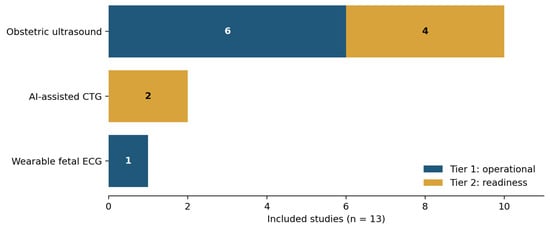
Figure 2 displays the distribution of studies by monitoring domain and implementation tier. Table 3 summarises evidence maturity and outstanding gaps.
Figure 2.
Distribution of eligible studies by monitoring domain and implementation tier under the prespecified review criteria. Counts describe the included evidence base and not the global distribution of AI maternal-fetal technologies.
Table 3.
Evidence maturity and gaps.
4. Discussion
4.1. Principal Findings
To our knowledge, this review is among the first evidence maps to explicitly separate direct operational exposure (Tier 1) from implementation-readiness assessments (Tier 2) for AI-enabled obstetric monitoring. The included studies suggest that technical feasibility, proximal quality measures, and provider acceptability have received the most attention, particularly for AI-guided obstetric ultrasound in LMICs. Evidence on patient outcomes, economic value, and long-term health-system integration remains limited.
The evidence supports three cautious findings. First, AI quality-control systems were associated with better proximal ultrasound-process measures in the included observational and before-and-after studies. Studies in China reported higher adherence to standard planes and shorter image-review times after automated feedback [42,48,50]. Second, guided AI-POCUS was associated with feasible image acquisition by non-specialist providers when deployment was combined with training, tutorials, practice, supervision, and referral pathways [41,46,49]. Third, users and stakeholders generally viewed AI-assisted monitoring favorably, but trust depended on accuracy, transparent limits, human oversight, accountability, infrastructure, and service readiness [43,44,45,47,51].
The review found no firm evidence of improved maternal or neonatal outcomes. Tian et al. reported higher ANC attendance among AI-POCUS recipients, but non-random exposure and baseline differences did not allow for causal attribution [49]. There was no eligible AI-CTG deployment study that examined operative delivery, neonatal acidemia, encephalopathy, stillbirth, neonatal intensive-care admission, or maternal experience. The only wearable fetal ECG study assessed 30 min hospital use rather than sustained home monitoring. There was no full economic evaluation that met the criteria.
4.2. Research Questions and Evidence Synthesis
Table 4 links the review questions to the main findings and their implications. The synthesis reflects the eligible evidence and does not imply causal effects beyond the designs of the included studies.
Table 4.
Review questions, principal findings and implementation implications.
4.3. From Technical Accuracy to Implementation
The gap between technical performance and implementation is consistent with the wider medical AI literature. Reviews of clinical AI studies have found frequent reliance on retrospective data, limited external validation, weak comparisons with clinicians, and incomplete reporting of workflow and patient outcomes [21,22,23,24]. Diagnostic accuracy establishes whether an algorithm performs a defined task under study conditions. Implementation research establishes whether people use the system, whether services deliver it reliably, whether outputs improve decisions, and whether benefits outweigh harms and costs.
This distinction explains why Stringer et al.’s prospective evaluation of AI gestational-age estimation from blind ultrasound sweeps remains important contextual evidence but did not enter the review [17]. The study demonstrated equivalence between novice AI-assisted sweeps and standard biometry within a defined gestational window. It did not primarily study adoption, integration, sustainability, or service outcomes. Such validation creates a basis for implementation, but it does not replace implementation research.
The same distinction applies to AI-CTG. Computerized fetal monitoring has a long history. The INFANT trial found no improvement in poor neonatal outcomes from decision-support software added to continuous electronic fetal monitoring, despite large-scale clinical deployment [10]. INFANT was not an AI implementation study under the present definition, but its findings provide a caution. Better pattern recognition does not automatically improve outcomes if clinicians must interpret alerts within complex labor-ward systems. AI-CTG research should, therefore, examine escalation, alarm burden, disagreement, operative delivery, workload, liability, and neonatal outcomes rather than accuracy alone.
4.4. Task Sharing Requires a Service Package
The African AI-POCUS studies suggest potential for task sharing. Sesay et al. documented adequate scans across cadres ranging from midwives and community health officers to maternal and child health aides and community volunteers [41]. Scan quality was higher with repeated use, and tutorial support was strongly associated with adequate acquisition. Richardson et al. and Tian et al. extended the evidence to Ethiopian antenatal services [46,49].
These findings align with the wider POCUS literature showing that nurses, midwives, and non-specialist providers perform focused examinations after structured training and supervision [4,7,8]. Yet AI guidance did not remove the need for clinical knowledge. Della Ripa et al. found strong preference for midwife- and nurse-led approaches, although reported concerns about interpretation, counselling, referral, and liability [43]. Koech et al. identified misunderstanding of device scope, while Sesay et al. reported possible over-reliance and reduced physical examination [45].
Task sharing should, therefore, include a defined clinical package, which encompasses competency-based training in acquisition, system limits, counselling, infection prevention, and referral; supervised practice with minimum case requirements and periodic reassessment; and clear rules for abnormal, uncertain, failed, and discordant outputs. Furthermore, this package requires specialist confirmation and referral pathways with feedback to the referring provider, alongside continuous monitoring of image quality, diagnostic disagreement, repeat scanning, referrals, and outcomes. Finally, it must incorporate maintenance, replacement, connectivity, charging, data storage, and cybersecurity support. AI reduces selected skill barriers, but it does not remove the need for clinical governance.
4.5. Reach, Equity, and LMIC Relevance
The review identified a substantial LMIC evidence cluster. Kenya, Sierra Leone, Ethiopia, Egypt, China, and multinational studies with LMIC representation contributed most of the included evidence. This differs from the common pattern in medical AI, where high-income-country datasets and tertiary institutions dominate development [25,26,27]. The LMIC representation is relevant to settings with substantial ultrasound-access and workforce constraints, although the included studies do not establish representativeness across LMIC health systems.
Important equity concerns remain. Online surveys underrepresent professionals with weak internet access or limited English proficiency. Urban pilots do not represent remote rural services. Tian et al. found greater AI-POCUS exposure among urban and employed women, suggesting digital interventions might reproduce existing inequity and access differences [49]. Zhao et al. reported incomplete image uploading, with progressive decline in the number of actively uploading sites over time [50]. These findings are crucial because implementation success among connected, better-resourced sites might conceal exclusion elsewhere.
Future studies should report reach using clear denominators and reports should compare participants with eligible non-participants by geography, income, education, age, disability, language, parity, and clinical risk. Programs also need to assess who receives scanning, whose scans fail, who completes referral, and who bears travel or confirmatory-testing costs.
4.6. Trust, Human Oversight, and Accountability
Trust emerged across CTG and ultrasound studies. Dlugatch et al. found that clinicians wanted transparent evidence, error rates, representative validation, and procedures for disagreement [51]. Smit et al. reported strong support for add-on AI while most respondents retained final professional authority [47]. Della Ripa et al. identified concerns about liability and data ownership [43]. Ginsburg et al. found provider misunderstanding and misdiagnosis among the leading reservations [44].
These findings support international guidance on responsible medical AI. WHO emphasizes autonomy, safety, transparency, accountability, equity, and sustainability [12,13]. In addition, CONSORT-AI, SPIRIT-AI, and DECIDE-AI call for clear descriptions of inputs, outputs, human–AI interaction, errors, workflow, and clinical context [28,29,30]. Therefore, implementation protocols should identify who reviews output, who acts, who documents disagreement, who reports errors, and who holds responsibility when software, hardware, connectivity, acquisition, or clinical judgement fails. Furthermore, human oversight needs operational definition. A statement saying the clinician retains authority offers little protection in situation where staffing, workflow, interface design, or policy encourages automatic acceptance. Studies should measure automation bias, override rates, reasons for override, alert fatigue, time to decision, interprofessional disagreement, and consequences of false reassurance.
4.7. Maintenance and Post-Deployment Surveillance
Zhao et al. provided rare longitudinal evidence [50] and noted that while quality improved, the number of active hospitals declined and upload coverage remained incomplete. This combination shows why short pilot success does not establish sustainability. Maintenance includes more than continued availability of algorithms and health systems must finance device acquisition, subscriptions, cloud services, data plans, batteries, probe replacement, repairs, user support, refresher training, cybersecurity, and software upgrades. Model performance might also change after deployment. New devices, software versions, acquisition protocols, patient populations, and clinical practices create dataset shift [24,25]. Post-deployment surveillance should track input quality, missing data, failure rates, disagreements, false-negative and false-positive outputs, subgroup performance, referral patterns, interventions, and outcomes. Systems also need version control and a process for suspending use when performance begins to decline.
4.8. Economic Evidence
The absence of complete economic evaluation is a major gap in this review. Tan et al. demonstrated large reductions in expert-review time, which supports potential efficiency. However, time savings do not equal cost-effectiveness [48]. A full evaluation should, therefore, include the cost of acquisition, license, integration, cloud, connectivity, training, supervision, maintenance, replacement, confirmatory imaging, referrals, downstream treatment, and patient-related costs.
Economic analysis should compare AI-enabled monitoring with realistic alternatives, including standard care, task-shared non-AI ultrasound, tele-ultrasound, expert outreach, and referral-based imaging. Outcomes should include cost per adequate examination, cost per clinically important condition detected, cost per completed appropriate referral, cost per adverse outcome averted, budget impact, and affordability. Distribution of cost also matter since a program might save specialist time while shifting costs to pregnant women through travel or repeat testing.
4.9. Contribution to Knowledge
This review adds a structured implementation-focused synthesis to the literature. It separates operational implementation evidence from algorithm development and diagnostic validation, keeps direct operational exposure distinct from implementation-readiness research, maps implementation outcomes across obstetric-monitoring domains, and identifies areas in which evidence on clinical use, health-system integration, safety, equity, cost, and sustainability remains sparse. Within the eligible literature, AI ultrasound has progressed furthest into early implementation research. Wearable fetal ECG evidence remains limited to supervised feasibility, while eligible AI-CTG studies focused on workforce readiness and trust. No eligible implementation studies were identified for several other monitoring domains under the review criteria.
4.10. Research Priorities
Future research should use study designs matched to the implementation question. Pragmatic comparative or randomized trials are appropriate when the aim is to estimate clinical effectiveness. Prospective implementation cohorts, interrupted time-series studies, hybrid effectiveness-implementation designs, and rigorous mixed-methods studies are also needed to examine workflow integration, organizational adoption, sustainability, equity, and adaptation over time. Across designs, priority outcomes include maternal, fetal, neonatal, service, safety, and patient experience; prospective error analysis and clinician overrides; referral completion and receiving-facility readiness; long-term implementation and staff-turnover effects; complete economic and budget-impact evaluation; equity using clear denominators; and post-deployment surveillance across software versions, devices, and population groups.
4.11. Implications for Health Policy and Clinical Practice
Health system leaders and policy-makers must recognize that deploying AI tools in maternal-fetal care without robust referral pathways and supportive infrastructure risks compounding existing health inequities. Automated point-of-care screening tools can identify high-risk conditions, but if secondary care facilities lack emergency obstetric capacity, blood products, or surgical services, diagnostic expansion will fail to improve perinatal outcomes. Furthermore, training program must explicitly address automation bias to prevent over-reliance on algorithmic outputs among novice operators.
4.12. Strengths and Limitations
One of the strengths of this review is its explicit focus on implementation and implementation readiness rather than technical performance alone. The Tier 1 and Tier 2 categorization kept direct operational exposure separate from anticipated or preparatory evidence, while RE-AIM and NASSS provided a consistent structure for organizing implementation outcomes and determinants. The review also included substantial evidence from LMIC settings and retained preprints when they met the empirical eligibility criteria, which was crucial in capturing an emerging evidence base. These features support a practical synthesis of workflow, task sharing, referral, human oversight, equity, cost, and sustainability alongside proximal technical outcomes.
Several limitations affect interpretation. The evidence base was small and heterogeneous, and two included studies were preprints. Database end dates were not identical: PubMed/MEDLINE, Web of Science, and Dimensions were searched through May 2026, while Scopus was searched through December 2025 because of the available retrieval window. Reviewer-specific screening assignments and agreement statistics were not retained in a form that supports reliable retrospective reporting. We did not undertake a formal design-specific risk-of-bias appraisal; instead, we interpreted findings in light of reported design limitations. The Tier 1 and Tier 2 categories are review-specific operational categories rather than a validated implementation-stage taxonomy, and RE-AIM and NASSS mappings involved review-level judgement despite independent checking. Grey sources without analyzable empirical data were excluded, so program or commercial deployments that have not produced extractable research evidence may be absent. Publication bias toward successful pilots is also possible. Finally, heterogeneity precluded meta-analysis, and studies published after the search period were not captured.
5. Conclusions
Real-world implementation evidence for AI-enabled obstetric monitoring remains limited, recent, and concentrated in point-of-care ultrasound. The included studies support feasibility and suggest favorable proximal quality, workflow, and supervised task-sharing outcomes in selected settings, but they do not establish superior maternal or neonatal outcomes, cost-effectiveness, or long-term equitable scale-up. Future research should combine pragmatic effectiveness studies with prospective implementation cohorts, hybrid designs, mixed-methods evaluation, economic analysis, safety monitoring, referral follow-up, and post-deployment surveillance, with study design matched to the question and health-system context.
Supplementary Materials
The following supporting information can be downloaded at: https://www.mdpi.com/article/10.3390/clinpract16110198/s1, Supplementary File S1, full database-specific search strategies; Supplementary File S2, completed PRISMA-ScR checklist (Tricco et al. [40]); Supplementary File S3, completed PRISMA 2020 checklist (Page et al. [39]).
Author Contributions
Conceptualization, V.A.A.; methodology, V.A.A., Q.E.S.A. and I.O.A.; validation, Q.E.S.A., A.B.O., G.U.E., I.O.A., S.B. and A.A.C.; formal analysis, V.A.A.; investigation, V.A.A.; data curation, V.A.A.; writing—original draft preparation, V.A.A.; writing—review and editing, V.A.A., Q.E.S.A., A.B.O., G.U.E., I.O.A., S.B. and A.A.C.; visualization, V.A.A.; project administration, V.A.A. All authors have read and agreed to the published version of the manuscript.
Funding
This research received no external funding.
Institutional Review Board Statement
Not applicable. This study was a scoping review of publicly available published literature and did not involve the recruitment of human participants, collection of identifiable personal information, or primary collection of human-subject data.
Informed Consent Statement
Not applicable. The review used data reported in previously published or publicly available studies and did not involve direct interaction with study participants.
Data Availability Statement
The data used in this scoping review were derived from published studies identified through searches of PubMed/MEDLINE, Scopus, Web of Science Core Collection, Dimensions, reference lists, and citation searching. The included studies and their bibliographic information are publicly accessible through the respective journals, databases, and repositories cited in the reference list. The full database search strategies are provided in Supplementary File S1. The completed PRISMA-ScR and PRISMA 2020 checklists are provided as Supplementary Files S2 and S3, respectively. No separate meta-analytic dataset or statistical code was generated because a quantitative meta-analysis was not undertaken.
Conflicts of Interest
The authors declare no conflicts of interest.
Abbreviations
| AI | Artificial Intelligence |
| ANC | Antenatal Care |
| CTG | Cardiotocography |
| fECG | Fetal Electrocardiography |
| JBI | Joanna Briggs Institute |
| LMIC | Low- and Middle-Income Country |
| NASSS | Non-Adoption, Abandonment, Scale-Up, Spread, and Sustainability |
| POCUS | Point-of-Care Ultrasound |
| PRISMA | Preferred Reporting Items for Systematic Reviews and Meta-Analyses |
| PRISMA-ScR | Preferred Reporting Items for Systematic Reviews and Meta-Analyses Extension for Scoping Reviews |
| RE-AIM | Reach, Effectiveness, Adoption, Implementation, and Maintenance |
| WHO | World Health Organization |
References
- World Health Organization. Trends in Maternal Mortality 2000 to 2020: Estimates by WHO, UNICEF, UNFPA, World Bank Group and UNDESA/Population Division 2023. Available online: https://www.who.int/publications/i/item/9789240068759 (accessed on 10 August 2026).
- Word Health Organization. WHO Recommendations on Antenatal Care for a Positive Pregnancy Experience 2016. Available online: https://www.who.int/publications/i/item/9789241549912 (accessed on 15 July 2026).
- World Health Organization. WHO Recommendations on Maternal and Newborn Care for a Positive Postnatal Experience 2022. Available online: https://www.who.int/publications/i/item/9789240045989 (accessed on 10 August 2026).
- Abrokwa, S.K.; Ruby, L.C.; Heuvelings, C.C.; Bélard, S. Task shifting for point of care ultrasound in primary healthcare in low- and middle-income countries-a systematic review. eClinicalMedicine 2022, 45, 101333. [Google Scholar] [CrossRef] [Scilit] [PubMed]
- Franklin, H.L.; Mirza, W.; Swanson, D.L.; Newman, J.E.; Goldenberg, R.L.; Muyodi, D.; Figueroa, L.; Nathan, R.O.; Swanson, J.O.; Goldsmith, N.; et al. Factors influencing referrals for ultrasound-diagnosed complications during prenatal care in five low and middle income countries. Reprod. Health 2018, 15, 204. [Google Scholar] [CrossRef] [Scilit] [PubMed]
- Luntsi, G.; Ugwu, A.C.; Nkubli, F.B.; Emmanuel, R.; Ochie, K.; Nwobi, C.I. Achieving universal access to obstetric ultrasound in resource constrained settings: A narrative review. Radiography 2021, 27, 709–715. [Google Scholar] [CrossRef] [Scilit] [PubMed]
- Roro, M.A.; Aredo, A.D.; Kebede, T.; Estifanos, A.S. Enablers and barriers to introduction of obstetrics ultrasound service at primary care facilities in a resource-limited setting: A qualitative study in four regions of Ethiopia. BMC Pregnancy Childbirth 2022, 22, 278. [Google Scholar] [CrossRef] [Scilit] [PubMed]
- Swanson, D.L.; Franklin, H.L.; Swanson, J.O.; Goldenberg, R.L.; McClure, E.M.; Mirza, W.; Muyodi, D.; Figueroa, L.; Goldsmith, N.; Kanaiza, N.; et al. Including ultrasound scans in antenatal care in low-resource settings: Considering the complementarity of obstetric ultrasound screening and maternity waiting homes in strengthening referral systems in low-resource, rural settings. Semin. Perinatol. 2019, 43, 273–281. [Google Scholar] [CrossRef] [Scilit] [PubMed]
- Alfirevic, Z.; Devane, D.; Gyte, G.M.; Cuthbert, A. Continuous cardiotocography (CTG) as a form of electronic fetal monitoring (EFM) for fetal assessment during labour. Cochrane Database Syst. Rev. 2017, 2, CD006066. [Google Scholar] [CrossRef] [Scilit] [PubMed]
- Brocklehurst, P.; Field, D.; Greene, K.; Juszczak, E.; Keith, R.; Kenyon, S.; Linsell, L.; Mabey, C.; Newburn, M.; Plachcinski, R.; et al. Computerised interpretation of fetal heart rate during labour (INFANT): A randomised controlled trial. Lancet 2017, 389, 1719–1729. [Google Scholar] [CrossRef] [Scilit] [PubMed]
- Topol, E.J. High-performance medicine: The convergence of human and artificial intelligence. Nat. Med. 2019, 25, 44–56. [Google Scholar] [CrossRef] [Scilit] [PubMed]
- Word Health Organization. Regulatory Considerations on Artificial Intelligence for Health 2023. Available online: https://www.who.int/publications/i/item/9789240078871 (accessed on 10 August 2026).
- World Health Organization. Ethics and Governance of Artificial Intelligence for Health 2021. Available online: https://www.who.int/publications/i/item/9789240029200 (accessed on 10 August 2026).
- Drukker, L.; Noble, J.A.; Papageorghiou, A.T. Introduction to artificial intelligence in ultrasound imaging in obstetrics and gynecology. Ultrasound Obs. Gynecol. 2020, 56, 498–505. [Google Scholar] [CrossRef] [Scilit] [PubMed]
- Horgan, R.; Nehme, L.; Abuhamad, A. Artificial intelligence in obstetric ultrasound: A scoping review. Prenat. Diagn. 2023, 43, 1176–1219. [Google Scholar] [CrossRef] [Scilit] [PubMed]
- Kariman, S.S.; Van Den Heuvel, J.F.M.; Adriaanse, B.M.E.; Oepkes, D.; Bekker, M.N. The Potential of Tele-Ultrasound, Handheld and Self-Operated Ultrasound in Pregnancy Care: A Systematic Review. Prenat. Diagn. 2025, 45, 906–920. [Google Scholar] [CrossRef] [Scilit] [PubMed]
- Stringer, J.S.A.; Pokaprakarn, T.; Prieto, J.C.; Vwalika, B.; Chari, S.V.; Sindano, N.; Freeman, B.L.; Sikapande, B.; Davis, N.M.; Sebastião, Y.V.; et al. Diagnostic Accuracy of an Integrated AI Tool to Estimate Gestational Age From Blind Ultrasound Sweeps. JAMA 2024, 332, 649. [Google Scholar] [CrossRef] [Scilit] [PubMed]
- Chinta, S.V.; Wang, Z.; Palikhe, A.; Zhang, X.; Kashif, A.; Smith, M.A.; Liu, J.; Zhang, W. AI-driven healthcare: Fairness in AI healthcare: A survey. PLoS Digit. Health 2025, 4, e0000864. [Google Scholar] [CrossRef] [Scilit] [PubMed]
- Göndöcs, D.; Dörfler, V. AI in medical diagnosis: AI prediction & human judgment. Artif. Intell. Med. 2024, 149, 102769. [Google Scholar] [CrossRef] [Scilit] [PubMed]
- AlSaad, R.; Farrell, T.; Dela Cruz, J.; Abd-Alrazaq, A.; Thomas, R.; Sheikh, J. Artificial intelligence models for predicting the mode of delivery in maternal care. J. Gynecol. Obstet. Hum. Reprod. 2025, 54, 102976. [Google Scholar] [CrossRef] [Scilit] [PubMed]
- Han, R.; Acosta, J.N.; Shakeri, Z.; Ioannidis, J.P.A.; Topol, E.J.; Rajpurkar, P. Randomised controlled trials evaluating artificial intelligence in clinical practice: A scoping review. Lancet Digit. Health 2024, 6, e367–e373. [Google Scholar] [CrossRef] [Scilit] [PubMed]
- Kelly, C.J.; Karthikesalingam, A.; Suleyman, M.; Corrado, G.; King, D. Key challenges for delivering clinical impact with artificial intelligence. BMC Med. 2019, 17, 195. [Google Scholar] [CrossRef] [Scilit] [PubMed]
- Nagendran, M.; Chen, Y.; Lovejoy, C.A.; Gordon, A.C.; Komorowski, M.; Harvey, H.; Topol, E.J.; A Ioannidis, J.P.; Collins, G.S.; Maruthappu, M. Artificial intelligence versus clinicians: Systematic review of design, reporting standards, and claims of deep learning studies. BMJ 2020, 368, m689. [Google Scholar] [CrossRef] [Scilit] [PubMed]
- Wiens, J.; Saria, S.; Sendak, M.; Ghassemi, M.; Liu, V.X.; Doshi-Velez, F.; Jung, K.; Heller, K.; Kale, D.; Saeed, M.; et al. Do no harm: A roadmap for responsible machine learning for health care. Nat. Med. 2019, 25, 1337–1340. [Google Scholar] [CrossRef] [Scilit] [PubMed]
- Celi, L.A.; Cellini, J.; Charpignon, M.-L.; Dee, E.C.; Dernoncourt, F.; Eber, R.; Mitchell, W.G.; Moukheiber, L.; Schirmer, J.; Situ, J.; et al. Sources of bias in artificial intelligence that perpetuate healthcare disparities—A global review. PLoS Digit. Health 2022, 1, e0000022. [Google Scholar] [CrossRef] [Scilit] [PubMed]
- McCradden, M.D.; Stephenson, E.A.; Anderson, J.A. Clinical research underlies ethical integration of healthcare artificial intelligence. Nat. Med. 2020, 26, 1325–1326. [Google Scholar] [CrossRef] [Scilit] [PubMed]
- Panch, T.; Mattie, H.; Atun, R. Artificial intelligence and algorithmic bias: Implications for health systems. J. Glob. Health 2019, 9, 010318. [Google Scholar] [CrossRef] [Scilit] [PubMed]
- Cruz Rivera, S.; Liu, X.; Chan, A.-W.; Denniston, A.K.; Calvert, M.J.; Ashrafian, H.; Beam, A.L.; Collins, G.S.; Darzi, A.; Deeks, J.J.; et al. Guidelines for clinical trial protocols for interventions involving artificial intelligence: The SPIRIT-AI extension. Lancet Digit. Health 2020, 2, e549–e560. [Google Scholar] [CrossRef] [Scilit] [PubMed]
- Liu, X.; Cruz Rivera, S.; Moher, D.; Calvert, M.J.; Denniston, A.K.; Ashrafian, H.; Beam, A.L.; Chan, A.-W.; Collins, G.S.; Deeks, A.D.J.; et al. Reporting guidelines for clinical trial reports for interventions involving artificial intelligence: The CONSORT-AI extension. Lancet Digit. Health 2020, 2, e537–e548. [Google Scholar] [CrossRef] [Scilit] [PubMed]
- Vasey, B.; Nagendran, M.; Campbell, B.; Clifton, D.A.; Collins, G.S.; Denaxas, S.; Denniston, A.K.; Faes, L.; Geerts, B.; Ibrahim, M.; et al. Reporting guideline for the early-stage clinical evaluation of decision support systems driven by artificial intelligence: DECIDE-AI. Nat. Med. 2022, 28, 924–933. [Google Scholar] [CrossRef] [PubMed]
- Proctor, E.; Silmere, H.; Raghavan, R.; Hovmand, P.; Aarons, G.; Bunger, A.; Griffey, R.; Hensley, M. Outcomes for Implementation Research: Conceptual Distinctions, Measurement Challenges, and Research Agenda. Adm. Policy Ment. Health 2011, 38, 65–76. [Google Scholar] [CrossRef] [Scilit] [PubMed]
- Glasgow, R.E.; Vogt, T.M.; Boles, S.M. Evaluating the public health impact of health promotion interventions: The RE-AIM framework. Am. J. Public Health 1999, 89, 1322–1327. [Google Scholar] [CrossRef] [Scilit] [PubMed]
- Greenhalgh, T.; Wherton, J.; Papoutsi, C.; Lynch, J.; Hughes, G.; A’Court, C.; Hinder, S.; Fahy, N.; Procter, R.; Shaw, S. Beyond Adoption: A New Framework for Theorizing and Evaluating Nonadoption, Abandonment, and Challenges to the Scale-Up, Spread, and Sustainability of Health and Care Technologies. J. Med. Internet Res. 2017, 19, e367. [Google Scholar] [CrossRef] [Scilit] [PubMed]
- He, F.; Wang, Y.; Xiu, Y.; Zhang, Y.; Chen, L. Artificial Intelligence in Prenatal Ultrasound Diagnosis. Front. Med. 2021, 8, 729978. [Google Scholar] [CrossRef] [Scilit] [PubMed]
- Venkatayogi, N.; Gupta, M.; Gupta, A.; Nallaparaju, S.; Cheemalamarri, N.; Gilari, K.; Pathak, S.; Vishwanath, K.; Soney, C.; Bhattacharya, T.; et al. From Seeing to Knowing with Artificial Intelligence: A Scoping Review of Point-of-Care Ultrasound in Low-Resource Settings. Appl. Sci. 2023, 13, 8427. [Google Scholar] [CrossRef] [Scilit]
- Arksey, H.; O’Malley, L. Scoping studies: Towards a methodological framework. Int. J. Soc. Res. Methodol. 2005, 8, 19–32. [Google Scholar] [CrossRef] [Scilit]
- Levac, D.; Colquhoun, H.; O’Brien, K.K. Scoping studies: Advancing the methodology. Implement. Sci. 2010, 5, 69. [Google Scholar] [CrossRef] [Scilit] [PubMed]
- Peters, M.D.J.; Marnie, C.; Tricco, A.C.; Pollock, D.; Munn, Z.; Alexander, L.; McInerney, P.; Godfrey, C.M.; Khalil, H. Updated methodological guidance for the conduct of scoping reviews. JBI Evid. Synth. 2020, 18, 2119–2126. [Google Scholar] [CrossRef] [Scilit] [PubMed]
- Page, M.J.; McKenzie, J.E.; Bossuyt, P.M.; Boutron, I.; Hoffmann, T.C.; Mulrow, C.D.; Shamseer, L.; Tetzlaff, J.M.; Akl, E.A.; Brennan, S.E.; et al. The PRISMA 2020 statement: An updated guideline for reporting systematic reviews. BMJ 2021, 372, n71. [Google Scholar] [CrossRef] [Scilit] [PubMed]
- Tricco, A.C.; Lillie, E.; Zarin, W.; O’Brien, K.K.; Colquhoun, H.; Levac, D.; Moher, D.; Peters, M.D.J.; Horsley, T.; Weeks, L.; et al. PRISMA Extension for Scoping Reviews (PRISMA-ScR): Checklist and Explanation. Ann. Intern. Med. 2018, 169, 467–473. [Google Scholar] [CrossRef] [Scilit] [PubMed]
- Sesay, A.D.D.; Koroma, A.L.; Van Der Kwaak, A.; Seguin, E.; Kanu, A.; Falama, A.M.; Bakker, M.I.; de Vries, I. Evaluating the usability and practicality of AI-enabled smartphone-based obstetric ultrasound in Sierra Leone: A mixed-methods study. BMC Pregnancy Childbirth 2026, 26, 636. [Google Scholar] [CrossRef] [Scilit] [PubMed]
- Cao, X.; Li, B.; Zhou, Y.; Cao, Y.; Yang, X.; Hu, X.; Chen, C.; Zhu, S.; Lin, H.; Wang, T.; et al. Effectiveness and clinical impact of using deep learning for first-trimester fetal ultrasound image quality auditing. BMC Pregnancy Childbirth 2025, 25, 375. [Google Scholar] [CrossRef] [Scilit] [PubMed]
- Della Ripa, S.; Santos, N.; Walker, D. AI-enabled obstetric point-of-care ultrasound as an emerging technology in low- and middle-income countries: Provider and health system perspectives. BMC Pregnancy Childbirth 2025, 25, 729. [Google Scholar] [CrossRef] [Scilit] [PubMed]
- Ginsburg, A.S.; Liddy, Z.; Alkan, E.; Matcheck, K.; May, S. A survey of obstetric ultrasound uses and priorities for artificial intelligence-assisted obstetric ultrasound in low- and middle-income countries. Sci. Rep. 2025, 15, 3873. [Google Scholar] [CrossRef] [Scilit] [PubMed]
- Koech, A.; Musitia, P.M.; Mwashigadi, G.M.; Kinshella, M.-L.W.; Vidler, M.; Temmerman, M.; Craik, R.; von Dadelszen, P.; Noble, J.A.; Papageorghiou, A.T.; et al. Acceptability and Feasibility of a Low-Cost Device for Gestational Age Assessment in a Low-Resource Setting: Qualitative Study. JMIR Hum. Factors 2022, 9, e34823. [Google Scholar] [CrossRef] [Scilit] [PubMed]
- Richardson, C.; Gebrekidan, M.; Asmare, M.H.; Teka, D.C.; Hagos, S.H.; Jobir, E.E.; Shiferaw, A.; Godebo, T.W.; Shemsu, A.K. Feasibility and Early Clinical Yield of Handheld AI-Assisted Obstetric Point-of-Care Ultrasound in Routine Antenatal Care: A Pilot Study in Addis Ababa, Ethiopia. Res. Sq. 2026. preprint. [Google Scholar] [CrossRef] [Scilit] [PubMed]
- Smit, R.M.; Lap, C.C.M.M.; Arnaout, R.; Moon-Grady, A.J.; Haak, M.C. Artificial Intelligence as an Add-On Instrument in Fetal Ultrasound; Sonographers’ and Obstetricians’ Expectations. Prenat. Diagn. 2026, 46, 1591–1597. [Google Scholar] [CrossRef] [Scilit] [PubMed]
- Tan, Y.; Peng, Y.; Guo, L.; Liu, D.; Luo, Y. Cost-effectiveness analysis of AI-based image quality control for perinatal ultrasound screening. BMC Med. Educ. 2024, 24, 1437. [Google Scholar] [CrossRef] [Scilit] [PubMed]
- Tian, M.; Li, Y.; He, R.; Zhao, X.; Lemma, T.; Qian, B.; Tang, K. The Impact of Artificial Intelligence-Driven Point-of-Care Ultrasound (AI-POCUS) on Antenatal Care and Maternal-Newborn Outcomes in Ethiopia. Res. Sq. 2026. preprint. [Google Scholar] [CrossRef] [Scilit] [PubMed]
- Zhao, J.; Tang, Y.; Li, S.; Wang, K.; Tao, J.; Chen, C.; Zhou, J.; Cui, L.; Wang, Y.; Huang, C.; et al. AI-based quality control was associated with improved fetal ultrasound image quality in low-resource settings: A real-world multicenter study from West China. BMC Med. 2026, 24, 235. [Google Scholar] [CrossRef] [Scilit] [PubMed]
- Dlugatch, R.; Georgieva, A.; Kerasidou, A. AI-driven decision support systems and epistemic reliance: A qualitative study on obstetricians’ and midwives’ perspectives on integrating AI-driven CTG into clinical decision making. BMC Med. Ethics 2024, 25, 6. [Google Scholar] [CrossRef] [Scilit] [PubMed]
- Shehata Ahmed, A.; Helmy Mohamed, S.; Ahmed Abd-Elhamed, M. Effect of Instructional Sessions on Nursing Perspectives and Attitudes Regarding Use of Artificial Intelligence for Fetal Monitoring in Maternity Units. Egypt. J. Health Care 2024, 15, 1301–1314. [Google Scholar] [CrossRef] [Scilit]
- Karmakar, D.; Paul, T.; Keenan, E.; Palaniswami, M.; Constable, K.; Spessot, E.; Brownfoot, F. Consumer insights from a feasibility study on remote and extended use of a novel non-invasive wearable fetal electrocardiogram monitor. npj Digit. Med. 2025, 8, 216. [Google Scholar] [CrossRef] [Scilit] [PubMed]

Disclaimer/Publisher’s Note: The statements, opinions and data contained in all publications are solely those of the individual author(s) and contributor(s) and not of MDPI and/or the editor(s). MDPI and/or the editor(s) disclaim responsibility for any injury to people or property resulting from any ideas, methods, instructions or products referred to in the content. |
© 2026 by the authors. Licensee MDPI, Basel, Switzerland. This article is an open access article distributed under the terms and conditions of the Creative Commons Attribution (CC BY) license.