


Abstract
Coronary artery bypass grafting (CABG) is an essential operation for patients who have severe coronary artery disease (CAD). Both open and minimally invasive CABG methods are used to treat CAD. This in-depth review looks at the latest research on the effectiveness of open versus minimally invasive CABG. The goal is to develop evidence-based guidelines that will improve surgical outcomes. This systematic review used databases such as PubMed, MEDLINE, and Web of Science for a full electronic search. We adhered to the PRISMA guidelines and registered the results in the PROSPERO. The search method used MeSH phrases and many different study types to find papers. After removing duplicate publications and conducting a screening process, we collaboratively evaluated the full texts to determine their inclusion. We then extracted data, including diagnosis, the total number of patients in the study, clinical recommendations from the studies, surgical complications, angina recurrence, hospital stay duration, and mortality rates. Many studies that investigate open and minimally invasive CABG methods have shown that the type of surgery can have a large effect on how well the patient recovers and how well the surgery works overall. While there are limited data on the possible advantages of minimally invasive CABG, a conclusive comparison with open CABG is still dubious. Additional clinical trials are required to examine a wider spectrum of patient results.
1. Introduction
Coronary artery bypass grafting (CABG) is a frequently conducted surgical intervention aiming at restoring blood flow to the heart in individuals with coronary artery disease (CAD) [1]. CAD is a global health threat associated with substantial illness and death [2]. CAD, a prevalent cardiovascular disorder, frequently presents with distinctive indicators that warrant careful consideration. These indicators include symptoms such as angina, chest pain, or pressure, which may occasionally extend to the arms, neck, or jaw. In addition, dyspnea experienced during physical activity or even during periods of rest indicates insufficient blood flow to the heart. It is important to note that symptoms might vary among individuals; therefore, it is important to pay attention to both common indicators and unusual presentations [3].
There are many different types of CABG, each made to meet the specific needs of a patient and help them deal with the challenges of CAD. Historically, CABG has been conducted via an open technique called a sternotomy, a vertical incision in the chest that provides extensive access to the heart and its blood vessels [4]. The procedure has a proven history of success, demonstrating the ability to produce durable grafts and provide long-lasting relief from angina, reducing the likelihood of recurrent cardiac episodes [5]. This method revolutionized the treatment of advanced CAD [6]. However, ongoing progress has led to minimally invasive techniques in CABG, which offer less invasive options with potentially improved recovery times. Endovascular therapies, such as percutaneous coronary procedures, have also come up as other ways to control CAD. This has increased therapy options and made patient care better [7].
The development of minimally invasive techniques such as Minimally Invasive Direct Coronary Artery Bypass (MIDCAB) and Off-Pump Coronary Artery Bypass (OPCAB) has significantly altered the surgical paradigm. MIDCAB is the utilization of smaller incisions, also known as “keyhole” incisions, with a specific focus on addressing single-vessel disease [8]. Nevertheless, in recent times, minimally invasive methods have become increasingly popular because of their potential advantages, including decreased surgical trauma, shorter hospital stays, and quicker recovery. These benefits make them attractive to patients needing less invasive CAD management alternatives [9]. When dealing with CAD, which is very delicate, both traditional open-heart surgeries and the new minimally invasive treatments have their pros and cons [10].
This systematic review critically evaluates how well open and minimally invasive methods work for CABG. Although much research has examined the results of various processes, there is still a continuing dispute about their superiority. Proponents of the open technique contend that it offers enhanced visualization and accessibility to the heart, leading to enhanced rates of graft patency and long-term results. On the other hand, proponents of the minimally invasive method highlight the benefits of smaller cuts, such as decreased blood loss and postoperative pain, resulting in faster healing and higher patient contentment. This review aims to compare the results and complications of minimally invasive CABG to traditional CABG achieved through a sternotomy. Because CAD is a major global health issue that causes a lot of illness and death, the study aims to determine whether minimally invasive cardiac surgery (MICS) CABG can be better than traditional open CABG while also having lower hospitalization duration and mortality rates.
2. Materials and Methods
2.1. Search Strategy
The systematic review was registered in PROSPERO (CRD42024506685) and was conducted following the Preferred Reporting Items for Systematic Reviews and Meta-Analyses (PRISMA) guidelines [11] (Appendix D and Appendix E). A comprehensive electronic search was conducted using the following databases: PubMed, MEDLINE, and Web of Science, with no specific time frame. A search strategy has been developed by the authors F.E, A. A and approved by the rest of the research team. Studies related to the comparative effectiveness of open and minimally invasive approaches in CABG were identified inclusively using a combination of Medical Subject Headings (MeSH) such as “Coronary Artery Bypass Grafting” OR “Coronary Artery Bypass Surgery” OR “Coronary Artery Bypass” OR “Aortocoronary Bypass” OR “Bypass Surgery” OR “CABG” AND “Coronary Artery Disease” OR “Aortocoronary” OR “Open heart surgery” OR “Minimally invasive surgery” OR “Endoscopic Surgery” AND “Mortality” OR “Wound Infection” OR “Bleeding Rates” OR “Stroke rates” OR “Length of hospital stay”. To identify any missing articles, a further review of the references to the studies was conducted.
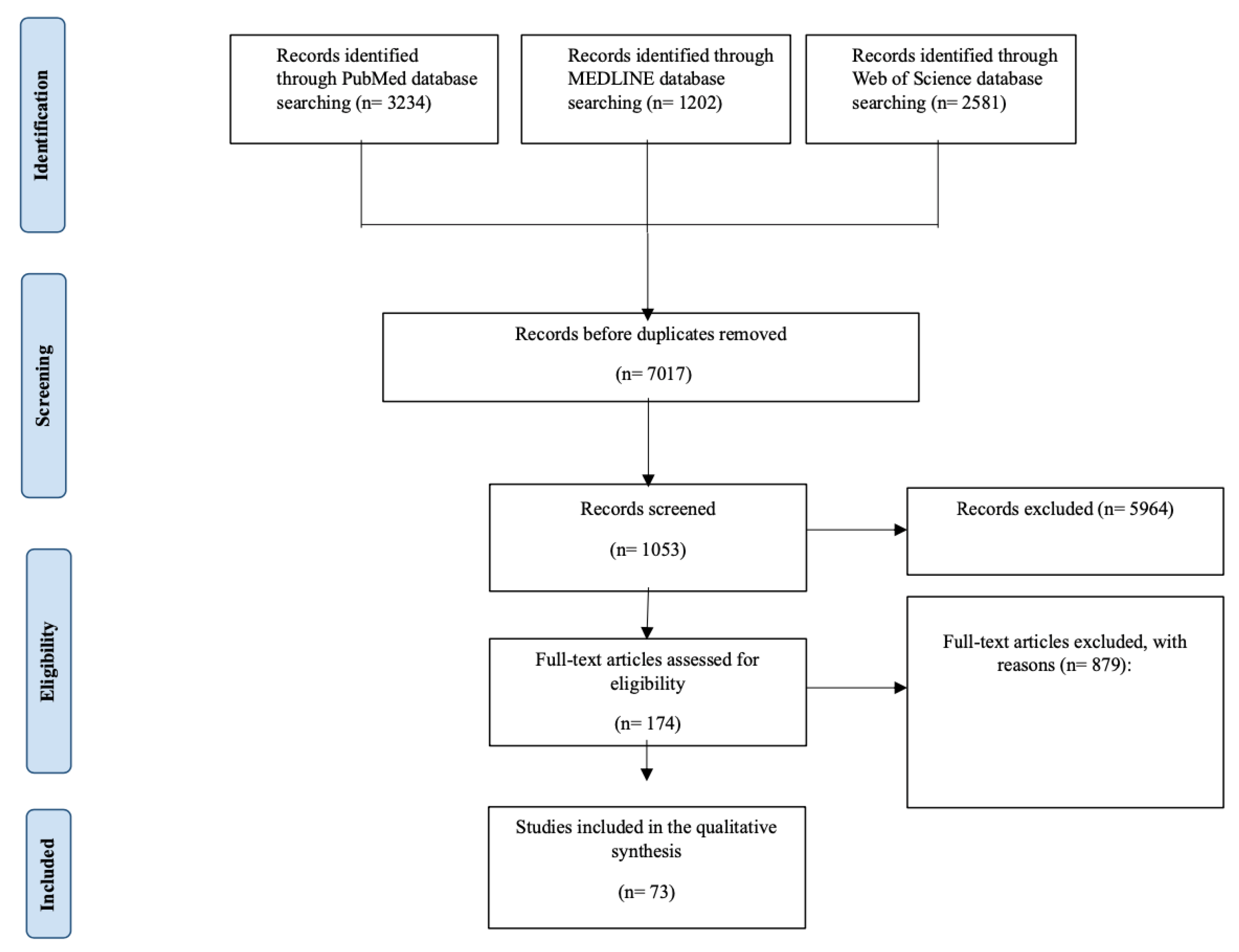
The search technique included searching several databases: PubMed (n = 3234), MEDLINE (n = 1202), and Web of Science (n = 2581). At first, the records were checked for duplicates, leaving 7017 distinct records. During the eligibility phase, 1053 records were reviewed, and 5964 records were eliminated based on established criteria. Out of the records reviewed, 174 full-text articles were evaluated for eligibility, excluding 879 articles with indicated reasons. Seventy-one papers met the criteria for inclusion in the qualitative synthesis.
2.2. Study Selection
2.2.1. Inclusion Criteria
This review included studies that compare the effectiveness of open and minimally invasive approaches in coronary artery bypass grafting. This review considered various research designs, including randomized controlled trials (RCTs), quasi-experimental studies, cohort studies, case-control studies, and observational studies published in English. Furthermore, this review only included studies that were published in peer-reviewed journals or other credible sources.
2.2.2. Exclusion Criteria
This systematic review excluded studies that do not investigate the effectiveness of open or minimally invasive approaches in CABG. We also excluded studies that focused on surgical procedures or interventions unrelated to CABG, animal studies, in vitro studies, and review articles. Studies published in languages other than English or with insufficient data, such as those that lack detailed outcome measures, specific numerical results, or relevant statistical analyses necessary to evaluate the efficacy of the surgical techniques, were not considered for inclusion in this review.
2.2.3. Screening and Data Extraction
After conducting the primary search, the records were imported to Google Drive (Mountain View, CA, USA: Google) and Mendeley Desktop (Mendeley Ltd., London, UK), where duplicate articles were removed. The remaining results were then imported into Rayyan [(https://www.rayyan.ai/) accessed on 3 October 2023] for screening by three authors (R.A., S.A., H.A.) based on relevance determined by titles and abstracts. Next, the full texts of the studies that passed the initial screening were reviewed by two authors (S.F., A.M.) for the final inclusion or exclusion decision [12]. Any disagreements during the screening process were resolved through discussion with (A.A.) and the other researchers. Data were extracted from the selected studies through an Excel sheet, including the title, author’s name, country, year of publication, name of the journal, study design, level of evidence, sample size, surgical complication (wound infection rates, bleeding rates, and stroke rate), angina recurrence, length of hospital stay, and mortality rates.
2.2.4. Quality Assessment and Bias Evaluation
We evaluated the included studies for their quality and potential bias using the Grading of Recommendations Assessment, Development, and Evaluation (GRADE) system. This comprehensive assessment revealed varying levels of evidence within the included studies, thereby offering valuable insights into their overall quality and potential sources of bias. Retrospective and prospective cohort studies used the Newcastle–Ottawa Scale for bias assessment (Appendix A). Additionally, we used the revised Cochrane risk-of-bias tool for randomized trials (RoB 2) to assess the risk bias of RCTs (Appendix B). We also used the MINORS tool to evaluate the quality of the non-randomized studies included in this review (Appendix C). These evaluations provide insights into the overall quality and potential sources of bias in the included studies, enhancing the robustness and reliability of the reported results.
2.3. Data Synthesis
Despite conducting a basic descriptive statistical analysis using Review Manager version 5.4.1 (Cochrane, London, UK), we could not conduct a meta-analysis because of the high heterogeneity and lack of consistent data formats in the included studies. The following aspects of the heterogeneity were visible as shown in Table 1 and Table 2: first, the variability in research methodologies encompassing randomized controlled trials (RCTs), cohort studies, and observational studies. Second, there are distinctions between traditional and minimally invasive procedures for CABG. Lastly, there is inconsistent reporting of outcomes such as wound infection rates, bleeding rates, stroke rates, death rates, and length of hospital stay.
Table 1.
Comparison of Outcomes Between Open and Minimally Invasive Approaches in CABG.
Table 2.
Characteristics and Outcomes of Studies Investigating Open and Minimally Invasive Approaches in Coronary Artery Bypass Grafting.
3. Results
In our search, a total of only 73 articles fulfilled the full scrutiny required to be included in this systematic review [13,14,15,16,17,18,19,20,21,22,23,24,25,26,27,28,29,30,31,32,33,34,35,36,37,38,39,40,41,42,43,44,45,46,47,48,49,50,51,52,53,54,55,56,57,58,59,60,61,62,63,64,65]. A total of 879 articles were excluded from full-text review for many reasons. These exclusions were due to reasons such as not having the complete text available, duplicates, methodological shortcomings, or flawed results attributed mainly to different outcomes sought among studies included (diverse treatment strategies) and for research articles that contained diabetic patients but had no specific measurements of periodontal therapy within it. Other excluded papers were in a language other than English. A mix of research designs was observed across the included studies in this systematic review. The range of designs allowed for a more complete evaluation of the efficacy and approaches to CABG in open form or minimally invasive. The PRISMA flowchart of the systematic review is illustrated in Figure 1 and details all components. The 73 studies included in the systematic review were from several locations worldwide. The included studies were published from 1997 to 2023.
Figure 1.
Detailed PRISMA chart used for this systematic review, outlining the many stages of this study’s selection process.
The articles that reference the comparative effectiveness of open and minimally invasive approaches in CABG, together with a comprehensive overview of the demographics of their participants, are detailed in Table 2.
3.1. Patients’ Profiles and Characteristics
A total of 60,954 patients were included in this systematic review. A total of 46,379 patients underwent open CABG and 14,575 minimally invasive CABGs. The age of participants differed significantly across studies, with mean ages 54 years (range for young group = 34–46 to old group = 75–97).
The analysis of the gender distribution across studies showed predominant involvement among males, with 40,187 participants compared with a total of 20,767 females. Our original research included a cohort of 102 patients with one-vessel disease of the LAD coronary artery, studied from December 1996 to December 1998 [16]. This study’s findings revealed significant benefits associated with using OPCAB. The OPCAB group had a 0% operative death rate, but the surgical time was significantly shorter than that of the MIDCAB group (4% mortality). These results suggest that OPCAB has a better technical result (p = 0.004). Recurrent angina occurred in 40% of MIDCAB and 27% of OPCAB patients during a mean follow-up period of 5.2 years [13]. Another study illustrated the rationale for the use of MICS as opposed to a traditional CABG trial. The trial aimed to include eighty-eight patients per group, using the SF-36 questionnaire as the primary tool for assessing quality of life (QoL) after a month. On the other hand, previous studies demonstrated that an average hospital stay following MICS is 5 days, while it takes at least nine more days in sternotomy CABG [18]. The Society of Thoracic Surgeons maintained a regional database for clinical quality improvement, from which a second study extracted patients with CABG. There was a total of 278 open CABG and 139 MICS CABG patients. In addition, the rates of serious morbidity were similar between matched groups, with an open CABG rate of 7.9% and a MICS CABG rate of 7.2%, respectively (p = 0.795). On a notable note, MICS CABG was associated with the advantages of less use of blood product transfusions (12.2% in the MICS CABG vs. 22.3% in open CABG; p = 0.013) and a shorter duration hospitalization period (6 days for MIS-CABG vs. 7 days for open CABG, p = 0.005). Furthermore, the findings demonstrated that patients who had MICS CABG had lower hospital charges, with a median of $27,906 vs. $35,011 for open CABG (p = 0.001) [35].
3.2. Patient-Reported Outcomes and Complications
This section provides an overview of the results of patient-reported outcomes and the incidence of complications related to open and minimally invasive techniques in CABG. From April 2008 to July 2011, a study was conducted that included a total of 74 patients in the MIDCAB group and 78 patients in the OPCAB group. The comparison between the two groups was deemed adequate based on the patient demographics and EuroSCORE values. The OPCAB had a lower rate of cerebrovascular accidents (1.3% for OPCAB vs. 1.4% for MIDCAB, p = 1.0), recurrent myocardial infarctions (0% for OPCAB vs. 1.4% for MIDCAB, p = 0.3), and wound infections (2.7% for OPCAB vs. 5.4% for MIDCAB, p = 0.4) [55].
4. Discussion
We conducted a systematic review to determine the differences in outcomes between minimally invasive and traditional open CABG procedures. We found a strong association between the type of surgery performed and surgical trauma, duration till recovery, and postoperative complications. Historically, they have performed MIDCAB and OPCAB earlier than Lima LAD. These provide clinical relevance to minimally invasive approaches, especially for patients with specific comorbidities who might not be able to recover from this extensive surgery if performed openly. This further supports the increased use of less-invasive techniques that have minimal physiological consequences while still providing good anterograde coronary perfusion.
Our review underscores that the decision to recommend open or minimally invasive CABG should be patient-specific [13,24]. Patient age, left ventricular ejection fraction (LVEF), and concomitant comorbidities such as chronic kidney disease (CKD) are all associated with outcomes. For instance, younger patients with fewer comorbidities are likely to benefit more from the use of minimally invasive techniques, as these approaches have demonstrated lower hospital and long-term mortality rates. Conversely, in patients with more complicated pathology, the traditional ‘open’ approach may still be necessary to achieve a good long-term outcome [66,67,68].
Data presented in our systematic review suggest that the immediate decisions for surgical intervention in CABG should be patient-centered and driven more by clinical indications to achieve optimal outcomes [26]. While the MICABG has demonstrated potential in this field, particularly for simpler cases and associated evaluations, traditional open CABG remains the gold standard for providing durable grafts that realistically promise excellent long-term symptom relief despite its more invasive nature. In turn, a minimally invasive approach should be considered for patients who are hemodynamically stable with multivessel coronary artery disease, and this group may offer a better chance of faster recovery and fewer complications [69]. Given these advantages, there are also potential risks to minimally invasive CABG; this review identified a slightly greater risk of bleeding and wound infection compared with open surgery. The need for patient selection and skill in minimally invasive surgery is critical to limiting these risks, even though they are inherent in all surgical procedures.
Limitations
Some limitations of the systematic review we conducted are worth mentioning. Variability in the surgical techniques and care pathways ranged from standard open surgery to less invasive approaches. Presumably, this diversity could have influenced the pooling of results. Often, insufficient information on the exact particulars of surgical procedures, patient selection criteria, and postoperative care provided a meaningful comparison to various research studies. Some studies combined hybrid procedures or adjunctive therapies, while others omitted the details of supplementary methods that hindered the comparison between regimens.
There is room to improve the quality of these studies in future research by implementing multi-center trials and including a greater cross-section of the population. Uniform principles for assessing the surgical results and strict rules of postoperative therapy have to be followed in these studies. This standardization will improve the granularity of long-term data and help identify paradigms specific to a particular surgical strategy for CABG. Additional research is needed to determine the best practices across different patient populations.
5. Conclusions
This systematic study highlights that the choice of surgical strategy significantly affects the outcomes of CABG, with traditional open surgery and minimally invasive approaches showing poor compatibility. Although minimally invasive techniques hold potential, the existing information is inadequate to establish a clear preference for one method over another. To enhance our comprehension of CABG operations and improve future practice, it is imperative to conduct additional comparative clinical trials.
Author Contributions
Author Contributions: Concept and design: A.A. (Arwa Alsharif), A.A. (Abdulaziz Alsharif), G.A. and R.A.; Acquisition: A.A.A., S.A., H.A., S.F. and A.M.; Analysis of data: F.E.H., A.A. (Arwa Alsharif), A.A. (Abdulaziz Alsharif), G.A. and R.A.; Drafting of the manuscript: A.A.A., S.A., H.A., S.F. and A.M.; Critical review of the manuscript for important intellectual content: F.E.H., A.A. (Arwa Alsharif), A.A. (Abdulaziz Alsharif), G.A., A.A.A., R.A., S.A., H.A., S.F. and A.M.; Supervision: F.E.H. All authors have read and agreed to the published version of the manuscript.
Funding
This research received no external funding.
Acknowledgments
Fatma E. Hassan, who played a crucial role in designing this systematic evaluation, provided tremendous assistance and mentorship to support this research. Throughout this project, her proficiency and dedication to enhancing our knowledge of coronary artery bypass grafting have been critical.
Conflicts of Interest
The authors declare no conflicts of interest.
Appendix A
Retrospective and prospective cohort studies used the Newcastle Ottawa Scale for bias assessment. Using the Newcastle–Ottawa scale, case-control and cohort studies scored 7 out of 9, indicating a high level of quality. According to the level of evidence and grading recommendations of the American Society of Plastic Surgery, among the included studies, one study had a level II, four studies had a level IV, and five studies had a level V of evidence (Table A1).
Table A1.
The Newcastle–Ottawa Scale for the included cohort prospective and retrospective studies.
Appendix B
Table A2.
Bias of the included cohort prospective and retrospective studies evaluated according to the Newcastle–Ottawa Scale.
Appendix C
The MINORS tool was used to assess the quality of the non-randomized studies included in this review. The total score ranged from 6 to 18, with a mean score of 12.3. The items with the lowest scores were the prospective calculation of the study size (score of 0 in all studies), the unbiased assessment of the study endpoint (score of 0 in all studies), and the inclusion of a consecutive series of patients (score of 1 or 2 in most studies). The items with the highest scores were the clearly stated aim of the study (score of 2 in all studies), the description of patient characteristics (score of 2 in all studies), and the clearly defined endpoints (score of 2 in all studies) (Table A3).
Table A3.
The Methodological Index for Non-Randomized Studies (MINORS).
Appendix D
Table A4.
Systematic Review Protocol and Support Template.
Appendix E
Table A5.
PRISMA 2020 Checklist.
References
- Taggart, D.P.; Altman, D.G.; Gray, A.M.; Lees, B.; Gerry, S.; Benedetto, U.; Flather, M. Randomized Trial of Bilateral versus Single Internal-Thoracic-Artery Grafts. N. Engl. J. Med. 2016, 375, 2540–2549. [Google Scholar] [CrossRef] [Scilit] [PubMed]
- Bansal, A.; Hiwale, K. Updates in the Management of Coronary Artery Disease: A Review Article. Cureus 2023, 15, e50644. [Google Scholar] [CrossRef] [Scilit] [PubMed]
- Ullah, M.; Wahab, A.; Khan, S.U.; Zaman, U.; Rehman, K.U.; Hamayun, S.; Naeem, M.; Ali, H.; Riaz, T.; Saeed, S.; et al. Stent as a Novel Technology for Coronary Artery Disease and Their Clinical Manifestation. Curr. Probl. Cardiol. 2023, 48, 101415. [Google Scholar] [CrossRef] [Scilit] [PubMed]
- Olson, P.; Cinelli, M.; Rahming, H.S.; Vazzana, T.; Spagnola, J.; Barsoum, E.; Assaad, M.; Tamburrino, F.; Lafferty, J. Repeat Revascularization Post Coronary Artery Bypass Grafting: Comparing Minimally Invasive and Traditional Sternotomy Techniques in 1468 Cases. Cureus 2022, 14, e25687. [Google Scholar] [CrossRef] [Scilit]
- Benedetto, U.; Melina, G.; Angeloni, E.; Refice, S.; Roscitano, A.; Fiorani, B.; Di Nucci, G.D.; Sinatra, R. Coronary artery bypass grafting versus drug-eluting stents in multivessel coronary disease. A meta-analysis on 24,268 patients. Eur. J. Cardio-Thorac. Surg. 2009, 36, 611–615. [Google Scholar] [CrossRef] [Scilit]
- Shroyer, A.L.; Grover, F.L.; Hattler, B.; Collins, J.F.; McDonald, G.O.; Kozora, E.; Lucke, J.C.; Baltz, J.H.; Novitzky, D. On-Pump versus Off-Pump Coronary-Artery Bypass Surgery. N. Engl. J. Med. 2009, 361, 1827–1837. [Google Scholar] [CrossRef] [Scilit]
- Rosenblum, J.M.; Binongo, J.; Wei, J.; Liu, Y.; Leshnower, B.G.; Chen, E.P.; Miller, J.S.; Macheers, S.K.; Lattouf, O.M.; Guyton, R.A.; et al. Priorities in coronary artery bypass grafting: Is midterm survival more dependent on completeness of revascularization or multiple arterial grafts? J. Thorac. Cardiovasc. Surg. 2021, 161, 2070–2078.e6. [Google Scholar] [CrossRef] [Scilit]
- Kikuchi, K.; Mori, M. Minimally invasive coronary artery bypass grafting: A systematic review. Asian Cardiovasc. Thorac. Ann. 2017, 25, 364–370. [Google Scholar] [CrossRef] [Scilit]
- Parnell, A.; Prince, M. Anaesthesia for minimally invasive cardiac surgery. BJA Educ. 2018, 18, 323–330. [Google Scholar] [CrossRef] [Scilit]
- Hage, A.; Giambruno, V.; Jones, P.; Chu, M.W.; Fox, S.; Teefy, P.; Lavi, S.; Bainbridge, D.; Harle, C.; Iglesias, I.; et al. Hybrid Coronary Revascularization Versus Off-Pump Coronary Artery Bypass Grafting: Comparative Effectiveness Analysis with Long-Term Follow-up. J. Am. Heart Assoc. 2019, 8, e014204. [Google Scholar] [CrossRef] [Scilit]
- Moher, D.; Liberati, A.; Tetzlaff, J.; Altman, D.G. Preferred Reporting Items for Systematic Reviews and Meta-Analyses: The PRISMA Statement. PLoS Med. 2009, 6, e1000097. [Google Scholar] [CrossRef] [Scilit] [PubMed]
- Chaabna, K.; Cheema, S.; Abraham, A.; Alrouh, H.; Lowenfels, A.B.; Maisonneuve, P.; Mamtani, R. Systematic overview of hepatitis C infection in the Middle East and North Africa. World J. Gastroenterol. 2018, 24, 3038–3054. [Google Scholar] [CrossRef] [Scilit] [PubMed]
- Vicol, C.; Nollert, G.; Mair, H.; Samuel, V.; Lim, C.; Tiftikidis, M.; Eifert, S.; Reichart, B. Midterm results of beating heart surgery in 1-vessel disease: Minimally invasive direct coronary artery bypass versus off-pump coronary artery bypass with full sternotomy. Heart Surg. Forum 2003, 6, 341–344. Available online: https://pubmed.ncbi.nlm.nih.gov/15011666 (accessed on 26 January 2024). [PubMed]
- Davierwala, P.M.; Leontyev, S.; Garbade, J.; Lehmann, S.; Holzhey, D.; Misfeld, M.; Borger, M.A. Off-pump coronary artery bypass surgery with bilateral internal thoracic arteries: The Leipzig experience. Ann. Cardiothorac. Surg. 2018, 7, 483–491. [Google Scholar] [CrossRef] [Scilit] [PubMed]
- Zenati, M.A.; Bhatt, D.L.; Bakaeen, F.G.; Stock, E.M.; Biswas, K.; Gaziano, J.M.; Kelly, R.F.; Tseng, E.E.; Bitondo, J.; Quin, J.A.; et al. Randomized Trial of Endoscopic or Open Vein-Graft Harvesting for Coronary-Artery Bypass. N. Engl. J. Med. 2019, 380, 132–141. [Google Scholar] [CrossRef] [Scilit]
- Angelini, G.D.; Culliford, L.; Smith, D.K.; Hamilton, M.C.K.; Murphy, G.J.; Ascione, R.; Baumbach, A.; Reeves, B.C. Effects of on- and off-pump coronary artery surgery on graft patency, survival, and health-related quality of life: Long-term follow-up of 2 randomized controlled trials. J. Thorac. Cardiovasc. Surg. 2009, 137, 295–303.e5. [Google Scholar] [CrossRef] [Scilit]
- Chivasso, P.; Guida, G.A.; Fudulu, D.; Bruno, V.D.; Marsico, R.; Sedmakov, H.; Zakkar, M.; Rapetto, F.; Bryan, A.J.; Angelini, G.D. Impact of off-pump coronary artery bypass grafting on survival: Current best available evidence. J. Thorac. Dis. 2016, 8, S808–S817. [Google Scholar] [CrossRef] [Scilit]
- Guo, M.H.; Wells, G.A.; Glineur, D.; Fortier, J.; Davierwala, P.M.; Kikuchi, K.; Lemma, M.G.; Mishra, Y.K.; McGinn, J.; Ramchandani, M.; et al. Minimally Invasive coronary surgery compared to STernotomy coronary artery bypass grafting: The MIST trial. Contemp. Clin. Trials 2019, 78, 140–145. [Google Scholar] [CrossRef] [Scilit]
- Çaynak, B.; Sicim, H. Evaluation of anastomosis quality with intraoperative transit time flowmeter in minimally invasive multi-vessel coronary artery bypass grafting via left anterior mini-thoracotomy. Turk. J. Thorac. Cardiovasc. Surg. 2023, 31, 56–62. [Google Scholar] [CrossRef] [Scilit]
- Benedetto, U.; Puskas, J.; Kappetein, A.P.; Brown, W.M.; Horkay, F.; Boonstra, P.W.; Bogáts, G.; Noiseux, N.; Dressler, O.; Angelini, G.D.; et al. Off-Pump Versus On-Pump Bypass Surgery for Left Main Coronary Artery Disease. J. Am. Coll. Cardiol. 2019, 74, 729–740. [Google Scholar] [CrossRef] [Scilit]
- Ling, Y.; Bao, L.; Yang, W.; Chen, Y.; Gao, Q. Minimally invasive direct coronary artery bypass grafting with an improved rib spreader and a new-shaped cardiac stabilizer: Results of 200 consecutive cases in a single institution. BMC Cardiovasc. Disord. 2016, 16, 42. [Google Scholar] [CrossRef] [Scilit] [PubMed]
- Tian, M.; Wang, X.; Sun, H.; Feng, W.; Song, Y.; Lu, F.; Wang, L.; Wang, Y.; Xu, B.; Wang, H.; et al. No-Touch Versus Conventional Vein Harvesting Techniques at 12 Months After Coronary Artery Bypass Grafting Surgery: Multicenter Randomized, Controlled Trial. Circulation 2021, 144, 1120–1129. [Google Scholar] [CrossRef] [Scilit] [PubMed]
- Kayatta, M.O.; Halkos, M.E.; Narayan, P. Minimally invasive coronary artery bypass grafting. Indian J. Thorac. Cardiovasc. Surg. 2018, 34, 302–309. [Google Scholar] [CrossRef] [Scilit] [PubMed]
- Weimar, C.; Bilbilis, K.; Rekowski, J.; Holst, T.; Beyersdorf, F.; Breuer, M.; Dahm, M.; Diegeler, A.; Kowalski, A.; Martens, S.; et al. Safety of Simultaneous Coronary Artery Bypass Grafting and Carotid Endarterectomy Versus Isolated Coronary Artery Bypass Grafting. Stroke 2017, 48, 2769–2775. [Google Scholar] [CrossRef] [Scilit] [PubMed]
- Ruel, M.; Shariff, M.A.; Lapierre, H.; Goyal, N.; Dennie, C.; Sadel, S.M.; Sohmer, B.; McGinn, J.T. Results of the minimally invasive coronary artery bypass grafting angiographic patency study. J. Thorac. Cardiovasc. Surg. 2014, 147, 203–209. [Google Scholar] [CrossRef] [Scilit]
- Raja, S.G.; Garg, S.; Rochon, M.; Daley, S.; De Robertis, F.; Bahrami, T. Short-term clinical outcomes and long-term survival of minimally invasive direct coronary artery bypass grafting. Ann. Cardiothorac. Surg. 2018, 7, 621–627. [Google Scholar] [CrossRef] [Scilit]
- Giambruno, V.; Jones, P.; Khaliel, F.; Chu, M.W.; Teefy, P.; Sridhar, K.; Cucchietti, C.; Barnfield, R.; Kiaii, B. Hybrid Coronary Revascularization Versus On-Pump Coronary Artery Bypass Grafting. Ann. Thorac. Surg. 2018, 105, 1330–1335. [Google Scholar] [CrossRef] [Scilit]
- Lamelas, J.; Mawad, M.; Williams, R.; Weiss, U.K.; Zhang, Q.; LaPietra, A. Isolated and concomitant minimally invasive mini-thoracotomy aortic valve surgery. J. Thorac. Cardiovasc. Surg. 2018, 155, 926–936.e2. [Google Scholar] [CrossRef] [Scilit]
- Kiaii, B.; McClure, R.S.; Stitt, L.; Rayman, R.; Dobkowski, W.B.; Jablonsky, G.; Novick, R.J.; Boyd, W.D. Prospective Angiographic Comparison of Direct, Endoscopic, and Telesurgical Approaches to Harvesting the Internal Thoracic Artery. Ann. Thorac. Surg. 2006, 82, 624–628. [Google Scholar] [CrossRef] [Scilit]
- Repossini, A.; Di Bacco, L.; Nicoli, F.; Passaretti, B.; Stara, A.; Jonida, B.; Muneretto, C. Minimally invasive coronary artery bypass: Twenty-year experience. J. Thorac. Cardiovasc. Surg. 2019, 158, 127–138.e1. [Google Scholar] [CrossRef] [Scilit]
- Hecker, F.; Von Zeppelin, M.; Van Linden, A.; Scholtz, J.E.; Fichtlscherer, S.; Hlavicka, J.; Walther, T.; Holubec, T. Right-Sided Minimally Invasive Direct Coronary Artery Bypass: Clinical Experience and Perspectives. Medicina 2023, 59, 907. [Google Scholar] [CrossRef] [Scilit] [PubMed]
- Khubber, S.; Chana, R.; Meenakshisundaram, C.; Dhaliwal, K.; Gad, M.; Kaur, M.; Banerjee, K.; Verma, B.R.; Shekhar, S.; Khan, M.Z.; et al. Coronary artery aneurysms: Outcomes following medical, percutaneous interventional and surgical management. Open Heart 2021, 8, e001440. [Google Scholar] [CrossRef] [Scilit] [PubMed]
- Teman, N.R.; Hawkins, R.B.; Charles, E.J.; Mehaffey, J.H.; Speir, A.M.; Quader, M.A.; Ailawadi, G. Minimally Invasive vs Open Coronary Surgery: A Multi-Institutional Analysis of Cost and Outcomes. Ann. Thorac. Surg. 2021, 111, 1478–1484. [Google Scholar] [CrossRef] [Scilit] [PubMed]
- Liu, J.J.; Kong, Q.Y.; You, B.; Liang, L.; Xiao, W.; Ma, X.L.; Pan, F.; Chi, L.Q. Surgical Challenges in Multi-Vessel Minimally Invasive Coronary Artery Bypass Grafting. J. Interv. Cardiol. 2021, 2021, 1–8. [Google Scholar] [CrossRef] [Scilit] [PubMed]
- Kitahara, H.; Hirai, T.; McCrorey, M.; Patel, B.; Nisivaco, S.; Nathan, S.; Balkhy, H.H. Hybrid coronary revascularization: Midterm outcomes of robotic multivessel bypass and percutaneous interventions. J. Thorac. Cardiovasc. Surg. 2019, 157, 1829–1836.e1. [Google Scholar] [CrossRef] [Scilit]
- Mishra, Y.K.; Wasir, H.; Rajneesh, M.; Sharma, K.K.; Mehta, Y.; Trehan, N. Robotically enhanced coronary artery bypass surgery. J. Robot. Surg. 2007, 1, 221–226. [Google Scholar] [CrossRef] [Scilit]
- Fazlinović, S.; Wallinder, A.; Dellborg, M.; Furenäs, E.; Eriksson, P.; Synnergren, M.; Lidén, H. Outcome and survival after open heart surgery for adults with congenital heart disease—A single center experience. Scand. Cardiovasc. J. 2021, 55, 345–353. [Google Scholar] [CrossRef] [Scilit]
- Hwang, H.Y.; Paeng, J.C.; Kang, J.; Jang, M.J.; Kim, K.B. Relation between functional coronary artery stenosis and graft occlusion after coronary artery bypass grafting. J. Thorac. Cardiovasc. Surg. 2021, 161, 1010–1018.e1. [Google Scholar] [CrossRef] [Scilit]
- Gong, W.; Cai, J.; Wang, Z.; Chen, A.; Ye, X.; Li, H.; Zhao, Q. Robot-assisted coronary artery bypass grafting improves short-term outcomes compared with minimally invasive direct coronary artery bypass grafting. J. Thorac. Dis. 2016, 8, 459–468. [Google Scholar] [CrossRef] [Scilit]
- Antona, C.; Pompilio, G.; Lotto, A.A.; Di Matteo, S.; Agrifoglio, M.; Biglioli, P. Video-assisted minimally invasive coronary bypass surgery without cardiopulmonary bypass. Eur. J. Cardio-Thorac. Surg. 1998, 14, 62–67. [Google Scholar] [CrossRef] [Scilit]
- Liang, L.; Ma, X.; Kong, Q.; Xiao, W.; Liu, J.; Chi, L.; Zhu, J. Comparing patient outcomes following minimally invasive coronary artery bypass grafting surgery vs. coronary artery bypass grafting: A single-center retrospective cohort study. Cardiovasc. Diagn. Ther. 2022, 12, 378–388. [Google Scholar] [CrossRef] [Scilit] [PubMed]
- Zia, K.; Mangi, A.R.; Minhaj, S.; Tariq, K.; Rabbi, F.; Musharaf, M.; Awan, M.A.B.; Memon, R.A.; Rathore, A.R.; Chaudry, P.A. An Overview of First 100 Cardiac Surgery Cases at a Newly Developed Satellite Center in Sukkur, Pakistan. Cureus 2020, 12, e8490. [Google Scholar] [CrossRef] [Scilit] [PubMed]
- Diegeler, A.; Falk, V.; Matin, M.; Battellini, R.; Walther, T.; Autschbach, R.; Mohr, F.W. Minimally invasive coronary artery bypass grafting without cardiopulmonary bypass: Early experience and follow-up. Ann. Thorac. Surg. 1998, 66, 1022–1025. [Google Scholar] [CrossRef] [Scilit] [PubMed]
- Bugajski, P.; Greberski, K.; Kuzemczak, M.; Kalawski, R.; Jarząbek, R.; Siminiak, T. Impact of previous percutaneous coronary interventions on the course and clinical outcomes of coronary artery bypass grafting. Kardiol. Pol. 2018, 76, 953–959. [Google Scholar] [CrossRef] [Scilit] [PubMed]
- Ranjan, R.; Sales, K.M.; Adhikary, A.B. Computed Tomography-Based Angiographic Evaluation of Graft Patency Rate after Coronary Artery Bypass Graft Surgery in Bangladesh. Cureus 2022, 14, e28902. [Google Scholar] [CrossRef] [Scilit]
- Cisowski, M.; Morawski, W.; Drzewiecki, J.; Kruczak, W.; Toczek, K.; Bis, J.; Bochenek, A. Integrated minimally invasive direct coronary artery bypass grafting and angioplasty for coronary artery revascularization. Eur. J. Cardio-Thorac. Surg. 2002, 22, 261–265. [Google Scholar] [CrossRef] [Scilit]
- Balkhy, H.H.; Nisivaco, S.; Kitahara, H.; Torregrossa, G.; Patel, B.; Grady, K.; Coleman, C. Robotic off-pump totally endoscopic coronary artery bypass in the current era: Report of 544 patients. Eur. J. Cardio-Thorac. Surg. 2021, 61, 439–446. [Google Scholar] [CrossRef] [Scilit]
- Kirmani, B.; Power, S.; Zacharias, J. Long-term survival after endoscopic vein harvest for coronary artery bypass grafting. Ann. R. Coll. Surg. Engl. 2020, 102, 422–428. [Google Scholar] [CrossRef] [Scilit]
- Tekin, A.İ.; Arslan, Ü. Perioperative outcomes in minimally invasive direct coronary artery bypass versus off-pump coronary artery bypass with sternotomy. Videosurgery Other Miniinvasive Tech. 2017, 3, 285–290. [Google Scholar] [CrossRef] [Scilit]
- Ono, M.; Wolf, R.K.; Angouras, D.C.; Brown, D.A.; Goldstein, A.H.; Michler, R.E. Short- and long-term results of open heart surgery in patients with abdominal solid organ transplant. Eur. J. Cardio-Thorac. Surg. 2002, 21, 1061–1072. [Google Scholar] [CrossRef] [Scilit]
- Zhang, L.; Cui, Z.; Song, Z.; Yang, H.; Fu, Y.; Gong, Y.; Ling, Y. Minimally invasive direct coronary artery bypass for left anterior descending artery revascularization—Analysis of 300 cases. Videosurgery Other Miniinvasive Tech. 2015, 10, 548–554. [Google Scholar] [CrossRef] [Scilit] [PubMed]
- Takai, H.; Kobayashi, J.; Tagusari, O.; Bando, K.; Niwaya, K.; Nakajima, H.; Yagihara, T.; Kitamura, S. Off-Pump Coronary Artery Bypass Grafting for Acute Myocardial Infarction. Circ. J. 2006, 70, 1303–1306. [Google Scholar] [CrossRef] [Scilit] [PubMed]
- Birla, R.; Patel, P.; Aresu, G.; Asimakopoulos, G. Minimally invasive direct coronary artery bypass versus off-pump coronary surgery through sternotomy. Ann. R. Coll. Surg. Engl. 2013, 95, 481–485. [Google Scholar] [CrossRef] [Scilit] [PubMed]
- McGinn, J.T.; Usman, S.; Lapierre, H.; Pothula, V.R.; Mesana, T.G.; Ruel, M. Minimally Invasive Coronary Artery Bypass Grafting: Dual-Center Experience in 450 Consecutive Patients. Circulation 2009, 120 (Suppl. S1), S78–S84. [Google Scholar] [CrossRef] [Scilit]
- Barsoum, E.A.; Azab, B.; Shah, N.; Patel, N.; Shariff, M.A.; Lafferty, J.; Nabagiez, J.P.; McGinn, J.T. Long-term mortality in minimally invasive compared with sternotomy coronary artery bypass surgery in the geriatric population (75 years and older patients). Eur. J. Cardio-Thorac. Surg. 2014, 47, 862–867. [Google Scholar] [CrossRef] [Scilit]
- Stone, G.W.; Sabik, J.F.; Serruys, P.W.; Simonton, C.A.; Généreux, P.; Puskas, J.; Kandzari, D.E.; Morice, M.C.; Lembo, N.; Brown, W.M.; et al. Everolimus-Eluting Stents or Bypass Surgery for Left Main Coronary Artery Disease. N. Engl. J. Med. 2016, 375, 2223–2235. [Google Scholar] [CrossRef] [Scilit]
- Diegeler, A.; Matin, M.; Kayser, S.; Binner, C.H.; Autschbach, R.; Battellini, R.; Krankenberg, H.; Mohr, F.W. Angiographic results after minimally invasive coronary bypass grafting using the minimally invasive direct coronary bypass grafting (MIDCAB) approach1. Eur. J. Cardio-Thorac. Surg. 1999, 15, 680–684. [Google Scholar] [CrossRef] [Scilit]
- Li, D.; Guo, P.; Chen, L.; Wu, Y.; Wang, G.; Xiao, C. Outcomes of Surgical Patch Angioplasty of the Coronary Artery for Diffuse Coronary Artery Disease. Braz. J. Cardiovasc. Surg. 2020, 35, 706–712. [Google Scholar] [CrossRef] [Scilit]
- Sajja, L.R.; Sarkar, K.; Mannam, G.; Kodali, V.K.K.; Padmanabhan, C.; Peter, S.; Mulay, A.; Beri, P. Graft patency at 3 months after off- and on-pump coronary bypass surgery: A randomized trial. Indian J. Thorac. Cardiovasc. Surg. 2019, 36, 93–104. [Google Scholar] [CrossRef] [Scilit]
- Kim, D.K.; Yoo, K.J.; Hong, Y.S.; Chang, B.C.; Kang, M.S. Clinical Outcome of Urgent Coronary Artery Bypass Grafting. J. Korean Med. Sci. 2007, 22, 270. [Google Scholar] [CrossRef] [Scilit]
- Oktar, G.; Imren, V.; Erer, D.; Iriz, E.; Gokgoz, L.; Soncul, H. Coronary artery bypass graft surgery in the elderly patients. Open Med. 2009, 4, 218–221. [Google Scholar] [CrossRef] [Scilit]
- Raghuram, A.R.R.; Subramanyan, K.; Sivakumaran, S.; Chandrasekar, P.; Harikrishnan, S.; Arunkumar, G. Graft patency study in off-pump coronary artery bypass surgery. Indian J. Thorac. Cardiovasc. Surg. 2017, 34, 6–10. [Google Scholar] [CrossRef] [Scilit]
- Park, D.W.; Ahn, J.M.; Yun, S.C.; Yoon, Y.H.; Kang, D.Y.; Lee, P.H.; Lee, S.W.; Park, S.W.; Seung, K.B.; Gwon, H.C.; et al. 10-Year Outcomes of Stents Versus Coronary Artery Bypass Grafting for Left Main Coronary Artery Disease. J. Am. Coll. Cardiol. 2018, 72, 2813–2822. [Google Scholar] [CrossRef] [Scilit] [PubMed]
- Moussa, I.; Oetgen, M.; Subramanian, V.; Kobayashi, Y.; Patel, N.; Moses, J. Frequency of early occlusion and stenosis in bypass grafts after minimally invasive direct coronary arterial bypass surgery. Am. J. Cardiol. 2001, 88, 311–313. [Google Scholar] [CrossRef] [Scilit] [PubMed]
- Halkos, M.E.; Liberman, H.A.; Devireddy, C.; Walker, P.; Finn, A.V.; Jaber, W.; Guyton, R.A.; Puskas, J.D. Early clinical and angiographic outcomes after robotic-assisted coronary artery bypass surgery. J. Thorac. Cardiovasc. Surg. 2014, 147, 179–185. [Google Scholar] [CrossRef] [Scilit]
- Bachar, B.J.; Manna, B. Coronary Artery Bypass Graft. StatPearls—NCBI Bookshelf. Available online: https://www.ncbi.nlm.nih.gov/books/NBK507836/ (accessed on 1 January 2024).
- Coerkamp, C.F.; Hoogewerf, M.; Van Putte, B.P.; Appelman, Y.; Doevendans, P.A. Revascularization strategies for patients with established chronic coronary syndrome. Eur. J. Clin. Investig. 2022, 52, e13787. [Google Scholar] [CrossRef] [Scilit]
- Lin, T.H.; Wang, C.W.; Shen, C.H.; Chang, K.H.; Lai, C.H.; Liu, T.J.; Chen, K.J.; Chen, Y.W.; Lee, W.L.; Su, C.S. Clinical outcomes of multivessel coronary artery disease patients revascularized by robot-assisted vs conventional standard coronary artery bypass graft surgeries in real-world practice. Medicine 2021, 100, e23830. [Google Scholar] [CrossRef] [Scilit]
- Park, S.; Park, S.J.; Park, D.W. Percutaneous Coronary Intervention Versus Coronary Artery Bypass Grafting for Revascularization of Left Main Coronary Artery Disease. Korean Circ. J. 2023, 53, 113. [Google Scholar] [CrossRef]
- Gray, D.T.; Veenstra, D.L. Comparative economic analyses of minimally invasive direct coronary artery bypass surgery. J. Thorac. Cardiovasc. Surg. 2003, 125, 618–624. [Google Scholar] [CrossRef] [Scilit]
- Skeffington, K.L.; Moscarelli, M.; Abdul-Ghani, S.; Fiorentino, F.; Emanueli, C.; Reeves, B.C.; Punjabi, P.P.; Angelini, G.D.; Suleiman, M.-S. Pathology-related changes in cardiac energy metabolites, inflammatory response and reperfusion injury following cardioplegic arrest in patients undergoing open-heart surgery. Front. Cardiovasc. Med. 2022, 9, 911557. [Google Scholar] [CrossRef] [Scilit]
- Bonatti, J.; Wallner, S.; Crailsheim, I.; Grabenwöger, M.; Winkler, B. Minimally invasive and robotic coronary artery bypass grafting-a 25-year review. J. Thorac. Dis. 2021, 13, 1922–1944. [Google Scholar] [CrossRef] [Scilit] [PubMed]
- Van Praet, K.M.; Kofler, M.; Shafti, T.Z.N.; Al, A.A.E.; Van Kampen, A.; Amabile, A.; Torregrossa, G.; Kempfert, J.; Falk, V.; Balkhy, H.H.; et al. Minimally Invasive Coronary Revascularisation Surgery: A Focused Review of the Available Literature. Interv. Cardiol. Rev. Res. Resour. 2021, 16, e08. [Google Scholar] [CrossRef] [Scilit] [PubMed]

Disclaimer/Publisher’s Note: The statements, opinions and data contained in all publications are solely those of the individual author(s) and contributor(s) and not of MDPI and/or the editor(s). MDPI and/or the editor(s) disclaim responsibility for any injury to people or property resulting from any ideas, methods, instructions or products referred to in the content. |
© 2024 by the authors. Licensee MDPI, Basel, Switzerland. This article is an open access article distributed under the terms and conditions of the Creative Commons Attribution (CC BY) license (https://creativecommons.org/licenses/by/4.0/).