


Abstract
The bioremediation and restoration of soils damaged by military operations constitute a critically important and complex challenge. It has been shown that the bacterial strain Pseudomonas sp. PS-17 is capable of growing on media containing various hydrophobic carbon sources (diesel fuel, gasoline, crude oil, hexadecane, sunflower oil, kerosene, and liquid paraffin) while synthesizing rhamnolipid biosurfactants. The resulting rhamnolipids exhibit no phytotoxic effects on the growth of the test plant at concentrations ranging from 0.005 to 0.05 g/L. Emulsions of rhamnolipids with liquid paraffin, kerosene and hexadecane, formed within a pH range of 6–11, remain stable for three months. The efficacy of oil sorption by glauconite was confirmed through luminescent-petrographic analyses. An application of biosurfactants enhanced the glauconite sorption properties. This modification also improved the barrier’s protective function by localizing spilled petroleum products at the surface. It prevented the further penetration of water-soluble oil fractions into the soil and groundwater.
1. Introduction
Oil products are widespread and dangerous industrial pollutants. They promote toxins formation in soil, air, surface and groundwater. The primary toxins formed and accumulated in the soil are polycyclic aromatic hydrocarbons (PAHs), volatile organic compounds (the BTEX group), and the products of their partial oxidation—phenols, resins, and fatty acids [1,2]. Due to military operations in Ukraine, uncontrolled spills and soil contamination by oil products is particularly urgent. Advanced methods for eliminating oil pollution are bioremediation (phyto- and microbial remediation), agricultural methods, physical methods (excavation and burning) and chemical methods (oxidation and photocatalysis) [1,3,4,5]. The effectiveness of each method varies depending on pollutant type, contamination degree, climatic conditions and duration of action [3]. Direct biological degradation of some components of petroleum products in the environment is possible [2,4,5]. Therefore, in situ bioremediation is a cost-effective and environmentally safe direction for the restoration of contaminated soils and groundwater [4,5,6]. An important condition for microbial or plants’ degradation of hydrophobic compounds is to increase their bioavailability [6]. The addition of surfactants, which improve permeability through microbial cell membranes, could be a good solution to this issue. In this case, biodegradable microbial biosurfactants that are stable at extreme temperatures, pH and salinity could be better candidates than synthetic ones [7]. Biosurfactants affect all stages of the soil bioremediation process. They contribute to pollutants’ desorption from soil, solubilization, and transport into microbial and plant cells, as well as the stimulation of bioremediators’ growth and metabolic activity [8,9]. Rhamnolipids are promising biosurfactants in aiding bioremediation. Their effectiveness in soil and water remediation from toxic coal tar, dodecylbenzene, pristane, phenanthrene, and polychlorbiphenils have been described. For example, when rhamnolipids were added to water contaminated with coal tar, the degradation of pollutants increased by 5–8 times, depending on the concentration of the rhamnolipids [10]. The effectiveness of integrated approaches (biosurfactants, autochthonous oil-destructing microorganisms and plant remediators) for the remediation of soils contaminated with heavy oil fractions has also been shown [11]. The combined use of microorganisms, rhamnolipids, and the oxidizer CaO2 reduced the amount of oil products in the soil from 9.5% to 1.3%. Furthermore, a combined strategy utilizing microorganisms, rhamnolipids, and plants (field peas, sorghum) reduced soil contamination by oil to 1.4% [11]. An additional advantage of biosurfactant use in remediation processes is the ability to vary the ways of introducing them to the environment. This may involve using biosurfactant-producing microorganisms as a starter culture for bioremediation. Another option is to treat contaminated sites with biosurfactant solutions to solubilize hydrocarbons, which stimulate the growth of indigenous microflora. For the remediation of heavily contaminated areas, washing the soil with biosurfactant solutions in reactors is proposed [11].
Other promising remediation strategy is addition of chemical sorbents to immobilize pollutants from soil [12]. The main limitation of using this method is the impossibility of removing the sorbent with the stored pollutants from the soil. Due to the short lifespan of the sorbent–pollutant complex, the stored toxins are released back into the environment over time [12,13]. Therefore, to prevent the spread of oil pollution in soils, we propose the use of integrated glauconite sorbents, which are sources of essential chemical elements for plants and microorganisms, in combination with biosurfactants. Glauconite is a natural composite of three minerals—glauconite (up to 70%), quartz (up to 40%) and montmorillonite (up to 20%). Glauconite has a high sorption capacity, which determines its use for ecological barrier protection from industrial pollution migration. It has the capacity to sorb a wide range of petroleum products, phenols, etc. [13].
The aim of this work is to determine the effectiveness and expediency of glauconite sorbent and biosurfactants Pseudomonas sp. PS-17 for the remediation of oil-contaminated soils.
2. Materials and Methods
2.1. Materials
Glauconite is an iron–potassium phyllosilicate (mica group) mineral with a general formula (K,Na)(Fe3+,Al, Mg)2(Si,Al)4O10(OH)2 [14]. In the work, glauconite grains of 1 mm size were used. The mineral was obtained from a deposit in the Khmelnytskyi region (LLC “EKORESURS”, Kyiv, Ukraine) according to a governmental technical specification (Ukrainian Technical Specifications for Glauconite Sorbent 02497915.001-2001).
Rhamnolipids were isolated from Pseudomonas sp. PS-17 strain from the collection of the Department of Physical Chemistry of Fossil Fuels InPOCC, National Academy of Sciences of Ukraine. Microorganisms that degrade petroleum products were isolated from soils with old petroleum contamination (Oil and Gas Production Department “Dolynanaftogas”, Dolyna, Ukraine). The consortia of microorganisms were obtained by the enrichment culture method using petroleum products as carbon sources [11].
All chemicals used at all stages of bacteria cultivation, metabolite isolation and chemical characterization were purchased from Sigma-Aldrich (Burlington, MA, USA). The petroleum products used for this study were obtained from the Oil and Gas Producing Department “Dolynanaftogaz” (Dolyna, Ivano-Frankivsk region, Ukraine).
2.2. Methods
Rhamnolipids biosynthesis: Cultivation of Pseudomonas sp. PS-17 strain was carried out using the following liquid nutrient medium with composition (g/L): NaNO3—4.0; K2HPO4 × 3H2O—2.0; KH2PO4—1.2; MgSO4 × 7H2O—0.5 and C3H4(OH)(COONa)3—4.0. Distilled water—up to 1 L. diesel fuel, gasoline, oil, hexadecane, sunflower oil, kerosene, vaseline oil were used as a carbon and energy source (1% w/v). One-day culture of the strain Pseudomonas sp. PS-17 grown on the same medium (primary inoculum was added at 5% of the medium’s volume) was used as an inoculum [15]. Microorganisms were cultivated in 750 mL Erlenmeyer flasks with 150 mL medium on the rotary shaker (220 rpm) at 28–30 °C for 5 days. The biomass was separated via centrifugation of the cultural broth (6000 rpm, 20 min).
Rhamnolipids isolation: Biocomplex of rhamnolipids (RBC) was precipitated from culture liquid supernatant (CLS) on pH = 3 with cooling (4 °C), centrifugation and drying [16]. Rhamnolipids were isolated from RBC by extraction with ethanol. The extract was separated and the solvent was evaporated in a vacuum. Qualitative analysis of the lipid extracts was controlled by thin-layer chromatography (TLC) (Merck Silica gel 60, Germany) with a mobile phase: chloroform:methanol:water (65:15:2). Identification was carried out using 5% ethanolic solution of phosphomolybdic acid [17].
Physicochemical study: Biosurfactant solutions’ surface tension (σ) was determined by the Du Noüy method with a platinum ring on the Tensiometer KRÜSS K6 (“KRÜSS” Gmbh, Germany). Biosurfactants emulsification index (E24) was determined after 24 h with sunflower oil [18]. To determine emulsions stability over time, emulsification index was measured after 1, 6, 18, 20, 46, and 100 days (E1, E6, E18, E20, E46, and E100, respectively) with sunflower oil, diesel fuel, gasoline, crude oil, hexadecane, kerosene, and vaseline oil. Emulsifying activity was determined depending on the pH of biosurfactant solutions in the range from 5 to 11. pH value was adjusted with 10% solutions of hydrochloric acid or sodium hydroxide. Emulsions structure (diameter of microdroplets) was investigated by microscopic methods and evaluated by comparison with emulsions based on synthetic surfactant Tween-80.
Use of glauconite for soil protection against petroleum product spills: The experiment was conducted on 1 × 1 m plots. The grass cover had been removed. Glauconite was thoroughly mixed with a rhamnolipid solution (concentration 0.05 g/L; 50 mL per 1 kg of sorbent) and the culture liquid of oil-degrading microorganisms (50 mL of microbial suspension—5 × 10⁶ CFU/mL—per 1 kg of sorbent). The soil surface was evenly covered with a 4 cm thick layer of glauconite, poured with crude oil (50 g/kg). All studies were carried out on natural plots during the autumn season at an average daily temperature of 10 °C. Moisture was supplied solely by atmospheric precipitation. Samples were collected from depths of 5 and 10 cm and from the upper glauconite layer. The experiment lasted for two months. An identical plot without grass cover served as the control.
Petroleum product content in the glauconite samples and the soil beneath the glauconite layer was determined following extraction with tetrachloroethane and the subsequent separation of polar compounds on activated aluminum oxide, using a SPECORD-80 IR spectrometer (Zeiss, Jena, Germany).
Petrographic studies using fluorescence microscopy: The distribution of petroleum hydrocarbons on glauconite was investigated using a ZEISS Axio Imager M2m fluorescence microscope (Carl Zeiss Microscopy GmbH, Germany) configured for reflected-light fluorescence microscopy. The presence and distribution of petroleum components were assessed based on color, relative fluorescence intensity, and the spatial distribution of luminescent areas. Glauconite samples were pressed into pellets to create a flat, homogeneous surface suitable for imaging. The prepared surfaces were examined under fluorescence illumination, enabling the visualization of the spatial distribution of fluorescent components on the mineral surface. The results were interpreted as a qualitative or semi-quantitative indicator of the distribution of petroleum components on the glauconite. The prepared surfaces were examined under fluorescence illumination, allowing for the visualization of the spatial distribution of fluorescent components of petroleum origin adsorbed onto the mineral surface [19,20].
In situ bioremediation of soils contaminated with petroleum products: Soil containing long-standing petroleum contamination from the industrial zone of OJSC NPK “Halychyna” (Drohobych, Ukraine, petroleum product concentration: 6.5%) was used. Experiments were conducted during the spring–summer period, with an average daily temperature of 18 °C. The experimental site was divided into 1 m2 plots. The topsoil was tilled to a depth of 25–30 cm, and ammonium nitrate (3 g/m2 of soil) was applied to stimulate the growth of indigenous microflora (in all experimental variants except the 8th). A suspension of hydrocarbon-degrading microorganisms (HDM; 50 mL; 5 × 10⁸ CFU/mL) and a solution of a rhamnolipid biosurfactant (50 mL; 0.05 g/L) were evenly sprayed onto the soil surface and incorporated. Glauconite (1 kg/m2 of soil) was evenly spread over the soil surface and incorporated. Treatment variants: 1. Biosurfactant; 2. Glauconite; 3. Biosurfactant + Glauconite; 4. Biosurfactant + HDM; 5. Biosurfactant + Glauconite + HDM; 6. Glauconite + HDM; 7. HDM; 8. Untreated soil. The content of petroleum products in the experimental soils was determined after 35 and 90 days of the remediation process.
Biosurfactants phytotoxicity was evaluated using a seed germination and root elongation assay, with some modifications according to [21,22,23]. Wheat seeds (Triticum aestivum L.) were purchased from a local seed supplier (AGROGURT, SEED SHOP, Lviv, Ukraine). Prior to the phytotoxicity assay, the germination capacity of the seeds was assessed at 20 ± 2 °C in the dark. Seeds with a germination rate of ≥90% were selected for the experiment. Ten seeds were placed on Petri dishes with filter paper soaked in 4 mL of cell-free culture supernatant or distilled water (control). The Petri dishes were incubated at room temperature (20 ± 2 °C) in the dark. Seed germination and root elongation were assessed after 5 days of incubation. The test response of plant performance was evaluated in terms of seed germination and root length. Equations (1) and (2) were used to determine the seed germination rate (G, %) and phytotoxic effect (PE, %):
where G, % is seed viability, n is the number of seeds germinated normally by the end of the bioassay and N is the total number of seeds used in the experiment.
where L0 cm is a length of the root in the control sample, and LX cm is a length of the root in the experimental sample. All experiments were repeated three times.
Data and Statistical Analyses. The experimental results were expressed as the mean ± standard deviation (SD). Statistical analyses were performed using Microsoft Excel 2010 and Statistica 12.0 software (StatSoft, Tulsa, OK, USA) [24]. Differences between the experimental groups were assessed for statistical significance, with p < 0.05 considered statistically significant.
3. Results
3.1. Effectivity of Biosurfactants in Petroleum Product Degradation
Cultivation of Pseudomonas sp. PS-17 on hydrophobic carbon sources provided to obtaining culture liquid supernatants with different contents of rhamnolipids and polysaccharides, surface tension, emulsifying ability and emulsions stability based on supernatants with hydrophobic substances in dynamics. These results are gathered in Table 1.
Table 1.
Growth of Pseudomonas sp. PS-17 strain on hydrophobic carbon sources and its metabolite characteristics.
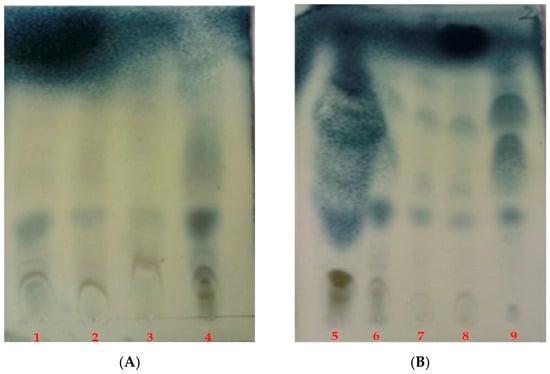
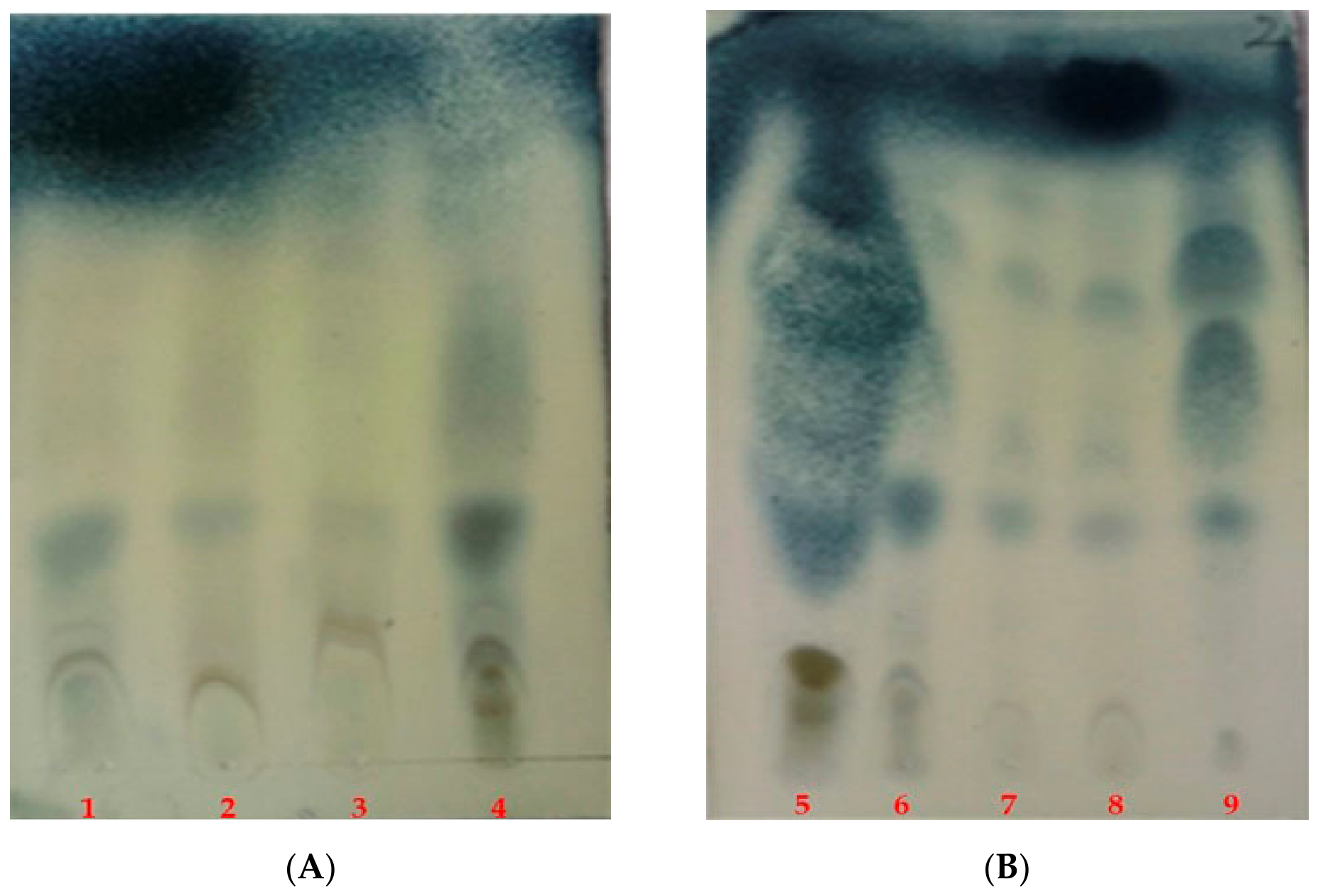
It is shown that the maximum lipid amounts are synthesized on a medium with sunflower oil (6.5 g/L) and glycerol (4.89 g/L). The maximum polysaccharide amount was synthesized on medium with crude oil as carbon source (1.99 g/L). CLS obtained on crude oil is characterized by the highest emulsification index of sunflower oil (65%). Such an emulsion was the most stable in dynamics (E120 = 25%). Rhamnolipid presence in lipid extracts was proven by TLC (see Figure 1).
Figure 1.
TLC of Pseudomonas sp. PS-17 biosurfactants obtained by cultivation on hydrophobic substrates. Mobile phase is chloroform:methanol:water (65:15:2) mixture, with visualization prepared with a reagent based on phosphonomolybdic acid. (1A)—diesel fuel, (2A)—gasoline, (3A)—crude oil, (4A)—hexadecane, (5B)—sunflower oil, (6B)—n-paraffins, (7B)—kerosene, (8B)—mineral oil, (9B)—glycerol.
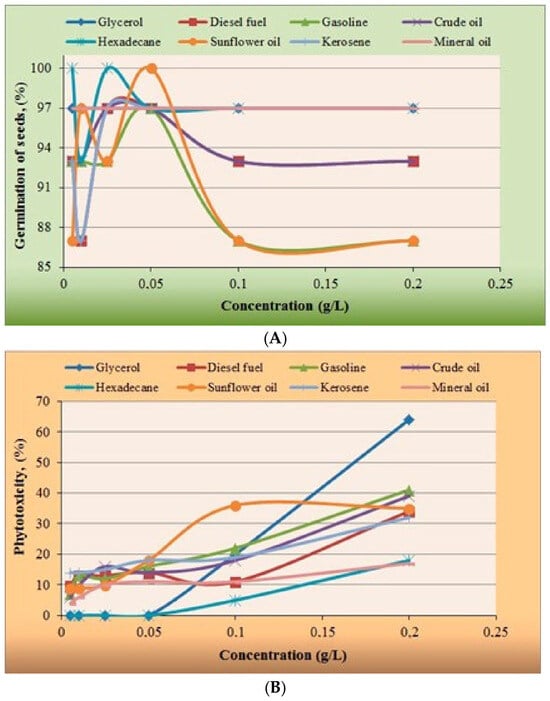
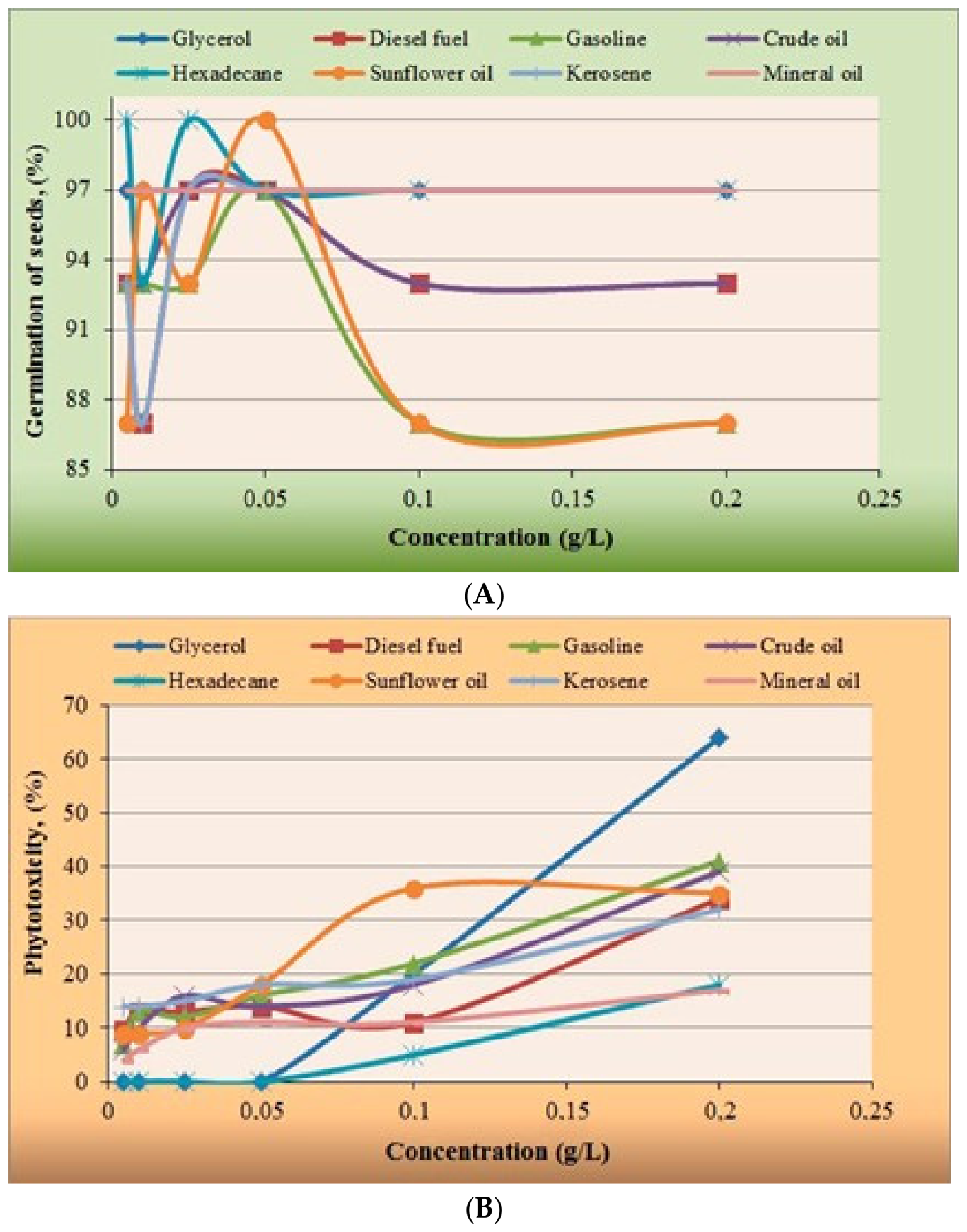
Thus, the Pseudomonas sp. PS-17 strain is able to assimilate a wide range of hydrophobic substrates, which creates the prospect of their practical implementation in environment protection. The phytotoxicity of biosurfactants of Pseudomonas sp. PS-17 cultivated on hydrophobic substrates was determined. The main characteristics were seed germination and phytotoxicity with wheat seeds (Triticum aestivum L.) as test plants. The results are presented in Figure 2.
Figure 2.
(A) Germination of wheat (Triticum aestivum L.) seeds and (B) phytotoxicity of Pseudomonas sp. PS-17 lipids.
It is shown that wheat seed germination under the influence of Pseudomonas sp. PS-17 lipids (0.005–0.05 g/L) fluctuates slightly and is practically indistinguishable from the control variant (Figure 2A). Their phytotoxic effect was low, and biosurfactants synthesized on media with hexadecane or glycerol even had a stimulating effect on wheat at concentrations of 0.005–0.05 g/L (Figure 2B). However, the phytotoxicity of lipids obtained on kerosene, crude oil, gasoline, and diesel fuel at 0.2 g/L was average, and on glycerol, it was high (64%), which is probably due to different ratio of rhamnolipids and fatty acids in lipid extracts. Therefore, lipids obtained from Pseudomonas sp. PS-17 strain cultivation on hydrophobic substrates did not exhibit a phytotoxic effect on wheat growth at concentrations of 0.005–0.1 g/L.
The study of CLS emulsifying properties with various hydrophobic compounds (hydrocarbons, petroleum, oils, etc.) is of considerable interest, since organic pollutant emulsification determines efficiency for ecosystem remediation by biotechnological methods [18]. Microbial hydrophobic contaminate destruction is significantly enhanced when stable fine-dispersed emulsions are formed [16]. Emulsion structure (diameter of microdroplets) was investigated by microscopic methods and evaluated by comparison with emulsions based on synthetic surfactant Tween-80. No significant differences were found between these emulsions, with the average diameter of microdroplets at 8–10 μm. However, biosurfactants formed stable emulsions at lower concentrations than Tween-80.
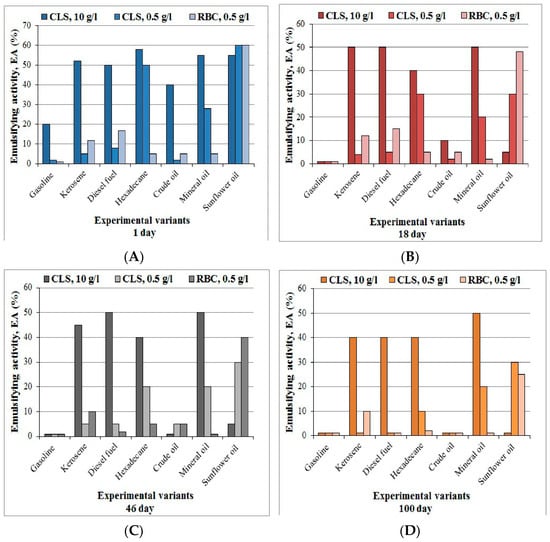
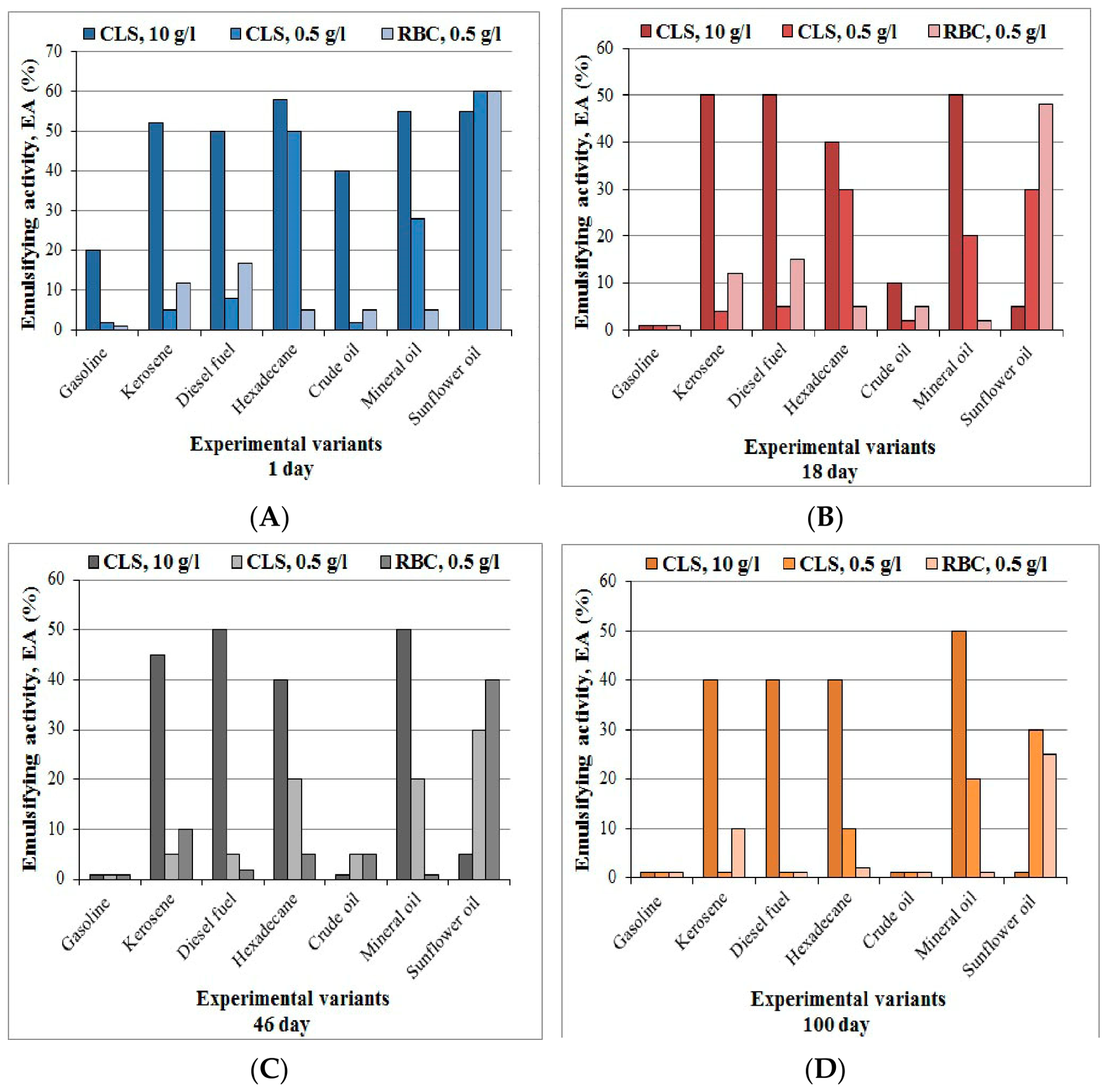
Emulsification processes of hydrophobic substances (diesel fuel, gasoline, crude oil, hexadecane, sunflower oil, kerosene, mineral oil) by CLS (cultivated on glycerol) and a rhamnolipid biocomplex over time were also investigated (see Figure 3).
Figure 3.
Emulsifying activity of CLS and the rhamnolipid biocomplex (cultivated on glycerol) on hydrophobic substances after (A) 1 day, (B) 18 days, (C) 46 days and (D) 100 days.
It has been shown that emulsions of rhamnolipid biosurfactants with vaseline oil, kerosene, hexadecane, and liquid paraffins were stable for 3 months.
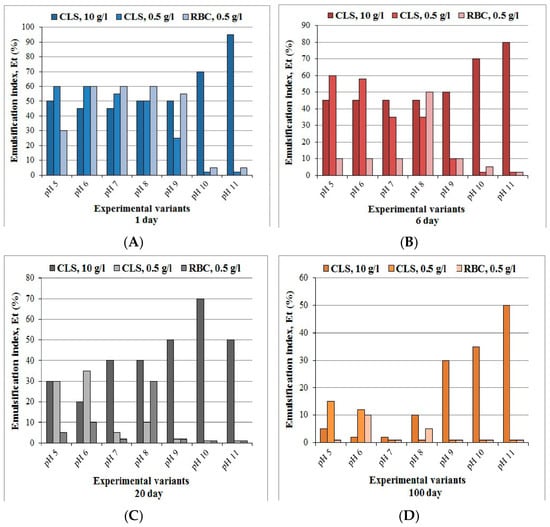
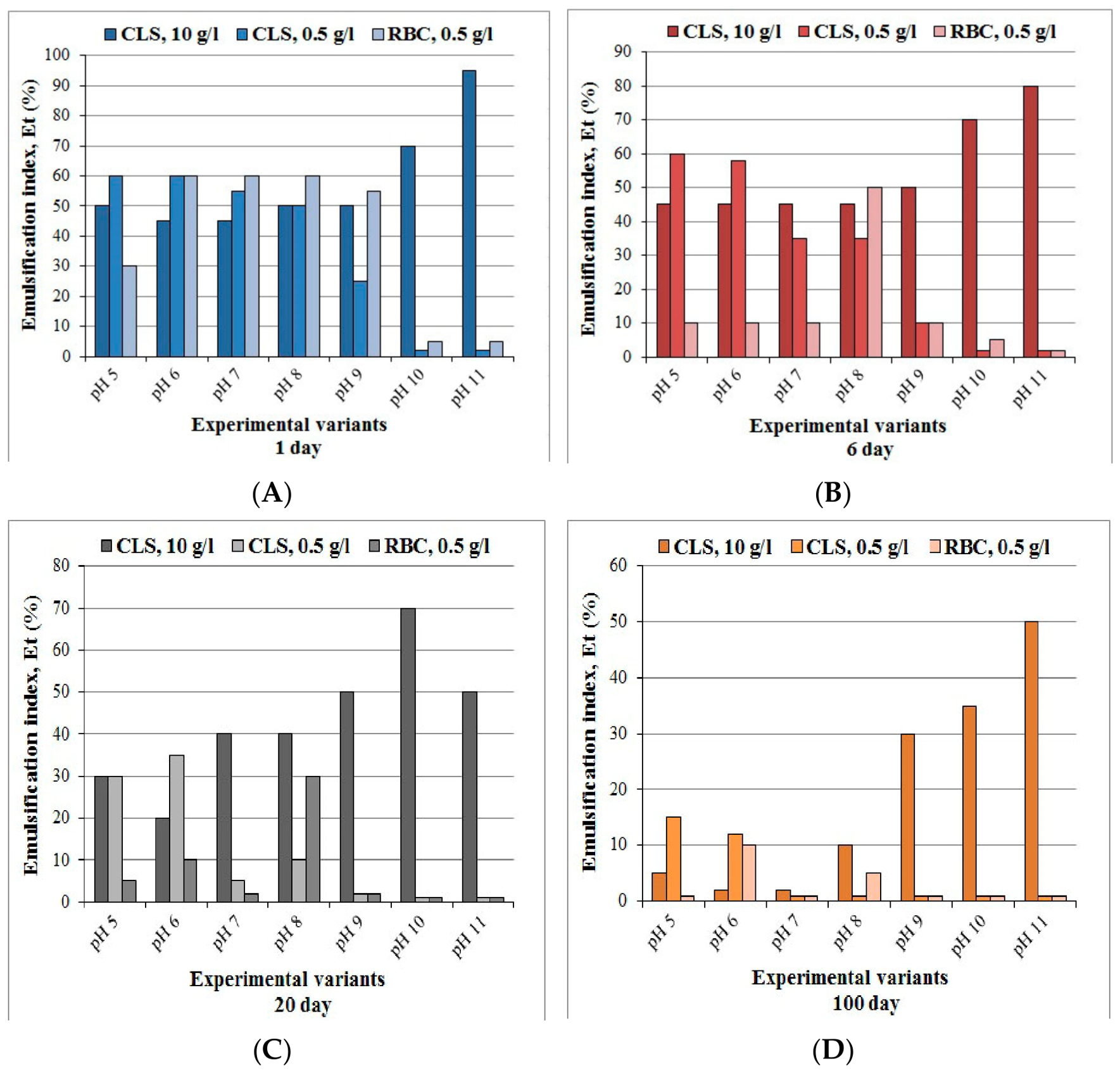
The stability of emulsions with sunflower oil, CLS (cultured on glycerol) and the rhamnolipid biocomplex was investigated depending on pH over time (see Figure 4).
Figure 4.
Stability of emulsions with sunflower oil, CLS (on glycerol) and rhamnolipid biocomplex depending on pH after (A) 1 day, (B) 6 days, (C) 20 days and (D) 100 days.
It is shown that the optimal pH of CLS for the formation of long-time stable emulsions with sunflower oil is 9–11 (emulsions were stable for more than 3 months). For the creation of stable emulsions with diluted CLS (0.5 g/L of rhamnolipids) and the rhamnolipid solution complex (0.5 g/L of rhamnolipids), the best were pH = 8 and pH = 6, respectively (Figure 4). These emulsions were stable for up to 1 month. Thus, rhamnolipid biosurfactants formed stable fine-dispersed emulsions in the range of pH = 6–11. Due to these properties, the biosurfactants could be used for the treatment of contaminated soil and water bodies with different natural conditions, particularly those with different pH.
3.2. Use of Glauconite to Prevent the Spread of Petroleum Products in Soil During Accidental Spills
The primary objective was to contain the contamination within the glauconite layer and limit the penetration of oil into the soil and groundwater, while comparing the results with the impact of oil on soil lacking glauconite. Oil was applied at a rate of 50 g/kg onto the surface of glauconite mixed with a rhamnolipid solution or soil. After four weeks, the content of petroleum products was measured in the soil layers at depths of 5 cm and 10 cm, as well as in the upper glauconite layer. It was demonstrated that in soil without glauconite, the concentration of petroleum products was 403.1 mg/kg at a depth of 5 cm and 126.3 mg/kg at a depth of 10 cm, indicating migration of the products through the soil. When glauconite was used as a protective barrier, the bulk of the petroleum products was localized in the upper layer (667.9 mg/kg). The concentration was 3.41 mg/kg at a depth of 5 cm, and the products were absent at a depth of 10 cm. Thus, the use of biosurfactants enhanced the sorption properties of glauconite and improved the barrier’s protective function by localizing spilled petroleum products on its surface. This prevented further penetration of oil into the soil and groundwater. Thus, the use of such glauconite barriers makes it possible to timely contain and remediate contamination.
3.3. Luminescent-Petrographic Studies of Glauconites and the Glauconite–Biosurfactant System
Analysis of glauconite, which was saturated with crude oil (see Figure 5A) is characterized by the following features. In pressed preparations, light bitumens, which were distinguished by a blue glow, were localized around quartz grains, enveloping them with a continuous oil film. Heavy bitumens were quite evenly distributed among glauconitolite grains. Their luminescent glow was distinguished by dark earthy, brown-earthy or yellowish-green color. Some areas with separate microscopic accumulations of bitumens (bluish-green, yellowish-green luminescent glow) were observed. These areas were spatially close to quartz grains. In general, the distribution pattern contributed to the largest accumulations of oil products concentrated around quartz grains. More uniform saturation occurred in areas of the glauconitolite–montmorillonite composite. A month later, the glauconite, saturated with oil and treated with biosurfactants and oil-degrading bacteria, was again analyzed by the luminescent-petrographic method (see Figure 5B). Bitumens, which were characterized by a blue glow, were practically not established, with the exception of isolated microrelicts. Heavy bitumens, judging by the bright yellow-green color, were also largely destroyed. The saturation of glauconite with oil became much lower and uniform. Thus, the conducted luminescent-petrographic studies showed that:
- Glauconite and minerals that make up its composition (glauconitolite, montmorillonite, quartz) are effective materials capable of adsorbing oil and petroleum products.
- In the glauconite–biosurfactant–oil-degrading microorganisms system, an active decomposition of petroleum products occurs in a short amount of time.
Figure 5.
Distribution of various petroleum fractions among the mineral components of glauconite: (A) initial state; (B) after one month. Sample in a compressed state (30× magnification).
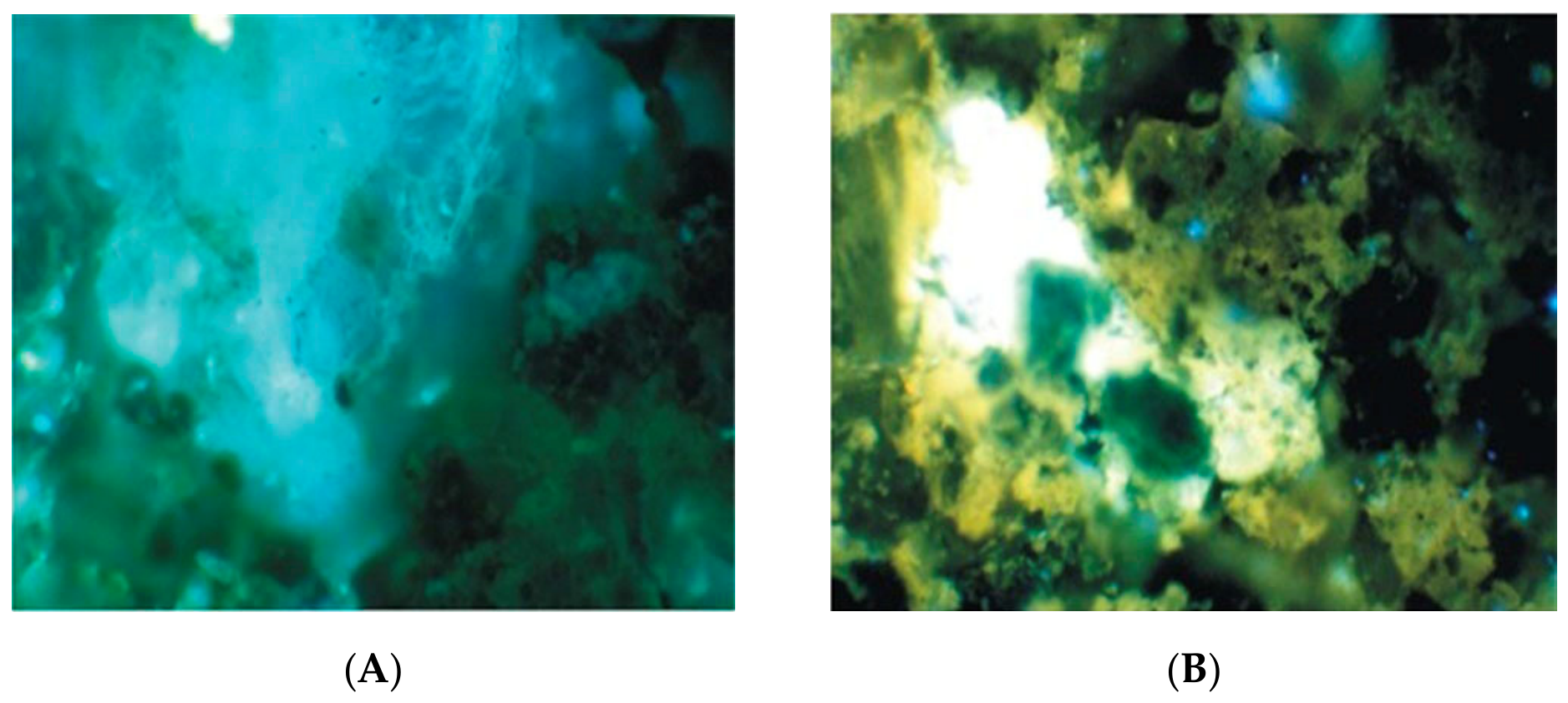
The obtained results open the prospect of using glauconites as environmentally safe sorbents for various oil organic compounds. It should be suspected that modification of glauconite rocks with biosurfactants increases the hydrophobicity of the surface and its affinity for oil pollutants.
3.4. Degradation of Petroleum Contaminants Using Glauconite, a Biosurfactant, and Hydrocarbon-Degrading Microorganisms
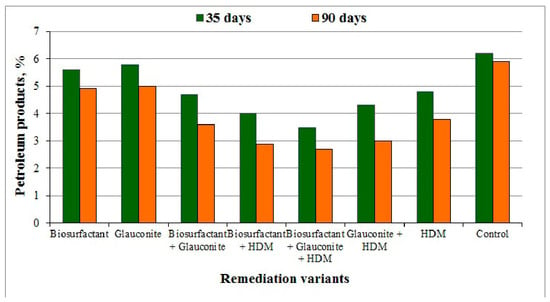
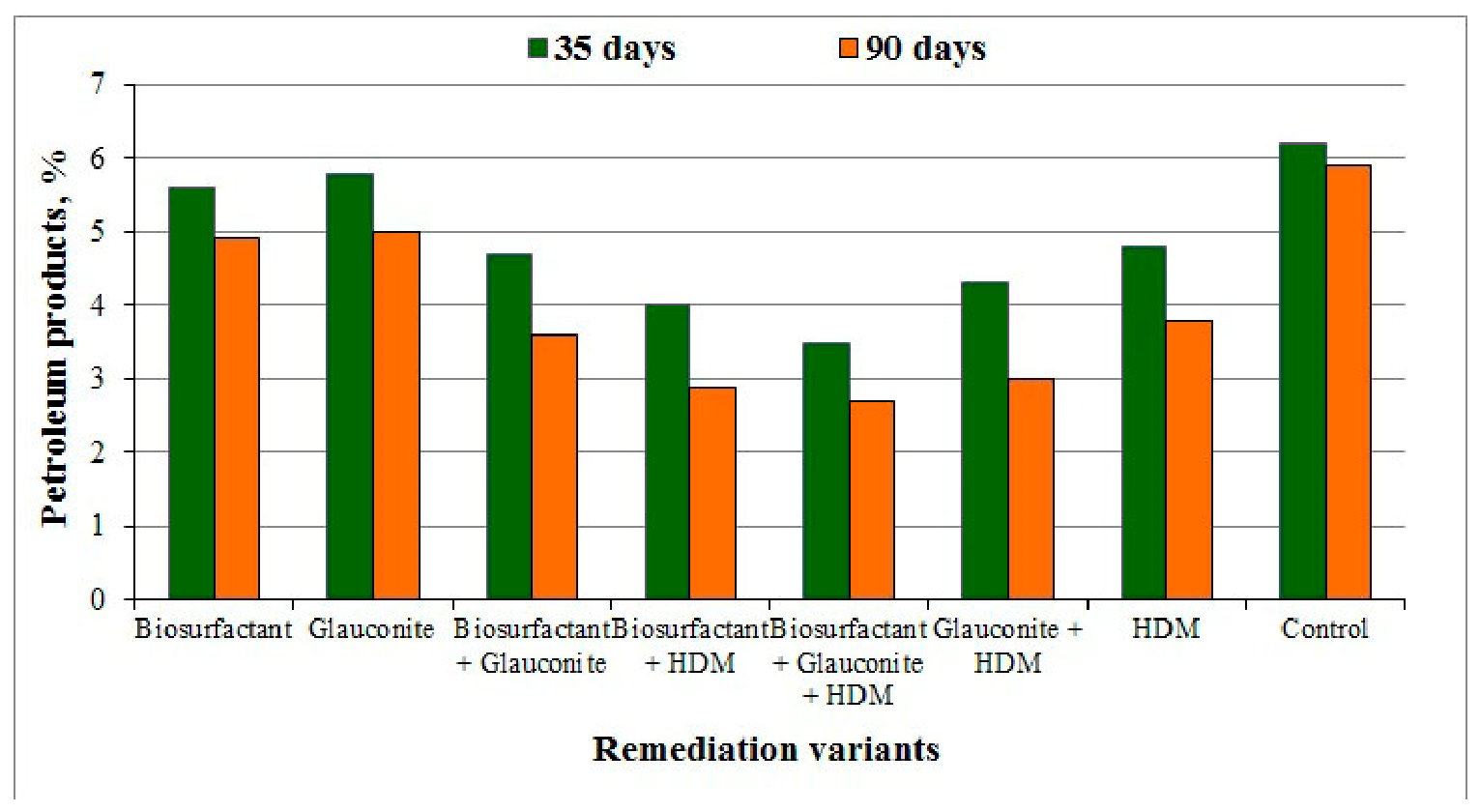
The need to address the restoration of soils affected by long-standing contamination is driven by the significant soil pollution present at oil extraction, transportation, and processing facilities. Furthermore, over time, contaminants become sorbed onto soil particles, which complicates the remediation processes. The effectiveness of using glauconite, a biosurfactant, and hydrocarbon-degrading microorganisms for the remediation of soils with long-standing petroleum contamination has been investigated (see Figure 6).
Figure 6.
Glauconite, a biosurfactant, and hydrocarbon-degrading microorganism effectiveness in the remediation of the long-standing petroleum contaminated soils.
It has been demonstrated that integrated approaches of utilizing biosurfactants yield the best results (Figure 6). Depending on the specific approach employed, pollutant levels can be reduced by half over a period of three months. The optimal method for remediating soil contaminated with long-standing oil residues involves a combined approach using a biosurfactant, glauconite, and hydrocarbon-degrading microorganisms (reducing the concentration of petroleum products to 2.7%) (see Figure 6).
4. Discussion
The remediation and restoration of soils damaged by technological accidents and military actions is an extremely urgent and complex problem [1]. At the same time, petroleum products are common pollutants [1,5]. Such contamination is associated with the extraction, transportation, processing, and storage of oil and petroleum products (e.g., operational failures, accidents at oil platforms, drilling rigs, or wells). Their entry into the surface layers of the lithosphere and hydrosphere negatively impacts the environment by polluting ecosystems [1]. Remediation of such contamination is a long process, making the development of effective soil cleanup methods a highly pressing task. The use of natural mineral sorbents is a promising approach to environmental restoration, given their valuable properties (non-flammability, chemical inertness, low costs and raw-material availability). Typically, the sorption capacity of mineral sorbents for petroleum products ranges from 0.20 to 0.50 g/g, while their bulk density is 0.45–0.90 kg/L. The specific properties of clay minerals (such as sorption, swelling, and ion exchange capabilities) stem from their unique structure, the presence of surface hydrophilic groups, and weak electrostatic interactions between their layers/sheets and exchangeable cations [25]. In the study [13], the sorption efficiency regarding crude oil and diesel fuel was compared for montmorillonite, palygorskite, a montmorillonite–palygorskite mixture, illite (from the Cherkasy deposit, Ukraine), and kaolinites from five Ukrainian deposits. It was demonstrated that the amount of oil sorbed depends on particle size and the specific surface area of the minerals. Furthermore, in the presence of these minerals, microorganisms are capable of degrading the oil.
The glauconite mineral exhibits high sorption capacity for a wide range of petroleum products, phenols, and other substances. Petrographic and bulk X-ray diffraction analyses of glauconites from the Kutch Basin (India) revealed that glauconite contains 7.4–8.4 wt% K2O, while the glauconitic sandstone and shale also contain Zn, Mn, Cu, Co, Mo, and Ni—elements essential for plants [26]. It was established that during the comprehensive purification of coke-oven wastewater—targeting phenols, thiocyanates, ammonia, and resinous substances—using glauconite clay, acid activation alters the chemical composition of the glauconite and increases its specific surface area fourfold. Glauconite (2 g/dm3) combined with a cationic flocculant (0.1% solution, 30 g/L) was used for the comprehensive wastewater treatment, with a process duration of 20–180 min [25]. The adsorption properties of granular composite materials based on glauconite were investigated. Glauconite-based materials incorporating a sunflower husk adsorbent proved most effective, achieving a 78% efficiency in removing phosphate ions from water [14]. Glauconite from the Krantau deposit (Uzbekistan) exhibited high sorption capacity for Ca2+, Mg2+, Cl−, and SO42− ions. Consequently, it could serve as a natural water softener [27]. The performance of a sorption–filtration barrier, designed for installation around the perimeter of gas stations and parking lots, was investigated. The barrier consisted of a 15 cm layer of a glauconite–sand mixture (in an 80:20 ratio). The glauconite was modified by adding the supernatant from a Pseudomonas spp. PS-17, at a proportion of 10 g per 1000 g of glauconite. After 7 weeks, a reduction in the concentration of petroleum products from 5000 mg/kg to 0 was observed [28]. Next, it is proposed that the glauconite barrier, containing absorbed petroleum products, be transferred to storm-water reservoirs, and that the supernatant of the Pseudomonas spp. culture fluid be added at a ratio of 100 mL per 1 L of wastewater (or 100 L/m3 of wastewater). After 7–10 days, the wastewater can be discharged into the sewer network, through which it flows to a wastewater treatment plant [28]. Biosurfactants from Pseudomonas bacteria could promote the biodegradation of petroleum products by soil microorganisms. It has been shown that Pseudomonas sp. strain isolated from engine oil-contaminated soil degraded 82% of 1% (v/v) waste engine oil after 5 days of aerobic incubation [29]. Biosurfactant synthesis by Pseudomonas fluorescens cultures was achieved using media containing hexadecane, mineral oil, vegetable oils, and glycerol [30]. The data regarding surface and emulsifying activity are fully consistent with our results. In general, microorganisms of the Pseudomonas genus have an important role in the degradation of oil in soil. Specifically, a synergistic role between soil microorganisms and Pseudomonas aeruginosa has been demonstrated [31,32]. The P. aeruginosa AQNU-1 strain completely utilized alkylcyclohexane, alkylbenzene, and alkyltoluene in crude oil [33]. The effect of pH (3–9) on the emulsification of hydrophobic substrates (benzene, soybean oil, and kerosene) by rhamnolipids was evaluated. It was shown that maximum emulsification occurred at pH = 8 [27]. Rhamnolipids exhibit peak emulsifying activity and maximum emulsion stability under alkaline conditions (pH 5.9 to 9), reaching up to 71.4% activity with substrates like kerosene at pH 8. Conversely, acidic conditions (pH 3 to 4) cause protonation, precipitation, low activity, and droplet coalescence [34]. In our studies, the optimal pH value for emulsification was pH = 9 (using sunflower oil).
The environmental impact of synthetic vs. microbial surfactants is a significant issue. For instance, SDS inhibits Lolium multiflorum seeds germination. In contrast, rhamnolipids exhibit low toxicity, particularly toward ryegrass [35]. Rhamnolipids can even stimulate plant growth. In laboratory and field studies, rhamnolipid concentrations of 5–10 mg/L promoted wheat seedling growth, increased chlorophyll content, and stimulated root system development [36]. Our current study established that the phytotoxicity of rhamnolipids produced on media containing kerosene, crude oil, gasoline, or diesel fuel (0.2 g/L) was moderate, whereas it was slightly higher for those produced on glycerol (Figure 2B). This difference is likely attributable to variations in the composition and ratio of rhamnolipids and fatty acids within lipid extracts (see Table 1).
In our current study, a strong synergistic effect of natural mineral sorbents (glauconite) and rhamnolipid surfactants on oil bioremediation processes was observed. Thanks to its porous structure and large specific surface area, glauconite adsorbs contaminants and sequesters toxic ions, exchanging them for harmless elements (such as potassium or calcium) [20,21,22,23]. Degrading bacteria can attach to the glauconite surface and remain viable even under adverse environmental conditions. Rhamnolipids enhance the bioavailability of petroleum products and other hydrophobic compounds for bacteria without harming the environment, while also stimulating plant growth. Glauconite combined with biosurfactants forms an effective synergistic system for the restoration (remediation) of contaminated soils (e.g., with petroleum products, heavy metals, etc.). In this system, glauconite acts as a matrix, since it is natural potassium-bearing layered mineral possessing with effective sorption properties. Furthermore, glauconite enriches the soil with macro- and microelements (such as potassium and iron), which promotes the development of soil microorganisms. Consequently, the combined use of glauconite, rhamnolipids, and degrading bacteria represents promising and effective approach for modern bioremediation technologies addressing soil and water contaminated with petroleum products, heavy metals, and other pollutants. It should be suspected that biosurfactants influence all stages of soil and water remediation: pollutants desorption from soil, solubilization, increase in bioavailability, transport into microbial and plants cells, and further stimulation of microorganism- and plant-remediator growth and metabolic activity. Our results may be potentially useful for the development of new efficient and low-cost methods for the remediation of soil and water from oleic pollutants.
5. Conclusions
As a result of systematic experimental studies, the effectiveness of glauconite sorbents and biosurfactants for the remediation of oil-contaminated soils was shown. It was established that the culture of Pseudomonas sp. PS-17 grows and synthesizes biosurfactants and polysaccharides on nutrient media with hydrophobic carbon sources: diesel fuel, gasoline, crude oil, hexadecane, sunflower oil, kerosene, mineral oil. However, the maximum amount of lipids was obtained on sunflower oil (6.5 g/L) and glycerol (4.9 g/L). Obtained lipid biosurfactants at concentrations of 0.005–0.1 g/L do not exhibit a phytotoxic effect on the growth of the test plant—wheat. It was determined that pH = 9–11 is optimal for the formation of stable emulsions of the Pseudomonas sp. PS-17 culture supernatant with sunflower oil. The emulsions remain stable for more than 3 months. Additionally, pH 8 and 6 were optimal for CLS dilution (up to 0.5 g/L of rhamnolipids) and rhamnolipid biocomplex solution (0.5 g/L of rhamnolipids), respectively. Such emulsions were stable for up to 1 month. Study of the mechanism of oil sorption by glauconite by means of luminescent-petrographic analysis showed that light and heavy fractions of oil “settle” on quartz grains with a thin film, and a significant part of heavy and water-soluble compounds is mechanically retained and sorbed by glauconite and montmorillonite. Glauconite modification with biosurfactants and cultures of microorganisms–oil-destructors contributes to increase the protective effect of glauconite against oil spills. This could be explained by oil product solubilization, which leads to of the intensified destruction of contaminants and regeneration of the sorbent. Thus, it was established that glauconite sorbents and biosurfactants exhibit potential for the restoration of urban oil-contaminated soils, especially after military actions.
Author Contributions
Conceptualization, T.P.; methodology, T.P. and A.B.; software, A.B. and N.M. (Natalia Monka); validation, A.B., N.M. (Natalia Monka), T.K. and N.M. (Natalina Makieieva); formal analysis, T.P., A.B. and N.M. (Natalia Monka); investigation, T.P. and E.I.; data curation, O.K. and V.L.; writing—original draft preparation, T.P., O.K. and V.L.; writing—review and editing, all authors; visualization, O.K. and V.L.; supervision, O.K. and V.L.; project administration, O.K. and V.L.; funding acquisition, N.M. (Natalina Makieieva) and T.K. All authors have read and agreed to the published version of the manuscript.
Funding
This research received no external funding.
Institutional Review Board Statement
Not applicable.
Informed Consent Statement
Not applicable.
Data Availability Statement
The original contributions presented in this study are included in the article. Further inquiries can be directed to the corresponding author.
Acknowledgments
The authors express their gratitude to Yuriy Kozub and Yuriy Fedoryshyn (LLC “EKORESURS”, Ukraine) for providing glauconite samples and their assistance in conducting the experiments.
Conflicts of Interest
The authors declare no conflicts of interest.
References
- Wang, S.; Xu, Y.; Lin, Z.; Zhang, J.; Norbu, N.; Liu, W. The Harm of Petroleum-Polluted Soil and Its Remediation Research. AIP Conf. Proc. 2017, 1864, 020222. [Google Scholar] [CrossRef] [Scilit]
- Moghadam, Z.; Doraghi, M.; Fallahizadeh, S.; Badeenezhad, A.; Alinehjad, N.; Parseh, I. Enhanced Phytoremediation of Crude Oil-Contaminated Soil Using Cynodon Dactylon with Nutrient and Mixed Liquid Suspended Solids Amendments. Sci. Rep. 2026, 16, 19869. [Google Scholar] [CrossRef] [Scilit] [PubMed]
- Mambwe, M.; Kalebaila, K.K.; Johnson, T. Remediation Technologies for Oil Contaminated Soil. Glob. J. Environ. Sci. Manag. 2021, 7, 419–438. [Google Scholar] [CrossRef] [Scilit]
- Huang, Y.; Pan, H.; Wang, Q.; Ge, Y.; Liu, W.; Christie, P. Enrichment of the Soil Microbial Community in the Bioremediation of a Petroleum-Contaminated Soil Amended with Rice Straw or Sawdust. Chemosphere 2019, 224, 265–271. [Google Scholar] [CrossRef] [Scilit] [PubMed]
- Liu, Q.; Li, Q.; Wang, N.; Liu, D.; Zan, L.; Chang, L.; Gou, X.; Wang, P. Bioremediation of Petroleum-Contaminated Soil Using Aged Refuse from Landfills. Waste Manag. 2018, 77, 576–585. [Google Scholar] [CrossRef] [Scilit] [PubMed]
- Aziz, Z.S.; Jazza, S.H.; Dageem, H.N.; Banoon, S.R.; Balboul, B.A.; Abdelzaher, M.A. Bacterial Biodegradation of Oil-Contaminated Soil for Pollutant Abatement Contributing to Achieve Sustainable Development Goals: A Comprehensive Review. Results Eng. 2024, 22, 102083. [Google Scholar] [CrossRef] [Scilit]
- Liu, G.; Zhong, H.; Yang, X.; Liu, Y.; Shao, B.; Liu, Z. Advances in Applications of Rhamnolipids Biosurfactant in Environmental Remediation: A Review. Biotechnol. Bioeng. 2018, 115, 796–814. [Google Scholar] [CrossRef] [Scilit] [PubMed]
- Galabova, D.; Sotirova, A.; Karpenko, E.; Karpenko, O. Chapter 3—Role of Microbial Surface-Active Compounds in Environmental Protection. In The Role of Colloidal Systems in Environmental Protection; Fanun, M., Ed.; Elsevier: Amsterdam, The Netherlands, 2014; pp. 41–83. ISBN 978-0-444-63283-8. [Google Scholar]
- Yaremkevych, O.; Fihurka, O.; Banya, A.; Shvets, V.; Nakonechna, A.; Karpenko, O.; Bilushchak, H.; Karpenko, O.; Novikov, V.; Lubenets, V. Effect of Thiosulfonate-Biosurfactant Compositions on Plants Grown in Oil Polluted Soil. Environ. Eng. Manag. J. 2020, 19, 2003–2012. [Google Scholar] [CrossRef] [Scilit]
- Rutkowski, P.; Śliwka, E.; Kołwzan, B.; Grabas, K.; Karpenko, E. Influence of Rhamnolipids from Pseudomonas PS-17 on Coal Tar and Petroleum Residue Biodegradation. Environ. Prot. Eng. 2009, 35, 139–150. [Google Scholar]
- Banya, A.; Karpenko, O.; Pokynbroda, T.; Karpenko, O.; Lubenets, V. Use of Biosurfactants, Microorganism-Destructors, and Plants for Eco-Friendly Bioremediation Technologies on Oil-Contaminated Soils. BioTechnologia 2025, 106, 411–420. [Google Scholar] [CrossRef] [Scilit] [PubMed]
- Maliovany, M.S.; Krip, I.R.; Kirichenko, O.V. Purification of Water from Oil Products by Natural and Modified Clayey Sorbents. Environ. Ecol. Saf. 2007, 4, 61–65. [Google Scholar]
- Zadvernyuk, H. Sorption Capacity of Clay Minerals for Oil and Oil Products from Water Areas. In Proceedings of the Proceedings of the 10th International Congress for Applied Mineralogy (ICAM); Broekmans, M.A.T.M., Ed.; Springer: Berlin/Heidelberg, Germany, 2012; pp. 789–794. [Google Scholar]
- Shmandiy, V.; Rigas, T.; Kharlamova, O.; Bezdeneznych, L. Research of Adsorption Properties of Glauconite-Based Composite Adsorbents. J. Ecol. Eng. 2020, 21, 147–154. [Google Scholar] [CrossRef] [Scilit]
- Semeniuk, I.; Kochubei, V.; Skorokhoda, V.; Pokynbroda, T.; Midyana, H.; Karpenko, O.; Melnyk, V. Biosynthesis Products of Pseudomonas Sp. PS-17 Strain Metabolites. 1. Obtaining and Thermal Characteristics. Chem. Chem. Technol. 2021, 14, 26. [Google Scholar] [CrossRef] [Scilit]
- Pokynbroda, T.; Karpenko, I.; Midyana, H.; Karpenko, O. Isolation of Surfactants Synthesized by the Pseudomonas Bacteria and Study of Their Properties. Innov. Biosyst. Bioeng. 2019, 3, 70–76. [Google Scholar] [CrossRef] [Scilit]
- Kuksis, A. Chromatography of Lipids in Biomedical Research and Clinical Diagnosis; Elsevier: Amsterdam, The Netherlands, 1987; ISBN 978-0-444-42762-5. [Google Scholar]
- Gaur, V.K.; Regar, R.K.; Dhiman, N.; Gautam, K.; Srivastava, J.K.; Patnaik, S.; Kamthan, M.; Manickam, N. Biosynthesis and Characterization of Sophorolipid Biosurfactant by Candida spp.: Application as food emulsifier and antibacterial agent. Bioresour. Technol. 2019, 285, 121314. [Google Scholar] [CrossRef] [Scilit] [PubMed]
- Teichmuller, M.; Wolf, M. Application of Fluorescence Microscopy in Coal Petrology and Oil Exploration. J. Microsc. 1977, 109, 49–73. [Google Scholar] [CrossRef] [Scilit]
- Alpern, B.; Lemos de Sousa, M.J.; Pinheiro, H.J.; Zhu, X. Detection and Evaluation of Hydrocarbons in Source Rocks by Fluorescence Microscopy. Org. Geochem. 1993, 20, 789–795. [Google Scholar] [CrossRef] [Scilit]
- Mendes, P.M.; Ribeiro, J.A.; Martins, G.A.; Lucia, T.; Araujo, T.R.; Fuentes-Guevara, M.D.; Corrêa, L.B.; Corrêa, É.K. Phytotoxicity Test in Check: Proposition of Methodology for Comparison of Different Method Adaptations Usually Used Worldwide. J. Environ. Manag. 2021, 291, 112698. [Google Scholar] [CrossRef] [Scilit] [PubMed]
- Araújo, H.W.C.; Andrade, R.F.S.; Montero-Rodríguez, D.; Rubio-Ribeaux, D.; Alves da Silva, C.A.; Campos-Takaki, G.M. Sustainable Biosurfactant Produced by Serratia Marcescens UCP 1549 and Its Suitability for Agricultural and Marine Bioremediation Applications. Microb. Cell Fact. 2019, 18, 2. [Google Scholar] [CrossRef] [Scilit] [PubMed]
- Standard Guide for Conducting Terrestrial Plant Toxicity Tests. Available online: https://store.astm.org/e1963-22.html (accessed on 1 June 2025).
- Winston, W.L. Microsoft Excel 2010: Data Analysis and Business Modeling; Microsoft Press: Redmond, WA, USA, 2011; ISBN 978-0-7356-4336-9. [Google Scholar]
- Ivanchenko, A.V.; Khavikova, K.Y.; Yelatontsev, D.O.; Panasenko, V.O. Research of coke wastewater treatment process with glauconite clay. J. Chem. Technol. 2021, 29, 549–558. [Google Scholar] [CrossRef] [Scilit]
- Shekhar, S.; Kumari, V.; Sinha, S.; Mishra, D.; Agrawal, A.; Sahu, K.K. Petro-Mineralogical and Geochemical Evaluation of Glauconitic Rocks of the Ukra Member (Bhuj Formation), Kutch Basin, India. Clays Clay Miner. 2022, 70, 135–153. [Google Scholar] [CrossRef] [Scilit]
- Umirova, N. Use of Glauconite as a Non-Reagent Sorbent for the Softening of Drinking and Boiler Waters, Industrial Waste Water. E3S Web Conf. 2020, 216, 01147. [Google Scholar] [CrossRef] [Scilit]
- Khopyak, N.; Tkachenko, H.; Manenko, A. Neutralization of oil spills using ecological sorbent glauconite modified by biosurfactants of Pseudomonas spp. PS-17. Balt. Coast. Zone J. Ecol. Prot. Coastline 2015, 19, 49–66. Available online: https://bcz.upsl.edu.pl/index.php/1/article/view/56 (accessed on 1 June 2025).
- Muhammad, A.; Adamu, F.A. Biodegradation of Used Engine Oil by Pseudomonas Sp. Isolated from an Automobile Workshop’s Soil. J. Env. Microbiol. Toxicol. 2022, 10, 59–62. [Google Scholar] [CrossRef] [Scilit]
- Stoimenova, E.; Vasileva-Tonkova, E.; Sotirova, A.; Galabova, D.; Lalchev, Z. Evaluation of Different Carbon Sources for Growth and Biosurfactant Production by Pseudomonas Fluorescens Isolated from Wastewaters. Z. Für Naturforschung C 2009, 64, 96–102. [Google Scholar] [CrossRef] [Scilit] [PubMed]
- Mohammed, A.J.; Kanber, S.A.; Talib, M.M. Bioremediation of Crude Oil Pollutants in the Soil by Pseudomonas Aeruginosa and Other Soil Microorganisms. World J. Exp. Biosci. 2023, 11, 7–10. [Google Scholar] [CrossRef] [Scilit]
- Rather, M.A.; Bharadwaj, R.; Haldar, M.; Sengar, D.S.; Verma, H.G.; Goswami, P.K.; Mandal, M. Biodegradation of Crude Oil by Biosurfactant-Producing Microaerophilic Bacterium Pseudomonas Aeruginosa MAR1. Sci. Total Environ. 2025, 991, 179876. [Google Scholar] [CrossRef] [Scilit] [PubMed]
- Liu, H.; Yang, G.; Jia, H.; Sun, B. Crude Oil Degradation by a Novel Strain Pseudomonas Aeruginosa AQNU-1 Isolated from an Oil-Contaminated Lake Wetland. Processes 2022, 10, 307. [Google Scholar] [CrossRef] [Scilit]
- Lovaglio, R.B.; dos Santos, F.J.; Jafelicci, M.; Contiero, J. Rhamnolipid Emulsifying Activity and Emulsion Stability: pH Rules. Colloids Surf. B Biointerfaces 2011, 85, 301–305. [Google Scholar] [CrossRef] [Scilit] [PubMed]
- D’Incau, E.; Spaudo, A.; Henry, S.; Ouvrard, S. Phytotoxic Response of Ryegrass (Lolium multiflorum L.) to extreme exposure to two anionic surfactants. Ecotoxicol. Environ. Saf. 2024, 288, 117320. [Google Scholar] [CrossRef] [Scilit] [PubMed]
- Shen, C.; Zhang, G.; Bao, X.; Xiao, A.; Long, L.; Meng, Q. Rhamnolipids as Agricultural Biostimulants: Effects on Wheat Growth, Yield, and Molecular Mechanisms. J. Agric. Food Chem. 2026, 74, 2877–2887. [Google Scholar] [CrossRef] [Scilit] [PubMed]

Disclaimer/Publisher’s Note: The statements, opinions and data contained in all publications are solely those of the individual author(s) and contributor(s) and not of MDPI and/or the editor(s). MDPI and/or the editor(s) disclaim responsibility for any injury to people or property resulting from any ideas, methods, instructions or products referred to in the content. |
© 2026 by the authors. Licensee MDPI, Basel, Switzerland. This article is an open access article distributed under the terms and conditions of the Creative Commons Attribution (CC BY) license.